In the Vietnam conflict, over 2500 soldiers died due to hemorrhage from wounds to the arms and legs even though the soldiers had no other serious injuries.
Combat Lifesaver Functioning as a Combat Lifesaver is your  secondary  mission.
Your  primary  mission is still your combat duties.
You should render care only when such care does not endanger your primary mission.
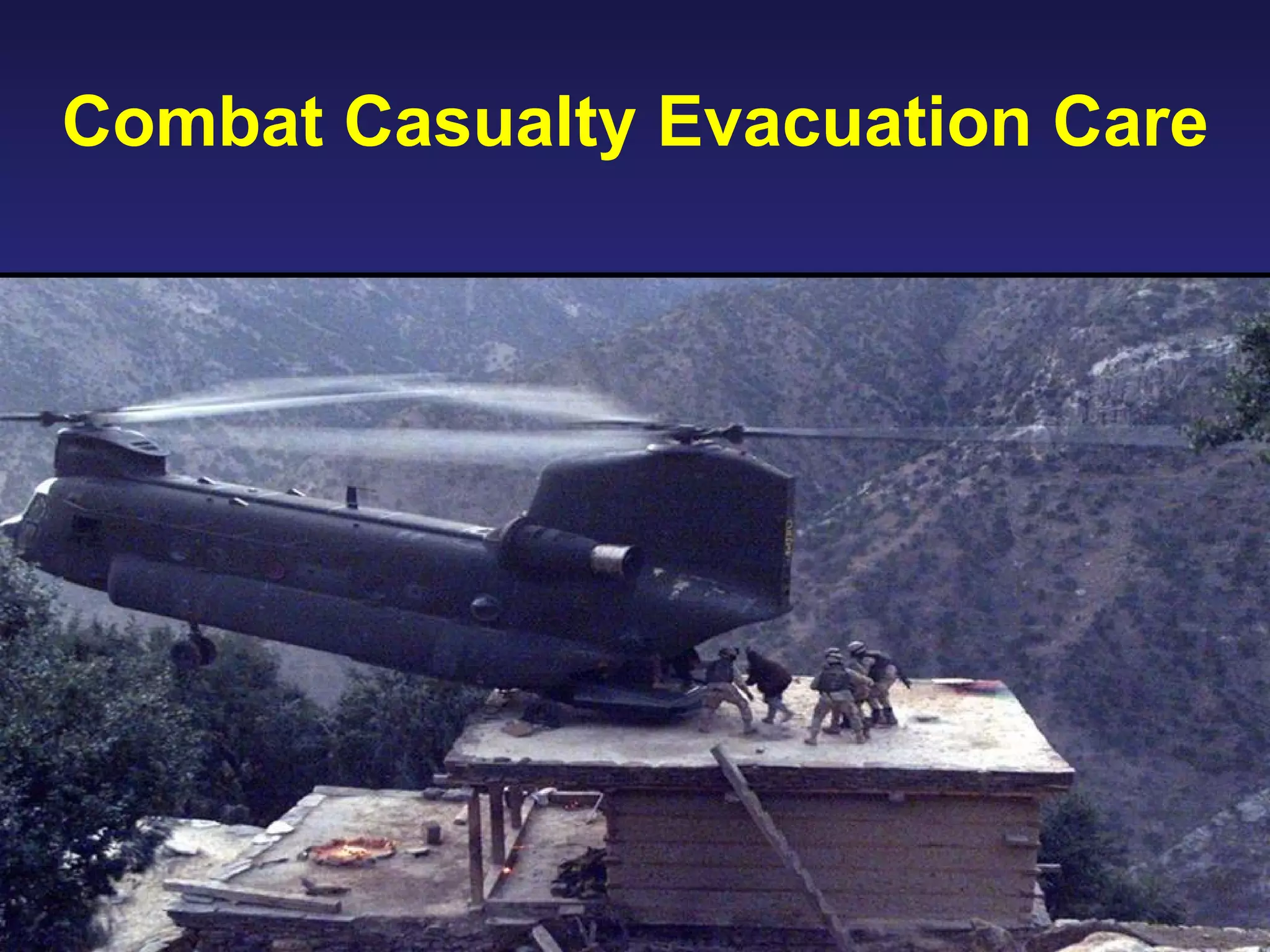
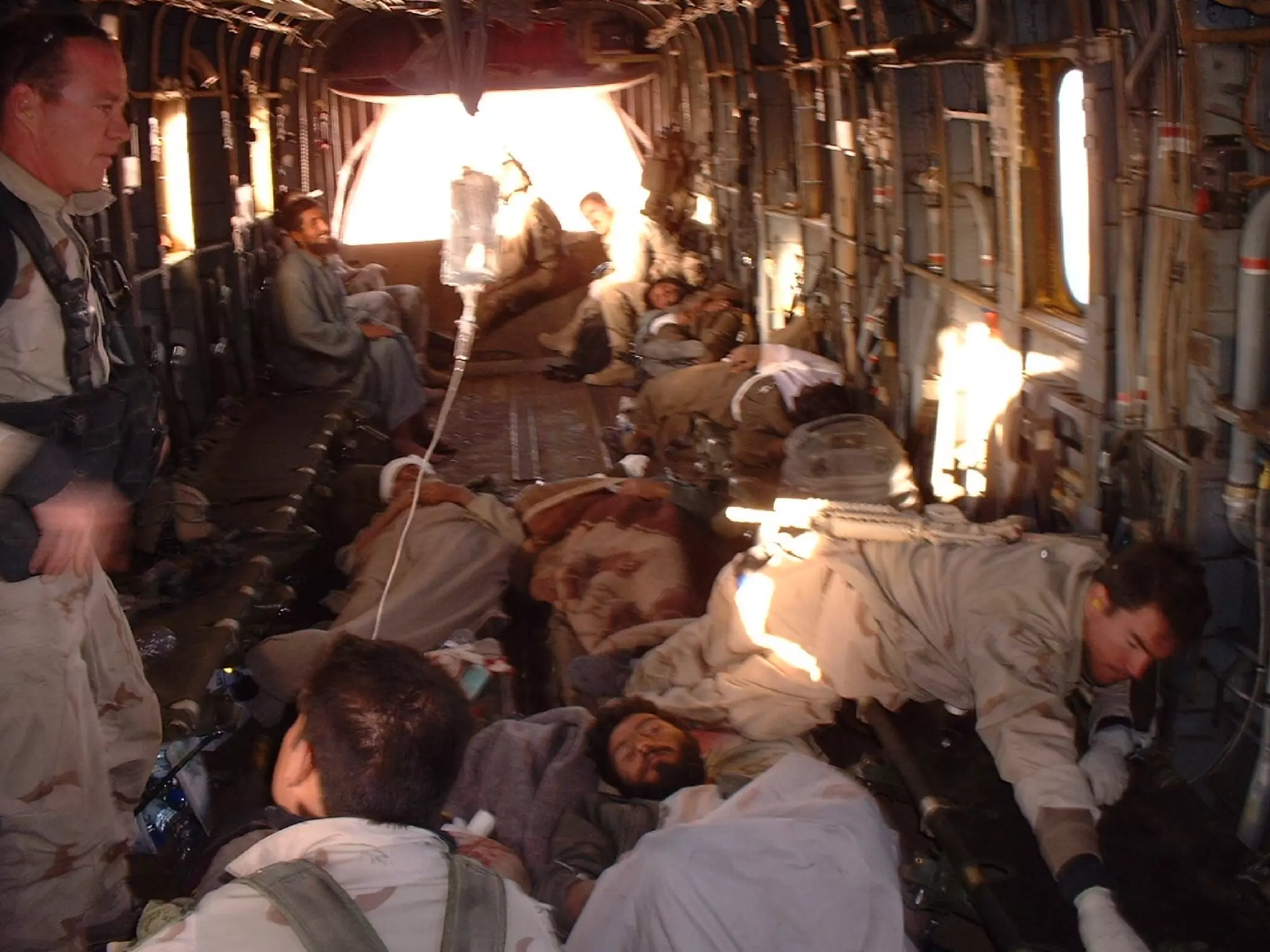
Combat Casualty Evacuation Care Care rendered during casualty evacuation
Call Medivac and set up LZ
Additional medical personnel and equipment may have been pre-staged and available at this stage of casualty management
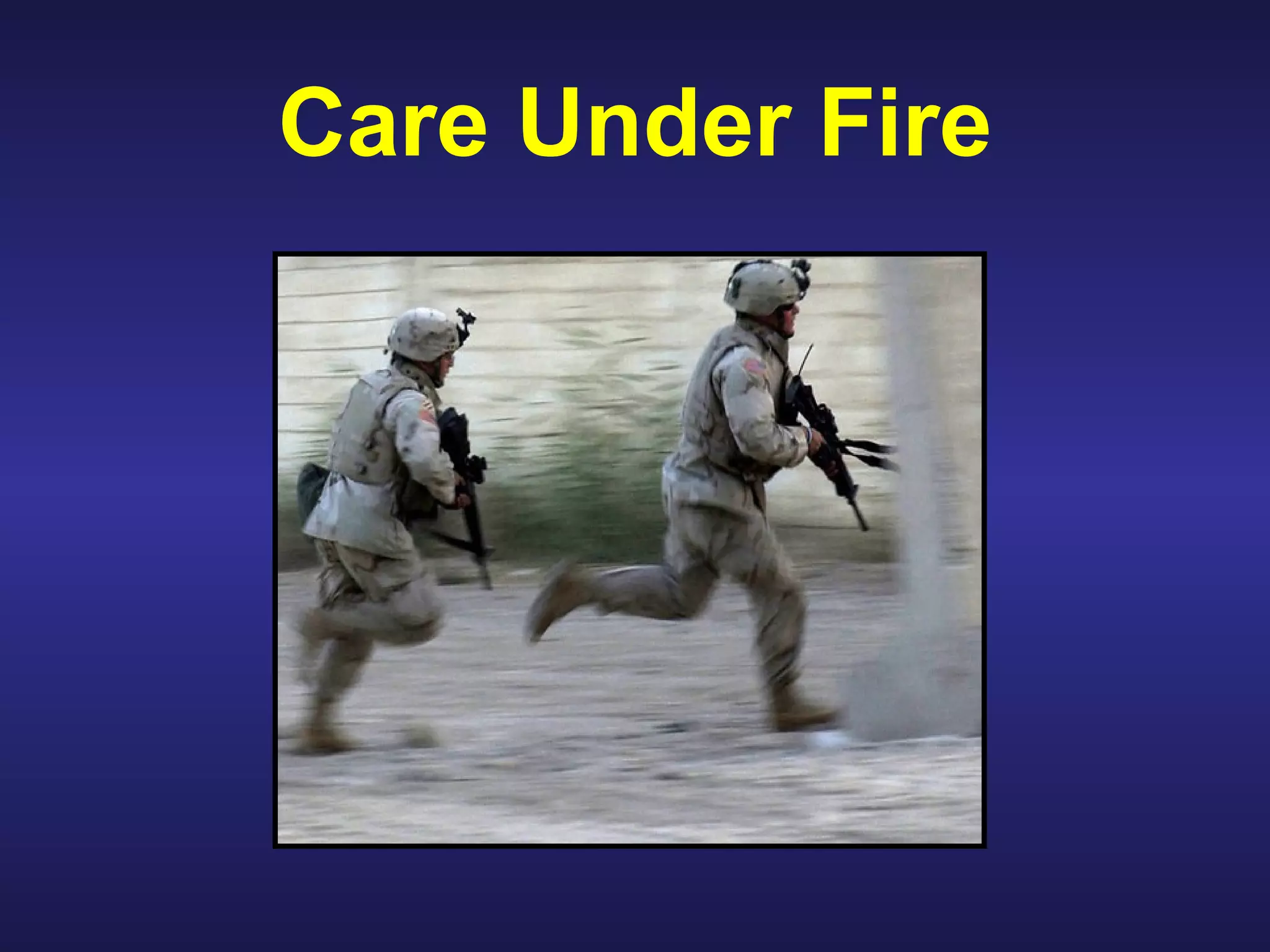
Care Under Fire
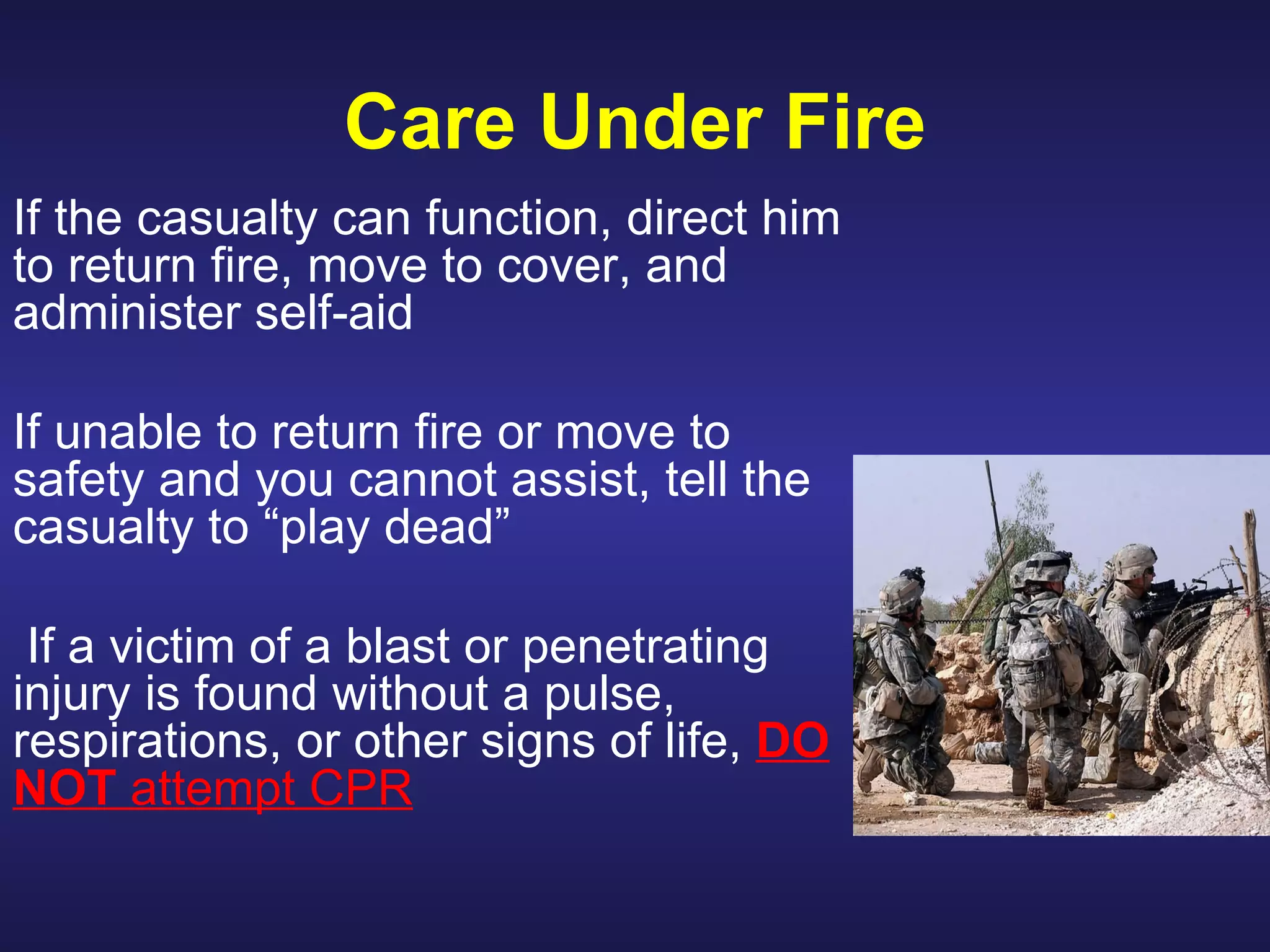
Care Under Fire If the casualty can function, direct him to return fire, move to cover, and administer self-aid
If unable to return fire or move to safety and you cannot assist, tell the casualty to “play dead” If a victim of a blast or penetrating injury is found without a pulse, respirations, or   other signs of life,   DO NOT  attempt CPR
Care Under Fire move casualty to cover quickly
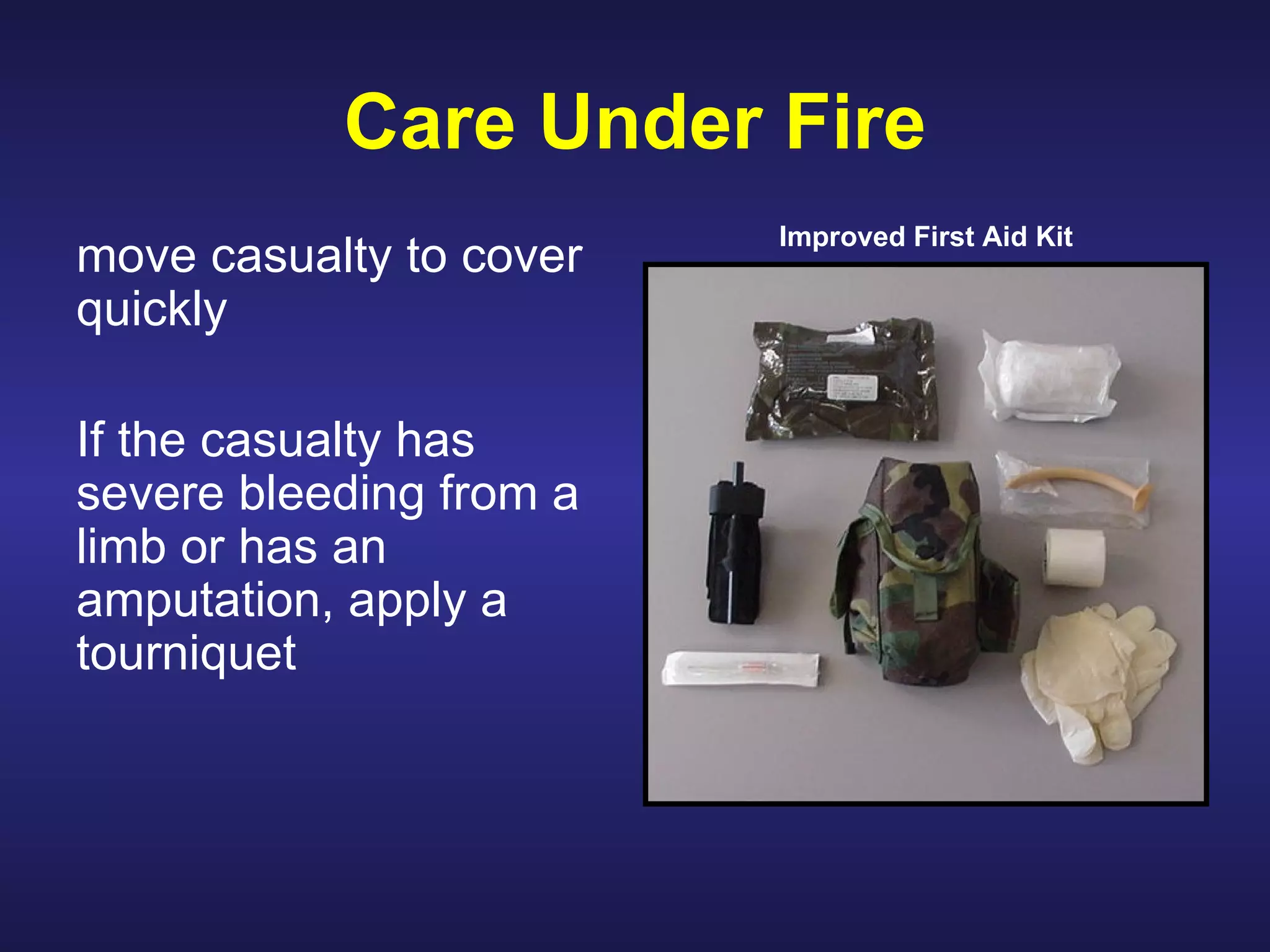
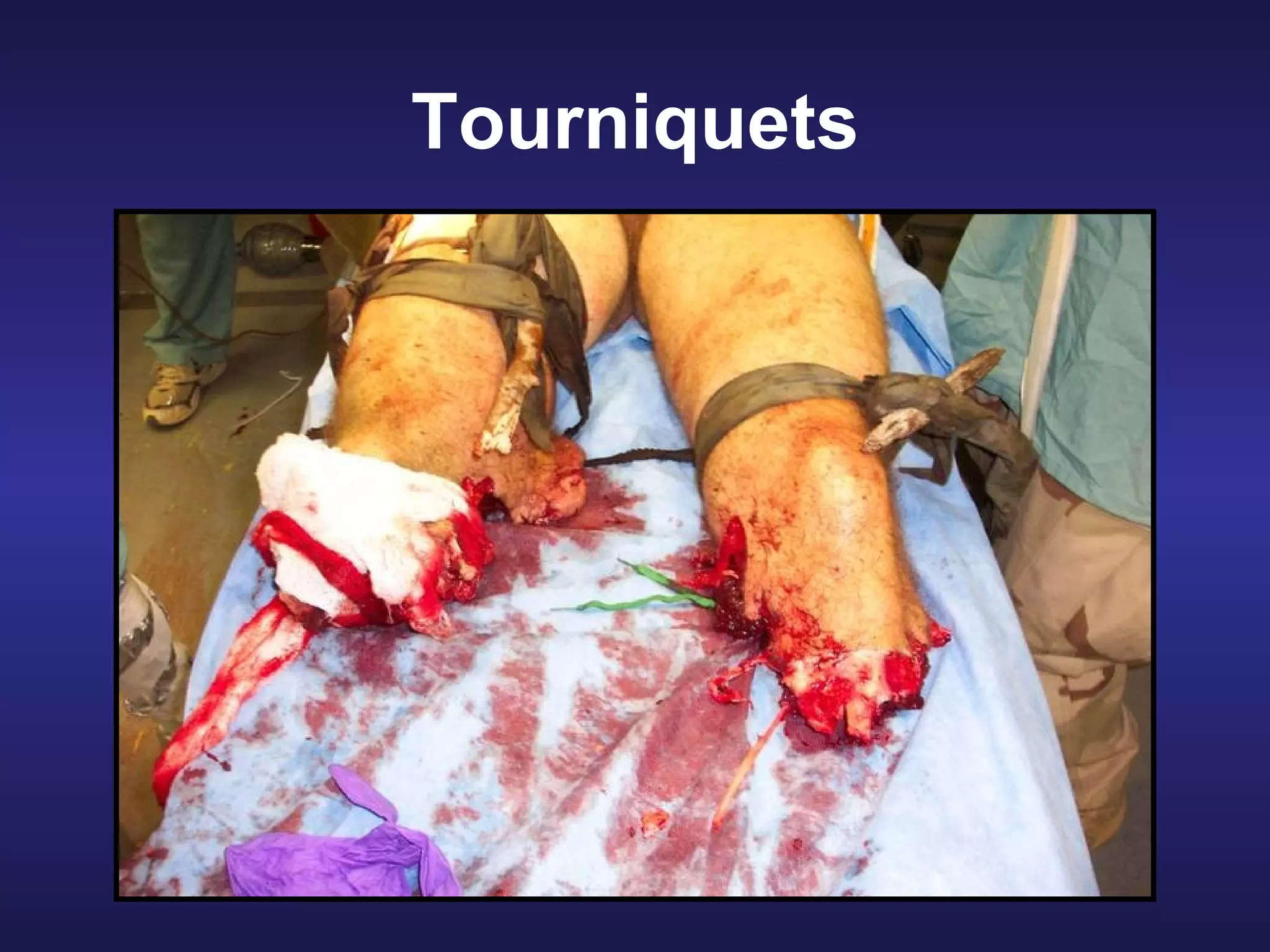
If the casualty has severe bleeding from a limb or has an amputation, apply a tourniquet Improved First Aid Kit
Care Under Fire Hemorrhage   from extremities is the 1 st  leading cause of preventable combat deaths Prompt use of tourniquets to   stop the bleeding   may be life-saving in this phase
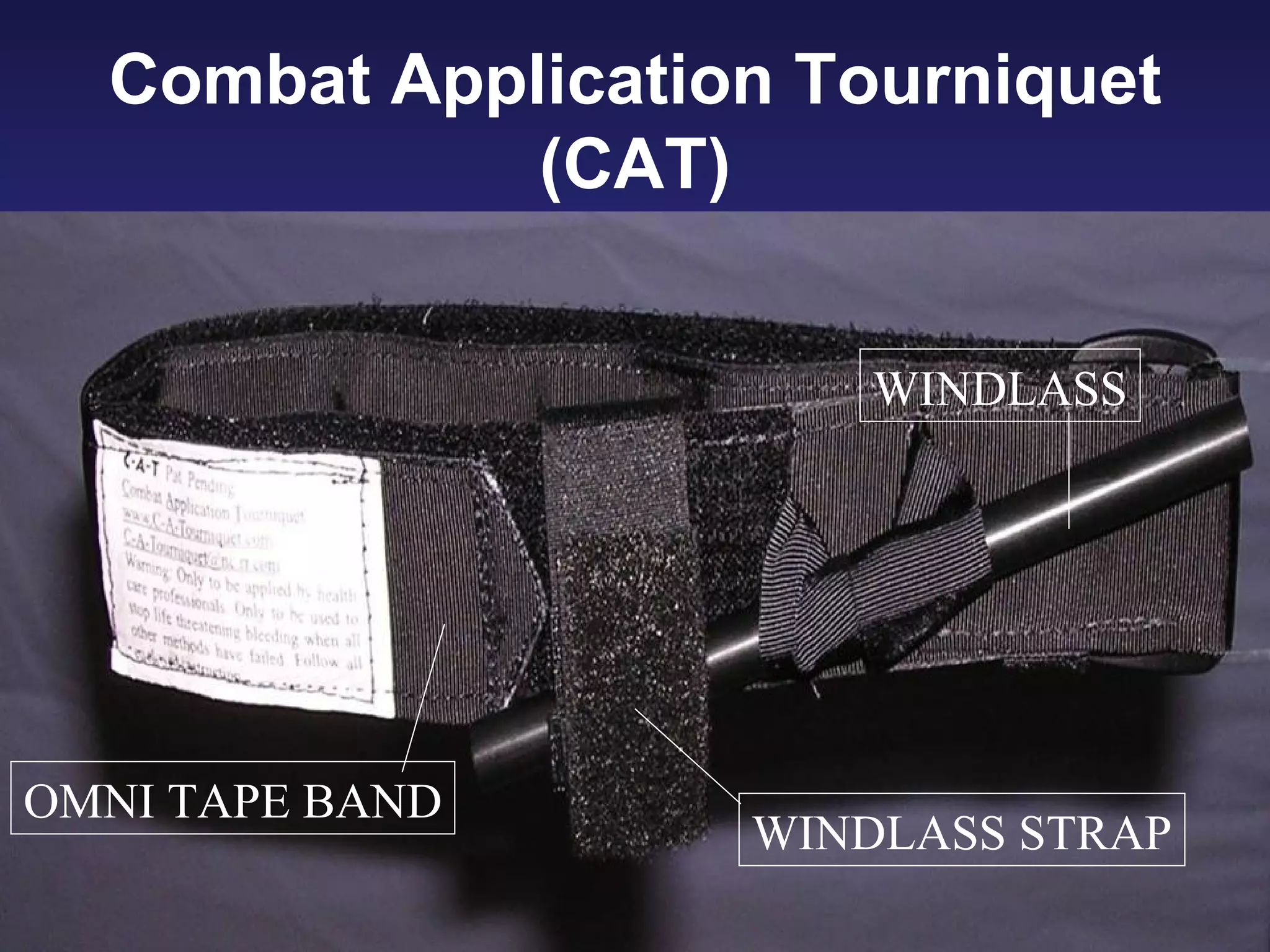
Combat Application Tourniquet (CAT) WINDLASS OMNI TAPE BAND WINDLASS STRAP
Tourniquets
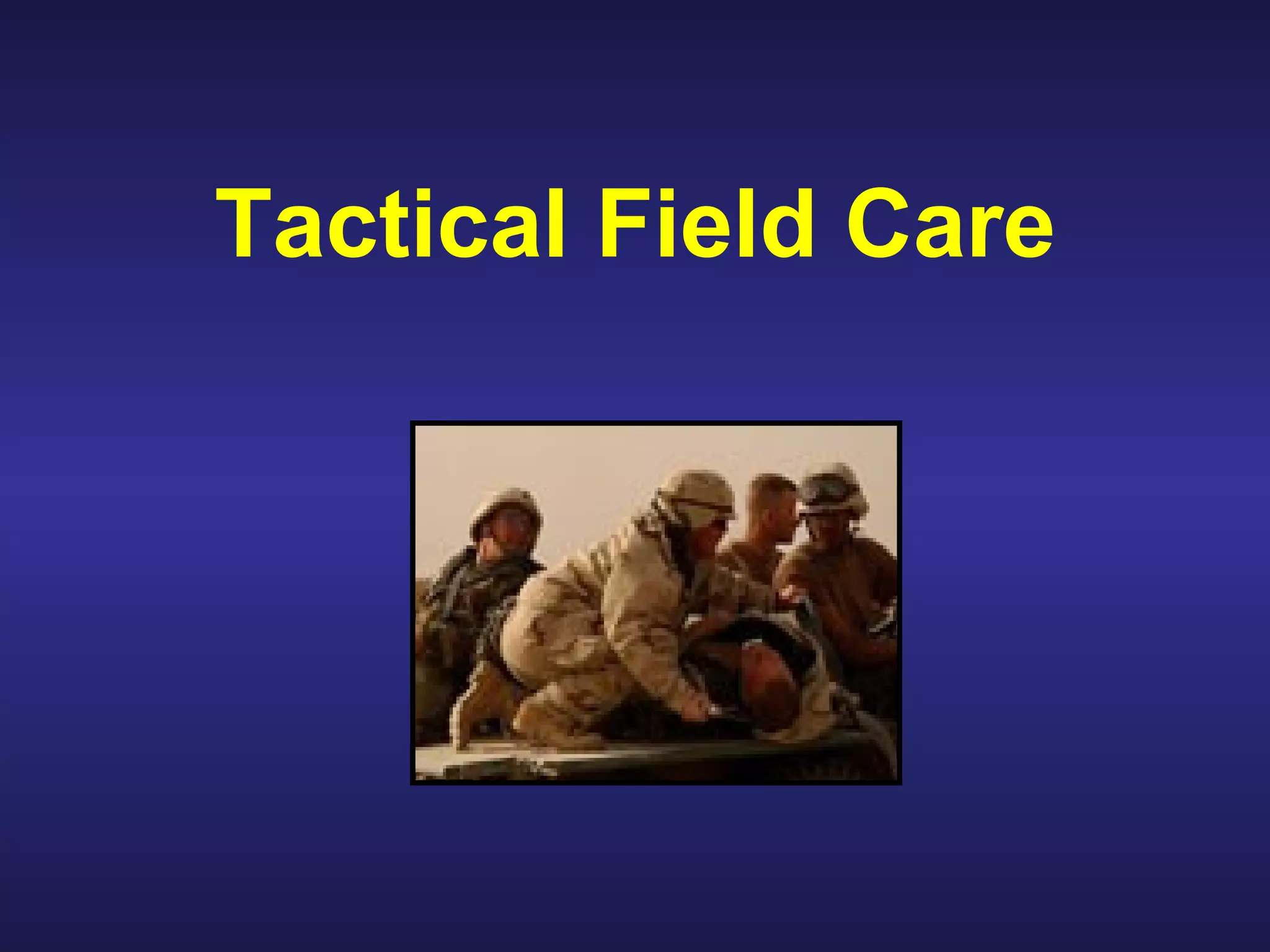
Tactical Field Care
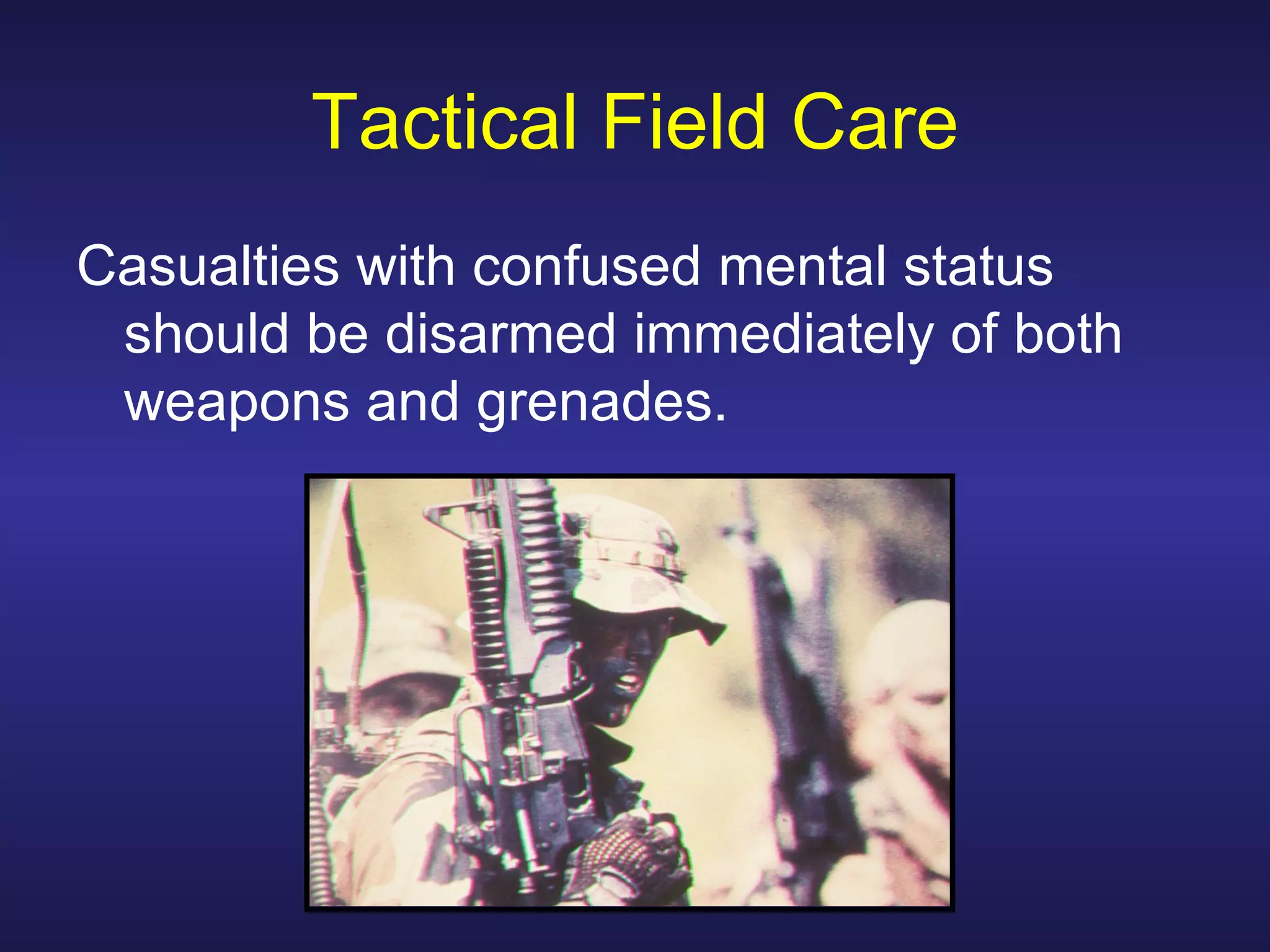
Tactical Field Care Casualties with confused mental status should be disarmed immediately of both weapons and grenades.
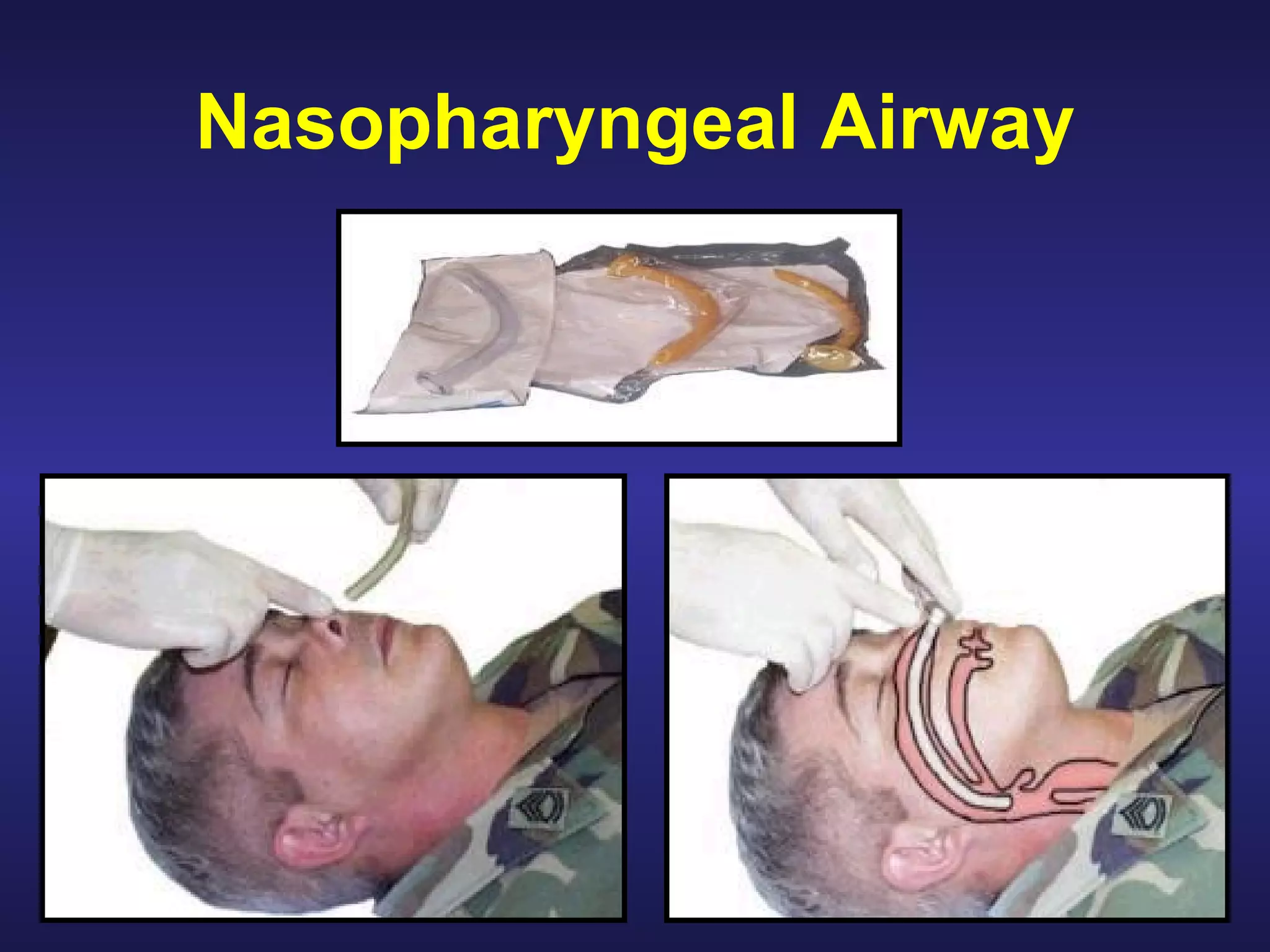
Tactical Field Care Initial assessment is the ABCs Airway
Breathing
Circulation
Nasopharyngeal Airway
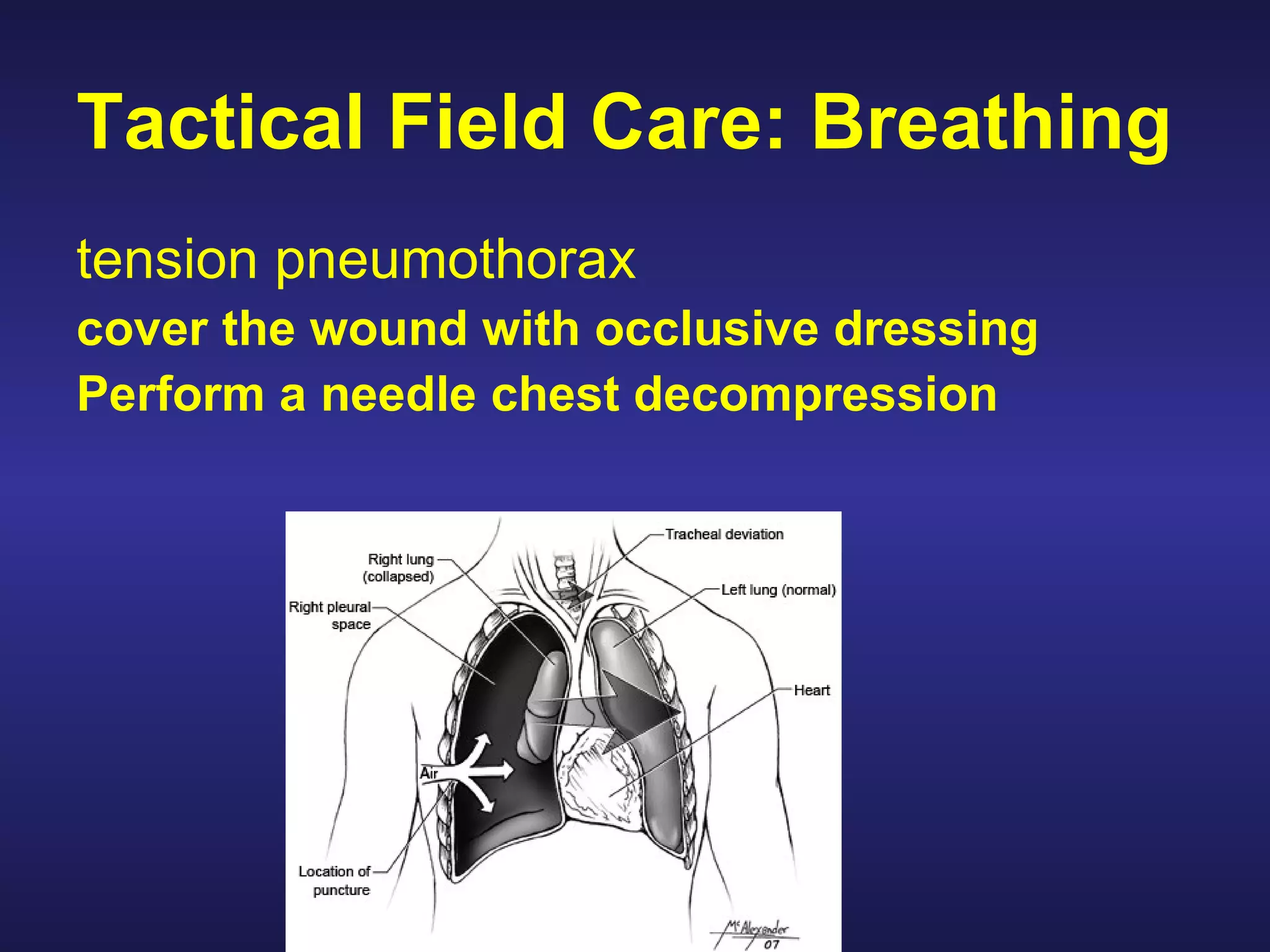
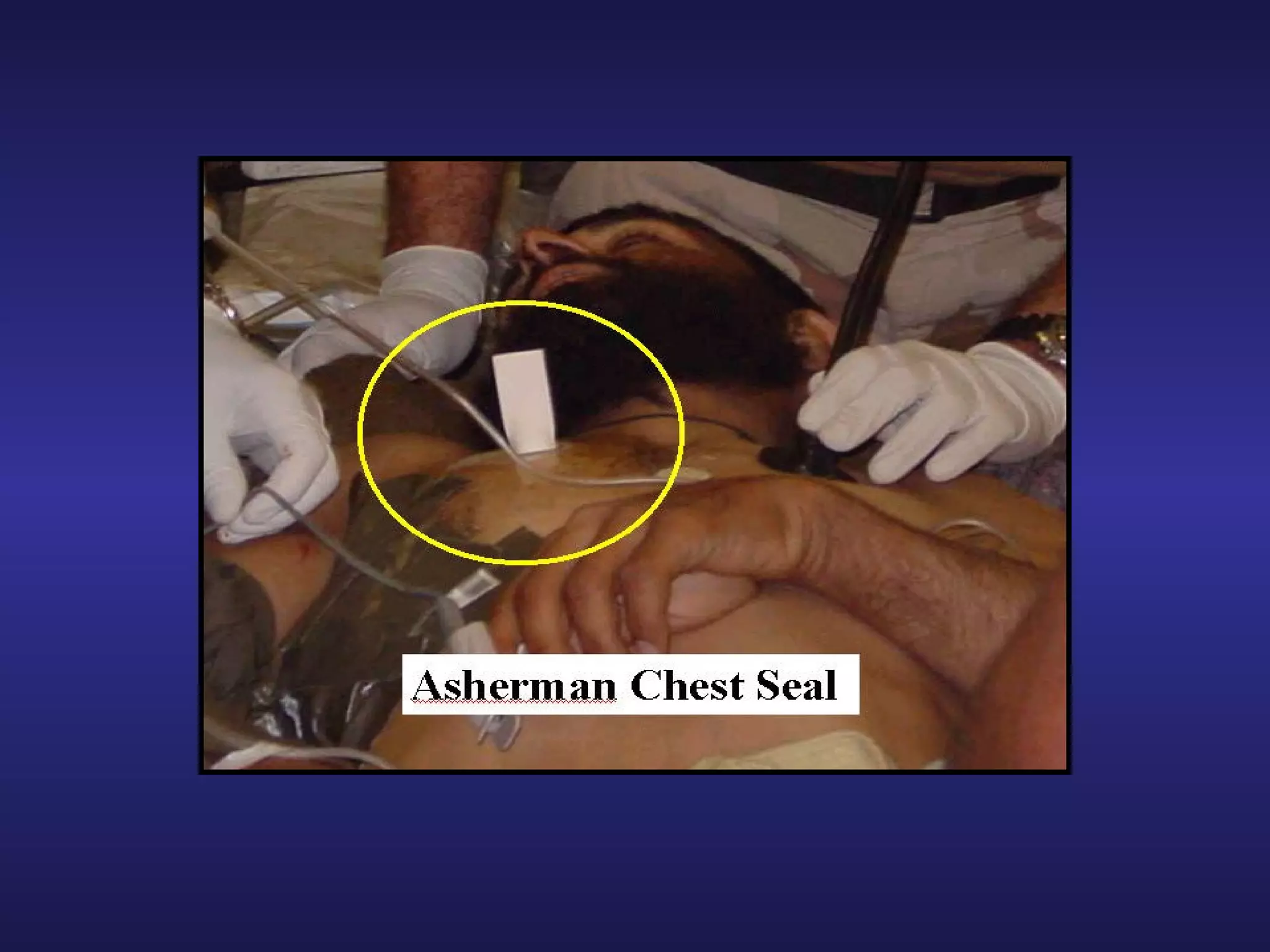
Tactical Field Care: Breathing tension pneumothorax cover the wound with occlusive dressing
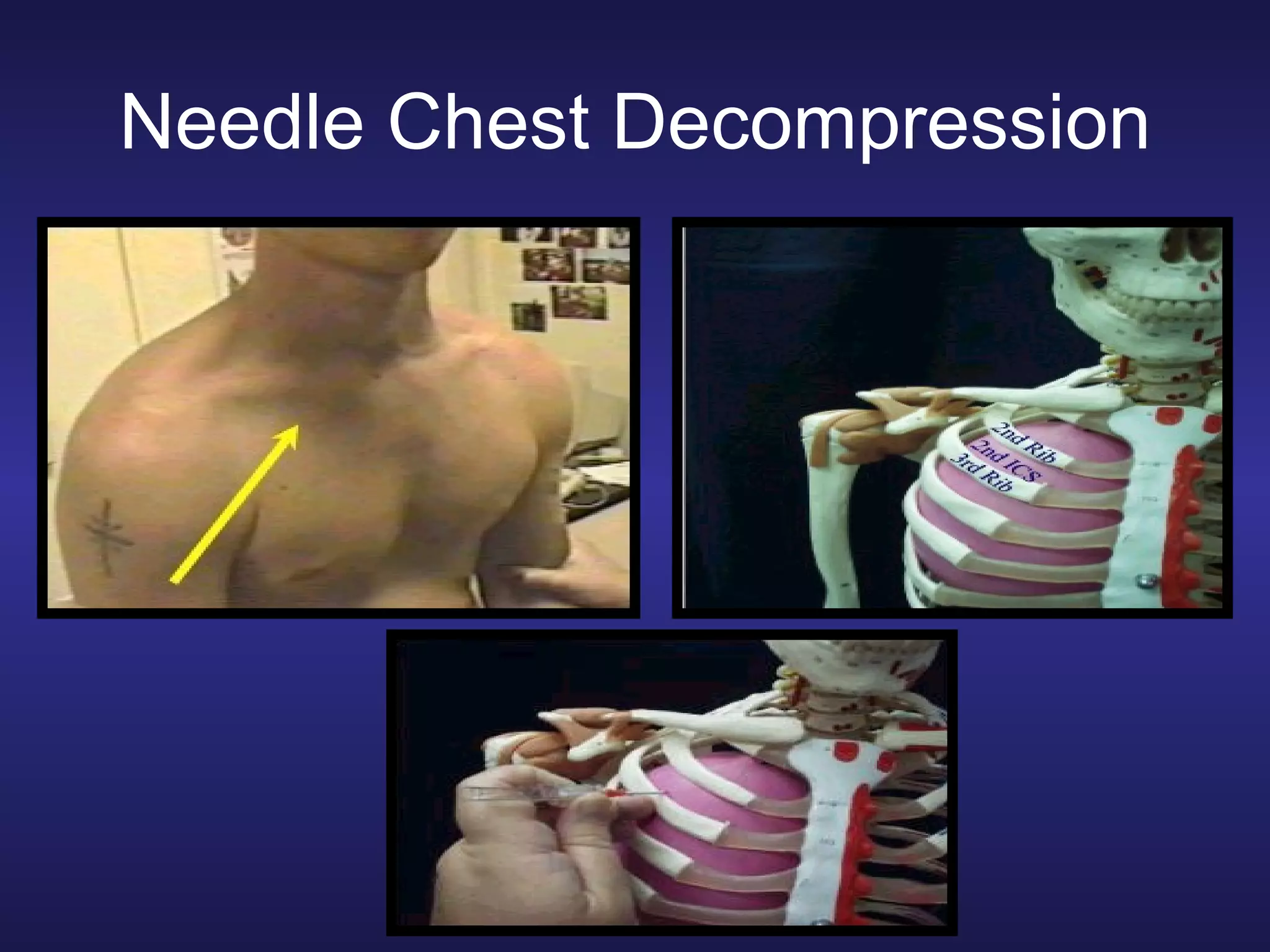
Perform a needle chest decompression
 
Needle Chest Decompression

Perform tactical combat