Peptidomics Methods and Protocols 1st Edition Mikhail Soloviev (Auth.)
1.
Visit https://ebookultra.com todownload the full version and
explore more ebooks or textbooks
Peptidomics Methods and Protocols 1st Edition
Mikhail Soloviev (Auth.)
_____ Click the link below to download _____
https://ebookultra.com/download/peptidomics-methods-and-
protocols-1st-edition-mikhail-soloviev-auth/
Explore and download more ebooks or textbooks at ebookultra.com
2.
Here are somerecommended products that we believe you will be
interested in. You can click the link to download.
Polyadenylation Methods and Protocols 1st Edition Joanna
Rorbach
https://ebookultra.com/download/polyadenylation-methods-and-
protocols-1st-edition-joanna-rorbach/
Microsatellites Methods and Protocols 1st Edition
Panagiotis Madesis
https://ebookultra.com/download/microsatellites-methods-and-
protocols-1st-edition-panagiotis-madesis/
Biofuels Methods and Protocols 1st Edition Shahabaddine
Sokhansanj
https://ebookultra.com/download/biofuels-methods-and-protocols-1st-
edition-shahabaddine-sokhansanj/
Liposome Methods and Protocols 1st Edition Subroto
Chatterjee
https://ebookultra.com/download/liposome-methods-and-protocols-1st-
edition-subroto-chatterjee/
3.
Apoptosis Methods andProtocols 1st Edition Demetrius
Matassov
https://ebookultra.com/download/apoptosis-methods-and-protocols-1st-
edition-demetrius-matassov/
Xenotransplantation Methods and Protocols 1st Edition
Veronica Tisato
https://ebookultra.com/download/xenotransplantation-methods-and-
protocols-1st-edition-veronica-tisato/
Protoplast Technology Methods and Protocols 1st Edition
Kan Wang
https://ebookultra.com/download/protoplast-technology-methods-and-
protocols-1st-edition-kan-wang/
Chromatin Remodeling Methods and Protocols 1st Edition
Junbiao Dai
https://ebookultra.com/download/chromatin-remodeling-methods-and-
protocols-1st-edition-junbiao-dai/
Nanoimaging Methods and Protocols 1st Edition Alioscka A.
Sousa
https://ebookultra.com/download/nanoimaging-methods-and-protocols-1st-
edition-alioscka-a-sousa/
METHODS IN MOLECULARBIOLOGY
TM
Series Editor
John M. Walker
School of Life Sciences
University of Hertfordshire
Hatfield, Hertfordshire, AL10 9AB, UK
For other titles published in this series, go to
www.springer.com/series/7651
Preface
Despite being knownand studied for years, peptides have never before attracted enough
attention to necessitate the invention of the term “Peptidomics” in order to specify the
study of the complement of peptides from a cell, organelle, tissue or organism. This vol-
ume presents a comprehensive range of analytical techniques for analysis of the peptide
contents of complex biological samples. The emphasis is often on higher throughput
techniques, suitable for the analysis of large numbers of peptides typically present in the
peptidomes or other complex biological samples. A wide range of methods is presented,
covering all stages of peptidomic research including, where applicable, organism handling,
tissue and organ dissection, cellular and subcellular fractionation, peptide extraction, frac-
tionation and purification, structural characterisation, molecular cloning and sequence
analysis. In addition to this, a selection of methods suitable for quantification, display,
immunochemical and functional analysis of peptides and proteins are presented. The
methods and techniques covered in this volume encompass a number of species rang-
ing from bacteria to man and include model organisms such as Caenorhabditis elegans,
Drosophila melanogaster and Mus musculus. Strong emphasis is placed on data analysis,
including mass spectra interpretation and in silico peptide prediction algorithms. Where
relevant, the peptidomic approaches are compared to the proteomic methods. Here is a
snapshot of the practical information, peptidomic methods and other related protocols
included in this volume:
Target organisms and samples covered: Bacteria (Chapter 2), hydra (Chapter 21), nema-
tode (Chapter 3), mollusc (Chapter 4), crab (Chapter 5), spider venoms (Chapters 6
and 7), insects (Chapters 8, 9, 10, 11, 25), amphibians (Chapters 12, 13, 14), rodents
(Chapters 15, 16, 17, 18), samples of human origin (Chapters 19, 20, 22, 23) and plants
(Chapter 26).
Peptide extraction and Liquid chromatography fractionation methods (mostly size
exclusion, ion exchange, reverse-phase modes or their combinations) can be found in
Chapters 2, 3, 4, 5, 6, 7, 8, 12, 14, 15, 16, 17, 18, 19, 20, 21, 22). These include OFF-
line and ON-line techniques. The former are often used with MALDI-MS detection (e.g.
Chapters 3, 4, 5, 6, 7, 8, 12, 15, 16, 19) whilst the latter more generally with single or
multidimensional hyphenated LCN
-MSN
techniques (e.g. Chapters 2, 3, 15, 17, 18, 21).
Other separation and fractionation methods covered include microdialysis of live ani-
mals (Chapter 5), SDS-PAGE (Chapters 6, 18), magnetic bead based purification (Chap-
ter 20) and solid-phase extraction (Chapters 2, 6, 12, 19, 22).
Affinity peptide detection including anti-peptide antibody development and characteri-
sation, Affinity peptidomics, ELISA and microarray affinity assays are covered in Chapters
22, 23 and 24.
Mass spectrometry techniques include MALDI-TOF MS (e.g. Chapters 3, 6, 7, 8, 12,
16, 19, 20), MALDI-TOF with PSD (Chapter 8), MALDI-TOF MS/MS (e.g. Chapters
4, 6, 15, 21); ESI-MS/MS techniques (Chapters 3, 6, 16, 17, 18) or high-resolution
FTMS (Chapter 2). Direct MALDI-MS peptide profiling from cells and tissues is described
in Chapters 9, 10 and 11.
v
11.
vi Preface
The descriptionof functional assays can be found in Chapters 7, 14 and 21. Of par-
ticular interest in this respect is Chapter 21, where functional activity of the peptides is
assessed through the analysis of mRNA transcription levels changes in response to the
peptide application. That chapter contains a selection of protocols for peptide extraction,
fractionation and functional testing using a combination of molecular biology techniques,
cellular and morphological assays.
Molecular cloning of peptide cDNAs and the associated techniques are described in
Chapters 13 and 14.
Issues related to peptide sequence analysis are addressed in many chapters dealing with
MS spectra interpretation, but of special interest in this respect are Chapters 25 and 26,
dealing with in silico peptide prediction techniques and Chapter 20 which includes a section
on bioinformatics analysis of peptide expression profiling data. Differential peptide expression
issues are also covered in Chapter 2.
Peptidomics is 10-years old. My congratulations go to all scientists who have created
and developed the science of Peptidomics through their research and especially those who
found time to contribute their invaluable know-how in the form of methods and protocols
for inclusion in this volume. Peptidomics: Methods and Protocols is designed to complement
previously published titles in the Methods in Molecular BiologyTM
series, which focused on
protein analysis. This volume will help the beginner to become familiar with this fascinating
field of research and will provide scientists at all levels of expertise with easy-to-follow
practical advice needed to set up and carry out analysis of the peptide contents of complex
biological samples.
Royal Holloway University of London Mikhail Soloviev
December 2009
12.
Contents
Preface . .. . . . . . . . . . . . . . . . . . . . . . . . . . . . . . . . . . . . . . . . v
Contributors . . . . . . . . . . . . . . . . . . . . . . . . . . . . . . . . . . . . . . . xi
SECTION I INTRODUCTION . . . . . . . . . . . . . . . . . . . . . . . . . . . . . 1
1. Peptidomics: Divide et Impera . . . . . . . . . . . . . . . . . . . . . . . . . . 3
Mikhail Soloviev
SECTION II FROM BACTERIA TO MEN . . . . . . . . . . . . . . . . . . . . . . . . 11
2. Performing Comparative Peptidomics Analyses
of Salmonella from Different Growth Conditions . . . . . . . . . . . . . . . . . 13
Joshua N. Adkins, Heather Mottaz, Thomas O. Metz, Charles Ansong,
Nathan P. Manes, Richard D. Smith, and Fred Heffron
3. Approaches to Identify Endogenous Peptides in the Soil Nematode
Caenorhabditis elegans . . . . . . . . . . . . . . . . . . . . . . . . . . . . . . 29
Steven J. Husson, Elke Clynen, Kurt Boonen, Tom Janssen,
Marleen Lindemans, Geert Baggerman, and Liliane Schoofs
4. Mass Spectrometric Analysis of Molluscan Neuropeptides . . . . . . . . . . . . 49
Ka Wan Li and August B. Smit
5. Monitoring Neuropeptides In Vivo via Microdialysis
and Mass Spectrometry . . . . . . . . . . . . . . . . . . . . . . . . . . . . . . 57
Heidi L. Behrens and Lingjun Li
6. Protocols for Peptidomic Analysis of Spider Venoms . . . . . . . . . . . . . . . 75
Liang Songping
7. Purification and Characterization of Biologically Active Peptides
from Spider Venoms . . . . . . . . . . . . . . . . . . . . . . . . . . . . . . . . 87
Alexander A. Vassilevski, Sergey A. Kozlov, Tsezi A. Egorov,
and Eugene V. Grishin
8. MALDI-TOF Mass Spectrometry Approaches
to the Characterisation of Insect Neuropeptides . . . . . . . . . . . . . . . . . 101
Robert J. Weaver and Neil Audsley
9. Direct MALDI-TOF Mass Spectrometric Peptide Profiling
of Neuroendocrine Tissue of Drosophila . . . . . . . . . . . . . . . . . . . . . 117
Christian Wegener, Susanne Neupert, and Reinhard Predel
10. Direct Peptide Profiling of Brain Tissue by MALDI-TOF
Mass Spectrometry . . . . . . . . . . . . . . . . . . . . . . . . . . . . . . . . 129
Joachim Schachtner, Christian Wegener, Susanne Neupert,
and Reinhard Predel
vii
13.
viii Contents
11. PeptidomicAnalysis of Single Identified Neurons . . . . . . . . . . . . . . . . . 137
Susanne Neupert and Reinhard Predel
12. Identification and Analysis of Bioactive Peptides
in Amphibian Skin Secretions . . . . . . . . . . . . . . . . . . . . . . . . . . . 145
J. Michael Conlon and Jérôme Leprince
13. An Efficient Protocol for DNA Amplification of Multiple Amphibian
Skin Antimicrobial Peptide cDNAs . . . . . . . . . . . . . . . . . . . . . . . . 159
Shawichi Iwamuro and Tetsuya Kobayashi
14. Combined Peptidomics and Genomics Approach to the Isolation
of Amphibian Antimicrobial Peptides . . . . . . . . . . . . . . . . . . . . . . . 177
Ren Lai
15. Identification and Relative Quantification of Neuropeptides
from the Endocrine Tissues . . . . . . . . . . . . . . . . . . . . . . . . . . . . 191
Kurt Boonen, Steven J. Husson, Bart Landuyt, Geert Baggerman,
Eisuke Hayakawa, Walter H.M.L. Luyten, and Liliane Schoofs
16. Peptidome Analysis of Mouse Liver Tissue by Size Exclusion
Chromatography Prefractionation . . . . . . . . . . . . . . . . . . . . . . . . . 207
Lianghai Hu, Mingliang Ye, and Hanfa Zou
17. Rat Brain Neuropeptidomics: Tissue Collection, Protease Inhibition,
Neuropeptide Extraction, and Mass Spectrometric Analysis . . . . . . . . . . . . 217
Robert M. Sturm, James A. Dowell, and Lingjun Li
18. Quantitative Neuroproteomics of the Synapse . . . . . . . . . . . . . . . . . . 227
Dinah Lee Ramos-Ortolaza, Ittai Bushlin, Noura Abul-Husn,
Suresh P. Annangudi, Jonathan Sweedler, and Lakshmi A. Devi
19. Peptidomics Analysis of Lymphoblastoid Cell Lines . . . . . . . . . . . . . . . 247
Anne Fogli and Philippe Bulet
20. Peptidomics: Identification of Pathogenic and Marker Peptides . . . . . . . . . . 259
Yang Xiang, Manae S. Kurokawa, Mie Kanke, Yukiko Takakuwa,
and Tomohiro Kato
SECTION III TOOLS AND APPROACHES . . . . . . . . . . . . . . . . . . . . . . . . 273
21. Peptidomic Approaches to the Identification and Characterization
of Functional Peptides in Hydra . . . . . . . . . . . . . . . . . . . . . . . . . 275
Toshio Takahashi and Toshitaka Fujisawa
22. Immunochemical Methods for the Peptidomic Analysis
of Tachykinin Peptides and Their Precursors . . . . . . . . . . . . . . . . . . . 293
Nigel M. Page and Nicola J. Weston-Bell
23. Affinity Peptidomics: Peptide Selection and Affinity Capture
on Hydrogels and Microarrays . . . . . . . . . . . . . . . . . . . . . . . . . . 313
Fan Zhang, Anna Dulneva, Julian Bailes, and Mikhail Soloviev
14.
Contents ix
24. InSitu Biosynthesis of Peptide Arrays . . . . . . . . . . . . . . . . . . . . . . . 345
Mingyue He and Oda Stoevesandt
25. Bioinformatic Approaches to the Identification of Novel Neuropeptide
Precursors . . . . . . . . . . . . . . . . . . . . . . . . . . . . . . . . . . . . . 357
Elke Clynen, Feng Liu, Steven J. Husson, Bart Landuyt,
Eisuke Hayakawa, Geert Baggerman, Geert Wets, and Liliane Schoofs
26. Bioinformatic Identification of Plant Peptides . . . . . . . . . . . . . . . . . . . 375
Kevin A. Lease and John C. Walker
Index . . . . . . . . . . . . . . . . . . . . . . . . . . . . . . . . . . . . . . . . . . . 385
15.
Contributors
NOURA ABUL-HUSN •Department of Pharmacology and Systems Therapeutics, Mount
Sinai School of Medicine, New York, NY, USA
JOSHUA N. ADKINS • Fundamental and Computational Sciences Directorate, Pacific
Northwest National Laboratory, Richland, WA, USA
SURESH P. ANNAGUDI • Department of Chemistry and the Beckman Institute,
University of Illinois at Urbana-Champaign, Urbana, IL, USA
CHARLES ANSONG • Fundamental and Computational Sciences Directorate, Pacific
Northwest National Laboratory, Richland, WA, USA
NEIL AUDSLEY • The Food and Environment Research Agency, Sand Hutton, York, UK
GEERT BAGGERMAN • ProMeta, Interfacultary Center for Proteomics and
Metabolomics, K.U. Leuven, Leuven, Belgium
JULIAN BAILES • School of Biological Sciences, Royal Holloway University of London,
Egham, Surrey, UK
HEIDI L. BEHRENS • Department of Chemistry, University of Wisconsin-Madison,
Madison, WI, USA
KURT BOONEN • Functional Genomics and Proteomics Research Unit, Department of
Biology, K.U. Leuven, Leuven, Belgium
PHILIPPE BULET • TIMC-IMAG, UMR 5525, Domaine de Chosal, Archamps, France
ITTAI BUSHLIN • Department of Pharmacology and Systems Therapeutics, Mount Sinai
School of Medicine, New York, NY, USA
ELKE CLYNEN • Functional Genomics and Proteomics, Department of Biology, K.U.
Leuven, Leuven, Belgium
J. MICHAEL CONLON • Department of Biochemistry, Faculty of Medicine and Health
Sciences, United Arab Emirates University, Al-Ain, UAE
LAKSHMI A. DEVI • Department of Pharmacology and Systems Therapeutics, Mount
Sinai School of Medicine, New York, NY, USA
JAMES A. DOWELL • Department of Chemistry, School of Pharmacy, University of
Wisconsin-Madison, Madison, WI, USA
ANNA DULNEVA • School of Biological Sciences, Royal Holloway University of London,
Egham, Surrey, UK
TSEZI A. EGOROV • Shemyakin-Ovchinnikov Institute of Bioorganic Chemistry, Russian
Academy of Sciences, Moscow, Russia
xi
16.
xii Contributors
ANNE FOGLI• GreD UMR INSERM 931 CNRS 6142, Faculté de Médecine,
Clermont-Ferrand, France
TOSHITAKA FUJISAWA • Institute of Zoology, University of Heidelberg, Heidelberg,
Germany
EUGENE V. GRISHIN • Shemyakin-Ovchinnikov Institute of Bioorganic Chemistry,
Russian Academy of Sciences, Moscow, Russia
EISUKE HAYAKAWA • Functional Genomics and Proteomics Research Unit, Department
of Biology, K.U. Leuven, Leuven, Belgium
MINGYUE HE • The Babraham Institute, Cambridge, UK
FRED HEFFRON • Department of Molecular Microbiology and Immunology, Oregon
Health and Sciences University, Portland, OR, USA
LIANGHAI HU • Key Laboratory of Separation Science for Analytical Chemistry,
National Chromatographic R&A Centre, Dalian Institute of Chemical Physics, Chinese
Academy of Sciences, Dalian, China
STEVEN J. HUSSON • Functional Genomics and Proteomics, Department of Biology,
K.U. Leuven, Leuven, Belgium
SHAWICHI IWAMURO • Department of Biology, Faculty of Science, Toho University,
Funabashi, Chiba, Japan
TOM JANSSEN • Functional Genomics and Proteomics, Department of Biology, K.U.
Leuven, Leuven, Belgium
MIE KANKE • Clinical Proteomics and Molecular Medicine, St. Marianna University
Graduate School of Medicine, Kawasaki, Japan
TOMOHIRO KATO • Clinical Proteomics and Molecular Medicine, St. Marianna
University Graduate School of Medicine, Kawasaki, Japan
TETSUYA KOBAYASHI • Department of Regulation Biology, Faculty of Science, Saitama
University, Saitama, Japan
SERGEY A. KOZLOV • Shemyakin-Ovchinnikov Institute of Bioorganic Chemistry,
Russian Academy of Sciences, Moscow, Russia
MANAE S. KUROKAWA • Clinical Proteomics and Molecular Medicine, St. Marianna
University Graduate School of Medicine, Kawasaki, Japan
REN LAI • Kunming Institute of Zoology, Chinese Academy of Sciences, Kunming,
Yunnan, China
BART LANDUYT • Functional Genomics and Proteomics Research Unit, Department of
Biology, K.U. Leuven, Leuven, Belgium
KEVIN A. LEASE • Division of Biological Sciences and Bond Life Sciences Centre,
University of Missouri, Columbia, MO, USA
JÉRÔME LEPRINCE • European Institute for Peptide Research (IFRMP 23), INSERM
U-413, UA CNRS, University of Rouen, Mont-Saint-Aignan, France
17.
Contributors xiii
KA WANLI • Department of Molecular and Cellular Neurobiology, Centre for
Neurogenomics and Cognitive Research, Faculty of Earth and Life Sciences, VU
University Amsterdam, Amsterdam, The Netherlands
LINGJUN LI • Department of Chemistry, School of Pharmacy, University of
Wisconsin-Madison, Madison, WI, USA
MARLEEN LINDEMANS • Functional Genomics and Proteomics, Department of Biology,
K.U. Leuven, Leuven, Belgium
FENG LIU • Data Analysis and Modeling Group, Transportation Research Institute,
Hasselt University, Diepenbeek, Belgium
WALTER H.M.L. LUYTEN • Department Woman and Child, Faculty of Medicine, K.U.
Leuven, Leuven, Belgium
NATHAN P. MANES • Fundamental and Computational Sciences Directorate, Pacific
Northwest National Laboratory, Richland, WA, USA
THOMAS O. METZ • Fundamental and Computational Sciences Directorate, Pacific
Northwest National Laboratory, Richland, WA, USA
HEATHER MOTTAZ • Fundamental and Computational Sciences Directorate, Pacific
Northwest National Laboratory, Richland, WA, USA
SUSANNE NEUPERT • Institute of General Zoology and Animal Physiology,
Friedrich-Schiller-University, Jena, Germany
NIGEL M. PAGE • School of Life Sciences, Kingston University London,
Kingston-upon-Thames, Surrey, UK
REINHARD PREDEL • Institute of General Zoology and Animal Physiology,
Friedrich-Schiller-University, Jena, Germany
DINAH LEE RAMOS-ORTOLAZA • Department of Pharmacology and Systems
Therapeutics, Mount Sinai School of Medicine, New York, NY, USA
JOACHIM SCHACHTNER • Department of Biology, Animal Physiology,
Philipps-University, Marburg, Germany
LILIANE SCHOOFS • Functional Genomics and Proteomics Research Unit, Department
of Biology, K.U. Leuven, Leuven, Belgium
AUGUST B. SMIT • Department of Molecular and Cellular Neurobiology, Centre for
Neurogenomics and Cognitive Research, Faculty of Earth and Life Sciences, VU
University Amsterdam, Amsterdam, The Netherlands
RICHARD D. SMITH • Fundamental and Computational Sciences Directorate, Pacific
Northwest National Laboratory, Richland, WA, USA
MIKHAIL SOLOVIEV • School of Biological Sciences, Royal Holloway University of
London, Egham, Surrey, UK
LIANG SONGPING • College of Life Sciences, Hunan Normal University, Changsha,
China
ODA STOEVESANDT • Babraham Bioscience Technologies, Cambridge, UK
18.
xiv Contributors
ROBERT M.STURM • Department of Chemistry, School of Pharmacy, University of
Wisconsin-Madison, Madison, WI, USA
JONATHAN SWEEDLER • Department of Chemistry and the Beckman Institute,
University of Illinois at Urbana-Champaign, Urbana, IL, USA
TOSHIO TAKAHASHI • Suntory Institute for Bioorganic Research, Osaka, Japan
YUKIKO TAKAKUWA • Clinical Proteomics and Molecular Medicine, St. Marianna
University Graduate School of Medicine, Kawasaki, Japan
ALEXANDER A. VASSILEVSKI • Shemyakin-Ovchinnikov Institute of Bioorganic
Chemistry, Russian Academy of Sciences, Moscow, Russia
JOHN C. WALKER • Division of Biological Sciences and Bond Life Sciences Center,
University of Missouri, Columbia, MO, USA
ROBERT J. WEAVER • The Food and Environment Research Agency, Sand Hutton, York,
UK
CHRISTIAN WEGENER • Emmy Noether Neuropeptide Group, Animal Physiology,
Philipps-University, Marburg, Germany
NICOLA J. WESTON-BELL • Genetic Vaccine Group, Cancer Sciences Division,
Southampton General Hospital, University of Southampton School of Medicine,
Southampton, Hampshire, UK
GEERT WETS • Data Analysis and Modeling Group, Transportation Research Institute,
Hasselt University, Diepenbeek, Belgium
YANG XIANG • Clinical Proteomics and Molecular Medicine, St. Marianna University
Graduate School of Medicine, Kawasaki, Japan
MINGLIANG YE • Key Laboratory of Separation Science for Analytical Chemistry,
National Chromatographic R&A Centre, Dalian Institute of Chemical Physics, Chinese
Academy of Sciences, Dalian, China
FAN ZHANG • School of Biological Sciences, Royal Holloway University of London, Egham,
Surrey, UK
HANFA ZOU • Key Laboratory of Separation Science for Analytical Chemistry, National
Chromatographic R&A Centre, Dalian Institute of Chemical Physics, Chinese Academy
of Sciences, Dalian, China
4 Soloviev
techniques, resultedin dramatic improvements in the sensitivity
and high throughput of protein and peptide analyses (2) and gen-
erated unprecedented growth in the number of relevant publica-
tions (Fig. 1.1).
0.0%
0.1%
0.2%
0.3%
0.4%
0.5%
0.6%
0.7%
0.8%
1994
1995
1996
1997
1998
1999
2000
2001
2002
2003
2004
2005
2006
2007
2008
0.000%
0.001%
0.002%
0.003%
0.004%
0.005%
0.006%
0.007%
0.008%
Peptidomics
Proteomics
Fig. 1.1. Peptidomics publications since 1999. The bars represent the number of publications in PubMed containing
“peptidomics OR peptidomic OR peptidome” normalised to the total number of publications added to PubMed each year.
Proteomics publications in PubMed (found similarly) follow the same trend (solid line). Vertical axes show normalised
data (in %) for proteomics papers (left) and peptidomics papers (right). Total number of publications on 1 January 2009
was 28,273 (proteomics) and 246 (peptidomics).
2. Peptidomics
of Naturally
Occurring
Peptides and
Peptide Pools
Similarly to “proteomics”, the term “peptidomics” can be defined
as the systematic analysis of the peptide content within an organ-
ism, tissue or cell (3) in order to determine peptides’ identity,
quantity, structure and function. Such interpretation made its
public debut at the 2nd International Seminar on the Enabling
Role of MS in 1999 (4), before finally appearing in press in 2001
in research papers by Peter D.E.M. Verhaert et al. (5), Peter
Schulz-Knappe et al. (6) and Elke Clynen et al. (7). The disci-
pline of peptidomics focuses on peptides that often display bio-
logical activity such as hormones, cytokines, toxins, neuropeptides
and alike, which are generated from larger precursors, as well as
biomarker-type peptides that may not have any bioactivity but are
indicative of a particular pathology, for example the up/down-
regulation of many serum peptides that result from proteolysis.
22.
Peptidomics: Divide etImpera 5
Peptidomics is in its infancy relative to other “omics” (28,273
papers on PubMed for a “proteomics” search compared to just
246 for “peptidomics” as of January 1st, 2009) but is expanding
rapidly (Fig. 1.1).
3. Peptidomics
Approach to
Proteomics
In parallel, and independently of the peptidomics definition given
in (5–7), another meaning was introduced by Barry et al. (8)
in relation to the analysis of peptide pools (of biological fluids,
tissues or cells) obtained by means of proteolytic digestion of
these samples and in particular using affinity-based analysis (hence
“Affinity peptidomics”) e.g. in the form of protein arrays (9, 10).
Since biologically occurring peptides (whether biologically active
or not) are strictly speaking also the products of proteolysis (e.g.
insulin pre-pro-insulin, or biologically active peptides obtained
through “non-specific” proteolysis of e.g. haemoglobin), both
definitions of “peptidomics” are therefore very similar in that they
refer to the analysis of partially or fully proteolytically digested
proteins, i.e. peptides. And finally, to acknowledge everyone
involved in the birth of the “peptidomics” as a separate field of
chemical biology, we should mention a Germany-based company
“BioVisioN AG” which filed a trademark “peptidomics” in 1999
to cover “Chemicals used in science, in particular for analysis,
other than for medical or veterinary purposes”; “Medical, veteri-
nary and pharmaceutical products” as well as the “Scientific and
industrial research; conducting medical and non-medical analyses;
services in the field of diagnostics; development of pharmaceutical
active substances; purchasing, licensing and exploitation of intel-
lectual property” (11).
4. Peptidomics:
The
Methodologies
In the past, the majority of separation techniques used in pro-
tein and peptide analysis relied on their physical properties, such
as protein or peptide size, shape, polarity, pI, the distribution of
ionisable, polar and non-polar groups on the molecule surface,
and their affinity towards specific or non-specific affinity capture
reagents. Modern separation techniques rely on a combination of
isoelectric focusing, electrophoretic separation and a great vari-
ety of liquid chromatography techniques, often linked together
to yield two- or three-dimensional separation approaches, and
23.
6 Soloviev
frequently backedup by serious automation. Highly parallel anal-
ysis is often attempted through miniaturisation (12) and the use
of chip-based techniques (13–16) or the Agilent 2100 Bioan-
alyzer (www.chem.agilent.com). The inherent heterogeneity of
the proteins’ and to a lesser degree peptides’ physical properties
which underlies all of the above separation options is, at the same
time, the inherent problem of any highly parallel protein analy-
sis. A single universal system suitable for extraction and separa-
tion (let alone functional analysis) of all classes of proteins is yet
to be reported. Unlike proteins, the peptides are often less het-
erogeneous in their physico-chemical properties and therefore the
complete peptidomic analysis of samples, tissues and in some cases
whole organisms is more straightforward than proteomic analysis.
In addition to physical methods of analysis and separation,
chemical biology offers a number of other approaches, which rely
directly or indirectly on chemical modifications and separation
principles based on chemical properties of proteins and peptides.
Chemical modification of the side chains of proteins and peptides
was first reported many decades ago (see 17 for a review) and
has been used widely since for protein modifications, labelling
and cross-linking, but not so widely for protein separations – the
latter because of the issues related to the availability and surface
exposure of the reactive groups. Unlike proteins, peptides offer
a unique chance to apply chemical selection techniques because
of the lack of complex secondary structure and virtually com-
plete exposure to solvent of all of the reactive groups. A number
of reports utilising chemical biology approach to peptide sepa-
ration and analysis have been published more recently. In most
cases these describe various group-specific labelling procedures,
often linked to peptide quantification (18, 19) as well as chemical
depletion approaches (17, 20). Among the other “omics” tech-
nologies and approaches, “peptidomics” is the most comparable
to “Proteomics” and although the terms are not synonymous, the
underlying techniques and approaches are almost identical. For
example, MS, a cornerstone of modern proteomics, in most cases
actually analyses peptides (obtained through proteolytic digestion
of proteins) or their fragments (obtained through e.g. CID), not
proteins. The difference between the terms “peptidomics” and
the “proteomics” is therefore blurred, especially if “methods” are
being considered.
5. Peptidomics:
The Targets
Target-wise, the peptidomics research is often focused, although
not always, on studying peptides formed in vivo by proteolysis of
specialised or non-specialised precursor proteins (often bioactive
24.
Peptidomics: Divide etImpera 7
peptides), rather than “artificially” or in vitro-produced peptides.
The range of biological activities displayed by naturally occur-
ring peptides is truly remarkable; it ranges from toxins that can
paralyse or kill to peptides that have the ability to heal. The ven-
oms of arthropods such as spiders and scorpions, as well as other
species such as cone snails, comprise a vast number of neuromod-
ulatory peptides that are capable of serious harm, but also serve
as a highly useful point to discover new drugs such as painkillers
(21). The identification and functional characterisation of pep-
tides from all species including humans is crucial in the discovery
of novel biomarkers and drug targets, and may yield novel ther-
apeutic agents such as peptide-based vaccine Glatiramer acetate
(GA) (Copaxone) used for the treatment of relapsing and remit-
ting cases of multiple sclerosis (22). The suitability of peptides
as biomarkers stems from the fact that they are present in all
body fluids, cells and tissues (23), and many approaches focus
on identifying them from such samples (24, 25). Peptides also
play crucial roles in innate and adaptive immune responses by
forming complexes with MHC-I, MHC-II and T cells where they
stimulate defensive immune responses (26–28). The importance
of peptides in cell-to-cell communication underpins the impor-
tance of peptidomics in understanding multiple pathologies that
result from these communication processes going wrong. The
peptide content of biological fluids, such as urine for example,
can be used to produce a complete peptidomic fingerprint of
an individual’s health (29). The evolutionary evidence to sup-
port the importance of peptides in such widespread biological
roles is evident when one examines the conservation of peptide
families across species. The Tachykinin peptides for example, the
largest known neuropeptide family, are found in vertebrates, pro-
tochordates and invertebrates (30). On the other end of the scale,
even primitive microorganisms rely on peptide signalling, such as
for example bacterial quorum sensing (31, 32) and yeast mating
factors (33).
The following chapters provide a comprehensive guide to
peptidomics methods and applications, spanning a range of
species from bacteria to man and covering a wide range of relevant
methods from basic biochemistry techniques to in silico tools and
protocols.
References
1. Chervet, J.P., Ursem, M., and Salzmann,
J.B. (1996) Instrumental requirements for
nanoscale liquid chromatography. Anal.
Chem. 68, 1507–1512.
2. Quadroni, M. and James, P. (1999) Pro-
teomics and automation. Electrophoresis 20,
664–677.
3. Schrader, M. and Schulz-Knappe, P.
(2001) Peptidomics technologies for
human body fluids. Trends Biotechnol. 19,
S55–S60.
4. Verhaert, P., Vandesande, F., and De Loof,
A. (1999) Automated analysis of the pep-
tidome. No longer science fiction. In: 2nd
25.
8 Soloviev
International Seminaron the Enabling Role
of MS in Manchester.
5. Verhaert, P., Uttenweiler-Joseph, S., de Vries,
M., Loboda, A., Ens, W., and Standing,
K.G. (2001) Matrix-assisted laser desorp-
tion/ionization quadrupole time-of-flight
mass spectrometry: an elegant tool for pep-
tidomics. Proteomics 1, 118–131.
6. Schulz-Knappe, P., Zucht, H.D., Heine, G.,
Jürgens, M., Hess, R., and Schrader, M.
(2001) Peptidomics: the comprehensive
analysis of peptides in complex biological
mixtures. Comb. Chem. High Throughput
Screen 4, 207–217.
7. Clynen, E., Baggerman, G., Veelaert,
D., Cerstiaens, A., Van der Horst, D.,
Harthoorn, L., Derua, R., Waelkens, E.,
De Loof, A., and Schoofs, L. (2001) Pep-
tidomics of the pars intercerebralis–corpus
cardiacum complex of the migratory locust,
Locusta migratoria. Eur. J. Biochem. 268,
1929–1939.
8. Scrivener, E., Barry, R., Platt, A., Calvert, R.,
Masih, G., Hextall, P., Soloviev, M., and Ter-
rett, J. (2003) Peptidomics: a new approach
to affinity protein microarrays. Proteomics 3,
122–128.
9. Barry, R., Diggle, T., Terrett, J., and
Soloviev, M. (2003) Competitive assay for-
mats for high-throughput affinity arrays. J.
Biomol. Screen. 8, 257–263.
10. Barry, R. and Soloviev, M. (2004) Quantita-
tive protein profiling using antibody arrays.
Proteomics 4, 3717–3726.
11. Community Trade Mark No. 001274646;
http://oami.europa.eu
12. Marko-Varga, G., Nilsson, J., and Laurell,
T. (2003) New directions of miniaturization
within the proteomics research area. Elec-
trophoresis 24, 3521–3532.
13. Hoa, X.D., Kirk, A.G., and Tabrizian, M.
(2007) Towards integrated and sensitive sur-
face plasmon resonance biosensors: a review
of recent progress. Biosens. Bioelectron. 23,
151–160.
14. Kurosawa, S., Aizawa, H., Tozuka, M.,
Nakamura, M., and Park, J.W. (2003)
Immunosensors using a quartz crys-
tal microbalance. Meas. Sci. Technol. 14,
1882–1887.
15. Lion, N., Rohner, T.C., Dayon, L., Arnaud,
I.L., Damoc, E., Youhnovski, N., Wu,
Z.Y., Roussel, C., Josserand, J., Jensen,
H., Rossier, J.S., Przybylski, M., and
Girault, H.H. (2003) Microfluidic sys-
tems in proteomics. Electrophoresis 24,
3533–3562.
16. Lion, N., Reymond, F., Girault, H.H.,
and Rossier, J.S. (2004) Why the move
to microfluidics for protein analysis?. Curr.
Opin. Biotechnol. 15, 31–37.
17. Soloviev, M. and Finch, P. (2005) Pep-
tidomics, current status. J. Chromatogr. B
Analyt. Technol. Biomed. Life Sci. 815,
11–24.
18. Gygi, S.P., Rist, B., Gerber, S.A., Turecek,
F., Gelb, M.H., and Aebersold, R. (1999)
Quantitative analysis of complex protein mix-
tures using isotope-coded affinity tags. Nat.
Biotechnol. 17, 994–999.
19. DeSouza, L., Diehl, G., Rodrigues, M.J.,
Guo, J., Romaschin, A.D., Colgan, T.J., and
Siu, K.W. (2005) Search for cancer markers
from endometrial tissues using differentially
labeled tags iTRAQ and cICAT with multi-
dimensional liquid chromatography and tan-
dem mass spectrometry. J. Proteome Res. 4,
377–386.
20. Soloviev, M., Barry, R., Scrivener, E.,
and Terrett, J. (2003) Combinatorial pep-
tidomics: a generic approach for protein
expression profiling. J. Nanobiotechnol. 1, 4.
21. Rash, L.D. and Hodgson, W.C. (2002) Phar-
macology and biochemistry of spider ven-
oms. Toxicon 40, 225–254.
22. Perumal, J., Filippi, M., Ford, C., John-
son, K., Lisak, R., Metz, L., Tselis, A.,
Tullman, M., and Khan, O. (2006) Glati-
ramer acetate therapy for multiple sclerosis: a
review. Expert Opin. Drug Metab. Toxicol. 2,
1019–1029.
23. Adermann, K., John, H., Ständker, L., and
Forssmann, W.G. (2004) Exploiting natu-
ral peptide diversity: novel research tools
and drug leads. Curr. Opin. Biotechnol. 15,
599–606.
24. Zimmerman, L.J., Wernke, G.R., Caprioli,
R.M., and Liebler, D.C. (2005) Identifica-
tion of protein fragments as pattern features
in MALDI-MS analyses of serum. J. Proteome
Res. 4, 1672–1680.
25. Vidal, B.C., Bonventre, J.V., and I-Hong
Hsu, S. (2005) Towards the application of
proteomics in renal disease diagnosis. Clin.
Sci. (Lond). 109, 421–430.
26. Desjardins, M., Houde, M., and Gagnon, E.
(2005) Phagocytosis: the convoluted way
from nutrition to adaptive immunity.
Immunol. Rev. 207, 158–165.
27. Cresswell, P., Ackerman, A.L., Giodini, A.,
Peaper, D.R., and Wearsch, P.A. (2005)
Mechanisms of MHC class I-restricted
antigen processing and cross-presentation.
Immunol. Rev. 207, 145–157.
28. Van der Merwe, P.A. and Davis, S.J. (2003)
Molecular interactions mediating T cell anti-
gen recognition. Annu. Rev. Immunol. 21,
659–684.
This ebook isfor the use of anyone anywhere in the United States
and most other parts of the world at no cost and with almost no
restrictions whatsoever. You may copy it, give it away or re-use it
under the terms of the Project Gutenberg License included with this
ebook or online at www.gutenberg.org. If you are not located in the
United States, you will have to check the laws of the country where
you are located before using this eBook.
Title: The Elroom
Author: Jerry Sohl
Illustrator: Paul Orban
Release date: March 29, 2019 [eBook #59149]
Language: English
Credits: Produced by Greg Weeks, Mary Meehan and the Online
Distributed Proofreading Team at http://www.pgdp.net
*** START OF THE PROJECT GUTENBERG EBOOK THE ELROOM ***
BY JERRY SOHL
Timmywas getting too much 3-dimension
television, and he was mistaking it for
Mother Nature. So his parents took him out
to see the natural wonders, which he
unhappily mistook for 3-D television....
[Transcriber's Note: This etext was produced from
Worlds of If Science Fiction, March 1955.
Extensive research did not uncover any evidence that
the U.S. copyright on this publication was renewed.]
35.
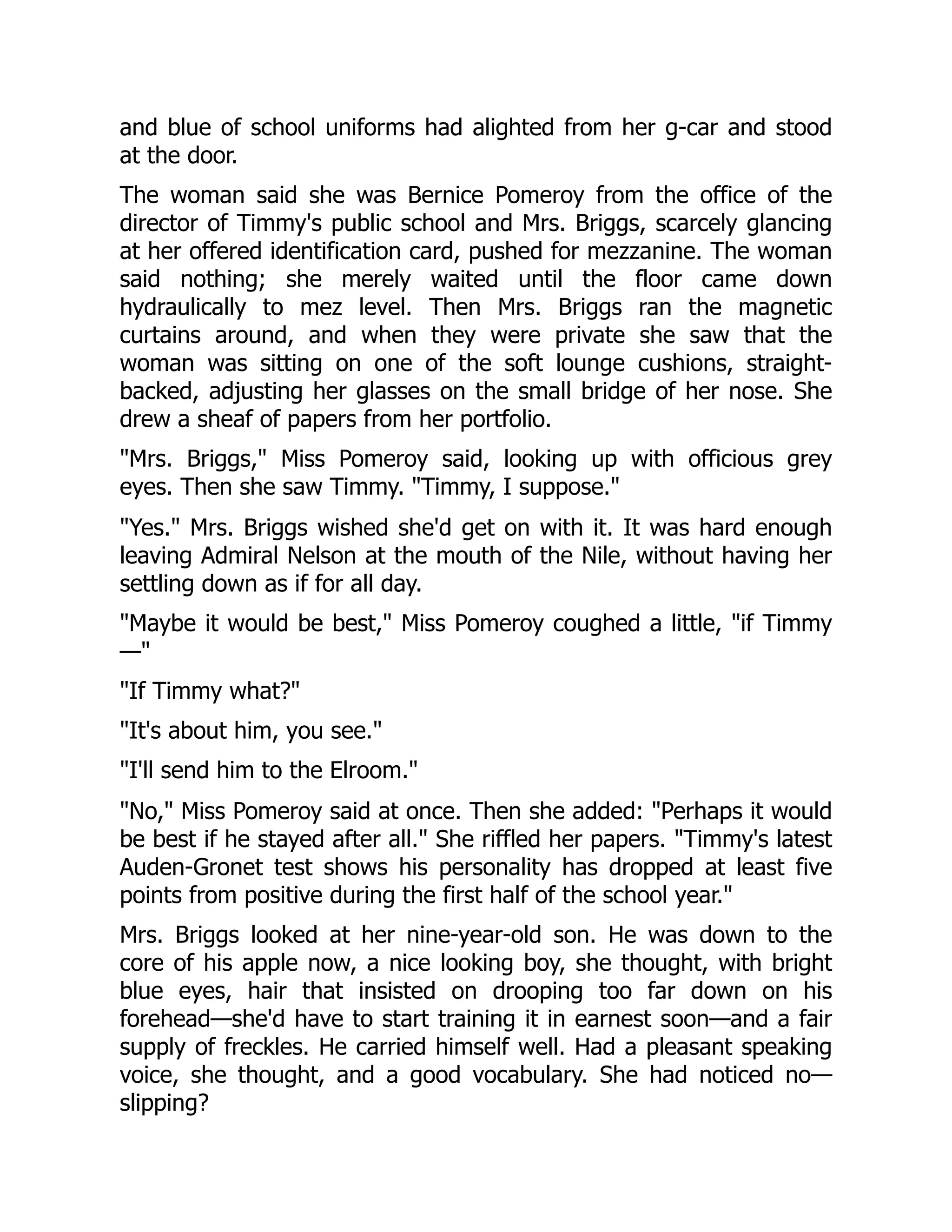
She had neverseen violinists work so hard. They were running their
bows back and forth so fast their hands were blurred. The musicians'
faces were studies in concentration and the concertmaster—he
wasn't two feet from her—had worked himself into such a frenzy
veins were standing out on his red face.
Mrs. Briggs almost laughed, the way the conductor was sweeping his
baton to within inches of her head. Several times she had an
impulse to reach up and catch it.
So this was Virilio! Disjointed, cacophonic, sometimes sweet but
more often deafening. She had never caught him before. But it was
just as advertised, all right. Exciting. And moving. She didn't know if
there was supposed to be a love theme in Virilio's new Plenitude on
a Thursday Afternoon, but it definitely stirred her.
Just then the door opened and Timmy came walking through the
musicians, eating an apple. Once he stopped to stare at the tympani
and a second fiddler's bow kept running through his head. It was
rather ghostly, Mrs. Briggs thought.
36.
"Timmy!" she yelledabove the music. "I didn't see you go. Where
have you been?" As if she didn't know.
"Had to get a glass of water. The music made me thirsty," he said
loudly, taking his seat beside her. "This is a lousy program, Mom.
What's next?"
"Drama in History," she said absently, her eyes on a flutist's
mustache, wondering how he managed to play.
Timmy chomped on his apple, but in the face of his gustatory
enjoyment she couldn't find the heart to tell him to be quiet.
37.
At intermission, sheleft the Elroom to let Timmy take in the
commercial and returned in time for the beginning of Drama in
History.
There was a salt spray in the air and a cool wind whipped around
them as the lights went out completely. The roar of waves grew loud
and the deck creaked beneath their feet.
The ship moved through the dim light. Sailors stood like statues
about the deck.
"We're even with the inshore ships, sir!" a voice called hoarsely.
"We've got the French between us, then." Though he was a small
man, there was a ring of authority in the voice of the man on the
bridge.
"There's the Orient, sir!"
"One of ours has gone aground!"
"She'll mark the shoal for the rest of the fleet," the little man replied
calmly. "Ready, Mr. Creston!"
"What's he think he's doing?" the captain's boy whispered.
"Quiet, lad," a peg-legged sailor said softly. "Admiral Nelson will see
us through. You'll have your share of action afore mornin', mate!"
The darkness was split by faraway flashes of light. Instantly, there
was returning cannon fire that caused the ship to shudder and
groan. The Battle of Aboukir Bay had begun....
The red flashers above the door winked their message.
"Damn!" Mrs. Briggs said, switching off.
"Ma!"
"There's someone at the door, Timmy. If it's a salesman—!"
Mrs. Briggs checked the dials on the electrocooker as she went to
the door. A small but efficient-looking woman in the standard white
38.
and blue ofschool uniforms had alighted from her g-car and stood
at the door.
The woman said she was Bernice Pomeroy from the office of the
director of Timmy's public school and Mrs. Briggs, scarcely glancing
at her offered identification card, pushed for mezzanine. The woman
said nothing; she merely waited until the floor came down
hydraulically to mez level. Then Mrs. Briggs ran the magnetic
curtains around, and when they were private she saw that the
woman was sitting on one of the soft lounge cushions, straight-
backed, adjusting her glasses on the small bridge of her nose. She
drew a sheaf of papers from her portfolio.
"Mrs. Briggs," Miss Pomeroy said, looking up with officious grey
eyes. Then she saw Timmy. "Timmy, I suppose."
"Yes." Mrs. Briggs wished she'd get on with it. It was hard enough
leaving Admiral Nelson at the mouth of the Nile, without having her
settling down as if for all day.
"Maybe it would be best," Miss Pomeroy coughed a little, "if Timmy
—"
"If Timmy what?"
"It's about him, you see."
"I'll send him to the Elroom."
"No," Miss Pomeroy said at once. Then she added: "Perhaps it would
be best if he stayed after all." She riffled her papers. "Timmy's latest
Auden-Gronet test shows his personality has dropped at least five
points from positive during the first half of the school year."
Mrs. Briggs looked at her nine-year-old son. He was down to the
core of his apple now, a nice looking boy, she thought, with bright
blue eyes, hair that insisted on drooping too far down on his
forehead—she'd have to start training it in earnest soon—and a fair
supply of freckles. He carried himself well. Had a pleasant speaking
voice, she thought, and a good vocabulary. She had noticed no—
slipping?
39.
"Timmy's not toofar behind factually, Mrs. Briggs," Miss Pomeroy
said, referring to her records. "In fact, we'll admit he's ahead in
stability and adjustment. But he's getting more negative in
aggressiveness and personality development. He just doesn't seem
to care. That factor may account for his stability—he doesn't have
any reason to be unstable, you see? And he adjusts easily because
he doesn't care enough not to. There is a reason, of course."
Mrs. Briggs was annoyed. The schools had gone too far. "And what,
may I ask, is the reason?"
"Too much time in the Elroom, Mrs. Briggs."
Mrs. Briggs managed a good-natured laugh. "Miss Pomeroy, you
have Timmy all wrong. He doesn't spend any more time in the
Elroom than other children do."
"Children are all different," Miss Pomeroy countered.
"But not Timmy."
"Parents are often poor judges of their own children, Mrs. Briggs."
"Are you trying to tell me I don't know my own child?"
"Mrs. Briggs, I am not trying to tell you anything," Miss Pomeroy's
cheeks were red. "I am telling you your child is spending too much
time watching these programs. Sublimating so much, in fact, that
he's beginning to find it difficult telling the difference between life
itself and the Elroom."
"Sublimating?"
"Escape. You didn't know? Yes." The teacher smiled tolerantly. "First
sublimation room for elevating one's self—sublime the verb. Then
SubL for short. Then just L and L-room to Elroom. You didn't know?"
"That, my dear," Mrs. Briggs said heatedly, "is just so much
hogwash."
"Tell me, Mrs. Briggs, just what does your husband think of the
Elroom?"
40.
"He doesn't havemuch time to spend in it."
"You mean he'd rather do something else?"
"He's interested in typically man things—cars, mostly." Because
Timmy had gone over to the curtains and was starting to walk
through, and because she wanted to show Miss Pomeroy she was
capable of some discipline, she said, "And where are you going,
young man?"
"Probably back to the Elroom," Miss Pomeroy put in. Mrs. Briggs
gave her an acid look.
Timmy swallowed the last bite of apple. "To get a drink. I'm thirsty."
When he had gone, Miss Pomeroy leaned forward. "You must keep
him out of the Elroom, Mrs. Briggs. We'll send you a list of programs.
He can have sublimation only one hour a day."
"Ridiculous!" Mrs. Briggs snapped.
Miss Pomeroy adjusted her glasses and looked at her severely. "Are
you saying you will not comply?"
"I said it's ridiculous, didn't you hear? Why, you won't find a better
child than Timmy—"
"Obviously your only child."
"And what has that to do with it?"
"It is not my job to explain," Miss Pomeroy said icily. "Only to inform.
I'm afraid I'll have to report that you will not heed the directive."
"The Elroom is instructive. Why, we were learning something about
history just now. We were watching Nelson sink the French fleet
when you came."
"It's not the program. It's the identification with it. Let's say Timmy
has too much imagination—but then I have already told you what I
came to tell. I'll be going now, Mrs. Briggs."
41.
From the wayGeorge sent the gyrocar into a long swoop that ended
inside the garage, Laura Briggs knew her husband was angry and
she braced herself for battle. But she wasn't quite prepared for such
an immediate outburst, the moment he got in the door.
"Stoops!" he cried, robbed of slamming the door because of the
automatic permaglass cushion. Timmy scurried away, frightened at
this aspect of his father. "The psychocenter we've got to go to yet!"
The electrocooker had dinged a minute ago, and Mrs. Briggs was
ready to take everything out and put it on the table, but she could
only look at him in amazement. "You're not making sense!"
"Ha!" George's heavy eyebrows hovered high in his forehead, then
plunged down over his eyes. His big face was crimson, his blue eyes
steely. "Neither are they, and they called just before I left the office.
Wouldn't tell me why. Have you done anything?"
"Well—" Mrs. Briggs started tentatively and he gave her a sharp
look. "It's about the Elroom."
"The Elroom!"
She told him about the visit of Miss Pomeroy. "She must have
reported it."
"Then we'll get rid of the damned thing!" His eyes brightened. "I told
you we should have gotten a new car instead."
"But we've got a car, George."
"Not a good one." He leaned against the cooker, his face blissful.
"Imagine us—us—driving a new Caddie gyro—room for eight, you
know—supersonic drive—sleek, too—we could get a red one—you'd
like red, wouldn't you?—a thousand horsepower with twin turbos for
level flight—and those off-center firing tubes with folding back
overhead vertical flight pins—Gad!"
"Our present car—"
"Junk!"
42.
"But it runs,and we don't need a car like that for just in-town
driving."
"But what about our vacation? Think of it, Laura: We could make it
to Alaska, Tibet, Africa—we could go around the world in our three
weeks."
"We could do the same with the Elroom, George. And there are a lot
more things besides travel." Mrs. Briggs's lower lip was trembling.
"You're siding with those nasty school people. You think they're right
about Timmy."
"Where is he?"
Timmy stuck his head up from behind the lounge. His big eyes were
wide.
"Look at him, George. Ever seen a more normal boy? How could
they think a boy like that could get so involved in a program he'd
think he was living it."
"Yeah, but if those school people—"
Her eye caught the clock and she drew in her breath quickly. "Say!
We've got to hurry if we're going to see Cameron Capers."
Dr. Vincent Potter was a large man with a shining expanse of flesh
between two islands of black, bristling hair above heavy brows that
met over his nose and almost concealed the bright, intelligent eyes
that glittered beneath them.
"So. You cannot understand. Yes." He nodded his head, made a tent
with his hands, and rocked. "But this is what we are for. To
understand. For you." He smiled. "If understanding easily came,
then we would be not needed. No? You see?" He laughed a little,
jerked upright. The movement nearly made the three of them jump.
43.
"Doctor," George said."There are millions of kids in Elrooms all over
the country."
"You tell me something new?" The doctor frowned. "Millions of
people there are. So? Must they be alike every one? They are not.
Yes?" The doctor leaned toward Timmy who was playing with a desk
calendar. "Who is your mother?" Timmy pointed to Mrs. Briggs.
"Your father?" Timmy pointed to George. "See? He knows."
"Of course," Mrs. Briggs said.
"Exactly," the doctor agreed. Then he was upright, waving his
forefinger before them, looking from beneath dark brows. "For how
long, Mrs. Briggs? For how long, I am asking? And now, I am telling
how long. Who knows? Who can tell how many times you will let
him see these things?"
"What day is today?" Timmy asked.
"He is asking what day it is," the doctor laughed.
"Well, why don't you answer him?" Mrs. Briggs suggested.
"The twelfth of June," the doctor said. "And why does Timmy ask
such a question?"
"You forgot to tear off yesterday." And Timmy tore the little sheet
off, proceeded to make a dart of it.
"Well, what you've been meaning to say," George said, "is that we're
going to have to cut down on Timmy's Elroom time."
"Aw, Dad!" Timmy protested.
"No. Cut it down we will not do." The doctor shook his head gravely.
"We will cut it out altogether."
"Cut it out?" George said hopefully. He leaned forward with interest.
"Maybe we should get rid of our outfit?"
"Mr. Briggs. You do not know, perhaps, sublimation can be
dangerous. Confusing reality, stimulating unreality, stunting thinking,
bringing on neuroses. Tolerance. He needs tolerance. Timmy cannot
44.
develop tolerance withtoo much of a dose, as he has had. Do you
see now? The AG test—ah!—it is good. It shows us he is leaving
reality. We can't let him psychotic become."
"But he doesn't believe the programs!" Mrs. Briggs exclaimed.
"Not yet, Mrs. Briggs! Not yet. If he sublimes enough he will soon,
though. No?"
"I can't stand the thought of locking Timmy out of it," Mrs. Briggs
said sadly.
"I'm in favor of getting rid of it," George muttered. "There are other
things—cars—"
Dr. Potter took an official form from a drawer. "A change of
environment you need. Timmy needs. You leave tomorrow on a
month's vacation."
"But my vacation doesn't come up for six months," George said. "Or
doesn't that matter?" he added hopefully.
"You will leave tomorrow, as said. No? Your office will I inform of the
necessary departure. Sector administration will be knowing." He
wrote on a sheet of paper. "The colorful spots. That you will see.
Timmy will see things as they really are. Itineraries will send the
route by facsimile. Good. Not?"
"Why, I think it's wonderful!" George said.
"Timmy must see the sunrise. The sea, he must swim in. Things, he
must do. Remember. Yes?"
"Yes," George said. "No?" He turned to his wife. "There's an agency
where we can rent a car—and they have new Caddies—"
The tapering white obelisk thrust upward from the earth like a giant
needle. The Briggses entered the base of it, went up the elevator,
and caught glimpses of stairway landings as the cage rose slowly.
45.
When they steppedout on the platform near the top, they walked to
the pair of port openings on one side and looked out.
In the time it had taken them to get to the top of Washington
Monument, a light fog, borne on the slight evening breeze, had
enveloped the tall shaft at its midsection; they could see nothing of
the ground below. They were isolated from Earth, connected to it
only by the elevator well.
"Isn't this eerie?" Mrs. Briggs asked Timmy.
He looked around casually and yawned. "On an Elroom program," he
said, "you would be able to see all the way down. I don't think this is
so hot." He yawned again. "I'm thirsty."
"We'll be going down in a minute, Timmy."
"I've got the route figured better than Itineraries for the next stop,"
George said. "If we could leave in twenty minutes—"
Aragonite crystals on the cavern's ceiling twinkled brightly in
reflection of glowing electric lights. The fragile beauty of the
boxwork formation took Mrs. Briggs's breath away.
"It's just like lace," she whispered to George, pointing to the frosty
tracery glistening in the honeycombed walls.
"Tom Bingham discovered this cave," the guide intoned before the
tourists seated in the giant chamber, his voice echoing from the
walls. "He heard a whistling sound and found it came from a small
opening. That's why they call this Wind Cave. The wind goes in and
out."
"Why does it do that?" someone asked.
"Difference in atmospheric pressure," the guide said. "Another
interesting thing about this cave: It's always forty-seven degrees.
46.
Doesn't make anydifference whether it's summer or winter. Always
the same in here."
"I don't hear any wind," Timmy said to his mother and father. "Why
isn't the wind whistling?"
"When the barometer falls, the wind blows out," his father
explained. "When the barometer rises, the wind blows in."
"Why isn't the wind whistling now?" Timmy insisted.
"The barometer must be standing still, son."
"This isn't any good. On an Elroom program the wind would be
whistling."
"Hush," Mrs. Briggs said.
"I'm thirsty," Timmy said.
"We'll be leaving in a few minutes."
"You'll get plenty of wind when I rev up the Caddie on our next
hop," George said.
"Think of that," George said. "It's a whole mile down to the river."
Timmy leaned forward to take a deep look over the precipice at Yaki
point.
"Boy!" he said. "This is pretty good. Almost makes me dizzy."
Below, the Colorado River was bright quicksilver, threading its way
circuitously through the canyon. The striated walls rose majestically
from the floor to towering temples.
The boy turned from the rock to look at the tufts of clouds floating
by in the deep blue sky.
"I'm thirsty," he said.
47.
Mrs. Briggs, stillfascinated by the view, said, "Well, go get a drink,
then."
Timmy walked over the edge, screamed as he fell.
Mrs. Briggs could only stare, stunned.
George uttered a cry and ran to the cliffs rim.
Tourists nearby ran up, looked down with George.
A hundred feet below on the slope at a point where it dropped off to
nothing, a horrified Timmy was crouched clutching a small tree.
"Hold on!" George called encouragingly.
A few minutes later someone had found a long rope in a gyrocar
trunk and roped it about George's middle. They let him over the
edge gently, dropped him down the slope slowly.
"Hang on, Timmy!" George yelled, running a tongue over dry lips
and momentarily closing his eyes to the dizzying depths. "Don't let
the little rocks coming down worry you."
A while later, a dust-streaked Timmy was back on the ledge in his
mother's arms, sobbing.
George, his shirt wet with sweat, and struggling out of the rope,
panted: "Whatever came over you, Timmy?"
"It was so real I thought it was the Elroom. I was just going out to
the kitchen to get a drink of water."
"And I—I told him to go," Mrs. Briggs said, horrified. "It was that
real to me, too."
FOR SALE
ELROOM, complete. Like new. Reasonable. Or will trade
for new Cadillac 8-passenger, twin-turbo gyro, red
*** END OFTHE PROJECT GUTENBERG EBOOK THE ELROOM ***
Updated editions will replace the previous one—the old editions will
be renamed.
Creating the works from print editions not protected by U.S.
copyright law means that no one owns a United States copyright in
these works, so the Foundation (and you!) can copy and distribute it
in the United States without permission and without paying
copyright royalties. Special rules, set forth in the General Terms of
Use part of this license, apply to copying and distributing Project
Gutenberg™ electronic works to protect the PROJECT GUTENBERG™
concept and trademark. Project Gutenberg is a registered trademark,
and may not be used if you charge for an eBook, except by following
the terms of the trademark license, including paying royalties for use
of the Project Gutenberg trademark. If you do not charge anything
for copies of this eBook, complying with the trademark license is
very easy. You may use this eBook for nearly any purpose such as
creation of derivative works, reports, performances and research.
Project Gutenberg eBooks may be modified and printed and given
away—you may do practically ANYTHING in the United States with
eBooks not protected by U.S. copyright law. Redistribution is subject
to the trademark license, especially commercial redistribution.
START: FULL LICENSE
PLEASE READ THISBEFORE YOU DISTRIBUTE OR USE THIS WORK
To protect the Project Gutenberg™ mission of promoting the free
distribution of electronic works, by using or distributing this work (or
any other work associated in any way with the phrase “Project
Gutenberg”), you agree to comply with all the terms of the Full
Project Gutenberg™ License available with this file or online at
www.gutenberg.org/license.
Section 1. General Terms of Use and
Redistributing Project Gutenberg™
electronic works
1.A. By reading or using any part of this Project Gutenberg™
electronic work, you indicate that you have read, understand, agree
to and accept all the terms of this license and intellectual property
(trademark/copyright) agreement. If you do not agree to abide by all
the terms of this agreement, you must cease using and return or
destroy all copies of Project Gutenberg™ electronic works in your
possession. If you paid a fee for obtaining a copy of or access to a
Project Gutenberg™ electronic work and you do not agree to be
bound by the terms of this agreement, you may obtain a refund
from the person or entity to whom you paid the fee as set forth in
paragraph 1.E.8.
1.B. “Project Gutenberg” is a registered trademark. It may only be
used on or associated in any way with an electronic work by people
who agree to be bound by the terms of this agreement. There are a
few things that you can do with most Project Gutenberg™ electronic
works even without complying with the full terms of this agreement.
See paragraph 1.C below. There are a lot of things you can do with
Project Gutenberg™ electronic works if you follow the terms of this
agreement and help preserve free future access to Project
Gutenberg™ electronic works. See paragraph 1.E below.
52.
1.C. The ProjectGutenberg Literary Archive Foundation (“the
Foundation” or PGLAF), owns a compilation copyright in the
collection of Project Gutenberg™ electronic works. Nearly all the
individual works in the collection are in the public domain in the
United States. If an individual work is unprotected by copyright law
in the United States and you are located in the United States, we do
not claim a right to prevent you from copying, distributing,
performing, displaying or creating derivative works based on the
work as long as all references to Project Gutenberg are removed. Of
course, we hope that you will support the Project Gutenberg™
mission of promoting free access to electronic works by freely
sharing Project Gutenberg™ works in compliance with the terms of
this agreement for keeping the Project Gutenberg™ name associated
with the work. You can easily comply with the terms of this
agreement by keeping this work in the same format with its attached
full Project Gutenberg™ License when you share it without charge
with others.
1.D. The copyright laws of the place where you are located also
govern what you can do with this work. Copyright laws in most
countries are in a constant state of change. If you are outside the
United States, check the laws of your country in addition to the
terms of this agreement before downloading, copying, displaying,
performing, distributing or creating derivative works based on this
work or any other Project Gutenberg™ work. The Foundation makes
no representations concerning the copyright status of any work in
any country other than the United States.
1.E. Unless you have removed all references to Project Gutenberg:
1.E.1. The following sentence, with active links to, or other
immediate access to, the full Project Gutenberg™ License must
appear prominently whenever any copy of a Project Gutenberg™
work (any work on which the phrase “Project Gutenberg” appears,
or with which the phrase “Project Gutenberg” is associated) is
accessed, displayed, performed, viewed, copied or distributed:
53.
This eBook isfor the use of anyone anywhere in the United
States and most other parts of the world at no cost and with
almost no restrictions whatsoever. You may copy it, give it away
or re-use it under the terms of the Project Gutenberg License
included with this eBook or online at www.gutenberg.org. If you
are not located in the United States, you will have to check the
laws of the country where you are located before using this
eBook.
1.E.2. If an individual Project Gutenberg™ electronic work is derived
from texts not protected by U.S. copyright law (does not contain a
notice indicating that it is posted with permission of the copyright
holder), the work can be copied and distributed to anyone in the
United States without paying any fees or charges. If you are
redistributing or providing access to a work with the phrase “Project
Gutenberg” associated with or appearing on the work, you must
comply either with the requirements of paragraphs 1.E.1 through
1.E.7 or obtain permission for the use of the work and the Project
Gutenberg™ trademark as set forth in paragraphs 1.E.8 or 1.E.9.
1.E.3. If an individual Project Gutenberg™ electronic work is posted
with the permission of the copyright holder, your use and distribution
must comply with both paragraphs 1.E.1 through 1.E.7 and any
additional terms imposed by the copyright holder. Additional terms
will be linked to the Project Gutenberg™ License for all works posted
with the permission of the copyright holder found at the beginning
of this work.
1.E.4. Do not unlink or detach or remove the full Project
Gutenberg™ License terms from this work, or any files containing a
part of this work or any other work associated with Project
Gutenberg™.
1.E.5. Do not copy, display, perform, distribute or redistribute this
electronic work, or any part of this electronic work, without
prominently displaying the sentence set forth in paragraph 1.E.1
54.
with active linksor immediate access to the full terms of the Project
Gutenberg™ License.
1.E.6. You may convert to and distribute this work in any binary,
compressed, marked up, nonproprietary or proprietary form,
including any word processing or hypertext form. However, if you
provide access to or distribute copies of a Project Gutenberg™ work
in a format other than “Plain Vanilla ASCII” or other format used in
the official version posted on the official Project Gutenberg™ website
(www.gutenberg.org), you must, at no additional cost, fee or
expense to the user, provide a copy, a means of exporting a copy, or
a means of obtaining a copy upon request, of the work in its original
“Plain Vanilla ASCII” or other form. Any alternate format must
include the full Project Gutenberg™ License as specified in
paragraph 1.E.1.
1.E.7. Do not charge a fee for access to, viewing, displaying,
performing, copying or distributing any Project Gutenberg™ works
unless you comply with paragraph 1.E.8 or 1.E.9.
1.E.8. You may charge a reasonable fee for copies of or providing
access to or distributing Project Gutenberg™ electronic works
provided that:
• You pay a royalty fee of 20% of the gross profits you derive
from the use of Project Gutenberg™ works calculated using the
method you already use to calculate your applicable taxes. The
fee is owed to the owner of the Project Gutenberg™ trademark,
but he has agreed to donate royalties under this paragraph to
the Project Gutenberg Literary Archive Foundation. Royalty
payments must be paid within 60 days following each date on
which you prepare (or are legally required to prepare) your
periodic tax returns. Royalty payments should be clearly marked
as such and sent to the Project Gutenberg Literary Archive
Foundation at the address specified in Section 4, “Information
55.
about donations tothe Project Gutenberg Literary Archive
Foundation.”
• You provide a full refund of any money paid by a user who
notifies you in writing (or by e-mail) within 30 days of receipt
that s/he does not agree to the terms of the full Project
Gutenberg™ License. You must require such a user to return or
destroy all copies of the works possessed in a physical medium
and discontinue all use of and all access to other copies of
Project Gutenberg™ works.
• You provide, in accordance with paragraph 1.F.3, a full refund of
any money paid for a work or a replacement copy, if a defect in
the electronic work is discovered and reported to you within 90
days of receipt of the work.
• You comply with all other terms of this agreement for free
distribution of Project Gutenberg™ works.
1.E.9. If you wish to charge a fee or distribute a Project Gutenberg™
electronic work or group of works on different terms than are set
forth in this agreement, you must obtain permission in writing from
the Project Gutenberg Literary Archive Foundation, the manager of
the Project Gutenberg™ trademark. Contact the Foundation as set
forth in Section 3 below.
1.F.
1.F.1. Project Gutenberg volunteers and employees expend
considerable effort to identify, do copyright research on, transcribe
and proofread works not protected by U.S. copyright law in creating
the Project Gutenberg™ collection. Despite these efforts, Project
Gutenberg™ electronic works, and the medium on which they may
be stored, may contain “Defects,” such as, but not limited to,
incomplete, inaccurate or corrupt data, transcription errors, a
copyright or other intellectual property infringement, a defective or
56.
damaged disk orother medium, a computer virus, or computer
codes that damage or cannot be read by your equipment.
1.F.2. LIMITED WARRANTY, DISCLAIMER OF DAMAGES - Except for
the “Right of Replacement or Refund” described in paragraph 1.F.3,
the Project Gutenberg Literary Archive Foundation, the owner of the
Project Gutenberg™ trademark, and any other party distributing a
Project Gutenberg™ electronic work under this agreement, disclaim
all liability to you for damages, costs and expenses, including legal
fees. YOU AGREE THAT YOU HAVE NO REMEDIES FOR
NEGLIGENCE, STRICT LIABILITY, BREACH OF WARRANTY OR
BREACH OF CONTRACT EXCEPT THOSE PROVIDED IN PARAGRAPH
1.F.3. YOU AGREE THAT THE FOUNDATION, THE TRADEMARK
OWNER, AND ANY DISTRIBUTOR UNDER THIS AGREEMENT WILL
NOT BE LIABLE TO YOU FOR ACTUAL, DIRECT, INDIRECT,
CONSEQUENTIAL, PUNITIVE OR INCIDENTAL DAMAGES EVEN IF
YOU GIVE NOTICE OF THE POSSIBILITY OF SUCH DAMAGE.
1.F.3. LIMITED RIGHT OF REPLACEMENT OR REFUND - If you
discover a defect in this electronic work within 90 days of receiving
it, you can receive a refund of the money (if any) you paid for it by
sending a written explanation to the person you received the work
from. If you received the work on a physical medium, you must
return the medium with your written explanation. The person or
entity that provided you with the defective work may elect to provide
a replacement copy in lieu of a refund. If you received the work
electronically, the person or entity providing it to you may choose to
give you a second opportunity to receive the work electronically in
lieu of a refund. If the second copy is also defective, you may
demand a refund in writing without further opportunities to fix the
problem.
1.F.4. Except for the limited right of replacement or refund set forth
in paragraph 1.F.3, this work is provided to you ‘AS-IS’, WITH NO
OTHER WARRANTIES OF ANY KIND, EXPRESS OR IMPLIED,
57.
INCLUDING BUT NOTLIMITED TO WARRANTIES OF
MERCHANTABILITY OR FITNESS FOR ANY PURPOSE.
1.F.5. Some states do not allow disclaimers of certain implied
warranties or the exclusion or limitation of certain types of damages.
If any disclaimer or limitation set forth in this agreement violates the
law of the state applicable to this agreement, the agreement shall be
interpreted to make the maximum disclaimer or limitation permitted
by the applicable state law. The invalidity or unenforceability of any
provision of this agreement shall not void the remaining provisions.
1.F.6. INDEMNITY - You agree to indemnify and hold the Foundation,
the trademark owner, any agent or employee of the Foundation,
anyone providing copies of Project Gutenberg™ electronic works in
accordance with this agreement, and any volunteers associated with
the production, promotion and distribution of Project Gutenberg™
electronic works, harmless from all liability, costs and expenses,
including legal fees, that arise directly or indirectly from any of the
following which you do or cause to occur: (a) distribution of this or
any Project Gutenberg™ work, (b) alteration, modification, or
additions or deletions to any Project Gutenberg™ work, and (c) any
Defect you cause.
Section 2. Information about the Mission
of Project Gutenberg™
Project Gutenberg™ is synonymous with the free distribution of
electronic works in formats readable by the widest variety of
computers including obsolete, old, middle-aged and new computers.
It exists because of the efforts of hundreds of volunteers and
donations from people in all walks of life.
Volunteers and financial support to provide volunteers with the
assistance they need are critical to reaching Project Gutenberg™’s
goals and ensuring that the Project Gutenberg™ collection will
58.
remain freely availablefor generations to come. In 2001, the Project
Gutenberg Literary Archive Foundation was created to provide a
secure and permanent future for Project Gutenberg™ and future
generations. To learn more about the Project Gutenberg Literary
Archive Foundation and how your efforts and donations can help,
see Sections 3 and 4 and the Foundation information page at
www.gutenberg.org.
Section 3. Information about the Project
Gutenberg Literary Archive Foundation
The Project Gutenberg Literary Archive Foundation is a non-profit
501(c)(3) educational corporation organized under the laws of the
state of Mississippi and granted tax exempt status by the Internal
Revenue Service. The Foundation’s EIN or federal tax identification
number is 64-6221541. Contributions to the Project Gutenberg
Literary Archive Foundation are tax deductible to the full extent
permitted by U.S. federal laws and your state’s laws.
The Foundation’s business office is located at 809 North 1500 West,
Salt Lake City, UT 84116, (801) 596-1887. Email contact links and up
to date contact information can be found at the Foundation’s website
and official page at www.gutenberg.org/contact
Section 4. Information about Donations to
the Project Gutenberg Literary Archive
Foundation
Project Gutenberg™ depends upon and cannot survive without
widespread public support and donations to carry out its mission of
increasing the number of public domain and licensed works that can
be freely distributed in machine-readable form accessible by the
widest array of equipment including outdated equipment. Many
59.
small donations ($1to $5,000) are particularly important to
maintaining tax exempt status with the IRS.
The Foundation is committed to complying with the laws regulating
charities and charitable donations in all 50 states of the United
States. Compliance requirements are not uniform and it takes a
considerable effort, much paperwork and many fees to meet and
keep up with these requirements. We do not solicit donations in
locations where we have not received written confirmation of
compliance. To SEND DONATIONS or determine the status of
compliance for any particular state visit www.gutenberg.org/donate.
While we cannot and do not solicit contributions from states where
we have not met the solicitation requirements, we know of no
prohibition against accepting unsolicited donations from donors in
such states who approach us with offers to donate.
International donations are gratefully accepted, but we cannot make
any statements concerning tax treatment of donations received from
outside the United States. U.S. laws alone swamp our small staff.
Please check the Project Gutenberg web pages for current donation
methods and addresses. Donations are accepted in a number of
other ways including checks, online payments and credit card
donations. To donate, please visit: www.gutenberg.org/donate.
Section 5. General Information About
Project Gutenberg™ electronic works
Professor Michael S. Hart was the originator of the Project
Gutenberg™ concept of a library of electronic works that could be
freely shared with anyone. For forty years, he produced and
distributed Project Gutenberg™ eBooks with only a loose network of
volunteer support.
60.
Project Gutenberg™ eBooksare often created from several printed
editions, all of which are confirmed as not protected by copyright in
the U.S. unless a copyright notice is included. Thus, we do not
necessarily keep eBooks in compliance with any particular paper
edition.
Most people start at our website which has the main PG search
facility: www.gutenberg.org.
This website includes information about Project Gutenberg™,
including how to make donations to the Project Gutenberg Literary
Archive Foundation, how to help produce our new eBooks, and how
to subscribe to our email newsletter to hear about new eBooks.
61.
Welcome to ourwebsite – the ideal destination for book lovers and
knowledge seekers. With a mission to inspire endlessly, we offer a
vast collection of books, ranging from classic literary works to
specialized publications, self-development books, and children's
literature. Each book is a new journey of discovery, expanding
knowledge and enriching the soul of the reade
Our website is not just a platform for buying books, but a bridge
connecting readers to the timeless values of culture and wisdom. With
an elegant, user-friendly interface and an intelligent search system,
we are committed to providing a quick and convenient shopping
experience. Additionally, our special promotions and home delivery
services ensure that you save time and fully enjoy the joy of reading.
Let us accompany you on the journey of exploring knowledge and
personal growth!
ebookultra.com

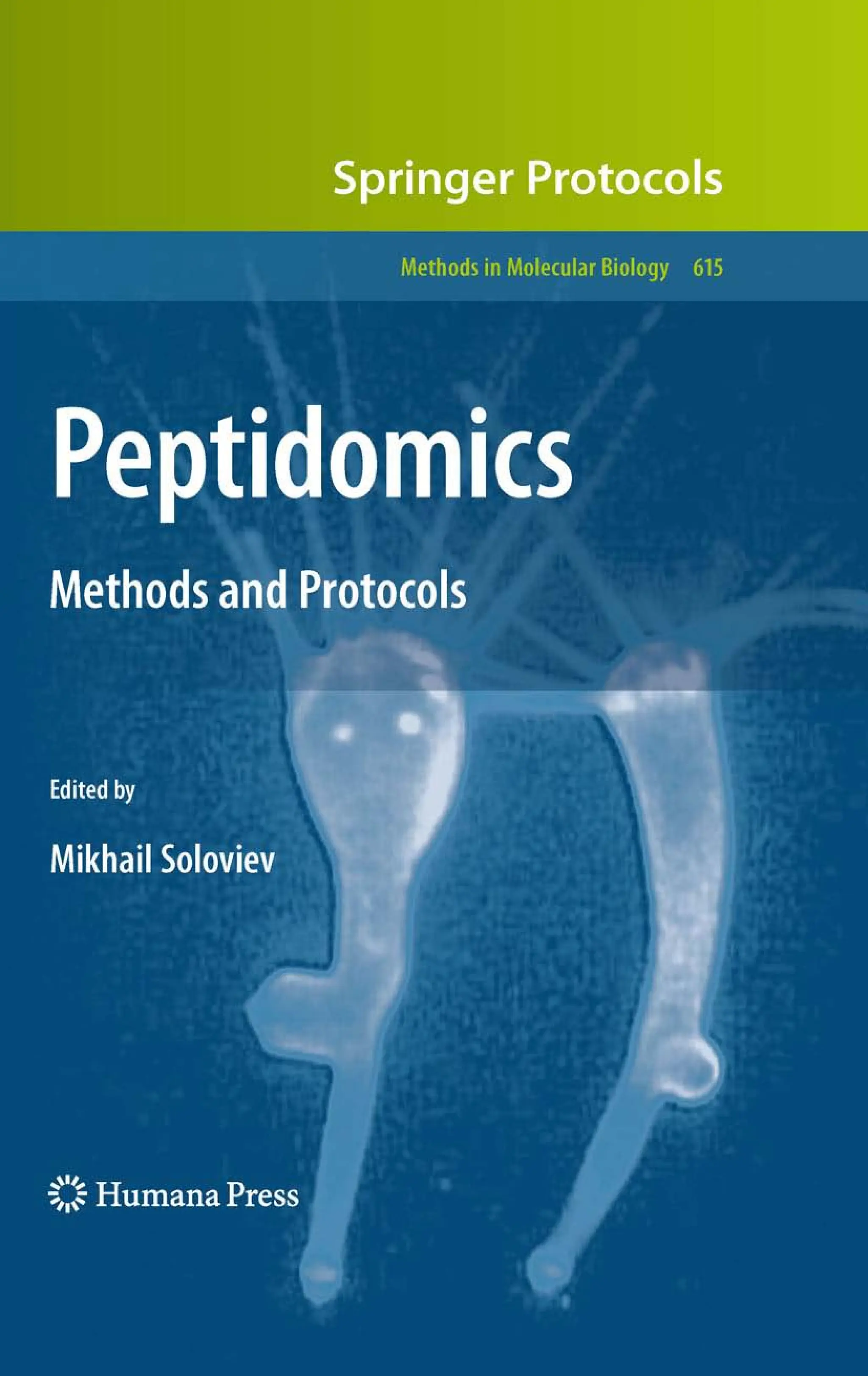


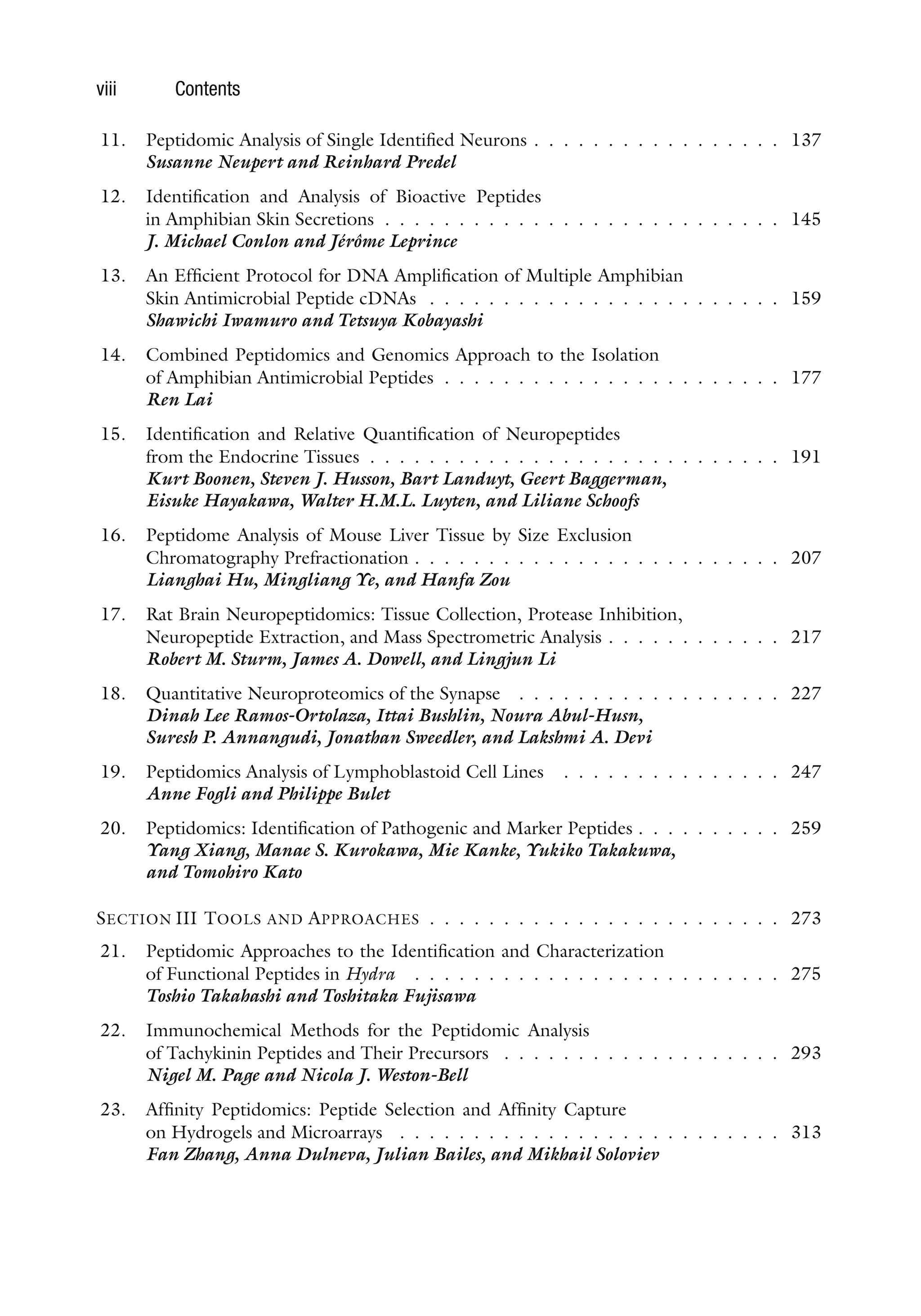

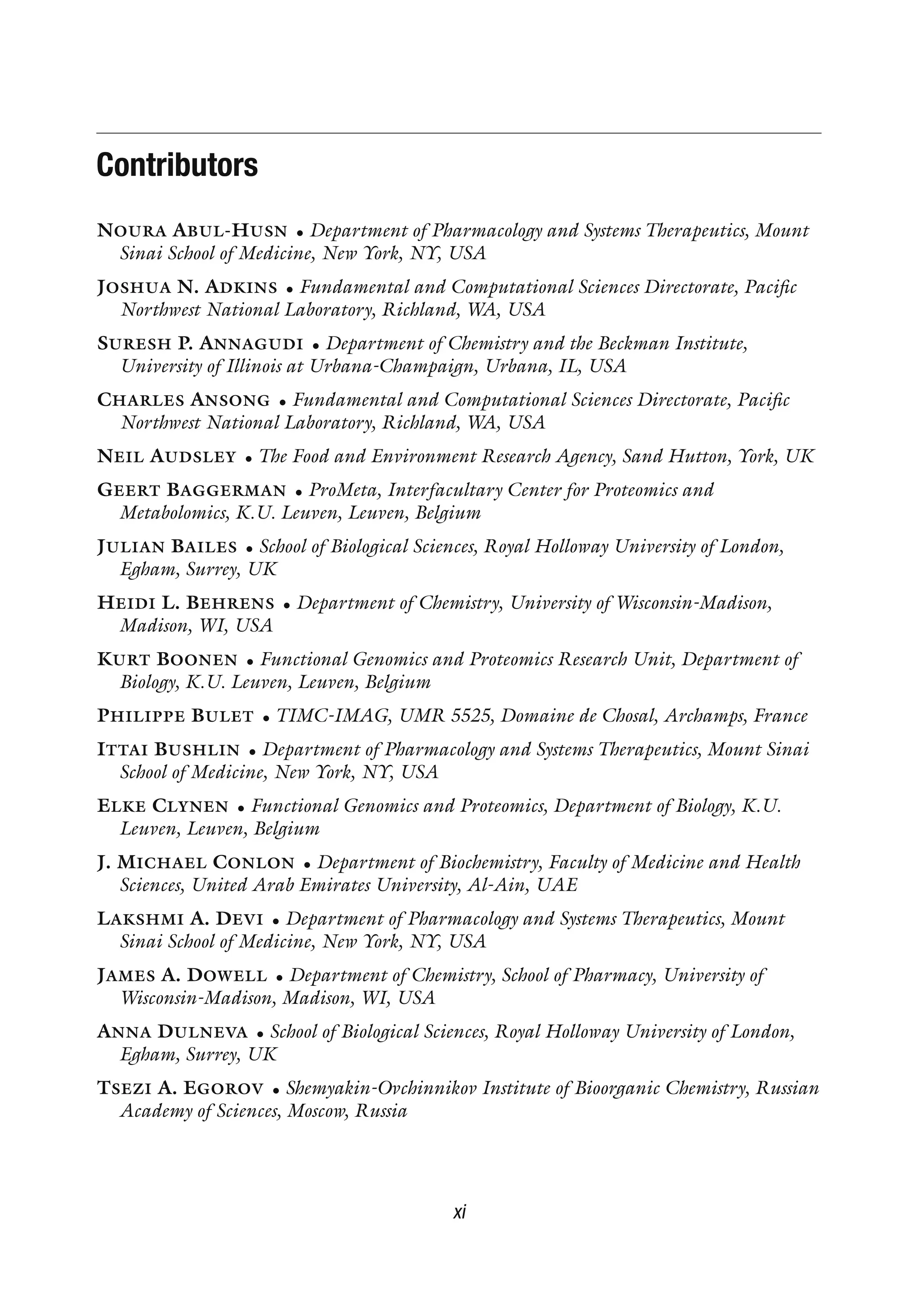
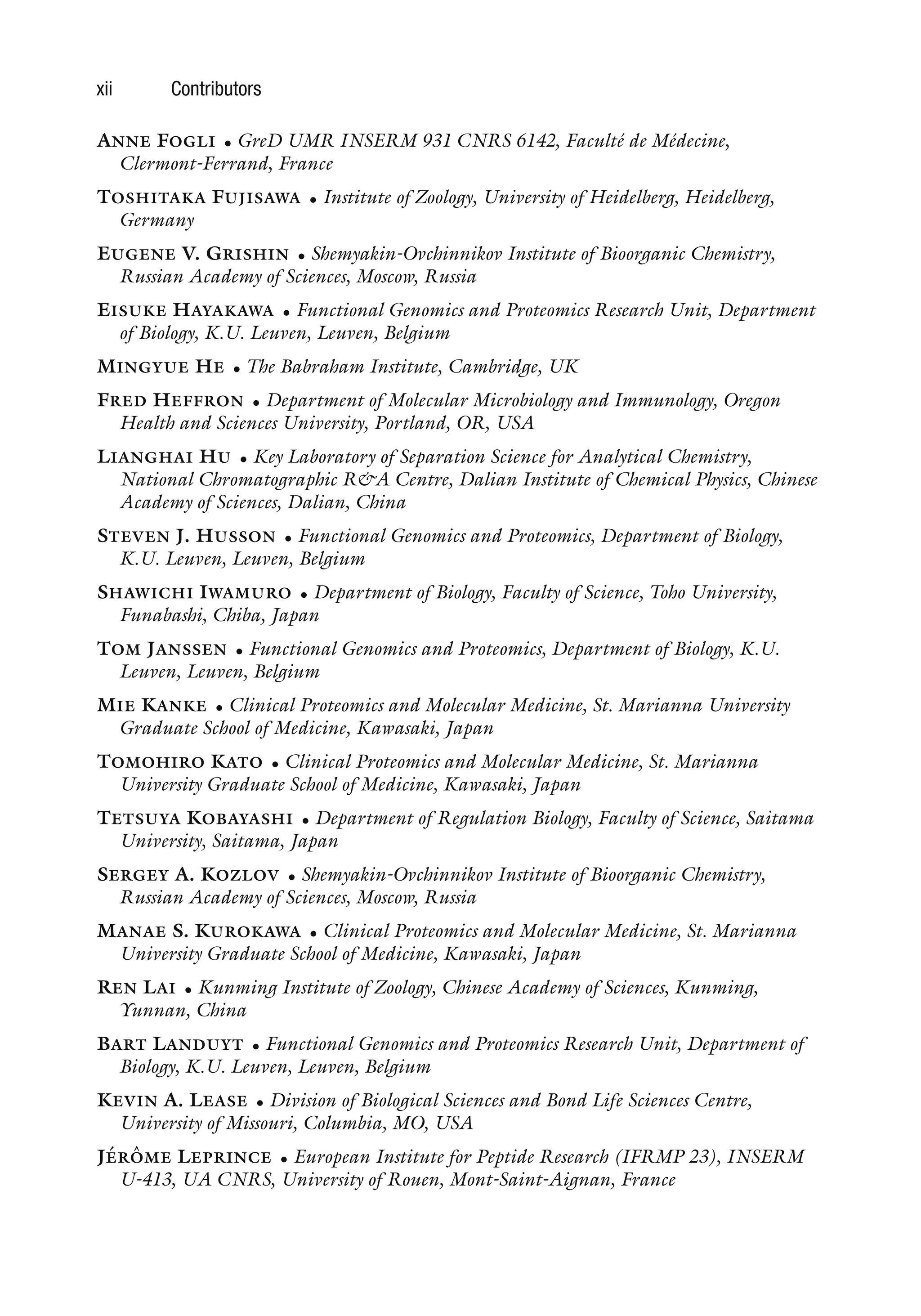
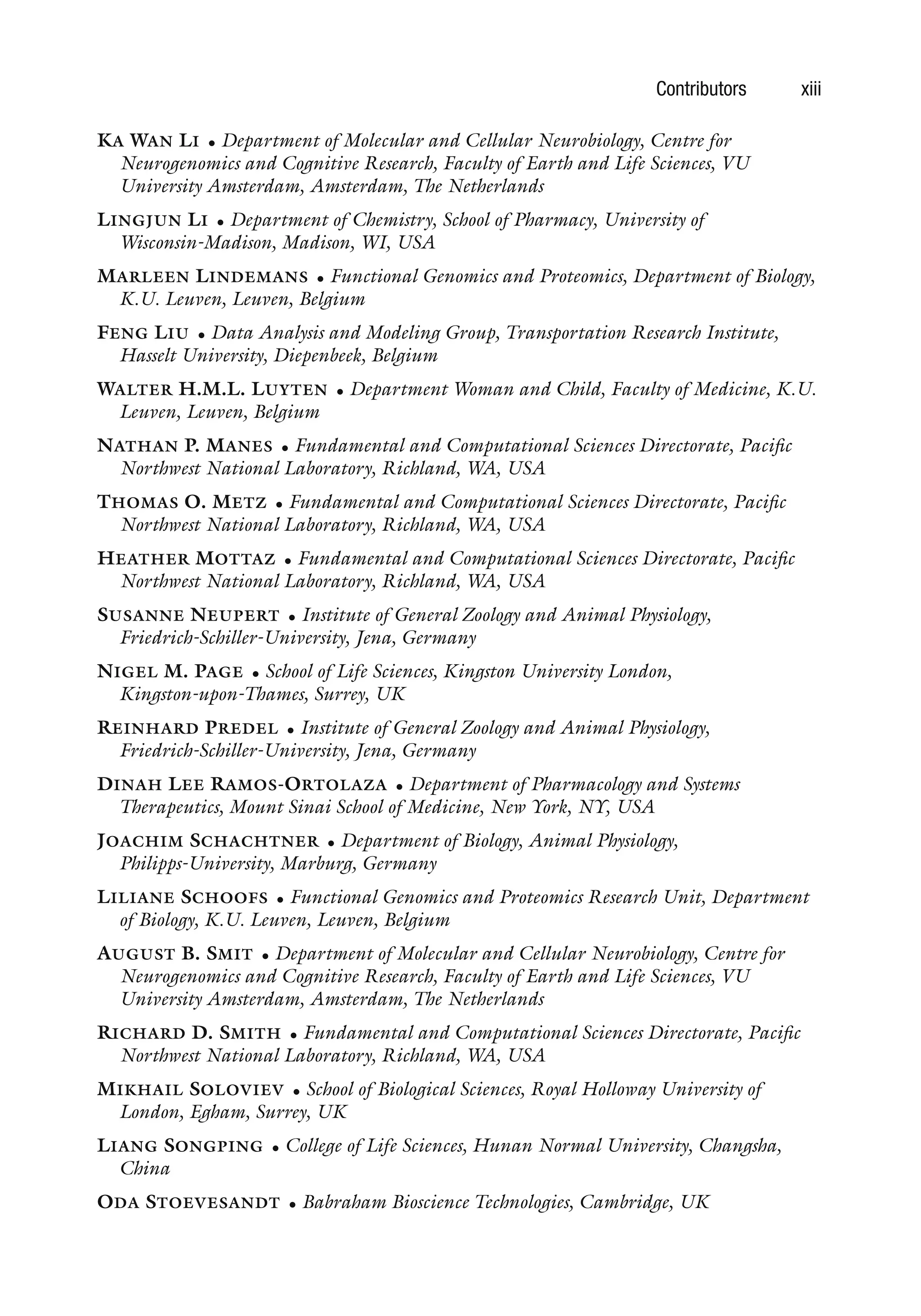

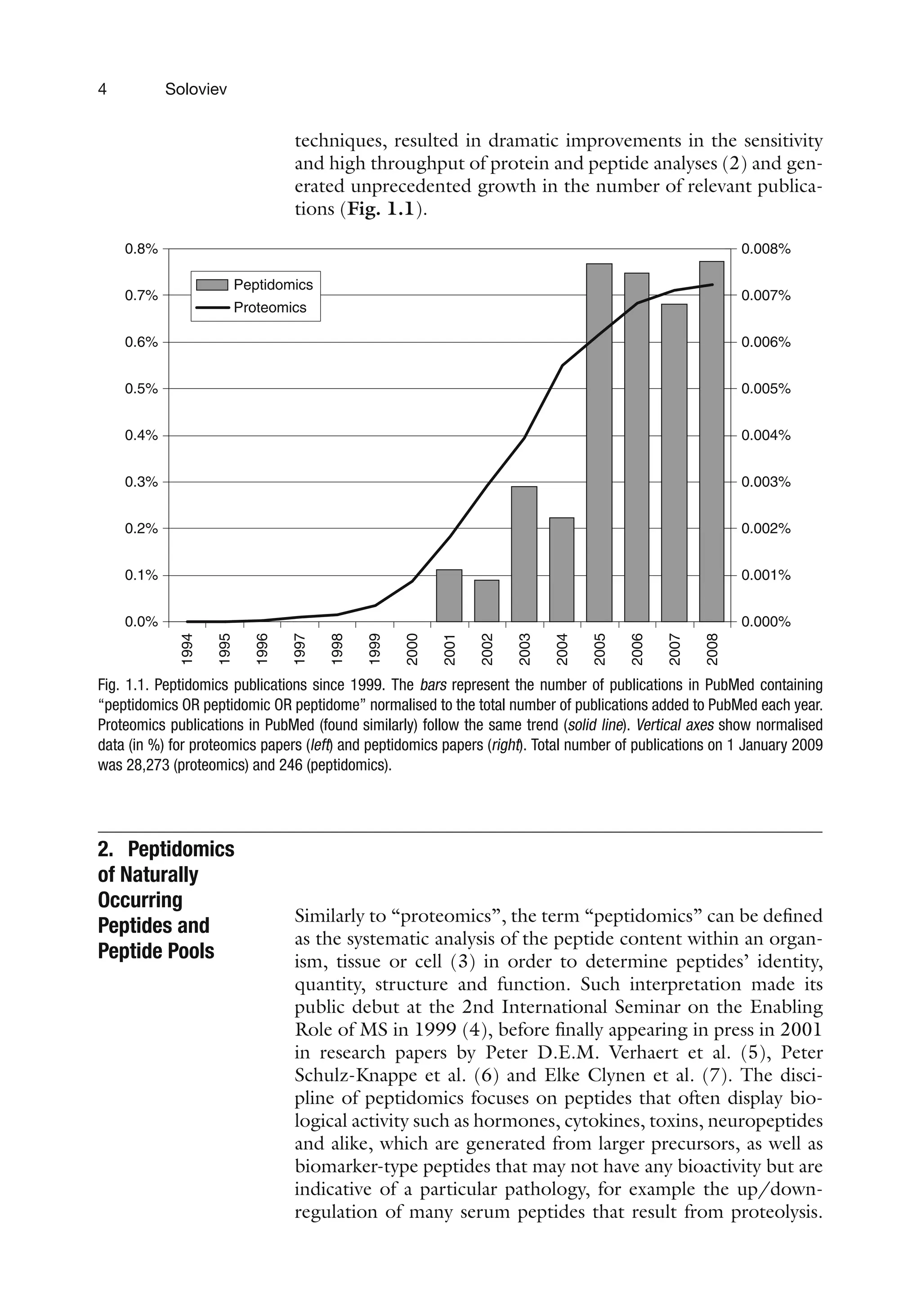

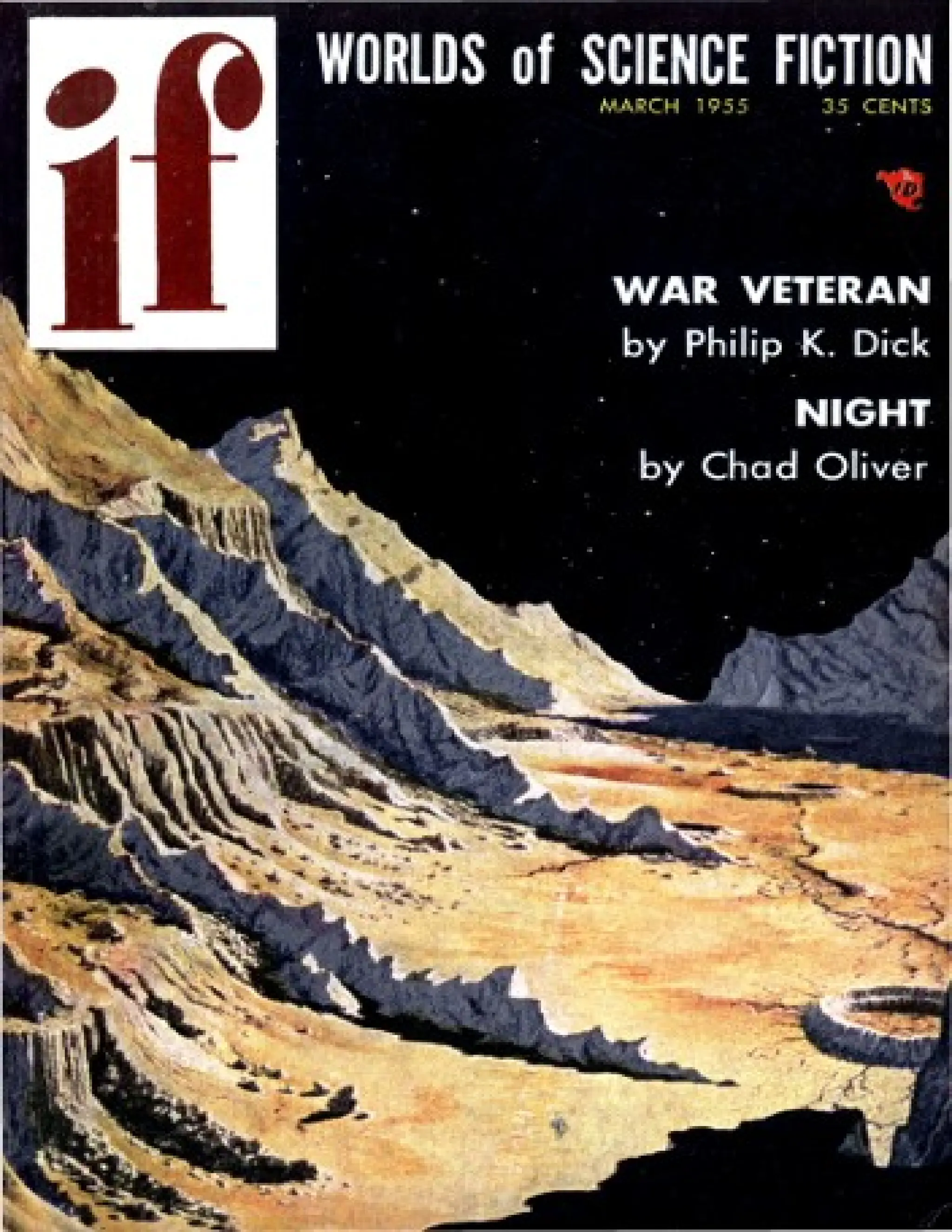
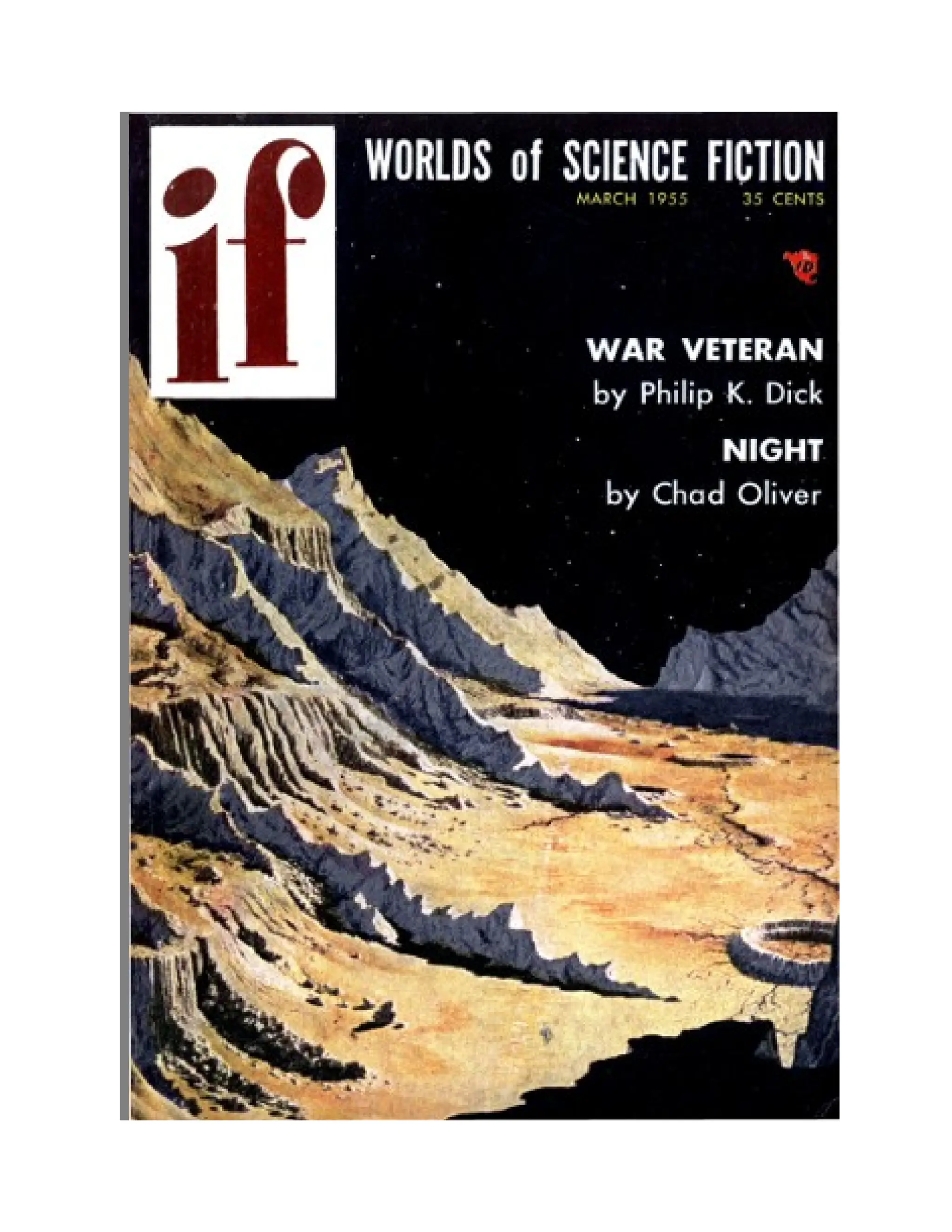


![This ebook is for the use of anyone anywhere in the United States
and most other parts of the world at no cost and with almost no
restrictions whatsoever. You may copy it, give it away or re-use it
under the terms of the Project Gutenberg License included with this
ebook or online at www.gutenberg.org. If you are not located in the
United States, you will have to check the laws of the country where
you are located before using this eBook.
Title: The Elroom
Author: Jerry Sohl
Illustrator: Paul Orban
Release date: March 29, 2019 [eBook #59149]
Language: English
Credits: Produced by Greg Weeks, Mary Meehan and the Online
Distributed Proofreading Team at http://www.pgdp.net
*** START OF THE PROJECT GUTENBERG EBOOK THE ELROOM ***](https://image.slidesharecdn.com/34348-250314091611-58225241/75/Peptidomics-Methods-and-Protocols-1st-Edition-Mikhail-Soloviev-Auth-31-2048.jpg)


![BY JERRY SOHL
Timmy was getting too much 3-dimension
television, and he was mistaking it for
Mother Nature. So his parents took him out
to see the natural wonders, which he
unhappily mistook for 3-D television....
[Transcriber's Note: This etext was produced from
Worlds of If Science Fiction, March 1955.
Extensive research did not uncover any evidence that
the U.S. copyright on this publication was renewed.]](https://image.slidesharecdn.com/34348-250314091611-58225241/75/Peptidomics-Methods-and-Protocols-1st-Edition-Mikhail-Soloviev-Auth-34-2048.jpg)