Bogotá, 2020
Project Portfolio
Management
2. People in Project
Portfolio Management
2
Difference between Program and Project Management
vs. Portfolio Management: A matter of focus
Program and
Project managers
focus on “doing
work right”
Portfolio managers
focus on: “doing
the right work”
3
What a project portfolio manager do?
Portfolio
manager
may be an
individual, a
group or a
governing
body, they
typically do:
1. Establish and maintain a framework (a structure of ideas) and
methodology (policies and procedures) for portfolio management.
Procedure for acquisition projects (Orión):
1. Request for information
2. Request for quotation (same parameters)
3. Most relevant variables
4. Reference visits
5. Rational decision making
6. Top level validation
7. Memorandum of understanding
8. Contract negotiations (offset yes/no)
4
What a project portfolio manager do?
Portfolio
manager
may be an
individual, a
group or a
governing
body, they
typically do:
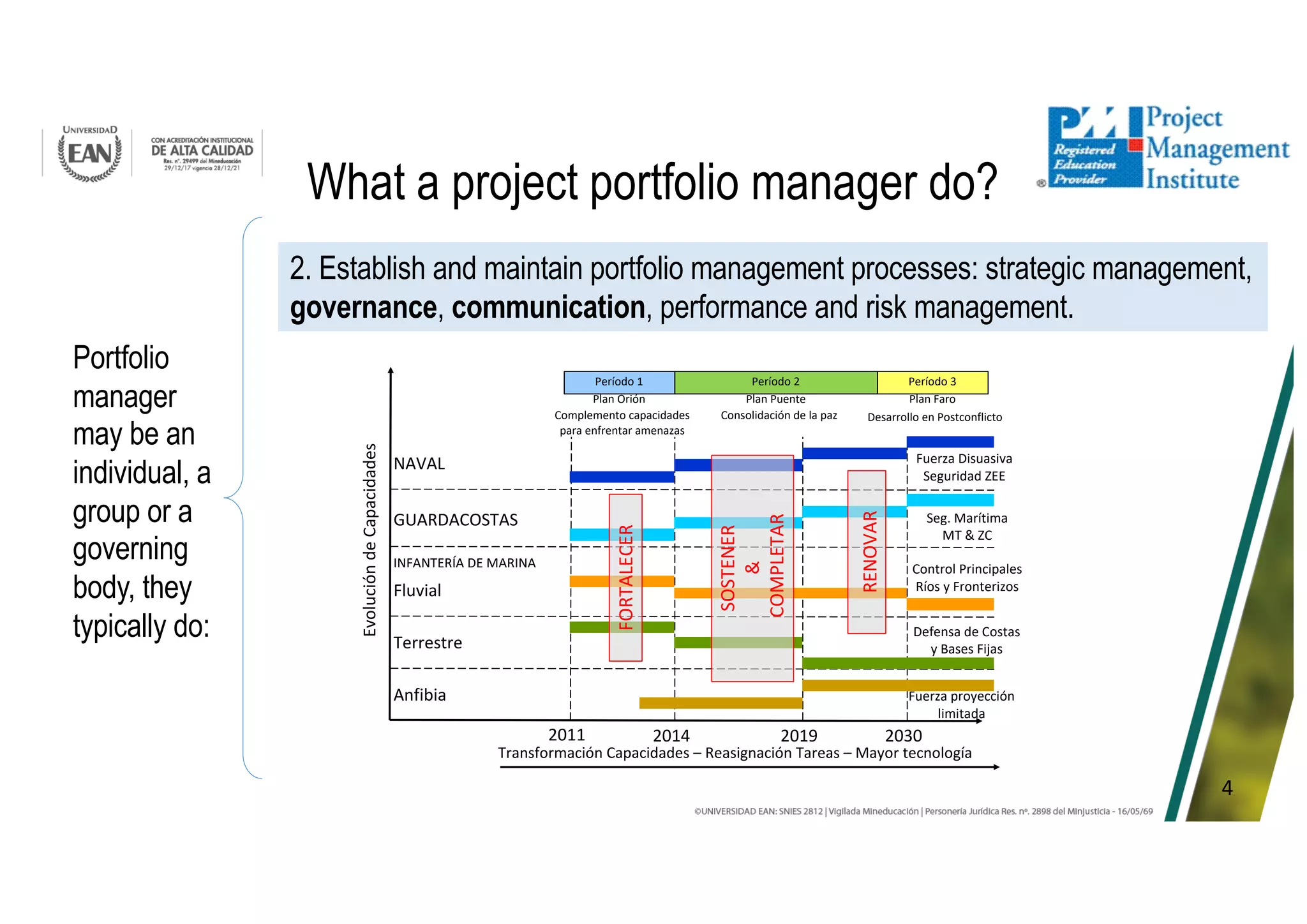
2. Establish and maintain portfolio management processes: strategic management,
governance, communication, performance and risk management.
2/14/20
Evolución
de
Capacidades
2011 2014 2019 2030
Transformación Capacidades – Reasignación Tareas – Mayor tecnología
NAVAL
GUARDACOSTAS
INFANTERÍA DE MARINA
Fluvial
Terrestre
Anfibia
Complemento capacidades
para enfrentar amenazas
Consolidación de la paz Desarrollo en Postconflicto
Plan Orión Plan Puente Plan Faro
Período 1 Período 2 Período 3
Fuerza proyección
limitada
Defensa de Costas
y Bases Fijas
Control Principales
Ríos y Fronterizos
Seg. Marítima
MT & ZC
Fuerza Disuasiva
Seguridad ZEE
FORTALECER
SOSTENER
&
COMPLETAR
RENOVAR
5
Governance
A set of
• Practices
• Functions
• Processes
Within a
framework
• Norms
• Rules
• Values
In order to
• Optimize
investments
• Meet
strategic
goals
6
Governance + Management
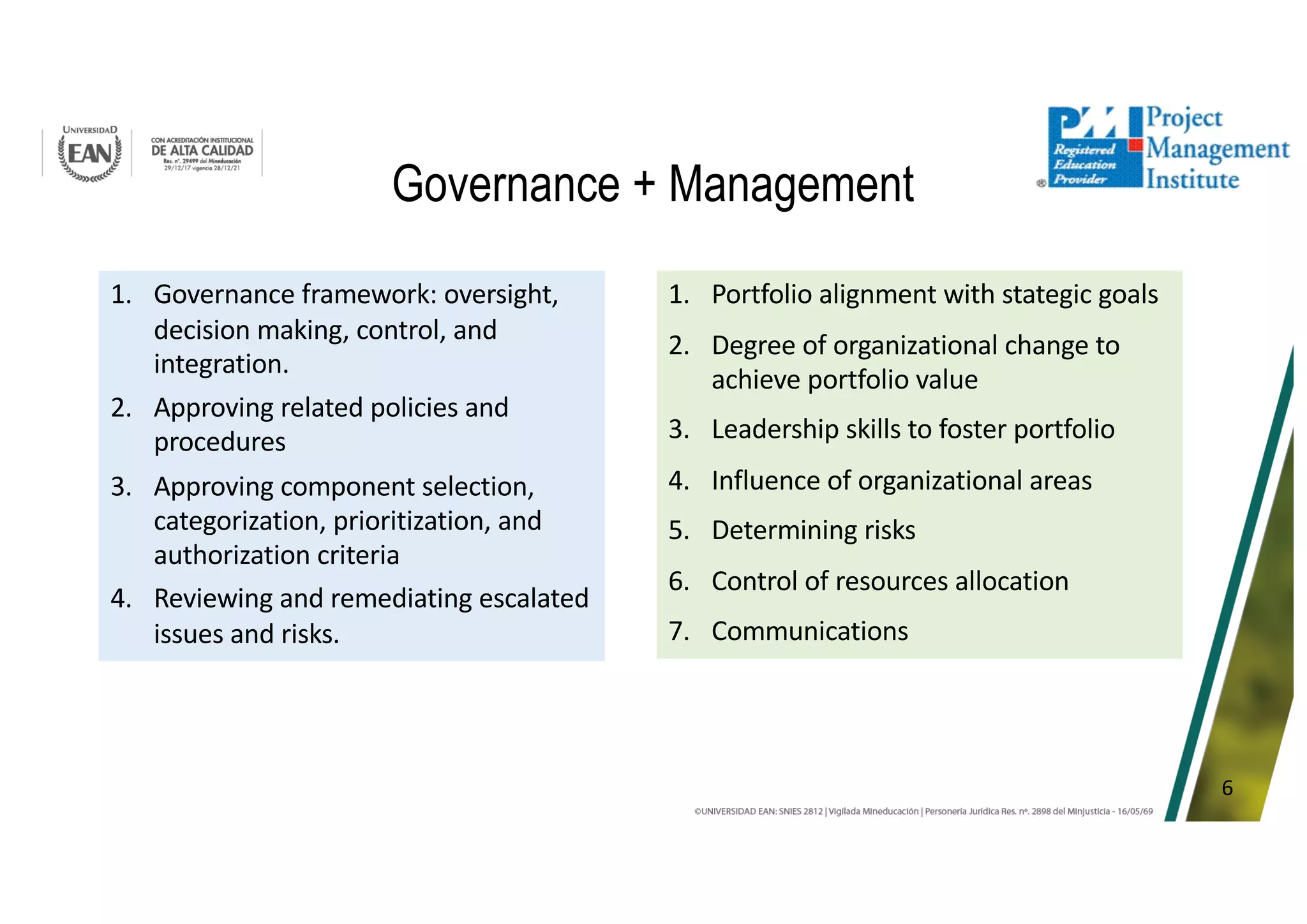
1. Governance framework: oversight,
decision making, control, and
integration.
2. Approving related policies and
procedures
3. Approving component selection,
categorization, prioritization, and
authorization criteria
4. Reviewing and remediating escalated
issues and risks.
1. Portfolio alignment with stategic goals
2. Degree of organizational change to
achieve portfolio value
3. Leadership skills to foster portfolio
4. Influence of organizational areas
5. Determining risks
6. Control of resources allocation
7. Communications
7
Communication management
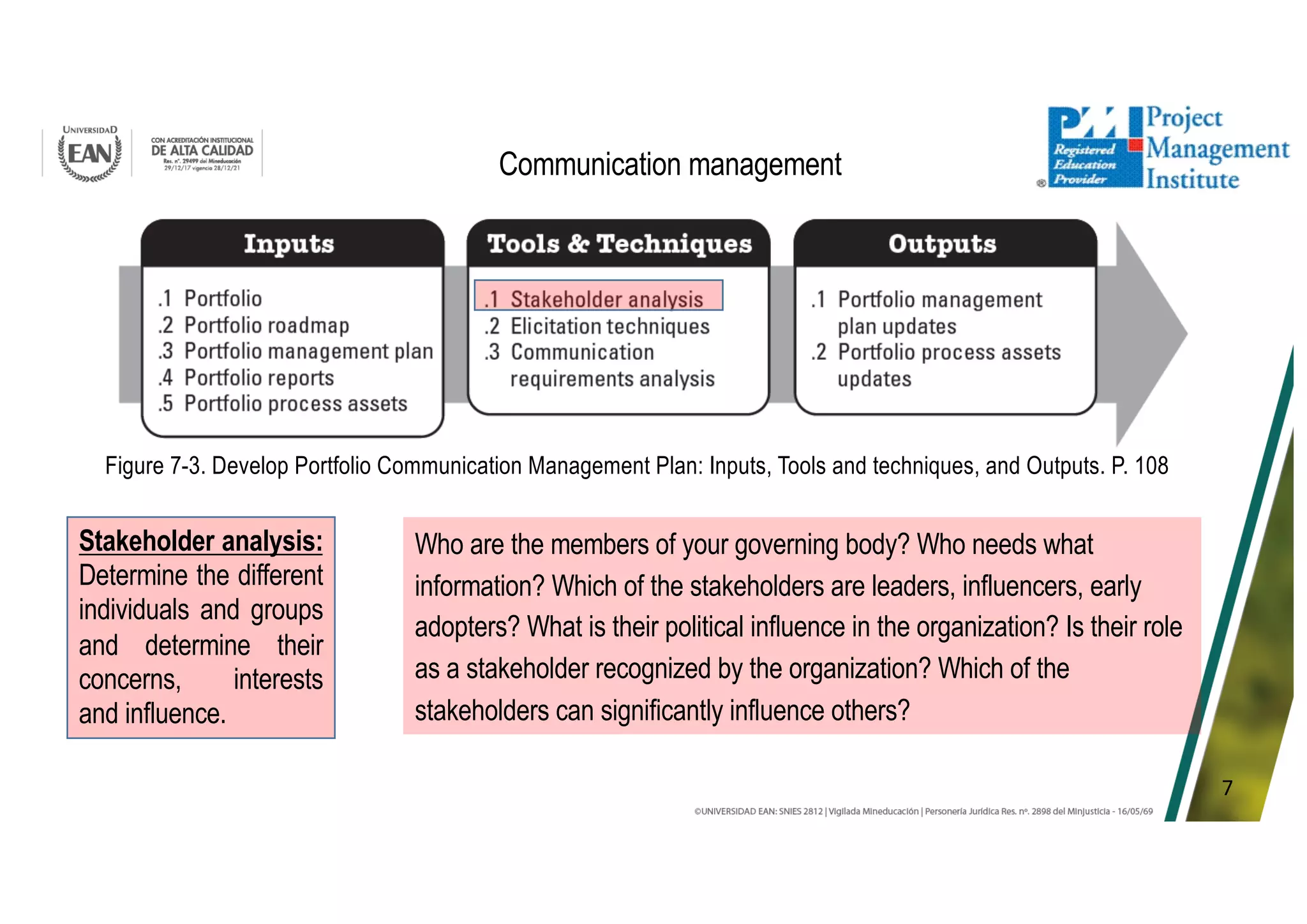
Figure 7-3. Develop Portfolio Communication Management Plan: Inputs, Tools and techniques, and Outputs. P. 108
Stakeholder analysis:
Determine the different
individuals and groups
and determine their
concerns, interests
and influence.
Who are the members of your governing body? Who needs what
information? Which of the stakeholders are leaders, influencers, early
adopters? What is their political influence in the organization? Is their role
as a stakeholder recognized by the organization? Which of the
stakeholders can significantly influence others?
8
Stakeholder engagement
Working with portfolio stakeholders contributes to
maximize portfolio and organizational performance
Senior Executives:
CEO, CFO, COO, etc.
Program and Project
managers
Resource
managers
Contracts staff
Regulatory
bodies
PMO
Topics What questions ask?
Personal
details
Mobiles, email, role
Objectives What should or could the initiative seek to
accomplish?
Issues Are there any issues that we need to be
aware of when planning the project?
Stakeholders Who do you see as the stakeholders of this
initiative?
Roles How do you see your role in achieving the
aims of this project?
Value-add What is the strategic contribution of the
project to the organization as a whole?
Resources Which specialist personnel, equipment and
technology will be required?
Approach How do you think we should approach to
implement this initiative?
Risks What challenges represent obstacles to the
success of this project?
Sustainability How should will ensure sustainability of the
project’s deliverable?
This is an
ongoing process
9
Communication management
Figure 7-3. Develop Portfolio Communication Management Plan: Inputs, Tools and techniques, and Outputs. P. 108
“It is important for the portfolio manager to engage with stakeholders to endure their
needs are being met and are aligned with the communication management plan .
This may be achieved with interviews, questionnaires, surveys, stakeholder meetings,
and lessons learned sessions” (PPfM Std, p. 112)
10
• Focus groups and brainstorming
• Associate the ideas into mind maps or similar
Facilitation techniques
• Interviews (structured, semi-structured, open)
• Observations (inside/outside) Ethnography
Survey techniques
• Votes to get consensus or majority
• Display popular opinion on recommended changes
Collaboration techniques
Elicitation techniques
11
Communication management
Figure 7-3. Develop Portfolio Communication Management Plan: Inputs, Tools and techniques, and Outputs. P. 108
“In communication requirement analysis, the vehicle or tool used to communicate
information to the stakeholders and the frequency planned is evaluated to determine
if changes should be made” (PPfM Std, p. 112)
12
Example of key stakeholders context (Construction)
13
Example of communication matrix
14
What a project portfolio manager do?
Portfolio
manager
may be an
individual, a
group or a
governing
body, they
typically do:
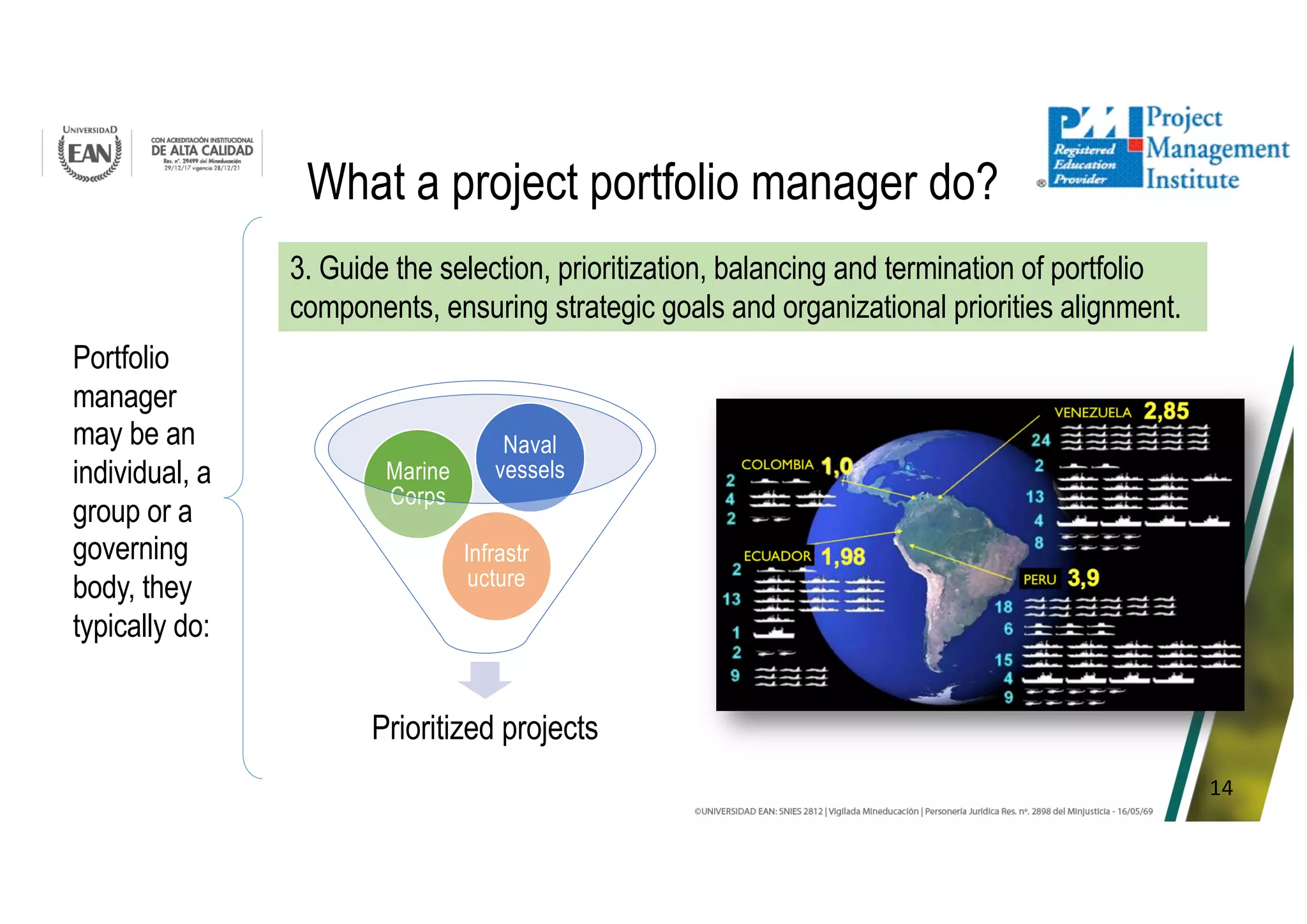
3. Guide the selection, prioritization, balancing and termination of portfolio
components, ensuring strategic goals and organizational priorities alignment.
Prioritized projects
Infrastr
ucture
Marine
Corps
Naval
vessels
15
What a project portfolio manager do?
Portfolio
manager
may be an
individual, a
group or a
governing
body, they
typically do:
4. Establish and maintain appropriate infrastructure and system to support
portfolio management process.
Jefatura de Proyectos
Especiales – Plan Orión
Subgerencia Técnica Subgerencia Administrativa
Grupo control seguimiento y
rendición de cuentas
Grupo de apoyo contratos
Grupo de apoyo financiero
Grupo de apoyo comisiones al
exterior
Grupo técnico
Grupo gerentes de
programas
Grupo inspectores
de programas
Vigilancia Tecnológica
Proyectos Offset
Fragatas
Submarinos
Aviación Naval
Guardacostas
Infantería de
Marina
Comités técnicos
Fragatas
Submarinos
Aviación Naval
Guardacostas
Infantería de
Marina
16
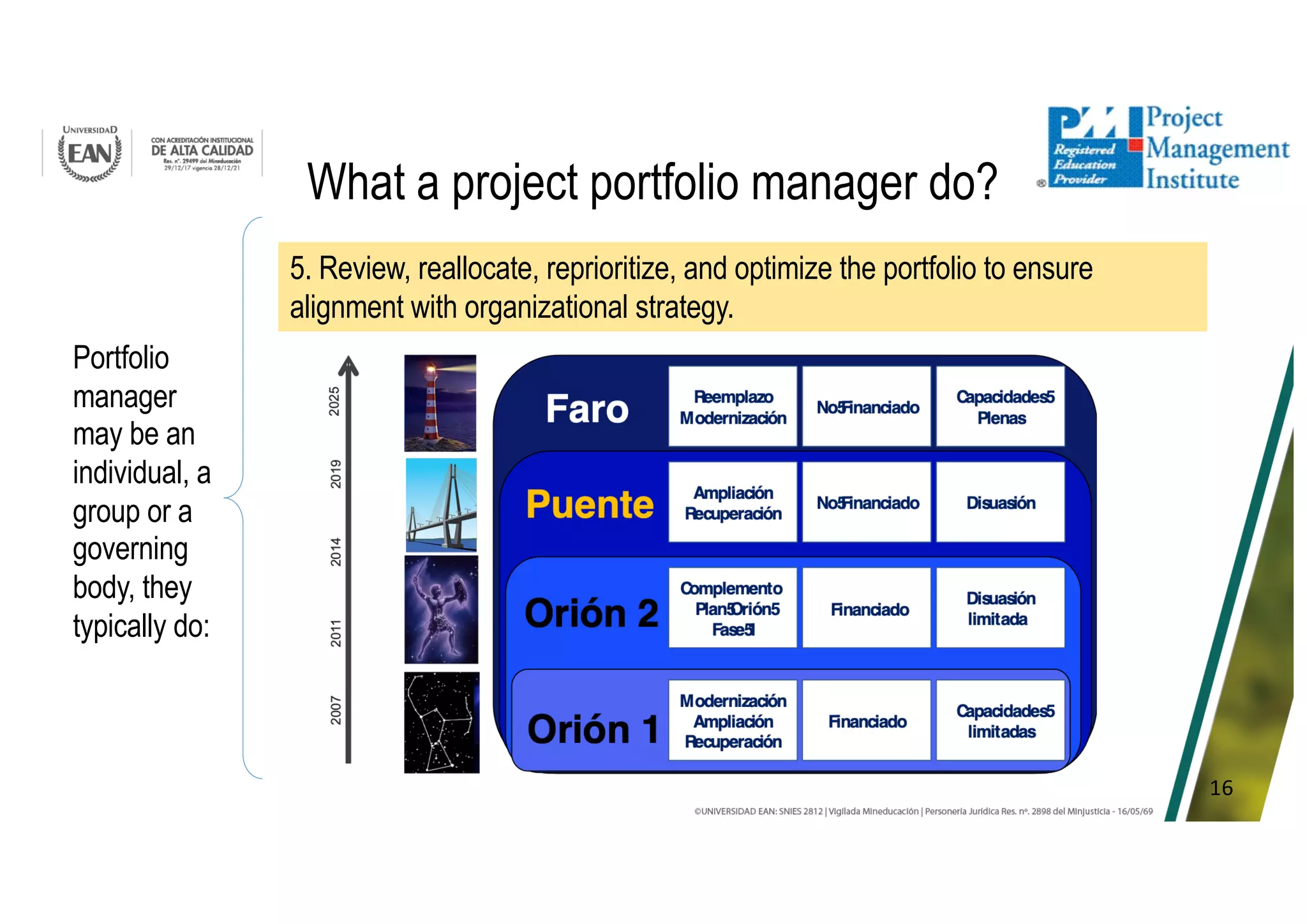
What a project portfolio manager do?
Portfolio
manager
may be an
individual, a
group or a
governing
body, they
typically do:
5. Review, reallocate, reprioritize, and optimize the portfolio to ensure
alignment with organizational strategy.
17
What a project portfolio manager do?
Portfolio
manager
may be an
individual, a
group or a
governing
body, they
typically do:
6. Provide key stakeholders with timely assessment of portfolio selection,
prioritization and performance.
Presidencia
Congreso
DNP
Cuerpo
diplomático
Medios
Rectores
Empresarios
Actores claves
validadores en
Plan Orión
18
What a project portfolio manager do?
Portfolio
manager
may be an
individual, a
group or a
governing
body, they
typically do:
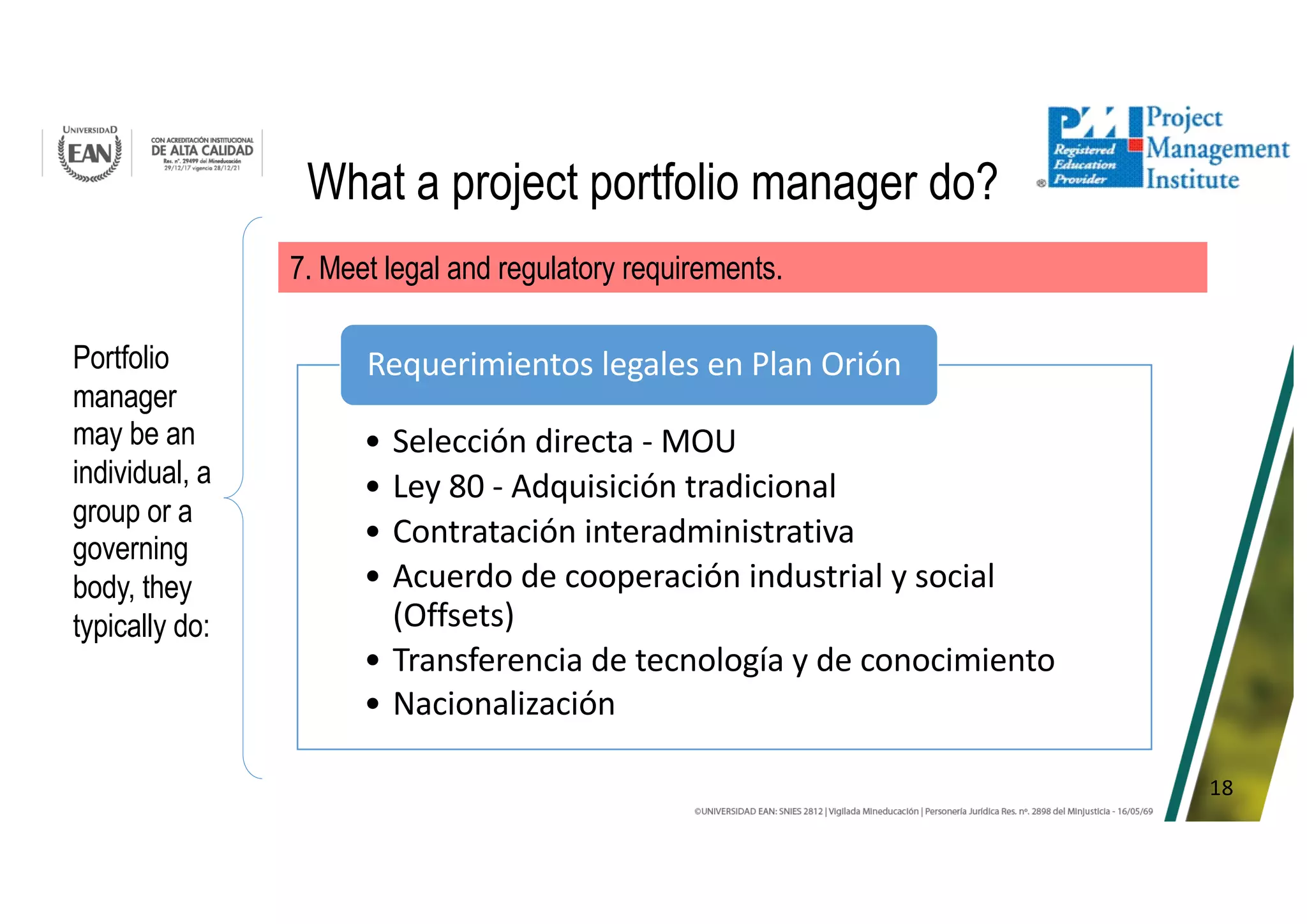
7. Meet legal and regulatory requirements.
• Selección directa - MOU
• Ley 80 - Adquisición tradicional
• Contratación interadministrativa
• Acuerdo de cooperación industrial y social
(Offsets)
• Transferencia de tecnología y de conocimiento
• Nacionalización
Requerimientos legales en Plan Orión
19
What a project portfolio manager do?
Portfolio
manager
may be an
individual, a
group or a
governing
body, they
typically do:
8. Support of senior-level decision making.
20
What are the typical skills during portfolio lifecycle?
Manage
risks
Monitor and prioritize
portfolio components
Resolve senior
level issues
Develop and
improve
processes
Apply
organization
knowledge
Apply
management
skills
Manage
organization’s
resources
Provide timely
information
Portfolio
manager daily
skills
e.g. Corruption, quality,
ignorance, etc.
e.g. Robustness of the
mathematical model, lack
of reports, low controls
e.g. Why not me?,
influences, train crash
e.g. AHP with
sensitivity analysis
e.g. Similar projects, experience,
industrial capabilities, lessons learned
e.g. Planning, decision-
making, delegation, problem
solving, motivation, etc.
e.g. RFIs, RFQs, Cash flow
planning, negotiation, finance
analysis, procurement, etc.
e.g. quality of reports, metrics,
usefulness of data.
21
In which areas the project portfolio manager should have expertise?
01 02 03 04 05
Portfolio strategic
management and
alignment
Portfolio
management
methods and
techniques
Stakeholder
engagement
Leadership and
management skills
Risk management
22
Portfolio strategic management and alignment 01
1. Monitor changes in organizational strategy (e.g. from green to gray vessels)
2. How portfolio is supporting organizational strategy? (e.g. increase results)
3. What are the financial benefits? (e.g. develop vs. purchase)
4. What are the non-financial benefits? (e.g. Guajira children)
5. What are the positive risks of the portfolio? (e.g. international operations)
6. What are the negative risks of the portfolio? (e.g. lifecycle costs)
23
Portfolio strategic management and alignment
01
Monitor changes in organizational strategy (e.g. from green to gray vessels)
• The conflict made changes from
transportation to combat.
• Enemy capabilities required that
vessels were armoured.
• Construction capabilities changed
acquisition process.
• Reduction of technological gaps
increased ambition.
• Strategic surface platform is the
highest technological project.
24
Portfolio strategic management and alignment
01
How portfolio is supporting organizational strategy? (e.g. increase results)
Detection
Detention
Interception
and inspection
• The completion of the project
increase operability
• Different parts of the portfolio
have particular functions
• The sum of the parts is more than
each one individually
25
Portfolio strategic management and alignment 01
What are the financial benefits?
Be careful between the sum of project benefits and the benefits of the portfolio
De 3.500 a 10.500
e.g. Forward y Diferencial cambiario
26
Portfolio strategic management and alignment 01
What are the non-financial benefits?
National security
Rescue of people at sea
Water transportation to
isolated areas
27
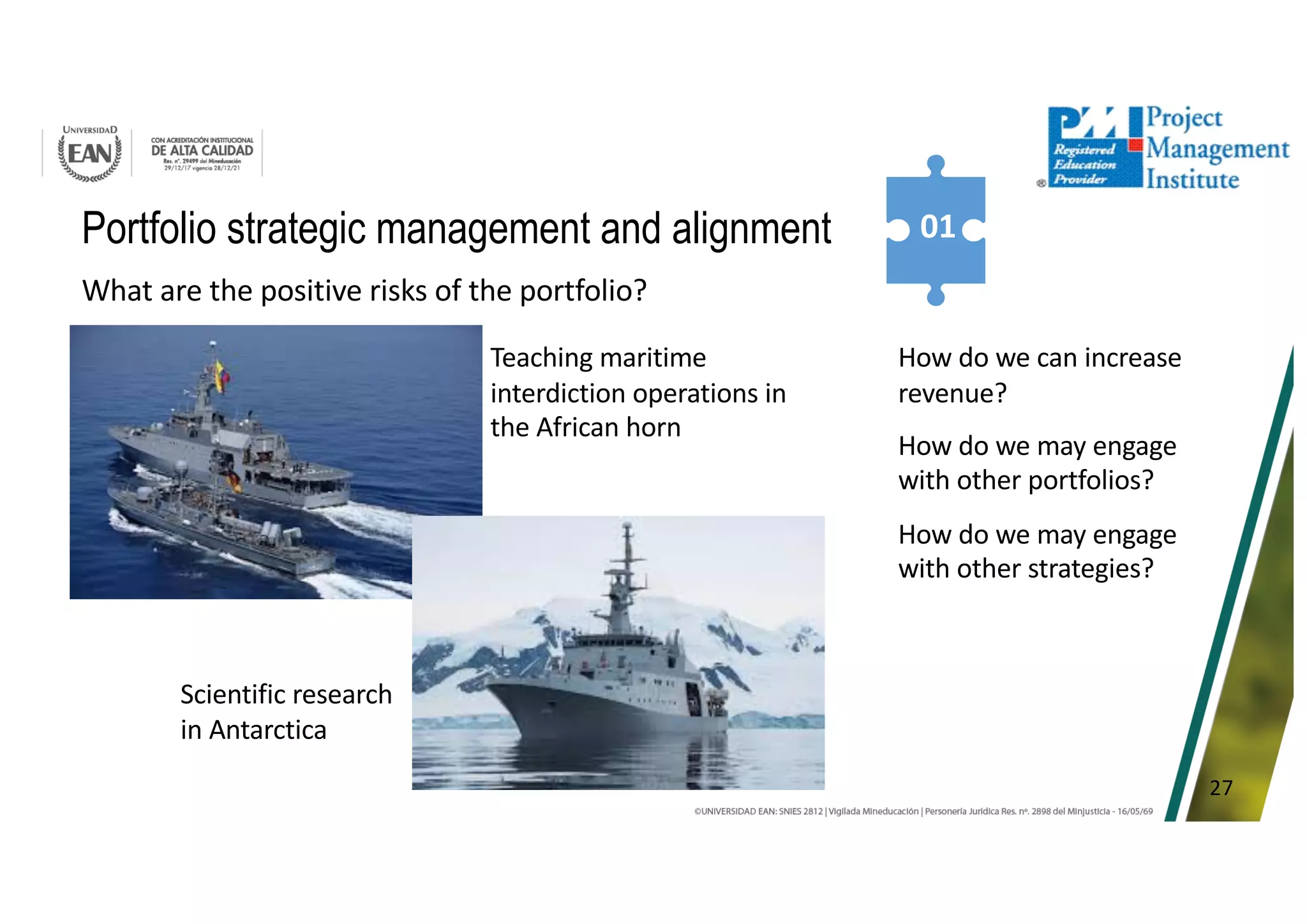
Portfolio strategic management and alignment 01
What are the positive risks of the portfolio?
Teaching maritime
interdiction operations in
the African horn
Scientific research
in Antarctica
How do we can increase
revenue?
How do we may engage
with other portfolios?
How do we may engage
with other strategies?
28
Portfolio strategic management and alignment 01
What are the negative risks of the portfolio?
• Continuous use of war material
mean high life-cycle costs.
• More ships require more people,
more infrastructure, more training,
i.e. more costs
29
Portfolio management methods and techniques
02
Decision support tools and models: typically is a software designed for supporting
analysts and decision makers to make better and faster decisions
1. Using past information if it is possible to predict
how the future will be.
2. Estimate how will be the different scenarios.
3. Calculate each probability
4. Compare the alternatives
5. Choose the most profitable option
30
Portfolio management methods and techniques
02
Decision support tools and models: decision trees. Example: 300’ bakery
Alternative A:
Keep only one
Alternative B:
Make it bigger
Alternative C:
Expand to
another one
Decision
No investment
30’ monthly
50’ investment
100’ investment
45’ monthly, 30%
(45*0,3)+(35*0,7)
38’
35’ monthly, 70%
75’ monthly, 75%
(75*0,25)+(65*25%)
75,5’
65’ monthly, 25%
Rent: 5’
Salaries: 7’
Raw material: 5’
Taxes: 2’
Losses: 1’
Utilities: 1’
Others: 1’
Living: 6’
Savings: 2’
Bank 50’: 2’
Bank 100’: 3’
12.5 años
4’
2’
22’
31
Portfolio management methods and techniques
02
Decision support tools and models: typically is a software designed for supporting
analysts and decision makers to make better and faster decisions
OMOE (Overall Measure Of Effectiveness)
• Decompose the effectiveness in more
manageable groups
• Compare between pairs
32
Portfolio management methods and techniques
02
Decision support tools and models: typically is a software designed for supporting
analysts and decision makers to make better and faster decisions
Analytic Hierarchy Process: From
subjective concept to objective value
1: same value; 3: a bit better; 5: better;
7: too much better; 9: extremely better.
Combine between experts
Closest point
to the ideal
point
33
Portfolio management methods and techniques
02
Prioritization algorithms: Any organization that manages a portfolio of projects needs
to define and communicate what kinds of project work is of highest value.
1. Alignment with organizational strategy (satisfaction of
organizational objectives, values, etc.)
2. Top management support (Identification of high value
from the top level)
3. Project’s maturity (how the project is ready to be done)
4. Risk assessment (how risky is the project)
5. Financial assessment (how profitable is the project)
6. Time assessment (what project would be the fastest)
# Who assess? (1-10 scale)
1 Strategic management office
2 CEO office
3 Project Management Office
4 Financial management office
5 Financial management office
6 Operations management office
34
02
Portfolio management methods and techniques
Project and program auditing techniques: Are projects and programs are in-sync with their objectives?
Budget based Is the proposed project budget compatible with the organization’s limitations?
Does the project budget has a scope for bearing contingency or risk-related expenses?
Estimation based Has the cost estimation process been clearly-defined and documented?
Was cost estimation conducted in accordance with accounting regulations?
Strategic
Management based
Has the project manager acceptable levels of authority and accountability instructions?
Is there a system for analysing past projects for improving future performances?
Time based Time schedule development and control measures
Activity duration analysis in terms, including inter-team dependency
Resource based Resource planning and control in terms of allocation of resources
Resource planning and control in terms of analysis of consumption
Personnel based Allocation of staff and establishment of recruiting policies
Division of responsibilities regarding team development and training needs
Grading system to rank projects
Critically Deficient —serious
inability to match project guidelines
Weak — unable to entirely comply
with project objectives
Satisfactory — project principles
are followed but the overall
performance may improve
Good — compatibility with project
goals and effectiveness
Very Good — an ideal project
performance and adheres to
planning/monitoring expectations
35
02
Portfolio management methods and techniques
Organizational, industry and domain acumen: portfolio managers need to know their sector
Relevant
markets
Customer base
Competition
Trends
Standards
Regulatory
environment
Code of
conduct
e.g. submarines
e.g. BDAs
e.g. Los Frailes
e.g. Unmanned vessels
e.g. OPV vs. Frigate
e.g. SOLAS (Safety
of Life at Sea)
e.g. MARPOL
(Maritime Pollution)
36
Stakeholder engagement
03
Working with portfolio stakeholders contributes to
maximize portfolio and organizational performance
All O’s: CEO, CFO,
COO, etc.
Program and
Project managers
Resource
managers
Contracts staff
PMO
Topics What questions ask?
Personal
details
Mobiles, email, role
Objectives What should or could the initiative seek to
accomplish?
Issues Are there any issues that we need to be
aware of when planning the project?
Stakeholders Who do you see as the stakeholders of this
initiative?
Roles How do you see your role in achieving the
aims of this project?
Value-add What is the strategic contribution of the
project to the organization as a whole?
Resources Which specialist personnel, equipment and
technology will be required?
Approach How do you think we should approach to
implement this initiative?
Risks What challenges represent obstacles to the
success of this project?
Sustainability How should will ensure sustainability of the
project’s deliverable?
37
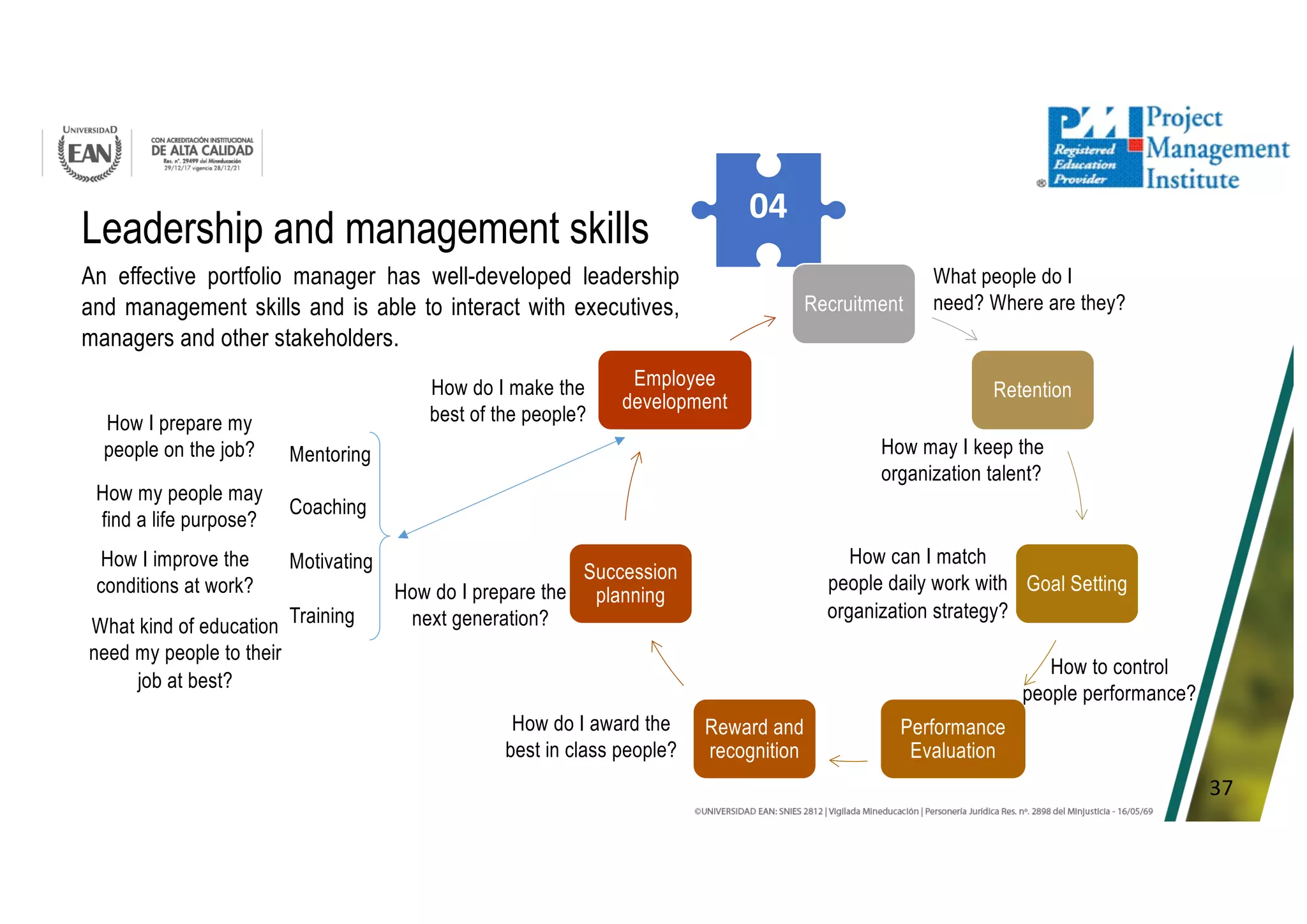
Leadership and management skills
04
An effective portfolio manager has well-developed leadership
and management skills and is able to interact with executives,
managers and other stakeholders.
Recruitment
Retention
Goal Setting
Performance
Evaluation
Reward and
recognition
Succession
planning
Employee
development
Mentoring
Coaching
Motivating
Training
What people do I
need? Where are they?
How may I keep the
organization talent?
How can I match
people daily work with
organization strategy?
How to control
people performance?
How do I award the
best in class people?
How do I prepare the
next generation?
How do I make the
best of the people?
How I prepare my
people on the job?
How my people may
find a life purpose?
How I improve the
conditions at work?
What kind of education
need my people to their
job at best?
38
Workshop 2
In the same groups continue with your portfolio as follows:
1. Describe one policy and two procedures (slide 3)
2. Mention two norms, two rules and two values (slide 5)
3. 1 criterion for categorization, 1 for prioritization, and 1 for authorization (slide 6)
4. Mention at least three key stakeholders (slide 8 and 17)
5. Mention one elicitation technique (slide 10)
6. Build your own communication matrix (slide 13)
7. Mention three regulatory requirements (slide 18)
8. Exemplify three portfolio manager daily skills (slide 20)
9. Identify the three most influential potential changes in the environment (slide 23)
10. Explain one financial benefit and one non-financial benefit (slides 25 & 26)
11. Identify one positive risk and one negative risk (slides 27 & 28)
12. Present your prioritization algorithms (slide 33)
13. Identify three areas of sectorial knowledge (slide 35)
14. Explain three leadership and management skills for your portfolio (slide 37)
Prepare a 15 min presentation, all people of the group must participate.
Bogotá, 2020
Project Portfolio
Management
2. People in Project
Portfolio Management

People in portfolio management

  • 1.
    Bogotá, 2020 Project Portfolio Management 2.People in Project Portfolio Management
  • 2.
    2 Difference between Programand Project Management vs. Portfolio Management: A matter of focus Program and Project managers focus on “doing work right” Portfolio managers focus on: “doing the right work”
  • 3.
    3 What a projectportfolio manager do? Portfolio manager may be an individual, a group or a governing body, they typically do: 1. Establish and maintain a framework (a structure of ideas) and methodology (policies and procedures) for portfolio management. Procedure for acquisition projects (Orión): 1. Request for information 2. Request for quotation (same parameters) 3. Most relevant variables 4. Reference visits 5. Rational decision making 6. Top level validation 7. Memorandum of understanding 8. Contract negotiations (offset yes/no)
  • 4.
    4 What a projectportfolio manager do? Portfolio manager may be an individual, a group or a governing body, they typically do: 2. Establish and maintain portfolio management processes: strategic management, governance, communication, performance and risk management. 2/14/20 Evolución de Capacidades 2011 2014 2019 2030 Transformación Capacidades – Reasignación Tareas – Mayor tecnología NAVAL GUARDACOSTAS INFANTERÍA DE MARINA Fluvial Terrestre Anfibia Complemento capacidades para enfrentar amenazas Consolidación de la paz Desarrollo en Postconflicto Plan Orión Plan Puente Plan Faro Período 1 Período 2 Período 3 Fuerza proyección limitada Defensa de Costas y Bases Fijas Control Principales Ríos y Fronterizos Seg. Marítima MT & ZC Fuerza Disuasiva Seguridad ZEE FORTALECER SOSTENER & COMPLETAR RENOVAR
  • 5.
    5 Governance A set of •Practices • Functions • Processes Within a framework • Norms • Rules • Values In order to • Optimize investments • Meet strategic goals
  • 6.
    6 Governance + Management 1.Governance framework: oversight, decision making, control, and integration. 2. Approving related policies and procedures 3. Approving component selection, categorization, prioritization, and authorization criteria 4. Reviewing and remediating escalated issues and risks. 1. Portfolio alignment with stategic goals 2. Degree of organizational change to achieve portfolio value 3. Leadership skills to foster portfolio 4. Influence of organizational areas 5. Determining risks 6. Control of resources allocation 7. Communications
  • 7.
    7 Communication management Figure 7-3.Develop Portfolio Communication Management Plan: Inputs, Tools and techniques, and Outputs. P. 108 Stakeholder analysis: Determine the different individuals and groups and determine their concerns, interests and influence. Who are the members of your governing body? Who needs what information? Which of the stakeholders are leaders, influencers, early adopters? What is their political influence in the organization? Is their role as a stakeholder recognized by the organization? Which of the stakeholders can significantly influence others?
  • 8.
    8 Stakeholder engagement Working withportfolio stakeholders contributes to maximize portfolio and organizational performance Senior Executives: CEO, CFO, COO, etc. Program and Project managers Resource managers Contracts staff Regulatory bodies PMO Topics What questions ask? Personal details Mobiles, email, role Objectives What should or could the initiative seek to accomplish? Issues Are there any issues that we need to be aware of when planning the project? Stakeholders Who do you see as the stakeholders of this initiative? Roles How do you see your role in achieving the aims of this project? Value-add What is the strategic contribution of the project to the organization as a whole? Resources Which specialist personnel, equipment and technology will be required? Approach How do you think we should approach to implement this initiative? Risks What challenges represent obstacles to the success of this project? Sustainability How should will ensure sustainability of the project’s deliverable? This is an ongoing process
  • 9.
    9 Communication management Figure 7-3.Develop Portfolio Communication Management Plan: Inputs, Tools and techniques, and Outputs. P. 108 “It is important for the portfolio manager to engage with stakeholders to endure their needs are being met and are aligned with the communication management plan . This may be achieved with interviews, questionnaires, surveys, stakeholder meetings, and lessons learned sessions” (PPfM Std, p. 112)
  • 10.
    10 • Focus groupsand brainstorming • Associate the ideas into mind maps or similar Facilitation techniques • Interviews (structured, semi-structured, open) • Observations (inside/outside) Ethnography Survey techniques • Votes to get consensus or majority • Display popular opinion on recommended changes Collaboration techniques Elicitation techniques
  • 11.
    11 Communication management Figure 7-3.Develop Portfolio Communication Management Plan: Inputs, Tools and techniques, and Outputs. P. 108 “In communication requirement analysis, the vehicle or tool used to communicate information to the stakeholders and the frequency planned is evaluated to determine if changes should be made” (PPfM Std, p. 112)
  • 12.
    12 Example of keystakeholders context (Construction)
  • 13.
  • 14.
    14 What a projectportfolio manager do? Portfolio manager may be an individual, a group or a governing body, they typically do: 3. Guide the selection, prioritization, balancing and termination of portfolio components, ensuring strategic goals and organizational priorities alignment. Prioritized projects Infrastr ucture Marine Corps Naval vessels
  • 15.
    15 What a projectportfolio manager do? Portfolio manager may be an individual, a group or a governing body, they typically do: 4. Establish and maintain appropriate infrastructure and system to support portfolio management process. Jefatura de Proyectos Especiales – Plan Orión Subgerencia Técnica Subgerencia Administrativa Grupo control seguimiento y rendición de cuentas Grupo de apoyo contratos Grupo de apoyo financiero Grupo de apoyo comisiones al exterior Grupo técnico Grupo gerentes de programas Grupo inspectores de programas Vigilancia Tecnológica Proyectos Offset Fragatas Submarinos Aviación Naval Guardacostas Infantería de Marina Comités técnicos Fragatas Submarinos Aviación Naval Guardacostas Infantería de Marina
  • 16.
    16 What a projectportfolio manager do? Portfolio manager may be an individual, a group or a governing body, they typically do: 5. Review, reallocate, reprioritize, and optimize the portfolio to ensure alignment with organizational strategy.
  • 17.
    17 What a projectportfolio manager do? Portfolio manager may be an individual, a group or a governing body, they typically do: 6. Provide key stakeholders with timely assessment of portfolio selection, prioritization and performance. Presidencia Congreso DNP Cuerpo diplomático Medios Rectores Empresarios Actores claves validadores en Plan Orión
  • 18.
    18 What a projectportfolio manager do? Portfolio manager may be an individual, a group or a governing body, they typically do: 7. Meet legal and regulatory requirements. • Selección directa - MOU • Ley 80 - Adquisición tradicional • Contratación interadministrativa • Acuerdo de cooperación industrial y social (Offsets) • Transferencia de tecnología y de conocimiento • Nacionalización Requerimientos legales en Plan Orión
  • 19.
    19 What a projectportfolio manager do? Portfolio manager may be an individual, a group or a governing body, they typically do: 8. Support of senior-level decision making.
  • 20.
    20 What are thetypical skills during portfolio lifecycle? Manage risks Monitor and prioritize portfolio components Resolve senior level issues Develop and improve processes Apply organization knowledge Apply management skills Manage organization’s resources Provide timely information Portfolio manager daily skills e.g. Corruption, quality, ignorance, etc. e.g. Robustness of the mathematical model, lack of reports, low controls e.g. Why not me?, influences, train crash e.g. AHP with sensitivity analysis e.g. Similar projects, experience, industrial capabilities, lessons learned e.g. Planning, decision- making, delegation, problem solving, motivation, etc. e.g. RFIs, RFQs, Cash flow planning, negotiation, finance analysis, procurement, etc. e.g. quality of reports, metrics, usefulness of data.
  • 21.
    21 In which areasthe project portfolio manager should have expertise? 01 02 03 04 05 Portfolio strategic management and alignment Portfolio management methods and techniques Stakeholder engagement Leadership and management skills Risk management
  • 22.
    22 Portfolio strategic managementand alignment 01 1. Monitor changes in organizational strategy (e.g. from green to gray vessels) 2. How portfolio is supporting organizational strategy? (e.g. increase results) 3. What are the financial benefits? (e.g. develop vs. purchase) 4. What are the non-financial benefits? (e.g. Guajira children) 5. What are the positive risks of the portfolio? (e.g. international operations) 6. What are the negative risks of the portfolio? (e.g. lifecycle costs)
  • 23.
    23 Portfolio strategic managementand alignment 01 Monitor changes in organizational strategy (e.g. from green to gray vessels) • The conflict made changes from transportation to combat. • Enemy capabilities required that vessels were armoured. • Construction capabilities changed acquisition process. • Reduction of technological gaps increased ambition. • Strategic surface platform is the highest technological project.
  • 24.
    24 Portfolio strategic managementand alignment 01 How portfolio is supporting organizational strategy? (e.g. increase results) Detection Detention Interception and inspection • The completion of the project increase operability • Different parts of the portfolio have particular functions • The sum of the parts is more than each one individually
  • 25.
    25 Portfolio strategic managementand alignment 01 What are the financial benefits? Be careful between the sum of project benefits and the benefits of the portfolio De 3.500 a 10.500 e.g. Forward y Diferencial cambiario
  • 26.
    26 Portfolio strategic managementand alignment 01 What are the non-financial benefits? National security Rescue of people at sea Water transportation to isolated areas
  • 27.
    27 Portfolio strategic managementand alignment 01 What are the positive risks of the portfolio? Teaching maritime interdiction operations in the African horn Scientific research in Antarctica How do we can increase revenue? How do we may engage with other portfolios? How do we may engage with other strategies?
  • 28.
    28 Portfolio strategic managementand alignment 01 What are the negative risks of the portfolio? • Continuous use of war material mean high life-cycle costs. • More ships require more people, more infrastructure, more training, i.e. more costs
  • 29.
    29 Portfolio management methodsand techniques 02 Decision support tools and models: typically is a software designed for supporting analysts and decision makers to make better and faster decisions 1. Using past information if it is possible to predict how the future will be. 2. Estimate how will be the different scenarios. 3. Calculate each probability 4. Compare the alternatives 5. Choose the most profitable option
  • 30.
    30 Portfolio management methodsand techniques 02 Decision support tools and models: decision trees. Example: 300’ bakery Alternative A: Keep only one Alternative B: Make it bigger Alternative C: Expand to another one Decision No investment 30’ monthly 50’ investment 100’ investment 45’ monthly, 30% (45*0,3)+(35*0,7) 38’ 35’ monthly, 70% 75’ monthly, 75% (75*0,25)+(65*25%) 75,5’ 65’ monthly, 25% Rent: 5’ Salaries: 7’ Raw material: 5’ Taxes: 2’ Losses: 1’ Utilities: 1’ Others: 1’ Living: 6’ Savings: 2’ Bank 50’: 2’ Bank 100’: 3’ 12.5 años 4’ 2’ 22’
  • 31.
    31 Portfolio management methodsand techniques 02 Decision support tools and models: typically is a software designed for supporting analysts and decision makers to make better and faster decisions OMOE (Overall Measure Of Effectiveness) • Decompose the effectiveness in more manageable groups • Compare between pairs
  • 32.
    32 Portfolio management methodsand techniques 02 Decision support tools and models: typically is a software designed for supporting analysts and decision makers to make better and faster decisions Analytic Hierarchy Process: From subjective concept to objective value 1: same value; 3: a bit better; 5: better; 7: too much better; 9: extremely better. Combine between experts Closest point to the ideal point
  • 33.
    33 Portfolio management methodsand techniques 02 Prioritization algorithms: Any organization that manages a portfolio of projects needs to define and communicate what kinds of project work is of highest value. 1. Alignment with organizational strategy (satisfaction of organizational objectives, values, etc.) 2. Top management support (Identification of high value from the top level) 3. Project’s maturity (how the project is ready to be done) 4. Risk assessment (how risky is the project) 5. Financial assessment (how profitable is the project) 6. Time assessment (what project would be the fastest) # Who assess? (1-10 scale) 1 Strategic management office 2 CEO office 3 Project Management Office 4 Financial management office 5 Financial management office 6 Operations management office
  • 34.
    34 02 Portfolio management methodsand techniques Project and program auditing techniques: Are projects and programs are in-sync with their objectives? Budget based Is the proposed project budget compatible with the organization’s limitations? Does the project budget has a scope for bearing contingency or risk-related expenses? Estimation based Has the cost estimation process been clearly-defined and documented? Was cost estimation conducted in accordance with accounting regulations? Strategic Management based Has the project manager acceptable levels of authority and accountability instructions? Is there a system for analysing past projects for improving future performances? Time based Time schedule development and control measures Activity duration analysis in terms, including inter-team dependency Resource based Resource planning and control in terms of allocation of resources Resource planning and control in terms of analysis of consumption Personnel based Allocation of staff and establishment of recruiting policies Division of responsibilities regarding team development and training needs Grading system to rank projects Critically Deficient —serious inability to match project guidelines Weak — unable to entirely comply with project objectives Satisfactory — project principles are followed but the overall performance may improve Good — compatibility with project goals and effectiveness Very Good — an ideal project performance and adheres to planning/monitoring expectations
  • 35.
    35 02 Portfolio management methodsand techniques Organizational, industry and domain acumen: portfolio managers need to know their sector Relevant markets Customer base Competition Trends Standards Regulatory environment Code of conduct e.g. submarines e.g. BDAs e.g. Los Frailes e.g. Unmanned vessels e.g. OPV vs. Frigate e.g. SOLAS (Safety of Life at Sea) e.g. MARPOL (Maritime Pollution)
  • 36.
    36 Stakeholder engagement 03 Working withportfolio stakeholders contributes to maximize portfolio and organizational performance All O’s: CEO, CFO, COO, etc. Program and Project managers Resource managers Contracts staff PMO Topics What questions ask? Personal details Mobiles, email, role Objectives What should or could the initiative seek to accomplish? Issues Are there any issues that we need to be aware of when planning the project? Stakeholders Who do you see as the stakeholders of this initiative? Roles How do you see your role in achieving the aims of this project? Value-add What is the strategic contribution of the project to the organization as a whole? Resources Which specialist personnel, equipment and technology will be required? Approach How do you think we should approach to implement this initiative? Risks What challenges represent obstacles to the success of this project? Sustainability How should will ensure sustainability of the project’s deliverable?
  • 37.
    37 Leadership and managementskills 04 An effective portfolio manager has well-developed leadership and management skills and is able to interact with executives, managers and other stakeholders. Recruitment Retention Goal Setting Performance Evaluation Reward and recognition Succession planning Employee development Mentoring Coaching Motivating Training What people do I need? Where are they? How may I keep the organization talent? How can I match people daily work with organization strategy? How to control people performance? How do I award the best in class people? How do I prepare the next generation? How do I make the best of the people? How I prepare my people on the job? How my people may find a life purpose? How I improve the conditions at work? What kind of education need my people to their job at best?
  • 38.
    38 Workshop 2 In thesame groups continue with your portfolio as follows: 1. Describe one policy and two procedures (slide 3) 2. Mention two norms, two rules and two values (slide 5) 3. 1 criterion for categorization, 1 for prioritization, and 1 for authorization (slide 6) 4. Mention at least three key stakeholders (slide 8 and 17) 5. Mention one elicitation technique (slide 10) 6. Build your own communication matrix (slide 13) 7. Mention three regulatory requirements (slide 18) 8. Exemplify three portfolio manager daily skills (slide 20) 9. Identify the three most influential potential changes in the environment (slide 23) 10. Explain one financial benefit and one non-financial benefit (slides 25 & 26) 11. Identify one positive risk and one negative risk (slides 27 & 28) 12. Present your prioritization algorithms (slide 33) 13. Identify three areas of sectorial knowledge (slide 35) 14. Explain three leadership and management skills for your portfolio (slide 37) Prepare a 15 min presentation, all people of the group must participate.
  • 39.
    Bogotá, 2020 Project Portfolio Management 2.People in Project Portfolio Management