The Rising Cost of Energy and The pending reglatory standards for buildings. . . Yes, I Do See A Light At the End Of This Tunnel . . . Is That A Freight Train Headed My Way?
Fuel Costs Are Increasing . . .
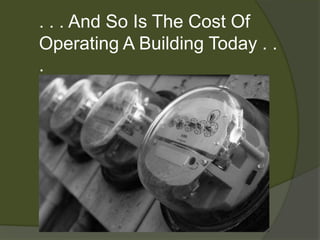
. . . And So Is The Cost Of Operating A Building Today . . .
Where Is This All Going?What Is The New Direction With Building Energy Consumption And Subsequent Performance?
Mandated State and Federal Energy Performance Standards For Buildings
The Pending Energy Performance Standards for BuildingsASTM Building Energy Performance Assessment (BEPA)Standard E 2797Presented by: Anthony J. Buonicore, PE, QEP, BCEE CEO, The Buonicore Group ASTM BEPA Task Group Chairman EBA
ASTM BEPA Standard E2797Overview: Driving Forces What’s the problem? What the BEPA standard accomplishes
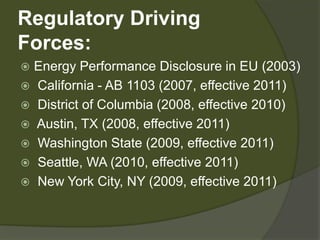
Regulatory Driving Forces:Energy Performance Disclosure in EU (2003) California - AB 1103 (2007, effective 2011) District of Columbia (2008, effective 2010) Austin, TX (2008, effective 2011) Washington State (2009, effective 2011) Seattle, WA (2010, effective 2011) New York City, NY (2009, effective 2011)
Additional Cities consideringDenver, Portland, San Francisco
Additional States consideringIllinois, Massachusetts, Maryland, Michigan, Minnisota, Ohio & Oregan
Business Driving Forces:More energy efficient buildingsLower operating costs Higher net operating income More valuable More attractive to tenants
Business Driving Forces:Less energy efficient buildings:Less competitive in the marketplaceIn danger of obsolescence
What’s the problem?Prospective purchasers as part of due diligence are asking what is the “building’s energy consumption?”Pro Forma provided to lenders by buyers for	financing has line item for utilities under building	operating costs		a.)  Lenders want a “reasonable” and 	“realistic” 	value here		b. ) No consistent methodology exists to 	provide answers
What’s the problem? (cont.)Significant variability depending on:Period of time chosen over which the data was collected (1 yr, 2 yrs, 3 yrs) and how it was calendarizedWhether or not changes in building occupancy was consideredHow weather conditions were factored in and baseline conditions establishedHow building operating hours were consideredWhether or not major building renovations were considered
What does the BEPA Standard accomplish?Standardizes the collection and reporting of energy consumption information for a building involved in a real estate transactionProvides a supplementary scope of work that can compliment property due diligence (e.g. Phase I or PCA)Use of the BEPA standard will facilitate improved benchmarking (by others)
Report DeliverablesPro Forma (representative) building energy usePro Forma (representative) building energy costProjected range of building energy use for: lower, upper and average caseProjected range of building energy cost for: lower, upper and average caseActual building energy use data for each year collectedActual building energy cost data for each year collected
Use of BEPAs in the marketplace:Likely to be combined with an ASHRAE Level IEnergy Audit and/or Benchmarking (BEPA Plus)ESCOs energy auditing (BEPA and BEPA Plus)Asset management of property portfolios (BEPA Plus)Property due diligence in acquisition or disposition (BEPA and BEPA Plus) Building energy use regulatory disclosure (BEPA) Support “energy efficiency” loans (BEPA Plus)
Getting On Board With This Building Trend . . .
For Your Personalized Building Analysis So As To Improve Your Operational Costs In The Area of Energy Consumption . . .
Contact:Jim FreibergNew Intersections, LLC(303) 621-6889jimfreiberg@comcast.net

Pending Building Energy Standards

  • 1.
    The Rising Costof Energy and The pending reglatory standards for buildings. . . Yes, I Do See A Light At the End Of This Tunnel . . . Is That A Freight Train Headed My Way?
  • 2.
    Fuel Costs AreIncreasing . . .
  • 3.
    . . .And So Is The Cost Of Operating A Building Today . . .
  • 4.
    Where Is ThisAll Going?What Is The New Direction With Building Energy Consumption And Subsequent Performance?
  • 5.
    Mandated State andFederal Energy Performance Standards For Buildings
  • 6.
    The Pending EnergyPerformance Standards for BuildingsASTM Building Energy Performance Assessment (BEPA)Standard E 2797Presented by: Anthony J. Buonicore, PE, QEP, BCEE CEO, The Buonicore Group ASTM BEPA Task Group Chairman EBA
  • 7.
    ASTM BEPA StandardE2797Overview: Driving Forces What’s the problem? What the BEPA standard accomplishes
  • 8.
    Regulatory Driving Forces:EnergyPerformance Disclosure in EU (2003) California - AB 1103 (2007, effective 2011) District of Columbia (2008, effective 2010) Austin, TX (2008, effective 2011) Washington State (2009, effective 2011) Seattle, WA (2010, effective 2011) New York City, NY (2009, effective 2011)
  • 9.
  • 10.
    Additional States consideringIllinois,Massachusetts, Maryland, Michigan, Minnisota, Ohio & Oregan
  • 11.
    Business Driving Forces:Moreenergy efficient buildingsLower operating costs Higher net operating income More valuable More attractive to tenants
  • 12.
    Business Driving Forces:Lessenergy efficient buildings:Less competitive in the marketplaceIn danger of obsolescence
  • 13.
    What’s the problem?Prospectivepurchasers as part of due diligence are asking what is the “building’s energy consumption?”Pro Forma provided to lenders by buyers for financing has line item for utilities under building operating costs a.) Lenders want a “reasonable” and “realistic” value here b. ) No consistent methodology exists to provide answers
  • 14.
    What’s the problem?(cont.)Significant variability depending on:Period of time chosen over which the data was collected (1 yr, 2 yrs, 3 yrs) and how it was calendarizedWhether or not changes in building occupancy was consideredHow weather conditions were factored in and baseline conditions establishedHow building operating hours were consideredWhether or not major building renovations were considered
  • 15.
    What does theBEPA Standard accomplish?Standardizes the collection and reporting of energy consumption information for a building involved in a real estate transactionProvides a supplementary scope of work that can compliment property due diligence (e.g. Phase I or PCA)Use of the BEPA standard will facilitate improved benchmarking (by others)
  • 16.
    Report DeliverablesPro Forma(representative) building energy usePro Forma (representative) building energy costProjected range of building energy use for: lower, upper and average caseProjected range of building energy cost for: lower, upper and average caseActual building energy use data for each year collectedActual building energy cost data for each year collected
  • 17.
    Use of BEPAsin the marketplace:Likely to be combined with an ASHRAE Level IEnergy Audit and/or Benchmarking (BEPA Plus)ESCOs energy auditing (BEPA and BEPA Plus)Asset management of property portfolios (BEPA Plus)Property due diligence in acquisition or disposition (BEPA and BEPA Plus) Building energy use regulatory disclosure (BEPA) Support “energy efficiency” loans (BEPA Plus)
  • 18.
    Getting On BoardWith This Building Trend . . .
  • 19.
    For Your PersonalizedBuilding Analysis So As To Improve Your Operational Costs In The Area of Energy Consumption . . .
  • 20.
    Contact:Jim FreibergNew Intersections,LLC(303) 621-6889jimfreiberg@comcast.net