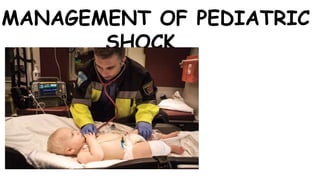
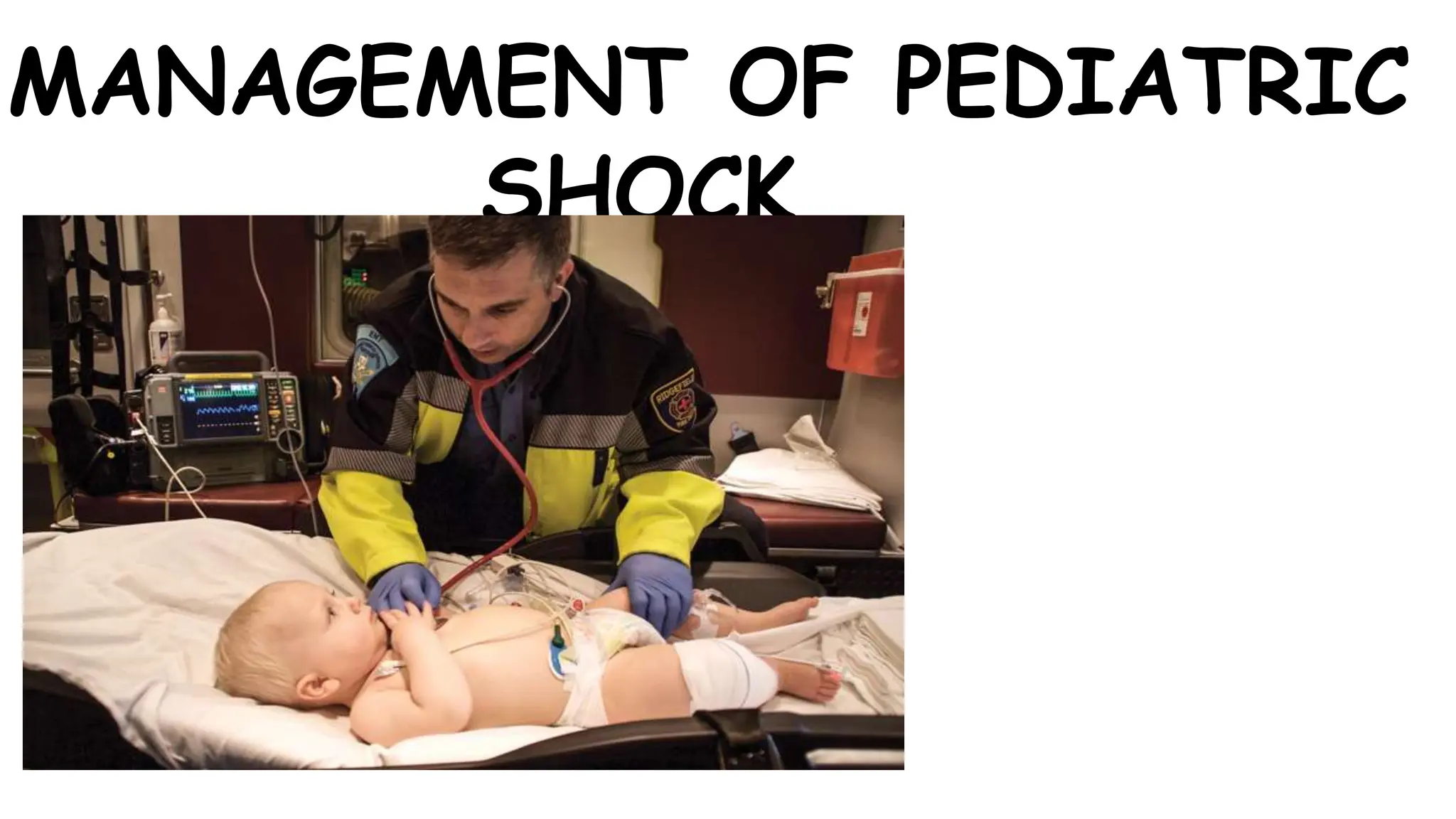
MANAGEMENT OF PEDIATRIC
SHOCK
• INTRODUCTION
• EPIDEMIOLOGY
• TYPES OF SHOCK
• PATHOPHYSIOLOGY
• APPROACH TO A PATIENT WITH SCHOCK
• MANAGEMENT OF PEDIATRIC SHOCK
• PROGNOSIS
OUTLINE
Shock
Define shock?
Types of shock?
Shock
Introduction
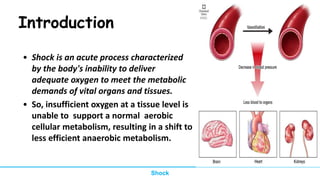
• Shock is an acute process characterized
by the body's inability to deliver
adequate oxygen to meet the metabolic
demands of vital organs and tissues.
• So, insufficient oxygen at a tissue level is
unable to support a normal aerobic
cellular metabolism, resulting in a shift to
less efficient anaerobic metabolism.
Shock
Epidemiology
•Shock occurs in approximately 2% of all hospitalized infants,
children, and adults in developed countries
•mortality rate varies substantially depending on the etiology and
clinical circumstances.
•Mortality is mostly due to associated complication and MODS
Shock
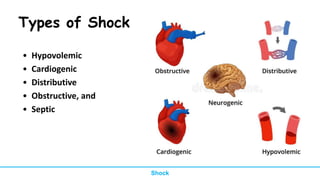
Types of Shock
• Hypovolemic
• Cardiogenic
• Distributive
• Obstructive, and
• Septic
Shock
Hypovolemic shock
• The most common cause of shock in children
worldwide,
• Hypovolemic shock is due to loss of blood volume,
causes decreased preload, stroke volume, and CO.
• It is most frequently caused by diarrhea, vomiting, or
hemorrhage.
Shock
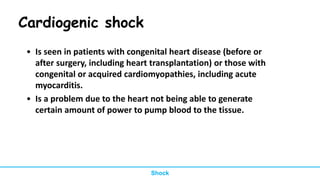
Cardiogenic shock
• Is seen in patients with congenital heart disease (before or
after surgery, including heart transplantation) or those with
congenital or acquired cardiomyopathies, including acute
myocarditis.
• Is a problem due to the heart not being able to generate
certain amount of power to pump blood to the tissue.
Shock
Obstructive shock
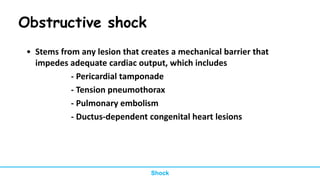
• Stems from any lesion that creates a mechanical barrier that
impedes adequate cardiac output, which includes
- Pericardial tamponade
- Tension pneumothorax
- Pulmonary embolism
- Ductus-dependent congenital heart lesions
Shock
Distributive shock
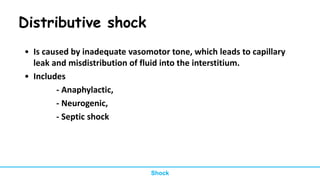
• Is caused by inadequate vasomotor tone, which leads to capillary
leak and misdistribution of fluid into the interstitium.
• Includes
- Anaphylactic,
- Neurogenic,
- Septic shock
Shock
Cont...
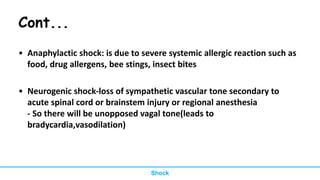
• Anaphylactic shock: is due to severe systemic allergic reaction such as
food, drug allergens, bee stings, insect bites
• Neurogenic shock-loss of sympathetic vascular tone secondary to
acute spinal cord or brainstem injury or regional anesthesia
- So there will be unopposed vagal tone(leads to
bradycardia,vasodilation)
Shock
Septic shock
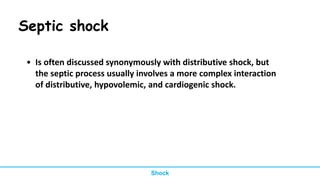
• Is often discussed synonymously with distributive shock, but
the septic process usually involves a more complex interaction
of distributive, hypovolemic, and cardiogenic shock.
Shock
Pathophysiology
Extracorporeal Fluid Loss
•Hypovolemic shock may be a result of direct blood loss through
hemorrhage or abnormal loss of body fluids (diarrhea, vomiting,burns,
diabetes mellitus or insipidus, nephrosis).
Lowering Plasma Oncotic Forces
•Hypovolemic shock may also result from hypoproteinemia (liver
injury, or as a progressive complication of increased capillary
permeability).
Abnormal Vasodilation
•Distributive shock (neurogenic, anaphylaxis, or septic shock) occurs
when there is loss of vascular tone—venous, arterial, or both
(sympathetic blockade, local substances affecting permeability,
acidosis, drug effects, spinal cord transection).
Shock
Increased Vascular Permeability
• Sepsis may change the capillary permeability in the absence of
any change in capillary hydrostatic pressure (endotoxins from
sepsis, excess histamine release in anaphylaxis).
Cardiac Dysfunction
• Peripheral hypoperfusion may result from any condition that
affects the heart’s ability to pump blood efficiently
Shock
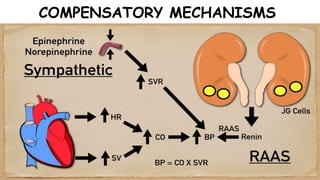
COMPENSATORY MECHANISMS
Phases
• Compensated
– Occurs earlier in the process
– BP is maintained
– HR is elevated
• Decompensated
– Occurs late in the process
– BP is low, hypotension
– Organ damage starts to be seen
•Irreversible
– MOD has developed
Shock
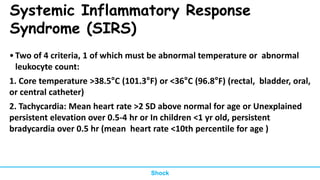
Systemic Inflammatory Response
Syndrome (SIRS)
•Two of 4 criteria, 1 of which must be abnormal temperature or abnormal
leukocyte count:
1. Core temperature >38.5°C (101.3°F) or <36°C (96.8°F) (rectal, bladder, oral,
or central catheter)
2. Tachycardia: Mean heart rate >2 SD above normal for age or Unexplained
persistent elevation over 0.5-4 hr or In children <1 yr old, persistent
bradycardia over 0.5 hr (mean heart rate <10th percentile for age )
Shock
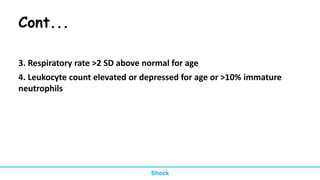
Cont...
3. Respiratory rate >2 SD above normal for age
4. Leukocyte count elevated or depressed for age or >10% immature
neutrophils
Shock
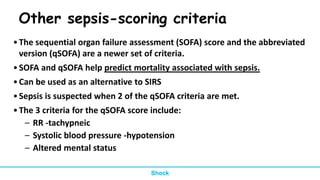
Other sepsis-scoring criteria
•The sequential organ failure assessment (SOFA) score and the abbreviated
version (qSOFA) are a newer set of criteria.
•SOFA and qSOFA help predict mortality associated with sepsis.
•Can be used as an alternative to SIRS
•Sepsis is suspected when 2 of the qSOFA criteria are met.
•The 3 criteria for the qSOFA score include:
– RR -tachypneic
– Systolic blood pressure -hypotension
– Altered mental status
Shock
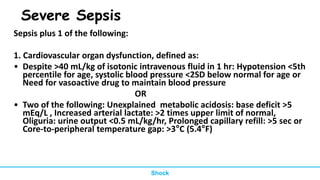
Severe Sepsis
Sepsis plus 1 of the following:
1. Cardiovascular organ dysfunction, defined as:
• Despite >40 mL/kg of isotonic intravenous fluid in 1 hr: Hypotension <5th
percentile for age, systolic blood pressure <2SD below normal for age or
Need for vasoactive drug to maintain blood pressure
OR
• Two of the following: Unexplained metabolic acidosis: base deficit >5
mEq/L , Increased arterial lactate: >2 times upper limit of normal,
Oliguria: urine output <0.5 mL/kg/hr, Prolonged capillary refill: >5 sec or
Core-to-peripheral temperature gap: >3°C (5.4°F)
Shock
Cont...
2. (ARDS), bilateral infiltrates on chest radiograph, and no evidence of
left-sided heart failure.
or
•Sepsis plus ≥2 organ dysfunctions (respiratory, renal, neurologic,
hematologic, or hepatic).
Shock
Approach to a child with shock
• Directed history
▪ GI loss
▪ Kidney loss
▪ Bleeding
▪ Burn
▪ Decreased urine out put
• Past medical history
▪ heart disease
▪ Surgical hx
▪ steroid use
▪ medical problems
Shock
Physical examination
– The clinical presentation of patient with shock varies
according to the type of shock and the phase of shock
– General Appearance
•Active bleeding site, acute burn
•Change in level of consciousness
•Cardiorespiratory distress
•Well nourished or malnourished
Shock
Cont...
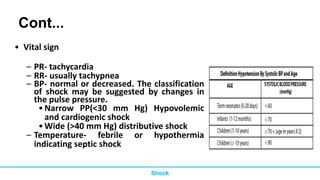
• Vital sign
– PR- tachycardia
– RR- usually tachypnea
– BP- normal or decreased. The classification
of shock may be suggested by changes in
the pulse pressure.
•Narrow PP(<30 mm Hg) Hypovolemic
and cardiogenic shock
•Wide (>40 mm Hg) distributive shock
– Temperature- febrile or hypothermia
indicating septic shock
Shock
Cont...
• Respiratory system
– Signs respiratory distress
– stridor or wheezing indicating anaphylaxis
• Cardiovascular system
– Pulse
– distended neck vein-suggesting heart failure
– abnormal heart sound- murmur, gallop,
Shock
• Gastrointestinal system
 hepatomegaly
 abnormal abdominal findings like abdominal distension, tenderness, is
consistent with bowel obstruction, perforation, or peritonitis, septic shock
• Musculoskeletal system
 Edema
• Integumentary system
 Cool extremities, warm extremities
 Prolonged capillary refill
• Nervous system
 Level of consciousness-alert or lethargic
 Muscle tone-hypotonia
Shock
APPROACH TO A PATIENT
• Fever
• Tachycardia
• Orthostatic hypotension
• Blood pressure –hypotension , unless compensated shock
• Respiratory rate-tachypneic
• Altered mental status
• Delayed capillary refill , decreased peripheral pulses
– Prolonged capillary refill: >3 sec except in case of warm shock
Shock
• Dry mucous membranes, dry axillae, poor skin turgor, and
decreased urine output.
- oliguria: urine output <0.5 mL/kg/hr
• Distal Cool extremities
• Petechiae , diffuse erythema, ecchymoses, ecthyma
gangrenosum, and peripheral gangrene.
Shock
Cont...
Cont...
• Early signs(compensated)
Increased heart rate
Poor systemic perfusion
• Late signs(decompensated/hypotensive)
Hypotension
week central pulses
Altered mental status
Shock
Cont...
• Septic Shock is unique in that hypotension and poor organ perfusion
may be present despite “good” perfusion ans is still a sign of
decompensating.
• For this reason we may get fast capillary refill, tachycardia and
bounding pulse, warm extremity.(warm shock)
Shock
Diagnosis
•Shock is a clinical diagnosis based on a thorough history and physical
examination
Laboratory Findings:
•CBC
•RBS
•Culture
•Lactate
•ABG
•RFT
- Serum creatinine >0.5 mg/dL/2xULN/2xbaseline
Shock
Cont...
•PT,PTT,INR
- INR >1.5 or aPTT >60 sec
•LFT
- Total bilirubin ≥4 mg/dL ,ALT- 2× ULN
•EKG,ECHO
•CXR
Shock
MANAGEMENT OF PEDIATRIC
SHOCK
Shock
Fundamentals of shock management
• Optimizing oxygen content of the blood
• Improving volume and distribution of cardiac output
• Reduction in oxygen demand
• Correction of metabolic derangements
Shock
Components of general management of
shock
• Airway and breathing (ABCs of life)
• Vascular access
• Fluid resuscitation
• Monitoring
• Lab studies
• Medical therapy
Shock
Hypovolemic shock
• Infusion of fluid (Normal Saline or colloid)
• Assess for adequacy of treatment
• For non-malnourished 20ml/kg fast, can be repeated if no response up to 3
to 4 times
• If needed repeat the bolus with maximum tolerated dose being 60 – 80
ml/kg with in the first 1 – 2 hr.
• For malnourished children 15ml/kg over 1 hour
• If due to hemorrhage, transfusion of packed Red Blood Cells (RBC) or whole
blood 20ml/kg over 4 hrs. , repeated as needed until Hgb level reaches
10gm/dl and the vital signs are corrected.
Shock
Fluid resuscitation in increments of 20 mL/kg should be titrated to
normalize
•HR (according to age-based HRs)
•Urine output (to 1 mL/kg/hr)
•Capillary refill time (to <2 sec), and
•Mental status
If shock remains refractory following 60-80 mL/kg of volume
resuscitation, vasopressor therapy
Shock
Cardiogenic shock
First line
• Dobutamine, 2.5-40 micrograms/kg/min IV diluted in dextrose 5%.
Never initiate Dobutamine alone in a patient with cardiogenic shock and
Systolic BP< 70
OR
• Adrenaline, I.V. infusion: Initial: 0.1-0.5 mcg/kg/minute ( 7-35 mcg/minute
in a 70 kg patient); titrate to desired response
• Norepinephrine (noradrenaline), Initial: 0.5-1 mcg/minute and titrate to
desired response; 8-30 mcg/minute is usual range. Goal: MAP>65mmhg
• Dopamine, 5-20mcg/kg/min IV diluted with dextrose 5% in Water, or in
sodium chloride solution 0.9%;
Shock
Distributive shock
•These patients may benefit temporarily from volume resuscitation, but
•early initiation of a vasoconstrictive agent to increase SVR is an
important element of clinical care.
•Patients with spinal cord injury and spinal shock may benefit from
either phenylephrine or vasopressin to increase SVR.
•Epinephrine is the treatment of choice for patients with anaphylaxis.
Shock
Anphylactic shock managment
• Control life threatening cardiopulmonary problems
• Reversal or blockage of mediators release
– Fluid bolus
– Vasopressor: epinephrine
– Antihistamines
– Corticosteroid
Shock
Resuscitation goals
• Mean arterial pressure > 65 mm Hg
• Urine output > 0.5 mL/kg/hour
• Central venous pressure (CVP) 8–10 mm Hg
• ScvO₂ > 70%
Shock
• Give o2 and establish IV line access and begin resucitation
• Consider ABG/VBG,lactate,glucose,ionized calcium,cultures, CBC
• In the first 1 hr push repeatedly 20mL/kg boluses of isotonic
crstalloid fluid to rx shock unless rales ,hepatomegaly,respiratory
distress develops
Shock
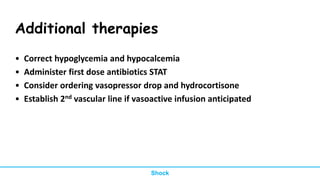
Additional therapies
• Correct hypoglycemia and hypocalcemia
• Administer first dose antibiotics STAT
• Consider ordering vasopressor drop and hydrocortisone
• Establish 2nd vascular line if vasoactive infusion anticipated
Shock
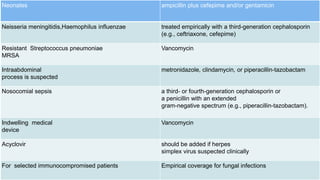
Neonates ampicillin plus cefepime and/or gentamicin
Neisseria meningitidis,Haemophilus influenzae treated empirically with a third-generation cephalosporin
(e.g., ceftriaxone, cefepime)
Resistant Streptococcus pneumoniae
MRSA
Vancomycin
Intraabdominal
process is suspected
metronidazole, clindamycin, or piperacillin-tazobactam
Nosocomial sepsis a third- or fourth-generation cephalosporin or
a penicillin with an extended
gram-negative spectrum (e.g., piperacillin-tazobactam).
Indwelling medical
device
Vancomycin
Acyclovir should be added if herpes
simplex virus suspected clinically
For selected immunocompromised patients Empirical coverage for fungal infections
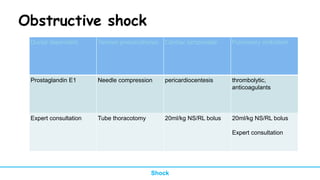
Obstructive shock
Ductal dependent Tension pneumothorax Cardiac tamponade Pulmonary embolism
Prostaglandin E1 Needle compression pericardiocentesis thrombolytic,
anticoagulants
Expert consultation Tube thoracotomy 20ml/kg NS/RL bolus 20ml/kg NS/RL bolus
Expert consultation
Shock
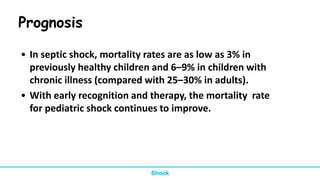
Prognosis
• In septic shock, mortality rates are as low as 3% in
previously healthy children and 6–9% in children with
chronic illness (compared with 25–30% in adults).
• With early recognition and therapy, the mortality rate
for pediatric shock continues to improve.
Shock
• The risk of death involves a complex interaction of
factors, including
✓the underlying etiology,
✓ presence of chronic illness,
✓host immune response, and
✓ timing of recognition and therapy
Shock
References
• Nelson text book of pediatrics 21st ed
• STG guideline 4th ed
6/17/2024
thank you!

pediatric Shock management seminar ppt slide

  • 1.
  • 2.
    • INTRODUCTION • EPIDEMIOLOGY •TYPES OF SHOCK • PATHOPHYSIOLOGY • APPROACH TO A PATIENT WITH SCHOCK • MANAGEMENT OF PEDIATRIC SHOCK • PROGNOSIS OUTLINE Shock
  • 3.
  • 4.
    Introduction • Shock isan acute process characterized by the body's inability to deliver adequate oxygen to meet the metabolic demands of vital organs and tissues. • So, insufficient oxygen at a tissue level is unable to support a normal aerobic cellular metabolism, resulting in a shift to less efficient anaerobic metabolism. Shock
  • 5.
    Epidemiology •Shock occurs inapproximately 2% of all hospitalized infants, children, and adults in developed countries •mortality rate varies substantially depending on the etiology and clinical circumstances. •Mortality is mostly due to associated complication and MODS Shock
  • 6.
    Types of Shock •Hypovolemic • Cardiogenic • Distributive • Obstructive, and • Septic Shock
  • 7.
    Hypovolemic shock • Themost common cause of shock in children worldwide, • Hypovolemic shock is due to loss of blood volume, causes decreased preload, stroke volume, and CO. • It is most frequently caused by diarrhea, vomiting, or hemorrhage. Shock
  • 8.
    Cardiogenic shock • Isseen in patients with congenital heart disease (before or after surgery, including heart transplantation) or those with congenital or acquired cardiomyopathies, including acute myocarditis. • Is a problem due to the heart not being able to generate certain amount of power to pump blood to the tissue. Shock
  • 9.
    Obstructive shock • Stemsfrom any lesion that creates a mechanical barrier that impedes adequate cardiac output, which includes - Pericardial tamponade - Tension pneumothorax - Pulmonary embolism - Ductus-dependent congenital heart lesions Shock
  • 10.
    Distributive shock • Iscaused by inadequate vasomotor tone, which leads to capillary leak and misdistribution of fluid into the interstitium. • Includes - Anaphylactic, - Neurogenic, - Septic shock Shock
  • 11.
    Cont... • Anaphylactic shock:is due to severe systemic allergic reaction such as food, drug allergens, bee stings, insect bites • Neurogenic shock-loss of sympathetic vascular tone secondary to acute spinal cord or brainstem injury or regional anesthesia - So there will be unopposed vagal tone(leads to bradycardia,vasodilation) Shock
  • 12.
    Septic shock • Isoften discussed synonymously with distributive shock, but the septic process usually involves a more complex interaction of distributive, hypovolemic, and cardiogenic shock. Shock
  • 13.
    Pathophysiology Extracorporeal Fluid Loss •Hypovolemicshock may be a result of direct blood loss through hemorrhage or abnormal loss of body fluids (diarrhea, vomiting,burns, diabetes mellitus or insipidus, nephrosis). Lowering Plasma Oncotic Forces •Hypovolemic shock may also result from hypoproteinemia (liver injury, or as a progressive complication of increased capillary permeability). Abnormal Vasodilation •Distributive shock (neurogenic, anaphylaxis, or septic shock) occurs when there is loss of vascular tone—venous, arterial, or both (sympathetic blockade, local substances affecting permeability, acidosis, drug effects, spinal cord transection). Shock
  • 14.
    Increased Vascular Permeability •Sepsis may change the capillary permeability in the absence of any change in capillary hydrostatic pressure (endotoxins from sepsis, excess histamine release in anaphylaxis). Cardiac Dysfunction • Peripheral hypoperfusion may result from any condition that affects the heart’s ability to pump blood efficiently Shock
  • 15.
  • 16.
    Phases • Compensated – Occursearlier in the process – BP is maintained – HR is elevated • Decompensated – Occurs late in the process – BP is low, hypotension – Organ damage starts to be seen •Irreversible – MOD has developed Shock
  • 17.
    Systemic Inflammatory Response Syndrome(SIRS) •Two of 4 criteria, 1 of which must be abnormal temperature or abnormal leukocyte count: 1. Core temperature >38.5°C (101.3°F) or <36°C (96.8°F) (rectal, bladder, oral, or central catheter) 2. Tachycardia: Mean heart rate >2 SD above normal for age or Unexplained persistent elevation over 0.5-4 hr or In children <1 yr old, persistent bradycardia over 0.5 hr (mean heart rate <10th percentile for age ) Shock
  • 18.
    Cont... 3. Respiratory rate>2 SD above normal for age 4. Leukocyte count elevated or depressed for age or >10% immature neutrophils Shock
  • 19.
    Other sepsis-scoring criteria •Thesequential organ failure assessment (SOFA) score and the abbreviated version (qSOFA) are a newer set of criteria. •SOFA and qSOFA help predict mortality associated with sepsis. •Can be used as an alternative to SIRS •Sepsis is suspected when 2 of the qSOFA criteria are met. •The 3 criteria for the qSOFA score include: – RR -tachypneic – Systolic blood pressure -hypotension – Altered mental status Shock
  • 20.
    Severe Sepsis Sepsis plus1 of the following: 1. Cardiovascular organ dysfunction, defined as: • Despite >40 mL/kg of isotonic intravenous fluid in 1 hr: Hypotension <5th percentile for age, systolic blood pressure <2SD below normal for age or Need for vasoactive drug to maintain blood pressure OR • Two of the following: Unexplained metabolic acidosis: base deficit >5 mEq/L , Increased arterial lactate: >2 times upper limit of normal, Oliguria: urine output <0.5 mL/kg/hr, Prolonged capillary refill: >5 sec or Core-to-peripheral temperature gap: >3°C (5.4°F) Shock
  • 21.
    Cont... 2. (ARDS), bilateralinfiltrates on chest radiograph, and no evidence of left-sided heart failure. or •Sepsis plus ≥2 organ dysfunctions (respiratory, renal, neurologic, hematologic, or hepatic). Shock
  • 22.
    Approach to achild with shock • Directed history ▪ GI loss ▪ Kidney loss ▪ Bleeding ▪ Burn ▪ Decreased urine out put • Past medical history ▪ heart disease ▪ Surgical hx ▪ steroid use ▪ medical problems Shock
  • 23.
    Physical examination – Theclinical presentation of patient with shock varies according to the type of shock and the phase of shock – General Appearance •Active bleeding site, acute burn •Change in level of consciousness •Cardiorespiratory distress •Well nourished or malnourished Shock
  • 24.
    Cont... • Vital sign –PR- tachycardia – RR- usually tachypnea – BP- normal or decreased. The classification of shock may be suggested by changes in the pulse pressure. •Narrow PP(<30 mm Hg) Hypovolemic and cardiogenic shock •Wide (>40 mm Hg) distributive shock – Temperature- febrile or hypothermia indicating septic shock Shock
  • 25.
    Cont... • Respiratory system –Signs respiratory distress – stridor or wheezing indicating anaphylaxis • Cardiovascular system – Pulse – distended neck vein-suggesting heart failure – abnormal heart sound- murmur, gallop, Shock
  • 26.
    • Gastrointestinal system hepatomegaly  abnormal abdominal findings like abdominal distension, tenderness, is consistent with bowel obstruction, perforation, or peritonitis, septic shock • Musculoskeletal system  Edema • Integumentary system  Cool extremities, warm extremities  Prolonged capillary refill • Nervous system  Level of consciousness-alert or lethargic  Muscle tone-hypotonia Shock
  • 27.
    APPROACH TO APATIENT • Fever • Tachycardia • Orthostatic hypotension • Blood pressure –hypotension , unless compensated shock • Respiratory rate-tachypneic • Altered mental status • Delayed capillary refill , decreased peripheral pulses – Prolonged capillary refill: >3 sec except in case of warm shock Shock
  • 28.
    • Dry mucousmembranes, dry axillae, poor skin turgor, and decreased urine output. - oliguria: urine output <0.5 mL/kg/hr • Distal Cool extremities • Petechiae , diffuse erythema, ecchymoses, ecthyma gangrenosum, and peripheral gangrene. Shock Cont...
  • 29.
    Cont... • Early signs(compensated) Increasedheart rate Poor systemic perfusion • Late signs(decompensated/hypotensive) Hypotension week central pulses Altered mental status Shock
  • 30.
    Cont... • Septic Shockis unique in that hypotension and poor organ perfusion may be present despite “good” perfusion ans is still a sign of decompensating. • For this reason we may get fast capillary refill, tachycardia and bounding pulse, warm extremity.(warm shock) Shock
  • 31.
    Diagnosis •Shock is aclinical diagnosis based on a thorough history and physical examination Laboratory Findings: •CBC •RBS •Culture •Lactate •ABG •RFT - Serum creatinine >0.5 mg/dL/2xULN/2xbaseline Shock
  • 32.
    Cont... •PT,PTT,INR - INR >1.5or aPTT >60 sec •LFT - Total bilirubin ≥4 mg/dL ,ALT- 2× ULN •EKG,ECHO •CXR Shock
  • 33.
  • 34.
    Fundamentals of shockmanagement • Optimizing oxygen content of the blood • Improving volume and distribution of cardiac output • Reduction in oxygen demand • Correction of metabolic derangements Shock
  • 35.
    Components of generalmanagement of shock • Airway and breathing (ABCs of life) • Vascular access • Fluid resuscitation • Monitoring • Lab studies • Medical therapy Shock
  • 36.
    Hypovolemic shock • Infusionof fluid (Normal Saline or colloid) • Assess for adequacy of treatment • For non-malnourished 20ml/kg fast, can be repeated if no response up to 3 to 4 times • If needed repeat the bolus with maximum tolerated dose being 60 – 80 ml/kg with in the first 1 – 2 hr. • For malnourished children 15ml/kg over 1 hour • If due to hemorrhage, transfusion of packed Red Blood Cells (RBC) or whole blood 20ml/kg over 4 hrs. , repeated as needed until Hgb level reaches 10gm/dl and the vital signs are corrected. Shock
  • 37.
    Fluid resuscitation inincrements of 20 mL/kg should be titrated to normalize •HR (according to age-based HRs) •Urine output (to 1 mL/kg/hr) •Capillary refill time (to <2 sec), and •Mental status If shock remains refractory following 60-80 mL/kg of volume resuscitation, vasopressor therapy Shock
  • 38.
    Cardiogenic shock First line •Dobutamine, 2.5-40 micrograms/kg/min IV diluted in dextrose 5%. Never initiate Dobutamine alone in a patient with cardiogenic shock and Systolic BP< 70 OR • Adrenaline, I.V. infusion: Initial: 0.1-0.5 mcg/kg/minute ( 7-35 mcg/minute in a 70 kg patient); titrate to desired response • Norepinephrine (noradrenaline), Initial: 0.5-1 mcg/minute and titrate to desired response; 8-30 mcg/minute is usual range. Goal: MAP>65mmhg • Dopamine, 5-20mcg/kg/min IV diluted with dextrose 5% in Water, or in sodium chloride solution 0.9%; Shock
  • 39.
    Distributive shock •These patientsmay benefit temporarily from volume resuscitation, but •early initiation of a vasoconstrictive agent to increase SVR is an important element of clinical care. •Patients with spinal cord injury and spinal shock may benefit from either phenylephrine or vasopressin to increase SVR. •Epinephrine is the treatment of choice for patients with anaphylaxis. Shock
  • 40.
    Anphylactic shock managment •Control life threatening cardiopulmonary problems • Reversal or blockage of mediators release – Fluid bolus – Vasopressor: epinephrine – Antihistamines – Corticosteroid Shock
  • 41.
    Resuscitation goals • Meanarterial pressure > 65 mm Hg • Urine output > 0.5 mL/kg/hour • Central venous pressure (CVP) 8–10 mm Hg • ScvO₂ > 70% Shock
  • 42.
    • Give o2and establish IV line access and begin resucitation • Consider ABG/VBG,lactate,glucose,ionized calcium,cultures, CBC • In the first 1 hr push repeatedly 20mL/kg boluses of isotonic crstalloid fluid to rx shock unless rales ,hepatomegaly,respiratory distress develops Shock
  • 43.
    Additional therapies • Correcthypoglycemia and hypocalcemia • Administer first dose antibiotics STAT • Consider ordering vasopressor drop and hydrocortisone • Establish 2nd vascular line if vasoactive infusion anticipated Shock
  • 44.
    Neonates ampicillin pluscefepime and/or gentamicin Neisseria meningitidis,Haemophilus influenzae treated empirically with a third-generation cephalosporin (e.g., ceftriaxone, cefepime) Resistant Streptococcus pneumoniae MRSA Vancomycin Intraabdominal process is suspected metronidazole, clindamycin, or piperacillin-tazobactam Nosocomial sepsis a third- or fourth-generation cephalosporin or a penicillin with an extended gram-negative spectrum (e.g., piperacillin-tazobactam). Indwelling medical device Vancomycin Acyclovir should be added if herpes simplex virus suspected clinically For selected immunocompromised patients Empirical coverage for fungal infections
  • 45.
    Obstructive shock Ductal dependentTension pneumothorax Cardiac tamponade Pulmonary embolism Prostaglandin E1 Needle compression pericardiocentesis thrombolytic, anticoagulants Expert consultation Tube thoracotomy 20ml/kg NS/RL bolus 20ml/kg NS/RL bolus Expert consultation Shock
  • 46.
    Prognosis • In septicshock, mortality rates are as low as 3% in previously healthy children and 6–9% in children with chronic illness (compared with 25–30% in adults). • With early recognition and therapy, the mortality rate for pediatric shock continues to improve. Shock
  • 47.
    • The riskof death involves a complex interaction of factors, including ✓the underlying etiology, ✓ presence of chronic illness, ✓host immune response, and ✓ timing of recognition and therapy Shock
  • 48.
    References • Nelson textbook of pediatrics 21st ed • STG guideline 4th ed 6/17/2024
  • 49.

Editor's Notes

  • #5 .Shock is any situation in which there is inadequate tissue perfusion that leads to decrease oxygen delivery to the tissue and cause ischemia followed by necrosis and possibly even organ failure if not reversed and ultimately, death.
  • #6 MODS(multiple organ dysfunction syndrome) is defined as any alteration of organ function that requires medical support for maintenance Complications: Cardiopulmonary arrest. Dysrhythmia. Renal failure. respiratory failure,Brain damge Other organ damage.Death.
  • #7 5 major types of shock:
  • #8 Hypovolemic shock is due to loss of blood volume, causes decreased preload, stroke volume, and CO. Hemoragic vs non hemorragic
  • #9 Is a problem due to the heart not being able to generate certain amount of power to pump blood to the tissue Heart contractility is impaired Possible etiologies—CHD , cardiomyopathies , acute myocarditis,arrythymias(brady or tachyarrythymias),mitral valve stenosis,aortic valve stenosis
  • #11 Is a decreased tissue perfusion due to decrease TPR, which is caused by excess dilation of blood vessels Includes - anaphylactic shock–is due to severe systemic allergic reaction such as food, drug allergens, bee stings, insect bites - Neurogenic shock-loss of sympathetic vascular tone secondary to acute spinal cord or brainstem injury or regional anesthesia so there will be unopposed vagal tone(leads to bradycardia,vasodilation)
  • #13 Hypovolemia fluid losses from intravascular occurs through capillary leak. Cardiogenic shock results from the myocardial depressant effects of sepsis, and distributive shock is the result of decreased SVR.
  • #16 What mediate all them? When there is insult there will be release of stress hormones(neuro hormonal mechanisms),these play a vital role. Also increase oxygene uptake is also there,so more carbondioxide move out because due to anaerobic respiration there is increase lactate so to compensate it there will be respiratory alchilosis.lead to hyper perfusion and renal absorbation of bicarbonate to keep the PH normalize What initialy maintain the BP The shift of blood to main organ in expense of peripheral organ to main and vital organ
  • #17 stages of shock 1-compensated phase---there are neural and hormonal compensatory mechanisms that maintain SBP = our body senses the drop in BP and CO by the baroreceptors –activate medullary center–stimulate SNS to release EP and NEP---vasoconstriction,increase HR and BP =increase perfusion to vital organs by shunting from non vital organs =kidney senses decrease perfusion---activate RAAS system ------angiotensin 2 cause vasoconstriction and stimulate adrenal cortex to release aldosterone(it helps kidney to keep Na and water As shock progresses,body will unable to compensate for this deficiency in oxygen delivery, leading to progressive clinical deterioration 2-decompensated –body cant compensate by it self ,,,,,,need very fast Mgt for curative treatment 3-irreversible(refractory) –there is irreversible physiological damage and eventually death
  • #29 Becks triad collection of three clinical signs associated with pericardial tamponade Additional clinical findings in shock include cutaneous lesions such as petechiae, diffuse erythema, ecchymoses, ecthyma gangrenosum, and peripheral gangrene. Jaundice can be present either as a sign of infection or as a result of MODS.
  • #35 Early recognition and intervention are extremely important in the management of all forms of shock
  • #39 Usually we give only small amount of fluid because the is no fluid loss Smaller boluses of fluid (5-10 mL/kg) should be given in cardiogenic shock to replace deficits and maintain preload.
  • #40 In distributive shock the major problem is a decrease in SVP
  • #42 Target MAP>65mmhg Central venous oxygen saturation
  • #44 The choice of antimicrobial agents depends on the predisposing risk factors and the clinical situation. unresponsive to fluid resuscitation suggest epinephrine or dopamine We also consider Steroid in refractory shock on escalating dose of vasopressor
  • #45 early (within 1 hr ) administration of broadspectrum antimicrobial agents is associated with a reduction in mortality