Presentation By
Siambi Philip
1
Siambi, 2021
2
Siambi, 2021
 Congenital heart defect (CHD) may be defined as an
anatomic malformation of the heart or great vessels
which occurs during intrauterine development,
irrespective of the age at presentation
 Occur is about 0.8% of live births.
 Commonly divided into noncyanotic (L  R) and
cyanotic (R  L) categories based on direction of
shunting
3
Siambi, 2021
 CHD are among the most common birth defects and are
the leading cause of birth defect-related death
4
Siambi, 2021
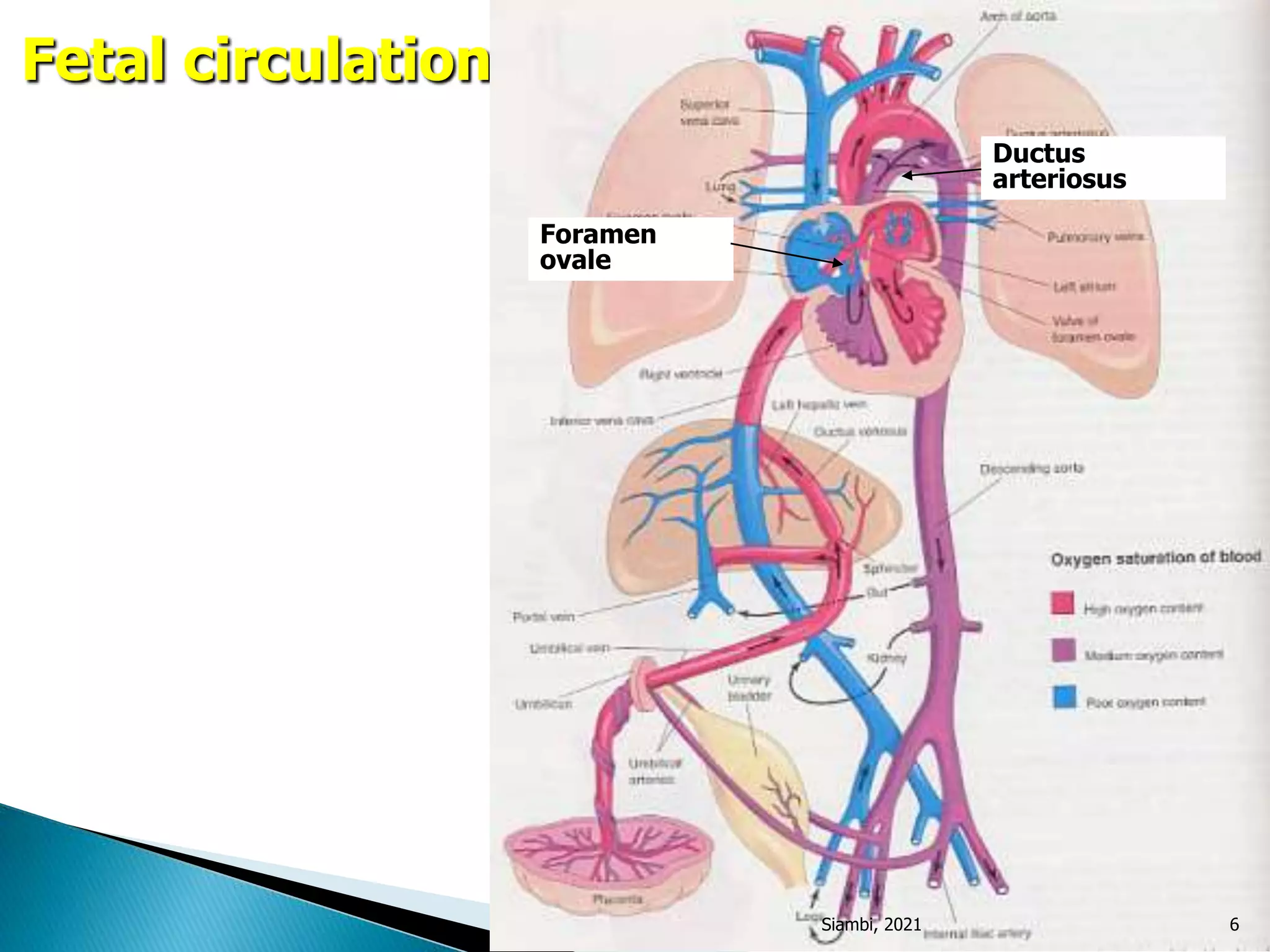
Fetal circulation
● Most of CHD can be well tolerated during fetal life, becoming
apparent (sometimes dramatically) only after birth. This is because
in the fetal circulation, the right and left ventricles exist in a
parallel circuit, as opposed to the series circuit of a newborn or
adult.
● Two main structures, the foramen ovale (a communication
between right and left atrium) and the ductus arteriosus (a vessel
joining pulmonary artery and aorta) are particularly important.
During fetal life, these communications allow the more oxygenated
blood coming from placenta to perfuse preferentialy the upper part
of the body (including the coronary and cerebral arteries).
Siambi, 2021 5
Fetal circulation
Foramen
ovale
Ductus
arteriosus
Siambi, 2021 6
Fetal circulation
● After birth, mechanical expansion of the lung and
increase in arterial oxygenation rapidly lead to closure
of ductus arteriosus (by muscular contraction of this
vessel) and foramen ovale (by increasing pressure in
left atrium in respect of right atrium).
● If patency of this fetal pathways persists:
it may be by itself a CHD (causing a continuous
left-to-right shunt)
it may present an additional stress to the circulation
(e.g. in infants with pulmonary hypertension)
Siambi, 2021 7
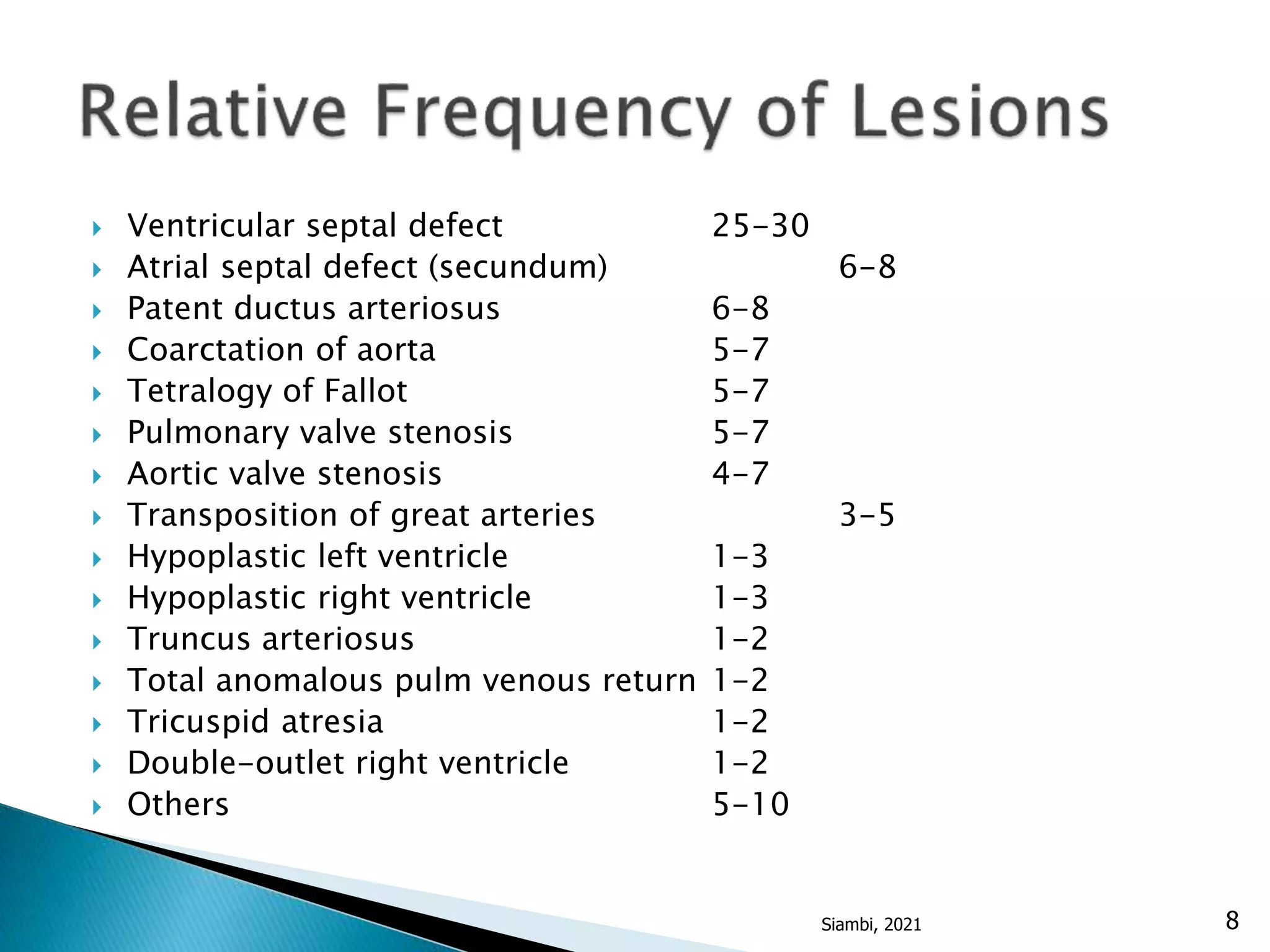
 Ventricular septal defect 25-30
 Atrial septal defect (secundum) 6-8
 Patent ductus arteriosus 6-8
 Coarctation of aorta 5-7
 Tetralogy of Fallot 5-7
 Pulmonary valve stenosis 5-7
 Aortic valve stenosis 4-7
 Transposition of great arteries 3-5
 Hypoplastic left ventricle 1-3
 Hypoplastic right ventricle 1-3
 Truncus arteriosus 1-2
 Total anomalous pulm venous return 1-2
 Tricuspid atresia 1-2
 Double-outlet right ventricle 1-2
 Others 5-10
8
Siambi, 2021
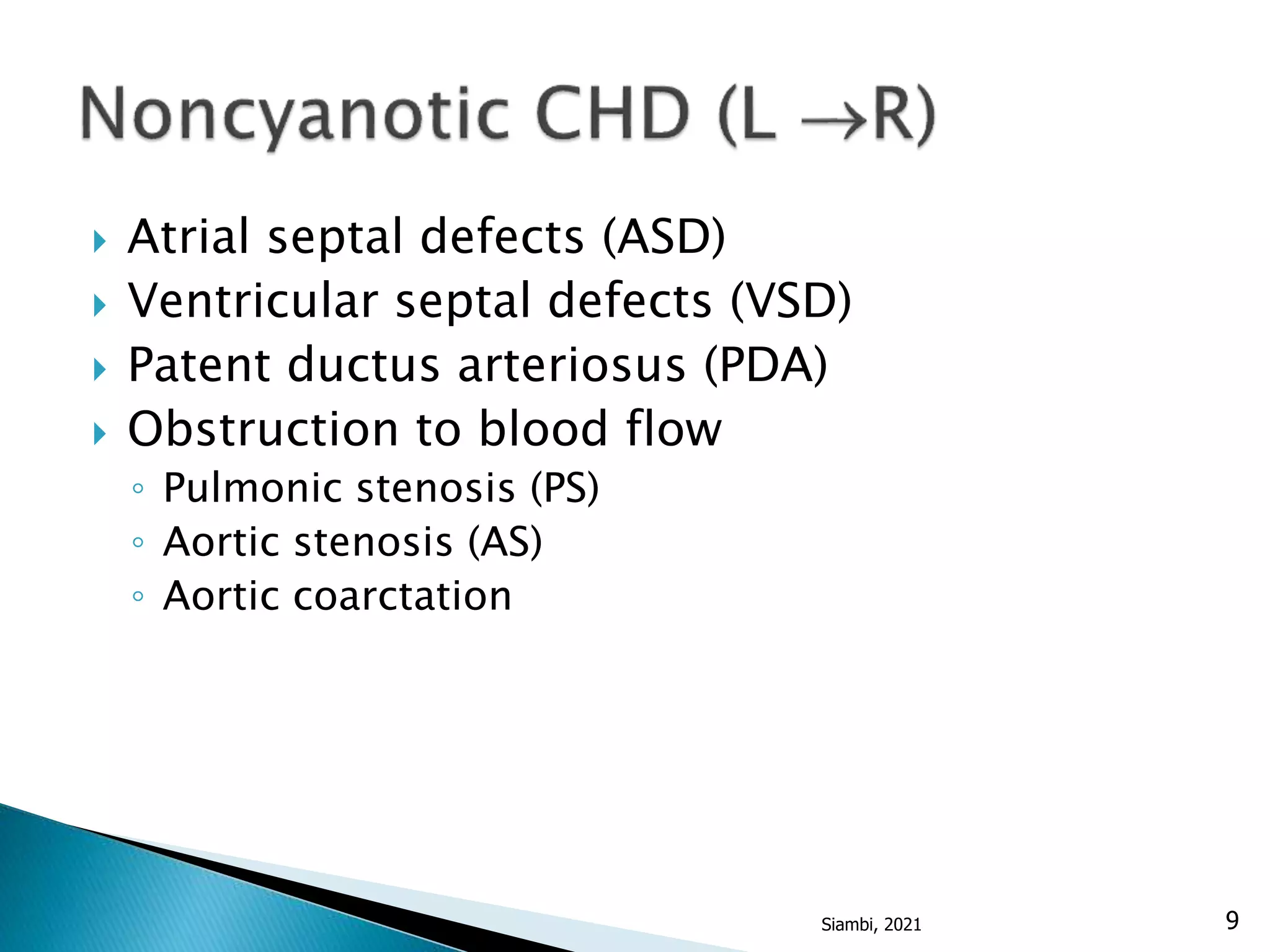
 Atrial septal defects (ASD)
 Ventricular septal defects (VSD)
 Patent ductus arteriosus (PDA)
 Obstruction to blood flow
◦ Pulmonic stenosis (PS)
◦ Aortic stenosis (AS)
◦ Aortic coarctation
9
Siambi, 2021
 Most commonly asymptomatic
 Essentials of diagnosis:
◦ Right ventricular heave
◦ S2 widely split and usually fixed
◦ Systolic murmur at the pulmonary area
◦ Cardiac enlargement on CXR
1
0
Siambi, 2021
1
1
Siambi, 2021
Siambi, 2021 12
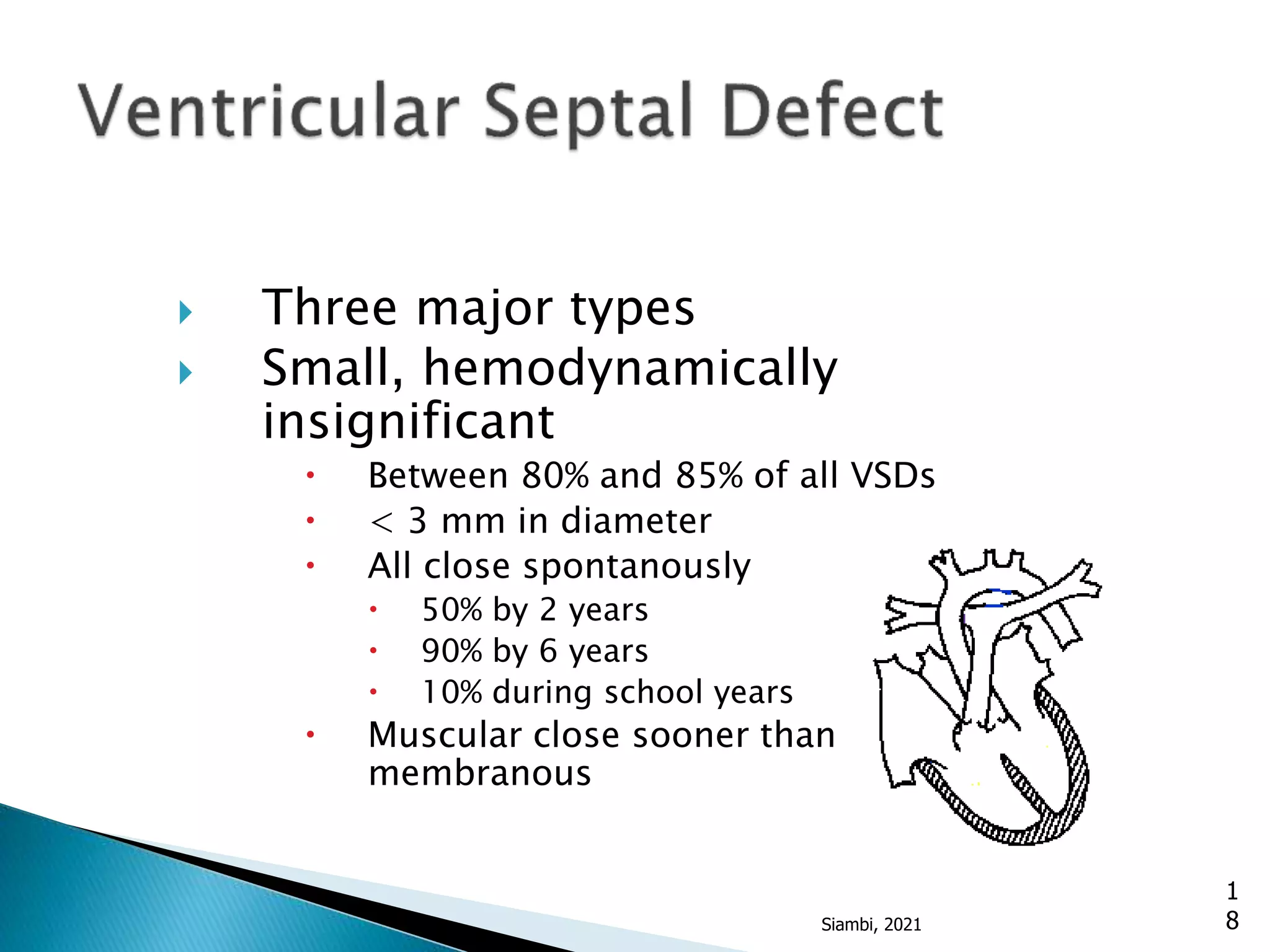
 Three major types
◦ Ostium secundum
 most common
 In the middle of the septum in the region of the foramen
ovale
◦ Ostium primum
 Low position
 Form of AV septal defect
◦ Sinus venosus
 Least common
 Positioned high in the atrial septum
 Frequently associated with PAPVR
1
3
Siambi, 2021
 Treatment
◦ Closure generally recommended when ratio of
pulmonary to systemic blood flow is > 2:1
◦ Operation performed electively between ages 1 and
3 years
 Previously surgical; now often closed
interventionally
1
4
Siambi, 2021
1
5
Siambi, 2021
 Single most common congenital heart
malformation, accounting for almost 30% of
all CHD
 Defects can occur in both the membranous
portion of the septum (most common) and
the muscular portion
1
6
Siambi, 2021
1
7
Siambi, 2021
 Three major types
 Small, hemodynamically
insignificant
 Between 80% and 85% of all VSDs
 < 3 mm in diameter
 All close spontanously
 50% by 2 years
 90% by 6 years
 10% during school years
 Muscular close sooner than
membranous
1
8
Siambi, 2021
 Moderate VSDs
◦ 3-5 mm in diameter
◦ Least common group of children (3-5%)
◦ Without evidence of CCF or pulmonary
hypertension, may be followed until spontaneous
closure occurs
1
9
Siambi, 2021
 Large VSDs
◦ 6-10 mm in diameter
◦ Usually requires surgery, otherwise…
◦ Will develop CCF and FTT by age 3-6 months
2
0
Siambi, 2021
 Clinical findings
◦ Medium- to high-pitched,
harsh pansystolic murmur
heard best at the left
sternal border with
radiation over the entire
precordium
2
1
Siambi, 2021
 Treatment
◦ Indicated for closure of a VSD associated with CCF
and FTT or pulmonary hypertension
◦ Patients with cardiomegaly, poor growth, poor
exercise tolerance, or other clinical abnormalities
and a P/S > 2:1 typically undergo surgical repair at
3-6 mo
2
2
Siambi, 2021
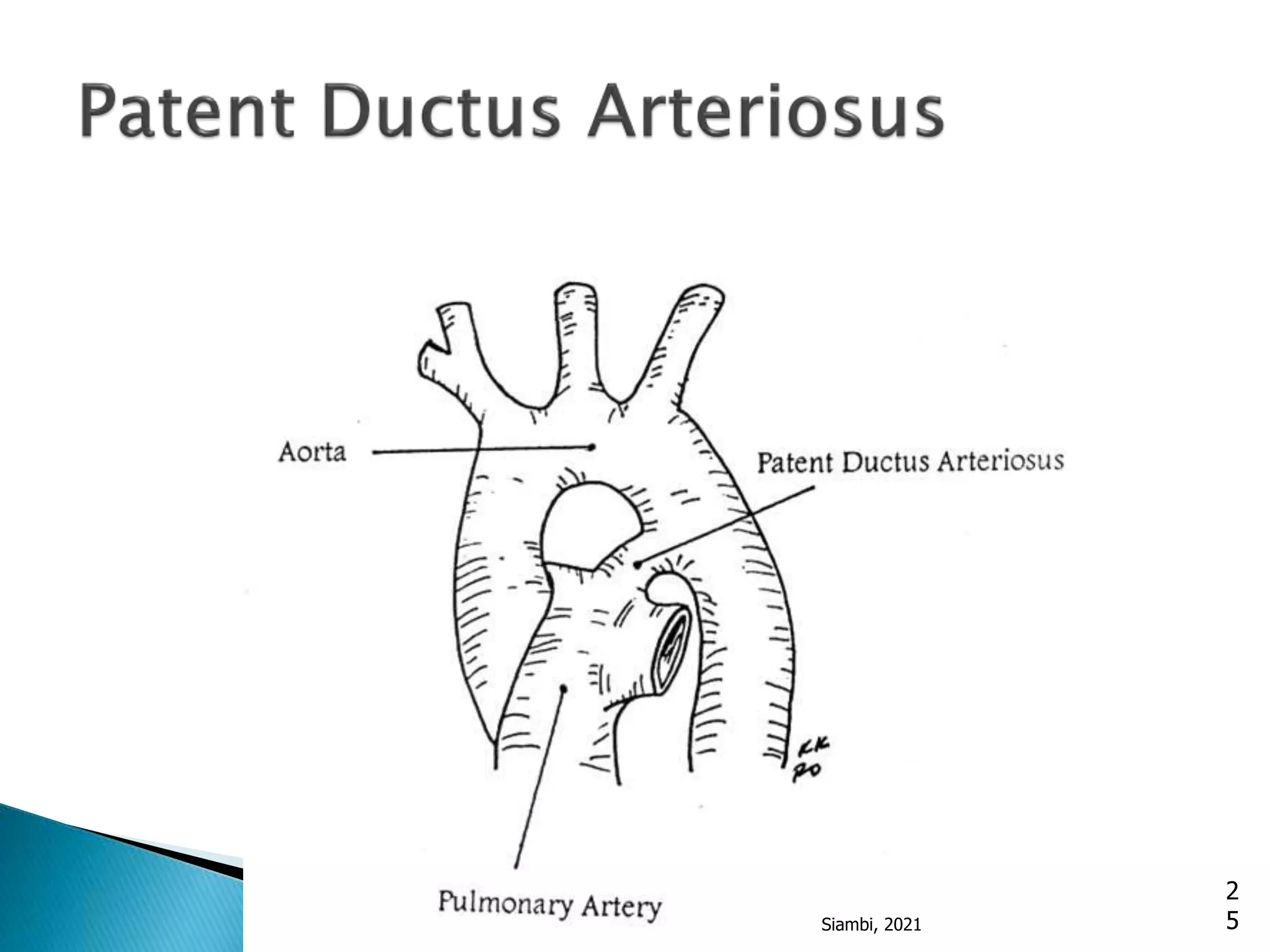
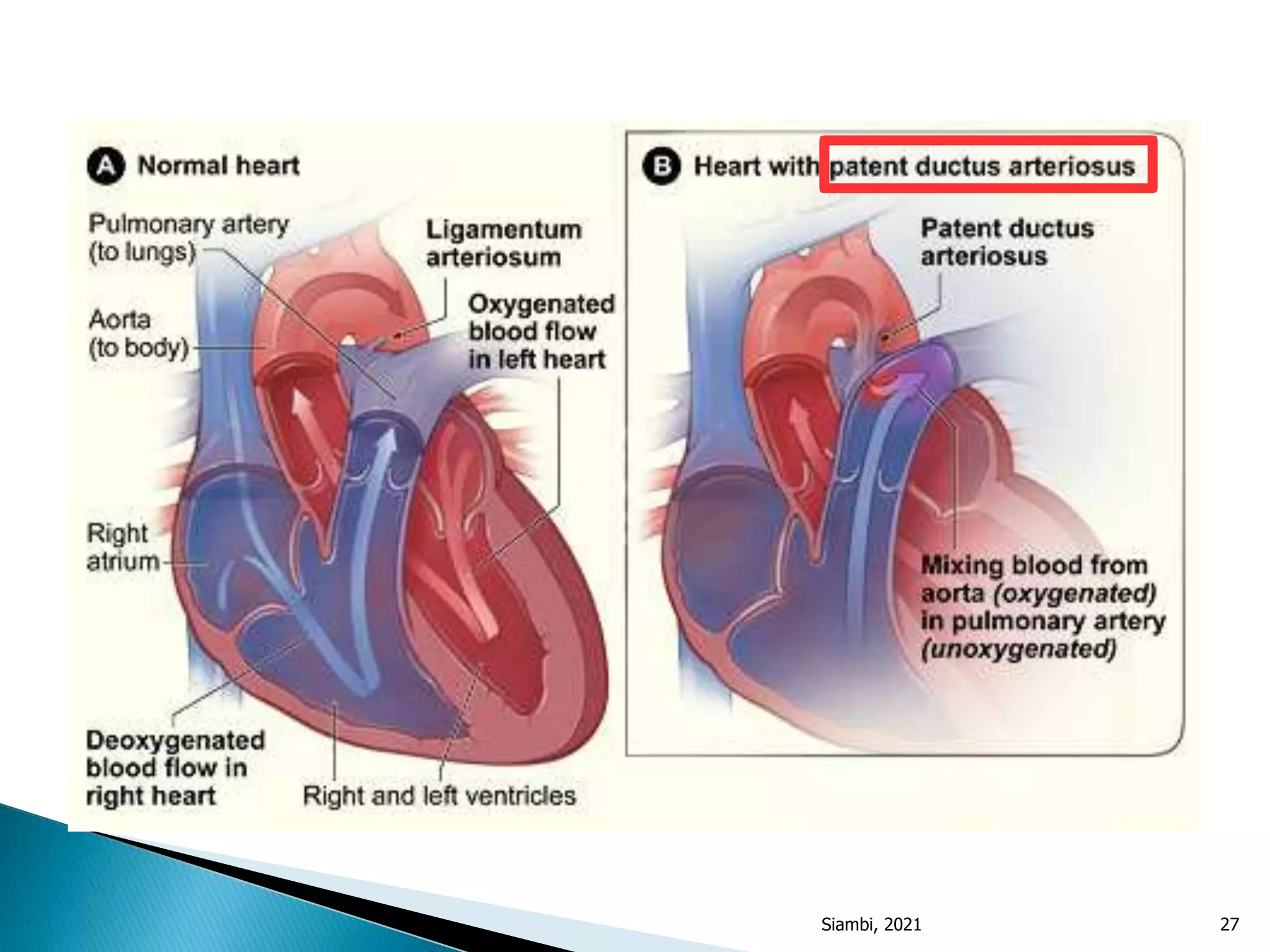
 Persistence of normal fetal vessel joining
the pulmonary artery to the aorta
 Closes spontaneously in normal term
infants at 3-5 days of age
 Epi facts
◦ Accounts for about 10% of all cases of CHD
◦ Higher incidence of PDA in infants born at high
altitudes (> 10,000 feet)
◦ More common in females
2
3
Siambi, 2021
 Accounts for about 10% of all cases of
CHD
 Higher incidence of PDA in infants born at
high altitudes (over 10,000 feet)
 More common in females
2
4
Siambi, 2021
2
5
Siambi, 2021
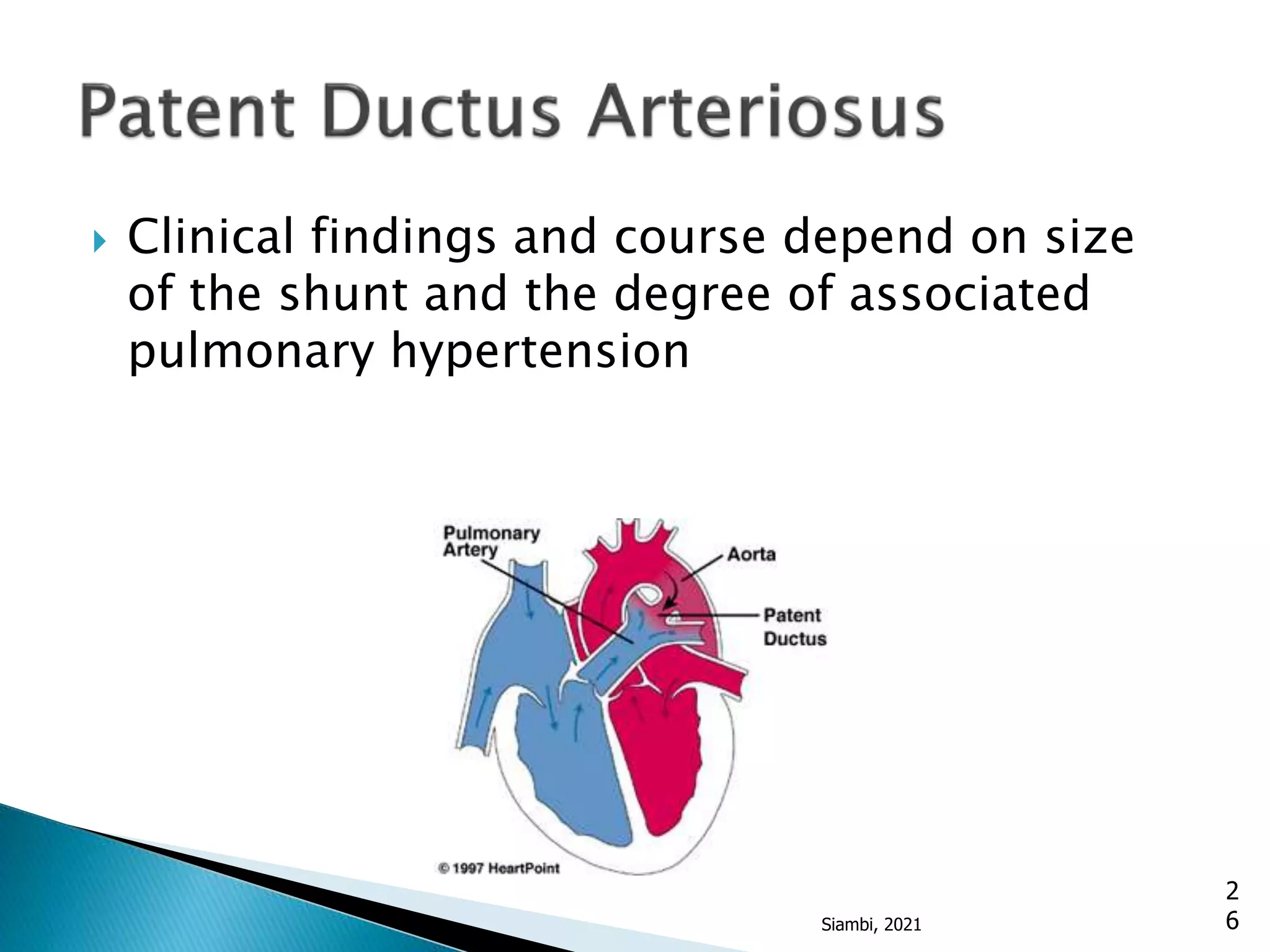
 Clinical findings and course depend on size
of the shunt and the degree of associated
pulmonary hypertension
2
6
Siambi, 2021
Siambi, 2021 27
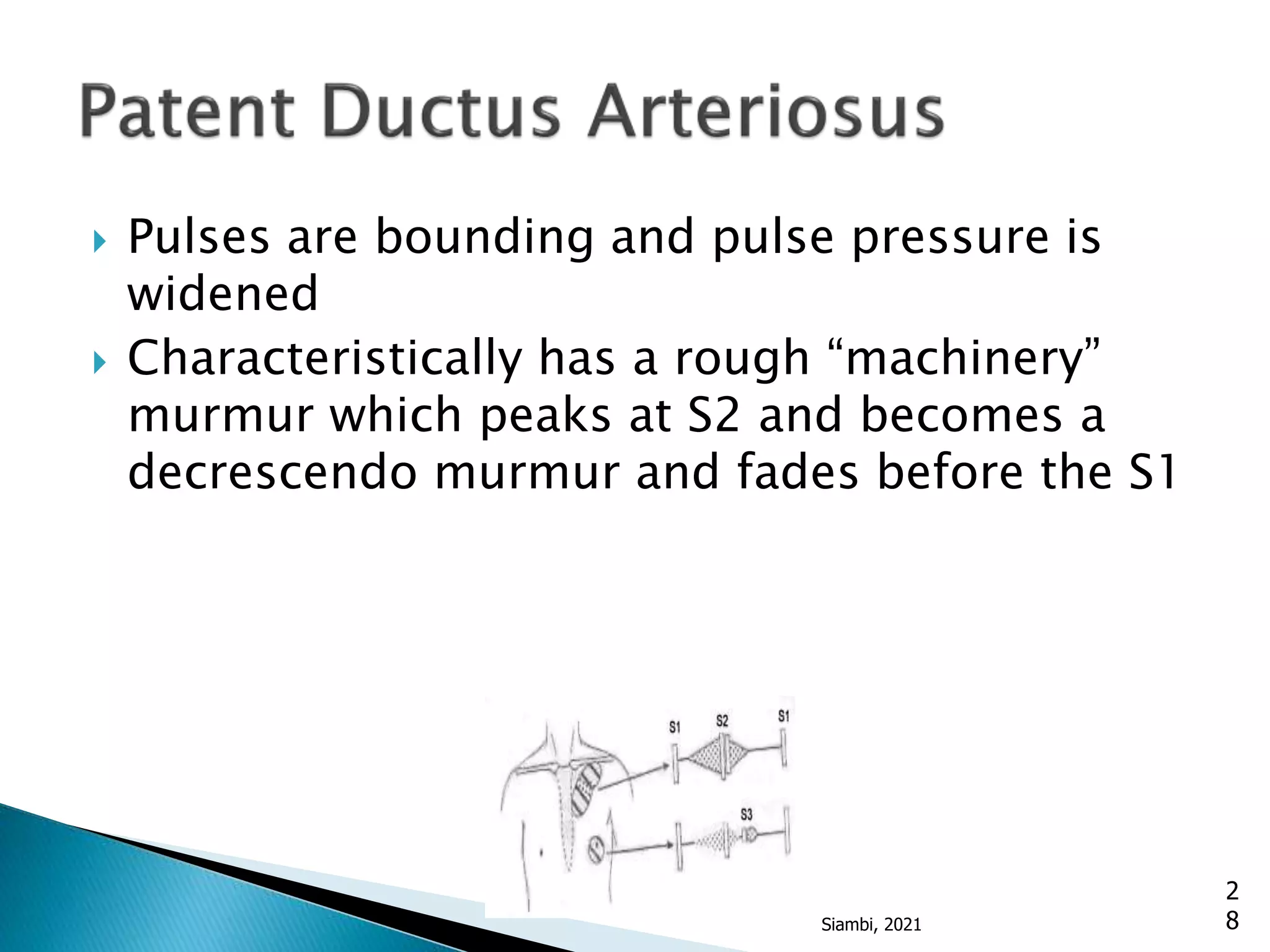
 Pulses are bounding and pulse pressure is
widened
 Characteristically has a rough “machinery”
murmur which peaks at S2 and becomes a
decrescendo murmur and fades before the S1
2
8
Siambi, 2021
 Treatment consists of surgical correction
when the PDA is large except in patients
with pulmonary vascular obstructive disease
 Transcatheter closure of small defects has
become standard therapy
 In preterm infants indomethacin is used
(80-90% success in infants > 1200 grams)
2
9
Siambi, 2021
3
0
Siambi, 2021
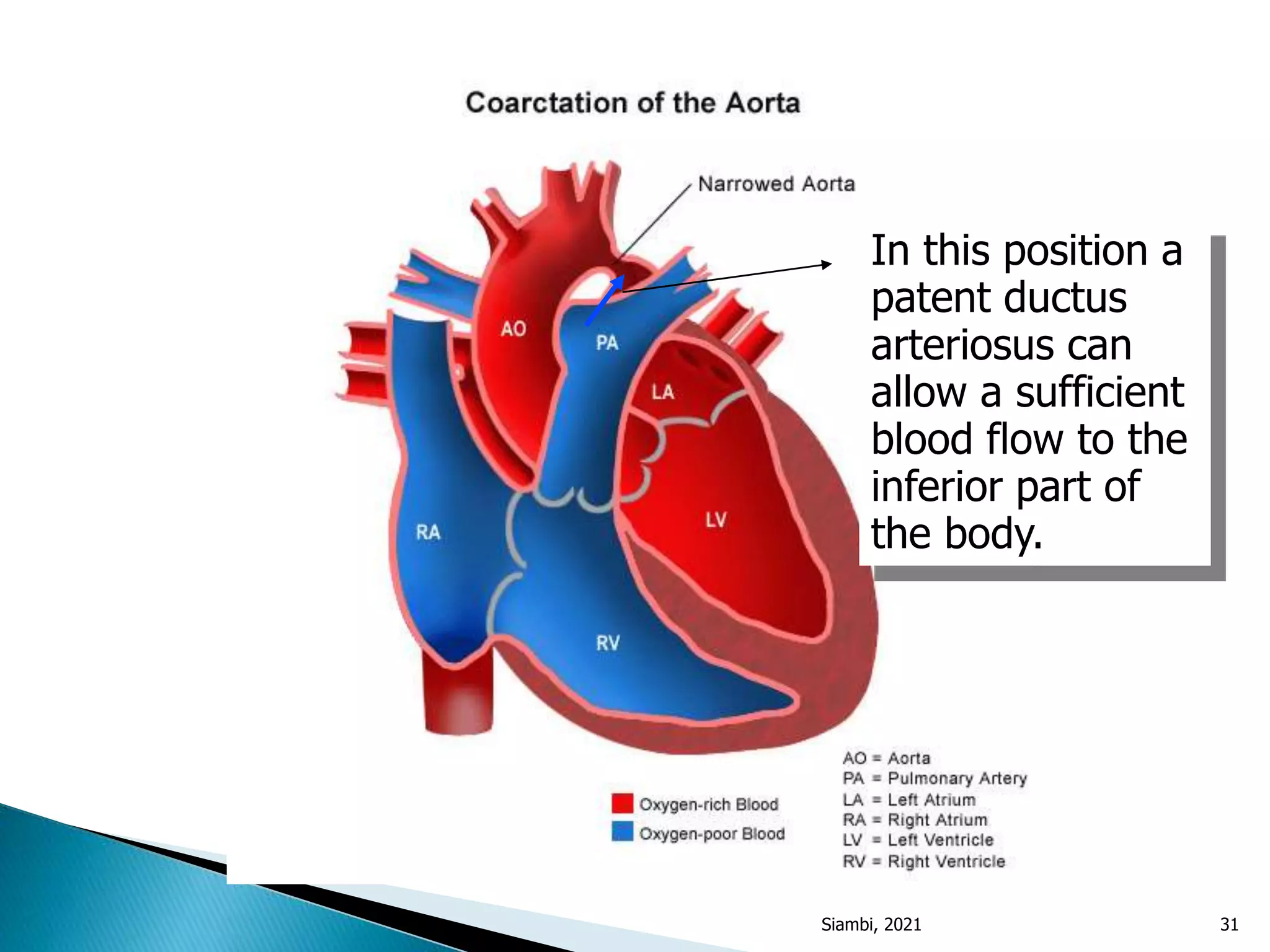
In this position a
patent ductus
arteriosus can
allow a sufficient
blood flow to the
inferior part of
the body.
Siambi, 2021 31
 Common in males(3:1) and account 6% of CHD
 Commonest site distal to lt subclavian artery where
arteriosus joints the aorta.
3
2
Siambi, 2021
 Symptoms and Signs:
SEVERE : Shock
MODERATE : CHF,
MILD : Headaches/epistaxis/(due htn in upper
extremities), leg claudication/hypotension and
weakness
 Decreased femoral pulses are an important sign esp. in
neonates.
 Weak and delayed femoral pulses compared to
branchial and radial pulse
 Systolic murmer heard best over sternum or aortic area.
3
3
Siambi, 2021
 ECHO : left ventricular
hypertrophy
 CXR-initially normal and later
there is notching of ribs due to
hypertrophied collateral arteries
 Treatment: For an infant in shock
-PGE1 immediately.
 Surgical vs. transcatheter repair.
3
4
Siambi, 2021
 The pulmonary valve leaflets are partly fused
together, giving a restrictive exit from the
right ventricle.
 Most are asymptomatic.
3
5
Siambi, 2021
 An ejection systolic murmur best heard at
the upper left sternal edge; thrill may be
present.
 An ejection click best heard at the upper
left sternal edge.
 When severe lesion - prolonged right
ventricular impulse, with delayed pulmonary
valve closure on auscultation.
3
6
Siambi, 2021
 Chest X-ray - Normal or post-stenotic
dilatation of the pulmonary artery.
 ECG Shows evidence of right ventricular
hypertrophy
3
7
Siambi, 2021
 Although most children are asymptomatic,
progressive right ventricular hypertrophy and
reduced exercise tolerance eventually occur.
 Transcatheter balloon dilatation is the
treatment of choice in most children
3
8
Siambi, 2021
 The aortic valve leaflets are partly fused
together, giving a restrictive exit from the left
ventricle.
 Aortic stenosis may not be an isolated lesion.
It is often associated with mitral valve
stenosis and coarctation of the aorta, and
their presence should always be excluded.
3
9
Siambi, 2021
 Most present with an asymptomatic murmur.
 Those with severe stenosis may present with
reduced exercise tolerance, chest pain on
exertion or syncope
4
0
Siambi, 2021
 Small volume, slow rising pulses
 Carotid thrill (always)
 Ejection systolic murmur maximal at the
upper right sternal edge radiating to the neck
 Delayed and soft aortic second sound
 Apical ejection click.
4
1
Siambi, 2021
 Chest X-ray Normal or prominent left
ventricle with post-stenotic dilatation of the
ascending aorta.
 ECG There may be left ventricular
hypertrophy
4
2
Siambi, 2021
 Children with symptoms on exercise undergo
balloon valvotomy.
 Balloon dilatation in older children is
generally safe and uncomplicated, but in
neonates this is much more difficult and
dangerous.
4
3
Siambi, 2021
 Tetralogy of Fallot (TOF)
 Tricuspid atresia (TA)
 Total anomalous pulmonary venous return
(TAPVR)
 Truncus arteriosus
 Transposition of the great vessels
 Hypoplastic left heart syndrome (HLH)
 Pulmonary atresia (PA) / critical PS
 Double outlet right ventricle (DORV)
4
4
Siambi, 2021
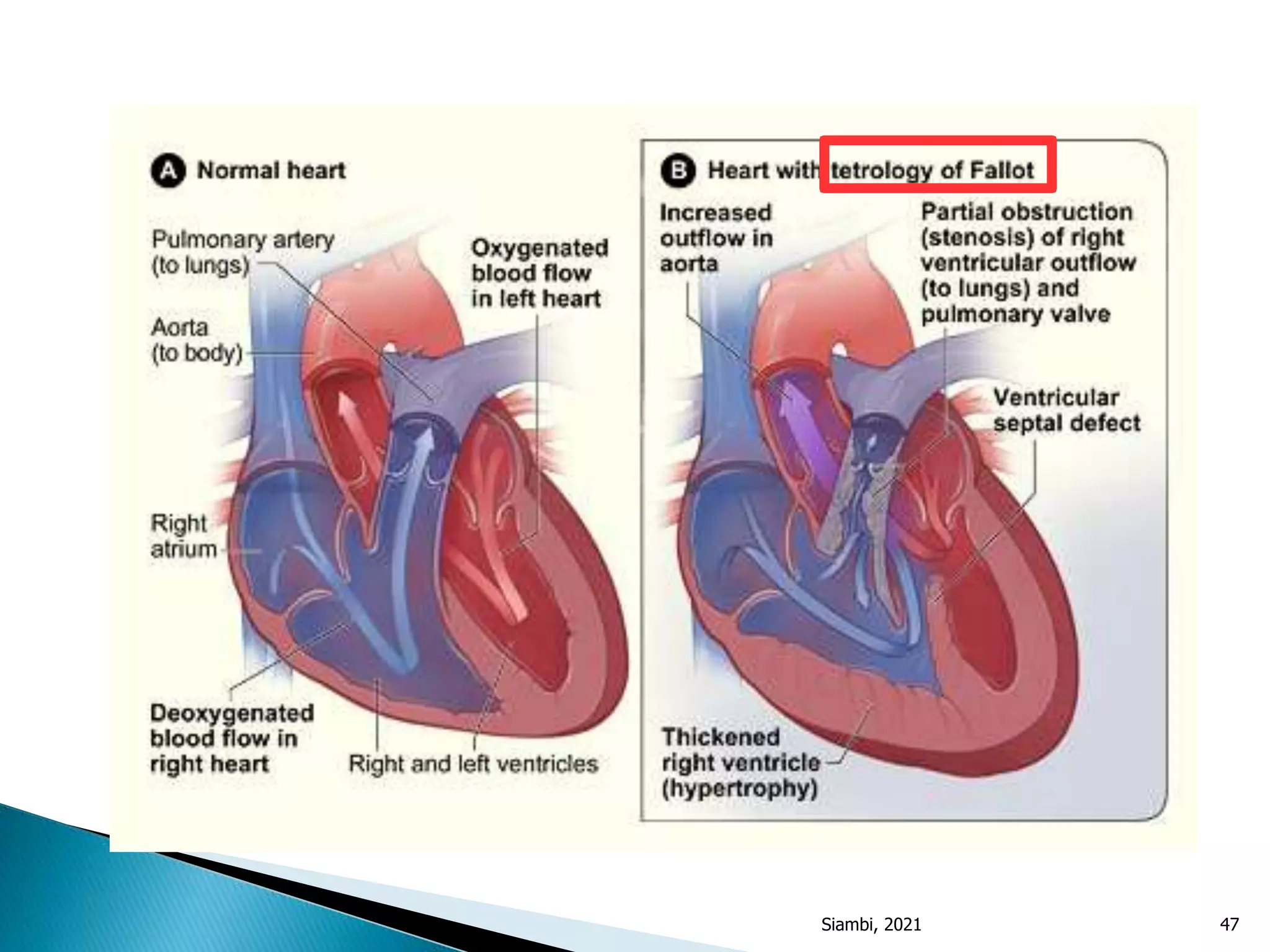
 Most common cyanotic heart disease (7 to
10% of all CHD).
 The four abnormalities include:
◦ Pulmonary stenosis
◦ RVH
◦ VSD
◦ Overriding Aorta
4
5
Siambi, 2021
4
6
Siambi, 2021
Siambi, 2021 47
 Typical features
◦ Cyanosis after the neonatal period
◦ Hypoxemic spells during infancy
◦ Right-sided aortic arch in 25% of all patients
◦ Systolic ejection murmur at the upper LSB
4
8
Siambi, 2021
 Clinical findings vary depending on degree of
Right ventricular outflow tract obstruction
 Most patients are cyanotic by 4 months and it
is usually progressive
 Hypoxemic spells (“tet spells”) are one of the
hallmarks of severe tetralogy
4
9
Siambi, 2021
5
0
Siambi, 2021
 Tet spells most commonly start around 4 to
6 months of age and are charcterized by
1. Sudden onset or deepening of cyanosis
2. Sudden onset of dyspnea
3. Alterations of consciousness
4. Decrease in intensity of systolic murmur
5
1
Siambi, 2021
 Clubbing of the fingers and toes may
develop in older children.
 A loud harsh ejection systolic murmur at
the left sternal edge from day 1 of life
 With increasing right ventricular outflow
tract obstruction, the murmur will shorten
and cyanosis will increase. During a
hypercyanotic spell, the murmur will be very
short or inaudible.
5
2
Siambi, 2021
 CXR- initially normal, later in older child will
show smaller heart, possibly with an uptilted
apex (boot shaped)
 ECG - Normal at birth. Right ventricular
hypertrophy when older.
 Echocardiography
5
3
Siambi, 2021
1)Bacterial endocarditis prophylaxis is necessary.
2)Hypoxemia spell usually self limiting and
followed by sleep spells are treated if
prolonged by:
• Placing the child in a knee-chest position to
increase systemic vascular resistance and to
diminish right-to-left shunting.
• Morphine sulfate is given to depress the
respiratory center
• oxygen is administered for hypoxia
• ß-adrenergic blocking agents and
adrenergic agonists (e.g.,phenylephrine)
also have been useful.
• Bicarbonate to correct acidosis
Siambi, 2021 54
1)Palliative surgery.
◦ A temporary increase in pulmonary blood
flow can be obtained by the creation of a
sytemic artery-pulmonary artery shunt.
The most common shunts are the Blalock-
Taussig operation (i.e.,anastomosis of the
subclavian artery to a pulmonary artery
branch) and the modified Blalock-Taussig
operation (i.e., interposition of a tubular
graft between the subclavian and
pulmonary arteries
Siambi, 2021 55
2) Corrective surgery (at around 6
months of age)
◦ Consists of closing the VSD and
resecting the right ventricular
outflow obstruction (pulmonary
stenosis), enlarging the area-if
necessary-with a patch.
Siambi, 2021 56
 Repair may be staged (modified BT shunt) or
complete
5
7
Siambi, 2021
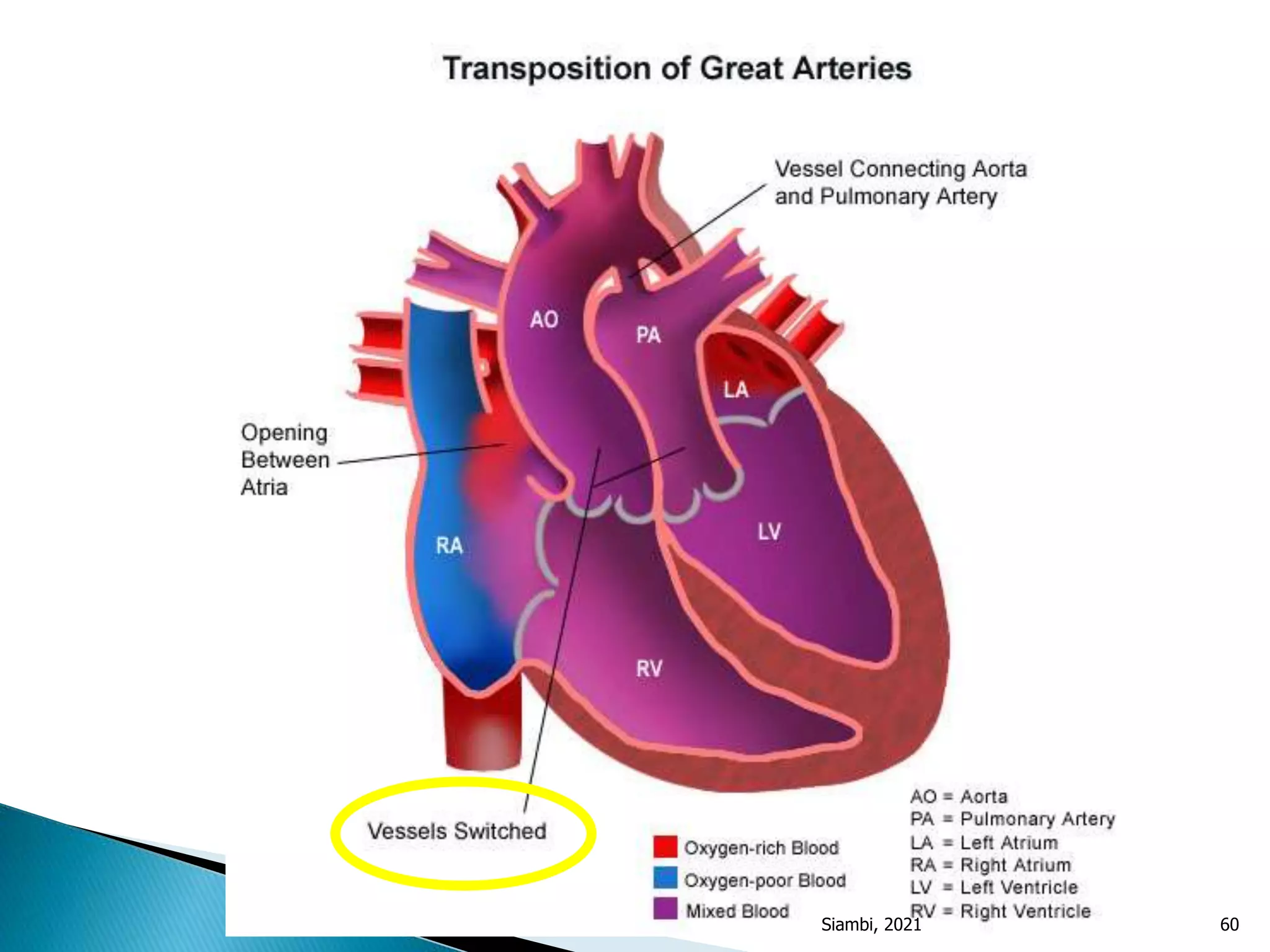
 The aorta arises from the right ventricle and
the pulmonary artery from the left. The blue
blood is therefore returned to the body and
the pink blood is returned to the lungs
 Unless there is mixing of blood between
them this condition is incompatible with
life. Fortunately, there are a number of
naturally occurring associated anomalies,
e.g. VSD, ASD and PDA
5
8
Siambi, 2021
 Presentation is usually on day 1-2 of life
when ductal closure leads to a marked
reduction in mixing of the desaturated and
saturated blood.
 The signs include cyanosis and cardiomegaly.
 There may be no murmur.
 An echocardiogram is diagnostic.
5
9
Siambi, 2021
Siambi, 2021 60
 TGA with intact septum carries a poor
prognosis.
 If an infant is getting progressively
hypoxemic, it is likely that the inter-
circulatory pathways (patent foramen ovale
and patent ductus arteriosus) are closing.
 Prostaglandin (0.05 to 0.1 mcg/kg/min)
intravenously may help maintain patency of
ductus arteriosus , thus improve oxygenation.
Siambi, 2021 61
 Balloon atrial septostomy may be necessary
to improve hypoxemia even after PGE
 Total surgical correction by arterial switch
procedure is the treatment of choice
Siambi, 2021 62
 Persistent of truncus arteriosus accounts for less than
1% of all CHD
 There is only one huge great vessel arising from heart
and supplies both systemic and pulmonary arterial
blood.
 There is complete lack of formation of spiral ridges
which divide the fetal truncus arteriosus with aorta
and pulmonary artery. High ventricular septal defect
always present
6
3
Siambi, 2021
 With large pulmonary blood flow are acynotic and
present like pulmonary hypertension, hyperactive
impulse felt in apex and over xiphoid process and
systolic thrill lower sternal border
 With decreased pulmonary blood flow have marked
cyanosis, ccf, growth retardation, easy fatigability,
dyspnoea on exertion, systolic murmer on left lower
sternal border, boot shaped heart, large aorta and rt
ventricular hypertrophy
6
4
Siambi, 2021
6
5
Siambi, 2021
Siambi, 2021 66
 Surgical
6
7
Siambi, 2021
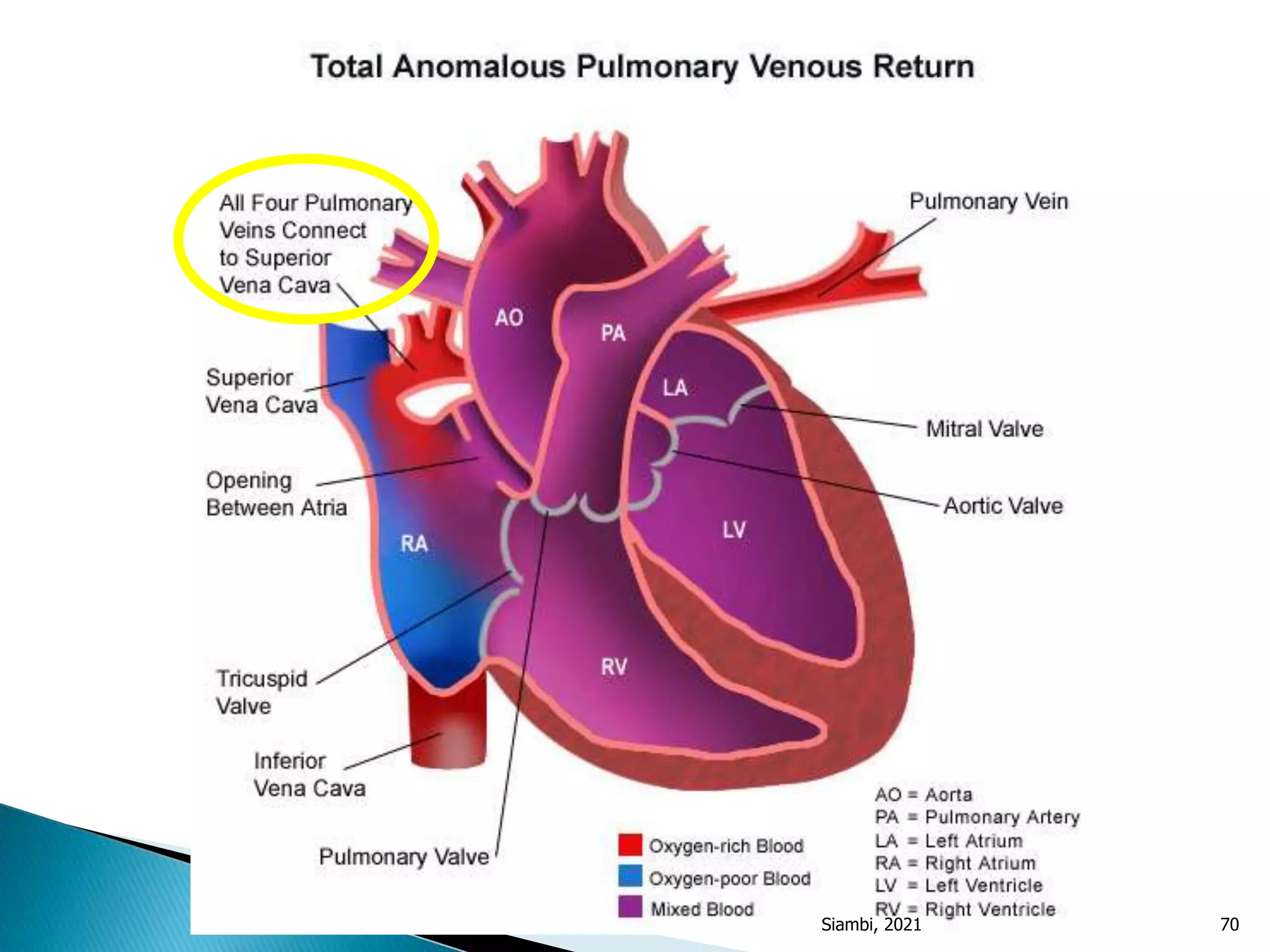
 Accounts 2 % of all CHD
 Pulmonary venous bld doesn’t drain into lt
atrium but either drains directly or indirectly
thro systemic venous connection in the rt
atrium
 Infant look quite sick and half die within 6
months and most within a year unless
surgically corrected
6
8
Siambi, 2021
 Present with cynosis, ccf, severe tachypnoea
and a systolic murmer best heard at
pulmonary area but many cases may be
absent
6
9
Siambi, 2021
Siambi, 2021 70
 Rare conditions account 1% of CHD
 Its failure of canalization of tricuspid valve
hence no communication between rt atrium
and rt ventricle
 Divided into 2(type 1 involve tricuspid atresia
without transposition of great arteries while
type 11 there is transposition of great
arteries)
7
1
Siambi, 2021
 Babies get cyanosed at birth, poor dev, easy
fatigability esp on feeding, dyspnoea,
tachypnoea, anoxic spells, rt heart failure,
finger clubbing, murmer which is variable
heard best at lt lower sternal border, rt atrium
enlarged
7
2
Siambi, 2021
 Surgical
7
3
Siambi, 2021
 Varying degrees of left heart hypoplasia at
multiple levels
 Babies present in cardiogenic SHOCK once
the ductus closes.
 Immediate treatment is PGE1 intravenously
as an infusion.
7
4
Siambi, 2021
7
5
Siambi, 2021
 Diastolic murmurs are never innocent
 Innocent murmurs are present in at least 50 %
of normal children
◦ Still’s murmur : low pitched, vibratory, systolic
ejection, increases with the supine position.
◦ Venous hum: continuous murmur in supraclavicular
region, reduces on lying down or with pressure on
neck.
7
6
Siambi, 2021
● Most cases of CHD are thought to be
multifactorial and result from a combination
of genetic predisposition and environmental
stimulus.
● A small percentage of CHD are related to
chromosomal abnormalities, in particular,
trisomy 21 (Down syndrome, CHD in 50% of
cases) and monosomy X (Turner syndrome,
CHD in 40% of cases).
7
7
Siambi, 2021
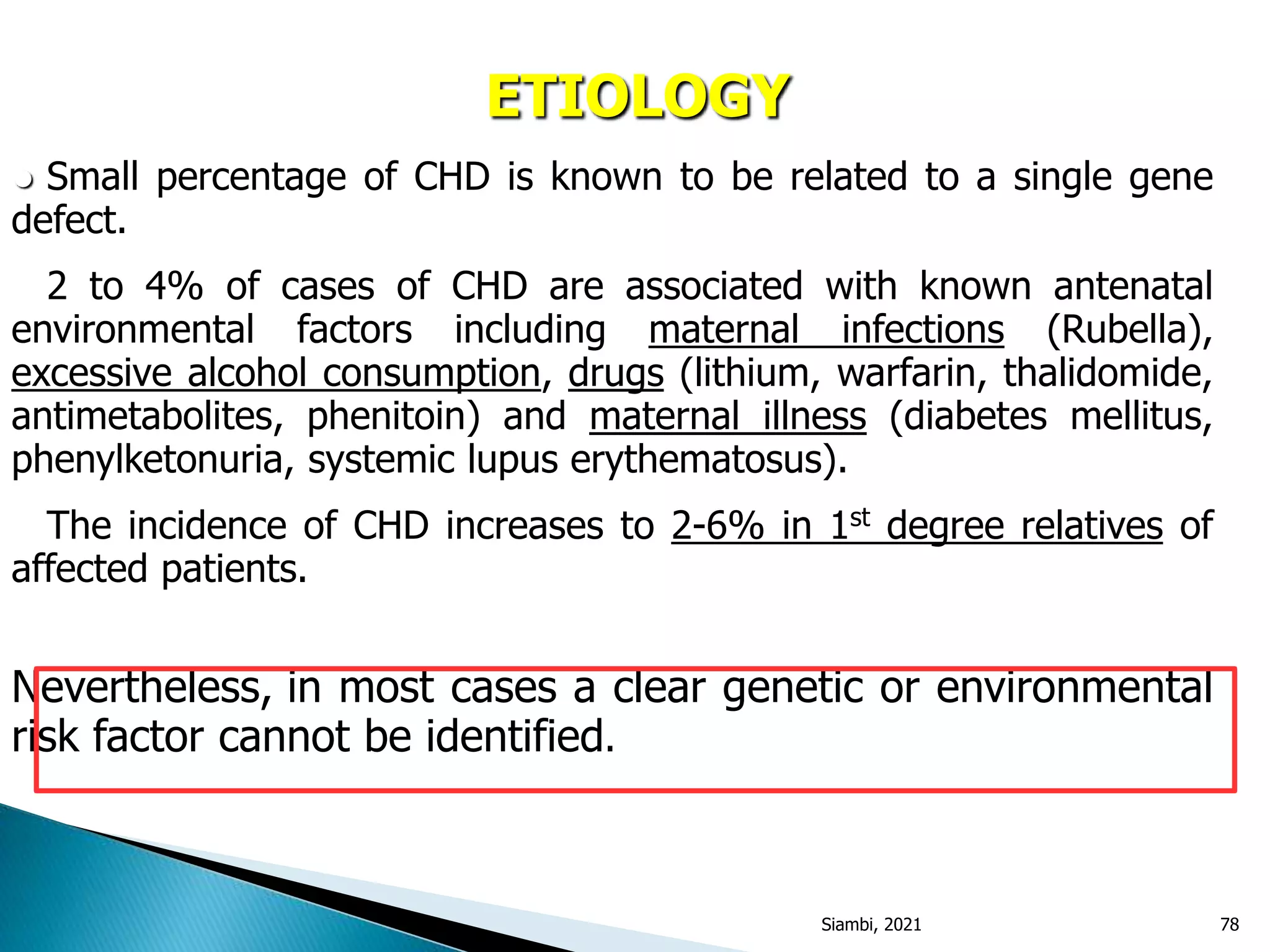
ETIOLOGY
● Small percentage of CHD is known to be related to a single gene
defect.
● 2 to 4% of cases of CHD are associated with known antenatal
environmental factors including maternal infections (Rubella),
excessive alcohol consumption, drugs (lithium, warfarin, thalidomide,
antimetabolites, phenitoin) and maternal illness (diabetes mellitus,
phenylketonuria, systemic lupus erythematosus).
● The incidence of CHD increases to 2-6% in 1st degree relatives of
affected patients.
Nevertheless, in most cases a clear genetic or environmental
risk factor cannot be identified.
Siambi, 2021 78
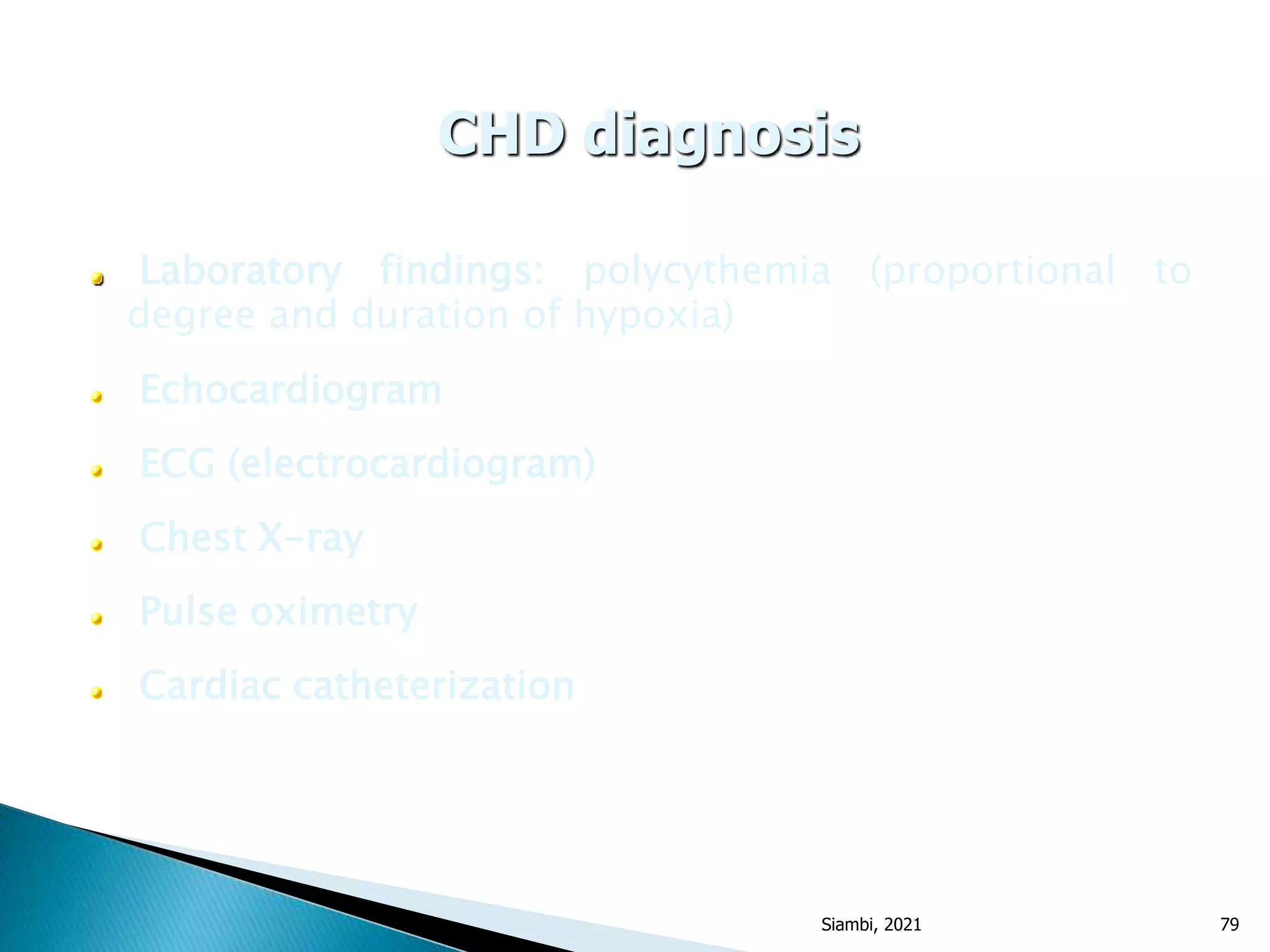
CHD diagnosis
Laboratory findings: polycythemia (proportional to
degree and duration of hypoxia)
Echocardiogram
ECG (electrocardiogram)
Chest X-ray
Pulse oximetry
Cardiac catheterization
Siambi, 2021 79
8
0
Siambi, 2021

Pediatric Cardiology Lecture Notes

  • 1.
  • 2.
  • 3.
     Congenital heartdefect (CHD) may be defined as an anatomic malformation of the heart or great vessels which occurs during intrauterine development, irrespective of the age at presentation  Occur is about 0.8% of live births.  Commonly divided into noncyanotic (L  R) and cyanotic (R  L) categories based on direction of shunting 3 Siambi, 2021
  • 4.
     CHD areamong the most common birth defects and are the leading cause of birth defect-related death 4 Siambi, 2021
  • 5.
    Fetal circulation ● Mostof CHD can be well tolerated during fetal life, becoming apparent (sometimes dramatically) only after birth. This is because in the fetal circulation, the right and left ventricles exist in a parallel circuit, as opposed to the series circuit of a newborn or adult. ● Two main structures, the foramen ovale (a communication between right and left atrium) and the ductus arteriosus (a vessel joining pulmonary artery and aorta) are particularly important. During fetal life, these communications allow the more oxygenated blood coming from placenta to perfuse preferentialy the upper part of the body (including the coronary and cerebral arteries). Siambi, 2021 5
  • 6.
  • 7.
    Fetal circulation ● Afterbirth, mechanical expansion of the lung and increase in arterial oxygenation rapidly lead to closure of ductus arteriosus (by muscular contraction of this vessel) and foramen ovale (by increasing pressure in left atrium in respect of right atrium). ● If patency of this fetal pathways persists: it may be by itself a CHD (causing a continuous left-to-right shunt) it may present an additional stress to the circulation (e.g. in infants with pulmonary hypertension) Siambi, 2021 7
  • 8.
     Ventricular septaldefect 25-30  Atrial septal defect (secundum) 6-8  Patent ductus arteriosus 6-8  Coarctation of aorta 5-7  Tetralogy of Fallot 5-7  Pulmonary valve stenosis 5-7  Aortic valve stenosis 4-7  Transposition of great arteries 3-5  Hypoplastic left ventricle 1-3  Hypoplastic right ventricle 1-3  Truncus arteriosus 1-2  Total anomalous pulm venous return 1-2  Tricuspid atresia 1-2  Double-outlet right ventricle 1-2  Others 5-10 8 Siambi, 2021
  • 9.
     Atrial septaldefects (ASD)  Ventricular septal defects (VSD)  Patent ductus arteriosus (PDA)  Obstruction to blood flow ◦ Pulmonic stenosis (PS) ◦ Aortic stenosis (AS) ◦ Aortic coarctation 9 Siambi, 2021
  • 10.
     Most commonlyasymptomatic  Essentials of diagnosis: ◦ Right ventricular heave ◦ S2 widely split and usually fixed ◦ Systolic murmur at the pulmonary area ◦ Cardiac enlargement on CXR 1 0 Siambi, 2021
  • 11.
  • 12.
  • 13.
     Three majortypes ◦ Ostium secundum  most common  In the middle of the septum in the region of the foramen ovale ◦ Ostium primum  Low position  Form of AV septal defect ◦ Sinus venosus  Least common  Positioned high in the atrial septum  Frequently associated with PAPVR 1 3 Siambi, 2021
  • 14.
     Treatment ◦ Closuregenerally recommended when ratio of pulmonary to systemic blood flow is > 2:1 ◦ Operation performed electively between ages 1 and 3 years  Previously surgical; now often closed interventionally 1 4 Siambi, 2021
  • 15.
  • 16.
     Single mostcommon congenital heart malformation, accounting for almost 30% of all CHD  Defects can occur in both the membranous portion of the septum (most common) and the muscular portion 1 6 Siambi, 2021
  • 17.
  • 18.
     Three majortypes  Small, hemodynamically insignificant  Between 80% and 85% of all VSDs  < 3 mm in diameter  All close spontanously  50% by 2 years  90% by 6 years  10% during school years  Muscular close sooner than membranous 1 8 Siambi, 2021
  • 19.
     Moderate VSDs ◦3-5 mm in diameter ◦ Least common group of children (3-5%) ◦ Without evidence of CCF or pulmonary hypertension, may be followed until spontaneous closure occurs 1 9 Siambi, 2021
  • 20.
     Large VSDs ◦6-10 mm in diameter ◦ Usually requires surgery, otherwise… ◦ Will develop CCF and FTT by age 3-6 months 2 0 Siambi, 2021
  • 21.
     Clinical findings ◦Medium- to high-pitched, harsh pansystolic murmur heard best at the left sternal border with radiation over the entire precordium 2 1 Siambi, 2021
  • 22.
     Treatment ◦ Indicatedfor closure of a VSD associated with CCF and FTT or pulmonary hypertension ◦ Patients with cardiomegaly, poor growth, poor exercise tolerance, or other clinical abnormalities and a P/S > 2:1 typically undergo surgical repair at 3-6 mo 2 2 Siambi, 2021
  • 23.
     Persistence ofnormal fetal vessel joining the pulmonary artery to the aorta  Closes spontaneously in normal term infants at 3-5 days of age  Epi facts ◦ Accounts for about 10% of all cases of CHD ◦ Higher incidence of PDA in infants born at high altitudes (> 10,000 feet) ◦ More common in females 2 3 Siambi, 2021
  • 24.
     Accounts forabout 10% of all cases of CHD  Higher incidence of PDA in infants born at high altitudes (over 10,000 feet)  More common in females 2 4 Siambi, 2021
  • 25.
  • 26.
     Clinical findingsand course depend on size of the shunt and the degree of associated pulmonary hypertension 2 6 Siambi, 2021
  • 27.
  • 28.
     Pulses arebounding and pulse pressure is widened  Characteristically has a rough “machinery” murmur which peaks at S2 and becomes a decrescendo murmur and fades before the S1 2 8 Siambi, 2021
  • 29.
     Treatment consistsof surgical correction when the PDA is large except in patients with pulmonary vascular obstructive disease  Transcatheter closure of small defects has become standard therapy  In preterm infants indomethacin is used (80-90% success in infants > 1200 grams) 2 9 Siambi, 2021
  • 30.
  • 31.
    In this positiona patent ductus arteriosus can allow a sufficient blood flow to the inferior part of the body. Siambi, 2021 31
  • 32.
     Common inmales(3:1) and account 6% of CHD  Commonest site distal to lt subclavian artery where arteriosus joints the aorta. 3 2 Siambi, 2021
  • 33.
     Symptoms andSigns: SEVERE : Shock MODERATE : CHF, MILD : Headaches/epistaxis/(due htn in upper extremities), leg claudication/hypotension and weakness  Decreased femoral pulses are an important sign esp. in neonates.  Weak and delayed femoral pulses compared to branchial and radial pulse  Systolic murmer heard best over sternum or aortic area. 3 3 Siambi, 2021
  • 34.
     ECHO :left ventricular hypertrophy  CXR-initially normal and later there is notching of ribs due to hypertrophied collateral arteries  Treatment: For an infant in shock -PGE1 immediately.  Surgical vs. transcatheter repair. 3 4 Siambi, 2021
  • 35.
     The pulmonaryvalve leaflets are partly fused together, giving a restrictive exit from the right ventricle.  Most are asymptomatic. 3 5 Siambi, 2021
  • 36.
     An ejectionsystolic murmur best heard at the upper left sternal edge; thrill may be present.  An ejection click best heard at the upper left sternal edge.  When severe lesion - prolonged right ventricular impulse, with delayed pulmonary valve closure on auscultation. 3 6 Siambi, 2021
  • 37.
     Chest X-ray- Normal or post-stenotic dilatation of the pulmonary artery.  ECG Shows evidence of right ventricular hypertrophy 3 7 Siambi, 2021
  • 38.
     Although mostchildren are asymptomatic, progressive right ventricular hypertrophy and reduced exercise tolerance eventually occur.  Transcatheter balloon dilatation is the treatment of choice in most children 3 8 Siambi, 2021
  • 39.
     The aorticvalve leaflets are partly fused together, giving a restrictive exit from the left ventricle.  Aortic stenosis may not be an isolated lesion. It is often associated with mitral valve stenosis and coarctation of the aorta, and their presence should always be excluded. 3 9 Siambi, 2021
  • 40.
     Most presentwith an asymptomatic murmur.  Those with severe stenosis may present with reduced exercise tolerance, chest pain on exertion or syncope 4 0 Siambi, 2021
  • 41.
     Small volume,slow rising pulses  Carotid thrill (always)  Ejection systolic murmur maximal at the upper right sternal edge radiating to the neck  Delayed and soft aortic second sound  Apical ejection click. 4 1 Siambi, 2021
  • 42.
     Chest X-rayNormal or prominent left ventricle with post-stenotic dilatation of the ascending aorta.  ECG There may be left ventricular hypertrophy 4 2 Siambi, 2021
  • 43.
     Children withsymptoms on exercise undergo balloon valvotomy.  Balloon dilatation in older children is generally safe and uncomplicated, but in neonates this is much more difficult and dangerous. 4 3 Siambi, 2021
  • 44.
     Tetralogy ofFallot (TOF)  Tricuspid atresia (TA)  Total anomalous pulmonary venous return (TAPVR)  Truncus arteriosus  Transposition of the great vessels  Hypoplastic left heart syndrome (HLH)  Pulmonary atresia (PA) / critical PS  Double outlet right ventricle (DORV) 4 4 Siambi, 2021
  • 45.
     Most commoncyanotic heart disease (7 to 10% of all CHD).  The four abnormalities include: ◦ Pulmonary stenosis ◦ RVH ◦ VSD ◦ Overriding Aorta 4 5 Siambi, 2021
  • 46.
  • 47.
  • 48.
     Typical features ◦Cyanosis after the neonatal period ◦ Hypoxemic spells during infancy ◦ Right-sided aortic arch in 25% of all patients ◦ Systolic ejection murmur at the upper LSB 4 8 Siambi, 2021
  • 49.
     Clinical findingsvary depending on degree of Right ventricular outflow tract obstruction  Most patients are cyanotic by 4 months and it is usually progressive  Hypoxemic spells (“tet spells”) are one of the hallmarks of severe tetralogy 4 9 Siambi, 2021
  • 50.
  • 51.
     Tet spellsmost commonly start around 4 to 6 months of age and are charcterized by 1. Sudden onset or deepening of cyanosis 2. Sudden onset of dyspnea 3. Alterations of consciousness 4. Decrease in intensity of systolic murmur 5 1 Siambi, 2021
  • 52.
     Clubbing ofthe fingers and toes may develop in older children.  A loud harsh ejection systolic murmur at the left sternal edge from day 1 of life  With increasing right ventricular outflow tract obstruction, the murmur will shorten and cyanosis will increase. During a hypercyanotic spell, the murmur will be very short or inaudible. 5 2 Siambi, 2021
  • 53.
     CXR- initiallynormal, later in older child will show smaller heart, possibly with an uptilted apex (boot shaped)  ECG - Normal at birth. Right ventricular hypertrophy when older.  Echocardiography 5 3 Siambi, 2021
  • 54.
    1)Bacterial endocarditis prophylaxisis necessary. 2)Hypoxemia spell usually self limiting and followed by sleep spells are treated if prolonged by: • Placing the child in a knee-chest position to increase systemic vascular resistance and to diminish right-to-left shunting. • Morphine sulfate is given to depress the respiratory center • oxygen is administered for hypoxia • ß-adrenergic blocking agents and adrenergic agonists (e.g.,phenylephrine) also have been useful. • Bicarbonate to correct acidosis Siambi, 2021 54
  • 55.
    1)Palliative surgery. ◦ Atemporary increase in pulmonary blood flow can be obtained by the creation of a sytemic artery-pulmonary artery shunt. The most common shunts are the Blalock- Taussig operation (i.e.,anastomosis of the subclavian artery to a pulmonary artery branch) and the modified Blalock-Taussig operation (i.e., interposition of a tubular graft between the subclavian and pulmonary arteries Siambi, 2021 55
  • 56.
    2) Corrective surgery(at around 6 months of age) ◦ Consists of closing the VSD and resecting the right ventricular outflow obstruction (pulmonary stenosis), enlarging the area-if necessary-with a patch. Siambi, 2021 56
  • 57.
     Repair maybe staged (modified BT shunt) or complete 5 7 Siambi, 2021
  • 58.
     The aortaarises from the right ventricle and the pulmonary artery from the left. The blue blood is therefore returned to the body and the pink blood is returned to the lungs  Unless there is mixing of blood between them this condition is incompatible with life. Fortunately, there are a number of naturally occurring associated anomalies, e.g. VSD, ASD and PDA 5 8 Siambi, 2021
  • 59.
     Presentation isusually on day 1-2 of life when ductal closure leads to a marked reduction in mixing of the desaturated and saturated blood.  The signs include cyanosis and cardiomegaly.  There may be no murmur.  An echocardiogram is diagnostic. 5 9 Siambi, 2021
  • 60.
  • 61.
     TGA withintact septum carries a poor prognosis.  If an infant is getting progressively hypoxemic, it is likely that the inter- circulatory pathways (patent foramen ovale and patent ductus arteriosus) are closing.  Prostaglandin (0.05 to 0.1 mcg/kg/min) intravenously may help maintain patency of ductus arteriosus , thus improve oxygenation. Siambi, 2021 61
  • 62.
     Balloon atrialseptostomy may be necessary to improve hypoxemia even after PGE  Total surgical correction by arterial switch procedure is the treatment of choice Siambi, 2021 62
  • 63.
     Persistent oftruncus arteriosus accounts for less than 1% of all CHD  There is only one huge great vessel arising from heart and supplies both systemic and pulmonary arterial blood.  There is complete lack of formation of spiral ridges which divide the fetal truncus arteriosus with aorta and pulmonary artery. High ventricular septal defect always present 6 3 Siambi, 2021
  • 64.
     With largepulmonary blood flow are acynotic and present like pulmonary hypertension, hyperactive impulse felt in apex and over xiphoid process and systolic thrill lower sternal border  With decreased pulmonary blood flow have marked cyanosis, ccf, growth retardation, easy fatigability, dyspnoea on exertion, systolic murmer on left lower sternal border, boot shaped heart, large aorta and rt ventricular hypertrophy 6 4 Siambi, 2021
  • 65.
  • 66.
  • 67.
  • 68.
     Accounts 2% of all CHD  Pulmonary venous bld doesn’t drain into lt atrium but either drains directly or indirectly thro systemic venous connection in the rt atrium  Infant look quite sick and half die within 6 months and most within a year unless surgically corrected 6 8 Siambi, 2021
  • 69.
     Present withcynosis, ccf, severe tachypnoea and a systolic murmer best heard at pulmonary area but many cases may be absent 6 9 Siambi, 2021
  • 70.
  • 71.
     Rare conditionsaccount 1% of CHD  Its failure of canalization of tricuspid valve hence no communication between rt atrium and rt ventricle  Divided into 2(type 1 involve tricuspid atresia without transposition of great arteries while type 11 there is transposition of great arteries) 7 1 Siambi, 2021
  • 72.
     Babies getcyanosed at birth, poor dev, easy fatigability esp on feeding, dyspnoea, tachypnoea, anoxic spells, rt heart failure, finger clubbing, murmer which is variable heard best at lt lower sternal border, rt atrium enlarged 7 2 Siambi, 2021
  • 73.
  • 74.
     Varying degreesof left heart hypoplasia at multiple levels  Babies present in cardiogenic SHOCK once the ductus closes.  Immediate treatment is PGE1 intravenously as an infusion. 7 4 Siambi, 2021
  • 75.
  • 76.
     Diastolic murmursare never innocent  Innocent murmurs are present in at least 50 % of normal children ◦ Still’s murmur : low pitched, vibratory, systolic ejection, increases with the supine position. ◦ Venous hum: continuous murmur in supraclavicular region, reduces on lying down or with pressure on neck. 7 6 Siambi, 2021
  • 77.
    ● Most casesof CHD are thought to be multifactorial and result from a combination of genetic predisposition and environmental stimulus. ● A small percentage of CHD are related to chromosomal abnormalities, in particular, trisomy 21 (Down syndrome, CHD in 50% of cases) and monosomy X (Turner syndrome, CHD in 40% of cases). 7 7 Siambi, 2021
  • 78.
    ETIOLOGY ● Small percentageof CHD is known to be related to a single gene defect. ● 2 to 4% of cases of CHD are associated with known antenatal environmental factors including maternal infections (Rubella), excessive alcohol consumption, drugs (lithium, warfarin, thalidomide, antimetabolites, phenitoin) and maternal illness (diabetes mellitus, phenylketonuria, systemic lupus erythematosus). ● The incidence of CHD increases to 2-6% in 1st degree relatives of affected patients. Nevertheless, in most cases a clear genetic or environmental risk factor cannot be identified. Siambi, 2021 78
  • 79.
    CHD diagnosis Laboratory findings:polycythemia (proportional to degree and duration of hypoxia) Echocardiogram ECG (electrocardiogram) Chest X-ray Pulse oximetry Cardiac catheterization Siambi, 2021 79
  • 80.