Full download test bank at ebook textbookfull.com
Software Engineering Research
Management and Applications 1st
C L I C K L I N K T O D O W L O A D
https://textbookfull.com/product/software-
engineering-research-management-and-
applications-1st-edition-roger-lee-eds/
textbookfull
More products digital (pdf, epub, mobi) instant
download maybe you interests ...
Software Engineering Research, Management and
Applications Roger Lee
https://textbookfull.com/product/software-engineering-research-
management-and-applications-roger-lee-2/
Software Engineering Research Management and
Applications 1st Edition Roger Lee (Eds.)
https://textbookfull.com/product/software-engineering-research-
management-and-applications-1st-edition-roger-lee-eds/
Action Research in Software Engineering Theory and
Applications Miroslaw Staron
https://textbookfull.com/product/action-research-in-software-
engineering-theory-and-applications-miroslaw-staron/
Software Engineering: A Practitioner's Approach 9th
Edition Roger S. Pressman
https://textbookfull.com/product/software-engineering-a-
practitioners-approach-9th-edition-roger-s-pressman/
Integrating Research and Practice in Software
Engineering Stan Jarzabek
https://textbookfull.com/product/integrating-research-and-
practice-in-software-engineering-stan-jarzabek/
Applied Computing and Information Technology Roger Lee
https://textbookfull.com/product/applied-computing-and-
information-technology-roger-lee/
Dependable Software Engineering Theories Tools and
Applications 5th International Symposium SETTA 2019
Shanghai China November 27 29 2019 Proceedings Nan Guan
https://textbookfull.com/product/dependable-software-engineering-
theories-tools-and-applications-5th-international-symposium-
setta-2019-shanghai-china-november-27-29-2019-proceedings-nan-
guan/
Computational Science Intelligence and Applied
Informatics Roger Lee
https://textbookfull.com/product/computational-science-
intelligence-and-applied-informatics-roger-lee/
Trends and Applications in Software Engineering:
Proceedings of CIMPS 2016 1st Edition Jezreel Mejia
https://textbookfull.com/product/trends-and-applications-in-
software-engineering-proceedings-of-cimps-2016-1st-edition-
jezreel-mejia/
Studies in Computational Intelligence 654
Roger Lee Editor
Software
Engineering
Research,
Management and
Applications
Studies in Computational Intelligence
Volume 654
Series editor
Janusz Kacprzyk, Polish Academy of Sciences, Warsaw, Poland
e-mail: kacprzyk@ibspan.waw.pl
About this Series
The series “Studies in Computational Intelligence” (SCI) publishes new develop-
ments and advances in the various areas of computational intelligence—quickly and
with a high quality. The intent is to cover the theory, applications, and design
methods of computational intelligence, as embedded in the fields of engineering,
computer science, physics and life sciences, as well as the methodologies behind
them. The series contains monographs, lecture notes and edited volumes in
computational intelligence spanning the areas of neural networks, connectionist
systems, genetic algorithms, evolutionary computation, artificial intelligence,
cellular automata, self-organizing systems, soft computing, fuzzy systems, and
hybrid intelligent systems. Of particular value to both the contributors and the
readership are the short publication timeframe and the worldwide distribution,
which enable both wide and rapid dissemination of research output.
More information about this series at http://www.springer.com/series/7092
Roger Lee
Editor
Software Engineering
Research, Management
and Applications
123
Editor
Roger Lee
Software Engineering and Information
Central Michigan University
Mount Pleasant
USA
ISSN 1860-949X ISSN 1860-9503 (electronic)
Studies in Computational Intelligence
ISBN 978-3-319-33902-3 ISBN 978-3-319-33903-0 (eBook)
DOI 10.1007/978-3-319-33903-0
Library of Congress Control Number: 2016938636
© Springer International Publishing Switzerland 2016
This work is subject to copyright. All rights are reserved by the Publisher, whether the whole or part
of the material is concerned, specifically the rights of translation, reprinting, reuse of illustrations,
recitation, broadcasting, reproduction on microfilms or in any other physical way, and transmission
or information storage and retrieval, electronic adaptation, computer software, or by similar or dissimilar
methodology now known or hereafter developed.
The use of general descriptive names, registered names, trademarks, service marks, etc. in this
publication does not imply, even in the absence of a specific statement, that such names are exempt from
the relevant protective laws and regulations and therefore free for general use.
The publisher, the authors and the editors are safe to assume that the advice and information in this
book are believed to be true and accurate at the date of publication. Neither the publisher nor the
authors or the editors give a warranty, express or implied, with respect to the material contained herein or
for any errors or omissions that may have been made.
Printed on acid-free paper
This Springer imprint is published by Springer Nature
The registered company is Springer International Publishing AG Switzerland
Foreword
The purpose of the 14th International Conference on Software Engineering,
Artificial Intelligence Research, Management and Applications (SERA 2016) held
on June 8–10, 2015 at Towson University, USA is bringing together scientists,
engineers, computer users, and students to share their experiences and exchange
new ideas and research results about all aspects (theory, applications, and tools) of
software engineering research, management and applications, and to discuss the
practical challenges encountered along the way and the solutions adopted to solve
them. The conference organizers selected the best 13 papers from those papers
accepted for presentation at the conference in order to publish them in this volume.
The papers were chosen based on review scores submitted by members of the
program committee and underwent further rigorous rounds of review.
In Chap. “Human Motion Analysis and Classification Using Radar
Micro-Doppler Signatures”, Amirshahram Hematian, Yinan Yang, Chao Lu, and
Sepideh Yazdani present a novel nonparametric method to detect and calculate
human gait speed while analyzing human micro motions based on radar
micro-Doppler signatures to classify human motions.
In Chap. “Performance Evaluation of NETCONF Protocolin MANET Using
Emulation”, Weichao Gao, James Nguyen, Daniel Ku, Hanlin Zhang, and Wei Yu
leverage the Common Open Research Emulator (CORE), a network emulation tool,
to conduct the quantitative performance evaluation of NETCONF in an emulated
MANET environment.
In Chap. “A Fuzzy Logic Utility Framework (FLUF) to Support Information
Assurance”, E. Allison Newcomb and Robert J. Hammell discuss the use of fuzzy
logic for accelerating the transformation of network monitoring tool alerts to
actionable knowledge, suggest process improvement that combines information
assurance and cyber defender expertise for holistic computer network defense, and
describe an experimental design for collecting empirical data to support the
continued research in this area.
In Chap. “A Framework for Requirements Knowledge Acquisition Using UML
and Conceptual Graphs”, Bingyang Wei and Harry S. Delugach present a
v
knowledge-based framework to drive the process of acquiring requirements for
each UML model. This framework is based on a central knowledge representation,
the conceptual graphs.
In Chap. “Identification Method of Fault Level Based on Deep Learning for
Open Source Software”, Yoshinobu Tamura, Satoshi Ashida, Mitsuho Matsumoto,
and Shigeru Yamada propose a method of open-source software reliability
assessment based on the deep learning. Also, they show several numerical examples
of open-source software reliability assessment in the actual software projects.
In Chap. “Monitoring Target Through Satellite Images by Using Deep
Convolutional Networks”, Xudong Sui, Jinfang Zhang, Xiaohui Hu, and Lei
Zhang propose a method for target monitoring based on deep convolutional neural
networks (DCNN). The method is implemented by three procedures: (i) Label the
target and generate the dataset, (ii) train a classifier, and (iii) monitor the target.
In Chap. “A Method for Extracting Lexicon for Sentiment Analysis Based on
Morphological Sentence Patterns”, Youngsub Han, Yanggon Kim, and Ikhyeon
Jang propose an unsupervised system for building aspect expressions to minimize
human-coding efforts. The proposed method uses morphological sentence patterns
through an aspect expression pattern recognizer. It guarantees relatively higher
accuracy.
In Chap. “A Research for Finding Relationship Between Mass Media and Social
Media Based on Agenda Setting Theory”, Jinhyuck Choi, Youngsub Han, and
Yanggon Kim analyze important social issues using big data generated from social
media. They tried to apply the relationship between agenda setting theory and social
media because they have received social issues from official accounts like news
using social media, and then users shared social issues to other users; so they
choose tweets of Baltimore Riot to analyze.
In Chap. “On the Prevalence of Function Side Effects in General Purpose Open
Source Software Systems”, Saleh M. Alnaeli, Amanda Ali Taha, and Tyler Timm
examine the prevalence and distribution of function side effects in general-purpose
software systems is presented. The study is conducted on 19 open-source systems
comprising over 9.8 million lines of code (MLOC).
In Chap. “Object Oriented Method to Implement the Hierarchical and
Concurrent States in UML State Chart Diagrams”, Sunitha E.V. and Philip
Samuel present an implementation pattern for the state diagram which includes both
hierarchical and concurrent states. The state transitions of parallel states are
delegated to the composite state class.
In Chap. “A New and Fast Variant of the Strict Strong Coloring Based Graph
Distribution Algorithm”, Nousseiba Guidoum, Meriem Bensouyad, and
Djamel-EddineSaidouni propose a fast algorithm for distributing state spaces on a
network of workstations. Our solution is an improved version of SSCGDA
algorithm (for Strict Strong Coloring based Graph Distribution algorithm) which
introduced the coloring concept and dominance relation in graphs for finding the
good distribution of given graphs.
In Chap. “High Level Petri Net Modelling and Analysis of Flexible Web
Services Composition”, Ahmed Kheldoun, Kamel Barkaoui, Malika Ioualalen, and
vi Foreword
Djaouida Dahmani propose a model to deal with flexibility in complex Web
services composition (WSC). In this context, they use a model based on high-level
Petri nets called RECATNets, where control and data flows are easily supported.
In Chap. “PMRF: Parameterized Matching-Ranking Framework”, Fatma
Ezzahra Gmati, Nadia Yacoubi-Ayadi, Afef Bahri, Salem Chakhar, and Alessio
Ishizaka introduce the matching and the ranking algorithms supported by the
PMRF. Next, it presents the architecture of the developed system and discusses
some implementation issues. Then, it provides the results of performance evaluation
of the PMRF.
It is our sincere hope that this volume provides stimulation and inspiration and
that it will be used as a foundation for works to come.
June 2016 Yeong-Tae Song
Towson University, USA
Bixin Li
Southeast University, China
Foreword vii
Contents
Human Motion Analysis and Classification Using Radar
Micro-Doppler Signatures . . . . . . . . . . . . . . . . . . . . . . . . . . . . . . . . . 1
Amirshahram Hematian, Yinan Yang, Chao Lu and Sepideh Yazdani
Performance Evaluation of NETCONF Protocol in MANET
Using Emulation . . . . . . . . . . . . . . . . . . . . . . . . . . . . . . . . . . . . . . . . 11
Weichao Gao, James Nguyen, Daniel Ku, Hanlin Zhang and Wei Yu
A Fuzzy Logic Utility Framework (FLUF) to Support
Information Assurance . . . . . . . . . . . . . . . . . . . . . . . . . . . . . . . . . . . 33
E. Allison Newcomb and Robert J. Hammell II
A Framework for Requirements Knowledge Acquisition
Using UML and Conceptual Graphs. . . . . . . . . . . . . . . . . . . . . . . . . . 49
Bingyang Wei and Harry S. Delugach
Identification Method of Fault Level Based on Deep Learning
for Open Source Software . . . . . . . . . . . . . . . . . . . . . . . . . . . . . . . . . 65
Yoshinobu Tamura, Satoshi Ashida, Mitsuho Matsumoto
and Shigeru Yamada
Monitoring Target Through Satellite Images
by Using Deep Convolutional Networks . . . . . . . . . . . . . . . . . . . . . . . 77
Xudong Sui, Jinfang Zhang, Xiaohui Hu and Lei Zhang
A Method for Extracting Lexicon for Sentiment Analysis
Based on Morphological Sentence Patterns . . . . . . . . . . . . . . . . . . . . . 85
Youngsub Han, Yanggon Kim and Ikhyeon Jang
A Research for Finding Relationship Between Mass Media
and Social Media Based on Agenda Setting Theory. . . . . . . . . . . . . . . 103
Jinhyuck Choi, Youngsub Han and Yanggon Kim
ix
On the Prevalence of Function Side Effects in General Purpose
Open Source Software Systems . . . . . . . . . . . . . . . . . . . . . . . . . . . . . 115
Saleh M. Alnaeli, Amanda Ali. Taha and Tyler Timm
Object Oriented Method to Implement the Hierarchical
and Concurrent States in UML State Chart Diagrams . . . . . . . . . . . . 133
E.V. Sunitha and Philip Samuel
A New and Fast Variant of the Strict Strong Coloring
Based Graph Distribution Algorithm . . . . . . . . . . . . . . . . . . . . . . . . . 151
Nousseiba Guidoum, Meriem Bensouyad and Djamel-Eddine Saïdouni
High Level Petri Net Modelling and Analysis of Flexible
Web Services Composition . . . . . . . . . . . . . . . . . . . . . . . . . . . . . . . . . 163
Ahmed Kheldoun, Kamel Barkaoui, Malika Ioualalen
and Djaouida Dahmani
PMRF: Parameterized Matching-Ranking Framework . . . . . . . . . . . . 181
Fatma Ezzahra Gmati, Nadia Yacoubi-Ayadi, Afef Bahri,
Salem Chakhar and Alessio Ishizaka
Author Index . . . . . . . . . . . . . . . . . . . . . . . . . . . . . . . . . . . . . . . . . . 199
x Contents
Contributors
E. Allison Newcomb Towson University, Towson, MD, USA
Saleh M. Alnaeli Department of Computer Science, University of Wisconsin-Fox
Valley, Menasha, WI, USA
Satoshi Ashida Yamaguchi University, Yamaguchi, Japan
Afef Bahri MIRACL Laboratory, Higher School of Computing and Multimedia,
Sfax, Tunisia
Kamel Barkaoui CEDRIC-CNAM, Paris Cedex 03, France
Meriem Bensouyad MISC Laboratory, A. Mehri, Constantine 2 University,
Constantine, Algeria
Salem Chakhar Portsmouth Business School and Centre for Operational
Research and Logistics, University of Portsmouth, Portsmouth, UK
Jinhyuck Choi Department of Computer and Information Sciences, Towson
University, Towson, MD, USA
Djaouida Dahmani MOVEP, Computer Science Department, USTHB, Algiers,
Algeria
Harry S. Delugach Department of Computer Science, University of Alabama in
Huntsville, Huntsville, AL, USA
Weichao Gao Department of Computer and Information Systems, Towson
University, Towson, MD, USA
Fatma Ezzahra Gmati RIADI Research Laboratory, National School of
Computer Sciences, University of Manouba, Manouba, Tunisia
Nousseiba Guidoum MISC Laboratory, A. Mehri, Constantine 2 University,
Constantine, Algeria
xi
Robert J. Hammell II Department of Computer and Information Sciences,
Towson University, Towson, MD, USA
Youngsub Han Department of Computer and Information Sciences, Towson
University, Towson, MD, USA
Amirshahram Hematian Department of Computer and Information Sciences,
Towson University, Towson, MD, USA
Xiaohui Hu Institute of Software Chinese Academy of Sciences, Beijing, China
Malika Ioualalen MOVEP, Computer Science Department, USTHB, Algiers,
Algeria
Alessio Ishizaka Portsmouth Business School and Centre for Operational
Research and Logistics, University of Portsmouth, Portsmouth, UK
Ikhyeon Jang Department of Information and Communication Engineering,
Dongguk University Gyeongju, Gyeongbuk, South Korea
Ahmed Kheldoun MOVEP, Computer Science Department, USTHB, Algiers,
Algeria; Sciences and Technology Faculty, Yahia Fares University, Medea, Algeria
Yanggon Kim Department of Computer and Information Sciences, Towson
University, Towson, MD, USA
Daniel Ku US Army CECOM Communications-Electronics Research, Develop-
ment and Engineering Center (CERDEC), Fort Sill, USA
Chao Lu Department of Computer and Information Sciences, Towson University,
Towson, MD, USA
Mitsuho Matsumoto Tottori University, Tottori-shi, Japan
James Nguyen US Army CECOM Communications-Electronics Research,
Development and Engineering Center (CERDEC), Fort Sill, USA
Djamel-Eddine Saïdouni MISC Laboratory, A. Mehri, Constantine 2 University,
Constantine, Algeria
Philip Samuel Division of IT, School of Engineering, Cochin University of Sci-
ence & Technology, Kochi, India
Xudong Sui Institute of Software Chinese Academy of Sciences, Beijing, China
E.V. Sunitha Department of Computer Science, Cochin University of Science &
Technology, Kochi, India
Amanda Ali. Taha Department of Computer Science, University of
Wisconsin-Fox Valley, Menasha, WI, USA
Yoshinobu Tamura Yamaguchi University, Yamaguchi, Japan
xii Contributors
Tyler Timm Department of Computer Science, University of Wisconsin-Fox
Valley, Menasha, WI, USA
Bingyang Wei Department of Computer Science, Midwestern State University,
Wichita Falls, TX, USA
Nadia Yacoubi-Ayadi RIADI Research Laboratory, National School of Computer
Sciences, University of Manouba, Manouba, Tunisia
Shigeru Yamada Tottori University, Tottori-shi, Japan
Yinan Yang Department of Computer and Information Sciences, Towson
University, Towson, MD, USA
Sepideh Yazdani Japan International Institute of Technology (MJIIT), Universiti
Teknologi Malaysia, Kuala Lumpur, Malaysia
Wei Yu Department of Computer and Information Systems, Towson University,
Towson, MD, USA
Hanlin Zhang Department of Computer and Information Systems, Towson
University, Towson, MD, USA
Jinfang Zhang Institute of Software Chinese Academy of Sciences, Beijing,
China
Lei Zhang School of Computer Science, Beijing Information Science &
Technology University, Beijing, China
Contributors xiii
Human Motion Analysis and Classification
Using Radar Micro-Doppler Signatures
Amirshahram Hematian, Yinan Yang, Chao Lu
and Sepideh Yazdani
Abstract The ability to detect and analyze micro motions in human body is a cru-
cial task in surveillance systems. Although video based systems are currently avail-
able to address this problem, but they need high computational resources and under
good environmental lighting condition to capture high quality images. In this paper,
a novel non-parametric method is presented to detect and calculate human gait speed
while analyzing human micro motions based on radar micro-Doppler signatures to
classify human motions. The analysis was applied to real data captured by 10 GHz
radar from real human targets in a parking lot. Each individual was asked to per-
form different motions like walking, running, holding a bag while running, etc. The
analysis of the gathered data revealed the human motion directions, number of steps
taken per second, and whether the person is swinging arms while moving or not.
Based on human motion structure and limitations, motion profile of each individual
was recognizable to find the combinations between walking or running, and holding
an object or swinging arms. We conclude that by adopting this method we can detect
human motion profiles in radar based on micro motions of arms and legs in human
body for surveillance applications in adverse weather conditions.
Keywords Human motion analysis ⋅ Micro-Doppler signature ⋅ Radar surveil-
lance ⋅ Classification
A. Hematian (✉) ⋅ Y. Yang ⋅ C. Lu
Department of Computer and Information Sciences, Towson University,
7800 York Rd, Towson, MD 21252, USA
e-mail: ahemat1@students.towson.edu
C. Lu
e-mail: clu@towson.edu
S. Yazdani
Japan International Institute of Technology (MJIIT),
Universiti Teknologi Malaysia, 54100 Kuala Lumpur, Malaysia
© Springer International Publishing Switzerland 2016
R. Lee (ed.), Software Engineering Research, Management
and Applications, Studies in Computational Intelligence 654,
DOI 10.1007/978-3-319-33903-0_1
1
2 A. Hematian et al.
1 Introduction
In radar systems, in order to measure the radial velocity of a moving target, the well-
known Doppler effect is used to do such measurement. Yet in real world not all the
structural components of a target follow a perfect linear motion. It usually involves
complex motions, called micro-motion, such as acceleration, rotation or vibration.
As stated by Chen [1], the micro-motions, and their induced micro-Doppler effects
were introduced to characterize the movement of a target. Consequently, various
ways to extract and interpret radar micro-Doppler signatures becomes an active
research area specially to observe micro-Doppler signatures from real life samples
such as vehicle engine vibration, aircraft propellers or helicopter blades rotation,
flapping wings of birds, swinging arms and legs of a walking person, and even heart-
beat or respiration of a human. Returned radar signals from legs of a walking per-
son with swinging arms contain micro-Doppler signatures relevant to human motion
structure. The micro-Doppler effect empowers us to determine the dynamic proper-
ties of an object and it offers a new way to analyze object signatures. In order to
determine the movement and identify specific types of targets based on their motion
dynamics, the micro-Doppler effect may be used. We have already tested this concept
in our previous work using simulated data to classify targets with simple movements
[2–5]. Human motion is a combination of articulated and flexible motions that is
accomplished by complex movements of human body parts. Human motion recog-
nition has attracted ample attention in computer vision to become an approach for
human gait motion analysis that is mostly based on extraction of the motions from
a sequence of images [6]. Unlike DNA or fingerprint that are unique for each per-
son, human gait motion features may not be unique as they can be easily replicated by
doing the very same movements, especially when a radar is used to extract the move-
ment of human gait [7]. In contrast to visual perception that is very sensitive to range,
speed, light condition, and complex background, the radar does not suffer from visual
limitations and uses micro-Doppler signatures to extract target movements. Conse-
quently, the radar is very well suited for tracking human gait motions where visual
target observation is not possible. This research involved micro-Doppler signature
analysis of experimental data previously captured [3] from various human targets
with different motions. The data was collected using an X-band FMCW (frequency
modulated continuous wave) radar at 10 GHz. The experimental data presented here
include different motion combinations between legs and arms like walking, fast walk-
ing, jogging, and running with one or two arms swinging, or even without any arm
swinging. Moreover, some similar motion data was captured at different angles in
respect to radar LOS (line of sight). An algorithm is implemented and tested by the
given data to classify different human motions. Both our motion analysis algorithm
and the results of radar data analysis are reported here. In this paper we shed more
light on human motion structure and how each body part motion can be recognized
and classified in radar data by using micro-Doppler signatures.
Human Motion Analysis and Classification Using Radar Micro-Doppler Signatures 3
2 Micro-Doppler Signature Extraction from Radar Signal
Human gait has been studied for years in different fields of science like physiother-
apy, rehabilitation and sports. As previously mentioned, human gait micro-motion
is one of typical examples of radar micro-Doppler signatures. Many studies on radar
micro-Doppler signatures for human gait analysis have been conducted since 1998
[1]. After studying earlier works on micro-Doppler [1–15], we are using previously
captured radar data by Yang and Lu [3] to develop new motion analysis algorithm
in order to extract and classify human gain micro-Motions. The radar data was cap-
tured in an empty parking lot as seen in Fig. 1. In order to minimize multi-path prop-
agation, this site was selected to perform data capturing on weekends and it is on
top of the roof. As stated in [3] a total of 60 people participated in the experiment.
Each of them performed four different movements, including walking, walking at
fast speed, jogging, and running at fast speed, for a duration of 5 s and more. Some
of the people performed additional movements, including leaping, crawling, walk-
ing and running at different aspect angle, to fully illustrate the characteristic of the
micro-Doppler signatures of human motions. Figure 2 shows micro-Doppler signa-
tures of a human subject walking, fast walking, jogging, fast running and leaping.
The image is centered at Doppler frequency, not zero frequency, to make it easier
to compare micro-Doppler features between these motions. The similarities with all
these motions are obvious, with biggest return from the torso form the center line,
and the legs/arms swing causes the side band at both sides of the center line. The
differences with these motions are also visible; the biggest difference is the shape of
the leg swing, with the differences of the phase between leg swing and arm swing.
These differences make classifying different motions possible.
Fig. 1 Radar data capturing environment [3]
4 A. Hematian et al.
Fig. 2 Micro-Doppler signatures of different motions [3]. a Walking. b Fast Walking. c Jogging.
d Fast running. e Sprinting
3 Human Gait Micro-motions Analysis
In this section, we explain how extracted micro-Doppler signatures are post-
processed and analyzed to detect human body micro-Motions. These micro-Motions
are compared against a simulated model of micro-Doppler signatures. Human micro-
Motion classification results of captured radar data are also included in this paper.
Human Motion Analysis and Classification Using Radar Micro-Doppler Signatures 5
Following is the overview of the proposed human motion analysis and classification
using micro-Doppler signatures from radar data.
Radar Data Characteristics In order to start processing the captured data by a radar,
we need to know the characteristics of the gathered data. The data we used [3] was
captured at rate of 1256 samples per radar sweep. Radar sweep time was 1006 µs
that brings our capture rate up to 994.0358 Hz at maximum distance resolution 128
cells. We used Matlab software to read and analyze the captured data. The given
data files were in text format where all the content was numerical and readable.
Each file was properly labeled with the information about the subject like: a unique
file identification number, name of the person, motion types of legs and arms, extra
objects used like a chair or bag and how they were used.
Extracting Doppler Signatures Extracting Doppler signatures from one dimen-
sional data captured by radar is done by calculating Fast Furrier Transform (FFT)
from each sweep of radar data. By putting the FFT data together we can easily dis-
tinguish between static and moving objects. Due to the existence of other objects in
the capturing environment, we can clearly see static objects as straight horizontal
lines and the moving subject as a diagonal curved line in Fig. 3a, as they are called
the Doppler signatures of all objects. As indicated in Fig. 3a, the number of pulses
recorded was 8956 pulses in 9.0097 s where the subject was running and swinging
Fig. 3 Micro-motion analysis and classification of a running person. a Doppler signature (All
objects). b Doppler signature (Moving objects). c Micro-Doppler signature. d Micro-Doppler sig-
nature without Doppler shift. e Body parts signatures. f Simulated 3D micro-Doppler signature
6 A. Hematian et al.
arms fast. Toward extracting the only moving objects from radar data, since the run-
ning person is moving from one cell to another, we can filter down the static objects
by applying a high-pass filter on each cell. We decided to choose 60 Hz high-pass
filter in order to suppress both static objects and electrical noises in the radar data.
After extracting Doppler signatures from the radar data, we can calculate the average
movement and determine the direction of the subject. In Fig. 3b, Doppler Signature
of the moving person shows that our subject has moved from cell number 100–38
that the difference is −62 which indicates the moving subject is getting close to the
radar. To extract the micro-Doppler signatures from Doppler signatures we need to
determine a range of movement of the subject in the number of cells. Like here, the
movement range is between cell numbers 38 and 100. By removing the rest of the
data and only considering the data within the specified range, we can extract the
micro-Doppler signatures of our targeted subject as shown in Fig. 3c.
Extracting Micro-Doppler Signatures The previous step of our algorithm only
revealed the general motion of the moving subject. In order to extract the micro-
Motions of the subject we need to convert the diagonal curved line into a straight
line while preserving the details. To achieve this, we calculate the summation of each
column of the data from previous step and converted our two dimensional data (cell-
samples) into one dimension (samples). Then we apply one dimensional Gaussian
filter to remove the noise and make the Doppler signal smoother as shown in Fig. 3d.
Now it is time to use FFT again to display the frequency shifts of the summation
of Doppler signal and extract micro-Doppler signatures. Since our data has only
one dimension and we want to see the shifts of different frequencies, we need to
have a sliding window to read the data and apply FFT iteratively. At each iteration
starting from the first sample to 512th sample, we calculated the FFT that shows us
the frequency changes up to 256 Hz (half of sample rate) and in next iteration we
shifted the sliding window for one sample to calculate the FFT from 2nd sample
to 513th sample, and so on. This operation is done until the end of sliding window
reaches to the last sample available, for data shown in Fig. 3e is 8956th Sample.
As shown in Fig. 3e, Micro-Doppler Signatures, it is clear that the person, who was
running, started to accelerate at the beginning of the capturing process and decelerate
at the end. This means, at this stage, the Doppler shift and micro-Doppler signatures
are combined and the Doppler shift must be removed. Although in this 9 s of motion
capture we can visually see the motion cycle of legs and arms of the subject, but
extracting these information by signal processing is not easy as it may look.
Removing Doppler Shift Since we need to extract only micro-Doppler signatures
for human micro-motion analysis, the Doppler shift of the captured signal must be
removed. By removing the Doppler shift, the largest and main part of the human body
which is torso will always remain at zero hertz. Consequently, the micro-Doppler
signatures are always stabilized based on the torso of the target and repeated patterns
of micro-Motions become clearer. In order to remove Doppler shift from micro-
Doppler signatures that is a two dimensional data (Frequency-Time), we need to
find the peak (maximum amplitude) of the frequency shifts from each column and
then shift the data up or down within each column where the maximum peak meets
Human Motion Analysis and Classification Using Radar Micro-Doppler Signatures 7
the zero hertz frequency shift. Since we expect to find the maximum peaks from
torso, a one dimensional median filter with window size 51 samples is applied to the
index of the maximum peaks of all columns. This filter removes the unwanted noise
from the list of indexes that may be caused by having the very same amplitude in few
items close to shift frequency of torso at each column. Due to the fact that the human
torso is the largest part of the human body, the maximum peak in the frequency shifts
represents the torso where it reflects most of the radar signal. However, if the target
moves toward the radar or gets far away from it, the amplitude of the frequency shifts
increases or decreases, respectively. The major parameter that affects the reflected
signal amplitude is the distance of the subject from the radar. The farther a subject
moves the weaker signal we receive and we need to normalize the micro-Doppler
signals in order to have consistent amplitudes for all micro-Motions and frequency
shifts during a capture period.
Normalazing Micro-Doppler Signatures After removing the Doppler shift, we
still see that depending of the general movement direction of the target, the micro-
Doppler signatures get higher or lower amplitudes during time. In order to normalize
the micro-Doppler signatures during time we decided to select the torso of human
body as the reference point like the previous step. At this step we have a two dimen-
sional data (Frequency-Time) to normalize. For each column, we find the maximum
peak and calculate a multiplication ratio (MR). To calculate MR for each column,
we need to find the largest peak among all maximum peaks of all columns to put as
a reference amplitude and calculate the MRs. By finding the ratio between the max-
imum peak of each column and the largest peak of all, we calculate the MR and then
multiply each column with its own MR. The normalized result is shown in Fig. 3d,
Micro-Doppler Signatures Without Doppler Shift.
Extracting and Analysis of Micro-motion Signatures As shown in Fig. 3f (bottom
right), the 3D simulated micro Doppler signatures of human body show that after
torso, arms, lower legs and feet have consecutively lower amplitudes in normalized
micro-Doppler signatures. Since, micro-Doppler signatures are always normalized
by our method and human body mass variations and structure limitations cannot
change radically during movement of the targets, we can define multiple thresholds
in order to extract signatures for each part of the human body. Due to the symmetric
motion of arms and legs and knowing that none of our targets have a lost arm or
leg, we extracted the signatures for torso, both arms, both lower legs and both feet
by using thresholding. Seeing that humans have many limitations like they cannot
run faster than 45 km/h, we can draw a line around these limitations to calculate the
average speed of a human target while running and define a threshold to distinguish
walking from running based on the frequency of the steps taken per second. Same
type of calculation can also be applied to human arms when swinging. We decided
to extract the frequency of both feet and put two thresholds to determine the status
of the subject. For the frequencies of higher than 2.5 Hz we consider that the target
is running. For the frequencies between 2.5 and 1 Hz the target is walking and for
lower frequencies the target is moving very slowly. Although human gait is based
on motion of the legs, the rhythmic motions of the arms help the body to keep its
8 A. Hematian et al.
balance. Thus, we expect to get the same frequencies from the signatures for arms
and for the frequencies higher than 2.5 Hz we consider that the person is swinging
both arms very fast. Between 2.5 and 1 Hz we consider that the person is swinging
arms normally and for lower frequencies, if the person has a high gait speed then is
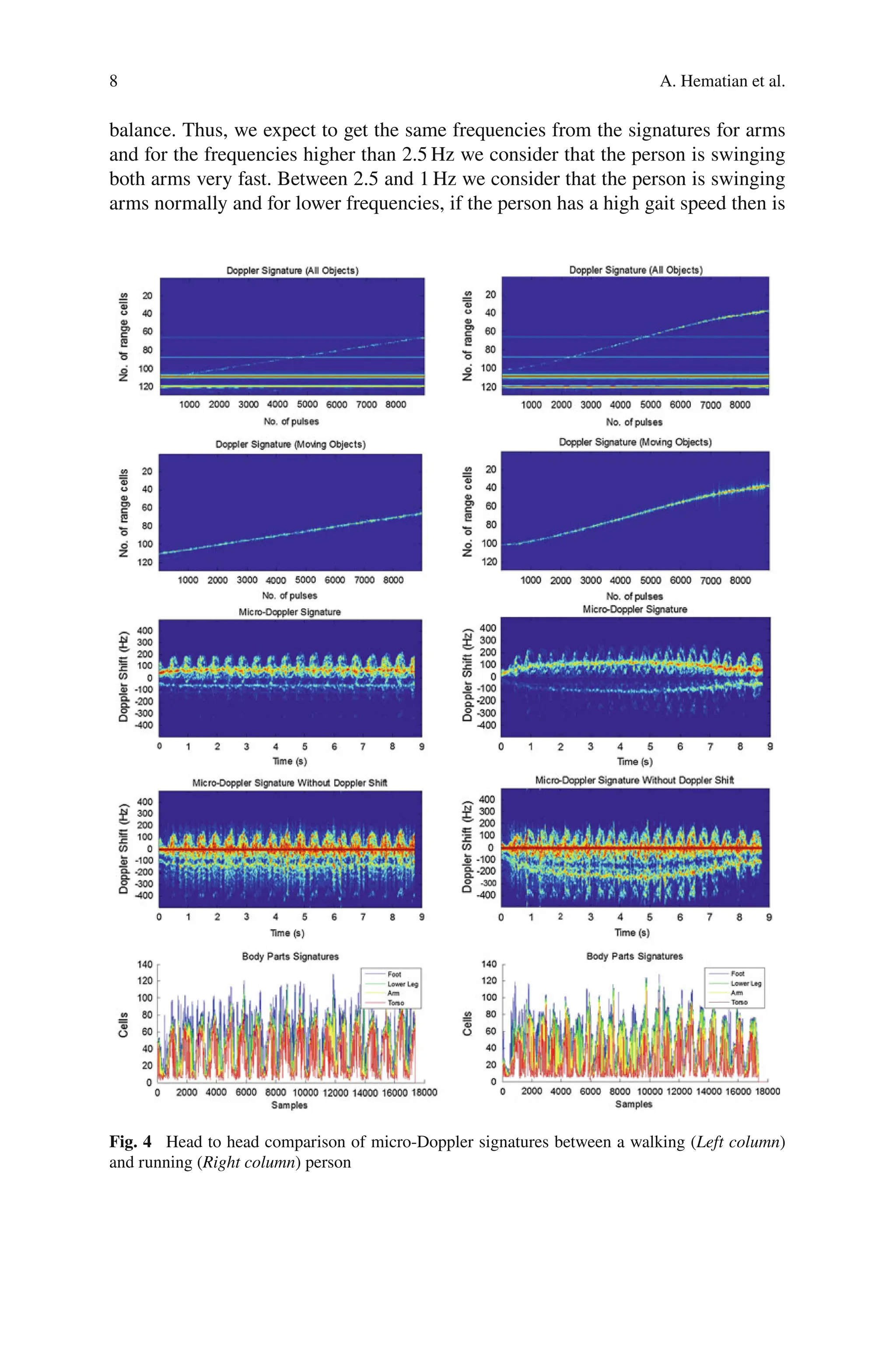
Fig. 4 Head to head comparison of micro-Doppler signatures between a walking (Left column)
and running (Right column) person
Human Motion Analysis and Classification Using Radar Micro-Doppler Signatures 9
holding something in his arm, otherwise he is not moving it. In Fig. 4, Body Parts
Signatures, it is clear that a running person has a higher frequency than a walking
person.
4 Human Gait Micro-motions Classification
Figure 4 shows the head to head comparison between each step of our method for typ-
ical running and walking states of a same person. As portrayed on the left column
(walking), the target is walking almost at constant speed of 2.2198 steps per sec-
ond toward radar while swinging arms. Unlike walking, the target starts to increase
its speed at the beginning of the capture for running and decrease it at the end. On
average, the target is running toward radar at speed of 2.6638 steps per second while
swinging arms very fast. The mentioned human motion profiles are the most typi-
cal patterns of human micro-motions in normal situations that can be classified as
normal behaviour of the target. In contrast to previous profiles, based on our experi-
ments, a target that is running toward radar while holding a bag with both hands has a
very different micro-Motion pattern. We calculated the average speed of 2.9971 steps
per second while the average frequency of arms was only 0.39961 Hz that shows the
target was on the move toward the radar while holding something in both arms. This
type of human motion profile can be classified for triggering an alert system espe-
cially where radar is used for monitoring boarders, coasts or where visual observation
is not possible.
5 Conclusion
In this paper, we proposed a new method for human motion analysis and classifica-
tion based on micro-Doppler signatures in radar signal. The captured data character-
istics and operating principle of our method including experimental results for each
step have been demonstrated. It has been proved that using stabilized and normal-
ized micro-Doppler signatures can reveal human micro-Motions and their patterns.
By analyzing the micro-Motions of human body, we can distinguish and classify dif-
ferent motion profiles of a moving human target. Some motion profiles can be used
as triggers for an alarm system in order to automatically reveal suspicious activities
under radar surveillance. Such experiments with 2.4 GHz radar prove that micro-
Doppler signatures carry ample information to detect and recognize human motions
in radar signal. Consequently, by using radar data with higher sample rates and data
resolution we will be able to extract more details of human micro-Motions like heart
beat or respiration. Proposed method works based on offline radar data analysis and
does not use real-time target tracking. In order to improve the accuracy and per-
formance of our method for real-time radar applications we want to use FPGA to
10 A. Hematian et al.
implement our method in VHDL. This can be considered as future work that radar
target tracking and motion analysis information can be achieved in real-time for radar
surveillance systems.
References
1. Chen, V. C. (2014). Advances in applications of radar micro-Doppler signatures. In IEEE
Conference on Antenna Measurements and Applications (CAMA), Conference Proceedings
(pp. 1–4).
2. Lei, J., & Lu, C. (2005). Target classification based on micro-Doppler signatures. In Radar
Conference, IEEE International, Conference Proceedings (pp. 179–183).
3. Yang, Y., & Lu, C. (2008). Human identifications using micro-Doppler signatures (pp. 69–73).
4. Yang, Y., Zhang, W., & Lu, C. (2008). Classify human motions using micro-Doppler radar. In
Conference Proceedings (Vol. 6944, pp. 69 440V–69 440V–8). http://dx.doi.org/10.1117/12.
779072.
5. Yang, Y., Lei, J., Zhang, W., & Lu, C. (2006). Target classification and pattern recognition using
micro-Doppler radar signatures. In Software Engineering, Artificial Intelligence, Networking,
and Parallel/Distributed Computing. SNPD, Conference Proceedings (pp. 213–217).
6. Zhang, Z., & Andreou, A. G. (2008). Human identification experiments using acoustic micro-
Doppler signatures. In Micro-Nanoelectronics, Technology and Applications. EAMTA, Con-
ference Proceedings (pp. 81–86).
7. Fairchild, D. P., & Narayanan, R. M. (2014). Classification of human motions using empirical
mode decomposition of human micro-Doppler signatures. Radar, Sonar and Navigation, IET,
8(5), 425–434.
8. Brewster, A., & Balleri, A. (2015). Extraction and analysis of micro-Doppler signatures by
the empirical mode decomposition. In Radar Conference (RadarCon), IEEE, Conference Pro-
ceedings (pp. 0947–0951).
9. Chen, V. C. (2003). Micro-Doppler effect of micromotion dynamics: A review. In AeroSense,
International Society for Optics and Photonics, Conference Proceedings (Vol. 5102, pp. 240–
249). http://dx.doi.org/10.1117/12.488855.
10. Garreau, G., Andreou, C. M., Andreou, A. G., Georgiou, J., Dura-Bernal, S., Wennekers, T., &
Denham, S. (2011). Gait-based person and gender recognition using micro-Doppler signatures.
In Biomedical Circuits and Systems Conference (BioCAS), IEEE, Conference Proceedings
(pp. 444–447).
11. Javier, R. J., & Youngwook, K. (2014). Application of linear predictive coding for human activ-
ity classification based on micro-Doppler signatures. Geoscience and Remote Sensing Letters,
IEEE, 11(10), 1831–1834.
12. Youngwook, K., & Hao, L. (2009). Human activity classification based on micro-Doppler sig-
natures using a support vector machine. IEEE Transactions on Geoscience and Remote Sens-
ing, 47(5), 1328–1337.
13. Youngwook, K., Sungjae, H., & Jihoon, K. (2015). Human detection using Doppler radar based
on physical characteristics of targets. Geoscience and Remote Sensing Letters, IEEE, 12(2),
289–293.
14. Yang, Y., Qiu, Y., & Lu, C. (2005). Automatic target classification—experiments on the
MSTAR SAR images. In Software Engineering, Artificial Intelligence, Networking and Paral-
lel/Distributed Computing, and First ACIS International Workshop on Self-Assembling Wire-
less Networks. SNPD/SAWN, Conference Proceedings (pp. 2–7).
15. Wang, X., Li, J., Yang, Y., Lu, C., Kwan, C., & Ayhan, B. (2011). Comparison of three radars
for through-the-wall sensing. In Defense, Security, and Sensing Conference SPIE Proceedings.
SPIE, Conference Proceedings.
Performance Evaluation of NETCONF
Protocol in MANET Using Emulation
Weichao Gao, James Nguyen, Daniel Ku, Hanlin Zhang and Wei Yu
Abstract The Mobile Ad-hoc Network (MANET) is an emerging infrastructure-
free network constructed by self-organized mobile devices. In order to manage
MANET, with its dynamic topology, several network management protocols have
been proposed, and Network Configuration Protocol (NETCONF) is representa-
tive one. Nonetheless, the performance of these network management protocols on
MANET remains unresolved. In this paper, we leverage the Common Open Research
Emulator (CORE), a network emulation tool, to conduct the quantitative perfor-
mance evaluation of NETCONF in an emulated MANET environment. We design a
framework that captures the key characteristics of MANET (i.e., distance, mobility,
and disruption), and develop subsequent emulation scenarios to perform the evalu-
ation. Our experimental data illustrates how NETCONF performance is affected by
each individual characteristic, and the results can serve as a guideline for deploying
NETCONF in MANET.
Keywords NETCONF ⋅YANG ⋅MANET ⋅Configuration management ⋅Network
management ⋅ Emulation
We would like to thank our Dr. Robert G. Cole for initially starting this effort and giving us
feedback.
W. Gao (✉) ⋅ H. Zhang ⋅ W. Yu
Department of Computer and Information Systems, Towson University,
Towson, MD 21252, USA
e-mail: wgao3@students.towson.edu
H. Zhang
e-mail: hzhang4@students.towson.edu
W. Yu
e-mail: wyu@towson.edu
J. Nguyen ⋅ D. Ku
US Army CECOM Communications-Electronics Research,
Development and Engineering Center (CERDEC), Fort Sill, USA
© Springer International Publishing Switzerland 2016
R. Lee (ed.), Software Engineering Research, Management
and Applications, Studies in Computational Intelligence 654,
DOI 10.1007/978-3-319-33903-0_2
11
12 W. Gao et al.
1 Introduction
The emerging MANET has an infrastructure-free and dynamic network topology
constructed by self-organized mobile devices. Compared to the traditional wired and
access-point-based wireless network topologies, MANET has more flexible struc-
tures due to the frequent joining and exiting of nodes in the network. This flexibility,
on one hand, enables MANET to better fit rapidly changing application scenarios,
but on the other hand, increases the difficulty in managing the network.
Various network management protocols have been proposed, including NET-
CONF [1], Simple Network Management Protocol (SNMP) [2]. Although a large
number of research efforts have focused on the performance evaluation of these
protocols in wired networks, the performance of these management protocols on
MANET are largely untested. In the research that does address this issue, various net-
work simulation tools [3], such as NS-3 [4] and OMNET++ [5], were developed to
evaluate the performance of protocols in MANET. However, these simulations pro-
vide the overall performance in the simulated topologies only, and the performance
in real-world MANET topologies has not been thoroughly evaluated. In addition,
while the simulated topologies were considered as the whole entities in the eval-
uation where the scale (i.e. number of nodes), random mobility pattern, and other
parameters such as bandwidth and transmission range were present, the impacts of
the individual characteristics of MANET on its performance are not clear.
In our investigation, we quantitatively evaluate the performance of NETCONF
in the MANET environment. Unlike prior research that is primarily based on simu-
lation, we leverage the network emulation tool, Common Open Research Emulator
(CORE), to carry out the performance evaluation of NETCONF in MANET. To
design the emulation scenarios, we develop a framework that captures the key char-
acteristics of MANET (i.e., distance, mobility, and disruption). Specifically, distance
encapsulates the structures that separate any two communicating nodes in MANET,
mobility represents the leaving and joining of nodes, and disruption characterizes the
environmental hindrance to the delivering packets over the network. Based on the
designed framework, we develop a set of scenarios for the performance evaluation.
The impact of distance is tested via increasing the number of hops in the scenarios
where the MANET topologies are fixed. The impact of mobility is examined through
varying the leaving time in the scenarios where a target node temporarily leaves the
transmission range and losses connection. Finally, we introduce disruptions into the
aforementioned scenarios to evaluate their impact.
We conduct extensive experiments to validate the performance of NETCONF in
various scenarios. Our experimental data illustrates the performance of NETCONF
with respect to individual characteristics and our data can be used as a guideline to
deploy NETCONF in MANET. For example, the incremental hop can increase the
delay in linear and exponentially enlarges the impact of disruption, and the disruption
not only increases the delay for packet transmissions, but also reduce the capability
of the NETCONF requests to tolerate the out-of-range time of a leaving node in the
MANET topology.
Performance Evaluation of NETCONF ... 13
The remainder of this paper is organized as follows: We conduct a literature
review of the MANET and NETCONF and introduce the emulation tool CORE
in Sect. 2. In Sect. 3, we describe the decomposition of MANET topology and the
framework of simulation scenarios. In Sect. 4, we describe the testbed configuration
and present the evaluation methodology and results. Finally, we conclude the paper
in Sect. 5.
2 Background and Related Work
In this section, we provide the background of our work and conduct the literature
review of areas relevant to our study.
MANET: MANET is a network with highly dynamic topologies that are con-
structed by mobile nodes. In a MANET, infrastructures such as access points are not
required because nodes are self-organized and are able to act as routers in the net-
work. These mobile nodes are able to move frequently and independently, and their
neighboring nodes are continuously changing. The versatility of MANET makes
it ideal for a variety of applications, including tactical networks, disaster recovery,
entertainment, and the emerging Internet of Things (IoT) [6, 7].
With the advance of wireless technologies, there has been a tremendous increase
in number of mobile nodes, leading to larger and more complex, topologies of the
MANET. Many research efforts, for that reason, have investigated MANET in the
following areas [7]: (i) Routing [8], (ii) Energy conservation [9], (iii) Quality of
Service [10], (iv) Security [11], and (v) Network Management.
Several investigations have been devoted to studying network management pro-
tocols [12]. These efforts include the comparison of existing management protocols,
and implanting these protocols in MANET environments. The former one focused
on the performance comparison of protocols in the wired or wireless networks
[13, 14]. For example, Slabicki and Grochla in [14] conducted the performance eval-
uation of SNMP, NETCONF and CWMP on a tree topology-based wireless network.
The later one focused on how the existing protocols performed in a MANET environ-
ment [15, 16]. For example, Herberg et al. [15] evaluated the performance of SNMP
in an Optimized Link State Routing Protocol (OLSRv2)-routed MANET environ-
ment.
NETCONF and YANG: NETCONF [1], which is an emerging network config-
uration protocol, is one of the network management protocols and its performance
has been studied in wired or wireless networks based on access points [13, 14]. It
was developed and standardized by the Internet Engineering Task Force (IETF) (in
RFC6241), which provides the mechanism to retrieve, edit, and remove the configu-
ration of devices within the network. NETCONF is a session-based protocol that
enables multiple operations in the configuration procedures, and its client-server
infrastructure over the secure transport (usually SSH over TCP) ensures the reliable
and secure transactions.
14 W. Gao et al.
The NETCONF protocol includes four layers of content, operations, messages,
and secure transport. The content layer consists of the configuration data and noti-
fication data that is formed in XML. The operations layer defines the base protocol
operations, such as < get >, < edit − config >, and < delete − config >, to retrieve
and edit the configuration data. These operations and data are encoded in the mas-
sage layer as remote procedure calls or notifications. The messages are then trans-
ported over the secure transport layer between the client and server. YANG [17], the
acronym for “Yet Another Next Generation”, is the data modeling language for NET-
CONF protocol developed by IETF (in RFC 6020). It represents data structures in an
XML tree format and is used to model the configuration and state data manipulated
by the NETCONF protocol, NETCONF operations, and NETCONF notifications.
In the following, we describe the characteristics of NETCONF and YANG [18]:
(i) Session-oriented protocol over Secure Shell (SSH): The NETCONF protocol con-
sider SSH for its mandatory transport protocol. Other transports, including Transport
Layer Security (TLS), Simple Object Access Protocol (SOAP), are considered to be
optional. (ii) Data-driven content with YANG: The YANG is used to define the server
API contract between the client and the server. (iii) A stateful transaction model: The
NETCONF protocol is designed for one server and one client pair. The client and
server exchange < hello > messages at the start of the session to determine the char-
acteristics of the session that is always initiated by the client. Via it, the client then
learns the exact data model content of YANG supported by the server. (iv) RPC
exchange messages encoded in XML: A client encoded an RPC message in XML
and sends it to a server. The server, in turn, responds with a reply, which is also
encoded in XML. (v) Database operations are standardized and extensible: There
are four operations used to manipulate the conceptual data defined in YANG: create,
retrieve, update, and delete (CRUD). A datastore, which is a conceptual container
with a well-defined transaction model, is defined to store and access information.
The server advertises the datastores it supports in the form of capability strings.
CORE: Unlike the simulation-based approaches of other research efforts, we
implement an emulation-based approach for the performance evaluation in this
study. We utilize the Common Open Research Emulator (CORE) [19] to emulate
the MANET environments. CORE is a python framework, providing a graphic user
interface for building emulated networks. Consisting of an graphic user interface for
drawing topologies of lightweight virtual machines (nodes) and Python modules for
scripting network emulation, CORE is able to emulate a network environment (wired
and/or wireless) and run applications and protocols on the emulated nodes. It also
enables the connection between emulated networks and live networks. Using CORE,
we are able to establish the scenarios for the performance evaluation of NETCONF
in MANET environments.
Performance Evaluation of NETCONF ... 15
3 Our Approach
In our data transaction model, we emulate the data traffic between one pair of nodes
(source and destination), managed by NETCONF. We define “connected nodes” to
be any pair of nodes, which are able to communicate in the MANET. Via decon-
structing the complex MANET topology into several key characteristics, we formu-
late the test configurations to examine the individual and combined effects of these
characteristics, and quantitatively measure their impact on the performance. In the
following, we first present the key characteristics of MANET dynamic topology and
then design the scenarios for emulation.
3.1 Key Characteristics
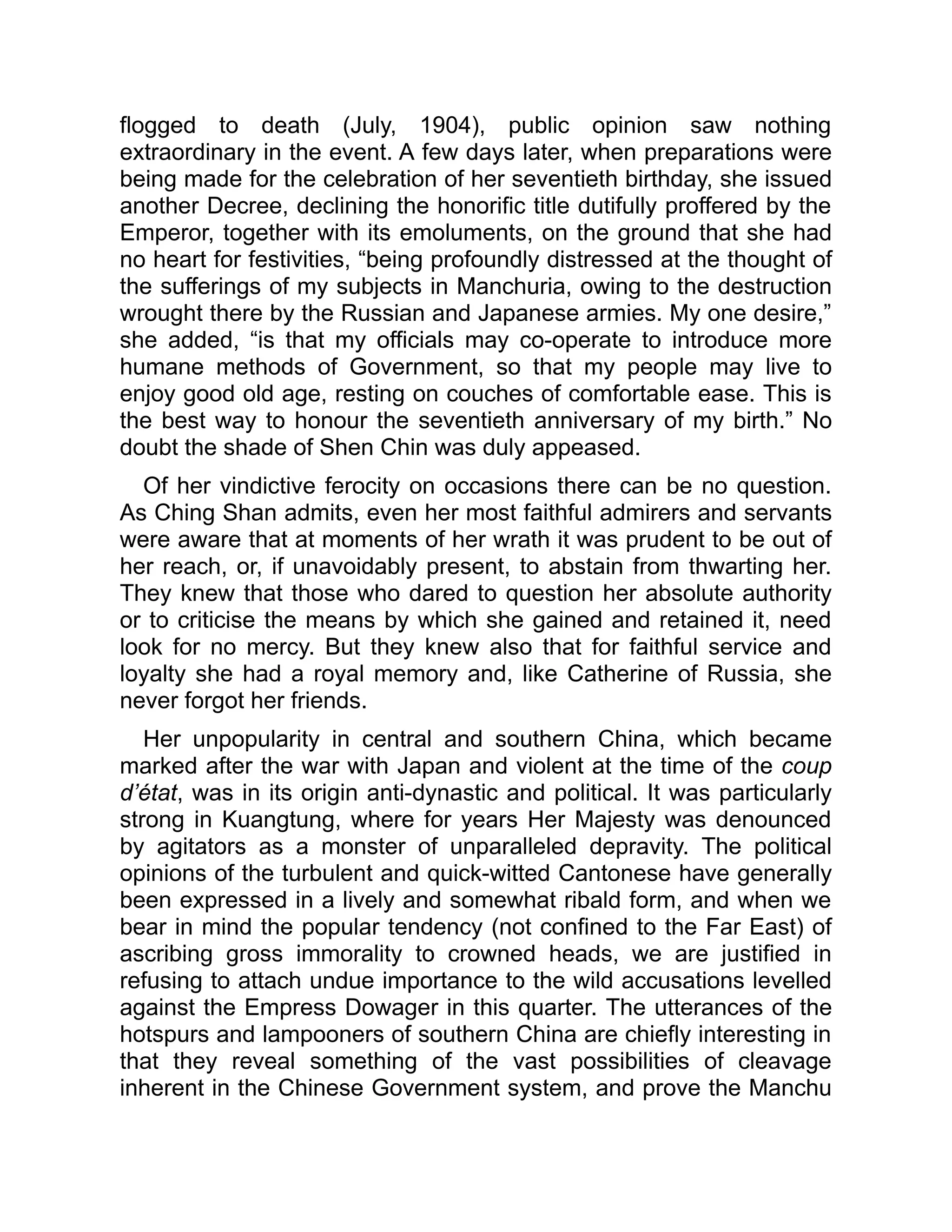
Figure 1 illustrates the coupling/decoupling model. Choosing n1 and n2 as a pair to
observe the communication. Once n2 moves to the range of n4 as shown in the figure,
n1 and n2 are “connected”. During the data transmission between the connected pair,
the performance will be impacted by the following three characteristics: (i) Distance,
(ii) Mobility, and (iii) Disruption, which will be detailed in the next few subsections.
Distance: The distance between a pair of connected nodes is characterized by
the combination of the physical and “processing” distance between them. It can be
formalized in general terms as the sum of the delay of all of the hops on the route and
the delay of all of the physical distances between each adjacent or connected node on
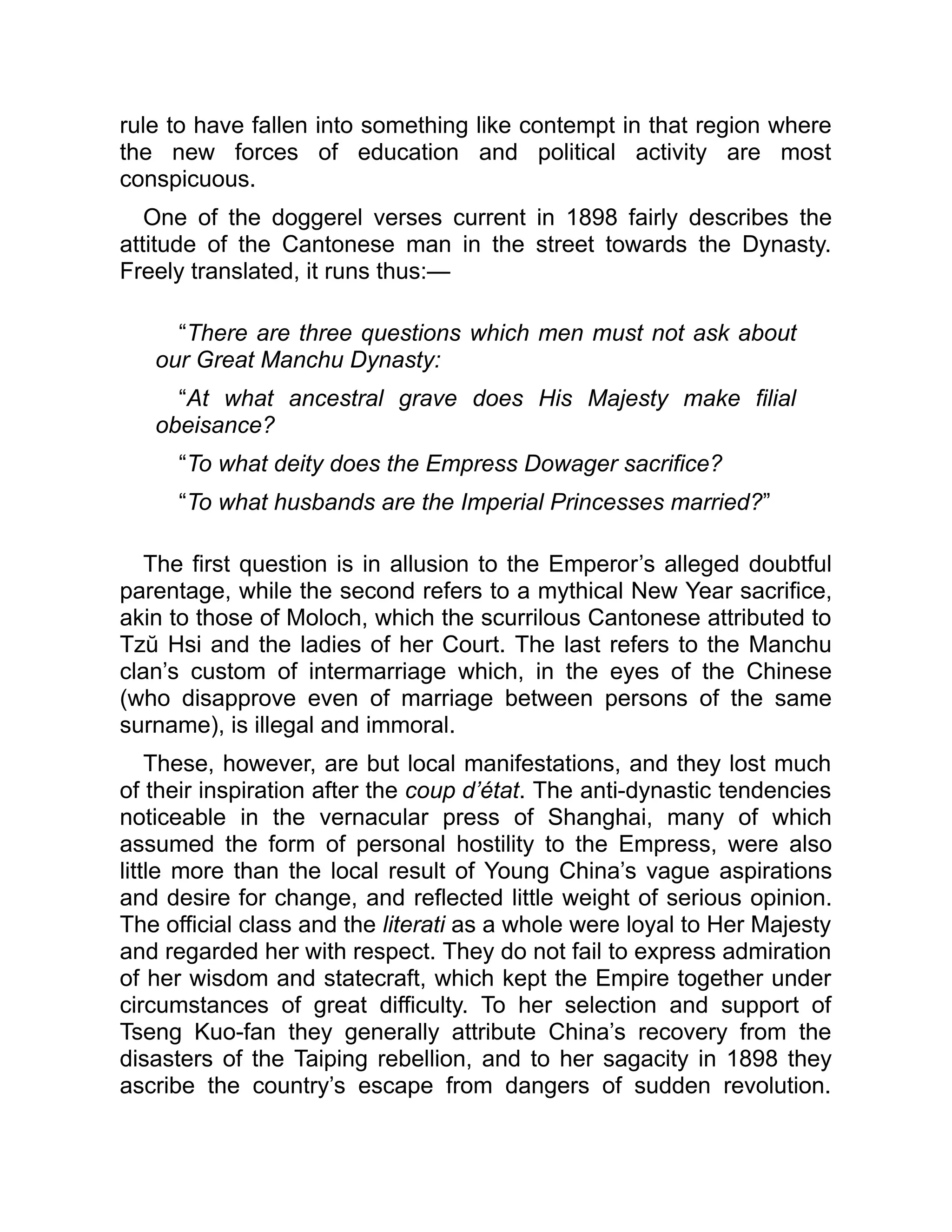
the route. Figure 2 shows an example of the distance of a pair of nodes n1 and n2. The
number of hops between n1 and n2 is 2 (n3 and n4) and the sum of physical distance
between n1 and n2 is 700 m (250 + 250 + 200). The performance, as a measure of
Fig. 1 MANET
coupling/decoupling model
16 W. Gao et al.
Fig. 2 Distance between
two nodes (n1 and n2)
network speed or delay, is thus affected by the processing delay of every hop and the
physical delay of data transmission over the distance. The latter can be computed by
dividing the total physical distance by the speed of light. At any given point in time,
both the distance and number of hops will be constants.
Mobility: This is the characteristic of the flexible morphology of the MANET.
Mobility allows for the reconfiguration of the nodes, and therefore degrades per-
formance due to the delay raised by disconnection and reconnection. The change
in the connection between a pair of nodes can be modeled by three mobility pat-
terns. We name the first pattern Fixed Connection, where the route does not change
between the source and destination nodes and any of the nodes in the route during
the data transmission. This pattern can be considered the same as a static topol-
ogy. The second pattern is denoted Same Route Returning. During the data trans-
mission, one or more nodes move out from the original route and cause the loss of
connection between the source and destination nodes. The leaving nodes then returns
and recovers the connection through the original route. The third pattern is named
Change Route Returning. The nodes leave and cause the loss of connection as in the
second pattern, but the difference is that the connection is reformed, either by the
relocation of the remaining nodes, or after the leaving nodes return through a dif-
ferent route from the original one. This situation is considered because the routing
table would be updated for the data transaction. Figure 3 illustrates the connection
between two nodes n1 and n2 as the result of three mobility patterns. The performance
affected by the mobility of nodes comes from the delay or failure of data transmission
caused by the change of connection status. In the latter two patterns, the original data
packet in the transmission is not delivered due to the loss of connection on the route.
The data will be either delivered by the retransmission after the route is recovered
or reformed, or failed to deliver due to a timeout, according to the retransmission
schedule.
Disruption: Disruption is characterized as packet loss. There are many factors
that can contribute to disruption, such as weak signal and shielding materials, and
Another random document with
no related content on Scribd:
the lower classes it was the general opinion that she had done her
best, and with the best intentions. The scheme itself was magnificent
—to drive the foreigner into the sea—and it appealed to her people
as worthy of their ruler and of a better fate. If it had failed for this
time, it was the will of Heaven, and no doubt at some future date
success would justify her wisdom. If they blamed her at all, it was for
condescending to intimate relations with the hated foreigner after the
Court’s return to Peking; but even in this, she had the sympathy
rather than the censure of her subjects.
To the great mass of her people, who had never seen her, but
knew her only by cumulative weight of common report, the Old
Buddha stood for the embodiment of courage, liberality and kindness
of heart. If, as they knew, she were subject to fierce outbursts of
sudden rage, the fact did her no injury in the eyes of a race which
believes that wrath-matter undischarged is a virulent poison in the
system. The simple Chihli folk made allowance, not without its sense
of humour, for their august sovereign’s capacity to generate wrath-
matter, as for her feminine mutability: To them she was a great ruler
and a bon enfant. In a country where merciless officials and torture
are part of the long-accepted order of things, no more stress was laid
on her numerous acts of cold blooded tyranny than, shall we say,
was laid on the beheading of Earls at the close of the fifteenth
century in England.
One of the writers had the good fortune once to see the Empress
when proceeding in her palanquin to the Eastern tombs. She had
breakfasted early at the Tung Yueh temple outside the Ch’i Hua
gate, and was on her way to T’ung chou. As her chair passed along
a line of kneeling peasantry, the curtains were open and it was seen
that the Old Buddha was asleep. The good country people were
delighted. “Look,” they cried, “the Old Buddha is sleeping. Really,
she has far too much work to do! A rare woman—what a pleasure to
see her thus!”
Tzŭ Hsi was recognised to be above criticism and above the laws
which she rigorously enforced on others. For instance, when, a few
weeks after the issue of a Decree prohibiting corporal punishment
and torture in prisons, she caused the Reformer Shen Chin to be
flogged to death (July, 1904), public opinion saw nothing
extraordinary in the event. A few days later, when preparations were
being made for the celebration of her seventieth birthday, she issued
another Decree, declining the honorific title dutifully proffered by the
Emperor, together with its emoluments, on the ground that she had
no heart for festivities, “being profoundly distressed at the thought of
the sufferings of my subjects in Manchuria, owing to the destruction
wrought there by the Russian and Japanese armies. My one desire,”
she added, “is that my officials may co-operate to introduce more
humane methods of Government, so that my people may live to
enjoy good old age, resting on couches of comfortable ease. This is
the best way to honour the seventieth anniversary of my birth.” No
doubt the shade of Shen Chin was duly appeased.
Of her vindictive ferocity on occasions there can be no question.
As Ching Shan admits, even her most faithful admirers and servants
were aware that at moments of her wrath it was prudent to be out of
her reach, or, if unavoidably present, to abstain from thwarting her.
They knew that those who dared to question her absolute authority
or to criticise the means by which she gained and retained it, need
look for no mercy. But they knew also that for faithful service and
loyalty she had a royal memory and, like Catherine of Russia, she
never forgot her friends.
Her unpopularity in central and southern China, which became
marked after the war with Japan and violent at the time of the coup
d’état, was in its origin anti-dynastic and political. It was particularly
strong in Kuangtung, where for years Her Majesty was denounced
by agitators as a monster of unparalleled depravity. The political
opinions of the turbulent and quick-witted Cantonese have generally
been expressed in a lively and somewhat ribald form, and when we
bear in mind the popular tendency (not confined to the Far East) of
ascribing gross immorality to crowned heads, we are justified in
refusing to attach undue importance to the wild accusations levelled
against the Empress Dowager in this quarter. The utterances of the
hotspurs and lampooners of southern China are chiefly interesting in
that they reveal something of the vast possibilities of cleavage
inherent in the Chinese Government system, and prove the Manchu
rule to have fallen into something like contempt in that region where
the new forces of education and political activity are most
conspicuous.
One of the doggerel verses current in 1898 fairly describes the
attitude of the Cantonese man in the street towards the Dynasty.
Freely translated, it runs thus:—
“There are three questions which men must not ask about
our Great Manchu Dynasty:
“At what ancestral grave does His Majesty make filial
obeisance?
“To what deity does the Empress Dowager sacrifice?
“To what husbands are the Imperial Princesses married?”
The first question is in allusion to the Emperor’s alleged doubtful
parentage, while the second refers to a mythical New Year sacrifice,
akin to those of Moloch, which the scurrilous Cantonese attributed to
Tzŭ Hsi and the ladies of her Court. The last refers to the Manchu
clan’s custom of intermarriage which, in the eyes of the Chinese
(who disapprove even of marriage between persons of the same
surname), is illegal and immoral.
These, however, are but local manifestations, and they lost much
of their inspiration after the coup d’état. The anti-dynastic tendencies
noticeable in the vernacular press of Shanghai, many of which
assumed the form of personal hostility to the Empress, were also
little more than the local result of Young China’s vague aspirations
and desire for change, and reflected little weight of serious opinion.
The official class and the literati as a whole were loyal to Her Majesty
and regarded her with respect. They do not fail to express admiration
of her wisdom and statecraft, which kept the Empire together under
circumstances of great difficulty. To her selection and support of
Tseng Kuo-fan they generally attribute China’s recovery from the
disasters of the Taiping rebellion, and to her sagacity in 1898 they
ascribe the country’s escape from dangers of sudden revolution.
They admit that had it not been for her masterly handling of the Tsai
Yüan conspiracy (1860-61), it is doubtful whether the Dynasty could
have held together for a decade, and they realise, now that her
strong hand no longer grasps the helm, that the ship of State is likely
to drift into dangerous waters.
The everyday routine of Tzŭ Hsi’s life has been well described in
Miss Carl’s accurate and picturesque account of the Palace
ceremonial and amusements,[134] the first authoritative picture of la
vie intime of the Chinese Court. Apart from a keen natural aptitude
for State affairs (similar to that of Queen Victoria, whom she greatly
admired from afar), Tzŭ Hsi maintained to the end of her days a
lively interest in literature and art, together with a healthy and
catholic appetite for amusement. She had an inveterate love for the
theatre, for masques and pageants, which she indulged at all times
and places, taking a professional interest in the players and giving
much advice about the performances, which she selected daily from
a list submitted to her. It was a matter of comment, and some hostile
criticism by Censors, that even during the sojourn of the Court in the
provincial wilderness at Hsi-an, she summoned actors to follow the
Court and perform as usual.
Her private life had, no doubt, its phases. Of its details we know
but little prior to the period of the restoration of the Summer Palace
in the early nineties. In middle age, however, when she had
assimilated the philosophy and practice of the “happy mean,” her
tastes became simple and her habits regular. She was passionately
fond of the Summer Palace, of its gardens and the lake amongst the
hills, and towards the end of her life went as seldom as possible into
the city. She loved the freedom of the I-ho Yüan, its absence of
formal etiquette, her water-picnics and the familiar intercourse of her
favourite ladies, with whom she would discuss the day’s news and
the gossip of the Imperial Clans. With these, especially with the wife
of Jung Lu and the Princess Imperial, she would talk endlessly of old
times and make plans for the future.
Her love of literature and profound knowledge of history did much
to win for her the respect of the Mandarin class, with whom the
classics are a religion. In her reading she was, however, broad-
minded, not to say omnivorous; it was her custom to spend a certain
time daily in having ancient and modern authors read aloud by
eunuchs specially trained in elocution. She believed thoroughly in
education, though realising clearly the danger of putting new wine
into old skins; and she perceived towards the end of her life that the
rapidly changing conditions of the Empire had rendered the wisdom
of China’s Sages of little practical value as a basis of administration.
Her clearness of perception on this point, contrasted with her action
in 1898, is indeed remarkable, but it should be remembered that
much of her opposition to the Emperor’s policy of reform was the
result of personal pique and outraged dignity, as in the case of her
decision to become a Boxer leader in 1900. As far back as 1876, at
the time of the establishment of the T’ung Wen College at Peking for
the teaching of languages and science, we find her publicly rebuking
a Censor who had declared that mathematics was a subject suitable
only for the Court of Astronomers.
“The Throne has established this College,” she observed,
“because it is incumbent on our scholars to learn the rudiments of
mathematics and astronomy. These are not to be regarded, as the
Memorialist suggests, as cunning and mechanical branches of
knowledge. Let our officials study them earnestly, and they will soon
acquire proficiency; at the same time let them avoid that undesirable
specialisation which comes from concentrated study of the classics.
We are now borrowing educational methods from foreign countries
with a view to broadening our own and increasing its accuracy, but
we have no intention of abandoning the teachings of the Sages.
How, then, can our action prove detrimental to the minds of
scholars?”
Frequent reference has been made in previous chapters to the
extravagance and licentious display of Tzŭ Hsi’s Court during the
years of the first Regency. The remonstrances of the Censors on the
subject were so numerous and outspoken, so circumstantial in their
charges, as to leave little room for doubt that the Empress deserved
their indignant condemnation. All the records of that period, and
particularly from 1862 to 1869, point to the evil and steadily-
increasing influence of the eunuchs, whose corruption and
encouragement of lavish expenditure resulted in continual demands
on the provincial exchequers. But even at the height of what may
fairly be called her riotous living, Tzŭ Hsi always had the good grace
to concur publicly in the virtuous suggestions of her monitors, and to
conciliate public opinion by professions of a strong desire for
economy. She would have her Imperial way, her splendid pageants
and garnered wealth of tribute, but the Censors should have their
“face.” On the occasion of the Emperor T’ung-Chih’s wedding in
1869, when the Grand Council had solemnly deprecated any
increase in her Palace expenditure because of the impoverished
state of the people brought about by the Taiping rebellion, she issued
a Decree stating that, “so great was her perturbation of mind at the
prevalent sufferings of her people, that she grudged even the money
spent on the inferior raiment she was wearing, and the humble fare
that was served at her Palace table.” She was, in fact, as lavish of
good principles as of the public funds. But it is to be remembered
that a large proportion of the vast sums spent on her Palaces, on the
building of her tomb, and on her Court festivities, represents the
squeezes of officials and eunuchs, which, however solemnly the
Grand Council might denounce extravagance, are in practice
universally recognised as inseparable from the Celestial system of
government. Tzŭ Hsi was fully aware that much of the enormous
expenditure charged to her Privy Purse went in “squeeze,” but she
good-humouredly acquiesced in a custom as deeply ingrained in the
Chinese as ancestral worship, and from which she herself derived no
small profit. At her receptions to the ladies of the Diplomatic Body
she would frequently enquire as to the market prices of household
commodities, in order, as she cheerfully explained, to be able to
show her Chief Eunuch that she was aware of his monstrous over-
charges.
Combined, however, with her love of sumptuous display and
occasional fits of Imperial munificence, Tzŭ Hsi possessed a certain
housewifely instinct of thrift which, with advancing age, verged on
parsimony. The Privy Purse of China’s ruler is not dependent upon
any well-defined civil list, but rather upon the exigencies of the day,
upon the harvests and trade of the Empire, whence, through
percentages of squeezes levied by the provincial authorities, come
the funds required to defray the expenses of the Court.[135] The
uncertainty of these remittances partly explains the Empress
Dowager’s hoarding tendencies, that squirrel instinct which impelled
her to bury large sums in the vaults of the Palace, and to accumulate
a vast store of silks, medicines, clocks, and all manner of valuables
in the Forbidden City. At the time of her death her private fortune,
including a large number of gold Buddhas and sacrificial vessels
stored in the Palace vaults, was estimated by a high official of the
Court at about sixteen millions sterling. The estimate is necessarily a
loose one, being Chinese, but it was known with tolerable certainty
that the hoard of gold[136] buried in the Ning-Shou Palace at the time
of the Court’s flight in 1900, amounted to sixty millions of taels (say,
eight millions sterling), and the “tribute” paid by the provinces to the
Court at T’ai-yüan and Hsi-an would amount to as much more.
Tzŭ Hsi was proud of her personal appearance, and justly so, for
she retained until advanced old age a clear complexion and youthful
features. (To an artist who painted her portrait not long before her
death she expressed a wish that her wrinkles should be left out.) By
no means free from feminine vanity, she devoted a considerable
amount of time each day to her toilet, and was particularly careful
about the dressing of her hair. At the supreme moment of the Court’s
flight from the Palace, in 1900, she was heard to complain bitterly at
being compelled to adopt the Chinese fashion of head-dress.
Her good health and vitality were always extraordinary. She
herself attributed them chiefly to early rising, regular habits, and the
frequent consumption of milk, which she usually took curdled, in the
form of a kind of rennet. She ate frugally but well, being an epicure at
heart and delighting in dainty and recherché menus. Opium, like
other luxuries, she took in strict moderation, but greatly enjoyed her
pipe after the business of the day was done. It was her practice then
to rest for an hour, smoking at intervals, a siesta which the Court
knew better than to disturb. She fully realised the evils wrought by
abuse of the insidious drug, and approved of the laws, introduced by
the initiative of T’ang Shao-yi and other high officials, for its abolition.
But her fellow-feeling for those who, like herself, could use it in
moderation, and her experience of its soothing and stimulating effect
on the mind, led her to insist that the Abolition Decree (November
22nd, 1906) should not deprive persons over sixty years of age of
their accustomed solace. She was, in fact, willing to decree
prohibition for the masses, but lenient to herself and to those who
had sufficiently proved their capacity to follow the path of the happy
mean.
Such was Tzŭ Hsi, a woman whose wonderful personality and
career cannot fail to secure for her a place amongst the rulers who
have become the standards and pivots of greatness in the world’s
history. The marvellous success of her career and the passionate
devotion of her partisans are not to be easily explained by any
ordinary process of analysis or comparison; but there is no doubt
that they were chiefly due to that mysterious and indefinable quality
which is called charm, a quality apparently independent alike of
morals, ethics, education, and what we call civilisation; universal in
its appeal, irresistible in its effect upon the great majority of mankind.
It was this personal charm of the woman, combined with her intense
vitality and accessibility, that won for her respect, and often affection,
even from those who had good reason to deplore her methods and
deny her principles. This personal charm, this subtle and magnetic
emanation, was undoubtedly the secret of that stupendous power
with which, for good or evil, she ruled for half a century a third of the
population of the earth; that charm it was that won to her side the
bravest and best of China’s picked men, and it is the lingering
memory and tradition of that charm which already invest the name of
the Old Buddha with attributes of legendary virtue and superhuman
wisdom.
Europeans, studying the many complex and unexpected phases of
her extraordinary personality from the point of view of western
moralities, have usually emphasised and denounced her cold-
blooded ferocity and homicidal rage. Without denying the facts, or
extenuating her guilt, it must, nevertheless, be admitted that it would
be unjust to expect from her compliance with standards of morals
and conduct of which she was perforce ignorant, and that, judged by
the standards of her own predecessors and contemporaries, and by
the verdict of her subjects, she is not to be reckoned a wicked
woman. Let it be remembered also that within comparatively recent
periods of English history, death was dealt out with no niggard or
gentle hand to further the alleged interests of the State; men were
hanged, drawn and quartered in the days of Elizabeth and Mary
Stuart, gentle ladies both, and averse to the spilling of blood, for the
greater glory of Thrones, and in defence of the Christian religion.
Tzŭ Hsi died as she had lived, keen to the last, impatient of the
bonds of sickness that kept her from the new day’s work, hopeful
ever for the future. Unto the last her thoughts were of the Empire, of
that new plan of Constitutional Government wherein she had come
to see visions of a new and glorious era for China and for herself.
And when the end came, she faced it, as she had faced life, with a
stout heart and brave words, going out to meet the Unknown as if
she were but starting for a summer picnic. Reluctantly she bade
farewell to the world of men, to the life she had lived with so keen a
zest; but, unlike England’s Tudor Queen, she bowed gracefully to the
inevitable, leaving the scene with steadfast and Imperial dignity,
confident in her high destinies to come.
FINIS.
The Imperial Daïs in the Ch’ien Ch’ing Hall.
Photo, Ogawa, Tokio.
APPENDIX
BIOGRAPHICAL NOTES ON CHANG CHIH-TUNG,
TSO TSUNG-T’ANG, SUN CHIA-NAI, AND TUAN
FANG
CHANG CHIH-TUNG
Her Majesty was never on terms of any great intimacy with Chang
Chih-tung, but she respected him on account of his brilliant literary
style and profound knowledge of the classics. The career of this
official strikingly illustrates the power of the pen in China. He first
came to be known by a critical Memorial in reference to the funeral
ceremonies of the Emperor T’ung-Chih, in 1879; his subsequent
rapid advancement was due to the Memorial in which he denounced
the cession of Ili to Russia by the Manchu Ambassador, Ch’ung Hou,
in 1880. At this time Chang was still a poor scholar, earning a
precarious livelihood by composing Memorials for certain wealthy
Censors. He spoke the Mandarin dialect badly, having been brought
up by his father (a Taotai) in the province of Kueichou. By patient
study, a splendid memory and a natural talent for historical research
and criticism, he became at an early age a recognised authority on
all questions of State precedents and historical records, so that his
pen found no lack of work in the drafting of official patents of rank,
Imperial inscriptions and similar documents. Nevertheless, Tzŭ Hsi
never cared for the man, realising that this brilliant scholar was by
nature an opportunist, and that his opinion was rarely based on
sincere conviction. Her estimate of him was amply justified on more
than one occasion, for he frequently changed his views to meet the
exigencies of party politics at the capital; it is indeed somewhat
remarkable, since this estimate of his character was shared by most
of his colleagues, that he should have retained her good will and
risen to the highest position in the Government. His successful
career[137] is explained by the fact that even men like Jung Lu and Li
Hung-chang, who disliked him thoroughly, were unable to deny his
claims as an unrivalled scholar.
As an illustration of his historical knowledge and methods, it is
interesting to recall the main features of his Memorial against the
Treaty of Livadia with Russia. By this Treaty, negotiated by Ch’ung
Hou under the direct instructions of the Empress Dowager, Ili was to
be retroceded to China upon payment of five million roubles, Russia
securing Kuldja in exchange, with the right to open Consulates at
certain places in the New Territory and on the Kansu frontier.
Russian goods were also to be free of duty in Chinese Turkestan,
and a new trade route was to be opened up through Central China,
viâ Hsi-an in Shensi. When the terms of the Treaty became known, a
storm of angry criticism was directed against the Manchu
Ambassador: Tzŭ Hsi promptly ordered him to be cashiered and
arrested for disregard of her instructions. The whole matter was
referred to the Grand Council, who were directed to consult with
Prince Ch’un and the various Government Boards. Chang Chih-tung,
who was at this time a junior official in the Department of Public
Instruction, drew attention to himself and practically decided the
course of events by the advice given in his lengthy Memorial on the
subject. The result of the advice therein submitted was, that a son of
Tseng Kuo-fan was sent to Russia to negotiate a new Treaty, in
which the objectionable clauses were eventually abandoned. Ch’ung
Hou considered himself lucky that, as the result of Russia’s
diplomatic intervention on his behalf, he escaped with his life.
Chang’s famous Memorial is typical of the mental processes and
puerile naïveté of the literati. It began by showing that if the Treaty of
Livadia were ratified, the whole of China would be open to Russian
troops, who would enter the country as merchants accompanying
caravans (since the Treaty expressly provided for merchants
carrying fire-arms), and that the retrocession of Ili would prove
valueless to China in course of time, inasmuch as Russia would
remain in command of all strategic points. Chang urged that China
could repudiate the Treaty without danger to herself, for several good
reasons; the first being the Imperial prerogative and the unpopularity
of the Treaty, whereby the martial spirit of the Chinese people would
be aroused, and the second, that the future security of the Empire
justified the adoption of right and reasonable precautions. He
recommended that, in order to show that the displeasure of the
Sovereign was sincere, Ch’ung Hou should be decapitated forthwith;
this would be a clear intimation that his negotiations were
disavowed; an excellent precedent existed in the case of Ch’i Ying,
[138] who had been permitted to commit suicide under similar
circumstances by the Emperor Hsien Feng.
As regards Russia’s position in the matter, he was of opinion that
China had earned the contempt of the whole world by allowing
herself to be so easily intimidated. The Russian Minister at Peking
might talk as loudly as he liked about hauling down his flag, but this
was only bluff, and if he really desired to take his departure he
should be allowed to do so. China should then address an identical
Note to all the Powers protesting against Russia’s action, which Note
would be published throughout the civilised world. Russia had been
weakened by her war with Turkey, and the life of her Sovereign was
daily threatened by Nihilists. He was therefore of opinion that she
could by no means fight a successful war against China.
Russia’s position in the neighbourhood of Ili by this Treaty would
eventually involve China in the loss of the New Territory. Now China
had not yet taken over Ili, and the Treaty had not been ratified by the
Sovereign, so that Russia could have no good ground for insisting
upon its terms; if, however, Russia were intent on compelling China
to yield or fight, it would be necessary to look to the defences of the
Empire in three directions, namely Turkestan, Kirin and Tientsin. As
regards Turkestan, Tso Tsung-t’ang’s victorious armies, which had
just succeeded in suppressing the Mahomedan rebellion after a
campaign of several years, would be quite capable of dealing with
Russia’s forces were she to attempt an invasion. As for Manchuria, it
was too far from Russia’s base of operations to render success even
possible, while the stalwart natives of the Eastern Provinces might
be relied upon to dislodge her should she eventually succeed in
establishing a foothold. A few months would certainly witness her
irrevocable defeat. As to invading China by sea, Russia’s Navy was
not to be compared to that of other Powers, and if the huge amount
which had been spent by Li Hung-chang on armaments for the Army
and Navy were ever to be turned to any good account, now was the
time to do it. If at this juncture Li Hung-chang proved incapable of
dealing with the situation, he was for ever useless. The Throne
should direct him to prepare for war, and he should equip his troops
with the latest pattern of French artillery. If victorious, a Dukedom
should be his reward, and if defeated, his head should pay the
penalty. The money which would be saved by not carrying out the
Treaty, might very well be devoted to the equipment of the military
forces.
Russia’s designs in Turkestan, he continued, threatened England
no less than China. If Li Hung-chang could persuade the British
Minister that England’s interests were identical with those of China,
surely the British Government’s assistance might be forthcoming?
China possessed, moreover, several distinguished generals, who
should forthwith be summoned to the capital, and given command of
troops at different points between Peking and Manchuria. It was high
time that China’s prestige should be made manifest and re-
established. And in his peroration he says:—
“I am not indulging in empty resounding phrases, or asking
Your Majesties to risk the Empire upon a single throw of the
dice, but the crisis daily increases in seriousness: Europe is
interfering in our sovereign rights, while even Japan threatens
to take territory from us. If now we submit to the arbitrary
proceedings of Russia, all the other Powers will imitate her
action, and we shall be compelled sooner or later to take up
arms in self-defence. The present, therefore, is the moment
for a decisive campaign; we have good chances of victory,
and even should we meet with defeat in the New Territory it
would not serve Russia greatly, for she could scarcely hope to
penetrate beyond the Great Wall, or to cross the border into
Kansu, so that, even if victorious, she would be severely
embarrassed. If we postpone action for a few years Tso
Tsung-t’ang will be too old to conduct military operations, and
Li Hung-chang will be also advancing in years. Russia will
hem us in on all sides, and our courage will suffer from our
very inaction. It is better to fight Russia to-day on our
furthermost frontier, than to wait until we have to give battle at
the gates of Peking: it will then be too late for repentance. We
must fight sooner or later, and in any case, we cannot consent
to the retrocession of Ili. Come what may, Ch’ung Hou must
be beheaded. This is not merely my private opinion, but the
unanimous decision of all your leading Statesmen. The
provinces may work together to prepare for war, all your
servants may set an example of courage. Our Foreign Office
may clearly express and insist upon our rights, but in the last
instance the decision of affairs rests with Your Majesty the
Empress Dowager, to whom we must needs look for a firm
and consistent policy.”
In spite of its childish arguments and colossal ignorance of foreign
affairs, and in spite of the absurdity of allowing the nation’s military
operations to be criticised and dictated by a theoretical scholar, this
Memorial had a most remarkable effect on the opinion of the Court,
and Tzŭ Hsi commanded that its author should be consulted by the
Foreign Office on all important questions of State—a striking case of
parmi les aveugles. Chang was promoted to be Vice-President of a
Board, and within a year was made Governor of Shansi, where he
further increased his reputation by his entirely sincere attack upon
opium smoking and poppy cultivation. Throughout his career, safe in
the comfortable seclusion of his Yamên, and judging every question
of foreign policy by the light of the history of previous Dynasties,
Chang Chih-tung was always of a bellicose disposition on paper. He
displayed it again in 1884, when he advocated the war with France,
and became acting Viceroy at Canton. (He was a firm believer in the
military genius of the swash-buckling Li Ping-heng, even to the day
when this notorious reactionary met his death with the forlorn hope
of the Boxers.) When the French troops were defeated by the
Chinese forces at Langshan, Chang claimed and received no small
credit for an event so unusual in Chinese modern history, and
became so elated thereby that he sent in a Memorial strongly
recommending that the victory should be followed up by an invasion
of all French territory between the Chinese frontier and Hanoi. When
this advice was rejected, he put in another bitter Memorial of
remonstrance which created an immense impression on public
opinion. He denounced the peace which was subsequently signed
and by which China lost Annam, and he never forgave his rival and
opponent, Li Hung-chang, for his share in this result.
Chang’s share in the coup d’état of 1898 aptly illustrates his
opportunism. It was he who from Wuch’ang originally recommended
some thirty “progressives” to the notice of the Emperor at the
beginning of that fateful year, and amongst these was Liang Ch’i-
ch’ao, the chief colleague and henchman of K’ang Yu-wei. Rejoiced
at the great Viceroy’s support, the Emperor summoned him to
Peking to assume direction of the new movement, hoping the more
from his assistance as Chang’s views always carried weight with the
Empress Dowager. It is impossible to say what course Chang would
have followed had he come to Peking, or what effect his presence
might have had in preventing the collapse of the Emperor’s plans,
but as luck would have it, he had only proceeded as far as Shanghai,
when he was ordered back to his post in Hupei by an Imperial
Decree, which directed him first to settle a troublesome missionary
case that had just arisen. Immediately after this, the dismissal of
Weng T’ung-ho, and the appointment of Jung Lu to Tientsin, showed
him that a crisis was impending and that the reactionary party held
the better cards; he played therefore for his own hand, anticipating
that the Empress Dowager would speedily come to the front as
leader of the Manchu Conservatives. It was at this particular juncture
that he wrote and published his famous treatise on education,
intended to refute the arguments of a revolutionary pamphlet that
was then being widely circulated in the provinces of his jurisdiction.
His treatise, by its brilliant style rather than by its arguments, created
a great impression; its effect on the Chinese reader’s mind was to
emphasise the wisdom of learning everything possible of the
material arts and forces of Europe, while keeping the foreigner
himself at arm’s length.
In 1900, at the urgent request of the Viceroy of Nanking (Lui K’un-
yi) and of Li Hung-chang, he agreed to join in a Memorial
impeaching Prince Tuan, and telegrams were exchanged between
these high officials to discuss the form which this document should
take. In the first instance, Chang had declined to protest against the
Emperor’s deposition for the reason, which he justified by historical
precedent, that the suicide of the Censor Wu K’o-tu, twelve years
before, had justified Her Majesty in placing a new Emperor on the
Throne. He concurred in the decision of the Nanking Viceroy to head
off any Boxer rising in the Yangtsze Provinces, but he was obviously
uneasy at his own position in having to disobey the Empress
Dowager’s anti-foreign Decrees, and he hedged to the best of his
ability by beheading two prominent reformers at Wuch’ang. No
sooner had the form of the document impeaching Prince Tuan been
practically decided, than he took fright at the thought that the Prince
might eventually triumph and, as father of the Emperor-elect, wreak
vengeance on his enemies; he therefore telegraphed to Li Hung-
chang at Shanghai, begging that his signature be withheld from the
Memorial. Li Hung-chang, who dearly loved his joke, promptly sent
off the Memorial with Chang Chih-tung’s signature attached thereto,
and then telegraphed informing him that he had done so, and asking
whether he desired that a second telegram be sent to Her Majesty
cancelling his signature? Chang was for several days in a state of
the greatest distress (which was only relieved when the Boxers were
finally routed), and his mood was not improved when a pair of scrolls
were sent to him anonymously, with inscriptions which may be
roughly translated as follows:—
“Full of patriotism, but quite devoid of any real ability or
intelligence.”
“As an administrator a bungler, but remarkable for
originating magnificent schemes.”
Before his death, Chang had achieved a curiously mixed
reputation, revered as he was by all scholars throughout the Empire,
yet denounced on all sides for administrative incapacity. As an
instance of the childish self-sufficiency which characterised him to
the end, nothing is more remarkable than the suggestion which he
solemnly submitted to the Throne, during the course of the peace
negotiations for the Portsmouth Treaty after the conclusion of the
war between Russia and Japan. At this juncture, the Empress
Dowager had telegraphed inviting suggestions for China’s future
policy from all the high provincial authorities. Chang telegraphed five
suggestions in reply, one of which was that China should come to an
agreement with Japan to send two hundred thousand Japanese
troops to Manchuria, and in the event of Russia proceeding to attack
Chinese territory, that Japan should be requested to garrison Urga.
This was the idea of China’s foremost literary statesman in July,
1905, but there were not lacking enemies of his who avowed that his
political views were considerably affected by the fact that he had
contracted loans from Japanese financiers. Whatever the cause of
his views, he had reason to change them completely before he died.
TSO TSUNG-T’ANG
The Chinese look upon Tseng Kuo-fan, the conqueror of the
Taiping rebels, as the greatest military commander in modern
history; but they regard Tso Tsung-t’ang, the hero of the long
Mahomedan campaign, as very near to him in glory. Both Generals
were natives of Hunan (a fact which seems to entitle the people of
that province to assume something of a truculent attitude to the rest
of the Empire), and both were possessed of indisputable qualities of
leadership and organisation, remarkable enough in men trained to
literary pursuits. Both were beloved of the people for their personal
integrity, courage and justice.
Tso was born, one of nine sons in a poor family, in 1812. He took
his provincial graduate degree at the age of twenty; thereafter, he
seems to have abandoned literary work, for he never passed the
Metropolitan examination. This did not prevent the Empress
Dowager from appointing him, after his victorious campaign, to the
Grand Secretariat, the only instance of a provincial graduate
attaining to that high honour. For three years he was Tseng Kuo-
fan’s ablest lieutenant against the Taipings, and became Governor of
Fukhien in 1863. In 1868 he was appointed Commander-in-Chief of
the Imperial forces against the Mahomedan rebels, and began a
campaign which lasted, with breathing spaces, until the beginning of
1878. His victorious progress through the western and north-western
provinces began at Hsiang-Yang, on the Han river, in Hupei. Thence,
after driving the rebels from Hsi-an, through Shansi and Kansu, he
came to a halt before the strong city of Su-chou fu, on the north-west
frontier of Kansu. The siege of this place lasted nearly three years,
for his force was badly off for ordnance, and he was compelled to
wait until his deputies purchased artillery for him from a German firm
at Shanghai. The guns were sent up in the leisurely manner affected
by the Mandarins, and Tso was obliged to put his troops to
agricultural work in order to provide himself with commissariat.
Su-chou had been for ten years in the hands of the rebels. It fell to
the Imperialists in October, 1873, some say by treachery, according
to others by assault. Be this as it may, Tso, whose method of dealing
with rebels was absolutely pitiless, reduced the place to a heap of
ruins, killing men, women and children indiscriminately, throughout
large tracts of country. So fearful were the wholesale massacres and
treacherous atrocities committed by his Hunanese troops, that
General Kauffmann, commanding the Russian forces on the frontier,
considered it his duty to address him on the subject, and to protest
indignantly at the indiscriminate killing of non-combatants. General
Kauffmann alluded chiefly to the massacre which had followed the
taking of the town of Manas (November, 1876), but similar atrocities
had been perpetrated at Su-chou, Hami, and many other important
places. At Hami the entire population was put to the sword. Eye-
witnesses of the scene of desolation, which stretched from Hsi-an in
Shensi to Kashgar, have recorded that scarcely a woman was left
alive in all those ruined cities—one might ride for days and not see
one—a fact which accounts for the failure of the country unto this
day to recover from the passing of that scourge. In more than one
instance, Tso said with pride that he had left no living thing to sow
new seeds of rebellion.[139]
Nor do the Chinese find anything reprehensible in his action.
Instinctively a peace-loving people, they have learned through
centuries of dreadful experience that there can be no
humanitarianism in these ever-recurring rebellions, which are but
one phase of the deadly struggle for life in China, and that the
survival of the fittest implies the extermination of the unfit. Tso had
first learned this lesson in the fierce warfare of the Taiping rebellion,
where there was no question of quarter, asked or given, on either
side. “If I destroy them not,” he would say with simple grimness, “if I
leave root or branch, they may destroy me.”
In private life the man was genial and kindly, of a rugged simplicity;
short of stature, and in later years stout, with a twinkling eye and
hearty laugh; sober and frugal in his habits, practising the classical
virtues of the ancients in all sincerity: a strict disciplinarian, and much
beloved of his soldiers. He delighted in gardening and the planting of
trees. Along the entire length of the Imperial highway that runs from
Hsi-an to Chia-Yü Kuan beyond the Great Wall, thirty-six days’
journey, he planted an avenue of trees, a stately monument of green
to mark the red route of his devastating armies. One of the few
Europeans who saw him at Hami records that it was his habit to walk
in the Viceregal gardens every afternoon, accompanied by a large
suite of officials and Generals, when he would count his melons and
expatiate on the beauty of his favourite flowers. With him, ready for
duty at a word, walked his Chief Executioner.
He was as careful for the welfare of his people as for the
extermination of rebels, and erected a large woollen factory at Lan-
chou fu, whereby he hoped to establish a flourishing industry
throughout the north-western provinces. He was fiercely opposed to
opium cultivation, and completely suppressed it along the valley of
the Yellow River for several years. The penalty for opium-smoking in
his army was the loss of one ear for a first offence, and death for the
second.
Yakoub Beg, the last leader and forlorn hope of the rebellion, died
in May, 1877. Tso, following up his successes, captured in turn
Yarkand, Kashgar and Khotan (January, 1878), and thus ended the
insurrection. At the conclusion of the campaign he had some forty

PDF Software Engineering Research Management and Applications 1st Edition Roger Lee (Eds.) download

  • 1.
    Full download testbank at ebook textbookfull.com Software Engineering Research Management and Applications 1st C L I C K L I N K T O D O W L O A D https://textbookfull.com/product/software- engineering-research-management-and- applications-1st-edition-roger-lee-eds/ textbookfull
  • 2.
    More products digital(pdf, epub, mobi) instant download maybe you interests ... Software Engineering Research, Management and Applications Roger Lee https://textbookfull.com/product/software-engineering-research- management-and-applications-roger-lee-2/ Software Engineering Research Management and Applications 1st Edition Roger Lee (Eds.) https://textbookfull.com/product/software-engineering-research- management-and-applications-1st-edition-roger-lee-eds/ Action Research in Software Engineering Theory and Applications Miroslaw Staron https://textbookfull.com/product/action-research-in-software- engineering-theory-and-applications-miroslaw-staron/ Software Engineering: A Practitioner's Approach 9th Edition Roger S. Pressman https://textbookfull.com/product/software-engineering-a- practitioners-approach-9th-edition-roger-s-pressman/
  • 3.
    Integrating Research andPractice in Software Engineering Stan Jarzabek https://textbookfull.com/product/integrating-research-and- practice-in-software-engineering-stan-jarzabek/ Applied Computing and Information Technology Roger Lee https://textbookfull.com/product/applied-computing-and- information-technology-roger-lee/ Dependable Software Engineering Theories Tools and Applications 5th International Symposium SETTA 2019 Shanghai China November 27 29 2019 Proceedings Nan Guan https://textbookfull.com/product/dependable-software-engineering- theories-tools-and-applications-5th-international-symposium- setta-2019-shanghai-china-november-27-29-2019-proceedings-nan- guan/ Computational Science Intelligence and Applied Informatics Roger Lee https://textbookfull.com/product/computational-science- intelligence-and-applied-informatics-roger-lee/ Trends and Applications in Software Engineering: Proceedings of CIMPS 2016 1st Edition Jezreel Mejia https://textbookfull.com/product/trends-and-applications-in- software-engineering-proceedings-of-cimps-2016-1st-edition- jezreel-mejia/
  • 4.
    Studies in ComputationalIntelligence 654 Roger Lee Editor Software Engineering Research, Management and Applications
  • 5.
    Studies in ComputationalIntelligence Volume 654 Series editor Janusz Kacprzyk, Polish Academy of Sciences, Warsaw, Poland e-mail: kacprzyk@ibspan.waw.pl
  • 6.
    About this Series Theseries “Studies in Computational Intelligence” (SCI) publishes new develop- ments and advances in the various areas of computational intelligence—quickly and with a high quality. The intent is to cover the theory, applications, and design methods of computational intelligence, as embedded in the fields of engineering, computer science, physics and life sciences, as well as the methodologies behind them. The series contains monographs, lecture notes and edited volumes in computational intelligence spanning the areas of neural networks, connectionist systems, genetic algorithms, evolutionary computation, artificial intelligence, cellular automata, self-organizing systems, soft computing, fuzzy systems, and hybrid intelligent systems. Of particular value to both the contributors and the readership are the short publication timeframe and the worldwide distribution, which enable both wide and rapid dissemination of research output. More information about this series at http://www.springer.com/series/7092
  • 7.
    Roger Lee Editor Software Engineering Research,Management and Applications 123
  • 8.
    Editor Roger Lee Software Engineeringand Information Central Michigan University Mount Pleasant USA ISSN 1860-949X ISSN 1860-9503 (electronic) Studies in Computational Intelligence ISBN 978-3-319-33902-3 ISBN 978-3-319-33903-0 (eBook) DOI 10.1007/978-3-319-33903-0 Library of Congress Control Number: 2016938636 © Springer International Publishing Switzerland 2016 This work is subject to copyright. All rights are reserved by the Publisher, whether the whole or part of the material is concerned, specifically the rights of translation, reprinting, reuse of illustrations, recitation, broadcasting, reproduction on microfilms or in any other physical way, and transmission or information storage and retrieval, electronic adaptation, computer software, or by similar or dissimilar methodology now known or hereafter developed. The use of general descriptive names, registered names, trademarks, service marks, etc. in this publication does not imply, even in the absence of a specific statement, that such names are exempt from the relevant protective laws and regulations and therefore free for general use. The publisher, the authors and the editors are safe to assume that the advice and information in this book are believed to be true and accurate at the date of publication. Neither the publisher nor the authors or the editors give a warranty, express or implied, with respect to the material contained herein or for any errors or omissions that may have been made. Printed on acid-free paper This Springer imprint is published by Springer Nature The registered company is Springer International Publishing AG Switzerland
  • 9.
    Foreword The purpose ofthe 14th International Conference on Software Engineering, Artificial Intelligence Research, Management and Applications (SERA 2016) held on June 8–10, 2015 at Towson University, USA is bringing together scientists, engineers, computer users, and students to share their experiences and exchange new ideas and research results about all aspects (theory, applications, and tools) of software engineering research, management and applications, and to discuss the practical challenges encountered along the way and the solutions adopted to solve them. The conference organizers selected the best 13 papers from those papers accepted for presentation at the conference in order to publish them in this volume. The papers were chosen based on review scores submitted by members of the program committee and underwent further rigorous rounds of review. In Chap. “Human Motion Analysis and Classification Using Radar Micro-Doppler Signatures”, Amirshahram Hematian, Yinan Yang, Chao Lu, and Sepideh Yazdani present a novel nonparametric method to detect and calculate human gait speed while analyzing human micro motions based on radar micro-Doppler signatures to classify human motions. In Chap. “Performance Evaluation of NETCONF Protocolin MANET Using Emulation”, Weichao Gao, James Nguyen, Daniel Ku, Hanlin Zhang, and Wei Yu leverage the Common Open Research Emulator (CORE), a network emulation tool, to conduct the quantitative performance evaluation of NETCONF in an emulated MANET environment. In Chap. “A Fuzzy Logic Utility Framework (FLUF) to Support Information Assurance”, E. Allison Newcomb and Robert J. Hammell discuss the use of fuzzy logic for accelerating the transformation of network monitoring tool alerts to actionable knowledge, suggest process improvement that combines information assurance and cyber defender expertise for holistic computer network defense, and describe an experimental design for collecting empirical data to support the continued research in this area. In Chap. “A Framework for Requirements Knowledge Acquisition Using UML and Conceptual Graphs”, Bingyang Wei and Harry S. Delugach present a v
  • 10.
    knowledge-based framework todrive the process of acquiring requirements for each UML model. This framework is based on a central knowledge representation, the conceptual graphs. In Chap. “Identification Method of Fault Level Based on Deep Learning for Open Source Software”, Yoshinobu Tamura, Satoshi Ashida, Mitsuho Matsumoto, and Shigeru Yamada propose a method of open-source software reliability assessment based on the deep learning. Also, they show several numerical examples of open-source software reliability assessment in the actual software projects. In Chap. “Monitoring Target Through Satellite Images by Using Deep Convolutional Networks”, Xudong Sui, Jinfang Zhang, Xiaohui Hu, and Lei Zhang propose a method for target monitoring based on deep convolutional neural networks (DCNN). The method is implemented by three procedures: (i) Label the target and generate the dataset, (ii) train a classifier, and (iii) monitor the target. In Chap. “A Method for Extracting Lexicon for Sentiment Analysis Based on Morphological Sentence Patterns”, Youngsub Han, Yanggon Kim, and Ikhyeon Jang propose an unsupervised system for building aspect expressions to minimize human-coding efforts. The proposed method uses morphological sentence patterns through an aspect expression pattern recognizer. It guarantees relatively higher accuracy. In Chap. “A Research for Finding Relationship Between Mass Media and Social Media Based on Agenda Setting Theory”, Jinhyuck Choi, Youngsub Han, and Yanggon Kim analyze important social issues using big data generated from social media. They tried to apply the relationship between agenda setting theory and social media because they have received social issues from official accounts like news using social media, and then users shared social issues to other users; so they choose tweets of Baltimore Riot to analyze. In Chap. “On the Prevalence of Function Side Effects in General Purpose Open Source Software Systems”, Saleh M. Alnaeli, Amanda Ali Taha, and Tyler Timm examine the prevalence and distribution of function side effects in general-purpose software systems is presented. The study is conducted on 19 open-source systems comprising over 9.8 million lines of code (MLOC). In Chap. “Object Oriented Method to Implement the Hierarchical and Concurrent States in UML State Chart Diagrams”, Sunitha E.V. and Philip Samuel present an implementation pattern for the state diagram which includes both hierarchical and concurrent states. The state transitions of parallel states are delegated to the composite state class. In Chap. “A New and Fast Variant of the Strict Strong Coloring Based Graph Distribution Algorithm”, Nousseiba Guidoum, Meriem Bensouyad, and Djamel-EddineSaidouni propose a fast algorithm for distributing state spaces on a network of workstations. Our solution is an improved version of SSCGDA algorithm (for Strict Strong Coloring based Graph Distribution algorithm) which introduced the coloring concept and dominance relation in graphs for finding the good distribution of given graphs. In Chap. “High Level Petri Net Modelling and Analysis of Flexible Web Services Composition”, Ahmed Kheldoun, Kamel Barkaoui, Malika Ioualalen, and vi Foreword
  • 11.
    Djaouida Dahmani proposea model to deal with flexibility in complex Web services composition (WSC). In this context, they use a model based on high-level Petri nets called RECATNets, where control and data flows are easily supported. In Chap. “PMRF: Parameterized Matching-Ranking Framework”, Fatma Ezzahra Gmati, Nadia Yacoubi-Ayadi, Afef Bahri, Salem Chakhar, and Alessio Ishizaka introduce the matching and the ranking algorithms supported by the PMRF. Next, it presents the architecture of the developed system and discusses some implementation issues. Then, it provides the results of performance evaluation of the PMRF. It is our sincere hope that this volume provides stimulation and inspiration and that it will be used as a foundation for works to come. June 2016 Yeong-Tae Song Towson University, USA Bixin Li Southeast University, China Foreword vii
  • 12.
    Contents Human Motion Analysisand Classification Using Radar Micro-Doppler Signatures . . . . . . . . . . . . . . . . . . . . . . . . . . . . . . . . . 1 Amirshahram Hematian, Yinan Yang, Chao Lu and Sepideh Yazdani Performance Evaluation of NETCONF Protocol in MANET Using Emulation . . . . . . . . . . . . . . . . . . . . . . . . . . . . . . . . . . . . . . . . 11 Weichao Gao, James Nguyen, Daniel Ku, Hanlin Zhang and Wei Yu A Fuzzy Logic Utility Framework (FLUF) to Support Information Assurance . . . . . . . . . . . . . . . . . . . . . . . . . . . . . . . . . . . 33 E. Allison Newcomb and Robert J. Hammell II A Framework for Requirements Knowledge Acquisition Using UML and Conceptual Graphs. . . . . . . . . . . . . . . . . . . . . . . . . . 49 Bingyang Wei and Harry S. Delugach Identification Method of Fault Level Based on Deep Learning for Open Source Software . . . . . . . . . . . . . . . . . . . . . . . . . . . . . . . . . 65 Yoshinobu Tamura, Satoshi Ashida, Mitsuho Matsumoto and Shigeru Yamada Monitoring Target Through Satellite Images by Using Deep Convolutional Networks . . . . . . . . . . . . . . . . . . . . . . . 77 Xudong Sui, Jinfang Zhang, Xiaohui Hu and Lei Zhang A Method for Extracting Lexicon for Sentiment Analysis Based on Morphological Sentence Patterns . . . . . . . . . . . . . . . . . . . . . 85 Youngsub Han, Yanggon Kim and Ikhyeon Jang A Research for Finding Relationship Between Mass Media and Social Media Based on Agenda Setting Theory. . . . . . . . . . . . . . . 103 Jinhyuck Choi, Youngsub Han and Yanggon Kim ix
  • 13.
    On the Prevalenceof Function Side Effects in General Purpose Open Source Software Systems . . . . . . . . . . . . . . . . . . . . . . . . . . . . . 115 Saleh M. Alnaeli, Amanda Ali. Taha and Tyler Timm Object Oriented Method to Implement the Hierarchical and Concurrent States in UML State Chart Diagrams . . . . . . . . . . . . 133 E.V. Sunitha and Philip Samuel A New and Fast Variant of the Strict Strong Coloring Based Graph Distribution Algorithm . . . . . . . . . . . . . . . . . . . . . . . . . 151 Nousseiba Guidoum, Meriem Bensouyad and Djamel-Eddine Saïdouni High Level Petri Net Modelling and Analysis of Flexible Web Services Composition . . . . . . . . . . . . . . . . . . . . . . . . . . . . . . . . . 163 Ahmed Kheldoun, Kamel Barkaoui, Malika Ioualalen and Djaouida Dahmani PMRF: Parameterized Matching-Ranking Framework . . . . . . . . . . . . 181 Fatma Ezzahra Gmati, Nadia Yacoubi-Ayadi, Afef Bahri, Salem Chakhar and Alessio Ishizaka Author Index . . . . . . . . . . . . . . . . . . . . . . . . . . . . . . . . . . . . . . . . . . 199 x Contents
  • 14.
    Contributors E. Allison NewcombTowson University, Towson, MD, USA Saleh M. Alnaeli Department of Computer Science, University of Wisconsin-Fox Valley, Menasha, WI, USA Satoshi Ashida Yamaguchi University, Yamaguchi, Japan Afef Bahri MIRACL Laboratory, Higher School of Computing and Multimedia, Sfax, Tunisia Kamel Barkaoui CEDRIC-CNAM, Paris Cedex 03, France Meriem Bensouyad MISC Laboratory, A. Mehri, Constantine 2 University, Constantine, Algeria Salem Chakhar Portsmouth Business School and Centre for Operational Research and Logistics, University of Portsmouth, Portsmouth, UK Jinhyuck Choi Department of Computer and Information Sciences, Towson University, Towson, MD, USA Djaouida Dahmani MOVEP, Computer Science Department, USTHB, Algiers, Algeria Harry S. Delugach Department of Computer Science, University of Alabama in Huntsville, Huntsville, AL, USA Weichao Gao Department of Computer and Information Systems, Towson University, Towson, MD, USA Fatma Ezzahra Gmati RIADI Research Laboratory, National School of Computer Sciences, University of Manouba, Manouba, Tunisia Nousseiba Guidoum MISC Laboratory, A. Mehri, Constantine 2 University, Constantine, Algeria xi
  • 15.
    Robert J. HammellII Department of Computer and Information Sciences, Towson University, Towson, MD, USA Youngsub Han Department of Computer and Information Sciences, Towson University, Towson, MD, USA Amirshahram Hematian Department of Computer and Information Sciences, Towson University, Towson, MD, USA Xiaohui Hu Institute of Software Chinese Academy of Sciences, Beijing, China Malika Ioualalen MOVEP, Computer Science Department, USTHB, Algiers, Algeria Alessio Ishizaka Portsmouth Business School and Centre for Operational Research and Logistics, University of Portsmouth, Portsmouth, UK Ikhyeon Jang Department of Information and Communication Engineering, Dongguk University Gyeongju, Gyeongbuk, South Korea Ahmed Kheldoun MOVEP, Computer Science Department, USTHB, Algiers, Algeria; Sciences and Technology Faculty, Yahia Fares University, Medea, Algeria Yanggon Kim Department of Computer and Information Sciences, Towson University, Towson, MD, USA Daniel Ku US Army CECOM Communications-Electronics Research, Develop- ment and Engineering Center (CERDEC), Fort Sill, USA Chao Lu Department of Computer and Information Sciences, Towson University, Towson, MD, USA Mitsuho Matsumoto Tottori University, Tottori-shi, Japan James Nguyen US Army CECOM Communications-Electronics Research, Development and Engineering Center (CERDEC), Fort Sill, USA Djamel-Eddine Saïdouni MISC Laboratory, A. Mehri, Constantine 2 University, Constantine, Algeria Philip Samuel Division of IT, School of Engineering, Cochin University of Sci- ence & Technology, Kochi, India Xudong Sui Institute of Software Chinese Academy of Sciences, Beijing, China E.V. Sunitha Department of Computer Science, Cochin University of Science & Technology, Kochi, India Amanda Ali. Taha Department of Computer Science, University of Wisconsin-Fox Valley, Menasha, WI, USA Yoshinobu Tamura Yamaguchi University, Yamaguchi, Japan xii Contributors
  • 16.
    Tyler Timm Departmentof Computer Science, University of Wisconsin-Fox Valley, Menasha, WI, USA Bingyang Wei Department of Computer Science, Midwestern State University, Wichita Falls, TX, USA Nadia Yacoubi-Ayadi RIADI Research Laboratory, National School of Computer Sciences, University of Manouba, Manouba, Tunisia Shigeru Yamada Tottori University, Tottori-shi, Japan Yinan Yang Department of Computer and Information Sciences, Towson University, Towson, MD, USA Sepideh Yazdani Japan International Institute of Technology (MJIIT), Universiti Teknologi Malaysia, Kuala Lumpur, Malaysia Wei Yu Department of Computer and Information Systems, Towson University, Towson, MD, USA Hanlin Zhang Department of Computer and Information Systems, Towson University, Towson, MD, USA Jinfang Zhang Institute of Software Chinese Academy of Sciences, Beijing, China Lei Zhang School of Computer Science, Beijing Information Science & Technology University, Beijing, China Contributors xiii
  • 17.
    Human Motion Analysisand Classification Using Radar Micro-Doppler Signatures Amirshahram Hematian, Yinan Yang, Chao Lu and Sepideh Yazdani Abstract The ability to detect and analyze micro motions in human body is a cru- cial task in surveillance systems. Although video based systems are currently avail- able to address this problem, but they need high computational resources and under good environmental lighting condition to capture high quality images. In this paper, a novel non-parametric method is presented to detect and calculate human gait speed while analyzing human micro motions based on radar micro-Doppler signatures to classify human motions. The analysis was applied to real data captured by 10 GHz radar from real human targets in a parking lot. Each individual was asked to per- form different motions like walking, running, holding a bag while running, etc. The analysis of the gathered data revealed the human motion directions, number of steps taken per second, and whether the person is swinging arms while moving or not. Based on human motion structure and limitations, motion profile of each individual was recognizable to find the combinations between walking or running, and holding an object or swinging arms. We conclude that by adopting this method we can detect human motion profiles in radar based on micro motions of arms and legs in human body for surveillance applications in adverse weather conditions. Keywords Human motion analysis ⋅ Micro-Doppler signature ⋅ Radar surveil- lance ⋅ Classification A. Hematian (✉) ⋅ Y. Yang ⋅ C. Lu Department of Computer and Information Sciences, Towson University, 7800 York Rd, Towson, MD 21252, USA e-mail: ahemat1@students.towson.edu C. Lu e-mail: clu@towson.edu S. Yazdani Japan International Institute of Technology (MJIIT), Universiti Teknologi Malaysia, 54100 Kuala Lumpur, Malaysia © Springer International Publishing Switzerland 2016 R. Lee (ed.), Software Engineering Research, Management and Applications, Studies in Computational Intelligence 654, DOI 10.1007/978-3-319-33903-0_1 1
  • 18.
    2 A. Hematianet al. 1 Introduction In radar systems, in order to measure the radial velocity of a moving target, the well- known Doppler effect is used to do such measurement. Yet in real world not all the structural components of a target follow a perfect linear motion. It usually involves complex motions, called micro-motion, such as acceleration, rotation or vibration. As stated by Chen [1], the micro-motions, and their induced micro-Doppler effects were introduced to characterize the movement of a target. Consequently, various ways to extract and interpret radar micro-Doppler signatures becomes an active research area specially to observe micro-Doppler signatures from real life samples such as vehicle engine vibration, aircraft propellers or helicopter blades rotation, flapping wings of birds, swinging arms and legs of a walking person, and even heart- beat or respiration of a human. Returned radar signals from legs of a walking per- son with swinging arms contain micro-Doppler signatures relevant to human motion structure. The micro-Doppler effect empowers us to determine the dynamic proper- ties of an object and it offers a new way to analyze object signatures. In order to determine the movement and identify specific types of targets based on their motion dynamics, the micro-Doppler effect may be used. We have already tested this concept in our previous work using simulated data to classify targets with simple movements [2–5]. Human motion is a combination of articulated and flexible motions that is accomplished by complex movements of human body parts. Human motion recog- nition has attracted ample attention in computer vision to become an approach for human gait motion analysis that is mostly based on extraction of the motions from a sequence of images [6]. Unlike DNA or fingerprint that are unique for each per- son, human gait motion features may not be unique as they can be easily replicated by doing the very same movements, especially when a radar is used to extract the move- ment of human gait [7]. In contrast to visual perception that is very sensitive to range, speed, light condition, and complex background, the radar does not suffer from visual limitations and uses micro-Doppler signatures to extract target movements. Conse- quently, the radar is very well suited for tracking human gait motions where visual target observation is not possible. This research involved micro-Doppler signature analysis of experimental data previously captured [3] from various human targets with different motions. The data was collected using an X-band FMCW (frequency modulated continuous wave) radar at 10 GHz. The experimental data presented here include different motion combinations between legs and arms like walking, fast walk- ing, jogging, and running with one or two arms swinging, or even without any arm swinging. Moreover, some similar motion data was captured at different angles in respect to radar LOS (line of sight). An algorithm is implemented and tested by the given data to classify different human motions. Both our motion analysis algorithm and the results of radar data analysis are reported here. In this paper we shed more light on human motion structure and how each body part motion can be recognized and classified in radar data by using micro-Doppler signatures.
  • 19.
    Human Motion Analysisand Classification Using Radar Micro-Doppler Signatures 3 2 Micro-Doppler Signature Extraction from Radar Signal Human gait has been studied for years in different fields of science like physiother- apy, rehabilitation and sports. As previously mentioned, human gait micro-motion is one of typical examples of radar micro-Doppler signatures. Many studies on radar micro-Doppler signatures for human gait analysis have been conducted since 1998 [1]. After studying earlier works on micro-Doppler [1–15], we are using previously captured radar data by Yang and Lu [3] to develop new motion analysis algorithm in order to extract and classify human gain micro-Motions. The radar data was cap- tured in an empty parking lot as seen in Fig. 1. In order to minimize multi-path prop- agation, this site was selected to perform data capturing on weekends and it is on top of the roof. As stated in [3] a total of 60 people participated in the experiment. Each of them performed four different movements, including walking, walking at fast speed, jogging, and running at fast speed, for a duration of 5 s and more. Some of the people performed additional movements, including leaping, crawling, walk- ing and running at different aspect angle, to fully illustrate the characteristic of the micro-Doppler signatures of human motions. Figure 2 shows micro-Doppler signa- tures of a human subject walking, fast walking, jogging, fast running and leaping. The image is centered at Doppler frequency, not zero frequency, to make it easier to compare micro-Doppler features between these motions. The similarities with all these motions are obvious, with biggest return from the torso form the center line, and the legs/arms swing causes the side band at both sides of the center line. The differences with these motions are also visible; the biggest difference is the shape of the leg swing, with the differences of the phase between leg swing and arm swing. These differences make classifying different motions possible. Fig. 1 Radar data capturing environment [3]
  • 20.
    4 A. Hematianet al. Fig. 2 Micro-Doppler signatures of different motions [3]. a Walking. b Fast Walking. c Jogging. d Fast running. e Sprinting 3 Human Gait Micro-motions Analysis In this section, we explain how extracted micro-Doppler signatures are post- processed and analyzed to detect human body micro-Motions. These micro-Motions are compared against a simulated model of micro-Doppler signatures. Human micro- Motion classification results of captured radar data are also included in this paper.
  • 21.
    Human Motion Analysisand Classification Using Radar Micro-Doppler Signatures 5 Following is the overview of the proposed human motion analysis and classification using micro-Doppler signatures from radar data. Radar Data Characteristics In order to start processing the captured data by a radar, we need to know the characteristics of the gathered data. The data we used [3] was captured at rate of 1256 samples per radar sweep. Radar sweep time was 1006 µs that brings our capture rate up to 994.0358 Hz at maximum distance resolution 128 cells. We used Matlab software to read and analyze the captured data. The given data files were in text format where all the content was numerical and readable. Each file was properly labeled with the information about the subject like: a unique file identification number, name of the person, motion types of legs and arms, extra objects used like a chair or bag and how they were used. Extracting Doppler Signatures Extracting Doppler signatures from one dimen- sional data captured by radar is done by calculating Fast Furrier Transform (FFT) from each sweep of radar data. By putting the FFT data together we can easily dis- tinguish between static and moving objects. Due to the existence of other objects in the capturing environment, we can clearly see static objects as straight horizontal lines and the moving subject as a diagonal curved line in Fig. 3a, as they are called the Doppler signatures of all objects. As indicated in Fig. 3a, the number of pulses recorded was 8956 pulses in 9.0097 s where the subject was running and swinging Fig. 3 Micro-motion analysis and classification of a running person. a Doppler signature (All objects). b Doppler signature (Moving objects). c Micro-Doppler signature. d Micro-Doppler sig- nature without Doppler shift. e Body parts signatures. f Simulated 3D micro-Doppler signature
  • 22.
    6 A. Hematianet al. arms fast. Toward extracting the only moving objects from radar data, since the run- ning person is moving from one cell to another, we can filter down the static objects by applying a high-pass filter on each cell. We decided to choose 60 Hz high-pass filter in order to suppress both static objects and electrical noises in the radar data. After extracting Doppler signatures from the radar data, we can calculate the average movement and determine the direction of the subject. In Fig. 3b, Doppler Signature of the moving person shows that our subject has moved from cell number 100–38 that the difference is −62 which indicates the moving subject is getting close to the radar. To extract the micro-Doppler signatures from Doppler signatures we need to determine a range of movement of the subject in the number of cells. Like here, the movement range is between cell numbers 38 and 100. By removing the rest of the data and only considering the data within the specified range, we can extract the micro-Doppler signatures of our targeted subject as shown in Fig. 3c. Extracting Micro-Doppler Signatures The previous step of our algorithm only revealed the general motion of the moving subject. In order to extract the micro- Motions of the subject we need to convert the diagonal curved line into a straight line while preserving the details. To achieve this, we calculate the summation of each column of the data from previous step and converted our two dimensional data (cell- samples) into one dimension (samples). Then we apply one dimensional Gaussian filter to remove the noise and make the Doppler signal smoother as shown in Fig. 3d. Now it is time to use FFT again to display the frequency shifts of the summation of Doppler signal and extract micro-Doppler signatures. Since our data has only one dimension and we want to see the shifts of different frequencies, we need to have a sliding window to read the data and apply FFT iteratively. At each iteration starting from the first sample to 512th sample, we calculated the FFT that shows us the frequency changes up to 256 Hz (half of sample rate) and in next iteration we shifted the sliding window for one sample to calculate the FFT from 2nd sample to 513th sample, and so on. This operation is done until the end of sliding window reaches to the last sample available, for data shown in Fig. 3e is 8956th Sample. As shown in Fig. 3e, Micro-Doppler Signatures, it is clear that the person, who was running, started to accelerate at the beginning of the capturing process and decelerate at the end. This means, at this stage, the Doppler shift and micro-Doppler signatures are combined and the Doppler shift must be removed. Although in this 9 s of motion capture we can visually see the motion cycle of legs and arms of the subject, but extracting these information by signal processing is not easy as it may look. Removing Doppler Shift Since we need to extract only micro-Doppler signatures for human micro-motion analysis, the Doppler shift of the captured signal must be removed. By removing the Doppler shift, the largest and main part of the human body which is torso will always remain at zero hertz. Consequently, the micro-Doppler signatures are always stabilized based on the torso of the target and repeated patterns of micro-Motions become clearer. In order to remove Doppler shift from micro- Doppler signatures that is a two dimensional data (Frequency-Time), we need to find the peak (maximum amplitude) of the frequency shifts from each column and then shift the data up or down within each column where the maximum peak meets
  • 23.
    Human Motion Analysisand Classification Using Radar Micro-Doppler Signatures 7 the zero hertz frequency shift. Since we expect to find the maximum peaks from torso, a one dimensional median filter with window size 51 samples is applied to the index of the maximum peaks of all columns. This filter removes the unwanted noise from the list of indexes that may be caused by having the very same amplitude in few items close to shift frequency of torso at each column. Due to the fact that the human torso is the largest part of the human body, the maximum peak in the frequency shifts represents the torso where it reflects most of the radar signal. However, if the target moves toward the radar or gets far away from it, the amplitude of the frequency shifts increases or decreases, respectively. The major parameter that affects the reflected signal amplitude is the distance of the subject from the radar. The farther a subject moves the weaker signal we receive and we need to normalize the micro-Doppler signals in order to have consistent amplitudes for all micro-Motions and frequency shifts during a capture period. Normalazing Micro-Doppler Signatures After removing the Doppler shift, we still see that depending of the general movement direction of the target, the micro- Doppler signatures get higher or lower amplitudes during time. In order to normalize the micro-Doppler signatures during time we decided to select the torso of human body as the reference point like the previous step. At this step we have a two dimen- sional data (Frequency-Time) to normalize. For each column, we find the maximum peak and calculate a multiplication ratio (MR). To calculate MR for each column, we need to find the largest peak among all maximum peaks of all columns to put as a reference amplitude and calculate the MRs. By finding the ratio between the max- imum peak of each column and the largest peak of all, we calculate the MR and then multiply each column with its own MR. The normalized result is shown in Fig. 3d, Micro-Doppler Signatures Without Doppler Shift. Extracting and Analysis of Micro-motion Signatures As shown in Fig. 3f (bottom right), the 3D simulated micro Doppler signatures of human body show that after torso, arms, lower legs and feet have consecutively lower amplitudes in normalized micro-Doppler signatures. Since, micro-Doppler signatures are always normalized by our method and human body mass variations and structure limitations cannot change radically during movement of the targets, we can define multiple thresholds in order to extract signatures for each part of the human body. Due to the symmetric motion of arms and legs and knowing that none of our targets have a lost arm or leg, we extracted the signatures for torso, both arms, both lower legs and both feet by using thresholding. Seeing that humans have many limitations like they cannot run faster than 45 km/h, we can draw a line around these limitations to calculate the average speed of a human target while running and define a threshold to distinguish walking from running based on the frequency of the steps taken per second. Same type of calculation can also be applied to human arms when swinging. We decided to extract the frequency of both feet and put two thresholds to determine the status of the subject. For the frequencies of higher than 2.5 Hz we consider that the target is running. For the frequencies between 2.5 and 1 Hz the target is walking and for lower frequencies the target is moving very slowly. Although human gait is based on motion of the legs, the rhythmic motions of the arms help the body to keep its
  • 24.
    8 A. Hematianet al. balance. Thus, we expect to get the same frequencies from the signatures for arms and for the frequencies higher than 2.5 Hz we consider that the person is swinging both arms very fast. Between 2.5 and 1 Hz we consider that the person is swinging arms normally and for lower frequencies, if the person has a high gait speed then is Fig. 4 Head to head comparison of micro-Doppler signatures between a walking (Left column) and running (Right column) person
  • 25.
    Human Motion Analysisand Classification Using Radar Micro-Doppler Signatures 9 holding something in his arm, otherwise he is not moving it. In Fig. 4, Body Parts Signatures, it is clear that a running person has a higher frequency than a walking person. 4 Human Gait Micro-motions Classification Figure 4 shows the head to head comparison between each step of our method for typ- ical running and walking states of a same person. As portrayed on the left column (walking), the target is walking almost at constant speed of 2.2198 steps per sec- ond toward radar while swinging arms. Unlike walking, the target starts to increase its speed at the beginning of the capture for running and decrease it at the end. On average, the target is running toward radar at speed of 2.6638 steps per second while swinging arms very fast. The mentioned human motion profiles are the most typi- cal patterns of human micro-motions in normal situations that can be classified as normal behaviour of the target. In contrast to previous profiles, based on our experi- ments, a target that is running toward radar while holding a bag with both hands has a very different micro-Motion pattern. We calculated the average speed of 2.9971 steps per second while the average frequency of arms was only 0.39961 Hz that shows the target was on the move toward the radar while holding something in both arms. This type of human motion profile can be classified for triggering an alert system espe- cially where radar is used for monitoring boarders, coasts or where visual observation is not possible. 5 Conclusion In this paper, we proposed a new method for human motion analysis and classifica- tion based on micro-Doppler signatures in radar signal. The captured data character- istics and operating principle of our method including experimental results for each step have been demonstrated. It has been proved that using stabilized and normal- ized micro-Doppler signatures can reveal human micro-Motions and their patterns. By analyzing the micro-Motions of human body, we can distinguish and classify dif- ferent motion profiles of a moving human target. Some motion profiles can be used as triggers for an alarm system in order to automatically reveal suspicious activities under radar surveillance. Such experiments with 2.4 GHz radar prove that micro- Doppler signatures carry ample information to detect and recognize human motions in radar signal. Consequently, by using radar data with higher sample rates and data resolution we will be able to extract more details of human micro-Motions like heart beat or respiration. Proposed method works based on offline radar data analysis and does not use real-time target tracking. In order to improve the accuracy and per- formance of our method for real-time radar applications we want to use FPGA to
  • 26.
    10 A. Hematianet al. implement our method in VHDL. This can be considered as future work that radar target tracking and motion analysis information can be achieved in real-time for radar surveillance systems. References 1. Chen, V. C. (2014). Advances in applications of radar micro-Doppler signatures. In IEEE Conference on Antenna Measurements and Applications (CAMA), Conference Proceedings (pp. 1–4). 2. Lei, J., & Lu, C. (2005). Target classification based on micro-Doppler signatures. In Radar Conference, IEEE International, Conference Proceedings (pp. 179–183). 3. Yang, Y., & Lu, C. (2008). Human identifications using micro-Doppler signatures (pp. 69–73). 4. Yang, Y., Zhang, W., & Lu, C. (2008). Classify human motions using micro-Doppler radar. In Conference Proceedings (Vol. 6944, pp. 69 440V–69 440V–8). http://dx.doi.org/10.1117/12. 779072. 5. Yang, Y., Lei, J., Zhang, W., & Lu, C. (2006). Target classification and pattern recognition using micro-Doppler radar signatures. In Software Engineering, Artificial Intelligence, Networking, and Parallel/Distributed Computing. SNPD, Conference Proceedings (pp. 213–217). 6. Zhang, Z., & Andreou, A. G. (2008). Human identification experiments using acoustic micro- Doppler signatures. In Micro-Nanoelectronics, Technology and Applications. EAMTA, Con- ference Proceedings (pp. 81–86). 7. Fairchild, D. P., & Narayanan, R. M. (2014). Classification of human motions using empirical mode decomposition of human micro-Doppler signatures. Radar, Sonar and Navigation, IET, 8(5), 425–434. 8. Brewster, A., & Balleri, A. (2015). Extraction and analysis of micro-Doppler signatures by the empirical mode decomposition. In Radar Conference (RadarCon), IEEE, Conference Pro- ceedings (pp. 0947–0951). 9. Chen, V. C. (2003). Micro-Doppler effect of micromotion dynamics: A review. In AeroSense, International Society for Optics and Photonics, Conference Proceedings (Vol. 5102, pp. 240– 249). http://dx.doi.org/10.1117/12.488855. 10. Garreau, G., Andreou, C. M., Andreou, A. G., Georgiou, J., Dura-Bernal, S., Wennekers, T., & Denham, S. (2011). Gait-based person and gender recognition using micro-Doppler signatures. In Biomedical Circuits and Systems Conference (BioCAS), IEEE, Conference Proceedings (pp. 444–447). 11. Javier, R. J., & Youngwook, K. (2014). Application of linear predictive coding for human activ- ity classification based on micro-Doppler signatures. Geoscience and Remote Sensing Letters, IEEE, 11(10), 1831–1834. 12. Youngwook, K., & Hao, L. (2009). Human activity classification based on micro-Doppler sig- natures using a support vector machine. IEEE Transactions on Geoscience and Remote Sens- ing, 47(5), 1328–1337. 13. Youngwook, K., Sungjae, H., & Jihoon, K. (2015). Human detection using Doppler radar based on physical characteristics of targets. Geoscience and Remote Sensing Letters, IEEE, 12(2), 289–293. 14. Yang, Y., Qiu, Y., & Lu, C. (2005). Automatic target classification—experiments on the MSTAR SAR images. In Software Engineering, Artificial Intelligence, Networking and Paral- lel/Distributed Computing, and First ACIS International Workshop on Self-Assembling Wire- less Networks. SNPD/SAWN, Conference Proceedings (pp. 2–7). 15. Wang, X., Li, J., Yang, Y., Lu, C., Kwan, C., & Ayhan, B. (2011). Comparison of three radars for through-the-wall sensing. In Defense, Security, and Sensing Conference SPIE Proceedings. SPIE, Conference Proceedings.
  • 27.
    Performance Evaluation ofNETCONF Protocol in MANET Using Emulation Weichao Gao, James Nguyen, Daniel Ku, Hanlin Zhang and Wei Yu Abstract The Mobile Ad-hoc Network (MANET) is an emerging infrastructure- free network constructed by self-organized mobile devices. In order to manage MANET, with its dynamic topology, several network management protocols have been proposed, and Network Configuration Protocol (NETCONF) is representa- tive one. Nonetheless, the performance of these network management protocols on MANET remains unresolved. In this paper, we leverage the Common Open Research Emulator (CORE), a network emulation tool, to conduct the quantitative perfor- mance evaluation of NETCONF in an emulated MANET environment. We design a framework that captures the key characteristics of MANET (i.e., distance, mobility, and disruption), and develop subsequent emulation scenarios to perform the evalu- ation. Our experimental data illustrates how NETCONF performance is affected by each individual characteristic, and the results can serve as a guideline for deploying NETCONF in MANET. Keywords NETCONF ⋅YANG ⋅MANET ⋅Configuration management ⋅Network management ⋅ Emulation We would like to thank our Dr. Robert G. Cole for initially starting this effort and giving us feedback. W. Gao (✉) ⋅ H. Zhang ⋅ W. Yu Department of Computer and Information Systems, Towson University, Towson, MD 21252, USA e-mail: wgao3@students.towson.edu H. Zhang e-mail: hzhang4@students.towson.edu W. Yu e-mail: wyu@towson.edu J. Nguyen ⋅ D. Ku US Army CECOM Communications-Electronics Research, Development and Engineering Center (CERDEC), Fort Sill, USA © Springer International Publishing Switzerland 2016 R. Lee (ed.), Software Engineering Research, Management and Applications, Studies in Computational Intelligence 654, DOI 10.1007/978-3-319-33903-0_2 11
  • 28.
    12 W. Gaoet al. 1 Introduction The emerging MANET has an infrastructure-free and dynamic network topology constructed by self-organized mobile devices. Compared to the traditional wired and access-point-based wireless network topologies, MANET has more flexible struc- tures due to the frequent joining and exiting of nodes in the network. This flexibility, on one hand, enables MANET to better fit rapidly changing application scenarios, but on the other hand, increases the difficulty in managing the network. Various network management protocols have been proposed, including NET- CONF [1], Simple Network Management Protocol (SNMP) [2]. Although a large number of research efforts have focused on the performance evaluation of these protocols in wired networks, the performance of these management protocols on MANET are largely untested. In the research that does address this issue, various net- work simulation tools [3], such as NS-3 [4] and OMNET++ [5], were developed to evaluate the performance of protocols in MANET. However, these simulations pro- vide the overall performance in the simulated topologies only, and the performance in real-world MANET topologies has not been thoroughly evaluated. In addition, while the simulated topologies were considered as the whole entities in the eval- uation where the scale (i.e. number of nodes), random mobility pattern, and other parameters such as bandwidth and transmission range were present, the impacts of the individual characteristics of MANET on its performance are not clear. In our investigation, we quantitatively evaluate the performance of NETCONF in the MANET environment. Unlike prior research that is primarily based on simu- lation, we leverage the network emulation tool, Common Open Research Emulator (CORE), to carry out the performance evaluation of NETCONF in MANET. To design the emulation scenarios, we develop a framework that captures the key char- acteristics of MANET (i.e., distance, mobility, and disruption). Specifically, distance encapsulates the structures that separate any two communicating nodes in MANET, mobility represents the leaving and joining of nodes, and disruption characterizes the environmental hindrance to the delivering packets over the network. Based on the designed framework, we develop a set of scenarios for the performance evaluation. The impact of distance is tested via increasing the number of hops in the scenarios where the MANET topologies are fixed. The impact of mobility is examined through varying the leaving time in the scenarios where a target node temporarily leaves the transmission range and losses connection. Finally, we introduce disruptions into the aforementioned scenarios to evaluate their impact. We conduct extensive experiments to validate the performance of NETCONF in various scenarios. Our experimental data illustrates the performance of NETCONF with respect to individual characteristics and our data can be used as a guideline to deploy NETCONF in MANET. For example, the incremental hop can increase the delay in linear and exponentially enlarges the impact of disruption, and the disruption not only increases the delay for packet transmissions, but also reduce the capability of the NETCONF requests to tolerate the out-of-range time of a leaving node in the MANET topology.
  • 29.
    Performance Evaluation ofNETCONF ... 13 The remainder of this paper is organized as follows: We conduct a literature review of the MANET and NETCONF and introduce the emulation tool CORE in Sect. 2. In Sect. 3, we describe the decomposition of MANET topology and the framework of simulation scenarios. In Sect. 4, we describe the testbed configuration and present the evaluation methodology and results. Finally, we conclude the paper in Sect. 5. 2 Background and Related Work In this section, we provide the background of our work and conduct the literature review of areas relevant to our study. MANET: MANET is a network with highly dynamic topologies that are con- structed by mobile nodes. In a MANET, infrastructures such as access points are not required because nodes are self-organized and are able to act as routers in the net- work. These mobile nodes are able to move frequently and independently, and their neighboring nodes are continuously changing. The versatility of MANET makes it ideal for a variety of applications, including tactical networks, disaster recovery, entertainment, and the emerging Internet of Things (IoT) [6, 7]. With the advance of wireless technologies, there has been a tremendous increase in number of mobile nodes, leading to larger and more complex, topologies of the MANET. Many research efforts, for that reason, have investigated MANET in the following areas [7]: (i) Routing [8], (ii) Energy conservation [9], (iii) Quality of Service [10], (iv) Security [11], and (v) Network Management. Several investigations have been devoted to studying network management pro- tocols [12]. These efforts include the comparison of existing management protocols, and implanting these protocols in MANET environments. The former one focused on the performance comparison of protocols in the wired or wireless networks [13, 14]. For example, Slabicki and Grochla in [14] conducted the performance eval- uation of SNMP, NETCONF and CWMP on a tree topology-based wireless network. The later one focused on how the existing protocols performed in a MANET environ- ment [15, 16]. For example, Herberg et al. [15] evaluated the performance of SNMP in an Optimized Link State Routing Protocol (OLSRv2)-routed MANET environ- ment. NETCONF and YANG: NETCONF [1], which is an emerging network config- uration protocol, is one of the network management protocols and its performance has been studied in wired or wireless networks based on access points [13, 14]. It was developed and standardized by the Internet Engineering Task Force (IETF) (in RFC6241), which provides the mechanism to retrieve, edit, and remove the configu- ration of devices within the network. NETCONF is a session-based protocol that enables multiple operations in the configuration procedures, and its client-server infrastructure over the secure transport (usually SSH over TCP) ensures the reliable and secure transactions.
  • 30.
    14 W. Gaoet al. The NETCONF protocol includes four layers of content, operations, messages, and secure transport. The content layer consists of the configuration data and noti- fication data that is formed in XML. The operations layer defines the base protocol operations, such as < get >, < edit − config >, and < delete − config >, to retrieve and edit the configuration data. These operations and data are encoded in the mas- sage layer as remote procedure calls or notifications. The messages are then trans- ported over the secure transport layer between the client and server. YANG [17], the acronym for “Yet Another Next Generation”, is the data modeling language for NET- CONF protocol developed by IETF (in RFC 6020). It represents data structures in an XML tree format and is used to model the configuration and state data manipulated by the NETCONF protocol, NETCONF operations, and NETCONF notifications. In the following, we describe the characteristics of NETCONF and YANG [18]: (i) Session-oriented protocol over Secure Shell (SSH): The NETCONF protocol con- sider SSH for its mandatory transport protocol. Other transports, including Transport Layer Security (TLS), Simple Object Access Protocol (SOAP), are considered to be optional. (ii) Data-driven content with YANG: The YANG is used to define the server API contract between the client and the server. (iii) A stateful transaction model: The NETCONF protocol is designed for one server and one client pair. The client and server exchange < hello > messages at the start of the session to determine the char- acteristics of the session that is always initiated by the client. Via it, the client then learns the exact data model content of YANG supported by the server. (iv) RPC exchange messages encoded in XML: A client encoded an RPC message in XML and sends it to a server. The server, in turn, responds with a reply, which is also encoded in XML. (v) Database operations are standardized and extensible: There are four operations used to manipulate the conceptual data defined in YANG: create, retrieve, update, and delete (CRUD). A datastore, which is a conceptual container with a well-defined transaction model, is defined to store and access information. The server advertises the datastores it supports in the form of capability strings. CORE: Unlike the simulation-based approaches of other research efforts, we implement an emulation-based approach for the performance evaluation in this study. We utilize the Common Open Research Emulator (CORE) [19] to emulate the MANET environments. CORE is a python framework, providing a graphic user interface for building emulated networks. Consisting of an graphic user interface for drawing topologies of lightweight virtual machines (nodes) and Python modules for scripting network emulation, CORE is able to emulate a network environment (wired and/or wireless) and run applications and protocols on the emulated nodes. It also enables the connection between emulated networks and live networks. Using CORE, we are able to establish the scenarios for the performance evaluation of NETCONF in MANET environments.
  • 31.
    Performance Evaluation ofNETCONF ... 15 3 Our Approach In our data transaction model, we emulate the data traffic between one pair of nodes (source and destination), managed by NETCONF. We define “connected nodes” to be any pair of nodes, which are able to communicate in the MANET. Via decon- structing the complex MANET topology into several key characteristics, we formu- late the test configurations to examine the individual and combined effects of these characteristics, and quantitatively measure their impact on the performance. In the following, we first present the key characteristics of MANET dynamic topology and then design the scenarios for emulation. 3.1 Key Characteristics Figure 1 illustrates the coupling/decoupling model. Choosing n1 and n2 as a pair to observe the communication. Once n2 moves to the range of n4 as shown in the figure, n1 and n2 are “connected”. During the data transmission between the connected pair, the performance will be impacted by the following three characteristics: (i) Distance, (ii) Mobility, and (iii) Disruption, which will be detailed in the next few subsections. Distance: The distance between a pair of connected nodes is characterized by the combination of the physical and “processing” distance between them. It can be formalized in general terms as the sum of the delay of all of the hops on the route and the delay of all of the physical distances between each adjacent or connected node on the route. Figure 2 shows an example of the distance of a pair of nodes n1 and n2. The number of hops between n1 and n2 is 2 (n3 and n4) and the sum of physical distance between n1 and n2 is 700 m (250 + 250 + 200). The performance, as a measure of Fig. 1 MANET coupling/decoupling model
  • 32.
    16 W. Gaoet al. Fig. 2 Distance between two nodes (n1 and n2) network speed or delay, is thus affected by the processing delay of every hop and the physical delay of data transmission over the distance. The latter can be computed by dividing the total physical distance by the speed of light. At any given point in time, both the distance and number of hops will be constants. Mobility: This is the characteristic of the flexible morphology of the MANET. Mobility allows for the reconfiguration of the nodes, and therefore degrades per- formance due to the delay raised by disconnection and reconnection. The change in the connection between a pair of nodes can be modeled by three mobility pat- terns. We name the first pattern Fixed Connection, where the route does not change between the source and destination nodes and any of the nodes in the route during the data transmission. This pattern can be considered the same as a static topol- ogy. The second pattern is denoted Same Route Returning. During the data trans- mission, one or more nodes move out from the original route and cause the loss of connection between the source and destination nodes. The leaving nodes then returns and recovers the connection through the original route. The third pattern is named Change Route Returning. The nodes leave and cause the loss of connection as in the second pattern, but the difference is that the connection is reformed, either by the relocation of the remaining nodes, or after the leaving nodes return through a dif- ferent route from the original one. This situation is considered because the routing table would be updated for the data transaction. Figure 3 illustrates the connection between two nodes n1 and n2 as the result of three mobility patterns. The performance affected by the mobility of nodes comes from the delay or failure of data transmission caused by the change of connection status. In the latter two patterns, the original data packet in the transmission is not delivered due to the loss of connection on the route. The data will be either delivered by the retransmission after the route is recovered or reformed, or failed to deliver due to a timeout, according to the retransmission schedule. Disruption: Disruption is characterized as packet loss. There are many factors that can contribute to disruption, such as weak signal and shielding materials, and
  • 33.
    Another random documentwith no related content on Scribd:
  • 34.
    the lower classesit was the general opinion that she had done her best, and with the best intentions. The scheme itself was magnificent —to drive the foreigner into the sea—and it appealed to her people as worthy of their ruler and of a better fate. If it had failed for this time, it was the will of Heaven, and no doubt at some future date success would justify her wisdom. If they blamed her at all, it was for condescending to intimate relations with the hated foreigner after the Court’s return to Peking; but even in this, she had the sympathy rather than the censure of her subjects. To the great mass of her people, who had never seen her, but knew her only by cumulative weight of common report, the Old Buddha stood for the embodiment of courage, liberality and kindness of heart. If, as they knew, she were subject to fierce outbursts of sudden rage, the fact did her no injury in the eyes of a race which believes that wrath-matter undischarged is a virulent poison in the system. The simple Chihli folk made allowance, not without its sense of humour, for their august sovereign’s capacity to generate wrath- matter, as for her feminine mutability: To them she was a great ruler and a bon enfant. In a country where merciless officials and torture are part of the long-accepted order of things, no more stress was laid on her numerous acts of cold blooded tyranny than, shall we say, was laid on the beheading of Earls at the close of the fifteenth century in England. One of the writers had the good fortune once to see the Empress when proceeding in her palanquin to the Eastern tombs. She had breakfasted early at the Tung Yueh temple outside the Ch’i Hua gate, and was on her way to T’ung chou. As her chair passed along a line of kneeling peasantry, the curtains were open and it was seen that the Old Buddha was asleep. The good country people were delighted. “Look,” they cried, “the Old Buddha is sleeping. Really, she has far too much work to do! A rare woman—what a pleasure to see her thus!” Tzŭ Hsi was recognised to be above criticism and above the laws which she rigorously enforced on others. For instance, when, a few weeks after the issue of a Decree prohibiting corporal punishment and torture in prisons, she caused the Reformer Shen Chin to be
  • 35.
    flogged to death(July, 1904), public opinion saw nothing extraordinary in the event. A few days later, when preparations were being made for the celebration of her seventieth birthday, she issued another Decree, declining the honorific title dutifully proffered by the Emperor, together with its emoluments, on the ground that she had no heart for festivities, “being profoundly distressed at the thought of the sufferings of my subjects in Manchuria, owing to the destruction wrought there by the Russian and Japanese armies. My one desire,” she added, “is that my officials may co-operate to introduce more humane methods of Government, so that my people may live to enjoy good old age, resting on couches of comfortable ease. This is the best way to honour the seventieth anniversary of my birth.” No doubt the shade of Shen Chin was duly appeased. Of her vindictive ferocity on occasions there can be no question. As Ching Shan admits, even her most faithful admirers and servants were aware that at moments of her wrath it was prudent to be out of her reach, or, if unavoidably present, to abstain from thwarting her. They knew that those who dared to question her absolute authority or to criticise the means by which she gained and retained it, need look for no mercy. But they knew also that for faithful service and loyalty she had a royal memory and, like Catherine of Russia, she never forgot her friends. Her unpopularity in central and southern China, which became marked after the war with Japan and violent at the time of the coup d’état, was in its origin anti-dynastic and political. It was particularly strong in Kuangtung, where for years Her Majesty was denounced by agitators as a monster of unparalleled depravity. The political opinions of the turbulent and quick-witted Cantonese have generally been expressed in a lively and somewhat ribald form, and when we bear in mind the popular tendency (not confined to the Far East) of ascribing gross immorality to crowned heads, we are justified in refusing to attach undue importance to the wild accusations levelled against the Empress Dowager in this quarter. The utterances of the hotspurs and lampooners of southern China are chiefly interesting in that they reveal something of the vast possibilities of cleavage inherent in the Chinese Government system, and prove the Manchu
  • 36.
    rule to havefallen into something like contempt in that region where the new forces of education and political activity are most conspicuous. One of the doggerel verses current in 1898 fairly describes the attitude of the Cantonese man in the street towards the Dynasty. Freely translated, it runs thus:— “There are three questions which men must not ask about our Great Manchu Dynasty: “At what ancestral grave does His Majesty make filial obeisance? “To what deity does the Empress Dowager sacrifice? “To what husbands are the Imperial Princesses married?” The first question is in allusion to the Emperor’s alleged doubtful parentage, while the second refers to a mythical New Year sacrifice, akin to those of Moloch, which the scurrilous Cantonese attributed to Tzŭ Hsi and the ladies of her Court. The last refers to the Manchu clan’s custom of intermarriage which, in the eyes of the Chinese (who disapprove even of marriage between persons of the same surname), is illegal and immoral. These, however, are but local manifestations, and they lost much of their inspiration after the coup d’état. The anti-dynastic tendencies noticeable in the vernacular press of Shanghai, many of which assumed the form of personal hostility to the Empress, were also little more than the local result of Young China’s vague aspirations and desire for change, and reflected little weight of serious opinion. The official class and the literati as a whole were loyal to Her Majesty and regarded her with respect. They do not fail to express admiration of her wisdom and statecraft, which kept the Empire together under circumstances of great difficulty. To her selection and support of Tseng Kuo-fan they generally attribute China’s recovery from the disasters of the Taiping rebellion, and to her sagacity in 1898 they ascribe the country’s escape from dangers of sudden revolution.
  • 37.
    They admit thathad it not been for her masterly handling of the Tsai Yüan conspiracy (1860-61), it is doubtful whether the Dynasty could have held together for a decade, and they realise, now that her strong hand no longer grasps the helm, that the ship of State is likely to drift into dangerous waters. The everyday routine of Tzŭ Hsi’s life has been well described in Miss Carl’s accurate and picturesque account of the Palace ceremonial and amusements,[134] the first authoritative picture of la vie intime of the Chinese Court. Apart from a keen natural aptitude for State affairs (similar to that of Queen Victoria, whom she greatly admired from afar), Tzŭ Hsi maintained to the end of her days a lively interest in literature and art, together with a healthy and catholic appetite for amusement. She had an inveterate love for the theatre, for masques and pageants, which she indulged at all times and places, taking a professional interest in the players and giving much advice about the performances, which she selected daily from a list submitted to her. It was a matter of comment, and some hostile criticism by Censors, that even during the sojourn of the Court in the provincial wilderness at Hsi-an, she summoned actors to follow the Court and perform as usual. Her private life had, no doubt, its phases. Of its details we know but little prior to the period of the restoration of the Summer Palace in the early nineties. In middle age, however, when she had assimilated the philosophy and practice of the “happy mean,” her tastes became simple and her habits regular. She was passionately fond of the Summer Palace, of its gardens and the lake amongst the hills, and towards the end of her life went as seldom as possible into the city. She loved the freedom of the I-ho Yüan, its absence of formal etiquette, her water-picnics and the familiar intercourse of her favourite ladies, with whom she would discuss the day’s news and the gossip of the Imperial Clans. With these, especially with the wife of Jung Lu and the Princess Imperial, she would talk endlessly of old times and make plans for the future. Her love of literature and profound knowledge of history did much to win for her the respect of the Mandarin class, with whom the classics are a religion. In her reading she was, however, broad-
  • 38.
    minded, not tosay omnivorous; it was her custom to spend a certain time daily in having ancient and modern authors read aloud by eunuchs specially trained in elocution. She believed thoroughly in education, though realising clearly the danger of putting new wine into old skins; and she perceived towards the end of her life that the rapidly changing conditions of the Empire had rendered the wisdom of China’s Sages of little practical value as a basis of administration. Her clearness of perception on this point, contrasted with her action in 1898, is indeed remarkable, but it should be remembered that much of her opposition to the Emperor’s policy of reform was the result of personal pique and outraged dignity, as in the case of her decision to become a Boxer leader in 1900. As far back as 1876, at the time of the establishment of the T’ung Wen College at Peking for the teaching of languages and science, we find her publicly rebuking a Censor who had declared that mathematics was a subject suitable only for the Court of Astronomers. “The Throne has established this College,” she observed, “because it is incumbent on our scholars to learn the rudiments of mathematics and astronomy. These are not to be regarded, as the Memorialist suggests, as cunning and mechanical branches of knowledge. Let our officials study them earnestly, and they will soon acquire proficiency; at the same time let them avoid that undesirable specialisation which comes from concentrated study of the classics. We are now borrowing educational methods from foreign countries with a view to broadening our own and increasing its accuracy, but we have no intention of abandoning the teachings of the Sages. How, then, can our action prove detrimental to the minds of scholars?” Frequent reference has been made in previous chapters to the extravagance and licentious display of Tzŭ Hsi’s Court during the years of the first Regency. The remonstrances of the Censors on the subject were so numerous and outspoken, so circumstantial in their charges, as to leave little room for doubt that the Empress deserved their indignant condemnation. All the records of that period, and particularly from 1862 to 1869, point to the evil and steadily- increasing influence of the eunuchs, whose corruption and
  • 39.
    encouragement of lavishexpenditure resulted in continual demands on the provincial exchequers. But even at the height of what may fairly be called her riotous living, Tzŭ Hsi always had the good grace to concur publicly in the virtuous suggestions of her monitors, and to conciliate public opinion by professions of a strong desire for economy. She would have her Imperial way, her splendid pageants and garnered wealth of tribute, but the Censors should have their “face.” On the occasion of the Emperor T’ung-Chih’s wedding in 1869, when the Grand Council had solemnly deprecated any increase in her Palace expenditure because of the impoverished state of the people brought about by the Taiping rebellion, she issued a Decree stating that, “so great was her perturbation of mind at the prevalent sufferings of her people, that she grudged even the money spent on the inferior raiment she was wearing, and the humble fare that was served at her Palace table.” She was, in fact, as lavish of good principles as of the public funds. But it is to be remembered that a large proportion of the vast sums spent on her Palaces, on the building of her tomb, and on her Court festivities, represents the squeezes of officials and eunuchs, which, however solemnly the Grand Council might denounce extravagance, are in practice universally recognised as inseparable from the Celestial system of government. Tzŭ Hsi was fully aware that much of the enormous expenditure charged to her Privy Purse went in “squeeze,” but she good-humouredly acquiesced in a custom as deeply ingrained in the Chinese as ancestral worship, and from which she herself derived no small profit. At her receptions to the ladies of the Diplomatic Body she would frequently enquire as to the market prices of household commodities, in order, as she cheerfully explained, to be able to show her Chief Eunuch that she was aware of his monstrous over- charges. Combined, however, with her love of sumptuous display and occasional fits of Imperial munificence, Tzŭ Hsi possessed a certain housewifely instinct of thrift which, with advancing age, verged on parsimony. The Privy Purse of China’s ruler is not dependent upon any well-defined civil list, but rather upon the exigencies of the day, upon the harvests and trade of the Empire, whence, through percentages of squeezes levied by the provincial authorities, come
  • 40.
    the funds requiredto defray the expenses of the Court.[135] The uncertainty of these remittances partly explains the Empress Dowager’s hoarding tendencies, that squirrel instinct which impelled her to bury large sums in the vaults of the Palace, and to accumulate a vast store of silks, medicines, clocks, and all manner of valuables in the Forbidden City. At the time of her death her private fortune, including a large number of gold Buddhas and sacrificial vessels stored in the Palace vaults, was estimated by a high official of the Court at about sixteen millions sterling. The estimate is necessarily a loose one, being Chinese, but it was known with tolerable certainty that the hoard of gold[136] buried in the Ning-Shou Palace at the time of the Court’s flight in 1900, amounted to sixty millions of taels (say, eight millions sterling), and the “tribute” paid by the provinces to the Court at T’ai-yüan and Hsi-an would amount to as much more. Tzŭ Hsi was proud of her personal appearance, and justly so, for she retained until advanced old age a clear complexion and youthful features. (To an artist who painted her portrait not long before her death she expressed a wish that her wrinkles should be left out.) By no means free from feminine vanity, she devoted a considerable amount of time each day to her toilet, and was particularly careful about the dressing of her hair. At the supreme moment of the Court’s flight from the Palace, in 1900, she was heard to complain bitterly at being compelled to adopt the Chinese fashion of head-dress. Her good health and vitality were always extraordinary. She herself attributed them chiefly to early rising, regular habits, and the frequent consumption of milk, which she usually took curdled, in the form of a kind of rennet. She ate frugally but well, being an epicure at heart and delighting in dainty and recherché menus. Opium, like other luxuries, she took in strict moderation, but greatly enjoyed her pipe after the business of the day was done. It was her practice then to rest for an hour, smoking at intervals, a siesta which the Court knew better than to disturb. She fully realised the evils wrought by abuse of the insidious drug, and approved of the laws, introduced by the initiative of T’ang Shao-yi and other high officials, for its abolition. But her fellow-feeling for those who, like herself, could use it in moderation, and her experience of its soothing and stimulating effect
  • 41.
    on the mind,led her to insist that the Abolition Decree (November 22nd, 1906) should not deprive persons over sixty years of age of their accustomed solace. She was, in fact, willing to decree prohibition for the masses, but lenient to herself and to those who had sufficiently proved their capacity to follow the path of the happy mean. Such was Tzŭ Hsi, a woman whose wonderful personality and career cannot fail to secure for her a place amongst the rulers who have become the standards and pivots of greatness in the world’s history. The marvellous success of her career and the passionate devotion of her partisans are not to be easily explained by any ordinary process of analysis or comparison; but there is no doubt that they were chiefly due to that mysterious and indefinable quality which is called charm, a quality apparently independent alike of morals, ethics, education, and what we call civilisation; universal in its appeal, irresistible in its effect upon the great majority of mankind. It was this personal charm of the woman, combined with her intense vitality and accessibility, that won for her respect, and often affection, even from those who had good reason to deplore her methods and deny her principles. This personal charm, this subtle and magnetic emanation, was undoubtedly the secret of that stupendous power with which, for good or evil, she ruled for half a century a third of the population of the earth; that charm it was that won to her side the bravest and best of China’s picked men, and it is the lingering memory and tradition of that charm which already invest the name of the Old Buddha with attributes of legendary virtue and superhuman wisdom. Europeans, studying the many complex and unexpected phases of her extraordinary personality from the point of view of western moralities, have usually emphasised and denounced her cold- blooded ferocity and homicidal rage. Without denying the facts, or extenuating her guilt, it must, nevertheless, be admitted that it would be unjust to expect from her compliance with standards of morals and conduct of which she was perforce ignorant, and that, judged by the standards of her own predecessors and contemporaries, and by the verdict of her subjects, she is not to be reckoned a wicked
  • 42.
    woman. Let itbe remembered also that within comparatively recent periods of English history, death was dealt out with no niggard or gentle hand to further the alleged interests of the State; men were hanged, drawn and quartered in the days of Elizabeth and Mary Stuart, gentle ladies both, and averse to the spilling of blood, for the greater glory of Thrones, and in defence of the Christian religion. Tzŭ Hsi died as she had lived, keen to the last, impatient of the bonds of sickness that kept her from the new day’s work, hopeful ever for the future. Unto the last her thoughts were of the Empire, of that new plan of Constitutional Government wherein she had come to see visions of a new and glorious era for China and for herself. And when the end came, she faced it, as she had faced life, with a stout heart and brave words, going out to meet the Unknown as if she were but starting for a summer picnic. Reluctantly she bade farewell to the world of men, to the life she had lived with so keen a zest; but, unlike England’s Tudor Queen, she bowed gracefully to the inevitable, leaving the scene with steadfast and Imperial dignity, confident in her high destinies to come. FINIS.
  • 43.
    The Imperial Daïsin the Ch’ien Ch’ing Hall. Photo, Ogawa, Tokio.
  • 44.
    APPENDIX BIOGRAPHICAL NOTES ONCHANG CHIH-TUNG, TSO TSUNG-T’ANG, SUN CHIA-NAI, AND TUAN FANG CHANG CHIH-TUNG Her Majesty was never on terms of any great intimacy with Chang Chih-tung, but she respected him on account of his brilliant literary style and profound knowledge of the classics. The career of this official strikingly illustrates the power of the pen in China. He first came to be known by a critical Memorial in reference to the funeral ceremonies of the Emperor T’ung-Chih, in 1879; his subsequent rapid advancement was due to the Memorial in which he denounced the cession of Ili to Russia by the Manchu Ambassador, Ch’ung Hou, in 1880. At this time Chang was still a poor scholar, earning a precarious livelihood by composing Memorials for certain wealthy Censors. He spoke the Mandarin dialect badly, having been brought up by his father (a Taotai) in the province of Kueichou. By patient study, a splendid memory and a natural talent for historical research and criticism, he became at an early age a recognised authority on all questions of State precedents and historical records, so that his pen found no lack of work in the drafting of official patents of rank, Imperial inscriptions and similar documents. Nevertheless, Tzŭ Hsi never cared for the man, realising that this brilliant scholar was by nature an opportunist, and that his opinion was rarely based on sincere conviction. Her estimate of him was amply justified on more than one occasion, for he frequently changed his views to meet the exigencies of party politics at the capital; it is indeed somewhat remarkable, since this estimate of his character was shared by most of his colleagues, that he should have retained her good will and
  • 45.
    risen to thehighest position in the Government. His successful career[137] is explained by the fact that even men like Jung Lu and Li Hung-chang, who disliked him thoroughly, were unable to deny his claims as an unrivalled scholar. As an illustration of his historical knowledge and methods, it is interesting to recall the main features of his Memorial against the Treaty of Livadia with Russia. By this Treaty, negotiated by Ch’ung Hou under the direct instructions of the Empress Dowager, Ili was to be retroceded to China upon payment of five million roubles, Russia securing Kuldja in exchange, with the right to open Consulates at certain places in the New Territory and on the Kansu frontier. Russian goods were also to be free of duty in Chinese Turkestan, and a new trade route was to be opened up through Central China, viâ Hsi-an in Shensi. When the terms of the Treaty became known, a storm of angry criticism was directed against the Manchu Ambassador: Tzŭ Hsi promptly ordered him to be cashiered and arrested for disregard of her instructions. The whole matter was referred to the Grand Council, who were directed to consult with Prince Ch’un and the various Government Boards. Chang Chih-tung, who was at this time a junior official in the Department of Public Instruction, drew attention to himself and practically decided the course of events by the advice given in his lengthy Memorial on the subject. The result of the advice therein submitted was, that a son of Tseng Kuo-fan was sent to Russia to negotiate a new Treaty, in which the objectionable clauses were eventually abandoned. Ch’ung Hou considered himself lucky that, as the result of Russia’s diplomatic intervention on his behalf, he escaped with his life. Chang’s famous Memorial is typical of the mental processes and puerile naïveté of the literati. It began by showing that if the Treaty of Livadia were ratified, the whole of China would be open to Russian troops, who would enter the country as merchants accompanying caravans (since the Treaty expressly provided for merchants carrying fire-arms), and that the retrocession of Ili would prove valueless to China in course of time, inasmuch as Russia would remain in command of all strategic points. Chang urged that China could repudiate the Treaty without danger to herself, for several good
  • 46.
    reasons; the firstbeing the Imperial prerogative and the unpopularity of the Treaty, whereby the martial spirit of the Chinese people would be aroused, and the second, that the future security of the Empire justified the adoption of right and reasonable precautions. He recommended that, in order to show that the displeasure of the Sovereign was sincere, Ch’ung Hou should be decapitated forthwith; this would be a clear intimation that his negotiations were disavowed; an excellent precedent existed in the case of Ch’i Ying, [138] who had been permitted to commit suicide under similar circumstances by the Emperor Hsien Feng. As regards Russia’s position in the matter, he was of opinion that China had earned the contempt of the whole world by allowing herself to be so easily intimidated. The Russian Minister at Peking might talk as loudly as he liked about hauling down his flag, but this was only bluff, and if he really desired to take his departure he should be allowed to do so. China should then address an identical Note to all the Powers protesting against Russia’s action, which Note would be published throughout the civilised world. Russia had been weakened by her war with Turkey, and the life of her Sovereign was daily threatened by Nihilists. He was therefore of opinion that she could by no means fight a successful war against China. Russia’s position in the neighbourhood of Ili by this Treaty would eventually involve China in the loss of the New Territory. Now China had not yet taken over Ili, and the Treaty had not been ratified by the Sovereign, so that Russia could have no good ground for insisting upon its terms; if, however, Russia were intent on compelling China to yield or fight, it would be necessary to look to the defences of the Empire in three directions, namely Turkestan, Kirin and Tientsin. As regards Turkestan, Tso Tsung-t’ang’s victorious armies, which had just succeeded in suppressing the Mahomedan rebellion after a campaign of several years, would be quite capable of dealing with Russia’s forces were she to attempt an invasion. As for Manchuria, it was too far from Russia’s base of operations to render success even possible, while the stalwart natives of the Eastern Provinces might be relied upon to dislodge her should she eventually succeed in establishing a foothold. A few months would certainly witness her
  • 47.
    irrevocable defeat. Asto invading China by sea, Russia’s Navy was not to be compared to that of other Powers, and if the huge amount which had been spent by Li Hung-chang on armaments for the Army and Navy were ever to be turned to any good account, now was the time to do it. If at this juncture Li Hung-chang proved incapable of dealing with the situation, he was for ever useless. The Throne should direct him to prepare for war, and he should equip his troops with the latest pattern of French artillery. If victorious, a Dukedom should be his reward, and if defeated, his head should pay the penalty. The money which would be saved by not carrying out the Treaty, might very well be devoted to the equipment of the military forces. Russia’s designs in Turkestan, he continued, threatened England no less than China. If Li Hung-chang could persuade the British Minister that England’s interests were identical with those of China, surely the British Government’s assistance might be forthcoming? China possessed, moreover, several distinguished generals, who should forthwith be summoned to the capital, and given command of troops at different points between Peking and Manchuria. It was high time that China’s prestige should be made manifest and re- established. And in his peroration he says:— “I am not indulging in empty resounding phrases, or asking Your Majesties to risk the Empire upon a single throw of the dice, but the crisis daily increases in seriousness: Europe is interfering in our sovereign rights, while even Japan threatens to take territory from us. If now we submit to the arbitrary proceedings of Russia, all the other Powers will imitate her action, and we shall be compelled sooner or later to take up arms in self-defence. The present, therefore, is the moment for a decisive campaign; we have good chances of victory, and even should we meet with defeat in the New Territory it would not serve Russia greatly, for she could scarcely hope to penetrate beyond the Great Wall, or to cross the border into Kansu, so that, even if victorious, she would be severely embarrassed. If we postpone action for a few years Tso
  • 48.
    Tsung-t’ang will betoo old to conduct military operations, and Li Hung-chang will be also advancing in years. Russia will hem us in on all sides, and our courage will suffer from our very inaction. It is better to fight Russia to-day on our furthermost frontier, than to wait until we have to give battle at the gates of Peking: it will then be too late for repentance. We must fight sooner or later, and in any case, we cannot consent to the retrocession of Ili. Come what may, Ch’ung Hou must be beheaded. This is not merely my private opinion, but the unanimous decision of all your leading Statesmen. The provinces may work together to prepare for war, all your servants may set an example of courage. Our Foreign Office may clearly express and insist upon our rights, but in the last instance the decision of affairs rests with Your Majesty the Empress Dowager, to whom we must needs look for a firm and consistent policy.” In spite of its childish arguments and colossal ignorance of foreign affairs, and in spite of the absurdity of allowing the nation’s military operations to be criticised and dictated by a theoretical scholar, this Memorial had a most remarkable effect on the opinion of the Court, and Tzŭ Hsi commanded that its author should be consulted by the Foreign Office on all important questions of State—a striking case of parmi les aveugles. Chang was promoted to be Vice-President of a Board, and within a year was made Governor of Shansi, where he further increased his reputation by his entirely sincere attack upon opium smoking and poppy cultivation. Throughout his career, safe in the comfortable seclusion of his Yamên, and judging every question of foreign policy by the light of the history of previous Dynasties, Chang Chih-tung was always of a bellicose disposition on paper. He displayed it again in 1884, when he advocated the war with France, and became acting Viceroy at Canton. (He was a firm believer in the military genius of the swash-buckling Li Ping-heng, even to the day when this notorious reactionary met his death with the forlorn hope of the Boxers.) When the French troops were defeated by the Chinese forces at Langshan, Chang claimed and received no small credit for an event so unusual in Chinese modern history, and
  • 49.
    became so elatedthereby that he sent in a Memorial strongly recommending that the victory should be followed up by an invasion of all French territory between the Chinese frontier and Hanoi. When this advice was rejected, he put in another bitter Memorial of remonstrance which created an immense impression on public opinion. He denounced the peace which was subsequently signed and by which China lost Annam, and he never forgave his rival and opponent, Li Hung-chang, for his share in this result. Chang’s share in the coup d’état of 1898 aptly illustrates his opportunism. It was he who from Wuch’ang originally recommended some thirty “progressives” to the notice of the Emperor at the beginning of that fateful year, and amongst these was Liang Ch’i- ch’ao, the chief colleague and henchman of K’ang Yu-wei. Rejoiced at the great Viceroy’s support, the Emperor summoned him to Peking to assume direction of the new movement, hoping the more from his assistance as Chang’s views always carried weight with the Empress Dowager. It is impossible to say what course Chang would have followed had he come to Peking, or what effect his presence might have had in preventing the collapse of the Emperor’s plans, but as luck would have it, he had only proceeded as far as Shanghai, when he was ordered back to his post in Hupei by an Imperial Decree, which directed him first to settle a troublesome missionary case that had just arisen. Immediately after this, the dismissal of Weng T’ung-ho, and the appointment of Jung Lu to Tientsin, showed him that a crisis was impending and that the reactionary party held the better cards; he played therefore for his own hand, anticipating that the Empress Dowager would speedily come to the front as leader of the Manchu Conservatives. It was at this particular juncture that he wrote and published his famous treatise on education, intended to refute the arguments of a revolutionary pamphlet that was then being widely circulated in the provinces of his jurisdiction. His treatise, by its brilliant style rather than by its arguments, created a great impression; its effect on the Chinese reader’s mind was to emphasise the wisdom of learning everything possible of the material arts and forces of Europe, while keeping the foreigner himself at arm’s length.
  • 50.
    In 1900, atthe urgent request of the Viceroy of Nanking (Lui K’un- yi) and of Li Hung-chang, he agreed to join in a Memorial impeaching Prince Tuan, and telegrams were exchanged between these high officials to discuss the form which this document should take. In the first instance, Chang had declined to protest against the Emperor’s deposition for the reason, which he justified by historical precedent, that the suicide of the Censor Wu K’o-tu, twelve years before, had justified Her Majesty in placing a new Emperor on the Throne. He concurred in the decision of the Nanking Viceroy to head off any Boxer rising in the Yangtsze Provinces, but he was obviously uneasy at his own position in having to disobey the Empress Dowager’s anti-foreign Decrees, and he hedged to the best of his ability by beheading two prominent reformers at Wuch’ang. No sooner had the form of the document impeaching Prince Tuan been practically decided, than he took fright at the thought that the Prince might eventually triumph and, as father of the Emperor-elect, wreak vengeance on his enemies; he therefore telegraphed to Li Hung- chang at Shanghai, begging that his signature be withheld from the Memorial. Li Hung-chang, who dearly loved his joke, promptly sent off the Memorial with Chang Chih-tung’s signature attached thereto, and then telegraphed informing him that he had done so, and asking whether he desired that a second telegram be sent to Her Majesty cancelling his signature? Chang was for several days in a state of the greatest distress (which was only relieved when the Boxers were finally routed), and his mood was not improved when a pair of scrolls were sent to him anonymously, with inscriptions which may be roughly translated as follows:— “Full of patriotism, but quite devoid of any real ability or intelligence.” “As an administrator a bungler, but remarkable for originating magnificent schemes.” Before his death, Chang had achieved a curiously mixed reputation, revered as he was by all scholars throughout the Empire, yet denounced on all sides for administrative incapacity. As an
  • 51.
    instance of thechildish self-sufficiency which characterised him to the end, nothing is more remarkable than the suggestion which he solemnly submitted to the Throne, during the course of the peace negotiations for the Portsmouth Treaty after the conclusion of the war between Russia and Japan. At this juncture, the Empress Dowager had telegraphed inviting suggestions for China’s future policy from all the high provincial authorities. Chang telegraphed five suggestions in reply, one of which was that China should come to an agreement with Japan to send two hundred thousand Japanese troops to Manchuria, and in the event of Russia proceeding to attack Chinese territory, that Japan should be requested to garrison Urga. This was the idea of China’s foremost literary statesman in July, 1905, but there were not lacking enemies of his who avowed that his political views were considerably affected by the fact that he had contracted loans from Japanese financiers. Whatever the cause of his views, he had reason to change them completely before he died. TSO TSUNG-T’ANG The Chinese look upon Tseng Kuo-fan, the conqueror of the Taiping rebels, as the greatest military commander in modern history; but they regard Tso Tsung-t’ang, the hero of the long Mahomedan campaign, as very near to him in glory. Both Generals were natives of Hunan (a fact which seems to entitle the people of that province to assume something of a truculent attitude to the rest of the Empire), and both were possessed of indisputable qualities of leadership and organisation, remarkable enough in men trained to literary pursuits. Both were beloved of the people for their personal integrity, courage and justice. Tso was born, one of nine sons in a poor family, in 1812. He took his provincial graduate degree at the age of twenty; thereafter, he seems to have abandoned literary work, for he never passed the Metropolitan examination. This did not prevent the Empress Dowager from appointing him, after his victorious campaign, to the Grand Secretariat, the only instance of a provincial graduate attaining to that high honour. For three years he was Tseng Kuo-
  • 52.
    fan’s ablest lieutenantagainst the Taipings, and became Governor of Fukhien in 1863. In 1868 he was appointed Commander-in-Chief of the Imperial forces against the Mahomedan rebels, and began a campaign which lasted, with breathing spaces, until the beginning of 1878. His victorious progress through the western and north-western provinces began at Hsiang-Yang, on the Han river, in Hupei. Thence, after driving the rebels from Hsi-an, through Shansi and Kansu, he came to a halt before the strong city of Su-chou fu, on the north-west frontier of Kansu. The siege of this place lasted nearly three years, for his force was badly off for ordnance, and he was compelled to wait until his deputies purchased artillery for him from a German firm at Shanghai. The guns were sent up in the leisurely manner affected by the Mandarins, and Tso was obliged to put his troops to agricultural work in order to provide himself with commissariat. Su-chou had been for ten years in the hands of the rebels. It fell to the Imperialists in October, 1873, some say by treachery, according to others by assault. Be this as it may, Tso, whose method of dealing with rebels was absolutely pitiless, reduced the place to a heap of ruins, killing men, women and children indiscriminately, throughout large tracts of country. So fearful were the wholesale massacres and treacherous atrocities committed by his Hunanese troops, that General Kauffmann, commanding the Russian forces on the frontier, considered it his duty to address him on the subject, and to protest indignantly at the indiscriminate killing of non-combatants. General Kauffmann alluded chiefly to the massacre which had followed the taking of the town of Manas (November, 1876), but similar atrocities had been perpetrated at Su-chou, Hami, and many other important places. At Hami the entire population was put to the sword. Eye- witnesses of the scene of desolation, which stretched from Hsi-an in Shensi to Kashgar, have recorded that scarcely a woman was left alive in all those ruined cities—one might ride for days and not see one—a fact which accounts for the failure of the country unto this day to recover from the passing of that scourge. In more than one instance, Tso said with pride that he had left no living thing to sow new seeds of rebellion.[139]
  • 53.
    Nor do theChinese find anything reprehensible in his action. Instinctively a peace-loving people, they have learned through centuries of dreadful experience that there can be no humanitarianism in these ever-recurring rebellions, which are but one phase of the deadly struggle for life in China, and that the survival of the fittest implies the extermination of the unfit. Tso had first learned this lesson in the fierce warfare of the Taiping rebellion, where there was no question of quarter, asked or given, on either side. “If I destroy them not,” he would say with simple grimness, “if I leave root or branch, they may destroy me.” In private life the man was genial and kindly, of a rugged simplicity; short of stature, and in later years stout, with a twinkling eye and hearty laugh; sober and frugal in his habits, practising the classical virtues of the ancients in all sincerity: a strict disciplinarian, and much beloved of his soldiers. He delighted in gardening and the planting of trees. Along the entire length of the Imperial highway that runs from Hsi-an to Chia-Yü Kuan beyond the Great Wall, thirty-six days’ journey, he planted an avenue of trees, a stately monument of green to mark the red route of his devastating armies. One of the few Europeans who saw him at Hami records that it was his habit to walk in the Viceregal gardens every afternoon, accompanied by a large suite of officials and Generals, when he would count his melons and expatiate on the beauty of his favourite flowers. With him, ready for duty at a word, walked his Chief Executioner. He was as careful for the welfare of his people as for the extermination of rebels, and erected a large woollen factory at Lan- chou fu, whereby he hoped to establish a flourishing industry throughout the north-western provinces. He was fiercely opposed to opium cultivation, and completely suppressed it along the valley of the Yellow River for several years. The penalty for opium-smoking in his army was the loss of one ear for a first offence, and death for the second. Yakoub Beg, the last leader and forlorn hope of the rebellion, died in May, 1877. Tso, following up his successes, captured in turn Yarkand, Kashgar and Khotan (January, 1878), and thus ended the insurrection. At the conclusion of the campaign he had some forty