Understanding Diversity & Participation; 
Learning from Parents and Youth in Peel
Peel 
Children 
and 
Youth 
Ini1a1ve 
(PCYI) 
» Backbone 
organiza/on 
working 
with 
over 
100 
partners 
in 
Peel 
to 
achieve 
“System 
Integra/on” 
for 
child 
and 
youth 
serving 
organiza/ons 
through 
collec/ve 
impact 
» Established 
in 
2011. 
Has 
grown 
out 
of 
Success 
By 
6 
Peel 
and 
collabora/ve 
organiza/ons 
with 
a 
rich 
history 
in 
the 
Region. 
» Mission 
is 
to 
ensure 
that 
all 
children 
and 
youth 
have 
the 
opportunity 
to 
reach 
their 
poten/al 
as 
they 
grow 
from 
infancy 
(0) 
through 
to 
young 
adulthood 
(24) 
» Roles 
include 
research, 
capacity 
building, 
advocacy 
and 
government-­‐ 
rela/ons, 
system 
planning, 
youth 
advisory 
» 100+ 
members, 
24 
Board 
Members, 
11 
staff 
(7.5 
FTEs), 
collabora/ve 
funding 
structure
What we asked 
• Study 
assessed 
parents’ 
percep/ons 
and 
experiences 
around 
the 
formal 
services 
and 
supports 
available 
to 
parents 
and 
their 
children 
• How 
important 
parents 
find 
these 
supports 
• How 
aware 
parents 
are 
of 
the 
range 
of 
supports 
• How 
frequently 
parents 
use 
these 
supports 
• Barriers 
(prac/cal, 
social, 
cultural 
or 
other) 
parents 
face 
• Other 
sources 
of 
(informal) 
supports 
parents 
use 
in 
their 
role 
as 
parents
• We 
Who we asked 
sought 
'all 
parents' 
in 
this 
work, 
not 
exclusively 
those 
who 
are 
ac/vely 
engaged 
with 
various 
programs 
and 
services, 
but 
also 
those 
who 
are 
not. 
• This 
work 
adopted 
a 
popula/on 
health 
approach: 
• While 
low 
income 
families 
or 
those 
with 
special 
needs 
o]en 
face 
a 
dispropor/onate 
burden 
of 
challenges, 
the 
greatest 
number 
of 
parents 
who 
struggle 
comes 
from 
the 
wider 
popula/on 
• We 
are 
commi^ed 
to 
improving 
outcomes 
for 
all 
parents 
and 
children, 
including 
a 
commitment 
to 
providing 
focused 
efforts 
to 
those 
groups 
in 
need 
of 
special 
considera/ons
• Analysis 
What we did with their answers 
was 
conducted 
through 
a 
series 
of 
sta/s/cal 
models 
(mul/level 
logis/c 
regression 
models) 
• Regression 
models 
are 
methods 
of 
using 
all 
the 
informa/on 
you 
have 
about 
your 
par/cipants 
to 
understand 
how 
the 
parental 
characteris/cs 
are 
working 
together. 
This 
is 
very 
different 
than 
looking 
at 
tables 
that 
contain 
basic 
raw 
counts 
of 
the 
responses 
• All 
modeling 
controlled 
for: 
household 
income 
gender 
ethnicity 
immigra/on 
status 
marital 
status 
municipality 
of 
residence
Key Overall Findings 
The 
most 
important 
parental 
characteris1cs 
are 
immigra1on 
status 
and 
ethnicity.
Barriers and Usage Rates 
Among Newcomers 
In 
general, 
newcomer 
parents 
tend 
to 
have 
their 
highest 
levels 
of 
program 
and 
service 
usage 
within 
their 
first 
year 
in 
Canada. 
Their 
usage 
levels 
drop 
gradually 
as 
they 
are 
in 
Canada 
for 
more 
extended 
periods 
of 
/me. 
These 
drops 
in 
usage 
cannot 
be 
a^ributed 
to 
the 
aging 
of 
the 
children. 
Why 
are 
parents 
of 
young 
children 
and 
who 
have 
lived 
in 
Canada 
for 
4-­‐5 
years 
less 
likely 
to 
use 
Early 
Child 
Development 
services 
and 
supports 
than 
parents 
of 
young 
children 
who 
have 
lived 
in 
Canada 
for 
1 
year 
or 
less?
Why 
are 
parents 
of 
young 
children 
and 
who 
have 
lived 
in 
Canada 
for 
4-­‐5 
years 
less 
likely 
to 
use 
Early 
Child 
Development 
services 
and 
supports 
than 
parents 
of 
young 
children 
who 
have 
lived 
in 
Canada 
for 
1 
year 
or 
less?
Why 
are 
parents 
of 
young 
children 
and 
who 
have 
lived 
in 
Canada 
for 
4-­‐5 
years 
less 
likely 
to 
use 
Early 
Child 
Development 
services 
and 
supports 
than 
parents 
of 
young 
children 
who 
have 
lived 
in 
Canada 
for 
1 
year 
or 
less?
Why 
are 
parents 
of 
young 
children 
and 
who 
have 
lived 
in 
Canada 
for 
4-­‐5 
years 
less 
likely 
to 
use 
Early 
Child 
Development 
services 
and 
supports 
than 
parents 
of 
young 
children 
who 
have 
lived 
in 
Canada 
for 
1 
year 
or 
less?
Four 
Broad 
themes 
1. Reality 
of 
life 
in 
Canada 
2. Access 
& 
Availability 
of 
Services 
3. Relevance 
& 
Quality 
of 
Services 
4. Promo/on 
and 
Engagement
Four 
Broad 
themes 
1. 
Reality 
of 
life 
in 
Canada 
Newcomers 
are 
highly 
mo/vated 
during 
their 
first 
six 
months 
a]er 
arrival 
in 
Canada. 
This 
enthusiasm 
wanes 
and 
they 
become 
disillusioned 
when 
confronted 
by 
the 
demands 
and 
stresses 
of 
life.
Four 
Broad 
themes 
2. 
Access 
& 
Availability 
of 
Services 
◦ Travel 
◦ Cultural 
prac/ces 
◦ Ineligibility
Four 
Broad 
themes 
3. 
Relevance 
& 
Quality 
of 
Services 
◦ Lack 
of 
energy 
for 
parental 
involvement 
◦ Concern 
over 
loss 
of 
culture: 
integrate 
but 
not 
assimilate 
◦ Feeling 
judged
Four 
Broad 
themes 
4. 
Promo/on 
and 
Engagement 
◦ Lack 
of 
awareness 
◦ Too 
much 
reliance 
on 
word 
of 
mouth 
◦ Missed 
opportuni/es 
to 
connect
Summary 
In 
designing 
supports 
for 
parents 
– 
the 
combina/on 
of 
their 
immigra/on 
status 
and 
ethnic 
heritage 
are 
crucial 
Newcomers 
are 
uniquely 
vulnerable 
a]er 
their 
first 
year 
in 
Canada 
.
Thanks. 
Heather 
Krause, 
Research 
Manager 
PCYI.org 
@pcyi_org 
hkrause@pcyi.org

Understanding Diversity and Participation: Learning from Parents and Youth

  • 1.
    Understanding Diversity &Participation; Learning from Parents and Youth in Peel
  • 2.
    Peel Children and Youth Ini1a1ve (PCYI) » Backbone organiza/on working with over 100 partners in Peel to achieve “System Integra/on” for child and youth serving organiza/ons through collec/ve impact » Established in 2011. Has grown out of Success By 6 Peel and collabora/ve organiza/ons with a rich history in the Region. » Mission is to ensure that all children and youth have the opportunity to reach their poten/al as they grow from infancy (0) through to young adulthood (24) » Roles include research, capacity building, advocacy and government-­‐ rela/ons, system planning, youth advisory » 100+ members, 24 Board Members, 11 staff (7.5 FTEs), collabora/ve funding structure
  • 4.
    What we asked • Study assessed parents’ percep/ons and experiences around the formal services and supports available to parents and their children • How important parents find these supports • How aware parents are of the range of supports • How frequently parents use these supports • Barriers (prac/cal, social, cultural or other) parents face • Other sources of (informal) supports parents use in their role as parents
  • 5.
    • We Whowe asked sought 'all parents' in this work, not exclusively those who are ac/vely engaged with various programs and services, but also those who are not. • This work adopted a popula/on health approach: • While low income families or those with special needs o]en face a dispropor/onate burden of challenges, the greatest number of parents who struggle comes from the wider popula/on • We are commi^ed to improving outcomes for all parents and children, including a commitment to providing focused efforts to those groups in need of special considera/ons
  • 6.
    • Analysis Whatwe did with their answers was conducted through a series of sta/s/cal models (mul/level logis/c regression models) • Regression models are methods of using all the informa/on you have about your par/cipants to understand how the parental characteris/cs are working together. This is very different than looking at tables that contain basic raw counts of the responses • All modeling controlled for: household income gender ethnicity immigra/on status marital status municipality of residence
  • 7.
    Key Overall Findings The most important parental characteris1cs are immigra1on status and ethnicity.
  • 8.
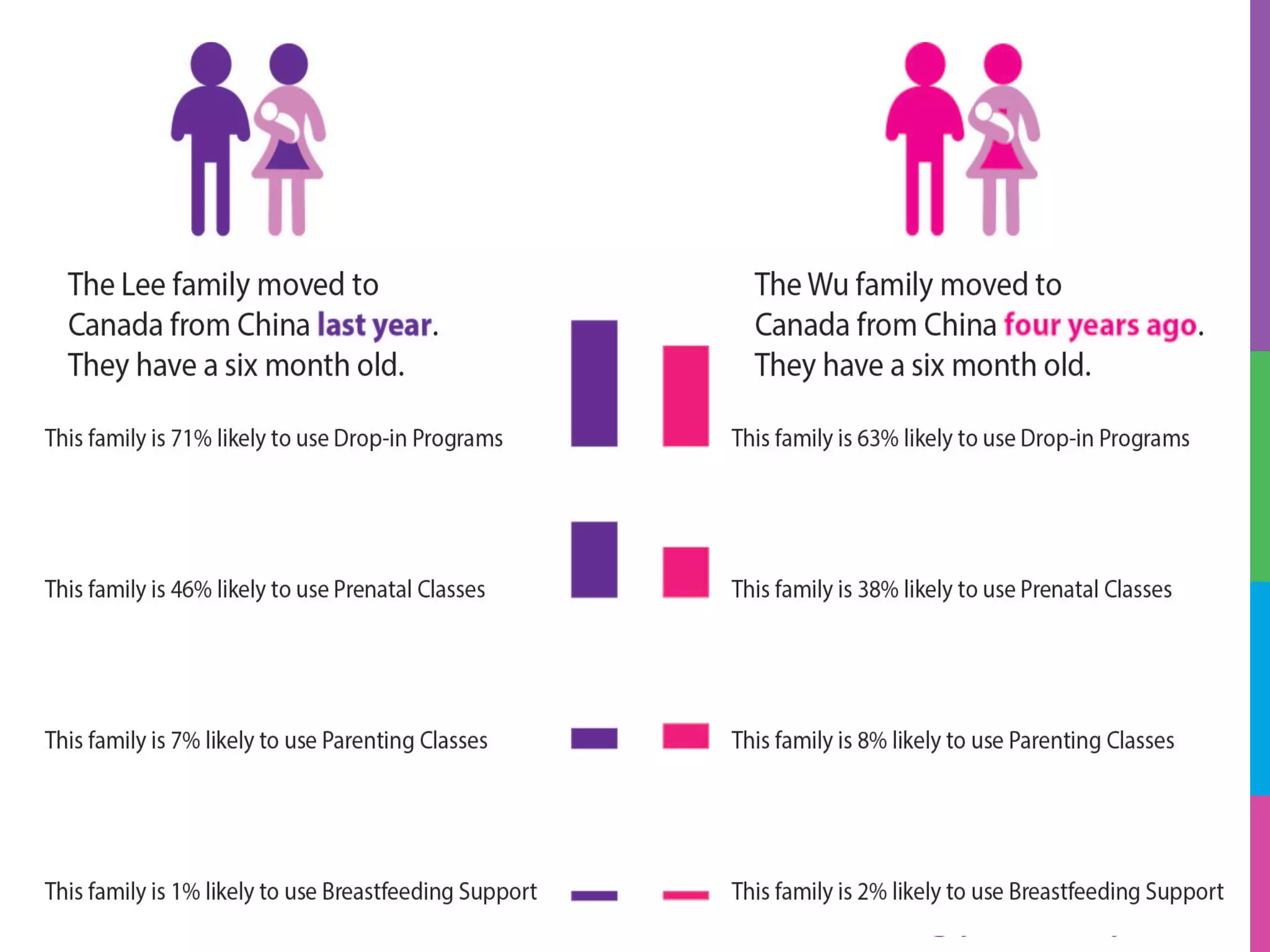
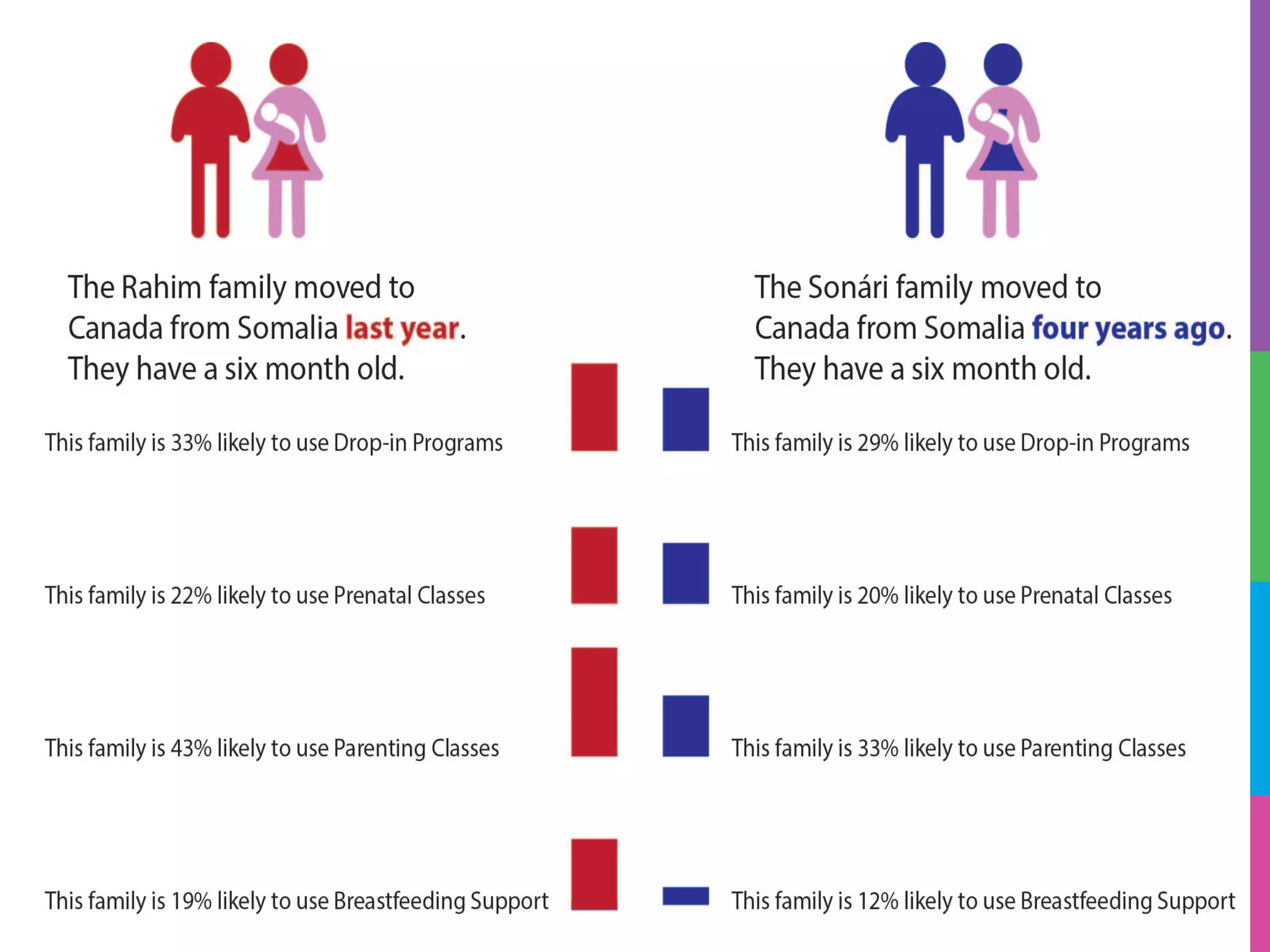
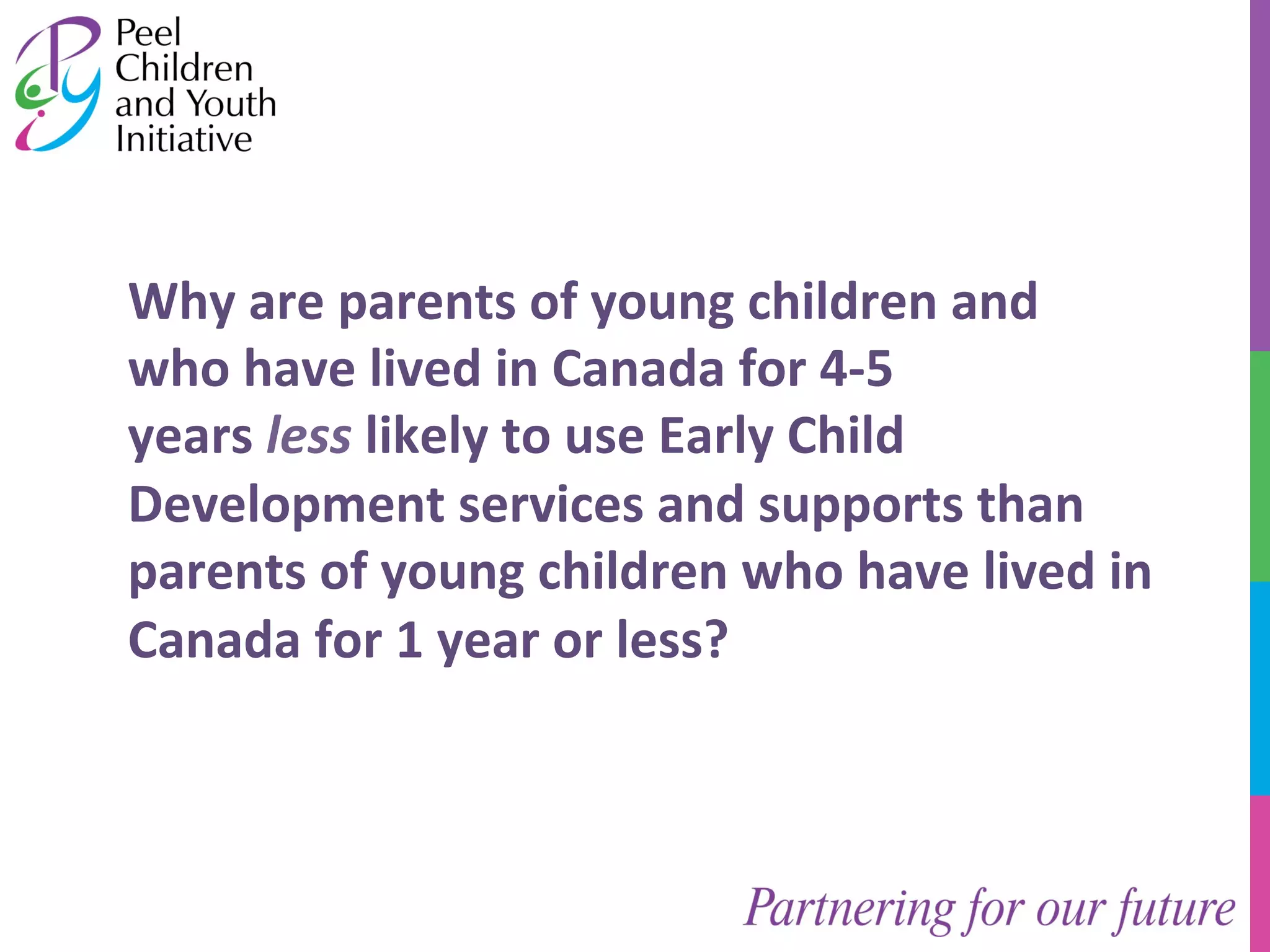
    Barriers and UsageRates Among Newcomers In general, newcomer parents tend to have their highest levels of program and service usage within their first year in Canada. Their usage levels drop gradually as they are in Canada for more extended periods of /me. These drops in usage cannot be a^ributed to the aging of the children. Why are parents of young children and who have lived in Canada for 4-­‐5 years less likely to use Early Child Development services and supports than parents of young children who have lived in Canada for 1 year or less?
  • 9.
    Why are parents of young children and who have lived in Canada for 4-­‐5 years less likely to use Early Child Development services and supports than parents of young children who have lived in Canada for 1 year or less?
  • 10.
    Why are parents of young children and who have lived in Canada for 4-­‐5 years less likely to use Early Child Development services and supports than parents of young children who have lived in Canada for 1 year or less?
  • 11.
    Why are parents of young children and who have lived in Canada for 4-­‐5 years less likely to use Early Child Development services and supports than parents of young children who have lived in Canada for 1 year or less?
  • 12.
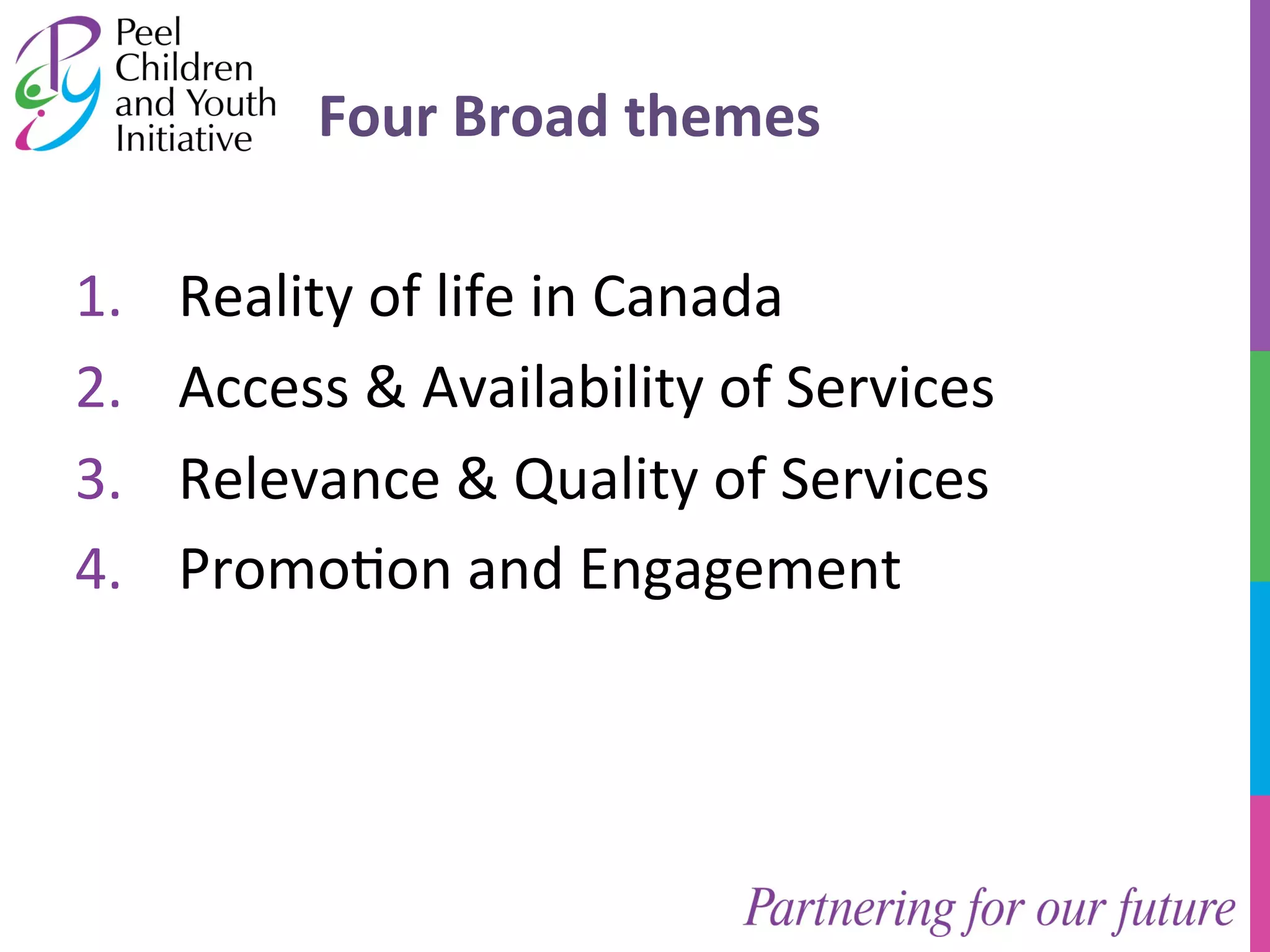
    Four Broad themes 1. Reality of life in Canada 2. Access & Availability of Services 3. Relevance & Quality of Services 4. Promo/on and Engagement
  • 13.
    Four Broad themes 1. Reality of life in Canada Newcomers are highly mo/vated during their first six months a]er arrival in Canada. This enthusiasm wanes and they become disillusioned when confronted by the demands and stresses of life.
  • 14.
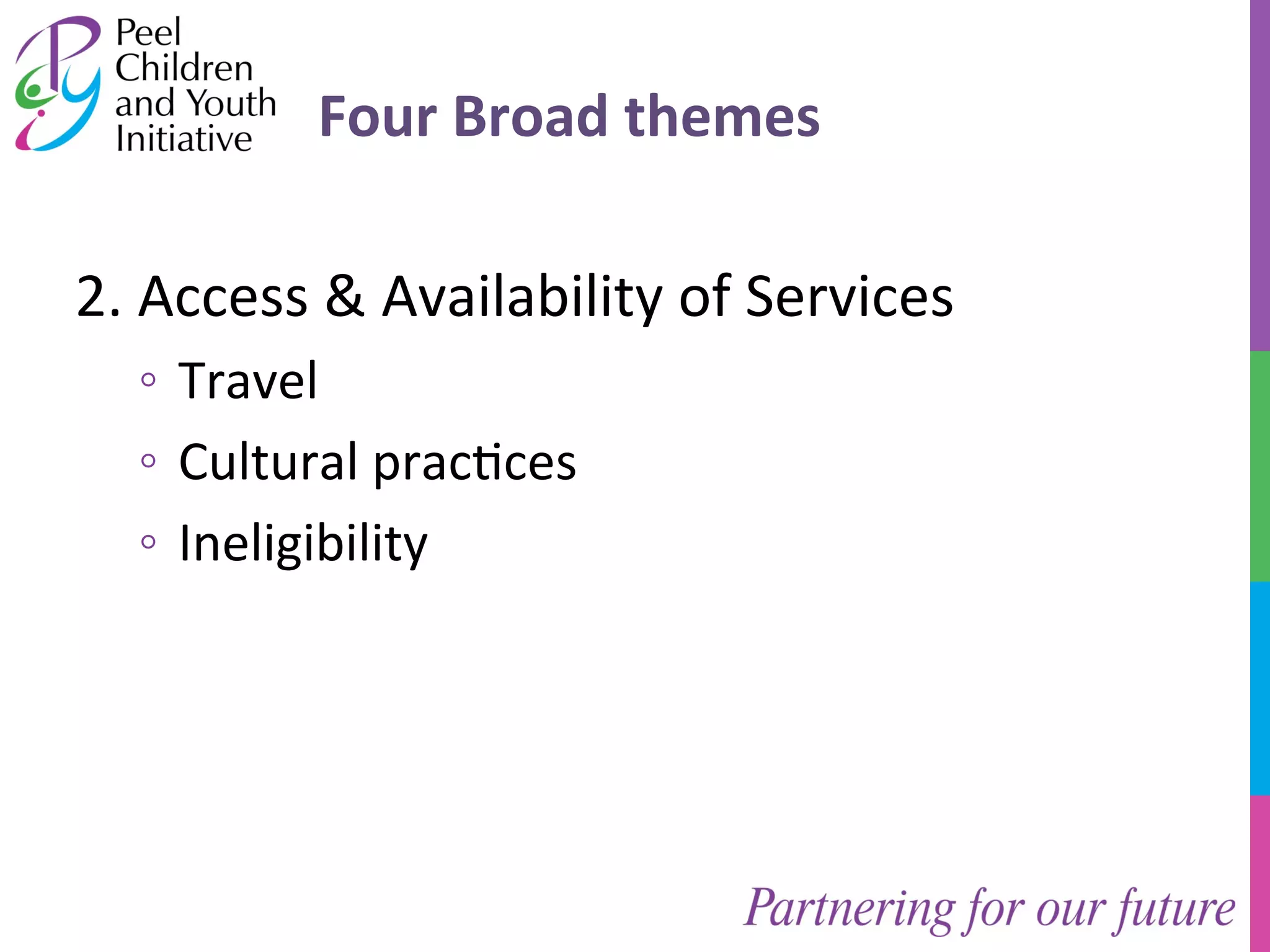
    Four Broad themes 2. Access & Availability of Services ◦ Travel ◦ Cultural prac/ces ◦ Ineligibility
  • 15.
    Four Broad themes 3. Relevance & Quality of Services ◦ Lack of energy for parental involvement ◦ Concern over loss of culture: integrate but not assimilate ◦ Feeling judged
  • 16.
    Four Broad themes 4. Promo/on and Engagement ◦ Lack of awareness ◦ Too much reliance on word of mouth ◦ Missed opportuni/es to connect
  • 17.
    Summary In designing supports for parents – the combina/on of their immigra/on status and ethnic heritage are crucial Newcomers are uniquely vulnerable a]er their first year in Canada .
  • 18.
    Thanks. Heather Krause, Research Manager PCYI.org @pcyi_org hkrause@pcyi.org