Building Resilience
Throughout the Life Span
Paula Barrett

Pathways Health and Research Centre, Brisbane
University of Queensland, School of Education
Acknowledgements
• All children, families and
professionals in Australia and
worldwide using the Friends
Programs in schools and clinics
• My family
• Pathways staff
“The very motion of
our lives is towards
happiness”
- Dalai Lama
Has history shown progress
towards human happiness?
Citizens of affluent countries have
physically healthier, longer life spans
but receive much less social support
from friendships and extended families.
Do these citizens have psychologically
healthier lives?
WHAT WE KNOW:
-Prevalence
-Who seeks help
-Need for prevention
-Human Capital Investment
Obesity /early onset type II diabetes and
anxiety/depressive disorders will be
more prevalent in western countries
than any other health problem by 2020.
(World Health Organisation conference, 2006, 2007,
2008, 2009)
We can feel empowered by learning
RESILIENCE skills which are EASY to
implement at home, school, communities –
across the life span.
RESILIENCE IS THE ABILITY TO
BOUNCE BACK IN THE FACE OF
ADVERSITY.
What we can feel
We can feel empowered by learning
RESILIENCE skills which are EASY to
implement at home, school, communities –
across the life span.
We can not always build a secure future
but we can build ourselves and our
children strong for the future.
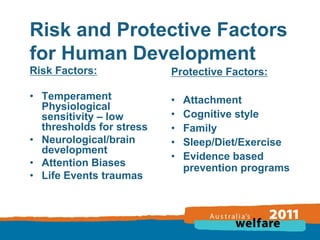
Risk and Protective Factors
for Human Development
Risk Factors:

Protective Factors:

• Temperament
Physiological
sensitivity – low
thresholds for stress
• Neurological/brain
development
• Attention Biases
• Life Events traumas

•
•
•
•
•

Attachment
Cognitive style
Family
Sleep/Diet/Exercise
Evidence based
prevention programs
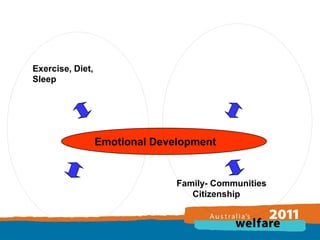
Exercise, Diet,
Sleep

Emotional Development

Family- Communities
Citizenship
What we need to do
PARADIGM CHANGES

LIFE LONG RESILEINCE
Thank you!
For further information please contact
Kathleen
training@pathwayshrc.com.au

www.pathwayshrc.com.au

Paula Barrett

  • 1.
    Building Resilience Throughout theLife Span Paula Barrett Pathways Health and Research Centre, Brisbane University of Queensland, School of Education
  • 2.
    Acknowledgements • All children,families and professionals in Australia and worldwide using the Friends Programs in schools and clinics • My family • Pathways staff
  • 3.
    “The very motionof our lives is towards happiness” - Dalai Lama
  • 4.
    Has history shownprogress towards human happiness? Citizens of affluent countries have physically healthier, longer life spans but receive much less social support from friendships and extended families. Do these citizens have psychologically healthier lives?
  • 5.
    WHAT WE KNOW: -Prevalence -Whoseeks help -Need for prevention -Human Capital Investment
  • 6.
    Obesity /early onsettype II diabetes and anxiety/depressive disorders will be more prevalent in western countries than any other health problem by 2020. (World Health Organisation conference, 2006, 2007, 2008, 2009)
  • 7.
    We can feelempowered by learning RESILIENCE skills which are EASY to implement at home, school, communities – across the life span.
  • 8.
    RESILIENCE IS THEABILITY TO BOUNCE BACK IN THE FACE OF ADVERSITY.
  • 9.
    What we canfeel We can feel empowered by learning RESILIENCE skills which are EASY to implement at home, school, communities – across the life span.
  • 10.
    We can notalways build a secure future but we can build ourselves and our children strong for the future.
  • 11.
    Risk and ProtectiveFactors for Human Development Risk Factors: Protective Factors: • Temperament Physiological sensitivity – low thresholds for stress • Neurological/brain development • Attention Biases • Life Events traumas • • • • • Attachment Cognitive style Family Sleep/Diet/Exercise Evidence based prevention programs
  • 12.
  • 13.
    What we needto do PARADIGM CHANGES LIFE LONG RESILEINCE
  • 14.
    Thank you! For furtherinformation please contact Kathleen training@pathwayshrc.com.au www.pathwayshrc.com.au