Patriotism and Propaganda
in World War 1
Patriotism
Patriotism was an extremely important and
influencing factor over the duration of WW1; men and
boys succumbed to ever-increasing pressure and the
need to fight for not only their freedom but also that
of the rest of the country and empire . This, as well as
women, children and the elderly, was used through
propaganda to make most men feel obliged to protect
their own and those who could not protect
themselves I.e. e women. Patriotism kept moral, faith
and trust in the government high, especially if there
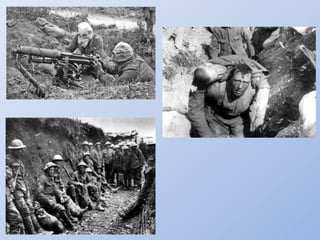
was a particularly negative event such as the battle of
the Somme, a long and gruesome battle which cost
Britain 420,000 casualties including 125,000 deaths.
Propaganda
However, the biggest factor that affected men
joining the army, at least until conscription was
brought into place in 1916, was the use of
propaganda. This incorporated all of the ideals of
patriotism and of honour and duty into a poster.
The majority of these posters were extremely image
based and whatever small amount of writing they
would incorporate into the images design would be
bold and in large text. This was due to the fact that
a lot of members of the public, especially in the
north of England, only had very basic literary
skills, if any at all, and so the designers took this
into account when they were creating these
important tools.
Propaganda cont.
All of these posters would have either been produced in
newspapers, or placed in locations that men would frequent, the
pub or their workplace, for example. There was a wide range of
propaganda produced in Britain over the course of the First
World War, using many different ideas and angles to influence
the men and young boys who would see them. These included
an appeal to a man’s sense of honour and duty, including
showing women and children. They would also show images of
men in the army having an “great” time in the army. However,
the propaganda wasn’t just aimed at men enlisting. There are
some examples where it is asking for a monetary contribution to
the cause to aid in the fight against the Germans. There were
also a lot of appeals to a man’s ego and pride to make them
think that they themselves were special and that THEY would be
the hero who won Britain the war. Possibly the most famous
poster is that of Herbert Kitchener who was the face of
Patriotism and propaganda

Patriotism and propaganda

  • 1.
  • 2.
    Patriotism Patriotism was anextremely important and influencing factor over the duration of WW1; men and boys succumbed to ever-increasing pressure and the need to fight for not only their freedom but also that of the rest of the country and empire . This, as well as women, children and the elderly, was used through propaganda to make most men feel obliged to protect their own and those who could not protect themselves I.e. e women. Patriotism kept moral, faith and trust in the government high, especially if there was a particularly negative event such as the battle of the Somme, a long and gruesome battle which cost Britain 420,000 casualties including 125,000 deaths.
  • 4.
    Propaganda However, the biggestfactor that affected men joining the army, at least until conscription was brought into place in 1916, was the use of propaganda. This incorporated all of the ideals of patriotism and of honour and duty into a poster. The majority of these posters were extremely image based and whatever small amount of writing they would incorporate into the images design would be bold and in large text. This was due to the fact that a lot of members of the public, especially in the north of England, only had very basic literary skills, if any at all, and so the designers took this into account when they were creating these important tools.
  • 5.
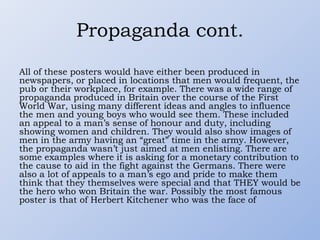
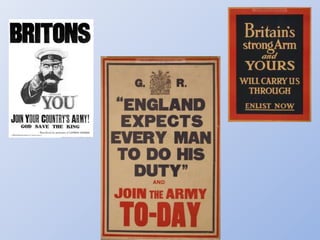
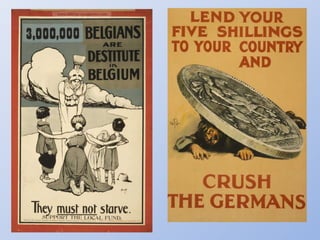
    Propaganda cont. All ofthese posters would have either been produced in newspapers, or placed in locations that men would frequent, the pub or their workplace, for example. There was a wide range of propaganda produced in Britain over the course of the First World War, using many different ideas and angles to influence the men and young boys who would see them. These included an appeal to a man’s sense of honour and duty, including showing women and children. They would also show images of men in the army having an “great” time in the army. However, the propaganda wasn’t just aimed at men enlisting. There are some examples where it is asking for a monetary contribution to the cause to aid in the fight against the Germans. There were also a lot of appeals to a man’s ego and pride to make them think that they themselves were special and that THEY would be the hero who won Britain the war. Possibly the most famous poster is that of Herbert Kitchener who was the face of