Patents--OverviewBy Saul Aguilar
E=mc2 by Einstein??
What is a “Patent?”Apatent (pronounced /ˈpætənt/ or /ˈpeɪtənt/) is a set of exclusive rights granted by a state (national government) to an inventor or their assignee for a limited period of time in exchange for a public disclosure of an invention.**Source: Wikipedia
What does that mean?!
OverviewDefine it some more!Anyone who invents or discovers any new and useful process, machine, article of manufacture, or composition of matter, or any new and useful improvement thereof.*ExclusionsIn certain countries, business methods and mental acts.  (See Bilski case)*Source: Wikipedia
Types of PatentsUtility BiologicalRecombinant DNABusiness Methods (excluded in some countries)ChemicalSoftware (hot topic)
So what?A patent is not a right to use said invention.Excludes other from:making, using, selling, offering for sale, or importing the patented invention for the term of the patent.Basically:Patents are limited property rights.  It may be sold, licensed, mortgaged, assigned or transferred, given away, or simply abandoned.Patents cannot be exploited—Mouse trap design
EnforcementPatents can only be enforced by civil lawsuit.France and Austria are the exceptions.Inventor will seek compensation for infringement. Must establish at least one claim of the patent is being infringed upon.
Patent LicensingPatent licensing agreements:Contracts in which patent owner forgoes right to sue a licensee.Done in return for royalty or compensation.Companies cross-licenseLicense to each otherShare benefits
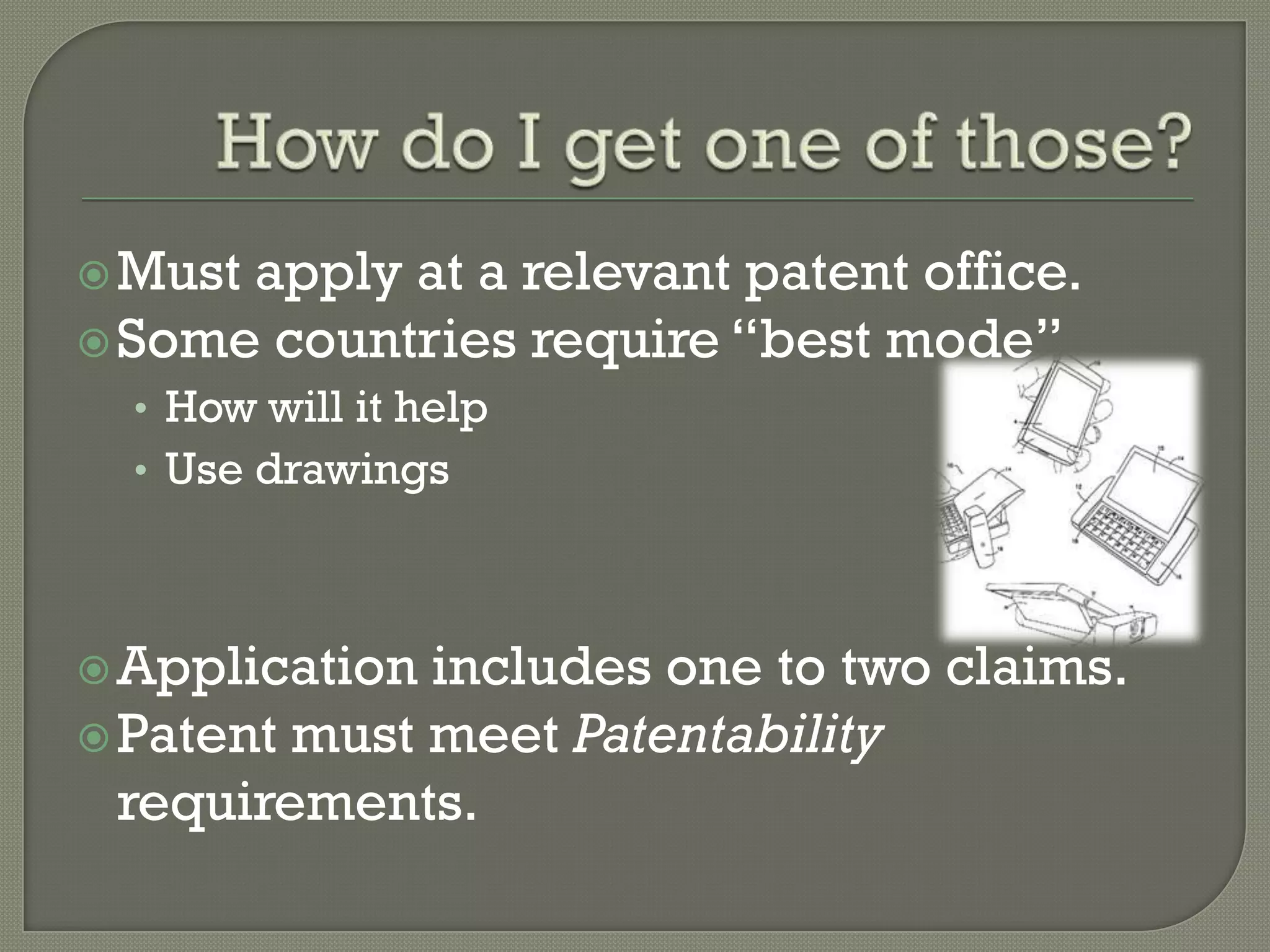
How do I get one of those?Must apply at a relevant patent office.Some countries require “best mode”How will it helpUse drawingsApplication includes one to two claims.Patent must meet Patentability requirements.
But…why?Four main incentives behind the patent system:to invent in the first placeto disclose the invention once madeto invest the sums necessary to experiment, produce and market the inventionto design around and improve upon earlier patents
CriticismsBeing granted to “already-known” inventions.Conferring a “negative-right” upon the patent ownerPatents may hinder innovation:Patent trollsPharmaceutical patents
Thank youAny questions?

Patents 101 w/ Saul Aguilar

  • 1.
  • 2.
  • 3.
    What is a“Patent?”Apatent (pronounced /ˈpætənt/ or /ˈpeɪtənt/) is a set of exclusive rights granted by a state (national government) to an inventor or their assignee for a limited period of time in exchange for a public disclosure of an invention.**Source: Wikipedia
  • 4.
  • 5.
    OverviewDefine it somemore!Anyone who invents or discovers any new and useful process, machine, article of manufacture, or composition of matter, or any new and useful improvement thereof.*ExclusionsIn certain countries, business methods and mental acts. (See Bilski case)*Source: Wikipedia
  • 6.
    Types of PatentsUtilityBiologicalRecombinant DNABusiness Methods (excluded in some countries)ChemicalSoftware (hot topic)
  • 7.
    So what?A patentis not a right to use said invention.Excludes other from:making, using, selling, offering for sale, or importing the patented invention for the term of the patent.Basically:Patents are limited property rights. It may be sold, licensed, mortgaged, assigned or transferred, given away, or simply abandoned.Patents cannot be exploited—Mouse trap design
  • 8.
    EnforcementPatents can onlybe enforced by civil lawsuit.France and Austria are the exceptions.Inventor will seek compensation for infringement. Must establish at least one claim of the patent is being infringed upon.
  • 9.
    Patent LicensingPatent licensingagreements:Contracts in which patent owner forgoes right to sue a licensee.Done in return for royalty or compensation.Companies cross-licenseLicense to each otherShare benefits
  • 10.
    How do Iget one of those?Must apply at a relevant patent office.Some countries require “best mode”How will it helpUse drawingsApplication includes one to two claims.Patent must meet Patentability requirements.
  • 11.
    But…why?Four main incentivesbehind the patent system:to invent in the first placeto disclose the invention once madeto invest the sums necessary to experiment, produce and market the inventionto design around and improve upon earlier patents
  • 12.
    CriticismsBeing granted to“already-known” inventions.Conferring a “negative-right” upon the patent ownerPatents may hinder innovation:Patent trollsPharmaceutical patents
  • 13.