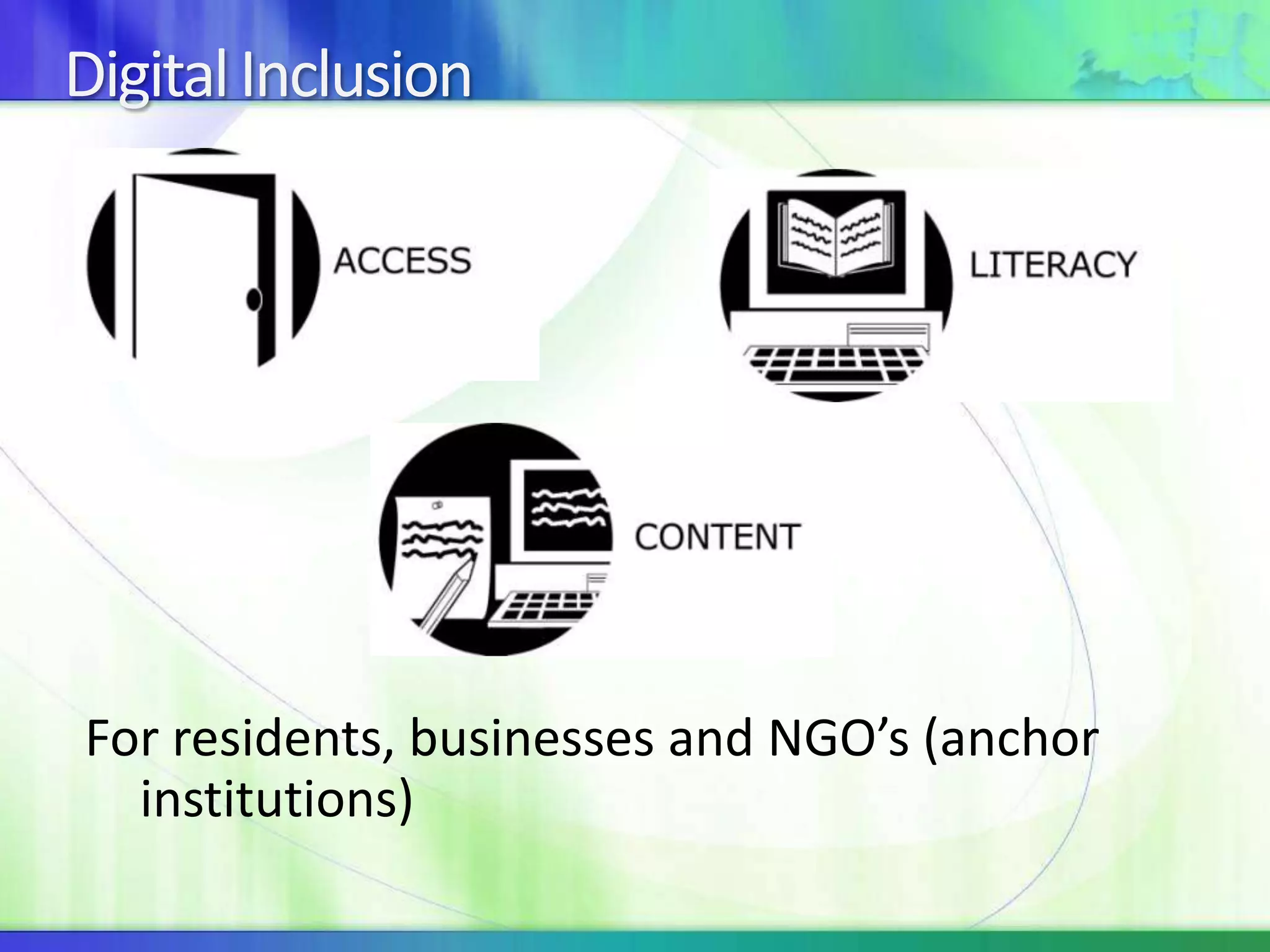
Digital Inclusion For residents, businesses and NGO’s (anchor institutions)
Digital InclusionAccess to computers and the internetAvailability, cost, ease of use for connectivity to the Internet, and end-user hardware and software. Also tech support.Literacy in usingcomputer and internet technologiesSkills required in order to utilize the equipment and Internet effectively for essential services, education, employment, civic engagement and cultural participation.Meaningful content and servicesavailableRelevant services, culturally and educationally appropriate design, marketing and placement appropriate to reach underserved communities, and enabling of content production and distribution by lower capacity residents, businesses and organizations.
Differences in UseHispanic/Latino and African American computer users are least likely to purchase products and services online.
African Americans more likely to participate in community, but less likely to do this online.
Asian/Pacific Islander and African American computer users were less likely to use the computer to get health or medical information.
Disabled less likely to get law & consumer info.
 Narrowing gap on social networking.
 85% own cell phones, from 92% (18-34) to 68% (age 66-74) (Pew)Tech adoption justice issuesFluency in applications varies greatlyGains, but very significant differences based on education, income, age, language and disability	Key barriers to adoption include awareness & training, cost, security, and maintenanceTrusted teachers & settings importantGreat need for visual design
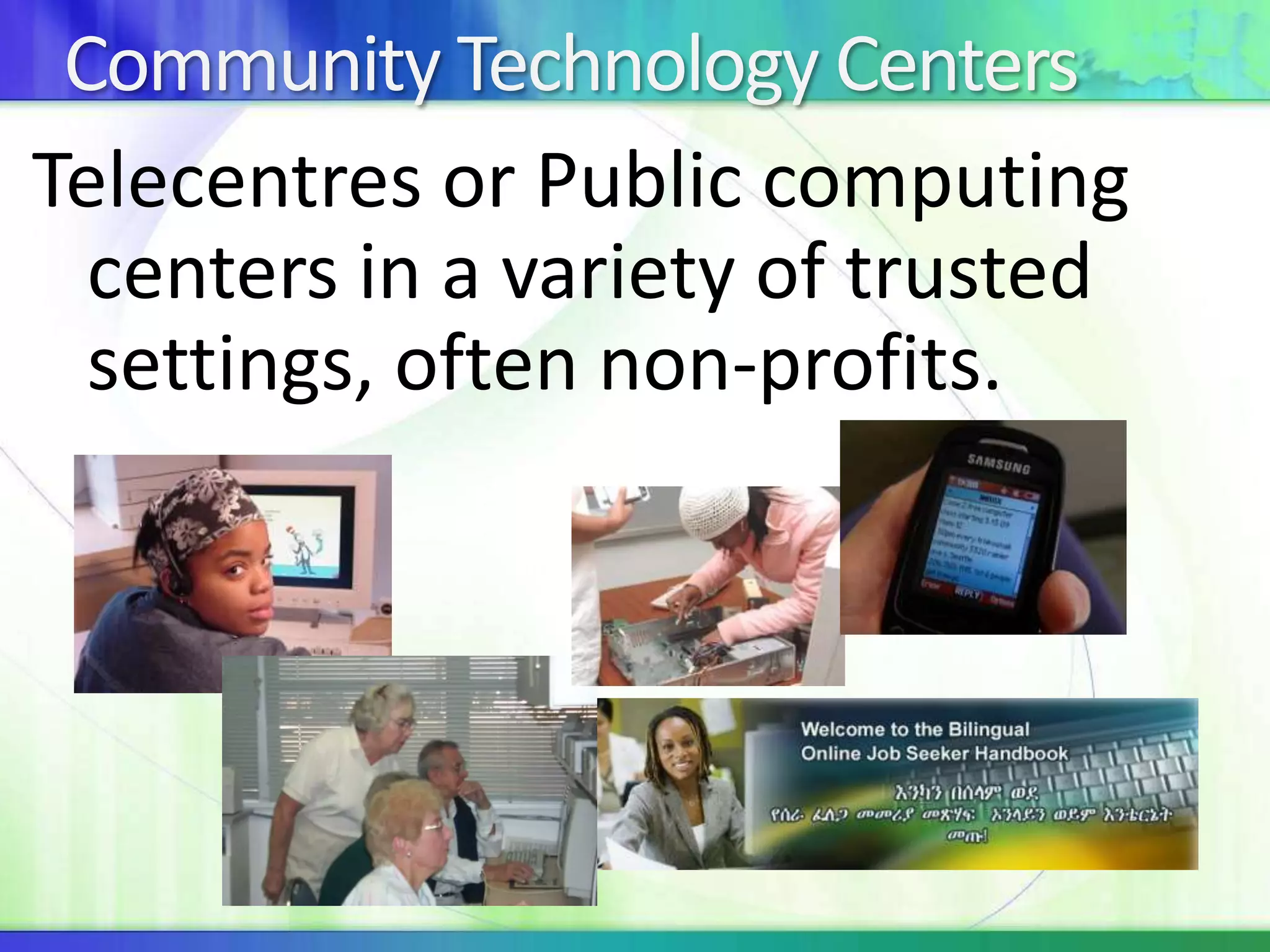
Community Technology CentersTelecentres or Public computing centers in a variety of trusted settings, often non-profits.

David Keyes digital inclusion i-conference 2-8-11

  • 1.
    Digital Inclusion Forresidents, businesses and NGO’s (anchor institutions)
  • 2.
    Digital InclusionAccess tocomputers and the internetAvailability, cost, ease of use for connectivity to the Internet, and end-user hardware and software. Also tech support.Literacy in usingcomputer and internet technologiesSkills required in order to utilize the equipment and Internet effectively for essential services, education, employment, civic engagement and cultural participation.Meaningful content and servicesavailableRelevant services, culturally and educationally appropriate design, marketing and placement appropriate to reach underserved communities, and enabling of content production and distribution by lower capacity residents, businesses and organizations.
  • 3.
    Differences in UseHispanic/Latinoand African American computer users are least likely to purchase products and services online.
  • 4.
    African Americans morelikely to participate in community, but less likely to do this online.
  • 5.
    Asian/Pacific Islander andAfrican American computer users were less likely to use the computer to get health or medical information.
  • 6.
    Disabled less likelyto get law & consumer info.
  • 7.
    Narrowing gapon social networking.
  • 8.
    85% owncell phones, from 92% (18-34) to 68% (age 66-74) (Pew)Tech adoption justice issuesFluency in applications varies greatlyGains, but very significant differences based on education, income, age, language and disability Key barriers to adoption include awareness & training, cost, security, and maintenanceTrusted teachers & settings importantGreat need for visual design
  • 9.
    Community Technology CentersTelecentresor Public computing centers in a variety of trusted settings, often non-profits.
  • 10.
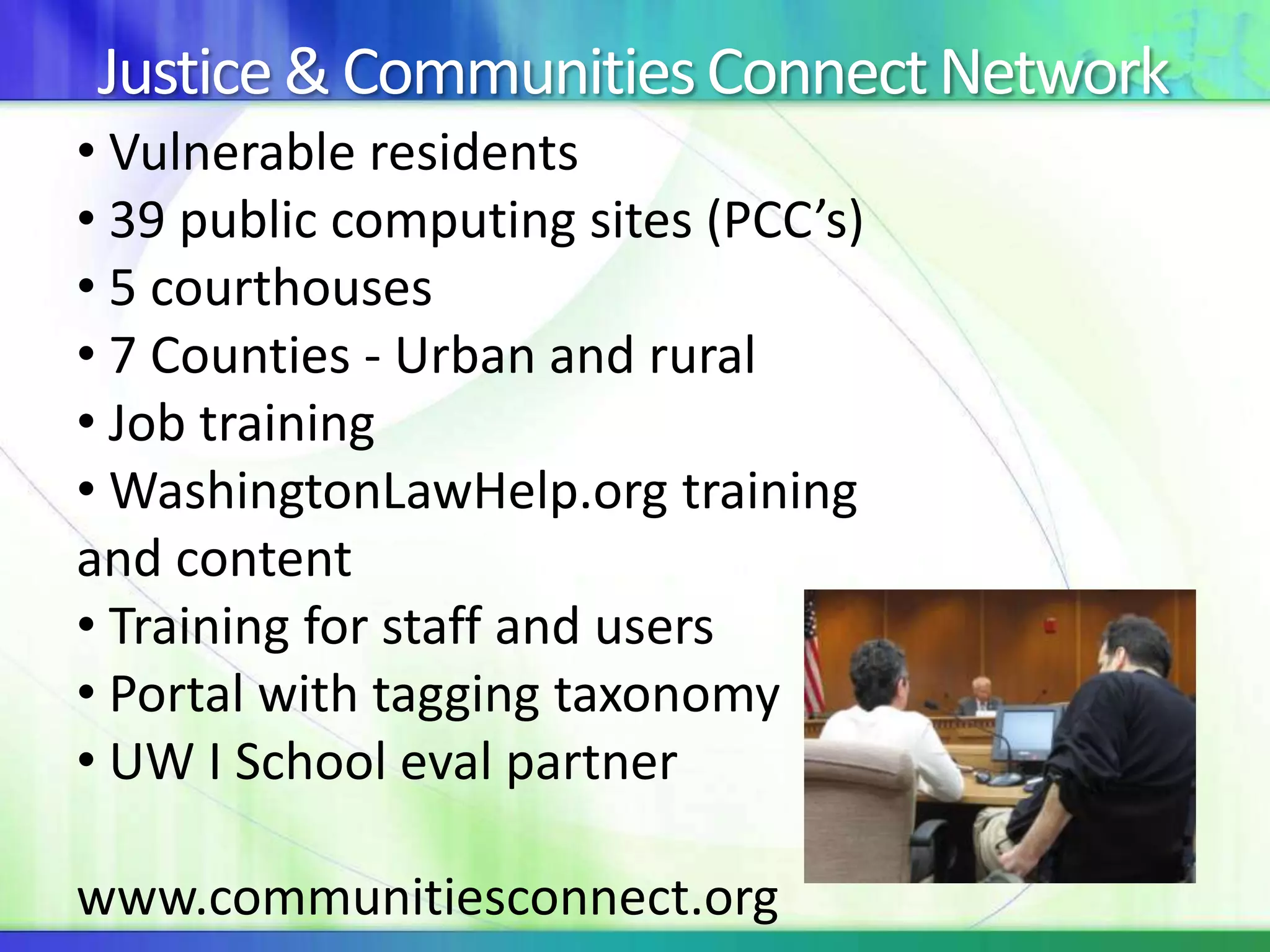
    Justice & CommunitiesConnect Network Vulnerable residents
  • 11.
    39 publiccomputing sites (PCC’s)
  • 12.
  • 13.
    7 Counties- Urban and rural
  • 14.
  • 15.
  • 16.
    Training forstaff and users
  • 17.
    Portal withtagging taxonomy
  • 18.
    UW ISchool eval partnerwww.communitiesconnect.org
  • 19.
    RSJ IT ProjectManagement ToolApplies to internal & external systems
  • 20.
    Project process Who’s atthe table? When will there be inclusion? Product development Exclusion impact? Vendor expectations Design factors Rollout planning & training
  • 21.
    Opportunities forI SchoolsResearch on delivery and impactsUser interface and system design for delivery of relevant content on all platformsCTC admin systems, incl user trackingNPO office backend & service delivery Mentoring
  • 22.
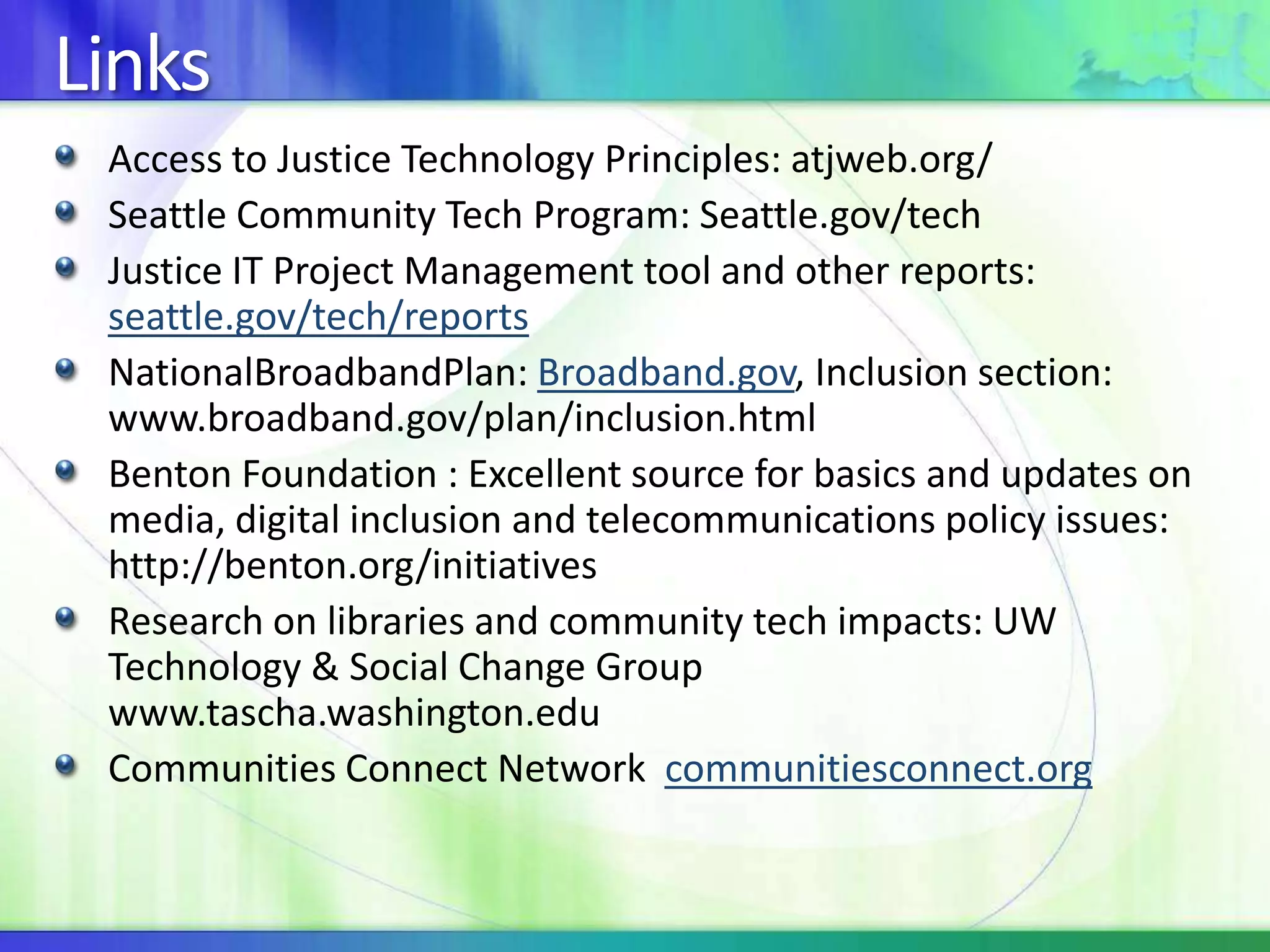
    LinksAccess to JusticeTechnology Principles: atjweb.org/Seattle Community Tech Program: Seattle.gov/techJustice IT Project Management tool and other reports: seattle.gov/tech/reportsNationalBroadbandPlan: Broadband.gov, Inclusion section: www.broadband.gov/plan/inclusion.htmlBenton Foundation : Excellent source for basics and updates on media, digital inclusion and telecommunications policy issues: http://benton.org/initiativesResearch on libraries and community tech impacts: UW Technology & Social Change Groupwww.tascha.washington.eduCommunities Connect Network communitiesconnect.org

Editor's Notes

  • #6 Jan walks to work, sees garbage bin overflowing, sends a geocodedpic to report it. Issue gets reported to those who can address it. By lunch, she gets a response when the bin will be replaced and a flash mob volunteer call to clean the overflow at the end of day…and the city will be bringing out brooms and bags to help. Students from the school will be there to help and video blog the clean-up.