Become Patent-Smart
   Entrepreneur!

      Hemant Chaskar
Inventor, US Patent Office Agent, and
  Director at Leading Tech Startup
Note, Not A Disclaimer


     This presentation is not designed for
     IP law practitioners or students


     Rather it offers practical knowledge on
     patents for business professionals
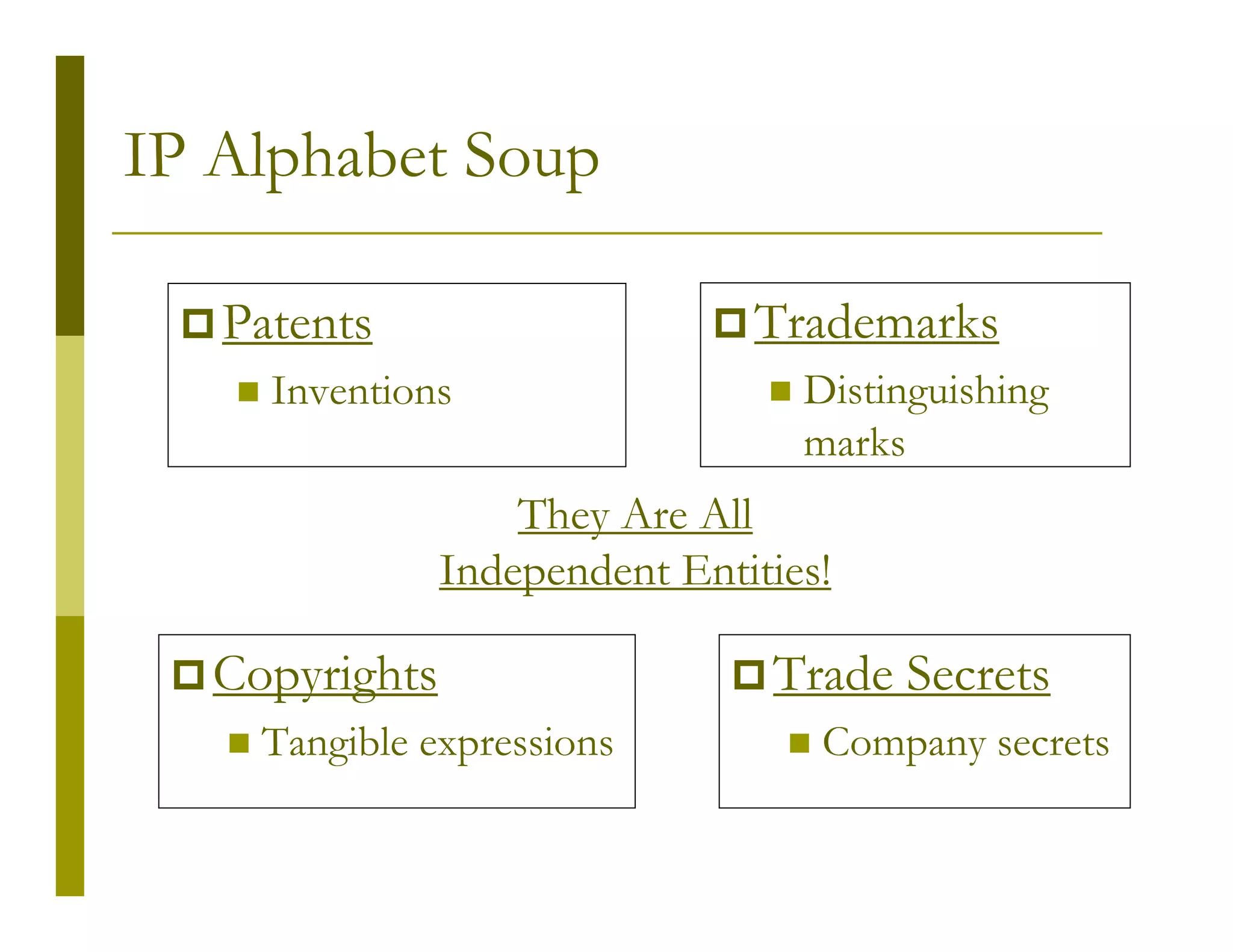
IP Alphabet Soup

   Patents                     Trademarks
     Inventions                   Distinguishing
                                  marks
                   They Are All
               Independent Entities!

  Copyrights                    Trade Secrets
    Tangible expressions           Company secrets
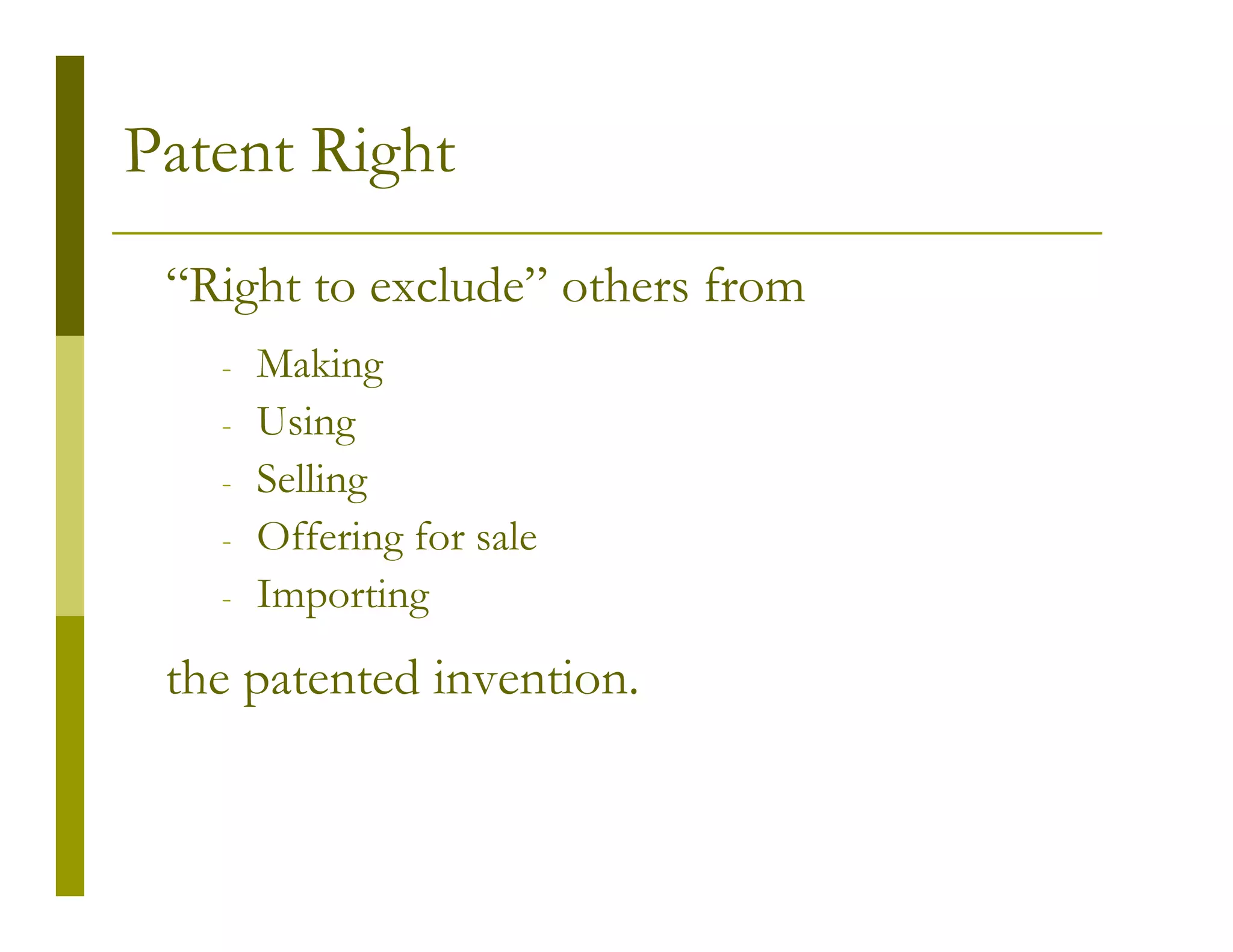
Patent Right
 “Right to exclude” others from
   -   Making
   -   Using
   -   Selling
   -   Offering for sale
   -   Importing
 the patented invention.
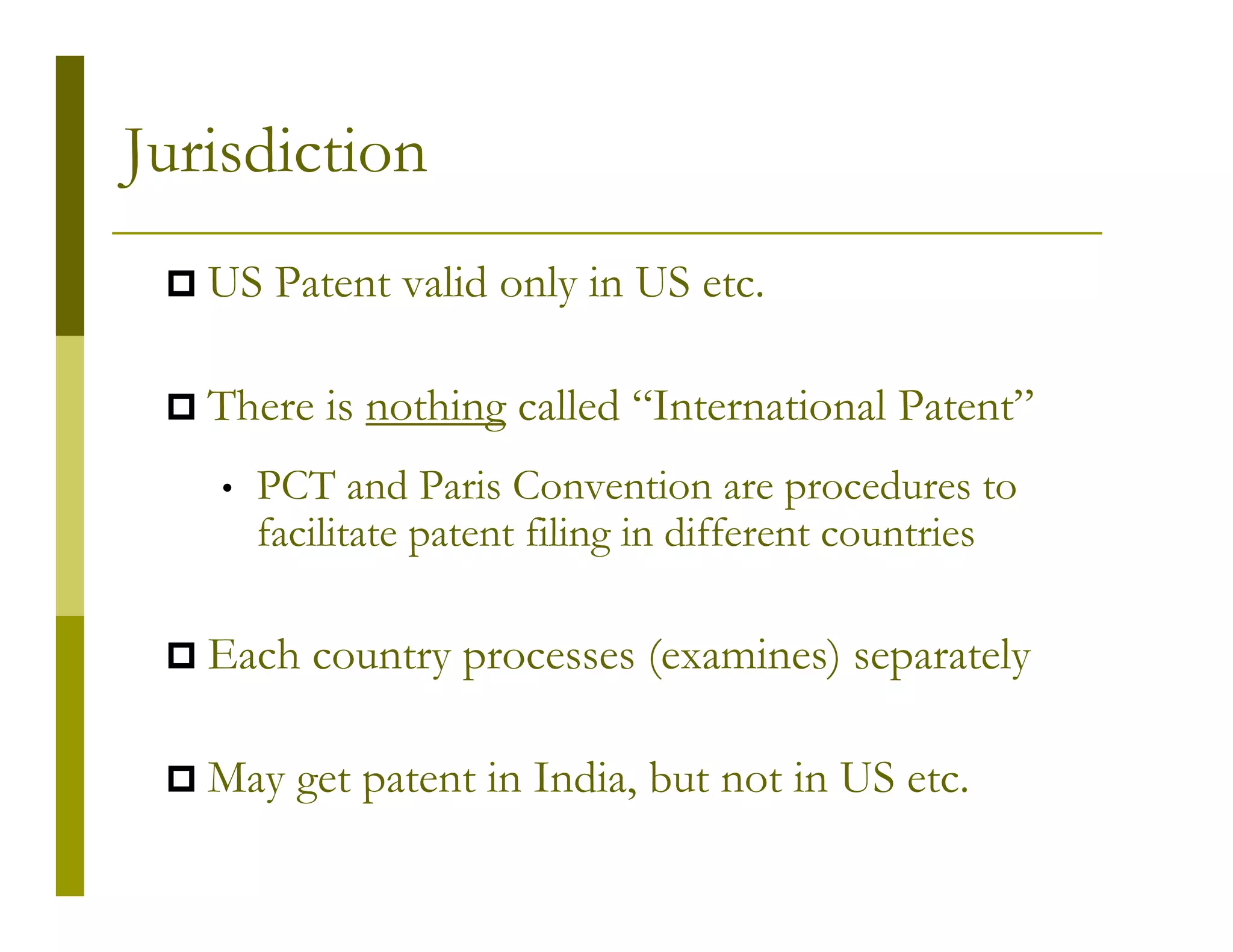
Jurisdiction
   US Patent valid only in US etc.

   There is nothing called “International Patent”
   •   PCT and Paris Convention are procedures to
       facilitate patent filing in different countries

   Each country processes (examines) separately

   May get patent in India, but not in US etc.
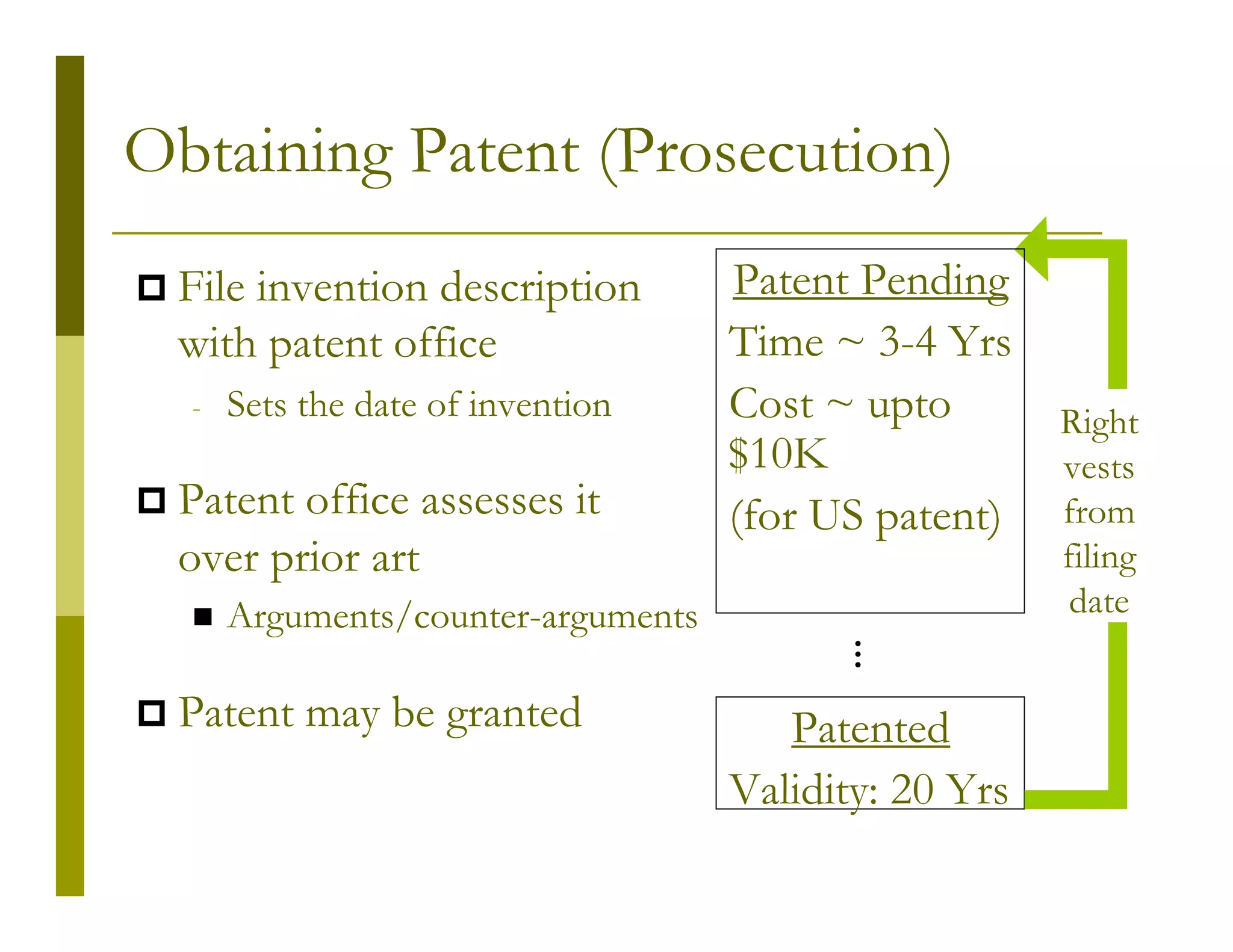
Obtaining Patent (Prosecution)
 File invention description         Patent Pending
 with patent office                 Time ~ 3-4 Yrs
  -   Sets the date of invention    Cost ~ upto        Right
                                    $10K               vests
 Patent office assesses it          (for US patent)    from
 over prior art                                        filing
      Arguments/counter-arguments                       date


                                        …
 Patent may be granted                 Patented
                                    Validity: 20 Yrs
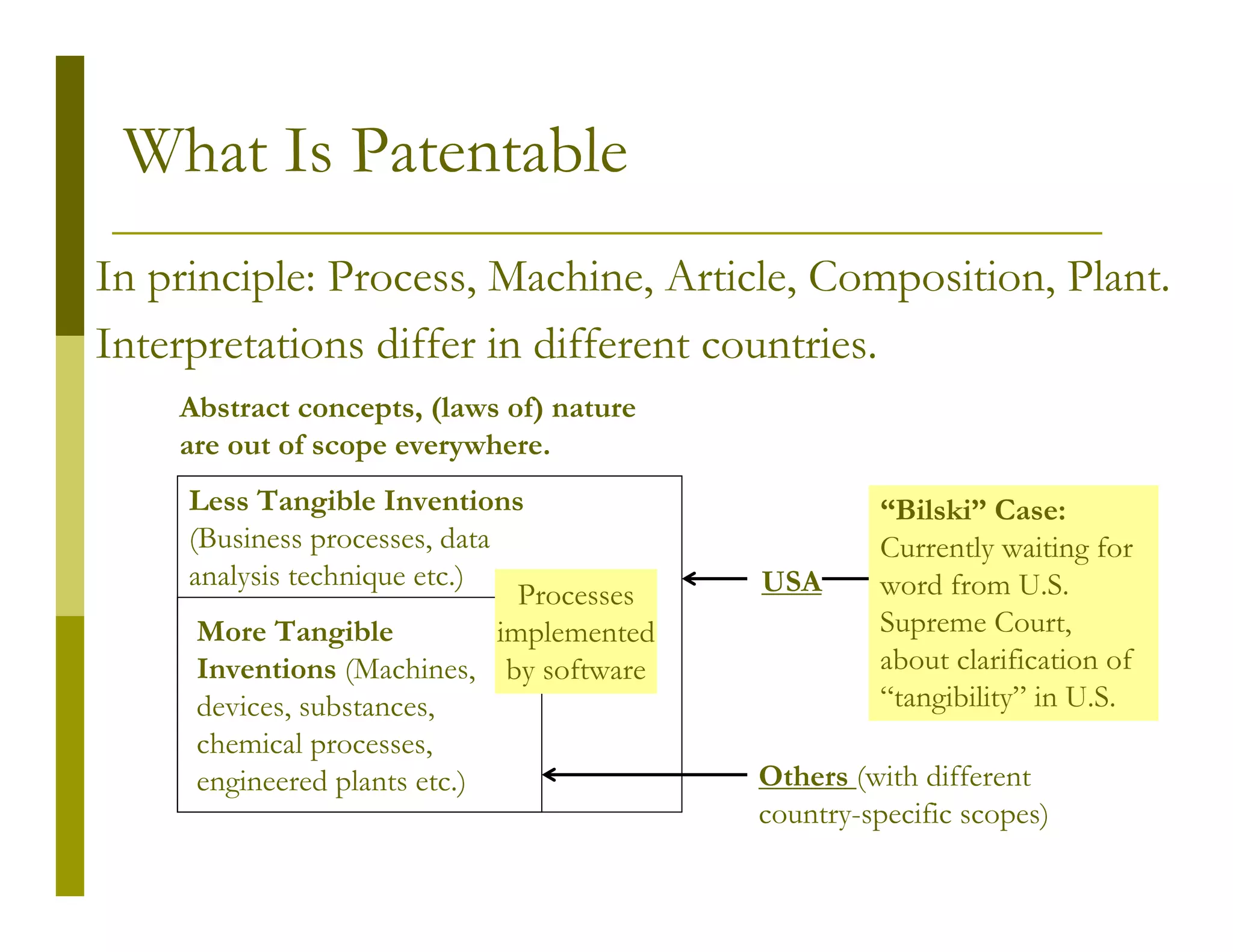
What Is Patentable
In principle: Process, Machine, Article, Composition, Plant.
Interpretations differ in different countries.
    Abstract concepts, (laws of) nature
    are out of scope everywhere.
     Less Tangible Inventions                          “Bilski” Case:
     (Business processes, data                         Currently waiting for
     analysis technique etc.)                USA       word from U.S.
                                 Processes
      More Tangible            implemented             Supreme Court,
      Inventions (Machines, by software                about clarification of
      devices, substances,                             “tangibility” in U.S.
      chemical processes,
      engineered plants etc.)                Others (with different
                                             country-specific scopes)
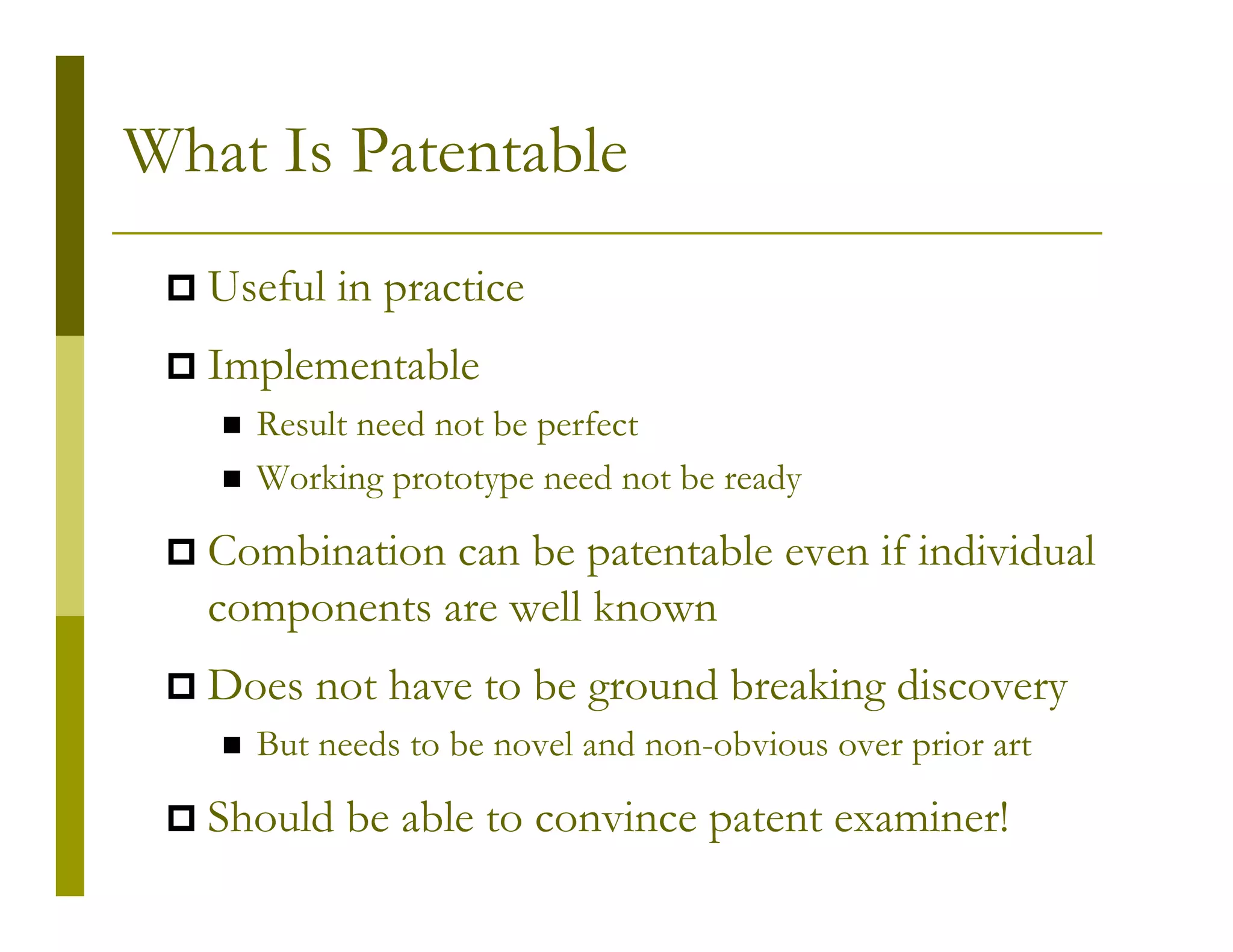
What Is Patentable
  Useful in practice
  Implementable
    Result need not be perfect
    Working prototype need not be ready

  Combination can be patentable even if individual
  components are well known
  Does not have to be ground breaking discovery
    But needs to be novel and non-obvious over prior art

  Should be able to convince patent examiner!
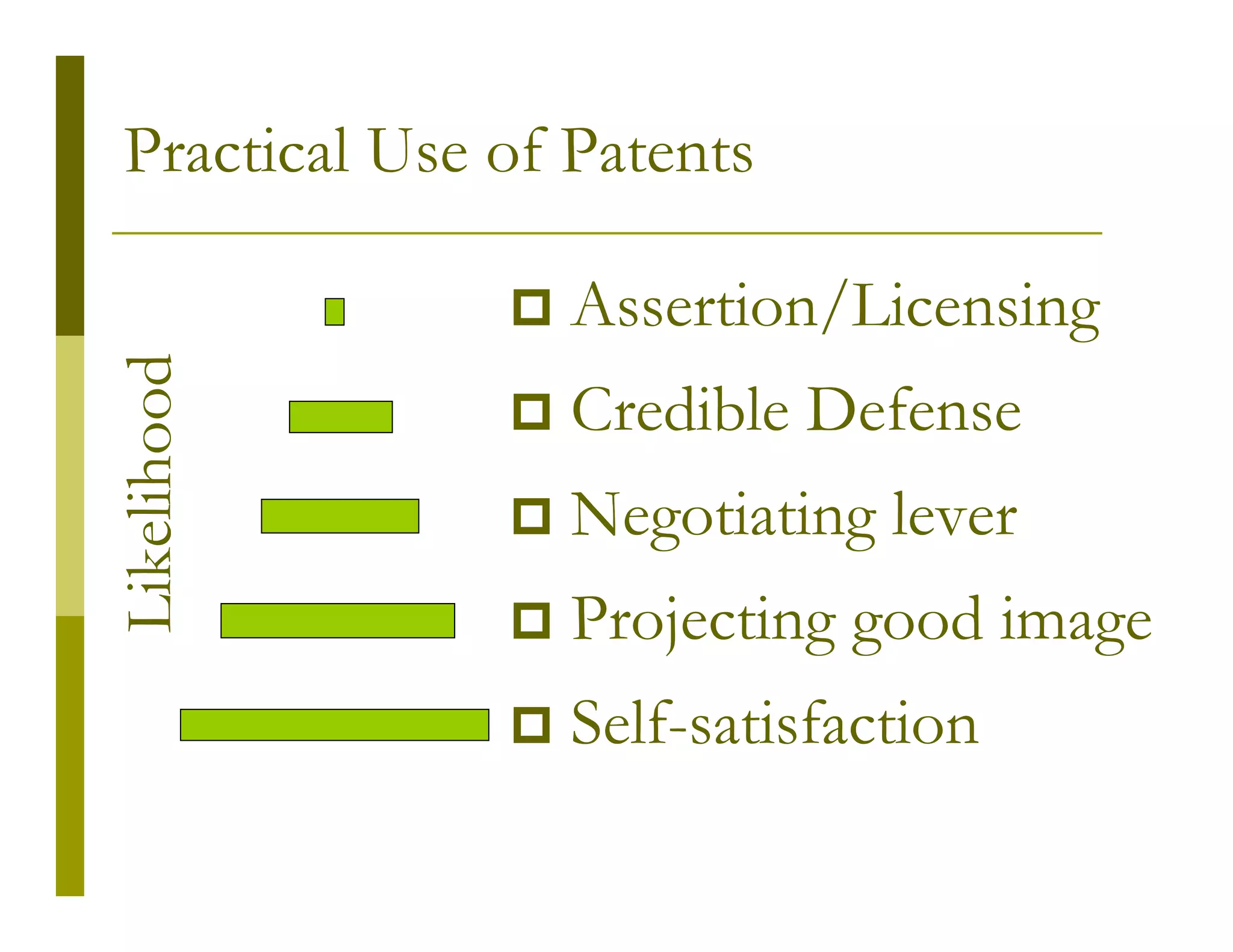
Practical Use of Patents

                 Assertion/Licensing
Likelihood


                 Credible Defense
                 Negotiating lever
                 Projecting good image
                 Self-satisfaction
Hard Realities of Assertion/Licensing
 Having patent does not mean you can wield it
   Your patent can be invalidated
   Your opponent can counter-sue

 Settlements (licensing) are hard to come through

 Court remedy may be too rough to handle
   From time, money, intensity and uncertainty perspective

 You (small fish) may have to sign up “patent troll”
Countering Opponent’s Patents
 Try to design around
 Look for prior art (or other issues) which can
 invalidate the patent
 Maintain your patent or other instrument as counter
 Assess if the opponent can really go for court
 remedy
 License if nothing of these work
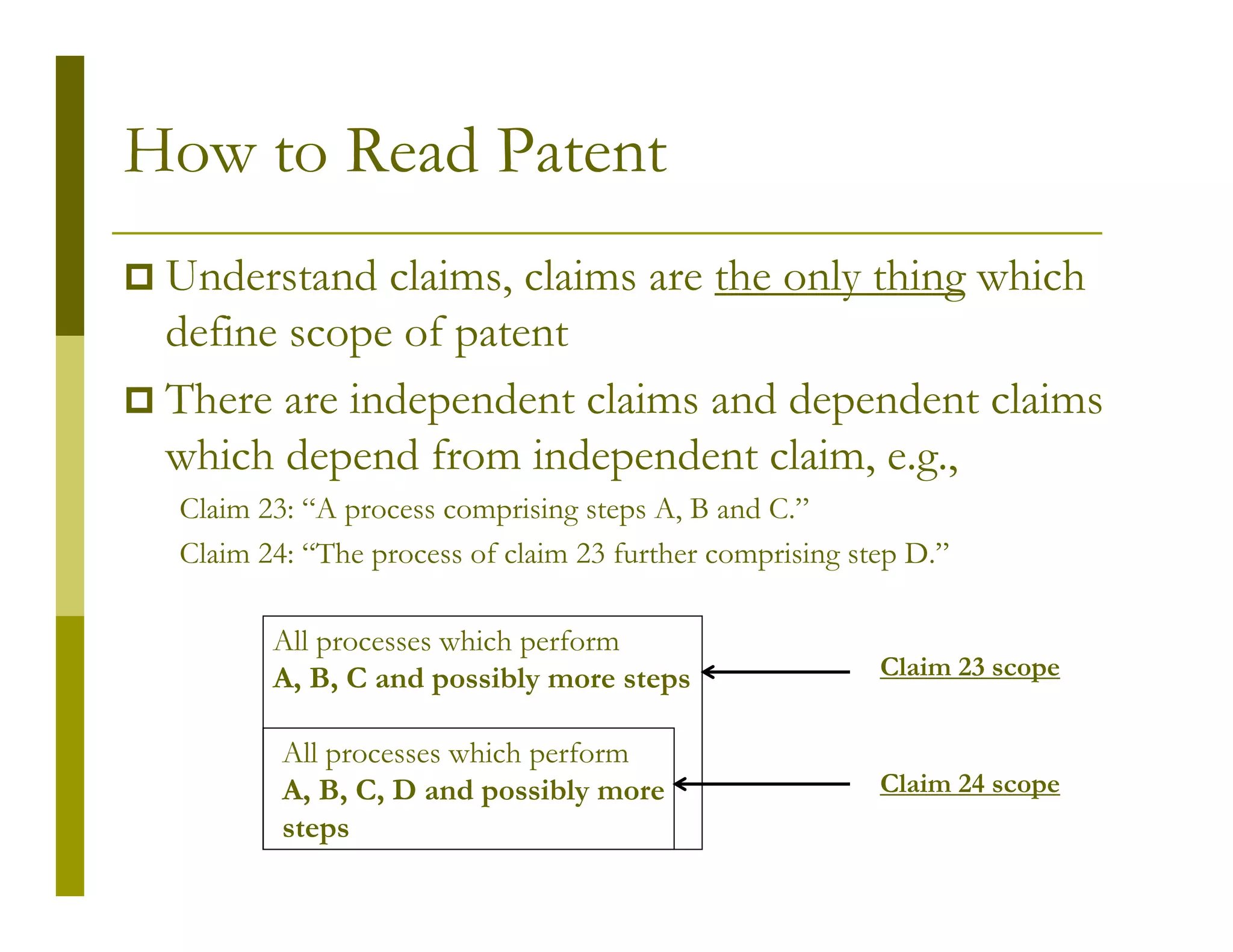
How to Read Patent
 Understand claims, claims are the only thing which
 define scope of patent
 There are independent claims and dependent claims
 which depend from independent claim, e.g.,
 Claim 23: “A process comprising steps A, B and C.”
 Claim 24: “The process of claim 23 further comprising step D.”

        All processes which perform
        A, B, C and possibly more steps                  Claim 23 scope


         All processes which perform
         A, B, C, D and possibly more                    Claim 24 scope
         steps
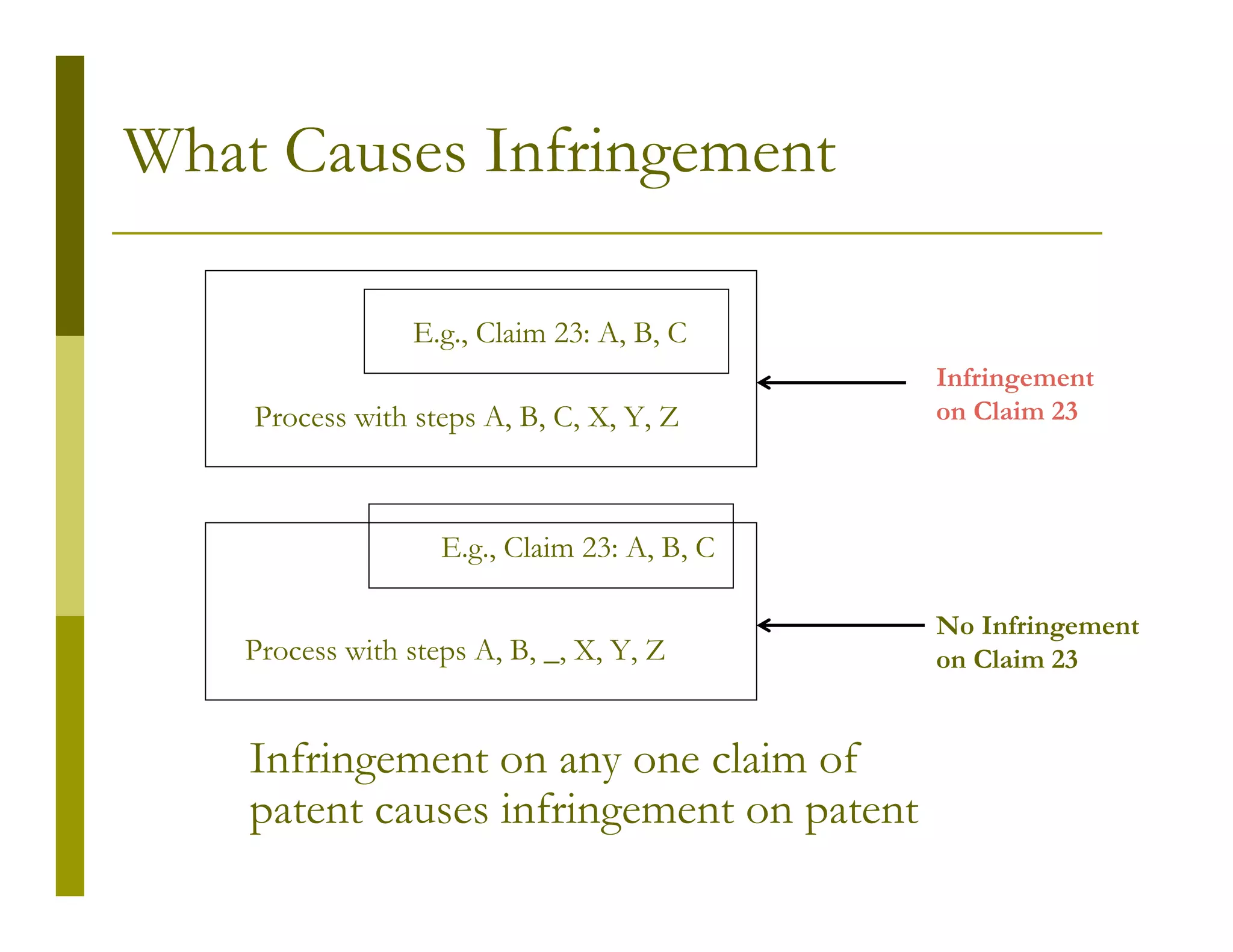
What Causes Infringement

                 E.g., Claim 23: A, B, C
                                              Infringement
    Process with steps A, B, C, X, Y, Z       on Claim 23


                    E.g., Claim 23: A, B, C

                                              No Infringement
    Process with steps A, B, _, X, Y, Z       on Claim 23


    Infringement on any one claim of
    patent causes infringement on patent
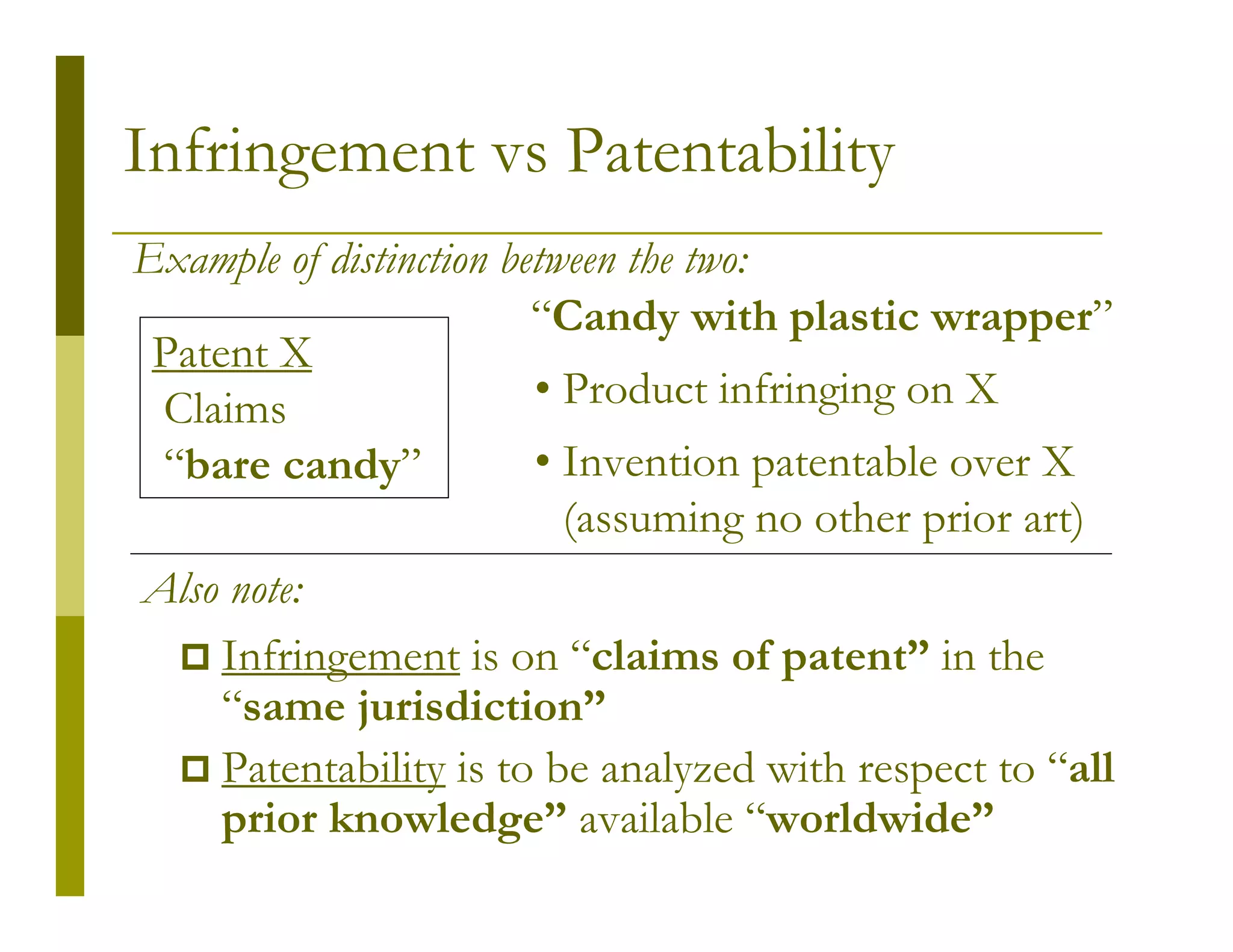
Infringement vs Patentability
Example of distinction between the two:
                         “Candy with plastic wrapper”
 Patent X
 Claims                  • Product infringing on X
 “bare candy”            • Invention patentable over X
                           (assuming no other prior art)
Also note:
    Infringement is on “claims of patent” in the
    “same jurisdiction”
    Patentability is to be analyzed with respect to “all
    prior knowledge” available “worldwide”
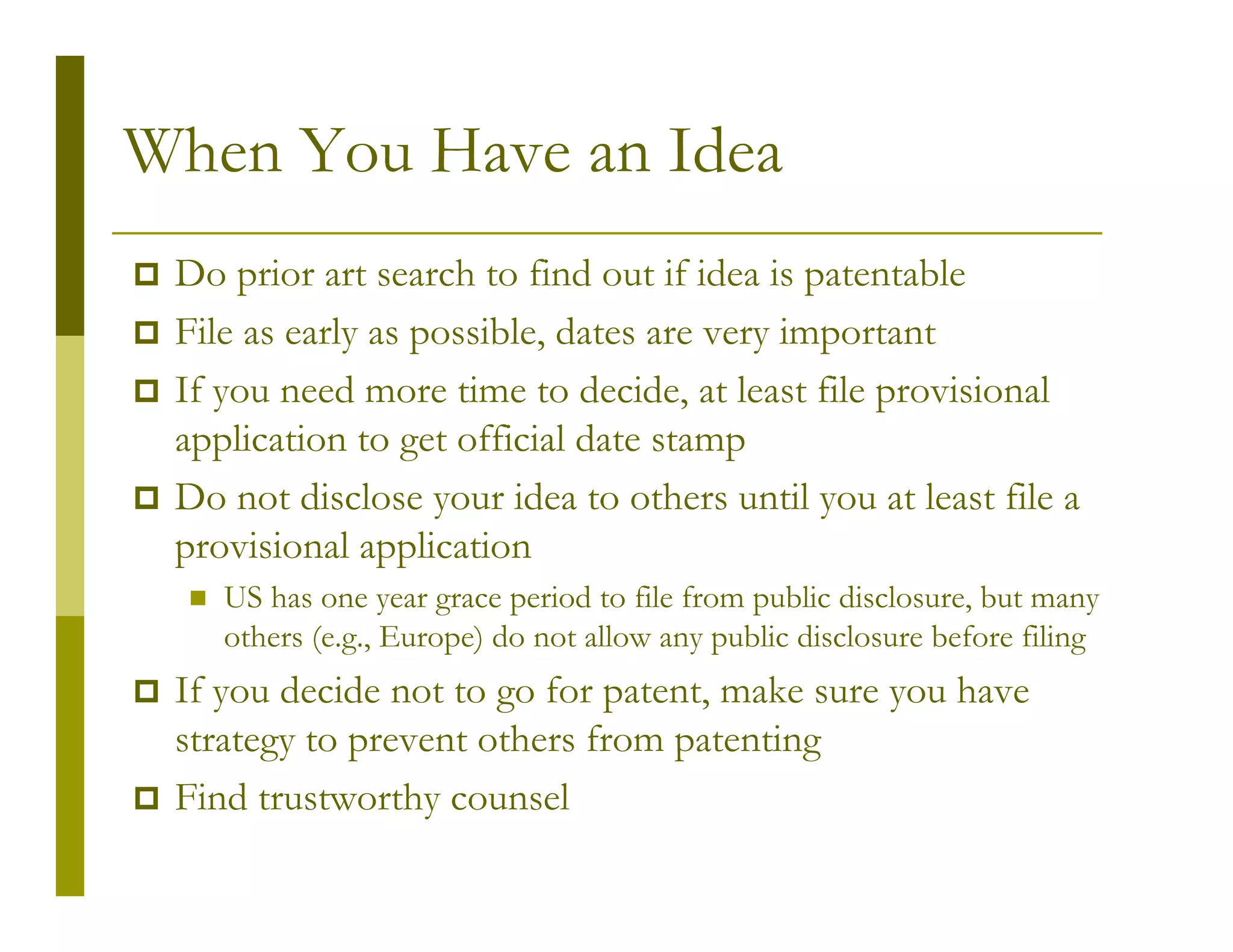
When You Have an Idea
 Do prior art search to find out if idea is patentable
 File as early as possible, dates are very important
 If you need more time to decide, at least file provisional
 application to get official date stamp
 Do not disclose your idea to others until you at least file a
 provisional application
    US has one year grace period to file from public disclosure, but many
    others (e.g., Europe) do not allow any public disclosure before filing
 If you decide not to go for patent, make sure you have
 strategy to prevent others from patenting
 Find trustworthy counsel
Thank You.

Become Patent-smart Entrepreneur

  • 1.
    Become Patent-Smart Entrepreneur! Hemant Chaskar Inventor, US Patent Office Agent, and Director at Leading Tech Startup
  • 2.
    Note, Not ADisclaimer This presentation is not designed for IP law practitioners or students Rather it offers practical knowledge on patents for business professionals
  • 3.
    IP Alphabet Soup Patents Trademarks Inventions Distinguishing marks They Are All Independent Entities! Copyrights Trade Secrets Tangible expressions Company secrets
  • 4.
    Patent Right “Rightto exclude” others from - Making - Using - Selling - Offering for sale - Importing the patented invention.
  • 5.
    Jurisdiction US Patent valid only in US etc. There is nothing called “International Patent” • PCT and Paris Convention are procedures to facilitate patent filing in different countries Each country processes (examines) separately May get patent in India, but not in US etc.
  • 6.
    Obtaining Patent (Prosecution) File invention description Patent Pending with patent office Time ~ 3-4 Yrs - Sets the date of invention Cost ~ upto Right $10K vests Patent office assesses it (for US patent) from over prior art filing Arguments/counter-arguments date … Patent may be granted Patented Validity: 20 Yrs
  • 7.
    What Is Patentable Inprinciple: Process, Machine, Article, Composition, Plant. Interpretations differ in different countries. Abstract concepts, (laws of) nature are out of scope everywhere. Less Tangible Inventions “Bilski” Case: (Business processes, data Currently waiting for analysis technique etc.) USA word from U.S. Processes More Tangible implemented Supreme Court, Inventions (Machines, by software about clarification of devices, substances, “tangibility” in U.S. chemical processes, engineered plants etc.) Others (with different country-specific scopes)
  • 8.
    What Is Patentable Useful in practice Implementable Result need not be perfect Working prototype need not be ready Combination can be patentable even if individual components are well known Does not have to be ground breaking discovery But needs to be novel and non-obvious over prior art Should be able to convince patent examiner!
  • 9.
    Practical Use ofPatents Assertion/Licensing Likelihood Credible Defense Negotiating lever Projecting good image Self-satisfaction
  • 10.
    Hard Realities ofAssertion/Licensing Having patent does not mean you can wield it Your patent can be invalidated Your opponent can counter-sue Settlements (licensing) are hard to come through Court remedy may be too rough to handle From time, money, intensity and uncertainty perspective You (small fish) may have to sign up “patent troll”
  • 11.
    Countering Opponent’s Patents Try to design around Look for prior art (or other issues) which can invalidate the patent Maintain your patent or other instrument as counter Assess if the opponent can really go for court remedy License if nothing of these work
  • 12.
    How to ReadPatent Understand claims, claims are the only thing which define scope of patent There are independent claims and dependent claims which depend from independent claim, e.g., Claim 23: “A process comprising steps A, B and C.” Claim 24: “The process of claim 23 further comprising step D.” All processes which perform A, B, C and possibly more steps Claim 23 scope All processes which perform A, B, C, D and possibly more Claim 24 scope steps
  • 13.
    What Causes Infringement E.g., Claim 23: A, B, C Infringement Process with steps A, B, C, X, Y, Z on Claim 23 E.g., Claim 23: A, B, C No Infringement Process with steps A, B, _, X, Y, Z on Claim 23 Infringement on any one claim of patent causes infringement on patent
  • 14.
    Infringement vs Patentability Exampleof distinction between the two: “Candy with plastic wrapper” Patent X Claims • Product infringing on X “bare candy” • Invention patentable over X (assuming no other prior art) Also note: Infringement is on “claims of patent” in the “same jurisdiction” Patentability is to be analyzed with respect to “all prior knowledge” available “worldwide”
  • 15.
    When You Havean Idea Do prior art search to find out if idea is patentable File as early as possible, dates are very important If you need more time to decide, at least file provisional application to get official date stamp Do not disclose your idea to others until you at least file a provisional application US has one year grace period to file from public disclosure, but many others (e.g., Europe) do not allow any public disclosure before filing If you decide not to go for patent, make sure you have strategy to prevent others from patenting Find trustworthy counsel
  • 16.