Connecting Industry & Science … PATENTS Introduction & Databases
Today’s Presenters Photo Photo Abhishek Pandurangi Patent Consultant B.Tech (Dyes) UICT  &  LL.B (2011) [email_address]   Ph: +919869869802 Karan Kabra Founder of Sciffer Technologies B.Tech (Foods) UICT [email_address]   Ph: +919833545477
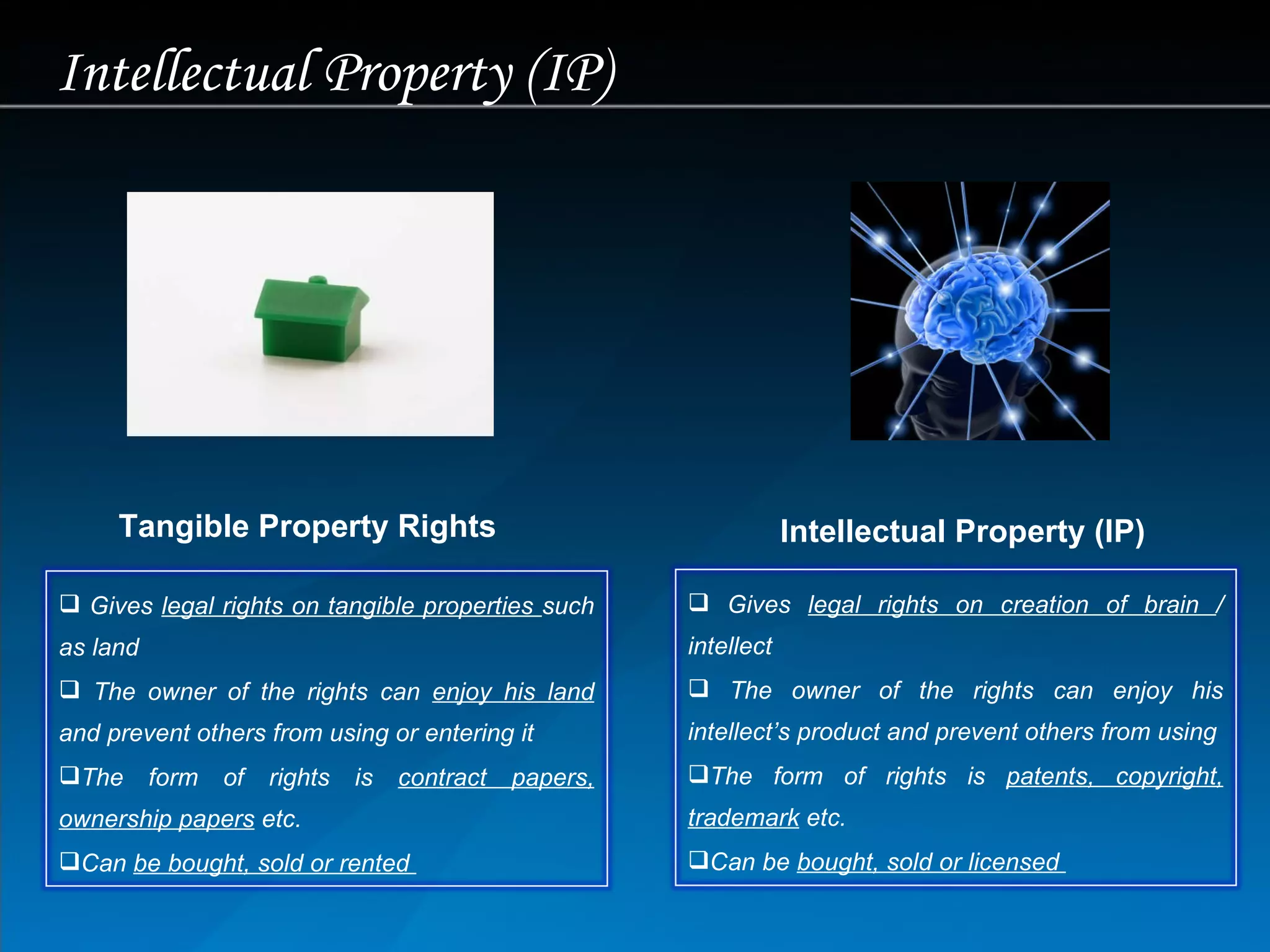
Intellectual Property (IP) Tangible Property Rights Intellectual Property (IP) Gives  legal rights on tangible properties  such as land The owner of the rights can  enjoy his land  and prevent others from using or entering it The form of rights is  contract papers, ownership papers  etc. Can  be bought, sold or rented  Gives  legal rights on creation of brain  / intellect The owner of the rights can enjoy his intellect’s product and prevent others from using The form of rights is  patents, copyright, trademark  etc. Can be  bought, sold or licensed
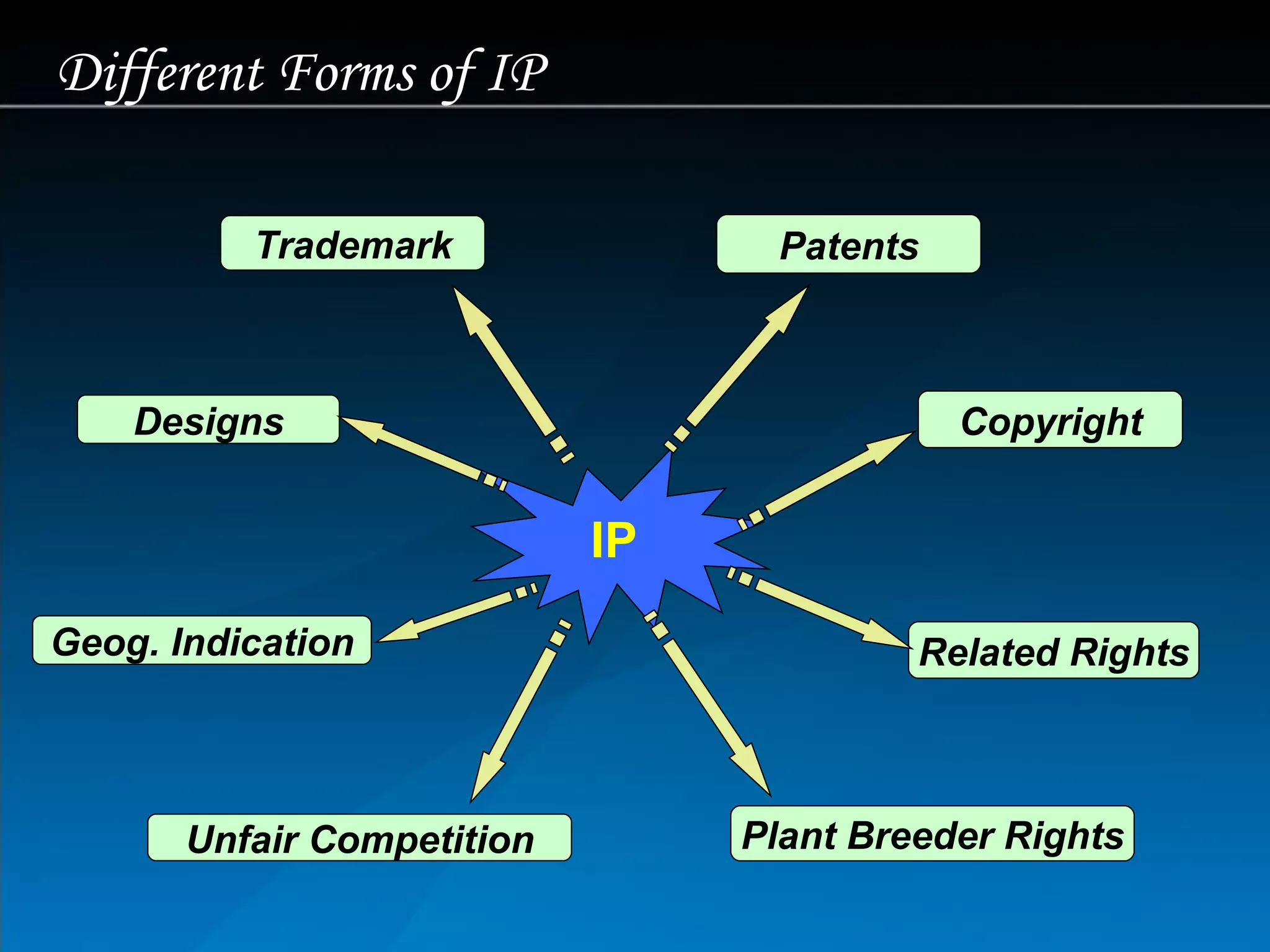
IP Geog. Indication Patents Copyright Trademark Designs Related Rights Plant Breeder Rights Unfair Competition Different Forms of IP
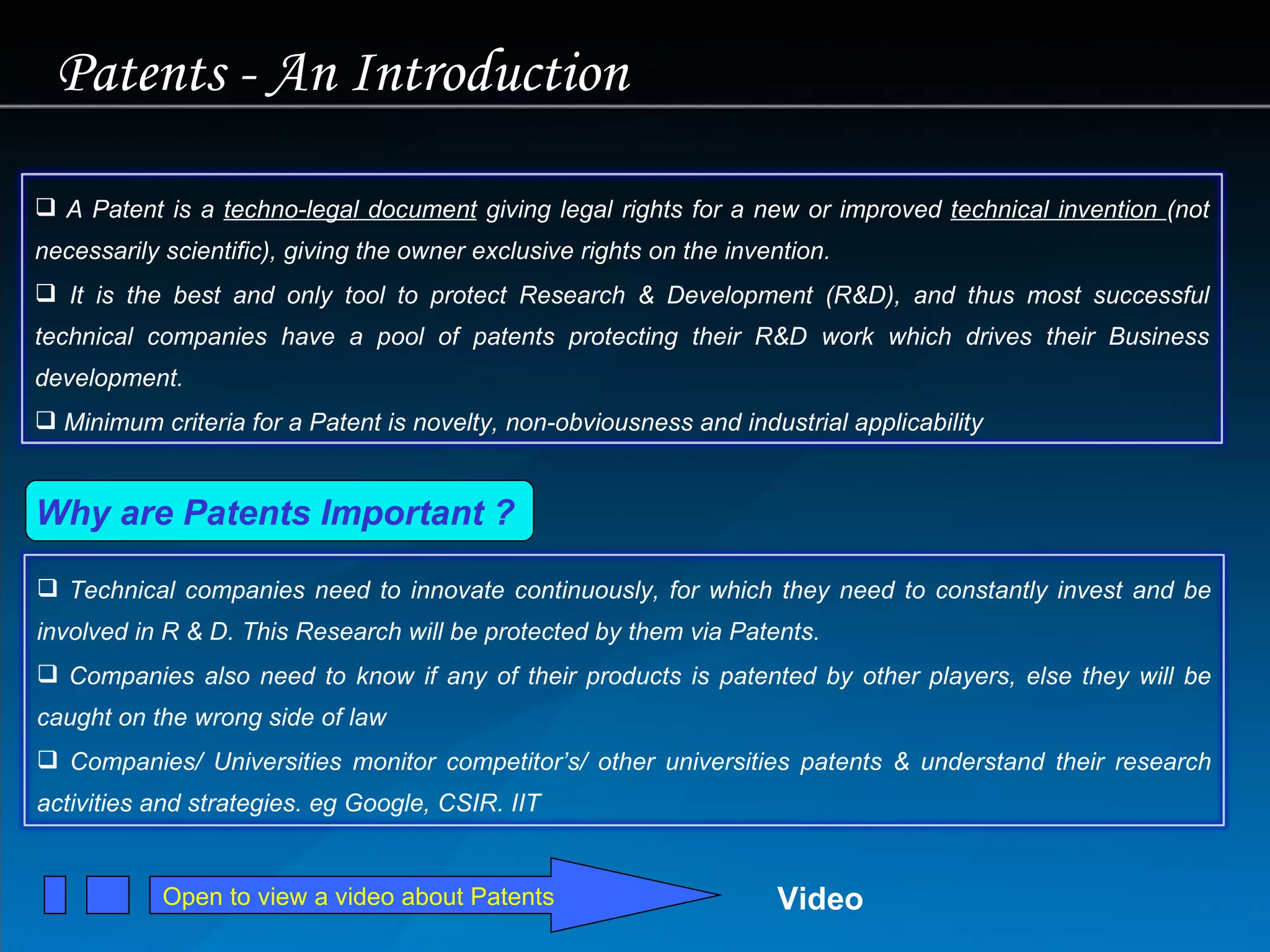
Open to view a video about Patents Why are Patents Important ?  Patents - An Introduction Video A Patent is a  techno-legal document  giving legal rights for a new or improved  technical invention  (not necessarily scientific), giving the owner exclusive rights on the invention.  It is the best and only tool to protect Research & Development (R&D), and thus most successful technical companies have a pool of patents protecting their R&D work which drives their Business development. Minimum criteria for a Patent is novelty, non-obviousness and industrial applicability Technical companies need to innovate continuously, for which they need to constantly invest and be involved in R & D. This Research will be protected by them via Patents. Companies also need to know if any of their products is patented by other players, else they will be caught on the wrong side of law Companies/ Universities monitor competitor’s/ other universities patents & understand their research activities and strategies. eg Google, CSIR. IIT
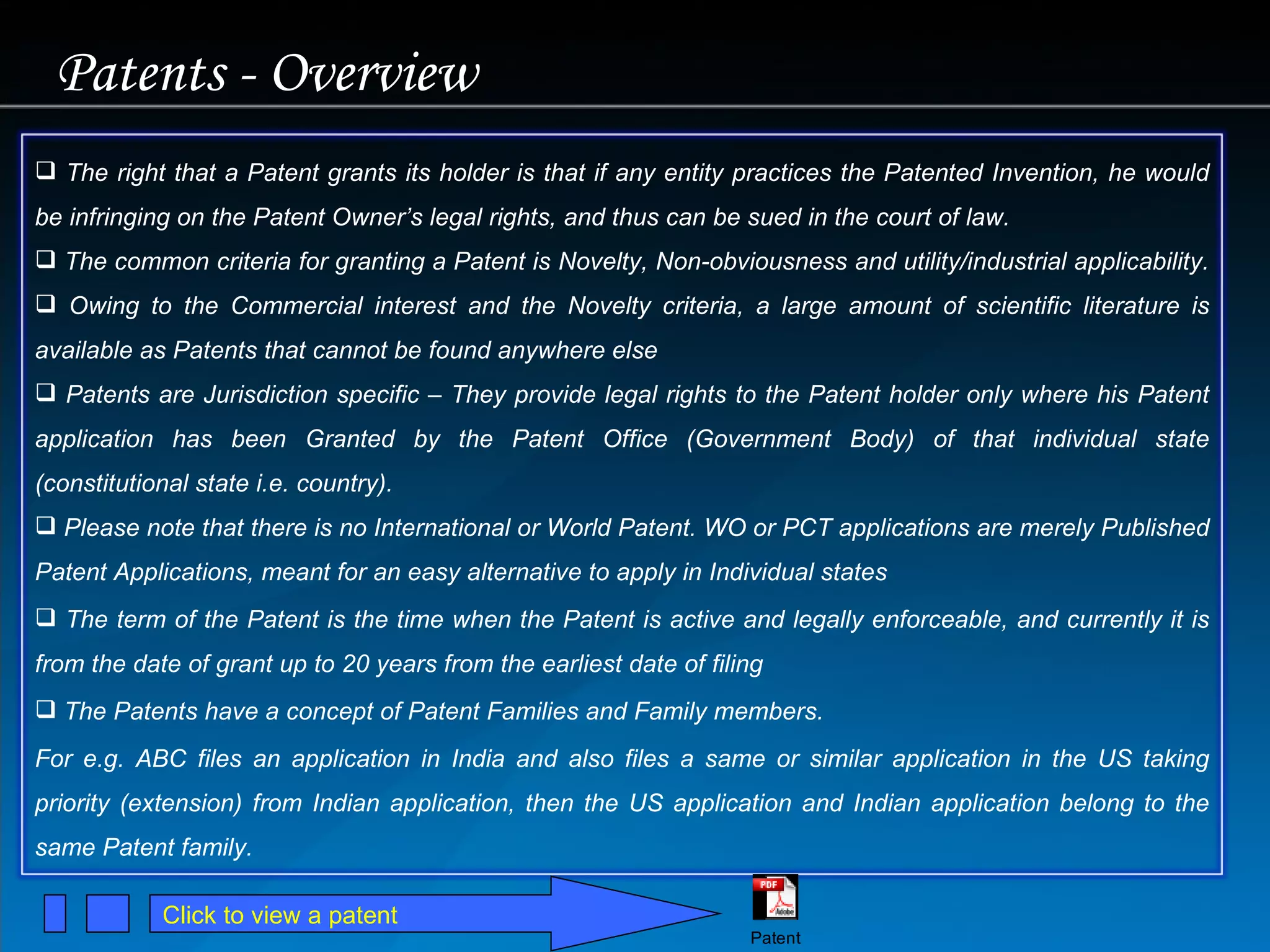
Patents - Overview Click to view a patent The right that a Patent grants its holder is that if any entity practices the Patented Invention, he would be infringing on the Patent Owner’s legal rights, and thus can be sued in the court of law. The common criteria for granting a Patent is Novelty, Non-obviousness and utility/industrial applicability.  Owing to the Commercial interest and the Novelty criteria, a large amount of scientific literature is available as Patents that cannot be found anywhere else Patents are Jurisdiction specific – They provide legal rights to the Patent holder only where his Patent application has been Granted by the Patent Office (Government Body) of that individual state (constitutional state i.e. country).  Please note that there is no International or World Patent. WO or PCT applications are merely Published Patent Applications, meant for an easy alternative to apply in Individual states The term of the Patent is the time when the Patent is active and legally enforceable, and currently it is from the date of grant up to 20 years from the earliest date of filing The Patents have a concept of Patent Families and Family members.  For e.g. ABC files an application in India and also files a same or similar application in the US taking priority (extension) from Indian application, then the US application and Indian application belong to the same Patent family.
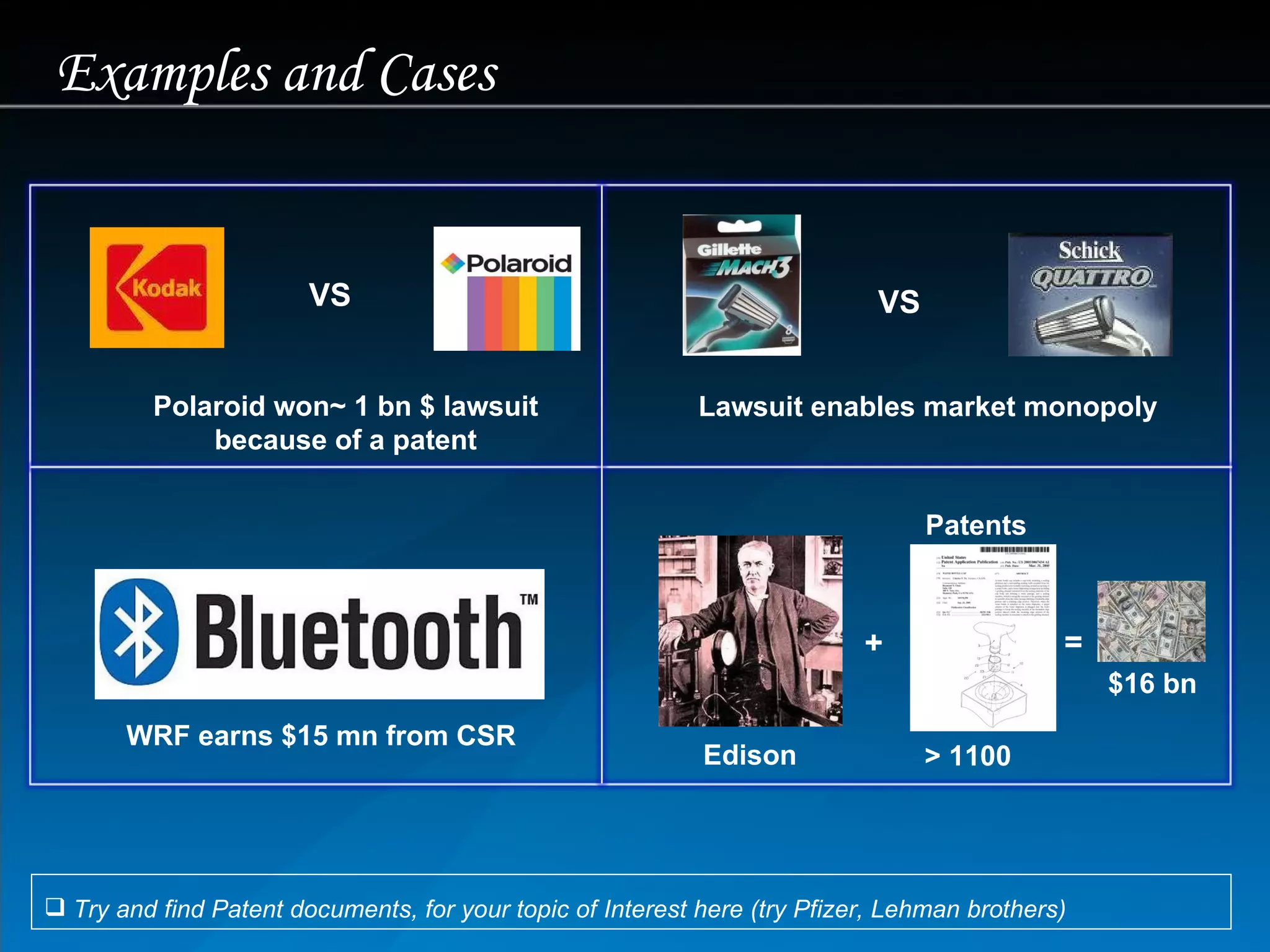
Try and find Patent documents, for your topic of Interest  here  (try Pfizer, Lehman brothers) Polaroid won~ 1 bn $ lawsuit because of a patent VS Edison + > 1100  = $16 bn VS Lawsuit enables market monopoly Patents WRF earns $15 mn from CSR Examples and Cases
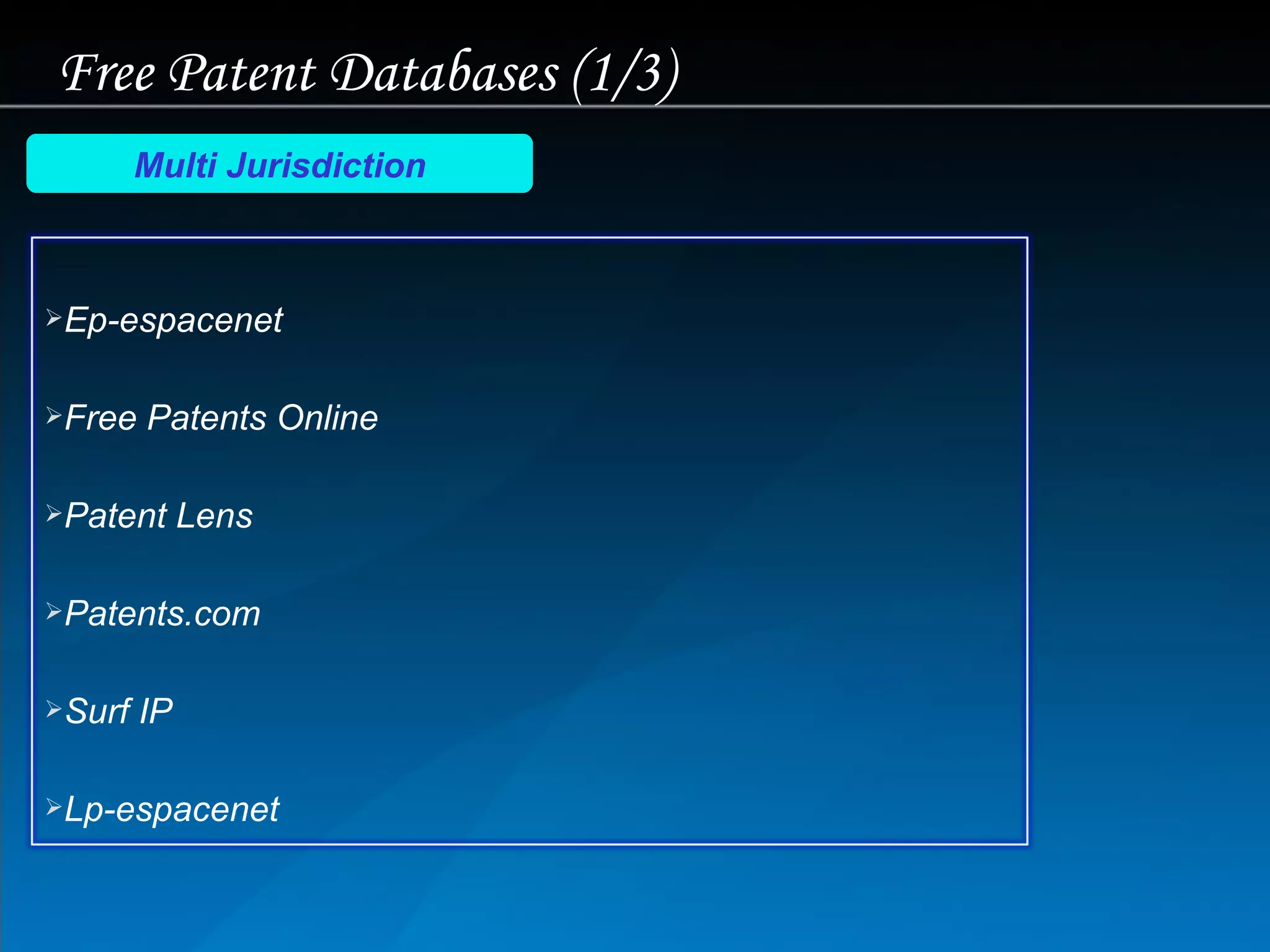
Free Patent Databases (1/3) Multi Jurisdiction Ep-espacenet Free Patents Online Patent Lens Patents.com Surf IP Lp-espacenet
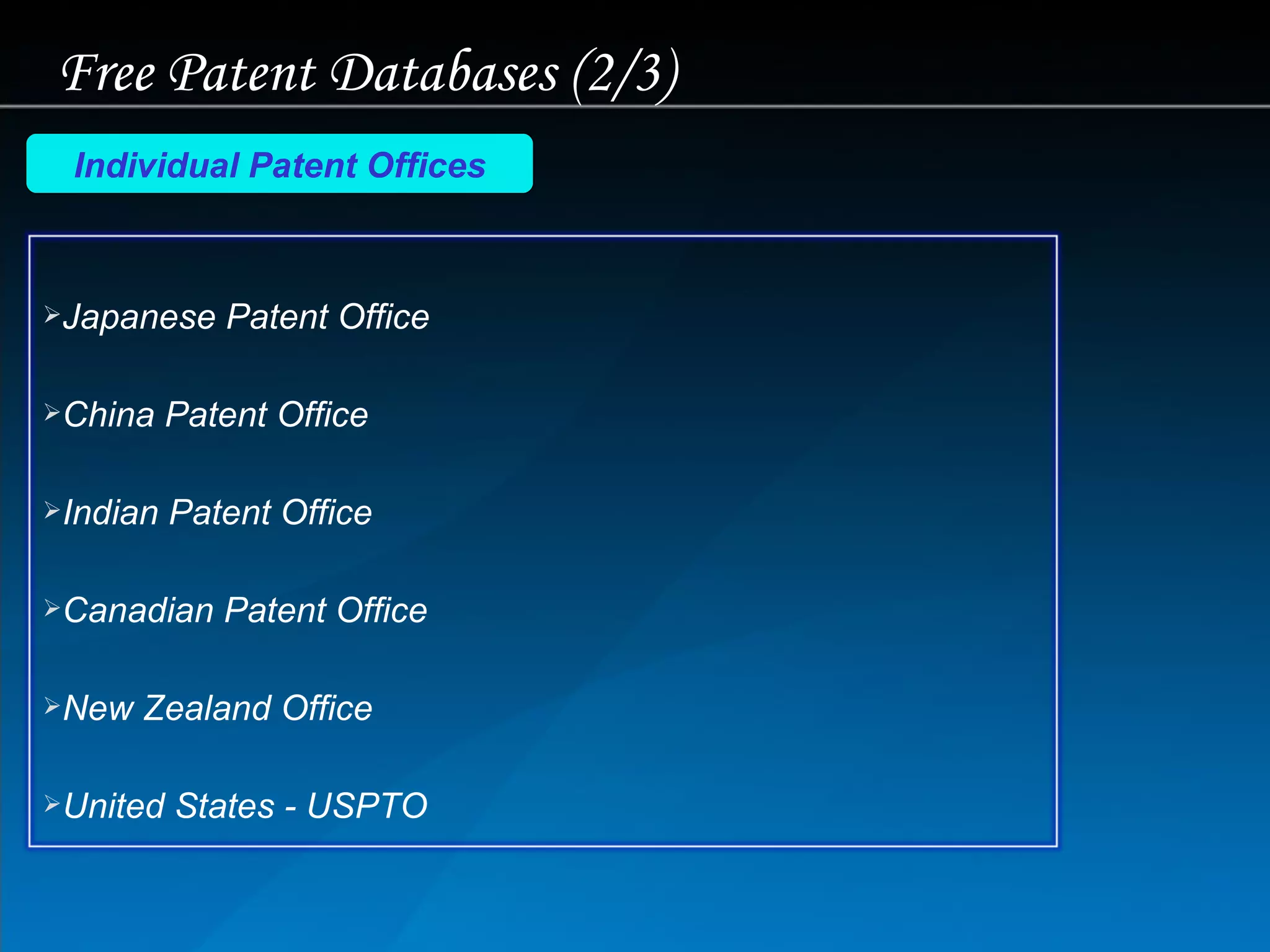
Free Patent Databases (2/3) Individual Patent Offices Japanese Patent Office China Patent Office Indian Patent Office Canadian Patent Office New Zealand Office United  States - USPTO
Free Patent Databases (3/3) Other Useful Sources Google Patents IPNewsFlash PriorSmart.com USPTO PAIR USPTO Assignment Database EPOline  Register Plus
Free Non-Patent Databases  Full Text Non Patent Sources The most common Non-Patent sources used are Science Direct, Scirus, Google Scholar Engines, Inter Wiley Science etc. However, the biggest problem  with most of the sources is non-availability of Full Text information freely.  Above are some of the sources providing Full Text information in most cases DOAJ ABC Chemistry JStage Journal Archive  (Japan Sources)
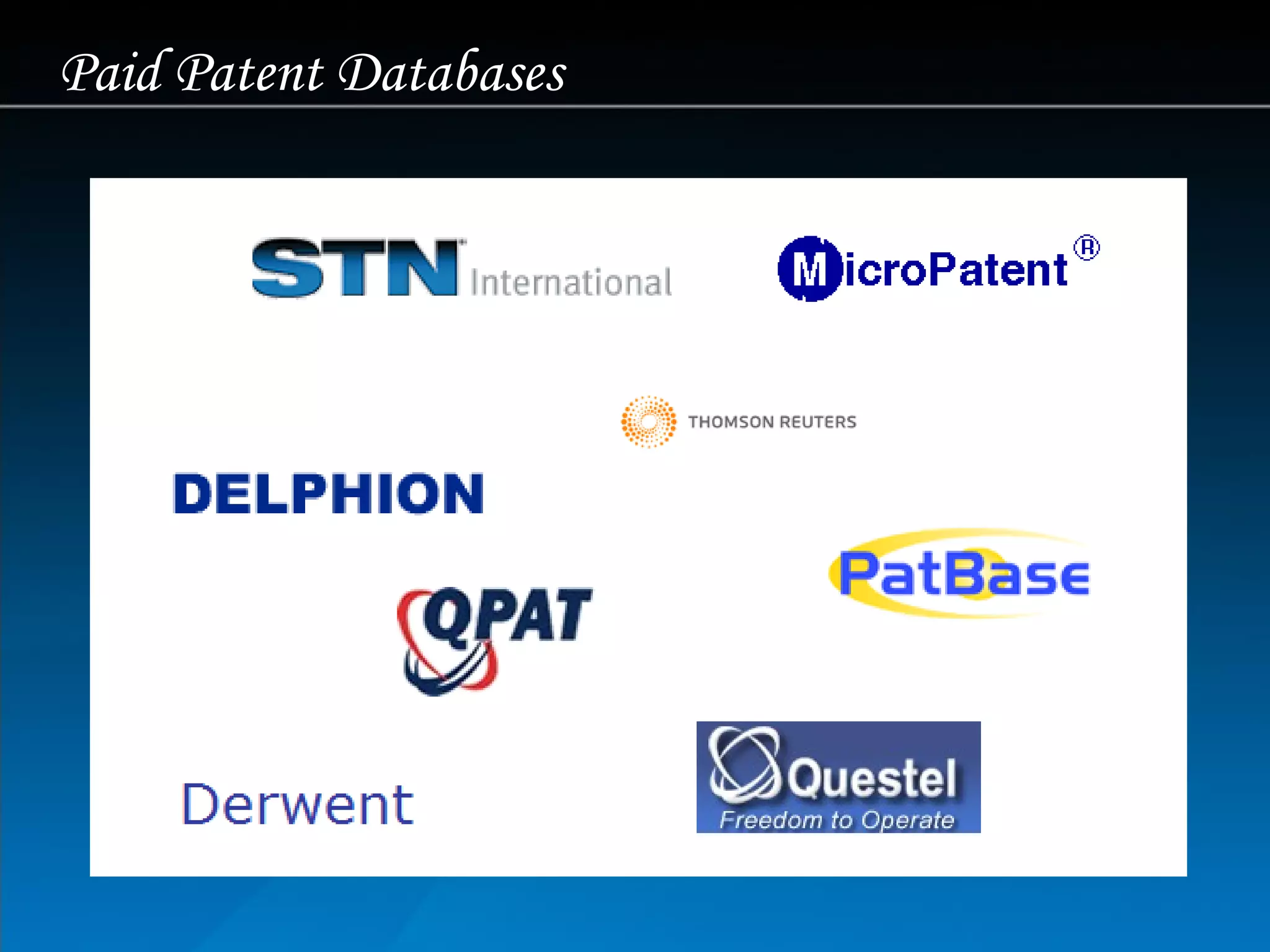
Paid Patent Databases
Questions ?? THANK YOU

Patents - Introduction & Free Database And Sources

  • 1.
    Connecting Industry &Science … PATENTS Introduction & Databases
  • 2.
    Today’s Presenters PhotoPhoto Abhishek Pandurangi Patent Consultant B.Tech (Dyes) UICT & LL.B (2011) [email_address] Ph: +919869869802 Karan Kabra Founder of Sciffer Technologies B.Tech (Foods) UICT [email_address] Ph: +919833545477
  • 3.
    Intellectual Property (IP)Tangible Property Rights Intellectual Property (IP) Gives legal rights on tangible properties such as land The owner of the rights can enjoy his land and prevent others from using or entering it The form of rights is contract papers, ownership papers etc. Can be bought, sold or rented Gives legal rights on creation of brain / intellect The owner of the rights can enjoy his intellect’s product and prevent others from using The form of rights is patents, copyright, trademark etc. Can be bought, sold or licensed
  • 4.
    IP Geog. IndicationPatents Copyright Trademark Designs Related Rights Plant Breeder Rights Unfair Competition Different Forms of IP
  • 5.
    Open to viewa video about Patents Why are Patents Important ? Patents - An Introduction Video A Patent is a techno-legal document giving legal rights for a new or improved technical invention (not necessarily scientific), giving the owner exclusive rights on the invention. It is the best and only tool to protect Research & Development (R&D), and thus most successful technical companies have a pool of patents protecting their R&D work which drives their Business development. Minimum criteria for a Patent is novelty, non-obviousness and industrial applicability Technical companies need to innovate continuously, for which they need to constantly invest and be involved in R & D. This Research will be protected by them via Patents. Companies also need to know if any of their products is patented by other players, else they will be caught on the wrong side of law Companies/ Universities monitor competitor’s/ other universities patents & understand their research activities and strategies. eg Google, CSIR. IIT
  • 6.
    Patents - OverviewClick to view a patent The right that a Patent grants its holder is that if any entity practices the Patented Invention, he would be infringing on the Patent Owner’s legal rights, and thus can be sued in the court of law. The common criteria for granting a Patent is Novelty, Non-obviousness and utility/industrial applicability. Owing to the Commercial interest and the Novelty criteria, a large amount of scientific literature is available as Patents that cannot be found anywhere else Patents are Jurisdiction specific – They provide legal rights to the Patent holder only where his Patent application has been Granted by the Patent Office (Government Body) of that individual state (constitutional state i.e. country). Please note that there is no International or World Patent. WO or PCT applications are merely Published Patent Applications, meant for an easy alternative to apply in Individual states The term of the Patent is the time when the Patent is active and legally enforceable, and currently it is from the date of grant up to 20 years from the earliest date of filing The Patents have a concept of Patent Families and Family members. For e.g. ABC files an application in India and also files a same or similar application in the US taking priority (extension) from Indian application, then the US application and Indian application belong to the same Patent family.
  • 7.
    Try and findPatent documents, for your topic of Interest here (try Pfizer, Lehman brothers) Polaroid won~ 1 bn $ lawsuit because of a patent VS Edison + > 1100 = $16 bn VS Lawsuit enables market monopoly Patents WRF earns $15 mn from CSR Examples and Cases
  • 8.
    Free Patent Databases(1/3) Multi Jurisdiction Ep-espacenet Free Patents Online Patent Lens Patents.com Surf IP Lp-espacenet
  • 9.
    Free Patent Databases(2/3) Individual Patent Offices Japanese Patent Office China Patent Office Indian Patent Office Canadian Patent Office New Zealand Office United States - USPTO
  • 10.
    Free Patent Databases(3/3) Other Useful Sources Google Patents IPNewsFlash PriorSmart.com USPTO PAIR USPTO Assignment Database EPOline Register Plus
  • 11.
    Free Non-Patent Databases Full Text Non Patent Sources The most common Non-Patent sources used are Science Direct, Scirus, Google Scholar Engines, Inter Wiley Science etc. However, the biggest problem with most of the sources is non-availability of Full Text information freely. Above are some of the sources providing Full Text information in most cases DOAJ ABC Chemistry JStage Journal Archive (Japan Sources)
  • 12.
  • 13.