PARIS
THE CITY OF LIGHTS
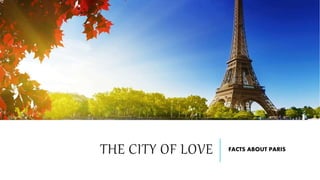
THE CITY OF LOVE FACTS ABOUT PARIS
INTRODUCTION
Paris is one of the most popular
cities among travelers. Known as
the “City of Light” or the “City of
Love,” the streets of Paris
overflow with culture, art, beauty,
and history. Paris is a city that
captures the hearts of millions
ever year.
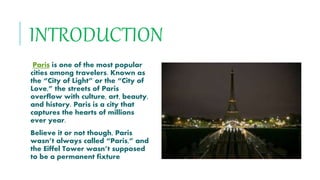
Believe it or not though, Paris
wasn’t always called “Paris,” and
the Eiffel Tower wasn’t supposed
to be a permanent fixture
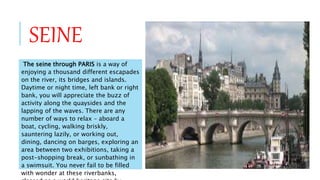
SEINE
The seine through PARIS is a way of
enjoying a thousand different escapades
on the river, its bridges and islands.
Daytime or night time, left bank or right
bank, you will appreciate the buzz of
activity along the quaysides and the
lapping of the waves. There are any
number of ways to relax – aboard a
boat, cycling, walking briskly,
sauntering lazily, or working out,
dining, dancing on barges, exploring an
area between two exhibitions, taking a
post-shopping break, or sunbathing in
a swimsuit. You never fail to be filled
with wonder at these riverbanks,
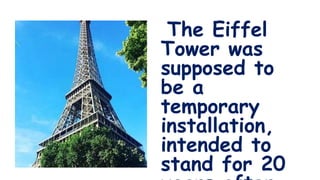
The Eiffel
Tower was
supposed to
be a
temporary
installation,
intended to
stand for 20
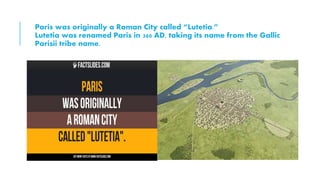
Paris was originally a Roman City called “Lutetia.”
Lutetia was renamed Paris in 360 AD, taking its name from the Gallic
Parisii tribe name.
DO YOU KNOW ?
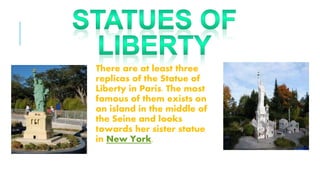
There are at least three
replicas of the Statue of
Liberty in Paris. The most
famous of them exists on
an island in the middle of
the Seine and looks
towards her sister statue
in New York.
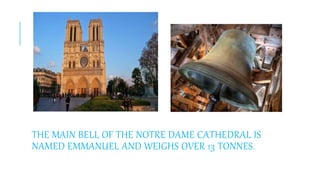
THE MAIN BELL OF THE NOTRE DAME CATHEDRAL IS
NAMED EMMANUEL AND WEIGHS OVER 13 TONNES.
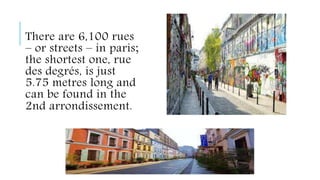
There are 6,100 rues
– or streets – in paris;
the shortest one, rue
des degrés, is just
5.75 metres long and
can be found in the
2nd arrondissement.
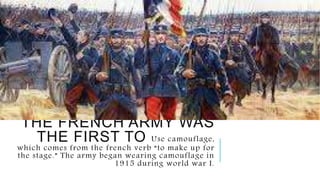
THE FRENCH ARMY WAS
THE FIRST TO Use camouflage,
which comes from the french verb “to make up for
the stage.” The army began wearing camouflage in
1915 during world war I.
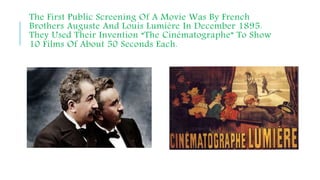
The First Public Screening Of A Movie Was By French
Brothers Auguste And Louis Lumière In December 1895.
They Used Their Invention “The Cinématographe” To Show
10 Films Of About 50 Seconds Each.
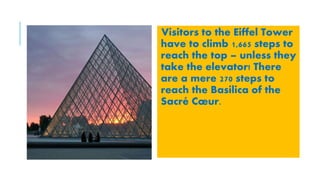
Visitors to the Eiffel Tower
have to climb 1,665 steps to
reach the top – unless they
take the elevator! There
are a mere 270 steps to
reach the Basilica of the
Sacré Cœur.

PARIS

  • 1.
  • 2.
    THE CITY OFLOVE FACTS ABOUT PARIS
  • 4.
    INTRODUCTION Paris is oneof the most popular cities among travelers. Known as the “City of Light” or the “City of Love,” the streets of Paris overflow with culture, art, beauty, and history. Paris is a city that captures the hearts of millions ever year. Believe it or not though, Paris wasn’t always called “Paris,” and the Eiffel Tower wasn’t supposed to be a permanent fixture
  • 5.
    SEINE The seine throughPARIS is a way of enjoying a thousand different escapades on the river, its bridges and islands. Daytime or night time, left bank or right bank, you will appreciate the buzz of activity along the quaysides and the lapping of the waves. There are any number of ways to relax – aboard a boat, cycling, walking briskly, sauntering lazily, or working out, dining, dancing on barges, exploring an area between two exhibitions, taking a post-shopping break, or sunbathing in a swimsuit. You never fail to be filled with wonder at these riverbanks,
  • 7.
    The Eiffel Tower was supposedto be a temporary installation, intended to stand for 20
  • 8.
    Paris was originallya Roman City called “Lutetia.” Lutetia was renamed Paris in 360 AD, taking its name from the Gallic Parisii tribe name.
  • 9.
  • 10.
    There are atleast three replicas of the Statue of Liberty in Paris. The most famous of them exists on an island in the middle of the Seine and looks towards her sister statue in New York.
  • 12.
    THE MAIN BELLOF THE NOTRE DAME CATHEDRAL IS NAMED EMMANUEL AND WEIGHS OVER 13 TONNES.
  • 13.
    There are 6,100rues – or streets – in paris; the shortest one, rue des degrés, is just 5.75 metres long and can be found in the 2nd arrondissement.
  • 14.
    THE FRENCH ARMYWAS THE FIRST TO Use camouflage, which comes from the french verb “to make up for the stage.” The army began wearing camouflage in 1915 during world war I.
  • 15.
    The First PublicScreening Of A Movie Was By French Brothers Auguste And Louis Lumière In December 1895. They Used Their Invention “The Cinématographe” To Show 10 Films Of About 50 Seconds Each.
  • 16.
    Visitors to theEiffel Tower have to climb 1,665 steps to reach the top – unless they take the elevator! There are a mere 270 steps to reach the Basilica of the Sacré Cœur.