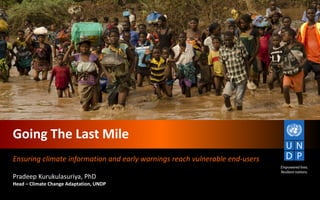
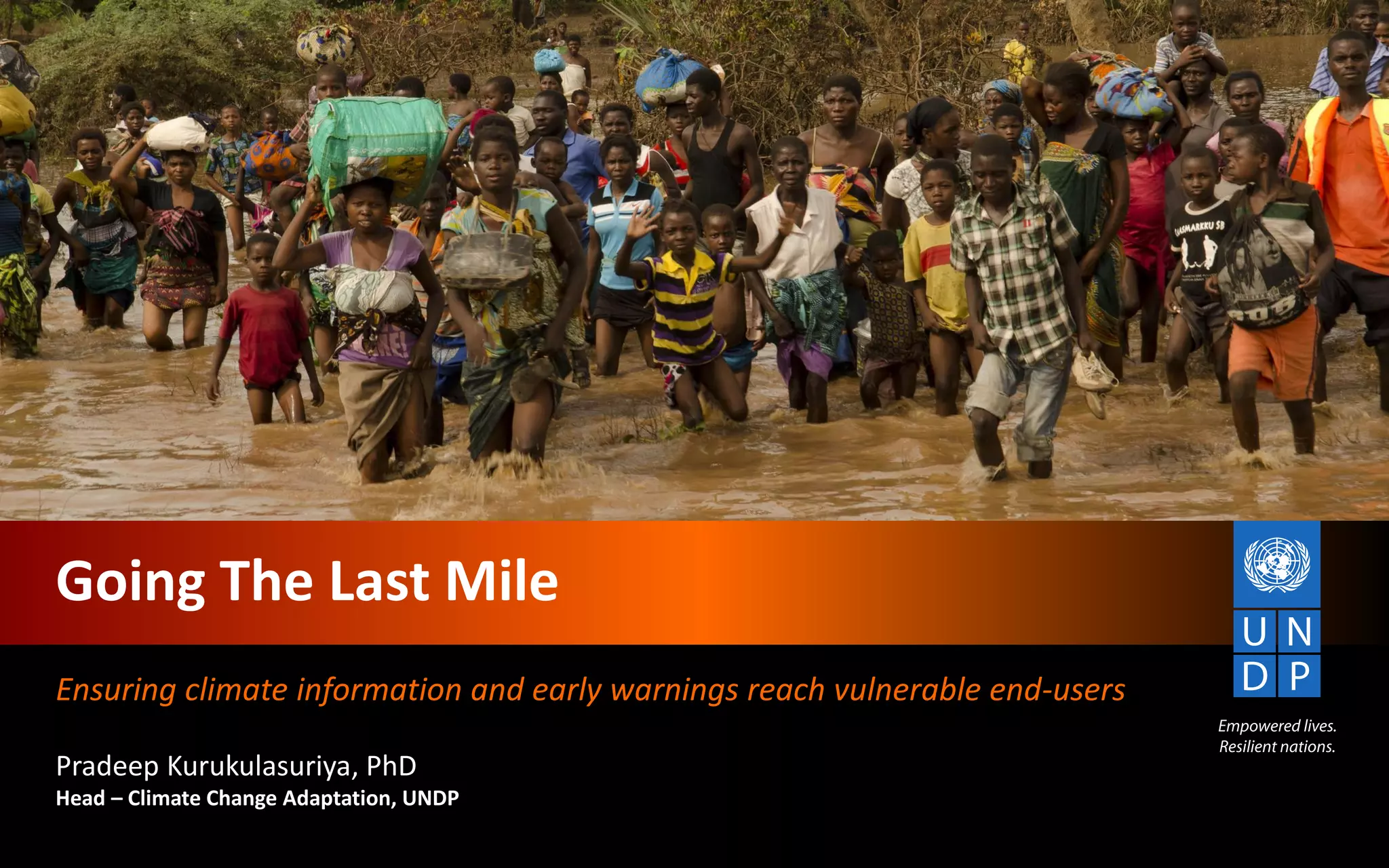
Going The Last Mile
Ensuring climate information and early warnings reach vulnerable end-users
Pradeep Kurukulasuriya, PhD
Head – Climate Change Adaptation, UNDP
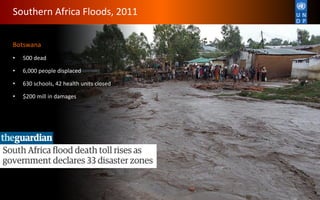
Botswana
• 500 dead
• 6,000 people displaced
• 630 schools, 42 health units closed
• $200 mill in damages
Southern Africa Floods, 2011
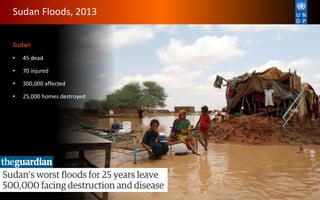
Sudan
• 45 dead
• 70 injured
• 300,000 affected
• 25,000 homes destroyed
Sudan Floods, 2013
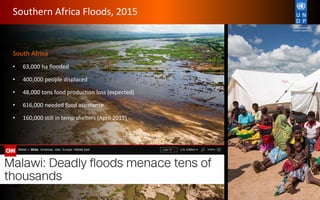
Southern Africa Floods, 2015
South Africa
• 63,000 ha flooded
• 400,000 people displaced
• 48,000 tons food production loss (expected)
• 616,000 needed food assistance
• 160,000 still in temp shelters (April 2015)
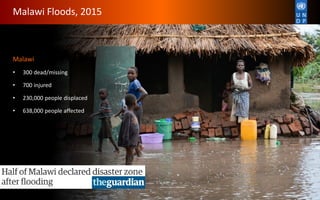
Malawi
• 300 dead/missing
• 700 injured
• 230,000 people displaced
• 638,000 people affected
Malawi Floods, 2015
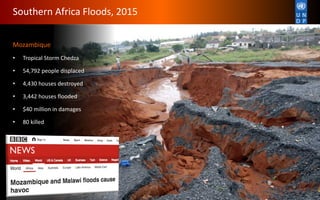
Mozambique
• Tropical Storm Chedza
• 54,792 people displaced
• 4,430 houses destroyed
• 3,442 houses flooded
• $40 million in damages
• 80 killed
Southern Africa Floods, 2015
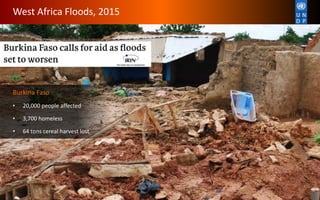
Burkina Faso
• 20,000 people affected
• 3,700 homeless
• 64 tons cereal harvest lost
West Africa Floods, 2015
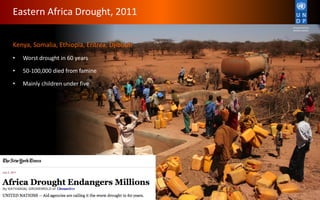
Kenya, Somalia, Ethiopia, Eritrea, Djibouti
• Worst drought in 60 years
• 50-100,000 died from famine
• Mainly children under five
Eastern Africa Drought, 2011
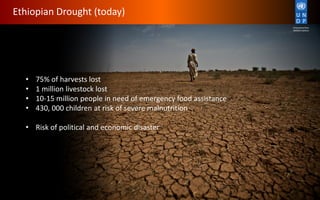
Ethiopian Drought (today)
• 75% of harvests lost
• 1 million livestock lost
• 10-15 million people in need of emergency food assistance
• 430, 000 children at risk of severe malnutrition
• Risk of political and economic disaster
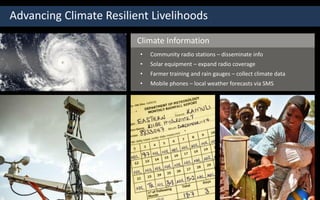
Advancing Climate Resilient Livelihoods
• Community radio stations – disseminate info
• Solar equipment – expand radio coverage
• Farmer training and rain gauges – collect climate data
• Mobile phones – local weather forecasts via SMS
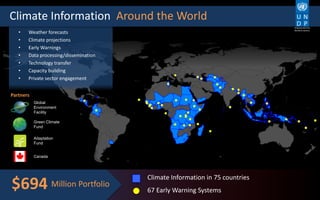
Climate Information
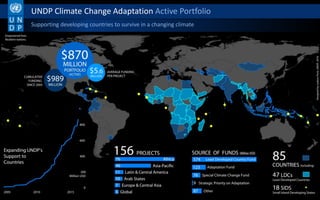
UNDP Climate Change Adaptation Active Portfolio
Supporting developing countries to survive in a changing climate
Climate Information in 75 countries
67 Early Warning Systems$694
• Weather forecasts
• Climate projections
• Early Warnings
• Data processing/dissemination
• Technology transfer
• Capacity building
• Private sector engagement
Million Portfolio
Empowered lives.
Resilient nations.
Green Climate
Fund
Adaptation
Fund
Global
Environment
Facility
Canada
Partners
Climate Information Around the World
Climate Information is a necessary
ingredient for supporting
adaptation
However, it alone is not sufficient
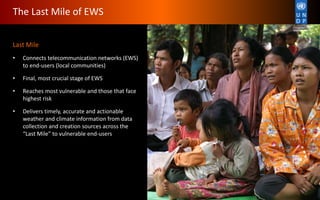
Last Mile
• Connects telecommunication networks (EWS)
to end-users (local communities)
• Final, most crucial stage of EWS
• Reaches most vulnerable and those that face
highest risk
• Delivers timely, accurate and actionable
weather and climate information from data
collection and creation sources across the
“Last Mile” to vulnerable end-users
The Last Mile of EWS
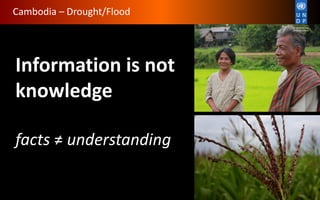
Cambodia – Drought/Flood
Information is not
knowledge
facts ≠ understanding
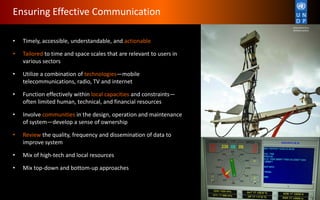
• Timely, accessible, understandable, and actionable
• Tailored to time and space scales that are relevant to users in
various sectors
• Utilize a combination of technologies—mobile
telecommunications, radio, TV and internet
• Function effectively within local capacities and constraints—
often limited human, technical, and financial resources
• Involve communities in the design, operation and maintenance
of system—develop a sense of ownership
• Review the quality, frequency and dissemination of data to
improve system
• Mix of high-tech and local resources
• Mix top-down and bottom-up approaches
Ensuring Effective Communication
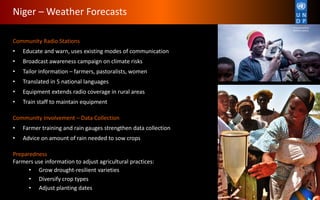
Community Radio Stations
• Educate and warn, uses existing modes of communication
• Broadcast awareness campaign on climate risks
• Tailor information – farmers, pastoralists, women
• Translated in 5 national languages
• Equipment extends radio coverage in rural areas
• Train staff to maintain equipment
Community Involvement – Data Collection
• Farmer training and rain gauges strengthen data collection
• Advice on amount of rain needed to sow crops
Preparedness
Farmers use information to adjust agricultural practices:
• Grow drought-resilient varieties
• Diversify crop types
• Adjust planting dates
Niger – Weather Forecasts
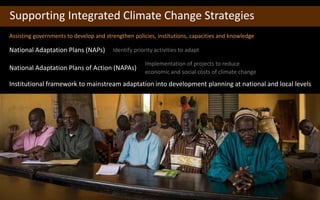
Supporting Integrated Climate Change Strategies
National Adaptation Plans (NAPs)
Implementation of projects to reduce
economic and social costs of climate change
Institutional framework to mainstream adaptation into development planning at national and local levels
Assisting governments to develop and strengthen policies, institutions, capacities and knowledge
National Adaptation Plans of Action (NAPAs)
Identify priority activities to adapt
Knowledge as the ability to recall data or information.
Comprehension is understanding. The ability to translate, interpolate, or
interpret and restate in one's own words is comprehension.
Application, which is the ability to apply something that was learned in a
new and different scenario.
Bloom (1956)
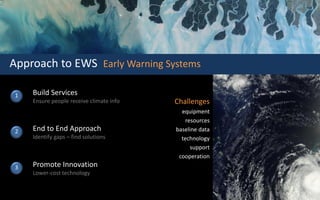
Build Services
Ensure people receive climate info
End to End Approach
Identify gaps – find solutions
Promote Innovation
Lower-cost technology
1
2
3
Challenges
equipment
resources
baseline data
technology
support
cooperation
Approach to EWS Early Warning Systems
Climate Information Lessons Learned
No ‘one-size fits all’
• Adapted for each country
• Mixture of low-cost
community-based EWS and
national systems
Different
• Information needs
• Country context
• Baseline infrastructure
• Existing capacity
Climate Info & EWS
• One component of a suite of
resilient actions
• Multiple communication
channels to ensure redundancy
Empowered lives.
Resilient nations.
Pradeep Kurukulasuriya
Head - Climate Change Adaptation
Bureau for Policy and Programme Support (BPPS)
United Nations Development Programme
Empowered lives.
For further information,
please contact:
Visit: www.adaptation-undp.org

Going the Last Mile

  • 1.
    Going The LastMile Ensuring climate information and early warnings reach vulnerable end-users Pradeep Kurukulasuriya, PhD Head – Climate Change Adaptation, UNDP
  • 2.
    Botswana • 500 dead •6,000 people displaced • 630 schools, 42 health units closed • $200 mill in damages Southern Africa Floods, 2011
  • 3.
    Sudan • 45 dead •70 injured • 300,000 affected • 25,000 homes destroyed Sudan Floods, 2013
  • 4.
    Southern Africa Floods,2015 South Africa • 63,000 ha flooded • 400,000 people displaced • 48,000 tons food production loss (expected) • 616,000 needed food assistance • 160,000 still in temp shelters (April 2015)
  • 5.
    Malawi • 300 dead/missing •700 injured • 230,000 people displaced • 638,000 people affected Malawi Floods, 2015
  • 6.
    Mozambique • Tropical StormChedza • 54,792 people displaced • 4,430 houses destroyed • 3,442 houses flooded • $40 million in damages • 80 killed Southern Africa Floods, 2015
  • 7.
    Burkina Faso • 20,000people affected • 3,700 homeless • 64 tons cereal harvest lost West Africa Floods, 2015
  • 8.
    Kenya, Somalia, Ethiopia,Eritrea, Djibouti • Worst drought in 60 years • 50-100,000 died from famine • Mainly children under five Eastern Africa Drought, 2011
  • 9.
    Ethiopian Drought (today) •75% of harvests lost • 1 million livestock lost • 10-15 million people in need of emergency food assistance • 430, 000 children at risk of severe malnutrition • Risk of political and economic disaster
  • 10.
    Advancing Climate ResilientLivelihoods • Community radio stations – disseminate info • Solar equipment – expand radio coverage • Farmer training and rain gauges – collect climate data • Mobile phones – local weather forecasts via SMS Climate Information
  • 11.
    UNDP Climate ChangeAdaptation Active Portfolio Supporting developing countries to survive in a changing climate
  • 12.
    Climate Information in75 countries 67 Early Warning Systems$694 • Weather forecasts • Climate projections • Early Warnings • Data processing/dissemination • Technology transfer • Capacity building • Private sector engagement Million Portfolio Empowered lives. Resilient nations. Green Climate Fund Adaptation Fund Global Environment Facility Canada Partners Climate Information Around the World
  • 13.
    Climate Information isa necessary ingredient for supporting adaptation However, it alone is not sufficient
  • 14.
    Last Mile • Connectstelecommunication networks (EWS) to end-users (local communities) • Final, most crucial stage of EWS • Reaches most vulnerable and those that face highest risk • Delivers timely, accurate and actionable weather and climate information from data collection and creation sources across the “Last Mile” to vulnerable end-users The Last Mile of EWS
  • 15.
    Cambodia – Drought/Flood Informationis not knowledge facts ≠ understanding
  • 16.
    • Timely, accessible,understandable, and actionable • Tailored to time and space scales that are relevant to users in various sectors • Utilize a combination of technologies—mobile telecommunications, radio, TV and internet • Function effectively within local capacities and constraints— often limited human, technical, and financial resources • Involve communities in the design, operation and maintenance of system—develop a sense of ownership • Review the quality, frequency and dissemination of data to improve system • Mix of high-tech and local resources • Mix top-down and bottom-up approaches Ensuring Effective Communication
  • 17.
    Community Radio Stations •Educate and warn, uses existing modes of communication • Broadcast awareness campaign on climate risks • Tailor information – farmers, pastoralists, women • Translated in 5 national languages • Equipment extends radio coverage in rural areas • Train staff to maintain equipment Community Involvement – Data Collection • Farmer training and rain gauges strengthen data collection • Advice on amount of rain needed to sow crops Preparedness Farmers use information to adjust agricultural practices: • Grow drought-resilient varieties • Diversify crop types • Adjust planting dates Niger – Weather Forecasts
  • 18.
    Supporting Integrated ClimateChange Strategies National Adaptation Plans (NAPs) Implementation of projects to reduce economic and social costs of climate change Institutional framework to mainstream adaptation into development planning at national and local levels Assisting governments to develop and strengthen policies, institutions, capacities and knowledge National Adaptation Plans of Action (NAPAs) Identify priority activities to adapt
  • 19.
    Knowledge as theability to recall data or information. Comprehension is understanding. The ability to translate, interpolate, or interpret and restate in one's own words is comprehension. Application, which is the ability to apply something that was learned in a new and different scenario. Bloom (1956)
  • 20.
    Build Services Ensure peoplereceive climate info End to End Approach Identify gaps – find solutions Promote Innovation Lower-cost technology 1 2 3 Challenges equipment resources baseline data technology support cooperation Approach to EWS Early Warning Systems
  • 21.
    Climate Information LessonsLearned No ‘one-size fits all’ • Adapted for each country • Mixture of low-cost community-based EWS and national systems Different • Information needs • Country context • Baseline infrastructure • Existing capacity Climate Info & EWS • One component of a suite of resilient actions • Multiple communication channels to ensure redundancy Empowered lives. Resilient nations.
  • 22.
    Pradeep Kurukulasuriya Head -Climate Change Adaptation Bureau for Policy and Programme Support (BPPS) United Nations Development Programme Empowered lives. For further information, please contact: Visit: www.adaptation-undp.org