Panel Data Analysis for Evaluation The
Significance of The factors Causing Environmental
Pollution
Prepared by
Abdulsamad Abulhameed Aubaid, Jalal Mustafa Hassan, Zahra Fakhir Ismael
2nd year/ Chemical Engineering Department
Supervised by
Prof. Dr. Ibtisam Kamal
Soran University/ Faculty of Engineering - Chemical Engineering Department
27th -28th May 2015
Contents
• Introduction
• Objectives
• Methodology
• Data Analysis
• Results
• conclusions
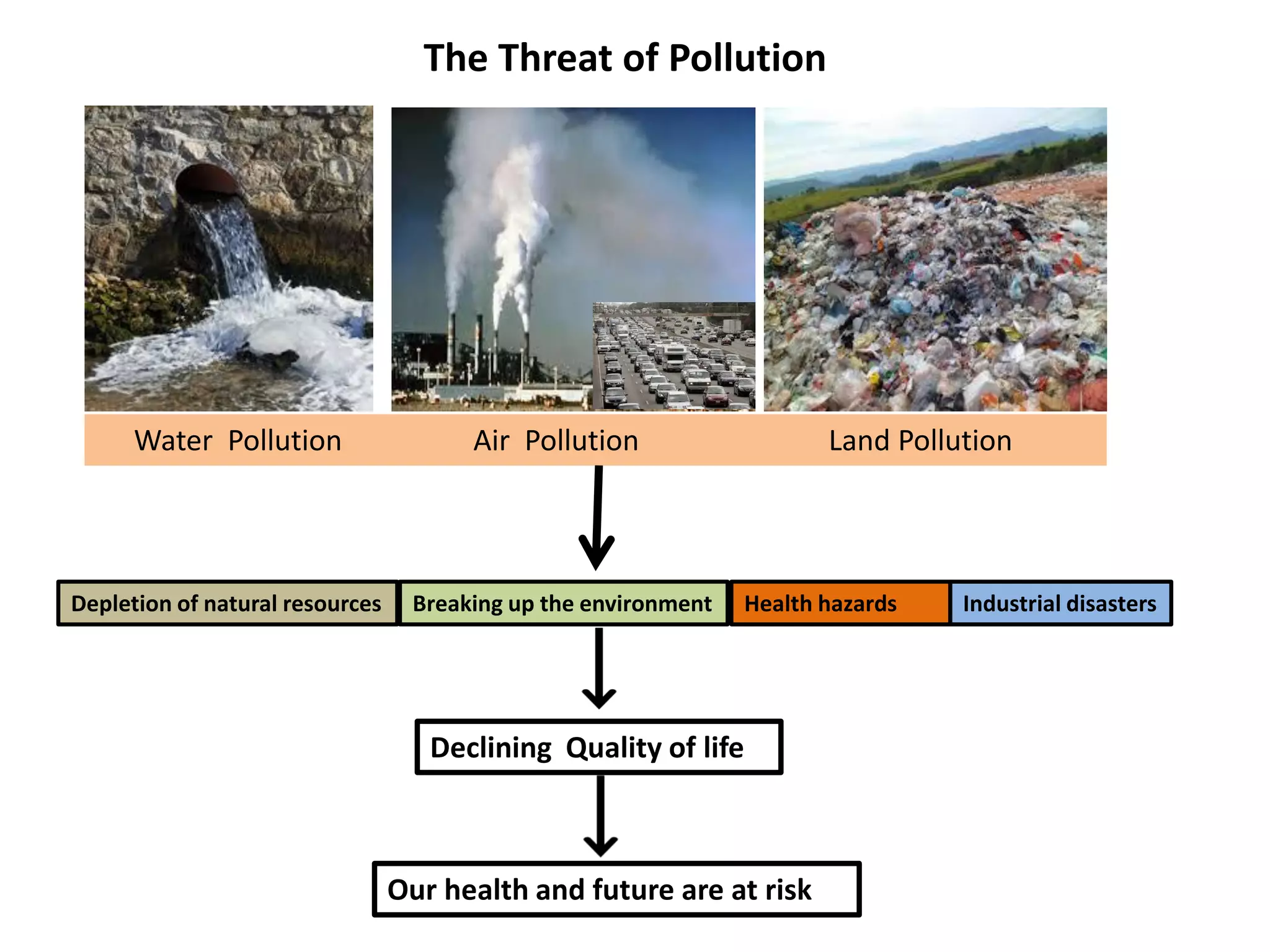
The Threat of Pollution
Water Pollution Air Pollution Land Pollution
Declining Quality of life
Breaking up the environmentDepletion of natural resources Health hazards Industrial disasters
Our health and future are at risk
Objectives
• Identify the significance of factors which affect
environmental pollution.
• Suggest relevant prevention and mitigation policies
for environmental pollution reduction in order to
build a sustainable society.
Methodology
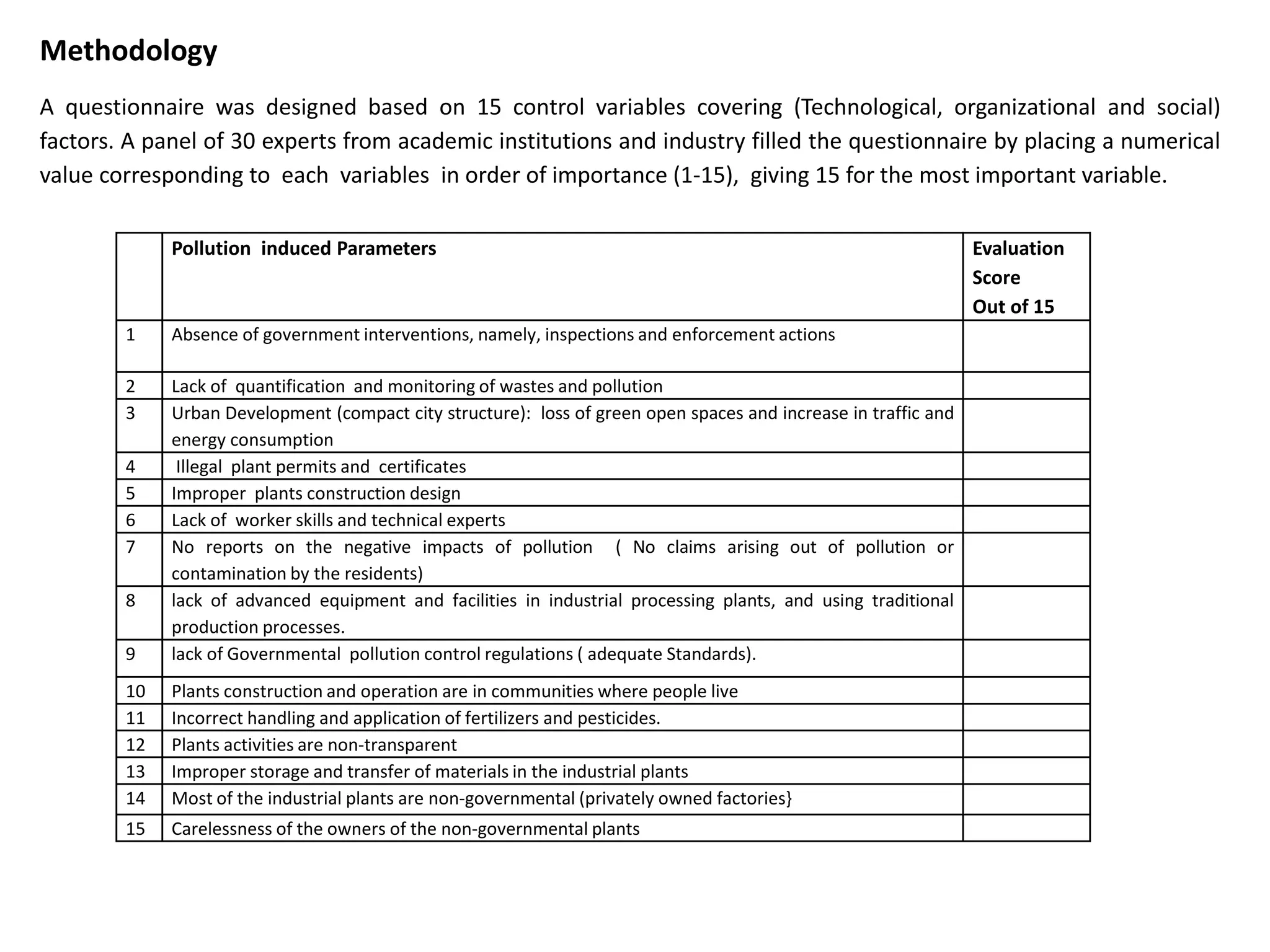
A questionnaire was designed based on 15 control variables covering (Technological, organizational and social)
factors. A panel of 30 experts from academic institutions and industry filled the questionnaire by placing a numerical
value corresponding to each variables in order of importance (1-15), giving 15 for the most important variable.
Pollution induced Parameters Evaluation
Score
Out of 15
1 Absence of government interventions, namely, inspections and enforcement actions
2 Lack of quantification and monitoring of wastes and pollution
3 Urban Development (compact city structure): loss of green open spaces and increase in traffic and
energy consumption
4 Illegal plant permits and certificates
5 Improper plants construction design
6 Lack of worker skills and technical experts
7 No reports on the negative impacts of pollution ( No claims arising out of pollution or
contamination by the residents)
8 lack of advanced equipment and facilities in industrial processing plants, and using traditional
production processes.
9 lack of Governmental pollution control regulations ( adequate Standards).
10 Plants construction and operation are in communities where people live
11 Incorrect handling and application of fertilizers and pesticides.
12 Plants activities are non-transparent
13 Improper storage and transfer of materials in the industrial plants
14 Most of the industrial plants are non-governmental (privately owned factories}
15 Carelessness of the owners of the non-governmental plants
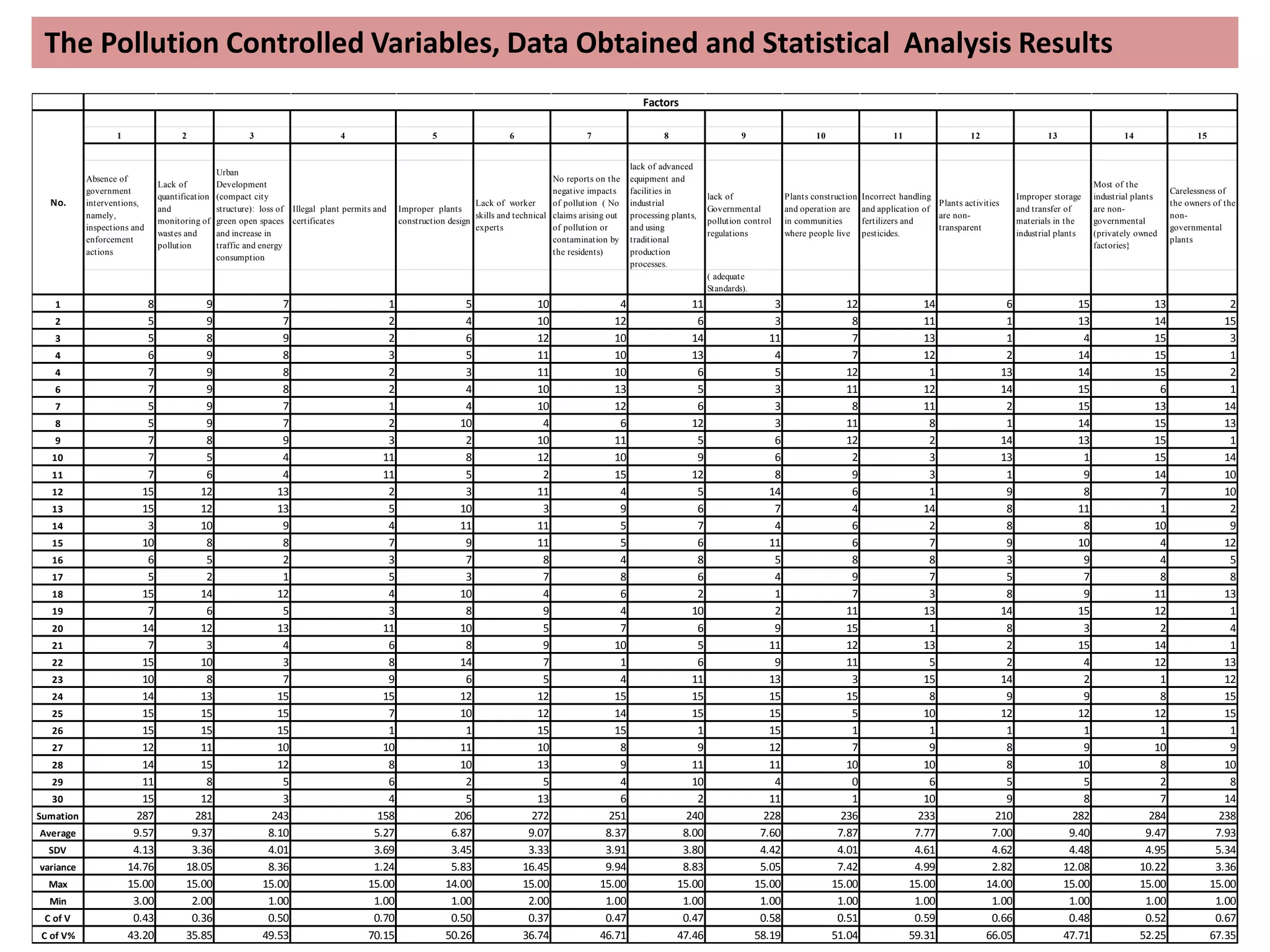
The Pollution Controlled Variables, Data Obtained and Statistical Analysis Results
1 2 3 4 5 6 7 8 9 10 11 12 13 14 15
Absence of
government
interventions,
namely,
inspections and
enforcement
actions
Lack of
quantification
and
monitoring of
wastes and
pollution
Urban
Development
(compact city
structure): loss of
green open spaces
and increase in
traffic and energy
consumption
Illegal plant permits and
certificates
Improper plants
construction design
Lack of worker
skills and technical
experts
No reports on the
negative impacts
of pollution ( No
claims arising out
of pollution or
contamination by
the residents)
lack of advanced
equipment and
facilities in
industrial
processing plants,
and using
traditional
production
processes.
lack of
Governmental
pollution control
regulations
Plants construction
and operation are
in communities
where people live
Incorrect handling
and application of
fertilizers and
pesticides.
Plants activities
are non-
transparent
Improper storage
and transfer of
materials in the
industrial plants
Most of the
industrial plants
are non-
governmental
(privately owned
factories}
Carelessness of
the owners of the
non-
governmental
plants
( adequate
Standards).
1 8 9 7 1 5 10 4 11 3 12 14 6 15 13 2
2 5 9 7 2 4 10 12 6 3 8 11 1 13 14 15
3 5 8 9 2 6 12 10 14 11 7 13 1 4 15 3
4 6 9 8 3 5 11 10 13 4 7 12 2 14 15 1
4 7 9 8 2 3 11 10 6 5 12 1 13 14 15 2
6 7 9 8 2 4 10 13 5 3 11 12 14 15 6 1
7 5 9 7 1 4 10 12 6 3 8 11 2 15 13 14
8 5 9 7 2 10 4 6 12 3 11 8 1 14 15 13
9 7 8 9 3 2 10 11 5 6 12 2 14 13 15 1
10 7 5 4 11 8 12 10 9 6 2 3 13 1 15 14
11 7 6 4 11 5 2 15 12 8 9 3 1 9 14 10
12 15 12 13 2 3 11 4 5 14 6 1 9 8 7 10
13 15 12 13 5 10 3 9 6 7 4 14 8 11 1 2
14 3 10 9 4 11 11 5 7 4 6 2 8 8 10 9
15 10 8 8 7 9 11 5 6 11 6 7 9 10 4 12
16 6 5 2 3 7 8 4 8 5 8 8 3 9 4 5
17 5 2 1 5 3 7 8 6 4 9 7 5 7 8 8
18 15 14 12 4 10 4 6 2 1 7 3 8 9 11 13
19 7 6 5 3 8 9 4 10 2 11 13 14 15 12 1
20 14 12 13 11 10 5 7 6 9 15 1 8 3 2 4
21 7 3 4 6 8 9 10 5 11 12 13 2 15 14 1
22 15 10 3 8 14 7 1 6 9 11 5 2 4 12 13
23 10 8 7 9 6 5 4 11 13 3 15 14 2 1 12
24 14 13 15 15 12 12 15 15 15 15 8 9 9 8 15
25 15 15 15 7 10 12 14 15 15 5 10 12 12 12 15
26 15 15 15 1 1 15 15 1 15 1 1 1 1 1 1
27 12 11 10 10 11 10 8 9 12 7 9 8 9 10 9
28 14 15 12 8 10 13 9 11 11 10 10 8 10 8 10
29 11 8 5 6 2 5 4 10 4 0 6 5 5 2 8
30 15 12 3 4 5 13 6 2 11 1 10 9 8 7 14
Sumation 287 281 243 158 206 272 251 240 228 236 233 210 282 284 238
Average 9.57 9.37 8.10 5.27 6.87 9.07 8.37 8.00 7.60 7.87 7.77 7.00 9.40 9.47 7.93
SDV 4.13 3.36 4.01 3.69 3.45 3.33 3.91 3.80 4.42 4.01 4.61 4.62 4.48 4.95 5.34
variance 14.76 18.05 8.36 1.24 5.83 16.45 9.94 8.83 5.05 7.42 4.99 2.82 12.08 10.22 3.36
Max 15.00 15.00 15.00 15.00 14.00 15.00 15.00 15.00 15.00 15.00 15.00 14.00 15.00 15.00 15.00
Min 3.00 2.00 1.00 1.00 1.00 2.00 1.00 1.00 1.00 1.00 1.00 1.00 1.00 1.00 1.00
C of V 0.43 0.36 0.50 0.70 0.50 0.37 0.47 0.47 0.58 0.51 0.59 0.66 0.48 0.52 0.67
C of V% 43.20 35.85 49.53 70.15 50.26 36.74 46.71 47.46 58.19 51.04 59.31 66.05 47.71 52.25 67.35
Factors
No.
0.00
2.00
4.00
6.00
8.00
10.00
12.00
14.00
16.00
1 2 3 4 5 6 7 8 9 10 11 12 13 14 15
Mean
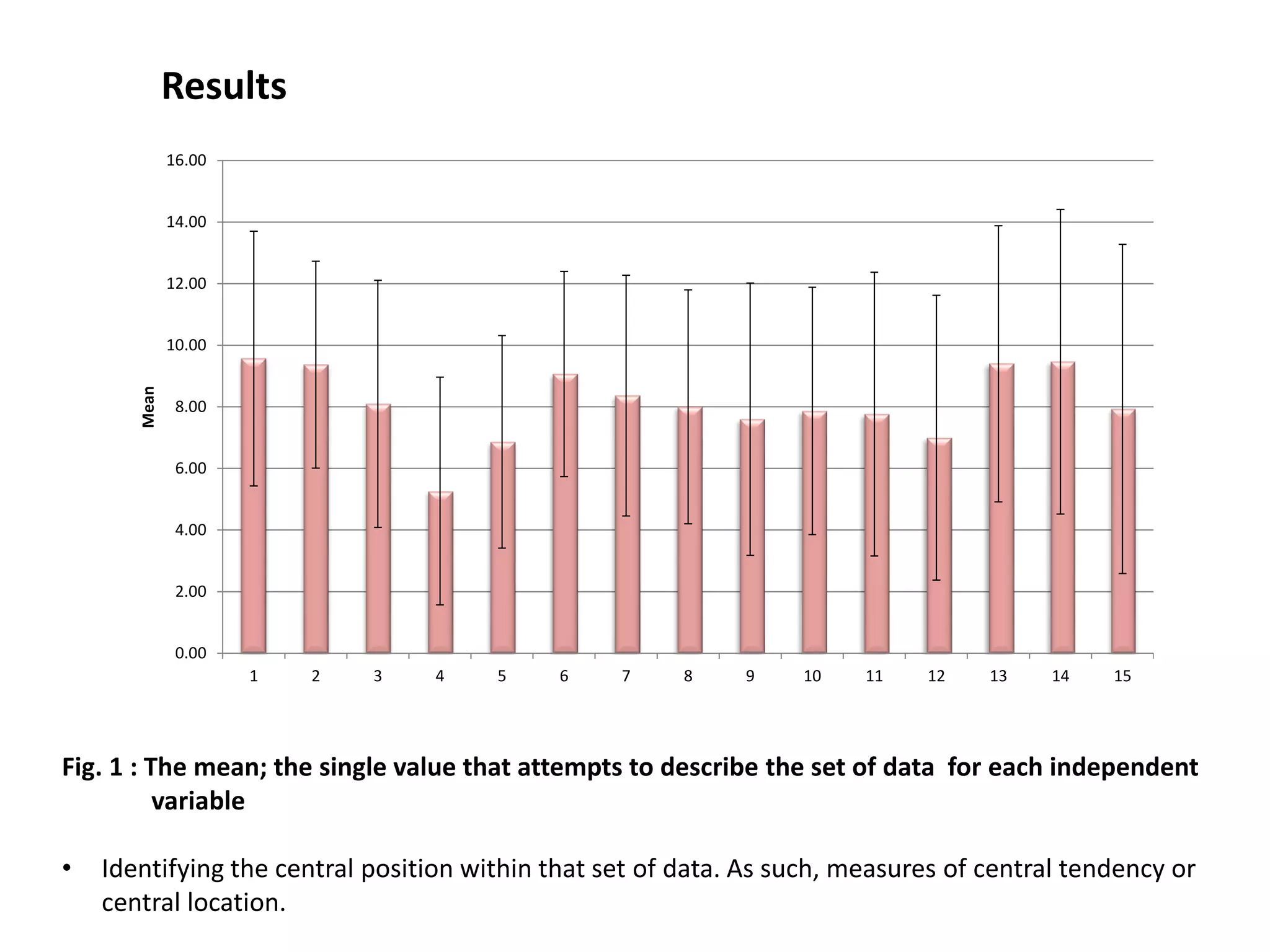
Fig. 1 : The mean; the single value that attempts to describe the set of data for each independent
variable
• Identifying the central position within that set of data. As such, measures of central tendency or
central location.
Results
0.00
10.00
20.00
30.00
40.00
50.00
60.00
70.00
80.00
1 2 3 4 5 6 7 8 9 10 11 12 13 14 15
CoefficientofVariation%
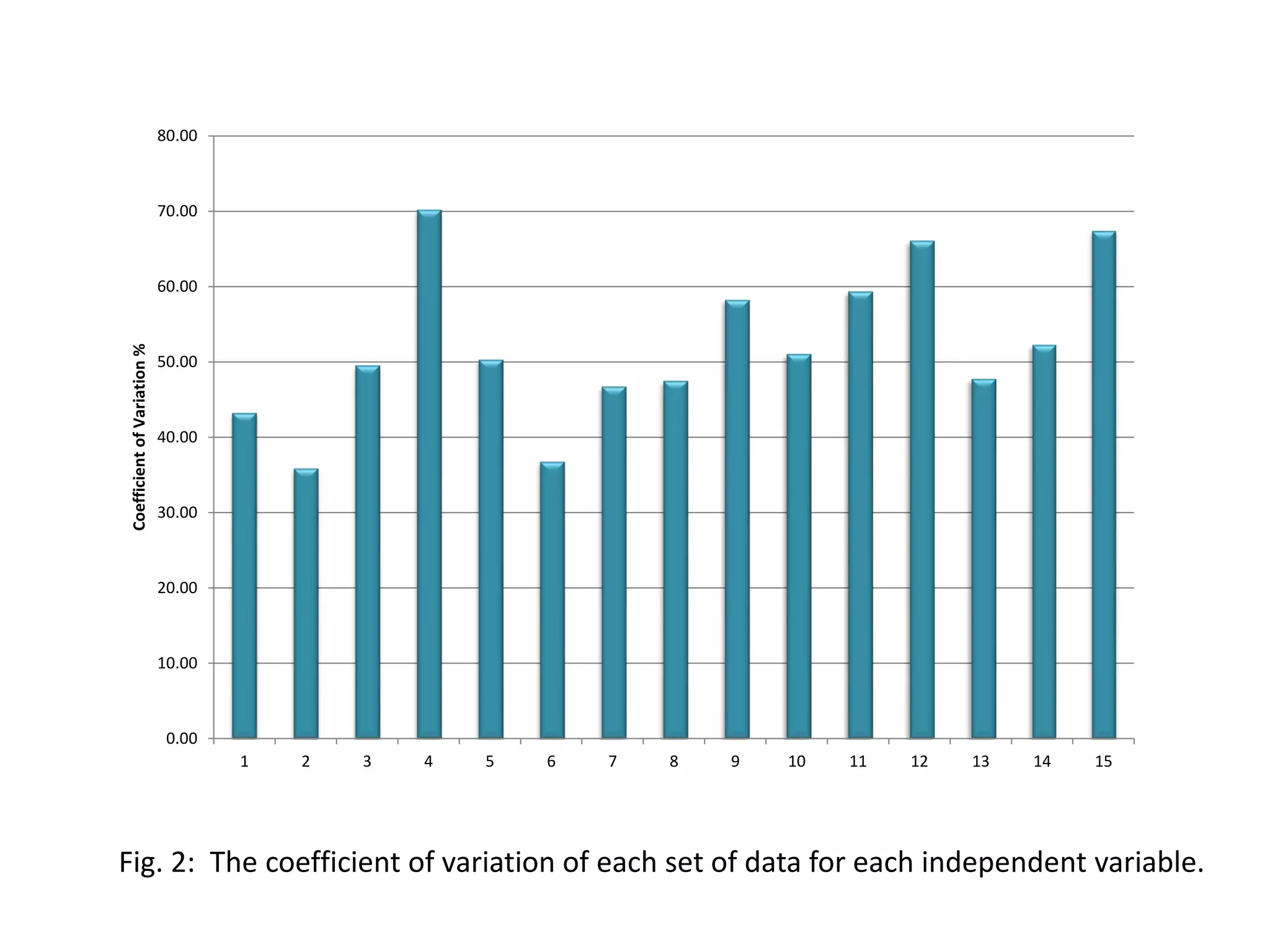
Fig. 2: The coefficient of variation of each set of data for each independent variable.
2
6
1
7
8
13
3
5
10
14
9
11
12
15
4
0.00
10.00
20.00
30.00
40.00
50.00
60.00
70.00
80.00
%coefficientofvariation
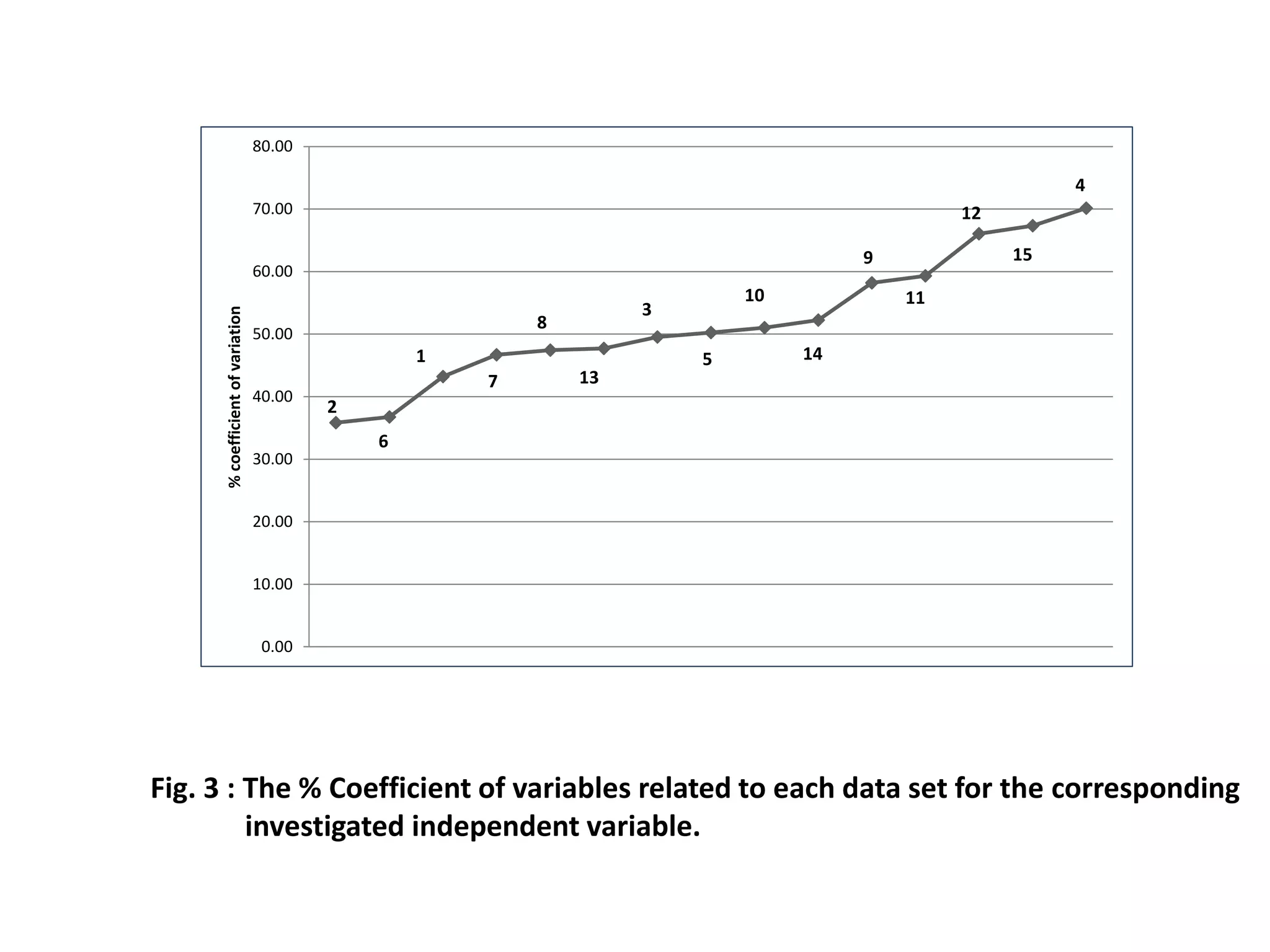
Fig. 3 : The % Coefficient of variables related to each data set for the corresponding
investigated independent variable.
Recommendations
According to our findings, the following recommendation may be useful
 Improving the environment is the responsibility of every citizen
 Government should do more to promote and encourage a better environment
 The regulatory factors shaping environmental performance at individual polluting facilities should
be studied and analyzed in particular the influence of actual government interventions, namely,
inspections and enforcement actions performed at each facility.
 More frequent stopping and checking for car emissions even if it causes traffic delays.
 Recycling programs should be put in place and promoted across the country.
 Industry should market their “state-of-the-art” management and facilities
 The problems of over-use of fertilizers and pesticides, carelessness, and the improper disposal of
waste should be paid more consideration.
 There is need for the authorities in Kurdistan government to continue its policy on funding
research in science, engineering and technology to support research in exposure, effects, risk
assessment, risk management and environmental pollution control.
 Mitigation of pollution by developing of taxes on waste gases emissions and wastewater and
waste solid production in processing facilities as enforcement actions performed to undertake
better environmental management that in turn should lead to environmental compliance.
Conclusion
Based on the results estimated from our survey analysis, it has
been indicated that
The most three significant parameters affected environmental
pollution seemed to be : Lack of quantification and monitoring of
wastes and pollution, lack of worker skills and technical experts,
and absence of government interventions, namely, inspections and
enforcement actions respectively .
Our result has also indicated the importance of government
expenditure to pollution abatement and control processes and
waste management in particular for pollution prevention and
reduction.
Thank You For Your Attention

Panel data analysis

  • 1.
    Panel Data Analysisfor Evaluation The Significance of The factors Causing Environmental Pollution Prepared by Abdulsamad Abulhameed Aubaid, Jalal Mustafa Hassan, Zahra Fakhir Ismael 2nd year/ Chemical Engineering Department Supervised by Prof. Dr. Ibtisam Kamal Soran University/ Faculty of Engineering - Chemical Engineering Department 27th -28th May 2015
  • 2.
    Contents • Introduction • Objectives •Methodology • Data Analysis • Results • conclusions
  • 3.
    The Threat ofPollution Water Pollution Air Pollution Land Pollution Declining Quality of life Breaking up the environmentDepletion of natural resources Health hazards Industrial disasters Our health and future are at risk
  • 4.
    Objectives • Identify thesignificance of factors which affect environmental pollution. • Suggest relevant prevention and mitigation policies for environmental pollution reduction in order to build a sustainable society.
  • 5.
    Methodology A questionnaire wasdesigned based on 15 control variables covering (Technological, organizational and social) factors. A panel of 30 experts from academic institutions and industry filled the questionnaire by placing a numerical value corresponding to each variables in order of importance (1-15), giving 15 for the most important variable. Pollution induced Parameters Evaluation Score Out of 15 1 Absence of government interventions, namely, inspections and enforcement actions 2 Lack of quantification and monitoring of wastes and pollution 3 Urban Development (compact city structure): loss of green open spaces and increase in traffic and energy consumption 4 Illegal plant permits and certificates 5 Improper plants construction design 6 Lack of worker skills and technical experts 7 No reports on the negative impacts of pollution ( No claims arising out of pollution or contamination by the residents) 8 lack of advanced equipment and facilities in industrial processing plants, and using traditional production processes. 9 lack of Governmental pollution control regulations ( adequate Standards). 10 Plants construction and operation are in communities where people live 11 Incorrect handling and application of fertilizers and pesticides. 12 Plants activities are non-transparent 13 Improper storage and transfer of materials in the industrial plants 14 Most of the industrial plants are non-governmental (privately owned factories} 15 Carelessness of the owners of the non-governmental plants
  • 6.
    The Pollution ControlledVariables, Data Obtained and Statistical Analysis Results 1 2 3 4 5 6 7 8 9 10 11 12 13 14 15 Absence of government interventions, namely, inspections and enforcement actions Lack of quantification and monitoring of wastes and pollution Urban Development (compact city structure): loss of green open spaces and increase in traffic and energy consumption Illegal plant permits and certificates Improper plants construction design Lack of worker skills and technical experts No reports on the negative impacts of pollution ( No claims arising out of pollution or contamination by the residents) lack of advanced equipment and facilities in industrial processing plants, and using traditional production processes. lack of Governmental pollution control regulations Plants construction and operation are in communities where people live Incorrect handling and application of fertilizers and pesticides. Plants activities are non- transparent Improper storage and transfer of materials in the industrial plants Most of the industrial plants are non- governmental (privately owned factories} Carelessness of the owners of the non- governmental plants ( adequate Standards). 1 8 9 7 1 5 10 4 11 3 12 14 6 15 13 2 2 5 9 7 2 4 10 12 6 3 8 11 1 13 14 15 3 5 8 9 2 6 12 10 14 11 7 13 1 4 15 3 4 6 9 8 3 5 11 10 13 4 7 12 2 14 15 1 4 7 9 8 2 3 11 10 6 5 12 1 13 14 15 2 6 7 9 8 2 4 10 13 5 3 11 12 14 15 6 1 7 5 9 7 1 4 10 12 6 3 8 11 2 15 13 14 8 5 9 7 2 10 4 6 12 3 11 8 1 14 15 13 9 7 8 9 3 2 10 11 5 6 12 2 14 13 15 1 10 7 5 4 11 8 12 10 9 6 2 3 13 1 15 14 11 7 6 4 11 5 2 15 12 8 9 3 1 9 14 10 12 15 12 13 2 3 11 4 5 14 6 1 9 8 7 10 13 15 12 13 5 10 3 9 6 7 4 14 8 11 1 2 14 3 10 9 4 11 11 5 7 4 6 2 8 8 10 9 15 10 8 8 7 9 11 5 6 11 6 7 9 10 4 12 16 6 5 2 3 7 8 4 8 5 8 8 3 9 4 5 17 5 2 1 5 3 7 8 6 4 9 7 5 7 8 8 18 15 14 12 4 10 4 6 2 1 7 3 8 9 11 13 19 7 6 5 3 8 9 4 10 2 11 13 14 15 12 1 20 14 12 13 11 10 5 7 6 9 15 1 8 3 2 4 21 7 3 4 6 8 9 10 5 11 12 13 2 15 14 1 22 15 10 3 8 14 7 1 6 9 11 5 2 4 12 13 23 10 8 7 9 6 5 4 11 13 3 15 14 2 1 12 24 14 13 15 15 12 12 15 15 15 15 8 9 9 8 15 25 15 15 15 7 10 12 14 15 15 5 10 12 12 12 15 26 15 15 15 1 1 15 15 1 15 1 1 1 1 1 1 27 12 11 10 10 11 10 8 9 12 7 9 8 9 10 9 28 14 15 12 8 10 13 9 11 11 10 10 8 10 8 10 29 11 8 5 6 2 5 4 10 4 0 6 5 5 2 8 30 15 12 3 4 5 13 6 2 11 1 10 9 8 7 14 Sumation 287 281 243 158 206 272 251 240 228 236 233 210 282 284 238 Average 9.57 9.37 8.10 5.27 6.87 9.07 8.37 8.00 7.60 7.87 7.77 7.00 9.40 9.47 7.93 SDV 4.13 3.36 4.01 3.69 3.45 3.33 3.91 3.80 4.42 4.01 4.61 4.62 4.48 4.95 5.34 variance 14.76 18.05 8.36 1.24 5.83 16.45 9.94 8.83 5.05 7.42 4.99 2.82 12.08 10.22 3.36 Max 15.00 15.00 15.00 15.00 14.00 15.00 15.00 15.00 15.00 15.00 15.00 14.00 15.00 15.00 15.00 Min 3.00 2.00 1.00 1.00 1.00 2.00 1.00 1.00 1.00 1.00 1.00 1.00 1.00 1.00 1.00 C of V 0.43 0.36 0.50 0.70 0.50 0.37 0.47 0.47 0.58 0.51 0.59 0.66 0.48 0.52 0.67 C of V% 43.20 35.85 49.53 70.15 50.26 36.74 46.71 47.46 58.19 51.04 59.31 66.05 47.71 52.25 67.35 Factors No.
  • 7.
    0.00 2.00 4.00 6.00 8.00 10.00 12.00 14.00 16.00 1 2 34 5 6 7 8 9 10 11 12 13 14 15 Mean Fig. 1 : The mean; the single value that attempts to describe the set of data for each independent variable • Identifying the central position within that set of data. As such, measures of central tendency or central location. Results
  • 8.
    0.00 10.00 20.00 30.00 40.00 50.00 60.00 70.00 80.00 1 2 34 5 6 7 8 9 10 11 12 13 14 15 CoefficientofVariation% Fig. 2: The coefficient of variation of each set of data for each independent variable.
  • 9.
    2 6 1 7 8 13 3 5 10 14 9 11 12 15 4 0.00 10.00 20.00 30.00 40.00 50.00 60.00 70.00 80.00 %coefficientofvariation Fig. 3 :The % Coefficient of variables related to each data set for the corresponding investigated independent variable.
  • 10.
    Recommendations According to ourfindings, the following recommendation may be useful  Improving the environment is the responsibility of every citizen  Government should do more to promote and encourage a better environment  The regulatory factors shaping environmental performance at individual polluting facilities should be studied and analyzed in particular the influence of actual government interventions, namely, inspections and enforcement actions performed at each facility.  More frequent stopping and checking for car emissions even if it causes traffic delays.  Recycling programs should be put in place and promoted across the country.  Industry should market their “state-of-the-art” management and facilities  The problems of over-use of fertilizers and pesticides, carelessness, and the improper disposal of waste should be paid more consideration.  There is need for the authorities in Kurdistan government to continue its policy on funding research in science, engineering and technology to support research in exposure, effects, risk assessment, risk management and environmental pollution control.  Mitigation of pollution by developing of taxes on waste gases emissions and wastewater and waste solid production in processing facilities as enforcement actions performed to undertake better environmental management that in turn should lead to environmental compliance.
  • 11.
    Conclusion Based on theresults estimated from our survey analysis, it has been indicated that The most three significant parameters affected environmental pollution seemed to be : Lack of quantification and monitoring of wastes and pollution, lack of worker skills and technical experts, and absence of government interventions, namely, inspections and enforcement actions respectively . Our result has also indicated the importance of government expenditure to pollution abatement and control processes and waste management in particular for pollution prevention and reduction.
  • 12.
    Thank You ForYour Attention