P.A.A.V.E
 PEERS ADVOCATING FOR
ANTI-VIOLENCE EDUCATION
The Jean Nidetch Women’s Center

 The only on campus resource for referrals to
    community organizations
   Four on-staff, certified advocates
   Members of ASERTAV task force
   Oversee all violence prevention programming on
    campus
   Provides twice yearly peer education training on
    domestic violence, sexual assault, and stalking.
P.A.A.V.E
Peers Advocating for Anti-Violence Education

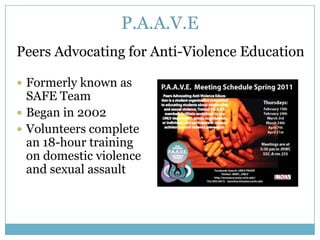
 Formerly known as
  SAFE Team
 Began in 2002
 Volunteers complete
  an 18-hour training
  on domestic violence
  and sexual assault
P.A.A.V.E. Spring 2011

 11 presentations, 4 to student orgs
 Spoke to classes and at Greek Leadership Day
 Reached 456 students
 34 total volunteer hours
 During summer orientations, 1692 students were
 reached with resource information.
What do PAAVE volunteers learn?

    Since January 2009 training included cultural
     competency
    Members of the Anti-Violence Community such as
     NCASV, RCC, FACT, Safe House, and
     JNWC/UNLV present information on specialized
     topics including:
        Power and Control, Submission vs. Consent, Media
     Literacy, Rape Culture, Pornography, Sexuality, Sexual
     Assault, The Role of Alcohol & Rape Drugs, Masculinity and
     Violence, Male Victims & Marginalized Communities, Sexual
     Assault, Domestic Violence, Effects on Victims, Stalking and
     Cyberstalking, and Sexual Harrassment
Presentation Topics
 1. Rape Culture, Gender and the Media: The focus
  of this presentation is to give a larger social context to the
  epidemic of violence and sexual assault. It uses media
  outlets, primarily in popular culture, to analyze the
  connection between gender roles in the media and
  violence.
 2. Drug Facilitated Rape: This provides an overview
  of drug facilitated rape by providing examples of the
  multiple forms of drugs used in rape cases. It also
  includes statistical information from LV Metro and The
  Rape Crisis Center of Southern Nevada.
 3. Domestic Violence and Sexual Assault Facts
  and Resources: This is a straight forward, lecture
  formatted presentation that includes state and federal
  definitions of battering, domestic violence, sexual assault
  and rape and provides an overview of campus and
  community resources.
Presentation Topics

 4. Understanding "No": The presentation is
  interactive and gives scenarios in which the audience will
  judge whether the sexual act was consensual or by force.
  Also discusses dating violence & healthy relationships.
 5. Same Sex Violence: This presentation goes over the
  lack of adequate resources available to LGBT victims of
  violence and also addresses misconceptions about
  violence in the LGBT community.
 6. “Why do they stay?”: This is an interactive game
  formatted presentation and is best suited for groups of no
  more than 15. The “game” places participants in the real-
  life choices of victims of violence, highlighting limited
  access to resources and funds, with the ultimate goal of
  addressing the victim-blaming stigmatized question of,
  “Why do they stay? Why don’t they just leave?”
Why engage Men and Boys?
 Nevada is 4th in the nation for Sexual Assault, and
 1st for Death as a result of Domestic Violence
 25% of women and 7% of men will be victims of
  domestic violence or partner rape.
 Six months following an experience of domestic
  violence, 32% of battered victims are victimized
  again
UNLV Police Services

  Reports of Forcible Sex Offenses on Campus
                    2005 - 4
                    2006 - 0
                    2007 - 3
                    2008 – 2
                    2009 – 1
                    2010 – 1
*Often times these crimes occur and are reported
       outside of the jurisdiction of UNLV.
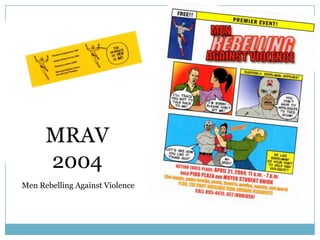
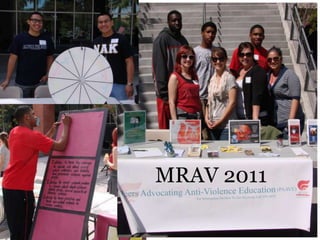
MRAV
      2004
Men Rebelling Against Violence
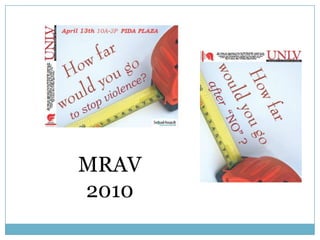
MRAV
2010
VDAY 2010
MRAV
 2011
MRAV 2011
Questions? Comments?


 Call the Jean Nidetch Women’s Center at
      http://womenscenter.unlv.edu
     jnwc@unlv.edu 702.895.4475
     Twitter: http://twitter.com/JNWC_UNLV
     Facebook: http://tinyurl.com/unlvjnwc
     Website: http://womenscenter.unlv.edu

 Christina Hernandez, 702.895.0689
 Crystal Jackson, 702.895.0343
 Karoline Khamis, 702.895.0605

Paave 2011 ovw

  • 1.
    P.A.A.V.E PEERS ADVOCATINGFOR ANTI-VIOLENCE EDUCATION
  • 2.
    The Jean NidetchWomen’s Center  The only on campus resource for referrals to community organizations  Four on-staff, certified advocates  Members of ASERTAV task force  Oversee all violence prevention programming on campus  Provides twice yearly peer education training on domestic violence, sexual assault, and stalking.
  • 3.
    P.A.A.V.E Peers Advocating forAnti-Violence Education  Formerly known as SAFE Team  Began in 2002  Volunteers complete an 18-hour training on domestic violence and sexual assault
  • 4.
    P.A.A.V.E. Spring 2011 11 presentations, 4 to student orgs  Spoke to classes and at Greek Leadership Day  Reached 456 students  34 total volunteer hours  During summer orientations, 1692 students were reached with resource information.
  • 5.
    What do PAAVEvolunteers learn?  Since January 2009 training included cultural competency  Members of the Anti-Violence Community such as NCASV, RCC, FACT, Safe House, and JNWC/UNLV present information on specialized topics including: Power and Control, Submission vs. Consent, Media Literacy, Rape Culture, Pornography, Sexuality, Sexual Assault, The Role of Alcohol & Rape Drugs, Masculinity and Violence, Male Victims & Marginalized Communities, Sexual Assault, Domestic Violence, Effects on Victims, Stalking and Cyberstalking, and Sexual Harrassment
  • 6.
    Presentation Topics  1.Rape Culture, Gender and the Media: The focus of this presentation is to give a larger social context to the epidemic of violence and sexual assault. It uses media outlets, primarily in popular culture, to analyze the connection between gender roles in the media and violence.  2. Drug Facilitated Rape: This provides an overview of drug facilitated rape by providing examples of the multiple forms of drugs used in rape cases. It also includes statistical information from LV Metro and The Rape Crisis Center of Southern Nevada.  3. Domestic Violence and Sexual Assault Facts and Resources: This is a straight forward, lecture formatted presentation that includes state and federal definitions of battering, domestic violence, sexual assault and rape and provides an overview of campus and community resources.
  • 7.
    Presentation Topics  4.Understanding "No": The presentation is interactive and gives scenarios in which the audience will judge whether the sexual act was consensual or by force. Also discusses dating violence & healthy relationships.  5. Same Sex Violence: This presentation goes over the lack of adequate resources available to LGBT victims of violence and also addresses misconceptions about violence in the LGBT community.  6. “Why do they stay?”: This is an interactive game formatted presentation and is best suited for groups of no more than 15. The “game” places participants in the real- life choices of victims of violence, highlighting limited access to resources and funds, with the ultimate goal of addressing the victim-blaming stigmatized question of, “Why do they stay? Why don’t they just leave?”
  • 8.
    Why engage Menand Boys?  Nevada is 4th in the nation for Sexual Assault, and  1st for Death as a result of Domestic Violence  25% of women and 7% of men will be victims of domestic violence or partner rape.  Six months following an experience of domestic violence, 32% of battered victims are victimized again
  • 9.
    UNLV Police Services Reports of Forcible Sex Offenses on Campus 2005 - 4 2006 - 0 2007 - 3 2008 – 2 2009 – 1 2010 – 1 *Often times these crimes occur and are reported outside of the jurisdiction of UNLV.
  • 10.
    MRAV 2004 Men Rebelling Against Violence
  • 11.
  • 12.
  • 13.
  • 14.
  • 15.
    Questions? Comments?  Callthe Jean Nidetch Women’s Center at http://womenscenter.unlv.edu jnwc@unlv.edu 702.895.4475 Twitter: http://twitter.com/JNWC_UNLV Facebook: http://tinyurl.com/unlvjnwc Website: http://womenscenter.unlv.edu  Christina Hernandez, 702.895.0689 Crystal Jackson, 702.895.0343 Karoline Khamis, 702.895.0605

Editor's Notes

  • #3 ASERTAV
  • #4 Student initiative, evolved because of theory and educator experience
  • #5 PAAVE reaches a variety of student audiences, orgs, classes, orientations, tabling, we want to encounter students in different settings.
  • #6 Not just one session, but throughout the training we include information about marginalized communities What models do you use?Introducing masculinity as a social construct, not a biological determinant. – revamping our manualReworking our event programming as a student initiativeInstead of a program, we have a council this year…
  • #7 Our topics range from interactive activities, various sizes and lengths of lectures, and topic specified presentations – injury epidemiology, athelte, sciences, etc..
  • #8 Consent most popular, sex is popular, having a safe sex space is popular.
  • #9 Because violence is a human epidemic and affects many kinds of menBecause allies can be as powerful as outreachb/c the violence that is reported is perpetrated by men on different kinsd of victimswe see men as clients, men as allies, and men as people who want to stop violence.