Babies Removed at Birth: Mothers and
Midwives Experiences
Wendy Marsh PhD Student
Supervisors: Professor Jill Shawe, Dr Ann Robinson
and Dr Jen Leamon (Bournemouth University)
“Right, where do I start?
I might as well start at
the beginning”
(Lilly)
Midwife 1
What are the experiences of mothers who have their
baby removed at birth and what elements of their
midwifery care were helpful or unhelpful to them at
that time?
What are midwives’ experiences of providing care to
women who have had or will be having their babies
removed at birth and what do they need in order to
provide the best care for this group of women?
Babies removed at birth: Mothers and
Midwives Experiences
Photo-elicitation
• “A simple idea of inserting a photo into a
research interview” (Harper, 2002)
• Can be taken by researcher or participant
• Empowers research participants
• Collaborative approach
• Stimulates dormant thoughts and feelings
• Leaders to greater insight into individual
experience
• Appropriate for sensitive topics
(Rose, 2014)
Research design
• Qualitative methods using narrative
inquiry approach
• Data collection - Face to face interviews
and focus groups both incorporating
photo-elicitation techniques
• Data analysis – Holistic content analysis
• Ethical considerations
• Ethos of participatory research
Sample
Mothers
• Five mothers
• Aged 29-35
• At least one baby
removed
• Within 2 years
Midwives
• Eight midwives
• Aged 34-48
• Between 1-23 years of
experience
• All experienced providing
care within last 2 years
Data collection process
Mothers
 Series of 3 interviews
 1 - Demographical
information/introductions
 2 - Sharing the story
 Participants collected
images
 Printed and returned
 3- Shared in final
interview
Midwives
 Attended two separate
focus groups
 1- Sharing their stories in
groups of 2 to 3
 Participants collected
images
 Printed and returned
 2 – Shared in final focus
group
Data analysis
• Six focus groups
• Eight face to face
interviews
• Observation field
notes and reflections
• 40 photographs
• Interpretations and
insights of images
shared as narratives
Amber
“This photo sums it up in
a nutshell for me” (Lilly)
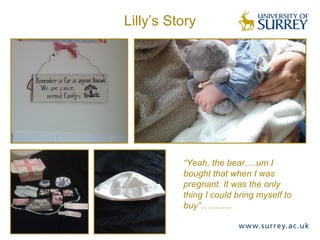
Lilly’s Story
“Yeah, the bear….um I
bought that when I was
pregnant. It was the only
thing I could bring myself to
buy”………..
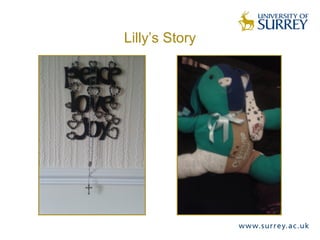
Lilly’s Story
Conclusions
• Yielded a richer and deeper dialogue
• Facilitated a participatory research process
• Empowered research participants
• Lead to new knowledge that had not been
revealed in verbal only interviews/focus groups
• Embraced creativity and reflexivity
• Does have limitations
• Provides an opportunity to enrich research
studies
Questions
References
Close, H. (2007) ‘The use of photography as a qualitative research tool’, Nurse Researcher, 15(1), pp. 27-36.
Collier, J. (1986) Visual Anthropology: Photography as a Research Method. Albuquerque: University of New Mexico.
Harper, D. (2002) Talking about pictures: a case for photo elicitation. Visual Studies. 17(1).
Hurworth, J. (2003) Photo interviewing for research. Social Research Update. 40, Guildford: University of Surrey.
Liamputtong, P. (2006) Researching the Vulnerable. London: Sage Publications Ltd.
Harrison, B. (2002) ‘Seeing health and illness worlds – using visual methodologies in a sociology of health and illness:
a methodological review’, Sociology of Health and Illness, 24(6), pp. 856-872.
Prosser, J. (1998) The status of image-based research. In Image Based Research, ed. J Prosser. London: Routledge.
Rose, G. (2014) Visual Methodologies: An Introduction to Researching with Visual Materials, London: Sage Publishing.
Schulze, S. (2007) The usefulness of reflexive photography for qualitative research: a case study in higher education.
South Africa: University of South Africa Press.

Babies Removed at Birth: Mothers and Midwives Experiences

  • 1.
    Babies Removed atBirth: Mothers and Midwives Experiences Wendy Marsh PhD Student Supervisors: Professor Jill Shawe, Dr Ann Robinson and Dr Jen Leamon (Bournemouth University)
  • 2.
    “Right, where doI start? I might as well start at the beginning” (Lilly) Midwife 1
  • 3.
    What are theexperiences of mothers who have their baby removed at birth and what elements of their midwifery care were helpful or unhelpful to them at that time? What are midwives’ experiences of providing care to women who have had or will be having their babies removed at birth and what do they need in order to provide the best care for this group of women? Babies removed at birth: Mothers and Midwives Experiences
  • 4.
    Photo-elicitation • “A simpleidea of inserting a photo into a research interview” (Harper, 2002) • Can be taken by researcher or participant • Empowers research participants • Collaborative approach • Stimulates dormant thoughts and feelings • Leaders to greater insight into individual experience • Appropriate for sensitive topics (Rose, 2014)
  • 5.
    Research design • Qualitativemethods using narrative inquiry approach • Data collection - Face to face interviews and focus groups both incorporating photo-elicitation techniques • Data analysis – Holistic content analysis • Ethical considerations • Ethos of participatory research
  • 6.
    Sample Mothers • Five mothers •Aged 29-35 • At least one baby removed • Within 2 years Midwives • Eight midwives • Aged 34-48 • Between 1-23 years of experience • All experienced providing care within last 2 years
  • 7.
    Data collection process Mothers Series of 3 interviews  1 - Demographical information/introductions  2 - Sharing the story  Participants collected images  Printed and returned  3- Shared in final interview Midwives  Attended two separate focus groups  1- Sharing their stories in groups of 2 to 3  Participants collected images  Printed and returned  2 – Shared in final focus group
  • 8.
    Data analysis • Sixfocus groups • Eight face to face interviews • Observation field notes and reflections • 40 photographs • Interpretations and insights of images shared as narratives Amber “This photo sums it up in a nutshell for me” (Lilly)
  • 9.
    Lilly’s Story “Yeah, thebear….um I bought that when I was pregnant. It was the only thing I could bring myself to buy”………..
  • 10.
  • 11.
    Conclusions • Yielded aricher and deeper dialogue • Facilitated a participatory research process • Empowered research participants • Lead to new knowledge that had not been revealed in verbal only interviews/focus groups • Embraced creativity and reflexivity • Does have limitations • Provides an opportunity to enrich research studies
  • 12.
  • 13.
    References Close, H. (2007)‘The use of photography as a qualitative research tool’, Nurse Researcher, 15(1), pp. 27-36. Collier, J. (1986) Visual Anthropology: Photography as a Research Method. Albuquerque: University of New Mexico. Harper, D. (2002) Talking about pictures: a case for photo elicitation. Visual Studies. 17(1). Hurworth, J. (2003) Photo interviewing for research. Social Research Update. 40, Guildford: University of Surrey. Liamputtong, P. (2006) Researching the Vulnerable. London: Sage Publications Ltd. Harrison, B. (2002) ‘Seeing health and illness worlds – using visual methodologies in a sociology of health and illness: a methodological review’, Sociology of Health and Illness, 24(6), pp. 856-872. Prosser, J. (1998) The status of image-based research. In Image Based Research, ed. J Prosser. London: Routledge. Rose, G. (2014) Visual Methodologies: An Introduction to Researching with Visual Materials, London: Sage Publishing. Schulze, S. (2007) The usefulness of reflexive photography for qualitative research: a case study in higher education. South Africa: University of South Africa Press.

Editor's Notes

  • #11 How they thought the mother would feel