Chado: The Practice of Tea By: Kay B. and Tori P.
Origin of Tea in Japan  In china tea was drunk manly for flavor Came to Japan in 7 th  century Only court nobles and Zen priests drank tea It helped them stay awake in meditation Do-gen a student in Japan went to China and when he returned he brought back tea utensils and gave the rules and instructions he ha created It became a highly valued art by samurai Mastering these rituals was an honored accomplishment  It later became more of an elaborate ritual with many etiquette rules Upper class members had their own tea drinking room
Chado, the Way of the Tea There are some tea utensils to sharpen your senses  The utensils were very beautiful  Various utensils can be touched  The sound of boiling and running water calmed you down The fragrance of incense and the aroma of tea Sweets and tea can be tasted  Every movement, sound, touch, fragrence, and taste is to be appreciated You are so focused on what you’re doing that you forget about everything else
Preparing tea Preparing tea is pretty easy  There have been different ways to make tea throughout the centuries  First step is to press the tea leaves with a brick  Shave the leaves off the brick Boil them in water with ginger and salt In the 12 th  century they started drying the leaves to make it into a powder
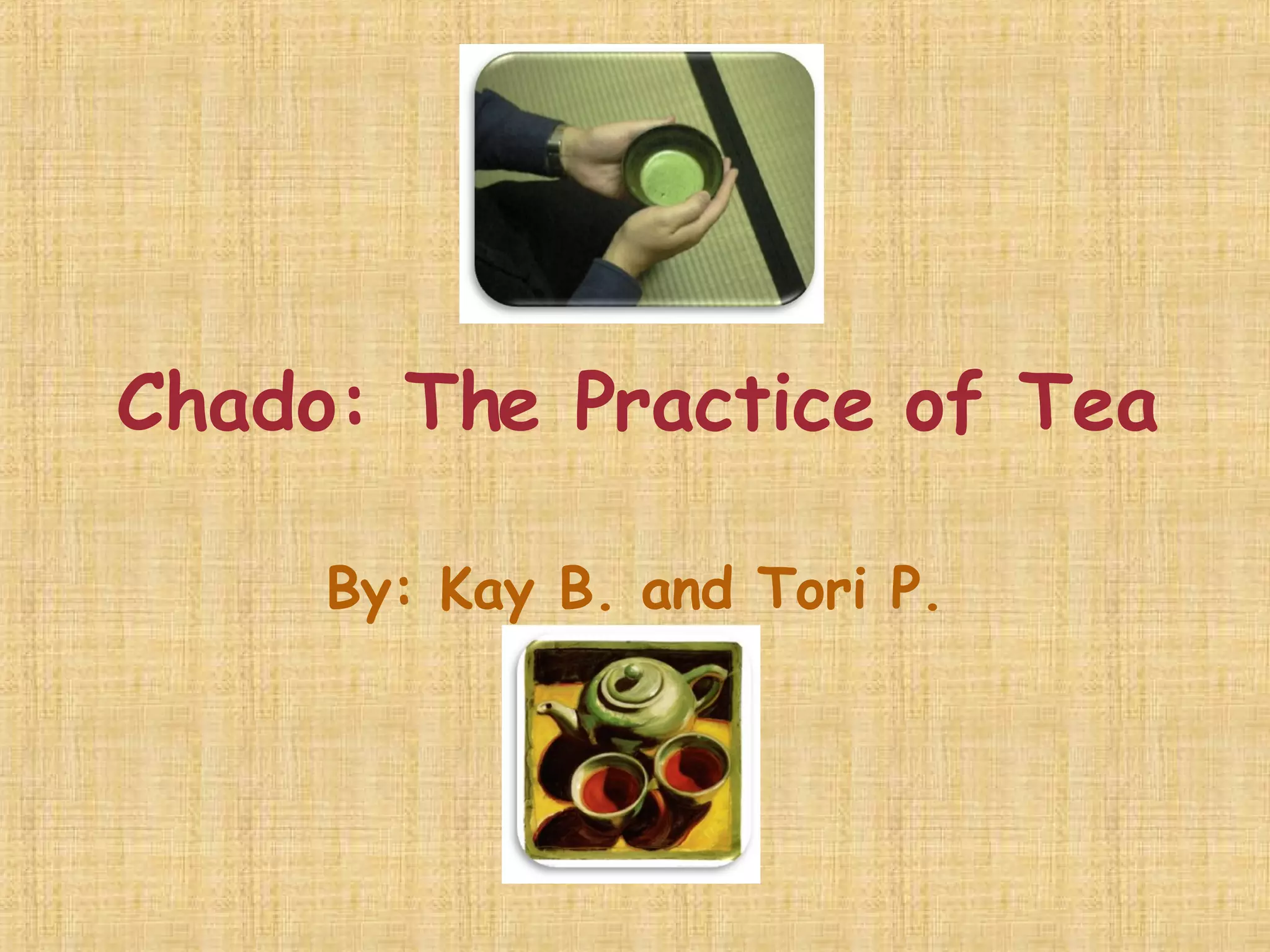
Tea Ceremonies Most formal way to drink tea Brought to Japan from Korea and China Also called Chanoyu Many rules No Gossip or flattery Could not last longer than four hours Could have up to five guests Must wait fifteen minutes before entering Bow when greeting people Must enter head first through small door Last person in room must shut door Tea was prepared in front of guests by host Served in drinking bowl Admire tea first, take three sips, rim cleaned, passed to next person When finished, passed around again so that you could examine it like a work of art
Tea Gatherings Loud, noisy parties Many games and contests People tried to identify various types of teas, and prizes awarded to winners Also other drinking, poetry reading, and gambling Many people showed off expensive tea utensils imported from china Nicest parties were hosted by Sasaki Doyo in the 14 th  century. Some warriors sent servants to China to purchase tea utensils

P6

  • 1.
    Chado: The Practiceof Tea By: Kay B. and Tori P.
  • 2.
    Origin of Teain Japan In china tea was drunk manly for flavor Came to Japan in 7 th century Only court nobles and Zen priests drank tea It helped them stay awake in meditation Do-gen a student in Japan went to China and when he returned he brought back tea utensils and gave the rules and instructions he ha created It became a highly valued art by samurai Mastering these rituals was an honored accomplishment It later became more of an elaborate ritual with many etiquette rules Upper class members had their own tea drinking room
  • 3.
    Chado, the Wayof the Tea There are some tea utensils to sharpen your senses The utensils were very beautiful Various utensils can be touched The sound of boiling and running water calmed you down The fragrance of incense and the aroma of tea Sweets and tea can be tasted Every movement, sound, touch, fragrence, and taste is to be appreciated You are so focused on what you’re doing that you forget about everything else
  • 4.
    Preparing tea Preparingtea is pretty easy There have been different ways to make tea throughout the centuries First step is to press the tea leaves with a brick Shave the leaves off the brick Boil them in water with ginger and salt In the 12 th century they started drying the leaves to make it into a powder
  • 5.
    Tea Ceremonies Mostformal way to drink tea Brought to Japan from Korea and China Also called Chanoyu Many rules No Gossip or flattery Could not last longer than four hours Could have up to five guests Must wait fifteen minutes before entering Bow when greeting people Must enter head first through small door Last person in room must shut door Tea was prepared in front of guests by host Served in drinking bowl Admire tea first, take three sips, rim cleaned, passed to next person When finished, passed around again so that you could examine it like a work of art
  • 6.
    Tea Gatherings Loud,noisy parties Many games and contests People tried to identify various types of teas, and prizes awarded to winners Also other drinking, poetry reading, and gambling Many people showed off expensive tea utensils imported from china Nicest parties were hosted by Sasaki Doyo in the 14 th century. Some warriors sent servants to China to purchase tea utensils