LABOUR LAW AND INDUSTRIAL
RELATIONS IN SRI LANKA
STRUCTURE
• Historical background.
• Issues in relation to labour law and relations.
• Government policy on labour/IR.
• Initiatives taken by EFC on current issues.
• What do we need? : Way forward.
HISTORICAL BACKGROUND
• Conflictual revelations.
• Trade unionism had a political flavour.
• Multiplicity of trade unions and inter-union rivalry
• Successive Government not wanting to displease the working
population – in return for government support, the labour
movement received job protection and other facilities.
ISSUES IN RELATION TO
LABOUR LAW & RELATIONS
• Highly regulated framework.
• Emphasis on law rather than relations.
• Laws relating to termination of employment – TEWA and LT Orders –
Reinstatement.
• Laws relating to termination and conditions of employment – working
hours/holidays.
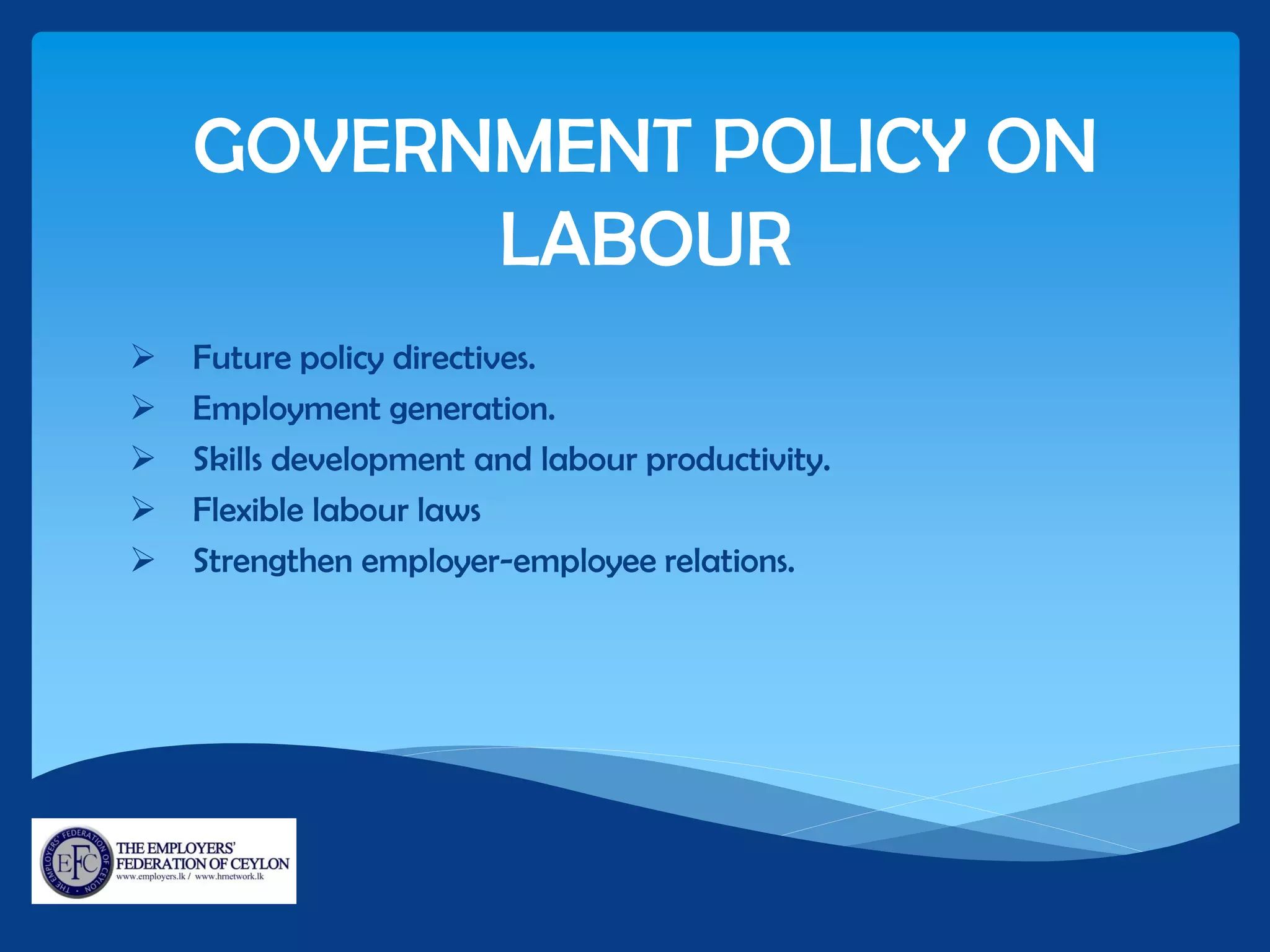
GOVERNMENT POLICY ON
LABOUR
 Future policy directives.
 Employment generation.
 Skills development and labour productivity.
 Flexible labour laws
 Strengthen employer-employee relations.
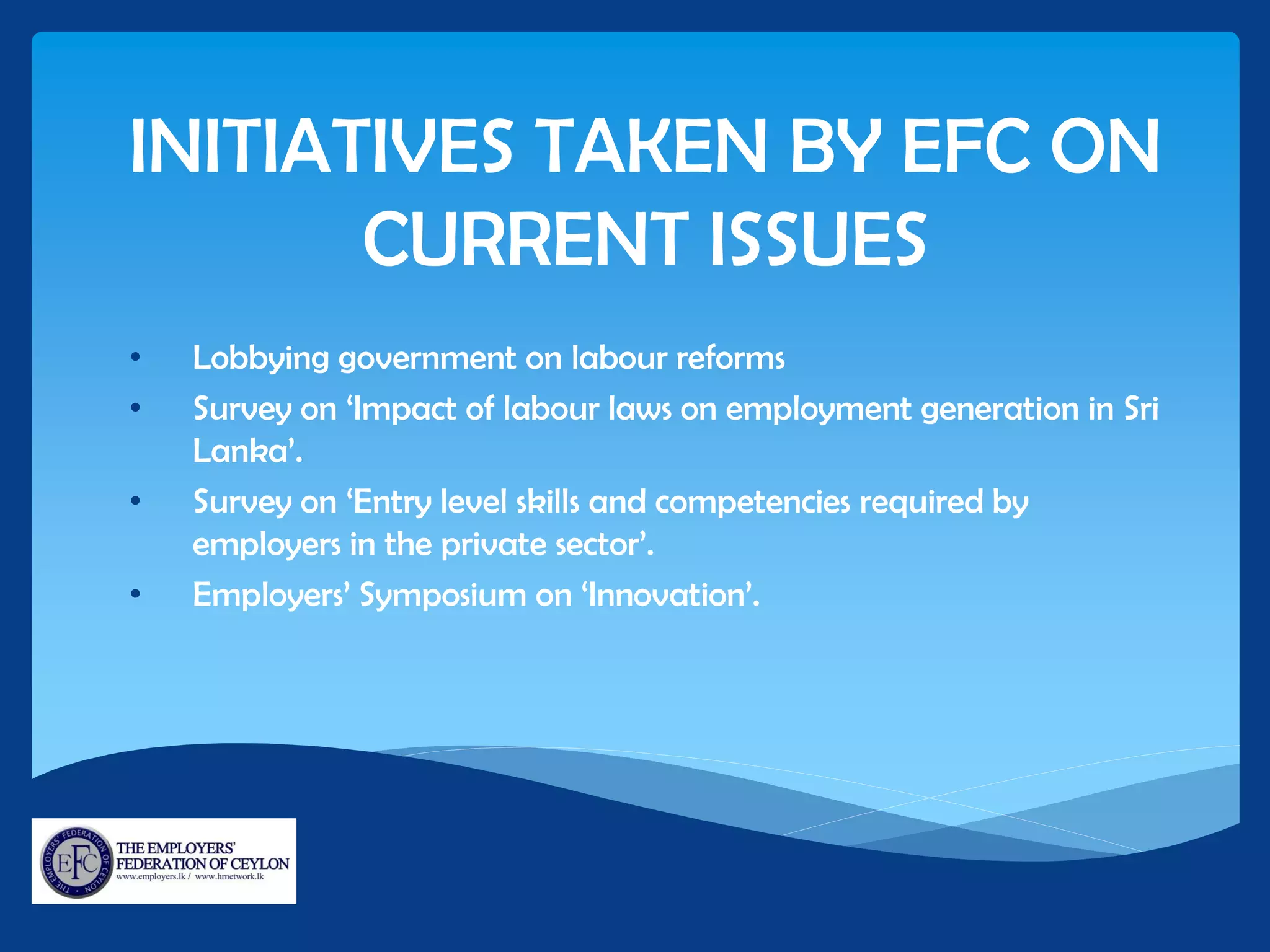
INITIATIVES TAKEN BY EFC ON
CURRENT ISSUES
• Lobbying government on labour reforms
• Survey on ‘Impact of labour laws on employment generation in Sri
Lanka’.
• Survey on ‘Entry level skills and competencies required by
employers in the private sector’.
• Employers’ Symposium on ‘Innovation’.
WHAT DO WE NEED?
: WAY FORWARD
• Translate the policy directives into concrete action.
• Create an enabling environment to adopt work arrangements
that are flexible and required to be competitive.
• Promote requirements to strengthen relations rather than
regulations.
• Be competitive with relevant skills.
“The work forces today and tomorrow are, and
will in many countries, be having to compete
for jobs similar to the way in which countries
compete for investment, i.e., by making
themselves attractive for employment”
S.R. de Silva “Transformation of
Labour Laws and Relations”
Therefore, we need to look inwards…….
WHY DID MY EMPLOYER
HIRE ME ?
•Qualifications
• Experience
• Personality
• Personal contact
AM I RELEVANT AND
REQUIRED AT MY
WORKPLACE TODAY ?
THE CHALLENGE IS SUSTAINABILITY
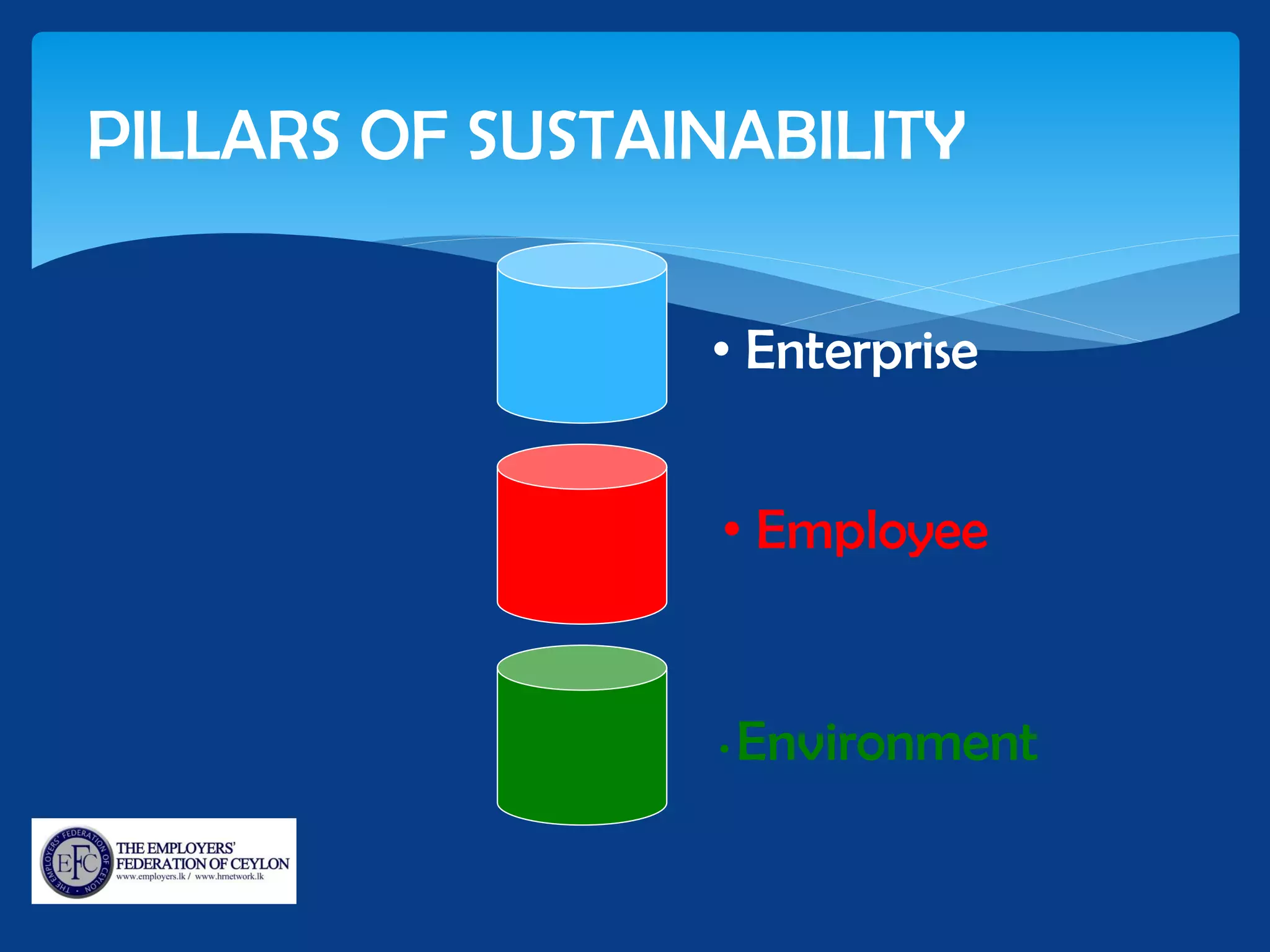
PILLARS OF SUSTAINABILITY
• Enterprise
• Employee
• Environment
We need to ……
 ensure that the enterprise remains sustainable
amidst continuous changes happening within
and all around it
 Ensure that enterprises have the right
employees with the relevant skills,
competencies and attitudes to withstand these
pressures
 Ensure that the enterprise gives back to the
environment what it has taken from it and
promote environmental responsibility.
‘Industrial Relations in Sri Lanka cannot be
strengthened by punitive laws or sanctions. It
can only be strengthened by creating an
enabling environment that would facilitate
greater understanding between employers and
workers.”
A Balancing Act
Efficiency Equity
Good Luck !

P3

  • 1.
    LABOUR LAW ANDINDUSTRIAL RELATIONS IN SRI LANKA STRUCTURE • Historical background. • Issues in relation to labour law and relations. • Government policy on labour/IR. • Initiatives taken by EFC on current issues. • What do we need? : Way forward.
  • 2.
    HISTORICAL BACKGROUND • Conflictualrevelations. • Trade unionism had a political flavour. • Multiplicity of trade unions and inter-union rivalry • Successive Government not wanting to displease the working population – in return for government support, the labour movement received job protection and other facilities.
  • 3.
    ISSUES IN RELATIONTO LABOUR LAW & RELATIONS • Highly regulated framework. • Emphasis on law rather than relations. • Laws relating to termination of employment – TEWA and LT Orders – Reinstatement. • Laws relating to termination and conditions of employment – working hours/holidays.
  • 4.
    GOVERNMENT POLICY ON LABOUR Future policy directives.  Employment generation.  Skills development and labour productivity.  Flexible labour laws  Strengthen employer-employee relations.
  • 5.
    INITIATIVES TAKEN BYEFC ON CURRENT ISSUES • Lobbying government on labour reforms • Survey on ‘Impact of labour laws on employment generation in Sri Lanka’. • Survey on ‘Entry level skills and competencies required by employers in the private sector’. • Employers’ Symposium on ‘Innovation’.
  • 6.
    WHAT DO WENEED? : WAY FORWARD • Translate the policy directives into concrete action. • Create an enabling environment to adopt work arrangements that are flexible and required to be competitive. • Promote requirements to strengthen relations rather than regulations. • Be competitive with relevant skills.
  • 7.
    “The work forcestoday and tomorrow are, and will in many countries, be having to compete for jobs similar to the way in which countries compete for investment, i.e., by making themselves attractive for employment” S.R. de Silva “Transformation of Labour Laws and Relations”
  • 8.
    Therefore, we needto look inwards…….
  • 9.
    WHY DID MYEMPLOYER HIRE ME ? •Qualifications • Experience • Personality • Personal contact
  • 10.
    AM I RELEVANTAND REQUIRED AT MY WORKPLACE TODAY ?
  • 11.
    THE CHALLENGE ISSUSTAINABILITY
  • 12.
    PILLARS OF SUSTAINABILITY •Enterprise • Employee • Environment
  • 13.
    We need to……  ensure that the enterprise remains sustainable amidst continuous changes happening within and all around it  Ensure that enterprises have the right employees with the relevant skills, competencies and attitudes to withstand these pressures  Ensure that the enterprise gives back to the environment what it has taken from it and promote environmental responsibility.
  • 14.
    ‘Industrial Relations inSri Lanka cannot be strengthened by punitive laws or sanctions. It can only be strengthened by creating an enabling environment that would facilitate greater understanding between employers and workers.”
  • 15.
  • 16.