The Muscular System
ANATOMY AND PHYSIOLOGY OF
MUSCULAR SYSTEM
Dr.Ibtisam Khalaf Abd Ali
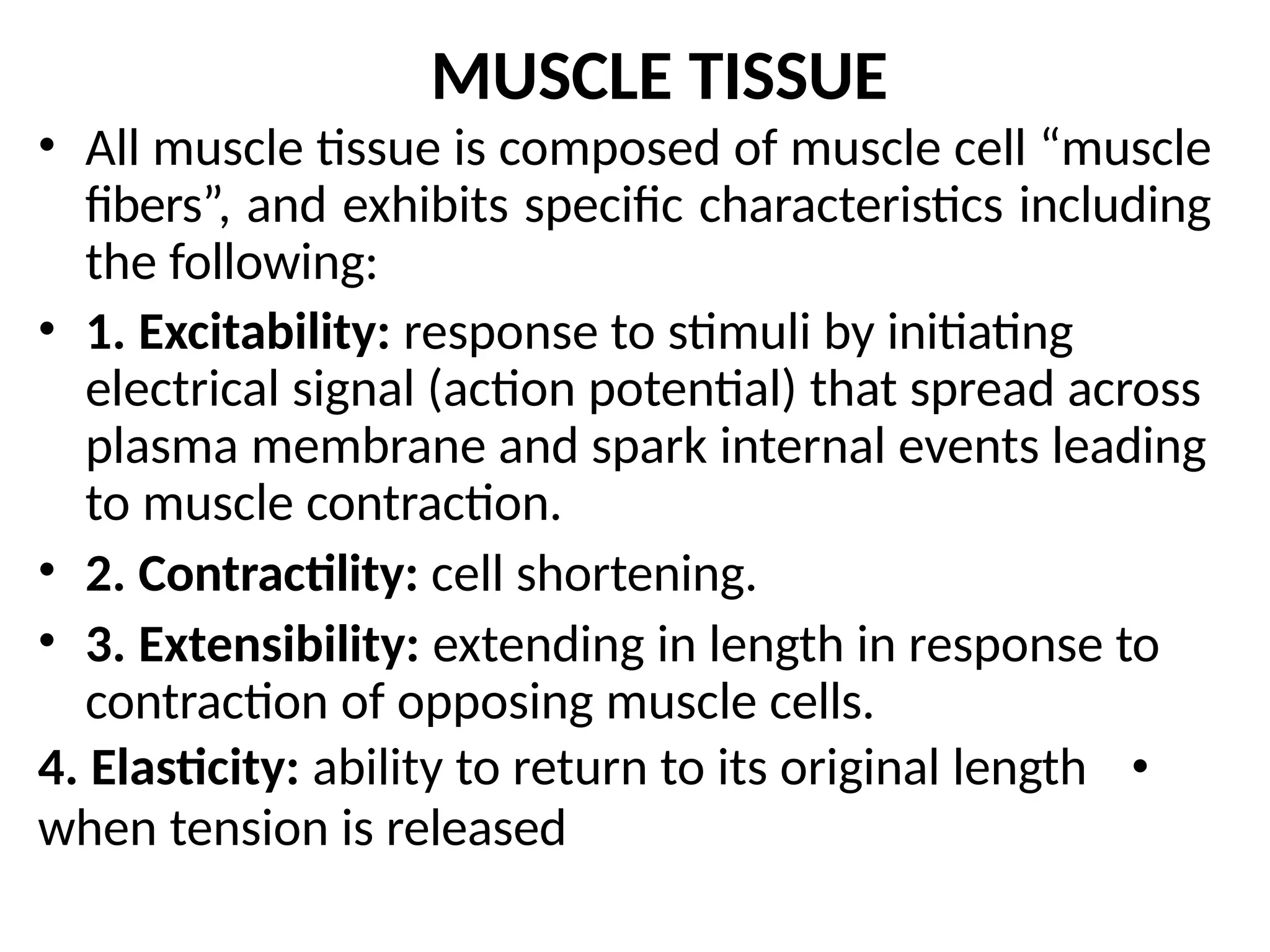
MUSCLE TISSUE
• All muscle tissue is composed of muscle cell “muscle
fibers”, and exhibits specific characteristics including
the following:
• 1. Excitability: response to stimuli by initiating
electrical signal (action potential) that spread across
plasma membrane and spark internal events leading
to muscle contraction.
• 2. Contractility: cell shortening.
• 3. Extensibility: extending in length in response to
contraction of opposing muscle cells.
4. Elasticity: ability to return to its original length •
when tension is released
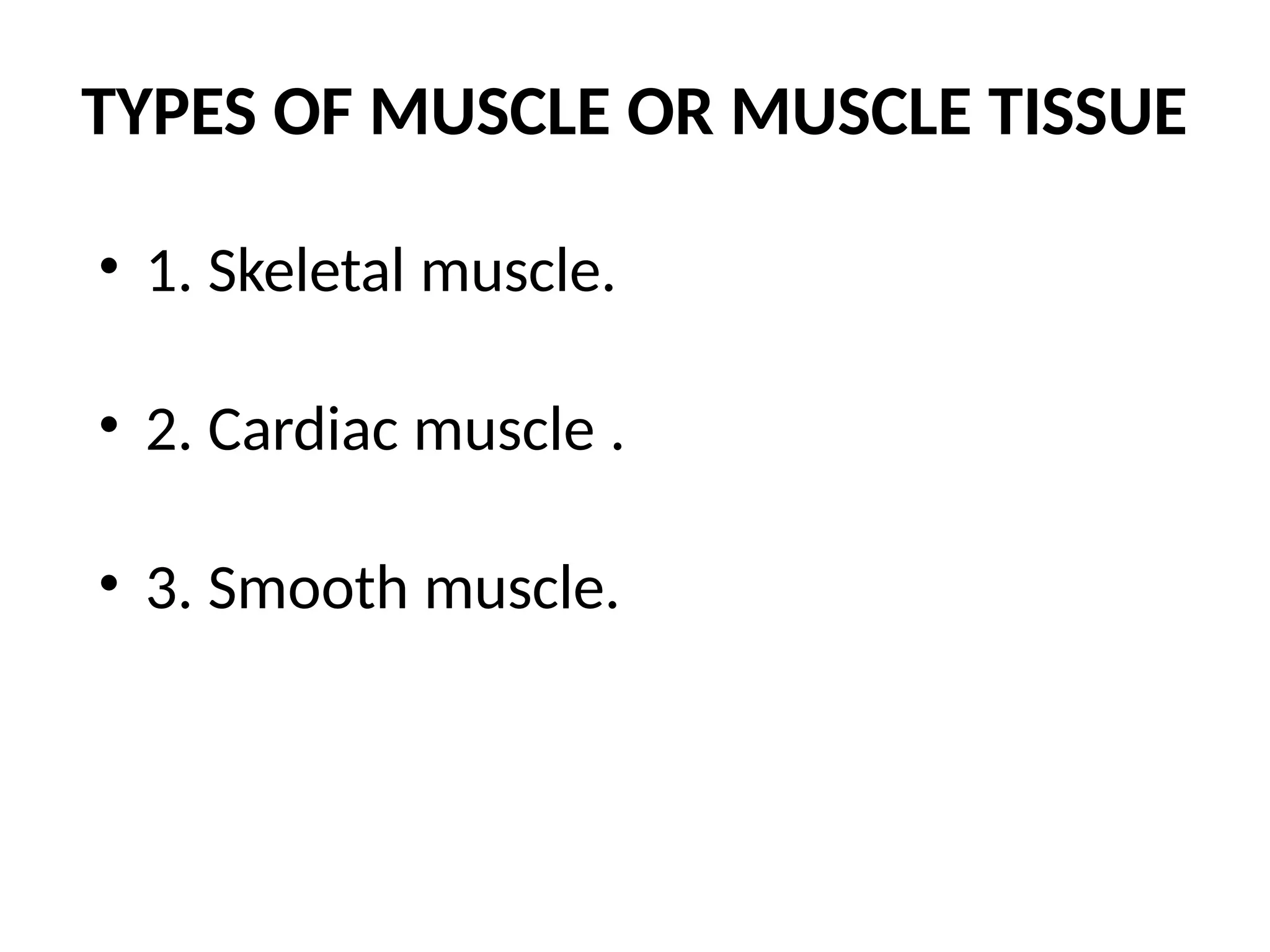
TYPES OF MUSCLE OR MUSCLE TISSUE
• 1. Skeletal muscle.
• 2. Cardiac muscle .
• 3. Smooth muscle.
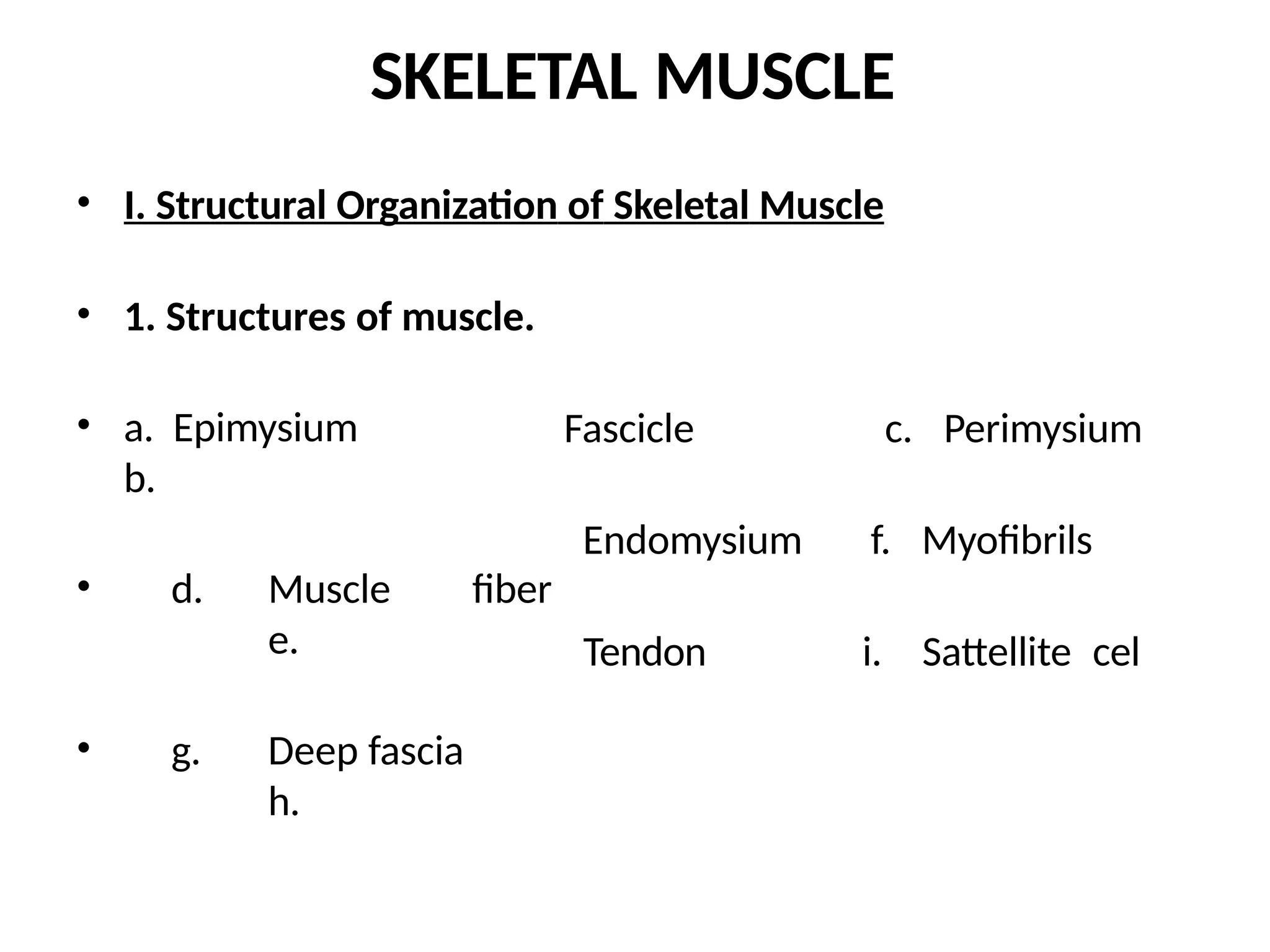
SKELETAL MUSCLE
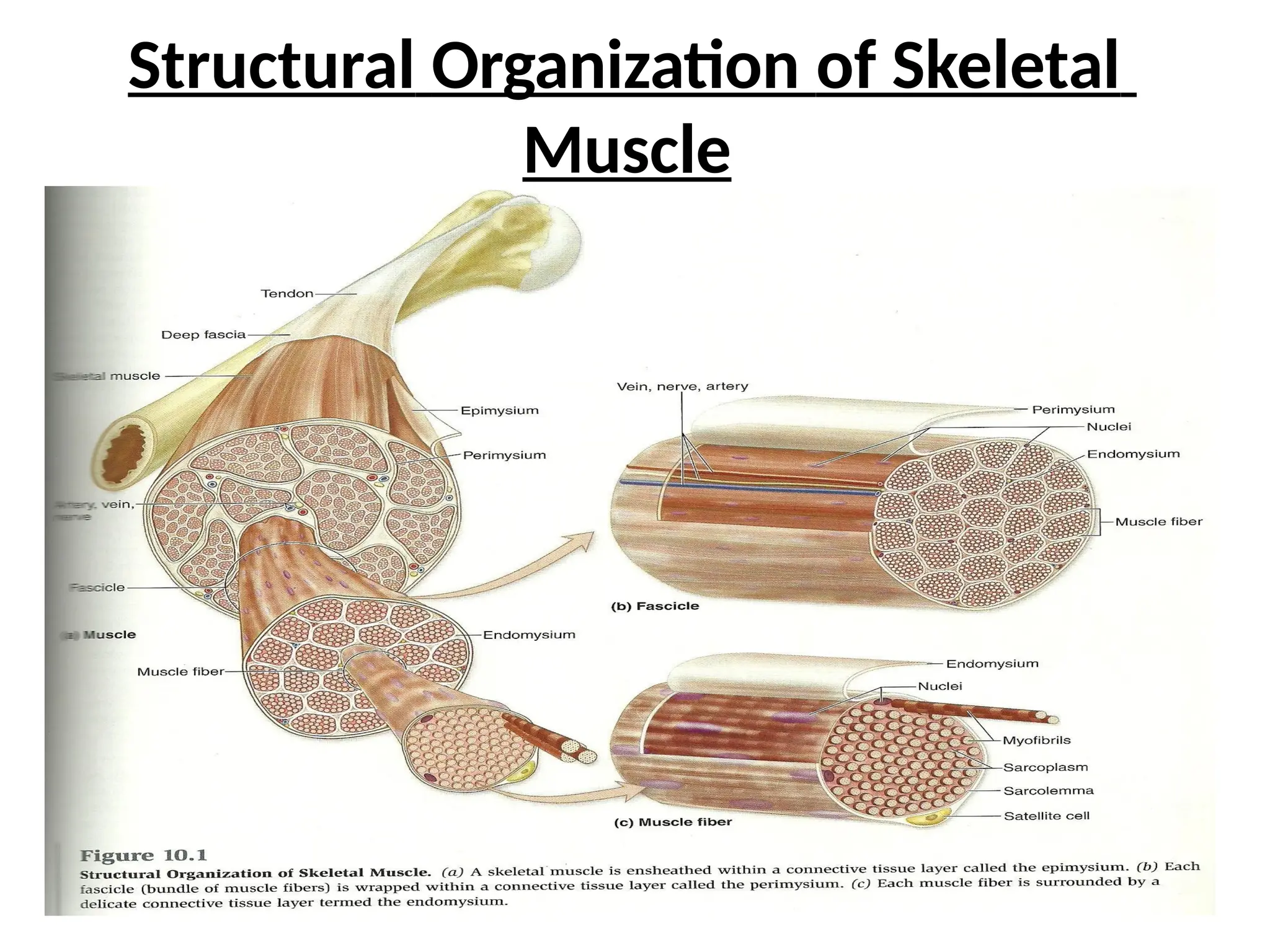
• I. Structural Organization of Skeletal Muscle
• 1. Structures of muscle.
• a. Epimysium
b.
• d. Muscle fiber
e.
• g. Deep fascia
h.
Fascicle c. Perimysium
Endomysium f. Myofibrils
Tendon i. Sattellite cel
Structural Organization of Skeletal
Muscle
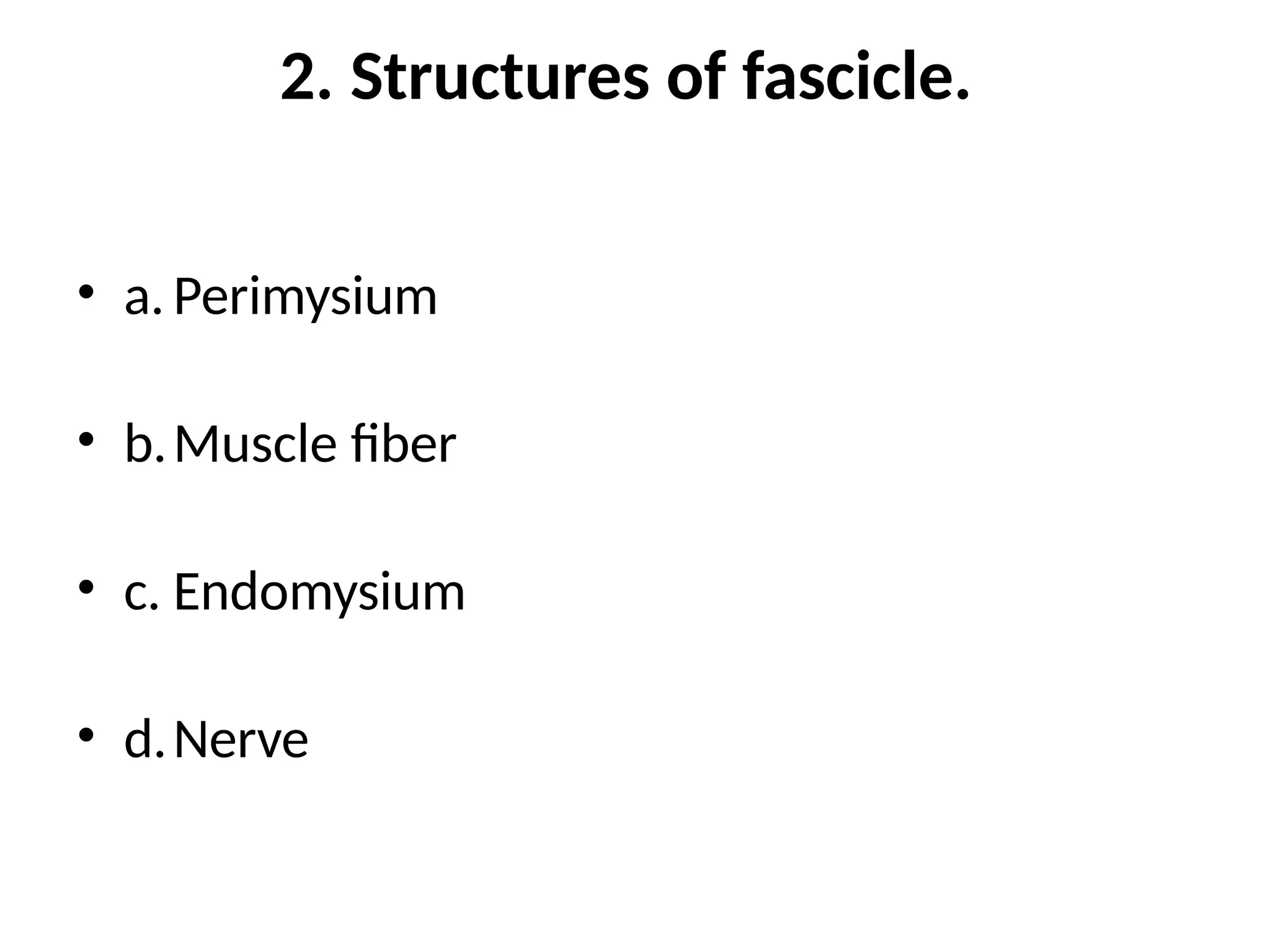
2. Structures of fascicle.
• a. Perimysium
• b.Muscle fiber
• c. Endomysium
• d.Nerve
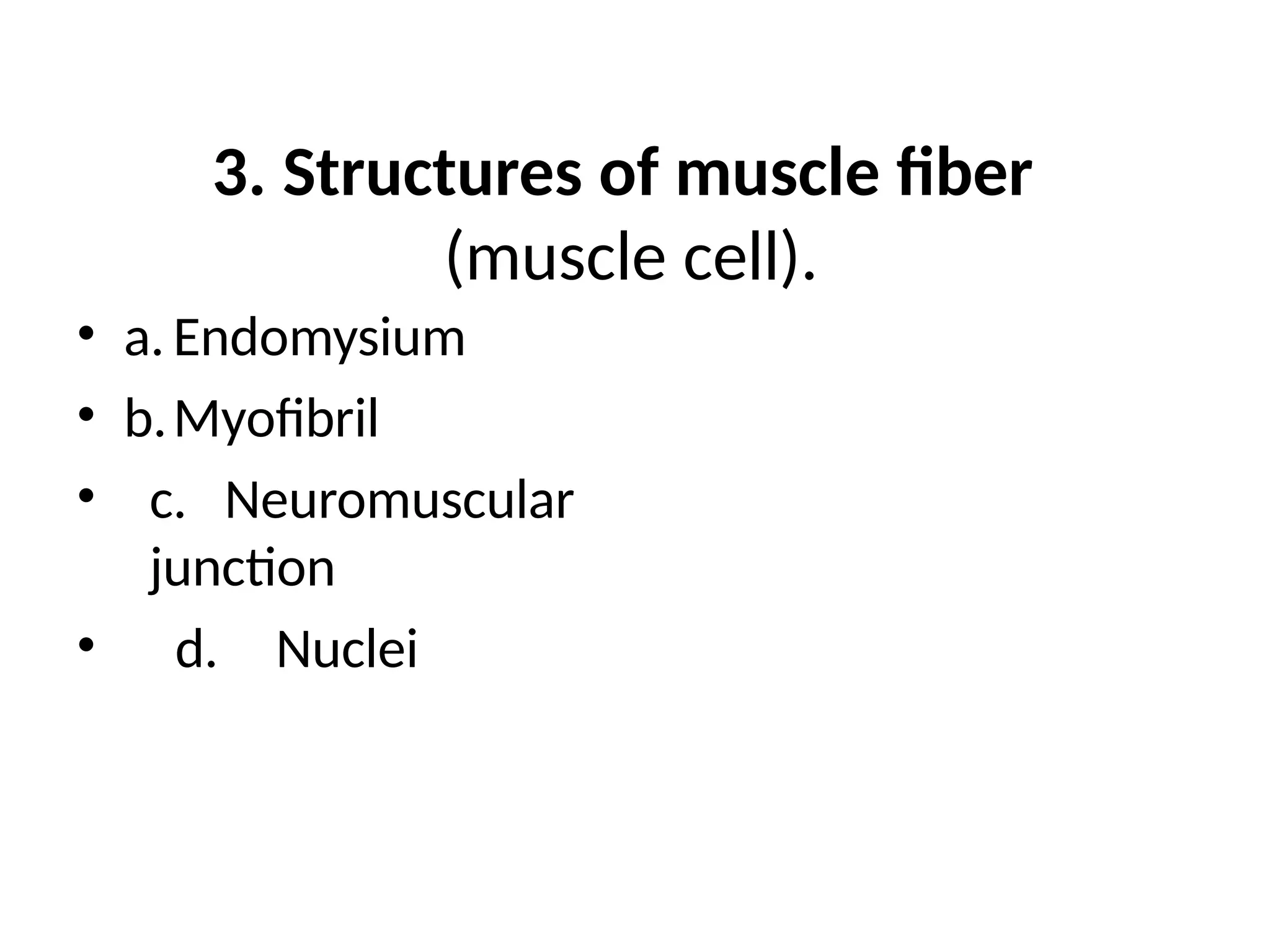
3. Structures of muscle fiber
(muscle cell).
• a. Endomysium
• b.Myofibril
• c. Neuromuscular
junction
• d. Nuclei
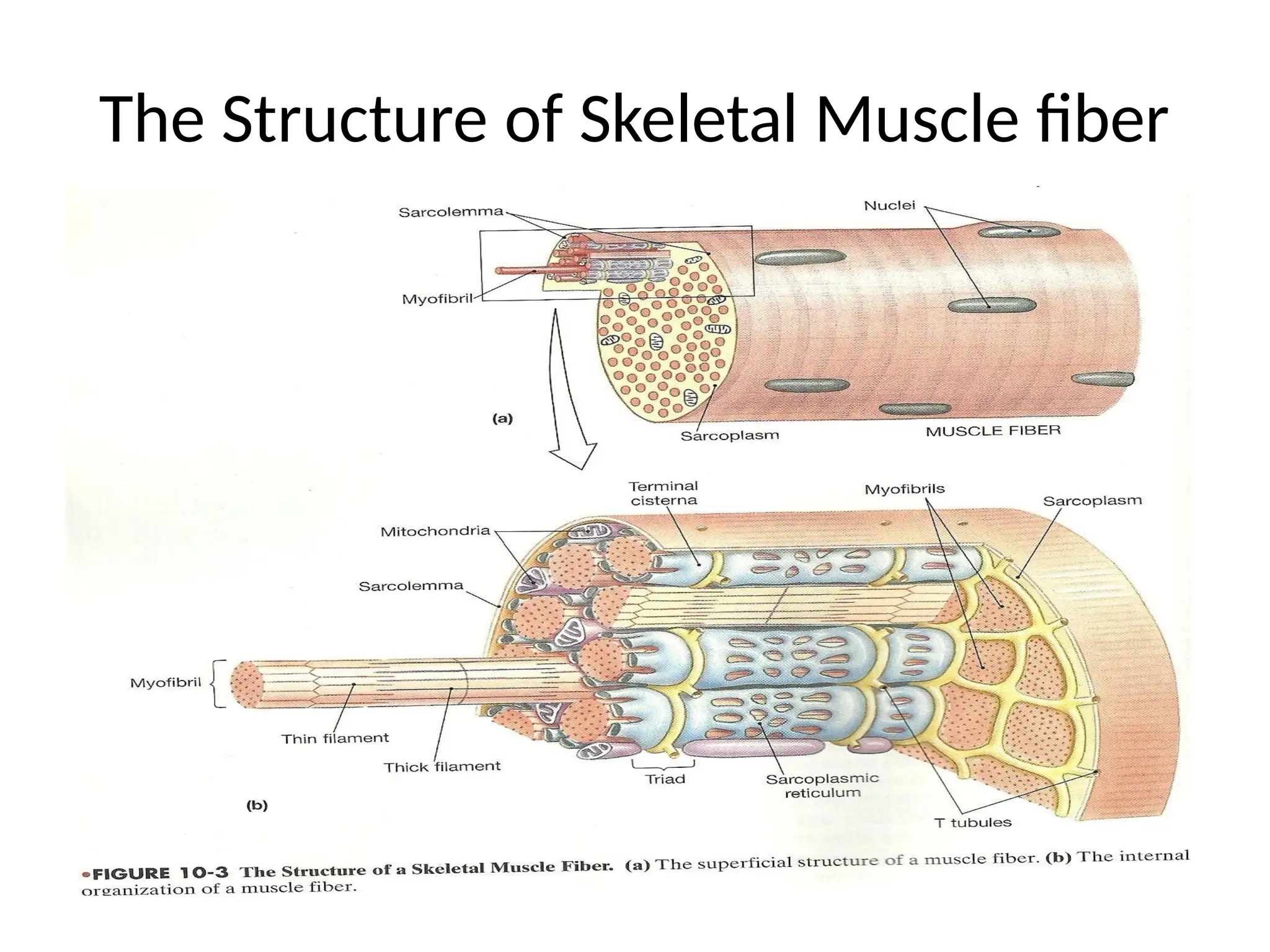
The Structure of Skeletal Muscle fiber
II. Structural Organization of
Myofibrils and Myofilaments
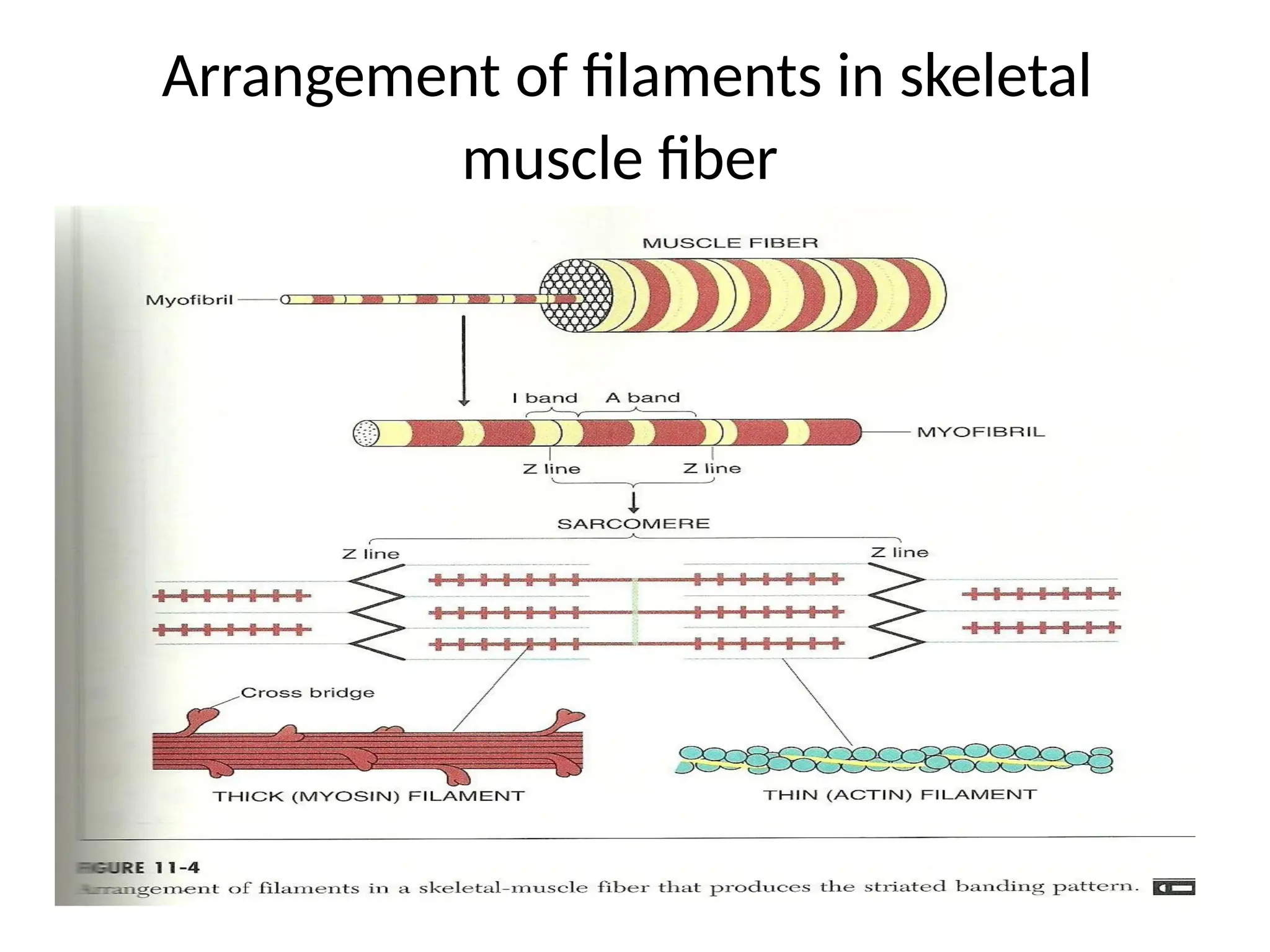
• . Structures of myofibrils: compose from many
sarcomeres
• Sarcomere: the smallest contractile unit in myofibril of
striated muscle fiber. Each sarcomere composed from:
• a. Myofilament – Actin- (Thin filament)
• b. Myofilament-Myosin (Thick filament)
•
Arrangement of filaments in skeletal
muscle fiber
CONTRACTION OF SKELETAL MUSCLE
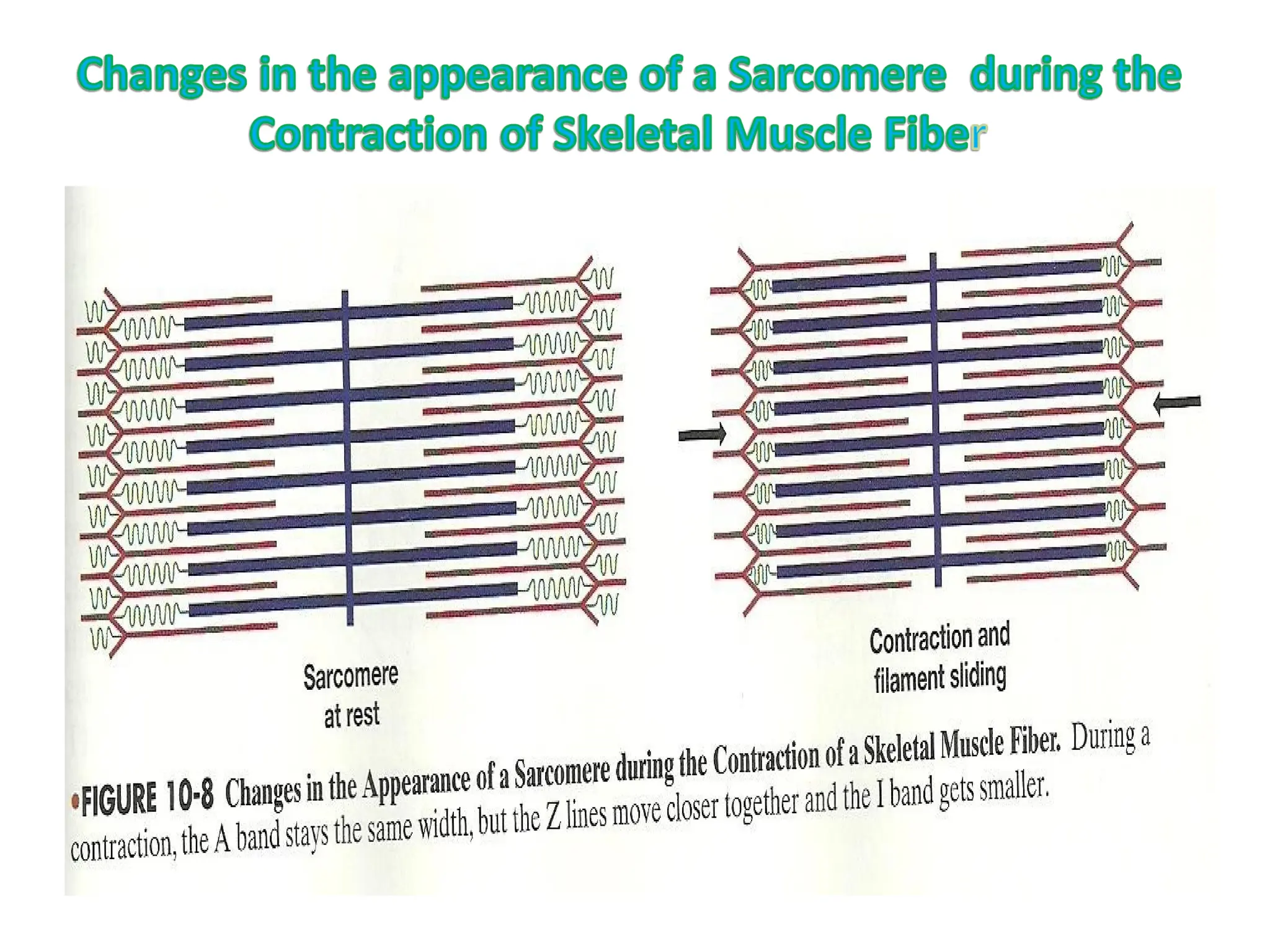
Contraction: is the sliding of actin over myosin
• in the presence of Ca++ (calcium ion). “Skeletal
muscle are attached to bones by tendons, and
contraction of skeletal muscle exerts a pull on
bone and movement”, most skeleton muscles
extend between bones. The less movable
point of attachment of the muscle called
“Origin”, and the more movable called
“Insertion”.
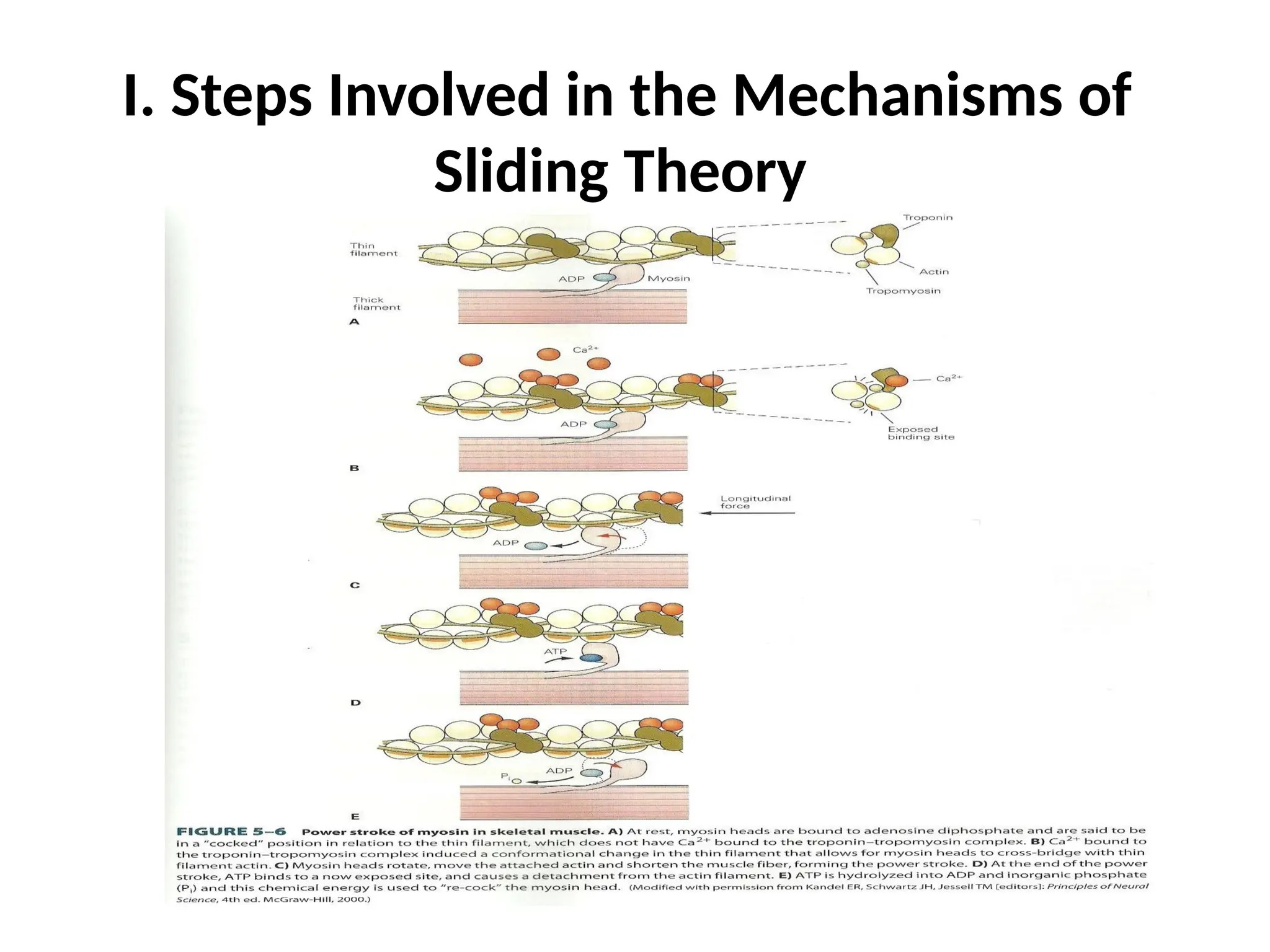
I. Steps Involved in the Mechanisms of
Sliding Theory
I. Steps Involved in the Mechanisms of
Sliding Theory:
• 1. Excitable tissues: nerve and muscle (nerve
impulse in axons cause muscle impulses in
sarcolemma).
• 2. Excitable cell: cell that is capable to create and
conduct action potential
• 3. Action potential: Changes in membrane
potential of excitable cells .also defined as
electrical activity or electrical signal.
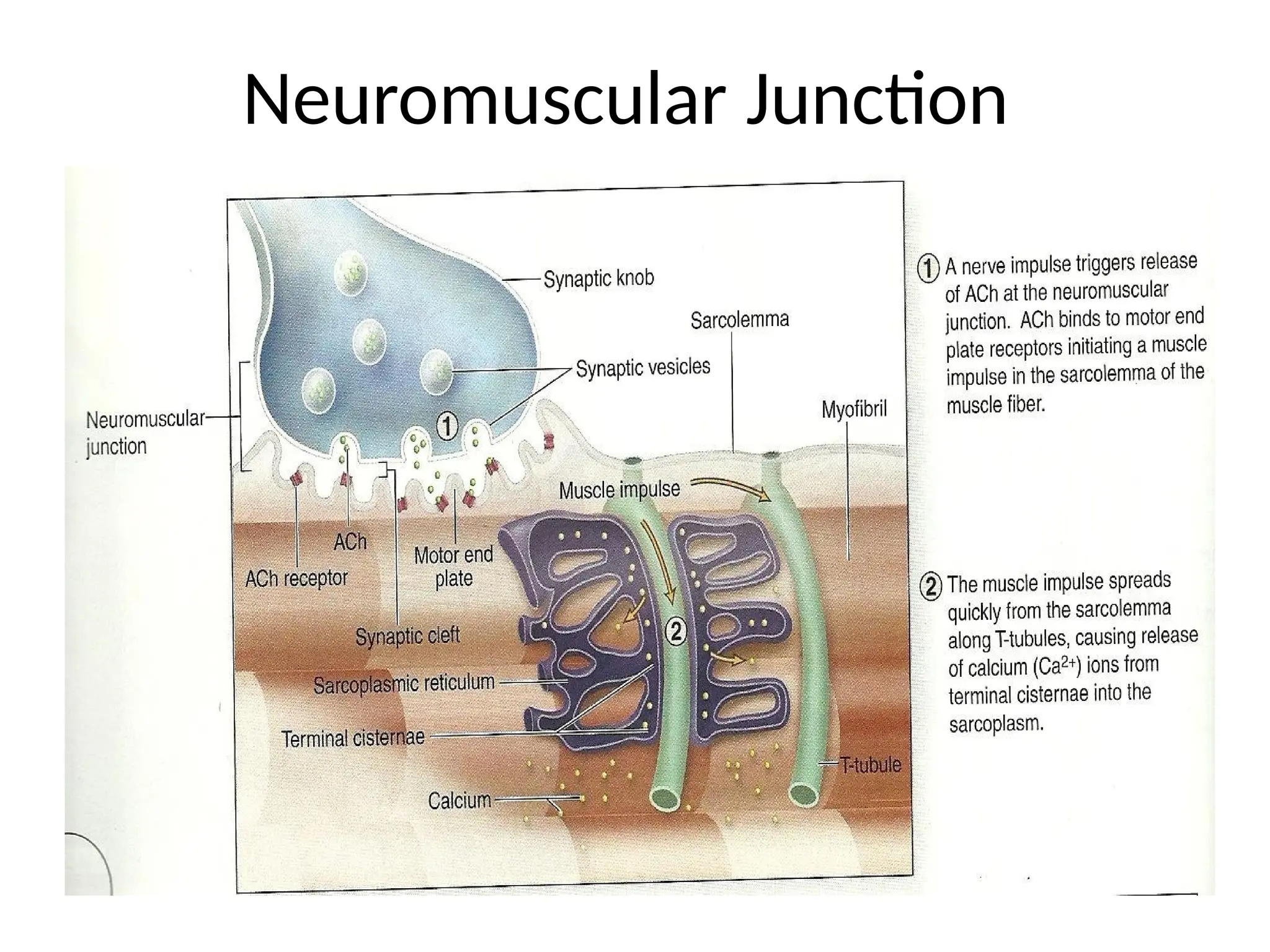
• 4. Motor end plate produces neurotransmeter at
the neuromuscular junction, to stimulate the cell
membrane (sarcolema) to produce Action
potential (electrical signal).
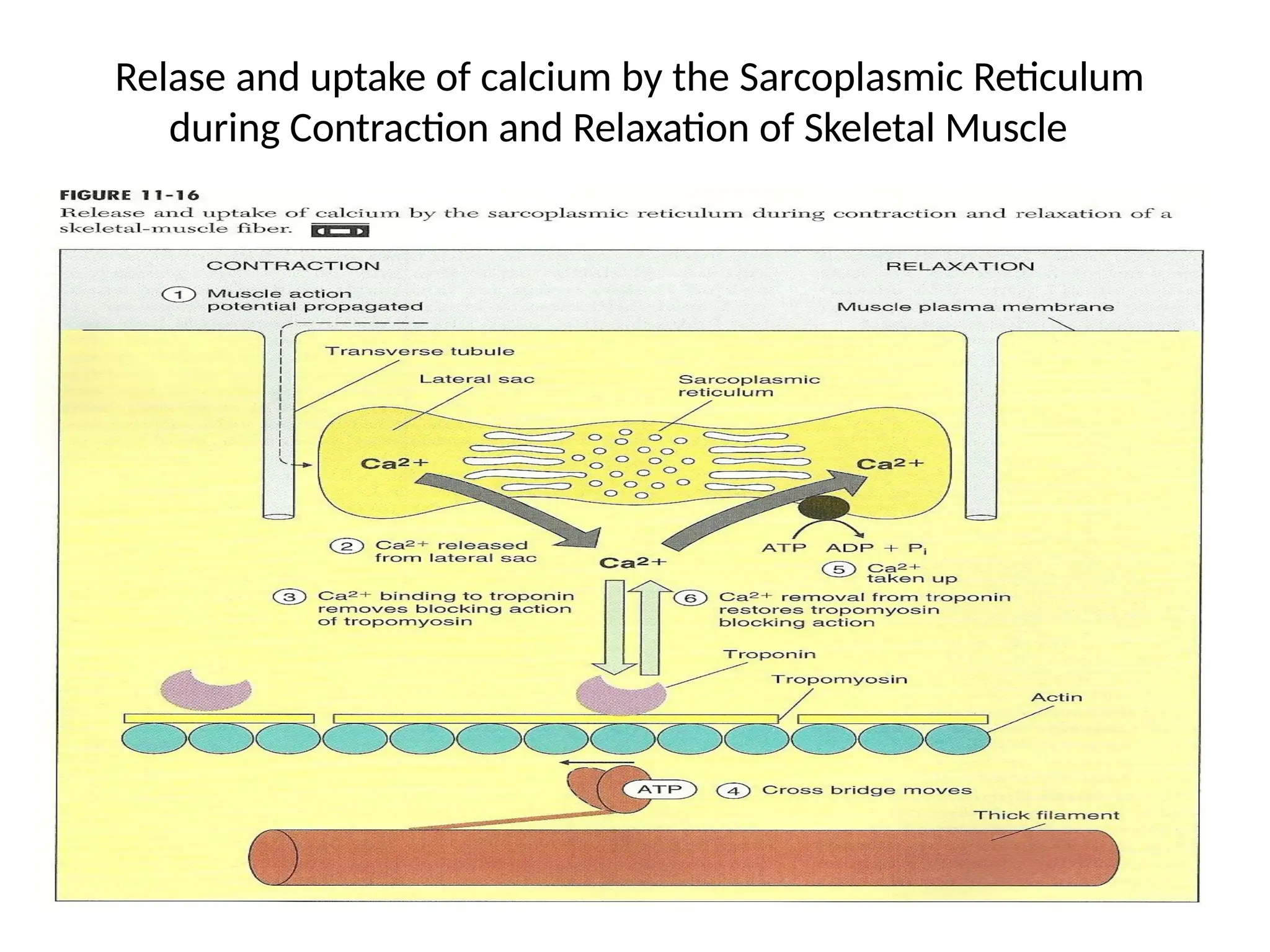
• 5. Action potential (electrical signal) spread
through cell membrane to “T –tube” and then
to sarcoplasmic reticulum to release calcium ion.
• 6. Calcium ion triggers the process of sliding.
• 7. Relaxation: the period after a contraction when
the tension in the muscle fiber return to resting
levels, and this done by:
• a. Active cytosolic calcium (Ca++) transported
across the cell membrane into the extracellular
fluid.
b. Active cytosolic calcium (Ca++) transported into
•
the sarcoplasmic reticulum.
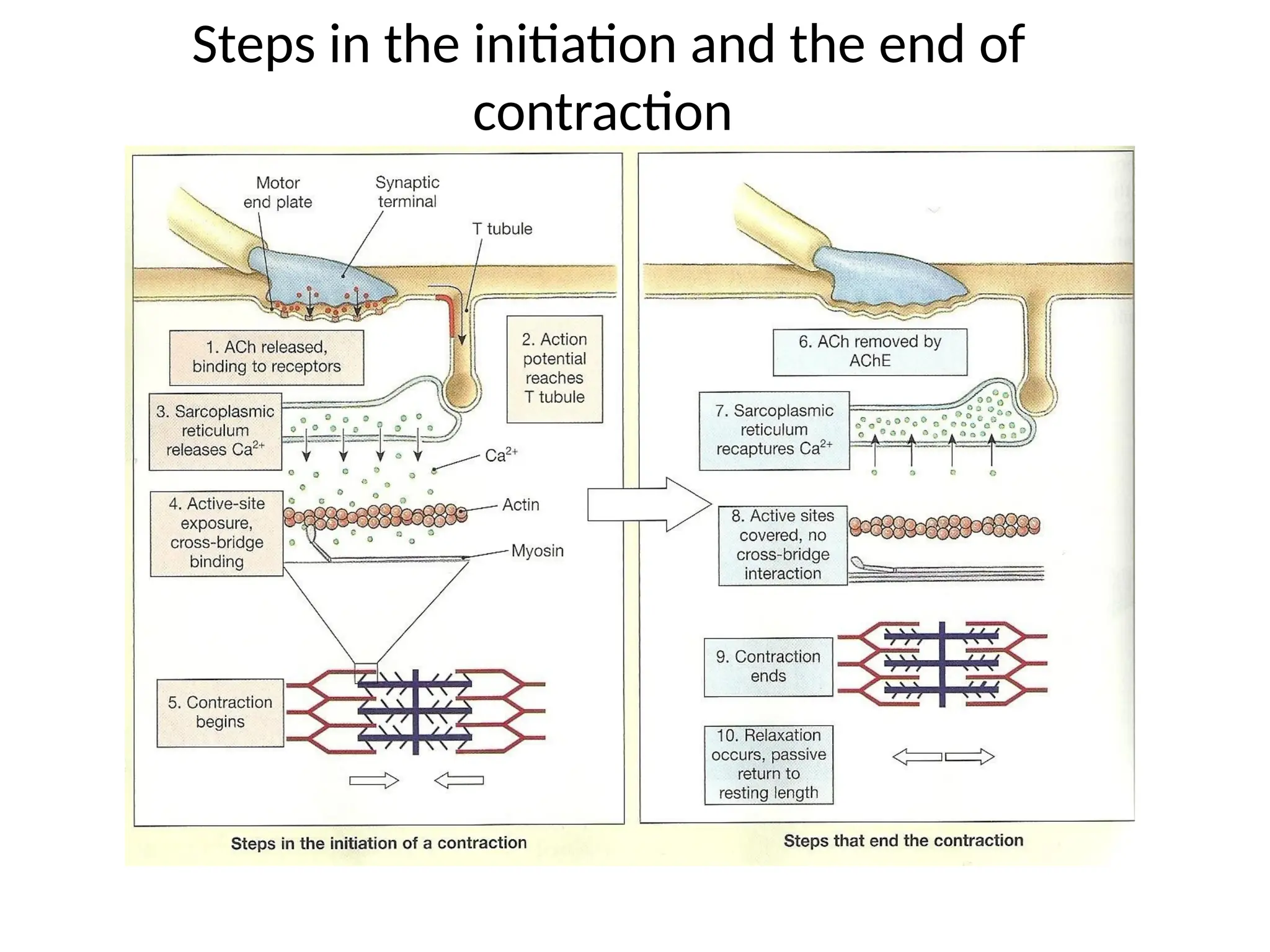
Steps in the initiation and the end of
contraction
Relase and uptake of calcium by the Sarcoplasmic Reticulum
during Contraction and Relaxation of Skeletal Muscle
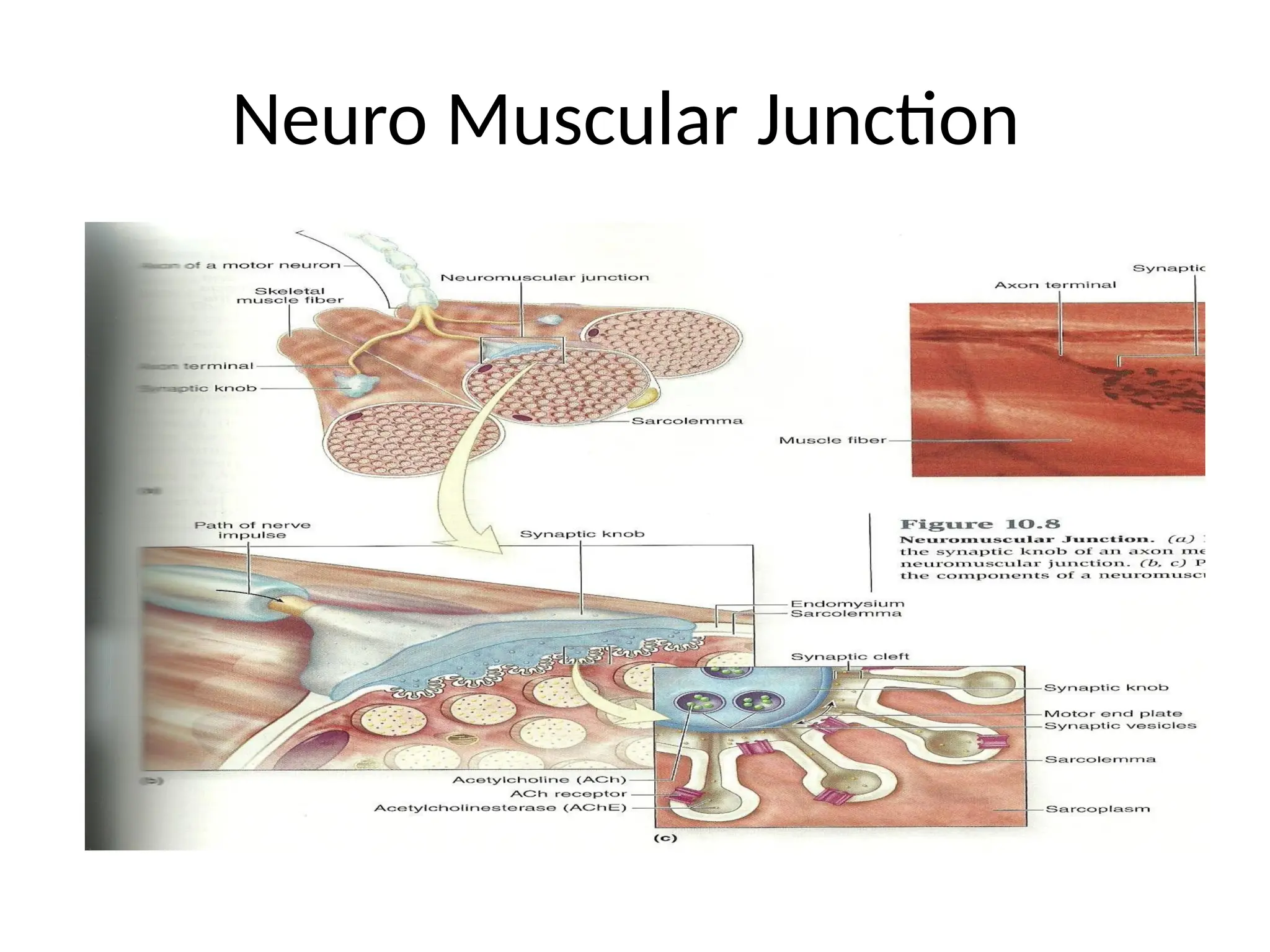
Neuromuscular Junction
CONTROL OF SKELETAL MUSCLE
CONTRACTION
Skeletal muscle fibers contract only under the •
control of the nervous system.
Communication between the nervous system
and the skeletal muscle fiber occurs at a
specialized intercellular connection known as
neuromuscular junction
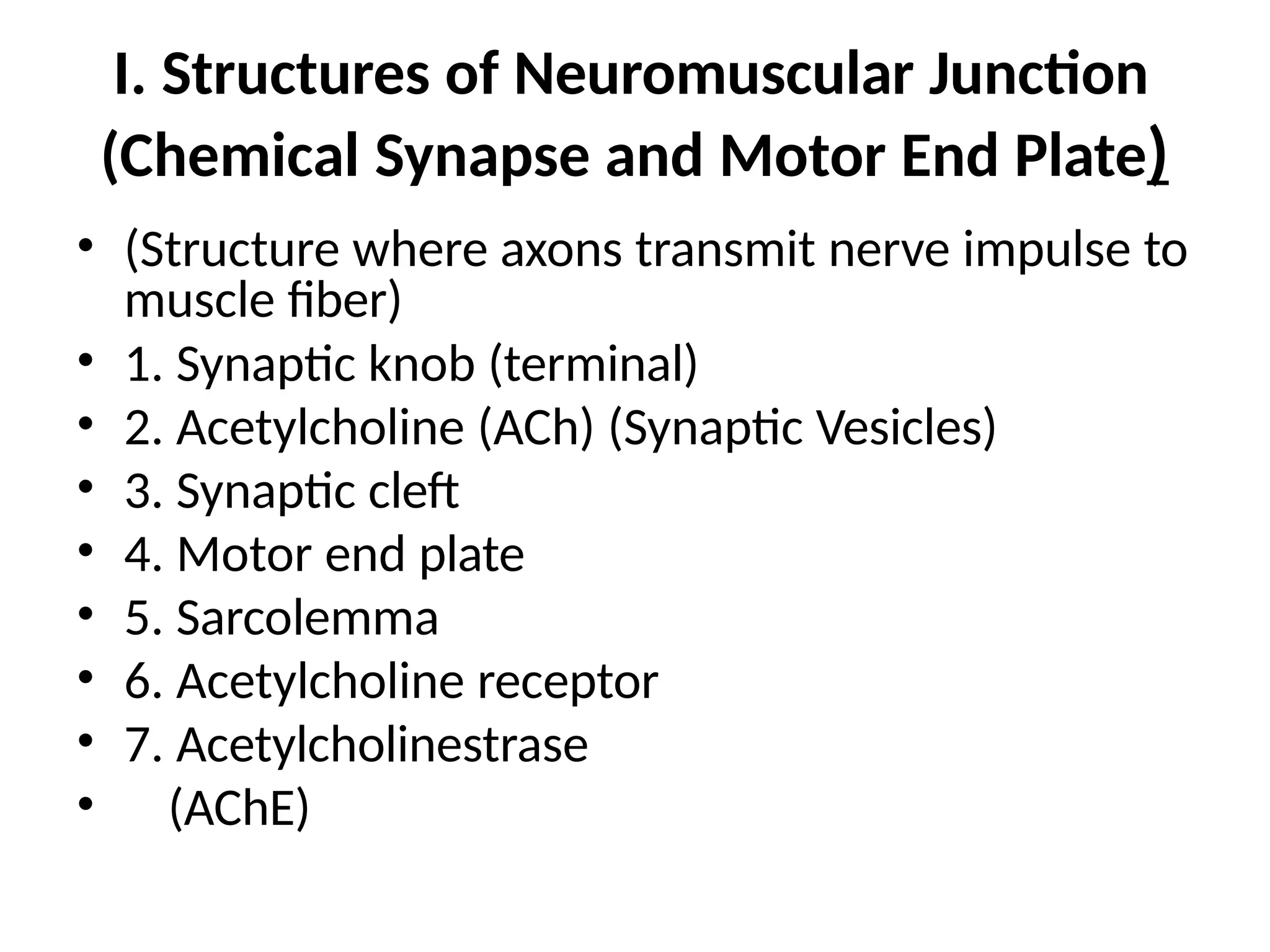
I. Structures of Neuromuscular Junction
(Chemical Synapse and Motor End Plate)
• (Structure where axons transmit nerve impulse to
muscle fiber)
• 1. Synaptic knob (terminal)
• 2. Acetylcholine (ACh) (Synaptic Vesicles)
• 3. Synaptic cleft
• 4. Motor end plate
• 5. Sarcolemma
• 6. Acetylcholine receptor
• 7. Acetylcholinestrase
• (AChE)
Neuro Muscular Junction
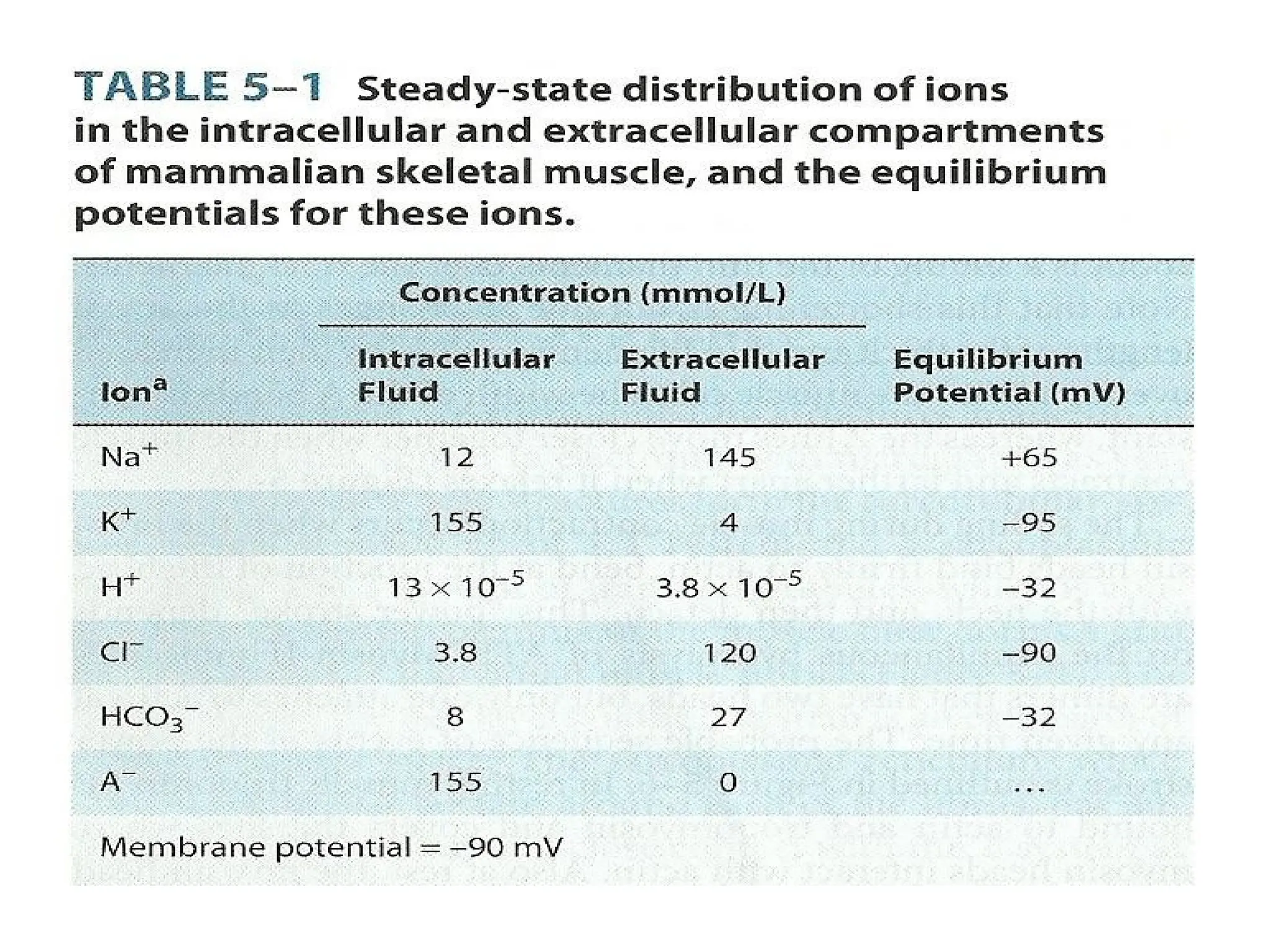
II. Ions Fluxes in Action
Potential
• 1.Sodium
• 2.Potassium
• 3.Calcium
MUSCLE PERFORMANCE
• Muscle performance: mean power and
endurance.
• Power: the ability to act (capability).
• Endurance: the ability to sustain an activity over
a period of time.
I. Factors Determine the Performance
Capabilities of any Skeletal Muscle
• 1. Types of muscle fibers in the muscle.
• a. Fast fibers.
• b. Slow fibers.
• c. Intermediate fiber.
• 2. Physical Conditioning
• a. Aerobic endurance.
• b. Anaerobic endurance.
MUSCLE TONE AND CONTRACTION
I. Muscle Tone: normal tension, in muscle the
resistance to passive elongation or stretch;
or partial contraction of the muscle; or
residual muscle tension
II. Muscle Contraction: shortening of
the
muscle
Types of Muscle Contraction
1. Isometric contraction.
2. Isotonic contraction
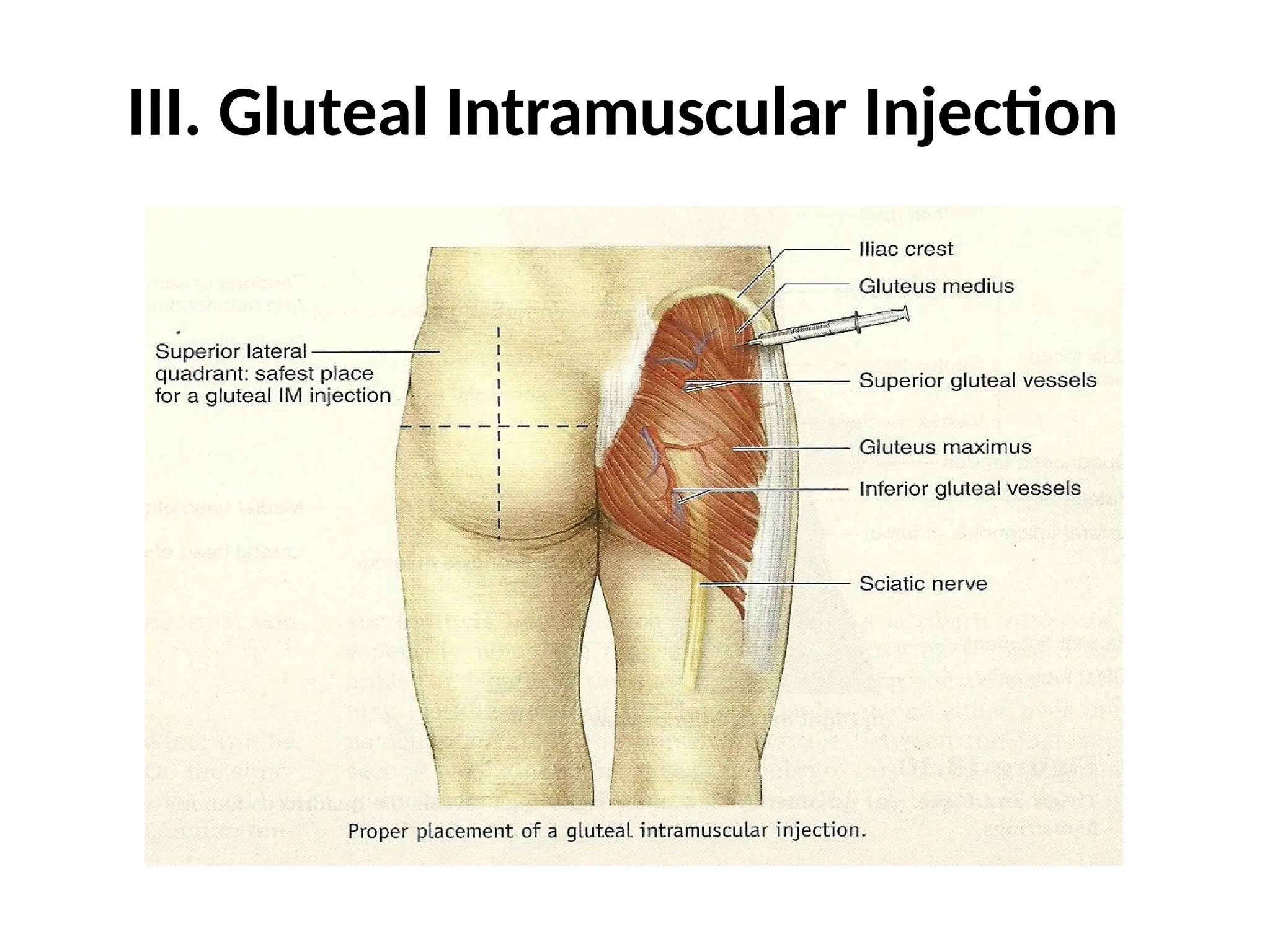
III. Gluteal Intramuscular Injection
ENERGETIC OF MUSCULAR ACTIVITY
A single muscle fiber may contain 15 billion thick
filaments, during muscle fiber contraction,
each thick filament break down roughly 2500
ATP molecule per second. Small skeletal
muscle contains thousands of muscle fibers.
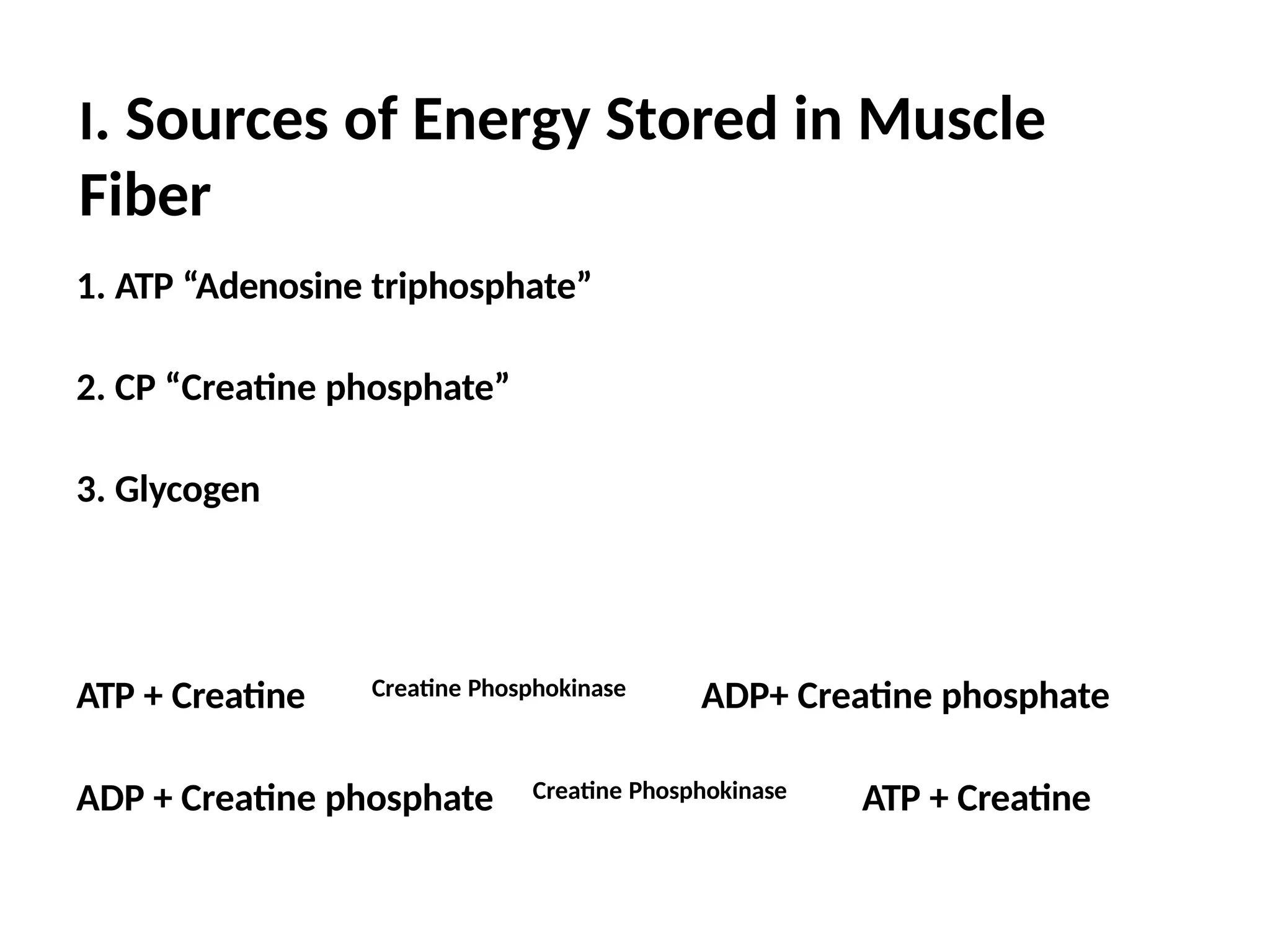
I. Sources of Energy Stored in Muscle
Fiber
1. ATP “Adenosine triphosphate”
2. CP “Creatine phosphate”
3. Glycogen
ATP + Creatine Creatine Phosphokinase ADP+ Creatine phosphate
ADP + Creatine phosphate Creatine Phosphokinase ATP + Creatine
II.ATP Generation
1. Aerobic metabolism “Oxidative
phosphorelation”.
2. Anaerobic metabolism “glycolysis”.
III. Hormones and Muscle Metabolism
1. Growth hormone.
2. Testosterone.
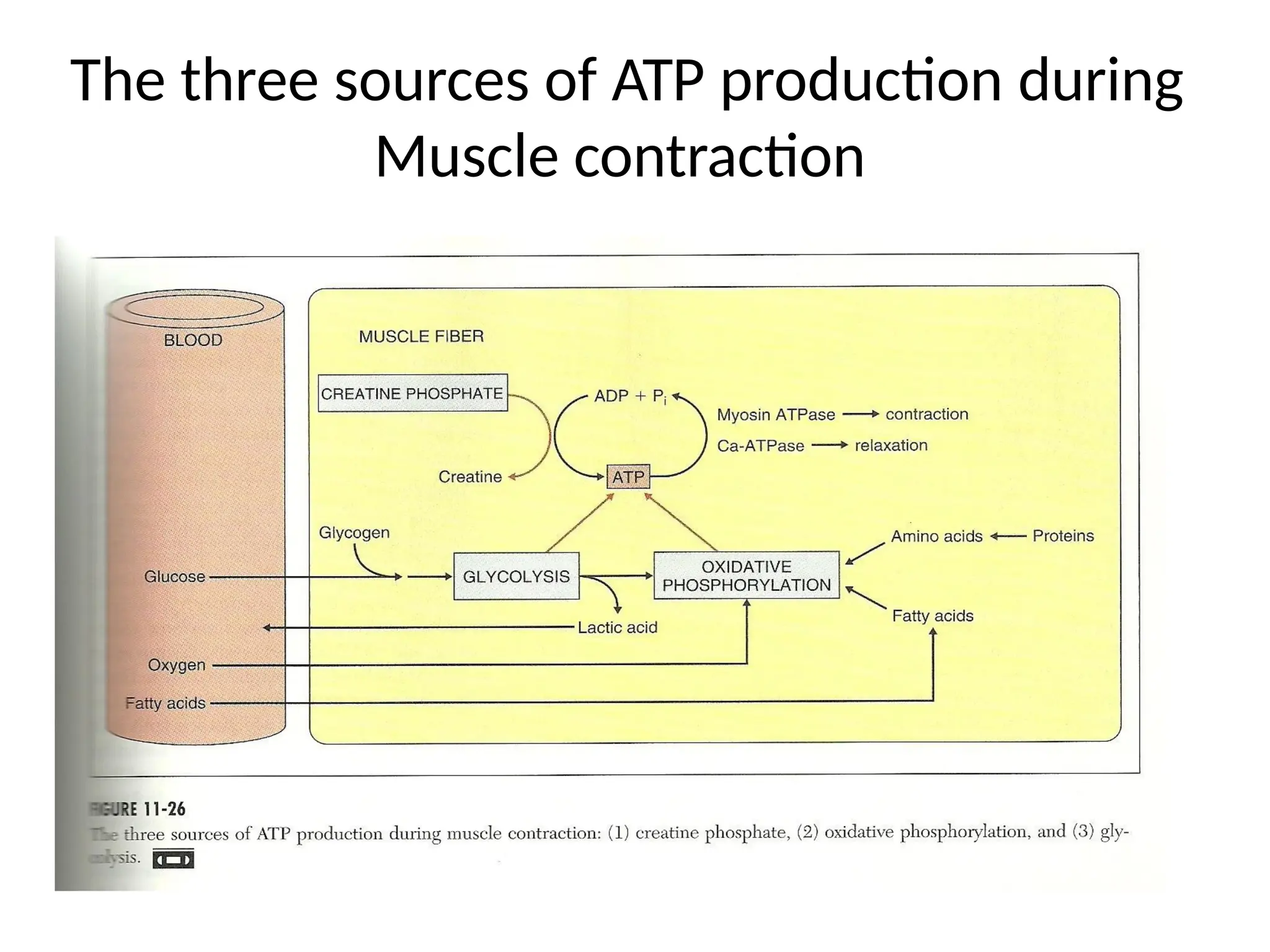
The three sources of ATP production during
Muscle contraction
FUNCTIONS OF SKELETAL MUSCLE
1. Producing skeletal movement.
2. Maintaining pusture and body position.
3. Supporting soft tissues.
4. Guarding enterance and exits.
5. Maintaining body temperature.
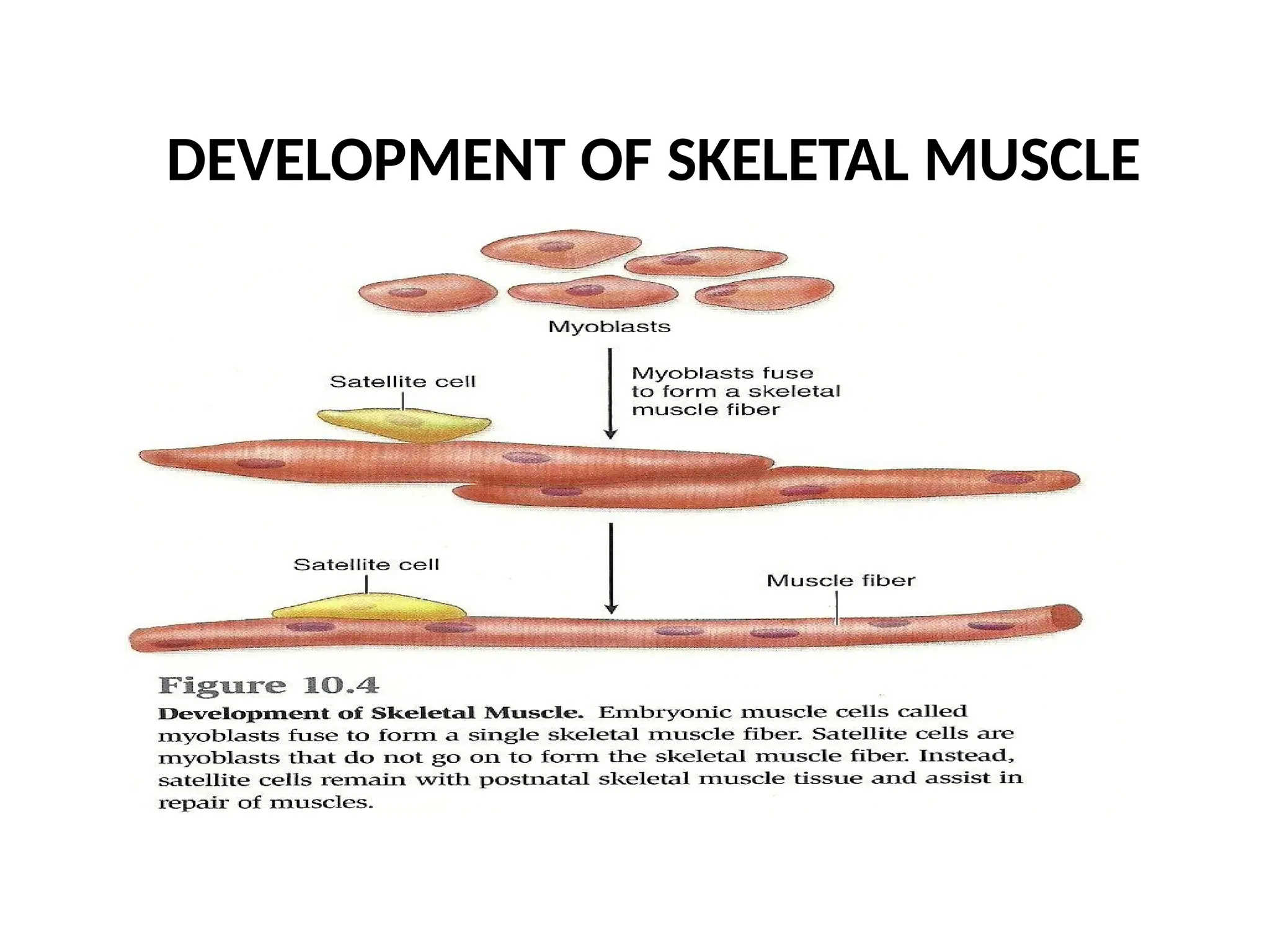
DEVELOPMENT OF SKELETAL MUSCLE
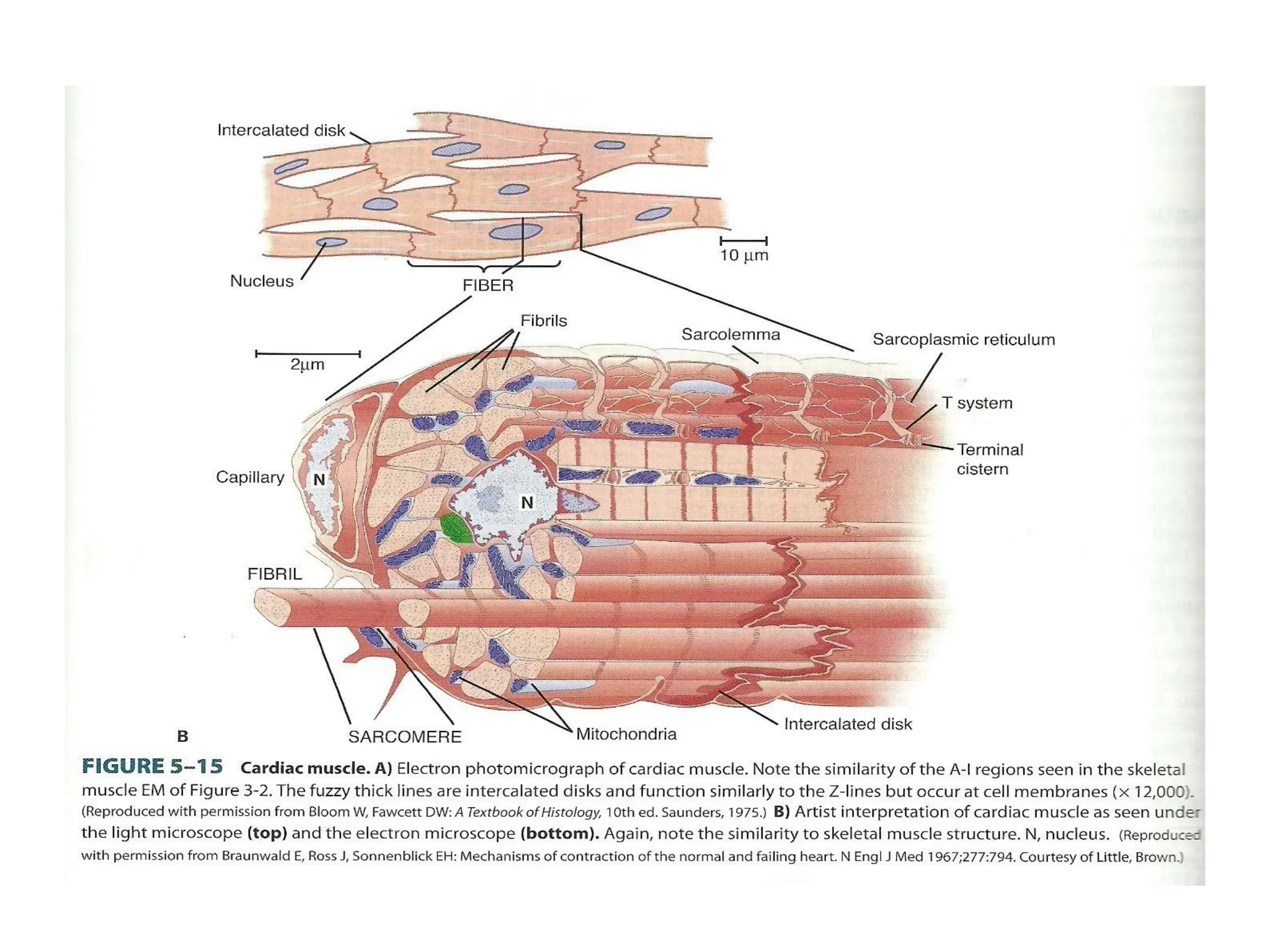
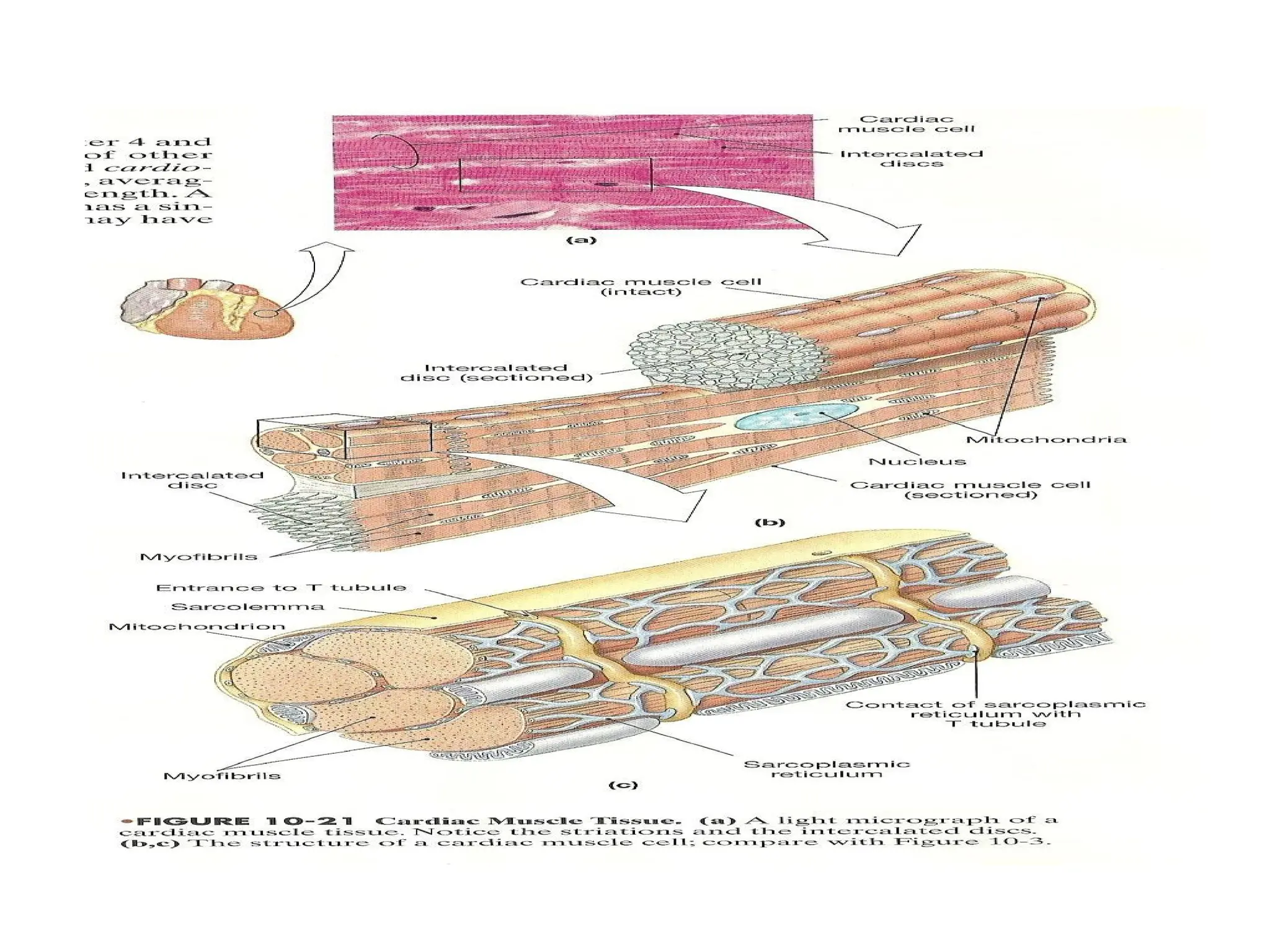
CARDIAC MUSCLE
I. Cardiac Muscle Fibers are individual muscle
fibers arranged in thick bundles like skeletal
muscle fiber, but shorter and thicker, and have
one or two nuclei. Cardiac muscle fiber forms Y-
shaped branches; it is attached to adjacent muscle
fibers by junctions termed intercalated discs
Specific structure of cardiac muscle fiber
1. Intercalated disc.
2. Generally centrally located single nucleus.
3. Cardiac muscle fibers are: thinner and shorter
than skeletal muscle fiber.
4. Contractions of cardiac muscle fiber depend on
Ca++ in ECF and sarcoplasmic reticulum.
5. CMF are slower onset in contraction and
resistant to fatigue.
6. CMFs control by pacemaker cells
(Automaticity).
7. CMFs depend on aerobic metabolism (fat and
carbohydrate) to maintain energy.
II. Control of Cardiac Muscle Contraction
1. Automaticity.
2. Autonomic innervations.
3. Blood born chemicals .
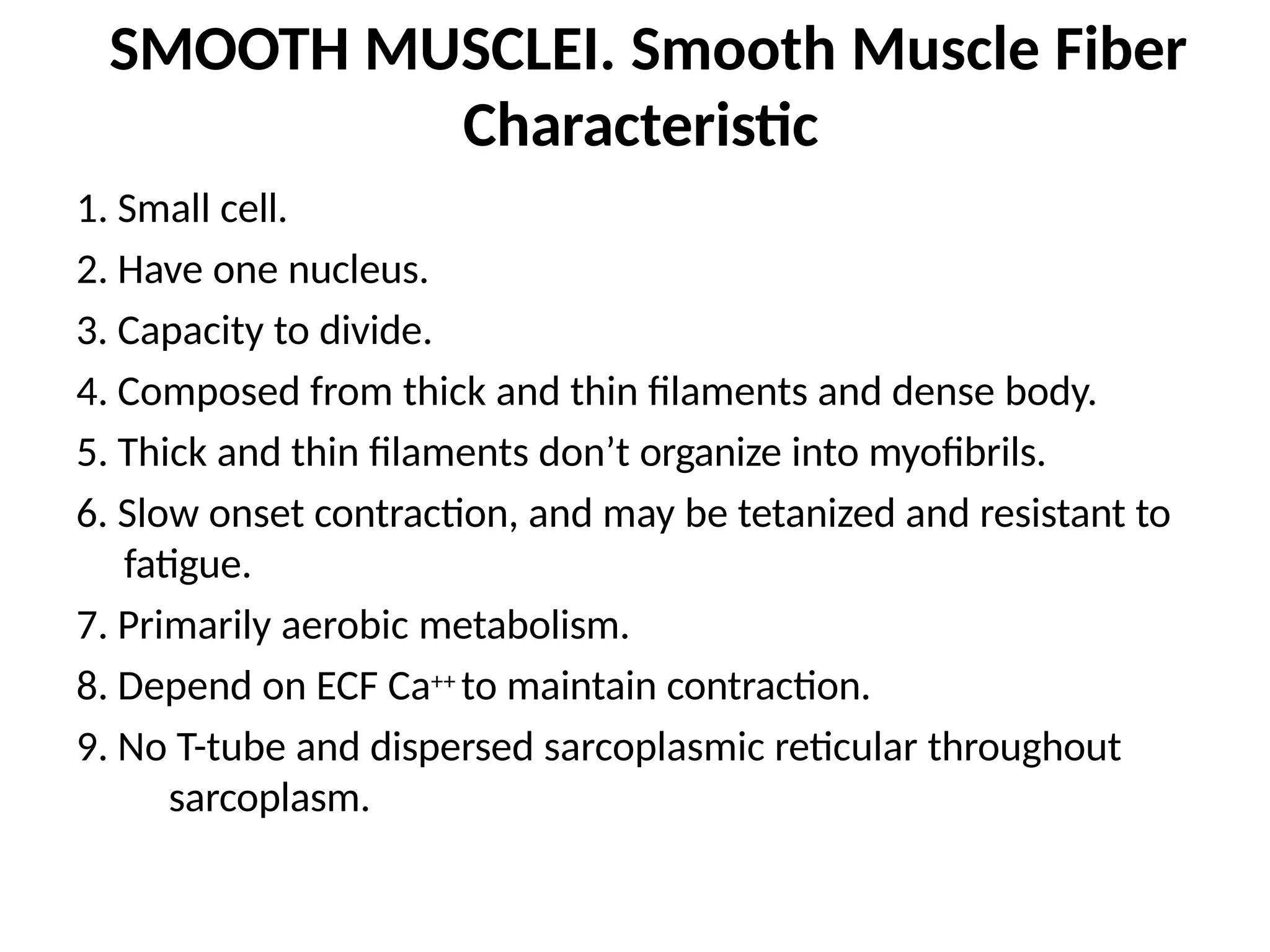
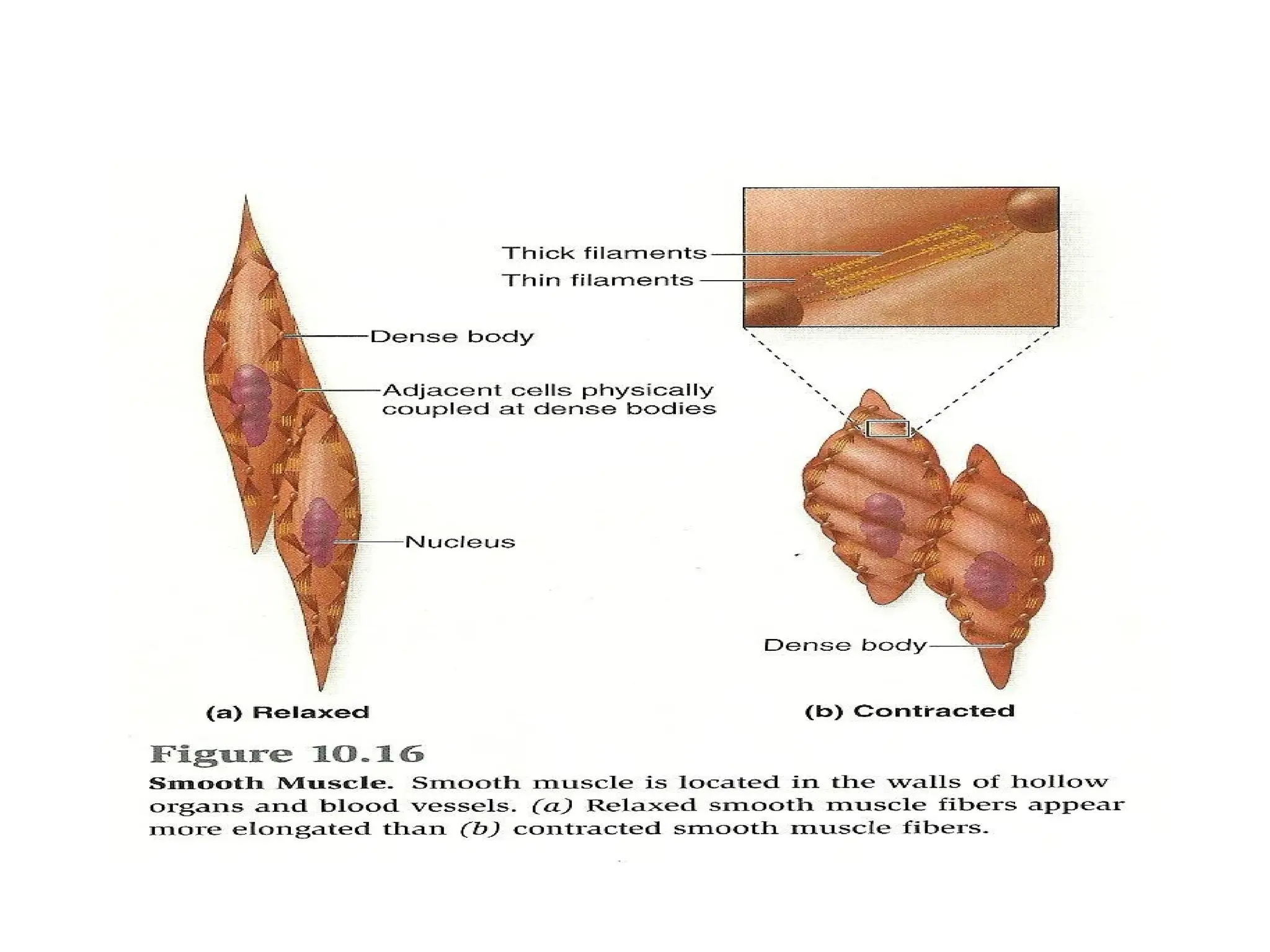
SMOOTH MUSCLEI. Smooth Muscle Fiber
Characteristic
1. Small cell.
2. Have one nucleus.
3. Capacity to divide.
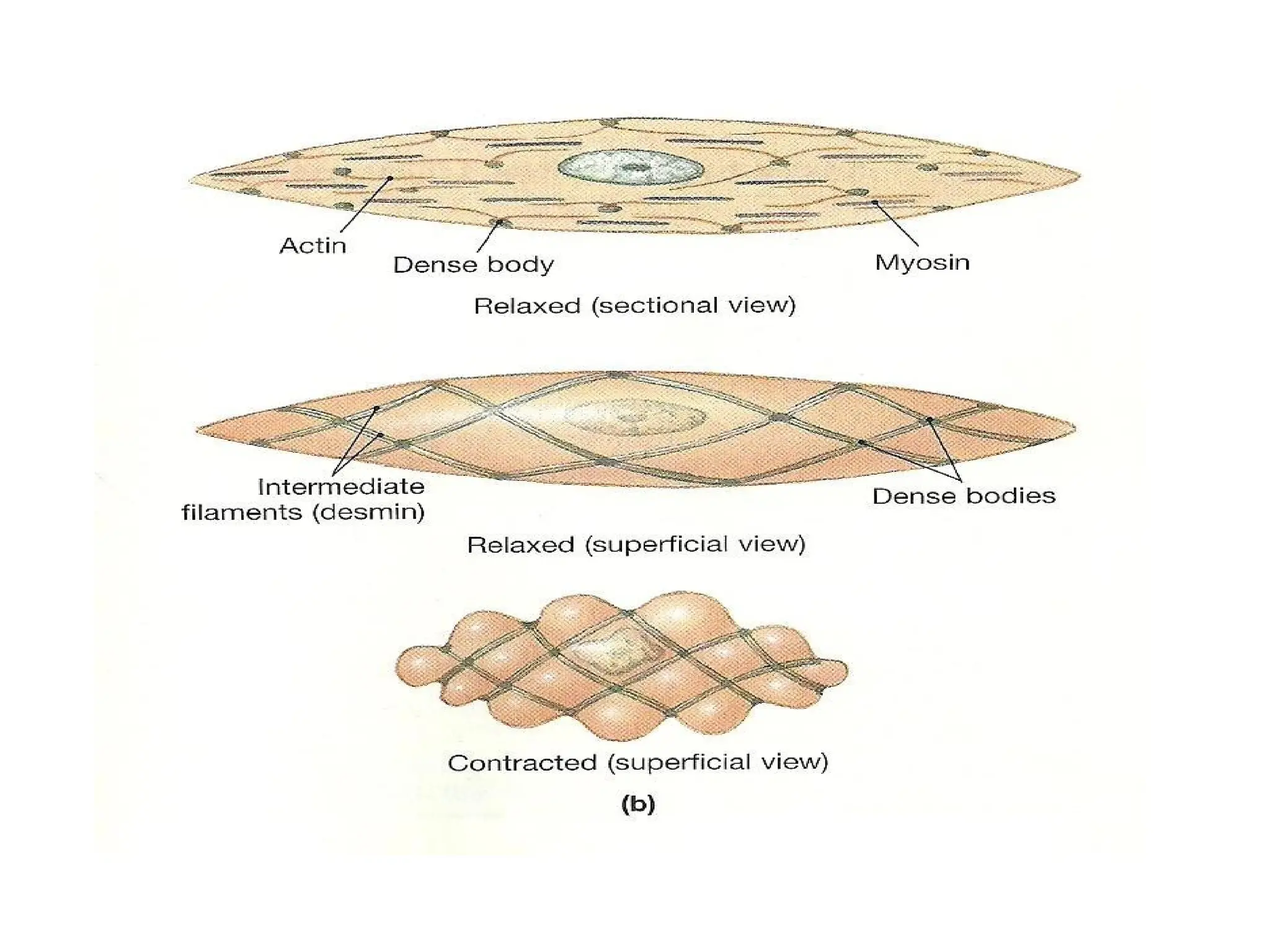
4. Composed from thick and thin filaments and dense body.
5. Thick and thin filaments don’t organize into myofibrils.
6. Slow onset contraction, and may be tetanized and resistant to
fatigue.
7. Primarily aerobic metabolism.
8. Depend on ECF Ca++ to maintain contraction.
9. No T-tube and dispersed sarcoplasmic reticular throughout
sarcoplasm.
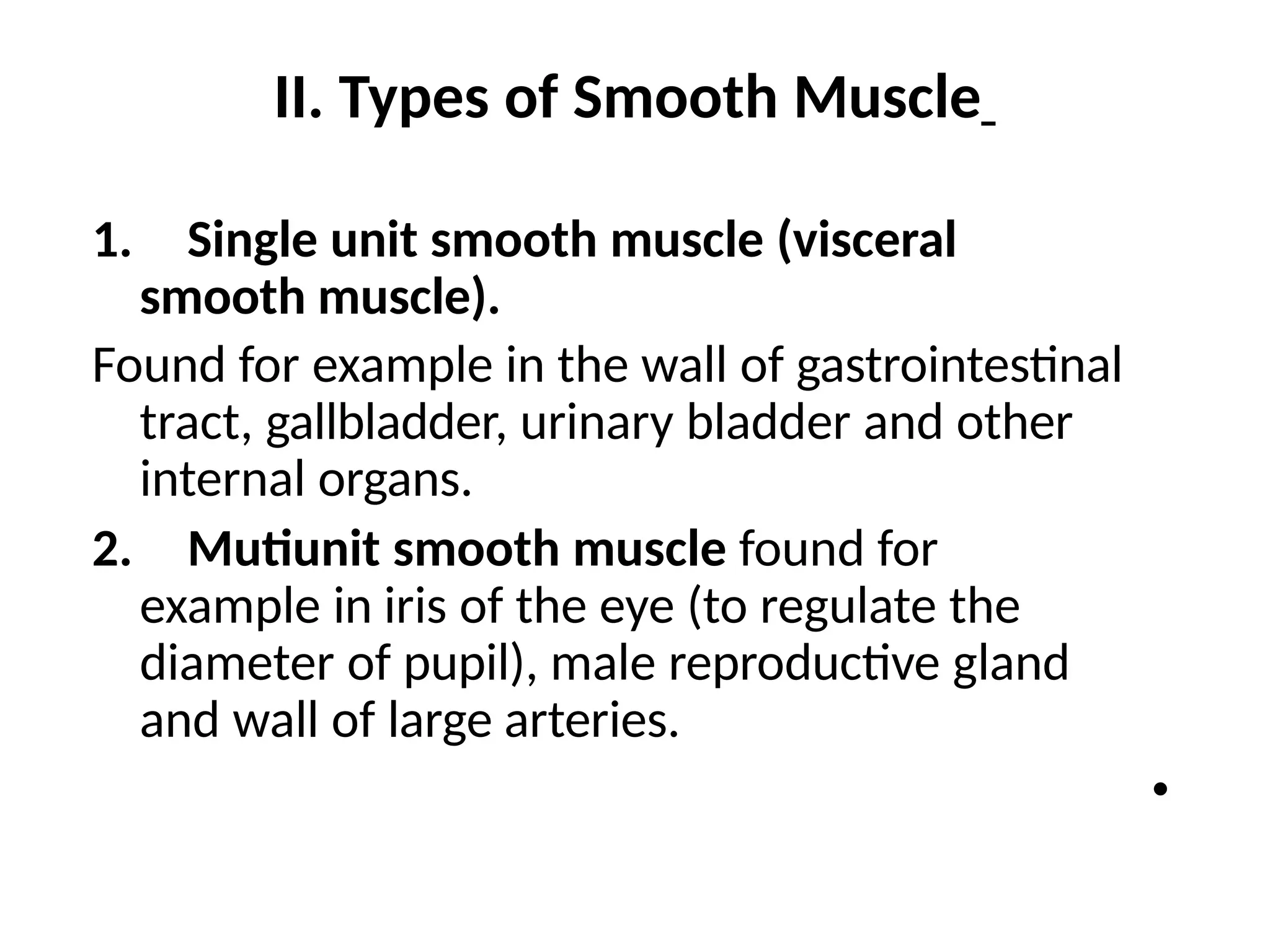
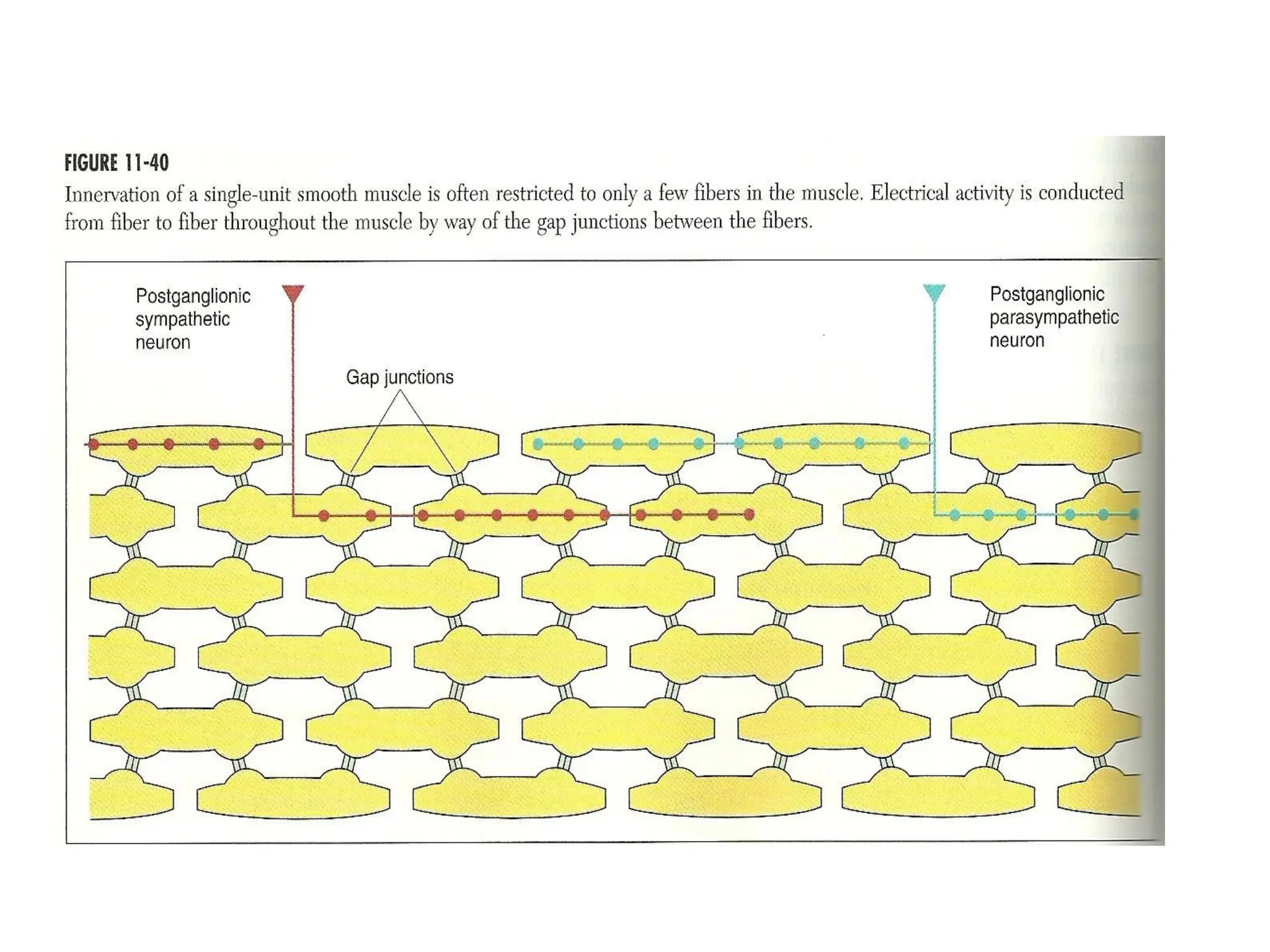
II. Types of Smooth Muscle
1. Single unit smooth muscle (visceral
smooth muscle).
Found for example in the wall of gastrointestinal
tract, gallbladder, urinary bladder and other
internal organs.
2. Mutiunit smooth muscle found for
example in iris of the eye (to regulate the
diameter of pupil), male reproductive gland
and wall of large arteries.
•
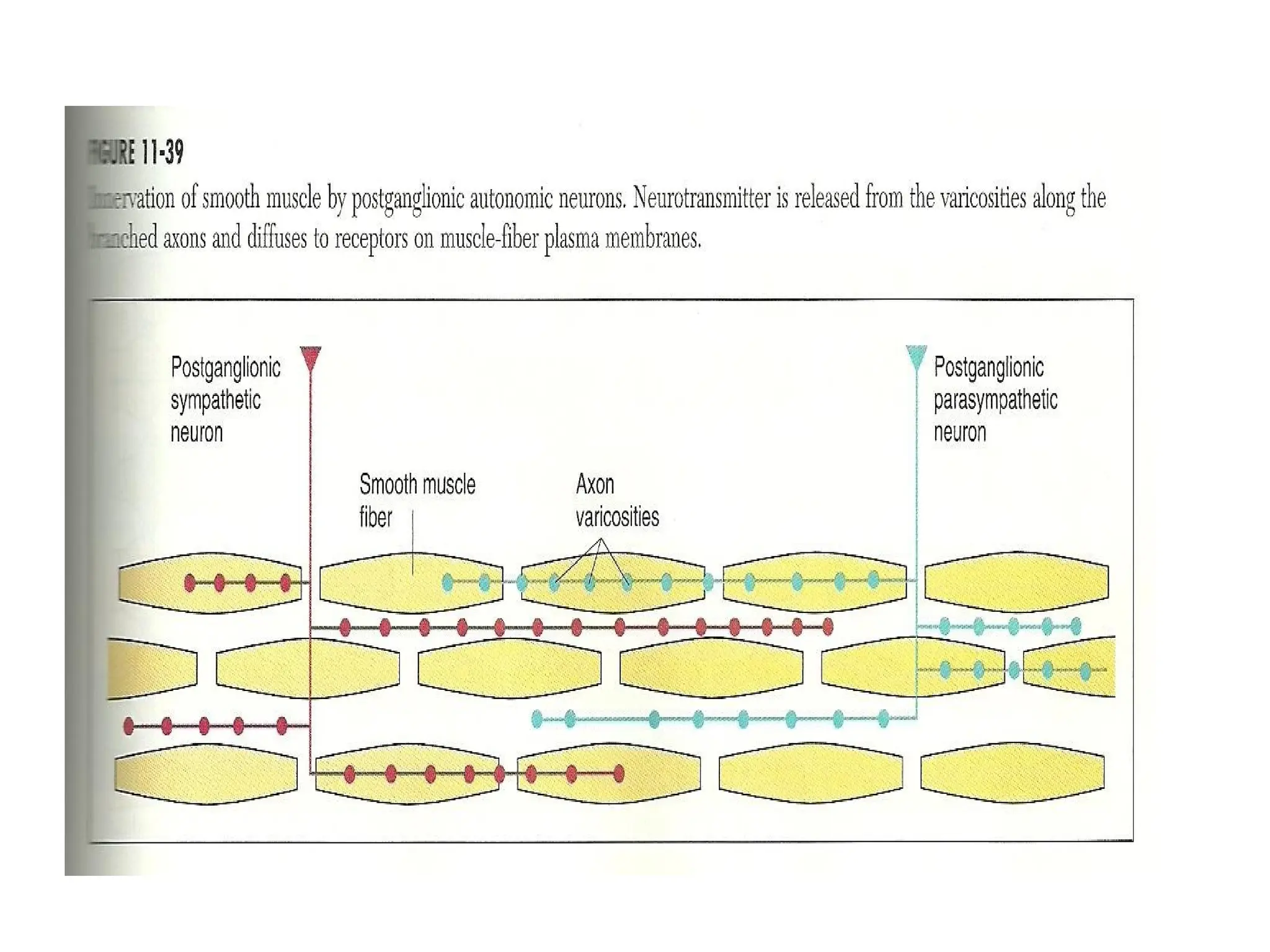
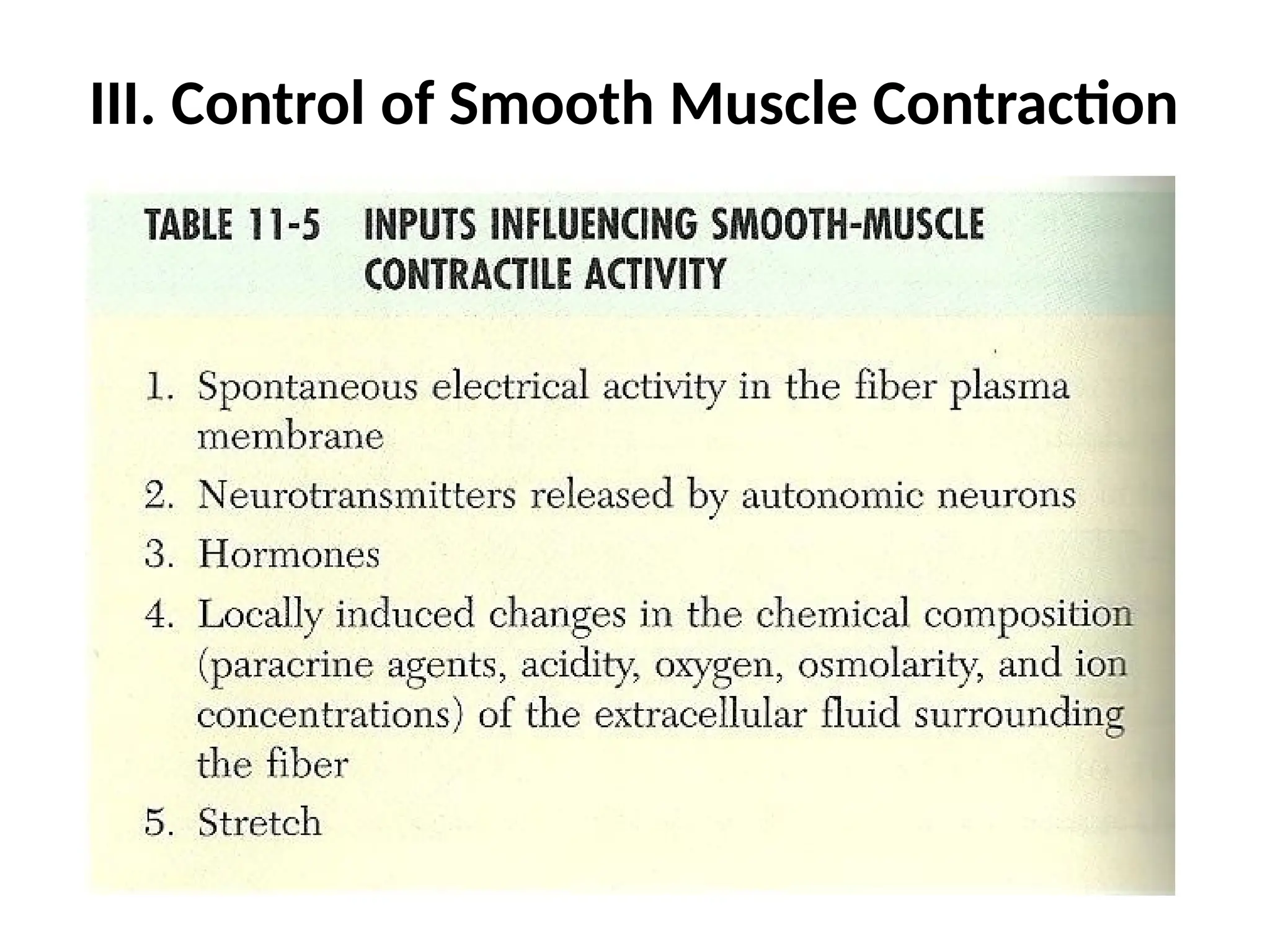
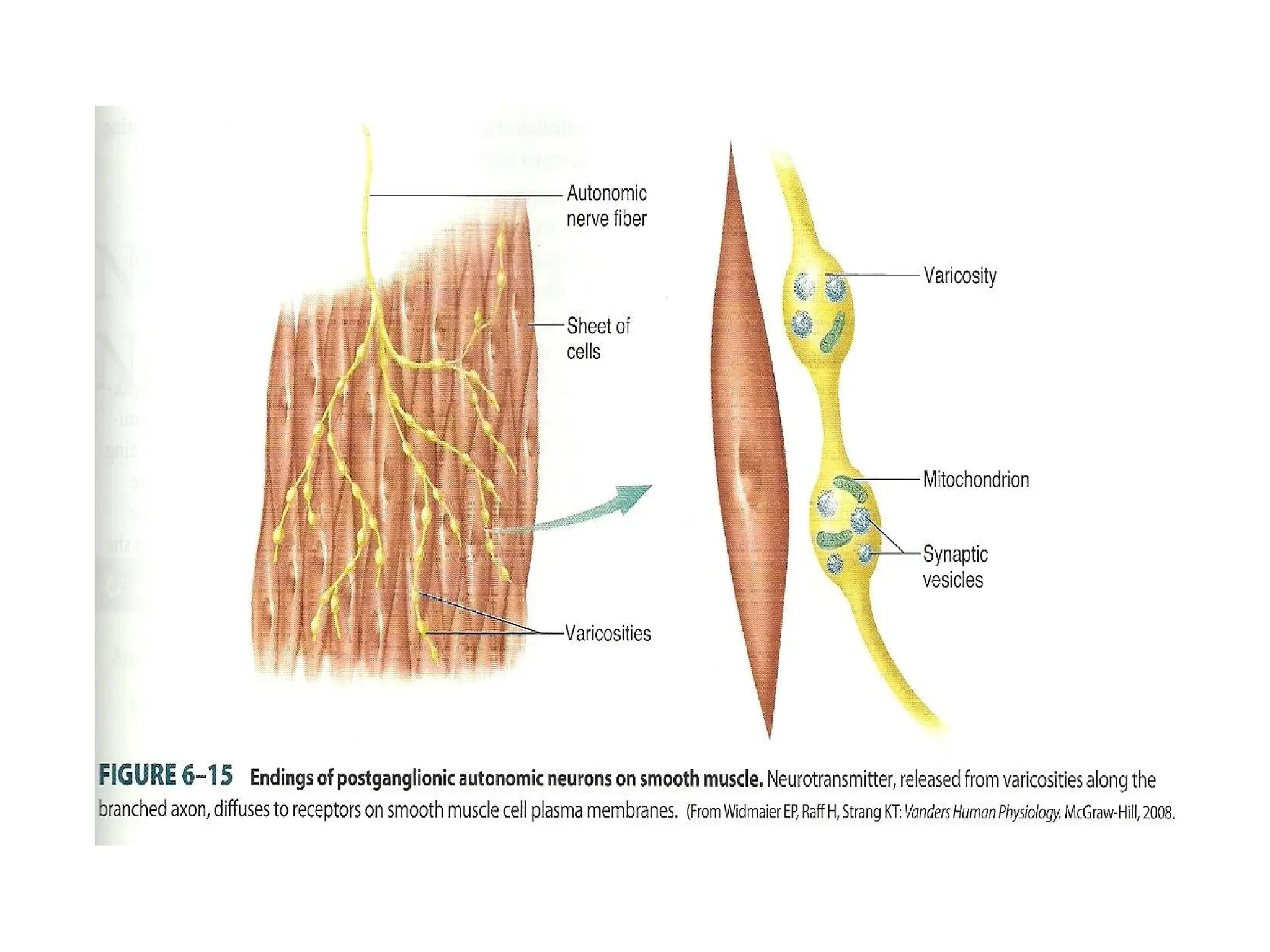
III. Control of Smooth Muscle Contraction
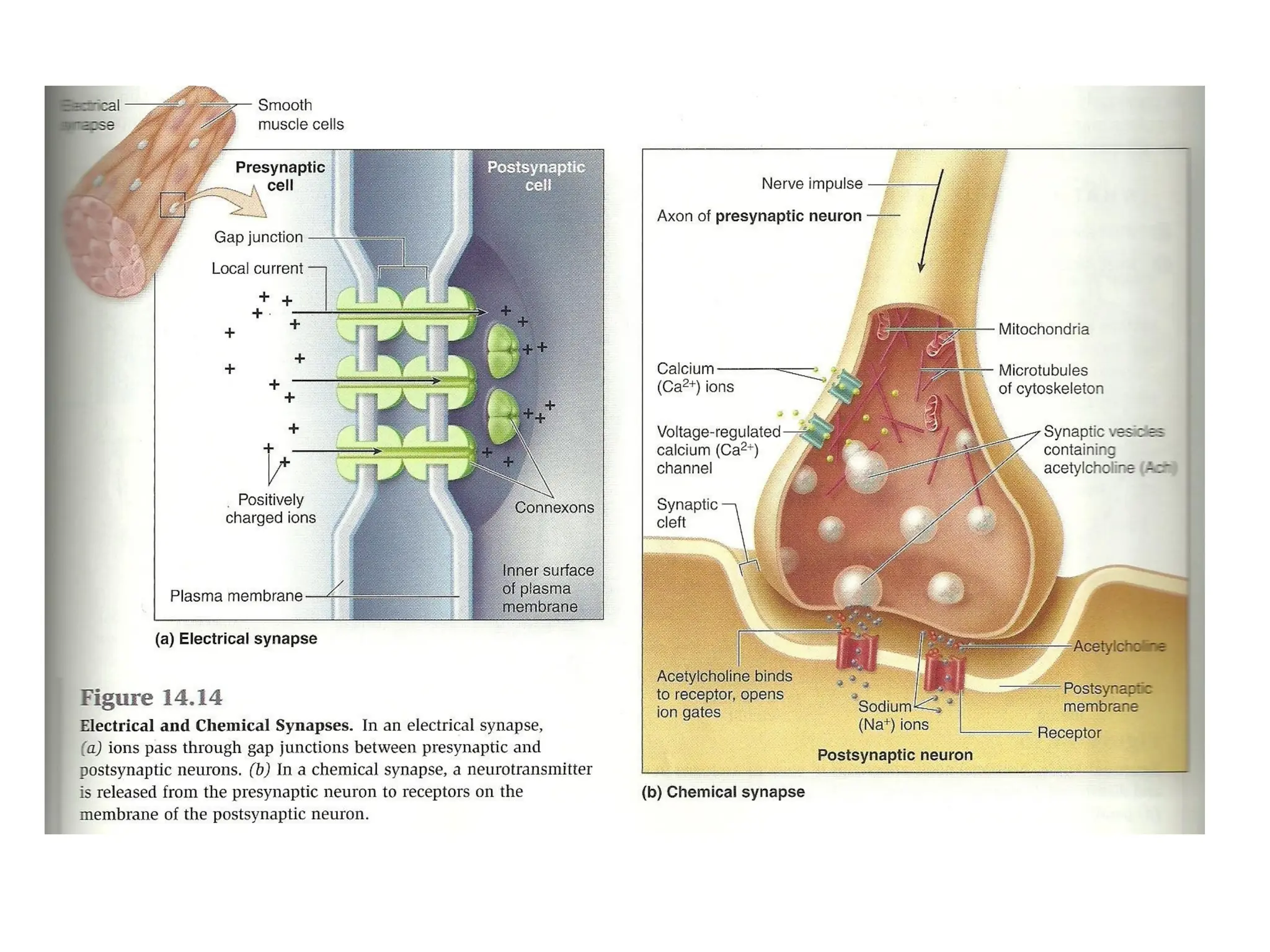
IV. Types of Synaptic Communication
• 1. Chemical synapse.
• 2. Electrical synapse.
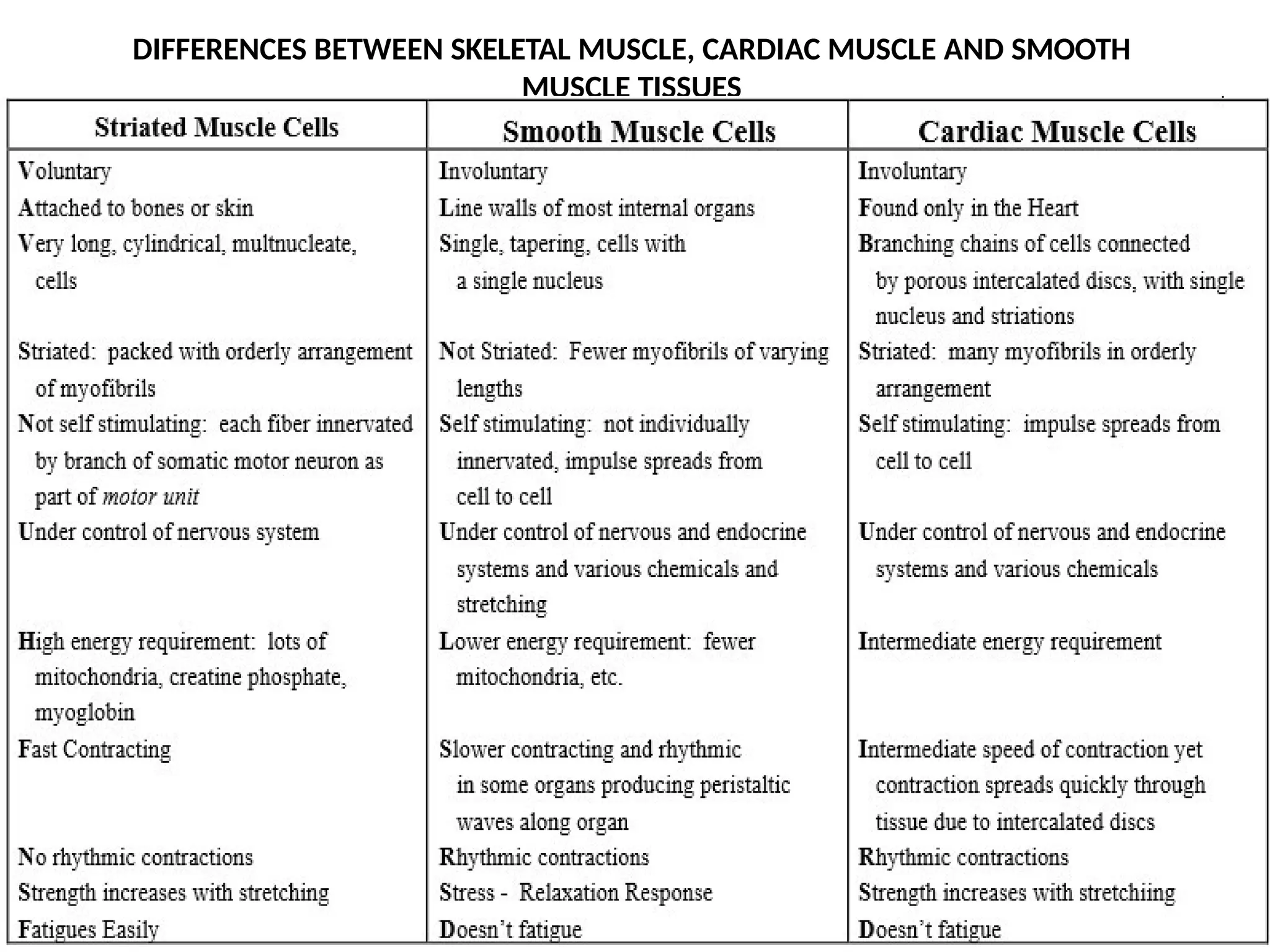
DIFFERENCES BETWEEN SKELETAL MUSCLE, CARDIAC MUSCLE AND SMOOTH
MUSCLE TISSUES
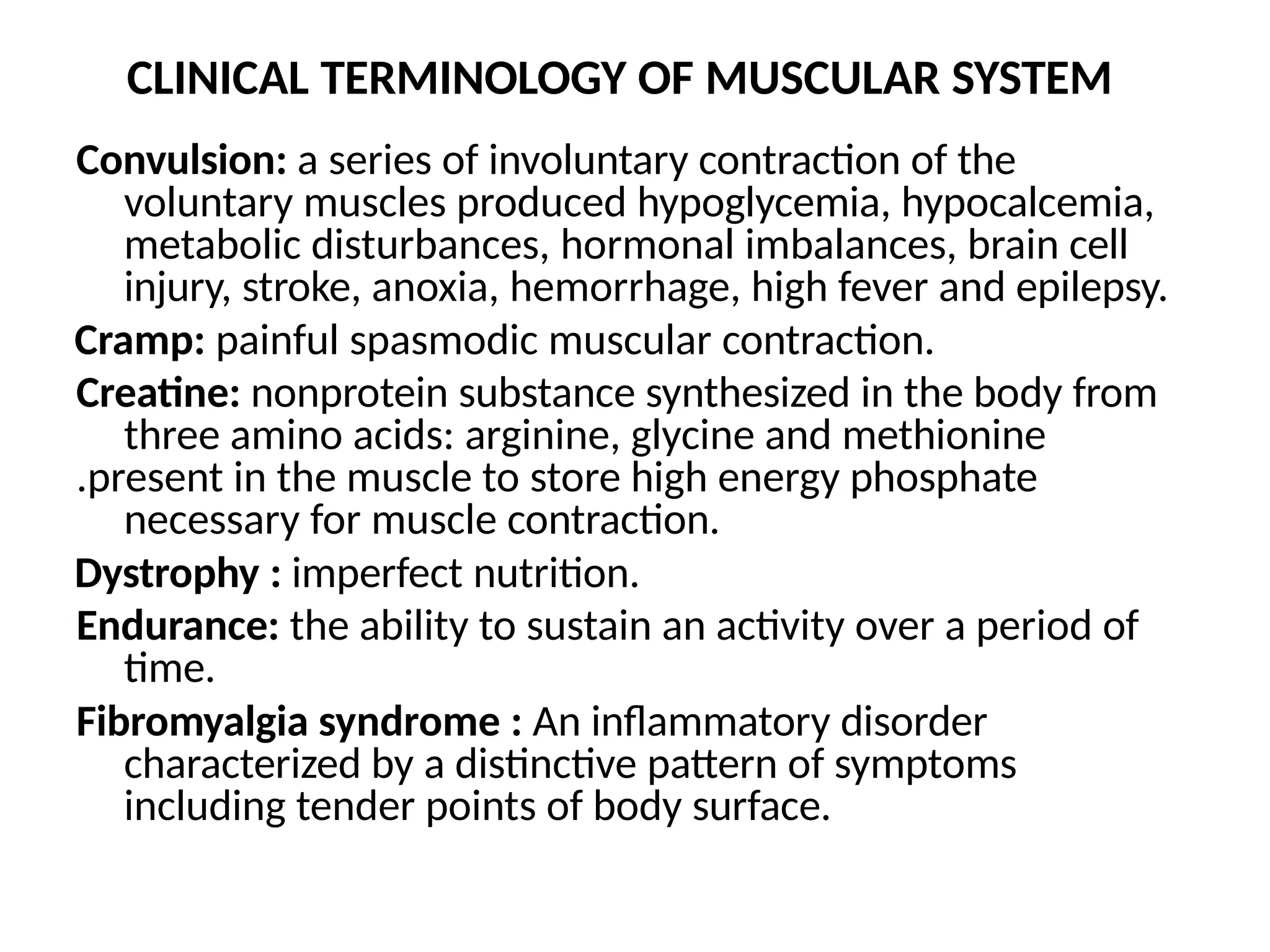
CLINICAL TERMINOLOGY OF MUSCULAR SYSTEM
Convulsion: a series of involuntary contraction of the
voluntary muscles produced hypoglycemia, hypocalcemia,
metabolic disturbances, hormonal imbalances, brain cell
injury, stroke, anoxia, hemorrhage, high fever and epilepsy.
Cramp: painful spasmodic muscular contraction.
Creatine: nonprotein substance synthesized in the body from
three amino acids: arginine, glycine and methionine
.present in the muscle to store high energy phosphate
necessary for muscle contraction.
Dystrophy : imperfect nutrition.
Endurance: the ability to sustain an activity over a period of
time.
Fibromyalgia syndrome : An inflammatory disorder
characterized by a distinctive pattern of symptoms
including tender points of body surface.
Fibrosis : process in which muscle tissue is replaced
by fibrous connective tissue ,making muscle
weaker and less flexible.
Hypertonia : abnormally increased tonicity or
strength .
Muscle atrophy: skeletal muscle that is not
regularly stimulated by a motor neuron loses
muscle tone and mass. The reduction in muscle
size, tone and power is called atrophy.
Muscle fatigue: muscle can no longer contract
,because of change in pH ,due to building of lactic
acid, a lack of energy or other problem.
Muscle Contraction: shortening of the muscle.
Muscular dystrophy : degenerative myopathies that
produce muscle weakness and atrophy.
Power: the ability to act (capability).
Spasm: sudden involuntary contraction of muscle or group of
muscle accompanied by pain
Synapse: the junction between the processes of two neurons or
between a neuron and effector organ (muscle, gland or GI
neurons)
Tendonitis: inflammation of tendons and of tendon-muscle
attachments, one of the most common causes of acute pain in
the shoulder. It is frequently associated with calcium deposit
(calcium tendinitis) which may involve the bursa around the
tendon or near the joint, causing bursitis .
Tetany : continuous tonic spasm of a muscle, it is due to
abnormal calcium metabolism ,vitamin D deficiency and
alkalosis.
Tone :normal tension, in muscle the resistance to passive
elongation or stretch.
Twitch : mechanical response of skeletal muscle to single
volley
action potential
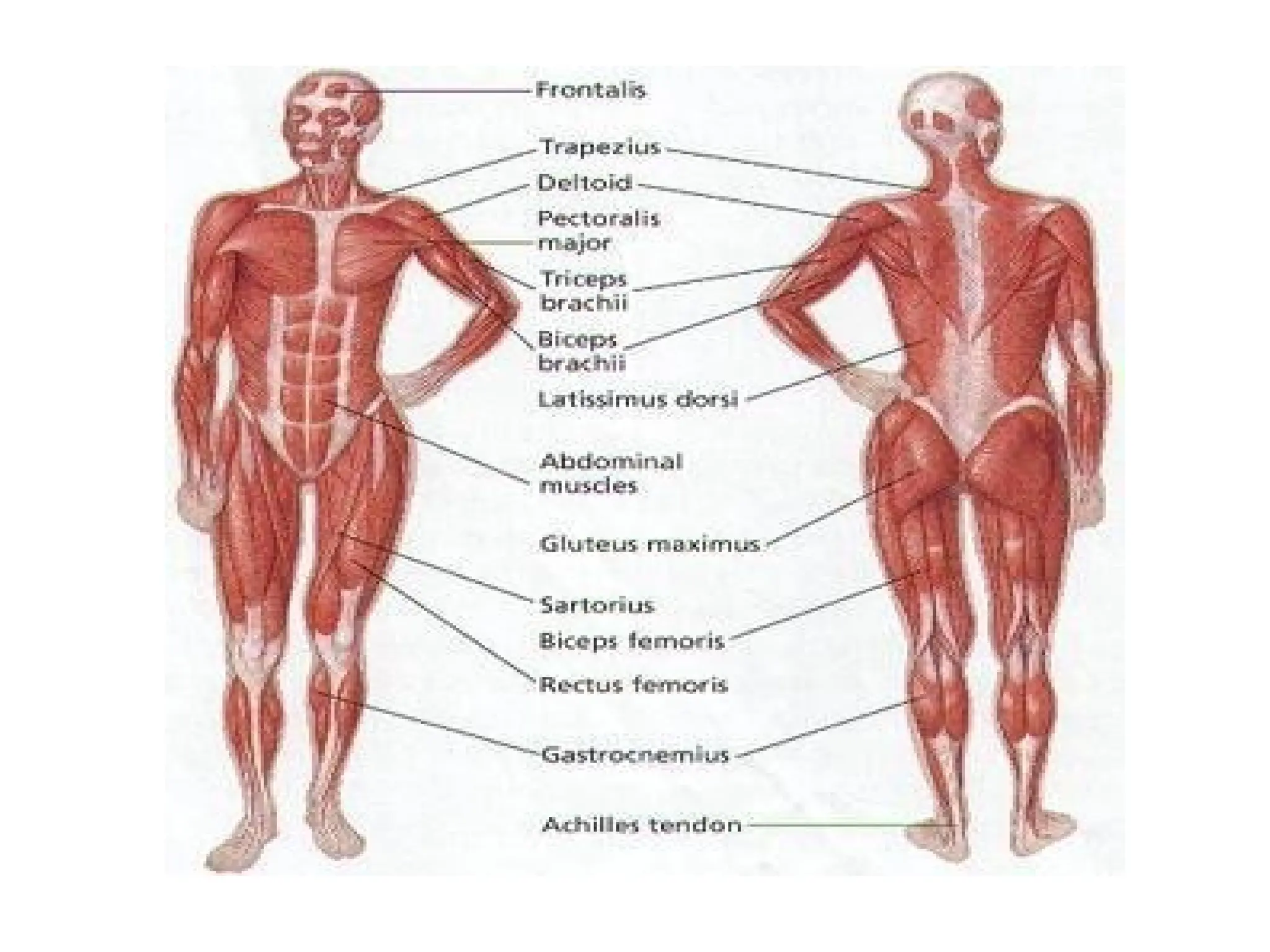
Overview of Muscular-System it's structure and components

  • 1.
    The Muscular System ANATOMYAND PHYSIOLOGY OF MUSCULAR SYSTEM Dr.Ibtisam Khalaf Abd Ali
  • 4.
    MUSCLE TISSUE • Allmuscle tissue is composed of muscle cell “muscle fibers”, and exhibits specific characteristics including the following: • 1. Excitability: response to stimuli by initiating electrical signal (action potential) that spread across plasma membrane and spark internal events leading to muscle contraction. • 2. Contractility: cell shortening. • 3. Extensibility: extending in length in response to contraction of opposing muscle cells. 4. Elasticity: ability to return to its original length • when tension is released
  • 5.
    TYPES OF MUSCLEOR MUSCLE TISSUE • 1. Skeletal muscle. • 2. Cardiac muscle . • 3. Smooth muscle.
  • 6.
    SKELETAL MUSCLE • I.Structural Organization of Skeletal Muscle • 1. Structures of muscle. • a. Epimysium b. • d. Muscle fiber e. • g. Deep fascia h. Fascicle c. Perimysium Endomysium f. Myofibrils Tendon i. Sattellite cel
  • 7.
  • 8.
    2. Structures offascicle. • a. Perimysium • b.Muscle fiber • c. Endomysium • d.Nerve
  • 9.
    3. Structures ofmuscle fiber (muscle cell). • a. Endomysium • b.Myofibril • c. Neuromuscular junction • d. Nuclei
  • 10.
    The Structure ofSkeletal Muscle fiber
  • 11.
    II. Structural Organizationof Myofibrils and Myofilaments • . Structures of myofibrils: compose from many sarcomeres • Sarcomere: the smallest contractile unit in myofibril of striated muscle fiber. Each sarcomere composed from: • a. Myofilament – Actin- (Thin filament) • b. Myofilament-Myosin (Thick filament) •
  • 12.
    Arrangement of filamentsin skeletal muscle fiber
  • 14.
    CONTRACTION OF SKELETALMUSCLE Contraction: is the sliding of actin over myosin • in the presence of Ca++ (calcium ion). “Skeletal muscle are attached to bones by tendons, and contraction of skeletal muscle exerts a pull on bone and movement”, most skeleton muscles extend between bones. The less movable point of attachment of the muscle called “Origin”, and the more movable called “Insertion”.
  • 15.
    I. Steps Involvedin the Mechanisms of Sliding Theory
  • 16.
    I. Steps Involvedin the Mechanisms of Sliding Theory: • 1. Excitable tissues: nerve and muscle (nerve impulse in axons cause muscle impulses in sarcolemma). • 2. Excitable cell: cell that is capable to create and conduct action potential • 3. Action potential: Changes in membrane potential of excitable cells .also defined as electrical activity or electrical signal. • 4. Motor end plate produces neurotransmeter at the neuromuscular junction, to stimulate the cell membrane (sarcolema) to produce Action potential (electrical signal).
  • 17.
    • 5. Actionpotential (electrical signal) spread through cell membrane to “T –tube” and then to sarcoplasmic reticulum to release calcium ion. • 6. Calcium ion triggers the process of sliding. • 7. Relaxation: the period after a contraction when the tension in the muscle fiber return to resting levels, and this done by: • a. Active cytosolic calcium (Ca++) transported across the cell membrane into the extracellular fluid. b. Active cytosolic calcium (Ca++) transported into • the sarcoplasmic reticulum.
  • 18.
    Steps in theinitiation and the end of contraction
  • 19.
    Relase and uptakeof calcium by the Sarcoplasmic Reticulum during Contraction and Relaxation of Skeletal Muscle
  • 20.
  • 21.
    CONTROL OF SKELETALMUSCLE CONTRACTION Skeletal muscle fibers contract only under the • control of the nervous system. Communication between the nervous system and the skeletal muscle fiber occurs at a specialized intercellular connection known as neuromuscular junction
  • 22.
    I. Structures ofNeuromuscular Junction (Chemical Synapse and Motor End Plate) • (Structure where axons transmit nerve impulse to muscle fiber) • 1. Synaptic knob (terminal) • 2. Acetylcholine (ACh) (Synaptic Vesicles) • 3. Synaptic cleft • 4. Motor end plate • 5. Sarcolemma • 6. Acetylcholine receptor • 7. Acetylcholinestrase • (AChE)
  • 23.
  • 24.
    II. Ions Fluxesin Action Potential • 1.Sodium • 2.Potassium • 3.Calcium
  • 26.
    MUSCLE PERFORMANCE • Muscleperformance: mean power and endurance. • Power: the ability to act (capability). • Endurance: the ability to sustain an activity over a period of time.
  • 27.
    I. Factors Determinethe Performance Capabilities of any Skeletal Muscle • 1. Types of muscle fibers in the muscle. • a. Fast fibers. • b. Slow fibers. • c. Intermediate fiber. • 2. Physical Conditioning • a. Aerobic endurance. • b. Anaerobic endurance.
  • 28.
    MUSCLE TONE ANDCONTRACTION I. Muscle Tone: normal tension, in muscle the resistance to passive elongation or stretch; or partial contraction of the muscle; or residual muscle tension II. Muscle Contraction: shortening of the muscle Types of Muscle Contraction 1. Isometric contraction. 2. Isotonic contraction
  • 29.
  • 30.
    ENERGETIC OF MUSCULARACTIVITY A single muscle fiber may contain 15 billion thick filaments, during muscle fiber contraction, each thick filament break down roughly 2500 ATP molecule per second. Small skeletal muscle contains thousands of muscle fibers.
  • 31.
    I. Sources ofEnergy Stored in Muscle Fiber 1. ATP “Adenosine triphosphate” 2. CP “Creatine phosphate” 3. Glycogen ATP + Creatine Creatine Phosphokinase ADP+ Creatine phosphate ADP + Creatine phosphate Creatine Phosphokinase ATP + Creatine
  • 32.
    II.ATP Generation 1. Aerobicmetabolism “Oxidative phosphorelation”. 2. Anaerobic metabolism “glycolysis”.
  • 33.
    III. Hormones andMuscle Metabolism 1. Growth hormone. 2. Testosterone.
  • 34.
    The three sourcesof ATP production during Muscle contraction
  • 35.
    FUNCTIONS OF SKELETALMUSCLE 1. Producing skeletal movement. 2. Maintaining pusture and body position. 3. Supporting soft tissues. 4. Guarding enterance and exits. 5. Maintaining body temperature.
  • 36.
  • 37.
    CARDIAC MUSCLE I. CardiacMuscle Fibers are individual muscle fibers arranged in thick bundles like skeletal muscle fiber, but shorter and thicker, and have one or two nuclei. Cardiac muscle fiber forms Y- shaped branches; it is attached to adjacent muscle fibers by junctions termed intercalated discs
  • 40.
    Specific structure ofcardiac muscle fiber 1. Intercalated disc. 2. Generally centrally located single nucleus. 3. Cardiac muscle fibers are: thinner and shorter than skeletal muscle fiber. 4. Contractions of cardiac muscle fiber depend on Ca++ in ECF and sarcoplasmic reticulum. 5. CMF are slower onset in contraction and resistant to fatigue. 6. CMFs control by pacemaker cells (Automaticity). 7. CMFs depend on aerobic metabolism (fat and carbohydrate) to maintain energy.
  • 41.
    II. Control ofCardiac Muscle Contraction 1. Automaticity. 2. Autonomic innervations. 3. Blood born chemicals .
  • 42.
    SMOOTH MUSCLEI. SmoothMuscle Fiber Characteristic 1. Small cell. 2. Have one nucleus. 3. Capacity to divide. 4. Composed from thick and thin filaments and dense body. 5. Thick and thin filaments don’t organize into myofibrils. 6. Slow onset contraction, and may be tetanized and resistant to fatigue. 7. Primarily aerobic metabolism. 8. Depend on ECF Ca++ to maintain contraction. 9. No T-tube and dispersed sarcoplasmic reticular throughout sarcoplasm.
  • 45.
    II. Types ofSmooth Muscle 1. Single unit smooth muscle (visceral smooth muscle). Found for example in the wall of gastrointestinal tract, gallbladder, urinary bladder and other internal organs. 2. Mutiunit smooth muscle found for example in iris of the eye (to regulate the diameter of pupil), male reproductive gland and wall of large arteries. •
  • 48.
    III. Control ofSmooth Muscle Contraction
  • 50.
    IV. Types ofSynaptic Communication • 1. Chemical synapse. • 2. Electrical synapse.
  • 52.
    DIFFERENCES BETWEEN SKELETALMUSCLE, CARDIAC MUSCLE AND SMOOTH MUSCLE TISSUES
  • 53.
    CLINICAL TERMINOLOGY OFMUSCULAR SYSTEM Convulsion: a series of involuntary contraction of the voluntary muscles produced hypoglycemia, hypocalcemia, metabolic disturbances, hormonal imbalances, brain cell injury, stroke, anoxia, hemorrhage, high fever and epilepsy. Cramp: painful spasmodic muscular contraction. Creatine: nonprotein substance synthesized in the body from three amino acids: arginine, glycine and methionine .present in the muscle to store high energy phosphate necessary for muscle contraction. Dystrophy : imperfect nutrition. Endurance: the ability to sustain an activity over a period of time. Fibromyalgia syndrome : An inflammatory disorder characterized by a distinctive pattern of symptoms including tender points of body surface.
  • 54.
    Fibrosis : processin which muscle tissue is replaced by fibrous connective tissue ,making muscle weaker and less flexible. Hypertonia : abnormally increased tonicity or strength . Muscle atrophy: skeletal muscle that is not regularly stimulated by a motor neuron loses muscle tone and mass. The reduction in muscle size, tone and power is called atrophy. Muscle fatigue: muscle can no longer contract ,because of change in pH ,due to building of lactic acid, a lack of energy or other problem. Muscle Contraction: shortening of the muscle. Muscular dystrophy : degenerative myopathies that produce muscle weakness and atrophy.
  • 55.
    Power: the abilityto act (capability). Spasm: sudden involuntary contraction of muscle or group of muscle accompanied by pain Synapse: the junction between the processes of two neurons or between a neuron and effector organ (muscle, gland or GI neurons) Tendonitis: inflammation of tendons and of tendon-muscle attachments, one of the most common causes of acute pain in the shoulder. It is frequently associated with calcium deposit (calcium tendinitis) which may involve the bursa around the tendon or near the joint, causing bursitis . Tetany : continuous tonic spasm of a muscle, it is due to abnormal calcium metabolism ,vitamin D deficiency and alkalosis. Tone :normal tension, in muscle the resistance to passive elongation or stretch. Twitch : mechanical response of skeletal muscle to single volley action potential