Mentoring and Supervision
PM-M25
MA Education for the Health Professionals
Swansea University Medical School
Academic Year 2015 - 2016
Overview of Mentoring Models
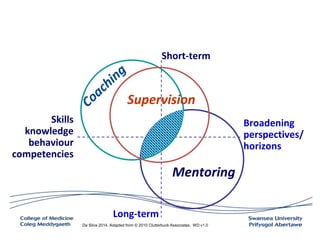
Da Silva 2014. Adapted from © 2010 Clutterbuck Associates; WD v1.0
Mentoring
Long-term
Short-term
Broadening
perspectives/
horizons
Skills
knowledge
behaviour
competencies
Supervision
Psychological functions of
mentoring (NG et al., 2005).
– Sponsorship
– Career advice
– Psychological and emotional support
Mentoring life cycle
(e.g.Hay, 1995)
• Stage 1 Initiation, orientation or courtship stage
• Stage 2 Getting established, adolescence,
dependency, nurturing or honeymoon stage
• Stage 3 Maturing, developing independence or
autonomy stage
• Stage 4 Ending, termination or divorce
(McKimm, 2007)
5
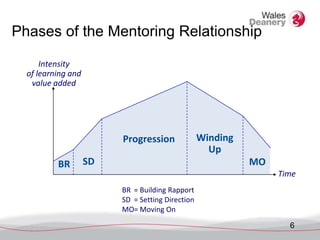
6
Intensity
of learning and
value added
Time
Phases of the Mentoring Relationship
Progression
BR = Building Rapport
BR SD
SD = Setting Direction
MO
MO= Moving On
Winding
Up
7
What is the:
• Goal (what and why?)
• R eality (where now?)
• O ptions (how?)
• W ill/way forward (what now and who?)
GROW model (Whitmore)
8
• Stage 1 (current picture):- What’s Going On?
• Stage 2 (preferred picture):- What Do I Need or
Want?
• Stage 3 (the way forward):- How Do I Get What I
Need or Want?
Egan’s Skilled Helper
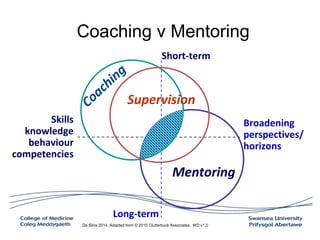
Da Silva 2014. Adapted from © 2010 Clutterbuck Associates; WD v1.0
Mentoring
Long-term
Short-term
Broadening
perspectives/
horizons
Skills
knowledge
behaviour
competencies
Coaching v Mentoring
Supervision
Any questions?

Overview of models_PMM25

  • 1.
    Mentoring and Supervision PM-M25 MAEducation for the Health Professionals Swansea University Medical School Academic Year 2015 - 2016
  • 2.
  • 3.
    Da Silva 2014.Adapted from © 2010 Clutterbuck Associates; WD v1.0 Mentoring Long-term Short-term Broadening perspectives/ horizons Skills knowledge behaviour competencies Supervision
  • 4.
    Psychological functions of mentoring(NG et al., 2005). – Sponsorship – Career advice – Psychological and emotional support
  • 5.
    Mentoring life cycle (e.g.Hay,1995) • Stage 1 Initiation, orientation or courtship stage • Stage 2 Getting established, adolescence, dependency, nurturing or honeymoon stage • Stage 3 Maturing, developing independence or autonomy stage • Stage 4 Ending, termination or divorce (McKimm, 2007) 5
  • 6.
    6 Intensity of learning and valueadded Time Phases of the Mentoring Relationship Progression BR = Building Rapport BR SD SD = Setting Direction MO MO= Moving On Winding Up
  • 7.
    7 What is the: •Goal (what and why?) • R eality (where now?) • O ptions (how?) • W ill/way forward (what now and who?) GROW model (Whitmore)
  • 8.
    8 • Stage 1(current picture):- What’s Going On? • Stage 2 (preferred picture):- What Do I Need or Want? • Stage 3 (the way forward):- How Do I Get What I Need or Want? Egan’s Skilled Helper
  • 9.
    Da Silva 2014.Adapted from © 2010 Clutterbuck Associates; WD v1.0 Mentoring Long-term Short-term Broadening perspectives/ horizons Skills knowledge behaviour competencies Coaching v Mentoring Supervision
  • 10.