OUTCOMES RESEARCH
RESEARCH AND ETHICS
OUTCOMES RESEARCH
 Historical research relied on outcomes measured by lab tests to determine interventions or success of
treatment. This type of research left out any outliers, opinions or success as measured by the patient,
which often mattered to them most.
 Outcomes Research is a result of the examination of end results or outcomes of health care provided to
individuals for specific diagnosis.
 The information is used to provide scientific evidence related to decisions made by all health care
clinicians who were active participants during the duration of the health care to a specific patient group.
 Outcomes research is classified by:
 who is measured: individuals, groups, or organizations.
 Type measured: care related, patient related, or performance related outcomes
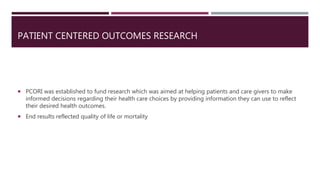
PATIENT CENTERED OUTCOMES RESEARCH
 PCORI was established to fund research which was aimed at helping patients and care givers to make
informed decisions regarding their health care choices by providing information they can use to reflect
their desired health outcomes.
 End results reflected quality of life or mortality
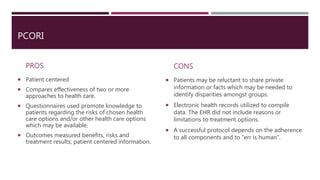
PCORI
PROS
 Patient centered
 Compares effectiveness of two or more
approaches to health care.
 Questionnaires used promote knowledge to
patients regarding the risks of chosen health
care options and/or other health care options
which may be available.
 Outcomes measured benefits, risks and
treatment results; patient centered information.
CONS
 Patients may be reluctant to share private
information or facts which may be needed to
identify disparities amongst groups.
 Electronic health records utilized to compile
data. The EHR did not include reasons or
limitations to treatment options.
 A successful protocol depends on the adherence
to all components and to “err is human”.
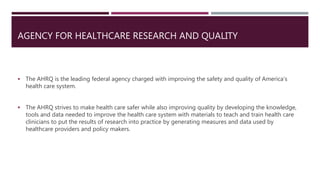
AGENCY FOR HEALTHCARE RESEARCH AND QUALITY
 The AHRQ is the leading federal agency charged with improving the safety and quality of America’s
health care system.
 The AHRQ strives to make health care safer while also improving quality by developing the knowledge,
tools and data needed to improve the health care system with materials to teach and train health care
clinicians to put the results of research into practice by generating measures and data used by
healthcare providers and policy makers.
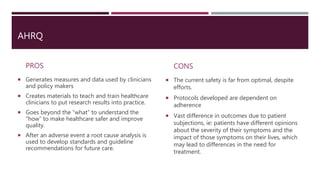
AHRQ
PROS
 Generates measures and data used by clinicians
and policy makers
 Creates materials to teach and train healthcare
clinicians to put research results into practice.
 Goes beyond the “what” to understand the
“how” to make healthcare safer and improve
quality.
 After an adverse event a root cause analysis is
used to develop standards and guideline
recommendations for future care.
CONS
 The current safety is far from optimal, despite
efforts.
 Protocols developed are dependent on
adherence
 Vast difference in outcomes due to patient
subjections, ie: patients have different opinions
about the severity of their symptoms and the
impact of those symptoms on their lives, which
may lead to differences in the need for
treatment.
 Outcomes research, used as an evidence based research tool, is necessary to include the very
subjective data of patient perceptions of treatment, their quality of life during and after
treatment as well as the mortality of the treatments. This information affords patients the ability
to choose a health care option based on how it will affect their quality and quantity of life, not
just the facts of how often a disease is treated successfully.
REFERENCES
 Hempel, S., Maggard-Gibbons, M., Nguyen, D. K., Dawes, A. J., Miake-Lye, I., Beroes, J. M., … Shekelle, P.
G. (2015). Wrong-Site Surgery, Retained Surgical Items, and Surgical Fires. JAMA Surgery, 150(8), 796.
doi:10.1001/jamasurg.2015.0301
 Peer Review of Our Studies | PCORI. (n.d.). Retrieved from https://www.pcori.org/research-results/peer-
review-our-studies
 Agency for Healthcare Research and Quality: A Profile | Agency for Healthcare Research & Quality. (n.d.).
Retrieved from https://www.ahrq.gov/cpi/about/profile/index.html
 Schmidt, N. A., & In Brown, J. M. (2019). Evidence-based practice for nurses: Appraisal and application of
research (3rd ed.). Burlington: Jones and Bartlett Learning.

Outcomes research

  • 1.
  • 2.
    OUTCOMES RESEARCH  Historicalresearch relied on outcomes measured by lab tests to determine interventions or success of treatment. This type of research left out any outliers, opinions or success as measured by the patient, which often mattered to them most.  Outcomes Research is a result of the examination of end results or outcomes of health care provided to individuals for specific diagnosis.  The information is used to provide scientific evidence related to decisions made by all health care clinicians who were active participants during the duration of the health care to a specific patient group.  Outcomes research is classified by:  who is measured: individuals, groups, or organizations.  Type measured: care related, patient related, or performance related outcomes
  • 3.
    PATIENT CENTERED OUTCOMESRESEARCH  PCORI was established to fund research which was aimed at helping patients and care givers to make informed decisions regarding their health care choices by providing information they can use to reflect their desired health outcomes.  End results reflected quality of life or mortality
  • 4.
    PCORI PROS  Patient centered Compares effectiveness of two or more approaches to health care.  Questionnaires used promote knowledge to patients regarding the risks of chosen health care options and/or other health care options which may be available.  Outcomes measured benefits, risks and treatment results; patient centered information. CONS  Patients may be reluctant to share private information or facts which may be needed to identify disparities amongst groups.  Electronic health records utilized to compile data. The EHR did not include reasons or limitations to treatment options.  A successful protocol depends on the adherence to all components and to “err is human”.
  • 5.
    AGENCY FOR HEALTHCARERESEARCH AND QUALITY  The AHRQ is the leading federal agency charged with improving the safety and quality of America’s health care system.  The AHRQ strives to make health care safer while also improving quality by developing the knowledge, tools and data needed to improve the health care system with materials to teach and train health care clinicians to put the results of research into practice by generating measures and data used by healthcare providers and policy makers.
  • 6.
    AHRQ PROS  Generates measuresand data used by clinicians and policy makers  Creates materials to teach and train healthcare clinicians to put research results into practice.  Goes beyond the “what” to understand the “how” to make healthcare safer and improve quality.  After an adverse event a root cause analysis is used to develop standards and guideline recommendations for future care. CONS  The current safety is far from optimal, despite efforts.  Protocols developed are dependent on adherence  Vast difference in outcomes due to patient subjections, ie: patients have different opinions about the severity of their symptoms and the impact of those symptoms on their lives, which may lead to differences in the need for treatment.
  • 7.
     Outcomes research,used as an evidence based research tool, is necessary to include the very subjective data of patient perceptions of treatment, their quality of life during and after treatment as well as the mortality of the treatments. This information affords patients the ability to choose a health care option based on how it will affect their quality and quantity of life, not just the facts of how often a disease is treated successfully.
  • 8.
    REFERENCES  Hempel, S.,Maggard-Gibbons, M., Nguyen, D. K., Dawes, A. J., Miake-Lye, I., Beroes, J. M., … Shekelle, P. G. (2015). Wrong-Site Surgery, Retained Surgical Items, and Surgical Fires. JAMA Surgery, 150(8), 796. doi:10.1001/jamasurg.2015.0301  Peer Review of Our Studies | PCORI. (n.d.). Retrieved from https://www.pcori.org/research-results/peer- review-our-studies  Agency for Healthcare Research and Quality: A Profile | Agency for Healthcare Research & Quality. (n.d.). Retrieved from https://www.ahrq.gov/cpi/about/profile/index.html  Schmidt, N. A., & In Brown, J. M. (2019). Evidence-based practice for nurses: Appraisal and application of research (3rd ed.). Burlington: Jones and Bartlett Learning.