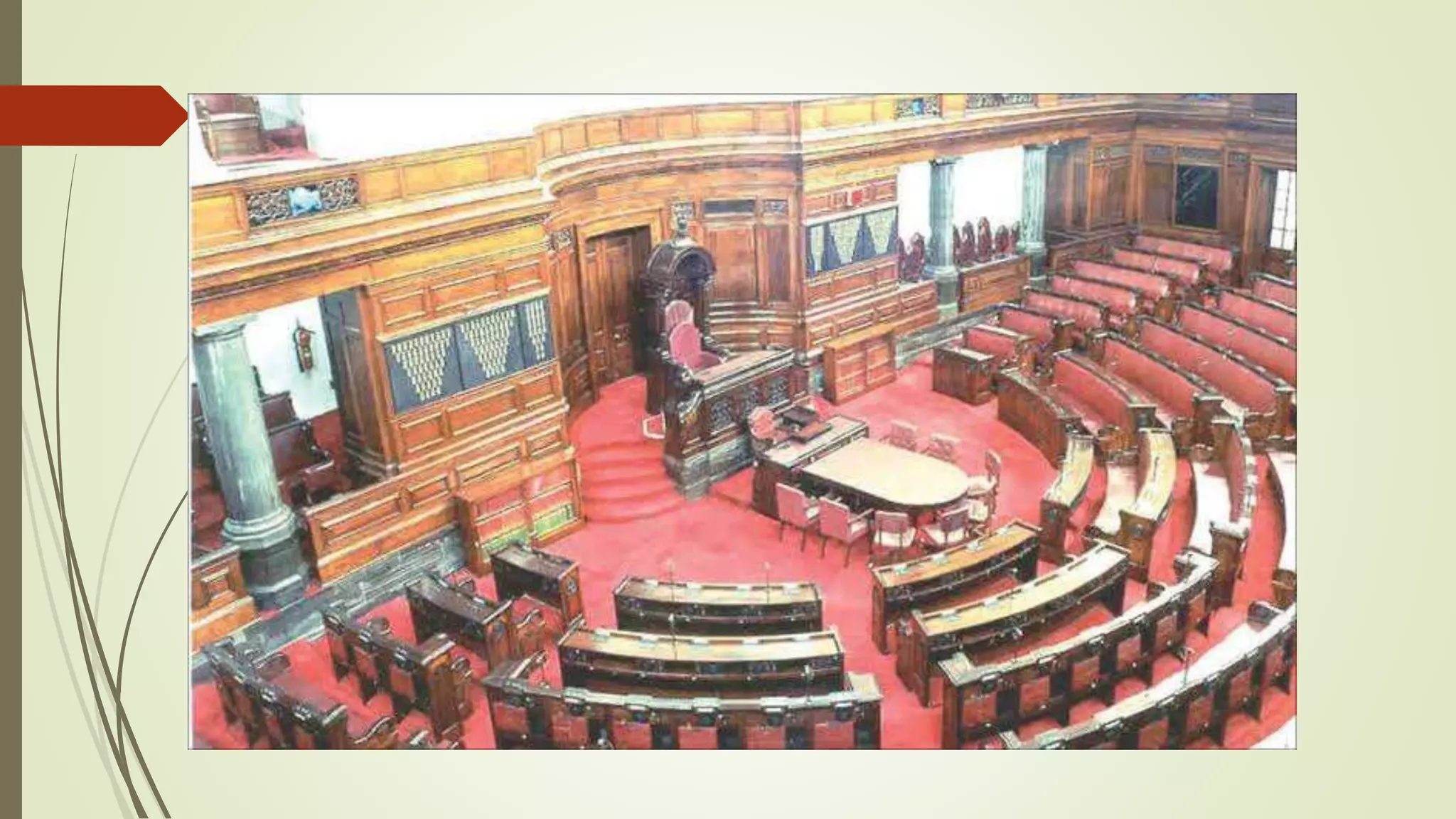
Parliament
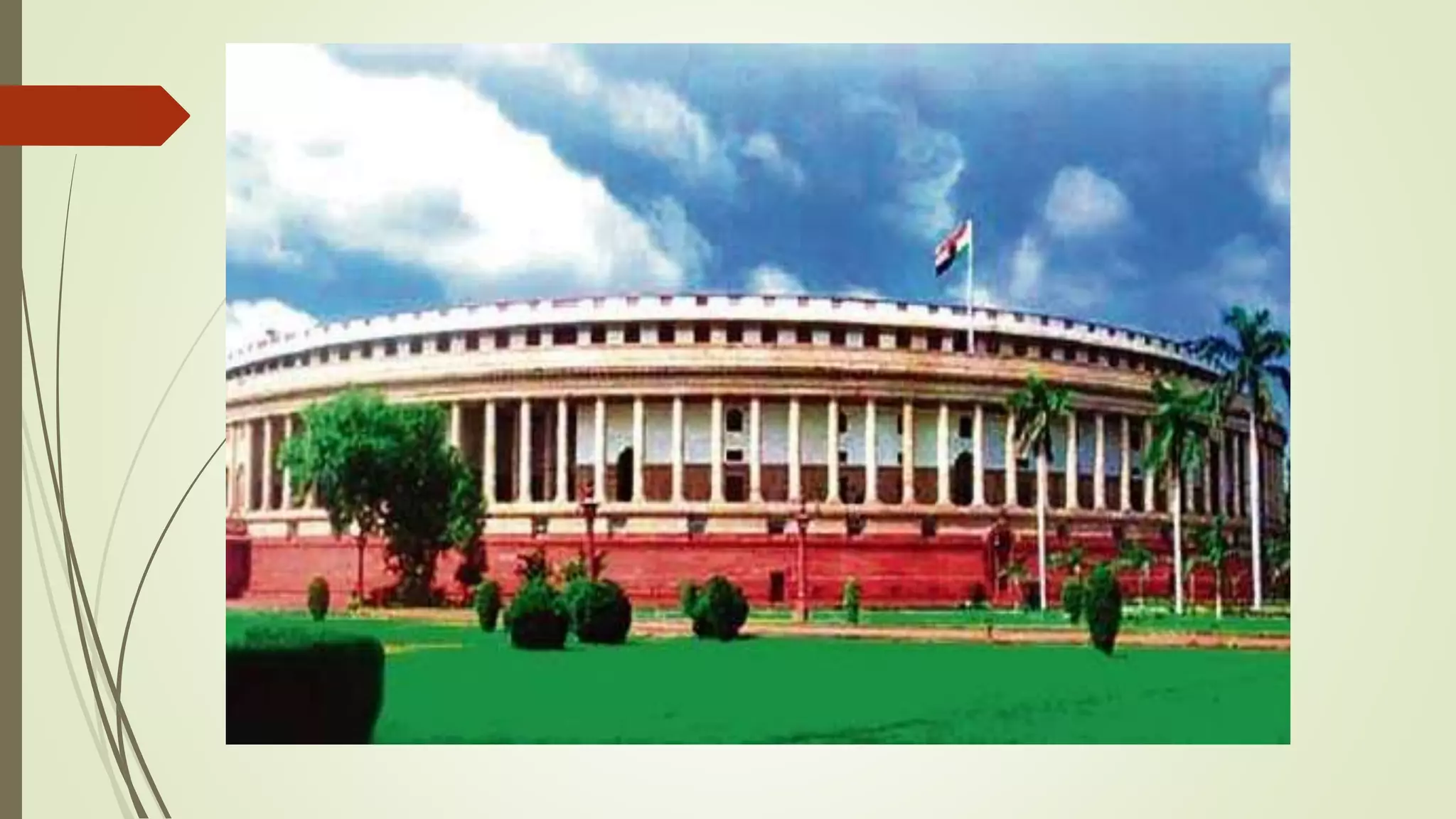
First one is the Parliament
building, which represents the
Legislature.
It is here the parliament sessions
are held
OFFICIAL RESIDENCE OF THE PRESIDENT OF INDIA
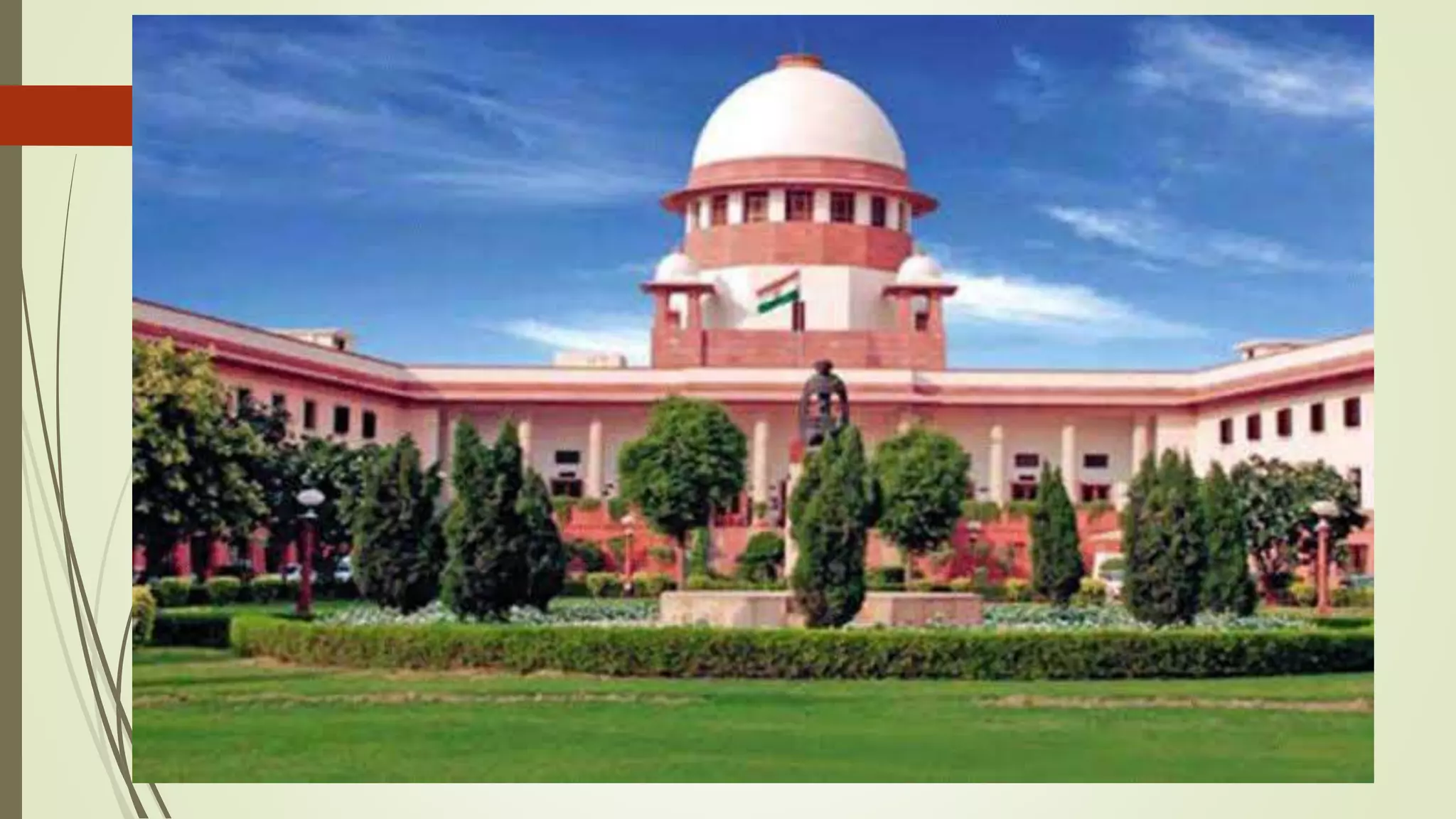
SUPREME COURT
Which represents the Indian
Judiciary
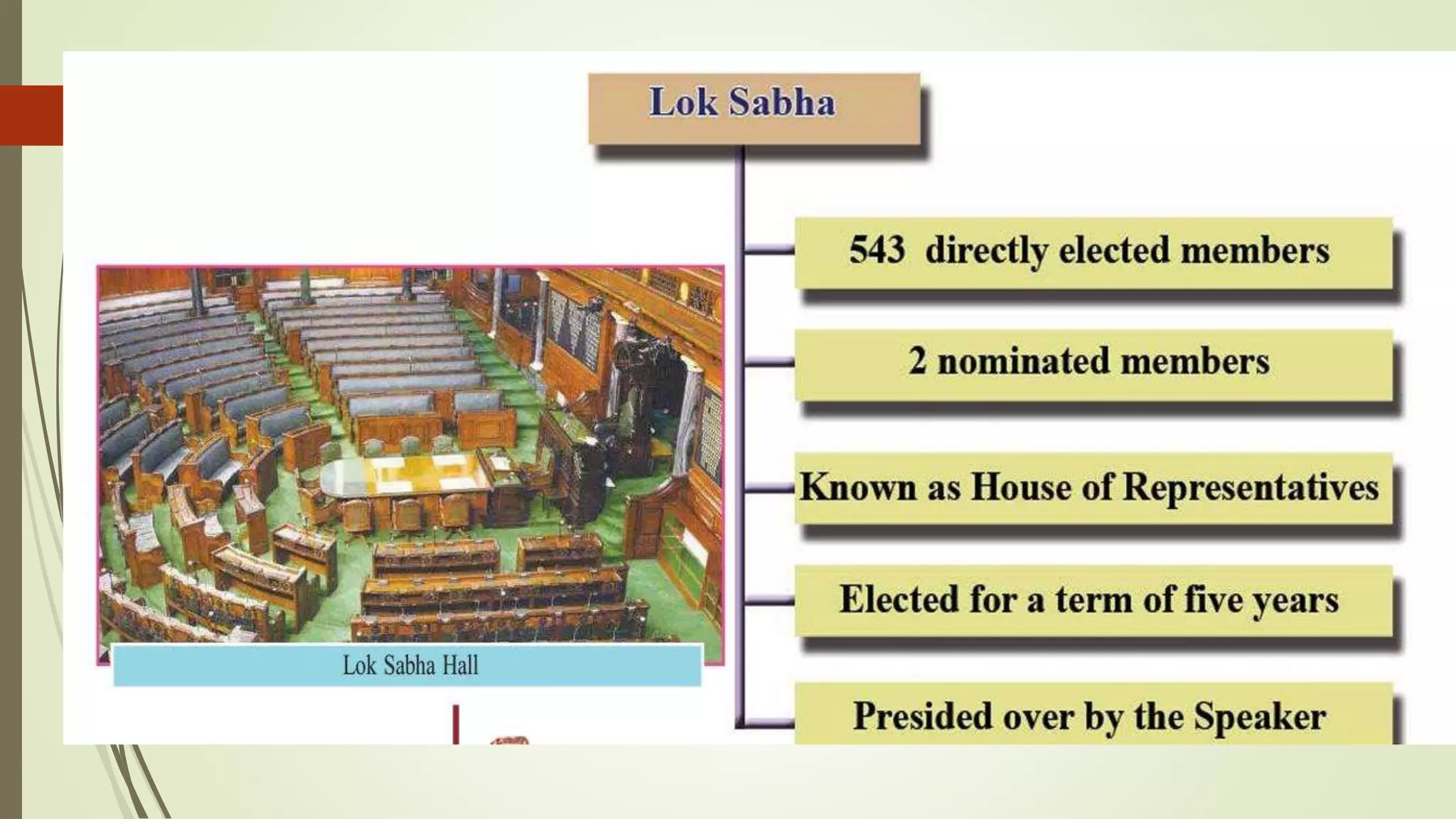
These three institutions are related to
three organs of the government
Legislature
Executive
Judiciary
Legislature
JUDICIARY
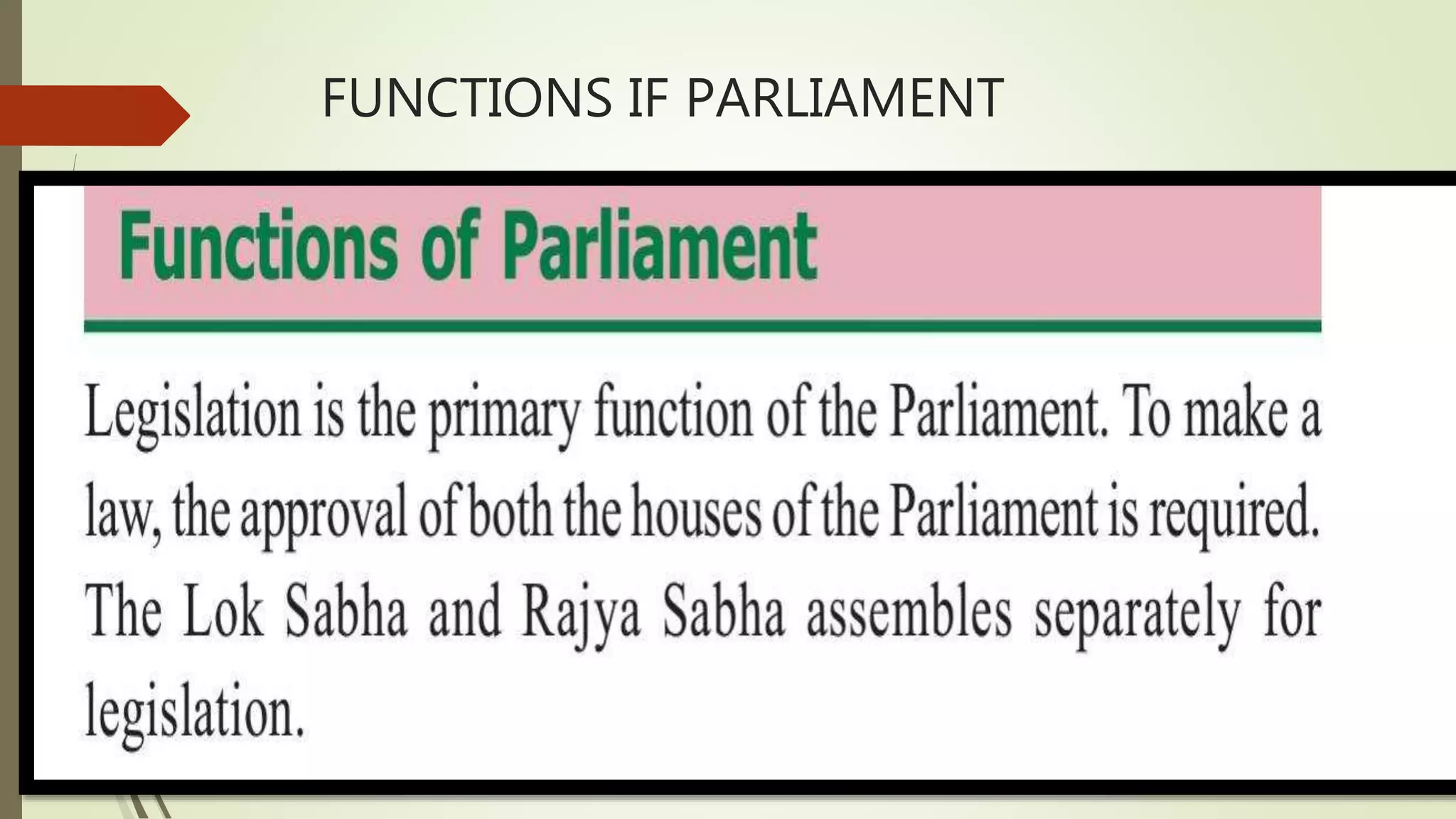
FUNCTIONS IF PARLIAMENT
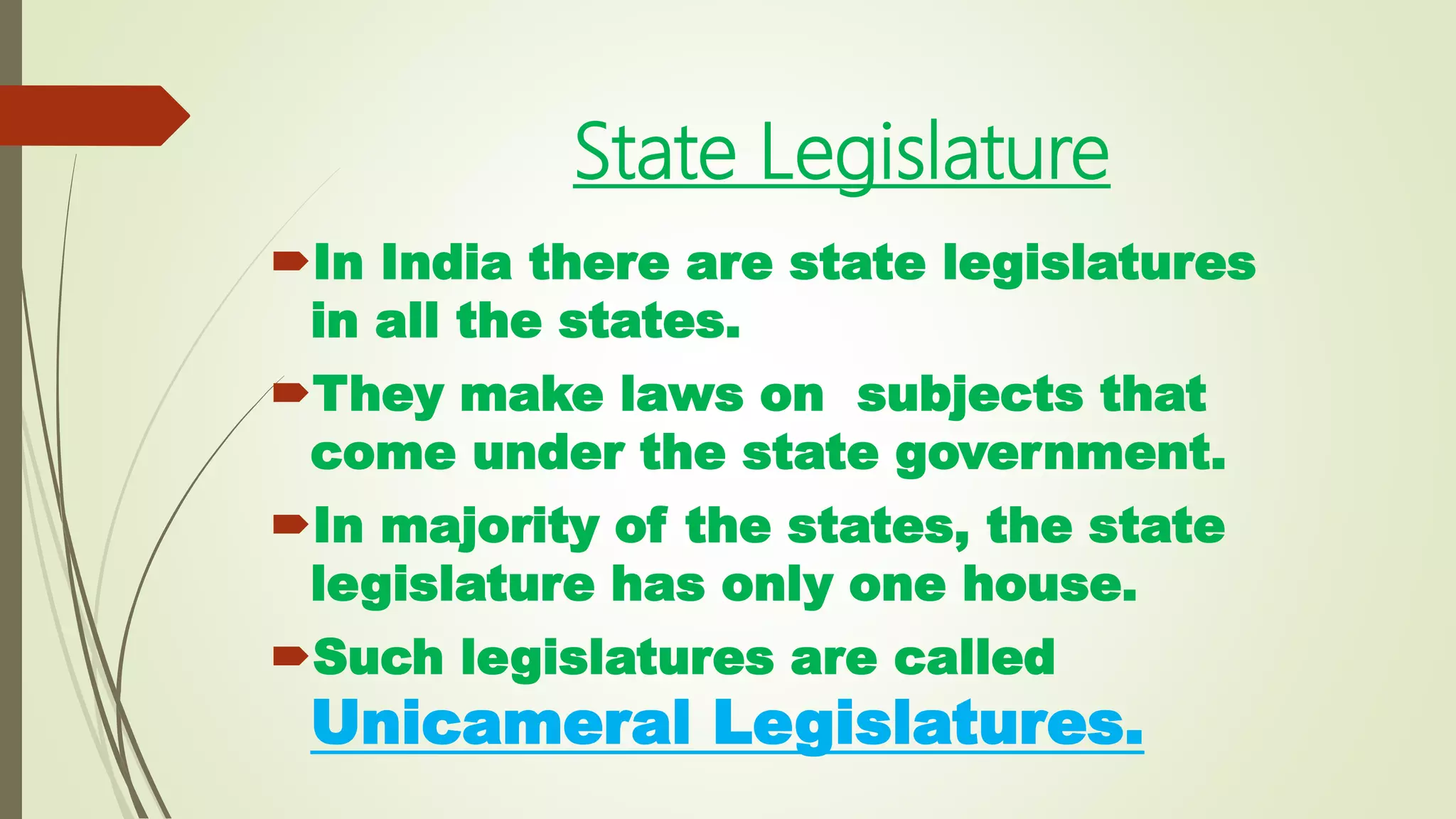
State Legislature
In India there are state legislatures
in all the states.
They make laws on subjects that
come under the state government.
In majority of the states, the state
legislature has only one house.
Such legislatures are called
Unicameral Legislatures.
A few states, on other hand,
have two houses.
It is known as Bicameral
Legislature.
Excecutive
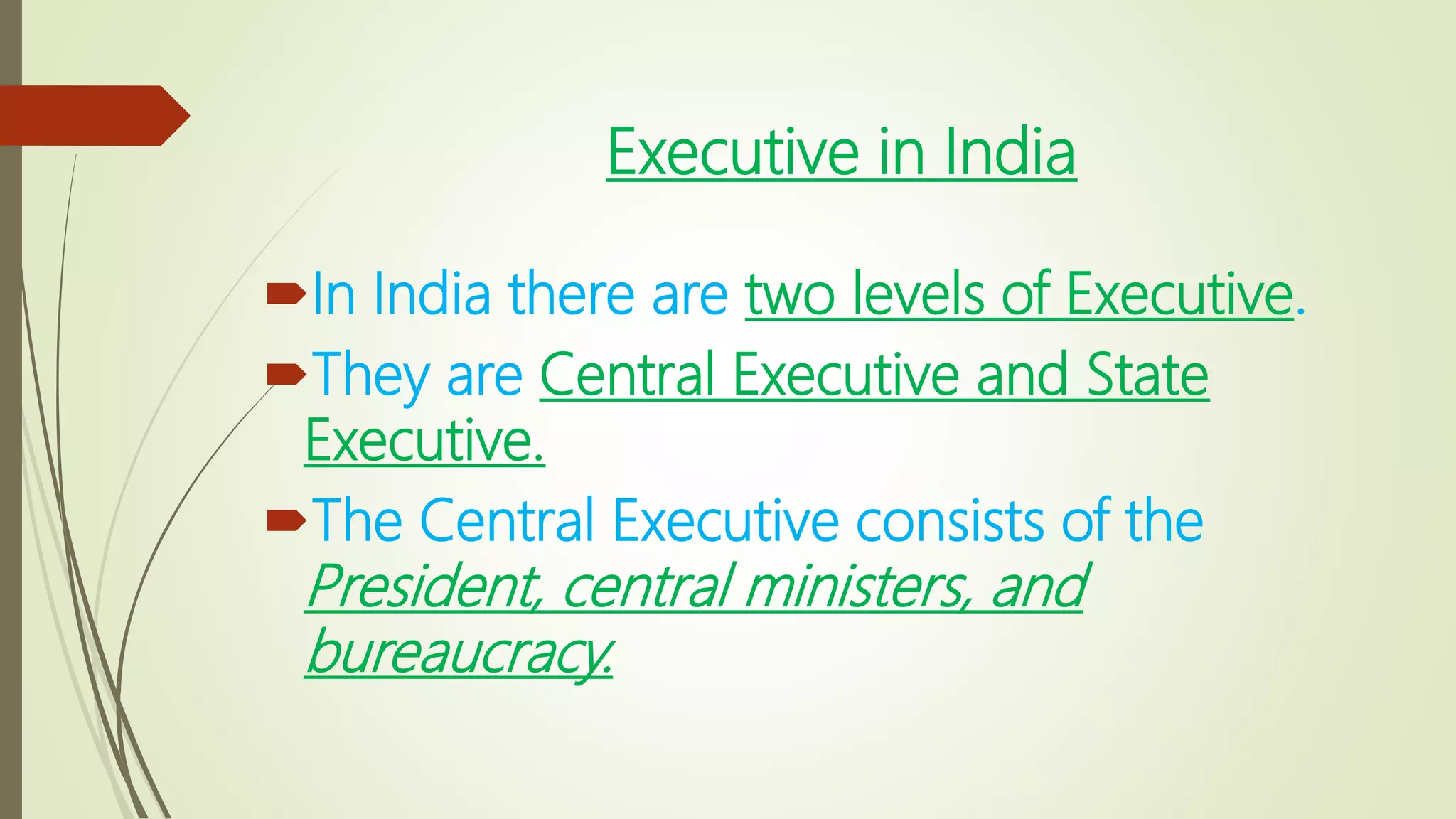
Executive in India
In India there are two levels of Executive.
They are Central Executive and State
Executive.
The Central Executive consists of the
President, central ministers, and
bureaucracy.
The President and ministers are
elected and they are the political
Executive.
Bureaucrats, on the other hand,
are appointed on the basis of
certain qualifications and they
continue in office till retirement.
They are known as the
permanent executive.
All the executive powers of the central
government are vested with the
President of India.
But he performs all these functions
with the support and advice given by
the council of ministers.
Functions of the President
Appoint Prime Minister and other
ministers.
Appoint Chief Justice and
judges of the Supreme Court.
Nominate 12 members of Rajya
Sabha and 2 members of Lok
Sabha.
Act as the Supreme Commander of
armed forces.
Give assent to bills passed by the
parliament.
Declare emergency in the
country if needed.
Take decision on mercy petitions
Union Council of Ministers
The Union Council of Ministers work
under the leadership of the Prime
Minister.
 All the functions vested with the
President are really exercised by the
Council of Ministers,
 The Council of Ministers, which
consistsof cabinet ministers,
ministers of state, and deputy
ministers.
Functions of Prime Minister
The leader of the majority party
or coalition in the Lok Sabha is
appointed as the Prime Minister.
He has extensive powers and
functions.
He can influence all the important
decisions of the central government.
Some important functions of the
Prime Minister are given below.
Acts as the leader of the Lok
Sabha.
Presides over the meetings of
the Cabinet.
Co-ordinates the functions of the
Council of Ministers.
Informs the President of the
decisions taken by the Cabinet.
State Executive
The head of the state level executive is the
Governor.
The Chief Minister and his Cabinet act as
the real Executive in the states.
Judiciary
There may arise disputes between
individuals, individuals and government,
between central and stategovernments,
and among states on various issues.
 It is the Judiciary which resolves these
disputes.
By punishing the guilty and protecting the
innocents,
the courts implement justice.
 It is the Judiciary which interprets the laws
passed by the Legislature.
Find out the structure of the Judiciary in India
from the given diagram.
Judiciary in India
Supreme Court
The Supreme Court is the apex court in
India.
 It consists of a Chief Justice and judges
appointed by the President.
At presentthe Supreme Court has a
Chief Justice and 30 judges.
46th Chief Justice of India.
His term as Chief Justice ends on
17 November 2019.
He is the first person
from Northeast India to become
Chief Justice of India.
Cases Considered by Supreme Court
Cases relating to violation of Fundamental
Rights.
Cases that arise between state government
and central governments.
Disputes between state government.
Cases that require interpretation of
constitutional provisions.
Appeal cases from High Courts.
High Court
High Court is the highest court in a state.
The High Court consists of the Chief Justice
and such other judges.
 appointed by the President.
 It supervises the working of district courts
and other subordinate courts.
35th Chief
Justice of Keral
a
Hrishikesh
Roy
Jurisdiction of High Court
Give verdicts on cases relating to
violation of Fundamental Rights.
Hears civil and criminal appeal cases
from lower courts.
Interprets laws passed by the state
Legislature.
Subordinate Courts
Subordinate courts consist of District Courts,
Sub Courts, Munsief Courts, and Magistrate
Courts.
They give verdicts on civil and criminal cases
You have now learnt about the three organs
of the government.
Government becomes effective only when
these three organs work together with mutual
respect and in accordance with the
Constitutional Provisions.
Our government (India)

Our government (India)

  • 5.
  • 6.
    First one isthe Parliament building, which represents the Legislature. It is here the parliament sessions are held
  • 9.
    OFFICIAL RESIDENCE OFTHE PRESIDENT OF INDIA
  • 12.
  • 13.
    Which represents theIndian Judiciary
  • 17.
    These three institutionsare related to three organs of the government Legislature Executive Judiciary
  • 20.
  • 22.
  • 37.
  • 51.
    State Legislature In Indiathere are state legislatures in all the states. They make laws on subjects that come under the state government. In majority of the states, the state legislature has only one house. Such legislatures are called Unicameral Legislatures.
  • 61.
    A few states,on other hand, have two houses. It is known as Bicameral Legislature.
  • 63.
  • 66.
    Executive in India InIndia there are two levels of Executive. They are Central Executive and State Executive. The Central Executive consists of the President, central ministers, and bureaucracy.
  • 67.
    The President andministers are elected and they are the political Executive.
  • 68.
    Bureaucrats, on theother hand, are appointed on the basis of certain qualifications and they continue in office till retirement. They are known as the permanent executive.
  • 79.
    All the executivepowers of the central government are vested with the President of India. But he performs all these functions with the support and advice given by the council of ministers.
  • 80.
    Functions of thePresident Appoint Prime Minister and other ministers.
  • 85.
    Appoint Chief Justiceand judges of the Supreme Court.
  • 87.
    Nominate 12 membersof Rajya Sabha and 2 members of Lok Sabha. Act as the Supreme Commander of armed forces.
  • 88.
    Give assent tobills passed by the parliament. Declare emergency in the country if needed. Take decision on mercy petitions
  • 93.
    Union Council ofMinisters The Union Council of Ministers work under the leadership of the Prime Minister.  All the functions vested with the President are really exercised by the Council of Ministers,
  • 94.
     The Councilof Ministers, which consistsof cabinet ministers, ministers of state, and deputy ministers.
  • 96.
    Functions of PrimeMinister The leader of the majority party or coalition in the Lok Sabha is appointed as the Prime Minister. He has extensive powers and functions.
  • 97.
    He can influenceall the important decisions of the central government. Some important functions of the Prime Minister are given below.
  • 98.
    Acts as theleader of the Lok Sabha. Presides over the meetings of the Cabinet.
  • 102.
    Co-ordinates the functionsof the Council of Ministers. Informs the President of the decisions taken by the Cabinet.
  • 108.
    State Executive The headof the state level executive is the Governor. The Chief Minister and his Cabinet act as the real Executive in the states.
  • 111.
    Judiciary There may arisedisputes between individuals, individuals and government, between central and stategovernments, and among states on various issues.  It is the Judiciary which resolves these disputes.
  • 112.
    By punishing theguilty and protecting the innocents, the courts implement justice.  It is the Judiciary which interprets the laws passed by the Legislature. Find out the structure of the Judiciary in India from the given diagram.
  • 118.
  • 119.
  • 120.
    The Supreme Courtis the apex court in India.  It consists of a Chief Justice and judges appointed by the President. At presentthe Supreme Court has a Chief Justice and 30 judges.
  • 123.
    46th Chief Justiceof India. His term as Chief Justice ends on 17 November 2019. He is the first person from Northeast India to become Chief Justice of India.
  • 124.
    Cases Considered bySupreme Court Cases relating to violation of Fundamental Rights. Cases that arise between state government and central governments. Disputes between state government.
  • 125.
    Cases that requireinterpretation of constitutional provisions. Appeal cases from High Courts.
  • 126.
  • 127.
    High Court isthe highest court in a state. The High Court consists of the Chief Justice and such other judges.  appointed by the President.  It supervises the working of district courts and other subordinate courts.
  • 128.
    35th Chief Justice ofKeral a Hrishikesh Roy
  • 129.
    Jurisdiction of HighCourt Give verdicts on cases relating to violation of Fundamental Rights. Hears civil and criminal appeal cases from lower courts. Interprets laws passed by the state Legislature.
  • 130.
    Subordinate Courts Subordinate courtsconsist of District Courts, Sub Courts, Munsief Courts, and Magistrate Courts. They give verdicts on civil and criminal cases
  • 131.
    You have nowlearnt about the three organs of the government. Government becomes effective only when these three organs work together with mutual respect and in accordance with the Constitutional Provisions.