HOW DO STATE
GOVERNMENT WORK?
BY S.NIVEDDHIKA
First let us know what is state
government
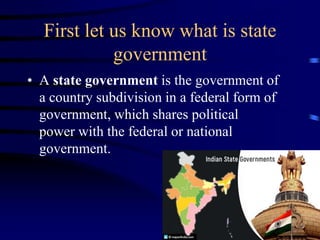
• A state government is the government of
a country subdivision in a federal form of
government, which shares political
power with the federal or national
government.
Quasi fedaralism
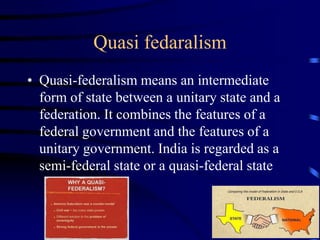
• Quasi-federalism means an intermediate
form of state between a unitary state and a
federation. It combines the features of a
federal government and the features of a
unitary government. India is regarded as a
semi-federal state or a quasi-federal state
Main components of a state
government
• Executive (Governor)
• Council Of Ministers.
• Legislature.
• Legislative Council.
• Legislative Assembly.
• Reservation of Bills.
• Control Over Executive.
executive(governor)
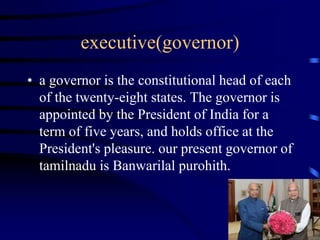
• a governor is the constitutional head of each
of the twenty-eight states. The governor is
appointed by the President of India for a
term of five years, and holds office at the
President's pleasure. our present governor of
tamilnadu is Banwarilal purohith.
State executive body
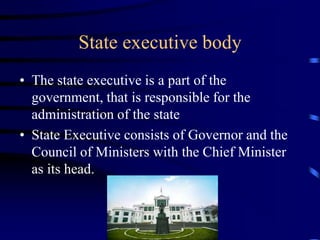
• The state executive is a part of the
government, that is responsible for the
administration of the state
• State Executive consists of Governor and the
Council of Ministers with the Chief Minister
as its head.
Powers and functions of governor
• The governor appoints the chief minister.
• Every bill passed in the state legislature has
to receive the governor’s assent to become a
law.
• The governor has power to pardon or reduce
the punishments passed by courts.
Powers and functions of governor
• The governor has the power to summon and
prorogue the sessions of the state legislature as
well as dissolve it. On such occasions the
governor can issue orders called ordinances.
Powers and functions of chief
minister
• after the general elections , governor invites
the leader of the party that has won the
majority of the seates in the house to form
the government.
• the leader of the party becomes the chief
minister and has a term of 5 years. Our
present chief minister of tamilnadu is
edappadi k.palaniswami.
Council of ministers
• they are the team of ministers who assist the
chief minister in discharging government
duties.
• 15% of the total members can be selected as
the member of this council.
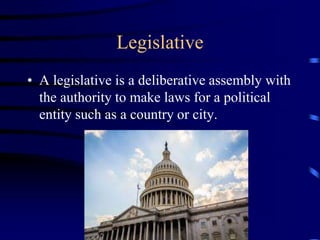
Legislative
• A legislative is a deliberative assembly with
the authority to make laws for a political
entity such as a country or city.
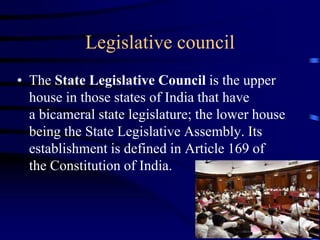
Legislative council
• The State Legislative Council is the upper
house in those states of India that have
a bicameral state legislature; the lower house
being the State Legislative Assembly. Its
establishment is defined in Article 169 of
the Constitution of India.
Legislative assembly
• The State Legislative Assembly is a
legislative body in the states and union
territories of India. In the 29 states and 3 union
territories with a unicameral state legislature it
is the sole legislative body and in 6 states it is
the lower house of their bicameral state
legislatures with the upper house being State
Legislative Council. 5 Union territories are
governed directly by the Union Government of
India and have no legislative body.
State legislative assembly in
karnataka
Steps of making a law
• Step1: drafting a proposal of law known as
bill.
• Step2: the proposal is presented in the form of
bill in the state legislature.
• Step3: after passing the bill in both houses of
parliament, it is sent for governor’s assent.
• Step4: the bill becomes the law if it receives
governor’s assent.
THANK YOU

How do state government work

  • 1.
    HOW DO STATE GOVERNMENTWORK? BY S.NIVEDDHIKA
  • 2.
    First let usknow what is state government • A state government is the government of a country subdivision in a federal form of government, which shares political power with the federal or national government.
  • 3.
    Quasi fedaralism • Quasi-federalismmeans an intermediate form of state between a unitary state and a federation. It combines the features of a federal government and the features of a unitary government. India is regarded as a semi-federal state or a quasi-federal state
  • 4.
    Main components ofa state government • Executive (Governor) • Council Of Ministers. • Legislature. • Legislative Council. • Legislative Assembly. • Reservation of Bills. • Control Over Executive.
  • 5.
    executive(governor) • a governoris the constitutional head of each of the twenty-eight states. The governor is appointed by the President of India for a term of five years, and holds office at the President's pleasure. our present governor of tamilnadu is Banwarilal purohith.
  • 6.
    State executive body •The state executive is a part of the government, that is responsible for the administration of the state • State Executive consists of Governor and the Council of Ministers with the Chief Minister as its head.
  • 7.
    Powers and functionsof governor • The governor appoints the chief minister. • Every bill passed in the state legislature has to receive the governor’s assent to become a law. • The governor has power to pardon or reduce the punishments passed by courts.
  • 8.
    Powers and functionsof governor • The governor has the power to summon and prorogue the sessions of the state legislature as well as dissolve it. On such occasions the governor can issue orders called ordinances.
  • 9.
    Powers and functionsof chief minister • after the general elections , governor invites the leader of the party that has won the majority of the seates in the house to form the government. • the leader of the party becomes the chief minister and has a term of 5 years. Our present chief minister of tamilnadu is edappadi k.palaniswami.
  • 10.
    Council of ministers •they are the team of ministers who assist the chief minister in discharging government duties. • 15% of the total members can be selected as the member of this council.
  • 11.
    Legislative • A legislativeis a deliberative assembly with the authority to make laws for a political entity such as a country or city.
  • 12.
    Legislative council • TheState Legislative Council is the upper house in those states of India that have a bicameral state legislature; the lower house being the State Legislative Assembly. Its establishment is defined in Article 169 of the Constitution of India.
  • 13.
    Legislative assembly • TheState Legislative Assembly is a legislative body in the states and union territories of India. In the 29 states and 3 union territories with a unicameral state legislature it is the sole legislative body and in 6 states it is the lower house of their bicameral state legislatures with the upper house being State Legislative Council. 5 Union territories are governed directly by the Union Government of India and have no legislative body.
  • 14.
  • 15.
    Steps of makinga law • Step1: drafting a proposal of law known as bill. • Step2: the proposal is presented in the form of bill in the state legislature. • Step3: after passing the bill in both houses of parliament, it is sent for governor’s assent. • Step4: the bill becomes the law if it receives governor’s assent.
  • 16.