OPERA
IN THE
PHILIPPINES
opera
OPERA
- Is an art and music form in which
singers and musicians perform a
dramatic work combining text (called
a libretto) and a musical score.
- It is accompanied by an orchestra or
smaller musical ensemble.
- The dialogue is entirely sung and not
spoken.
19th CENTURY
 Filipino opera emerged in the
Philippines when foreign performers,
including instrumental virtuosi, as
well as opera singers and Spanish
zarzuela performers came to the
country to perform for enthusiastic
audiences.
Local
Theatres
and Early
Philippine
Operas
LOCAL
THEATERS
Zorrilla Theater, 1817-1893
Principe Alfonso Theater, 1862-1876
Variedades Theater, 1847
Quiapo Theater
Tondo Theater, 1841
Manila Grand Opera House, mid-
19th
Metropolitan Theater, 1931
ZORRILLA THEATRE
(1817-1893)
• “SANDUGONG
PANAGINIP”
“SANDUGONG
PANAGINIP”
• Said to be the FIRST FILIPINO OPERA by
PEDRO PATERNO, a poet, novelist, musician,
and government official.
• This was first presented at the Zorilla Theater
on August 2, 1902
• It was later translated by the Englishman M.W.
Loving with the title The Dreamed Alliance.
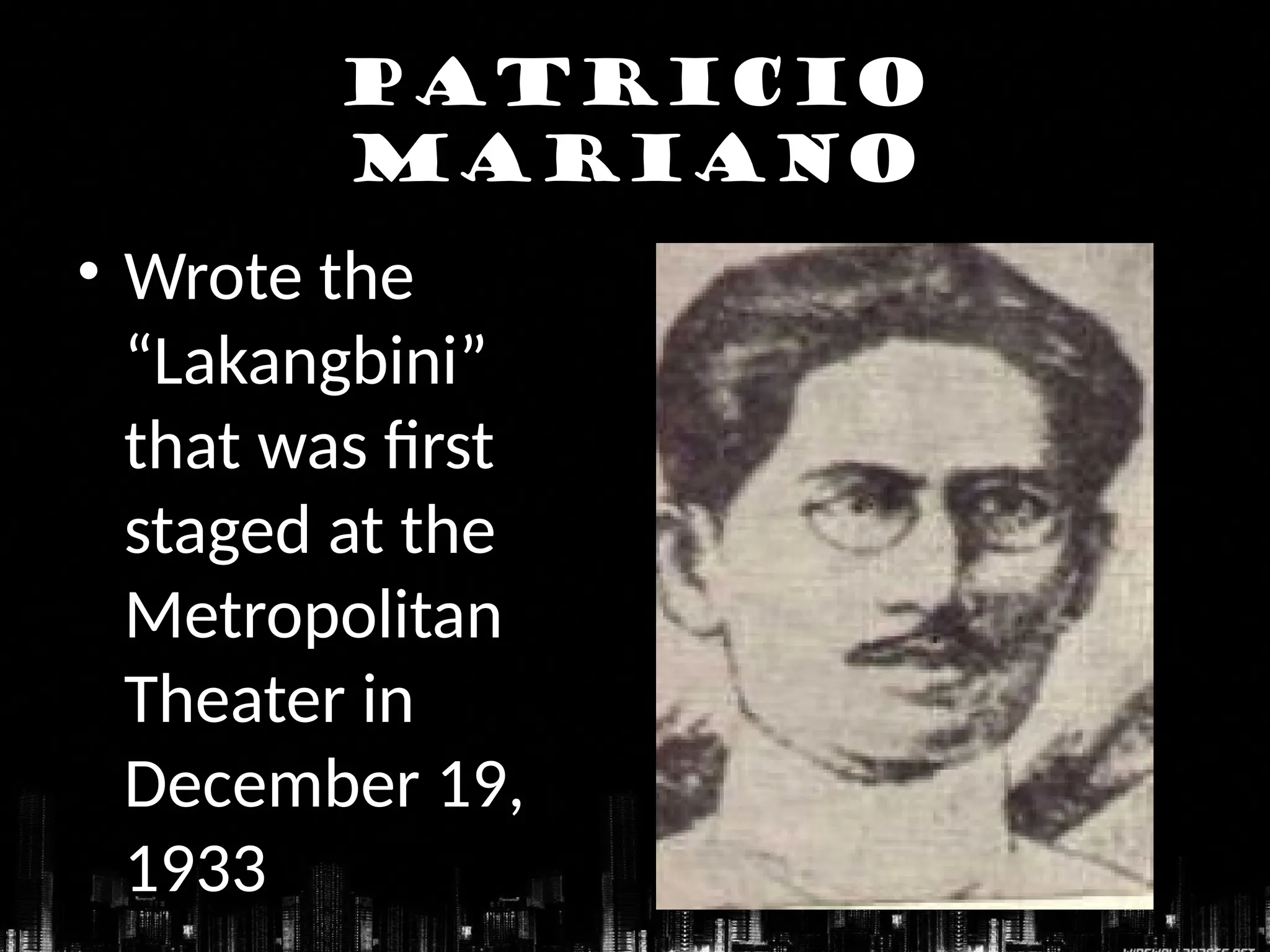
PATRICIO
MARIANO
• Wrote the
“Lakangbini”
that was first
staged at the
Metropolitan
Theater in
December 19,
1933
POPULAR SINGERS
• NELIA MANALO
as Violetta in La Traviata
MERCEDES MATIAS-SANTIAGO
as Lucia in Lucia di Lamemoor
• JOVITA FUENTES
as Mimi in La Boheme
CULTURAL CENTER OF
THE PHILIPPINES
• Established by then First Lady
Imelda Romualdez-Marcos in
1969 paved the way for other
Filipino operas to be staged at
a legitimate venue of
international standard.
LA LOBA NEGRA
• The Black She-Wolf
• A Three-act Filipino Opera
• The music was composed by
Francisco Feliciano with
libretto by soprano Fides
Cuyugan Asensio
FELIPE PADILLA
DE LEON
• Composed Noli
Me Tangere and
El Filibusterismo
• Presented at the
CCP Main
Theater in 1970
and 1975
NOLI ME TANGERE
• The three-act opera composed
by National Artist Felipe Padilla
de Leon, with libretto by
National Artist Guillermo
Tolentino.
• It premiered in 1957 at the
FEU Auditorium.
EL FILIBUSTERISMO
• It was written four years after the
• Noli Me Tangere
• It was in three acts and written in
• Tagalog (with Libretto by Anthony Morli)
• It tells of the continuing struggle of the
Filipinos to achieve freedom and
emancipation from Spanish colonial rule.
• Presented at the CCP Main Theater in
1970 and 1975
The Filipino ballet
presents folktales
based on local
fables and epics
from neighbouring
regions.
LOLA BASYANG
A ballet adaptation of Severino
Reyes’ folktales Mga Kuwento ni
Lola Basyang.
 It was meant to instill and
rekindle the interest of the
Filipino youth in the beauty,
richness, and heritage of
Philippine literature.
RAMA HARI
translated as King Rama, is
the Philippine adaptation
of the Indian epic
Ramayana set to music,
dance, and drama

Opera in the Philippines -444589758-MUSIC-10-PPT-0-2-pptx.pptx

  • 1.
  • 2.
  • 3.
    OPERA - Is anart and music form in which singers and musicians perform a dramatic work combining text (called a libretto) and a musical score. - It is accompanied by an orchestra or smaller musical ensemble. - The dialogue is entirely sung and not spoken.
  • 4.
    19th CENTURY  Filipinoopera emerged in the Philippines when foreign performers, including instrumental virtuosi, as well as opera singers and Spanish zarzuela performers came to the country to perform for enthusiastic audiences.
  • 5.
  • 6.
    LOCAL THEATERS Zorrilla Theater, 1817-1893 PrincipeAlfonso Theater, 1862-1876 Variedades Theater, 1847 Quiapo Theater Tondo Theater, 1841 Manila Grand Opera House, mid- 19th Metropolitan Theater, 1931
  • 7.
  • 13.
  • 14.
    “SANDUGONG PANAGINIP” • Said tobe the FIRST FILIPINO OPERA by PEDRO PATERNO, a poet, novelist, musician, and government official. • This was first presented at the Zorilla Theater on August 2, 1902 • It was later translated by the Englishman M.W. Loving with the title The Dreamed Alliance.
  • 17.
    PATRICIO MARIANO • Wrote the “Lakangbini” thatwas first staged at the Metropolitan Theater in December 19, 1933
  • 18.
    POPULAR SINGERS • NELIAMANALO as Violetta in La Traviata MERCEDES MATIAS-SANTIAGO as Lucia in Lucia di Lamemoor • JOVITA FUENTES as Mimi in La Boheme
  • 19.
    CULTURAL CENTER OF THEPHILIPPINES • Established by then First Lady Imelda Romualdez-Marcos in 1969 paved the way for other Filipino operas to be staged at a legitimate venue of international standard.
  • 23.
    LA LOBA NEGRA •The Black She-Wolf • A Three-act Filipino Opera • The music was composed by Francisco Feliciano with libretto by soprano Fides Cuyugan Asensio
  • 24.
    FELIPE PADILLA DE LEON •Composed Noli Me Tangere and El Filibusterismo • Presented at the CCP Main Theater in 1970 and 1975
  • 25.
    NOLI ME TANGERE •The three-act opera composed by National Artist Felipe Padilla de Leon, with libretto by National Artist Guillermo Tolentino. • It premiered in 1957 at the FEU Auditorium.
  • 26.
    EL FILIBUSTERISMO • Itwas written four years after the • Noli Me Tangere • It was in three acts and written in • Tagalog (with Libretto by Anthony Morli) • It tells of the continuing struggle of the Filipinos to achieve freedom and emancipation from Spanish colonial rule. • Presented at the CCP Main Theater in 1970 and 1975
  • 28.
    The Filipino ballet presentsfolktales based on local fables and epics from neighbouring regions.
  • 29.
    LOLA BASYANG A balletadaptation of Severino Reyes’ folktales Mga Kuwento ni Lola Basyang.  It was meant to instill and rekindle the interest of the Filipino youth in the beauty, richness, and heritage of Philippine literature.
  • 30.
    RAMA HARI translated asKing Rama, is the Philippine adaptation of the Indian epic Ramayana set to music, dance, and drama