Fast Federation (FastFed) Working Group
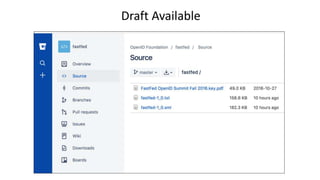
Draft Available
Problem?
Low adoption of federation
Why?
It’s hard.
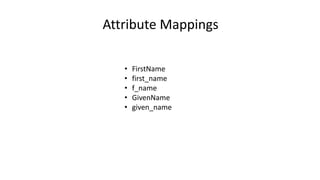
• FirstName
• first_name
• f_name
• GivenName
• given_name
Attribute Mappings
Error: Could not validate SAML response
It Works!
Until 1 year later…
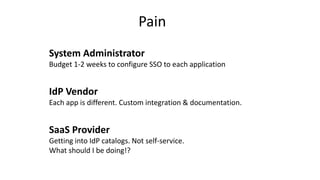
Pain
System Administrator
Budget 1-2 weeks to configure SSO to each application
IdP Vendor
Each app is different. Custom integration & documentation.
SaaS Provider
Getting into IdP catalogs. Not self-service.
What should I be doing!?
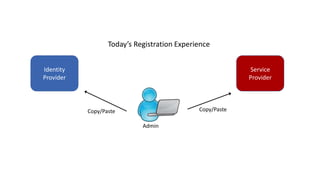
Identity
Provider
Service
Provider
Copy/Paste Copy/Paste
Today’s Registration Experience
Admin
Identity
Provider
Service
Provider
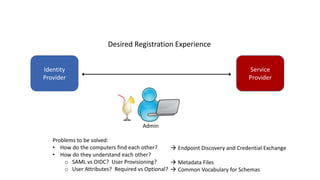
Desired Registration Experience
Admin
Problems to be solved:
• How do the computers find each other?
• How do they understand each other?
o SAML vs OIDC? User Provisioning?
o User Attributes? Required vs Optional?
 Endpoint Discovery and Credential Exchange
 Metadata Files
 Common Vocabulary for Schemas
If we do this right…
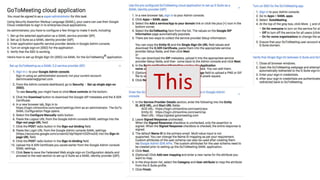
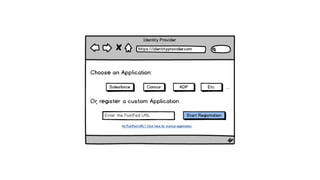
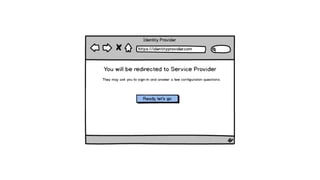
This
…becomes the following experience
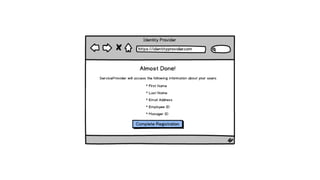
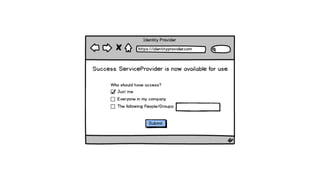
… sign-in to the application…
…answer a few questions…
What We’re NOT Doing
• Defining a new authentication protocol
• Forcing changes to existing SAML/OIDC endpoints
What We ARE Doing
• New Metadata Files
• New UX Flows
• Common Recipes & Recommended Practices
This market has the following properties:
• No existing shared schema
Each provider defines the attributes they want, and how
they are formatted on the wire.
• Minimal data requirements
Typically, only need a handful of attributes such as name,
email, and mobile phone number.
• No existing trust federations
Anyone can launch an IdP/SP. No certifications and no circle
of trusts.
Tenet 1) Solve the Commercial SaaS Market
Tenet 2) Don’t Preclude Other Markets
• FastFed’s priority is the user experience of the enterprise
administrator.
• We strive to make this experience fast, easy to understand,
and hard to get wrong.
Tenet 3) Advocate for the Admin
• Small(ish) number of IdP implementers
Tend to be identity experts, motivated to solve this problem.
• Thousands of SaaS implementers
Staffed by non-Identity-experts who are stretched thin.
“As Simple as Possible”
Tenet 4) Push Complexity onto IdPs
• “If you like your federation endpoint, you can keep your
federation endpoint.”
E.g. If the service expects a SAML assertion with user
attributes labeled as “full_name” and “email”, they can
continue to run in that manner.
• “Purely Additive”
Meaning FastFed requires the introduction of new APIs and
metadata, but doesn’t change existing federation
endpoints.
Tenet 5) Purely Additive for SPs
• Hosted services are typically multi-tenant
• Adds complexity
Tenant authorize release of private information (including
SSO configurations).
Tenet 6) Support Multi-Tenancy
• Implementers want guidance
• In the spirit of Tenet #3 (Advocate for the Admin),
recommend practices that reduce the burden on
administrators.
• As always: perfect shouldn’t be the enemy of the good.
Allow incremental adoption of best practices.
Tenet 7) Be Opinionated on Best Practices
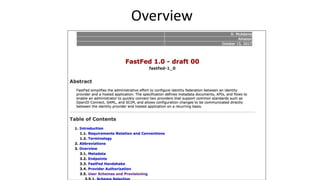
Overview

OpenID Foundation FastFed Working Group Update - 2017-10-16

  • 1.
  • 2.
  • 3.
  • 4.
  • 6.
    • FirstName • first_name •f_name • GivenName • given_name Attribute Mappings
  • 7.
    Error: Could notvalidate SAML response
  • 8.
    It Works! Until 1year later…
  • 9.
    Pain System Administrator Budget 1-2weeks to configure SSO to each application IdP Vendor Each app is different. Custom integration & documentation. SaaS Provider Getting into IdP catalogs. Not self-service. What should I be doing!?
  • 10.
  • 11.
    Identity Provider Service Provider Desired Registration Experience Admin Problemsto be solved: • How do the computers find each other? • How do they understand each other? o SAML vs OIDC? User Provisioning? o User Attributes? Required vs Optional?  Endpoint Discovery and Credential Exchange  Metadata Files  Common Vocabulary for Schemas
  • 12.
    If we dothis right…
  • 13.
  • 14.
  • 17.
    … sign-in tothe application… …answer a few questions…
  • 20.
    What We’re NOTDoing • Defining a new authentication protocol • Forcing changes to existing SAML/OIDC endpoints What We ARE Doing • New Metadata Files • New UX Flows • Common Recipes & Recommended Practices
  • 21.
    This market hasthe following properties: • No existing shared schema Each provider defines the attributes they want, and how they are formatted on the wire. • Minimal data requirements Typically, only need a handful of attributes such as name, email, and mobile phone number. • No existing trust federations Anyone can launch an IdP/SP. No certifications and no circle of trusts. Tenet 1) Solve the Commercial SaaS Market
  • 22.
    Tenet 2) Don’tPreclude Other Markets
  • 23.
    • FastFed’s priorityis the user experience of the enterprise administrator. • We strive to make this experience fast, easy to understand, and hard to get wrong. Tenet 3) Advocate for the Admin
  • 24.
    • Small(ish) numberof IdP implementers Tend to be identity experts, motivated to solve this problem. • Thousands of SaaS implementers Staffed by non-Identity-experts who are stretched thin. “As Simple as Possible” Tenet 4) Push Complexity onto IdPs
  • 25.
    • “If youlike your federation endpoint, you can keep your federation endpoint.” E.g. If the service expects a SAML assertion with user attributes labeled as “full_name” and “email”, they can continue to run in that manner. • “Purely Additive” Meaning FastFed requires the introduction of new APIs and metadata, but doesn’t change existing federation endpoints. Tenet 5) Purely Additive for SPs
  • 26.
    • Hosted servicesare typically multi-tenant • Adds complexity Tenant authorize release of private information (including SSO configurations). Tenet 6) Support Multi-Tenancy
  • 27.
    • Implementers wantguidance • In the spirit of Tenet #3 (Advocate for the Admin), recommend practices that reduce the burden on administrators. • As always: perfect shouldn’t be the enemy of the good. Allow incremental adoption of best practices. Tenet 7) Be Opinionated on Best Practices
  • 28.