Open-access
publishing and the
transformation of
scholarly
communication
SciELO15, 23rd October, 2013
Mark Patterson, Executive Director, eLife
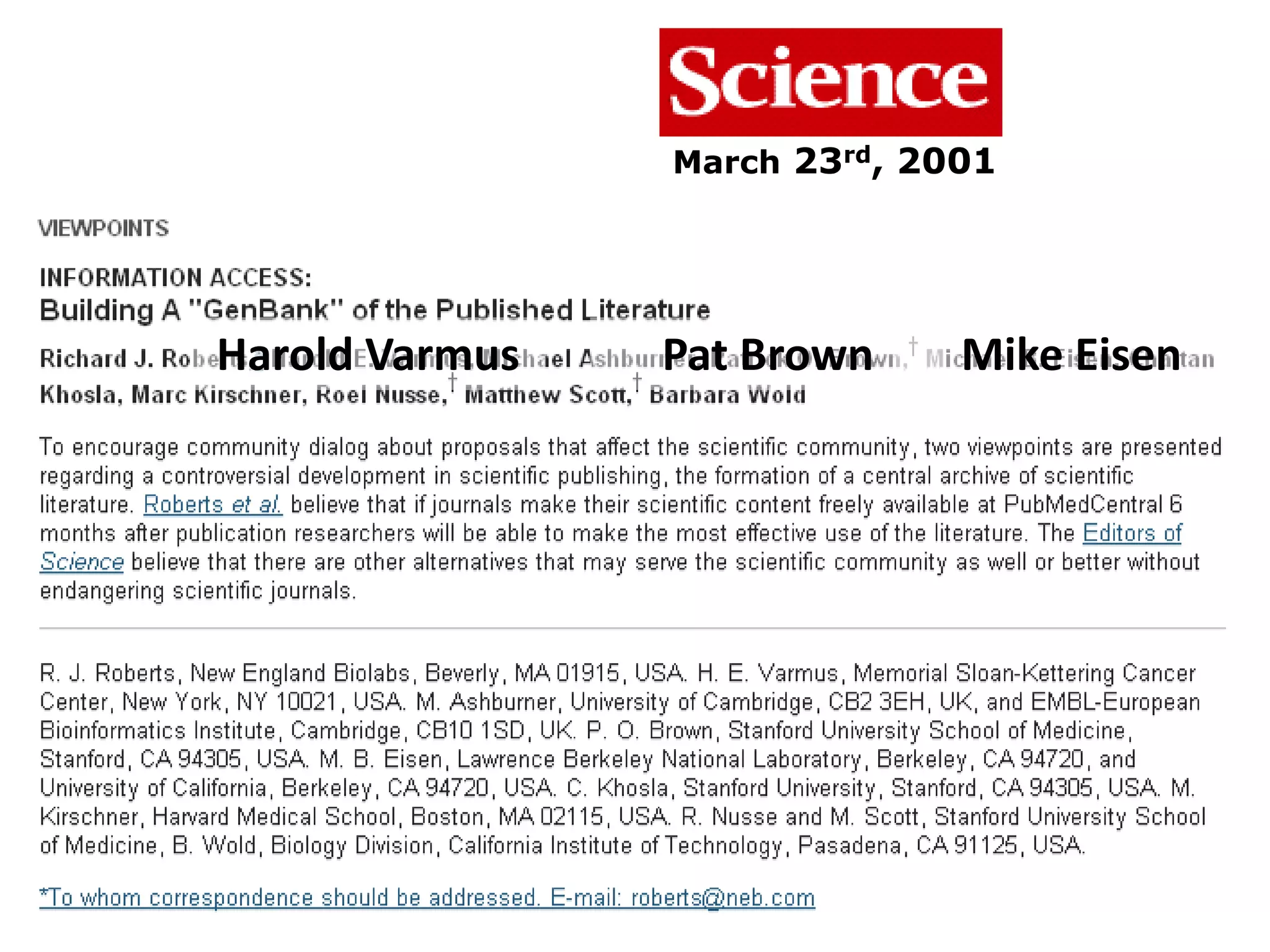
March 23rd, 2001

Harold Varmus

Pat Brown

Mike Eisen
Open
>
access

Free
access
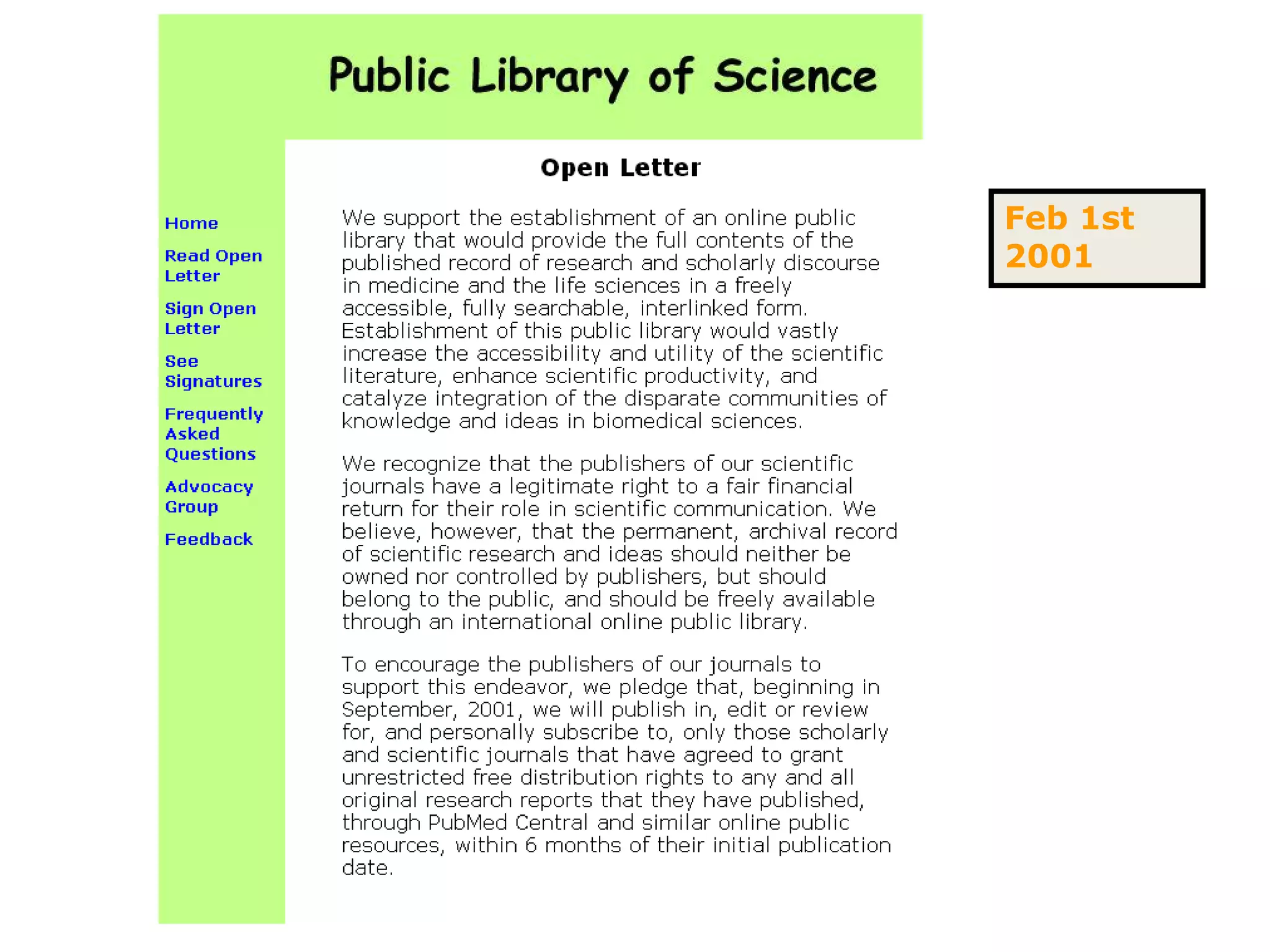
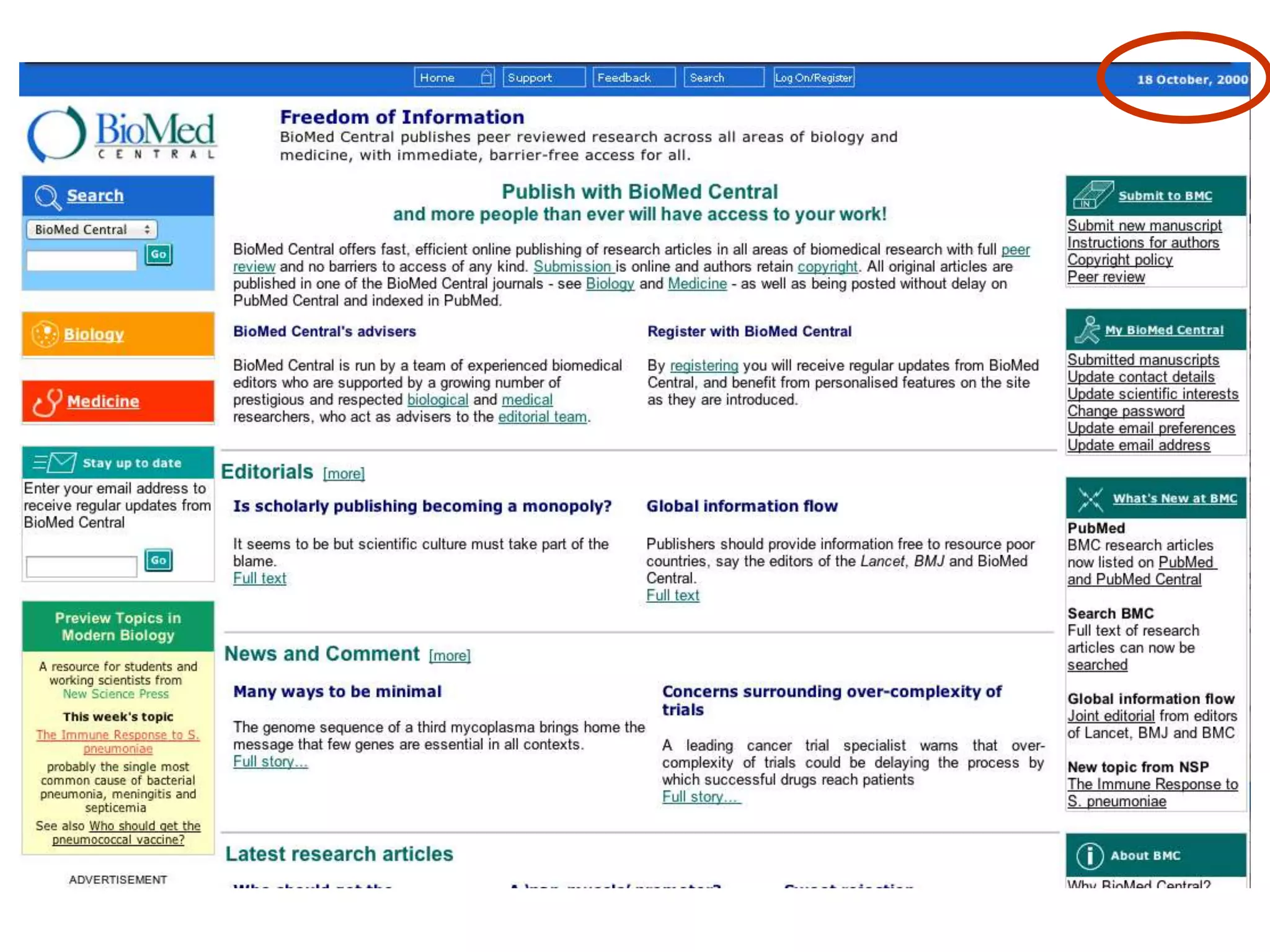
Feb 1st
2001
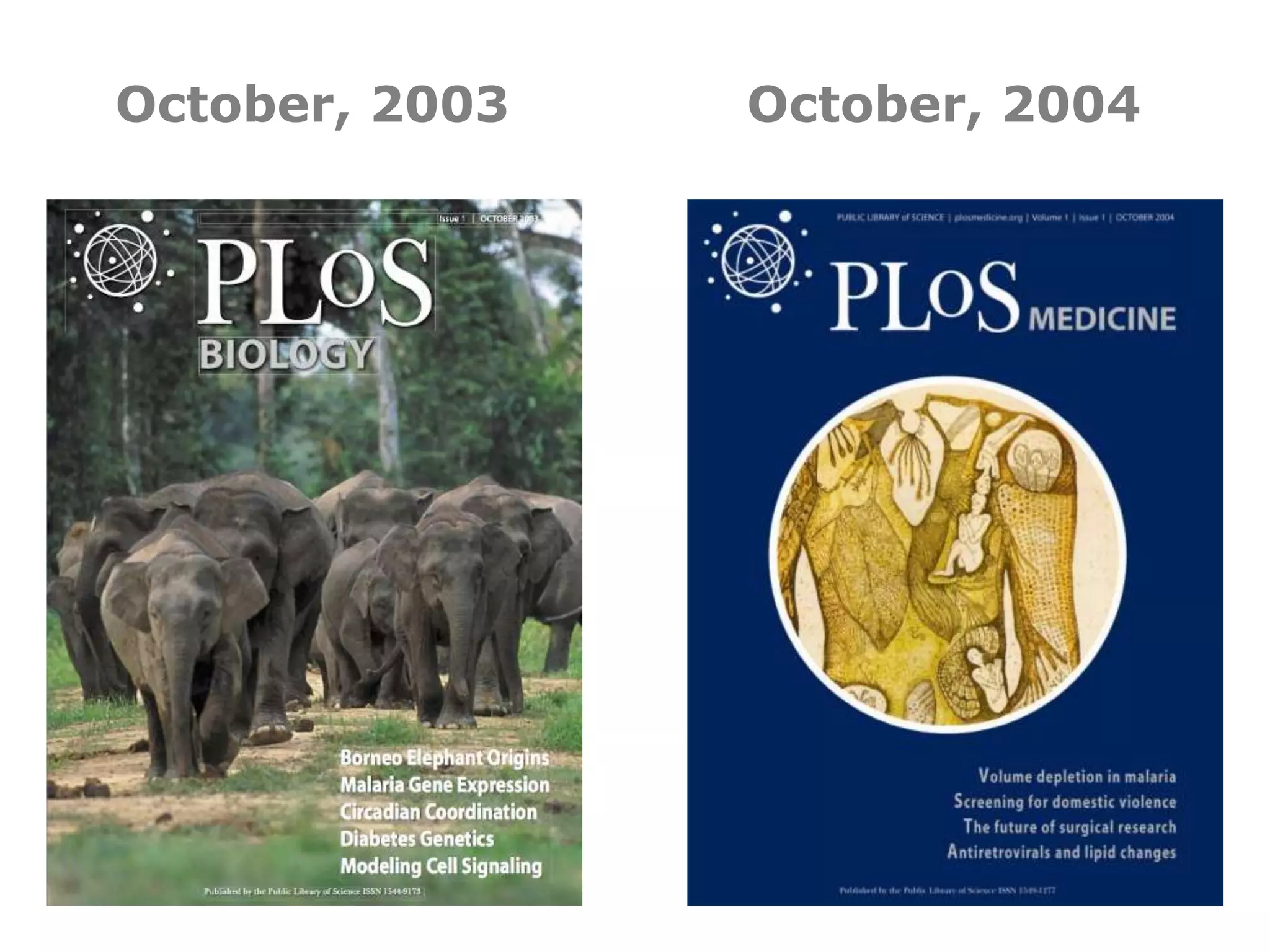
October, 2003

October, 2004
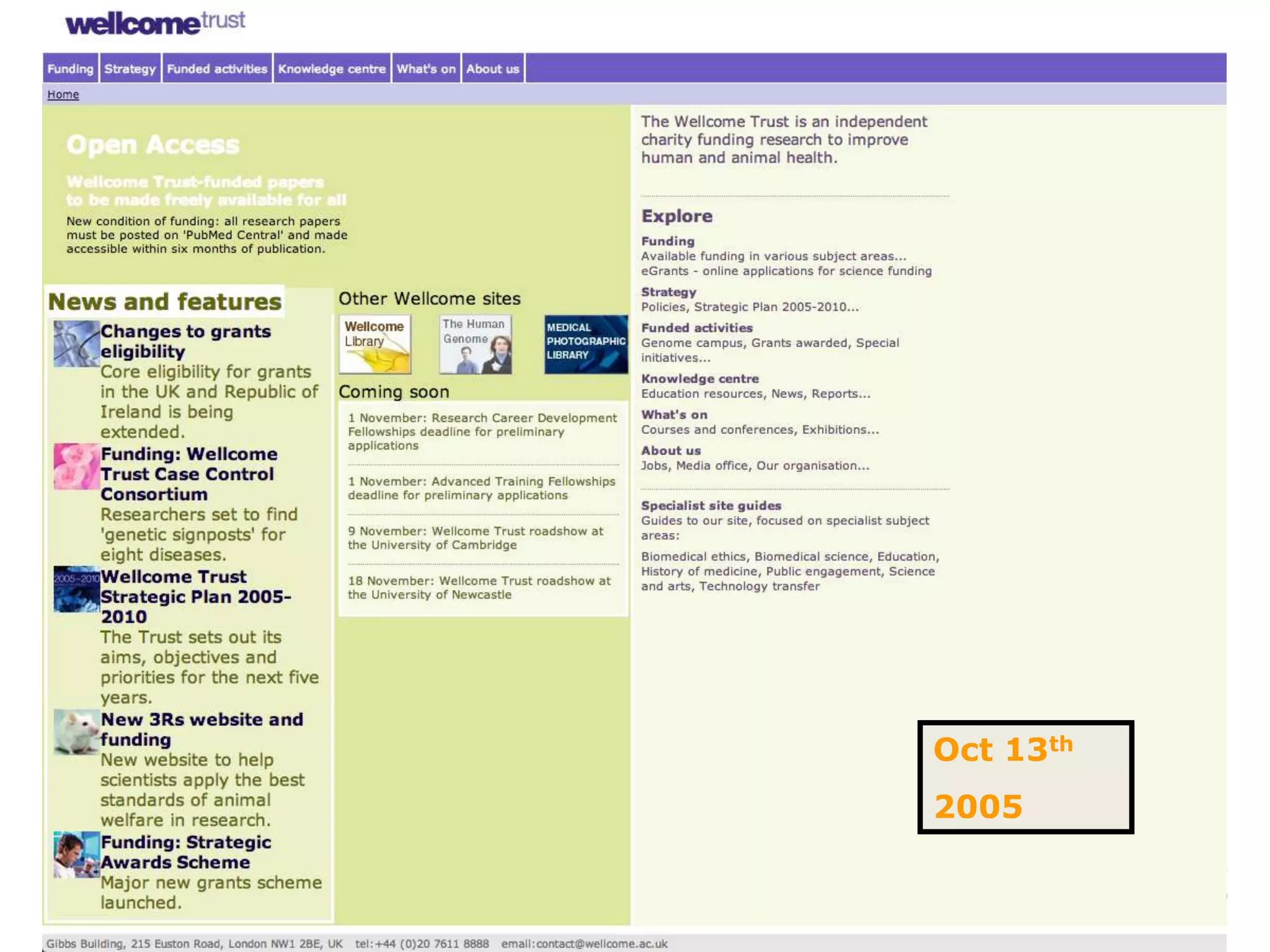
Oct 13th
2005
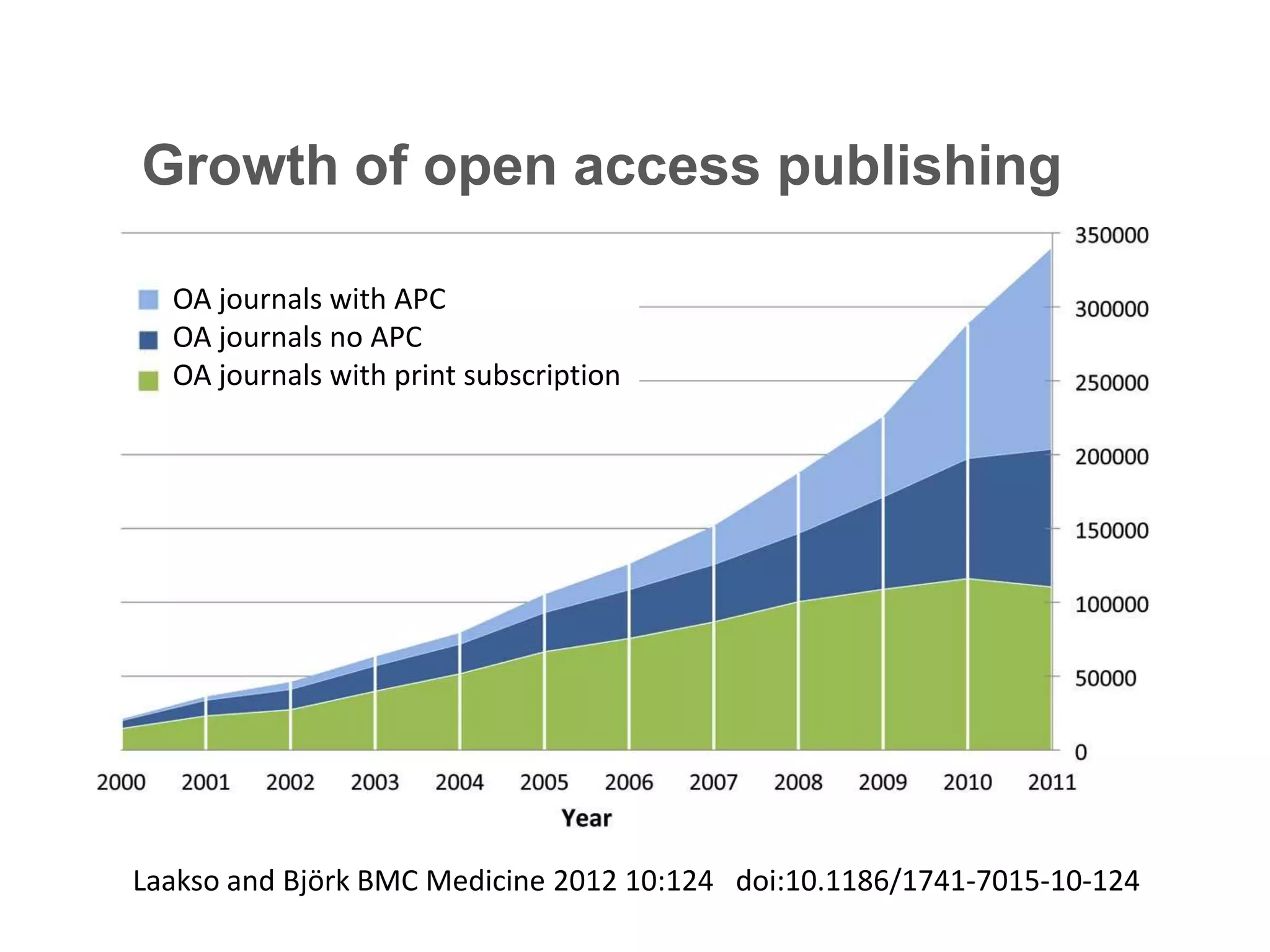
Growth of open access publishing
OA journals with APC
OA journals no APC
OA journals with print subscription

Laakso and Björk BMC Medicine 2012 10:124 doi:10.1186/1741-7015-10-124
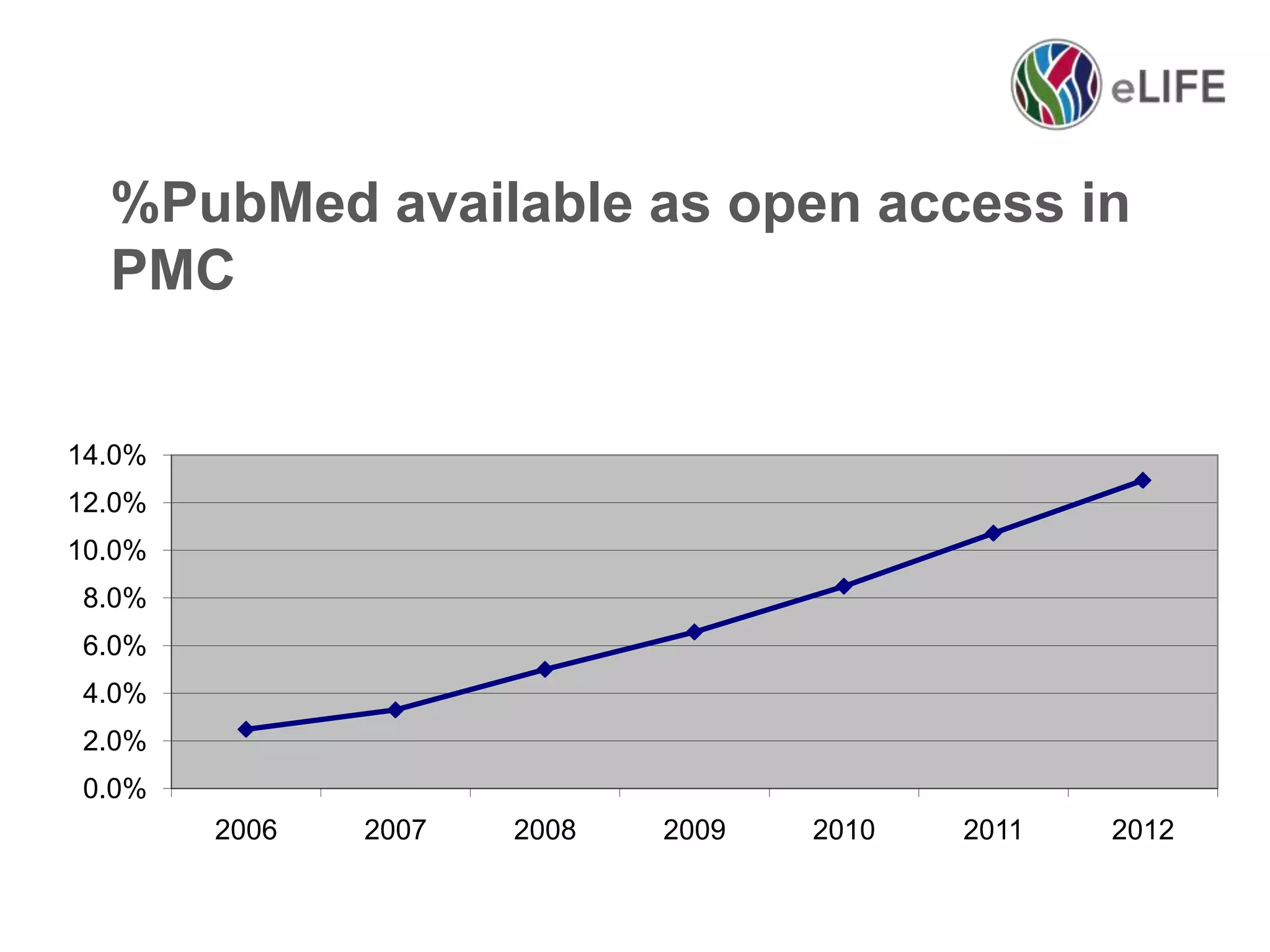
%PubMed available as open access in
PMC

14.0%
12.0%
10.0%
8.0%
6.0%
4.0%
2.0%
0.0%
2006

2007

2008

2009

2010

2011

2012
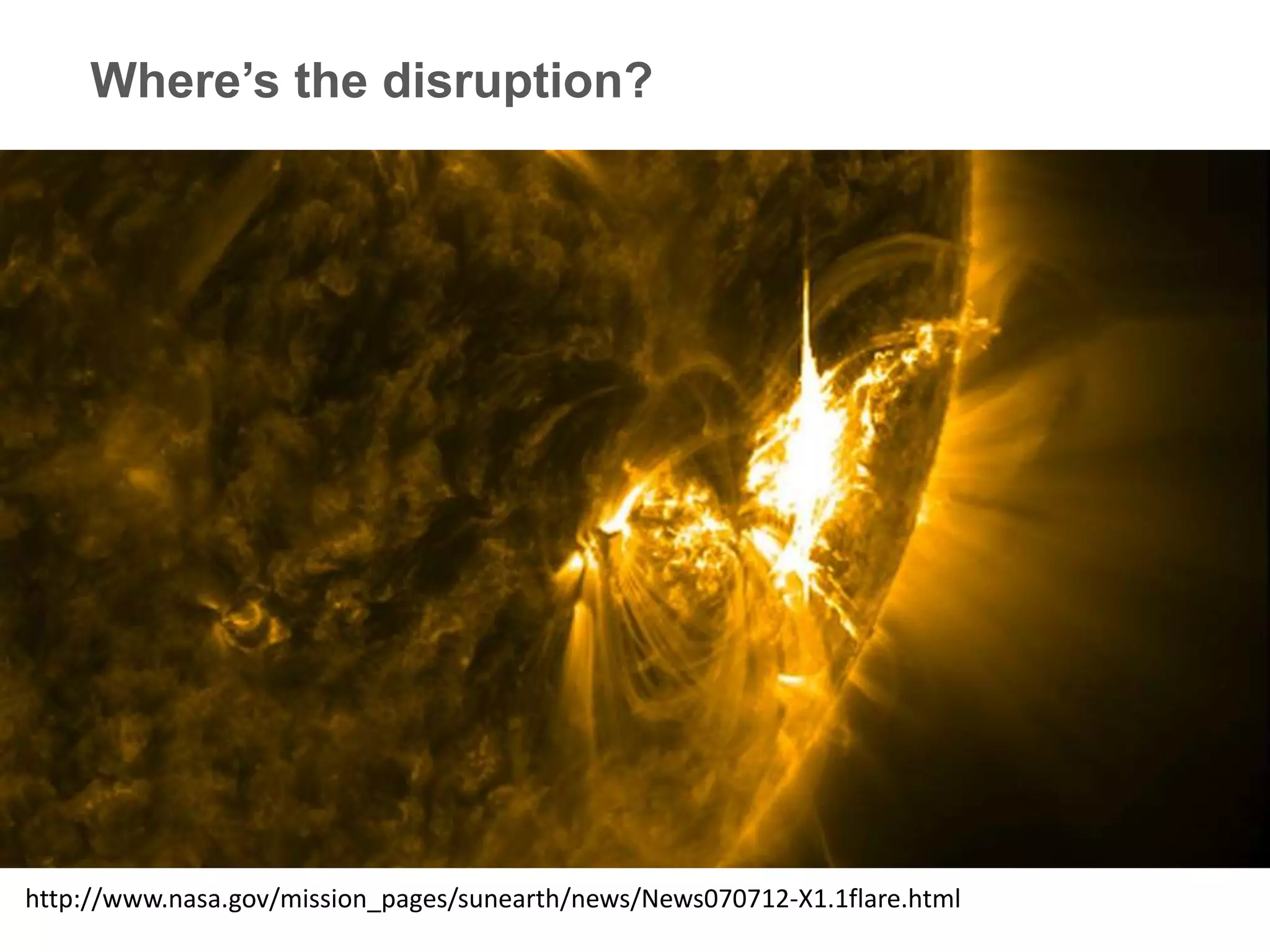
Where’s the disruption?

http://www.nasa.gov/mission_pages/sunearth/news/News070712-X1.1flare.html
First disruption
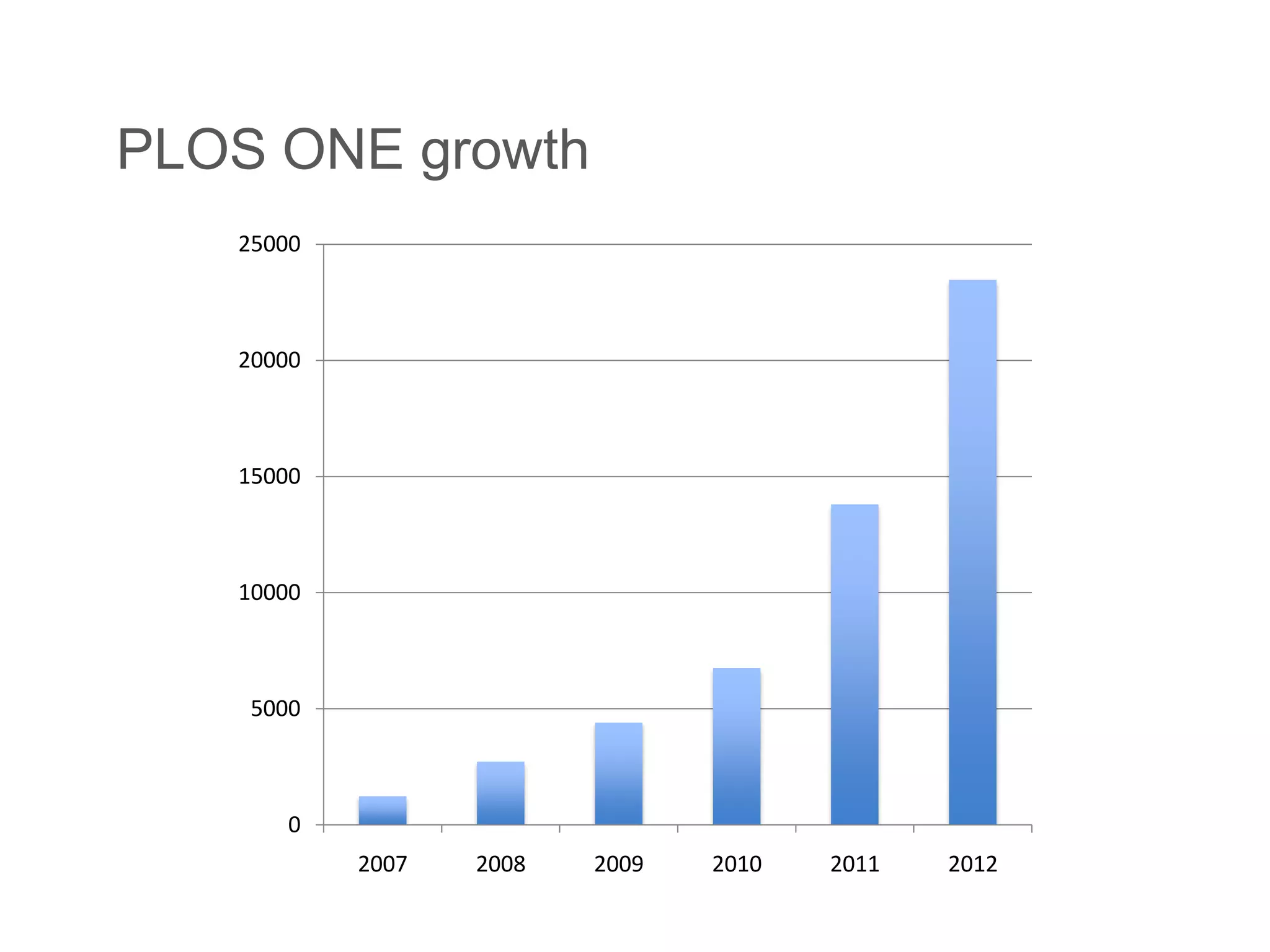
The megajournal
PLOS ONE growth
25000

20000

15000

10000

5000

0
2007

2008

2009

2010

2011

2012
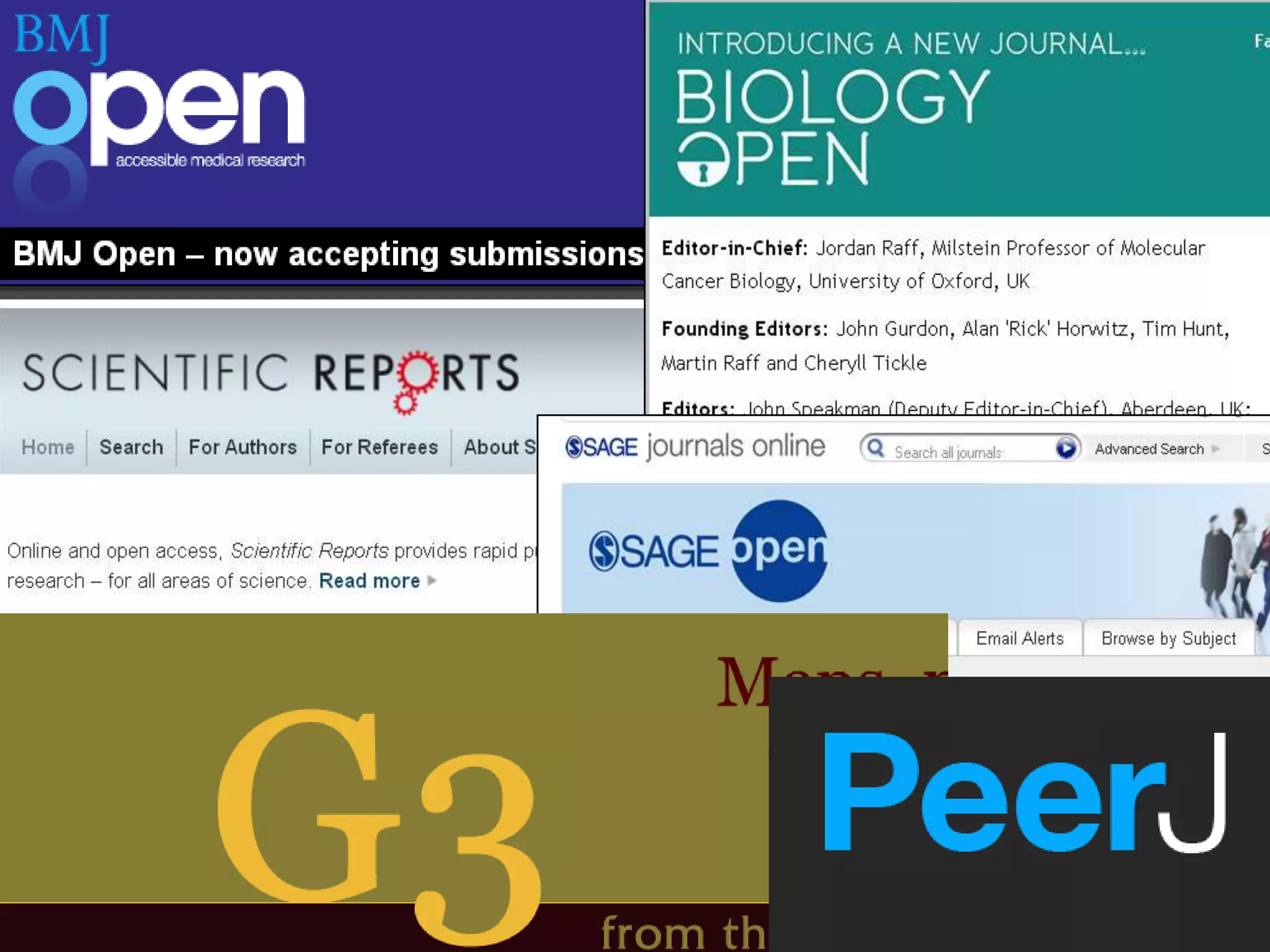
Open-access
megajournals
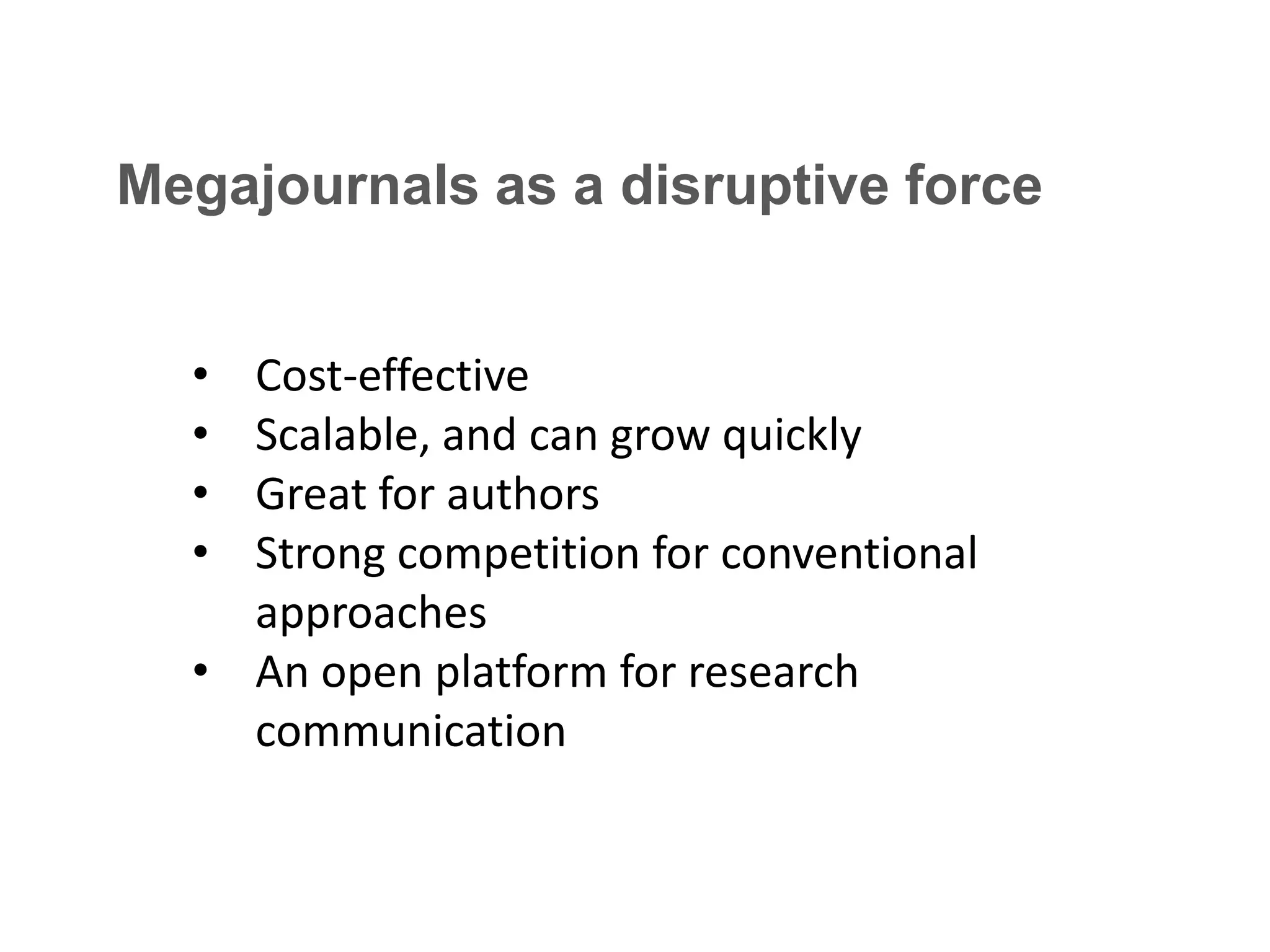
Megajournals as a disruptive force
•
•
•
•

Cost-effective
Scalable, and can grow quickly
Great for authors
Strong competition for conventional
approaches
• An open platform for research
communication
Second disruption
Direct funding of OA
publishing
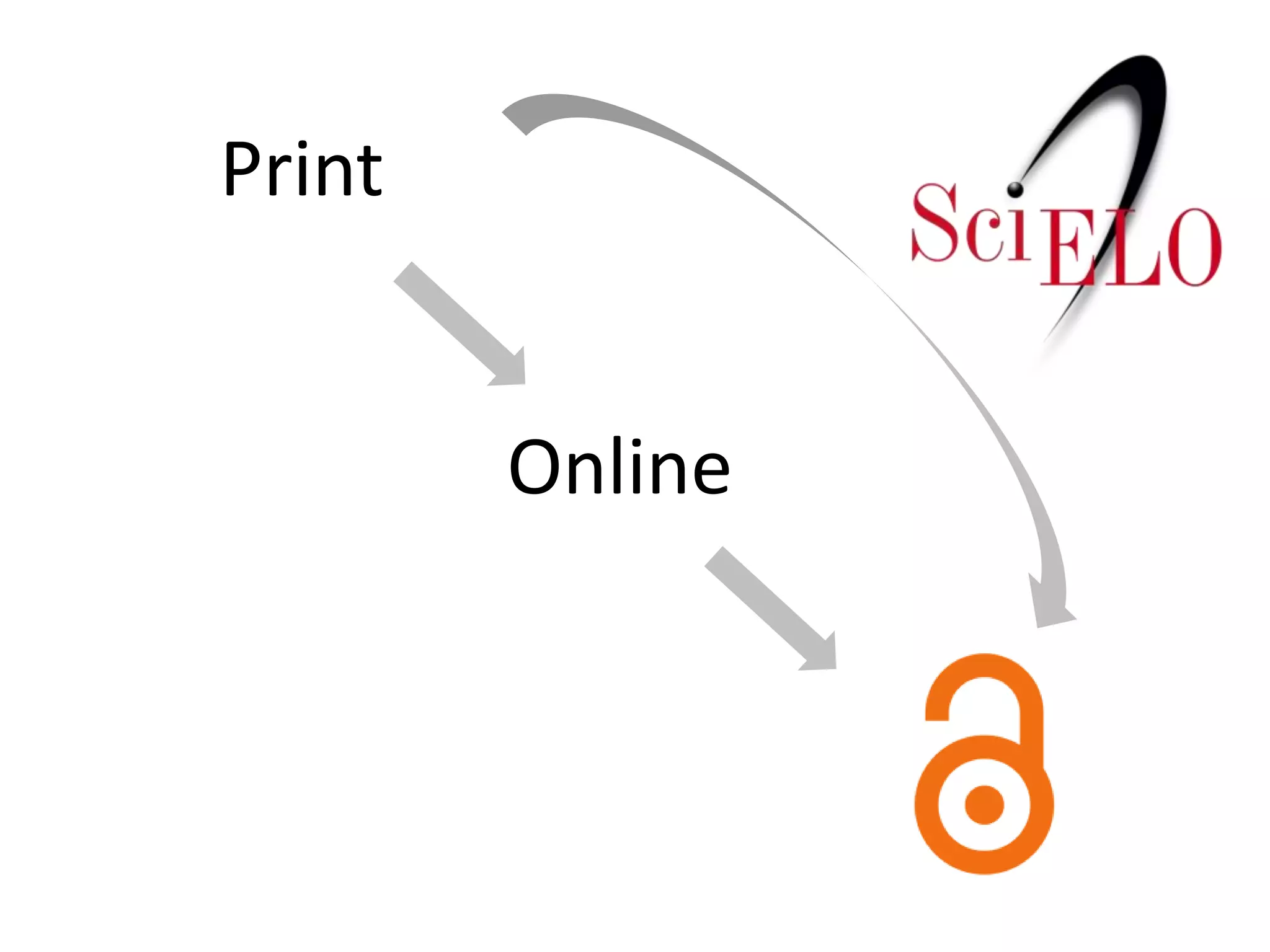
Print

Online
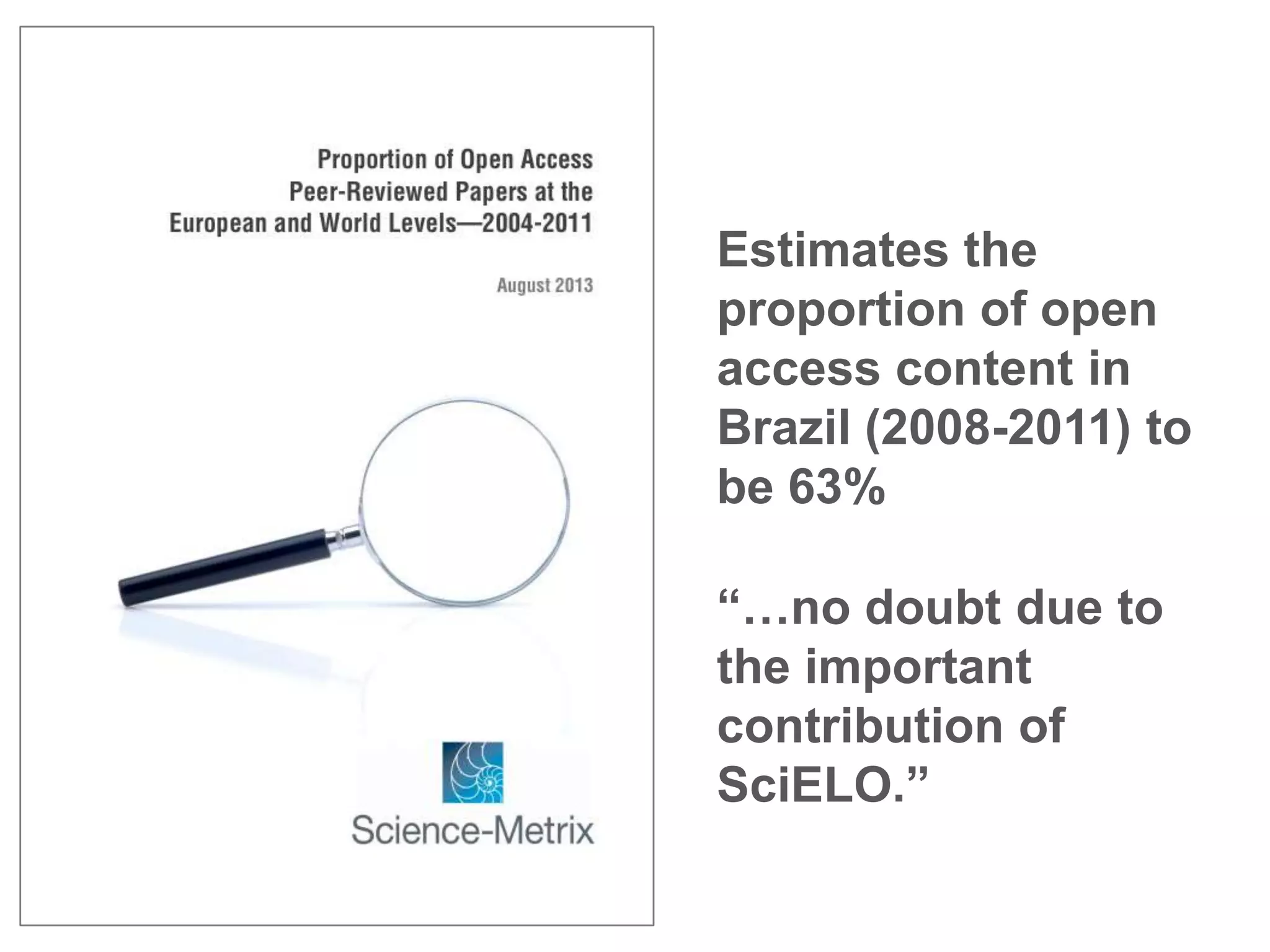
Estimates the
proportion of open
access content in
Brazil (2008-2011) to
be 63%
“…no doubt due to
the important
contribution of
SciELO.”
SciELO as a disruptive force
•
•
•
•

Cost-effective
Scalable, and can grow quickly
Great for authors
Strong competition for conventional
approaches
• An open platform for research
communication
Funders taking direct action
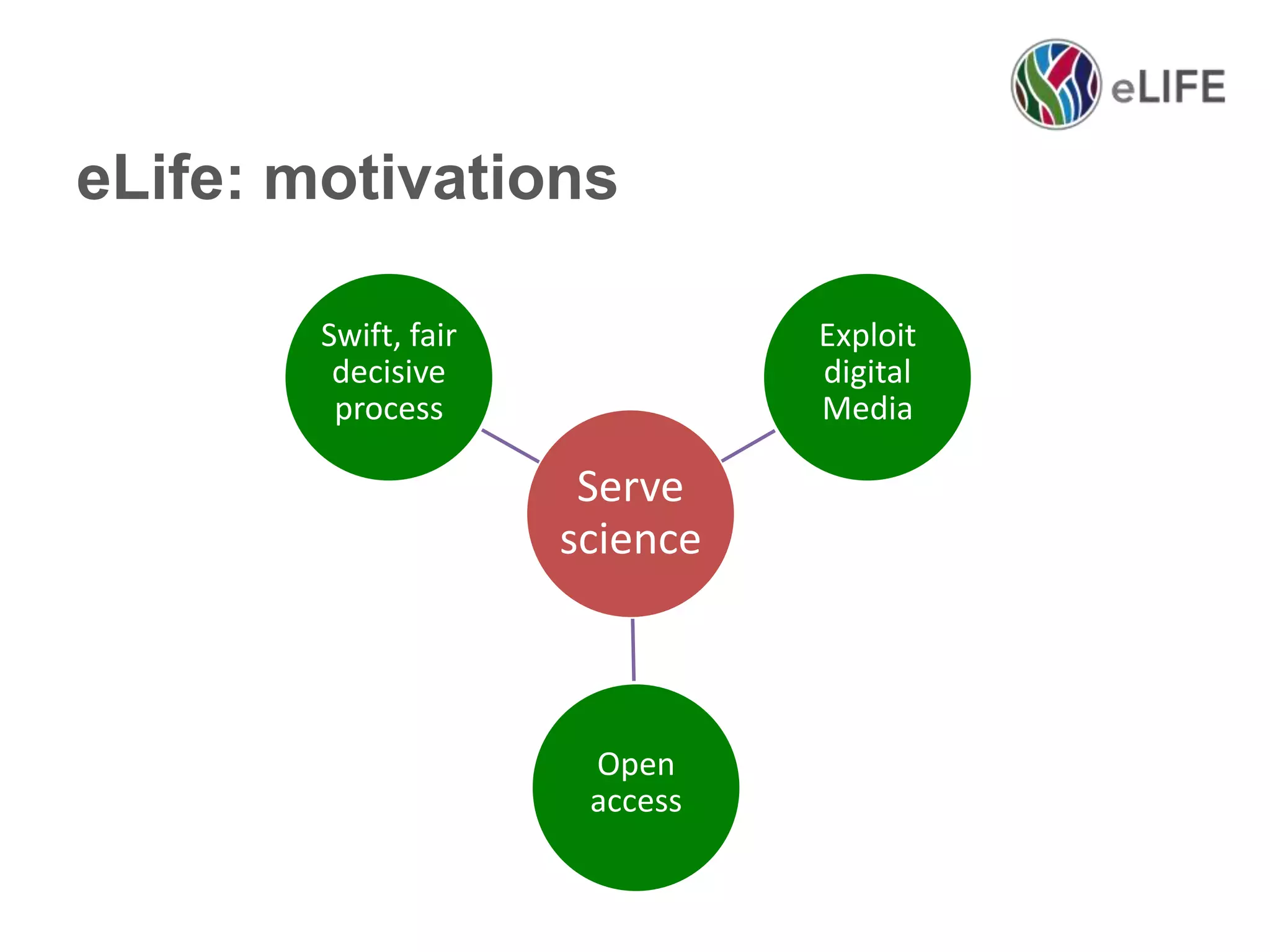
eLife: motivations
Swift, fair
decisive
process

Exploit
digital
Media

Serve
science

Open
access
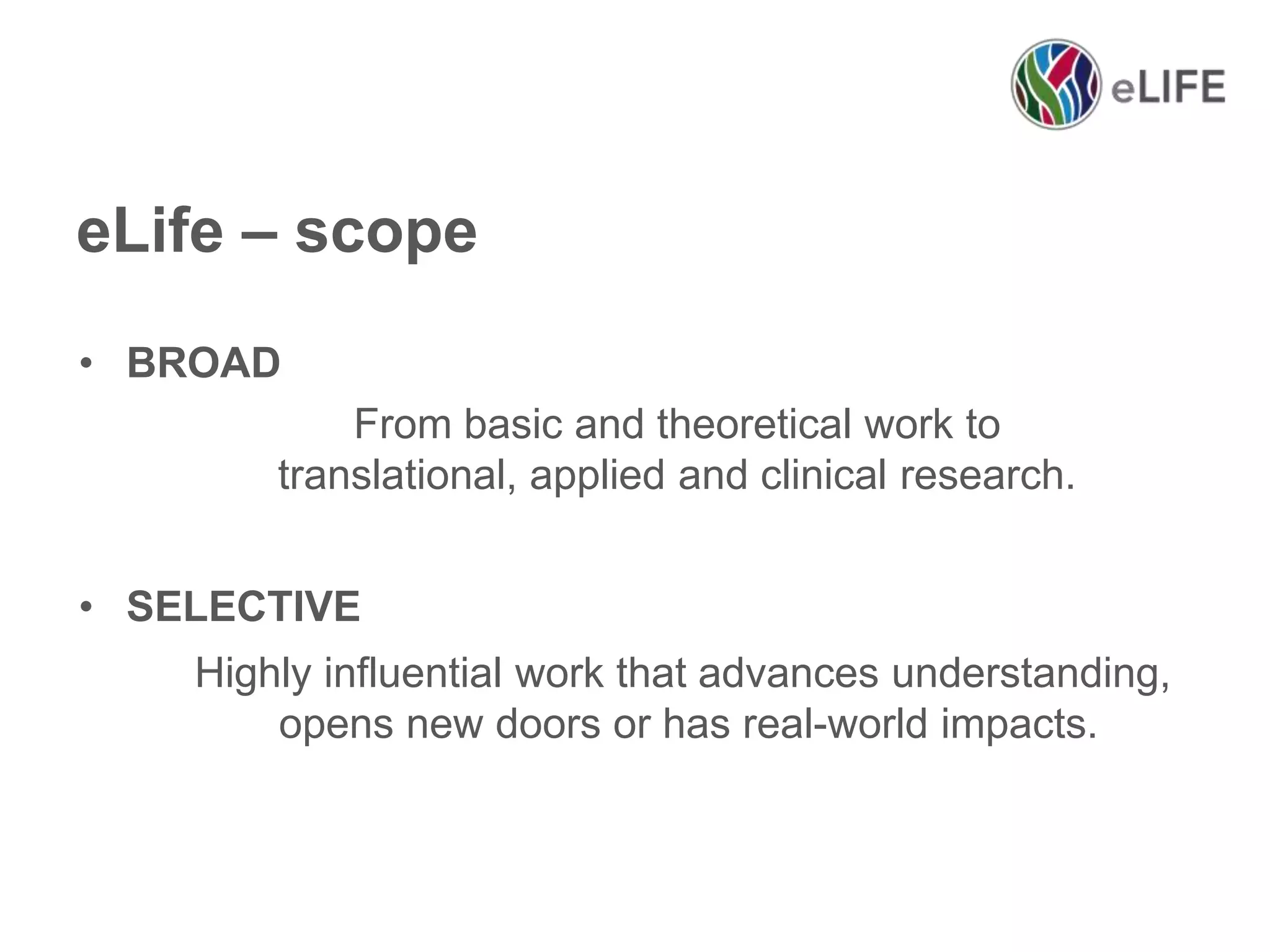
eLife – scope
• BROAD
From basic and theoretical work to
translational, applied and clinical research.
• SELECTIVE
Highly influential work that advances understanding,
opens new doors or has real-world impacts.
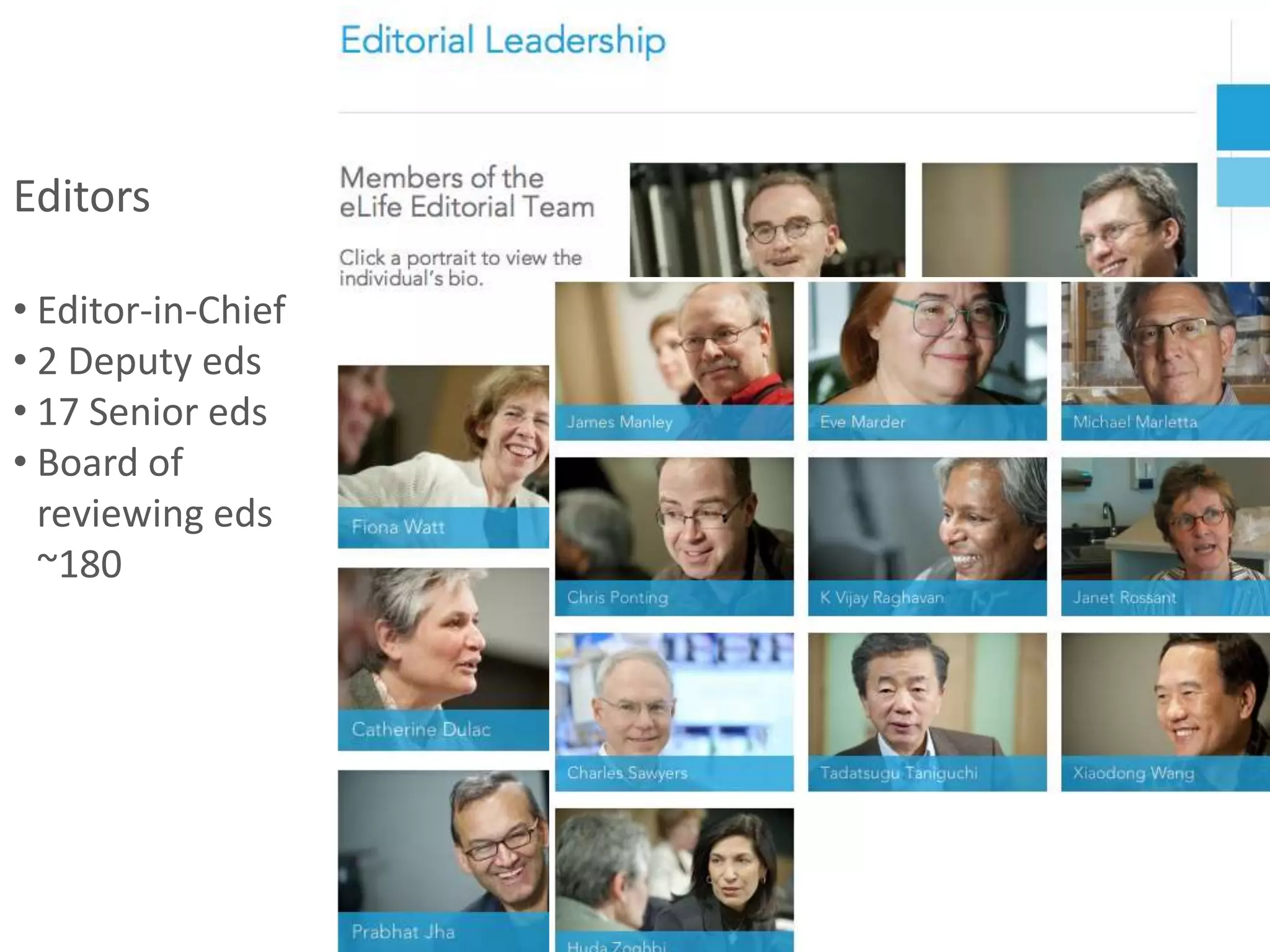
Editors
• Editor-in-Chief
• 2 Deputy eds
• 17 Senior eds
• Board of
reviewing eds
~180
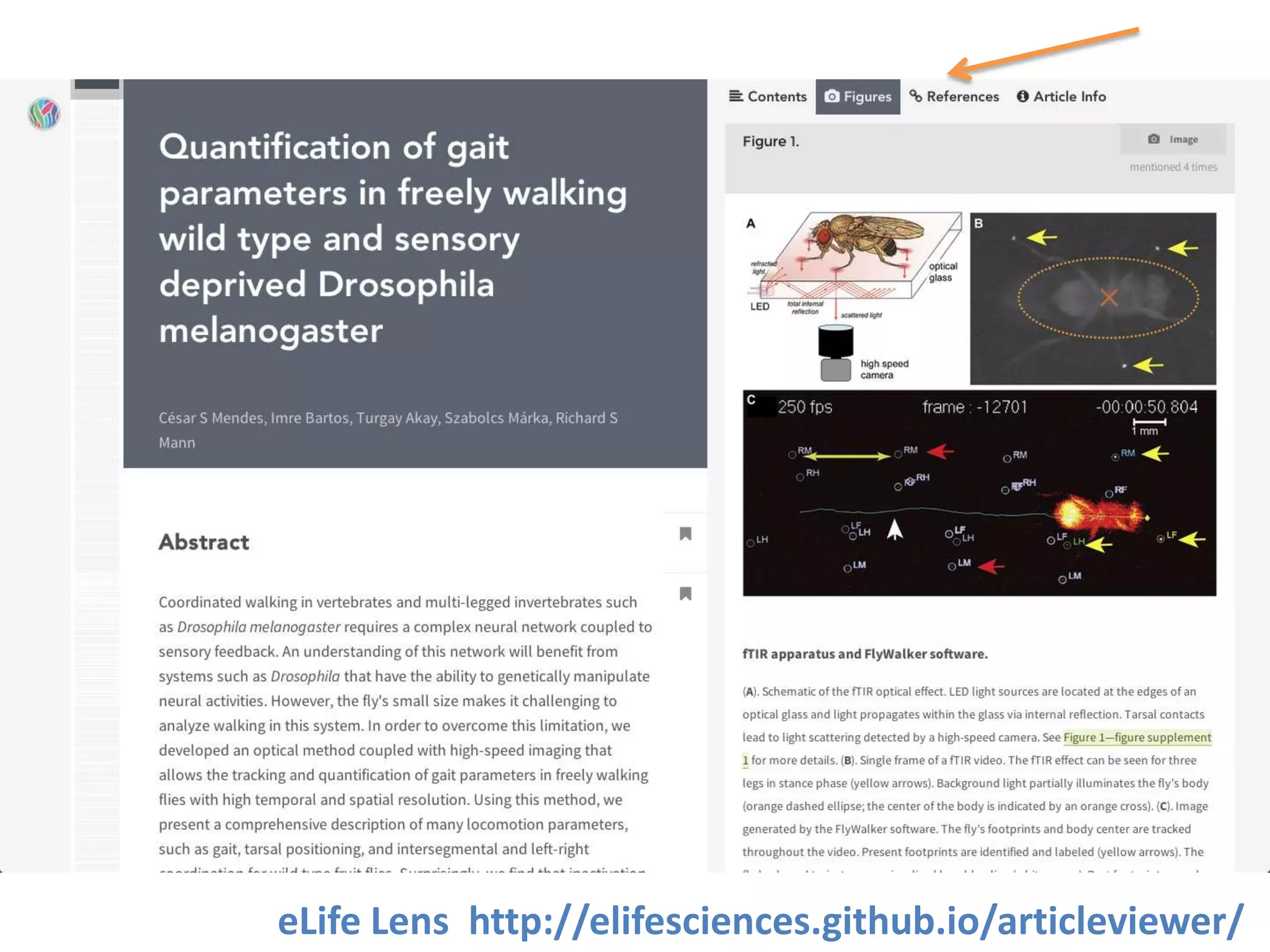
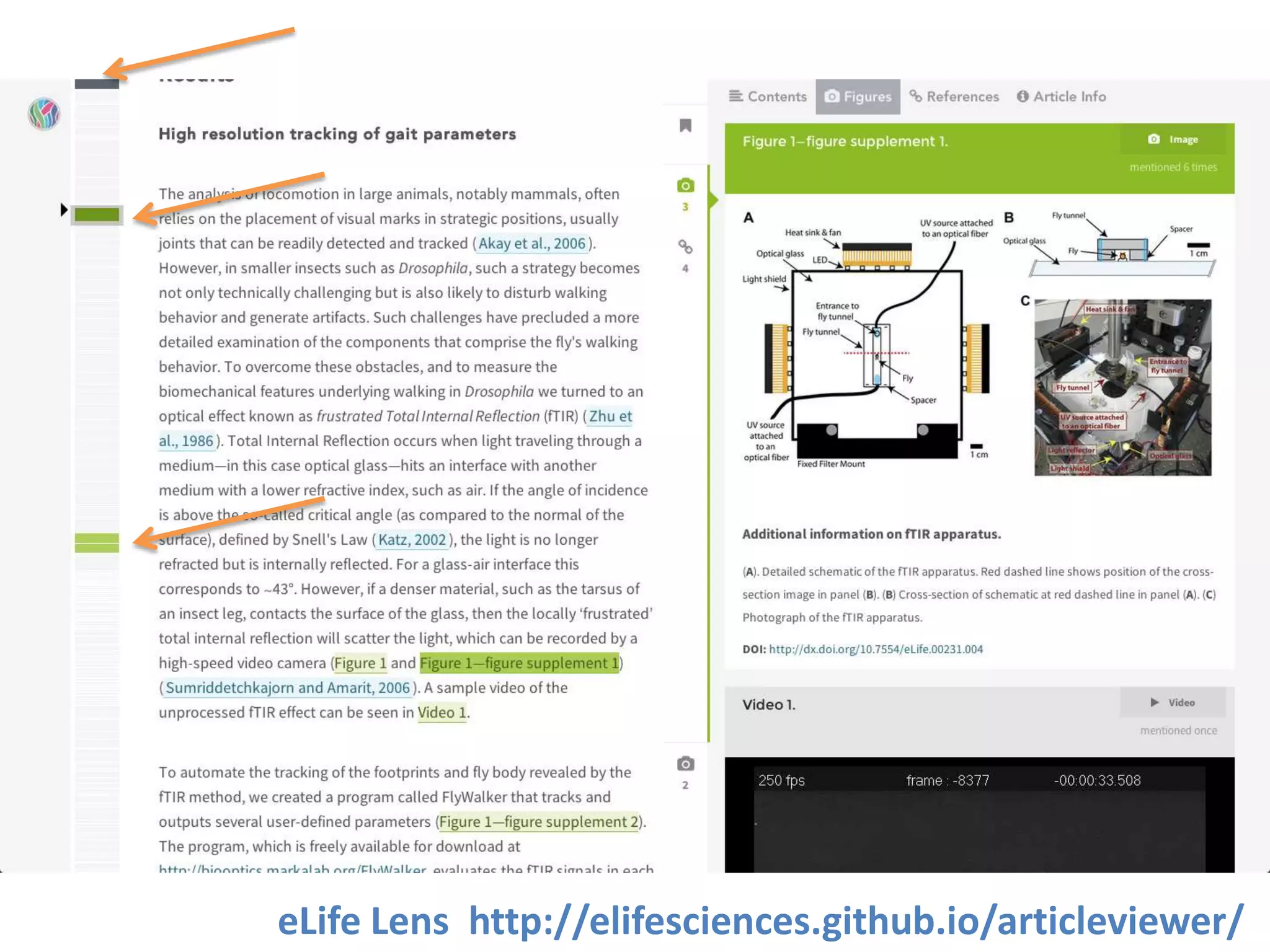
eLife Lens http://elifesciences.github.io/articleviewer/
Third disruption
Reforming research
assessment
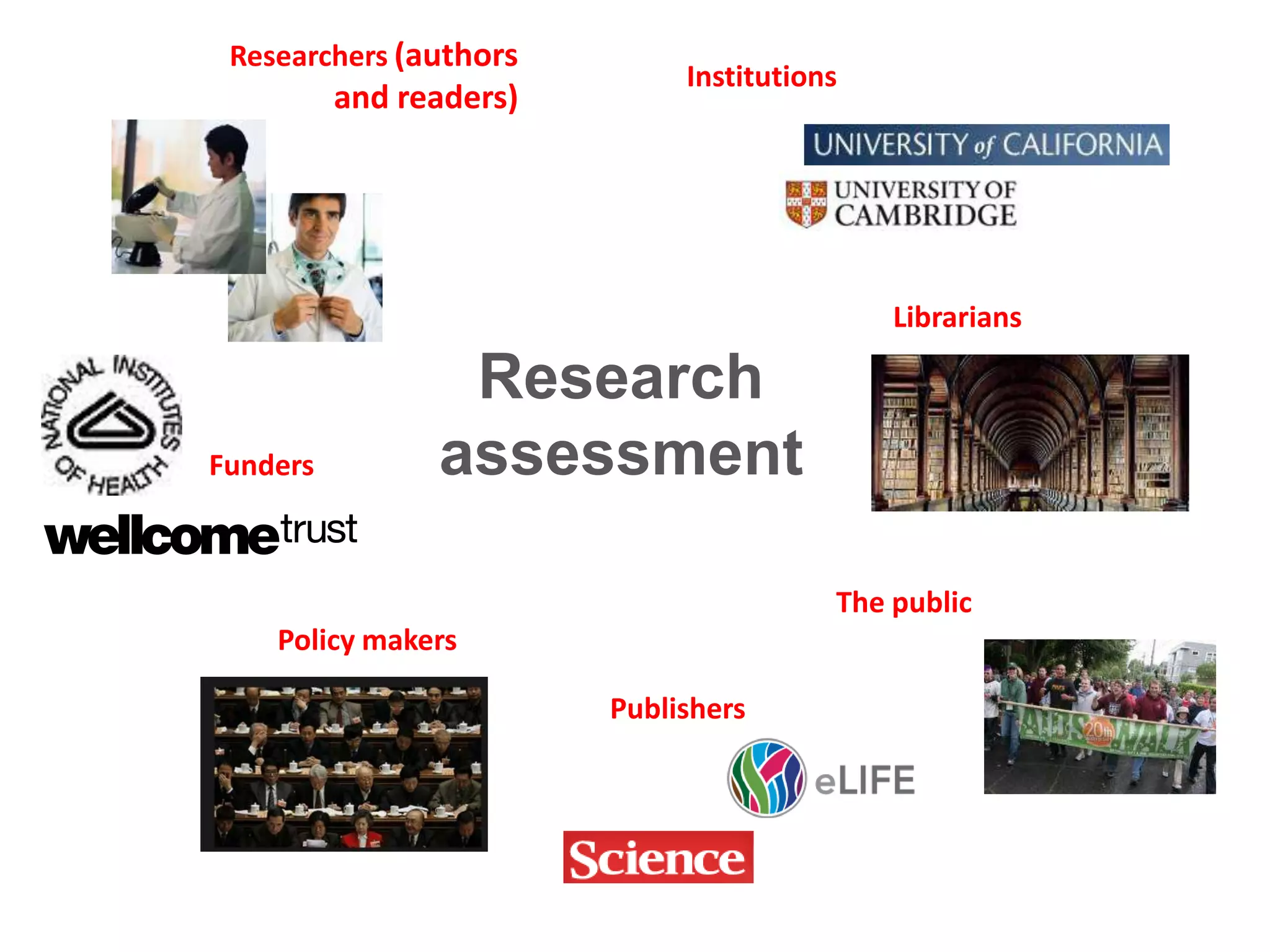
Researchers (authors

and readers)

Institutions

Librarians

Funders

Research
assessment
The public

Policy makers
Publishers
Some impact is hard to measure
“Dear Public Library of Science people,
I just listened to a mouse song on line…

I do not have the funds to subscribe to the traditional science journals.
Tomorrow my students will hear the same mouse song I listened to and I am
sure they will be as enchanted and interested as I am. The idea of open
access to original research papers is very exciting to someone in my
position…
I can assure you that the availability of research papers will benefit the
future of scientific research by providing motivation and stimulation for
millions of fledgling scientists.
Sincerely,
Science Teacher”
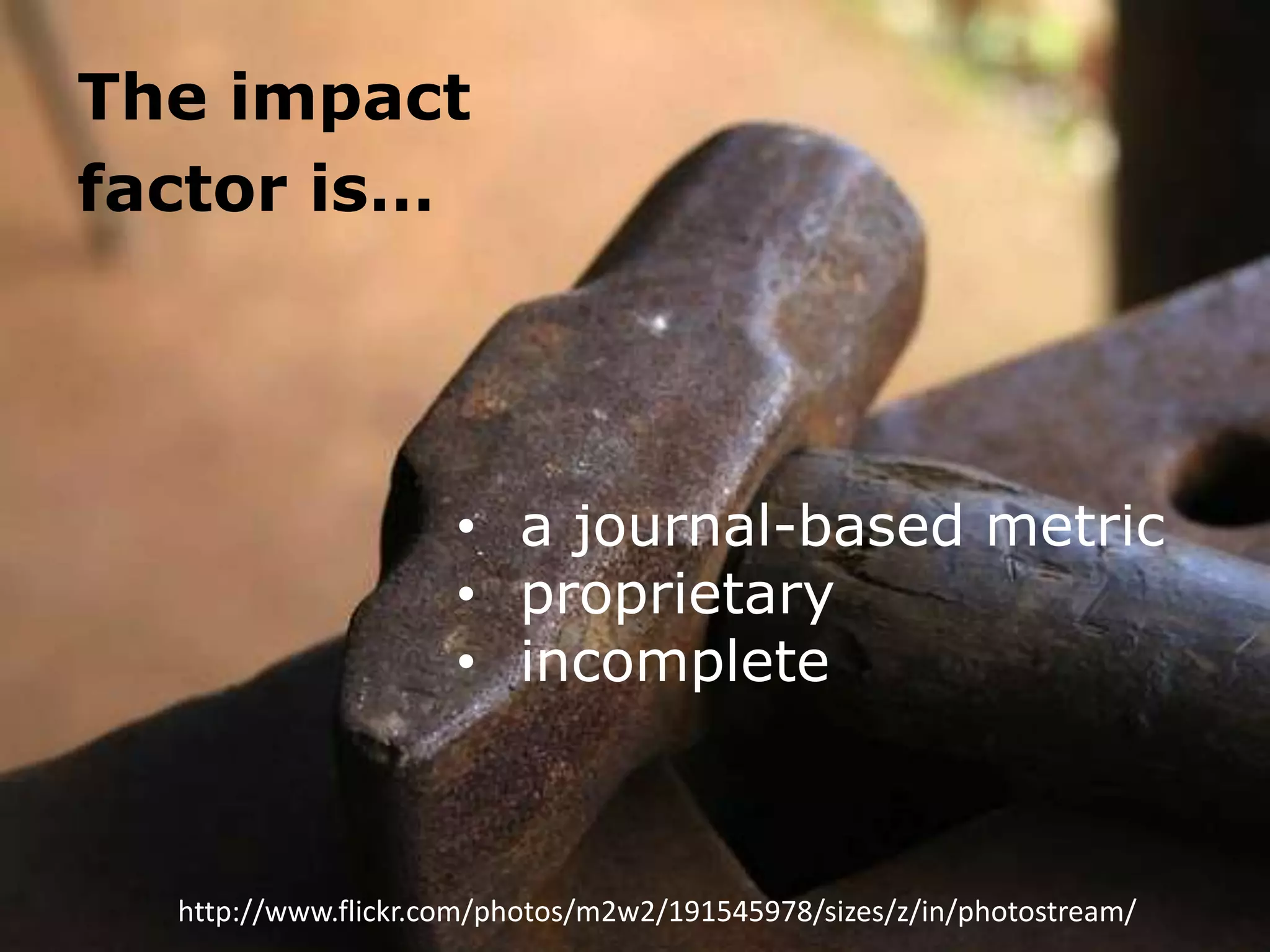
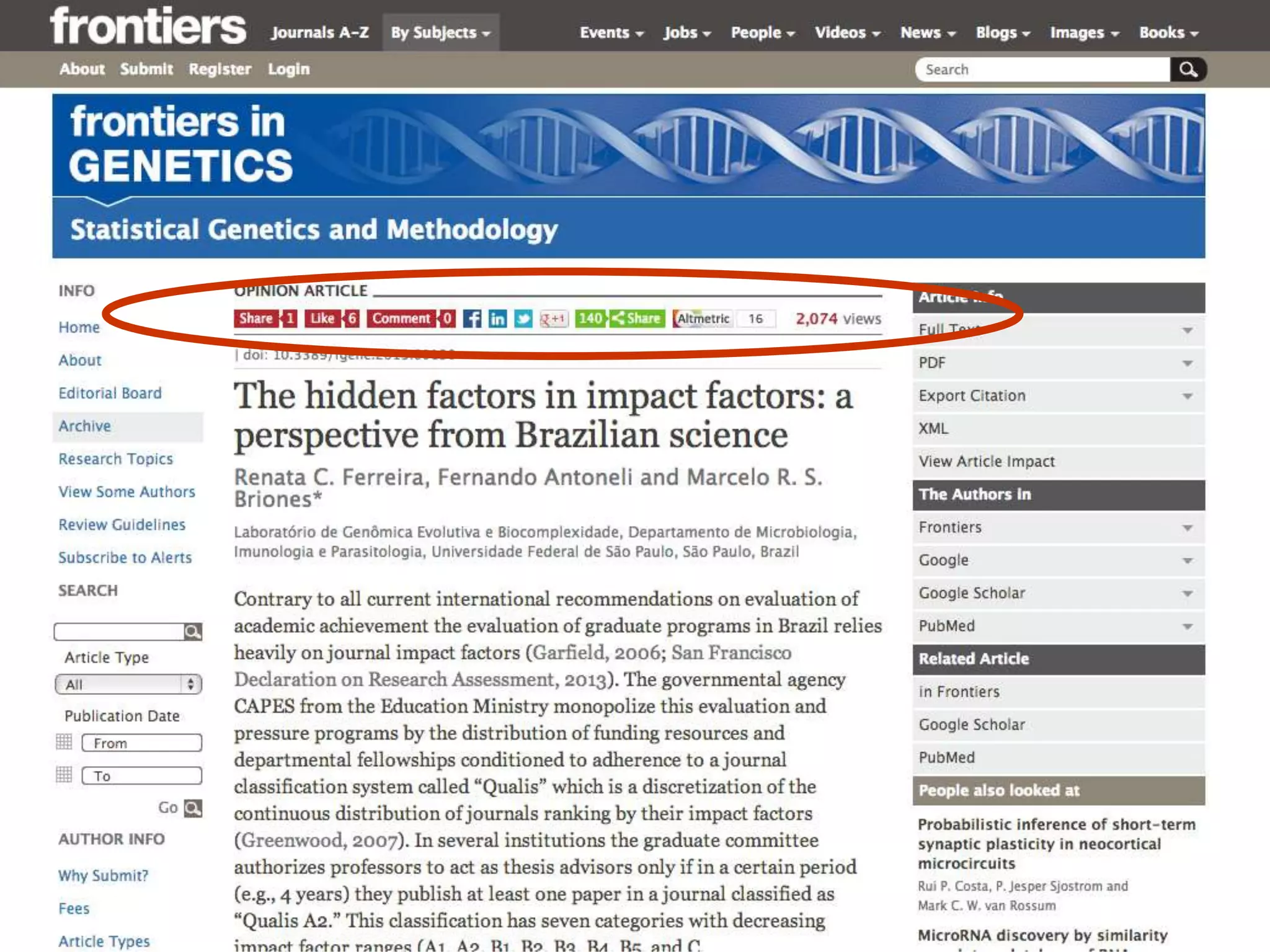
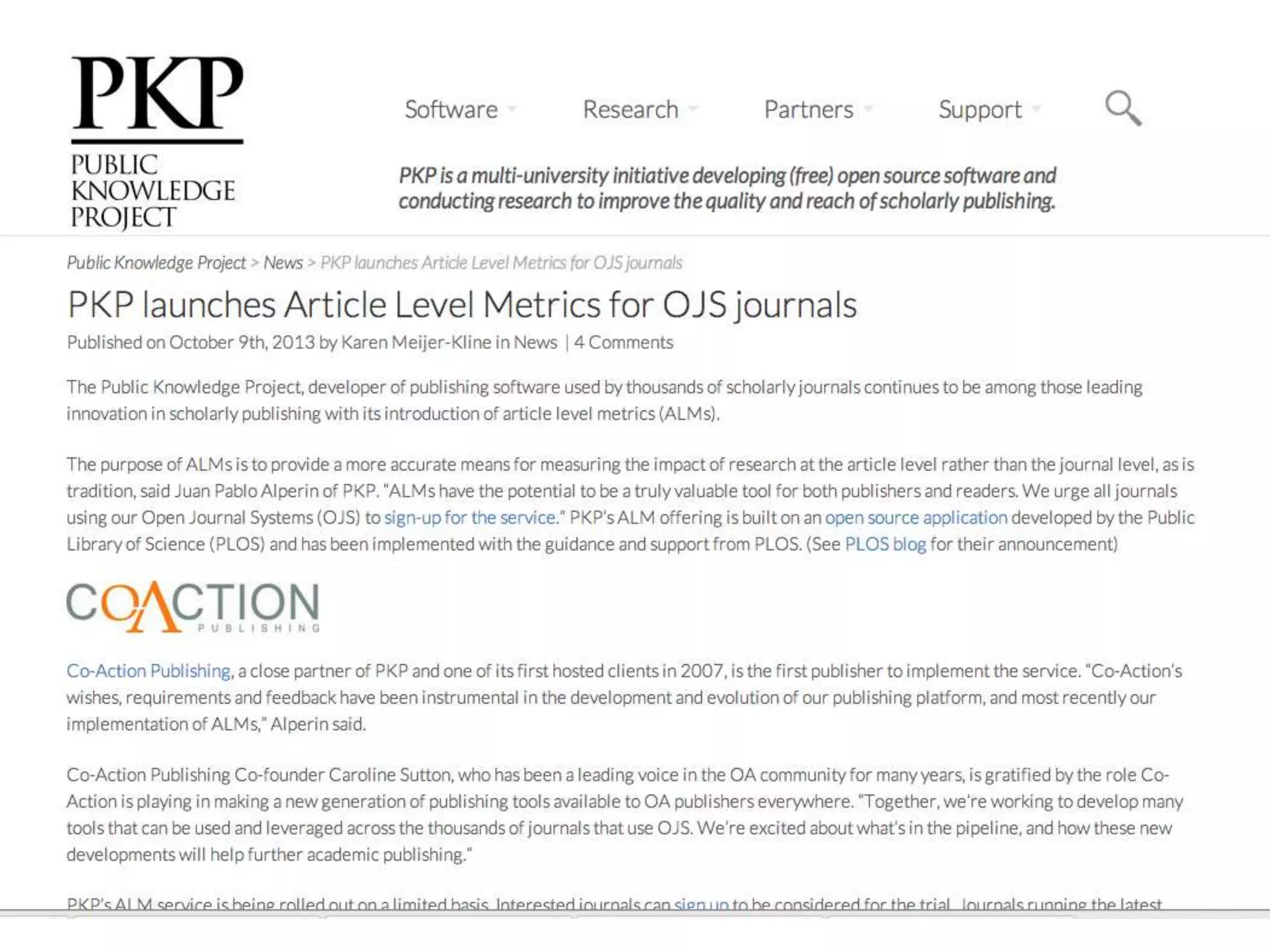
The impact
factor is…

• a journal-based metric
• proprietary
• incomplete

http://www.flickr.com/photos/m2w2/191545978/sizes/z/in/photostream/
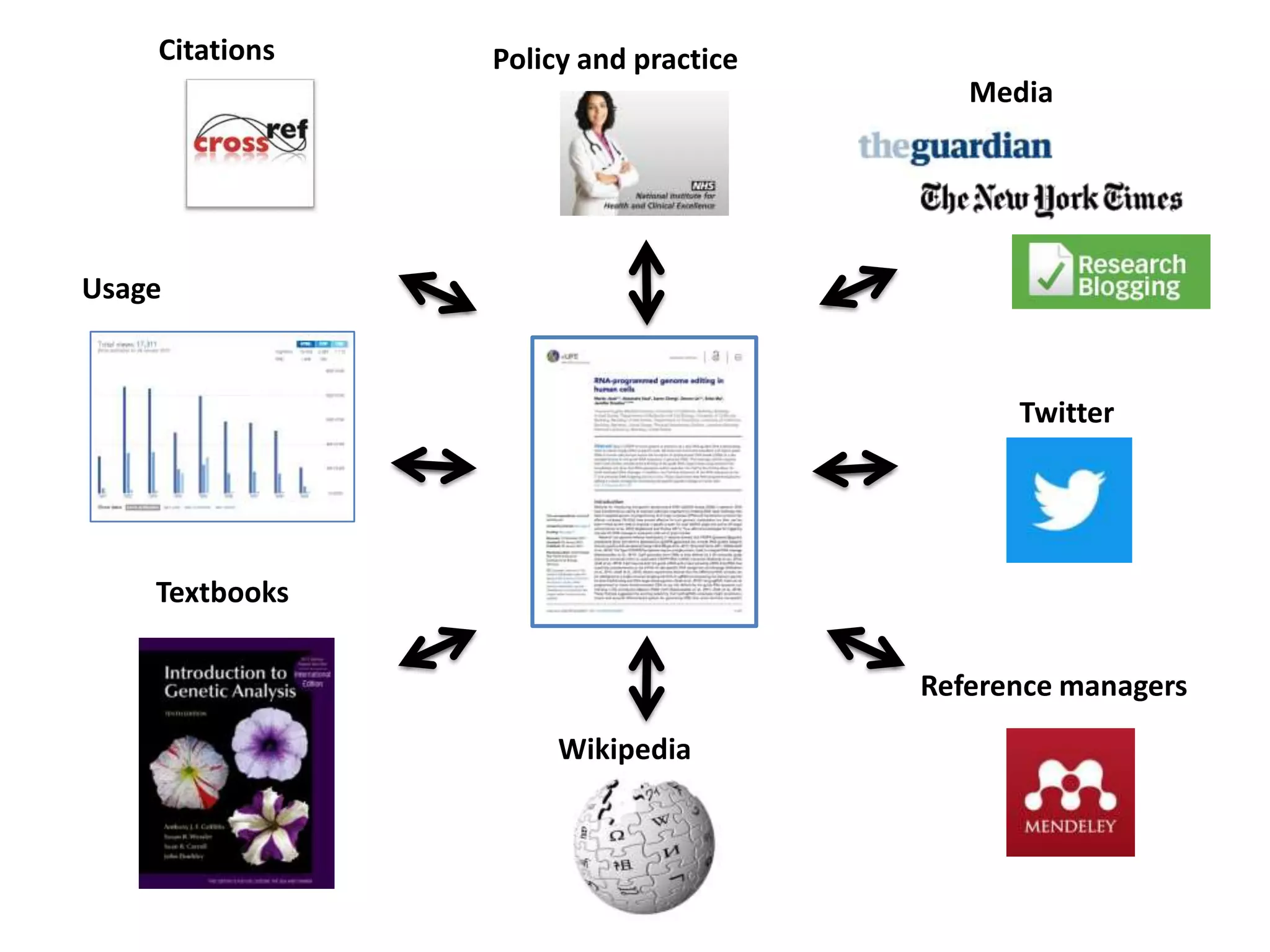
Citations

Policy and practice
Media

Usage

Twitter

Textbooks
Reference managers
Wikipedia
v10
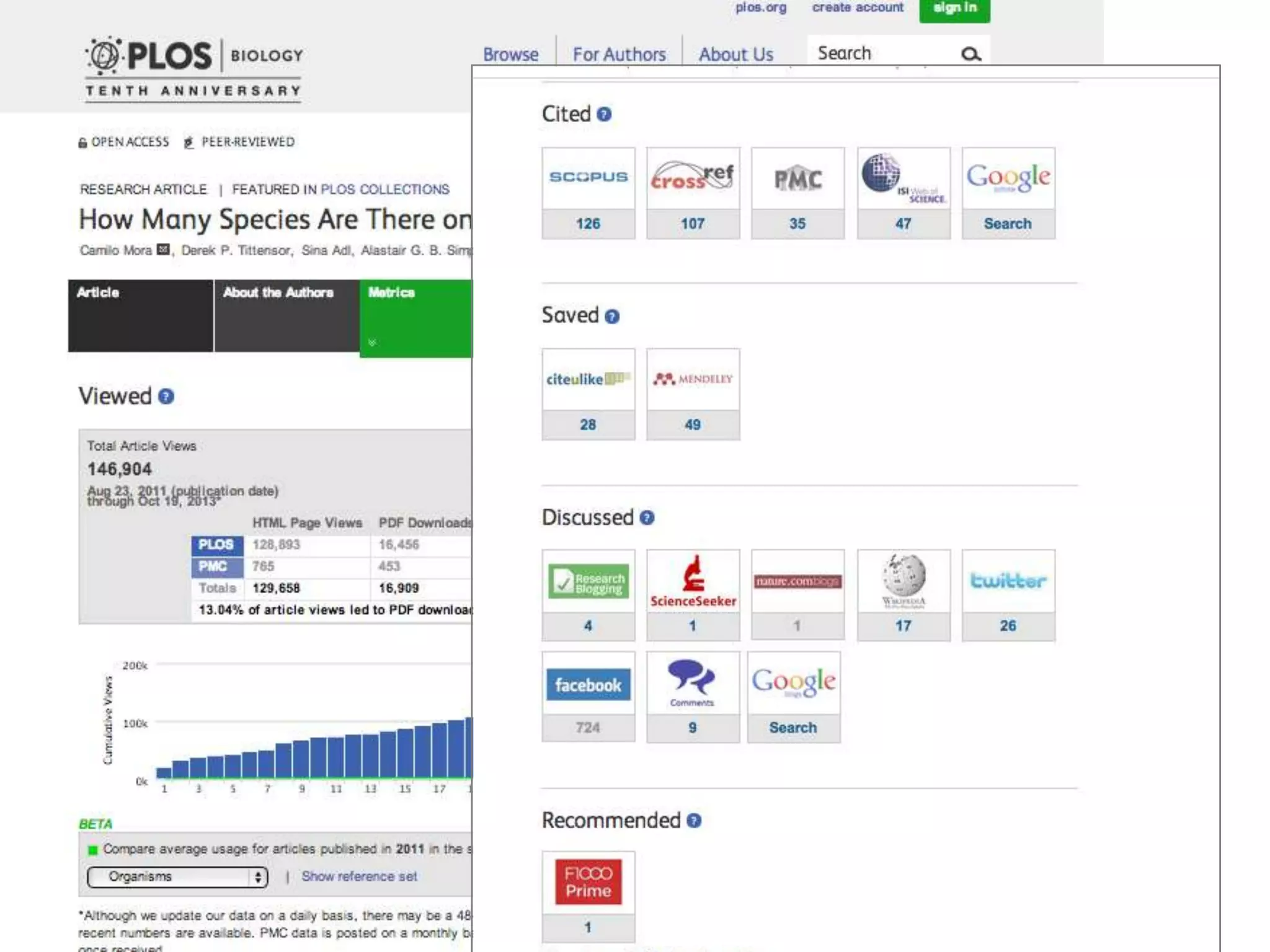
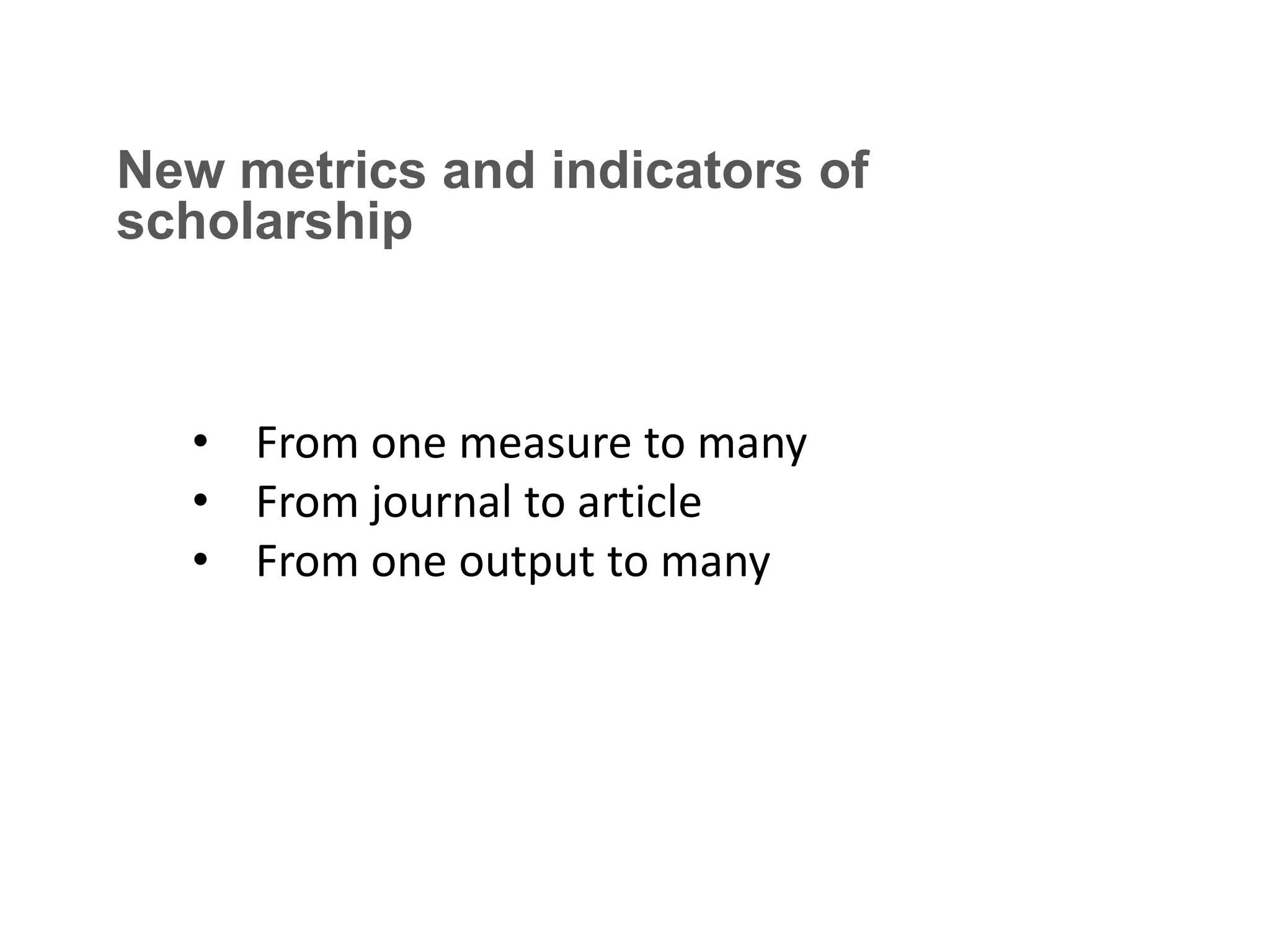
New metrics and indicators of
scholarship

• From one measure to many
• From journal to article
• From one output to many
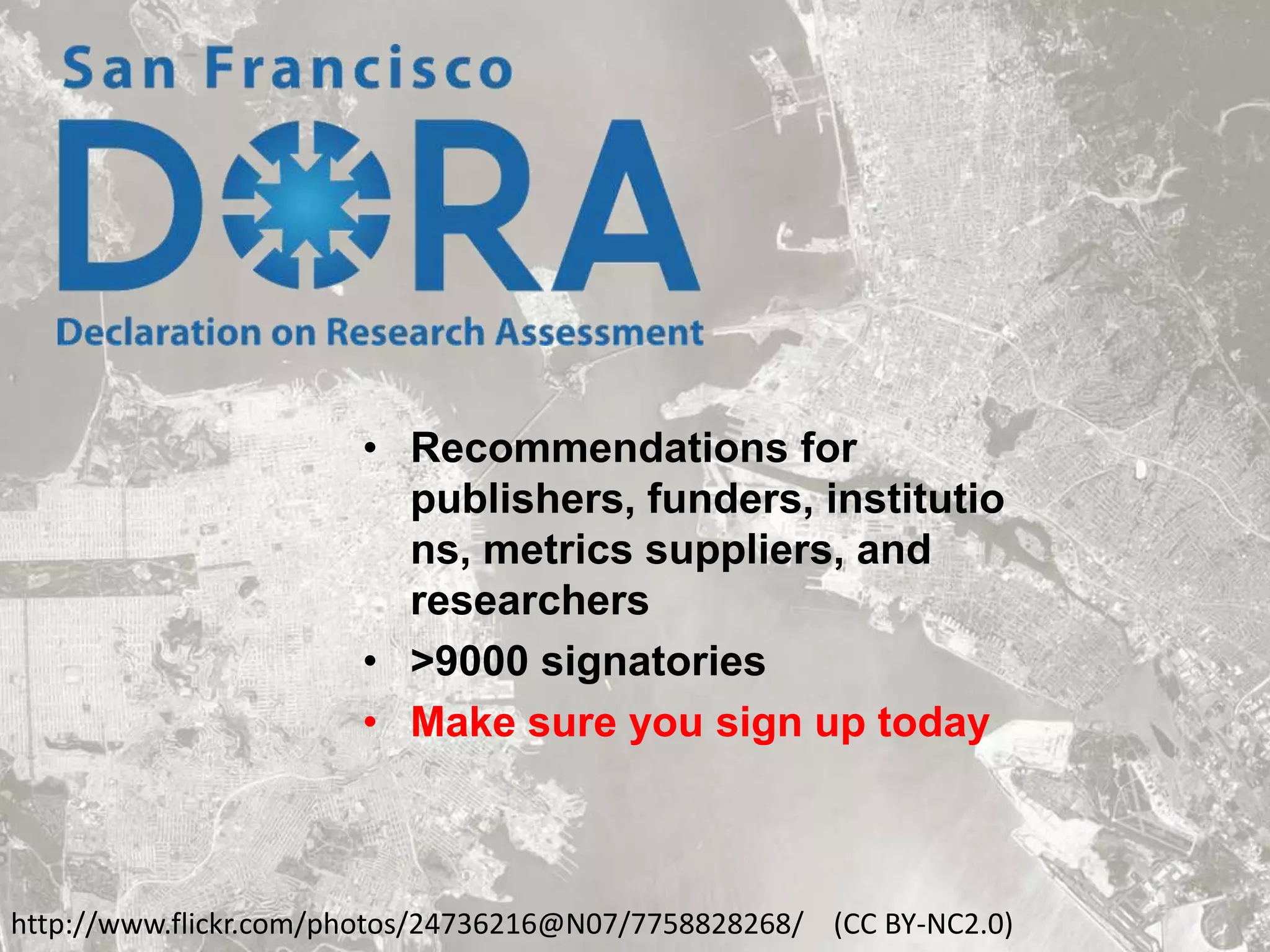
• Recommendations for
publishers, funders, institutio
ns, metrics suppliers, and
researchers
• >9000 signatories
• Make sure you sign up today

http://www.flickr.com/photos/24736216@N07/7758828268/ (CC BY-NC2.0)
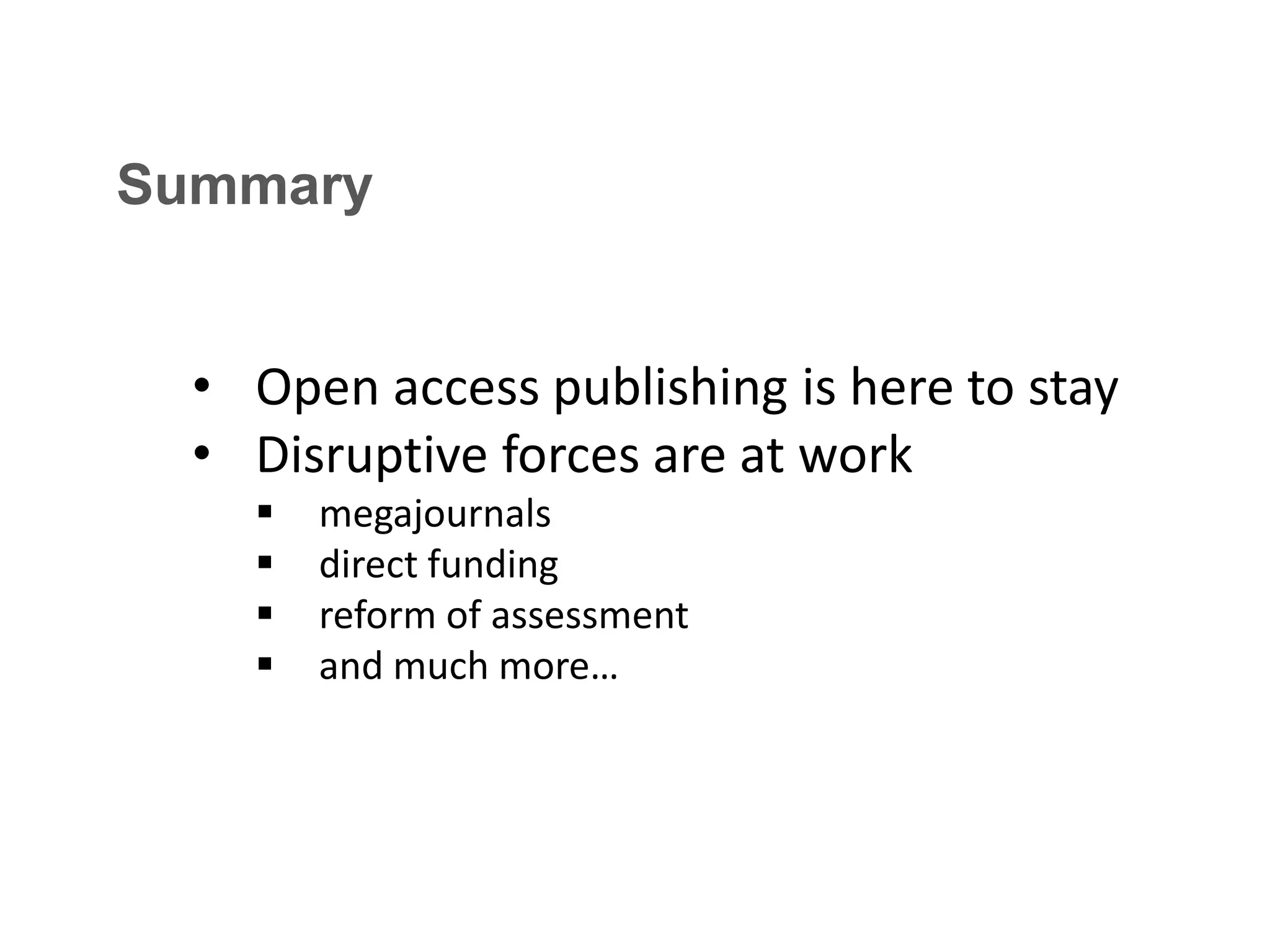
Summary
• Open access publishing is here to stay
• Disruptive forces are at work





megajournals
direct funding
reform of assessment
and much more…
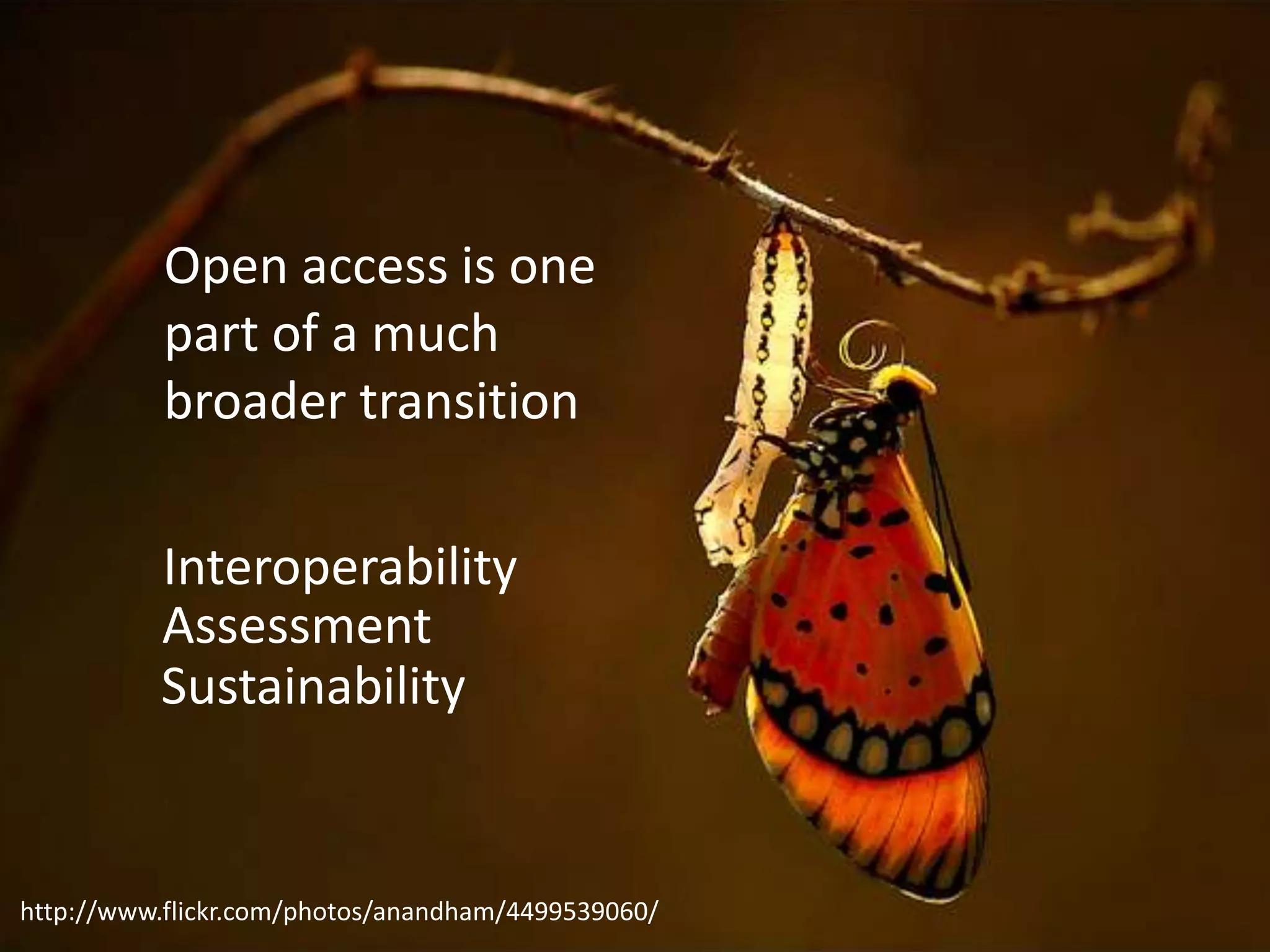
Open access is one
part of a much
broader transition
Interoperability
Assessment
Sustainability

http://www.flickr.com/photos/anandham/4499539060/
Happy birthday!
Thank you

Mark Patterson
m.patterson@elifesciences.org

Open-access publishing and the transformation of scholarly communication

Editor's Notes

  • #22 Focus on the third part