Measuring what matters
 in teaching innovation
              March 2012
         Darian Unger, Ph.D.
         Associate Professor
 Howard University School of Business
       dwunger@howard.edu
            202-806-1656
Research Topic
• Purpose
  – To better assess whether students
    understand and can apply key
    innovation concepts and skills
• Methodology
  – Comparison of course objectives to
    performance on actual innovation and
    commercialization projects
  – Feedback from inventors, professors,
    and innovation-oriented MBA students
Research Topic
• Literature review
  – Technological innovation as
    “introducing a new device, method, or
    material for application to commercial
    or practical objectives (Schilling, 2010)
  – Assessment as the “new reality” at
    colleges and universities (Pelimeni and
    Iorgulescu, 2009)
    • Assessments are helpful in facilitating
      replicable models, but should not be an
      exclusive focus because of several
      difficulties (Klein, 2005; Schmoker, 2002)
Research Topic
• Findings
  – Assessing innovation education is harder
    than it looks (and it never looked easy)

  – Traditional assessments are insufficient
  – Most promising assessments include
    • evaluations of project based innovation and
      commercialization plans
    • innovator-based evaluations of utility
Drivers for this work
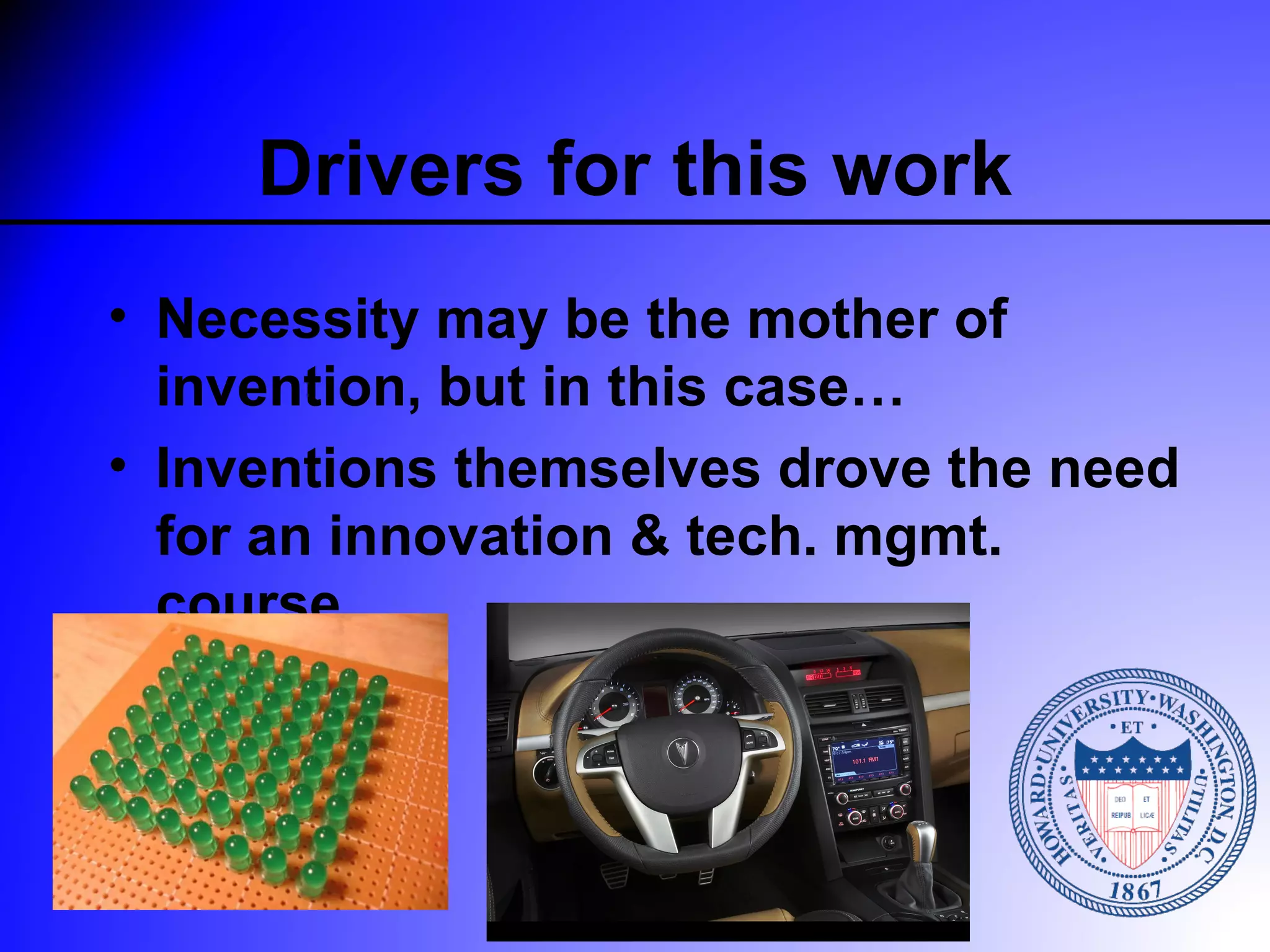
• Necessity may be the mother of
  invention, but in this case…
• Inventions themselves drove the need
  for an innovation & tech. mgmt.
  course
Drivers for this work
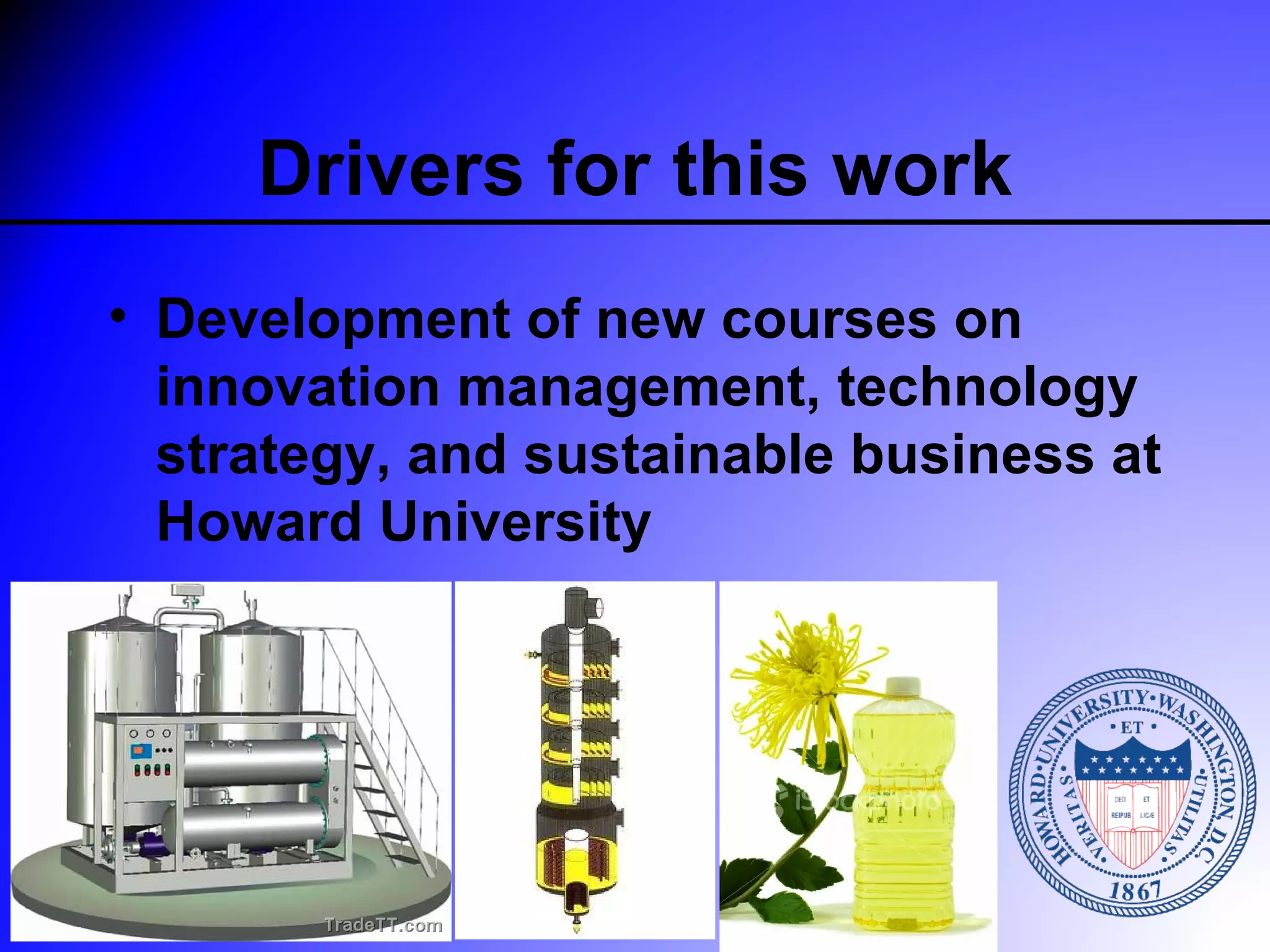
• Development of new courses on
  innovation management, technology
  strategy, and sustainable business at
  Howard University
Key course skills and lessons:
     commercializing innovation
•   Creating value through innovation
•   Technology & market adoption S-curves
•   Categories and patterns of innovation
•   (Sources of) creativity
•   New product design and development
•   Tech strategies to protect & exploit
    innovation
     – Dominant designs, patents, and licensing
     – 1st and 2nd mover advantages
…along with other skills
         (and traits)
• Ability to communicate
                                     Evaluated,
  – Writing (business plans)         but also
  – Group dynamics                   common to
                                     other
  – Listening (customer needs)       subjects
  – Speaking (persuasion)
• Tenacity
  – Edison’s “stick-to-it-iveness”   Not
                                     evaluated
• Propensity for risk
Assessable methods or
        demonstrations
1) Concept identification
2) Recognition of a historical parallel or
   previous application
3) Evaluation of performance on specific
   exercises or problems
4) Actual project synthesis – case
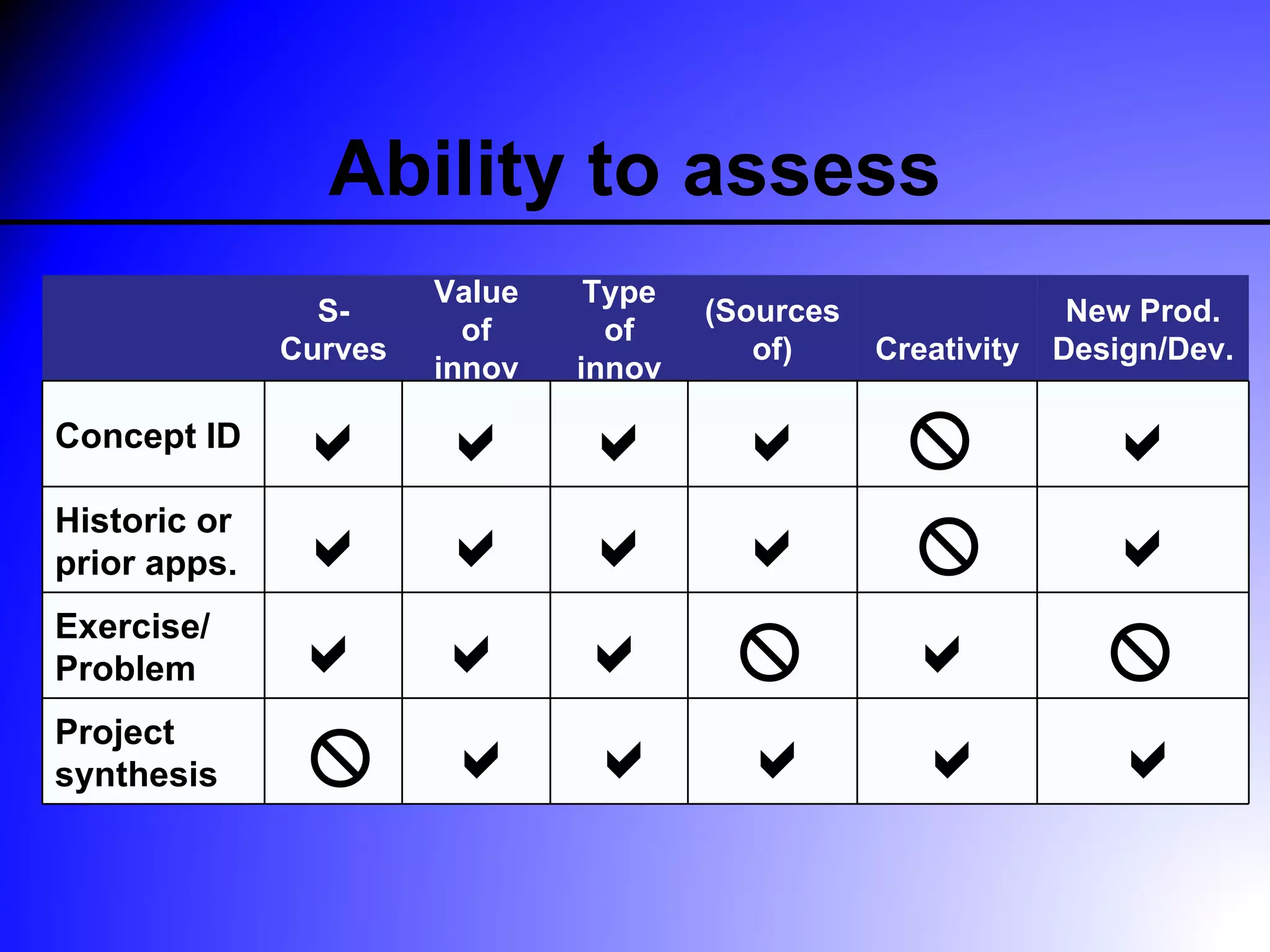
Ability to assess
                       Value    Type
                S-                     (Sources                 New Prod.
                         of      of
              Curves                      of)     Creativity   Design/Dev.
                       innov   innov

Concept ID                                                   
Historic or
prior apps.                                                  
Exercise/
Problem                                                      
Project
synthesis                                                    
Example
• Technology and adoption S-curves
  – Objective assessment of how they can be
    identified and distinguished (Exams)
  – Many prior examples in different industries
    available (Discussions)
  – Gradable time-series problems and numerical
    exercises
  – But since S-curves are often descriptive
    rather than prescriptive, S-curve skills or
    knowledge are more difficult to assess on
    actual, ongoing projects
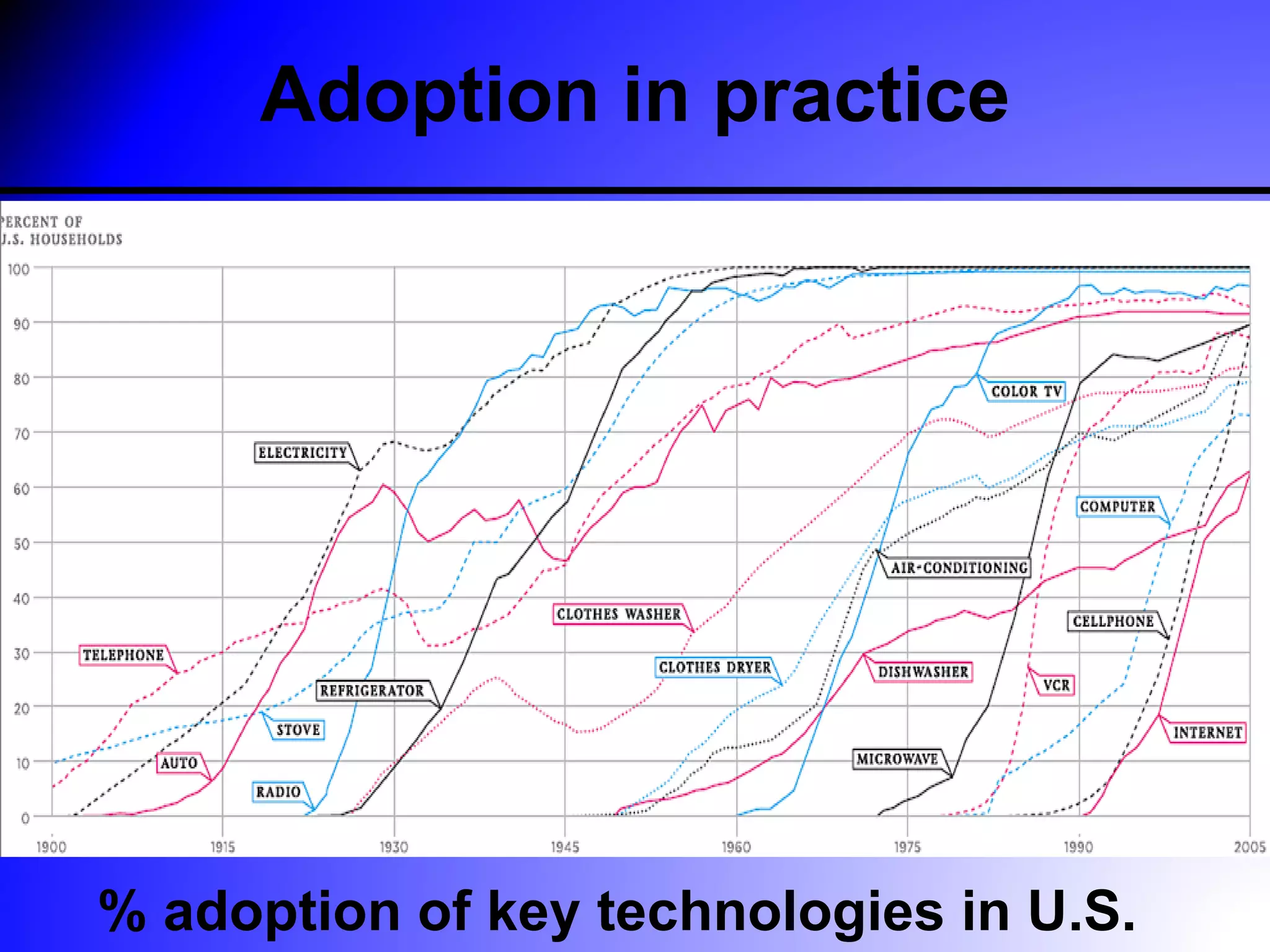
Adoption in practice


% adoption of key technologies in U.S.
How to assess these
          individually?
• Hard quantities
  – #’s of patents and licenses
  – % scores on exams
• Softer quantitative measures
  – Innovator assessments of student
    assistance and insight
• Quantified subjective measures
  – Student evaluations
• Creativity and tenacity are subjective,
  unquantified, and unassessed
Findings and Implications
• Findings
  – Assessing innovation education is difficult,
    because traditional assessments are
    insufficient
  – Categorization helps (i.e. between skills and
    traits)
  – Multiple forms of assessment necessary,
    including
    • evaluations of project based innovation and
      commercialization plans
    • innovator-based evaluations of utility
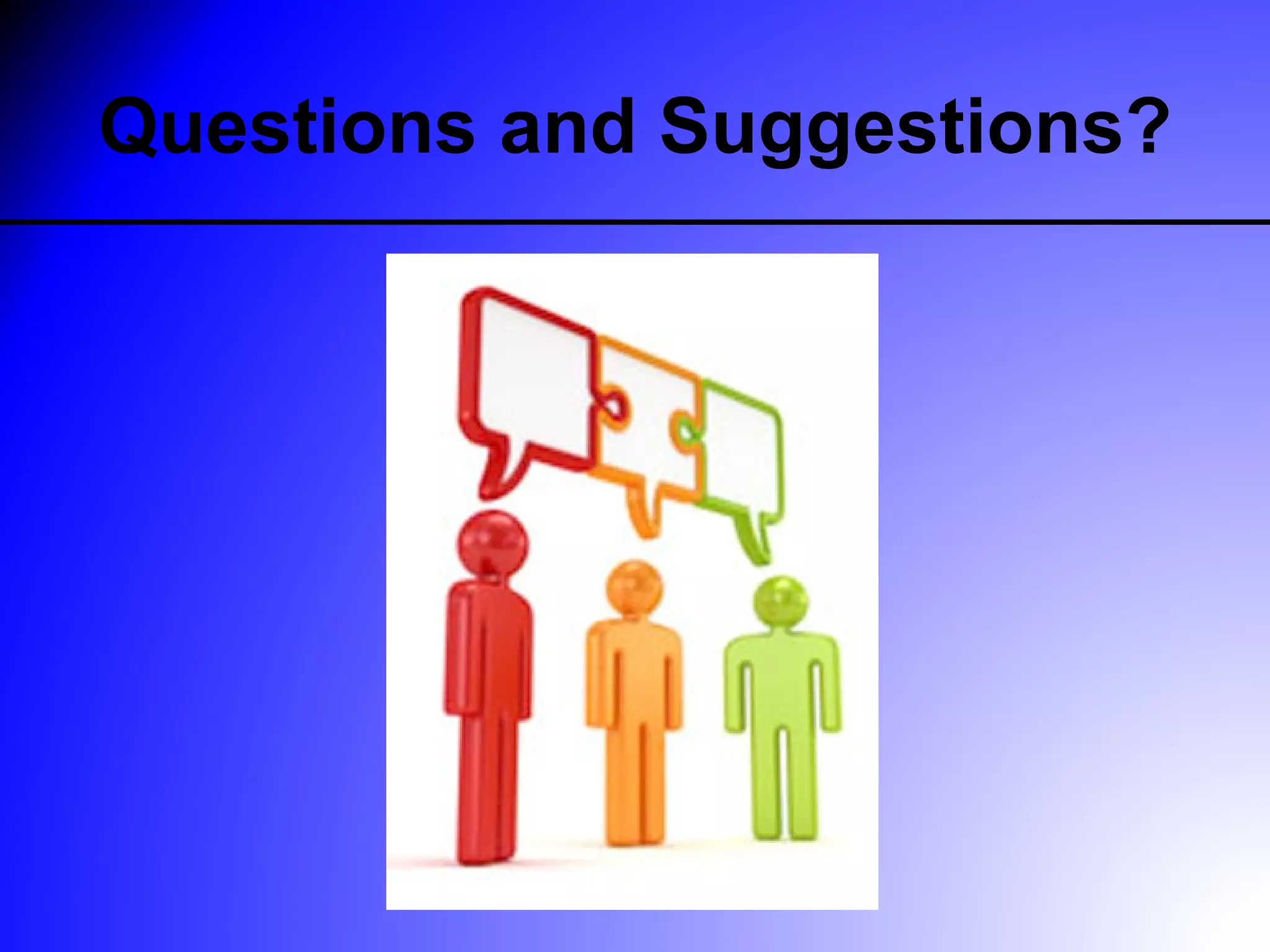
Questions and Suggestions?
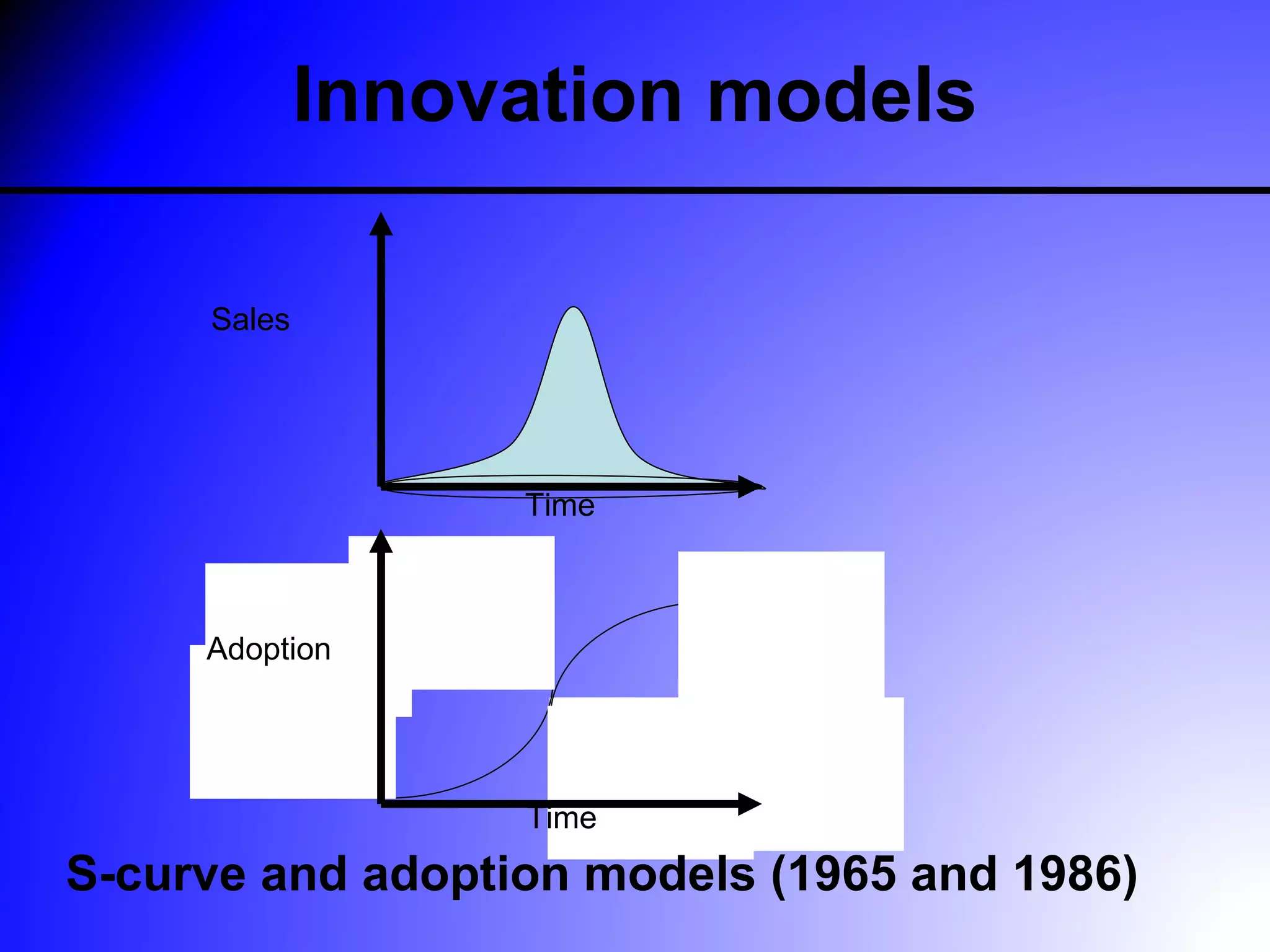
Innovation models

     Sales


                  Time


     Adoption


                  Time
S-curve and adoption models (1965 and 1986)
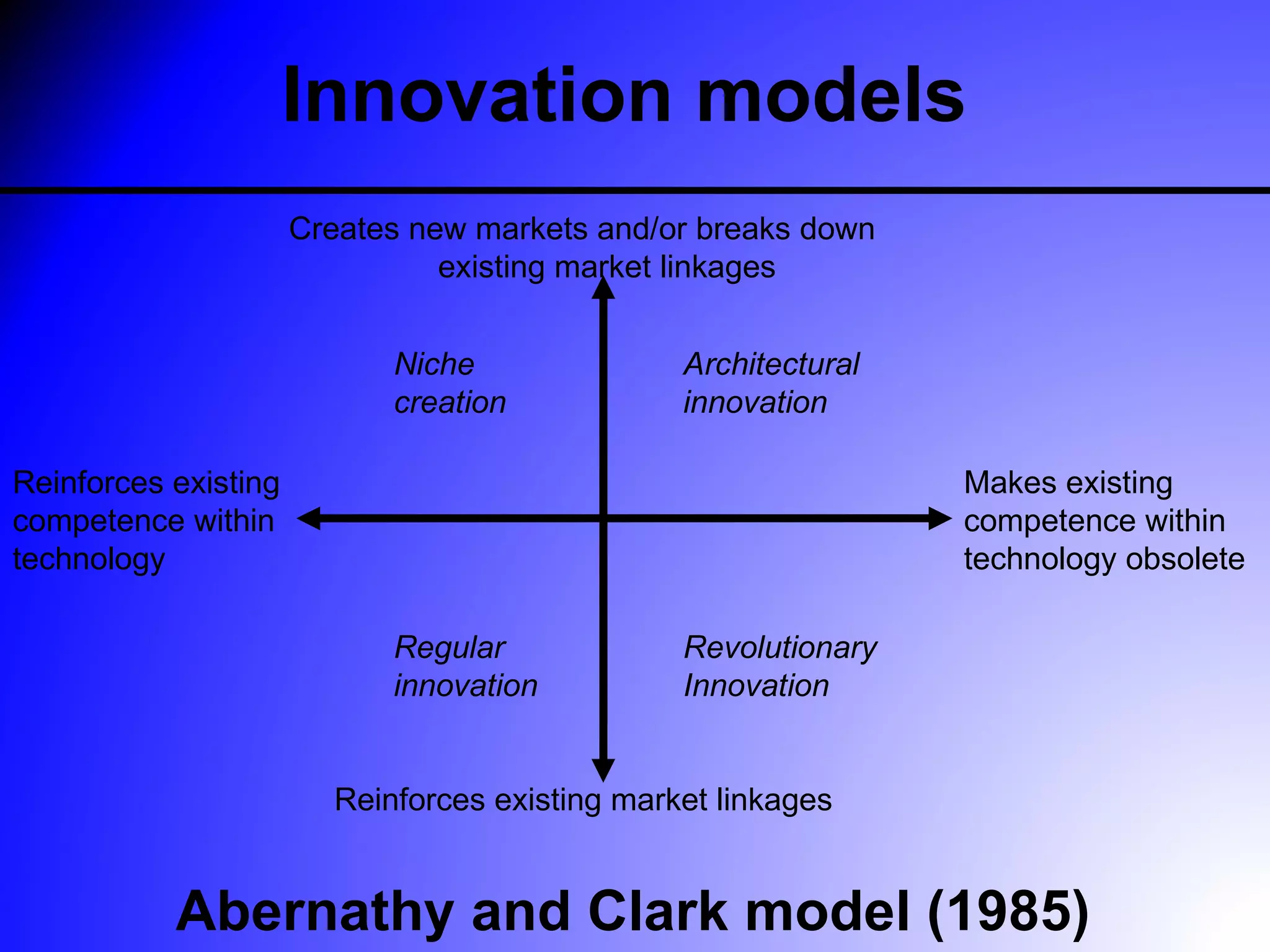
Innovation models
                      Creates new markets and/or breaks down
                                existing market linkages


                            Niche               Architectural
                            creation            innovation

Reinforces existing                                             Makes existing
competence within                                               competence within
technology                                                      technology obsolete

                            Regular             Revolutionary
                            innovation          Innovation


                        Reinforces existing market linkages


           Abernathy and Clark model (1985)
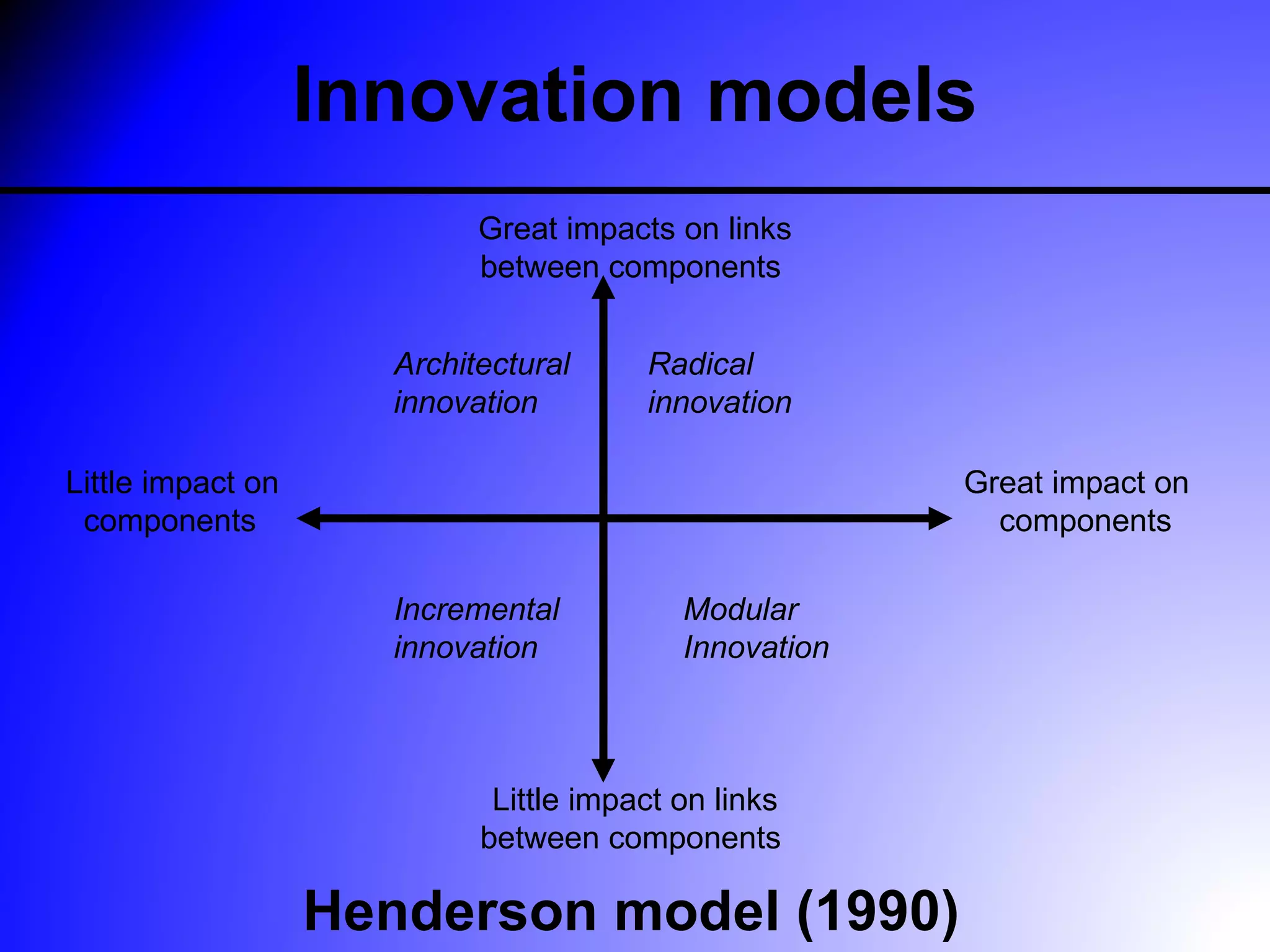
Innovation models
                            Great impacts on links
                            between components


                      Architectural     Radical
                      innovation        innovation

Little impact on                                        Great impact on
 components                                               components

                      Incremental          Modular
                      innovation           Innovation


                             Little impact on links
                            between components

                   Henderson model (1990)
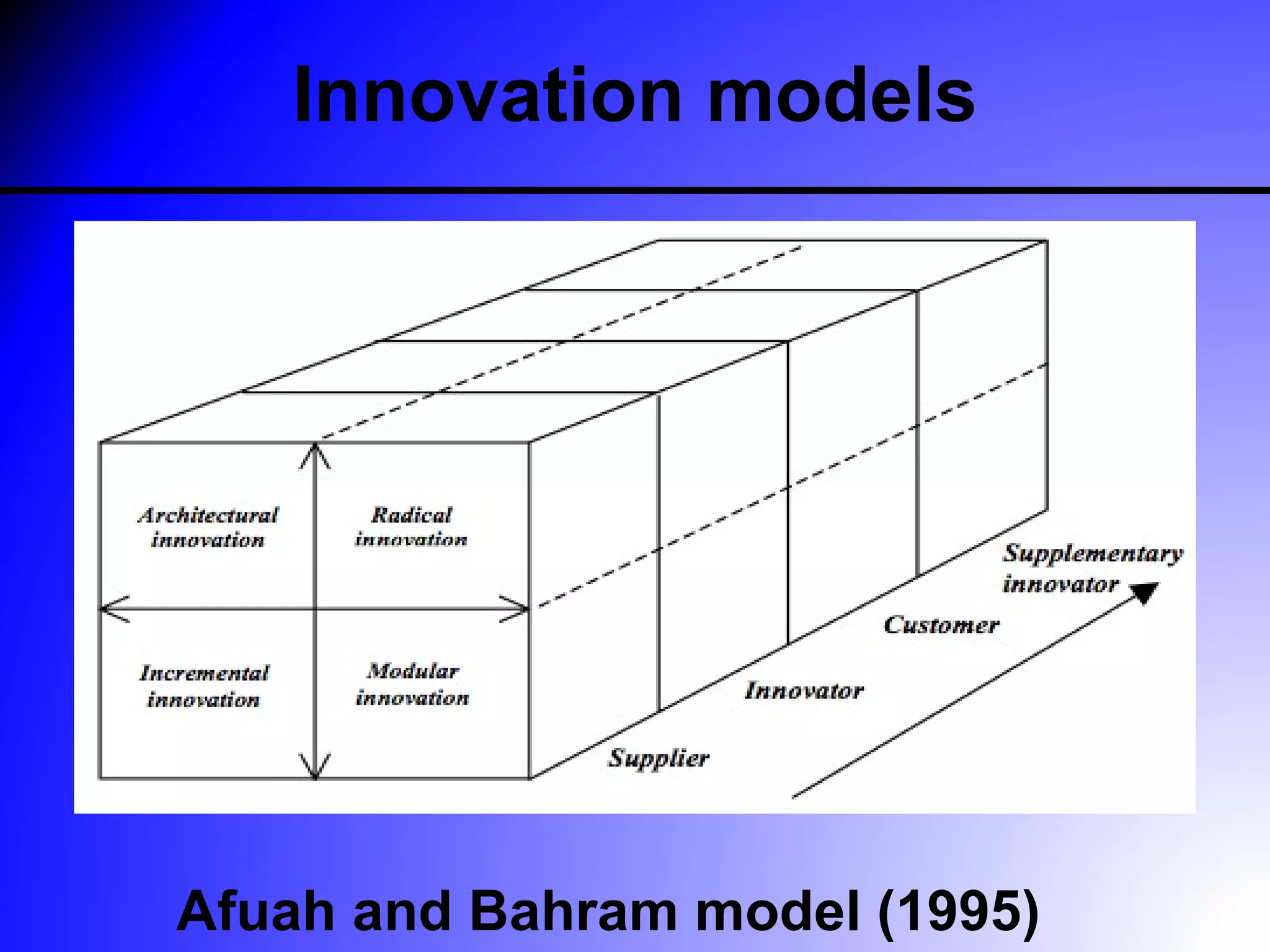
Innovation models


Afuah and Bahram model (1995)
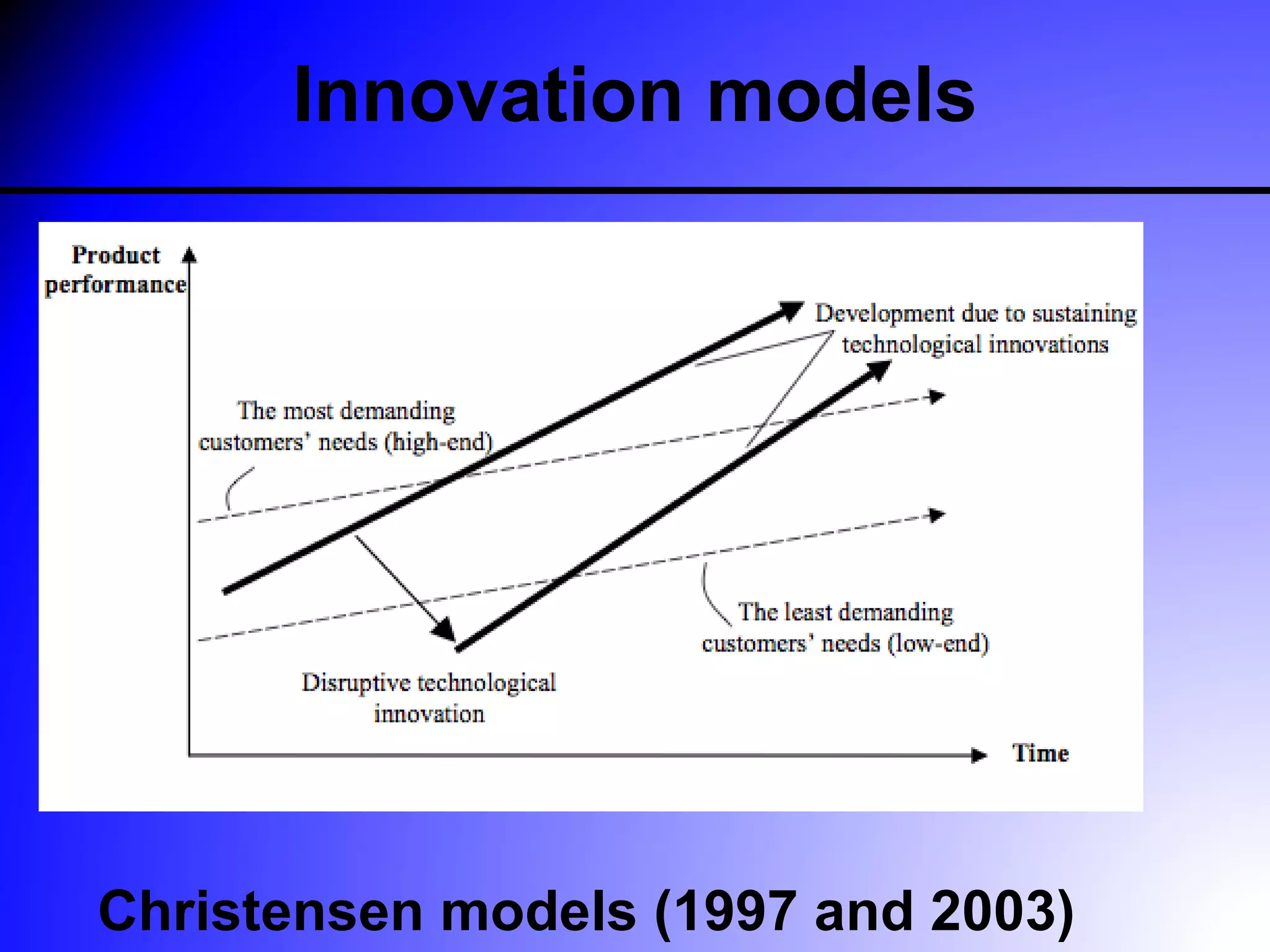
Innovation models


Christensen models (1997 and 2003)
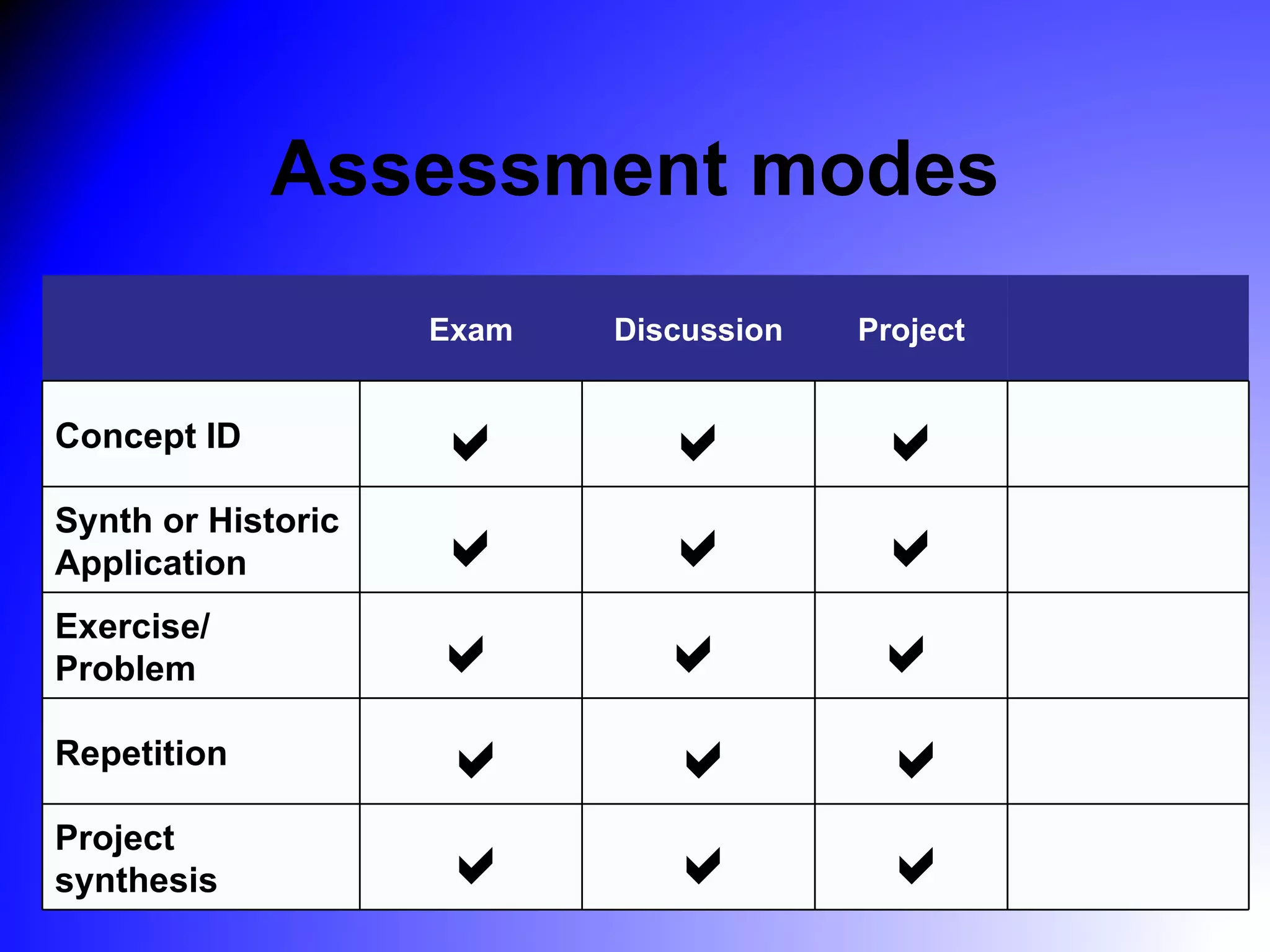
Assessment modes
                    Exam   Discussion   Project


Concept ID                             
Synth or Historic
Application                            
Exercise/
Problem                                
Repetition                             
Project
synthesis                              

Open2012 measuring-what-matters-unger

  • 1.
    Measuring what matters in teaching innovation March 2012 Darian Unger, Ph.D. Associate Professor Howard University School of Business dwunger@howard.edu 202-806-1656
  • 2.
    Research Topic • Purpose – To better assess whether students understand and can apply key innovation concepts and skills • Methodology – Comparison of course objectives to performance on actual innovation and commercialization projects – Feedback from inventors, professors, and innovation-oriented MBA students
  • 3.
    Research Topic • Literaturereview – Technological innovation as “introducing a new device, method, or material for application to commercial or practical objectives (Schilling, 2010) – Assessment as the “new reality” at colleges and universities (Pelimeni and Iorgulescu, 2009) • Assessments are helpful in facilitating replicable models, but should not be an exclusive focus because of several difficulties (Klein, 2005; Schmoker, 2002)
  • 4.
    Research Topic • Findings – Assessing innovation education is harder than it looks (and it never looked easy) – Traditional assessments are insufficient – Most promising assessments include • evaluations of project based innovation and commercialization plans • innovator-based evaluations of utility
  • 5.
    Drivers for thiswork • Necessity may be the mother of invention, but in this case… • Inventions themselves drove the need for an innovation & tech. mgmt. course
  • 6.
    Drivers for thiswork • Development of new courses on innovation management, technology strategy, and sustainable business at Howard University
  • 7.
    Key course skillsand lessons: commercializing innovation • Creating value through innovation • Technology & market adoption S-curves • Categories and patterns of innovation • (Sources of) creativity • New product design and development • Tech strategies to protect & exploit innovation – Dominant designs, patents, and licensing – 1st and 2nd mover advantages
  • 8.
    …along with otherskills (and traits) • Ability to communicate Evaluated, – Writing (business plans) but also – Group dynamics common to other – Listening (customer needs) subjects – Speaking (persuasion) • Tenacity – Edison’s “stick-to-it-iveness” Not evaluated • Propensity for risk
  • 9.
    Assessable methods or demonstrations 1) Concept identification 2) Recognition of a historical parallel or previous application 3) Evaluation of performance on specific exercises or problems 4) Actual project synthesis – case
  • 10.
    Ability to assess Value Type S- (Sources New Prod. of of Curves of) Creativity Design/Dev. innov innov Concept ID       Historic or prior apps.       Exercise/ Problem       Project synthesis      
  • 11.
    Example • Technology andadoption S-curves – Objective assessment of how they can be identified and distinguished (Exams) – Many prior examples in different industries available (Discussions) – Gradable time-series problems and numerical exercises – But since S-curves are often descriptive rather than prescriptive, S-curve skills or knowledge are more difficult to assess on actual, ongoing projects
  • 12.
    Adoption in practice %adoption of key technologies in U.S.
  • 13.
    How to assessthese individually? • Hard quantities – #’s of patents and licenses – % scores on exams • Softer quantitative measures – Innovator assessments of student assistance and insight • Quantified subjective measures – Student evaluations • Creativity and tenacity are subjective, unquantified, and unassessed
  • 14.
    Findings and Implications •Findings – Assessing innovation education is difficult, because traditional assessments are insufficient – Categorization helps (i.e. between skills and traits) – Multiple forms of assessment necessary, including • evaluations of project based innovation and commercialization plans • innovator-based evaluations of utility
  • 15.
  • 16.
    Innovation models Sales Time Adoption Time S-curve and adoption models (1965 and 1986)
  • 17.
    Innovation models Creates new markets and/or breaks down existing market linkages Niche Architectural creation innovation Reinforces existing Makes existing competence within competence within technology technology obsolete Regular Revolutionary innovation Innovation Reinforces existing market linkages Abernathy and Clark model (1985)
  • 18.
    Innovation models Great impacts on links between components Architectural Radical innovation innovation Little impact on Great impact on components components Incremental Modular innovation Innovation Little impact on links between components Henderson model (1990)
  • 19.
    Innovation models Afuah andBahram model (1995)
  • 20.
  • 21.
    Assessment modes Exam Discussion Project Concept ID    Synth or Historic Application    Exercise/ Problem    Repetition    Project synthesis   