Open Source vs. Proprietary CMS SoftwareWhich is right for my organization?Ann Yoders, Project ManagerMatt Crudello, Director of Web SolutionsStuart Holland, Web Consultant
Goals for TodayOur goal for today’s session:Understand differences between open source and proprietary solutionsGive you concrete steps you can take to evaluate these modelsTake it home! Show how you can apply the Big 4 in your organization
AgendaAbout TerpSysDescribe ‘open Source’ and ‘proprietary’ software model evolutionDiscuss pros and cons of each modelIdentify the ‘Big 4’Discuss other key considerationsShare our process by example4
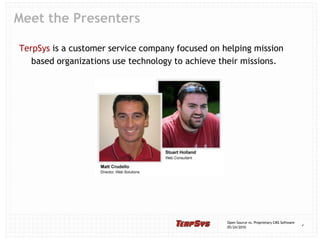
Meet the PresentersTerpSys is a customer service company focused on helping mission based organizations use technology to achieve their missions.
Defining Terms:  Open Source in 2010History of Open Source1900s industrial age1960s - ARPANET1998 - Netscape Navigator2000s - ‘Free Open Source’ vs. 	‘Commercial Open Source’Today, the open source software movement is characterized by:Volunteer group of peer developers collaboratingEnd product and source material available at no cost
Defining Terms:  Proprietary Systems in 2010Changes in proprietary market in 2000sDrive towards consumer initiated customizations (SDKs)Interoperability (APIs)Licensed platforms as fertile communities to build extensions to core code
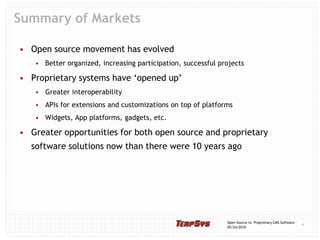
Summary of MarketsOpen source movement has evolvedBetter organized, increasing participation, successful projects Proprietary systems have ‘opened up’Greater interoperabilityAPIs for extensions and customizations on top of platformsWidgets, App platforms, gadgets, etc.Greater opportunities for both open source and proprietary software solutions now than there were 10 years ago
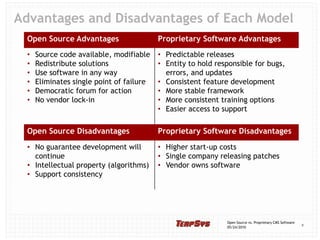
Advantages and Disadvantages of Each Model
Poll:  Open Source ‘Use’ AwarenessHow many times a day do you think you use Open Source technology?NeverRarelySo often, I can’t even keep trackPoll will appear for 15 seconds, then we’ll close it and share results  in a moment.No obligation to answer, but it makes for a more interesting presentation!
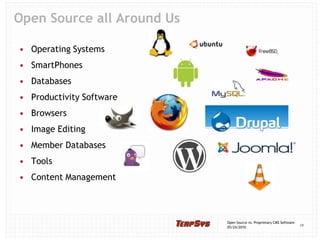
Open Source all Around UsOperating SystemsSmartPhonesDatabasesProductivity SoftwareBrowsersImage EditingMember DatabasesToolsContent Management
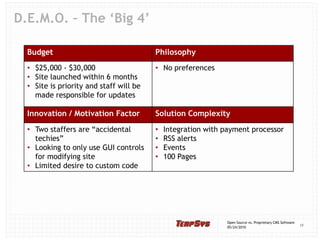
CMS Considerations – The ‘Big 4’BudgetUnderstand your financial capabilitiesConsider long term costs and not just year 1PhilosophyTechnical philosophy‘Nature’ of development processInnovation /Motivation FactorAre you motivated to find ‘good travelling’ partners?Can you wait for fixes?Solution ComplexityHow much customization is required?Ongoing investment
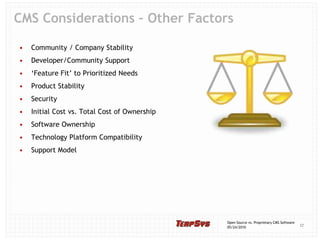
CMS Considerations – Other FactorsCommunity / Company Stability
Developer/Community Support
‘Feature Fit’ to Prioritized Needs
Product Stability
Security
Initial Cost vs. Total Cost of Ownership
Software Ownership
Technology Platform Compatibility
Support ModelMaking the CMS DecisionBudgetDefine the project needConsider your Budget (Year 1 vs Total Budget)Consider your PhilosophyEvaluate your Innovation / Motivation FactorConsider your ComplexityConsider your in-house strengths / skillsIdentify Long / Short List of platformsKey Areas of Concern from ‘Considerations?’Evaluate Software - Determine Feature CompatibilityDetermine GapsDetermine long-term costsMake decisionBig 4

Open Source Vs Proprietary Software

  • 1.
    Open Source vs.Proprietary CMS SoftwareWhich is right for my organization?Ann Yoders, Project ManagerMatt Crudello, Director of Web SolutionsStuart Holland, Web Consultant
  • 2.
    Goals for TodayOurgoal for today’s session:Understand differences between open source and proprietary solutionsGive you concrete steps you can take to evaluate these modelsTake it home! Show how you can apply the Big 4 in your organization
  • 3.
    AgendaAbout TerpSysDescribe ‘openSource’ and ‘proprietary’ software model evolutionDiscuss pros and cons of each modelIdentify the ‘Big 4’Discuss other key considerationsShare our process by example4
  • 4.
    Meet the PresentersTerpSysis a customer service company focused on helping mission based organizations use technology to achieve their missions.
  • 5.
    Defining Terms: Open Source in 2010History of Open Source1900s industrial age1960s - ARPANET1998 - Netscape Navigator2000s - ‘Free Open Source’ vs. ‘Commercial Open Source’Today, the open source software movement is characterized by:Volunteer group of peer developers collaboratingEnd product and source material available at no cost
  • 6.
    Defining Terms: Proprietary Systems in 2010Changes in proprietary market in 2000sDrive towards consumer initiated customizations (SDKs)Interoperability (APIs)Licensed platforms as fertile communities to build extensions to core code
  • 7.
    Summary of MarketsOpensource movement has evolvedBetter organized, increasing participation, successful projects Proprietary systems have ‘opened up’Greater interoperabilityAPIs for extensions and customizations on top of platformsWidgets, App platforms, gadgets, etc.Greater opportunities for both open source and proprietary software solutions now than there were 10 years ago
  • 8.
  • 9.
    Poll: OpenSource ‘Use’ AwarenessHow many times a day do you think you use Open Source technology?NeverRarelySo often, I can’t even keep trackPoll will appear for 15 seconds, then we’ll close it and share results in a moment.No obligation to answer, but it makes for a more interesting presentation!
  • 10.
    Open Source allAround UsOperating SystemsSmartPhonesDatabasesProductivity SoftwareBrowsersImage EditingMember DatabasesToolsContent Management
  • 11.
    CMS Considerations –The ‘Big 4’BudgetUnderstand your financial capabilitiesConsider long term costs and not just year 1PhilosophyTechnical philosophy‘Nature’ of development processInnovation /Motivation FactorAre you motivated to find ‘good travelling’ partners?Can you wait for fixes?Solution ComplexityHow much customization is required?Ongoing investment
  • 12.
    CMS Considerations –Other FactorsCommunity / Company Stability
  • 13.
  • 14.
    ‘Feature Fit’ toPrioritized Needs
  • 15.
  • 16.
  • 17.
    Initial Cost vs.Total Cost of Ownership
  • 18.
  • 19.
  • 20.
    Support ModelMaking theCMS DecisionBudgetDefine the project needConsider your Budget (Year 1 vs Total Budget)Consider your PhilosophyEvaluate your Innovation / Motivation FactorConsider your ComplexityConsider your in-house strengths / skillsIdentify Long / Short List of platformsKey Areas of Concern from ‘Considerations?’Evaluate Software - Determine Feature CompatibilityDetermine GapsDetermine long-term costsMake decisionBig 4