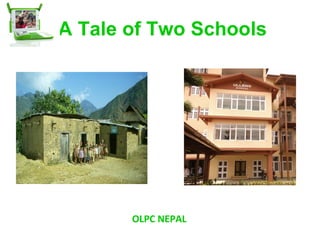
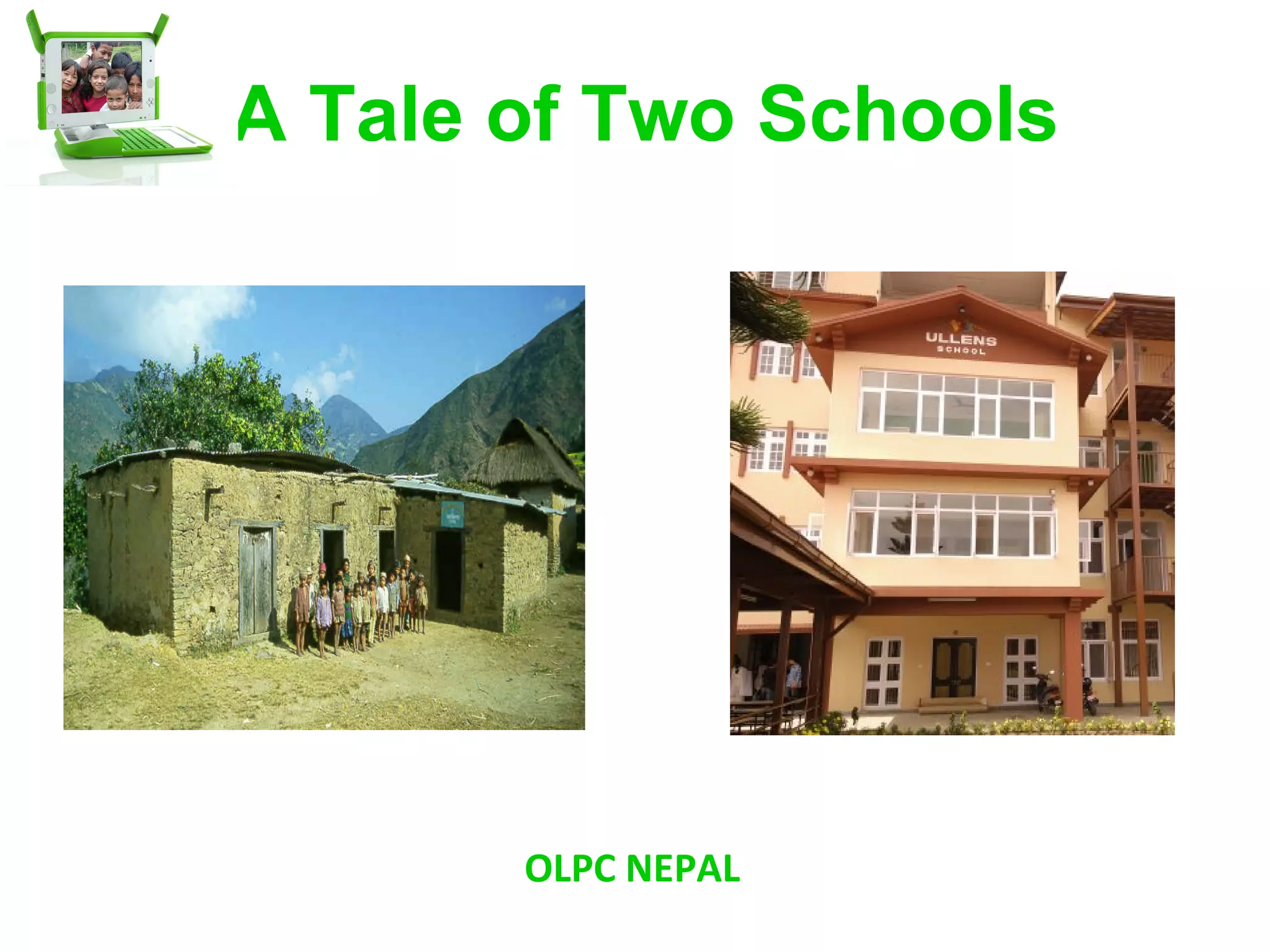
A Tale of Two Schools OLPC NEPAL
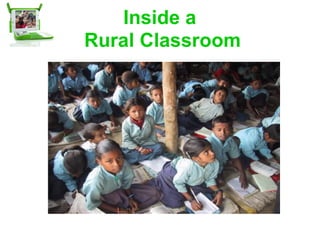
Inside a  Rural Classroom
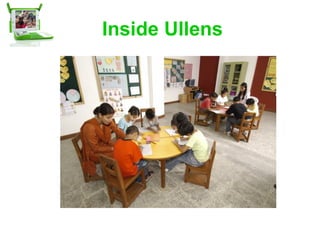
Inside Ullens
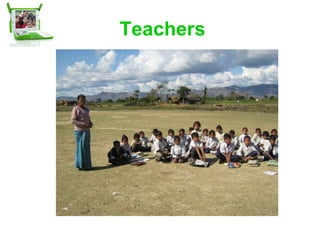
Teachers
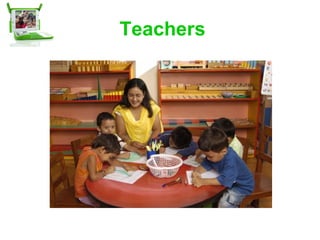
Teachers
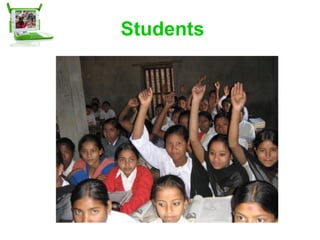
Students
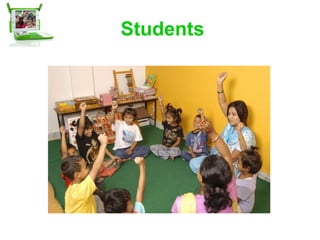
Students
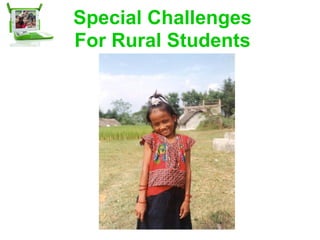
Special Challenges For Rural Students
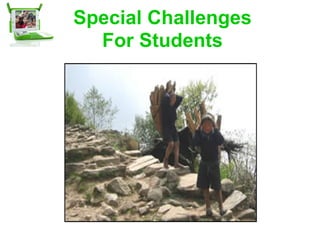
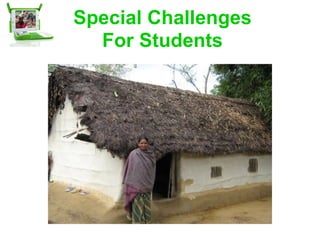
Special Challenges For Students
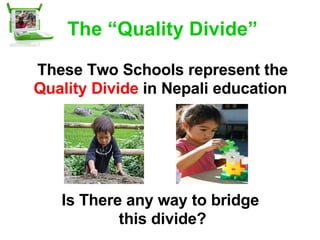
The “Quality Divide” These Two Schools represent the  Quality Divide  in Nepali education  Is There any way to bridge  this divide?
Looking for a Solution In 2001, a group of American  Educators  formed to find solutions that could bridge the Quality Divide in the Developing World Requirements for these solutions Child-centered, Interactive Could be customized to Local Language and Customs Inexpensive Help Children “Learn Learning”
One Laptop Per Child In 2002, this group approached Nicholas Negroponte of the MIT Media Lab In 2005, they announced the One Laptop Per Child Project
One Laptop Per Child OLPC designed a durable, inexpensive laptop computer specifically for children in developing countries Laptop is simply a medium for education like books, laboratories, toy blocks, etc.
What makes this Laptop so special? Designed   for  Children Low Power Durable, Robust, Climate   protected , and contains only safe,  non-toxic  materials   Children can use the laptop to collaborate Free software and content based on “ Open Source ” principles
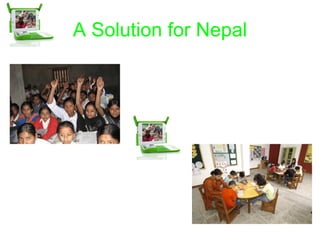
A Solution for Nepal
A Solution for Nepal We believe that together  Digitized national curriculum OLPC “XO” Laptops Extensive teacher training Can bridge the Quality Divide
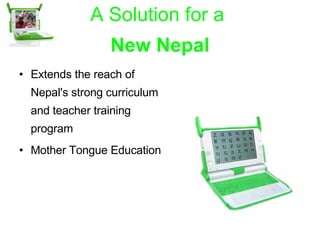
A Solution for a  New Nepal Extends the reach of Nepal's strong curriculum and teacher training program Mother Tongue Education
OLPC Progress and Strategy
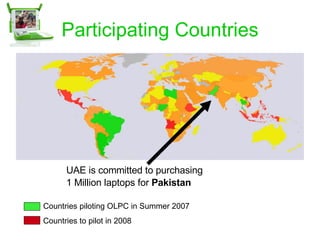
Participating Countries Countries piloting OLPC in Summer 2007 Countries to pilot in 2008 UAE is committed to purchasing  1 Million laptops for  Pakistan
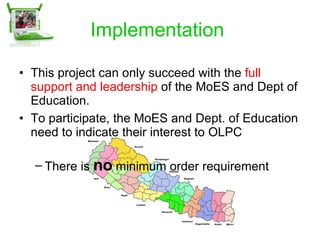
Implementation  This project can only succeed with the  full support and leadership  of the MoES and Dept of Education. To participate, the MoES and Dept. of Education need to indicate their interest to OLPC There is  no  minimum order requirement
OLPC Nepal A  Non-Profit Organization   dedicated to helping the Government of Nepal implement the One Laptop Per Child vision  Initiated by Shankar Pokharel and Ankur Sharma while at Nepal Engineering College
But Nepal is a poor country, why do kids need laptops? This project is  not  about technology It is about providing  every child  in Nepal with access to the national curriculum in the most appropriate and effective forms We have a number of measures to discourage the  theft and sale  of the laptops
Costs Teacher Training Digitization of Curriculum Implementation Support  Laptops  This project will require extensive Teacher Training and Support
Financing Laptop expected to last  Five Years $100 over 5 years --  $20 per year InterAmerican Development Bank (IADB) financing OLPC for Argentina and Brazil UAE purchasing 1 million laptops for Pakistan
Possible Next Steps Create a government Task Force to pursue One Laptop Per Child Digitize and Improvise the Government Curriculum for this laptop and future ICT initiatives Implement Mother Tongue Education Initiatives  Include the digitized curriculum and laptop in next year's pilot of the  three year education plan
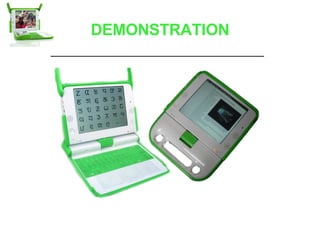
DEMONSTRATION
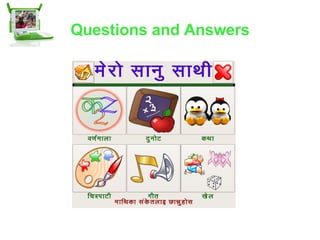
Questions and Answers

OLPC Nepal Presentation w/ script

  • 1.
    A Tale ofTwo Schools OLPC NEPAL
  • 2.
    Inside a Rural Classroom
  • 3.
  • 4.
  • 5.
  • 6.
  • 7.
  • 8.
    Special Challenges ForRural Students
  • 9.
  • 10.
  • 11.
    The “Quality Divide”These Two Schools represent the Quality Divide in Nepali education Is There any way to bridge this divide?
  • 12.
    Looking for aSolution In 2001, a group of American Educators formed to find solutions that could bridge the Quality Divide in the Developing World Requirements for these solutions Child-centered, Interactive Could be customized to Local Language and Customs Inexpensive Help Children “Learn Learning”
  • 13.
    One Laptop PerChild In 2002, this group approached Nicholas Negroponte of the MIT Media Lab In 2005, they announced the One Laptop Per Child Project
  • 14.
    One Laptop PerChild OLPC designed a durable, inexpensive laptop computer specifically for children in developing countries Laptop is simply a medium for education like books, laboratories, toy blocks, etc.
  • 15.
    What makes thisLaptop so special? Designed for Children Low Power Durable, Robust, Climate protected , and contains only safe, non-toxic materials Children can use the laptop to collaborate Free software and content based on “ Open Source ” principles
  • 16.
  • 17.
    A Solution forNepal We believe that together Digitized national curriculum OLPC “XO” Laptops Extensive teacher training Can bridge the Quality Divide
  • 18.
    A Solution fora New Nepal Extends the reach of Nepal's strong curriculum and teacher training program Mother Tongue Education
  • 19.
  • 20.
    Participating Countries Countriespiloting OLPC in Summer 2007 Countries to pilot in 2008 UAE is committed to purchasing 1 Million laptops for Pakistan
  • 21.
    Implementation Thisproject can only succeed with the full support and leadership of the MoES and Dept of Education. To participate, the MoES and Dept. of Education need to indicate their interest to OLPC There is no minimum order requirement
  • 22.
    OLPC Nepal A Non-Profit Organization dedicated to helping the Government of Nepal implement the One Laptop Per Child vision Initiated by Shankar Pokharel and Ankur Sharma while at Nepal Engineering College
  • 23.
    But Nepal isa poor country, why do kids need laptops? This project is not about technology It is about providing every child in Nepal with access to the national curriculum in the most appropriate and effective forms We have a number of measures to discourage the theft and sale of the laptops
  • 24.
    Costs Teacher TrainingDigitization of Curriculum Implementation Support Laptops This project will require extensive Teacher Training and Support
  • 25.
    Financing Laptop expectedto last Five Years $100 over 5 years -- $20 per year InterAmerican Development Bank (IADB) financing OLPC for Argentina and Brazil UAE purchasing 1 million laptops for Pakistan
  • 26.
    Possible Next StepsCreate a government Task Force to pursue One Laptop Per Child Digitize and Improvise the Government Curriculum for this laptop and future ICT initiatives Implement Mother Tongue Education Initiatives Include the digitized curriculum and laptop in next year's pilot of the three year education plan
  • 27.
  • 28.

Editor's Notes

  • #2 Talking Script: The School is on the left is a typical public Nepali School, Very simple with open windows, no electricity, and a mud floor. The school on the right is the prestigious Ullens school in Kathmandu, a private school with great facilities