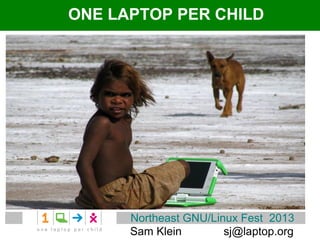
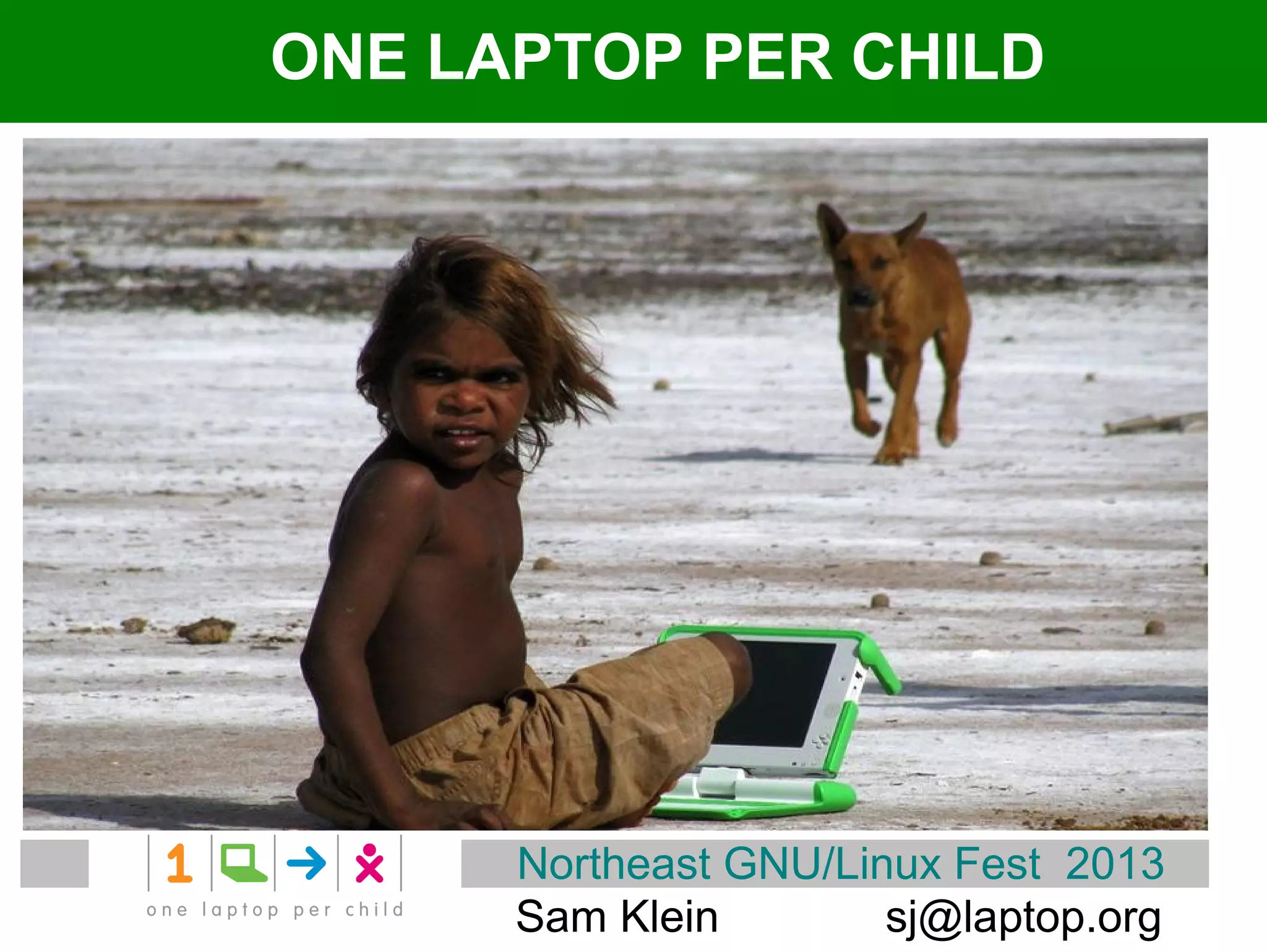
ONE LAPTOP PER CHILD


      Northeast GNU/Linux Fest 2013
      Sam Klein        sj@laptop.org
Experimental Backchannel


http:// piratepad.net/OLPC
Foreshadowing


    History and Development

    Designing for Learning

    Deployments

    Results so far

    What's Next:
    Tablets & OLPC Academy
HISTORY AND DEVELOPMENT

Over 2 million children and teachers in 42 countries use XO in education


                                                       Education

                                                      Community

                                                         Society
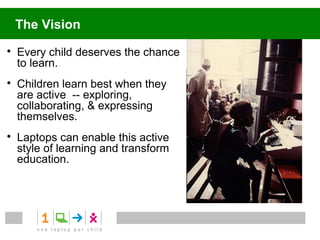
The Vision

    Every child deserves the chance
    to learn.

    Children learn best when they
    are active -- exploring,
    collaborating, & expressing
    themselves.

    Laptops can enable this active
    style of learning and transform
    education.
MIT Media Lab

• A team of educators and
engineers

• Convergence of technology,
pedagogy, education policy

• Focus on solutions for the
hardest environments
From Theory to Reality


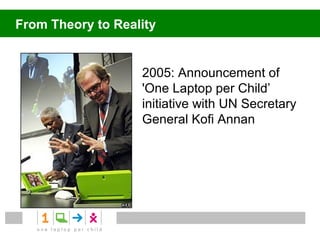
                   2005: Announcement of
                   'One Laptop per Child’
                   initiative with UN Secretary
                   General Kofi Annan
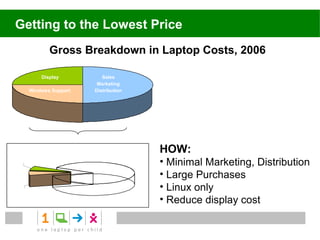
Getting to the Lowest Price
             Gross Breakdown in Laptop Costs, 2006

          Display                 Sales
                                Marketing
     Windows Support           Distribution


                 OLPC Proposal
              $100 Laptop Cost 2005
                                              HOW:
Display
                                              • Minimal Marketing, Distribution
                                              • Large Purchases
                                              • Linux only
 x                                            • Reduce display cost
2006: Founding Members
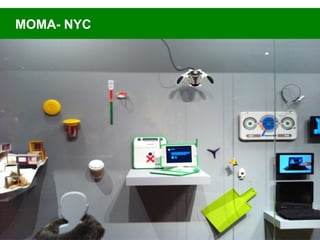
MOMA- NYC
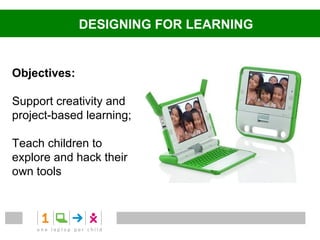
DESIGNING FOR LEARNING


Objectives:

Support creativity and
project-based learning;

Teach children to
explore and hack their
own tools
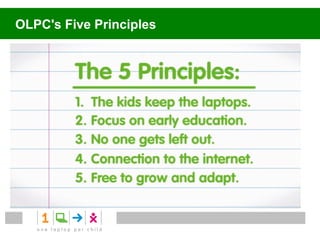
OLPC's Five Principles
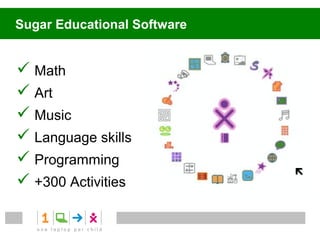
Sugar Educational Software


 Math
 Art
 Music
 Language skills
 Programming
 +300 Activities
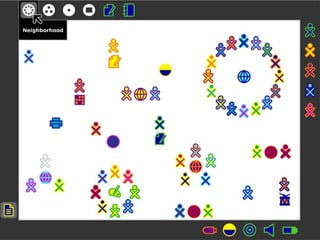
Sugar Network
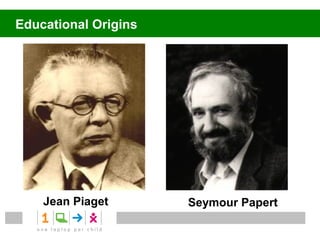
Educational Origins


    Jean Piaget       Seymour Papert
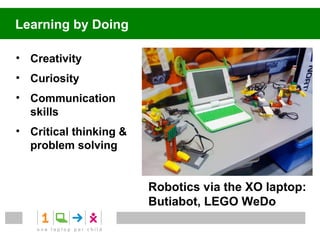
Learning by Doing

• Creativity
• Curiosity
• Communication
  skills
• Critical thinking &
  problem solving


                        Robotics via the XO laptop:
                        Butiabot, LEGO WeDo
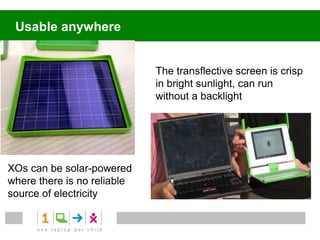
Usable anywhere


                             The transflective screen is crisp
                             in bright sunlight, can run
                             without a backlight


XOs can be solar-powered
where there is no reliable
source of electricity
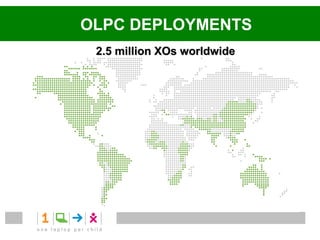
OLPC DEPLOYMENTS
 2.5 million XOs worldwide
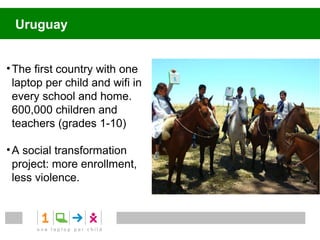
Uruguay


• The first country with one
  laptop per child and wifi in
  every school and home.
  600,000 children and
  teachers (grades 1-10)

• A social transformation
  project: more enrollment,
  less violence.
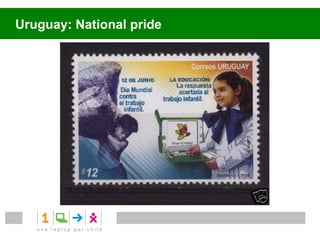
Uruguay: National pride
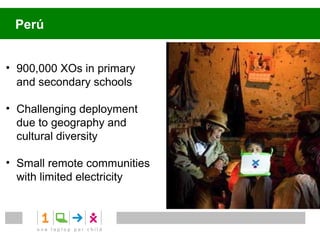
Perú


• 900,000 XOs in primary
  and secondary schools

• Challenging deployment
  due to geography and
  cultural diversity

• Small remote communities
  with limited electricity
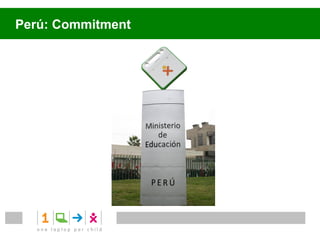
Perú: Commitment
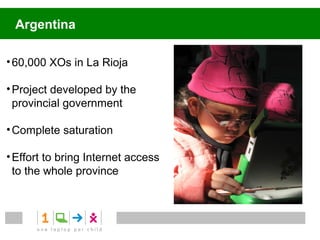
Argentina

• 60,000 XOs in La Rioja

• Project developed by the
  provincial government

• Complete saturation

• Effort to bring Internet to
  the whole province
Paraguay

• 9,000 children across Paraguay

• Supported by a dedicated
  national NGO, ParaguayEduca

• SWIFT donated 3,500+ Xos to
  children in Caacupe

• Agreements with hydroelectric
  providers to improve regional
  electricity
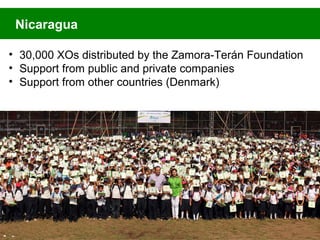
Nicaragua

• 30,000 XOs distributed by the Zamora-Terán Foundation
• Support from public and private companies
• Support from other countries (Denmark)
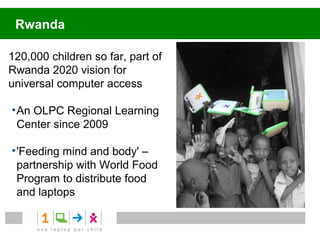
Rwanda

120,000 children so far, part of
Rwanda 2020 vision for
universal computer access

• An OLPC Regional Learning
  Center since 2009

• 'Feeding mind and body' –
  partnership with World Food
  Program to distribute food
  and laptops
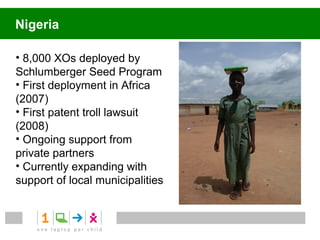
Nigeria

• 8,000 XOs deployed by
Schlumberger Seed Program
• First deployment in Africa
(2007)
• First patent troll lawsuit
(2008)
• Ongoing support from
private partners
• Currently expanding with
support of local municipalities
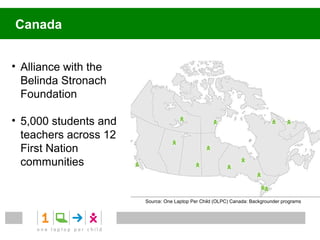
Canada


• Alliance with the
  Belinda Stronach
  Foundation

• 5,000 students and
  teachers across 12
  First Nation
  communities


                       Source: One Laptop Per Child (OLPC) Canada: Backgrounder programs
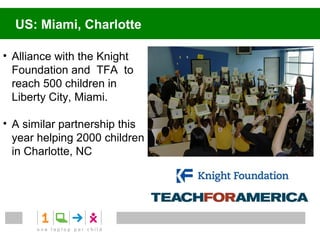
US: Miami, Charlotte

• Alliance with the Knight
  Foundation and TFA to
  reach 500 children in
  Liberty City, Miami.

• A similar partnership this
  year helping 2000 children
  in Charlotte, NC
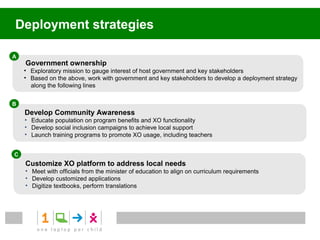
Deployment strategies

A
    Government ownership
    • Exploratory mission to gauge interest of host government and key stakeholders
    • Based on the above, work with government and key stakeholders to develop a deployment strategy
      along the following lines


B
    Develop Community Awareness
    • Educate population on program benefits and XO functionality
    • Develop social inclusion campaigns to achieve local support
    • Launch training programs to promote XO usage, including teachers


C
    Customize XO platform to address local needs
    • Meet with officials from the minister of education to align on curriculum requirements
    • Develop customized applications
    • Digitize textbooks, perform translations
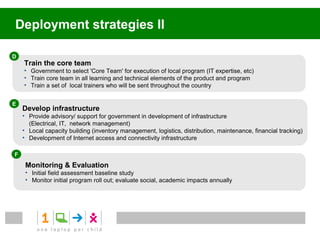
Deployment strategies II

D
    Train the core team
    • Government to select 'Core Team' for execution of local program (IT expertise, etc)
    • Train core team in all learning and technical elements of the product and program
    • Train a set of local trainers who will be sent throughout the country


E
    Develop infrastructure
    • Provide advisory/ support for government in development of infrastructure
      (Electrical, IT, network management)
    • Local capacity building (inventory management, logistics, distribution, maintenance, financial tracking)
    • Development of Internet access and connectivity infrastructure

F
     Monitoring & Evaluation
     • Initial field assessment baseline study
     • Monitor initial program roll out; evaluate social, academic impacts annually
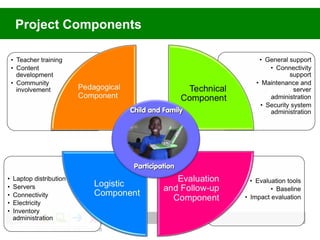
Project Components


                Child and Family


                 Participation
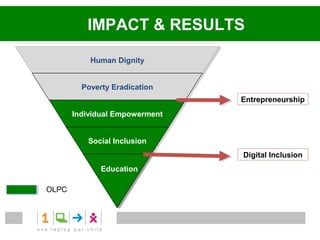
IMPACT & RESULTS

           Human Dignity
           Human Dignity


         Poverty Eradication
         Poverty Eradication
                                 Entrepreneurship
       Individual Empowerment
        Individual Empowerment


          Social Inclusion
          Social Inclusion
                                 Digital Inclusion
              Education

OLPC
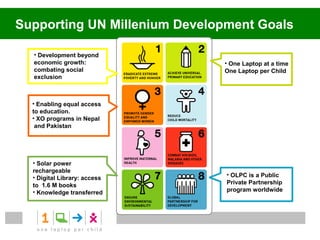
Supporting UN Millenium Development Goals

  • Development beyond
  economic growth:            • One Laptop at a time
  combating social            One Laptop per Child
  exclusion
  .


  • Enabling equal access
  to education.
  • XO programs in Nepal
   and Pakistan


  • Solar power
  rechargeable
  • Digital Library: access    • OLPC is a Public
  to 1.6 M books               Private Partnership
  • Knowledge transferred      program worldwide
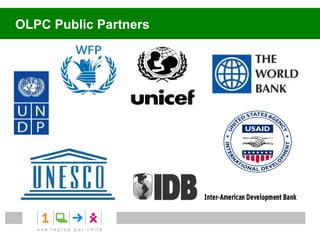
OLPC Public Partners
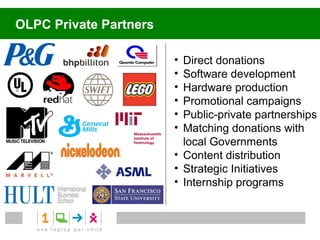
OLPC Private Partners

                        • Direct donations
                        • Software development
                        • Hardware production
                        • Promotional campaigns
                        • Public-private partnerships
                        • Matching donations with
                          local Governments
                        • Content distribution
                        • Strategic Initiatives
                        • Internship programs
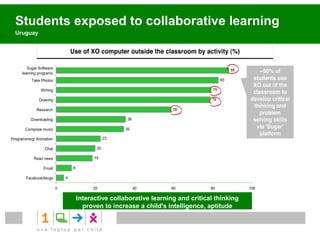
Students exposed to collaborative learning
Uruguay


          Interactive collaborative learning and critical thinking
            proven to increase a child's intelligence, aptitude
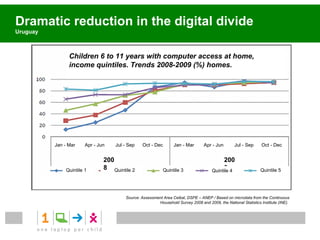
Dramatic reduction in the digital divide
Uruguay


                Children 6 to 11 years with computer access at home,
                income quintiles. Trends 2008-2009 (%) homes.


          Jan - Mar    Apr - Jun   Jul - Sep   Oct - Dec        Jan - Mar       Apr - Jun        Jul - Sep     Oct - Dec


                               200                                                         200
              Quintile 1       8 Quintile 2               Quintile 3                       9
                                                                                     Quintile 4                Quintile 5


                                       Source: Assessment Area Ceibal, DSPE – ANEP / Based on microdata from the Continuous
                                                       Household Survey 2008 and 2009, the National Statistics Institute (INE).
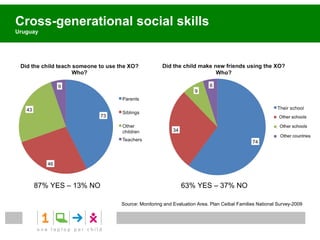
Cross-generational social skills
Uruguay


     87% YES – 13% NO                             63% YES – 37% NO

                        Source: Monitoring and Evaluation Area. Plan Ceibal Families National Survey-2009
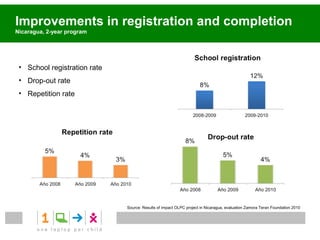
Improvements in registration and completion
Nicaragua, 2-year program


 • School registration rate
 • Drop-out rate
 • Repetition rate


                              Source: Results of impact OLPC project in Nicaragua, evaluation Zamora Teran Foundation 2010
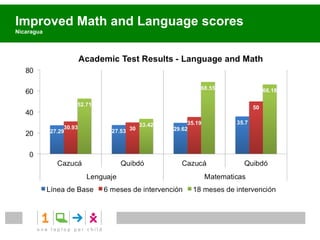
Improved Math and Language scores
Nicaragua
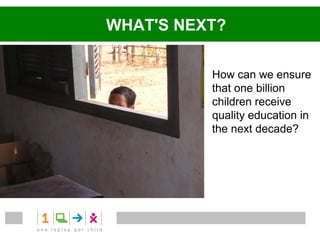
WHAT'S NEXT?

          How can we ensure
          that one billion
          children receive
          quality education in
          the next decade?
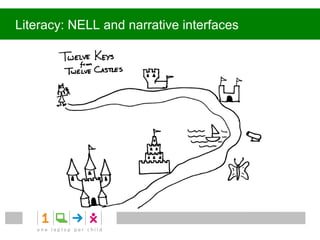
Literacy: NELL and narrative interfaces
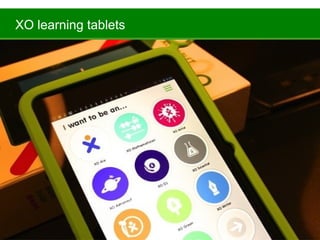
XO learning tablets
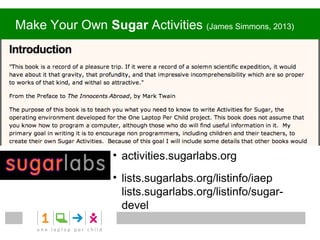
Make Your Own Sugar Activities (James Simmons, 2013)


                  • activities.sugarlabs.org
                  • lists.sugarlabs.org/listinfo/iaep
                    lists.sugarlabs.org/listinfo/sugar-
                    devel
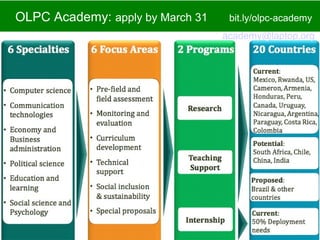
OLPC Academy: apply by March 31    bit.ly/olpc-academy
                                  academy@laptop.org
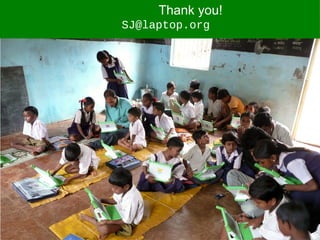
Thank you!
SJ@laptop.org
OLPC past and present

OLPC past and present

  • 1.
    ONE LAPTOP PERCHILD Northeast GNU/Linux Fest 2013 Sam Klein sj@laptop.org
  • 2.
  • 3.
    Foreshadowing  History and Development  Designing for Learning  Deployments  Results so far  What's Next: Tablets & OLPC Academy
  • 4.
    HISTORY AND DEVELOPMENT Over2 million children and teachers in 42 countries use XO in education Education Community Society
  • 5.
    The Vision  Every child deserves the chance to learn.  Children learn best when they are active -- exploring, collaborating, & expressing themselves.  Laptops can enable this active style of learning and transform education.
  • 6.
    MIT Media Lab •A team of educators and engineers • Convergence of technology, pedagogy, education policy • Focus on solutions for the hardest environments
  • 8.
    From Theory toReality 2005: Announcement of 'One Laptop per Child’ initiative with UN Secretary General Kofi Annan
  • 9.
    Getting to theLowest Price Gross Breakdown in Laptop Costs, 2006 Display Sales Marketing Windows Support Distribution OLPC Proposal $100 Laptop Cost 2005 HOW: Display • Minimal Marketing, Distribution • Large Purchases • Linux only x • Reduce display cost
  • 10.
  • 11.
  • 12.
    DESIGNING FOR LEARNING Objectives: Supportcreativity and project-based learning; Teach children to explore and hack their own tools
  • 13.
  • 14.
    Sugar Educational Software Math  Art  Music  Language skills  Programming  +300 Activities
  • 15.
  • 16.
    Educational Origins Jean Piaget Seymour Papert
  • 17.
    Learning by Doing •Creativity • Curiosity • Communication skills • Critical thinking & problem solving Robotics via the XO laptop: Butiabot, LEGO WeDo
  • 18.
    Usable anywhere The transflective screen is crisp in bright sunlight, can run without a backlight XOs can be solar-powered where there is no reliable source of electricity
  • 21.
    OLPC DEPLOYMENTS 2.5million XOs worldwide
  • 22.
    Uruguay • The firstcountry with one laptop per child and wifi in every school and home. 600,000 children and teachers (grades 1-10) • A social transformation project: more enrollment, less violence.
  • 23.
  • 24.
    Perú • 900,000 XOsin primary and secondary schools • Challenging deployment due to geography and cultural diversity • Small remote communities with limited electricity
  • 25.
  • 26.
    Argentina • 60,000 XOsin La Rioja • Project developed by the provincial government • Complete saturation • Effort to bring Internet to the whole province
  • 27.
    Paraguay • 9,000 childrenacross Paraguay • Supported by a dedicated national NGO, ParaguayEduca • SWIFT donated 3,500+ Xos to children in Caacupe • Agreements with hydroelectric providers to improve regional electricity
  • 28.
    Nicaragua • 30,000 XOsdistributed by the Zamora-Terán Foundation • Support from public and private companies • Support from other countries (Denmark)
  • 29.
    Rwanda 120,000 children sofar, part of Rwanda 2020 vision for universal computer access • An OLPC Regional Learning Center since 2009 • 'Feeding mind and body' – partnership with World Food Program to distribute food and laptops
  • 30.
    Nigeria • 8,000 XOsdeployed by Schlumberger Seed Program • First deployment in Africa (2007) • First patent troll lawsuit (2008) • Ongoing support from private partners • Currently expanding with support of local municipalities
  • 31.
    Canada • Alliance withthe Belinda Stronach Foundation • 5,000 students and teachers across 12 First Nation communities Source: One Laptop Per Child (OLPC) Canada: Backgrounder programs
  • 32.
    US: Miami, Charlotte •Alliance with the Knight Foundation and TFA to reach 500 children in Liberty City, Miami. • A similar partnership this year helping 2000 children in Charlotte, NC
  • 33.
    Deployment strategies A Government ownership • Exploratory mission to gauge interest of host government and key stakeholders • Based on the above, work with government and key stakeholders to develop a deployment strategy along the following lines B Develop Community Awareness • Educate population on program benefits and XO functionality • Develop social inclusion campaigns to achieve local support • Launch training programs to promote XO usage, including teachers C Customize XO platform to address local needs • Meet with officials from the minister of education to align on curriculum requirements • Develop customized applications • Digitize textbooks, perform translations
  • 34.
    Deployment strategies II D Train the core team • Government to select 'Core Team' for execution of local program (IT expertise, etc) • Train core team in all learning and technical elements of the product and program • Train a set of local trainers who will be sent throughout the country E Develop infrastructure • Provide advisory/ support for government in development of infrastructure (Electrical, IT, network management) • Local capacity building (inventory management, logistics, distribution, maintenance, financial tracking) • Development of Internet access and connectivity infrastructure F Monitoring & Evaluation • Initial field assessment baseline study • Monitor initial program roll out; evaluate social, academic impacts annually
  • 35.
    Project Components Child and Family Participation
  • 36.
    IMPACT & RESULTS Human Dignity Human Dignity Poverty Eradication Poverty Eradication Entrepreneurship Individual Empowerment Individual Empowerment Social Inclusion Social Inclusion Digital Inclusion Education OLPC
  • 37.
    Supporting UN MilleniumDevelopment Goals • Development beyond economic growth: • One Laptop at a time combating social One Laptop per Child exclusion . • Enabling equal access to education. • XO programs in Nepal and Pakistan • Solar power rechargeable • Digital Library: access • OLPC is a Public to 1.6 M books Private Partnership • Knowledge transferred program worldwide
  • 38.
  • 39.
    OLPC Private Partners • Direct donations • Software development • Hardware production • Promotional campaigns • Public-private partnerships • Matching donations with local Governments • Content distribution • Strategic Initiatives • Internship programs
  • 40.
    Students exposed tocollaborative learning Uruguay Interactive collaborative learning and critical thinking proven to increase a child's intelligence, aptitude
  • 41.
    Dramatic reduction inthe digital divide Uruguay Children 6 to 11 years with computer access at home, income quintiles. Trends 2008-2009 (%) homes. Jan - Mar Apr - Jun Jul - Sep Oct - Dec Jan - Mar Apr - Jun Jul - Sep Oct - Dec 200 200 Quintile 1 8 Quintile 2 Quintile 3 9 Quintile 4 Quintile 5 Source: Assessment Area Ceibal, DSPE – ANEP / Based on microdata from the Continuous Household Survey 2008 and 2009, the National Statistics Institute (INE).
  • 42.
    Cross-generational social skills Uruguay 87% YES – 13% NO 63% YES – 37% NO Source: Monitoring and Evaluation Area. Plan Ceibal Families National Survey-2009
  • 43.
    Improvements in registrationand completion Nicaragua, 2-year program • School registration rate • Drop-out rate • Repetition rate Source: Results of impact OLPC project in Nicaragua, evaluation Zamora Teran Foundation 2010
  • 44.
    Improved Math andLanguage scores Nicaragua
  • 45.
    WHAT'S NEXT? How can we ensure that one billion children receive quality education in the next decade?
  • 46.
    Literacy: NELL andnarrative interfaces
  • 49.
  • 50.
    Make Your OwnSugar Activities (James Simmons, 2013) • activities.sugarlabs.org • lists.sugarlabs.org/listinfo/iaep lists.sugarlabs.org/listinfo/sugar- devel
  • 51.
    OLPC Academy: applyby March 31 bit.ly/olpc-academy academy@laptop.org
  • 52.

Editor's Notes

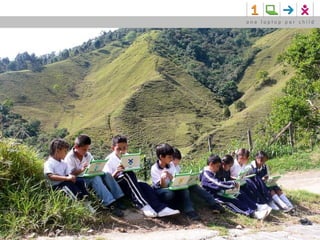
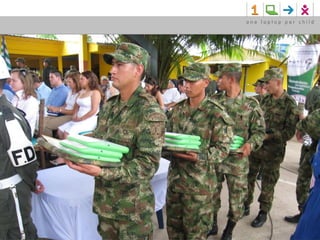
  • #20 You bring the school outside, in the mountains of Colombia
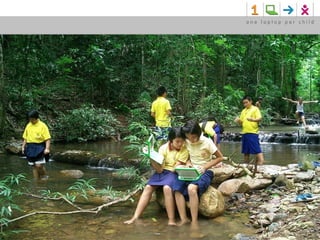
  • #21 Or in the jungles of Thailand
  • #53 Informal environment
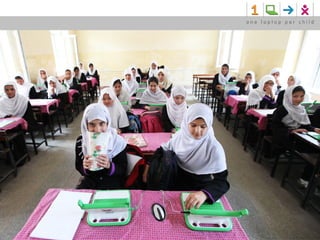
  • #54 Change in teaching methodology from a rigid environment to one of coach of a team.
  • #55 Contrive environment.
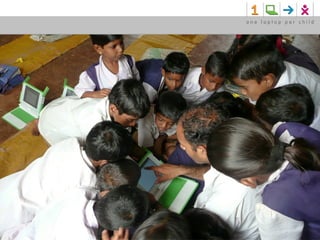
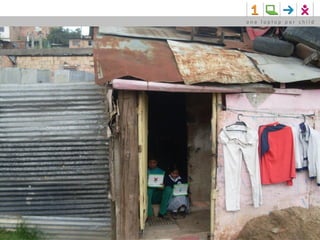
  • #57 Look beyond the poverty that surrounds them
  • #58 Look at their faces