Socially Engineering Your
Pathway to a Better Team
Olivia Liddell
@oliravi
@oliravi
About Me
● Technical Curriculum Developer at Amazon Web Services
● Certified Ethical Hacker and Computer Hacking Forensic
Investigator
● Background in cultural anthropology and change
management
@oliravi
Agenda
● Assessing your team’s current strengths and areas of improvement
● Developing an action plan to initiate change
● Using ongoing observation techniques to effectively manage change
● Resolving conflict, particularly for team members with different
communication styles
@oliravi
What is Social Engineering?
“...any act that influences a person to take an action that
may or may not be in their best interest.”
- Security Through Education
@oliravi
“The goal of the social engineer is to get you to make a
decision without thinking.
The more you think, the more likely you are to realize you
are being manipulated, which of course is bad for the
attacker.”
- Christopher Hadnagy, Social Engineering: The Art of Human Hacking
@oliravi
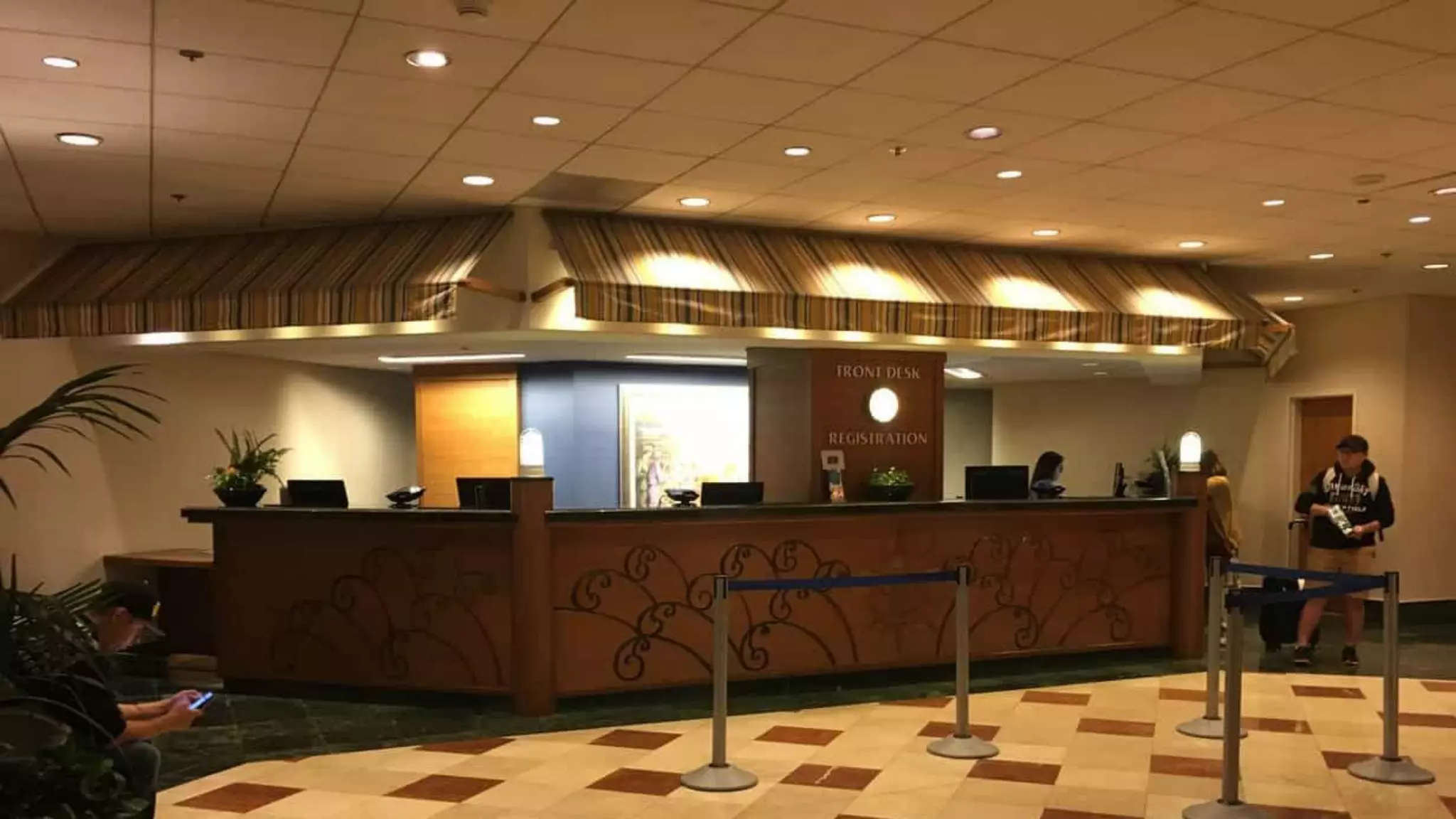
My Observations about the Location
Huge resort with some rooms about a
15-minute walk from the main lobby
@oliravi
My Observations about the Location
Most guests were wearing relaxed
attire, shorts, swimwear, etc.
@oliravi
My Observations about the Location
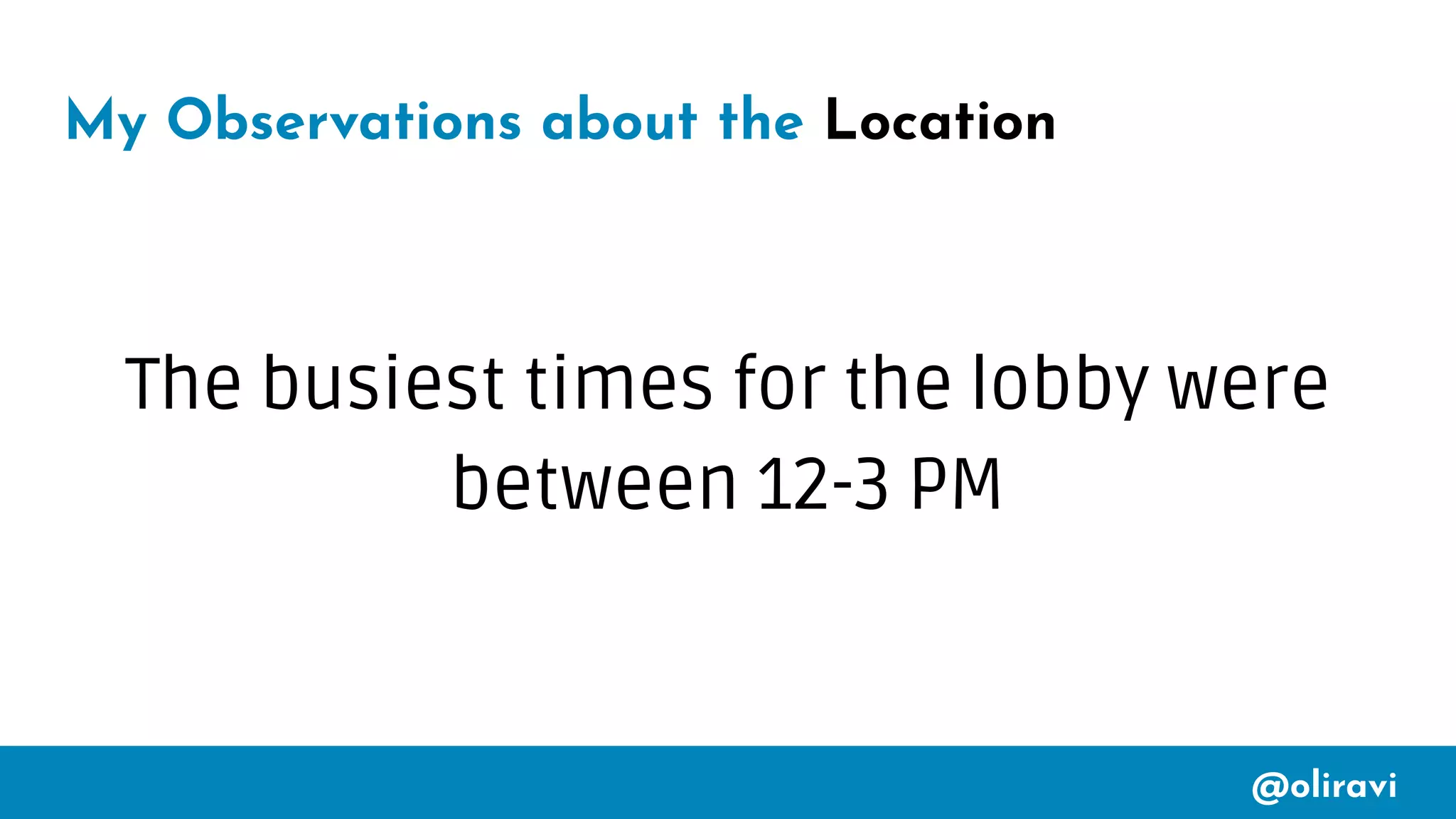
The busiest times for the lobby were
between 12-3 PM
@oliravi
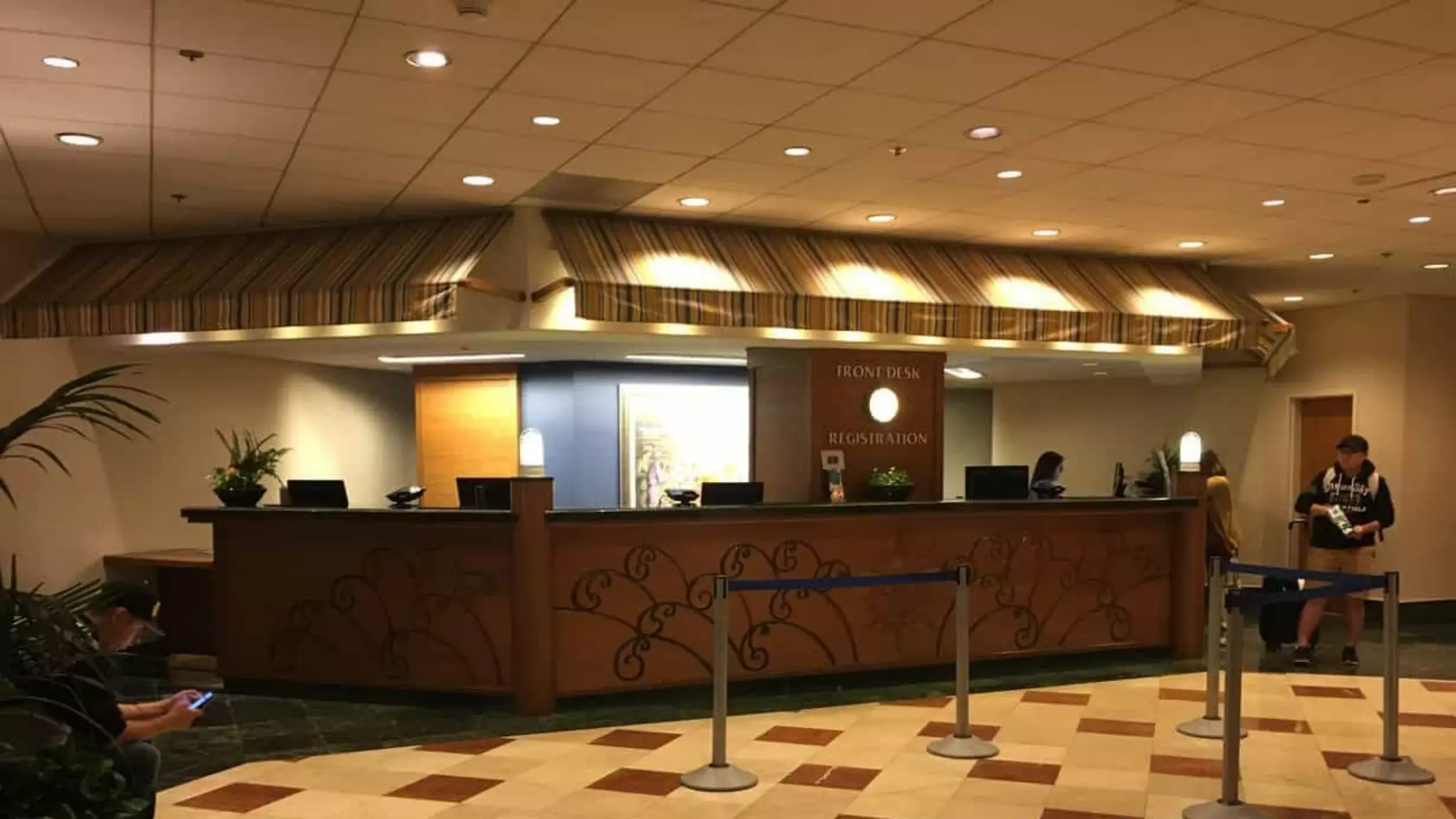
My Observations about the Front Desk Agents
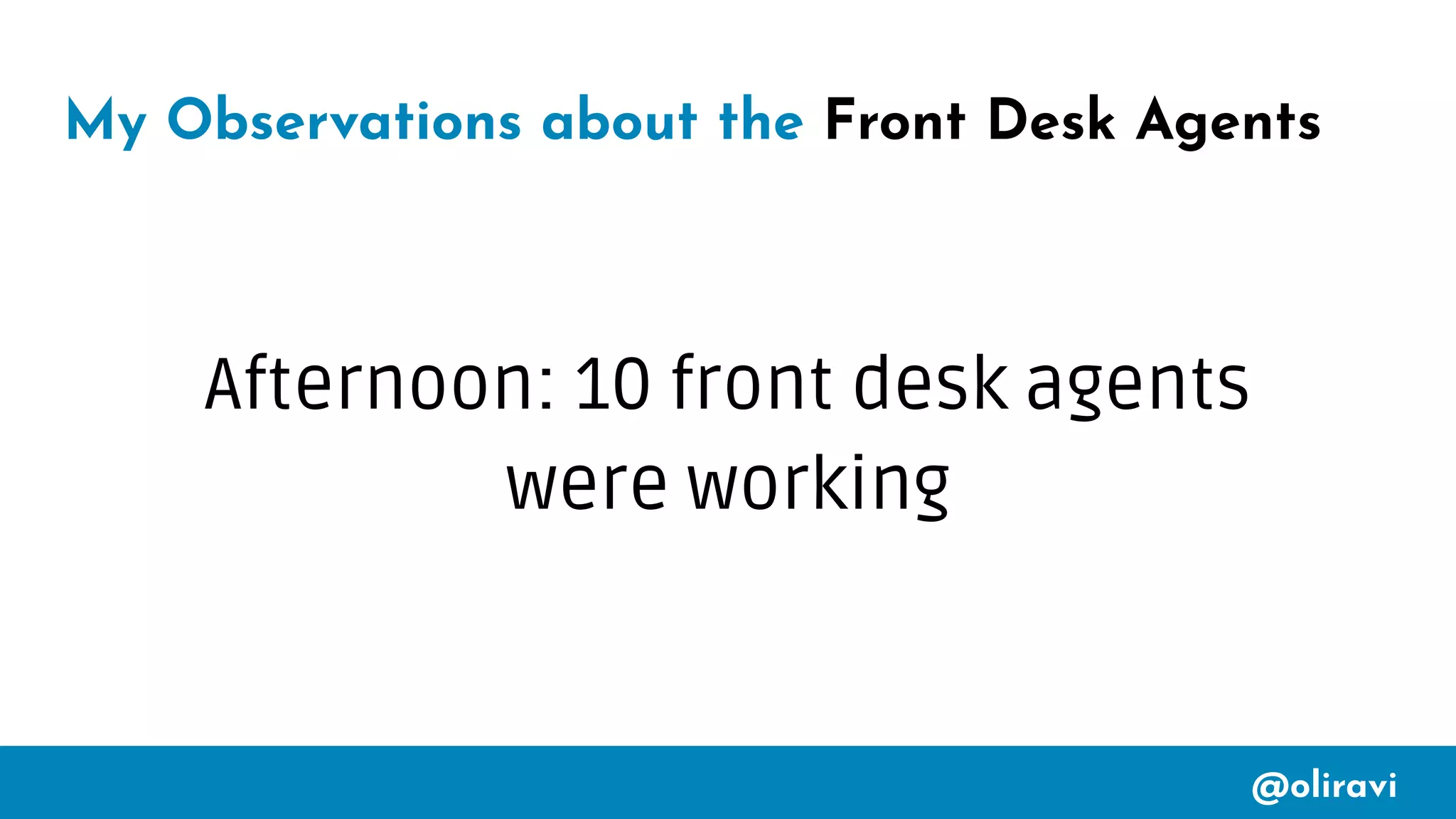
Afternoon: 10 front desk agents
were working
@oliravi
My Observations about the Front Desk Agents
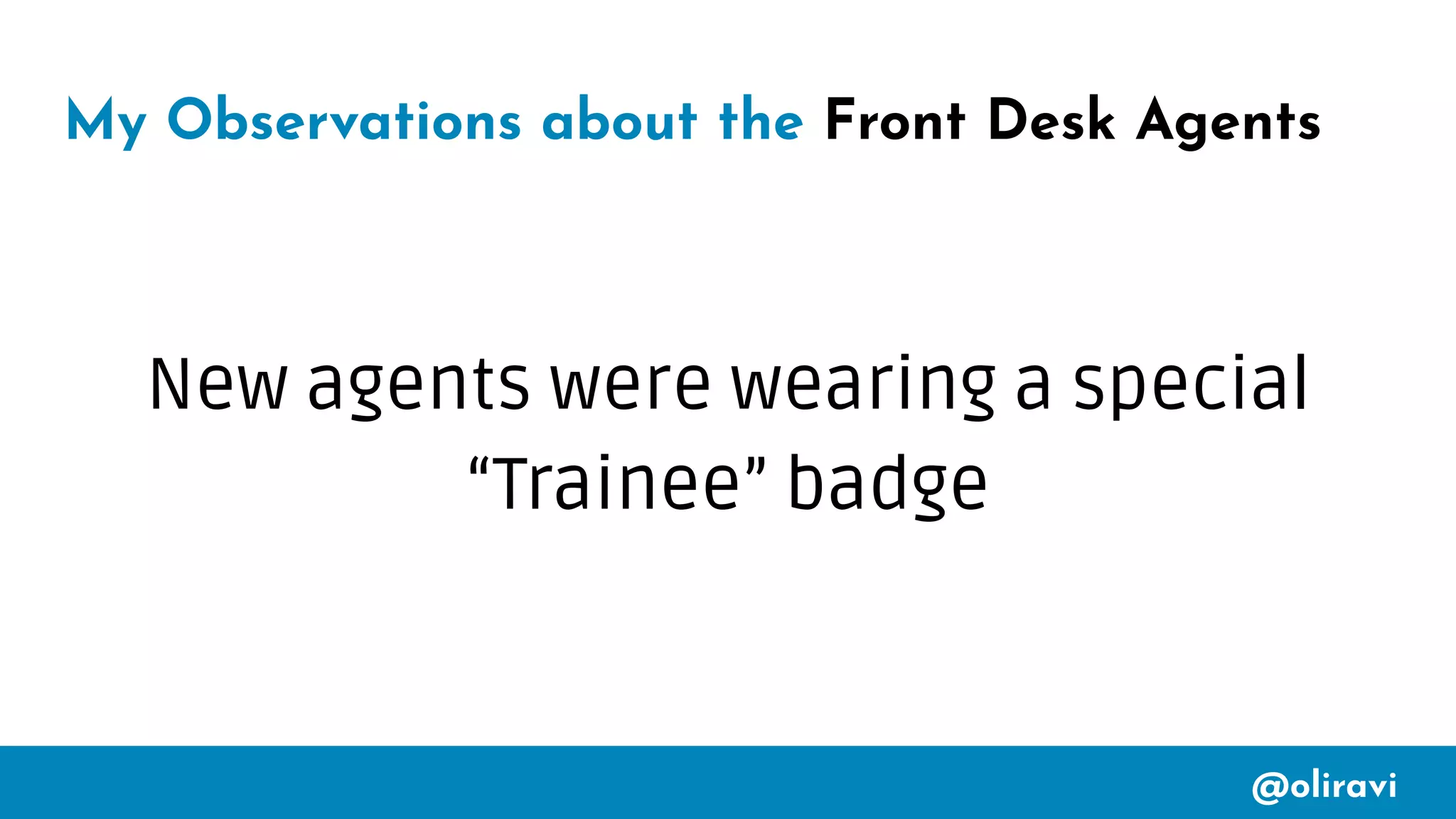
New agents were wearing a special
“Trainee” badge
@oliravi
My Observations about the Front Desk Agents
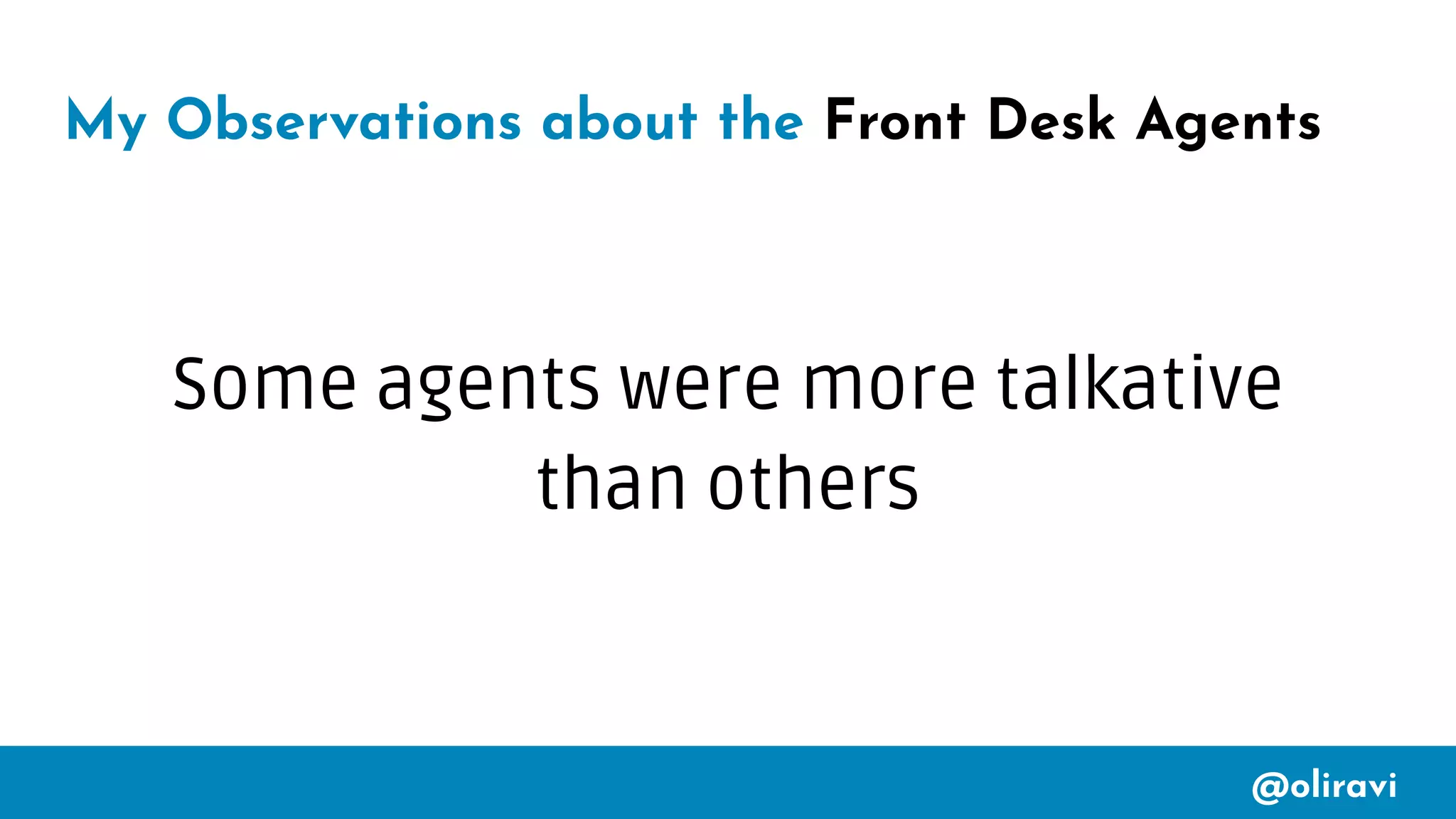
Some agents were more talkative
than others
@oliravi
My Observations about the Front Desk Agents
Some agents were smiling and using
more hand gestures than others
@oliravi
My Observations about the Front Desk Agents
Differences in how the agents called
out to the next person in line
Observe your team from
an outside perspective.
@oliravi
“Ethnography is the work of describing a culture. The
central aim of ethnography is to understand another way of
life from the native point of view. [...]
Rather than studying people, ethnography means
learning from people.”
- James P. Spradley, Participant Observation
@oliravi
Describe your team.
● Size
● Location(s)
● Remote percentage
● Single department or cross-functional
@oliravi
Describe your team.
● Range of technical skills
● How long has the team been together?
● Which members tend to speak most often in meetings?
@oliravi
Describe your team.
● Which members prefer to share their ideas through
other communication channels?
● How frequently do more senior members pair together
with more junior members?
● How do members interact with each other outside of
meetings or project settings?
@oliravi
What do they value?
When developing an action plan,
begin with quick wins.
@oliravi
“As a social engineer, remember that you don’t need to
immediately go for the exact flags you need.
Get some minor ones to help build those feelings that will
lead the person to concede and comply.”
- Christopher Hadnagy, Social Engineering: The Art of Human Hacking
@oliravi
Strategy:
Good / Better / Best
@oliravi
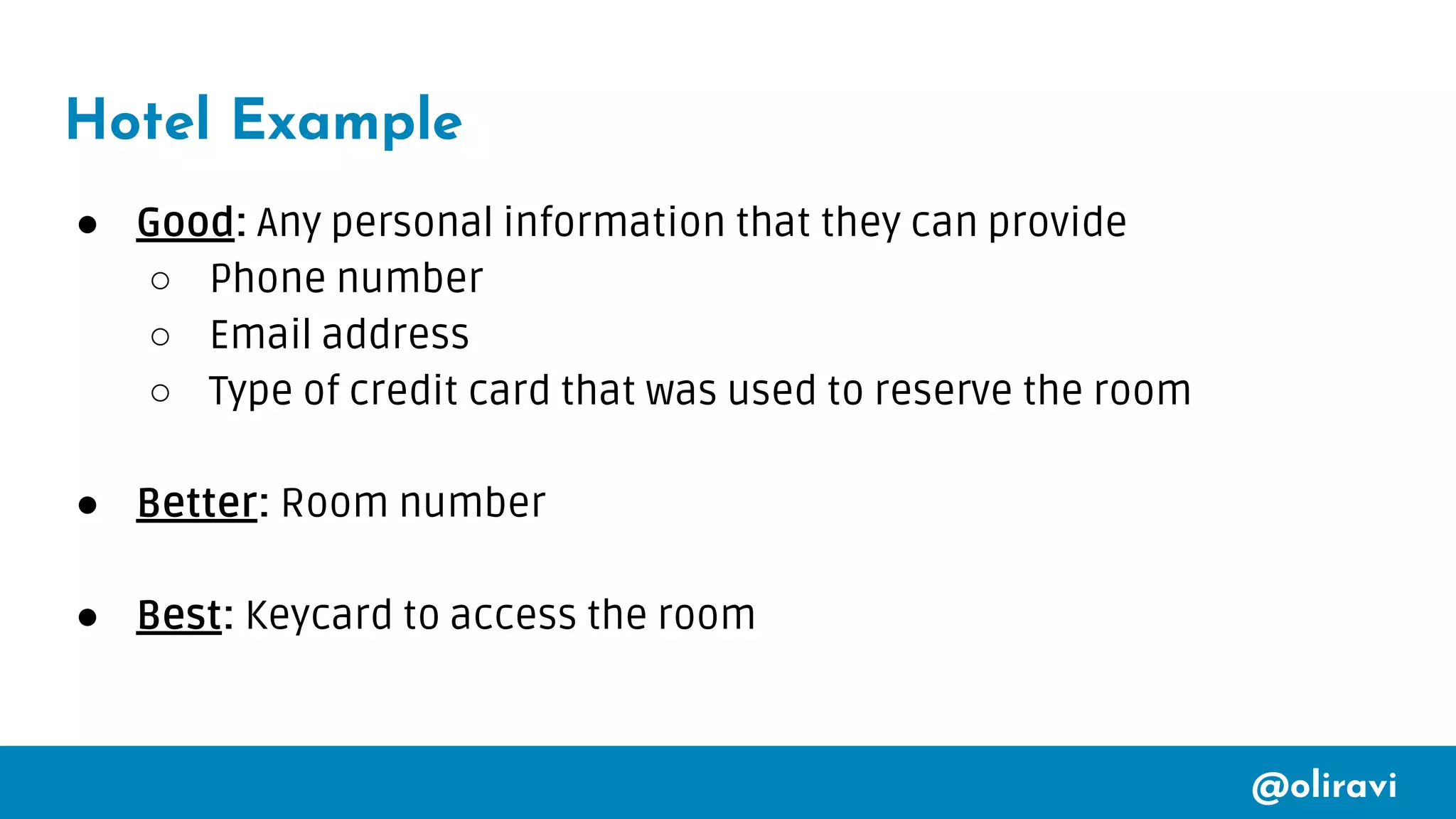
Hotel Example
● Good: Any personal information that they can provide
○ Phone number
○ Email address
○ Type of credit card that was used to reserve the room
● Better: Room number
● Best: Keycard to access the room
@oliravi
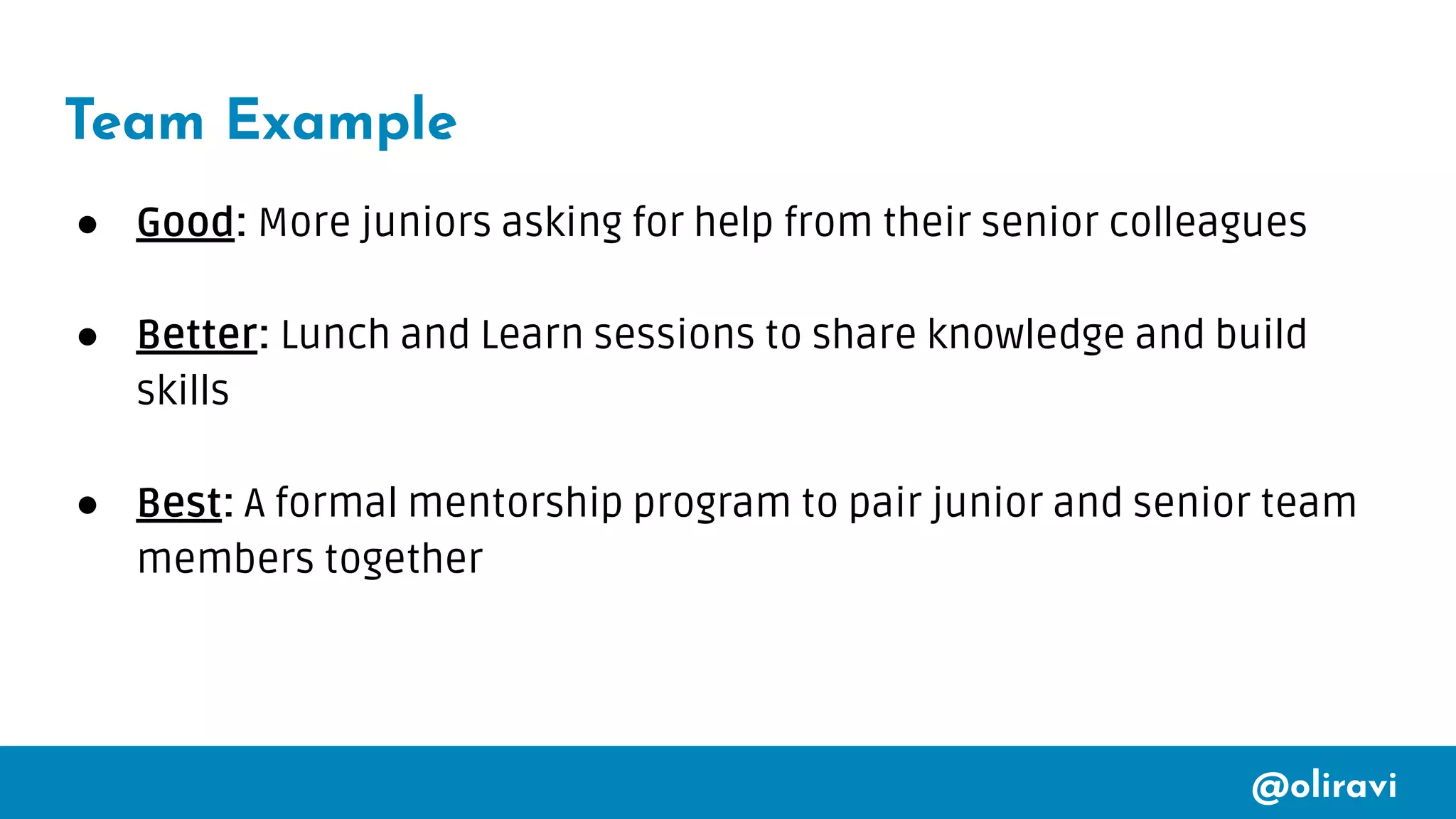
Team Example
● Good: More juniors asking for help from their senior colleagues
● Better: Lunch and Learn sessions to share knowledge and build
skills
● Best: A formal mentorship program to pair junior and senior team
members together
Observe how and why team members
are responding to change.
@oliravi
What do they value?
What’s in it for them?
Why should they want to do this?
@oliravi
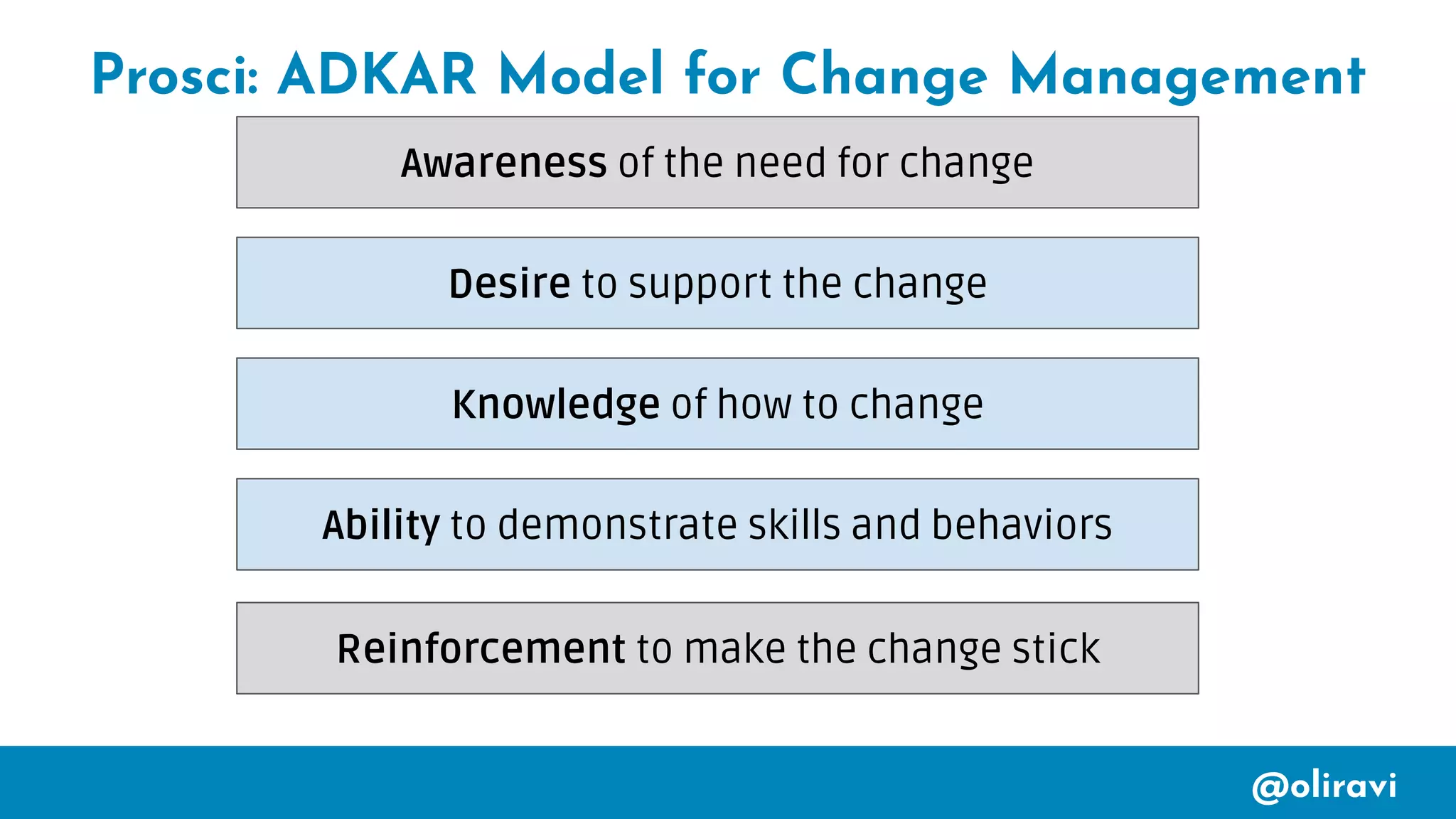
Prosci: ADKAR Model for Change Management
Awareness of the need for change
Desire to support the change
Knowledge of how to change
Ability to demonstrate skills and behaviors
Reinforcement to make the change stick
@oliravi
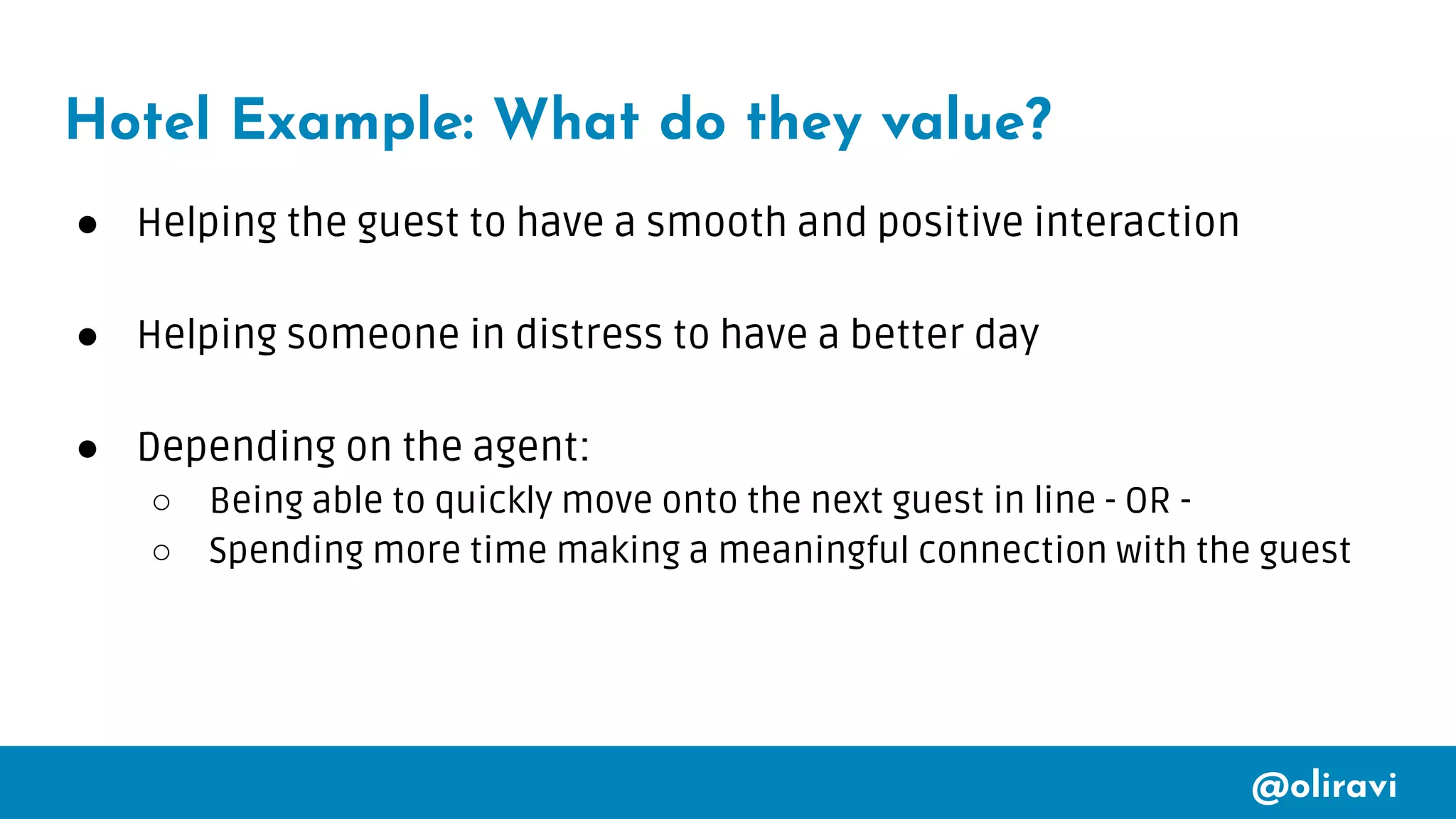
Hotel Example: What do they value?
● Helping the guest to have a smooth and positive interaction
● Helping someone in distress to have a better day
● Depending on the agent:
○ Being able to quickly move onto the next guest in line - OR -
○ Spending more time making a meaningful connection with the guest
Resolve conflict by offering a
solution and value that are based
on your observations.
@oliravi
What do they value?
What’s in it for them?
Why should they want to do this?
@oliravi
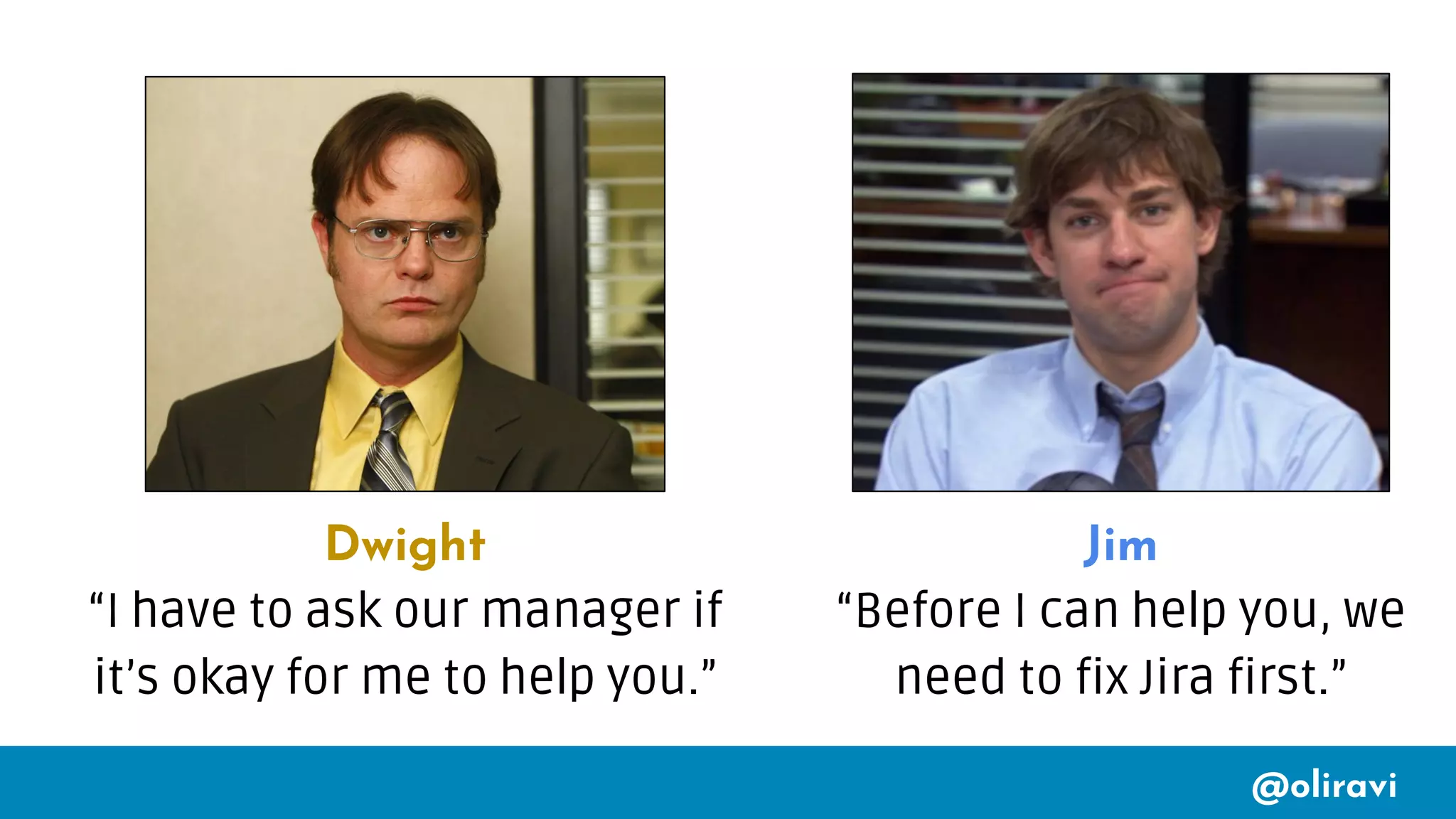
Dwight
“I have to ask our manager if
it’s okay for me to help you.”
Jim
“Before I can help you, we
need to fix Jira first.”
�
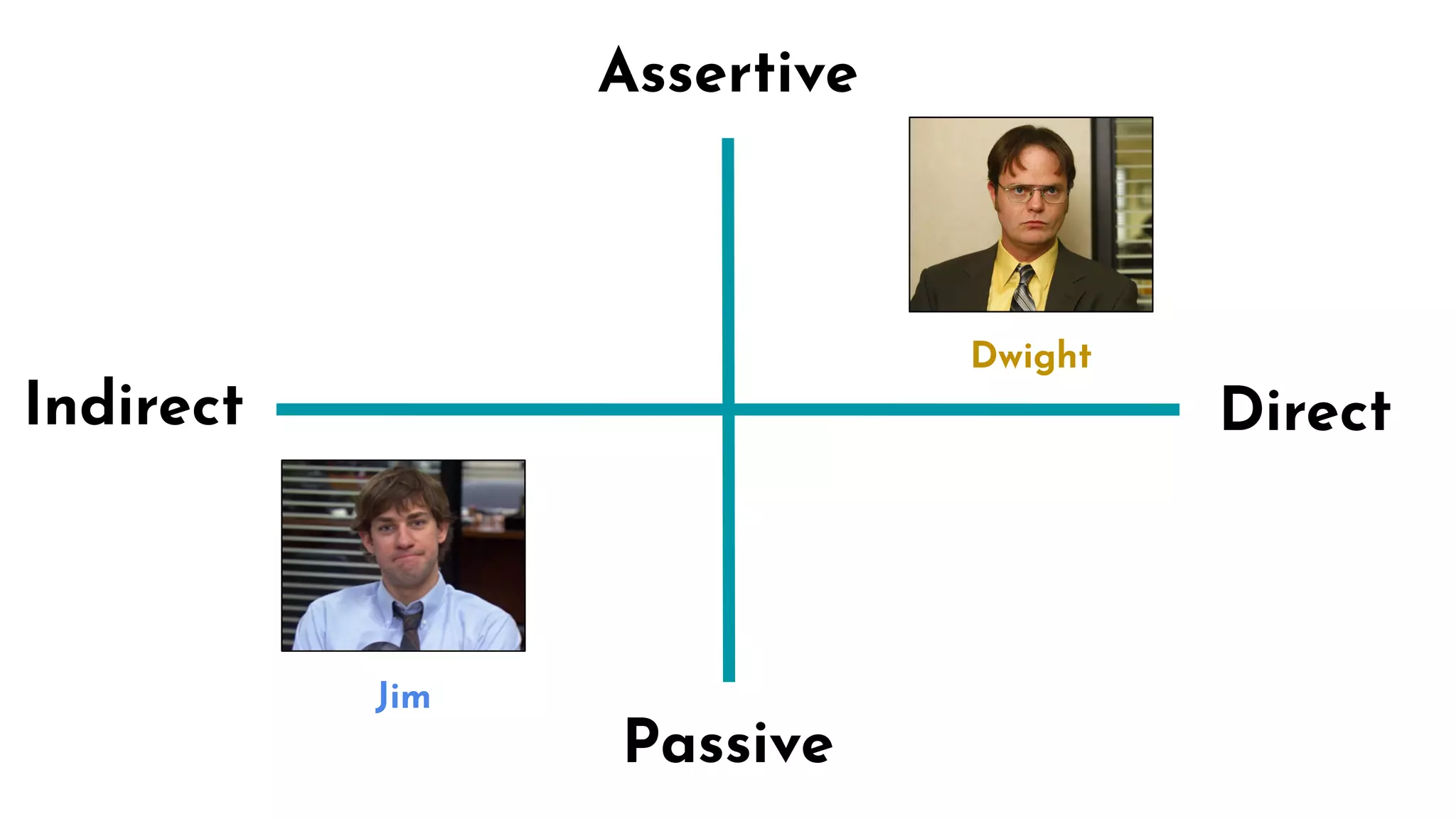
DirectIndirect
Assertive
Passive
Jim
Dwight
@oliravi
Resolving Conflict
● Be assertive (but not aggressive).
● Make your elevator pitch.
@oliravi
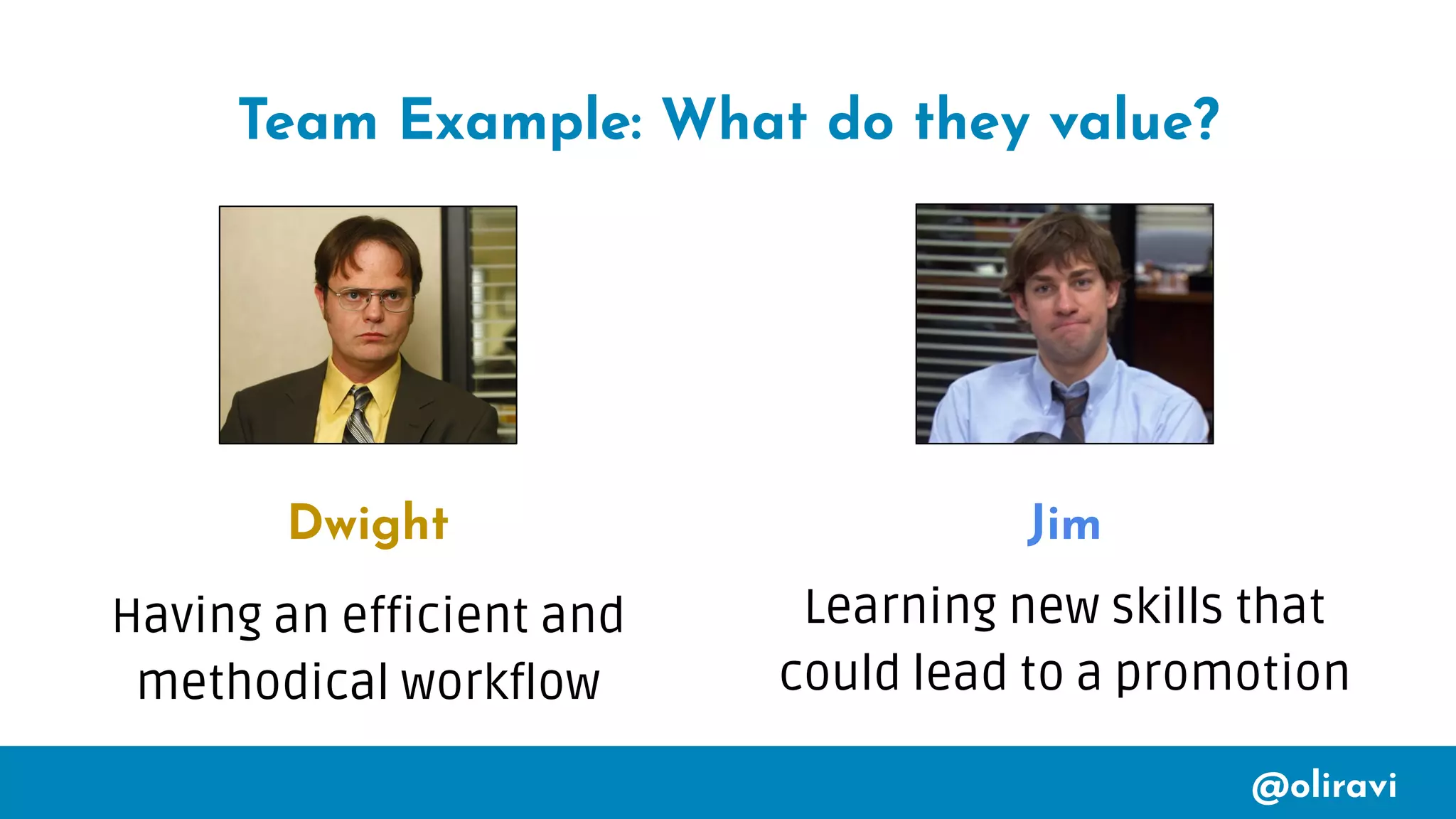
Team Example: What do they value?
Having an efficient and
methodical workflow
Learning new skills that
could lead to a promotion
Dwight Jim
@oliravi
Resolving Conflict
● Be assertive (but not aggressive).
● Make your elevator pitch.
● Follow up with relevant examples or metaphors.
Conclusion
@oliravi
Summary
● Observe your team from an outside perspective.
● When developing an action plan, begin with quick wins.
● Observe how and why team members are responding to change.
● Resolve conflict by offering a solution and value that are based
on your observations.
@oliravi
Additional Resources
● Christopher Hadnagy - Social Engineering: The Art of
Human Hacking
● Kevin Mitnick - The Art of Deception: Controlling the
Human Element of Security
● James P. Spradley - Participant Observation
@oliravi
Additional Resources
● Kim Christfort and Suzanne Vickberg -
Business Chemistry: Practical Magic for Crafting Work
Relationships
● Robert A. Rohm - Positive Personality Profiles
● Prosci: ADKAR Model for Change Management
@oliravi
Thank you!
Slides: olivialiddell.com

Olivia Liddell - Chicago PHP User Group - Socially Engineering Your Pathway to a Better Team

  • 1.
    Socially Engineering Your Pathwayto a Better Team Olivia Liddell @oliravi
  • 2.
    @oliravi About Me ● TechnicalCurriculum Developer at Amazon Web Services ● Certified Ethical Hacker and Computer Hacking Forensic Investigator ● Background in cultural anthropology and change management
  • 3.
    @oliravi Agenda ● Assessing yourteam’s current strengths and areas of improvement ● Developing an action plan to initiate change ● Using ongoing observation techniques to effectively manage change ● Resolving conflict, particularly for team members with different communication styles
  • 4.
    @oliravi What is SocialEngineering? “...any act that influences a person to take an action that may or may not be in their best interest.” - Security Through Education
  • 5.
    @oliravi “The goal ofthe social engineer is to get you to make a decision without thinking. The more you think, the more likely you are to realize you are being manipulated, which of course is bad for the attacker.” - Christopher Hadnagy, Social Engineering: The Art of Human Hacking
  • 7.
    @oliravi My Observations aboutthe Location Huge resort with some rooms about a 15-minute walk from the main lobby
  • 8.
    @oliravi My Observations aboutthe Location Most guests were wearing relaxed attire, shorts, swimwear, etc.
  • 9.
    @oliravi My Observations aboutthe Location The busiest times for the lobby were between 12-3 PM
  • 10.
    @oliravi My Observations aboutthe Front Desk Agents Afternoon: 10 front desk agents were working
  • 11.
    @oliravi My Observations aboutthe Front Desk Agents New agents were wearing a special “Trainee” badge
  • 12.
    @oliravi My Observations aboutthe Front Desk Agents Some agents were more talkative than others
  • 13.
    @oliravi My Observations aboutthe Front Desk Agents Some agents were smiling and using more hand gestures than others
  • 14.
    @oliravi My Observations aboutthe Front Desk Agents Differences in how the agents called out to the next person in line
  • 15.
    Observe your teamfrom an outside perspective.
  • 16.
    @oliravi “Ethnography is thework of describing a culture. The central aim of ethnography is to understand another way of life from the native point of view. [...] Rather than studying people, ethnography means learning from people.” - James P. Spradley, Participant Observation
  • 17.
    @oliravi Describe your team. ●Size ● Location(s) ● Remote percentage ● Single department or cross-functional
  • 18.
    @oliravi Describe your team. ●Range of technical skills ● How long has the team been together? ● Which members tend to speak most often in meetings?
  • 19.
    @oliravi Describe your team. ●Which members prefer to share their ideas through other communication channels? ● How frequently do more senior members pair together with more junior members? ● How do members interact with each other outside of meetings or project settings?
  • 20.
  • 21.
    When developing anaction plan, begin with quick wins.
  • 23.
    @oliravi “As a socialengineer, remember that you don’t need to immediately go for the exact flags you need. Get some minor ones to help build those feelings that will lead the person to concede and comply.” - Christopher Hadnagy, Social Engineering: The Art of Human Hacking
  • 24.
  • 25.
    @oliravi Hotel Example ● Good:Any personal information that they can provide ○ Phone number ○ Email address ○ Type of credit card that was used to reserve the room ● Better: Room number ● Best: Keycard to access the room
  • 26.
    @oliravi Team Example ● Good:More juniors asking for help from their senior colleagues ● Better: Lunch and Learn sessions to share knowledge and build skills ● Best: A formal mentorship program to pair junior and senior team members together
  • 27.
    Observe how andwhy team members are responding to change.
  • 29.
    @oliravi What do theyvalue? What’s in it for them? Why should they want to do this?
  • 30.
    @oliravi Prosci: ADKAR Modelfor Change Management Awareness of the need for change Desire to support the change Knowledge of how to change Ability to demonstrate skills and behaviors Reinforcement to make the change stick
  • 31.
    @oliravi Hotel Example: Whatdo they value? ● Helping the guest to have a smooth and positive interaction ● Helping someone in distress to have a better day ● Depending on the agent: ○ Being able to quickly move onto the next guest in line - OR - ○ Spending more time making a meaningful connection with the guest
  • 32.
    Resolve conflict byoffering a solution and value that are based on your observations.
  • 34.
    @oliravi What do theyvalue? What’s in it for them? Why should they want to do this?
  • 35.
    @oliravi Dwight “I have toask our manager if it’s okay for me to help you.” Jim “Before I can help you, we need to fix Jira first.” �
  • 36.
  • 37.
    @oliravi Resolving Conflict ● Beassertive (but not aggressive). ● Make your elevator pitch.
  • 38.
    @oliravi Team Example: Whatdo they value? Having an efficient and methodical workflow Learning new skills that could lead to a promotion Dwight Jim
  • 39.
    @oliravi Resolving Conflict ● Beassertive (but not aggressive). ● Make your elevator pitch. ● Follow up with relevant examples or metaphors.
  • 40.
  • 41.
    @oliravi Summary ● Observe yourteam from an outside perspective. ● When developing an action plan, begin with quick wins. ● Observe how and why team members are responding to change. ● Resolve conflict by offering a solution and value that are based on your observations.
  • 42.
    @oliravi Additional Resources ● ChristopherHadnagy - Social Engineering: The Art of Human Hacking ● Kevin Mitnick - The Art of Deception: Controlling the Human Element of Security ● James P. Spradley - Participant Observation
  • 43.
    @oliravi Additional Resources ● KimChristfort and Suzanne Vickberg - Business Chemistry: Practical Magic for Crafting Work Relationships ● Robert A. Rohm - Positive Personality Profiles ● Prosci: ADKAR Model for Change Management
  • 45.