Retaining Staffs
and Overcoming
Generation
Gaps
18-19 April 2023
by Mr Alex Soh
Retaining
Staffs
Resignation
Reasons
Reasons
for
Quitting
1. They get tired of arguing their positions
2. They get tired of being overlooked and
ignored
3. They don't have faith in their leaders to
run the organization effectively
4. They are exhausted.
5. They get fed up with internal politics.
6. They have big ideas they want to put into practice -- but their
current organization is too hidebound and slow-moving to let
them do it.
Reasons
for
Quitting
7. They are underpaid relative to the market --
or underpaid relative to what they could
earn somewhere else.
8. They want to move up faster than your company's
structure, culture and policies will allow them to do.
9. They want to change career paths and there's no way
to do it in your organization.
10.They want to work for themselves.
Advantages of
Resignation
• Not all resignations were bad. Some were
good and timely
• The great resignation revealed who in your
team are truly reliable
• Some who resigned formally had already
resigned emotionally a long time ago
• The great resignation also reveals the
limitedness of growth where they are
• The great resignation calls for the great
renegotiation
Retaining
Staffs
Its important to
retain
employees
1. A stronger workforce
2. Increased productivity
3. Improved morale
4. Decreased costs
Tips to
retain an
employee
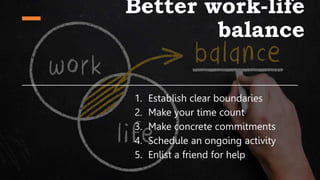
Better work-life
balance
1. Establish clear boundaries
2. Make your time count
3. Make concrete commitments
4. Schedule an ongoing activity
5. Enlist a friend for help
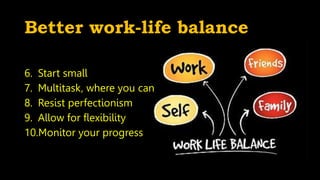
Better work-life balance
6. Start small
7. Multitask, where you can
8. Resist perfectionism
9. Allow for flexibility
10.Monitor your progress
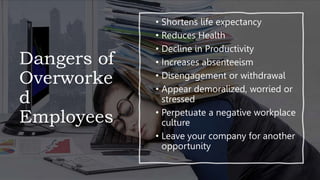
Dangers of
Overworke
d
Employees
• Shortens life expectancy
• Reduces Health
• Decline in Productivity
• Increases absenteeism
• Disengagement or withdrawal
• Appear demoralized, worried or
stressed
• Perpetuate a negative workplace
culture
• Leave your company for another
opportunity
Empathiz
e
• Empathize with
your high
performer (the
eagles of your
team)
• Give attention
• Help wherever you
can
• Know what they
want
• Offer Flexibility
Feedbacks and
Mentoring
1. Specific – Clear business focus
2. Timely – Action plan
3. Meaningful – add content and
precision
4. Goal-Oriented – See a bigger picture
5. Focuses on the Future
6. Being effective; is about the Process
and not Person
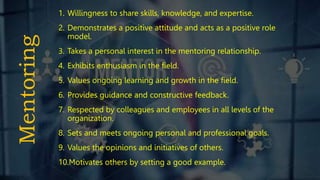
Mentoring
1. Willingness to share skills, knowledge, and expertise.
2. Demonstrates a positive attitude and acts as a positive role
model.
3. Takes a personal interest in the mentoring relationship.
4. Exhibits enthusiasm in the field.
5. Values ongoing learning and growth in the field.
6. Provides guidance and constructive feedback.
7. Respected by colleagues and employees in all levels of the
organization.
8. Sets and meets ongoing personal and professional goals.
9. Values the opinions and initiatives of others.
10.Motivates others by setting a good example.
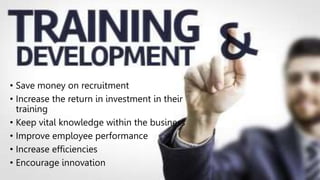
• Save money on recruitment
• Increase the return in investment in their
training
• Keep vital knowledge within the business
• Improve employee performance
• Increase efficiencies
• Encourage innovation
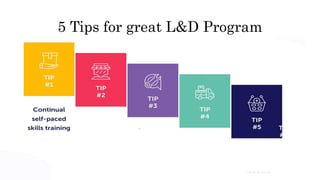
5 Tips for great L&D Program
Conduct Retention Interviews
Develop
Second
Line

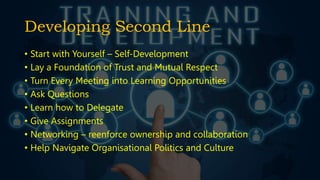
Developing Second Line

• Start with Yourself – Self-Development
• Lay a Foundation of Trust and Mutual Respect
• Turn Every Meeting into Learning Opportunities
• Ask Questions
• Learn how to Delegate
• Give Assignments
• Networking – reenforce ownership and collaboration
• Help Navigate Organisational Politics and Culture
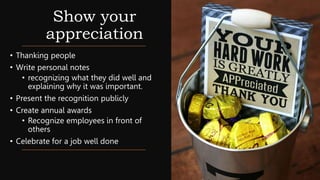
Show your
appreciation
• Thanking people
• Write personal notes
• recognizing what they did well and
explaining why it was important.
• Present the recognition publicly
• Create annual awards
• Recognize employees in front of
others
• Celebrate for a job well done
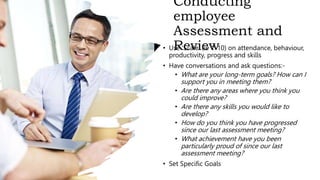
Conducting
employee
Assessment and
Review
• Use ‘Scale’ (ie 1-10) on attendance, behaviour,
productivity, progress and skills
• Have conversations and ask questions:-
• What are your long-term goals? How can I
support you in meeting them?
• Are there any areas where you think you
could improve?
• Are there any skills you would like to
develop?
• How do you think you have progressed
since our last assessment meeting?
• What achievement have you been
particularly proud of since our last
assessment meeting?
• Set Specific Goals
Heart Surgeons
Heart Surgeons
• Patient Waiting List
• 31 year old male; Thai , brain surgeon at the height of his career; no
children
• 12 year old female; Vietnamese; accomplished violinist; blind
• 40 year old male; Singaporean, teacher, 2 children
• 15 year old female; Malay, unmarried, 6 months pregnant
• 35 year old male; Indian; Roman Catholic priest
• 17 year old female; Bangladeshi; waitress; high school dropout;
supports/cares for a brother who is severely disabled
• 38 year old female; Chinese; AIDS researcher; no children; lesbian
Provide
competitive
compensation
and benefits
Compensation
Packages
include
• Salary
• Paid holidays, vacations (and sick days)
• Medical, dental and vision insurance
• Retirement savings plan
• Subsidized Training and Education
• Family and child-care facilities
Assessing compensation package
1. Consider what's important to you
2. Know the details
3. Determine the
eligibility
requirements
4. Set a benchmark
5. Consider asking additional
questions
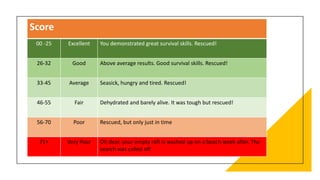
Score
00 -25 Excellent You demonstrated great survival skills. Rescued!
26-32 Good Above average results. Good survival skills. Rescued!
33-45 Average Seasick, hungry and tired. Rescued!
46-55 Fair Dehydrated and barely alive. It was tough but rescued!
56-70 Poor Rescued, but only just in time
71+ Very Poor Oh dear, your empty raft is washed up on a beach week after. The
search was called off
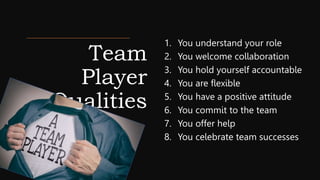
Team
Player
Qualities
1. You understand your role
2. You welcome collaboration
3. You hold yourself accountable
4. You are flexible
5. You have a positive attitude
6. You commit to the team
7. You offer help
8. You celebrate team successes
Leaders’ Responses
• What do you think is missing from
our team?
• How do you view your contribution
to the team?
• Do you think you are important in
your department?
• As a leader/manager/supervisor
what have you done to benefit the
team?
• How do you feel as part of the
group?
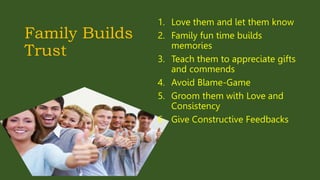
Family Builds
Trust
1. Love them and let them know
2. Family fun time builds
memories
3. Teach them to appreciate gifts
and commends
4. Avoid Blame-Game
5. Groom them with Love and
Consistency
6. Give Constructive Feedbacks
DRAW
Keep
communicat
ion Open
COMMUNICATION CASE
STUDY
You are the manager of the Operations division. Communication
issues had devolved into ongoing conflict. The division was in the
midst of re-engineering and downsizing; stress soared and
tempers flared. Instead of resolving their differences, employees
filed complaints. As the conflict soared, productivity dropped.
Plus, HR managers and union stewards were
overwhelmed with numerous time-wasting
complaints.
1. Be clear and concise
2. Prepare ahead of time
3. Be mindful of nonverbal communication
4. Watch your tone
5. Practice active listening
6. Build your Emotional Intelligence
7. Develop a workplace communication strategy
8. Create a positive organizational culture
Retaining Gen Y Employees
Retention
4 Ways to Improve Engagement of
Disengaged Employees
Strategies for
• Have room for innovation and creativity
• Changing for working environment
• Sabbatical and off record paid leaves
• Professional training and courses
• Education for families, social gatherings for family and childcare
• Flexible working hours or work from home policy. Empowering
employess

Retention.pptx

  • 1.
  • 2.
  • 4.
  • 6.
    Reasons for Quitting 1. They gettired of arguing their positions 2. They get tired of being overlooked and ignored 3. They don't have faith in their leaders to run the organization effectively 4. They are exhausted. 5. They get fed up with internal politics. 6. They have big ideas they want to put into practice -- but their current organization is too hidebound and slow-moving to let them do it.
  • 7.
    Reasons for Quitting 7. They areunderpaid relative to the market -- or underpaid relative to what they could earn somewhere else. 8. They want to move up faster than your company's structure, culture and policies will allow them to do. 9. They want to change career paths and there's no way to do it in your organization. 10.They want to work for themselves.
  • 8.
    Advantages of Resignation • Notall resignations were bad. Some were good and timely • The great resignation revealed who in your team are truly reliable • Some who resigned formally had already resigned emotionally a long time ago • The great resignation also reveals the limitedness of growth where they are • The great resignation calls for the great renegotiation
  • 9.
  • 10.
    Its important to retain employees 1.A stronger workforce 2. Increased productivity 3. Improved morale 4. Decreased costs
  • 11.
  • 12.
    Better work-life balance 1. Establishclear boundaries 2. Make your time count 3. Make concrete commitments 4. Schedule an ongoing activity 5. Enlist a friend for help
  • 13.
    Better work-life balance 6.Start small 7. Multitask, where you can 8. Resist perfectionism 9. Allow for flexibility 10.Monitor your progress
  • 15.
    Dangers of Overworke d Employees • Shortenslife expectancy • Reduces Health • Decline in Productivity • Increases absenteeism • Disengagement or withdrawal • Appear demoralized, worried or stressed • Perpetuate a negative workplace culture • Leave your company for another opportunity
  • 16.
    Empathiz e • Empathize with yourhigh performer (the eagles of your team) • Give attention • Help wherever you can • Know what they want • Offer Flexibility
  • 17.
    Feedbacks and Mentoring 1. Specific– Clear business focus 2. Timely – Action plan 3. Meaningful – add content and precision 4. Goal-Oriented – See a bigger picture 5. Focuses on the Future 6. Being effective; is about the Process and not Person
  • 18.
    Mentoring 1. Willingness toshare skills, knowledge, and expertise. 2. Demonstrates a positive attitude and acts as a positive role model. 3. Takes a personal interest in the mentoring relationship. 4. Exhibits enthusiasm in the field. 5. Values ongoing learning and growth in the field. 6. Provides guidance and constructive feedback. 7. Respected by colleagues and employees in all levels of the organization. 8. Sets and meets ongoing personal and professional goals. 9. Values the opinions and initiatives of others. 10.Motivates others by setting a good example.
  • 22.
    • Save moneyon recruitment • Increase the return in investment in their training • Keep vital knowledge within the business • Improve employee performance • Increase efficiencies • Encourage innovation
  • 24.
    5 Tips forgreat L&D Program
  • 25.
  • 26.
  • 27.
    Developing Second Line •Start with Yourself – Self-Development • Lay a Foundation of Trust and Mutual Respect • Turn Every Meeting into Learning Opportunities • Ask Questions • Learn how to Delegate • Give Assignments • Networking – reenforce ownership and collaboration • Help Navigate Organisational Politics and Culture
  • 31.
    Show your appreciation • Thankingpeople • Write personal notes • recognizing what they did well and explaining why it was important. • Present the recognition publicly • Create annual awards • Recognize employees in front of others • Celebrate for a job well done
  • 32.
    Conducting employee Assessment and Review • Use‘Scale’ (ie 1-10) on attendance, behaviour, productivity, progress and skills • Have conversations and ask questions:- • What are your long-term goals? How can I support you in meeting them? • Are there any areas where you think you could improve? • Are there any skills you would like to develop? • How do you think you have progressed since our last assessment meeting? • What achievement have you been particularly proud of since our last assessment meeting? • Set Specific Goals
  • 34.
  • 35.
    Heart Surgeons • PatientWaiting List • 31 year old male; Thai , brain surgeon at the height of his career; no children • 12 year old female; Vietnamese; accomplished violinist; blind • 40 year old male; Singaporean, teacher, 2 children • 15 year old female; Malay, unmarried, 6 months pregnant • 35 year old male; Indian; Roman Catholic priest • 17 year old female; Bangladeshi; waitress; high school dropout; supports/cares for a brother who is severely disabled • 38 year old female; Chinese; AIDS researcher; no children; lesbian
  • 36.
  • 37.
    Compensation Packages include • Salary • Paidholidays, vacations (and sick days) • Medical, dental and vision insurance • Retirement savings plan • Subsidized Training and Education • Family and child-care facilities
  • 38.
    Assessing compensation package 1.Consider what's important to you 2. Know the details 3. Determine the eligibility requirements 4. Set a benchmark 5. Consider asking additional questions
  • 41.
    Score 00 -25 ExcellentYou demonstrated great survival skills. Rescued! 26-32 Good Above average results. Good survival skills. Rescued! 33-45 Average Seasick, hungry and tired. Rescued! 46-55 Fair Dehydrated and barely alive. It was tough but rescued! 56-70 Poor Rescued, but only just in time 71+ Very Poor Oh dear, your empty raft is washed up on a beach week after. The search was called off
  • 42.
    Team Player Qualities 1. You understandyour role 2. You welcome collaboration 3. You hold yourself accountable 4. You are flexible 5. You have a positive attitude 6. You commit to the team 7. You offer help 8. You celebrate team successes
  • 43.
    Leaders’ Responses • Whatdo you think is missing from our team? • How do you view your contribution to the team? • Do you think you are important in your department? • As a leader/manager/supervisor what have you done to benefit the team? • How do you feel as part of the group?
  • 45.
    Family Builds Trust 1. Lovethem and let them know 2. Family fun time builds memories 3. Teach them to appreciate gifts and commends 4. Avoid Blame-Game 5. Groom them with Love and Consistency 6. Give Constructive Feedbacks
  • 46.
  • 47.
  • 48.
    COMMUNICATION CASE STUDY You arethe manager of the Operations division. Communication issues had devolved into ongoing conflict. The division was in the midst of re-engineering and downsizing; stress soared and tempers flared. Instead of resolving their differences, employees filed complaints. As the conflict soared, productivity dropped. Plus, HR managers and union stewards were overwhelmed with numerous time-wasting complaints.
  • 49.
    1. Be clearand concise 2. Prepare ahead of time 3. Be mindful of nonverbal communication 4. Watch your tone 5. Practice active listening 6. Build your Emotional Intelligence 7. Develop a workplace communication strategy 8. Create a positive organizational culture
  • 50.
    Retaining Gen YEmployees
  • 51.
  • 52.
    4 Ways toImprove Engagement of Disengaged Employees
  • 53.
    Strategies for • Haveroom for innovation and creativity • Changing for working environment • Sabbatical and off record paid leaves • Professional training and courses • Education for families, social gatherings for family and childcare • Flexible working hours or work from home policy. Empowering employess