189
Sparks, L., ηÈRamsey, P. (2006), «¶Ï·›ÛÈÔ ÂÚÁ·Û›·˜ ÁÈ· Âη›‰Â˘ÛË ÔÏÈÙÈÛÌÈο Û¯ÂÙÈ΋, ÔÏ˘Ô-
ÏÈÙÈÛÌÈ΋ Î·È ÂÓ¿ÓÙÈ· ÛÙȘ ÚÔηٷϋ„ÂȘ», ÛÙÔ: Roopnarine, J., & Johnson, J. (ÂÈÌ.), ¶ÔÈÔ-
ÙÈο ÚÔÁÚ¿ÌÌ·Ù· ÚÔÛ¯ÔÏÈ΋˜ Âη›‰Â˘Û˘: ¶·Ú·‰Â›ÁÌ·Ù· ·fi ÙË ‰ÈÂıÓ‹ Ú·ÎÙÈ΋, 717-
764, ∞ı‹Ó·, ¶··˙‹Û˘.
™Ù¿ÌÔ˘, §. (2006), «™ËÌ·ÓÙÈο ÂÚ¢ÓËÙÈο Â˘Ú‹Ì·Ù· ÁÈ· ÙË ÌÔ˘ÛÈ΋ ·Ó¿Ù˘ÍË Î·Ù¿ ÙË ‚ÚÂÊÈ΋ ηÈ
·È‰È΋ ËÏÈΛ·: ∏ ·Ó·ÁηÈfiÙËÙ· ·Ó·ÚÔÛ·Ó·ÙÔÏÈÛÌÔ‡ Ù˘ ÂÎ·È‰Â˘ÙÈ΋˜ ÔÏÈÙÈ΋˜», ÛÙÔ: §.
∫·ÚÙ·Û›‰Ô˘, §. ™Ù¿ÌÔ˘ (ÂÈÌ.), ªÔ˘ÛÈ΋ ·È‰·ÁˆÁÈ΋, ÌÔ˘ÛÈ΋ Âη›‰Â˘ÛË ÛÙËÓ ÂȉÈ΋
·ÁˆÁ‹, ÌÔ˘ÛÈÎÔıÂڷ›·: ™‡Á¯ÚÔÓ˜ Ù¿ÛÂȘ Î·È ÚÔÔÙÈΤ˜, £ÂÛÛ·ÏÔÓ›ÎË, ∂ΉfiÛÂȘ ¶·ÓÂ-
ÈÛÙËÌ›Ô˘ ª·Î‰ÔÓ›·˜.
™ˆÙËÚÔÔ‡ÏÔ˘-∑ÔÚÌ·Ï¿, M. (2007), ∫¿ı ̤ڷ ÚÂÌȤڷ: ∞ÈÛıËÙÈ΋ ÚÔÛ¤ÁÁÈÛË Ù˘ ÁÓÒÛ˘ ÛÙÔ
ÓËÈ·ÁˆÁÂ›Ô Î·È ÛÙÔ ‰ËÌÔÙÈÎfi Û¯ÔÏ›Ô, ∞ı‹Ó·, «∂ÏÏËÓÈο °Ú¿ÌÌ·Ù·».
Tiedt, P., & Tiedt, J. (2006), ¶ÔÏ˘ÔÏÈÙÈÛÌÈ΋ ‰È‰·Ûηϛ·, Δ. ¶Ï˘Ù¿ (ÌÙÊÚ.) ∞ı‹Ó·, ¶··˙‹Û˘.
ΔÚÈÏÏÈ·Ófi˜, £. (2003), ªÂıÔ‰ÔÏÔÁ›· Ù˘ Û‡Á¯ÚÔÓ˘ ‰È‰·Ûηϛ·˜, μ’ ÙfiÌÔ˜, ∞ı‹Ó·, ·˘ÙԤΉÔÛË.
Δ۷ΛÚË, ¢., Î·È ∫·ÂÙ·Ó›‰Ô˘, ª. (2007), «£ÂˆÚ›Â˜ Ì¿ıËÛ˘ Î·È ‰ËÌÈÔ˘ÚÁÈ΋ - ÎÚÈÙÈ΋ ÛΤ„Ë»,
ÛÙÔ: μ. ∫Ô˘Ï·˚‰‹˜ (ÂÈÌ.), ™‡Á¯ÚÔÓ˜ ‰È‰·ÎÙÈΤ˜ ÚÔÛÂÁÁ›ÛÂȘ ÁÈ· ÙËÓ ·Ó¿Ù˘ÍË ÎÚÈÙÈ΋˜ -
‰ËÌÈÔ˘ÚÁÈ΋˜ ÛΤ„˘ ÁÈ· ÙËÓ ÚˆÙÔ‚¿ıÌÈ· Âη›‰Â˘ÛË, ∞ı‹Ó·, O∂¶∂∫.
ΔÛ··Î›‰Ô˘, ∞. (1997), ∫ÈÓËÙÈΤ˜ ‰ÂÍÈfiÙËÙ˜: ¶ÚÔÁÚ¿ÌÌ·Ù· ·Ó¿Ù˘Í˘ ÎÈÓËÙÈÎÒÓ ‰ÂÍÈÔÙ‹ÙˆÓ ÛÂ
·È‰È¿ ÚÔÛ¯ÔÏÈ΋˜ ËÏÈΛ·˜, £ÂÛÛ·ÏÔÓ›ÎË, University Studio Press.
ΔÛÈÏËÙ¿Ú˘, ∞. (2001), ∏ ÎÔÈÓˆÓÈÎÔÔ›ËÛË ÙÔ˘ ·È‰ÈÔ‡: ªÈ· „˘¯ÔÎÔÈÓˆÓÈÔÏÔÁÈ΋ ÚÔÛ¤ÁÁÈÛË ÛÙ·
Ï·›ÛÈ· Ù˘ ÔÈÎÔÁ¤ÓÂÈ·˜ Î·È ÙÔ˘ Û¯ÔÏ›Ԣ, ∞ı‹Ó·, «∞ÙÚ·fi˜».
ÀÔ˘ÚÁÂ›Ô ¶·È‰Â›·˜ Î·È ¶ÔÏÈÙÈÛÌÔ‡ ∫‡ÚÔ˘ (2002), OÈ Ê˘ÛÈΤ˜ ÂÈÛً̘ ÛÙÔ ÓËÈ·ÁˆÁ›Ô: μÔ‹-
ıËÌ· ÁÈ· ÙË ÓËÈ·ÁˆÁfi, §Â˘ÎˆÛ›·, À¶¶∫.
ºÚ¿ÁÎÔ˜, Ã. (1993), «μ·ÛÈΤ˜ ‰ÈÂÈÛÙËÌÔÓÈΤ˜ Û˘ÓÈÛÙÒÛ˜ Ù˘ Âη›‰Â˘Û˘ ÙÔ˘ ·È‰ÈÔ‡ ÚÔÛ¯ÔÏÈ-
΋˜ ËÏÈΛ·˜», ¶Ú·ÎÙÈο 6Ô˘ ¶·ÓÂÏÏ‹ÓÈÔ˘ ∂Î·È‰Â˘ÙÈÎÔ‡ ™˘Ó‰ڛԢ ¢O∂ - ¶O∂¢, ∞ı‹Ó·,
∂ÈÛÙËÌÔÓÈÎfi μ‹Ì· ¢·ÛοÏÔ˘.
Friedrich, H. (2000), ∂ÈÎÔÈÓˆÓ›· ÛÙÔ ÓËÈ·ÁˆÁ›Ô: Δ· ·È‰È¿ ˆ˜ ·ÎÚÔ·Ù¤˜ Î·È ÔÌÈÏËÙ¤˜, ∫. ÃÚ˘-
Û·Ê›‰Ë˜ (ÂÈÌ.), ∞ı‹Ó·, «Δ˘ˆı‹Ùˆ» - °ÈÒÚÁÔ˜ ¢·Ú‰·Ófi˜.
÷Ù˙ËÁˆÚÁ›Ô˘, °. (1998), °ÓÒıÈ ÙÔ curriculum: °ÂÓÈο Î·È ÂȉÈο ı¤Ì·Ù· ·Ó·Ï˘ÙÈÎÒÓ ÚÔÁÚ·ÌÌ¿-
ÙˆÓ Î·È ‰È‰·ÎÙÈ΋˜, ∞ı‹Ó·, «∞ÙÚ·fi˜».
ÃÚ˘Û·Ê›‰Ë˜, ∫. (1994), μȈ̷ÙÈ΋ - ÂÈÎÔÈÓˆÓȷ΋ ‰È‰·Ûηϛ·: ∏ ÂÈÛ·ÁˆÁ‹ Ù˘ ÌÂıfi‰Ô˘ project ÛÙÔ
Û¯ÔÏ›Ô, ∞ı‹Ó·, «Gutenberg».
•ÂÓfiÁψÛÛË ‚È‚ÏÈÔÁÚ·Ê›·
Alt, Ch. (hrsg.), (2007), Kinderleben – Start in die Grundschule, Band 3: Ergebnisse aus der zweiten
Welle, Verlag für Sozialwissenschaften, Wiesbaden.
Barnett, W. S., & Boocock, S. (1998), Early care and education for children in poverty, Albany, State
University Press.
Bertram, T., Pascal, C. (2001), Early excellence centre pilot programme: Annual evaluation report 2000,
DfES, London.
Bloom, B. (1964), Stability and change in human characteristics, New York, Wiley & Sons.
Bruner, J. (1960), The process of education, New York, Random House.
Carr, M. (2007), Assessment in early childhood settings, London, Sage.
Chavez, A., & Guido-DiBrito, F. (1999), «Racial and ethnic identity and development», New
Directions for Adult and Continuing Education, 84, 39-47.
Clark, P., & Kirk, E. (2000), «All-day kindergarten: review of research», Childhood Education, 76,
228-231.
Cohen, D., & Mackeith, S. (1991), The development of imagination: The private worlds of children,
London, Routledge.
Curtis, D., & Curter, M. (2003), Designs for living and learning: Transforming early childhood environments,
Korea, Redleaf Press.
Cryan, J., Sheehan, R., Wiechel, J., & Bandy-Hellen, J. (1992), «Success outcomes of full-day
kindergarten: more positive behavior and increased achievement in the years after», Early
Childhood Research Quarterly, 7, 2, 187-203.
186.
190
Da Costa, J., & Bell, S. (2001), «A competition of the literacy effects of full-day vs. half-day kinder-
garten», Paper presented at the annual conference of the American Educational Research
Association, Seattle Washington.
Dawson, G., & Fischer, K. (eds), (1994), Human behavior and the developing brain, New York,
Guilford.
Diskowski, D. et al. (hrsg.), (2006), Übergänge gestalten, Verlag das netz, Weimar-Berlin.
Dunlop, A.-W., Fabian, H. (eds), (2007), Informing transitions in the early years, London, Open
University Press.
Elicker, J., & Mathur, S. (1997), «What do they do all-day? Comprehensive evaluation of a full-day
kindergarten», Early Childhood Research Quarterly, 12, 4, 459-480.
Ellison, L. (2001), The personal intelligences: Promoting social and emotional learning, UK, Sage.
Emery, J., Piche, C., & Rokavek, C. (1998), Kindergarten Programs: Full versus half-day. A brief history
and research synopsis, Indiana University of Pennsylvania, Bethesda MD.
Frost, J., & Wortham, S. (1988), «The evolution of American playgrounds», Young Children, 43, 5, 19-28.
Fusaro, J. (1997), «The effect of full-day kindergarten on student achievement: A meta-analysis»,
Child Study Journal, 27, 4, 269-280.
Gardner, D. (1993), Frames of mind (second edition), Great Britain, Fontana Press.
Gay, G. (2000), Culturally responsive teaching: Theory, research and practice, New York, Teachers
College Press.
Goleman, D. (1996), Emotional intelligences: Why it matter more that IQ, Great Britain, Bloomsbury.
Govaris, Ch., Kodakos, A. (2003), «Multikulturelle Gesellschaft und interkulturelle Erziehung: Orientie-
rungen griechischer Volksschullehrerinnen und Volksschullehrer», in: Tertium Comparationis, 9,
2, 124-138.
Griebel, W., Niesel, R. (2002), «Co-contructing transition into kindergarten and school by children,
parents and teachers», in: Fabian, H., Dunlop, A.-W. (eds), Transitions in the early years,
London, New York, Routledge Falmer, 64-75.
Gullo, D., Bersani, G., Clements, D., & Bayless, K. (1986), «A comparative study of all-day, alternate-
day and half-day kindergarten schedules: Effects on achievement and classroom social
behaviours», Journal of Research in Childhood Education, 1, 87-94.
Gullo, D. (1990), «The changing family context: Implications for the development of all-day
kindergartens», Young Children, 45, 4, 35-39.
Gullo, D. (2000), «The long term educational effects of hald-day vs. full-day kindergarten», Early
Child Development and Care, 160, 17-24.
Hall, N., & Robinson, A. (2003), Exploring writing and play in the early years, London, David Fulton
Publishers.
Holmes, C., & McConnell, B. (1990), Full-day versus half-day kindergarten: An experimental study,
Paper presented at the Annual Meeting of the American Educational Research Association,
Boston, MA.
Hough, D., & Bryde, S. (1995), Summative evaluation of the spring-field K12 public schools full-day
kindergarten program, Unpublished evaluation from Springfield public schools, Springfield,
MO, July 26, 1995.
Hough, D., & Bryde, S. (1996), The effects of full-day kindergarten on students achievement and affect,
Paper presented at the Annual Conference of the American Educational Research
Association, New York.
Housden, T., & Kam, R. (1992), Full-day kindergarten: A summary of the research, Carmichael, CA, San
Juan Unified School District.
Hunt, J. (1961), Intelligence and experience, New York, The Ronald Press.
Isbell, R., & Exelby, B. (2001), Early learning environments that work, Beltsville, MD, Gryphon house,
inc.
Johnson, J. (1993), Language development component: All-day kindergarten program 1991-1992, Final
evaluation report elementary and secondary education act - chapter, Columbus, OH, Columbus
Public Schools, Department of Program Evaluation, ed. 363406.
Johnson, M. H. (1997), Developmental cognitive neuroscience: An introduction, Cambridge, England,
Blackwell.
187.
191
Jordan, B. (2004),«Scaffolding learning and co-constructing understandings», in: A. Anning, J.
Cullen and M. Fleer (eds), Early childhood education: Society and culture, 31-42, London, Sage.
Kagan, S. (1990), «Readiness 2000: Rethinking rhetric and responsibility», Phi Delta Kappa, 72, 4, 272-274.
Kaplan, D. (2002), «Methodological advances in the analysis of individual growth with relevance to
education policy», Peabody Journal of Education, 77, 4, 189-215.
Karweit, N. (1992), «The kindergarten experience», Educational Leadership, 42, 6, 82-86.
Katz, P. (1982), «Development of children’s racial awareness and inter group attitudes», in: L. Katz
(ed.), Current topics in early childhood education, 17-54, Norwood, NJ, Ablex.
Katz, L. (1995), «The Benefits of mixed-age grouping ERIC Digest, 1-6», ·fi ÙÔ ‰ÈÎÙ˘·Îfi ÙfiÔ:
www.eric.ed.gov
Katz, L., & McClellan, D. (1997), Fostering social competence. The teacher’s role, Washington, DC,
National Association for the Education of Young Children.
Kaufman, J. (1997), Evaluation summary report of full-day kindergarten program, Wisconsin, June 2.
Krechevsky, M., & Mardell, B. (2001), «Four features of learning in groups», in: C. Giudini & C.
Rinaldi (eds), Making learning visible: Children as individual and group learners, 284-294,
Municipality of Reggio Emilia, Project Zero & Reggio Children.
Lambert, E., & Clyde, M. (2003), «Putting Vygotsky to the test», in: D. Lythe (ed.), Play and
educational theory and practice, play and culture studies, Vol. 5, Westport, Conn, Paeger, 59-98.
Larson, J. (2003), Reducing the school performance gap among socio-economically diverse schools:
comparing full-day and half-day kindergarten programs (Rockville, MD, Montgomery County
Public Schools Office of Shared Accountability).
Lazar, I. (1983), «Discussion and implications of the findings», in: Consortium on Longitudinal Studies,
As the twig is bent. Lasting effects of preschool programs, 561-566, Hillsdale, WJ, Erlbaum.
Lee, V., Burkam, D., Ready, D., Honigman, J., & Meisels, S. (2006), «Full-day versus half-day
kindergarten: In which program do children learn more?», American Journal of Education, 112,
163-208.
Leu, H. R. u.a. (2007), Bildungs-und Lerngeschichten, Verlag das netz, Weimar-Berlin.
Levy, A., Woltgang, C., & Koorland, M. (1992), «Socio dramatic play as a method for enhancing the
language performance of kindergarten age students», Early Childhood Research Quarterly, 7,
245-262.
Lublinez, S. (2001), A practical guide to reciprocal teaching, Bothell, WA, Wright Group.
Mallet, M. (2003), Early years non-fiction: a guide to helping young researchers use information texts,
London and New York, Routledge Falmer.
Martinez, S., & Akey, T. (1998), Full-day kindergarten 1997-98 evaluation report, Unpublished evaluation
from Park Hill Public schools, Kansas City, MO, March 1998, with follow-up study summary, May
1999.
Nash, J. (1977, February 3), «Fertile minds», Time, 48-56.
¡ewman, F., & Holzman, C. (1993), Lev Vygotsky: Revolutionary scientist, London, Routledge.
Nevada Policy Research Institute (2006), ·fi ÙÔ ‰ÈÎÙ˘·Îfi ÙfiÔ: www.npri.org
Nicholson, S. (1994), «How not to cheat children: The theory of loose parts», in: G. Coates (ed.),
Alternate learning environments, Dowden, Hutchinson & Ross, Stroudsburg, PA.
Nunneley, J. (1996), «The impact of half-day versus full-day kindergarten programs of student out-
comes: a pilot project» (ERIC Document Reproduction Service No ED 396-857).
Nutbrown, C. (1999), Threads of thinking: Young children learning and the role of early education (2nd
edition), London, Paul Chapman.
Ortega, R. (2003), «Play, activity and thought: Reflections on Piaget’s and Vygotsky’s theories», in:
D. Lytle (ed.), Play and educational theory and practice, Westpott, Conn, Praeger, 99-116.
Pellegrini, A., & Galda, L. (1982), «The effects of thematic-fantasy play training on the development
of children’s story comprehension», American Educational Research Journal, 19, 443-452.
Peters, S. (2002), «Teachers’ perspectives of transitions», in: Fabian, H., Dunlop, A.-W. (eds), Tran-
sitions in the early years, 87-97, London, New York, Routledge Falmer.
Piaget, J. (1970), Science of education and the psychology of the child, New York, Orion Press.
Phillips, D., McCartney, K., & Scarr, S. (1987), «Child-care quality and children’s social develop-
ment», Developmental Psychology, 23, 537-543.
188.
192
Pluker, A., & Zapf, J. (2005), «Short-lived gains or enduring benefits? The long-term impact of full-
day kindergarten», Education Policy Brief, 3, 4.
Puleo, V. T. (1998), «A review and critique of research on full-day kindergarten», Elementary School
Journal, 88, 4, 427-439.
Rathbun, A., & West, J. (2004), Full-day and half-day kindergarten in the United States: findings from
the early childhood longitudinal study, kindergarten class of 1998-1999 (NCES 2000-070),
Washington, DC, National Center for Education Statistics.
Rinaldi, C. (2001), «Documentation and assessment: what is the relationship?», in: C. Giudini & C.
Rinaldi (eds), Making learning visible: Children as individual and group learners, 78-93,
Municipality of Reggio Emilia, Project Zero and Reggio Children.
Roskos, K., Tabors, P., & Lenhart, L. (2004), Oral language and early literacy in preschool: Talking
reading and writin, Newark, DE, International Reading Association.
Schickedanz, J. A. (1999), Much more than the ABC’s, Washington, DC, National Association for the
Education of Young Children.
Siraj-Blatchford, Ir. et al. (2002), Research effective pedagogy in the early years, DfES Research Report
356, DfES, London.
Stofflet, F. P. (1998), Anchorage school district full-day kindergarten study: A follow-up of the kinder-
garten classes of 1987-88, 1988-89 and 1989-90, Anchorage, AK, Anchorage School District
(ERIC Document Reproduction Servise No ED 426790).
Swink, D. F., & Buchaman, R. (1984), «The effects of socio dramatic goal-oriented play and non-goal-
oriented role play on locus of control», Journal of Clinical Psychology, 40, 1.178-1.183.
Δhompson, R. (2004), «Development in the first years of life», in: E. Zigler, D. Singer & S. Bishop-
Josef (eds), Children play: The roots of reading, Washington, DC, Zero Δo Δhree Press.
Towers, J. M. (1991), «Attitudes towards the all-day everyday kindergarten», Children Today, 20, 1,
25-28.
TransKigs (2005-2009), «Stärkung der Bildungs - und Erziehungsqualität in Kindertageseinrichtungen
und Grundschule», Nordrhein-Westfalen, www.transkigs.de
Vecchiotti, S. (2001), Kindergarten: The overlooked school year, New York, Foundation for Child De-
velopment.
Vrinioti, K., Matsagouras, E. (2004), «The transition from kindergarten to school: Social life and learning
in the school class from the perspective of the beginners», European Conference on Education
Research, European Education Research Association (EERA), ƒ¤ı˘ÌÓÔ, 22-25/9/2004:
http://www.leeds.ac.uk/educol/documents/150041.htm
Vygotsky, L. (1978), Mind in Society, Cambridge, MA, Harvard University Press.
Walston, J., & West, J. (2004), Full-day and half-day kindergarten in the United States: Findings from the
early childhood longitudinal study, kindergarten class of 1998-1999, Washington, DC, National
Center for Education statistics.
Walston, J., West, J., & Rathbun, A. (2005), Do the greater academic gains made by full-day kinder-
garten children persist through third grade?, Paper presented at the Annual Meeting of the
American Education Research Association, Montreal, Canada, April.
Wang, Y., & Johnstone, W. G. (1999), «Evaluation of a full-day kindergarten program», ERS
Spectrum, 17, 2, 27-32.
Weare, K. (2000), Promoting mental, emotional and social health: A whole school, Approach London,
Routledge.
Weast, J. (2004), «Early success: closing the opportunity gap for out youngest learners», Rockville,
MD, Montgomery Country Public Schools.
Weiss, A., & Offenberg, R. (2002), Enhancing urban children’s early success in school: The power of full-
day kindergarten, Philadelphia, Public Schools Office of Research and Evaluation.
Weikart, D. (2000), «Early Childhood Education: Need and Opportunity», Paris, UNESCO, 85-87.
Wertsch, J. V. (1985), Vygotsky and the social formation of mind, Cambridge, Mass., Harvard
University Press.
West, J., Denton, K., & Reaney, L. (2001), «The kindergarten year: Findings from the early childhood
longitudinal study, kindergarten class of 1988-99», Washington, DC, National Cender for Education
Statistics, Online at: www.nces.ed.gov/pubs2001/2001023.pdf. (as of July 31, 2006).
195
Greeno, J. G.,Collins, A. M., & Resnick, L. B. (1996), «Cognition and learning», in: D. Berliner &
R. Calfee (eds), Handbook of Educational Psychology (pp. 15-46), New York, Macmillan.
Greenwood, G. E., & Hickman, C. W. (1991), «Research and practice in parent involvement», The
Elementary School Journal, 91 (3), 279-288.
Heward, W. (1996), Exceptional children (5th ed.), New Jersey, Merill/Prentice Hall.
Hunter, L. (2003), «School Psychology: a public health framework III. Managing disruptive behavior
in schools: the value of a public health and evidence-based perspective», Journal of School
Psychology, 41, 39-59.
Leaver, B. L. (1997), Teaching the whole class, Corwin Press.
Moos, R. H., & Moos, B. (1986), Family environment scale (2nd ed.), Palo Alto, Consulting
Psychology Press.
Piaget, J., & Inhelder, B. (1969), The psychology of the child, New York, Basic Books.
Prashnig, B. (1994), «Don’t teach me-let me learn!», Education Today, 94, 16-18.
Pugh, G., & De Ath, E. (1989), Working towards partnership in early years, London, National
Children’s Bureau.
Roffey, S. (2002), School, behaviour & family: Frameworks for working together, London, David Fulton.
Rogoff, B. (1994), «Developing understanding of the idea of communities of learners», Mind, Culture,
and Activity, 1 (4), 209-229.
Schaffer, R. H. (1996), Social development, Oxford, Blackwell.
Sheridan, S. M., & Gutkin, T. B. (2000), «Changing the ecology of school psychology: Examining and
changing our paradigm for the 21st century», School Psychology Review, 29, 485-502.
Symeou, L. (2002), «Present and future home-school relations in Cyprus: An investigation of
teachers’ and parents’ perspectives», The School Community Journal, 12 (2), 7-34.
Sonnenschein, P. (1981), «Parents and professionals: An uneasy relationship», Teaching Exceptional
Children, 14, 62-65.
Tomlinson, S. (1991), Teachers and parents: Home-school partnerships, London, Institute for Public
Policy Research.
Trusty, J. (1998), «Family influences on educational expectations of late adolescents», The Journal of
Educational Research, 91 (5), 260-270.
Vygotsky, L. S. (1978), Mind in society, Cambridge, MA, Harvard University Press.
3Ô˘ ÎÂÊ·Ï·›Ô˘
EÏÏËÓfiÁψÛÛË ‚È‚ÏÈÔÁÚ·Ê›·
∞Ï¢ÚÈ¿‰Ô˘, ∞. (2006), «“∞Ó·Ù˘Íȷ΋ ÚÔÛ¤ÁÁÈÛË” Î·È “¶ÚÔÛ¤ÁÁÈÛË Ù˘ ‰È·ÊÔÚ¿˜” ÛÙË ÓÔËÙÈ΋
ηı˘ÛÙ¤ÚËÛË: ¶·ÚÔ˘Û›·ÛË Î·È ·ÍÈÔÏfiÁËÛ‹ ÙÔ˘˜», ÛÙÔ: º. μÏ¿¯Ô˜, º. ªÔÓÒÙË, ¶. ªÂÙ·ÏÏ›-
‰Ô˘, ∂. ¢ÂÚÌÈÙ˙¿ÎË & ∞. ∫ˆÛÙ·Ú›‰Ô˘-∂˘ÎÏ›‰Ë (ÂÈÌ.), ∂ÈÛÙËÌÔÓÈ΋ ∂ÂÙËÚ›‰· Ù˘ æ˘¯Ô-
ÏÔÁÈ΋˜ ∂Ù·ÈÚ›·˜ μÔÚ›Ԣ ∂ÏÏ¿‰Ô˜, ÙfiÌÔ˜ 4, ÛÛ. 175-196, ∞ı‹Ó·, «∂ÏÏËÓÈο °Ú¿ÌÌ·Ù·».
∞Ó·Ï˘ÙÈο ¶ÚÔÁÚ¿ÌÌ·Ù· ™Ô˘‰ÒÓ EȉÈ΋˜ AÁˆÁ‹˜ (2004), ∞ı‹Ó·, À¶∂¶£.
Bell, D. (1991), «∞ÍÈÔÎÚ·Ù›· Î·È ÈÛfiÙËÙ·», ÛÙÔ: ∫ÂÏ·Ó›‰Ë˜, ª. (ÂÈÌ.), ∫Ú¿ÙÔ˜ ÚfiÓÔÈ·˜ Î·È Âη›-
‰Â˘ÛË, £ÂÛÛ·ÏÔÓ›ÎË, ∫˘ÚȷΛ‰Ë˜, 621-697.
μÏ¿¯Ô˘-ª·Ï·ÊÔ‡ÙË, ∞. (2004), «∂Î·È‰Â˘ÙÈΤ˜ Ú·ÎÙÈΤ˜ – ∞Ó¿Ï˘ÛË ¤ÚÁÔ˘», ÛÙÔ: ∞. ∑ÒÓÈÔ˘-
™È‰¤ÚË (ÂÈÌ.), ™‡Á¯ÚÔÓ˜ ÂÓÙ·ÍȷΤ˜ ÚÔÛÂÁÁ›ÛÂȘ, ÙfiÌÔ˜ μã, ÛÛ. 251-265, ∞ı‹Ó·, «∂ÏÏËÓÈο
°Ú¿ÌÌ·Ù·».
μÚ˘ÓÈÒÙË, ∫. (1999), «∏ Û˘ÓÂÚÁ·Û›· ÓËÈ·ÁˆÁÒÓ Î·È ‰·ÛοψÓ/-·ÏÈÛÛÒÓ ˆ˜ ·Ú¿ÁÔÓÙ·˜ ‰È·ÌfiÚ-
ʈÛ˘ ÈÛfiÙËÙ·˜ ¢ηÈÚÈÒÓ Î·Ù¿ ÙË ÌÂÙ¿‚·ÛË ÙˆÓ ·È‰ÈÒÓ ·fi ÙÔ ÓËÈ·ÁˆÁÂ›Ô ÛÙÔ ‰ËÌÔÙÈÎfi
Û¯ÔÏÂ›Ô ÛÙËÓ ∂ÏÏ¿‰· Î·È ÛÙË °ÂÚÌ·Ó›·», ÛÙ· ¶Ú·ÎÙÈο ÙÔ˘ ∏ã ¢ÈÂıÓÔ‡˜ ∂ÈÛÙËÌÔÓÈÎÔ‡
™˘Ó‰ڛԢ Ù˘ ¶·È‰·ÁˆÁÈ΋˜ ∂Ù·ÈÚ›·˜ ∂ÏÏ¿‰Ô˜ (πˆ¿ÓÓÈÓ·, 17-19/10/1997), ∞ı‹Ó·, 611-625.
μÚ˘ÓÈÒÙË, ∫. (2000), £ÂÛÌÈÎfi˜ ‰È·¯ˆÚÈÛÌfi˜ Î·È Û˘ÓÂÚÁ·Û›· ÌÂٷ͇ ÓËÈ·ÁˆÁ›Ԣ Î·È ÚˆÙÔ‚¿ıÌÈÔ˘
Û¯ÔÏ›Ԣ ÛÙË °ÂÚÌ·Ó›· Î·È ÛÙËÓ ∂ÏÏ¿‰·. ∂ÌÂÈÚÈ΋ - Û˘ÁÎÚÈÙÈ΋ ÚÔÛ¤ÁÁÈÛË ÙˆÓ ·fi„ˆÓ
∂ÏÏ‹ÓˆÓ Î·È °ÂÚÌ·ÓÒÓ ÂÎ·È‰Â˘ÙÈÎÒÓ, ‰È‰·ÎÙÔÚÈ΋ ‰È·ÙÚÈ‚‹, ¶Δ¢∂, ¤Î‰ÔÛË ¶·ÓÂÈÛÙËÌ›Ô˘
∞ıËÓÒÓ.
198
™ˆÙËÚ›Ô˘, ∞., & ∑·ÊÂÈÚÔÔ‡ÏÔ˘, ª. (2003), «∞ÏÏ·Á¤˜ ÛÙËÓ ¤ÓÓÔÈ· ÙÔ˘ ·˘ÙÔ‡ ÙˆÓ ·È‰ÈÒÓ Î·Ù¿ ÙË
ÌÂÙ¿‚·Û‹ ÙÔ˘˜ ·fi ÙÔ ÓËÈ·ÁˆÁÂ›Ô ÛÙÔ ‰ËÌÔÙÈÎfi Û¯ÔÏ›Ի, æ˘¯ÔÏÔÁ›·, 10, 1, 96-118.
Δ˙Ô˘ÚÈ¿‰Ô˘, ª., & ª¿ÚÌ·˜, °. (1998), «¶·È‰È¿ Ì ÂȉÈΤ˜ ·Ó¿ÁΘ ÛÙËÓ ÚÔÛ¯ÔÏÈ΋ ·ÁˆÁ‹: OÈ
·fi„ÂȘ ÙˆÓ ÓËÈ·ÁˆÁÒÓ», ÛÙÔ: ∂Î·È‰Â˘ÙÈÎfi ˘ÏÈÎfi ÁÈ· ÙÔÓ ∞ã ·ÎÏÔ ËÌÂÚ›‰ˆÓ Ì ı¤Ì·:
«ª¤ıÔ‰ÔÈ ÚÒÈÌ˘ ·Ú¤Ì‚·Û˘» (∂¶∂∞∂∫), £ÂÛÛ·ÏÔÓ›ÎË, OÌ¿‰· ∂ÚÁ·Û›·˜ ·fi ÙÔ ¶·È‰·-
ÁˆÁÈÎfi ΔÌ‹Ì· ¡ËÈ·ÁˆÁÒÓ ∞¶£.
Δ˙Ô˘ÚÈ¿‰Ô˘, ª. (2004), «¢È·ÊÔÚÈ΋ ·ÍÈÔÏfiÁËÛË ÚÔ‚ÏËÌ¿ÙˆÓ ÓÔËÌÔÛ‡Ó˘ - Ì¿ıËÛ˘ - ›‰ÔÛ˘ ÛÂ
·È‰È¿ Ì ۯÔÏÈΤ˜ ‰˘ÛÎÔϛ˜», ÛÙÔ: ∂Î·È‰Â˘ÙÈÎfi ˘ÏÈÎfi ÁÈ· ÙÔ ÛÂÌÈÓ¿ÚÈÔ ÂÈÌfiÚʈÛ˘ ÌÂ
ı¤Ì·: «¢˘ÛÎÔϛ˜ Ì¿ıËÛ˘ ÛÙËÓ ÚÔÛ¯ÔÏÈ΋ ËÏÈΛ·» (∂¶∂∞∂∫), £ÂÛÛ·ÏÔÓ›ÎË, ¶·È‰·ÁˆÁÈÎfi
ΔÌ‹Ì· ¡ËÈ·ÁˆÁÒÓ ∞¶£.
ΔÔÎ̷Λ‰Ô˘, ∂. (2005), ∂ÎÙ›ÌËÛË ÙˆÓ ‰˘ÛÎÔÏÈÒÓ ÌÂÙ¿‚·Û˘ ·fi ÙÔ ÓËÈ·ÁˆÁÂ›Ô ÛÙÔ ‰ËÌÔÙÈÎfi Û¯Ô-
ÏÂ›Ô ˆ˜ Ì›· ÔÏ˘Â›Â‰Ë ‰È·‰Èηۛ·, ‰Èψ̷ÙÈ΋ ÂÚÁ·Û›· Δ∂¶∞∂, ∞¶£.
ΔÔÎ̷Λ‰Ô˘, ∂., & ∫¤˙Ô˘ (2008), «∏ ÌÂÙ¿‚·ÛË ÙˆÓ ·È‰ÈÒÓ ·fi ÙÔ ÓËÈ·ÁˆÁÂ›Ô ÛÙÔ ‰ËÌÔÙÈÎfi Û¯Ô-
Ï›Ô: ¢ËÌÈÔ˘ÚÁ›· ÂÓfi˜ ˘ÔÛÙËÚÈÎÙÈÎÔ‡ Ï·ÈÛ›Ô˘ ̤۷ ·fi ÙË Û˘ÓÂÚÁ·Û›· Î·È ÙËÓ ÎÔÈÓ‹
‰Ú¿ÛË ÙˆÓ ÂÎ·È‰Â˘ÙÈÎÒÓ», ˘fi ‰ËÌÔÛ›Â˘ÛË ÛÙ· ¶Ú·ÎÙÈο ∂Δ∂ ∞¢.
TÛ··Î›‰Ô˘, ∞. (2006), «O ÚfiÏÔ˜ Ù˘ ÎÈÓËÙÈ΋˜ ‰Ú·ÛÙËÚÈfiÙËÙ·˜, ÙÔ˘ ·È¯ÓȉÈÔ‡ Î·È ÙÔ˘ ·ıÏËÙÈÛÌÔ‡
ÛÙÔ ÔÏÔ‹ÌÂÚÔ Û¯ÔÏ›Ի, ÛÙÔ: ∞. °. ∫˘Ú›‰Ë˜, ∂. ΔÛ·ÎÈÚ›‰Ô˘ & π. ∫. ∞Ú‚·Ó›ÙË (ÂÈÌ.), ΔÔ ÔÏÔ‹-
ÌÂÚÔ ‰ËÌÔÙÈÎfi Û¯ÔÏÂ›Ô ÛÙËÓ ∂ÏÏ¿‰·: ∂Ú¢ÓËÙÈΤ˜ Î·È ıˆÚËÙÈΤ˜ ÚÔÛÂÁÁ›ÛÂȘ, ÛÛ. 133-148,
∞ı‹Ó·, «Δ˘ˆı‹Ùˆ» - °ÈÒÚÁÔ˜ ¢·Ú‰·Ófi˜.
À¶∂¶£/¶π (2006), «O‰ËÁfi˜ Ù˘ ÓËÈ·ÁˆÁÔ‡», ∂Î·È‰Â˘ÙÈÎÔ› ۯ‰ȷÛÌÔ› - ¢ËÌÈÔ˘ÚÁÈο ÂÚÈ‚¿ÏÏÔ-
ÓÙ· Ì¿ıËÛ˘, http://zeus.pi-schools.gr/dimotiko/, ∞ı‹Ó·, O∂¢μ.
À¶∂¶£ (2008), ∫ÂÓÙÚÈÎfi ÂÈÌÔÚʈÙÈÎfi ÛÂÌÈÓ¿ÚÈÔ ÛÙÂϯÒÓ Ù˘ Âη›‰Â˘Û˘. ∂ÈÛËÁ‹ÛÂȘ Û ËÌÂ-
Ú›‰· Ì ı¤Ì· «ΔÔ ÔÏÔ‹ÌÂÚÔ ÓËÈ·ÁˆÁ›Ի, ∞ı‹Ó·, 24/1/2008.
À¶∂¶£ - ¢/¡™∏ ™¶OÀ¢ø¡ ¶∂ (30/1/2008), ∂Á·ÎÏÈÔ˜ Ì ı¤Ì·: «∂Ê·ÚÌÔÁ‹ ÙÔ˘ ÚÔÁÚ¿ÌÌ·ÙÔ˜ ÙˆÓ
ηÈÓÔÙfiÌˆÓ ·ÚÂÌ‚¿ÛÂˆÓ ÛÙÔ ÔÏÔ‹ÌÂÚÔ ÓËÈ·ÁˆÁ›Ի.
À¶∂¶£ - ∂À∂ ∫¶™ (15/5/2008), ∂Á·ÎÏÈÔ˜ Ì ı¤Ì·: «∂ÎfiÓËÛË ÌÂÏÂÙÒÓ Î·È ÂÎı¤ÛÂˆÓ ·ÍÈÔÏfiÁËÛ˘ ÁÈ·
ÙËÓ ÂÊ·ÚÌÔÁ‹ ÙÔ˘ ÚÔÁÚ¿ÌÌ·ÙÔ˜ ÙˆÓ Î·ÈÓÔÙfiÌˆÓ ·ÚÂÌ‚¿ÛÂˆÓ ÛÙÔ ÔÏÔ‹ÌÂÚÔ ÓËÈ·ÁˆÁ›Ի.
ºÙȿη, ∂. (2004), «™¯¤ÛÂȘ Û¯ÔÏ›Ԣ - ÔÈÎÔÁ¤ÓÂÈ·˜ ÛÙÔ ÁÂÓÈÎfi Î·È ÛÙÔ ÂȉÈÎfi Û¯ÔÏ›Ի, ¶·È‰·ÁˆÁÈ-
΋ ∂ÈıÂÒÚËÛË, 37, 67-85.
ÃÚÈÛÙÈ¿˜, π. (1970), «∏ Û¯ÔÏÈ΋ ˆÚÈÌfiÙ˘ ˆ˜ „˘¯ÔÏÔÁÈÎfiÓ Î·È ·È‰·ÁˆÁÈÎfiÓ Úfi‚ÏËÌ·», ™¯ÔÏ›Ô
Î·È ∑ˆ‹, 2, 49-57.
ÃÚÈÛÙÈ¿˜, π. (1970), «∏ Û¯ÔÏÈ΋ ˆÚÈÌfiÙ˘ ˆ˜ „˘¯ÔÏÔÁÈÎfiÓ Î·È ·È‰·ÁˆÁÈÎfiÓ Úfi‚ÏËÌ·», ™¯ÔÏ›Ô
Î·È ∑ˆ‹, 3, 105-117.
ÃÚ˘Û·Ê›‰Ë˜, ∫. (2004), ∂ÈÛÙËÌÔÏÔÁÈΤ˜ ·Ú¯¤˜ Ù˘ ÚÔÛ¯ÔÏÈ΋˜ ·ÁˆÁ‹˜, ∞ı‹Ó·, «Δ˘ˆı‹Ùˆ» -
°ÈÒÚÁÔ˜ ¢·Ú‰·Ófi˜.
•ÂÓfiÁψÛÛË ‚È‚ÏÈÔÁÚ·Ê›·
Alevriadou, A., & Grouios, G. (2007), «Distractor interference effects and identification of safe and
dangerous road-crossing sites by children with and without mental retardation», in: E. B. Heinz
(ed.), Mental Retardation Research Advances, pp. 75-87, New York, Nova Press.
Allen, K. E., & Cowdery, G. E. (2005), The exceptional child: Inclusion in early childhood education, 5th
ed, New York, NY, Thomson.
Anderson, R. (1993), «The need to modify health education programs for the mentally retarded and
developmentally disabled», Journal of Developmental and Physical Disabilities, 5, 95-108.
Baron-Cohen, S., Leslie, A. M., & Frith, U. (1986), «Mechanical behavioural and intentional
understanding of picture stories in autistic children», British Journal of Developmental
Psychology, 4, 113-125.
Beelman, W. (2002), «Normative soziale Übergänge im Kindesalter: Differentielle Anpassungs-
verläufe bei Eintritt in den Kindergarten, die Grundschule oder die weiterführende Schule»,
Beitrag zum 42. Kongress der Deutschen Gesellschaft für Psychologie (DGPs) in Jena, 24-
28.09.2000.
Belsky, J., & Mackinnon, C. (1994), «Transition to school: Development trajectories and school
experiences», Early Education and Development, 5, 2, 106-119.
195.
199
Bennett, J. (2004),Curriculum issues in national policy making, Paris, OECD/Malta, EECERA.
Bloom, B. S. (1964), Stability and change in Human Characteristics, New York.
Brault, L. (2005), Handbook on transitions from early childhood special education programs, CDE.
Bronfenbrenner, U. (1993), Die Ökologie der menschlichen Entwicklung, Frankfurt am Main, Fischer
Taschenbuch Verlag.
Brooker, L. (2005), «Learning to be a child: Cultural diversity and early years ideology», in: Yelland
(ed.), Critical issues in early childhood education, Maidenhead, Open University Press/
McGraw-Hill.
Brooker, L. (2002), Starting school: Young children learning cultures, Buckingham, Open University
Press.
Broström, S. (2002), «Communication and continuity in the transition from kindergarten to school», in:
H. Fabian & A.-W. Dunlop (eds), Transitions in the early years, London, Routledge Falmer, 52-63.
Broström, S. (2003), «Transition from kindergarten to school in Denmark: Building bridges», in:
Broström, S. & Wagner, J. (eds), Early childhood education in five Nordic countries. Perspectives
on the transition from preschool to school, Arhus, DK, systime, 39-74.
Broström, S. (2007), «Transitions in children’s thinking», in: Dunlop, A.-W. & Fabian, H. (eds),
Informing transitions in the early years, London, Open University Press, 61-73.
Bundesministerium für Familie, Senioren, Frauen und Jugend (2003), Auf den Anfang kommt es an!,
Weinheim und Basel, Beltz.
Burgener Woeffray, A. (1996), Grundlagen der Schuleintrittsdiagnostik, Bern, Stuttgart, Wien, Verlag
Paul Haupt.
Carle, U., & Samuel, A. (2006), Frühes Lernen – Kindergarten und Grundschule kooperieren.
Abschlussbericht der Wissenschaftlichen Begleitung, Bremen, Universität.
Carle, U., & Wehrmann, Il. (2006b), «Gemeinsame Aus - und Weiterbildung von Grundschullererin-
nnen und Erzieherinnen», in: Diller, A. & Rauschenbach, Th. (hrsg.), Reform oder Ende der
Erzieherinnenausbildung, München, Verlag Deutsches Jugendinstitut.
Carle, U., & Daiber, B. (2008), Das Kind im Blick. Eine gemeinsame Ausbildung für den
Elementarbereich und die Grundschule, Hohengehren, Schneider Verlag.
Carpenter, B. (2005), «Early childhood intervention: Possibilities and prospects for professionals,
families and children», British Journal of Special Education, 32, 176-183.
Carr, M. (20076), Assessment in early childhood settings. Learning stories, London, SAGE.
Clark, Ch. (2007), «Parent involvement in the transition to school», in: Dunlop, A.-W. & Fabian, H.
(eds), Informing transitions in the early years, London, Open University Press, 120-136.
Cleave, S., Jowett, S., Bate, M. (1982), And So To School: a study of continuity from pre-school to infant
school, Berkshire, NFER-Nelson.
Cowen, E. L. et al. (1993), «Follow-up study of young stress-affected and stress-resilient urban
children», in: Development and Psychopathology, 5, 517-528.
Dahlberg, G. (2004), «Kinder und Pädagogen als Co-Konstruktreure von Wissen und Kultur:
Frühpädagogik in postmoderner Perspektive», in: Fthenakis, W. & Oberhuemer, P. (hrsg.),
Frühpädagogik international, Wiesbaden, Verlag für Sozialwissenschaften, 13-30.
Dahlberg, G., Moss, P., & Pence, A. (2003), Beyond quality in early childhood and care, London and
New York, Routledge Falmer.
Demetriou, A., Shayer, M., & Efklides, A. (1992), Neo-Piagetian theories of cognitive development,
London, Routledge.
Dippelhoffer-Stiem, B., & Wolf, B. (hrsg.), (1997), Ökologie des Kindergartens, Weinheim und
München, Juventa.
Diskowski, D. u.a. (hrsg.), (2006), Übergänge gestalten, Weimar-Berlin, Verlag das netz.
Dockett, S., & Perry, B. (1999), «Starting School: What Do the Children Say», Early Child
Development and Care, 159, 107-119.
Dockett, S., & Perry, B. (2001), «Starting School: Effective Transitions», Early Childhood Research
and Practice, 3, 2.
Dockett, S., & Perry, B. (2007), «Children’s transitions to school: changing expectations», in: Dunlop,
A.-W. & Fabian, H. (eds), Informing transitions in the early years, London, Open University
Press, 92-104.
196.
200
Downer, J., Driscoll, K., & Pianta, R. (2006), «Transition from Kindergarten to first Grade», in:
Gullo, D.-F. (ed.), K- Today: Teaching and learning in the kindergarten year, Washington, DC,
National Association for the Education of Young Children (NAEYC), 151-160.
Dunlop, A.-W., & Fabian, H. (2002), «Conclusions. Debating transitions, continuity and progression
in the early years», in: H. Fabian, A.-W. Dunlop (eds), Transitions in the early years, London
and New York, Routledge Falmer, 146-154.
Dunlop, A.-W., & Fabian, H. (2007), Informing transitions in the early years, Berkshire, Open University
Press.
Dunlop, A.-W. (2004), «Das Kind im Mittelpunkt: Frühpädagogische Curricula in Schottland», in:
Fthenakis, W. & Oberhuemer, P. (hrsg.), Frühpädagogik international, Wiesbaden, Verlag für
Sozialwissenschaften, 255-268.
Edwards, D. (1999), «Public Factors That Contribute to School Readiness», Early Childhood Research
& Practice, 1, 2, http://ecrp.uiuc.edu/v1n2/edwards.html.
Einarsdfittir, J. (2003a), «When the bell rings we have to go inside: Preschool children’s views on the
elementary school», European Early Childhood Education Research Journal, Themed
Monograph No. 1, «Transitions», 35-49.
Einarsdfittir, J. (2003b), «Charting a smooth course: Transition from playschool to primary school in
Iceland», in: Broström, S. & Wagner, J. (eds), Early childhood education in five Nordic countries.
Perspectives on the transition from preschool to school (pp. 101-127), Arhus, DK, systime.
Einarsdfittir, J. (2007), «Children’s voices on the transition from preschool to primary school», in:
Dunlop, A.-W. & Fabian, H. (eds), Informing transitions in the early years, London, Open
University Press, 74-91.
Entwisle, D. R., & Alexander, K. L. (1998), «Facilitating the transition to the first grade: the nature
of transition and research on factors affecting it», The Elementary School Journal, 98, 4, 351-
364.
Fabian, H., & Dunlop, A.-W. (eds), (2002), Transitions in the early years. Debating continuity and
progression for children in early education, London, New York, Routledge Falmer.
Fabian, H. (2002a), Children starting school. A guide to successful transition and transfers for teachers
and assistants, London, David Fulton Publishers.
Fabian, H. (2002b), «Empowering children for transitions», in: H. Fabian, A.-W. Dunlop (eds),
Transitions in the early years, London and New York, Routledge Falmer, 123-134.
Faust-Siehl, G., & Portmann, R. (hrsg.), (1995), Die ersten Wochen in der Schule, Frankfurt am Main,
Grundschulverband – Arbeitskreis Grundschule.
Faust-Siehl, G., & Speck-Hamdan, A. (hrsg.), (2001), Schulanfang ohne Umwege, Frankfurt am Main,
Grundschulverband – Arbeitskreis Grundschule.
Faust, G., Götz, M., Hacker, H., Roßbach, H.-G. (hrsg.), (2004), Anschlussfähige Bildungsprozesse im
Elementar - und Primarbereich, Bad Heilbrunn, Klinkhardt.
Filipp, H.-S. (1995), Kritische Lebensereignisse, Weinheim, Beltz.
Filipp, H.-S. (1995), «Ein allgemeines Modell für die Analyse kritischer Lebensereignisse», in: H.-S.
Filipp (ed.), Kritische Lebensereignisse (pp. 3-52), Weinheim, Beltz.
Fontaine, N., Torre, L., Grafwallner, R. (2006), «Effects of quality early care on school readiness skills
of children at risk», Early Child Development and Care, 176, 99-109.
Friedrichs, J. (1990), Methoden empirischer Sozialforschung, Opladen, Westdeutscher Verlag.
Fthenakis, W. (1979), «Aktivitäten des Europarates im Bereich des Übergangs vom Kindergarten zur
Grundschule», in: Wehrfritz (hrsg.), Kooperation Elementar - und Primarbereich, Rodach bei
Coburg, Wehrfritz, 9-38.
Fthenakis, W., & Textor, M. (hrsg.), (1998), Qualität von Kinderbetreuung, Weinheim und Basel, Beltz.
Fthenakis, W. E. (1998), «Family transitions and quality in early childhood education», European
Early Childhood Education Research Journal, 6, 5-17.
Fthenakis, W. (hrsg.), (2003), Elementarpädagogik nach PISA, Freiburg, Basel, Wien, Herder.
Gena, A., Couloura, S., & Kymissis, E. (2005), «Modifying the affective behavior of preschoolers with
autism using in vivo or video modeling and reinforcement contingencies», Journal of Autism
and Developmental Disorders, 35, 545-556.
197.
201
Germeten, S. (1999),Early childhood education in Norway after reform 97: Starting school, end of play?,
Paper presented to the 21st ICCP in Oslo 15-17.09.1999.
Griebel, W., & Niesel, R. (1999), From kindergarten to school: A transition for family, Paper presented
to the 9th EECERA Conference in Helsinki, Finland, 1-4 September.
Griebel, W., & Niesel, R. (2002), «Co-constructing transition into kindergarten and school by
children, parents and teachers», in: H. Fabian, A.-W. Dunlop (eds), Transitions in the early
years, London and New York, Routledge Falmer, 64-75.
Griebel, W., & Niesel, R. (2004), Transitionen, Weinheim, Beltz.
Grossmann, W. (1987), Kindergarten, Weinheim, Beltz.
Guralnick, M. (1995), «Peer-related social competence and inclusion of young children», in: Nadel,
L. & Rosenthal, D. (eds), Down syndrome: Living and learning in the community, pp. 146-167,
New York, Wiley.
Hacker, H. (1992), Vom Kindergarten zur Grunschule, Bad Heilbrunn/Obb, Klinkhardt.
Hobson, R. P., Ouston, R. P., & Lee, A. (1989), «Naming emotions in faces and voices: Abilities and
disabilities in autism and mental retardation», British Journal of Developmental Psychology, 7,
237-250.
Hopf, A., Zill-Sahm, Y., Franken, B. (2004), Vom Kindergarten in die Grundschule. Evaluation-
sinstrumente für einen erfolgreichen Übergang, Weinheim, Beltz.
Horn, H.-A., & Thiemel, F. (1982), «Zur Entwicklung von Kindergarten und Grundschule in ihrem
Verhältnis zueinander», in: Horn, H.-A. (hrsg.), Kindergarten und Grundschule arbeiten
zusammen, Frankfurt a.M. Arbeitskreis Grundschule.
Hughes, J. (1973), The slow learner in your class, London, Nelson.
Johansson, I. (2002), «Parents’ views of transition to school and their influence in this process», in:
Fabian, H. & Dunlop, A.-W. (eds), (2002), Transitions in the early years, London, New York,
Routledge Falmer, 76-86.
Joseph, J. M. (1994), The resilient child. Preparing today’s youth for tomorrow’s world, New York,
Plenum press.
Kagan, S. L., & Newman, M. J. (1998), «Lesson from three decades of transition research», Ele-
mentary School Journal, 98, 4, 365-379.
Kakavoulis, A. (1997), «Continuity in early childhood education: Transition from pre-school to
school», in: International Journal of Early Years Education, 2, 1, 41-51.
Kammermeyer, G. (2000), Schulfähigkeit, Bad Heilbrunn, Klinkhardt.
Kienig, A. (2002), «The importance of social adjustment for future success», in: Fabian, H. & Dunlop,
A.-W. (eds), (2002), Transitions in the early years. Debating continuity and progression for
children in early education, London, New York, Routledge Falmer, 23-37.
Kotsmanidis, Th. (1978), Schulreifetest in Griechenland, ‰È‰·ÎÙÔÚÈ΋ ‰È·ÙÚÈ‚‹, Universität München.
∫reppner, K. (2002), «Zur Bedeutung der Transitionskompetenz in Familien für das Vermeiden oder
Entstehen von Pathologien im Verlauf der individuellen Entwicklung», in: B. Rollet & H.
Werneck (hrsg.), Klinische Entwicklungspsychologie für Familien, Göttingen, Hogrefe, 33-45.
Ladd, G. (1990), «Having friends, keeping friends, making friends, and being liked by peers in the
classroom: Predictors of children’s early school adjustment», Child Development, 61, 4, pp.
1.081-1.100.
La Paro, K., Pianta, R., & Cox, M. (2000), «Kindergarten teachers’ reported use of kindergarten to
first grade transition practices», Elementary School Journal, 101, 1, 63-78.
Lazarus, R. S. (1995), «Stress und Stressbewältigung – Ein Paradigma», in: Filipp, S.-H., Kritische
Lebensereignisse, Weinheim, Beltz, 198-232.
Lerner, J., Lowenthal, B., & Egan, R. (1998), Preschool children with special needs, Boston, Allyn & Bacon.
Leu, H. R. u.a. (2007), Bildungs - und Lerngeschichten, Weimar-Berlin, Verlag das netz.
Lin, H.-J. et al. (2003), «Kindergarten teachers’ views of children’s readiness for school», Early
Childhood Research Quarterly, 18, 225-237.
Lord, C. (1993), «Early social development in autism», in: Schopler, E. (ed.), Preschool issues in
autism, pp. 147-165, New York, Plenum.
Magione, P., & Speth, T. (1998), «The transition to elementary school», Elementary School Journal,
98, 381-397.
198.
202
Margetts, K. (2000), «Indicators of children’s adjustment to the first year of schooling», Journal for
Australian Research in Early Childhood Education, 7, 1, 20-30.
Margetts, K. (2002), «Planning transition programmes», in: H. Fabian & A.-W. Dunlop (eds),
Transitions in the early years, London, Routledge Falmer, 111-122.
Margetts, K. (2003), «Children bring more to school than their backpacks: Starting school down
under», European Early Childhood Education Research Monograph No. 1, «Transitions», 5-14.
Margetts, K. (2007), «Understanding and supporting children: shaping transition practices», in:
Dunlop, A.-W. & Fabian, H. (eds), Informing transitions in the early years, London, Open
University Press, 107-119.
Meisels, S. J. (1999), «Assessing readiness», in: The transition to kindergarten, Baltimore, Paul H.
Brookes Publishing.
National Educational Goals Panel (1998), Ready Schools, Washington, DC, US Government Printing
Office.
Neuman, M. (2002), «The wider context. An international overview of transition issues», in: H. Fabian
& A.-W. Dunlop (eds), Transitions in the early years, London, Routledge Falmer, 8-22.
New, R. (2004), «Kultur und curriculum: Reflexionen über “entwicklungsangemessene Praxis” in den
USA und Italien», in: Fthenakis, W. & Oberhuemer, P. (hrsg.), Frühpädagogik international,
Wiesbaden, Verlag für Sozialwissenschaften, 31-56.
Nickel, H. (1990), «Das Problem der Einschulung aus ökologisch-systemischer Perspektive»,
Psychologie, Erziehung, Unterricht, 37, 217-227.
Nutbrown, C. (2004), «Kinderrechte: ein Grundstein frühpädagogischer Curricula», in: Fthenakis, W.
& Oberhuemer, P. (hrsg.), Frühpädagogik international, Wiesbaden, Verlag für Sozialwissen-
schaften, 117-127.
Oberhuemer, P. (2004), «Bildungskonzepte für die frühen Jahre in internationaler Perspektive», in:
Fthenakis, W. & Oberhuemer, P. (hrsg.), Frühpädagogik international, Wiesbaden, Verlag für
Sozialwissenschaften, 358-383.
Oberhuemer, P. (2006), «Von der Kita zur Schule: Bildungspolitische Initiativen in Europa», in:
Diskowski, D. u.a. (hrsg.), Übergänge gestalten, Weimar-Berlin, Verlag das netz, 48-53.
OECD (1998), Early Childhood Education and Care Policy: Proposal for a Thematic Review; major
issues, analytical framework and operating procedures, DEELS/ED (98) 2, Paris.
OECD (2001), Starting Strong. Early Chidhood Education and Care, Paris, Organization for Economic
Co-Operation and Development.
OECD (2006), Starting Strong II. Early Chidhood Education and Care, Paris, Organization for
Economic Co-Operation and Development.
Oerter, R. (1995), «Kultur, Ökologie und Entwicklung», in: Oerter, R. & Montada, L. (hrsg.),
Entwicklungspsychologie, Weinheim, Beltz, 84-127.
Olbrich, E. (1995), «Normative Übergänge im menschlichen Lebenslauf: Entwicklungskrisen oder
Herausforderungen?», in: Filipp, S.-H., Kritische Lebensereignisse, Weinheim, Beltz, 123-138.
Paetzold, B. (1988), Familie und Schulanfang, Bad Heilbrunn/Obb, Julius Klinkhardt.
Parker, J. G., & Asher, S. R. (1993), «Friendship and friendship quality in middle childhood: Links
with peer acceptance and feelings of loneliness and dissatisfaction», Developmental Psychology,
29, 611-621.
Peters, S. (2000), «Multiple perspectives on continuity in early learning and the transition to school»,
Tenth European Early Childhood Research Association Conference, London, 29 August - 1
September.
Pianta, R. C., & Walsh, D. J. (1996), High-risk children in schools: Constructing sustaining relationships,
New York, Routledge, Kegan-Paul.
Pianta, R. C., Rimm-Kaufmann, S. E., & Cox, M. J. (1999), The transition to kindergarten, Baltimore,
Paul H. Brookes.
Pianta, R. C. et al. (1999), «Kindergarten teachers’ practices related to the transition to school:
Results on a national survey», Elementary School Journal, 100 (1), 71-86.
Pianta, R. C. et al. (2001), «Collaboration in building partnerships between families and schools: The
National Center for Early Development and Learning’s Kindergarten Transition Intervention»,
Early Childhood Research Quarterly, 16, 117-132.
199.
203
Pianta, R., &Kraft-Sayre, M. (2003), Succesful kindergarten transition, Baltimore, Paul H. Brookes.
Pramling, I. (2004), «Demokratie: Leitprinzip des vorschulischen Bildungsplans in Schweden», in:
Fthenakis, W. & Oberhuemer, P. (hrsg.), Frühpädagogik international, Wiesbaden, Verlag für
Sozialwissenschaften, 161-173.
Ramey, C. T., & Ramey, S. L. (1998), «The transition to school opportunities and challenges for
children, families, educators, and communities», The Elementary School Journal, 98, 4, 293-295.
Ramey, S. L., & Ramey, C. T. (1994), «The transition to school: Why the first few years matter for a
lifetime», Phi Delta Kappa, 76, 3, 194-198.
Ramey, S. et al. (1998), «Perspectives of former head start children and their parents on school and
the transition to school», Elementary School Journal, 98 (4), 311-328.
Rimm-Kaufmann, S. E., & Pianta, R. C. (2000), «An ecological perspective on the transition to
kindergarten: A theoretical framework to guide empirical research», Journal of Applied
Developmental Psychology, 21, 5, 491-511.
Rimm-Kaufmann, S. E., & Pianta, R. C., Cox, M. J. (2000), «Teachers’ judgements of problems in the
transition to kindergarten», Early Childhood Research Quarterly, 15 (2), 147-166.
Rimm-Kaufmann, S. E., & Pianta, R. C. (1999), «Patterns of family involvment in preschool and
kindergarten», School Psychology Review, 28, 3, 426-438.
Rondal, J. A., Hodapp, R. M., Soresi, S., Dykens, E. M., & Nota, L. (2004), Intellectual disabilities,
genetics, behaviour and inclusion, London and Philadelphia, Whurr Publishers Ltd.
Sharpe, P. J., & Gan, L. G. (2000), «Aspects of adjustment to primary schools. Some guidelines for
teachers and parents», in: C. Tan-Niam & M. L. Quah (eds), Investing in our future: The early
years, Singapore, McGraw Hill, 242-257.
Sharpe, P. J. (1991), «Parental involvment in pre-schools: Parents’ and teachers’ perceptions of their
roles», Early Child Development and Care, 71, 53-62.
Shore, R. (1998), Ready schools, Washington, DC, National Education Goals Panel.
http://www.negp.gov/Reports/readysch.pdf.
Sinson, J. C., & Wetherick, N. E. (1981), «The behavior of children with Down syndrome in normal
playgroups», Journal of Mental Deficiency Research, 25, 113-120.
Siraj-Blatchford, I. et al. (2002), Research effective pedagogy in the early years, DfES Research Report
356, London, DfES.
Siraj-Blatchford, I. et al. (2005), Das Projekt «The Effective Provision of Pre-school Education»:
Wirksame Bildungsangebote im Vorschulbereich – EPPE, in: Hammes-Di Bernardo &
Hebenstreit-Müller, S. (hrsg.), (2005), Innovationsprojekt Frühpädagogik, Hohengehren,
Schneider.
Smith, A. (2004), «Vielfalt statt Standardisierung», in: Fthenakis, W. & Oberhuemer, P. (hrsg.),
Frühpädagogik international, Wiesbaden, Verlag für Sozialwissenschaften.
Stephenson, M., & Parsons, M. (2007), «Expectations: effects of curriculum change as viewed by
children», in: Dunlop, A.-W. & Fabian, H. (eds), Informing transitions in the early years,
London, Open University Press, 137-148.
Stöckli, G. (1992), «Schulische Übergänge und Emotionen in der Eltern-Kind-Beziehung», Psychologie
in Erziehung und Unterricht, 39, 116-124.
Stöckli, G. (1998), Vom Kind zum Schüler: zur Veränderung der Eltern-Kind-Beziehung am Beispiel
«Schuleintritt», Bad Heilbrunn, Klinkhardt.
Sylva, K., Taggart, B., Siraj-Blatchford, I. (2003), Assessing quality in the early years, London,
Trentham Books.
Taggard, B., Sammons, P., Smees, R., Sylva, K., Melhuish, E., Siraj-Blatchford, I., Eliott, K., & Lunt,
I. (2006), «Early identification of special educational needs and the definition of “at risk”: The
early years transition and special educational needs project», British Journal of Special
Education, 33, 40-45.
Thompson, B. (1975), «Adjustment to school», Educational Quarterly, 17 (2), 128-136.
Tietze, W. ( 1973), Chancengleichheit bei Schulbeginn, Düsseldorf.
Tietze, W. (1993), «Vorschulische Erziehung in den Ländern der EG», in: Schleicher, K. (hrsg.),
Zukunft der Bildung in Europa: nationale Vielfalt und europäische Einheit, Darmstadt,
Wissenschaftliche Buchgesellschaft, 217-241.
200.
204
Tietze, W. (hrsg.), (1998), Wie gut sind unsere Kindergärten?, Berlin, Luchterhand.
Tietze, W., Rossbach, H. G., Grenner, K. (2007), Kinder von 4 bis 8 Jahren: Zur Qualität der Erziehung
und Bildung in Kindergarten, Grundschule und Familie, Berlin, Scriptor.
TransKigs: Den Übergang Kindergarten – Grundschule gestalten: Kooperationsnetzwerke aus NRW stellen
sich vor, Dokumentation Erster Projektfachantrag 03/02/2007, Köln (CD).
Vorbeck, M. (1997), «Bildungsforschung und besonders Vergleichende Erziehungswissenschaft in
Europa-für Europa», in: Vergleichende Erziehungswissenschaft Herausforderung - Vermittlung -
Praxis. Festschrift für Wolfgang Mitter zum 70, Geburtstag (1), Frankfurt/Main, Böhlau, 282-297.
Vrinioti, K. (2003), «Die Zusammenarbeit zwischen Kindergarten und Primarschule in Deutschland
(Hessen) und in Griechenland. Eine empirisch-komparative Untersuchung der Einstellungen
und der Zusammenarbeit von Kindergartenerzieher(inne)n und Primarschullehrer(inne)n in
beiden Ländern», Tertium Comparationis, 9 (2), 139-161.
Vrinioti, K., & Matsagouras, E. (2005), The transition from kindergarten to school: Social life and
learning in the school class from the perspective of the beginners.
http://www.leeds.ac.uk/educol/documents/150041.htm
Walper, S., & Roos, J. (2001), «Die Einschulung als Herausforderung und Chance für die Familie»,
in: Faust-Siehl, G. & Speck-Hamdan, A. (hrsg.), Schulanfang ohne Umwege, Frankfurt am
Main, Grundschulverband Arbeitskreis Grundschule, 30-52.
Welzer, H. (1993), Transitionen. Zur Sozialpsychologie biographischer Wandlungsprozesse, Tübingen,
edition discord.
Wustmann, C. (2003), «Was Kinder stärkt: Ergebnisse der Resilienzforschung und ihre Bedeutung für
die pädagogische Praxis», in: Fthenakis, W. (hrsg.), Elementarpädagogik nach PISA, Freiburg,
Basel, Wien, Herder, 106-135.
Yeboah, D. A. (2002), «Enhancing transition from early childhood phase into primary education:
evidence from the research literature», Early Years, 22, 51-68.


















































![129
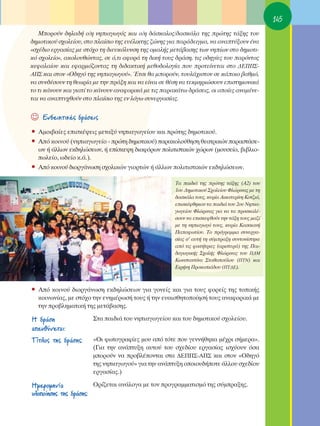
∫¶™) 15/5/2008.] ∏ ÛËÌ·Û›· Ô˘ ·Ô‰›‰ÂÙ·È ·fi ÙÔ À¶∂¶£ Û’ ·˘Ù¤˜ ÙȘ ÔÌ¿‰Â˜ ÂÓÈÛ¯‡-
ÂÈ ÙËÓ ¿Ô„Ë fiÙÈ Ô Û˘ÓÔÏÈÎfi˜ ۯ‰ȷÛÌfi˜ ÂÓfi˜ ÚÔÁÚ¿ÌÌ·ÙÔ˜ ÌÂÙ¿‚·Û˘ Î·È Û˘ÓÂÚÁ·-
Û›·˜ Ú¤ÂÈ Ó· ÚԂϤÂÈ ‰Ú¿ÛÂȘ Û˘ÓÂÚÁ·Û›·˜ ÁÈ· ÙËÓ Î¿ı ÔÌ¿‰· ͯˆÚÈÛÙ¿.
ŒÙÛÈ ÛÙÔ ·ÚfiÓ ÎÂÊ¿Ï·ÈÔ ·ÚÔ˘ÛÈ¿˙ÔÓÙ·È ÂÈÁÚ·ÌÌ·ÙÈο ÂÓ‰ÂÈÎÙÈΤ˜ ‰Ú¿ÛÂȘ ÁÈ·
fiϘ ÙȘ ÔÌ¿‰Â˜, Ì›· ‰Ú¿ÛË ÁÈ· οı ÔÌ¿‰·, ÂÈÎÂÓÙÚÒÓÔÓÙ·˜ ˆÛÙfiÛÔ Û ‰‡Ô ‰Ú¿ÛÂȘ:
ÛÙËÓ ÎÔÈÓ‹ ‰Ú¿ÛË ÁÈ· Ù· ·È‰È¿ ÙÔ˘ ÓËÈ·ÁˆÁ›Ԣ Î·È ÁÈ· Ù· ·È‰È¿ Ù˘ ÚÒÙ˘ ‰ËÌÔÙÈ-
ÎÔ‡ Î·È ÛÙË ‰Ú¿ÛË Ô˘ ·Â˘ı‡ÓÂÙ·È ÛÙËÓ ÔÌ¿‰· ÙˆÓ «ÓËÈ·ÁˆÁÒÓ», Ë ÔÔ›· ÎÏ‹ıËÎÂ,
̤۷ ·fi ÙÔ «™¯¤‰ÈÔ ÂÚÁ·Û›·˜: ¢È¢ÎÔχÓÔÓÙ·˜ ÙËÓ ÔÌ·Ï‹ ÌÂÙ¿‚·ÛË ·fi ÙÔ ÓËÈ·ÁˆÁ›Ô
ÛÙÔ ‰ËÌÔÙÈÎfi», Ó· ¿ÚÂÈ ÙËÓ ÚˆÙÔ‚Ô˘Ï›· ÁÈ· Ó· ÎÈÓËÙÔÔÈ‹ÛÂÈ ÙȘ ÂÓ ÏfiÁˆ ÔÌ¿‰Â˜ ÙˆÓ
ÂÓ ‰˘Ó¿ÌÂÈ Û˘ÓÂÚÁ·ÙÒÓ. ∞˘Ù‹ Ë ÚˆÙÔ‚Ô˘Ï›· ·Ó·Ì¤ÓÂÙ·È Ó· Û˘Ó¯ÈÛÙ› ·fi ÙÔ˘˜/ÙȘ
ÓËÈ·ÁˆÁÔ‡˜ Î·È ÛÙË ÌÂÙ·-ÈÏÔÙÈ΋ ÂÚ›Ô‰Ô, ÙÔ˘Ï¿¯ÈÛÙÔÓ Ì¤¯ÚÈ Ó· ˆÚÈÌ¿ÛÔ˘Ó ÔÈ Û˘Ó-
ı‹Î˜ Î·È Ó· ˘¿ÚÍÂÈ Î¿ÔÈ· ıÂÛÌÈ΋ Ú‡ıÌÈÛË ÁÈ· ÙÔ ı¤Ì· Ù˘ ÌÂÙ¿‚·Û˘ Î·È Ù˘ Û˘-
ÓÂÚÁ·Û›·˜ («O‰ËÁfi˜ Ù˘ ÓËÈ·ÁˆÁÔ‡», 2006: 40), ÔfiÙ ·Ó·Ì¤ÓÂÙ·È Ó· ˘¿ÚÍÂÈ ÚˆÙÔ-
‚Ô˘Ï›· Î·È ·fi ÙËÓ ÏÂ˘Ú¿ ÙÔ˘ ‰ËÌÔÙÈÎÔ‡ Û¯ÔÏ›Ԣ.
øÛÙfiÛÔ ÛÙÔ ÛËÌÂ›Ô ·˘Ùfi Â›Ó·È ¯Ú‹ÛÈÌË Ë ˘ÂÓı‡ÌÈÛË fiÙÈ Ë ÌÂÙ¿‚·ÛË Â›Ó·È ÌÈ· Ì·ÎÚÔ-
ÚfiıÂÛÌË Û˘Ó‰ËÌÈÔ˘ÚÁÈ΋ ‰È·‰Èηۛ·, ÛÙËÓ ÔÔ›· ÔÈ Û˘ÌÌÂÙ¤¯ÔÓÙ˜ ‰È·¯ˆÚ›˙ÔÓÙ·È ÛÂ
ÂΛÓÔ˘˜ Ô˘ ‚ÈÒÓÔ˘Ó Î·È ·ÓÙÈÌÂÙˆ›˙Ô˘Ó ÂÓÂÚÁ¿ ÔÈ ›‰ÈÔÈ ÙË ÌÂÙ¿‚·ÛË, ‰ËÏ·‰‹ Ù· ·È‰È¿
Î·È ÔÈ ÁÔÓ›˜ ÙÔ˘˜, Î·È Û ÂΛÓÔ˘˜ Ô˘ ‰È·¯ÂÈÚ›˙ÔÓÙ·È ÙË ÌÂÙ¿‚·ÛË, ‰ËÏ·‰‹ ÔÈ ÂÎ·È‰Â˘-
ÙÈÎÔ› Ù˘ Ù¿Í˘, ÔÈ Û¯ÔÏÈÎÔ› Û‡Ì‚Ô˘ÏÔÈ Î·È Ù· ¿ÏÏ· ÛÙÂϤ¯Ë Ù˘ Âη›‰Â˘Û˘, ÔÈ ÔÔ›ÔÈ
¤¯Ô˘Ó ·Ú·ÙËÚËÙÈÎfi, Û˘Ì‚Ô˘Ï¢ÙÈÎfi Î·È Î·ıÔ‰ËÁËÙÈÎfi ÚfiÏÔ ÛÙË ÌÂÙ¿‚·ÛË.
∏ ·Ú·¿Óˆ ·Ú·‰Ô¯‹ Û˘Ó¿ÁÂÙ·È fiÙÈ ÔÈ Û¯ÔÏÈÎÔ› Û‡Ì‚Ô˘ÏÔÈ Î·È Ù· ¿ÏÏ· ÛÙÂϤ¯Ë
Ù˘ Âη›‰Â˘Û˘, Î·È ‚¤‚·È· ÔÈ ÂÎ·È‰Â˘ÙÈÎÔ› Ù˘ Ú¿Í˘, ÁÈ· Ó· ·ÓÙ·ÔÎÚÈıÔ‡Ó ÛÙȘ
ÂÓ ÏfiÁˆ ··ÈÙ‹ÛÂȘ Â›Ó·È ·Ó·Áη›Ô Ó· ÂÈÌÔÚʈıÔ‡Ó Î·È fi¯È ·ÏÒ˜ Ó· ÂÓËÌÂÚˆıÔ‡Ó
Û¯ÂÙÈο Ì ÙË ÌÂÙ¿‚·ÛË Î·È ÙË Û˘ÓÂÚÁ·Û›· ÌÂٷ͇ ÙˆÓ È‰Ú˘Ì¿ÙˆÓ ÚÔÛ¯ÔÏÈ΋˜ ηÈ
Û¯ÔÏÈ΋˜ Âη›‰Â˘Û˘ (Carle & Samuel, 2006). ∂›Û˘ Â›Ó·È ÚÔÊ·Ó¤˜ fiÙÈ ÙÔ ÓËÈ·Áˆ-
ÁÂ›Ô Î·È ÙÔ ‰ËÌÔÙÈÎfi Û¯ÔÏÂ›Ô Ú¤ÂÈ Ó· ˘ÔÛÙËÚȯıÔ‡Ó ·fi ÙÔ Î·Ù¿ÏÏËÏÔ ıÂÛÌÈÎfi Ï·›-
ÛÈÔ. ¢ÂÓ ·ÚÎÔ‡Ó ‰ËÏ·‰‹ ·Ï¤˜ ·ÚÔÙÚ‡ÓÛÂȘ ÚÔ˜ ÙÔ˘˜ ÂÎ·È‰Â˘ÙÈÎÔ‡˜ ÙˆÓ ‰‡Ô ‚·ıÌ›-
‰ˆÓ ÁÈ· Ó· Û˘ÓÂÚÁ·ÛÙÔ‡Ó, Ô‡Ù ‚¤‚·È· ÌfiÓÔ ÔÈ ·ÍȤ·ÈÓ˜ ÚˆÙÔ‚Ô˘Ï›Â˜ ‹ ÙÔ «ÌÂÚ¿-
ÎÈ» οÔÈˆÓ ÂÎ·È‰Â˘ÙÈÎÒÓ. ÕÏψÛÙ ·fi ÙËÓ ÙÚÈ·ÓÙ¿¯ÚÔÓË ‰ÈÂıÓ‹ Û˘˙‹ÙËÛË ·˘ÙÔ‡
ÙÔ˘ ı¤Ì·ÙÔ˜ ‰È‰·ÛÎfiÌ·ÛÙ fiÙÈ Ë ıÂÌÂÏ›ˆÛË, Ë ·Ó¿Ù˘ÍË Î·È Ë ·Á›ˆÛË ÂÓfi˜ ÚÔÁÚ¿Ì-
Ì·ÙÔ˜ ÌÂÙ¿‚·Û˘ Î·È Û˘ÓÂÚÁ·Û›·˜ ‰ÂÓ ÌÔÚ› Ó· ¤¯ÂÈ Â˘Ô›ˆÓ˜ ÚÔÔÙÈΤ˜ ·Ó ‰ÂÓ
˘ÔÛÙËÚȯı› ·fi ÎÔÌ‚Èο ˘ÔÛÙËÚÈÎÙÈο ̤ÙÚ·, fiˆ˜ ÁÈ· ·Ú¿‰ÂÈÁÌ· Ë Úfi‚Ï„Ë
¯ÚfiÓÔ˘ ÛÙÔ ˆÚÔÏfiÁÈÔ ÚfiÁÚ·ÌÌ· ÁÈ· ÙË Û˘ÓÂÚÁ·Û›· ÌÂٷ͇ ÓËÈ·ÁˆÁÒÓ Î·È ‰·ÛοψÓ
Î·È Â›Û˘ ¯ÚfiÓÔ˘ ÁÈ· ÙË Û˘Ó·Ê‹ ÂÈÌfiÚʈÛË ·˘ÙÒÓ (Oberhuemer, 2006). øÛÙfiÛÔ,
fiˆ˜ ·Ó·Ê¤ÚıËΠ‹‰Ë, ̤¯ÚÈ Ó· ˆÚÈÌ¿ÛÔ˘Ó ÔÈ Û˘Óı‹Î˜ ÁÈ· Ù¤ÙÔÈÔ˘ ›‰Ô˘˜ ıÂÛÌÔıÂ-
Ù‹ÛÂȘ, οı ÚÔÛ¿ıÂÈ· ÚÔ˜ ·˘Ù‹ ÙËÓ Î·Ù‡ı˘ÓÛË ı· Ú¤ÂÈ Ó· ·ÓÙÈÌÂÙˆ›˙ÂÙ·È ˆ˜
¤Ó· ·ÍÈÔÔÈ‹ÛÈÌÔ «ÎÂÊ¿Ï·ÈÔ».
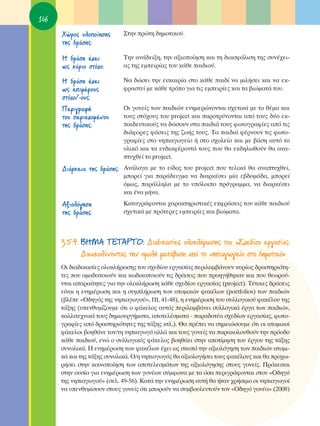
™ÙË Û˘Ó¤¯ÂÈ· ·ÚÔ˘ÛÈ¿˙ÔÓÙ·È Ù· ÛÙ¿‰È· ·Ó¿Ù˘Í˘ ÙÔ˘ ۯ‰›Ô˘ ÂÚÁ·Û›·˜ Ô˘ ÂÊ·Ú-
ÌfiÛÙËΠÛÙÔ ÈÏÔÙÈÎfi ÚfiÁÚ·ÌÌ· ÙÔ˘ Y¶E¶£ (°Ô˘ÚÁÈÒÙÔ˘, 2008):
1. OÚÁ¿ÓˆÛË
1.1. OÚÁ¿ÓˆÛË Ù˘ ÔÌ¿‰·˜ ÌÂÙ¿‚·Û˘
1.2. OÚÁ¿ÓˆÛË ÙÔ˘ ۯ‰›Ô˘ ÂÚÁ·Û›·˜
2. ™¯Â‰È·ÛÌfi˜](https://image.slidesharecdn.com/odigosolohmeroulr-111027102625-phpapp01/85/Odigos-olohmerou-lr-127-320.jpg)



























![167
ΔOª∂∞™ ¢∂•πOΔ∏Δø¡ ¡O∏™∏™
OÈ ÓÂÔÈ·˙ÂÙÈ·Ó¤˜ ıˆڛ˜ ¤¯Ô˘Ó ‰Â›ÍÂÈ fiÙÈ Ù· Ó‹È· ÌÔÚÔ‡Ó Ó· ÛΤÊÙÔÓÙ·È ÏÔÁÈο ÛÂ
ÔÈΛ˜ ÂÚÈÛÙ¿ÛÂȘ, ÂÊfiÛÔÓ ‰ÂÓ Î·Ù·ÔÓÔ‡ÓÙ·È ˘ÂÚ‚ÔÏÈο ÔÈ ·ÎfiÌ· ‡ıÚ·˘ÛÙ˜ ÏÂ-
ÎÙÈΤ˜ ÙÔ˘˜ ÈηÓfiÙËÙ˜ (Demetriou et al., 1992). OÈ ÁÓˆÛÙÈΤ˜ ‰˘ÛÎÔϛ˜ ÙˆÓ ÓË›ˆÓ
Î·È ÙˆÓ ·È‰ÈÒÓ Ì ÂȉÈΤ˜ ÂÎ·È‰Â˘ÙÈΤ˜ ·Ó¿ÁΘ ·Ó·Ê¤ÚÔÓÙ·È Î˘Ú›ˆ˜ Û ÂÚÈÔÚÈ-
ÛÌÔ‡˜ Ù˘ ÁÓÒÛ˘, Ù˘ ·ÓÙ›Ï˄˘, Ù˘ ÌÓ‹Ì˘ Î·È ÙÔ˘ ÂϤÁ¯Ô˘ Ù˘ ÚÔÛÔ¯‹˜, ηıÒ˜ ηÈ
Û ÂÚÈÔÚÈṲ̂Ó˜ ÛÙÚ·ÙËÁÈΤ˜ ·fiÎÙËÛ˘ Î·È ¯Ú‹Û˘ ÙˆÓ ÏËÚÔÊÔÚÈÒÓ (¶·ÓÙÂÏÈ¿-
‰Ô˘, 2000).
™‹ÌÂÚ· fï˜ ¤¯ÂÈ ‰È·ÈÛÙˆı›, ·fi ÙË Û‡˙¢ÍË Ù˘ ÁÓˆÛÙÈ΋˜ Ó¢ÚÔ„˘¯ÔÏÔÁ›·˜ ÌÂ
ÙË ÁÂÓÂÙÈ΋ ÂÈÛÙ‹ÌË, fiÙÈ ÔÏϤ˜ ÔÌ¿‰Â˜ ·È‰ÈÒÓ ÓÔËÙÈ΋˜ ˘ÛÙ¤ÚËÛ˘ ÔÚÁ·ÓÈ΋˜ ·ÈÙÈÔ-
ÏÔÁ›·˜, Î·È Û˘ÁÎÂÎÚÈ̤ӷ Ì ÁÂÓÂÙÈο Û‡Ó‰ÚÔÌ·, ¤¯Ô˘Ó Ù· ‰Èο ÙÔ˘˜ ÌÔÓ·‰Èο ÁÓˆÛÙÈ-
ο ÚfiÙ˘· ·‰˘Ó·ÌÈÒÓ Î·È ‰˘Ó·ÙÔÙ‹ÙˆÓ Î·È Â›Û˘ Ù· ‰Èο ÙÔ˘˜ Ó¢ÚÔ„˘¯ÔÏÔÁÈο ηÈ
¯·Ú·ÎÙËÚÈÛÙÈο Û˘ÌÂÚÈÊÔÚÈο ÚÔÊ›Ï (Rondal et al., 2004). ∞˘Ùfi ÛËÌ·›ÓÂÈ fiÙÈ fiÏ· Ù·
·È‰È¿ Ì ÓÔËÙÈ΋ ˘ÛÙ¤ÚËÛË ‰ÂÓ ¤¯Ô˘Ó ÙȘ ›‰È˜ Ì·ıËÛȷΤ˜ ‰˘Ó·ÙfiÙËÙ˜ Î·È ·‰˘Ó·Ì›Â˜.
ªÂ ‚¿ÛË ÙËÓ ·Ó·Ù˘Íȷ΋ ÚÔÛ¤ÁÁÈÛË Ù˘ ÓÔËÙÈ΋˜ ˘ÛÙ¤ÚËÛ˘ ÙÔ˘ Zigler Î·È ÙˆÓ
Û˘ÓÂÚÁ·ÙÒÓ ÙÔ˘, Ù· ÓÔËÙÈο ˘ÛÙÂÚË̤ӷ ·È‰È¿ ÌË ÔÚÁ·ÓÈ΋˜ ·ÈÙÈÔÏÔÁ›·˜ ‰ÂÓ Â›Ó·È
·ÙÂÏ‹, Ô‡Ù ÔÈÔÙÈÎÒ˜ ‰È·ÊÔÚÂÙÈο ·fi Ù· Ù˘Èο ·Ó·Ù˘ÛÛfiÌÂÓ· [‚Ï. ∞Ï¢ÚÈ¿‰Ô˘
(2006) ÁÈ· ÌÈ· ÏÂÙÔÌÂÚ‹ ÂÈÛÎfiËÛË]. ∞ÏÒ˜ ‰È·Ê¤ÚÔ˘Ó ·fi Ù· ¿ÙÔÌ· ÙÔ˘ ̤ÛÔ˘
fiÚÔ˘ ‰Â›ÎÙË ÓÔËÌÔÛ‡Ó˘ ˆ˜ ÚÔ˜ ÙËÓ Ù·¯‡ÙËÙ· Ù˘ ÁÓˆÛÙÈ΋˜ ·Ó¿Ù˘Í˘ Î·È Î·Ù·Ï‹-
ÁÔ˘Ó ÂÍÂÏÈÎÙÈο Û ¤Ó· ηÙÒÙÂÚÔ Â›Â‰Ô ÁÓˆÛÙÈ΋˜ ›Ù¢Í˘. ∏ ·Ó·Ù˘Íȷ΋ ˘ÛÙ¤-
ÚËÛË ÙˆÓ ·ÙfiÌˆÓ ·˘ÙÒÓ Â›Ó·È ÁÂÓÈ΋ ˆ˜ ÚÔ˜ ÙË Ê‡ÛË Ù˘ Î·È ‰ÂÓ ÌÔÚ› Ó· ·Ô‰Ôı›
ÛÂ Û˘ÁÎÂÎÚÈ̤Ó˜ ÁÓˆÛÙÈΤ˜ ‚Ï¿‚˜. ∂Ô̤ӈ˜ ÌÔÚÔ‡Ó Ó· ÂÊ·ÚÌÔÛÙÔ‡Ó ÔÈ ·Ú¯¤˜ Ù˘
ÁÓˆÛÙÈ΋˜ ·Ó¿Ù˘Í˘ Ô˘ ÈÛ¯‡Ô˘Ó ÁÈ· Ù· ·È‰È¿ ÌÂ Ù˘È΋ ·Ó¿Ù˘ÍË.
°È· ÙËÓ Î·ÏÏȤÚÁÂÈ· Ù˘ ÌÓ‹Ì˘ Î·È ÙÔ˘ ÂϤÁ¯Ô˘ Ù˘ ÚÔÛÔ¯‹˜ ÌÔÚÔ‡Ó Ó· ¯ÚËÛÈÌÔ-
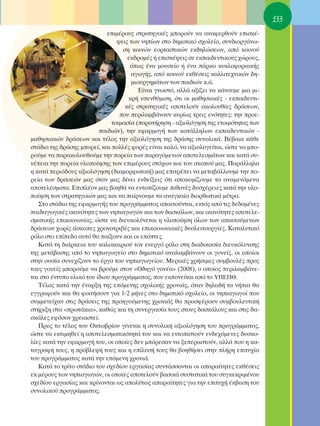
ÔÈËıÔ‡Ó ¤ÚÁ· ÔÙÈ΋˜ ‰È¿ÎÚÈÛ˘, .¯.: ªÂ ‚¿ÛË ÙÔ ÌÔÓÙ¤ÏÔ Ô˘ ÙÔ˘ ·ÚÔ˘ÛÈ¿˙ÂÙ·È ÙÔ
·È‰› Ú¤ÂÈ Ó· ÂÈϤÍÂÈ ·fi Ì›· ÔÌ¿‰· ÂÈÎfiÓˆÓ ·˘Ù‹ Ô˘ Â›Ó·È fiÌÔÈ· Ì ÙÔ ÌÔÓÙ¤ÏÔ.
¶.¯.:
‚ ı ‚ ‰
°È· ÙËÓ ÂÍ¿ÛÎËÛË Ù˘ ÔÙÈ΋˜ ÌÓ‹Ì˘: ¶·ÚÔ˘ÛÈ¿˙ÂÙ·È ÛÙÔ Ó‹ÈÔ Ì›· οÚÙ· ÁÈ· 10
‰Â˘ÙÂÚfiÏÂÙ· Î·È Î·ÙfiÈÓ ÙÔ˘ ˙ËÙÂ›Ù·È Ó· ÂÈϤÍÂÈ ÙËÓ fiÌÔÈ¿ Ù˘ ̤۷ ·fi Ì›· ÔÌ¿‰·
ηÚÙÒÓ.
O/Ë ÂÎ·È‰Â˘ÙÈÎfi˜ ϤÂÈ ÛÙÔ ·È‰›: «£· ÛÔ˘ ‰Â›Íˆ Ì›· οÚÙ· Ì ̛· ÂÈÎfiÓ· ηÈ, ·ÊÔ‡
ÛÔ˘ ÙËÓ ¿Úˆ, ı¤Ïˆ Ó· ÌÔ˘ ‚ÚÂȘ Ì›· Ô˘ Ó· Â›Ó·È ·ÎÚÈ‚Ò˜ ›‰È·». ∞ÊÔ‡ ‰Â›ÍÂÈ ÙËÓ Î¿ÚÙ·
ÁÈ· 10 ‰Â˘ÙÂÚfiÏÂÙ·, ϤÂÈ ÛÙÔ ·È‰›: «ΔÒÚ· ‚¿Ï ¤Ó· ¯ ÛÙËÓ ÂÈÎfiÓ· Ô˘ Â›Ó·È ›‰È· Ì ·˘Ù‹
Ô˘ ÛÔ˘ ¤‰ÂÈÍ· ÚÔËÁÔ˘Ì¤Óˆ˜». ¶.¯.: ¢›ÓÂÈ ÙÔ ÂÚ¤ıÈÛÌ· Î·È Î·ÙfiÈÓ ÙÔ˘ ·ÚÔ˘ÛÈ¿˙ÂÈ:
·Ó ·Ó· Ô˘ ·Ô](https://image.slidesharecdn.com/odigosolohmeroulr-111027102625-phpapp01/85/Odigos-olohmerou-lr-165-320.jpg)






![176
Ì ÂȉÈΤ˜ ·Ó¿ÁΘ) Î·È ÙÔ˘˜ ·Ó·Ù›ıÂÓÙ·È ÎÔÈÓ¤˜
‰Ú·ÛÙËÚÈfiÙËÙ˜, ÙȘ Ôԛ˜ Ú¤ÂÈ Ó· ʤÚÔ˘Ó ÛÂ
¤Ú·˜ ̤ۈ Ù˘ Û˘ÓÂÚÁ·Û›·˜ (.¯. ‰ËÌÈÔ˘ÚÁ›· ÎÔ-
Ï¿˙ – Ô ¤Ó·˜ ÎÔÏÏ¿ÂÈ ÙÔÓ Ù›ÙÏÔ Î·È Ô ¿ÏÏÔ˜ ÙË ˙ˆ-
ÁÚ·ÊÈ¿).
ñ ∂›ÛÎÂ„Ë Ù˘ Ù¿Í˘ Û ‰È¿ÊÔÚ· ̤ÚË, fiÔ˘ ÌÔ-
ÚÔ‡Ó ÔÈ Ê›ÏÔÈ Ó· ¿ÓÂ Î·È Ó· „˘¯·ÁˆÁËıÔ‡Ó. ™˘-
˙‹ÙËÛË ÛÙËÓ Ù¿ÍË ÁÈ· ÙȘ ‰Ú·ÛÙËÚÈfiÙËÙ˜ Ô˘ ÌÔ-
ÚÔ‡Ó Ó· ÂÈϤÍÔ˘Ó ÔÈ Ê›ÏÔÈ.
ñ ¶·ÚfiÌÔÈ· Û˘Óı‹ÎË ÛÙÔ Û›ÙÈ, fiÔ˘ Ì·˜ ÂÈÛΤ-
ÙÂÙ·È ¤Ó·˜ Ê›ÏÔ˜ Ì·˜. ¢ÈÔÚÁ¿ÓˆÛË ÎÔÈÓÒÓ ‰Ú·-
ÛÙËÚÈÔÙ‹ÙˆÓ Û˘ÓÂÚÁ·Û›·˜ Ì ÙË ‚Ô‹ıÂÈ· ÙÔ˘ ÁÔ-
Ó¤·.
™ÙȘ ÂÚÈÙÒÛÂȘ ÂÓۈ̿وÛ˘, ÛÙÔ ÚfiÁÚ·ÌÌ· ÙÔ˘ ÔÏÔ‹ÌÂÚÔ˘ ÓËÈ·ÁˆÁ›Ԣ Î·È ÙÔ˘
ÔÏÔ‹ÌÂÚÔ˘ ‰ËÌÔÙÈÎÔ‡ Û¯ÔÏ›Ԣ, ·È‰ÈÒÓ Ì ‹È˜ ·Ó·Ù˘ÍȷΤ˜ ‰˘ÛÎÔϛ˜ Î·È ·˘ÙÈÛÌfi
ηÏfi ı· Â›Ó·È ÛÙÔ Ï·›ÛÈÔ Ù˘ ÂÎÌ¿ıËÛ˘ ÎÔÈÓˆÓÈÎÒÓ Î·È ÂÈÎÔÈÓˆÓÈ·ÎÒÓ ‰ÂÍÈÔًوÓ
Ó· ·ÎÔÏÔ˘ıÔ‡ÓÙ·È Ù· ·Ú·Î¿Ùˆ (∫·ÌÔ‡ÚÔÁÏÔ˘, 2003), [∂Á¯ÂÈÚ›‰ÈÔ Ù¯ÓÈ΋˜ ˘ÔÛÙ‹ÚÈ-
͢ ÁÈ· ÙÔÓ ·˘ÙÈÛÌfi ÁÈ· Ù· Û¯ÔÏ›· ÙÔ˘ Kentucky, Ô˘ ¤ÁÚ·„·Ó ÔÈ Nancy Dalrymple ηÈ
Lisa Ruble. °È· ÂÚÈÛÛfiÙÂÚ˜ ÏËÚÔÊÔڛ˜ ÌÔÚ›Ù ӷ ·Â˘ı‡ÓÂÛÙ ÛÙËÓ OASIS (Online
Asperger Syndrome Information and Support), www.udel/bkirby/asperger]:
☺ ∂ÈÎÔÈÓˆÓ›· Ì ÙÔ Ì·ıËÙ‹
ñ ¡· ›ÛÙ ۷Ê›˜ Î·È Û˘ÁÎÂÎÚÈ̤ÓÔÈ.
ñ ¡· ·ÔʇÁÂÙ ·Û·Ê›˜ fiÚÔ˘˜, fiˆ˜: «∞ÚÁfiÙÂÚ·», «ÿÛˆ˜», «°È·Ù› ÙÔ ¤Î·Ó˜;»
ñ ∂È‚Ú·‰‡ÓÂÙ ÙÔ Ú˘ıÌfi Ù˘ ÔÌÈÏ›·˜.
ñ ∂¿Ó Â›Ó·È ··Ú·›ÙËÙÔ ÁÈ· ÙËÓ Î·Ù·ÓfiËÛË, ¯ˆÚ›ÛÙ ÙË ‰Ú·ÛÙËÚÈfiÙËÙ· Û ÌÈÎÚfiÙÂÚ·
‚‹Ì·Ù·.
ñ ÃÚËÛÈÌÔÔÈ‹ÛÙ ¯ÂÈÚÔÓƠ̂˜, ηıÔ‰‹ÁËÛË, ›‰ÂÈÍË Ì·˙› Ì ÙËÓ ÚÔÊÔÚÈ΋ Ô‰ËÁ›·.
ñ ¢ÒÛÙ ·fi ÚÈÓ Û·Ê›˜ ÏËÚÔÊÔڛ˜ ÁÈ· Ù˘¯fiÓ ·ÏÏ·Á¤˜.
ñ ∂ȉÈο ÂÏ·ÛÙ ÙËÓ ÚÔÛÔ¯‹ ÔÙÈο, ÏÂÎÙÈο ‹ ۈ̷ÙÈο.
ñ ∞ÔʇÁÂÙ ÙȘ ȉȈ̷ÙÈΤ˜ ÊÚ¿ÛÂȘ, ÙȘ ϤÍÂȘ Ì ‰ÈÏ‹ ¤ÓÓÔÈ· ‹ ÙÔ Û·ÚηÛÌfi.
☺ ∂Óı¿ÚÚ˘ÓÛË Ù˘ ÂÈÎÔÈÓˆÓ›·˜ Ì ÙÔ Ì·ıËÙ‹
ñ ™Ù·Ì·Ù¿ÙÂ, ·ÎÔ‡ÙÂ Î·È ÂÚÈ̤ÓÂÙÂ.
ñ ¶·Ú·ÎÔÏÔ˘ı‹ÛÙÂ Î·È ·ÎÔ‡ÛÙ ÙȘ ÚÔÛ¿ıÂȘ ÁÈ· ·ÓÙ·fiÎÚÈÛË.
ñ ∞·ÓÙ‹ÛÙ ıÂÙÈο ÛÙȘ ÚÔÛ¿ıÂȘ.
ñ ªÔÚÊÔÔÈ‹ÛÙ ۈÛÙ¿ ÙË ‰Ú·ÛÙËÚÈfiÙËÙ· ¯ˆÚ›˜ Ó· ‰ÈÔÚıÒÓÂÙÂ.
ñ ∂Óı·ÚÚ‡ÓÂÙ ÙËÓ ÚfiÛÏË„Ë Î·È ÙËÓ ÂÈÏÔÁ‹ fiÙ·Ó Â›Ó·È ‰˘Ó·ÙfiÓ.](https://image.slidesharecdn.com/odigosolohmeroulr-111027102625-phpapp01/85/Odigos-olohmerou-lr-174-320.jpg)