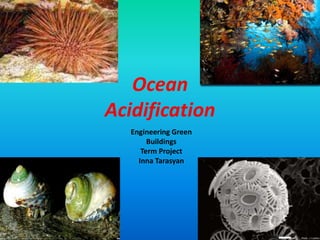
Ocean
Acidification
Engineering Green
Buildings
Term Project
Inna Tarasyan
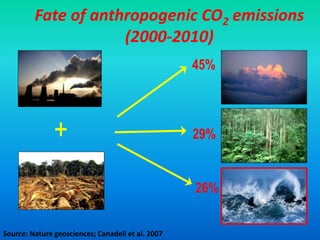
Fate of anthropogenic CO2 emissions
(2000-2010)
+
45%
29%
26%
Source: Nature geosciences; Canadell et al. 2007
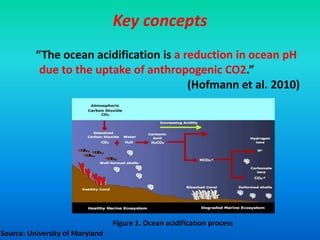
Key concepts
“The ocean acidification is a reduction in ocean pH
due to the uptake of anthropogenic CO2.”
(Hofmann et al. 2010)
Figure 1. Ocean acidification process
Source: University of Maryland
Impacts of ocean acidification
 Decreasing uptake of atmospheric carbon
dioxide as saturation level is approached.
 Damage to coral reef ecosystems.
 Slower growth rates for marine organisms
with calcareous skeletons.
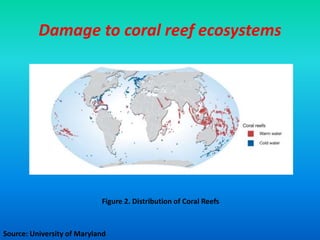
Damage to coral reef ecosystems
Source: University of Maryland
Figure 2. Distribution of Coral Reefs
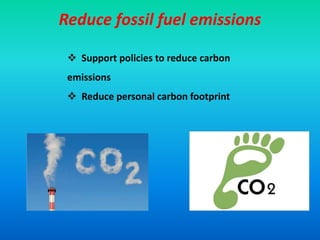
Reduce fossil fuel emissions
 Support policies to reduce carbon
emissions
 Reduce personal carbon footprint
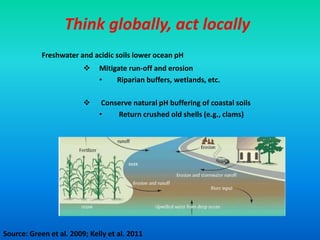
Think globally, act locally
Freshwater and acidic soils lower ocean pH
 Mitigate run-off and erosion
• Riparian buffers, wetlands, etc.
 Conserve natural pH buffering of coastal soils
• Return crushed old shells (e.g., clams)
Source: Green et al. 2009; Kelly et al. 2011
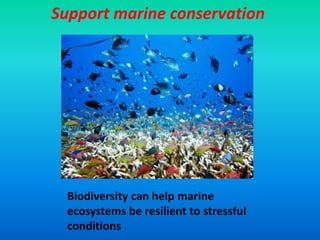
Support marine conservation
Biodiversity can help marine
ecosystems be resilient to stressful
conditions
QUESTIONS?
Thank you!

Ocean accidification inna_tarasyan

  • 1.
  • 2.
    Fate of anthropogenicCO2 emissions (2000-2010) + 45% 29% 26% Source: Nature geosciences; Canadell et al. 2007
  • 3.
    Key concepts “The oceanacidification is a reduction in ocean pH due to the uptake of anthropogenic CO2.” (Hofmann et al. 2010) Figure 1. Ocean acidification process Source: University of Maryland
  • 4.
    Impacts of oceanacidification  Decreasing uptake of atmospheric carbon dioxide as saturation level is approached.  Damage to coral reef ecosystems.  Slower growth rates for marine organisms with calcareous skeletons.
  • 5.
    Damage to coralreef ecosystems Source: University of Maryland Figure 2. Distribution of Coral Reefs
  • 6.
    Reduce fossil fuelemissions  Support policies to reduce carbon emissions  Reduce personal carbon footprint
  • 7.
    Think globally, actlocally Freshwater and acidic soils lower ocean pH  Mitigate run-off and erosion • Riparian buffers, wetlands, etc.  Conserve natural pH buffering of coastal soils • Return crushed old shells (e.g., clams) Source: Green et al. 2009; Kelly et al. 2011
  • 8.
    Support marine conservation Biodiversitycan help marine ecosystems be resilient to stressful conditions
  • 9.