FS 215 Fishery
Oceanography
Ocean Acidification &its Impacts
J. Bovas Joel
Dr. M. G. R Fisheries College and Research Institute
Thalanaiyeru, Tamilnadu
Introduction
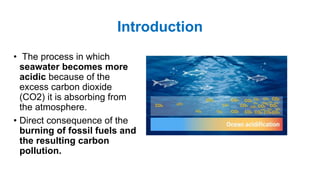
• The process in which
seawater becomes more
acidic because of the
excess carbon dioxide
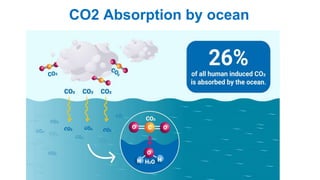
(CO2) it is absorbing from
the atmosphere.
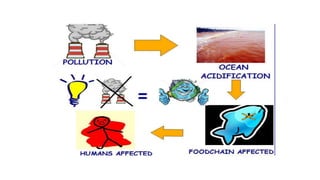
• Direct consequence of the
burning of fossil fuels and
the resulting carbon
pollution.
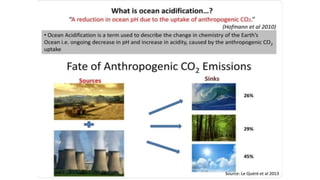
CO2 Absorption by ocean
Causes
 The burning of fossil fuels
The industrial revolution led to an increase in
pollution
Increase in the concentration of hydrogen ions
due to the chemical reaction.
Lack of eco-friendly laws and regulations
A decrease in carbonate ions
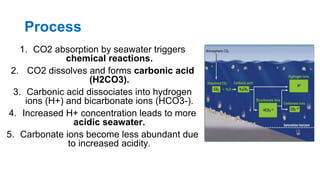
Process
1. CO2 absorption by seawater triggers
chemical reactions.
2. CO2 dissolves and forms carbonic acid
(H2CO3).
3. Carbonic acid dissociates into hydrogen
ions (H+) and bicarbonate ions (HCO3-).
4. Increased H+ concentration leads to more
acidic seawater.
5. Carbonate ions become less abundant due
to increased acidity.
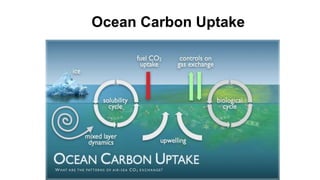
Ocean Carbon Uptake
Impacts
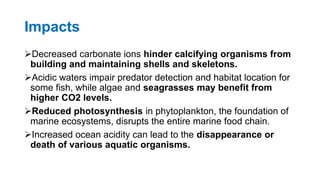
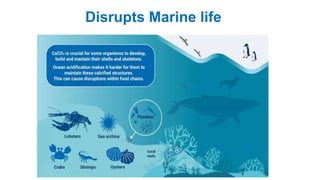
Decreased carbonate ions hinder calcifying organisms from
building and maintaining shells and skeletons.
Acidic waters impair predator detection and habitat location for
some fish, while algae and seagrasses may benefit from
higher CO2 levels.
Reduced photosynthesis in phytoplankton, the foundation of
marine ecosystems, disrupts the entire marine food chain.
Increased ocean acidity can lead to the disappearance or
death of various aquatic organisms.
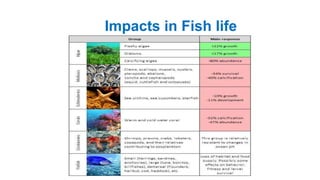
Impacts in Fish life
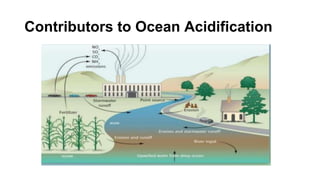
Contributors to Ocean Acidification
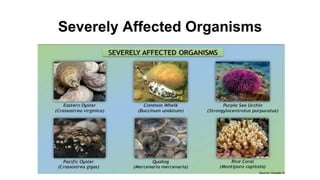
Severely Affected Organisms
Effects
Decreases the amount of carbonate, directly impacting the lives of various
organisms in the ocean.
Coral reefs are degrading.
 Shell fishes cannot easily build their shells.
Impacts the ocean deposits
Loss of marine plants.
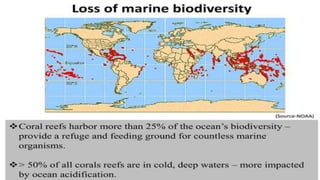
Loss of marine biodiversity
Disturbance in the food chain
The local economy is decreased due to the lack of fish and other marine
products.
A decline in tourism.
Disrupts Marine life
Solutions
Reducing the use of fossil fuels
Increasing the use of eco-friendly fuels
Use of technology for reducing pollution
Making strict regulations
Spreading awareness in Promotion of environmentally friendly
initiatives
Using Geo-engineering to control the pH value
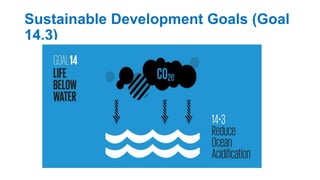
Sustainable Development Goals (Goal
14.3)
Thank You

Ocean acidification and its impacts.pptx

  • 1.
    FS 215 Fishery Oceanography OceanAcidification &its Impacts J. Bovas Joel Dr. M. G. R Fisheries College and Research Institute Thalanaiyeru, Tamilnadu
  • 3.
    Introduction • The processin which seawater becomes more acidic because of the excess carbon dioxide (CO2) it is absorbing from the atmosphere. • Direct consequence of the burning of fossil fuels and the resulting carbon pollution.
  • 5.
  • 6.
    Causes  The burningof fossil fuels The industrial revolution led to an increase in pollution Increase in the concentration of hydrogen ions due to the chemical reaction. Lack of eco-friendly laws and regulations A decrease in carbonate ions
  • 7.
    Process 1. CO2 absorptionby seawater triggers chemical reactions. 2. CO2 dissolves and forms carbonic acid (H2CO3). 3. Carbonic acid dissociates into hydrogen ions (H+) and bicarbonate ions (HCO3-). 4. Increased H+ concentration leads to more acidic seawater. 5. Carbonate ions become less abundant due to increased acidity.
  • 8.
  • 9.
    Impacts Decreased carbonate ionshinder calcifying organisms from building and maintaining shells and skeletons. Acidic waters impair predator detection and habitat location for some fish, while algae and seagrasses may benefit from higher CO2 levels. Reduced photosynthesis in phytoplankton, the foundation of marine ecosystems, disrupts the entire marine food chain. Increased ocean acidity can lead to the disappearance or death of various aquatic organisms.
  • 10.
  • 12.
    Contributors to OceanAcidification
  • 13.
  • 14.
    Effects Decreases the amountof carbonate, directly impacting the lives of various organisms in the ocean. Coral reefs are degrading.  Shell fishes cannot easily build their shells. Impacts the ocean deposits Loss of marine plants. Loss of marine biodiversity Disturbance in the food chain The local economy is decreased due to the lack of fish and other marine products. A decline in tourism.
  • 15.
  • 18.
    Solutions Reducing the useof fossil fuels Increasing the use of eco-friendly fuels Use of technology for reducing pollution Making strict regulations Spreading awareness in Promotion of environmentally friendly initiatives Using Geo-engineering to control the pH value
  • 19.
  • 20.