
Planning and Preparing for
Nutritional Needs of the
Special Child
All children benefit from healthy eating and
physical activity. A balanced diet and being
physically active help children:
 grow naturally
 learn to value health and nutrition
 build strong bones and muscles
 have energy for daily activities
 maintain a healthy weight
 avoid obesity/malnourish
 get plenty of vital nutrients
 feel good about themselves
When parents eat a variety of foods that are low
in fat and sugar and high in fiber, children learn to
like these foods as well. Try these tips in at home:
 Try using vegetables as rewards for adherence to
  positive behavior.
 Breakfast provides children with the energy they need
  to listen and learn in school.
 Offer the child a wide variety of foods, such as grains,
  vegetables and fruits, low-fat dairy products, and lean
  meat or beans.
 Talk with your health care provider if you are
  concerned about your child's eating habits or weight.
Dietary
 Needs
Diet Prescription
             Physician's Statement for Children with
                        Disabilities
The physician's statement must identify:
• the child's disability;
• an explanation of why the disability restricts the child's
diet;
• the major life activity affected by the disability;
• the food/s to be omitted from the child's diet, and the
food or choice of foods that must be substituted.
Medical Statement for Children with Special
Dietary Needs

The medical statement must include:
     • an identification of the medical or other
     special dietary condition which restricts the
     child's diet;
     • the food/s to be omitted from the child's
     diet; and
     • the food or choice of foods to be
     substituted.
The Role of School Food Service
 The school food service, like the
other programs in the school, is
responsible for ensuring that its
benefits (meals) are made
available to all children, including
children with disabilities.
• School food service staff must make food
substitutions or modifications for students with
disabilities.
• Substitutions or modifications for children with
disabilities must be based on a prescription written
by a licensed physician.
• The school food service is encouraged, but not
required, to provide food substitutions or
modifications for children without disabilities with
medically certified special dietary needs who are
unable to eat regular meals as prepared.
Description of Selected Disabilities

 There are a number of disabilities
  or conditions that cause physical
  or mental impairment and may
  result in a nutritional problem,
  which requires a modification of
  the usual school breakfast or
  lunch.
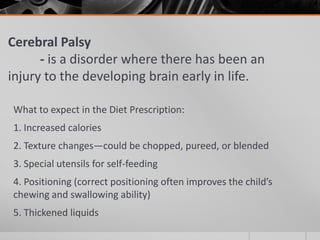
Cerebral Palsy
      - is a disorder where there has been an
injury to the developing brain early in life.

What to expect in the Diet Prescription:
1. Increased calories
2. Texture changes—could be chopped, pureed, or blended
3. Special utensils for self-feeding
4. Positioning (correct positioning often improves the child’s
chewing and swallowing ability)
5. Thickened liquids
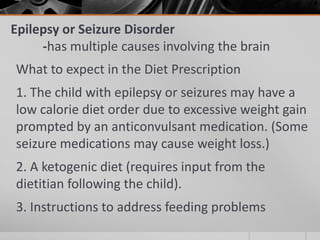
Epilepsy or Seizure Disorder
     -has multiple causes involving the brain
What to expect in the Diet Prescription
1. The child with epilepsy or seizures may have a
low calorie diet order due to excessive weight gain
prompted by an anticonvulsant medication. (Some
seizure medications may cause weight loss.)
2. A ketogenic diet (requires input from the
dietitian following the child).
3. Instructions to address feeding problems
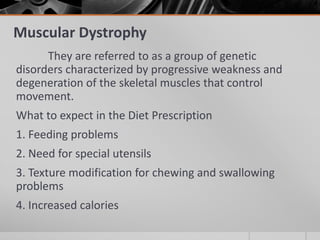
Muscular Dystrophy
      They are referred to as a group of genetic
disorders characterized by progressive weakness and
degeneration of the skeletal muscles that control
movement.
What to expect in the Diet Prescription
1. Feeding problems
2. Need for special utensils
3. Texture modification for chewing and swallowing
problems
4. Increased calories
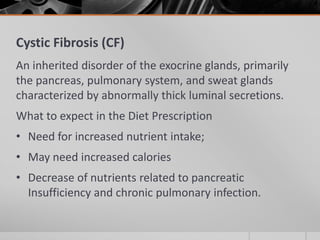
Cystic Fibrosis (CF)
An inherited disorder of the exocrine glands, primarily
the pancreas, pulmonary system, and sweat glands
characterized by abnormally thick luminal secretions.
What to expect in the Diet Prescription
• Need for increased nutrient intake;
• May need increased calories
• Decrease of nutrients related to pancreatic
  Insufficiency and chronic pulmonary infection.
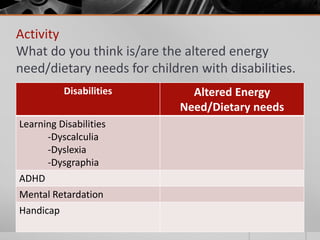
Activity
What do you think is/are the altered energy
need/dietary needs for children with disabilities.
          Disabilities         Altered Energy
                             Need/Dietary needs
Learning Disabilities
      -Dyscalculia
      -Dyslexia
      -Dysgraphia
ADHD
Mental Retardation
Handicap

Nutritional needs dietary needs

  • 1.
    Planning and Preparingfor Nutritional Needs of the Special Child
  • 2.
    All children benefitfrom healthy eating and physical activity. A balanced diet and being physically active help children:  grow naturally  learn to value health and nutrition  build strong bones and muscles  have energy for daily activities  maintain a healthy weight  avoid obesity/malnourish  get plenty of vital nutrients  feel good about themselves
  • 3.
    When parents eata variety of foods that are low in fat and sugar and high in fiber, children learn to like these foods as well. Try these tips in at home:  Try using vegetables as rewards for adherence to positive behavior.  Breakfast provides children with the energy they need to listen and learn in school.  Offer the child a wide variety of foods, such as grains, vegetables and fruits, low-fat dairy products, and lean meat or beans.  Talk with your health care provider if you are concerned about your child's eating habits or weight.
  • 4.
  • 5.
    Diet Prescription Physician's Statement for Children with Disabilities The physician's statement must identify: • the child's disability; • an explanation of why the disability restricts the child's diet; • the major life activity affected by the disability; • the food/s to be omitted from the child's diet, and the food or choice of foods that must be substituted.
  • 6.
    Medical Statement forChildren with Special Dietary Needs The medical statement must include: • an identification of the medical or other special dietary condition which restricts the child's diet; • the food/s to be omitted from the child's diet; and • the food or choice of foods to be substituted.
  • 7.
    The Role ofSchool Food Service The school food service, like the other programs in the school, is responsible for ensuring that its benefits (meals) are made available to all children, including children with disabilities.
  • 8.
    • School foodservice staff must make food substitutions or modifications for students with disabilities. • Substitutions or modifications for children with disabilities must be based on a prescription written by a licensed physician. • The school food service is encouraged, but not required, to provide food substitutions or modifications for children without disabilities with medically certified special dietary needs who are unable to eat regular meals as prepared.
  • 9.
    Description of SelectedDisabilities  There are a number of disabilities or conditions that cause physical or mental impairment and may result in a nutritional problem, which requires a modification of the usual school breakfast or lunch.
  • 10.
    Cerebral Palsy - is a disorder where there has been an injury to the developing brain early in life. What to expect in the Diet Prescription: 1. Increased calories 2. Texture changes—could be chopped, pureed, or blended 3. Special utensils for self-feeding 4. Positioning (correct positioning often improves the child’s chewing and swallowing ability) 5. Thickened liquids
  • 11.
    Epilepsy or SeizureDisorder -has multiple causes involving the brain What to expect in the Diet Prescription 1. The child with epilepsy or seizures may have a low calorie diet order due to excessive weight gain prompted by an anticonvulsant medication. (Some seizure medications may cause weight loss.) 2. A ketogenic diet (requires input from the dietitian following the child). 3. Instructions to address feeding problems
  • 12.
    Muscular Dystrophy They are referred to as a group of genetic disorders characterized by progressive weakness and degeneration of the skeletal muscles that control movement. What to expect in the Diet Prescription 1. Feeding problems 2. Need for special utensils 3. Texture modification for chewing and swallowing problems 4. Increased calories
  • 13.
    Cystic Fibrosis (CF) Aninherited disorder of the exocrine glands, primarily the pancreas, pulmonary system, and sweat glands characterized by abnormally thick luminal secretions. What to expect in the Diet Prescription • Need for increased nutrient intake; • May need increased calories • Decrease of nutrients related to pancreatic Insufficiency and chronic pulmonary infection.
  • 14.
    Activity What do youthink is/are the altered energy need/dietary needs for children with disabilities. Disabilities Altered Energy Need/Dietary needs Learning Disabilities -Dyscalculia -Dyslexia -Dysgraphia ADHD Mental Retardation Handicap