NURSING INFORMATICS
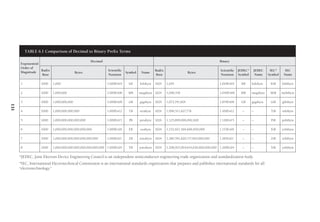
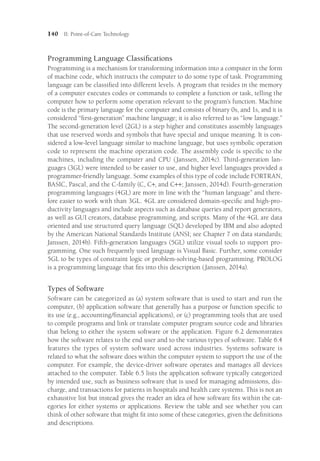
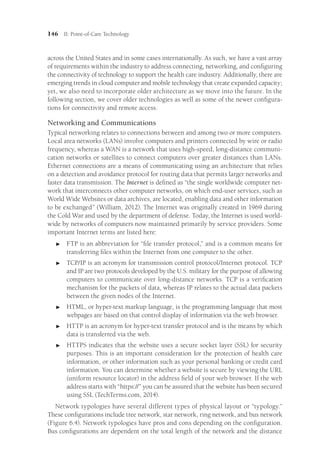
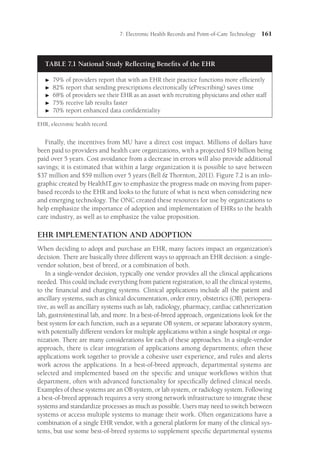
for the
Advanced
Practice Nurse
Susan McBride, PhD, RN-BC, CPHIMS, FAAN, is a clinical nursing informaticist at the
Texas Tech University Health Sciences Center. As a professor at Texas Tech, she teaches DNP
courses, including statistics, informatics, epidemiology, and population health at the orga-
nizational and public policy level. She is also the director of the master’s and postmaster’s
nursing informatics programs. Dr. McBride’s clinical expertise also includes perioperative
and cardiovascular nursing, with a research focus on methods development for implement-
ing, evaluating, and utilizing large health care datasets and health information technology
(HIT) to improve patient safety and quality within the health care delivery system. She has
developed and deployed software and services with executive oversight in the for-profit and
not-for-profit arenas. Most recently, she supported operational activity and administra-
tive oversight of the West Texas Health Information Technology Regional Extension Center
(WTxHITREC) under the F. Marie Hall Institute for Rural and Community Health in a senior
leadership role. Her focused activities include advising practices and hospitals on workflow
redesign, clinical decision support, strategies to assist providers in meeting meaningful use of
electronic health records (EHRs), quality measures, and analytics using certified EHR tech-
nology. Her current research involves an EHR-enhanced simulation program to develop best-
practice competencies in the use of EHRs for interprofessional teams and evaluation of the
use of social media initiatives in improving population health.
Mari Tietze, PhD, RN-BC, FHIMSS, is an associate professor at Texas Woman’s Univer-
sity College of Nursing, where she teaches nursing research and informatics. She also sup-
ports the statistics component of capstone projects. Previously, she worked as senior manager,
Center for Research and Innovation, VHA Inc., in Irving, Texas. She also served as director
of nursing research and informatics in the Dallas–Fort Worth Hospital Council’s Education
and Research Foundation. In that role, Dr. Tietze was responsible for deployment of the Coun-
cil’s 3-year technology implementation project on behalf of the Small Community, Rural
Hospitals Research Grant, a National Institutes of Health grant funded by the Agency for
Healthcare Research and Quality. She was a key member on a team that was awarded an
$8.4 million grant for a Regional Extension Center in North Texas. Dr. Tietze directed work-
force center nursing research and data initiative informatics projects, and is board certified
by the American Nurses Credentialing Center in informatics nursing. She is fellow of the
Healthcare Information and Management Systems Society (FHIMSS) certified by the Health
Information Management Systems Society. Since 2010, Dr. Tietze has been an associate
professor at the Houston J. and Florence A. Doswell College of Nursing at Texas Woman’s
University. In 2014, she became the program director of the graduate certificate program in
interprofessional informatics at Texas Woman’s University.
NURSING INFORMATICS
for the
Advanced
Practice Nurse
Patient Safety, Quality, Outcomes,
and Interprofessionalism
Susan McBride, PhD, RN-BC, CPHIMS, FAAN
Mari Tietze, PhD, RN-BC, FHIMSS
Copyright © 2016 Springer Publishing Company, LLC
All rights reserved.
No part of this publication may be reproduced, stored in a retrieval system, or transmitted in any form or by any
means, electronic, mechanical, photocopying, recording, or otherwise, without the prior permission of Springer
Publishing Company, LLC, or authorization through payment of the appropriate fees to the Copyright Clearance
Center, Inc., 222 Rosewood Drive, Danvers, MA 01923, 978-750-8400, fax 978-646-8600, info@copyright.com or
on the Web at www.copyright.com.
Springer Publishing Company, LLC
11 West 42nd Street
New York, NY 10036
www.springerpub.com
Acquisitions Editor: Joseph Morita
Production Editor: Kris Parrish
Composition: Westchester Publishing Services
ISBN: 978-0-8261-2488-3
e-book ISBN: 978-0-8261-2489-0
Instructor’s Manual ISBN: 978-0-8261-2512-5
Instructor’s PowerPoints ISBN: 978-0-8261-2482-1
Instructor’s Test Bank ISBN: 978-0-8261-2499-9
Student Study Guide ISBN: 978-0-8261-2519-4
Instructor’s materials are available to qualified adopters by contacting textbook@springerpub.com.
A student study guide is available at springerpub.com/mcbride.
15 16 17 18 / 5 4 3 2 1
The author and the publisher of this Work have made every effort to use sources believed to be reliable to provide
information that is accurate and compatible with the standards generally accepted at the time of publication.
Because medical science is continually advancing, our knowledge base continues to expand. Therefore, as new
information becomes available, changes in procedures become necessary. We recommend that the reader always
consult current research and specific institutional policies before performing any clinical procedure. The author
and publisher shall not be liable for any special, consequential, or exemplary damages resulting, in whole or in
part, from the readers’ use of, or reliance on, the information contained in this book. The publisher has no respon-
sibility for the persistence or accuracy of URLs for external or third-party Internet websites referred to in this
publication and does not guarantee that any content on such websites is, or will remain, accurate or appropriate.
Library of Congress Cataloging-in-Publication Data
Nursing informatics for the advanced practice nurse : patient safety, quality, outcomes, and
­
interprofessionalism / Susan McBride, Mari Tietze, authors.
   p. ; cm.
Includes bibliographical references and index.
ISBN 978-0-8261-2488-3 (hard copy : alk. paper) — ISBN 978-0-8261-2489-0 (ebook)
I. McBride, Susan, 1957– , editor. II. Tietze, Mari, editor.
[DNLM: 1. Nursing Informatics. 2. Advanced Practice Nursing. WY 26.5]
RT50.5
610.730285—dc23
2015026693
Special discounts on bulk quantities of our books are available to corporations, professional associations, phar-
maceutical companies, health care organizations, and other qualifying groups. If you are interested in a custom
book, including chapters from more than one of our titles, we can provide that service as well.
For details, please contact:
Special Sales Department, Springer Publishing Company, LLC
11 West 42nd Street, 15th Floor, New York, NY 10036-8002
Phone: 877-687-7476 or 212-431-4370; Fax: 212-941-7842
E-mail: sales@springerpub.com
Printed in the United States of America by Bradford & Bigelow.
To my amazing family, who always stand in support of all the work I am committed to
doing to improve health and the health care delivery system. Thank you, dear family!
—Susan McBride
To my Mom, Pauline L. Bruschi, who was proud to be on my right side . . . through it
all. Thanks, Mom!
—Mari Tietze
CONTENTS
Contributors xi
Foreword xvii
Section I: Introduction to the National Health Information
Technology Strategy
1 Introduction to Health Information Technology in a Policy
and Regulatory Environment 3
Susan McBride and Mari Tietze
2 Advanced Practice Roles in Interprofessional Teams 29
Carol J. Bickford, Diane Pace, and Mari Tietze
3 Scientific and Theoretical Foundations for Driving Improvement 47
Richard Booth, Susan McBride, and Mari Tietze
4 National Health Care Transformation and Information Technology 81
David M. Bergman, Susan McBride, and Mari Tietze
5 Consumer Engagement/Activation Enhanced by Technology 103
Mari Tietze, Patricia Hinton Walker, and Elaine Ayres
Section II: Point-of-Care Technology (NEHI Model Component #1)
6 Computers in Health Care 123
Susan McBride, Richard Gilder, and Deb McCullough
7 Electronic Health Records and Point-of-Care Technology 153
Mary Beth Mitchell and Susan McBride
8 Systems Development Life Cycle for Achieving Meaningful Use 191
Susan McBride and Susan Newbold
9 Workflow Redesign in a Quality-Improvement Modality 225
Susan McBride, Terri Schreiber, and John Terrell
10 Evaluation Methods and Strategies for Electronic Health Records 245
Susan McBride and Mary Beth Mitchell
11 Electronic Health Records and Health Information Exchanges
Providing Value and Results for Patients, Providers, and
Health Care Systems 263
Susan McBride, Tony Gilman, Anne Kimbol, and George Gooch
Preface xix
Share Nursing Informatics for the Advanced Practice Nurse:
Patient Safety, Quality, utcomes, and Interprofessionalism
O
viii Contents
12 National Standards for Health Information Technology 287
Susan H. Fenton and Susan McBride
13 Public Health Data to Support Healthy Communities
in Health Assessment Planning 309
Lisa A. Campbell, Susan McBride, and Sue Pickens
14 Privacy and Security in a Ubiquitous Health Information
Technology World 341
Susan McBride, Annette Sobel, and Helen Caton-Peters
15 Personal Health Records and Patient Portals 369
Mari Tietze, Cristina Winters, and Stephanie H. Hoelscher
16 Telehealth and Mobile Health 389
Mari Tietze and Georgia Brown
Section III: Data Management and Analytics to Lay the Foundation
for Quality Improvement (NEHI Model Component #2)
17 Strategic Thinking in Design and Deployment of Enterprise Data,
Reporting, and Analytics 411
Trish Smith and Susan McBride
18 Data Management and Analytics: The Foundations
for Improvement 435
Susan McBride and Mari Tietze
19 Clinical Decision Support Systems 461
Maxine Ketcham, Susan McBride, Mari Tietze, and Joni Padden
Section IV: Patient Safety, Quality, and Population Health
(NEHI Model Component #3)
20 Health Information Technology and Implications
for Patient Safety 493
Mari Tietze and Susan McBride
21 Quality-Improvement Strategies and Essential Tools 521
Susan McBride, Mari Tietze, and John Terrell
22 National Prevention Strategy, Population Health,
and Health Information Technology 535
Andrea Lorden, Mari Tietze, and Susan McBride
23 Developing Competencies in Nursing for an Electronic Age
of Health Care 557
Laura Thomas, Susan McBride, Sharon Decker, and Mari Tietze
Contents ix
Section V: New and Emerging Technologies
24 Genomics and Implications for Health Information Technology 577
Diane C. Seibert and Susan McBride
25 Nanotechnology and Implications for Health Care
Interprofessional Teams 599
Mari Tietze and Susan McBride
26 “Big Data” and Advanced Analytics 613
Susan McBride, Cynthia Powers, Richard Gilder, and Billy U. Philips, Jr.
27 Social Media: Ongoing Evolution in Health Care Delivery 643
Robert D. J. Fraser, Richard Booth, Mari Tietze, and Susan McBride
28 Electronic Clinical Quality Measures: Building an Infrastructure
for Success 661
Susan McBride and Itara K. Barnes
29 Interprofessional Application of Health Information Technology
in Education 691
Mari Tietze, Cindy Acton, and Stacey Brown
Index 707
CONTRIBUTORS
Cindy Acton, RN, DNP
Associate Professor
Texas Tech University Health Sciences Center School of Nursing
Lubbock, Texas
Elaine Ayres, MS, RD, FAC-PPM III
Deputy Chief, Laboratory for Informatics Development
NIH Clinical Center, National Institutes of Health
Bethesda, Maryland
Itara K. Barnes
Senior Associate
Healthcare & Life Sciences Data and Analytics
KPMG, LLP
Greenville, South Carolina
David M. Bergman, MPA
Founder and Principal
Healthcare Intelligence Partners, LLC
New York, New York
Carol J. Bickford, PhD, RN-BC, CPHIMS, FAAN
Senior Policy Fellow, Department of Nursing Practice & Work Environment
American Nurses Association
Silver Spring, Maryland
Richard Booth, MScN, RN
Assistant Professor
Arthur Labatt Family School of Nursing
Western University
London, Ontario, Canada
Georgia Brown, RRT
Vice President and Chief Operating Officer
CareCycle Management
Dallas, Texas
Stacey Brown, RN, BSN
Vice President of Operations
CareCycle Management
Dallas, Texas
xii Contributors
Lisa A. Campbell, DNP, RN, APHN-BC
Executive Director
Population Health Consultants, LLC
Associate Professor
Texas Tech University Health Sciences Center School of Nursing
Lubbock, Texas
Helen Caton-Peters, MSN, RN
Senior Health Information Privacy Program Analyst
Office of the Chief Privacy Officer/ONC/HHS
Washington, DC
Sharon Decker, PhD, RN, ANEF, FAAN
Associate Dean for Simulation and Professor
School of Nursing
Covenant Health System Endowed Chair in Simulation and Nursing Education
Executive Director of the F
. Marie Hall SimLife Center
Texas Tech University Health Sciences Center
Lubbock, Texas
Susan H. Fenton, PhD, RHIA, FAHIMA
Associate Dean for Academic Affairs
Principal Investigator, Gulf Coast Regional Extension Center
The University of Texas Health School of Biomedical Informatics
Houston, Texas
Robert D. J. Fraser, BScN, MN, RN
President
Rob D. Fraser & Associates Inc.
Toronto, Ontario, Canada
Richard Gilder, MS, RN-BC, CNOR
Nursing Analysis Champion, Office of Patient Safety
Baylor Scott & White Health
Dallas, Texas
Tony Gilman
Chief Executive Officer, Texas Health Services Authority
HIETexas
Austin, Texas
George Gooch, JD, LLM
Associate Director of Policy & Planning
Texas Health Services Authority
HIETexas
Austin, Texas
Contributors xiii
Stephanie H. Hoelscher, BSN, RN, CHISP
Chief Clinical Analyst
Department of Clinical Transformation
Texas Tech University Health Sciences
Lubbock, Texas
Maxine Ketcham, RN, MBA, CPHIMS, CPHQ
Clinical Decision Support
Texas Health Resources
Arlington, Texas
Anne Kimbol, JD, LLM
General Counsel
Texas Health Services Authority
HIETexas
Austin, Texas
Andrea Lorden, PhD, MPH
Assistant Professor
University of Oklahoma Health Sciences Center
College of Public Health
Oklahoma City, Oklahoma
Susan McBride, PhD, RN-BC, CPHIMS, FAAN
Professor and Program Director, Master’s and Postmaster’s Nursing
Informatics Program
Texas Tech University Health Sciences Center School of Nursing
Lubbock, Texas
Deb McCullough, DNP, RN, FNP
Administrator and Family Nurse Practitioner
Andrews County Health Department
Andrews, Texas
Mary Beth Mitchell, MSN, RN-BC, CPHIMS
Chief Nursing Information Officer
Texas Health Resources
Arlington, Texas
Susan Newbold, PhD, RN-BC, FAAN, FHIMSS
Newbold Consulting/Nursing Informatics Boot Camp
Franklin, Tennessee
xiv Contributors
Diane Pace, PhD, APRN, FNP-BC, NCMP, FAANP
Associate Professor, Department of Advanced Practice and Doctoral Studies
Director, DNP Program
Family Nurse Practitioner/Methodist Teaching Practice
University of Tennessee Health Science Center
College of Nursing
Memphis, Tennessee
Joni Padden, MSN, APRN, ACNS-BC, CIN-BC, CPHIMS
Clinical Education Specialist
Texas Health Resources
Arlington, Texas
Billy U. Philips, Jr., PhD, MPH
Sr. Vice President and Executive Director, F
. Marie Hall Institute for Rural
and Community Health
Texas Tech University Health Sciences Center
Lubbock, Texas
Sue Pickens, MEd, PCMH, CCE
Director, Population Medicine
Parkland Health & Hospital System
Dallas, Texas
Cynthia Powers, DNP, MS, RN
Director of Ambulatory Workflow Standardization
University of Texas MD Anderson Cancer Center
Houston, Texas
Terri Schreiber, MS
Consultant
Westat
Arlington Heights, Illinois
Diane C. Seibert, PhD, ARNP, FAANP, FAAN
Professor, Chair/Director Family Nurse Practitioner Program
Uniformed Services
University of the Health Sciences
Washington, DC
Trish Smith, MPH, MS
President, Chief Executive Officer
Taurus Performance, LLC
Austin, Texas
Contributors xv
Annette Sobel, MD, MS
Associate Professor
Executive for Critical Infrastructure Protection and Health Security Initiatives
Texas Tech University and Texas Tech University Health Sciences Center
Lubbock, Texas
John Terrell, MS, SSBB
Senior Industrial Engineer
University of Texas MD Anderson Cancer Center
Houston, Texas
Laura Thomas, PhD, RN, CNE
Assistant Professor
Texas Tech University Health Sciences Center School of Nursing
Lubbock, Texas
Mari Tietze, PhD, RN-BC, FHIMSS
Associate Professor
The Houston J. and Florence A. Doswell College of Nursing
Director, Graduate Certificate in Interprofessional Informatics Program
Texas Woman’s University
Dallas, Texas
Patricia Hinton Walker, PhD, RN-BC
Associate Professor
Texas Woman’s University, T. Boone Pickens Institute of Health Sciences—
Dallas Center
The Houston J. and Florence A. Doswell College of Nursing
Dallas, Texas
Cristina Winters, DNP, FNP-C, CCRN
Practitioner, Ambulatory Clinic
San Antonio, Texas
FOREWORD
As a nurse whose career began at the patient bedside, and now, 33 years later, as a clini-
cal informatics officer for one of the country’s leading and most comprehensive health
care services companies, I have experienced the highs and lows of overseeing the advance-
ment of health information technology (HIT), both at the bedside and with performance
analytics, both retrospective and prospective. As such, I have been a strong advocate for
nursing informatics as a science, as an effective role within professional teams, and as a
critical component of the successful deployment and use of HIT.
There are two main themes in this book and they align perfectly with my needs as
an informaticist:
1.	
Federal policy is driving health care information technology initiatives; however,
it does not lend itself to promoting innovative thinking, which is up to us.
2.	
It is innovative thinking, making sense of the federal policy, that moves us toward
our goal of improved patient care.
As you explore the information provided in these pages, you have the opportunity to
gain knowledge leading to innovation, “thinking out of the box,” teaching others, encour-
aging new approaches, opening minds to the power of information, and improving our
nation’s health care through our actions. Join Susan, Mari, and myself as leaders in using
informatics as a powerful tool in providing better patient care now and in the future.
As the authors state in the Preface, the intent of this book is to think in an expansive,
open, innovative, and “out-of-the-box” way about how we can use technology as another
tool in our toolkit for improving the quality of care that we deliver.
As students of clinical informatics who will play an important role in the effective and
efficient deployment of HIT, readers of this book will benefit from this well-organized,
well-illustrated primer. I commend the authors for providing the readers with the nec-
essary foundational content essential to understanding the national HIT strategy. So
often it is simply assumed that the issues about which a book is written are well known
and well understood.
Whenever I am engaged in dialogue about the challenges inherent with HIT and the
use of electronic information in the health care setting, I remind myself and others to
think back to a time when other industries had to choose between becoming technology-
enabled and becoming obsolete. Reflect back 30 years and think about how you planned
your travel, did your banking, accessed your newspapers or books, listened to your music,
or watched a movie. Technology has changed everything about the ways businesses and
individuals operate and live. Enormous amounts of time and money are being saved;
convenient and constant communication now prevails, including the ability to receive
answers in an instant for just about any question we might have. I suspect that, even
today, you “Googled” an answer to an inquiry ranging from “How did my sports team
fare today?” to “What are the side effects of the drug just prescribed for my parent?”
How did all that happen? Consumer demand certainly played a part in spurring on the
momentum, but it was the “out-of-the-box” thinkers, the innovators, and the visionaries
xviii Foreword
who embraced technology and made it possible for all of us to enjoy many facets of our
world at the touch of a button.
In comparison, momentum for advancing HIT and building an electronic infrastruc-
ture to support patient safety, quality, and population health initiatives stems largely
from federal policy and not from the consumer (i.e., the patient). Recognize the fact that
health care is an extremely regulated, policy-driven, compliance-governed business,
where “out-of-the-box” and “innovative thinking” are not typically phrases and adjec-
tives that characterize the industry. This environment creates challenges that potentially
impede the full adoption and use of digital information to improve health care delivery.
Given the complexity of the U.S. health care system and the ongoing development of
HIT to support the goals of safety, quality, and efficiency, the foundational aspects behind
this movement need careful explanation. This book expertly provides that knowledge,
with additional sections covering point-of-care technology; data management and ana-
lytics; patient safety, quality, and population health; and new and emerging technolo-
gies. The authors provide the reader with a unique perspective in aligning the national
goals with the achievement of safe, efficient quality of care through use of technology.
It always seems impossible until it is done.
—Nelson Mandela
Liz Johnson, MS, BSN, RN-BC, FCHIME, FHIMSS, CPHIMS
Chief Information Officer, Acute Care Hospitals  Applied Clinical Informatics
Tenet Healthcare Corporation
Dallas, Texas
PREFACE
The health care industry is undergoing a major transformation that requires advanced
practice nurses to rethink practice, leadership, and educational approaches. “In order to
improve health care outcomes, the National League for Nursing’s new vision statement
calls for nursing programs to teach with and about technology to better prepare the
nursing workforce” (National League for Nursing, 2015, p. 1). Fundamentals of practice
are changing in terms of workflow, decision making, and management of information.
These changes, to a large degree, are motivated by a federal policy-driven health care
industry focused on building an electronic infrastructure within the United States that
will support patient safety, quality, and population health initiatives. These changes, and
those discussed in this book, are then guided by the nation’s National Strategy for Qual-
ity Improvement report (U.S. Department of Health and Human Services, 2012).
Health information technology (HIT) has been promoted as a key element in the
National Quality Strategy to achieve three aims: better care, affordable care, and healthy
populations and communities (U.S. Department of Health and Human Services, 2012).
In fact, each year the U.S. Congress receives a report on the national health care trends
toward achieving these three aims (U.S. Department of Health and Human Services,
2014). Nurses will play an important role in the related transformation of the health care
delivery system and are critical to the success of this overall strategy, particularly as it
relates to the effective and efficient deployment of HIT (Institute of Medicine [IOM], 2011).
This book addresses that role and provides information and tools that nurses can uti-
lize practically to serve in prominent roles within interprofessional teams to align with
our National Quality Strategy (U.S. Department of Health and Human Services, 2012)
supported by HIT.
We have taught informatics and analytic methods for many years, and our approach
is grounded in application of informatics using HIT as a tool for improving the care we
deliver and the health of populations served. Since we were beginning nurses, both of
us have had a natural inclination to use analytic methods of various types to answer
questions about data. For most nurses, the analytic process comes naturally because it
is very similar in approach to what we do every day in the nursing process to assess,
analyze, and intervene, and to evaluate outcomes on behalf of patients.
Solving problems on behalf of patient care is thrilling for us, and we believe that with
strong analytic techniques and use of technology nurses can “take it to the bank.” We
have discovered that the teams we were on could use the answers to improve health care
delivery. It felt powerful to provide them, we felt powerful, and patients benefited. Over
the years, we have solidified our approaches and “packaged” our methods for using HIT,
data, and analytics in the business setting, in for-profit industry, and not-for-profit health
care association work. We elected to take this into the academic setting and began
teaching it in master’s, DNP, and PhD programs.
We believe that the book represents a unique perspective tying into the national goals
of achieving safe, efficient quality of care through use of technology. It emphasizes the
advanced practice nursing informatics (NI) role and the importance of the NI nurse
xx Preface
working within interprofessional teams to address patient safety and quality through
the deployment of successful HIT implementation.
Major themes and concepts include patient safety and quality, point-of-care applica-
tions, data management, and analytics with emphasis on the interprofessional team.
The goal of this text is to position it as a “must have” text for all health care profession-
als practicing in the Health Information Technology for Economic and Clinical Health
(HITECH) Act age of health care, primarily targeted for nursing but applicable to medi-
cine, health information management, occupational therapy (OT), physical therapy (PT),
and other disciplines. We have designed a model that we utilize as a foundation for
teaching clinicians nursing informatics (McBride, Tietze,  Fenton, 2013). The Nursing
Education Health Informatics (NEHI) model, reflected in Figure P.1, includes three core
domains: (a) point-of-care technology, (b) data management and analytics, and (c) patient
safety and quality. We begin the text with an introductory section laying the foundation
for these three core domains, and conclude with a fifth section discussing the exciting
and emerging technologies that will further transform the way we deliver care, including
areas such as genomics, nanotechnology, and deployment of social media in health care.
This textbook is designed to be complementary to many of the nursing informatics
textbooks currently used in nursing programs throughout the nation. The intent is to
create a way of thinking about technology that is expansive, open, and innovative, often
referred to as “out-of-the-box” thinking, to consider technology as yet another tool in
our toolkit for improving the quality of care we deliver.
Although a concept-based curriculum is an emerging trend in academics today, the
authors believe that HIT is a very competency-laden area of health care that lends itself
to the use of a concept-based educational pedagogy and approach. We have threaded
concepts aligned with the six domains within the Quality and Safety Education in Nurs-
ing (QSEN) approach to nursing education, and use practical examples to drive home
the competencies recommended within QSEN. Examples of the practical application
Point-of-Care
Technology
Data Management
 Analytics
Nursing Informatics Content
Health Care Delivery Environment
Public
Policy
Formation
Federal
and
State
Regulatory
Impact
Patient Safety/Quality
 Population Health
Improved
Health Care
Nursing
Role
Nursing
Role
Nursing
Role
FIGURE P.1. NEHI model. Framework for development of curriculum to align with IOM
and essentials.
Source: McBride et al. (2013).
Preface xxi
include exercises and case studies with concepts threaded throughout the book, including
patient safety, quality, patient-centered care, evidence-based practice, interprofessional-
ism, and, of course, technology. Additional concepts equally as important for nursing
informatics include health care policy, population health, data management, and privacy
and security.
Practical examples are weaved into the content of the chapters and are followed with
case studies and exercises reflective of the material within the chapter, thereby incorpo-
rating active learning into use of technology solutions presented. We find that to fully
grasp some of the information it is important to provide real-life examples of how the
tools and information relate to the current health care environment. For example, in the
Computers in Health Care chapter, we provide a case study of effective selection and
deployment of an electronic health record (EHR) in a rural local public health depart-
ment, and questions reflect issues unique to rural provider’s experience. In the Work-
flow Redesign chapter, we present a case study of a clinic with issues in ePrescribing and
the associated workflow diagram relating the current situation in the clinic. Details relat-
ing to the assessment of the clinic are provided and the reader is asked to use an inter-
professional team approach and design a strategy for addressing the problems presented.
The Quality Improvement chapter presents two case studies relating to a hospital’s mate-
rials management challenges and a computer provider order entry and barcoding patient
safety challenge. All of the chapters are designed with an eye on what the industry is
experiencing with respect to the rapid deployment of HIT, and we provide the reader
with tools and information to address those issues to fully optimize HIT.
We caution the industry that although we stress the amazing capabilities we have
through HIT, we need to be cautious that we do not rely too much on technology and fail
to think as clinicians. The text emphasizes, in several chapters, the unintended conse-
quences that can occur when technology is implemented poorly, resulting in unsafe
practices. We provide clinicians with recommendations on what to do in the event one
experiences HIT deployed unsafely and provide tools that a nurse can apply to optimize
technology for patient-centered quality care.
Throughout the text, we have included contributors with domain expertise on the
chapter content. We have intentionally selected a wide area of expertise representing a
truly interprofessional team approach to the content within the book, believing that it
will take a team approach to fully realize the benefit of HIT for patients and health care
consumers. Authors include nurses, physicians, epidemiologists, engineers, dieticians,
and health services researchers, as well as a significant array of HIT content experts.
Within the HIT expertise represented by chapter coauthors are informatics content
experts in areas such as EHR adoption and implementation, privacy and security, cyber
security, public health, workflow redesign, data management, and advanced analytics.
The American Association of Colleges of Nursing’s (AACN) The Essentials of Master’s
and Doctoral Education for advanced nursing practice (American Association of Colleges
of Nursing, 2006, 2011) is addressed throughout the text, including emphasis on not
only the essentials of informatics and health care technology, but also those essentials
that relate to patient safety, quality, integrating evidence into practice, population health,
and policy. All of these graduate nursing essentials are addressed in this text, position-
ing HIT as an integral component of most, if not all, of the graduate AACN essentials
of education in nursing. Qualified instructors may obtain access to ancillary materials,
xxii Preface
such as an instructor’s manual, PowerPoints, and a test bank, by contacting textbook@​
springerpub.com. A student study guide is available at springerpub.com/mcbride.
To address these essentials of education for nursing, this textbook strives to offer a
practical application of tools and information needed by advanced practice graduate-level
nurses to fully understand what is happening in the United States, and why it is occurring,
and to provide the reader with what is needed to effectively play a role within interprofes-
sional teams to make it happen. This textbook provides nurses with the tools and infor-
mation to lead, as is called for in the IOM report: The Future of Nursing: Leading Change,
Advancing Health (IOM, 2011). To lead within the teams, we will need the information,
tools, and expertise outlined and stressed within this text.
Susan McBride
Mari Tietze
REFERENCES
American Association of Colleges of Nursing. (2006). The essentials of doctoral education for advanced
nursing practice. (No. AACN2006). Washington, DC: Author.
American Association of Colleges of Nursing. (2011). The essentials of master’s education in nursing.
Retrieved from http://www.aacn.nche.edu/education-resources/​
MastersEssentials11.pdf
Institute of Medicine. (2011). The future of nursing: Leading change, advancing health. Washington,
DC: National Academies Press. Retrieved from www.iom.edu/Reports/​
2010/The-Future-of-Nursing-
Leading-Change-Advancing-Health.aspx
McBride, S. G., Tietze, M.,  Fenton, M. V. (2013). Developing an applied informatics course for a doc-
tor of nursing practice program. Nurse Educator, 38(1), 37–42. doi:10.1097/NNE.0b013e318276df5d
National League for Nursing. (2015). A vision for the changing faculty role: Preparing students for the
technological world of health care. A living document from the National League for Nursing (NLN)
board of governors, January 2015 (No. NLNvisionSer2015). Washington, DC: Author. Retrieved from
http://www.nln.org/aboutnln​/livingdocuments/pdf/nlnvision_8.pdf
U.S. Department of Health and Human Services. (2012). National strategy for quality improvement in
health care. (Congressional Report No. DHHS-2012). Washington, DC: Agency for Healthcare Research
and Quality.
U.S. Department of Health and Human Services. (2014). 2014 Annual report to Congress: National
strategy for quality improvement in health care (No. AHRQ-2014). Washington, DC: Agency for Health-
care Research and Quality.
Share
Nursing Informatics for the Advanced Practice Nurse:
Patient Safety, Quality, Outcomes, and Interprofessionalism
SECTION I
Introduction to the
National Health Information
Technology Strategy
CHAPTER 1
Introduction to Health Information
Technology in a Policy and
Regulatory Environment
Susan McBride and Mari Tietze
OBJECTIVES
1.	
Provide explanation of the national agenda for transformation of the health care
system.
2.	
Explain why technology is essential to driving down costs and improving quality.
3.	
Outline key components of regulation and policy driving the change underway
in the U.S. health care system.
4.	
Explain meaningful use, the Medicare Incentive program and the other programs
under the Health Information Technology for Economic and Clinical Health Act,
including the Regional Extension Centers, health information exchange, and the
workforce development.
5.	
Discuss the diverse role of nurses in health information technology advancement.
KEY WORDS
patient safety, quality, population health, Accountable Care Act, HITECH Act, National
Strategy for Quality, meaningful use, HIE
CONTENTS
INTRODUCTION ...................................................................................................  4
POLICY AND REGULATION TO TRANSFORM THE DELIVERY SYSTEM ...........  4
NURSING’S ESSENTIAL ROLE IN HEALTH CARE REFORM ...............................  8
NEHI FRAMEWORK TO ORGANIZE INFORMATICS CONTENT ....................... 12
SUMMARY .............................................................................................................. 15
EXERCISES AND QUESTIONS FOR CONSIDERATION ....................................... 15
REFERENCES �������������������������������������������������������������������������������������������������������� 16
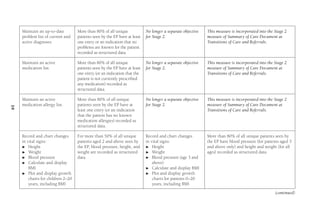
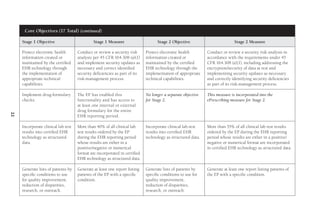
APPENDIX 1.1 STAGE 1 VERSUS STAGE 2: COMPARISON TABLE FOR
ELIGIBLE PROFESSIONALS ���������������������������������������������������������������������������������� 18
4 I: Introduction to the National Health Information Technology Strategy
INTRODUCTION
The health care environment in which advanced practice registered nurses are currently
practicing is a complex setting with rapid change underway driven by a need to trans-
form the health care delivery system by focusing on improving patient safety, quality,
and population health, while at the same time decreasing the overall cost of health care.
Health information technology (HIT) has been promoted as a key element in the National
Quality Strategy (NQS) to achieve three aims: better care, affordable care, and healthy
populations and communities (Department of Health  Human Services, 2011). Nurses
will play an important role in the transformation of the health care delivery system and
are critical to the success of this overall strategy, particularly as it relates to the effective
and efficient deployment of HIT. This chapter focuses on regulatory requirements under-
way to implement the U.S. health care system’s strategic plan, the importance of HIT to
the strategy, and the diverse role that nurses will play in this transformation.
POLICY AND REGULATION TO TRANSFORM
THE DELIVERY SYSTEM
In order to implement the National Strategy for Quality Improvement in Health Care, sev-
eral legislative components have been implemented. The Patient Protection and Afford-
able Care Act (PPACA) focuses on providing all Americans with access to quality and
affordable health care (Patient Protection and Affordable Care Act, 2010). As a compo-
nent of the federal plan, HIT plays a critical role in ensuring transparency, increasing
efficiency, engaging consumers, and providing data to effectively manage the cost and
quality of care in the United States (Patient Protection and Affordable Care Act, 2010).
The Health Information Technology for Economic and Clinical Health (HITECH) Act
was passed as part of the American Recovery and Reinvestment Act (ARRA). Under the
HITECH Act there are two sets of standards established as regulatory requirements by
the Office of the National Coordinator for Health Information Technology (ONC-HIT)
to help providers meet the meaningful use (MU) of electronic health records (EHRs) and
to assure that the EHRs across the nation meet an adequate standard for performance.
The first standard defines the MU of EHRs and the second specifies how EHRs are to
be developed and certified to meet the MU criteria (Health Information Technology
for Economic and Clinical Health Act, 2009). The Centers for Medicare  Medicaid
Services (CMS) couples this infrastructure regulation with an EHR incentive program
to encourage providers and hospitals to adopt and implement certified techno­
logy
(CMS, 2013a, 2013b).
Affordable Care Act
Health care costs in the United States are escalating at unprecedented levels despite
efforts to contain them. Health care expenditures are consuming approximately 18% of
the gross domestic product (GDP), and are expected to rise to 20% by 2020 (Keehan et al.,
2011). The nation had to contain the costs and despite significant bipartisan political
controversy, legislation was passed in 2009 to implement the Affordable Care Act (ACA).
Health care reform under the ACA puts into place several mechanisms to improve care
1: Introduction to Health Information Technology in a Policy and Regulatory Environment 5
and decrease cost, including the implementation of the accountable care organizations
(ACOs). Shared savings accounts under Section 3022 of the ACA create savings accounts
to support at-risk contracts in which provider organizations take on the responsibility of
patient populations for which they provide care at a fixed rate per person. In addition to
the at-risk contracts, ACA establishes metrics to measure success with improving qual-
ity and creating efficiencies. The measures are organized under five domains to monitor
performance in key areas, including (a) patient/caregiver experience, (b) care coordina-
tion, (c) patient safety, (d) preventive health, and (e) at-risk population/frail elderly health.
In order for organizations to achieve the 65 measures required to perform as an ACO,
systems that take on these contracts must have significant technology implemented. HIT
infrastructure will be required to succeed within the health care delivery system under
ACA, including EHRs and health information exchange (HIE) data translated to action-
able information with extensive data management and reporting capability on which
providers can manage and improve care.
HITECH Act
The U.S. Strategic Plan for Health  Human Services addresses several critical objectives
emphasizing improvements in the health of the nation, a safer and more effective health
care delivery system, transparency, and consumer engagement. To achieve the plan for
the United States, a key objective for the plan is to promote the adoption and meaning-
ful use of HIT (Department of Health  Human Services, 2011). HIT has the potential
to support the transformation of a safer and a more effective health care delivery system.
To establish the HIT infrastructure, the HITECH Act was passed in 2009 as part of the
ARRA (Health Information Technology for Economic and Clinical Health Act, 2009).
Several programs were implemented under the HITECH Act, which includes the following:

 Sixty-two Regional Extension Centers (RECs) providing HIT assistance to smaller
health care organizations (small hospitals, federally qualified health care clinics,
and small provider practices)

 Eighty-four community college programs offering HIT training

 Seventeen Beacon Community projects, demonstrating how HIT can help address
local health needs through the use of HIEs

 Grants to states to support development of statewide HIEs (ONC-HIT, 2013b)
The HITECH Act lays out three phases of “meaningful use” to achieve the goals neces-
sary under the national strategy with each phase of MU escalating in what the technology
is designed to achieve, ultimately resulting in sufficient infrastructure and information
to result in improved outcomes (see Table 1.1). Phase one is focused on the implementa-
tion of certified EHRs meeting basic requirements such as electronic exchange of infor-
mation through ePrescribing (electronic prescriptions) and ability to capture and report
quality metrics. Phase two of MU focuses on consumer engagement also termed “patient
centeredness” and increases the capacity within the certified product to capture and
exchange data. Phase three will further expand the requirement to capture more struc-
tured data, better quality reporting, and better capacity to exchange data using HIEs
within and across states and regions. Phase three will also emphasize technical standards
6 I: Introduction to the National Health Information Technology Strategy
that support population health management and outcomes measurement while continu-
ing to emphasize patient-centered care. These phases and the evolution of the technical
capability are reflected in Table 1.1.
EHR Incentive Program
Throughout the MU phases, providers and hospitals that implement EHRs meeting federal
standards outlined under the meaningful use regulatory requirements are financially
incentivized with payments from CMS. The incentive program started in 2011 and extends
over several years with the time table determined by whether a provider elects to access
the Medicaid or Medicare incentive program. Hospitals can access both Medicaid and
Medicare incentives, and in many cases these incentives equate to millions of dollars.
Under the Medicaid incentive program, incentives available for adopting, implement-
ing, and meaningfully utilizing a certified EHR can be as much as $63,750 per pro-
vider and includes nurse practitioners. Medicare incentive payments can be as much as
TABLE 1.1 Stages of Meaningful Use
Stage 1 Stage 2 Stage 3
Meaningful use criteria
focus on basic data
capture and sharing
Meaningful use criteria
focus on advancing
clinical processes
Meaningful use
criteria focus on
improved outcomes
Electronically capturing
health information in a
standardized format
More rigorous HIE Improving quality, safety,
and efficiency, leading to
improved health outcomes
Using that information
to track key clinical
conditions
Increased requirements
for ePrescribing and
incorporating lab results
Decision support for
national high-priority
conditions
Communicating that
information for care
coordination processes
Electronic transmission of
patient care summaries
across multiple settings
Patient access to self-
management tools
Initiating the reporting
of clinical quality
measures and public
health information
More patient-controlled data Access to comprehensive
patient data through
patient-centered HIE
Using information to
engage patients and their
families in their care
Improving population
health
HIE, health information exchange.
Adapted from ONC (ONC-HIT, 2013b).
1: Introduction to Health Information Technology in a Policy and Regulatory Environment 7
$44,000 per provider, and do not include nurse practitioners in the program. However,
providers must select either Medicare incentives or Medicaid incentives. As of October
2014, CMS had paid out more than 100,000 eligible Medicaid providers, more than
200,000 Medicare providers, and more than 4,200 hospitals with approximately $17.2
billion in Medicare incentives paid and with more than $8.7 billion in Medicaid EHR
incentive program payments since January 2011 (when the first set of states launched
their programs; CMS, 2014). This indicates that the update of technology over a very
short period of time (2009–2014) has been extensive under this incentive program.
The HITECH Act had two components requiring that vendors providing EHRs
develop products in accordance with criteria that have been laid out in the statutory rule-
making process as “certified” products (ONC-HIT, 2013a). The second component of the
Act required that providers effectively use these systems in a meaningful way measured
by detailed metrics that determines that the provider meets “meaningful use” criteria.
These measures are outlined in Appendix 1.1, comparing and contrasting Stages 1 and
2 measure sets for hospitals and eligible providers. Eligible providers are defined as
providers that meet the criteria under the CMS EHR incentive program for the incen-
tive dollars. These measures are described in more detail in Section II of the text, which
addressed the use of point-of-care technology and implications for advanced practice
registered nurses.
The ACA and HIT
Although the PPACA is not directly tied to the use of information technology in health
care delivery, it is indirectly connected through the mandate of MU standards for care
delivery. Examples of this include population health management and quality mea-
sures required under ACA without which EHRs would be unattainable. At this point in
time, providers in this country are incentivized to deliver care that includes Stage 1 and
subsequently Stage 2 of MU standards, with Stage 3 planned in the near future (CMS,
2013b). The incentive program will be followed by penalty reductions in Medicare and
Medicaid reimbursement for providers and hospitals that fail to adopt EHRs. Appendix
1.1 compares MU Stage 1 and Stage 2 measures (core and menu metrics) that address
patient engagement and exchange of information, such as the ability to access lab val-
ues and conduct interactive communication with primary care providers (CMS, 2013c).
Patient engagement is an important aspect of how these guidelines will ultimately
impact population health in the long term. The consumer emphasis as a partner in the
health care delivery process is believed to be one of the most important aspects of how
technology and care will be transformed over time. Evidence suggests that patient engage-
ment in the care plan is essential to fundamentally realizing the full impact of technol-
ogy to improve the health of the nation, particularly when addressing the increasing
load of chronic illness within the United States. The expanded use of advanced practice
registered nurses and new models of care utilizing technology to support patient engage-
ment are important predictors of success (Cumbie, Conley,  Burman, 2004). Chapter 5
further expands on this important aspect of the federal strategic plan to impact the
long-term health of the nation by discussing consumer engagement, activation, and how
consumer engagement can be enhanced by technology.
8 I: Introduction to the National Health Information Technology Strategy
NURSING’S ESSENTIAL ROLE IN HEALTH CARE REFORM
This section discusses the important role that nurses will play in the transformation
of the health care system and the various roles nurses will play in nursing informatics (NI).
Figure 1.1 illustrates three components needed for the reformation of the health care
delivery system in which the goal of MU can be fully realized. These components include
(a) technology for lowering cost and improving safety, (b) assurance of patient safety
and quality in a technology-driven environment, and (c) nursing’s diverse role as HIT
advances. Ultimately, the MU of HIT for continuity of care and safety becomes the
definition of advancing health care through nursing.
Technology for Lowering Costs and Improving Safety
The use of technology for lowering costs and improving safety during health care deliv-
ery has long been advocated. Recent studies have reported the impact of HIT on patient
safety and quality outcomes. For example, one study assessed the output of grants funded
by the Agency for Healthcare Research and Quality (AHRQ), the federal government’s
highest agency focused on the safe use of technology in health care. Bibliographic analysis
of the 2010 articles, citations, and journal titles was performed along with a qualitative
review of the full-text article and grant document. Findings indicated that the 75
qualifying articles represented a broad range of HIT topics from the role of health care
1. Why technology
is essential to
lowering costs and
improving safety
(federal initiatives)
2. Patient safety
and quality in a
technology-driven
environment
3. Diverse role
of nurses in HIT
advancement
Meaningful use for
continuity of care
and safety
Advancing health care through nursing
FIGURE 1.1. Key components for nursing involvement in health care reform.
HIT, health information technology.
1: Introduction to Health Information Technology in a Policy and Regulatory Environment 9
professionals in HIT, to patient engagement using HIT, to the cost analysis of HIT use.
Authors concluded that this set of AHRQ-funded research projects addressed the goals
and priorities of AHRQ, indicating notable contributions to the scientific knowledge
base on the impact of information system use in health care (Whipple, Dixon, 
McGowan, 2013).
Another comprehensive study exploring the impact of HIT on patient care delivery
focused on the structured and/or coded EHRs and the associated direct patient care bene-
fits or value noted. The researchers searched for evidence of direct patient care values
from the use of structured and/or coded information within EHRs by exploring nine
international databases from 1990 to 2011. Value (benefit) was defined using the Institute
of Medicine’s (IOM) six areas for improvement for health care systems: effectiveness,
safety, patient-centeredness, timeliness, efficiency, and equitability (Kalra, Fernando,
Morrison,  Sheikh, 2013). In this study on the benefits of EHRs for patient care deliv-
ery, 5,016 potentially eligible papers were considered. Of those, 13 studies satisfied the
criteria focusing on effectiveness, safety, and improved clinical outcomes if a structured
and/or coded EHR was combined with alerting or advisory systems. No studies were
found reporting value in relation to patient-centeredness, timeliness, efficiency, or equi-
tability. Authors indicated that evidence for the impact of this EHR-based structured
data is not well documented. Authors concluded that there have been patchy efforts to
investigate empirically the value from structuring and coding EHRs for direct patient
care. They further noted that future investments in structuring and coding of EHRs
should be informed by robust evidence as to the clinical scenarios in which patient care
benefits may be realized (Kalra et al., 2013).
Assurance of Patient Safety and Quality in
Technology-Driven Environments
One aspect for consideration in technology-driven environments is the assurance of
patient safety and quality during the continued rapid deployment of EHRs across the
nation. It is a common understanding among informaticists that, although there was the
ability to harm patients prior to the use of technology for health care delivery, there is
potentially more serious harm that can be done to patients with the use of technology
for health care delivery (Institute of Medicine [IOM], 2012).
As a result of observing a trend in unintended consequences of HIT in delivery of
patient care, the federal government’s Department of Health and Human Services, pub-
lished a guide on how to implement safe HIT systems for better care (IOM, 2012). The
recommendations centered on the premise that the departments in the federal govern-
ment must work together, communicate together, and share knowledge and experience
together to safely and effectively deploy HIT across the nation. Important details on unin-
tended consequences and patient safety with respect to HIT adoption and implementa-
tion of point-of-care technology are further addressed in Section II of this book.
Nursing’s Diverse Role in HIT Advances
The role of nurses in patient care has evolved and so has their role in the use of technol-
ogy to improve health care delivery. Now informatics nurses and informatics nurse
specialists provide important direction in the leadership and practice arenas related to
10 I: Introduction to the National Health Information Technology Strategy
HIT. The American Nurses Association (ANA) recognized NI as a nursing specialty in
1992. Numerous scope and standards documents have reflected the evolution of this
specialty practice, the most recent being the 2015 Nursing Informatics Nursing: Scope and
Standards of Practice, Second Edition. That resource includes the revised definition of
nursing informatics:
Nursing informatics (NI) is the specialty that integrates nursing science with
multiple information and analytical sciences to identify, define, manage, and
communicate data, information, knowledge, and wisdom in nursing practice. NI
supports nurses, consumers, patients, the interprofessional healthcare team, and
other stakeholders in their decision-making in all roles and settings to achieve
desired outcomes. This support is accomplished through the use of information
structures, information processes, and information technology. (ANA, 2015, p. 1)
According to this definition, the “multiple information and analytic sciences” include
“A listing of sciences that integrate with nursing informatics includes but is not limited
to: computer science, cognitive science, the science of terminologies and taxonomies
(including naming and coding conventions), information management, library science,
heuristics, archival science, and mathematics” (ANA, 2015, p. 1).
Research addressing the relationship among nursing informatics, increased patient
safety, and reduced health care-associated costs is challenging to identify (Carrington 
Tiase, 2013). This reflects the need for the nursing informatics community to study and
publish these types of articles broadly so that health care institutions may benefit from
this body of work. With the involvement of informatics nurses in the development of
EHR products, the interface (integration) of the EHR with the flow of direct patient care
delivery can be realized, yielding an improved and safer product (Carey, 2013). Many of
the influential studies on the role of the NI in HIT involve medication administration,
prediction of patterns to predict changes in patient conditions, and nursing documentation
within an EHR (Carrington  Tiase, 2013).
IOM’s Report on the Future of Nursing
The IOM has long been interested in quality of patient care delivery. The institute is
known for its 1999 report, To Err Is Human: Building a Safer Health System, which pointed
out that approximately 48,000 patients die each year due to errors encountered during
health care delivery in the United States (Kohn, Corrigan,  Donaldson, 1999). Other
books followed as part of the 11-book Quality Chasm Series. Crossing the Quality Chasm:
A New Health System for the 21st Century provided a focus on a definition of quality in
the context of the aforementioned medical error epidemic (Committee on Quality of
Healthcare in America, 2001). Ann Page edited one of the next books opening the dis-
cussion for the reality of the work environment of nurses, where the pivotal role of nursing
in quality of care was emphasized (Page, 2004).
In 2004, the same year of the book on the work environment of nurses, the book
Patient Safety: Achieving a New Standard of Care was released. It is appropriate that a book
on safety became available shortly after the publication on the environment of nurses.
More recently, prevention of medication errors was the topic of concern, to which the
1: Introduction to Health Information Technology in a Policy and Regulatory Environment 11
description of an ideal medication administration system was born (Committee on Iden-
tifying and Preventing Medication Errors, Aspden, Wolcott,  Bootman, 2007).
In 2010, the IOM, in partnership with the Robert Wood Johnson Foundation, pub-
lished its landmark report, The Future of Nursing: Leading Change, Advancing Health
(IOM, 2010). This book focuses on the expansion of affordable health care and how it
will bring thousands of new patients into the health care system. Advanced practice
registered nurses will shoulder most of the primary care delivered to those patients with
the assistance of various types of information technology, including the EHR (IOM,
2010). The remainder of this book includes additional content from these IOM reports
and their influence in the transformation of health care delivery in this country.
Nursing Education for the Healthcare Informatics Model
As noted, the role of the nurse is expanding to include information technology. This is
also true of the doctor of nursing practice (DNP) role (McBride, Tietze,  Fenton, 2013).
The authors developed a conceptual framework, which addresses the major roles that
advanced practice registered nurses play within the information technology environ-
ment. This framework is the Nursing Education for the Healthcare Informatics (NEHI)
Model. The framework is targeted to advanced practice care delivery and is composed of
three main content domains: (a) patient safety/quality, (b) data management and analytics,
and (c) point-of-care technology. These domains align well with the DNP Essentials, and
has been discussed in previous publications by the authors (McBride et al., 2013).
The model was originally developed for a DNP informatics and statistics course and
has subsequently been used in different venues to develop master’s courses in informat-
ics, design a master’s nursing informatics program, and various educational workshops
developing competencies for advanced practice registered nurses in HIT (see Figure 1.2
Point-of-Care
Technology
Data Management
 Analytics
Nursing Informatics Content
Health Care Delivery Environment
Public
Policy
Formation
Federal
and
State
Regulatory
Impact
Patient Safety/Quality
 Population Health
Improved
Health Care
Nursing
Role
Nursing
Role
Nursing
Role
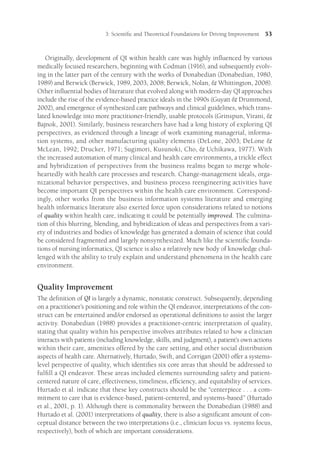
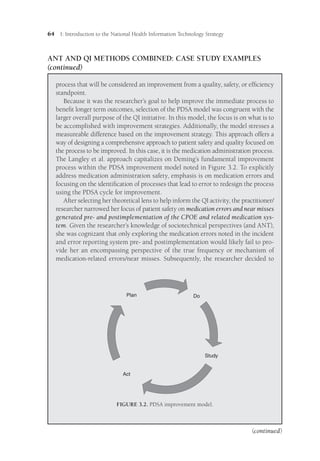
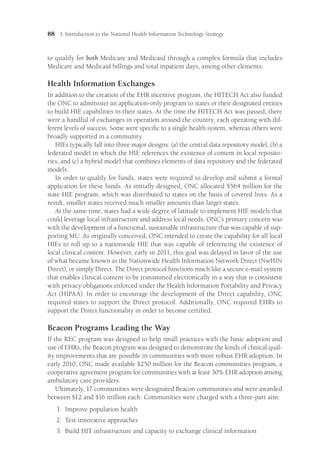
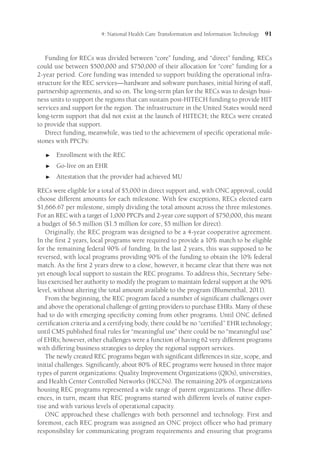
FIGURE 1.2. The NEHI model. Framework for development of curriculum to align with IOM
and essentials.
Source: McBride et al. (2013).
12 I: Introduction to the National Health Information Technology Strategy
for schematic representation). Examples of these programs include the use of EHRs in
MU, unintended consequences in use of HIT, and workflow redesign boot camps.
The first domain of the framework, point-of-care technology, reflects the use of techno­
logy in patient care delivery. Point-of-care technology includes technology in which data
that is transformed to information is gathered as part of the technology, the most com-
mon example being the EHR. Thus, for example, the point-of-care technology content
domain focuses on content in support of EHR implementations.
The second content domain of the NEHI framework, data management and analyt-
ics, then relates to the first content domain of the NEHI framework, namely, point-of-
care technology. This second content domain, data management and analytics, reflects
applied information management tools, such as business intelligence tools and statisti-
cal software programs, to transform data and information into improved health care
delivery.
The third content domain of the NEHI framework, patient safety/quality and popula-
tion health, then relates to the second content domain of the NEHI framework, namely,
data management and analytics, This third content domain, patient safety/quality and
population health, reflects quality-improvement tools applied to individuals, as well as
to public health initiatives.
Figure 1.2 also illustrates the three content domains and their influence by environ-
mental factors of federal and state regulatory impact and public policy formation. The
three content domains are thought to constitute important foci for the transformation
of the health care delivery system and the associated role DNPs and other advanced
practice professions will play within that transformation.
These core content domains in the NEHI model are foundational and closely tied
to both the masters essentials (American Association of Colleges of Nursing, 2011) and
the DNP essentials (American Association of Colleges of Nursing, 2006; see the Appen-
dices for a complete list of these essential guidelines for education). These three areas
serve as the organizational structure for this book, focusing on point-of-care techno­
logy
needed to support data management and analysis of data and ultimately addressing the
patient safety/quality and population health outcomes intended by the national strategy
(U.S. Department of Health and Human Services, 2014).
NEHI FRAMEWORK TO ORGANIZE
INFORMATICS CONTENT
As noted, given the target of the DNP and other advanced practice professionals, and in
order for this textbook to deliver content supporting those roles, the NEHI framework
was used to organize the content. For example, the textbook begins with an introductory
section addressing the use of the NEHI framework, advanced practice roles and inter-
professionalism, theories in informatics, the U.S. health care policy, and federal landscape
and consumer engagement.
The next three sections of the book outline content for the three main NEHI frame-
work domains. Table 1.2 lists the chapters by section. For example, the point-of-care
technology domain, deemed fairly fundamental to informatics, is the first of these three
1: Introduction to Health Information Technology in a Policy and Regulatory Environment 13
TABLE 1.2 Chapters Organized by the NEHI Framework
NEHI Framework
Component
Chapter
Number
Chapter Title
1. Introduction 1 Introduction to Health Information Technology in
a Policy and Regulatory Environment
2 Advanced Practice Roles in Interprofessional Teams
3 Scientific and Theoretical Foundations for
Driving Improvement
4 National Health Care Transformation
and Information Technology
5 Consumer Engagement/Activation Enhanced
by Technology
2. Point-of-Care
Technology
6 Computers in Health Care
7 Electronic Health Records and Point-of-Care
Technology
8 Systems Development Life Cycle for Achieving
Meaningful Use
9 Workflow Redesign in Quality-Improvement
Modality
10 Evaluation Methods and Strategies for Electronic
Health Records
11 Electronic Health Records and Health Information
Exchanges Providing Value and Results for
Patients, Providers, and Health Care Systems
12 National Standards for Health Information
Technology
13 Public Health Data to Support Healthy
Communities and Health Assessment Planning
14 Privacy and Security in a Ubiquitous Health
Information Technology World
15 Personal Health Records and Patient Portals
(continued)
14 I: Introduction to the National Health Information Technology Strategy
NEHI Framework
Component
Chapter
Number
Chapter Title
16 Telehealth and Mobile Health
3. 
Data Management
and Analytics
17 Strategic Thinking in Design and Deployment of
Enterprise Data, Reporting, and Analytics
18 Data Management and Analytics: The Foundations
for Improvement
19 Clinical Decision Support Systems
4. 
Patient Safety/
Quality and
Population Health
20 Health Information Technology and Implications
for Patient Safety
21 Quality-Improvement Strategies and Essential
Tools
22 National Prevention Strategy, Population Health,
and Health Information Technology
23 Developing Competencies in Nursing for an
Electronic Age of Health Care
24 Genomics and Implications for Health
Information Technology
5. 
New and Emerging
Technologies
25 Nanotechnology and Implications for Health Care
Interprofessional Teams
26 “Big Data” and Advanced Analytics
27 Social Media: Ongoing Evolution in Health Care
Delivery
28 Electronic Clinical Quality Measures: Building
an Infrastructure for Success
29 Interprofessional Application of Health
Information Technology in Education
NEHI, nursing education for healthcare informatics.
TABLE 1.2 Chapters Organized by the NEHI Framework (continued)
1: Introduction to Health Information Technology in a Policy and Regulatory Environment 15
sections. It includes chapters for computer technology, EHR implementation for reach-
ing MU, workflow redesign, and data privacy/security.
The second of the NEHI framework-based segments is the data management and ana-
lytics section. The authors believe that data analytics is one of the main reasons for the
existence of the EHR. It includes a chapter for data management, advanced data analyt-
ics, and clinical decision support.
The third of the NEHI-framework-based segments is the patient safety/quality and
population health section. Patient safety and quality should be part of any patient-care
delivery educational effort along with effort to improve health of the population. As
such, this section includes chapters for a national prevention strategy, quality improve-
ment tools, and public health informatics.
The last section of the book describes new and emerging technologies and is intended
to provide the advanced practitioner with a view for the future of health care-based
informatics. It includes chapters on genomics, nanotechnology, big data and advanced
analytics, electronic quality measures, social media, and interprofessionalism in educa-
tion. All of these chapters, in the context of the NEHI framework, are thought to provide
the comprehensive outline needed by today’s advanced practice professional.
SUMMARY
The U.S. health care delivery system is under major transformation driven by policy
changes that work in tandem to build regulation and structure needed to overhaul
the delivery system. This transformation is needed because of escalating costs of health
care in the United States and quality considerations noted in numerous reports by the
IOM. Yet, the rapid deployment of EHR technology over a very short period of time
sets the delivery system up for serious patient safety issues with the very technology that
was established to address the quality and safety of health care. The role of nurses in
supporting the national plan is critical to ensure safe effective care in the United States
with respect to new payer models and use of technology to deliver care. The nation needs
EHRs at the point of care to capture and collect data to report and manage care in the
United States. The remaining chapters within Section I of this book expound on the
need for the technology and the important role of nurses in this national strategy.
EXERCISES AND QUESTIONS FOR CONSIDERATION
Consider content covered with respect to policy changes in the United States and the
strategic plan to improve care and drive down cost through the use of HIT, and respond
to the following questions:
1.	
What are the three aims in the NQS outlined by the Department of Health and
Human Services, and why is technology an important aspect of that plan?
2.	
How do you see your role in nursing impacted by changes related to health care
reform and the HITECH Act of 2009?
3.	
Reflect on rapid change underway with regard to the implementation of EHRs.
What are the factor(s) driving the rapid adoption of EHRs? Is this positive or
negative for the health care industry?
16 I: Introduction to the National Health Information Technology Strategy
4.	
Compare and contrast the Medicare and Medicaid EHR incentive program and
reflect on why the two programs are different for providers and hospitals.
5.	
Discuss the positive and negative aspects of transformation underway as it relates
to the NQS and the rapid deployment of HIT.
REFERENCES
American Association of Colleges of Nursing. (2006). The essentials of doctoral education for advanced
nursing practice (No. AACN2006). Washington, DC: Author.
American Association of Colleges of Nursing. (2011). The essentials of master’s education in nursing.
Retrieved from http://www.aacn.nche.edu/education-resources/MastersEssentials11.pdf
American Nurses Association. (2015). Nursing informatics: Scope and standards of practice. Silver
Spring, MD: American Nurses Association.
Carey, E. (2013). Not all nurses wear scrubs. Nursing informatics: What is it and what do they do?
Ohio Nurses Review, 88(2), 7.
Carrington, J. M.,  Tiase, V. L. (2013). Nursing informatics year in review. Nursing Administration
Quarterly, 37(2), 136–143. doi:10.1097/NAQ.0b013e3182869deb
Center for Medicare  Medicaid Services. (2013a). Medicare and Medicaid EHR incentive program
basics: Payments and registration summary overview. Retrieved from https://www.cms.gov/Regulations-
and-guidance/legislation/EHRIncentivePrograms/DataAndReports.html
Center for Medicare  Medicaid Services. (2013b). The official web site for the Medicare and Medicaid
electronic health records (EHR) incentive programs. Retrieved from http://www.cms.gov/Regulations-
and-Guidance/Legislation/EHRIncen​tivePrograms/index.html
Center for Medicare  Medicaid Services. (2013c). Stage 1  Stage 2 comparison tables. Retrieved
from http://www.cms.gov/Regulations​-and-Guidance/Legislation/EHRIncentivePrograms/Downloads/​
Stage1vsStage2CompTablesforEP.pdf
Center for Medicare  Medicaid Services. (2014). Combined Medicare and Medicaid payments by state:
January 2011 to November 2014. (No. EHR2014Nov). Washington, DC: Department of Health and Human
Services. Retrieved from http://www​
.cms.gov/Regulations-and-Guidance/Legislation/EHRIncentive​
Programs/Downloads/November2014​_PaymentsbyStatebyProgram.pdf
Committee on Identifying and Preventing Medication Errors, Aspden, P., Wolcott, J.,  Bootman,
J. L. (Eds.). (2007). Preventing medication errors: A quality chasm series. Washington, DC: National
Academies Press. Retrieved from http://www.nap.edu/catalog.php?record_id=12610
Committee on Quality of Healthcare in America. (2001). Crossing the quality chasm: A new health
system for the 21st century. Washington, DC: National Academies Press. Retrieved from http://www​
.nap​.edu​/catalog.php?record_id=10027
Cumbie, S. A., Conley, V. M.,  Burman, M. E. (2004). Advanced practice nursing model for compre-
hensive care with chronic illness model for promoting process engagement. Advances in Nursing Sci-
ence, 27(1), 70–80.
Health Information Technology for Economic and Clinical Health Act. (2009). Public Law 111-5 Amer-
ican Recovery and Reinvestment Act of 2009, Title XIII Health Information Technology for Economic and
Clinical Health Act.
Institute of Medicine. (2010). The future of nursing: Leading change, advancing health. Washington, DC:
National Academies Press. Retrieved from http://www.iom.edu/Reports/2010/The-Future-of-​
Nursing-​
Lead​ing-Change-Advancing-Health.aspx
1: Introduction to Health Information Technology in a Policy and Regulatory Environment 17
Institute of Medicine. (2012). Health IT and patient safety building safer systems for better care.
Washington, DC: Author.
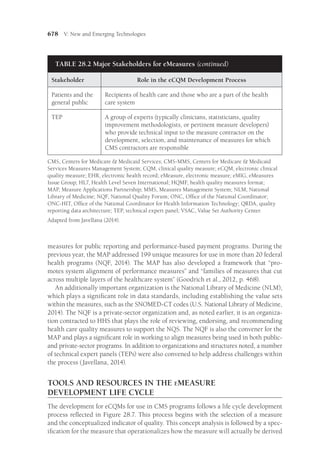
Kalra, D., Fernando, B., Morrison, Z.,  Sheikh, A. (2013). A review of the empirical evidence of the
value of structuring and coding of clinical information within electronic health records for direct
patient care. Informatics in Primary Care, 20(3), 171–180. doi:10.14236/jhi.v20i3.22
Keehan, S. P., Sisko, A. M., Truffer, C. J., Poisal, J. A., Cuckler, G. A., Madison, A. J., . . . Smith, S. D.
(2011). National health spending projections through 2020: Economic recovery and reform drive
faster spending growth. Health Affairs, 30(8), 1594–1605. doi:10.1377/hlthaff.2011.0662
Kohn, L. T., Corrigan, J. M.,  Donaldson, M. S. (Eds.). (1999). To err is human: Building a safer health
system. Washington, DC: National Academies Press.
McBride, S. G., Tietze, M.,  Fenton, M. V. (2013). Developing an applied informatics course for a
doctorofnursingpracticeprogram.NurseEducator,38(1),37–42.doi:10.1097/NNE.0b013e318276df5d
Office of the National Coordinator for Health Information Technology. (2013a). Health IT certifica-
tion program. Retrieved from http://www.healthit.gov/policy-researchers-implementers/onc-health-it-​
certification-program
Office of the National Coordinator for Health Information Technology. (2013b). HITECH programs for
health information technology. Retrieved from http://www.healthit.gov/policy-researchers-​
implemen​
ters/
health-it-adoption-programs
Page, A. (2004). Keeping patients safe: Transforming the work environment of nurses. Washington,
DC: National Academies Press.
Patient Protection and Affordable Care Act (2010). (No. Pub. L. No. 111–148, §2702, 124 Stat. 119U.S.C.
111–148). U.S. Government Printing Office.
U.S. Department of Health  Human Services. (2011). Report to Congress: National strategy for quality
improvement in health care. Retrieved from http://www.ahrq.gov/workingforquality/nqs/nqs2011ann​
lrpt.pdf
U.S. Department of Health and Human Services. (2014). 2014 Annual Report to Congress: National
strategy for quality improvement in health care. (No. AHRQ-2014). Washington, DC: Agency for Health-
care Research and Quality.
Whipple, E. C., Dixon, B. E.,  McGowan, J. J. (2013). Linking health information technology to
patient safety and quality outcomes: A bibliometric analysis and review. Informatics for Health and
Social Care, 38(1), 1–14. doi:10.3109/17538157.2012.678451
18
Core Objectives (17 Total)
Stage 1 Objective Stage 1 Measure Stage 2 Objective Stage 2 Measure
Use CPOE for medication
orders directly entered by
any licensed health care
professional who can enter
orders into the medical
record per state, local, and
professional guidelines.
More than 30% of unique patients
with at least one medication in
their medication list seen by the
EP have at least one medication
order entered using CPOE.
Use CPOE for medication,
laboratory, and radiology
orders directly entered by any
licensed health care professional
who can enter orders into the
medical record per state, local,
and professional guidelines.
More than 60% of medication, 30% of
laboratory, and 30% of radiology orders
created by the EP during the EHR reporting
period are recorded using CPOE.
Implement drug–drug and
drug–allergy interaction
checks.
The EP has enabled this
functionality for the entire
EHR reporting period.
No longer a separate objective
for Stage 2.
This measure is incorporated into the Stage 2
clinical decision support measure.
Generate and transmit
permissible prescriptions
electronically (eRx).
More than 40% of all permissible
prescriptions written by the EP are
transmitted electronically using
certified EHR technology.
Generate and transmit
permissible prescriptions
electronically (eRx).
More than 50% of all permissible prescriptions
written by the EP are compared to at least one
drug formulary and transmitted electronically
using certified EHR technology.
Record the following
demographics:

 Preferred language

 Gender

 Race

 Ethnicity

 Date of birth
More than 50% of all unique
patients seen by the EP have
demographics recorded as
structured data.
Record the following
demographics

 Preferred language

 Gender

 Race

 Ethnicity

 Date of birth
More than 80% of all unique patients seen by
the EP have demographics recorded as
structured data.
APPENDIX 1.1 STAGE 1 VERSUS STAGE 2: COMPARISON TABLE FOR ELIGIBLE PROFESSIONALS
19
Maintain an up-to-date
problem list of current and
active diagnoses.
More than 80% of all unique
patients seen by the EP have at least
one entry or an indication that no
problems are known for the patient
recorded as structured data.
No longer a separate objective
for Stage 2.
This measure is incorporated into the Stage 2
measure of Summary of Care Document at
Transitions of Care and Referrals.
Maintain an active
medication list.
More than 80% of all unique
patients seen by the EP have at least
one entry (or an indication that the
patient is not currently prescribed
any medication) recorded as
structured data.
No longer a separate objective
for Stage 2.
This measure is incorporated into the Stage 2
measure of Summary of Care Document at
Transitions of Care and Referrals.
Maintain an active
medication allergy list.
More than 80% of all unique
patients seen by the EP have at
least one entry (or an indication
that the patient has no known
medication allergies) recorded as
structured data.
No longer a separate objective
for Stage 2.
This measure is incorporated into the Stage 2
measure of Summary of Care Document at
Transitions of Care and Referrals.
Record and chart changes
in vital signs:

 Height

 Weight

 Blood pressure

 
Calculate and display
BMI

 
Plot and display growth
charts for children 2–20
years, including BMI
For more than 50% of all unique
patients aged 2 and above seen by
the EP, blood pressure, height, and
weight are recorded as structured
data.
Record and chart changes
in vital signs:

 Height

 Weight

 
Blood pressure (age 3 and
above)

 
Calculate and display BMI

 
Plot and display growth
charts for patients 0–20
years, including BMI
More than 80% of all unique patients seen by
the EP have blood pressure (for patients aged 3
and above only) and height and weight (for all
ages) recorded as structured data.
(continued)
20
Record smoking status for
patients older than or equal
to 13 years.
More than 50% of all unique
patients older or equal to 13 years
seen by the EP have smoking
status recorded as structured data.
Record smoking status for
patients older than or equal to
13 years.
More than 80% of all unique patients older than
or equal to 13 years seen by the EP have smoking
status recorded as structured data.
Implement one clinical
decision support rule
relevant to specialty or high
clinical priority along with
the ability-to-track
compliance rule.
Implement one clinical decision
support rule.
Use clinical decision support
to improve performance on
high-priority health
conditions.
1.	
Implement five clinical decision support
interventions related to four or more clinical
quality measures, if applicable, at a relevant
point in patient care for the entire EHR
reporting period.
2.	
The EP, eligible hospital, or CAH has
enabled the functionality for drug–drug
and drug–allergy interaction checks for
the entire EHR reporting period.
Report clinical quality
measures (CQMs) to CMS
or the states.
Provide aggregate numerator,
denominator, and exclusions
through attestation or through the
PQRS Electronic Reporting Pilot.
No longer a separate objective
for stage 2, but providers must
still submit CQMs to CMS or
the states in order to achieve
meaningful use.
Starting in 2014, all CQMs will be submitted
electronically to CMS.
Core Objectives (17 Total) (continued)
Stage 1 Objective Stage 1 Measure Stage 2 Objective Stage 2 Measure
21
Provide patients with an
electronic copy of their
health information
(including diagnostic test
results, problem list,
medication lists, medication
allergies), upon request.
More than 50% of all patients of
the EP who request an electronic
copy of their health information
are provided it within 3 business
days.
Provide patients the ability to
view online, download, and
transmit their health
information within 4 business
days of the information being
available to the EP.
1.	
More than 50% of all unique patients seen by
the EP during the EHR reporting period are
provided timely (available to the patient
within 4 business days after the information
is available to the EP) online access to their
health information.
2.	
More than 5% of all unique patients seen by
the EP during the EHR reporting period (or
their authorized representatives) view,
download, or transmit to a third party their
health information.
Provide clinical summaries
for patients for each office
visit.
Clinical summaries provided to
patients for more than 50% of all
office visits within 3 business
days.
Provide clinical summaries for
patients for each office visit.
Clinical summaries provided to patients within
1 business day for more than 50% of office
visits.
Exchange key clinical
information (e.g., problem
list, medication list,
medication allergies,
diagnostic test results),
among providers of care
and patient-authorized
entities electronically.
Performed at least one test of
certified EHR technology’s
capacity to electronically exchange
key clinical information.
This objective was eliminated
from Stage 1 in 2013 and is no
longer an objective for Stage 2.
This measure was eliminated from Stage 1 in
2013 and is no longer a measure for Stage 2.
(continued)
22
Core Objectives (17 Total) (continued)
Stage 1 Objective Stage 1 Measure Stage 2 Objective Stage 2 Measure
Protect electronic health
information created or
maintained by the certified
EHR technology through
the implementation of
appropriate technical
capabilities.
Conduct or review a security risk
analysis per 45 CFR 164.308 (a)(1)
and implement security updates as
necessary and correct identified
security deficiencies as part of its
risk-management process.
Protect electronic health
information created or
maintained by the certified
EHR technology through the
implementation of appropriate
technical capabilities.
Conduct or review a security risk analysis in
accordance with the requirements under 45
CFR 164.308 (a)(1), including addressing the
encryption/security of data at rest and
implementing security updates as necessary
and correctly identifying security deficiencies
as part of its risk-management process.
Implement drug-formulary
checks.
The EP has enabled this
functionality and has access to
at least one internal or external
drug formulary for the entire
EHR reporting period.
No longer a separate objective
for Stage 2.
This measure is incorporated into the
ePrescribing measure for Stage 2.
Incorporate clinical lab test
results into certified EHR
technology as structured
data.
More than 40% of all clinical lab
test results ordered by the EP
during the EHR reporting period
whose results are either in a
positive/negative or numerical
format are incorporated in certified
EHR technology as structured data.
Incorporate clinical lab-test
results into certified EHR
technology as structured data.
More than 55% of all clinical lab test results
ordered by the EP during the EHR reporting
period whose results are either in a positive/
negative or numerical format are incorporated
in certified EHR technology as structured data.
Generate lists of patients by
specific conditions to use
for quality improvement,
reduction of disparities,
research, or outreach.
Generate at least one report listing
patients of the EP with a specific
condition.
Generate lists of patients by
specific conditions to use for
quality improvement,
reduction of disparities,
research, or outreach.
Generate at least one report listing patients of
the EP with a specific condition.
23
Send reminders to patients
per patient preference for
preventive/follow-up care.
More than 20% of all unique patients
older than or equal to 65 years or
younger than or equal to 5 years
were sent an appropriate reminder
during the EHR reporting period.
Use clinically relevant
information to identify
patients who should receive
reminders for preventive/
follow-up care.
Use EHR to identify and provide reminders for
preventive/follow-up care for more than 10% of
patients with two or more office visits in the
last 2 years.
Provide patients with
timely electronic access to
their health information
(including lab results,
problem list, medication
lists, medication allergies)
within 4 business days of
the information being
available to the EP.
More than 10% of all unique
patients seen by the EP are
provided timely (available to the
patient within 4 business days of
being updated in the certified EHR
technology) electronic access to
their health information subject to
the EP’s discretion to withhold
certain information.
This objective was eliminated
from Stage 1 in 2014 and is no
longer an objective for Stage 2.
This measure was eliminated from Stage 1 in
2014 and is no longer a measure for Stage 2.
Use certified EHR
technology to identify
patient-specific education
resources and provide
those resources to the
patient if appropriate.
More than 10% of all unique
patients seen by the EP are
provided patient-specific
education resources.
Use certified EHR technology
to identify patient-specific
education resources and
provide those resources to the
patient if appropriate.
Patient-specific education resources identified
by CEHRT are provided to patients for more
than 10% of all unique patients with office
visits seen by the EP during the EHR reporting
period.
Perform medication
reconciliation if the EP who
receives a patient from
another setting of care or
provider of care believes an
encounter is relevant.
The EP performs medication
reconciliation for more than 50% of
transitions of care in which the
patient is transitioned into the care
of the EP.
Perform medication
reconciliation if the EP
who receives a patient from
another setting of care or
provider of care believes an
encounter is relevant.
The EP performs medication reconciliation for
more than 50% of transitions of care in which
the patient is transitioned into the care of the EP.
(continued)
24
Provide summary-of-care
record for each transition of
care or referral when the
EP transitions his or her
patient to another setting of
care or provider of care or
refers his or her patient to
another provider of care.
The EP who transitions or refers a
patient to another setting of care or
provider of care provides a
summary-of-care record for more
than 50% of transitions of care and
referrals.
Provide summary-of-care
record for each transition of
care or referral when the EP
transitions his or her patient to
another setting of care or
provider of care or refers his or
her patient to another provider
of care.
1.	
The EP who transitions or refers a patient to
another setting of care or provider of care
provides a summary-of-care record for more
than 50% of transitions of care and referrals.
2.	
The EP who transitions or refers a patient to
another setting of care or provider of care
provides a summary-of-care record either (a)
electronically transmitted to a recipient using
CEHRT or (b) where the recipient receives
the summary-of-care record via exchange
facilitated by an organization that is an
NwHIN Exchange participant or is validated
through an ONC-established governance
mechanism to facilitate exchange for 10% of
transitions and referrals.
3.	
The EP who transitions or refers a patient to
another setting of care or provider of care must
either (a) conduct one or more successful
electronic exchanges of a summary-of-care
record with a recipient using technology that
was designed by a different EHR developer
than the sender’s, or (b) conduct one or more
successful tests with the CMS-designated test
EHR during the EHR reporting period.
Core Objectives (17 Total) (continued)
Stage 1 Objective Stage 1 Measure Stage 2 Objective Stage 2 Measure
25
Submit electronic data to
immunization registries or
immunization information
systems and actual
submission except where
prohibited and in
accordance with applicable
law and practice.
Performed at least one test of
certified EHR technology’s
capacity to submit electronic data
to immunization registries and
follow-up submission if the test is
successful (unless none of the
immunization registries to which
the EP submits such information
have the capacity to receive the
information electronically).
Submit electronic data to
immunization registries or
immunization information
systems and actual submission
except where prohibited and in
accordance with applicable law
and practice.
Successful ongoing submission of electronic
immunization data from certified EHR
technology to an immunization registry or
immunization information system for the
entire EHR reporting period.
NEW NEW Use secure electronic
messaging to communicate
with patients on relevant
health information.
A secure message was sent using the electronic
messaging function of certified ERT
technology by more than 5% of unique
patients seen during the EHR reporting period.
CAH, critical access hospitals; CEHRT, certified electronic health record technology; CFR, code of federal regulations; CPOE, computer-based provider order entry;
EHR, electronic health record; EP, eligible provider; NwHIN, nationwide health information network; PQRS, physician quality reporting system.
26
Menu Objectives (EPs Must Select 3 of 6 Menu Objectives)
Stage 1 Objective Stage 1 Measure Stage 2 Objective Stage 2 Measure
Submit electronic
syndromic surveillance data
to public health agencies
and actual submission
except where prohibited
and in accordance with
applicable law and practice.
Perform at least one test of certified
EHR technology’s capacity to provide
electronic syndromic surveillance data
to public health agencies and follow-up
submission if the test is successful
(unless none of the public health
agencies to which an EP, eligible
hospital or CAH submits such
information has the capacity to receive
the information electronically).
Submit electronic syndromic
surveillance data to public health
agencies and actual submission
except where prohibited and in
accordance with applicable law
and practice.
Successful ongoing submission of
electronic syndromic surveillance data
from certified EHR technology to a
public health agency for the entire EHR
reporting period.
NEW NEW Record electronic notes in patient
records.
Enter at least one electronic progress
note created, edited, and signed by an
EP for more than 30% of unique
patients.
NEW NEW Imaging results consisting of the
image itself and any explanation
or other accompanying
information are accessible
through CEHRT.
More than 10% of all scans and tests
whose result is an image ordered by the
EP for patients seen during the EHR
reporting period are incorporated into
or accessible through certified EHR
technology.
27
NEW NEW Record patient family health
history as structured data.
More than 20% of all unique patients
seen by the EP during the EHR
reporting period have a structured data
entry for one or more first-degree
relatives or an indication that family
health history has been reviewed.
NEW NEW Identify and report cancer cases
to a state cancer registry, except
where prohibited, and in
accordance with applicable law
and practice.
Successful ongoing submission of
cancer case information from certified
EHR technology to a cancer registry for
the entire EHR reporting period.
NEW NEW Identify and report specific cases to
a specialized registry (other than
a cancer registry), except where
prohibited, and in accordance
with applicable law and practice.
Successful ongoing submission of
specific case information from certified
EHR technology to a specialized registry
for the entire EHR reporting period.
CAH, critical access hospitals; CEHRT, certified electronic health record technology; CMS, Centers for Medicare  Medicaid Services; EHR, electronic health record;
EP, eligible provider.
CHAPTER 2
Advanced Practice Roles in
Interprofessional Teams
Carol J. Bickford, Diane Pace, and Mari Tietze
OBJECTIVES
1.	
Distinguish between advanced practice registered nurses (APRNs) and other
advanced practice professionals.
2.	
Describe interrelatedness of nursing education, faculty, American Nurses Asso-
ciation (ANA) nursing informatics standards, Quality and Safety Education for
Nurses and American Association of Colleges of Nursing essentials for master’s
and doctoral education.
3.	
Summarize the role of the APRN and other advanced-level practitioners in the
report The Future of Nursing: Leading Change Advancing Health.
4.	
Indicate importance of reports, such as the National Prevention Strategy and
National Strategy for Quality Improvement in Health Care, to advanced-level
practitioners.
5.	
Discuss the role of the APRN as it relates to nursing informatics (NI) in the cur-
rent HITECH environment.
6.	
Explain the impact of NI on health information technology deployment.
7.	
Explore concepts relating to the interprofessional team, such as:
a.	Patient centricity
b.	Interprofessionalism
c.	
Simulation (both education and practice)
KEY WORDS
patient safety, quality, nursing, interprofessional, advanced practice
CONTENTS
INTRODUCTION ................................................................................................... 30
TYPES OF ADVANCED-LEVEL INTERPROFESSIONAL TEAM MEMBERS .......... 31
INFORMATICS COMPETENCIES FOR INTERPROFESSIONAL TEAMS .............. 36
INTERPROFESSIONAL TEAMS WORKING TOGETHER ...................................... 38
30 I: Introduction to the National Health Information Technology Strategy
NATIONAL IMPERATIVES AND ROLE OF INTERPROFESSIONAL TEAMS ........ 40
SUMMARY .............................................................................................................. 42
EXERCISES AND QUESTIONS FOR CONSIDERATION ....................................... 42
REFERENCES ......................................................................................................... 43
APPENDIX 2.1 FTC SUMMARY DETAILS .............................................................. 45
INTRODUCTION
Chapter 1 introduced the importance of health information technology (HIT) in today’s
health care environment and described its associated legislative, regulatory, and policy
initiatives, which will continue to influence the health care system and its evolution for
many years. The successful implementation and integration of HIT into practice cannot be
accomplished without careful preparations and the dedicated commitment of the affected
stakeholders, including organizations, employees, health care consumers, and others.
Two themes are consistent in today’s health care literature. One is that health care job
demands are stable and in some subsectors are on the rise; the other is that interprofes-
sional team is the new buzzword for success. According to the Bureau of Labor Statistics
(BLS), the health care and social assistance industries are the combined largest employer
in 34 states, suggesting a major shift from the retail and manufacturing industries (Bureau
of Labor Statistics, 2014a) as the U.S. population is aging and associated health care needs
and costs are projected to rise. Figure 2.1 illustrates the dominance of health care and
social assistance employment by state in the United States.
Manufacturing
Health care and social assistance
Professional, scientific, and technical services
Retail trade
Accommodation and food services
FIGURE 2.1. Dominant industries in the United States in 2013.
Source: Bureau of Labor Statistics.
2: Advanced Practice Roles in Interprofessional Teams 31
Worsening primary care physician shortages are predicted and this has prompted
calls for other clinicians to fill the gap (Bodenheimer  Smith, 2013). Similarly, the rise
of accountable care organizations (ACOs) and implementation of medical homes has
spiked demand to unprecedented levels for nurse practitioners (NPs), who have become
important support resources in providing care to those who gained coverage under the
Affordable Care Act (ACA), according to findings from a Merritt Hawkins survey (Merritt
Hawkins, 2014). The consulting firm found that demand for NPs and physician assistants
increased by 320% over the past 3 years, putting them into the top five most desired
specialties. Neither ranked in the top 20, 3 years ago.
With the enactment of the ACA, the need for access to primary care delivery of services
within the United States has increased. Advanced practice registered nurses (APRNs) are
licensed, independent providers with a significant role in meeting the existing and future
primary care needs of the nation by providing high-quality, patient-centered health care
to a broad range of consumers (American Association of Nurse Practitioners [AANP],
2014a). Very often NPs fill this role, beginning at the time of the initial office visit and often
extending into homes, long-term care and rehabilitation facilities, hospice, correctional
facilities, and other settings where health care services and behavior changes are targeted.
TYPES OF ADVANCED-LEVEL INTERPROFESSIONAL
TEAM MEMBERS
Although NPs have been mentioned as one group of advanced-level health care clinicians,
a more detailed discussion of evolving roles of other advanced-level clinicians and other
members of the interprofessional health care team follows.
Advanced Practice Registered Nurse
Registered nurses (RNs) who are considering graduate education and advanced clinical
training commonly pursue an APRN (Brassard, 2013). The APRN Consensus Model (APRN
Consensus Work Group and the NCSBN APRN Advisory Committee, 2008) reflects
decisions associated with the nursing profession’s identification and clarification of the
APRN title, the expected educational preparation and credentialing process, and regula-
tion of the four APRN roles:

 Certified nurse-midwife (CNM)

 Certified nurse practitioner (CNP)

 Clinical nurse specialist (CNS)

 Certified registered nurse anesthetist (CRNA)
Each APRN group focuses on different categories of patients and their associated health
care needs.
Further detail on the number of practitioners in each type of role (Brassard, 2012) has
indicated that a majority of APRNs are NPs (58.5%, n = 158,348) followed by CNSs
(21.9%, n = 59,242), CRNAs (12.9%, n = 34,821), and CNMs (6.8%, n = 18,492).
According to a white paper published by AANP (2014a), more than 75% of the NPs cre-
dentialed to practice in the United States are actively practicing in primary care. Their role
32 I: Introduction to the National Health Information Technology Strategy
includes ordering, conducting, and interpreting diagnostic and laboratory tests; prescrib-
ing both pharmacologic/nonpharmacologic agents; establishing and coordinating inter-
professional plans of care; and teaching and counseling about health promotion and risk
reduction of disease. Other NPs have elected to practice in other specialties such as cardio-
vascular care, pediatrics, neonatology, women’s health, neurology, and pulmonary care.
In terms of the regulatory perspectives of practice, regulation of practice and licensure
of APRNs varies across states from total regulation within the state board of nursing to
occasional shared regulation with the board of medicine. In addition to state licensure,
APRNs obtain national board certification. The four roles of APRNs, CNSs, CNPs, CRNAs,
and CNMs have varying scopes of practice. For example, the AANP identifies three types
of practice environments for NPs that vary across the United States: (AANP, 2014b).
1.	
Full Practice: State practice and licensure laws and regulations provide for NPs to
evaluate patients; diagnose, order, and interpret diagnostic tests; and initiate and
manage treatments—including prescribing medications and other therapies—
under the exclusive licensure authority of the state board of nursing. This is the
model recommended by the Institute of Medicine (IOM) and National Council of
State Boards of Nursing.
2.	
Reduced Practice: State practice and licensure laws and regulations reduce the abil-
ity of NPs to engage in at least one element of NP practice. The state requires a
regulated collaborative agreement with an outside health discipline in order for
the NP to provide patient care.
3.	
Restricted Practice: State practice and licensure laws and regulations restrict the
ability of an NP to engage in at least one element of NP practice and mandate
required supervision, delegation, or team management by an outside health dis-
cipline in order for the NP to provide patient care.
Multiple government and third-party payer agencies oversee or control the reimburse-
ment structure for payment of services. One of those governmental agencies, the Fed-
eral Trade Commission (FTC), has carefully examined the potential for restraint of
trade and the lack of health care consumer choice. The FTC has provided an extensive
comment/report on the topic of ideal payment balanced with degree of supervision and
legal risk (Gilman  Koslov, 2014). This report summarized the key points allowing for
the fair trade of service by APRNs to consumers. Appendix 2.1 provides those key
points in detail. Many APRNs are designated Medicare and Medicaid providers and
elect to bill under their own national provider identifier (NPI).
CNMs have prescriptive authority and provide care to women during pregnancy and
birth, as well as primary care health services to women from adolescence beyond meno-
pause (American College of Nurse-Midwives, 2014). These APRNs are available to
receive 100% reimbursement for approved Medicare services and are also recognized
as approved Medicaid providers. The Bureau of Labor Statistics reported the number
of 5,460 nurse-midwives as of 2013 (Bureau of Labor Statistics, 2014i) as an estimate
based on employers’ reporting that differs from the 2009 statistics available at http://
campaignforaction.org/photo/types-advanced-practice-registered-nurses.
CNSs are prepared at the master’s or doctoral level as expert clinicians in a special-
ized area of nursing practice. The specialty may be identified in terms of population
2: Advanced Practice Roles in Interprofessional Teams 33
(e.g., pediatrics, geriatrics, women’s health), setting (e.g., critical care, emergency room),
disease or medical subspecialty (e.g., diabetes, oncology, cardiology HIV/AIDS), type of
care (e.g., psychiatric, rehabilitation), or type of problem (e.g., pain, wounds, stress). In
addition to providing direct patient care, CNSs influence care outcomes by providing
expert consultation for nursing staff and by implementing improvements in health care
delivery systems. They may provide primary care services and also have prescriptive
authority in an increasing number of states. Explorehealthcareers.org identifies approx-
imately 69,000 CNSs practicing in the United States (American Dental Education Asso-
ciation, 2014).
CRNAs numbered 35,430 in 2013, as reported by the Bureau of Labor Statistics (2014c).
The American Association of Nurse Anesthetists identified that these anesthesia pro-
viders safely administered more than 34 million anesthetics to U.S. patients in 2012
(American Association of Nurse Anesthetists, 2014). CRNAs are the primary anesthesia
providers in rural America and other medically underserved areas. Practice settings
include traditional hospital surgical suites, obstetrical delivery rooms, critical access hos-
pitals, ambulatory surgical centers, U.S. military and Public Health Services facilities,
Department of Veterans Affairs health care facilities, and offices of dentists, podiatrists,
plastic surgeons, ophthalmologists, and pain management specialists.
As electronic health records (EHRs) and information systems are becoming ubiquitous
in today’s health care delivery environments, APRNs continue to be important contribu-
tors and leaders in defining requirements; assisting with implementation decisions and
activities; engaging in evaluation initiatives; and ensuring consideration and inclusion
of the health care consumer’s perspectives, information, contributions, and requests. It is
not uncommon for the APRN in the practice or facility to become the “go to” person who
engages as the “superuser” to learn the fine points of the information system architecture
and operations. The APRN then teaches others “survival skills” during installation of a
new health information system and provides orientation to new ways of doing busi-
ness. These clinicians are often the champions for effective use and mentor colleagues,
especially during the orientation to the software application for computer-based pro-
vider order entry (CPOE).
Physician Assistant
Physician assistants constitute another advanced-level clinician category of the inter-
professional team and must become expert users of EHRs and HIT. The Bureau of Labor
Statistics estimates that 88,110 physician assistants are employed in the United States
as of May 2013 (Bureau of Labor Statistics, 2014g). This clinician cohort is expected to
assume increased importance in delivery of health care services as primary care clini-
cians in the coming years.
Physical Therapist
More than 195,670 physical therapists are estimated to be in practice as of 2013 by the
Bureau of Labor Statistics (2014f). These health care professionals, most of whom are
doctorally prepared, assess, plan, organize, and participate in rehabilitative programs that
improve mobility, relieve pain, increase strength, and improve or correct disabling con-
ditions resulting from disease or injury. They may find that the mandated EHR system
34 I: Introduction to the National Health Information Technology Strategy
in their organization does not sufficiently support their practice needs so they must move
into an advocacy role to effect necessary changes.
Occupational Therapist
The Bureau of Labor Statistics estimates that in 2013 more than 108,410 occupational
therapists, most of whom are prepared at the master’s or doctoral level, are engaged in
assessing, planning, organizing, and participating in rehabilitation programs that help
build or restore vocational, homemaking, and daily living skills, as well as general inde-
pendence, to persons with disabilities or developmental delays (Bureau of Labor Statis-
tics, 2014d). Like physical therapists, this professional group may find it must advocate
for changes in the facility’s EHR system to support its practice needs.
Dietitian and Nutritionist
The Bureau of Labor Statistics identifies that dietitians and nutritionists plan and conduct
food service or nutritional programs to assist in the promotion of health and control of
disease. They counsel individuals and groups, conduct nutritional research, and may
supervise activities of a department providing quantity food services. An estimated 59,530
dietitians and nutritionists were available in 2013 to help address the U.S. obesity epidemic
(Bureau of Labor Statistics, 2014b). Access to the patient’s EHR information is often
challenging, as these clinicians are not always recognized as essential interprofessional
health care team members. The HIT systems may not include sufficient resources to
adequately support their work processes and extensive communications and partner-
ships with health care consumers and their families.
Pharmacist
Pharmacists dispense drugs prescribed by physicians and other clinicians with prescrip-
tive authority and have become important information resources for patients regarding
medications and their use. Similarly, these professionals, most of whom are doctor-
ally prepared, provide information to prescribing clinicians for decision making about
the selection, dosage, interactions, and side effects of medications. The 287,420 esti-
mated pharmacists work in diverse health care facility pharmacies, retail pharmacies,
and other settings (Bureau of Labor Statistics, 2014e). Pharmacists are integral users of
EHR systems and must often address issues related to interoperability and appropriate
information exchange, especially when dealing with an interfaced rather than inte-
grated pharmacy information management system.
Behavioral Health Professional
The category of behavioral health professionals includes many diverse professionals, and
the numbers of these professionals are harder to quantify. Grohol identified that clinical
and counseling psychologists, mental health and substance abuse social workers, mental
health counselors, substance abuse counselors, psychiatrists, and marriage and family
therapists comprise the mental health professionals and numbered 552,000 in 2011
2: Advanced Practice Roles in Interprofessional Teams 35
(Grohol, 2011). These clinicians must address facility and organizational decisions to
segregate clinical documentation of mental health information from view by other clini-
cians and the health care consumer. Also, they must determine the adequacy of the EHR
systems to identify Diagnostic and Statistical Manual of Mental Disorders, Fifth Edition
(DSM-5; American Psychiatric Association, 2013) diagnostic criteria in patient medical
records.
Health Care Administration Professional
The Bureau of Labor Statistics includes health care administrators as part of the medical
and health services manager’s category, the group of professionals who plan, direct, and
coordinate medical and health services. In 2012, BLS reported 315,500 positions for this
category, with a projected growth of 23% from 2012 to 2022, identified as a much faster
rate than the average for all occupations (Bureau of Labor Statistics, 2014h). Although
these professionals do not engage in clinical care services, they rely on correct data and
information reporting, analysis, and evaluation of these services for organizational deci-
sion making and planning. Useful information displays for these individuals vary from
those provided to clinicians and may not be a focus for the operational HIT system.
HIT Professional
In terms of information technology in health care, the trend in this role is also increasing
over time. In a study of HIT-related job postings, results suggested that these job post-
ings accelerated following the Health Information Technology for Economic and Clinical
Health (HITECH) Act and have grown substantially over time, tripling its number of
health care job postings since 2007 (Schwartz, Magoulas,  Buntin, 2013). According to
the authors, HITECH was associated with an 86% increase in monthly HIT postings, or
162,000 additional postings overall. Additionally, these HIT-related job listings had
descriptions containing key phrases, such as “EHR” or “clinical informatics,” emphasiz-
ing the focus on health care professionals who had EHR and clinical informatics skills.
Informatics Nurse Specialist
Description of the interprofessional health care team members would not be complete
without referencing the graduate or doctorally prepared informatics nurse specialist
team member. These RNs have declared NI as their nursing specialty and have com-
pleted graduate or doctoral education in an informatics program. Certification in nursing
informatics is available, as are other applicable credentials. The informatics nurse special-
ist’s work involves the identification, definition, management, and communication of data,
information, knowledge, and wisdom. These advanced-level nurses support colleagues,
health care consumers, patients, the interprofessional health care team, and other stake-
holders in their decision making in all roles and settings to achieve desired outcomes
(American Nurses Association [ANA], 2015). The informatics nurse specialist is the trans-
lator between clinical and information technology personnel and sectors. Similarly, infor-
matics nurse specialists serve as translators and liaisons for health care consumers and
patients accessing the EHR system and other HIT resources.
36 I: Introduction to the National Health Information Technology Strategy
INFORMATICS COMPETENCIES FOR
INTERPROFESSIONAL TEAMS
In addition to acquiring requisite profession-specific knowledge, skills, and abilities, all
interprofessional team members must now demonstrate an acceptable informatics com-
petence. Examination of the nursing community’s approach to assuring integration of
informatics competencies into all nursing curricula provides a glimpse of the magnitude
of such actions.
Scope and Standards of Practice
The ANA identified NI as a nursing specialty in 1992 and published the specialty’s first
scope of practice statement in 1994, followed by the NI standards of practice in 1995.
As the steward for the NI scope and standards of practice resource, ANA also supported
the review, revision, and publication of the 2001, 2008, and 2015 editions of the NI scope
and standards.
As the professional organization for all nurses, ANA, as mentioned, is the steward for
the nursing scope and standards of practice that apply to all registered and APRNs in all
roles and setting. Originally, each standard of practice was further explicated by accom-
panying measurement criteria that included some very basic informatics concepts.
In the 2010 second edition of Nursing: Scope and Standards of Practice, measurement
criteria were removed and the standards of practice and professional performance
included competencies, which describe the expected level of performance that integrates
knowledge, skills, abilities, and judgment (American Nurses Association, 2015). These
competencies incorporate slightly more advanced informatics competencies expected
of all nurses.
Education Standards
In its efforts to assure all prelicensure baccalaureate, graduate, and doctoral nursing
education programs prepare students for contemporary and future practice environ-
ments, the American Association of Colleges of Nursing (AACN) publishes documents
that identify and direct inclusion of essential content within all nursing curricula. The
Essentials of Baccalaureate Education for Professional Nursing Practice (AACN, 2008),
The Essentials of Master’s Education in Nursing (AACN, 2011), and The Essentials of
Doctoral Education for Advanced Nursing Practice (AACN, 2006) include specific sections
addressing information technology and what each learner is expected to achieve. Each
document is available at www.aacn.nche.edu/education-resources/essen​
tial-series.
Because of its focus on nursing educators, the National League for Nursing (NLN)
released the position statement “Preparing the Next Generation of Nurses to Practice in
a Technology-Rich Environment: An Informatics Agenda” in 2008 to highlight the need
for nurse educators to be competent in preparing, teaching, and evaluating informatics
competence and associated content at all levels. The position statement included recom-
mendations related to the development of informatics content and competence for nurse
faculty, deans/directors/chairs, and the NLN. Extensive resources and an informatics
toolkit are available at http://www.nln.org/professional-development-programs/teaching-
resources/toolkits/informatics-teaching.
2: Advanced Practice Roles in Interprofessional Teams 37
The Quality and Safety Education for Nurses (QSEN) project, begun in 2005 by the
Robert Wood Johnson Foundation, has completed three funding phases that generated
quality and safety competencies and accompanying educational materials for prelicensure
nursing students and the faculty teaching such content. Additional funding has been allo-
cated to now expand the QSEN initiative to graduate and doctoral education programs.
This advanced-level content addresses competencies associated with patient-centered
care, teamwork and collaboration, evidence-based practice (EBP), quality improvement
(QI), safety, and informatics. Although each QSEN statement describing the competency
and associated knowledge, skills, and attitudes is meant for advanced-level nurses, the
actual language and content are applicable to all advanced-level health care team mem-
bers, including administrative and technical professionals. Details about the graduate
level QSEN competencies are available at http://qsen.org/competencies/graduate-ksas/.
A grassroots collaborative effort, the Technology Informatics Guiding Education
Reform (TIGER) initiative, established specific recommendations for schools of nurs-
ing to prepare nursing students and practicing nurses to fully engage in digital health
care. The compendium of informatics competencies for every practicing nurse is
retrievable at www.thetigerinitiative.org/docs/tigerreport_informaticscompetencies.pdf.
The extensive TIGER initiative’s list of associated resources and reports is available at
www.thetiger​initiative.org/resources.aspx
Nursing Education for Healthcare Informatics Model-Based Role
As referenced in Chapter 1, McBride, Tietze, and Fenton (2013) developed the Nursing
Education for Healthcare Informatics (NEHI) model to assist faculty and learners in
organizing and understanding the important and interrelated components of (a) point-of-
care technology; (b) data management and analytics; and (c) patient safety, quality, and
population health associated with integration of informatics into professional education,
practice, and policy.
Nursing educators are pivotal in addressing the influence of point-of-care technology
on the experience of all nurses throughout their educational trajectory and professional
practice continuum. Data management and analytics are foundational to practice deci-
sion making in every role and must be adequately supported with readily available and
sufficiently robust technology solutions. Of key importance, adequate preparation in data,
information, and knowledge management and analysis must be sufficiently detailed to
enable effective application to practice. Curricular content should incorporate discussions
of the specific responsibility and accountability of the RN, APRN, and other advanced-
level health care team members to be informed participants, partners, and decision
makers regarding these components. Such content is best described as being part of the
informatics body of knowledge.
The third component—patient safety, quality, and population health—concisely cat-
egorizes the desired outcomes. These outcomes are reliant on the correct implementation
and continued use of point-of-care technology and the concomitant data management
and analytics activities. Again, each APRN and interprofessional health care team mem-
ber cannot abdicate their responsibility and accountability to understand and focus on
achieving the outcomes component within the context of interprofessional practice within
a larger system. That system context is reflected in the NEHI model by the outer perimeter
38 I: Introduction to the National Health Information Technology Strategy
framed as health care delivery environment, public policy formation, federal and state
regulatory impact, and NI content (Figure P.1). Although the NEHI model was created
within the lens of nursing and informatics, other interprofessional health care team
professionals can appreciate an architecture that promotes a patient-centric focus.
INTERPROFESSIONAL TEAMS WORKING TOGETHER
Today’s health care environment includes numerous discussions of the need to implement
interprofessional teams as one of the solutions that will help improve access, increase
quality, and reduce the cost of health care services. Several initiatives support this evo-
lution. The Interprofessional Education Collaborative (IPEC®
) began in 2009 as a col-
laborative of six national education associations of schools of the health professions
focused on creation of core competencies for interprofessional collaborative practice to
guide curricula development at all health professions schools. Allopathic and osteopathic
medicine, dentistry, nursing, pharmacy, and public health partners supported the aim
to integrate the roles of health care delivery professionals to optimize care delivery. Five
resource documents addressing competencies and the advancement of interprofessional
clinical prevention and population health are available at https://ipecollaborative.org/
Resources.html/.
The World Health Organization released its 2010 Framework for Action on Interprofes-
sional Education  Collaborative Practice to enable its partners to recognize and appreciate
the important contribution interprofessional education has on shaping effective collab-
orative practice to achieve optimal health services and improved health outcomes. The
proposed health and education system collaboration includes interprofessional educa-
tion that prepares present and future health workforce members who are prepared to be
collaborative-practice ready and capable of addressing local health needs. This report is
available at www​
.who.int/hrh/resources/framework_action/en/.
Cuff’s published summary of two workshops funded by the IOM, Interprofessional
Education for Collaboration: Learning How to Improve Health from Interprofessional
Models Across the Continuum of Education to Practice: Workshop Summary (2013), reit-
erates the need for interprofessional education for and about interprofessional collabora-
tive health care teams, includes models, provides examples of successful implementation
strategies, and metrics used for evaluation of effectiveness in achieving improvements
garnered in interprofessional education and practice. A key theme presented by the stu-
dent participants was the tremendous importance of effective communications among
all stakeholders (Cuff, 2013).
Pentland (2012), from Massachusetts Institute of Technology’s Human Dynamics
Laboratory, reports that patterns of communication explain the success or failure of a
team. His research identified that energy, the number and nature of the exchanges among
team members; engagement, the distribution of energy among team members; and explo-
ration, communication that members engage in outside their team are three aspects of
communication that affect team performance. Such human-to-human interactions and
exchanges merit further attention and development for those educational and practice
settings moving forward with the implementation of interprofessional teams.
Also important in the elaboration of interprofessional teamwork is information
techno­
logy and the four IOM core competencies (see Figure 2.2). The key provision of
2: Advanced Practice Roles in Interprofessional Teams 39
patient-centered care is the goal of interprofessional teamwork and it increasingly relies
on technology solutions to enhance patient–clinician communications, planning, and
decision making. The nature of the relationship between the patient and the team of health
professionals is central to competency development for interprofessional collaborative
practice. Without this kind of centeredness, interprofessional teamwork has little rationale.
The other three core competencies, in the context of interprofessional teamwork, identify
21st-century technologies for teamwork communication and coordination (i.e., infor-
matics), rely on the evidence base to inform teamwork processes and team-based care,
and highlight the importance of continuous improvement efforts related to teamwork and
team-based health care (Interprofessional Collaborative Expert Panel, 2011, p. 14).
Reports have indicated the benefits of interprofessional education. For example, Liaskos
et al. (2009) deemed patient safety is a major concern that involves a wide range of roles
in health care, including those who are directly and indirectly involved and the patients
themselves. They identified that developing a safety culture among health care provid-
ers, caregivers, and patients requires attention and investment in building appropriate
education and training tools, especially addressing those interprofessional team members
who plan patient safety activities. Their framework delineates the principles and ele-
ments of the guidance that should be provided to those who collaborate to design and
implement patient safety education and training activities.
Increasing use of simulation technologies in education and practice environments
has focused on development of effective interprofessional health care teams engaged
in continuous improvement in patient-centric care and achievement of optimal out-
comes. Development of standardized simulation experiences encompasses extensive
and time-consuming faculty preparation. The International Nursing Association for
Clinical Simulation and Learning (INACSL) has developed the eight Standards of Best
Practice: Simulation available at www.inacsl.org/files/journal/Complete%202013%20
Standards.pdf
FIGURE 2.2. Interprofessional teamwork and Institute of Medicine (IOM) core competencies.
Source: Interprofessional Collaborative Expert Panel (2011).
40 I: Introduction to the National Health Information Technology Strategy
The standards were designed to advance the science of simulation, share best practices,
and provide evidence-based guidelines for implementation and training. Adoption of the
standards demonstrates a commitment to quality and implementation of rigorous EBPs
in health care education to improve patient care by complying with practice standards
in the following areas:

 Standard I: Terminology—Provide Consistency

 Standard II: Professional Integrity of Participants

 Standard III: Participant Objectives—Clear and Measurable

 Standard IV: Facilitation—Multiple Methods

 Standard V: Facilitator—Proficiency

 Standard VI: Debriefing Process—Improve Practice Through Reflection

 Standard VII: Participant Assessment and Evaluation
NATIONAL IMPERATIVES AND ROLE OF
INTERPROFESSIONAL TEAMS
Several national efforts, linked by the health care improvement mission and vision for the
nation, collectively guide agencies, communities, and providers in health care delivery
approaches. They ranged from those specific to how the value of health care services deliv-
ery is measured to general guidelines for disease-specific efforts. Of those, many have an
interprofessional framework.
National Prevention Strategy
The National Prevention Strategy reflects the U.S. goal for improving health care of the
population and is reported to Congress each year (National Prevention Council, 2014).
One of the six main priorities is Priority 2: Ensuring That Each Person and Family Is
Engaged in Their Care (National Prevention Council, 2014, p. 14). Figure 2.3 illustrates
the three key aims and lists associated priorities.
The National Prevention Strategy guides the nation in identifying the most effective
and achievable means for improving health and well-being. It prioritizes prevention by
integrating recommendations and actions across multiple settings to improve health and
save lives. Because many of the strongest predictors of health and well-being fall outside
the health care setting, the strategy envisions a prevention-oriented society where all sec-
tors recognize the value of health for individuals, families, and society and work together
to achieve better health for all Americans. The National Prevention Strategy identifies
four strategic directions—the foundation for all prevention efforts—and seven targeted
priorities designed to improve health and wellness for all Americans. These are illus-
trated in Figure 2.4 (National Prevention Council, 2014, p. 3).
The prevention strategy provides evidence-based recommendations for each strategic
direction and priority and supports Healthy People 2020, a 10-year set of science-based
national health objectives (National Prevention Council, 2014). The National Preven-
tion Strategy responds to these challenges by aligning and coordinating prevention
efforts across disciplines, sectors, and institutions. This report showcases how the federal
2: Advanced Practice Roles in Interprofessional Teams 41
Aims
Better Care: Improve the overall quality by making health care more patient-
centered, reliable, accessible, and safe.
Healthy People/Healthy Communities: Improve the health of the U.S. population
by supporting proven interventions to address behavioral, social, and
environmental determinants of health in addition to delivering higher quality care.
Affordable Care: Reduce the cost of quality health care for individuals, families,
employers, and government.
Setting priorities
Making care safer by reducing harm caused in the delivery of care.
Ensuring that each person and family is engaged as partners in their care.
Promoting effective communication and coordination of care.
Promoting the most effective prevention and treatment practices for the leading
causes of mortality, starting with cardiovascular disease.
Working with communities to promote a wide use of best practices to enable
healthy living.
Making quality care more affordable for individuals, families, employers, and
governments by developing and spreading new health care delivery models.
•
•
•
•
•
•
•
•
•
FIGURE 2.3. National Quality Strategy: three aims and six priorities.
Healthy  Safe
Community
Environments
Clinical
 Community
Preventive Services
Empowered
People
Elimination of
Health Disparities
Increase the number of
Americans who are
healthy at every
stage of life.
I
n
j
u
r
y
-
a
n
d
V
i
o
l
e
n
c
e
-Free Living
Tobacco-Free Living
Preventing
Dru
g
A
b
u
s
e
a
n
d
E
x
c
e
s
s
i
v
e
A
l
c
o
h
o
l
U
s
e
H
e
a
l
t
h
y
E
a
t
i
n
g
Active Living
M
ental and Emotional Well-being
R
e
p
r
o
d
u
c
t
i
v
e
a
n
d
S
e
x
u
a
l
H
e
a
l
t
h
FIGURE 2.4. National Prevention Strategy framework.
Source: National Prevention Council (2014).
42 I: Introduction to the National Health Information Technology Strategy
government and its partners are addressing ongoing public health challenges through
innovation and collaboration to ensure all Americans live long and healthy lives (National
Prevention Council, 2014, p. 4). IPEC suggests that interprofessional health care teams
focused on collaborative patient-centric care would help achieve the target outcomes.
Meaningful Use Via the HITECH Act
Meeting the criteria for meaningful use (MU) of an EHR is one of the new methods of
Medicare and Medicaid reimbursement associated with the HITECH Act. The Centers
for Medicare  Medicaid Services (CMS) serves as the primary regulator, with each indi-
vidual state dictating the Medicaid operations within its jurisdiction (Health Informa-
tion Technology for Economic and Clinical Health Act, 2009). This statute identifies the
eligible providers, primarily physicians, for the Medicare and Medicaid reimbursement
structure. Such prescriptive language does not recognize, embrace, or support the inter-
professional team and the critical and collaborative work completed by such an entity
to improve access, improve health care, and reduce costs.
SUMMARY
Nurses must collaborate with many stakeholders in every setting to effect patient-­
centric
care that includes identified outcomes, implementation plans, and outcomes evaluation.
Such care also incorporates the concept of patient–clinician partnerships and decision
making, as well as interprofessional collaboration. The inclusion of ever-increasing tech-
nology solutions and the reliance on mobile devices as communication and work tools
for the health care consumer and interprofessional teams create interesting needs and
problems. Assurance of positive user experiences merits greater attention and can be best
accomplished by increased human factors and usability research.
The APRN and informatics nurse specialist communities are in key leadership posi-
tions to engage in the necessary discussions and decisions to move forward in safely
integrating HIT and mobile applications and tools into health care practice. Such efforts
mandate effective communications and collaborative interprofessional actions, all the
more reason to ensure implementation of interprofessional education in all professional
schools, including the information systems and technology programs.
EXERCISES AND QUESTIONS FOR CONSIDERATION
Consider content covered with respect to IPEC-based health care delivery and the U.S.
strategic plan to improve care and drive down cost. Consider the use of IPEC and HIT
to do that and respond to the following questions:
1.	
Given your understanding of the relationship between the HITECH Act and the
NI role, describe the ideal team members to accomplish an EHR implementation.
2.	
Identify two components of the National Prevention Strategy report and create
an education plan for an interprofessional team.
3.	
Using the role of APRN in managed chronic disease/population health, suggest
the ideal type of collaboration between the APRN and the NI specialist.
2: Advanced Practice Roles in Interprofessional Teams 43
REFERENCES
American Association of Colleges of Nursing. (2006). The essentials of doctoral education for
advanced nursing practice. (No. AACN2006). Washington, DC: Author.
American Association of Colleges of Nursing. (2008). The essentials of baccalaureate education for
professional nursing practice. Retrieved from http://www.aacn.nche.edu/education/pdf/baccessentials​
08.pdf
American Association of Colleges of Nursing. (2011). The essentials of master’s education in nursing.
Retrieved from http://www.aacn.nche.edu/education-resources/MastersEssentials11.pdf
American Association of Nurse Anesthetists. (2014). Certified registered nurse anesthetists at a glance.
Retrieved from http://www.aana.com/ceandeducation/becomeacrna/Pages/Nurse-Anesthetists-at-a-
Glance.aspx
American Association of Nurse Practitioners. (2014a). Nurse practitioners in primary care. (No. AANP-
2014). Alexandria, VA: Author.
American Association of Nurse Practitioners. (2014b). State practice environment. Retrieved from http://
www.aanp.org/legislation-regulation/state-legislation-regulation/state-practice-environment
American College of Nurse-Midwives. (2014). The nurse-midwives. Retrieved from www.midwife.org
American Dental Education Association. (2014). Clinical nurse specialist: Overview. Retrieved from
http://explorehealthcareers.org/en/Career/82/Clinical_Nurse_Specialist
American Nurses Association (ANA). (2015). Nursing informatics: Scope and standards of practice
(2nd ed.). Silver Spring, MD: Nursesbooks.org.
American Psychiatric Association. (2013). Diagnostic and statistical manual of mental disorders
(5th ed.). Arlington, VA: American Psychiatric Press.
APRN Consensus Work Group and the NCSBN APRN Advisory Committee. (2008). The consensus
model for APRN regulation, licensure, accreditation, certification and education. (No. NCSBNJuly7_​
2008). Chicago, IL: National Council of State Boards of Nursing. Retrieved from https://www.ncsbn​
.org/4213.htm
Bodenheimer, T. S.,  Smith, M. D. (2013). Primary care: Proposed solutions to the physician shortage
without training more physicians. Health Affairs, 32(11), 1881–1886. doi:10.1377/hlthaff.2013​
.0234
Brassard, A. (2012). Types of advanced practice registered nurses. Retrieved from http://campaignforac​
tion.org/photo/types-advanced-practice-registered-nurses
Brassard, A. (2013). So you want to be an APRN? American Nurse, 45(6), 9–9. Retrieved from http://
www.TheAmericanNurse.org
Bureau of Labor Statistics. (2014a). Largest industries by state, 1990–2013. (No. BLS2014). Washington,
DC: U.S. Department of Labor. Retrieved from http://www.bls.gov/opub/ted/2014/ted_20140728​
.htm
Bureau of Labor Statistics. (2014b). Occupational employment and wages, May 2013: Dietitians and
nutritionists. Washington, DC: U.S. Department of Labor. Retrieved from http://www.bls.gov/oes/
current/oes291031.htm
Bureau of Labor Statistics. (2014c). Occupational employment and wages, May 2013: Nurse anesthe-
tists. Washington, DC: U.S. Department of Labor. Retrieved from http://www.bls.gov/oes/current/
oes291151.htm
Bureau of Labor Statistics. (2014d). Occupational employment and wages, May 2013: Occupational
therapists. Washington, DC: U.S. Department of Labor. Retrieved from http://www.bls.gov/oes/current/
oes291122.htm
44 I: Introduction to the National Health Information Technology Strategy
Bureau of Labor Statistics. (2014e). Occupational employment and wages, May 2013: Pharmacists. Wash-
ington, DC: U.S. Department of Labor. Retrieved from http://www.bls.gov/oes/current/oes​
291051.htm
Bureau of Labor Statistics. (2014f). Occupational employment and wages, May 2013: Physical therapists.
Washington, DC: U.S. Department of Labor. Retrieved from http://www.bls.gov/oes/current/oes​
291123.htm
Bureau of Labor Statistics. (2014g). Occupational employment and wages, May 2013: Physician assis-
tants. Washington, DC: U.S. Department of Labor. Retrieved from http://www.bls.gov/oes/current/
oes291071.htm
Bureau of Labor Statistics. (2014h). Occupational outlook handbook: Medical and health services manag-
ers. Washington, DC: U.S. Department of Labor. Retrieved from http://www.bls.gov/ooh/management/
medical-and-health-services-managers.htm
Bureau of Labor Statistics. (2014i). Occupational employment and wages, May 2013: Nurse-­
midwives.
Washington, DC: U.S. Department of Labor. Retrieved from http://www.bls.gov/oes/current/
oes291161.htm
Cuff, P. A. (2013). Interprofessional education for collaboration: Learning how to improve health from
interprofessional models across the continuum of education to practice: Workshop summary. (No. 13486).
Washington, DC: National Academies Press.
Eibner, C. E., Hussey, P. S., Ridgely, M. S.,  McGlynn, E. A. (2009). Controlling health care spending in
Massachusetts: An analysis of options. Retrieved from www.rand.org/content/dam/rand/pubs/technical_
reports/2009/RAND_TR733.pdf
Gilman, D. J.,  Koslov, T. I. (2014). Policy perspectives: Competition and the regulation of advanced
practice nurses. (No. FTC-2014). USA: Federal Trade Commission.
Grohol, J. M. (2011). Mental health professionals: US statistics. Retrieved from http://psychcentral​
.com/lib/mental-health-professionals-us-statistics/0009373
Health Information Technology for Economic and Clinical Health Act. (2009). Retrieved from http://
www.hhs.gov/ocr/privacy/hipaa/understanding/coveredentities/hitechact.pdf
Interprofessional Collaborative Expert Panel. (2011). Core competencies for interprofessional collab-
orative practice: Report of an expert panel. (No. ICEP-2011). Interprofessional Education Collabora-
tive. Retrieved from https://ipecollaborative.org/uploads/IPEC-Core-Competencies.pdf
Liaskos, J., Frigas, A., Antypas, K., Zikos, D., Diomidous, M.,  Mantas, J. (2009). Promoting inter-
professional education in health sector within the European interprofessional education network.
InternationalJournalofMedicalInformatics,78(Suppl.1),S43–S47.doi:10.1016/j.ijmedinf.2008.08.001
McBride, S. G., Tietze, M.,  Fenton, M. V. (2013). Developing an applied informatics course for a doctor
of nursing practice program. Nurse Educator, 38(1), 37–42. doi:10.1097/NNE.0b013e318276df5d
Merritt Hawkins. (2014). Trends in physician and advanced practitioner recruiting (No. MH2014).
Irving, TX: Author. Retrieved from http://www.merritthawkins.com/physician-compensation-and-
recruiting​.aspx
National Prevention Council. (2014). National Prevention Council: Annual report (No. NPC2014). Wash-
ington, DC: U.S. Department of Health and Human Services, Office of the Surgeon General. Retrieved
from http://www.surgeongeneral.gov/initiatives/prevention/about/annual_status_reports​.html
Pentland, A. (2012). The new science of building great teams. Harvard Business Review, 90(4), 60–70.
Retrieved from https://hbr.org/2012/04/the-new-science-of-building-great-teams/ar/1
Schwartz, A., Magoulas, R.,  Buntin, M. (2013). Tracking labor demand with online job postings:
The case of health IT workers and the HITECH Act. Industrial Relations, 52(4), 941–968. doi:10.1111/
irel.12041
2: Advanced Practice Roles in Interprofessional Teams 45
APPENDIX 2.1 FTC SUMMARY DETAILS
The FTC has looked to the findings of the IOM and other expert bodies—analyses based
on decades of research and experience—on issues of APRN safety, effectiveness, and
efficiency.1
Based on those expert analyses and findings, as well as our own reviews of
pertinent literature and stakeholder views, the FTC staff has urged state legislators and
policymakers to consider the following principles when evaluating proposed changes
to APRN scope of practice.

 Consumer access to safe and effective health care is of critical importance.

 Licensure and scope of practice regulations can help to ensure that health care
consumers (patients) receive treatment from properly trained professionals. APRN
certification and state licensure requirements should reflect the types of services
that APRNs can safely and effectively provide, based on their education, training,
and experience.

 Health care quality itself can be a locus of competition, and a lack of competition—
not just regulatory failures—can have serious health and safety consequences.
More generally, competition among health care providers yields important con-
sumer benefits, as it tends to reduce costs, improve quality, and promote innova-
tion and access to care.

 Potential competitive effects can be especially striking where there are primary
care shortages, as in medically underserved areas or with medically underserved
populations. When APRNs are free from undue supervision requirements and
other undue practice restrictions, they can more efficiently fulfill unmet health
care needs.

 APRNs typically collaborate with other health care practitioners. Effective col-
laboration between APRNs and physicians can come in many forms. It does not
always require direct physician supervision of APRNs or some particular, fixed
model of team-based care.

 APRN scope of practice limitations should be narrowly tailored to address well-
founded health and safety concerns, and should not be more restrictive than patient
protection requires. Otherwise, such limits can deny health care consumers the
benefits of competition, without providing significant countervailing benefits.

 To promote competition in health care markets, it may be important to scrutinize
relevant safety and quality evidence to determine whether or where legitimate
safety concerns exist and, if so, whether physician supervision requirements or
other regulatory interventions are likely to address them. That type of scrutiny
1
None of the studies in the NGA’s literature review raise concerns about the quality of care offered by NPs. Most
studies showed that NP-provided care is comparable to physician-provided care on several process and outcome
measures (Eibner, Hussey, Ridgely,  McGlynn, 2009). Christine E. Eibner et al., RANDHealth Report Submitted
to the Commonwealth of Massachusetts, Controlling Health Care Spending in Massachusetts: An Analysis of
Options 99 (2009), www.rand.org/content/dam/rand/pubs/technical_reports/2009/RAND_TR733.pdf (hereafter
“Eibner et al., Massachusetts Report;” “studies have shown that they provide care similar to that provided by
physicians.”)
46 I: Introduction to the National Health Information Technology Strategy
can be applied not just to the general question whether the state requires physician
supervision or collaborative practice agreements but also to the particular terms
of those requirements as they are sometimes applied to, for example, APRN diag-
nosis of patient illnesses or other health conditions, APRN ordering of diagnostic
tests or procedures, and APRN prescribing of medicines.
CHAPTER 3
Scientific and Theoretical
Foundations for
Driving Improvement
Richard Booth, Susan McBride, and Mari Tietze
OBJECTIVES
1.	Define epistemology, science, and the generation of new knowledge.
2.	
Discuss levels of theoretical foundations and their application to health informa-
tion technology (HIT).
3.	
Provide description of other relevant theoretical foundations to examine and
evaluate HIT from a quality-improvement (QI) perspective.
4.	
Outline practical recommendations/implications for use of theory to inform the
industry in adoption, implementation, and evaluation of technology.
5.	
Provide case examples related to QI, HIT, and the use of theory-driven evalua-
tion.
KEY WORDS
epistemology, science, theory, sociotechnical, actor–network theory, quality improve-
ment, technology, Plan-Do-Study-Act model, Donabedian-inspired models
CONTENTS
INTRODUCTION ................................................................................................... 48
THEORETICAL FOUNDATIONS USED TO EXAMINE HIT .................................. 49
ANT AND QI METHODS COMBINED: CASE STUDY EXAMPLES ....................... 62
SUMMARY .............................................................................................................. 73
EXERCISES AND QUESTIONS FOR CONSIDERATION ....................................... 73
REFERENCES ......................................................................................................... 74
48 I: Introduction to the National Health Information Technology Strategy
INTRODUCTION
The foundations of science and how they relate to work within nursing informatics are
an important element in the full realization and maximization of the use of information
technology in health care. In this chapter, we briefly review some fundamental aspects
of science and place this discussion of theory within a practical application of health
information technology (HIT) relevant to our efforts to optimize technology in health
care. In-depth discussion of theory, as it relates to quality improvement (QI), is con-
ducted in a latter section of this chapter to ground the use of theory within informatics
practice to improve quality. Overall, this chapter provides the health care professional
with useful considerations to support the practice setting and research efforts related to
informatics and improve the delivery system with technology. We do not anticipate that
this is a comprehensive overview of all theory relevant to HIT, but we have selected an
important range of theories as examples of how theory can be applied practically to
understand and intervene in HIT projects to support research, as well as improvement
in patient safety, quality, and population health.
The Basic Building Blocks of Science
When exploring aspects surrounding theory, it is important to appreciate how people (or
groups of people) view the world, and the knowledge encapsulated within their world-
view. Epistemology is a term that attempts to elucidate how people view knowledge, and
has been defined as the nature of knowledge and what we can actually understand and
“know” (i.e., “how do we know what we know;” Samuels-Dennis  Cameron, 2013,
p. 27). Ultimately, an individual’s alignment with a certain epistemology informs her or his
opinions and ideas surrounding a number of other important concepts, like how science
is both conceptualized and produced. Science is defined by Chinn and Jacobs (1983) as
“a body of knowledge including facts and theories generated by the use of controlled
rigorous and precise methods within a delimited area of concern” (p. 205). A theory or
theoretical framework attempts to describe, explain, or predict some phenomenon of
interest. We often use theory to conceptualize a research study or area of investigation
utilizing scientific methods to control for bias that may be introduced within the study.
Englebardt and Nelson (2002) outline the following stages of theory development: (a)
observation of some phenomenon is made; (b) explanation of the phenomenon is pro-
posed; (c) a model is developed outlining key concepts and their relationship to the phe-
nomenon, including processes and interaction of the concepts; and (d) the model is
tested and refined. It is through this iterative inquiry that a theory develops and evolves.
There are different levels of theory, varying by specificity and concreteness (Fawcett,
1984, p. 24). The broadest in scope is referred to as grand theory, followed by middle-range
(or midrange) theories. Midrange theories are traditionally defined as such by the abil-
ity to empirically test propositions within the theory. Within some midrange theories,
Fawcett (1984) describes a structural hierarchy of contemporary nursing knowledge rel-
evant to all aspects of scientific inquiry. This hierarchy is informed by an overarching
epistemology that views science as a process that encourages objectivity and detailed
analysis of empirical findings. This hierarchy, provided by Fawcett (1984), is reflected as
follows: metaparadigm → conceptual framework → theories → empirical indicators.
3: Scientific and Theoretical Foundations for Driving Improvement 49
Within nursing informatics, midrange theory has commonly been used to assist in the
development of objective empirical indicators like variables or constructs. From a more
constructivist perspective, midrange theories are also useful in building deeper under-
standings about processes and actions within phenomena. As outlined by Geels (2007),
midrange theories can also be used to aid in the building of enlightenment regarding
complex social processes, and similarly, offer a useful lens from which to narratively
describe complex processes involving humans and technology. Therefore, one of the main
objectives of this chapter is to describe a useful theoretical methodology for a practitioner
that is compatible with development of traditional empirical elements (e.g., variables, con-
structs, etc.) commonly found within midrange theories. Simultaneously, we also advo-
cate that a practitioner use the enlightenment and narration potentials of a specific genre
of mid-range theory (i.e., the sociotechnical perspectives of actor–network theory [ANT])
to help deconstruct complex phenomena involving humans and HIT.
Nursing Informatics Specialty and Traditional Midrange Theory
In nursing informatics, we have studied and embraced several nursing informatics-based
theories and/or frameworks over the past three decades (Bakken, Stone,  Larson, 2008;
Carrington, 2012; Effken, 2003; Goossen, 2000; Graves  Corcoran, 1989; Matney, Brew-
ster, Sward, Cloyes,  Staggers, 2011; Staggers, Gassert,  Curran, 2001; Staggers 
Parks, 1993; Thompson, Snyder-Halpern,  Staggers, 1999; Turley, 1996). For example,
both Staggers and Park (1993) and Turley (1996) developed seminal frameworks out-
lining their conceptions related to nursing informatics. Contained within these two
frameworks is the idea that nursing informatics is a merger of various other sources of
knowledge, including information science, cognitive science, computer science, various
information/knowledge attributes, and technology interface characteristics. More recently,
Matney et al. (2011) generated a nursing informatics model that encompasses both
objectivist (post-positivist) and constructivist tenets, including the constructs of data–
information–knowledge, with the recent extension of the concept of wisdom. In the
remainder of this chapter, we propose and outline an innovative and novel theoretical
methodology (not commonly used by nursing informaticians) to examine the complex
phenomena of how humans and HIT interact. To do this, we advocate that a reader be
sensitized past nursing informatics theory (as briefly described earlier), and also be recep-
tive to newer theoretical approaches that are fluid, dynamic, and nonlinear. Only through
this appreciation will practitioners and researchers be able to develop a deeper under-
standing of the complex environments in which health care, QI endeavors, and HIT exist.
In order to optimize technology in the complex environment of health care for the end
user, we believe different constructs and theory-base will be required.
THEORETICAL FOUNDATIONS USED TO EXAMINE HIT
Over the past few decades, the health care system has witnessed significant increases in
the amount of HIT used to underpin various elements of nursing work. With the increased
power and efficiency of health technology, there has also been a corresponding appre-
ciation toward the inherent complexity of the health care environments in which humans
and technology interact. Historically, health technology used in practice was evaluated
50 I: Introduction to the National Health Information Technology Strategy
in conceptual isolation from the context in which it operated. It was common for
researchers in the 1990s and early 2000s to report that unplanned contextually dynamic
variables influenced their study findings (e.g., organizational redevelopment, staffing
changes, development of clinician workarounds, etc.), but were either not captured by
the study protocols or recognized as potentially important until the end of the analysis
(Brown, Cioffi, Schinella,  Shaw, 1995; Pabst, Scherubel,  Minnick, 1996; Sleutel 
Guinn, 1999; Van Onzenoort et al., 2008).
During this same time period, newer perspectives within the health sciences domain
that supported conceptualizing health care environments as dynamic systems containing
both social and technical (sociotechnical) entities gained popularity (Berg, 1999). This
body of knowledge, commonly known as sociotechnical systems, is aligned with viewing
reality from a balanced perspective that appreciates the importance and agency of both
humans and technology. Within this perspective, all things (e.g., people, technology, pro-
cesses, organizations, etc.) have the potential to interact with each other, and mutually
inform, influence, and generate action (Berg, 1999; Berg, Aarts,  van Der Lei, 2003;
Coiera, 2004). For instance, Berg (1999) outlined that work practices in health care should
be the initiation point from which health care technology is designed and implemented,
and that “any potential benefit that information technology might bring to health care has
to be realized at the level of concrete interaction with these tools . . . [and that] it is here
that any development of evaluation process should start” (p. 89). This perspective would
focus our efforts practically on workflow redesign; interaction of the technology and
end users with evaluation methods focused on these intersections of influence.
Many of the perspectives currently used in nursing and health informatics research
tend to subscribe to reductionist methods, valuing either socially centric or technically
centric outlooks. For instance, several technology adoption models stemming from
the business information systems literature have gained popularity within the health
sciences literature over the past decade. Models such as the Technology Acceptance Model
(TAM; Davis, 1989; Davis, Bagozzi,  Warshaw, 1989) and the Unified Theory of Accep-
tance and Use of Technology (UTAUT; Venkatesh, Morris, Davis,  Davis, 2003) have
provided immediately usable frameworks, which predict end-user adoption and inten-
tion to use technology (Chang, Hwang, Hung,  Li, 2007; Edwards, 2006; Holden 
Karsh, 2010; Rahimi, Timpka, Vimarlund, Uppugunduri,  Svensson, 2009; Zhang,
Cocosila,  Archer, 2010). These frameworks attempt to control the dynamic interaction
between humans and technology (Bagozzi, 2007).
Some authors (Berg, 1999; Berg et al., 2003; Coiera, 2004; Sittig  Singh, 2010) suggest
that a sociotechnical lens on everyday action can help provide practitioners and research-
ers with a dynamic perspective from which to view processes and actions that occur in
health care. This perspective is effective when examining the value or role provided by
technological systems used in health care (Koppel et al., 2005; M. I. Harrison, Koppel, 
Bar-Lev, 2007). For example, M. I. Harrison et al. (2007) frame their study of unintended
consequences of HIT in a sociotechnical lens through the use of an interactive sociotechni-
cal analysis (ISTA). Figure 3.1 highlights this framework and the researchers’ suggested
model to address unintended consequences of HIT. When viewing situations from a socio-
technical perspective, all actors within the situation are ­
interconnected and potentially
interdependent on each other to generate or perpetuate action. The ISTA model addresses
various types of social, technical, and contextual interactions with HIT that can result in
3: Scientific and Theoretical Foundations for Driving Improvement 51
unintended consequences. M. I. Harrison et al. (2007) propose that the ISTA model out-
lines five different interaction typologies that occur when new HIT is introduced into an
established social system (e.g., hospital unit) comprised of other technical and physical
features (e.g., other HIT, environmental and usability considerations related to location of
equipment, etc.). The ISTA model stresses that as a collective, these interactions form a
larger recursive process of various sociotechnical components, complete with feedback
loops that can stimulate secondary evolution of both social and technical properties. The
types of dynamic interactions are noted in Figure 3.1.
Figure 3.1 attempts to outline the recursive processes behind how a new HIT chal-
lenges, modifies, and evolves an existing environment complete with social, technical,
and other physical infrastructure. The authors of the ISTA model propose five types of
interactions that occur when an HIT is introduced to an environment. The following
interaction types correspond to the numbers denoted on the model:

 Type 1: Introduction of a new HIT changes the present social system. This may
include the generation of new (or more) work for clinicians, various changes to
communication patterns, and other workflow disruptions and/or changes.

 Type 2: Various existing technical and physical infrastructures in the environ-
ment mediate HIT-in-use. For instance, the physical environment of the clinical
area may not be suited to HIT use. Similarly, other HIT present in the environment
may not be compatible with the introduced HIT. Subsequently, these technical
FIGURE 3.1. ISTA framework.
HIT, health information technology; ISTA, interactive sociotechnical analysis.
52 I: Introduction to the National Health Information Technology Strategy
and physical infrastructure issues can mediate how a new HIT is actually used.
Often, HIT deviates from its original design when implemented into clinical areas,
and in many cases is influenced by these preexisting technical and physical infra-
structure considerations.

 Type 3: Preexisting social systems typically facilitate the reinterpretation of HIT-
in-use. For instance, clinicians may have a preference toward using paper-based
records. If an electronic medical record is implemented with the expectation to
eliminate the use of paper, workarounds may be generated to keep the paper
actor present within clinical work processes (due to the preexisting social sys-
tem that preferred the use of paper records).

 Type 4: HIT-in-use can influence and change preestablished social systems. For
instance, some clinician roles’ may evolve due to the implementation of HIT that
either adds or removes tasks previous to their roles. Sometimes, HIT can evolve
preexisting social systems by changing power structures in the environment (e.g.,
force the rewriting of policy and best practices), or make clinicians overly depen-
dent on the technology by reducing clinical judgment in certain automated situ-
ations (e.g., clinical decision support tools).

 Type 5: HIT-in-use and social system interactions can engender overall HIT rede-
sign. Because all clinical practice by clinicians occurs within a sociotechnical
environment, it is clear that the addition of a new HIT eventually influences both
the social and the technical features of the environment. In this way, HIT-in-use
and social systems eventually force evolution of each other in potentially asym-
metric, yet reciprocal fashions, with sometimes unpredictable outcomes.
For instance, when implementing a workstation-on-wheels device in an acute care
medical unit, there are thousands of potentially important social elements (e.g., work-
flow, staffing schedules, clinician types, usage policies, etc.) and technical elements
(e.g., type and number of devices, service quality, interoperability with electronic record
systems, security, interface usability, etc.) that are required to come together in a syner-
gistic fashion. If some element(s)—whether social or technical, or both—should fail or
be resistant, other elements of the implementation may also suffer. When examining
research utilizing the M. I. Harrison et al. (2007) model that is precisely what these
researchers focused on: How can we mitigate unintended consequences with respect to
these dynamic relationships?
Defining and Operationalizing QI
QI science is not a new phenomena or practice. Currently, there exists a range of vari-
ous epistemology and ontological perspectives of what QI science is, and what QI should
be moving into the future (Batalden, Davidoff, Marshall, Bibby,  Pink, 2011). To date,
there is no singular approach or definition of QI that is universally accepted or valid in
every context. As outlined by Batalden et al. (2011), given the various epistemological
interpretations of QI science, attempting to “distill a single overarching principle from
the wealth of thought” related to QI is likely of little value (p. i103). However, when
exploring QI science, Batalden et al. advocate taking into account the importance of the
multiple epistemologies and knowledge of the domain.
3: Scientific and Theoretical Foundations for Driving Improvement 53
Originally, development of QI within health care was highly influenced by various
medically focused researchers, beginning with Codman (1916), and subsequently evolv-
ing in the latter part of the century with the works of Donabedian (Donabedian, 1980,
1989) and Berwick (Berwick, 1989, 2003, 2008; Berwick, Nolan,  Whittington, 2008).
Other influential bodies of literature that evolved along with modern-day QI approaches
include the rise of the evidence-based practice ideals in the 1990s (Guyatt  Drummond,
2002), and emergence of synthesized care pathways and clinical guidelines, which trans-
lated knowledge into more practitioner-friendly, usable protocols (Grinspun, Virani, 
Bajnok, 2001). Similarly, business researchers have had a long history of exploring QI
perspectives, as evidenced through a lineage of work examining managerial, informa-
tion systems, and other manufacturing quality elements (DeLone, 2003; DeLone 
McLean, 1992; Drucker, 1971; Sugimori, Kusunoki, Cho,  Uchikawa, 1977). With
the increased automation of many clinical and health care environments, a trickle effect
and hybridization of perspectives from the business realms began to merge whole-
heartedly with health care processes and research. Change-management ideals, orga-
nizational behavior perspectives, and business process reengineering activities have
become important QI perspectives within the health care environment. Correspond-
ingly, other works from the business information systems literature and emerging
health informatics literature also exerted force upon considerations related to notions
of quality within health care, indicating it could be potentially improved. The culmina-
tion of this blurring, blending, and hybridization of ideas and perspectives from a vari-
ety of industries and bodies of knowledge has generated a domain of science that could
be considered fragmented and largely nonsynthesized. Much like the scientific founda-
tions of nursing informatics, QI science is also a relatively new body of knowledge chal-
lenged with the ability to truly explain and understand phenomena in the health care
environment.
Quality Improvement
The definition of QI is largely a dynamic, nonstatic construct. Subsequently, depending
on a practitioner’s positioning and role within the QI endeavor, interpretations of the con-
struct can be entertained and/or endorsed as operational definitions to assist the larger
activity. Donabedian (1988) provides a practitioner-centric interpretation of quality,
stating that quality within his perspective involves attributes related to how a clinician
interacts with patients (including knowledge, skills, and judgment), a patient’s own actions
within their care, amenities offered by the care setting, and other social distribution
aspects of health care. Alternatively, Hurtado, Swift, and Corrigan (2001) offer a systems-
level perspective of quality, which identifies six core areas that should be addressed to
fulfill a QI endeavor. These areas included elements surrounding safety and patient-
centered nature of care, effectiveness, timeliness, efficiency, and equitability of services.
Hurtado et al. indicate that these key constructs should be the ­
“centerpiece . . . a com-
mitment to care that is evidence-based, patient-centered, and systems-based” (Hurtado
et al., 2001, p. 1). Although there is commonality between the Donabedian (1988) and
Hurtado et al. (2001) interpretations of quality, there is also a significant amount of con-
ceptual distance between the two interpretations (i.e., clinician focus vs. systems focus,
respectively), both of which are important considerations.
54 I: Introduction to the National Health Information Technology Strategy
As outlined by Boaden, Harvey, Moxham, and Proudlove (2008), QI endeavors can
resemble both “approaches” and “tools” (p. 46). Many of the process-outcome models
endorse the approach perspective of QI, on which the entire QI activity is conceptualized
as a larger process that is preplanned, executed, and evaluated in a logical, stepwise fash-
ion. For instance, the commonly utilized Plan-Do-Study-Act (PDSA) model by Deming
(1986) would fulfill the approach to conceptualization of QI.
The PDSA model is based on the assumption that in order to improve downstream
outcomes, upstream processes must also be improved. Within health care, in an effort to
evaluate and improve quality, the PDSA model has been used on a number of occasions
as a useful means from which to map the processes and outcomes of an implementation
or system use (Murphy, 2013; R. L. Harrison  Lyerla, 2012). This model is discussed
in more depth in Chapter 21. However, with respect to theoretical foundations, Donabe-
dian’s (1980, 1988) three-part approach to quality assessment and patient safety also ful-
fills the approach ideal, in the way he emphasizes that structure, process, and outcome
are all interrelated and should be evaluated as such (Agency for Healthcare Research
and Quality [AHRQ], 2005, p. 31). With respect to HIT deployment and use, all three
parts are important considerations.
Sociotechnical-Compatible Conceptual Perspectives
There currently exist a number of sociotechnical perspectives that can be used to
explore the dynamic relationships between humans and technology within complex
environments. Table 3.1 outlines a number of sociotechnical-congruent theoretical per-
spectives that can be used by a practitioner/researcher to theoretically underpin a QI
endeavor. For the purpose of this chapter, ANT will be operationalized as the primary
sociotechnical lens of discussion for use within QI activities. The theoretical foundation
of ANT encourages a practitioner/researcher to conceptualize that all things in an envi-
ronment are individual actors (e.g., people, computers, pencils, chairs, patients, etc.).
Actors within an environment are dynamic entities that possess the ability to modify and
shape the context around them. ANT is a perspective that first originated from the soci-
ology literature in the early 1980s through the seminal works of Callon (1986), Latour
(1991, 2005), and Law and Hassard (1999). Over time, a number of different disciplines
have been drawn to ANT as a prospective lens from which to view reality. Geography,
sociology, business, literature, and health sciences are among a few of the various disci-
plines that currently use ANT to help describe and represent the complex environments
that are present within each discipline’s domain. One of the most contentious (yet impor-
tant) attributes of ANT is the perspective’s inherent assumption that nonhuman entities
(e.g., computers, pens, chairs, automobiles, etc.) have agency and shape both social and
technical processes. Proponents of ANT claim that by viewing situations through a lens
in which all actors have agency and importance, a deeper understanding of the role of
all actors (whether they are human or nonhuman) can be elucidated (Cresswell, Worth,
 Sheikh, 2011; Greenhalgh  Stones, 2010).
ANT—The Basics
An actor within ANT is used to denote artifacts or entities that may be human or non-
human in nature (e.g., pencil, computer, human, etc.), and that have the ability to perform
55
TABLE 3.1 Sociotechnical-Congruent Theoretical Lenses and Their Relationship to QI Initiatives
Theory
Premise/Thesis
Relevant Seminal
Author(s)
Summary
Relationship to
QI Initiatives
Example of Use in
HIT
ANT Callon (1986), Latour
(1991, 2005), Law and
Hassard (1999)
Human and nonhuman actors
are afforded equal privilege in
analysis. Similarly, all actors have
the ability to move fluidly between
structures in order to translate
new networks to facilitate action.
Offers an interpretative lens that affords
human and nonhuman actors agency
within larger networks of actors.
Subsequently, any action QI activity is
conceptualized as a network effect of
various actors translating new networks.
Cresswell et al.
(2010, 2011)
Activity Theory Engeström (1987, 2001),
Lomov (1981), Nardi
(1996)
All human action is directed
toward an objective (outcome) in
the material world. This action is
mediated by tools (material tools
or other immaterial tools like
language), objects, community,
subjects, rules, and divisions of
labor. Actions and behavior occur
within an activity system that
may link to other activity systems.
Offers an interpretative lens that
identifies various systems-related actors
and distributions of culture-work-rules
that mediate the generation of an
outcome in the activity system. QI
strategies can be deconstructed to
provide details into the various system
actors at play.
Hasu (2000),
Korpelainen and
Kira (2013), Varpio,
Hall, Lingard, and
Schryer (2008)
(continued)
56
Complexity
Theory (Complex
adaptive systems)
Benbya and McKelvey
(2006), Lewin (1992),
Lorenz (1972), Plsek
and Greenhalgh (2001),
T. Wilson and Holt
(1996)
Agents act with freedom
and are not predictable, and are
interconnected with other agents.
Actions of one agent inherently
affect other interconnected agents
in (sometimes) unpredictable
fashions. Agents in systems
(embedded into other subsequent
systems) subscribe to internalized
rules, which may be
operationalized in nonlinear and
unpredictable fashions.
All QI endeavors operate with complex
adaptive systems that are nonlinear and
possess inherent unpredictability.
Subsequently, the outcome of a QI action
is the result of a massive number of other
agents interacting among each other (in
nonlinear fashions).
Ellis (2010),
Kannampallil,
Schauer, Cohen, and
Patel (2011),
Paley (2007)
Socio-technical
Systems Theory
(in health care)
Berg (1999), Berg et al.
(2003), Bostrom and
Heinen (1977), Coiera
(2007), Trist (1981)
Socially developed aspects of
using a system need to be
balanced with the technical
aspects (and vice versa).
Subsequently, both social and
technical (sociotechnical)
elements of a given situation need
to be accounted for and respected
when expecting humans and
technology to coexist.
QI aspects have historically suffered
because of deterministic lenses applied
to the situation. Sociotechnical theory
attempts to balance the importance of
social and technical factors in the
development, implementation, and use
of ICT. Subsequently, any potential for
QI stems from respecting that social and
technical forces (and their interplay) need
to be considered in metrics/definitions of
success.
Ash et al. (2007),
M. I. Harrison et al.
(2007), Koppel et al.
(2005), Koppel,
Wetterneck, Telles,
and Karsh (2008),
Meeks, Takian,
Sittig, Singh, and
Barber (2014), Sittig
and Singh (2010)
TABLE 3.1 Sociotechnical-Congruent Theoretical Lenses and Their Relationship to QI Initiatives (continued)
Theory
Premise/Thesis
Relevant Seminal
Author(s)
Summary
Relationship to
QI Initiatives
Example of Use in
HIT
57
STS MacKenzie and
Wajcman (1999), Pinch
and Bijker (1984),
Woolgar (1991)
Structure and politics have
important roles in shaping
technology. Technology
determinism or focus concerned
merely with the impact generated
by technology does not recognize
the numerous complex and
dynamic interactions of
technology and society.
Social agents or actors are
essential in the construction,
organization, and labeling of
technology.
A larger focus is placed on social actors
within the generation of quality.
Although STS lenses have been critiqued
as potentially affording too much
emphasis on social actors, QI within the
STS spectrum could be viewed as
manipulating technology through a
complex process of (re)interpretation,
eventually leading to the technology’s use
and value espoused by its respective
social actors.
De Rouck, Jacobs,
and Leys (2008),
Timmons (2003),
M. Wilson (2002)
ANT, actor–network theory; ICT, information and communication technology; QI, quality improvement; STS, science and technology studies.
58 I: Introduction to the National Health Information Technology Strategy
action (Lower, 2006; Walsham, 1997). Regardless, the ability of an actor to perform action
is not located within the entity itself; rather, action is stimulated and derived from the
actor’s location within larger networks of actors. Therefore, when individual actors come
together, networks of actors (i.e., actor-network) can form, align, and stimulate action
through a process called translation. For instance, in isolation, the nonhuman actor,
a pencil, is unable to perform the action of making notations on a piece of paper by
itself. If the pencil actor is introduced into a larger collection of other actors, including a
human, a piece of paper, and a writing surface like a table, the pencil actor may be used
by the human to generate notations in the form of writing on the piece of paper. That
said, if the pencil actor is not available within the evolving network of actors (e.g.,
human, piece of paper, writing surface in form of a table), the human may not be able to
generate the action of writing on the piece of paper.
Although seemingly logical and commonsensical, when exploring reality in which both
human and nonhuman actors are granted privilege in potentially symmetric fashions, a
number of new analytical considerations can be posed. For instance, introspective ques-
tions may be generated around which an actor possesses more agency or importance in
the evolving network of a pencil, human, piece of paper, and writing surface. From one
perspective, the human actor is the most important actor within this evolving network.
If needed, the human could potentially seek a multitude of other writing-apparatus
actors (e.g., pen, marker, chalk, etc.) to complete the action of writing on a piece of paper.
On the other hand, an equally strong argument could also be made that the pencil actor
is the most important actor in the evolving network of a human wishing to write on a
piece of paper. The action of writing by a human is fully contingent and mediated on the
pencil actor being accessible and available in the evolving network. Without the imme-
diacy of the pencil actor, the larger network of actors working together in synergy (to
generate the action of a human writing on paper) is unable to materialize. Although the
translation of various actors—a pencil, human, piece of paper, and writing surface—­
may
be a simplistic representation of ANT’s deconstructive power, the lens can provide some
uniquely interesting analysis when used to explore deeper elements of the translation
processes of actor-networks.
A final key element of ANT’s conceptualization is the idea of Black Box Network. A
Black Box Network is a stabilized actor-network in which all the translation elements that
were undertaken during the inscription–translation process described earlier become
formalized and appear as “a single actor from the perspective of other actors” (Lower,
2006, p. 98). When Black Box Networks stabilize, all the actors comprised within the
network are hidden, and do not represent as single entities; rather, the action generated
by the network is viewed as a unified force from the perspective of other actors in the
system. For instance, when an intravenous (IV) pump works normally during the med-
ical care of a patient, this activity could be conceptualized as a Black Box Network, along
with its other peripheral actors (e.g., patients, nurses, IV solutions, etc.). If the intrave-
nous pump were to fail during the delivery of intravenous fluid to a patient, a larger
cascade of action and retranslation of what was once an established Black Box Network
might occur, including (a) the dissolution of processes that were commonplace when
the intravenous pump operated normally (e.g., a patient receiving intravenous fluid);
(b) the establishment of backup processes, with new or modified actors in place of the
3: Scientific and Theoretical Foundations for Driving Improvement 59
intravenous pump (e.g., the requirement of a nurse to use a gravity-feed intravenous sys-
tem); and (c) the stabilization of a new actor-network in which not all the important actors
in the situation are not overly satisfied with the outcome or result (e.g., disgruntled clini-
cians who have to continuously adjust the drip rate of the gravity-fed intravenous system).
How Users of ANT View Reality
Proponents of ANT do not see differences between human and nonhuman actors from
an analytical stance, and are also encouraged to avoid fixing actors to predefined scales
or levels of analysis. As part of an encompassing ANT perspective, levels of observation
or analysis of phenomena should not be a priori constrained or outlined. As stated by
Latour (1991), “[t]he socio-technical world does not have a fixed, unchanging scale, and
it is not the observer’s job to remedy this state of affairs” (p. 119). Because all actors pos-
sess potential agency and power to facilitate action with larger networks, constraints
should not be applied by the researcher to the environment in which analysis is taking
place. Actors should be allowed to move through and between levels and structures,
“induced by the actors themselves” (p. 119). As a departure from traditional perspec-
tives that demand fixing to a preassigned level of analysis (e.g., individual level, organi-
zational level, etc.), users of ANT must appreciate that actors are dynamic entities that
may possess agency well beyond their immediate contexts or environments. Being
receptive “to follow the actors themselves” (Latour, 2005, p. 22) through various con-
texts, environments, and structures is a central tenet within all work underpinned by
ANT. In essence, a practitioner/researcher using ANT as a theoretical lens is far more
concerned with following actors of emergent importance through their actions, rather
than deduced subscription to actors they think will be of future importance. However,
although the “follow the actors” mantra of ANT is well meaning, it can generate a situ-
ation that leads a practitioner/researcher on a never-ending quest for new actors and
networks for consideration. It has been suggested by other proponents of ANT (Cress-
well, Worth,  Sheikh, 2010; Cresswell et al., 2011) that a pragmatic approach to using
ANT may assist in normalizing this inherent weakness of the lens to the extent that a
practitioner/researcher using ANT will need to draw conceptual and pragmatic bound-
aries to satisfy the purposes of his or her research project. Although it may be an
interesting analytical exercise to follow actors through various distant structures and
networks, determinations will need to be made as to the extent to which these leads are
followed, and if they are significant enough to have an impact on the immediate research
project at hand. Therefore, depending on the perspectives and needs of the practitioner/
researcher, ANT can be a self-limiting approach because of the specificity of the questions
being asked, and the span of impact of the proposed findings.
Pragmatic Use of ANT for QI Endeavors Within
Informatics Activities
Although seemingly complex, ANT yields its most significant value as a sociotechnical
perspective when it is used in a pragmatic fashion—and in doing so this approach avoids
(or minimizes) the purely theoretical descriptions of situations. For instance, in the pre-
ceding sections, the word actor was used to describe a variety of things (e.g., including
60 I: Introduction to the National Health Information Technology Strategy
humans and technology). To clarify the semantics, this labeling of things as actors
(or inscriptions) does tend to become cumbersome with repetitive use. A more pragmatic
strategy would be to appreciate that humans and technology are different, and not dwell
on their “differentness”; but rather focus on providing accurate and detailed descrip-
tions of how various actors (whether they be humans or nonhumans) interact with each
other and the environment they occupy. When ANT’s language is distanced from overt
discussion of actors, networks, translation, and inscriptions, the value of the lens to
assist in the deconstruction of situations is made more salient. Similarly, the inter-
pretability of analysis and findings can be increased, especially because a practitioner/
researcher does not feel obligated to define all elements as an actor, or inscription, or
some other element of purist ANT vernacular.
This pragmatic approach to describe human–technology relationships is further out-
lined in two case scenarios, which demonstrates the operational power of the lens to
stimulate rarely posed questions to better frame and address important QI activities involv-
ing informatics. Similarly, through the presentation of the following two case scenarios
(i.e., acute care computer provider order entry [CPOE] implementation, and, social media
usage within a public health unit), the deconstructive power of ANT as a sociotechnical
lens through which to view the composition of reality will also be demonstrated.
Using ANT in Conjunction With QI Activities:
Evolved Approaches and Tools
ANT is a perspective that possesses the most functional power when it is used within a
geographically bound context in which all actors of immediate importance are located
within the larger environmental network. Historically, users of ANT have enjoyed success
with this lens by using it in conjunction with ethnographic approaches or other natural-
istic methods that endorse exploring situated phenomena. By using a pragmatic inter-
pretation of ANT (as described earlier), the hybridization of the lens with a wider range
of established methods and approaches can be considered. For instance, the AHRQ
(2005) currently supports the use of a modified Donabedian model of patient safety to
QI (Coyle  Battles, 1999; Donabedian, 1980), in that the model allows a practitioner/
researcher to perform an “examination of how risks and hazards embedded within the
structure of care have the potential to cause injury or harm to ­
patients . . . [including
­
whether] . . . individual or team failures in a health care delivery setting are consistently
identified as a leading cause of negative patient outcomes” (AHRQ, 2005, p. 2). Although
Coyle and Battles’s (1999) modified Donabedian model outlined a number of anteced-
ents, structure, process, and outcome variables important to evaluating the quality of
medical care, the model is also inherently social-centric in its conceptualization (Carayon
et al., 2006) to the extent that nonhuman artifacts and actors (like health technology)
are largely minimized or missing from the model’s predefined environment, structural,
process, and outcome variables. Therefore, the authors of this chapter believe that the
Coyle and Battles (1999) model might benefit from inclusion of both technically and
sociotechnically generated variables, which would assist in refining the functionality of
the established model and increase sensitivity toward complex health care environments
that involve technology.
3: Scientific and Theoretical Foundations for Driving Improvement 61
To do this, ANT-inspired perspectives can be used to help retrofit previously estab-
lished QI models, such as Coyle and Battles’s (1999), into a more sociotechnically receptive
heuristic for practitioner/researcher use. For instance, if, hypothetically, the original Coyle
and Battles (1999) framework is used to evaluate medication administration safety
within a health care context underpinned by a CPOE system, then the CPOE actor (and
its role) may be minimized. Because all Donabedian-inspired models (like Coyle and
Battles’s) afford conceptual privilege to clinicians and providers, the humanistic lens of
the model’s focus reduces the potential for technical and structural actors to possess
agency or importance within the evaluation. Further, because CPOE systems are typi-
cally implemented with the mentality that they improve safety (Koppel et al., 2005), a
priori assumptions about their value and role within the larger environment may further
add to the CPOE’s minimization as an important actor within the larger environment.
Although models, such as Donabedian’s (1988), favor socially constructed ideals of real-
ity, this is not to suggest that these models are averse to evolution or improvement. For
instance, the structural elements of the Coyle and Battles (1999) model could be made
more sensitive to the importance of technical actors, and the fluidity of all actors within
the context. As a key element of ANT, the ability of actors to move freely between levels
and structures should be entertained as a reality of sociotechnical environments (Latour,
2005), and not artificially controlled by a practitioner/researcher. This evolution could
also be viewed as a strength in that it fulfills the authors’ desire to develop future mod-
els that help practitioners “determine whether [study] outcomes were due to the [study]
interventions or to patient factors” (Coyle  Battles, 1999, p. 6).
Therefore, although Coyle and Battles’s (1999) model offers a usable logic model from
which to conceptualize patient safety, it is recommended that a practitioner/researcher
wishing to use their model add new variables (or actors and their related networks)
to the existing model in an iterative process, dependent on the environment, that are
relevant to their QI activity. Instead of relying only on the variables described in the estab-
lished model to predict some element of the QI pathway, it is suggested that practitioners/
researchers use pragmatic interpretations of ANT to help identify sociotechnically con-
structed variables (e.g., how clinicians interact with the CPOE; how patients’ outcomes
are related to usage behaviors of the CPOE by nurses; etc.), which will be likely more
important to the evaluation at hand as a result of their specificity and emergence from
the QI environment. Subsequently, by combining the Coyle and Battles (1999) model
with the reactivity provided by ANT, variables of interest will not be static or overly a
priori deduced. Rather, the established QI models like Coyle and Battles (1999) provide
the initial inspiration and conceptual grounding for an evaluation; after the grounding
is established within the QI environment, ANT becomes the dominant lens that drives
a practitioner/researcher to seek out other important actors and networks for study and
examination (and subsequent revision of the operational QI model being used to assist
in the endeavor). In this fashion, blurring traditional models of QI with reactive socio-
technical lenses like ANT assists in generating a pragmatic methodology that appreci-
ates the structure of the established QI model (i.e., Coyle and Battles), but is immensely
more dynamic due to its subscription to ANT principles, which allow for the discovery
of other important mediating actors that are sometimes buried within the complex
environment.
62 I: Introduction to the National Health Information Technology Strategy
Case Study 1: Medication Administration With Closed-Loop CPOE
Background
A practitioner/researcher seeks to evaluate the effectiveness of a newly implemented
closed-loop CPOE system that is linked with a patient-medication barcoding iden-
tification system. The CPOE and related automated dispensing processes have
been in place for roughly 1 month on the acute care pilot unit, and a QI analysis is
scheduled to determine clinician adoption of the new medication administration
practices.
Clinical Context
Nurses on this pilot implementation unit have historically administered medica-
tions using a manual paper-based process, with unit dosing available for most
medications supplied by the pharmacy. Over the past month, there has been a sig-
nificant amount of trepidation voiced by the nurses, clinicians, and some admin-
istrative staff in regard to the CPOE implementation. Although clinicians have been
supported by clinician superusers, mixed perceptions regarding the value of the
CPOE and its usability to the nursing role are commonly voiced as complaints of
the newly implemented system. Possible QI topics for evaluation within this case,
resulting from sociotechnical dimensions, are as follows:

 Nurse-specific quality aspects in regard to the new CPOE and automated medi-
cation dispensing protocols

 Workflow and work-process evolution with the presence of the new CPOE and
medication system

 Unintended consequences and outcomes of process evolution in regard to the
introduction of the new CPOE and medication processes

 Frequency or prevalence of medication or sentinel events, pre- and post-
implementation

 Efficiency and work-time sampling of new CPOE processes versus previous
paper-based methodologies
Various dimensions resulting from the sociotechnical perspective can be derived
based on the scenario described. Table 3.2 reflects some potential approaches that
use a sociotechnical perspective to approach improvement. The case continues dis-
cussing how a sociotechnical theoretical framework can be combined with tradi-
tional PDSA approaches to achieve a focused approach to improving the CPOE
and medication barcoding process described earlier.
QI Context
A practitioner/researcher decided to explore the safety elements of the CPOE and
related medication administration technology and the first important QI activity
to be addressed was to optimize the electronic health record in her institution.
To do this, she elected Langley et al.’s (2009) approach to improvement strategies
(continued)
ANT AND QI METHODS COMBINED: CASE STUDY EXAMPLES
3: Scientific and Theoretical Foundations for Driving Improvement 63
as a suitable framework to drive the quality endeavor. Langley et al. suggest three
important steps prior to moving into the PDSA cycle: (a) determine what you want
to accomplish, (b) determine how you will measurably know you made a differ-
ence with the improvement, and (c) determine what changes can be made to the
TABLE 3.2 Resulting Sociotechnical Dimensions for
Consideration in QI
End User
Workflow and
Processes
Patient
Safety
Measures of
Impact
User attitudes,
perceptions,
and satisfaction
of system
Larger workflow
redevelopments,
including all clinician
and administrative
staff
Generation of
new types of
medication
errors or
potential for
latent errors
Work-time
sampling pre-
and
postimplemen­
tation
Comments
on system
functionality,
system quality,
impacts on care-​
provider role
Impacts on patients,
family, and visitors
in terms of new
medication
administration
processes
Number/severity
of medication
errors pre–post
implementation
Comparison of
efficiency on
similar unit
that has not
undergone CPOE
implementation
User adoption,
acceptance, and
compliance with
new processes
Impacts with other
previously developed
work patterns or other
related HIT systems
Reporting of
errors
Impacts on
client care, both
perceived and
measurable
New workarounds
developed by all types
of human actors
(e.g., housing, physical
services, clinicians,
pharmacy, dietary, etc.)
Workarounds and
other end-user-specific
developed processes
CPOE, computerized physcician order entry; HIT, health information technology;
QI, quality improvement.
(continued)
ANT AND QI ­
METHODS COMBINED: CASE STUDY EXAMPLES
(continued)
64 I: Introduction to the National Health Information Technology Strategy
process that will be considered an improvement from a quality, safety, or efficiency
standpoint.
Because it was the researcher’s goal to help improve the immediate process to
benefit longer term outcomes, selection of the PDSA model was congruent with the
larger overall purpose of the QI initiative. In this model, the focus is on what is to
be accomplished with improvement strategies. Additionally, the model stresses a
measureable difference based on the improvement strategy. This approach offers a
way of designing a comprehensive approach to patient safety and quality focused on
the process to be improved. In this case, it is the medication administration process.
The Langley et al. approach capitalizes on Deming’s fundamental improvement
process within the PDSA improvement model noted in Figure 3.2. To explicitly
address medication administration safety, emphasis is on medication errors and
focusing on the identification of processes that lead to error to redesign the process
using the PDSA cycle for improvement.
After selecting her theoretical lens to help inform the QI activity, the practitioner/­
researcher narrowed her focus of patient safety on medication errors and near misses
generated pre- and postimplementation of the CPOE and related medication sys-
tem. Given the researcher’s knowledge of sociotechnical perspectives (and ANT),
she was cognizant that only exploring the medication errors noted in the incident
and error reporting system pre- and postimplementation would likely fail to pro-
vide her an encompassing perspective of the true frequency or mechanism of
medication-related errors/near misses. Subsequently, the researcher decided to
ANT AND QI ­
METHODS COMBINED: CASE STUDY EXAMPLES
(continued)
Plan Do
Act
Study
FIGURE 3.2. PDSA improvement model.
(continued)
3: Scientific and Theoretical Foundations for Driving Improvement 65
ANT AND QI ­
METHODS COMBINED: CASE STUDY EXAMPLES
(continued)
(continued)
approach this situation using mixed research methods, first commencing with
qualitative interviews with key staff and clinicians about their experiences
using the CPOE system. By doing key interviews with staff, the researcher hoped
to generate new perspectives and variables that could be valuable for further
exploration and analysis.
After conducting interviews with staff nurses, physicians, clerical staff, clini-
cal informatics, and pharmacy department actors, a deeper level of understand-
ing regarding the current state of CPOE use was generated. Two major workflow
issues arose from the data generated in the interviews: (a) scanning of medication
barcodes and patient ID bands was found to be a cumbersome process. Similarly,
it was found that patient ID bands were often removed from the patient and affixed
to the IV poles or other medical equipment beside the respective patient; (b) the
barcode scanners were immensely frustrating to use if the barcode on the medica-
tion was bent or slightly damaged. This resulted in nurses generating an override
(i.e., the nurse does not validate the patient’s ID and/or medication as outlined by
the new medication administration guidelines) of the new medication administra-
tion process.
Quantitative data drawn from traditional reporting sources demonstrated that
nurses had been utilizing the override features of the barcode scanning technol-
ogy on a regular basis, over each shift. Trending over time demonstrated that the
use of the override functionality has retained a consistent baseline frequency per
shift, which was noted to be increasing in prevalence over the month. Reassuringly,
medication errors and near misses did not change significantly over the month,
as per the formal reporting data.
Further qualitative workflow shadowing of clinicians also confirmed some of
the less than ideal practice actions outlined by participants in the key informant
interviews (e.g., the taping of patient ID bands to either the bedside or an IV pole
in close proximity to the patient). Direct observation of nurses demonstrated to the
practitioner/researcher that nurses had an increasing propensity to use the scan-
ning override if the barcode scanner should become temperamental, or not work
“the first time.” Subsequently, instead of seeking assistance or trouble shooting use
of the barcode scanner, its function and importance in the medication adminis-
tration process were circumvented if the scanner presented a slight usability issue
(or a barcode on the medication could not be read on the first scanning attempt).
Similarly, it was noted by the researcher that nurses spent a significant amount of
time “worrying about scanning” their medication instead of “thinking about” var-
ious medication administration best practices. It was also noted through direct
observation that some nurses diminished their clinical judgment during the medi-
cation process because “the computer and barcode scanners say it is okay to give
the medication.”
66 I: Introduction to the National Health Information Technology Strategy
Although reported medication errors had not increased (or decreased) with
the implementation of the CPOE, a number of new potential latent errors and com-
promises to medication administration best practices of nurses were likely facili-
tated by the introduction of the CPOE actor. Similarly, the technology had an
unintended consequence of (at times) facilitating the dilution of a clinician’s judg-
ment surrounding the administration of medication.
Subsequently, through the mixed-methods QI analysis, a new range of socio-
technically based variables and constructs was uncovered that would be of impor-
tance when conducting future QI initiatives. For instance, the ID badge actors of
patients were not static entities and possessed a significant amount of importance
within the medication process (i.e., the ability of the ID badge to be removed from
the patient and placed near the patient on other transient medical equipment).
Nurses also commented and demonstrated that the barcodes on the medication
(and the subsequent barcode scanner actor) possessed some unique usability and
human factors flaws, which over time exacerbated the workarounds and circum-
vention of formalized processes. Finally, the frequency of reporting of medication
errors did not seem to be directly influenced by the implementation of the CPOE
system. Given the aforementioned issues confronted by nurses and other clini-
cians using the system, the evidence from this stage of the QI endeavor anecdot-
ally suggests that new types of medication errors or near misses have unknowingly
occurred; in spite of this, recognition and awareness of these new types of errors
by clinicians and staff (and metrics from which to codify them) likely would need
to be developed through future QI activities. This case study further emphasizes
why Langley et al.’s three points are critical to determine prior to beginning a pro-
cess. The approach taken by the researcher using a sociotechnical perspective (ANT)
helped to determine what was needed to improve the process, how to measure
the effectiveness of improvement, and what really needed to be improved prior to
launching into improvement cycles of PDSA.
Case Study 1: Conclusion
Subsequently, in following the Langley et al. (2009) PDSA model, the “Act” element
should seek to further explore and address the new perspectives outlined earlier
through future and ongoing QI activities (i.e., latent medication errors/near misses,
usability aspects of the barcode scanner, education surrounding patient ID bands).
Further discussion of QI methods is fully covered in subsequent chapters.
Case Study 2: Social Media and Public Health
Background
A practitioner/researcher sought to evaluate the effectiveness of a social media
campaign operated by a local public health unit in the health-promotion area of
ANT AND QI ­
METHODS COMBINED: CASE STUDY EXAMPLES
(continued)
(continued)
3: Scientific and Theoretical Foundations for Driving Improvement 67
ANT AND QI ­
METHODS COMBINED: CASE STUDY EXAMPLES
(continued)
family and parenting health. The health unit generated its own corporate Face-
book page, and has been using the page to discuss with other Facebook users
(principally serving, but not limited to, their geographic catchment region) concerns
about a number of parenting topics, including breastfeeding, postpartum care,
and other infant/child health concerns.
After a prolonged pilot and feasibility test, the use of Facebook was in place for
nearly 6 months. The health unit currently staffs the Facebook page during work-
ing hours, Monday through Friday, and responds to all comments and questions
left by users. Nurses supporting the Facebook page have been trained in social
media engagement, and follow a flexible engagement rubric to prevent inadvertent
public discussion of personal health issues on the public page. For concerns and
discussions that become “too personal,” users of the page are directed to a call the
center operated by the public health unit, where more confidential consultation
can be delivered by public health nurses. If users attempt to troll or postinflamma-
tory/inappropriate comments on the page, the nurses follow a detailed response
protocol to determine their course of action.
Clinical Context
Nurses and leadership at the public health unit were interested in conducting a
QI analysis regarding the use of Facebook to connect and address health questions
posed by users. Since Facebook was never originally conceptualized as a health-
promotion tool, a number of legal, ethical, and privacy considerations had to be
vetted well in advance of the pilot testing and implementation. In this public health-​
program, the nurses supporting the Facebook page possess autonomy in regard
to the content they post, and strategize information that they believe to be relevant
to their followers online.
Anecdotally, the nurses and health unit leadership were confident that the Face-
book page was successfully engaging Internet users regarding parenting health
issues. However, nurses and leadership were less clear about how to continue to
maximize the success they have generated, and continue to improve quality in
their service delivery via the Facebook platform. The team focused on the following
areas: attitudes of users, perceptions and satisfaction, consumer engagement, work-
flow and processes, and impact on health-promotion.
As with the prior case, the team examined the different dimensions resulting
from the technical perspective based on this public health unit’s use of technology
to impact health outcomes. Table 3.3 reflects some potential options that use a
sociotechnical perspective to approach improvement combined with the Donabe-
dian model. The case continues discussing how a sociotechnical theoretical frame-
work can be combined with Donabedian’s model to achieve a focused approach
to evaluating this public health initiative using technology (Facebook) as an inter-
vention to engage health consumers.
(continued)
68 I: Introduction to the National Health Information Technology Strategy
TABLE 3.3 Sociotechnical Dimensions for Consideration
of Health Outcomes
End User
Processes/
Interventions
Structure
Outcome Measuring
Engagement
User attitudes,
perceptions,
and satisfaction
of system
Evolving
communication
for a social space
Policy evolution
using social
media within
health unit
Analytic tools (e.g.,
Facebook analytics)
to determine the
approximate
geographic location
of users, linger time
on page, and search
terms utilized to
arrive on the
Facebook page
Comments
on system
functionality,
system quality,
impacts on
care-provider
role
Developing
engaging
messaging
Nursing staff
requirements to
man social
media presence
Generation of metrics
related to content
sharing, liking, and
number of emergent
conversations
stimulated by users
and nurses
User adoption,
acceptance,
and compliance
with new
processes
Building
an online
community of
health-promotion
practice
Staff training
utilization
Frequency of posts
and other engagement
activities from high-,
medium-, and
low-volume users
Response time to
message posted
by users
Development
time required by
clinicians to
repackage health
information for
social media
environment
Search engine
optimization statistics
of online presence
Sentiment
analysis of posts
ANT AND QI ­
METHODS COMBINED: CASE STUDY EXAMPLES
(continued)
(continued)
3: Scientific and Theoretical Foundations for Driving Improvement 69
(continued)
ANT AND QI ­
METHODS COMBINED: CASE STUDY EXAMPLES
(continued)
QI Context
A team decision to explore user engagement with the public health Facebook page
was an important first QI activity; this exploration established a baseline for future
comparison. To conduct this analysis, the practitioner/researcher elected to
use an approach inspired by Donabedian (1988), which underscored the impor-
tant role of the nurse in this social communication modality. Donabedian’s classi-
cal framework identifies three overriding dimensions of health care evaluation:
structure, process, and outcomes (Donabedian, 1988).
After selecting the Donabedian (1988) theoretical lens from which to drive
the QI activity, the practitioner/researcher narrowed the assessment to engagement
activities generated within the parenting Facebook page. Of particular interest
was how nurses engaged with Internet users by shaping health-promotion mes-
sages. Subsequently, the practitioner/researcher was also interested in the reac-
tivity of users to these forms of engagement.
Because of the nontraditional nature of social media evaluations, the practitioner/
researcher was cognizant that only reviewing basic Facebook website metrics
(e.g., number of unique visitors or page views) was not an overly informative meth-
odology from which to generate deeper insights into user engagement character-
istics. Subsequently, using the Donabedian (1988) approach with a sociotechnical-​
framed lens (drawn from a pragmatic understanding of ANT), a number of other
considerations related to the Facebook page were theorized even before collecting
and reviewing engagement data. The following are questions considered by the
researcher and the team evaluating the public health initiative:

 Will this QI endeavor be focused specifically on nurses, Internet users, or the
relationship between the nurses and users of the Facebook page?

 What theoretical model will be used to best approach the QI question(s)—will
this model be reactive to the two-way engagement ideals of a socially gener-
ated online space?

 Will the QI endeavor be conceptualized as an approach (process), or, as a tool
to acquire some deeper level knowledge regarding a process?

 What evaluation methods will be used? How will quantitative and qualitative
data be triangulated to assist generating the larger and more comprehensive
QI analysis?

 What is the purpose of this QI assessment? To provide justification to con-
tinue diverting resources to support the use of the Facebook page? To generate
empirical evidence as to the effectiveness and usefulness of a Facebook page
for a health unit? To develop new engagement strategies/methodologies for
public health that are mediated through social media technologies? To better
understand the population being served by the public health unit, and generate
more targeted health-promotion activities?
70 I: Introduction to the National Health Information Technology Strategy
First, it was recognized that social media platforms, such as Facebook, are
extremely two-way communication tools, using which Internet users and nurses
alike come together to form an online community where discussion and information
sharing happens. Given this dynamic environment, only exploring the actor of the
nurse in the generation and facilitation of engagement would not provide a holistic
assessment of engagement. For example, users are able to share posts to their Face-
book friends, comment on users posts, and also interact with nurses who pose
questions and share health-related content. Because of this two-way (and poten-
tially exponential) dynamic, the construct of engagement was conceptualized as a
sociotechnical relationship between a multitude of human (e.g., nurses, users, etc.)
and technical (e.g., Internet, Facebook, interface devices, etc.) actors.
Given the quantitative and qualitative elements of the QI endeavor at hand,
the practitioner/researcher decided to use a mixed-methods approach to best qualify
and quantify how the nurses facilitated engagement (and correspondingly, how
Internet users also shaped engagement). To explore this construct of engagement,
the practitioner/researcher first sought to understand how the nurses organized
and operated their Facebook page during working hours. Through observation
online, the practitioner/researcher recorded the responsiveness of clinicians to ques-
tions posed on the Facebook thread, how many posts were generated by nurses
per day, and the reactivity of Internet users to the posted threads (e.g., number
and sentiment of comments, likes, shares, etc.). Through observing an emergent
day’s worth of engagement (and review of previous day’s message threads), the
practitioner/researcher decided he had a reasonable understanding of the work-
flow of the clinicians using the Facebook page. Upon summarizing his findings,
he sought key informant interviews with staff and nurses who were responsible
for the Facebook page’s operation. The nurses interviewed confirmed the credibility
of the observed data collected by the practitioner/researcher, and offered insights
and reflections related to their decision making regarding responding to users’
messages and the posting of health-promotion material.
Although impressed with the qualitative findings, the practitioner/researcher
and team also wished to triangulate these findings with representative quantitative
data of nurse and users engagement within the Facebook page. To do so, quanti-
tative data provided by the analytic program (Facebook Insights) operating in
the background of the Facebook page was queried for relevant information (i.e.,
frequency/number of likes to the main page, number of views to each message
thread, and the mechanism through which the user navigated to the site). Through
a thorough review of the analytic data, it was found that a significant majority of
the traffic to the Facebook page came from habitual users, who frequented the site
regularly throughout the week. A smaller percentage (around 20%) were new users
who typically arrived at the site through Google search terms, such as “parent-
ing,” “breastfeeding,” “baby health,” “public health,” and “help.”
ANT AND QI ­
METHODS COMBINED: CASE STUDY EXAMPLES
(continued)
(continued)
3: Scientific and Theoretical Foundations for Driving Improvement 71
ANT AND QI ­
METHODS COMBINED: CASE STUDY EXAMPLES
(continued)
With this baseline qualitative and quantitative assessment completed, the
practitioner/research and the public health team decided to further refine the focus
of the assessment by explicitly using the Donabedian structure–process–outcome
framework. Using the new insights gained by exploring the Facebook- page use
from a sociotechnical perspective, the researcher/practitioner was able to generate
more refined considerations to operationalize within the Donabedian framework.
QI Aim: Determine how engagement occurs between nurse-users on the Face-
book page, with the secondary aim of sustaining or improving engagement.
Structure: Nurses seek to encourage and endorse engagement of Internet users
by posting interesting health-promotion material, responding to questions, and
directing users to appropriate health care resources on their Facebook page. Users
respond to posts generated by nurses, and also submit their own content and ideas
for consideration. Currently, the Facebook page is a two-way dynamic in which
engagement in the health content is a mutually synergetic dynamic.
Other potential sociotechnically inspired structural aspects that the team con-
sidered included the following:

 The types of interface devices used by nurses and users to connect to the Face-
book page

 Evolving usage and privacy settings operated by Facebook

 Evolving policy and government legislation in terms of health information

 How the Facebook page is conceptualized by its users (e.g., novelty or important
resource for health information)

 How the Facebook platform encourages or diminishes collaboration between
users and nurses
Process: Nurses need to continue to appreciate and (re)learn how to shape health-
promotion messages for social spaces that are funny, engaging, and that minimize
paternalism. Similarly, various nonstatic policies need to be in place in order to
generate appropriate usage guidelines for nurses to avoid crossing ethical or legal
boundaries regarding the distribution of health care advice or information to users.
Using social network analysis techniques and data mining, sentiment analyses
can be conducted to determine whether users of the Facebook page are receiving
information they perceive to be important and relevant to their situation. Similarly,
engagement of users in the form of sharing and commenting on postings gener-
ated by the nurse (or other users) should also be seen as a behavior change,
encompassing health-promotion ideals.
Technical: Nurses should generate best practice guidelines for reshaping clinical
and health-promotion information for Facebook audiences. Similarly, nurses should
continue to use other related social technologies that help to reinforce Facebook
as a main actor in the delivery of health-promotion services related to parenting
and family health.
(continued)
72 I: Introduction to the National Health Information Technology Strategy
Interpersonal: Nurses should reflect on the value that connecting with users on
Facebook has generated, and what new areas of growth have arisen. Because com-
munication with Facebook offers a different community modality from which to
connect with health-professionals, exploring users’ satisfaction or receptivity to
new forms of engagement is warranted to fulfill a baseline quality assessment.
Other potential sociotechnically inspired process aspects considered by the
team included the following:

 Further refine nurses’ abilities to generate messaging that is engaging and
relevant to a potentially heterogeneous population of users with a variety of
needs.

 Continue to evolve and refine engagement actions in lieu of new and emergent
social technologies (e.g., mash-up of other social platforms alongside Facebook,
like Twitter and Instagram).

 Proactively evaluate how users evolve over time, in terms of their engagement
styles, frequencies of use, and purposes for using the Facebook site.

 Continue to revisit the workload requirements to maintain an active and respon-
sive Facebook page, especially one that is potentially synergized with other
social platforms or other traditional communication technology (e.g., call center,
face-to-face clinic days).
Outcomes: Both nurses and users should possess positive perceptions toward
the use of Facebook and the translation of health-promotion knowledge. In the
case of the nurses, engagement could be evaluated as the way users translate and
evolve posted health information. Similarly, nurses would benefit from knowing
how many users frequent, access, and engage with the content in a social format
(e.g., liking and sharing). From the perspective of the users, an engagement out-
come could qualitatively be shaped in the form of a positive sentiment analysis.
Similarly, quantitative engagement metrics could also be combined with qualita-
tive data to generate better ideas of behavior change with the user population,
and whether the material presented on the Facebook page continues to attract
new users, via different entry mechanisms on the Internet (e.g., Facebook ads,
Google search, shared link from a current user, etc.)
Other potential sociotechnically inspired outcomes aspects considered by the
team included the following:

 Increased engagement from Internet-user populations who are hard to locate
or reach

 A stabilized level of usage and engagement by users on a daily and weekly basis

 An increase in engagement after the introduction of other social tools that build
the presence and reputation of the Facebook page as an authoritative source of
parenting health information
ANT AND QI ­
METHODS COMBINED: CASE STUDY EXAMPLES
(continued)
(continued)
3: Scientific and Theoretical Foundations for Driving Improvement 73
ANT AND QI ­
METHODS COMBINED: CASE STUDY EXAMPLES
(continued)

 An increase in the trend of sharing, distributing, and modifying (in a positive
or negative fashion) material generated and shared by nurses on the Facebook
page with other Internet users.
Case Study 2: Conclusion
From this modification of a Donabedian process, deeper insights into the engage-
ment activities of both nurses and users may be ascertained. The structure–­process–
outcome approach offers a usable logic model from which to drive a QI activity, and
can be modified to endorse relationships between actors (e.g., like social technology
and nurse-users) in meaningful ways to help stimulate deeper inquiry.
SUMMARY
Overall, this chapter has introduced a range of topics and concepts, including the build-
ing blocks of science, sociotechnical perspectives, ANT, and QI approaches for use
within nursing informatics endeavors. Similarly, the authors of this chapter have advo-
cated using the reactive sociotechnical lens of ANT as a heuristic from which to help
inform and evolve traditional QI models for use within health informatics projects. It is
hoped that through this marriage of methods and methodologies, deeper insights into
how HIT can be both used and evaluated within patient and consumer populations to
improve care quality will be generated for the profession.
Finally, this chapter has advocated the reconceptualization of the evaluation of QI
activities within the informatics specialty involving HIT. To do this, mixed research
methods, utilizing both quantitative and qualitative sources of data, are advocated in
order to generate better and more nuanced triangulated evidence in terms of the quality
and effectiveness of various HIT. Through this iterative approach, it is hoped that future
QI activities will continue to use theoretical and conceptual frameworks from which to
drive evaluation, and will remain cognizant of the various context and sociotechnical
forces at play in all evaluation research.
EXERCISES AND QUESTIONS FOR CONSIDERATION
Consider a QI opportunity in your clinical setting related to sociotechnical interac-
tions. Using the case studies discussed and the information provided in this chapter,
consider the theoretical approaches described and the Langley et al. approach to
improvement strategies. Reflect on the following questions related to the QI opportu-
nity identified:
1.	
Will this QI endeavor be a prospective, retrospective, or cross-sectional activity?
2.	
What theoretical model will be used to best approach the question(s)?
3.	
Will my theoretical model need to be evolved to capture subtle sociotechnical
considerations of the environment?
74 I: Introduction to the National Health Information Technology Strategy
4.	
Will I be conceptualizing this QI endeavor as an approach (process), or as a
tool to acquire some deeper level of knowledge regarding a process or quality
indicator?
5.	
What evaluation method(s) will I use (e.g., quantitative, qualitative, mixed
methods)?
6.	
What is the purpose of this QI—safety improvement, accreditation, gauge the
effectiveness of the new HIT within practice, and so forth?
REFERENCES
Agency for Healthcare Research and Quality. (2005). Chapter 4: Medical team training: Medical team-
work and patient safety: The evidence-based relation. (No. AHRQ2005). Rockville, MD: Author. Retrieved
from http://www.ahrq.gov/research/findings/final-reports/medteam/chapter4.html
Ash, J. S., Sittig, D. F., Dykstra, R. H., Guappone, K., Carpenter, J. D.,  Seshadri, V. (2007). Catego-
rizing the unintended sociotechnical consequences of computerized provider order entry. Interna-
tional Journal of Medical Informatics, 76 Suppl 1, S21–S27. doi:10.1016/j.ijmedinf.2006.05.017
Bagozzi, R. P. (2007). The legacy of the technology acceptance model and a proposal for a paradigm
shift. Journal of the Association for Information Systems, 8(4), 244–254.
Bakken, S., Stone, P. W.,  Larson, E. L. (2008). A nursing informatics research agenda for 2008–18:
Contextual influences and key components. Nursing Outlook, 56(5), 206–214.e3. doi:10.1016/j.outlook​
.2008.06.007
Batalden, P., Davidoff, F., Marshall, M., Bibby, J.,  Pink, C. (2011). So what? Now what? Exploring,
understanding and using the epistemologies that inform the improvement of healthcare. Quality and
Safety, 20(1), i99–i105. doi:10.1136/bmjqs.2011.051698
Benbya, H.,  McKelvey, B. (2006). Toward a complexity theory of information systems develop-
ment. Information Technology  People, 19(1), 12–34. doi:10.1108/09593840610649952
Berg, M. (1999). Patient care information systems and health care work: A sociotechnical approach.
International Journal of Medical Informatics, 55(2), 87–101. doi:http://dx.doi.org/10.1016/S1386-
5056​(99)00011-8
Berg, M., Aarts, J.,  van Der Lei, J. (2003). ICT in health care: Sociotechnical approaches. Methods
of Information in Medicine, 42(4), 297–301. doi:10.1267/METH03040297
Berwick, D. M. (1989). Continuous improvement as an ideal in healthcare. New England Journal of
Medicine, 320(1), 53–56.
Berwick, D. M. (2003). Improvement, trust, and the healthcare workforce. Quality and Safety in
Health Care, 6(6), 2–7. doi:10.1136/qhc.12.suppl_1.i2
Berwick, D. M. (2008). The science of improvement. Journal of the American Medical Association,
299(10), 1182–1184. doi:10.1001/jama.299.10.1182
Berwick, D. M., Nolan, T. W.,  Whittington, J. (2008). The triple aim: Care, health, and cost. Health
Affairs (Project Hope), 27(3), 759–769. doi:10.1377/hlthaff.27.3.759
Boaden, R., Harvey, G., Moxham, C.,  Proudlove, N. (2008). Quality improvement: Theory and practice
in healthcare. (No. NHS-III2008). Coventry, UK: NHS Institute for Innovation and Improvement.
Bostrom, B. R. P.,  Heinen, J. S. (1977). STS perspective MIS problems and failures : A socio-­
technical
perspective part I: The causes. MIS Quarterly, 1(3), 17–32.
3: Scientific and Theoretical Foundations for Driving Improvement 75
Brown, S. J., Cioffi, M. A., Schinella, P.,  Shaw, A. (1995). Evaluation of the impact of a bedside
terminal system in a rapidly changing community hospital. Computers in Nursing, 13(6), 280–284.
doi:PMID: 8529141
Callon, M. (1986). Some elements of a sociology of translation: Domestication of the scallops and
the fishermen of St Brieuc Bay. In J. Law (Ed.), Power, action and belief: A new sociology of knowl-
edge (pp. 196–223). London, UK: Routledge.
Carayon, P., Schoofs Hundt, A., Karsh, B. T., Gurses, A. P., Alvarado, C. J., Smith, M.,  Flatley Bren-
nan, P. (2006). Work system design for patient safety: The SEIPS model. Quality and Safety in Health
Care, 15(Suppl. 1), i50–i58. doi:10.1136/qshc.2005.015842
Carrington, J. M. (2012). Development of a conceptual framework to guide a program of research
exploring nurse-to-nurse communication. Computers,Informatics,Nursing, 30(6), 293–299. doi:10.1097/​
NXN.0b013e31824af809
Chang, I., Hwang, H., Hung, W.,  Li, Y. (2007). Physicians’ acceptance of pharmacokinetics-based
clinical decision support systems. Expert Systems with Applications, 33(2), 296–303. doi:10.1016/j.eswa​
.2006.05.001
Chinn, P. L.,  Jacobs, M. K. (1983). Theory and nursing: A systematic approach. St. Louis, MO: Mosby.
Codman, E. A. (1916). The classic: A study in hospital efficiency: As demonstrated by the case report
of first five years of private hospital. Clinical Orthoapedics and Related Research, 471(6), 1778–1783.
doi:10.1007/s11999-012-2751-3
Coiera, E. (2004). Four rules for the reinvention of health care. British Medical Journal, 328, 1197–1199.
doi:10.1136/bmj.328.7449.1197
Coiera, E. (2007). Putting the technical back into socio-technical systems research. International
Journal of Medical Informatics, 76 Suppl 1, S98–S103. doi:10.1016/j.ijmedinf.2006.05.026
Coyle, Y. M.,  Battles, J. B. (1999). Using antecedents of medical care to develop valid quality of care
measures. Journal of the International Society for Quality in Health Care/ISQua, 11(1), 5–12.
Cresswell, K. M., Worth, A.,  Sheikh, A. (2010). Actor-network theory and its role in understanding
the implementation of information technology developments in healthcare. BMC Medical Informatics
and Decision Making, 10(1), 67. doi:10.1186/1472-6947-10-67
Cresswell, K. M., Worth, A.,  Sheikh, A. (2011). Implementing and adopting electronic health
record systems: How actor-network theory can support evaluation. Clinical Governance, 16(4), 320–336.
doi:10.1108/14777271111175369
Davis, F. D. (1989). Perceived usefulness, perceived ease of use, and user acceptance of information
technology. Management Information Systems Quarterly, 13(3), 319–340. doi:10.2307/249008
Davis, F. D., Bagozzi, R. P.,  Warshaw, P. R. (1989). User acceptance of computer technology: A
comparison of two theoretical models. Journal of Management Sciences, 35(8), 982–1003. doi:http://
dx.doi.org/10.1287/mnsc.35.8.982
DeLone, W. H. (2003). The DeLone and McLean model of information systems success: A ten-year
update. Journal of Management Information Systems, 19(4), 9–30.
DeLone, W. H.,  McLean, E. R. (1992). Information systems success: The quest for the dependent
variable. Information Systems Research, 3(1), 60–95. doi:10.1287/isre.3.1.60
Deming, E. W. (1986). Out of the crisis. Cambridge, MA: Massachusetts Institute of Technology,
Center for Advanced Engineering Study.
76 I: Introduction to the National Health Information Technology Strategy
De Rouck, S., Jacobs, A.,  Leys, M. (2008). A methodology for shifting the focus of e-health support
design onto user needs: A case in the homecare field. International Journal of Medical Informatics,
77(9), 589–601. doi:10.1016/j.ijmedinf.2007.11.004
Donabedian, A. (1980). Explorations in quality assessment and monitoring volume 1: The definition of
quality and approaches to its assessment. Ann Arbor, MI: Health Administration Press.
Donabedian, A. (1988). The quality of care: How can it be assessed? Journal of the American Medical
Association, 260(12), 1743–1748.
Donabedian, A. (1989). The quality of care: How can it be assessed? Journal of the American Medical
Association, 260(12), 1743–1748. doi:10.1001/jama.1988.03410120089033
Drucker, P. F. (1971). What we can learn from Japanese management. Harvard Business Review,
49(2), 110–122.
Edwards, P. J. (2006). Electronic medical records and computerized physician order entry: Examining
factors and methods that foster clinician it acceptance in pediatric hospitals (Doctoral dissertation).
Retrieved from https://smartech.gatech.edu/handle/1853/11591
Effken, J. A. (2003). An organizing framework for nursing informatics research. Computers, Infor-
matics, Nursing, 21(6), 316–323; 324–325.
Ellis, B. (2010). Complexity in practice: Understanding primary care as a complex adaptive system.
Informatics in Primary Care, 18, 135–140.
Engeström, Y. (1987). Learning by expanding: an activity-theoretical approach to developmental
research. Helsinki, Finland: Orienta-Konsultit.
Engeström, Y. (2001). Expansive learning at work: Toward an activity theoretical reconceptualiza-
tion. Journal of Education and Work, 14, 133–156. doi:10.1080/13639080123238
Englebardt, S. P.,  Nelson, R. (2002). Healthcare informatics: An interdisciplinary approach. Inde-
pendence, KY: Gale, Cengage Learning.
Fawcett, J. (1984). Analysis and evaluation of conceptual models of nursing. Philadelphia, PA: F. A.
Davis.
Geels, F. W. (2007). Feelings of discontent and the promise of middle range theory for STS: Examples
from technology dynamics. Science, Technology  Human Values, 32(6), 627–651. doi:10.1177/016224​
3907303597
Goossen, W. (2000). Nursing informatics research. Nurse Researcher, 8(2), 42–54.
Graves, J. R.,  Corcoran, S. (1989). The study of nursing informatics. Journal of Nursing Scholar-
ship, 21(4), 227–231.
Greenhalgh, T.,  Stones, R. (2010). Theorising big IT programmes in healthcare: Strong structura-
tion theory meets actor-network theory. Social Science  Medicine, 70(9), 1285–1294. doi:10.1016/j​
.socscimed.2009.12.034
Grinspun, D., Virani, T.,  Bajnok, I. (2001). Nursing best practice guidelines: The RNAO (Registered
Nurses Association of Ontario) project. Hospital Quarterly, 5(2), 56–60.
Guyatt, G.,  Drummond, R. (2002). Users’ guides to the medical literature: A manual for evidence-
based clinical practice (1st ed.). Chicago, IL: American Medical Association.
Harrison, M. I., Koppel, R.,  Bar-Lev, S. (2007). Unintended consequences of information technolo-
gies in health care: An interactive sociotechnical analysis. Journal of the American Medical Informat-
ics Association, 14(5), 542–549. doi:10.1197/jamia.M2384
3: Scientific and Theoretical Foundations for Driving Improvement 77
Harrison, R. L.,  Lyerla, F. (2012). Using nursing clinical decision support systems to achieve mean-
ingful use. Computers, Informatics, Nursing, 30(7), 380–385. doi:10.1097/NCN.0b013e31823eb813
Hasu, M. (2000). Constructing clinical use: An activity-theoretical perspective on implementing
new technology. Technology Analysis  Strategic Management, 12(3), 369–382. doi:10.1080/​
09537320050130606
Holden, R. J.,  Karsh, B. (2010). The technology acceptance model: Its past and its future in health
care. Journal of Biomedical Informatics, 43(1), 159–172. doi:10.1016/j.jbi.2009.07.002
Hurtado, M. P., Swift, E. K.,  Corrigan, J. M. (2001). Crossing the quality chasm: A new health sys-
tem for the 21st century. (No. IOM2001). Washington, DC: Institute of Medicine.
Kannampallil, T. G., Schauer, G. F., Cohen, T.,  Patel, V. L. (2011). Considering complexity in
healthcare systems. Journal of Biomedical Informatics, 44(6), 943–947. doi:10.1016/j.jbi.2011.06.006
Koppel, R., Metlay, J. P., Cohen, A., Abaluck, B., Localio, R. A., Kimmel, S. E.,  Strom, B. L. (2005).
Role of computerized physician order entry systems in facilitating medication errors. Journal of the
American Medical Association, 293(10), 1197–1203. doi:10.1001/jama.293.10.1197
Koppel, R., Wetterneck, T., Telles, J. L.,  Karsh, B.-T. (2008). Workarounds to barcode medication
administration systems: Their occurrences, causes, and threats to patient safety. Journal of the Amer-
ican Medical Informatics Association, 15(4), 408–423. doi:10.1197/jamia.M2616
Korpelainen, E.,  Kira, M. (2013). Systems approach for analysing problems in IT system adoption
at work. Behaviour  Information Technology, 32(3), 247–262. doi:10.1080/0144929X.2011.624638
Langley, G. J., Moen, R., Nolan, K. M., Nolan, T. W., Norman, L.,  Provost, L. P. (2009). The improve-
ment guide: A practical approach to enhancing organizational performance (2nd ed.). San Francisco,
CA: Jossey-Bass.
Latour, B. (1991). Technology is society made durable. In J. Law (Ed.), A sociology of monsters: Essays
on power, technology and domination (pp. 103–131). London, UK: Routledge.
Latour, B. (2005). Reassembling the social: An introduction to actor-network-theory. London, UK:
Oxford. doi:10.1234/12345678
Law, J.,  Hassard, J. (Eds.). (1999). Actor network theory and after. London, UK: Blackwell.
Lewin, R. (1992). Complexity: Life at the Edge of Chaos. Toronto, ON: Maxwell Macmillan Canada.
Lomov, B. (1981). The problem of activity in psychology. Psikhologicheskii Zhurnal, 2(5), 3–22.
Lorenz, E. N. (1972, December). Predictability: Does the flap of a butterfly’s wings in Brazil set off a
tornado in Texas? Address presented at the meeting of the American Association for the Advance-
ment of Science, Boston, MA.
Lower, U. (2006). Standards development. Interorganisational standards: Managing web services
specifications for flexible supply chains (pp. 69–111). New York, NY: Springer.
MacKenzie, D.,  Wajcman, J. (1999). The social shaping of technology. New York, NY: Open Univer-
sity Press.
Matney, S., Brewster, P. J., Sward, K. A., Cloyes, K. G.,  Staggers, N. (2011). Philosophical approaches
to the nursing informatics data-information-knowledge-wisdom framework. Advances in Nursing
Science, 34(1), 6–18. doi:10.1097/ANS.0b013e3182071813
Meeks, D. W., Takian, A., Sittig, D. F., Singh, H.,  Barber, N. (2014). Exploring the sociotechnical
intersection of patient safety and electronic health record implementation. Journal of the American
Medical Informatics Association, 21(e1), e28–e34. doi:10.1136/amiajnl-2013-001762
78 I: Introduction to the National Health Information Technology Strategy
Murphy, J. I. (2013). Using plan-do-study-act to transform a simulation center. Clinical Simulation in
Nursing, 9(7), e257–e264. doi:10.1016/j.ecns.2012.03.002
Nardi, B. (1996). Activity theory and human-computer interaction. In B. Nardi (Ed.), Context and
consciousness: Activity theory and human-computer interaction (pp. 7–16). Cambridge, MA: MIT Press.
Pabst, M. K., Scherubel, J. C.,  Minnick, A. F. (1996). The impact of computerized documentation
on nurses’ use of time. Computers in Nursing, 14(1), 25–30. doi:PMID: 8605657
Paley, J. (2007). Complex adaptive systems and nursing. Nursing Inquiry, 14(3), 233–242. doi:10.1111/
j.1440-1800.2007.00359.x
Pinch, T. J.,  Bijker, W. E. (1984). The social construction of facts and artefacts: Or How the sociol-
ogy of science and the sociology of technology might benefit each other. Social Studies of Science, 14,
399–441. doi:10.1177/030631284014003004
Plsek, P. E.,  Greenhalgh, T. (2001). Complexity science: The challenge of complexity in health
care. British Medical Journal (Clinical Research Ed.), 323(7313), 625–628.
Rahimi, B., Timpka, T., Vimarlund, V., Uppugunduri, S.,  Svensson, M. (2009). Organization-wide
adoption of computerized provider order entry systems: A study based on diffusion of innovations
theory. BioMedicalCentral: Medical Informatics and Decision Making, 9(52). doi:10.1186/1472-6947-
9-52
Samuels-Dennis, J.,  Cameron, C. (2013). Theoretical framework. In G. LoBiondo-Wood, J. Haber,
C. Cameron,  M. Singh (Eds.), Nursing research in Canada: Methods, critical appraisal, and utilization
(pp. 27–47). Toronto, ON: Elsevier.
Sittig, D. F.,  Singh, H. (2010). A new sociotechnical model for studying health information technol-
ogy in complex adaptive healthcare systems. Quality and Safety in Health Care, 19(Suppl. 3), i68–i74.
doi:10.1136/qshc.2010.042085
Sleutel, M.,  Guinn, M. (1999). As good as it gets? Going online with a clinical information system.
Computers in Nursing, 17(4), 181–185. doi:PMID: 10425817
Staggers, N., Gassert, C. A.,  Curran, C. (2001). Informatics competencies for nurses at four levels
of practice. Journal of Nursing Education, 40(7), 303–316.
Staggers, N.,  Parks, P. L. (1993). Description and initial applications of the Staggers  Parks
Nurse-Computer Interaction Framework. Computers in Nursing, 11(6), 282–290.
Sugimori, Y., Kusunoki, K., Cho, F.,  Uchikawa, S. (1977). Toyota production system and Kanban
system: Materialization of just-in-time and respect-for-human system. International Journal of Pro-
duction Research, 15(6), 553–564. doi:10.1080/00207547708943149
Thompson, C., Snyder-Halpern, R.,  Staggers, N. (1999). Analysis, processes, and techniques: Case
study. Computers in Nursing, 17(3), 203–206.
Timmons, S. (2003). Nurses resisting information technology. Nursing Inquiry, 10(4), 257–269.
Trist, E. (1981). The evolution of socio-technical systems: A conceptual framework and an action
research program. Toronto: Occasional paper 2. Ontario Ministry of Labour/Ontario Quality of
Working Life Centre.
Turley, J. P. (1996). Toward a model for nursing informatics. Image, 28(4), 309–313. doi:10.1111/​
j.1547-5069.1996.tb00379.x
Van Onzenoort, H. A., Van De Plas, A., Kessels, A. G., Veldhorst-Janssen, N. M., Van Der Kuy, P. H. M., 
Neef, C. (2008). Factors influencing bar-code verification by nurses during medication administra-
tion in a Dutch hospital. American Journal of Health-System Pharmacy, 65(7), 644–648. doi:10.2146/
ajhp070368
3: Scientific and Theoretical Foundations for Driving Improvement 79
Varpio, L., Hall, P., Lingard, L.,  Schryer, C. F. (2008). Interprofessional communication and medical
error: A reframing of research questions and approaches. Academic Medicine: Journal of the Associa-
tion of American Medical Colleges, 83(10 Suppl), S76–S81. doi:10.1097/ACM.0b013e318183e67b
Venkatesh, V., Morris, M. G., Davis, G. B.,  Davis, F. D. (2003). User acceptance of information
technology: Toward a unified view. Management Information Systems Quarterly, 27(3), 425–478.
doi:10​.2307/30036540
Walsham, G. (1997). Actor-network theory and IS research: Current status and future prospects. In
A. Lee, J. Liebenau,  J. DeGross (Eds.), Information systems and qualitative research (pp. 466–495).
Great Britain: Springer.
Wilson, M. (2002). Making nursing visible? Gender, technology and the care plan as script. Informa-
tion Technology  People, 15(2), 139–158. doi:10.1108/09593840210430570
Wilson, T.,  Holt, T. (1996). Complexity science and clinical complexity. British Medical Journal,
323(7314), 685–688. doi:10.1136/bmj
Woolgar, S. (1991). The turn to technology in social studies of science. Science, Technology  Human
Values, 16(1), 20–50. doi:10.1177/016224399101600102
Zhang, H., Cocosila, M.,  Archer, N. (2010). Factors of adoption of mobile information technology
by homecare nurses: A technology acceptance model 2 approach. Computers, Informatics, Nursing,
28(1), 49–56. doi:10.1097/NCN.0b013e3181c0474a
CHAPTER 4
National Health Care
Transformation and
Information Technology
David M. Bergman, Susan McBride, and Mari Tietze
OBJECTIVES
1.	
Review recent efforts to expand access and use of health information technology
(HIT) in the United States.
2.	
Discuss how various programs are designed to be layered to support one another,
particularly with regard to HIT adoption and use.
3.	
Demonstrate the link between HIT usage and ways to capitalize on payment
reform.
4.	
Describe the important roles that advanced practice nurses play in interprofes-
sional teams within many of these national HIT initiatives.
5.	
Review best practices used in the nation to examine case studies on how organi-
zations can successfully implement strategies to fully realize the national aims.
KEY WORDS
EHR incentive program, health information exchange, Beacon project, National Qual-
ity Strategy, accountable care organizations
CONTENTS
INTRODUCTION ................................................................................................... 82
RAPIDLY EXPANDING HIT ................................................................................... 83
INTERLOCKING RELATIONSHIPS AMONG PROGRAMS WITHIN
THE NATIONAL STRATEGY ................................................................................. 95
SUMMARY .............................................................................................................. 99
EXERCISES AND QUESTIONS FOR CONSIDERATION ..................................... 100
REFERENCES ....................................................................................................... 100
82 I: Introduction to the National Health Information Technology Strategy
INTRODUCTION
Electronic health records (EHRs) have been around in some form since the 1970s, but
prior to the passage of the Health Information Technology for Economic and Clinical
Health (HITECH) Act in 2009, their penetration rate has been relatively modest. As late
as 2009, fewer than 15% of nonfederal acute care hospitals had implemented even basic
EHRs (Charles, Gabriel,  Furukawa, 2014; Jha et al., 2009). In the past several years,
the nationwide EHR penetration rate improved substantially. By 2013, 78.4% of pri-
mary care providers had adopted an EHR system, with 48.1% using an EHR with more
advanced features (Hsiao  Hing, 2014). In the same year, 94% of hospitals were using
some form of EHR, with 59.4% using more advanced EHRs (Charles et al., 2014). In
particular, the EHR penetration rate has markedly increased since 2010, when the
implementation of the HITECH Act began. Although impressive, these improvements in
EHR adoption cannot be sustained without the full integration of EHR technology into
all aspects of hospital and practice management. The adoption of EHR technology is only
one step toward the effective use of HIT for which advanced practice nurses will have to
play a major role.
The many programs created through the HITECH Act were each designed to address
discrete challenges related to EHR adoption and use. When considered as a whole, these
various efforts were not merely a hodgepodge of interventions, but a sophisticated, coor-
dinated effort designed to address major shortcomings in the HIT ecosystem. Some inter-
ventions targeted adoption challenges, others workforce needs, and still others were
intended to bolster exchange capabilities. By addressing each of these major shortcom-
ings, the HITECH Act’s primary goal was to build a nationwide HIT infrastructure that
was capable of supporting other changes to the health care sector, particularly those
concerning improvements in quality of care and reductions in overall cost.
Four years into building the HIT infrastructure, there is evidence to support the
assertion that HIT adoption has been successful (Jha, 2013). However, HIT adoption for
adoption’s sake was never the goal. As the Affordable Care Act (ACA) has been rolled out
over the past several years, a subtle but significant shift has taken place: with payment
model changes, incentive payments, and coverage expansion, the emphasis is now on
using the infrastructure, not just building it.
Of course, there are still major challenges concerning the HIT infrastructure. Interop-
erability standards for some aspects of care are still under discussion, technology plat-
forms like EHRs and health information exchanges (HIEs) continue to lack plug-and-play
functionality that would lower implementation costs and encourage data exchange, and
many HIEs are based on limited datasets. Nonetheless, with nationwide adoption of HIT
at current levels, enough infrastructure exists in enough communities such that signifi-
cant improvements in care are now possible.
Advanced practice nurses—particularly those trained in informatics—are extremely
well positioned to help realize the potential of HIT to improve care and lower costs.
This chapter serves to review the major programmatic initiatives created through the
HITECH Act—from the EHR incentive program to the Regional Extension Center (REC)
program—and to describe how each component was intended to address key short-
comings within the HIT ecosystem. A major focus also includes how these policies are
aligned, and how they are driving substantial changes in the coordination, delivery, and
4: National Health Care Transformation and Information Technology 83
funding of health care. Additionally, this chapter describes ways that the HIT ecosystem
is and can be leveraged to support quality outcomes with the explicit engagement of
advanced practice nurses.
Recognizing the need to promote HIT, President George W. Bush, in 2004, created the
Office of the National Coordinator for Health Information Technology (ONC-HIT) by
executive order. Until the passage of the HITECH Act in 2009, ONC served primarily as
a convener, and sought to build consensus on the development of standards that the HIT
sector could deploy. When created, the goal of ONC was to promote full adoption of EHRs
for the entire country by 2014. The task was substantial in that in 2004, just 20% of office-
based physicians were using even a rudimentary EHR system, and fewer than 10% of
hospitals were using even computer provider order entry (CPOE; Ash  Bates, 2005).
By 2009, some progress had been made regarding adoption. At that time, approximately
48% of primary care practices were using some form of EHR, but fewer than half of those
used an EHR with functions that today would be considered basic (Hsiao  Hing, 2014).
Furthermore, just 12% of hospitals reported using EHR systems (Charles et al., 2014). If
ONC was going to help realize the promise of HIT, something would need to change.
In the midst of the economic turmoil that occurred at the end of 2008 and into 2009,
Congress passed and President Barack Obama signed into law the American Reinvest-
ment and Recovery Act, or “ARRA.” Approximately 50 of the 400 pages comprising ARRA
were dedicated to a separately named Act, called the HITECH Act. As early as March of
2009, the HITECH Act was described as reflecting the conviction that “electronic infor-
mation systems are essential to improving the health and health care of Americans”
(Blumenthal, 2009, p. 1477). In this way, the HITECH Act was strategically linked to
efforts that reached fruition a year later in March 2010 with the passage of the ACA. As
shown later in this chapter, the two laws are inextricably linked in critical operational
ways. As noted by Dr. David Blumenthal shortly after he became the third national
coordinator for HIT, the HITECH Act was a “substantial down payment on the financial
and human resources needed to wire the U.S. healthcare system” (Merrill, 2009, p. 1)—
activities that would prove crucial to health care reform.
RAPIDLY EXPANDING HIT
The HITECH Act included funding provisions for both mandatory spending through
Centers for Medicare  Medicaid Services (CMS), and for programmatic spending for HIT
adoption support through the ONC-HIT for a total of six major initiatives. The mandatory
spending initiative—the EHR Incentive Program—was administered by CMS, whereas
the programmatic spending largely went through ONC (see Figure 4.1). Individually,
each of these initiatives was designed to address different ways of supporting widespread
adoption and use of HIT. Additionally, these different initiatives were intended to build
on and support one another. The six initiatives were:

 The EHR incentive program: A 5-year program of increasing complexity to encour-
age providers and hospitals to adopt and meaningfully use EHRs

 The EHR certification program: A national standard of functionalities that pro-
viders and hospitals could reference to ensure that their EHR was capable of
supporting meaningful use (MU)
84 I: Introduction to the National Health Information Technology Strategy

 The State HIE program: A program for states to build a nationwide technological
infrastructure that supports the secure exchange of clinical content between
relevant care providers

 Regional Extension Center (REC) program: A program to provide technical assis-
tance to primary care providers in small and safety-net practices to facilitate selec-
tion, adoption, and use of EHRs; the REC program was explicitly intended to
help providers qualify for the EHR incentive program

 Beacon community program: Beacon grants went to communities already relatively
advanced in terms of adoption and use of EHRs. These large grants of approxi-
mately $17 million were designed to help communities more explicitly connect
the use of HIT—EHRs, HIEs, and other emerging forms of technology like Short
Message Service (SMS) messaging—to improvements in community health out-
comes as demonstrated by standardized quality measures.

 Workforce development:
•
• Community-college curriculum: These programs provided funding to four spe-
cific cohorts of communities around the country to develop and deploy a
curriculum that provided certification to individuals.
•
• University-based training: Funding provided to nine colleges and universi-
ties (HealthIT Buzz, 2011–2013) to develop a training curriculum for college
students.

 Strategic Health IT Advanced Research Projects (SHARP): SHARP projects were
awarded to four university centers to spur technological innovation regarding
the development of EHR technology. Areas of research include:
•
• Security and technology
•
• Usability and alignment of technology to physician cognition and decision
making
•
• EHR information architecture
•
• Integration and utilization of EHR data for quality-improvement purposes
Ultimately, ONC was allocated just over $2 billion for programs (HealthIT Dashboard,
2013), the EHR incentive program, a mandatory program administered by CMS, was
estimated to require funding of $26.8 billion by the end of FFY2014 (Rangel, 2009) (see
Figure 4.2). For a breakdown of the allocation to ONC, see Figure 4.3.
As these programs developed, it also became clear that there were crucial ways of
leveraging this burgeoning infrastructure to achieve additional health-related goals and
objectives. Program initiatives, such as the accountable care organizations (ACOs) that
were embedded in the ACA, required more robust technological infrastructure and sub-
sequent policy documents. One key policy document was the National Quality Strategy
(NQS), which laid out plans to link these separate initiatives in ways that were explicitly
tied to improvements in community health, quality of care, and reduced cost. To see how
these programs were designed to mutually support one another, and how they related
to each other, see Figure 4.4.
4: National Health Care Transformation and Information Technology 85
ONC, $2,002
EHR incentive
program (CBO
estimated outlays
2009–2014),
$26,800
FIGURE 4.1. Health IT-related funding through the HITECH Act (in $ millions).
Note: The Health Information Technology for Economic and Clinical Health Act created a mandatory spending program—the
electronic health record incentive program—through the Centers for Medicare  Medicaid Services. Based on Centers for
Disease Control estimates, the EHR incentive program was expected to result in direct outlays of $26.8 billion through 2014.
The HITECH Act also provided the statutory authority to create key programs, administered by the Office of the National
Coordinator for Health Information Technology, to support HIT expansion. These programs include the Regional Extension
Center program, the state health information exchange program, and the Beacon Program, among others.
CBO, Congressional Budget Office; ONC, Office of the National Coordinator for Health Information Technology.
$0
$2,000
$4,000
$6,000
$8,000
$10,000
$12,000
$14,000
$16,000
$18,000
$20,000
Hospitals Physicians
CBO Estimate (2009–2014) Actual (Through May 2014)
$9,400 $17,400
$14,604 $9,404
FIGURE 4.2. EHR incentive program estimated versus actual payments (2009–2014; in $ millions).
Note: Through 2014, the Congressional Budget Office estimated that the electronic health record incentive program would
result in direct outlays of $26,800 million, with roughly $9,400 million to hospitals, and $17,400 million to physicians.
Through May 2014—4 months shy of the close of the 2014 fiscal year—the EHR incentive program had distributed a total of
$24,008 million, with $14,604 million in payments to hospitals, and $9,404 million in payments to physicians.
CBO, Congressional Budget Office.
Of these six programs, only one—the EHR incentive program—was not housed com-
pletely within the ONC. Even so, ONC’s policy committee, a group of stakeholders meet-
ing under the Federal Advisory Committee Act (FACA), was charged with developing the
initial framework and recommendations defining what it meant to achieve “meaningful
86 I: Introduction to the National Health Information Technology Strategy
use” of an EHR. This recommendation was officially submitted to CMS, where it became
the basis for the formal rules operationalizing the definition of MU for the EHR incentive
program. Among the concepts realized through further definition were eligibility crite-
ria, incentive amounts, program duration, and the formal attestation process, in addition
to the criteria themselves.
In early 2009, perhaps the biggest challenge faced by the HITECH Act and all its
nascent programs was that, until then, ONC had been a policy-focused organization with
little in the way of operational capacity to administer formal grant programs. In 2008,
for example, ONC had an annual budget of $60.5 million (Office of the National Coordi-
nator for Health Information Technology, 2010). With the passage of the HITECH Act,
suddenly ONC was responsible for administering grant programs totaling $2 billion,
more than a 33-fold increase.
In addition to this challenge, many of these programs were explicitly designed to build
off of other programs. This was perhaps no more evident than in the REC program. The
REC program, as an example, was designed to get small practices to adopt and meaning-
fully use “certified” EHRs. Yet, at the time the initial REC funding-opportunity announce-
ment (FOA) was released in 2009, there were no ONC-published certification criteria
for EHRs, no certifying body, and certainly no certified EHRs. Furthermore, CMS
published the notice of proposed rulemaking defining the “meaningful use” in late
December 2009, a rule that didn’t become final until June of 2010, 2 to 4 months after
HIT Regional
Extension Centers
Program, $774
State Health
Information
Exchange
Program, $564
Beacon
Community
Program, $265
SHARP, $60
HIT
Workforce
Program, $118
Others, $221
FIGURE 4.3. HITECH Act allocation for ONC by program (in $ millions).
Note: The Health Information Technology for Economic and Clinical Health Act allocated $2.002 million for programs in the
Office of the National Coordinator related to HIT adoption. The three largest programs were the Regional Extension Center
program, the state Health Information Exchange program, and the Beacon community program, which together accounted for
more than 75% of ONC’s HITECH Act allocation.
HIT, health information technology; SHARP, Strategic Health IT Advanced Research Projects.
4: National Health Care Transformation and Information Technology 87
60 of the 62 REC program awards had been announced. These RECs were therefore
“on the clock” to deliver their 4-year goals before the operational definitions had even
been published.
EHR Incentive Program
The EHR incentive program became the framework for promoting EHR adoption. This
initiative provided funds to eligible providers and eligible hospitals for the adoption
and “meaningful use” of certified EHR technology. In order to understand the magnitude
of this program, each component first needs to be examined.
Although the EHR incentive program is broadly administered by the CMS, it is also
partially implemented through state Medicaid offices. “Eligible providers”—health care
practitioners in various categories—can qualify for these funds, so long as they meet a
billing threshold for Medicare or Medicaid claims. Eligible Medicaid providers—those
with a total number of billings greater than 30% in most cases—can qualify for up to a
total of $63,750 per provider over 5 years. Meanwhile, eligible Medicare providers can
qualify for $44,750 per provider over the same period. In this way, the amount providers
can qualify for is dependent on which program they qualify under. However, providers
meeting both billing thresholds can claim incentives only through one program. In addi-
tion, nurse practitioners (NPs) are eligible for Medicaid incentives, and under specific
circumstances physician assistants may also qualify. Hospitals, meanwhile, are eligible
• SHARP grants
• Metaphor: Designing a new engine, aerodynamic research
Spur innovation
for newer and
better tools
• Community college- and university-based training
programs
• Metaphor: Automobile mechanics, road maintenance
Build workforce
with technical skills
to maintain the HIT
infrastructure
• Beacon programs
• Metaphor: Learning how to navigate
Demonstrate how using HIT
throughout a community can
drive quality improvement
• REC programs
• Metaphor: Driving instructions
Provide technical support to those who
use HIT in clinical settings
• EHR incentive program
• Metaphor: Financing to buy a car
Provide financial incentives for purchasing tools that
use the HIT
• Health Information Exchanges
• Metaphor: The road
Build the basic infrastructure to support the exchange of
clinical information
FIGURE 4.4. HITECH Act initiatives.
Note: The Health Information Technology for Economic and Clinical Health (HITECH) Act initiatives were explicitly designed
to build off of and support one another. They were designed to provide both foundational support for health information
technology (HIT), and to develop new and innovative approaches to guide long-term development.
EHR, electronic health record; HIT, health information technology; REC, Regional Extension Center.
88 I: Introduction to the National Health Information Technology Strategy
to qualify for both Medicare and Medicaid through a complex formula that includes
Medicare and Medicaid billings and total inpatient days, among other elements.
Health Information Exchanges
In addition to the creation of the EHR incentive program, the HITECH Act also funded
the ONC to administer an application-only program to states or their designated entities
to build HIE capabilities in their states. At the time the HITECH Act was passed, there
were a handful of exchanges in operation around the country, each operating with dif-
ferent levels of success. Some were specific to a single health system, whereas others were
broadly supported in a community.
HIEs typically fall into three major designs: (a) the central data repository model, (b) a
federated model in which the HIE references the existence of content in local reposito-
ries, and (c) a hybrid model that combines elements of data repository and the federated
models.
In order to qualify for funds, states were required to develop and submit a formal
application for these funds. As initially designed, ONC allocated $564 million for the
state HIE program, which was distributed to states on the basis of covered lives. As a
result, smaller states received much smaller amounts than larger states.
At the same time, states had a wide degree of latitude to implement HIE models that
could leverage local infrastructure and address local needs. ONC’s primary concern was
with the development of a functional, sustainable infrastructure that was capable of sup-
porting MU. As originally conceived, ONC intended to create the capability for all local
HIEs to roll up to a nationwide HIE that was capable of referencing the existence of
local clinical content. However, early in 2011, this goal was delayed in favor of the use
of what became known as the Nationwide Health Information Network Direct (NwHIN
Direct), or simply Direct. The Direct protocol functions much like a secure e-mail system
that enables clinical content to be transmitted electronically in a way that is consistent
with privacy obligations enforced under the Health Information Portability and Privacy
Act (HIPAA). In order to encourage the development of the Direct capability, ONC
required states to support the Direct protocol. Additionally, ONC required EHRs to
support the Direct functionality in order to become certified.
Beacon Programs Leading the Way
If the REC program was designed to help small practices with the basic adoption and
use of EHRs, the Beacon program was designed to demonstrate the kinds of clinical qual-
ity improvements that are possible in communities with more robust EHR adoption. In
early 2010, ONC made available $250 million for the Beacon communities program, a
cooperative agreement program for communities with at least 30% EHR adoption among
ambulatory care providers.
Ultimately, 17 communities were designated Beacon communities and were awarded
between $12 and $16 million each. Communities were charged with a three-part aim:
1.	
Improve population health
2.	
Test innovative approaches
3.	
Build HIT infrastructure and capacity to exchange clinical information
4: National Health Care Transformation and Information Technology 89
Functionally, over the 3 years of the cooperative agreement, Beacon communities were
put in the position of demonstrating how HIT can be used to drive measureable improve-
ments in health. According to the Funding Opportunity Announcement (FOA) “the
Beacon community grants program will provide funding to communities to demon-
strate the vision of the future where hospitals, clinicians, and patients are meaningful
users of HIT, and together the community achieves measurable improvements in health
care quality, safety and efficiency” (ONC-HIT, 2009, p. 8). In pursuit of that fundamental
goal, they were asked to support, where possible, broader HIT initiatives like their local
REC program(s) and/or development of an HIE.
The Beacon communities were broadly representative of the country and were expected
to develop findings, processes, and approaches that could be leveraged to support
ways of leveraging HIT in other communities around the country. Among the Beacon
communities were health systems centered in large urban areas (Detroit, MI; San Diego,
CA; and Cincinnati, OH), substantially rural communities (eastern Maine [Bangor],
Mississippi Delta [Greenville], and Inland Northwest [Spokane, WA], and all areas in
between (Rein, 2012).
Each community was required to identify a set of validated clinical quality measures
against which they would evaluate their performance. Some chose measures related to
vaccination rates, whereas others looked at diabetes management. The programs were
given substantial latitude to identify measures that were germane to their community,
and to use the federal dollars to address barriers or technological innovations that would
enable achievement of the goals. Although there were some similarities among commu-
nities, as a general rule, each Beacon community was a unique program with unique
goals, addressing challenges that were specific to each community.
The experience of the Beacon communities collectively informed a series of “learning
guides” that are designed to inform communities seeking ways to improve population
health. There are six guides:
1.	
Improving hospital transitions and care management using automated admission,
discharge, and transfer alerts
2.	
Strengthening care management with HIT
3.	
Capturing high-quality EHRs data to support performance improvement
4.	
Enabling HIE to support community goals
5.	
Using HIT capabilities to support clinical transformation in a practice setting
6.	
Building technology capabilities for population health measurement at the com-
munity level
Each of these guides provides valuable insight into both the challenges that com-
munities face in the adoption of HIT and how to overcome some of those obstacles. As
additional communities around the country begin to leverage their HIT infrastructure,
these findings can help them avoid mistakes and follow successful strategies.
REC Programs
If the HIEs and EHRs were the technological backbone of the HITECH Act, the REC pro-
gram created the “boots on the ground” to support EHR adoption. Based on the extension
90 I: Introduction to the National Health Information Technology Strategy
programs in agriculture and manufacturing, the REC program was explicitly laid out in
the HITECH Act. By late 2009, just a few months after HITECH was passed in February
2009, ONC released the initial FOA for the REC program. This FOA allocated $774
million to support primary care providers in small practices with the adoption and MU
of EHR technology.
As originally conceived, the REC program had a collective goal of supporting 100,000
primary care providers around the country in achieving Stage 1 of Meaningful Use of
EHRs. By September 2010, every area of the United States, including Puerto Rico and
Guam, was covered by one of the 62 RECs, each of which was responsible for support-
ing a defined number of primary care providers (see Figure 4.5). Although nominally a
target agreed on between the REC itself and ONC, the target number was loosely based
on the total estimated number of primary care providers in the REC’s region, with the
minimum being 1,000 priority primary care providers (PPCPs). Although there were a
few RECs targeting as many as 8,000 PPCPs, the average PPCP target size was approx-
imately 1,350.
The Office of National Coordinator for Health IT Overview
Funding Provided to ONC HITECH Grantees
$1-$12
$13-$19
$20-$28
$29-$46
$47-$112
Obligation Amount
($ in Millions)
FIGURE 4.5. Geographic distribution of 62 RECs.
Note: There were 62 Regional Extension Center programs around the country, covering every state and territory. Some populous
states—California, Florida, New York, and Texas—were served by multiple RECs. Less populous states (MN and ND, MT, and
WY) were sometimes combined and served by a single REC.
4: National Health Care Transformation and Information Technology 91
Funding for RECs was divided between “core” funding, and “direct” funding. RECs
could use between $500,000 and $750,000 of their allocation for “core” funding for a
2-year period. Core funding was intended to support building the operational infra-
structure for the REC services—hardware and software purchases, initial hiring of staff,
partnership agreements, and so on. The long-term plan for the RECs was to design busi-
ness units to support the regions that can sustain post-HITECH funding to provide HIT
services and support for the region. The infrastructure in the United States would need
long-term support that did not exist at the launch of HITECH; the RECs were created
to provide that support.
Direct funding, meanwhile, was tied to the achievement of specific operational mile-
stones with PPCPs:

 Enrollment with the REC

 Go-live on an EHR

 Attestation that the provider had achieved MU
RECs were eligible for a total of $5,000 in direct support and, with ONC approval, could
choose different amounts for each milestone. With few exceptions, RECs elected earn
$1,666.67 per milestone, simply dividing the total amount across the three milestones.
For an REC with a target of 1,000 PPCPs and 2-year core support of $750,000, this meant
a budget of $6.5 million ($1.5 million for core, $5 million for direct).
Originally, the REC program was designed to be a 4-year cooperative agreement.
In the first 2 years, local programs were required to provide a 10% match to be eligible
for the remaining federal 90% of funding. In the last 2 years, this was supposed to be
reversed, with local programs providing 90% of the funding to obtain the 10% federal
match. As the first 2 years drew to a close, however, it became clear that there was not
yet enough local support to sustain the REC programs. To address this, Secretary Sebe-
lius exercised her authority to modify the program to maintain federal support at the 90%
level, without altering the total amount available to the program (Blumenthal, 2011).
From the beginning, the REC program faced a number of significant challenges over
and above the operational challenge of getting providers to purchase EHRs. Many of these
had to do with emerging specificity coming from other programs. Until ONC defined
certification criteria and a certifying body, there could be no “certified” EHR technology;
until CMS published final rules for “meaningful use” there could be no “meaningful use”
of EHRs; however, other challenges were a function of having 62 very different programs
with differing business strategies to deploy the regional support services.
The newly created REC programs began with significant differences in size, scope, and
initial challenges. Significantly, about 80% of REC programs were housed in three major
types of parent organizations: Quality Improvement Organizations (QIOs), universities,
and Health Center Controlled Networks (HCCNs). The remaining 20% of organizations
housing REC programs represented a wide range of parent organizations. These differ-
ences, in turn, meant that REC programs started with different levels of native exper-
tise and with various levels of operational capacity.
ONC approached these challenges with both personnel and technology. First and
foremost, each REC program was assigned an ONC project officer who had primary
responsibility for communicating program requirements and ensuring that programs
92 I: Introduction to the National Health Information Technology Strategy
were meeting milestones. Additionally, ONC created a number of affinity groups, known
as Communities of Practice (COPs), with regular conference calls that were supported
by a combination of project officers and contractors with unique expertise in the area.
Project officers facilitated regular calls with the leadership of each REC program.
Calls tended to focus on the completion and updating of detailed operations plans, or
“ops plans.” The ops plans contained detailed work plans on different components of
program activities as they related to program goals. Importantly, these ops plans also
contained detailed forecasts regarding when and how milestones were expected to be
achieved. The ops plans also contained detailed descriptions of operational threats,
which were mined to identify broader threats across multiple programs.
The nature of the project officer calls changed as the program evolved—early calls
focused on getting grantees up and running; later calls focused on efforts to ensure
timely achievement of milestones and to address barriers for providers and small hospi-
tals getting to MU of their EHRs. However, the major purpose of the calls was to pro-
vide information to programs and obtain information about programs. Both roles were
critical. Because these were new programs in a new agency, there were no established
practices to fall back on and many aspects of the programs required additional explana-
tion. For example, REC programs needed guidance on how to define a milestone that
was achieved for direct service purposes, what the implications were for their ability to
draw down funds, and how to request the release of additional federal dollars.
In addition to the project officer support, ONC also created a series of COPs, each of
which was focused on unique challenges. Some of these were designed to bolster the
operational capabilities of the RECs. One COP focused on practice and workflow rede-
sign. This COP discussed the implication of EHR adoption on practice workflows, and
ended up producing a series of workflow templates that REC grantees used to further
conversations with practices they were supporting and to kick-start the workflow rede-
sign process. These templates were also used to teach practices how to do their own
workflow redesign (see Chapter 9 for more detail on use of templates). Another COP
discussed implementation issues related to the evolving operational definition of MU
and some of the clinical quality measures that were affiliated with it. Other COPs focused
on issues that were specific to a subset of REC grantees. For example, there was a COP
for RECs serving rural communities, and another for RECs that were also QIOs, and still
another for RECs serving critical access hospitals (CAHs).
ONC also implemented two web-based platforms—a community portal with a
message board type platform known as the Health Information Technology Resource
Center (HITRC), and a customer relationship management (CRM) platform. The HITRC
evolved from a general platform for posting content to one that was closely linked to
specific COPs, and back again to a general platform. It functioned both as an asynchro-
nous platform where individual RECs could post internally developed materials they
found effective for use by other RECs, and as a place to obtain content that other RECs
had posted. This community of RECs presented a unique opportunity to culminate best
practices for fast-track deployment of EHRs and to help providers and hospitals inter-
pret the regulations and achieve MU.
Early in the REC initiative, the HITRC was designed to be a clearinghouse of informa-
tion on supporting the REC programs and EHR implementations particularly for those
REC grantees that lacked specific operational expertise. An explicit component of the
4: National Health Care Transformation and Information Technology 93
cooperative agreement approach was to have REC programs learn from each other.
The HITRC and the COP were the main two vehicles through which ONC facilitated
this learning environment.
ONC also supported RECs through a CRM platform, which became the primary report-
ing platform for each of the REC programs. Individual REC programs had the option to
have the CRM prepopulated with provider content from a source they identified or from
Medicare and Medicaid data. In any event, each REC program was expected to track its
outreach efforts on a practice-by-practice basis, and to do some of its EHR implementa-
tion project management through the CRM tool. This helped grantees by providing a
ready-to-go tool, and enabled ONC to monitor activity and progress.
Despite some early challenges, the REC program has been a striking success. As of
the end of January 2014, RECs had enrolled nearly 150,000 providers, had supported
more than 130,000 in achieving go-live status, and supported nearly 90,000 providers
in attesting to MU (HealthIT.gov, 2014).
Research and Technology Development SHARP Grants
In addition to programs building the HIT infrastructure through HIEs and EHR imple-
mentations, ONC also funded a grant program that supported innovations to advance
existing technology. The SHARP grants were awarded to universities or research insti-
tutions and were designed to support innovative research that would address critical
areas of EHR functionality. “SHARP” is an acronym for Strategic Health IT Advanced
Research (HealthIT.gov, 2013). Under this program, four grants were awarded to address
target issues: privacy and security, physician cognition and decision making, health
application design, and use of EHR data.
There were four target areas for the SHARP grants, and each awardee was responsi-
ble for a single area of innovation and research. Unlike other ONC grants and coopera-
tive agreements, the SHARP grants were not expected to have an immediate impact on
HIT deployment. Rather, they inform the broader milieu of HIT, and their impact is felt
more obliquely in the application of their conceptual findings. These grants have directly
and indirectly produced scores of academic papers and presentations on topics that are
both narrow and broad.
SHARP-S Privacy and Security
The University of Illinois at Urbana—Champaign (UIUC) was awarded the SHARP-S
grant in order to advance the privacy and security associated with HIT. Specifically, the
grant focused on privacy and security for EHRs, HIEs, and telemedicine. Additionally,
through the course of the grant, UIUC began to focus on the connectivity between
health-related sensors and devices, particularly implants like insulin pumps.
In addition to exploring the governance around accessing health data—for example,
the process through which an identity becomes authenticated for access purposes—this
SHARP-S grant explores some of the technological aspects of identity authentication.
SHARP-C Physician Cognition
The University of Texas at Houston (UTHouston) was awarded the SHARP-C grant to
explore the relationship between the presentation of information in an EHR user interface
94 I: Introduction to the National Health Information Technology Strategy
and the impact of that presentation on physician decision making. This project defined
four focus areas:

 Work-centered design-of-care process improvements in HIT, which focus on
EHR usability and workflows

 Cognitive foundations for decision making: implications for decision support

 Automated model-based clinical summarization of key patient data

 Cognitive information design and visualization: enhancing accessibility and under-
standing of patient data (HealthIT.Gov, 2013)
SMART Application
Harvard University was awarded a SHARP grant in order to develop and deploy a mod-
ular, interoperable health data infrastructure known as the “SMART” platform. The
SMART platform—substitutable medical apps and reusable technology—represents an
effort to apply an iPhone “app” store functionality to EHRs. As currently designed, it is
primarily a tool used to view data contained in another EHR, with limited capability to
write information into a patient record; however, this is intended to evolve over time. The
SMART tool sits conceptually on top of the EHR, where it reads and presents patient
record data in ways that are significant to the provider. The SMART platform application
list is still relatively limited.
SHARP: Secondary Use of EHR Data
The SHARP grant, awarded to the Mayo Clinic College of Medicine of Rochester, MN,
is designed to address the uses of data that are now available via EHRs. There are six
target areas for this grant:

 Two (clinical data normalization and natural language processing) are focused
on preparing data to support deeper analysis of content

 The remaining four focus on ways of applying data in different situations. For
example, one target area—phenotyping—is designed to support identification of
patients with a host of clinical characteristics. This is particularly important for
streamlining the process of identifying candidates for clinical trials and involves
reviewing or summarizing a potentially wide range of clinical information. Another
target area is focused more broadly on data quality when looking for patients
with specific criteria. Still another explored ways of calculating clinical quality
measures associated with MU Stage 2.
In addition to the SHARP grantees named earlier, a grantee of the National Institutes
of Health (NIH) was designed as an affiliate program, given that it has made use of the
same goals. This program, called MD SHARP, was designed to develop further plug-
and-play functionality for medical devices. This grant award was made to the Medical
Device Plug-and-Play (MD PnP) interoperability program based at the Center for Inte-
gration of Medicine  Innovative Technology (CIMIT) and Massachusetts General Hos-
pital (part of the Partners HealthCare System). This program was intended to support
development of standards that can be adopted by industry, as well as a supportive eco-
system of tools that were ready for deployment.
4: National Health Care Transformation and Information Technology 95
Although the SHARP grants together consisted of only $60 million of the ARRA
funding, they provided important funding to further our conceptual and practical under-
stand of how HIT can be used and applied in various settings.
Workforce Development
Passed during the worst financial crisis since the Great Depression, the HITECH Act also
contained programs to support workforce development, making explicit the connection
between advancing the HIT infrastructure and the development of new jobs. There were
a total of four grants for workforce development collectively worth $116 million. Together,
these four programs were designed to create a mini-ecosystem that was intended to sup-
port the workforce needs of the HIT sector.
The largest award—of $68 million—went to five consortia of community colleges to
implement short, nondegree training programs. These programs were intended to serve
10,500 individuals in all 50 states with training in six different areas of HIT. And yet,
as of October 2013, these programs had served more than 19,000 individuals (National
Opinion Research Center [NORC], 2014). The curricu­
lum for the community college pro-
gram was part of a separate but related award for $10 million, and included a component
related to the dissemination of curriculum materials to community colleges outside of
the participating consortia.
ONC also made substantial awards of $38 million for a university-based training pro-
gram. These awards went to nine colleges or universities to expand or create training
programs requiring more substantial technical skills, including those related to health
information management, public health, and privacy and security. More than 1,600 indi-
viduals had received a master’s degree or certificate of advanced study as of October 2013.
The final component of this initiative was awarded to the Northern Virginia Commu-
nity College to develop a competency exam. Although this certification was available to
anyone, it was primarily geared toward those individuals who had completed the com-
munity college training programs.
As a microcosm of the broader HITECH Act, these programs clearly demonstrate how
the separate initiatives were intended to support broader development of the HIT eco-
system. Collectively, these programs were intended to train both higher skill and lower
skill individuals and to deliver them and their skills to a population—clinics, hospitals,
and private-sector companies in HIT—rapidly ramping up to deploy services.
The certification for nondegree individuals was particularly important both for those
who attained the certificate and to potential employers. The certificate for graduates
became a differentiator and, for employers, it became a way to identify individuals with
more advanced skills, creating a virtuous cycle.
INTERLOCKING RELATIONSHIPS AMONG PROGRAMS
WITHIN THE NATIONAL STRATEGY
When looking at this collection of programs funded through the HITECH Act, it is tempt-
ing to see them as separate and distinct programs, each of which serves a separate constitu-
ency. However, these are best thought of as a cohort of interlocking programs, each of
which is designed to support the others. Broadly speaking, each program is designed to
96 I: Introduction to the National Health Information Technology Strategy
compensate for different challenges, any one of which could derail or slow broad adoption
efforts. See Table 4.1 for side-by-side comparison of the challenges related to the program.
Seen like this, it is clearer how these programs are interrelated and how each builds
on the others. In this way, it is also clear that the three most critical programs are the
EHR incentive program, the REC program, and the state HIE program, because without
them most of the subsequent work would have been fruitless.
Prior to the HITECH Act, the HIT sector was largely stuck in a chicken-and-egg sce-
nario: providers were reluctant to adopt EHRs because there were few providers with
whom to exchange clinical content, and there was little clinical content to exchange
because few providers were using EHRs. To address this problem, the HITECH Act first
provided a massive infusion of funding to build the HIT infrastructure (the HIEs) and
finance the purchasing of EHRs (EHR incentive program), and second, provided the
technical assistance to connect EHRs to the HIE infrastructure. All three programs
were closely linked to each other, and depended on the availability of the others to be
truly effective.
Looking specifically at the exchange of clinical content, these different programs each
address a discrete but linked challenge. The HIEs enable the capacity to exchange clin-
ical content. They both provide the mechanisms and administer the interoperability
criteria that are used in a specific community. Meanwhile, the EHR incentive program
TABLE 4.1 Comparison of the ONC Programs and Challenges
Challenge Program
Lack of broadly available technological
infrastructure
EHR certification program and state
HIE program
Lack of providers using technological
infrastructure
EHR incentive program
Lack of technical support resources for
critical or vulnerable providers
REC program
Lack of skilled employees to support EHR
adoption and use
Community college certification program
and university-based training
Lack of support for linking HIT adoption
to improvements in community health
Beacon programs
Slow pace of technological innovation
for EHRs
SHARP grants
Lack of alignment strategies leveraging
HIT adoption and use
NQS/Million hearts
EHR, electronic health record; HIE, health information exchange; HIT, health information
technology; NQS, National Quality Strategy; ONC, Office of the National Coordinator;
REC, Regional Extension Center; SHARP, Strategic Health IT Advanced Research Projects.
4: National Health Care Transformation and Information Technology 97
provides both funding and progressively more challenging MU criteria. The funding
helps providers purchase an EHR capable of exchanging clinical content. However, the
MU criteria link the availability of funding to specific exchange milestones. In this way,
too, the progressively more challenging stages of MU—going from Stage 1’s testing of
the capability to exchange clinical content, to Stage 2’s limited requirement for some
exchange, to Stage 3’s proposal for more robust exchange—mirror the development and
expansion of the exchange capacity in communities around the country. And finally,
the REC program provides critical technical assistance to providers to help them pur-
chase an EHR, connect to an HIE, and meet the progressively more challenging MU
criteria. Of course, in meeting the MU criteria, the providers then qualify for the EHR
incentives, completing the circuit.
Link to the ACA
Although there are many ways the Patient Protection and Affordable Care Act is linked
to the HITECH Act, our discussion here focuses on two provisions of the ACA outside of
coverage expansion that have important implications for the HITECH Act. The first area
concerns a broad-based, consensus document—the NQS—intended to guide the devel-
opment of health policy and implementation; the second area—payment reform—con-
cerns the implementation of ACOs. In different but crucial ways, these two provisions of
the ACA begin the process of routinizing how a robust HIT environment can work in
practice, and work effectively to better care for all Americans.
Beginning in 2011 and annually thereafter, the secretary of Health and Human Ser-
vices (HHS) is required to deliver a report to Congress known as the NQS. It was created
through a consensus-based process that brought together leadership from many health-
related divisions within HHS, and sought input from many external stakeholders and
organizations supporting improvements in health quality (Department of Health and
Human Services, 2011). At a high level, the NQS lays out three broad aims—better care,
healthy people/healthy communities, and affordable care—which are intended to serve
as a framework for each of the different health-related agencies within the HHS. Addi-
tionally, the NQS identifies six priority areas:

 Making care safer by reducing harm caused in the delivery of care

 Ensuring that each person and family are engaged as partners in their care

 Promoting effective communication and coordination of care

 Promoting the most effective prevention and treatment practices for the leading
causes of mortality, starting with cardiovascular disease

 Working with communities to promote wide use of best practices to enable healthy
living

 Making quality care more affordable for individuals, families, employers, and gov-
ernments by developing and spreading new health care delivery models
Since its initial publication in 2011, the NQS has served as a guidepost and framework
for different divisions within HHS and other federal agencies.
Shortly after the 2011 NQS was released, HHS began a robust effort to identify ways
of operationalizing the strategy, specifically among 24 key health-related agencies.
98 I: Introduction to the National Health Information Technology Strategy
Programmatically, this was an opportunity to identify ways in which individual agency
programs could align existing efforts with broader strategies and to coordinate with
synergistic programs in other agencies. For example, shortly after the publication of the
2011 NQS, the Substance Abuse and Mental Health Services Administration (SAMHSA)
began an effort to categorize all their programs in ways consistent with the NQS. This
facilitated alignment with other agencies, for example, the ONC-HIT on issues concern-
ing the privacy and security of substance abuse treatment information in an electronic
setting.
Additionally, 2011 and 2012 saw federal agencies begin the process of harmonizing
the use of quality measures. As described in the 2012 NQS, “the proliferation and use
of quality measures across settings and by numerous programs has created an increas-
ingly complex environment for health care providers with an often burdensome volume
of measurement” (Department of Health and Human Services, 2012, p. 13). Not only
was it burdensome administratively for providers, but also the measurement variations
made it difficult for consumers and others to make true comparisons.
But perhaps most important, the NQS gave stakeholders at a variety of levels ways of
thinking about how to leverage the existing infrastructure to support broader health
and public policy goals. Because the health care sector in the United States is so com-
plex, achieving measureable population health improvements requires coordination
and alignment at multiple levels. Rarely does a single stakeholder own the responsibil-
ity in its entirety. Rather, every stakeholder can play a role, sometimes with little effort,
which collectively can produce outcomes far greater than the sum of the efforts. See
Figure 4.6 to better understand the requirement alignment of different domains that
can affect care quality.
When the Million Hearts®
initiative was announced in September of 2011 by the
Centers for Disease Control (CDC), this quickly became a central theme in the NQS
and a way to focus alignment across different stakeholders and sectors. Broadly speak-
ing, the Million Hearts initiative is a coordinated effort to prevent a million heart attacks
and strokes between 2012 and 2017. Yet each stakeholder—federal agencies, providers,
Service
Delivery
Alignment
Consumer
Awareness
Payer Alignment
Infrastructure Alignment
Regulatory Alignment
FIGURE 4.6. HIT domains.
Note: Ultimately, health information technology is a component of a larger set of initiatives used to transform the delivery of
health care in the United States. Effecting this transformation requires the right kind of alignment across all these domains.
4: National Health Care Transformation and Information Technology 99
payers, consumers, and others—can play a substantial role in helping to achieve this
change. This is illustrated in Figure 4.7.
Important Link Between HIT Usage and Payment Reform
In addition to the NQS, the ACA also began a large experiment with an emerging model
of health care delivery and financing, known as an ACO. In this model, providers or
groups of providers agree to assume some level of risk with regard to the treatment of a
large cohort of individuals. Using a hypothetical example, General Hospital enters into
a contract with a health insurance company to manage all health care for 5,000 people.
In exchange, the health insurance company will pay General Hospital $10,000 per mem-
ber per year. If General Hospital spends less than $9,000 per member per year and
demonstrably maintains clinical quality for all 5,000 members enrolled in its ACO,
General Hospital will keep $500, and the health insurance company will keep $500.
Even though this is a crude illustration, it is clear that the onus is on General Hospi-
tal to effectively coordinate and manage care and to continually monitor clinical quality
measures to ensure that effective care is being delivered. This is only possible with a
robust HIT infrastructure. Figure 4.8 shows the linked chain of activities.
SUMMARY
This chapter has reviewed the federal initiatives under the HITECH Act of 2009 and
the complementary programs within CMS to incentivize providers to rapidly adopt and
implement EHRs and HIE. The research and development strategies under the SHARP-
C federal initiatives were reviewed, as were as the workforce development initiatives.
CDS, workflow,
care transitions
P4P, shared savings, etc.
EHR  HIE use
National Quality Strategy
Cardiovascular CDS, and
clinic/county/city/regional/
state benchmark reports
Additional provider
revenue for
cardiovascular health
quality performance
HIE that supports
exchange of EHR data
elements critical to
cardiovascular health
Cardiovascular
health
Depts. of health and CDC-
funded initiatives on smoking
cessation and cardiovascular
health
Public awareness
campaigns
FIGURE 4.7. Alignment and interaction with the delivery system.
Note: This is an example of how the right kind of alignment within different domains can encourage the right kind of
interaction at the level of individual care delivery.
CDC, Centers for Disease Control and Prevention; CDS, clinical decision support; EHR, electronic health record; HIE, health
information exchange; P4P, Partnership 4 Patients.
100 I: Introduction to the National Health Information Technology Strategy
This chapter reflects what occurred in the United States to reinforce, incentivize, and
press forward for a nation connected with health initiatives. The picture reflected in this
chapter is a significant design strategy implemented by these interconnected federal
plans to support the nation in this effort.
EXERCISES AND QUESTIONS FOR CONSIDERATION
Consider content covered with respect to how technology has been deployed and sup-
ported throughout the nation by the federal regulation within the HITECH Act:
1.	
Do you believe this was a good strategy for the United States with respect to
improving patient safety, quality, population health, and cost? Support your
response with the evidence.
2.	
What are the critical components under the HITECH Act, and how do these pro-
grams interrelate?
3.	
What are the programs of the HITECH Act? Do you believe these programs have
been successful? Support this response with evidence.
REFERENCES
Ash, J. S.,  Bates, D. W. (2005). Factors and forces affecting EHR system adoption: Report of a 2004
ACMI discussion. Journal of the American Medical Informatics Association, 12(1), 8–12. doi:10.1197/
jamia.M1684
Blumenthal, D. (2009). Stimulating the adoption of health information technology. New England
Journal of Medicine, 360, 1477–1479. doi:10.1056/NEJMp0901592
Blumenthal, D. (2011). DHHS health information technology extension program. (Notice No. FR Doc.
2011–1447). Washington, DC: GPO.Gov.
• The evolving ACO
definition will
require...
Policy and
Regulation
Alignment
• ...HIT and EHR
functionalities that
support...
Infrastructure
Alignment
• ...quality-aligned
pay for performance
initiatives...
Payer
Alignment
• ...that are supported
by public service
announcements that
make consumers
receptive to...
Public
Awareness
Campaigns • ...care supported
by aligned clinical
decision support
that addresses
cost goals.
Service
Delivery
Alignment
FIGURE 4.8. Health care ecosystem alignment driving change in health care outcomes.
Note: Using a single sentence, this figure illustrates how to align the various aspects of the health care ecosystem in order to
drive changes in health care outcomes.
ACO, accountable care organization; EHR, electronic health record; HIT, health information technology.
4: National Health Care Transformation and Information Technology 101
Charles, D., Gabriel, M.,  Furukawa, M. F. (2014). Adoption of electronic health record systems
among U.S. non-federal acute care hospitals: 2008–2013. (ONC Data Brief No. 16). Washington, DC:
HealthIT​.Gov.
Department of Health and Human Services. (2011). National strategy for quality improvement in health
care. (Congressional Report No. DHHS-2011). Washington, DC: Agency for Healthcare Research and
Quality.
Department of Health and Human Services. (2012). National strategy for quality improvement in
health care. (Congressional Report No. DHHS-2012). Washington, DC: Agency for Healthcare
Research and Quality.
HealthIT Buzz. (2011–2013). University-based training. Retrieved from http://www​
.healthit.gov/
buzz-blog/category/university-based-training/
HealthIT Dashboard. (2013, January). Office of the National Coordinator for HealthIT overview:
Funding provided to ONC-HITECH grantees. Retrieved from http://dashboard​
.healthit.gov/onc/
HealthIT.Gov. (2013). Strategic health IT advanced research projects (SHARP). Retrieved from https://
www.healthit.gov/policy-researchers-implementers/strategic-health-it-advanced-research-projects-
sharp
HealthIT.Gov. (2014). HealthIT Dashboard. Retrieved from http://dashboard.healthit​
.gov/rec/
Hsiao, C.,  Hing, E. (2014). Use and characteristics of electronic health record systems among office-
based physician practices: United States, 2001–2013. (National Center for Health Statistics, Data Brief
No. 143). Washington, DC: U.S. Department of Health and Human Services, Centers for Disease
Control and Prevention.
Jha, A. K. (2013). As the debate over Obamacare implementation rages, a success on the IT front.
Retrieved from http://thehealthcareblog.com/blog/2013/07/12/as-the-debate-​
over-obamacare-imple​
mentation-rages-a-success-on-the-it-front/
Jha, A. K., DesRoches, C. M., Campbell, E. G., Donelan, K., Rao, S. R., Ferris, T. G., . . . ​
Blumenthal,
D. (2009). Use of electronic health records in U.S. hospitals. New England Journal of Medicine, 360,
1628–1638. doi:10.1056/NEJMsa0900592
Merrill, M. (2009). Blumenthal says HITECH faces challenges. Retrieved from http://www​
.healthcare​
itnews.com/news/blumenthal-says-hitech-faces-challenges
National Opinion Research Center. (2014). Evaluation of the information technology professionals in
health care (“Workforce”) program. (Summative Report No. March 2014). Bethesda, MD: NORC,
University of Chicago (Health IT).
Office of the National Coordinator for Health Information Technology. (2009). Beacon community
cooperative agreement program: Funding opportunity announcement and application instructions. (No.
BCCAP-2009). Washington, DC: Department of Health and Human Services.
Office of the National Coordinator for Health Information Technology. (2010). Justification of esti-
mates for appropriations committees. (No. ONC-HIT-2010). Washington, DC: HealthIT.Gov.
Rangel, C. B. (2009). Congressional Budget Office, U.S. Congress, HITECH Act letter. Washington, DC:
Recipient.
Rein, A. (2012). Beacon policy brief 1.0: The Beacon community program—Three pillars of pursuit.
(Report Brief No. BPB-2012). Washington, DC: HealthIT.Gov.
CHAPTER 5
Consumer Engagement/Activation
Enhanced by Technology
Mari Tietze, Patricia Hinton Walker, and Elaine Ayres
OBJECTIVES
1.	
Compare national initiatives in support of patient engagement.
2.	
Identify patient care-related engagement approaches.
3.	
Describe key patient-engaging provider competencies.
4.	
Discuss technology available to support patient engagement.
5.	
Summarize how patient engagement, cost, and technology relate to ideal patient
care delivery.
KEY WORDS
Accountable Care Act, HITECH Act, National Strategy for Quality, interprofessional
education/collaborative, patient engagement, patient activation, technology, costs
CONTENTS
INTRODUCTION ................................................................................................. 104
BACKGROUND AND PERSPECTIVE ................................................................... 104
PATIENT CARE-RELATED ENGAGEMENT APPROACHES ................................ 107
PROVIDER APPROACHES/COMPETENCIES ....................................................... 110
TECHNOLOGY SUPPORT FOR PATIENT ENGAGEMENT ................................. 113
HEALTH CARE COSTS AND TECHNOLOGY ..................................................... 114
SUMMARY ............................................................................................................ 115
EXERCISES AND QUESTIONS FOR CONSIDERATION ..................................... 115
CASE STUDY EXAMPLE ...................................................................................... 116
REFERENCES ....................................................................................................... 116
APPENDIX 5.1 HIMSS PATIENT ENGAGEMENT FRAMEWORK WITH
MEANINGFUL USE CATEGORIES ...................................................................... 120
104 I: Introduction to the National Health Information Technology Strategy
INTRODUCTION
In the book A Sea of Broken Hearts: Patient Rights in a Dangerous, Profit-Driven Health
Care System by James (2007) details events in which failure of integrated care ended
in the death of a 19-year-old, his son. James wrote the book in an effort to change the
health care system to a patient-centered and truly engaged approach. Foundational to
engagement is the claim in the 2001 Institute of Medicine (IOM) report (Committee on
Quality of Healthcare in America, 2001) of 10 minimal expectations in any patient bill
of rights document. Given James’s experience in the death of his son, he prioritized the
following list as (James, 2007, p. 143):
1.	
Science and education: Patients should have care based on the best scientific evi-
dence available with recognized standards and guidelines. Your provider and
specialists will be allowed to provide care only if they have the proper education/
certifications.
2.	
Transparency: Care will be kept confidential but nothing should be kept a secret
from the patients.
3.	
Anticipation: Patients shall receive preventive care that reduces their risk of illness;
their provider has a “duty to warn” the patient of lifestyle choices that pose health
risks and how to manage those risks.
4.	
Information: Patients should know what they want to know when they want to
know it, having full access to their medical record in a timely way.
5.	
Safety and accountability: Patients shall not be harmed by errors of omission or
commission in care; however, mistakes will occur. When they do, the patient or
survivors have the right to unbiased assessment of treatment by a jury of peers.
Patient rights and the delivery of safe care are expected to be facilitated by informa-
tion technologies such as the electronic health record (EHR). This chapter focuses on the
key elements needed for that to happen and the associated role of patient engagement/
activation.
BACKGROUND AND PERSPECTIVE
Patient Engagement by Definition
More than half (51%) of U.S. consumers with chronic conditions believe the benefits of
being able to access medical information through electronic medical records (EMR) out-
weigh the perceived risk of privacy invasion, according to the Accenture 2014 Patient
Engagement Survey of more than 2,000 U.S. consumers. Interestingly, the differences
among consumers with chronic conditions are notable. The highest percentage of indi-
viduals who believed that the benefits of EMR outweighed the privacy risk was among
those with cancer (57%), whereas those with asthma and arthritis showed the lowest
percentage (48%; Ratliff, Webb,  Safavi, 2014). In terms of this consumer-perceived
risk of privacy invasion, organizations, such as the Aligning Forces for Quality (AF4Q)
and Partnership 4 Patients (P4P), are working to place the patient at the center of health
care decision making and in more control of his or her data, thereby mitigating the trend
5: Consumer Engagement/Activation Enhanced by Technology 105
toward perceived risk of privacy invasion (Aligning Forces for Quality, National Pro-
gram Office, 2015; Centers for Medicare  Medicaid Services [CMS], 2014).
A 2012 report provides sound evidence that communicating with patients about their
health care decisions yields optimal outcomes (Alston et al., 2012). The aim of such a
report was to increase the use of the available evidence for medical decision making.
The approach was intended to instill awareness and demand for medical evidence
among patients, providers, health care organizations, and policy makers. This had the
potential to yield better care, better health, and lower costs. The authors of this report
were participants drawn from the Evidence Communication Innovation Collaborative
(ECIC) of the IOM Roundtable on Value  Science-Driven Health Care, which sought
to “improve public understanding, appreciation, and evidence-based discussion of the
nature and use of evidence to guide clinical choices” (Alston et al., 2012, p. 3).
ECIC participants, such as communication experts, decision scientists, patient
advocates, health system leaders, and health care providers, have indicated that “shared
decision making is the process of integrating patients’ goals and concerns with medical
evidence to achieve high-quality medical decisions” (Alston et al., 2012, p. 3). In sup-
port of this, they cite a 2011 Cochrane systematic review of 86 clinical trials in which
patients’ use of evidence-based decision aids led to (a) improved knowledge of options;
(b) more accurate expectations of possible benefits and harms; (c) choices more consistent
with informed values; and (d) greater participation in decision making (A. M. O’Connor,
Llewellyn-Thomas,  Flood, 2004; Schoen et al., 2007; Stacey et al., 2014). Other studies
on patient engagement (Schoen et al., 2007) suggested that providing patients with clearly
presented evidence has been shown to impact choices, resulting in better understanding
of treatment options and screening recommendations, higher satisfaction, and choices
resulting in lower costs (Kennedy et al., 2002). Several studies stated that engaging
patients in their own medical decisions leads to better health outcomes (A. M. O’Connor
et al., 2004; K. O’Connor, 2007; Schoen et al., 2007).
National Initiatives
One of the first widely known definitions of “patient engagement” was introduced by
the Centers for Medicare  Medicaid Services (CMS) in the standard requirements for
meaningful use (MU) of the EHR. CMS packaged patient engagement as a quality met-
ric via the Health Information Technology for Economic Clinical Health (HITECH) Act.
The HITECH Act indicated that increased patient and consumer engagement in their
own care should be a major focal point of Stage 2 MU of an EHR and that patients must
begin to access online digital data. The Office of the National Coordinator for Health
Information Technology (ONC-HIT) has established a website (www​
.healthit.gov) to
promote consumer engagement in gaining access to his or her own health information.
Additionally, since it was noted that evidence from Stage 1 data for MU of an EHR indi-
cated that most patients did not realize they could request digital data, the following
requirements were included in the Stage 2 standards:

 More than 5% of patients must send secure messages to their provider and more
than 5% must have access to their online health data.

 Electronic exchange providers must send a summary of care record for transitions
of care and referrals, 10% of which must be sent electronically (CMS, 2014).
106 I: Introduction to the National Health Information Technology Strategy
This addition increases the involvement of information technology in the effort to meet
MU requirements for patient engagement/activation.
As part of its efforts to improve the health of U.S. citizens, the federal government
has provided reports that define the status of health and the associated evidence-based
approaches to prevent poor health outcomes. One such report is the National Quality
Strategy (Department of Health and Human Services, 2012). This report is provided
each year to the U.S. Congress as a means to define the status of health improvement
efforts throughout the country. Of interest to consumers/patients is that one of the six
major components of the strategy is “engaging individuals and families in their care”
(p. 1). An example is the Flex Medicare Beneficiary Quality Improvement Program,
which is based on the assertion that high-quality care is not only safe but also timely,
accessible, and consistent with individual and family preferences and values. Individu-
als are said to stay healthier when they and their families actively engage in their care,
understand their options, and make choices that work for their lifestyles. This program
provides technical assistance and national benchmarks to participating hospitals to
improve health care outcomes in person-centered care (Federal Office of Rural Health
Policy, 2014). The three-phase project emphasizes person-centered care by focusing on
improving health care services, processes, and administration.
National Prevention Strategy (National Prevention Council, 2014) is a companion
report to the National Quality Strategy report that focuses on endorsing preventive health
care tactics aimed at the top U.S. health concerns. As noted in Chapter 2, there are four
major components of the strategy; “empowered people” is one of the components.
Decision making is a complex process, influenced by personal, cultural, social, eco-
nomic, and environmental factors, including individuals’ ability to meet their daily needs,
the opinions and behaviors of their peers, and their own knowledge and motivation. The
goal of having a nation of empowered people is guided by four key recommendations,
all of which can be facilitated by information technology (National Prevention Council,
2014). They are as follows:

 Provide people with tools and information to make healthy choices.

 Promote positive social interactions and support healthy decision making.

 Engage and empower people and communities to plan and implement preven-
tion policies and programs.

 Improve education and employment opportunities.
These recommendations (National Prevention Council, 2014) are supported by
descriptions of specific activities that can be accomplished by numerous stakeholders
in this process of preventive health improvement for our nation. Those listed for health
care systems, insurers, and clinicians are as follows:

 Use proven methods of checking and confirming patient understanding of health
promotion and disease prevention (e.g., teach-back method).

 Involve consumers in planning, developing, implementing, disseminating, and
evaluating health and safety information.

 Use alternative communication methods and tools (e.g., mobile phone applica-
tions, personal health records [PHRs], and credible health websites) to support
more traditional written and oral communication.
5: Consumer Engagement/Activation Enhanced by Technology 107

 Refer patients to adult education and English-language instruction programs
to help enhance understanding of health promotion and disease prevention
messages (p. 2).
As a result of the recently enacted Patient Protection and Affordable Care Act (ACA),
thousands of additional U.S. citizens and their family members are expected to enter the
U.S. health care system, the environment in which the National Quality Strategy and
the National Prevention Strategy initiatives exist (ACA; Berwick  Hackbarth, 2012;
Keehan et al., 2011). The ACA expands health insurance coverage in three ways: (a) by
subsidizing private plans offered through the health insurance marketplaces, (b) by sub-
stantially increasing eligibility for Medicaid, and (c) by banning insurance practices that
penalized people with even minor health problems (Collins, Rasmussen,  Doty, 2014).
Preliminary findings indicated that the uninsured rate for the 19 to 64 age group declined
from 20% in the period July to September 2013 to 15% in the period April to June 2014,
which means that there were an estimated 9.5 million fewer uninsured adults and that
the uninsured rate fell significantly for people with low and mode­
rate incomes and for
Latinos (Collins et al., 2014).
The ACA, by itself, includes provisions for cutting payments and raising revenues
that will achieve about $670 billion of gross savings for CMS according to Berwick and
Hackbarth (2012). It is suggested that patient engagement/activation has the potential to
mitigate some of the waste related to failures of care delivery, failures of care coordination,
and overtreatment (Berwick  Hackbarth, 2012; O’Kane et al., 2012). However, accord-
ing to the Institute for Healthcare Improvement (IHI), accountable care organizations
(ACOs) are also a “step in the right direction” (Torres  Loehrer, 2014, p. 62). Broadly
speaking, ACOs (led by hospitals, health systems, physician groups, or other entities) are
charged with providing coordinated, high-quality care to assigned beneficiaries while
also meeting quality metrics and financial targets. By doing this, the ACO is able to con-
tribute to the savings generated by the program (Torres  Loehrer, 2014), thereby serv-
ing as a motivator for optimal health care delivery. Commonly, the use of information
technology to support such improvement efforts is key to their success (Appleby, 2014;
Hibbard  Greene, 2013).
Aligning Forces for Quality (AF4Q) is the Robert Wood Johnson Foundation’s signa-
ture effort to lift the overall quality of health care in 16 targeted communities across
America (Robert Wood Johnson Foundation, 2014). Summary reports distill some of
the key lessons learned by these regional alliances of providers, patients, and payers,
indicating that programs that are most successful have encouraged collaboration among
patients, have made physician practices transparent, involved patients in quality-
improvement efforts, and have begun engaging patients to influence health care sys-
tems or policy formation (Robert Wood Johnson Foundation, 2014).
PATIENT CARE-RELATED ENGAGEMENT APPROACHES
Organizing Frameworks
Although several organizing frameworks exist to guide the engagement of patients in
their health care delivery, those associated with the major U.S. payer, the federal gov-
ernment, have the most at stake. As such, studies supporting frameworks by the Agency
108 I: Introduction to the National Health Information Technology Strategy
for Healthcare Research and Quality (AHRQ) of the National Institutes of Health (NIH)
from the U.S. Department of Health and Human Services (DHHS) tend to be grounded in
rigorous research such as randomized controlled trials (see James, 2013 for a summary).
One such framework is that created by Carman et al. (2013), titled the Patient Engage-
ment in Health and Health Care Framework.
According to the research studies supporting the Patient Engagement in Health and
Health Care Framework (see Figure 5.1), patient and family engagement offers a prom-
ising pathway toward better quality health care, more efficient care, and improved popu-
lation health. Because definitions of patient engagement and conceptions of how it works
vary, the framework first presents the different forms of engagement, ranging from con-
sultation to partnership. Next, it presents the levels at which patient engagement can
FIGURE 5.1. Patient and family engagement framework.
Source: Carman et al. (2013).
5: Consumer Engagement/Activation Enhanced by Technology 109
occur across the health care system, from the direct care setting to incorporating patient
engagement into organizational design, governance, and policy making. The factors that
influence whether and to what extent engagement occurs are included. The framework
explores the implications for the development of interventions and policies that sup-
port patient and family engagement, and offers a research agenda to investigate how
such engagement leads to improved outcomes (Carman et al., 2013).
An expansion on the Carmen et al. framework for patient engagement is the model
published by the Healthcare Information Management Systems Society (HIMSS) Center
for Patient- and Family-Centered Care (Healthcare Information and Management Sys-
tems Society, 2014). The HIMSS model includes meaningful-use categories that sup-
port provider efforts to meet the EHR federal requirements for patient engagement
(see Appendix 5.1 for details of the diagram). It guides health care organizations in
developing and strengthening their patient engagement strategies through the use of
eHealth tools and resources and assists health care organizations of all sizes and in all
stages of implementation of their patient engagement strategies. This framework can
help organizations navigate the path toward more efficient and effective models of care
that treat patients as partners instead of just customers (Healthcare Information and
Management Systems Society, 2014).
Patient and Family Needs
As per the National Prevention Strategy, people’s basic health care needs should be met
regardless of age, gender, race, or socioeconomic status (National Prevention Council,
2014). Evidence-based needs were prioritized in the National Prevention Strategy report
in 2014. The report indicated that people should live free of tobacco, prevent drug abuse
and excessive alcohol use, eat healthfully, be physically active, avoid injury and vio-
lence, be proactive about their reproductive and sexual health, and pursue mental and
emotional well-being. The report goes on to explain the roles of government and other
stakeholders in achieving each of these aforementioned parameters and in realizing
the importance of patient and family engagement.
Language clarity and health literacy are important to patient and family health care
needs. Some groups are more likely than others to have limited health literacy. Certain
populations are most likely to experience limited health literacy:

 Adults older than 65 years

 Racial and ethnic groups other than Caucasians

 Recent refugees and immigrants

 People with less than a high school degree or the general equivalency diploma
(GED)

 People with incomes at or below the poverty level

 Nonnative speakers of English (Office of Disease Prevention and Health Promo-
tion, 2010)
The report calls for health literacy to be a national priority effort and sets guidelines
and standards for improvement.
110 I: Introduction to the National Health Information Technology Strategy
Use of DNA analysis (especially in Scandinavian countries) is becoming more com-
mon in guiding health care decisions. This comprises efforts to educate patients and
prevent adverse health conditions. DNA analysis has been embraced by consumers/
patients to better manage their future health care decisions. A company called 23andMe
provides a reading of 23 chromosomes for an individual (23andMe, 2014). This and
other such organizations are covered in more detail in Chapter 24.
Websites, such as blogs, have evolved for the sharing of health care experiences, includ-
ing information about health conditions and associated providers (medical professionals
and health care facilities). Patients like Me (www.patientslikeme.com) and Invisible Dis-
abilities Association (www.invisibledisabilities.org/) are two such sites that have proven
popular and helpful to consumer/patients. A site dedicated to the use of technology that
supports self-management of health is Health Tech and You (www.health​
techandyou.com).
PROVIDER APPROACHES/COMPETENCIES
Interprofessionalism for Patient Engagement
In support of efforts for patient engagement, studies have indicated that interprofes-
sional approaches to care delivery are most successful. Interprofessional education (IPE)
collaboratives have convened where the definition and associated competencies for
health care professionals are outlined (Interprofessional Collaborative Expert Panel, 2011;
World Health Organization, 2010). A key component of interprofessional education/­
collaboration is that professionals are all focused on the same goals for the patient and
are acutely aware of each other’s roles. According to the expert panel report, in addition
to the understanding of professional roles, information technology is an equally important
component of this approach. As noted in Chapter 2, the depiction of interprofessional
teamwork as defined by the IOM IPE core competencies expert panel illustrates the inter-
dependencies of the core interprofessional team competencies such as utilizing infor-
matics, providing patient-centered care, applying quality improvement, and employing
evidence-based practices (Figure 5.2; Interprofessional Collaborative Expert Panel, 2011).
FIGURE 5.2. Pat Interprofessional teamwork and IOM CORE COMPETENCIES.
Source: International Collaborative Expert Panel (2011).
5: Consumer Engagement/Activation Enhanced by Technology 111
Patient engagement, also known as patient activation, is said to improve patient out-
comes and decrease the cost of care delivery (Hibbard  Greene, 2013). Patients make
many choices in their day-to-day lives that have major implications for their health and
their need for care. Chronic disease patients must often follow complex treatment regi-
mens, monitor their conditions, make lifestyle changes, and make decisions about when
they need to seek professional care and when they can handle a problem on their own.
Patient activation is:

 Understanding that one must take charge of one’s health and that actions deter-
mine health outcomes

 A process of gaining skills, knowledge, and behaviors to manage health

 Having confidence to make needed changes (Hibbard  Greene, 2013)
Hibbard and colleagues have developed a 13-item self-report survey that measures
patient activation levels. Based on results, patients fall into one of four categories, indi-
cating a low to high level of patient activation. Each level has an associated health care
coaching approach and content. Together these two components of patient care delivery
have resulted in overall medical costs that were 5.3% lower than fees charged for those
receiving only the usual support. They also had 12.5% fewer hospital admissions and
20.9% fewer preference-sensitive heart surgeries (Carman et al., 2013).
Provider-Based Models
Several provider-based models exist that can guide patient engagement efforts by their
focus on patients and their families. One such model is described by Denham in the
Family Health Model (Denham, 2003) in which the social construction of family
health has contextual, functional, and structural dimensions. Examples of contextual
aspects of the Family Health Model are the family members, member traits, commu-
nity context, resources, and threats, for example (p. 9). Similarly, examples of functional
aspects of the model are developing persons, developing family, member relationships,
and core processes, for example (p. 9). Finally, examples of structure aspects of the
model are routine type, routine characteristics, routine meaning, and routine parti­
cipants (p. 9). Collectively, these aspects of the model provide for the overall perspec-
tive of a family and suggestions for considering the family when dealing with a given
patient.
The Betty Neuman Model of health is closely aligned with family-centered care (www​
.nursingtheories.weebly.com/betty-neuman.html). The Neuman Systems Model views
the client as an open system that responds to stressors in the environment. The client
variables are physiological, psychological, sociocultural, developmental, and spiritual.
The client system consists of a basic or core structure that is protected by lines of resis-
tance. Subsequently, the human being is viewed as an open system that interacts with
both internal and external environmental forces or stressors. The human is in constant
change, moving toward a dynamic state of system stability or toward illness of varying
degrees within a given environment that includes the family.
Family systems theory (FST) is derived from the broader framework of general sys-
tems theory (Bowen, 1978, p. 153). According to systems theory, a system is defined as
a whole with interrelated parts in which the whole is more than the sum of its parts.
112 I: Introduction to the National Health Information Technology Strategy
People are viewed as part of their environment rather than separate from it and charac-
terized by patterns of emotional interactions carried from generation to generation.
The Institute for Patient and Family Centered Care (IPFCC; www.ipfcc.org/about/
index.html), a nonprofit organization founded in 1992, represents an approach to the
planning, delivery, and evaluation of health care that is grounded in mutually beneficial
partnerships among health care providers, patients, and families. It redefines the rela-
tionships in health care in that it recognizes the vital role that families play in ensuring
the health and well-being of infants, children, adolescents, and family members of all
ages. They acknowledge that emotional, social, and developmental support are integral
components of health care. They promote the health and well-being of individuals and
families and restore dignity and control to them.
Patient- and family-centered care is an approach to health care that shapes policies,
programs, facility design, and staff day-to-day interactions. It leads to better health out-
comes and wiser allocation of resources, and greater patient and family satisfaction.
One popular tool from the IPFCC is the hospital readiness assessment document (www​
.ipfcc.org/tools/downloads-tools.html). The 24-page document, which was created in
partnership with the American Hospital Association (AHA) includes an extensive sur-
vey of questions to rate a given hospital’s patient and family centeredness characteris-
tics. Based on these results, the document includes guidelines for beginning an IPFCC
project.
Patient-Engaging Provider Competencies
The ability to engage patients and their families in effective health care delivery prac-
tices is a matter of growing concern for those involved in outcomes management and
financing of such care delivery, for example, as noted in CMS meaningful-use standards
2, where metrics for provider reimbursement are based on patient engagement levels.
This notion was initially introduced in the 2003 IOM report titled Health Professions
Education: A Bridge to Quality (National Research Council, 2003) in which educators and
accreditation, licensing, and certification organizations were charged with the mandate
that students and working professionals develop and maintain proficiency in core areas
of patient-centered interprofessional competencies.
One example of a profession that has embraced the notion of interprofessional com-
petencies is nutrition and dietetics. Ayres and colleagues (Ayres, Greer-Carney, Fatzinger
McShane, Miller,  Turner, 2012) have in fact described a process through which multi-
ple disciplines harmonize on defined interprofessional collaborative competencies with
a focus on information technology application. As background, the authors indicated
that, as a result of HITECH and meaningful use, health care has entered the digital age.
The 2011 Dietetics Workforce Demand Study conducted a future scan of trends and
issues that will shape dietetics practice in the future (Rhea  Bettles, 2012). A consistent
theme of this study was technology driving change for all areas of practice, as well as the
potential for practitioners to embrace technology and new forms of information man-
agement to remain competitive in the marketplace. In support of this trend, a three-
round online Delphi study was conducted among nutrition and dietetics professionals.
In round three, there were almost 100 participants, all comprising educators, clinical/
community, informatics, or food service professionals. Using the Nancy Staggers model
5: Consumer Engagement/Activation Enhanced by Technology 113
of information technology (Staggers, Gassert,  Curran, 2002), competencies by level of
practice were categorized. The study provided a summary of the 216 competencies by
category and by level of practice and indicated that a range from “novice” to “informat-
ics expert” could be identified. This range of competencies was explored and quantified
in regard to computer skills, informatics knowledge, and informatics skill. This master
list of competencies by level of practice is available at www.eatright​
.org/NIDelphi2012.
It is assumed that competencies at the lower levels of practice apply to higher levels
of practice.
The rigorous work depicted through this study has provided a list of interprofes-
sional informatics competencies on which health care professionals could potentially
align. The categories, terminologies, and associated nomenclature should be adopted by
multiple health professions as a way to enhance health care delivery collaboration.
TECHNOLOGY SUPPORT FOR PATIENT ENGAGEMENT
The Health Research Institute (HRI) 2014 report estimated that the $2.8 trillion U.S.
health care industry is being upended by companies attuned to the needs and desires of
empowered consumers (PricewaterhouseCoopers, 2014a). These new entrants from the
retail, technology, telecommunications, consumer products, and automotive industries
are centered on consumer transparency, convenience, and prevention. For example,
$267 billion is estimated for their fitness and wellness market. Using a device attached
to a phone, 46.9% of customers surveyed have checked for an ear infection at home and
38.6% have had a live visit with a physician via their smartphone and a webcam (Price-
waterhouseCoopers, 2014a). Another HRI study indicated that 43% of consumers sur-
veyed prefer an online health care website with different options and different prices so
they can optimally compare the overall value (PricewaterhouseCoopers, 2014b).
Patients also have made contributions to the empowered consumer movement. They
may contribute through patient generated health information (PGHI). As part of a national
eHealth collaborative, PGHI was evaluated by technical experts and summarized in a
December 2013 report (National eHealth Collaborative, 2013). The general approach
would be to have the PGHI entered into the health system electronically. Examples of
medication-related PGHI items are medication (history, current), medication adherence
(including over-the-counter medication), medication reactions/symptom reporting, and
so on. Although concerns existed on both the patient and the provider side, the main
emphasis for success is that expectations be managed well. Providers and patients must
have a shared understanding about what information would be most valuable, how data
should be shared, and what will happen after they share the data (National eHealth
Collaborative, 2013).
Based on these findings for consumer spending and potential PGHI, the use of infor-
mation technology has been identified as a means to enhance, expedite, and optimally
support the patient information content for patient health care decision making. Patient
engagement starts with giving patients the tools they need to understand what makes
them sick, how to stay healthy, and what to do if their conditions get worse. It means
motivating and empowering patients to work with clinicians—to be active partici-
pants in their care by asking questions, knowing their medications and medical history,
114 I: Introduction to the National Health Information Technology Strategy
bringing friends or relatives to appointments for support, and learning about care that
may be unnecessary. It can also mean giving them a seat at the table to improve the care
that hospitals and doctors’ offices provide (Robert Wood Johnson Foundation, 2014).
The technology-based PHR (Agarwal, Anderson, Zarate,  Ward, 2013; Lau et al., 2013)
and mobile health care are important components of the consumer/patient engagement
effort. Because of their complexity, these are addressed in other chapters.
HEALTH CARE COSTS AND TECHNOLOGY
Some suggest that the current approach to health care reform and, ultimately, health care
cost reduction, is not on the right track because of financial misalignment (Mechanic,
2008). However, others indicate that with a robust focus on infrastructure and technol-
ogy, the needed transitions can be achieved (Feldman, Murtaugh, Pezzin, McDonald, 
Peng, 2005; Murtaugh, Pezzin, McDonald, Feldman,  Peng, 2005).
In the fall of 2013, a group from the Consumers Union and from the Robert Wood
Johnson Foundation met to explore potential solutions to the rising cost of health care
(Consumers Union, 2014). It was noted that health care spending consumes more than
$1 of every $6 we earn, but many consumers are often unaware of the real cost of health
care. The impact is felt by individuals, families, employers, and those crafting state and
federal budgets in that rising health care costs undermine wage growth. Between 1999
and 2009, almost all increases in compensation have taken the form of paying rising
health premiums and almost none have been allocated to increasing the take-home pay-
check. Rising health care costs force trade-offs in our national and local government
budget priorities, reducing the money available for education and other important pro-
grams. The report indicated that our current path is unsustainable, and it is evident that
good, quality health care can be delivered for less money (Consumers Union, 2014).
An extensive effort by the IOM to determine how our nation can provide high-quality
care at low cost was described in a 450-page report (Smith, Saunders, Stuckhardt, 
McGinnis, 2012). Essentially, the committee members from the payer and provider
organizations across the nation believed that achieving a learning health care system
that is aligned to promote continuous improvement in care is necessary. Four funda-
mental characteristics of such a system were identified (p. S-11):

 Science and informatics: (a) real-time access to knowledge and (b) digital cap-
ture of the care experience

 Patient–clinician partnerships: engaged, empowered patients

 Incentives: (a) incentives aligned for value and (b) full transparency

 Culture: (a) leadership-instilled culture of learning and (b) supportive system
competencies
Recommendations, followed by specific strategies for stakeholders, are described in
the full report (Smith et al., 2012). There are three major categories of the committee’s
recommendations: (a) fundamental elements, (b) care improvement targets, and (c) sup-
portive policy environment. Of significance to information technology professionals is
the fact that “digital infrastructure” and “data utility” (p. S-20) are the two components
of the fundamental elements category.
5: Consumer Engagement/Activation Enhanced by Technology 115
SUMMARY
Characteristics of patient engagement/activation are becoming more well-known to
patients and providers. Much of this is fueled by the government initiatives in which value-
based reimbursement focuses on patient engagement/activation. The use of organizational
frameworks, coupled with family involvement, help to foster a patient’s involvement in
his or her care. On the other hand, providers should have the interprofessional skills and
knowledge necessary to support patient engagement. Technology support for patient
engagement and for cost reduction is discussed in detail in Chapter 15, as well. Advanced
practice RNs and other advanced interprofessionals would benefit from these skills.
EXERCISES AND QUESTIONS FOR CONSIDERATION
1.	
As an information technology professional, your role in support of patient engage-
ment is guided by the five components of interprofessional teamwork and IOM
core competencies described in Chapter 2. Using these components, describe how
you and your colleagues reflect each component.
2.	
There are four specific activities identified as supportive of preventive health care
(National Prevention Council, 2014). Select one of these four activities and describe
a situation in which you have conducted such an activity.
a.	
Use proven methods of checking and confirming patient understanding of
health promotion and disease prevention (e.g., teach-back method).
b.	
Involve consumers in planning, developing, implementing, disseminating, and
evaluating health and safety information.
c.	
Use alternative communication methods and tools (e.g., mobile phone appli-
cations, PHRs, and credible health websites) to support more traditional writ-
ten and oral communication.
d.	
Refer patients to adult education and English-language instruction programs
to help enhance understanding of health promotion and disease prevention
messages.
3.	
Ayres et al. (2012) used a Delphi technique to gain consensus among a variety of
health care professionals. Review this master list of competencies provided by
the level of practice that is available at www.eatright.org/NIDelphi2012.
a.	
Identify where you would categorize your informatics competencies.
b.	
Identify other competencies that could be added to address consumer engage-
ment and self-reported health data.
4.	
According to Hibbard and Greene (2013), patient activation is:
a.	
understanding that one must take charge of one’s health and that actions
determine health outcomes.
b.	
a process of gaining skills, knowledge, and behaviors to manage health.
c.	
having confidence to make needed changes (Hibbard  Greene, 2013).
		
Explain which of these three characteristics would be the most difficult for you
to implement and why.
116 I: Introduction to the National Health Information Technology Strategy
5.	
Consider content covered with respect to policy changes in the United States and
the strategic plan needed to improve care and drive down cost through use of
health information technology. Give one example of an information technology
policy change that has supported patient engagement.
REFERENCES
Agarwal, R., Anderson, C., Zarate, J.,  Ward, C. (2013). If we offer it, will they accept? Factors affect-
ing patient use intentions of personal health records and secure messaging. Journal of Medical Internet
Research, 15(2), e43.
Alston, C., Paget, L., Halvorson, G., Novelli, B., Guest, J., McCabe, P., . . . Von Kohorn, I. (2012).
Communicating with patients on health care evidence. (Discussion paper). Washington, DC: Institute
of Medicine.
Aligning Forces for Quality, National Program Office. (2015). Aligning forces for quality: Improving
health and healthcare in communities across America. Retrieved from http://forces4quality.org/about-us
Appleby, C. (2014). Want to improve patient satisfaction? Try integrating technology (No. Satis2014).
InsightON. Retrieved from http://www.insight.com/insighton/​
healthcare/want-improve-patient-satis​
faction-try-integrating-technology/
Ayres, E. J., Greer-Carney, J., Fatzinger McShane, P. E., Miller, A.,  Turner, P. (2012). Nutrition
informatics competencies across all levels of practice: A national Delphi study. Journal of the Acad-
emy of Nutrition and Dietetics, 112(12), 2042–2053. doi:10.1016/j.jand.2012.09.025
Berwick, D. M.,  Hackbarth, A. D. (2012). Eliminating waste in US health care. Journal of the
American Medical Association, 307(14), 1513–1516. doi:10.1001/jama​
.2012.362
Bowen, M. (1978). Family therapy in clinical practice. New York, NY: Jason Aronson.
Consider the following case study example.
Aims and objectives: To evaluate the outcome of a coherent nursing practice in
the form of a partnership that addresses the complexity of living with chronic
obstructive pulmonary disease.
Background: Chronic obstructive pulmonary disease is a wide-ranging and
progressive chronic disease that not only requires the relentless attention of the
persons having the disease but also requires family involvement (Ingadottir 
Jonsdottir, 2010). Particular consideration is required in health care for those with
an advanced and complicated stage of the disease.
Please respond to the following questions:
1.	
How would you use the Patient Engagement in Health and Health Care Frame-
work to plan a patient engagement approach for the patient and family?
2.	
What type of information technology would you advise to support the care
delivery?
CASE STUDY EXAMPLE
5: Consumer Engagement/Activation Enhanced by Technology 117
Carman, K. L., Dardess, P., Maurer, M., Sofaer, S., Adams, K., Bechtel, C.,  Sweeney, J. (2013).
Patient and family engagement: A framework for understanding the elements and developing inter-
ventions and policies. Health Affairs, 32(2), 223–231. Retrieved from http://content.health​
affairs.org/
content/32/2/223.full
Collins, S. R., Rasmussen, P. W.,  Doty, M. M. (2014). Tracking trends in health system performance:
Gaining ground: Americans’ health insurance coverage and access to care after the Affordable Care
Act’s first open enrollment period. (Brief). New York, NY: The Commonwealth Fund.
Centers for Medicare  Medicaid Services. (2014, November). Stage 2: Meaningful use. Retrieved from
http://www.cms.gov/Regulations-and-Guidance/Legislation​/EHRIncentive​Programs/​Stage_2.html
Committee on Quality of Healthcare in America. (2001). Crossing the quality chasm: A new health
system for the 21st century. Washington, DC: National Academies Press. Retrieved from http://www​
.nap​.edu/catalog.php?record_id=10027
Consumers Union. (2014). Addressing rising health care costs workshop summary: A pioneering meeting
of advocates seeking to address health care costs. (No. RWJF410914). Princeton, NJ: Consumer Union–
Robert Wood John Foundation.
Denham, S. (2003). Family health: A framework for nursing. Philadelphia, PA: F. A. Davis.
Department of Health and Human Services. (2012). National strategy for quality improvement in health
care. (Congressional Report No. DHHS-2012). Rockville, MD: Agency for Healthcare Research and
Quality.
Federal Office of Rural Health Policy. (2014). FLEX Medicare beneficiary quality improvement project
(No. FLEX2014). Retrieved from http://www.ruralcenter.org/sites/default/files/MBQIP%​
20Over​
view%​
20for%20CAHs.pdf
Feldman, P. H., Murtaugh, C. M., Pezzin, L. E., McDonald, M. V.,  Peng, T. R. (2005). Just-in-time
evidence-based e-mail “reminders” in home health care: Impact on patient outcomes. Health Services
Research, 40(3), 865–885.
Healthcare Information and Management Systems Society. (2014). HIMSS center for patient- and
family-centered care. Retrieved from http://www.himss.org/library/NEHC
Hibbard, J. H.,  Greene, J. (2013). What the evidence shows about patient activation: Better health
outcomes and care experiences; fewer data on costs. Health Affairs (Project Hope) 32(2), 207–214.
doi:10.1377/hlthaff.2012.1061
Ingadottir, T. S.,  Jonsdottir, H. (2010). Partnership-based nursing practice for people with chronic
obstructive pulmonary disease and their families: Influences on health-related quality of life and hospi-
tal admissions. Journal of Clinical Nursing, 19(19), 2795–2805. doi:10.1111/​j.1365-2702.2010​.03303.x
Interprofessional Collaborative Expert Panel. (2011). Core competencies for interprofessional collab-
orative practice: Report of an expert panel (No. ICEP-2011). Interprofessional Education Collabora-
tive. Retrieved from https://ipecollaborative.org/uploads/IPEC-Core-Competencies.pdf
James, J. T. (2007). A sea of broken hearts: Patient rights in a dangerous, profit-driven health care system.
Bloomington, IN: AuthorHouse.
James, J. T. (2013). A new, evidence-based estimate of patient harms associated with hospital care.
Journal of Patient Safety, 9(3), 122–128. doi:10.1097/PTS.0b013e318​
2948a69
Keehan, S. P., Sisko, A. M., Truffer, C. J., Poisal, J. A., Cuckler, G. A., Madison, A. J., . . . ​
Smith, S. D.
(2011). National health spending projections through 2020: Economic recovery and reform drive
faster spending growth. Health Affairs, 30(8), 1594–1605. doi:10.1377/hlthaff.2011.0662
118 I: Introduction to the National Health Information Technology Strategy
Kennedy, A. D., Sculpher, M. J., Coulter, A., Dwyer, N., Rees, M., Abrams, K. R., . . . ​
Stirrat, G. (2002).
Effects of decision aids for menorrhagia on treatment choices, health outcomes, and costs: A randomized
controlled trial. Journal of the American Medical Association, 288(21), 2701–2708. doi:joc20530 [pii]
Lau, A. Y. S., Dunn, A. G., Mortimer, N., Gallagher, A., Proudfoot, J., Andrews, A., . . . ​
Coiera, E.
(2013). Social and self-reflective use of a web-based personally controlled health management sys-
tem. Journal of Medical Internet Research, 15(9), e211. doi:10.2196/jmir.2682
Mechanic, D. (2008). Barriers to eliminating waste in US health care. Journal of Health Services
Research  Policy, 13(2), 57–58. doi:10.1258/jhsrp.2008.007165
Murtaugh, C. M., Pezzin, L. E., McDonald, M. V., Feldman, P. H.,  Peng, T. R. (2005). Just-in-time
evidence-based e-mail “reminders” in home health care: Impact on nurse practices. Health Services
Research, 40(3), 849–864.
National eHealth Collaborative. (2013). Patient generated health information: Technical expert panel
final report December 2013. (No. Grant#7U24AE000006-02). Washington, DC: Author. Retrieved from
http://himss.files.cms-plus.com/File​Downloads​/pghi_tep_finalreport121713​_1394215078393_9.pdf
National Prevention Council. (2014). 2014 annual status report. (No. NPC2014). Washington, DC:
U.S. Department of Health and Human Services, Office of the Surgeon General. Retrieved from
http://www.surgeongeneral.gov/initiatives/prevention/​2014-npc-status-report.pdf
National Research Council. (2003). In A. C. Greiner  Knebel, E. (Eds.), Health professions educa-
tion: A bridge to quality. Washington, DC: The National Academies.
O’Connor, A. M., Llewellyn-Thomas, H. A.,  Flood, A. B. (2004). Modifying unwarranted variations
in health care: Shared decision making using patient decision aids. Health Affairs (Project Hope),
(Suppl. Variation), VAR63–72. doi:hlthaff.var.63 [pii]
O’Connor, K. (2007). Toward the “tipping point”: A new coalition of groups is working quietly to
reform U.S. health care. Health Progress, 88(3), 32–34.
Office of Disease Prevention and Health Promotion. (2010). National action plan to improve health
literacy. (No. USDHHS2010). Washington, DC: Department of Health and Human Services. Retrieved
from http://www.health.gov/communication/hlactionplan/
O’Kane, M., Buto, K., Alteras, T., Baicker, K., Fifield, J., Giffin, R., . . . Saunders, R. (2012). Demand-
ing value from our health care: Motivating patient action to reduce waste in health care. (No. Demand2012).
Washington, DC: Institute of Medicine. Retrieved from http://www.iom.edu/Global/Perspectives/​
2012/DemandingValue.aspx
PricewaterhouseCoopers. (2014a). Healthcare’s new entrants: Who will be the industry’s amazon​
.com?
(No. PwC-HRI2014). Dallas, TX: Author.
Pricewaterhouse Coopers. (2014b). Medical cost trend: Behind the numbers 2015. (No. PwC-2014).
Dallas, TX: Author.
Ratliff, R., Webb, K.,  Safavi, K. (2014). Insight driven health: Consumers with chronic conditions
believe the ability to access electronic medical records outweighs concern of privacy invasion (Survey
No. 1). Albany, NY: Accenture. Retrieved from http://www​
.accenture​
.com/SiteCollectionDocu​
ments/
PDF/​Accenture-Consumers-with-Chronic-Conditions​-Electronic-Medical-Records.pdf
Rhea, M.,  Bettles, C. (2012). Future changes driving dietetics workforce supply and demand:
Future scan 2012–2022. Journal of the Academy of Nutrition and Dietetics, 112(3 Suppl.), S10–S24.
doi:10.1016/j.jand.2011.12.008
Robert Wood Johnson Foundation. (2014). What we’re learning: Engaging patients improves health and
health care (No. RWJF411217). Princeton, NJ: Author.
5: Consumer Engagement/Activation Enhanced by Technology 119
Schoen, C., Guterman, S., Shih, A., Lau, J., Kasimow, S., Gauthier, A.,  Davis, K. (2007). Bending
the curve: Options for achieving savings and improving value in U.S. health spending (No. CWF2007).
Washington, DC: Commonwealth Fund. Retrieved from http://www.common​
wealthfund.org/publi​
cations/fund-reports/2007/dec​/bending​-the-curve--options-for-achieving-savings-and-improving-
value-in-u-s-health​-spending
Smith, M., Saunders, R., Stuckhardt, L.,  McGinnis, M. J. (2012). Best care at lower cost: The path to
continuously learning health care in America (1st ed.). Washington, DC: National Academies Press.
Stacey, D., Legare, F., Col, N. F., Bennett, C. L., Barry, M. J., Eden, K. B., . . . Wu, J. H. (2014). Decision
aids for people facing health treatment or screening decisions. Cochrane Database of Systematic
Reviews, 1, CD001431. doi:10.1002/14651858.CD001431.pub4
Staggers, N., Gassert, C. A.,  Curran, C. (2002). A Delphi study to determine informatics compe-
tencies for nurses at four levels of practice. Nursing Research, 51(6), 383–390.
Torres, T.,  Loehrer, S. (2014). ACOs: A step in the right direction. Healthcare Executive, 29(4), 62–65.
Retrieved from http://www.ihi.org/resources/Pages/Publications​/ACOsStepinRight​Direction​.aspx
23andMe. (2014). Find out what your DNA says about you and your family. Retrieved from http://
www.23adnMe.com
World Health Organization. (2010). Framework for action on interprofessional education  collabor-
ative practice. (No. WHO/HRH/HPN/10.3). Geneva, Switzerland: Author.
120
APPENDIX 5.1. HIMSS PATIENT ENGAGEMENT FRAMEWORK WITH MEANINGFUL USE CATEGORIES
SECTION II
Point-of-Care Technology
(NEHI Model Component #1)
CHAPTER 6
Computers in Health Care
Susan McBride, Richard Gilder, and Deb McCullough
OBJECTIVES
1.	
Discuss the basics of computer technology related to hardware, software, and
networking.
2.	
Describe hardware specifications and criteria that should be taken into account
as a health care system considers purchases of hardware to implement technology.
3.	
Examine the ergonomics requirements needed when implementing health infor-
mation technology (HIT) for nursing and other health care professionals.
4.	
Identify and describe various programming languages utilized in the health care
setting.
5.	
Analyze various types of software utilized in health care settings relevant to HIT,
including functionality, usability, human factors considerations, configuration
languages, modules versus full platforms, and other important considerations
when purchasing software applications.
6.	
Discuss databases and how a database is configured utilizing Microsoft Access as
an example for configuring the basics of a database.
7.	
Compare and contrast report writing versus raising queries, and provide exam-
ples of types of reports versus queries commonly used in the health care setting
for quality and patient safety initiatives.
KEY WORDS
hardware, software, human factors, ergonomics, database, query, reports, usability,
programming languages, system software, application software, hardware configuration,
network typology
CONTENTS
INTRODUCTION ................................................................................................. 124
BACKGROUND .................................................................................................... 124
REVIEW OF THE BASICS .................................................................................... 129
CASE STUDY LESSONS LEARNED: CASE STUDY OF ERGONOMIC–HUMAN
FACTORS IN BARCODE SCANNING .................................................................. 136
124 II: Point-of-Care Technology
CASE STUDY: EFFECTIVE SELECTION AND DEPLOYMENT OF AN EHR
IN A RURAL LOCAL PUBLIC HEALTH DEPARTMENT ...................................... 144
SUMMARY ............................................................................................................ 150
EXERCISES AND QUESTIONS FOR CONSIDERATION ..................................... 150
REFERENCES ....................................................................................................... 151
INTRODUCTION
The technology underlying health information systems is an important aspect that
advanced practice nurses have to understand, as they are the ones who are to lead teams
to adopt and implement HIT systems. This chapter focuses on the “bits and bytes” under-
lying the systems that we commonly use in the cli­
nical setting. Software selection, con-
figuration, hardware specifications, programming languages, databases, queries, report
writing, and other technology specifics important to selection of systems are discussed
at length. Additionally, we cover the ergonomics and usability of systems and how to
configure systems that work well for clinicians.
BACKGROUND
In health care, we are currently in the very early stages of experimentation with many
different concepts in the search for an engine that will enable the powered flight of a fully
automated electronic health record. As with the high mortality rates associated with
early experiments in aerospace technology, vast portions of the general body of scientific
knowledge have been discovered relating to technological advancements in aerospace
while we balance safety with innovative technological advancement. The internal engines
in the computer are electronic in nature, and similar to an automobile, the automated
electronic health care machine has vast potential for good or bad outcomes, depending
on how it is designed and used. The cumulative effect of that outcome can be deter-
mined by how well we engineer safety into its fundamental designs, and how well we
educate, train, and license operators of the electronic health care record “machine.” How
well we regulate, mandate, and support the interactive behavior of the operators and what
the operators do with the machine will determine profitability and viability of the elec-
tronic health record.
Historical Perspective
Computers in health care have already solved, and have great potential to solve, some of
the most complex and difficult problems that have always challenged health care provid-
ers. Health care providers over time have discovered that documentation and archiving
of their personal observations of the health care delivery process at the point of care,
in a manner that was valid, accurate, immediately retrievable, and accurately reproduc-
ible, was a critical advancement in health care. Standardization of common terms used to
describe and articulate observations related to health care facilitated the storage, retrieval,
and communication of health care experience, knowledge, wisdom, and skills, span-
ning time, cultures, and geography. Nevertheless, if transferred through oral tradition,
inscribed on clay tablets, woven into intricate tapestries of knots, or written in glyphs,
6: Computers in Health Care 125
the intentional collection, archive, and transfer of knowledge was identified as a critical
function of health care for centuries. The intrinsic value of discovered knowledge, and
especially knowledge of things that ease suffering, promote health, and significantly
assist healing from disease and injury is not new. It became an expected professional
behavior that contribution to that shared understanding, through continuous mainte-
nance of this pooled reservoir of information, was also a hallmark of the scientific
culture of health care, and that the ability to share information beyond the immediate
point-of-care delivery enabled great discovery and widespread implementation and
adoption of successful health care interventions. The peer-reviewed publication pro-
cess present in general science likewise forms an integral part of the structure of modern
health care.
The Role of Computers in Health Care
Communication of information is the essence of the role of computers in health care
and the primary function of any electronic health care record machine or machine intel-
ligence. In the following sections on hardware, software, and ergonomics, the role that
the computer as a health care machine plays in communicating health care information
among health care providers, and how that role impacts the delivery of health care at
the point of care and beyond, is explored. This impact is growing and accelerating per-
fectly in line with Moore’s Law and is perhaps as significant as the impact that Gutten-
berg’s printing press had on communication of information. Moore’s Law, originating
in the 1970s, postulates that computing power will double every 2 years (Moore, n.d).
Fundamentals of Communication
Successful communication requires that a minimum amount of understandable signal
be present in the communication. Discrimination of the correct information in the sig-
nal, even when embedded and surrounded by noise, is a minimum characteristic of the
true and accurate transfer of knowledge that occurs when communication takes place.
Every medium that has ever been used by one human to communicate with another
human, from hand gesture, eye contact, facial expression, spoken words, symbols scribed
in sand or on rock, or even written by hand on parchment, is subject to noise. Ink can
become smudged, symbols chiseled into rock can become eroded, even facial expressions
and nonverbal gestures can be completely misinterpreted; these examples illustrate the
concept of signal versus noise. With every communication medium, successful com-
munication of the intended signal is always at risk of misinterpretation, or outright loss,
due to noise. When the ratio of signal to noise is very high, successful communication is
very high; when the ratio of signal to noise is very low, successful communication is very
low. The accurate transfer of a streaming flow of information from a health care provider
at the point of care to an electronic health care record in a handoff to the machine, and a
return handoff from the machine to the health care provider engaged in providing point-
of-contact health care, requires an optimal signal-to-noise ratio. The computer, as “a
machine,” has great potential to deliver even larger and more complex streams of flowing
information in packets routed to wide area networks (WANs) that potentially encom-
pass the entire world. The potential to do that far more rapidly than the human recipient
can assimilate and process, in order to stay afloat on the stream (rather than drown in
126 II: Point-of-Care Technology
it), poses problems that are addressed by the cognitive sciences that form part of the fun-
damental foundation of informatics science. Anyone who has experienced the difficulty
of carrying on two telephone conversations with two different people simultaneously, by
holding two telephone handsets to each ear on the right and left, and talking to both par-
ties at the same time by rotating the mouthpiece up over the head while talking on the left
phone or the right phone, yet listens to the feedback in both earpieces of the handsets at
the same time, understands this overwhelming complexity. Sounds confusing? Now try
it with two conference calls, each with 20 to 30 people, and the potential of all 60 people
talking to you (the person in the middle of this stream of signal flowing in from two
places at once) at the same time. What would be the potential for misunderstanding or
mishandling critical pieces of information? Yet, to the trained ear, even a fairly quiet beep
tone of a repeating SOS in Morse code would be crystal clear, even when embedded in the
midst of such a chaotic stream of data flow. This is an example of just one characteristic
behavior of the electronic health care record machine.
A military aircraft is quite capable of operating in a manner that is very different from
what the human body is capable of interpreting and processing. It can execute turns so
rapidly and at such high speeds, that even though the aircraft remains intact and the wings
do not tear themselves off during the maneuver, the human pilot would be exposed to
a lethal level of artificial gravitational forces from centrifugal motion, and would not
live through the maneuver even though the aircraft would. Of course, safeguards are built
into the aircraft to prevent this from happening accidentally. In contrast, the electronic
health care record machine is still at an early stage of development like the first flight at
Kitty Hawk in comparison to the current mission to colonize Mars.
We have a very long way to go in order to make the electronic health care record
machine as safe and effective as even the common aspirin tablet is today. Aspirin is per-
haps one of the most deadly poisons commonly found in any home, yet it is one of the
most beneficial medications to keep in store as a critical item in every home. In the
future, beyond doubt, there will be an electronic health care record machine that enjoys
a similar long historic record of being safe and effective when used as directed, but the
exact date of that future day and time remains elusive at present.
It has been observed that if one were to automate a bad process, then one would
have a bad process that runs automatically. This speaks to the importance of quality-
improvement tools, such as workflow redesign, and a focus on improved process being
so important to the refinement of computers in health care. We cannot simply automate
a paper-based process that had potential flaws in the process, but we must redesign,
rethink, and improve processes as we automate the process with computers in health care.
This is perhaps the most important cautionary aspect of computers in health care. No
doubt the technological advances that made air travel possible have changed the world
in ways that none of the first aviators or aircraft inventors could have ever imagined.
On the other hand, traveling at such great speed has also resulted in huge disasters and
loss of life and property, and has led to the potential spread of global pandemics in a
much faster and irreversible manner than would have ever been possible if we had to
simply walk from one place to another, or pull a cart behind an animal, or even sail the
high seas across continents. Through trial and error, experiment and observation, air
travel has become progressively safe and highly reliable. Many versions of electronic
health care records and the machines used to manufacture and distribute them are cur-
6: Computers in Health Care 127
rently being subjected to the same scientific methods that eventually resulted in the
modern commercial air travel becoming a common universally available service. The
same classic method of posing research questions and formulating hypotheses designed
to objectively and mathematically test the hypotheses through trial and error is being
employed. Studies are being conducted that evaluate electronic health care records in
terms of their effects on mortality rates, readmission rates, and quality of life of the
patient populations. Reporting of the findings to a jury of peers through professional
journals and publications is no different in informatics science than any other branch
of science. What the aerospace sciences have done for air travel, health care informatics
sciences are in the process of doing for health care delivery; right now, health care infor-
matics is in the very early stages of scientific discovery.
Health Care Informatics—An Evolving Science
Health care informatics science bridges the highly technical computer, data, mathematical,
and communication sciences with the human aspects of cognitive, biological, medicine,
and nursing, and other supporting health care sciences. Like a United Nations translator
who listens to a person addressing the assembly in his or her native foreign language and
immediately relays the correct and accurate interpretation of what is being said into the
headphones of the ambassadors and representatives present, capturing even subtle
nuances and idiomatic meanings between the lines, health care informatics data scien-
tists serve to facilitate understanding and clear communication among all of the health
care delivery team members. Health care informatics science plays a critical role wher-
ever computers are involved in the process of delivering health care.
Health care informatics has evolved and is now rapidly expanding into many special-
ized roles required by various health care service lines. Medical and surgical doctors
have developed expertise as medical and surgical informatics scientists, as have nurses,
pharmacists, and other health care professionals. Perioperative surgical nursing was one
of the first among the nursing profession to invent, develop, and adopt a standardized
codified vocabulary with the intent of incorporating it into the electronic health record
as a method of standardized documentation that would have meaningful use for research,
patient safety, and health care improvement (Kleinbeck, 1999).
In the background of this discussion of computers in health care, consider that if com-
munication is the essential function of the electronic health care record machine, then
the machine plays a very strong hand in the game of automated clinical decision support
(ACDS). The logic modules and computational algorithms that operationalize health
care logic into a cascade of triggers, warnings, messages, and alarms, are the nature of
most of that communication. The differentiation of clinical informatics science is being
driven by the health care service line-specific needs that require that the communica-
tion input and output that are mediated by the machine are clinically meaningful and
useful to the health care provider who must act upon it. Messages that are clinically mean-
ingful and useful to nurses may not be as useful to pathologists, radiologists, or phar-
macists. On the other hand, some of the information that is clinically meaningful to
nursing may be of critical value to other service lines, and vice versa. How to build the
internal mapping between critical data elements that are of universal use to every end
user (including the patient) of the electronic medical record (EMR) machine’s output is
a major challenge for clinical health care informatics science. The map must be wide
128 II: Point-of-Care Technology
enough to account for rare and isolated expressions of data elements as a unique field
having only one value in the database, and yet must be sufficiently deep enough to accom-
modate multiple expressions of the same data element value no matter how many records
deep it recurs. The resulting map is what makes it possible for programmatic algorithms,
logic, and rules to be developed that apply to all health care delivery regardless of point
of care. This ideal type of map is also sufficiently flexible to provide automated decision
support in a context of care that occurs very rarely, but that may result in catastrophic
failure if no supplemental support is provided at all to move the clinician’s tacit knowl-
edge into action. The ideal ACDS system will enable anyone who interacts with it to
make competent decisions, but will never replace the tacit “expert” knowledge, wisdom,
and insight that require many long years of experience in professional practice to attain.
As a final thought to consider, how do we resolve what can best be described as the
“Ansatz conflict”?
The Ansatz, as used in physics and mathematics, is the initial hunch, educated guess,
guesstimate, or “best bet, given the odds,” that precedes the research question. It is an
assumption or a guess that works well to support a given conclusion, with the given facts
available at the time the conclusion is drawn. It is a conclusion, not a theory. It is the
precursor to legitimate research questions. The human cognitive ability to accurately
form vague hunches rapidly from intuitive insights based on an internal body of implicit
knowledge that has been neurologically stored over a lifetime of active and passive learn-
ing is clearly a definitive aspect of humanity. That those hasty hunches are more often
enough than not valid to the point of saving the lives of the human’s acting on such
“decision support” is a matter of colorful historical record.
Formalization of human intuition and insight and codification of logic in mathemat-
ical systems of reasoning have resulted in the ability to document and reproduce the
steps required to navigate the problem space. In the process of exhaustively enumerating
and analyzing the many paths that lead to a definitive solution set, it has become clear
that some of the solution sets are paths that are unique, are rare, and are much shorter,
and just as accurate and valid as those that are much longer. Testing hunches prior to
acting on hunches in life or death decisions with uncertain outcomes through the proxy
of hypothesis testing became less of a gamble on pure chance when the outcomes of the
hypothesis tests were collectively applied to the decision as a weight on the hunch.
Methods of assigning numerical value to uncertainty, as a way to predict the otherwise
unknowable outcomes of high stakes games, was the first stirrings of the concept of prob-
ability in the formal mathematical sense of definition as hypothesis tests, with numerical
thresholds of acceptance or rejection, that would yield a simple “yes” (or “no”) decision.
The advent of electronic computing that can take advantage of the same codified logic
involved in exhaustively assigning probability to uncertainty in a manner that far
exceeds the human man hours that would have been required to render the same deci-
sion is having an impact that is still unfolding in human history. One of the areas being
influenced by the advent of this new automated decision support is health care.
It is very well understood that ACDS is mechanically providing a “best guess” that
the clinician takes into consideration when making a decision. The “Ansatz conflict”
arises when the suggested action from the ACDS “best guess—Ansatz” is in conflict with
the Anzatz arising from the experienced clinician’s gestalt tacit knowledge. There is a
very real risk that the experienced clinician, whose Ansatz is actually orders of magni-
6: Computers in Health Care 129
tude more accurate and appropriate than the computer ACDS Ansatz, will suppress and
censor his or her own best “conclusion” (which results in a clinical decision), in favor of
an automated decision, which often turns out to be only second best when examined in
retrospect (not always, but often) by a jury of experienced peers. Until ACDS is capable
of exceeding the judgment rendered by a jury of experienced peers in retrospect, wide-
spread use and implementation of ACDS in any point-of-care technology must neces-
sarily proceed with great caution in order to assure the highest standards of safety for
patient and provider alike. The true test of how well any given ACDS system or algorithm
actually works is found in the false-positive rate and false-negative rate (sensitivity and
specificity) of its performance after the fact. We examine, in more detail in Chapter 19,
the best practices for implementing and designing clinical decision support systems to
best address some of these challenges. Yet, before we fully redesign processes related to
the use of computers in health care, it is important to understand the fundamentals on
which these machines actually process and communicate information. In the following
section we review those basics.
REVIEW OF THE BASICS
The basics of computer technology encompass fundamental building blocks. We will
examine some of the basic definitions of how computers function and the origin of some
of the terms we use in computer science to describe technology, including the terms “bits,”
“bytes,” “hardware,” “software,” and conclude with connectivity considerations.
Bits, Bytes, and How They All Fit Together
In the early 1980s, there was a new technical jargon, a new and special language that was
an anthropological consequence of the human–machine interaction around computers.
The term “computerese” appears in the title of an article written at that time by Lietzke,
(1982), to provide a glossary of the new words and terms that were being used to con-
ceptually define unique attributes of computer hardware, software, human–computer
interactions, and the common usage of these terms in a ubiquitous jargon. Lietzke clar-
ified and stabilized the modern primary definition, whereas Tukey coined the first use
of the term as “professional slang” (jargon). Tukey’s usage was an idiomatic and linguistic
drift at the time of first use, to describe two distinct concepts of “binary” and “digit,”
“bit-digit” or “bit.” Tukey’s concept of “binary digit” (Bit) was indeed the root concept, but
Lietzke, in the process of clarifying a term that had been in use for 38 years, finalized the
whole concept that data can be “counted” representationally by the number of “binary
digits” in the data; hence, Lietzke added the concept of “unit of measure” to Tukey’s
existing “binary digit.” After that clarification in 1984 (Dickey, 1984), the use of “bit” to
accurately describe computational architecture as a standard unit of measure (8 bit, 16
bit, 32 bit, 64 bit, 128 bit, 256 bit, chip sets, etc.) cemented the definition as a unit of mea-
sure in place.
The bit has only two possible values and the two values it is allowed to have are the
“digits” zero (0) or one (1), hence the term “binary” in the phrase “binary digit.” A bit is
a binary digit and always has a value of either 0 or 1. If 1 is always taken to mean “on” (as
opposed to “off”), and if 0 is always taken to mean “off” (as opposed to “on”), then the
130 II: Point-of-Care Technology
bit is universally understood to represent mutually exclusive values. The switch is either
in the “on position,” or is in the “off position.” Although in human experience, it is quite
possible to be completely drenched from a water hose when the valve is “half open,” any
such behavior of bits in a computer would have prevented the next phase of growth and
development of computational algorithms based on the ability to form bits into special
aggregations of eight bits, which form the set of 256 unique combinations of bits, each
known as a “byte.”
Although Lietzke actually clarified many of the terms, the jargon word “bit” was actu-
ally used for the first time in 1946 by mathematician John Wilder Tukey, as an abbrevi-
ated contraction of the term “binary digit.” Twelve years later, in a 1958 article published
in the American Mathematical Monthly, Tukey is also attributed as the first to define the
programs that electronic calculators ran on, describing them as “software,” differentiat-
ing the code from “the hardware,” including the tubes, transistors, wires, tapes, and the
like (Leonhardt, 2000). The intentionally misspelled term “byte” was invented by Werner
Buchholz in 1956, spelled with a “y” to prevent confusion of “bite” with “bit” (Buchholz 
Bemer, 1962). The byte is the basic whole unit of information roughly corresponding
with letters and symbols in an alphabet that can be used to form the written codex of a
phonetic language with unique codes that can be assigned to retrievable computer data
archives known as “the memory.” With its 256 possible unique symbolic alphabetic val-
ues formed by the natural frequency of 2 to the 8th power (28
) possible combinations
of zeros or ones in any of the eight allowed positions, the byte forms the computational
alphabet of machine language. The difference between the base 10 system of measure-
ment and the base 2 system of measurement has historically always been a source of
confusion because of the similarity between the two. The byte also serves as a scale mea-
sure of data size, often classified by orders of magnitude in units of exponential power.
The binary (base 2) prefix terms (kilo, mega, giga, etc.) form the basic unit of measure for
data file size and are exactly the same as the decimal (base 10) prefix names already in
use for labeling decimal quanta. Binary has its own special quanta names based on the
fundamental radix (base) of 1,024 bytes of data information. The byte, therefore, repre-
sents alphanumeric symbols and text characters, the smallest standard unit of data infor-
mation that can be archived, transmitted, or manipulated, and that can be reliably retrieved
from memory, regardless of the media used for memory archive. At the smallest level, it
only takes one bit of data to discriminate true (1) and false (0). In the world of data
storage and retrieval, it requires 2 bytes (16 bits) to define one word composed of alpha-
numeric text symbols. At that rate of exchange, one kilobyte of data (1,024 Bytes) can
contain 512 words (Yuri, n.d.). The comparisons of decimal to binary prefix terms are
illustrated in Table 6.1.
The Joint Electron Device Engineering Council (JEDEC) and the International Electro-
technical Commission (IEC) set standard definitions that are shown alongside the dec-
imal definitions by their order of exponential magnitude in Table 6.1. The IEC is one of
the organizations that are recognized and entrusted by the World Trade Organization
(WTO) for monitoring the national and regional organizations that agree to use the
IEC’s international standards (International Electrotechnical Commision [IEC], 2014).
The JEDEC is an independent semiconductor engineering trade association that sets
standards for terms, definitions, letter symbols for microcomputers, microprocessors,
and memory-integrated circuits. The purpose of the standard is to promote the uniform
131
TABLE 6.1 Comparison of Decimal to Binary Prefix Terms
Exponential
Order of
Magnitude
Decimal Binary
Radix
Base
Bytes
Scientific
Notation
Symbol Name
Radix
Base
Bytes
Scientific
Notation
JEDEC*
Symbol
JEDEC
Name
IEC*
Symbol
IEC
Name
1 1000 1,000 1.000E+03 kB kilobyte 1024 1,024 1.024E+03 KB kilobyte KiB kibibyte
2 1000 1,000,000 1.000E+06 MB megabyte 1024 1,048,576 1.049E+06 MB megabyte MiB mebibyte
3 1000 1,000,000,000 1.000E+09 GB gigabyte 1024 1,073,741,824 1.074E+09 GB gigabyte GiB gibibyte
4 1000 1,000,000,000,000 1.000E+12 TB terabyte 1024 1,099,511,627,776 1.100E+12 – – TiB tebibyte
5 1000 1,000,000,000,000,000 1.000E+15 PB petabyte 1024 1,125,899,906,842,620 1.126E+15 – – PiB pebibyte
6 1000 1,000,000,000,000,000,000 1.000E+18 EB exabyte 1024 1,152,921,504,606,850,000 1.153E+18 – – EiB exbibyte
7 1000 1,000,000,000,000,000,000,000 1.000E+21 ZB zettabyte 1024 1,180,591,620,717,410,000,000 1.181E+21 – – ZiB zebibyte
8 1000 1,000,000,000,000,000,000,000,000 1.000E+24 YB yottabyte 1024 1,208,925,819,614,630,000,000,000 1.209E+24 – – YiB yobibyte
*JEDEC, Joint Electron Device Engineering Council is an independent semiconductor engineering trade organization and standardization body.
*IEC, International Electrotechnical Commission is an international standards organization that prepares and publishes international standards for all
“electrotechnology.”
132 II: Point-of-Care Technology
use of symbols, abbreviations, terms, and definitions throughout the semiconductor
industry (JEDEC, 2002). Table 6.1 illustrates the dramatic difference in maximum-size
increase in bytes at each stepwise order of magnitude increase, due to the difference in
the radix (base) size being acted on by the order (exponent) of magnitude. The standard
radix for binary data is 1024.
Hardware Considerations
Hardware includes many devices in the health care industry, including system periph-
erals and aspects of the computer that make up the physical components of the system.
Figure 6.1 reflects a visual of a typical hardware setup for a personal computing (PC)
system. Within the computer, in the actual case, are important elements, including the
motherboard, central processing unit (CPU), random access memory (RAM), power sup-
ply, video card, hard disk drive (HDD), solid-state drive (SSD), optical drive (e.g., BD
[Blu-ray disc]/DVD/CD drive) and the card reader (SD/SDHC, CF, etc.). Table 6.2 defines
each of these elements and describes its basic function. When we purchase any PC for use
in health care, we have to pay special attention to the components of the system, particu-
larly with respect to the processing speed, storage size, and the type of graphic interfaces
you would need based on the requirement of the system. We also have to consider aspects
of how and when that piece of equipment will be used with respect to patient care.
Hardware Selection and Specifications
Decision making regarding the right hardware for implementation involves the inter-
professional team and should include management, users, and systems analysts in the
information technology (IT) sector. The vendors will provide information on their specific
hardware components, but the systems analyst within the IT department frequently
recommends hardware options for the team to consider and provides information based
FIGURE 6.1. Basic hardware configurations.
6: Computers in Health Care 133
on which the team can make an informed purchasing decision. Depending on the var-
ied options, hardware will typically have disadvantages and advantages, which should
be considered prior to purchase. The workload for the system, purpose of the hardware,
and end-user interface needs are criteria to be considered and, most important in the
clinical setting, the answer to the question “how and where will that hardware be used
with respect to patient care?” is very crucial. The end-user and workflow considerations
TABLE 6.2 Internal Components of the Computer
Component Definition Function
Motherboard The mother board is
the backbone of the
computer
Connects all of the parts of the computer
together
CPU Often thought of as
“the brains” of the
computer
Responsible for interpreting and executing
most of the commands from the
computer’s hardware and software
RAM The working memory
of the computer
Allows a computer to work with more
information at the same time in active
memory processing
Power supply A converter that
supplies the power to
the machine
Used to convert the power provided from
the outlet into usable power for the many
parts inside the computer case
Video card Graphics adapter or
expansion card
Allows the computer to send graphical
information to a video display device such
as a monitor, TV, or projector
HDD Data storage device and
an electromechanical
magnetic disk drive
The hard disk drive is the main, and
usually largest, data storage hardware
device in a computer where the operating
system, software and most files are stored
SSD Data storage device; no
moving (mechanical)
components
Storage device that is typically more
resistant to physical shock, runs silently,
has lower access time, and less latency, but
more expensive than hard disk drive
Optical drive
(e.g., BD/DVD/
CD drive)
Optical storage devices Optical drives retrieve and/or store data on
optical discs like CDs, DVDs, and BDs
BD, Blu-ray disc; CPU, central processing unit; HDD, hard drive; RAM, random access memory;
SSD, solid-state drive.
134 II: Point-of-Care Technology
for the hardware components are critical considerations as well. We cover workflow
redesign in Chapter 9. Figure 6.2 is a schematic that reflects the interaction points for
the sociotechnical interaction of the end user, application layer, operating system, and
the hardware. In this chapter, we focus on some of the issues and considerations that
are relevant to health care with respect to these interaction points. Human computer
interaction (HCI) is considered a subcategory within the larger field of human factors
science.
Human Factors and System Ergonomics
Human factors is defined as “the field of study focused on understanding human ele-
ments of systems, in which ‘systems’ may be defined as software, medical devices, com-
puter technology, and organizations” (McCormick  Gugerty, 2013). Figure 6.2 reflects
these interaction points of the end user (human) and the software and hardware within
the health care organization. Ergonomics is defined by Wilson (2013) using a systematic
approach, which the authors believe is particularly relevant to health care and HCI.
Wilson defines ergonomics in terms of human factors as follows: “Ergonomics/human
factors is, above anything else, a systems discipline and profession, applying a systems
philosophy and systems approach” (Wilson, 2013, p. 5). Other aspects that also apply
to the field of human factors include the field of cognitive science and how the end user
interfaces and interacts with the software, equipment, and the graphic user interface (GUI).
In addition, the field of ergonomics and human factors science involves a workflow
within the system, which is covered in Chapter 9.
Hardware and Infection-Control Issues
One crucial factor that is unique to health care relates to infection control and the pos-
sible transmission of microbes via the hardware within the clinical setting. This specific
FIGURE 6.2. Sociotechnical interaction: hardware, software, and human factors.
6: Computers in Health Care 135
concern is an excellent example of how HCI, human factors, and the environment impact
patient safety and quality. As the number of devices increase, the possibility for infec-
tion to be transmitted through direct patient contact and use of the hardware for patient
care compounds. Neel and Sittig (2002) reviewed the literature to determine possible
links to nosocomial infections transmitted through colonization of microbes on hardware
acting as a vector for the infections. These findings indicate how health care profession-
als can be cognizant of the mode of transmission to design interventions to potentially
prevent infection when viewing the computer hardware as a potential vector for infec-
tion. The review of the literature indicates that there is significant opportunity for some
serious transmission of infection, and of particular concern are the findings relating to
methicillin-resistant Staphylococcus aureus (MRSA). MRSA was directly correlated to
the keyboard MRSA colonization and MRSA infection in at least two intensive care unit
(ICU) patients using pulse-field gel electrophoresis to determine that the isolates were of
the same genus and species. Neel and Sittig indicate that there are steps that can be taken
to prevent the transmission of infection by keeping in mind the route of transmission.
They recommend knowing the risk factors that predispose a patient to serious infection,
following strict hand-washing protocols, using gloves as appropriate, and working with
infection control professionals to develop and adhere to policies for cleaning and decon-
tamination of all hardware. Finally, these two researchers advise us to think in terms of
the interaction among the patient, hardware, and clinician, and how that piece of equip-
ment is used within the workflow to identify instances that might transmit infection given
the sociotechnical interaction reflected in Figure 6.2 and the chain of infection depicted
in Figure 6.3.
Microorganism
or Products
Microbe Can
Contact Host
Host + Microbe -- Colonization -- Infection
Host (Patient)
Critical Factors
- Number of Microbes
- Directly
- Immune Status
Critical Factor
- Through Fomites
- Through Vectors
Infection Control Measures
Diminish Contact by
- Engineering Controls
- Divinfection
- Handwriting
- Virulence Factor
FIGURE 6.3. Steps potentially leading to infection and basic infection-control interventions used to
decrease the risk of infection.
Source: Neel and Sittig (2002).
136 II: Point-of-Care Technology
Recently, a health care system evaluated its knowledge-based medication admin-
istration process, which utilized barcode scanning. The process was implemented
with the goal of providing support for a higher standard of nursing care, with inher-
ently fewer medication errors. Incorporation of computer-assisted ACDS in real
time and at the point-of-care delivery required barcode scanning of the patient’s
armband and each individual unit-dose medication that was labeled with a
barcode.
During the process of performing the actual nursing care tasks of medication
administration to multiple patients on a medical–surgical hospital floor, several
distinct human factor and ergonomic problems were identified. The type of com-
puter hardware “Workstations on Wheels” (WOWs), or “Computers on Wheels”
(COWs) exhibited limited mobility when pushed on carpets, because of the selec-
tion of smaller wheels on the cart that the workstation was mounted on. Network
issues of crowding around Wi-Fi hotspots resulted in significant reduction of
access speeds. With no external and extra batteries that could be charged sepa-
rately, batteries of WOWs required frequent recharging; they were anchored to
stationary charging locations, essentially removing them from service until
charged. Lack of standardized maintenance and internal cleaning of cooling fan
and airflow vents led to overheated/broken computers and WOWs. Log-in con-
figurations added many time-consuming layers with excessive logon–logoff
interruptions required to navigate among multiple secure systems and data silos
during the process of assembling and transporting the medications that had to be
administered from the satellite pharmacy storage bins to the point of care at the
patient bedside, where barcode scanning would be carried out during the process
of administering routine meds to the patient. It was discovered that some com-
puter workstations were capable of performing at much higher speeds, and these
became favored workstations that were in constant crowded use, whereas the
other slower workstations were never being used. Reporting of slow or broken
hardware was compounded by lack of a designated technical support field agent
with primary job responsibility of maintaining optimal function of all worksta-
tions on the medical–surgical unit. Staff education was needed to establish when,
where, and how to report suboptimal performance, broken equipment, or unreli-
able Wi-Fi or network access issues.
During the implementation phase of barcode scanning knowledge-based medi-
cation administration, it became apparent that having a global strategy for device
installation configuration is extremely important for successful implementation.
Each individual point-of-care location where any human–computer interface is
required to deliver care, requires individual assessment and customized configu-
ration. The assessment needs to take place prior to purchase of hardware, software,
(continued)
CASE STUDY LESSONS LEARNED: CASE STUDY OF
ERGONOMIC–HUMAN FACTORS IN BARCODE SCANNING
6: Computers in Health Care 137
and peripherals (scanners, sensors, etc.), and must necessarily include testing of
all reasonably anticipated human–computer end-user workflows and tasks that
are expected to be performed in the context of actual point of care. Identifica-
tion, classification, and categorization of different tasks and workflows associ-
ated with different user groups and service lines were critical factors for success
and were found to be best determined largely by the workflow and task being
performed in the context of the actual point-of-care delivery. Anticipation of
utilization barriers and consideration of time of day as a barrier resulting from
peak network bandwidth congestion was also an important success strategy.
Careful observation of unit layout and workflow that incorporated frontline
staff and rehearsal of dry-run scenarios based on proposed ACDS workflows
were of key importance.
Time, motion, and efficiency videography studies of the entire stepwise ACDS
process involving frontline staff acting as patients and caregivers were performed
over several weeks. Analyses of the videographic journals in time-lapse compres-
sion, transforming hours of observations into a few intense minutes revealed
numerous barriers, bottlenecks, and inefficiencies present in the actual ACDS pro-
cess. Issues identified were hardware placement given the physical layout of the
actual point-of-care delivery room. The computer workstation and the barcodes
being scanned were placed in physically separate locations that were convenient
for the cabling and the barcode, but awkward and inconvenient for the end user
nurse. The nurse was required to negotiate barriers in order to deliver care in the
room. Workstation behavior required nurse–console interactions with keyboard
and mouse at almost every step in the ACDS barcode scanning workflow proce-
dure. The resulting human–computer interface behavior required the nurse to phys-
ically walk back and forth along the three sides of the room. The patient’s bed and
armband with the barcode to be scanned was located on one side of the room, the
console with keyboard and mouse was located on the opposite side of the room, and
the unit-dosed barcoded medications were located on a third side of the room on
the only available shelf workspace at the foot of the patient bed. The walk-around
distance among the three sides of the room, plus having to walk back and forth
between the computer console and the barcode on the packaged medications
arrayed side by side (they were checked off of a hand-written pick list with the hand-
held laser scanner), added significant time to the administration of all patient med-
ications on the unit. The significant time added during time-and-motion efficiency
recordings did not include interruptions to the process from overhead pages, tele-
phone calls, family members, or requests for immediate attention and help from
fellow staff or physician demands. The time-compression analyses performed were
therefore conservative underestimations of normal variations in the actual workflow.
CASE STUDY LESSONS LEARNED: CASE STUDY OF ERGONOMIC-
HUMAN FACTORS IN BARCODE SCANNING (continued)
(continued)
138 II: Point-of-Care Technology
Questions to consider:
1.	
What hardware and peripherals might have served the organization better than
WOWs, wall-mounted units, kiosks, or desk workstations?
a.	
Secure wireless-enabled personal electronic devices (iPad, Nook, Surface,
etc.) with optical, near-field, Q-code or barcode scanning capabilities
b.	
Secure voice-recognition “speech to text” interface and wearable augmented
reality interface (i.e., “Google Glass,” Virtual Reality 3 sight–sound–touch
input/output) wearables; smart-vests, and smart-shells
2.	
How might they have configured the hardware differently?
a.	
Incorporating frontline staff and end-user feedback to guide device selection
b.	
Identifying end-user group service line-specific tasks and their unique work-
flow dynamic requirements
3.	
What are the implications to patient safety and quality?
There are many important objective lessons to be learned from this case study,
including hardware placement, human factors considerations, and implications for
ACDS. Points to consider related to the case are as follows:

 Successful implementation of ACDS is associated with dramatic reduction in
adverse events due to accidental human factor errors.

 Poor implementation of ACDS is associated with an increase in accidental
adverse events because of staff frustration and resorting to “work-around,” “cut-
ting corners,” and abandonment of automation all together, just to deliver actual
care.

 Poor implementation of ACDS is a financially unsustainable and risky business
model. Damages and punitive damages awarded in settlements related to actual
or perceived accidental injuries attributable to ACDS implementation require
mitigation of risk strategies to avoid loss. Accelerated turnover of frustrated,
highly mobile nursing and physician staff to competitor health care provider
organizations is also a low-quality outcome of poor ACDS implementation.

 The quality of ACDS implementation is a direct reflection of workplace envi-
ronment health, and this in turn synergistically affects patient safety culture
as well as the overall quality of care ultimately provided.
CASE STUDY LESSONS LEARNED: CASE STUDY OF ERGONOMIC-
HUMAN FACTORS IN BARCODE SCANNING (continued)
The issues reflected in this short case relate largely to the ergonomic issues involved
with comfort, ease of use, and practical functionality when it comes to the effects of hard-
ware, software, and peripherals on workplace health. Detrimental workplace ergo-
nomic designs characteristically exhibit an absence of the comfortable and healthy
attributes of the high-quality ergonomic designs that take human factors into account.
The assessment of ergonomic quality surrounding the human–computer interface is there-
fore a core clinical health care informatics skill, and especially so in the modern clinical
6: Computers in Health Care 139
workplace environment that relies on the computer-enabled clinical informatics world
of ACDS.
Hardware Specifications
Performance of the system and configuration of hardware are also important points for
consideration, including factors such as time required per transaction as well as data
input and output by the end user; how the hardware should be configured given its
purpose is yet another point for consideration. The volume of information that will be
managed, how much data can be processed before the system has reached maximum
capacity, and its use in the current state with anticipation of future growth should be
taken into consideration. These types of decision points are discussed in more depth in
Chapter 8 with respect to hardware (Kendall  Kendall, 2014).
The considerations noted here take into account hardware specifications—specifica-
tions that typically include parameters such as processing speeds, memory require-
ments (RAM and HDD requirements), necessary interface equipment, operating system
requirements for running the clinical software. Table 6.3 presents a sample of what a
technical specification for a clinical information system setup might look like for a clini-
cal environment application server.
Software Considerations
Software is a vast topic that has many options available, and the number of available
options depends on the category. Those considerations may also take into account
proprietary software or open source options in the form of free ware. In this section
we discuss the different types of software and considerations for selecting the right type
of software.
TABLE 6.3 Sample Recommended Specifications for a Clinical
Information Server
Processor 2 × Six Core Xeon E5-2620 or higher
Memory 8 GB RAM
Network interface card 1 Gbit
Primary hard drive(s) 2 × 300 GB SAS in RAID 1
Repository hard drives 6 × 300 GB SAS or more in RAID 5
Operating system Microsoft Windows 2008 R2 (64-bit) Standard Edition SP1
Database software Microsoft SQL 2008
SQL, structured query language.
Source: Philips (2014).
140 II: Point-of-Care Technology
Programming Language Classifications
Programming is a mechanism for transforming information into a computer in the form
of machine code, which instructs the computer to do some type of task. Programming
language can be classified into different levels. A program that resides in the memory
of a computer executes codes or commands to complete a function or task, telling the
computer how to perform some operation relevant to the program’s function. Machine
code is the primary language for the computer and consists of binary 0s, and 1s, and it is
considered “first-generation” machine language; it is also referred to as “low language.”
The second-generation level (2GL) is a step higher and constitutes assembly languages
that use reserved words and symbols that have special and unique meaning. It is con-
sidered a low-level language similar to machine language, but uses symbolic operation
code to represent the machine operation code. The assembly code is specific to the
machines, including the computer and CPU (Janssen, 2014c). Third-generation lan-
guages (3GL) were intended to be easier to use, and higher level languages provided a
programmer-friendly language. Some examples of this type of code include FORTRAN,
BASIC, Pascal, and the C-family (C, C+, and C++; Janssen, 2014d). Fourth-generation
programming languages (4GL) are more in line with the “human language” and there-
fore easier to work with than 3GL. 4GL are considered domain-specific and high-pro-
ductivity languages and include aspects such as database queries and report generators,
as well as GUI creators, database programming, and scripts. Many of the 4GL are data
oriented and use structured query language (SQL) developed by IBM and also adopted
by the American National Standards Institute (ANSI; see Chapter 7 on data standards;
Janssen, 2014b). Fifth-generation languages (5GL) utilize visual tools to support pro-
gramming. One such frequently used language is Visual Basic. Further, some consider
5GL to be types of constraint logic or problem-solving-based programming. PROLOG
is a programming language that fits into this description (Janssen, 2014a).
Types of Software
Software can be categorized as (a) system software that is used to start and run the
computer, (b) application software that generally has a purpose or function specific to
its use (e.g., accounting/financial applications), or (c) programming tools that are used
to compile programs and link or translate computer program source code and libraries
that belong to either the system software or the application. Figure 6.2 demonstrates
how the software relates to the end user and to the various types of software. Table 6.4
features the types of system software used across industries. Systems software is
related to what the software does within the computer system to support the use of the
computer. For example, the device-driver software operates and manages all devices
attached to the computer. Table 6.5 lists the application software typically categorized
by intended use, such as business software that is used for managing admissions, dis-
charge, and transactions for patients in hospitals and health care systems. This is not an
exhaustive list but instead gives the reader an idea of how software fits within the cat-
egories for either systems or applications. Review the table and see whether you can
think of other software that might fit into some of these categories, given the definitions
and descriptions.
6: Computers in Health Care 141
Software Selection of an EHR
EHR is perhaps the most important criterion for software selection in the current setup
of health care organizations, particularly given the emphasis in the United States on creat-
ing a national health information network across the country with full interoperability
between care settings. The selection of EHR software emphasizes the importance of stra-
tegic decisions that align with the organizations’ overall improvement and business plans.
The basis on which EHRs are selected for a hospital or provider is very specific to
that organization, and as such should be both a cost and quality decision based on the
needs of the organization and the end users within the organization. Involving the end
user in the selection of EHR software is critical to the success of adoption, implementa-
tion, and effective “meaningful” use of the EHR software. An entire chapter is dedicated
to this topic; however, we note a few important considerations on EHRs here. Hartley
TABLE 6.4 Types of Internal Components of Computer Software
Type Description
Operating
system
The software that is responsible for the direct control and
management of the hardware and running application software
Open source
software
Free source code access licensed for use by an open community of
developers and end users; proprietary software is owned and
distributed for commercial use
Boot loader or
bootstrap
The small program that loads and executes the command to “boot
up” the computer; the program is stored in the RAM
Device drivers A program that operates the various devices on the computer, such as
printers and peripherals; the driver provides software interface to the
hardware device
Firm ware Controls the devices typically seen in items such as mobile phones
and digital cameras
GUI A graphics display with user-friendly point-and-click capability that
allows the end user to interact with the computer through the mouse
and touch pad
Middle ware Software that resides as an interface between the operating system
and the applications that allows developers to control input/output
devices, also referred to as “software glue”
Utility
software
Software that helps analyze, configure, optimize, or maintain the
computer
GUI, graphical user interface; RAM, random access memory.
142 II: Point-of-Care Technology
TABLE 6.5 Types of Application Software
Type Description
Business software Used by and for specific business functions in health care; e.g.,
this would be admission, discharge, and transactions software
components frequently imbedded in the EHR as a module
component seamlessly interfaced in the background so that
data is passively collected as fast as it is entered or becomes
available
Communications
or messaging
software
Used to exchange files and messages between systems remotely;
health care systems require encryption of data to meet HIPAA
regulatory requirements when using communications or
messaging-type software
Data-management
software
Source software with the primary function of managing a database
in a particular structure, usually relational or object oriented
Graphics software A type of software that allows the end user to manipulate graphic
images on the computer; usually has the capability to import and
export graphics file formats
Simulation
software
Software that allows the end user to model real phenomenon with
a set of mathematical formulas used in health care professional
training to simulate events rather than have students practice on
patients
Gaming or video
software
Software that uses interaction with a user interface to generate
visual feedback on a video device
Spreadsheet
software
Software that allows data to be analyzed in a tabular format with
data organized in rows and columns that can be manipulated by
formulas
Word processors Software that performs processing of text (words) to compose,
edit, format, or print written material
Workflow
software
Software used to reflect a process or steps within a process that
provides functionality to create workflows with a diagram-based
graphical designer approach
Presentation
software
Software used to create slide presentations that allow typesetting
and graphical design to create a professional looking presentation
quickly
EHR, electronic health record; HIPAA, Health Information Portability and Accountability Act.
6: Computers in Health Care 143
and Jones (2005) outline 12 essential steps that should be completed prior to the pur-
chase of an EHR. These steps are as follows:
Step 1: Establish the budget
Step 2: Establish the right team
Step 3: Engage the team, but be clear on the decision-making lead
Step 4: Prioritize requirements
Step 5: Assign fact-finding duties and responsibilities to the team members
Step 6: Develop the request for proposal (RFP)
Step 7: Develop a scorecard to rate the products
Step 8: Schedule on-site demonstrations
Step 9: Determine return on investment (ROI)
Step 10: Negotiate the contract
Step 11: Agree on the purchase plan
Step 12: Ask for help if needed (Hartley  Jones 2005)
The Office of the National Coordinator (ONC) provides excellent resources to provid-
ers, including various tools used to help make software selection easier for organizations
with minimal resources. These tools highlight the steps, noted by Hartley and Jones
(2005), that providers should follow when selecting and purchasing an EHR. These ele-
ments include the following:
1.	Contracting templates
2.	
Demonstration of the software and scenario-based evaluation of the product, com-
plete with scenarios for hospitals, clinics, and federally qualified health care clinics
3.	
Reference checks on the software with other providers with instructions on how
and what to ask
4.	RFP templates
5.	
Evaluation tools based on measureable criteria important to the organization
(score card templates)
6.	
Meaningful use comparisons between product tools
7.	
Pricing and ROI calculators (Hartley  Jones 2005)
HealthIT.gov (2014) provides tools on its website to guide a provider through the
process of EHR selection and considerations. In addition, elements, such as the RFP, are
discussed in full in Chapter 8.
When selecting software for any purpose, attention should be paid to important cri-
teria such as price, function, and end-user requirements; it is also crucial to include a
very structured methodical approach to decision making by involving the entire team
in the decision-making process. The ONC, through tools developed primarily by the
Regional Extension Centers (RECs), provides organizations with many of these types of
tools to help follow this structured approach. The following case study demonstrates how
these steps and tools were put to use by a rural health clinic.
144 II: Point-of-Care Technology
Contributed by Deb McCullough, DNP, RN, FNP
Andrews County Health Department
Issues: A small rural local health department (LHD) implemented an EHR using
a step-by-step implementation guide (Hartley  Jones, 2005). The project incorpo-
rated national standards and requirements to meet Stage 1 Meaningful Use criteria
under the HITECH Act (2009).
Description: The LHD formed a seven-member interprofessional team with
defined roles and responsibilities to prepare for EHR implementation. The team
collaborated with the West Texas HIT Regional Extension Center; attended a
regional conference on EHR meaningful use, clinical decision making (CDS),
quality, and safety; reviewed the LHD’s services, payor and funding sources, cur-
rent charting and billing systems, perceived benefits of EHR implementation;
and developed the vision, goals, and criteria for the project’s success. After EHR
vendor training, the LHD went live in September 2011 employing a big-bang
approach.
Step-by-Step Implementation Process: The LHD followed a step-by-step guide
for medical practice EHR implementation. Step 1 consisted of learning the basics
of EHRs with support of the REC. During Step 2, the staff conducted workflow
analyses, compared paper administrative and patient care workflows to EHR work-
flows, participated in vendor demonstrations, and identified EHR champions.
Additional considerations were rural connectivity issues and whether to host the
server on site or in an Internet cloud-based service offered by EHR vendors. Rural
providers have specific issues related to Internet connectivity that must be taken
into account. During Step 3, the LHD determined the appropriate EHR based on
the budget and workflow needs and connectivity requirements and purchased
the EHR. The LHD selected eClinicalWorks as its vendor because of the vaccine
inventory-and-management component and the ability to meet the LHD’s clinical
needs; they elected to host it on site due to connectivity constraints within the
rural community. The fourth step addressed the EHR implementation phase:
changing from paper medical records to an EHR.
Pre- and Post-Implementation Workflow Analyses and Redesign: The staff reviewed
multiple processes and conducted workflow analyses and redesign. In July 2011,
stakeholders from the LHD and Texas Department of State Health Services (DSHS)
met to review Texas Health Steps (THS) Medicaid forms and documentation require-
ments. Prior to the EHR, the LHD staff completed 20 forms during an initial THS
visit. The LHD seized the opportunity to redesign and streamline THS documenta-
tion to avoid transitioning a dysfunctional paper process to an electronic format. After
EHR implementation, the staff struggled with the cumbersome and difficult-to-
navigate THS documentation structure within the EHR. To improve the workflow
(continued)
CASE STUDY: EFFECTIVE SELECTION AND DEPLOYMENT OF
AN EHR IN A RURAL LOCAL PUBLIC HEALTH DEPARTMENT
6: Computers in Health Care 145
Networking, Connectivity, and Configuration of Hardware
Networking and connectivity of systems in health care comprises diverse areas ranging
from radiology medical imaging departments to specialty care units, business adminis-
tration, and information services. Networking expanded in the 1990s, as the cost of data
storage (hardware) and communications technologies became available at lower costs.
Health care is also diverse in terms of size and scope of the organizations and communities
served from small rural facilities to major networks of health care systems distributed
processes, decrease staff frustration, increase consistency, and meet the documen-
tation requirements, the LHD director/system administrator built the streamlined
DSHS forms into the EHR. The forms included the history of children younger than
5 years, history of children of all ages, interval history, tuberculosis questionnaire,
phy­
sical exam, and health education/anticipatory guidance. The director added
age-specific immunization and THS order sets and clinical decision support alerts.
Lessons Learned: A proactive multidisciplinary team approach is essential for
implementing an EHR in a small LHD. A hosted EHR has advantages for a small
LHD. Collaboration and consultation with a regional REC, local public health, and
state funding sources are essential to provide expertise and implement a meaning-
ful EHR applicable to the setting. The EHR can impact prevention and wellness
across the life span by providing accessible preventive health services documen-
tation and CDS; paper charting was reduced by 98%.
Recommendations: Successful EHR implementation and use includes strong lead-
ership and visions, policies on key issues, goal setting, planning, and communi-
cation. Critical factors, particularly when rural facilities are resource constrained,
involve utilizing the support of the REC to provide a step-by-step process, selecting
a vendor by matching the capabilities of the EHR to the staffs’ requirements, as
well as perceived benefits. Also critical was redesigning workflow with an improve-
ment focus and ensuring flexibility and capacity for creating documentation com-
ponents within the EHR.
Consider the following questions:

 Which tools do you believe the clinic used to help with this process?

 How do you see that the REC might have helped with this process, given what
you read in earlier chapters and the current chapter on software selection con-
siderations?

 What hardware considerations do you think this organization considered?

 Why would cost be a critical issue for this organization, and what other consid-
erations might they have given their public health purpose?

 How do you think rural providers and clinics present unique challenges when
implementing EHRs?
CASE STUDY: EFFECTIVE SELECTION AND DEPLOYMENT OF AN
EHR IN A RURAL LOCAL PUBLIC HEALTH DEPARTMENT (continued)
146 II: Point-of-Care Technology
across the United States and in some cases internationally. As such, we have a vast array
of requirements within the industry to address connecting, networking, and configuring
the connectivity of technology to support the health care industry. Additionally, there are
emerging trends in cloud computer and mobile technology that create expanded capacity;
yet, we also need to incorporate older architecture as we move into the future. In the
following section, we cover older technologies as well as some of the newer configura-
tions for connectivity and remote access.
Networking and Communications
Typical networking relates to connections between and among two or more computers.
Local area networks (LANs) involve computers and printers connected by wire or radio
frequency, whereas a WAN is a network that uses high-speed, long-distance communi-
cation networks or satellites to connect computers over greater distances than LANs.
Ethernet connections are a means of communicating using an architecture that relies
on a detection and avoidance protocol for routing data that permits larger networks and
faster data transmission. The Internet is defined as “the single worldwide computer net-
work that interconnects other computer networks, on which end-user services, such as
World Wide Websites or data archives, are located, enabling data and other information
to be exchanged” (William, 2012). The Internet was originally created in 1969 during
the Cold War and used by the department of defense. Today, the Internet is used world-
wide by networks of computers now maintained primarily by service providers. Some
important Internet terms are listed here:

 FTP is an abbreviation for “file transfer protocol,” and is a common means for
transferring files within the Internet from one computer to the other.

 TCP/IP is an acronym for transmission control protocol/Internet protocol. TCP
and IP are two protocols developed by the U.S. military for the purpose of allowing
computers to communicate over long-distance networks. TCP is a verification
mechanism for the packets of data, whereas IP relates to the actual data packets
between the given nodes of the Internet.

 HTML, or hyper-text markup language, is the programming language that most
webpages are based on that control display of information via the web browser.

 HTTP is an acronym for hyper-text transfer protocol and is the means by which
data is transferred via the web.

 HTTPS indicates that the website uses a secure socket layer (SSL) for security
purposes. This is an important consideration for the protection of health care
information, or other information such as your personal banking or credit card
information. You can determine whether a website is secure by viewing the URL
(uniform resource locator) in the address field of your web browser. If the web
address starts with “https://” you can be assured that the website has been secured
using SSL (TechTerms.com, 2014).
Network typologies have several different types of physical layout or “typology.”
These configurations include tree network, star network, ring network, and bus network
(Figure 6.4). Network typologies have pros and cons depending on the configuration.
Bus configurations are dependent on the total length of the network and the distance
147
Star Network Typology
Tree Network Typology
Ring Network Typology
Bus Network Typology
FIGURE 6.4. Network typologies.
148 II: Point-of-Care Technology
the computers are spaced within the network. Total distance, number of computers, and
spacing are relevant to the efficiency with a bus configuration. It is confined and cannot
be expanded as fully as the other options available. Historically, this was the type of
network used mainly on a copper wire and was limited by distance or size of the net-
work, or length of the cable between computers, which impacts timing and efficiency.
This type of network is an inexpensive setup but obviously has limitations and is
seldom used. Star networks are typically connected via a switch or hub, with a limited
number of computers on the network. With the tree, one builds off the switch and con-
nect a switch to switch, and this configuration works using the Internet. Expansion is
available with the tree network typology. Ring networks are set up in a circular configu-
ration with the signals transmitting around the ring until the envelope containing the
data, or package of information, finds the designated address. This configuration is set
up in a circular fashion and it can be difficult to add a computer; when one computer
goes down, the entire network goes down, but it is easy to identify the location of the
failure in the network. (Zanbergen, n.d.) Table 6.6 describes these topologies and their
advantages and disadvantages.
TABLE 6.6 Network Typologies Advantages and Disadvantages
Type Description Advantages Disadvantages
Star
network
Computers or other devices are
connected to a central hub, also
referred to as a switch
Easy to install and
manage
Bottlenecks can
occur because
data passes
through the
hub
Ring
network
Computers or other devices are
connected to one another in the
shape of a circular closed loop
such that devices connect
directly to two other units (one
on either side)
Offers high
bandwidth and span
distances, relatively
easy to install, easy to
locate points of failure
If one computer
goes down, the
entire network
is down
Bus
network
Computers or other devices
are connected to a central
cable referred to as a bus or
backbone
Inexpensive and
easy to install
Not as stable as
other
configurations
Tree
network
A tree typology combines
characteristics of linear bus and
star topologies consisting of
groups of star-configured
workstations connected to a
linear bus backbone cable
Improves network
scalability
Expensive to
configure and
maintain
Source: Mitchell (2014).
6: Computers in Health Care 149
Communication Protocols
Communication protocols include TCP/IP, FTP, and simple mail transfer protocol. An
FTP is a standard network protocol used to transfer computer files over a network, such
as the Internet, and was defined earlier in the Network and Communications section.
This communication protocol has become the industry standard for interconnecting
computer hosts, networks, and the Internet. One of the most widespread communication
protocols today is the use of wireless Internet. Protocols, such as Bluetooth, IEEE802.11,
and wireless application protocols, are expanding the growth along with the availability
of mobile devices such as our cell phones. Mobile computing is expanding in the health
care industry and thus is a very important computing protocol for consideration, which
is discussed in more detail in Chapter 16.
Cloud Computing
Cloud computing is also referred to as “software as a service,” and although we could have
classified this under the software subheading, we elected to place the discussion in the
hardware section, as cloud computing is often selected because organizations do not want
to host their own servers, invest in the infrastructure (hardware), and deal with the secu-
rity requirements that are becoming very significant (see Chapter 14 for further details).
Cloud computing is a solution hosted typically by a company providing its software on
a server that can be accessed from the Internet; it is considered a new way of accessing
services but not necessarily a new technology (Kuo, 2011). The service model of cloud
computing and software as a service is noted as one of the top emerging trends in the
Gartner 2014 report The Top 10 Strategic Technology Trends for 2014 (Cearley, 2013/2014).
Client Server Architecture
A client server setup involves different configuration considerations as well, including
whether the client is a thin client with no software loaded to the desktop versus a thick
client with software and perhaps some processing applications on the desktop. “Thin”
indicates there is very little computing power on the desktop, whereas “thick” indicates
software and computing power to drive the software are loaded on the desktop. Many
software applications that we purchase in health care have configurations similar to
this. Many of our EHRs run on thin client configurations, whereas many of our analytic
tools have processing and software running off of the desktop, but we access data off of
a server hosted by the organization in a data warehouse setup.
Key Terms in HIT
This section discusses key terms relevant to today’s HIT revolution under the HITECH
Act, including terms defined in Table 6.7. Common terms frequently used in the health
care setting are often confused by the average clinician. There are differences in defini-
tions of an EHR versus and EMR that are often mistaken. According to the ONC, the
EMR is defined as an electronic record of health-related information on an individual
that can be created, gathered, managed, and consulted by authorized clinicians and
staff within one health care organization. However, an EHR is defined as an electronic
record of health-related information on an individual that conforms to nationally rec-
ognized interoperability standards and that can be created, managed, and consulted by
150 II: Point-of-Care Technology
authorized clinicians and staff across more than one health care organization. A third
type of record important to and controlled by the health care consumer is the personal
health record (PHR). The PHR is defined as an electronic record of health-related infor-
mation on an individual that conforms to nationally recognized interoperability stan-
dards and that can be drawn from multiple sources while being managed, shared, and
controlled by the individual.
SUMMARY
We have discussed background information, including the history of computers in health
care and the important role that computers have and will play in the future. Health care
informatics is an evolving science that involves the overlap between computer science
and use of clinical information to inform patient care, quality, patient safety, and popu-
lation health. In addition, we have discussed hardware and software configuration
considerations, examined a case study relating to ergonomics and human factors that
impact patient care when not addressed strategically, and related additional information
concerning software selection in rural settings. We have also discussed programming
languages, types of software, EHR selection, as well as the importance of understanding
hardware, software, networking, and the specifications of technical requirements that
impact the EHR selection decision.
EXERCISES AND QUESTIONS FOR CONSIDERATION
Evaluate the physical environment of IT in a hospital or clinic setting. Consider the HCI
as you observe clinicians using the EHR in the clinical setting. Your assessment should
include the following tasks:
1.	
Identify the location of the EHR on the unit and observe clinicians using the
system.
TABLE 6.7 Definitions of Key HIT Terms
EMR EHR PHR
An electronic record
of health-related
information on an
individual that can
be created, gathered,
managed, and consulted
by authorized clinicians
and staff within one
health care organization
An electronic record of
health-related information on
an individual that conforms
to nationally recognized
interoperability standards
and that can be created,
managed, and consulted by
authorized clinicians and
staff across more than one
health care organization
An electronic record of
health-related information
on an individual that
conforms to nationally
recognized interoperability
standards and that can be
drawn from multiple
sources while being
managed, shared, and
controlled by the individual
Reproduced from the National Alliance for Health Information Technology (2008).
6: Computers in Health Care 151
2.	
Obtain input from the nursing staff who use the technology in the chosen ­
setting.
3.	
Assess the site for the following:
•
• The layout of the nursing unit
•
• Location of technology in relation to patient care areas
•
• The type of equipment available
•
• The structure, size, and function of existing furniture, flooring, equipment,
and so forth
•
• Nursing staff input on functionality and challenges
4.	
Analyze the impact of the existing ergonomic design on nursing work, patient
safety, and quality of care.
5.	
Describe the challenges in ergonomic design.
6.	
Develop a plan to solve identified challenges.
7.	
Create an electronic visual representation of the layout of the area and document
issues noted and a plan of action.
REFERENCES
Buchholz, W.,  Bemer, R. W. (1962). Natural data units. In W. Buchholz (Ed.), Planning a computer
system: Project stretch (1st ed., pp. 33–40). New York, NY: McGraw-Hill.
Cearley, D. W. (2014). Gartner report: The top 10 strategic technology trends for 2014. Forbes. Retrieved
from http://www.scribd.com/doc/220080178/Gartner-The-Top-10-Strategic-Technology-Trends-for-​
2014 (Original work published 2013)
Dickey, J. P. (1984). Custom CMOS architecture for a handheld computer. Hewlett-Packard Journal:
Technical Information from the Laboratories of the Hewlett-Packard Company, 35(7), 14–17.
Hartley, C. P.,  Jones, E. D. (2005). EHR implementation: A step by step guide for the medical practice.
Chicago, IL: AMA Press.
HealthIT.gov. (2014). How to implement EHRs: Step 3—Select or upgrade to a certified EHR. Retrieved
from http://www.healthit.gov/providers-professionals/ehr-implementation-steps/step-3-select-or-up​
grade-​certified-ehr#resource_table
International Electrotechnical Commision (IEC). (2014). International standards (IS). Retrieved from
http://www.iec.ch/standardsdev/publications/is.htm
Janssen, C. (2014a). Fifth generation (programming) language—5GL. Retrieved from http://www​
.techopedia.com/definition/24309/fifth-generation-programming-language-5gl
Janssen, C. (2014b). Fourth generation (programming) language—4GL. Retrieved from http://www​
.techopedia.com/definition/24308/fourth-generation-programming-language-4gl
Janssen, C. (2014c). Second generation (programming) language (2GL). Retrieved from http://www​
.techopedia.com/definition/24305/second-generation-programming-language-2gl
Janssen, C. (2014d). Third generation (programming) language—3GL. Retrieved from http://www​
.techopedia.com/definition/24307/third-generation-programming-language-3gl
JEDEC. (2002). Terms, definitions, and letter symbols for microcomputers, microprocessors, and memory
integrated circuits. (No. JESD100B.01). Arlington, VA: JEDEC Solid State Technology Association.
152 II: Point-of-Care Technology
Kendall, K.,  Kendall, J. (2014). Project management. Systems analysis and design (9th ed., p. 57).
Boston, MA: Pearson.
Kleinbeck, S. V. M. (1999). Development of the perioperative nursing data set. AORN Journal, 70(1),
15–28. doi:http://dx.doi.org.ezproxy.ttuhsc.edu/10.1016/S0001-2092(06)61851-6
Kuo, A. M. (2011). Opportunities and challenges of cloud computing to improve health care services.
Journal of Medical Internet Research, 13(3), e67. doi:10.2196/jmir.1867
Leonhardt, D. (2000, July 28). John Tukey, 85, statistician; coined the word “software.” New York Times.
Retrieved from http://www.nytimes.com/2000/07/28/us/john-tukey-85-statistician-coined-the-word-
software.html
McCormick, K. M.,  Gugerty, B. (2013). Human factors in healthcare IT. In Healthcare information
technology exam guide (p. 368). New York, NY: McGraw-Hill.
Mitchell, B. (2014). Computer network topologies. Retrieved from http://compnetworking.about.com/​
od/networkdesign/ig/Computer-Network-Topologies/
Moore, G. E. (n.d). Moore’s law. Retrieved from http://www.mooreslaw.org/
The National Alliance for Health Information Technology. (2008). Defining key health information
technology terms. (No. NAHIT-2008). Washington, DC: Department of Human and Health Services.
Retrieved from https://www.nachc.com/​
client/Key%20HIT%20Terms%20Definitions%20Final_April_​
2008.pdf
Neel, A. N.,  Sittig, D. F. (2002). Basic microbiologic and infection control information to reduce the
potential transmission of pathogens to patients via computer hardware. Journal of American Medical
Informatics Association, 9(5), 500–508. doi:10.1197/jamia.M1082
Philips. (2014). Hardware specifications. Retrieved from http://www.healthcare.philips.com/main/​
products/healthcare_informatics/products/cardiology_informatics/hardware_specifications/
TechTerms.com. (2014). Definition: Secure sockets layer (SSL). Retrieved from http://www.techterms​
.com/definition/ssl
William, C. (2012). Collins English dictionary—Complete  unabridged: Internet (10th ed.). London,
UK: HarperCollins. Retrieved from http://dictionary.reference.com/browse/internet
Wilson, J. R. (2013). Fundamentals of systems ergonomics/human factors. Applied Ergonomics, 45(1),
5–13. doi:10.1016/j.apergo.2013.03.021
Yuri, K. (n.d.). Units of information and data storage. Retrieved from http://www.translatorscafe.com/​
cafe/EN/units-converter/data-storage/10-5/kilobyte-word/
Zanbergen, P. (n.d.). How star, bus, ring  mesh topology connect computer networks in organizations.
Retrieved from http://education-portal.com/academy/lesson/how-star-topology-connects-computer-​
networks-in-organizations.html#lesson
CHAPTER 7
Electronic Health Records and
Point-of-Care Technology
Mary Beth Mitchell and Susan McBride
OBJECTIVES
1.	
Discuss the evolution of the electronic health record (EHR) within hospitals,
including federal initiatives, health care system impact, and clinical rationale.
2.	
Describe the process for implementing EHRs in hospitals, focusing on project
life cycle and nursing’s role in ensuring a successful go-live.
3.	
Explain the impact of integration on the EHR, including managing disparate
systems, point-of care devices, and device integration.
4.	
Explore the role of governance in EHR optimization to increase nursing adoption
and utilization and understand how nursing informatics supports the sustain-
ability of the EHR.
5.	
Discuss EHR recognition programs and how they promote value, utilization, and
outcomes associated with the EHR.
KEY WORDS
electronic health record, point-of-care technology, barcode medication administration,
Rogers’s Diffusion of Innovation model, innovators, early adopters, laggards, adoption,
implementation, evaluation, interoperability
CONTENTS
INTRODUCTION ................................................................................................. 154
HISTORY OF EHRs IN HOSPITALS ..................................................................... 155
CURRENT DRIVERS BEHIND AN EHR NATIONAL INITIATIVE IN
THE UNITED STATES .......................................................................................... 156
BENEFITS OF THE EHR FOR IMPROVING SAFETY AND QUALITY ................. 157
EHR IMPLEMENTATION AND ADOPTION ........................................................ 161
POINT-OF-CARE TECHNOLOGY AND THE EHR .............................................. 176
INTEROPERABILITY AND INTEGRATION OF THE EHR .................................. 178
154 II: Point-of-Care Technology
SUSTAINABILITY AND CHANGE MANAGEMENT ............................................ 182
IMPACT OF NURSING INFORMATICS ............................................................... 186
CASE STUDY: A SUPERUSER AT THE GO-LIVE OF THE EHR IN
THE EMERGENCY DEPARTMENT ...................................................................... 186
SUMMARY ............................................................................................................ 187
EXERCISES AND QUESTIONS FOR CONSIDERATION ..................................... 187
REFERENCES ....................................................................................................... 188
INTRODUCTION
Since the 1960s, the promise of an electronic health record (EHR) that would bring
together all aspects of a person’s health in a collective and cohesive way to provide a
systematic longitudinal record of his or her health and health care encounters across
the life span, regardless of location, intervention, behaviors, and lifestyle has been on the
horizon. The desire to provide access to health care resources, continuity of care for all
individuals, and holistic management of a person’s quality of life have influenced the
rapid development of health information technology (HIT) over the past two decades in
ways never imagined. This chapter describes the impact of the EHR on the health care
community, including consumers of health care, the government and other regulatory
bodies, and vendors of goods and services. Most important, it explains what this means
for clinicians and the patient experience.
To fully understand this development of HIT over the past three decades, one only
has to start with the present. In the health care environment of 2014, an idealized state
of health care starts with an individual engaging in healthy behaviors. The person accesses
his or her health information via a web-based portal on a mobile device that manages and
reports all relevant health information. Information from wearable devices that provide
vital signs and activity routinely download and aggregate data; lab data, such as blood
sugars, urine tests, and so forth, are monitored and results provided. Health history data
are available and continually updated as situations change and health problems are added
and resolved. Every encounter with the health care system results in information within
a patient record, whether it be an office visit to a provider, a hospital encounter, or inter-
action with other community services, including emergency medical services, health
centers, and long-term care facilities. This information is now accessible by patients,
families, and health care providers. In addition, this information is organized and defined
within a framework of rules and tools that provide reports, reminders, alerts of potential
or real problems, treatment options, interventions, and outcomes. Patient education is
given to the patient, is auto-assigned, or sought out by the patient based on documented
activities, and the patient’s response to education, to treatment, his or her compliance,
and other patient activities are recorded and considered in the total health picture. Over
time, a longitudinal picture of a person’s health emerges and this information can be
compared with that of other patients in other places and systems to provide information
about populations with similar health patterns that can guide future research, best prac-
tices, as well as manage the health of the single patient across his or her life span.
7: Electronic Health Records and Point-of-Care Technology 155
HISTORY OF EHRs IN HOSPITALS
EHRs have become increasingly prevalent since the 1990s because of the national ini-
tiatives taken to drive EHR adoption. However, as far back as the mid-1960s, it is believed
that around 73 hospitals had some type of health record in an electronic format. Often,
universities and corporations worked together to develop these early EHRs, such as
University of Utah working with 3M or Harvard working with Mass General, to create
their own version of various health record components. These were not full EHRs, but
rather specific programs that provided functionality in limited ways (Atherton, 2011).
However, in the 1970s, the federal government implemented an EHR system within
the Department of Veteran Affairs called the De-Centralized Hospital Computer Pro-
gram, which was used nationwide. In addition, the Department of Defense also imple-
mented the composite health care system (CHCS) to serve as the patient record for all
military personnel worldwide (National Center for Research Resources [NCRR], 2006).
By the 1980s, there was more work done to develop and increase the use of EHRs
in the field of medicine, as its use became better defined and a greater potential for
improving health was recognized. The Institute of Medicine (IOM) launched a study in
the mid-1980s on the potential of EHRs to improve patient clinical care (Dick  Steen,
1991). This study, The Computer-Based Patient Record, originally published in 1991 and
again in 1997 with revisions, was the first to call for the widespread implementation
of EHRs to provide timely, accurate health data and to improve the quality of care while
reducing costs (Dick, Steen,  Detmer, 1997).
In 1987, an EHR standards-developing organization called Health Level Seven Inter-
national (HL7) was formed to develop standardization around EHRs, thus recognizing
the growing industry of health records and the need for integration and communication
across platforms, systems, and organizations. Today, HL7 has become the standard in
55 countries for the exchange, integration, sharing, and retrieval of health information.
With the increasing awareness of the potential of EHRs, along with development of
standards, and the increase in companies developing clinical applications, organiza-
tions started moving toward some type of electronic systems within hospitals. Cer-
tainly, lab systems were often early clinical systems used within hospitals, as were
patient registration systems, but wide adoption of full, integrated EHRs did not occur
until the 2000s.
In 1999, the IOM issued the landmark report To Err Is Human: Building a Safer Health
System, in which the IOM ascertained that tens of thousands of Americans die every year
as a result of potentially preventable medical errors. In 2001, the IOM issued another
report, Crossing the Quality Chasm: A New Health System for the 21st Century, in which the
need for high-quality, evidence-based, standardized health care for all was empha-
sized. These reports explained that part of the reason for the schisms in care across the
country was lack of a technological infrastructure, uncoordinated care, and lack of
organization in a system that is often difficult to navigate and manage across multiple
encounters and interactions with health care providers. The IOM believed that a funda-
mental component needed to address the problems plaguing the health care system
in America was to advance technology, indicating that technology, including the Inter-
net, “holds enormous potential for transforming the health care delivery system, which
156 II: Point-of-Care Technology
today remains relatively untouched by the revolution that has swept nearly every other
aspect of society” (Institute of Medicine [IOM] Report, 2001, p. 15). In addition, the report
emphasized the need for a “national commitment” to building an information infra-
structure to support health care delivery, consumer health, quality measurement and
improvement, public accountability, clinical and health services research, and clinical
education. The goal was to eliminate most handwritten clinical data by 2010. Thus, began
the drive to improve quality of care through the adoption of EHRs and implementation
of national initiatives to promote the use of EHRs (IOM, 2001).
CURRENT DRIVERS BEHIND AN EHR NATIONAL INITIATIVE
IN THE UNITED STATES
Even though the two landmark IOM reports promoted the use of EHRs to improve
patient quality and safety, and even though there were more sophisticated and devel-
oped systems, adoption of fully integrated EHRs remained low through the first part of
the 21st century. Hospitals were starting to purchase and implement pieces of EHRs,
such as radiology systems, operating room (OR) systems, or even barcoding of supplies
or medications; but a fully integrated EHR was still not implemented in most hospital
systems. In 2009, a study found that only 9% of hospitals surveyed had basic or com-
prehensive EHR systems, and only 17% of hospitals had computer provider order entry
(CPOE) implemented for medications (Jha et al., 2009); thus, the Health Information
Technology for Economic and Clinical Health (HITECH) Act was born.
As early as 2004, President George W. Bush highlighted the need for hospitals and
health care providers to implement and adopt the use of EHRs over the next 10 years by
stating in his State of the Union Address: “By computerizing health records, we can
avoid dangerous medical mistakes, reduce costs, and improve care” (The White House,
2004). To support this effort, he created the Office of the National Coordinator (ONC)
within the Department of Health and Human Services to oversee and manage the adop-
tion of EHRs through development of standards for interoperability, provide for certifi-
cation of EHRs that met these standards, and develop a national infrastructure to
support health information exchanges (HIE). As the advancement of EHRs continued
within hospital and physician practices, there came an ever-growing focus on the use of
technology in health care.
Government Initiatives and Mandates for EHR Use
In 2009, President Barack Obama made an unprecedented move and mandated the
use of EHRs by all health care providers and hospitals. The economic stimulus bill of
2009, the American Recovery and Reinvestment Act (ARRA), also allowed up to $29 bil-
lion for the adoption and utilization of EHRs. The ONC and the Centers for Medicare 
Medicaid Services (CMS) would support and manage the HITECH Act through the
administration of financial incentives for organizations that demonstrated “meaningful
use” (MU) of EHRs to improve patient care and clinical outcomes. The HITECH Act rep-
resents one of the largest federal investments ever in health technology, demonstrating
a broad consensus and commitment to fully realizing the potential of EHRs to transform
the health care system (Blumenthal, 2011).
7: Electronic Health Records and Point-of-Care Technology 157
The “MU program,” as it has become known, is overseen by the ONC and adminis-
tered by CMS. There are guidelines for providers and hospitals that define the criteria
that demonstrate meaningful use of a certified EHR. These criteria define thresholds that
must be met, ranging from recording patient information as structured data to exchanging
summary care records. CMS has established these thresholds for eligible professionals,
eligible hospitals, and critical access hospitals (CAHs). The MU program includes three
stages, with increasing requirements for participation. All providers begin participating
by meeting the Stage 1 requirements for a 90-day period in their first year of meaningful
use and a full year in their second year of meaningful use. After meeting the Stage 1
requirements, providers will then have to meet Stage 2 requirements. Eligible profession-
als participate in the program on the calendar years, whereas eligible hospitals and CAHs
participate according to the federal fiscal year. These requirements are outlined in a statu-
tory rule-making process with the stages outlined in the HITECH Act (2009).
By law, to meet the requirements of the MU program, the user must:

 Use a certified EHR

 Exchange health information

 Report quality measures
Figure 7.1 reflects these key areas under the meaningful use measures, including both
core and menu-set measures (also see Appendix 1.1 on Meaningful Use Stage 1 and
Stage 2 comparisons).
BENEFITS OF THE EHR FOR IMPROVING
SAFETY AND QUALITY
Although MU has been a key driver of EHR adoption, the benefits of the EHR are well
known, and volumes of research have been published to support these benefits. As
organizations deploy these systems and they are fully integrated and adopted through-
out an organization, the benefits are realized by providers, nurses, and other clinicians,
and even patients and families
EHRs are known to do the following:

 Improve quality of patient care

 Increase patient participation in care

 Improve accuracy of diagnoses and health outcomes

 Improve care coordination

 Increase efficiencies and provide cost savings
Quality of patient care is positively impacted through the use of clinical decision sup-
port (CDS) consisting of rules and alerts to manage the breadth of information within
the EHR. This may be drug-allergy checking or advisories for management of certain con-
ditions. Certainly, legibility of the record, real-time access from virtually any location, and
integration of data from other systems promote quality initiatives within the organi-
zation. Reporting is also enhanced as more robust patient information is more readily
available through a variety of reporting tools. Also, provider order entry and barcode
158 II: Point-of-Care Technology
MU Stage 1 - Core and Menu Items
Legend by domain:
Core Objectives
Menu Objectives
Computerized Provider Order Entry
(CPOE) for Medication Orders
D1 - Improve Quality, Safety, Efficiency D1 - Improve Quality, Safety, Efficiency D1 - Improve Quality, Safety, Efficiency
D1 - Improve Quality, Safety, Efficiency
Patient Reminders
Patient List
Clinical Lab Test Results Patient-specific Education
Resources
Medication Reconciliation
Transition of Care Summary
Drug Formulary Checks Patient Electronic Access Immunization Registries Data
Submission
Syndromic Surveillance Data
Submission
D4 - Improve Public and Population Health
D2 - Engage Patients  Families
D3 - Improve Care Coordination
Active Medication List
e-Prescribing
Maintain Problem List
Medication Allergy List Clinical Decision Support Rule
Electronic Copy of Health
Information
Electronic Exchange of Clinical
Information
D3 - Improve Care Coordination
Protect Electronic Health
Information
D5 - Ensure Privacy and Security for
Personal Health Information
D2 - Engage Patients  Families
Clinical Summaries
Record Demographics
Record Vital Signs
Record Smoking Status
Clinical Quality Measures (CQMs)
Drug Interaction Checks
D1 Improve Quality,
Safety, Efficiency
D2 Engage Patients  D3 Improve Care D4 Improve Public 
Population Health
D5 Ensure Privacy 
Security for Personal
Health Information
Coordination
Families
FIGURE 7.1. HealthIT.gov tables of meaningful use.
Adapted from HealthIT.gov (n.d.).
7: Electronic Health Records and Point-of-Care Technology 159
medication administration (BCMA) have removed many of the process and human
factor effects of patient care, leading to a reduction in errors and improved quality
(HealthIT.gov, n.d.).
The use of EHRs has also increased patient and family participation in care. Through
online tools and portals, patients now have access to their patient information and can
message providers and other members of the health care team, request medication
D1 D2 D3 D4 D5
Legend by domain:
Eligible Professional Core Objectives
Eligible Professional Menu Objectives
Computerized Physician Order Entry
(CPOE) for Medication, Laboratory
and Radiology Orders
Patient Ability to Electronically View,
Download  Transmit (VDT) Health
Information
e-Prescribing (eRx) Clinical Summaries
Patient-Specific Education
Resources
Medication Reconciliation
Summary of Care
Immunization Registries
Use Secure Electronic Messaging
Clinical Lab - Test Results
Patient Lists
Preventative Care
Protect Electronic Health Information
Record Demographics
Record Vital Signs
Record Smoking Status
Clinical Decision Support Rule
Syndromic Surveillance Data
Submission
Imaging Results Report Cancer Cases
Report Specific Cases
Electronic Notes Family Health History
D1 - Improve Quality, Safety, Efficiency
D1 - Improve Quality, Safety, Efficiency D1 - Improve Quality, Safety, Efficiency
D1 - Improve Quality, Safety, Efficiency
Improve Quality,
Safety, Efficiency
Engage Patients 
Families
D2 - Engage Patients  Family D2 - Engage Patients  Families
D2 - Engage Patients  Families
D2 - Engage Patients  Family
Improve Care
Coordination
D3 - Improve Care Coordination
Improve Public 
Population Health
D4 - Improve Public  Population Health
Ensure Privacy 
Security for Personal
Health Information
D5 -Ensure Privacy  Security for Personal
Health Information
MU Stage 2 - Core and Menu Items
FIGURE 7.1. (continued)
160 II: Point-of-Care Technology
refills, schedule appointments, and view education. All these initiatives result in a more
positive patient experience as well as a patient informed in his or her health manage-
ment process.
EHRs can actually improve the ability for a provider to diagnose disease and reduce
medical errors, thus improving patient outcomes. The EHR provides an accurate and
comprehensive picture of the patient and allows for faster determination of diagnosis and
treatment through timely access to information and aggregation of key data elements to
drive care decisions ( Jamoom et al., 2011). EHRs do not simply contain or transmit infor-
mation, they “compute” it. This means that EHRs manipulate the information in ways
to improve outcomes in a number of important functional requirements. We review them
to highlight some of the important features of certified EHRs under the federal guide-
lines of meaningful use.
Features of Certified EHRs That Promote Patient
Safety and Quality
A qualified EHR not only keeps a record of a patient’s medications or allergies but also
automatically checks for problems whenever a new medication is prescribed and alerts
the clinician to potential conflicts. Information gathered by a primary care provider
and recorded in an EHR tells a clinician in the emergency department about a patient’s
life-threatening allergy and the emergency staff can adjust care appropriately, even if
the patient is unconscious. EHRs can expose potential safety problems when they occur,
helping providers avoid more serious consequences for patients and leading to better
patient outcomes. EHRs can help providers quickly and systematically identify and cor-
rect operational problems. In a paper-based setting, identifying such problems is much
more difficult and correcting them can take years.
EHRs can help provide care coordination across an encounter of care or across the
entire continuum of care. Multiple providers and clinicians have access to the same
information at the same time and can work together, providing documentation on a vari-
ety of problems, interventions, and outcomes. Care can be passed from one provider
to another or from one episode of care to another, with all providers having the same
access to the same information. Alerts can also be used to notify and manage transi-
tions of care, and to manage medications, problems, and treatments across multiple care
settings. Provider offices can be notified when patients enter or leave a care setting; care
summaries can easily be provided among physician practice settings, to hospital set-
tings, to long-term care or home-care settings. Patients can be identified when they
return to a care setting and notifications sent to alert providers of a patient’s change in
status. The possibilities for care management of patients across the entire continuum
of care is changing the face of health care and improving patient outcomes as well as
reducing costs (Bell  Thornton, 2011).
Other efficiencies and cost savings are recognized from EHR adoption within an orga-
nization. Certainly form reduction and timely access to information can reduce operation
costs. In addition, the quality and safety impact can result in significant cost avoidance
of care related to delays in care or medical errors. Table 7.1 highlights some important
findings from a national study of physicians’ perspectives of their EHRs offering insight
into the benefits of an EHR (Jamoom et al., 2011).
7: Electronic Health Records and Point-of-Care Technology 161
Finally, the incentives from MU have a direct cost impact. Millions of dollars have
been paid to providers and health care organizations, with a projected $19 billion being
paid over 5 years. Cost avoidance from a decrease in errors will also provide additional
savings; it is estimated that within a large organization it is possible to save between
$37 million and $59 million over 5 years (Bell  Thornton, 2011). Figure 7.2 is an info-
graphic created by HealthIT.gov to emphasize the progress made on moving from paper-
based records to the EHR and looks to the future of what is next when considering new
and emerging technology. The ONC created these resources for use by organizations to
help emphasize the importance of adoption and implementation of EHRs to the health
care industry, as well as to emphasize the value proposition.
EHR IMPLEMENTATION AND ADOPTION
When deciding to adopt and purchase an EHR, many factors impact an organization’s
decision. There are basically three different ways to approach an EHR decision: a single-
vendor solution, best of breed, or a combination of both.
In a single-vendor decision, typically one vendor provides all the clinical applications
needed. This could include everything from patient registration, to all the clinical ­
systems,
to the financial and charging systems. Clinical applications include all the patient and
ancillary systems, such as clinical documentation, order entry, obstetrics (OB), periopera-
tive, as well as ancillary systems such as lab, radiology, pharmacy, cardiac catheterization
lab, gastrointestinal lab, and more. In a best-of-breed approach, organizations look for the
best system for each function, such as a separate OB system, or separate laboratory system,
with potentially different vendors for multiple applications within a single hospital or orga-
nization. There are many considerations for each of these approaches. In a single-vendor
approach, there is clear integration of applications among departments; often these
applications work together to provide a cohesive user experience, and rules and alerts
work across the applications. In a best-of-breed approach, departmental systems are
selected and implemented based on the specific and unique workflows within that
department, often with advanced functionality for specifically defined clinical needs.
Examples of these systems are an OB system, or lab system, or radiology system. Following
a best-of-breed approach requires a very strong network infrastructure to integrate these
systems and standardize processes as much as possible. Users may need to switch between
systems or access multiple systems to manage their work. Often organizations have a
combination of a single EHR vendor, with a general platform for many of the clinical sys-
tems, but use some best-of-breed systems to supplement specific departmental systems
TABLE 7.1 National Study Reflecting Benefits of the EHR

 79% of providers report that with an EHR their practice functions more efficiently

 82% report that sending prescriptions electronically (ePrescribing) saves time

 68% of providers see their EHR as an asset with recruiting physicians and other staff

 75% receive lab results faster

 70% report enhanced data confidentiality
EHR, electronic health record.
FIGURE 7.2. HealthIT.gov infographic on electronic health records.
7: Electronic Health Records and Point-of-Care Technology 163
based on their needs. Finally, some organizations may even develop or build their own
systems; however, with the increasing numbers of vendor systems that cover a wide
range of functionalities and workflows, this approach is no longer used within most
organizations, except in large organizations that can provide the build-and-­
support
expertise to commit to this approach. Ultimately, the culture of the organization, the
resources available to support the EHR, as well as the priorities for use of the EHR will
provide the basis for which type of system best meets the needs of the organization.
FIGURE 7.2. (continued)
164 II: Point-of-Care Technology
Interoperability and Standards
Another component of the decision to purchase an EHR is interoperability. Interopera-
bility describes the extent to which systems and devices can exchange data, and inter-
pret that shared data. For two systems to be interoperable, they must be able to exchange
data and subsequently present those data so that they can be understood by a user
(HIMSS, 2013). This allows data to be shared and exchanged across systems, within an
organization, and also outside of the organization. Through interoperability, systems
can work together synergistically to enhance health information management, as well
as reduce redundancy or data collection, allowing for aggregation of data for analytics and
reporting. Interoperability among systems is what makes it possible to have different
applications within an organization, and also allows sharing of data between organiza-
tions, providers, or other stakeholders.
Interoperability has been challenging over the years, primarily because of the lack of
health care standards. Standards provide a common language and set of expectations that
enable interoperability among systems and/or devices. Standards are now being devel-
oped across a variety of health care applications, such as device standards, system stan-
dards, terminology standards, and reporting standards. Through the development of
standards, not only are systems able to communication and transfer data, but organiza-
tions both locally, nationally, and internationally, are beginning to be able to transfer data.
Some of the more common system standards for health care interoperability are reflected
in Table 7.2. These standards have important functions with oversight of essential com-
ponents of the EHR as well as supporting exchange of clinical data. Table 7.2 briefly
defines several of these standards. Chapter 12 covers the evolution and details relating
to these standards.
Certified EHRs must comply with standards of interoperability and provide vari-
ous standards to allow for transfer of data among systems. As the prevalence of EHRs
expand nationally and internationally, these standards are becoming more mature and
detailed in scope and definition, allowing for greater interoperability.
Request for Proposal
Because there are so many options for types of EHRs, and varying approaches based on
organizational priorities, culture, and resources, a request for proposal (RFP) is often a
first step in determining which EHR solution best meets the needs of an organization or
hospital. An RFP is a document that provides a structured approach to obtaining crite-
ria that are relevant to an organization’s needs in defining an EHR. An RFP can help
narrow down the options for selecting an EHR solution by requesting specific informa-
tion from several key vendors. Each vendor responds and the responses are evaluated
by the organization and two to three vendors are then selected to pursue in greater
detail. This allows an organization to get specific information about a vendor, and then
compare several vendors using the same criteria. These are sent to the vendors with a
completion date, and then the vendor sends back the completed RFP. Table 7.3 high-
lights a minimum set of information that organizations should consider in an RFP. We
discuss this further in Chapter 8 on the systems development life cycle (SDLC).
RFPs provide the due diligence for an organization seeking multiple vendors/solutions
to select an EHR. Through the RFP process, they can better define the approach to an
7: Electronic Health Records and Point-of-Care Technology 165
TABLE 7.2 Common System Standards Important to EHRs
Common
System
Standards
Importance to EHR
HL7 Health Level 7 is a standards oversight organization that has developed
an EHR Records Management and Evidentiary Support Functional Profile
(RM-ES FP). The RM-ES FP provides functions in an EHR system
that can help an organization maintain a legal record for business and
disclosure purposes, help reduce a provider’s administrative burden, and
reduce costs and inefficiencies caused by redundant paper and electronic
record keeping (see www.hl7.org/).
ANSI American National Standards Institute (ANSI), a private, not-for-profit
member-based organization that oversees the U.S.’s voluntary standards
and conformity assessment system. HL7 is one of several ANSI-accredited
standards developing organizations. ANSI is relevant to health care
technology, including pharmacy, medical devices, imaging, or insurance
(claims processing) transactions (see www.ansi.org/).
SNOMED Systematized Nomenclature of Medicine (SNOMED) Clinical Terms
is a comprehensive clinical terminology originating in pathology.
SNOMED provides the core general terminology for the EHR and
contains 311,000 active concepts. Maintained by International Health
Terminology Standards Development Organization in Denmark
(see www.ihtsdo.org/).
LOINC Logical Observation Identifiers Names and Codes (LOINC) is a
standardized database providing a set of universal names and ID codes
used for identifying laboratory and clinical test results used primarily to
facilitate exchange of clinical data (see https://loinc.org/).
ISO International Standards Organization (ISO) defines the set of requirements
for the architecture of a system that processes, manages, and communicates
information (see www.iso.org/iso/home.html).
RxNorm RxNorm provides normalized names for clinical drugs and links
names to drug vocabularies commonly used in pharmacy
management and drug interaction software (see www.nlm.nih.gov/
research/umls/rxnorm/).
UMLS Unified Medical Language System (UMLS) is collection of controlled
vocabularies that provide specialized vocabularies, code sets,
and classification systems for many health care domains
(see www.nlm.nih.gov/research/umls/).
166 II: Point-of-Care Technology
EHR and select a smaller group of vendors that meet their requirements. The next steps
beyond the RFP include live or virtual demonstrations of the system, site visits to see
the system in use in other organizations, and a budgetary review. The selection process
for an EHR may take several months to over a year. The selection of an EHR is often one
of the largest investments a health care organization makes and involves the input from
and review by multiple levels of staff, including clinicians and how they use the system.
Implementation of the EHR
The implementation of an EHR follows a very specific process called system develop-
ment life cycle (SDLC). SDLC is used by engineers and developers in creating systems,
but it is also the accepted process for managing a project, such as an EHR implementa-
tion, from decision making to beginning a project, to completion of the project. An SDLC
approach has a definite time frame—a beginning or initiation point, and an end or clo-
sure point. This section reviews the SDLC approach to EHR implementation. There are
several different constructs for managing projects of the magnitude and scope of an EHR
implementation, but SDLC follows a very specific group of activities defined within each
phase, thus further defining the project steps and requirements.
Initiate the Project
The initiation phase of the project is one of the most important stages of an EHR imple-
mentation process because this is where the organization’s culture, leadership goals,
and purpose of the project are defined. It is necessary that the strategic goals of the
organization are aligned with the scope of the project in terms of time, resources, and
financial impact. The project scope and charter are clarified, and documents are created
that define every aspect of the project. It is critical that organizational leaders under-
stand the impact of this project and are able to fully support it throughout the entire
project life cycle. In addition, this is where project teams may be defined, resources iden-
tified, key deliverables identified, and the entire project scope defined. In the initiation
phase, there are often “roadshows” to provide demonstrations of the system and get staff
TABLE 7.3 RFP Basic Elements

 Organization’s name and description

 Contact information for questions about the RFP from the vendors

 Background and demographics of the organization, including financial stability

 Services requested; what the organization is looking for in a product or service

 Criteria, information, and guidelines for completing the RFP

 Evaluation criteria as to how the information will be used in the RFP process

 Selection process as to how and when vendor selection will be determined and
next steps for the vendor

 Specific criteria about the vendor with a detailed questionnaire of the requested
information; may be in survey format or case study format, but the intent is to
garner the specific functionality of the system being evaluated
RFP, request for proposal.
7: Electronic Health Records and Point-of-Care Technology 167
feedback and buy-in of the impending project. Also, during this time, clinical staff may
be requested to leave their units and become part of the project’s build-and-design team
for an extended period of time. The project team is defined and the resources needed
for EHR implementation are obtained.
Analysis Phase for EHR Implementation
In the analysis phase, the requirements of the project are further defined. The types
and extent of hardware required are determined and interfaces needed for interopera-
bility are defined. How the “roll-out” of implementation will be managed and the types
of training and support that will be required are also identified in this phase. All the
aspects that make a project implementation successful are analyzed and defined, includ-
ing how the organization will migrate from the old system or workflow to the new sys-
tem. Part of the analysis is determining the roll-out plan, such as whether all areas will
go live at the same time, often referred to as a “big-bang” approach, or whether there
will be a more phased implementation approach, going unit by unit, or only putting in
specific functionality at a time. Also, the following questions have to be answered:

 What type of devices will be used?

 How many of such devices are required?

 Will fixed devices be used? If so, what will be their size and configuration?

 How will the infrastructure support additional hardware and computers?

 Where will the additional hardware and computers be located?
The device management aspect of the project is critical to the success of the imple-
mentation and needs to be managed as a key component of the overall project.
Design Phase of the EHR Implementation
In the design phase of the project, gap analysis is done to evaluate the old workflows and
define the new workflows. In this process, end-user clinicians define every step of the
tasks that are part of their work and those tasks are mapped as an existing state. Then,
the new workflows are defined by the staff using the functionality of the EHR being imple-
mented as the future state. Gaps between the existing state and future state are identified,
as well as key components of the workflow that are required. Organizational culture and
approach to care have an important role in this design analysis in terms of getting the sys-
tem adopted. The EHR provides only functionality; through the design phase, it is up to
the organization to determine how the tools will be operationalized and used to facilitate
the desired workflows. This step should involve nurses and clinicians at all levels to pro-
vide input and support of both the existing workflows as well as the new, desired work-
flows. Additionally, in the design state, data dictionaries are established, nomenclature is
standardized within the EHR, and expectations for use and compliance are established.
Implementation Phase of the EHR Implementation
During the implementation phase, policies and procedures are written to define the
workflows, training materials are developed, and testing is completed. There are several
types of testing done within the project, starting with unit testing to ensure that the
168 II: Point-of-Care Technology
system performs correctly within the build. Then there is integrated testing, in which
the workflows are tested, and testing among various systems is done to ensure data
are interoperable and are moving through the system. Finally, there is end-user testing,
or user-acceptance testing, in which the staff using the system test the workflows and
approve the functionality and the support of the workflows. Testing is ongoing through-
out the entire project build, but the final user-acceptance testing ensures that the system
meets the requirements originally defined by the organization. Training of staff occurs
usually within the 4 to 6 weeks preceding the actual “go-live” of the system, superusers
are defined, and schedules are created for the implementation time period. The actual
implementation, or “go-live,” occurs at a point and time that is usually supported by the
builders, developers, and superusers for a specific time period. During the actual imple-
mentation, additional staff may be needed to manage the clinical activities while every-
one is learning the systems. It is critical that everything possible be done to minimize
impact on patient care during the EHR implementation and that quality and patient
safety are maintained during the go-live time frame. There should be adequate sup-
port and resources available to help the staff adjust to the new system without affecting
patient care.
Support and Maintenance Phase
Once the system goes live and is stabilized, the postimplementation phase begins. There
should be an evaluation of the implementation by all members of the project team, as well
as by the staff using the system. Lessons learned are considered and a long-term, sustain-
ability plan is put into place. In the support that occurs after the system goes live, there
should be ways to make requests for enhancements, ways to report breaks or problems with
the system, and ways to train and communicate ongoing changes to the users. The initial
project will close at this point, but the project management of an EHR never really ends.
Governance needs to be defined for how ongoing requests, optimization opportunities,
enhancements, and upgrades will be managed. Communication is critical to the post imple-
mentation support plan, and there should be a structure in place within the organization
to report to all staff impacted by the system. Business recovery plans or downtime plans
detailing how staff will manage if there is a failure of the system, or if the system has to be
taken offline at defined times for upgrades or maintenance, also need to be put in place.
One thing to note about a systems life-cycle approach is its similarity to nursing pro-
cess. Nursing informaticists can use their knowledge of nursing process to facilitate an
SDLC methodology. Figure 7.3 shows how SDLC aligns with the nursing process.
Workflow Analysis
In order to have a successful EHR implementation, it is important not to just look at the
functionality of the system in terms of how the system responds or the features of the
system, but rather to develop the EHR around the workflows of the clinicians who will
be using the EHR. Workflows are critical in the overall adoption of the EHR by the clini-
cians who will use it. The workflows will guide the steps in system performance. Most
systems can support a variety of steps or functions within a specific workflow, such as
medication administration or a patient history, but the culture of the organization and
existing workflows should be considered when designing and building the EHR. On
7: Electronic Health Records and Point-of-Care Technology 169
Nursing Process
System Development
Life Cycle
Assess
Support
Implement
Design
Analysis
Evaluate
Implement
Plan
Diagnose
Initiate
FIGURE 7.3. Nursing process and SDLC alignment.
the other hand, it is critical not to take existing workflows that are used in a manual
system (or even with another EHR), and try to recreate those same workflows. Many
organizations tried to replicate their paper forms electronically only to discover that the
workflows did not flow smoothly from one function to another. Therefore, although these
clinical workflows are critical to the success of the system, reimplementing existing
paper-based workflows for an EHR leads to further problems. So, how do these work-
flows get defined? How do the analysts know the workflows? What is the best workflow
to use to build in the EHR?
Current State Analysis
One way to look at workflow management is to define existing workflows and create
diagrams or maps to evaluate and document the “current state.” The current state analysis
helps define all the critical workflows used by the clinicians. What is frequently discov-
ered in the current state analysis is inconsistency of practices, demonstrating that not
everyone follows the same workflow for the same process. To implement a successful EHR,
these variances among caregivers, units, and shifts are critical to examine, document,
and address in a workflow redesign effort. Questions that need to be addressed with
respect to medication management are as follows:

 How are patients properly identified?

 How is medication reconciliation done?

 Where does the responsibility lie for all steps in the process, and when is it
started and when is it actually completed?
A current state analysis takes the end user who performs the functions and lays out
the process for each workflow he or she performs. Additional areas that are critical to
examine include admission history, managing orders, medication administration, care
planning, dressing changes, daily care, vital signs, and patient education. Each workflow
170 II: Point-of-Care Technology
is completely diagramed with all steps defined and then agreed on by the staff to verify
each workflow. This current state analysis is the basis for the next phase of workflow
management, which is the workflow redesign phase.
Future State Analysis
The workflow redesign phase is focused on designing the workflows for the same func-
tions in the new electronic environment. This is the “future state” workflow design
process. In the future state workflow design, the staff, often with the EHR analysts, will
review the functionality of the system and create new workflows that take both key and
important elements from the current state but also account for the functionality of the
EHR to optimize and streamline these workflows. One would expect these new work-
flows would have any redundancy removed, be cleaner, and easier to follow with fewer
steps, and this is most often the case. If the EHR provides efficiency and safety, then
many of the redundant steps and inefficiencies of paper systems are removed and the
new workflows are much easier to follow and adopt by the staff. An example of a cur-
rent state and future state workflow for one organization implementation of the EHR is
provided later in this chapter. Note the reduced number of steps and the increased
efficiency of the future state workflow based on the EHR functionality. It is important
to note that these are new workflows, and not existing workflows, placed in the EHR
environment. However, it is possible to retain the overall culture of the organization in
the development of the future state workflows.
There are several advantages to working through this workflow management exer-
cise. First, the staff using the actual workflows, particularly the clinicians, should be an
integral part of workflow development. Second, this presents a perfect opportunity to
establish consistency for a specific process, thus providing an opportunity to increase
standardization and update and reeducate policies and procedures to ensure all staff know
and follow the new workflows. Finally, workflow management decreases variability while
increasing efficiencies. Therefore, the effort placed on workflow management will stan-
dardize processes and involve the clinical staff, thereby increasing accountability, while
decreasing variability.
The Build Process Using “Use Cases”
On completion of workflow design, the build occurs based on the specifications of the
workflow design. An approach that builds the design for end users, based on work-
flows, is the object-oriented approach, which is based on “use cases.” Use cases estab-
lish a foundation for evaluating information design in an EHR that categorizes and
describes discrete functional scenarios and determines how computer interactions are
carried out. A use case describes a system’s behavior and how it responds to a stimulus
(or activity) and can be used to define activities. Use cases serve as a framework demon-
strating and establishing the relationship between high-level clinical functions and
related standards in information design and usability. Through combining use cases
with basic principles of system usability and design, an effective and practical framework
for the evaluation of EHRs can be established (Armijo, McDonnell,  Werner, 2009).
Basically, there is an actor and a process, or function, and the process for building the
functionality is based on how the actor interacts or “uses” the system. This situation is
7: Electronic Health Records and Point-of-Care Technology 171
FIGURE 7.4. EHR system use-case build schematic.
EHR, electronic health record.
Source: Armijo et al. (2009).
an excellent example of the actor–network theory described in Chapter 3 in an applied
practical use (see Chapter 3 for more details).
There are basically use cases for every workflow, and these use cases help the analysts
understand what the needs of the users are and allow them to adapt the functionality to
meet the workflow. Use cases are an excellent way of designing specifications when
there are end users of the system who are not the technical developers, and the developers
may not understand the workflows they are designing. Nursing informaticists are key,
however, to helping in the design of both the use cases and the technical specs of how
the system performs to provide the functionality desired to accommodate the work-
flows the clinicians developed. The use-case approach is an efficient way to build the
system because it is a systematic approach designed to ensure that technology meets
the needs as described by the individuals using the system. Figure 7.4 shows a schematic
based on a use case in a clinical setting. In this diagram, we see the patient presenting for
treatment and interacting with the provider (clinician); the EHR boundary represents
information that is captured and managed within the system. Stakeholders who interact
with the EHR are the patient, clinician, staff support, and those who manage data that
are internal and external to the system.
172 II: Point-of-Care Technology
Support Phase: Superusers and Nursing Informaticists’ Role
Once an EHR is fully implemented, there is a tendency to think, “Well the EHR is now
implemented, and the project is over.” Although a project has a defined start and end time,
and projects do close, the EHR remains a dynamic, ever-changing process within the
organization. It is critical that all staff in a health care system or clinical practice under-
stand that the EHR is never “done,” and the ongoing support and optimization of the sys-
tem needs to continue. One of the most standard ways to maintain support both during
and after an EHR go-live is through the use of superusers and nursing informaticists.
Nursing Informatics’ Role
The nursing informatics (NI) role is critical to success because the NI content expert
understands both the clinical aspects of how the EHR affects the clinicians and the
patients, and can assess and monitor the impact of the technology on patient care and
the clinician’s experience. The NI content expert understands both the workflows and
the system functionality, and is uniquely positioned to provide the expertise on solving
problems, establishing best practices, and adapting policies and procedures to support
the defined workflows of the EHR. These functions are critical to optimization of the
EHR in the clinical setting and align with the nursing informatics role and competen-
cies discussed in Chapter 2.
Superusers’ Role
Superusers are staff who are designated to be a resource to assist end users within their
units or departments. Superusers are critical to the success of an EHR implementation
in that they provide staff support and are the first-line resource to assist end users with
basic questions about workflow and functionality. Superusers usually volunteer to be a
superuser, or are asked by their managers, but are usually someone with a strong interest
in the EHR and often in technology. It is important, during a go-live, that superusers are
given time away from their patient care responsibilities to learn the system very well and
to be available to staff to answer their questions and help support them during go-live.
Superusers usually provide support to a group of staff or users, either within a depart-
ment or unit, and serve as the first line of support or the “go-to” person for all staff. In
addition, it is important for superusers meet as a group routinely and to stay abreast of
issues or concerns that are raised so they can address them. They also are usually the first
ones to get information on fixes, approved work-arounds, and policy changes, so they
can communicate them back to their staff. The superuser is the pivotal, point person
during the go-live and should have no other responsibilities than to provide support and
to keep staff up to date with information on key changes needed to move forward.
Once the go-live is complete, superusers should stay engaged and committed to the
EHR, as well as get used to thinking in terms of expanded use of technology, such as
incorporating devices such as intravenous (IV) pump integration into the EHR platform.
Superusers continue to grow in their expertise of the system and remain in the support
role for the unit or department for all matters concerning the EHR. Often, superusers are
responsible for communicating changes and ongoing reinforcement of workflows, policies,
and EHR functionality. Superusers, along with the nursing informaticists, can ensure
the ongoing adoption, optimization, and support of the EHR. Because superusers stay
7: Electronic Health Records and Point-of-Care Technology 173
FIGURE 7.5. Rogers’s innovations theory. Based on Rogers (1962).
Source: Sahin (2006).
engaged even after the implementation of the EHR and continue to support both the staff
and the efforts of EHR optimization and changes with growth in expertise of the EHR,
many superusers may move on to pursue work in NI, or other information technology-
related positions.
EHR Adoption
Adoption refers to how well the staff and users actually use and embrace the system as part
of their routine daily activities. Adoption of the EHR by stakeholders, including leader-
ship, clinicians, support staff, and patients, align with more mature stages in accordance
with the diffusion of innovation theoretical framework (Rogers, 2003). Rogers (2003)
depicts the spread or diffusion of innovation as a bell-shaped curve. Rogers describes
this model as “the classifications of members of a social system on the basis of innovative-
ness” (Rogers, 1995, p. 22). This classification includes innovators, early adopters, early
majority, late majority, and laggards (Figure 7.5). In each adopter category, individuals
are similar in terms of their innovativeness: “An innovation is an idea, practice, or project
that is perceived as new by an individual or other unit of adoption” (Rogers, 2003, p. 12).
Innovativeness has been described as a socially constructed process that is aligned with
an individual’s willingness to change what is familiar (Braak, 2001). For Rogers, innova-
tiveness helps to understand the desired and main behavior required in the innovation–­
decision process.
When looking at adoption of an EHR, this same pattern emerges and users can be
identified within each category of the diffusion of innovations curve.

 Innovators: Innovators on average account for about 2.5% of the organization’s
population and may include the nursing informaticists, champions, and super-
users. They embrace the technology and understand the potential of the EHR in
improving the safety and quality of patient care, as well as the clinician experience.
174 II: Point-of-Care Technology
They seek to help define the system and are often testers involved in the design
of the workflows. Innovators often are innovators in other areas of their lives,
not just with an EHR implementation; they may have the latest mobile device or
the newest gadget, and generally are on the cutting edge with regard to how they
interact with technology. Innovators constantly push for advanced functionality
of the system, pushing the limits of the system and creatively thinking of ways
to improve existing workflows and functionality.

 Early Adopters: Early adopters may also be champions, nursing informaticists, or
superusers, and represent about 13.5% of the organization’s population. They may
also be users who are engaged and ready to start using the system to its fullest
potential and offer a positive response on the implementation. Early adopters look
for the bugs in the system and seek to find solutions. They are willing to support
the system with their peers and other staff, and to promote use of the system. They
follow the defined workflows and ask questions in areas of uncertainty. Early
adopters may look for better ways to perform specific workflows, if they feel the
workflows are not optimized or could work better. They are supportive of the
system but are also realistic in their approach, yet they remain positive while
looking for solutions to problems or issues. An example of an early adopter’s
contribution is spending extra time to complete a workflow in the EHR, such as
medication reconciliation, or completing a nursing history that may have been
done quickly in the old environment but now is taking longer to complete as the
adopter tries to understand the correct workflow.

 Early and Late Majority: These adopters represent the largest number of the staff,
approximately 68%, and consist primarily of the staff using the system on a regu-
lar basis. They understand the need to use the system and that they are required
to use the system, but they may not be looking for ways to improve on its use or
ways to use it better. Early-majority staff often use a portion of the system well
but may have forgotten or not adopted certain workflows well and need to be
supported and reminded of key features. Over time, they improve in their use
and may speak favorably of the system, but only to the extent that it meets their
needs and provides efficiencies for them in the course of the day. They are not
interested in technology for technology’s sake and will adopt based on how well
the system meets their needs in providing safer or better patient care, or in pro-
viding for organizational efficiencies. Late adopters may be somewhat resistant
to the new system and have to be shown how it will improve their work. They
often use workarounds and may even continue to use old workflows, trying to
use as little of the new system as they can. As the system begins to work for them,
they are willing to adopt and incorporate the new workflows. They need a lot of
support from superusers and nursing informaticists, and need to see the evidence
that the EHR improves patient safety and quality or improves their own efficiency.
The early and later majority may use the system for those areas that are required
but may also utilize paper to make notes, such as printing the Medication Admin-
istration Record (MAR) or writing on a piece of paper the days when all medica-
tions are due, but use the barcoded medication administration when giving
7: Electronic Health Records and Point-of-Care Technology 175
meds. Over time, they give up their old workflows in favor of the new workflows.
Eventually, this group will also adapt to the system and become supporters.

 Laggards: Laggards represent the final 16% of the staff; they are the most resistant
to the use of anything new, resisting change of any type. They are often fearful
of change or feel they do not have the technological knowledge to change. They
express concern about patient safety, may talk about changing jobs, or leaving
the workforce all together rather than adjust to the new methods. They complain
about the system and try to use the old workflows. An example may be a physi-
cian continuing to write paper orders, when all the other physicians are enter-
ing orders via CPOE. Another example could be a nurse not using the barcoded
medication administration and continuing to manually check the five rights of
medication administration. They are concerned about their own ability to use the
EHR, as well as experience a feeling of loss of control in the many changes that
are occurring. Laggards need a lot of support from superusers as well as direction
from management to use the system. In their use of the EHR, they often do not
know the designed workflow, and create inefficient ways to access information,
thus confirming that the EHR does not improve care or efficiencies. With support,
laggards can be brought along to gain the same level of adoption as other staff.
However, they need a lot of reinforcement of the correct workflow as well as pro-
viding the laggards with real-world examples that demonstrate the value of the
system. Examples might include providing the laggard with information related to
how the new technology has addressed near misses and medication errors through
use of electronic barcode administration. Once laggards adopt the EHR, they are
very supportive. In fact, a recommendation aligned with the DI model is to include
the laggards in the design team from the beginning or employ them as superusers
to help gauge and understand the concerns likely to be expressed by staff.
Adoption of an EHR can be measured through qualitative studies, such as surveys,
questionnaires, or interviews. There are standardized evidence-based surveys that
measure adoption of the EHR and are relatively easy to administer. Organizations often
conduct surveys of their workforce at regular intervals before and after the EHR imple-
mentation to evaluate the adoption over time. Other ways to measure adoption or success
of the EHR may be through calls to the help or service desk, rounds performed by the
nursing informaticist, and by having general discussions within various committees
and meetings.
Case Scenario of Early Adopters and Laggards
A federally qualified health center (FQHC) serving a large indigent population within
a rural community is staffed with two nurse practitioners (NPs), a licensed vocational
nurse (LVN), and two administrative support staff. The clinic has early adopters in one
of the NPs and the LVN, whereas the second NP and LVN are clearly laggards, refusing
to document in the EHR and continuing to do everything on paper. The administrator
for the clinic is very frustrated with barriers to adoption of the EHR and is beginning to
think the clinic may have wasted dollars investing in the system. The FQHC administra-
tor has solicited the help of the Regional Extension Center (REC) to assist their efforts.
176 II: Point-of-Care Technology
The REC sends a nursing informaticist to assist in the clinic. One of the first things the
NI does is to examine the workflows and discuss with staff why the EHR is not working
for them. One of the main things the NI assesses in the interview process with the staff
is to determine the adoption status using Rogers’ diffusion of innovation model as a
guide to determine where the adoption resistance is and to develop solutions to help the
clinic overcome the resistance. Consider the following questions:
1.	
How can the NI determine the level of adoption of each staff person?
2.	
Why do you believe it is important to identify which are the early adopters and
which are the laggards?
3.	
How might the NI utilize that information to address barriers to adoption?
4.	
What could the clinic have done differently when it initiated the EHR that might
have prevented the resistance to adoption that the clinic is experiencing?
EHR Evaluation
Evaluation of how effective the adoption of an EHR has been can be measured through
qualitative studies, such as surveys, questionnaires, focus groups or ethnographic obser-
vational methods, staff interviews, and workflow analysis before and after implementation
of the system. There are standardized evidence-based surveys that measure adoption of
the EHR that are relatively easy to administer. Two surveys that examine clinicians’ expe-
rience with their clinical information system (CIS) or EHR are the ISET and the CISES.
The Information Systems Evaluation Tool, 2nd edition (Smith et al., 2012), developed by
Children’s Mercy Hospital, was designed to measure the nurse’s satisfaction with a CIS
and includes a brief demographic survey of the participant and of the participating hos-
pital. The CISIES survey—the Clinical Information Systems Implementation Evaluation
Scale—was developed by Dr. Brian Gugerty to measure the nurse’s satisfaction with
a CIS (Gugerty, Maranda,  Rook, 2006).
Organizations often conduct surveys of their workforce at regular intervals, before
and after the EHR implementation, to evaluate adoption over time. The ISET was devel-
oped by Children’s Mercy Hospital and expanded for use under a Robert Wood John-
son Foundation research study that funded expansion of the effort to include other
hospitals throughout the nation with benchmarking reports to compare one’s hospital’s
experiences to others of similar size (Smith et al., 2012).
Other ways to measure adoption or success of the EHR may be through calls to the
help or service desk, rounds performed by a nursing informaticist, and general discussion
within various committees and meetings. Quantitative measures of quality defining suc-
cess are recommended by the authors to track and monitor improvement over time using
methods described in Chapter 20.
POINT-OF-CARE TECHNOLOGY AND THE EHR
Within the full scope of patient care, there are systems and functions that interact between
the patient and the EHR, such as medication administration or glucose testing. These
functions are provided at the patient’s side, and involve being present with the patient
to interact with the technology. Point-of-care (POC) testing allows for testing and diag-
7: Electronic Health Records and Point-of-Care Technology 177
nosis at the patient’s side and can be conducted anywhere the patient is, such as the home,
physician office, ambulance, or hospital bedside (National Institutes of Health, 2010).
This technology allows for quick, on-the-spot testing, with immediately available results.
Additionally, these results can be downloaded directly into the EHR through interface
engines. This decreases the risk of error in manually entered results, and the results
are immediately available to caregivers for making treatment decisions. There are many
innovative devices emerging, particularly those that engage the patient in his or her
own care to monitor and maintain health and well-being, including such things as fit-
ness measuring devices, scales, biometric devices, as well as FDA-approved medical
devices, such as insulin pumps, pacemakers, defibrillators, and so forth, which can be
interfaced with EHRs and patient portals. These types of technologies are discussed in
Chapter 15, which covers patient portals and personal health records. The potential
for advancement in POC devices is one of the most rapidly growing areas in the health
care industry with tremendous potential for improvement in patient safety, quality, and
population health.
Barcode Administration
In the hospital, one of the most common POC technologies utilized is BCMA. In BCMA,
medication is prepared and delivered to the patient by scanning the patient’s armband
and the medication, after which an electronic process occurs that verifies the five rights
of medication administration using a barcode reader. The reader verifies the patient infor-
mation and the medication information; the system then proceeds to double check for
any drug–drug interactions and allergies, and then verifies that this is the right patient
and the right time as the patient is scanned with the barcode reader. BCMA has greatly
reduced medication errors, anywhere from 20% to 50% (Poon et al., 2010). Barcoded
blood administration is also becoming increasingly common within the EHR. This is
similar to BCMA, except that with blood administration, the specific unit of blood is asso-
ciated with the patient, via the product identification, in addition to the blood adminis-
tration time and type.
POC Testing
POC testing is also common within the EHR environment. One of the most common
types is blood glucose monitoring. Integration with the EHR occurs when the clinicians
verify the patient by scanning the patient’s armband with the glucose reader and then
performing the glucose test. The result is then uploaded directly into the EHR for that
patient. This is done either through wireless upload, immediately resulting in readings
on the glucose levels, or by synching the glucose meter with a docking station that sends
the results to the lab and then to the EHR via a secure router. This type of POC testing
is expanding to include such things as iStat for various electrolyte tests obtained at bed-
side, and tests for laboring patients such as protein and glucose. The benefits of POC
testing are primarily the immediate availability of the results and decrease in transcrip-
tion errors of the value through manual entries. In addition, there is less likelihood of
documenting the lab result on the wrong patient. On the downside, however, these results
need to be verified by the clinician, and often by the lab, and can be problematic if a lab
value is accepted into the record that was not obtained accurately, or if an inaccurate
178 II: Point-of-Care Technology
result was obtained because of user error in collecting the specimen, or if there was a
problem with the device. In addition, the EHR also provides CDS as well as rules and
alerts related to the results as they are verified and entered into the record, such as the
need for insulin for a high glucose reading. However, these devices are not intended to
replace the clinician’s clinical judgment but to provide an adjunct to support the clini-
cian in terms of ease of use, manual-error reduction, and efficiency.
Many types of POC systems require Food and Drug Administration (FDA) approval,
because the barcode reader interacts with the patient and the FDA regulates all medical
devices that interact with patients. EHR vendors are starting to obtain FDA approval for
this type of technology (U.S. Food and Drug Administration, 2014). Other examples of
patient POC devices that require FDA approval are fetal monitors, blood glucose moni-
tors, blood pressure monitors, and other vital sign monitors, in addition to devices used
for barcode blood administration. FDA approval has been a challenge for the EHR ven-
dors because the requirements for FDA approval are specific to the devices that interact
with the patient, and these vendors tend to be software developers, not hardware sys-
tems manufacturers with expertise in developing for FDA approval. However, as cus-
tomer demand for POC has increased, the trend now is for the software vendors to seek
more and more FDA approval for their POC technology. However, the niche systems
that provide a specific device and function, such as a fetal monitor system, are still able
to meet the demand of customers to connect the device into the EHR through integra-
tion and interfaces with the EHR.
INTEROPERABILITY AND INTEGRATION OF THE EHR
A successful EHR is dependent on its ability to integrate interoperably into a cohesive
clinician experience and reflect an accurate patient record. Most EHRs today, under cer-
tifications for EHRs under the HITECH Act, have the ability to reveal a patient’s journey
across the continuum, from various encounters, from a physician office visit, to a hos-
pital encounter, even to the patient’s home. Population health and meaningful use have
increased the need for interoperability and in stage 2 of meaningful use include oppor-
tunities to incorporate the patient’s own personal data within the patient portals. This
section addresses various types of interoperability often seen within the EHR that
impact the user experience of the EHR and the opportunity to decrease redundancy in
data entry.
Device Integration
Device integration is expanding in functionality and scope across the EHR platform.
Basically, device data integration is the ability to pull in data from source systems, such
as cardiac systems, anesthesia machines, ventilators, blood pressure monitors, and pulse
oximetry, integrating data from the devices into the EHR. The device data goes through
an integration system or engine, where they are formatted for the EHR and seamlessly
sent to the patient’s record in a pending verification state. The clinician verifies the
information and accepts it into the permanent record. Device integration prevents tran-
scription errors, is available in real time, and can be pulled into the record as frequently
as 1-minute intervals. Device integration is especially prevalent in intensive care units,
7: Electronic Health Records and Point-of-Care Technology 179
surgeries, and other procedural areas where frequent vital signs are obtained. One of the
biggest challenges with device integration is the expense associated with implementation
because of the requirements of devices to translate the monitoring data into EHR data
through interface engines.
Integration of Disparate Systems
Many EHR vendors are making functionality more inclusive to accommodate all aspects
of the patient experience. However, it is still difficult for single EHR vendors to have
expertise in all types of systems, especially in niche systems specifically designed for
a single function, such as OB surgery or cardiology. Specialty departmental systems are
often installed and implemented at different times over many years, so the functionality
of the EHR is constantly in flux. Therefore, many organizations still have disparate sys-
tems in use, often with some systems being more outdated and some systems using
newer technology. These systems are often referred to as “legacy systems.” The use of
multiple legacy systems can create challenges within the overall EHR integration strategy.
For example, a hospital may have had an OR system in place for many years (legacy sys-
tem) when they implement a new EHR. The OR system with older technology may not
be able to fully integrate into the new EHR. Another example is a hospital that has an
EHR vendor, but chooses to implement a different obstetric (OB) system that is special-
ized only for OB, and as a result more fully meets the needs of OB documentation and
reporting requirements. However, the clinician still has certain functions that have
to be documented in the EHR for cohesiveness of the patient record. Procedural areas,
such as surgery, lab, radiology, or cardiology, often have very specialized systems that
need to be integrated into the overall EHR. Therefore, interoperability and the ability to
integrate these disparate systems are key to having a fully integrated EHR. This contin-
ues to be a work in progress, and most organizations take a very strategic approach in
how to manage the integration of disparate systems and their older legacy systems. Key
factors that impact these strategic decisions may include:

 Safety and quality: Is there a safety or quality benefit of a system that manages
only one aspect of care, and is that benefit quantifiable?

 Functionality: Are there specific functions that are required, which are not met
within one system and require a different system?

 Efficiencies: How well do the data integrate into a seamless system? Is there
redundancy of data?

 Ease of use: How easy and simple is it for the clinician to use and interact
with the system because of the specificity of the system’s department-specific
functionality?

 Costs: How justified are the replacement costs of legacy systems and costs of
management of disparate systems in terms of technical resources?

 Return on investment: Is there more value in using a separate system and can that
value be quantified in either direct cost savings or cost avoidance?
Regardless of the type of system used, most organizations have some component of
integration of various systems. As a result, the management of this integration requires
180 II: Point-of-Care Technology
resources, technical expertise, and ongoing monitoring to maintain an efficient user
experience.
Challenges With POC Technology and Device Integration
or With the EHR
Although POC devices and integration of the devices have increased efficiency as well
as safety through direct data integration, there are still many challenges that need to
be addressed by an organization adopting this technology. We cover here a few of
those issues and challenges.
Mobile Access
Many POC or integrated devices are mobile and require local area wireless technology
often referred to as “Wi-Fi.” These devices access data via the local area wireless net-
work to pull the data from the device to the patient’s record. As mobility increases in the
organization, Wi-Fi access needs also increase. Management of “dead” spots, where the
Wi-Fi is inaccessible, slow, or drops the connection, is often a challenge and frustration
for staff and, as a result, decreases efficiency. The infrastructure must be continuously
updated, expanded, and maintained to ensure proper connectivity for all mobile devices
using wireless integration of POC data.
Data Reliability and Validity
As with POC testing, competence of the clinician to obtain the test and validate the data
must be assured. When data are electronically submitted to the EHR, the validity and
verification of the data are critical. Validity checks are often built into the systems but, to
ensure accuracy, require the clinician to follow the designed workflows using the POC
device according to the designed protocol for use. Management of data reliability and
validity is often the responsibility of the department that “owns” the data, such as the lab
being responsibile for POC blood sugar results, or the blood bank being responsible for
quality control of blood bag accuracy. In manual systems, the quality control was part of
the workflow between the clinician and the host system. In an electronic environment,
it can be challenging to maintain the quality and integrity of the data coming from the
POC system, and these electronic systems do not mean that clinicians should not con-
tinue to institute clinically responsible validity checks. This is particularly important
when older legacy systems are integrated with new technology.
Management of Rules and Alerts
CDS through the use of rules and alerts for data obtained outside the defined parameters
is one of the safety advantages of the EHR. However, if rules and alerts are too frequent,
or do not require some type of response, it can be easy for the clinician to ignore them,
or not process the information in the alert. Defining the rules and alerts so that they
are presented only when there is a true safety concern is a challenge with most systems,
and nursing informaticists are key in helping to define the parameters for these rules
and alerts based on the clinical evidence. For example, a nurse scans the patient and the
medication for administration, and receives an alert that it is too early to give the medica-
tion. The nurse elects to give the medication despite the alert, overriding the alert. Some-
7: Electronic Health Records and Point-of-Care Technology 181
times these actions may be appropriate based on the nurse’s clinical judgment, but they
also can be safety concerns. Knowing when to put a required hard-stop in the system
is an important consideration. A hard-stop is an alert that the clinician receives that warns
him or her against moving forward with a task until certain requirements are met. An
example of this might be when a nurse navigates to a medication documentation screen
and receives a hard-stop alert that this is the wrong patient for the drug. In certain cir-
cumstances, clinicians can select an override for an alert, such as giving a medication
early or late, and these are decisions that are best made by clinicians. Ongoing evaluation
of rules and alerts to monitor how they are used, how many times they fire, and whether
the alerts are acted on correctly or consistently overridden are critical measures for eval-
uation of the effectiveness of the CDS system. Maintenance of alerts and rules aligned
with clinical guidelines are also best managed by clinical informaticists. It is important
that pharmacy staff have input into the system and pharmacy leadership is involved in
designing alerts and rules that involve medication administration. These efforts are clearly
the role of the interprofessional teams designing the CDS systems for organizations.
Over-Reliance on Technology
The safety functions of the EHR are well documented (Sittig  Ash, 2007), and especially
within POC and device integration, safety features can be dramatic. It is not uncommon
to see reductions in medication errors of over 50% with BCMA. Along with this comes
the expectation by clinicians that these systems are fail-safe, and it may be easy for clini-
cians to miss an alert, or to not follow the correct workflow because they believe the sys-
tem will prevent them from making an error. Staff education must emphasize that these
systems are only a tool, an adjunct to care; it is important to keep this in mind when using
POC technology and the EHR, just as with any other piece of equipment.
Manual Association of Devices to the Patient
One of the challenges regarding device integration is identifying the device with the
patient. Often, devices, such as ventilators, critical care monitors, blood pressure machines,
and anesthesia machines, have to be linked to the right bed or patient. The clinician may
have to select the device name to associate it to the patient within the EHR. Challenges
arise when patients move, such as a transfer to another level of care or when the patient
is discharged. If the device is not removed from that patient or bed, then the data from
the device could be downloaded to the wrong patient’s EHR. Over time, the technology
will automatically associate the device to the patient, but in most systems today, the cli-
nician must perform a step to associate and disassociate the patient to and from the device,
and ensure that the data that’s coming from the device into the record is being recorded
for the correct patient.
Evaluation and Acting on Results
Finally, there is also a challenge regarding awareness of results. Often, unlicensed per-
sonnel may obtain the data recorded in the EHR and communication of the values to the
nurse may be slow or not occur at all. For example, a nursing technician obtains the read-
ing of a POC blood glucose and the value is directly integrated into the EHR. If the value
is high or low, the technician may not notify the nurse directly, assuming that the nurse
182 II: Point-of-Care Technology
will see the value in the record. Or, nurses may accept values coming from monitors,
such as vital signs or other cardiac devices, and, if not properly reviewed and acted upon,
they could potentially accept values that are not true values, such as a high heart rate
caused by movement, or they could accept data without noting that action should be
taken, such as when a low blood pressure is recorded. It is easy to get the data into the
EHR with POC technology and device integration; often data may not be analyzed, com-
municated, or acted upon.
HIT is not a replacement for critical thinking and for professional nursing practice.
These systems can provide increased efficiencies for the clinician, as well as increased
patient safety when used correctly, and strong policies and workflows will help guide
the clinician to use POC testing and device management correctly, paying attention to
rules and alerts, and following the defined best practices. Nursing informaticists are
critical in helping define the best practices, providing education and training to staff on
their importance, and ensuring nursing policies are adapted to reflect the requirements
related to the technology and the most up-to-date evidence.
SUSTAINABILITY AND CHANGE MANAGEMENT
EHRs are typically implemented over a period of years, although we have seen many
organizations begin implementation with the big-bang approach, defined as rapidly
adopting an implementation strategy into an organization in as few as 3 to 6 months.
Additionally, given the multiple POC devices that continue to improve and expand with
options to integrate into the EHR, the result is that the “complete” system does not exist.
Basically, the implementation of the EHR is never complete. There are always additional
projects, new functionality, new technology, changes in regulatory requirements, and
user workflows that require ongoing management to sustain the overall patient record.
Although projects have definite start and end times, the EHR is really a series of projects
that must be assessed and managed through the lifecycle of the EHR (see Chapter 8 for
SDLC specifics). This section addresses some of the components of ongoing manage-
ment of the EHR, or sustainability.
Change management is the process that organizations use to manage the ongoing
requirements and development of their systems. In the EHR, change management may
consist of the changes to the functionality of the various applications or systems that
comprise the EHR. It may also be changes to workflows, or policies and procedures that
affect the technology. Organizations develop change management processes to accom-
modate the ongoing sustainability and future development of their systems; this process
may be based on specific models of change management or internally developed. Change
management typically follows a basic life-cycle process of assessing the problem, or area
to be changed, designing the solution or the change needed, training and implementing
the change, and then evaluating the impact and success of the change. However, we
cover here four key areas that are often high priority in the field of change management.
Maintenance Requests
Maintenance change requests are a part of the normal organization processes that con-
tinue to evolve as part of everyday practice. Maintenance may include adding lab tests to
an order panel and changes in medication dosage recommendations from the FDA. Main-
7: Electronic Health Records and Point-of-Care Technology 183
tenance requests are often the most prevalent but do not take the tremendous resources
that the build and training phases of implementation do. They are often considered the
day-to-day business of managing the system.
Regulatory Changes
There are also required changes that are governed by regulatory requirements that need
to be incorporated into practice, which may have a significant impact on the resources
needed to create and manage these changes, as well as to educate and to incorporate
these changes into practice. There may be new changes from the Joint Commission that
impact the EHR and clinical practice, as well as ongoing recommendations for core mea-
sures, Surgical Care Improvement Project (SCIP) measures, MU, and other regulatory
requirements. Often, implementation of these changes has time requirements; managing
these changes effectively and efficiently creates additional challenges to staff. Examples
of regulatory changes might include implementing functionality to accommodate med-
ication reconciliation, managing immunization reporting requirements, or improved
ability to provide electronic patient discharge instructions.
Patient Safety Changes
Patient safety is certainly the top priority within the organization and managing the EHR
to maintain and support patient safety is a critical function for informaticists. Changes
may be needed to help promote patient safety, or to prevent a functionality or workflow
that can impact patient safety. Change requests that have a true patient safety impact are
often given highest priority in terms of available resources to manage the change. An
example of this type of patient safety issue is the removal of drugs from order sets that
have been determined to be unsafe. Often safety issues are managed through introduc-
tion of alerts, or stops in the system, which require the user to interact with the system
in a very specific manner to stop an error from occurring.
User Requests
Requests by users of the system, based on their own unique needs, comprise a significant
number of requests. Examples of these types of common requests are additional selection
options in a structured list of assessment criteria or interventions, order sets developed,
and clinical flowsheets moved, added, or deleted. Users may have very good knowledge of
the functionality of the system and present very good ideas, or they may request changes
that would negatively impact the system and that are in direct conflict with other require-
ments or system functionality. Processes should be in place to manage user requests
and ensure that they meet the needs of the organization, as well as enhance the work-
flows and functionality of the system. Often, user requests may actually be in conflict with
each other, or may have a downstream impact on some other workflow. Prioritization and
use of decision trees as to how the organization makes these decisions are important
considerations when managing scarce resources in HIT staff.
Strategic Development
Finally and perhaps most important, changes need to align with the ongoing vision,
mission, and future strategic goals of the organization. Strategic plans should include
impact on the EHR, and future development and additional implementations should be
184 II: Point-of-Care Technology
considered in the ongoing management of the EHR. In addition, planning for regular
upgrades and enhancements to the system should be part of the strategic plan budgeted
and planned for on an ongoing basis.
Governance
In order to have a successful change management and sustainability plan, a strong gov-
ernance model is fundamental. Governance consists of the leadership and organiza-
tional structures and processes that ensure that the organization’s information technology
sustains and extends to the organization’s strategies and objectives. Governance pro-
grams can help define the prioritization of information technology (IT) projects, how
changes are identified and managed, and the approval process for requests. Governance
programs provide the structure around the change process, including the organizational
goals. Important questions for organizations to consider related to governance are: (a) To
what extent do the end-user clinical staff provide inputs or contribute to decisions about
changes? (b) How are changes communicated to staff? (c) How often are changes put in
place? and (d) How are the resources to make the changes allocated?
A governance program defines all these requirements and provides methods for how
requests are entered, reviewed, approved (or denied), prioritized, implemented, com-
municated, and put into production. Although developing a governance program seems
straightforward, it is often very difficult to create and manage a governance program.
Staff need a way to make requests and have those requests approved in a timely man-
ner. Often, the requests far exceed the available resources to meet the demand, and it is
difficult to know which requests should move forward. Also, having end-user input is
important to any governance program, but it is often difficult to define user groups
and maintain them over time, so getting consensus on requests from users may be dif-
ficult or slow.
Nursing informaticists have a key role to play in helping manage the governance
­
process. They are uniquely positioned to facilitate the management of the clinical need
for requests, manage end-users expectations, and assist IT with how to translate requests
into functional requirements, and manage training and communication to staff who
are affected. A governance program generally evolves over time, through many iterations,
and nursing informaticists are a key part of any governance discussion and process to
achieve success.
Downtime Contingency Planning for the EHR
The unavailability of the EHR can represent a potential patient safety event, disruption
of patient care, or negative impact to the work of the clinician. Organizations must have
a plan in place to manage both documentation and access to patient information for
clinical decision making in the event the system is unavailable, resulting in a system
“downtime.” An organization’s policies and practices for managing continued patient
care and business practices when systems are unavailable is the business continuity plan
(BCP). Organizations are required to have BCPs in place as a component of the HIPAA
security rule and staff should be aware of the practices outlined in the contingency plan
to maintain safe patient care should they face a system downtime (Ruano, 2003).
7: Electronic Health Records and Point-of-Care Technology 185
There are several reasons why the EHR may be unavailable. Often systems require
downtime for maintenance, upgrades, or other planned events. These planned down-
times are coordinated between the technical and clinical resources to best manage the
downtime. This is typically coordinated during night shift when there is the least impact
on patient care and busy daytime activities. These types of downtimes are communicated,
and staff should be aware of how to maintain ongoing access to information during the
downtime. An unplanned downtime may occur when there is any interruption in access
to the system. This could be due to an application failure, such as the application itself
failing for some reason. In this case, other systems may be operational, but one or more
systems are offline. Another type of downtime is due to a network failure, where the
systems may be working, but there is no access to the applications by the clinicians due
to the network failure. In this type of downtime, many systems may be impacted, includ-
ing all computers and other applications that run on the hospital ­
network.
Organizational policies should guide staff on how to respond and manage when the
system is down. This may include when to transition to “downtime procedures,” how to
print reports of patient information, how to access paper-based forms for documenting,
and downtime recovery. EHRs have functionality that allows the user to either view
data during a downtime, or ways to print out reports with patient data up until the time
of the downtime. It is up to the organization to define the practices around this func-
tionality. In addition to knowing when to move to downtime procedures, and what is
required to be entered into the EHR after the downtime, it is also critical to understand
how to manage other procedures that may be impacted by a system downtime. BCMA
or other device integration and the transfer of data to other systems need to be acknowl-
edged and managed during a downtime.
Safe HIT has several criteria to help minimize the potential for a system failure or down-
time of the EHR resulting in risk to patient safety. The criteria are presented as checklists
geared for self-assessment. The recommended practices are outlined in the Contingency
Planner Safety Assurance Factors for the EHR Resilience (SAFER) guide. This guide is
designed for self-assessment in nine areas to support organizations in safer use of EHRs.
One of these nine areas is contingency planning. There are worksheets for each of the
nine areas that begin with a checklist for recommended practices. We encourage the
reader to visit the ONC’s website and walk through all of the SAFER guide principles,
which are complete with interactive references and supporting materials, and guide the
end user through how to assess an organization (HealthIT.gov, 2014). The SAFER guide
breaks assessment into three phases. The first phase relates to hardware, equipment,
paper backup, data and software backups, policies, and procedures for patient identifi-
cation. Phase two of the assessment relates to using HIT safely, including staff training
on downtime and recovery procedures, communications strategies, policies, and proce-
dures on continuity of safe patient care; the user interface of the maintained backup
or read-only EHR is clearly differentiated. The third phase is focused on the monitoring
and testing approach used to prevent and manage EHR downtime. The authors suggest
that the reader review the SAFER guide on the HealthIT.gov website for detailed infor-
mation and tools on how to address patient safety and Health IT through use of this
guidedprocess(http://www.healthit.gov/buzz-blog/electronic-health-and-medical-records/
safer-​guides-​optimize-safety).
186 II: Point-of-Care Technology
IMPACT OF NURSING INFORMATICS
NI has a significant impact on all aspects of the EHR. From project planning, to imple-
mentation, to sustainability, NI is critical to the success of the organization’s ability to
manage their EHRs. When looking at the scope and standards of NI, it is easy to align
NI with the EHR, from the planning, to communication and training, to implementation,
and then governance and optimization. Nursing informaticists are key in understand-
ing and affecting all aspects of the EHR. Nursing informaticists in hospitals have a
primary responsibility of working with clinical staff and promoting the use of the EHR
in clinical practice, helping ensure proper workflows, adoption, and identification of
optimization opportunities. It is imperative that they understand both the clinical side
of patient care and the EHR as a tool to promote and support patient care, while also
understanding the IT needs and requirements for ensuring a solid EHR development and
build, while managing with IT resource availability and change management processes.
Over time, NI can establish an identity, not just within nursing and not just within IT,
but as a unique profession and contributor to a body of knowledge used to advance tech-
nology and the EHR for clinicians and to improve patient outcomes while promoting
nursing efficiencies and patient safety.
A hospital within a large integrated delivery system was scheduled to go live with
their EHRs. The chief nursing informatics officer had protocols in place to train
both the staff and the superusers for all units. Superusers were trained thoroughly
on the EHR in advance and dedicated to the exclusive assignment to support the
staff on the unit during go-live and thereafter.
The superuser for all units is an experienced clinician working within the unit.
In the ED, volume for that particular ED had significantly increased over the past
year and there were staffing shortages. Additionally, many of the nurses were older
nurses with significant ER experience, but very little computer experience. In con-
trast, there were also new, young nurses with very little experience in the ER, but
computer literates who considered themselves to be advanced PC users.
On the day of go-live, the superuser looked up to see one of her proudest and
most efficient ED senior nurses reduced to tears. The nurse was very frustrated,
stating, “How am I going to learn something like this new system with a full patient
load and be expected to accurately document on all these patients?” The nurses
were specifically told: “Do not document later, but document in real time.”
The savvy superuser assessed where she was with her EHR documentation,
determined what her immediate clinical support needs were, suggested that they
delegate certain clinical tasks, and the superuser assumed some of the critical nurs-
ing tasks herself so that the nurse could calmly focus on documenting in the
CASE STUDY: A SUPERUSER AT THE GO-LIVE OF THE EHR
IN THE EMERGENCY DEPARTMENT
(continued)
7: Electronic Health Records and Point-of-Care Technology 187
SUMMARY
This chapter has covered important aspects of EHRs in the clinical setting. We have
briefly explored the history and current drivers of our HIT push for a fully connected
health information infrastructure throughout the United States. Benefits of the EHR for
improving patient safety and quality have been discussed, particularly as this relates to
certified technology under the HITECH Act. We have paid significant attention to ways
to adopt, implement, and maintain an EHR. Special attention has gone into outlining the
importance of aligning interprofessional teams through the process of implementation.
Roles, such as the informaticists, clinicians, information technology analysts, superusers,
and others, have been discussed in terms of supporting adoption, implementation, sus-
tainability, and maintenance. In addition, we have emphasized the importance of POC
technology that interfaces with the EHR, and focused on important aspects of adop-
tion, implementation, and maintenance that should be considered by organizations.
This chapter aligns with best practices for SDLC and takes into consideration important
safety factors such as downtime planning. Finally, we close with the importance of gov-
ernance and the NI role within the governance infrastructure.
EXERCISES AND QUESTIONS FOR CONSIDERATION
Resource Required: Season 9, Grey’s Anatomy, “The Perfect Storm”
Download or purchase this episode from Grey’s Anatomy, Season 9. Watch the disas-
ter that occurs in this fictional film. Although this is, perhaps, an overdramatization of a
natural disaster and subsequent events, there are a number of important lessons orga-
nizations can learn from this episode when preparing for major downtime issues. This
story reflects a number of important components that relate to HIT with respect to
EHR. The superuser continued to be available to the nurse and others as a resource
for the EHR.
1.	
What did this superuser do that was important to reinforcing the training of
this staff nurse on the EHR?
2.	
How can we think in terms of training professionals in the future on systems
that prepare them for real-time documentation using the EHR?
3.	
Could we consider using simulation as a means for advance training? If so, how
do we consider developing simulation labs that simulate the clinical environ-
ment, such as this busy ED?
4.	
Are there other things this superuser might have considered doing to support
her unit? If so, what might she have done?
5.	
How did this superuser use adult learning theory?
CASE STUDY: A SUPERUSER AT THE GO-LIVE OF THE EHR
IN THE EMERGENCY DEPARTMENT (continued)
188 II: Point-of-Care Technology
disaster preparedness, technology, and business continuity. Watch the episode and
reflect on the following questions:
1.	
With respect to technology, how were the hospital staff, patients, and clinicians
impacted by the storm?
2.	
What business continuity issues compounded the situation?
3.	
Was this hospital prepared for this event with respect to its business continuity
planning?
4.	
What happened to the EHR and how did they try to prepare in advance for the
downtime of the EHR during this natural disaster? Did it work effectively?
5.	
What about POC devices that support patient care, medication administration,
and other supportive devices that critically impact care?
6.	
What happened with these devices and how might these events have been
­mitigated?
7.	
What other issues did you see in this television show that will help organizations
think through preparedness for business continuity and downtime of critical
POC technology such as what is reflected in this show?
8.	
Which of the HIPAA regulations does this episode relate to and how?
9.	
Outline a plan to prepare an organization for such an event, including how you
might simulate and prepare staff.
REFERENCES
Armijo, D., McDonnell, C.,  Werner, K. (2009). Electronic health record usability: Evaluation and use
case framework (No. 09(10)-0091-1-EF). Rockville, MD: Agency for Healthcare Research and Quality.
Atherton, J. (2011). Development of the electronic health record. Virtual Mentor, American Medical
Association Journal of Ethics, 13(3), 186–189.
Bell, B.,  Thornton, K. (2011). From promise to reality achieving the value of an EHR. Healthcare
Financial Management, 65(2), 51–56.
Blumenthal, D. (2011). Wiring the health system: Origins and provisions of a new federal program.
New England Journal of Medicine, 365(24), 2323–2329. doi:10.1056/NEJMsr1110507
Braak, J. V. (2001). Individual characteristics influencing teachers’ class use of computers. Journal of
Educational Computing Research, 25(2), 141–157.
Dick, R.,  Steen, E. B. (1991). The computer-based patient record. Washington, DC: National Acade-
mies Press.
Dick, R. S., Steen, E. B.,  Detmer, D. E. (Eds.). (1997). The computer-based patient record: An essen-
tial technology for health care (Revised ed.). Washington, DC: The National Academies Press.
Gugerty, B., Maranda, M.,  Rook, D. (2006). The clinical information system implementation evalu-
ation scale. Journal of Studies in Health Technology and Informatics, 122, 621–625. Retrieved from
http://ebooks.iospress.nl/publication/9287
Health Information and Management Systems Society. (2013). What is interoperability? Retrieved
from http://www.himss.org/library/interoperability-standards/what-is-interoperability
7: Electronic Health Records and Point-of-Care Technology 189
Health Information and Management Systems Society. (n.d.). Why do we need interoperability stan-
dards? Retrieved from http://www.himss.org/library/interoperability-standards/why-do-we-need-
standards
Health Information Technology for Economic Clinical Health Act. (2009). Public Law 111-5 Ameri-
can Recovering and Reinvestment Act of 2009, Title XIII Health Information Technology for Eco-
nomic and Clinical Health Act.
HealthIT.gov. (2014). Safety assurance factors for EHR resilience (SAFER): Self assessment contingency
planning (No. SAFER-012014). Office of the National Coordinator for Health Information Technology.
Retrieved from https://www.healthit.gov/sites/safer/files/guides/safer_contingencyplanning_​
sg003_
form_0.pdf
HealthIT.gov. (2015). How to implement EHRs. Retrieved from www.healthit.gov/providers-­
professionals/​ehr-implementation-steps/step-5-achieve-meaningful-use
Health Level Seven International. (n.d.). About health level seven international. Retrieved from http://
www​.hl7.org/about/index.cfm?ref=nav
Institute of Medicine. (2001). In R. Briere (Ed.), Executive Summary. Crossing the quality chasm: A new
health system for the 21st century (2001). Washington, DC: National Academy Press. Retrieved from
http://www.nap​.­edu/openbook.php?isbn=0309072808
Jamoom, E., Beatty, P., Bercovitz, A., Woodwell, D., Palso, K.,  Rechtsteiner, E. (2011). Physician
adoption of electronic health record systems: United States, 2011. NCHS data brief, no 98. Hyattsville,
MD: National Center for Health Statistics.
Jha, A. K., DesRoches, C. M., Campbell, E. G., Donelan, K., Rao, S. R., Ferris, T. G., . . . Blumenthal, D.
(2009). Use of electronic health records in U.S. hospitals. New England Journal of Medicine, 360(16),
1628–1638. doi:10.1056/NEJMsa0900592
National Center for Research Resources. (2006). Electronic health records overview (No. NCRR-2006).
McLean, VA: National Institutes of Health, National Center for Research Resources. Retrieved from
http://www.himss.org/ResourceLibrary/ResourceDetail.aspx?ItemNumber=10878
National Institutes of Health. (2010). Point of care diagnostic testing. (Fact Sheet No. NIH-2010).
Washington, DC: Author.
Poon, E. G., Keohane, C. A., Yoon, C. S., Ditmore, M., Bane, A., Levtzion-Korach, O., . . . Gandhi, T. K.
(2010). Effect of bar-code technology on the safety of medication administration. New England Jour-
nal of Medicine, 362(18), 1698–1707. doi:10.1056/NEJMsa0907115
Rogers, E. M. (1995). Diffusion of innovations (4th ed.). New York, NY: The Free Press.
Rogers, E. M. (2003). Diffusion of innovations (5th ed.). New York, NY: The Free Press.
Ruano, M. (2003). Understanding HIPAA’s role in business continuity, disaster recovery. Confidence,
11(10), p. 3. Retrieved from http://library.ahima.org/xpedio/groups/public/documents/ahima/bok3_​
005209.hcsp?dDocName=bok3_005209
Sahin, I. (2006). Detailed review of Rogers’ diffusion of innovations theory and educational technology-
related studies based on Rogers’ theory. Turkish Online Journal of Educational Technology, 5(2), 14–23.
Sittig, D. F.,  Ash, J. S. (2007). Clinical information systems: Overcoming adverse consequences.
Boston, MA: Jones  Barlett.
Smith, J. B., Lacey, S. R., Teasley, S., Hunt, C., Kemper, C. A., Cox, K.,  Olney, A. (2012). The Informa-
tion Systems Evaluation Tool (ISET©
), 2nd Edition. Kansas City, MO: Childrens’ Mercy Hospitals 
Clinics.
190 II: Point-of-Care Technology
U.S. Food and Drug Administration. (2014). Medical devices: Products and medical procedures. Retrieved
from http://www.fda.gov/MedicalDevices/ProductsandMedicalProcedures/default.htm
The White House. (2004). Promoting innovation and competitiveness: President Bush’s technology
agenda. Retrieved from http://georgewbush-whitehouse.archives.gov/infocus/technology/
CHAPTER 8
Systems Development Life Cycle
for Achieving Meaningful Use
Susan McBride and Susan Newbold
OBJECTIVES
1.	
Review the systems development life cycle (SDLC) as it relates to product devel-
opment and system implementation and compare and contrast differences in devel-
opment versus system implementation.
2.	
Analyze the SDLC framework and identify each phase and the components of
each phase using a four-cycle approach.
3.	
Understand important tools and competencies necessary for informatics profes-
sionals to master SDLC.
4.	
Examine case studies using SDLC aligning SDLC with meaningful use guide-
lines, incentives, and the certification program for EHRs.
5.	
Examine a case study using best practices for SDLC to demonstrate use of the
technique.
6.	
Discuss new methods available to design systems in rapid cycles and to use object-
oriented methods for design.
7.	
Discuss meaningful use in terms of SDLC, comparing and contrasting the roll
out of EHRs under meaningful use federal guidelines, product development, and
implementation as a case study examining the SDLC framework.
KEY WORDS
meaningful use, systems development life cycle, project management, assessment, imple-
mentation, evaluation, request for information, request for proposal, return on invest-
ment, cost–benefit analysis, waterfall, rapid application development, agile, commercial
off-the-shelf products, unit testing, system testing, integration testing, alpha testing,
beta testing, big-bang implementation, command center, core implementation team,
superuser
192 II: Point-of-Care Technology
CONTENTS
INTRODUCTION ................................................................................................. 192
SYSTEMS DEVELOPMENT LIFE CYCLE ............................................................. 192
CASE STUDY ........................................................................................................ 199
SDLC: IMPLEMENTATION, ADOPTION, AND ACHIEVING
MU: A NATIONAL CASE STUDY ON SDLC ........................................................ 218
SUMMARY ............................................................................................................ 219
EXERCISES AND QUESTIONS FOR CONSIDERATION ..................................... 222
REFERENCES ....................................................................................................... 222
INTRODUCTION
The systems development life cycle is a standardized approach used to develop and
implement information technology. This framework is often used across industries to
structure best practices with regard to information technology development and deploy-
ment. It is a phased approach used to analyze and design information systems that is
broken into distinct phases (Kendall  Kendall, p. 4). Health information technology
(HIT) projects can be deployed in a haphazard manner, or can follow a structured and
methodical approach such as with the SDLC. The phases of SDLC are essentially synony-
mous with the phases of project management with both requiring planning, analysis,
design, implementation, and evaluation. This chapter outlines the SDLC framework, dis-
cusses each phase, and concludes with a case study that examines the approach used in
the United States to deploy electronic health records (EHRs) under the meaningful use
requirements.
SYSTEMS DEVELOPMENT LIFE CYCLE
The SDLC is a methodology used to describe the process of building information sys-
tems. This approach offers a road map for the development of information systems in a
very deliberate, structured and methodological way. The SDLC is also used in software
development and is a process of creating or altering information systems. Figure 8.1
reflects the phases within the SDLC. We examine each of these phases and discuss the
importance of these steps in deploying information systems. There are some differences
in developing products and information systems compared to implementation of new
systems or upgrading systems. We discuss those differences within the chapter, and point
out the differences in each stage of the SDLC.
Overview of the SDLC
SDLC is a process used by a systems analyst or software engineer to develop an infor-
mation system that includes extensive planning and analysis that informs the develop-
ment and evaluation strategies for the information system requirements. One of the
most important aspects of SDLC is aligning the needs of the intended customer with
the deliverable; if you miss the intended purpose and need of the end user, the project
8: Systems Development Life Cycle for Achieving Meaningful Use 193
will fail. Successful projects meet or exceed customer expectations. This is the primary
goal of SDLC. To accomplish this goal, it is critical that human factors science in the
area of human–computer interaction be considered. Zhang, Carey, Te’eni, and Tremaine,
(2005, p. 518) define human–computer interaction (HCI) as “an aspect of a computer
that enables communications and interactions between humans and the computer. It
is the layer of the computer that is between the humans and the computer.” Any SDLC
should result in a high-quality system that meets or exceeds customer expectations,
reaches completion within time and cost estimates, works effectively and efficiently
in the current and planned information technology infrastructure, and is inexpensive
to maintain and cost-effective to enhance (Newbold, 2014). Although experts disagree
on exactly how many phases are found within the SDLC framework, we examine the
approach using a five-phase approach noted in Figure 8.1 (Dennis, Wixom,  Roth,
2012, p. 11). We review each of these phases and discuss the importance of completing
each phase prior to moving to the next. Table 8.1 reflects important components of
each phase.
Planning Phase of SDLC
The first phase of the SDLC is establishing a plan that comprises the overall project goals,
including what the project will entail, also called “the scope of the project.” It is important
to see end-user requirements and to align the scope of the project with clear require-
ments and understanding of the costs related to the proposed benefits of the new system.
The planning phase sets the foundation for a successful project. Key objectives include
FIGURE 8.1. Phases of the SDLC.
194 II: Point-of-Care Technology
TABLE 8.1 SDLC Phases and Important Components of Each Phase
System planning System-planning concepts—project management,
organization
Understand strategic goals and priorities of the
organization
Vendor, product, and market analysis
ROI—Resource considerations and benefit analysis
Establishment of the team
System analysis Needs assessment
Feasibility assessment
Process analysis
Process diagrams—workflows and decision trees
Collection of functional requirements—specifications
Write an RFP or RFI
Participation in system selection and contract issues
System design Critical success factors
Algorithms and principles logic
Principles of hardware, software, and interoperability
design
Process redesign and reengineering concepts
Logical database design
Physical database design
Data and system integrity and security
Quality assurance and auditing
System implementation
and testing
Implementation strategies
System and functional testing
Documentation of policies, procedures, and training—
user and system
Education and training
Conversion and “go-live”
System evaluation,
maintenance, and support
Operational
Technical
Financial
Social and cultural
Enhancements and upgrades
User support
Backup, recovery, and system monitoring
RFI, request for information; RFP, request for proposal; ROI, return on investment; SDLC, systems
development life cycle.
8: Systems Development Life Cycle for Achieving Meaningful Use 195
identifying the goals, setting the scope of the project, engaging stakeholders, identifying
required functionality, and evaluating costs and benefits.
System-Planning Goals
In the planning stage of system development, selection or deployment of clinical infor-
mation systems, identification, and assessment are key steps. Important questions to
consider are What do end users or customers need out of the system? Who are the key
players in the success of the system? What competencies and tools are needed to effec-
tively function in a systems-analyst role in the planning-goal stage of SDLC? In order to
plan for systems development and implementation, we must have knowledge of the prob-
lem, the magnitude of the project, the outcome anticipated, and the finances needed to
accomplish the work. We can examine the approach taken with both system develop-
ment and system selection and implementation; there are some differences to consider.
Table 8.2 shows a parallel comparison of the two. Finally, in this section we examine a
case study on system selection to determine best practices and tools necessary to be
successful in this phase of the SDLC.
In systems development, it is important to fully identify customers’ needs and the
high-level functionality required by the end users. In commercial industry, it is critical
to understand the target market and the market size (market analysis). Key stakeholders
should be identified at this stage. For system selection and implementation of a new
system, the problem or opportunity for improvement should be clearly examined and
understood. The scope of the project is defined with a clear understanding from all
stakeholders as to the outcomes expected, as well as all dependencies documented.
TABLE 8.2 Planning Goals for System Development and System Selection
and Implementation
System Development Systems Selection/Implementation
Identify
Customer needs
High-level functionality
Target market and market size
Key stakeholders
Identify
Problem or opportunity
Scope
Desired outcome
Key stakeholders
Dependencies
Assess
Align with company goals and strategic
direction
Capabilities of competition
Business case
Assess
ROI
Cost: Budget for personnel time,
hardware, licensing fees, supplies,
and other costs
Identify both tangible and intangible
benefits
ROI, return on investment.
196 II: Point-of-Care Technology
With respect to assessment when planning goals for system development, it is criti-
cal that the project align with company goals and strategic direction. It is also impor-
tant to identify capabilities of major competitors and to establish the business case for
the new product. When assessing the selection and implementation of a new informa-
tion system, establishing the return on the investment is the major goal. In order to fully
accomplish that, an analyst needs a thorough budget, including all personnel’s time, hard-
ware, software, licensing fees, supplies, and any other anticipated costs necessary to
deploy the system. In addition, both tangible and intangible benefits to the new system
should be identified and documented.
System-Planning Tools
Planning tools for product/systems development in this phase include stakeholder anal-
ysis, market surveys, and feasibility analysis. Used as system analysis for vendor product
development, market surveys include literature reviews, Internet searches, and trade
shows. These types of investigations are to be based on the full scope of the competitive
market to inform your strategy for product development that will compete in the market-
place and either meet or exceed your market’s expectations. Feasibility analysis includes
the technical feasibility of developing the system/product and resources required to
develop the product for market.
In system implementation, one’s most important tool for planning is a customer site
visit. Although a systems analyst will thoroughly plan and evaluate products on the market
that will meet goals and expectations, seeing the product in place in other institutions
is an important way to evaluate how the product will work within your institution. There-
fore, some of the most important tools needed for the planning phase include surveys,
requests for information (RFIs), requests for proposals (RFPs), analytic tools, gap analy-
ses, and spreadsheets. A proficient systems analyst will master competencies in all of
these types of tools.
Informatics Roles in the Planning Phase of SDLC
In addition to a systems analyst role within the planning phase of SDLC, system devel-
opment and implementation involve interprofessional teams used to accomplish effec-
tive planning. Table 8.3 highlights some of the additional roles and skills necessary for
both system/product development and system implementation. Many of these roles and
skills are discussed later as an output from the process.
System-Planning Outputs
In product development, outputs from the planning phase include a product concept
document. This document includes the summary of the customer needs, proposed solu-
tion, and potential market for the product. A feasibility assessment is also an output from
the process, as well as a product scope document. The product scope document includes
the major components the product will and will not contain from a functionality stand-
point. In this stage of the SDLC product development, a decision to “go” or “no-go” is
made. The organization examines the feasibility and product documentation to determine
whether resources necessary to develop the product/system are warranted.
8: Systems Development Life Cycle for Achieving Meaningful Use 197
In system implementation, output also includes a feasibility assessment; product
charters are also important output for this stage of SDLC. Project charters clearly out-
line the goals of the project, measures of success, and define parameters of the project
to prevent scope creep. Scope creep occurs when a project expands beyond the project’s
immediate deliverables and often occurs if a project plan or project charter does not
clearly define what is and is not within the deliverable. Another important output for
the planning phase involves the team formation.
Implementation Committees and Teams
To begin, an implementation committee is created and a project team that will actually
deploy the project is formed. The implementation committee informs “the what and how”
and the project team actually accomplishes the “what and how” of the project plan. The
committee is responsible for overseeing the project, whereas the project team comprises
the technical team that will actually implement the system. Project plans and timelines
are also important output that keeps the implementation team on track, and the commit-
tee informed of progress. Table 8.4 outlines important committees and teams that are
often in place for planning effective information systems.
Feasibility Studies
Feasibility studies are important elements to consider when examining technical, oper-
ational, and economic feasibility. Feasibility grids are important tools and a good way to
objectively evaluate various product options when selecting a product, or to determine
the feasibility of developing a new product or system. Questions to consider in a feasi-
bility study are Will the technology meet the functionality required of the end users? Will the
system work in our environment? Can we afford the system? What are the estimated costs
of purchase, maintenance, hardware, software, communications, and human resources?
TABLE 8.3 Informatics Roles and Skills Needed for the
Planning Phase of SDLC
System Development Systems Selection/Implementation
Market and user researcher Project manager
Subject matter expert Subject matter expert
Systems analyst Systems analyst
Author of product concepts and scope
documents, feasibility assessments, and
other artifacts of planning
Author of project charter, gap analysis,
system selection plan, RFIs, RFPs, and
other artifacts of planning
Respond to RFIs and RFPs Change manager
RFI, request for information; RFP, request for proposal; SDLC, systems development life cycle.
198 II: Point-of-Care Technology
Project Charter
Project charters are important tools used by the informaticist to master system deve­
lopment, deployment, and utilization. Creating project charters is often the first step of
project planning. Project charters should include the following basic elements:

 Project champion: Name of the individual who will “champion” the cause and act as
either a formal or informal leader within the organization. Ideally, an executive who
can secure the funds for the project is an ideal project champion, or a provider who
can harness the support of other providers to adopt and embrace the new system.

 Dates: This includes the initiation date and the target date for completion.

 Problem or opportunity statement: An example of an opportunity statement might
be: Delay in timely electronic completion of medication orders resulting in higher
than expected medication errors caused by tardiness of medication delivery.

 Objective: An example of an objective relating to the opportunity statement
aforementioned might be: To implement a barcode administration system within
the nursing department.

 Key stakeholders: Key stakeholders include clinical leaders, frontline caregivers,
information technology (IT) staff, clinical engineering, and other important indi-
viduals who might be impacted by change under the project charter.

 Scope: Scope refers to the parameters of the project and clearly differentiated
boundaries as to what the project does and does not entail.

 Target benefits: Clearly defined benefits that will result when the charter deliv-
erable is accomplished; in the barcode administration project one might expect
the target benefit to be a 20% decrease in medication errors relating to timely
administration.

 Budget: The estimated total cost of the project.
TABLE 8.4 Important Structures to Establish in the
Planning Phase of SDLC
Typical Implementation Committees Typical Project Teams
Executive committee Project core group or build team
Data governance committee Testing team
Information technology steering
committee
Change management/communication
team
Physician advisory committee Training team
Support team
SDLC, systems development life cycle.
8: Systems Development Life Cycle for Achieving Meaningful Use 199
Obstetricians within Hospital Baby Friendly are threatening to take all of their
deliveries to the competitive hospital across the street. The major competitor hospi-
tal has the capability for providers to access remotely the EHR of both mom and
baby with direct access as well as health information exchange within the region,
in addition to maternal and fetal monitoring of all their laboring patients. Your
chief executive officer (CEO) has asked you to assess and plan an upgrade of your
obstetrical unit within the next 12 months, so that the institution does not lose
market share. She wants a cost–benefit analysis done on upgrading the system with
an estimated budget, and three vendors to consider in negotiations. She has also
indicated that this cannot interfere with plans to meet meaningful use by year end.
As a system analyst, you follow SDLC phases and begin the process of goal plan-
ning. Priority setting would include selection, adoption, and implementation of a
new system that meets the specifications of the providers and interfaces with the
current EHRs in the health care system within the next 12 months. Key stake-
holders are nursing staff, providers, and patients.
The first thing you note is that selecting a new system for the obstetrical unit with
provider remote-monitoring access of laboring mothers will ultimately improve
quality of care for mothers and babies in the institution, improve patient and pro-
vider satisfaction, and result in an increased market share for the hospital. This
goal clearly aligns with the institution’s vision to be the premier hospital for the
region, and the mission to promote quality, efficiency, and patient-centered care.
The increased quality of care and increased patient and provider satisfaction are
intangible benefits, whereas increased market share for the institution equates to
tangible dollars. In the planning goals, it is important to identify end-user require-
ments and, in this case, a clear requirement from the providers was the ability to
see the obstetrical and neonatal monitoring information remotely from home or
office; to have direct access to the EHR, including mobile technology; and the abil-
ity to interface with the regional health information exchange. This goal constitutes
a high level of functionality. After you select the team that will include physician,
midwifery providers, and obstetrical and neonatal nurses, you elect to have an
expectant mother help to inform the decision (one of your nurses who will deliver
on the unit in the coming year). You examine goals for the organization of the proj-
ect and establish priorities, timelines, and your next step is to hear from stake-
holder’s the specific requirements so that you can distribute an RFI from vendors
that you are aware will interface with your existing EHR; the ideal option would
be to consider your EHR’s obstetrical module, which your institution has not
implemented. You know this would be your best option if you are to have your
ideal interface to the HIE, mobile computing, and maintaining continuity of care
for provider access to mothers and babies’ EHRs in the obstetrical unit, nursery,
or neonatal intensive care unit. You also know this will impact your cost–benefit
analysis and ROI because this is likely your most expensive option. However,
(continued)
CASE STUDY
200 II: Point-of-Care Technology
CASE STUDY (continued)
long-term cost of interfaces to a modular approach will also be an issue and the
decision to select a modular approach will have implications for reaching meaning-
ful use requirements. These factors will play into the high-level budget estimates
you will prepare and the RFI will specifically ask the vendors how they will address
these interface issues, the costs associated with them, and how they will guaran-
tee the product will align with your institution’s timeline for reaching meaningful
use within the 12-month period. Your budget estimates to your CEO will include
these costs on all three options, as well as manpower (personnel) costs, timelines
for delivery, consulting, training, hardware, and software.
This case demonstrated how a systems analyst would approach goal planning in the
first phase of SDLC. The system analyst identified the goals that would meet high-level
functionality required by stakeholders, engaged stakeholders, noted dependencies; pre-
pared an RFI; and examined costs and benefits. The analyst used tools and skills, includ-
ing conducting the needs assessment, performing the gap analysis between the vendor
product options, preparing the RFI and feasibility analysis on all product options, as well
as focusing on project management and financial, budget-planning competencies. Project
management software and spreadsheets were important software needed to support the
goal-planning phase. This systems analyst served not only as the analyst but also as the
project manager and change manager, which typically is the case with health care projects
in systems planning.
Analysis Phase of SDLC
This section covers in more detail the portion of SDLC related to the analysis phase of
systems development and implementation. Analysis is the study of current practices
during which end-user requirements for new applications are defined. Key objectives
include outlining end-user requirements, data flows, processes and workflows, outlin-
ing detailed system specifications, and conducting market analysis.
System-Analysis Goals
System-analysis goals are needed to fully understand and prioritize the gaps in existing
products and systems and how the development will address those gaps. In order to effec-
tively analyze, it is important to create a visual depiction of processes and data flows. We
cover workflow redesign in Chapter 9 with steps used to accomplish effective planning
with adoption, implementation, and evaluation of EHRs and other information systems.
Data flow is different in terms of what is mapped and is an important aspect of develop-
ment and implementation of information systems. Data flow maps answer the question:
How does the data currently flow and how will data to transformed or used within the
system? Data maps are critical to data integrity within new or upgraded systems. As such,
data workflow and process maps are fundamental elements of the analysis phase. In
addition to these important maps, functional and technical specifications documents are
8: Systems Development Life Cycle for Achieving Meaningful Use 201
essential. Functional specifications outline the end-user requirements, whereas design
specifications define programmer instructions and require technical detail from which
coders will develop the product.
When implementing systems in the analysis phase, market surveys are frequently
done to assess options for selection and implementation. In addition, tools are devel-
oped that provide an objective scoring mechanism for selecting a product. This is a com-
ponent of the system selection process and is typically developed from the RFP. The RFP
is used as a structural guide and from the RFP one determines scores based on func-
tional requirements. What does the end user weigh most heavily, and what might he or
she be able to live without? The necessary elements of the RFP are scored more highly
than those that are constituted as “nice to have.” Other aspects of the analysis phase may
also include contract analysis and issues of mitigation or negotiation with prospective
vendors. The final component of the analysis phase results in a recommendation and
may be in the form of a white paper or report to executive leadership on the decision.
Table 8.5 outlines system-analysis goals under both development projects and system
selection and implementation projects.
System-Analysis Tools
In the analysis phase of SDLC, analysis tools may include various analytical methods,
including both qualitative and quantitative data-analysis methods. Some common
qualitative methods include focus groups, observational studies, and artifact analysis.
Quantitative tools include RFP and RFI scoring tools to quantify the best product that
fits the need of the organization. In addition to these tools, context diagrams, clinical
TABLE 8.5 System-Analysis Goals in SDLC
System Development System Selection/Implementation
Understand and prioritize gaps and needs Conduct a detailed assessment of gaps and
user needs to understand “must have”
functionality of desired system
Understand the diagram-related
workflows, data flows, and processes
Conduct market survey
Document functional and technical
specifications
Develop RFI and RFP
Outline the anticipated impact of the
new system on existing processes and
outline future-state workflows, data
flows, and processes
Establish a system-selection process,
including decision scoring methodology
Assess organizational readiness for change
RFI, request for information; RFP, request for proposal; SDLC, systems development life cycle.
202 II: Point-of-Care Technology
workflows, and data-flow diagrams are considered “tools of the trade” for the analysis
phase of SDLC. Current state assessments and future state assessment are often done in
terms of workflow redesign methods and are covered extensively in Chapter 9.
System-Analysis Outputs
Analysis outputs in system development include a report to stakeholders, interviews, and
end-user requirements; outputs should also include regulatory requirements. For example,
if you are developing products for the cardiac catheterization lab that will connect and
interface with cath lab equipment, this may likely constitute a Food and Drug Adminis-
tration (FDA)-approval process. The output process will also include product scope docu-
ments, functional requirements, and technical requirements from which the product can
be developed.
In system implementation, common output from the analysis phase of SDLC includes
prioritization of end-user requirements, workflows, data flows, and RFI and RFP, prod-
uct demonstrations, customer reference calls or site visits, product selection scoring docu-
ments, final recommendation, and a readiness assessment. This phase of output includes
reports, diagrams, and more reports. This output phase requires extensive documenta-
tion in both development and implementation types of informatics projects.
Informatics Roles in the SDLC Analysis Phase
Informatics roles for the analysis phase of SDLC include similar roles to the planning
phase. These roles are outlined in Table 8.6 with identification of specific roles for sys-
tem development compared to the roles for system implementation.
Design Phase of SDLC
The design phase of the SDLC is essentially the configuration stage of the SDLC. This is the
phase during which the major goal is to convert all the design work into functional and
technical requirements software, or in the case of selection and implementation of a
new system (example might be an EHR); typically these systems do not come “out of
TABLE 8.6 Informatics Roles for the Analysis Phase of SDLC
System Development Systems Selection/Implementation
Subject matter expert Project manager
Systems analyst Subject matter expert
Author of functional specifications, current
and future state diagrams, and other artifacts
Systems analyst
Author of product concepts and scope
documents, feasibility assessments, and
other artifacts from planning
Author of detailed user requirements,
current and future state diagrams, RFIs,
RFPs, and other artifacts
RFIs, requests for information; RFPs, requests for proposal; SDLC, systems development life cycle.
8: Systems Development Life Cycle for Achieving Meaningful Use 203
the box” ready to use. Commercial off-the-shelf (COT) products require customization.
This work is either contracted with the vendor or a service company, or it is done in-house
with the design team. This work, regardless of development or implementation of a COT
product, requires close alignment with end-user requirements.
System-Design Goals
The goals of systems design in the case of systems development are to convert the func-
tional and technical specifications into software applications in the form of program-
ming code. Prototypes are considered “quick and dirty versions of the system” (Dennis
et al., 2012, p. 54). The prototype is tested against the plan, including the vision and
scope documents. Hardware and software configurations and interfaces are tested. In
addition, with commercial off-the-shelf (COTS) products, system selection, implemen-
tation, and template customization are the primary goals. This is the case with our certified
EHR products, in which a product is selected and customized for use by an organization.
Table 8.7 compares differences in goals for the development approach compared to
the system selection and implementation approach. The approaches are similar with
development and include a “test run” of the system, but both require that the system,
which the team is either building or buying, closely aligns with end-user requirements.
System-Design Tools
Tools for the design phase include software for design and development, different methods
for development, and project management tools. The tools for the systems-design phase
are similar regardless of build-versus-buy strategies. Table 8.8 compares the types of
tools often seen in the development of a system compared to the selection and imple-
mentation of a COT product. Note that the output from the analysis phase becomes the
development team’s blueprint for the system development; likewise, for selection of a
system, the analysis drives the configuration activities. With both approaches, project
management is an overarching goal and, as a result, tools that support project manage-
ment are critical to success.
TABLE 8.7 System-Design Goals in SDLC
System Development System Selection/Implementation
Develop teams and write code to convert
functional and technical specifications
into software applications
Customization of software, including data
elements, documentation templates, and
screen design
Usability testing of prototypes and early
product versions lead to system
enhancements
End-user input and engagement for
customization to meet the customers’/
clinicians’ needs
Stakeholder reviews to ensure that what is
built matches the original vision and scope
SDLC, systems development life cycle.
204 II: Point-of-Care Technology
System Configuration in Design Phase
System configuration includes equipment requirements, including computers, proces-
sors, and devices necessary for the system either under development or pending imple-
mentation. Typically, these specifications are important considerations in the planning
and budgeting phases of the project and should be taken into account early in the pro-
cess. This phase of the SDLC cycle requires creation of the detailed plan on how the
configuration that was planned and budgeted will actually be configured in the clini-
cal setting.
Situational Analysis in Design Phase
A situational analysis is also an excellent tool for this stage of SDLC. A situational anal-
ysis is a means of scoping and analyzing the broad context or the external environment
in which the technology will operate. The following elements or steps have been recom-
mended by the International Union for Conservation of Nature (IUCN). Although not
explicit to HIT projects, the process has relevance to this phase of SDLC given the
importance of designers fully understanding the context for which they are implementing
a system. This is particularly relevant for public HIT projects. The steps for performing
a situational analysis are as follows:
1.	
Define boundaries to be included in the situation awareness that are relevant to
the project.
2.	
Analyze the current state and conditions of people, including identification of
trends and pressures requiring attention.
3.	
Analyze key stakeholders, including groups of people and institutions with a
right mandate or interest in resources and their management in the geographic
area of the potential project.
4.	
Design the stakeholders’ participation strategy.
TABLE 8.8 System-Design Tools in SDLC
System Development System Selection/Implementation
Software/programming code Vendor system configuration, including databases, data
dictionaries, and documentation forms, flow sheets for
screens, security profiles, process redesign maps
Product prototypes Change management and end-user educational
artifacts (e.g., start, stop, continue maps)
Software applications Project management tracking artifacts
Software development
progress-tracking artifacts
Clinical and administrative committee review minutes
and approval documents
SDLC, systems development life cycle.
8: Systems Development Life Cycle for Achieving Meaningful Use 205
5.	
Perform a current state analysis.
6.	
Perform gap analyses (International Union for Conservation of Nature, n.d).
Project Management Tools in the Design Phase
Project management is an essential tool of the design phase of the SDLC because it is
required to keep implementation and development projects on time, in scope, and within
budget. The PMBOK®
guide defines project management as: “the application of knowledge,
skills, tools and techniques to project activities to meet project requirements” (Project
Management Institute, 2013, p. 5). The PMPOK Guide is used by project management
professionals as a resource to apply the 47 logically grouped processes categorized into
initiating, planning, executing, monitoring and controlling, and closing. We recom-
mend the use of PMBOK as a best practice for project management and refer the reader
to the current edition of this guide for more detail on approaches and tools that inter-
professional teams can utilize to manage HIT development, selection, and implementa-
tion projects (Project Management Institute, 2013, p. 5).
Gantt Charts in SDLC
Gantt charts are an important tool utilized by project managers within the SDLC worthy
of focused consideration. The Gantt chart is a specific type of graphic depiction of the
project that displays the tasks or activities against a timeline that must be accomplished
within the design or implementation project. Karol Adamiecki, a Polish engineer dating
back to the 1890s, initially conceptualized the first Gantt chart. The Gantt chart in its
more current form was developed from Adamiecki’s ideas by an American engineer
working in the steel works industry, Henry Gantt. The Gantt chart, according to Gantt.com
(2013), allows you to see at a glance:

 What the various activities are

 When each activity begins and ends

 How long each activity is scheduled to last

 Where activities overlap with other activities, and by how much

 The start and end date of the entire project (www.gantt.com/2013)
EHR Project Plan Samples
A typical project plan for an EHR implementation was provided by the American Medical
Association (AMA) to members supporting efforts to implement EHRs across the country.
Figure 8.2 reflects a sample project plan for EHR implementation. In addition, the Centers
for Medicare  Medicaid Services (CMS) had a major initiative to implement EHRs in
ambulatory settings that predates the HITECH Act in the form of the doctor’s office
quality-information technology (DOQ-IT) program, resulting in tools and resources
available online (DOQ-IT, n.d.). Quality-improvement organizations across the country
were responsible for implementing EHRs in hundreds of clinics. Many of the tools devel-
oped out of that program were subsequently used and matured under the HITECH
Regional Extension Center program. The basic project plans for implementing EHRs
reflect a sample plan developed under DOQ-IT by MassPro under contract to CMS.
206 II: Point-of-Care Technology
Project plan: EHR Implementation
Task Duration Start Finish
Assessment 5 days 1/8/2006 1/13/2006
Select product selection
group
0.5 day 1/9/2006 1/9/2006
Select project development
team
0.5 day 1/9/2006 1/9/2006
Complete needs assessments 2 days 1/9/2006 1/10/2006
Develop project charter 5 days 1/9/2006 1/13/2006
Develop preliminary budget 3 days 1/9/2006 1/11/2006
Document current workflows 5 days 1/9/2006 1/13/2006
Patient/provider flow 5 days 1/9/2006 1/13/2006
Filing system for medical
records
5 days 1/9/2006 1/13/2006
Telephone triage 5 days 1/9/2006 1/13/2006
Lab results reporting and
resolution
5 days 1/9/2006 1/13/2006
Assess office space 5 days 1/9/2006 1/13/2006
Medical records 5 days 1/9/2006 1/13/2006
Exam rooms 5 days 1/9/2006 1/13/2006
Support staff 5 days 1/9/2006 1/13/2006
Patient check-in area 5 days 1/9/2006 1/13/2006
Nursing stations 5 days 1/9/2006 1/13/2006
Share project charter with
organization
N/A 1/8/2006 1/8/2006
Planning 10 days 1/9/2006 1/20/2006
Develop general project
timeline
1 day 1/9/2006 1/9/2006
Outline key milestones and
deliverables
1 day 1/9/2006 1/9/2006
Develop communication plan 2 days 1/9/2006 1/10/2006
Preliminary vendor selection 5 days 1/9/2006 1/13/2006
Educate vendor selection
team on EHR requirements
5 days 1/9/2006 1/13/2006
Research potential vendors 5 days 1/9/2006 1/13/2006
Write script for vendor
demonstration
1 day 1/9/2006 1/9/2006
Develop and distribute
vendor evaluation tool
2 days 1/9/2006 1/10/2006
Contact vendors to set up
demonstrations
0.5 day 1/9/2006 1/9/2006
Assess hardware, office
configuration options based
on assessments
5 days 1/9/2006 1/13/2006
Develop preliminary chart
abstraction strategy
10 days 1/9/2006 1/20/2006
Develop preliminary
implementation strategy
3 days 1/9/2006 1/11/2006
FIGURE 8.2. Sample EHR implementation project plan from the CMS Doctor’s Office Quality-
Information Technology (DOQ-IT) program.
EHR, electronic health record.
Source: MassPro (2006).
8: Systems Development Life Cycle for Achieving Meaningful Use 207
Update project plan with
vendor deliverables and
dates
5 days 1/9/2006 1/13/2006
Develop pre-training plan
based on vendor options
5 days 1/9/2006 1/13/2006
Update implementation
strategy
2 days 1/9/2006 1/10/2006
Update chart abstraction
strategy
2 days 1/9/2006 1/10/2006
Develop go-live plan 2 days 1/9/2006 1/10/2006
Develop new office workflows 15 days 1/9/2006 1/27/2006
Major update for practice and
stakeholders
N/A 1/8/2006 1/8/2006
Installhardware 90 days 1/9/2006 5/12/2006
Install software 90 days 1/9/2006 5/12/2006
Install network and
peripherals
90 days 1/9/2006 5/12/2006
Convert data from old
system to new system
90 days 1/9/2006 5/12/2006
Test and implement
interfaces
90 days 1/9/2006 5/12/2006
Training 5 days 1/9/2006 1/13/2006
Go-Live N/A
Selection 15 days 1/8/2006 1/27/2006
Assess practice workflows 2 days 1/9/2006 1/10/2006
Demo products with vendor
selection team
10 days 1/9/2006 1/20/2006
Conduct reference checks
(site visits or telephone calls)
5 days 1/9/2006 1/13/2006
Meet with vendor selection
team to select vendor
N/A 1/8/2006 1/8/2006
Select hardware vendor 5 days 1/9/2006 1/13/2006
Reassess hardware based on
selected vendor
5 days 1/9/2006 1/13/2006
Negotiate contract with
hardware vendor
15 days 1/9/2006 1/27/2006
Negotiate contract with
software vendor
15 days 1/9/2006 1/27/2006
Develop project change
control process
2 days 1/9/2006 1/10/2006
Sign contracts N/A 1/8/2006 1/8/2006
Major update for practice and
stakeholders
N/A 1/8/2006 1/8/2006
Implementation 90 days 1/8/2006 5/12/2006
FIGURE 8.2. (continued)
208 II: Point-of-Care Technology
The plan is reflected in Figure 8.2. Additional resources are available to walk a pro-
vider through adoption and implementation steps at the following website: http://www​
.ddcmultimedia.com/doqit/index.html.
In both project plans, you see common components that align with the SDLC selec-
tion and implementation goals. Creating a valid and reliable project plan that the team
adheres to and one that uses time frames to stay on track and on budget is an important
goal for the development stage of SDLC. The DOQ-IT project plan also lists estimated days
for each component of the project. This provides an excellent planning guide for organi-
zations to consider when implementing EHRs in the ambulatory setting.
System-Analysis Outputs
Outputs for the design phase of the SDLC are very concrete and structured products of
the process. These outputs include such things as system developers’ software/program-
ming code, product prototypes, software applications, software development documen-
tation, including tracking of progress and any artifacts. For system implementation, the
output includes vendor system configuration documents and a number of elements,
which are included in Table 8.8. Change management documentation for the vendor or
the design team is an output of the process, as is the end users’ education plan and con-
tent for deployment. Project management plans are outputs expected in this phase, as
well as clinical and administrative committee reviews and approval documents.
Informatics Roles in the SDLC Design Phase
Informatics roles and skills in the design phase require advanced skills and competen-
cies in several areas. In addition to roles that typically align with traditional technol-
ogy development and implementation projects, there are critical needs in this phase for
informatics specialists in several areas. These areas are highlighted in Table 8.9 and
discussed in the following section. These roles include significant responsibilities of the
development team actually creating a product and content-matter experts informing the
design to management overseeing the project.
TABLE 8.9 System-Design Roles and Skills
System Development System Selection/Implementation
Software/programming code Vendor system configuration, including databases,
data dictionaries, and documentation forms; flow
sheets for screens; security profiles; and process
redesign maps
Product prototypes Change management and end-user educational
artifacts (e.g., start, stop, continue maps)
Software applications Project management tracking artifacts
Software development progress-
tracking artifacts
Clinical and administrative committee review
minutes and approval documents
8: Systems Development Life Cycle for Achieving Meaningful Use 209
There are also important functions that are in line with clinical informatics contribu-
tions that include designing systems with appropriate display of patient-level data for clin-
ical decision making, design input, database structure, and reports to identify trends to
align with quality initiatives, translating end-user requirements into technical specifica-
tions. A critical role that nursing informaticists and other clinical informatics specialists
frequently play in design teams is to bridge the communication divide between the
technical content experts and the clinical end users. In addition, nursing informaticists
also customize data elements and forms to meet the clinical needs of the environment
where the tool will be utilized, as well as make recommendations for programming
changes so that legacy systems fit with the design of the system being developed or imple-
mented. Of particular importance are workflow considerations and interfaces with respect
to retrofitting legacy systems with newer technology.
Design Implications Under the Disability Accommodations
and Americans With Disabilities Act Requirements
The requirements of the Americans with Disabilities Act (ADA) are an important design
consideration for any system within the health care industry. This is not only a consid-
eration for patients who are often disabled, the very reason for interacting with the health
care system, but is also a consideration of employees within the health care industry.
The ADA was passed into law in the 1990s and its purpose is to protect individuals with
disabilities from discrimination in employment and programs offered by state and local
governments, and in accessing services that include providers’ offices and hospitals
(ADA.gov, 2010). As such, during the design phase the developer and the implementer
are required by law to take into consideration ADA requirements. When evaluating ven-
dors or assessing the development of a system, a review of the requirements under the
ADA is important to consider. Table 8.10 provides resources for developers and imple-
menters to consider relating to the ADA and use of computers and technology.
The AMA advises providers that they need to take into consideration patient access to
remote mobile devices and other consumer access portals, including the patient portals,
with respect to the ADA. The AMA provides an example of a patient provided with a
computer tablet who is asked to register in the clinic with the device. The woman responds
that she is unable to do so because she is blind. The woman reports that she had to have
the clerk assist her, providing her personal information to someone who otherwise should
have had the right to have the information accessible. The AMA provides the following
guidance regarding steps to consider for technology in the clinical setting: (a) under-
stand the law, (b) electronic tools or eResources must be useful to patients and employ-
ees, (c) conduct self-audits of electronic equipment and software to assure it is compliant
with the ADA using consultants if necessary, and (d) utilize available resources to stay
well informed (Gallegos, 2013). We provide information to access several of the resources
provided by the AMA in Table 8.10.
Methods and Strategies for Designing and Developing Systems
There are a number of design strategies used within software development, including the
waterfall method, rapid application development (RAD), and agile techniques; these are
highlighted in this section. We conclude by discussing object-oriented design strategies.
210 II: Point-of-Care Technology
Waterfall Development
A waterfall approach to development occurs in a cascade fashion with analysts and users
proceeding in a sequenced manner from one phase to the next. The phases are linear in
approach and do not cycle back around to inform the former stage. When the phase
documentation is complete and the documentation approved, the phase is completed and
the next phase begins. See Figure 8.3 for the waterfall approach to development.
TABLE 8.10 Americans With Disabilities Act Design Consideration
Resources
Description of the Resource Website
Americans With Disabilities Act (ADA) www.ada.gov/
Adapted Computer Technologies is
expected to be an industry leader and
partner in the field of assistive
technologies
www.compuaccess.com/ada_guide.htm
Job Accommodation Networks
Accommodations and Compliance
series: Employers’ Practical Guide to
Reasonable Accommodation Under
the American Disabilities Act
(downloadable PDF guide)
http://askjan.org/erguide/ErGuide.pdf
Americans With Disabilities Act design
standards
www.ada.gov/2010ADAstandards_index.htm
Web Content Accessibility Guidelines,
the World Wide Web Consortium,
December 2008
www.w3.org/TR/WCAG/
Federal Information Technology
Accessibility Initiative Website
www.section508.gov/
Information Technology and Technical
Assistance Training Center
www.ittatc.org/
Center for Applied Special
Technology—a nonprofit, educational
organization working to expand
educational opportunities for all
www.cast.org/
ADA Best Practices Tool Kit for State
and Local Governments, Department
of Justice, May 7, 2007
www.ada.gov/pcatoolkit/chap5toolkit.htm
8: Systems Development Life Cycle for Achieving Meaningful Use 211
Rapid Application Development
The rapid application development (RAD) approach, also referred to as “RAD,” resulted
from weaknesses inherent in the waterfall approach. RAD deploys software tools and
analysis and design strategies to speed up development. The goal is to get systems rap-
idly into the hands of the end user to test and refine the product to meet the end-user
requirements. See Figure 8.3 for examples of two types of RAD development: iterative
development and system prototyping. Iterative development is defined (Dennis et al.,
2012, pp. 54–55) as a method that “breaks the project into a series of versions that are
developed sequentially.” The most important components are prioritized and developed
initially and deployed in the first version using a “mini-waterfall” approach. Once
implemented the end user critiques and provides feedback for incorporation into the next
version of the product. The system prototyping method is a design strategy that concur-
rently addresses the analysis, design, and implementation phases to develop a simpli-
fied product, provided to end users to critique and to provide development feedback that
is incorporated into the next version of the product (Dennis et al., 2012, p. 54).
Agile Development
Agile development is a technique that is a programmer-driven method that creates a
feedback loop with the end users. This technique is based primarily on verbal commu-
nication with the end user and does not rely on documentation strategies, as do the
waterfall and RAD techniques. The face-to-face interaction with stakeholders is critical
to this approach of development. Cycles are typically kept short with feedback loops
on small components of the deliverable being turned back to the end user for consider-
ation of how well the product will meet the end user’s needs. Cycles can be as short as
1 to 4 weeks in this type of development strategy. There are programming techniques
used for this type of development: extreme programming, Scrum, and dynamic systems
development. We refer the reader to Dennis et al. (2012) for details on these programming/
development techniques.1
Testing Phase of SDLC
Prior to implementation of any newly developed system, rigorous testing should occur
prior to go-live in order to ensure success. There are a number of tests required of systems
prior to implementation. We highlight a number of these techniques and define the
various types of testing that should be done prior to implementation of a new system.
Systems Testing Goals and Considerations
Prior to going live with a system that has either been developed or selected for implemen-
tation after customization for a clinical setting, a rigorous testing phase should occur. In
the testing phase, the goal is to validate that the system works as intended, and to ensure
that the components, features, interfaces, devices, reports, screens, and user interfaces
are ready for end users in the “live” environment. Factors that are considered are: Does
the system work? Are the interfaces valid? Is it ready for use? Is the system easy to navigate?
1
Programming strategies are considered beyond the scope of this text.
212
Planning
Waterfall Development
System Prototyping Development
Interactive Development
Planning
Analysis
Design
Implementation
Implementation
Analysis
Design
Implementation
System
Planning
Analysis
Analysis
Design
Implementation
System
Version 1
System
Prototype
System
Analysis
Design
Implementation
System
Version 2
Analysis
Design
Implementation
System
Version 3
FIGURE 8.3. Design development methods: waterfall, RAD, and agile strategies.
Adapted from Dennis, Wixom, and Roth (2012).
8: Systems Development Life Cycle for Achieving Meaningful Use 213
Does the system have appropriate language or reference tables? Is it efficient and intuitive
to use?
Testing prior to implementation reduces the probability that the team has missed
something.
There are different forms of testing depending on the level of the component of the
system. Unit testing is one specific component or module that performs a specific task.
Integration testing is testing in which one or more modules or components work together
(integrate) and function as designed. System testing is typically done by the system ana-
lyst to make sure the system functions as the designer understood it to be developed.
Integration testing serves to test how well the different components work together, whereas
system testing uses the business requirements to determine whether the system meets end-
user specifications given the business it is determined to address. System level also tests
the documentation of the product as to whether documentation is accurately reflected.
Acceptance testing has two levels, alpha and beta testing. Alpha testing is done using
test data or “made-up” data. Beta testing gets a step closer to production with a sample
of “real” data to test how the system functions and looks for any errors that might arise.
System-Testing Tools
System-testing tools for development and implementation typically are found multiple
system environments, including a build environment, testing environment, training
environment, and production or live system. Many different testing types exist, includ-
ing the tests noted earlier (unit, system, integration, alpha, beta, etc.). In addition to those
just mentioned, load and volume testing are critical to confirm that the hardware, soft-
ware, processing units and servers will handle the anticipated volume, and that response
times for the system meet the expectations needed for the clinical environment or busi-
ness case. Typically, there are test scripts that are used to run the system through the
various types of tests. Automated test scripts are machine-based execution of the scripts,
whereas load and volume testing typically employs simulation of simultaneous end users
using the system.
System-Testing Outputs
Test results are the primary output of system development and implementation. This
includes, at a minimum, the unit, integration, functional, and load/volume testing. The
tests should be documented, including any errors or lack of performance and how those
issues were rectified and retested for any problem areas prior to going live.
Informatics Roles and Skills in System Testing
Nursing informaticists are frequently used to test the system with scripts to validate
data across the system with integration testing, end-user acceptance, system perfor-
mance; they generally resolve any unanswered problems and questions that might arise
in the testing phase. As such fundamental skill needs include the following:
Developing and executing testing plans, including scripts
Validating data integration across disparate systems
Assessing end-user acceptance and system performance (effectiveness)
Identifying and resolving issues with problem-solving and technical skills
214 II: Point-of-Care Technology
System Implementation, Evaluation, and Support Phase
System implementation is the phase in which a system is brought into live use by the
end users. When a system is implemented it also requires long-term strategies for ongo-
ing evaluation, maintenance, and support.
Implementation and Support Goals
System implementation is the “go-live” phase of the project and as such requires critical
planning prior to implementation of the system, particularly for clinical care. In many
respects, implementing a new system is a culture change. An example of significant
change is the shift of the paper-based medical record to the electronic record in the form
of the EHR. To bring the system into everyday use by clinicians has been and continues
to be a major challenge in institutions across the country as organizations press toward
fully adopting and meaningfully using EHRs in Stages 1, 2, and soon in Stage 3 of mean-
ingful use. In this phase, focus should be on end-user acceptance, system performance,
and the ongoing maintenance and support plan. In routine maintenance, this includes
patches and upgrades provided by the vendors. There are also significant concerns related
to privacy and security in compliance with Health Insurance Portability and Account-
ability Act (HIPAA) regulations (see Chapter 14 for details on HIPAA). Supporting end
users’ needs and problems as they utilize the new system also constitutes a major goal for
the implementation and maintenance phases of SDLC. Proper training on the new sys-
tem is one of the most important components of the implementation phase.
System Implementation, Evaluation, and Support Tools and Strategies
Tools for system implementation, evaluation, maintenance, and support include strategy
plans for go-live, data plans for conversion of older data into the new system, a command
center and a user-support center. After go-live and moving into the maintenance stages,
this function matures into a long-term help desk and clinical units typically have super­
users available for help (a role discussed in detail in Chapter 7).
System implementation, evaluation, maintenance, and support include a period during
which the system is “pilot tested” by end users prior to go-live. There are two approaches
that organizations use with EHR implementation. They are the phased or incremental
approach and the big-bang approach. With the phased approach, units or facilities within
a health care system are incrementally brought up on the new system. With the big-bang
approach, all units or hospitals in a system go live at once. There is also a third approach,
parallel systems implementation, in which both the old and new systems are maintained
until all units or hospitals transfer over to the new system. In health care, with respect
to EHR adoption and implementation, we have seen all three of these approaches used
by organizations. An additional tool is found in the form of logs for managing system
issues and assessments of end-user needs. Frequently, organizations utilize surveys to
assess end-user acceptance and identify areas for improvement planning. An additional
critical consideration is contingency plans for both scheduled and unscheduled down-
time of the system. Downtime forms, policies, procedures, and reinput data processes
need to be addressed prior to implementation. Training materials are also a critical tool
for the implementation and support phase of SDLC.
8: Systems Development Life Cycle for Achieving Meaningful Use 215
Implementation, Support, and Evaluation Output
Outputs for this phase of SDLC primarily include planning and communication docu-
ments. The communication plan is critical to success and requires extensive planning
with the implementation team, stakeholders, and executive levels (see Box 8.1).
BOX 8.1 Communication Plan for Go-Live Implementation Phase
of SDLC
The communication plan should include:

 Project communicators and the audience

 Communication format

 Communication strategy and change management

 Channels and elements of communication

 Stakeholder audiences

 Communication events

 Communication instruments and tools

 Feedback and monitoring effectiveness

 Communication responsibilities

 Communication between sites and the vendor project management team

 Communication to the project team

 Communications to the executive sponsors and project steering committee

 Communication log
The planning documents consist of communication plan, training and documentation
plan, command center plan, data conversion and go-live plan, and downtime and recov-
ery procedure plan. Current state and future state workflow redesign developed in the
analysis phase need to be confirmed and potentially updated post go-live. Policy and
procedure revisions are needed to cover the new workflows.
Education and Training Considerations With System Implementation
Educational resources for end users include vendors’ sources, system analysts, externally
contracted trainers, in-house trainers, other system users with prior experience on the
system, and virtual classes. Training on the new system can take on multiple approaches
with many organizations using a combination of the training methods that we cover in
this chapter. Elbow-to-elbow training is one-on-one training of the end user. Frequently,
providers in the ambulatory setting use this method so that patient care in busy clinics
is minimally impacted; however, this is an expensive approach. Utilization of super­
users
described in Chapter 7 is often used by hospitals. This has proven to be a very effective
way to bring nursing units onboard with a new EHR or point-of-care device. Staff train-
ing is frequently carried out in computer labs that are established for training. It may
also occur in a dedicated clinical unit with no patient care occurring. The area is dedi-
cated to training staff on the new system. Computer labs are often used for initial training
on EHRs followed by hands-on unit support by the superuser, or elbow-to-elbow support
216 II: Point-of-Care Technology
after time spent in the computer lab. Timing of training is critical to success and should
be as close to the actual go-live as possible. Large gaps in time from initial training to
actual go-live dimi­
nish the end users’ retention of how to use the new system.
Informatics Roles and Skills in Implementation,
Evaluation, and Support Phase of SDLC
Informatics skills and competencies for this phase of SDLC are high-level skills and com-
petencies that align well with graduate-prepared clinicians with expertise in informatics.
For example, knowledge of planning, directing, and leading teams is a critical skill set
for this phase of the SDLC. In addition, organizational skills for activities, such as assess-
ing the system, logging and maintaining documentation of system issues, and documen-
tation of issue resolution, are required skill sets for this phase. Educational and training
support skills include creating and delivering educational training on the new system
and supporting the superusers in their roles on the unit. Assessing, analyzing, and plan-
ning skills are also required to determine whether the system is meeting the needs of
end users and to support planning for changes in the event the system fails to meet the
end users’ needs or disrupts clinical processes in some manner. Workflow redesign skills
continue to be an important skill set combined with fundamentals of quality improve-
ment to optimize the system for end users’ needs. We will approach this in detail in
Chapter 9 and further in Chapter 22. Frequently, nursing informaticists function in the
capacity of an implementation manager. This requires strong leadership, excellent orga-
nization, clinical expertise, and the ability to communicate and motivate the end user.
The implementation manager should know and understand the current workflows and
how they will be redesigned, develop implementation teams that include clinicians, and
have a strong working relationship with the project champion. Leadership that empowers
clinicians, possesses strong group facilitation skills, provides direction and support for
decision making, and enables timely and effective communication among stakeholders
are important characteristics that an implementation manager must have.
Implementation teams include interprofessional representation. The members of the
implementation team should include clinical experts, match skills with tasks, consider
time constraints on the implementation, and have broad representation of all users. Go-
live support may take the form of one or more of the following:

 Command Center: A 24-hour resource center on site for the first 3 days of each
rollout.

 Core Implementation Team: The team is on site the first 24 hours and available
by cell or pager for 2 weeks thereafter.

 Superusers: Coverage is available 24 hours a day, 7 days of the week on all units by
a superuser who is familiar with the clinical unit and has been trained as a trainer
on the new system. As is noted in Chapter 7, many organizations maintain super-
users long term for maintenance and optimization of the EHR. There are two
different types of superusers typically seen primarily in the hospital setting. This
includes a unit-based RN superuser who is a resource for the staff on the unit. This
individual’s function is essential for unit buy-in and support. As is discussed in
Chapter 7, this individual should not be assigned patients during shifts because
8: Systems Development Life Cycle for Achieving Meaningful Use 217
she or he provides superuser support to the unit, particularly during go-live. There
should be one superuser per unit during go-live covering all shifts. This individual
may also perform chart audits to maintain the quality on the unit where he or she
is the designated superuser. The other option involves the department RN super-
user. This individual may assist with teaching classes and be a part of the support
pool during go-live. This option is obviously less resource intensive, but does not
maintain the vigil that the unit-based RN superuser provides.
Change management is a critical function of the implementation manager, as well as
the implementation team. Change management includes acknowledging opinion leaders
who are frequently the early adopters but can also be the resisters. It is important to recog-
nize both, involve users from the beginning of the implementation phase, inform and
communicate to users any progress made, respond to concerns in a timely manner, and
focus on positive results. Having patience with end-users learning the system and with
those resisting adopting the new system is important to the process. And finally, have
fun! Activities units can carry out to make it a fun experience include naming the proj-
ect, designing t-shirts, choosing a mascot, and taking on other similar initiatives. Texas
Health Resources had a very creative chief quality officer, Robert Schwab, M.D., who
wrote and recorded “The Ballad of Go-Live.” The ballad, which was recorded to the tune
of Simon  Garfunkel’s “Homeward Bound,” is a wry chronicle of exasperation and
ultimate success in implementing the CareConnect EHR at Texas Health Denton. The
CareConnect EHR system is now fully integrated into operations at all 13 wholly owned
facilities in the Texas Health Resources family of hospitals. The authors encourage the
reader to stop and listen to the following YouTube video as an excellent example of how to
make implementation and go-live fun for an organization: www.youtube.com/watch?v=​
ZEDJku0-hcQ (Courtesy: Schwab  Texas Health Resources, 2012)
Metrics for System Evaluation
Determining what metrics to select for evaluation of the system after implementation
is critical to long-term success of an information system. Considerations for metrics
should include system stability, evaluation of the system with respect to the strategic
plan originally formulated, cost avoidance, risk reduction, and long-range goals for the
system.
ROI for electronic information systems and technology in the health care setting is
an important consideration, but other success factors include improvements in quality,
safety, and population health improvements. How might the system improve market share,
position the organization to participate in at-risk contracts, and better manage data to
accomplish that business strategy? Information systems, when well designed and imple-
mented according to strategic plans for the organization, should better position the
organization to succeed in long- and short-terms goals; as a result, the metrics for the
system should align with the organization’s business strategy.
System Maintenance
System maintenance includes securing the stable, but steady growth of the information
system. Upgrades with clinical information systems are expected, particularly with the
rapid change underway with EHRs and the stages of meaningful use requirements
218 II: Point-of-Care Technology
expanding capability under the HITECH Act. These upgrades are significant with each
stage of meaningful use, with workflow redesign considerations, documentation, training,
testing, and implementation needed with each major upgrade of the EHR. Budgeting
for these types of expected upgrades is a part of the life cycle of a clinical informa-
tion system.
SDLC: IMPLEMENTATION, ADOPTION, AND
ACHIEVING MU: A NATIONAL CASE STUDY ON SDLC
This section discusses the importance of following best practices with respect to SDLC
as we think in terms of development and deployment of EHRs in the health care setting.
The current federal plan and the manner in which the plan was deployed are examined
and discussed as a case study to compare and contrast what and how we deploy EHRs
in the United States and to discuss how in many respects we have failed to follow rec-
ommendations as outlined by content experts in both the vendor and clinical settings.
This section examines steps discussed earlier and recommends ways in which SDLC
can be used to help reach meaningful use and address barriers seen in achieving mean-
ingful use.
EHR Development in the United States Under
the HITECH Certification Regulations
The federal initiative under the HITECH Act has implemented certification guidelines for
all EHRs to lay a platform for the EHRs to be interoperable and to fully meet the intent
of the meaningful use guidelines. The certification regulations go through the federal
rule-making process and, as a result, are put out for public comment prior to release of the
final rules (HealthIT.gov, 2014). CMS and ONC have received comments and responded
to those comments in both phase one and phase two release of these guidelines, either
indicating they have modified the regulations due to comments or indicating why they
are not modifying them and justifying the decision. The response to these comments
is also available in the public domain and frequently helps to clarify the intent of the
guidelines. When we examine the timing on this feedback loop and the process that has
occurred under phase one and phase two of meaningful use, given the SDLC recom-
mended requirements for development of software, we question whether or not this
timeline has sufficiently allowed best practice. This is one of the key points made by the
Center for Healthcare Information Management Executives (CHIME) as a response to
the ONC and CMS in delaying the implementation timeline for Stage 2 meaningful use
(Conn, 2014). This presents the challenge we now face in optimizing these systems to
work for the end user and to provide vendor feedback to work in partnership with our
industry vendors in order to improve the use of these systems for the clinician. Interpro-
fessional teams comprised of HIT professionals, nursing and clinical informaticists,
clinicians using the systems for point of care, and other stakeholders are important to
the optimization of these systems.
The EHR vendors have had very little time to actually review and interpret the mean-
ingful use certification guidelines and develop products to those specifications. Given
those timelines, we might assume that the vendors were using a rapid development and
8: Systems Development Life Cycle for Achieving Meaningful Use 219
deployment strategies similar to the agile technique discussed earlier, yet the feedback
from the market and end users was missing because of timeline constraints imposed by
wanting to get the products into the market. EHR vendors had significant pressure to
deploy software on rapid development cycles not only because of the certification timing
but primarily because their customers or potential customers were looking for EHRs
that met the meaningful use guidelines so that they could adopt and implement the
certified product and be eligible for the CMS incentive payments under the HITECH Act
(CMS, 2013).
Adoption and Implementation of EHRs Under the HITECH Act
The HITECH Act meaningful use guidelines for the providers and hospitals lay out a
timeline for adoption and implementation that is incentivized by payments (CMS,
2013). With the incentives for hospitals being millions of dollars, this financial encour-
agement has created an unprecedented increase in the adoption and implementation
of EHRs, which has occurred very rapidly across the industry (Office of the National
Coordinator for Health Information Technology [ONC-HIT], 2013). Organizations have
approached implementation from essentially one of two ways, either incrementally or
through the big-bang approach. Many hospitals have used the big-bang approach to adopt
and implement EHRs (Ludwick  Doucette, 2009). As we consider this rapid deployment
of EHRs, it is an ideal case study to use to examine how we have either followed practices
outlined in SDLC or failed to do so as an industry.
The ONC has emphasized that to achieve meaningful use of EHRs in the true sense
of “meaningful use” requires commitment from the entire organization with a team
management approach involving leadership, clinicians, and line staff such as front-desk
staff, admissions, and unit clerks. ONC promotes meaningful use is a team sport, and
has produced an infographic to emphasize that it takes the entire team to get to a full
complement of meaningful use measures. The infographic in Figure 8.4 reflects not
only the team required to achieve meaningful use but also the workflow redesign
required with implementation to meet all of the meaningful use metrics.
SUMMARY
This chapter has covered SDLC and a four-phase approach, including planning, analy-
sis, design, and implementation. Each phase has been examined in detail as to compo-
nents that should be covered with each phase of implementation and development of
health information systems. Strategies for development have been outlined, defined, and
discussed, including waterfall, RAD and agile techniques. A clinical case study involv-
ing implementation of an obstetrical improvement has been presented in terms of best
practices for planning and analysis, and the federal plan for meaningful use has been
discussed, noting challenges of development timelines that presented challenges to the
health care industry with adoption, implementation, and “meaningful use” of these sys-
tems. Finally, the reader is left with questions to consider regarding SDLC best practices
and to draw conclusions as to how well we have done as an industry in adhering to these
best practices. We must look to the future of evaluation and optimization of the EHRs
to fully realize “meaningful use” for our clinicians and patients.
FIGURE 8.4. Meaningful use is a team sport.
Note: Image was provided to Regional Extension Centers working with providers to emphasize how to address barriers in implementation and adoption to successfully achieve meaningful use. The messaging emphasizes the
importance of interprofessional teams.
CEHRT, certified electronic health record technology; EHR, electronic health record; EP, expert panel.
FIGURE 8.4. (continued)
222 II: Point-of-Care Technology
EXERCISES AND QUESTIONS FOR CONSIDERATION
Considering the ONC’s approach to fostering rapid development of EHRs according to
meaningful use stages and vendors’ requirements to rapidly develop to those require-
ments, reflect on the following questions:
1.	
Do you believe that hospitals and clinics have followed SDLC best practices as
outlined in this chapter; if so, how? If not, why do you believe hospitals and clin-
ics have failed to do so?
2.	
Consider for a moment that you are the executive oversight for an EHR vendor;
how would you advise your development team to balance federal requirements
and timelines with best practices for SDLC outlined in this chapter?
3.	
How could the industry have done things differently such that SDLC phases
might have been easier to adhere to?
4.	
What metrics for evaluating EHRs should organizations consider to determine
whether patient care is positively or negatively influenced by EHR adoption and
implementation driven by the HITECH Act?
REFERENCES
ADA.gov. (2010). The Americans with Disabilities Act of 1990 and Revised ADA Regulations Imple-
menting Title II and Title III: The 2010 regulations. Retrieved from http://www.ada.gov/2010_regs.htm
Centers for Medicare  Medicaid Services. (2013). The official website for the Medicare and Medicaid
electronic health records (EHR) incentive programs. Retrieved from http://www.cms.gov/Regulations-
and-Guidance/Legislation/EHR​IncentivePrograms/index.html
Conn, J. (2014). CMS proposes stage 2 delay. Retrieved from http://www.modernhealthcare.com/
article/20140524/MAGAZINE/305249961
Dennis, A., Wixom, B. H.,  Roth, R. M. (2012). In B. L. Golub  Mills, E. (Eds.), System analysis
and design (5th ed.). Hoboken, NJ: John Wiley  Sons.
DOQ-IT University. (n.d.). Tools  references. Retrieved from http://www.ddcmultimedia.com/doqit/
ToolsandResources/index.html
Gallegos, A. (2013). Is your EHR ready for the ADA? American Medical Association. Retrieved from
http://www.amednews.com/article/20130401/profession/130409984/4/
HealthIT.gov. (2014). EHR incentives  certification: Certification process for EHR technologies.
Retrieved from http://www.healthit.gov/providers-professionals/certification-process-ehr-technologies
International Union for Conservation of Nature. (n.d). Situational analysis: An approach and method
for analyzing the context of projects and programmes. Retrieved from http://cmsdata.iucn.org/downloads/
approach_and_method.pdf
Kendall, K.,  Kendall, J. (2014). Systems analysis and design (9th ed.). Boston, MA: Pearson.
Ludwick, D. A.,  Doucette, J. (2009). Adopting electronic medical records in primary care: Lessons
learned from health information systems implementation experience in seven countries. Interna-
tional Journal of Medical Informatics, 78(1), 22–31. doi:http://dx.doi.org.ezproxy.ttuhsc.edu/10.1016/j​
.ijmedinf.2008.06.005
8: Systems Development Life Cycle for Achieving Meaningful Use 223
MassPro. (2006). DOQ-IT University Sample Project Plan created by MassPro under contract to CMS.
Retrieved from http://www.ddcmultimedia.com/doqit/EHR_Adoption/Planning/L2P9.html
MassPro. (n.d.). Doctor’s Office Quality–Information Technology Program (DOQ-IT). Tools and
references. Retrieved from http://www.ddcmultimedia.com/doqit/Toolsand​
Resources/index.html
Newbold, S. (2014, November). Systems development life cycle nursing. Presented at the Nursing
Informatics Boot Camp, Austin, TX.
Office of the National Coordinator for Health Information Technology. (2013). How to implement
EHRs. Retrieved from http://www.healthit.gov/providers-professionals/ehr-implementa​
tion-steps
Project Management Institute. (2013). A guide to project management body of knowledge (5th ed).
Newtown Square, PA: Author.
Schwab, R. (Producer),  Texas Health Resources (Director). (2012). The ballad of go-live: CareCon-
nect electronic health record implementation with new final verse. [Video/DVD] Denton, TX.
Zhang, P., Carey, J., Te’eni, D.,  Tremaine, M. (2005). Integrating human–computer interaction
development into the system development life cycle: A methodology. Communications of the Associa-
tion for Information Systems, 15(29), 512–543.
CHAPTER 9
Workflow Redesign in a
Quality-Improvement Modality
Susan McBride, Terri Schreiber, and John Terrell
OBJECTIVES
1.	
Discuss the fundamentals of workflow redesign and the suggested steps needed to
carry out workflow redesign within health information technology (HIT) projects.
2.	
Examine workflow redesign within a quality-improvement strategy to improve
the practice setting using HIT.
3.	
Outline best practices within the health care industry, including practices estab-
lished with cooperative work within the Regional Extension Centers across the
United States, to use workflow redesign to rapidly deploy electronic health records
(EHRs) and to optimize the use of EHRs in clinical settings.
4.	
Describe some simple steps in using common software available that can support
you in designing workflows for your practice setting.
5.	
Discuss how acute care and ambulatory settings can use workflow redesign to
address common barriers.
6.	
Examine case studies and how to apply the concepts described within the chapter
to redesign workflow.
KEY WORDS
workflow, redesign, quality, Regional Extension Centers, meaningful use, barriers, elec-
tronic health records, LEAN management, project charter
CONTENTS
INTRODUCTION ................................................................................................. 226
WORKFLOW REDESIGN AND MEANINGFUL USE OF EHRs ........................... 226
WORKFLOW REDESIGN IN A QUALITY-IMPROVEMENT MODALITY ............ 227
BEST PRACTICES FOR WORKFLOW REDESIGN ............................................... 229
USING SOFTWARE TO SUPPORT WORKFLOW REDESIGN ............................. 232
SUMMARY ............................................................................................................ 236
CASE STUDY ........................................................................................................ 237
226 II: Point-of-Care Technology
EXERCISES AND QUESTIONS FOR CONSIDERATION ..................................... 238
CASE STUDY: E-PRESCRIBING WORKFLOW ANALYSIS ................................... 239
REFERENCES ....................................................................................................... 241
APPENDIX 9.1 MICROSOFT VISIO FUNCTIONS ............................................... 241
INTRODUCTION
Workflow redesign is a fundamental technique used within quality improvement that
involves mapping a process to identify areas for improvement or change needed. In the case
of implementing electronic health records, this may involve a change in process from
paper to electronic records, or it may involve upgrading a system or adding components.
In both cases, the focus on workflow is paramount in efforts to avoid the unintended con-
sequences of electronic records use for patient care delivery (Jones et al., 2011).
Regardless of the change process, the techniques for workflow redesign are consis-
tent. Process mapping is a graphic representation of the sequence and actions within a
process. Process maps are used to document and learn about the work being performed.
They are also used to identify areas of concern and opportunities to improve a process.
There are different types of workflows that can be utilized to map a process and the ideal
process map often depends on the process involved. Different types of workflow diagrams
include the following:

 Simple linear workflow diagrams: A sequence of steps in a given process with
connectors and links within the process depicted in the map.

 Swimlane or cross-functional diagrams or flowcharts: Flowcharts designed to
distinguish a sequence of steps in a given process that show roles and responsi-
bilities for each step.

 Spaghetti diagram: A layout diagram providing a geographic layout of a work space
and how workers or a process move within that space. Each worker or compo-
nent of a process can be tracked with a different color as the worker or component
moves throughout a process.

 Value stream map: This map is often used in Lean management and documents
all the activities within a work area to design, order, produce, and/or deliver a
product or service. It is designed to measurably map a process for efficiency and
is one of the more advanced process-mapping techniques.

 SIPOC: SIPOC stands for suppliers, inputs, process, outputs, customer. This type
of map provides a high-level view of the process as well as who the suppliers are
and what inputs they provide prior to the process and who the customers are and
what outputs they receive from the process. Figure 9.1 presents an example of
a SIPOC process map for a patient visit to an infusion clinic.
WORKFLOW REDESIGN AND MEANINGFUL USE OF EHRs
The Office of the National Coordinator for Health Information Technology (ONC-HIT)
is the principal federal entity charged with nationwide efforts to promote the adoption
of EHRs and other health information technology. The Medicare and Medicaid EHR
9: Workflow Redesign in a Quality-Improvement Modality 227
incentive program offers financial incentives to eligible providers and hospitals who
demonstrate the “meaningful use” of certified EHR technology. To be reimbursed for
adoption of this new technology, clinicians and other health care support staff must be
using the EHR “meaningfully” and in accordance with federal guidelines that define
“meaningful use.” Criteria set by the ONC and Centers for Medicare  Medicaid Services
(CMS) help guide providers in attaining meaningful use as they adopt EHR systems.
Yet, providers often struggle with many of the measures within the meaningful use
requirements. This often has to do with changes in workflow associated with adopting
EHRs and capturing the health information required to meet meaningful use require-
ments. Additionally, implementation of technology in the clinical settings is an ideal time
to stop and rethink processes with the goal of improving clinical quality and efficiency.
WORKFLOW REDESIGN IN A QUALITY-IMPROVEMENT
MODALITY
In using workflow redesign within a quality-improvement modality, the goal is to improve
patient safety and the overall outcome of care delivered. To accomplish this goal, you need
to identify an area or priorities for improvement. We recommend that you start with the
end in mind and create a project charter that involves metrics for improvement. For a
quality-improvement team, the project charter outlines what the overall goals of the
redesigned workflow or quality-improvement initiative are intended to accomplish.
The charter becomes the road map for the team to construct and monitor their proj-
ect. The project charter, coupled with Lean management techniques originally outlined by
the Toyota Corporation is a fundamental model for achieving quality and eliminating
waste. Lean management techniques compliment workflow redesign and HIT implemen-
tation focused on improvement. This chapter discusses best practices with respect
to workflow redesign with a focus on quality improvement. The basics of workflow
redesign are reviewed and some of the best practices developed from the work of the
Suppliers Inputs Process Outputs Customer
Patient Vitals results 1. Patient signs
in
Completed
treatment
Patient
Lab work 2. Patient called
to vital room
Future
appointment
scheduled
Scheduling
System
Patient
appointment
template
3. Patient moved
to treatment
room
Notification of
room to be
cleaned
Housekeeping
Pharmacy Chemotherapy 4. Patient
receives
chemotherapy
Materials
Management
Nursing
supplies
5. Patient
discharged
FIGURE 9.1. SIPOC process map example.
Note: A SIPOC map aids the user in showing how the process under investigation fits in with the system around it. This process
is an example of a SIPOC for a patient visit to an infusion clinic.
SIPOC, suppliers/inputs/process/outputs/customer.
228 II: Point-of-Care Technology
Regional Extension Centers (RECs) along with case studies to demonstrate applications
of steps in workflow redesign are also reviewed. Table 9.1 lists the Health​
IT.gov tips for
workflow redesign to be considered while developing quality-improvement projects
(Office of the National Coordinator for Health Information Technology, n.d.).
Designing a Project Charter
The major issue that should be considered in workflow redesign is to frame the project
in a quality-improvement modality. A project charter is an excellent framework to use
to establish the plan for improvement and it aligns with LEAN management methods.
Figure 9.2 presents a sample project charter with several metrics noted in the center of
the charter. To begin the process, it is vital to identify the team that is closest to the pro-
cess and that understands the components under consideration and goals for improve-
ment. An important consideration is the project champion who is most likely to positively
impact the process long term. This is frequently a provider/clinician leader who is will-
ing to take ownership of the process and the improvement goals. Name the process you
intend to improve, for example “E-Prescribing Workflow Redesign.”
Other considerations in a project charter should include the following elements:
1.	
What practical problem will be solved?
2.	
What is the project’s main purpose?
3.	
What metrics will be improved? What is the current performance for those met-
rics and how much improvement is targeted? Provide specifics on how metrics
are computed.
4.	
Which process steps will be considered in this project? What is the first step and
what is the last step?
TABLE 9.1 HealthIT.gov Tips for Utilizing Workflow Redesign for
Quality Improvement
Tip 1 Identify bottlenecks and inefficiencies in your current workflow. Decide which
aspects of your workflow need improvement and prioritize them. Then do the
work in stages, creating wins along the way.
Tip 2 Experiment with a new workflow in small ways, or test different ways of doing a
task to identify what works best in your practice. Try using the PDSA method.*
Tip 3 Listen to staff. What sounds like resistance is often valuable information about
a process issue.
Tip 4 Use standard workflow templates to get started and visualize how the work gets
done. Then customize the templates to show the process works in your practice.
*PDSA is discussed in more detail in Chapter 22.
PDSA, Plan-Do-Study-Act.
Source: HealthIT.gov (n.d.).
9: Workflow Redesign in a Quality-Improvement Modality 229
5.	
What other scope considerations might exist? Are there constraints on the areas
of focus? Are you including or excluding specific populations?
6.	
Justification for this project: Why is it important? Why is it critical to business
success?
7.	
How will internal or external customers benefit from this project? How does
improvement in the metrics that you have selected help them improve their per-
formance?
8.	
Provide specifics about the project, including names and roles of team members,
project timelines, including start and stop dates targeted.
9.	
Who will approve the project charter? This usually involves an executive cham-
pion who may cover any costs of the project, including cost of time spent by staff
to accomplish the work.
10.	
What is the current state workflow map, or the “as is” process?
11.	
What is the future-state workflow map, or how does your team intend to redesign
and improve the process?
12.	
What resources, people, and departments are required?
Measurement Considerations
Workflow redesign in a quality-improvement modality also involves consideration of
the project charter with regard to how you will measure the improvement or impact
of the redesign. Outcomes or process measures important to HIT often include financial
impact, time, and processing opportunity for improvement, or clinical process or out-
comes metrics. The impact of EHRs on financial impact has been a significant concern
in many acute care and ambulatory practices, where processes are slowed down by inex-
perienced end users along with other human factors (Fleming et al., 2014). These areas
are particularly relevant to workflow redesign in a quality-improvement modality and
are often the target for measurement of a redesigned process relating to HIT.
BEST PRACTICES FOR WORKFLOW REDESIGN
This section discusses how to perform a workflow redesign and highlights best practices,
developed from national work under the ONC and the Agency for Healthcare Research
and Quality (AHRQ), to refine and recommend processes for workflow redesign. We
cover a step-by-step process of how to approach a workflow redesign related to HIT and
achieve meaningful use of EHRs as an example of how to effectively design and imple-
ment a workflow redesign project. This method for adoption and implementation has
been encouraged by both AHRQ and ONC for effective and efficient adoption of EHRs
in health care settings in both acute care and ambulatory practice settings.
As discussed earlier in Chapters 1 and 4, the ONC was authorized by the HITECH
Act, through the American Recovery and Reinvestment Act (ARRA), and awarded grants
for 62 RECs to assist at least 100,000 priority primary care providers in the adoption
and meaningful use of EHRs. ONC and AHRQ also established the National Learning
Consortium to support and gather best practices from Regional Extension Center (REC)
230 II: Point-of-Care Technology
collaborative efforts as they assisted providers with EHR adoption and meaningful use.
One of the collaborative groups was the Practice Workflow and Redesign Community of
Practice (PWR CoP). The REC members of the PWR CoP identified a series of priority
ambulatory workflows and developed workflow diagrams to be used in assisting pro-
viders with workflow redesign, meaningful use, and quality improvement.
Steps to Workflow Redesign
The steps to workflow redesign developed within the Community of Practices (CoPs)
and utilized by organizations across the nation follow a series of steps. We highlight and
define those steps in the following section.
Identify Process to Be Mapped
Select the process that will be the focus of your improvement work. Start with the work-
flows that cause a majority of issues or involve the main service that you provide. That
Team Leader
Members of the Team
Element Description Specifications
1. Process Name of process to be improved.
2. Project
Description
3. Objective
What metrics will be improved, what
is the current performance for those
metrics and how much improvement
is targeted? Provide specifics on how
metrics are computed.
Metrics Current GOAL
%
Improve units
Metric 1
Metric 2
Metric 3
4. Process Scope
Which process steps will be
considered in this project? What is
the first step and what is the last step?
5. Business Case
Justification for this project: Why is
it important? Why is it critical to
business success?
6. Benefit to
Internal and
External
Customers
How will internal or external
customers benefit from this project?
How does improvement in the metrics
that you have selected help them
improve their performance?
7. Team Members Names and roles of team members.
8. Schedule
Project Start
Project Charter Approved
Current State Workflow Map
Future State Workflow Map
Project Completion
9. Support
Required
What resources, people, departments
are required?
What practical problem will be
solved? What is the project’s purpose?
FIGURE 9.2. LEAN project charter template.
9: Workflow Redesign in a Quality-Improvement Modality 231
will facilitate the fastest workflow improvements and help to build momentum in your
organization.
Identify and Involve Individuals Who Perform the Tasks
It is important to assemble the right team members who know the process and are com-
mitted to making improvements. It will increase the likelihood of redesigning an optimal
process that will be integrated into the day-to-day work of those who are tasked with
performing the process.
Map the Current State
Current state, also known as the “as is” process, is the existing workflow for a process.
Mapping the current state will allow the team to analyze and identify bottlenecks and
opportunities for improvement. Some simple tools that can be used to map the current
state include a flip chart or white board, sticky notes, and a marker. Members of the team
write the action or task, decisions, and other symbols on a sticky note and place them
in order on the flip chart or white board and connect the tasks with arrows. The sticky
notes can be rearranged on the board as needed. An advantage of using the sticky-note
method is that it requires no special computer software or expertise. Information on
how to use common software tools to create workflow diagrams is covered later in this
chapter.
Start by walking through the process with the team. The team should observe and
capture each task as well as the person who is responsible for completing the task. Also,
consider noting the time it takes to accomplish each task. The team will be able to use that
information to potentially reassign a certain task to another person if it has the poten-
tial for improving efficiency. As the team discusses and maps the current state, keep it
focused on the “what” that is actually being done, not the way the policy says it should
be. After a draft of the current state is mapped, validate the current state mapping with
colleagues who are not on the team but who also perform the tasks.
One of the most frequently asked questions in process mapping is “how detailed
should we be?” A process map should show enough detail to provide context for appro-
priate decision making. On the other hand, if a process is only viewed from a very high
level, opportunities to improve may be overlooked. Oftentimes, it may be beneficial to
make multiple process maps. One strategy to avoid unnecessary complexity is to start
with a high-level process map and break steps identified as needing more understanding
into more detail as needed.
Assess Current State Workflow and Identify
Opportunities for Improvement
The team should consider any potentially new health information technology the orga-
nization has or is planning to adopt when assessing current state workflow. The team
should have a solid understanding of the people and tools involved in each step, the
number and types of issues encountered in each step, the time it takes to complete each
step where the process is taking place, and the total number of steps involved in the
process. An understanding of the current state is important for the identification of
opportunities for improvement.
232 II: Point-of-Care Technology
Identify Data to Be Collected for Measuring Redesign Outcomes
The purpose of collecting data before, during, and after workflow redesign is to detect
whether a change is an improvement. After issues from the current state are analyzed, the
team should set specific goals. For example, if the practice would like to improve the capture
of smoking status in the EHR, the team should collect data about the number of patients
with smoking status entered correctly before and after workflow changes have been
implemented.
Map Future “To Be” Processes
Designing the solution for the future state should focus on the efficiency, effectiveness,
and quality of care. Ideally, the future state will have fewer steps, faster tasks, and/or less
opportunities for failure. Waste should be minimal. After the team has an understand-
ing of the new process, it should map the future process using a diagraming tool so that
everyone can visualize who will be doing which task.
Test New Workflows and Processes
Before deploying the new workflows throughout the organization, it is helpful to test the
workflows in a controlled environment with as much variability as possible. Try testing
the workflows during different times of the day and with a variety of individuals who
will be performing the tasks. Adjustments can be made to the new workflows as needed.
Train Individuals on New Workflows and Processes
After the new workflows are field tested, it is important to take the time to properly
train all individuals who will be performing the tasks. This important step will enable
staff members to complete tasks with high quality, efficiency, and safety.
“Go-Live” With New Workflows
During “go-live” of the new workflows, it may be necessary to lighten the appointment
schedule or patient load. It would also be helpful to have extra team members available to
help coach individuals through the new workflow and solve any problems that may arise.
Analyze Data and Refine Workflows
At a set frequency, the team should analyze the data and determine whether goals are
being achieved. If not, the team will need to investigate any bottlenecks and failure
points. Based on the analysis, new workflows should be refined.
USING SOFTWARE TO SUPPORT WORKFLOW REDESIGN
There are several out-of-the-box software tools that allow users to create workflow dia-
grams by using drag-and-drop interfaces. One commonly used tool utilized in the health
care industry for workflow maps will be used to demonstrate how to create a workflow
diagram. The tool we utilize is Microsoft Visio Premium 2010 (Microsoft Corporation,
2014). Steps to designing a workflow in Visio are described later. We have also provided
a template with standardized shapes used within Visio and other software applications
that are common best practices for process mapping. The shapes include such elements
9: Workflow Redesign in a Quality-Improvement Modality 233
as squares for steps in a process and diamonds for decision points (see Figure 9.3 for
commonly used shapes in Visio; Microsoft Corporation, 2014).
Steps Needed to Create a Workflow Diagram
The steps used to create a workflow diagram in many of the software applications are
similar. In Microsoft Visio 2010, the following steps are used to create a simple work-
flow diagram:

 Launch Microsoft Visio.

 Select a template or blank drawing.

 Click and drag shapes from the shapes column into the drawing.

 Double-click on a shape to add or edit text within the shape to describe the step
in the process.

 Click on “Connector,” highlight a shape, and drag to another shape to add lines
with arrows to indicate the flow of steps or tasks in the process.

 Shapes and connectors can be resized and moved by clicking a corner and hover-
ing over the object until the cross with arrows or diagonal resizing arrows appear.

 Shapes and connector can be deleted by clicking on the object and clicking the
“delete” button on the keyboard.

 Save and name the diagram.
FIGURE 9.3. Common standardized process mapping shapes.
Source: Microsoft Corporation (2014).
234
II:
Point-of-Care
Technology
FIGURE 9.4. Workflow redesign template.
Note: Swimlane diagram noting patient swimlane, nurse support, and provider for an office visit workflow.
CDS, clinical decision support; EHR, electronic health record; HPI, history of present illness; MU, meaningful use.
9: Workflow Redesign in a Quality-Improvement Modality 235
The aforementioned steps reflect a basic workflow, but Visio enables the end user to design
swimlane diagrams with roles and responsibilities depicted as well as shapes that reflect
decisions, processes, data, documents, and other important functions you may wish to
reflect in the diagram. See Appendix 9.1 for screenshots reflecting the steps mentioned
here and other functions of Microsoft Visio.
Working With Templates
The RECs across the country focused a great deal of effort in designing support ser-
vices for providers and small hospitals in workflow redesign of processes, as they adopted
an EHR moving from paper to electronic environments, or as they upgraded old sys-
tems to certified EHR systems. The RECs participated in CoPs to collaborate and share
lessons learned and best practices to help providers meaningfully adopt EHRs. One of
these CoPs was focused on practice workflow and redesign (PWR). The PWR CoP iden-
tified a series of high-priority workflows in the ambulatory setting and developed tem-
plates to help providers kick-start the process of EHR adoption and meaningful use
(Health Information Technology Research Center, n.d.). The workflow templates devel-
oped by the PWR CoP included “meaningful use” flags on certain steps within a process
where meaningful use measures could be collected. Figure 9.4 illustrates a swimlane
diagram reflecting the workflows for a routine office visit in the ambulatory practice
setting. The full set of workflow templates developed by the PWR CoP is available at
www.healthit.gov/node/291. Templates like the ones developed by the PWR CoP can
help organizations by using the standardized templates to begin the process. The follow-
ing are recommended steps for using a template:
1.	
Identify a template useful to the process you intend to improve.
2.	
Convene a group of stakeholders involved in the process and have the group
examine the template and mark up (pen and paper or electronic approach) the
template as to how their process differs from the one reflected in the template. This
step frequently identifies additional steps that may equate to potential inefficien-
cies; often issues are noted by the end users in their notes on their process when
comparing it to the template.
3.	
Use Visio or a similar tool to recreate the workflow based on the organization’s
notes. Your template may also be a Visio diagram that allows you to take the tem-
plate into Visio and modify the diagram.
4.	
Return the modified workflow to your stakeholders and verify that what you have
designed in the new workflow diagram is reflective of their process.
5.	
Finally, observe the process several times in the practice setting to validate that
the workflow diagram represents all steps, roles, and responsibilities within the
process. Frequently, end users do not always realize what “everyone” does in a
process. Observation helps verify what is really occurring and not the perception
of what the end user believes is happening. Again, issues in the process and inef-
ficiencies are often identified through observation.
6.	
If changes are noted by the observer, they should be noted on the diagram and a
third version of the diagram prepared.
236 II: Point-of-Care Technology
7.	
Return to the end user and use the new diagram as an educational opportunity to
inform all end users of what is actually happening with respect to the workflow
and technology depicted. Use the diagram to identify opportunities for optimizing
the technology, improving quality of care, and/or improving efficiencies (elimi-
nating and streamlining process).
Ambulatory Workflows
Ambulatory settings include clinics for specialty and primary care or may also include
more complex multispecialty clinics and federally qualified health care clinics. The
following is a description of typical workflows in the ambulatory areas that a pro-
vider will need to address when attempting to accomplish meaningful use of the
EHR.

 Patient check-in

 Office visit

 Appointment scheduling

 E-Prescribing

 Lab orders and results

 Referral generation

 Office discharge
Acute Care Workflows
Acute care has a plethora of workflow processes that might benefit from quality-
improvement methods and workflow redesign techniques. We highlight a few of the
common workflows that present challenges with respect to EHRs and achieving mean-
ingful use. These workflows include admissions processing, medication management,
and medication reconciliation, computer provider order entry (CPOE), and patient dis-
charge process.
SUMMARY
This chapter has covered the basics of workflow redesign and has placed this impor-
tant tool within a framework for quality improvement. The project charter has been
discussed as an important mechanism for defining what you intend to do to improve
the process, and how you will measure improvement and key components relevant
to the redesign. Prior to beginning a workflow redesign project with any major impact to
a practice setting, a project charter should be outlined. The chapter has provided an impor-
tant overview of best practices defined under work done with the REC CoP for workflow
redesign, and has identified key areas where workflow maps should be created in order
to achieve meaningful use of health information technology in both acute care and ambu-
latory care settings.
9: Workflow Redesign in a Quality-Improvement Modality 237
The following are case studies highlight the need for workflow redesign. The case
can be utilized to think through how you might create a project charter for
improvement and construct a workflow redesign.
Case #1: The clinical setting is a small community internal medicine practice
that includes eight providers—four physicians, two nurse practitioners (NPs),
and two physician assistants (PAs). The practice is pushing hard to get to mean-
ingful use under the Medicare incentive program because the incentive dollars
are significant to offset their EHR adoption and implementation expenses. Their
largest patient population has Medicare and private insurance. The E-Prescribing
rates are very low at less than 10%.
Provider interviews within the assessment process used to examine “as is”
workflow status includes the following with respect to findings:
Providers have sent prescriptions that have not been routed to the pharmacy
and they do not understand why. Several of the providers refuse to use the EHR
for E-Prescribing and would rather handwrite prescriptions and give them to the
patient. The senior physician is frustrated by the system and now refuses to use
it, stating “I will retire before I will use this system—it doesn’t work and I will not
use it until you get it fixed!” Other providers are not having as many issues with
the system, but believe the system isn’t working quite right and do not know
whether the problem stems from the pharmacy, EHR, or the way they are using
the system. The PAs and the NPs are not having as many issues as the physicians
with transmittal of prescriptions.
In addition, you have a serious incident that your team is asked to address
related to E-Prescribing by a physician who is inexperienced with the protocols
for a particular condition.
Prescribing incident: A new physician who has recently completed residency
and joined the clinic is being oriented to the new EHR within the practice. This
provider is very computer savvy and takes pride in EHR competency. This provider
came from a practice that was highly wired and in one of the areas of the coun-
try most advanced in EHRs and health information exchange. The provider is
overconfident with the use of the EHR and dismisses any assistance with train-
ing, stating, “I fully understand how to use an EHR and don’t need your help in
training—­
I’ve got this covered!”
This physician had an incident that was reported to your team for review:
Dr. Rookie has received a new patient, a Hispanic female post myocardial infarc-
tion by 6 months with subsequent congestive heart failure. She is 57 years of age,
225 lbs., and 5'5. Dr. Rookie E-Prescribed metoprolol 100 mg twice a day. After
rethinking, the dosage was changed to metoprolol 50 mg twice a day. Dr Rookie
assumed the second order would override the original order and, therefore, did
not cancel the original prescription. The pharmacy processed and delivered both
(continued)
CASE STUDY
238 II: Point-of-Care Technology
prescriptions to the patient. This resulted in two prescriptions for metoprolol with
the patient dosage of 150 mg twice daily. The patient took both prescriptions for
the medication for several days before presenting to the ER with severe hypoten-
sive bradycardia.
In the emergency room triage, the nurse received a brown bag of medications
and noted two different prescriptions. She asked the patient whether she had
been taking both prescriptions; she confirmed she had taken both for several
days. The ER physician subsequently accessed the Surescripts network through
the hospital EHR and confirmed the medication prescription history from the
local retail pharmacy, and called Dr. Rookie about the double prescription.
Dr. Rookie investigated the issue later that week to determine why the system
failed expectations. When it was discovered that the system did not have a built-in
ability to override the initial order on the same prescription, the physician became
defensive and openly critical and reported to your team, “Get this thing fixed—
the other system we used in my residency program would have caught this double
prescription. This never should have happened!”
CASE STUDY (continued)
EXERCISES AND QUESTIONS FOR CONSIDERATION
1.	
What are all the major issues noted in the practice setting? Is Dr. Rookies’s recent
incident and the workflow analysis relevant to successfully achieving a safe and
effective meaningful use of an EHR?
2.	
Prioritize the issues and create a corrective plan of action using the project char-
ter template within the chapter.
3.	
Define metrics within the project charter that will measure success before and
after implementation of the redesign.
4.	
Within the plan, provide the team’s recommended approach as to how to further
investigate unexplained issues and how to incorporate community partners in
the plan.
5.	
Discuss how the corrective plan will be monitored and evaluated.
6.	
What meaningful-use metrics are at play in this scenario in addition to the
E-Prescribing metric noted in the case scenario?
7.	
Describe how a multidisciplinary team approach could improve care within the
clinic and further issues with E-Prescribing.
9: Workflow Redesign in a Quality-Improvement Modality 239
Your multidisciplinary team has requested assistance from your local REC.
The Regional Coordinator for the Center (RCC) recommends a process redesign
approach to E-Prescribing. The RCC has recently come into the clinic and with
your team’s help has created a process redesign for E-Prescribing. Outlined here is
a workflow template based on E-Prescribing during an office visit (see Figure 9.5).
Your team noted the following differences between the recommended workflow
and the current practice:
1.	
When the end user enters a special character into the E-Prescribing field, the
EHR does not recognize it. This results in the prescriptions not making it to
the pharmacy. This issue frequently occurs when the prescription is written
both in English and in Spanish for Hispanic patients.
2.	
Providers do not always double check protocols or drug benefit information.
3.	
When a prescription follows an electronic pathway, the Rx is frequently not
received at the pharmacy and consequently is not filled.
4.	
There is not a clinical decision support rule or EHR process to alert providers
to block duplicate or revised orders.
5.	
Your team is not confident that the issue noted in #1, presence of special char-
acters in the E-Prescribing field, is the only reason for lack of receipt by the
pharmacy. However, it is the only issue that has been identified thus far. The
team suspects other end-user issues, particularly given the various provider
behavioral responses to the E-Prescribing process.
6.	
Your team has preliminarily investigated issues and believes that there may be
workflow issues at one large retail pharmacy within a super store. Further inves-
tigation reveals that the practice sends a significant amount of business to this
pharmacy. The large retail pharmacy has reported potential workflow issues
that most likely affect the practice’s E-Prescribing process.
7.	
One of the smaller pharmacies owned by a prominent family within the com-
munity only receives electronic faxes. Roughly 30% of the prescriptions are
routed to this pharmacy.
8.	
Using a multidisciplinary approach, your team’s overarching goal is to develop
a corrective action plan so that the practice achieves a rate of E-Prescribing of
40% or better.
(continued)
CASE STUDY: E-PRESCRIBING WORKFLOW ANALYSIS
240
II:
Point-of-Care
Technology
FIGURE 9.5. Visio workflow diagram of an office visit E-Prescribing process.
CPOE, computer provider order entry; MU, meaningful use.
CASE STUDY: E-PRESCRIBING WORKFLOW ANALYSIS (continued)
9: Workflow Redesign in a Quality-Improvement Modality 241
REFERENCES
Fleming, N. S., Becker, E. R., Culler, S. D., Cheng, D., McCorkle, R., Graca, B. D.,  Ballard, D. J. (2014).
The impact of electronic health records on workflow and financial measures in primary care prac-
tices. Health Services Research, 49(1pt2), 405–420. doi:10.1111/1475-6773.12133
HealthIT.gov. (n.d.). What are some tips for approaching workflow redesign? Retrieved from https://
www.healthit.gov/providers-professionals/faqs/what-are-some-tips-approaching-workflow-redesign
HealthIT.gov. (2011). Step 2: Plan your approach–Workflow redesign templates. (No. HITRC-WRDT2).
Retrieved from https://www.healthit.gov/node/291.
Jones, S. S., Koppel, R., Ridgely, M. S., Palen, T. E., Wu, S.,  Harrison, M. I. (2011). Guide to reducing
unintended consequences of electronic health records (No. HHSA290200600017I). Rockville, MD: Agency
for Healthcare Research and Quality. Retrieved from http://www.healthit.gov/unintended-consequences/
Microsoft Corporation. (2014). Microsoft Visio Premium 2010. Retrieved from http://www.digisoftstore​
.com/Microsoft-Visio-Premium-2010—Retail-Download-_p_40.html
Office of the National Coordinator for Health Information Technology. (n.d.). HealthIT​
.gov tips for
utilizing workflow redesign for quality improvement (No. HITgovTips). Washington, DC: Author.
Retrieved from http://www.healthit.gov/providers-professionals/faqs/what-are-some-tips-approaching-​
workflow-​redesign
APPENDIX 9.1 MICROSOFT VISIO FUNCTIONS
Launch Visio and select the type of swimlane you wish to create, such as the Basic Flow-
chart or Cross-Functional (also referred to as swimlanes).
242 II: Point-of-Care Technology
Drag and drop shapes onto the template, click connector, and drag another shape onto the
template. Shapes reflected are rectangles for process and diamonds for decisions.
If you wish to create a cross-functional chart with swimlanes, click on “Function” and
add roles and responsibilities of the individual and add additional swimlanes by click-
ing on “swimlane” and dragging it onto the template, where you wish to add the addi-
tional lane.
9: Workflow Redesign in a Quality-Improvement Modality 243
Add shapes and connectors as shown in the figure. This diagram reflects two roles and
shapes that indicate start and/or stop of the process, a process (rectangle), and a decision
(diamond); note the other shapes shown on the left panel. These are common shapes used
in health care settings to reflect different aspects of the process.
CHAPTER 10
Evaluation Methods and Strategies
for Electronic Health Records
Susan McBride and Mary Beth Mitchell
OBJECTIVES
1.	
Discuss and relate evaluation strategies to systems development life cycle (SDLC)
fundamentals.
2.	
Discuss the importance of evaluation strategies for health information technol-
ogy (HIT) as a fundamental requirement for development and implementation of
safe and effective HIT.
3.	
Discuss evaluation strategies in relation to strategic planning and the signifi-
cance of such strategies.
4.	
Describe various methods for designing evaluation programs for HIT.
5.	
Describe and apply metrics for evaluation of case scenarios relevant to the
HITECH Act and maningful use of certified electronic health records.
KEY WORDS
measures, balancing measures, satisfaction, evaluation, strategic planning, return on
investment, outcomes, patient safety, end-user acceptance, EMRAMSM
, Davies Award
CONTENTS
INTRODUCTION ................................................................................................. 246
GENERATING VALUE WITH HEALTH INFORMATION
TECHNOLOGY IS STRATEGIC ............................................................................ 246
EVALUATION IN THE CONTEXT OF SDLC ....................................................... 247
PROGRAM EVALUATION .................................................................................... 247
ACHIEVING THE “MEANING” IN MU ................................................................ 258
SUMMARY ............................................................................................................ 259
EXERCISES AND QUESTIONS FOR CONSIDERATION ..................................... 260
REFERENCES ....................................................................................................... 260
246 II: Point-of-Care Technology
INTRODUCTION
This chapter reviews methods for evaluating electronic health records (EHRs) from high-
level strategic plans for the organization and how well the implementation of the EHR
fits that plan versus the actual measures of success. The design and implementation of a
program evaluation strategy for EHRs are critical to safe and effective use of technology
in the health care setting. Methods for program evaluation lay the foundation for strate-
gies presented, and suggested measures to evaluate EHRs are defined and applied. An
approach for EHR implementation involving a strategic focus on continuous quality
improvement is emphasized and the evaluation is placed into the context of achieving
long-term outcomes for the health care industry using EHRs. Evaluation strategies,
including provider acceptance, economic value, quality and safety, consumer engagement,
and public health impact, are also discussed. In addition, models of adoption frequently
used in the health care industry are examined and compared to broader information
systems of evaluation methods described by K. Kendall and J. Kendall (2014). These
approaches include determining the value to the end user constituting usefulness or
utility. Finally, case studies are presented to consider lessons learned in materials and
methods presented.
GENERATING VALUE WITH HEALTH INFORMATION
TECHNOLOGY IS STRATEGIC
In order to generate value with the use of any health information technology, an orga-
nization must start with strategic thinking. Glaser and Salzberg (2011) state the follow-
ing: “As an organization develops its IT strategy, it must understand that the acquisition
and implementation of an application does not lead to intrinsic value, streamlined
processes, improved decision-making capabilities, or reduced medical errors. . . . If
value is desired, approaches will have to be developed that manage value into exis-
tence” (Glaser  Salzberg, 2011, pp. 12–13). They further outline in an entire text how
an organization approaches strategic thinking in order to generate value. So, how does
a health care organization design strategy that is aimed at achieving value? This chap-
ter focuses on the evaluation strategies needed in order for organizations to determine
whether or not they have achieved value. As with Glaser and Salzberg (2011), text on
this topic starting with aligned mission, vision, and objectives are core to any strate-
gic plan.
The EHRs certified under the Centers for Medicare  Medicaid Services (CMS) EHR
incentive program are complex systems with tremendous potential for benefits to patient
care; however, there are equally as many opportunities for unintended consequences to
result from poor implementation. Health care organizations need to establish pro-
grams to continually evaluate and improve on the implementation and adoptions of
HIT to generate value. Patient safety, quality, and efficiency are key areas to consider
when evaluating EHRs and other point-of-care devices. In addition, fundamentals of
SDLC that emphasize establishing strategy and goals for all adoption and implementa-
tion projects are important considerations prior to implementation of an EHR or sup-
porting point-of-care technologies.
10: Evaluation Methods and Strategies for Electronic Health Records 247
EVALUATION IN THE CONTEXT OF SDLC
SDLC was discussed in Chapter 8, including the importance of establishing clear goals
and measureable objectives for any and all HIT projects prior to beginning a development
or implementation project. Initiating an HIT project with clear end goals in mind is a
method of establishing a baseline for what constitutes “success.” Evaluation methods
are all about measuring whether or not a project has been successful. So, what consti-
tutes “success” and what are good methods for determining whether or not an EHR
implementation has been successful according to plan? Having a framework for evalua-
tion is an important consideration for organizations as they consider implementation of
an EHR or consider the status of the EHR they have implemented with respect to over-
all success. The authors suggest program evaluation methods as an example of one such
framework. We also examine several tools and strategies to support strategic thinking
aligned with the program evaluation framework.
PROGRAM EVALUATION
Program evaluation is a method used to determine whether an intended HIT solution
has met the needs of the organization, end user, or intended purpose. Program evalua-
tion is a systematic way of determining whether the program, in this case an HIT imple-
mentation, has been a success. So, how do you determine success? What are the measures
that are most important to consider? Do we need balancing measures to determine
whether the HIT program has been counterproductive? That is, has it been a benefit in
one area but problematic in another? An example of this might be improved patient
safety with implementation of computer provider order entry (CPOE), but with negative
economic impact caused by poor implementation resulting in inefficiencies, with pro-
viders failing to see as many patients on a daily basis as they did prior to CPOE imple-
mentation. It is important to consider cost avoidance and risk avoidance as examples of
balancing measures. In this case, we would implement measures on medication safety
as the target for achieving patient safety, and employ a balancing measure for efficiency,
relating to number of patients seen in a day per provider. The goal would be to improve
patient safety and, over time (once the learning curve is achieved), maintain or improve
efficiencies with respect to provider–patient per day ratios.
The Centers for Disease Control and Prevention (CDC) outlines a methodology to eval-
uate programs that can be applied to HIT. Figure 10.1 depicts a framework for program
evaluation. Within the framework, there are several components to consider, including
engagement of the stakeholders, description of the program, focus of the evaluation
design, gathering of credible evidence, justification of conclusions, ensuring use, and shar-
ing of lessons learned. According to the CDC framework, “Evaluation involves procedures
that are useful, feasible, ethical and accurate” (CDC, 2012).
Engagement of Stakeholders
This section discusses how well the HIT project has engaged the stakeholders within the
process and those that the technology was intended to impact. In terms of the EHR and
how the Office of the National Coordinator (ONC) and CMS determine that the EHR has
been meaningfully used, clearly patient engagement is an important component.
248 II: Point-of-Care Technology
Patient Engagement as a Factor of Success
An important focus of Stage 2 meaningful use (MU) of the EHR is the engagement of
the health care consumer in the EHR. This was one of the most contested and debated
component of the Stage 2 MU when the rules were first released. Providers did not want
to be held accountable for measuring successful and MU of the EHR by a metric that
many felt they had little control over. How could a provider insist on the patient engag-
ing in the EHR? The MU measure in Stage 2 that relates to engagement is in the form of
patients viewing and downloading information from their electronic record, or secure
messaging between the provider and the patient. For hospitals, MU Stage 2 required that
hospitals provide patients with online access to downloadable information from their elec-
tronic record and that the hospital track the percentage of patients who actually access
that information. Patient engagement has been show to improve health overall. Therefore,
one of the key drivers that CMS and ONC were considering to be “MU” of the EHR was
this patient engagement component.
Clinician Engagement as a Factor of Success
In terms of SDLC, the engagement of the end user of the technology or “the stakeholders”
plays an important role from conceptualization of the project throughout the life cycle of the
technology. When considering SDLC methods, it is core to the strategy that the end user
is taken into consideration in planning and implementing the technology. When thinking in
terms of clinicians’ engagement and their satisfaction with the system in regard to SDLC, this
should be an important focus of evaluation. We discuss methods for evaluating clinicians’
satisfaction and experiences with the clinician information systems they utilize further in
the chapter, but for now suffice it to say that clinicians as end users of the EHR are an impor-
tant consideration when evaluating the overall success of an implementation.
FIGURE 10.1. Framework for program evaluation.
Source: Centers for Disease Control and Prevention (2012).
10: Evaluation Methods and Strategies for Electronic Health Records 249
Project Description
In program evaluation, core to success is that the project was well described and thought
through in terms of what constitutes success for the program. This too is a fundamental
approach described in Chapter 8 that is a basic strategy to any implementation or devel-
opment project. The project description takes place in the planning phase and includes
the scope of the project, timelines, goals, and objectives. In order to effectively evaluate suc-
cess, an organization must be clear on what the project was designed to accomplish.
Evaluation Design
With program evaluation strategies, evaluation design is built into the program from incep-
tion with clear goals on what constitutes success in the project description, followed by a
strategy that will evaluate the impact of the program. One method for designing the evalu-
ation methods is the project charter. A well-designed project charter creates discipline in
the process, outlining the project in terms of measures of success, timelines, and other
parameters important to keeping a team focused on the overall intention of the project
or program. In Chapter 9, we described the use of a project charter within the context
of improvement of a project using workflow redesign. However, the project charter is also
an effective tool for evaluation strategies for the overall HIT projects as described in
Chapter 9. Therefore, the authors highly encourage organizations to think in terms of
the approach of the EHR evaluation using the charter as a tool to frame the overall
intent of the EHR and what the organization wants to effectively accomplish by its use.
Another approach that is frequently used for program evaluation is to establish a logic
model structure early in the planning phase that includes data input and output that
you expect to achieve with the proposed project. Both the project charter and the logic
model are examples of a disciplined approach to program evaluation that rely on well-
designed and thoughtful consideration of the plan for improvement, which includes
measures of success predetermined by all stakeholders who ultimately validate whether
the project has been successful. An example of a logic model is reflected in Figure 10.2
of the book. The model reflected is a results-based logic model for primary health care
that provides a conceptual foundation for population-based information systems. This
model was designed for use in a primary health care population health strategy that
clearly notes inputs as fiscal resources, material resources, and health or human resources.
The outputs are noted in terms of what the organizations wish to achieve with products
and services (Watson, Broemeling,  Wong, 2009). The logic model is frequently a high-
level strategy with the project charter being very explicit and with measureable out-
comes. Both tools are useful in EHR program evaluation.
Gathering Credible Evidence
Evidence to suggest that HIT has been successful should be based on reliable and cred-
ible information within a health care setting. Data constituting this type of information
to evaluate an EHR might include end-user satisfaction, return on investment (ROI),
attainment toward MU, or other data outlined in the original project charter and logic
model that might include measures of quality related to care delivered using the EHR.
250 II: Point-of-Care Technology
Satisfaction of End Users
There are various methods used to evaluate the satisfaction of the end user in a health
care setting. These methods include focus groups and survey approaches to collecting
valid information on end-user acceptance and satisfaction. One of the surveys that has
been validated for end-user satisfaction is the Clinical Information System Implemen-
tation Evaluation Scale (CISIES). The CISIES has been expanded and improved for use
across organizations, systems, and types of staff for both formative and summative eval-
uations of user satisfaction with the various types of clinical information systems imple-
mentation (Gugerty, Maranda,  Rook, 2006). Figure 10.3 is a sample of the paper-based
survey (pages 1 and 2 of a trifold brochure) that can be deployed in small hospitals and
clinics, or expanded as an online survey to include larger hospitals, health care sys-
tems, and statewide evaluation of clinical information systems.
Return on Investment
Estimated total costs for the implementation and adoption of an EHR is a primary con-
cern for providers and hospitals. Although EHR CMS financial incentives offset a large
portion of total costs for providers and hospitals and motivated many to adopt EHRs,
cost continues to be a primary concern for institutions and providers, as they consider
adopting an EHR. Fleming, Culler, McCorkle, Becker, and Ballard (2011), in a study
conducted across 26 primary care practices in a physician network in north Texas, esti-
mated total costs of the implementation by provider and clinic. The study presented
Social, cultural, political, policy, legislative/regulatory, economic and physical contexts,
population characteristics, and public participation
Fiscal resources
Contexts
Outputs
(products and
services)
Final
outcomes
Intermediate
(indirect)
outcomes
Immediate
(direct)
outcomes
Inputs
Activities
(enable PHC
delivery)
Material resources
P
H
C
E
F
F
I
C
I
E
N
C
Y
P
H
C
E
F
F
E
C
T
I
V
E
N
E
S
S
Policy- and governance-level activities and decisions
Health care management-level activities and decisions
Clinical activities and decisions
PHC products and services: volume, distribution, type (e.g., health promotion, disease prevention, curative,
rehabilitative, supportive, palliative, referrals) and qualities (e.g., first-contact accessibility, comprehensiveness of
services, continuity, cultural sensitivity, interpersonal communication, respectfulness, technical quality of clinical care)
Sustainable
health care system
Improve and/or maintain functioning,
resilience, and health for individuals
Improved level and distribution
of population health and wellness
Appropriateness of
place and provider
Maintain or
improve work life
of PHC workforce
Increased knowledge about
health and health care
among the population
Reduced risk, duration
and effects of acute and
episodic health conditions
Reduced risk and
effects of continuing
health conditions
Contexts
and
external
factors
Health care
system efficiency
Acceptability
Health care
system equity
Health human resources
FIGURE 10.2. Results-based logic model for PHC.
Source: Watson, Broemeling, and Wong (2009).
10: Evaluation Methods and Strategies for Electronic Health Records 251
FIGURE 10.3. Trifold paper-based clinical information system implementation evaluation scale.
Source: Gugerty, Maranda, and Rook (2006).
252 II: Point-of-Care Technology
factors that should be included in cost-benefit estimates, including technical expenses
for software, hardware, networking, as well as man-hour costs of labor for technical, clini­
cal, and clinician time and effort. Table 10.1 provides a template suggested by Fleming
et al. (2011). Although this study was conducted and costs estimated for an ambulatory
setting, the authors provide this as a sample template for hospitals to consider as they
estimate costs. This research presents practical recommendations on how to examine
costs as well as benefits, and can help to guide organizations in thinking about cost-­
benefit analysis to support return on investment evaluations.
Justify Conclusions of the Project
Justification of the project in program evaluation would address whether or not the pro-
gram is appropriate, given the expense, and would account for ROI and other important
TABLE 10.1 Estimated Costs for ROI Calculations Template
Cost of Deployment Factors for EHR
Costs per 60 days postlaunch 1st-Year Costs
Hardware, Software, Networking, and Other Technical Expenses
Hardware costs (Fixed)
Hardware costs (Variable)
Software licensing and/or
hosting (variable)
Clinical Impact Cost Factors
Information technology
implementation team costs
(Fixed)
Clinical site implementation
team costs (Fixed)
End-user costs (Variable)
Total Estimated Costs
Per practice/hospital
Per physician
EHR, electronic health record; ROI, return on investment.
Source: Fleming et al. (2011).
10: Evaluation Methods and Strategies for Electronic Health Records 253
factors outlined in the project charter and logic model. Can an organization justify
the effort and expense associated with the EHR? Glaser and Salzberg (2011) point to two
different types of justifications. One involves smaller components of HIT, such as imple-
menting barcode administration. An organization can more easily justify based on
patient safety, quality, and cost that barcode administration is a justified expense. The
other type of HIT that Glaser and Salzberg indicate as more difficult to justify is the
entire foundation of the EHR platform, which is an ongoing and long-term implementa-
tion and maintenance challenge. This is particularly relevant in light of ongoing MU
stages that will continue to move the target by achieving “MU” of an EHR according to
federal guidelines. Additionally, many organizations are evaluating the EHR and elect-
ing to “rip and replace” the system because it is no longer “foundationally” meeting the
organization’s needs. A “rip and replace” occurs when the EHR that has been imple-
mented no longer meets an organization’s needs and it elects to completely replace the
system with a new EHR. Glaser and Salzberg indicate that there is likely one of four
reasons that an organization will replace an HIT foundation such as the EHR, and that
these types of replacements are often difficult to justify. The four areas are as follows:
1.	
The vendor goes out of business.
2.	
A new vendor emerges in the marketplace with superior products.
3.	
There is a serious problem with the EHR, which fails to accommodate new tech-
nologies. This is likely to occur in the future with vendors unable or unwilling to
continue to invest in older software platforms as MU continues to press vendor
development of legacy platforms.
4.	
Care or the business model shifts and changes dramatically, such as in the case
of the risk contracts and requirements of organizations to track cost and quality
at higher levels, which result in financial risk to the organization if both quality
and cost are not addressed (Glaser  Salzberg, 2011).
Ensure Use
Ensuring use is another factor in a program evaluation approach and is a common method
of evaluation seen with EHRs in the health care industry. One of the most well-known
approaches has been developed and endorsed by the Healthcare Information and
Management Systems Society (HIMSS). The evaluation models developed by HIMSS
address the question: “How effectively is the system being used and by whom?” HIMSS
has developed two of these types of models. The HIMSS 7 level Electronic Medical
Record Adoption Model (EMRAMSM
) is one of the models, and “the Davies Award” is a
more advanced user designation for organizations that have achieved higher levels of
innovative use (HIMSS Analytics, 2014a). We describe both of these user-based evaluation
models later.
HIMSS EMRAMSM
The HIMSS EMR Adoption Model (EMRAM) provides eight progressive levels that
define the components organizations are using within the electronic record. This indi-
cates to what extent organizations have implemented the electronic record, as well as how
extensively it is being used, which can be considered a measure of EHR adoption by
254 II: Point-of-Care Technology
clinicians. According to HIMSS Analytics (2014a), “The EMRAMSM
identifies and scores
hospitals using an 8 step scale that charts the path to a fully paperless environment.”
Organizations determine their HIMSS EMRAM level based on achieving the defined
criteria for each level. Figure 10.4 outlines the key components of each level. We refer
the reader to HIMSS for further information constituting the criteria within each level
and the method used to determine how an organization works with HIMSS to be iden-
tified as a level 0 to 7 organization. We note the model within this evaluation chapter for
the purpose of identifying methods currently used and accepted as valid within the
industry to evaluate organizations and end-user adoption as one evaluation strategy.
Organizations attest to their level and notify HIMSS so the level can be tracked and
monitored over time. The highest level of adoption is HIMSS Stage 7, which demonstrates
full utilization of the EHR, including barcode medication administration and medical
device integration. In order to achieve EMRAM Stage 7, organizations must demon-
strate full adoption of the EHR through a site visit by HIMSS representatives, and provide
information demonstrating their use of the EHR. This includes an organizational profile,
including how the EHR is used and reports demonstrating compliance with the Stage 7
FIGURE 10.4. EMRAM model.
CCD, continuity of care document; CDR, clinical data repository; CDS, clinical decision support; CDSS, clinical decision
support system; CPOE, computer provider order entry; ED, emergency department; EMR, electronic medical record;
EMRAM, electronic medical record adoption model; OP, outpatient; PACS, picture archiving and communication systems;
R-PACS, radiology-PACS.
Source: HIMSS Analytics (2014b).
10: Evaluation Methods and Strategies for Electronic Health Records 255
criteria, such as a CPOE report or a barcode medication compliance report. In addition,
a tour of various units and visiting with staff provides information on how the EHR is
actually used, and how the staff comply with the various criteria and requirements of
Stage 7. Currently, only about 3.4% of hospitals have achieved Stage 7, but the number
continues to increase. A complete list of Stage 7 hospitals is available on the HIMSS Ana-
lytics website at www.himssanalytics.org/home/index.aspx (HIMSS Analytics, 2014b).
The HIMSS EMRAM model provides an indication of evaluation of the EHR through
how well organizations are adopting and using the various components within the EHR.
There is ongoing discussion at HIMSS about adding additional levels, as more and more
functionality becomes available to organizations within the EHR.
Davies Award
The HIMSS Davies Award is another program available through HIMSS Analytics that
can help evaluate the EHR in an organization. The Davies Award is an advanced program
developed by HIMSS to define how well an organization is using the EHR. According
to HIMSS:
Since 1994, the HIMSS Nicholas E. Davies Award of Excellence has recognized
outstanding achievement of organizations who have utilized health information
technology to substantially improve patient outcomes while achieving return on
investment. The Davies Awards program promotes EHR-enabled improvement
in patient outcomes through sharing case studies and lessons learned on imple-
mentation strategies, workflow design, best practice adherence, and patient
engagement. (HIMSS, 2014a)
Organizations that apply for, and receive the Davies Award are able to demonstrate
the value they have received from the EHR. This award is based on the organization
submitting five case studies that demonstrate how the EHR is used demonstrating the
outcomes achieved. In addition, organizations must be at an HIMSS Stage 6 or Stage 7
on the HIMSS EMRAM scale, thus demonstrating advanced utilization of the EHR.
Case studies submitted by organizations for applying for the Davies Award must consist
of the following components:

 One case study to demonstrate a hard dollar ROI.

 One case study showing clinical value or a soft ROI.

 Three case studies that demonstrate how the EHR impacted clinical outcomes
and improved patient care. These can be anything the organization has done,
but should be directly related to patient outcomes, safety, or clinical efficiencies.
The value of applying for the Davies Award comes from allowing an organization to
focus on how well the EHR is used and whether it is actually impacting outcomes in a
significant way. Just the process of applying for the Davies Award demonstrates the
value of the EHR and serves as a mechanism for organizations to reflect on just how
effective the EHR is within the organization. The award criteria also require that the
evaluation include how the use of the EHR aligns with the organization’s strategic goals
256 II: Point-of-Care Technology
and key performance indicators (KPIs). Some examples of case studies from Davies
Award recipients include the following:

 Texas Health Resources reduced the number of cardiac arrests by 62% in 1 year
through implementation of modified early-warning systems in their EHR.

 Children’s Medical Center Dallas has realized a positive ROI of $48.62 million
with the implementation of its EHR system, through tying its EHR implementa-
tion to its system KPIs.

 Lakeland Health System used clinical decision support to reduce incidence of
sepsis through early detection. Before the EHR, the mortality rate from sepsis was
16.67% and it dropped to 9.63% within 6 months of implementation of the clini-
cal decision support tools in the EHR.
Further information on this award and the application process for the Davies Award,
along with information on all Davies Award winners and accompanying case studies is
publically available on the HIMSS Davies website. These cases attest to how the EHR is
improving patient care, as evidenced through significant clinical outcomes reported
by each of the Davies Award-winning organizations (HIMSS, 2014b). These cases also
demonstrate effective methods for organizations to use to evaluate EHRs by examining
the alignment of the EHR adoption and implementation strategies and outcomes with
the organization’s vision, mission, and strategic plans.
Share Lessons Learned
Evaluate the program and discuss lessons learned to inform future projects returning
to the stakeholders within an organization to communicate success. This may be in the
form of celebrating achievement of MU, or reporting dashboard reports on progress on
quality metrics established in the plan. This might also involve dissemination of suc-
cess stories shared across the industry at conferences, publications, and other vehicles
of communication that contribute to colleagues across the nation related to your suc-
cesses and failures. Learning from failure is as important as successful implementation
strategies. The Davies Award winners frequently present at the HIMSS annual conference
and share lessons learned, methods for achieving success, and other factors that might
be of help to other organizations to support the journey to EMRAM level 6 and 7, as
well as their methods for improving outcomes using EHRs (HIMSS, 2014b).
Measures of Success: Useful, Feasible, Ethical, and Accurate
Measures should include utility, feasibility, accurately measure what is intended (reli-
ability and validity) and, above all, be ethical in how evaluation measures are monitored.
The primary measures organizations are using in the United States to evaluate EHRs
involve attainment of MU measures and reaching thresholds that will provide finan-
cial incentives as outlined by the CMS EHR Incentive Program (CMS.gov, 2014). Stage 1
and stage 2 meaningful use measures are noted in Appendix 1.1, comparing phase one
and two measures for MU. Phase three MU is in proposal stages and will likely constitute
higher achievement of interoperability, patient engagement, and overall value in tracking,
trending, and achieving improved patient outcomes (ONC, 2014). These measures struc-
10: Evaluation Methods and Strategies for Electronic Health Records 257
tured within the national strategy technically constitute the U.S. framework for evaluating
whether EHRs are “meaningfully used.”
The importance of accuracy with respect to safe, effective use of the EHR is unques-
tionably one of the most significant evaluation questions organizations should consider
when evaluating the EHR. How accurate is the information documented and how can
organizations address issues of inaccuracies and inconsistencies as they develop? We
address these important challenges in Chapter 20.
Usefulness can be measured in terms of utility and, according to Kendall and Kendall
(2014), provides a very effective way to evaluate the success of information technology
projects. In the model outlined by Kendall and Kendall, evaluating utility or usefulness
includes possession, form, place, time, actualization, and goal. For each of these categories,
the information technology is judged by end users to be poor, fair, or good. If all catego-
ries are considered “good,” then the project has been a success. If one or more categories
are considered “poor,” then the organization might want to consider the utility or usefulness
of the information system. Definitions of each of the categories are noted in Table 10.2.
There are some important considerations in this model related to end users; note
that the possession utility indicates that information has no value if people who use
TABLE 10.2 Categories of Utility/Usefulness
Category Definition
Possession utility Possession utility addresses who should receive the output
from the system and make decisions about information from
the system, and who has the power to make decisions with
information from the system. According to K. Kendall and
J. Kendall, information has no value if people who use the
system have no power to improve it, or lack the ability to use
the system productively.
Form utility Form utility involves the type of output generated from the
system and what “form” the output takes. The output and
form should be useful to the end user. The information
should also be in an appropriate form to be useful. Form also
takes into account too much information to be useful
“information overload.”
Place utility Place utility considers the position or location of the
information within the system and addresses “the where” or
location as a consideration of usefulness.
Time utility The time utility addresses when the information is delivered
and it must be appropriately timed to be useful to the
decision maker, if it is too late or too early, then the time
utility is not met.
(continued)
258 II: Point-of-Care Technology
the system have no power to improve it or lack the ability to use the system productively.
The form utility takes into account the output in terms of usefulness to the end user in
terms of the quantity of information available. This aspect takes into account human
factors and the need to make sure we do not overload the end user with too much infor-
mation on the EHR screens. In addition, place utility is similar in that it is a factor
indicating whether the information is placed in a location that is useful. This too is an
aspect of human factors design and whether or not the human–technology interface is
designed in a manner intended to best engage the end user and for the information
within the system to be cognitively interpreted, processed, and utilized. Actualization
is realized when long-term value is determined by the end user. This factor amplifies
the importance of determining end-user satisfaction and acceptance of the EHR. Finally,
the goal utility once again confirms the importance of strategic alignment with the
organization’s vision, mission, and goals.
All factors in Table 10.2 are important to consider as they relate to long-term success
with EHRs in truly reaching “MU” of EHRs.
ACHIEVING THE “MEANING” IN MU
Classen and Bates (2011, p. 857) state the following: “As the broad adoption of EHRs
accelerates, the challenge of ensuring that MU actually leads to meaningful benefits,
such as improvements in safety and quality of care, remains a serious concern.” These two
national leaders in HIT emphasize the need for evaluation tools after implementation of
EHRs in order for organizations to reinforce safety and quality along with achieving the
MU measures. Classen and Bates (2011) suggest self-assessment tools similar to the
Leapfrog Group’s assessment tool for EHRs (see http://leapfrog​
group.org/). They further
recommend ongoing evaluation with an annual review of HIT, including the eight dimen-
sions of the EHR safety model described by D. F. Sittig and Singh (2009). These eight
factors are outlined in Table 10.3 and include infrastructure such as hardware and soft-
ware, as well as content, interfaces, training, communications, policies, procedures, and
regulatory requirements.
Category Definition
Actualization utility Actualization utility relates to how the information is used
by the decision maker. The system has value if it is
implemented, but retains actualization utility if it continues
to be of value postimplementation. Actualization relates to
long-term value to the decision maker using the system.
Goal utility The goal utility addresses “the why” and determines whether
the system helps the organization achieve long-term success
in terms of organizational goals.
Source: Kendall and Kendall (2014).
TABLE 10.2 Categories of Utility/Usefulness (continued)
10: Evaluation Methods and Strategies for Electronic Health Records 259
Classen and Bates (2011) indicate that without a comprehensive evaluation strategy
instituted nationally, including the eight facets outlined in Table 10.3, we cannot ensure
safe and effective EHR use. The recommended framework includes five essential com-
ponents:
1.	
Ability for users to report patient safety events and hazards related to EHR usage.
2.	
Enhanced certification criteria aligned with best practices in software develop-
ment and “evidence” that adverse events and hazards have been addressed.
3.	
Methods to self-assess, attest, test, and report all eight dimensions of safe EHR
use outlined in Table 10.3 are in place for clinicians using the EHR.
4.	
A regulatory oversight mechanism to be put in place at local, state, and federal
levels to ensure “in-person accreditation of EHRs.”
5.	
A national board instituted for reporting and investigation of EHR-related adverse
events that would receive incident reports (Sittig  Classen, 2010).
SUMMARY
This chapter has discussed the importance of strategies for EHR evaluation that rely on
establishing clear goals and objectives based on strategic plans that align an organization’s
vision and mission with objectives for the HIT program. Additionally, various methods
have been explored using a program evaluation outlined by the CDC as a framework for
examining aspects of how a program should be evaluated and what components might
be important to EHR evaluation. Several methods and tools have been explored in
terms of how they fit within the context of program evaluation. The tools included proj-
ect charters and logic models. MU was discussed as the national framework for evaluation
throughout the United States with many organizations determining success by whether
or not they achieve MU and draw down the financial incentives from CMS when those
outcomes are achieved. This discussion followed with national experts proposing models
of evaluation that aligned with safe and effective use of HIT, calling for national models
to address safety. Other models have also been discussed, including the HIMSS ENRAM
TABLE 10.3 Eight Dimensions of EHR Safety Model
1.	
Hardware and software
2.	Clinical content
3.	User interfaces
4.	
User training and authorization procedures
5.	
Clinical workflow and communication
6.	
Organizations policies and procedures
7.	
State and federal rules and regulations
8.	
Periodic measurements of system activity
EHR, electronic health record.
Source: Sittig and Classen (2010).
260 II: Point-of-Care Technology
model and HIMSS esteemed Davies Award for advanced EHR users who have achieved
nationally recognized health outcomes using their EHRs.
EXERCISES AND QUESTIONS FOR CONSIDERATION
Consider the implementation of the EHR within your clinical setting or a setting you
have recently experienced or observed the use of the EHR within. Reflect on Kendall and
Kendall’s utility model noted within the chapter, and evaluate the system by scoring it
with respect to the six categories outlined in Table 10.2. Now, visit the HIMSS website
and read the case studies on one of the Davies Award-winning organizations and score
the organizations with respect to the six categories of utility or usefulness. Consider the
following questions:
1.	
How does your organization compare to the Davies Award-winning organizations?
2.	
Do you find the utility model helpful in evaluating the EHRs?
3.	
How does the approach taken by HIMSS with the Davies Award also address
utility and usefulness?
4.	
What factors noted in the utility model are well aligned with MU, and which are
less closely aligned?
Given that the MU measures are the national framework for the United States with respect
to EHRs, many organizations are measuring success with respect to adoption and imple-
mentation of the EHRs through achieving the financial incentives with CMS on mea-
sures reflective of “MU.” After reading the chapter and reflecting on the CDC’s evaluation
model, how well do the MU measures align with usefulness, feasibility, ethics, and accu-
racy? Compare and contrast MU measures to the concepts of usefulness, feasibility, ethics,
and accuracy. Consider the following questions:
1.	
Are the MU regulations, as outlined in our federal plan, meaningful and useful
to the clinicians who use the system and the patients who are impacted by the
EHR?
2.	
Are organizations taking these factors into account in evaluating EHRs in the
United States? If yes, how do you believe they are accomplishing these aspects of
evaluation, and, if not, what do you believe are the barriers that might be pre-
venting organizations from focusing on these evaluation methods.
3.	
Are there other methods that might be effective and, if so, what are they? Defend
your position with the evidence.
REFERENCES
Centers for Disease Control and Prevention. (2012). Program Performance and Evaluation Office
(PPEO)—Program evaluation. Retrieved from http://www.cdc.gov/eval/framework/
Classen, D. C.,  Bates, D. W. (2011). Finding the meaning in meaningful use. New England Journal
of Medicine, 365(9), 855–858. doi:10.1056/NEJMsb1103659
CMS.gov. (2014). EHR incentive programs. Retrieved from http://www.cms.gov/Regulations-and-
Guidance/Legislation/EHRIncentivePrograms/index.html?redirect=/EHRIncentivePrograms
10: Evaluation Methods and Strategies for Electronic Health Records 261
Fleming, N. S., Culler, S. D., McCorkle, R., Becker, E. R.,  Ballard, D. J. (2011). The financial and
non-financial costs of implementing electronic health records in primary care practices. Health
Affairs, 30(3), 481–489. doi:10.1377/hlthaff.2010.0768
Glaser, J. P.,  Salzberg, C. (2011). The strategic application of information technology in health care
organizations (3rd ed.). San Francisco, CA: Jossey-Bass.
Gugerty, B., Maranda, M.,  Rook, D. (2006). The clinical information system implementation evalu-
ation scale. Journal of Studies in Health Technology and Informatics, 122, 621–625. Retrieved from
http://ebooks.iospress.nl/publication/9287
Healthcare Information and Management Systems. (2014a). HIMSS Davies Awards: Awarding IT:
Improving healthcare. Retrieved from http://www​
.himss.org/library/davies-awards
Healthcare Information and Management Systems. (2014b). HIMSS enterprise Davies Award recipi-
ents. Retrieved from http://www.himss.org/resourcelibrary/TopicList.aspx?MetaDataID=2803
Healthcare Information and Management Systems Analytics. (2014a). Maturity models. Retrieved
from http://www.himssanalytics.org/emram/index.aspx
Healthcare Information and Management Systems Analytics. (2014b). Stage 7 application requests.
Retrieved from http://www.himssanalytics.org/home/index.aspx
Kendall, K. E.,  Kendall, J. E. (2014). Systems analysis and design (9th ed.). Upper Saddle River, NJ:
Pearson.
Office of the National Coordinator for Health Information Technology. (2014). Federal health IT strategic
plan 2015–2020. Retrieved from http://www.healthit.gov/sites/default/files/federal-healthIT-strategic-­
plan-2014.pdf
Sittig, D.,  Classen, D. (2010). Safe electronic health record use requires a comprehensive monitor-
ing and evaluation framework. Journal of the American Medical Association, 303(5), 450–451.
doi:10.1001/jama.2010.61
Sittig, D. F.,  Singh, H. (2009). Eight rights of safe electronic health record use. Journal of the American
Medical Association, 302(10), 1111–1113. doi:10.1001/jama.2009.1311
Watson, D. E., Broemeling, A.,  Wong, S. T. (2009). A results-based logic model for primary health-
care: A conceptual foundation for population-based information systems. Healthcare Policy, 5(Special
Issue), 33–46.
CHAPTER 11
Electronic Health Records and
Health Information Exchanges
Providing Value and Results
for Patients, Providers, and
Health Care Systems
Susan McBride, Tony Gilman, Anne Kimbol, and George Gooch
OBJECTIVES
1.	
Define health information exchanges (HIEs) and interoperability in terms of
the deployment of the Nationwide Health Information Network (NwHIN) in the
United States.
2.	
Analyze the current and the historical intent of HIEs in light of the current status
of the Health Information Technology for Economic and Clinical Health (HITECH)
Act with respect to deployment of the national plan for interoperability and HIEs.
3.	
Compare and contrast different models of HIEs in terms of technical and busi-
ness models.
4.	
Assess the current state of HIEs, barriers to success, and factors associated with
success.
5.	
Examine evaluation models for informing successful models of interoperability
and exchange.
6.	
Examine important challenges that are pivotal to success using proper identifica-
tion of patients with a master patient index as an example of a significant issue
with trust and patient safety implications.
7.	
Evaluate case studies, thus amplifying the need for trust frameworks to protect
security and privacy of information and reinforcing the value of HIE once trust
and sharing are established.
KEY WORDS
health information exchange, interoperability
264 II: Point-of-Care Technology
CONTENTS
INTRODUCTION ................................................................................................. 264
HISTORY OF HIEs COMPARED WITH CURRENT HIEs ..................................... 265
ARCHITECTURAL AND DATA-EXCHANGE MODELS FOR HIE ....................... 267
MASTER PATIENT INDEX AND RECORD LINKAGE ......................................... 275
VALUE OF HIE COUPLED WITH EHRs .............................................................. 276
MAINTAINING PRIVACY OF THE NwHIN ......................................................... 278
CASE STUDY OF TEXAS’S TRUST FRAMEWORK .............................................. 279
SUMMARY ............................................................................................................ 281
EXERCISES AND QUESTIONS FOR CONSIDERATION ..................................... 282
REFERENCES ....................................................................................................... 282
INTRODUCTION
In 2001, the Institute of Medicine (IOM) established a vision for 21st-century health care
that could include safe, effective, patient-centered, timely, efficient, and equitable care
(IOM, 2001). Blumenthal (2010), former director of the Office of the National Coordi-
nator for Health Information Technology (ONC-HIT), described the goals of the Health
Information Technology for Economic and Clinical Health Act as follows: “to create an
electronic circulatory system for health information that nourishes the practice of med-
icine, research and public health, making health professionals better at what they do and
the American people healthier” (Blumenthal, 2010, p. 385).
The infrastructure envisioned under the HITECH Act has also been described as the
Nationwide Health Information Network (NHIN) or the NwHIN, and it has the purpose
of connecting the nation through health information exchanges at both regional and
state levels and finally at the federal level. The fundamental goal of the HIE, according
to Williams, Mostashari, Mertz, Hogin, and Atwal (2012, p. 527), is that “health informa-
tion follows the patient wherever and whenever they seek care, in a private and secure
manner so that teams of doctors, nurses and care managers can provide coordinated,
effective, and efficient care.” The vision for the NwHIN is to create its own infrastructure
that is capable of transforming the delivery of health care and wellness by providing
efficient, secure, and accurate access to health information (Fridsma, n.d.).
Exchange of health information is a fundamental concept under the HITECH Act and
is also vital for establishing meaningful use (MU) of electronic health records (EHRs).
HIEs are generating significant value to patients, providers, and health care systems; how-
ever, there are also significant technical and financial issues that hamper success. In this
chapter, we examine the history and current state of HIEs, the value being generated,
and implications for MU; discuss business and technical models; and outline factors indic-
ative of success, as well as common challenges, including financial and technical con-
siderations such as proper patient identification. Finally, a case study evaluates patient
safety, privacy, and the importance of establishing trust frameworks to ensure success
across the nation.
11: Electronic Health Records and Health Information Exchanges 265
HISTORY OF HIEs COMPARED WITH CURRENT HIEs
Exchange of health care information within a community is not a new concept, as signifi-
cant initiatives started in the early 1990s in the form of community health management
information systems (CHMIS), followed by community health information networks
(CHINs) in the mid- to late 1990s and, more recently, under the HITECH Act’s regional
health information exchanges (HIEs). We compare and contrast these three efforts and
compare these community-based initiatives with the purpose of the NwHIN outlined
in the ONC’s plans for future exchange of health information.
Community Health Management Information Systems
CHMISs date back to work established in the early 1990s under the Hartford Foundation.
CHMISs were established primarily as a payer-driven model to assess eligibility and
address rising health care costs. They were supported by centralized data repositories
containing eligibility, administrative claims data, and some clinical information for a
geographically defined area within a community supported by stakeholders, including
local agencies, payers, employers, and researchers. Although the purpose of the CHIMSs
was similar to the intent of the HIEs of this decade—to use health care data to drive
down costs and address quality—the technology constraints were significantly different
than those faced today. The Internet was not as robust in terms of speed and reliability;
software and hardware were expensive, requiring costly network connections; and inte-
gration of data sources presented significant issues because of lack of interoperability
standards (Vest  Gamm, 2010).
Community Health Information Networks
CHINs emerged in the mid- to late 1990s and were commercially driven endeavors with
intents that were similar to those of our current HIEs. They focused on exchanging data
across a community; however, these initiatives lacked payer and community stakehold-
ers. CHINs were primarily transaction-based, provider-based data exchanges that did not
store data within a centralized repository. A number of issues presented sustainability
problems for the CHINs, including competitor organizations with limited commitment
to share data, vendor transaction-based fees that were not cost justified, and question-
able return on investment (ROI; Barach  Small, 2000; President’s Council of Advisors
on Science and Technology, 2010; Woolf, Kuzel, Dovey,  Phillips, 2004).
Regional Health Information Organizations
RHIOs were the next concept to arise and were related to exchange of regional data. RHIOs
were defined as “neutral, third-party organizations that facilitate information exchange
between providers within a geographical area to achieve more effective and efficient
healthcare” (Vest  Gamm, 2010, p. 290). The RHIOs across the country vary in their
approach to architecture and may use federated, centralized, or hybrid approaches for
storage and exchange of health care information. Table 11.1 outlines these three types
of community-­
based initiatives and compares and contrasts their purpose, stakeholders,
architecture, and challenges.
266 II: Point-of-Care Technology
Health Information Exchange
HIEs could be defined as a combination of the previously mentioned initiatives that have
the exchange of health care information as their core purpose; however, comparing and
contrasting historical initiatives with what currently constitutes an HIE is the authors’
purpose within this section. HIEs under the HITECH Act were largely funded by federal
initiatives to lay the architecture for exchange, where communities lack the infrastructure,
and to promote further infrastructure and exchange in communities that historically had
some infrastructure established (Pre-HITECH Act).
Nationwide Health Information Network
The purpose of the NwHIN has several objectives that were noted in 2010 as follows:
(a) develop capabilities for standard-based and secure data exchange; (b) enable data
exchange for coordination of care information among hospitals, laboratories, physicians’
offices, pharmacies, and other providers; (c) ensure appropriate information is available at
the point of care; (d) enable secure and accurate information exchange; (e) provide con-
sumers with a choice as to how their personal health information is handled; (f) reduce
medical errors and support evidence-based care; and (g) reduce health care costs arising
from inefficiencies, medical errors, and incomplete health information. This vision for
the national network was presented by Doug Fridsma, MD, PhD, director, Office of
Intero­
perability and Standards, ONC, and is reflected in Figure 11.1.
TABLE 11.1 Comparing and Contrasting CHMIS, CHIN, RHIO, and HIE
Type of
Exchange
Stakeholders Purpose
Technical
Architecture
CHMIS Payers, health
care consumers
Eligibility, payer assessment,
cost reduction
Central repository
CHIN Providers Cost reductions for
providers through shared
information
Transactions based,
decentralized
RHIO Providers Quality improvement and cost
reductions
Varies by
community
HIE Varies depending
on initiative
Quality improvement and cost
reductions, improvement in
public health
Varies by
community
CHIN, community health information network; CHMIS, community health management
information systems; HIE, health information exchange; RHIO, regional health
information exchange.
Source: Vest and Gamm (2010).
11: Electronic Health Records and Health Information Exchanges 267
ARCHITECTURAL AND DATA-EXCHANGE MODELS FOR HIE
HIE can vary depending on whether data are managed in a centralized or decentral-
ized manner or whether a combined approach with both methods of managing data is
used, typically referred to as a “hybrid” approach. These models are noted in Figure 11.2.
Decentralized data management is also called a “federated model.” A decentralized or
federated approach maintains control of the source data at the originating organization,
and data are cached and transmitted to the provider as needed at the point of care. A
record-locator service is needed within this model to identify and retrieve records accu-
rately to support a point-to-point exchange of data between provider organizations. In
this model, no data are stored in a centralized data repository. In the centralized data
repository, HIE data sharing is protected through data-sharing agreements, and data are
stored for use by organizations through the data repository. This approach typically fos-
ters use of data within the community or region in a collaborative manner, supporting
initiatives to improve quality, patient safety, population health, and care coordination.
Later in this chapter, we discuss a case study on readmissions that is supported by this
The Nationwide Health Information Network
Mobilizing Health Information Nationwide
Health Bank or
PHR Support
Organization
State
and Local
Government
Community
Health
Centers
Community #2
Pharmacies
Integrated
Delivery
System
Labs
Community
#1
Standards, Specifications,
and Agreements for
Secure Connections
The Internet
H
H H
Gov
SSA
VA
DoD
IHS
CDC
Bank
FIGURE 11.1. ONC vision for the NwHIN.
PHR, personal health record.
Source: Fridsma, n.d.
268 II: Point-of-Care Technology
type of HIE model. This model requires a high degree of trust and collaboration within
a community to allow a central data repository model to develop.
Technical Exchange
There are various models supporting technical exchange of data. Two common models
used throughout the nation are the direct-messaging and the query-based transactions
models. ONC-supported direct messaging is a basic function needed across the nation
to allow secure messaging between and among providers; it is very similar to e-mail in
that it is currently exchanged in the private sector, but with additional security require-
ments because of the required protected health information (PHI) and Health Insurance
HIE Centralized Repository Model5
Centralized Repository Model
Provider Medical
Record Data
Demographics,
Orders, Results,
Diagnosis, Allergies,
Treatments, Notes,
Lifestyle habits, etc.
Provider Medical
Record Data
Demographics,
Orders, Results,
Diagnosis, Allergies,
Treatments, Notes,
Lifestyle habits, etc.
Provider Medical
Record Data
Demographics,
Orders, Results,
Diagnosis, Allergies,
Treatments, Notes,
Lifestyle habits, etc.
Eligibility Data
Plan effective dates
and coverage
Personal Health
Data
Procedures
Diagnosis
CDR
EMPI
Clinical Data
Repository
(CDR)
Claims
Procedures
Diagnosis
Prescriptions
Immunization
Registry
Dates immunized
Centralized EHR
Collection of clinically relevant data is
held in a central CDR, from all entities
this person has data in, which the user
has security clearance for, as determined
by the security policies and consent.
Participating sytems update CDR as
they receive updates.
FIGURE 11.2. HIE models.
EHR, electronic health record; EMPI, enterprise master patient index; HIE, health information exchange.
Source: Gaebel (2011). Reproduced courtesy of HIMSS.
11: Electronic Health Records and Health Information Exchanges 269
Portability and Accountability Act (HIPAA) protection. As HIEs reach higher levels of
functionality, the interoperability of exchange of data increases in terms of ability to
exchange structured data ubiquitously, both between and across care settings. Table 11.2
depicts examples of moving from the paper-based to a more advanced HIE model that
fully exchanges machine-readable and -interpretable data using standards such as Health
Level Seven (HL7; machine readable) and Logical Observation Identifiers Names and
Codes (LOINC, machine interpretable). Figure 11.3 reflects how an exchange operates to
manage machine-readable data using HL7 exchange standards to secure messages across
the HIE both between and among providers.
Direct Messaging Project
The Direct Messaging Project is a project supported by ONC to provide a means for orga-
nizations to exchange secure data at the point of care at a reduced cost. The Direct Project
itself neither runs nor provides services of an HIE, but it instead convenes stakeholders
EMPI
Provider Medical
Record Data
Demographics,
Orders, Results,
Diagnosis, Allergies,
Treatments, Notes,
Lifestyle habits, etc.
Provider Medical
Record Data
Demographics,
Orders, Results,
Diagnosis, Allergies,
Treatments, Notes,
Lifestyle habits, etc.
Provider Medical
Record Data
Demographics,
Orders, Results,
Diagnosis, Allergies,
Treatments, Notes,
Lifestyle habits, etc.
Eligibility Data
Plan effective dates
and coverage
Personal Health
Data
Procedures
Diagnosis
EMPI
EMPI
EMPI
EMPI
EMPI
Centralized
Record Locator
EMPI
Claims
Procedures
Diagnosis
Prescriptions
Immunization
Registry
Dates immunized
Federated or Decentralized Model
EMPI
Decentralized EHR
Collection of clinically relevant data from
all entities this person has data in, which
the user has security clearance for, as
determined by the security policies and
consent. EHR is built “on the fly” by
pulling all clinically relevant data from
participating entities each time it is
requested.
FIGURE 11.2. (continued)
270 II: Point-of-Care Technology
to help establish the standards and service descriptions needed to address the key require-
ments for MU required to successfully attain financial incentives. According to the
National Learning Consortium posted on HealthIT.gov (HealthIT.gov, n.d.): “For Stage 2
MU, EHR vendors are required to either (a) certify their transitions-of-care modules or
complete EHR product offerings to include Direct to meet certification requirements,
or (b) work with a third party to provide Direct services.” ONC cautions providers that
the tools an EHR vendor provides may or may not include the word “Direct,” so it is
important to have a conversation with the EHR vendor to understand the tools available
within an EHR product (HealthIT.gov, 2014a). Within this approach, there are Direct
addresses that are required. Health information service providers (HISPs) can provide
support for services needed to undergird this type of exchange.
The Direct Project develops specifications using an “open government” approach
to enable collaboration for the development of a secure, scalable, and standard-based
approach for transporting health care data over the Internet to and from participants
EMPI
Provider Medical
Record Data
Demographics,
Orders, Results,
Diagnosis, Allergies,
Treatments, Notes,
Lifestyle habits, etc.
Provider Medical
Record Data
Demographics,
Orders, Results,
Diagnosis, Allergies,
Treatments, Notes,
Lifestyle habits, etc.
Eligibility Data
Plan effective dates
and coverage
EMPI
Centralized
Record Locator
EMPI
Hybrid Model
Hybrid EHR
Some data is held in a centralized CDR
and other data is held by the system it is
created in. Clinically relevant data is
pulled from the CDR and the centralized
record locator when an EHR is
requested.
CDR
EMPI
Clinical Data
Repository
(CDR)
Private Practice
Provider Medical
Record Data
Demographics,
Orders, Results,
Diagnosis, Allergies,
Treatments, Notes,
Lifestyle habits, etc.
Personal Health
Data
Procedures
Diagnosis
Claims
Procedures
Diagnosis
Prescriptions
Immunization
Registry
Dates immunized
FIGURE 11.2. (continued)
11: Electronic Health Records and Health Information Exchanges 271
Data Sources and HIE Approach
Real Time or Batch Data feeds
Add
Update
Transfer
Discharge
Merge
Unmerge (manual process)
Hospitals
HL7 Data feeds
Providers
Labs
Public Health
EMPI Record Locator
Provider Directory
Consent  Data Sharing
Management Services
Authentication 
Routing Services
Clinical Decision Support
State HIE Connectivity
Standardized Data Engine
Validate
Transform
Translate
Load
FIGURE 11.3. Sample of an approach for data exchange that is common in HIEs.
HIE, health information exchange; HL7, Health Level Seven.
TABLE 11.2 Descriptions of Interoperability Levels
Level Description Examples
1 Nonelectronic world Mail, phone
2 Machine-transportable data Manual fax, secure e-mail, and scanned
documents
3 Machine-organizable data Secure e-mail of free text, incompatible or
proprietary file formats, and HL7 message
4 Machine-interpretable data Automated entry of LOINC results from an
external lab into a primary care provider’s EHR
EHR, electronic health record; HL7, Health Level Seven; LOINC, Logical Observation Identifiers
Names and Codes.
Source: Bennett, Tuttle, May, Harvell, and Coleman (2007).
272 II: Point-of-Care Technology
(including providers, laboratories, hospitals, pharmacies, and patients). This process uses
platforms similar to secure e-mail that encrypt data and support a cryptographic valida-
tion process. The Direct Project was initiated to help providers meet Stage 2 MU require-
ments and to foster the development of the NwHIN.
The Direct Project provides services to exchange data at lower costs than a fully
functional HIE that supports the query-based technical approach to exchange. Many new
HIE initiatives start their services with the Direct Project protocols and expand the devel-
opment of services over time. This project helped many HIEs with an easy “on-ramp” for
a wide set of providers and organizations looking at exchanging data. The vision for the
Direct Project is to establish “one nationwide exchange, consisting of the organizations
that have come together in a common policy framework to implement the standards and
services” (directproject.org, 2015). The Direct Project is an exchange model providing
a community with the ability to support health care providers who need to send and
receive electronic information, such as lab results, patient referral, or discharge summa-
ries, both easily and securely to support coordinated care (Williams et al., 2012).
Query-Based HIE
Query-based exchange provides the community and providers with the ability to find
information when they are delivering potentially unplanned care. This is common in
scenarios within the emergency department (ED), such as in the case of a patient with
myocardial infarction (MI) where cardiac history is needed or an unresponsive patient for
whom basic medical history is helpful. In a fully functional query-based exchange, a pro-
vider can electronically query external EHR systems for patient medical records and
electronically respond to searchers from external EHR systems (HealthIT.gov, 2014b).
Standards and Interoperability Framework
Harmonization of efforts to enable exchange of data across the nation is likely the larg-
est challenge related to effective and accurate data exchange to fulfill the vision of the
NwHIN. To address these challenges, ONC has adopted an open access and communi-
cations platform to foster a community of sharing to address “real-world” problems
encountered with interoperability and standards. The community includes standards
development organizations (SDOs), vendors, and the HIT community, including HIEs
across the country. These partners come together to share ideas and strategize to improve
harmonization of standards. “The SI Framework was established in order to enable
health care stakeholders to drive higher interoperability and greater health information
exchange to improve quality of care” (siframework.org, 2014). Initiatives under the Stan-
dards and Interoperability (SI) Framework are focused projects that address specific
areas where development is needed. Initiatives as of January 2015 include the following:
(a) transitions of care, (b) laboratory results interface, (c) provider directories, (d) query
health, (e) data segmentation, (f) electronic submission request for medical document
(esMD), (g) certificate interoperability, (h) longitudinal coordination of care, and (i) public
health reporting. All of these areas constitute challenges with the ability to effectively
and seamlessly exchange data and information to support the goals outlined under the
HITECH Act related to HIE. Harmonization of standards is focused on developing the
seamless communication needed for data exchange. Table 11.3 provides an overview of
these initiatives outlined in the SI initiatives.
273
TABLE 11.3 SI Framework Initiatives
Initiative Description
Transitions of
care
Initiative addresses the exchange of core clinical information among providers,
patients, and other authorized entities electronically in support of MU and
IOM-identified needs for improvement in the quality of care.
Laboratory
results
interface
This is focused on the challenge of lab reporting to ambulatory primary care
providers; this not only is driven primarily by the needs of internal medicine,
family practice, and pediatrics but may also be leveraged by other providers
and settings.
Provider
directories
This initiative has two purposes:
1.	
To determine the standards and specifications that should be used to
enable discovery of a digital certificate when a recipient’s direct address is
known (read more about the Direct Project)
2.	
To determine the requirements, core data set, and data model needed to
query provider directories for electronic service information (such as SOAP
address, direct address, etc.) when some basic provider attributes are known
Query health The initiative defines the standards and services for distributed population
health queries from certified EHRs and other sources of patient records.
Data
segmentation
This addresses the implementation and management of varying disclosure
policies in an electronic HIE environment in an interoperable manner; the
goal is to enable a pilot project that allows providers to share portions of an
EMR while not sharing others, in line with applicable policy.
esMD Initiative offers providers a new mechanism for submitting medical
documentation to review contractors, such as the CMS Improper Payments
auditors.
Certificate
interoperability
This initiative aims at enabling providers to electronically exchange and
protect electronic health information created or maintained by the certified
EHR technology through the implementation of appropriate technical
capabilities; the preliminary focus was on developing an analysis of the issues
related to complying with digital certificate requirements for exchanging data
with federal agencies.
Longitudinal
coordination
of care
The purpose of this initiative is to support and advance patient-centric
interoperable HIE across the long-term and post-acute care spectrum.
Public health
reporting
The purpose of this initiative is to harmonize HIT standards and
implementation guides for bidirectional interoperable communication between
clinical care and public health entities for selected use cases.
CMS, Centers for Medicare  Medicaid Services; EHR, electronic health record; EMR, electronic medical record;
esMD, electronic submission request for medical document; HIE, health information exchange; HIT, health
information technology; IOM, Institute of Medicine; MU, meaningful use; SI, Standards and Interoperability
Framework; SOAP, simple object access protocol.
Adapted from siframework.org (2014).
274 II: Point-of-Care Technology
Business Models
The various business models for HIEs differ across the country. HIEs as conceptualized
under the federal mandate push for an information highway or a circulatory system for
exchange of health care data; HIEs vary largely across the nation in terms of both archi-
tecture and business model purposes. Some of the common-use cases for exchange tend
to align with the value proposition and business drivers for the exchange. Common-use
cases include public health initiatives, quality reporting, and shared information on
high-risk populations such as indigent patients and those receiving emergency medical
care. These HIEs, as conceptualized under the HITECH Act, are intended to shape the
NwHIN by connecting the regional and state HIEs to the national network. An advan-
tage of this model is that providers within a region can frequently align on needs of the
community and develop RHIOs and HIEs within states to meet those specific needs.
Often, services provided relate to requirements valued by providers and the community,
and, depending on the demands of the community, may dictate the type of infrastruc-
ture needed for the HIE. Table 11.4 reflects some examples of value-based services that
can be provided by HIEs and the description of the value proposition provided with
the services.
TABLE 11.4 Valued Services Associated With HIEs and RHIOs
Service Value
Referral
management
Allows users to efficiently manage referrals with electronic forms
that are simpler and easier to fill out, as patient information can
be pre-populated from the regional exchange
EMR publishing
and transfer
Secure electronic document publishing with the ability to upload
and transfer documents; allows a provider to securely share
patients’ medical records with any connected health care provider
individually or publish them to the regional community
Provider of
clinical messaging
and notifications
Secure communication for connected health care providers
Demographic
and clinical
data exchange
Access to demographic and clinical data from connected health care
providers; has the ability to view medical records from a secure
HIPAA-compliant web portal, download and print patient
information or in some cases, import directly into the EHR
Data feed and
interfacing
System interface with HL7 compliance can provide ability to
deliver discrete data elements and help connect to health care
partners across a regional exchange
EHR, electronic health record; EMR, electronic medical record; HIE, health information
exchange; HIPAA, Health Insurance Portability and Accountability Act; HL7, Health Level Seven;
RHIO, regional health information exchange.
11: Electronic Health Records and Health Information Exchanges 275
MASTER PATIENT INDEX AND RECORD LINKAGE
To provide accurate identification of patients across care settings within an HIE, a regional
master patient index (MPI) and a record locator system are necessary. The purpose of
an MPI is to identify unique patients within a delivery system maintaining disparate infor-
mation systems or across institutions within regions. An MPI is an important element for
effective management of patient care across institutions, particularly for HIE, and it has
the ability to properly identify whether the records queried or retrieved belong to the
correct individual.
Electronic and comprehensive linking of records has proved to be challenging. The
routine matching of a unique identifier (e.g., Social Security number) is not enough to
accurately identify multiple records associated with the same individual. Such linking
assumes a high level of quality in the underlying data (Fernandes et al., 2007). Many
health care organizations have an MPI application, which is provided as either pas-
sive or active functionality to identify individuals within the hospital or integrated
delivery system. A passive system is seamless to the end user, whereas an active system
requires active participation by the end user in the registration or scheduling system.
Both methods are deployed to identify patients at the corporate or local level (Altendorf,
2007). These same types of systems can be used within a region and on a larger scale
within an HIE.
Different Methods for Record Linkage in HIEs
Deterministic, rule-based, and probabilistic linkage methods are the three primary meth-
ods used for linking with systems deploying a combination of two or more methods.
Probabilistic methods are considered the most sophisticated and use complex mathema­
tical models to weight (assign a score) the match probability. Record linkage methods can
be deterministic, probabilistic, or a combination of both. Probabilistic linkage takes into
account the uncertainty that can exist in comparing the values being used for comparison
(Grannis, Overhage, Hui,  McDonald, 2003). The uncertainty is related to the “rareness”
of the characteristic used for comparison and how much confidence we have in the char-
acteristic’s ability to contribute toward uniqueness and hence a higher probability match
(Krumholz et al., 2008). For example, a name, such as Jones or Smith, is likely to have a
smaller match weight than more unusual names. Common or consistent names in a
region can create challenges with record linkage and proper identification of individuals.
Record Linkage for Managing Clinical Quality
Regional HIE can support regional exchanges of information for managing quality of care
within the region. One example of this is addressing transitions of care across institutions
and care settings. This is an essential capability needed to perform well within new payer
models requiring at-risk contracts, pay for performance, and efficient management of
chronic illnesses. One example of a benefit that can be realized with the support of regional
HIE relevant to record linkage in a central data repository model is tracking and trend-
ing outcome measures such as 30-day readmissions across care settings. Many institutions
and health care systems can track readmissions within their own organizations, but
they cannot track a readmission that occurs outside their institution (Altendorf, 2007).
276 II: Point-of-Care Technology
In order to calculate readmission rates and effectively examine factors contributing
to readmissions, multiple encounters by the same patient need to be linked together to
provide a complete picture of care for patients. It is important to examine chains of read-
missions to determine factors that might be targets for improvement within health care
delivery systems (McBride, Pine, Goldfield, Hernandez,  Kennerly, 2008). Record link-
age creates a single record from two or more records that belong to the same person.
Historically, in a paper-based record system, the linking of personal records has been
handled manually through record requests among providers. Many of the centralized
data repository models have record locator features within the repository that allow
identity matching to locate not only a record belonging to an individual patient but also
the ability to link records across care settings.
The challenge to properly track patients within and across health care organizations
to identify which patients are readmitting for conditions, such as heart failure, diabetes,
mental health, and other chronic conditions, is becoming increasingly important to com-
munities, particularly under new payment models. In addition, as organizations imple-
ment and utilize EHRs to support delivery of care, it is important that these systems be
developed to capture the information and confounding factors to better understand the
chains of readmissions such that interventions can be designed to effect change. Many
of these systems are developed for point-of-care delivery and have not been developed
to allow easy and accurate tracking of such information between providers. These systems
typically require the combination of an additional component in the form of a clinical
repository. These systems have enormous potential to expand and deliver additional
information to clinicians, but they need further development and are costly to configure
to meet the needs of supporting improvement processes, such as addressing readmis-
sions. The modifications should be planned based on evidence, input from end users, and
designed with clinical and technical input. Because many EHRs are missing the ability
to robustly query quality data, one significant value proposition for HIEs is to provide
support using a centralized data repository approach to track, trend, and report data on
quality indicators such as readmissions.
VALUE OF HIE COUPLED WITH EHRs
The increasing use of EHRs and HIEs is beginning to demonstrate value to doctors,
hospital systems, and patients. Studies have demonstrated that giving physicians
access to patients’ data from EHRs through HIEs results in fewer repeat procedures
and reduces the number of medication errors. Data also indicate that diagnostic tests
and follow-up visits decrease, whereas cost savings increase with greater use and
exchange of EHRs. In addition to the cost savings of HIEs, their value in providing
immediate access to vital patient health information can be a critical tool in delivering
timely and appropriate care. Further, studies reflect the growing satisfaction of end users
typically coupled with improved quality of care resulting from the use and exchange of
data from EHRs. Some examples of these findings are included in the bulleted studies
noted as follows:

 The University of Michigan found that patients visiting emergency rooms using
EHRs and connected to an HIE were 59% less likely to have a redundant CT scan,
11: Electronic Health Records and Health Information Exchanges 277
44% less likely to get a duplicate ultrasound, and 67% less likely to have a repeated
chest x-ray (Lammers, Adler-Milstein,  Kocher, 2014).

 A St. Luke’s Hospital (Cedar Rapids, IA) study found that use of HIE reduced hos-
pital readmissions by 14% in their 500-bed hospital with more than 17,000
annual admissions (Bradke, 2009).

 A study published in Applied Clinical Informatics found that the odds of a hos-
pital admission were 30% lower when HIE was accessed during the patient’s ED
visit (Vest, Kern, Campion, Silver,  Kaushal, 2014).

 In October 2013, researchers from the Medical University of South Carolina
reported that HIE use resulted in a total savings of $1,035,654 for the state’s
patients, based on Medicare-allowable charges, or $1,947 per patient. They found
that having access to an HIE for emergency patients produced savings that
included $476,840 from reduced radiology testing (298 patients) and $551,282
as a result of patients avoiding admission to the hospital (56 patients). The
study also found that nearly 90% of the 231 participating clinicians said using
HIE improved the quality of patient care, with 82% saying valuable time was
saved, reporting a mean time savings of 105 minutes per patient (Carr, 2013,
October 14).

 Sharing of electronic health information across every major ED in the Memphis,
TN, area, resulted in reduced hospital admissions, reduced radiology tests, and
an annual cost savings of nearly $2 million, according to a Vanderbilt University
study released by the Journal of the American Medical Informatics Association
(Frisse et al., 2012).

 A 2011 study from Humana and the Wisconsin HIE found that with a $10 savings
per impacted patient, the total decrease in ED expenditures under conservative
estimates was still more than $4 million (Tzeel, Lawnicki,  Pemble, 2011).

 The Rochester (NY) RHIO found that when health care providers use the RHIO
to query patient information as a part of care, the likelihood of duplicate image
testing is reduced by 35%. The RHIO also found that when it is accessed by health
care providers after hospital discharge, there is a 55% reduction in 30-day readmis-
sion rates. Furthermore, when the RHIO is accessed in the ED, study findings
indicate that the odds of being admitted to the hospital from the ED are reduced
by 30% (Vest et al., 2014).

 Research published by the National Center for Biotechnology Information shows
that having complete patient information available at the point of care reduces
adverse drug events and patient safety errors. According to a study by Smith et al.
(2005), incomplete information at the point of care has been shown to adversely
affect care in 44% of clinic visits and delay care in 59% of visits. A second report
found that 18% of patient safety errors and 70% of adverse drug events could be
eliminated if the right information were consistently available at the right time
(Kaelber  Bates, 2007). The findings of a third study concluded that poor com-
munication of medical information at transition points is responsible for as much
as 50% of all medication errors and for up to 20% of adverse drug events (Bates
et al., 1997).
278 II: Point-of-Care Technology

 A 2013 study published in BMC Medical Informatics and Decision Making found
that when external medical histories were consulted, the likelihood of 7-day read-
missions decreased by 48% overall and by 27.2% when compared with viewing
only information available in the local electronic medical record (EMR) system
(Ben-Assuli, Shabtai,  Leshno, 2013).

 A 2012 survey from Accenture found that 53% of doctors surveyed also believed
the introduction of EHRs improved the quality of care for their patients (Kern
et al., 2008).

 Research published in the Journal of General Internal Medicine found in a study
of small, group practices that electronic access to laboratory results across the
exchange network was associated with higher performance in preventive care,
chronic disease management, and patient satisfaction (Kern et al., 2008).

 A National Center for Health Statistics study found that 85% of the physicians
who use EHR systems reported being satisfied with their system. Seventy-four per-
cent believed that using their system enhanced overall patient care in certain areas,
such as being alerted to critical lab values (52%), identifying potential medication
errors (43%), and ordering fewer tests because lab results were available (30%).
Ninety-two percent of patients were happy with E-Prescribing, and 63% reported
fewer medication errors (Jamoom et al., 2012).
These studies demonstrate the increasing use of EHRs and HIEs within the health
care industry and indicate their value as demonstrated by improved quality and reduced
cost through reduced utilization of supplies and services.
MAINTAINING PRIVACY OF THE NwHIN
The privacy of personal health information and the accuracy of the information within
the exchange is critical to the overall success of the nationwide exchange of health
information. Health care consumers and providers must be able to trust that protected
health information (PHI) is accurate and exchanged in a secure and private series of
organized networks throughout the nation. Under statutory law, the ONC was required
to not only develop the NwHIN but also to work with the chief privacy officer appointed
by the Health and Human Services secretary to protect privacy and security of per-
sonal health information within the NwHIN (U.S. Congress, 2009, TitleXIII Section
3001b and 3001e). In 2012, administration of the eHealth Exchange transferred to the
nonprofit now known as the Sequoia Project (previously Healtheway; http://sequoiaproject​
.org/ehealth-exchange/about/history).
Framework for Success of HIE
This section covers the trust frameworks needed to secure the privacy of personal health
information and to maintain accuracy of the data within the exchanges. Various HIEs
across the country have established mechanisms for developing trust within the regional
and state exchanges through programs that certify HIEs and the provision of services
through sufficient infrastructure, policy, and procedure to constitute a trusting organiza-
tion. One example of this approach is established in Texas.
11: Electronic Health Records and Health Information Exchanges 279
(continued)
The Texas Health Services Authority (THSA) was created in 2007 by the Texas
legislature as a public–private entity to promote and coordinate electronic HIE in
the state. In 2009, the federal HITECH Act created the State HIE Cooperative
Agreement Program to fund state planning and implementation of HIE. The Texas
Health and Human Services Commission (HHSC) contracted with THSA to coor-
dinate implementation of the state HIE plan. Alongside HHSC, THSA worked on
the State HIE Cooperative Agreement to support the planning, development, and
implementation of local HIE networks with HITECH Act funding. THSA contin-
ues to provide support and coordination for local HIE development, including the
creation of HIETexas—the state HIE hub that connects to the eHealth Exchange,
administered by the Sequoia Project. The Sequoia Project is a nonprofit organi-
zation that was created to advance the implementation of HIE across states and
was formerly Healtheway (The Sequoia Project, 2012).
As a part of the trust framework for Texas, THSA partnered with the Electronic
Healthcare Network Accreditation Commission (EHNAC) in 2013 to develop an
HIE accreditation program for all Texas HIEs. Public and private HIE organizations
operating in the state are recognized for meeting and maintaining accepted and uni-
form standards in the handling of PHI. The program is designed to increase trust in
HIE efforts and improve interoperability within the state, with the goal of increasing
the number of physicians and patients participating in HIEs through emphasis on
security, privacy, and accuracy of information exchanged within the state.
A model for the Texas program is shown in Figure 11.4. Many states, including
Texas, have more stringent requirements to protect PHI than exists at the federal
level under HIPAA requirements (see Chapter 14 for more information on federal
HIPAA requirements). Texas defines a “covered entity” in a much broader sense than
HIPAA does: “Any person who: (A) for commercial, financial, or professional gain,
monetary fees, or dues, or on a cooperative, nonprofit, or pro bono basis, engages,
in whole or in part, and with real or constructive knowledge, in the practice of
assembling, collecting, analyzing, using, evaluating, storing, or transmitting PHI.
The term includes a business associate, health care payer, governmental unit, infor-
mation or computer management entity, school, health researcher, health care
facility, clinic, health care provider, or person who maintains an internet site;
(B) comes into possession of PHI; (C) obtains or stores PHI under this chapter [the
Texas Medical Privacy Act]; or (D) is an employee, agent, or contractor of a person
described in (A), (B), or (C) insofar as they create, receive, obtain, maintain, use or
transmit PHI” (Texas Health Services Authority, 2012).
Texas, in partnership with the Health Information Trust Alliance (HITRUST),
established a certification program called “SECURETexas: Health Information
Privacy and Security Certification.” Benefits of certification are as follows: (a) Certi-
fication builds consumer confidence in the entity’s maintenance and exchange of
PHI; (b) risk assessments are a component of the certification, thereby allowing
CASE STUDY OF TEXAS’S TRUST FRAMEWORK
280 II: Point-of-Care Technology
entities to meet HIPAA/HITECH security requirements; and (c) certification can
mitigate state penalties in the event of a breach of privacy or security, as the Texas
statute indicates that fees associated with levying a civil or administrative penalty
consider whether the covered entity maintained SECURETexas certification at the
time of the violation. The certification report card provides objective, third-party
evidence of compliance with two significant benefits for providers and health care
organizations regarding mitigation under the Texas Medical Records Privacy Act,
and another for mitigation under HIPAA at 45 CFR 164.408.
Figure 11.4 reflects the Texas Trust Framework and the legal documentation
supporting private and secure exchange of health information in Texas. Within
this framework, there are a number of legal documents required that are typical
of exchange requirements throughout the nation. We describe these agreements
in Table 11.5 with definitions of the legal documents outlined and included in
the Federal Data Use and Reciprocal Support Agreement (DURSA), participation
agreements (PAs), state-level trust agreement (SLTA), and business associate agree-
ments (BAAs).
The purpose of this infrastructure is to instill confidence in the health care
consumers within the state that their PHI is maintained properly and securely.
Without that assurance, providers and health care consumers are unlikely to sup-
port HIEs within their states and communities.
CASE STUDY OF TEXAS’S TRUST FRAMEWORK (continued)
(continued)
FIGURE 11.4. THSA trust framework.
11: Electronic Health Records and Health Information Exchanges 281
SUMMARY
We have discussed the importance of HIE to the nation’s strategic plan to fully maxi-
mize the nationwide health information infrastructure in improving patient safety and
quality, creating efficiency with cost reductions, and improving the health of the nation.
The history of the concept of HIE as well as barriers to success with prior initiatives
have been discussed. The value of exchange has been noted through various studies
that have produced results, indicating that HIE can produce results that achieve many
of the goals for the NwHIN. HIEs are different in both form and business intent depend-
ing on the state’s or region’s needs. The business model that establishes success typi-
cally establishes how the HIE is constructed and what model it takes on, including a
central data repository, a decentralized/federated model, and a hybrid approach. All three
models have been defined with figures that give the reader a sense of how these different
approaches work with respect to exchange of data. Finally, a case study has been described
that presents the reader with an opportunity to place him- or herself in a community
CASE STUDY OF TEXAS’S TRUST FRAMEWORK (continued)
TABLE 11.5 Legal Agreements Typical for Trust Frameworks
and HIEs
Type of
Agreement
Stakeholders Purpose
Federal
DURSA
Signed by all eHealth
exchange participants,
including HIETexas
Federal document; contains
information on privacy, security,
and technology standards
PAs Agreements between THSA
and HIETexas participants, and
between HIETexas participants
and their end users
Contains information on
business issues such as timing,
pricing, etc.
SLTA Signed by HIETexas
participants
State-level document maintained
by THSA; contains information
on privacy, security, and
technology standards
BAAs Agreements between THSA
and HIETexas participants, and
between HIETexas participants
and their participant users
Contains details on the proper
use, disclosure, and protection
of PHI
BAAs, business associate agreements; DURSA, Data Use and Reciprocal Support Agreement;
HIE, health information exchange; PAs, participation agreements; PHI, protected health
information; SLTA, state-level trust agreement; THSA, Texas Health Services Authority.
282 II: Point-of-Care Technology
leadership role and to make decisions for the community as to how exchanges should
materialize to meet the community’s needs.
EXERCISES AND QUESTIONS FOR CONSIDERATION
You are in the chief nursing officer role and have been asked by your health care system
to represent the hospital on a board of a new not-for-profit entity established by your
community to build and manage the HIE within your region. Your region has been awarded
a federal grant of $250,000 to build the HIE to serve the community. At the first board
meeting of diverse stakeholders, including payers, providers, hospitals, public health,
and health care consumers, the group must advise the chief executive on what type of
exchange the group believes is needed. The chief executive indicates that a basic exchange
using the Direct Project protocols for the size of the community is likely to exceed the
federal grant dollars, and, as such, the group needs to align on a value proposition of what
the community needs. This is hoped to result in the community being willing to pay for
the additional costs.
The community has a population of more than 250,000 with a significant indigent
population that tends to use the ED as an access to care for routine health care needs.
Hospital staff also suspect that they have drug seekers going from one ED to the next
seeking additional medications, yet do not have the information to confirm this suspi-
cion or to track patients from one institution to another.
The community has two major health care systems that are heatedly competitive
and unlikely to be willing to share data in a central data repository. Providers in the
community comprise one large-practice consortium and multiple independent provid-
ers. The large group of providers is demanding that some sort of exchange be established
to support their referral base. As a result, there is heated debate as to whether the com-
munity aligns on a business and infrastructure strategy. Based on information within
the chapter, your group must consider the following questions:
1.	
Based on the needs of the community noted in the case study, what is your recom-
mendation as to the best infrastructure and technical exchange model that the
community should promote?
2.	
What are some of the barriers consistent with other communities’ failures that
might be issues for your community and how do you overcome those issues?
3.	
What type of exchange might support the needs of the providers in the community?
4.	
What does the region need to accurately track patients across care settings?
5.	
What is the most cost-effective model to be considered, and is it generating value
for the community?
REFERENCES
Altendorf, R. (2007, October). Establishment of a quality program for the master patient index. Paper
presented at the AHIMA’s 79th National Convention and Exhibit Proceedings, Philadelphia, PA.
Retrieved from http://library​.ahima​.org/xpedio/groups/public/documents/ahima/bok1_039331.hcsp?​
dDocName=bok1_039331
11: Electronic Health Records and Health Information Exchanges 283
Barach, P.,  Small, S. D. (2000). Reporting and preventing medical mishaps: Lessons from nonmedi-
cal near miss reporting systems. British Medical Journal, 320, 759–763. doi:http://dx.doi.org/10.1136/
bmj.320.7237.759
Bates, D. W., Spell, N., Cullen, D. J., Burdick, E., Laird, N., Petersen, L. A., . . . Leape, L. L. (1997). The
costs of adverse drug events in hospitalized patients. Journal of the American Medical Association,
277(4), 307–311. doi:10.1001/jama.1997.03540280045032
Ben-Assuli, O., Shabtai, I.,  Leshno, M. (2013). The impact of EHR and HIE on reducing avoidable
admissions: Controlling main differential diagnoses. British Medical Council/Medical Informatics
and Decision Making, 13(49). doi:10.1186/1472-6947-13-49
Bennett, R., Tuttle, M., May, K., Harvell, J.,  Coleman, E. (2007). Health information exchange in
post-acute and long-term care case study findings: Final report. U.S. Department of Health and Human
Services Report #HHS-100-03-0028. Retrieved from http://aspe.hhs.gov/daltcp/reports/2007/HIE​
case.htm
Blumenthal, D. (2010). Launching HITECH. New England Journal of Medicine, 362(5), 382–385.
doi:10.1056/NEJMp0912825
Bradke, P. (2009). Transition home program reduces readmissions for heart failure patients. Retrieved
from http://collab.fha.org/files/TransitionHomeProgram.pdf
Carr, C. (2013, October 14). Health information exchange saves $1 million in emergency care costs for
medicare. Retrieved from http://newsroom.acep.org/2013-10-14-Health-Information-Exchange-Saves-
1-Million-in-Emergency-Care-Costs-for-Medicare
directproject.org. (2015). The Direct Project: Home. Retrieved from http://wiki.directproject.org/
Fernandes, L., Brandt, M., Fetcher, D., Grant, K., Hatton, L., Postal, S., . . . American Health Informa-
tion Management Association MPI Task Force. (2007). Building an enterprise master person index.
Journal of AHIMA, 75(1), 56A–56D.
Fridsma, D. (n.d.). NW-HIN: Past, present and future. Unpublished manuscript.
Frisse, M. E., Johnson, K. B., Nian, H., Davison, C. L., Gadd, C. S., Unertl, K. M., . . . Chen, Q. (2012).
The financial impact of health information exchange on emergency department care. Journal of the
American Medical Informatics Association, 19(3), 328–333. doi:10.1136/amiajnl-2011-000394
Gaebel, H. (2011). HIMSS common HIE technical infrastructure. Retrieved from https://himsshie.pb​
works​.com/w/page/4777793/HIEModels
Grannis, S. J., Overhage, J. M., Hui, S.,  McDonald, C. J. (2003). Analysis of a probabilistic record
linkage technique without human review. Paper presented at the AMIA Annual Symposium Proceed-
ings 2003: 259–263.
HealthIT.gov. (2014a). Direct basics: QA for providers. Retrieved from http://www.healthit.gov/
sites/default/files/directbasicsforprovidersqa_05092014.pdf
HealthIT.gov. (2014b). What is HIE? Retrieved from http://www.healthit.gov/providers-profes​
sionals/
health-information-exchange/what-hie#query-based_exchange
HealthIT.gov. (n.d.). Eligible hospital tip sheet for meaningful use stage 2: Implementation tips for sum-
mary of care objective. Retrieved from https://www.healthit.gov/sites/default/files/meaningful_use/
EH_TOC_TipSheet.pdf
Institute of Medicine. (2001). Crossing the quality chasm: A new health system for the 21st century (No.
IOM2001). Washington, DC: Author. Retrieved from http://www.iom.edu/~/media/Files/Report%20
Files​/2001/Crossing-the-Quality-Chasm/Quality%20Chasm%202001%20%20report%20brief.pdf
284 II: Point-of-Care Technology
Jamoom, E., Beatty, P., Bercovitz, A., Woodwell, D., Palso, K.,  Rechtsteiner, E. (2012). Physician
adoption of electronic health record systems: United States, 2011 (NCHS Data Brief No. 98). Hyattsville,
MD: National Center for Health Statistics. Retrieved from http://www.cdc.gov/nchs/data/databriefs/
db98.pdf
Kaelber, D. C.,  Bates, D. W. (2007). Health information exchange and patient safety. Journal of
Biomedical Informatics, 40(Suppl. 6), S40–S45. doi:http://dx.doi.org/10.1016/j.jbi.2007.08.011
Kern, L. M., Barrón, Y., Blair, A. J., Salkowe, J., Chambers, D., Callahan, M. A.,  Kaushal, R. (2008).
Electronic result viewing and quality of care in small group practices. Journal of General Internal
Medicine, 23(4), 405–410. doi:10.1007/s11606-007-0448-1
Krumholz, H., Normand, S.-L., Keenan, P., Lin, Z., Drye, E., Bhat, K., . . . Schreiner, G. (2008). Hospital
30-day heart failure readmission measure methodology. Prepared by Yale New Haven Health Services
Corporation/Center for Outcomes Research  Evaluation for the Centers for Medicare  Medicaid
Services. Baltimore, MD: CMS.
Lammers, E., Adler-Milstein, J.,  Kocher, E. (2014). Does health information exchange reduce redun-
dant imaging? Evidence from emergency departments. Medical Care, 52(3), 227–234. doi:10.1097/
MLR​.0000000000000067
McBride, S., Pine, M., Goldfield, N., Hernandez, A.,  Kennerly, D. (2008, October). Clinically spe-
cific conditions and considerations for tracking readmissions. NAHDO: Tracking Hospital Readmis-
sions, Research and Reporting Conference, San Antonio, TX. doi:https://www.nahdo.org/node/314
President’s Council of Advisors on Science and Technology. (2010). Realizing the full potential of health
information technology to improve healthcare for Americans: The path forward (Report to the President).
Washington, DC: Executive Office of the President, The White House. Retrieved from http://www​
.whitehouse.gov/sites/default/files/microsites/​ostp/pcast-health-it-report.pdf
Public Health Service Act 3001, Sec. 3001. Retrieved from http://www.hipaasurvivalguide.com/public-​
health-service-act/section-​3001​.php
The Sequoia Project. (2012). About the Sequoia Project. Retrieved from http://sequoiaproject.org/
about-us
siframework.org. (2014). SI framework: Home. Retrieved from http://www.siframework.org/
Smith, P. C., Araya-Guerr, R., Bublitz, C., Parnes, B., Dickinson, L. M., Van Vorst, R., . . . Pace, W. D.
(2005). Missing clinical information during primary care visits. Journal of the American Medical Asso-
ciation, 293(5), 565–571. doi:10.1001/jama.293.5.565
Texas Health Services Authority. (2012). Who should get certified? Retrieved from http://securetexas​
.org/about/who-should-get-certified
Tzeel, A., Lawnicki, V.,  Pemble, K. R. (2011). The business case for payer support of a community-
based health information exchange: A humana pilot evaluating its effectiveness in cost control for
plan members seeking emergency department care. American Health  Drug Benefits, 4(4), 207–216.
Retrieved from http://www.ahdbonline.com/issues/2011/july-august-2011-vol-4-no-4/732-feature-732
U.S. Congress. (2009). Health Information Technology for Economic and Clinical Health (HITECH)
Act, Title XIII of Division A and Title IV of Division B of the American Recovery and Reinvestment
Act of 2009 (ARRA), Pub. L. No. 111-5, 123 Stat. 226 (Feb. 17, 2009), codified at 42 U.S.C. §§300jj
et seq.; §§17901 et seq
Vest, J. R.,  Gamm, L. D. (2010). Health information exchange: Persistent challenges and new strate-
gies. Journal of the American Medical Informatics Association, 17(3), 288–294. doi:10.1136/jamia​
.2010​.003673
11: Electronic Health Records and Health Information Exchanges 285
Vest, J. R., Kern, L. M., Campion, T. R., Silver, M. D.,  Kaushal, R. (2014). Association between use
of a health information exchange system and hospital admissions. Applied Clinical Informatics, 5(1),
219–231. doi:http://dx.doi.org/10.4338/ACI-2013-10-RA-0083
Williams, C., Mostashari, F., Mertz, K., Hogin, E.,  Atwal, P. (2012). From the Office of the National
Coordinator: The strategy for advancing the exchange of health information. Health Affairs, 31(3),
527–536. doi:10.1377/hlthaff.2011.1314
Woolf, S. H., Kuzel, A. J., Dovey, S. M.,  Phillips, R. L. (2004). A string of mistakes: The importance of
cascade analysis in describing, counting, and preventing medical errors. Annals of Family Medecine,
2(4), 317–326. doi:10.1370/afm.126
CHAPTER 12
National Standards for Health
Information Technology
Susan H. Fenton and Susan McBride
OBJECTIVES
1.	
Discuss the history of health care data standards and the importance of the stan-
dards to the overall national health information technology (HIT) plan for the
United States.
2.	
Discuss the historical development of the Nationwide Health Information Network
(NwHIN) standards and their relationship to the Public Health Information
Network (PHIN).
3.	
Understand the four different methods of standards creation.
4.	
Identify which electronic health record (EHR) standards are required for mean-
ingful use (MU).
5.	
Perform a gap analysis to determine where standards might need to be created.
6.	
Determine potential positive and negative consequences of mapping between
data standards.
7.	
Define the different nursing data standards and their potential use within EHRs.
KEY WORDS
data standards, Health Level 7, SNOMED, interoperability, data mapping, NIC, NOC,
NANDA, ASTM, CPT, Digital Imaging and Communications in Medicine, HISB, IEEE,
IOM Patient Safety Data Standards, ICD-9CM/ICD-10CM, LOINC, NCPDP, NDF-RT,
RxNorm, UMLS, X12, messaging, code sets, ad hoc standards, de facto standards, gov-
ernment-mandated standards, common data standards, clinical document architecture,
continuity-of-care record, continuity-of-care document, current procedural terminol-
ogy, ICD-9-CM, ICD10-CM, Multipurpose Internet Mail Extensions
CONTENTS
INTRODUCTION ................................................................................................. 288
HISTORICAL BACKGROUND .............................................................................. 288
STANDARDS DEVELOPMENT ............................................................................ 291
288 II: Point-of-Care Technology
EHRs, MU, AND THE IMPORTANCE OF DATA STANDARDS ............................ 295
DATA-MAPPING CONSIDERATIONS .................................................................. 298
DESIRED CHARACTERISTICS FOR CONTROLLED
MEDICAL VOCABULARIES ................................................................................. 300
NURSING DATA STANDARDS ............................................................................. 300
SUMMARY ............................................................................................................ 306
EXERCISES AND QUESTIONS FOR CONSIDERATION ..................................... 306
REFERENCES ....................................................................................................... 307
INTRODUCTION
Health care data standards are a fundamental building block that the industry must
address to fully realize the potential of the information technology (IT) infrastructure
implemented under the Health Information Technology for Economic and Clinical Health
(HITECH) Act and to capitalize on subsequent development, including global expansion
of standards. This chapter covers the history of health care data standards under the
NHIN and the PHIN, and the effort to “harmonize” or tie these efforts together under
federal agencies, including the Centers for Medicare  Medicaid Services (CMS), the
Office of the National Coordinator for Health Information Technology (ONC), and the
Centers for Disease Control and Prevention (CDC). In addition, we review the various
methods used to develop the national HIT data standards, identify important standards
relevant to reaching Stage 3 of MU, and identify potential gaps that may represent barriers
to fully realizing the entire potential of the national infrastructure for HIT. Finally, how
the momentum to create a common language used to describe the contribution of nurs-
ing fits within the national and international agenda to create interoperability worldwide
is explored.
HISTORICAL BACKGROUND
In a world that wants to, or even must exchange health information to improve the qual-
ity of health care delivery and reduce costs, standards are essential. Anyone who remem-
bers the emergence of cell phones and e-mail can attest to this. In the beginning, cell
phones only worked on the carrier network. Soon, standards were introduced and cell
phones now roam the country. The same evolution happened with e-mail, when initially
one was limited to exchanging e-mails with other people using the same e-mail service.
Now, because of standards, e-mails are exchanged at will among different e-mail pro-
viders. This ability of a system to work with or use the parts of another system is known
as “interoperability” (Interoperability, n.d.). This chapter explores the myriad standards
needed for health care to become “interoperable” for the NwHIN, as well as for the PHIN.
The deve­
lopment of standards by the different standards development organizations
(SDOs), the role played by the ONC Standards Committee (U.S. Congress, 2010), MU,
data mapping, and nursing data standards are also discussed. Standards are essential
for the successful use of HIT.
12: National Standards for Health Information Technology 289
NwHIN Standards
The U.S. NwHIN is intended to support the interoperable exchange of health information
across the country. Codified in the HITECH Act that was a part of the American Recov-
ery and Reinvestment Act of 2009 (U.S. Congress, 2010), it is important to note that
health information exchange (HIE) efforts actually began in the 1990s. Community
health management information systems (CHMISs) focused on the development of a
centralized repository of clinical, demographic, and eligibility data. CHIMISs were first
established in 1990 through grants from the Hartford Foundation (Vest  Gamm, 2010).
Unfortunately, the technology was still rudimentary and CHMISs faced too many obsta-
cles to become widespread (Vest  Gamm, 2010). Community health information net-
works (CHINs) emerged a few years later, and they were focused primarily on financial
savings for providers (Vest  Gamm, 2010). This proved to be unsustainable; however,
efforts did not stop there. In the late 1990s and early 2000s, regional health information
organizations (RHIOs), facilitating HIE among providers in a geographical area, began to
emerge. These HIE precursors experienced the same problems that are still encountered by
HIEs. They encountered problems in identifying a sustainable business model, assuring
privacy and security of the data, and overcoming the issue of competitor distrust.
However, standards for the exchange of health information have continued to evolve.
The ONC Office of Standards and Interoperability (SI) launched the SI Framework
project. More commonly called the SI Framework, the ONC describes the project as
follows:
The SI Framework empowers health care stakeholders to establish standards,
specifications, and other implementation guidance that facilitate effective health
care information exchange. The SI Framework creates a forum—enabled by
integrated functions, processes, and tools—where health care stakeholders can
focus on solving real-world interoperability challenges. (Office of the National
Coordinator for Health Information Technology, 2014)
The SI Framework development effort is quite dynamic, and its different aspects
are discussed. However, readers are encouraged to go to www.siframework.org to ensure
they have the latest information. The SI Framework functions are depicted in the
abstract model reflected in Figure 12.1.
The specific NwHIN-related artifacts developed by the SI Framework have been
grouped into three areas: (a) content structure specifications, (b) transport and security
specifications, and (c) vocabulary and code set specifications (So  Hebel, 2014). A sub-
stantial number of standards are required for effective HIE. The one explored here in
depth is the Direct Project messaging standard. This initiative uses Multipurpose Inter-
net Mail Extensions (MIME) for content packaging, with MIME for security and sig-
natures, whereas X.509 digital signatures are used to establish sender and receiver
authenticity (Directproject.org, 2014). Messages are routed using Simple Mail Transfer
Protocol (SMTP). Additional details are available at www.directproject.org. Although the
Direct Project solution does not provide all of the functionality ultimately desired and
demanded for full interoperability, it is definitely a step in the right direction. Figure
12.2 reflects an abstract model demonstrating how the Direct Project sends messages
securely from the sender to the receiver.
290 II: Point-of-Care Technology
Tools and Services
(Use Case Development, Harmonization, Tools, Vocabulary Browser, Value Set Respository,
Testing Scripts, etc.)
Architecture Refinement and Management
Standards
Development
Support
Pilot
Demonstration
Projects
Use Case
Development
and Functional
Requirements
Harmonization
of Core
Concepts
Reference
Implementation
Implementation
Specifications
Certification
and Testing
FIGURE 12.1. Set of functions for the SI Framework development across the development life cycle.
Source: Office of the National Coordinator for Health Information Technology (2014).
Routing
Information
Directory
Sender to
Sender’s HISP
Sender’s HISP
to Receiver’s HISP
Receiver’s HISP
to Receiver
Push the
Message
Sender’s
HISP
Push the
Message
Receiver’s
HISP
Got the
Message
Sender Receiver
Locate
Receiver’s
HISP Address
FIGURE 12.2. The Direct Project Abstract Model.
HISP, health information service provider.
Source: Directproject.org (2014).
12: National Standards for Health Information Technology 291
To deal with the challenges already mentioned, HIE standards continue to evolve
quickly and in previously unanticipated ways. Readers of this text should refer to the
websites already mentioned to ensure they are utilizing the most up-to-date informa-
tion given the rapid expansion of this capability and the dynamic nature of this devel-
opment.
PHIN Standards
One of the most anticipated and useful applications of health information standards
and HIE is in the public health arena. Syndromic surveillance and immunization regis-
tries are just two examples of the need for public health standards and HIE. Syndromic
surveillance is a mechanism that is used to identify disease clusters early, before diag-
noses, to confirm and report findings to public health agencies (Henning, 2004).
The PHIN began as a formal initiative in the early 2000s, with the original PHIN
Preparedness Functional Requirement released in April 2005 (CDC, 2007). The initial
specifications were targeted at early event detection, outbreak management, connecting
laboratory systems, and partner communication and alerting, among other functional-
ities (CDC, 2007). As is often the case with initial specifications, these were found to
need clarification and further refinement. Thus, the greater part of the year 2006 was
spent in restructuring the PHIN requirements to reflect the public health workflow of
identification, analysis, communication, and intervention. By February 2007, the spe­
cifications were revised and reissued as PHIN, Version 2. However, because nothing
remains static in HIT, the standards continue to be updated.
In 2010, PHIN released their Cascading Alert Checklist, along with certification criteria
for cascading alerts. Most recently, the SI Framework has added the Public Health
Reporting Initiative (PHRI). Initiated in 2013, this project seeks to:

 Select/harmonize the standards facilitating electronic reporting from clinical
information systems to public health agencies

 Create/harmonize implementation specifications

 Create/harmonize reference implementations for standards testing, certification,
criteria, and processes

 Create recommendations for public health reporting functions that are to be
considered for Stage 3 of MU
Without a doubt, maintenance and improvement of public health, including syndromic
surveillance of diseases, are among the main reasons for developing and utilizing effec-
tive standards for the transmission and exchange of health information.
STANDARDS DEVELOPMENT
It is helpful and important for people who work with health care data standards to
understand the process by which the standards are developed. In addition, advanced
practice clinicians, particularly clinical informaticists, are important contributors to the
292 II: Point-of-Care Technology
development of standards, policies, and practices related to standards implementation
and use. The four basic methods of standards development are as follows:
1. Ad hoc standards are those that are established by a group of stakeholders with-
out a formal adoption process.
2. De facto standards have evolved over time to become universally used without
governmental or other mandates.
3. Government-mandated standards are specified or established by the government
for certain purposes.
4. Consensus standards are those that are developed through a formal process of com-
ment and feedback by interested stakeholders (Hammond  Cimino, 2001).
These four methods of standards development are not mutually exclusive. For example,
many standards that are now either de facto or government-mandated standards were
originally consensus standards.
Common Data Standards
This section reviews the common data standards and their purpose in health care. In
addition, we cover how these standards relate to MU and the overall strategy used to
achieve the full intent of MU of electronic health records. Many types of standards, as
well as many different standards within each type, are needed to develop EHRs that are
capable of interoperability. A goal of the industry is also to attain semantic intero­
perability. Semantic intero­
perability requires that the meaning of the information is
understood as the data are exchanged. This may sound very simple; however, this is not
always so. For example, if one simply receives the word “cold” in a transmission, the
meaning cannot be known. The patient may have a cold. The patient may feel cold. The
patient may be hypothermic from being left in the cold. This section describes some of
the most common types of standards, as well as those most often used within each type.
Readers should look at the ONC Standards Hub website at www.healthit.gov/policy-
researchers-implementers/meaningful-use-stage-2-0/standards-hub, as well as at the pre-
viously mentioned SI Framework website for the most current information regarding
standards and their relationship to EHR certification as well as the MU program. Within
each standard, there are many values that can be used. The National Library of Medicine
(NLM) has been designated as the national Value Set Authority Center (VSAC, pronounced
V-sak). The VSAC maintains and provides access to all official versions of vocabulary
value sets contained in the MU of clinical quality measures (CQMs).
Standards can generally be grouped into vocabulary and nonvocabulary standards.
There are nonvocabulary EHR standards that include EHR functional specifications,
messaging, clinical document standards, and medical imaging standards. We review a
few of these in greater detail in the next section.
Functional Specifications of EHRs
The HL7 EHR-System Functional Model is “balloted by multiple standards organizations”
and offers specific criteria for what constitutes a functional EHR (Health Level Seven
[HL7] International, 2014a). The functional specifications have driven a large component
12: National Standards for Health Information Technology 293
of what constitutes a certified EHR in the United States under the MU technical require-
ments. The standards organizations involved in this process are expansive and include
the following international entities:

 International Organization for Standardization (ISO): A voluntary membership
international standards group: www.iso.org/iso/home.html

 European Committee for Standardization (CEN): A national standards body
comprising 33 European countries

 International Health Terminology Standards Development Organization
(IHTSDO): An international not-for-profit standards group based in Denmark that
owns the rights to Systematized Nomenclature of Medicine—Clinical Terms
(SNOMED-CT). www.ihtsdo.org/

 Clinical Data Interchange Standards Consortium (CDISC): A global, open,
multidisciplinary, non-profit organization that has established standards to sup-
port the acquisition, exchange, submission, and archive of clinical research data
and metadata. www.cdisc.org/

 The Global Language of Business (GS1): An international standards group largely
responsible for bar code standardization worldwide. www.gs1us.org/

 Health Level 7 (HL7): A not-for-profit, American National Standards Institute
(ANSI)-accredited standards development, as in standards development organi-
zation. www.hl7.org/
This model defines a standardized structure that must be present in the EHR systems to
be constituted “an EHR” by these organizations. An important distinction is that this group
does not define a functional model as “one system,” but instead can consist of multiple
components that constitute the system. MU certification of EHRs for the MU Incentive
Program followed this definition in that “a certified EHR” under the CMS EHR Incentive
Program can use either a modular approach or a complete system (HealthIT​
.gov, 2014).
Messaging
The most common health care messaging standard for text information is HL7. Two HL7
standards are focused on messaging: HL7 v2.x and HL7 V3. Version 2.x focuses on 12 dif-
ferent functions within health care, ranging from patient administration to order entry
to medical records management to personnel management, among other functions. HL7
V3 utilizes similar domains as version 2; however, it uses extensible markup language
(XML) and the HL7 Reference Information Model based on object-oriented principles.
Clinical Document Standards
The two leading clinical document standards are the HL7 Clinical Document Architecture
(CDA) and the American Society for Testing Materials (ASTM) Continuity of Care Record
(CCR). These two standards were merged, with the result being the Continuity of Care
Document (CCD). The CDA provides the markup standardization that indicates the struc-
ture and semantics of the clinical document specifically for the purpose of standardizing
clinical information to be exchanged both between and across care settings. The CDA can
contain information such as admissions and discharge summaries, imaging, and pathology
294 II: Point-of-Care Technology
reports. The CCR is a data set that specifies important components, including administra-
tive, demographic, and clinical information or facts about an individual patient’s health
care (Kibbe, 2005).
The CCD is a joint effort of HL7 International and ASTM to further promote exchange
and interoperability through use of XML-based standards with the goal of sending clini-
cal information from one provider to another without losing clinical meaning (HL7 Inter-
national, 2014b). The Quality Reporting Document Architecture (QRDA) is an evolving
standard created specifically for capturing and reporting quality measures. This standard
will be covered in Chapter 28. QRDA and the Health Quality Measures Format (HQMF)
are, essentially, the framework in which the measures reside within the EHR.
Medical Imaging and Communication
Digital Imaging and Communications in Medicine (DICOM) is also an international
standards organization with the express purpose of establishing a global standard for
the exchange of medical imaging and related information according to ISO standards.
DICOM is a messaging standard that is used to communicate diagnostic and thera-
peutic information on digital images and associated data (DICOM, 2014).
Code Sets, Vocabularies, and Values
Content is included within each of the categories or types of standards. For example,
patient records have demographics such as race and gender, as well as drugs, clinical
laboratory results, diagnoses, and procedures. Common code sets, vocabularies, or values
must be utilized for data to be exchanged using the HL7 standard and understood between
different organizations and providers. Some of these important code sets include Inter-
national Classification of Diseases (ICD-10-CM/PCS). Current Procedural Terminology
(CPT) Code sets, Logical Observation Identifiers Names and Codes (LOINC), and Syste­
matized Nomenclature of Medicine—Clinical Terms (SNOMED-CT). We cover these
code sets in the next section.
ICD and CPT Code Sets
The most common code sets used are the diagnostic and procedural coding or classifi-
cation systems. The oldest, most established system is the ICD, which is promulgated
and maintained by the World Health Organization (WHO). The United States con-
verted to ICD-10-CM on October 1, 2015. An international standard does not exist for
procedures. In the United States, there are separate standards for inpatient procedures
and ambulatory care procedures. ICD-9-CM, volume 3, was historically used for inpa-
tient procedures, with a new system, ICD-10-PCS, adopted on October 1, 2015. Ambu-
latory care procedures are coded using the American Medical Association (AMA)’s CPT®
(AMA, n.d.). The primary purpose of these classification systems in the United States is
reimbursement or claims processing. These systems are classification systems, meaning
they classify diseases or procedures into groups or categories. Categorization, though,
is not often adequate to meet other needs requiring more detail.
LOINC and SNOMED-CT
The more detailed coding systems include vocabularies. Two of the most commonly used
are the LOINC and the SNOMED-CT. The LOINC standard provides identifiers, names,
12: National Standards for Health Information Technology 295
and codes for representing clinical observations and laboratory test results in a way
that allows them to be exchanged effectively and efficiently. SNOMED-CT provides a
broad clinical vocabulary that includes clinical findings, procedures, and diseases.
EHRs, MU, AND THE IMPORTANCE OF DATA STANDARDS
To fully achieve the strategies envisioned by the U.S. national plan promulgated under
the HITECH Act and to create the NwHIN throughout the nation with full interoperability,
standards are crucial. Stage 1 of MU laid the foundation of EHRs implemented with a com-
mon set of metrics established through the certification criteria for vendors under the cer-
tification rules. Within these rules were specifications related to data standards that must
be met to be fully certified. Stage 2 pressed harder on creating mechanisms within the
EHRs to exchange data across care settings. This has proved to be challenging. The Agency
for Healthcare Research and Quality (AHRQ) report, A Robust Health Data Infrastruc-
ture, prepared by JASON (AHRQ, 2013), calls on the industry to design an overarching
data architecture for MU of Stage 3 that would provide logical organization of all func-
tions to support full interoperability, while simultaneously protecting privacy and secu-
rity of data exchanged. We cover exchange more fullyinChapter11,andtherequirements
for privacy and security in Chapter 14. However, the identified barriers to realizing the full
potential of interoperability are noted as follows by the JASON report:
Although current efforts to define standards for EHRs and to certify HIT systems
are useful, they lack a unifying software architecture to support broad interoper-
ability. Interoperability is best achieved through the development of a compre-
hensive, open architecture. (AHRQ, 2013, p. 40)
The report calls on the ONC to create a committee structure that will oversee this
effort to design the right infrastructure to meet these interoperability needs. The ONC
has excellent resources available to fully understand the evolving standards and how
these standards fit within the strategy to fully realize the NwHIN with a fully interoper-
able U.S. infrastructure. Important data standards are noted in Table 12.1. A more com-
prehensive list of data standards and their relationship to MU certification criteria is
maintained by the ONC under the Standards and Certification Regulations website
the “Standards Hub.” On this site, www.healthit.gov/policy-researchers-implementers/
meaningful-use-stage-2-0/standards-hub, one can access a table containing the publisher
of the standards, the precise standard, and the exact notation within the certification
criteria where the standard fits within the regulatory text. One can visit the ONC web-
site and review a few of the standards. As one can see from this expansive list, there
are many layers of standards with oversight from a number of national organizations,
including the AMA, American Dental Association, CDC, CMS, HL7, and ASTM Inter-
national, among others.
Stage 2 of Meaningful Use
Stages 1 and 2 of MU require certification of EHRs that are dependent on meeting
the national standards with respect to content, transport, and security data. In Stage 2
296 II: Point-of-Care Technology
of the MU Rule, the measureable objectives align with policy priorities for the National
Health Plan. An important aspect of Stage 2 of MU that has proved to be the most dif-
ficult to reach for hospitals and providers is the requirement for care coordination. Not
only is this difficult to attain from a clinical and practice workflow standpoint, but
this requirement is also heavily reliant on data standards and, as such, provides an excel-
lent example of how the data standards discussed in this chapter come together to produce
a patient-centered, engaged health care consumer. Figure 12.3 reflects this requirement
under the care coordination measure of Stage 2 of MU (ONC-HIT, 2013). One should
note the dependency on multiple data standards reflected in this diagram. In addition,
the requirements for documenting smoking status provide an excellent example of the
complexity of utilizing the requirement for SNOMED-CT to assign a unique value to a
clinical concept. Table 12.2 reflects these values.
TABLE 12.1 Standards Organizations and Important National Standards
Technology Standards for Health Care
Messaging Standards Used for
HL7 Clinical data
X12N Financial data, HIPAA-mandated transactions, transport
of data
DICOM Images
NCPDP Standards for pharmacy business functions, HIPAA-
mandated transactions
IEEE Bedside instruments, medical information bus
Terminology Standards
LOINC Lab interoperability/data exchange
Drugs NLM/FDA/VA collaboration on RxNorm, NDF-RT
Billing CPT, ICD-9-CM
Clinical UMLS, SNOMED, and others
CPT, Current Procedural Terminology; DICOM, Digital Imaging and Communication in Medicine;
FDA, Food and Drug Administration; HIPAA, Health Insurance Portability and Accountability Act;
HL7, Health Level Seven; ICD-9-CM, International Classification of Diseases, 9th edition, Clinical
Modification; IEEE, Institute of Electrical and Electronics Engineers; LOINC, Logical Observation
Identifiers Names and Codes; NCPDP, National Council for Prescription Drug Programs; NDF-RT,
National Drug File-Reference Terminology; NLM, National Library of Medicine; SNOMED, Systematized
Nomenclature of Medicine; UMLS, Unified Medical Language System; VA, Veterans Administration.
Source: National Health Information Infrastructure (n.d.).
12: National Standards for Health Information Technology 297
FIGURE 12.3. Care coordination requirement for meeting Stage 2 of MU.
MU, meaningful use.
TABLE 12.2 SNOMED-CT Smoking Status Codes Required With
Stage 2 of MU
Description SNOMED-CT code
Current everyday smoker 449868002
Current some-day smoker 428041000124106
Former smoker 8517006
Never smoker 266919005
Smoker, current status unknown 77176002
Unknown whether ever smoked 266927001
Heavy tobacco smoker 428071000124103
Light tobacco smoker 428061000124105
MU, meaningful use; SNOMED-CT, Systematized Nomenclature of Medicine—Clinical Terms.
Source: Office of the National Coordinator for Health Information Technology (2013).
298 II: Point-of-Care Technology
Potential Gaps in Standards
Although the use of standards in the United States has progressed and accelerated since
the HITECH Act was passed in 2009, much remains to be done. This section covers some
of the potential gaps in the health care industry today that may prohibit full realization
of the national health care strategy to improve care through use of technology.
The first gap identified is the lack of data quality standards. One of the main concerns
in this area is that of “copy and paste.” There is a general consensus that copy and paste has
led to a deterioration in the quality of clinical documentation. This is a very serious prob-
lem because it has the potential to decrease rather than increase the quality of clinical
care. One problem that this would begin to address would be standards regarding which
data fields should be static and which should be dynamic. Static fields would be those
that are automatically copied forward from encounter to encounter, being updated only
rarely, as needed. Dynamic fields would be those that need to continually be entered as new
data. Examples of static fields include gender, race, and even something such as personal
health history. Examples of dynamic fields include temperature, current conditions, and
blood pressure. Recognizing and institutionalizing the copying of data that should rarely,
if ever, change would ease the data-entry burden on clinicians and reduce the incentives to
copy and paste other data.
Although there are many standards around required data elements and value sets for
different data elements, many free-form data elements, such as height, weight, or other free-
text fields, come with formatting requirements but with no other constraints or data qual-
ity standards. It would be beneficial to have standardized constraints on data elements
whenever logical. For example, the weight field for adults should trigger alarms if a weight
below 90 or above 500 is entered. That is not to say that the outlier weights could never be
correct, but only that those entering the data should be alerted to the possibility of incor-
rect data. Without standardized constraints such as these, it is much easier for data that are
clearly incorrect to not only be entered into EHRs but also be transmitted and shared
across the health care industry.
Another desperately needed standard is in the area of advanced directives. This one
is much more difficult, because state laws govern the legal implementation of advanced
directives for health care. However, the current state of recording advanced directives,
a simple “yes or no,” makes it impossible to incorporate the desires of the patient into
the EHR and any orders or clinical decision support. Until we can effectively incorporate
patient and family preferences into health care, we cannot claim to fully deliver “patient-
centered care.”
As one can see from these two examples, the work to develop standards for EHRs in
the United States is incomplete. We challenge our readers to think of other standards
that both could and should be developed for EHRs.
DATA-MAPPING CONSIDERATIONS
There is a wide variation in the needs of providers and the health care industry at large with
respect to data standards and architecture to support full exchange of data from the EHR.
As a result, there are a variety of uses for the standards. For example, there are multiple
code sets and data sets that necessitate data mapping between the code sets and data sets.
12: National Standards for Health Information Technology 299
Data mapping is defined as the process of linking interoperable components from
one system to another, involves mapping “one component to another,” and is an essen-
tial component for interoperability (McBride, Gilder, Davis,  Fenton, 2006). The ISO
defines data mapping as “the process of associating concepts or terms from one coding
system to concepts or terms in another coding system and defining their equivalence in
accordance with a documented rationale and a given purpose” (International Organiza-
tion for Standardization [ISO], 2010). Data mapping is not only attempted between ter-
minologies and classification systems but can also be done between the data elements
or data fields in different applications or systems. There are both positive and negative
consequences to mapping data. This section discusses the concept of data mapping,
when and how it is currently utilized, and some of the challenges and undesirable con-
sequences that occur along with it.
The development of any data map must begin with a clearly defined purpose. Maps can
be created for data integration, clinical care, or other purposes. Each map with a variability
in purpose will be different even if identical coding or data sets are used. Any map includes
a source and a target. Each map originates from a data or code set known as the source.
The code or data set in which one is attempting to find a code or data representation with
an equivalent meaning is known as the target. When the map moves from an older source
code (or data set) to a newer target code (or data set), it is a forward map. A map that goes
from a newer source code or data set to an older target code or data set is a reverse map.
For a map to be complete, its source, target, and direction should be specified.
The relationships in any map are often determined and defined by the purpose of the
map. Examples of types of map relationships might include:

 One to one: The source entry has an exactly matching target entry

 One to many: The source entry has many potential target entry matches

 No match: The source entry has no matches in the target system
The level of equivalence can indicate the relationship between two code or data sets.
Equivalence in a map is determined by the distribution of the map relationships for a
given map. For example, a map containing 50% one-to-one maps would have a higher
level of equivalence than one containing 20% one-to-one maps (AHIMA, 2011).
Additional considerations for mapping include the reasons for the project, or “the
use case,” as well as who is expected to benefit and use the map. As a result, data-map
ownership and governance of the data maps are critical considerations, as someone has
to maintain the map in the long term within the clinical information system. As code
sets change and are updated, mapping maintenance considerations are important to
data integrity. In addition, updates to code sets are not always on the same time schedule.
For example, SNOMED-CT is updated every year in January and July (NLM, 2014),
whereas ICD codes in the United States are updated annually on October 1 of every year.
There are a number of considerations that a project team should work through when
methodically developing a data map. The steps will help organizations develop and
manage the reliability, validity, and long-term use of data maps within organizations.
According to AHIMA, the data-mapping use case should be documented prior to imple-
mentation and include the reasons or purpose for the map, benefit or business case for the
map, costs associated with the map, risks and benefits, end users, standards necessary
300 II: Point-of-Care Technology
and an indication of whether any are proprietary, and any document dependencies that
might rely on the maps. Once this is done and the map is ready to be conceptualized,
AHIMA advises that the heuristics or rules related to the map be developed. These rules
include data sources to be mapped, inclusion and exclusion criteria, reliability proce-
dures that need to be addressed, quality parameters to measure effectiveness, pilot testing
procedures, implementation and iterative testing strategies for maintenance, and com-
munication plans for stakeholders (AHIMA, 2011).
DESIRED CHARACTERISTICS FOR
CONTROLLED MEDICAL VOCABULARIES
Cimino (1998) published “Desiderata” for controlled medical vocabularies while empha-
sizing the importance of a number of “desirable” characteristics. These characteristics
include the following important areas: content, concept orientation, concept permanence,
nonsemantic concept identifier, polyhierarchy, formal definitions, rejection of “not else-
where classified (NEC),” recognized redundancy, multiple granularities, multiple consis-
tent views, and graceful evolution. These terms are defined in Table 12.3. As the industry
considers standards with respect to data, data maps, and the use of controlled medi-
cal vocabularies, it will be important to align development with the priorities noted
by Cimino’s classic work to specify what is needed in controlled medical vocabularies
(Cimino, 1998).
NURSING DATA STANDARDS
Nursing data standards are important to the practice of nursing to document care pro-
vided and the contributions made by nursing to improve patient care quality, safety,
efficiency, and population health. A number of national and international activities are
promulgated to develop and expand useful standardized languages for direct patient
care (bedside care), as well as home health and various interprofessional activities.
National Data Standards for Nursing
The American Nursing Association (ANA) recognized the importance of standardized
nursing taxonomy and established a standing committee, the Committee for Nursing
Practice Information Infrastructure (CNPII), to review and recognize standardized lan-
guages that support nursing practice. Many of these standards recognize the importance
of capturing details and characteristics about the health care consumer that are not avail-
able in other terminologies; create an understanding of the context of care; and promote
patient-centric care planning, care coordination, and outcomes evaluation across all set-
tings. Throughout its history, CNPII identified two minimum data sets, seven interface
terminologies, and two multidisciplinary terminologies, which are listed in Table 12.4.
Initially, CNPII’s recognition efforts focused solely on nursing-specific content developed
by the profession. As the environment changed and other multidisciplinary terminolo-
gies evolved, codes for SNOMED-CT, LOINC, and alternate billing codes (ABC) became
relevant to nursing practice and received ANA recognition.
12: National Standards for Health Information Technology 301
TABLE 12.3 Desired Characteristics for Controlled Medical Vocabulary
Characteristic Description
Content Content matches the purpose and is complete with
expandability to add content as needed
Concept orientation Terms must correspond to at least one meaning
(“nonvagueness”)
Concept permanence Concept meaning must remain regardless of expansion or
retirement of the concept
Nonsemantic identifier Concept must have a unique identifier
Polyhierarchy There are multiple ways of organizing the clinical
vocabulary with hierarchy
Formal definitions These definitions clarify concepts with a clear definition of
characteristics
Reject NEC “Not elsewhere classified,” no specific code to classify the
condition
Recognized redundancy Synonomy or naming similarities
Multiple granularities Multiple levels of detail
Multiple, consistent views Same or similar views across use
Graceful evolution Plan evolutionary paths for expansion and development
Adapted from Cimino (1998).
The CNPII identified existing relationships both between and among the various
recognized terminologies as depicted in Table 12.5 (American Nurses Association [ANA],
2007b). Today’s health care environment presents a very different picture as reflected in
a later discussion of the collaborative and evolutionary efforts of the International Coun-
cil of Nurses (ICN) and IHTSDO related to International Classification of Nursing Prac-
tice (ICNP®
) and SNOMED-CT®
.
International Nursing Standards
In a joint effort, the ICN and the IHTSDO, owner of SNOMED-CT, created a collabora-
tion to ensure that nursing standards are not omitted from the international agenda to
create a global international infrastructure for HIT, and that nurses worldwide have the
302
II:
Point-of-Care
Technology
TABLE 12.4 ANA-Recognized Data Sets and Terminologies
Terminology Description
Date
Recognized
by ANA
Oversight and
Ownership
Website
Data Element Sets
NMDS Nursing Minimum Data Set; the minimum
essential data elements necessary to
describe clinical nursing practice
1999 ICN-Accredited Research
and Development Center
University of Minnesota
www.nursing.umn.edu/icnp/
minimum-data-sets/
NMMDS Nursing Management Minimum Data Set 1998 NMMDS School of Nursing http://ana.nursingworld.org/
npii/nmmds.htm
Interface Terminologies
CCC Clinical Care Classification System,
formerly Home Health Care Classification
System (HHCC)
1992 Virginia K. Saba, EdD, RN,
FAAN, FACMI, LL
www.clinicalcareclassification.
com
ICNP®
International Classification for Nursing
Practice; provides an international standard
to facilitate the description and comparison
of nursing practice locally, regionally,
nationally, and internationally
2000 International Classification
for Nursing Practice
www.icn.ch/icnp.htm
NANDA Nursing Diagnoses, Definitions, and
Classifications
1992 NANDA International www.nanda.org/
NIC Nursing Interventions Classification System 1992 The Center for Nursing
Classification and Clinical
Effectiveness, University of
Iowa
www.nursing.uiowa.edu/
excellence/nursing_
knowledge/clinical_
effectiveness/index.htm
12:
National
Standards
for
Health
Information
Technology
303
NOC Nursing Outcomes Classification 1997 Center Director, Center for
Nursing Classification and
Clinical Effectiveness,
University of Iowa
www.nursing.uiowa.edu/
excellence/nursing_
knowledge/clinical_
effectiveness/index.htm
Omaha
system
Classification, Intervention, and Problem
Outcomes Rating Schemas for home health
1992 Board of Directors, the
Omaha System
www.omahasystem.org
PNDS Perioperative Nursing Data Set 1999 Association of Perioperative
Registered Nurses
www.aorn.org/Clinical_
Practice/EHR_Periop_
Framework/EHR_
Perioperative_Framework
.aspx/
Multidisciplinary Terminologies
ABC codes Intervention codes used for clinical care,
including integrative practices
2000 ABC Coding Solutions www.abccodes.com
LOINC®
Logical Observation Identifiers Names and
Codes; used for clinical care, outcomes
management, and research
2002 Regenstrief Institute http://loinc.org
SNOMED-CT Systematized Nomenclature of Medicine—
Clinical Terminology
1999 SNOMED Terminology
Solutions—A Division of the
College of American
Pathologists
www.ihtsdo.org/snomed-ct/
Source: American Nurses Association (2007a).
304
II:
Point-of-Care
Technology
TABLE 12.5 Relationships Among ANA-Recognized Terminologies
1 2 3 4 5 6 7 8 9 10 11 12 13
NMDS NMMDS CCC ICNP®
NANDA NIC NOC OMAHA PCDS PNDS ABC LOINC®
SNOMED
retired CT
Data Element Sets
1.	NMDS (Nursing
Minimum Data Set)
• • • • • • • •
2.	NMMDS (Nursing
Management
Minimum Data Set)
Interface Terminologies
3.	
CCC (Clinical Care
Classification)
• • • •
4.	ICNP®
(International
Classification of
Nursing Practice)
• •
5.	NANDA (NANDA
International)
• • • • •
6.	NIC (Nursing
Intervention
Classification)
• • • • •
12:
National
Standards
for
Health
Information
Technology
305
7.	NOC (Nursing
Outcome
Classification)
• • • • •
8.	OMAHA (Omaha
Home Health Care
System)
• •
9.	PCDS (Retired;
Patient Care Data Set)
10.	PNDS (Perioperative
Nursing Data Set)
• • •
Multidisciplinary Terminologies
11.	ABC (Alternative
Billing Codes)
• • •
12.	LOINC®
(Logical
Observation
Identifiers Names and
Codes)
• •
13.	SNOMED-CT
(Systematic
Nomenclature of
Medicine–Clinical
Terms)
• • • • • • •
306 II: Point-of-Care Technology
data, information, and tools needed to provide care to patients and communities. Under
this effort, IHITSDO and the ICN have agreed to expand the work to align the data
within SNOMED-CT and the ICNP through a joint publication of mappings (tables)
between SNOMED-CT and ICNP diagnosis and nursing interventions. This joint effort
will improve the interoperability internationally with respect to nursing data standards
and the harmonization of nursing data standards with the international HIT infrastruc-
ture (NLM, 2012).
SUMMARY
Data and information standards are essential for the U.S. health care industry to meet
clinical quality and public health goals for the nation. Standards are required to achieve
semantic interoperability, as well as to achieve the important public health aim of effec-
tive biosurveillance with international implications. It is important to understand the
different types of standards, as well as how different standards were developed so as to
understand fully how they can and cannot be utilized. Although there are many health
information standards in use and development continues, there are gaps that remain.
Because health care and the IT supporting it continue to evolve, the standards need to
continue to be developed. In this chapter we have covered some of the important stan-
dards, oversight organizations, and the national and international strategies used to
establish standards to fully realize the interoperability for the NwHIN with global con-
siderations. This chapter not only reflects how far we have come with respect to data
standards over a fairly short period of time but also points to the work that is yet to
be done to fully harmonize and create complete interoperability of standards within
an architecture that is fully functional and can eventually expand to include global
considerations.
EXERCISES AND QUESTIONS FOR CONSIDERATION
Identify one of the data standards discussed in the chapter or within the tables or website
resources provided. Examples could include SNOMED-CT®
, LOINC, HL7, CCD, DICOM,
Continuity of Care Record Standard (CCR), Quality Reporting Document Architecture
(QRDA), Digital Imaging and Communications in Medicine (DICOM), and standard-
ized nursing terminologies (NIC, NOC, NANDA).
Identify the following important considerations related to the standard selected:
1.	
Introduction of the standard
2.	
Information as to where the standard fits in the national HIT infrastructure
3.	
Status of the standard with respect to current or future use
4.	
Implications for MU and interoperability
5.	
Implications for patient safety, quality, and population health
6.	
Challenges and/or barriers for implementation
7.	
Source of the standard, oversight of the development and use of the standard, his-
tory of the standard, references of where to electronically locate the standard, and
12: National Standards for Health Information Technology 307
if the standard is not available, electronically identify where the standard can be
located
8.	
Examine the standard in light of Cimino’s desired characteristics for controlled
medical vocabularies, and determine which of these concepts align with the stan-
dard reviewed.
REFERENCES
Agency for Healthcare Research and Quality. (2013). A robust health data infrastructure. (No. AHRQ
Publication No. 14-0041-EF). Rockville, MD: Author.
American Health Information Management Association. (2011). Data mapping best practices. Journal
of American Health Information Management Association, 82(4), 46–52.
American Medical Association. (n.d.). CPT—Current procedural terminology. Retrieved from http://
www.ama-assn.org/ama/pub/physician-resources/solutions-managing-your-practice/coding-billing-
insurance/cpt.page
American Nurses Association. (2007a). Recognized data sets and terminologies. Retrieved from http://
ana.nursingworld.org/npii/terminologies.htm
American Nurses Association. (2007b). Relationships among ANA recognized data element sets and
terminologies. Retrieved from http://ana.nursingworld.org/npii/relationship.htm
Centers for Disease Control and Prevention. (2007). PHIN requirements: Version 2. Retrieved from
http://www.cdc.gov/phin/library/archive_2007/111759_requirements.pdf
Cimino, J. J. (1998). Desiderata for controlled medical vocabularies in the twenty-first century. Meth-
ods of Information in Medecine, 37(4–5), 394–403.
Digital Imaging and Communication in Medicine. (2014). Strategic document. Retrieved from http://
dicom.nema.org
Directproject.org. (2014). The direct project: Overview. Retrieved from http://directproject.org/con​
tent​.php?key=overview
Hammond, E. W.,  Cimino, J. J. (2001). Standards in medical informatics. In E. H. Shortliffe 
L. E. Perreault (Eds.), Medical informatics computer applications in health care and biomedicine (2nd
ed., pp. 212–256). New York, NY: Springer-Verlag.
Health Information Technology for Economic and Clinical Health Act; code of federal regulations §
3004(b)(1). (2010).
Health Level Seven International. (2014a). Section 4: EHR profiles—HL7 EHR-system functional model,
R2. Retrieved from http://www.hl7.org/implement/standards/product_brief.cfm?product_id=269
Health Level Seven International. (2014b). Section 5: Implementation guide: HL7/ASTM implementa-
tion guide for CDA R2, continuity of care document (CCD) release 1. Retrieved from http://www.hl7​
.org/implement/standards/product_brief.cfm?product_id=6
HealthIT.gov. (2014). EHR incentives  certification: Certification process for EHR technologies.
Retrieved from http://www.healthit.gov/providers-professionals/certification-process-ehr-technologies
Henning, K. J. (2004). Overview of syndromic surveillance: What is syndromic surveillance? Mor-
bidity and Mortality Weekly Report, 53(Supplement), 2014-5-11.
International Organization for Standardization. (2010). Mapping of Terminologies to Classifications.
05-31-2010 ISO TC 215/SC N, ISO 2010.
308 II: Point-of-Care Technology
Interoperability. (n.d). In Merriam-Webster’s online dictionary. Retrieved from http://www.merriam-
webster.com/diction​ary/interoperability
Kibbe, D. C. (2005). Unofficial FAQ of the ASTM Continuity of Care Record (CCR) Standard. Wash-
ington, DC: American Academy of Family Physicians. Retrieved from http://continuityofcarerecord​
.org/x6454.xml
McBride, S., Gilder, R., Davis, R.,  Fenton, S. (2006). Data mapping. Journal of American Health
Information Management Association, 77(2), 44–48.
National Health Information Infrastructure. (n.d). Standards and standards organization. Retrieved
from http://www.aspe.hhs.gov/sp/nhii/standards.html
National Library of Medicine. (2012). Nursing problem list subset of SNOMED-CT. Retrieved from
http://www.nlm.nih.gov/research/umls/Snomed/nursing_problemlist_subset.html
National Library of Medicine. (2014). SNOMED-CT®
release files. Retrieved from http://www​
.nlm.nih​
.gov/research/umls/licensedcontent/snomedctfiles.html
Office of the National Coordinator for Health Information Technology. (2013). Implementing
­
consolidated-clinical document architecture (C-CDA) for meaningful use stage 2. Retrieved from
http://www.healthit.gov/sites/default/files/c-cda_and_meaningfulusecertification.pdf
Office of the National Coordinator for Health Information Technology. (2014). S  I Framework
update: HIT standards committee. USA: HealthIT.gov.
So, E.,  Hebel, L. (2014). NwHIN portfolio. Retrieved from http://confluence.siframework.org/display/
SR/NwHIN+Portfolio
Vest, J. R.,  Gamm, L. D. (2010). Health information exchange: Persistent challenges and new strat-
egies. Journal of the American Medical Informatics Association, 17(3), 288–294. doi:10.1136/jamia​
.2010.003673
CHAPTER 13
Public Health Data to Support
Healthy Communities in Health
Assessment Planning
Lisa A. Campbell, Susan McBride, and Sue Pickens
OBJECTIVES
1.	
Discuss factors that influence the need for communities to provide community
health needs assessments, including regulatory requirements and voluntary pro-
grams within the United States.
2.	
Outline the community needs assessment process and how data can be converted
into information to knowledgably notify the planning process by providing models
and tools that can be used in communities to structure the process.
3.	
Describe community health assessment data analysis methods, including both
primary and secondary data analysis, metrics, and triangulation of the informa-
tion to notify assessment, planning, intervention, and evaluation of health within
communities.
4.	
Discuss a case study of a community and tools used to assess the health commu-
nity needs and to develop a community health improvement plan.
5.	
Outline a road map for clinicians to utilize in approaching community health
assessment and improvement by utilizing available health information technology
within the industry.
6.	
Review steps to assessment, planning, intervention design, and evaluation.
7.	
Identify gaps in available resources and how those gaps will be addressed within
the National Health Information Network and the harmonization of Public Health
Information Network standards.
310 II: Point-of-Care Technology
KEY WORDS
public health, community health needs assessment,* community health improvement
plan, public health performance standards, outcomes, evaluation, and assessment, pri-
mary data, secondary data, community health report cards
CONTENTS
INTRODUCTION ................................................................................................. 310
COMMUNITY HEALTH NEEDS ASSESSMENT BACKGROUND ........................ 311
COMMUNITY NEEDS ASSESSMENT PROCESS ................................................. 313
INTERVENTION AND EVALUATION OF THE CHIP ......................................... 330
CASE STUDY ........................................................................................................ 331
SUMMARY ............................................................................................................ 336
EXERCISES AND QUESTIONS FOR CONSIDERATION ..................................... 337
REFERENCES ....................................................................................................... 337
INTRODUCTION
Historically, it has been challenging to access information available to communities when
performing community health assessments, interventions, and evaluations. However,
as a result of rapidly expanding data sources under the emerging national health infor-
mation technology (HIT) infrastructure, this challenge has become more manageable and
population health has subsequently improved. Thus, to effectively utilize this new national
infrastructure, one must comprehend not only HIT but also Public Health Infrastructure
(PHI) and Community Health Assessment (CHA) strategies. This chapter examines how
the expanded HIT infrastructure can be used in tandem with electronic health records
(EHRs) and health information exchanges (HIEs) to bolster public health in communities
across the United States. This information is placed within the context of how these essen-
tial tools can inform new payer reform models of care under the Patient Protection and
Accountable Care Act (ACA) and the approach of various states to expand Medicaid. It
is essential that under these risk contract models of payment we manage the health of
at-risk individuals. To accomplish that goal, community assessment and intervention that
impact health are critical. This chapter provides foundational information to accomplish
the goal. In addition, a community assessment case study is examined to demonstrate
how new sources of information can support this public health improvement goal.
PHI, HIT, and community assessment strategies are the focus of this chapter. These
three fundamental building blocks are critical in effectively utilizing HIT and the rap-
idly expanding data sources under the emerging national HIT infrastructure to improve
population health. Considering this infrastructure, we examine how new sources of infor-
mation can be accessed to effectively support communities and public health in using new
sources of information through the EHR and HIEs within the communities across the
*Community Health Assessment (used by local and state health departments) and Community Health Needs
Assessment (as outlined in the ACA) are used with slightly different intent; however, for the sake of consistency
we will use Community Health Needs Assessment (CHNA).
13: Public Health Data to Support Healthy Communities in Health Assessment Planning 311
United States. We also examine a case study of a community assessment and witness how
new sources of information can support effectiveness of these kinds of assessments.
COMMUNITY HEALTH NEEDS ASSESSMENT BACKGROUND
A community health needs assessment (CHNA) is the process of collecting and analyz-
ing data to mobilize communities, empower citizens, engage stakeholders, set priori-
ties, and identify resources to improve population health (Public Health Accreditation
Board [PHAB], 2013) or “the outcomes of a group of individuals, including the distribu-
tion of such outcomes within the group” (Kindig  Stoddart, 2003, p. 380). Findings
from the CHNA form a core of information that is an inextricable part of any commu-
nity health improvement plan (CHIP). The CHIP is a process of realistic priority setting
and long-range planning that includes action plans to achieve the goals and objectives
of a plan. Action plans identify target areas to be addressed, the organization responsi-
ble, timelines, and actionable next steps. Each step in the action plan is critical to ensure
its goals and objectives are accomplished. CHNAs and CHIPs are the foundation for
improving a population’s health.
Purpose of a CHNA
How well is your community doing? What are its strengths and assets? How do you know
what is needed to improve the health of your community? CHNAs are tools that help us
answer these questions. In recent years, community needs assessments have become
essential documents for public health departments, as well as nonprofit and public hos-
pitals to help address and improve the health of the populations they serve. A CHNA can
be defined as an evidence-based analysis of the health-related strengths, weaknesses,
opportunities, and threats for a specified community. “Community” can be defined not
only geographically but also demographically by alternate groupings such as linguistic
(Spanish-speaking children), work status (chemical plant workers), legal status (immi-
grant, visiting worker, incarcerated individual), or other characteristics such as veterans,
refugees, HIV status, or sexual orientation.
Historical and Current Policy-Driven Requirements
for CHNAs
CHNAs became essential under the proliferation of community benefit laws that began
being passed by states in the late 1980s and 1990s (Hilltop Institute, n.d). Many states
require nonprofit hospitals to conduct a community needs assessment; however, 37 states
do not require nonprofit hospitals to conduct this assessment. In 2010, the ACA was
passed and it established new standards that nonprofit hospitals must meet for federal tax
exemption (Internal Revenue Service [IRS], 2014). These include conducting a CHNA
and developing an implementation strategy every 3 years (Somerville, Nelson,  Mueller,
2013). These assessments and strategies create an important opportunity to improve the
health of communities. They ensure that hospitals have the information they need to pro-
vide community benefits that meet the needs of their communities. They also provide
an opportunity to improve the coordination of hospital community benefits along with
other efforts to improve community health. By statute, the CHNAs must take into account
312 II: Point-of-Care Technology
input from “persons who represent the broad interests of the community served by the
hospital facility, including those with special knowledge of or expertise in public health”
(Association of State and Territorial Health Officials [ASTHO], 2015).
The ACA outlines the processes, methods, and contents required to conduct a CHNA,
which broadly include the following elements:

 A description of the community service by the hospital

 An assessment of the health needs of the defined community

 Input of people representing the broad interests of the community

 Input from regional, state, or local health departments

 Input from medically underserved, low-income, and minority populations

 Written comments received from the public (IRS, 990)
Centers for Disease Control and Prevention Voluntary
Accreditation Program
The Centers for Disease Control and Prevention (CDC) and the Robert Wood Johnson
Foundation (RWJF) support the implementation of the national voluntary accreditation
program for local, state, territorial, and tribal health departments. These standards are
meant to strengthen the PHI of our communities (CDC, 2014). The public health model
reflected in Figure 13.1 includes three core functions with 10 essential health services
(CDC, 2010a). The core functions are assessment, policy development, and assurance.
Under each core function are subcomponents to the process that outline the 10 essential
health services. These functions and the essential health services are noted as follows:
1.	Assessment
a.	Monitor health
b.	
Diagnose and investigate
2.	Policy development
a.	
Inform, educate, and empower
b.	
Mobilize community partnerships
c.	Develop policies
3.	Assurance
a.	Enforce laws
b.	
Link to/provide care
c.	
Assure a competent workforce
d.	Evaluate
A CHNA conducted every 5 years is a part of the voluntary standards. It contributes
to the core function of the local health department through identifying the assessment,
policy development, and evaluation (CDC, 2010a; 2010b).
A third type of CHNA is required in communities that have a 1115 Medicaid Waiver.
The Medicaid Waivers are methods that states are deploying to test ways to expand
13: Public Health Data to Support Healthy Communities in Health Assessment Planning 313
Medicaid to meet the needs of their specific state (Medicaid.Gov, 2014). Under the Waiver,
states are required to develop a community needs assessment for each of their Waiver
regions. Waiver projects that are developed should address the gaps and needs found in
this assessment.
The confluence of these standards requiring CHNAs favors collaboration and coor-
dination to meet all the requirements by different governing bodies and to improve the
health of the community. The fundamental tenet of a community assessment is that local
data and local criteria are essential to the solution of local problems that affect the health
of a community. A CHNA helps establish community health goals and public health
interventions, provides a starting place for regional health care planning, establishes goals
and objectives for grant funding, and creates implementation strategies for local institu-
tions to measure and evaluate health improvement.
COMMUNITY NEEDS ASSESSMENT PROCESS
A literature review is the necessary first step in the development of a community assess-
ment. This review encompasses various assessment methods from the public health
sector, hospital/health care systems, and other areas such as civic indices. The review is
conducted on an ongoing basis to provide the most up-to-date methods for assessing
community needs and assets. The review encompasses assessments from the public
health sector, hospital and health care systems, and other areas such as municipalities and
community-based organizations.
Evaluate Monitor
Health
Assure
Competent
Workforce
Link
to / Provide
Care
Enforce
Laws
Develop
Policies
Mobilize
Community
Partnerships
Inform,
Educate,
Empower
Diagnose
 Investigate
S
y
stem Managem
e
n
t
Research
ASSESSM
E
N
T
A
S
S
U
R
A
N
C
E
P
O
L
I
C
Y
D
E
V
E
L
O
P
M
E
N
T
FIGURE 13.1. Three core functions and 10 essential public health services.
Source: CDC (2010a).
314 II: Point-of-Care Technology
A review of various models of community assessments shows that the most effective
assessments are grounded in “collective impact,” in which a highly structured col-
laboration yields a substantial impact on large community problems. Collective impact
focusing on cooperation, collaboration, and partnerships with stakeholders to help
achieve common priorities and inform partners’ investment strategies is foundational to
the process (Kania  Kramer, 2011). In addition, there are excellent tools based on
which a community can structure its efforts. Table 13.1 contains models of community
assessment, including the National Association of County and City Health Officials
Mobilizing for Action through Planning and Partnerships (NACCHO-MAPP) model
(NACCHO, 2009), Community Health Assessment aNd Group Evaluation (CHANGE)
model (CDC, 2013), the Planned Approach to Community Health (PATCH) model, and
the Community Health Status Indicators model (see Table 13.1 for more information on
these models and the website links for additional information). These resources provide
foundational information based on which a community can design its overall strategy
for community assessment. However, careful consideration should be taken as to what
model best suits the community. For example, CHANGE is ideal for a community popu-
lation less than 100,000 and takes approximately 3 months to complete. MAPP is best
suited for a community population greater than 100,000 and has a timeline of 18
months.
There are also excellent tool sets that can be deployed, including the tools highlighted
in Table 13.2. For example, the National Public Health Performance Standards (NPHPS)
instrument version 2.0 and the CHANGE tool from the CDC (CDC, 2013) can be com-
bined to fully assess a community using a combination of a structured model approach
with tools readily available. These tools reflect the development of federal agencies, hos-
pitals, health care systems, universities, and associations across the country working with
stakeholders to develop tools and strategies available as examples of best practices. Tools
such as these can be considered a framework when examining data and information
available within communities working with stakeholders in the community to design
community health assessment strategies. Figure 13.2 reflects the University of Wiscon-
sin’s County Health Rankings model. The County Health Rankings model provides a sys-
tematic approach for communities to identify opportunities to improve their health,
engage and activate local leaders, and connect and empower community leaders. It is a
road map for understanding data and developing strategies for community change.
Since enactment of the ACA, nonprofit hospitals are now required to conduct CHNAs.
Pursuant to these requirements, hospitals have begun partnering with local public health
departments (LPHDs) and stakeholders from local public health systems (LPHSs) to
form intersectoral partnerships. Figure 13.3 reflects this public health system model.
The partnerships that encourage collaboration among organizations (Adeleye  Ofili,
2010) and leverage resources are ideal to accomplish the CHNA and develop the CHIP.
The success of these partnerships is the future of public health practice and it serves as
a reminder that effective stakeholder engagement has become increasingly important,
because many communities face a shortage of public health professionals (ASTHO,
2014; Beck, Boulton, Lemmings,  Clayton, 2012; University of Michigan, 2013). The
tools and resources reflected in Tables 13.1 and 13.2 are a result of this type of sharing
and development within communities.
13: Public Health Data to Support Healthy Communities in Health Assessment Planning 315
The challenge in developing a plan is the uniqueness of every community with respect
to things such as the prevalence of disease, a community’s layout, city ordinances, county
laws, human capital, existing prevention efforts, and leadership support. All of these
factors must be taken into account as a community considers a plan for health improve-
ment, along with the HIT, HIE, penetration of EHRs in the community, and availability
of clinical data to inform the plan. Although the plurality of variables that need to be
accounted for is challenging, development and execution of CHNAs and CHIPs can be
done with a very systematic approach to examining information within the community.
TABLE 13.1 Models of Community Assessment
Model Description
Additional
Information
MAPP MAPP is focused on helping communities improve
health and quality of life through community-wide
strategic planning. MAPP uses four methods for
creating the assessment and community plan,
including (a) themes, (b) measures, (c) analytics,
and (d) forces.
www.naccho​.org​/
topics​/infra​struc​
ture​/mapp​/frame​
work​/mapp​basics​
.cfm
CHANGE CHANGE was developed by the CDC to guide
assessment and planning. The CHANGE tool helps
a community in determining the overall health of
the community and in identifying existing gaps for
improvement. CHANGE is an Excel-based data
collection tool developed by the Division of
Healthy Communities Program at the National
Center for Chronic Disease Prevention and Health
Promotion of the CDC.
www.cdc.gov​/nccd​
php​/dch​/pro​grams/
healthy​com​muni​
ties​pro​gram​/tools​/
change​.htm
PATCH PATCH is a capacity-building model that uses a
board-based advisory group, such as the State Bureau
of Health, as well as community participation to
design and model assessment plans.
www.lgreen​.net​/
patch​.pdf
CHSI CHSI is a model that fosters development of key
health indicators for local communities and
encourages stakeholder groups’ dialogues and
actions that can be taken to improve a community’s
health. The CHSI report has more than 200
measures for each of the 3,141 U.S. counties.
http://wwwn.cdc.
gov/
communityhealth
CHANGE, Community Health Assessment aNd Group Evaluation; CHSI, Community Health
Status Indicators; MAPP, Mobilizing for Action through Planning and Partnerships;
PATCH, Planned Approach to Community Health.
316
TABLE 13.2 Resources and Tools for Assessment From Hospitals, Health Systems, Universities, and Associations
Tool Description Additional Information
NPHPS instrument
version 2.0
The NPHPS instrument was used to obtain a high-level systems evaluation of how well
the LPHS was meeting the 10 essential public health services.
www.cdc​.gov​/nphpsp​/the​instru​
ments​.html
HCI platform The HCI developed an easy-to-use platform, including tools and information for
organizations and community groups. It is a customizable web-based information system
that enables a constantly updated “living” needs assessment and helps hospitals meet
health care reform and IRS 990 requirements for conducting community health needs
assessments. The platform is designed to give stakeholders access to high-quality CHNA
data and health indicators.
www.healthy​com​mu​ni​ties​insti​tute​
.com​/spot​light​-making​-com​muni​
ty​-bene​fit​-pro​grams​-vital​-and​-stra​
tegic​/?gclid​=CO​j2​pY​WQ​xs​ACF​ehj​
7A​odg​gc​A1Q
Association for
Community Health
Improvement
Toolkit
This toolkit is a guide for planning, leading, and using CHNAs to better understand and
improve the health of communities. It presents a suggested assessment framework with a
six-step process, including a practical guide with a structured systematic approach.
www.assess​tool​kit​.org/
University of
Wisconsin/RWJ
County Health
Rankings
The County Health Rankings include vital health factors, such as high school graduation
rates, obesity, smoking, unemployment, access to healthy foods, the quality of air and
water, income, and teen births in nearly every county in the United States. The annual
rankings provide a revealing snapshot of how health is influenced by where we live,
learn, work, and play. They provide a starting point for change in communities. The
County Health Rankings model provides a road map that offers guidance and tools to
understand the data, and strategies that communities can use to move from education to
action.
www.county​health​rank​ings​.org
317
UCLA (University
of California,
Los Angeles)–HIA
toolkit
HIA is most often defined as “a combination of procedures, methods and tools by which a
policy, program or project may be judged as to its potential effects on the health of a
population, and the distribution of those effects within the population” (World Health
Organization [WHO], 2015). This broad definition from the WHO-ECHP, presented in
the Gothenburg Consensus paper on HIA, reflects the many variants of HIA. A more
precise definition is that HIA is a multidisciplinary process within which a range of
evidence about the health effects of a proposal is considered in a structured framework.
www.hia​guide​.org​/methods-
resources
Kaiser Permanente
Community Health
Assessment Toolkit
This toolkit was developed to ensure compliance with the new federal requirements of
the ACA. It provides a detailed federal requirements checklist that encompasses pre-
assessment planning to implementation planning.
www.communitycommons.org/
groups/community-health-needs-
assessment-chna/
CHA CHA brought together stakeholders, including hospitals, local health departments,
and federally qualified health centers, to align goals and develop a process that fosters
improvements in health outcomes. The basis of the toolkit utilizes the Association for
Community Health Improvements framework, which includes six steps for completing
a CHNA.
http://documents.cthosp.org/
documents/community-health/
cha-chna-master-document_final.
pdf
Cook Children’s
Hospital
Community
Assessment
This Children’s Hospital Approach begins with community surveys, focus groups, key
informant surveys, and community meetings. The basis for their community participatory
survey toolset is for each community to take on responsibilities for the issues and solutions
within their county.
www.cookchildrens.org/AboutUs/
Pages/Community-Health-Needs-
Assessment-Report.aspx
Dignity Health’s
CNI
Dignity Health’s CNI provides a numerical indicator that accounts for the underlying
socioeconomic and access barriers that affect a population’s health status. In developing the
CNI, Dignity Health identified five prominent barriers related to income, culture/language,
education, insurance, and housing. It has been developed at a ZIP (Zone Improvement
Plan) code level. A score of 1.0 indicates a ZIP code with the least socioeconomic barriers,
whereas a score of 5.0 represents a ZIP code with the most socioeconomic barriers.
www.dig​nity​health​.org​/Who​_We_
Are​/Com​mu​nity​_Health​/STG​SS0​
44508
ACA, Accountable Care Act; CHA, Connecticut Hospital Associations; CHNA, Community Health Needs Assessment; CNI, Community Need Index; ECHP, European
Center for Health Policy; HCI, Healthy Communities Institute; HIA, health impact assessment; IRS, Internal Revenue Service; LPHSs, local public health systems;
NPHPS, National Public Health Performance Standards; WHO-ECHP, World Health Organization European Center for Health Policy.
318 II: Point-of-Care Technology
Transit
Fire
Elected Officials
Corrections
Employers
CHCs
Doctors
Hospitals
EMS
Schools
Neighborhd.
Orgs.
Drug
Treatment
Law
Enforcement
Tribal Health
Faith Instit.
Public Health
Agency
Civic Groups
Nursing
Homes
Nonprofit
Organizations
Community
Centers
Home Health
Laboratories
Mental Health
FIGURE 13.3. Local public health systems.
CHCs, community health centers; EMS, emergency medical services.
Source: CDC (2010b).
FIGURE 13.2. University of Wisconsin’s County health rankings model.
13: Public Health Data to Support Healthy Communities in Health Assessment Planning 319
Community Asset Mapping and Geomapping Methods
for Assessment
Community assessments should function as a tool that helps rebuild communities.
In Building Communities from the Inside Out (Kretzmann  McKnight, 1993), John
Mc­
Knight and John P. Kretzmann propose that communities are not developed based
on their deficiencies but on their strengths. The combination of community strengths
and assets is a critical component of a community assessment, with identification of
strengths and assets used to build on within each community. This helps identify com-
munity competencies and organizations that can help improve community health. It also
brings community ownership to the issues. Assets to be mapped are resources such as
libraries, parks, recreation centers, businesses, churches, block clubs, cultural groups,
associations, and schools.
Looking even deeper into community competencies, one finds the individual and
household capacities that exist in each neighborhood. It may be very difficult to identify
these assets. However, these are the assets that change communities (ABCD Institute,
2009). An example is the Neighborhood Health Status Improvement project by Deborah
Puntenney (ABCD Institute, 2010). The approach is a place-based strategy and is designed
by the residents of the community with a grassroots orientation. It includes mapping local
health assets, mobilizing local residents and associations, and leveraging the resources
within the community to implement the plan. Figure 13.4 reflects a community assess-
ment map completed in Texas (Edwards, Suchltz, Erickson,  Pickens, 2013). This is an
example of community assets by mapping location of hospitals and charitable care clinics,
as well as other community resources that impact health. These types of data visualiza-
tions are powerful representations of data that can focus communities on the available
resources demonstrating strengths, as well as areas that reflect lack of available resources
within the community demonstrating weaknesses.
Geomapping methods that reflect disease prevalence and comorbidities in the popu-
lation are also a powerful illustration of where at-risk populations may reside. Figure 13.5
reflects the analysis of trends related to methycillin-resistant Staphylococcus aureus
(MRSA). This illustration indicates MRSA rates by county in Texas for the year 2004,
indicating where primary and secondary clusters of MRSA rates of infection reside
(McBride, 2005, 2006).
Data-Analytic and Statistical Approaches
A community health assessment uniquely blends different types of data that relate to
the health status of individuals, communities, and populations. The community assess-
ment methodology is an epidemiological-based process that is used for identifying
populations with a predisposition to poor health. The goal of a community assessment
is to locate communities that have common characteristics. It must be statistically valid,
nonjudgmental, and specific to geographic locations and health criteria. The assessment
process described here blends four different data-analytic strategies to identify com-
munity needs.
The first data-analysis method begins with the compilation of secondary data. These
data are demographic variables, birth statistics, the leading causes of death, access to
primary care, social factors such as food insecurities, policies and programs, physical
320
Total in
Dallas County
Service/Provider Type
10
29
9
Farmers’ Market
Recreation
Walking/Bike Trails
Locations are approximate and based on street address.
75063
75038
75039 75229
75220
75209
75235
75019
75006
75080
75081
75248
75254
75044
75089
75088
75043
75048
75040
75042
75243
75240
75244
75234
75230
75231 75238
75041
75206
75225
75149
75182
75150
75228
75181
75180
75253
75159
75125
75172
75441
75241
75217
75216
75215
75134
75146
75115
75137
75249
75232
75116
75236
75233
75244
75208
75212
75247
75060
75050
75051
75052
75211
75207
75223
75227
75057
75051
75218
75214
75146
75154
75104
75237
75211
Northwest
Dallas
Northwest
Dallas
Southwest
Dallas
Southwest
Dallas
Stemons
Corridor
Stemons
Corridor
Irving
Irving
Irving
Irving
Northeast Dallas
Northeast Dallas
North Dallas
North Dallas
Southeast
Dallas
Southeast
Dallas
South Dallas
South Dallas
Cedar Hill
Cedar Hill DeSoto
Lancaster
DeSoto
Lancaster
DeSoto
DeSoto
Cedar Hill
Cedar Hill
Carrolton
Carrolton
Coppell
Coppell
University Park
University Park
Rowlett
Rowlett
Garland
Garland
Mesquite
Mesquite
Richardson
Richardson
Farmers
Branch
Farmers
Branch
Duncanville
Duncanville
Lancaster
Lancaster
Grand
Prairie
Grand
Prairie
Grand
Prairie
Grand
Prairie
Wilmer Hutchins
Seagoville
Wilmer Hutchins
Seagoville
Outer
Northwest
Outer
Northwest
Dallas
Dallas
Dallas County
Community Health Needs Assessment Service/Provider Locations
FIGURE 13.4. A map of community assets.
Source: Edwards et al. (2013).
13: Public Health Data to Support Healthy Communities in Health Assessment Planning 321
1RWHV
6WDSKORFRFFXVDXUHXVLQIHFWLRQV
 6WDSK ,'
0HWKLFLOOLQ5HVLVWDQW6WDSKORFRFFXVDXUHXV
 056$ ,'9'
'DWD6RXUFHV
+RVSLWDO'LVFKDUJHV7+,38')
3RSXODWLRQ
 HDU86HQVXV
 HDU7;6WDWH'DWDHQWHU
0DS/HJHQG
05655DWH 
%RXQW SHU

²
²
²
²


6SDWLDO´OXVWHUVµ
VSDWLDOVFDQVWDWLVWLF
3ULPDUOXVWHU
6HFRQGDUOXVWHU V
1RUDWHFDOFXODWHG
RXQWKDVOHVVWKDQ
056$GLVFKDUJHV
1
+RVSLWDOL]DWLRQVZLWK056$ERXQW5DWH 
+LJKOLJKWLQJ6WDWLVWLFDOO6LJQLILFDQW6SDWLDO´OXVWHUVµ
FIGURE 13.5. Geomapping of primary and secondary clusters of MRSA in Texas.
MRSA, methicillin-resistant Staphylococcus aureus; THCIC, Texas Health Care Information Collection; PUDF, Public Use
Data File.
Source: McBride (2005).
322 II: Point-of-Care Technology
environment, and health behaviors. Statistical models can be based on ranking meth-
ods related to adherence to policies and programs, health factors and health outcomes,
hierarchical cluster analysis that groups similar communities together, or a method that
compares communities to state and national benchmarks. All these statistical and ana-
lytic methods can be used to help identify community needs in an objective, nonjudg-
mental data-driven process.
The second analytic method can be based on inpatient utilization patterns of each
identified community. The utilization patterns can be viewed in terms of different pro­
duct lines (e.g., cardiology, obstetrics, oncology), diagnosis-related groups (DRGs), or
primary diagnosis. Emergency department (ED) utilization for nonemergency care can
also be part of this second study of utilization patterns. This type of analysis generates
common disease factors based on utilization patterns that can inform assessment and
planning for community intervention. For example, if one’s top diagnoses for a given com-
munity are cardiovascular disease and diabetes, one’s plans should be directed at those
high-risk populations. If one has high rates of mental health-associated admissions,
consideration should be paid to community needs related to mental health.
The third analytic method is primary data collection; this can come from more than
one source. Examples of primary data that can be used are survey data, preferably gath-
ered by telephone; focus group information; key informant interviews; and/or a com-
munity priority-setting process.
The fourth type of analytic method involves capitalizing on new data sources from
HIEs or Regional Data Initiatives. These initiatives involve the collection of electronic
clinical and often administrative data for the purpose of improving collaboration in the
region on patient safety, quality, and population health initiatives. HIEs that deploy data
warehouse or centralized data repository models generate data and analytics in the region
for that purpose and are excellent sources of information for community health assess-
ment and planning (Glaser, 2006).
The Importance of Data
The basis for a successful community assessment is contingent on local data and crite-
ria to aid in the solution of regional problems that affect the health status of a commu-
nity. The data should be of high quality and sourced from publically available and/or
privately held data (in the case of the HIE or regional collaborative), or the data might
be purchased from a privately held third party. Data needed for valid assessment involve
population statistics, economic variables, birth and birth-related data, mortality and mor-
bidity data, access to care, and other health indicators such as the Agency for Healthcare
Research and Quality Prevention Quality Indicators (AHRQ-PQIs).
Population Variables
Population density is a core element needed to reflect the community and may be noted
as the total number of individuals living in a specific area per square mile. Many con-
ditions that produce impacts on community health are related to density. An example
of this type of health impact is the contagion of communicable diseases occurring at
higher population densities. With lower population densities, the availability of medical
care tends to decrease. Other factors that should be noted within the community assess-
13: Public Health Data to Support Healthy Communities in Health Assessment Planning 323
ment include age, race, and ethnicity. Age groups are important, because children are more
susceptible to communicable disease and injury, the elderly to chronic and degenerative
disease, and young adults to injuries. An example of the importance of race and ethnicity
can be seen by the higher prevalence rates of diabetes generally found in the Hispanic
population. With respect to racial groups, American Indians and Alaska Natives are
more than twice as likely to develop diabetes as are White Americans (Johns Hopkins
Medicine, 2014).
Economics—Income
It is also important to consider economic data on the community. The effect of income
can determine housing conditions, nutritional status, social standing, social ties, edu-
cation, access to health services, and other social and health problems or social deter-
minants of health. According to research from the California Endowment, “your ZIP
code shouldn’t predict how long you live” (California Endowment, 2014; Davis, Cohen, 
Rodriguez, 2010).
Birth and Birth-Related Information
Birth rates and neonatal mortality are specific indicators that reflect growth in the com-
munity, as well as potential health risks. For example, neonatal mortality is correlated
with low birth weight with a direct impact on an infant’s ability to survive and develop.
Maternal factors, such as a mother’s age and educational levels (available in birth cer-
tificate data), have been shown to affect health status of both mother and baby (Office
of Adolescent Health, 2014).
Mortality and Morbidity—Death-Rate Variables
Age-adjusted death rates for leading causes of death are standard metrics in a health
assessment, and these can be comparable over time and among geographic areas. Mor-
tality and morbidity (disease prevalence) are important factors to be considered when
assessing a community’s health status. What is the burden of disease? How could mor-
tality rates for various comorbid conditions be compared with state and national rates?
It is important to examine these questions in data analysis and reports within a CHNA.
The AHRQ Inpatient Quality Indicators for mortality and utilization can be used to
examine morbidity and mortality for a region. These indicators are noted in Table 13.3.
These indicators are sensitive not only to morbidity within the community but also to
the quality of health care services provided in the community, and they are frequently
used by states to report quality measures to the public (AHRQ, 2014a). Figure 13.6
presents an example of this type of quality analysis using the congestive heart failure
(CHF) risk-adjusted mortality rate showing a trend over time. This indicator reflects a
downward trend on mortality rates for this community (McBride, 2007).
Access to Primary Care
In conjunction with preventive services, access to primary care has been shown to reduce
early onset of disease and death (Bauer, Briss, Goodman,  Bowman, 2014; Haughton 
Stang, 2012; Nicholas  Hall, 2011; Starfiled, So,  Macinko, 2005; Stevens et al., 2014).
The AHRQ has developed an algorithm for determining preventable hospitalizations.
Applying these data to local geography can help in identifying communities where access
324 II: Point-of-Care Technology
TABLE 13.3 AHRQ Quality Indicators
Mortality rates for conditions
AMI
AMI without transfer
Congestive heart failure
Gastrointestinal hemorrhage
Hip fracture
Pneumonia
Acute stroke
Mortality rates for procedures
Abdominal aortic aneurysm repair
Coronary artery bypass graft
Craniotomy
Esophageal resection
Hip replacement
Pancreatic resection
Percutaneous transluminal coronary angioplasty
Carotid endarterectomy
Hospital-level procedure utilization rates
Cesarean section delivery
Primary cesarean delivery
Uncomplicated vaginal birth after cesarean delivery (VBAC)
Total rate for vaginal birth after cesarean delivery (VBAC)
Incidental appendectomy in the elderly
Bilateral cardiac catheterization
Laparoscopic cholecystecomy
Area-level utilization rates (e.g., county, state)
Coronary artery bypass graft
Hysterectomy
Laminectomy or spinal fusion
Percutaneous transluminal coronary angioplasty
Volume of procedures
Abdominal aortic aneurysm repair
Carotid endarterectomy
Coronary artery bypass graft
Esophageal resection
Pancreatic resection
Percutaneous transluminal coronary angioplasty
AHRQ, Agency for Healthcare Research and Quality; AMI, acute myocardial infarction.
Source: AHRQ (2014a).
13: Public Health Data to Support Healthy Communities in Health Assessment Planning 325
to care may be influencing the utilization patterns measured within the indicators. The
Prevention Quality Indicators (PQIs) are a set of measures that can be used with hos-
pital inpatient discharge data to identify quality of care for “ambulatory care sensitive
conditions.” These are conditions for which good outpatient care can potentially prevent
the need for hospitalization or for which early intervention can prevent complications or
more severe disease. The PQIs are population based and are adjusted for covariates
such as age, sex, and risk. Table 13.4 reflects the AHRQ-PQI measures (AHRQ, 2014b).
The New York University (NYU) Center for Health and Public Service Research has
developed an algorithm to help classify ED utilization. The algorithm was developed with
Mortality Rate as Values
4.8
4.6
4.4
4.2
Mortality
Rate
4.0
3.8
3.6
3.4
0.0
Q1 Q2 Q3
2000
Q4 Q1 Q2 Q3
2001
Q4 Q1 Q2 Q3
2002
Q4 Q1 Q2 Q3
2003
Q4
Year/Qtr.
FIGURE 13.6. Congestive heart failure mortality rates—an example of AHRQ quality indicators
used in community assessments reflecting a trend line with reduced overall rates of mortality.
AHRQ, Agency for Healthcare Research and Quality.
TABLE 13.4 AHRQ-PQIs
Bacterial pneumonia
Dehydration
Urinary tract infections
Perforated appendix
Low birth weight
Angina without procedure
Congestive heart failure
Hypertension
Adult asthma
Chronic obstructive pulmonary disease
Uncontrolled diabetes
Diabetes, short-term complications
Diabetes, long-term complications
Lower-extremity amputations among patients with diabetes
AHRQ-PQIs, Agency for Healthcare Research and Quality Prevention
Quality Indicators.
Source: AHRQ (2014b).
326 II: Point-of-Care Technology
the advice of a panel of ED and primary care physicians, and it is based on an examina-
tion of a sample of almost 6,000 full ED records. Data abstracted from these records
included the initial complaint, presenting symptoms, vital signs, medical history, age,
gender, diagnoses, procedures performed, and resources used in the ED. Based on this
information, each case is classified into one of the following categories:

 Nonemergent: The patient’s initial complaint, presenting symptoms, vital signs,
medical history, and age indicated that immediate medical care was not required
within 12 hours.

 Emergent/primary treatable care: Based on information in the record, treatment
was required within 12 hours, but care could have been provided effectively and
safely in a primary care setting. The complaint did not require continuous obser-
vation, and no procedures were performed or resources used that are not avail-
able in a primary care setting (e.g., CT scan or certain lab tests).

 Emergent: ED care needed—preventable/avoidable—ED care was required based
on the complaint or procedures performed/resources used, but the emergent
nature of the condition was potentially preventable/avoidable if timely and effec-
tive ambulatory care had been received during the episode of illness (e.g., the
flare-ups of asthma, diabetes, congestive heart failure).

 Emergent: ED care needed—not preventable/avoidable—ED care was required
and ambulatory care treatment could not have prevented the condition (e.g.,
trauma, appendicitis, myocardial infarction; NYU, 2014).
Pulling It All Together
The final summary of data analysis that informs the community assessment is a com-
plete view of the community from the standpoint of the data and information available.
Pulling it all together in a complete picture involves the use of multiple data sources
related to both primary data (collected by the community for a specific purpose) and
secondary data (data collected for a different purpose, but used secondarily to inform
assessment). It is helpful to have a point of reference in a checklist to ensure all sources
of information are covered. Table 13.5 provides a tool that can be used for this purpose
in the form of a needs assessment checklist for variables to be considered in a commu-
nity needs assessment.
Triangulation of Data
With the use of these types of public domain data and indicators highlighted earlier,
these data can be used in combination with primary data collected in the community
to triangulate the information using a method that results in effectively informing a
community health intervention program. An example of this type of triangulation might
be a community needs index, preventable hospitalizations, and avoidable ED visits.
Figure 13.7 reflects such an analysis done by Parkland Health and Hospital System
(Parkland Hospital System, 2008).
One of the strengths of a needs assessment is that the data can provide objectivity
when statistically valid and can also provide a complete analysis of the community. Such
13: Public Health Data to Support Healthy Communities in Health Assessment Planning 327
methods can include using national benchmarks such as Healthy People 2020 goals,
American health rankings or state health rankings, comparisons to similar communities
as is provided in the community health status indicators, comparing trends over time,
or a hierarchical cluster analysis that clusters similar communities together (U.S.
Department of Health and Human Services, n.d.). Mapping is a useful process that is
used to help find like communities or combine contiguous counties (side by side), creat-
ing an expanded community approach. This approach can be used to compare and
contrast counties and cities within the larger community. Figure 13.8 reflects a com-
parison of a community to other services areas in the region and to past performance on
health risk behaviors. This visual also depicts the power of analytic tools for commu-
nity assessment.
TABLE 13.5 Needs Assessment Checklist for Variables to Be Considered
in a Community Needs Assessment
Health risk variables
Population variables
o
o Population
o
o Total population density
o
o Population by age groups (0–4 years
of age, 5–17 years of age, 18–64 years
of age, 65 years and older)
Ethnicity
o
o Percentage of Whites
o
o Percentage of African Americans
o
o Percentage of Hispanics
o
o Percentage of Asians, etc.
Socioeconomic data
o
o Percentage of people below federal
poverty guidelines
o
o Total number of households
o
o Estimated per capita income
o
o Estimated average household
income
o
o Percentage of households with
incomes $15,000
o
o Unemployment rate
o
o Occupational status
o
o Value of housing
o
o Educational level
o
o Percentage of households in food
deserts
o
o Density of liquor stores
Inpatient discharges per 1,000 population
o
o Discharges per 1,000 population for
each service area or the county as a
whole (excluding newborns)
o
o Discharges per 1,000 population
for each service area or the county as
a whole for the top five dischargers
o
o Potentially avoidable hospitalizations
o
o ED use by type of visits—­
nonemergent, emergent/ treatable
primary care, emergent/ED care
needed/preventable avoidable,
emergent/ED care needed
Public health data
o
o Rates of communicable diseases
o
o Rates of sexually transmitted diseases
Survey Data
Health risk data
o
o Behavioral Health Risk Factor
Surveillance Survey (includes risk
behaviors such as smoking, obesity,
exercise, fruits and vegetables, bicycle
helmets, poor health days, poor
mental health days, etc.)
o
o National Health Interview Survey,
National Health and Nutrition
Examination Survey
ED, emergency department.
328 II: Point-of-Care Technology
Priority Setting Based on the Data Analysis
It is not possible to be effective in improving the health of the community by imposing
solutions from outside. Stakeholders must be involved and committed to the strategies.
Public health professionals and other content experts have unique knowledge that assists
communities in assessment, planning, intervention, and evaluation of community health
initiatives, but they do not always have firsthand knowledge of the community. There is
greater success in improving community health when the community establishes the
priorities and claims ownership of its strengths and weaknesses (Brown, Feinberg, 
Greenberg, 2012; Foster-Fishman, Berkowitz, Lounsbury, Jacobson,  Allen, 2001;
Roussos  Fawcett, 2000; Zakocs  Edwards, 2006). The community priority setting
process focuses on areas of the most concern to the residents of targeted communities.
Although data analysis and analytic reporting can inform these decisions, the commu-
nity must decide what it believes are the top priorities to be addressed. For the Dallas
County CHNA, data were triangulated from the regional primary and secondary data
analyses. In addition, focus group data, primary informant surveys, and the consen-
sus of the planning committees from each community helped create the final plan.
Figure 13.9 reflects a dashboard of the Dallas County assessment. Using these types
of data to inform the community, all stakeholders involved in the process organized
and approved priorities.
Special Considerations for Rural and Small Communities
When assessing rural and small communities, there is often a lack of reliable and valid
data at the ZIP code level. Public domain data that are available often mask data with small
cell sizes in rural and small communities to protect the confidentiality of individuals
CNI and PQI
Avoidable Inpatient Admissions Avoidable ED Visits
75063
75038
75039
75229
75220
75209
75019
75401
75006
75080
75248
75380
75082
75044
75039
75048
75040
75042
75243
75249
75244
75234
75238
75231 75238 75041
75218
75206
75225
75214
75149
75132
75181
75186
75253
75159
75172
75441
75241
75217
75216
75215
75134
75146
75115
75104
75137
75249
75237
75232
75116
75236
75233
75244
75208
75211
75212
75247
75060
75050
75051
75052
75204
75201
75246
75226
75227
75062
75051
75063
75209
75019
75234
75149
75132
75172
75104
75211
75370
75081
75006
75234
75248
75080
75380
75048
75042
75374
75249
75379
75238
75047
75218
75382
75180
75253
75336
75441
75134
75123
75104
75138
75145
75236
75265
75212
75060
75051
75226
75015
75063
75014
75039
75229
75220
75209
75085
75045
75252
75082
75044
75039
75048
75244
75231 75238
75218
75372
75225
75357
75228
75228
75149
75150
75150
75049 75043
75043
75088
75088
75030
75132
75181
75159
75172
75241
75217
75339
75215
75146
75137
75249
75232
75233
75203
75211
75212
75247
75050
75053
75052
75204
75201
75246
75227
75062
75214
Garland
Mesquite
TEXAS
Cedar Hill
DeSoto
Lancaster
University
Park
Irving
Dallas
Carrollton
Coppell
Rowlett
Garland
Mesquite
Richardson
Farmers
Branch
Duncanville
TEXAS
Cedar Hill
Dallas
Richardson
DeSoto
Lancaster
University
Park
Grand
Prarie
Grand
Prarie
Irving
Carrollton
Coppell
Rowlett
Farmers
Branch
Duncanville
FIGURE 13.7. Triangulation of data indicating areas of need.
CNI, community need index; ED, emergency department; PQI, Prevention Quality Indicator.
Source: McBride (2005).
13: Public Health Data to Support Healthy Communities in Health Assessment Planning 329
FIGURE 13.8. Community comparative analysis and analytic score card.
Source: Parkland Hospital System (2013).
FIGURE 13.9. Dashboard for Dallas County assessment on triangulated primary and secondary
data within the community assessment.
Note: All data are from the years 2009–2012; years available vary by topic.
330 II: Point-of-Care Technology
within the community. When examining data within these types of communities, assess-
ment and planning frequently rely on data collected from primary sources within the
community or compare data at higher aggregate levels, such as the entire county, to
examine patterns and trends. However, when data are used in regional and country
aggregation, it is important to use additional data collected directly from the community
to determine whether identified patterns and trends are relevant to the community.
INTERVENTION AND EVALUATION OF THE CHIP
The goals and objectives of a CHIP must be pragmatically determined based on current
reality and resources—financial, human capital, and structure—and they must also be
realistic. Outcomes are built into the CHIP for evaluation purposes. Outcome metrics
address environmental and policy changes that are necessary to sustain population
health programs and are considered priorities that are manageable based on commu-
nity resources. Thus, the inclusion of outcome metrics provides a measure for overall
program effectiveness during the evaluation phase (CDC, 1999). A stakeholder’s align-
ment in the development of goals and objectives for the CHIP should be based on the
results from the data analysis and tools used to assess the community. Objectives include
action steps or evidence-based population strategies aligned with current best practices
in public health to address environmental and behavioral conditions contributing to
disease in the community.
Program Evaluation Strategies
This section covers the strategies commonly used once one has assessed the community,
intervened, and wants to examine the impact of the program. In the case of the CHIP,
an evaluation determines effectiveness of the executed strategies and is best achieved
through an ongoing process of evaluation and monitoring. The monitoring progress for
each action step should be done on a quarterly basis. Action steps in the CHIP work
together to achieve identified goals.
Strategies are linked to indicators or outcome metrics such as the percentage of those
who smoke, have access to healthy foods, or are physically active. Effectiveness of CHIP
is determined after evaluation and interpretation of the outcomes of data analysis by all
stakeholders, because it is stakeholders who cement ownership in a CHIP and ensure
its ultimate success and long-term effectiveness.
Outcomes that fall short of the plan are analyzed and included in recommendations for
future iterations of the CHIP. Outcome data should be contextualized in light of several
contributing factors: barriers such as limited resources (stakeholders, funding, etc.), lack
of program support (organizational, political will, or community), and population change
(inward or outward migration). Evaluation should provide necessary community feedback
on progress of the CHIP. Evaluation is a vital part of planning, improving existing pro-
grams, adding to the evidence that supports prevention strategies, and demonstrating a
return on investment (CDC, 1999). However, caution should be exercised by not gener-
alizing results beyond the community being evaluated.
The following case study reflects the use of the models, tools, and techniques for a
community health assessment, planning, intervention, and evaluation.
13: Public Health Data to Support Healthy Communities in Health Assessment Planning 331
In 2012, a public health nurse was approached by a local county judge to develop
a proposal for improving the health of a county in a southern state. The proposal
included background information, rationale for conducting a CHNA, steps for deve­
loping a CHIP, identification of evidence-based practices in population health, a
timeline for each phase of the process, and actionable information to justify the
project. Data analysis within the small communities identified the following high-
priority areas:

 90 per 1,000 preventable hospitalizations based on ambulatory care sensitive
conditions for Medicare patients

 11% prevalence of diabetes in those older than 20 years

 31% prevalence of adult obesity

 6.1% prevalence of heart disease
Building a business case, linking the prevalence of disease, and reporting the
cost of hospitalizations to commissioners who oversee a local county hospital
were fundamental strategies used by public health professionals in selling recom-
mended community health improvement activities. The final proposal was pre-
sented during the commissioners’ court and unanimously approved by the county
commissioners.
Phase one of the public health professional’s approach involved completion of
the NPHPS instrument. In keeping with this purpose, the NPHPS instrument was
used to obtain a high-level system evaluation of how well the local public health
service was meeting the 10 essential public health services and a baseline for assess-
ment (CDC, 2010a; 2010b). The baseline measurements from the NPHPS were
evaluated concurrently with the results yielded from the CHANGE (CDC, 2013)
tool in phase two. The CHANGE tool helps a community in determining the over-
all health of the community and in identifying existing gaps for improvement. The
NPHPS assisted the stakeholders and the LPHS in identifying areas for improve-
ment and in strengthening stakeholder partnerships. The NPHPS instrument helped
community stakeholders in answering the following two questions:
1.	
What capacity does the LPHS have?
2.	
How well is the LPHS meeting the 10 essential public health services?
Stakeholders from all sectors of the county, including work sites, schools, commu-
nity organizations, community institutions, and health care systems, were invited
to attend a daylong retreat to complete the NPHPS instrument. The public health
professional invited organizations to participate though direct telephone calls and
e-mail invitations.
Before administration of the NPHPS instrument, an information session was
conducted to provide contextually relevant information about the LPHS and a
community health report. Demographics from census data were presented by ZIP
(continued)
CASE STUDY
332 II: Point-of-Care Technology
code as well as by rates of top comorbidities, including diabetes, heart disease, and
obesity (Robert Wood Johnson [RWJ], 2014; U.S. Census Bureau, 2013).
Careful evaluation with respect to time and resources was important for the
public health professional and appropriate for the community. The CHANGE instru-
ment was identified as an ideal fit for the community of 86,000 people in this case
study. Successful completion of the CHANGE tool requires stakeholder collabo-
ration to conduct sector assessments. In keeping with this necessity, stakeholder
groups were formed and eventually reached a consensus on how decisions would
be made, the number of sites to be assessed for each sector, and who would be
responsible for sector assessments. The sectors and corresponding number of sites
were as follows: community at large (1), community organizations (3), the health
care sector (5), school sectors (2), and work-site sectors (3). Responses to environ-
mental and policy questions were entered into the CHANGE sector Excel files.
Responses for each of the sector questions range from 1 (issue has not been identi-
fied or no elements in place in the environment) to 5 (evaluation of policy enforce-
ment or all elements are in place in the environment) or 99 (policy or environmental
change not appropriate for community; CDC, 2013). As an example for the phys-
ical activity portion of the evaluation, sites are asked whether they promote stair-
well use. Some organization or sites do not have stairs, so they should be instructed
to use 99 for missing data. Monthly stakeholder meetings are conducted to help
monitor progress and provide technical support during the assessment period.
Once the NPHPS instrument was completed, responses were entered into the
NPHPS county profile of the CDC. The overall scores provided a systems view of
how well the community is meeting the 10 essential public health services (EPHS).
Each score is a composite assigned to the activities for each of the 10 EPHS stan-
dards. The scores range from 0% (no activity) to a maximum of 100% (all activ-
ities associated with the standard are being performed at a maximum level).
Performance scores for each of the EPHS and range bars with minimum and max-
imum values assist in identifying gaps (Figure 13.6). Essential public health ser-
vices with wide range bars indicate gaps in services and warrant a closer look when
conducting the CHNA and consideration for integration into the CHIP. While
rounding out the evaluation using the NPHPS instrument, stakeholders can review
and discuss results and set priorities using the optional Priority Setting Instru-
ment. Values for priority-setting questions are entered into the NPHPS priority-
setting link of the CDC on the website to gene­
rate the report. It should be noted
that high-priority and low-performing EPHSs can be evaluated and integrated into
the CHNA and CHIP planning process.
CHANGE results were entered into a sector data grid to evaluate assets and
needs. These scores are not benchmarked against national or state data but provide
a community benchmark that is used to measure progress of CHIP goals and
objectives over time. This information was used to identify gaps and needs for the
community. For example, in the scores, we obtained and determined that areas
CASE STUDY (continued)
(continued)
13: Public Health Data to Support Healthy Communities in Health Assessment Planning 333
receiving scores of 60% or less would be gaps and would be considered for inclu-
sion in the CHIP. In contrast, areas receiving scores of 61% to 100% would be
classified as assets and would, therefore, not be a priority to be addressed in the
CHIP.
Additional county data were gathered to support findings from the CHANGE
tool and to assist stakeholders with the development of the CHIP. One of the
principal challenges to the collection of these data was finding data at the county
level because of data protection constraints in public domain data, as many health
indicators, such as social determinants of health and rates of chronic disease, either
were difficult to locate or were simply not available. One issue relates to sample
size of the state Behavioral Risk Factor Surveillance Survey. The absence of county
benchmark data makes it difficult to accurately reflect success of the CHIP. To
supplement for these data insufficiencies at the county level, data from the County
Health Rankings and the state as well as regional data for cardiovascular disease
and for social determinants of health. The report card for the community assess-
ment in the case study is reflected in Figure 13.10, and the goals established for
the community based on the assessment are noted in Figure 13.11.
After a review of the case study, one should reflect on the following questions:
1. What tools were deployed in this case study?
2. How effective was the assessment and goal planning? Defend your position
using elements of the chapter to reinforce your position.
3. Why do you think the public health professional selected the tools and the
model for assessment used?
4. What data challenges were evident in this case?
5. How might an HIE in the region have helped this community?
CASE STUDY (continued)
(continued)
FIGURE 13.10. Community report card with data triangulation demonstrated.
Essential service summary of performance scores by essential public health service.
334 II: Point-of-Care Technology
CASE STUDY (continued)
(continued)
FIGURE 13.10. (continued)
13: Public Health Data to Support Healthy Communities in Health Assessment Planning 335
(continued)
FIGURE 13.10. (continued)
Assessment Data on Health Outcomes and Behavioral Risk Factors
Health Outcome County State Measure
Diabetes 11.0% 9% Prevalence for those  20 yrs.
Cardiovascular Disease 7.8% 6.6% Percentage of heart
disease  18yrs 2005–2008
Adult Obesity 30% 29% Percentage of adults reporting
BMI ≥ 30
Preventable Hospital Stays 90 68 Hospitalization rate per
ambulatory care-sensitive
condition per 1,000 Medicare
enrollees
Environmental Conditions
Limited Access to Healthy
Foods
14.0% 9% Percentage of low-income
individuals who do not live close
to a grocery store
Access to Parks 14% 33% Percentage of those living within
.5 miles of a park
Access to Exercise
Opportunities
68% 74% Percentage of population with
adequate access to locations for
physical activities
Behavioral Conditions
Tobacco Use 25% 17% Percentage of adults reporting
smoking ≥100 cigarettes 
currently smoking
Physical Inactivity 24% 24% Percentage of adults  20 yrs.
reporting no leisure time or
physical activity
CASE STUDY (continued)
336 II: Point-of-Care Technology
SUMMARY
In today’s environment of cost containment, accountable care organizations (ACOs),
and health care reform, financial viability of health care providers depends on creat-
ing and maintaining healthy communities. The community assessment methodology
described within this chapter is provided to outline a systematic approach to use data and
information available within the community to pinpoint community service locations
and public health outreach activities, as well as to measure the health status outcomes
of the residents of those communities. Community assessments are valuable methods
used by health care institutions nowadays for strategic planning to support healthy
communities and outreach programs; however, to well inform the process, methods such
as those described within the chapter are required. This chapter has provided models,
tools, metrics, and data-analysis approaches to inform community health assessment and
planning. Finally, the chapter has provided a case study to demonstrate how to effectively
apply these methods within a community.
Goal 1.0
Goal 2.0
Decrease the number of residents without access to healthy food from
14% to 9% by December 31, 2017.
Expand  develop existing farmers’ market program to include locations
accessible to all community members by December 31, 2017.
Establish and promote a county-wide community garden program,
increasing number of sites accessible to outlying areas from 0 to 4
by December 31, 2017.
Initiate the Expanded Food and Nutrition Education Program by
December 31, 2017.
Reduce tobacco use in the county from 25% to 17.5% by December
31, 2017.
Develop a county-wide tobacco-cessation program by May 31, 2015.
Develop a county Smoke-Free Order, with community stakeholders, for
adoption by December 31, 2017.
Implement a tobacco use awareness campaign with community
partners to reach all sectors of the county by December 31, 2016.
Objective
1.1
Objective
1.2
Objective
1.3
Objective
2.1
Objective
2.2
Objective
2.3
FIGURE 13.11. Goals and objectives for the community.
CASE STUDY (continued)
13: Public Health Data to Support Healthy Communities in Health Assessment Planning 337
EXERCISES AND QUESTIONS FOR CONSIDERATION
You are approached by your local community to provide leadership in a community assess-
ment and planning process. Consider the content covered with respect to community
assessment and planning, models and tools presented, and primary and secondary data
sources and reflect on the following questions:
1.	
What is the first step in this process in aligning stakeholders for planning? Why
is it important to consider this as the first step in the process?
2.	
What model(s) will you use to structure the process and why are models such as
these important to the process?
3.	
What data will you need to collect as primary data? What data are available in
the public domain that you may be able to use to inform the assessment and
planning?
4.	
Why are data important to the community health assessment?
5.	
If you are assessing a rural community, what might be the constraints with respect
to data availability that you need to factor into the analysis? How will you address
these constraints?
REFERENCES
ABCD Institute. (2009). About us. Retrieved from http://www.abcdinstitute.org
ABCD Institute. (2010). Research. Retrieved from http://www.abcdinstitute.org/research
Adeleye, O. A.,  Ofili, A. N. (2010). Strengthening intersectoral collaboration for primary health care
in developing countries: Can the health sector play a broader role? Journal of Environmental and
Public Health (Article ID 272896), 6. doi:10.1155/2010/272896
Agency for Healthcare Research and Quality. (2014a). Inpatient quality indicators overview. Retrieved
from http://www.qualityindicators​.ahrq.gov/modules/iqi_resources.aspx
Agency for Healthcare Research and Quality. (2014b). Prevention quality indicators overview. Retrieved
from http://www.qualityindicators​.ahrq.gov/modules/pqi_resources.aspx
Association of State and Territorial Health Officials. (2014). ASTHO profile of state public health
(Vol. 3). Arlington, VA: Author. Retrieved from http://www.astho.org/Profile/Volume-Three
Association of State and Territorial Health Officials. (2015). Community health needs assessments.
Retrieved from http://www.astho.org/Programs/Access/Community-Health-Needs-Assessments
Bauer, U. E., Briss, P. A., Goodman, R. A.,  Bowman, B. A. (2014). Prevention of chronic disease in
the 21st century: Elimination of the leading preventable causes of premature death and disability in the
USA. The Lancet, 384(9937), 45–52. doi:http://dx.doi.org/10.1016/S0140-6736(14)60648-6
Beck, A. J., Boulton, M. L., Lemmings, J.,  Clayton, J. L. (2012). Challenges to recruitment and reten-
tion of the state health department epidemiology workforce. American Journal of Preventive Medicine,
42(1), 76–80. doi:http://dx.doi.org/10.1016/j.amepre.2011.08.021
Brown, L. D., Feinberg, M. E.,  Greenberg, M. T. (2012). Measuring coalition functioning: Refining
constructs through factor analysis. Health Education  Behavior, 39(4), 486–497. doi:10.1177​
/1090198​
111419655
338 II: Point-of-Care Technology
California Endowment. (2014). Life expectancy health happens here. Retrieved from http://www​
.calendow.org/zipcode-or-genetic-code-which-is-a-better-predictor-of-health/
Centers for Disease Control and Prevention. (1999). Framework for program evaluation in public health:
Morbidity and Mortality Weekly Report, 48(RR-11), 1–40. Retrieved from http://www.cdc.gov/
mmwr/PDF/RR/RR4811.pdf
Centers for Disease Control and Prevention. (2010a). The public health system and the 10 essential
public health services: Overview. Retrieved from http://www.cdc.gov/nphpsp/essentialservices.html
Centers for Disease Control and Prevention. (2010b). National public health performance standards.
Retrieved from http://www.cdc.gov/np​
hpsp/theinstruments.html
Centers for Disease Control and Prevention. (2013). Community health assessment and group evalua-
tion (CHANGE): Building a foundation of knowledge to prioritize community needs. Retrieved from
http://www.cdc.gov/nccdphp/dch/programs/healthycommunitiesprogram/tools/change.htm
Centers for Disease Control and Prevention. (2014, December). STLT public health professionals gate-
way: National voluntary accreditation for public health departments. Retrieved from http://www.cdc​
.gov/stltpublichealth/accreditation
Centers for Medicare  Medicaid Services. (2014). Waivers. Retrieved from http://www.medicaid.gov/
medicaid-chip-program-infor​mation/by-topics/waivers/waivers.html
Davis, R. A., Cohen, L.,  Rodriguez, S. (2010). Toward health equity: A prevention framework for
reducing health and safety disparities. In B. J. Healey  R. S. Zimmerman (Eds.), The new world of health
promotion: New program development, implementation, and evaluation. Sudbery, MA: Jones  Bartlett.
Edwards, J., Suchltz, L., Erickson, N.,  Pickens, S. (2013, August). Horizons: The Dallas County
community health needs assessment. Retrieved from http://www.parklandhospital.com/Uploads/
Public/Documents/PDFs/Community/Community-Health-Needs-Assessment.pdf
Foster-Fishman, P. G., Berkowitz, S. L., Lounsbury, D. W., Jacobson, S.,  Allen, N. A. (2001). Building
collaborative capacity in community coalitions: A review and integrative framework. American Journal
of Community Psychology, 29(2), 241–261. doi:10.1023/A:1010378613583
Glaser, J. (2006). Health information exchange (HIE) business models: The path to sustainable financial
success. Deloitte Center for Health Solutions. Retrieved from http://www.providersedge.com/ehdocs/
ehr_articles/Health_Info_Exchange_Business_Models.pdf
Haughton, B.,  Stang, J. (2012). Population risk factors and trends in health care and public policy.
Journal of the Academy of Nutrition and Dietetics, 112(Suppl. 3), S35–S46. doi:http://dx.doi.org/​
10.1016/j.jand.2011.12.011
Health.gov. (1994). U.S. public health functions steering committee: Public health in America. Retrieved
from http://www.health.gov/phfunctions/public.htm
Hilltop Institute. (n.d). Community benefit state law profiles: A 50-state survey of state community benefit
laws through the lens of the ACA. Retrieved from http://www.hilltopinstitute.org/hcbp_cbl.cfm
Internal Revenue Service. (2014). New requirements for 501(c)(3) hospitals under the Affordable Care
Act. Retrieved from http://www.irs.gov/Charities-%26-Non-Profits/Charitable-Organizations/New-
Requirements-for-501(c)(3)-Hospitals-Under-the-Affordable-Care-Act
Johns Hopkins Medicine. (2014). Health library: Diabetes. Retrieved from http://www.hopkinsmedicine​
.org/healthlibrary/conditions/diabetes/diabetes_statistics/diabetes/diabetes_home_85,P00343
Kania, J.,  Kramer, M. (2011). Standford social innovation review: Collective impact (Review No.
LSU-2011). Washington, DC: LeLand Standford Jr. University. Retrieved from http://c.ymcdn.com/
sites/www.lano​.org/resource/dynamic/blogs/20131007_093137_25993.pdf
13: Public Health Data to Support Healthy Communities in Health Assessment Planning 339
Kindig, D.,  Stoddart, G. (2003). What is population health? American Journal of Public Health,
93(3), 380–383.
Kretzmann, J. P.,  McKnight, J. L. (1993). Building communities from the inside out: A path toward
finding and mobilizing a community’s assets. Evanston, IL: ACTA Publications.
McBride, S. (2005). Geo-map trending of the MRSA infections in hospital discharge data. In Combining
the AHRQ indicator sets to assess the health of communities: Powerful information for planning purposes
(1st ed., pp. 20–28). Dallas, TX: Dallas-Fort Worth Hospital Council Data Initiative. Retrieved from
http://www.qualityindicators.ahrq.gov/Downloads/Resources/Presentations​/2005/​2005AHRQQI_
McBride_Combining_Sets_to_Assess_Health_of_Communities.ppt
McBride, S. (2006). Epidemiologic evaluation of rising MRSA in Texas. Paper presented at the Poster
Session of the CDC Assessment Conference, Atlanta, GA.
McBride, S. (2007, November 13). AHRQ conference: A regional commitment to improve the healthcare
workforce, patient safety, quality  the health of populations served, presented. Washington, DC: Agency
for Healthcare Research and Quality.
National Association of County and City Health Officials. (2009). Integrating performance improvement
processes: MAPP, National Public Health Performance Standards, and Accreditation. Retrieved January,
5, 2013, from http://www.naccho.org/topics/infrastructure/mapp/framework/mapp​
pubs.cfm
New York University. (2014). Algorithm to help classify ED utilization. Retrieved from http://wagner​
.nyu.edu/faculty/billings/nyued-background
Nicholas, J. A.,  Hall, W. J. (2011). Screening and preventive services for older adults. Mount Sinai
Journal of Medicine, 78(4), 498–508. doi:10.1002/msj.20275
Office of Adolescent Health. (2014). Trends in teen pregnancy and childbearing. Retrieved from http://
www.hhs.gov/ash/oah/​adolescent-health-topics/reproductive-health/teen-pregnancy/trends.html
Parkland Hospital System. (2008). Community health checkup 2008: Trends, highlights and new fea-
tures. Dallas, TX: Parkland Hospital System.
Parkland Hospital System. (2013). Community health assessment: Cedar hill service area. Dallas, TX:
Parkland Hospital System. Retrieved from http://www.parklandhospital.com/Uploads/Public/Docu-
ments/PDFs​/Health-Dashboard/Cedar-Hill-Dashboard-2013.pdf
Public Health Accreditation Board. (2013). Public Health Accreditation Board: Standards  Measures
Version 1.0. Retrieved from http://www.phaboard.org/accreditation-overview/getting-started
Robert Wood Johnson. (2014, January). County health rankings. Retrieved from http://www​
.county​
healthrankings.org
Roussos, S. T.,  Fawcett, S. B. (2000). A review of collaborative partnerships as a strategy for improv-
ing community health. Annual Review of Public Health, 21(1), 369–402. doi:10.1146/annurev.publhealth​
.21.1.369
Somerville, M. H., Nelson, G. D.,  Mueller, C. H. (2013). Hospital community benefits after the ACA:
The state law landscape. (Issue Brief No. 6). Baltimore, MD: The Hilltop Institute at UMBC. Retrieved
from http://www.hilltopinstitute.org/publications/HospitalCommunityBenefitsAfterTheACA-StateLaw​
LandscapeIssueBrief6-March2013.pdf
Starfiled, B., So, L.,  Macinko, J. (2005). Contribution of primary care to health systems and health.
MilBank Quarterly, 93(3), 1–76. Retrieved from http://www.commonwealthfund.org/usr_doc/Star​
field_Milbank.pdf
Stevens, C. D., Schriger, D. L., Raffetto, B., Davis, A. C., Zingmond, D.,  Roby, D. H. (2014). Geographic
clustering of diabetic lower-extremity amputations in low-income regions of California. Health Affairs,
33(8), 1383–1390. doi:10.1377/hlthaff.2014.0148
340 II: Point-of-Care Technology
University of Michigan. (2013). Enumeration and characterization of the public health nursing work-
force: Findings of the 2012 public health nursing surveys (No. RWJ-062013). Ann Arbor, MI: University
of Michigan Center for Excellence in Public Health Workforce Studies. Retrieved from http://www​
.sph.umich.edu/cephw/docs/Nurse%20Workforce-RWJ%20Report.pdf
U.S. Census Bureau. (2013). State and county quickfacts. Retrieved from http://quickfacts.census.gov/qfd/
states/48000.html
U.S. Department of Health and Human Services. (n.d.). Healthy People 2020. Retrieved from http://
healthypeople.gov
World Health Organization. (2015). Health impact assessment. Retrieved from http://www.who.int/
water_sanitation_health/resources/hia/en
Zakocs, R. C.,  Edwards, E. M. (2006). What explains community coalition effectiveness? A review of
theliterature.AmericanJournalofPreventiveMedicine,30(4),351–361.doi:10.1016/j.amepre.2005.12.004
CHAPTER 14
Privacy and Security in a
Ubiquitous Health Information
Technology World
Susan McBride, Annette Sobel, and Helen Caton-Peters
OBJECTIVES
1.	
Discuss the need, history, and principles of the Health Insurance Portability and
Accountability Act (HIPAA), including transactions, privacy, and security com-
ponents.
2.	
Discuss the increased requirements of the HIPAA outlined in the Health Infor-
mation Technology for Economic and Clinical Health (HITECH) Act and the
purpose of increased protections.
3.	
Discuss the importance of clinicians fully understanding and being the trusted
agents who protect patients’ health care information.
4.	
Describe common issues seen in the clinical setting that constitute privacy and
security violations and how to mitigate these issues.
5.	
Describe cybersecurity threats and the need to enhance security in the health
informatics (HI) environment as a result of these threats.
6.	
Evaluate a case study magnifying the importance of protected health information
(PHI) protections and violations to the trust of consumers.
7.	
Develop a strategy and plan to address privacy and security with an exercise
outlined for the reader.
KEY WORDS
Health Insurance Portability and Accountability Act, transactions, privacy, security, PHI,
837 institutional, covered entity, texting, social media, trust, health informatics environ-
ment, cloud, ubiquitous computing, cybersecurity, vulnerabilities, telehealth, robotics,
decision assisting
342 II: Point-of-Care Technology
CONTENTS
INTRODUCTION ................................................................................................. 342
HEALTH INSURANCE PORTABILITY AND
ACCOUNTABILITY ACT BACKGROUND ............................................................ 345
HITECH ACT INCREASED PROTECTIONS ........................................................ 352
ENHANCING CYBERSECURITY IN THE HEALTH
INFORMATICS ENVIRONMENT ......................................................................... 354
ROLE OF THE CLINICIAN IN PROTECTION OF PHI ........................................ 359
THE NURSE’S ROLE IS IMPORTANT IN ESTABLISHING
PUBLIC TRUST ..................................................................................................... 362
POPULATION HEALTH AND RESEARCH DATA ................................................ 363
SUMMARY ............................................................................................................ 364
EXERCISES AND QUESTIONS FOR CONSIDERATION ..................................... 364
REFERENCES ....................................................................................................... 365
INTRODUCTION
In recent years, the significance of safeguarding the privacy and security of health infor-
mation has become a primary and critical issue for health care providers and informatics
professionals. Though not a new issue, the relevance to practice is more pressing than
ever as new ways in which health data are collected, used, and shared not only promise
innovation but also increase the potential for misuse and breach. Adoption of electronic
health records (EHRs) and other forms of health technology has grown at such a rapid
rate that existing privacy policy protections are not sufficient and gaps in safeguards are
evident as data flow across and through this ever-changing health care ecosystem. Stud-
ies have shown that patients generally have a large amount of trust in providers but that
trust can very quickly erode if a breach of any magnitude occurs with their health infor-
mation (Hall et al., 2002). Consequences stemming from system disruption and data theft
and loss can lead to significant patient harm and result in organizational, reputational,
and financial damage. Patients and providers must be able to trust the technology they
use to make the most gains in health care. It is up to all nursing professionals and parti­
cularly nurse informaticists (NI) to establish and maintain this trust so that the benefits
of a fully interoperable and learning health system can be realized (Eden, Wheatley,
McNeil,  Sox, 2008). The IOM defines a learning health care system as one “that links
personal and population data to researchers and practitioners, dramatically enhancing
the knowledge base on effectiveness of interventions and providing real-time guidance
for superior care in treating and preventing illness” (IOM, 2013, p. ix).
Regulatory Environment
To begin to understand how to appropriately safeguard health information, one must
understand the regulatory environment as it applies to the type of data and its intended
use. Perhaps the most recognizable health privacy regulation is the Health Insurance
Portability and Accountability Act (HIPAA). Enacted in 1996, this regulation is con-
sidered a seminal event in health privacy regulation and sets a floor for privacy and
14: Privacy and Security in a Ubiquitous Health Information Technology World 343
security practices for defined “covered entities” (CEs).1
In addition, providers and orga-
nizations participating in the government meaningful use (MU) program are required to
attest that they meet certain privacy and security measures. However, there are numerous
other policy-related considerations that a health care professional must take into account
when ensuring that patient rights to confidentiality are respected and upheld, including
understanding the entire regulatory picture and maintaining awareness of the capabili-
ties and weaknesses of the technological environment in which he or she practices.
Federal protections for the privacy and security of health data beyond the HIPAA
apply depending on circumstances, and nurse informaticists need to be aware of the
implications for practice.
Federal Trade Commission
Nurses practice in many different health care settings and in ever-expanding roles. The
traditional approaches to privacy and security may require a broader understanding
of how health data may be regulated. The Federal Trade Commission (FTC) enforces
privacy and security practices and describes its mission as follows:
The Federal Trade Commission (FTC) is an independent U.S. law enforcement
agency charged with protecting consumers and enhancing competition across
broad sectors of the economy. The FTC’s primary legal authority comes from
Section 5 of the Federal Trade Commission Act, which prohibits unfair or
deceptive practices in the marketplace. The FTC also has authority to enforce a
variety of sector-specific laws, including the Truth in Lending Act, the CAN-
SPAM Act, the Children’s Online Privacy Protection Act, the Equal Credit
Opportunity Act, the Fair Credit Reporting Act, the Fair Debt Collection Prac-
tices Act, and the Telemarketing and Consumer Fraud and Abuse Prevention
Act. This broad authority allows the Commission to address a wide array of
practices affecting consumers, including those that emerge with the development
of new technologies and business models. (FTC, 2014)
The recent 2014 case of LabMD versus FTC demonstrates how the FTC uses its enforce-
ment authority to hold companies accountable for the protection of personal medical
information. In this case, the FTC alleges that LabMD failed to reasonably protect the
security of consumers’ personal data, including medical information. The complaint
alleges that in two separate incidents, LabMD collectively exposed the personal informa-
tion of approximately 10,000 consumers. The complaint alleges that LabMD billing infor-
mation for more than 9,000 consumers was found on a peer-to-peer file-sharing network
and then, in 2012, LabMD documents containing sensitive personal information of at
least 500 consumers were found in the hands of identity thieves. This case is ongoing, but
it highlights an important lesson for health care professionals to heed. Health data deserve
special attention and protection regardless of location or form, and we are challenged to
continually address these concerns in light of all possible regulatory requirements.
1
Covered entities (CE) are defined as “health care providers who conduct covered health care transactions elec-
tronically, health plans, and health care clearinghouses” (Federal Register/Vol. 78, No. 17/Friday, January 25, 2013/
Rules and Regulations, p. 5567).
344 II: Point-of-Care Technology
Food and Drug Administration
Another federal regulatory agency with a role in the privacy and security of health care
data is the Food and Drug Administration (FDA). The FDA oversees the safety of medi-
cal devices, which includes addressing the management of cybersecurity risks and
hospital network security. Recent guidelines issued (FDA, 2013) recommend that medical
device manufacturers and health care facilities take steps to ensure that appropriate
safeguards are in place to reduce the risk of failure caused by cyberattack. This could be
initiated by the introduction of malware into the medical equipment or unauthorized
access to configuration settings in medical devices and hospital networks. The conse-
quences of not adequately addressing these risks could be dire. As medical devices are
increasingly integrated within health care environments, there will be a need for vigilance
toward cybersecurity practices to ensure all systems are adequately protected and patients
remain safe from harm. Nurse informaticists are frequently called on to evaluate safety
and effectiveness of new devices and software. Considerations of cybersecurity must be
included in any evaluation process.
Substance Abuse and Mental Health Services Administration
Certain types of health data considered especially sensitive enjoy special protection
under the law. In the case of substance abuse treatment data, there are heightened con-
fidentiality protections afforded by 42 CFR Part 2 enforced by the Substance Abuse and
Mental Health Services Administration (SAMHSA, 2014). These regulations exist to
protect patients receiving substance abuse treatment in federally funded facilities against
possible discrimination. Patients must give their consent to share data collected from
these facilities with other health care providers, and those protections persist in that a
patient must give express consent for any future disclosures as well.
State Regulatory Requirements
A discussion of privacy regulations would not be complete without mentioning that health
care professionals need to also be aware of specific state and international laws that impact
data use. State privacy laws differ widely, sometimes conflicting with and preempting fed-
eral privacy regulations by establishing greater protections (Health Information Law [HIL],
2012). This situation adds a layer of complexity that must be navigated carefully to ensure
adherence with federal requirements while at the same time respecting the timely and
secure sharing of patient data across state lines. In many cases, special protection exists for
data such as HIV and sexually transmitted disease diagnoses, mental health records, and
information related to minors. Informatics professionals must be familiar with what state
law requires and understand potential consequences of sharing data in new models of care
such as accountable care organizations (ACOs) and health information exchanges (HIEs).
International Law
International law will play an increasing role in privacy protections for patients as
data are shared across U.S. borders (Healthcare Information and Management Systems
Society [HIMSS], n.d). Data can be stored offshore and fall under international law, which
may affect rights and use. Health technology developers are based across the globe and
are challenged with incorporating privacy and security practices that must meet a com-
plex web of regulatory requirements. Frequently, those deve­
lopers are innovative nurses
14: Privacy and Security in a Ubiquitous Health Information Technology World 345
and providers who are addressing patient care and building mechanisms for clinical
decision support (CDS) by designing creative and simple-to-use applications and tools.
Building privacy and security best practices, such as strong authentication procedures
and encryption, into these tools as a part of the software development cycle will prevent
many potential vulnerabilities. Using the regulatory framework in place will guide deve­
lopers toward key practices and robust risk assessment procedures that will circumvent
a vast array of possible negative consequences.
Health Insurance Portability and Accountability Act
The fundamentals of HIPAA, including its history, requirements of the Act, additions to
the regulatory requirements under the Act, implications for clinicians, and how EHRs,
MU, and emerging innovative technologies are likely to push the constraints of the
regulations are described in this section. HIPAA was passed into law in 1996 and was
subsequently amended and expanded to address increasing privacy of personal health
information (PHI).
We review the HIPAA regulations passed in 1996 and discuss updates to the regula-
tion examining why additions to requirements under the Health Information Technology
for Economic and Clinical Health (HITECH) Act with updated protection of privacy,
security, and enforcement penalties are described as having “put teeth in HIPAA” (Clear-
water Compliance, 2012). A number of resources are available that support organizations
in adhering to HIPAA regulations, including guidance developed by the Office for Civil
Rights (OCR) and the Office of the National Coordinator (ONC). We provide information
on how to access and utilize these expansive resources to help understand and adhere
to HIPAA regulations. Finally, we discuss the significance of added security related to
cyber threats and the importance of all health care professionals in maintaining a height-
ened awareness related to this relatively new threat.
HEALTH INSURANCE PORTABILITY AND
ACCOUNTABILITY ACT BACKGROUND
The HIPAA of 1996 is also known as the Kennedy–Kassenbaum Act after former senators
Nancy Kassebaum (R-Kansas) and Edward M. Kennedy (D-Massachusetts). Before the
passage of the Affordable Care Act (ACA), HIPAA was considered the most significant
federal health care reform since the enactment of Medicare and Medicaid in 1965 (Atchin-
son  Fox, 1997). This expansive Act covered health insurance reform in five titles. Titles
I and II of the Act focus on health insurance reform around the portability of health
insurance between jobs and limitations to preexisting conditions and, through admin-
istrative simplification, to contain fraud, waste, and abuse within health care. For the
purpose of this chapter, title II is the emphasis of discussion because it deals primarily
with protection of clinical data.
Title II of HIPAA required the Department of Health and Human Services (HHS) to
establish national standards for electronic health care transactions and national iden-
tifiers for providers, health plans, and employers (CMS, 2013). With the increased use of
electronic claims and billing transactions data came the understanding of the need to pro-
tect the privacy and security of the health data captured within those transactions and,
more broadly, by the entities responsible for the collection and use of those data. Therefore,
346 II: Point-of-Care Technology
HHS was also required to develop rules for privacy and security that would apply when
the electronic transactions and codes sets were used. Finally, it was important to establish
enforcement procedures that HHS would follow to investigate reports of noncompliance
and fines that organizations would be subject to. These rules are outlined in 45 CFR Part
160, 45 CFR Part 162, and 45 CFR Part 164. The transaction and code set, employer iden-
tifier, and National Provider Identifier (NPI) rules are administered and enforced by the
Centers for Medicare  Medicaid Services (CMS), whereas the privacy and security rules
are administered and enforced by the Office for Civil Rights (OCR; HHS.gov, 2014).
The HIPAA regulations apply to organizations defined as covered entities (CEs). Under
the regulations, CEs include health plans, health care clearinghouses, and certain health
care providers. To be considered a CE and therefore subject to the HIPAA regulations, a
health care provider must be conducting certain transactions in electronic form. Key
dates for HIPAA enactment are noted in Table 14.1. The initial stages of HIPAA involved
a complicated regulatory requirement with extensive comment periods in the rule-making
process, modifications to the final rules, delays, and final effective dates that were
often accompanied with considerable efforts at compliance by CEs within the indus-
try. Figure 14.1 provides an overview of HIPAA, which notes that the Administrative
Simplification sections of the Act are more applicable to health care providers, whereas
the Insurance Reform sections are the most relevant to payers. We focus more here on
covering the sections relevant to health care providers and focus minimally on the
insurance reform components.
TABLE 14.1 Key HIPAA Dates and Deadlines
Date Deadline for Noted Action
August 21, 1996 HIPAA Public Law 104–191 signed
November 3, 1999 HIPAA Privacy Rule proposed
December 28, 2000 HIPAA Final Privacy Rule initially posted but underwent revisions
October 16, 2002 Electronic health care transactions and code sets—all CEs
except those that filed for an extension and small health plans
April 14, 2003 Privacy Rule in effect for all CEs except small health plans
April 16, 2003 Electronic health care transactions and code sets—all CEs must
have started software and system testing
April 14, 2004 Privacy Rule in effect for small health plans
April 20, 2005 Security Rule comes into effect
March 16, 2006 Enforcement Compliance in effect
CEs, covered entities; HIPAA, Health Insurance Portability and Accountability Act.
Source: CMS (2013).
14: Privacy and Security in a Ubiquitous Health Information Technology World 347
Electronic Transactions and Code Sets Requirements
According to the CMS, transactions “are electronic exchanges involving the transfer of
information between two parties for specific purposes” (CMS, 2003). The transactions
component of HIPAA requires that the Department of Health and Human Services adopt
national standards for electronic health care transactions, which constitute a large part of
the administrative simplification component. The transactions formats and standards are
specified in the regulation, and they are aimed at creating administrative simplification
so that payers, providers, and claims adjudication third parties are aligned on standard
formats for processing claims and payments as well as for the maintenance and trans-
mission of electronic health care information and data. These standards include the
following specifications:

 Eligibility for Health Plan Inquiry and Response (270/271)

 Healthcare Claim (837)

 Healthcare Claim Status Request and Notification (276/277)

 Referral Certification and Authorization (278)

 Healthcare Claims Payment and Remittance Advice (835; McCormick  Gugerty,
2013, p. 108)
The HIPAA transaction standards require that any provider or payer transmitting
information as noted earlier must do so in the format specified by the most current regu-
lations dictating the code sets within the format for the type of electronic transaction.
FIGURE 14.1. HIPAA sections and important dates.
348 II: Point-of-Care Technology
For example, the standardized billing format for a hospital is the 837 intuitional (837i)
format. The American National Standards Institute (ANSI) ASC X12 837 is the claim
or encounter format. Specified code sets fall within that standard, and the data within
the form must conform to the standards, including rigorous edits that ensure the data
within the form meet compliance. CEs are required to use the format if they submit the
transaction electronically, and the claims payer is required to receive the format. Claims
that are not considered complete or that contain errors must be corrected before they can
be processed, or receive denial, rejection, or remittance advice, all of which have their
own electronic ANSI transactions formats to automate the process. In the event the claim
submitted by the hospital or provider does not meet the definition of a “clean claim” or
lacks complete or correct information, the claim will be rejected and sent back to the
hospital through this process. The International Classification of Diseases, 9th Revision,
Clinical Modification (ICD-9-CM) codes are an example of a code set that the hospital
must use within the 837i electronic format. These codes will be updated to ICD-10-CM
on October 1, 2015, with hospitals and providers expected to use the new code set
starting in October (CMS, 2015). The X12 formats are messaging standards developed
for the purpose of transmitting data between two entities referred to as “trading part-
ners” in the HIPAA legislation. These file formats are periodically updated, for example,
the ASC X12 837 has revisions that include a 5010 version providing a mechanism for
allowing the use of ICD-10-CM, as well as other improvements. In the example given,
trading partners are the hospital, the clearinghouse transmitting the claim to the payer,
and the payer entity. All CEs must be able to utilize up-to-date HIPAA standards under
the electronic transactions and code sets requirements. In addition to the institutional
formats for hospitals, there is a professional format for provider billing (837 Professional
or 837P), as well as dental (837 Dental or 837D) and retail pharmaceutical transactions
(National Council for Prescription Drug Programs; CMS, 2003). Figure 14.2 depicts the
FIGURE 14.2. Provider electronic transaction process.
Source: Ohio Bureau of Workers’ Compensation (n.d.).
14: Privacy and Security in a Ubiquitous Health Information Technology World 349
typical claims processing and electronic billing provider flow. The claims payer can be
Medicare, Medicaid, or private payers; this process follows federal billing transaction
requirements regardless of the payer. The electronic data transmission (EDT) services
for a managed care organization (MCO) are often managed by clearinghouse intermedi-
ary service providers.
Privacy Rule
Although Congress passed HIPAA in 1996, the Privacy Rule was not promulgated until
2003. The Privacy Rule is intended to protect the rights of individuals with respect to
the confidentiality of PHI while simultaneously allowing legitimate use of these data by
governing disclosure of PHI. According to the U.S. Department of Health and Human
Services, the purpose of the Privacy Rule was as follows:
The HIPAA Privacy Rule establishes national standards to protect individuals’
medical records and other personal health information and applies to health
plans, health care clearinghouses, and those health care providers that conduct
certain health care transactions electronically. The Rule requires appropriate
safeguards to protect the privacy of personal health information, and sets limits
and conditions on the uses and disclosures that may be made of such informa-
tion without patient authorization. The Rule also gives patients rights over their
health information, including rights to examine and obtain a copy of their health
records, and to request corrections. (HHS.gov, n.d.-b)
An important distinction to be made between the Privacy Rule and the Security Rule
is that the provisions within the Privacy Rule apply to all PHI regardless of form, whereas
the Security Rule governs electronic PHI. The Privacy Rules have undergone modifi-
cations after the final rules posted in 2003, the most recent of which are a part of omni-
bus legislation in the HITECH Act provisions (discussed next). However, the goals of
the Privacy Rule remain true to initial intent by mandating federal protections for
personally identifiable health information, establishing rights to access and control
over health information, and preservation of important uses of PHI, such as through
research, to improve quality of care. The key elements of the Privacy Rule include com-
prehensive specifications about CEs and Business Associates (BAs), permitted uses and
disclosures, research, individual rights, administrative requirements, and compliance
and enforcement.
Guidance Regarding Methods for De-identification of PHI
There are two different methods recommended for de-identifying protected health infor-
mation (PHI) in compliance with HIPAA. PHI is defined as individually identifiable health
information that is transmitted or maintained by a covered entity or its business associ-
ates in any form or medium (45 CFR 160.103). The definition exempts a small number
of categories of individually identifiable health information, such as individually identi-
fiable health information found in employment records held by a covered entity in its
role as an employer.
350 II: Point-of-Care Technology
The two methods recommended are (a) expert determination through applying sta-
tistical or scientific principles (algorithms) to de-identify the PHI, and (b) Safe harbor
methods, including the removal of 18 types of identifiers with no ability for residual
information to identify the person (HHS.gov, 2015). The 18 elements that must be pro-
tected are as follows:
1.	Names
2.	
All geographical subdivisions smaller than a state, including street address, city,
county, precinct, zip code, and their equivalent geocodes, except for the initial three
digits of a zip code, if according to the current publicly available data from the
Bureau of the Census: (a) the geographic unit formed by combining all zip codes
with the same three initial digits contains more than 20,000 people; (b) the initial
three digits of a zip code for all such geographic units containing 20,000 or fewer
people are changed to 000.
3.	
All elements of dates (except year) for dates directly related to an individual,
including birth date, admission date, discharge date, and death date; all ages older
than 89 and all elements of dates (including year) indicative of such age, except that
such ages and elements may be aggregated into a single category of age 90 or older.
4.	Phone numbers
5.	Fax numbers
6.	
Electronic mail addresses
7.	
Social Security numbers
8.	
Medical record numbers
9.	
Health plan beneficiary numbers
10.	Account numbers
11.	Certificate/license numbers
12.	
Vehicle identifiers and serial numbers, including license plate numbers
13.	
Device identifiers and serial numbers
14.	
Web Universal Resource Locators (URLs)
15.	
Internet Protocol (IP) address numbers
16.	
Biometric identifiers, including finger and voice prints
17.	
Full face photographic images and any comparable images
18.	Any other unique identifying number, characteristic, or code (note this does not
mean the unique code assigned by the investigator to code the data). (HHS.gov,
2015)
Security
The Security Rules were issued by the Department of Health and Human Services (DHHS)
in 2003 with a compliance date of 2005. The Security Rules are applicable to electronic
health information created, received, used, and maintained by CEs and contain scalable
14: Privacy and Security in a Ubiquitous Health Information Technology World 351
and flexible measures that CEs must address as a part of their electronic PHI security-
related activities. Security safeguards fall into three areas of compliance: (a) administra-
tive, (b) physical, and (c) technical. The administrative component requires policies and
procedures to be in place within protected entities to demonstrate how the entity com-
plies with the Act. The physical requirements relate to controlling physical access or
inappropriate access to protected information. Finally, the technical component requires
that CEs protect PHI when the data are transmitted or exchanged.
Enforcement
In 2006, HHS issued the rules that specify enforcement of HIPAA by setting civil pena­
lties
for violating HIPAA rules. In addition, procedures for investigations and hearings for
violations were defined. Until this point, the rules and regulations were in place, but no
clear enforcement requirements were spelled out. There are a number of recent exam-
ples of enforcement cases with issues related to unpatched and unsupported software
resulting in a $150,000 fine, a medical records dumping case resulting in a $800,000
fine, and larger fines ranging from $1.7 million to $3.3 million for settlements on poten-
tial violations (HHS.gov, n.d.-a).
Business Associate Agreements
The HIPAA privacy law applies to CEs that are health plans, health care clearinghouses,
or health care providers; however, many health care providers require the services of
organizations under contract for certain functions that may require the hand­
ling of PHI.
The Privacy Rule allows for these contractual relationships with a BA (HHS.gov, 2003).
Under HIPAA, a BA is considered an extension of a covered identity, meaning that the
requirements to protect PHI are considered to extend to the BA. A BA conducts activities
on behalf of the CE. Activities that are considered BA activities are things such as claims
processing or administration, data analysis, processing or administration, utilization
review, quality assurance, billing, benefit management, practice management, and repric-
ing. Examples of some Business Associate Agreements (BAAs) that are becoming more
prevalent are cloud or service providers for EHR or data repository hosting and developers
outside of organizations. Organizations, such as the Health Information Exchanges,
ePrescribing Gateways, or any other organization that manages transmission of PHI
or requires access to PHI on a routine basis, are considered a BA under the definitions
noted in 45 Code of Federal Regulations (CFR) 160, Subpart A in Section 160.103
(eCFR.gov, 2014).
The use of a contract is required to ensure the relationship between and CE and BA
is clearly defined. For HIPAA, this contract is also known as a BAA. This contract between
the CE and BA must comply with certain privacy rule and security rule requirements and
the BA is directly liable for violations (HHS.gov, 2003).
A discussion of the HIPAA rules would be incomplete without remarking on the
identifier standards and their significance to the transactions conducted in health care.
As mentioned earlier, HHS has developed an Employer Identifier number (EIN) and an
National Patent Identifier (NPI) for use in health care transactions. Use of such identifiers
provides a means for standardized identification of employers, providers, and others,
both within and across health information technology (HIT) systems. This simplifies
352 II: Point-of-Care Technology
the process of electronic data sharing, leading to greater efficiencies and improved care
delivery. An early plan for identifier standards under HIPAA was the development of a
patient identifier that was also intended for use with electronic transactions. This rule has
never been developed, and organizations are challenged with finding alternative solu-
tions for dealing with the very important task of correct patient identification, not only
within an electronic transaction used under HIPAA, but also across all electronic health
technology and care delivery systems where patients seek care. The consequences of
mismatched and mis­
routed health information represent a real threat to patient safety
that cannot be ignored in the absence of federal regulation. A Master Patient Index (MPI)
is one strategy that care delivery organizations employ to connect patient identities across
their systems and maintain the integrity of data they collect, use, and share.
Advanced practice nurses should engage in developing and adopting safe and secure
practices for patient identity matching to improve coordination of care while uphold-
ing patients’ rights. Consumer privacy advocates have voiced serious concerns over the
implications of an NPI. As uses of electronic health information expand, so do the poten-
tial abuses. All efforts aimed at solving this complex problem should seek to engender
patient and provider trust and balance this with safety and security risks associated
with increased HIE.
HITECH ACT INCREASED PROTECTIONS
With the passage of the HITECH Act of 2009 as a part of the American Recovery and
Reinvestment Act (see Chapters 1 and 4), the movement from paper-based records to
EHRs and the expansion of HIE anticipated under the HITECH Act constituted unprec-
edented amounts of PHI data being exchanged in electronic format and, as such, new
vulnerabilities of exposure were anticipated. As a result, along with the HITECH Act
came additional provisions for HIPAA that went above and beyond the original protec-
tions established in 1996. Also known as the Omnibus HIPAA rule, these changes sig-
nificantly expand individual rights and provide increased protection and control over
health information. The HITECH Act requires HHS to perform audits, increases penal-
ties for noncompliance based on level of negligence, and outlines breach notification
requirements. These substantial modifications have been described as HHS “putting
teeth in HIPAA,” meaning that these provisions or violations of them are likely to be
much more painful economically and with penalty subject to jail time for organizations
or individuals who violate these protections intentionally.
2013 Modifications
Modifications to the HIPAA Privacy, Security, Enforcement, and Breach Notification Rules
Under the HITECH Act and the Genetic Information Nondiscrimination Act (GINA)
along with other modifications to the HIPAA regulations were filed in the Federal Register
in a final ruling on January 25, 2013, with entities required to comply with the final
rules by September 23, 2013 (HHS, 2013).
So what changed with this new regulation, and why did additional protections need
to be put into place? In 2013, HHS Secretary Kathleen Sebelius stated the following
14: Privacy and Security in a Ubiquitous Health Information Technology World 353
regarding these final rule changes: “Much has changed in health care since HIPAA was
enacted over fifteen years ago. The new rule will help protect patient privacy and safe-
guard patients’ health information in an ever expanding digital age” (HHS.gov, 2013).
The final rules filed in 2013 further reinforced the HITECH Act changes, including the
following modifications to:

 Privacy, Security, and Enforcement Rules to strengthen privacy and security
protections for health information and to improve enforcement originally pro-
vided for by the HITECH Act in 2009

 Breach Notification Rule, which replaces the interim final rule originally pub-
lished with the HITECH Act in 2009

 Increase privacy protections under the Privacy Rules for genetic information as
required by the GINA of 2008

 Changes to the rules that are intended to increase workability and flexibility
by decreasing the burden and better harmonizing the requirements with those
under other HHS Departmental regulations (HHS, 2013)
One of the most important things to note with the latest 2013 changes is that they
indicate that regulations continue to evolve and change within the landscape of health
information and are responsive to needs of the health care consumer in the digital age.
The changes related to genomic data are reflective of this ever-expanding landscape. The
final rule is based on statutory changes under the HITECH Act, enacted as part of
the American Recovery and Reinvestment Act of 2009, and the GINA of 2008, which
clarifies that genetic information is protected under the HIPAA Privacy Rule. The most
important aspect of these changes is that this rule prohibits most health plans from
using or disclosing genetic information for underwriting purposes. Additional require-
ments that may be particularly relevant to advanced practice nurses and others provid-
ing health care services and billing for those services include the following:

 Restrictions on disclosures of PHI

 Information about services paid for out of pocket must be withheld from the payer
on the patient’s request.

 Treatment, payment, and health care operations disclosures must be tracked and
records should be maintained for 3 years.

 CEs with EHRs must provide or transmit PHI in electronic format as directed by
the patient.

 Limits for uses and disclosures related to marketing and fund-raising

 Extension of accountability to BAs and subcontractors (HHS.gov, 2013)
The privacy and security changes in the final rulemaking provide the public with
increased protections and control of PHI, and individual rights are expanded in impor-
tant ways. Patients can ask for a copy of their record in electronic form. When individuals
pay in cash, they can instruct the provider not to share information about their treat-
ment with their health plan. The final omnibus rule sets new limits on how information
354 II: Point-of-Care Technology
is used and disclosed for marketing and fund-raising purposes and prohibits the sale of
an individual’s health information without his or her permission. BAs and subcontrac-
tors must now comply of the requirements and are directly liable for violations.
An additional emphasis of the HITECH Act is patient engagement. The patient-
engagement movement will continue to drive for new and innovative ways to involve
patients in care. Patients wishing to incorporate applications and technological tools for
health and fitness into their health-care regimen should be able to feel secure in the
knowledge that these tools have built-in safeguards and that providers have evaluated the
safe and secure use of such tools. This will require involvement of nurses in all stages of
development, including representation at the federal policy level. These new advances
will also require enhanced cybersecurities, because the majority of these applications
are Internet based.
ENHANCING CYBERSECURITY IN THE HEALTH
INFORMATICS ENVIRONMENT
New and emerging computing environments in health informatics (HI) referred to as
“the HI Environment” create additional threats with respect to security of the nation and
present a significant risk to organizations that manage health care data. We are respon-
sible to individuals represented within the data for managing and protection. We live in
a world of ubiquitous or pervasive computing, made more dramatic and powerful by its
direct connection to critical life decision making under frequently stressful and time-
critical conditions. What this means is a world redefined by access to information
“anytime and anywhere,” bereft of the physical devices or formatting constraints. The
human–system interface is continuously adaptive, self-organizing, complex, and intended
to conform to the user’s needs. “User” is continuously redefined in this environment, and
it is sometimes elusive as when representing a hospital or insurance company entity or
function, such as accounting.
The Landscape
The health care informatics landscape is enormous. We now understand that intellec-
tual property theft is rampant, and theft in the health care and public health sectors
comprised 43% of all data breach-associated identify thefts, as noted by a 2014 report
by the Identify Theft Resource Center. We also recognize that medical devices and
other consumer electronics comprise approximately 30 billion of the 50 billion Internet-­
connected devices worldwide (Cisco, 2013). We place a strong emphasis on security of
medical informatics when considering the expanding online footprint when combined
with the rapidly growing malicious activity of “botnets” and other autonomous attackers,
with the United States in the lead in terms of protections against such acts worldwide
(Tim, 2014).
Review of Basic Terms
Introduction to some basic concepts is in order at this time. Ubiquitous computing requires
an evolving sophisticated technical base, defined by a matrix-based taxonomy of func-
14: Privacy and Security in a Ubiquitous Health Information Technology World 355
tional properties as opposed to specific physical device-centered requirements. Elements
may include sensing, data analytics, decision assisting, communication protocols, and
so forth. By definition, a myriad of sorts of data will be accessible to multiple users per-
forming multiple tasks, ranging from personal genetic information analysis to manipu-
lation and overlays of radiologic images to travel and geospatial data for determination
of forensic epidemiologic risk of disease. Patterns will continuously emerge and reemerge
in individual and aggregate patient records, and this trend analysis will help define
who and what we are, and most important, when, how, where, and what risk or vulner-
ability we have to established or predicted medical conditions and/or diseases. Probabil-
ities of exposure will be calculable and accessible to the patient, and potential medical
and therapeutic interventions may or may not be recommended as possible or likely to be
successful. Regardless, the data will be accessible to multiple users, and those who care
for us, observe us, either directly or tangentially, all of the time. Like it or not, ubiquitous
or pervasive computing implies data access and knowledge at some level.
A rapidly evolving research and development base nurtures this technocentric world
of medical and health-related informatics and expanding cybersecurity concerns. This
base consists of many components, which include operating systems (the management
of hardware), mobile code, input/output devices, networks, communication protocols,
and materials. Operating systems must support multiuser and multitasking environments
and include users, applications, and hardware. Operating systems evoke a continuum
of security concerns across processes, which include memory protection, user access,
networks, World Wide Web, and information integrity, just to name a few at-risk vulner-
abilities. The more the multiuser, multitasking environment expands, so does the threat
environment.
In an effort to systematically understand the threats and vulnerabilities of the HI
environment, the environment may be broadly characterized as one dictated by the
para­
meters of risk = vulnerability × access × motivation. The overall intent of security
is to mitigate risk. For all intents and purposes, risk can never equal zero, and risk
increases as the complexity of the HI environment increases. We attempt to boost
information security through controlling the attributes of confidentiality, integrity,
and availability by means of layered security. Layered security is augmented through
awareness and education and includes personal, physical, and organizational security.
Although standards of security are established organizationally, ultimately, the weakest
link in any system is the human–system interface. Vulnerabilities are exploited by
many, including actions such as eavesdropping, exploitation through Trojans, worms/
viruses, denial-of-service attacks, malware, payloads, rootkits, and key-loggers, which
are among the more commonly referred to categories. Table 14.2 defines these vulner-
ability terms for the reader. This list is not meant to be exhaustive, but it provides the
reader with a foundation to understand some of these basic terms. We encourage the
reader to examine these and other similar terms, as this is an ever-evolving area with
new threats developing almost daily in the worldwide communications network of the
Internet.
Although our primary concerns include protection of patient-specific data and iden-
tity of individuals, the HI environment characterized by “data, information (and knowl-
edge) on demand” has other tolls to exact that are beyond individual security and scale
to financial sabotage and potential intellectual property theft. Property theft in terms of
356 II: Point-of-Care Technology
new and emerging PHI, such as pharmacotherapeutics, represents a new type of PHI
and identity theft for individuals (Identity Theft Resource Center, 2015).
We begin by posing questions to establish a framework for security implementation
and operations. First and foremost in establishing a framework for critical information and
information protection, we must consider the following questions:
1.	
Who (or what functional group) in the HI environment needs to know and should
have access?
TABLE 14.2 Security Vulnerability Terms
Term Description
Trojans A program that is similar to a virus but does not replicate; it appears
to be legitimate when presented to the user but performs illicit
activity when it runs and stays on the computer until properly
removed, allowing unauthorized users to take control of the computer
Worms Destructive program that replicates itself on a computer or
network that is either wired or wireless, doing damage by
reproduction and consuming memory and internal disk space
Viruses General term indicating software that infects a computer, the code
of which is typically buried in an existing program that the end
user unintentionally loads, thereby infecting the computer with the
virus; infected programs can propagate throughout a network
Denial-of-service
attacks
An intentional attack on a system, preventing legitimate users from
using the service by flooding the network, causing disruptions,
and targeting a specific individual or system from using the service
Malware Malicious software loaded to a computer and intended to destroy
data, steal information, or aggravate the user
Payloads A term used to describe malicious software, viruses, Trojans, and
worms that produce harmful results; examples of payloads include
data destruction, or spurious e-mails or texts sent to a large
number of people
Rootkits A type of Trojan that hides from detection, allows the attacker to
have access to “the root” of the computer, and commonly intercepts
application program interface calls
Key-loggers Also called “Keystroke logger,” a program or hardware device
installed to capture key strokes of the end user
DMR, digital rights management.
Source: McDowell (2013).
14: Privacy and Security in a Ubiquitous Health Information Technology World 357
2.	What entity grants access and monitors adherence and compliance with security
policies?
3.	
What entity enforces security policy and standards?
4.	
Who really “owns” our data and controls access as data evolves in complexity and
integration?
Even though data trace back to “me,” they may be generated by a hospital, second-
ary provider of services, a pharmaceutical company, or others and may actually be
“proprietary” and have implications regarding intellectual property. Each of these
issues poses another security concern and challenge, presents another layer for con-
sideration, and, ultimately, requires standardization and watchfulness. No matter how
complex security is, security is the responsibility of the user and the manipulator of
the data. Organizationally, policies are put in place in an effort to preempt security
breaches and collateral damage to networks and other data sources and to ensure
confidentiality.
Necessity for Enhanced Security in the
Health Information Environment
For the purposes of this discussion, the authors will simplify the cybersecurity dis-
cussion to a high-level description of the computing landscape and the major at-risk
issues/system components that the reader should be aware of and that he or she may
take proactive actions to protect. The authors assume that the future will consist of
increasingly complex HI environments that store, retain, manipulate, and share health
data and information with the end result of “knowledge” that is useful to individual
entities and society as a whole. The assumption is also made that the clients/users of the
data and information sets comprising the HI environments are both public and private
and thus classified as “hybrid.”
Complex systems are dynamic security sieves. When we consider the shear amount of
health care information today, we are astounded by an estimated 5 exabytes (5×10¹⁸
) bytes
of data currently stored and readily accessible on the Internet and described as health
information (Eric Schmidt, Executive Chairman of Google, personal communication,
August 2010). Functionally, this information is manipulated, analyzed, and used in mul-
tiple functions, sometimes in parallel. These functions include personal identification,
archiv­
ing, financial application, health diagnostics, and analysis, just to name a few.
When we consider the world of HI, we are describing a world of intertwined specializa-
tion and generalization and a continuum of data leading to information to knowledge to
ultimately wisdom, with and without human intervention. When considering this par-
adigm, we consider security as an absence of technological surprise or compromise of
information and/or function. Functionally, security is a toolkit (not a lock) that enables
mitigation of the effects of surprise or compromise when it occurs. Security is truly a
ubiquitous function of the HI environment.
Defining the Environment and Its Uniqueness
When discussing security, we need to understand the future of communications infra-
structure beginning with today’s ubiquitous computing systems. “Ubiquitous computing”
358 II: Point-of-Care Technology
refers to everywhere and anywhere/anytime computing that is enabled by a significant
underlying infrastructure. This computing scheme enables the use of open source data
coupled with big data and cloud computing. In an ideal world, this concept seems won-
derful. In reality, this scheme is fraught with security nightmares. To begin with, espe-
cially when considering the sensitivity of some medical data, the lines between a “need
to know” and “need to share” becomes increasingly challenging. When compounded with
the need for time-critical access to data and decision making, the security challenges may
become untenable.
Cloud Computing Vulnerabilities
Cloud computing creates a set of vulnerabilities for a number of reasons. Of course, we
know that all sorts of data reside in the cloud. For the intents and purposes of this dis-
cussion, all data in the cloud have a certain amount of exposure from a security stand-
point. For example, data that are networked and distributed may be considered easily
targeted. So, one alternative to improved security is tighter control of data access and
hence more difficult use to legitimate users. Although tighter control sounds good on the
surface, the end result may be contrary to what we are trying to achieve: improved acces-
sibility for patient management and improved outcomes.
Other significant entities that we care about reside in the cloud as well. These include
“pay as you go” functions such as servers, apps, databases, health care data, and mobile
servers. In addition, typically someone else manages and owns the cloud and controls
and decides its protection strategies for us.
One approach to security in the cloud is called unified data protection (UDP). This
approach treats all data as the same; all data in the cloud may be accessed and manipu-
lated by multiple applications and users, and this may be occurring simultaneously. So
instead of limiting access to data to specific trusted users, which is a traditional approach,
we may consider limiting access to trusted functions. This approach enables access any-
where and supports the evolving paradigm of personalized medicine in a ubiquitous
computing environment.
The key to security centers includes verification of the data sender, source, and the
consumer of the data. A proactive approach to security requires continuous trolling
for anomalies in patterns and established security parameters. In a sea of complex data
analytics and use and sometimes novel data manipulation by multiple users, assumption
of trustworthiness seems a more rational approach to security than an initial assump-
tion that every entity must prove trustworthiness. Reverting to the new paradigm of
subsequent limitation of access will enable the open environment of cloud computing and
access to social media and open source information in personalized medicine and
patient education. Previously stove-piped functions will be more readily integrated in a
seamless manner.
The Next-Generation Health Information Environment
and Its Challenges
As health care continues to evolve in terms of its technological sophistication and per-
sonalization, so does the complexity of associated security challenges. For example,
health care continues to push the limits of information readily available to patients on
14: Privacy and Security in a Ubiquitous Health Information Technology World 359
their health, susceptibility to disease, and, most recently, genetic composition. Some of
these sources of information are through commercially available genomics and proteo­
mics services. In theory, every patient can assess his or her own genetic susceptibility
to disease, and probability of response and recovery within certain error parameters to
select therapeutic options. Through the use of social media and other tools, group assess-
ments, validation, social norms, and discussion result in an understanding of optimized
diagnostics and therapeutics. However, user beware! The looming concern of misinfor-
mation, misrepresentation, and misinterpretation of data and clinical implications are
omnipresent. Hence, an important component of the world of total access and open HIE
is patient education and expectation management.
Security Implications for the HI Professional
The rapidly evolving world of telehealth, telepresence, and robotics is upon us. Seri-
ous security implications arise in a world of decision-assisted technology applications.
Although the complexity of information that is necessary for effective and optimized
decision making in health care benefits to a great extent from layered security, secu-
rity measures should be balanced with information access issues. Having an exceedingly
complex health information security environment that ensures security creates a dys-
functional operational environment. It is best to determine the level of acceptable risk
for an integrated system of hardware, software, automation, and users, and to proceed to
develop the optimal security system requirements and criteria that also meet end user
needs to an acceptable level. It behooves each and every health care provider and
researcher, especially those responsible for data and information analytics, to be
actively involved in this process. In addition, the authors believe that each HI researcher-­
practitioner should be keenly encouraged to understand the intricacies of health
information security and its challenges.
Challenges for the Future
The challenge for health care providers and informatics nurses will be to understand
data flow and exchange in a constantly changing and dynamic ecosystem where the
traditional privacy boundaries provided by HIPAA and other regulations either overlap
or do not provide sufficient protection thereby creating gaps. New demands for privacy
and security will arise given the rapid evolution of technology, and standards to address
them may not be clear. Policy making will not keep pace with technological change, so
it will be especially important to understand how to keep abreast of security vulnera-
bilities and weaknesses within systems where data are exchanged across traditional and
nontraditional settings. More health data are captured and used outside of the realm of
HIPAA in today’s environment, which challenges us to be more familiar with appropri-
ate security and privacy practices.
ROLE OF THE CLINICIAN IN PROTECTION OF PHI
Surveys indicate that the majority of privacy and security breaches often result from
human error or negligence. In fact, the fourth annual benchmark study on privacy and
data security released by the Ponemon Institute in March 2014 indicates that 75% of
360 II: Point-of-Care Technology
organizations surveyed say that employee negligence is their biggest concern (Ponemon
Institute, 2014). Organizations recognize that there are gaps in policy, technology, and
education that can lead to negligence. This is an area that nurses must be cognizant of
and look for ways to mitigate.
Clinicians’ Responsibilities
What can clinicians do to help protect the health care consumers’ PHI? Steps that all
clinicians should take to comply with HIPAA include awareness of the different compo-
nents of HIPAA, professional commitments to advocacy for health care consumers
and patients, and heightened awareness of where PHI might be exposed. Text messages
that constitute unsecure messaging (routine mobile phone texts), photos taken with
mobile devices in the workplace with the potential for exposing computer screens with
subsequent posting to Facebook and other social media pages, and student nurses
taking photos of the first injection given with patient labels on syringes may constitute
HIPAA violations. These actions, though seemingly innocent, violate patients’ rights
under HIPAA. The profession of nursing is responsible to patients for those protections.
In 2014, the American Association of Nurses issued a privacy and confidentiality state-
ment for members:
Ongoing advances in technology, including computerized medical databases,
telehealth, social media and other Internet-based technologies, have increased
the likelihood of potential and unintentional breaches of private/confidential
health information. The purpose of this position statement is to speak on
the role of nurses in protecting privacy and confidentiality and in providing
recommendations to avoid a breach (ANA, 2015, p. 1 of ANA Revised Position
Statement on Privacy and Security).
In addition, one should stay up to date with all changes to HIPAA, including new
provisions under the HITECH Act with an understanding of how MU measures relate
to privacy and security regulations under HIPAA and the increased protections under the
HITECH Act. CMS defines the EHR incentive program, and ONC defines the EHR cer-
tification criteria. Use of certified EHR technology ensures that the technology can
support the requirements of MU.
Privacy, Security, MU, and the HITECH Act
MU requires that electronic health information created or maintained in a certified EHR
be protected with appropriate technical capabilities. Stage 2 of MU sets requirements
for privacy, security, and patient access through secure electronic messaging that sup-
ports the idea that patient–provider communication is protected and technology should
be used to communicate regardless of whether health-related information is main-
tained. Building on the concept of a more engaged patient, the view, download, and
transmit capabilities required by MU provide patients with the ability to view online
information, download and transmit their health information within 4 business days of
the information being available. To meet MU requirements, all CEs must conduct a risk
assessment in accordance with the requirements under 45 CFR 164.308(a)(1). If any
14: Privacy and Security in a Ubiquitous Health Information Technology World 361
deficits are noted in the risk assessment, the CE must address the deficiencies and put
a plan in place to address all areas that may be in violation of the HIPAA. This require-
ment is a core objective for meeting stage 1 of MU (CMS, 2014a). In stage 2, requirements
increase with the expectation that encryption/security of data stored in certified EHR
technology be addressed in accordance with requirements under the HIPAA security
rule. It is important to note that the requirements on encryption must now be considered
regardless of whether the data are being transmitted (sent) or stored (at rest; CMS, 2014b).
Once a risk assessment is conducted, identified deficiencies must be corrected and secu-
rity updates must be implemented as necessary. Thus, the privacy and security cri-
teria for certified EHR technology to meet stage 2 of MU are more detailed and include
authentication, access control, authorization, auditable events and tamper resistance, audit
reports, auto log off, emergency access, end-user device encryption, integrity, and optional
accounting of disclosures.
Nurses play a role in each of these MU scenarios; they should ensure that they under-
stand and support the patient access requirements and educate themselves on appro-
priate ways to secure data in their work environments. Nurses may be involved in data
collection for risk-analysis procedures, should be aware of the environment, and should
suggest changes to improve protections where needed.
The Basics of a Security Risk Assessment
A security risk assessment (SRA) is an important step a hospital or clinic can take to
identify risks and vulnerabilities to PHI (e.g., breaches of HIPAA requirements). Such
incidents might include roles within the organization that are not properly assigned,
allowing individuals to see PHI inappropriately and in misuse of portable devices that
store PHI. The basic steps for an assessment recommended by the ONC include:
1.	
Review existing security of PHI
2.	
Identify threats and vulnerabilities
3.	
Assess risks for likelihood and impact
4.	
Mitigate security risk
5.	
Monitor results (HealthIT.gov, 2015a)
Risk Assessments—an Important Role for
the Nursing Informaticist
The role of the nursing informaticist and other clinical informatics professionals involves
several important responsibilities such as knowing and implementing the requirements
of MU and HIPAA. One of those requirements is a security risk assessment. The Office
of the National Coordinator for Heath Information Technology (ONC-HIT) and the OCR,
recognizing the challenging task of security risk assessments, have provided an online
tool that can be downloaded in Windows or mobile device applications. The tool walks
the end user through the process of assessing the organization. It is a self-contained tool
that is question-based, guiding the organization through a series of 156 questions. In
addition to the software application, the ONC has provided a comprehensive user’s guide
362 II: Point-of-Care Technology
(HealthIT.gov, 2015a). This tool was designed for small providers to use and helps in com-
plying with requirements of HIPAA and MU. The authors recommend that readers review
the SRA tool along with this chapter (www​
.healthit.gov/providers-­
professionals/security-
risk-assessment-tool).
The clinical informaticist requires additional expertise as to how a security audit might
take place and awareness of what constitutes a full audit. Generally, in larger institutions,
security professionals are responsible for conducting and analyzing audits and the NI
may be involved with gathering data for the actual audit. However, in small clinics, Criti-
cal Assess Hospitals (CAHs), and small rural community hospitals, nurses may be respon-
sible for conducting the audit. With this type of assessment tool, scrutiny of how the
organization adheres to policy is critical, with an important step in assessment being
observation of practices in place, not simply a policy stating that the staff are adhering
to policy and procedures.
The staff must be aware of all policy and procedures to protect PHI, maintain security
of PHI, and follow the policies and procedures. As noted earlier, the human factor is
often the largest challenge in organizations’ violations of HIPAA law. Training and educa-
tion of all staff may also be the responsibility of nursing leadership, particularly in smaller
facilities with limited resources.
THE NURSE’S ROLE IS IMPORTANT IN ESTABLISHING
PUBLIC TRUST
Beyond state and federal implications, nursing boards are also taking actions regarding
issues related to disclosures and on events related to social media breaches, and they are
ensuring nurses are accountable for their actions related to patient health information
(American Nurses Association, 2014). Nurses should familiarize themselves with the
changes underway and demonstrate behaviors that exemplify these standards.
Nurses play an important role in establishing and maintaining patient trust. To pre-
serve that special relationship, we must take steps to understand the rules that exist,
implement ways to protect and secure information, and educate staff and patients. To
maintain and protect the confidentiality of patient information, it is critical that nurses
understand the intersection of HIT and how it contributes to the clinician–patient trust
relationship.
Nurses should educate themselves on federal and state regulations and policies that
impact their patient populations and, where possible, become involved in policy-­
making
activities to ensure the voice of nursing is represented. Formulating institutional and
organizational policies that represent the rights of patients guaranteed by the law and
implementing them accurately can be highly effective for mitigating the damaging effects
that result without rules being articulated clearly for health care providers and patients
to understand.
One should take time to understand the security potential and limitations related to
technology that are a part of one’s work environment. One should think through the work-
flows and how they impact the security of patient information and work with vendors
to build solutions that work and that providers and patients can trust. Other roles that
nursing leaders may play include national standards work on security and transport of
14: Privacy and Security in a Ubiquitous Health Information Technology World 363
data, maintaining institutional policies, particularly in areas that relate to things such
as encryption and use of e-mail, texting, and mobile devices. Nursing leadership is also
responsible for the education of the nursing staff at all levels, acting as a role model and
mentor by demonstrating effective actions and steps to protect the PHI of the public.
These responsibilities are significant in terms of maintaining the public trust.
POPULATION HEALTH AND RESEARCH DATA
Although provisions for research are clearly stated in the Privacy Rule, access to data
has, in some respects, become more restrictive as public and private entities, including
research repositories, have tightened access to data in the name of maintaining secure and
protected PHI. Other avenues have opened up public domain data in remarkable ways
under federal initiatives for open access to data; this can improve the health, safety, and
strength of the nation. Under the Open Government Initiative established by the Obama
Administration, the president states:
My administration is committed to creating an unprecedented level of openness
in Government. We will work together to ensure the public trust and establish
a system of transparency, public participation, and collaboration. Openness will
strengthen our democracy and promote efficiency and effectiveness in Govern-
ment. (The White House, 2015)
We encourage the reader to access www.data.gov and explore sources available in the
health care domain. The website is home to the U.S. Government’s open data with data,
tools, and other resources for researchers and developers. However, penalties increasing
under the HITECH Act and audits occurring result in organizations being less likely to
take any risks associated with managing access to data that may identify individuals
within the research repository or data set in the private sector. Although advances in tech-
nology have vastly improved the amount and quality of data collected and could facilitate
probing analyses not done three decades ago, researchers are rarely given access even
when detailed protocols are provided (Wartenberg  Thompson, 2010).
Examples of public domain data are the National Center of Health Statistics (NCHS)
compilation of de-identified birth, death, and fetal death data for the entire country.
Many attest to significant value in these types of de-identified sources as recently
reflected in public testimony provided in December 2014 to the ONC Health Information
Technology Policy Committee, Privacy and Security Work Group (HealthIT.gov, 2015b).
Others express concern that the de-identification provides limited use for epidemio-
logic studies, particularly with respect to people with chronic illness (McGraw, 2009;
Wartenberg  Thompson, 2010). An example of expressed concern is reflected in
Wartenberg and Thompson’s claim (2010) that the Department of Veterans Affairs had
instructed its hospitals to protect patient privacy, and as a result of these protections no
longer provide cancer surveillance data at federal and state levels. These researchers
indicate that the lack in submission creates a gap in the overall interpretation of data and
is a disservice to our veterans in the prevention and treatment of cancer (Wartenberg 
Thompson, 2010).
364 II: Point-of-Care Technology
Researchers have voiced their concerns regarding the negative impact that the HIPAA
Privacy Rule has on access to data that are necessary to perform credible and viable
results, however, measurable proof in the protection of data is still lacking (Nass, Levit,
Gostin,  Institute of Medicine, 2009). As patient advocates, health care providers, and
researchers, we must strike a balance between patient privacy protection and the research
process (Bova, Drexler,  Sullivan-Bolyai, 2012), and we should gain the trust of patients
by possessing a thorough understanding of the protection of personal information (Rho,
Jang, Chung,  Choi, 2013). There is work underway to define the permitted uses under
HIPAA for research in a big data world with initiatives such as Patient Centered Outcomes
Research. The goal is to build a trust framework to support such data uses (PCORI, 2015).
SUMMARY
We have reviewed background information on the protection of health care data under
the HIPAA regulatory requirements established in 1996 and updates to that regulation
enacted with the HITECH Act to increase protection of data. Each component of HIPAA
was discussed, including transactions, privacy, and security rules. We have discussed
the enforcement component and how enforcement and audits have increased with siz-
able penalties for disclosures by organizations across the United States. In addition, we
have examined other regulatory requirements, including state laws that can override fed-
eral law when considered more stringent with respect to protections.
We have also discussed the importance of public trust and nursing roles that are impor-
tant for establishing strong policies and procedures in protecting the PHI and identity
of individuals whom we care for on a daily basis. Most issues with security breaches are
related to vulnerabilities created by human errors; therefore, we also related common
incidences of HIPAA violations and reviewed why they occurred and how to mitigate
these types of incidents while emphasizing the importance of security risk assessments
in that process.
Population health data and the “push and pull” between protecting privacy and dis-
closing adequate information to address epidemiologic and other research questions were
noted, comparing and contrasting the various positions on whether we, as a nation, have
the right balance between open government and public disclosure of health care data
for common good versus potential risks of disclosing public domain data that might be
used to identify individuals.
New threats in terms of cybersecurity were reviewed with special attention as to why
these new threats are occurring, what they are, and what we can do as an industry to
guard against these exposures. Technical terms related to cybersecurity were noted and
used within the context of threats that all health care professionals should be aware
of to help guard against disclosures. Finally, an exercise is presented to consider the
SRA tool established by the ONC and the Office of Civil Rights to assess organizations
for adequate protections.
EXERCISES AND QUESTIONS FOR CONSIDERATION
Considering information related in this chapter, identify a clinical environment in which
PHI or personal identifiers might be vulnerable to exposure. Download the SRA tool
14: Privacy and Security in a Ubiquitous Health Information Technology World 365
available on the Health IT.gov website: www.healthit.gov/providers-professionals/security-
risk-assessment-tool.
The SRA takes you through each HIPAA requirement by presenting questions about
your organization’s activities. Your “yes” or “no” answer will show you whether you need
to take corrective action for that particular item. There are a total of 156 questions. Use
the SRA to assess the health care organization you have chosen and write a report for the
organization as to areas it needs to consider.
Consider the following questions:
1.	
Which areas do you consider as high risk and what actions should be taken with
these vulnerabilities?
2.	
Whose responsibility is it to address vulnerabilities and risks to PHI?
3.	
In the event an audit occurs at this point in time, what do you believe the organi-
zation would do regarding adherence to HIPAA? What recommendations would
you make to the organization to prepare for such an audit?
4.	
How important are policies and procedures to adherence to the HIPAA protections
of PHI? Is having a policy in place adequate evidence of meeting requirements
under HIPAA of protecting PHI?
REFERENCES
American Nurses Association. (2014). 6 tips for nurses using social media. Retrieved from www.nursing​
world.org/FunctionalMenuCategories/AboutANA/Social-Media/Social-Networking-Principles-Tool​
kit/6-Tips-for-Nurses-Using-Social-Media-Poster.pdf
American Nurses Association. (2015). Revised privacy and confidentiality position statement. Retrieved
from http://www.nursingworld.org/MainMenuCategories/EthicsStandards/Ethics-Position-Statements/
PrivacyandConfidentiality.html, p. 1.
Atchinson, B. K.,  Fox, D. M. (1997). The politics of the health insurance portability and account-
ability act. Health Affairs, 16(3), 146–150. Retrieved from www.library.armstrong.edu/eres/docs/eres/​
MHSA8635-1_CROSBY/8635_week2_HIPAA_politics.pdf
Bova, C., Drexler, D.,  Sullivan-Bolyai, S. (2012). Reframing the influence of the Health Insur-
ance Portability and Accountability Act on research. Chest, 141(3), 782–786. doi:10.4103/0255-
0857.90155
Centers for Medicare  Medicaid Services. (2003). Overview of electronic transactions  code sets.
HIPAA Information Series 1(4), 1–8. Retrieved from www.cms.gov/Regulations-and-Guidance/HIPAA-
Administrative-Simplification/Events​andLatestNews/Downloads/Whateelectronictransactionsand​
codesets-4.pdf
Centers for Medicare  Medicaid Services. (2013). HIPAA: General information. Retrieved from
https://www.cms.gov/Regulations-and-Guidance/HIPAA-Administrative-Simplification/HIPAA​
GenInfo/index.html
Centers for Medicare  Medicaid Services. (2014a). 2014 definition: Stage 1 of meaningful use.
Retrieved from cms.gov/Regulations-and-Guidance/Legislation/EHRIncentivePrograms/Meaningful_​
Use.html
Centers for Medicare  Medicaid Services. (2014b). Stage 2: Meaningful use. Retrieved from www.cms​
.gov/Regulations-and-Gui​dance/Legislation/EHRIncentivePrograms/Stage_2.html
366 II: Point-of-Care Technology
Centers for Medicare  Medicaid Services. (2015). ICD-10. Retrieved from www.cms.gov/Medicare/
Coding/ICD10/index.html?redirect=/​icd10
Cisco. (2013). Cisco CIO summit 2013: Summary. Retrieved from www.cisco.com/web/offer/ciosummit​
2013-london/CIOSummit2013_Summary.pdf
Clearwater Compliance. (2012). Preparing for the HIPAA security rule again; now, with teeth from the
HITECH Act! (White Paper for Health Care Professionals). Retrieved from clearwater​
compliance.com/
wp-content/uploads/HIPAA-HITECH-Security-Rule-FAQ_White​Paper_​v6.pdf. (HIPAA)
eCFR.gov. (2014, December). Electronic code of federal regulations. Retrieved from www.ecfr.gov/cgi-bin/​
text-idx?SID=6476a9ffd68705614e3599e553a393fenode=se45.1.160_1103rgn=div8
Eden, J., Wheatley, B., McNeil, B.,  Sox, H. (2008). Knowing what works in health care: A roadmap for
the nation (Brief). Washington, DC: National Academies Press. Retrieved from books.nap.edu/open​
book​
.php?record_id=12038
Federal Trade Commission. (2014). 2014 privacy and data security update. Retrieved from https://
www.ftc.gov/system/files/documents/reports/privacy-data-security-update-2014/privacydatasecurity​
update_2014.pdf
Food and Drug Administration. (2013). Cybersecurity for medical devices and hospital networks: FDA
safety communication. Retrieved from http://www.fda.gov/medicaldevices/safety/alertsandnotices/
ucm356423.htm
Hall, M., Dugan, E., Camacho, F., Kidd, K., Aneil, M.,  Balkrishnan, R. (2002). Measuring patients’
trust in their primary care providers. Medical Care Research and Review, 59, 293–318.
Healthcare Information and Management Systems Society. (n.d). Security and privacy of electronic
medical records (White Paper). Chicago, IL: Author. Retrieved from http://www.himss.org/files/​
himssorg/content/files/securityandprivacyofelectronic​medicalrecords.pdf
HealthIT.gov. (2015a). Security risk assessment tool. Retrieved from https://www.healthit.gov/providers-
professionals/security-risk-assessment-tool
HealthIT.gov. (2015b). HITPC Health Big Data Report. Retrieved from https://www.healthit.gov/sites/
faca/files/HITPC_Health_Big_Data_Report_FINAL.pdf
Health Information Law. (2012). Health information and the law: States. Retrieved from http://www​
.healthinfolaw.org/
HHS.gov. (2003). OCR HIPAA privacy: Business associates. Retrieved from http://www.hhs.gov/ocr/​
privacy/hipaa/understanding/coveredentities/businessassociates.pdf
HHS.gov. (2013). New rule protects patient privacy, secures health information. Retrieved from http://
www.hhs.gov/news/press/2013pres/01/20130117b.html
HHS.gov. (2014). Office for civil rights. Retrieved from http://www.hhs.gov/ocr/office/index.html
HHS.gov. (2015). Guidance regarding methods for De-identification of protected health information in
accordance with the health insurance portability and accountability act (HIPAA) privacy rule. Retrieved
from http://www.hhs.gov/ocr/privacy/hipaa/understanding/coveredentities/De-identification/guidance​
.html#_edn2
HHS.gov. (n.d.-a). Health information privacy: Stolen laptops lead to important HIPAA settlements.
Retrieved from http://www.hhs.gov/ocr/privacy/hipaa/enforcement/examples/stolenlaptops-agreements​
.html
HHS.gov. (n.d.-b). Health information privacy: The privacy rule. Retrieved from http://www.hhs.gov/
ocr/privacy/hipaa/administrative/privacyrule/index.html
14: Privacy and Security in a Ubiquitous Health Information Technology World 367
Identity Theft Resource Center. (2015). Identity theft resource center breach report hits record high in
2014. Retrieved from http://www.idtheftcenter.org/Press-Releases/2014breachstatistics.htm
Institute of Medicine. (2013). Best care at lower cost: The path to continuously learning health care in
America. Washington, DC: The National Academies Press.
McCormick, K. M.,  Gugerty, B. (2013). Human factors in healthcare IT. Healthcare information tech-
nology exam guide. New York, NY: McGraw-Hill.
McDowell, M. (2013). Security tip (ST04-015): Understanding denial-of-service attacks. Retrieved
from http://www.us-cert.gov/ncas/tips/ST04-015
McGraw, D. (2009). Privacy and health information technology. Journal of Law Medicine  Ethics,
37(3), 121–149. doi:10.1111/j.1748-720X.2009.00424.x
Nass, S. J., Levit, L. A., Gostin, L. O.,  IOM. (2009). Beyond the HIPAA privacy rule: Enhancing pri-
vacy, improving health through research. Washington, DC: National Academies Press. Retrieved from
http://www.ncbi.nlm.nih.gov/books/NBK9576/
Ohio Bureau of Workers’ Compensation. (n.d.). EDI implementation guide. Provider billing flow.
Retrieved from https://www.bwc.ohio.gov/provider/services/techlevel.asp
Patient Centered Outcomes Research Institute. (2015). About us. Retrieved from http://www.pcori.org/
about-us
Ponemon Institute. (2014). Learn to manage your privacy  security risks. Retrieved from http://
www2.id​expertscorp.com/ponemon-report-on-patient-privacy-data-security-incidents
Rho, M. J., Jang, K. S., Chung, K. Y.,  Choi, I. Y. (2013). Comparison of knowledge, attitudes, and trust
for the use of personal health information in clinical research. Multimedia Tools and Applications,
67(3), 1–4. doi:10.1007/s11042-013-1772-6
Substance Abuse and Mental Health Services Administration. (2014). Laws and regulations. Retrieved
from http://www.samhsa.gov/about-us/who-we-are/​laws-regulations
Tim, G. (2014). Renting a zombie farm: Botnets and the hacker economy. Retrieved from http://www​
.symantec.com/connect/tr/blogs/renting-zombie-farm-botnets-and-hacker-economy
U.S. Department of Health and Human Services. (2013). Modifications to the HIPAA privacy, security,
enforcement, and breach notification rules under the Health Information Technology for Economic and
Clinical Health Act and the Genetic Information Nondiscrimination Act; other modifications to the
HIPAA rules: Final rule. Retrieved from www.gpo.gov/fdsys/pkg/FR-2013-01-25/pdf/2013-01073.pdf
Wartenberg, D.,  Thompson, D. W. (2010). Privacy versus public health: The impact of current con-
fidentiality rules. American Journal of Public Health, 100(3), 407–412. doi:10.2105/AJPH.2009.166249
The White House. (2015). State of the union. Retrieved from http://www.whitehouse.gov/Open/
CHAPTER 15
Personal Health Records
and Patient Portals
Mari Tietze, Cristina Winters, and Stephanie H. Hoelscher
OBJECTIVES
1.	
Appraise the relationship among the personal health record (PHR)/portal, patient
engagement/activation, and patient safety and quality.
2.	
Identify factors associated with increased patient PHR/portal use.
3.	
Examine advantages and disadvantages of patient-generated health informa-
tion.
4.	
Identify components of the ideal patient portal.
5.	
Predict achievable levels of patient engagement/activation in one’s practice.
6.	
Model the PHR/portal implementation using the interprofessional approach to
increase patient use.
KEY WORDS
patient safety, quality, population health, meaningful use, patient engagement, patient
activation
CONTENTS
INTRODUCTION ................................................................................................. 370
MEANINGFUL USE REQUIREMENTS FOR THE PATIENT PORTAL ................. 372
DIGITAL DIVIDE AND HEALTH LITERACY ....................................................... 373
PHR/PORTAL IMPACT ON PATIENT SAFETY,
UNINTENDED CONSEQUENCES ....................................................................... 375
CONTRIBUTION OF PERSONAL DATA—TELLING
THE PATIENT’S STORY ........................................................................................ 375
INTERPROFESSIONAL INFORMATICS TO INCREASE PHR/
PORTAL USE ........................................................................................................ 379
SUMMARY ............................................................................................................ 382
EXERCISES AND QUESTIONS FOR CONSIDERATION ..................................... 382
370 II: Point-of-Care Technology
CASE STUDY ........................................................................................................ 383
REFERENCES ....................................................................................................... 384
INTRODUCTION
The Federal Strategic HIT Plan 2015–2020 report had a clear message for patients and
providers, “collect data, share data and use data” (Office of the National Coordinator for
Health Information Technology [ONC-HIT], 2014, p. 5). Not only is this so at the indi-
vidual level but, more important, at the community level. This approach firmly supports
the effort of personal health record (PHR) data use and aligns all the people involved
(ONC-HIT, 2014). This strategy appears to be an evolution from the 2010 efforts to imple-
ment electronic health record (EHR) systems in provider facilities to a broader infra-
structure of EHRs and PHRs to include the community at large.
The use of EHRs has risen dramatically in recent years. EHR use has increased in
private practice from 17% in 2008 to 34% in 2011 (Goldzweig, 2012). Important to this
growth is the PHR, a component associated with the EHR that provides specific access
via an electronic portal, for the patient’s view of his or her own information. A PHR is
defined by the Social Security Act (42 U.S.C. 1320d(6)) as “individually identifiable health
information, and includes, with respect to an individual, information (A) that is provided
by or on behalf of the individual; and (B) that identifies the individual, or with respect
to which there is a reasonable basis to believe that the information can be used to identify
the individual” (see Congressional Record—House, February 12, 2009, p.H1348, which
is available online at www.ssa.gov/OP_Home/ssact/title11/1171.htm).
The National Learning Consortium indicated that a patient portal, on which a PHR
exists, is a “secure online website that gives patients convenient 24-hour access to personal
health information from anywhere with an Internet connection” (National Learning
Consortium, 2014, p. 1). Using a secure username and password, patients can view health
information, such as the following:

 Recent doctor visits

 Discharge summaries

 Medications

 Immunizations

 Allergies

 Lab results
Some patient portals also allow patients to do the following:

 Exchange secure e-mails with their health care teams

 Request prescription refills

 Schedule nonurgent appointments

 Check benefits and coverage

 Update contact information

 Make payments
15: Personal Health Records and Patient Portals 371

 Download and complete forms

 View educational materials
With patient portal implementation, an organization can enhance patient–provider
communication, empower patients, support care between visits, and, most important,
improve patient outcomes (National Learning Consortium, 2014, p. 1). As illustrated in
Figure 15.1, the components of the PHR/patient portal typically include (a) patient record/​
history (from the provider’s main EHR); (b) educational/training documents; (c) collabo-
ration methods such as e-mail 24 hours a day, to communicate with health care profes-
sionals; and (d) quality metrics, such as outcome measures, that demonstrate progress
over time (Cognator.com, 2014).
In terms of efficiencies, the portal provides a means for the provider to send messages
to the patient and to ease workflow by reducing phone messages and unscheduled visits
by the patient (Clarke et al., 2013). Patients benefit from portal use, as they are allowed
to use the services provided rather than having to wait for long periods for phone calls to
be returned by the clinic. Portal use may also be cost-effective, in that it may decrease
the need for repeated tests and procedures by specialists or emergency care providers,
as the patient has the ability to access diagnostic procedures and interventions from a
laptop, computer, tablet, or smartphone (Di Maio, 2010).
FIGURE 15.1. Patient pathway (portal) and associated sources of health improvement information
and professionals.
Source: Cognator.com (2014).
372 II: Point-of-Care Technology
MEANINGFUL USE REQUIREMENTS FOR
THE PATIENT PORTAL
According to the U.S. Department of Health and Human Services (2013, p. 1), meaningful
use (MU) refers to the “set of standards defined by the Centers for Medicare  Medicaid
Services (CMS) Incentive Programs that governs the use of EHRs and enables eligible
providers and hospitals to earn incentive payments by meeting specific criteria.” During
Stage 2 of MU, health care providers had to implement a patient portal as a part of the EHR
in 2014. The requirements are that the eligible provider must provide patients with the
ability to view online, download, and transmit their health information. An eligible
provider is any physician or midlevel provider who participates in the Medicare or Medi­
caid EHR incentive program (McGraw, 2012). The eligible provider must provide “50%
of all unique patients seen within a reporting period access within four business days of
when the information is available to them” (Netti, 2013, p. 1). The requirements for
Stage 2 of MU are that 5% of patients must download and/or transmit information via the
portal (Netti, 2013).
Not every patient will enroll in and use the portal. As the portal is a relatively
new concept, many patients are unfamiliar with it and the benefits that it can provide.
Providers, on the other hand, are often reluctant to engage in the use of the portal for
various reasons, with many fearing that patient portal access will increase their work-
load or worry that their notes will be questioned (Walker et al., 2011). Nevertheless,
as the Stage 2 of MU requirements exists, the patient portal must be implemented
and utilized by patients and providers for the providers to continue to receive financial
reimbursements for services. These services are based on submitted allowable Medi-
care charges or a set payment for the Medicaid incentive pathway. A penalty will be
imposed for eligible providers who do not successfully report EHR-MU criteria by
2015 (Harrison, Koppel,  Bar-Lev, 2007). Therefore, it is financially important for
providers to educate patients on the use and benefits of the patient portal so providers
hope that these patients will enroll in and use this EHR feature that has been made
available to them.
From a clinical perspective, and the approach used for this chapter, the underlying
rationale for PHRs and associated patient portals is to facilitate the patient’s engagement/
activation in the care delivery process. Specifically, as noted, patient activation is defined
as follows:

 Understanding that one must take charge of one’s health and that actions deter-
mine health outcomes

 A process of gaining skills, knowledge, and behaviors to manage health

 Confidence to make needed changes (Hibbard, Stockard, Mahoney,  Tusler, 2004,
p. 1010)
As such, patient portal, patient activation, and subsequent patient safety and quality of
care delivery are intertwined. One contributes to the other and vice versa (National
Learning Consortium, 2013).
15: Personal Health Records and Patient Portals 373
DIGITAL DIVIDE AND HEALTH LITERACY
As noted, patient portals are online applications that allow the patient access to his or
her medical information and enable communication with his or her health care provider
(National Learning Consortium, 2014). According to Emont (2011), the use of health
information technologies (HITs) and online resources has great potential to boost care
quality by improving care access, efficiency, chronic disease management, and patient
and family involvement. Barriers to the use of the portal exist, despite advantages of
the service. Many patients do not know about the service, as implementation of a patient
portal is a relatively new concept.
One aspect of patient portal use that has been debated is the notion of access to the
Internet. In one study (Kruse et al., 2012), 638 family practice clinic patients completed
questionnaires about their use of the Internet. Of these, 499 (78%) were Internet users
and 139 (22%) were nonusers. Lack of computer access and not knowing how to use
e-mail or the Internet were the most common barriers to Internet use. Younger age, higher
education and income, better health, and absence of a chronic illness were associated
with Internet use. The major factor associated with Internet use among patients with
chronic conditions was age. As such, authors suggested that if older adults with chronic
illness are to reap the benefits of HIT, their Internet access will need to be improved and
institutions that are planning to offer consumer HIT should be aware of groups with
lower Internet access (Kruse et al., 2012).
Despite access, the patient portal and associated PHR must be presented at a low
reading level and understandability should be matched to the target population. A 2010
report by the U.S. Office of Disease Prevention and Health Promotion defined health
literacy as “The degree to which individuals have the capacity to obtain, process, and
understand basic health information and services needed to make appropriate health
decisions” (Office of Disease Prevention and Health Promotion, 2010, p. 6). The report
claims that limited health literacy affects people of all ages, races, incomes, and education
levels, but the impact of limited health literacy disproportionately affects lower socio-
economic and minority groups. It affects people’s ability to search for and use health
information, adopt healthy behaviors, and act on important public health alerts. Limited
health literacy is also associated with worse health outcomes and higher costs (Berkman
et al., 2004).
The national action plan to improve health literacy contains seven goals aimed
at improving health literacy and suggests strategies for achieving them. They are as
follows:
1.	
Develop and disseminate health and safety information that is accurate, accessi-
ble, and actionable
2.	
Promote changes in the health care system that improve health information, com-
munication, informed decision making, and access to health services
3.	
Incorporate accurate, standards-based, and developmentally appropriate health
and science information and curricula in child care and education at the univer-
sity level
374 II: Point-of-Care Technology
4.	
Support and expand local efforts to provide adult education, English language
instruction, and culturally and linguistically appropriate health information ser-
vices in the community
5.	
Build partnerships, develop guidance, and change policies
6.	
Increase basic research and the development, implementation, and evaluation of
practices and interventions to improve health literacy
7.	
Increase the dissemination and use of evidence-based health literacy practices
and interventions (Office of Disease Prevention and Health Promotion, 2010, p. 7)
An accompanying report by the Agency for Healthcare Research and Quality (AHRQ)
published extensive guidelines for developers of materials and websites for the low-­
literacy population (AHRQ, 2007). In the Appendix, the report provide a comprehensive
“yes/no” checklist for developers that can guide them in written materials, PHRs, and
patient portal creations. A few representative items for consideration are as follows:

 Words are short, simple, and familiar (1–2 syllables, no jargon, acronyms, abbre-
viations)

 Unavoidable technical terms are explained

 Sentences are short

 Written in “active” voice rather than “passive” voice (use “Mary visited the clinic”
rather than “The clinic was visited by Mary”)

 Consistent use of words throughout

 Reading level is not above sixth grade (AHRQ, 2007, A-1)
The National Learning Consortium has supported providers with guidance and mate-
rials to optimize patient engagement in their care. One fact sheet specifies how to optimize
patient portals for patient engagement and to meet MU requirements (National Learn-
ing Consortium: Advancing America’s Health Care, 2013). The materials list the following
actions:
1.	
Make sure the portal engages patients
2.	
Have providers learn the benefits of patient portals
3.	
Understand the relationship between the patient portal and MU
4.	
Implement portal features that support engagement
5.	
Implement the portal systematically via provider control, team focus, and ­
efficiency
6.	
Promote and facilitate patient use (National Learning Consortium: Advancing
America’s Health Care, 2013, p. 1)
Others have emphasized the relationship between health care literacy and patient
safety and quality (Berkman et al., 2004; Sarkar et al., 2010; Tomsik  Briggs, 2013).
Common findings are that patients with low-level literacy are at high risk for unintended
health care events and unsuccessful care delivery. For example, compared with those who
did not report any health literacy limitation, even among those with Internet access,
patients with diabetes reporting limited health literacy were less likely to both access
15: Personal Health Records and Patient Portals 375
and navigate an Internet-based patient portal than those with adequate health literacy
(Sarkar et al., 2010). Thus, although the Internet has potential to greatly expand the
capacity and reach of health care systems, current use patterns suggest that, in the absence
of participatory design efforts involving those with limited health literacy, those most at
risk for poor diabetes health outcomes will fall further behind if health systems increas-
ingly rely on Internet-based services alone.
Compounding this issue, a review of literature has suggested that although effective
interventions integrate strategies that motivate, empower, and encourage patients to make
informed decisions and assume responsibility for self-care, gaps in current evidence
lack information on how to improve adherence and self-care for patients who are at an
increased risk of poor adherence, including those with cognitive and functional impair-
ments and low health literacy (Evangelista  Shinnick, 2008).
PHR/PORTAL IMPACT ON PATIENT SAFETY,
UNINTENDED CONSEQUENCES
As noted in a previous chapter, the book by James details events in which a failure of
integrated care ended in the death of his 19-year-old son. Among many other observa-
tions, James claimed that in a truly patient-centered medical system “laws must be writ-
ten to require providers to offer medical records to their patients after every office visit
and hospital stay” (James, 2007, p. 122). The PHR and associated patient portal are plat-
forms where patient-generated data, management of the portal, and bidirectional inter-
action are exemplars of such patient-centered medical systems. However, in addition to
putting the patient in the center of the medical record system, the PHR/patient portal
tool, when actively used, improves the safety and quality (effectiveness and efficacy, if
you will) of care delivery (James, 2013).
Other studies have indicated that the level of communication between patient/family
members and providers is inversely related to unintended consequences of health care
delivery (Sittig  Ash, 2007). Historically, in 1999, with the first Institute of Medicine
(IOM) report on errors in health care delivery, the need for increased communication of
patients to health care providers and health care providers to health care providers was
a key recommendation (Institute of Medicine [IOM], 2000) reiterated in further IOM
(IOM, 2001, 2012) reports.
CONTRIBUTION OF PERSONAL DATA—
TELLING THE PATIENT’S STORY
A Patient’s Questions Are the Answer
The AHRQ campaign to encourage communication between patients and providers
puts the focus on patient-generated questions and associated follow-ups (AHRQ, 2014).
Figure 15.2 represents the campaign’s home web page where the campaign slogan dis-
plays, “Questions Are the Answers.” The web page highlights the main features, such as
“The 10 Questions You Should Know” before attending your next appointment with
your provider. Patients are offered an option to customize those questions according to
their specific needs through the “Build Your Own Question List” feature. The website
376 II: Point-of-Care Technology
also guides patients with details about what to do both during and after the appointment
with their providers.
Give the federal government’s emphasis on importance of communication (see Federal
HIT Strategic Plan 2015–2020, Figure 15.3), it is suggested that, at minimum, this web
page should be prominently displayed on any PHR/patient portal for patient support in
communicating optimally with providers. For those without Internet access, written
materials, such as pamphlets, should be provided.
Patient-Generated Health Information
The question of whether or not patients should be able to control the information in their
EHR is an ongoing debate (Blumenthal  Squires, 2014). Some say that information
belongs to patients, and they alone have the right to decide who can access their data.
FIGURE 15.2. AHRQ campaign, “Questions Are the Answer.”
Source: Agency for Healthcare Research and Quality (2014).
15: Personal Health Records and Patient Portals 377
Others, mainly clinicians, counter that the clinician needs unfettered access to patient
information to provide the bests care possible. Regardless of this, health professionals
should realize that if patients do not trust that their EHR data are well protected and
used to their advantage, the relationship with clinicians will suffer and patients will
withhold information (Blumenthal  Squires, 2014).
The shift toward a more patient-centered medical record and associated patient
engagement/activation in care delivery has opened the discussion of “patient-generated
health information.” Patient-generated health data (PGHD) are health-related data created,
recorded, or gathered by or from patients (or family members or other caregivers) to help
address a health concern (HealthIT.gov, 2014c; National eHealth Collaborative, 2013).
PGHD (HealthIT.gov, 2014c) include but are not limited to:

 Health history

 Treatment history

 Biometric data

 Symptoms

 Lifestyle choices
PGHD are distinct from data generated in clinical settings and through encounters with
providers in two important ways:
1.	
Patients, not providers, are primarily responsible for capturing or recording these
data.
2.	
Patients decide how to share or distribute these data to health care providers and
others (HealthIT.gov, 2014c).
FIGURE 15.3. Five goals of the federal HIT strategic plan 2015 to 2020.
Source: ONC (2014).
378 II: Point-of-Care Technology
Examples of PGHD include blood glucose monitoring or blood pressure (BP) readings
using home health equipment, or exercise and diet tracking using a mobile application.
PGHD is important, because its use supplements existing clinical data, filling in gaps in
information and providing a more comprehensive picture of ongoing patient health.
PGHD can do the following:

 Provide important information about how patients are doing between medical
visits

 Gather information on an ongoing basis, rather than only at one point in time

 Provide information that is relevant to preventive and chronic care management
The use of PGHD offers an opportunity to capture needed information for use during
care, with potential cost savings and improvements in quality, care coordination, and
patient safety (National eHealth Collaborative, 2013; ONC-HIT, 2014). PGHD significantly
reflects the patient’s story by reflecting information provided directly by the patient.
Personal Health Data for Public Good
Closely associated with PGHD is the notion of personal health data (PHD) that are used
by others beyond the role of actual health care delivery. As its primary value, PGHD
contributes such data to health care decision making for the patient, whereas PHD has
the broader purpose of knowledge acquisition to optimize health care decision making,
most generally through research studies (California Institute for Telecommunication and
Information Technology, 2014). At issue is the fact that health-related data are being
tracked more often as the number of mobile-wearable devices and smartphone applica-
tions increase. Subsequently, an understanding of the nature of such data and its use
would seem fundamental.
An example of the value for such PHD is a study that examined attitudes toward PHD
from the individuals who track PHD, the companies involved in self-tracking devices,
apps, or services, and the researchers who might use the data (California Institute for
Telecommunication and Information Technology, 2014). In 2013, online surveys and
interviews of three relevant stakeholder groups were conducted: individuals, researchers,
and companies and key informants. Online surveys of 465 self-selected individuals and
134 self-selected researchers who participated and a sampling of interviews were also
conducted.
Key findings indicated that:

 Individuals were very willing to share their self-tracking data for research. How-
ever, the dominant condition (57%) for making their PHD available for research
was an assurance of privacy for their data. More than 90% of respondents said
that it was important that the data be anonymous.

 The current methods of informed consent are challenged by the ways in which
PHD is being used and reused in research.

 Researchers are enthusiastic about using PHD in research but are the most con-
cerned about the validity of PHD and lack of standardization of devices (Califor-
nia Institute for Telecommunication and Information Technology, 2014).
15: Personal Health Records and Patient Portals 379
Despite sampling bias, the report concludes that to enhance the potential to generate
knowledge out of PHD, creative solutions enabling individual rights to be respected, while
providing access to high-quality and relevant PHD for research, must be developed
(California Institute for Telecommunication and Information Technology, 2014). Thus,
PHD contributes to overall efforts at telling the patient’s story and, as such, although
validity and confidentiality characteristics of the data are of concern, PHD should be
highly valued as a data source.
Industry Trends and Community Involvement
Studies have suggested that the health of individuals is directly impacted by the health
of the individual’s community (Rein, 2012). In fact, the community has a central role in
the 2014 HIT federal strategic plan, as indicated in the diagram reflecting the overall
plan (ONC-HIT, 2014). Goal 2 of the plan is to “Share Advance Secure and Interoperable
Health Information,” which is depicted as the interrelationship among individual, pro-
vider, and community (see Figure 15.3; ONC-HIT, 2014).
As the importance of patients/people and their associated communities become more
evident in practice improvement efforts, HIT professionals must embrace the role of
organizational systems design that guides the HIT professional in designing systems that
are conducive to patient safety and quality practice, including telling the patient’s story.
Nelson, Batalden, Godfrey, and Lazar (2011) outline steps to take to partner with patients
to design and improve care, viewing patients as informants and advisors.
Considering the desire to tell the patient’s story in systems such as the EHR and the
PHR, an imperative exists to capture not only physical and physiological data but also
social and behavioral data. The capture of such valuable data is addressed by an IOM
report (IOM, 2014). The report depicts a comprehensive set of factors to be considered
in the social and behavioral domain, including sexual orientation, housing insecurities,
health literacy, patient activation status, self-efficacy, and neighborhoods/communities.
All of the factors, collected in an organized framework, would support telling the patient’s
and the community’s story.
INTERPROFESSIONAL INFORMATICS TO INCREASE
PHR/PORTAL USE
The observation that PHRs are not working as expected is fairly common knowledge;
however, trends are improving. More than four in five patients with online access to their
health records (86%) used their online records at least once, according to the National
Partnership for Women and Families study; more than half (55%) used them three or
more times a year (Milliard, 2014; National Partnership for Women and Families, 2014).
In spite of this low level of PHR/portal use, providers who use EHRs in their practice
are interested in meeting the CMS-MU reimbursement incentives, of which patient use
of PHR/patient portals is one. As noted, Stage 2 of MU is intended to “provide patients
the ability to view online, download and transmit their health information within four
business days of the information being available to the EP (eligible provider)” (McCarty,
2013, p. 4). Specifically, health information must be made available to 50% of patients
380 II: Point-of-Care Technology
within 4 business days of receiving the information, and “5% of unique patients, or their
authorized representative, must view, download, or transmit their health information
to a third party” (McCarty, 2013).
One ambulatory clinic attempted to increase their rate of patient access to the patient
portal and PHR. The clinic’s doctor of nursing practice (DNP) practitioner and colleagues
conducted a study that compared two methods of teaching patients about the portal
(Winters, 2014). The study research question was: Does one-on-one education on the
benefits and use of the patient portal increase the proportion of participants who obtain
portal access compared with those who receive a handout only within a 2-week period
after being offered access to the patient portal at check-in/registration? Using a conve-
nience sample, a total of 176 participants were divided into two groups using random
assignment. Results of a chi-square analysis conducted on the two groups found no sig-
nificant difference between patient portal use. Findings suggested that one-on-one edu-
cation on the use and benefits of the patient portal was not associated with an increase
in patient portal use (Winters, 2014).
Methods of Portal Adoption
As evidenced by the results of the research study mentioned earlier, introduction of a
new technology for patient use can present unique challenges. For example, sources on
PHR/portal use have indicated that marketing and brochures in waiting rooms and exam
rooms are an important first step (Wald, 2010). Numerous other approaches for increas-
ing patient PHR/portal use exist and, based on the non-significance of the research study
mentioned earlier, approaches involving multi-method interventions may work better
than single-method interventions.
One of the key interventions for successful PHR/portal use is staff involvement. In a
study by Ketterer et al. (2013), it was suggested that the positive attitudes of providers and
staff about the patient portal made a difference in the number of patients who obtained
portal access. Similarly, Wald (2010) found that portal adoption was low without key
marketing approaches and thorough staff involvement. Wald also found that higher levels
of enthusiasm among staff and health care providers proved to be successful in increasing
portal use among patients. At the study site mentioned earlier, with only one provider
discussing the benefits and use of the portal, patients may not have felt that the portal
was that important and this may have been a limitation to the study, contributing to the
low numbers of patients who obtained portal access in the study (Winters, 2014).
Similar to staff involvement, interprofessional collaboration can be associated with
increased PHR/portal use by patients. Interprofessional collaboration means that all
health care professionals on the team are working toward the same goals and contribute
to each other’s components of the team goals for the patient (Interprofessional Collabora-
tive Expert Panel, 2011). Thus, encouragement and enthusiasm about the PHR/portal
can be exhibited by the interprofessional collaborative team in an effort to increase
patient portal use rates.
Characteristics for Success
Efforts to increase rates of patient PHR/portal use have been extensively studied
(Ancker et al., 2011; Britto, Hesse, Kamdar,  Munafo, 2013; Goel et al., 2013; Zsolt,
15: Personal Health Records and Patient Portals 381
Aspy, Chou,  Mold, 2012). In addition, studies have suggested that increased patient
PHR/portal use was associated with positive patient outcomes for management of diabe-
tes (HealthIT​
.gov, 2014a), smoking cessation (HealthIT.gov, 2013), and medication adher-
ence (Heal​
thIT.gov, 2014b), to name a few. Subsequently, attention to characteristics for
success provided through other efforts at PHR/portal implementation should be con-
sidered as follows.
Computer-Literacy Level
Depending on the patient’s level of computer literacy, some people may require more time
to be educated than others. Kruse et al. (2012) found that lack of both computer access
and computer literacy were barriers to portal enrollment, which can be mitigated by
one-on-one computer training and support.
Education Level of Patients
Individuals with higher education and higher income were associated with a higher rate
of Internet use (Kruse et al., 2012). An inability to understand participant education level
could be a barrier in the effort to increase portal adoption.
Patient Satisfaction With Portal Use
One of the main goals of the patient portal is to improve patient satisfaction and access
to care, patient–provider communication, and patient outcomes (Di Maio, 2010), which
lead to patient satisfaction. Providers should measure patient satisfaction with their
portal as a part of the preplanning process.
Enrollment Process
Pertinent factors, including barriers to enrollment, methods of portal adoption, and
information on the objectives of MU, were found to hinder successful implementation
(Hurtado, Swift,  Corrigan, 2001; Page, 2004).
Assessment of Internet Access
One study did not first determine whether the patient had Internet access before attempt-
ing to recruit participants for portal use, which would most likely skew the results of the
study (Yen  Bakken, 2012). If the patient does not have Internet access, other access
sources, such as family members, should be considered.
Time Frame for Adoption
There were no studies related to the portal that studied a 2-week time frame as a
limit for patients to sign up for the patient portal. One study reported that a 2-day to
2-week time frame was believed to be a reasonable compromise between recollection
bias and unwanted clinical change (Dahm, 2008). Identifying a realistic time frame
between patient education/recruitment and measurement of patient portal adoption
is warranted.
Reading-Level Assessment for Patient and Materials
Most adults read between an eighth- and ninth-grade level (Safeer  Keenan, 2005).
For patients whose primary language is not English, the problem is even greater
382 II: Point-of-Care Technology
(Safeer  Keenan, 2005). Thus, Safeer and Keenan believe that having educational mate-
rial at the sixth-grade or lower level enhances understanding, as even those with ade-
quate health literacy prefer to read patient education materials at this level.
Severity of Patient Illness
Severity of patient illnesses should be a consideration in planning for patient PHR/portal
use. Patient education is essential in achieving effective outcomes and, if the patient is
not receptive to learning for reasons such as illness, the educational experience will most
likely be ineffective (Roberts, 2004).
Knowledge of Portal Use Trends
Studies have indicated that patient characteristics, such as age and gender, affect the type
of PHR/portal features that a given patient might access. This means that knowing which
patients are accessing which portal features can guide portal development. Therefore,
offering features that patients are most likely to be interested in may increase portal adop-
tion in the clinic (Sanders et al., 2013). As such, reports from the PHR/portal that pro-
vide details of patient use trends are imperative to successful design and implementation
of the PHR/portal.
SUMMARY
According to the literature, few studies on measuring the effectiveness of teaching patient
portal use have been reported. The most significant was the study by Wald (2010), in
which marketing strategies along with enthusiasm from all staff, including the providers,
was an effective means of increasing portal use.
EXERCISES AND QUESTIONS FOR CONSIDERATION
Organizations have focused on increasing patient engagement using electronic tools.
For example, Steven Rush, director of the Health Literacy Innovations Program at United-
Health Group, cautioned that in the rush to ask patients to use websites, portals, smart-
phones, and other forms of electronic communication, it is important to teach them how
to use these valuable tools. He mentioned research showing that unless there is a per-
sonal touch that accompanies these electronic tools, many people will stop using them
in about 2 weeks (Alper  Hernandez, 2014).
1.	
Describe a scenario in your practice in which lack of personal touch has impacted
the patient’s engagement in care.
2.	
Explain what technology can be used to enhance rather than hurt a patient’s
engagement in care.
3.	
Identify two other professionals on the typical health care team to collaborate
with in adding a personal touch to technology-enhanced patient engagement
efforts.
4.	
Summarize the problem and associated solutions in a protocol for optimal imple-
mentation of a technology-enhanced patient engagement project.
15: Personal Health Records and Patient Portals 383
MyChartCare
Consider this case study on patient portals and consumer engagement. Complete
the suggested case study activity.
In a city with a population of just less than 300,000, there are two major health
care systems in place. Of these two, University Medical Center (UMC) is recog-
nized as the county hospital and it works directly with two of the largest ambula-
tory systems in the area. The hospital has more than 400 beds and houses the
area’s only level-one trauma and burn centers, as well as other major specialties.
Secure and effective communication and engagement with their patients was
a collective goal. Keeping up with MU was another expectation. Thus, the devel-
opment of a patient portal system with its EHR was vital to achieving these
goals. MyChartCare was successfully launched in 2013. This case study reflects
the development of this patient portal and how it relates to patient safety and
engagement; it describes the functions and benefits of a patient portal as well as
the role of MU.
Description of Patient Portal
So what exactly is a patient portal? HealthIT.gov defines it as “a secure online
website that gives patients convenient 24-hour access to personal health informa-
tion from anywhere with an Internet connection” (HealthIT.gov, 2014d, p. 1).
When establishing a patient portal, there are two routes to be considered: basic
access and advanced functionality. Basic access is the minimum of what MU expects
when developing a patient portal. The more advanced functionality is more of the
“bells and whistles” that can be implemented within the patient portal.
While maintaining strict site security, most portals can provide the patient
access to the following information on

 Recent doctor visits

 Discharge and clinical summaries

 Medications and prescription renewals

 Immunizations records

 Allergies (drug, environmental, or food)

 Lab results—quick access (radiology and labs)
More advanced portal construction can also provide access to the following
information:

 Exchange secure e-mails with their health care teams via a secure portal.

 Request prescription refills.

 Schedule nonurgent appointments.

 Check benefits and coverage.

 Update contact information.

 Make payments.
(continued)
CASE STUDY
384 II: Point-of-Care Technology
REFERENCES
Agency for Healthcare Research and Quality. (2007). Accessible health information technology (IT)
for populations with limited health literacy: A guide for developers and purchasers of health IT. Washing-
ton, DC: U.S. Department of Health and Human Services. Retrieved from http://www.healthit.ahrq​
.gov/health-it-tools-and-resources/health-it-literacy-guide
Agency for Healthcare Research and Quality. (2014). Questions are the answer: Better communication,
better care. Retrieved from http://www.ahrq.gov/patients-consumers/patient-involvement/ask-your-
doctor/index.html

 Download and complete forms.

 View educational materials (patient specific).
Relationship to MU
One view of MU is that it was developed in direct response to the Affordable Care
Act (ACA) of 2010. MU consists of objectives and measures laid out by the CMS.
The CMS defines MU as “using certified EHR technology to: Improve quality, safety,
efficiency, and reduce health disparities. Engage patients and family. Improve care
coordination, and population and public health” (CMS, 2014). The word “engage”
is frequently used when working with MU standards. This is because the goal is
to engage the patient and his or her family in the patient’s safety and health care.
All of this allows providers or facilities to apply or “attest” for MU incentive
monies. To qualify, the organizations must meet certain core and menu Stage I and
II objectives and measures. For example, in relation to the patient portal, the most
simplified list could be narrowed down to lab results, problems lists, medication
lists, and medication allergies lists.
Put simply, the main requirements of meeting CMS-MU standards for patient
engagement using a portal are:
1.	
Patient portal is required to provide access to PHRs.
2.	
Patient portal is required to have secure messaging between the patients and
their providers/facilities for questions, medication refills, appointment requests,
and so forth.
Case Study Activity
In terms of history, patient portals have advanced from simple web pages, used
for patient registration or for patients to e-mail their providers, into the complex
multifaceted tools they are today. Given the importance of patient engagement
through the patient portal, describe three technology vendors you can find on the
Internet who are marketed as being integrated with a “patient portal” and/or the
“PHR,” and who have a focus on patient engagement. List the components of their
systems that are showcased to “engaged patients” that should be considered for
the MyChartCare patient portal.
CASE STUDY (continued)
15: Personal Health Records and Patient Portals 385
Alper, J.,  Hernandez, L. J. (2014). Facilitating patient understanding of discharge instructions: Work-
shop summary (No. ISBN978-0-309-30738-3). Washington, DC: National Academies Press. Retrieved
from http://www.nap.edu/catalog/18834/facilitating-patient-understanding-of-discharge-instructions-​
workshop-summary
Ancker, J., Barrón, Y., Rockoff, M., Hauser, D., Pichardo, M., Szerencsy, A.,  Calman, N. (2011). Use
of an electronic patient portal among disadvantaged populations. Journal of General Internal Medi-
cine, 26(10), 1117–1123. doi:10.1007/s11606-011-1749-y
Berkman, N. D., DeWalt, D. A., Pignone, M. P., Sheridan, S. L., Lohr, K. N.,  Lux, L. (2004). Liter-
acy and health outcomes (No. AHRQ Publication No. 04-E007-2). Rockville, MD: Agency for Research
and Quality.
Blumenthal, D.,  Squires, D. (2014). Giving patients control of their EHR data. Society of General
Internal Medicine, 30(Suppl. 1), S42–S43. doi:10.1007/sl11606-014-3071-y
Britto, M., Hesse, E., Kamdar, O.,  Munafo, J. (2013). Parents’ perceptions of a patient portal for
managing their child’s chronic illness. Journal of Pediatrics, 163, 280–281.
California Institute for Telecommunication and Information Technology. (2014). Personal data for the
public good: New opportunities to enrich understanding of individual and population health, final report
of the health data exploration project (No. PHDrwjf2014). Princeton, NJ: Robert Wood Johnson Founda-
tion. Retrieved from www.rwjf.org/en/research-publications/find-rwjf-research/2014/03/personal-​
data-​
for-​the-public-good.html
Centers for Medicare  Medicaid Services. (2014). Meaningful use definition  objectives. Retrieved
from http://www.healthit.gov/providers-professionals/meaningful-use-definition-objectives
Clarke, M. A., Belden, J. L., Koopman, R. J., Steege, L. M., Moore, J. L., Canfield, S. M.,  Kim, M. S.
(2013). Information needs and information-seeking behaviour analysis of primary care physicians
and nurses: A literature review. Health Information and Library Journal, 30(3), 178–190. doi:10.1111/hir​
.12036
Cognator.com. (2014). Empowering the patient, transforming healthcare. Retrieved from http://www.cog​
nitor.com/patient-pathway
Dahm,R.(2008).ThefirstdiscoveryofDNA.AmericanScientist,96(4),320.doi:10.1511/2008.73.3846
Di Maio, A. (2010). Gartner launches open government maturity model (No. GI2010). Gartner Inc.
Stanford, CT. Retrieved from http://www.blogs.gartner.com/andrea_dimaio/2010/06/28/gartner-
launches-open-gov​ern​ment-maturity-model
Emont, S. (2011). Measuring the impact of patient portals: What the literature tells us (No. CHF2011).
Oakland, CA: California Healthcare Foundation.
Evangelista, L. S.,  Shinnick, M. A. (2008). What do we know about adherence and self-care? Journal
of Cardiovascular Nursing, 23(3), 250–257.
Goel, M., Brown, T., Williams, A., Cooper, A., Hasnain-Wynia, R.,  Baker, D. (2013). Patient reported
barriers to enrolling in a patient portal. Journal of the American Medical Informatics Association, 18,
i8–i12. doi:10.1136/amiajnl-2011-000473
Goldzweig, C. L. (2012). Pushing the envelope of electronic patient portals to engage patients in their
care. Annals of Internal Medicine, 157(7), 525–526.
Harrison, M. I., Koppel, R.,  Bar-Lev, S. (2007). Unintended consequences of information technolo-
gies in health care: An interactive sociotechnical analysis. Journal of the American Medical Informatics
Association, 14(5), 542–549. doi:10.1197/jamia.M2384
386 II: Point-of-Care Technology
HealthIT.gov. (2013). Improving tobacco use screening and smoking cessation in a primary care practice
(No. CaseStudy2013). Washington, DC: Author. Retrieved from http://www.healthit.gov/providers-
professionals/improving-tobacco-use-screening-and-smoking-cessation-primary-care-practice
HealthIT.gov. (2014a). Improving blood pressure control for patients with diabetes in 4 community health
centers. Retrieved from http://www.healthit.gov/providers-professionals/improving-blood-pressure-
control-patients-diabetes-4-community-health
HealthIT.gov. (2014b). Issues brief: Medication adherence and health IT (No. CaseStudy2014). Washing-
ton, DC: Author. Retrieved from http://www.healthit.gov/sites/default/files/medicationadherence_and_​
hit_issue_brief.pdf
HealthIT.gov. (2014c). Patient generated health data. Retrieved from http://www.healthit.gov/policy-
researchers-implementers/patient-generated-health-data
HealthIT.gov. (2014d). What is a patient portal? Retrieved from https://www.healthit.gov/providers-
professionals/faqs/what-patient-portal
Hibbard, J. H., Stockard, J., Mahoney, E. R.,  Tusler, M. (2004). Development of the patient activation
measure (PAM): Conceptualizing and measuring activation in patients and consumers. Health Services
Research, 39(4), 1005–1026.
Hurtado, M. P., Swift, E. K.,  Corrigan, J. M. (2001). Crossing the quality chasm: A new health system
for the 21st century (No. IOM 2001). Washington, DC: Institute of Medicine.
Institute of Medicine. (2000). To err is human: Building a safer health system (No. ERR-1999). Washing-
ton, DC: Author. Retrieved from http://www.iom.edu/~/media/Files/Report%20Files/1999/To-Err-is-
Human/To%20Err%20is%20Human%201999%20%20report%20brief.pdf
Institute of Medicine. (2001). Crossing the quality chasm: A new health system for the 21st century
(2001). Washington, DC: National Academies Press. Retrieved from http://www​
.nap​
.edu/openbook​
.php?isbn=0309072808
Institute of Medicine. (2012). Health IT and patient safety: Building safer systems for better care. Wash-
ington, DC: Author.
Institute of Medicine. (2014). Capturing social and behavioral domains in electronic health records:
Phase 1. Washington, DC: National Academies Press.
Interprofessional Collaborative Expert Panel. (2011). Core competencies for interprofessional collabor-
ative practice: Report of an expert panel (No. ICEP-2011). Interprofessional Education Collaborative.
Retrieved from www.ipecollaborative.org/uploads/IPEC-Core-Competencies.pdf
James, J. T. (2007). A sea of broken hearts: Patient rights in a dangerous, profit-driven health care system.
Bloomington, IN: AuthorHouse.
James, J. T. (2013). A new, evidence-based estimate of patient harms associated with hospital care.
Journal of Patient Safety, 9(3), 122–128. doi:10.1097/PTS.0b013e3182948a69
Ketterer, T., West, D., Sanders, V., Jossain, J., Kondo, M.,  Sharif, I. (2013). Correlates of patient portal
enrollment and activation in primary care pediatrics. Academic Pediatrics, 13(3), 264–271. doi:10.1016/​
j.acap.2013.02.002
Kruse, R., Koopman, R., Wakefield, B., Wakefield, D., Keplinger, L., Canfield, S.,  Mehr, D. (2012).
Internet use by primary care patients: Where is the digital divide? Family Medicine, 44(5), 342–347.
McCarty, Z. S. (2013). Stage 2 meaningful use: Are you ready? Optometry Times, 5(6), 22–23.
McGraw, M. (2012). EHR: Embracing the next phase of meaningful use. Review of Optometry, 149(11),
36–39.
15: Personal Health Records and Patient Portals 387
Milliard, M. (2014). Patients want more from their EHRs. (No. HcITnews2014). Retrieved from http://
www.HelathcareITnew.com
National eHealth Collaborative. (2013). Patient generated health information: Technical expert panel final
report December 2013 (No. Grant#7U24AE000006-02). Washington, DC: Author. Retrieved from http://
www.himss.files.cms-plus.com/FileDownloads/pghi_tep_finalreport121713_1394215078393_9.pdf
National Learning Consortium. (2013). Patient portal implementation leads to better messaging, greater
efficiency, and improved patient engagement at desert ridge family physicians. Washington, DC: HealthIT​
.gov. Retrieved from http://www.healthit.gov/providers-professionals/desert-ridge-family-physicians
National Learning Consortium. (2014). What is a patient portal? Retrieved from http://www.healthit​
.gov/providers-professionals/faqs/what-patient-portal
National Learning Consortium: Advancing America’s Health Care. (2013). Fact sheet: How to optimize
patient portals for patient engagement and meet meaningful use requirements (No. NLC2013). Wash-
ington, DC: HealthIT.gov. Retrieved from http://www.healthit.gov/sites/default/files/nlc_how_to_
optimize​patientportals_for_patientengagement.pdf
National Partnership for Women and Families. (2014). Engaging patients and families: How consum-
ers value and use health IT (No. NPWF2014). Washington, DC: National Partnership.org. Retrieved
from http://www.nationalpartnership.org/research-library/health-care/HIT/engaging-patients-and-​
families​.pdf
Nelson, E. C., Batalden, P. B., Godfrey, M. M.,  Lazar, J. S. (2011). In Authors (Ed.), Value by design:
Developing clinical microsystems to achieve organizational excellence (1st ed.). San Francisco, CA:
Jossey-Bass.
Netti, J. (2013). Engaging patients via portals: Major focus of meaningful use in 2014. Retrieved from
http://www.netticonsulting.com/articles/Engaging-Patients-via-Portals-Major-Focus-of-Meaningful-
Use-in-2014.pdf
Office of Disease Prevention and Health Promotion. (2010). National action plan to improve health
literacy (No. USDHHS2010). Washington, DC: U.S. Department of Health and Human Services.
Retrieved from http://www.health.gov/communication/hlactionplan
Office of the National Coordinator for Health Information Technology. (2014). Federal health IT stra-
tegic plan 2015–2020: Collect, share, use (No. ONCplan2014). Washington, DC: U.S. Department of
Health and Human Services. Retrieved from http://www.healthit.gov/sites/default/files/federal-healthIT-­
strategic-plan-2014.pdf
Page, A. (2004). Keeping patients safe: Transforming the work environment of nurses. Washington,
DC: National Academies Press.
Rein, A. (2012). Beacon policy brief 1.0: The beacon community program: Three pillars of pursuit
(Report Brief No. BPB-2012). Retrieved from https://www.healthit.gov/sites/default/files/pdf/beacon-
brief-061912.pdf
Roberts, D. (2004). Advocacy through patient teaching. MEDSURG Nursing, 13(6), 363–382.
Safeer, R. S.,  Keenan, J. (2005). Health literacy: The gap between physicians and patients. American
Family Physician, 72(3), 463–468.
Sanders, M., Winters, P., Fortuna, R., Mendoza, M., Berliant, M., Clark, L.,  Fiscella, K. (2013). Internet
access and patient portal readiness among patients in a group of inner-city safety-net practices. Jour-
nal of Ambulatory Care Management, 36(3), 251–259. doi:10.1097/JAC.0b013e31829702f9
Sarkar, U., Karter, A. J., Liu, J. Y., Adler, N. E., Nguyen, R., Lopez, A.,  Schillinger, D. (2010). The
literacy divide: Health literacy and the use of an internet-based patient portal in an integrated health
388 II: Point-of-Care Technology
system—results from the diabetes study of Northern California (DISTANCE). Journal of Health Com-
munication, 15, 183–196. doi:10.1080/10810730.2010.499988
Sittig, D. F.,  Ash, J. S. (2007). Clinical information systems: Overcoming adverse consequences. Boston,
MA: Jones  Barlett.
Tomsik, E.,  Briggs, B. (2013). Empowering patients through advanced EMR use: The role of patient
education and health literacy in patient portals. Retrieved from http://www.healthmgttech​
.com/
empowering-patients-through-advanced-emr-use.php
Wald, J. (2010). Variations in patient portal adoption in four primary care practices. American Medi-
cal Informatics Association, 13, 837–841.
Walker, J., Leveille, S. G., Ngo, L., Vodicka, E., Darer, J. D., Dhanireddy, S., . . . Delbanco, T. (2011).
Inviting patients to read their doctors’ notes: Patients and doctors look ahead. Annals of Internal Med-
icine, 155(12), 811–819.
Winters, C. (2014). Increasing the use of patient portals in a primary care setting. (Unpublished doc-
toral dissertation). Dallas, TX: Texas Woman’s University.
Yen, P.,  Bakken, S. (2012). Review of health information technology usability study methodolo-
gies. Journal of the American Medical Informatics Association, 19(3), 413–422. doi:10.1136/amia​
jnl-
2010-000020
Zsolt, N., Aspy, C., Chou, A.,  Mold, J. (2012). Impact of a wellness portal on the delivery of patient-
centered preventive care. Journal of the American Board of Family Medicine, 25(2), 158–167. doi:10.3122/
jabfm.2012.02.110130
CHAPTER 16
Telehealth and Mobile Health
Mari Tietze and Georgia Brown
OBJECTIVES
1.	
Apply the telemedicine approach to patient care assessment in a description of
one’s own clinical environment.
2.	
Demonstrate an understanding of the professional licensure requirements appli-
cable to telehealth-based care delivery.
3.	
Predict the trend in remote patient monitoring/management for patients with heart
failure who are at a risk for readmission.
4.	
Describe the growth of mobile health (mHealth) and list the top two categories for
health care providers.
5.	
Identify a strategy involving mHealth that is applied to existing patient services
to enhance care delivery for both supplier and patient.
6.	
Compare the privacy and security needs in telehealth with traditional health care
delivery services.
KEY WORDS
telehealth, telemedicine, telemetry, mobile health, remote patient monitoring, remote
patient management, telehome care, teledermatology, telegenomics
CONTENTS
INTRODUCTION ������������������������������������������������������������������������������������������������ 390
TELEMEDICINE ................................................................................................... 391
REMOTE MANAGEMENT ................................................................................... 394
MOBILE HEALTH ................................................................................................ 400
POLICIES, REGULATIONS, AND SECURITY ...................................................... 403
SUMMARY ............................................................................................................ 404
EXERCISES AND QUESTIONS FOR CONSIDERATION ..................................... 404
CASE STUDY ........................................................................................................ 404
REFERENCES ....................................................................................................... 405
APPENDIX 16.1 SAMPLE ROI FOR RPM .............................................................. 408
390 II: Point-of-Care Technology
INTRODUCTION
Telecommunication technologies are changing ways of thinking, acting, and communi-
cating throughout the world. This involves new, multidisciplinary ways of working and
can bring health care directly to patients. It is bringing a new generation of information
scientists in touch with the hardware and software technologies they generate. In terms
of the financial future of telemedicine, one industry expert predicts that the U.S. tele-
health market will grow from $240 million today to $1.9 billion in 2018, an annual com-
pounded growth rate of 56% (Wood, 2013).
Telecommunication reaches out to the previously unreachable rural areas of our
country (Darkins  Cary, 2000). Remote care, as pointed out in The Future of Nursing,
a report by the Institute of Medicine/Robert Wood Johnson Foundation (IOM/RWJF,
2010), predicted that shifts in time and place of care have significant implications for
nursing, suggesting that nursing may be delivered remotely similar to electronic health
records (EHRs), computer provider order entry (CPOE) systems, lab results, imaging
systems, and pharmacies that are linked in the exchange networks (IOM/RWJF, 2010).
This chapter focuses on care delivery that is “away” from the patient. This is in contrast
to care delivery in the direct vicinity of the patient. It is about the use of telemetry tech-
nology that transmits digital components regarding the patient’s physical, physiological,
and psychological status.
For the purpose of this book, the term “telehealth” is intended to encompass three
broad methods of digital care delivery that are “away” from the patient:
1.	
Telemedicine (stationary scheduled remote diagnostics of health status)
2.	
Remote management/monitoring/coaching (stationary home or facility based with
scheduled and as-needed remote transmission of health status)
3.	
Mobile health (mHealth) “community” groups/social media (wearable mobile
patient-generated health data with scheduled and as-needed remote transmission
of health status)
Characteristics that may be typical of these digital methods of care delivery relate
to the mode of technology transmission, the type of reporting and the report’s recipient,
approach to patient engagement, and outcome measures. Some examples, illustrated in
Table 16.1, are videoconferencing, sensor-based data collection, manual input-based data
collection, health coaching, other significant involvement, cost–benefit analysis, data-
collection database, data-collection portal, security, reporting to patient, reporting to pro-
vider, reporting to insurer/payer, reporting to community/groups/social media, direct
patient engagement/activation, inherent interprofessional collaboration, and inherent
reportable outcome measures. Note that mHealth is not marked for HIPAA regulation
because some of these apps have been generally available and may be used by consumers
to collect their own health data. As such, they would simply be considered consumer-
based health data, even if the data are associated with a specific cell phone number
(and are not, technically speaking, personally identifiable information; Practice Fusion
Blog, 2012).
16: Telehealth and Mobile Health 391
TELEMEDICINE
History, Current Use, and the Future
“Telemedicine,” a term coined in the 1970s, which literally means “healing at a distance”
(Strehle  Shabde, 2006, p. 956), signifies the use of information and communication
technology (ICT) to improve patient outcomes by increasing access to care and medical
information. Recognizing that there is no one specific definition of telemedicine—a 2007
study found 104 peer-reviewed definitions of the word (Sood, 2007)—the World Health
Organization (WHO, 2010, p. 9) has adopted the following broad description:
The delivery of health care services, where distance is a critical factor, by all
health care professionals using information and communication technologies
for the exchange of valid information for diagnosis, treatment and prevention of
TABLE 16.1 Characteristic by Telehealth Method
Characteristic Telemedicine
Remote
Management
mHealth
Video conference X X X
Provider-to-provider consultation X
Sensor-based data collection X X
Data-collection database X X
Data-collection portal/sharing/social media X X
Social media applications X X
HIPAA privacy and security focused X X
Reporting directly to patient X X
Reporting directly to provider X X
Reporting directly to insurer X X
Direct patient engagement/activation X X
Inherent interprofessional collaboration X
Inherent reportable outcome measures X
Commonly reimbursable by insurance X X
HIPAA, Health Insurance Portability and Accountability Act; mHealth, mobile health.
392 II: Point-of-Care Technology
disease and injuries, research and evaluation, and for the continuing education
of health care providers, all in the interests of advancing the health of individuals
and their communities.
The many definitions highlighted in the WHO report indicated that telemedicine
is an open and constantly evolving science, as it incorporates new advancements in
technology and responds and adapts to the changing health needs and contexts of soci-
eties. For the purpose of the WHO report (WHO, 2010), telemedicine and telehealth are
synonymous and are interchangeably used. Four elements noted to be germane to tele-
medicine were the following:
1.	
Its purpose is to provide clinical support.
2.	
It is intended to overcome geographical barriers and connects users who are not
in the same physical location.
3.	
It involves the use of various types of ICT.
4.	
Its goal is to improve health outcomes (WHO, 2010, p. 9).
Exemplars of Use for Health Promotion
Basic Types and Trends
Telemedicine applications can be classified into two basic types, according to the timing
of the information transmitted and the interaction between the individuals involved—­be
it health professional to health professional or health professional to patient (Patterson,
2005). Store-and-forward, or asynchronous telemedicine involves the exchange of pre-
recorded data between two or more individuals at different times. For example, the patient
or referring health professional sends an e-mail description of a medical case to an expert
who later sends back an opinion regarding diagnosis and optimal management (Lom-
bardi, 2009). In contrast, real time, or synchronous telemedicine requires the involved
individuals to be simultaneously present for immediate exchange of information, as in
the case of videoconferencing (Lombardi, 2009). In both synchronous and asynchronous
telemedicine, relevant information may be transmitted in a variety of media, such as text,
audio, video, or still images. These two basic approaches to telemedicine are applied to
a wide array of services in diverse settings, including teledermatology, telepathology, and
teleradiology (Currell, 2008; Wootton, Menzies,  Ferguson, 2009).
Telemedicine and Nursing
At times, technologic advances in health care have often outpaced the ability to inte-
grate the technology efficiently, establish best practices for its use, and develop policies
to regulate and evaluate its effectiveness. These may be insufficient reasons to put the
brakes on innovation, particularly those “disruptive innovations” (Grady, 2014, p. 38).
In terms of nursing practice, for example, telemedicine is growing rapidly (Grady, 2014;
Trossman, 2014). One common area for telemedicine in nursing is in the tele-ICU (inten-
sive care unit), where nurses can monitor ICU patients in a remotely located hospital
(Trossman, 2014). Another is for nurses to reach rural residents to accomplish health
assessments in an effort to keep elderly patients in their homes rather than coming
to the hospital (Trossman, 2014).
16: Telehealth and Mobile Health 393
Implementation, Financing, and Sustainability
WHO Report
Health system transformation requires the involvement of all stakeholders. Partnerships
usually facilitate change, and the telemedicine sector is no different. Community leaders,
health professionals, academic institutions and educators, health administrators, and
policy makers represent the best alliance to make necessary changes to reflect and react
to societal needs. Figure 16.1 represents this principle (WHO, 2010, p. 23).
Figure 16.1 shows five sectors, namely, health policy, administration, academic insti-
tutions, health providers, and community. Via these sectors, development, implementa-
tion, evaluation, and sustainability of telemedicine in developing countries were reviewed
during a thematic search of the literature. Five key lessons were drawn from this review,
and they are in line with the U.S. national health care strategies reflected in the annual
reports of the National Prevention Council (2014) and the U.S. Department of Health and
Human Services (2014). As such, the five key lessons of the WHO report, which inform
social accountability in health practice across the sectors, are provided for consideration
in this chapter (WHO, 2010).
Lesson 1: Collaboration, participation, and capacity building are fundamental
to the success and sustainability of telemedicine initiatives. (p. 24)
Lesson 2: Organizations and individuals engaging in telemedicine initiatives
in developing countries [and rural areas] need to be aware of the local context
in which they work, i.e. available resources, needs, strengths, and weaknesses.
(p. 24)
FIGURE 16.1. Social accountability partnership program.
Source: World Health Organization (2010).
394 II: Point-of-Care Technology
Lesson 3: Use simple solutions that appropriately meet the needs of a clinical
context or community to optimize cost-effectiveness and minimize complexity
in change management. (p. 25)
Lesson 4: Evaluation is vital for scalability, transferability, and continuing quality
improvement of telemedicine; it should include documentation, analysis, and
dissemination. (p. 24)
Lesson 5: The social benefits of telemedicine contribute to the health of com­
mu­
nities and human development, and are important goals unto themselves. (p. 26)
American Medical Association Policy on Telemedicine
Members of the American Medical Association (AMA) believe that the appropriate use
of telemedicine to deliver care to patients could greatly improve access and quality of
care while maintaining patient safety. During its annual 2014 meeting, the AMA voted to
approve a list of guiding principles for ensuring the appropriate coverage of and payment
for telemedicine services. The principles aim to help foster innovation in the use of tele-
medicine, protecting the patient–physician relationship and promoting improved care
coordination and communication with medical homes (AMA, 2014, June 11).
The guiding principles stem from a policy developed by the AMA’s Council on Med-
ical Service that addresses coverage and payment for telemedicine, which provided a
robust background on the delivery of telemedicine. Eight specific statements outline care
delivery, collaboration, and payment guidelines (AMA, 2014, June 11).
Regional Telehealth Resource Centers
Telehealth resource centers (TRCs), funded primarily by the federal government and
Office of Rural Health Policy, have been established to provide assistance, education, and
information to organizations and individuals who are actively providing or interested
in providing medical care at a distance. The simple charter from the Office for Advance-
ment of Telehealth is used to assist in expanding the availability of health care to under-
served populations, and the assistance we provide is generally free of charge.
Nationally, there are 14 TRCs: 12 regional centers, all with different strengths and
regional expertise, and two national centers, which focus on areas of technology assess-
ment and telehealth policy. Twelve of the TRCs have a regional focus, whereas all TRCs
participate as a consortium to provide information and assistance to all requests. Con-
tact information related to each TRC is available at the TRCs website at the Office of the
National Coordinator (ONC; Office of the National Coordinator for Health Information
Technology [ONC-HIT], 2014b). In reviewing the established TRCs, it appears that most
geographic areas of the United States are adequately covered.
REMOTE MANAGEMENT
History, Current Use, and the Future
Remote monitoring and management of patients in their homes is another popular tele-
health methodology. Remote patient monitoring (RPM) refers to a wide variety of
Nursing_Informatics_for_the_Advanced.pdf

Nursing_Informatics_for_the_Advanced.pdf

  • 2.
  • 3.
    Susan McBride, PhD,RN-BC, CPHIMS, FAAN, is a clinical nursing informaticist at the Texas Tech University Health Sciences Center. As a professor at Texas Tech, she teaches DNP courses, including statistics, informatics, epidemiology, and population health at the orga- nizational and public policy level. She is also the director of the master’s and postmaster’s nursing informatics programs. Dr. McBride’s clinical expertise also includes perioperative and cardiovascular nursing, with a research focus on methods development for implement- ing, evaluating, and utilizing large health care datasets and health information technology (HIT) to improve patient safety and quality within the health care delivery system. She has developed and deployed software and services with executive oversight in the for-profit and not-for-profit arenas. Most recently, she supported operational activity and administra- tive oversight of the West Texas Health Information Technology Regional Extension Center (WTxHITREC) under the F. Marie Hall Institute for Rural and Community Health in a senior leadership role. Her focused activities include advising practices and hospitals on workflow redesign, clinical decision support, strategies to assist providers in meeting meaningful use of electronic health records (EHRs), quality measures, and analytics using certified EHR tech- nology. Her current research involves an EHR-enhanced simulation program to develop best- practice competencies in the use of EHRs for interprofessional teams and evaluation of the use of social media initiatives in improving population health. Mari Tietze, PhD, RN-BC, FHIMSS, is an associate professor at Texas Woman’s Univer- sity College of Nursing, where she teaches nursing research and informatics. She also sup- ports the statistics component of capstone projects. Previously, she worked as senior manager, Center for Research and Innovation, VHA Inc., in Irving, Texas. She also served as director of nursing research and informatics in the Dallas–Fort Worth Hospital Council’s Education and Research Foundation. In that role, Dr. Tietze was responsible for deployment of the Coun- cil’s 3-year technology implementation project on behalf of the Small Community, Rural Hospitals Research Grant, a National Institutes of Health grant funded by the Agency for Healthcare Research and Quality. She was a key member on a team that was awarded an $8.4 million grant for a Regional Extension Center in North Texas. Dr. Tietze directed work- force center nursing research and data initiative informatics projects, and is board certified by the American Nurses Credentialing Center in informatics nursing. She is fellow of the Healthcare Information and Management Systems Society (FHIMSS) certified by the Health Information Management Systems Society. Since 2010, Dr. Tietze has been an associate professor at the Houston J. and Florence A. Doswell College of Nursing at Texas Woman’s University. In 2014, she became the program director of the graduate certificate program in interprofessional informatics at Texas Woman’s University.
  • 4.
    NURSING INFORMATICS for the Advanced PracticeNurse Patient Safety, Quality, Outcomes, and Interprofessionalism Susan McBride, PhD, RN-BC, CPHIMS, FAAN Mari Tietze, PhD, RN-BC, FHIMSS
  • 5.
    Copyright © 2016Springer Publishing Company, LLC All rights reserved. No part of this publication may be reproduced, stored in a retrieval system, or transmitted in any form or by any means, electronic, mechanical, photocopying, recording, or otherwise, without the prior permission of Springer Publishing Company, LLC, or authorization through payment of the appropriate fees to the Copyright Clearance Center, Inc., 222 Rosewood Drive, Danvers, MA 01923, 978-750-8400, fax 978-646-8600, info@copyright.com or on the Web at www.copyright.com. Springer Publishing Company, LLC 11 West 42nd Street New York, NY 10036 www.springerpub.com Acquisitions Editor: Joseph Morita Production Editor: Kris Parrish Composition: Westchester Publishing Services ISBN: 978-0-8261-2488-3 e-book ISBN: 978-0-8261-2489-0 Instructor’s Manual ISBN: 978-0-8261-2512-5 Instructor’s PowerPoints ISBN: 978-0-8261-2482-1 Instructor’s Test Bank ISBN: 978-0-8261-2499-9 Student Study Guide ISBN: 978-0-8261-2519-4 Instructor’s materials are available to qualified adopters by contacting textbook@springerpub.com. A student study guide is available at springerpub.com/mcbride. 15 16 17 18 / 5 4 3 2 1 The author and the publisher of this Work have made every effort to use sources believed to be reliable to provide information that is accurate and compatible with the standards generally accepted at the time of publication. Because medical science is continually advancing, our knowledge base continues to expand. Therefore, as new information becomes available, changes in procedures become necessary. We recommend that the reader always consult current research and specific institutional policies before performing any clinical procedure. The author and publisher shall not be liable for any special, consequential, or exemplary damages resulting, in whole or in part, from the readers’ use of, or reliance on, the information contained in this book. The publisher has no respon- sibility for the persistence or accuracy of URLs for external or third-party Internet websites referred to in this publication and does not guarantee that any content on such websites is, or will remain, accurate or appropriate. Library of Congress Cataloging-in-Publication Data Nursing informatics for the advanced practice nurse : patient safety, quality, outcomes, and ­ interprofessionalism / Susan McBride, Mari Tietze, authors.    p. ; cm. Includes bibliographical references and index. ISBN 978-0-8261-2488-3 (hard copy : alk. paper) — ISBN 978-0-8261-2489-0 (ebook) I. McBride, Susan, 1957– , editor. II. Tietze, Mari, editor. [DNLM: 1. Nursing Informatics. 2. Advanced Practice Nursing. WY 26.5] RT50.5 610.730285—dc23 2015026693 Special discounts on bulk quantities of our books are available to corporations, professional associations, phar- maceutical companies, health care organizations, and other qualifying groups. If you are interested in a custom book, including chapters from more than one of our titles, we can provide that service as well. For details, please contact: Special Sales Department, Springer Publishing Company, LLC 11 West 42nd Street, 15th Floor, New York, NY 10036-8002 Phone: 877-687-7476 or 212-431-4370; Fax: 212-941-7842 E-mail: sales@springerpub.com Printed in the United States of America by Bradford & Bigelow.
  • 6.
    To my amazingfamily, who always stand in support of all the work I am committed to doing to improve health and the health care delivery system. Thank you, dear family! —Susan McBride To my Mom, Pauline L. Bruschi, who was proud to be on my right side . . . through it all. Thanks, Mom! —Mari Tietze
  • 8.
    CONTENTS Contributors xi Foreword xvii SectionI: Introduction to the National Health Information Technology Strategy 1 Introduction to Health Information Technology in a Policy and Regulatory Environment 3 Susan McBride and Mari Tietze 2 Advanced Practice Roles in Interprofessional Teams 29 Carol J. Bickford, Diane Pace, and Mari Tietze 3 Scientific and Theoretical Foundations for Driving Improvement 47 Richard Booth, Susan McBride, and Mari Tietze 4 National Health Care Transformation and Information Technology 81 David M. Bergman, Susan McBride, and Mari Tietze 5 Consumer Engagement/Activation Enhanced by Technology 103 Mari Tietze, Patricia Hinton Walker, and Elaine Ayres Section II: Point-of-Care Technology (NEHI Model Component #1) 6 Computers in Health Care 123 Susan McBride, Richard Gilder, and Deb McCullough 7 Electronic Health Records and Point-of-Care Technology 153 Mary Beth Mitchell and Susan McBride 8 Systems Development Life Cycle for Achieving Meaningful Use 191 Susan McBride and Susan Newbold 9 Workflow Redesign in a Quality-Improvement Modality 225 Susan McBride, Terri Schreiber, and John Terrell 10 Evaluation Methods and Strategies for Electronic Health Records 245 Susan McBride and Mary Beth Mitchell 11 Electronic Health Records and Health Information Exchanges Providing Value and Results for Patients, Providers, and Health Care Systems 263 Susan McBride, Tony Gilman, Anne Kimbol, and George Gooch Preface xix Share Nursing Informatics for the Advanced Practice Nurse: Patient Safety, Quality, utcomes, and Interprofessionalism O
  • 9.
    viii Contents 12 NationalStandards for Health Information Technology 287 Susan H. Fenton and Susan McBride 13 Public Health Data to Support Healthy Communities in Health Assessment Planning 309 Lisa A. Campbell, Susan McBride, and Sue Pickens 14 Privacy and Security in a Ubiquitous Health Information Technology World 341 Susan McBride, Annette Sobel, and Helen Caton-Peters 15 Personal Health Records and Patient Portals 369 Mari Tietze, Cristina Winters, and Stephanie H. Hoelscher 16 Telehealth and Mobile Health 389 Mari Tietze and Georgia Brown Section III: Data Management and Analytics to Lay the Foundation for Quality Improvement (NEHI Model Component #2) 17 Strategic Thinking in Design and Deployment of Enterprise Data, Reporting, and Analytics 411 Trish Smith and Susan McBride 18 Data Management and Analytics: The Foundations for Improvement 435 Susan McBride and Mari Tietze 19 Clinical Decision Support Systems 461 Maxine Ketcham, Susan McBride, Mari Tietze, and Joni Padden Section IV: Patient Safety, Quality, and Population Health (NEHI Model Component #3) 20 Health Information Technology and Implications for Patient Safety 493 Mari Tietze and Susan McBride 21 Quality-Improvement Strategies and Essential Tools 521 Susan McBride, Mari Tietze, and John Terrell 22 National Prevention Strategy, Population Health, and Health Information Technology 535 Andrea Lorden, Mari Tietze, and Susan McBride 23 Developing Competencies in Nursing for an Electronic Age of Health Care 557 Laura Thomas, Susan McBride, Sharon Decker, and Mari Tietze
  • 10.
    Contents ix Section V:New and Emerging Technologies 24 Genomics and Implications for Health Information Technology 577 Diane C. Seibert and Susan McBride 25 Nanotechnology and Implications for Health Care Interprofessional Teams 599 Mari Tietze and Susan McBride 26 “Big Data” and Advanced Analytics 613 Susan McBride, Cynthia Powers, Richard Gilder, and Billy U. Philips, Jr. 27 Social Media: Ongoing Evolution in Health Care Delivery 643 Robert D. J. Fraser, Richard Booth, Mari Tietze, and Susan McBride 28 Electronic Clinical Quality Measures: Building an Infrastructure for Success 661 Susan McBride and Itara K. Barnes 29 Interprofessional Application of Health Information Technology in Education 691 Mari Tietze, Cindy Acton, and Stacey Brown Index 707
  • 12.
    CONTRIBUTORS Cindy Acton, RN,DNP Associate Professor Texas Tech University Health Sciences Center School of Nursing Lubbock, Texas Elaine Ayres, MS, RD, FAC-PPM III Deputy Chief, Laboratory for Informatics Development NIH Clinical Center, National Institutes of Health Bethesda, Maryland Itara K. Barnes Senior Associate Healthcare & Life Sciences Data and Analytics KPMG, LLP Greenville, South Carolina David M. Bergman, MPA Founder and Principal Healthcare Intelligence Partners, LLC New York, New York Carol J. Bickford, PhD, RN-BC, CPHIMS, FAAN Senior Policy Fellow, Department of Nursing Practice & Work Environment American Nurses Association Silver Spring, Maryland Richard Booth, MScN, RN Assistant Professor Arthur Labatt Family School of Nursing Western University London, Ontario, Canada Georgia Brown, RRT Vice President and Chief Operating Officer CareCycle Management Dallas, Texas Stacey Brown, RN, BSN Vice President of Operations CareCycle Management Dallas, Texas
  • 13.
    xii Contributors Lisa A.Campbell, DNP, RN, APHN-BC Executive Director Population Health Consultants, LLC Associate Professor Texas Tech University Health Sciences Center School of Nursing Lubbock, Texas Helen Caton-Peters, MSN, RN Senior Health Information Privacy Program Analyst Office of the Chief Privacy Officer/ONC/HHS Washington, DC Sharon Decker, PhD, RN, ANEF, FAAN Associate Dean for Simulation and Professor School of Nursing Covenant Health System Endowed Chair in Simulation and Nursing Education Executive Director of the F . Marie Hall SimLife Center Texas Tech University Health Sciences Center Lubbock, Texas Susan H. Fenton, PhD, RHIA, FAHIMA Associate Dean for Academic Affairs Principal Investigator, Gulf Coast Regional Extension Center The University of Texas Health School of Biomedical Informatics Houston, Texas Robert D. J. Fraser, BScN, MN, RN President Rob D. Fraser & Associates Inc. Toronto, Ontario, Canada Richard Gilder, MS, RN-BC, CNOR Nursing Analysis Champion, Office of Patient Safety Baylor Scott & White Health Dallas, Texas Tony Gilman Chief Executive Officer, Texas Health Services Authority HIETexas Austin, Texas George Gooch, JD, LLM Associate Director of Policy & Planning Texas Health Services Authority HIETexas Austin, Texas
  • 14.
    Contributors xiii Stephanie H.Hoelscher, BSN, RN, CHISP Chief Clinical Analyst Department of Clinical Transformation Texas Tech University Health Sciences Lubbock, Texas Maxine Ketcham, RN, MBA, CPHIMS, CPHQ Clinical Decision Support Texas Health Resources Arlington, Texas Anne Kimbol, JD, LLM General Counsel Texas Health Services Authority HIETexas Austin, Texas Andrea Lorden, PhD, MPH Assistant Professor University of Oklahoma Health Sciences Center College of Public Health Oklahoma City, Oklahoma Susan McBride, PhD, RN-BC, CPHIMS, FAAN Professor and Program Director, Master’s and Postmaster’s Nursing Informatics Program Texas Tech University Health Sciences Center School of Nursing Lubbock, Texas Deb McCullough, DNP, RN, FNP Administrator and Family Nurse Practitioner Andrews County Health Department Andrews, Texas Mary Beth Mitchell, MSN, RN-BC, CPHIMS Chief Nursing Information Officer Texas Health Resources Arlington, Texas Susan Newbold, PhD, RN-BC, FAAN, FHIMSS Newbold Consulting/Nursing Informatics Boot Camp Franklin, Tennessee
  • 15.
    xiv Contributors Diane Pace,PhD, APRN, FNP-BC, NCMP, FAANP Associate Professor, Department of Advanced Practice and Doctoral Studies Director, DNP Program Family Nurse Practitioner/Methodist Teaching Practice University of Tennessee Health Science Center College of Nursing Memphis, Tennessee Joni Padden, MSN, APRN, ACNS-BC, CIN-BC, CPHIMS Clinical Education Specialist Texas Health Resources Arlington, Texas Billy U. Philips, Jr., PhD, MPH Sr. Vice President and Executive Director, F . Marie Hall Institute for Rural and Community Health Texas Tech University Health Sciences Center Lubbock, Texas Sue Pickens, MEd, PCMH, CCE Director, Population Medicine Parkland Health & Hospital System Dallas, Texas Cynthia Powers, DNP, MS, RN Director of Ambulatory Workflow Standardization University of Texas MD Anderson Cancer Center Houston, Texas Terri Schreiber, MS Consultant Westat Arlington Heights, Illinois Diane C. Seibert, PhD, ARNP, FAANP, FAAN Professor, Chair/Director Family Nurse Practitioner Program Uniformed Services University of the Health Sciences Washington, DC Trish Smith, MPH, MS President, Chief Executive Officer Taurus Performance, LLC Austin, Texas
  • 16.
    Contributors xv Annette Sobel,MD, MS Associate Professor Executive for Critical Infrastructure Protection and Health Security Initiatives Texas Tech University and Texas Tech University Health Sciences Center Lubbock, Texas John Terrell, MS, SSBB Senior Industrial Engineer University of Texas MD Anderson Cancer Center Houston, Texas Laura Thomas, PhD, RN, CNE Assistant Professor Texas Tech University Health Sciences Center School of Nursing Lubbock, Texas Mari Tietze, PhD, RN-BC, FHIMSS Associate Professor The Houston J. and Florence A. Doswell College of Nursing Director, Graduate Certificate in Interprofessional Informatics Program Texas Woman’s University Dallas, Texas Patricia Hinton Walker, PhD, RN-BC Associate Professor Texas Woman’s University, T. Boone Pickens Institute of Health Sciences— Dallas Center The Houston J. and Florence A. Doswell College of Nursing Dallas, Texas Cristina Winters, DNP, FNP-C, CCRN Practitioner, Ambulatory Clinic San Antonio, Texas
  • 18.
    FOREWORD As a nursewhose career began at the patient bedside, and now, 33 years later, as a clini- cal informatics officer for one of the country’s leading and most comprehensive health care services companies, I have experienced the highs and lows of overseeing the advance- ment of health information technology (HIT), both at the bedside and with performance analytics, both retrospective and prospective. As such, I have been a strong advocate for nursing informatics as a science, as an effective role within professional teams, and as a critical component of the successful deployment and use of HIT. There are two main themes in this book and they align perfectly with my needs as an informaticist: 1. Federal policy is driving health care information technology initiatives; however, it does not lend itself to promoting innovative thinking, which is up to us. 2. It is innovative thinking, making sense of the federal policy, that moves us toward our goal of improved patient care. As you explore the information provided in these pages, you have the opportunity to gain knowledge leading to innovation, “thinking out of the box,” teaching others, encour- aging new approaches, opening minds to the power of information, and improving our nation’s health care through our actions. Join Susan, Mari, and myself as leaders in using informatics as a powerful tool in providing better patient care now and in the future. As the authors state in the Preface, the intent of this book is to think in an expansive, open, innovative, and “out-of-the-box” way about how we can use technology as another tool in our toolkit for improving the quality of care that we deliver. As students of clinical informatics who will play an important role in the effective and efficient deployment of HIT, readers of this book will benefit from this well-organized, well-illustrated primer. I commend the authors for providing the readers with the nec- essary foundational content essential to understanding the national HIT strategy. So often it is simply assumed that the issues about which a book is written are well known and well understood. Whenever I am engaged in dialogue about the challenges inherent with HIT and the use of electronic information in the health care setting, I remind myself and others to think back to a time when other industries had to choose between becoming technology- enabled and becoming obsolete. Reflect back 30 years and think about how you planned your travel, did your banking, accessed your newspapers or books, listened to your music, or watched a movie. Technology has changed everything about the ways businesses and individuals operate and live. Enormous amounts of time and money are being saved; convenient and constant communication now prevails, including the ability to receive answers in an instant for just about any question we might have. I suspect that, even today, you “Googled” an answer to an inquiry ranging from “How did my sports team fare today?” to “What are the side effects of the drug just prescribed for my parent?” How did all that happen? Consumer demand certainly played a part in spurring on the momentum, but it was the “out-of-the-box” thinkers, the innovators, and the visionaries
  • 19.
    xviii Foreword who embracedtechnology and made it possible for all of us to enjoy many facets of our world at the touch of a button. In comparison, momentum for advancing HIT and building an electronic infrastruc- ture to support patient safety, quality, and population health initiatives stems largely from federal policy and not from the consumer (i.e., the patient). Recognize the fact that health care is an extremely regulated, policy-driven, compliance-governed business, where “out-of-the-box” and “innovative thinking” are not typically phrases and adjec- tives that characterize the industry. This environment creates challenges that potentially impede the full adoption and use of digital information to improve health care delivery. Given the complexity of the U.S. health care system and the ongoing development of HIT to support the goals of safety, quality, and efficiency, the foundational aspects behind this movement need careful explanation. This book expertly provides that knowledge, with additional sections covering point-of-care technology; data management and ana- lytics; patient safety, quality, and population health; and new and emerging technolo- gies. The authors provide the reader with a unique perspective in aligning the national goals with the achievement of safe, efficient quality of care through use of technology. It always seems impossible until it is done. —Nelson Mandela Liz Johnson, MS, BSN, RN-BC, FCHIME, FHIMSS, CPHIMS Chief Information Officer, Acute Care Hospitals Applied Clinical Informatics Tenet Healthcare Corporation Dallas, Texas
  • 20.
    PREFACE The health careindustry is undergoing a major transformation that requires advanced practice nurses to rethink practice, leadership, and educational approaches. “In order to improve health care outcomes, the National League for Nursing’s new vision statement calls for nursing programs to teach with and about technology to better prepare the nursing workforce” (National League for Nursing, 2015, p. 1). Fundamentals of practice are changing in terms of workflow, decision making, and management of information. These changes, to a large degree, are motivated by a federal policy-driven health care industry focused on building an electronic infrastructure within the United States that will support patient safety, quality, and population health initiatives. These changes, and those discussed in this book, are then guided by the nation’s National Strategy for Qual- ity Improvement report (U.S. Department of Health and Human Services, 2012). Health information technology (HIT) has been promoted as a key element in the National Quality Strategy to achieve three aims: better care, affordable care, and healthy populations and communities (U.S. Department of Health and Human Services, 2012). In fact, each year the U.S. Congress receives a report on the national health care trends toward achieving these three aims (U.S. Department of Health and Human Services, 2014). Nurses will play an important role in the related transformation of the health care delivery system and are critical to the success of this overall strategy, particularly as it relates to the effective and efficient deployment of HIT (Institute of Medicine [IOM], 2011). This book addresses that role and provides information and tools that nurses can uti- lize practically to serve in prominent roles within interprofessional teams to align with our National Quality Strategy (U.S. Department of Health and Human Services, 2012) supported by HIT. We have taught informatics and analytic methods for many years, and our approach is grounded in application of informatics using HIT as a tool for improving the care we deliver and the health of populations served. Since we were beginning nurses, both of us have had a natural inclination to use analytic methods of various types to answer questions about data. For most nurses, the analytic process comes naturally because it is very similar in approach to what we do every day in the nursing process to assess, analyze, and intervene, and to evaluate outcomes on behalf of patients. Solving problems on behalf of patient care is thrilling for us, and we believe that with strong analytic techniques and use of technology nurses can “take it to the bank.” We have discovered that the teams we were on could use the answers to improve health care delivery. It felt powerful to provide them, we felt powerful, and patients benefited. Over the years, we have solidified our approaches and “packaged” our methods for using HIT, data, and analytics in the business setting, in for-profit industry, and not-for-profit health care association work. We elected to take this into the academic setting and began teaching it in master’s, DNP, and PhD programs. We believe that the book represents a unique perspective tying into the national goals of achieving safe, efficient quality of care through use of technology. It emphasizes the advanced practice nursing informatics (NI) role and the importance of the NI nurse
  • 21.
    xx Preface working withininterprofessional teams to address patient safety and quality through the deployment of successful HIT implementation. Major themes and concepts include patient safety and quality, point-of-care applica- tions, data management, and analytics with emphasis on the interprofessional team. The goal of this text is to position it as a “must have” text for all health care profession- als practicing in the Health Information Technology for Economic and Clinical Health (HITECH) Act age of health care, primarily targeted for nursing but applicable to medi- cine, health information management, occupational therapy (OT), physical therapy (PT), and other disciplines. We have designed a model that we utilize as a foundation for teaching clinicians nursing informatics (McBride, Tietze, Fenton, 2013). The Nursing Education Health Informatics (NEHI) model, reflected in Figure P.1, includes three core domains: (a) point-of-care technology, (b) data management and analytics, and (c) patient safety and quality. We begin the text with an introductory section laying the foundation for these three core domains, and conclude with a fifth section discussing the exciting and emerging technologies that will further transform the way we deliver care, including areas such as genomics, nanotechnology, and deployment of social media in health care. This textbook is designed to be complementary to many of the nursing informatics textbooks currently used in nursing programs throughout the nation. The intent is to create a way of thinking about technology that is expansive, open, and innovative, often referred to as “out-of-the-box” thinking, to consider technology as yet another tool in our toolkit for improving the quality of care we deliver. Although a concept-based curriculum is an emerging trend in academics today, the authors believe that HIT is a very competency-laden area of health care that lends itself to the use of a concept-based educational pedagogy and approach. We have threaded concepts aligned with the six domains within the Quality and Safety Education in Nurs- ing (QSEN) approach to nursing education, and use practical examples to drive home the competencies recommended within QSEN. Examples of the practical application Point-of-Care Technology Data Management Analytics Nursing Informatics Content Health Care Delivery Environment Public Policy Formation Federal and State Regulatory Impact Patient Safety/Quality Population Health Improved Health Care Nursing Role Nursing Role Nursing Role FIGURE P.1. NEHI model. Framework for development of curriculum to align with IOM and essentials. Source: McBride et al. (2013).
  • 22.
    Preface xxi include exercisesand case studies with concepts threaded throughout the book, including patient safety, quality, patient-centered care, evidence-based practice, interprofessional- ism, and, of course, technology. Additional concepts equally as important for nursing informatics include health care policy, population health, data management, and privacy and security. Practical examples are weaved into the content of the chapters and are followed with case studies and exercises reflective of the material within the chapter, thereby incorpo- rating active learning into use of technology solutions presented. We find that to fully grasp some of the information it is important to provide real-life examples of how the tools and information relate to the current health care environment. For example, in the Computers in Health Care chapter, we provide a case study of effective selection and deployment of an electronic health record (EHR) in a rural local public health depart- ment, and questions reflect issues unique to rural provider’s experience. In the Work- flow Redesign chapter, we present a case study of a clinic with issues in ePrescribing and the associated workflow diagram relating the current situation in the clinic. Details relat- ing to the assessment of the clinic are provided and the reader is asked to use an inter- professional team approach and design a strategy for addressing the problems presented. The Quality Improvement chapter presents two case studies relating to a hospital’s mate- rials management challenges and a computer provider order entry and barcoding patient safety challenge. All of the chapters are designed with an eye on what the industry is experiencing with respect to the rapid deployment of HIT, and we provide the reader with tools and information to address those issues to fully optimize HIT. We caution the industry that although we stress the amazing capabilities we have through HIT, we need to be cautious that we do not rely too much on technology and fail to think as clinicians. The text emphasizes, in several chapters, the unintended conse- quences that can occur when technology is implemented poorly, resulting in unsafe practices. We provide clinicians with recommendations on what to do in the event one experiences HIT deployed unsafely and provide tools that a nurse can apply to optimize technology for patient-centered quality care. Throughout the text, we have included contributors with domain expertise on the chapter content. We have intentionally selected a wide area of expertise representing a truly interprofessional team approach to the content within the book, believing that it will take a team approach to fully realize the benefit of HIT for patients and health care consumers. Authors include nurses, physicians, epidemiologists, engineers, dieticians, and health services researchers, as well as a significant array of HIT content experts. Within the HIT expertise represented by chapter coauthors are informatics content experts in areas such as EHR adoption and implementation, privacy and security, cyber security, public health, workflow redesign, data management, and advanced analytics. The American Association of Colleges of Nursing’s (AACN) The Essentials of Master’s and Doctoral Education for advanced nursing practice (American Association of Colleges of Nursing, 2006, 2011) is addressed throughout the text, including emphasis on not only the essentials of informatics and health care technology, but also those essentials that relate to patient safety, quality, integrating evidence into practice, population health, and policy. All of these graduate nursing essentials are addressed in this text, position- ing HIT as an integral component of most, if not all, of the graduate AACN essentials of education in nursing. Qualified instructors may obtain access to ancillary materials,
  • 23.
    xxii Preface such asan instructor’s manual, PowerPoints, and a test bank, by contacting textbook@​ springerpub.com. A student study guide is available at springerpub.com/mcbride. To address these essentials of education for nursing, this textbook strives to offer a practical application of tools and information needed by advanced practice graduate-level nurses to fully understand what is happening in the United States, and why it is occurring, and to provide the reader with what is needed to effectively play a role within interprofes- sional teams to make it happen. This textbook provides nurses with the tools and infor- mation to lead, as is called for in the IOM report: The Future of Nursing: Leading Change, Advancing Health (IOM, 2011). To lead within the teams, we will need the information, tools, and expertise outlined and stressed within this text. Susan McBride Mari Tietze REFERENCES American Association of Colleges of Nursing. (2006). The essentials of doctoral education for advanced nursing practice. (No. AACN2006). Washington, DC: Author. American Association of Colleges of Nursing. (2011). The essentials of master’s education in nursing. Retrieved from http://www.aacn.nche.edu/education-resources/​ MastersEssentials11.pdf Institute of Medicine. (2011). The future of nursing: Leading change, advancing health. Washington, DC: National Academies Press. Retrieved from www.iom.edu/Reports/​ 2010/The-Future-of-Nursing- Leading-Change-Advancing-Health.aspx McBride, S. G., Tietze, M., Fenton, M. V. (2013). Developing an applied informatics course for a doc- tor of nursing practice program. Nurse Educator, 38(1), 37–42. doi:10.1097/NNE.0b013e318276df5d National League for Nursing. (2015). A vision for the changing faculty role: Preparing students for the technological world of health care. A living document from the National League for Nursing (NLN) board of governors, January 2015 (No. NLNvisionSer2015). Washington, DC: Author. Retrieved from http://www.nln.org/aboutnln​/livingdocuments/pdf/nlnvision_8.pdf U.S. Department of Health and Human Services. (2012). National strategy for quality improvement in health care. (Congressional Report No. DHHS-2012). Washington, DC: Agency for Healthcare Research and Quality. U.S. Department of Health and Human Services. (2014). 2014 Annual report to Congress: National strategy for quality improvement in health care (No. AHRQ-2014). Washington, DC: Agency for Health- care Research and Quality.
  • 24.
    Share Nursing Informatics forthe Advanced Practice Nurse: Patient Safety, Quality, Outcomes, and Interprofessionalism
  • 25.
    SECTION I Introduction tothe National Health Information Technology Strategy
  • 27.
    CHAPTER 1 Introduction toHealth Information Technology in a Policy and Regulatory Environment Susan McBride and Mari Tietze OBJECTIVES 1. Provide explanation of the national agenda for transformation of the health care system. 2. Explain why technology is essential to driving down costs and improving quality. 3. Outline key components of regulation and policy driving the change underway in the U.S. health care system. 4. Explain meaningful use, the Medicare Incentive program and the other programs under the Health Information Technology for Economic and Clinical Health Act, including the Regional Extension Centers, health information exchange, and the workforce development. 5. Discuss the diverse role of nurses in health information technology advancement. KEY WORDS patient safety, quality, population health, Accountable Care Act, HITECH Act, National Strategy for Quality, meaningful use, HIE CONTENTS INTRODUCTION ...................................................................................................  4 POLICY AND REGULATION TO TRANSFORM THE DELIVERY SYSTEM ...........  4 NURSING’S ESSENTIAL ROLE IN HEALTH CARE REFORM ...............................  8 NEHI FRAMEWORK TO ORGANIZE INFORMATICS CONTENT ....................... 12 SUMMARY .............................................................................................................. 15 EXERCISES AND QUESTIONS FOR CONSIDERATION ....................................... 15 REFERENCES �������������������������������������������������������������������������������������������������������� 16 APPENDIX 1.1 STAGE 1 VERSUS STAGE 2: COMPARISON TABLE FOR ELIGIBLE PROFESSIONALS ���������������������������������������������������������������������������������� 18
  • 28.
    4 I: Introductionto the National Health Information Technology Strategy INTRODUCTION The health care environment in which advanced practice registered nurses are currently practicing is a complex setting with rapid change underway driven by a need to trans- form the health care delivery system by focusing on improving patient safety, quality, and population health, while at the same time decreasing the overall cost of health care. Health information technology (HIT) has been promoted as a key element in the National Quality Strategy (NQS) to achieve three aims: better care, affordable care, and healthy populations and communities (Department of Health Human Services, 2011). Nurses will play an important role in the transformation of the health care delivery system and are critical to the success of this overall strategy, particularly as it relates to the effective and efficient deployment of HIT. This chapter focuses on regulatory requirements under- way to implement the U.S. health care system’s strategic plan, the importance of HIT to the strategy, and the diverse role that nurses will play in this transformation. POLICY AND REGULATION TO TRANSFORM THE DELIVERY SYSTEM In order to implement the National Strategy for Quality Improvement in Health Care, sev- eral legislative components have been implemented. The Patient Protection and Afford- able Care Act (PPACA) focuses on providing all Americans with access to quality and affordable health care (Patient Protection and Affordable Care Act, 2010). As a compo- nent of the federal plan, HIT plays a critical role in ensuring transparency, increasing efficiency, engaging consumers, and providing data to effectively manage the cost and quality of care in the United States (Patient Protection and Affordable Care Act, 2010). The Health Information Technology for Economic and Clinical Health (HITECH) Act was passed as part of the American Recovery and Reinvestment Act (ARRA). Under the HITECH Act there are two sets of standards established as regulatory requirements by the Office of the National Coordinator for Health Information Technology (ONC-HIT) to help providers meet the meaningful use (MU) of electronic health records (EHRs) and to assure that the EHRs across the nation meet an adequate standard for performance. The first standard defines the MU of EHRs and the second specifies how EHRs are to be developed and certified to meet the MU criteria (Health Information Technology for Economic and Clinical Health Act, 2009). The Centers for Medicare Medicaid Services (CMS) couples this infrastructure regulation with an EHR incentive program to encourage providers and hospitals to adopt and implement certified techno­ logy (CMS, 2013a, 2013b). Affordable Care Act Health care costs in the United States are escalating at unprecedented levels despite efforts to contain them. Health care expenditures are consuming approximately 18% of the gross domestic product (GDP), and are expected to rise to 20% by 2020 (Keehan et al., 2011). The nation had to contain the costs and despite significant bipartisan political controversy, legislation was passed in 2009 to implement the Affordable Care Act (ACA). Health care reform under the ACA puts into place several mechanisms to improve care
  • 29.
    1: Introduction toHealth Information Technology in a Policy and Regulatory Environment 5 and decrease cost, including the implementation of the accountable care organizations (ACOs). Shared savings accounts under Section 3022 of the ACA create savings accounts to support at-risk contracts in which provider organizations take on the responsibility of patient populations for which they provide care at a fixed rate per person. In addition to the at-risk contracts, ACA establishes metrics to measure success with improving qual- ity and creating efficiencies. The measures are organized under five domains to monitor performance in key areas, including (a) patient/caregiver experience, (b) care coordina- tion, (c) patient safety, (d) preventive health, and (e) at-risk population/frail elderly health. In order for organizations to achieve the 65 measures required to perform as an ACO, systems that take on these contracts must have significant technology implemented. HIT infrastructure will be required to succeed within the health care delivery system under ACA, including EHRs and health information exchange (HIE) data translated to action- able information with extensive data management and reporting capability on which providers can manage and improve care. HITECH Act The U.S. Strategic Plan for Health Human Services addresses several critical objectives emphasizing improvements in the health of the nation, a safer and more effective health care delivery system, transparency, and consumer engagement. To achieve the plan for the United States, a key objective for the plan is to promote the adoption and meaning- ful use of HIT (Department of Health Human Services, 2011). HIT has the potential to support the transformation of a safer and a more effective health care delivery system. To establish the HIT infrastructure, the HITECH Act was passed in 2009 as part of the ARRA (Health Information Technology for Economic and Clinical Health Act, 2009). Several programs were implemented under the HITECH Act, which includes the following: Sixty-two Regional Extension Centers (RECs) providing HIT assistance to smaller health care organizations (small hospitals, federally qualified health care clinics, and small provider practices) Eighty-four community college programs offering HIT training Seventeen Beacon Community projects, demonstrating how HIT can help address local health needs through the use of HIEs Grants to states to support development of statewide HIEs (ONC-HIT, 2013b) The HITECH Act lays out three phases of “meaningful use” to achieve the goals neces- sary under the national strategy with each phase of MU escalating in what the technology is designed to achieve, ultimately resulting in sufficient infrastructure and information to result in improved outcomes (see Table 1.1). Phase one is focused on the implementa- tion of certified EHRs meeting basic requirements such as electronic exchange of infor- mation through ePrescribing (electronic prescriptions) and ability to capture and report quality metrics. Phase two of MU focuses on consumer engagement also termed “patient centeredness” and increases the capacity within the certified product to capture and exchange data. Phase three will further expand the requirement to capture more struc- tured data, better quality reporting, and better capacity to exchange data using HIEs within and across states and regions. Phase three will also emphasize technical standards
  • 30.
    6 I: Introductionto the National Health Information Technology Strategy that support population health management and outcomes measurement while continu- ing to emphasize patient-centered care. These phases and the evolution of the technical capability are reflected in Table 1.1. EHR Incentive Program Throughout the MU phases, providers and hospitals that implement EHRs meeting federal standards outlined under the meaningful use regulatory requirements are financially incentivized with payments from CMS. The incentive program started in 2011 and extends over several years with the time table determined by whether a provider elects to access the Medicaid or Medicare incentive program. Hospitals can access both Medicaid and Medicare incentives, and in many cases these incentives equate to millions of dollars. Under the Medicaid incentive program, incentives available for adopting, implement- ing, and meaningfully utilizing a certified EHR can be as much as $63,750 per pro- vider and includes nurse practitioners. Medicare incentive payments can be as much as TABLE 1.1 Stages of Meaningful Use Stage 1 Stage 2 Stage 3 Meaningful use criteria focus on basic data capture and sharing Meaningful use criteria focus on advancing clinical processes Meaningful use criteria focus on improved outcomes Electronically capturing health information in a standardized format More rigorous HIE Improving quality, safety, and efficiency, leading to improved health outcomes Using that information to track key clinical conditions Increased requirements for ePrescribing and incorporating lab results Decision support for national high-priority conditions Communicating that information for care coordination processes Electronic transmission of patient care summaries across multiple settings Patient access to self- management tools Initiating the reporting of clinical quality measures and public health information More patient-controlled data Access to comprehensive patient data through patient-centered HIE Using information to engage patients and their families in their care Improving population health HIE, health information exchange. Adapted from ONC (ONC-HIT, 2013b).
  • 31.
    1: Introduction toHealth Information Technology in a Policy and Regulatory Environment 7 $44,000 per provider, and do not include nurse practitioners in the program. However, providers must select either Medicare incentives or Medicaid incentives. As of October 2014, CMS had paid out more than 100,000 eligible Medicaid providers, more than 200,000 Medicare providers, and more than 4,200 hospitals with approximately $17.2 billion in Medicare incentives paid and with more than $8.7 billion in Medicaid EHR incentive program payments since January 2011 (when the first set of states launched their programs; CMS, 2014). This indicates that the update of technology over a very short period of time (2009–2014) has been extensive under this incentive program. The HITECH Act had two components requiring that vendors providing EHRs develop products in accordance with criteria that have been laid out in the statutory rule- making process as “certified” products (ONC-HIT, 2013a). The second component of the Act required that providers effectively use these systems in a meaningful way measured by detailed metrics that determines that the provider meets “meaningful use” criteria. These measures are outlined in Appendix 1.1, comparing and contrasting Stages 1 and 2 measure sets for hospitals and eligible providers. Eligible providers are defined as providers that meet the criteria under the CMS EHR incentive program for the incen- tive dollars. These measures are described in more detail in Section II of the text, which addressed the use of point-of-care technology and implications for advanced practice registered nurses. The ACA and HIT Although the PPACA is not directly tied to the use of information technology in health care delivery, it is indirectly connected through the mandate of MU standards for care delivery. Examples of this include population health management and quality mea- sures required under ACA without which EHRs would be unattainable. At this point in time, providers in this country are incentivized to deliver care that includes Stage 1 and subsequently Stage 2 of MU standards, with Stage 3 planned in the near future (CMS, 2013b). The incentive program will be followed by penalty reductions in Medicare and Medicaid reimbursement for providers and hospitals that fail to adopt EHRs. Appendix 1.1 compares MU Stage 1 and Stage 2 measures (core and menu metrics) that address patient engagement and exchange of information, such as the ability to access lab val- ues and conduct interactive communication with primary care providers (CMS, 2013c). Patient engagement is an important aspect of how these guidelines will ultimately impact population health in the long term. The consumer emphasis as a partner in the health care delivery process is believed to be one of the most important aspects of how technology and care will be transformed over time. Evidence suggests that patient engage- ment in the care plan is essential to fundamentally realizing the full impact of technol- ogy to improve the health of the nation, particularly when addressing the increasing load of chronic illness within the United States. The expanded use of advanced practice registered nurses and new models of care utilizing technology to support patient engage- ment are important predictors of success (Cumbie, Conley, Burman, 2004). Chapter 5 further expands on this important aspect of the federal strategic plan to impact the long-term health of the nation by discussing consumer engagement, activation, and how consumer engagement can be enhanced by technology.
  • 32.
    8 I: Introductionto the National Health Information Technology Strategy NURSING’S ESSENTIAL ROLE IN HEALTH CARE REFORM This section discusses the important role that nurses will play in the transformation of the health care system and the various roles nurses will play in nursing informatics (NI). Figure 1.1 illustrates three components needed for the reformation of the health care delivery system in which the goal of MU can be fully realized. These components include (a) technology for lowering cost and improving safety, (b) assurance of patient safety and quality in a technology-driven environment, and (c) nursing’s diverse role as HIT advances. Ultimately, the MU of HIT for continuity of care and safety becomes the definition of advancing health care through nursing. Technology for Lowering Costs and Improving Safety The use of technology for lowering costs and improving safety during health care deliv- ery has long been advocated. Recent studies have reported the impact of HIT on patient safety and quality outcomes. For example, one study assessed the output of grants funded by the Agency for Healthcare Research and Quality (AHRQ), the federal government’s highest agency focused on the safe use of technology in health care. Bibliographic analysis of the 2010 articles, citations, and journal titles was performed along with a qualitative review of the full-text article and grant document. Findings indicated that the 75 qualifying articles represented a broad range of HIT topics from the role of health care 1. Why technology is essential to lowering costs and improving safety (federal initiatives) 2. Patient safety and quality in a technology-driven environment 3. Diverse role of nurses in HIT advancement Meaningful use for continuity of care and safety Advancing health care through nursing FIGURE 1.1. Key components for nursing involvement in health care reform. HIT, health information technology.
  • 33.
    1: Introduction toHealth Information Technology in a Policy and Regulatory Environment 9 professionals in HIT, to patient engagement using HIT, to the cost analysis of HIT use. Authors concluded that this set of AHRQ-funded research projects addressed the goals and priorities of AHRQ, indicating notable contributions to the scientific knowledge base on the impact of information system use in health care (Whipple, Dixon, McGowan, 2013). Another comprehensive study exploring the impact of HIT on patient care delivery focused on the structured and/or coded EHRs and the associated direct patient care bene- fits or value noted. The researchers searched for evidence of direct patient care values from the use of structured and/or coded information within EHRs by exploring nine international databases from 1990 to 2011. Value (benefit) was defined using the Institute of Medicine’s (IOM) six areas for improvement for health care systems: effectiveness, safety, patient-centeredness, timeliness, efficiency, and equitability (Kalra, Fernando, Morrison, Sheikh, 2013). In this study on the benefits of EHRs for patient care deliv- ery, 5,016 potentially eligible papers were considered. Of those, 13 studies satisfied the criteria focusing on effectiveness, safety, and improved clinical outcomes if a structured and/or coded EHR was combined with alerting or advisory systems. No studies were found reporting value in relation to patient-centeredness, timeliness, efficiency, or equi- tability. Authors indicated that evidence for the impact of this EHR-based structured data is not well documented. Authors concluded that there have been patchy efforts to investigate empirically the value from structuring and coding EHRs for direct patient care. They further noted that future investments in structuring and coding of EHRs should be informed by robust evidence as to the clinical scenarios in which patient care benefits may be realized (Kalra et al., 2013). Assurance of Patient Safety and Quality in Technology-Driven Environments One aspect for consideration in technology-driven environments is the assurance of patient safety and quality during the continued rapid deployment of EHRs across the nation. It is a common understanding among informaticists that, although there was the ability to harm patients prior to the use of technology for health care delivery, there is potentially more serious harm that can be done to patients with the use of technology for health care delivery (Institute of Medicine [IOM], 2012). As a result of observing a trend in unintended consequences of HIT in delivery of patient care, the federal government’s Department of Health and Human Services, pub- lished a guide on how to implement safe HIT systems for better care (IOM, 2012). The recommendations centered on the premise that the departments in the federal govern- ment must work together, communicate together, and share knowledge and experience together to safely and effectively deploy HIT across the nation. Important details on unin- tended consequences and patient safety with respect to HIT adoption and implementa- tion of point-of-care technology are further addressed in Section II of this book. Nursing’s Diverse Role in HIT Advances The role of nurses in patient care has evolved and so has their role in the use of technol- ogy to improve health care delivery. Now informatics nurses and informatics nurse specialists provide important direction in the leadership and practice arenas related to
  • 34.
    10 I: Introductionto the National Health Information Technology Strategy HIT. The American Nurses Association (ANA) recognized NI as a nursing specialty in 1992. Numerous scope and standards documents have reflected the evolution of this specialty practice, the most recent being the 2015 Nursing Informatics Nursing: Scope and Standards of Practice, Second Edition. That resource includes the revised definition of nursing informatics: Nursing informatics (NI) is the specialty that integrates nursing science with multiple information and analytical sciences to identify, define, manage, and communicate data, information, knowledge, and wisdom in nursing practice. NI supports nurses, consumers, patients, the interprofessional healthcare team, and other stakeholders in their decision-making in all roles and settings to achieve desired outcomes. This support is accomplished through the use of information structures, information processes, and information technology. (ANA, 2015, p. 1) According to this definition, the “multiple information and analytic sciences” include “A listing of sciences that integrate with nursing informatics includes but is not limited to: computer science, cognitive science, the science of terminologies and taxonomies (including naming and coding conventions), information management, library science, heuristics, archival science, and mathematics” (ANA, 2015, p. 1). Research addressing the relationship among nursing informatics, increased patient safety, and reduced health care-associated costs is challenging to identify (Carrington Tiase, 2013). This reflects the need for the nursing informatics community to study and publish these types of articles broadly so that health care institutions may benefit from this body of work. With the involvement of informatics nurses in the development of EHR products, the interface (integration) of the EHR with the flow of direct patient care delivery can be realized, yielding an improved and safer product (Carey, 2013). Many of the influential studies on the role of the NI in HIT involve medication administration, prediction of patterns to predict changes in patient conditions, and nursing documentation within an EHR (Carrington Tiase, 2013). IOM’s Report on the Future of Nursing The IOM has long been interested in quality of patient care delivery. The institute is known for its 1999 report, To Err Is Human: Building a Safer Health System, which pointed out that approximately 48,000 patients die each year due to errors encountered during health care delivery in the United States (Kohn, Corrigan, Donaldson, 1999). Other books followed as part of the 11-book Quality Chasm Series. Crossing the Quality Chasm: A New Health System for the 21st Century provided a focus on a definition of quality in the context of the aforementioned medical error epidemic (Committee on Quality of Healthcare in America, 2001). Ann Page edited one of the next books opening the dis- cussion for the reality of the work environment of nurses, where the pivotal role of nursing in quality of care was emphasized (Page, 2004). In 2004, the same year of the book on the work environment of nurses, the book Patient Safety: Achieving a New Standard of Care was released. It is appropriate that a book on safety became available shortly after the publication on the environment of nurses. More recently, prevention of medication errors was the topic of concern, to which the
  • 35.
    1: Introduction toHealth Information Technology in a Policy and Regulatory Environment 11 description of an ideal medication administration system was born (Committee on Iden- tifying and Preventing Medication Errors, Aspden, Wolcott, Bootman, 2007). In 2010, the IOM, in partnership with the Robert Wood Johnson Foundation, pub- lished its landmark report, The Future of Nursing: Leading Change, Advancing Health (IOM, 2010). This book focuses on the expansion of affordable health care and how it will bring thousands of new patients into the health care system. Advanced practice registered nurses will shoulder most of the primary care delivered to those patients with the assistance of various types of information technology, including the EHR (IOM, 2010). The remainder of this book includes additional content from these IOM reports and their influence in the transformation of health care delivery in this country. Nursing Education for the Healthcare Informatics Model As noted, the role of the nurse is expanding to include information technology. This is also true of the doctor of nursing practice (DNP) role (McBride, Tietze, Fenton, 2013). The authors developed a conceptual framework, which addresses the major roles that advanced practice registered nurses play within the information technology environ- ment. This framework is the Nursing Education for the Healthcare Informatics (NEHI) Model. The framework is targeted to advanced practice care delivery and is composed of three main content domains: (a) patient safety/quality, (b) data management and analytics, and (c) point-of-care technology. These domains align well with the DNP Essentials, and has been discussed in previous publications by the authors (McBride et al., 2013). The model was originally developed for a DNP informatics and statistics course and has subsequently been used in different venues to develop master’s courses in informat- ics, design a master’s nursing informatics program, and various educational workshops developing competencies for advanced practice registered nurses in HIT (see Figure 1.2 Point-of-Care Technology Data Management Analytics Nursing Informatics Content Health Care Delivery Environment Public Policy Formation Federal and State Regulatory Impact Patient Safety/Quality Population Health Improved Health Care Nursing Role Nursing Role Nursing Role FIGURE 1.2. The NEHI model. Framework for development of curriculum to align with IOM and essentials. Source: McBride et al. (2013).
  • 36.
    12 I: Introductionto the National Health Information Technology Strategy for schematic representation). Examples of these programs include the use of EHRs in MU, unintended consequences in use of HIT, and workflow redesign boot camps. The first domain of the framework, point-of-care technology, reflects the use of techno­ logy in patient care delivery. Point-of-care technology includes technology in which data that is transformed to information is gathered as part of the technology, the most com- mon example being the EHR. Thus, for example, the point-of-care technology content domain focuses on content in support of EHR implementations. The second content domain of the NEHI framework, data management and analyt- ics, then relates to the first content domain of the NEHI framework, namely, point-of- care technology. This second content domain, data management and analytics, reflects applied information management tools, such as business intelligence tools and statisti- cal software programs, to transform data and information into improved health care delivery. The third content domain of the NEHI framework, patient safety/quality and popula- tion health, then relates to the second content domain of the NEHI framework, namely, data management and analytics, This third content domain, patient safety/quality and population health, reflects quality-improvement tools applied to individuals, as well as to public health initiatives. Figure 1.2 also illustrates the three content domains and their influence by environ- mental factors of federal and state regulatory impact and public policy formation. The three content domains are thought to constitute important foci for the transformation of the health care delivery system and the associated role DNPs and other advanced practice professions will play within that transformation. These core content domains in the NEHI model are foundational and closely tied to both the masters essentials (American Association of Colleges of Nursing, 2011) and the DNP essentials (American Association of Colleges of Nursing, 2006; see the Appen- dices for a complete list of these essential guidelines for education). These three areas serve as the organizational structure for this book, focusing on point-of-care techno­ logy needed to support data management and analysis of data and ultimately addressing the patient safety/quality and population health outcomes intended by the national strategy (U.S. Department of Health and Human Services, 2014). NEHI FRAMEWORK TO ORGANIZE INFORMATICS CONTENT As noted, given the target of the DNP and other advanced practice professionals, and in order for this textbook to deliver content supporting those roles, the NEHI framework was used to organize the content. For example, the textbook begins with an introductory section addressing the use of the NEHI framework, advanced practice roles and inter- professionalism, theories in informatics, the U.S. health care policy, and federal landscape and consumer engagement. The next three sections of the book outline content for the three main NEHI frame- work domains. Table 1.2 lists the chapters by section. For example, the point-of-care technology domain, deemed fairly fundamental to informatics, is the first of these three
  • 37.
    1: Introduction toHealth Information Technology in a Policy and Regulatory Environment 13 TABLE 1.2 Chapters Organized by the NEHI Framework NEHI Framework Component Chapter Number Chapter Title 1. Introduction 1 Introduction to Health Information Technology in a Policy and Regulatory Environment 2 Advanced Practice Roles in Interprofessional Teams 3 Scientific and Theoretical Foundations for Driving Improvement 4 National Health Care Transformation and Information Technology 5 Consumer Engagement/Activation Enhanced by Technology 2. Point-of-Care Technology 6 Computers in Health Care 7 Electronic Health Records and Point-of-Care Technology 8 Systems Development Life Cycle for Achieving Meaningful Use 9 Workflow Redesign in Quality-Improvement Modality 10 Evaluation Methods and Strategies for Electronic Health Records 11 Electronic Health Records and Health Information Exchanges Providing Value and Results for Patients, Providers, and Health Care Systems 12 National Standards for Health Information Technology 13 Public Health Data to Support Healthy Communities and Health Assessment Planning 14 Privacy and Security in a Ubiquitous Health Information Technology World 15 Personal Health Records and Patient Portals (continued)
  • 38.
    14 I: Introductionto the National Health Information Technology Strategy NEHI Framework Component Chapter Number Chapter Title 16 Telehealth and Mobile Health 3. Data Management and Analytics 17 Strategic Thinking in Design and Deployment of Enterprise Data, Reporting, and Analytics 18 Data Management and Analytics: The Foundations for Improvement 19 Clinical Decision Support Systems 4. Patient Safety/ Quality and Population Health 20 Health Information Technology and Implications for Patient Safety 21 Quality-Improvement Strategies and Essential Tools 22 National Prevention Strategy, Population Health, and Health Information Technology 23 Developing Competencies in Nursing for an Electronic Age of Health Care 24 Genomics and Implications for Health Information Technology 5. New and Emerging Technologies 25 Nanotechnology and Implications for Health Care Interprofessional Teams 26 “Big Data” and Advanced Analytics 27 Social Media: Ongoing Evolution in Health Care Delivery 28 Electronic Clinical Quality Measures: Building an Infrastructure for Success 29 Interprofessional Application of Health Information Technology in Education NEHI, nursing education for healthcare informatics. TABLE 1.2 Chapters Organized by the NEHI Framework (continued)
  • 39.
    1: Introduction toHealth Information Technology in a Policy and Regulatory Environment 15 sections. It includes chapters for computer technology, EHR implementation for reach- ing MU, workflow redesign, and data privacy/security. The second of the NEHI framework-based segments is the data management and ana- lytics section. The authors believe that data analytics is one of the main reasons for the existence of the EHR. It includes a chapter for data management, advanced data analyt- ics, and clinical decision support. The third of the NEHI-framework-based segments is the patient safety/quality and population health section. Patient safety and quality should be part of any patient-care delivery educational effort along with effort to improve health of the population. As such, this section includes chapters for a national prevention strategy, quality improve- ment tools, and public health informatics. The last section of the book describes new and emerging technologies and is intended to provide the advanced practitioner with a view for the future of health care-based informatics. It includes chapters on genomics, nanotechnology, big data and advanced analytics, electronic quality measures, social media, and interprofessionalism in educa- tion. All of these chapters, in the context of the NEHI framework, are thought to provide the comprehensive outline needed by today’s advanced practice professional. SUMMARY The U.S. health care delivery system is under major transformation driven by policy changes that work in tandem to build regulation and structure needed to overhaul the delivery system. This transformation is needed because of escalating costs of health care in the United States and quality considerations noted in numerous reports by the IOM. Yet, the rapid deployment of EHR technology over a very short period of time sets the delivery system up for serious patient safety issues with the very technology that was established to address the quality and safety of health care. The role of nurses in supporting the national plan is critical to ensure safe effective care in the United States with respect to new payer models and use of technology to deliver care. The nation needs EHRs at the point of care to capture and collect data to report and manage care in the United States. The remaining chapters within Section I of this book expound on the need for the technology and the important role of nurses in this national strategy. EXERCISES AND QUESTIONS FOR CONSIDERATION Consider content covered with respect to policy changes in the United States and the strategic plan to improve care and drive down cost through the use of HIT, and respond to the following questions: 1. What are the three aims in the NQS outlined by the Department of Health and Human Services, and why is technology an important aspect of that plan? 2. How do you see your role in nursing impacted by changes related to health care reform and the HITECH Act of 2009? 3. Reflect on rapid change underway with regard to the implementation of EHRs. What are the factor(s) driving the rapid adoption of EHRs? Is this positive or negative for the health care industry?
  • 40.
    16 I: Introductionto the National Health Information Technology Strategy 4. Compare and contrast the Medicare and Medicaid EHR incentive program and reflect on why the two programs are different for providers and hospitals. 5. Discuss the positive and negative aspects of transformation underway as it relates to the NQS and the rapid deployment of HIT. REFERENCES American Association of Colleges of Nursing. (2006). The essentials of doctoral education for advanced nursing practice (No. AACN2006). Washington, DC: Author. American Association of Colleges of Nursing. (2011). The essentials of master’s education in nursing. Retrieved from http://www.aacn.nche.edu/education-resources/MastersEssentials11.pdf American Nurses Association. (2015). Nursing informatics: Scope and standards of practice. Silver Spring, MD: American Nurses Association. Carey, E. (2013). Not all nurses wear scrubs. Nursing informatics: What is it and what do they do? Ohio Nurses Review, 88(2), 7. Carrington, J. M., Tiase, V. L. (2013). Nursing informatics year in review. Nursing Administration Quarterly, 37(2), 136–143. doi:10.1097/NAQ.0b013e3182869deb Center for Medicare Medicaid Services. (2013a). Medicare and Medicaid EHR incentive program basics: Payments and registration summary overview. Retrieved from https://www.cms.gov/Regulations- and-guidance/legislation/EHRIncentivePrograms/DataAndReports.html Center for Medicare Medicaid Services. (2013b). The official web site for the Medicare and Medicaid electronic health records (EHR) incentive programs. Retrieved from http://www.cms.gov/Regulations- and-Guidance/Legislation/EHRIncen​tivePrograms/index.html Center for Medicare Medicaid Services. (2013c). Stage 1 Stage 2 comparison tables. Retrieved from http://www.cms.gov/Regulations​-and-Guidance/Legislation/EHRIncentivePrograms/Downloads/​ Stage1vsStage2CompTablesforEP.pdf Center for Medicare Medicaid Services. (2014). Combined Medicare and Medicaid payments by state: January 2011 to November 2014. (No. EHR2014Nov). Washington, DC: Department of Health and Human Services. Retrieved from http://www​ .cms.gov/Regulations-and-Guidance/Legislation/EHRIncentive​ Programs/Downloads/November2014​_PaymentsbyStatebyProgram.pdf Committee on Identifying and Preventing Medication Errors, Aspden, P., Wolcott, J., Bootman, J. L. (Eds.). (2007). Preventing medication errors: A quality chasm series. Washington, DC: National Academies Press. Retrieved from http://www.nap.edu/catalog.php?record_id=12610 Committee on Quality of Healthcare in America. (2001). Crossing the quality chasm: A new health system for the 21st century. Washington, DC: National Academies Press. Retrieved from http://www​ .nap​.edu​/catalog.php?record_id=10027 Cumbie, S. A., Conley, V. M., Burman, M. E. (2004). Advanced practice nursing model for compre- hensive care with chronic illness model for promoting process engagement. Advances in Nursing Sci- ence, 27(1), 70–80. Health Information Technology for Economic and Clinical Health Act. (2009). Public Law 111-5 Amer- ican Recovery and Reinvestment Act of 2009, Title XIII Health Information Technology for Economic and Clinical Health Act. Institute of Medicine. (2010). The future of nursing: Leading change, advancing health. Washington, DC: National Academies Press. Retrieved from http://www.iom.edu/Reports/2010/The-Future-of-​ Nursing-​ Lead​ing-Change-Advancing-Health.aspx
  • 41.
    1: Introduction toHealth Information Technology in a Policy and Regulatory Environment 17 Institute of Medicine. (2012). Health IT and patient safety building safer systems for better care. Washington, DC: Author. Kalra, D., Fernando, B., Morrison, Z., Sheikh, A. (2013). A review of the empirical evidence of the value of structuring and coding of clinical information within electronic health records for direct patient care. Informatics in Primary Care, 20(3), 171–180. doi:10.14236/jhi.v20i3.22 Keehan, S. P., Sisko, A. M., Truffer, C. J., Poisal, J. A., Cuckler, G. A., Madison, A. J., . . . Smith, S. D. (2011). National health spending projections through 2020: Economic recovery and reform drive faster spending growth. Health Affairs, 30(8), 1594–1605. doi:10.1377/hlthaff.2011.0662 Kohn, L. T., Corrigan, J. M., Donaldson, M. S. (Eds.). (1999). To err is human: Building a safer health system. Washington, DC: National Academies Press. McBride, S. G., Tietze, M., Fenton, M. V. (2013). Developing an applied informatics course for a doctorofnursingpracticeprogram.NurseEducator,38(1),37–42.doi:10.1097/NNE.0b013e318276df5d Office of the National Coordinator for Health Information Technology. (2013a). Health IT certifica- tion program. Retrieved from http://www.healthit.gov/policy-researchers-implementers/onc-health-it-​ certification-program Office of the National Coordinator for Health Information Technology. (2013b). HITECH programs for health information technology. Retrieved from http://www.healthit.gov/policy-researchers-​ implemen​ ters/ health-it-adoption-programs Page, A. (2004). Keeping patients safe: Transforming the work environment of nurses. Washington, DC: National Academies Press. Patient Protection and Affordable Care Act (2010). (No. Pub. L. No. 111–148, §2702, 124 Stat. 119U.S.C. 111–148). U.S. Government Printing Office. U.S. Department of Health Human Services. (2011). Report to Congress: National strategy for quality improvement in health care. Retrieved from http://www.ahrq.gov/workingforquality/nqs/nqs2011ann​ lrpt.pdf U.S. Department of Health and Human Services. (2014). 2014 Annual Report to Congress: National strategy for quality improvement in health care. (No. AHRQ-2014). Washington, DC: Agency for Health- care Research and Quality. Whipple, E. C., Dixon, B. E., McGowan, J. J. (2013). Linking health information technology to patient safety and quality outcomes: A bibliometric analysis and review. Informatics for Health and Social Care, 38(1), 1–14. doi:10.3109/17538157.2012.678451
  • 42.
    18 Core Objectives (17Total) Stage 1 Objective Stage 1 Measure Stage 2 Objective Stage 2 Measure Use CPOE for medication orders directly entered by any licensed health care professional who can enter orders into the medical record per state, local, and professional guidelines. More than 30% of unique patients with at least one medication in their medication list seen by the EP have at least one medication order entered using CPOE. Use CPOE for medication, laboratory, and radiology orders directly entered by any licensed health care professional who can enter orders into the medical record per state, local, and professional guidelines. More than 60% of medication, 30% of laboratory, and 30% of radiology orders created by the EP during the EHR reporting period are recorded using CPOE. Implement drug–drug and drug–allergy interaction checks. The EP has enabled this functionality for the entire EHR reporting period. No longer a separate objective for Stage 2. This measure is incorporated into the Stage 2 clinical decision support measure. Generate and transmit permissible prescriptions electronically (eRx). More than 40% of all permissible prescriptions written by the EP are transmitted electronically using certified EHR technology. Generate and transmit permissible prescriptions electronically (eRx). More than 50% of all permissible prescriptions written by the EP are compared to at least one drug formulary and transmitted electronically using certified EHR technology. Record the following demographics: Preferred language Gender Race Ethnicity Date of birth More than 50% of all unique patients seen by the EP have demographics recorded as structured data. Record the following demographics Preferred language Gender Race Ethnicity Date of birth More than 80% of all unique patients seen by the EP have demographics recorded as structured data. APPENDIX 1.1 STAGE 1 VERSUS STAGE 2: COMPARISON TABLE FOR ELIGIBLE PROFESSIONALS
  • 43.
    19 Maintain an up-to-date problemlist of current and active diagnoses. More than 80% of all unique patients seen by the EP have at least one entry or an indication that no problems are known for the patient recorded as structured data. No longer a separate objective for Stage 2. This measure is incorporated into the Stage 2 measure of Summary of Care Document at Transitions of Care and Referrals. Maintain an active medication list. More than 80% of all unique patients seen by the EP have at least one entry (or an indication that the patient is not currently prescribed any medication) recorded as structured data. No longer a separate objective for Stage 2. This measure is incorporated into the Stage 2 measure of Summary of Care Document at Transitions of Care and Referrals. Maintain an active medication allergy list. More than 80% of all unique patients seen by the EP have at least one entry (or an indication that the patient has no known medication allergies) recorded as structured data. No longer a separate objective for Stage 2. This measure is incorporated into the Stage 2 measure of Summary of Care Document at Transitions of Care and Referrals. Record and chart changes in vital signs: Height Weight Blood pressure Calculate and display BMI Plot and display growth charts for children 2–20 years, including BMI For more than 50% of all unique patients aged 2 and above seen by the EP, blood pressure, height, and weight are recorded as structured data. Record and chart changes in vital signs: Height Weight Blood pressure (age 3 and above) Calculate and display BMI Plot and display growth charts for patients 0–20 years, including BMI More than 80% of all unique patients seen by the EP have blood pressure (for patients aged 3 and above only) and height and weight (for all ages) recorded as structured data. (continued)
  • 44.
    20 Record smoking statusfor patients older than or equal to 13 years. More than 50% of all unique patients older or equal to 13 years seen by the EP have smoking status recorded as structured data. Record smoking status for patients older than or equal to 13 years. More than 80% of all unique patients older than or equal to 13 years seen by the EP have smoking status recorded as structured data. Implement one clinical decision support rule relevant to specialty or high clinical priority along with the ability-to-track compliance rule. Implement one clinical decision support rule. Use clinical decision support to improve performance on high-priority health conditions. 1. Implement five clinical decision support interventions related to four or more clinical quality measures, if applicable, at a relevant point in patient care for the entire EHR reporting period. 2. The EP, eligible hospital, or CAH has enabled the functionality for drug–drug and drug–allergy interaction checks for the entire EHR reporting period. Report clinical quality measures (CQMs) to CMS or the states. Provide aggregate numerator, denominator, and exclusions through attestation or through the PQRS Electronic Reporting Pilot. No longer a separate objective for stage 2, but providers must still submit CQMs to CMS or the states in order to achieve meaningful use. Starting in 2014, all CQMs will be submitted electronically to CMS. Core Objectives (17 Total) (continued) Stage 1 Objective Stage 1 Measure Stage 2 Objective Stage 2 Measure
  • 45.
    21 Provide patients withan electronic copy of their health information (including diagnostic test results, problem list, medication lists, medication allergies), upon request. More than 50% of all patients of the EP who request an electronic copy of their health information are provided it within 3 business days. Provide patients the ability to view online, download, and transmit their health information within 4 business days of the information being available to the EP. 1. More than 50% of all unique patients seen by the EP during the EHR reporting period are provided timely (available to the patient within 4 business days after the information is available to the EP) online access to their health information. 2. More than 5% of all unique patients seen by the EP during the EHR reporting period (or their authorized representatives) view, download, or transmit to a third party their health information. Provide clinical summaries for patients for each office visit. Clinical summaries provided to patients for more than 50% of all office visits within 3 business days. Provide clinical summaries for patients for each office visit. Clinical summaries provided to patients within 1 business day for more than 50% of office visits. Exchange key clinical information (e.g., problem list, medication list, medication allergies, diagnostic test results), among providers of care and patient-authorized entities electronically. Performed at least one test of certified EHR technology’s capacity to electronically exchange key clinical information. This objective was eliminated from Stage 1 in 2013 and is no longer an objective for Stage 2. This measure was eliminated from Stage 1 in 2013 and is no longer a measure for Stage 2. (continued)
  • 46.
    22 Core Objectives (17Total) (continued) Stage 1 Objective Stage 1 Measure Stage 2 Objective Stage 2 Measure Protect electronic health information created or maintained by the certified EHR technology through the implementation of appropriate technical capabilities. Conduct or review a security risk analysis per 45 CFR 164.308 (a)(1) and implement security updates as necessary and correct identified security deficiencies as part of its risk-management process. Protect electronic health information created or maintained by the certified EHR technology through the implementation of appropriate technical capabilities. Conduct or review a security risk analysis in accordance with the requirements under 45 CFR 164.308 (a)(1), including addressing the encryption/security of data at rest and implementing security updates as necessary and correctly identifying security deficiencies as part of its risk-management process. Implement drug-formulary checks. The EP has enabled this functionality and has access to at least one internal or external drug formulary for the entire EHR reporting period. No longer a separate objective for Stage 2. This measure is incorporated into the ePrescribing measure for Stage 2. Incorporate clinical lab test results into certified EHR technology as structured data. More than 40% of all clinical lab test results ordered by the EP during the EHR reporting period whose results are either in a positive/negative or numerical format are incorporated in certified EHR technology as structured data. Incorporate clinical lab-test results into certified EHR technology as structured data. More than 55% of all clinical lab test results ordered by the EP during the EHR reporting period whose results are either in a positive/ negative or numerical format are incorporated in certified EHR technology as structured data. Generate lists of patients by specific conditions to use for quality improvement, reduction of disparities, research, or outreach. Generate at least one report listing patients of the EP with a specific condition. Generate lists of patients by specific conditions to use for quality improvement, reduction of disparities, research, or outreach. Generate at least one report listing patients of the EP with a specific condition.
  • 47.
    23 Send reminders topatients per patient preference for preventive/follow-up care. More than 20% of all unique patients older than or equal to 65 years or younger than or equal to 5 years were sent an appropriate reminder during the EHR reporting period. Use clinically relevant information to identify patients who should receive reminders for preventive/ follow-up care. Use EHR to identify and provide reminders for preventive/follow-up care for more than 10% of patients with two or more office visits in the last 2 years. Provide patients with timely electronic access to their health information (including lab results, problem list, medication lists, medication allergies) within 4 business days of the information being available to the EP. More than 10% of all unique patients seen by the EP are provided timely (available to the patient within 4 business days of being updated in the certified EHR technology) electronic access to their health information subject to the EP’s discretion to withhold certain information. This objective was eliminated from Stage 1 in 2014 and is no longer an objective for Stage 2. This measure was eliminated from Stage 1 in 2014 and is no longer a measure for Stage 2. Use certified EHR technology to identify patient-specific education resources and provide those resources to the patient if appropriate. More than 10% of all unique patients seen by the EP are provided patient-specific education resources. Use certified EHR technology to identify patient-specific education resources and provide those resources to the patient if appropriate. Patient-specific education resources identified by CEHRT are provided to patients for more than 10% of all unique patients with office visits seen by the EP during the EHR reporting period. Perform medication reconciliation if the EP who receives a patient from another setting of care or provider of care believes an encounter is relevant. The EP performs medication reconciliation for more than 50% of transitions of care in which the patient is transitioned into the care of the EP. Perform medication reconciliation if the EP who receives a patient from another setting of care or provider of care believes an encounter is relevant. The EP performs medication reconciliation for more than 50% of transitions of care in which the patient is transitioned into the care of the EP. (continued)
  • 48.
    24 Provide summary-of-care record foreach transition of care or referral when the EP transitions his or her patient to another setting of care or provider of care or refers his or her patient to another provider of care. The EP who transitions or refers a patient to another setting of care or provider of care provides a summary-of-care record for more than 50% of transitions of care and referrals. Provide summary-of-care record for each transition of care or referral when the EP transitions his or her patient to another setting of care or provider of care or refers his or her patient to another provider of care. 1. The EP who transitions or refers a patient to another setting of care or provider of care provides a summary-of-care record for more than 50% of transitions of care and referrals. 2. The EP who transitions or refers a patient to another setting of care or provider of care provides a summary-of-care record either (a) electronically transmitted to a recipient using CEHRT or (b) where the recipient receives the summary-of-care record via exchange facilitated by an organization that is an NwHIN Exchange participant or is validated through an ONC-established governance mechanism to facilitate exchange for 10% of transitions and referrals. 3. The EP who transitions or refers a patient to another setting of care or provider of care must either (a) conduct one or more successful electronic exchanges of a summary-of-care record with a recipient using technology that was designed by a different EHR developer than the sender’s, or (b) conduct one or more successful tests with the CMS-designated test EHR during the EHR reporting period. Core Objectives (17 Total) (continued) Stage 1 Objective Stage 1 Measure Stage 2 Objective Stage 2 Measure
  • 49.
    25 Submit electronic datato immunization registries or immunization information systems and actual submission except where prohibited and in accordance with applicable law and practice. Performed at least one test of certified EHR technology’s capacity to submit electronic data to immunization registries and follow-up submission if the test is successful (unless none of the immunization registries to which the EP submits such information have the capacity to receive the information electronically). Submit electronic data to immunization registries or immunization information systems and actual submission except where prohibited and in accordance with applicable law and practice. Successful ongoing submission of electronic immunization data from certified EHR technology to an immunization registry or immunization information system for the entire EHR reporting period. NEW NEW Use secure electronic messaging to communicate with patients on relevant health information. A secure message was sent using the electronic messaging function of certified ERT technology by more than 5% of unique patients seen during the EHR reporting period. CAH, critical access hospitals; CEHRT, certified electronic health record technology; CFR, code of federal regulations; CPOE, computer-based provider order entry; EHR, electronic health record; EP, eligible provider; NwHIN, nationwide health information network; PQRS, physician quality reporting system.
  • 50.
    26 Menu Objectives (EPsMust Select 3 of 6 Menu Objectives) Stage 1 Objective Stage 1 Measure Stage 2 Objective Stage 2 Measure Submit electronic syndromic surveillance data to public health agencies and actual submission except where prohibited and in accordance with applicable law and practice. Perform at least one test of certified EHR technology’s capacity to provide electronic syndromic surveillance data to public health agencies and follow-up submission if the test is successful (unless none of the public health agencies to which an EP, eligible hospital or CAH submits such information has the capacity to receive the information electronically). Submit electronic syndromic surveillance data to public health agencies and actual submission except where prohibited and in accordance with applicable law and practice. Successful ongoing submission of electronic syndromic surveillance data from certified EHR technology to a public health agency for the entire EHR reporting period. NEW NEW Record electronic notes in patient records. Enter at least one electronic progress note created, edited, and signed by an EP for more than 30% of unique patients. NEW NEW Imaging results consisting of the image itself and any explanation or other accompanying information are accessible through CEHRT. More than 10% of all scans and tests whose result is an image ordered by the EP for patients seen during the EHR reporting period are incorporated into or accessible through certified EHR technology.
  • 51.
    27 NEW NEW Recordpatient family health history as structured data. More than 20% of all unique patients seen by the EP during the EHR reporting period have a structured data entry for one or more first-degree relatives or an indication that family health history has been reviewed. NEW NEW Identify and report cancer cases to a state cancer registry, except where prohibited, and in accordance with applicable law and practice. Successful ongoing submission of cancer case information from certified EHR technology to a cancer registry for the entire EHR reporting period. NEW NEW Identify and report specific cases to a specialized registry (other than a cancer registry), except where prohibited, and in accordance with applicable law and practice. Successful ongoing submission of specific case information from certified EHR technology to a specialized registry for the entire EHR reporting period. CAH, critical access hospitals; CEHRT, certified electronic health record technology; CMS, Centers for Medicare Medicaid Services; EHR, electronic health record; EP, eligible provider.
  • 53.
    CHAPTER 2 Advanced PracticeRoles in Interprofessional Teams Carol J. Bickford, Diane Pace, and Mari Tietze OBJECTIVES 1. Distinguish between advanced practice registered nurses (APRNs) and other advanced practice professionals. 2. Describe interrelatedness of nursing education, faculty, American Nurses Asso- ciation (ANA) nursing informatics standards, Quality and Safety Education for Nurses and American Association of Colleges of Nursing essentials for master’s and doctoral education. 3. Summarize the role of the APRN and other advanced-level practitioners in the report The Future of Nursing: Leading Change Advancing Health. 4. Indicate importance of reports, such as the National Prevention Strategy and National Strategy for Quality Improvement in Health Care, to advanced-level practitioners. 5. Discuss the role of the APRN as it relates to nursing informatics (NI) in the cur- rent HITECH environment. 6. Explain the impact of NI on health information technology deployment. 7. Explore concepts relating to the interprofessional team, such as: a. Patient centricity b. Interprofessionalism c. Simulation (both education and practice) KEY WORDS patient safety, quality, nursing, interprofessional, advanced practice CONTENTS INTRODUCTION ................................................................................................... 30 TYPES OF ADVANCED-LEVEL INTERPROFESSIONAL TEAM MEMBERS .......... 31 INFORMATICS COMPETENCIES FOR INTERPROFESSIONAL TEAMS .............. 36 INTERPROFESSIONAL TEAMS WORKING TOGETHER ...................................... 38
  • 54.
    30 I: Introductionto the National Health Information Technology Strategy NATIONAL IMPERATIVES AND ROLE OF INTERPROFESSIONAL TEAMS ........ 40 SUMMARY .............................................................................................................. 42 EXERCISES AND QUESTIONS FOR CONSIDERATION ....................................... 42 REFERENCES ......................................................................................................... 43 APPENDIX 2.1 FTC SUMMARY DETAILS .............................................................. 45 INTRODUCTION Chapter 1 introduced the importance of health information technology (HIT) in today’s health care environment and described its associated legislative, regulatory, and policy initiatives, which will continue to influence the health care system and its evolution for many years. The successful implementation and integration of HIT into practice cannot be accomplished without careful preparations and the dedicated commitment of the affected stakeholders, including organizations, employees, health care consumers, and others. Two themes are consistent in today’s health care literature. One is that health care job demands are stable and in some subsectors are on the rise; the other is that interprofes- sional team is the new buzzword for success. According to the Bureau of Labor Statistics (BLS), the health care and social assistance industries are the combined largest employer in 34 states, suggesting a major shift from the retail and manufacturing industries (Bureau of Labor Statistics, 2014a) as the U.S. population is aging and associated health care needs and costs are projected to rise. Figure 2.1 illustrates the dominance of health care and social assistance employment by state in the United States. Manufacturing Health care and social assistance Professional, scientific, and technical services Retail trade Accommodation and food services FIGURE 2.1. Dominant industries in the United States in 2013. Source: Bureau of Labor Statistics.
  • 55.
    2: Advanced PracticeRoles in Interprofessional Teams 31 Worsening primary care physician shortages are predicted and this has prompted calls for other clinicians to fill the gap (Bodenheimer Smith, 2013). Similarly, the rise of accountable care organizations (ACOs) and implementation of medical homes has spiked demand to unprecedented levels for nurse practitioners (NPs), who have become important support resources in providing care to those who gained coverage under the Affordable Care Act (ACA), according to findings from a Merritt Hawkins survey (Merritt Hawkins, 2014). The consulting firm found that demand for NPs and physician assistants increased by 320% over the past 3 years, putting them into the top five most desired specialties. Neither ranked in the top 20, 3 years ago. With the enactment of the ACA, the need for access to primary care delivery of services within the United States has increased. Advanced practice registered nurses (APRNs) are licensed, independent providers with a significant role in meeting the existing and future primary care needs of the nation by providing high-quality, patient-centered health care to a broad range of consumers (American Association of Nurse Practitioners [AANP], 2014a). Very often NPs fill this role, beginning at the time of the initial office visit and often extending into homes, long-term care and rehabilitation facilities, hospice, correctional facilities, and other settings where health care services and behavior changes are targeted. TYPES OF ADVANCED-LEVEL INTERPROFESSIONAL TEAM MEMBERS Although NPs have been mentioned as one group of advanced-level health care clinicians, a more detailed discussion of evolving roles of other advanced-level clinicians and other members of the interprofessional health care team follows. Advanced Practice Registered Nurse Registered nurses (RNs) who are considering graduate education and advanced clinical training commonly pursue an APRN (Brassard, 2013). The APRN Consensus Model (APRN Consensus Work Group and the NCSBN APRN Advisory Committee, 2008) reflects decisions associated with the nursing profession’s identification and clarification of the APRN title, the expected educational preparation and credentialing process, and regula- tion of the four APRN roles: Certified nurse-midwife (CNM) Certified nurse practitioner (CNP) Clinical nurse specialist (CNS) Certified registered nurse anesthetist (CRNA) Each APRN group focuses on different categories of patients and their associated health care needs. Further detail on the number of practitioners in each type of role (Brassard, 2012) has indicated that a majority of APRNs are NPs (58.5%, n = 158,348) followed by CNSs (21.9%, n = 59,242), CRNAs (12.9%, n = 34,821), and CNMs (6.8%, n = 18,492). According to a white paper published by AANP (2014a), more than 75% of the NPs cre- dentialed to practice in the United States are actively practicing in primary care. Their role
  • 56.
    32 I: Introductionto the National Health Information Technology Strategy includes ordering, conducting, and interpreting diagnostic and laboratory tests; prescrib- ing both pharmacologic/nonpharmacologic agents; establishing and coordinating inter- professional plans of care; and teaching and counseling about health promotion and risk reduction of disease. Other NPs have elected to practice in other specialties such as cardio- vascular care, pediatrics, neonatology, women’s health, neurology, and pulmonary care. In terms of the regulatory perspectives of practice, regulation of practice and licensure of APRNs varies across states from total regulation within the state board of nursing to occasional shared regulation with the board of medicine. In addition to state licensure, APRNs obtain national board certification. The four roles of APRNs, CNSs, CNPs, CRNAs, and CNMs have varying scopes of practice. For example, the AANP identifies three types of practice environments for NPs that vary across the United States: (AANP, 2014b). 1. Full Practice: State practice and licensure laws and regulations provide for NPs to evaluate patients; diagnose, order, and interpret diagnostic tests; and initiate and manage treatments—including prescribing medications and other therapies— under the exclusive licensure authority of the state board of nursing. This is the model recommended by the Institute of Medicine (IOM) and National Council of State Boards of Nursing. 2. Reduced Practice: State practice and licensure laws and regulations reduce the abil- ity of NPs to engage in at least one element of NP practice. The state requires a regulated collaborative agreement with an outside health discipline in order for the NP to provide patient care. 3. Restricted Practice: State practice and licensure laws and regulations restrict the ability of an NP to engage in at least one element of NP practice and mandate required supervision, delegation, or team management by an outside health dis- cipline in order for the NP to provide patient care. Multiple government and third-party payer agencies oversee or control the reimburse- ment structure for payment of services. One of those governmental agencies, the Fed- eral Trade Commission (FTC), has carefully examined the potential for restraint of trade and the lack of health care consumer choice. The FTC has provided an extensive comment/report on the topic of ideal payment balanced with degree of supervision and legal risk (Gilman Koslov, 2014). This report summarized the key points allowing for the fair trade of service by APRNs to consumers. Appendix 2.1 provides those key points in detail. Many APRNs are designated Medicare and Medicaid providers and elect to bill under their own national provider identifier (NPI). CNMs have prescriptive authority and provide care to women during pregnancy and birth, as well as primary care health services to women from adolescence beyond meno- pause (American College of Nurse-Midwives, 2014). These APRNs are available to receive 100% reimbursement for approved Medicare services and are also recognized as approved Medicaid providers. The Bureau of Labor Statistics reported the number of 5,460 nurse-midwives as of 2013 (Bureau of Labor Statistics, 2014i) as an estimate based on employers’ reporting that differs from the 2009 statistics available at http:// campaignforaction.org/photo/types-advanced-practice-registered-nurses. CNSs are prepared at the master’s or doctoral level as expert clinicians in a special- ized area of nursing practice. The specialty may be identified in terms of population
  • 57.
    2: Advanced PracticeRoles in Interprofessional Teams 33 (e.g., pediatrics, geriatrics, women’s health), setting (e.g., critical care, emergency room), disease or medical subspecialty (e.g., diabetes, oncology, cardiology HIV/AIDS), type of care (e.g., psychiatric, rehabilitation), or type of problem (e.g., pain, wounds, stress). In addition to providing direct patient care, CNSs influence care outcomes by providing expert consultation for nursing staff and by implementing improvements in health care delivery systems. They may provide primary care services and also have prescriptive authority in an increasing number of states. Explorehealthcareers.org identifies approx- imately 69,000 CNSs practicing in the United States (American Dental Education Asso- ciation, 2014). CRNAs numbered 35,430 in 2013, as reported by the Bureau of Labor Statistics (2014c). The American Association of Nurse Anesthetists identified that these anesthesia pro- viders safely administered more than 34 million anesthetics to U.S. patients in 2012 (American Association of Nurse Anesthetists, 2014). CRNAs are the primary anesthesia providers in rural America and other medically underserved areas. Practice settings include traditional hospital surgical suites, obstetrical delivery rooms, critical access hos- pitals, ambulatory surgical centers, U.S. military and Public Health Services facilities, Department of Veterans Affairs health care facilities, and offices of dentists, podiatrists, plastic surgeons, ophthalmologists, and pain management specialists. As electronic health records (EHRs) and information systems are becoming ubiquitous in today’s health care delivery environments, APRNs continue to be important contribu- tors and leaders in defining requirements; assisting with implementation decisions and activities; engaging in evaluation initiatives; and ensuring consideration and inclusion of the health care consumer’s perspectives, information, contributions, and requests. It is not uncommon for the APRN in the practice or facility to become the “go to” person who engages as the “superuser” to learn the fine points of the information system architecture and operations. The APRN then teaches others “survival skills” during installation of a new health information system and provides orientation to new ways of doing busi- ness. These clinicians are often the champions for effective use and mentor colleagues, especially during the orientation to the software application for computer-based pro- vider order entry (CPOE). Physician Assistant Physician assistants constitute another advanced-level clinician category of the inter- professional team and must become expert users of EHRs and HIT. The Bureau of Labor Statistics estimates that 88,110 physician assistants are employed in the United States as of May 2013 (Bureau of Labor Statistics, 2014g). This clinician cohort is expected to assume increased importance in delivery of health care services as primary care clini- cians in the coming years. Physical Therapist More than 195,670 physical therapists are estimated to be in practice as of 2013 by the Bureau of Labor Statistics (2014f). These health care professionals, most of whom are doctorally prepared, assess, plan, organize, and participate in rehabilitative programs that improve mobility, relieve pain, increase strength, and improve or correct disabling con- ditions resulting from disease or injury. They may find that the mandated EHR system
  • 58.
    34 I: Introductionto the National Health Information Technology Strategy in their organization does not sufficiently support their practice needs so they must move into an advocacy role to effect necessary changes. Occupational Therapist The Bureau of Labor Statistics estimates that in 2013 more than 108,410 occupational therapists, most of whom are prepared at the master’s or doctoral level, are engaged in assessing, planning, organizing, and participating in rehabilitation programs that help build or restore vocational, homemaking, and daily living skills, as well as general inde- pendence, to persons with disabilities or developmental delays (Bureau of Labor Statis- tics, 2014d). Like physical therapists, this professional group may find it must advocate for changes in the facility’s EHR system to support its practice needs. Dietitian and Nutritionist The Bureau of Labor Statistics identifies that dietitians and nutritionists plan and conduct food service or nutritional programs to assist in the promotion of health and control of disease. They counsel individuals and groups, conduct nutritional research, and may supervise activities of a department providing quantity food services. An estimated 59,530 dietitians and nutritionists were available in 2013 to help address the U.S. obesity epidemic (Bureau of Labor Statistics, 2014b). Access to the patient’s EHR information is often challenging, as these clinicians are not always recognized as essential interprofessional health care team members. The HIT systems may not include sufficient resources to adequately support their work processes and extensive communications and partner- ships with health care consumers and their families. Pharmacist Pharmacists dispense drugs prescribed by physicians and other clinicians with prescrip- tive authority and have become important information resources for patients regarding medications and their use. Similarly, these professionals, most of whom are doctor- ally prepared, provide information to prescribing clinicians for decision making about the selection, dosage, interactions, and side effects of medications. The 287,420 esti- mated pharmacists work in diverse health care facility pharmacies, retail pharmacies, and other settings (Bureau of Labor Statistics, 2014e). Pharmacists are integral users of EHR systems and must often address issues related to interoperability and appropriate information exchange, especially when dealing with an interfaced rather than inte- grated pharmacy information management system. Behavioral Health Professional The category of behavioral health professionals includes many diverse professionals, and the numbers of these professionals are harder to quantify. Grohol identified that clinical and counseling psychologists, mental health and substance abuse social workers, mental health counselors, substance abuse counselors, psychiatrists, and marriage and family therapists comprise the mental health professionals and numbered 552,000 in 2011
  • 59.
    2: Advanced PracticeRoles in Interprofessional Teams 35 (Grohol, 2011). These clinicians must address facility and organizational decisions to segregate clinical documentation of mental health information from view by other clini- cians and the health care consumer. Also, they must determine the adequacy of the EHR systems to identify Diagnostic and Statistical Manual of Mental Disorders, Fifth Edition (DSM-5; American Psychiatric Association, 2013) diagnostic criteria in patient medical records. Health Care Administration Professional The Bureau of Labor Statistics includes health care administrators as part of the medical and health services manager’s category, the group of professionals who plan, direct, and coordinate medical and health services. In 2012, BLS reported 315,500 positions for this category, with a projected growth of 23% from 2012 to 2022, identified as a much faster rate than the average for all occupations (Bureau of Labor Statistics, 2014h). Although these professionals do not engage in clinical care services, they rely on correct data and information reporting, analysis, and evaluation of these services for organizational deci- sion making and planning. Useful information displays for these individuals vary from those provided to clinicians and may not be a focus for the operational HIT system. HIT Professional In terms of information technology in health care, the trend in this role is also increasing over time. In a study of HIT-related job postings, results suggested that these job post- ings accelerated following the Health Information Technology for Economic and Clinical Health (HITECH) Act and have grown substantially over time, tripling its number of health care job postings since 2007 (Schwartz, Magoulas, Buntin, 2013). According to the authors, HITECH was associated with an 86% increase in monthly HIT postings, or 162,000 additional postings overall. Additionally, these HIT-related job listings had descriptions containing key phrases, such as “EHR” or “clinical informatics,” emphasiz- ing the focus on health care professionals who had EHR and clinical informatics skills. Informatics Nurse Specialist Description of the interprofessional health care team members would not be complete without referencing the graduate or doctorally prepared informatics nurse specialist team member. These RNs have declared NI as their nursing specialty and have com- pleted graduate or doctoral education in an informatics program. Certification in nursing informatics is available, as are other applicable credentials. The informatics nurse special- ist’s work involves the identification, definition, management, and communication of data, information, knowledge, and wisdom. These advanced-level nurses support colleagues, health care consumers, patients, the interprofessional health care team, and other stake- holders in their decision making in all roles and settings to achieve desired outcomes (American Nurses Association [ANA], 2015). The informatics nurse specialist is the trans- lator between clinical and information technology personnel and sectors. Similarly, infor- matics nurse specialists serve as translators and liaisons for health care consumers and patients accessing the EHR system and other HIT resources.
  • 60.
    36 I: Introductionto the National Health Information Technology Strategy INFORMATICS COMPETENCIES FOR INTERPROFESSIONAL TEAMS In addition to acquiring requisite profession-specific knowledge, skills, and abilities, all interprofessional team members must now demonstrate an acceptable informatics com- petence. Examination of the nursing community’s approach to assuring integration of informatics competencies into all nursing curricula provides a glimpse of the magnitude of such actions. Scope and Standards of Practice The ANA identified NI as a nursing specialty in 1992 and published the specialty’s first scope of practice statement in 1994, followed by the NI standards of practice in 1995. As the steward for the NI scope and standards of practice resource, ANA also supported the review, revision, and publication of the 2001, 2008, and 2015 editions of the NI scope and standards. As the professional organization for all nurses, ANA, as mentioned, is the steward for the nursing scope and standards of practice that apply to all registered and APRNs in all roles and setting. Originally, each standard of practice was further explicated by accom- panying measurement criteria that included some very basic informatics concepts. In the 2010 second edition of Nursing: Scope and Standards of Practice, measurement criteria were removed and the standards of practice and professional performance included competencies, which describe the expected level of performance that integrates knowledge, skills, abilities, and judgment (American Nurses Association, 2015). These competencies incorporate slightly more advanced informatics competencies expected of all nurses. Education Standards In its efforts to assure all prelicensure baccalaureate, graduate, and doctoral nursing education programs prepare students for contemporary and future practice environ- ments, the American Association of Colleges of Nursing (AACN) publishes documents that identify and direct inclusion of essential content within all nursing curricula. The Essentials of Baccalaureate Education for Professional Nursing Practice (AACN, 2008), The Essentials of Master’s Education in Nursing (AACN, 2011), and The Essentials of Doctoral Education for Advanced Nursing Practice (AACN, 2006) include specific sections addressing information technology and what each learner is expected to achieve. Each document is available at www.aacn.nche.edu/education-resources/essen​ tial-series. Because of its focus on nursing educators, the National League for Nursing (NLN) released the position statement “Preparing the Next Generation of Nurses to Practice in a Technology-Rich Environment: An Informatics Agenda” in 2008 to highlight the need for nurse educators to be competent in preparing, teaching, and evaluating informatics competence and associated content at all levels. The position statement included recom- mendations related to the development of informatics content and competence for nurse faculty, deans/directors/chairs, and the NLN. Extensive resources and an informatics toolkit are available at http://www.nln.org/professional-development-programs/teaching- resources/toolkits/informatics-teaching.
  • 61.
    2: Advanced PracticeRoles in Interprofessional Teams 37 The Quality and Safety Education for Nurses (QSEN) project, begun in 2005 by the Robert Wood Johnson Foundation, has completed three funding phases that generated quality and safety competencies and accompanying educational materials for prelicensure nursing students and the faculty teaching such content. Additional funding has been allo- cated to now expand the QSEN initiative to graduate and doctoral education programs. This advanced-level content addresses competencies associated with patient-centered care, teamwork and collaboration, evidence-based practice (EBP), quality improvement (QI), safety, and informatics. Although each QSEN statement describing the competency and associated knowledge, skills, and attitudes is meant for advanced-level nurses, the actual language and content are applicable to all advanced-level health care team mem- bers, including administrative and technical professionals. Details about the graduate level QSEN competencies are available at http://qsen.org/competencies/graduate-ksas/. A grassroots collaborative effort, the Technology Informatics Guiding Education Reform (TIGER) initiative, established specific recommendations for schools of nurs- ing to prepare nursing students and practicing nurses to fully engage in digital health care. The compendium of informatics competencies for every practicing nurse is retrievable at www.thetigerinitiative.org/docs/tigerreport_informaticscompetencies.pdf. The extensive TIGER initiative’s list of associated resources and reports is available at www.thetiger​initiative.org/resources.aspx Nursing Education for Healthcare Informatics Model-Based Role As referenced in Chapter 1, McBride, Tietze, and Fenton (2013) developed the Nursing Education for Healthcare Informatics (NEHI) model to assist faculty and learners in organizing and understanding the important and interrelated components of (a) point-of- care technology; (b) data management and analytics; and (c) patient safety, quality, and population health associated with integration of informatics into professional education, practice, and policy. Nursing educators are pivotal in addressing the influence of point-of-care technology on the experience of all nurses throughout their educational trajectory and professional practice continuum. Data management and analytics are foundational to practice deci- sion making in every role and must be adequately supported with readily available and sufficiently robust technology solutions. Of key importance, adequate preparation in data, information, and knowledge management and analysis must be sufficiently detailed to enable effective application to practice. Curricular content should incorporate discussions of the specific responsibility and accountability of the RN, APRN, and other advanced- level health care team members to be informed participants, partners, and decision makers regarding these components. Such content is best described as being part of the informatics body of knowledge. The third component—patient safety, quality, and population health—concisely cat- egorizes the desired outcomes. These outcomes are reliant on the correct implementation and continued use of point-of-care technology and the concomitant data management and analytics activities. Again, each APRN and interprofessional health care team mem- ber cannot abdicate their responsibility and accountability to understand and focus on achieving the outcomes component within the context of interprofessional practice within a larger system. That system context is reflected in the NEHI model by the outer perimeter
  • 62.
    38 I: Introductionto the National Health Information Technology Strategy framed as health care delivery environment, public policy formation, federal and state regulatory impact, and NI content (Figure P.1). Although the NEHI model was created within the lens of nursing and informatics, other interprofessional health care team professionals can appreciate an architecture that promotes a patient-centric focus. INTERPROFESSIONAL TEAMS WORKING TOGETHER Today’s health care environment includes numerous discussions of the need to implement interprofessional teams as one of the solutions that will help improve access, increase quality, and reduce the cost of health care services. Several initiatives support this evo- lution. The Interprofessional Education Collaborative (IPEC® ) began in 2009 as a col- laborative of six national education associations of schools of the health professions focused on creation of core competencies for interprofessional collaborative practice to guide curricula development at all health professions schools. Allopathic and osteopathic medicine, dentistry, nursing, pharmacy, and public health partners supported the aim to integrate the roles of health care delivery professionals to optimize care delivery. Five resource documents addressing competencies and the advancement of interprofessional clinical prevention and population health are available at https://ipecollaborative.org/ Resources.html/. The World Health Organization released its 2010 Framework for Action on Interprofes- sional Education Collaborative Practice to enable its partners to recognize and appreciate the important contribution interprofessional education has on shaping effective collab- orative practice to achieve optimal health services and improved health outcomes. The proposed health and education system collaboration includes interprofessional educa- tion that prepares present and future health workforce members who are prepared to be collaborative-practice ready and capable of addressing local health needs. This report is available at www​ .who.int/hrh/resources/framework_action/en/. Cuff’s published summary of two workshops funded by the IOM, Interprofessional Education for Collaboration: Learning How to Improve Health from Interprofessional Models Across the Continuum of Education to Practice: Workshop Summary (2013), reit- erates the need for interprofessional education for and about interprofessional collabora- tive health care teams, includes models, provides examples of successful implementation strategies, and metrics used for evaluation of effectiveness in achieving improvements garnered in interprofessional education and practice. A key theme presented by the stu- dent participants was the tremendous importance of effective communications among all stakeholders (Cuff, 2013). Pentland (2012), from Massachusetts Institute of Technology’s Human Dynamics Laboratory, reports that patterns of communication explain the success or failure of a team. His research identified that energy, the number and nature of the exchanges among team members; engagement, the distribution of energy among team members; and explo- ration, communication that members engage in outside their team are three aspects of communication that affect team performance. Such human-to-human interactions and exchanges merit further attention and development for those educational and practice settings moving forward with the implementation of interprofessional teams. Also important in the elaboration of interprofessional teamwork is information techno­ logy and the four IOM core competencies (see Figure 2.2). The key provision of
  • 63.
    2: Advanced PracticeRoles in Interprofessional Teams 39 patient-centered care is the goal of interprofessional teamwork and it increasingly relies on technology solutions to enhance patient–clinician communications, planning, and decision making. The nature of the relationship between the patient and the team of health professionals is central to competency development for interprofessional collaborative practice. Without this kind of centeredness, interprofessional teamwork has little rationale. The other three core competencies, in the context of interprofessional teamwork, identify 21st-century technologies for teamwork communication and coordination (i.e., infor- matics), rely on the evidence base to inform teamwork processes and team-based care, and highlight the importance of continuous improvement efforts related to teamwork and team-based health care (Interprofessional Collaborative Expert Panel, 2011, p. 14). Reports have indicated the benefits of interprofessional education. For example, Liaskos et al. (2009) deemed patient safety is a major concern that involves a wide range of roles in health care, including those who are directly and indirectly involved and the patients themselves. They identified that developing a safety culture among health care provid- ers, caregivers, and patients requires attention and investment in building appropriate education and training tools, especially addressing those interprofessional team members who plan patient safety activities. Their framework delineates the principles and ele- ments of the guidance that should be provided to those who collaborate to design and implement patient safety education and training activities. Increasing use of simulation technologies in education and practice environments has focused on development of effective interprofessional health care teams engaged in continuous improvement in patient-centric care and achievement of optimal out- comes. Development of standardized simulation experiences encompasses extensive and time-consuming faculty preparation. The International Nursing Association for Clinical Simulation and Learning (INACSL) has developed the eight Standards of Best Practice: Simulation available at www.inacsl.org/files/journal/Complete%202013%20 Standards.pdf FIGURE 2.2. Interprofessional teamwork and Institute of Medicine (IOM) core competencies. Source: Interprofessional Collaborative Expert Panel (2011).
  • 64.
    40 I: Introductionto the National Health Information Technology Strategy The standards were designed to advance the science of simulation, share best practices, and provide evidence-based guidelines for implementation and training. Adoption of the standards demonstrates a commitment to quality and implementation of rigorous EBPs in health care education to improve patient care by complying with practice standards in the following areas: Standard I: Terminology—Provide Consistency Standard II: Professional Integrity of Participants Standard III: Participant Objectives—Clear and Measurable Standard IV: Facilitation—Multiple Methods Standard V: Facilitator—Proficiency Standard VI: Debriefing Process—Improve Practice Through Reflection Standard VII: Participant Assessment and Evaluation NATIONAL IMPERATIVES AND ROLE OF INTERPROFESSIONAL TEAMS Several national efforts, linked by the health care improvement mission and vision for the nation, collectively guide agencies, communities, and providers in health care delivery approaches. They ranged from those specific to how the value of health care services deliv- ery is measured to general guidelines for disease-specific efforts. Of those, many have an interprofessional framework. National Prevention Strategy The National Prevention Strategy reflects the U.S. goal for improving health care of the population and is reported to Congress each year (National Prevention Council, 2014). One of the six main priorities is Priority 2: Ensuring That Each Person and Family Is Engaged in Their Care (National Prevention Council, 2014, p. 14). Figure 2.3 illustrates the three key aims and lists associated priorities. The National Prevention Strategy guides the nation in identifying the most effective and achievable means for improving health and well-being. It prioritizes prevention by integrating recommendations and actions across multiple settings to improve health and save lives. Because many of the strongest predictors of health and well-being fall outside the health care setting, the strategy envisions a prevention-oriented society where all sec- tors recognize the value of health for individuals, families, and society and work together to achieve better health for all Americans. The National Prevention Strategy identifies four strategic directions—the foundation for all prevention efforts—and seven targeted priorities designed to improve health and wellness for all Americans. These are illus- trated in Figure 2.4 (National Prevention Council, 2014, p. 3). The prevention strategy provides evidence-based recommendations for each strategic direction and priority and supports Healthy People 2020, a 10-year set of science-based national health objectives (National Prevention Council, 2014). The National Preven- tion Strategy responds to these challenges by aligning and coordinating prevention efforts across disciplines, sectors, and institutions. This report showcases how the federal
  • 65.
    2: Advanced PracticeRoles in Interprofessional Teams 41 Aims Better Care: Improve the overall quality by making health care more patient- centered, reliable, accessible, and safe. Healthy People/Healthy Communities: Improve the health of the U.S. population by supporting proven interventions to address behavioral, social, and environmental determinants of health in addition to delivering higher quality care. Affordable Care: Reduce the cost of quality health care for individuals, families, employers, and government. Setting priorities Making care safer by reducing harm caused in the delivery of care. Ensuring that each person and family is engaged as partners in their care. Promoting effective communication and coordination of care. Promoting the most effective prevention and treatment practices for the leading causes of mortality, starting with cardiovascular disease. Working with communities to promote a wide use of best practices to enable healthy living. Making quality care more affordable for individuals, families, employers, and governments by developing and spreading new health care delivery models. • • • • • • • • • FIGURE 2.3. National Quality Strategy: three aims and six priorities. Healthy Safe Community Environments Clinical Community Preventive Services Empowered People Elimination of Health Disparities Increase the number of Americans who are healthy at every stage of life. I n j u r y - a n d V i o l e n c e -Free Living Tobacco-Free Living Preventing Dru g A b u s e a n d E x c e s s i v e A l c o h o l U s e H e a l t h y E a t i n g Active Living M ental and Emotional Well-being R e p r o d u c t i v e a n d S e x u a l H e a l t h FIGURE 2.4. National Prevention Strategy framework. Source: National Prevention Council (2014).
  • 66.
    42 I: Introductionto the National Health Information Technology Strategy government and its partners are addressing ongoing public health challenges through innovation and collaboration to ensure all Americans live long and healthy lives (National Prevention Council, 2014, p. 4). IPEC suggests that interprofessional health care teams focused on collaborative patient-centric care would help achieve the target outcomes. Meaningful Use Via the HITECH Act Meeting the criteria for meaningful use (MU) of an EHR is one of the new methods of Medicare and Medicaid reimbursement associated with the HITECH Act. The Centers for Medicare Medicaid Services (CMS) serves as the primary regulator, with each indi- vidual state dictating the Medicaid operations within its jurisdiction (Health Informa- tion Technology for Economic and Clinical Health Act, 2009). This statute identifies the eligible providers, primarily physicians, for the Medicare and Medicaid reimbursement structure. Such prescriptive language does not recognize, embrace, or support the inter- professional team and the critical and collaborative work completed by such an entity to improve access, improve health care, and reduce costs. SUMMARY Nurses must collaborate with many stakeholders in every setting to effect patient-­ centric care that includes identified outcomes, implementation plans, and outcomes evaluation. Such care also incorporates the concept of patient–clinician partnerships and decision making, as well as interprofessional collaboration. The inclusion of ever-increasing tech- nology solutions and the reliance on mobile devices as communication and work tools for the health care consumer and interprofessional teams create interesting needs and problems. Assurance of positive user experiences merits greater attention and can be best accomplished by increased human factors and usability research. The APRN and informatics nurse specialist communities are in key leadership posi- tions to engage in the necessary discussions and decisions to move forward in safely integrating HIT and mobile applications and tools into health care practice. Such efforts mandate effective communications and collaborative interprofessional actions, all the more reason to ensure implementation of interprofessional education in all professional schools, including the information systems and technology programs. EXERCISES AND QUESTIONS FOR CONSIDERATION Consider content covered with respect to IPEC-based health care delivery and the U.S. strategic plan to improve care and drive down cost. Consider the use of IPEC and HIT to do that and respond to the following questions: 1. Given your understanding of the relationship between the HITECH Act and the NI role, describe the ideal team members to accomplish an EHR implementation. 2. Identify two components of the National Prevention Strategy report and create an education plan for an interprofessional team. 3. Using the role of APRN in managed chronic disease/population health, suggest the ideal type of collaboration between the APRN and the NI specialist.
  • 67.
    2: Advanced PracticeRoles in Interprofessional Teams 43 REFERENCES American Association of Colleges of Nursing. (2006). The essentials of doctoral education for advanced nursing practice. (No. AACN2006). Washington, DC: Author. American Association of Colleges of Nursing. (2008). The essentials of baccalaureate education for professional nursing practice. Retrieved from http://www.aacn.nche.edu/education/pdf/baccessentials​ 08.pdf American Association of Colleges of Nursing. (2011). The essentials of master’s education in nursing. Retrieved from http://www.aacn.nche.edu/education-resources/MastersEssentials11.pdf American Association of Nurse Anesthetists. (2014). Certified registered nurse anesthetists at a glance. Retrieved from http://www.aana.com/ceandeducation/becomeacrna/Pages/Nurse-Anesthetists-at-a- Glance.aspx American Association of Nurse Practitioners. (2014a). Nurse practitioners in primary care. (No. AANP- 2014). Alexandria, VA: Author. American Association of Nurse Practitioners. (2014b). State practice environment. Retrieved from http:// www.aanp.org/legislation-regulation/state-legislation-regulation/state-practice-environment American College of Nurse-Midwives. (2014). The nurse-midwives. Retrieved from www.midwife.org American Dental Education Association. (2014). Clinical nurse specialist: Overview. Retrieved from http://explorehealthcareers.org/en/Career/82/Clinical_Nurse_Specialist American Nurses Association (ANA). (2015). Nursing informatics: Scope and standards of practice (2nd ed.). Silver Spring, MD: Nursesbooks.org. American Psychiatric Association. (2013). Diagnostic and statistical manual of mental disorders (5th ed.). Arlington, VA: American Psychiatric Press. APRN Consensus Work Group and the NCSBN APRN Advisory Committee. (2008). The consensus model for APRN regulation, licensure, accreditation, certification and education. (No. NCSBNJuly7_​ 2008). Chicago, IL: National Council of State Boards of Nursing. Retrieved from https://www.ncsbn​ .org/4213.htm Bodenheimer, T. S., Smith, M. D. (2013). Primary care: Proposed solutions to the physician shortage without training more physicians. Health Affairs, 32(11), 1881–1886. doi:10.1377/hlthaff.2013​ .0234 Brassard, A. (2012). Types of advanced practice registered nurses. Retrieved from http://campaignforac​ tion.org/photo/types-advanced-practice-registered-nurses Brassard, A. (2013). So you want to be an APRN? American Nurse, 45(6), 9–9. Retrieved from http:// www.TheAmericanNurse.org Bureau of Labor Statistics. (2014a). Largest industries by state, 1990–2013. (No. BLS2014). Washington, DC: U.S. Department of Labor. Retrieved from http://www.bls.gov/opub/ted/2014/ted_20140728​ .htm Bureau of Labor Statistics. (2014b). Occupational employment and wages, May 2013: Dietitians and nutritionists. Washington, DC: U.S. Department of Labor. Retrieved from http://www.bls.gov/oes/ current/oes291031.htm Bureau of Labor Statistics. (2014c). Occupational employment and wages, May 2013: Nurse anesthe- tists. Washington, DC: U.S. Department of Labor. Retrieved from http://www.bls.gov/oes/current/ oes291151.htm Bureau of Labor Statistics. (2014d). Occupational employment and wages, May 2013: Occupational therapists. Washington, DC: U.S. Department of Labor. Retrieved from http://www.bls.gov/oes/current/ oes291122.htm
  • 68.
    44 I: Introductionto the National Health Information Technology Strategy Bureau of Labor Statistics. (2014e). Occupational employment and wages, May 2013: Pharmacists. Wash- ington, DC: U.S. Department of Labor. Retrieved from http://www.bls.gov/oes/current/oes​ 291051.htm Bureau of Labor Statistics. (2014f). Occupational employment and wages, May 2013: Physical therapists. Washington, DC: U.S. Department of Labor. Retrieved from http://www.bls.gov/oes/current/oes​ 291123.htm Bureau of Labor Statistics. (2014g). Occupational employment and wages, May 2013: Physician assis- tants. Washington, DC: U.S. Department of Labor. Retrieved from http://www.bls.gov/oes/current/ oes291071.htm Bureau of Labor Statistics. (2014h). Occupational outlook handbook: Medical and health services manag- ers. Washington, DC: U.S. Department of Labor. Retrieved from http://www.bls.gov/ooh/management/ medical-and-health-services-managers.htm Bureau of Labor Statistics. (2014i). Occupational employment and wages, May 2013: Nurse-­ midwives. Washington, DC: U.S. Department of Labor. Retrieved from http://www.bls.gov/oes/current/ oes291161.htm Cuff, P. A. (2013). Interprofessional education for collaboration: Learning how to improve health from interprofessional models across the continuum of education to practice: Workshop summary. (No. 13486). Washington, DC: National Academies Press. Eibner, C. E., Hussey, P. S., Ridgely, M. S., McGlynn, E. A. (2009). Controlling health care spending in Massachusetts: An analysis of options. Retrieved from www.rand.org/content/dam/rand/pubs/technical_ reports/2009/RAND_TR733.pdf Gilman, D. J., Koslov, T. I. (2014). Policy perspectives: Competition and the regulation of advanced practice nurses. (No. FTC-2014). USA: Federal Trade Commission. Grohol, J. M. (2011). Mental health professionals: US statistics. Retrieved from http://psychcentral​ .com/lib/mental-health-professionals-us-statistics/0009373 Health Information Technology for Economic and Clinical Health Act. (2009). Retrieved from http:// www.hhs.gov/ocr/privacy/hipaa/understanding/coveredentities/hitechact.pdf Interprofessional Collaborative Expert Panel. (2011). Core competencies for interprofessional collab- orative practice: Report of an expert panel. (No. ICEP-2011). Interprofessional Education Collabora- tive. Retrieved from https://ipecollaborative.org/uploads/IPEC-Core-Competencies.pdf Liaskos, J., Frigas, A., Antypas, K., Zikos, D., Diomidous, M., Mantas, J. (2009). Promoting inter- professional education in health sector within the European interprofessional education network. InternationalJournalofMedicalInformatics,78(Suppl.1),S43–S47.doi:10.1016/j.ijmedinf.2008.08.001 McBride, S. G., Tietze, M., Fenton, M. V. (2013). Developing an applied informatics course for a doctor of nursing practice program. Nurse Educator, 38(1), 37–42. doi:10.1097/NNE.0b013e318276df5d Merritt Hawkins. (2014). Trends in physician and advanced practitioner recruiting (No. MH2014). Irving, TX: Author. Retrieved from http://www.merritthawkins.com/physician-compensation-and- recruiting​.aspx National Prevention Council. (2014). National Prevention Council: Annual report (No. NPC2014). Wash- ington, DC: U.S. Department of Health and Human Services, Office of the Surgeon General. Retrieved from http://www.surgeongeneral.gov/initiatives/prevention/about/annual_status_reports​.html Pentland, A. (2012). The new science of building great teams. Harvard Business Review, 90(4), 60–70. Retrieved from https://hbr.org/2012/04/the-new-science-of-building-great-teams/ar/1 Schwartz, A., Magoulas, R., Buntin, M. (2013). Tracking labor demand with online job postings: The case of health IT workers and the HITECH Act. Industrial Relations, 52(4), 941–968. doi:10.1111/ irel.12041
  • 69.
    2: Advanced PracticeRoles in Interprofessional Teams 45 APPENDIX 2.1 FTC SUMMARY DETAILS The FTC has looked to the findings of the IOM and other expert bodies—analyses based on decades of research and experience—on issues of APRN safety, effectiveness, and efficiency.1 Based on those expert analyses and findings, as well as our own reviews of pertinent literature and stakeholder views, the FTC staff has urged state legislators and policymakers to consider the following principles when evaluating proposed changes to APRN scope of practice. Consumer access to safe and effective health care is of critical importance. Licensure and scope of practice regulations can help to ensure that health care consumers (patients) receive treatment from properly trained professionals. APRN certification and state licensure requirements should reflect the types of services that APRNs can safely and effectively provide, based on their education, training, and experience. Health care quality itself can be a locus of competition, and a lack of competition— not just regulatory failures—can have serious health and safety consequences. More generally, competition among health care providers yields important con- sumer benefits, as it tends to reduce costs, improve quality, and promote innova- tion and access to care. Potential competitive effects can be especially striking where there are primary care shortages, as in medically underserved areas or with medically underserved populations. When APRNs are free from undue supervision requirements and other undue practice restrictions, they can more efficiently fulfill unmet health care needs. APRNs typically collaborate with other health care practitioners. Effective col- laboration between APRNs and physicians can come in many forms. It does not always require direct physician supervision of APRNs or some particular, fixed model of team-based care. APRN scope of practice limitations should be narrowly tailored to address well- founded health and safety concerns, and should not be more restrictive than patient protection requires. Otherwise, such limits can deny health care consumers the benefits of competition, without providing significant countervailing benefits. To promote competition in health care markets, it may be important to scrutinize relevant safety and quality evidence to determine whether or where legitimate safety concerns exist and, if so, whether physician supervision requirements or other regulatory interventions are likely to address them. That type of scrutiny 1 None of the studies in the NGA’s literature review raise concerns about the quality of care offered by NPs. Most studies showed that NP-provided care is comparable to physician-provided care on several process and outcome measures (Eibner, Hussey, Ridgely, McGlynn, 2009). Christine E. Eibner et al., RANDHealth Report Submitted to the Commonwealth of Massachusetts, Controlling Health Care Spending in Massachusetts: An Analysis of Options 99 (2009), www.rand.org/content/dam/rand/pubs/technical_reports/2009/RAND_TR733.pdf (hereafter “Eibner et al., Massachusetts Report;” “studies have shown that they provide care similar to that provided by physicians.”)
  • 70.
    46 I: Introductionto the National Health Information Technology Strategy can be applied not just to the general question whether the state requires physician supervision or collaborative practice agreements but also to the particular terms of those requirements as they are sometimes applied to, for example, APRN diag- nosis of patient illnesses or other health conditions, APRN ordering of diagnostic tests or procedures, and APRN prescribing of medicines.
  • 71.
    CHAPTER 3 Scientific andTheoretical Foundations for Driving Improvement Richard Booth, Susan McBride, and Mari Tietze OBJECTIVES 1. Define epistemology, science, and the generation of new knowledge. 2. Discuss levels of theoretical foundations and their application to health informa- tion technology (HIT). 3. Provide description of other relevant theoretical foundations to examine and evaluate HIT from a quality-improvement (QI) perspective. 4. Outline practical recommendations/implications for use of theory to inform the industry in adoption, implementation, and evaluation of technology. 5. Provide case examples related to QI, HIT, and the use of theory-driven evalua- tion. KEY WORDS epistemology, science, theory, sociotechnical, actor–network theory, quality improve- ment, technology, Plan-Do-Study-Act model, Donabedian-inspired models CONTENTS INTRODUCTION ................................................................................................... 48 THEORETICAL FOUNDATIONS USED TO EXAMINE HIT .................................. 49 ANT AND QI METHODS COMBINED: CASE STUDY EXAMPLES ....................... 62 SUMMARY .............................................................................................................. 73 EXERCISES AND QUESTIONS FOR CONSIDERATION ....................................... 73 REFERENCES ......................................................................................................... 74
  • 72.
    48 I: Introductionto the National Health Information Technology Strategy INTRODUCTION The foundations of science and how they relate to work within nursing informatics are an important element in the full realization and maximization of the use of information technology in health care. In this chapter, we briefly review some fundamental aspects of science and place this discussion of theory within a practical application of health information technology (HIT) relevant to our efforts to optimize technology in health care. In-depth discussion of theory, as it relates to quality improvement (QI), is con- ducted in a latter section of this chapter to ground the use of theory within informatics practice to improve quality. Overall, this chapter provides the health care professional with useful considerations to support the practice setting and research efforts related to informatics and improve the delivery system with technology. We do not anticipate that this is a comprehensive overview of all theory relevant to HIT, but we have selected an important range of theories as examples of how theory can be applied practically to understand and intervene in HIT projects to support research, as well as improvement in patient safety, quality, and population health. The Basic Building Blocks of Science When exploring aspects surrounding theory, it is important to appreciate how people (or groups of people) view the world, and the knowledge encapsulated within their world- view. Epistemology is a term that attempts to elucidate how people view knowledge, and has been defined as the nature of knowledge and what we can actually understand and “know” (i.e., “how do we know what we know;” Samuels-Dennis Cameron, 2013, p. 27). Ultimately, an individual’s alignment with a certain epistemology informs her or his opinions and ideas surrounding a number of other important concepts, like how science is both conceptualized and produced. Science is defined by Chinn and Jacobs (1983) as “a body of knowledge including facts and theories generated by the use of controlled rigorous and precise methods within a delimited area of concern” (p. 205). A theory or theoretical framework attempts to describe, explain, or predict some phenomenon of interest. We often use theory to conceptualize a research study or area of investigation utilizing scientific methods to control for bias that may be introduced within the study. Englebardt and Nelson (2002) outline the following stages of theory development: (a) observation of some phenomenon is made; (b) explanation of the phenomenon is pro- posed; (c) a model is developed outlining key concepts and their relationship to the phe- nomenon, including processes and interaction of the concepts; and (d) the model is tested and refined. It is through this iterative inquiry that a theory develops and evolves. There are different levels of theory, varying by specificity and concreteness (Fawcett, 1984, p. 24). The broadest in scope is referred to as grand theory, followed by middle-range (or midrange) theories. Midrange theories are traditionally defined as such by the abil- ity to empirically test propositions within the theory. Within some midrange theories, Fawcett (1984) describes a structural hierarchy of contemporary nursing knowledge rel- evant to all aspects of scientific inquiry. This hierarchy is informed by an overarching epistemology that views science as a process that encourages objectivity and detailed analysis of empirical findings. This hierarchy, provided by Fawcett (1984), is reflected as follows: metaparadigm → conceptual framework → theories → empirical indicators.
  • 73.
    3: Scientific andTheoretical Foundations for Driving Improvement 49 Within nursing informatics, midrange theory has commonly been used to assist in the development of objective empirical indicators like variables or constructs. From a more constructivist perspective, midrange theories are also useful in building deeper under- standings about processes and actions within phenomena. As outlined by Geels (2007), midrange theories can also be used to aid in the building of enlightenment regarding complex social processes, and similarly, offer a useful lens from which to narratively describe complex processes involving humans and technology. Therefore, one of the main objectives of this chapter is to describe a useful theoretical methodology for a practitioner that is compatible with development of traditional empirical elements (e.g., variables, con- structs, etc.) commonly found within midrange theories. Simultaneously, we also advo- cate that a practitioner use the enlightenment and narration potentials of a specific genre of mid-range theory (i.e., the sociotechnical perspectives of actor–network theory [ANT]) to help deconstruct complex phenomena involving humans and HIT. Nursing Informatics Specialty and Traditional Midrange Theory In nursing informatics, we have studied and embraced several nursing informatics-based theories and/or frameworks over the past three decades (Bakken, Stone, Larson, 2008; Carrington, 2012; Effken, 2003; Goossen, 2000; Graves Corcoran, 1989; Matney, Brew- ster, Sward, Cloyes, Staggers, 2011; Staggers, Gassert, Curran, 2001; Staggers Parks, 1993; Thompson, Snyder-Halpern, Staggers, 1999; Turley, 1996). For example, both Staggers and Park (1993) and Turley (1996) developed seminal frameworks out- lining their conceptions related to nursing informatics. Contained within these two frameworks is the idea that nursing informatics is a merger of various other sources of knowledge, including information science, cognitive science, computer science, various information/knowledge attributes, and technology interface characteristics. More recently, Matney et al. (2011) generated a nursing informatics model that encompasses both objectivist (post-positivist) and constructivist tenets, including the constructs of data– information–knowledge, with the recent extension of the concept of wisdom. In the remainder of this chapter, we propose and outline an innovative and novel theoretical methodology (not commonly used by nursing informaticians) to examine the complex phenomena of how humans and HIT interact. To do this, we advocate that a reader be sensitized past nursing informatics theory (as briefly described earlier), and also be recep- tive to newer theoretical approaches that are fluid, dynamic, and nonlinear. Only through this appreciation will practitioners and researchers be able to develop a deeper under- standing of the complex environments in which health care, QI endeavors, and HIT exist. In order to optimize technology in the complex environment of health care for the end user, we believe different constructs and theory-base will be required. THEORETICAL FOUNDATIONS USED TO EXAMINE HIT Over the past few decades, the health care system has witnessed significant increases in the amount of HIT used to underpin various elements of nursing work. With the increased power and efficiency of health technology, there has also been a corresponding appre- ciation toward the inherent complexity of the health care environments in which humans and technology interact. Historically, health technology used in practice was evaluated
  • 74.
    50 I: Introductionto the National Health Information Technology Strategy in conceptual isolation from the context in which it operated. It was common for researchers in the 1990s and early 2000s to report that unplanned contextually dynamic variables influenced their study findings (e.g., organizational redevelopment, staffing changes, development of clinician workarounds, etc.), but were either not captured by the study protocols or recognized as potentially important until the end of the analysis (Brown, Cioffi, Schinella, Shaw, 1995; Pabst, Scherubel, Minnick, 1996; Sleutel Guinn, 1999; Van Onzenoort et al., 2008). During this same time period, newer perspectives within the health sciences domain that supported conceptualizing health care environments as dynamic systems containing both social and technical (sociotechnical) entities gained popularity (Berg, 1999). This body of knowledge, commonly known as sociotechnical systems, is aligned with viewing reality from a balanced perspective that appreciates the importance and agency of both humans and technology. Within this perspective, all things (e.g., people, technology, pro- cesses, organizations, etc.) have the potential to interact with each other, and mutually inform, influence, and generate action (Berg, 1999; Berg, Aarts, van Der Lei, 2003; Coiera, 2004). For instance, Berg (1999) outlined that work practices in health care should be the initiation point from which health care technology is designed and implemented, and that “any potential benefit that information technology might bring to health care has to be realized at the level of concrete interaction with these tools . . . [and that] it is here that any development of evaluation process should start” (p. 89). This perspective would focus our efforts practically on workflow redesign; interaction of the technology and end users with evaluation methods focused on these intersections of influence. Many of the perspectives currently used in nursing and health informatics research tend to subscribe to reductionist methods, valuing either socially centric or technically centric outlooks. For instance, several technology adoption models stemming from the business information systems literature have gained popularity within the health sciences literature over the past decade. Models such as the Technology Acceptance Model (TAM; Davis, 1989; Davis, Bagozzi, Warshaw, 1989) and the Unified Theory of Accep- tance and Use of Technology (UTAUT; Venkatesh, Morris, Davis, Davis, 2003) have provided immediately usable frameworks, which predict end-user adoption and inten- tion to use technology (Chang, Hwang, Hung, Li, 2007; Edwards, 2006; Holden Karsh, 2010; Rahimi, Timpka, Vimarlund, Uppugunduri, Svensson, 2009; Zhang, Cocosila, Archer, 2010). These frameworks attempt to control the dynamic interaction between humans and technology (Bagozzi, 2007). Some authors (Berg, 1999; Berg et al., 2003; Coiera, 2004; Sittig Singh, 2010) suggest that a sociotechnical lens on everyday action can help provide practitioners and research- ers with a dynamic perspective from which to view processes and actions that occur in health care. This perspective is effective when examining the value or role provided by technological systems used in health care (Koppel et al., 2005; M. I. Harrison, Koppel, Bar-Lev, 2007). For example, M. I. Harrison et al. (2007) frame their study of unintended consequences of HIT in a sociotechnical lens through the use of an interactive sociotechni- cal analysis (ISTA). Figure 3.1 highlights this framework and the researchers’ suggested model to address unintended consequences of HIT. When viewing situations from a socio- technical perspective, all actors within the situation are ­ interconnected and potentially interdependent on each other to generate or perpetuate action. The ISTA model addresses various types of social, technical, and contextual interactions with HIT that can result in
  • 75.
    3: Scientific andTheoretical Foundations for Driving Improvement 51 unintended consequences. M. I. Harrison et al. (2007) propose that the ISTA model out- lines five different interaction typologies that occur when new HIT is introduced into an established social system (e.g., hospital unit) comprised of other technical and physical features (e.g., other HIT, environmental and usability considerations related to location of equipment, etc.). The ISTA model stresses that as a collective, these interactions form a larger recursive process of various sociotechnical components, complete with feedback loops that can stimulate secondary evolution of both social and technical properties. The types of dynamic interactions are noted in Figure 3.1. Figure 3.1 attempts to outline the recursive processes behind how a new HIT chal- lenges, modifies, and evolves an existing environment complete with social, technical, and other physical infrastructure. The authors of the ISTA model propose five types of interactions that occur when an HIT is introduced to an environment. The following interaction types correspond to the numbers denoted on the model: Type 1: Introduction of a new HIT changes the present social system. This may include the generation of new (or more) work for clinicians, various changes to communication patterns, and other workflow disruptions and/or changes. Type 2: Various existing technical and physical infrastructures in the environ- ment mediate HIT-in-use. For instance, the physical environment of the clinical area may not be suited to HIT use. Similarly, other HIT present in the environment may not be compatible with the introduced HIT. Subsequently, these technical FIGURE 3.1. ISTA framework. HIT, health information technology; ISTA, interactive sociotechnical analysis.
  • 76.
    52 I: Introductionto the National Health Information Technology Strategy and physical infrastructure issues can mediate how a new HIT is actually used. Often, HIT deviates from its original design when implemented into clinical areas, and in many cases is influenced by these preexisting technical and physical infra- structure considerations. Type 3: Preexisting social systems typically facilitate the reinterpretation of HIT- in-use. For instance, clinicians may have a preference toward using paper-based records. If an electronic medical record is implemented with the expectation to eliminate the use of paper, workarounds may be generated to keep the paper actor present within clinical work processes (due to the preexisting social sys- tem that preferred the use of paper records). Type 4: HIT-in-use can influence and change preestablished social systems. For instance, some clinician roles’ may evolve due to the implementation of HIT that either adds or removes tasks previous to their roles. Sometimes, HIT can evolve preexisting social systems by changing power structures in the environment (e.g., force the rewriting of policy and best practices), or make clinicians overly depen- dent on the technology by reducing clinical judgment in certain automated situ- ations (e.g., clinical decision support tools). Type 5: HIT-in-use and social system interactions can engender overall HIT rede- sign. Because all clinical practice by clinicians occurs within a sociotechnical environment, it is clear that the addition of a new HIT eventually influences both the social and the technical features of the environment. In this way, HIT-in-use and social systems eventually force evolution of each other in potentially asym- metric, yet reciprocal fashions, with sometimes unpredictable outcomes. For instance, when implementing a workstation-on-wheels device in an acute care medical unit, there are thousands of potentially important social elements (e.g., work- flow, staffing schedules, clinician types, usage policies, etc.) and technical elements (e.g., type and number of devices, service quality, interoperability with electronic record systems, security, interface usability, etc.) that are required to come together in a syner- gistic fashion. If some element(s)—whether social or technical, or both—should fail or be resistant, other elements of the implementation may also suffer. When examining research utilizing the M. I. Harrison et al. (2007) model that is precisely what these researchers focused on: How can we mitigate unintended consequences with respect to these dynamic relationships? Defining and Operationalizing QI QI science is not a new phenomena or practice. Currently, there exists a range of vari- ous epistemology and ontological perspectives of what QI science is, and what QI should be moving into the future (Batalden, Davidoff, Marshall, Bibby, Pink, 2011). To date, there is no singular approach or definition of QI that is universally accepted or valid in every context. As outlined by Batalden et al. (2011), given the various epistemological interpretations of QI science, attempting to “distill a single overarching principle from the wealth of thought” related to QI is likely of little value (p. i103). However, when exploring QI science, Batalden et al. advocate taking into account the importance of the multiple epistemologies and knowledge of the domain.
  • 77.
    3: Scientific andTheoretical Foundations for Driving Improvement 53 Originally, development of QI within health care was highly influenced by various medically focused researchers, beginning with Codman (1916), and subsequently evolv- ing in the latter part of the century with the works of Donabedian (Donabedian, 1980, 1989) and Berwick (Berwick, 1989, 2003, 2008; Berwick, Nolan, Whittington, 2008). Other influential bodies of literature that evolved along with modern-day QI approaches include the rise of the evidence-based practice ideals in the 1990s (Guyatt Drummond, 2002), and emergence of synthesized care pathways and clinical guidelines, which trans- lated knowledge into more practitioner-friendly, usable protocols (Grinspun, Virani, Bajnok, 2001). Similarly, business researchers have had a long history of exploring QI perspectives, as evidenced through a lineage of work examining managerial, informa- tion systems, and other manufacturing quality elements (DeLone, 2003; DeLone McLean, 1992; Drucker, 1971; Sugimori, Kusunoki, Cho, Uchikawa, 1977). With the increased automation of many clinical and health care environments, a trickle effect and hybridization of perspectives from the business realms began to merge whole- heartedly with health care processes and research. Change-management ideals, orga- nizational behavior perspectives, and business process reengineering activities have become important QI perspectives within the health care environment. Correspond- ingly, other works from the business information systems literature and emerging health informatics literature also exerted force upon considerations related to notions of quality within health care, indicating it could be potentially improved. The culmina- tion of this blurring, blending, and hybridization of ideas and perspectives from a vari- ety of industries and bodies of knowledge has generated a domain of science that could be considered fragmented and largely nonsynthesized. Much like the scientific founda- tions of nursing informatics, QI science is also a relatively new body of knowledge chal- lenged with the ability to truly explain and understand phenomena in the health care environment. Quality Improvement The definition of QI is largely a dynamic, nonstatic construct. Subsequently, depending on a practitioner’s positioning and role within the QI endeavor, interpretations of the con- struct can be entertained and/or endorsed as operational definitions to assist the larger activity. Donabedian (1988) provides a practitioner-centric interpretation of quality, stating that quality within his perspective involves attributes related to how a clinician interacts with patients (including knowledge, skills, and judgment), a patient’s own actions within their care, amenities offered by the care setting, and other social distribution aspects of health care. Alternatively, Hurtado, Swift, and Corrigan (2001) offer a systems- level perspective of quality, which identifies six core areas that should be addressed to fulfill a QI endeavor. These areas included elements surrounding safety and patient- centered nature of care, effectiveness, timeliness, efficiency, and equitability of services. Hurtado et al. indicate that these key constructs should be the ­ “centerpiece . . . a com- mitment to care that is evidence-based, patient-centered, and systems-based” (Hurtado et al., 2001, p. 1). Although there is commonality between the Donabedian (1988) and Hurtado et al. (2001) interpretations of quality, there is also a significant amount of con- ceptual distance between the two interpretations (i.e., clinician focus vs. systems focus, respectively), both of which are important considerations.
  • 78.
    54 I: Introductionto the National Health Information Technology Strategy As outlined by Boaden, Harvey, Moxham, and Proudlove (2008), QI endeavors can resemble both “approaches” and “tools” (p. 46). Many of the process-outcome models endorse the approach perspective of QI, on which the entire QI activity is conceptualized as a larger process that is preplanned, executed, and evaluated in a logical, stepwise fash- ion. For instance, the commonly utilized Plan-Do-Study-Act (PDSA) model by Deming (1986) would fulfill the approach to conceptualization of QI. The PDSA model is based on the assumption that in order to improve downstream outcomes, upstream processes must also be improved. Within health care, in an effort to evaluate and improve quality, the PDSA model has been used on a number of occasions as a useful means from which to map the processes and outcomes of an implementation or system use (Murphy, 2013; R. L. Harrison Lyerla, 2012). This model is discussed in more depth in Chapter 21. However, with respect to theoretical foundations, Donabe- dian’s (1980, 1988) three-part approach to quality assessment and patient safety also ful- fills the approach ideal, in the way he emphasizes that structure, process, and outcome are all interrelated and should be evaluated as such (Agency for Healthcare Research and Quality [AHRQ], 2005, p. 31). With respect to HIT deployment and use, all three parts are important considerations. Sociotechnical-Compatible Conceptual Perspectives There currently exist a number of sociotechnical perspectives that can be used to explore the dynamic relationships between humans and technology within complex environments. Table 3.1 outlines a number of sociotechnical-congruent theoretical per- spectives that can be used by a practitioner/researcher to theoretically underpin a QI endeavor. For the purpose of this chapter, ANT will be operationalized as the primary sociotechnical lens of discussion for use within QI activities. The theoretical foundation of ANT encourages a practitioner/researcher to conceptualize that all things in an envi- ronment are individual actors (e.g., people, computers, pencils, chairs, patients, etc.). Actors within an environment are dynamic entities that possess the ability to modify and shape the context around them. ANT is a perspective that first originated from the soci- ology literature in the early 1980s through the seminal works of Callon (1986), Latour (1991, 2005), and Law and Hassard (1999). Over time, a number of different disciplines have been drawn to ANT as a prospective lens from which to view reality. Geography, sociology, business, literature, and health sciences are among a few of the various disci- plines that currently use ANT to help describe and represent the complex environments that are present within each discipline’s domain. One of the most contentious (yet impor- tant) attributes of ANT is the perspective’s inherent assumption that nonhuman entities (e.g., computers, pens, chairs, automobiles, etc.) have agency and shape both social and technical processes. Proponents of ANT claim that by viewing situations through a lens in which all actors have agency and importance, a deeper understanding of the role of all actors (whether they are human or nonhuman) can be elucidated (Cresswell, Worth, Sheikh, 2011; Greenhalgh Stones, 2010). ANT—The Basics An actor within ANT is used to denote artifacts or entities that may be human or non- human in nature (e.g., pencil, computer, human, etc.), and that have the ability to perform
  • 79.
    55 TABLE 3.1 Sociotechnical-CongruentTheoretical Lenses and Their Relationship to QI Initiatives Theory Premise/Thesis Relevant Seminal Author(s) Summary Relationship to QI Initiatives Example of Use in HIT ANT Callon (1986), Latour (1991, 2005), Law and Hassard (1999) Human and nonhuman actors are afforded equal privilege in analysis. Similarly, all actors have the ability to move fluidly between structures in order to translate new networks to facilitate action. Offers an interpretative lens that affords human and nonhuman actors agency within larger networks of actors. Subsequently, any action QI activity is conceptualized as a network effect of various actors translating new networks. Cresswell et al. (2010, 2011) Activity Theory Engeström (1987, 2001), Lomov (1981), Nardi (1996) All human action is directed toward an objective (outcome) in the material world. This action is mediated by tools (material tools or other immaterial tools like language), objects, community, subjects, rules, and divisions of labor. Actions and behavior occur within an activity system that may link to other activity systems. Offers an interpretative lens that identifies various systems-related actors and distributions of culture-work-rules that mediate the generation of an outcome in the activity system. QI strategies can be deconstructed to provide details into the various system actors at play. Hasu (2000), Korpelainen and Kira (2013), Varpio, Hall, Lingard, and Schryer (2008) (continued)
  • 80.
    56 Complexity Theory (Complex adaptive systems) Benbyaand McKelvey (2006), Lewin (1992), Lorenz (1972), Plsek and Greenhalgh (2001), T. Wilson and Holt (1996) Agents act with freedom and are not predictable, and are interconnected with other agents. Actions of one agent inherently affect other interconnected agents in (sometimes) unpredictable fashions. Agents in systems (embedded into other subsequent systems) subscribe to internalized rules, which may be operationalized in nonlinear and unpredictable fashions. All QI endeavors operate with complex adaptive systems that are nonlinear and possess inherent unpredictability. Subsequently, the outcome of a QI action is the result of a massive number of other agents interacting among each other (in nonlinear fashions). Ellis (2010), Kannampallil, Schauer, Cohen, and Patel (2011), Paley (2007) Socio-technical Systems Theory (in health care) Berg (1999), Berg et al. (2003), Bostrom and Heinen (1977), Coiera (2007), Trist (1981) Socially developed aspects of using a system need to be balanced with the technical aspects (and vice versa). Subsequently, both social and technical (sociotechnical) elements of a given situation need to be accounted for and respected when expecting humans and technology to coexist. QI aspects have historically suffered because of deterministic lenses applied to the situation. Sociotechnical theory attempts to balance the importance of social and technical factors in the development, implementation, and use of ICT. Subsequently, any potential for QI stems from respecting that social and technical forces (and their interplay) need to be considered in metrics/definitions of success. Ash et al. (2007), M. I. Harrison et al. (2007), Koppel et al. (2005), Koppel, Wetterneck, Telles, and Karsh (2008), Meeks, Takian, Sittig, Singh, and Barber (2014), Sittig and Singh (2010) TABLE 3.1 Sociotechnical-Congruent Theoretical Lenses and Their Relationship to QI Initiatives (continued) Theory Premise/Thesis Relevant Seminal Author(s) Summary Relationship to QI Initiatives Example of Use in HIT
  • 81.
    57 STS MacKenzie and Wajcman(1999), Pinch and Bijker (1984), Woolgar (1991) Structure and politics have important roles in shaping technology. Technology determinism or focus concerned merely with the impact generated by technology does not recognize the numerous complex and dynamic interactions of technology and society. Social agents or actors are essential in the construction, organization, and labeling of technology. A larger focus is placed on social actors within the generation of quality. Although STS lenses have been critiqued as potentially affording too much emphasis on social actors, QI within the STS spectrum could be viewed as manipulating technology through a complex process of (re)interpretation, eventually leading to the technology’s use and value espoused by its respective social actors. De Rouck, Jacobs, and Leys (2008), Timmons (2003), M. Wilson (2002) ANT, actor–network theory; ICT, information and communication technology; QI, quality improvement; STS, science and technology studies.
  • 82.
    58 I: Introductionto the National Health Information Technology Strategy action (Lower, 2006; Walsham, 1997). Regardless, the ability of an actor to perform action is not located within the entity itself; rather, action is stimulated and derived from the actor’s location within larger networks of actors. Therefore, when individual actors come together, networks of actors (i.e., actor-network) can form, align, and stimulate action through a process called translation. For instance, in isolation, the nonhuman actor, a pencil, is unable to perform the action of making notations on a piece of paper by itself. If the pencil actor is introduced into a larger collection of other actors, including a human, a piece of paper, and a writing surface like a table, the pencil actor may be used by the human to generate notations in the form of writing on the piece of paper. That said, if the pencil actor is not available within the evolving network of actors (e.g., human, piece of paper, writing surface in form of a table), the human may not be able to generate the action of writing on the piece of paper. Although seemingly logical and commonsensical, when exploring reality in which both human and nonhuman actors are granted privilege in potentially symmetric fashions, a number of new analytical considerations can be posed. For instance, introspective ques- tions may be generated around which an actor possesses more agency or importance in the evolving network of a pencil, human, piece of paper, and writing surface. From one perspective, the human actor is the most important actor within this evolving network. If needed, the human could potentially seek a multitude of other writing-apparatus actors (e.g., pen, marker, chalk, etc.) to complete the action of writing on a piece of paper. On the other hand, an equally strong argument could also be made that the pencil actor is the most important actor in the evolving network of a human wishing to write on a piece of paper. The action of writing by a human is fully contingent and mediated on the pencil actor being accessible and available in the evolving network. Without the imme- diacy of the pencil actor, the larger network of actors working together in synergy (to generate the action of a human writing on paper) is unable to materialize. Although the translation of various actors—a pencil, human, piece of paper, and writing surface—­ may be a simplistic representation of ANT’s deconstructive power, the lens can provide some uniquely interesting analysis when used to explore deeper elements of the translation processes of actor-networks. A final key element of ANT’s conceptualization is the idea of Black Box Network. A Black Box Network is a stabilized actor-network in which all the translation elements that were undertaken during the inscription–translation process described earlier become formalized and appear as “a single actor from the perspective of other actors” (Lower, 2006, p. 98). When Black Box Networks stabilize, all the actors comprised within the network are hidden, and do not represent as single entities; rather, the action generated by the network is viewed as a unified force from the perspective of other actors in the system. For instance, when an intravenous (IV) pump works normally during the med- ical care of a patient, this activity could be conceptualized as a Black Box Network, along with its other peripheral actors (e.g., patients, nurses, IV solutions, etc.). If the intrave- nous pump were to fail during the delivery of intravenous fluid to a patient, a larger cascade of action and retranslation of what was once an established Black Box Network might occur, including (a) the dissolution of processes that were commonplace when the intravenous pump operated normally (e.g., a patient receiving intravenous fluid); (b) the establishment of backup processes, with new or modified actors in place of the
  • 83.
    3: Scientific andTheoretical Foundations for Driving Improvement 59 intravenous pump (e.g., the requirement of a nurse to use a gravity-feed intravenous sys- tem); and (c) the stabilization of a new actor-network in which not all the important actors in the situation are not overly satisfied with the outcome or result (e.g., disgruntled clini- cians who have to continuously adjust the drip rate of the gravity-fed intravenous system). How Users of ANT View Reality Proponents of ANT do not see differences between human and nonhuman actors from an analytical stance, and are also encouraged to avoid fixing actors to predefined scales or levels of analysis. As part of an encompassing ANT perspective, levels of observation or analysis of phenomena should not be a priori constrained or outlined. As stated by Latour (1991), “[t]he socio-technical world does not have a fixed, unchanging scale, and it is not the observer’s job to remedy this state of affairs” (p. 119). Because all actors pos- sess potential agency and power to facilitate action with larger networks, constraints should not be applied by the researcher to the environment in which analysis is taking place. Actors should be allowed to move through and between levels and structures, “induced by the actors themselves” (p. 119). As a departure from traditional perspec- tives that demand fixing to a preassigned level of analysis (e.g., individual level, organi- zational level, etc.), users of ANT must appreciate that actors are dynamic entities that may possess agency well beyond their immediate contexts or environments. Being receptive “to follow the actors themselves” (Latour, 2005, p. 22) through various con- texts, environments, and structures is a central tenet within all work underpinned by ANT. In essence, a practitioner/researcher using ANT as a theoretical lens is far more concerned with following actors of emergent importance through their actions, rather than deduced subscription to actors they think will be of future importance. However, although the “follow the actors” mantra of ANT is well meaning, it can generate a situ- ation that leads a practitioner/researcher on a never-ending quest for new actors and networks for consideration. It has been suggested by other proponents of ANT (Cress- well, Worth, Sheikh, 2010; Cresswell et al., 2011) that a pragmatic approach to using ANT may assist in normalizing this inherent weakness of the lens to the extent that a practitioner/researcher using ANT will need to draw conceptual and pragmatic bound- aries to satisfy the purposes of his or her research project. Although it may be an interesting analytical exercise to follow actors through various distant structures and networks, determinations will need to be made as to the extent to which these leads are followed, and if they are significant enough to have an impact on the immediate research project at hand. Therefore, depending on the perspectives and needs of the practitioner/ researcher, ANT can be a self-limiting approach because of the specificity of the questions being asked, and the span of impact of the proposed findings. Pragmatic Use of ANT for QI Endeavors Within Informatics Activities Although seemingly complex, ANT yields its most significant value as a sociotechnical perspective when it is used in a pragmatic fashion—and in doing so this approach avoids (or minimizes) the purely theoretical descriptions of situations. For instance, in the pre- ceding sections, the word actor was used to describe a variety of things (e.g., including
  • 84.
    60 I: Introductionto the National Health Information Technology Strategy humans and technology). To clarify the semantics, this labeling of things as actors (or inscriptions) does tend to become cumbersome with repetitive use. A more pragmatic strategy would be to appreciate that humans and technology are different, and not dwell on their “differentness”; but rather focus on providing accurate and detailed descrip- tions of how various actors (whether they be humans or nonhumans) interact with each other and the environment they occupy. When ANT’s language is distanced from overt discussion of actors, networks, translation, and inscriptions, the value of the lens to assist in the deconstruction of situations is made more salient. Similarly, the inter- pretability of analysis and findings can be increased, especially because a practitioner/ researcher does not feel obligated to define all elements as an actor, or inscription, or some other element of purist ANT vernacular. This pragmatic approach to describe human–technology relationships is further out- lined in two case scenarios, which demonstrates the operational power of the lens to stimulate rarely posed questions to better frame and address important QI activities involv- ing informatics. Similarly, through the presentation of the following two case scenarios (i.e., acute care computer provider order entry [CPOE] implementation, and, social media usage within a public health unit), the deconstructive power of ANT as a sociotechnical lens through which to view the composition of reality will also be demonstrated. Using ANT in Conjunction With QI Activities: Evolved Approaches and Tools ANT is a perspective that possesses the most functional power when it is used within a geographically bound context in which all actors of immediate importance are located within the larger environmental network. Historically, users of ANT have enjoyed success with this lens by using it in conjunction with ethnographic approaches or other natural- istic methods that endorse exploring situated phenomena. By using a pragmatic inter- pretation of ANT (as described earlier), the hybridization of the lens with a wider range of established methods and approaches can be considered. For instance, the AHRQ (2005) currently supports the use of a modified Donabedian model of patient safety to QI (Coyle Battles, 1999; Donabedian, 1980), in that the model allows a practitioner/ researcher to perform an “examination of how risks and hazards embedded within the structure of care have the potential to cause injury or harm to ­ patients . . . [including ­ whether] . . . individual or team failures in a health care delivery setting are consistently identified as a leading cause of negative patient outcomes” (AHRQ, 2005, p. 2). Although Coyle and Battles’s (1999) modified Donabedian model outlined a number of anteced- ents, structure, process, and outcome variables important to evaluating the quality of medical care, the model is also inherently social-centric in its conceptualization (Carayon et al., 2006) to the extent that nonhuman artifacts and actors (like health technology) are largely minimized or missing from the model’s predefined environment, structural, process, and outcome variables. Therefore, the authors of this chapter believe that the Coyle and Battles (1999) model might benefit from inclusion of both technically and sociotechnically generated variables, which would assist in refining the functionality of the established model and increase sensitivity toward complex health care environments that involve technology.
  • 85.
    3: Scientific andTheoretical Foundations for Driving Improvement 61 To do this, ANT-inspired perspectives can be used to help retrofit previously estab- lished QI models, such as Coyle and Battles’s (1999), into a more sociotechnically receptive heuristic for practitioner/researcher use. For instance, if, hypothetically, the original Coyle and Battles (1999) framework is used to evaluate medication administration safety within a health care context underpinned by a CPOE system, then the CPOE actor (and its role) may be minimized. Because all Donabedian-inspired models (like Coyle and Battles’s) afford conceptual privilege to clinicians and providers, the humanistic lens of the model’s focus reduces the potential for technical and structural actors to possess agency or importance within the evaluation. Further, because CPOE systems are typi- cally implemented with the mentality that they improve safety (Koppel et al., 2005), a priori assumptions about their value and role within the larger environment may further add to the CPOE’s minimization as an important actor within the larger environment. Although models, such as Donabedian’s (1988), favor socially constructed ideals of real- ity, this is not to suggest that these models are averse to evolution or improvement. For instance, the structural elements of the Coyle and Battles (1999) model could be made more sensitive to the importance of technical actors, and the fluidity of all actors within the context. As a key element of ANT, the ability of actors to move freely between levels and structures should be entertained as a reality of sociotechnical environments (Latour, 2005), and not artificially controlled by a practitioner/researcher. This evolution could also be viewed as a strength in that it fulfills the authors’ desire to develop future mod- els that help practitioners “determine whether [study] outcomes were due to the [study] interventions or to patient factors” (Coyle Battles, 1999, p. 6). Therefore, although Coyle and Battles’s (1999) model offers a usable logic model from which to conceptualize patient safety, it is recommended that a practitioner/researcher wishing to use their model add new variables (or actors and their related networks) to the existing model in an iterative process, dependent on the environment, that are relevant to their QI activity. Instead of relying only on the variables described in the estab- lished model to predict some element of the QI pathway, it is suggested that practitioners/ researchers use pragmatic interpretations of ANT to help identify sociotechnically con- structed variables (e.g., how clinicians interact with the CPOE; how patients’ outcomes are related to usage behaviors of the CPOE by nurses; etc.), which will be likely more important to the evaluation at hand as a result of their specificity and emergence from the QI environment. Subsequently, by combining the Coyle and Battles (1999) model with the reactivity provided by ANT, variables of interest will not be static or overly a priori deduced. Rather, the established QI models like Coyle and Battles (1999) provide the initial inspiration and conceptual grounding for an evaluation; after the grounding is established within the QI environment, ANT becomes the dominant lens that drives a practitioner/researcher to seek out other important actors and networks for study and examination (and subsequent revision of the operational QI model being used to assist in the endeavor). In this fashion, blurring traditional models of QI with reactive socio- technical lenses like ANT assists in generating a pragmatic methodology that appreci- ates the structure of the established QI model (i.e., Coyle and Battles), but is immensely more dynamic due to its subscription to ANT principles, which allow for the discovery of other important mediating actors that are sometimes buried within the complex environment.
  • 86.
    62 I: Introductionto the National Health Information Technology Strategy Case Study 1: Medication Administration With Closed-Loop CPOE Background A practitioner/researcher seeks to evaluate the effectiveness of a newly implemented closed-loop CPOE system that is linked with a patient-medication barcoding iden- tification system. The CPOE and related automated dispensing processes have been in place for roughly 1 month on the acute care pilot unit, and a QI analysis is scheduled to determine clinician adoption of the new medication administration practices. Clinical Context Nurses on this pilot implementation unit have historically administered medica- tions using a manual paper-based process, with unit dosing available for most medications supplied by the pharmacy. Over the past month, there has been a sig- nificant amount of trepidation voiced by the nurses, clinicians, and some admin- istrative staff in regard to the CPOE implementation. Although clinicians have been supported by clinician superusers, mixed perceptions regarding the value of the CPOE and its usability to the nursing role are commonly voiced as complaints of the newly implemented system. Possible QI topics for evaluation within this case, resulting from sociotechnical dimensions, are as follows: Nurse-specific quality aspects in regard to the new CPOE and automated medi- cation dispensing protocols Workflow and work-process evolution with the presence of the new CPOE and medication system Unintended consequences and outcomes of process evolution in regard to the introduction of the new CPOE and medication processes Frequency or prevalence of medication or sentinel events, pre- and post- implementation Efficiency and work-time sampling of new CPOE processes versus previous paper-based methodologies Various dimensions resulting from the sociotechnical perspective can be derived based on the scenario described. Table 3.2 reflects some potential approaches that use a sociotechnical perspective to approach improvement. The case continues dis- cussing how a sociotechnical theoretical framework can be combined with tradi- tional PDSA approaches to achieve a focused approach to improving the CPOE and medication barcoding process described earlier. QI Context A practitioner/researcher decided to explore the safety elements of the CPOE and related medication administration technology and the first important QI activity to be addressed was to optimize the electronic health record in her institution. To do this, she elected Langley et al.’s (2009) approach to improvement strategies (continued) ANT AND QI METHODS COMBINED: CASE STUDY EXAMPLES
  • 87.
    3: Scientific andTheoretical Foundations for Driving Improvement 63 as a suitable framework to drive the quality endeavor. Langley et al. suggest three important steps prior to moving into the PDSA cycle: (a) determine what you want to accomplish, (b) determine how you will measurably know you made a differ- ence with the improvement, and (c) determine what changes can be made to the TABLE 3.2 Resulting Sociotechnical Dimensions for Consideration in QI End User Workflow and Processes Patient Safety Measures of Impact User attitudes, perceptions, and satisfaction of system Larger workflow redevelopments, including all clinician and administrative staff Generation of new types of medication errors or potential for latent errors Work-time sampling pre- and postimplemen­ tation Comments on system functionality, system quality, impacts on care-​ provider role Impacts on patients, family, and visitors in terms of new medication administration processes Number/severity of medication errors pre–post implementation Comparison of efficiency on similar unit that has not undergone CPOE implementation User adoption, acceptance, and compliance with new processes Impacts with other previously developed work patterns or other related HIT systems Reporting of errors Impacts on client care, both perceived and measurable New workarounds developed by all types of human actors (e.g., housing, physical services, clinicians, pharmacy, dietary, etc.) Workarounds and other end-user-specific developed processes CPOE, computerized physcician order entry; HIT, health information technology; QI, quality improvement. (continued) ANT AND QI ­ METHODS COMBINED: CASE STUDY EXAMPLES (continued)
  • 88.
    64 I: Introductionto the National Health Information Technology Strategy process that will be considered an improvement from a quality, safety, or efficiency standpoint. Because it was the researcher’s goal to help improve the immediate process to benefit longer term outcomes, selection of the PDSA model was congruent with the larger overall purpose of the QI initiative. In this model, the focus is on what is to be accomplished with improvement strategies. Additionally, the model stresses a measureable difference based on the improvement strategy. This approach offers a way of designing a comprehensive approach to patient safety and quality focused on the process to be improved. In this case, it is the medication administration process. The Langley et al. approach capitalizes on Deming’s fundamental improvement process within the PDSA improvement model noted in Figure 3.2. To explicitly address medication administration safety, emphasis is on medication errors and focusing on the identification of processes that lead to error to redesign the process using the PDSA cycle for improvement. After selecting her theoretical lens to help inform the QI activity, the practitioner/­ researcher narrowed her focus of patient safety on medication errors and near misses generated pre- and postimplementation of the CPOE and related medication sys- tem. Given the researcher’s knowledge of sociotechnical perspectives (and ANT), she was cognizant that only exploring the medication errors noted in the incident and error reporting system pre- and postimplementation would likely fail to pro- vide her an encompassing perspective of the true frequency or mechanism of medication-related errors/near misses. Subsequently, the researcher decided to ANT AND QI ­ METHODS COMBINED: CASE STUDY EXAMPLES (continued) Plan Do Act Study FIGURE 3.2. PDSA improvement model. (continued)
  • 89.
    3: Scientific andTheoretical Foundations for Driving Improvement 65 ANT AND QI ­ METHODS COMBINED: CASE STUDY EXAMPLES (continued) (continued) approach this situation using mixed research methods, first commencing with qualitative interviews with key staff and clinicians about their experiences using the CPOE system. By doing key interviews with staff, the researcher hoped to generate new perspectives and variables that could be valuable for further exploration and analysis. After conducting interviews with staff nurses, physicians, clerical staff, clini- cal informatics, and pharmacy department actors, a deeper level of understand- ing regarding the current state of CPOE use was generated. Two major workflow issues arose from the data generated in the interviews: (a) scanning of medication barcodes and patient ID bands was found to be a cumbersome process. Similarly, it was found that patient ID bands were often removed from the patient and affixed to the IV poles or other medical equipment beside the respective patient; (b) the barcode scanners were immensely frustrating to use if the barcode on the medica- tion was bent or slightly damaged. This resulted in nurses generating an override (i.e., the nurse does not validate the patient’s ID and/or medication as outlined by the new medication administration guidelines) of the new medication administra- tion process. Quantitative data drawn from traditional reporting sources demonstrated that nurses had been utilizing the override features of the barcode scanning technol- ogy on a regular basis, over each shift. Trending over time demonstrated that the use of the override functionality has retained a consistent baseline frequency per shift, which was noted to be increasing in prevalence over the month. Reassuringly, medication errors and near misses did not change significantly over the month, as per the formal reporting data. Further qualitative workflow shadowing of clinicians also confirmed some of the less than ideal practice actions outlined by participants in the key informant interviews (e.g., the taping of patient ID bands to either the bedside or an IV pole in close proximity to the patient). Direct observation of nurses demonstrated to the practitioner/researcher that nurses had an increasing propensity to use the scan- ning override if the barcode scanner should become temperamental, or not work “the first time.” Subsequently, instead of seeking assistance or trouble shooting use of the barcode scanner, its function and importance in the medication adminis- tration process were circumvented if the scanner presented a slight usability issue (or a barcode on the medication could not be read on the first scanning attempt). Similarly, it was noted by the researcher that nurses spent a significant amount of time “worrying about scanning” their medication instead of “thinking about” var- ious medication administration best practices. It was also noted through direct observation that some nurses diminished their clinical judgment during the medi- cation process because “the computer and barcode scanners say it is okay to give the medication.”
  • 90.
    66 I: Introductionto the National Health Information Technology Strategy Although reported medication errors had not increased (or decreased) with the implementation of the CPOE, a number of new potential latent errors and com- promises to medication administration best practices of nurses were likely facili- tated by the introduction of the CPOE actor. Similarly, the technology had an unintended consequence of (at times) facilitating the dilution of a clinician’s judg- ment surrounding the administration of medication. Subsequently, through the mixed-methods QI analysis, a new range of socio- technically based variables and constructs was uncovered that would be of impor- tance when conducting future QI initiatives. For instance, the ID badge actors of patients were not static entities and possessed a significant amount of importance within the medication process (i.e., the ability of the ID badge to be removed from the patient and placed near the patient on other transient medical equipment). Nurses also commented and demonstrated that the barcodes on the medication (and the subsequent barcode scanner actor) possessed some unique usability and human factors flaws, which over time exacerbated the workarounds and circum- vention of formalized processes. Finally, the frequency of reporting of medication errors did not seem to be directly influenced by the implementation of the CPOE system. Given the aforementioned issues confronted by nurses and other clini- cians using the system, the evidence from this stage of the QI endeavor anecdot- ally suggests that new types of medication errors or near misses have unknowingly occurred; in spite of this, recognition and awareness of these new types of errors by clinicians and staff (and metrics from which to codify them) likely would need to be developed through future QI activities. This case study further emphasizes why Langley et al.’s three points are critical to determine prior to beginning a pro- cess. The approach taken by the researcher using a sociotechnical perspective (ANT) helped to determine what was needed to improve the process, how to measure the effectiveness of improvement, and what really needed to be improved prior to launching into improvement cycles of PDSA. Case Study 1: Conclusion Subsequently, in following the Langley et al. (2009) PDSA model, the “Act” element should seek to further explore and address the new perspectives outlined earlier through future and ongoing QI activities (i.e., latent medication errors/near misses, usability aspects of the barcode scanner, education surrounding patient ID bands). Further discussion of QI methods is fully covered in subsequent chapters. Case Study 2: Social Media and Public Health Background A practitioner/researcher sought to evaluate the effectiveness of a social media campaign operated by a local public health unit in the health-promotion area of ANT AND QI ­ METHODS COMBINED: CASE STUDY EXAMPLES (continued) (continued)
  • 91.
    3: Scientific andTheoretical Foundations for Driving Improvement 67 ANT AND QI ­ METHODS COMBINED: CASE STUDY EXAMPLES (continued) family and parenting health. The health unit generated its own corporate Face- book page, and has been using the page to discuss with other Facebook users (principally serving, but not limited to, their geographic catchment region) concerns about a number of parenting topics, including breastfeeding, postpartum care, and other infant/child health concerns. After a prolonged pilot and feasibility test, the use of Facebook was in place for nearly 6 months. The health unit currently staffs the Facebook page during work- ing hours, Monday through Friday, and responds to all comments and questions left by users. Nurses supporting the Facebook page have been trained in social media engagement, and follow a flexible engagement rubric to prevent inadvertent public discussion of personal health issues on the public page. For concerns and discussions that become “too personal,” users of the page are directed to a call the center operated by the public health unit, where more confidential consultation can be delivered by public health nurses. If users attempt to troll or postinflamma- tory/inappropriate comments on the page, the nurses follow a detailed response protocol to determine their course of action. Clinical Context Nurses and leadership at the public health unit were interested in conducting a QI analysis regarding the use of Facebook to connect and address health questions posed by users. Since Facebook was never originally conceptualized as a health- promotion tool, a number of legal, ethical, and privacy considerations had to be vetted well in advance of the pilot testing and implementation. In this public health-​ program, the nurses supporting the Facebook page possess autonomy in regard to the content they post, and strategize information that they believe to be relevant to their followers online. Anecdotally, the nurses and health unit leadership were confident that the Face- book page was successfully engaging Internet users regarding parenting health issues. However, nurses and leadership were less clear about how to continue to maximize the success they have generated, and continue to improve quality in their service delivery via the Facebook platform. The team focused on the following areas: attitudes of users, perceptions and satisfaction, consumer engagement, work- flow and processes, and impact on health-promotion. As with the prior case, the team examined the different dimensions resulting from the technical perspective based on this public health unit’s use of technology to impact health outcomes. Table 3.3 reflects some potential options that use a sociotechnical perspective to approach improvement combined with the Donabe- dian model. The case continues discussing how a sociotechnical theoretical frame- work can be combined with Donabedian’s model to achieve a focused approach to evaluating this public health initiative using technology (Facebook) as an inter- vention to engage health consumers. (continued)
  • 92.
    68 I: Introductionto the National Health Information Technology Strategy TABLE 3.3 Sociotechnical Dimensions for Consideration of Health Outcomes End User Processes/ Interventions Structure Outcome Measuring Engagement User attitudes, perceptions, and satisfaction of system Evolving communication for a social space Policy evolution using social media within health unit Analytic tools (e.g., Facebook analytics) to determine the approximate geographic location of users, linger time on page, and search terms utilized to arrive on the Facebook page Comments on system functionality, system quality, impacts on care-provider role Developing engaging messaging Nursing staff requirements to man social media presence Generation of metrics related to content sharing, liking, and number of emergent conversations stimulated by users and nurses User adoption, acceptance, and compliance with new processes Building an online community of health-promotion practice Staff training utilization Frequency of posts and other engagement activities from high-, medium-, and low-volume users Response time to message posted by users Development time required by clinicians to repackage health information for social media environment Search engine optimization statistics of online presence Sentiment analysis of posts ANT AND QI ­ METHODS COMBINED: CASE STUDY EXAMPLES (continued) (continued)
  • 93.
    3: Scientific andTheoretical Foundations for Driving Improvement 69 (continued) ANT AND QI ­ METHODS COMBINED: CASE STUDY EXAMPLES (continued) QI Context A team decision to explore user engagement with the public health Facebook page was an important first QI activity; this exploration established a baseline for future comparison. To conduct this analysis, the practitioner/researcher elected to use an approach inspired by Donabedian (1988), which underscored the impor- tant role of the nurse in this social communication modality. Donabedian’s classi- cal framework identifies three overriding dimensions of health care evaluation: structure, process, and outcomes (Donabedian, 1988). After selecting the Donabedian (1988) theoretical lens from which to drive the QI activity, the practitioner/researcher narrowed the assessment to engagement activities generated within the parenting Facebook page. Of particular interest was how nurses engaged with Internet users by shaping health-promotion mes- sages. Subsequently, the practitioner/researcher was also interested in the reac- tivity of users to these forms of engagement. Because of the nontraditional nature of social media evaluations, the practitioner/ researcher was cognizant that only reviewing basic Facebook website metrics (e.g., number of unique visitors or page views) was not an overly informative meth- odology from which to generate deeper insights into user engagement character- istics. Subsequently, using the Donabedian (1988) approach with a sociotechnical-​ framed lens (drawn from a pragmatic understanding of ANT), a number of other considerations related to the Facebook page were theorized even before collecting and reviewing engagement data. The following are questions considered by the researcher and the team evaluating the public health initiative: Will this QI endeavor be focused specifically on nurses, Internet users, or the relationship between the nurses and users of the Facebook page? What theoretical model will be used to best approach the QI question(s)—will this model be reactive to the two-way engagement ideals of a socially gener- ated online space? Will the QI endeavor be conceptualized as an approach (process), or, as a tool to acquire some deeper level knowledge regarding a process? What evaluation methods will be used? How will quantitative and qualitative data be triangulated to assist generating the larger and more comprehensive QI analysis? What is the purpose of this QI assessment? To provide justification to con- tinue diverting resources to support the use of the Facebook page? To generate empirical evidence as to the effectiveness and usefulness of a Facebook page for a health unit? To develop new engagement strategies/methodologies for public health that are mediated through social media technologies? To better understand the population being served by the public health unit, and generate more targeted health-promotion activities?
  • 94.
    70 I: Introductionto the National Health Information Technology Strategy First, it was recognized that social media platforms, such as Facebook, are extremely two-way communication tools, using which Internet users and nurses alike come together to form an online community where discussion and information sharing happens. Given this dynamic environment, only exploring the actor of the nurse in the generation and facilitation of engagement would not provide a holistic assessment of engagement. For example, users are able to share posts to their Face- book friends, comment on users posts, and also interact with nurses who pose questions and share health-related content. Because of this two-way (and poten- tially exponential) dynamic, the construct of engagement was conceptualized as a sociotechnical relationship between a multitude of human (e.g., nurses, users, etc.) and technical (e.g., Internet, Facebook, interface devices, etc.) actors. Given the quantitative and qualitative elements of the QI endeavor at hand, the practitioner/researcher decided to use a mixed-methods approach to best qualify and quantify how the nurses facilitated engagement (and correspondingly, how Internet users also shaped engagement). To explore this construct of engagement, the practitioner/researcher first sought to understand how the nurses organized and operated their Facebook page during working hours. Through observation online, the practitioner/researcher recorded the responsiveness of clinicians to ques- tions posed on the Facebook thread, how many posts were generated by nurses per day, and the reactivity of Internet users to the posted threads (e.g., number and sentiment of comments, likes, shares, etc.). Through observing an emergent day’s worth of engagement (and review of previous day’s message threads), the practitioner/researcher decided he had a reasonable understanding of the work- flow of the clinicians using the Facebook page. Upon summarizing his findings, he sought key informant interviews with staff and nurses who were responsible for the Facebook page’s operation. The nurses interviewed confirmed the credibility of the observed data collected by the practitioner/researcher, and offered insights and reflections related to their decision making regarding responding to users’ messages and the posting of health-promotion material. Although impressed with the qualitative findings, the practitioner/researcher and team also wished to triangulate these findings with representative quantitative data of nurse and users engagement within the Facebook page. To do so, quanti- tative data provided by the analytic program (Facebook Insights) operating in the background of the Facebook page was queried for relevant information (i.e., frequency/number of likes to the main page, number of views to each message thread, and the mechanism through which the user navigated to the site). Through a thorough review of the analytic data, it was found that a significant majority of the traffic to the Facebook page came from habitual users, who frequented the site regularly throughout the week. A smaller percentage (around 20%) were new users who typically arrived at the site through Google search terms, such as “parent- ing,” “breastfeeding,” “baby health,” “public health,” and “help.” ANT AND QI ­ METHODS COMBINED: CASE STUDY EXAMPLES (continued) (continued)
  • 95.
    3: Scientific andTheoretical Foundations for Driving Improvement 71 ANT AND QI ­ METHODS COMBINED: CASE STUDY EXAMPLES (continued) With this baseline qualitative and quantitative assessment completed, the practitioner/research and the public health team decided to further refine the focus of the assessment by explicitly using the Donabedian structure–process–outcome framework. Using the new insights gained by exploring the Facebook- page use from a sociotechnical perspective, the researcher/practitioner was able to generate more refined considerations to operationalize within the Donabedian framework. QI Aim: Determine how engagement occurs between nurse-users on the Face- book page, with the secondary aim of sustaining or improving engagement. Structure: Nurses seek to encourage and endorse engagement of Internet users by posting interesting health-promotion material, responding to questions, and directing users to appropriate health care resources on their Facebook page. Users respond to posts generated by nurses, and also submit their own content and ideas for consideration. Currently, the Facebook page is a two-way dynamic in which engagement in the health content is a mutually synergetic dynamic. Other potential sociotechnically inspired structural aspects that the team con- sidered included the following: The types of interface devices used by nurses and users to connect to the Face- book page Evolving usage and privacy settings operated by Facebook Evolving policy and government legislation in terms of health information How the Facebook page is conceptualized by its users (e.g., novelty or important resource for health information) How the Facebook platform encourages or diminishes collaboration between users and nurses Process: Nurses need to continue to appreciate and (re)learn how to shape health- promotion messages for social spaces that are funny, engaging, and that minimize paternalism. Similarly, various nonstatic policies need to be in place in order to generate appropriate usage guidelines for nurses to avoid crossing ethical or legal boundaries regarding the distribution of health care advice or information to users. Using social network analysis techniques and data mining, sentiment analyses can be conducted to determine whether users of the Facebook page are receiving information they perceive to be important and relevant to their situation. Similarly, engagement of users in the form of sharing and commenting on postings gener- ated by the nurse (or other users) should also be seen as a behavior change, encompassing health-promotion ideals. Technical: Nurses should generate best practice guidelines for reshaping clinical and health-promotion information for Facebook audiences. Similarly, nurses should continue to use other related social technologies that help to reinforce Facebook as a main actor in the delivery of health-promotion services related to parenting and family health. (continued)
  • 96.
    72 I: Introductionto the National Health Information Technology Strategy Interpersonal: Nurses should reflect on the value that connecting with users on Facebook has generated, and what new areas of growth have arisen. Because com- munication with Facebook offers a different community modality from which to connect with health-professionals, exploring users’ satisfaction or receptivity to new forms of engagement is warranted to fulfill a baseline quality assessment. Other potential sociotechnically inspired process aspects considered by the team included the following: Further refine nurses’ abilities to generate messaging that is engaging and relevant to a potentially heterogeneous population of users with a variety of needs. Continue to evolve and refine engagement actions in lieu of new and emergent social technologies (e.g., mash-up of other social platforms alongside Facebook, like Twitter and Instagram). Proactively evaluate how users evolve over time, in terms of their engagement styles, frequencies of use, and purposes for using the Facebook site. Continue to revisit the workload requirements to maintain an active and respon- sive Facebook page, especially one that is potentially synergized with other social platforms or other traditional communication technology (e.g., call center, face-to-face clinic days). Outcomes: Both nurses and users should possess positive perceptions toward the use of Facebook and the translation of health-promotion knowledge. In the case of the nurses, engagement could be evaluated as the way users translate and evolve posted health information. Similarly, nurses would benefit from knowing how many users frequent, access, and engage with the content in a social format (e.g., liking and sharing). From the perspective of the users, an engagement out- come could qualitatively be shaped in the form of a positive sentiment analysis. Similarly, quantitative engagement metrics could also be combined with qualita- tive data to generate better ideas of behavior change with the user population, and whether the material presented on the Facebook page continues to attract new users, via different entry mechanisms on the Internet (e.g., Facebook ads, Google search, shared link from a current user, etc.) Other potential sociotechnically inspired outcomes aspects considered by the team included the following: Increased engagement from Internet-user populations who are hard to locate or reach A stabilized level of usage and engagement by users on a daily and weekly basis An increase in engagement after the introduction of other social tools that build the presence and reputation of the Facebook page as an authoritative source of parenting health information ANT AND QI ­ METHODS COMBINED: CASE STUDY EXAMPLES (continued) (continued)
  • 97.
    3: Scientific andTheoretical Foundations for Driving Improvement 73 ANT AND QI ­ METHODS COMBINED: CASE STUDY EXAMPLES (continued) An increase in the trend of sharing, distributing, and modifying (in a positive or negative fashion) material generated and shared by nurses on the Facebook page with other Internet users. Case Study 2: Conclusion From this modification of a Donabedian process, deeper insights into the engage- ment activities of both nurses and users may be ascertained. The structure–­process– outcome approach offers a usable logic model from which to drive a QI activity, and can be modified to endorse relationships between actors (e.g., like social technology and nurse-users) in meaningful ways to help stimulate deeper inquiry. SUMMARY Overall, this chapter has introduced a range of topics and concepts, including the build- ing blocks of science, sociotechnical perspectives, ANT, and QI approaches for use within nursing informatics endeavors. Similarly, the authors of this chapter have advo- cated using the reactive sociotechnical lens of ANT as a heuristic from which to help inform and evolve traditional QI models for use within health informatics projects. It is hoped that through this marriage of methods and methodologies, deeper insights into how HIT can be both used and evaluated within patient and consumer populations to improve care quality will be generated for the profession. Finally, this chapter has advocated the reconceptualization of the evaluation of QI activities within the informatics specialty involving HIT. To do this, mixed research methods, utilizing both quantitative and qualitative sources of data, are advocated in order to generate better and more nuanced triangulated evidence in terms of the quality and effectiveness of various HIT. Through this iterative approach, it is hoped that future QI activities will continue to use theoretical and conceptual frameworks from which to drive evaluation, and will remain cognizant of the various context and sociotechnical forces at play in all evaluation research. EXERCISES AND QUESTIONS FOR CONSIDERATION Consider a QI opportunity in your clinical setting related to sociotechnical interac- tions. Using the case studies discussed and the information provided in this chapter, consider the theoretical approaches described and the Langley et al. approach to improvement strategies. Reflect on the following questions related to the QI opportu- nity identified: 1. Will this QI endeavor be a prospective, retrospective, or cross-sectional activity? 2. What theoretical model will be used to best approach the question(s)? 3. Will my theoretical model need to be evolved to capture subtle sociotechnical considerations of the environment?
  • 98.
    74 I: Introductionto the National Health Information Technology Strategy 4. Will I be conceptualizing this QI endeavor as an approach (process), or as a tool to acquire some deeper level of knowledge regarding a process or quality indicator? 5. What evaluation method(s) will I use (e.g., quantitative, qualitative, mixed methods)? 6. What is the purpose of this QI—safety improvement, accreditation, gauge the effectiveness of the new HIT within practice, and so forth? REFERENCES Agency for Healthcare Research and Quality. (2005). Chapter 4: Medical team training: Medical team- work and patient safety: The evidence-based relation. (No. AHRQ2005). Rockville, MD: Author. Retrieved from http://www.ahrq.gov/research/findings/final-reports/medteam/chapter4.html Ash, J. S., Sittig, D. F., Dykstra, R. H., Guappone, K., Carpenter, J. D., Seshadri, V. (2007). Catego- rizing the unintended sociotechnical consequences of computerized provider order entry. Interna- tional Journal of Medical Informatics, 76 Suppl 1, S21–S27. doi:10.1016/j.ijmedinf.2006.05.017 Bagozzi, R. P. (2007). The legacy of the technology acceptance model and a proposal for a paradigm shift. Journal of the Association for Information Systems, 8(4), 244–254. Bakken, S., Stone, P. W., Larson, E. L. (2008). A nursing informatics research agenda for 2008–18: Contextual influences and key components. Nursing Outlook, 56(5), 206–214.e3. doi:10.1016/j.outlook​ .2008.06.007 Batalden, P., Davidoff, F., Marshall, M., Bibby, J., Pink, C. (2011). So what? Now what? Exploring, understanding and using the epistemologies that inform the improvement of healthcare. Quality and Safety, 20(1), i99–i105. doi:10.1136/bmjqs.2011.051698 Benbya, H., McKelvey, B. (2006). Toward a complexity theory of information systems develop- ment. Information Technology People, 19(1), 12–34. doi:10.1108/09593840610649952 Berg, M. (1999). Patient care information systems and health care work: A sociotechnical approach. International Journal of Medical Informatics, 55(2), 87–101. doi:http://dx.doi.org/10.1016/S1386- 5056​(99)00011-8 Berg, M., Aarts, J., van Der Lei, J. (2003). ICT in health care: Sociotechnical approaches. Methods of Information in Medicine, 42(4), 297–301. doi:10.1267/METH03040297 Berwick, D. M. (1989). Continuous improvement as an ideal in healthcare. New England Journal of Medicine, 320(1), 53–56. Berwick, D. M. (2003). Improvement, trust, and the healthcare workforce. Quality and Safety in Health Care, 6(6), 2–7. doi:10.1136/qhc.12.suppl_1.i2 Berwick, D. M. (2008). The science of improvement. Journal of the American Medical Association, 299(10), 1182–1184. doi:10.1001/jama.299.10.1182 Berwick, D. M., Nolan, T. W., Whittington, J. (2008). The triple aim: Care, health, and cost. Health Affairs (Project Hope), 27(3), 759–769. doi:10.1377/hlthaff.27.3.759 Boaden, R., Harvey, G., Moxham, C., Proudlove, N. (2008). Quality improvement: Theory and practice in healthcare. (No. NHS-III2008). Coventry, UK: NHS Institute for Innovation and Improvement. Bostrom, B. R. P., Heinen, J. S. (1977). STS perspective MIS problems and failures : A socio-­ technical perspective part I: The causes. MIS Quarterly, 1(3), 17–32.
  • 99.
    3: Scientific andTheoretical Foundations for Driving Improvement 75 Brown, S. J., Cioffi, M. A., Schinella, P., Shaw, A. (1995). Evaluation of the impact of a bedside terminal system in a rapidly changing community hospital. Computers in Nursing, 13(6), 280–284. doi:PMID: 8529141 Callon, M. (1986). Some elements of a sociology of translation: Domestication of the scallops and the fishermen of St Brieuc Bay. In J. Law (Ed.), Power, action and belief: A new sociology of knowl- edge (pp. 196–223). London, UK: Routledge. Carayon, P., Schoofs Hundt, A., Karsh, B. T., Gurses, A. P., Alvarado, C. J., Smith, M., Flatley Bren- nan, P. (2006). Work system design for patient safety: The SEIPS model. Quality and Safety in Health Care, 15(Suppl. 1), i50–i58. doi:10.1136/qshc.2005.015842 Carrington, J. M. (2012). Development of a conceptual framework to guide a program of research exploring nurse-to-nurse communication. Computers,Informatics,Nursing, 30(6), 293–299. doi:10.1097/​ NXN.0b013e31824af809 Chang, I., Hwang, H., Hung, W., Li, Y. (2007). Physicians’ acceptance of pharmacokinetics-based clinical decision support systems. Expert Systems with Applications, 33(2), 296–303. doi:10.1016/j.eswa​ .2006.05.001 Chinn, P. L., Jacobs, M. K. (1983). Theory and nursing: A systematic approach. St. Louis, MO: Mosby. Codman, E. A. (1916). The classic: A study in hospital efficiency: As demonstrated by the case report of first five years of private hospital. Clinical Orthoapedics and Related Research, 471(6), 1778–1783. doi:10.1007/s11999-012-2751-3 Coiera, E. (2004). Four rules for the reinvention of health care. British Medical Journal, 328, 1197–1199. doi:10.1136/bmj.328.7449.1197 Coiera, E. (2007). Putting the technical back into socio-technical systems research. International Journal of Medical Informatics, 76 Suppl 1, S98–S103. doi:10.1016/j.ijmedinf.2006.05.026 Coyle, Y. M., Battles, J. B. (1999). Using antecedents of medical care to develop valid quality of care measures. Journal of the International Society for Quality in Health Care/ISQua, 11(1), 5–12. Cresswell, K. M., Worth, A., Sheikh, A. (2010). Actor-network theory and its role in understanding the implementation of information technology developments in healthcare. BMC Medical Informatics and Decision Making, 10(1), 67. doi:10.1186/1472-6947-10-67 Cresswell, K. M., Worth, A., Sheikh, A. (2011). Implementing and adopting electronic health record systems: How actor-network theory can support evaluation. Clinical Governance, 16(4), 320–336. doi:10.1108/14777271111175369 Davis, F. D. (1989). Perceived usefulness, perceived ease of use, and user acceptance of information technology. Management Information Systems Quarterly, 13(3), 319–340. doi:10.2307/249008 Davis, F. D., Bagozzi, R. P., Warshaw, P. R. (1989). User acceptance of computer technology: A comparison of two theoretical models. Journal of Management Sciences, 35(8), 982–1003. doi:http:// dx.doi.org/10.1287/mnsc.35.8.982 DeLone, W. H. (2003). The DeLone and McLean model of information systems success: A ten-year update. Journal of Management Information Systems, 19(4), 9–30. DeLone, W. H., McLean, E. R. (1992). Information systems success: The quest for the dependent variable. Information Systems Research, 3(1), 60–95. doi:10.1287/isre.3.1.60 Deming, E. W. (1986). Out of the crisis. Cambridge, MA: Massachusetts Institute of Technology, Center for Advanced Engineering Study.
  • 100.
    76 I: Introductionto the National Health Information Technology Strategy De Rouck, S., Jacobs, A., Leys, M. (2008). A methodology for shifting the focus of e-health support design onto user needs: A case in the homecare field. International Journal of Medical Informatics, 77(9), 589–601. doi:10.1016/j.ijmedinf.2007.11.004 Donabedian, A. (1980). Explorations in quality assessment and monitoring volume 1: The definition of quality and approaches to its assessment. Ann Arbor, MI: Health Administration Press. Donabedian, A. (1988). The quality of care: How can it be assessed? Journal of the American Medical Association, 260(12), 1743–1748. Donabedian, A. (1989). The quality of care: How can it be assessed? Journal of the American Medical Association, 260(12), 1743–1748. doi:10.1001/jama.1988.03410120089033 Drucker, P. F. (1971). What we can learn from Japanese management. Harvard Business Review, 49(2), 110–122. Edwards, P. J. (2006). Electronic medical records and computerized physician order entry: Examining factors and methods that foster clinician it acceptance in pediatric hospitals (Doctoral dissertation). Retrieved from https://smartech.gatech.edu/handle/1853/11591 Effken, J. A. (2003). An organizing framework for nursing informatics research. Computers, Infor- matics, Nursing, 21(6), 316–323; 324–325. Ellis, B. (2010). Complexity in practice: Understanding primary care as a complex adaptive system. Informatics in Primary Care, 18, 135–140. Engeström, Y. (1987). Learning by expanding: an activity-theoretical approach to developmental research. Helsinki, Finland: Orienta-Konsultit. Engeström, Y. (2001). Expansive learning at work: Toward an activity theoretical reconceptualiza- tion. Journal of Education and Work, 14, 133–156. doi:10.1080/13639080123238 Englebardt, S. P., Nelson, R. (2002). Healthcare informatics: An interdisciplinary approach. Inde- pendence, KY: Gale, Cengage Learning. Fawcett, J. (1984). Analysis and evaluation of conceptual models of nursing. Philadelphia, PA: F. A. Davis. Geels, F. W. (2007). Feelings of discontent and the promise of middle range theory for STS: Examples from technology dynamics. Science, Technology Human Values, 32(6), 627–651. doi:10.1177/016224​ 3907303597 Goossen, W. (2000). Nursing informatics research. Nurse Researcher, 8(2), 42–54. Graves, J. R., Corcoran, S. (1989). The study of nursing informatics. Journal of Nursing Scholar- ship, 21(4), 227–231. Greenhalgh, T., Stones, R. (2010). Theorising big IT programmes in healthcare: Strong structura- tion theory meets actor-network theory. Social Science Medicine, 70(9), 1285–1294. doi:10.1016/j​ .socscimed.2009.12.034 Grinspun, D., Virani, T., Bajnok, I. (2001). Nursing best practice guidelines: The RNAO (Registered Nurses Association of Ontario) project. Hospital Quarterly, 5(2), 56–60. Guyatt, G., Drummond, R. (2002). Users’ guides to the medical literature: A manual for evidence- based clinical practice (1st ed.). Chicago, IL: American Medical Association. Harrison, M. I., Koppel, R., Bar-Lev, S. (2007). Unintended consequences of information technolo- gies in health care: An interactive sociotechnical analysis. Journal of the American Medical Informat- ics Association, 14(5), 542–549. doi:10.1197/jamia.M2384
  • 101.
    3: Scientific andTheoretical Foundations for Driving Improvement 77 Harrison, R. L., Lyerla, F. (2012). Using nursing clinical decision support systems to achieve mean- ingful use. Computers, Informatics, Nursing, 30(7), 380–385. doi:10.1097/NCN.0b013e31823eb813 Hasu, M. (2000). Constructing clinical use: An activity-theoretical perspective on implementing new technology. Technology Analysis Strategic Management, 12(3), 369–382. doi:10.1080/​ 09537320050130606 Holden, R. J., Karsh, B. (2010). The technology acceptance model: Its past and its future in health care. Journal of Biomedical Informatics, 43(1), 159–172. doi:10.1016/j.jbi.2009.07.002 Hurtado, M. P., Swift, E. K., Corrigan, J. M. (2001). Crossing the quality chasm: A new health sys- tem for the 21st century. (No. IOM2001). Washington, DC: Institute of Medicine. Kannampallil, T. G., Schauer, G. F., Cohen, T., Patel, V. L. (2011). Considering complexity in healthcare systems. Journal of Biomedical Informatics, 44(6), 943–947. doi:10.1016/j.jbi.2011.06.006 Koppel, R., Metlay, J. P., Cohen, A., Abaluck, B., Localio, R. A., Kimmel, S. E., Strom, B. L. (2005). Role of computerized physician order entry systems in facilitating medication errors. Journal of the American Medical Association, 293(10), 1197–1203. doi:10.1001/jama.293.10.1197 Koppel, R., Wetterneck, T., Telles, J. L., Karsh, B.-T. (2008). Workarounds to barcode medication administration systems: Their occurrences, causes, and threats to patient safety. Journal of the Amer- ican Medical Informatics Association, 15(4), 408–423. doi:10.1197/jamia.M2616 Korpelainen, E., Kira, M. (2013). Systems approach for analysing problems in IT system adoption at work. Behaviour Information Technology, 32(3), 247–262. doi:10.1080/0144929X.2011.624638 Langley, G. J., Moen, R., Nolan, K. M., Nolan, T. W., Norman, L., Provost, L. P. (2009). The improve- ment guide: A practical approach to enhancing organizational performance (2nd ed.). San Francisco, CA: Jossey-Bass. Latour, B. (1991). Technology is society made durable. In J. Law (Ed.), A sociology of monsters: Essays on power, technology and domination (pp. 103–131). London, UK: Routledge. Latour, B. (2005). Reassembling the social: An introduction to actor-network-theory. London, UK: Oxford. doi:10.1234/12345678 Law, J., Hassard, J. (Eds.). (1999). Actor network theory and after. London, UK: Blackwell. Lewin, R. (1992). Complexity: Life at the Edge of Chaos. Toronto, ON: Maxwell Macmillan Canada. Lomov, B. (1981). The problem of activity in psychology. Psikhologicheskii Zhurnal, 2(5), 3–22. Lorenz, E. N. (1972, December). Predictability: Does the flap of a butterfly’s wings in Brazil set off a tornado in Texas? Address presented at the meeting of the American Association for the Advance- ment of Science, Boston, MA. Lower, U. (2006). Standards development. Interorganisational standards: Managing web services specifications for flexible supply chains (pp. 69–111). New York, NY: Springer. MacKenzie, D., Wajcman, J. (1999). The social shaping of technology. New York, NY: Open Univer- sity Press. Matney, S., Brewster, P. J., Sward, K. A., Cloyes, K. G., Staggers, N. (2011). Philosophical approaches to the nursing informatics data-information-knowledge-wisdom framework. Advances in Nursing Science, 34(1), 6–18. doi:10.1097/ANS.0b013e3182071813 Meeks, D. W., Takian, A., Sittig, D. F., Singh, H., Barber, N. (2014). Exploring the sociotechnical intersection of patient safety and electronic health record implementation. Journal of the American Medical Informatics Association, 21(e1), e28–e34. doi:10.1136/amiajnl-2013-001762
  • 102.
    78 I: Introductionto the National Health Information Technology Strategy Murphy, J. I. (2013). Using plan-do-study-act to transform a simulation center. Clinical Simulation in Nursing, 9(7), e257–e264. doi:10.1016/j.ecns.2012.03.002 Nardi, B. (1996). Activity theory and human-computer interaction. In B. Nardi (Ed.), Context and consciousness: Activity theory and human-computer interaction (pp. 7–16). Cambridge, MA: MIT Press. Pabst, M. K., Scherubel, J. C., Minnick, A. F. (1996). The impact of computerized documentation on nurses’ use of time. Computers in Nursing, 14(1), 25–30. doi:PMID: 8605657 Paley, J. (2007). Complex adaptive systems and nursing. Nursing Inquiry, 14(3), 233–242. doi:10.1111/ j.1440-1800.2007.00359.x Pinch, T. J., Bijker, W. E. (1984). The social construction of facts and artefacts: Or How the sociol- ogy of science and the sociology of technology might benefit each other. Social Studies of Science, 14, 399–441. doi:10.1177/030631284014003004 Plsek, P. E., Greenhalgh, T. (2001). Complexity science: The challenge of complexity in health care. British Medical Journal (Clinical Research Ed.), 323(7313), 625–628. Rahimi, B., Timpka, T., Vimarlund, V., Uppugunduri, S., Svensson, M. (2009). Organization-wide adoption of computerized provider order entry systems: A study based on diffusion of innovations theory. BioMedicalCentral: Medical Informatics and Decision Making, 9(52). doi:10.1186/1472-6947- 9-52 Samuels-Dennis, J., Cameron, C. (2013). Theoretical framework. In G. LoBiondo-Wood, J. Haber, C. Cameron, M. Singh (Eds.), Nursing research in Canada: Methods, critical appraisal, and utilization (pp. 27–47). Toronto, ON: Elsevier. Sittig, D. F., Singh, H. (2010). A new sociotechnical model for studying health information technol- ogy in complex adaptive healthcare systems. Quality and Safety in Health Care, 19(Suppl. 3), i68–i74. doi:10.1136/qshc.2010.042085 Sleutel, M., Guinn, M. (1999). As good as it gets? Going online with a clinical information system. Computers in Nursing, 17(4), 181–185. doi:PMID: 10425817 Staggers, N., Gassert, C. A., Curran, C. (2001). Informatics competencies for nurses at four levels of practice. Journal of Nursing Education, 40(7), 303–316. Staggers, N., Parks, P. L. (1993). Description and initial applications of the Staggers Parks Nurse-Computer Interaction Framework. Computers in Nursing, 11(6), 282–290. Sugimori, Y., Kusunoki, K., Cho, F., Uchikawa, S. (1977). Toyota production system and Kanban system: Materialization of just-in-time and respect-for-human system. International Journal of Pro- duction Research, 15(6), 553–564. doi:10.1080/00207547708943149 Thompson, C., Snyder-Halpern, R., Staggers, N. (1999). Analysis, processes, and techniques: Case study. Computers in Nursing, 17(3), 203–206. Timmons, S. (2003). Nurses resisting information technology. Nursing Inquiry, 10(4), 257–269. Trist, E. (1981). The evolution of socio-technical systems: A conceptual framework and an action research program. Toronto: Occasional paper 2. Ontario Ministry of Labour/Ontario Quality of Working Life Centre. Turley, J. P. (1996). Toward a model for nursing informatics. Image, 28(4), 309–313. doi:10.1111/​ j.1547-5069.1996.tb00379.x Van Onzenoort, H. A., Van De Plas, A., Kessels, A. G., Veldhorst-Janssen, N. M., Van Der Kuy, P. H. M., Neef, C. (2008). Factors influencing bar-code verification by nurses during medication administra- tion in a Dutch hospital. American Journal of Health-System Pharmacy, 65(7), 644–648. doi:10.2146/ ajhp070368
  • 103.
    3: Scientific andTheoretical Foundations for Driving Improvement 79 Varpio, L., Hall, P., Lingard, L., Schryer, C. F. (2008). Interprofessional communication and medical error: A reframing of research questions and approaches. Academic Medicine: Journal of the Associa- tion of American Medical Colleges, 83(10 Suppl), S76–S81. doi:10.1097/ACM.0b013e318183e67b Venkatesh, V., Morris, M. G., Davis, G. B., Davis, F. D. (2003). User acceptance of information technology: Toward a unified view. Management Information Systems Quarterly, 27(3), 425–478. doi:10​.2307/30036540 Walsham, G. (1997). Actor-network theory and IS research: Current status and future prospects. In A. Lee, J. Liebenau, J. DeGross (Eds.), Information systems and qualitative research (pp. 466–495). Great Britain: Springer. Wilson, M. (2002). Making nursing visible? Gender, technology and the care plan as script. Informa- tion Technology People, 15(2), 139–158. doi:10.1108/09593840210430570 Wilson, T., Holt, T. (1996). Complexity science and clinical complexity. British Medical Journal, 323(7314), 685–688. doi:10.1136/bmj Woolgar, S. (1991). The turn to technology in social studies of science. Science, Technology Human Values, 16(1), 20–50. doi:10.1177/016224399101600102 Zhang, H., Cocosila, M., Archer, N. (2010). Factors of adoption of mobile information technology by homecare nurses: A technology acceptance model 2 approach. Computers, Informatics, Nursing, 28(1), 49–56. doi:10.1097/NCN.0b013e3181c0474a
  • 105.
    CHAPTER 4 National HealthCare Transformation and Information Technology David M. Bergman, Susan McBride, and Mari Tietze OBJECTIVES 1. Review recent efforts to expand access and use of health information technology (HIT) in the United States. 2. Discuss how various programs are designed to be layered to support one another, particularly with regard to HIT adoption and use. 3. Demonstrate the link between HIT usage and ways to capitalize on payment reform. 4. Describe the important roles that advanced practice nurses play in interprofes- sional teams within many of these national HIT initiatives. 5. Review best practices used in the nation to examine case studies on how organi- zations can successfully implement strategies to fully realize the national aims. KEY WORDS EHR incentive program, health information exchange, Beacon project, National Qual- ity Strategy, accountable care organizations CONTENTS INTRODUCTION ................................................................................................... 82 RAPIDLY EXPANDING HIT ................................................................................... 83 INTERLOCKING RELATIONSHIPS AMONG PROGRAMS WITHIN THE NATIONAL STRATEGY ................................................................................. 95 SUMMARY .............................................................................................................. 99 EXERCISES AND QUESTIONS FOR CONSIDERATION ..................................... 100 REFERENCES ....................................................................................................... 100
  • 106.
    82 I: Introductionto the National Health Information Technology Strategy INTRODUCTION Electronic health records (EHRs) have been around in some form since the 1970s, but prior to the passage of the Health Information Technology for Economic and Clinical Health (HITECH) Act in 2009, their penetration rate has been relatively modest. As late as 2009, fewer than 15% of nonfederal acute care hospitals had implemented even basic EHRs (Charles, Gabriel, Furukawa, 2014; Jha et al., 2009). In the past several years, the nationwide EHR penetration rate improved substantially. By 2013, 78.4% of pri- mary care providers had adopted an EHR system, with 48.1% using an EHR with more advanced features (Hsiao Hing, 2014). In the same year, 94% of hospitals were using some form of EHR, with 59.4% using more advanced EHRs (Charles et al., 2014). In particular, the EHR penetration rate has markedly increased since 2010, when the implementation of the HITECH Act began. Although impressive, these improvements in EHR adoption cannot be sustained without the full integration of EHR technology into all aspects of hospital and practice management. The adoption of EHR technology is only one step toward the effective use of HIT for which advanced practice nurses will have to play a major role. The many programs created through the HITECH Act were each designed to address discrete challenges related to EHR adoption and use. When considered as a whole, these various efforts were not merely a hodgepodge of interventions, but a sophisticated, coor- dinated effort designed to address major shortcomings in the HIT ecosystem. Some inter- ventions targeted adoption challenges, others workforce needs, and still others were intended to bolster exchange capabilities. By addressing each of these major shortcom- ings, the HITECH Act’s primary goal was to build a nationwide HIT infrastructure that was capable of supporting other changes to the health care sector, particularly those concerning improvements in quality of care and reductions in overall cost. Four years into building the HIT infrastructure, there is evidence to support the assertion that HIT adoption has been successful (Jha, 2013). However, HIT adoption for adoption’s sake was never the goal. As the Affordable Care Act (ACA) has been rolled out over the past several years, a subtle but significant shift has taken place: with payment model changes, incentive payments, and coverage expansion, the emphasis is now on using the infrastructure, not just building it. Of course, there are still major challenges concerning the HIT infrastructure. Interop- erability standards for some aspects of care are still under discussion, technology plat- forms like EHRs and health information exchanges (HIEs) continue to lack plug-and-play functionality that would lower implementation costs and encourage data exchange, and many HIEs are based on limited datasets. Nonetheless, with nationwide adoption of HIT at current levels, enough infrastructure exists in enough communities such that signifi- cant improvements in care are now possible. Advanced practice nurses—particularly those trained in informatics—are extremely well positioned to help realize the potential of HIT to improve care and lower costs. This chapter serves to review the major programmatic initiatives created through the HITECH Act—from the EHR incentive program to the Regional Extension Center (REC) program—and to describe how each component was intended to address key short- comings within the HIT ecosystem. A major focus also includes how these policies are aligned, and how they are driving substantial changes in the coordination, delivery, and
  • 107.
    4: National HealthCare Transformation and Information Technology 83 funding of health care. Additionally, this chapter describes ways that the HIT ecosystem is and can be leveraged to support quality outcomes with the explicit engagement of advanced practice nurses. Recognizing the need to promote HIT, President George W. Bush, in 2004, created the Office of the National Coordinator for Health Information Technology (ONC-HIT) by executive order. Until the passage of the HITECH Act in 2009, ONC served primarily as a convener, and sought to build consensus on the development of standards that the HIT sector could deploy. When created, the goal of ONC was to promote full adoption of EHRs for the entire country by 2014. The task was substantial in that in 2004, just 20% of office- based physicians were using even a rudimentary EHR system, and fewer than 10% of hospitals were using even computer provider order entry (CPOE; Ash Bates, 2005). By 2009, some progress had been made regarding adoption. At that time, approximately 48% of primary care practices were using some form of EHR, but fewer than half of those used an EHR with functions that today would be considered basic (Hsiao Hing, 2014). Furthermore, just 12% of hospitals reported using EHR systems (Charles et al., 2014). If ONC was going to help realize the promise of HIT, something would need to change. In the midst of the economic turmoil that occurred at the end of 2008 and into 2009, Congress passed and President Barack Obama signed into law the American Reinvest- ment and Recovery Act, or “ARRA.” Approximately 50 of the 400 pages comprising ARRA were dedicated to a separately named Act, called the HITECH Act. As early as March of 2009, the HITECH Act was described as reflecting the conviction that “electronic infor- mation systems are essential to improving the health and health care of Americans” (Blumenthal, 2009, p. 1477). In this way, the HITECH Act was strategically linked to efforts that reached fruition a year later in March 2010 with the passage of the ACA. As shown later in this chapter, the two laws are inextricably linked in critical operational ways. As noted by Dr. David Blumenthal shortly after he became the third national coordinator for HIT, the HITECH Act was a “substantial down payment on the financial and human resources needed to wire the U.S. healthcare system” (Merrill, 2009, p. 1)— activities that would prove crucial to health care reform. RAPIDLY EXPANDING HIT The HITECH Act included funding provisions for both mandatory spending through Centers for Medicare Medicaid Services (CMS), and for programmatic spending for HIT adoption support through the ONC-HIT for a total of six major initiatives. The mandatory spending initiative—the EHR Incentive Program—was administered by CMS, whereas the programmatic spending largely went through ONC (see Figure 4.1). Individually, each of these initiatives was designed to address different ways of supporting widespread adoption and use of HIT. Additionally, these different initiatives were intended to build on and support one another. The six initiatives were: The EHR incentive program: A 5-year program of increasing complexity to encour- age providers and hospitals to adopt and meaningfully use EHRs The EHR certification program: A national standard of functionalities that pro- viders and hospitals could reference to ensure that their EHR was capable of supporting meaningful use (MU)
  • 108.
    84 I: Introductionto the National Health Information Technology Strategy The State HIE program: A program for states to build a nationwide technological infrastructure that supports the secure exchange of clinical content between relevant care providers Regional Extension Center (REC) program: A program to provide technical assis- tance to primary care providers in small and safety-net practices to facilitate selec- tion, adoption, and use of EHRs; the REC program was explicitly intended to help providers qualify for the EHR incentive program Beacon community program: Beacon grants went to communities already relatively advanced in terms of adoption and use of EHRs. These large grants of approxi- mately $17 million were designed to help communities more explicitly connect the use of HIT—EHRs, HIEs, and other emerging forms of technology like Short Message Service (SMS) messaging—to improvements in community health out- comes as demonstrated by standardized quality measures. Workforce development: • • Community-college curriculum: These programs provided funding to four spe- cific cohorts of communities around the country to develop and deploy a curriculum that provided certification to individuals. • • University-based training: Funding provided to nine colleges and universi- ties (HealthIT Buzz, 2011–2013) to develop a training curriculum for college students. Strategic Health IT Advanced Research Projects (SHARP): SHARP projects were awarded to four university centers to spur technological innovation regarding the development of EHR technology. Areas of research include: • • Security and technology • • Usability and alignment of technology to physician cognition and decision making • • EHR information architecture • • Integration and utilization of EHR data for quality-improvement purposes Ultimately, ONC was allocated just over $2 billion for programs (HealthIT Dashboard, 2013), the EHR incentive program, a mandatory program administered by CMS, was estimated to require funding of $26.8 billion by the end of FFY2014 (Rangel, 2009) (see Figure 4.2). For a breakdown of the allocation to ONC, see Figure 4.3. As these programs developed, it also became clear that there were crucial ways of leveraging this burgeoning infrastructure to achieve additional health-related goals and objectives. Program initiatives, such as the accountable care organizations (ACOs) that were embedded in the ACA, required more robust technological infrastructure and sub- sequent policy documents. One key policy document was the National Quality Strategy (NQS), which laid out plans to link these separate initiatives in ways that were explicitly tied to improvements in community health, quality of care, and reduced cost. To see how these programs were designed to mutually support one another, and how they related to each other, see Figure 4.4.
  • 109.
    4: National HealthCare Transformation and Information Technology 85 ONC, $2,002 EHR incentive program (CBO estimated outlays 2009–2014), $26,800 FIGURE 4.1. Health IT-related funding through the HITECH Act (in $ millions). Note: The Health Information Technology for Economic and Clinical Health Act created a mandatory spending program—the electronic health record incentive program—through the Centers for Medicare Medicaid Services. Based on Centers for Disease Control estimates, the EHR incentive program was expected to result in direct outlays of $26.8 billion through 2014. The HITECH Act also provided the statutory authority to create key programs, administered by the Office of the National Coordinator for Health Information Technology, to support HIT expansion. These programs include the Regional Extension Center program, the state health information exchange program, and the Beacon Program, among others. CBO, Congressional Budget Office; ONC, Office of the National Coordinator for Health Information Technology. $0 $2,000 $4,000 $6,000 $8,000 $10,000 $12,000 $14,000 $16,000 $18,000 $20,000 Hospitals Physicians CBO Estimate (2009–2014) Actual (Through May 2014) $9,400 $17,400 $14,604 $9,404 FIGURE 4.2. EHR incentive program estimated versus actual payments (2009–2014; in $ millions). Note: Through 2014, the Congressional Budget Office estimated that the electronic health record incentive program would result in direct outlays of $26,800 million, with roughly $9,400 million to hospitals, and $17,400 million to physicians. Through May 2014—4 months shy of the close of the 2014 fiscal year—the EHR incentive program had distributed a total of $24,008 million, with $14,604 million in payments to hospitals, and $9,404 million in payments to physicians. CBO, Congressional Budget Office. Of these six programs, only one—the EHR incentive program—was not housed com- pletely within the ONC. Even so, ONC’s policy committee, a group of stakeholders meet- ing under the Federal Advisory Committee Act (FACA), was charged with developing the initial framework and recommendations defining what it meant to achieve “meaningful
  • 110.
    86 I: Introductionto the National Health Information Technology Strategy use” of an EHR. This recommendation was officially submitted to CMS, where it became the basis for the formal rules operationalizing the definition of MU for the EHR incentive program. Among the concepts realized through further definition were eligibility crite- ria, incentive amounts, program duration, and the formal attestation process, in addition to the criteria themselves. In early 2009, perhaps the biggest challenge faced by the HITECH Act and all its nascent programs was that, until then, ONC had been a policy-focused organization with little in the way of operational capacity to administer formal grant programs. In 2008, for example, ONC had an annual budget of $60.5 million (Office of the National Coordi- nator for Health Information Technology, 2010). With the passage of the HITECH Act, suddenly ONC was responsible for administering grant programs totaling $2 billion, more than a 33-fold increase. In addition to this challenge, many of these programs were explicitly designed to build off of other programs. This was perhaps no more evident than in the REC program. The REC program, as an example, was designed to get small practices to adopt and meaning- fully use “certified” EHRs. Yet, at the time the initial REC funding-opportunity announce- ment (FOA) was released in 2009, there were no ONC-published certification criteria for EHRs, no certifying body, and certainly no certified EHRs. Furthermore, CMS published the notice of proposed rulemaking defining the “meaningful use” in late December 2009, a rule that didn’t become final until June of 2010, 2 to 4 months after HIT Regional Extension Centers Program, $774 State Health Information Exchange Program, $564 Beacon Community Program, $265 SHARP, $60 HIT Workforce Program, $118 Others, $221 FIGURE 4.3. HITECH Act allocation for ONC by program (in $ millions). Note: The Health Information Technology for Economic and Clinical Health Act allocated $2.002 million for programs in the Office of the National Coordinator related to HIT adoption. The three largest programs were the Regional Extension Center program, the state Health Information Exchange program, and the Beacon community program, which together accounted for more than 75% of ONC’s HITECH Act allocation. HIT, health information technology; SHARP, Strategic Health IT Advanced Research Projects.
  • 111.
    4: National HealthCare Transformation and Information Technology 87 60 of the 62 REC program awards had been announced. These RECs were therefore “on the clock” to deliver their 4-year goals before the operational definitions had even been published. EHR Incentive Program The EHR incentive program became the framework for promoting EHR adoption. This initiative provided funds to eligible providers and eligible hospitals for the adoption and “meaningful use” of certified EHR technology. In order to understand the magnitude of this program, each component first needs to be examined. Although the EHR incentive program is broadly administered by the CMS, it is also partially implemented through state Medicaid offices. “Eligible providers”—health care practitioners in various categories—can qualify for these funds, so long as they meet a billing threshold for Medicare or Medicaid claims. Eligible Medicaid providers—those with a total number of billings greater than 30% in most cases—can qualify for up to a total of $63,750 per provider over 5 years. Meanwhile, eligible Medicare providers can qualify for $44,750 per provider over the same period. In this way, the amount providers can qualify for is dependent on which program they qualify under. However, providers meeting both billing thresholds can claim incentives only through one program. In addi- tion, nurse practitioners (NPs) are eligible for Medicaid incentives, and under specific circumstances physician assistants may also qualify. Hospitals, meanwhile, are eligible • SHARP grants • Metaphor: Designing a new engine, aerodynamic research Spur innovation for newer and better tools • Community college- and university-based training programs • Metaphor: Automobile mechanics, road maintenance Build workforce with technical skills to maintain the HIT infrastructure • Beacon programs • Metaphor: Learning how to navigate Demonstrate how using HIT throughout a community can drive quality improvement • REC programs • Metaphor: Driving instructions Provide technical support to those who use HIT in clinical settings • EHR incentive program • Metaphor: Financing to buy a car Provide financial incentives for purchasing tools that use the HIT • Health Information Exchanges • Metaphor: The road Build the basic infrastructure to support the exchange of clinical information FIGURE 4.4. HITECH Act initiatives. Note: The Health Information Technology for Economic and Clinical Health (HITECH) Act initiatives were explicitly designed to build off of and support one another. They were designed to provide both foundational support for health information technology (HIT), and to develop new and innovative approaches to guide long-term development. EHR, electronic health record; HIT, health information technology; REC, Regional Extension Center.
  • 112.
    88 I: Introductionto the National Health Information Technology Strategy to qualify for both Medicare and Medicaid through a complex formula that includes Medicare and Medicaid billings and total inpatient days, among other elements. Health Information Exchanges In addition to the creation of the EHR incentive program, the HITECH Act also funded the ONC to administer an application-only program to states or their designated entities to build HIE capabilities in their states. At the time the HITECH Act was passed, there were a handful of exchanges in operation around the country, each operating with dif- ferent levels of success. Some were specific to a single health system, whereas others were broadly supported in a community. HIEs typically fall into three major designs: (a) the central data repository model, (b) a federated model in which the HIE references the existence of content in local reposito- ries, and (c) a hybrid model that combines elements of data repository and the federated models. In order to qualify for funds, states were required to develop and submit a formal application for these funds. As initially designed, ONC allocated $564 million for the state HIE program, which was distributed to states on the basis of covered lives. As a result, smaller states received much smaller amounts than larger states. At the same time, states had a wide degree of latitude to implement HIE models that could leverage local infrastructure and address local needs. ONC’s primary concern was with the development of a functional, sustainable infrastructure that was capable of sup- porting MU. As originally conceived, ONC intended to create the capability for all local HIEs to roll up to a nationwide HIE that was capable of referencing the existence of local clinical content. However, early in 2011, this goal was delayed in favor of the use of what became known as the Nationwide Health Information Network Direct (NwHIN Direct), or simply Direct. The Direct protocol functions much like a secure e-mail system that enables clinical content to be transmitted electronically in a way that is consistent with privacy obligations enforced under the Health Information Portability and Privacy Act (HIPAA). In order to encourage the development of the Direct capability, ONC required states to support the Direct protocol. Additionally, ONC required EHRs to support the Direct functionality in order to become certified. Beacon Programs Leading the Way If the REC program was designed to help small practices with the basic adoption and use of EHRs, the Beacon program was designed to demonstrate the kinds of clinical qual- ity improvements that are possible in communities with more robust EHR adoption. In early 2010, ONC made available $250 million for the Beacon communities program, a cooperative agreement program for communities with at least 30% EHR adoption among ambulatory care providers. Ultimately, 17 communities were designated Beacon communities and were awarded between $12 and $16 million each. Communities were charged with a three-part aim: 1. Improve population health 2. Test innovative approaches 3. Build HIT infrastructure and capacity to exchange clinical information
  • 113.
    4: National HealthCare Transformation and Information Technology 89 Functionally, over the 3 years of the cooperative agreement, Beacon communities were put in the position of demonstrating how HIT can be used to drive measureable improve- ments in health. According to the Funding Opportunity Announcement (FOA) “the Beacon community grants program will provide funding to communities to demon- strate the vision of the future where hospitals, clinicians, and patients are meaningful users of HIT, and together the community achieves measurable improvements in health care quality, safety and efficiency” (ONC-HIT, 2009, p. 8). In pursuit of that fundamental goal, they were asked to support, where possible, broader HIT initiatives like their local REC program(s) and/or development of an HIE. The Beacon communities were broadly representative of the country and were expected to develop findings, processes, and approaches that could be leveraged to support ways of leveraging HIT in other communities around the country. Among the Beacon communities were health systems centered in large urban areas (Detroit, MI; San Diego, CA; and Cincinnati, OH), substantially rural communities (eastern Maine [Bangor], Mississippi Delta [Greenville], and Inland Northwest [Spokane, WA], and all areas in between (Rein, 2012). Each community was required to identify a set of validated clinical quality measures against which they would evaluate their performance. Some chose measures related to vaccination rates, whereas others looked at diabetes management. The programs were given substantial latitude to identify measures that were germane to their community, and to use the federal dollars to address barriers or technological innovations that would enable achievement of the goals. Although there were some similarities among commu- nities, as a general rule, each Beacon community was a unique program with unique goals, addressing challenges that were specific to each community. The experience of the Beacon communities collectively informed a series of “learning guides” that are designed to inform communities seeking ways to improve population health. There are six guides: 1. Improving hospital transitions and care management using automated admission, discharge, and transfer alerts 2. Strengthening care management with HIT 3. Capturing high-quality EHRs data to support performance improvement 4. Enabling HIE to support community goals 5. Using HIT capabilities to support clinical transformation in a practice setting 6. Building technology capabilities for population health measurement at the com- munity level Each of these guides provides valuable insight into both the challenges that com- munities face in the adoption of HIT and how to overcome some of those obstacles. As additional communities around the country begin to leverage their HIT infrastructure, these findings can help them avoid mistakes and follow successful strategies. REC Programs If the HIEs and EHRs were the technological backbone of the HITECH Act, the REC pro- gram created the “boots on the ground” to support EHR adoption. Based on the extension
  • 114.
    90 I: Introductionto the National Health Information Technology Strategy programs in agriculture and manufacturing, the REC program was explicitly laid out in the HITECH Act. By late 2009, just a few months after HITECH was passed in February 2009, ONC released the initial FOA for the REC program. This FOA allocated $774 million to support primary care providers in small practices with the adoption and MU of EHR technology. As originally conceived, the REC program had a collective goal of supporting 100,000 primary care providers around the country in achieving Stage 1 of Meaningful Use of EHRs. By September 2010, every area of the United States, including Puerto Rico and Guam, was covered by one of the 62 RECs, each of which was responsible for support- ing a defined number of primary care providers (see Figure 4.5). Although nominally a target agreed on between the REC itself and ONC, the target number was loosely based on the total estimated number of primary care providers in the REC’s region, with the minimum being 1,000 priority primary care providers (PPCPs). Although there were a few RECs targeting as many as 8,000 PPCPs, the average PPCP target size was approx- imately 1,350. The Office of National Coordinator for Health IT Overview Funding Provided to ONC HITECH Grantees $1-$12 $13-$19 $20-$28 $29-$46 $47-$112 Obligation Amount ($ in Millions) FIGURE 4.5. Geographic distribution of 62 RECs. Note: There were 62 Regional Extension Center programs around the country, covering every state and territory. Some populous states—California, Florida, New York, and Texas—were served by multiple RECs. Less populous states (MN and ND, MT, and WY) were sometimes combined and served by a single REC.
  • 115.
    4: National HealthCare Transformation and Information Technology 91 Funding for RECs was divided between “core” funding, and “direct” funding. RECs could use between $500,000 and $750,000 of their allocation for “core” funding for a 2-year period. Core funding was intended to support building the operational infra- structure for the REC services—hardware and software purchases, initial hiring of staff, partnership agreements, and so on. The long-term plan for the RECs was to design busi- ness units to support the regions that can sustain post-HITECH funding to provide HIT services and support for the region. The infrastructure in the United States would need long-term support that did not exist at the launch of HITECH; the RECs were created to provide that support. Direct funding, meanwhile, was tied to the achievement of specific operational mile- stones with PPCPs: Enrollment with the REC Go-live on an EHR Attestation that the provider had achieved MU RECs were eligible for a total of $5,000 in direct support and, with ONC approval, could choose different amounts for each milestone. With few exceptions, RECs elected earn $1,666.67 per milestone, simply dividing the total amount across the three milestones. For an REC with a target of 1,000 PPCPs and 2-year core support of $750,000, this meant a budget of $6.5 million ($1.5 million for core, $5 million for direct). Originally, the REC program was designed to be a 4-year cooperative agreement. In the first 2 years, local programs were required to provide a 10% match to be eligible for the remaining federal 90% of funding. In the last 2 years, this was supposed to be reversed, with local programs providing 90% of the funding to obtain the 10% federal match. As the first 2 years drew to a close, however, it became clear that there was not yet enough local support to sustain the REC programs. To address this, Secretary Sebe- lius exercised her authority to modify the program to maintain federal support at the 90% level, without altering the total amount available to the program (Blumenthal, 2011). From the beginning, the REC program faced a number of significant challenges over and above the operational challenge of getting providers to purchase EHRs. Many of these had to do with emerging specificity coming from other programs. Until ONC defined certification criteria and a certifying body, there could be no “certified” EHR technology; until CMS published final rules for “meaningful use” there could be no “meaningful use” of EHRs; however, other challenges were a function of having 62 very different programs with differing business strategies to deploy the regional support services. The newly created REC programs began with significant differences in size, scope, and initial challenges. Significantly, about 80% of REC programs were housed in three major types of parent organizations: Quality Improvement Organizations (QIOs), universities, and Health Center Controlled Networks (HCCNs). The remaining 20% of organizations housing REC programs represented a wide range of parent organizations. These differ- ences, in turn, meant that REC programs started with different levels of native exper- tise and with various levels of operational capacity. ONC approached these challenges with both personnel and technology. First and foremost, each REC program was assigned an ONC project officer who had primary responsibility for communicating program requirements and ensuring that programs
  • 116.
    92 I: Introductionto the National Health Information Technology Strategy were meeting milestones. Additionally, ONC created a number of affinity groups, known as Communities of Practice (COPs), with regular conference calls that were supported by a combination of project officers and contractors with unique expertise in the area. Project officers facilitated regular calls with the leadership of each REC program. Calls tended to focus on the completion and updating of detailed operations plans, or “ops plans.” The ops plans contained detailed work plans on different components of program activities as they related to program goals. Importantly, these ops plans also contained detailed forecasts regarding when and how milestones were expected to be achieved. The ops plans also contained detailed descriptions of operational threats, which were mined to identify broader threats across multiple programs. The nature of the project officer calls changed as the program evolved—early calls focused on getting grantees up and running; later calls focused on efforts to ensure timely achievement of milestones and to address barriers for providers and small hospi- tals getting to MU of their EHRs. However, the major purpose of the calls was to pro- vide information to programs and obtain information about programs. Both roles were critical. Because these were new programs in a new agency, there were no established practices to fall back on and many aspects of the programs required additional explana- tion. For example, REC programs needed guidance on how to define a milestone that was achieved for direct service purposes, what the implications were for their ability to draw down funds, and how to request the release of additional federal dollars. In addition to the project officer support, ONC also created a series of COPs, each of which was focused on unique challenges. Some of these were designed to bolster the operational capabilities of the RECs. One COP focused on practice and workflow rede- sign. This COP discussed the implication of EHR adoption on practice workflows, and ended up producing a series of workflow templates that REC grantees used to further conversations with practices they were supporting and to kick-start the workflow rede- sign process. These templates were also used to teach practices how to do their own workflow redesign (see Chapter 9 for more detail on use of templates). Another COP discussed implementation issues related to the evolving operational definition of MU and some of the clinical quality measures that were affiliated with it. Other COPs focused on issues that were specific to a subset of REC grantees. For example, there was a COP for RECs serving rural communities, and another for RECs that were also QIOs, and still another for RECs serving critical access hospitals (CAHs). ONC also implemented two web-based platforms—a community portal with a message board type platform known as the Health Information Technology Resource Center (HITRC), and a customer relationship management (CRM) platform. The HITRC evolved from a general platform for posting content to one that was closely linked to specific COPs, and back again to a general platform. It functioned both as an asynchro- nous platform where individual RECs could post internally developed materials they found effective for use by other RECs, and as a place to obtain content that other RECs had posted. This community of RECs presented a unique opportunity to culminate best practices for fast-track deployment of EHRs and to help providers and hospitals inter- pret the regulations and achieve MU. Early in the REC initiative, the HITRC was designed to be a clearinghouse of informa- tion on supporting the REC programs and EHR implementations particularly for those REC grantees that lacked specific operational expertise. An explicit component of the
  • 117.
    4: National HealthCare Transformation and Information Technology 93 cooperative agreement approach was to have REC programs learn from each other. The HITRC and the COP were the main two vehicles through which ONC facilitated this learning environment. ONC also supported RECs through a CRM platform, which became the primary report- ing platform for each of the REC programs. Individual REC programs had the option to have the CRM prepopulated with provider content from a source they identified or from Medicare and Medicaid data. In any event, each REC program was expected to track its outreach efforts on a practice-by-practice basis, and to do some of its EHR implementa- tion project management through the CRM tool. This helped grantees by providing a ready-to-go tool, and enabled ONC to monitor activity and progress. Despite some early challenges, the REC program has been a striking success. As of the end of January 2014, RECs had enrolled nearly 150,000 providers, had supported more than 130,000 in achieving go-live status, and supported nearly 90,000 providers in attesting to MU (HealthIT.gov, 2014). Research and Technology Development SHARP Grants In addition to programs building the HIT infrastructure through HIEs and EHR imple- mentations, ONC also funded a grant program that supported innovations to advance existing technology. The SHARP grants were awarded to universities or research insti- tutions and were designed to support innovative research that would address critical areas of EHR functionality. “SHARP” is an acronym for Strategic Health IT Advanced Research (HealthIT.gov, 2013). Under this program, four grants were awarded to address target issues: privacy and security, physician cognition and decision making, health application design, and use of EHR data. There were four target areas for the SHARP grants, and each awardee was responsi- ble for a single area of innovation and research. Unlike other ONC grants and coopera- tive agreements, the SHARP grants were not expected to have an immediate impact on HIT deployment. Rather, they inform the broader milieu of HIT, and their impact is felt more obliquely in the application of their conceptual findings. These grants have directly and indirectly produced scores of academic papers and presentations on topics that are both narrow and broad. SHARP-S Privacy and Security The University of Illinois at Urbana—Champaign (UIUC) was awarded the SHARP-S grant in order to advance the privacy and security associated with HIT. Specifically, the grant focused on privacy and security for EHRs, HIEs, and telemedicine. Additionally, through the course of the grant, UIUC began to focus on the connectivity between health-related sensors and devices, particularly implants like insulin pumps. In addition to exploring the governance around accessing health data—for example, the process through which an identity becomes authenticated for access purposes—this SHARP-S grant explores some of the technological aspects of identity authentication. SHARP-C Physician Cognition The University of Texas at Houston (UTHouston) was awarded the SHARP-C grant to explore the relationship between the presentation of information in an EHR user interface
  • 118.
    94 I: Introductionto the National Health Information Technology Strategy and the impact of that presentation on physician decision making. This project defined four focus areas: Work-centered design-of-care process improvements in HIT, which focus on EHR usability and workflows Cognitive foundations for decision making: implications for decision support Automated model-based clinical summarization of key patient data Cognitive information design and visualization: enhancing accessibility and under- standing of patient data (HealthIT.Gov, 2013) SMART Application Harvard University was awarded a SHARP grant in order to develop and deploy a mod- ular, interoperable health data infrastructure known as the “SMART” platform. The SMART platform—substitutable medical apps and reusable technology—represents an effort to apply an iPhone “app” store functionality to EHRs. As currently designed, it is primarily a tool used to view data contained in another EHR, with limited capability to write information into a patient record; however, this is intended to evolve over time. The SMART tool sits conceptually on top of the EHR, where it reads and presents patient record data in ways that are significant to the provider. The SMART platform application list is still relatively limited. SHARP: Secondary Use of EHR Data The SHARP grant, awarded to the Mayo Clinic College of Medicine of Rochester, MN, is designed to address the uses of data that are now available via EHRs. There are six target areas for this grant: Two (clinical data normalization and natural language processing) are focused on preparing data to support deeper analysis of content The remaining four focus on ways of applying data in different situations. For example, one target area—phenotyping—is designed to support identification of patients with a host of clinical characteristics. This is particularly important for streamlining the process of identifying candidates for clinical trials and involves reviewing or summarizing a potentially wide range of clinical information. Another target area is focused more broadly on data quality when looking for patients with specific criteria. Still another explored ways of calculating clinical quality measures associated with MU Stage 2. In addition to the SHARP grantees named earlier, a grantee of the National Institutes of Health (NIH) was designed as an affiliate program, given that it has made use of the same goals. This program, called MD SHARP, was designed to develop further plug- and-play functionality for medical devices. This grant award was made to the Medical Device Plug-and-Play (MD PnP) interoperability program based at the Center for Inte- gration of Medicine Innovative Technology (CIMIT) and Massachusetts General Hos- pital (part of the Partners HealthCare System). This program was intended to support development of standards that can be adopted by industry, as well as a supportive eco- system of tools that were ready for deployment.
  • 119.
    4: National HealthCare Transformation and Information Technology 95 Although the SHARP grants together consisted of only $60 million of the ARRA funding, they provided important funding to further our conceptual and practical under- stand of how HIT can be used and applied in various settings. Workforce Development Passed during the worst financial crisis since the Great Depression, the HITECH Act also contained programs to support workforce development, making explicit the connection between advancing the HIT infrastructure and the development of new jobs. There were a total of four grants for workforce development collectively worth $116 million. Together, these four programs were designed to create a mini-ecosystem that was intended to sup- port the workforce needs of the HIT sector. The largest award—of $68 million—went to five consortia of community colleges to implement short, nondegree training programs. These programs were intended to serve 10,500 individuals in all 50 states with training in six different areas of HIT. And yet, as of October 2013, these programs had served more than 19,000 individuals (National Opinion Research Center [NORC], 2014). The curricu­ lum for the community college pro- gram was part of a separate but related award for $10 million, and included a component related to the dissemination of curriculum materials to community colleges outside of the participating consortia. ONC also made substantial awards of $38 million for a university-based training pro- gram. These awards went to nine colleges or universities to expand or create training programs requiring more substantial technical skills, including those related to health information management, public health, and privacy and security. More than 1,600 indi- viduals had received a master’s degree or certificate of advanced study as of October 2013. The final component of this initiative was awarded to the Northern Virginia Commu- nity College to develop a competency exam. Although this certification was available to anyone, it was primarily geared toward those individuals who had completed the com- munity college training programs. As a microcosm of the broader HITECH Act, these programs clearly demonstrate how the separate initiatives were intended to support broader development of the HIT eco- system. Collectively, these programs were intended to train both higher skill and lower skill individuals and to deliver them and their skills to a population—clinics, hospitals, and private-sector companies in HIT—rapidly ramping up to deploy services. The certification for nondegree individuals was particularly important both for those who attained the certificate and to potential employers. The certificate for graduates became a differentiator and, for employers, it became a way to identify individuals with more advanced skills, creating a virtuous cycle. INTERLOCKING RELATIONSHIPS AMONG PROGRAMS WITHIN THE NATIONAL STRATEGY When looking at this collection of programs funded through the HITECH Act, it is tempt- ing to see them as separate and distinct programs, each of which serves a separate constitu- ency. However, these are best thought of as a cohort of interlocking programs, each of which is designed to support the others. Broadly speaking, each program is designed to
  • 120.
    96 I: Introductionto the National Health Information Technology Strategy compensate for different challenges, any one of which could derail or slow broad adoption efforts. See Table 4.1 for side-by-side comparison of the challenges related to the program. Seen like this, it is clearer how these programs are interrelated and how each builds on the others. In this way, it is also clear that the three most critical programs are the EHR incentive program, the REC program, and the state HIE program, because without them most of the subsequent work would have been fruitless. Prior to the HITECH Act, the HIT sector was largely stuck in a chicken-and-egg sce- nario: providers were reluctant to adopt EHRs because there were few providers with whom to exchange clinical content, and there was little clinical content to exchange because few providers were using EHRs. To address this problem, the HITECH Act first provided a massive infusion of funding to build the HIT infrastructure (the HIEs) and finance the purchasing of EHRs (EHR incentive program), and second, provided the technical assistance to connect EHRs to the HIE infrastructure. All three programs were closely linked to each other, and depended on the availability of the others to be truly effective. Looking specifically at the exchange of clinical content, these different programs each address a discrete but linked challenge. The HIEs enable the capacity to exchange clin- ical content. They both provide the mechanisms and administer the interoperability criteria that are used in a specific community. Meanwhile, the EHR incentive program TABLE 4.1 Comparison of the ONC Programs and Challenges Challenge Program Lack of broadly available technological infrastructure EHR certification program and state HIE program Lack of providers using technological infrastructure EHR incentive program Lack of technical support resources for critical or vulnerable providers REC program Lack of skilled employees to support EHR adoption and use Community college certification program and university-based training Lack of support for linking HIT adoption to improvements in community health Beacon programs Slow pace of technological innovation for EHRs SHARP grants Lack of alignment strategies leveraging HIT adoption and use NQS/Million hearts EHR, electronic health record; HIE, health information exchange; HIT, health information technology; NQS, National Quality Strategy; ONC, Office of the National Coordinator; REC, Regional Extension Center; SHARP, Strategic Health IT Advanced Research Projects.
  • 121.
    4: National HealthCare Transformation and Information Technology 97 provides both funding and progressively more challenging MU criteria. The funding helps providers purchase an EHR capable of exchanging clinical content. However, the MU criteria link the availability of funding to specific exchange milestones. In this way, too, the progressively more challenging stages of MU—going from Stage 1’s testing of the capability to exchange clinical content, to Stage 2’s limited requirement for some exchange, to Stage 3’s proposal for more robust exchange—mirror the development and expansion of the exchange capacity in communities around the country. And finally, the REC program provides critical technical assistance to providers to help them pur- chase an EHR, connect to an HIE, and meet the progressively more challenging MU criteria. Of course, in meeting the MU criteria, the providers then qualify for the EHR incentives, completing the circuit. Link to the ACA Although there are many ways the Patient Protection and Affordable Care Act is linked to the HITECH Act, our discussion here focuses on two provisions of the ACA outside of coverage expansion that have important implications for the HITECH Act. The first area concerns a broad-based, consensus document—the NQS—intended to guide the devel- opment of health policy and implementation; the second area—payment reform—con- cerns the implementation of ACOs. In different but crucial ways, these two provisions of the ACA begin the process of routinizing how a robust HIT environment can work in practice, and work effectively to better care for all Americans. Beginning in 2011 and annually thereafter, the secretary of Health and Human Ser- vices (HHS) is required to deliver a report to Congress known as the NQS. It was created through a consensus-based process that brought together leadership from many health- related divisions within HHS, and sought input from many external stakeholders and organizations supporting improvements in health quality (Department of Health and Human Services, 2011). At a high level, the NQS lays out three broad aims—better care, healthy people/healthy communities, and affordable care—which are intended to serve as a framework for each of the different health-related agencies within the HHS. Addi- tionally, the NQS identifies six priority areas: Making care safer by reducing harm caused in the delivery of care Ensuring that each person and family are engaged as partners in their care Promoting effective communication and coordination of care Promoting the most effective prevention and treatment practices for the leading causes of mortality, starting with cardiovascular disease Working with communities to promote wide use of best practices to enable healthy living Making quality care more affordable for individuals, families, employers, and gov- ernments by developing and spreading new health care delivery models Since its initial publication in 2011, the NQS has served as a guidepost and framework for different divisions within HHS and other federal agencies. Shortly after the 2011 NQS was released, HHS began a robust effort to identify ways of operationalizing the strategy, specifically among 24 key health-related agencies.
  • 122.
    98 I: Introductionto the National Health Information Technology Strategy Programmatically, this was an opportunity to identify ways in which individual agency programs could align existing efforts with broader strategies and to coordinate with synergistic programs in other agencies. For example, shortly after the publication of the 2011 NQS, the Substance Abuse and Mental Health Services Administration (SAMHSA) began an effort to categorize all their programs in ways consistent with the NQS. This facilitated alignment with other agencies, for example, the ONC-HIT on issues concern- ing the privacy and security of substance abuse treatment information in an electronic setting. Additionally, 2011 and 2012 saw federal agencies begin the process of harmonizing the use of quality measures. As described in the 2012 NQS, “the proliferation and use of quality measures across settings and by numerous programs has created an increas- ingly complex environment for health care providers with an often burdensome volume of measurement” (Department of Health and Human Services, 2012, p. 13). Not only was it burdensome administratively for providers, but also the measurement variations made it difficult for consumers and others to make true comparisons. But perhaps most important, the NQS gave stakeholders at a variety of levels ways of thinking about how to leverage the existing infrastructure to support broader health and public policy goals. Because the health care sector in the United States is so com- plex, achieving measureable population health improvements requires coordination and alignment at multiple levels. Rarely does a single stakeholder own the responsibil- ity in its entirety. Rather, every stakeholder can play a role, sometimes with little effort, which collectively can produce outcomes far greater than the sum of the efforts. See Figure 4.6 to better understand the requirement alignment of different domains that can affect care quality. When the Million Hearts® initiative was announced in September of 2011 by the Centers for Disease Control (CDC), this quickly became a central theme in the NQS and a way to focus alignment across different stakeholders and sectors. Broadly speak- ing, the Million Hearts initiative is a coordinated effort to prevent a million heart attacks and strokes between 2012 and 2017. Yet each stakeholder—federal agencies, providers, Service Delivery Alignment Consumer Awareness Payer Alignment Infrastructure Alignment Regulatory Alignment FIGURE 4.6. HIT domains. Note: Ultimately, health information technology is a component of a larger set of initiatives used to transform the delivery of health care in the United States. Effecting this transformation requires the right kind of alignment across all these domains.
  • 123.
    4: National HealthCare Transformation and Information Technology 99 payers, consumers, and others—can play a substantial role in helping to achieve this change. This is illustrated in Figure 4.7. Important Link Between HIT Usage and Payment Reform In addition to the NQS, the ACA also began a large experiment with an emerging model of health care delivery and financing, known as an ACO. In this model, providers or groups of providers agree to assume some level of risk with regard to the treatment of a large cohort of individuals. Using a hypothetical example, General Hospital enters into a contract with a health insurance company to manage all health care for 5,000 people. In exchange, the health insurance company will pay General Hospital $10,000 per mem- ber per year. If General Hospital spends less than $9,000 per member per year and demonstrably maintains clinical quality for all 5,000 members enrolled in its ACO, General Hospital will keep $500, and the health insurance company will keep $500. Even though this is a crude illustration, it is clear that the onus is on General Hospi- tal to effectively coordinate and manage care and to continually monitor clinical quality measures to ensure that effective care is being delivered. This is only possible with a robust HIT infrastructure. Figure 4.8 shows the linked chain of activities. SUMMARY This chapter has reviewed the federal initiatives under the HITECH Act of 2009 and the complementary programs within CMS to incentivize providers to rapidly adopt and implement EHRs and HIE. The research and development strategies under the SHARP- C federal initiatives were reviewed, as were as the workforce development initiatives. CDS, workflow, care transitions P4P, shared savings, etc. EHR HIE use National Quality Strategy Cardiovascular CDS, and clinic/county/city/regional/ state benchmark reports Additional provider revenue for cardiovascular health quality performance HIE that supports exchange of EHR data elements critical to cardiovascular health Cardiovascular health Depts. of health and CDC- funded initiatives on smoking cessation and cardiovascular health Public awareness campaigns FIGURE 4.7. Alignment and interaction with the delivery system. Note: This is an example of how the right kind of alignment within different domains can encourage the right kind of interaction at the level of individual care delivery. CDC, Centers for Disease Control and Prevention; CDS, clinical decision support; EHR, electronic health record; HIE, health information exchange; P4P, Partnership 4 Patients.
  • 124.
    100 I: Introductionto the National Health Information Technology Strategy This chapter reflects what occurred in the United States to reinforce, incentivize, and press forward for a nation connected with health initiatives. The picture reflected in this chapter is a significant design strategy implemented by these interconnected federal plans to support the nation in this effort. EXERCISES AND QUESTIONS FOR CONSIDERATION Consider content covered with respect to how technology has been deployed and sup- ported throughout the nation by the federal regulation within the HITECH Act: 1. Do you believe this was a good strategy for the United States with respect to improving patient safety, quality, population health, and cost? Support your response with the evidence. 2. What are the critical components under the HITECH Act, and how do these pro- grams interrelate? 3. What are the programs of the HITECH Act? Do you believe these programs have been successful? Support this response with evidence. REFERENCES Ash, J. S., Bates, D. W. (2005). Factors and forces affecting EHR system adoption: Report of a 2004 ACMI discussion. Journal of the American Medical Informatics Association, 12(1), 8–12. doi:10.1197/ jamia.M1684 Blumenthal, D. (2009). Stimulating the adoption of health information technology. New England Journal of Medicine, 360, 1477–1479. doi:10.1056/NEJMp0901592 Blumenthal, D. (2011). DHHS health information technology extension program. (Notice No. FR Doc. 2011–1447). Washington, DC: GPO.Gov. • The evolving ACO definition will require... Policy and Regulation Alignment • ...HIT and EHR functionalities that support... Infrastructure Alignment • ...quality-aligned pay for performance initiatives... Payer Alignment • ...that are supported by public service announcements that make consumers receptive to... Public Awareness Campaigns • ...care supported by aligned clinical decision support that addresses cost goals. Service Delivery Alignment FIGURE 4.8. Health care ecosystem alignment driving change in health care outcomes. Note: Using a single sentence, this figure illustrates how to align the various aspects of the health care ecosystem in order to drive changes in health care outcomes. ACO, accountable care organization; EHR, electronic health record; HIT, health information technology.
  • 125.
    4: National HealthCare Transformation and Information Technology 101 Charles, D., Gabriel, M., Furukawa, M. F. (2014). Adoption of electronic health record systems among U.S. non-federal acute care hospitals: 2008–2013. (ONC Data Brief No. 16). Washington, DC: HealthIT​.Gov. Department of Health and Human Services. (2011). National strategy for quality improvement in health care. (Congressional Report No. DHHS-2011). Washington, DC: Agency for Healthcare Research and Quality. Department of Health and Human Services. (2012). National strategy for quality improvement in health care. (Congressional Report No. DHHS-2012). Washington, DC: Agency for Healthcare Research and Quality. HealthIT Buzz. (2011–2013). University-based training. Retrieved from http://www​ .healthit.gov/ buzz-blog/category/university-based-training/ HealthIT Dashboard. (2013, January). Office of the National Coordinator for HealthIT overview: Funding provided to ONC-HITECH grantees. Retrieved from http://dashboard​ .healthit.gov/onc/ HealthIT.Gov. (2013). Strategic health IT advanced research projects (SHARP). Retrieved from https:// www.healthit.gov/policy-researchers-implementers/strategic-health-it-advanced-research-projects- sharp HealthIT.Gov. (2014). HealthIT Dashboard. Retrieved from http://dashboard.healthit​ .gov/rec/ Hsiao, C., Hing, E. (2014). Use and characteristics of electronic health record systems among office- based physician practices: United States, 2001–2013. (National Center for Health Statistics, Data Brief No. 143). Washington, DC: U.S. Department of Health and Human Services, Centers for Disease Control and Prevention. Jha, A. K. (2013). As the debate over Obamacare implementation rages, a success on the IT front. Retrieved from http://thehealthcareblog.com/blog/2013/07/12/as-the-debate-​ over-obamacare-imple​ mentation-rages-a-success-on-the-it-front/ Jha, A. K., DesRoches, C. M., Campbell, E. G., Donelan, K., Rao, S. R., Ferris, T. G., . . . ​ Blumenthal, D. (2009). Use of electronic health records in U.S. hospitals. New England Journal of Medicine, 360, 1628–1638. doi:10.1056/NEJMsa0900592 Merrill, M. (2009). Blumenthal says HITECH faces challenges. Retrieved from http://www​ .healthcare​ itnews.com/news/blumenthal-says-hitech-faces-challenges National Opinion Research Center. (2014). Evaluation of the information technology professionals in health care (“Workforce”) program. (Summative Report No. March 2014). Bethesda, MD: NORC, University of Chicago (Health IT). Office of the National Coordinator for Health Information Technology. (2009). Beacon community cooperative agreement program: Funding opportunity announcement and application instructions. (No. BCCAP-2009). Washington, DC: Department of Health and Human Services. Office of the National Coordinator for Health Information Technology. (2010). Justification of esti- mates for appropriations committees. (No. ONC-HIT-2010). Washington, DC: HealthIT.Gov. Rangel, C. B. (2009). Congressional Budget Office, U.S. Congress, HITECH Act letter. Washington, DC: Recipient. Rein, A. (2012). Beacon policy brief 1.0: The Beacon community program—Three pillars of pursuit. (Report Brief No. BPB-2012). Washington, DC: HealthIT.Gov.
  • 127.
    CHAPTER 5 Consumer Engagement/Activation Enhancedby Technology Mari Tietze, Patricia Hinton Walker, and Elaine Ayres OBJECTIVES 1. Compare national initiatives in support of patient engagement. 2. Identify patient care-related engagement approaches. 3. Describe key patient-engaging provider competencies. 4. Discuss technology available to support patient engagement. 5. Summarize how patient engagement, cost, and technology relate to ideal patient care delivery. KEY WORDS Accountable Care Act, HITECH Act, National Strategy for Quality, interprofessional education/collaborative, patient engagement, patient activation, technology, costs CONTENTS INTRODUCTION ................................................................................................. 104 BACKGROUND AND PERSPECTIVE ................................................................... 104 PATIENT CARE-RELATED ENGAGEMENT APPROACHES ................................ 107 PROVIDER APPROACHES/COMPETENCIES ....................................................... 110 TECHNOLOGY SUPPORT FOR PATIENT ENGAGEMENT ................................. 113 HEALTH CARE COSTS AND TECHNOLOGY ..................................................... 114 SUMMARY ............................................................................................................ 115 EXERCISES AND QUESTIONS FOR CONSIDERATION ..................................... 115 CASE STUDY EXAMPLE ...................................................................................... 116 REFERENCES ....................................................................................................... 116 APPENDIX 5.1 HIMSS PATIENT ENGAGEMENT FRAMEWORK WITH MEANINGFUL USE CATEGORIES ...................................................................... 120
  • 128.
    104 I: Introductionto the National Health Information Technology Strategy INTRODUCTION In the book A Sea of Broken Hearts: Patient Rights in a Dangerous, Profit-Driven Health Care System by James (2007) details events in which failure of integrated care ended in the death of a 19-year-old, his son. James wrote the book in an effort to change the health care system to a patient-centered and truly engaged approach. Foundational to engagement is the claim in the 2001 Institute of Medicine (IOM) report (Committee on Quality of Healthcare in America, 2001) of 10 minimal expectations in any patient bill of rights document. Given James’s experience in the death of his son, he prioritized the following list as (James, 2007, p. 143): 1. Science and education: Patients should have care based on the best scientific evi- dence available with recognized standards and guidelines. Your provider and specialists will be allowed to provide care only if they have the proper education/ certifications. 2. Transparency: Care will be kept confidential but nothing should be kept a secret from the patients. 3. Anticipation: Patients shall receive preventive care that reduces their risk of illness; their provider has a “duty to warn” the patient of lifestyle choices that pose health risks and how to manage those risks. 4. Information: Patients should know what they want to know when they want to know it, having full access to their medical record in a timely way. 5. Safety and accountability: Patients shall not be harmed by errors of omission or commission in care; however, mistakes will occur. When they do, the patient or survivors have the right to unbiased assessment of treatment by a jury of peers. Patient rights and the delivery of safe care are expected to be facilitated by informa- tion technologies such as the electronic health record (EHR). This chapter focuses on the key elements needed for that to happen and the associated role of patient engagement/ activation. BACKGROUND AND PERSPECTIVE Patient Engagement by Definition More than half (51%) of U.S. consumers with chronic conditions believe the benefits of being able to access medical information through electronic medical records (EMR) out- weigh the perceived risk of privacy invasion, according to the Accenture 2014 Patient Engagement Survey of more than 2,000 U.S. consumers. Interestingly, the differences among consumers with chronic conditions are notable. The highest percentage of indi- viduals who believed that the benefits of EMR outweighed the privacy risk was among those with cancer (57%), whereas those with asthma and arthritis showed the lowest percentage (48%; Ratliff, Webb, Safavi, 2014). In terms of this consumer-perceived risk of privacy invasion, organizations, such as the Aligning Forces for Quality (AF4Q) and Partnership 4 Patients (P4P), are working to place the patient at the center of health care decision making and in more control of his or her data, thereby mitigating the trend
  • 129.
    5: Consumer Engagement/ActivationEnhanced by Technology 105 toward perceived risk of privacy invasion (Aligning Forces for Quality, National Pro- gram Office, 2015; Centers for Medicare Medicaid Services [CMS], 2014). A 2012 report provides sound evidence that communicating with patients about their health care decisions yields optimal outcomes (Alston et al., 2012). The aim of such a report was to increase the use of the available evidence for medical decision making. The approach was intended to instill awareness and demand for medical evidence among patients, providers, health care organizations, and policy makers. This had the potential to yield better care, better health, and lower costs. The authors of this report were participants drawn from the Evidence Communication Innovation Collaborative (ECIC) of the IOM Roundtable on Value Science-Driven Health Care, which sought to “improve public understanding, appreciation, and evidence-based discussion of the nature and use of evidence to guide clinical choices” (Alston et al., 2012, p. 3). ECIC participants, such as communication experts, decision scientists, patient advocates, health system leaders, and health care providers, have indicated that “shared decision making is the process of integrating patients’ goals and concerns with medical evidence to achieve high-quality medical decisions” (Alston et al., 2012, p. 3). In sup- port of this, they cite a 2011 Cochrane systematic review of 86 clinical trials in which patients’ use of evidence-based decision aids led to (a) improved knowledge of options; (b) more accurate expectations of possible benefits and harms; (c) choices more consistent with informed values; and (d) greater participation in decision making (A. M. O’Connor, Llewellyn-Thomas, Flood, 2004; Schoen et al., 2007; Stacey et al., 2014). Other studies on patient engagement (Schoen et al., 2007) suggested that providing patients with clearly presented evidence has been shown to impact choices, resulting in better understanding of treatment options and screening recommendations, higher satisfaction, and choices resulting in lower costs (Kennedy et al., 2002). Several studies stated that engaging patients in their own medical decisions leads to better health outcomes (A. M. O’Connor et al., 2004; K. O’Connor, 2007; Schoen et al., 2007). National Initiatives One of the first widely known definitions of “patient engagement” was introduced by the Centers for Medicare Medicaid Services (CMS) in the standard requirements for meaningful use (MU) of the EHR. CMS packaged patient engagement as a quality met- ric via the Health Information Technology for Economic Clinical Health (HITECH) Act. The HITECH Act indicated that increased patient and consumer engagement in their own care should be a major focal point of Stage 2 MU of an EHR and that patients must begin to access online digital data. The Office of the National Coordinator for Health Information Technology (ONC-HIT) has established a website (www​ .healthit.gov) to promote consumer engagement in gaining access to his or her own health information. Additionally, since it was noted that evidence from Stage 1 data for MU of an EHR indi- cated that most patients did not realize they could request digital data, the following requirements were included in the Stage 2 standards: More than 5% of patients must send secure messages to their provider and more than 5% must have access to their online health data. Electronic exchange providers must send a summary of care record for transitions of care and referrals, 10% of which must be sent electronically (CMS, 2014).
  • 130.
    106 I: Introductionto the National Health Information Technology Strategy This addition increases the involvement of information technology in the effort to meet MU requirements for patient engagement/activation. As part of its efforts to improve the health of U.S. citizens, the federal government has provided reports that define the status of health and the associated evidence-based approaches to prevent poor health outcomes. One such report is the National Quality Strategy (Department of Health and Human Services, 2012). This report is provided each year to the U.S. Congress as a means to define the status of health improvement efforts throughout the country. Of interest to consumers/patients is that one of the six major components of the strategy is “engaging individuals and families in their care” (p. 1). An example is the Flex Medicare Beneficiary Quality Improvement Program, which is based on the assertion that high-quality care is not only safe but also timely, accessible, and consistent with individual and family preferences and values. Individu- als are said to stay healthier when they and their families actively engage in their care, understand their options, and make choices that work for their lifestyles. This program provides technical assistance and national benchmarks to participating hospitals to improve health care outcomes in person-centered care (Federal Office of Rural Health Policy, 2014). The three-phase project emphasizes person-centered care by focusing on improving health care services, processes, and administration. National Prevention Strategy (National Prevention Council, 2014) is a companion report to the National Quality Strategy report that focuses on endorsing preventive health care tactics aimed at the top U.S. health concerns. As noted in Chapter 2, there are four major components of the strategy; “empowered people” is one of the components. Decision making is a complex process, influenced by personal, cultural, social, eco- nomic, and environmental factors, including individuals’ ability to meet their daily needs, the opinions and behaviors of their peers, and their own knowledge and motivation. The goal of having a nation of empowered people is guided by four key recommendations, all of which can be facilitated by information technology (National Prevention Council, 2014). They are as follows: Provide people with tools and information to make healthy choices. Promote positive social interactions and support healthy decision making. Engage and empower people and communities to plan and implement preven- tion policies and programs. Improve education and employment opportunities. These recommendations (National Prevention Council, 2014) are supported by descriptions of specific activities that can be accomplished by numerous stakeholders in this process of preventive health improvement for our nation. Those listed for health care systems, insurers, and clinicians are as follows: Use proven methods of checking and confirming patient understanding of health promotion and disease prevention (e.g., teach-back method). Involve consumers in planning, developing, implementing, disseminating, and evaluating health and safety information. Use alternative communication methods and tools (e.g., mobile phone applica- tions, personal health records [PHRs], and credible health websites) to support more traditional written and oral communication.
  • 131.
    5: Consumer Engagement/ActivationEnhanced by Technology 107 Refer patients to adult education and English-language instruction programs to help enhance understanding of health promotion and disease prevention messages (p. 2). As a result of the recently enacted Patient Protection and Affordable Care Act (ACA), thousands of additional U.S. citizens and their family members are expected to enter the U.S. health care system, the environment in which the National Quality Strategy and the National Prevention Strategy initiatives exist (ACA; Berwick Hackbarth, 2012; Keehan et al., 2011). The ACA expands health insurance coverage in three ways: (a) by subsidizing private plans offered through the health insurance marketplaces, (b) by sub- stantially increasing eligibility for Medicaid, and (c) by banning insurance practices that penalized people with even minor health problems (Collins, Rasmussen, Doty, 2014). Preliminary findings indicated that the uninsured rate for the 19 to 64 age group declined from 20% in the period July to September 2013 to 15% in the period April to June 2014, which means that there were an estimated 9.5 million fewer uninsured adults and that the uninsured rate fell significantly for people with low and mode­ rate incomes and for Latinos (Collins et al., 2014). The ACA, by itself, includes provisions for cutting payments and raising revenues that will achieve about $670 billion of gross savings for CMS according to Berwick and Hackbarth (2012). It is suggested that patient engagement/activation has the potential to mitigate some of the waste related to failures of care delivery, failures of care coordination, and overtreatment (Berwick Hackbarth, 2012; O’Kane et al., 2012). However, accord- ing to the Institute for Healthcare Improvement (IHI), accountable care organizations (ACOs) are also a “step in the right direction” (Torres Loehrer, 2014, p. 62). Broadly speaking, ACOs (led by hospitals, health systems, physician groups, or other entities) are charged with providing coordinated, high-quality care to assigned beneficiaries while also meeting quality metrics and financial targets. By doing this, the ACO is able to con- tribute to the savings generated by the program (Torres Loehrer, 2014), thereby serv- ing as a motivator for optimal health care delivery. Commonly, the use of information technology to support such improvement efforts is key to their success (Appleby, 2014; Hibbard Greene, 2013). Aligning Forces for Quality (AF4Q) is the Robert Wood Johnson Foundation’s signa- ture effort to lift the overall quality of health care in 16 targeted communities across America (Robert Wood Johnson Foundation, 2014). Summary reports distill some of the key lessons learned by these regional alliances of providers, patients, and payers, indicating that programs that are most successful have encouraged collaboration among patients, have made physician practices transparent, involved patients in quality- improvement efforts, and have begun engaging patients to influence health care sys- tems or policy formation (Robert Wood Johnson Foundation, 2014). PATIENT CARE-RELATED ENGAGEMENT APPROACHES Organizing Frameworks Although several organizing frameworks exist to guide the engagement of patients in their health care delivery, those associated with the major U.S. payer, the federal gov- ernment, have the most at stake. As such, studies supporting frameworks by the Agency
  • 132.
    108 I: Introductionto the National Health Information Technology Strategy for Healthcare Research and Quality (AHRQ) of the National Institutes of Health (NIH) from the U.S. Department of Health and Human Services (DHHS) tend to be grounded in rigorous research such as randomized controlled trials (see James, 2013 for a summary). One such framework is that created by Carman et al. (2013), titled the Patient Engage- ment in Health and Health Care Framework. According to the research studies supporting the Patient Engagement in Health and Health Care Framework (see Figure 5.1), patient and family engagement offers a prom- ising pathway toward better quality health care, more efficient care, and improved popu- lation health. Because definitions of patient engagement and conceptions of how it works vary, the framework first presents the different forms of engagement, ranging from con- sultation to partnership. Next, it presents the levels at which patient engagement can FIGURE 5.1. Patient and family engagement framework. Source: Carman et al. (2013).
  • 133.
    5: Consumer Engagement/ActivationEnhanced by Technology 109 occur across the health care system, from the direct care setting to incorporating patient engagement into organizational design, governance, and policy making. The factors that influence whether and to what extent engagement occurs are included. The framework explores the implications for the development of interventions and policies that sup- port patient and family engagement, and offers a research agenda to investigate how such engagement leads to improved outcomes (Carman et al., 2013). An expansion on the Carmen et al. framework for patient engagement is the model published by the Healthcare Information Management Systems Society (HIMSS) Center for Patient- and Family-Centered Care (Healthcare Information and Management Sys- tems Society, 2014). The HIMSS model includes meaningful-use categories that sup- port provider efforts to meet the EHR federal requirements for patient engagement (see Appendix 5.1 for details of the diagram). It guides health care organizations in developing and strengthening their patient engagement strategies through the use of eHealth tools and resources and assists health care organizations of all sizes and in all stages of implementation of their patient engagement strategies. This framework can help organizations navigate the path toward more efficient and effective models of care that treat patients as partners instead of just customers (Healthcare Information and Management Systems Society, 2014). Patient and Family Needs As per the National Prevention Strategy, people’s basic health care needs should be met regardless of age, gender, race, or socioeconomic status (National Prevention Council, 2014). Evidence-based needs were prioritized in the National Prevention Strategy report in 2014. The report indicated that people should live free of tobacco, prevent drug abuse and excessive alcohol use, eat healthfully, be physically active, avoid injury and vio- lence, be proactive about their reproductive and sexual health, and pursue mental and emotional well-being. The report goes on to explain the roles of government and other stakeholders in achieving each of these aforementioned parameters and in realizing the importance of patient and family engagement. Language clarity and health literacy are important to patient and family health care needs. Some groups are more likely than others to have limited health literacy. Certain populations are most likely to experience limited health literacy: Adults older than 65 years Racial and ethnic groups other than Caucasians Recent refugees and immigrants People with less than a high school degree or the general equivalency diploma (GED) People with incomes at or below the poverty level Nonnative speakers of English (Office of Disease Prevention and Health Promo- tion, 2010) The report calls for health literacy to be a national priority effort and sets guidelines and standards for improvement.
  • 134.
    110 I: Introductionto the National Health Information Technology Strategy Use of DNA analysis (especially in Scandinavian countries) is becoming more com- mon in guiding health care decisions. This comprises efforts to educate patients and prevent adverse health conditions. DNA analysis has been embraced by consumers/ patients to better manage their future health care decisions. A company called 23andMe provides a reading of 23 chromosomes for an individual (23andMe, 2014). This and other such organizations are covered in more detail in Chapter 24. Websites, such as blogs, have evolved for the sharing of health care experiences, includ- ing information about health conditions and associated providers (medical professionals and health care facilities). Patients like Me (www.patientslikeme.com) and Invisible Dis- abilities Association (www.invisibledisabilities.org/) are two such sites that have proven popular and helpful to consumer/patients. A site dedicated to the use of technology that supports self-management of health is Health Tech and You (www.health​ techandyou.com). PROVIDER APPROACHES/COMPETENCIES Interprofessionalism for Patient Engagement In support of efforts for patient engagement, studies have indicated that interprofes- sional approaches to care delivery are most successful. Interprofessional education (IPE) collaboratives have convened where the definition and associated competencies for health care professionals are outlined (Interprofessional Collaborative Expert Panel, 2011; World Health Organization, 2010). A key component of interprofessional education/­ collaboration is that professionals are all focused on the same goals for the patient and are acutely aware of each other’s roles. According to the expert panel report, in addition to the understanding of professional roles, information technology is an equally important component of this approach. As noted in Chapter 2, the depiction of interprofessional teamwork as defined by the IOM IPE core competencies expert panel illustrates the inter- dependencies of the core interprofessional team competencies such as utilizing infor- matics, providing patient-centered care, applying quality improvement, and employing evidence-based practices (Figure 5.2; Interprofessional Collaborative Expert Panel, 2011). FIGURE 5.2. Pat Interprofessional teamwork and IOM CORE COMPETENCIES. Source: International Collaborative Expert Panel (2011).
  • 135.
    5: Consumer Engagement/ActivationEnhanced by Technology 111 Patient engagement, also known as patient activation, is said to improve patient out- comes and decrease the cost of care delivery (Hibbard Greene, 2013). Patients make many choices in their day-to-day lives that have major implications for their health and their need for care. Chronic disease patients must often follow complex treatment regi- mens, monitor their conditions, make lifestyle changes, and make decisions about when they need to seek professional care and when they can handle a problem on their own. Patient activation is: Understanding that one must take charge of one’s health and that actions deter- mine health outcomes A process of gaining skills, knowledge, and behaviors to manage health Having confidence to make needed changes (Hibbard Greene, 2013) Hibbard and colleagues have developed a 13-item self-report survey that measures patient activation levels. Based on results, patients fall into one of four categories, indi- cating a low to high level of patient activation. Each level has an associated health care coaching approach and content. Together these two components of patient care delivery have resulted in overall medical costs that were 5.3% lower than fees charged for those receiving only the usual support. They also had 12.5% fewer hospital admissions and 20.9% fewer preference-sensitive heart surgeries (Carman et al., 2013). Provider-Based Models Several provider-based models exist that can guide patient engagement efforts by their focus on patients and their families. One such model is described by Denham in the Family Health Model (Denham, 2003) in which the social construction of family health has contextual, functional, and structural dimensions. Examples of contextual aspects of the Family Health Model are the family members, member traits, commu- nity context, resources, and threats, for example (p. 9). Similarly, examples of functional aspects of the model are developing persons, developing family, member relationships, and core processes, for example (p. 9). Finally, examples of structure aspects of the model are routine type, routine characteristics, routine meaning, and routine parti­ cipants (p. 9). Collectively, these aspects of the model provide for the overall perspec- tive of a family and suggestions for considering the family when dealing with a given patient. The Betty Neuman Model of health is closely aligned with family-centered care (www​ .nursingtheories.weebly.com/betty-neuman.html). The Neuman Systems Model views the client as an open system that responds to stressors in the environment. The client variables are physiological, psychological, sociocultural, developmental, and spiritual. The client system consists of a basic or core structure that is protected by lines of resis- tance. Subsequently, the human being is viewed as an open system that interacts with both internal and external environmental forces or stressors. The human is in constant change, moving toward a dynamic state of system stability or toward illness of varying degrees within a given environment that includes the family. Family systems theory (FST) is derived from the broader framework of general sys- tems theory (Bowen, 1978, p. 153). According to systems theory, a system is defined as a whole with interrelated parts in which the whole is more than the sum of its parts.
  • 136.
    112 I: Introductionto the National Health Information Technology Strategy People are viewed as part of their environment rather than separate from it and charac- terized by patterns of emotional interactions carried from generation to generation. The Institute for Patient and Family Centered Care (IPFCC; www.ipfcc.org/about/ index.html), a nonprofit organization founded in 1992, represents an approach to the planning, delivery, and evaluation of health care that is grounded in mutually beneficial partnerships among health care providers, patients, and families. It redefines the rela- tionships in health care in that it recognizes the vital role that families play in ensuring the health and well-being of infants, children, adolescents, and family members of all ages. They acknowledge that emotional, social, and developmental support are integral components of health care. They promote the health and well-being of individuals and families and restore dignity and control to them. Patient- and family-centered care is an approach to health care that shapes policies, programs, facility design, and staff day-to-day interactions. It leads to better health out- comes and wiser allocation of resources, and greater patient and family satisfaction. One popular tool from the IPFCC is the hospital readiness assessment document (www​ .ipfcc.org/tools/downloads-tools.html). The 24-page document, which was created in partnership with the American Hospital Association (AHA) includes an extensive sur- vey of questions to rate a given hospital’s patient and family centeredness characteris- tics. Based on these results, the document includes guidelines for beginning an IPFCC project. Patient-Engaging Provider Competencies The ability to engage patients and their families in effective health care delivery prac- tices is a matter of growing concern for those involved in outcomes management and financing of such care delivery, for example, as noted in CMS meaningful-use standards 2, where metrics for provider reimbursement are based on patient engagement levels. This notion was initially introduced in the 2003 IOM report titled Health Professions Education: A Bridge to Quality (National Research Council, 2003) in which educators and accreditation, licensing, and certification organizations were charged with the mandate that students and working professionals develop and maintain proficiency in core areas of patient-centered interprofessional competencies. One example of a profession that has embraced the notion of interprofessional com- petencies is nutrition and dietetics. Ayres and colleagues (Ayres, Greer-Carney, Fatzinger McShane, Miller, Turner, 2012) have in fact described a process through which multi- ple disciplines harmonize on defined interprofessional collaborative competencies with a focus on information technology application. As background, the authors indicated that, as a result of HITECH and meaningful use, health care has entered the digital age. The 2011 Dietetics Workforce Demand Study conducted a future scan of trends and issues that will shape dietetics practice in the future (Rhea Bettles, 2012). A consistent theme of this study was technology driving change for all areas of practice, as well as the potential for practitioners to embrace technology and new forms of information man- agement to remain competitive in the marketplace. In support of this trend, a three- round online Delphi study was conducted among nutrition and dietetics professionals. In round three, there were almost 100 participants, all comprising educators, clinical/ community, informatics, or food service professionals. Using the Nancy Staggers model
  • 137.
    5: Consumer Engagement/ActivationEnhanced by Technology 113 of information technology (Staggers, Gassert, Curran, 2002), competencies by level of practice were categorized. The study provided a summary of the 216 competencies by category and by level of practice and indicated that a range from “novice” to “informat- ics expert” could be identified. This range of competencies was explored and quantified in regard to computer skills, informatics knowledge, and informatics skill. This master list of competencies by level of practice is available at www.eatright​ .org/NIDelphi2012. It is assumed that competencies at the lower levels of practice apply to higher levels of practice. The rigorous work depicted through this study has provided a list of interprofes- sional informatics competencies on which health care professionals could potentially align. The categories, terminologies, and associated nomenclature should be adopted by multiple health professions as a way to enhance health care delivery collaboration. TECHNOLOGY SUPPORT FOR PATIENT ENGAGEMENT The Health Research Institute (HRI) 2014 report estimated that the $2.8 trillion U.S. health care industry is being upended by companies attuned to the needs and desires of empowered consumers (PricewaterhouseCoopers, 2014a). These new entrants from the retail, technology, telecommunications, consumer products, and automotive industries are centered on consumer transparency, convenience, and prevention. For example, $267 billion is estimated for their fitness and wellness market. Using a device attached to a phone, 46.9% of customers surveyed have checked for an ear infection at home and 38.6% have had a live visit with a physician via their smartphone and a webcam (Price- waterhouseCoopers, 2014a). Another HRI study indicated that 43% of consumers sur- veyed prefer an online health care website with different options and different prices so they can optimally compare the overall value (PricewaterhouseCoopers, 2014b). Patients also have made contributions to the empowered consumer movement. They may contribute through patient generated health information (PGHI). As part of a national eHealth collaborative, PGHI was evaluated by technical experts and summarized in a December 2013 report (National eHealth Collaborative, 2013). The general approach would be to have the PGHI entered into the health system electronically. Examples of medication-related PGHI items are medication (history, current), medication adherence (including over-the-counter medication), medication reactions/symptom reporting, and so on. Although concerns existed on both the patient and the provider side, the main emphasis for success is that expectations be managed well. Providers and patients must have a shared understanding about what information would be most valuable, how data should be shared, and what will happen after they share the data (National eHealth Collaborative, 2013). Based on these findings for consumer spending and potential PGHI, the use of infor- mation technology has been identified as a means to enhance, expedite, and optimally support the patient information content for patient health care decision making. Patient engagement starts with giving patients the tools they need to understand what makes them sick, how to stay healthy, and what to do if their conditions get worse. It means motivating and empowering patients to work with clinicians—to be active partici- pants in their care by asking questions, knowing their medications and medical history,
  • 138.
    114 I: Introductionto the National Health Information Technology Strategy bringing friends or relatives to appointments for support, and learning about care that may be unnecessary. It can also mean giving them a seat at the table to improve the care that hospitals and doctors’ offices provide (Robert Wood Johnson Foundation, 2014). The technology-based PHR (Agarwal, Anderson, Zarate, Ward, 2013; Lau et al., 2013) and mobile health care are important components of the consumer/patient engagement effort. Because of their complexity, these are addressed in other chapters. HEALTH CARE COSTS AND TECHNOLOGY Some suggest that the current approach to health care reform and, ultimately, health care cost reduction, is not on the right track because of financial misalignment (Mechanic, 2008). However, others indicate that with a robust focus on infrastructure and technol- ogy, the needed transitions can be achieved (Feldman, Murtaugh, Pezzin, McDonald, Peng, 2005; Murtaugh, Pezzin, McDonald, Feldman, Peng, 2005). In the fall of 2013, a group from the Consumers Union and from the Robert Wood Johnson Foundation met to explore potential solutions to the rising cost of health care (Consumers Union, 2014). It was noted that health care spending consumes more than $1 of every $6 we earn, but many consumers are often unaware of the real cost of health care. The impact is felt by individuals, families, employers, and those crafting state and federal budgets in that rising health care costs undermine wage growth. Between 1999 and 2009, almost all increases in compensation have taken the form of paying rising health premiums and almost none have been allocated to increasing the take-home pay- check. Rising health care costs force trade-offs in our national and local government budget priorities, reducing the money available for education and other important pro- grams. The report indicated that our current path is unsustainable, and it is evident that good, quality health care can be delivered for less money (Consumers Union, 2014). An extensive effort by the IOM to determine how our nation can provide high-quality care at low cost was described in a 450-page report (Smith, Saunders, Stuckhardt, McGinnis, 2012). Essentially, the committee members from the payer and provider organizations across the nation believed that achieving a learning health care system that is aligned to promote continuous improvement in care is necessary. Four funda- mental characteristics of such a system were identified (p. S-11): Science and informatics: (a) real-time access to knowledge and (b) digital cap- ture of the care experience Patient–clinician partnerships: engaged, empowered patients Incentives: (a) incentives aligned for value and (b) full transparency Culture: (a) leadership-instilled culture of learning and (b) supportive system competencies Recommendations, followed by specific strategies for stakeholders, are described in the full report (Smith et al., 2012). There are three major categories of the committee’s recommendations: (a) fundamental elements, (b) care improvement targets, and (c) sup- portive policy environment. Of significance to information technology professionals is the fact that “digital infrastructure” and “data utility” (p. S-20) are the two components of the fundamental elements category.
  • 139.
    5: Consumer Engagement/ActivationEnhanced by Technology 115 SUMMARY Characteristics of patient engagement/activation are becoming more well-known to patients and providers. Much of this is fueled by the government initiatives in which value- based reimbursement focuses on patient engagement/activation. The use of organizational frameworks, coupled with family involvement, help to foster a patient’s involvement in his or her care. On the other hand, providers should have the interprofessional skills and knowledge necessary to support patient engagement. Technology support for patient engagement and for cost reduction is discussed in detail in Chapter 15, as well. Advanced practice RNs and other advanced interprofessionals would benefit from these skills. EXERCISES AND QUESTIONS FOR CONSIDERATION 1. As an information technology professional, your role in support of patient engage- ment is guided by the five components of interprofessional teamwork and IOM core competencies described in Chapter 2. Using these components, describe how you and your colleagues reflect each component. 2. There are four specific activities identified as supportive of preventive health care (National Prevention Council, 2014). Select one of these four activities and describe a situation in which you have conducted such an activity. a. Use proven methods of checking and confirming patient understanding of health promotion and disease prevention (e.g., teach-back method). b. Involve consumers in planning, developing, implementing, disseminating, and evaluating health and safety information. c. Use alternative communication methods and tools (e.g., mobile phone appli- cations, PHRs, and credible health websites) to support more traditional writ- ten and oral communication. d. Refer patients to adult education and English-language instruction programs to help enhance understanding of health promotion and disease prevention messages. 3. Ayres et al. (2012) used a Delphi technique to gain consensus among a variety of health care professionals. Review this master list of competencies provided by the level of practice that is available at www.eatright.org/NIDelphi2012. a. Identify where you would categorize your informatics competencies. b. Identify other competencies that could be added to address consumer engage- ment and self-reported health data. 4. According to Hibbard and Greene (2013), patient activation is: a. understanding that one must take charge of one’s health and that actions determine health outcomes. b. a process of gaining skills, knowledge, and behaviors to manage health. c. having confidence to make needed changes (Hibbard Greene, 2013). Explain which of these three characteristics would be the most difficult for you to implement and why.
  • 140.
    116 I: Introductionto the National Health Information Technology Strategy 5. Consider content covered with respect to policy changes in the United States and the strategic plan needed to improve care and drive down cost through use of health information technology. Give one example of an information technology policy change that has supported patient engagement. REFERENCES Agarwal, R., Anderson, C., Zarate, J., Ward, C. (2013). If we offer it, will they accept? Factors affect- ing patient use intentions of personal health records and secure messaging. Journal of Medical Internet Research, 15(2), e43. Alston, C., Paget, L., Halvorson, G., Novelli, B., Guest, J., McCabe, P., . . . Von Kohorn, I. (2012). Communicating with patients on health care evidence. (Discussion paper). Washington, DC: Institute of Medicine. Aligning Forces for Quality, National Program Office. (2015). Aligning forces for quality: Improving health and healthcare in communities across America. Retrieved from http://forces4quality.org/about-us Appleby, C. (2014). Want to improve patient satisfaction? Try integrating technology (No. Satis2014). InsightON. Retrieved from http://www.insight.com/insighton/​ healthcare/want-improve-patient-satis​ faction-try-integrating-technology/ Ayres, E. J., Greer-Carney, J., Fatzinger McShane, P. E., Miller, A., Turner, P. (2012). Nutrition informatics competencies across all levels of practice: A national Delphi study. Journal of the Acad- emy of Nutrition and Dietetics, 112(12), 2042–2053. doi:10.1016/j.jand.2012.09.025 Berwick, D. M., Hackbarth, A. D. (2012). Eliminating waste in US health care. Journal of the American Medical Association, 307(14), 1513–1516. doi:10.1001/jama​ .2012.362 Bowen, M. (1978). Family therapy in clinical practice. New York, NY: Jason Aronson. Consider the following case study example. Aims and objectives: To evaluate the outcome of a coherent nursing practice in the form of a partnership that addresses the complexity of living with chronic obstructive pulmonary disease. Background: Chronic obstructive pulmonary disease is a wide-ranging and progressive chronic disease that not only requires the relentless attention of the persons having the disease but also requires family involvement (Ingadottir Jonsdottir, 2010). Particular consideration is required in health care for those with an advanced and complicated stage of the disease. Please respond to the following questions: 1. How would you use the Patient Engagement in Health and Health Care Frame- work to plan a patient engagement approach for the patient and family? 2. What type of information technology would you advise to support the care delivery? CASE STUDY EXAMPLE
  • 141.
    5: Consumer Engagement/ActivationEnhanced by Technology 117 Carman, K. L., Dardess, P., Maurer, M., Sofaer, S., Adams, K., Bechtel, C., Sweeney, J. (2013). Patient and family engagement: A framework for understanding the elements and developing inter- ventions and policies. Health Affairs, 32(2), 223–231. Retrieved from http://content.health​ affairs.org/ content/32/2/223.full Collins, S. R., Rasmussen, P. W., Doty, M. M. (2014). Tracking trends in health system performance: Gaining ground: Americans’ health insurance coverage and access to care after the Affordable Care Act’s first open enrollment period. (Brief). New York, NY: The Commonwealth Fund. Centers for Medicare Medicaid Services. (2014, November). Stage 2: Meaningful use. Retrieved from http://www.cms.gov/Regulations-and-Guidance/Legislation​/EHRIncentive​Programs/​Stage_2.html Committee on Quality of Healthcare in America. (2001). Crossing the quality chasm: A new health system for the 21st century. Washington, DC: National Academies Press. Retrieved from http://www​ .nap​.edu/catalog.php?record_id=10027 Consumers Union. (2014). Addressing rising health care costs workshop summary: A pioneering meeting of advocates seeking to address health care costs. (No. RWJF410914). Princeton, NJ: Consumer Union– Robert Wood John Foundation. Denham, S. (2003). Family health: A framework for nursing. Philadelphia, PA: F. A. Davis. Department of Health and Human Services. (2012). National strategy for quality improvement in health care. (Congressional Report No. DHHS-2012). Rockville, MD: Agency for Healthcare Research and Quality. Federal Office of Rural Health Policy. (2014). FLEX Medicare beneficiary quality improvement project (No. FLEX2014). Retrieved from http://www.ruralcenter.org/sites/default/files/MBQIP%​ 20Over​ view%​ 20for%20CAHs.pdf Feldman, P. H., Murtaugh, C. M., Pezzin, L. E., McDonald, M. V., Peng, T. R. (2005). Just-in-time evidence-based e-mail “reminders” in home health care: Impact on patient outcomes. Health Services Research, 40(3), 865–885. Healthcare Information and Management Systems Society. (2014). HIMSS center for patient- and family-centered care. Retrieved from http://www.himss.org/library/NEHC Hibbard, J. H., Greene, J. (2013). What the evidence shows about patient activation: Better health outcomes and care experiences; fewer data on costs. Health Affairs (Project Hope) 32(2), 207–214. doi:10.1377/hlthaff.2012.1061 Ingadottir, T. S., Jonsdottir, H. (2010). Partnership-based nursing practice for people with chronic obstructive pulmonary disease and their families: Influences on health-related quality of life and hospi- tal admissions. Journal of Clinical Nursing, 19(19), 2795–2805. doi:10.1111/​j.1365-2702.2010​.03303.x Interprofessional Collaborative Expert Panel. (2011). Core competencies for interprofessional collab- orative practice: Report of an expert panel (No. ICEP-2011). Interprofessional Education Collabora- tive. Retrieved from https://ipecollaborative.org/uploads/IPEC-Core-Competencies.pdf James, J. T. (2007). A sea of broken hearts: Patient rights in a dangerous, profit-driven health care system. Bloomington, IN: AuthorHouse. James, J. T. (2013). A new, evidence-based estimate of patient harms associated with hospital care. Journal of Patient Safety, 9(3), 122–128. doi:10.1097/PTS.0b013e318​ 2948a69 Keehan, S. P., Sisko, A. M., Truffer, C. J., Poisal, J. A., Cuckler, G. A., Madison, A. J., . . . ​ Smith, S. D. (2011). National health spending projections through 2020: Economic recovery and reform drive faster spending growth. Health Affairs, 30(8), 1594–1605. doi:10.1377/hlthaff.2011.0662
  • 142.
    118 I: Introductionto the National Health Information Technology Strategy Kennedy, A. D., Sculpher, M. J., Coulter, A., Dwyer, N., Rees, M., Abrams, K. R., . . . ​ Stirrat, G. (2002). Effects of decision aids for menorrhagia on treatment choices, health outcomes, and costs: A randomized controlled trial. Journal of the American Medical Association, 288(21), 2701–2708. doi:joc20530 [pii] Lau, A. Y. S., Dunn, A. G., Mortimer, N., Gallagher, A., Proudfoot, J., Andrews, A., . . . ​ Coiera, E. (2013). Social and self-reflective use of a web-based personally controlled health management sys- tem. Journal of Medical Internet Research, 15(9), e211. doi:10.2196/jmir.2682 Mechanic, D. (2008). Barriers to eliminating waste in US health care. Journal of Health Services Research Policy, 13(2), 57–58. doi:10.1258/jhsrp.2008.007165 Murtaugh, C. M., Pezzin, L. E., McDonald, M. V., Feldman, P. H., Peng, T. R. (2005). Just-in-time evidence-based e-mail “reminders” in home health care: Impact on nurse practices. Health Services Research, 40(3), 849–864. National eHealth Collaborative. (2013). Patient generated health information: Technical expert panel final report December 2013. (No. Grant#7U24AE000006-02). Washington, DC: Author. Retrieved from http://himss.files.cms-plus.com/File​Downloads​/pghi_tep_finalreport121713​_1394215078393_9.pdf National Prevention Council. (2014). 2014 annual status report. (No. NPC2014). Washington, DC: U.S. Department of Health and Human Services, Office of the Surgeon General. Retrieved from http://www.surgeongeneral.gov/initiatives/prevention/​2014-npc-status-report.pdf National Research Council. (2003). In A. C. Greiner Knebel, E. (Eds.), Health professions educa- tion: A bridge to quality. Washington, DC: The National Academies. O’Connor, A. M., Llewellyn-Thomas, H. A., Flood, A. B. (2004). Modifying unwarranted variations in health care: Shared decision making using patient decision aids. Health Affairs (Project Hope), (Suppl. Variation), VAR63–72. doi:hlthaff.var.63 [pii] O’Connor, K. (2007). Toward the “tipping point”: A new coalition of groups is working quietly to reform U.S. health care. Health Progress, 88(3), 32–34. Office of Disease Prevention and Health Promotion. (2010). National action plan to improve health literacy. (No. USDHHS2010). Washington, DC: Department of Health and Human Services. Retrieved from http://www.health.gov/communication/hlactionplan/ O’Kane, M., Buto, K., Alteras, T., Baicker, K., Fifield, J., Giffin, R., . . . Saunders, R. (2012). Demand- ing value from our health care: Motivating patient action to reduce waste in health care. (No. Demand2012). Washington, DC: Institute of Medicine. Retrieved from http://www.iom.edu/Global/Perspectives/​ 2012/DemandingValue.aspx PricewaterhouseCoopers. (2014a). Healthcare’s new entrants: Who will be the industry’s amazon​ .com? (No. PwC-HRI2014). Dallas, TX: Author. Pricewaterhouse Coopers. (2014b). Medical cost trend: Behind the numbers 2015. (No. PwC-2014). Dallas, TX: Author. Ratliff, R., Webb, K., Safavi, K. (2014). Insight driven health: Consumers with chronic conditions believe the ability to access electronic medical records outweighs concern of privacy invasion (Survey No. 1). Albany, NY: Accenture. Retrieved from http://www​ .accenture​ .com/SiteCollectionDocu​ ments/ PDF/​Accenture-Consumers-with-Chronic-Conditions​-Electronic-Medical-Records.pdf Rhea, M., Bettles, C. (2012). Future changes driving dietetics workforce supply and demand: Future scan 2012–2022. Journal of the Academy of Nutrition and Dietetics, 112(3 Suppl.), S10–S24. doi:10.1016/j.jand.2011.12.008 Robert Wood Johnson Foundation. (2014). What we’re learning: Engaging patients improves health and health care (No. RWJF411217). Princeton, NJ: Author.
  • 143.
    5: Consumer Engagement/ActivationEnhanced by Technology 119 Schoen, C., Guterman, S., Shih, A., Lau, J., Kasimow, S., Gauthier, A., Davis, K. (2007). Bending the curve: Options for achieving savings and improving value in U.S. health spending (No. CWF2007). Washington, DC: Commonwealth Fund. Retrieved from http://www.common​ wealthfund.org/publi​ cations/fund-reports/2007/dec​/bending​-the-curve--options-for-achieving-savings-and-improving- value-in-u-s-health​-spending Smith, M., Saunders, R., Stuckhardt, L., McGinnis, M. J. (2012). Best care at lower cost: The path to continuously learning health care in America (1st ed.). Washington, DC: National Academies Press. Stacey, D., Legare, F., Col, N. F., Bennett, C. L., Barry, M. J., Eden, K. B., . . . Wu, J. H. (2014). Decision aids for people facing health treatment or screening decisions. Cochrane Database of Systematic Reviews, 1, CD001431. doi:10.1002/14651858.CD001431.pub4 Staggers, N., Gassert, C. A., Curran, C. (2002). A Delphi study to determine informatics compe- tencies for nurses at four levels of practice. Nursing Research, 51(6), 383–390. Torres, T., Loehrer, S. (2014). ACOs: A step in the right direction. Healthcare Executive, 29(4), 62–65. Retrieved from http://www.ihi.org/resources/Pages/Publications​/ACOsStepinRight​Direction​.aspx 23andMe. (2014). Find out what your DNA says about you and your family. Retrieved from http:// www.23adnMe.com World Health Organization. (2010). Framework for action on interprofessional education collabor- ative practice. (No. WHO/HRH/HPN/10.3). Geneva, Switzerland: Author.
  • 144.
    120 APPENDIX 5.1. HIMSSPATIENT ENGAGEMENT FRAMEWORK WITH MEANINGFUL USE CATEGORIES
  • 145.
  • 147.
    CHAPTER 6 Computers inHealth Care Susan McBride, Richard Gilder, and Deb McCullough OBJECTIVES 1. Discuss the basics of computer technology related to hardware, software, and networking. 2. Describe hardware specifications and criteria that should be taken into account as a health care system considers purchases of hardware to implement technology. 3. Examine the ergonomics requirements needed when implementing health infor- mation technology (HIT) for nursing and other health care professionals. 4. Identify and describe various programming languages utilized in the health care setting. 5. Analyze various types of software utilized in health care settings relevant to HIT, including functionality, usability, human factors considerations, configuration languages, modules versus full platforms, and other important considerations when purchasing software applications. 6. Discuss databases and how a database is configured utilizing Microsoft Access as an example for configuring the basics of a database. 7. Compare and contrast report writing versus raising queries, and provide exam- ples of types of reports versus queries commonly used in the health care setting for quality and patient safety initiatives. KEY WORDS hardware, software, human factors, ergonomics, database, query, reports, usability, programming languages, system software, application software, hardware configuration, network typology CONTENTS INTRODUCTION ................................................................................................. 124 BACKGROUND .................................................................................................... 124 REVIEW OF THE BASICS .................................................................................... 129 CASE STUDY LESSONS LEARNED: CASE STUDY OF ERGONOMIC–HUMAN FACTORS IN BARCODE SCANNING .................................................................. 136
  • 148.
    124 II: Point-of-CareTechnology CASE STUDY: EFFECTIVE SELECTION AND DEPLOYMENT OF AN EHR IN A RURAL LOCAL PUBLIC HEALTH DEPARTMENT ...................................... 144 SUMMARY ............................................................................................................ 150 EXERCISES AND QUESTIONS FOR CONSIDERATION ..................................... 150 REFERENCES ....................................................................................................... 151 INTRODUCTION The technology underlying health information systems is an important aspect that advanced practice nurses have to understand, as they are the ones who are to lead teams to adopt and implement HIT systems. This chapter focuses on the “bits and bytes” under- lying the systems that we commonly use in the cli­ nical setting. Software selection, con- figuration, hardware specifications, programming languages, databases, queries, report writing, and other technology specifics important to selection of systems are discussed at length. Additionally, we cover the ergonomics and usability of systems and how to configure systems that work well for clinicians. BACKGROUND In health care, we are currently in the very early stages of experimentation with many different concepts in the search for an engine that will enable the powered flight of a fully automated electronic health record. As with the high mortality rates associated with early experiments in aerospace technology, vast portions of the general body of scientific knowledge have been discovered relating to technological advancements in aerospace while we balance safety with innovative technological advancement. The internal engines in the computer are electronic in nature, and similar to an automobile, the automated electronic health care machine has vast potential for good or bad outcomes, depending on how it is designed and used. The cumulative effect of that outcome can be deter- mined by how well we engineer safety into its fundamental designs, and how well we educate, train, and license operators of the electronic health care record “machine.” How well we regulate, mandate, and support the interactive behavior of the operators and what the operators do with the machine will determine profitability and viability of the elec- tronic health record. Historical Perspective Computers in health care have already solved, and have great potential to solve, some of the most complex and difficult problems that have always challenged health care provid- ers. Health care providers over time have discovered that documentation and archiving of their personal observations of the health care delivery process at the point of care, in a manner that was valid, accurate, immediately retrievable, and accurately reproduc- ible, was a critical advancement in health care. Standardization of common terms used to describe and articulate observations related to health care facilitated the storage, retrieval, and communication of health care experience, knowledge, wisdom, and skills, span- ning time, cultures, and geography. Nevertheless, if transferred through oral tradition, inscribed on clay tablets, woven into intricate tapestries of knots, or written in glyphs,
  • 149.
    6: Computers inHealth Care 125 the intentional collection, archive, and transfer of knowledge was identified as a critical function of health care for centuries. The intrinsic value of discovered knowledge, and especially knowledge of things that ease suffering, promote health, and significantly assist healing from disease and injury is not new. It became an expected professional behavior that contribution to that shared understanding, through continuous mainte- nance of this pooled reservoir of information, was also a hallmark of the scientific culture of health care, and that the ability to share information beyond the immediate point-of-care delivery enabled great discovery and widespread implementation and adoption of successful health care interventions. The peer-reviewed publication pro- cess present in general science likewise forms an integral part of the structure of modern health care. The Role of Computers in Health Care Communication of information is the essence of the role of computers in health care and the primary function of any electronic health care record machine or machine intel- ligence. In the following sections on hardware, software, and ergonomics, the role that the computer as a health care machine plays in communicating health care information among health care providers, and how that role impacts the delivery of health care at the point of care and beyond, is explored. This impact is growing and accelerating per- fectly in line with Moore’s Law and is perhaps as significant as the impact that Gutten- berg’s printing press had on communication of information. Moore’s Law, originating in the 1970s, postulates that computing power will double every 2 years (Moore, n.d). Fundamentals of Communication Successful communication requires that a minimum amount of understandable signal be present in the communication. Discrimination of the correct information in the sig- nal, even when embedded and surrounded by noise, is a minimum characteristic of the true and accurate transfer of knowledge that occurs when communication takes place. Every medium that has ever been used by one human to communicate with another human, from hand gesture, eye contact, facial expression, spoken words, symbols scribed in sand or on rock, or even written by hand on parchment, is subject to noise. Ink can become smudged, symbols chiseled into rock can become eroded, even facial expressions and nonverbal gestures can be completely misinterpreted; these examples illustrate the concept of signal versus noise. With every communication medium, successful com- munication of the intended signal is always at risk of misinterpretation, or outright loss, due to noise. When the ratio of signal to noise is very high, successful communication is very high; when the ratio of signal to noise is very low, successful communication is very low. The accurate transfer of a streaming flow of information from a health care provider at the point of care to an electronic health care record in a handoff to the machine, and a return handoff from the machine to the health care provider engaged in providing point- of-contact health care, requires an optimal signal-to-noise ratio. The computer, as “a machine,” has great potential to deliver even larger and more complex streams of flowing information in packets routed to wide area networks (WANs) that potentially encom- pass the entire world. The potential to do that far more rapidly than the human recipient can assimilate and process, in order to stay afloat on the stream (rather than drown in
  • 150.
    126 II: Point-of-CareTechnology it), poses problems that are addressed by the cognitive sciences that form part of the fun- damental foundation of informatics science. Anyone who has experienced the difficulty of carrying on two telephone conversations with two different people simultaneously, by holding two telephone handsets to each ear on the right and left, and talking to both par- ties at the same time by rotating the mouthpiece up over the head while talking on the left phone or the right phone, yet listens to the feedback in both earpieces of the handsets at the same time, understands this overwhelming complexity. Sounds confusing? Now try it with two conference calls, each with 20 to 30 people, and the potential of all 60 people talking to you (the person in the middle of this stream of signal flowing in from two places at once) at the same time. What would be the potential for misunderstanding or mishandling critical pieces of information? Yet, to the trained ear, even a fairly quiet beep tone of a repeating SOS in Morse code would be crystal clear, even when embedded in the midst of such a chaotic stream of data flow. This is an example of just one characteristic behavior of the electronic health care record machine. A military aircraft is quite capable of operating in a manner that is very different from what the human body is capable of interpreting and processing. It can execute turns so rapidly and at such high speeds, that even though the aircraft remains intact and the wings do not tear themselves off during the maneuver, the human pilot would be exposed to a lethal level of artificial gravitational forces from centrifugal motion, and would not live through the maneuver even though the aircraft would. Of course, safeguards are built into the aircraft to prevent this from happening accidentally. In contrast, the electronic health care record machine is still at an early stage of development like the first flight at Kitty Hawk in comparison to the current mission to colonize Mars. We have a very long way to go in order to make the electronic health care record machine as safe and effective as even the common aspirin tablet is today. Aspirin is per- haps one of the most deadly poisons commonly found in any home, yet it is one of the most beneficial medications to keep in store as a critical item in every home. In the future, beyond doubt, there will be an electronic health care record machine that enjoys a similar long historic record of being safe and effective when used as directed, but the exact date of that future day and time remains elusive at present. It has been observed that if one were to automate a bad process, then one would have a bad process that runs automatically. This speaks to the importance of quality- improvement tools, such as workflow redesign, and a focus on improved process being so important to the refinement of computers in health care. We cannot simply automate a paper-based process that had potential flaws in the process, but we must redesign, rethink, and improve processes as we automate the process with computers in health care. This is perhaps the most important cautionary aspect of computers in health care. No doubt the technological advances that made air travel possible have changed the world in ways that none of the first aviators or aircraft inventors could have ever imagined. On the other hand, traveling at such great speed has also resulted in huge disasters and loss of life and property, and has led to the potential spread of global pandemics in a much faster and irreversible manner than would have ever been possible if we had to simply walk from one place to another, or pull a cart behind an animal, or even sail the high seas across continents. Through trial and error, experiment and observation, air travel has become progressively safe and highly reliable. Many versions of electronic health care records and the machines used to manufacture and distribute them are cur-
  • 151.
    6: Computers inHealth Care 127 rently being subjected to the same scientific methods that eventually resulted in the modern commercial air travel becoming a common universally available service. The same classic method of posing research questions and formulating hypotheses designed to objectively and mathematically test the hypotheses through trial and error is being employed. Studies are being conducted that evaluate electronic health care records in terms of their effects on mortality rates, readmission rates, and quality of life of the patient populations. Reporting of the findings to a jury of peers through professional journals and publications is no different in informatics science than any other branch of science. What the aerospace sciences have done for air travel, health care informatics sciences are in the process of doing for health care delivery; right now, health care infor- matics is in the very early stages of scientific discovery. Health Care Informatics—An Evolving Science Health care informatics science bridges the highly technical computer, data, mathematical, and communication sciences with the human aspects of cognitive, biological, medicine, and nursing, and other supporting health care sciences. Like a United Nations translator who listens to a person addressing the assembly in his or her native foreign language and immediately relays the correct and accurate interpretation of what is being said into the headphones of the ambassadors and representatives present, capturing even subtle nuances and idiomatic meanings between the lines, health care informatics data scien- tists serve to facilitate understanding and clear communication among all of the health care delivery team members. Health care informatics science plays a critical role wher- ever computers are involved in the process of delivering health care. Health care informatics has evolved and is now rapidly expanding into many special- ized roles required by various health care service lines. Medical and surgical doctors have developed expertise as medical and surgical informatics scientists, as have nurses, pharmacists, and other health care professionals. Perioperative surgical nursing was one of the first among the nursing profession to invent, develop, and adopt a standardized codified vocabulary with the intent of incorporating it into the electronic health record as a method of standardized documentation that would have meaningful use for research, patient safety, and health care improvement (Kleinbeck, 1999). In the background of this discussion of computers in health care, consider that if com- munication is the essential function of the electronic health care record machine, then the machine plays a very strong hand in the game of automated clinical decision support (ACDS). The logic modules and computational algorithms that operationalize health care logic into a cascade of triggers, warnings, messages, and alarms, are the nature of most of that communication. The differentiation of clinical informatics science is being driven by the health care service line-specific needs that require that the communica- tion input and output that are mediated by the machine are clinically meaningful and useful to the health care provider who must act upon it. Messages that are clinically mean- ingful and useful to nurses may not be as useful to pathologists, radiologists, or phar- macists. On the other hand, some of the information that is clinically meaningful to nursing may be of critical value to other service lines, and vice versa. How to build the internal mapping between critical data elements that are of universal use to every end user (including the patient) of the electronic medical record (EMR) machine’s output is a major challenge for clinical health care informatics science. The map must be wide
  • 152.
    128 II: Point-of-CareTechnology enough to account for rare and isolated expressions of data elements as a unique field having only one value in the database, and yet must be sufficiently deep enough to accom- modate multiple expressions of the same data element value no matter how many records deep it recurs. The resulting map is what makes it possible for programmatic algorithms, logic, and rules to be developed that apply to all health care delivery regardless of point of care. This ideal type of map is also sufficiently flexible to provide automated decision support in a context of care that occurs very rarely, but that may result in catastrophic failure if no supplemental support is provided at all to move the clinician’s tacit knowl- edge into action. The ideal ACDS system will enable anyone who interacts with it to make competent decisions, but will never replace the tacit “expert” knowledge, wisdom, and insight that require many long years of experience in professional practice to attain. As a final thought to consider, how do we resolve what can best be described as the “Ansatz conflict”? The Ansatz, as used in physics and mathematics, is the initial hunch, educated guess, guesstimate, or “best bet, given the odds,” that precedes the research question. It is an assumption or a guess that works well to support a given conclusion, with the given facts available at the time the conclusion is drawn. It is a conclusion, not a theory. It is the precursor to legitimate research questions. The human cognitive ability to accurately form vague hunches rapidly from intuitive insights based on an internal body of implicit knowledge that has been neurologically stored over a lifetime of active and passive learn- ing is clearly a definitive aspect of humanity. That those hasty hunches are more often enough than not valid to the point of saving the lives of the human’s acting on such “decision support” is a matter of colorful historical record. Formalization of human intuition and insight and codification of logic in mathemat- ical systems of reasoning have resulted in the ability to document and reproduce the steps required to navigate the problem space. In the process of exhaustively enumerating and analyzing the many paths that lead to a definitive solution set, it has become clear that some of the solution sets are paths that are unique, are rare, and are much shorter, and just as accurate and valid as those that are much longer. Testing hunches prior to acting on hunches in life or death decisions with uncertain outcomes through the proxy of hypothesis testing became less of a gamble on pure chance when the outcomes of the hypothesis tests were collectively applied to the decision as a weight on the hunch. Methods of assigning numerical value to uncertainty, as a way to predict the otherwise unknowable outcomes of high stakes games, was the first stirrings of the concept of prob- ability in the formal mathematical sense of definition as hypothesis tests, with numerical thresholds of acceptance or rejection, that would yield a simple “yes” (or “no”) decision. The advent of electronic computing that can take advantage of the same codified logic involved in exhaustively assigning probability to uncertainty in a manner that far exceeds the human man hours that would have been required to render the same deci- sion is having an impact that is still unfolding in human history. One of the areas being influenced by the advent of this new automated decision support is health care. It is very well understood that ACDS is mechanically providing a “best guess” that the clinician takes into consideration when making a decision. The “Ansatz conflict” arises when the suggested action from the ACDS “best guess—Ansatz” is in conflict with the Anzatz arising from the experienced clinician’s gestalt tacit knowledge. There is a very real risk that the experienced clinician, whose Ansatz is actually orders of magni-
  • 153.
    6: Computers inHealth Care 129 tude more accurate and appropriate than the computer ACDS Ansatz, will suppress and censor his or her own best “conclusion” (which results in a clinical decision), in favor of an automated decision, which often turns out to be only second best when examined in retrospect (not always, but often) by a jury of experienced peers. Until ACDS is capable of exceeding the judgment rendered by a jury of experienced peers in retrospect, wide- spread use and implementation of ACDS in any point-of-care technology must neces- sarily proceed with great caution in order to assure the highest standards of safety for patient and provider alike. The true test of how well any given ACDS system or algorithm actually works is found in the false-positive rate and false-negative rate (sensitivity and specificity) of its performance after the fact. We examine, in more detail in Chapter 19, the best practices for implementing and designing clinical decision support systems to best address some of these challenges. Yet, before we fully redesign processes related to the use of computers in health care, it is important to understand the fundamentals on which these machines actually process and communicate information. In the following section we review those basics. REVIEW OF THE BASICS The basics of computer technology encompass fundamental building blocks. We will examine some of the basic definitions of how computers function and the origin of some of the terms we use in computer science to describe technology, including the terms “bits,” “bytes,” “hardware,” “software,” and conclude with connectivity considerations. Bits, Bytes, and How They All Fit Together In the early 1980s, there was a new technical jargon, a new and special language that was an anthropological consequence of the human–machine interaction around computers. The term “computerese” appears in the title of an article written at that time by Lietzke, (1982), to provide a glossary of the new words and terms that were being used to con- ceptually define unique attributes of computer hardware, software, human–computer interactions, and the common usage of these terms in a ubiquitous jargon. Lietzke clar- ified and stabilized the modern primary definition, whereas Tukey coined the first use of the term as “professional slang” (jargon). Tukey’s usage was an idiomatic and linguistic drift at the time of first use, to describe two distinct concepts of “binary” and “digit,” “bit-digit” or “bit.” Tukey’s concept of “binary digit” (Bit) was indeed the root concept, but Lietzke, in the process of clarifying a term that had been in use for 38 years, finalized the whole concept that data can be “counted” representationally by the number of “binary digits” in the data; hence, Lietzke added the concept of “unit of measure” to Tukey’s existing “binary digit.” After that clarification in 1984 (Dickey, 1984), the use of “bit” to accurately describe computational architecture as a standard unit of measure (8 bit, 16 bit, 32 bit, 64 bit, 128 bit, 256 bit, chip sets, etc.) cemented the definition as a unit of mea- sure in place. The bit has only two possible values and the two values it is allowed to have are the “digits” zero (0) or one (1), hence the term “binary” in the phrase “binary digit.” A bit is a binary digit and always has a value of either 0 or 1. If 1 is always taken to mean “on” (as opposed to “off”), and if 0 is always taken to mean “off” (as opposed to “on”), then the
  • 154.
    130 II: Point-of-CareTechnology bit is universally understood to represent mutually exclusive values. The switch is either in the “on position,” or is in the “off position.” Although in human experience, it is quite possible to be completely drenched from a water hose when the valve is “half open,” any such behavior of bits in a computer would have prevented the next phase of growth and development of computational algorithms based on the ability to form bits into special aggregations of eight bits, which form the set of 256 unique combinations of bits, each known as a “byte.” Although Lietzke actually clarified many of the terms, the jargon word “bit” was actu- ally used for the first time in 1946 by mathematician John Wilder Tukey, as an abbrevi- ated contraction of the term “binary digit.” Twelve years later, in a 1958 article published in the American Mathematical Monthly, Tukey is also attributed as the first to define the programs that electronic calculators ran on, describing them as “software,” differentiat- ing the code from “the hardware,” including the tubes, transistors, wires, tapes, and the like (Leonhardt, 2000). The intentionally misspelled term “byte” was invented by Werner Buchholz in 1956, spelled with a “y” to prevent confusion of “bite” with “bit” (Buchholz Bemer, 1962). The byte is the basic whole unit of information roughly corresponding with letters and symbols in an alphabet that can be used to form the written codex of a phonetic language with unique codes that can be assigned to retrievable computer data archives known as “the memory.” With its 256 possible unique symbolic alphabetic val- ues formed by the natural frequency of 2 to the 8th power (28 ) possible combinations of zeros or ones in any of the eight allowed positions, the byte forms the computational alphabet of machine language. The difference between the base 10 system of measure- ment and the base 2 system of measurement has historically always been a source of confusion because of the similarity between the two. The byte also serves as a scale mea- sure of data size, often classified by orders of magnitude in units of exponential power. The binary (base 2) prefix terms (kilo, mega, giga, etc.) form the basic unit of measure for data file size and are exactly the same as the decimal (base 10) prefix names already in use for labeling decimal quanta. Binary has its own special quanta names based on the fundamental radix (base) of 1,024 bytes of data information. The byte, therefore, repre- sents alphanumeric symbols and text characters, the smallest standard unit of data infor- mation that can be archived, transmitted, or manipulated, and that can be reliably retrieved from memory, regardless of the media used for memory archive. At the smallest level, it only takes one bit of data to discriminate true (1) and false (0). In the world of data storage and retrieval, it requires 2 bytes (16 bits) to define one word composed of alpha- numeric text symbols. At that rate of exchange, one kilobyte of data (1,024 Bytes) can contain 512 words (Yuri, n.d.). The comparisons of decimal to binary prefix terms are illustrated in Table 6.1. The Joint Electron Device Engineering Council (JEDEC) and the International Electro- technical Commission (IEC) set standard definitions that are shown alongside the dec- imal definitions by their order of exponential magnitude in Table 6.1. The IEC is one of the organizations that are recognized and entrusted by the World Trade Organization (WTO) for monitoring the national and regional organizations that agree to use the IEC’s international standards (International Electrotechnical Commision [IEC], 2014). The JEDEC is an independent semiconductor engineering trade association that sets standards for terms, definitions, letter symbols for microcomputers, microprocessors, and memory-integrated circuits. The purpose of the standard is to promote the uniform
  • 155.
    131 TABLE 6.1 Comparisonof Decimal to Binary Prefix Terms Exponential Order of Magnitude Decimal Binary Radix Base Bytes Scientific Notation Symbol Name Radix Base Bytes Scientific Notation JEDEC* Symbol JEDEC Name IEC* Symbol IEC Name 1 1000 1,000 1.000E+03 kB kilobyte 1024 1,024 1.024E+03 KB kilobyte KiB kibibyte 2 1000 1,000,000 1.000E+06 MB megabyte 1024 1,048,576 1.049E+06 MB megabyte MiB mebibyte 3 1000 1,000,000,000 1.000E+09 GB gigabyte 1024 1,073,741,824 1.074E+09 GB gigabyte GiB gibibyte 4 1000 1,000,000,000,000 1.000E+12 TB terabyte 1024 1,099,511,627,776 1.100E+12 – – TiB tebibyte 5 1000 1,000,000,000,000,000 1.000E+15 PB petabyte 1024 1,125,899,906,842,620 1.126E+15 – – PiB pebibyte 6 1000 1,000,000,000,000,000,000 1.000E+18 EB exabyte 1024 1,152,921,504,606,850,000 1.153E+18 – – EiB exbibyte 7 1000 1,000,000,000,000,000,000,000 1.000E+21 ZB zettabyte 1024 1,180,591,620,717,410,000,000 1.181E+21 – – ZiB zebibyte 8 1000 1,000,000,000,000,000,000,000,000 1.000E+24 YB yottabyte 1024 1,208,925,819,614,630,000,000,000 1.209E+24 – – YiB yobibyte *JEDEC, Joint Electron Device Engineering Council is an independent semiconductor engineering trade organization and standardization body. *IEC, International Electrotechnical Commission is an international standards organization that prepares and publishes international standards for all “electrotechnology.”
  • 156.
    132 II: Point-of-CareTechnology use of symbols, abbreviations, terms, and definitions throughout the semiconductor industry (JEDEC, 2002). Table 6.1 illustrates the dramatic difference in maximum-size increase in bytes at each stepwise order of magnitude increase, due to the difference in the radix (base) size being acted on by the order (exponent) of magnitude. The standard radix for binary data is 1024. Hardware Considerations Hardware includes many devices in the health care industry, including system periph- erals and aspects of the computer that make up the physical components of the system. Figure 6.1 reflects a visual of a typical hardware setup for a personal computing (PC) system. Within the computer, in the actual case, are important elements, including the motherboard, central processing unit (CPU), random access memory (RAM), power sup- ply, video card, hard disk drive (HDD), solid-state drive (SSD), optical drive (e.g., BD [Blu-ray disc]/DVD/CD drive) and the card reader (SD/SDHC, CF, etc.). Table 6.2 defines each of these elements and describes its basic function. When we purchase any PC for use in health care, we have to pay special attention to the components of the system, particu- larly with respect to the processing speed, storage size, and the type of graphic interfaces you would need based on the requirement of the system. We also have to consider aspects of how and when that piece of equipment will be used with respect to patient care. Hardware Selection and Specifications Decision making regarding the right hardware for implementation involves the inter- professional team and should include management, users, and systems analysts in the information technology (IT) sector. The vendors will provide information on their specific hardware components, but the systems analyst within the IT department frequently recommends hardware options for the team to consider and provides information based FIGURE 6.1. Basic hardware configurations.
  • 157.
    6: Computers inHealth Care 133 on which the team can make an informed purchasing decision. Depending on the var- ied options, hardware will typically have disadvantages and advantages, which should be considered prior to purchase. The workload for the system, purpose of the hardware, and end-user interface needs are criteria to be considered and, most important in the clinical setting, the answer to the question “how and where will that hardware be used with respect to patient care?” is very crucial. The end-user and workflow considerations TABLE 6.2 Internal Components of the Computer Component Definition Function Motherboard The mother board is the backbone of the computer Connects all of the parts of the computer together CPU Often thought of as “the brains” of the computer Responsible for interpreting and executing most of the commands from the computer’s hardware and software RAM The working memory of the computer Allows a computer to work with more information at the same time in active memory processing Power supply A converter that supplies the power to the machine Used to convert the power provided from the outlet into usable power for the many parts inside the computer case Video card Graphics adapter or expansion card Allows the computer to send graphical information to a video display device such as a monitor, TV, or projector HDD Data storage device and an electromechanical magnetic disk drive The hard disk drive is the main, and usually largest, data storage hardware device in a computer where the operating system, software and most files are stored SSD Data storage device; no moving (mechanical) components Storage device that is typically more resistant to physical shock, runs silently, has lower access time, and less latency, but more expensive than hard disk drive Optical drive (e.g., BD/DVD/ CD drive) Optical storage devices Optical drives retrieve and/or store data on optical discs like CDs, DVDs, and BDs BD, Blu-ray disc; CPU, central processing unit; HDD, hard drive; RAM, random access memory; SSD, solid-state drive.
  • 158.
    134 II: Point-of-CareTechnology for the hardware components are critical considerations as well. We cover workflow redesign in Chapter 9. Figure 6.2 is a schematic that reflects the interaction points for the sociotechnical interaction of the end user, application layer, operating system, and the hardware. In this chapter, we focus on some of the issues and considerations that are relevant to health care with respect to these interaction points. Human computer interaction (HCI) is considered a subcategory within the larger field of human factors science. Human Factors and System Ergonomics Human factors is defined as “the field of study focused on understanding human ele- ments of systems, in which ‘systems’ may be defined as software, medical devices, com- puter technology, and organizations” (McCormick Gugerty, 2013). Figure 6.2 reflects these interaction points of the end user (human) and the software and hardware within the health care organization. Ergonomics is defined by Wilson (2013) using a systematic approach, which the authors believe is particularly relevant to health care and HCI. Wilson defines ergonomics in terms of human factors as follows: “Ergonomics/human factors is, above anything else, a systems discipline and profession, applying a systems philosophy and systems approach” (Wilson, 2013, p. 5). Other aspects that also apply to the field of human factors include the field of cognitive science and how the end user interfaces and interacts with the software, equipment, and the graphic user interface (GUI). In addition, the field of ergonomics and human factors science involves a workflow within the system, which is covered in Chapter 9. Hardware and Infection-Control Issues One crucial factor that is unique to health care relates to infection control and the pos- sible transmission of microbes via the hardware within the clinical setting. This specific FIGURE 6.2. Sociotechnical interaction: hardware, software, and human factors.
  • 159.
    6: Computers inHealth Care 135 concern is an excellent example of how HCI, human factors, and the environment impact patient safety and quality. As the number of devices increase, the possibility for infec- tion to be transmitted through direct patient contact and use of the hardware for patient care compounds. Neel and Sittig (2002) reviewed the literature to determine possible links to nosocomial infections transmitted through colonization of microbes on hardware acting as a vector for the infections. These findings indicate how health care profession- als can be cognizant of the mode of transmission to design interventions to potentially prevent infection when viewing the computer hardware as a potential vector for infec- tion. The review of the literature indicates that there is significant opportunity for some serious transmission of infection, and of particular concern are the findings relating to methicillin-resistant Staphylococcus aureus (MRSA). MRSA was directly correlated to the keyboard MRSA colonization and MRSA infection in at least two intensive care unit (ICU) patients using pulse-field gel electrophoresis to determine that the isolates were of the same genus and species. Neel and Sittig indicate that there are steps that can be taken to prevent the transmission of infection by keeping in mind the route of transmission. They recommend knowing the risk factors that predispose a patient to serious infection, following strict hand-washing protocols, using gloves as appropriate, and working with infection control professionals to develop and adhere to policies for cleaning and decon- tamination of all hardware. Finally, these two researchers advise us to think in terms of the interaction among the patient, hardware, and clinician, and how that piece of equip- ment is used within the workflow to identify instances that might transmit infection given the sociotechnical interaction reflected in Figure 6.2 and the chain of infection depicted in Figure 6.3. Microorganism or Products Microbe Can Contact Host Host + Microbe -- Colonization -- Infection Host (Patient) Critical Factors - Number of Microbes - Directly - Immune Status Critical Factor - Through Fomites - Through Vectors Infection Control Measures Diminish Contact by - Engineering Controls - Divinfection - Handwriting - Virulence Factor FIGURE 6.3. Steps potentially leading to infection and basic infection-control interventions used to decrease the risk of infection. Source: Neel and Sittig (2002).
  • 160.
    136 II: Point-of-CareTechnology Recently, a health care system evaluated its knowledge-based medication admin- istration process, which utilized barcode scanning. The process was implemented with the goal of providing support for a higher standard of nursing care, with inher- ently fewer medication errors. Incorporation of computer-assisted ACDS in real time and at the point-of-care delivery required barcode scanning of the patient’s armband and each individual unit-dose medication that was labeled with a barcode. During the process of performing the actual nursing care tasks of medication administration to multiple patients on a medical–surgical hospital floor, several distinct human factor and ergonomic problems were identified. The type of com- puter hardware “Workstations on Wheels” (WOWs), or “Computers on Wheels” (COWs) exhibited limited mobility when pushed on carpets, because of the selec- tion of smaller wheels on the cart that the workstation was mounted on. Network issues of crowding around Wi-Fi hotspots resulted in significant reduction of access speeds. With no external and extra batteries that could be charged sepa- rately, batteries of WOWs required frequent recharging; they were anchored to stationary charging locations, essentially removing them from service until charged. Lack of standardized maintenance and internal cleaning of cooling fan and airflow vents led to overheated/broken computers and WOWs. Log-in con- figurations added many time-consuming layers with excessive logon–logoff interruptions required to navigate among multiple secure systems and data silos during the process of assembling and transporting the medications that had to be administered from the satellite pharmacy storage bins to the point of care at the patient bedside, where barcode scanning would be carried out during the process of administering routine meds to the patient. It was discovered that some com- puter workstations were capable of performing at much higher speeds, and these became favored workstations that were in constant crowded use, whereas the other slower workstations were never being used. Reporting of slow or broken hardware was compounded by lack of a designated technical support field agent with primary job responsibility of maintaining optimal function of all worksta- tions on the medical–surgical unit. Staff education was needed to establish when, where, and how to report suboptimal performance, broken equipment, or unreli- able Wi-Fi or network access issues. During the implementation phase of barcode scanning knowledge-based medi- cation administration, it became apparent that having a global strategy for device installation configuration is extremely important for successful implementation. Each individual point-of-care location where any human–computer interface is required to deliver care, requires individual assessment and customized configu- ration. The assessment needs to take place prior to purchase of hardware, software, (continued) CASE STUDY LESSONS LEARNED: CASE STUDY OF ERGONOMIC–HUMAN FACTORS IN BARCODE SCANNING
  • 161.
    6: Computers inHealth Care 137 and peripherals (scanners, sensors, etc.), and must necessarily include testing of all reasonably anticipated human–computer end-user workflows and tasks that are expected to be performed in the context of actual point of care. Identifica- tion, classification, and categorization of different tasks and workflows associ- ated with different user groups and service lines were critical factors for success and were found to be best determined largely by the workflow and task being performed in the context of the actual point-of-care delivery. Anticipation of utilization barriers and consideration of time of day as a barrier resulting from peak network bandwidth congestion was also an important success strategy. Careful observation of unit layout and workflow that incorporated frontline staff and rehearsal of dry-run scenarios based on proposed ACDS workflows were of key importance. Time, motion, and efficiency videography studies of the entire stepwise ACDS process involving frontline staff acting as patients and caregivers were performed over several weeks. Analyses of the videographic journals in time-lapse compres- sion, transforming hours of observations into a few intense minutes revealed numerous barriers, bottlenecks, and inefficiencies present in the actual ACDS pro- cess. Issues identified were hardware placement given the physical layout of the actual point-of-care delivery room. The computer workstation and the barcodes being scanned were placed in physically separate locations that were convenient for the cabling and the barcode, but awkward and inconvenient for the end user nurse. The nurse was required to negotiate barriers in order to deliver care in the room. Workstation behavior required nurse–console interactions with keyboard and mouse at almost every step in the ACDS barcode scanning workflow proce- dure. The resulting human–computer interface behavior required the nurse to phys- ically walk back and forth along the three sides of the room. The patient’s bed and armband with the barcode to be scanned was located on one side of the room, the console with keyboard and mouse was located on the opposite side of the room, and the unit-dosed barcoded medications were located on a third side of the room on the only available shelf workspace at the foot of the patient bed. The walk-around distance among the three sides of the room, plus having to walk back and forth between the computer console and the barcode on the packaged medications arrayed side by side (they were checked off of a hand-written pick list with the hand- held laser scanner), added significant time to the administration of all patient med- ications on the unit. The significant time added during time-and-motion efficiency recordings did not include interruptions to the process from overhead pages, tele- phone calls, family members, or requests for immediate attention and help from fellow staff or physician demands. The time-compression analyses performed were therefore conservative underestimations of normal variations in the actual workflow. CASE STUDY LESSONS LEARNED: CASE STUDY OF ERGONOMIC- HUMAN FACTORS IN BARCODE SCANNING (continued) (continued)
  • 162.
    138 II: Point-of-CareTechnology Questions to consider: 1. What hardware and peripherals might have served the organization better than WOWs, wall-mounted units, kiosks, or desk workstations? a. Secure wireless-enabled personal electronic devices (iPad, Nook, Surface, etc.) with optical, near-field, Q-code or barcode scanning capabilities b. Secure voice-recognition “speech to text” interface and wearable augmented reality interface (i.e., “Google Glass,” Virtual Reality 3 sight–sound–touch input/output) wearables; smart-vests, and smart-shells 2. How might they have configured the hardware differently? a. Incorporating frontline staff and end-user feedback to guide device selection b. Identifying end-user group service line-specific tasks and their unique work- flow dynamic requirements 3. What are the implications to patient safety and quality? There are many important objective lessons to be learned from this case study, including hardware placement, human factors considerations, and implications for ACDS. Points to consider related to the case are as follows: Successful implementation of ACDS is associated with dramatic reduction in adverse events due to accidental human factor errors. Poor implementation of ACDS is associated with an increase in accidental adverse events because of staff frustration and resorting to “work-around,” “cut- ting corners,” and abandonment of automation all together, just to deliver actual care. Poor implementation of ACDS is a financially unsustainable and risky business model. Damages and punitive damages awarded in settlements related to actual or perceived accidental injuries attributable to ACDS implementation require mitigation of risk strategies to avoid loss. Accelerated turnover of frustrated, highly mobile nursing and physician staff to competitor health care provider organizations is also a low-quality outcome of poor ACDS implementation. The quality of ACDS implementation is a direct reflection of workplace envi- ronment health, and this in turn synergistically affects patient safety culture as well as the overall quality of care ultimately provided. CASE STUDY LESSONS LEARNED: CASE STUDY OF ERGONOMIC- HUMAN FACTORS IN BARCODE SCANNING (continued) The issues reflected in this short case relate largely to the ergonomic issues involved with comfort, ease of use, and practical functionality when it comes to the effects of hard- ware, software, and peripherals on workplace health. Detrimental workplace ergo- nomic designs characteristically exhibit an absence of the comfortable and healthy attributes of the high-quality ergonomic designs that take human factors into account. The assessment of ergonomic quality surrounding the human–computer interface is there- fore a core clinical health care informatics skill, and especially so in the modern clinical
  • 163.
    6: Computers inHealth Care 139 workplace environment that relies on the computer-enabled clinical informatics world of ACDS. Hardware Specifications Performance of the system and configuration of hardware are also important points for consideration, including factors such as time required per transaction as well as data input and output by the end user; how the hardware should be configured given its purpose is yet another point for consideration. The volume of information that will be managed, how much data can be processed before the system has reached maximum capacity, and its use in the current state with anticipation of future growth should be taken into consideration. These types of decision points are discussed in more depth in Chapter 8 with respect to hardware (Kendall Kendall, 2014). The considerations noted here take into account hardware specifications—specifica- tions that typically include parameters such as processing speeds, memory require- ments (RAM and HDD requirements), necessary interface equipment, operating system requirements for running the clinical software. Table 6.3 presents a sample of what a technical specification for a clinical information system setup might look like for a clini- cal environment application server. Software Considerations Software is a vast topic that has many options available, and the number of available options depends on the category. Those considerations may also take into account proprietary software or open source options in the form of free ware. In this section we discuss the different types of software and considerations for selecting the right type of software. TABLE 6.3 Sample Recommended Specifications for a Clinical Information Server Processor 2 × Six Core Xeon E5-2620 or higher Memory 8 GB RAM Network interface card 1 Gbit Primary hard drive(s) 2 × 300 GB SAS in RAID 1 Repository hard drives 6 × 300 GB SAS or more in RAID 5 Operating system Microsoft Windows 2008 R2 (64-bit) Standard Edition SP1 Database software Microsoft SQL 2008 SQL, structured query language. Source: Philips (2014).
  • 164.
    140 II: Point-of-CareTechnology Programming Language Classifications Programming is a mechanism for transforming information into a computer in the form of machine code, which instructs the computer to do some type of task. Programming language can be classified into different levels. A program that resides in the memory of a computer executes codes or commands to complete a function or task, telling the computer how to perform some operation relevant to the program’s function. Machine code is the primary language for the computer and consists of binary 0s, and 1s, and it is considered “first-generation” machine language; it is also referred to as “low language.” The second-generation level (2GL) is a step higher and constitutes assembly languages that use reserved words and symbols that have special and unique meaning. It is con- sidered a low-level language similar to machine language, but uses symbolic operation code to represent the machine operation code. The assembly code is specific to the machines, including the computer and CPU (Janssen, 2014c). Third-generation lan- guages (3GL) were intended to be easier to use, and higher level languages provided a programmer-friendly language. Some examples of this type of code include FORTRAN, BASIC, Pascal, and the C-family (C, C+, and C++; Janssen, 2014d). Fourth-generation programming languages (4GL) are more in line with the “human language” and there- fore easier to work with than 3GL. 4GL are considered domain-specific and high-pro- ductivity languages and include aspects such as database queries and report generators, as well as GUI creators, database programming, and scripts. Many of the 4GL are data oriented and use structured query language (SQL) developed by IBM and also adopted by the American National Standards Institute (ANSI; see Chapter 7 on data standards; Janssen, 2014b). Fifth-generation languages (5GL) utilize visual tools to support pro- gramming. One such frequently used language is Visual Basic. Further, some consider 5GL to be types of constraint logic or problem-solving-based programming. PROLOG is a programming language that fits into this description (Janssen, 2014a). Types of Software Software can be categorized as (a) system software that is used to start and run the computer, (b) application software that generally has a purpose or function specific to its use (e.g., accounting/financial applications), or (c) programming tools that are used to compile programs and link or translate computer program source code and libraries that belong to either the system software or the application. Figure 6.2 demonstrates how the software relates to the end user and to the various types of software. Table 6.4 features the types of system software used across industries. Systems software is related to what the software does within the computer system to support the use of the computer. For example, the device-driver software operates and manages all devices attached to the computer. Table 6.5 lists the application software typically categorized by intended use, such as business software that is used for managing admissions, dis- charge, and transactions for patients in hospitals and health care systems. This is not an exhaustive list but instead gives the reader an idea of how software fits within the cat- egories for either systems or applications. Review the table and see whether you can think of other software that might fit into some of these categories, given the definitions and descriptions.
  • 165.
    6: Computers inHealth Care 141 Software Selection of an EHR EHR is perhaps the most important criterion for software selection in the current setup of health care organizations, particularly given the emphasis in the United States on creat- ing a national health information network across the country with full interoperability between care settings. The selection of EHR software emphasizes the importance of stra- tegic decisions that align with the organizations’ overall improvement and business plans. The basis on which EHRs are selected for a hospital or provider is very specific to that organization, and as such should be both a cost and quality decision based on the needs of the organization and the end users within the organization. Involving the end user in the selection of EHR software is critical to the success of adoption, implementa- tion, and effective “meaningful” use of the EHR software. An entire chapter is dedicated to this topic; however, we note a few important considerations on EHRs here. Hartley TABLE 6.4 Types of Internal Components of Computer Software Type Description Operating system The software that is responsible for the direct control and management of the hardware and running application software Open source software Free source code access licensed for use by an open community of developers and end users; proprietary software is owned and distributed for commercial use Boot loader or bootstrap The small program that loads and executes the command to “boot up” the computer; the program is stored in the RAM Device drivers A program that operates the various devices on the computer, such as printers and peripherals; the driver provides software interface to the hardware device Firm ware Controls the devices typically seen in items such as mobile phones and digital cameras GUI A graphics display with user-friendly point-and-click capability that allows the end user to interact with the computer through the mouse and touch pad Middle ware Software that resides as an interface between the operating system and the applications that allows developers to control input/output devices, also referred to as “software glue” Utility software Software that helps analyze, configure, optimize, or maintain the computer GUI, graphical user interface; RAM, random access memory.
  • 166.
    142 II: Point-of-CareTechnology TABLE 6.5 Types of Application Software Type Description Business software Used by and for specific business functions in health care; e.g., this would be admission, discharge, and transactions software components frequently imbedded in the EHR as a module component seamlessly interfaced in the background so that data is passively collected as fast as it is entered or becomes available Communications or messaging software Used to exchange files and messages between systems remotely; health care systems require encryption of data to meet HIPAA regulatory requirements when using communications or messaging-type software Data-management software Source software with the primary function of managing a database in a particular structure, usually relational or object oriented Graphics software A type of software that allows the end user to manipulate graphic images on the computer; usually has the capability to import and export graphics file formats Simulation software Software that allows the end user to model real phenomenon with a set of mathematical formulas used in health care professional training to simulate events rather than have students practice on patients Gaming or video software Software that uses interaction with a user interface to generate visual feedback on a video device Spreadsheet software Software that allows data to be analyzed in a tabular format with data organized in rows and columns that can be manipulated by formulas Word processors Software that performs processing of text (words) to compose, edit, format, or print written material Workflow software Software used to reflect a process or steps within a process that provides functionality to create workflows with a diagram-based graphical designer approach Presentation software Software used to create slide presentations that allow typesetting and graphical design to create a professional looking presentation quickly EHR, electronic health record; HIPAA, Health Information Portability and Accountability Act.
  • 167.
    6: Computers inHealth Care 143 and Jones (2005) outline 12 essential steps that should be completed prior to the pur- chase of an EHR. These steps are as follows: Step 1: Establish the budget Step 2: Establish the right team Step 3: Engage the team, but be clear on the decision-making lead Step 4: Prioritize requirements Step 5: Assign fact-finding duties and responsibilities to the team members Step 6: Develop the request for proposal (RFP) Step 7: Develop a scorecard to rate the products Step 8: Schedule on-site demonstrations Step 9: Determine return on investment (ROI) Step 10: Negotiate the contract Step 11: Agree on the purchase plan Step 12: Ask for help if needed (Hartley Jones 2005) The Office of the National Coordinator (ONC) provides excellent resources to provid- ers, including various tools used to help make software selection easier for organizations with minimal resources. These tools highlight the steps, noted by Hartley and Jones (2005), that providers should follow when selecting and purchasing an EHR. These ele- ments include the following: 1. Contracting templates 2. Demonstration of the software and scenario-based evaluation of the product, com- plete with scenarios for hospitals, clinics, and federally qualified health care clinics 3. Reference checks on the software with other providers with instructions on how and what to ask 4. RFP templates 5. Evaluation tools based on measureable criteria important to the organization (score card templates) 6. Meaningful use comparisons between product tools 7. Pricing and ROI calculators (Hartley Jones 2005) HealthIT.gov (2014) provides tools on its website to guide a provider through the process of EHR selection and considerations. In addition, elements, such as the RFP, are discussed in full in Chapter 8. When selecting software for any purpose, attention should be paid to important cri- teria such as price, function, and end-user requirements; it is also crucial to include a very structured methodical approach to decision making by involving the entire team in the decision-making process. The ONC, through tools developed primarily by the Regional Extension Centers (RECs), provides organizations with many of these types of tools to help follow this structured approach. The following case study demonstrates how these steps and tools were put to use by a rural health clinic.
  • 168.
    144 II: Point-of-CareTechnology Contributed by Deb McCullough, DNP, RN, FNP Andrews County Health Department Issues: A small rural local health department (LHD) implemented an EHR using a step-by-step implementation guide (Hartley Jones, 2005). The project incorpo- rated national standards and requirements to meet Stage 1 Meaningful Use criteria under the HITECH Act (2009). Description: The LHD formed a seven-member interprofessional team with defined roles and responsibilities to prepare for EHR implementation. The team collaborated with the West Texas HIT Regional Extension Center; attended a regional conference on EHR meaningful use, clinical decision making (CDS), quality, and safety; reviewed the LHD’s services, payor and funding sources, cur- rent charting and billing systems, perceived benefits of EHR implementation; and developed the vision, goals, and criteria for the project’s success. After EHR vendor training, the LHD went live in September 2011 employing a big-bang approach. Step-by-Step Implementation Process: The LHD followed a step-by-step guide for medical practice EHR implementation. Step 1 consisted of learning the basics of EHRs with support of the REC. During Step 2, the staff conducted workflow analyses, compared paper administrative and patient care workflows to EHR work- flows, participated in vendor demonstrations, and identified EHR champions. Additional considerations were rural connectivity issues and whether to host the server on site or in an Internet cloud-based service offered by EHR vendors. Rural providers have specific issues related to Internet connectivity that must be taken into account. During Step 3, the LHD determined the appropriate EHR based on the budget and workflow needs and connectivity requirements and purchased the EHR. The LHD selected eClinicalWorks as its vendor because of the vaccine inventory-and-management component and the ability to meet the LHD’s clinical needs; they elected to host it on site due to connectivity constraints within the rural community. The fourth step addressed the EHR implementation phase: changing from paper medical records to an EHR. Pre- and Post-Implementation Workflow Analyses and Redesign: The staff reviewed multiple processes and conducted workflow analyses and redesign. In July 2011, stakeholders from the LHD and Texas Department of State Health Services (DSHS) met to review Texas Health Steps (THS) Medicaid forms and documentation require- ments. Prior to the EHR, the LHD staff completed 20 forms during an initial THS visit. The LHD seized the opportunity to redesign and streamline THS documenta- tion to avoid transitioning a dysfunctional paper process to an electronic format. After EHR implementation, the staff struggled with the cumbersome and difficult-to- navigate THS documentation structure within the EHR. To improve the workflow (continued) CASE STUDY: EFFECTIVE SELECTION AND DEPLOYMENT OF AN EHR IN A RURAL LOCAL PUBLIC HEALTH DEPARTMENT
  • 169.
    6: Computers inHealth Care 145 Networking, Connectivity, and Configuration of Hardware Networking and connectivity of systems in health care comprises diverse areas ranging from radiology medical imaging departments to specialty care units, business adminis- tration, and information services. Networking expanded in the 1990s, as the cost of data storage (hardware) and communications technologies became available at lower costs. Health care is also diverse in terms of size and scope of the organizations and communities served from small rural facilities to major networks of health care systems distributed processes, decrease staff frustration, increase consistency, and meet the documen- tation requirements, the LHD director/system administrator built the streamlined DSHS forms into the EHR. The forms included the history of children younger than 5 years, history of children of all ages, interval history, tuberculosis questionnaire, phy­ sical exam, and health education/anticipatory guidance. The director added age-specific immunization and THS order sets and clinical decision support alerts. Lessons Learned: A proactive multidisciplinary team approach is essential for implementing an EHR in a small LHD. A hosted EHR has advantages for a small LHD. Collaboration and consultation with a regional REC, local public health, and state funding sources are essential to provide expertise and implement a meaning- ful EHR applicable to the setting. The EHR can impact prevention and wellness across the life span by providing accessible preventive health services documen- tation and CDS; paper charting was reduced by 98%. Recommendations: Successful EHR implementation and use includes strong lead- ership and visions, policies on key issues, goal setting, planning, and communi- cation. Critical factors, particularly when rural facilities are resource constrained, involve utilizing the support of the REC to provide a step-by-step process, selecting a vendor by matching the capabilities of the EHR to the staffs’ requirements, as well as perceived benefits. Also critical was redesigning workflow with an improve- ment focus and ensuring flexibility and capacity for creating documentation com- ponents within the EHR. Consider the following questions: Which tools do you believe the clinic used to help with this process? How do you see that the REC might have helped with this process, given what you read in earlier chapters and the current chapter on software selection con- siderations? What hardware considerations do you think this organization considered? Why would cost be a critical issue for this organization, and what other consid- erations might they have given their public health purpose? How do you think rural providers and clinics present unique challenges when implementing EHRs? CASE STUDY: EFFECTIVE SELECTION AND DEPLOYMENT OF AN EHR IN A RURAL LOCAL PUBLIC HEALTH DEPARTMENT (continued)
  • 170.
    146 II: Point-of-CareTechnology across the United States and in some cases internationally. As such, we have a vast array of requirements within the industry to address connecting, networking, and configuring the connectivity of technology to support the health care industry. Additionally, there are emerging trends in cloud computer and mobile technology that create expanded capacity; yet, we also need to incorporate older architecture as we move into the future. In the following section, we cover older technologies as well as some of the newer configura- tions for connectivity and remote access. Networking and Communications Typical networking relates to connections between and among two or more computers. Local area networks (LANs) involve computers and printers connected by wire or radio frequency, whereas a WAN is a network that uses high-speed, long-distance communi- cation networks or satellites to connect computers over greater distances than LANs. Ethernet connections are a means of communicating using an architecture that relies on a detection and avoidance protocol for routing data that permits larger networks and faster data transmission. The Internet is defined as “the single worldwide computer net- work that interconnects other computer networks, on which end-user services, such as World Wide Websites or data archives, are located, enabling data and other information to be exchanged” (William, 2012). The Internet was originally created in 1969 during the Cold War and used by the department of defense. Today, the Internet is used world- wide by networks of computers now maintained primarily by service providers. Some important Internet terms are listed here: FTP is an abbreviation for “file transfer protocol,” and is a common means for transferring files within the Internet from one computer to the other. TCP/IP is an acronym for transmission control protocol/Internet protocol. TCP and IP are two protocols developed by the U.S. military for the purpose of allowing computers to communicate over long-distance networks. TCP is a verification mechanism for the packets of data, whereas IP relates to the actual data packets between the given nodes of the Internet. HTML, or hyper-text markup language, is the programming language that most webpages are based on that control display of information via the web browser. HTTP is an acronym for hyper-text transfer protocol and is the means by which data is transferred via the web. HTTPS indicates that the website uses a secure socket layer (SSL) for security purposes. This is an important consideration for the protection of health care information, or other information such as your personal banking or credit card information. You can determine whether a website is secure by viewing the URL (uniform resource locator) in the address field of your web browser. If the web address starts with “https://” you can be assured that the website has been secured using SSL (TechTerms.com, 2014). Network typologies have several different types of physical layout or “typology.” These configurations include tree network, star network, ring network, and bus network (Figure 6.4). Network typologies have pros and cons depending on the configuration. Bus configurations are dependent on the total length of the network and the distance
  • 171.
    147 Star Network Typology TreeNetwork Typology Ring Network Typology Bus Network Typology FIGURE 6.4. Network typologies.
  • 172.
    148 II: Point-of-CareTechnology the computers are spaced within the network. Total distance, number of computers, and spacing are relevant to the efficiency with a bus configuration. It is confined and cannot be expanded as fully as the other options available. Historically, this was the type of network used mainly on a copper wire and was limited by distance or size of the net- work, or length of the cable between computers, which impacts timing and efficiency. This type of network is an inexpensive setup but obviously has limitations and is seldom used. Star networks are typically connected via a switch or hub, with a limited number of computers on the network. With the tree, one builds off the switch and con- nect a switch to switch, and this configuration works using the Internet. Expansion is available with the tree network typology. Ring networks are set up in a circular configu- ration with the signals transmitting around the ring until the envelope containing the data, or package of information, finds the designated address. This configuration is set up in a circular fashion and it can be difficult to add a computer; when one computer goes down, the entire network goes down, but it is easy to identify the location of the failure in the network. (Zanbergen, n.d.) Table 6.6 describes these topologies and their advantages and disadvantages. TABLE 6.6 Network Typologies Advantages and Disadvantages Type Description Advantages Disadvantages Star network Computers or other devices are connected to a central hub, also referred to as a switch Easy to install and manage Bottlenecks can occur because data passes through the hub Ring network Computers or other devices are connected to one another in the shape of a circular closed loop such that devices connect directly to two other units (one on either side) Offers high bandwidth and span distances, relatively easy to install, easy to locate points of failure If one computer goes down, the entire network is down Bus network Computers or other devices are connected to a central cable referred to as a bus or backbone Inexpensive and easy to install Not as stable as other configurations Tree network A tree typology combines characteristics of linear bus and star topologies consisting of groups of star-configured workstations connected to a linear bus backbone cable Improves network scalability Expensive to configure and maintain Source: Mitchell (2014).
  • 173.
    6: Computers inHealth Care 149 Communication Protocols Communication protocols include TCP/IP, FTP, and simple mail transfer protocol. An FTP is a standard network protocol used to transfer computer files over a network, such as the Internet, and was defined earlier in the Network and Communications section. This communication protocol has become the industry standard for interconnecting computer hosts, networks, and the Internet. One of the most widespread communication protocols today is the use of wireless Internet. Protocols, such as Bluetooth, IEEE802.11, and wireless application protocols, are expanding the growth along with the availability of mobile devices such as our cell phones. Mobile computing is expanding in the health care industry and thus is a very important computing protocol for consideration, which is discussed in more detail in Chapter 16. Cloud Computing Cloud computing is also referred to as “software as a service,” and although we could have classified this under the software subheading, we elected to place the discussion in the hardware section, as cloud computing is often selected because organizations do not want to host their own servers, invest in the infrastructure (hardware), and deal with the secu- rity requirements that are becoming very significant (see Chapter 14 for further details). Cloud computing is a solution hosted typically by a company providing its software on a server that can be accessed from the Internet; it is considered a new way of accessing services but not necessarily a new technology (Kuo, 2011). The service model of cloud computing and software as a service is noted as one of the top emerging trends in the Gartner 2014 report The Top 10 Strategic Technology Trends for 2014 (Cearley, 2013/2014). Client Server Architecture A client server setup involves different configuration considerations as well, including whether the client is a thin client with no software loaded to the desktop versus a thick client with software and perhaps some processing applications on the desktop. “Thin” indicates there is very little computing power on the desktop, whereas “thick” indicates software and computing power to drive the software are loaded on the desktop. Many software applications that we purchase in health care have configurations similar to this. Many of our EHRs run on thin client configurations, whereas many of our analytic tools have processing and software running off of the desktop, but we access data off of a server hosted by the organization in a data warehouse setup. Key Terms in HIT This section discusses key terms relevant to today’s HIT revolution under the HITECH Act, including terms defined in Table 6.7. Common terms frequently used in the health care setting are often confused by the average clinician. There are differences in defini- tions of an EHR versus and EMR that are often mistaken. According to the ONC, the EMR is defined as an electronic record of health-related information on an individual that can be created, gathered, managed, and consulted by authorized clinicians and staff within one health care organization. However, an EHR is defined as an electronic record of health-related information on an individual that conforms to nationally rec- ognized interoperability standards and that can be created, managed, and consulted by
  • 174.
    150 II: Point-of-CareTechnology authorized clinicians and staff across more than one health care organization. A third type of record important to and controlled by the health care consumer is the personal health record (PHR). The PHR is defined as an electronic record of health-related infor- mation on an individual that conforms to nationally recognized interoperability stan- dards and that can be drawn from multiple sources while being managed, shared, and controlled by the individual. SUMMARY We have discussed background information, including the history of computers in health care and the important role that computers have and will play in the future. Health care informatics is an evolving science that involves the overlap between computer science and use of clinical information to inform patient care, quality, patient safety, and popu- lation health. In addition, we have discussed hardware and software configuration considerations, examined a case study relating to ergonomics and human factors that impact patient care when not addressed strategically, and related additional information concerning software selection in rural settings. We have also discussed programming languages, types of software, EHR selection, as well as the importance of understanding hardware, software, networking, and the specifications of technical requirements that impact the EHR selection decision. EXERCISES AND QUESTIONS FOR CONSIDERATION Evaluate the physical environment of IT in a hospital or clinic setting. Consider the HCI as you observe clinicians using the EHR in the clinical setting. Your assessment should include the following tasks: 1. Identify the location of the EHR on the unit and observe clinicians using the system. TABLE 6.7 Definitions of Key HIT Terms EMR EHR PHR An electronic record of health-related information on an individual that can be created, gathered, managed, and consulted by authorized clinicians and staff within one health care organization An electronic record of health-related information on an individual that conforms to nationally recognized interoperability standards and that can be created, managed, and consulted by authorized clinicians and staff across more than one health care organization An electronic record of health-related information on an individual that conforms to nationally recognized interoperability standards and that can be drawn from multiple sources while being managed, shared, and controlled by the individual Reproduced from the National Alliance for Health Information Technology (2008).
  • 175.
    6: Computers inHealth Care 151 2. Obtain input from the nursing staff who use the technology in the chosen ­ setting. 3. Assess the site for the following: • • The layout of the nursing unit • • Location of technology in relation to patient care areas • • The type of equipment available • • The structure, size, and function of existing furniture, flooring, equipment, and so forth • • Nursing staff input on functionality and challenges 4. Analyze the impact of the existing ergonomic design on nursing work, patient safety, and quality of care. 5. Describe the challenges in ergonomic design. 6. Develop a plan to solve identified challenges. 7. Create an electronic visual representation of the layout of the area and document issues noted and a plan of action. REFERENCES Buchholz, W., Bemer, R. W. (1962). Natural data units. In W. Buchholz (Ed.), Planning a computer system: Project stretch (1st ed., pp. 33–40). New York, NY: McGraw-Hill. Cearley, D. W. (2014). Gartner report: The top 10 strategic technology trends for 2014. Forbes. Retrieved from http://www.scribd.com/doc/220080178/Gartner-The-Top-10-Strategic-Technology-Trends-for-​ 2014 (Original work published 2013) Dickey, J. P. (1984). Custom CMOS architecture for a handheld computer. Hewlett-Packard Journal: Technical Information from the Laboratories of the Hewlett-Packard Company, 35(7), 14–17. Hartley, C. P., Jones, E. D. (2005). EHR implementation: A step by step guide for the medical practice. Chicago, IL: AMA Press. HealthIT.gov. (2014). How to implement EHRs: Step 3—Select or upgrade to a certified EHR. Retrieved from http://www.healthit.gov/providers-professionals/ehr-implementation-steps/step-3-select-or-up​ grade-​certified-ehr#resource_table International Electrotechnical Commision (IEC). (2014). International standards (IS). Retrieved from http://www.iec.ch/standardsdev/publications/is.htm Janssen, C. (2014a). Fifth generation (programming) language—5GL. Retrieved from http://www​ .techopedia.com/definition/24309/fifth-generation-programming-language-5gl Janssen, C. (2014b). Fourth generation (programming) language—4GL. Retrieved from http://www​ .techopedia.com/definition/24308/fourth-generation-programming-language-4gl Janssen, C. (2014c). Second generation (programming) language (2GL). Retrieved from http://www​ .techopedia.com/definition/24305/second-generation-programming-language-2gl Janssen, C. (2014d). Third generation (programming) language—3GL. Retrieved from http://www​ .techopedia.com/definition/24307/third-generation-programming-language-3gl JEDEC. (2002). Terms, definitions, and letter symbols for microcomputers, microprocessors, and memory integrated circuits. (No. JESD100B.01). Arlington, VA: JEDEC Solid State Technology Association.
  • 176.
    152 II: Point-of-CareTechnology Kendall, K., Kendall, J. (2014). Project management. Systems analysis and design (9th ed., p. 57). Boston, MA: Pearson. Kleinbeck, S. V. M. (1999). Development of the perioperative nursing data set. AORN Journal, 70(1), 15–28. doi:http://dx.doi.org.ezproxy.ttuhsc.edu/10.1016/S0001-2092(06)61851-6 Kuo, A. M. (2011). Opportunities and challenges of cloud computing to improve health care services. Journal of Medical Internet Research, 13(3), e67. doi:10.2196/jmir.1867 Leonhardt, D. (2000, July 28). John Tukey, 85, statistician; coined the word “software.” New York Times. Retrieved from http://www.nytimes.com/2000/07/28/us/john-tukey-85-statistician-coined-the-word- software.html McCormick, K. M., Gugerty, B. (2013). Human factors in healthcare IT. In Healthcare information technology exam guide (p. 368). New York, NY: McGraw-Hill. Mitchell, B. (2014). Computer network topologies. Retrieved from http://compnetworking.about.com/​ od/networkdesign/ig/Computer-Network-Topologies/ Moore, G. E. (n.d). Moore’s law. Retrieved from http://www.mooreslaw.org/ The National Alliance for Health Information Technology. (2008). Defining key health information technology terms. (No. NAHIT-2008). Washington, DC: Department of Human and Health Services. Retrieved from https://www.nachc.com/​ client/Key%20HIT%20Terms%20Definitions%20Final_April_​ 2008.pdf Neel, A. N., Sittig, D. F. (2002). Basic microbiologic and infection control information to reduce the potential transmission of pathogens to patients via computer hardware. Journal of American Medical Informatics Association, 9(5), 500–508. doi:10.1197/jamia.M1082 Philips. (2014). Hardware specifications. Retrieved from http://www.healthcare.philips.com/main/​ products/healthcare_informatics/products/cardiology_informatics/hardware_specifications/ TechTerms.com. (2014). Definition: Secure sockets layer (SSL). Retrieved from http://www.techterms​ .com/definition/ssl William, C. (2012). Collins English dictionary—Complete unabridged: Internet (10th ed.). London, UK: HarperCollins. Retrieved from http://dictionary.reference.com/browse/internet Wilson, J. R. (2013). Fundamentals of systems ergonomics/human factors. Applied Ergonomics, 45(1), 5–13. doi:10.1016/j.apergo.2013.03.021 Yuri, K. (n.d.). Units of information and data storage. Retrieved from http://www.translatorscafe.com/​ cafe/EN/units-converter/data-storage/10-5/kilobyte-word/ Zanbergen, P. (n.d.). How star, bus, ring mesh topology connect computer networks in organizations. Retrieved from http://education-portal.com/academy/lesson/how-star-topology-connects-computer-​ networks-in-organizations.html#lesson
  • 177.
    CHAPTER 7 Electronic HealthRecords and Point-of-Care Technology Mary Beth Mitchell and Susan McBride OBJECTIVES 1. Discuss the evolution of the electronic health record (EHR) within hospitals, including federal initiatives, health care system impact, and clinical rationale. 2. Describe the process for implementing EHRs in hospitals, focusing on project life cycle and nursing’s role in ensuring a successful go-live. 3. Explain the impact of integration on the EHR, including managing disparate systems, point-of care devices, and device integration. 4. Explore the role of governance in EHR optimization to increase nursing adoption and utilization and understand how nursing informatics supports the sustain- ability of the EHR. 5. Discuss EHR recognition programs and how they promote value, utilization, and outcomes associated with the EHR. KEY WORDS electronic health record, point-of-care technology, barcode medication administration, Rogers’s Diffusion of Innovation model, innovators, early adopters, laggards, adoption, implementation, evaluation, interoperability CONTENTS INTRODUCTION ................................................................................................. 154 HISTORY OF EHRs IN HOSPITALS ..................................................................... 155 CURRENT DRIVERS BEHIND AN EHR NATIONAL INITIATIVE IN THE UNITED STATES .......................................................................................... 156 BENEFITS OF THE EHR FOR IMPROVING SAFETY AND QUALITY ................. 157 EHR IMPLEMENTATION AND ADOPTION ........................................................ 161 POINT-OF-CARE TECHNOLOGY AND THE EHR .............................................. 176 INTEROPERABILITY AND INTEGRATION OF THE EHR .................................. 178
  • 178.
    154 II: Point-of-CareTechnology SUSTAINABILITY AND CHANGE MANAGEMENT ............................................ 182 IMPACT OF NURSING INFORMATICS ............................................................... 186 CASE STUDY: A SUPERUSER AT THE GO-LIVE OF THE EHR IN THE EMERGENCY DEPARTMENT ...................................................................... 186 SUMMARY ............................................................................................................ 187 EXERCISES AND QUESTIONS FOR CONSIDERATION ..................................... 187 REFERENCES ....................................................................................................... 188 INTRODUCTION Since the 1960s, the promise of an electronic health record (EHR) that would bring together all aspects of a person’s health in a collective and cohesive way to provide a systematic longitudinal record of his or her health and health care encounters across the life span, regardless of location, intervention, behaviors, and lifestyle has been on the horizon. The desire to provide access to health care resources, continuity of care for all individuals, and holistic management of a person’s quality of life have influenced the rapid development of health information technology (HIT) over the past two decades in ways never imagined. This chapter describes the impact of the EHR on the health care community, including consumers of health care, the government and other regulatory bodies, and vendors of goods and services. Most important, it explains what this means for clinicians and the patient experience. To fully understand this development of HIT over the past three decades, one only has to start with the present. In the health care environment of 2014, an idealized state of health care starts with an individual engaging in healthy behaviors. The person accesses his or her health information via a web-based portal on a mobile device that manages and reports all relevant health information. Information from wearable devices that provide vital signs and activity routinely download and aggregate data; lab data, such as blood sugars, urine tests, and so forth, are monitored and results provided. Health history data are available and continually updated as situations change and health problems are added and resolved. Every encounter with the health care system results in information within a patient record, whether it be an office visit to a provider, a hospital encounter, or inter- action with other community services, including emergency medical services, health centers, and long-term care facilities. This information is now accessible by patients, families, and health care providers. In addition, this information is organized and defined within a framework of rules and tools that provide reports, reminders, alerts of potential or real problems, treatment options, interventions, and outcomes. Patient education is given to the patient, is auto-assigned, or sought out by the patient based on documented activities, and the patient’s response to education, to treatment, his or her compliance, and other patient activities are recorded and considered in the total health picture. Over time, a longitudinal picture of a person’s health emerges and this information can be compared with that of other patients in other places and systems to provide information about populations with similar health patterns that can guide future research, best prac- tices, as well as manage the health of the single patient across his or her life span.
  • 179.
    7: Electronic HealthRecords and Point-of-Care Technology 155 HISTORY OF EHRs IN HOSPITALS EHRs have become increasingly prevalent since the 1990s because of the national ini- tiatives taken to drive EHR adoption. However, as far back as the mid-1960s, it is believed that around 73 hospitals had some type of health record in an electronic format. Often, universities and corporations worked together to develop these early EHRs, such as University of Utah working with 3M or Harvard working with Mass General, to create their own version of various health record components. These were not full EHRs, but rather specific programs that provided functionality in limited ways (Atherton, 2011). However, in the 1970s, the federal government implemented an EHR system within the Department of Veteran Affairs called the De-Centralized Hospital Computer Pro- gram, which was used nationwide. In addition, the Department of Defense also imple- mented the composite health care system (CHCS) to serve as the patient record for all military personnel worldwide (National Center for Research Resources [NCRR], 2006). By the 1980s, there was more work done to develop and increase the use of EHRs in the field of medicine, as its use became better defined and a greater potential for improving health was recognized. The Institute of Medicine (IOM) launched a study in the mid-1980s on the potential of EHRs to improve patient clinical care (Dick Steen, 1991). This study, The Computer-Based Patient Record, originally published in 1991 and again in 1997 with revisions, was the first to call for the widespread implementation of EHRs to provide timely, accurate health data and to improve the quality of care while reducing costs (Dick, Steen, Detmer, 1997). In 1987, an EHR standards-developing organization called Health Level Seven Inter- national (HL7) was formed to develop standardization around EHRs, thus recognizing the growing industry of health records and the need for integration and communication across platforms, systems, and organizations. Today, HL7 has become the standard in 55 countries for the exchange, integration, sharing, and retrieval of health information. With the increasing awareness of the potential of EHRs, along with development of standards, and the increase in companies developing clinical applications, organiza- tions started moving toward some type of electronic systems within hospitals. Cer- tainly, lab systems were often early clinical systems used within hospitals, as were patient registration systems, but wide adoption of full, integrated EHRs did not occur until the 2000s. In 1999, the IOM issued the landmark report To Err Is Human: Building a Safer Health System, in which the IOM ascertained that tens of thousands of Americans die every year as a result of potentially preventable medical errors. In 2001, the IOM issued another report, Crossing the Quality Chasm: A New Health System for the 21st Century, in which the need for high-quality, evidence-based, standardized health care for all was empha- sized. These reports explained that part of the reason for the schisms in care across the country was lack of a technological infrastructure, uncoordinated care, and lack of organization in a system that is often difficult to navigate and manage across multiple encounters and interactions with health care providers. The IOM believed that a funda- mental component needed to address the problems plaguing the health care system in America was to advance technology, indicating that technology, including the Inter- net, “holds enormous potential for transforming the health care delivery system, which
  • 180.
    156 II: Point-of-CareTechnology today remains relatively untouched by the revolution that has swept nearly every other aspect of society” (Institute of Medicine [IOM] Report, 2001, p. 15). In addition, the report emphasized the need for a “national commitment” to building an information infra- structure to support health care delivery, consumer health, quality measurement and improvement, public accountability, clinical and health services research, and clinical education. The goal was to eliminate most handwritten clinical data by 2010. Thus, began the drive to improve quality of care through the adoption of EHRs and implementation of national initiatives to promote the use of EHRs (IOM, 2001). CURRENT DRIVERS BEHIND AN EHR NATIONAL INITIATIVE IN THE UNITED STATES Even though the two landmark IOM reports promoted the use of EHRs to improve patient quality and safety, and even though there were more sophisticated and devel- oped systems, adoption of fully integrated EHRs remained low through the first part of the 21st century. Hospitals were starting to purchase and implement pieces of EHRs, such as radiology systems, operating room (OR) systems, or even barcoding of supplies or medications; but a fully integrated EHR was still not implemented in most hospital systems. In 2009, a study found that only 9% of hospitals surveyed had basic or com- prehensive EHR systems, and only 17% of hospitals had computer provider order entry (CPOE) implemented for medications (Jha et al., 2009); thus, the Health Information Technology for Economic and Clinical Health (HITECH) Act was born. As early as 2004, President George W. Bush highlighted the need for hospitals and health care providers to implement and adopt the use of EHRs over the next 10 years by stating in his State of the Union Address: “By computerizing health records, we can avoid dangerous medical mistakes, reduce costs, and improve care” (The White House, 2004). To support this effort, he created the Office of the National Coordinator (ONC) within the Department of Health and Human Services to oversee and manage the adop- tion of EHRs through development of standards for interoperability, provide for certifi- cation of EHRs that met these standards, and develop a national infrastructure to support health information exchanges (HIE). As the advancement of EHRs continued within hospital and physician practices, there came an ever-growing focus on the use of technology in health care. Government Initiatives and Mandates for EHR Use In 2009, President Barack Obama made an unprecedented move and mandated the use of EHRs by all health care providers and hospitals. The economic stimulus bill of 2009, the American Recovery and Reinvestment Act (ARRA), also allowed up to $29 bil- lion for the adoption and utilization of EHRs. The ONC and the Centers for Medicare Medicaid Services (CMS) would support and manage the HITECH Act through the administration of financial incentives for organizations that demonstrated “meaningful use” (MU) of EHRs to improve patient care and clinical outcomes. The HITECH Act rep- resents one of the largest federal investments ever in health technology, demonstrating a broad consensus and commitment to fully realizing the potential of EHRs to transform the health care system (Blumenthal, 2011).
  • 181.
    7: Electronic HealthRecords and Point-of-Care Technology 157 The “MU program,” as it has become known, is overseen by the ONC and adminis- tered by CMS. There are guidelines for providers and hospitals that define the criteria that demonstrate meaningful use of a certified EHR. These criteria define thresholds that must be met, ranging from recording patient information as structured data to exchanging summary care records. CMS has established these thresholds for eligible professionals, eligible hospitals, and critical access hospitals (CAHs). The MU program includes three stages, with increasing requirements for participation. All providers begin participating by meeting the Stage 1 requirements for a 90-day period in their first year of meaningful use and a full year in their second year of meaningful use. After meeting the Stage 1 requirements, providers will then have to meet Stage 2 requirements. Eligible profession- als participate in the program on the calendar years, whereas eligible hospitals and CAHs participate according to the federal fiscal year. These requirements are outlined in a statu- tory rule-making process with the stages outlined in the HITECH Act (2009). By law, to meet the requirements of the MU program, the user must: Use a certified EHR Exchange health information Report quality measures Figure 7.1 reflects these key areas under the meaningful use measures, including both core and menu-set measures (also see Appendix 1.1 on Meaningful Use Stage 1 and Stage 2 comparisons). BENEFITS OF THE EHR FOR IMPROVING SAFETY AND QUALITY Although MU has been a key driver of EHR adoption, the benefits of the EHR are well known, and volumes of research have been published to support these benefits. As organizations deploy these systems and they are fully integrated and adopted through- out an organization, the benefits are realized by providers, nurses, and other clinicians, and even patients and families EHRs are known to do the following: Improve quality of patient care Increase patient participation in care Improve accuracy of diagnoses and health outcomes Improve care coordination Increase efficiencies and provide cost savings Quality of patient care is positively impacted through the use of clinical decision sup- port (CDS) consisting of rules and alerts to manage the breadth of information within the EHR. This may be drug-allergy checking or advisories for management of certain con- ditions. Certainly, legibility of the record, real-time access from virtually any location, and integration of data from other systems promote quality initiatives within the organi- zation. Reporting is also enhanced as more robust patient information is more readily available through a variety of reporting tools. Also, provider order entry and barcode
  • 182.
    158 II: Point-of-CareTechnology MU Stage 1 - Core and Menu Items Legend by domain: Core Objectives Menu Objectives Computerized Provider Order Entry (CPOE) for Medication Orders D1 - Improve Quality, Safety, Efficiency D1 - Improve Quality, Safety, Efficiency D1 - Improve Quality, Safety, Efficiency D1 - Improve Quality, Safety, Efficiency D1 - Improve Quality, Safety, Efficiency D1 - Improve Quality, Safety, Efficiency D1 - Improve Quality, Safety, Efficiency D1 - Improve Quality, Safety, Efficiency D1 - Improve Quality, Safety, Efficiency D1 - Improve Quality, Safety, Efficiency D1 - Improve Quality, Safety, Efficiency D1 - Improve Quality, Safety, Efficiency D1 - Improve Quality, Safety, Efficiency D1 - Improve Quality, Safety, Efficiency D1 - Improve Quality, Safety, Efficiency Patient Reminders Patient List Clinical Lab Test Results Patient-specific Education Resources Medication Reconciliation Transition of Care Summary Drug Formulary Checks Patient Electronic Access Immunization Registries Data Submission Syndromic Surveillance Data Submission D4 - Improve Public and Population Health D4 - Improve Public and Population Health D2 - Engage Patients Families D2 - Engage Patients Families D3 - Improve Care Coordination D3 - Improve Care Coordination Active Medication List e-Prescribing Maintain Problem List Medication Allergy List Clinical Decision Support Rule Electronic Copy of Health Information Electronic Exchange of Clinical Information D3 - Improve Care Coordination Protect Electronic Health Information D5 - Ensure Privacy and Security for Personal Health Information D2 - Engage Patients Families D2 - Engage Patients Families Clinical Summaries Record Demographics Record Vital Signs Record Smoking Status Clinical Quality Measures (CQMs) Drug Interaction Checks D1 Improve Quality, Safety, Efficiency D2 Engage Patients D3 Improve Care D4 Improve Public Population Health D5 Ensure Privacy Security for Personal Health Information Coordination Families FIGURE 7.1. HealthIT.gov tables of meaningful use. Adapted from HealthIT.gov (n.d.).
  • 183.
    7: Electronic HealthRecords and Point-of-Care Technology 159 medication administration (BCMA) have removed many of the process and human factor effects of patient care, leading to a reduction in errors and improved quality (HealthIT.gov, n.d.). The use of EHRs has also increased patient and family participation in care. Through online tools and portals, patients now have access to their patient information and can message providers and other members of the health care team, request medication D1 D2 D3 D4 D5 Legend by domain: Eligible Professional Core Objectives Eligible Professional Menu Objectives Computerized Physician Order Entry (CPOE) for Medication, Laboratory and Radiology Orders Patient Ability to Electronically View, Download Transmit (VDT) Health Information e-Prescribing (eRx) Clinical Summaries Patient-Specific Education Resources Medication Reconciliation Summary of Care Immunization Registries Use Secure Electronic Messaging Clinical Lab - Test Results Patient Lists Preventative Care Protect Electronic Health Information Record Demographics Record Vital Signs Record Smoking Status Clinical Decision Support Rule Syndromic Surveillance Data Submission Imaging Results Report Cancer Cases Report Specific Cases Electronic Notes Family Health History D1 - Improve Quality, Safety, Efficiency D1 - Improve Quality, Safety, Efficiency D1 - Improve Quality, Safety, Efficiency D1 - Improve Quality, Safety, Efficiency D1 - Improve Quality, Safety, Efficiency D1 - Improve Quality, Safety, Efficiency D1 - Improve Quality, Safety, Efficiency D1 - Improve Quality, Safety, Efficiency D1 - Improve Quality, Safety, Efficiency D1 - Improve Quality, Safety, Efficiency D1 - Improve Quality, Safety, Efficiency D1 - Improve Quality, Safety, Efficiency Improve Quality, Safety, Efficiency Engage Patients Families D2 - Engage Patients Family D2 - Engage Patients Families D2 - Engage Patients Families D2 - Engage Patients Family Improve Care Coordination D3 - Improve Care Coordination D3 - Improve Care Coordination Improve Public Population Health D4 - Improve Public Population Health D4 - Improve Public Population Health D4 - Improve Public Population Health D4 - Improve Public Population Health Ensure Privacy Security for Personal Health Information D5 -Ensure Privacy Security for Personal Health Information MU Stage 2 - Core and Menu Items FIGURE 7.1. (continued)
  • 184.
    160 II: Point-of-CareTechnology refills, schedule appointments, and view education. All these initiatives result in a more positive patient experience as well as a patient informed in his or her health manage- ment process. EHRs can actually improve the ability for a provider to diagnose disease and reduce medical errors, thus improving patient outcomes. The EHR provides an accurate and comprehensive picture of the patient and allows for faster determination of diagnosis and treatment through timely access to information and aggregation of key data elements to drive care decisions ( Jamoom et al., 2011). EHRs do not simply contain or transmit infor- mation, they “compute” it. This means that EHRs manipulate the information in ways to improve outcomes in a number of important functional requirements. We review them to highlight some of the important features of certified EHRs under the federal guide- lines of meaningful use. Features of Certified EHRs That Promote Patient Safety and Quality A qualified EHR not only keeps a record of a patient’s medications or allergies but also automatically checks for problems whenever a new medication is prescribed and alerts the clinician to potential conflicts. Information gathered by a primary care provider and recorded in an EHR tells a clinician in the emergency department about a patient’s life-threatening allergy and the emergency staff can adjust care appropriately, even if the patient is unconscious. EHRs can expose potential safety problems when they occur, helping providers avoid more serious consequences for patients and leading to better patient outcomes. EHRs can help providers quickly and systematically identify and cor- rect operational problems. In a paper-based setting, identifying such problems is much more difficult and correcting them can take years. EHRs can help provide care coordination across an encounter of care or across the entire continuum of care. Multiple providers and clinicians have access to the same information at the same time and can work together, providing documentation on a vari- ety of problems, interventions, and outcomes. Care can be passed from one provider to another or from one episode of care to another, with all providers having the same access to the same information. Alerts can also be used to notify and manage transi- tions of care, and to manage medications, problems, and treatments across multiple care settings. Provider offices can be notified when patients enter or leave a care setting; care summaries can easily be provided among physician practice settings, to hospital set- tings, to long-term care or home-care settings. Patients can be identified when they return to a care setting and notifications sent to alert providers of a patient’s change in status. The possibilities for care management of patients across the entire continuum of care is changing the face of health care and improving patient outcomes as well as reducing costs (Bell Thornton, 2011). Other efficiencies and cost savings are recognized from EHR adoption within an orga- nization. Certainly form reduction and timely access to information can reduce operation costs. In addition, the quality and safety impact can result in significant cost avoidance of care related to delays in care or medical errors. Table 7.1 highlights some important findings from a national study of physicians’ perspectives of their EHRs offering insight into the benefits of an EHR (Jamoom et al., 2011).
  • 185.
    7: Electronic HealthRecords and Point-of-Care Technology 161 Finally, the incentives from MU have a direct cost impact. Millions of dollars have been paid to providers and health care organizations, with a projected $19 billion being paid over 5 years. Cost avoidance from a decrease in errors will also provide additional savings; it is estimated that within a large organization it is possible to save between $37 million and $59 million over 5 years (Bell Thornton, 2011). Figure 7.2 is an info- graphic created by HealthIT.gov to emphasize the progress made on moving from paper- based records to the EHR and looks to the future of what is next when considering new and emerging technology. The ONC created these resources for use by organizations to help emphasize the importance of adoption and implementation of EHRs to the health care industry, as well as to emphasize the value proposition. EHR IMPLEMENTATION AND ADOPTION When deciding to adopt and purchase an EHR, many factors impact an organization’s decision. There are basically three different ways to approach an EHR decision: a single- vendor solution, best of breed, or a combination of both. In a single-vendor decision, typically one vendor provides all the clinical applications needed. This could include everything from patient registration, to all the clinical ­ systems, to the financial and charging systems. Clinical applications include all the patient and ancillary systems, such as clinical documentation, order entry, obstetrics (OB), periopera- tive, as well as ancillary systems such as lab, radiology, pharmacy, cardiac catheterization lab, gastrointestinal lab, and more. In a best-of-breed approach, organizations look for the best system for each function, such as a separate OB system, or separate laboratory system, with potentially different vendors for multiple applications within a single hospital or orga- nization. There are many considerations for each of these approaches. In a single-vendor approach, there is clear integration of applications among departments; often these applications work together to provide a cohesive user experience, and rules and alerts work across the applications. In a best-of-breed approach, departmental systems are selected and implemented based on the specific and unique workflows within that department, often with advanced functionality for specifically defined clinical needs. Examples of these systems are an OB system, or lab system, or radiology system. Following a best-of-breed approach requires a very strong network infrastructure to integrate these systems and standardize processes as much as possible. Users may need to switch between systems or access multiple systems to manage their work. Often organizations have a combination of a single EHR vendor, with a general platform for many of the clinical sys- tems, but use some best-of-breed systems to supplement specific departmental systems TABLE 7.1 National Study Reflecting Benefits of the EHR 79% of providers report that with an EHR their practice functions more efficiently 82% report that sending prescriptions electronically (ePrescribing) saves time 68% of providers see their EHR as an asset with recruiting physicians and other staff 75% receive lab results faster 70% report enhanced data confidentiality EHR, electronic health record.
  • 186.
    FIGURE 7.2. HealthIT.govinfographic on electronic health records.
  • 187.
    7: Electronic HealthRecords and Point-of-Care Technology 163 based on their needs. Finally, some organizations may even develop or build their own systems; however, with the increasing numbers of vendor systems that cover a wide range of functionalities and workflows, this approach is no longer used within most organizations, except in large organizations that can provide the build-and-­ support expertise to commit to this approach. Ultimately, the culture of the organization, the resources available to support the EHR, as well as the priorities for use of the EHR will provide the basis for which type of system best meets the needs of the organization. FIGURE 7.2. (continued)
  • 188.
    164 II: Point-of-CareTechnology Interoperability and Standards Another component of the decision to purchase an EHR is interoperability. Interopera- bility describes the extent to which systems and devices can exchange data, and inter- pret that shared data. For two systems to be interoperable, they must be able to exchange data and subsequently present those data so that they can be understood by a user (HIMSS, 2013). This allows data to be shared and exchanged across systems, within an organization, and also outside of the organization. Through interoperability, systems can work together synergistically to enhance health information management, as well as reduce redundancy or data collection, allowing for aggregation of data for analytics and reporting. Interoperability among systems is what makes it possible to have different applications within an organization, and also allows sharing of data between organiza- tions, providers, or other stakeholders. Interoperability has been challenging over the years, primarily because of the lack of health care standards. Standards provide a common language and set of expectations that enable interoperability among systems and/or devices. Standards are now being devel- oped across a variety of health care applications, such as device standards, system stan- dards, terminology standards, and reporting standards. Through the development of standards, not only are systems able to communication and transfer data, but organiza- tions both locally, nationally, and internationally, are beginning to be able to transfer data. Some of the more common system standards for health care interoperability are reflected in Table 7.2. These standards have important functions with oversight of essential com- ponents of the EHR as well as supporting exchange of clinical data. Table 7.2 briefly defines several of these standards. Chapter 12 covers the evolution and details relating to these standards. Certified EHRs must comply with standards of interoperability and provide vari- ous standards to allow for transfer of data among systems. As the prevalence of EHRs expand nationally and internationally, these standards are becoming more mature and detailed in scope and definition, allowing for greater interoperability. Request for Proposal Because there are so many options for types of EHRs, and varying approaches based on organizational priorities, culture, and resources, a request for proposal (RFP) is often a first step in determining which EHR solution best meets the needs of an organization or hospital. An RFP is a document that provides a structured approach to obtaining crite- ria that are relevant to an organization’s needs in defining an EHR. An RFP can help narrow down the options for selecting an EHR solution by requesting specific informa- tion from several key vendors. Each vendor responds and the responses are evaluated by the organization and two to three vendors are then selected to pursue in greater detail. This allows an organization to get specific information about a vendor, and then compare several vendors using the same criteria. These are sent to the vendors with a completion date, and then the vendor sends back the completed RFP. Table 7.3 high- lights a minimum set of information that organizations should consider in an RFP. We discuss this further in Chapter 8 on the systems development life cycle (SDLC). RFPs provide the due diligence for an organization seeking multiple vendors/solutions to select an EHR. Through the RFP process, they can better define the approach to an
  • 189.
    7: Electronic HealthRecords and Point-of-Care Technology 165 TABLE 7.2 Common System Standards Important to EHRs Common System Standards Importance to EHR HL7 Health Level 7 is a standards oversight organization that has developed an EHR Records Management and Evidentiary Support Functional Profile (RM-ES FP). The RM-ES FP provides functions in an EHR system that can help an organization maintain a legal record for business and disclosure purposes, help reduce a provider’s administrative burden, and reduce costs and inefficiencies caused by redundant paper and electronic record keeping (see www.hl7.org/). ANSI American National Standards Institute (ANSI), a private, not-for-profit member-based organization that oversees the U.S.’s voluntary standards and conformity assessment system. HL7 is one of several ANSI-accredited standards developing organizations. ANSI is relevant to health care technology, including pharmacy, medical devices, imaging, or insurance (claims processing) transactions (see www.ansi.org/). SNOMED Systematized Nomenclature of Medicine (SNOMED) Clinical Terms is a comprehensive clinical terminology originating in pathology. SNOMED provides the core general terminology for the EHR and contains 311,000 active concepts. Maintained by International Health Terminology Standards Development Organization in Denmark (see www.ihtsdo.org/). LOINC Logical Observation Identifiers Names and Codes (LOINC) is a standardized database providing a set of universal names and ID codes used for identifying laboratory and clinical test results used primarily to facilitate exchange of clinical data (see https://loinc.org/). ISO International Standards Organization (ISO) defines the set of requirements for the architecture of a system that processes, manages, and communicates information (see www.iso.org/iso/home.html). RxNorm RxNorm provides normalized names for clinical drugs and links names to drug vocabularies commonly used in pharmacy management and drug interaction software (see www.nlm.nih.gov/ research/umls/rxnorm/). UMLS Unified Medical Language System (UMLS) is collection of controlled vocabularies that provide specialized vocabularies, code sets, and classification systems for many health care domains (see www.nlm.nih.gov/research/umls/).
  • 190.
    166 II: Point-of-CareTechnology EHR and select a smaller group of vendors that meet their requirements. The next steps beyond the RFP include live or virtual demonstrations of the system, site visits to see the system in use in other organizations, and a budgetary review. The selection process for an EHR may take several months to over a year. The selection of an EHR is often one of the largest investments a health care organization makes and involves the input from and review by multiple levels of staff, including clinicians and how they use the system. Implementation of the EHR The implementation of an EHR follows a very specific process called system develop- ment life cycle (SDLC). SDLC is used by engineers and developers in creating systems, but it is also the accepted process for managing a project, such as an EHR implementa- tion, from decision making to beginning a project, to completion of the project. An SDLC approach has a definite time frame—a beginning or initiation point, and an end or clo- sure point. This section reviews the SDLC approach to EHR implementation. There are several different constructs for managing projects of the magnitude and scope of an EHR implementation, but SDLC follows a very specific group of activities defined within each phase, thus further defining the project steps and requirements. Initiate the Project The initiation phase of the project is one of the most important stages of an EHR imple- mentation process because this is where the organization’s culture, leadership goals, and purpose of the project are defined. It is necessary that the strategic goals of the organization are aligned with the scope of the project in terms of time, resources, and financial impact. The project scope and charter are clarified, and documents are created that define every aspect of the project. It is critical that organizational leaders under- stand the impact of this project and are able to fully support it throughout the entire project life cycle. In addition, this is where project teams may be defined, resources iden- tified, key deliverables identified, and the entire project scope defined. In the initiation phase, there are often “roadshows” to provide demonstrations of the system and get staff TABLE 7.3 RFP Basic Elements Organization’s name and description Contact information for questions about the RFP from the vendors Background and demographics of the organization, including financial stability Services requested; what the organization is looking for in a product or service Criteria, information, and guidelines for completing the RFP Evaluation criteria as to how the information will be used in the RFP process Selection process as to how and when vendor selection will be determined and next steps for the vendor Specific criteria about the vendor with a detailed questionnaire of the requested information; may be in survey format or case study format, but the intent is to garner the specific functionality of the system being evaluated RFP, request for proposal.
  • 191.
    7: Electronic HealthRecords and Point-of-Care Technology 167 feedback and buy-in of the impending project. Also, during this time, clinical staff may be requested to leave their units and become part of the project’s build-and-design team for an extended period of time. The project team is defined and the resources needed for EHR implementation are obtained. Analysis Phase for EHR Implementation In the analysis phase, the requirements of the project are further defined. The types and extent of hardware required are determined and interfaces needed for interopera- bility are defined. How the “roll-out” of implementation will be managed and the types of training and support that will be required are also identified in this phase. All the aspects that make a project implementation successful are analyzed and defined, includ- ing how the organization will migrate from the old system or workflow to the new sys- tem. Part of the analysis is determining the roll-out plan, such as whether all areas will go live at the same time, often referred to as a “big-bang” approach, or whether there will be a more phased implementation approach, going unit by unit, or only putting in specific functionality at a time. Also, the following questions have to be answered: What type of devices will be used? How many of such devices are required? Will fixed devices be used? If so, what will be their size and configuration? How will the infrastructure support additional hardware and computers? Where will the additional hardware and computers be located? The device management aspect of the project is critical to the success of the imple- mentation and needs to be managed as a key component of the overall project. Design Phase of the EHR Implementation In the design phase of the project, gap analysis is done to evaluate the old workflows and define the new workflows. In this process, end-user clinicians define every step of the tasks that are part of their work and those tasks are mapped as an existing state. Then, the new workflows are defined by the staff using the functionality of the EHR being imple- mented as the future state. Gaps between the existing state and future state are identified, as well as key components of the workflow that are required. Organizational culture and approach to care have an important role in this design analysis in terms of getting the sys- tem adopted. The EHR provides only functionality; through the design phase, it is up to the organization to determine how the tools will be operationalized and used to facilitate the desired workflows. This step should involve nurses and clinicians at all levels to pro- vide input and support of both the existing workflows as well as the new, desired work- flows. Additionally, in the design state, data dictionaries are established, nomenclature is standardized within the EHR, and expectations for use and compliance are established. Implementation Phase of the EHR Implementation During the implementation phase, policies and procedures are written to define the workflows, training materials are developed, and testing is completed. There are several types of testing done within the project, starting with unit testing to ensure that the
  • 192.
    168 II: Point-of-CareTechnology system performs correctly within the build. Then there is integrated testing, in which the workflows are tested, and testing among various systems is done to ensure data are interoperable and are moving through the system. Finally, there is end-user testing, or user-acceptance testing, in which the staff using the system test the workflows and approve the functionality and the support of the workflows. Testing is ongoing through- out the entire project build, but the final user-acceptance testing ensures that the system meets the requirements originally defined by the organization. Training of staff occurs usually within the 4 to 6 weeks preceding the actual “go-live” of the system, superusers are defined, and schedules are created for the implementation time period. The actual implementation, or “go-live,” occurs at a point and time that is usually supported by the builders, developers, and superusers for a specific time period. During the actual imple- mentation, additional staff may be needed to manage the clinical activities while every- one is learning the systems. It is critical that everything possible be done to minimize impact on patient care during the EHR implementation and that quality and patient safety are maintained during the go-live time frame. There should be adequate sup- port and resources available to help the staff adjust to the new system without affecting patient care. Support and Maintenance Phase Once the system goes live and is stabilized, the postimplementation phase begins. There should be an evaluation of the implementation by all members of the project team, as well as by the staff using the system. Lessons learned are considered and a long-term, sustain- ability plan is put into place. In the support that occurs after the system goes live, there should be ways to make requests for enhancements, ways to report breaks or problems with the system, and ways to train and communicate ongoing changes to the users. The initial project will close at this point, but the project management of an EHR never really ends. Governance needs to be defined for how ongoing requests, optimization opportunities, enhancements, and upgrades will be managed. Communication is critical to the post imple- mentation support plan, and there should be a structure in place within the organization to report to all staff impacted by the system. Business recovery plans or downtime plans detailing how staff will manage if there is a failure of the system, or if the system has to be taken offline at defined times for upgrades or maintenance, also need to be put in place. One thing to note about a systems life-cycle approach is its similarity to nursing pro- cess. Nursing informaticists can use their knowledge of nursing process to facilitate an SDLC methodology. Figure 7.3 shows how SDLC aligns with the nursing process. Workflow Analysis In order to have a successful EHR implementation, it is important not to just look at the functionality of the system in terms of how the system responds or the features of the system, but rather to develop the EHR around the workflows of the clinicians who will be using the EHR. Workflows are critical in the overall adoption of the EHR by the clini- cians who will use it. The workflows will guide the steps in system performance. Most systems can support a variety of steps or functions within a specific workflow, such as medication administration or a patient history, but the culture of the organization and existing workflows should be considered when designing and building the EHR. On
  • 193.
    7: Electronic HealthRecords and Point-of-Care Technology 169 Nursing Process System Development Life Cycle Assess Support Implement Design Analysis Evaluate Implement Plan Diagnose Initiate FIGURE 7.3. Nursing process and SDLC alignment. the other hand, it is critical not to take existing workflows that are used in a manual system (or even with another EHR), and try to recreate those same workflows. Many organizations tried to replicate their paper forms electronically only to discover that the workflows did not flow smoothly from one function to another. Therefore, although these clinical workflows are critical to the success of the system, reimplementing existing paper-based workflows for an EHR leads to further problems. So, how do these work- flows get defined? How do the analysts know the workflows? What is the best workflow to use to build in the EHR? Current State Analysis One way to look at workflow management is to define existing workflows and create diagrams or maps to evaluate and document the “current state.” The current state analysis helps define all the critical workflows used by the clinicians. What is frequently discov- ered in the current state analysis is inconsistency of practices, demonstrating that not everyone follows the same workflow for the same process. To implement a successful EHR, these variances among caregivers, units, and shifts are critical to examine, document, and address in a workflow redesign effort. Questions that need to be addressed with respect to medication management are as follows: How are patients properly identified? How is medication reconciliation done? Where does the responsibility lie for all steps in the process, and when is it started and when is it actually completed? A current state analysis takes the end user who performs the functions and lays out the process for each workflow he or she performs. Additional areas that are critical to examine include admission history, managing orders, medication administration, care planning, dressing changes, daily care, vital signs, and patient education. Each workflow
  • 194.
    170 II: Point-of-CareTechnology is completely diagramed with all steps defined and then agreed on by the staff to verify each workflow. This current state analysis is the basis for the next phase of workflow management, which is the workflow redesign phase. Future State Analysis The workflow redesign phase is focused on designing the workflows for the same func- tions in the new electronic environment. This is the “future state” workflow design process. In the future state workflow design, the staff, often with the EHR analysts, will review the functionality of the system and create new workflows that take both key and important elements from the current state but also account for the functionality of the EHR to optimize and streamline these workflows. One would expect these new work- flows would have any redundancy removed, be cleaner, and easier to follow with fewer steps, and this is most often the case. If the EHR provides efficiency and safety, then many of the redundant steps and inefficiencies of paper systems are removed and the new workflows are much easier to follow and adopt by the staff. An example of a cur- rent state and future state workflow for one organization implementation of the EHR is provided later in this chapter. Note the reduced number of steps and the increased efficiency of the future state workflow based on the EHR functionality. It is important to note that these are new workflows, and not existing workflows, placed in the EHR environment. However, it is possible to retain the overall culture of the organization in the development of the future state workflows. There are several advantages to working through this workflow management exer- cise. First, the staff using the actual workflows, particularly the clinicians, should be an integral part of workflow development. Second, this presents a perfect opportunity to establish consistency for a specific process, thus providing an opportunity to increase standardization and update and reeducate policies and procedures to ensure all staff know and follow the new workflows. Finally, workflow management decreases variability while increasing efficiencies. Therefore, the effort placed on workflow management will stan- dardize processes and involve the clinical staff, thereby increasing accountability, while decreasing variability. The Build Process Using “Use Cases” On completion of workflow design, the build occurs based on the specifications of the workflow design. An approach that builds the design for end users, based on work- flows, is the object-oriented approach, which is based on “use cases.” Use cases estab- lish a foundation for evaluating information design in an EHR that categorizes and describes discrete functional scenarios and determines how computer interactions are carried out. A use case describes a system’s behavior and how it responds to a stimulus (or activity) and can be used to define activities. Use cases serve as a framework demon- strating and establishing the relationship between high-level clinical functions and related standards in information design and usability. Through combining use cases with basic principles of system usability and design, an effective and practical framework for the evaluation of EHRs can be established (Armijo, McDonnell, Werner, 2009). Basically, there is an actor and a process, or function, and the process for building the functionality is based on how the actor interacts or “uses” the system. This situation is
  • 195.
    7: Electronic HealthRecords and Point-of-Care Technology 171 FIGURE 7.4. EHR system use-case build schematic. EHR, electronic health record. Source: Armijo et al. (2009). an excellent example of the actor–network theory described in Chapter 3 in an applied practical use (see Chapter 3 for more details). There are basically use cases for every workflow, and these use cases help the analysts understand what the needs of the users are and allow them to adapt the functionality to meet the workflow. Use cases are an excellent way of designing specifications when there are end users of the system who are not the technical developers, and the developers may not understand the workflows they are designing. Nursing informaticists are key, however, to helping in the design of both the use cases and the technical specs of how the system performs to provide the functionality desired to accommodate the work- flows the clinicians developed. The use-case approach is an efficient way to build the system because it is a systematic approach designed to ensure that technology meets the needs as described by the individuals using the system. Figure 7.4 shows a schematic based on a use case in a clinical setting. In this diagram, we see the patient presenting for treatment and interacting with the provider (clinician); the EHR boundary represents information that is captured and managed within the system. Stakeholders who interact with the EHR are the patient, clinician, staff support, and those who manage data that are internal and external to the system.
  • 196.
    172 II: Point-of-CareTechnology Support Phase: Superusers and Nursing Informaticists’ Role Once an EHR is fully implemented, there is a tendency to think, “Well the EHR is now implemented, and the project is over.” Although a project has a defined start and end time, and projects do close, the EHR remains a dynamic, ever-changing process within the organization. It is critical that all staff in a health care system or clinical practice under- stand that the EHR is never “done,” and the ongoing support and optimization of the sys- tem needs to continue. One of the most standard ways to maintain support both during and after an EHR go-live is through the use of superusers and nursing informaticists. Nursing Informatics’ Role The nursing informatics (NI) role is critical to success because the NI content expert understands both the clinical aspects of how the EHR affects the clinicians and the patients, and can assess and monitor the impact of the technology on patient care and the clinician’s experience. The NI content expert understands both the workflows and the system functionality, and is uniquely positioned to provide the expertise on solving problems, establishing best practices, and adapting policies and procedures to support the defined workflows of the EHR. These functions are critical to optimization of the EHR in the clinical setting and align with the nursing informatics role and competen- cies discussed in Chapter 2. Superusers’ Role Superusers are staff who are designated to be a resource to assist end users within their units or departments. Superusers are critical to the success of an EHR implementation in that they provide staff support and are the first-line resource to assist end users with basic questions about workflow and functionality. Superusers usually volunteer to be a superuser, or are asked by their managers, but are usually someone with a strong interest in the EHR and often in technology. It is important, during a go-live, that superusers are given time away from their patient care responsibilities to learn the system very well and to be available to staff to answer their questions and help support them during go-live. Superusers usually provide support to a group of staff or users, either within a depart- ment or unit, and serve as the first line of support or the “go-to” person for all staff. In addition, it is important for superusers meet as a group routinely and to stay abreast of issues or concerns that are raised so they can address them. They also are usually the first ones to get information on fixes, approved work-arounds, and policy changes, so they can communicate them back to their staff. The superuser is the pivotal, point person during the go-live and should have no other responsibilities than to provide support and to keep staff up to date with information on key changes needed to move forward. Once the go-live is complete, superusers should stay engaged and committed to the EHR, as well as get used to thinking in terms of expanded use of technology, such as incorporating devices such as intravenous (IV) pump integration into the EHR platform. Superusers continue to grow in their expertise of the system and remain in the support role for the unit or department for all matters concerning the EHR. Often, superusers are responsible for communicating changes and ongoing reinforcement of workflows, policies, and EHR functionality. Superusers, along with the nursing informaticists, can ensure the ongoing adoption, optimization, and support of the EHR. Because superusers stay
  • 197.
    7: Electronic HealthRecords and Point-of-Care Technology 173 FIGURE 7.5. Rogers’s innovations theory. Based on Rogers (1962). Source: Sahin (2006). engaged even after the implementation of the EHR and continue to support both the staff and the efforts of EHR optimization and changes with growth in expertise of the EHR, many superusers may move on to pursue work in NI, or other information technology- related positions. EHR Adoption Adoption refers to how well the staff and users actually use and embrace the system as part of their routine daily activities. Adoption of the EHR by stakeholders, including leader- ship, clinicians, support staff, and patients, align with more mature stages in accordance with the diffusion of innovation theoretical framework (Rogers, 2003). Rogers (2003) depicts the spread or diffusion of innovation as a bell-shaped curve. Rogers describes this model as “the classifications of members of a social system on the basis of innovative- ness” (Rogers, 1995, p. 22). This classification includes innovators, early adopters, early majority, late majority, and laggards (Figure 7.5). In each adopter category, individuals are similar in terms of their innovativeness: “An innovation is an idea, practice, or project that is perceived as new by an individual or other unit of adoption” (Rogers, 2003, p. 12). Innovativeness has been described as a socially constructed process that is aligned with an individual’s willingness to change what is familiar (Braak, 2001). For Rogers, innova- tiveness helps to understand the desired and main behavior required in the innovation–­ decision process. When looking at adoption of an EHR, this same pattern emerges and users can be identified within each category of the diffusion of innovations curve. Innovators: Innovators on average account for about 2.5% of the organization’s population and may include the nursing informaticists, champions, and super- users. They embrace the technology and understand the potential of the EHR in improving the safety and quality of patient care, as well as the clinician experience.
  • 198.
    174 II: Point-of-CareTechnology They seek to help define the system and are often testers involved in the design of the workflows. Innovators often are innovators in other areas of their lives, not just with an EHR implementation; they may have the latest mobile device or the newest gadget, and generally are on the cutting edge with regard to how they interact with technology. Innovators constantly push for advanced functionality of the system, pushing the limits of the system and creatively thinking of ways to improve existing workflows and functionality. Early Adopters: Early adopters may also be champions, nursing informaticists, or superusers, and represent about 13.5% of the organization’s population. They may also be users who are engaged and ready to start using the system to its fullest potential and offer a positive response on the implementation. Early adopters look for the bugs in the system and seek to find solutions. They are willing to support the system with their peers and other staff, and to promote use of the system. They follow the defined workflows and ask questions in areas of uncertainty. Early adopters may look for better ways to perform specific workflows, if they feel the workflows are not optimized or could work better. They are supportive of the system but are also realistic in their approach, yet they remain positive while looking for solutions to problems or issues. An example of an early adopter’s contribution is spending extra time to complete a workflow in the EHR, such as medication reconciliation, or completing a nursing history that may have been done quickly in the old environment but now is taking longer to complete as the adopter tries to understand the correct workflow. Early and Late Majority: These adopters represent the largest number of the staff, approximately 68%, and consist primarily of the staff using the system on a regu- lar basis. They understand the need to use the system and that they are required to use the system, but they may not be looking for ways to improve on its use or ways to use it better. Early-majority staff often use a portion of the system well but may have forgotten or not adopted certain workflows well and need to be supported and reminded of key features. Over time, they improve in their use and may speak favorably of the system, but only to the extent that it meets their needs and provides efficiencies for them in the course of the day. They are not interested in technology for technology’s sake and will adopt based on how well the system meets their needs in providing safer or better patient care, or in pro- viding for organizational efficiencies. Late adopters may be somewhat resistant to the new system and have to be shown how it will improve their work. They often use workarounds and may even continue to use old workflows, trying to use as little of the new system as they can. As the system begins to work for them, they are willing to adopt and incorporate the new workflows. They need a lot of support from superusers and nursing informaticists, and need to see the evidence that the EHR improves patient safety and quality or improves their own efficiency. The early and later majority may use the system for those areas that are required but may also utilize paper to make notes, such as printing the Medication Admin- istration Record (MAR) or writing on a piece of paper the days when all medica- tions are due, but use the barcoded medication administration when giving
  • 199.
    7: Electronic HealthRecords and Point-of-Care Technology 175 meds. Over time, they give up their old workflows in favor of the new workflows. Eventually, this group will also adapt to the system and become supporters. Laggards: Laggards represent the final 16% of the staff; they are the most resistant to the use of anything new, resisting change of any type. They are often fearful of change or feel they do not have the technological knowledge to change. They express concern about patient safety, may talk about changing jobs, or leaving the workforce all together rather than adjust to the new methods. They complain about the system and try to use the old workflows. An example may be a physi- cian continuing to write paper orders, when all the other physicians are enter- ing orders via CPOE. Another example could be a nurse not using the barcoded medication administration and continuing to manually check the five rights of medication administration. They are concerned about their own ability to use the EHR, as well as experience a feeling of loss of control in the many changes that are occurring. Laggards need a lot of support from superusers as well as direction from management to use the system. In their use of the EHR, they often do not know the designed workflow, and create inefficient ways to access information, thus confirming that the EHR does not improve care or efficiencies. With support, laggards can be brought along to gain the same level of adoption as other staff. However, they need a lot of reinforcement of the correct workflow as well as pro- viding the laggards with real-world examples that demonstrate the value of the system. Examples might include providing the laggard with information related to how the new technology has addressed near misses and medication errors through use of electronic barcode administration. Once laggards adopt the EHR, they are very supportive. In fact, a recommendation aligned with the DI model is to include the laggards in the design team from the beginning or employ them as superusers to help gauge and understand the concerns likely to be expressed by staff. Adoption of an EHR can be measured through qualitative studies, such as surveys, questionnaires, or interviews. There are standardized evidence-based surveys that measure adoption of the EHR and are relatively easy to administer. Organizations often conduct surveys of their workforce at regular intervals before and after the EHR imple- mentation to evaluate the adoption over time. Other ways to measure adoption or success of the EHR may be through calls to the help or service desk, rounds performed by the nursing informaticist, and by having general discussions within various committees and meetings. Case Scenario of Early Adopters and Laggards A federally qualified health center (FQHC) serving a large indigent population within a rural community is staffed with two nurse practitioners (NPs), a licensed vocational nurse (LVN), and two administrative support staff. The clinic has early adopters in one of the NPs and the LVN, whereas the second NP and LVN are clearly laggards, refusing to document in the EHR and continuing to do everything on paper. The administrator for the clinic is very frustrated with barriers to adoption of the EHR and is beginning to think the clinic may have wasted dollars investing in the system. The FQHC administra- tor has solicited the help of the Regional Extension Center (REC) to assist their efforts.
  • 200.
    176 II: Point-of-CareTechnology The REC sends a nursing informaticist to assist in the clinic. One of the first things the NI does is to examine the workflows and discuss with staff why the EHR is not working for them. One of the main things the NI assesses in the interview process with the staff is to determine the adoption status using Rogers’ diffusion of innovation model as a guide to determine where the adoption resistance is and to develop solutions to help the clinic overcome the resistance. Consider the following questions: 1. How can the NI determine the level of adoption of each staff person? 2. Why do you believe it is important to identify which are the early adopters and which are the laggards? 3. How might the NI utilize that information to address barriers to adoption? 4. What could the clinic have done differently when it initiated the EHR that might have prevented the resistance to adoption that the clinic is experiencing? EHR Evaluation Evaluation of how effective the adoption of an EHR has been can be measured through qualitative studies, such as surveys, questionnaires, focus groups or ethnographic obser- vational methods, staff interviews, and workflow analysis before and after implementation of the system. There are standardized evidence-based surveys that measure adoption of the EHR that are relatively easy to administer. Two surveys that examine clinicians’ expe- rience with their clinical information system (CIS) or EHR are the ISET and the CISES. The Information Systems Evaluation Tool, 2nd edition (Smith et al., 2012), developed by Children’s Mercy Hospital, was designed to measure the nurse’s satisfaction with a CIS and includes a brief demographic survey of the participant and of the participating hos- pital. The CISIES survey—the Clinical Information Systems Implementation Evaluation Scale—was developed by Dr. Brian Gugerty to measure the nurse’s satisfaction with a CIS (Gugerty, Maranda, Rook, 2006). Organizations often conduct surveys of their workforce at regular intervals, before and after the EHR implementation, to evaluate adoption over time. The ISET was devel- oped by Children’s Mercy Hospital and expanded for use under a Robert Wood John- son Foundation research study that funded expansion of the effort to include other hospitals throughout the nation with benchmarking reports to compare one’s hospital’s experiences to others of similar size (Smith et al., 2012). Other ways to measure adoption or success of the EHR may be through calls to the help or service desk, rounds performed by a nursing informaticist, and general discussion within various committees and meetings. Quantitative measures of quality defining suc- cess are recommended by the authors to track and monitor improvement over time using methods described in Chapter 20. POINT-OF-CARE TECHNOLOGY AND THE EHR Within the full scope of patient care, there are systems and functions that interact between the patient and the EHR, such as medication administration or glucose testing. These functions are provided at the patient’s side, and involve being present with the patient to interact with the technology. Point-of-care (POC) testing allows for testing and diag-
  • 201.
    7: Electronic HealthRecords and Point-of-Care Technology 177 nosis at the patient’s side and can be conducted anywhere the patient is, such as the home, physician office, ambulance, or hospital bedside (National Institutes of Health, 2010). This technology allows for quick, on-the-spot testing, with immediately available results. Additionally, these results can be downloaded directly into the EHR through interface engines. This decreases the risk of error in manually entered results, and the results are immediately available to caregivers for making treatment decisions. There are many innovative devices emerging, particularly those that engage the patient in his or her own care to monitor and maintain health and well-being, including such things as fit- ness measuring devices, scales, biometric devices, as well as FDA-approved medical devices, such as insulin pumps, pacemakers, defibrillators, and so forth, which can be interfaced with EHRs and patient portals. These types of technologies are discussed in Chapter 15, which covers patient portals and personal health records. The potential for advancement in POC devices is one of the most rapidly growing areas in the health care industry with tremendous potential for improvement in patient safety, quality, and population health. Barcode Administration In the hospital, one of the most common POC technologies utilized is BCMA. In BCMA, medication is prepared and delivered to the patient by scanning the patient’s armband and the medication, after which an electronic process occurs that verifies the five rights of medication administration using a barcode reader. The reader verifies the patient infor- mation and the medication information; the system then proceeds to double check for any drug–drug interactions and allergies, and then verifies that this is the right patient and the right time as the patient is scanned with the barcode reader. BCMA has greatly reduced medication errors, anywhere from 20% to 50% (Poon et al., 2010). Barcoded blood administration is also becoming increasingly common within the EHR. This is similar to BCMA, except that with blood administration, the specific unit of blood is asso- ciated with the patient, via the product identification, in addition to the blood adminis- tration time and type. POC Testing POC testing is also common within the EHR environment. One of the most common types is blood glucose monitoring. Integration with the EHR occurs when the clinicians verify the patient by scanning the patient’s armband with the glucose reader and then performing the glucose test. The result is then uploaded directly into the EHR for that patient. This is done either through wireless upload, immediately resulting in readings on the glucose levels, or by synching the glucose meter with a docking station that sends the results to the lab and then to the EHR via a secure router. This type of POC testing is expanding to include such things as iStat for various electrolyte tests obtained at bed- side, and tests for laboring patients such as protein and glucose. The benefits of POC testing are primarily the immediate availability of the results and decrease in transcrip- tion errors of the value through manual entries. In addition, there is less likelihood of documenting the lab result on the wrong patient. On the downside, however, these results need to be verified by the clinician, and often by the lab, and can be problematic if a lab value is accepted into the record that was not obtained accurately, or if an inaccurate
  • 202.
    178 II: Point-of-CareTechnology result was obtained because of user error in collecting the specimen, or if there was a problem with the device. In addition, the EHR also provides CDS as well as rules and alerts related to the results as they are verified and entered into the record, such as the need for insulin for a high glucose reading. However, these devices are not intended to replace the clinician’s clinical judgment but to provide an adjunct to support the clini- cian in terms of ease of use, manual-error reduction, and efficiency. Many types of POC systems require Food and Drug Administration (FDA) approval, because the barcode reader interacts with the patient and the FDA regulates all medical devices that interact with patients. EHR vendors are starting to obtain FDA approval for this type of technology (U.S. Food and Drug Administration, 2014). Other examples of patient POC devices that require FDA approval are fetal monitors, blood glucose moni- tors, blood pressure monitors, and other vital sign monitors, in addition to devices used for barcode blood administration. FDA approval has been a challenge for the EHR ven- dors because the requirements for FDA approval are specific to the devices that interact with the patient, and these vendors tend to be software developers, not hardware sys- tems manufacturers with expertise in developing for FDA approval. However, as cus- tomer demand for POC has increased, the trend now is for the software vendors to seek more and more FDA approval for their POC technology. However, the niche systems that provide a specific device and function, such as a fetal monitor system, are still able to meet the demand of customers to connect the device into the EHR through integra- tion and interfaces with the EHR. INTEROPERABILITY AND INTEGRATION OF THE EHR A successful EHR is dependent on its ability to integrate interoperably into a cohesive clinician experience and reflect an accurate patient record. Most EHRs today, under cer- tifications for EHRs under the HITECH Act, have the ability to reveal a patient’s journey across the continuum, from various encounters, from a physician office visit, to a hos- pital encounter, even to the patient’s home. Population health and meaningful use have increased the need for interoperability and in stage 2 of meaningful use include oppor- tunities to incorporate the patient’s own personal data within the patient portals. This section addresses various types of interoperability often seen within the EHR that impact the user experience of the EHR and the opportunity to decrease redundancy in data entry. Device Integration Device integration is expanding in functionality and scope across the EHR platform. Basically, device data integration is the ability to pull in data from source systems, such as cardiac systems, anesthesia machines, ventilators, blood pressure monitors, and pulse oximetry, integrating data from the devices into the EHR. The device data goes through an integration system or engine, where they are formatted for the EHR and seamlessly sent to the patient’s record in a pending verification state. The clinician verifies the information and accepts it into the permanent record. Device integration prevents tran- scription errors, is available in real time, and can be pulled into the record as frequently as 1-minute intervals. Device integration is especially prevalent in intensive care units,
  • 203.
    7: Electronic HealthRecords and Point-of-Care Technology 179 surgeries, and other procedural areas where frequent vital signs are obtained. One of the biggest challenges with device integration is the expense associated with implementation because of the requirements of devices to translate the monitoring data into EHR data through interface engines. Integration of Disparate Systems Many EHR vendors are making functionality more inclusive to accommodate all aspects of the patient experience. However, it is still difficult for single EHR vendors to have expertise in all types of systems, especially in niche systems specifically designed for a single function, such as OB surgery or cardiology. Specialty departmental systems are often installed and implemented at different times over many years, so the functionality of the EHR is constantly in flux. Therefore, many organizations still have disparate sys- tems in use, often with some systems being more outdated and some systems using newer technology. These systems are often referred to as “legacy systems.” The use of multiple legacy systems can create challenges within the overall EHR integration strategy. For example, a hospital may have had an OR system in place for many years (legacy sys- tem) when they implement a new EHR. The OR system with older technology may not be able to fully integrate into the new EHR. Another example is a hospital that has an EHR vendor, but chooses to implement a different obstetric (OB) system that is special- ized only for OB, and as a result more fully meets the needs of OB documentation and reporting requirements. However, the clinician still has certain functions that have to be documented in the EHR for cohesiveness of the patient record. Procedural areas, such as surgery, lab, radiology, or cardiology, often have very specialized systems that need to be integrated into the overall EHR. Therefore, interoperability and the ability to integrate these disparate systems are key to having a fully integrated EHR. This contin- ues to be a work in progress, and most organizations take a very strategic approach in how to manage the integration of disparate systems and their older legacy systems. Key factors that impact these strategic decisions may include: Safety and quality: Is there a safety or quality benefit of a system that manages only one aspect of care, and is that benefit quantifiable? Functionality: Are there specific functions that are required, which are not met within one system and require a different system? Efficiencies: How well do the data integrate into a seamless system? Is there redundancy of data? Ease of use: How easy and simple is it for the clinician to use and interact with the system because of the specificity of the system’s department-specific functionality? Costs: How justified are the replacement costs of legacy systems and costs of management of disparate systems in terms of technical resources? Return on investment: Is there more value in using a separate system and can that value be quantified in either direct cost savings or cost avoidance? Regardless of the type of system used, most organizations have some component of integration of various systems. As a result, the management of this integration requires
  • 204.
    180 II: Point-of-CareTechnology resources, technical expertise, and ongoing monitoring to maintain an efficient user experience. Challenges With POC Technology and Device Integration or With the EHR Although POC devices and integration of the devices have increased efficiency as well as safety through direct data integration, there are still many challenges that need to be addressed by an organization adopting this technology. We cover here a few of those issues and challenges. Mobile Access Many POC or integrated devices are mobile and require local area wireless technology often referred to as “Wi-Fi.” These devices access data via the local area wireless net- work to pull the data from the device to the patient’s record. As mobility increases in the organization, Wi-Fi access needs also increase. Management of “dead” spots, where the Wi-Fi is inaccessible, slow, or drops the connection, is often a challenge and frustration for staff and, as a result, decreases efficiency. The infrastructure must be continuously updated, expanded, and maintained to ensure proper connectivity for all mobile devices using wireless integration of POC data. Data Reliability and Validity As with POC testing, competence of the clinician to obtain the test and validate the data must be assured. When data are electronically submitted to the EHR, the validity and verification of the data are critical. Validity checks are often built into the systems but, to ensure accuracy, require the clinician to follow the designed workflows using the POC device according to the designed protocol for use. Management of data reliability and validity is often the responsibility of the department that “owns” the data, such as the lab being responsibile for POC blood sugar results, or the blood bank being responsible for quality control of blood bag accuracy. In manual systems, the quality control was part of the workflow between the clinician and the host system. In an electronic environment, it can be challenging to maintain the quality and integrity of the data coming from the POC system, and these electronic systems do not mean that clinicians should not con- tinue to institute clinically responsible validity checks. This is particularly important when older legacy systems are integrated with new technology. Management of Rules and Alerts CDS through the use of rules and alerts for data obtained outside the defined parameters is one of the safety advantages of the EHR. However, if rules and alerts are too frequent, or do not require some type of response, it can be easy for the clinician to ignore them, or not process the information in the alert. Defining the rules and alerts so that they are presented only when there is a true safety concern is a challenge with most systems, and nursing informaticists are key in helping to define the parameters for these rules and alerts based on the clinical evidence. For example, a nurse scans the patient and the medication for administration, and receives an alert that it is too early to give the medica- tion. The nurse elects to give the medication despite the alert, overriding the alert. Some-
  • 205.
    7: Electronic HealthRecords and Point-of-Care Technology 181 times these actions may be appropriate based on the nurse’s clinical judgment, but they also can be safety concerns. Knowing when to put a required hard-stop in the system is an important consideration. A hard-stop is an alert that the clinician receives that warns him or her against moving forward with a task until certain requirements are met. An example of this might be when a nurse navigates to a medication documentation screen and receives a hard-stop alert that this is the wrong patient for the drug. In certain cir- cumstances, clinicians can select an override for an alert, such as giving a medication early or late, and these are decisions that are best made by clinicians. Ongoing evaluation of rules and alerts to monitor how they are used, how many times they fire, and whether the alerts are acted on correctly or consistently overridden are critical measures for eval- uation of the effectiveness of the CDS system. Maintenance of alerts and rules aligned with clinical guidelines are also best managed by clinical informaticists. It is important that pharmacy staff have input into the system and pharmacy leadership is involved in designing alerts and rules that involve medication administration. These efforts are clearly the role of the interprofessional teams designing the CDS systems for organizations. Over-Reliance on Technology The safety functions of the EHR are well documented (Sittig Ash, 2007), and especially within POC and device integration, safety features can be dramatic. It is not uncommon to see reductions in medication errors of over 50% with BCMA. Along with this comes the expectation by clinicians that these systems are fail-safe, and it may be easy for clini- cians to miss an alert, or to not follow the correct workflow because they believe the sys- tem will prevent them from making an error. Staff education must emphasize that these systems are only a tool, an adjunct to care; it is important to keep this in mind when using POC technology and the EHR, just as with any other piece of equipment. Manual Association of Devices to the Patient One of the challenges regarding device integration is identifying the device with the patient. Often, devices, such as ventilators, critical care monitors, blood pressure machines, and anesthesia machines, have to be linked to the right bed or patient. The clinician may have to select the device name to associate it to the patient within the EHR. Challenges arise when patients move, such as a transfer to another level of care or when the patient is discharged. If the device is not removed from that patient or bed, then the data from the device could be downloaded to the wrong patient’s EHR. Over time, the technology will automatically associate the device to the patient, but in most systems today, the cli- nician must perform a step to associate and disassociate the patient to and from the device, and ensure that the data that’s coming from the device into the record is being recorded for the correct patient. Evaluation and Acting on Results Finally, there is also a challenge regarding awareness of results. Often, unlicensed per- sonnel may obtain the data recorded in the EHR and communication of the values to the nurse may be slow or not occur at all. For example, a nursing technician obtains the read- ing of a POC blood glucose and the value is directly integrated into the EHR. If the value is high or low, the technician may not notify the nurse directly, assuming that the nurse
  • 206.
    182 II: Point-of-CareTechnology will see the value in the record. Or, nurses may accept values coming from monitors, such as vital signs or other cardiac devices, and, if not properly reviewed and acted upon, they could potentially accept values that are not true values, such as a high heart rate caused by movement, or they could accept data without noting that action should be taken, such as when a low blood pressure is recorded. It is easy to get the data into the EHR with POC technology and device integration; often data may not be analyzed, com- municated, or acted upon. HIT is not a replacement for critical thinking and for professional nursing practice. These systems can provide increased efficiencies for the clinician, as well as increased patient safety when used correctly, and strong policies and workflows will help guide the clinician to use POC testing and device management correctly, paying attention to rules and alerts, and following the defined best practices. Nursing informaticists are critical in helping define the best practices, providing education and training to staff on their importance, and ensuring nursing policies are adapted to reflect the requirements related to the technology and the most up-to-date evidence. SUSTAINABILITY AND CHANGE MANAGEMENT EHRs are typically implemented over a period of years, although we have seen many organizations begin implementation with the big-bang approach, defined as rapidly adopting an implementation strategy into an organization in as few as 3 to 6 months. Additionally, given the multiple POC devices that continue to improve and expand with options to integrate into the EHR, the result is that the “complete” system does not exist. Basically, the implementation of the EHR is never complete. There are always additional projects, new functionality, new technology, changes in regulatory requirements, and user workflows that require ongoing management to sustain the overall patient record. Although projects have definite start and end times, the EHR is really a series of projects that must be assessed and managed through the lifecycle of the EHR (see Chapter 8 for SDLC specifics). This section addresses some of the components of ongoing manage- ment of the EHR, or sustainability. Change management is the process that organizations use to manage the ongoing requirements and development of their systems. In the EHR, change management may consist of the changes to the functionality of the various applications or systems that comprise the EHR. It may also be changes to workflows, or policies and procedures that affect the technology. Organizations develop change management processes to accom- modate the ongoing sustainability and future development of their systems; this process may be based on specific models of change management or internally developed. Change management typically follows a basic life-cycle process of assessing the problem, or area to be changed, designing the solution or the change needed, training and implementing the change, and then evaluating the impact and success of the change. However, we cover here four key areas that are often high priority in the field of change management. Maintenance Requests Maintenance change requests are a part of the normal organization processes that con- tinue to evolve as part of everyday practice. Maintenance may include adding lab tests to an order panel and changes in medication dosage recommendations from the FDA. Main-
  • 207.
    7: Electronic HealthRecords and Point-of-Care Technology 183 tenance requests are often the most prevalent but do not take the tremendous resources that the build and training phases of implementation do. They are often considered the day-to-day business of managing the system. Regulatory Changes There are also required changes that are governed by regulatory requirements that need to be incorporated into practice, which may have a significant impact on the resources needed to create and manage these changes, as well as to educate and to incorporate these changes into practice. There may be new changes from the Joint Commission that impact the EHR and clinical practice, as well as ongoing recommendations for core mea- sures, Surgical Care Improvement Project (SCIP) measures, MU, and other regulatory requirements. Often, implementation of these changes has time requirements; managing these changes effectively and efficiently creates additional challenges to staff. Examples of regulatory changes might include implementing functionality to accommodate med- ication reconciliation, managing immunization reporting requirements, or improved ability to provide electronic patient discharge instructions. Patient Safety Changes Patient safety is certainly the top priority within the organization and managing the EHR to maintain and support patient safety is a critical function for informaticists. Changes may be needed to help promote patient safety, or to prevent a functionality or workflow that can impact patient safety. Change requests that have a true patient safety impact are often given highest priority in terms of available resources to manage the change. An example of this type of patient safety issue is the removal of drugs from order sets that have been determined to be unsafe. Often safety issues are managed through introduc- tion of alerts, or stops in the system, which require the user to interact with the system in a very specific manner to stop an error from occurring. User Requests Requests by users of the system, based on their own unique needs, comprise a significant number of requests. Examples of these types of common requests are additional selection options in a structured list of assessment criteria or interventions, order sets developed, and clinical flowsheets moved, added, or deleted. Users may have very good knowledge of the functionality of the system and present very good ideas, or they may request changes that would negatively impact the system and that are in direct conflict with other require- ments or system functionality. Processes should be in place to manage user requests and ensure that they meet the needs of the organization, as well as enhance the work- flows and functionality of the system. Often, user requests may actually be in conflict with each other, or may have a downstream impact on some other workflow. Prioritization and use of decision trees as to how the organization makes these decisions are important considerations when managing scarce resources in HIT staff. Strategic Development Finally and perhaps most important, changes need to align with the ongoing vision, mission, and future strategic goals of the organization. Strategic plans should include impact on the EHR, and future development and additional implementations should be
  • 208.
    184 II: Point-of-CareTechnology considered in the ongoing management of the EHR. In addition, planning for regular upgrades and enhancements to the system should be part of the strategic plan budgeted and planned for on an ongoing basis. Governance In order to have a successful change management and sustainability plan, a strong gov- ernance model is fundamental. Governance consists of the leadership and organiza- tional structures and processes that ensure that the organization’s information technology sustains and extends to the organization’s strategies and objectives. Governance pro- grams can help define the prioritization of information technology (IT) projects, how changes are identified and managed, and the approval process for requests. Governance programs provide the structure around the change process, including the organizational goals. Important questions for organizations to consider related to governance are: (a) To what extent do the end-user clinical staff provide inputs or contribute to decisions about changes? (b) How are changes communicated to staff? (c) How often are changes put in place? and (d) How are the resources to make the changes allocated? A governance program defines all these requirements and provides methods for how requests are entered, reviewed, approved (or denied), prioritized, implemented, com- municated, and put into production. Although developing a governance program seems straightforward, it is often very difficult to create and manage a governance program. Staff need a way to make requests and have those requests approved in a timely man- ner. Often, the requests far exceed the available resources to meet the demand, and it is difficult to know which requests should move forward. Also, having end-user input is important to any governance program, but it is often difficult to define user groups and maintain them over time, so getting consensus on requests from users may be dif- ficult or slow. Nursing informaticists have a key role to play in helping manage the governance ­ process. They are uniquely positioned to facilitate the management of the clinical need for requests, manage end-users expectations, and assist IT with how to translate requests into functional requirements, and manage training and communication to staff who are affected. A governance program generally evolves over time, through many iterations, and nursing informaticists are a key part of any governance discussion and process to achieve success. Downtime Contingency Planning for the EHR The unavailability of the EHR can represent a potential patient safety event, disruption of patient care, or negative impact to the work of the clinician. Organizations must have a plan in place to manage both documentation and access to patient information for clinical decision making in the event the system is unavailable, resulting in a system “downtime.” An organization’s policies and practices for managing continued patient care and business practices when systems are unavailable is the business continuity plan (BCP). Organizations are required to have BCPs in place as a component of the HIPAA security rule and staff should be aware of the practices outlined in the contingency plan to maintain safe patient care should they face a system downtime (Ruano, 2003).
  • 209.
    7: Electronic HealthRecords and Point-of-Care Technology 185 There are several reasons why the EHR may be unavailable. Often systems require downtime for maintenance, upgrades, or other planned events. These planned down- times are coordinated between the technical and clinical resources to best manage the downtime. This is typically coordinated during night shift when there is the least impact on patient care and busy daytime activities. These types of downtimes are communicated, and staff should be aware of how to maintain ongoing access to information during the downtime. An unplanned downtime may occur when there is any interruption in access to the system. This could be due to an application failure, such as the application itself failing for some reason. In this case, other systems may be operational, but one or more systems are offline. Another type of downtime is due to a network failure, where the systems may be working, but there is no access to the applications by the clinicians due to the network failure. In this type of downtime, many systems may be impacted, includ- ing all computers and other applications that run on the hospital ­ network. Organizational policies should guide staff on how to respond and manage when the system is down. This may include when to transition to “downtime procedures,” how to print reports of patient information, how to access paper-based forms for documenting, and downtime recovery. EHRs have functionality that allows the user to either view data during a downtime, or ways to print out reports with patient data up until the time of the downtime. It is up to the organization to define the practices around this func- tionality. In addition to knowing when to move to downtime procedures, and what is required to be entered into the EHR after the downtime, it is also critical to understand how to manage other procedures that may be impacted by a system downtime. BCMA or other device integration and the transfer of data to other systems need to be acknowl- edged and managed during a downtime. Safe HIT has several criteria to help minimize the potential for a system failure or down- time of the EHR resulting in risk to patient safety. The criteria are presented as checklists geared for self-assessment. The recommended practices are outlined in the Contingency Planner Safety Assurance Factors for the EHR Resilience (SAFER) guide. This guide is designed for self-assessment in nine areas to support organizations in safer use of EHRs. One of these nine areas is contingency planning. There are worksheets for each of the nine areas that begin with a checklist for recommended practices. We encourage the reader to visit the ONC’s website and walk through all of the SAFER guide principles, which are complete with interactive references and supporting materials, and guide the end user through how to assess an organization (HealthIT.gov, 2014). The SAFER guide breaks assessment into three phases. The first phase relates to hardware, equipment, paper backup, data and software backups, policies, and procedures for patient identifi- cation. Phase two of the assessment relates to using HIT safely, including staff training on downtime and recovery procedures, communications strategies, policies, and proce- dures on continuity of safe patient care; the user interface of the maintained backup or read-only EHR is clearly differentiated. The third phase is focused on the monitoring and testing approach used to prevent and manage EHR downtime. The authors suggest that the reader review the SAFER guide on the HealthIT.gov website for detailed infor- mation and tools on how to address patient safety and Health IT through use of this guidedprocess(http://www.healthit.gov/buzz-blog/electronic-health-and-medical-records/ safer-​guides-​optimize-safety).
  • 210.
    186 II: Point-of-CareTechnology IMPACT OF NURSING INFORMATICS NI has a significant impact on all aspects of the EHR. From project planning, to imple- mentation, to sustainability, NI is critical to the success of the organization’s ability to manage their EHRs. When looking at the scope and standards of NI, it is easy to align NI with the EHR, from the planning, to communication and training, to implementation, and then governance and optimization. Nursing informaticists are key in understand- ing and affecting all aspects of the EHR. Nursing informaticists in hospitals have a primary responsibility of working with clinical staff and promoting the use of the EHR in clinical practice, helping ensure proper workflows, adoption, and identification of optimization opportunities. It is imperative that they understand both the clinical side of patient care and the EHR as a tool to promote and support patient care, while also understanding the IT needs and requirements for ensuring a solid EHR development and build, while managing with IT resource availability and change management processes. Over time, NI can establish an identity, not just within nursing and not just within IT, but as a unique profession and contributor to a body of knowledge used to advance tech- nology and the EHR for clinicians and to improve patient outcomes while promoting nursing efficiencies and patient safety. A hospital within a large integrated delivery system was scheduled to go live with their EHRs. The chief nursing informatics officer had protocols in place to train both the staff and the superusers for all units. Superusers were trained thoroughly on the EHR in advance and dedicated to the exclusive assignment to support the staff on the unit during go-live and thereafter. The superuser for all units is an experienced clinician working within the unit. In the ED, volume for that particular ED had significantly increased over the past year and there were staffing shortages. Additionally, many of the nurses were older nurses with significant ER experience, but very little computer experience. In con- trast, there were also new, young nurses with very little experience in the ER, but computer literates who considered themselves to be advanced PC users. On the day of go-live, the superuser looked up to see one of her proudest and most efficient ED senior nurses reduced to tears. The nurse was very frustrated, stating, “How am I going to learn something like this new system with a full patient load and be expected to accurately document on all these patients?” The nurses were specifically told: “Do not document later, but document in real time.” The savvy superuser assessed where she was with her EHR documentation, determined what her immediate clinical support needs were, suggested that they delegate certain clinical tasks, and the superuser assumed some of the critical nurs- ing tasks herself so that the nurse could calmly focus on documenting in the CASE STUDY: A SUPERUSER AT THE GO-LIVE OF THE EHR IN THE EMERGENCY DEPARTMENT (continued)
  • 211.
    7: Electronic HealthRecords and Point-of-Care Technology 187 SUMMARY This chapter has covered important aspects of EHRs in the clinical setting. We have briefly explored the history and current drivers of our HIT push for a fully connected health information infrastructure throughout the United States. Benefits of the EHR for improving patient safety and quality have been discussed, particularly as this relates to certified technology under the HITECH Act. We have paid significant attention to ways to adopt, implement, and maintain an EHR. Special attention has gone into outlining the importance of aligning interprofessional teams through the process of implementation. Roles, such as the informaticists, clinicians, information technology analysts, superusers, and others, have been discussed in terms of supporting adoption, implementation, sus- tainability, and maintenance. In addition, we have emphasized the importance of POC technology that interfaces with the EHR, and focused on important aspects of adop- tion, implementation, and maintenance that should be considered by organizations. This chapter aligns with best practices for SDLC and takes into consideration important safety factors such as downtime planning. Finally, we close with the importance of gov- ernance and the NI role within the governance infrastructure. EXERCISES AND QUESTIONS FOR CONSIDERATION Resource Required: Season 9, Grey’s Anatomy, “The Perfect Storm” Download or purchase this episode from Grey’s Anatomy, Season 9. Watch the disas- ter that occurs in this fictional film. Although this is, perhaps, an overdramatization of a natural disaster and subsequent events, there are a number of important lessons orga- nizations can learn from this episode when preparing for major downtime issues. This story reflects a number of important components that relate to HIT with respect to EHR. The superuser continued to be available to the nurse and others as a resource for the EHR. 1. What did this superuser do that was important to reinforcing the training of this staff nurse on the EHR? 2. How can we think in terms of training professionals in the future on systems that prepare them for real-time documentation using the EHR? 3. Could we consider using simulation as a means for advance training? If so, how do we consider developing simulation labs that simulate the clinical environ- ment, such as this busy ED? 4. Are there other things this superuser might have considered doing to support her unit? If so, what might she have done? 5. How did this superuser use adult learning theory? CASE STUDY: A SUPERUSER AT THE GO-LIVE OF THE EHR IN THE EMERGENCY DEPARTMENT (continued)
  • 212.
    188 II: Point-of-CareTechnology disaster preparedness, technology, and business continuity. Watch the episode and reflect on the following questions: 1. With respect to technology, how were the hospital staff, patients, and clinicians impacted by the storm? 2. What business continuity issues compounded the situation? 3. Was this hospital prepared for this event with respect to its business continuity planning? 4. What happened to the EHR and how did they try to prepare in advance for the downtime of the EHR during this natural disaster? Did it work effectively? 5. What about POC devices that support patient care, medication administration, and other supportive devices that critically impact care? 6. What happened with these devices and how might these events have been ­mitigated? 7. What other issues did you see in this television show that will help organizations think through preparedness for business continuity and downtime of critical POC technology such as what is reflected in this show? 8. Which of the HIPAA regulations does this episode relate to and how? 9. Outline a plan to prepare an organization for such an event, including how you might simulate and prepare staff. REFERENCES Armijo, D., McDonnell, C., Werner, K. (2009). Electronic health record usability: Evaluation and use case framework (No. 09(10)-0091-1-EF). Rockville, MD: Agency for Healthcare Research and Quality. Atherton, J. (2011). Development of the electronic health record. Virtual Mentor, American Medical Association Journal of Ethics, 13(3), 186–189. Bell, B., Thornton, K. (2011). From promise to reality achieving the value of an EHR. Healthcare Financial Management, 65(2), 51–56. Blumenthal, D. (2011). Wiring the health system: Origins and provisions of a new federal program. New England Journal of Medicine, 365(24), 2323–2329. doi:10.1056/NEJMsr1110507 Braak, J. V. (2001). Individual characteristics influencing teachers’ class use of computers. Journal of Educational Computing Research, 25(2), 141–157. Dick, R., Steen, E. B. (1991). The computer-based patient record. Washington, DC: National Acade- mies Press. Dick, R. S., Steen, E. B., Detmer, D. E. (Eds.). (1997). The computer-based patient record: An essen- tial technology for health care (Revised ed.). Washington, DC: The National Academies Press. Gugerty, B., Maranda, M., Rook, D. (2006). The clinical information system implementation evalu- ation scale. Journal of Studies in Health Technology and Informatics, 122, 621–625. Retrieved from http://ebooks.iospress.nl/publication/9287 Health Information and Management Systems Society. (2013). What is interoperability? Retrieved from http://www.himss.org/library/interoperability-standards/what-is-interoperability
  • 213.
    7: Electronic HealthRecords and Point-of-Care Technology 189 Health Information and Management Systems Society. (n.d.). Why do we need interoperability stan- dards? Retrieved from http://www.himss.org/library/interoperability-standards/why-do-we-need- standards Health Information Technology for Economic Clinical Health Act. (2009). Public Law 111-5 Ameri- can Recovering and Reinvestment Act of 2009, Title XIII Health Information Technology for Eco- nomic and Clinical Health Act. HealthIT.gov. (2014). Safety assurance factors for EHR resilience (SAFER): Self assessment contingency planning (No. SAFER-012014). Office of the National Coordinator for Health Information Technology. Retrieved from https://www.healthit.gov/sites/safer/files/guides/safer_contingencyplanning_​ sg003_ form_0.pdf HealthIT.gov. (2015). How to implement EHRs. Retrieved from www.healthit.gov/providers-­ professionals/​ehr-implementation-steps/step-5-achieve-meaningful-use Health Level Seven International. (n.d.). About health level seven international. Retrieved from http:// www​.hl7.org/about/index.cfm?ref=nav Institute of Medicine. (2001). In R. Briere (Ed.), Executive Summary. Crossing the quality chasm: A new health system for the 21st century (2001). Washington, DC: National Academy Press. Retrieved from http://www.nap​.­edu/openbook.php?isbn=0309072808 Jamoom, E., Beatty, P., Bercovitz, A., Woodwell, D., Palso, K., Rechtsteiner, E. (2011). Physician adoption of electronic health record systems: United States, 2011. NCHS data brief, no 98. Hyattsville, MD: National Center for Health Statistics. Jha, A. K., DesRoches, C. M., Campbell, E. G., Donelan, K., Rao, S. R., Ferris, T. G., . . . Blumenthal, D. (2009). Use of electronic health records in U.S. hospitals. New England Journal of Medicine, 360(16), 1628–1638. doi:10.1056/NEJMsa0900592 National Center for Research Resources. (2006). Electronic health records overview (No. NCRR-2006). McLean, VA: National Institutes of Health, National Center for Research Resources. Retrieved from http://www.himss.org/ResourceLibrary/ResourceDetail.aspx?ItemNumber=10878 National Institutes of Health. (2010). Point of care diagnostic testing. (Fact Sheet No. NIH-2010). Washington, DC: Author. Poon, E. G., Keohane, C. A., Yoon, C. S., Ditmore, M., Bane, A., Levtzion-Korach, O., . . . Gandhi, T. K. (2010). Effect of bar-code technology on the safety of medication administration. New England Jour- nal of Medicine, 362(18), 1698–1707. doi:10.1056/NEJMsa0907115 Rogers, E. M. (1995). Diffusion of innovations (4th ed.). New York, NY: The Free Press. Rogers, E. M. (2003). Diffusion of innovations (5th ed.). New York, NY: The Free Press. Ruano, M. (2003). Understanding HIPAA’s role in business continuity, disaster recovery. Confidence, 11(10), p. 3. Retrieved from http://library.ahima.org/xpedio/groups/public/documents/ahima/bok3_​ 005209.hcsp?dDocName=bok3_005209 Sahin, I. (2006). Detailed review of Rogers’ diffusion of innovations theory and educational technology- related studies based on Rogers’ theory. Turkish Online Journal of Educational Technology, 5(2), 14–23. Sittig, D. F., Ash, J. S. (2007). Clinical information systems: Overcoming adverse consequences. Boston, MA: Jones Barlett. Smith, J. B., Lacey, S. R., Teasley, S., Hunt, C., Kemper, C. A., Cox, K., Olney, A. (2012). The Informa- tion Systems Evaluation Tool (ISET© ), 2nd Edition. Kansas City, MO: Childrens’ Mercy Hospitals Clinics.
  • 214.
    190 II: Point-of-CareTechnology U.S. Food and Drug Administration. (2014). Medical devices: Products and medical procedures. Retrieved from http://www.fda.gov/MedicalDevices/ProductsandMedicalProcedures/default.htm The White House. (2004). Promoting innovation and competitiveness: President Bush’s technology agenda. Retrieved from http://georgewbush-whitehouse.archives.gov/infocus/technology/
  • 215.
    CHAPTER 8 Systems DevelopmentLife Cycle for Achieving Meaningful Use Susan McBride and Susan Newbold OBJECTIVES 1. Review the systems development life cycle (SDLC) as it relates to product devel- opment and system implementation and compare and contrast differences in devel- opment versus system implementation. 2. Analyze the SDLC framework and identify each phase and the components of each phase using a four-cycle approach. 3. Understand important tools and competencies necessary for informatics profes- sionals to master SDLC. 4. Examine case studies using SDLC aligning SDLC with meaningful use guide- lines, incentives, and the certification program for EHRs. 5. Examine a case study using best practices for SDLC to demonstrate use of the technique. 6. Discuss new methods available to design systems in rapid cycles and to use object- oriented methods for design. 7. Discuss meaningful use in terms of SDLC, comparing and contrasting the roll out of EHRs under meaningful use federal guidelines, product development, and implementation as a case study examining the SDLC framework. KEY WORDS meaningful use, systems development life cycle, project management, assessment, imple- mentation, evaluation, request for information, request for proposal, return on invest- ment, cost–benefit analysis, waterfall, rapid application development, agile, commercial off-the-shelf products, unit testing, system testing, integration testing, alpha testing, beta testing, big-bang implementation, command center, core implementation team, superuser
  • 216.
    192 II: Point-of-CareTechnology CONTENTS INTRODUCTION ................................................................................................. 192 SYSTEMS DEVELOPMENT LIFE CYCLE ............................................................. 192 CASE STUDY ........................................................................................................ 199 SDLC: IMPLEMENTATION, ADOPTION, AND ACHIEVING MU: A NATIONAL CASE STUDY ON SDLC ........................................................ 218 SUMMARY ............................................................................................................ 219 EXERCISES AND QUESTIONS FOR CONSIDERATION ..................................... 222 REFERENCES ....................................................................................................... 222 INTRODUCTION The systems development life cycle is a standardized approach used to develop and implement information technology. This framework is often used across industries to structure best practices with regard to information technology development and deploy- ment. It is a phased approach used to analyze and design information systems that is broken into distinct phases (Kendall Kendall, p. 4). Health information technology (HIT) projects can be deployed in a haphazard manner, or can follow a structured and methodical approach such as with the SDLC. The phases of SDLC are essentially synony- mous with the phases of project management with both requiring planning, analysis, design, implementation, and evaluation. This chapter outlines the SDLC framework, dis- cusses each phase, and concludes with a case study that examines the approach used in the United States to deploy electronic health records (EHRs) under the meaningful use requirements. SYSTEMS DEVELOPMENT LIFE CYCLE The SDLC is a methodology used to describe the process of building information sys- tems. This approach offers a road map for the development of information systems in a very deliberate, structured and methodological way. The SDLC is also used in software development and is a process of creating or altering information systems. Figure 8.1 reflects the phases within the SDLC. We examine each of these phases and discuss the importance of these steps in deploying information systems. There are some differences in developing products and information systems compared to implementation of new systems or upgrading systems. We discuss those differences within the chapter, and point out the differences in each stage of the SDLC. Overview of the SDLC SDLC is a process used by a systems analyst or software engineer to develop an infor- mation system that includes extensive planning and analysis that informs the develop- ment and evaluation strategies for the information system requirements. One of the most important aspects of SDLC is aligning the needs of the intended customer with the deliverable; if you miss the intended purpose and need of the end user, the project
  • 217.
    8: Systems DevelopmentLife Cycle for Achieving Meaningful Use 193 will fail. Successful projects meet or exceed customer expectations. This is the primary goal of SDLC. To accomplish this goal, it is critical that human factors science in the area of human–computer interaction be considered. Zhang, Carey, Te’eni, and Tremaine, (2005, p. 518) define human–computer interaction (HCI) as “an aspect of a computer that enables communications and interactions between humans and the computer. It is the layer of the computer that is between the humans and the computer.” Any SDLC should result in a high-quality system that meets or exceeds customer expectations, reaches completion within time and cost estimates, works effectively and efficiently in the current and planned information technology infrastructure, and is inexpensive to maintain and cost-effective to enhance (Newbold, 2014). Although experts disagree on exactly how many phases are found within the SDLC framework, we examine the approach using a five-phase approach noted in Figure 8.1 (Dennis, Wixom, Roth, 2012, p. 11). We review each of these phases and discuss the importance of completing each phase prior to moving to the next. Table 8.1 reflects important components of each phase. Planning Phase of SDLC The first phase of the SDLC is establishing a plan that comprises the overall project goals, including what the project will entail, also called “the scope of the project.” It is important to see end-user requirements and to align the scope of the project with clear require- ments and understanding of the costs related to the proposed benefits of the new system. The planning phase sets the foundation for a successful project. Key objectives include FIGURE 8.1. Phases of the SDLC.
  • 218.
    194 II: Point-of-CareTechnology TABLE 8.1 SDLC Phases and Important Components of Each Phase System planning System-planning concepts—project management, organization Understand strategic goals and priorities of the organization Vendor, product, and market analysis ROI—Resource considerations and benefit analysis Establishment of the team System analysis Needs assessment Feasibility assessment Process analysis Process diagrams—workflows and decision trees Collection of functional requirements—specifications Write an RFP or RFI Participation in system selection and contract issues System design Critical success factors Algorithms and principles logic Principles of hardware, software, and interoperability design Process redesign and reengineering concepts Logical database design Physical database design Data and system integrity and security Quality assurance and auditing System implementation and testing Implementation strategies System and functional testing Documentation of policies, procedures, and training— user and system Education and training Conversion and “go-live” System evaluation, maintenance, and support Operational Technical Financial Social and cultural Enhancements and upgrades User support Backup, recovery, and system monitoring RFI, request for information; RFP, request for proposal; ROI, return on investment; SDLC, systems development life cycle.
  • 219.
    8: Systems DevelopmentLife Cycle for Achieving Meaningful Use 195 identifying the goals, setting the scope of the project, engaging stakeholders, identifying required functionality, and evaluating costs and benefits. System-Planning Goals In the planning stage of system development, selection or deployment of clinical infor- mation systems, identification, and assessment are key steps. Important questions to consider are What do end users or customers need out of the system? Who are the key players in the success of the system? What competencies and tools are needed to effec- tively function in a systems-analyst role in the planning-goal stage of SDLC? In order to plan for systems development and implementation, we must have knowledge of the prob- lem, the magnitude of the project, the outcome anticipated, and the finances needed to accomplish the work. We can examine the approach taken with both system develop- ment and system selection and implementation; there are some differences to consider. Table 8.2 shows a parallel comparison of the two. Finally, in this section we examine a case study on system selection to determine best practices and tools necessary to be successful in this phase of the SDLC. In systems development, it is important to fully identify customers’ needs and the high-level functionality required by the end users. In commercial industry, it is critical to understand the target market and the market size (market analysis). Key stakeholders should be identified at this stage. For system selection and implementation of a new system, the problem or opportunity for improvement should be clearly examined and understood. The scope of the project is defined with a clear understanding from all stakeholders as to the outcomes expected, as well as all dependencies documented. TABLE 8.2 Planning Goals for System Development and System Selection and Implementation System Development Systems Selection/Implementation Identify Customer needs High-level functionality Target market and market size Key stakeholders Identify Problem or opportunity Scope Desired outcome Key stakeholders Dependencies Assess Align with company goals and strategic direction Capabilities of competition Business case Assess ROI Cost: Budget for personnel time, hardware, licensing fees, supplies, and other costs Identify both tangible and intangible benefits ROI, return on investment.
  • 220.
    196 II: Point-of-CareTechnology With respect to assessment when planning goals for system development, it is criti- cal that the project align with company goals and strategic direction. It is also impor- tant to identify capabilities of major competitors and to establish the business case for the new product. When assessing the selection and implementation of a new informa- tion system, establishing the return on the investment is the major goal. In order to fully accomplish that, an analyst needs a thorough budget, including all personnel’s time, hard- ware, software, licensing fees, supplies, and any other anticipated costs necessary to deploy the system. In addition, both tangible and intangible benefits to the new system should be identified and documented. System-Planning Tools Planning tools for product/systems development in this phase include stakeholder anal- ysis, market surveys, and feasibility analysis. Used as system analysis for vendor product development, market surveys include literature reviews, Internet searches, and trade shows. These types of investigations are to be based on the full scope of the competitive market to inform your strategy for product development that will compete in the market- place and either meet or exceed your market’s expectations. Feasibility analysis includes the technical feasibility of developing the system/product and resources required to develop the product for market. In system implementation, one’s most important tool for planning is a customer site visit. Although a systems analyst will thoroughly plan and evaluate products on the market that will meet goals and expectations, seeing the product in place in other institutions is an important way to evaluate how the product will work within your institution. There- fore, some of the most important tools needed for the planning phase include surveys, requests for information (RFIs), requests for proposals (RFPs), analytic tools, gap analy- ses, and spreadsheets. A proficient systems analyst will master competencies in all of these types of tools. Informatics Roles in the Planning Phase of SDLC In addition to a systems analyst role within the planning phase of SDLC, system devel- opment and implementation involve interprofessional teams used to accomplish effec- tive planning. Table 8.3 highlights some of the additional roles and skills necessary for both system/product development and system implementation. Many of these roles and skills are discussed later as an output from the process. System-Planning Outputs In product development, outputs from the planning phase include a product concept document. This document includes the summary of the customer needs, proposed solu- tion, and potential market for the product. A feasibility assessment is also an output from the process, as well as a product scope document. The product scope document includes the major components the product will and will not contain from a functionality stand- point. In this stage of the SDLC product development, a decision to “go” or “no-go” is made. The organization examines the feasibility and product documentation to determine whether resources necessary to develop the product/system are warranted.
  • 221.
    8: Systems DevelopmentLife Cycle for Achieving Meaningful Use 197 In system implementation, output also includes a feasibility assessment; product charters are also important output for this stage of SDLC. Project charters clearly out- line the goals of the project, measures of success, and define parameters of the project to prevent scope creep. Scope creep occurs when a project expands beyond the project’s immediate deliverables and often occurs if a project plan or project charter does not clearly define what is and is not within the deliverable. Another important output for the planning phase involves the team formation. Implementation Committees and Teams To begin, an implementation committee is created and a project team that will actually deploy the project is formed. The implementation committee informs “the what and how” and the project team actually accomplishes the “what and how” of the project plan. The committee is responsible for overseeing the project, whereas the project team comprises the technical team that will actually implement the system. Project plans and timelines are also important output that keeps the implementation team on track, and the commit- tee informed of progress. Table 8.4 outlines important committees and teams that are often in place for planning effective information systems. Feasibility Studies Feasibility studies are important elements to consider when examining technical, oper- ational, and economic feasibility. Feasibility grids are important tools and a good way to objectively evaluate various product options when selecting a product, or to determine the feasibility of developing a new product or system. Questions to consider in a feasi- bility study are Will the technology meet the functionality required of the end users? Will the system work in our environment? Can we afford the system? What are the estimated costs of purchase, maintenance, hardware, software, communications, and human resources? TABLE 8.3 Informatics Roles and Skills Needed for the Planning Phase of SDLC System Development Systems Selection/Implementation Market and user researcher Project manager Subject matter expert Subject matter expert Systems analyst Systems analyst Author of product concepts and scope documents, feasibility assessments, and other artifacts of planning Author of project charter, gap analysis, system selection plan, RFIs, RFPs, and other artifacts of planning Respond to RFIs and RFPs Change manager RFI, request for information; RFP, request for proposal; SDLC, systems development life cycle.
  • 222.
    198 II: Point-of-CareTechnology Project Charter Project charters are important tools used by the informaticist to master system deve­ lopment, deployment, and utilization. Creating project charters is often the first step of project planning. Project charters should include the following basic elements: Project champion: Name of the individual who will “champion” the cause and act as either a formal or informal leader within the organization. Ideally, an executive who can secure the funds for the project is an ideal project champion, or a provider who can harness the support of other providers to adopt and embrace the new system. Dates: This includes the initiation date and the target date for completion. Problem or opportunity statement: An example of an opportunity statement might be: Delay in timely electronic completion of medication orders resulting in higher than expected medication errors caused by tardiness of medication delivery. Objective: An example of an objective relating to the opportunity statement aforementioned might be: To implement a barcode administration system within the nursing department. Key stakeholders: Key stakeholders include clinical leaders, frontline caregivers, information technology (IT) staff, clinical engineering, and other important indi- viduals who might be impacted by change under the project charter. Scope: Scope refers to the parameters of the project and clearly differentiated boundaries as to what the project does and does not entail. Target benefits: Clearly defined benefits that will result when the charter deliv- erable is accomplished; in the barcode administration project one might expect the target benefit to be a 20% decrease in medication errors relating to timely administration. Budget: The estimated total cost of the project. TABLE 8.4 Important Structures to Establish in the Planning Phase of SDLC Typical Implementation Committees Typical Project Teams Executive committee Project core group or build team Data governance committee Testing team Information technology steering committee Change management/communication team Physician advisory committee Training team Support team SDLC, systems development life cycle.
  • 223.
    8: Systems DevelopmentLife Cycle for Achieving Meaningful Use 199 Obstetricians within Hospital Baby Friendly are threatening to take all of their deliveries to the competitive hospital across the street. The major competitor hospi- tal has the capability for providers to access remotely the EHR of both mom and baby with direct access as well as health information exchange within the region, in addition to maternal and fetal monitoring of all their laboring patients. Your chief executive officer (CEO) has asked you to assess and plan an upgrade of your obstetrical unit within the next 12 months, so that the institution does not lose market share. She wants a cost–benefit analysis done on upgrading the system with an estimated budget, and three vendors to consider in negotiations. She has also indicated that this cannot interfere with plans to meet meaningful use by year end. As a system analyst, you follow SDLC phases and begin the process of goal plan- ning. Priority setting would include selection, adoption, and implementation of a new system that meets the specifications of the providers and interfaces with the current EHRs in the health care system within the next 12 months. Key stake- holders are nursing staff, providers, and patients. The first thing you note is that selecting a new system for the obstetrical unit with provider remote-monitoring access of laboring mothers will ultimately improve quality of care for mothers and babies in the institution, improve patient and pro- vider satisfaction, and result in an increased market share for the hospital. This goal clearly aligns with the institution’s vision to be the premier hospital for the region, and the mission to promote quality, efficiency, and patient-centered care. The increased quality of care and increased patient and provider satisfaction are intangible benefits, whereas increased market share for the institution equates to tangible dollars. In the planning goals, it is important to identify end-user require- ments and, in this case, a clear requirement from the providers was the ability to see the obstetrical and neonatal monitoring information remotely from home or office; to have direct access to the EHR, including mobile technology; and the abil- ity to interface with the regional health information exchange. This goal constitutes a high level of functionality. After you select the team that will include physician, midwifery providers, and obstetrical and neonatal nurses, you elect to have an expectant mother help to inform the decision (one of your nurses who will deliver on the unit in the coming year). You examine goals for the organization of the proj- ect and establish priorities, timelines, and your next step is to hear from stake- holder’s the specific requirements so that you can distribute an RFI from vendors that you are aware will interface with your existing EHR; the ideal option would be to consider your EHR’s obstetrical module, which your institution has not implemented. You know this would be your best option if you are to have your ideal interface to the HIE, mobile computing, and maintaining continuity of care for provider access to mothers and babies’ EHRs in the obstetrical unit, nursery, or neonatal intensive care unit. You also know this will impact your cost–benefit analysis and ROI because this is likely your most expensive option. However, (continued) CASE STUDY
  • 224.
    200 II: Point-of-CareTechnology CASE STUDY (continued) long-term cost of interfaces to a modular approach will also be an issue and the decision to select a modular approach will have implications for reaching meaning- ful use requirements. These factors will play into the high-level budget estimates you will prepare and the RFI will specifically ask the vendors how they will address these interface issues, the costs associated with them, and how they will guaran- tee the product will align with your institution’s timeline for reaching meaningful use within the 12-month period. Your budget estimates to your CEO will include these costs on all three options, as well as manpower (personnel) costs, timelines for delivery, consulting, training, hardware, and software. This case demonstrated how a systems analyst would approach goal planning in the first phase of SDLC. The system analyst identified the goals that would meet high-level functionality required by stakeholders, engaged stakeholders, noted dependencies; pre- pared an RFI; and examined costs and benefits. The analyst used tools and skills, includ- ing conducting the needs assessment, performing the gap analysis between the vendor product options, preparing the RFI and feasibility analysis on all product options, as well as focusing on project management and financial, budget-planning competencies. Project management software and spreadsheets were important software needed to support the goal-planning phase. This systems analyst served not only as the analyst but also as the project manager and change manager, which typically is the case with health care projects in systems planning. Analysis Phase of SDLC This section covers in more detail the portion of SDLC related to the analysis phase of systems development and implementation. Analysis is the study of current practices during which end-user requirements for new applications are defined. Key objectives include outlining end-user requirements, data flows, processes and workflows, outlin- ing detailed system specifications, and conducting market analysis. System-Analysis Goals System-analysis goals are needed to fully understand and prioritize the gaps in existing products and systems and how the development will address those gaps. In order to effec- tively analyze, it is important to create a visual depiction of processes and data flows. We cover workflow redesign in Chapter 9 with steps used to accomplish effective planning with adoption, implementation, and evaluation of EHRs and other information systems. Data flow is different in terms of what is mapped and is an important aspect of develop- ment and implementation of information systems. Data flow maps answer the question: How does the data currently flow and how will data to transformed or used within the system? Data maps are critical to data integrity within new or upgraded systems. As such, data workflow and process maps are fundamental elements of the analysis phase. In addition to these important maps, functional and technical specifications documents are
  • 225.
    8: Systems DevelopmentLife Cycle for Achieving Meaningful Use 201 essential. Functional specifications outline the end-user requirements, whereas design specifications define programmer instructions and require technical detail from which coders will develop the product. When implementing systems in the analysis phase, market surveys are frequently done to assess options for selection and implementation. In addition, tools are devel- oped that provide an objective scoring mechanism for selecting a product. This is a com- ponent of the system selection process and is typically developed from the RFP. The RFP is used as a structural guide and from the RFP one determines scores based on func- tional requirements. What does the end user weigh most heavily, and what might he or she be able to live without? The necessary elements of the RFP are scored more highly than those that are constituted as “nice to have.” Other aspects of the analysis phase may also include contract analysis and issues of mitigation or negotiation with prospective vendors. The final component of the analysis phase results in a recommendation and may be in the form of a white paper or report to executive leadership on the decision. Table 8.5 outlines system-analysis goals under both development projects and system selection and implementation projects. System-Analysis Tools In the analysis phase of SDLC, analysis tools may include various analytical methods, including both qualitative and quantitative data-analysis methods. Some common qualitative methods include focus groups, observational studies, and artifact analysis. Quantitative tools include RFP and RFI scoring tools to quantify the best product that fits the need of the organization. In addition to these tools, context diagrams, clinical TABLE 8.5 System-Analysis Goals in SDLC System Development System Selection/Implementation Understand and prioritize gaps and needs Conduct a detailed assessment of gaps and user needs to understand “must have” functionality of desired system Understand the diagram-related workflows, data flows, and processes Conduct market survey Document functional and technical specifications Develop RFI and RFP Outline the anticipated impact of the new system on existing processes and outline future-state workflows, data flows, and processes Establish a system-selection process, including decision scoring methodology Assess organizational readiness for change RFI, request for information; RFP, request for proposal; SDLC, systems development life cycle.
  • 226.
    202 II: Point-of-CareTechnology workflows, and data-flow diagrams are considered “tools of the trade” for the analysis phase of SDLC. Current state assessments and future state assessment are often done in terms of workflow redesign methods and are covered extensively in Chapter 9. System-Analysis Outputs Analysis outputs in system development include a report to stakeholders, interviews, and end-user requirements; outputs should also include regulatory requirements. For example, if you are developing products for the cardiac catheterization lab that will connect and interface with cath lab equipment, this may likely constitute a Food and Drug Adminis- tration (FDA)-approval process. The output process will also include product scope docu- ments, functional requirements, and technical requirements from which the product can be developed. In system implementation, common output from the analysis phase of SDLC includes prioritization of end-user requirements, workflows, data flows, and RFI and RFP, prod- uct demonstrations, customer reference calls or site visits, product selection scoring docu- ments, final recommendation, and a readiness assessment. This phase of output includes reports, diagrams, and more reports. This output phase requires extensive documenta- tion in both development and implementation types of informatics projects. Informatics Roles in the SDLC Analysis Phase Informatics roles for the analysis phase of SDLC include similar roles to the planning phase. These roles are outlined in Table 8.6 with identification of specific roles for sys- tem development compared to the roles for system implementation. Design Phase of SDLC The design phase of the SDLC is essentially the configuration stage of the SDLC. This is the phase during which the major goal is to convert all the design work into functional and technical requirements software, or in the case of selection and implementation of a new system (example might be an EHR); typically these systems do not come “out of TABLE 8.6 Informatics Roles for the Analysis Phase of SDLC System Development Systems Selection/Implementation Subject matter expert Project manager Systems analyst Subject matter expert Author of functional specifications, current and future state diagrams, and other artifacts Systems analyst Author of product concepts and scope documents, feasibility assessments, and other artifacts from planning Author of detailed user requirements, current and future state diagrams, RFIs, RFPs, and other artifacts RFIs, requests for information; RFPs, requests for proposal; SDLC, systems development life cycle.
  • 227.
    8: Systems DevelopmentLife Cycle for Achieving Meaningful Use 203 the box” ready to use. Commercial off-the-shelf (COT) products require customization. This work is either contracted with the vendor or a service company, or it is done in-house with the design team. This work, regardless of development or implementation of a COT product, requires close alignment with end-user requirements. System-Design Goals The goals of systems design in the case of systems development are to convert the func- tional and technical specifications into software applications in the form of program- ming code. Prototypes are considered “quick and dirty versions of the system” (Dennis et al., 2012, p. 54). The prototype is tested against the plan, including the vision and scope documents. Hardware and software configurations and interfaces are tested. In addition, with commercial off-the-shelf (COTS) products, system selection, implemen- tation, and template customization are the primary goals. This is the case with our certified EHR products, in which a product is selected and customized for use by an organization. Table 8.7 compares differences in goals for the development approach compared to the system selection and implementation approach. The approaches are similar with development and include a “test run” of the system, but both require that the system, which the team is either building or buying, closely aligns with end-user requirements. System-Design Tools Tools for the design phase include software for design and development, different methods for development, and project management tools. The tools for the systems-design phase are similar regardless of build-versus-buy strategies. Table 8.8 compares the types of tools often seen in the development of a system compared to the selection and imple- mentation of a COT product. Note that the output from the analysis phase becomes the development team’s blueprint for the system development; likewise, for selection of a system, the analysis drives the configuration activities. With both approaches, project management is an overarching goal and, as a result, tools that support project manage- ment are critical to success. TABLE 8.7 System-Design Goals in SDLC System Development System Selection/Implementation Develop teams and write code to convert functional and technical specifications into software applications Customization of software, including data elements, documentation templates, and screen design Usability testing of prototypes and early product versions lead to system enhancements End-user input and engagement for customization to meet the customers’/ clinicians’ needs Stakeholder reviews to ensure that what is built matches the original vision and scope SDLC, systems development life cycle.
  • 228.
    204 II: Point-of-CareTechnology System Configuration in Design Phase System configuration includes equipment requirements, including computers, proces- sors, and devices necessary for the system either under development or pending imple- mentation. Typically, these specifications are important considerations in the planning and budgeting phases of the project and should be taken into account early in the pro- cess. This phase of the SDLC cycle requires creation of the detailed plan on how the configuration that was planned and budgeted will actually be configured in the clini- cal setting. Situational Analysis in Design Phase A situational analysis is also an excellent tool for this stage of SDLC. A situational anal- ysis is a means of scoping and analyzing the broad context or the external environment in which the technology will operate. The following elements or steps have been recom- mended by the International Union for Conservation of Nature (IUCN). Although not explicit to HIT projects, the process has relevance to this phase of SDLC given the importance of designers fully understanding the context for which they are implementing a system. This is particularly relevant for public HIT projects. The steps for performing a situational analysis are as follows: 1. Define boundaries to be included in the situation awareness that are relevant to the project. 2. Analyze the current state and conditions of people, including identification of trends and pressures requiring attention. 3. Analyze key stakeholders, including groups of people and institutions with a right mandate or interest in resources and their management in the geographic area of the potential project. 4. Design the stakeholders’ participation strategy. TABLE 8.8 System-Design Tools in SDLC System Development System Selection/Implementation Software/programming code Vendor system configuration, including databases, data dictionaries, and documentation forms, flow sheets for screens, security profiles, process redesign maps Product prototypes Change management and end-user educational artifacts (e.g., start, stop, continue maps) Software applications Project management tracking artifacts Software development progress-tracking artifacts Clinical and administrative committee review minutes and approval documents SDLC, systems development life cycle.
  • 229.
    8: Systems DevelopmentLife Cycle for Achieving Meaningful Use 205 5. Perform a current state analysis. 6. Perform gap analyses (International Union for Conservation of Nature, n.d). Project Management Tools in the Design Phase Project management is an essential tool of the design phase of the SDLC because it is required to keep implementation and development projects on time, in scope, and within budget. The PMBOK® guide defines project management as: “the application of knowledge, skills, tools and techniques to project activities to meet project requirements” (Project Management Institute, 2013, p. 5). The PMPOK Guide is used by project management professionals as a resource to apply the 47 logically grouped processes categorized into initiating, planning, executing, monitoring and controlling, and closing. We recom- mend the use of PMBOK as a best practice for project management and refer the reader to the current edition of this guide for more detail on approaches and tools that inter- professional teams can utilize to manage HIT development, selection, and implementa- tion projects (Project Management Institute, 2013, p. 5). Gantt Charts in SDLC Gantt charts are an important tool utilized by project managers within the SDLC worthy of focused consideration. The Gantt chart is a specific type of graphic depiction of the project that displays the tasks or activities against a timeline that must be accomplished within the design or implementation project. Karol Adamiecki, a Polish engineer dating back to the 1890s, initially conceptualized the first Gantt chart. The Gantt chart in its more current form was developed from Adamiecki’s ideas by an American engineer working in the steel works industry, Henry Gantt. The Gantt chart, according to Gantt.com (2013), allows you to see at a glance: What the various activities are When each activity begins and ends How long each activity is scheduled to last Where activities overlap with other activities, and by how much The start and end date of the entire project (www.gantt.com/2013) EHR Project Plan Samples A typical project plan for an EHR implementation was provided by the American Medical Association (AMA) to members supporting efforts to implement EHRs across the country. Figure 8.2 reflects a sample project plan for EHR implementation. In addition, the Centers for Medicare Medicaid Services (CMS) had a major initiative to implement EHRs in ambulatory settings that predates the HITECH Act in the form of the doctor’s office quality-information technology (DOQ-IT) program, resulting in tools and resources available online (DOQ-IT, n.d.). Quality-improvement organizations across the country were responsible for implementing EHRs in hundreds of clinics. Many of the tools devel- oped out of that program were subsequently used and matured under the HITECH Regional Extension Center program. The basic project plans for implementing EHRs reflect a sample plan developed under DOQ-IT by MassPro under contract to CMS.
  • 230.
    206 II: Point-of-CareTechnology Project plan: EHR Implementation Task Duration Start Finish Assessment 5 days 1/8/2006 1/13/2006 Select product selection group 0.5 day 1/9/2006 1/9/2006 Select project development team 0.5 day 1/9/2006 1/9/2006 Complete needs assessments 2 days 1/9/2006 1/10/2006 Develop project charter 5 days 1/9/2006 1/13/2006 Develop preliminary budget 3 days 1/9/2006 1/11/2006 Document current workflows 5 days 1/9/2006 1/13/2006 Patient/provider flow 5 days 1/9/2006 1/13/2006 Filing system for medical records 5 days 1/9/2006 1/13/2006 Telephone triage 5 days 1/9/2006 1/13/2006 Lab results reporting and resolution 5 days 1/9/2006 1/13/2006 Assess office space 5 days 1/9/2006 1/13/2006 Medical records 5 days 1/9/2006 1/13/2006 Exam rooms 5 days 1/9/2006 1/13/2006 Support staff 5 days 1/9/2006 1/13/2006 Patient check-in area 5 days 1/9/2006 1/13/2006 Nursing stations 5 days 1/9/2006 1/13/2006 Share project charter with organization N/A 1/8/2006 1/8/2006 Planning 10 days 1/9/2006 1/20/2006 Develop general project timeline 1 day 1/9/2006 1/9/2006 Outline key milestones and deliverables 1 day 1/9/2006 1/9/2006 Develop communication plan 2 days 1/9/2006 1/10/2006 Preliminary vendor selection 5 days 1/9/2006 1/13/2006 Educate vendor selection team on EHR requirements 5 days 1/9/2006 1/13/2006 Research potential vendors 5 days 1/9/2006 1/13/2006 Write script for vendor demonstration 1 day 1/9/2006 1/9/2006 Develop and distribute vendor evaluation tool 2 days 1/9/2006 1/10/2006 Contact vendors to set up demonstrations 0.5 day 1/9/2006 1/9/2006 Assess hardware, office configuration options based on assessments 5 days 1/9/2006 1/13/2006 Develop preliminary chart abstraction strategy 10 days 1/9/2006 1/20/2006 Develop preliminary implementation strategy 3 days 1/9/2006 1/11/2006 FIGURE 8.2. Sample EHR implementation project plan from the CMS Doctor’s Office Quality- Information Technology (DOQ-IT) program. EHR, electronic health record. Source: MassPro (2006).
  • 231.
    8: Systems DevelopmentLife Cycle for Achieving Meaningful Use 207 Update project plan with vendor deliverables and dates 5 days 1/9/2006 1/13/2006 Develop pre-training plan based on vendor options 5 days 1/9/2006 1/13/2006 Update implementation strategy 2 days 1/9/2006 1/10/2006 Update chart abstraction strategy 2 days 1/9/2006 1/10/2006 Develop go-live plan 2 days 1/9/2006 1/10/2006 Develop new office workflows 15 days 1/9/2006 1/27/2006 Major update for practice and stakeholders N/A 1/8/2006 1/8/2006 Installhardware 90 days 1/9/2006 5/12/2006 Install software 90 days 1/9/2006 5/12/2006 Install network and peripherals 90 days 1/9/2006 5/12/2006 Convert data from old system to new system 90 days 1/9/2006 5/12/2006 Test and implement interfaces 90 days 1/9/2006 5/12/2006 Training 5 days 1/9/2006 1/13/2006 Go-Live N/A Selection 15 days 1/8/2006 1/27/2006 Assess practice workflows 2 days 1/9/2006 1/10/2006 Demo products with vendor selection team 10 days 1/9/2006 1/20/2006 Conduct reference checks (site visits or telephone calls) 5 days 1/9/2006 1/13/2006 Meet with vendor selection team to select vendor N/A 1/8/2006 1/8/2006 Select hardware vendor 5 days 1/9/2006 1/13/2006 Reassess hardware based on selected vendor 5 days 1/9/2006 1/13/2006 Negotiate contract with hardware vendor 15 days 1/9/2006 1/27/2006 Negotiate contract with software vendor 15 days 1/9/2006 1/27/2006 Develop project change control process 2 days 1/9/2006 1/10/2006 Sign contracts N/A 1/8/2006 1/8/2006 Major update for practice and stakeholders N/A 1/8/2006 1/8/2006 Implementation 90 days 1/8/2006 5/12/2006 FIGURE 8.2. (continued)
  • 232.
    208 II: Point-of-CareTechnology The plan is reflected in Figure 8.2. Additional resources are available to walk a pro- vider through adoption and implementation steps at the following website: http://www​ .ddcmultimedia.com/doqit/index.html. In both project plans, you see common components that align with the SDLC selec- tion and implementation goals. Creating a valid and reliable project plan that the team adheres to and one that uses time frames to stay on track and on budget is an important goal for the development stage of SDLC. The DOQ-IT project plan also lists estimated days for each component of the project. This provides an excellent planning guide for organi- zations to consider when implementing EHRs in the ambulatory setting. System-Analysis Outputs Outputs for the design phase of the SDLC are very concrete and structured products of the process. These outputs include such things as system developers’ software/program- ming code, product prototypes, software applications, software development documen- tation, including tracking of progress and any artifacts. For system implementation, the output includes vendor system configuration documents and a number of elements, which are included in Table 8.8. Change management documentation for the vendor or the design team is an output of the process, as is the end users’ education plan and con- tent for deployment. Project management plans are outputs expected in this phase, as well as clinical and administrative committee reviews and approval documents. Informatics Roles in the SDLC Design Phase Informatics roles and skills in the design phase require advanced skills and competen- cies in several areas. In addition to roles that typically align with traditional technol- ogy development and implementation projects, there are critical needs in this phase for informatics specialists in several areas. These areas are highlighted in Table 8.9 and discussed in the following section. These roles include significant responsibilities of the development team actually creating a product and content-matter experts informing the design to management overseeing the project. TABLE 8.9 System-Design Roles and Skills System Development System Selection/Implementation Software/programming code Vendor system configuration, including databases, data dictionaries, and documentation forms; flow sheets for screens; security profiles; and process redesign maps Product prototypes Change management and end-user educational artifacts (e.g., start, stop, continue maps) Software applications Project management tracking artifacts Software development progress- tracking artifacts Clinical and administrative committee review minutes and approval documents
  • 233.
    8: Systems DevelopmentLife Cycle for Achieving Meaningful Use 209 There are also important functions that are in line with clinical informatics contribu- tions that include designing systems with appropriate display of patient-level data for clin- ical decision making, design input, database structure, and reports to identify trends to align with quality initiatives, translating end-user requirements into technical specifica- tions. A critical role that nursing informaticists and other clinical informatics specialists frequently play in design teams is to bridge the communication divide between the technical content experts and the clinical end users. In addition, nursing informaticists also customize data elements and forms to meet the clinical needs of the environment where the tool will be utilized, as well as make recommendations for programming changes so that legacy systems fit with the design of the system being developed or imple- mented. Of particular importance are workflow considerations and interfaces with respect to retrofitting legacy systems with newer technology. Design Implications Under the Disability Accommodations and Americans With Disabilities Act Requirements The requirements of the Americans with Disabilities Act (ADA) are an important design consideration for any system within the health care industry. This is not only a consid- eration for patients who are often disabled, the very reason for interacting with the health care system, but is also a consideration of employees within the health care industry. The ADA was passed into law in the 1990s and its purpose is to protect individuals with disabilities from discrimination in employment and programs offered by state and local governments, and in accessing services that include providers’ offices and hospitals (ADA.gov, 2010). As such, during the design phase the developer and the implementer are required by law to take into consideration ADA requirements. When evaluating ven- dors or assessing the development of a system, a review of the requirements under the ADA is important to consider. Table 8.10 provides resources for developers and imple- menters to consider relating to the ADA and use of computers and technology. The AMA advises providers that they need to take into consideration patient access to remote mobile devices and other consumer access portals, including the patient portals, with respect to the ADA. The AMA provides an example of a patient provided with a computer tablet who is asked to register in the clinic with the device. The woman responds that she is unable to do so because she is blind. The woman reports that she had to have the clerk assist her, providing her personal information to someone who otherwise should have had the right to have the information accessible. The AMA provides the following guidance regarding steps to consider for technology in the clinical setting: (a) under- stand the law, (b) electronic tools or eResources must be useful to patients and employ- ees, (c) conduct self-audits of electronic equipment and software to assure it is compliant with the ADA using consultants if necessary, and (d) utilize available resources to stay well informed (Gallegos, 2013). We provide information to access several of the resources provided by the AMA in Table 8.10. Methods and Strategies for Designing and Developing Systems There are a number of design strategies used within software development, including the waterfall method, rapid application development (RAD), and agile techniques; these are highlighted in this section. We conclude by discussing object-oriented design strategies.
  • 234.
    210 II: Point-of-CareTechnology Waterfall Development A waterfall approach to development occurs in a cascade fashion with analysts and users proceeding in a sequenced manner from one phase to the next. The phases are linear in approach and do not cycle back around to inform the former stage. When the phase documentation is complete and the documentation approved, the phase is completed and the next phase begins. See Figure 8.3 for the waterfall approach to development. TABLE 8.10 Americans With Disabilities Act Design Consideration Resources Description of the Resource Website Americans With Disabilities Act (ADA) www.ada.gov/ Adapted Computer Technologies is expected to be an industry leader and partner in the field of assistive technologies www.compuaccess.com/ada_guide.htm Job Accommodation Networks Accommodations and Compliance series: Employers’ Practical Guide to Reasonable Accommodation Under the American Disabilities Act (downloadable PDF guide) http://askjan.org/erguide/ErGuide.pdf Americans With Disabilities Act design standards www.ada.gov/2010ADAstandards_index.htm Web Content Accessibility Guidelines, the World Wide Web Consortium, December 2008 www.w3.org/TR/WCAG/ Federal Information Technology Accessibility Initiative Website www.section508.gov/ Information Technology and Technical Assistance Training Center www.ittatc.org/ Center for Applied Special Technology—a nonprofit, educational organization working to expand educational opportunities for all www.cast.org/ ADA Best Practices Tool Kit for State and Local Governments, Department of Justice, May 7, 2007 www.ada.gov/pcatoolkit/chap5toolkit.htm
  • 235.
    8: Systems DevelopmentLife Cycle for Achieving Meaningful Use 211 Rapid Application Development The rapid application development (RAD) approach, also referred to as “RAD,” resulted from weaknesses inherent in the waterfall approach. RAD deploys software tools and analysis and design strategies to speed up development. The goal is to get systems rap- idly into the hands of the end user to test and refine the product to meet the end-user requirements. See Figure 8.3 for examples of two types of RAD development: iterative development and system prototyping. Iterative development is defined (Dennis et al., 2012, pp. 54–55) as a method that “breaks the project into a series of versions that are developed sequentially.” The most important components are prioritized and developed initially and deployed in the first version using a “mini-waterfall” approach. Once implemented the end user critiques and provides feedback for incorporation into the next version of the product. The system prototyping method is a design strategy that concur- rently addresses the analysis, design, and implementation phases to develop a simpli- fied product, provided to end users to critique and to provide development feedback that is incorporated into the next version of the product (Dennis et al., 2012, p. 54). Agile Development Agile development is a technique that is a programmer-driven method that creates a feedback loop with the end users. This technique is based primarily on verbal commu- nication with the end user and does not rely on documentation strategies, as do the waterfall and RAD techniques. The face-to-face interaction with stakeholders is critical to this approach of development. Cycles are typically kept short with feedback loops on small components of the deliverable being turned back to the end user for consider- ation of how well the product will meet the end user’s needs. Cycles can be as short as 1 to 4 weeks in this type of development strategy. There are programming techniques used for this type of development: extreme programming, Scrum, and dynamic systems development. We refer the reader to Dennis et al. (2012) for details on these programming/ development techniques.1 Testing Phase of SDLC Prior to implementation of any newly developed system, rigorous testing should occur prior to go-live in order to ensure success. There are a number of tests required of systems prior to implementation. We highlight a number of these techniques and define the various types of testing that should be done prior to implementation of a new system. Systems Testing Goals and Considerations Prior to going live with a system that has either been developed or selected for implemen- tation after customization for a clinical setting, a rigorous testing phase should occur. In the testing phase, the goal is to validate that the system works as intended, and to ensure that the components, features, interfaces, devices, reports, screens, and user interfaces are ready for end users in the “live” environment. Factors that are considered are: Does the system work? Are the interfaces valid? Is it ready for use? Is the system easy to navigate? 1 Programming strategies are considered beyond the scope of this text.
  • 236.
    212 Planning Waterfall Development System PrototypingDevelopment Interactive Development Planning Analysis Design Implementation Implementation Analysis Design Implementation System Planning Analysis Analysis Design Implementation System Version 1 System Prototype System Analysis Design Implementation System Version 2 Analysis Design Implementation System Version 3 FIGURE 8.3. Design development methods: waterfall, RAD, and agile strategies. Adapted from Dennis, Wixom, and Roth (2012).
  • 237.
    8: Systems DevelopmentLife Cycle for Achieving Meaningful Use 213 Does the system have appropriate language or reference tables? Is it efficient and intuitive to use? Testing prior to implementation reduces the probability that the team has missed something. There are different forms of testing depending on the level of the component of the system. Unit testing is one specific component or module that performs a specific task. Integration testing is testing in which one or more modules or components work together (integrate) and function as designed. System testing is typically done by the system ana- lyst to make sure the system functions as the designer understood it to be developed. Integration testing serves to test how well the different components work together, whereas system testing uses the business requirements to determine whether the system meets end- user specifications given the business it is determined to address. System level also tests the documentation of the product as to whether documentation is accurately reflected. Acceptance testing has two levels, alpha and beta testing. Alpha testing is done using test data or “made-up” data. Beta testing gets a step closer to production with a sample of “real” data to test how the system functions and looks for any errors that might arise. System-Testing Tools System-testing tools for development and implementation typically are found multiple system environments, including a build environment, testing environment, training environment, and production or live system. Many different testing types exist, includ- ing the tests noted earlier (unit, system, integration, alpha, beta, etc.). In addition to those just mentioned, load and volume testing are critical to confirm that the hardware, soft- ware, processing units and servers will handle the anticipated volume, and that response times for the system meet the expectations needed for the clinical environment or busi- ness case. Typically, there are test scripts that are used to run the system through the various types of tests. Automated test scripts are machine-based execution of the scripts, whereas load and volume testing typically employs simulation of simultaneous end users using the system. System-Testing Outputs Test results are the primary output of system development and implementation. This includes, at a minimum, the unit, integration, functional, and load/volume testing. The tests should be documented, including any errors or lack of performance and how those issues were rectified and retested for any problem areas prior to going live. Informatics Roles and Skills in System Testing Nursing informaticists are frequently used to test the system with scripts to validate data across the system with integration testing, end-user acceptance, system perfor- mance; they generally resolve any unanswered problems and questions that might arise in the testing phase. As such fundamental skill needs include the following: Developing and executing testing plans, including scripts Validating data integration across disparate systems Assessing end-user acceptance and system performance (effectiveness) Identifying and resolving issues with problem-solving and technical skills
  • 238.
    214 II: Point-of-CareTechnology System Implementation, Evaluation, and Support Phase System implementation is the phase in which a system is brought into live use by the end users. When a system is implemented it also requires long-term strategies for ongo- ing evaluation, maintenance, and support. Implementation and Support Goals System implementation is the “go-live” phase of the project and as such requires critical planning prior to implementation of the system, particularly for clinical care. In many respects, implementing a new system is a culture change. An example of significant change is the shift of the paper-based medical record to the electronic record in the form of the EHR. To bring the system into everyday use by clinicians has been and continues to be a major challenge in institutions across the country as organizations press toward fully adopting and meaningfully using EHRs in Stages 1, 2, and soon in Stage 3 of mean- ingful use. In this phase, focus should be on end-user acceptance, system performance, and the ongoing maintenance and support plan. In routine maintenance, this includes patches and upgrades provided by the vendors. There are also significant concerns related to privacy and security in compliance with Health Insurance Portability and Account- ability Act (HIPAA) regulations (see Chapter 14 for details on HIPAA). Supporting end users’ needs and problems as they utilize the new system also constitutes a major goal for the implementation and maintenance phases of SDLC. Proper training on the new sys- tem is one of the most important components of the implementation phase. System Implementation, Evaluation, and Support Tools and Strategies Tools for system implementation, evaluation, maintenance, and support include strategy plans for go-live, data plans for conversion of older data into the new system, a command center and a user-support center. After go-live and moving into the maintenance stages, this function matures into a long-term help desk and clinical units typically have super­ users available for help (a role discussed in detail in Chapter 7). System implementation, evaluation, maintenance, and support include a period during which the system is “pilot tested” by end users prior to go-live. There are two approaches that organizations use with EHR implementation. They are the phased or incremental approach and the big-bang approach. With the phased approach, units or facilities within a health care system are incrementally brought up on the new system. With the big-bang approach, all units or hospitals in a system go live at once. There is also a third approach, parallel systems implementation, in which both the old and new systems are maintained until all units or hospitals transfer over to the new system. In health care, with respect to EHR adoption and implementation, we have seen all three of these approaches used by organizations. An additional tool is found in the form of logs for managing system issues and assessments of end-user needs. Frequently, organizations utilize surveys to assess end-user acceptance and identify areas for improvement planning. An additional critical consideration is contingency plans for both scheduled and unscheduled down- time of the system. Downtime forms, policies, procedures, and reinput data processes need to be addressed prior to implementation. Training materials are also a critical tool for the implementation and support phase of SDLC.
  • 239.
    8: Systems DevelopmentLife Cycle for Achieving Meaningful Use 215 Implementation, Support, and Evaluation Output Outputs for this phase of SDLC primarily include planning and communication docu- ments. The communication plan is critical to success and requires extensive planning with the implementation team, stakeholders, and executive levels (see Box 8.1). BOX 8.1 Communication Plan for Go-Live Implementation Phase of SDLC The communication plan should include: Project communicators and the audience Communication format Communication strategy and change management Channels and elements of communication Stakeholder audiences Communication events Communication instruments and tools Feedback and monitoring effectiveness Communication responsibilities Communication between sites and the vendor project management team Communication to the project team Communications to the executive sponsors and project steering committee Communication log The planning documents consist of communication plan, training and documentation plan, command center plan, data conversion and go-live plan, and downtime and recov- ery procedure plan. Current state and future state workflow redesign developed in the analysis phase need to be confirmed and potentially updated post go-live. Policy and procedure revisions are needed to cover the new workflows. Education and Training Considerations With System Implementation Educational resources for end users include vendors’ sources, system analysts, externally contracted trainers, in-house trainers, other system users with prior experience on the system, and virtual classes. Training on the new system can take on multiple approaches with many organizations using a combination of the training methods that we cover in this chapter. Elbow-to-elbow training is one-on-one training of the end user. Frequently, providers in the ambulatory setting use this method so that patient care in busy clinics is minimally impacted; however, this is an expensive approach. Utilization of super­ users described in Chapter 7 is often used by hospitals. This has proven to be a very effective way to bring nursing units onboard with a new EHR or point-of-care device. Staff train- ing is frequently carried out in computer labs that are established for training. It may also occur in a dedicated clinical unit with no patient care occurring. The area is dedi- cated to training staff on the new system. Computer labs are often used for initial training on EHRs followed by hands-on unit support by the superuser, or elbow-to-elbow support
  • 240.
    216 II: Point-of-CareTechnology after time spent in the computer lab. Timing of training is critical to success and should be as close to the actual go-live as possible. Large gaps in time from initial training to actual go-live dimi­ nish the end users’ retention of how to use the new system. Informatics Roles and Skills in Implementation, Evaluation, and Support Phase of SDLC Informatics skills and competencies for this phase of SDLC are high-level skills and com- petencies that align well with graduate-prepared clinicians with expertise in informatics. For example, knowledge of planning, directing, and leading teams is a critical skill set for this phase of the SDLC. In addition, organizational skills for activities, such as assess- ing the system, logging and maintaining documentation of system issues, and documen- tation of issue resolution, are required skill sets for this phase. Educational and training support skills include creating and delivering educational training on the new system and supporting the superusers in their roles on the unit. Assessing, analyzing, and plan- ning skills are also required to determine whether the system is meeting the needs of end users and to support planning for changes in the event the system fails to meet the end users’ needs or disrupts clinical processes in some manner. Workflow redesign skills continue to be an important skill set combined with fundamentals of quality improve- ment to optimize the system for end users’ needs. We will approach this in detail in Chapter 9 and further in Chapter 22. Frequently, nursing informaticists function in the capacity of an implementation manager. This requires strong leadership, excellent orga- nization, clinical expertise, and the ability to communicate and motivate the end user. The implementation manager should know and understand the current workflows and how they will be redesigned, develop implementation teams that include clinicians, and have a strong working relationship with the project champion. Leadership that empowers clinicians, possesses strong group facilitation skills, provides direction and support for decision making, and enables timely and effective communication among stakeholders are important characteristics that an implementation manager must have. Implementation teams include interprofessional representation. The members of the implementation team should include clinical experts, match skills with tasks, consider time constraints on the implementation, and have broad representation of all users. Go- live support may take the form of one or more of the following: Command Center: A 24-hour resource center on site for the first 3 days of each rollout. Core Implementation Team: The team is on site the first 24 hours and available by cell or pager for 2 weeks thereafter. Superusers: Coverage is available 24 hours a day, 7 days of the week on all units by a superuser who is familiar with the clinical unit and has been trained as a trainer on the new system. As is noted in Chapter 7, many organizations maintain super- users long term for maintenance and optimization of the EHR. There are two different types of superusers typically seen primarily in the hospital setting. This includes a unit-based RN superuser who is a resource for the staff on the unit. This individual’s function is essential for unit buy-in and support. As is discussed in Chapter 7, this individual should not be assigned patients during shifts because
  • 241.
    8: Systems DevelopmentLife Cycle for Achieving Meaningful Use 217 she or he provides superuser support to the unit, particularly during go-live. There should be one superuser per unit during go-live covering all shifts. This individual may also perform chart audits to maintain the quality on the unit where he or she is the designated superuser. The other option involves the department RN super- user. This individual may assist with teaching classes and be a part of the support pool during go-live. This option is obviously less resource intensive, but does not maintain the vigil that the unit-based RN superuser provides. Change management is a critical function of the implementation manager, as well as the implementation team. Change management includes acknowledging opinion leaders who are frequently the early adopters but can also be the resisters. It is important to recog- nize both, involve users from the beginning of the implementation phase, inform and communicate to users any progress made, respond to concerns in a timely manner, and focus on positive results. Having patience with end-users learning the system and with those resisting adopting the new system is important to the process. And finally, have fun! Activities units can carry out to make it a fun experience include naming the proj- ect, designing t-shirts, choosing a mascot, and taking on other similar initiatives. Texas Health Resources had a very creative chief quality officer, Robert Schwab, M.D., who wrote and recorded “The Ballad of Go-Live.” The ballad, which was recorded to the tune of Simon Garfunkel’s “Homeward Bound,” is a wry chronicle of exasperation and ultimate success in implementing the CareConnect EHR at Texas Health Denton. The CareConnect EHR system is now fully integrated into operations at all 13 wholly owned facilities in the Texas Health Resources family of hospitals. The authors encourage the reader to stop and listen to the following YouTube video as an excellent example of how to make implementation and go-live fun for an organization: www.youtube.com/watch?v=​ ZEDJku0-hcQ (Courtesy: Schwab Texas Health Resources, 2012) Metrics for System Evaluation Determining what metrics to select for evaluation of the system after implementation is critical to long-term success of an information system. Considerations for metrics should include system stability, evaluation of the system with respect to the strategic plan originally formulated, cost avoidance, risk reduction, and long-range goals for the system. ROI for electronic information systems and technology in the health care setting is an important consideration, but other success factors include improvements in quality, safety, and population health improvements. How might the system improve market share, position the organization to participate in at-risk contracts, and better manage data to accomplish that business strategy? Information systems, when well designed and imple- mented according to strategic plans for the organization, should better position the organization to succeed in long- and short-terms goals; as a result, the metrics for the system should align with the organization’s business strategy. System Maintenance System maintenance includes securing the stable, but steady growth of the information system. Upgrades with clinical information systems are expected, particularly with the rapid change underway with EHRs and the stages of meaningful use requirements
  • 242.
    218 II: Point-of-CareTechnology expanding capability under the HITECH Act. These upgrades are significant with each stage of meaningful use, with workflow redesign considerations, documentation, training, testing, and implementation needed with each major upgrade of the EHR. Budgeting for these types of expected upgrades is a part of the life cycle of a clinical informa- tion system. SDLC: IMPLEMENTATION, ADOPTION, AND ACHIEVING MU: A NATIONAL CASE STUDY ON SDLC This section discusses the importance of following best practices with respect to SDLC as we think in terms of development and deployment of EHRs in the health care setting. The current federal plan and the manner in which the plan was deployed are examined and discussed as a case study to compare and contrast what and how we deploy EHRs in the United States and to discuss how in many respects we have failed to follow rec- ommendations as outlined by content experts in both the vendor and clinical settings. This section examines steps discussed earlier and recommends ways in which SDLC can be used to help reach meaningful use and address barriers seen in achieving mean- ingful use. EHR Development in the United States Under the HITECH Certification Regulations The federal initiative under the HITECH Act has implemented certification guidelines for all EHRs to lay a platform for the EHRs to be interoperable and to fully meet the intent of the meaningful use guidelines. The certification regulations go through the federal rule-making process and, as a result, are put out for public comment prior to release of the final rules (HealthIT.gov, 2014). CMS and ONC have received comments and responded to those comments in both phase one and phase two release of these guidelines, either indicating they have modified the regulations due to comments or indicating why they are not modifying them and justifying the decision. The response to these comments is also available in the public domain and frequently helps to clarify the intent of the guidelines. When we examine the timing on this feedback loop and the process that has occurred under phase one and phase two of meaningful use, given the SDLC recom- mended requirements for development of software, we question whether or not this timeline has sufficiently allowed best practice. This is one of the key points made by the Center for Healthcare Information Management Executives (CHIME) as a response to the ONC and CMS in delaying the implementation timeline for Stage 2 meaningful use (Conn, 2014). This presents the challenge we now face in optimizing these systems to work for the end user and to provide vendor feedback to work in partnership with our industry vendors in order to improve the use of these systems for the clinician. Interpro- fessional teams comprised of HIT professionals, nursing and clinical informaticists, clinicians using the systems for point of care, and other stakeholders are important to the optimization of these systems. The EHR vendors have had very little time to actually review and interpret the mean- ingful use certification guidelines and develop products to those specifications. Given those timelines, we might assume that the vendors were using a rapid development and
  • 243.
    8: Systems DevelopmentLife Cycle for Achieving Meaningful Use 219 deployment strategies similar to the agile technique discussed earlier, yet the feedback from the market and end users was missing because of timeline constraints imposed by wanting to get the products into the market. EHR vendors had significant pressure to deploy software on rapid development cycles not only because of the certification timing but primarily because their customers or potential customers were looking for EHRs that met the meaningful use guidelines so that they could adopt and implement the certified product and be eligible for the CMS incentive payments under the HITECH Act (CMS, 2013). Adoption and Implementation of EHRs Under the HITECH Act The HITECH Act meaningful use guidelines for the providers and hospitals lay out a timeline for adoption and implementation that is incentivized by payments (CMS, 2013). With the incentives for hospitals being millions of dollars, this financial encour- agement has created an unprecedented increase in the adoption and implementation of EHRs, which has occurred very rapidly across the industry (Office of the National Coordinator for Health Information Technology [ONC-HIT], 2013). Organizations have approached implementation from essentially one of two ways, either incrementally or through the big-bang approach. Many hospitals have used the big-bang approach to adopt and implement EHRs (Ludwick Doucette, 2009). As we consider this rapid deployment of EHRs, it is an ideal case study to use to examine how we have either followed practices outlined in SDLC or failed to do so as an industry. The ONC has emphasized that to achieve meaningful use of EHRs in the true sense of “meaningful use” requires commitment from the entire organization with a team management approach involving leadership, clinicians, and line staff such as front-desk staff, admissions, and unit clerks. ONC promotes meaningful use is a team sport, and has produced an infographic to emphasize that it takes the entire team to get to a full complement of meaningful use measures. The infographic in Figure 8.4 reflects not only the team required to achieve meaningful use but also the workflow redesign required with implementation to meet all of the meaningful use metrics. SUMMARY This chapter has covered SDLC and a four-phase approach, including planning, analy- sis, design, and implementation. Each phase has been examined in detail as to compo- nents that should be covered with each phase of implementation and development of health information systems. Strategies for development have been outlined, defined, and discussed, including waterfall, RAD and agile techniques. A clinical case study involv- ing implementation of an obstetrical improvement has been presented in terms of best practices for planning and analysis, and the federal plan for meaningful use has been discussed, noting challenges of development timelines that presented challenges to the health care industry with adoption, implementation, and “meaningful use” of these sys- tems. Finally, the reader is left with questions to consider regarding SDLC best practices and to draw conclusions as to how well we have done as an industry in adhering to these best practices. We must look to the future of evaluation and optimization of the EHRs to fully realize “meaningful use” for our clinicians and patients.
  • 244.
    FIGURE 8.4. Meaningfuluse is a team sport. Note: Image was provided to Regional Extension Centers working with providers to emphasize how to address barriers in implementation and adoption to successfully achieve meaningful use. The messaging emphasizes the importance of interprofessional teams. CEHRT, certified electronic health record technology; EHR, electronic health record; EP, expert panel.
  • 245.
  • 246.
    222 II: Point-of-CareTechnology EXERCISES AND QUESTIONS FOR CONSIDERATION Considering the ONC’s approach to fostering rapid development of EHRs according to meaningful use stages and vendors’ requirements to rapidly develop to those require- ments, reflect on the following questions: 1. Do you believe that hospitals and clinics have followed SDLC best practices as outlined in this chapter; if so, how? If not, why do you believe hospitals and clin- ics have failed to do so? 2. Consider for a moment that you are the executive oversight for an EHR vendor; how would you advise your development team to balance federal requirements and timelines with best practices for SDLC outlined in this chapter? 3. How could the industry have done things differently such that SDLC phases might have been easier to adhere to? 4. What metrics for evaluating EHRs should organizations consider to determine whether patient care is positively or negatively influenced by EHR adoption and implementation driven by the HITECH Act? REFERENCES ADA.gov. (2010). The Americans with Disabilities Act of 1990 and Revised ADA Regulations Imple- menting Title II and Title III: The 2010 regulations. Retrieved from http://www.ada.gov/2010_regs.htm Centers for Medicare Medicaid Services. (2013). The official website for the Medicare and Medicaid electronic health records (EHR) incentive programs. Retrieved from http://www.cms.gov/Regulations- and-Guidance/Legislation/EHR​IncentivePrograms/index.html Conn, J. (2014). CMS proposes stage 2 delay. Retrieved from http://www.modernhealthcare.com/ article/20140524/MAGAZINE/305249961 Dennis, A., Wixom, B. H., Roth, R. M. (2012). In B. L. Golub Mills, E. (Eds.), System analysis and design (5th ed.). Hoboken, NJ: John Wiley Sons. DOQ-IT University. (n.d.). Tools references. Retrieved from http://www.ddcmultimedia.com/doqit/ ToolsandResources/index.html Gallegos, A. (2013). Is your EHR ready for the ADA? American Medical Association. Retrieved from http://www.amednews.com/article/20130401/profession/130409984/4/ HealthIT.gov. (2014). EHR incentives certification: Certification process for EHR technologies. Retrieved from http://www.healthit.gov/providers-professionals/certification-process-ehr-technologies International Union for Conservation of Nature. (n.d). Situational analysis: An approach and method for analyzing the context of projects and programmes. Retrieved from http://cmsdata.iucn.org/downloads/ approach_and_method.pdf Kendall, K., Kendall, J. (2014). Systems analysis and design (9th ed.). Boston, MA: Pearson. Ludwick, D. A., Doucette, J. (2009). Adopting electronic medical records in primary care: Lessons learned from health information systems implementation experience in seven countries. Interna- tional Journal of Medical Informatics, 78(1), 22–31. doi:http://dx.doi.org.ezproxy.ttuhsc.edu/10.1016/j​ .ijmedinf.2008.06.005
  • 247.
    8: Systems DevelopmentLife Cycle for Achieving Meaningful Use 223 MassPro. (2006). DOQ-IT University Sample Project Plan created by MassPro under contract to CMS. Retrieved from http://www.ddcmultimedia.com/doqit/EHR_Adoption/Planning/L2P9.html MassPro. (n.d.). Doctor’s Office Quality–Information Technology Program (DOQ-IT). Tools and references. Retrieved from http://www.ddcmultimedia.com/doqit/Toolsand​ Resources/index.html Newbold, S. (2014, November). Systems development life cycle nursing. Presented at the Nursing Informatics Boot Camp, Austin, TX. Office of the National Coordinator for Health Information Technology. (2013). How to implement EHRs. Retrieved from http://www.healthit.gov/providers-professionals/ehr-implementa​ tion-steps Project Management Institute. (2013). A guide to project management body of knowledge (5th ed). Newtown Square, PA: Author. Schwab, R. (Producer), Texas Health Resources (Director). (2012). The ballad of go-live: CareCon- nect electronic health record implementation with new final verse. [Video/DVD] Denton, TX. Zhang, P., Carey, J., Te’eni, D., Tremaine, M. (2005). Integrating human–computer interaction development into the system development life cycle: A methodology. Communications of the Associa- tion for Information Systems, 15(29), 512–543.
  • 249.
    CHAPTER 9 Workflow Redesignin a Quality-Improvement Modality Susan McBride, Terri Schreiber, and John Terrell OBJECTIVES 1. Discuss the fundamentals of workflow redesign and the suggested steps needed to carry out workflow redesign within health information technology (HIT) projects. 2. Examine workflow redesign within a quality-improvement strategy to improve the practice setting using HIT. 3. Outline best practices within the health care industry, including practices estab- lished with cooperative work within the Regional Extension Centers across the United States, to use workflow redesign to rapidly deploy electronic health records (EHRs) and to optimize the use of EHRs in clinical settings. 4. Describe some simple steps in using common software available that can support you in designing workflows for your practice setting. 5. Discuss how acute care and ambulatory settings can use workflow redesign to address common barriers. 6. Examine case studies and how to apply the concepts described within the chapter to redesign workflow. KEY WORDS workflow, redesign, quality, Regional Extension Centers, meaningful use, barriers, elec- tronic health records, LEAN management, project charter CONTENTS INTRODUCTION ................................................................................................. 226 WORKFLOW REDESIGN AND MEANINGFUL USE OF EHRs ........................... 226 WORKFLOW REDESIGN IN A QUALITY-IMPROVEMENT MODALITY ............ 227 BEST PRACTICES FOR WORKFLOW REDESIGN ............................................... 229 USING SOFTWARE TO SUPPORT WORKFLOW REDESIGN ............................. 232 SUMMARY ............................................................................................................ 236 CASE STUDY ........................................................................................................ 237
  • 250.
    226 II: Point-of-CareTechnology EXERCISES AND QUESTIONS FOR CONSIDERATION ..................................... 238 CASE STUDY: E-PRESCRIBING WORKFLOW ANALYSIS ................................... 239 REFERENCES ....................................................................................................... 241 APPENDIX 9.1 MICROSOFT VISIO FUNCTIONS ............................................... 241 INTRODUCTION Workflow redesign is a fundamental technique used within quality improvement that involves mapping a process to identify areas for improvement or change needed. In the case of implementing electronic health records, this may involve a change in process from paper to electronic records, or it may involve upgrading a system or adding components. In both cases, the focus on workflow is paramount in efforts to avoid the unintended con- sequences of electronic records use for patient care delivery (Jones et al., 2011). Regardless of the change process, the techniques for workflow redesign are consis- tent. Process mapping is a graphic representation of the sequence and actions within a process. Process maps are used to document and learn about the work being performed. They are also used to identify areas of concern and opportunities to improve a process. There are different types of workflows that can be utilized to map a process and the ideal process map often depends on the process involved. Different types of workflow diagrams include the following: Simple linear workflow diagrams: A sequence of steps in a given process with connectors and links within the process depicted in the map. Swimlane or cross-functional diagrams or flowcharts: Flowcharts designed to distinguish a sequence of steps in a given process that show roles and responsi- bilities for each step. Spaghetti diagram: A layout diagram providing a geographic layout of a work space and how workers or a process move within that space. Each worker or compo- nent of a process can be tracked with a different color as the worker or component moves throughout a process. Value stream map: This map is often used in Lean management and documents all the activities within a work area to design, order, produce, and/or deliver a product or service. It is designed to measurably map a process for efficiency and is one of the more advanced process-mapping techniques. SIPOC: SIPOC stands for suppliers, inputs, process, outputs, customer. This type of map provides a high-level view of the process as well as who the suppliers are and what inputs they provide prior to the process and who the customers are and what outputs they receive from the process. Figure 9.1 presents an example of a SIPOC process map for a patient visit to an infusion clinic. WORKFLOW REDESIGN AND MEANINGFUL USE OF EHRs The Office of the National Coordinator for Health Information Technology (ONC-HIT) is the principal federal entity charged with nationwide efforts to promote the adoption of EHRs and other health information technology. The Medicare and Medicaid EHR
  • 251.
    9: Workflow Redesignin a Quality-Improvement Modality 227 incentive program offers financial incentives to eligible providers and hospitals who demonstrate the “meaningful use” of certified EHR technology. To be reimbursed for adoption of this new technology, clinicians and other health care support staff must be using the EHR “meaningfully” and in accordance with federal guidelines that define “meaningful use.” Criteria set by the ONC and Centers for Medicare Medicaid Services (CMS) help guide providers in attaining meaningful use as they adopt EHR systems. Yet, providers often struggle with many of the measures within the meaningful use requirements. This often has to do with changes in workflow associated with adopting EHRs and capturing the health information required to meet meaningful use require- ments. Additionally, implementation of technology in the clinical settings is an ideal time to stop and rethink processes with the goal of improving clinical quality and efficiency. WORKFLOW REDESIGN IN A QUALITY-IMPROVEMENT MODALITY In using workflow redesign within a quality-improvement modality, the goal is to improve patient safety and the overall outcome of care delivered. To accomplish this goal, you need to identify an area or priorities for improvement. We recommend that you start with the end in mind and create a project charter that involves metrics for improvement. For a quality-improvement team, the project charter outlines what the overall goals of the redesigned workflow or quality-improvement initiative are intended to accomplish. The charter becomes the road map for the team to construct and monitor their proj- ect. The project charter, coupled with Lean management techniques originally outlined by the Toyota Corporation is a fundamental model for achieving quality and eliminating waste. Lean management techniques compliment workflow redesign and HIT implemen- tation focused on improvement. This chapter discusses best practices with respect to workflow redesign with a focus on quality improvement. The basics of workflow redesign are reviewed and some of the best practices developed from the work of the Suppliers Inputs Process Outputs Customer Patient Vitals results 1. Patient signs in Completed treatment Patient Lab work 2. Patient called to vital room Future appointment scheduled Scheduling System Patient appointment template 3. Patient moved to treatment room Notification of room to be cleaned Housekeeping Pharmacy Chemotherapy 4. Patient receives chemotherapy Materials Management Nursing supplies 5. Patient discharged FIGURE 9.1. SIPOC process map example. Note: A SIPOC map aids the user in showing how the process under investigation fits in with the system around it. This process is an example of a SIPOC for a patient visit to an infusion clinic. SIPOC, suppliers/inputs/process/outputs/customer.
  • 252.
    228 II: Point-of-CareTechnology Regional Extension Centers (RECs) along with case studies to demonstrate applications of steps in workflow redesign are also reviewed. Table 9.1 lists the Health​ IT.gov tips for workflow redesign to be considered while developing quality-improvement projects (Office of the National Coordinator for Health Information Technology, n.d.). Designing a Project Charter The major issue that should be considered in workflow redesign is to frame the project in a quality-improvement modality. A project charter is an excellent framework to use to establish the plan for improvement and it aligns with LEAN management methods. Figure 9.2 presents a sample project charter with several metrics noted in the center of the charter. To begin the process, it is vital to identify the team that is closest to the pro- cess and that understands the components under consideration and goals for improve- ment. An important consideration is the project champion who is most likely to positively impact the process long term. This is frequently a provider/clinician leader who is will- ing to take ownership of the process and the improvement goals. Name the process you intend to improve, for example “E-Prescribing Workflow Redesign.” Other considerations in a project charter should include the following elements: 1. What practical problem will be solved? 2. What is the project’s main purpose? 3. What metrics will be improved? What is the current performance for those met- rics and how much improvement is targeted? Provide specifics on how metrics are computed. 4. Which process steps will be considered in this project? What is the first step and what is the last step? TABLE 9.1 HealthIT.gov Tips for Utilizing Workflow Redesign for Quality Improvement Tip 1 Identify bottlenecks and inefficiencies in your current workflow. Decide which aspects of your workflow need improvement and prioritize them. Then do the work in stages, creating wins along the way. Tip 2 Experiment with a new workflow in small ways, or test different ways of doing a task to identify what works best in your practice. Try using the PDSA method.* Tip 3 Listen to staff. What sounds like resistance is often valuable information about a process issue. Tip 4 Use standard workflow templates to get started and visualize how the work gets done. Then customize the templates to show the process works in your practice. *PDSA is discussed in more detail in Chapter 22. PDSA, Plan-Do-Study-Act. Source: HealthIT.gov (n.d.).
  • 253.
    9: Workflow Redesignin a Quality-Improvement Modality 229 5. What other scope considerations might exist? Are there constraints on the areas of focus? Are you including or excluding specific populations? 6. Justification for this project: Why is it important? Why is it critical to business success? 7. How will internal or external customers benefit from this project? How does improvement in the metrics that you have selected help them improve their per- formance? 8. Provide specifics about the project, including names and roles of team members, project timelines, including start and stop dates targeted. 9. Who will approve the project charter? This usually involves an executive cham- pion who may cover any costs of the project, including cost of time spent by staff to accomplish the work. 10. What is the current state workflow map, or the “as is” process? 11. What is the future-state workflow map, or how does your team intend to redesign and improve the process? 12. What resources, people, and departments are required? Measurement Considerations Workflow redesign in a quality-improvement modality also involves consideration of the project charter with regard to how you will measure the improvement or impact of the redesign. Outcomes or process measures important to HIT often include financial impact, time, and processing opportunity for improvement, or clinical process or out- comes metrics. The impact of EHRs on financial impact has been a significant concern in many acute care and ambulatory practices, where processes are slowed down by inex- perienced end users along with other human factors (Fleming et al., 2014). These areas are particularly relevant to workflow redesign in a quality-improvement modality and are often the target for measurement of a redesigned process relating to HIT. BEST PRACTICES FOR WORKFLOW REDESIGN This section discusses how to perform a workflow redesign and highlights best practices, developed from national work under the ONC and the Agency for Healthcare Research and Quality (AHRQ), to refine and recommend processes for workflow redesign. We cover a step-by-step process of how to approach a workflow redesign related to HIT and achieve meaningful use of EHRs as an example of how to effectively design and imple- ment a workflow redesign project. This method for adoption and implementation has been encouraged by both AHRQ and ONC for effective and efficient adoption of EHRs in health care settings in both acute care and ambulatory practice settings. As discussed earlier in Chapters 1 and 4, the ONC was authorized by the HITECH Act, through the American Recovery and Reinvestment Act (ARRA), and awarded grants for 62 RECs to assist at least 100,000 priority primary care providers in the adoption and meaningful use of EHRs. ONC and AHRQ also established the National Learning Consortium to support and gather best practices from Regional Extension Center (REC)
  • 254.
    230 II: Point-of-CareTechnology collaborative efforts as they assisted providers with EHR adoption and meaningful use. One of the collaborative groups was the Practice Workflow and Redesign Community of Practice (PWR CoP). The REC members of the PWR CoP identified a series of priority ambulatory workflows and developed workflow diagrams to be used in assisting pro- viders with workflow redesign, meaningful use, and quality improvement. Steps to Workflow Redesign The steps to workflow redesign developed within the Community of Practices (CoPs) and utilized by organizations across the nation follow a series of steps. We highlight and define those steps in the following section. Identify Process to Be Mapped Select the process that will be the focus of your improvement work. Start with the work- flows that cause a majority of issues or involve the main service that you provide. That Team Leader Members of the Team Element Description Specifications 1. Process Name of process to be improved. 2. Project Description 3. Objective What metrics will be improved, what is the current performance for those metrics and how much improvement is targeted? Provide specifics on how metrics are computed. Metrics Current GOAL % Improve units Metric 1 Metric 2 Metric 3 4. Process Scope Which process steps will be considered in this project? What is the first step and what is the last step? 5. Business Case Justification for this project: Why is it important? Why is it critical to business success? 6. Benefit to Internal and External Customers How will internal or external customers benefit from this project? How does improvement in the metrics that you have selected help them improve their performance? 7. Team Members Names and roles of team members. 8. Schedule Project Start Project Charter Approved Current State Workflow Map Future State Workflow Map Project Completion 9. Support Required What resources, people, departments are required? What practical problem will be solved? What is the project’s purpose? FIGURE 9.2. LEAN project charter template.
  • 255.
    9: Workflow Redesignin a Quality-Improvement Modality 231 will facilitate the fastest workflow improvements and help to build momentum in your organization. Identify and Involve Individuals Who Perform the Tasks It is important to assemble the right team members who know the process and are com- mitted to making improvements. It will increase the likelihood of redesigning an optimal process that will be integrated into the day-to-day work of those who are tasked with performing the process. Map the Current State Current state, also known as the “as is” process, is the existing workflow for a process. Mapping the current state will allow the team to analyze and identify bottlenecks and opportunities for improvement. Some simple tools that can be used to map the current state include a flip chart or white board, sticky notes, and a marker. Members of the team write the action or task, decisions, and other symbols on a sticky note and place them in order on the flip chart or white board and connect the tasks with arrows. The sticky notes can be rearranged on the board as needed. An advantage of using the sticky-note method is that it requires no special computer software or expertise. Information on how to use common software tools to create workflow diagrams is covered later in this chapter. Start by walking through the process with the team. The team should observe and capture each task as well as the person who is responsible for completing the task. Also, consider noting the time it takes to accomplish each task. The team will be able to use that information to potentially reassign a certain task to another person if it has the poten- tial for improving efficiency. As the team discusses and maps the current state, keep it focused on the “what” that is actually being done, not the way the policy says it should be. After a draft of the current state is mapped, validate the current state mapping with colleagues who are not on the team but who also perform the tasks. One of the most frequently asked questions in process mapping is “how detailed should we be?” A process map should show enough detail to provide context for appro- priate decision making. On the other hand, if a process is only viewed from a very high level, opportunities to improve may be overlooked. Oftentimes, it may be beneficial to make multiple process maps. One strategy to avoid unnecessary complexity is to start with a high-level process map and break steps identified as needing more understanding into more detail as needed. Assess Current State Workflow and Identify Opportunities for Improvement The team should consider any potentially new health information technology the orga- nization has or is planning to adopt when assessing current state workflow. The team should have a solid understanding of the people and tools involved in each step, the number and types of issues encountered in each step, the time it takes to complete each step where the process is taking place, and the total number of steps involved in the process. An understanding of the current state is important for the identification of opportunities for improvement.
  • 256.
    232 II: Point-of-CareTechnology Identify Data to Be Collected for Measuring Redesign Outcomes The purpose of collecting data before, during, and after workflow redesign is to detect whether a change is an improvement. After issues from the current state are analyzed, the team should set specific goals. For example, if the practice would like to improve the capture of smoking status in the EHR, the team should collect data about the number of patients with smoking status entered correctly before and after workflow changes have been implemented. Map Future “To Be” Processes Designing the solution for the future state should focus on the efficiency, effectiveness, and quality of care. Ideally, the future state will have fewer steps, faster tasks, and/or less opportunities for failure. Waste should be minimal. After the team has an understand- ing of the new process, it should map the future process using a diagraming tool so that everyone can visualize who will be doing which task. Test New Workflows and Processes Before deploying the new workflows throughout the organization, it is helpful to test the workflows in a controlled environment with as much variability as possible. Try testing the workflows during different times of the day and with a variety of individuals who will be performing the tasks. Adjustments can be made to the new workflows as needed. Train Individuals on New Workflows and Processes After the new workflows are field tested, it is important to take the time to properly train all individuals who will be performing the tasks. This important step will enable staff members to complete tasks with high quality, efficiency, and safety. “Go-Live” With New Workflows During “go-live” of the new workflows, it may be necessary to lighten the appointment schedule or patient load. It would also be helpful to have extra team members available to help coach individuals through the new workflow and solve any problems that may arise. Analyze Data and Refine Workflows At a set frequency, the team should analyze the data and determine whether goals are being achieved. If not, the team will need to investigate any bottlenecks and failure points. Based on the analysis, new workflows should be refined. USING SOFTWARE TO SUPPORT WORKFLOW REDESIGN There are several out-of-the-box software tools that allow users to create workflow dia- grams by using drag-and-drop interfaces. One commonly used tool utilized in the health care industry for workflow maps will be used to demonstrate how to create a workflow diagram. The tool we utilize is Microsoft Visio Premium 2010 (Microsoft Corporation, 2014). Steps to designing a workflow in Visio are described later. We have also provided a template with standardized shapes used within Visio and other software applications that are common best practices for process mapping. The shapes include such elements
  • 257.
    9: Workflow Redesignin a Quality-Improvement Modality 233 as squares for steps in a process and diamonds for decision points (see Figure 9.3 for commonly used shapes in Visio; Microsoft Corporation, 2014). Steps Needed to Create a Workflow Diagram The steps used to create a workflow diagram in many of the software applications are similar. In Microsoft Visio 2010, the following steps are used to create a simple work- flow diagram: Launch Microsoft Visio. Select a template or blank drawing. Click and drag shapes from the shapes column into the drawing. Double-click on a shape to add or edit text within the shape to describe the step in the process. Click on “Connector,” highlight a shape, and drag to another shape to add lines with arrows to indicate the flow of steps or tasks in the process. Shapes and connectors can be resized and moved by clicking a corner and hover- ing over the object until the cross with arrows or diagonal resizing arrows appear. Shapes and connector can be deleted by clicking on the object and clicking the “delete” button on the keyboard. Save and name the diagram. FIGURE 9.3. Common standardized process mapping shapes. Source: Microsoft Corporation (2014).
  • 258.
    234 II: Point-of-Care Technology FIGURE 9.4. Workflowredesign template. Note: Swimlane diagram noting patient swimlane, nurse support, and provider for an office visit workflow. CDS, clinical decision support; EHR, electronic health record; HPI, history of present illness; MU, meaningful use.
  • 259.
    9: Workflow Redesignin a Quality-Improvement Modality 235 The aforementioned steps reflect a basic workflow, but Visio enables the end user to design swimlane diagrams with roles and responsibilities depicted as well as shapes that reflect decisions, processes, data, documents, and other important functions you may wish to reflect in the diagram. See Appendix 9.1 for screenshots reflecting the steps mentioned here and other functions of Microsoft Visio. Working With Templates The RECs across the country focused a great deal of effort in designing support ser- vices for providers and small hospitals in workflow redesign of processes, as they adopted an EHR moving from paper to electronic environments, or as they upgraded old sys- tems to certified EHR systems. The RECs participated in CoPs to collaborate and share lessons learned and best practices to help providers meaningfully adopt EHRs. One of these CoPs was focused on practice workflow and redesign (PWR). The PWR CoP iden- tified a series of high-priority workflows in the ambulatory setting and developed tem- plates to help providers kick-start the process of EHR adoption and meaningful use (Health Information Technology Research Center, n.d.). The workflow templates devel- oped by the PWR CoP included “meaningful use” flags on certain steps within a process where meaningful use measures could be collected. Figure 9.4 illustrates a swimlane diagram reflecting the workflows for a routine office visit in the ambulatory practice setting. The full set of workflow templates developed by the PWR CoP is available at www.healthit.gov/node/291. Templates like the ones developed by the PWR CoP can help organizations by using the standardized templates to begin the process. The follow- ing are recommended steps for using a template: 1. Identify a template useful to the process you intend to improve. 2. Convene a group of stakeholders involved in the process and have the group examine the template and mark up (pen and paper or electronic approach) the template as to how their process differs from the one reflected in the template. This step frequently identifies additional steps that may equate to potential inefficien- cies; often issues are noted by the end users in their notes on their process when comparing it to the template. 3. Use Visio or a similar tool to recreate the workflow based on the organization’s notes. Your template may also be a Visio diagram that allows you to take the tem- plate into Visio and modify the diagram. 4. Return the modified workflow to your stakeholders and verify that what you have designed in the new workflow diagram is reflective of their process. 5. Finally, observe the process several times in the practice setting to validate that the workflow diagram represents all steps, roles, and responsibilities within the process. Frequently, end users do not always realize what “everyone” does in a process. Observation helps verify what is really occurring and not the perception of what the end user believes is happening. Again, issues in the process and inef- ficiencies are often identified through observation. 6. If changes are noted by the observer, they should be noted on the diagram and a third version of the diagram prepared.
  • 260.
    236 II: Point-of-CareTechnology 7. Return to the end user and use the new diagram as an educational opportunity to inform all end users of what is actually happening with respect to the workflow and technology depicted. Use the diagram to identify opportunities for optimizing the technology, improving quality of care, and/or improving efficiencies (elimi- nating and streamlining process). Ambulatory Workflows Ambulatory settings include clinics for specialty and primary care or may also include more complex multispecialty clinics and federally qualified health care clinics. The following is a description of typical workflows in the ambulatory areas that a pro- vider will need to address when attempting to accomplish meaningful use of the EHR. Patient check-in Office visit Appointment scheduling E-Prescribing Lab orders and results Referral generation Office discharge Acute Care Workflows Acute care has a plethora of workflow processes that might benefit from quality- improvement methods and workflow redesign techniques. We highlight a few of the common workflows that present challenges with respect to EHRs and achieving mean- ingful use. These workflows include admissions processing, medication management, and medication reconciliation, computer provider order entry (CPOE), and patient dis- charge process. SUMMARY This chapter has covered the basics of workflow redesign and has placed this impor- tant tool within a framework for quality improvement. The project charter has been discussed as an important mechanism for defining what you intend to do to improve the process, and how you will measure improvement and key components relevant to the redesign. Prior to beginning a workflow redesign project with any major impact to a practice setting, a project charter should be outlined. The chapter has provided an impor- tant overview of best practices defined under work done with the REC CoP for workflow redesign, and has identified key areas where workflow maps should be created in order to achieve meaningful use of health information technology in both acute care and ambu- latory care settings.
  • 261.
    9: Workflow Redesignin a Quality-Improvement Modality 237 The following are case studies highlight the need for workflow redesign. The case can be utilized to think through how you might create a project charter for improvement and construct a workflow redesign. Case #1: The clinical setting is a small community internal medicine practice that includes eight providers—four physicians, two nurse practitioners (NPs), and two physician assistants (PAs). The practice is pushing hard to get to mean- ingful use under the Medicare incentive program because the incentive dollars are significant to offset their EHR adoption and implementation expenses. Their largest patient population has Medicare and private insurance. The E-Prescribing rates are very low at less than 10%. Provider interviews within the assessment process used to examine “as is” workflow status includes the following with respect to findings: Providers have sent prescriptions that have not been routed to the pharmacy and they do not understand why. Several of the providers refuse to use the EHR for E-Prescribing and would rather handwrite prescriptions and give them to the patient. The senior physician is frustrated by the system and now refuses to use it, stating “I will retire before I will use this system—it doesn’t work and I will not use it until you get it fixed!” Other providers are not having as many issues with the system, but believe the system isn’t working quite right and do not know whether the problem stems from the pharmacy, EHR, or the way they are using the system. The PAs and the NPs are not having as many issues as the physicians with transmittal of prescriptions. In addition, you have a serious incident that your team is asked to address related to E-Prescribing by a physician who is inexperienced with the protocols for a particular condition. Prescribing incident: A new physician who has recently completed residency and joined the clinic is being oriented to the new EHR within the practice. This provider is very computer savvy and takes pride in EHR competency. This provider came from a practice that was highly wired and in one of the areas of the coun- try most advanced in EHRs and health information exchange. The provider is overconfident with the use of the EHR and dismisses any assistance with train- ing, stating, “I fully understand how to use an EHR and don’t need your help in training—­ I’ve got this covered!” This physician had an incident that was reported to your team for review: Dr. Rookie has received a new patient, a Hispanic female post myocardial infarc- tion by 6 months with subsequent congestive heart failure. She is 57 years of age, 225 lbs., and 5'5. Dr. Rookie E-Prescribed metoprolol 100 mg twice a day. After rethinking, the dosage was changed to metoprolol 50 mg twice a day. Dr Rookie assumed the second order would override the original order and, therefore, did not cancel the original prescription. The pharmacy processed and delivered both (continued) CASE STUDY
  • 262.
    238 II: Point-of-CareTechnology prescriptions to the patient. This resulted in two prescriptions for metoprolol with the patient dosage of 150 mg twice daily. The patient took both prescriptions for the medication for several days before presenting to the ER with severe hypoten- sive bradycardia. In the emergency room triage, the nurse received a brown bag of medications and noted two different prescriptions. She asked the patient whether she had been taking both prescriptions; she confirmed she had taken both for several days. The ER physician subsequently accessed the Surescripts network through the hospital EHR and confirmed the medication prescription history from the local retail pharmacy, and called Dr. Rookie about the double prescription. Dr. Rookie investigated the issue later that week to determine why the system failed expectations. When it was discovered that the system did not have a built-in ability to override the initial order on the same prescription, the physician became defensive and openly critical and reported to your team, “Get this thing fixed— the other system we used in my residency program would have caught this double prescription. This never should have happened!” CASE STUDY (continued) EXERCISES AND QUESTIONS FOR CONSIDERATION 1. What are all the major issues noted in the practice setting? Is Dr. Rookies’s recent incident and the workflow analysis relevant to successfully achieving a safe and effective meaningful use of an EHR? 2. Prioritize the issues and create a corrective plan of action using the project char- ter template within the chapter. 3. Define metrics within the project charter that will measure success before and after implementation of the redesign. 4. Within the plan, provide the team’s recommended approach as to how to further investigate unexplained issues and how to incorporate community partners in the plan. 5. Discuss how the corrective plan will be monitored and evaluated. 6. What meaningful-use metrics are at play in this scenario in addition to the E-Prescribing metric noted in the case scenario? 7. Describe how a multidisciplinary team approach could improve care within the clinic and further issues with E-Prescribing.
  • 263.
    9: Workflow Redesignin a Quality-Improvement Modality 239 Your multidisciplinary team has requested assistance from your local REC. The Regional Coordinator for the Center (RCC) recommends a process redesign approach to E-Prescribing. The RCC has recently come into the clinic and with your team’s help has created a process redesign for E-Prescribing. Outlined here is a workflow template based on E-Prescribing during an office visit (see Figure 9.5). Your team noted the following differences between the recommended workflow and the current practice: 1. When the end user enters a special character into the E-Prescribing field, the EHR does not recognize it. This results in the prescriptions not making it to the pharmacy. This issue frequently occurs when the prescription is written both in English and in Spanish for Hispanic patients. 2. Providers do not always double check protocols or drug benefit information. 3. When a prescription follows an electronic pathway, the Rx is frequently not received at the pharmacy and consequently is not filled. 4. There is not a clinical decision support rule or EHR process to alert providers to block duplicate or revised orders. 5. Your team is not confident that the issue noted in #1, presence of special char- acters in the E-Prescribing field, is the only reason for lack of receipt by the pharmacy. However, it is the only issue that has been identified thus far. The team suspects other end-user issues, particularly given the various provider behavioral responses to the E-Prescribing process. 6. Your team has preliminarily investigated issues and believes that there may be workflow issues at one large retail pharmacy within a super store. Further inves- tigation reveals that the practice sends a significant amount of business to this pharmacy. The large retail pharmacy has reported potential workflow issues that most likely affect the practice’s E-Prescribing process. 7. One of the smaller pharmacies owned by a prominent family within the com- munity only receives electronic faxes. Roughly 30% of the prescriptions are routed to this pharmacy. 8. Using a multidisciplinary approach, your team’s overarching goal is to develop a corrective action plan so that the practice achieves a rate of E-Prescribing of 40% or better. (continued) CASE STUDY: E-PRESCRIBING WORKFLOW ANALYSIS
  • 264.
    240 II: Point-of-Care Technology FIGURE 9.5. Visioworkflow diagram of an office visit E-Prescribing process. CPOE, computer provider order entry; MU, meaningful use. CASE STUDY: E-PRESCRIBING WORKFLOW ANALYSIS (continued)
  • 265.
    9: Workflow Redesignin a Quality-Improvement Modality 241 REFERENCES Fleming, N. S., Becker, E. R., Culler, S. D., Cheng, D., McCorkle, R., Graca, B. D., Ballard, D. J. (2014). The impact of electronic health records on workflow and financial measures in primary care prac- tices. Health Services Research, 49(1pt2), 405–420. doi:10.1111/1475-6773.12133 HealthIT.gov. (n.d.). What are some tips for approaching workflow redesign? Retrieved from https:// www.healthit.gov/providers-professionals/faqs/what-are-some-tips-approaching-workflow-redesign HealthIT.gov. (2011). Step 2: Plan your approach–Workflow redesign templates. (No. HITRC-WRDT2). Retrieved from https://www.healthit.gov/node/291. Jones, S. S., Koppel, R., Ridgely, M. S., Palen, T. E., Wu, S., Harrison, M. I. (2011). Guide to reducing unintended consequences of electronic health records (No. HHSA290200600017I). Rockville, MD: Agency for Healthcare Research and Quality. Retrieved from http://www.healthit.gov/unintended-consequences/ Microsoft Corporation. (2014). Microsoft Visio Premium 2010. Retrieved from http://www.digisoftstore​ .com/Microsoft-Visio-Premium-2010—Retail-Download-_p_40.html Office of the National Coordinator for Health Information Technology. (n.d.). HealthIT​ .gov tips for utilizing workflow redesign for quality improvement (No. HITgovTips). Washington, DC: Author. Retrieved from http://www.healthit.gov/providers-professionals/faqs/what-are-some-tips-approaching-​ workflow-​redesign APPENDIX 9.1 MICROSOFT VISIO FUNCTIONS Launch Visio and select the type of swimlane you wish to create, such as the Basic Flow- chart or Cross-Functional (also referred to as swimlanes).
  • 266.
    242 II: Point-of-CareTechnology Drag and drop shapes onto the template, click connector, and drag another shape onto the template. Shapes reflected are rectangles for process and diamonds for decisions. If you wish to create a cross-functional chart with swimlanes, click on “Function” and add roles and responsibilities of the individual and add additional swimlanes by click- ing on “swimlane” and dragging it onto the template, where you wish to add the addi- tional lane.
  • 267.
    9: Workflow Redesignin a Quality-Improvement Modality 243 Add shapes and connectors as shown in the figure. This diagram reflects two roles and shapes that indicate start and/or stop of the process, a process (rectangle), and a decision (diamond); note the other shapes shown on the left panel. These are common shapes used in health care settings to reflect different aspects of the process.
  • 269.
    CHAPTER 10 Evaluation Methodsand Strategies for Electronic Health Records Susan McBride and Mary Beth Mitchell OBJECTIVES 1. Discuss and relate evaluation strategies to systems development life cycle (SDLC) fundamentals. 2. Discuss the importance of evaluation strategies for health information technol- ogy (HIT) as a fundamental requirement for development and implementation of safe and effective HIT. 3. Discuss evaluation strategies in relation to strategic planning and the signifi- cance of such strategies. 4. Describe various methods for designing evaluation programs for HIT. 5. Describe and apply metrics for evaluation of case scenarios relevant to the HITECH Act and maningful use of certified electronic health records. KEY WORDS measures, balancing measures, satisfaction, evaluation, strategic planning, return on investment, outcomes, patient safety, end-user acceptance, EMRAMSM , Davies Award CONTENTS INTRODUCTION ................................................................................................. 246 GENERATING VALUE WITH HEALTH INFORMATION TECHNOLOGY IS STRATEGIC ............................................................................ 246 EVALUATION IN THE CONTEXT OF SDLC ....................................................... 247 PROGRAM EVALUATION .................................................................................... 247 ACHIEVING THE “MEANING” IN MU ................................................................ 258 SUMMARY ............................................................................................................ 259 EXERCISES AND QUESTIONS FOR CONSIDERATION ..................................... 260 REFERENCES ....................................................................................................... 260
  • 270.
    246 II: Point-of-CareTechnology INTRODUCTION This chapter reviews methods for evaluating electronic health records (EHRs) from high- level strategic plans for the organization and how well the implementation of the EHR fits that plan versus the actual measures of success. The design and implementation of a program evaluation strategy for EHRs are critical to safe and effective use of technology in the health care setting. Methods for program evaluation lay the foundation for strate- gies presented, and suggested measures to evaluate EHRs are defined and applied. An approach for EHR implementation involving a strategic focus on continuous quality improvement is emphasized and the evaluation is placed into the context of achieving long-term outcomes for the health care industry using EHRs. Evaluation strategies, including provider acceptance, economic value, quality and safety, consumer engagement, and public health impact, are also discussed. In addition, models of adoption frequently used in the health care industry are examined and compared to broader information systems of evaluation methods described by K. Kendall and J. Kendall (2014). These approaches include determining the value to the end user constituting usefulness or utility. Finally, case studies are presented to consider lessons learned in materials and methods presented. GENERATING VALUE WITH HEALTH INFORMATION TECHNOLOGY IS STRATEGIC In order to generate value with the use of any health information technology, an orga- nization must start with strategic thinking. Glaser and Salzberg (2011) state the follow- ing: “As an organization develops its IT strategy, it must understand that the acquisition and implementation of an application does not lead to intrinsic value, streamlined processes, improved decision-making capabilities, or reduced medical errors. . . . If value is desired, approaches will have to be developed that manage value into exis- tence” (Glaser Salzberg, 2011, pp. 12–13). They further outline in an entire text how an organization approaches strategic thinking in order to generate value. So, how does a health care organization design strategy that is aimed at achieving value? This chap- ter focuses on the evaluation strategies needed in order for organizations to determine whether or not they have achieved value. As with Glaser and Salzberg (2011), text on this topic starting with aligned mission, vision, and objectives are core to any strate- gic plan. The EHRs certified under the Centers for Medicare Medicaid Services (CMS) EHR incentive program are complex systems with tremendous potential for benefits to patient care; however, there are equally as many opportunities for unintended consequences to result from poor implementation. Health care organizations need to establish pro- grams to continually evaluate and improve on the implementation and adoptions of HIT to generate value. Patient safety, quality, and efficiency are key areas to consider when evaluating EHRs and other point-of-care devices. In addition, fundamentals of SDLC that emphasize establishing strategy and goals for all adoption and implementa- tion projects are important considerations prior to implementation of an EHR or sup- porting point-of-care technologies.
  • 271.
    10: Evaluation Methodsand Strategies for Electronic Health Records 247 EVALUATION IN THE CONTEXT OF SDLC SDLC was discussed in Chapter 8, including the importance of establishing clear goals and measureable objectives for any and all HIT projects prior to beginning a development or implementation project. Initiating an HIT project with clear end goals in mind is a method of establishing a baseline for what constitutes “success.” Evaluation methods are all about measuring whether or not a project has been successful. So, what consti- tutes “success” and what are good methods for determining whether or not an EHR implementation has been successful according to plan? Having a framework for evalua- tion is an important consideration for organizations as they consider implementation of an EHR or consider the status of the EHR they have implemented with respect to over- all success. The authors suggest program evaluation methods as an example of one such framework. We also examine several tools and strategies to support strategic thinking aligned with the program evaluation framework. PROGRAM EVALUATION Program evaluation is a method used to determine whether an intended HIT solution has met the needs of the organization, end user, or intended purpose. Program evalua- tion is a systematic way of determining whether the program, in this case an HIT imple- mentation, has been a success. So, how do you determine success? What are the measures that are most important to consider? Do we need balancing measures to determine whether the HIT program has been counterproductive? That is, has it been a benefit in one area but problematic in another? An example of this might be improved patient safety with implementation of computer provider order entry (CPOE), but with negative economic impact caused by poor implementation resulting in inefficiencies, with pro- viders failing to see as many patients on a daily basis as they did prior to CPOE imple- mentation. It is important to consider cost avoidance and risk avoidance as examples of balancing measures. In this case, we would implement measures on medication safety as the target for achieving patient safety, and employ a balancing measure for efficiency, relating to number of patients seen in a day per provider. The goal would be to improve patient safety and, over time (once the learning curve is achieved), maintain or improve efficiencies with respect to provider–patient per day ratios. The Centers for Disease Control and Prevention (CDC) outlines a methodology to eval- uate programs that can be applied to HIT. Figure 10.1 depicts a framework for program evaluation. Within the framework, there are several components to consider, including engagement of the stakeholders, description of the program, focus of the evaluation design, gathering of credible evidence, justification of conclusions, ensuring use, and shar- ing of lessons learned. According to the CDC framework, “Evaluation involves procedures that are useful, feasible, ethical and accurate” (CDC, 2012). Engagement of Stakeholders This section discusses how well the HIT project has engaged the stakeholders within the process and those that the technology was intended to impact. In terms of the EHR and how the Office of the National Coordinator (ONC) and CMS determine that the EHR has been meaningfully used, clearly patient engagement is an important component.
  • 272.
    248 II: Point-of-CareTechnology Patient Engagement as a Factor of Success An important focus of Stage 2 meaningful use (MU) of the EHR is the engagement of the health care consumer in the EHR. This was one of the most contested and debated component of the Stage 2 MU when the rules were first released. Providers did not want to be held accountable for measuring successful and MU of the EHR by a metric that many felt they had little control over. How could a provider insist on the patient engag- ing in the EHR? The MU measure in Stage 2 that relates to engagement is in the form of patients viewing and downloading information from their electronic record, or secure messaging between the provider and the patient. For hospitals, MU Stage 2 required that hospitals provide patients with online access to downloadable information from their elec- tronic record and that the hospital track the percentage of patients who actually access that information. Patient engagement has been show to improve health overall. Therefore, one of the key drivers that CMS and ONC were considering to be “MU” of the EHR was this patient engagement component. Clinician Engagement as a Factor of Success In terms of SDLC, the engagement of the end user of the technology or “the stakeholders” plays an important role from conceptualization of the project throughout the life cycle of the technology. When considering SDLC methods, it is core to the strategy that the end user is taken into consideration in planning and implementing the technology. When thinking in terms of clinicians’ engagement and their satisfaction with the system in regard to SDLC, this should be an important focus of evaluation. We discuss methods for evaluating clinicians’ satisfaction and experiences with the clinician information systems they utilize further in the chapter, but for now suffice it to say that clinicians as end users of the EHR are an impor- tant consideration when evaluating the overall success of an implementation. FIGURE 10.1. Framework for program evaluation. Source: Centers for Disease Control and Prevention (2012).
  • 273.
    10: Evaluation Methodsand Strategies for Electronic Health Records 249 Project Description In program evaluation, core to success is that the project was well described and thought through in terms of what constitutes success for the program. This too is a fundamental approach described in Chapter 8 that is a basic strategy to any implementation or devel- opment project. The project description takes place in the planning phase and includes the scope of the project, timelines, goals, and objectives. In order to effectively evaluate suc- cess, an organization must be clear on what the project was designed to accomplish. Evaluation Design With program evaluation strategies, evaluation design is built into the program from incep- tion with clear goals on what constitutes success in the project description, followed by a strategy that will evaluate the impact of the program. One method for designing the evalu- ation methods is the project charter. A well-designed project charter creates discipline in the process, outlining the project in terms of measures of success, timelines, and other parameters important to keeping a team focused on the overall intention of the project or program. In Chapter 9, we described the use of a project charter within the context of improvement of a project using workflow redesign. However, the project charter is also an effective tool for evaluation strategies for the overall HIT projects as described in Chapter 9. Therefore, the authors highly encourage organizations to think in terms of the approach of the EHR evaluation using the charter as a tool to frame the overall intent of the EHR and what the organization wants to effectively accomplish by its use. Another approach that is frequently used for program evaluation is to establish a logic model structure early in the planning phase that includes data input and output that you expect to achieve with the proposed project. Both the project charter and the logic model are examples of a disciplined approach to program evaluation that rely on well- designed and thoughtful consideration of the plan for improvement, which includes measures of success predetermined by all stakeholders who ultimately validate whether the project has been successful. An example of a logic model is reflected in Figure 10.2 of the book. The model reflected is a results-based logic model for primary health care that provides a conceptual foundation for population-based information systems. This model was designed for use in a primary health care population health strategy that clearly notes inputs as fiscal resources, material resources, and health or human resources. The outputs are noted in terms of what the organizations wish to achieve with products and services (Watson, Broemeling, Wong, 2009). The logic model is frequently a high- level strategy with the project charter being very explicit and with measureable out- comes. Both tools are useful in EHR program evaluation. Gathering Credible Evidence Evidence to suggest that HIT has been successful should be based on reliable and cred- ible information within a health care setting. Data constituting this type of information to evaluate an EHR might include end-user satisfaction, return on investment (ROI), attainment toward MU, or other data outlined in the original project charter and logic model that might include measures of quality related to care delivered using the EHR.
  • 274.
    250 II: Point-of-CareTechnology Satisfaction of End Users There are various methods used to evaluate the satisfaction of the end user in a health care setting. These methods include focus groups and survey approaches to collecting valid information on end-user acceptance and satisfaction. One of the surveys that has been validated for end-user satisfaction is the Clinical Information System Implemen- tation Evaluation Scale (CISIES). The CISIES has been expanded and improved for use across organizations, systems, and types of staff for both formative and summative eval- uations of user satisfaction with the various types of clinical information systems imple- mentation (Gugerty, Maranda, Rook, 2006). Figure 10.3 is a sample of the paper-based survey (pages 1 and 2 of a trifold brochure) that can be deployed in small hospitals and clinics, or expanded as an online survey to include larger hospitals, health care sys- tems, and statewide evaluation of clinical information systems. Return on Investment Estimated total costs for the implementation and adoption of an EHR is a primary con- cern for providers and hospitals. Although EHR CMS financial incentives offset a large portion of total costs for providers and hospitals and motivated many to adopt EHRs, cost continues to be a primary concern for institutions and providers, as they consider adopting an EHR. Fleming, Culler, McCorkle, Becker, and Ballard (2011), in a study conducted across 26 primary care practices in a physician network in north Texas, esti- mated total costs of the implementation by provider and clinic. The study presented Social, cultural, political, policy, legislative/regulatory, economic and physical contexts, population characteristics, and public participation Fiscal resources Contexts Outputs (products and services) Final outcomes Intermediate (indirect) outcomes Immediate (direct) outcomes Inputs Activities (enable PHC delivery) Material resources P H C E F F I C I E N C Y P H C E F F E C T I V E N E S S Policy- and governance-level activities and decisions Health care management-level activities and decisions Clinical activities and decisions PHC products and services: volume, distribution, type (e.g., health promotion, disease prevention, curative, rehabilitative, supportive, palliative, referrals) and qualities (e.g., first-contact accessibility, comprehensiveness of services, continuity, cultural sensitivity, interpersonal communication, respectfulness, technical quality of clinical care) Sustainable health care system Improve and/or maintain functioning, resilience, and health for individuals Improved level and distribution of population health and wellness Appropriateness of place and provider Maintain or improve work life of PHC workforce Increased knowledge about health and health care among the population Reduced risk, duration and effects of acute and episodic health conditions Reduced risk and effects of continuing health conditions Contexts and external factors Health care system efficiency Acceptability Health care system equity Health human resources FIGURE 10.2. Results-based logic model for PHC. Source: Watson, Broemeling, and Wong (2009).
  • 275.
    10: Evaluation Methodsand Strategies for Electronic Health Records 251 FIGURE 10.3. Trifold paper-based clinical information system implementation evaluation scale. Source: Gugerty, Maranda, and Rook (2006).
  • 276.
    252 II: Point-of-CareTechnology factors that should be included in cost-benefit estimates, including technical expenses for software, hardware, networking, as well as man-hour costs of labor for technical, clini­ cal, and clinician time and effort. Table 10.1 provides a template suggested by Fleming et al. (2011). Although this study was conducted and costs estimated for an ambulatory setting, the authors provide this as a sample template for hospitals to consider as they estimate costs. This research presents practical recommendations on how to examine costs as well as benefits, and can help to guide organizations in thinking about cost-­ benefit analysis to support return on investment evaluations. Justify Conclusions of the Project Justification of the project in program evaluation would address whether or not the pro- gram is appropriate, given the expense, and would account for ROI and other important TABLE 10.1 Estimated Costs for ROI Calculations Template Cost of Deployment Factors for EHR Costs per 60 days postlaunch 1st-Year Costs Hardware, Software, Networking, and Other Technical Expenses Hardware costs (Fixed) Hardware costs (Variable) Software licensing and/or hosting (variable) Clinical Impact Cost Factors Information technology implementation team costs (Fixed) Clinical site implementation team costs (Fixed) End-user costs (Variable) Total Estimated Costs Per practice/hospital Per physician EHR, electronic health record; ROI, return on investment. Source: Fleming et al. (2011).
  • 277.
    10: Evaluation Methodsand Strategies for Electronic Health Records 253 factors outlined in the project charter and logic model. Can an organization justify the effort and expense associated with the EHR? Glaser and Salzberg (2011) point to two different types of justifications. One involves smaller components of HIT, such as imple- menting barcode administration. An organization can more easily justify based on patient safety, quality, and cost that barcode administration is a justified expense. The other type of HIT that Glaser and Salzberg indicate as more difficult to justify is the entire foundation of the EHR platform, which is an ongoing and long-term implementa- tion and maintenance challenge. This is particularly relevant in light of ongoing MU stages that will continue to move the target by achieving “MU” of an EHR according to federal guidelines. Additionally, many organizations are evaluating the EHR and elect- ing to “rip and replace” the system because it is no longer “foundationally” meeting the organization’s needs. A “rip and replace” occurs when the EHR that has been imple- mented no longer meets an organization’s needs and it elects to completely replace the system with a new EHR. Glaser and Salzberg indicate that there is likely one of four reasons that an organization will replace an HIT foundation such as the EHR, and that these types of replacements are often difficult to justify. The four areas are as follows: 1. The vendor goes out of business. 2. A new vendor emerges in the marketplace with superior products. 3. There is a serious problem with the EHR, which fails to accommodate new tech- nologies. This is likely to occur in the future with vendors unable or unwilling to continue to invest in older software platforms as MU continues to press vendor development of legacy platforms. 4. Care or the business model shifts and changes dramatically, such as in the case of the risk contracts and requirements of organizations to track cost and quality at higher levels, which result in financial risk to the organization if both quality and cost are not addressed (Glaser Salzberg, 2011). Ensure Use Ensuring use is another factor in a program evaluation approach and is a common method of evaluation seen with EHRs in the health care industry. One of the most well-known approaches has been developed and endorsed by the Healthcare Information and Management Systems Society (HIMSS). The evaluation models developed by HIMSS address the question: “How effectively is the system being used and by whom?” HIMSS has developed two of these types of models. The HIMSS 7 level Electronic Medical Record Adoption Model (EMRAMSM ) is one of the models, and “the Davies Award” is a more advanced user designation for organizations that have achieved higher levels of innovative use (HIMSS Analytics, 2014a). We describe both of these user-based evaluation models later. HIMSS EMRAMSM The HIMSS EMR Adoption Model (EMRAM) provides eight progressive levels that define the components organizations are using within the electronic record. This indi- cates to what extent organizations have implemented the electronic record, as well as how extensively it is being used, which can be considered a measure of EHR adoption by
  • 278.
    254 II: Point-of-CareTechnology clinicians. According to HIMSS Analytics (2014a), “The EMRAMSM identifies and scores hospitals using an 8 step scale that charts the path to a fully paperless environment.” Organizations determine their HIMSS EMRAM level based on achieving the defined criteria for each level. Figure 10.4 outlines the key components of each level. We refer the reader to HIMSS for further information constituting the criteria within each level and the method used to determine how an organization works with HIMSS to be iden- tified as a level 0 to 7 organization. We note the model within this evaluation chapter for the purpose of identifying methods currently used and accepted as valid within the industry to evaluate organizations and end-user adoption as one evaluation strategy. Organizations attest to their level and notify HIMSS so the level can be tracked and monitored over time. The highest level of adoption is HIMSS Stage 7, which demonstrates full utilization of the EHR, including barcode medication administration and medical device integration. In order to achieve EMRAM Stage 7, organizations must demon- strate full adoption of the EHR through a site visit by HIMSS representatives, and provide information demonstrating their use of the EHR. This includes an organizational profile, including how the EHR is used and reports demonstrating compliance with the Stage 7 FIGURE 10.4. EMRAM model. CCD, continuity of care document; CDR, clinical data repository; CDS, clinical decision support; CDSS, clinical decision support system; CPOE, computer provider order entry; ED, emergency department; EMR, electronic medical record; EMRAM, electronic medical record adoption model; OP, outpatient; PACS, picture archiving and communication systems; R-PACS, radiology-PACS. Source: HIMSS Analytics (2014b).
  • 279.
    10: Evaluation Methodsand Strategies for Electronic Health Records 255 criteria, such as a CPOE report or a barcode medication compliance report. In addition, a tour of various units and visiting with staff provides information on how the EHR is actually used, and how the staff comply with the various criteria and requirements of Stage 7. Currently, only about 3.4% of hospitals have achieved Stage 7, but the number continues to increase. A complete list of Stage 7 hospitals is available on the HIMSS Ana- lytics website at www.himssanalytics.org/home/index.aspx (HIMSS Analytics, 2014b). The HIMSS EMRAM model provides an indication of evaluation of the EHR through how well organizations are adopting and using the various components within the EHR. There is ongoing discussion at HIMSS about adding additional levels, as more and more functionality becomes available to organizations within the EHR. Davies Award The HIMSS Davies Award is another program available through HIMSS Analytics that can help evaluate the EHR in an organization. The Davies Award is an advanced program developed by HIMSS to define how well an organization is using the EHR. According to HIMSS: Since 1994, the HIMSS Nicholas E. Davies Award of Excellence has recognized outstanding achievement of organizations who have utilized health information technology to substantially improve patient outcomes while achieving return on investment. The Davies Awards program promotes EHR-enabled improvement in patient outcomes through sharing case studies and lessons learned on imple- mentation strategies, workflow design, best practice adherence, and patient engagement. (HIMSS, 2014a) Organizations that apply for, and receive the Davies Award are able to demonstrate the value they have received from the EHR. This award is based on the organization submitting five case studies that demonstrate how the EHR is used demonstrating the outcomes achieved. In addition, organizations must be at an HIMSS Stage 6 or Stage 7 on the HIMSS EMRAM scale, thus demonstrating advanced utilization of the EHR. Case studies submitted by organizations for applying for the Davies Award must consist of the following components: One case study to demonstrate a hard dollar ROI. One case study showing clinical value or a soft ROI. Three case studies that demonstrate how the EHR impacted clinical outcomes and improved patient care. These can be anything the organization has done, but should be directly related to patient outcomes, safety, or clinical efficiencies. The value of applying for the Davies Award comes from allowing an organization to focus on how well the EHR is used and whether it is actually impacting outcomes in a significant way. Just the process of applying for the Davies Award demonstrates the value of the EHR and serves as a mechanism for organizations to reflect on just how effective the EHR is within the organization. The award criteria also require that the evaluation include how the use of the EHR aligns with the organization’s strategic goals
  • 280.
    256 II: Point-of-CareTechnology and key performance indicators (KPIs). Some examples of case studies from Davies Award recipients include the following: Texas Health Resources reduced the number of cardiac arrests by 62% in 1 year through implementation of modified early-warning systems in their EHR. Children’s Medical Center Dallas has realized a positive ROI of $48.62 million with the implementation of its EHR system, through tying its EHR implementa- tion to its system KPIs. Lakeland Health System used clinical decision support to reduce incidence of sepsis through early detection. Before the EHR, the mortality rate from sepsis was 16.67% and it dropped to 9.63% within 6 months of implementation of the clini- cal decision support tools in the EHR. Further information on this award and the application process for the Davies Award, along with information on all Davies Award winners and accompanying case studies is publically available on the HIMSS Davies website. These cases attest to how the EHR is improving patient care, as evidenced through significant clinical outcomes reported by each of the Davies Award-winning organizations (HIMSS, 2014b). These cases also demonstrate effective methods for organizations to use to evaluate EHRs by examining the alignment of the EHR adoption and implementation strategies and outcomes with the organization’s vision, mission, and strategic plans. Share Lessons Learned Evaluate the program and discuss lessons learned to inform future projects returning to the stakeholders within an organization to communicate success. This may be in the form of celebrating achievement of MU, or reporting dashboard reports on progress on quality metrics established in the plan. This might also involve dissemination of suc- cess stories shared across the industry at conferences, publications, and other vehicles of communication that contribute to colleagues across the nation related to your suc- cesses and failures. Learning from failure is as important as successful implementation strategies. The Davies Award winners frequently present at the HIMSS annual conference and share lessons learned, methods for achieving success, and other factors that might be of help to other organizations to support the journey to EMRAM level 6 and 7, as well as their methods for improving outcomes using EHRs (HIMSS, 2014b). Measures of Success: Useful, Feasible, Ethical, and Accurate Measures should include utility, feasibility, accurately measure what is intended (reli- ability and validity) and, above all, be ethical in how evaluation measures are monitored. The primary measures organizations are using in the United States to evaluate EHRs involve attainment of MU measures and reaching thresholds that will provide finan- cial incentives as outlined by the CMS EHR Incentive Program (CMS.gov, 2014). Stage 1 and stage 2 meaningful use measures are noted in Appendix 1.1, comparing phase one and two measures for MU. Phase three MU is in proposal stages and will likely constitute higher achievement of interoperability, patient engagement, and overall value in tracking, trending, and achieving improved patient outcomes (ONC, 2014). These measures struc-
  • 281.
    10: Evaluation Methodsand Strategies for Electronic Health Records 257 tured within the national strategy technically constitute the U.S. framework for evaluating whether EHRs are “meaningfully used.” The importance of accuracy with respect to safe, effective use of the EHR is unques- tionably one of the most significant evaluation questions organizations should consider when evaluating the EHR. How accurate is the information documented and how can organizations address issues of inaccuracies and inconsistencies as they develop? We address these important challenges in Chapter 20. Usefulness can be measured in terms of utility and, according to Kendall and Kendall (2014), provides a very effective way to evaluate the success of information technology projects. In the model outlined by Kendall and Kendall, evaluating utility or usefulness includes possession, form, place, time, actualization, and goal. For each of these categories, the information technology is judged by end users to be poor, fair, or good. If all catego- ries are considered “good,” then the project has been a success. If one or more categories are considered “poor,” then the organization might want to consider the utility or usefulness of the information system. Definitions of each of the categories are noted in Table 10.2. There are some important considerations in this model related to end users; note that the possession utility indicates that information has no value if people who use TABLE 10.2 Categories of Utility/Usefulness Category Definition Possession utility Possession utility addresses who should receive the output from the system and make decisions about information from the system, and who has the power to make decisions with information from the system. According to K. Kendall and J. Kendall, information has no value if people who use the system have no power to improve it, or lack the ability to use the system productively. Form utility Form utility involves the type of output generated from the system and what “form” the output takes. The output and form should be useful to the end user. The information should also be in an appropriate form to be useful. Form also takes into account too much information to be useful “information overload.” Place utility Place utility considers the position or location of the information within the system and addresses “the where” or location as a consideration of usefulness. Time utility The time utility addresses when the information is delivered and it must be appropriately timed to be useful to the decision maker, if it is too late or too early, then the time utility is not met. (continued)
  • 282.
    258 II: Point-of-CareTechnology the system have no power to improve it or lack the ability to use the system productively. The form utility takes into account the output in terms of usefulness to the end user in terms of the quantity of information available. This aspect takes into account human factors and the need to make sure we do not overload the end user with too much infor- mation on the EHR screens. In addition, place utility is similar in that it is a factor indicating whether the information is placed in a location that is useful. This too is an aspect of human factors design and whether or not the human–technology interface is designed in a manner intended to best engage the end user and for the information within the system to be cognitively interpreted, processed, and utilized. Actualization is realized when long-term value is determined by the end user. This factor amplifies the importance of determining end-user satisfaction and acceptance of the EHR. Finally, the goal utility once again confirms the importance of strategic alignment with the organization’s vision, mission, and goals. All factors in Table 10.2 are important to consider as they relate to long-term success with EHRs in truly reaching “MU” of EHRs. ACHIEVING THE “MEANING” IN MU Classen and Bates (2011, p. 857) state the following: “As the broad adoption of EHRs accelerates, the challenge of ensuring that MU actually leads to meaningful benefits, such as improvements in safety and quality of care, remains a serious concern.” These two national leaders in HIT emphasize the need for evaluation tools after implementation of EHRs in order for organizations to reinforce safety and quality along with achieving the MU measures. Classen and Bates (2011) suggest self-assessment tools similar to the Leapfrog Group’s assessment tool for EHRs (see http://leapfrog​ group.org/). They further recommend ongoing evaluation with an annual review of HIT, including the eight dimen- sions of the EHR safety model described by D. F. Sittig and Singh (2009). These eight factors are outlined in Table 10.3 and include infrastructure such as hardware and soft- ware, as well as content, interfaces, training, communications, policies, procedures, and regulatory requirements. Category Definition Actualization utility Actualization utility relates to how the information is used by the decision maker. The system has value if it is implemented, but retains actualization utility if it continues to be of value postimplementation. Actualization relates to long-term value to the decision maker using the system. Goal utility The goal utility addresses “the why” and determines whether the system helps the organization achieve long-term success in terms of organizational goals. Source: Kendall and Kendall (2014). TABLE 10.2 Categories of Utility/Usefulness (continued)
  • 283.
    10: Evaluation Methodsand Strategies for Electronic Health Records 259 Classen and Bates (2011) indicate that without a comprehensive evaluation strategy instituted nationally, including the eight facets outlined in Table 10.3, we cannot ensure safe and effective EHR use. The recommended framework includes five essential com- ponents: 1. Ability for users to report patient safety events and hazards related to EHR usage. 2. Enhanced certification criteria aligned with best practices in software develop- ment and “evidence” that adverse events and hazards have been addressed. 3. Methods to self-assess, attest, test, and report all eight dimensions of safe EHR use outlined in Table 10.3 are in place for clinicians using the EHR. 4. A regulatory oversight mechanism to be put in place at local, state, and federal levels to ensure “in-person accreditation of EHRs.” 5. A national board instituted for reporting and investigation of EHR-related adverse events that would receive incident reports (Sittig Classen, 2010). SUMMARY This chapter has discussed the importance of strategies for EHR evaluation that rely on establishing clear goals and objectives based on strategic plans that align an organization’s vision and mission with objectives for the HIT program. Additionally, various methods have been explored using a program evaluation outlined by the CDC as a framework for examining aspects of how a program should be evaluated and what components might be important to EHR evaluation. Several methods and tools have been explored in terms of how they fit within the context of program evaluation. The tools included proj- ect charters and logic models. MU was discussed as the national framework for evaluation throughout the United States with many organizations determining success by whether or not they achieve MU and draw down the financial incentives from CMS when those outcomes are achieved. This discussion followed with national experts proposing models of evaluation that aligned with safe and effective use of HIT, calling for national models to address safety. Other models have also been discussed, including the HIMSS ENRAM TABLE 10.3 Eight Dimensions of EHR Safety Model 1. Hardware and software 2. Clinical content 3. User interfaces 4. User training and authorization procedures 5. Clinical workflow and communication 6. Organizations policies and procedures 7. State and federal rules and regulations 8. Periodic measurements of system activity EHR, electronic health record. Source: Sittig and Classen (2010).
  • 284.
    260 II: Point-of-CareTechnology model and HIMSS esteemed Davies Award for advanced EHR users who have achieved nationally recognized health outcomes using their EHRs. EXERCISES AND QUESTIONS FOR CONSIDERATION Consider the implementation of the EHR within your clinical setting or a setting you have recently experienced or observed the use of the EHR within. Reflect on Kendall and Kendall’s utility model noted within the chapter, and evaluate the system by scoring it with respect to the six categories outlined in Table 10.2. Now, visit the HIMSS website and read the case studies on one of the Davies Award-winning organizations and score the organizations with respect to the six categories of utility or usefulness. Consider the following questions: 1. How does your organization compare to the Davies Award-winning organizations? 2. Do you find the utility model helpful in evaluating the EHRs? 3. How does the approach taken by HIMSS with the Davies Award also address utility and usefulness? 4. What factors noted in the utility model are well aligned with MU, and which are less closely aligned? Given that the MU measures are the national framework for the United States with respect to EHRs, many organizations are measuring success with respect to adoption and imple- mentation of the EHRs through achieving the financial incentives with CMS on mea- sures reflective of “MU.” After reading the chapter and reflecting on the CDC’s evaluation model, how well do the MU measures align with usefulness, feasibility, ethics, and accu- racy? Compare and contrast MU measures to the concepts of usefulness, feasibility, ethics, and accuracy. Consider the following questions: 1. Are the MU regulations, as outlined in our federal plan, meaningful and useful to the clinicians who use the system and the patients who are impacted by the EHR? 2. Are organizations taking these factors into account in evaluating EHRs in the United States? If yes, how do you believe they are accomplishing these aspects of evaluation, and, if not, what do you believe are the barriers that might be pre- venting organizations from focusing on these evaluation methods. 3. Are there other methods that might be effective and, if so, what are they? Defend your position with the evidence. REFERENCES Centers for Disease Control and Prevention. (2012). Program Performance and Evaluation Office (PPEO)—Program evaluation. Retrieved from http://www.cdc.gov/eval/framework/ Classen, D. C., Bates, D. W. (2011). Finding the meaning in meaningful use. New England Journal of Medicine, 365(9), 855–858. doi:10.1056/NEJMsb1103659 CMS.gov. (2014). EHR incentive programs. Retrieved from http://www.cms.gov/Regulations-and- Guidance/Legislation/EHRIncentivePrograms/index.html?redirect=/EHRIncentivePrograms
  • 285.
    10: Evaluation Methodsand Strategies for Electronic Health Records 261 Fleming, N. S., Culler, S. D., McCorkle, R., Becker, E. R., Ballard, D. J. (2011). The financial and non-financial costs of implementing electronic health records in primary care practices. Health Affairs, 30(3), 481–489. doi:10.1377/hlthaff.2010.0768 Glaser, J. P., Salzberg, C. (2011). The strategic application of information technology in health care organizations (3rd ed.). San Francisco, CA: Jossey-Bass. Gugerty, B., Maranda, M., Rook, D. (2006). The clinical information system implementation evalu- ation scale. Journal of Studies in Health Technology and Informatics, 122, 621–625. Retrieved from http://ebooks.iospress.nl/publication/9287 Healthcare Information and Management Systems. (2014a). HIMSS Davies Awards: Awarding IT: Improving healthcare. Retrieved from http://www​ .himss.org/library/davies-awards Healthcare Information and Management Systems. (2014b). HIMSS enterprise Davies Award recipi- ents. Retrieved from http://www.himss.org/resourcelibrary/TopicList.aspx?MetaDataID=2803 Healthcare Information and Management Systems Analytics. (2014a). Maturity models. Retrieved from http://www.himssanalytics.org/emram/index.aspx Healthcare Information and Management Systems Analytics. (2014b). Stage 7 application requests. Retrieved from http://www.himssanalytics.org/home/index.aspx Kendall, K. E., Kendall, J. E. (2014). Systems analysis and design (9th ed.). Upper Saddle River, NJ: Pearson. Office of the National Coordinator for Health Information Technology. (2014). Federal health IT strategic plan 2015–2020. Retrieved from http://www.healthit.gov/sites/default/files/federal-healthIT-strategic-­ plan-2014.pdf Sittig, D., Classen, D. (2010). Safe electronic health record use requires a comprehensive monitor- ing and evaluation framework. Journal of the American Medical Association, 303(5), 450–451. doi:10.1001/jama.2010.61 Sittig, D. F., Singh, H. (2009). Eight rights of safe electronic health record use. Journal of the American Medical Association, 302(10), 1111–1113. doi:10.1001/jama.2009.1311 Watson, D. E., Broemeling, A., Wong, S. T. (2009). A results-based logic model for primary health- care: A conceptual foundation for population-based information systems. Healthcare Policy, 5(Special Issue), 33–46.
  • 287.
    CHAPTER 11 Electronic HealthRecords and Health Information Exchanges Providing Value and Results for Patients, Providers, and Health Care Systems Susan McBride, Tony Gilman, Anne Kimbol, and George Gooch OBJECTIVES 1. Define health information exchanges (HIEs) and interoperability in terms of the deployment of the Nationwide Health Information Network (NwHIN) in the United States. 2. Analyze the current and the historical intent of HIEs in light of the current status of the Health Information Technology for Economic and Clinical Health (HITECH) Act with respect to deployment of the national plan for interoperability and HIEs. 3. Compare and contrast different models of HIEs in terms of technical and busi- ness models. 4. Assess the current state of HIEs, barriers to success, and factors associated with success. 5. Examine evaluation models for informing successful models of interoperability and exchange. 6. Examine important challenges that are pivotal to success using proper identifica- tion of patients with a master patient index as an example of a significant issue with trust and patient safety implications. 7. Evaluate case studies, thus amplifying the need for trust frameworks to protect security and privacy of information and reinforcing the value of HIE once trust and sharing are established. KEY WORDS health information exchange, interoperability
  • 288.
    264 II: Point-of-CareTechnology CONTENTS INTRODUCTION ................................................................................................. 264 HISTORY OF HIEs COMPARED WITH CURRENT HIEs ..................................... 265 ARCHITECTURAL AND DATA-EXCHANGE MODELS FOR HIE ....................... 267 MASTER PATIENT INDEX AND RECORD LINKAGE ......................................... 275 VALUE OF HIE COUPLED WITH EHRs .............................................................. 276 MAINTAINING PRIVACY OF THE NwHIN ......................................................... 278 CASE STUDY OF TEXAS’S TRUST FRAMEWORK .............................................. 279 SUMMARY ............................................................................................................ 281 EXERCISES AND QUESTIONS FOR CONSIDERATION ..................................... 282 REFERENCES ....................................................................................................... 282 INTRODUCTION In 2001, the Institute of Medicine (IOM) established a vision for 21st-century health care that could include safe, effective, patient-centered, timely, efficient, and equitable care (IOM, 2001). Blumenthal (2010), former director of the Office of the National Coordi- nator for Health Information Technology (ONC-HIT), described the goals of the Health Information Technology for Economic and Clinical Health Act as follows: “to create an electronic circulatory system for health information that nourishes the practice of med- icine, research and public health, making health professionals better at what they do and the American people healthier” (Blumenthal, 2010, p. 385). The infrastructure envisioned under the HITECH Act has also been described as the Nationwide Health Information Network (NHIN) or the NwHIN, and it has the purpose of connecting the nation through health information exchanges at both regional and state levels and finally at the federal level. The fundamental goal of the HIE, according to Williams, Mostashari, Mertz, Hogin, and Atwal (2012, p. 527), is that “health informa- tion follows the patient wherever and whenever they seek care, in a private and secure manner so that teams of doctors, nurses and care managers can provide coordinated, effective, and efficient care.” The vision for the NwHIN is to create its own infrastructure that is capable of transforming the delivery of health care and wellness by providing efficient, secure, and accurate access to health information (Fridsma, n.d.). Exchange of health information is a fundamental concept under the HITECH Act and is also vital for establishing meaningful use (MU) of electronic health records (EHRs). HIEs are generating significant value to patients, providers, and health care systems; how- ever, there are also significant technical and financial issues that hamper success. In this chapter, we examine the history and current state of HIEs, the value being generated, and implications for MU; discuss business and technical models; and outline factors indic- ative of success, as well as common challenges, including financial and technical con- siderations such as proper patient identification. Finally, a case study evaluates patient safety, privacy, and the importance of establishing trust frameworks to ensure success across the nation.
  • 289.
    11: Electronic HealthRecords and Health Information Exchanges 265 HISTORY OF HIEs COMPARED WITH CURRENT HIEs Exchange of health care information within a community is not a new concept, as signifi- cant initiatives started in the early 1990s in the form of community health management information systems (CHMIS), followed by community health information networks (CHINs) in the mid- to late 1990s and, more recently, under the HITECH Act’s regional health information exchanges (HIEs). We compare and contrast these three efforts and compare these community-based initiatives with the purpose of the NwHIN outlined in the ONC’s plans for future exchange of health information. Community Health Management Information Systems CHMISs date back to work established in the early 1990s under the Hartford Foundation. CHMISs were established primarily as a payer-driven model to assess eligibility and address rising health care costs. They were supported by centralized data repositories containing eligibility, administrative claims data, and some clinical information for a geographically defined area within a community supported by stakeholders, including local agencies, payers, employers, and researchers. Although the purpose of the CHIMSs was similar to the intent of the HIEs of this decade—to use health care data to drive down costs and address quality—the technology constraints were significantly different than those faced today. The Internet was not as robust in terms of speed and reliability; software and hardware were expensive, requiring costly network connections; and inte- gration of data sources presented significant issues because of lack of interoperability standards (Vest Gamm, 2010). Community Health Information Networks CHINs emerged in the mid- to late 1990s and were commercially driven endeavors with intents that were similar to those of our current HIEs. They focused on exchanging data across a community; however, these initiatives lacked payer and community stakehold- ers. CHINs were primarily transaction-based, provider-based data exchanges that did not store data within a centralized repository. A number of issues presented sustainability problems for the CHINs, including competitor organizations with limited commitment to share data, vendor transaction-based fees that were not cost justified, and question- able return on investment (ROI; Barach Small, 2000; President’s Council of Advisors on Science and Technology, 2010; Woolf, Kuzel, Dovey, Phillips, 2004). Regional Health Information Organizations RHIOs were the next concept to arise and were related to exchange of regional data. RHIOs were defined as “neutral, third-party organizations that facilitate information exchange between providers within a geographical area to achieve more effective and efficient healthcare” (Vest Gamm, 2010, p. 290). The RHIOs across the country vary in their approach to architecture and may use federated, centralized, or hybrid approaches for storage and exchange of health care information. Table 11.1 outlines these three types of community-­ based initiatives and compares and contrasts their purpose, stakeholders, architecture, and challenges.
  • 290.
    266 II: Point-of-CareTechnology Health Information Exchange HIEs could be defined as a combination of the previously mentioned initiatives that have the exchange of health care information as their core purpose; however, comparing and contrasting historical initiatives with what currently constitutes an HIE is the authors’ purpose within this section. HIEs under the HITECH Act were largely funded by federal initiatives to lay the architecture for exchange, where communities lack the infrastructure, and to promote further infrastructure and exchange in communities that historically had some infrastructure established (Pre-HITECH Act). Nationwide Health Information Network The purpose of the NwHIN has several objectives that were noted in 2010 as follows: (a) develop capabilities for standard-based and secure data exchange; (b) enable data exchange for coordination of care information among hospitals, laboratories, physicians’ offices, pharmacies, and other providers; (c) ensure appropriate information is available at the point of care; (d) enable secure and accurate information exchange; (e) provide con- sumers with a choice as to how their personal health information is handled; (f) reduce medical errors and support evidence-based care; and (g) reduce health care costs arising from inefficiencies, medical errors, and incomplete health information. This vision for the national network was presented by Doug Fridsma, MD, PhD, director, Office of Intero­ perability and Standards, ONC, and is reflected in Figure 11.1. TABLE 11.1 Comparing and Contrasting CHMIS, CHIN, RHIO, and HIE Type of Exchange Stakeholders Purpose Technical Architecture CHMIS Payers, health care consumers Eligibility, payer assessment, cost reduction Central repository CHIN Providers Cost reductions for providers through shared information Transactions based, decentralized RHIO Providers Quality improvement and cost reductions Varies by community HIE Varies depending on initiative Quality improvement and cost reductions, improvement in public health Varies by community CHIN, community health information network; CHMIS, community health management information systems; HIE, health information exchange; RHIO, regional health information exchange. Source: Vest and Gamm (2010).
  • 291.
    11: Electronic HealthRecords and Health Information Exchanges 267 ARCHITECTURAL AND DATA-EXCHANGE MODELS FOR HIE HIE can vary depending on whether data are managed in a centralized or decentral- ized manner or whether a combined approach with both methods of managing data is used, typically referred to as a “hybrid” approach. These models are noted in Figure 11.2. Decentralized data management is also called a “federated model.” A decentralized or federated approach maintains control of the source data at the originating organization, and data are cached and transmitted to the provider as needed at the point of care. A record-locator service is needed within this model to identify and retrieve records accu- rately to support a point-to-point exchange of data between provider organizations. In this model, no data are stored in a centralized data repository. In the centralized data repository, HIE data sharing is protected through data-sharing agreements, and data are stored for use by organizations through the data repository. This approach typically fos- ters use of data within the community or region in a collaborative manner, supporting initiatives to improve quality, patient safety, population health, and care coordination. Later in this chapter, we discuss a case study on readmissions that is supported by this The Nationwide Health Information Network Mobilizing Health Information Nationwide Health Bank or PHR Support Organization State and Local Government Community Health Centers Community #2 Pharmacies Integrated Delivery System Labs Community #1 Standards, Specifications, and Agreements for Secure Connections The Internet H H H Gov SSA VA DoD IHS CDC Bank FIGURE 11.1. ONC vision for the NwHIN. PHR, personal health record. Source: Fridsma, n.d.
  • 292.
    268 II: Point-of-CareTechnology type of HIE model. This model requires a high degree of trust and collaboration within a community to allow a central data repository model to develop. Technical Exchange There are various models supporting technical exchange of data. Two common models used throughout the nation are the direct-messaging and the query-based transactions models. ONC-supported direct messaging is a basic function needed across the nation to allow secure messaging between and among providers; it is very similar to e-mail in that it is currently exchanged in the private sector, but with additional security require- ments because of the required protected health information (PHI) and Health Insurance HIE Centralized Repository Model5 Centralized Repository Model Provider Medical Record Data Demographics, Orders, Results, Diagnosis, Allergies, Treatments, Notes, Lifestyle habits, etc. Provider Medical Record Data Demographics, Orders, Results, Diagnosis, Allergies, Treatments, Notes, Lifestyle habits, etc. Provider Medical Record Data Demographics, Orders, Results, Diagnosis, Allergies, Treatments, Notes, Lifestyle habits, etc. Eligibility Data Plan effective dates and coverage Personal Health Data Procedures Diagnosis CDR EMPI Clinical Data Repository (CDR) Claims Procedures Diagnosis Prescriptions Immunization Registry Dates immunized Centralized EHR Collection of clinically relevant data is held in a central CDR, from all entities this person has data in, which the user has security clearance for, as determined by the security policies and consent. Participating sytems update CDR as they receive updates. FIGURE 11.2. HIE models. EHR, electronic health record; EMPI, enterprise master patient index; HIE, health information exchange. Source: Gaebel (2011). Reproduced courtesy of HIMSS.
  • 293.
    11: Electronic HealthRecords and Health Information Exchanges 269 Portability and Accountability Act (HIPAA) protection. As HIEs reach higher levels of functionality, the interoperability of exchange of data increases in terms of ability to exchange structured data ubiquitously, both between and across care settings. Table 11.2 depicts examples of moving from the paper-based to a more advanced HIE model that fully exchanges machine-readable and -interpretable data using standards such as Health Level Seven (HL7; machine readable) and Logical Observation Identifiers Names and Codes (LOINC, machine interpretable). Figure 11.3 reflects how an exchange operates to manage machine-readable data using HL7 exchange standards to secure messages across the HIE both between and among providers. Direct Messaging Project The Direct Messaging Project is a project supported by ONC to provide a means for orga- nizations to exchange secure data at the point of care at a reduced cost. The Direct Project itself neither runs nor provides services of an HIE, but it instead convenes stakeholders EMPI Provider Medical Record Data Demographics, Orders, Results, Diagnosis, Allergies, Treatments, Notes, Lifestyle habits, etc. Provider Medical Record Data Demographics, Orders, Results, Diagnosis, Allergies, Treatments, Notes, Lifestyle habits, etc. Provider Medical Record Data Demographics, Orders, Results, Diagnosis, Allergies, Treatments, Notes, Lifestyle habits, etc. Eligibility Data Plan effective dates and coverage Personal Health Data Procedures Diagnosis EMPI EMPI EMPI EMPI EMPI Centralized Record Locator EMPI Claims Procedures Diagnosis Prescriptions Immunization Registry Dates immunized Federated or Decentralized Model EMPI Decentralized EHR Collection of clinically relevant data from all entities this person has data in, which the user has security clearance for, as determined by the security policies and consent. EHR is built “on the fly” by pulling all clinically relevant data from participating entities each time it is requested. FIGURE 11.2. (continued)
  • 294.
    270 II: Point-of-CareTechnology to help establish the standards and service descriptions needed to address the key require- ments for MU required to successfully attain financial incentives. According to the National Learning Consortium posted on HealthIT.gov (HealthIT.gov, n.d.): “For Stage 2 MU, EHR vendors are required to either (a) certify their transitions-of-care modules or complete EHR product offerings to include Direct to meet certification requirements, or (b) work with a third party to provide Direct services.” ONC cautions providers that the tools an EHR vendor provides may or may not include the word “Direct,” so it is important to have a conversation with the EHR vendor to understand the tools available within an EHR product (HealthIT.gov, 2014a). Within this approach, there are Direct addresses that are required. Health information service providers (HISPs) can provide support for services needed to undergird this type of exchange. The Direct Project develops specifications using an “open government” approach to enable collaboration for the development of a secure, scalable, and standard-based approach for transporting health care data over the Internet to and from participants EMPI Provider Medical Record Data Demographics, Orders, Results, Diagnosis, Allergies, Treatments, Notes, Lifestyle habits, etc. Provider Medical Record Data Demographics, Orders, Results, Diagnosis, Allergies, Treatments, Notes, Lifestyle habits, etc. Eligibility Data Plan effective dates and coverage EMPI Centralized Record Locator EMPI Hybrid Model Hybrid EHR Some data is held in a centralized CDR and other data is held by the system it is created in. Clinically relevant data is pulled from the CDR and the centralized record locator when an EHR is requested. CDR EMPI Clinical Data Repository (CDR) Private Practice Provider Medical Record Data Demographics, Orders, Results, Diagnosis, Allergies, Treatments, Notes, Lifestyle habits, etc. Personal Health Data Procedures Diagnosis Claims Procedures Diagnosis Prescriptions Immunization Registry Dates immunized FIGURE 11.2. (continued)
  • 295.
    11: Electronic HealthRecords and Health Information Exchanges 271 Data Sources and HIE Approach Real Time or Batch Data feeds Add Update Transfer Discharge Merge Unmerge (manual process) Hospitals HL7 Data feeds Providers Labs Public Health EMPI Record Locator Provider Directory Consent Data Sharing Management Services Authentication Routing Services Clinical Decision Support State HIE Connectivity Standardized Data Engine Validate Transform Translate Load FIGURE 11.3. Sample of an approach for data exchange that is common in HIEs. HIE, health information exchange; HL7, Health Level Seven. TABLE 11.2 Descriptions of Interoperability Levels Level Description Examples 1 Nonelectronic world Mail, phone 2 Machine-transportable data Manual fax, secure e-mail, and scanned documents 3 Machine-organizable data Secure e-mail of free text, incompatible or proprietary file formats, and HL7 message 4 Machine-interpretable data Automated entry of LOINC results from an external lab into a primary care provider’s EHR EHR, electronic health record; HL7, Health Level Seven; LOINC, Logical Observation Identifiers Names and Codes. Source: Bennett, Tuttle, May, Harvell, and Coleman (2007).
  • 296.
    272 II: Point-of-CareTechnology (including providers, laboratories, hospitals, pharmacies, and patients). This process uses platforms similar to secure e-mail that encrypt data and support a cryptographic valida- tion process. The Direct Project was initiated to help providers meet Stage 2 MU require- ments and to foster the development of the NwHIN. The Direct Project provides services to exchange data at lower costs than a fully functional HIE that supports the query-based technical approach to exchange. Many new HIE initiatives start their services with the Direct Project protocols and expand the devel- opment of services over time. This project helped many HIEs with an easy “on-ramp” for a wide set of providers and organizations looking at exchanging data. The vision for the Direct Project is to establish “one nationwide exchange, consisting of the organizations that have come together in a common policy framework to implement the standards and services” (directproject.org, 2015). The Direct Project is an exchange model providing a community with the ability to support health care providers who need to send and receive electronic information, such as lab results, patient referral, or discharge summa- ries, both easily and securely to support coordinated care (Williams et al., 2012). Query-Based HIE Query-based exchange provides the community and providers with the ability to find information when they are delivering potentially unplanned care. This is common in scenarios within the emergency department (ED), such as in the case of a patient with myocardial infarction (MI) where cardiac history is needed or an unresponsive patient for whom basic medical history is helpful. In a fully functional query-based exchange, a pro- vider can electronically query external EHR systems for patient medical records and electronically respond to searchers from external EHR systems (HealthIT.gov, 2014b). Standards and Interoperability Framework Harmonization of efforts to enable exchange of data across the nation is likely the larg- est challenge related to effective and accurate data exchange to fulfill the vision of the NwHIN. To address these challenges, ONC has adopted an open access and communi- cations platform to foster a community of sharing to address “real-world” problems encountered with interoperability and standards. The community includes standards development organizations (SDOs), vendors, and the HIT community, including HIEs across the country. These partners come together to share ideas and strategize to improve harmonization of standards. “The SI Framework was established in order to enable health care stakeholders to drive higher interoperability and greater health information exchange to improve quality of care” (siframework.org, 2014). Initiatives under the Stan- dards and Interoperability (SI) Framework are focused projects that address specific areas where development is needed. Initiatives as of January 2015 include the following: (a) transitions of care, (b) laboratory results interface, (c) provider directories, (d) query health, (e) data segmentation, (f) electronic submission request for medical document (esMD), (g) certificate interoperability, (h) longitudinal coordination of care, and (i) public health reporting. All of these areas constitute challenges with the ability to effectively and seamlessly exchange data and information to support the goals outlined under the HITECH Act related to HIE. Harmonization of standards is focused on developing the seamless communication needed for data exchange. Table 11.3 provides an overview of these initiatives outlined in the SI initiatives.
  • 297.
    273 TABLE 11.3 SIFramework Initiatives Initiative Description Transitions of care Initiative addresses the exchange of core clinical information among providers, patients, and other authorized entities electronically in support of MU and IOM-identified needs for improvement in the quality of care. Laboratory results interface This is focused on the challenge of lab reporting to ambulatory primary care providers; this not only is driven primarily by the needs of internal medicine, family practice, and pediatrics but may also be leveraged by other providers and settings. Provider directories This initiative has two purposes: 1. To determine the standards and specifications that should be used to enable discovery of a digital certificate when a recipient’s direct address is known (read more about the Direct Project) 2. To determine the requirements, core data set, and data model needed to query provider directories for electronic service information (such as SOAP address, direct address, etc.) when some basic provider attributes are known Query health The initiative defines the standards and services for distributed population health queries from certified EHRs and other sources of patient records. Data segmentation This addresses the implementation and management of varying disclosure policies in an electronic HIE environment in an interoperable manner; the goal is to enable a pilot project that allows providers to share portions of an EMR while not sharing others, in line with applicable policy. esMD Initiative offers providers a new mechanism for submitting medical documentation to review contractors, such as the CMS Improper Payments auditors. Certificate interoperability This initiative aims at enabling providers to electronically exchange and protect electronic health information created or maintained by the certified EHR technology through the implementation of appropriate technical capabilities; the preliminary focus was on developing an analysis of the issues related to complying with digital certificate requirements for exchanging data with federal agencies. Longitudinal coordination of care The purpose of this initiative is to support and advance patient-centric interoperable HIE across the long-term and post-acute care spectrum. Public health reporting The purpose of this initiative is to harmonize HIT standards and implementation guides for bidirectional interoperable communication between clinical care and public health entities for selected use cases. CMS, Centers for Medicare Medicaid Services; EHR, electronic health record; EMR, electronic medical record; esMD, electronic submission request for medical document; HIE, health information exchange; HIT, health information technology; IOM, Institute of Medicine; MU, meaningful use; SI, Standards and Interoperability Framework; SOAP, simple object access protocol. Adapted from siframework.org (2014).
  • 298.
    274 II: Point-of-CareTechnology Business Models The various business models for HIEs differ across the country. HIEs as conceptualized under the federal mandate push for an information highway or a circulatory system for exchange of health care data; HIEs vary largely across the nation in terms of both archi- tecture and business model purposes. Some of the common-use cases for exchange tend to align with the value proposition and business drivers for the exchange. Common-use cases include public health initiatives, quality reporting, and shared information on high-risk populations such as indigent patients and those receiving emergency medical care. These HIEs, as conceptualized under the HITECH Act, are intended to shape the NwHIN by connecting the regional and state HIEs to the national network. An advan- tage of this model is that providers within a region can frequently align on needs of the community and develop RHIOs and HIEs within states to meet those specific needs. Often, services provided relate to requirements valued by providers and the community, and, depending on the demands of the community, may dictate the type of infrastruc- ture needed for the HIE. Table 11.4 reflects some examples of value-based services that can be provided by HIEs and the description of the value proposition provided with the services. TABLE 11.4 Valued Services Associated With HIEs and RHIOs Service Value Referral management Allows users to efficiently manage referrals with electronic forms that are simpler and easier to fill out, as patient information can be pre-populated from the regional exchange EMR publishing and transfer Secure electronic document publishing with the ability to upload and transfer documents; allows a provider to securely share patients’ medical records with any connected health care provider individually or publish them to the regional community Provider of clinical messaging and notifications Secure communication for connected health care providers Demographic and clinical data exchange Access to demographic and clinical data from connected health care providers; has the ability to view medical records from a secure HIPAA-compliant web portal, download and print patient information or in some cases, import directly into the EHR Data feed and interfacing System interface with HL7 compliance can provide ability to deliver discrete data elements and help connect to health care partners across a regional exchange EHR, electronic health record; EMR, electronic medical record; HIE, health information exchange; HIPAA, Health Insurance Portability and Accountability Act; HL7, Health Level Seven; RHIO, regional health information exchange.
  • 299.
    11: Electronic HealthRecords and Health Information Exchanges 275 MASTER PATIENT INDEX AND RECORD LINKAGE To provide accurate identification of patients across care settings within an HIE, a regional master patient index (MPI) and a record locator system are necessary. The purpose of an MPI is to identify unique patients within a delivery system maintaining disparate infor- mation systems or across institutions within regions. An MPI is an important element for effective management of patient care across institutions, particularly for HIE, and it has the ability to properly identify whether the records queried or retrieved belong to the correct individual. Electronic and comprehensive linking of records has proved to be challenging. The routine matching of a unique identifier (e.g., Social Security number) is not enough to accurately identify multiple records associated with the same individual. Such linking assumes a high level of quality in the underlying data (Fernandes et al., 2007). Many health care organizations have an MPI application, which is provided as either pas- sive or active functionality to identify individuals within the hospital or integrated delivery system. A passive system is seamless to the end user, whereas an active system requires active participation by the end user in the registration or scheduling system. Both methods are deployed to identify patients at the corporate or local level (Altendorf, 2007). These same types of systems can be used within a region and on a larger scale within an HIE. Different Methods for Record Linkage in HIEs Deterministic, rule-based, and probabilistic linkage methods are the three primary meth- ods used for linking with systems deploying a combination of two or more methods. Probabilistic methods are considered the most sophisticated and use complex mathema­ tical models to weight (assign a score) the match probability. Record linkage methods can be deterministic, probabilistic, or a combination of both. Probabilistic linkage takes into account the uncertainty that can exist in comparing the values being used for comparison (Grannis, Overhage, Hui, McDonald, 2003). The uncertainty is related to the “rareness” of the characteristic used for comparison and how much confidence we have in the char- acteristic’s ability to contribute toward uniqueness and hence a higher probability match (Krumholz et al., 2008). For example, a name, such as Jones or Smith, is likely to have a smaller match weight than more unusual names. Common or consistent names in a region can create challenges with record linkage and proper identification of individuals. Record Linkage for Managing Clinical Quality Regional HIE can support regional exchanges of information for managing quality of care within the region. One example of this is addressing transitions of care across institutions and care settings. This is an essential capability needed to perform well within new payer models requiring at-risk contracts, pay for performance, and efficient management of chronic illnesses. One example of a benefit that can be realized with the support of regional HIE relevant to record linkage in a central data repository model is tracking and trend- ing outcome measures such as 30-day readmissions across care settings. Many institutions and health care systems can track readmissions within their own organizations, but they cannot track a readmission that occurs outside their institution (Altendorf, 2007).
  • 300.
    276 II: Point-of-CareTechnology In order to calculate readmission rates and effectively examine factors contributing to readmissions, multiple encounters by the same patient need to be linked together to provide a complete picture of care for patients. It is important to examine chains of read- missions to determine factors that might be targets for improvement within health care delivery systems (McBride, Pine, Goldfield, Hernandez, Kennerly, 2008). Record link- age creates a single record from two or more records that belong to the same person. Historically, in a paper-based record system, the linking of personal records has been handled manually through record requests among providers. Many of the centralized data repository models have record locator features within the repository that allow identity matching to locate not only a record belonging to an individual patient but also the ability to link records across care settings. The challenge to properly track patients within and across health care organizations to identify which patients are readmitting for conditions, such as heart failure, diabetes, mental health, and other chronic conditions, is becoming increasingly important to com- munities, particularly under new payment models. In addition, as organizations imple- ment and utilize EHRs to support delivery of care, it is important that these systems be developed to capture the information and confounding factors to better understand the chains of readmissions such that interventions can be designed to effect change. Many of these systems are developed for point-of-care delivery and have not been developed to allow easy and accurate tracking of such information between providers. These systems typically require the combination of an additional component in the form of a clinical repository. These systems have enormous potential to expand and deliver additional information to clinicians, but they need further development and are costly to configure to meet the needs of supporting improvement processes, such as addressing readmis- sions. The modifications should be planned based on evidence, input from end users, and designed with clinical and technical input. Because many EHRs are missing the ability to robustly query quality data, one significant value proposition for HIEs is to provide support using a centralized data repository approach to track, trend, and report data on quality indicators such as readmissions. VALUE OF HIE COUPLED WITH EHRs The increasing use of EHRs and HIEs is beginning to demonstrate value to doctors, hospital systems, and patients. Studies have demonstrated that giving physicians access to patients’ data from EHRs through HIEs results in fewer repeat procedures and reduces the number of medication errors. Data also indicate that diagnostic tests and follow-up visits decrease, whereas cost savings increase with greater use and exchange of EHRs. In addition to the cost savings of HIEs, their value in providing immediate access to vital patient health information can be a critical tool in delivering timely and appropriate care. Further, studies reflect the growing satisfaction of end users typically coupled with improved quality of care resulting from the use and exchange of data from EHRs. Some examples of these findings are included in the bulleted studies noted as follows: The University of Michigan found that patients visiting emergency rooms using EHRs and connected to an HIE were 59% less likely to have a redundant CT scan,
  • 301.
    11: Electronic HealthRecords and Health Information Exchanges 277 44% less likely to get a duplicate ultrasound, and 67% less likely to have a repeated chest x-ray (Lammers, Adler-Milstein, Kocher, 2014). A St. Luke’s Hospital (Cedar Rapids, IA) study found that use of HIE reduced hos- pital readmissions by 14% in their 500-bed hospital with more than 17,000 annual admissions (Bradke, 2009). A study published in Applied Clinical Informatics found that the odds of a hos- pital admission were 30% lower when HIE was accessed during the patient’s ED visit (Vest, Kern, Campion, Silver, Kaushal, 2014). In October 2013, researchers from the Medical University of South Carolina reported that HIE use resulted in a total savings of $1,035,654 for the state’s patients, based on Medicare-allowable charges, or $1,947 per patient. They found that having access to an HIE for emergency patients produced savings that included $476,840 from reduced radiology testing (298 patients) and $551,282 as a result of patients avoiding admission to the hospital (56 patients). The study also found that nearly 90% of the 231 participating clinicians said using HIE improved the quality of patient care, with 82% saying valuable time was saved, reporting a mean time savings of 105 minutes per patient (Carr, 2013, October 14). Sharing of electronic health information across every major ED in the Memphis, TN, area, resulted in reduced hospital admissions, reduced radiology tests, and an annual cost savings of nearly $2 million, according to a Vanderbilt University study released by the Journal of the American Medical Informatics Association (Frisse et al., 2012). A 2011 study from Humana and the Wisconsin HIE found that with a $10 savings per impacted patient, the total decrease in ED expenditures under conservative estimates was still more than $4 million (Tzeel, Lawnicki, Pemble, 2011). The Rochester (NY) RHIO found that when health care providers use the RHIO to query patient information as a part of care, the likelihood of duplicate image testing is reduced by 35%. The RHIO also found that when it is accessed by health care providers after hospital discharge, there is a 55% reduction in 30-day readmis- sion rates. Furthermore, when the RHIO is accessed in the ED, study findings indicate that the odds of being admitted to the hospital from the ED are reduced by 30% (Vest et al., 2014). Research published by the National Center for Biotechnology Information shows that having complete patient information available at the point of care reduces adverse drug events and patient safety errors. According to a study by Smith et al. (2005), incomplete information at the point of care has been shown to adversely affect care in 44% of clinic visits and delay care in 59% of visits. A second report found that 18% of patient safety errors and 70% of adverse drug events could be eliminated if the right information were consistently available at the right time (Kaelber Bates, 2007). The findings of a third study concluded that poor com- munication of medical information at transition points is responsible for as much as 50% of all medication errors and for up to 20% of adverse drug events (Bates et al., 1997).
  • 302.
    278 II: Point-of-CareTechnology A 2013 study published in BMC Medical Informatics and Decision Making found that when external medical histories were consulted, the likelihood of 7-day read- missions decreased by 48% overall and by 27.2% when compared with viewing only information available in the local electronic medical record (EMR) system (Ben-Assuli, Shabtai, Leshno, 2013). A 2012 survey from Accenture found that 53% of doctors surveyed also believed the introduction of EHRs improved the quality of care for their patients (Kern et al., 2008). Research published in the Journal of General Internal Medicine found in a study of small, group practices that electronic access to laboratory results across the exchange network was associated with higher performance in preventive care, chronic disease management, and patient satisfaction (Kern et al., 2008). A National Center for Health Statistics study found that 85% of the physicians who use EHR systems reported being satisfied with their system. Seventy-four per- cent believed that using their system enhanced overall patient care in certain areas, such as being alerted to critical lab values (52%), identifying potential medication errors (43%), and ordering fewer tests because lab results were available (30%). Ninety-two percent of patients were happy with E-Prescribing, and 63% reported fewer medication errors (Jamoom et al., 2012). These studies demonstrate the increasing use of EHRs and HIEs within the health care industry and indicate their value as demonstrated by improved quality and reduced cost through reduced utilization of supplies and services. MAINTAINING PRIVACY OF THE NwHIN The privacy of personal health information and the accuracy of the information within the exchange is critical to the overall success of the nationwide exchange of health information. Health care consumers and providers must be able to trust that protected health information (PHI) is accurate and exchanged in a secure and private series of organized networks throughout the nation. Under statutory law, the ONC was required to not only develop the NwHIN but also to work with the chief privacy officer appointed by the Health and Human Services secretary to protect privacy and security of per- sonal health information within the NwHIN (U.S. Congress, 2009, TitleXIII Section 3001b and 3001e). In 2012, administration of the eHealth Exchange transferred to the nonprofit now known as the Sequoia Project (previously Healtheway; http://sequoiaproject​ .org/ehealth-exchange/about/history). Framework for Success of HIE This section covers the trust frameworks needed to secure the privacy of personal health information and to maintain accuracy of the data within the exchanges. Various HIEs across the country have established mechanisms for developing trust within the regional and state exchanges through programs that certify HIEs and the provision of services through sufficient infrastructure, policy, and procedure to constitute a trusting organiza- tion. One example of this approach is established in Texas.
  • 303.
    11: Electronic HealthRecords and Health Information Exchanges 279 (continued) The Texas Health Services Authority (THSA) was created in 2007 by the Texas legislature as a public–private entity to promote and coordinate electronic HIE in the state. In 2009, the federal HITECH Act created the State HIE Cooperative Agreement Program to fund state planning and implementation of HIE. The Texas Health and Human Services Commission (HHSC) contracted with THSA to coor- dinate implementation of the state HIE plan. Alongside HHSC, THSA worked on the State HIE Cooperative Agreement to support the planning, development, and implementation of local HIE networks with HITECH Act funding. THSA contin- ues to provide support and coordination for local HIE development, including the creation of HIETexas—the state HIE hub that connects to the eHealth Exchange, administered by the Sequoia Project. The Sequoia Project is a nonprofit organi- zation that was created to advance the implementation of HIE across states and was formerly Healtheway (The Sequoia Project, 2012). As a part of the trust framework for Texas, THSA partnered with the Electronic Healthcare Network Accreditation Commission (EHNAC) in 2013 to develop an HIE accreditation program for all Texas HIEs. Public and private HIE organizations operating in the state are recognized for meeting and maintaining accepted and uni- form standards in the handling of PHI. The program is designed to increase trust in HIE efforts and improve interoperability within the state, with the goal of increasing the number of physicians and patients participating in HIEs through emphasis on security, privacy, and accuracy of information exchanged within the state. A model for the Texas program is shown in Figure 11.4. Many states, including Texas, have more stringent requirements to protect PHI than exists at the federal level under HIPAA requirements (see Chapter 14 for more information on federal HIPAA requirements). Texas defines a “covered entity” in a much broader sense than HIPAA does: “Any person who: (A) for commercial, financial, or professional gain, monetary fees, or dues, or on a cooperative, nonprofit, or pro bono basis, engages, in whole or in part, and with real or constructive knowledge, in the practice of assembling, collecting, analyzing, using, evaluating, storing, or transmitting PHI. The term includes a business associate, health care payer, governmental unit, infor- mation or computer management entity, school, health researcher, health care facility, clinic, health care provider, or person who maintains an internet site; (B) comes into possession of PHI; (C) obtains or stores PHI under this chapter [the Texas Medical Privacy Act]; or (D) is an employee, agent, or contractor of a person described in (A), (B), or (C) insofar as they create, receive, obtain, maintain, use or transmit PHI” (Texas Health Services Authority, 2012). Texas, in partnership with the Health Information Trust Alliance (HITRUST), established a certification program called “SECURETexas: Health Information Privacy and Security Certification.” Benefits of certification are as follows: (a) Certi- fication builds consumer confidence in the entity’s maintenance and exchange of PHI; (b) risk assessments are a component of the certification, thereby allowing CASE STUDY OF TEXAS’S TRUST FRAMEWORK
  • 304.
    280 II: Point-of-CareTechnology entities to meet HIPAA/HITECH security requirements; and (c) certification can mitigate state penalties in the event of a breach of privacy or security, as the Texas statute indicates that fees associated with levying a civil or administrative penalty consider whether the covered entity maintained SECURETexas certification at the time of the violation. The certification report card provides objective, third-party evidence of compliance with two significant benefits for providers and health care organizations regarding mitigation under the Texas Medical Records Privacy Act, and another for mitigation under HIPAA at 45 CFR 164.408. Figure 11.4 reflects the Texas Trust Framework and the legal documentation supporting private and secure exchange of health information in Texas. Within this framework, there are a number of legal documents required that are typical of exchange requirements throughout the nation. We describe these agreements in Table 11.5 with definitions of the legal documents outlined and included in the Federal Data Use and Reciprocal Support Agreement (DURSA), participation agreements (PAs), state-level trust agreement (SLTA), and business associate agree- ments (BAAs). The purpose of this infrastructure is to instill confidence in the health care consumers within the state that their PHI is maintained properly and securely. Without that assurance, providers and health care consumers are unlikely to sup- port HIEs within their states and communities. CASE STUDY OF TEXAS’S TRUST FRAMEWORK (continued) (continued) FIGURE 11.4. THSA trust framework.
  • 305.
    11: Electronic HealthRecords and Health Information Exchanges 281 SUMMARY We have discussed the importance of HIE to the nation’s strategic plan to fully maxi- mize the nationwide health information infrastructure in improving patient safety and quality, creating efficiency with cost reductions, and improving the health of the nation. The history of the concept of HIE as well as barriers to success with prior initiatives have been discussed. The value of exchange has been noted through various studies that have produced results, indicating that HIE can produce results that achieve many of the goals for the NwHIN. HIEs are different in both form and business intent depend- ing on the state’s or region’s needs. The business model that establishes success typi- cally establishes how the HIE is constructed and what model it takes on, including a central data repository, a decentralized/federated model, and a hybrid approach. All three models have been defined with figures that give the reader a sense of how these different approaches work with respect to exchange of data. Finally, a case study has been described that presents the reader with an opportunity to place him- or herself in a community CASE STUDY OF TEXAS’S TRUST FRAMEWORK (continued) TABLE 11.5 Legal Agreements Typical for Trust Frameworks and HIEs Type of Agreement Stakeholders Purpose Federal DURSA Signed by all eHealth exchange participants, including HIETexas Federal document; contains information on privacy, security, and technology standards PAs Agreements between THSA and HIETexas participants, and between HIETexas participants and their end users Contains information on business issues such as timing, pricing, etc. SLTA Signed by HIETexas participants State-level document maintained by THSA; contains information on privacy, security, and technology standards BAAs Agreements between THSA and HIETexas participants, and between HIETexas participants and their participant users Contains details on the proper use, disclosure, and protection of PHI BAAs, business associate agreements; DURSA, Data Use and Reciprocal Support Agreement; HIE, health information exchange; PAs, participation agreements; PHI, protected health information; SLTA, state-level trust agreement; THSA, Texas Health Services Authority.
  • 306.
    282 II: Point-of-CareTechnology leadership role and to make decisions for the community as to how exchanges should materialize to meet the community’s needs. EXERCISES AND QUESTIONS FOR CONSIDERATION You are in the chief nursing officer role and have been asked by your health care system to represent the hospital on a board of a new not-for-profit entity established by your community to build and manage the HIE within your region. Your region has been awarded a federal grant of $250,000 to build the HIE to serve the community. At the first board meeting of diverse stakeholders, including payers, providers, hospitals, public health, and health care consumers, the group must advise the chief executive on what type of exchange the group believes is needed. The chief executive indicates that a basic exchange using the Direct Project protocols for the size of the community is likely to exceed the federal grant dollars, and, as such, the group needs to align on a value proposition of what the community needs. This is hoped to result in the community being willing to pay for the additional costs. The community has a population of more than 250,000 with a significant indigent population that tends to use the ED as an access to care for routine health care needs. Hospital staff also suspect that they have drug seekers going from one ED to the next seeking additional medications, yet do not have the information to confirm this suspi- cion or to track patients from one institution to another. The community has two major health care systems that are heatedly competitive and unlikely to be willing to share data in a central data repository. Providers in the community comprise one large-practice consortium and multiple independent provid- ers. The large group of providers is demanding that some sort of exchange be established to support their referral base. As a result, there is heated debate as to whether the com- munity aligns on a business and infrastructure strategy. Based on information within the chapter, your group must consider the following questions: 1. Based on the needs of the community noted in the case study, what is your recom- mendation as to the best infrastructure and technical exchange model that the community should promote? 2. What are some of the barriers consistent with other communities’ failures that might be issues for your community and how do you overcome those issues? 3. What type of exchange might support the needs of the providers in the community? 4. What does the region need to accurately track patients across care settings? 5. What is the most cost-effective model to be considered, and is it generating value for the community? REFERENCES Altendorf, R. (2007, October). Establishment of a quality program for the master patient index. Paper presented at the AHIMA’s 79th National Convention and Exhibit Proceedings, Philadelphia, PA. Retrieved from http://library​.ahima​.org/xpedio/groups/public/documents/ahima/bok1_039331.hcsp?​ dDocName=bok1_039331
  • 307.
    11: Electronic HealthRecords and Health Information Exchanges 283 Barach, P., Small, S. D. (2000). Reporting and preventing medical mishaps: Lessons from nonmedi- cal near miss reporting systems. British Medical Journal, 320, 759–763. doi:http://dx.doi.org/10.1136/ bmj.320.7237.759 Bates, D. W., Spell, N., Cullen, D. J., Burdick, E., Laird, N., Petersen, L. A., . . . Leape, L. L. (1997). The costs of adverse drug events in hospitalized patients. Journal of the American Medical Association, 277(4), 307–311. doi:10.1001/jama.1997.03540280045032 Ben-Assuli, O., Shabtai, I., Leshno, M. (2013). The impact of EHR and HIE on reducing avoidable admissions: Controlling main differential diagnoses. British Medical Council/Medical Informatics and Decision Making, 13(49). doi:10.1186/1472-6947-13-49 Bennett, R., Tuttle, M., May, K., Harvell, J., Coleman, E. (2007). Health information exchange in post-acute and long-term care case study findings: Final report. U.S. Department of Health and Human Services Report #HHS-100-03-0028. Retrieved from http://aspe.hhs.gov/daltcp/reports/2007/HIE​ case.htm Blumenthal, D. (2010). Launching HITECH. New England Journal of Medicine, 362(5), 382–385. doi:10.1056/NEJMp0912825 Bradke, P. (2009). Transition home program reduces readmissions for heart failure patients. Retrieved from http://collab.fha.org/files/TransitionHomeProgram.pdf Carr, C. (2013, October 14). Health information exchange saves $1 million in emergency care costs for medicare. Retrieved from http://newsroom.acep.org/2013-10-14-Health-Information-Exchange-Saves- 1-Million-in-Emergency-Care-Costs-for-Medicare directproject.org. (2015). The Direct Project: Home. Retrieved from http://wiki.directproject.org/ Fernandes, L., Brandt, M., Fetcher, D., Grant, K., Hatton, L., Postal, S., . . . American Health Informa- tion Management Association MPI Task Force. (2007). Building an enterprise master person index. Journal of AHIMA, 75(1), 56A–56D. Fridsma, D. (n.d.). NW-HIN: Past, present and future. Unpublished manuscript. Frisse, M. E., Johnson, K. B., Nian, H., Davison, C. L., Gadd, C. S., Unertl, K. M., . . . Chen, Q. (2012). The financial impact of health information exchange on emergency department care. Journal of the American Medical Informatics Association, 19(3), 328–333. doi:10.1136/amiajnl-2011-000394 Gaebel, H. (2011). HIMSS common HIE technical infrastructure. Retrieved from https://himsshie.pb​ works​.com/w/page/4777793/HIEModels Grannis, S. J., Overhage, J. M., Hui, S., McDonald, C. J. (2003). Analysis of a probabilistic record linkage technique without human review. Paper presented at the AMIA Annual Symposium Proceed- ings 2003: 259–263. HealthIT.gov. (2014a). Direct basics: QA for providers. Retrieved from http://www.healthit.gov/ sites/default/files/directbasicsforprovidersqa_05092014.pdf HealthIT.gov. (2014b). What is HIE? Retrieved from http://www.healthit.gov/providers-profes​ sionals/ health-information-exchange/what-hie#query-based_exchange HealthIT.gov. (n.d.). Eligible hospital tip sheet for meaningful use stage 2: Implementation tips for sum- mary of care objective. Retrieved from https://www.healthit.gov/sites/default/files/meaningful_use/ EH_TOC_TipSheet.pdf Institute of Medicine. (2001). Crossing the quality chasm: A new health system for the 21st century (No. IOM2001). Washington, DC: Author. Retrieved from http://www.iom.edu/~/media/Files/Report%20 Files​/2001/Crossing-the-Quality-Chasm/Quality%20Chasm%202001%20%20report%20brief.pdf
  • 308.
    284 II: Point-of-CareTechnology Jamoom, E., Beatty, P., Bercovitz, A., Woodwell, D., Palso, K., Rechtsteiner, E. (2012). Physician adoption of electronic health record systems: United States, 2011 (NCHS Data Brief No. 98). Hyattsville, MD: National Center for Health Statistics. Retrieved from http://www.cdc.gov/nchs/data/databriefs/ db98.pdf Kaelber, D. C., Bates, D. W. (2007). Health information exchange and patient safety. Journal of Biomedical Informatics, 40(Suppl. 6), S40–S45. doi:http://dx.doi.org/10.1016/j.jbi.2007.08.011 Kern, L. M., Barrón, Y., Blair, A. J., Salkowe, J., Chambers, D., Callahan, M. A., Kaushal, R. (2008). Electronic result viewing and quality of care in small group practices. Journal of General Internal Medicine, 23(4), 405–410. doi:10.1007/s11606-007-0448-1 Krumholz, H., Normand, S.-L., Keenan, P., Lin, Z., Drye, E., Bhat, K., . . . Schreiner, G. (2008). Hospital 30-day heart failure readmission measure methodology. Prepared by Yale New Haven Health Services Corporation/Center for Outcomes Research Evaluation for the Centers for Medicare Medicaid Services. Baltimore, MD: CMS. Lammers, E., Adler-Milstein, J., Kocher, E. (2014). Does health information exchange reduce redun- dant imaging? Evidence from emergency departments. Medical Care, 52(3), 227–234. doi:10.1097/ MLR​.0000000000000067 McBride, S., Pine, M., Goldfield, N., Hernandez, A., Kennerly, D. (2008, October). Clinically spe- cific conditions and considerations for tracking readmissions. NAHDO: Tracking Hospital Readmis- sions, Research and Reporting Conference, San Antonio, TX. doi:https://www.nahdo.org/node/314 President’s Council of Advisors on Science and Technology. (2010). Realizing the full potential of health information technology to improve healthcare for Americans: The path forward (Report to the President). Washington, DC: Executive Office of the President, The White House. Retrieved from http://www​ .whitehouse.gov/sites/default/files/microsites/​ostp/pcast-health-it-report.pdf Public Health Service Act 3001, Sec. 3001. Retrieved from http://www.hipaasurvivalguide.com/public-​ health-service-act/section-​3001​.php The Sequoia Project. (2012). About the Sequoia Project. Retrieved from http://sequoiaproject.org/ about-us siframework.org. (2014). SI framework: Home. Retrieved from http://www.siframework.org/ Smith, P. C., Araya-Guerr, R., Bublitz, C., Parnes, B., Dickinson, L. M., Van Vorst, R., . . . Pace, W. D. (2005). Missing clinical information during primary care visits. Journal of the American Medical Asso- ciation, 293(5), 565–571. doi:10.1001/jama.293.5.565 Texas Health Services Authority. (2012). Who should get certified? Retrieved from http://securetexas​ .org/about/who-should-get-certified Tzeel, A., Lawnicki, V., Pemble, K. R. (2011). The business case for payer support of a community- based health information exchange: A humana pilot evaluating its effectiveness in cost control for plan members seeking emergency department care. American Health Drug Benefits, 4(4), 207–216. Retrieved from http://www.ahdbonline.com/issues/2011/july-august-2011-vol-4-no-4/732-feature-732 U.S. Congress. (2009). Health Information Technology for Economic and Clinical Health (HITECH) Act, Title XIII of Division A and Title IV of Division B of the American Recovery and Reinvestment Act of 2009 (ARRA), Pub. L. No. 111-5, 123 Stat. 226 (Feb. 17, 2009), codified at 42 U.S.C. §§300jj et seq.; §§17901 et seq Vest, J. R., Gamm, L. D. (2010). Health information exchange: Persistent challenges and new strate- gies. Journal of the American Medical Informatics Association, 17(3), 288–294. doi:10.1136/jamia​ .2010​.003673
  • 309.
    11: Electronic HealthRecords and Health Information Exchanges 285 Vest, J. R., Kern, L. M., Campion, T. R., Silver, M. D., Kaushal, R. (2014). Association between use of a health information exchange system and hospital admissions. Applied Clinical Informatics, 5(1), 219–231. doi:http://dx.doi.org/10.4338/ACI-2013-10-RA-0083 Williams, C., Mostashari, F., Mertz, K., Hogin, E., Atwal, P. (2012). From the Office of the National Coordinator: The strategy for advancing the exchange of health information. Health Affairs, 31(3), 527–536. doi:10.1377/hlthaff.2011.1314 Woolf, S. H., Kuzel, A. J., Dovey, S. M., Phillips, R. L. (2004). A string of mistakes: The importance of cascade analysis in describing, counting, and preventing medical errors. Annals of Family Medecine, 2(4), 317–326. doi:10.1370/afm.126
  • 311.
    CHAPTER 12 National Standardsfor Health Information Technology Susan H. Fenton and Susan McBride OBJECTIVES 1. Discuss the history of health care data standards and the importance of the stan- dards to the overall national health information technology (HIT) plan for the United States. 2. Discuss the historical development of the Nationwide Health Information Network (NwHIN) standards and their relationship to the Public Health Information Network (PHIN). 3. Understand the four different methods of standards creation. 4. Identify which electronic health record (EHR) standards are required for mean- ingful use (MU). 5. Perform a gap analysis to determine where standards might need to be created. 6. Determine potential positive and negative consequences of mapping between data standards. 7. Define the different nursing data standards and their potential use within EHRs. KEY WORDS data standards, Health Level 7, SNOMED, interoperability, data mapping, NIC, NOC, NANDA, ASTM, CPT, Digital Imaging and Communications in Medicine, HISB, IEEE, IOM Patient Safety Data Standards, ICD-9CM/ICD-10CM, LOINC, NCPDP, NDF-RT, RxNorm, UMLS, X12, messaging, code sets, ad hoc standards, de facto standards, gov- ernment-mandated standards, common data standards, clinical document architecture, continuity-of-care record, continuity-of-care document, current procedural terminol- ogy, ICD-9-CM, ICD10-CM, Multipurpose Internet Mail Extensions CONTENTS INTRODUCTION ................................................................................................. 288 HISTORICAL BACKGROUND .............................................................................. 288 STANDARDS DEVELOPMENT ............................................................................ 291
  • 312.
    288 II: Point-of-CareTechnology EHRs, MU, AND THE IMPORTANCE OF DATA STANDARDS ............................ 295 DATA-MAPPING CONSIDERATIONS .................................................................. 298 DESIRED CHARACTERISTICS FOR CONTROLLED MEDICAL VOCABULARIES ................................................................................. 300 NURSING DATA STANDARDS ............................................................................. 300 SUMMARY ............................................................................................................ 306 EXERCISES AND QUESTIONS FOR CONSIDERATION ..................................... 306 REFERENCES ....................................................................................................... 307 INTRODUCTION Health care data standards are a fundamental building block that the industry must address to fully realize the potential of the information technology (IT) infrastructure implemented under the Health Information Technology for Economic and Clinical Health (HITECH) Act and to capitalize on subsequent development, including global expansion of standards. This chapter covers the history of health care data standards under the NHIN and the PHIN, and the effort to “harmonize” or tie these efforts together under federal agencies, including the Centers for Medicare Medicaid Services (CMS), the Office of the National Coordinator for Health Information Technology (ONC), and the Centers for Disease Control and Prevention (CDC). In addition, we review the various methods used to develop the national HIT data standards, identify important standards relevant to reaching Stage 3 of MU, and identify potential gaps that may represent barriers to fully realizing the entire potential of the national infrastructure for HIT. Finally, how the momentum to create a common language used to describe the contribution of nurs- ing fits within the national and international agenda to create interoperability worldwide is explored. HISTORICAL BACKGROUND In a world that wants to, or even must exchange health information to improve the qual- ity of health care delivery and reduce costs, standards are essential. Anyone who remem- bers the emergence of cell phones and e-mail can attest to this. In the beginning, cell phones only worked on the carrier network. Soon, standards were introduced and cell phones now roam the country. The same evolution happened with e-mail, when initially one was limited to exchanging e-mails with other people using the same e-mail service. Now, because of standards, e-mails are exchanged at will among different e-mail pro- viders. This ability of a system to work with or use the parts of another system is known as “interoperability” (Interoperability, n.d.). This chapter explores the myriad standards needed for health care to become “interoperable” for the NwHIN, as well as for the PHIN. The deve­ lopment of standards by the different standards development organizations (SDOs), the role played by the ONC Standards Committee (U.S. Congress, 2010), MU, data mapping, and nursing data standards are also discussed. Standards are essential for the successful use of HIT.
  • 313.
    12: National Standardsfor Health Information Technology 289 NwHIN Standards The U.S. NwHIN is intended to support the interoperable exchange of health information across the country. Codified in the HITECH Act that was a part of the American Recov- ery and Reinvestment Act of 2009 (U.S. Congress, 2010), it is important to note that health information exchange (HIE) efforts actually began in the 1990s. Community health management information systems (CHMISs) focused on the development of a centralized repository of clinical, demographic, and eligibility data. CHIMISs were first established in 1990 through grants from the Hartford Foundation (Vest Gamm, 2010). Unfortunately, the technology was still rudimentary and CHMISs faced too many obsta- cles to become widespread (Vest Gamm, 2010). Community health information net- works (CHINs) emerged a few years later, and they were focused primarily on financial savings for providers (Vest Gamm, 2010). This proved to be unsustainable; however, efforts did not stop there. In the late 1990s and early 2000s, regional health information organizations (RHIOs), facilitating HIE among providers in a geographical area, began to emerge. These HIE precursors experienced the same problems that are still encountered by HIEs. They encountered problems in identifying a sustainable business model, assuring privacy and security of the data, and overcoming the issue of competitor distrust. However, standards for the exchange of health information have continued to evolve. The ONC Office of Standards and Interoperability (SI) launched the SI Framework project. More commonly called the SI Framework, the ONC describes the project as follows: The SI Framework empowers health care stakeholders to establish standards, specifications, and other implementation guidance that facilitate effective health care information exchange. The SI Framework creates a forum—enabled by integrated functions, processes, and tools—where health care stakeholders can focus on solving real-world interoperability challenges. (Office of the National Coordinator for Health Information Technology, 2014) The SI Framework development effort is quite dynamic, and its different aspects are discussed. However, readers are encouraged to go to www.siframework.org to ensure they have the latest information. The SI Framework functions are depicted in the abstract model reflected in Figure 12.1. The specific NwHIN-related artifacts developed by the SI Framework have been grouped into three areas: (a) content structure specifications, (b) transport and security specifications, and (c) vocabulary and code set specifications (So Hebel, 2014). A sub- stantial number of standards are required for effective HIE. The one explored here in depth is the Direct Project messaging standard. This initiative uses Multipurpose Inter- net Mail Extensions (MIME) for content packaging, with MIME for security and sig- natures, whereas X.509 digital signatures are used to establish sender and receiver authenticity (Directproject.org, 2014). Messages are routed using Simple Mail Transfer Protocol (SMTP). Additional details are available at www.directproject.org. Although the Direct Project solution does not provide all of the functionality ultimately desired and demanded for full interoperability, it is definitely a step in the right direction. Figure 12.2 reflects an abstract model demonstrating how the Direct Project sends messages securely from the sender to the receiver.
  • 314.
    290 II: Point-of-CareTechnology Tools and Services (Use Case Development, Harmonization, Tools, Vocabulary Browser, Value Set Respository, Testing Scripts, etc.) Architecture Refinement and Management Standards Development Support Pilot Demonstration Projects Use Case Development and Functional Requirements Harmonization of Core Concepts Reference Implementation Implementation Specifications Certification and Testing FIGURE 12.1. Set of functions for the SI Framework development across the development life cycle. Source: Office of the National Coordinator for Health Information Technology (2014). Routing Information Directory Sender to Sender’s HISP Sender’s HISP to Receiver’s HISP Receiver’s HISP to Receiver Push the Message Sender’s HISP Push the Message Receiver’s HISP Got the Message Sender Receiver Locate Receiver’s HISP Address FIGURE 12.2. The Direct Project Abstract Model. HISP, health information service provider. Source: Directproject.org (2014).
  • 315.
    12: National Standardsfor Health Information Technology 291 To deal with the challenges already mentioned, HIE standards continue to evolve quickly and in previously unanticipated ways. Readers of this text should refer to the websites already mentioned to ensure they are utilizing the most up-to-date informa- tion given the rapid expansion of this capability and the dynamic nature of this devel- opment. PHIN Standards One of the most anticipated and useful applications of health information standards and HIE is in the public health arena. Syndromic surveillance and immunization regis- tries are just two examples of the need for public health standards and HIE. Syndromic surveillance is a mechanism that is used to identify disease clusters early, before diag- noses, to confirm and report findings to public health agencies (Henning, 2004). The PHIN began as a formal initiative in the early 2000s, with the original PHIN Preparedness Functional Requirement released in April 2005 (CDC, 2007). The initial specifications were targeted at early event detection, outbreak management, connecting laboratory systems, and partner communication and alerting, among other functional- ities (CDC, 2007). As is often the case with initial specifications, these were found to need clarification and further refinement. Thus, the greater part of the year 2006 was spent in restructuring the PHIN requirements to reflect the public health workflow of identification, analysis, communication, and intervention. By February 2007, the spe­ cifications were revised and reissued as PHIN, Version 2. However, because nothing remains static in HIT, the standards continue to be updated. In 2010, PHIN released their Cascading Alert Checklist, along with certification criteria for cascading alerts. Most recently, the SI Framework has added the Public Health Reporting Initiative (PHRI). Initiated in 2013, this project seeks to: Select/harmonize the standards facilitating electronic reporting from clinical information systems to public health agencies Create/harmonize implementation specifications Create/harmonize reference implementations for standards testing, certification, criteria, and processes Create recommendations for public health reporting functions that are to be considered for Stage 3 of MU Without a doubt, maintenance and improvement of public health, including syndromic surveillance of diseases, are among the main reasons for developing and utilizing effec- tive standards for the transmission and exchange of health information. STANDARDS DEVELOPMENT It is helpful and important for people who work with health care data standards to understand the process by which the standards are developed. In addition, advanced practice clinicians, particularly clinical informaticists, are important contributors to the
  • 316.
    292 II: Point-of-CareTechnology development of standards, policies, and practices related to standards implementation and use. The four basic methods of standards development are as follows: 1. Ad hoc standards are those that are established by a group of stakeholders with- out a formal adoption process. 2. De facto standards have evolved over time to become universally used without governmental or other mandates. 3. Government-mandated standards are specified or established by the government for certain purposes. 4. Consensus standards are those that are developed through a formal process of com- ment and feedback by interested stakeholders (Hammond Cimino, 2001). These four methods of standards development are not mutually exclusive. For example, many standards that are now either de facto or government-mandated standards were originally consensus standards. Common Data Standards This section reviews the common data standards and their purpose in health care. In addition, we cover how these standards relate to MU and the overall strategy used to achieve the full intent of MU of electronic health records. Many types of standards, as well as many different standards within each type, are needed to develop EHRs that are capable of interoperability. A goal of the industry is also to attain semantic intero­ perability. Semantic intero­ perability requires that the meaning of the information is understood as the data are exchanged. This may sound very simple; however, this is not always so. For example, if one simply receives the word “cold” in a transmission, the meaning cannot be known. The patient may have a cold. The patient may feel cold. The patient may be hypothermic from being left in the cold. This section describes some of the most common types of standards, as well as those most often used within each type. Readers should look at the ONC Standards Hub website at www.healthit.gov/policy- researchers-implementers/meaningful-use-stage-2-0/standards-hub, as well as at the pre- viously mentioned SI Framework website for the most current information regarding standards and their relationship to EHR certification as well as the MU program. Within each standard, there are many values that can be used. The National Library of Medicine (NLM) has been designated as the national Value Set Authority Center (VSAC, pronounced V-sak). The VSAC maintains and provides access to all official versions of vocabulary value sets contained in the MU of clinical quality measures (CQMs). Standards can generally be grouped into vocabulary and nonvocabulary standards. There are nonvocabulary EHR standards that include EHR functional specifications, messaging, clinical document standards, and medical imaging standards. We review a few of these in greater detail in the next section. Functional Specifications of EHRs The HL7 EHR-System Functional Model is “balloted by multiple standards organizations” and offers specific criteria for what constitutes a functional EHR (Health Level Seven [HL7] International, 2014a). The functional specifications have driven a large component
  • 317.
    12: National Standardsfor Health Information Technology 293 of what constitutes a certified EHR in the United States under the MU technical require- ments. The standards organizations involved in this process are expansive and include the following international entities: International Organization for Standardization (ISO): A voluntary membership international standards group: www.iso.org/iso/home.html European Committee for Standardization (CEN): A national standards body comprising 33 European countries International Health Terminology Standards Development Organization (IHTSDO): An international not-for-profit standards group based in Denmark that owns the rights to Systematized Nomenclature of Medicine—Clinical Terms (SNOMED-CT). www.ihtsdo.org/ Clinical Data Interchange Standards Consortium (CDISC): A global, open, multidisciplinary, non-profit organization that has established standards to sup- port the acquisition, exchange, submission, and archive of clinical research data and metadata. www.cdisc.org/ The Global Language of Business (GS1): An international standards group largely responsible for bar code standardization worldwide. www.gs1us.org/ Health Level 7 (HL7): A not-for-profit, American National Standards Institute (ANSI)-accredited standards development, as in standards development organi- zation. www.hl7.org/ This model defines a standardized structure that must be present in the EHR systems to be constituted “an EHR” by these organizations. An important distinction is that this group does not define a functional model as “one system,” but instead can consist of multiple components that constitute the system. MU certification of EHRs for the MU Incentive Program followed this definition in that “a certified EHR” under the CMS EHR Incentive Program can use either a modular approach or a complete system (HealthIT​ .gov, 2014). Messaging The most common health care messaging standard for text information is HL7. Two HL7 standards are focused on messaging: HL7 v2.x and HL7 V3. Version 2.x focuses on 12 dif- ferent functions within health care, ranging from patient administration to order entry to medical records management to personnel management, among other functions. HL7 V3 utilizes similar domains as version 2; however, it uses extensible markup language (XML) and the HL7 Reference Information Model based on object-oriented principles. Clinical Document Standards The two leading clinical document standards are the HL7 Clinical Document Architecture (CDA) and the American Society for Testing Materials (ASTM) Continuity of Care Record (CCR). These two standards were merged, with the result being the Continuity of Care Document (CCD). The CDA provides the markup standardization that indicates the struc- ture and semantics of the clinical document specifically for the purpose of standardizing clinical information to be exchanged both between and across care settings. The CDA can contain information such as admissions and discharge summaries, imaging, and pathology
  • 318.
    294 II: Point-of-CareTechnology reports. The CCR is a data set that specifies important components, including administra- tive, demographic, and clinical information or facts about an individual patient’s health care (Kibbe, 2005). The CCD is a joint effort of HL7 International and ASTM to further promote exchange and interoperability through use of XML-based standards with the goal of sending clini- cal information from one provider to another without losing clinical meaning (HL7 Inter- national, 2014b). The Quality Reporting Document Architecture (QRDA) is an evolving standard created specifically for capturing and reporting quality measures. This standard will be covered in Chapter 28. QRDA and the Health Quality Measures Format (HQMF) are, essentially, the framework in which the measures reside within the EHR. Medical Imaging and Communication Digital Imaging and Communications in Medicine (DICOM) is also an international standards organization with the express purpose of establishing a global standard for the exchange of medical imaging and related information according to ISO standards. DICOM is a messaging standard that is used to communicate diagnostic and thera- peutic information on digital images and associated data (DICOM, 2014). Code Sets, Vocabularies, and Values Content is included within each of the categories or types of standards. For example, patient records have demographics such as race and gender, as well as drugs, clinical laboratory results, diagnoses, and procedures. Common code sets, vocabularies, or values must be utilized for data to be exchanged using the HL7 standard and understood between different organizations and providers. Some of these important code sets include Inter- national Classification of Diseases (ICD-10-CM/PCS). Current Procedural Terminology (CPT) Code sets, Logical Observation Identifiers Names and Codes (LOINC), and Syste­ matized Nomenclature of Medicine—Clinical Terms (SNOMED-CT). We cover these code sets in the next section. ICD and CPT Code Sets The most common code sets used are the diagnostic and procedural coding or classifi- cation systems. The oldest, most established system is the ICD, which is promulgated and maintained by the World Health Organization (WHO). The United States con- verted to ICD-10-CM on October 1, 2015. An international standard does not exist for procedures. In the United States, there are separate standards for inpatient procedures and ambulatory care procedures. ICD-9-CM, volume 3, was historically used for inpa- tient procedures, with a new system, ICD-10-PCS, adopted on October 1, 2015. Ambu- latory care procedures are coded using the American Medical Association (AMA)’s CPT® (AMA, n.d.). The primary purpose of these classification systems in the United States is reimbursement or claims processing. These systems are classification systems, meaning they classify diseases or procedures into groups or categories. Categorization, though, is not often adequate to meet other needs requiring more detail. LOINC and SNOMED-CT The more detailed coding systems include vocabularies. Two of the most commonly used are the LOINC and the SNOMED-CT. The LOINC standard provides identifiers, names,
  • 319.
    12: National Standardsfor Health Information Technology 295 and codes for representing clinical observations and laboratory test results in a way that allows them to be exchanged effectively and efficiently. SNOMED-CT provides a broad clinical vocabulary that includes clinical findings, procedures, and diseases. EHRs, MU, AND THE IMPORTANCE OF DATA STANDARDS To fully achieve the strategies envisioned by the U.S. national plan promulgated under the HITECH Act and to create the NwHIN throughout the nation with full interoperability, standards are crucial. Stage 1 of MU laid the foundation of EHRs implemented with a com- mon set of metrics established through the certification criteria for vendors under the cer- tification rules. Within these rules were specifications related to data standards that must be met to be fully certified. Stage 2 pressed harder on creating mechanisms within the EHRs to exchange data across care settings. This has proved to be challenging. The Agency for Healthcare Research and Quality (AHRQ) report, A Robust Health Data Infrastruc- ture, prepared by JASON (AHRQ, 2013), calls on the industry to design an overarching data architecture for MU of Stage 3 that would provide logical organization of all func- tions to support full interoperability, while simultaneously protecting privacy and secu- rity of data exchanged. We cover exchange more fullyinChapter11,andtherequirements for privacy and security in Chapter 14. However, the identified barriers to realizing the full potential of interoperability are noted as follows by the JASON report: Although current efforts to define standards for EHRs and to certify HIT systems are useful, they lack a unifying software architecture to support broad interoper- ability. Interoperability is best achieved through the development of a compre- hensive, open architecture. (AHRQ, 2013, p. 40) The report calls on the ONC to create a committee structure that will oversee this effort to design the right infrastructure to meet these interoperability needs. The ONC has excellent resources available to fully understand the evolving standards and how these standards fit within the strategy to fully realize the NwHIN with a fully interoper- able U.S. infrastructure. Important data standards are noted in Table 12.1. A more com- prehensive list of data standards and their relationship to MU certification criteria is maintained by the ONC under the Standards and Certification Regulations website the “Standards Hub.” On this site, www.healthit.gov/policy-researchers-implementers/ meaningful-use-stage-2-0/standards-hub, one can access a table containing the publisher of the standards, the precise standard, and the exact notation within the certification criteria where the standard fits within the regulatory text. One can visit the ONC web- site and review a few of the standards. As one can see from this expansive list, there are many layers of standards with oversight from a number of national organizations, including the AMA, American Dental Association, CDC, CMS, HL7, and ASTM Inter- national, among others. Stage 2 of Meaningful Use Stages 1 and 2 of MU require certification of EHRs that are dependent on meeting the national standards with respect to content, transport, and security data. In Stage 2
  • 320.
    296 II: Point-of-CareTechnology of the MU Rule, the measureable objectives align with policy priorities for the National Health Plan. An important aspect of Stage 2 of MU that has proved to be the most dif- ficult to reach for hospitals and providers is the requirement for care coordination. Not only is this difficult to attain from a clinical and practice workflow standpoint, but this requirement is also heavily reliant on data standards and, as such, provides an excel- lent example of how the data standards discussed in this chapter come together to produce a patient-centered, engaged health care consumer. Figure 12.3 reflects this requirement under the care coordination measure of Stage 2 of MU (ONC-HIT, 2013). One should note the dependency on multiple data standards reflected in this diagram. In addition, the requirements for documenting smoking status provide an excellent example of the complexity of utilizing the requirement for SNOMED-CT to assign a unique value to a clinical concept. Table 12.2 reflects these values. TABLE 12.1 Standards Organizations and Important National Standards Technology Standards for Health Care Messaging Standards Used for HL7 Clinical data X12N Financial data, HIPAA-mandated transactions, transport of data DICOM Images NCPDP Standards for pharmacy business functions, HIPAA- mandated transactions IEEE Bedside instruments, medical information bus Terminology Standards LOINC Lab interoperability/data exchange Drugs NLM/FDA/VA collaboration on RxNorm, NDF-RT Billing CPT, ICD-9-CM Clinical UMLS, SNOMED, and others CPT, Current Procedural Terminology; DICOM, Digital Imaging and Communication in Medicine; FDA, Food and Drug Administration; HIPAA, Health Insurance Portability and Accountability Act; HL7, Health Level Seven; ICD-9-CM, International Classification of Diseases, 9th edition, Clinical Modification; IEEE, Institute of Electrical and Electronics Engineers; LOINC, Logical Observation Identifiers Names and Codes; NCPDP, National Council for Prescription Drug Programs; NDF-RT, National Drug File-Reference Terminology; NLM, National Library of Medicine; SNOMED, Systematized Nomenclature of Medicine; UMLS, Unified Medical Language System; VA, Veterans Administration. Source: National Health Information Infrastructure (n.d.).
  • 321.
    12: National Standardsfor Health Information Technology 297 FIGURE 12.3. Care coordination requirement for meeting Stage 2 of MU. MU, meaningful use. TABLE 12.2 SNOMED-CT Smoking Status Codes Required With Stage 2 of MU Description SNOMED-CT code Current everyday smoker 449868002 Current some-day smoker 428041000124106 Former smoker 8517006 Never smoker 266919005 Smoker, current status unknown 77176002 Unknown whether ever smoked 266927001 Heavy tobacco smoker 428071000124103 Light tobacco smoker 428061000124105 MU, meaningful use; SNOMED-CT, Systematized Nomenclature of Medicine—Clinical Terms. Source: Office of the National Coordinator for Health Information Technology (2013).
  • 322.
    298 II: Point-of-CareTechnology Potential Gaps in Standards Although the use of standards in the United States has progressed and accelerated since the HITECH Act was passed in 2009, much remains to be done. This section covers some of the potential gaps in the health care industry today that may prohibit full realization of the national health care strategy to improve care through use of technology. The first gap identified is the lack of data quality standards. One of the main concerns in this area is that of “copy and paste.” There is a general consensus that copy and paste has led to a deterioration in the quality of clinical documentation. This is a very serious prob- lem because it has the potential to decrease rather than increase the quality of clinical care. One problem that this would begin to address would be standards regarding which data fields should be static and which should be dynamic. Static fields would be those that are automatically copied forward from encounter to encounter, being updated only rarely, as needed. Dynamic fields would be those that need to continually be entered as new data. Examples of static fields include gender, race, and even something such as personal health history. Examples of dynamic fields include temperature, current conditions, and blood pressure. Recognizing and institutionalizing the copying of data that should rarely, if ever, change would ease the data-entry burden on clinicians and reduce the incentives to copy and paste other data. Although there are many standards around required data elements and value sets for different data elements, many free-form data elements, such as height, weight, or other free- text fields, come with formatting requirements but with no other constraints or data qual- ity standards. It would be beneficial to have standardized constraints on data elements whenever logical. For example, the weight field for adults should trigger alarms if a weight below 90 or above 500 is entered. That is not to say that the outlier weights could never be correct, but only that those entering the data should be alerted to the possibility of incor- rect data. Without standardized constraints such as these, it is much easier for data that are clearly incorrect to not only be entered into EHRs but also be transmitted and shared across the health care industry. Another desperately needed standard is in the area of advanced directives. This one is much more difficult, because state laws govern the legal implementation of advanced directives for health care. However, the current state of recording advanced directives, a simple “yes or no,” makes it impossible to incorporate the desires of the patient into the EHR and any orders or clinical decision support. Until we can effectively incorporate patient and family preferences into health care, we cannot claim to fully deliver “patient- centered care.” As one can see from these two examples, the work to develop standards for EHRs in the United States is incomplete. We challenge our readers to think of other standards that both could and should be developed for EHRs. DATA-MAPPING CONSIDERATIONS There is a wide variation in the needs of providers and the health care industry at large with respect to data standards and architecture to support full exchange of data from the EHR. As a result, there are a variety of uses for the standards. For example, there are multiple code sets and data sets that necessitate data mapping between the code sets and data sets.
  • 323.
    12: National Standardsfor Health Information Technology 299 Data mapping is defined as the process of linking interoperable components from one system to another, involves mapping “one component to another,” and is an essen- tial component for interoperability (McBride, Gilder, Davis, Fenton, 2006). The ISO defines data mapping as “the process of associating concepts or terms from one coding system to concepts or terms in another coding system and defining their equivalence in accordance with a documented rationale and a given purpose” (International Organiza- tion for Standardization [ISO], 2010). Data mapping is not only attempted between ter- minologies and classification systems but can also be done between the data elements or data fields in different applications or systems. There are both positive and negative consequences to mapping data. This section discusses the concept of data mapping, when and how it is currently utilized, and some of the challenges and undesirable con- sequences that occur along with it. The development of any data map must begin with a clearly defined purpose. Maps can be created for data integration, clinical care, or other purposes. Each map with a variability in purpose will be different even if identical coding or data sets are used. Any map includes a source and a target. Each map originates from a data or code set known as the source. The code or data set in which one is attempting to find a code or data representation with an equivalent meaning is known as the target. When the map moves from an older source code (or data set) to a newer target code (or data set), it is a forward map. A map that goes from a newer source code or data set to an older target code or data set is a reverse map. For a map to be complete, its source, target, and direction should be specified. The relationships in any map are often determined and defined by the purpose of the map. Examples of types of map relationships might include: One to one: The source entry has an exactly matching target entry One to many: The source entry has many potential target entry matches No match: The source entry has no matches in the target system The level of equivalence can indicate the relationship between two code or data sets. Equivalence in a map is determined by the distribution of the map relationships for a given map. For example, a map containing 50% one-to-one maps would have a higher level of equivalence than one containing 20% one-to-one maps (AHIMA, 2011). Additional considerations for mapping include the reasons for the project, or “the use case,” as well as who is expected to benefit and use the map. As a result, data-map ownership and governance of the data maps are critical considerations, as someone has to maintain the map in the long term within the clinical information system. As code sets change and are updated, mapping maintenance considerations are important to data integrity. In addition, updates to code sets are not always on the same time schedule. For example, SNOMED-CT is updated every year in January and July (NLM, 2014), whereas ICD codes in the United States are updated annually on October 1 of every year. There are a number of considerations that a project team should work through when methodically developing a data map. The steps will help organizations develop and manage the reliability, validity, and long-term use of data maps within organizations. According to AHIMA, the data-mapping use case should be documented prior to imple- mentation and include the reasons or purpose for the map, benefit or business case for the map, costs associated with the map, risks and benefits, end users, standards necessary
  • 324.
    300 II: Point-of-CareTechnology and an indication of whether any are proprietary, and any document dependencies that might rely on the maps. Once this is done and the map is ready to be conceptualized, AHIMA advises that the heuristics or rules related to the map be developed. These rules include data sources to be mapped, inclusion and exclusion criteria, reliability proce- dures that need to be addressed, quality parameters to measure effectiveness, pilot testing procedures, implementation and iterative testing strategies for maintenance, and com- munication plans for stakeholders (AHIMA, 2011). DESIRED CHARACTERISTICS FOR CONTROLLED MEDICAL VOCABULARIES Cimino (1998) published “Desiderata” for controlled medical vocabularies while empha- sizing the importance of a number of “desirable” characteristics. These characteristics include the following important areas: content, concept orientation, concept permanence, nonsemantic concept identifier, polyhierarchy, formal definitions, rejection of “not else- where classified (NEC),” recognized redundancy, multiple granularities, multiple consis- tent views, and graceful evolution. These terms are defined in Table 12.3. As the industry considers standards with respect to data, data maps, and the use of controlled medi- cal vocabularies, it will be important to align development with the priorities noted by Cimino’s classic work to specify what is needed in controlled medical vocabularies (Cimino, 1998). NURSING DATA STANDARDS Nursing data standards are important to the practice of nursing to document care pro- vided and the contributions made by nursing to improve patient care quality, safety, efficiency, and population health. A number of national and international activities are promulgated to develop and expand useful standardized languages for direct patient care (bedside care), as well as home health and various interprofessional activities. National Data Standards for Nursing The American Nursing Association (ANA) recognized the importance of standardized nursing taxonomy and established a standing committee, the Committee for Nursing Practice Information Infrastructure (CNPII), to review and recognize standardized lan- guages that support nursing practice. Many of these standards recognize the importance of capturing details and characteristics about the health care consumer that are not avail- able in other terminologies; create an understanding of the context of care; and promote patient-centric care planning, care coordination, and outcomes evaluation across all set- tings. Throughout its history, CNPII identified two minimum data sets, seven interface terminologies, and two multidisciplinary terminologies, which are listed in Table 12.4. Initially, CNPII’s recognition efforts focused solely on nursing-specific content developed by the profession. As the environment changed and other multidisciplinary terminolo- gies evolved, codes for SNOMED-CT, LOINC, and alternate billing codes (ABC) became relevant to nursing practice and received ANA recognition.
  • 325.
    12: National Standardsfor Health Information Technology 301 TABLE 12.3 Desired Characteristics for Controlled Medical Vocabulary Characteristic Description Content Content matches the purpose and is complete with expandability to add content as needed Concept orientation Terms must correspond to at least one meaning (“nonvagueness”) Concept permanence Concept meaning must remain regardless of expansion or retirement of the concept Nonsemantic identifier Concept must have a unique identifier Polyhierarchy There are multiple ways of organizing the clinical vocabulary with hierarchy Formal definitions These definitions clarify concepts with a clear definition of characteristics Reject NEC “Not elsewhere classified,” no specific code to classify the condition Recognized redundancy Synonomy or naming similarities Multiple granularities Multiple levels of detail Multiple, consistent views Same or similar views across use Graceful evolution Plan evolutionary paths for expansion and development Adapted from Cimino (1998). The CNPII identified existing relationships both between and among the various recognized terminologies as depicted in Table 12.5 (American Nurses Association [ANA], 2007b). Today’s health care environment presents a very different picture as reflected in a later discussion of the collaborative and evolutionary efforts of the International Coun- cil of Nurses (ICN) and IHTSDO related to International Classification of Nursing Prac- tice (ICNP® ) and SNOMED-CT® . International Nursing Standards In a joint effort, the ICN and the IHTSDO, owner of SNOMED-CT, created a collabora- tion to ensure that nursing standards are not omitted from the international agenda to create a global international infrastructure for HIT, and that nurses worldwide have the
  • 326.
    302 II: Point-of-Care Technology TABLE 12.4 ANA-RecognizedData Sets and Terminologies Terminology Description Date Recognized by ANA Oversight and Ownership Website Data Element Sets NMDS Nursing Minimum Data Set; the minimum essential data elements necessary to describe clinical nursing practice 1999 ICN-Accredited Research and Development Center University of Minnesota www.nursing.umn.edu/icnp/ minimum-data-sets/ NMMDS Nursing Management Minimum Data Set 1998 NMMDS School of Nursing http://ana.nursingworld.org/ npii/nmmds.htm Interface Terminologies CCC Clinical Care Classification System, formerly Home Health Care Classification System (HHCC) 1992 Virginia K. Saba, EdD, RN, FAAN, FACMI, LL www.clinicalcareclassification. com ICNP® International Classification for Nursing Practice; provides an international standard to facilitate the description and comparison of nursing practice locally, regionally, nationally, and internationally 2000 International Classification for Nursing Practice www.icn.ch/icnp.htm NANDA Nursing Diagnoses, Definitions, and Classifications 1992 NANDA International www.nanda.org/ NIC Nursing Interventions Classification System 1992 The Center for Nursing Classification and Clinical Effectiveness, University of Iowa www.nursing.uiowa.edu/ excellence/nursing_ knowledge/clinical_ effectiveness/index.htm
  • 327.
    12: National Standards for Health Information Technology 303 NOC Nursing OutcomesClassification 1997 Center Director, Center for Nursing Classification and Clinical Effectiveness, University of Iowa www.nursing.uiowa.edu/ excellence/nursing_ knowledge/clinical_ effectiveness/index.htm Omaha system Classification, Intervention, and Problem Outcomes Rating Schemas for home health 1992 Board of Directors, the Omaha System www.omahasystem.org PNDS Perioperative Nursing Data Set 1999 Association of Perioperative Registered Nurses www.aorn.org/Clinical_ Practice/EHR_Periop_ Framework/EHR_ Perioperative_Framework .aspx/ Multidisciplinary Terminologies ABC codes Intervention codes used for clinical care, including integrative practices 2000 ABC Coding Solutions www.abccodes.com LOINC® Logical Observation Identifiers Names and Codes; used for clinical care, outcomes management, and research 2002 Regenstrief Institute http://loinc.org SNOMED-CT Systematized Nomenclature of Medicine— Clinical Terminology 1999 SNOMED Terminology Solutions—A Division of the College of American Pathologists www.ihtsdo.org/snomed-ct/ Source: American Nurses Association (2007a).
  • 328.
    304 II: Point-of-Care Technology TABLE 12.5 RelationshipsAmong ANA-Recognized Terminologies 1 2 3 4 5 6 7 8 9 10 11 12 13 NMDS NMMDS CCC ICNP® NANDA NIC NOC OMAHA PCDS PNDS ABC LOINC® SNOMED retired CT Data Element Sets 1. NMDS (Nursing Minimum Data Set) • • • • • • • • 2. NMMDS (Nursing Management Minimum Data Set) Interface Terminologies 3. CCC (Clinical Care Classification) • • • • 4. ICNP® (International Classification of Nursing Practice) • • 5. NANDA (NANDA International) • • • • • 6. NIC (Nursing Intervention Classification) • • • • •
  • 329.
    12: National Standards for Health Information Technology 305 7. NOC (Nursing Outcome Classification) • •• • • 8. OMAHA (Omaha Home Health Care System) • • 9. PCDS (Retired; Patient Care Data Set) 10. PNDS (Perioperative Nursing Data Set) • • • Multidisciplinary Terminologies 11. ABC (Alternative Billing Codes) • • • 12. LOINC® (Logical Observation Identifiers Names and Codes) • • 13. SNOMED-CT (Systematic Nomenclature of Medicine–Clinical Terms) • • • • • • •
  • 330.
    306 II: Point-of-CareTechnology data, information, and tools needed to provide care to patients and communities. Under this effort, IHITSDO and the ICN have agreed to expand the work to align the data within SNOMED-CT and the ICNP through a joint publication of mappings (tables) between SNOMED-CT and ICNP diagnosis and nursing interventions. This joint effort will improve the interoperability internationally with respect to nursing data standards and the harmonization of nursing data standards with the international HIT infrastruc- ture (NLM, 2012). SUMMARY Data and information standards are essential for the U.S. health care industry to meet clinical quality and public health goals for the nation. Standards are required to achieve semantic interoperability, as well as to achieve the important public health aim of effec- tive biosurveillance with international implications. It is important to understand the different types of standards, as well as how different standards were developed so as to understand fully how they can and cannot be utilized. Although there are many health information standards in use and development continues, there are gaps that remain. Because health care and the IT supporting it continue to evolve, the standards need to continue to be developed. In this chapter we have covered some of the important stan- dards, oversight organizations, and the national and international strategies used to establish standards to fully realize the interoperability for the NwHIN with global con- siderations. This chapter not only reflects how far we have come with respect to data standards over a fairly short period of time but also points to the work that is yet to be done to fully harmonize and create complete interoperability of standards within an architecture that is fully functional and can eventually expand to include global considerations. EXERCISES AND QUESTIONS FOR CONSIDERATION Identify one of the data standards discussed in the chapter or within the tables or website resources provided. Examples could include SNOMED-CT® , LOINC, HL7, CCD, DICOM, Continuity of Care Record Standard (CCR), Quality Reporting Document Architecture (QRDA), Digital Imaging and Communications in Medicine (DICOM), and standard- ized nursing terminologies (NIC, NOC, NANDA). Identify the following important considerations related to the standard selected: 1. Introduction of the standard 2. Information as to where the standard fits in the national HIT infrastructure 3. Status of the standard with respect to current or future use 4. Implications for MU and interoperability 5. Implications for patient safety, quality, and population health 6. Challenges and/or barriers for implementation 7. Source of the standard, oversight of the development and use of the standard, his- tory of the standard, references of where to electronically locate the standard, and
  • 331.
    12: National Standardsfor Health Information Technology 307 if the standard is not available, electronically identify where the standard can be located 8. Examine the standard in light of Cimino’s desired characteristics for controlled medical vocabularies, and determine which of these concepts align with the stan- dard reviewed. REFERENCES Agency for Healthcare Research and Quality. (2013). A robust health data infrastructure. (No. AHRQ Publication No. 14-0041-EF). Rockville, MD: Author. American Health Information Management Association. (2011). Data mapping best practices. Journal of American Health Information Management Association, 82(4), 46–52. American Medical Association. (n.d.). CPT—Current procedural terminology. Retrieved from http:// www.ama-assn.org/ama/pub/physician-resources/solutions-managing-your-practice/coding-billing- insurance/cpt.page American Nurses Association. (2007a). Recognized data sets and terminologies. Retrieved from http:// ana.nursingworld.org/npii/terminologies.htm American Nurses Association. (2007b). Relationships among ANA recognized data element sets and terminologies. Retrieved from http://ana.nursingworld.org/npii/relationship.htm Centers for Disease Control and Prevention. (2007). PHIN requirements: Version 2. Retrieved from http://www.cdc.gov/phin/library/archive_2007/111759_requirements.pdf Cimino, J. J. (1998). Desiderata for controlled medical vocabularies in the twenty-first century. Meth- ods of Information in Medecine, 37(4–5), 394–403. Digital Imaging and Communication in Medicine. (2014). Strategic document. Retrieved from http:// dicom.nema.org Directproject.org. (2014). The direct project: Overview. Retrieved from http://directproject.org/con​ tent​.php?key=overview Hammond, E. W., Cimino, J. J. (2001). Standards in medical informatics. In E. H. Shortliffe L. E. Perreault (Eds.), Medical informatics computer applications in health care and biomedicine (2nd ed., pp. 212–256). New York, NY: Springer-Verlag. Health Information Technology for Economic and Clinical Health Act; code of federal regulations § 3004(b)(1). (2010). Health Level Seven International. (2014a). Section 4: EHR profiles—HL7 EHR-system functional model, R2. Retrieved from http://www.hl7.org/implement/standards/product_brief.cfm?product_id=269 Health Level Seven International. (2014b). Section 5: Implementation guide: HL7/ASTM implementa- tion guide for CDA R2, continuity of care document (CCD) release 1. Retrieved from http://www.hl7​ .org/implement/standards/product_brief.cfm?product_id=6 HealthIT.gov. (2014). EHR incentives certification: Certification process for EHR technologies. Retrieved from http://www.healthit.gov/providers-professionals/certification-process-ehr-technologies Henning, K. J. (2004). Overview of syndromic surveillance: What is syndromic surveillance? Mor- bidity and Mortality Weekly Report, 53(Supplement), 2014-5-11. International Organization for Standardization. (2010). Mapping of Terminologies to Classifications. 05-31-2010 ISO TC 215/SC N, ISO 2010.
  • 332.
    308 II: Point-of-CareTechnology Interoperability. (n.d). In Merriam-Webster’s online dictionary. Retrieved from http://www.merriam- webster.com/diction​ary/interoperability Kibbe, D. C. (2005). Unofficial FAQ of the ASTM Continuity of Care Record (CCR) Standard. Wash- ington, DC: American Academy of Family Physicians. Retrieved from http://continuityofcarerecord​ .org/x6454.xml McBride, S., Gilder, R., Davis, R., Fenton, S. (2006). Data mapping. Journal of American Health Information Management Association, 77(2), 44–48. National Health Information Infrastructure. (n.d). Standards and standards organization. Retrieved from http://www.aspe.hhs.gov/sp/nhii/standards.html National Library of Medicine. (2012). Nursing problem list subset of SNOMED-CT. Retrieved from http://www.nlm.nih.gov/research/umls/Snomed/nursing_problemlist_subset.html National Library of Medicine. (2014). SNOMED-CT® release files. Retrieved from http://www​ .nlm.nih​ .gov/research/umls/licensedcontent/snomedctfiles.html Office of the National Coordinator for Health Information Technology. (2013). Implementing ­ consolidated-clinical document architecture (C-CDA) for meaningful use stage 2. Retrieved from http://www.healthit.gov/sites/default/files/c-cda_and_meaningfulusecertification.pdf Office of the National Coordinator for Health Information Technology. (2014). S I Framework update: HIT standards committee. USA: HealthIT.gov. So, E., Hebel, L. (2014). NwHIN portfolio. Retrieved from http://confluence.siframework.org/display/ SR/NwHIN+Portfolio Vest, J. R., Gamm, L. D. (2010). Health information exchange: Persistent challenges and new strat- egies. Journal of the American Medical Informatics Association, 17(3), 288–294. doi:10.1136/jamia​ .2010.003673
  • 333.
    CHAPTER 13 Public HealthData to Support Healthy Communities in Health Assessment Planning Lisa A. Campbell, Susan McBride, and Sue Pickens OBJECTIVES 1. Discuss factors that influence the need for communities to provide community health needs assessments, including regulatory requirements and voluntary pro- grams within the United States. 2. Outline the community needs assessment process and how data can be converted into information to knowledgably notify the planning process by providing models and tools that can be used in communities to structure the process. 3. Describe community health assessment data analysis methods, including both primary and secondary data analysis, metrics, and triangulation of the informa- tion to notify assessment, planning, intervention, and evaluation of health within communities. 4. Discuss a case study of a community and tools used to assess the health commu- nity needs and to develop a community health improvement plan. 5. Outline a road map for clinicians to utilize in approaching community health assessment and improvement by utilizing available health information technology within the industry. 6. Review steps to assessment, planning, intervention design, and evaluation. 7. Identify gaps in available resources and how those gaps will be addressed within the National Health Information Network and the harmonization of Public Health Information Network standards.
  • 334.
    310 II: Point-of-CareTechnology KEY WORDS public health, community health needs assessment,* community health improvement plan, public health performance standards, outcomes, evaluation, and assessment, pri- mary data, secondary data, community health report cards CONTENTS INTRODUCTION ................................................................................................. 310 COMMUNITY HEALTH NEEDS ASSESSMENT BACKGROUND ........................ 311 COMMUNITY NEEDS ASSESSMENT PROCESS ................................................. 313 INTERVENTION AND EVALUATION OF THE CHIP ......................................... 330 CASE STUDY ........................................................................................................ 331 SUMMARY ............................................................................................................ 336 EXERCISES AND QUESTIONS FOR CONSIDERATION ..................................... 337 REFERENCES ....................................................................................................... 337 INTRODUCTION Historically, it has been challenging to access information available to communities when performing community health assessments, interventions, and evaluations. However, as a result of rapidly expanding data sources under the emerging national health infor- mation technology (HIT) infrastructure, this challenge has become more manageable and population health has subsequently improved. Thus, to effectively utilize this new national infrastructure, one must comprehend not only HIT but also Public Health Infrastructure (PHI) and Community Health Assessment (CHA) strategies. This chapter examines how the expanded HIT infrastructure can be used in tandem with electronic health records (EHRs) and health information exchanges (HIEs) to bolster public health in communities across the United States. This information is placed within the context of how these essen- tial tools can inform new payer reform models of care under the Patient Protection and Accountable Care Act (ACA) and the approach of various states to expand Medicaid. It is essential that under these risk contract models of payment we manage the health of at-risk individuals. To accomplish that goal, community assessment and intervention that impact health are critical. This chapter provides foundational information to accomplish the goal. In addition, a community assessment case study is examined to demonstrate how new sources of information can support this public health improvement goal. PHI, HIT, and community assessment strategies are the focus of this chapter. These three fundamental building blocks are critical in effectively utilizing HIT and the rap- idly expanding data sources under the emerging national HIT infrastructure to improve population health. Considering this infrastructure, we examine how new sources of infor- mation can be accessed to effectively support communities and public health in using new sources of information through the EHR and HIEs within the communities across the *Community Health Assessment (used by local and state health departments) and Community Health Needs Assessment (as outlined in the ACA) are used with slightly different intent; however, for the sake of consistency we will use Community Health Needs Assessment (CHNA).
  • 335.
    13: Public HealthData to Support Healthy Communities in Health Assessment Planning 311 United States. We also examine a case study of a community assessment and witness how new sources of information can support effectiveness of these kinds of assessments. COMMUNITY HEALTH NEEDS ASSESSMENT BACKGROUND A community health needs assessment (CHNA) is the process of collecting and analyz- ing data to mobilize communities, empower citizens, engage stakeholders, set priori- ties, and identify resources to improve population health (Public Health Accreditation Board [PHAB], 2013) or “the outcomes of a group of individuals, including the distribu- tion of such outcomes within the group” (Kindig Stoddart, 2003, p. 380). Findings from the CHNA form a core of information that is an inextricable part of any commu- nity health improvement plan (CHIP). The CHIP is a process of realistic priority setting and long-range planning that includes action plans to achieve the goals and objectives of a plan. Action plans identify target areas to be addressed, the organization responsi- ble, timelines, and actionable next steps. Each step in the action plan is critical to ensure its goals and objectives are accomplished. CHNAs and CHIPs are the foundation for improving a population’s health. Purpose of a CHNA How well is your community doing? What are its strengths and assets? How do you know what is needed to improve the health of your community? CHNAs are tools that help us answer these questions. In recent years, community needs assessments have become essential documents for public health departments, as well as nonprofit and public hos- pitals to help address and improve the health of the populations they serve. A CHNA can be defined as an evidence-based analysis of the health-related strengths, weaknesses, opportunities, and threats for a specified community. “Community” can be defined not only geographically but also demographically by alternate groupings such as linguistic (Spanish-speaking children), work status (chemical plant workers), legal status (immi- grant, visiting worker, incarcerated individual), or other characteristics such as veterans, refugees, HIV status, or sexual orientation. Historical and Current Policy-Driven Requirements for CHNAs CHNAs became essential under the proliferation of community benefit laws that began being passed by states in the late 1980s and 1990s (Hilltop Institute, n.d). Many states require nonprofit hospitals to conduct a community needs assessment; however, 37 states do not require nonprofit hospitals to conduct this assessment. In 2010, the ACA was passed and it established new standards that nonprofit hospitals must meet for federal tax exemption (Internal Revenue Service [IRS], 2014). These include conducting a CHNA and developing an implementation strategy every 3 years (Somerville, Nelson, Mueller, 2013). These assessments and strategies create an important opportunity to improve the health of communities. They ensure that hospitals have the information they need to pro- vide community benefits that meet the needs of their communities. They also provide an opportunity to improve the coordination of hospital community benefits along with other efforts to improve community health. By statute, the CHNAs must take into account
  • 336.
    312 II: Point-of-CareTechnology input from “persons who represent the broad interests of the community served by the hospital facility, including those with special knowledge of or expertise in public health” (Association of State and Territorial Health Officials [ASTHO], 2015). The ACA outlines the processes, methods, and contents required to conduct a CHNA, which broadly include the following elements: A description of the community service by the hospital An assessment of the health needs of the defined community Input of people representing the broad interests of the community Input from regional, state, or local health departments Input from medically underserved, low-income, and minority populations Written comments received from the public (IRS, 990) Centers for Disease Control and Prevention Voluntary Accreditation Program The Centers for Disease Control and Prevention (CDC) and the Robert Wood Johnson Foundation (RWJF) support the implementation of the national voluntary accreditation program for local, state, territorial, and tribal health departments. These standards are meant to strengthen the PHI of our communities (CDC, 2014). The public health model reflected in Figure 13.1 includes three core functions with 10 essential health services (CDC, 2010a). The core functions are assessment, policy development, and assurance. Under each core function are subcomponents to the process that outline the 10 essential health services. These functions and the essential health services are noted as follows: 1. Assessment a. Monitor health b. Diagnose and investigate 2. Policy development a. Inform, educate, and empower b. Mobilize community partnerships c. Develop policies 3. Assurance a. Enforce laws b. Link to/provide care c. Assure a competent workforce d. Evaluate A CHNA conducted every 5 years is a part of the voluntary standards. It contributes to the core function of the local health department through identifying the assessment, policy development, and evaluation (CDC, 2010a; 2010b). A third type of CHNA is required in communities that have a 1115 Medicaid Waiver. The Medicaid Waivers are methods that states are deploying to test ways to expand
  • 337.
    13: Public HealthData to Support Healthy Communities in Health Assessment Planning 313 Medicaid to meet the needs of their specific state (Medicaid.Gov, 2014). Under the Waiver, states are required to develop a community needs assessment for each of their Waiver regions. Waiver projects that are developed should address the gaps and needs found in this assessment. The confluence of these standards requiring CHNAs favors collaboration and coor- dination to meet all the requirements by different governing bodies and to improve the health of the community. The fundamental tenet of a community assessment is that local data and local criteria are essential to the solution of local problems that affect the health of a community. A CHNA helps establish community health goals and public health interventions, provides a starting place for regional health care planning, establishes goals and objectives for grant funding, and creates implementation strategies for local institu- tions to measure and evaluate health improvement. COMMUNITY NEEDS ASSESSMENT PROCESS A literature review is the necessary first step in the development of a community assess- ment. This review encompasses various assessment methods from the public health sector, hospital/health care systems, and other areas such as civic indices. The review is conducted on an ongoing basis to provide the most up-to-date methods for assessing community needs and assets. The review encompasses assessments from the public health sector, hospital and health care systems, and other areas such as municipalities and community-based organizations. Evaluate Monitor Health Assure Competent Workforce Link to / Provide Care Enforce Laws Develop Policies Mobilize Community Partnerships Inform, Educate, Empower Diagnose Investigate S y stem Managem e n t Research ASSESSM E N T A S S U R A N C E P O L I C Y D E V E L O P M E N T FIGURE 13.1. Three core functions and 10 essential public health services. Source: CDC (2010a).
  • 338.
    314 II: Point-of-CareTechnology A review of various models of community assessments shows that the most effective assessments are grounded in “collective impact,” in which a highly structured col- laboration yields a substantial impact on large community problems. Collective impact focusing on cooperation, collaboration, and partnerships with stakeholders to help achieve common priorities and inform partners’ investment strategies is foundational to the process (Kania Kramer, 2011). In addition, there are excellent tools based on which a community can structure its efforts. Table 13.1 contains models of community assessment, including the National Association of County and City Health Officials Mobilizing for Action through Planning and Partnerships (NACCHO-MAPP) model (NACCHO, 2009), Community Health Assessment aNd Group Evaluation (CHANGE) model (CDC, 2013), the Planned Approach to Community Health (PATCH) model, and the Community Health Status Indicators model (see Table 13.1 for more information on these models and the website links for additional information). These resources provide foundational information based on which a community can design its overall strategy for community assessment. However, careful consideration should be taken as to what model best suits the community. For example, CHANGE is ideal for a community popu- lation less than 100,000 and takes approximately 3 months to complete. MAPP is best suited for a community population greater than 100,000 and has a timeline of 18 months. There are also excellent tool sets that can be deployed, including the tools highlighted in Table 13.2. For example, the National Public Health Performance Standards (NPHPS) instrument version 2.0 and the CHANGE tool from the CDC (CDC, 2013) can be com- bined to fully assess a community using a combination of a structured model approach with tools readily available. These tools reflect the development of federal agencies, hos- pitals, health care systems, universities, and associations across the country working with stakeholders to develop tools and strategies available as examples of best practices. Tools such as these can be considered a framework when examining data and information available within communities working with stakeholders in the community to design community health assessment strategies. Figure 13.2 reflects the University of Wiscon- sin’s County Health Rankings model. The County Health Rankings model provides a sys- tematic approach for communities to identify opportunities to improve their health, engage and activate local leaders, and connect and empower community leaders. It is a road map for understanding data and developing strategies for community change. Since enactment of the ACA, nonprofit hospitals are now required to conduct CHNAs. Pursuant to these requirements, hospitals have begun partnering with local public health departments (LPHDs) and stakeholders from local public health systems (LPHSs) to form intersectoral partnerships. Figure 13.3 reflects this public health system model. The partnerships that encourage collaboration among organizations (Adeleye Ofili, 2010) and leverage resources are ideal to accomplish the CHNA and develop the CHIP. The success of these partnerships is the future of public health practice and it serves as a reminder that effective stakeholder engagement has become increasingly important, because many communities face a shortage of public health professionals (ASTHO, 2014; Beck, Boulton, Lemmings, Clayton, 2012; University of Michigan, 2013). The tools and resources reflected in Tables 13.1 and 13.2 are a result of this type of sharing and development within communities.
  • 339.
    13: Public HealthData to Support Healthy Communities in Health Assessment Planning 315 The challenge in developing a plan is the uniqueness of every community with respect to things such as the prevalence of disease, a community’s layout, city ordinances, county laws, human capital, existing prevention efforts, and leadership support. All of these factors must be taken into account as a community considers a plan for health improve- ment, along with the HIT, HIE, penetration of EHRs in the community, and availability of clinical data to inform the plan. Although the plurality of variables that need to be accounted for is challenging, development and execution of CHNAs and CHIPs can be done with a very systematic approach to examining information within the community. TABLE 13.1 Models of Community Assessment Model Description Additional Information MAPP MAPP is focused on helping communities improve health and quality of life through community-wide strategic planning. MAPP uses four methods for creating the assessment and community plan, including (a) themes, (b) measures, (c) analytics, and (d) forces. www.naccho​.org​/ topics​/infra​struc​ ture​/mapp​/frame​ work​/mapp​basics​ .cfm CHANGE CHANGE was developed by the CDC to guide assessment and planning. The CHANGE tool helps a community in determining the overall health of the community and in identifying existing gaps for improvement. CHANGE is an Excel-based data collection tool developed by the Division of Healthy Communities Program at the National Center for Chronic Disease Prevention and Health Promotion of the CDC. www.cdc.gov​/nccd​ php​/dch​/pro​grams/ healthy​com​muni​ ties​pro​gram​/tools​/ change​.htm PATCH PATCH is a capacity-building model that uses a board-based advisory group, such as the State Bureau of Health, as well as community participation to design and model assessment plans. www.lgreen​.net​/ patch​.pdf CHSI CHSI is a model that fosters development of key health indicators for local communities and encourages stakeholder groups’ dialogues and actions that can be taken to improve a community’s health. The CHSI report has more than 200 measures for each of the 3,141 U.S. counties. http://wwwn.cdc. gov/ communityhealth CHANGE, Community Health Assessment aNd Group Evaluation; CHSI, Community Health Status Indicators; MAPP, Mobilizing for Action through Planning and Partnerships; PATCH, Planned Approach to Community Health.
  • 340.
    316 TABLE 13.2 Resourcesand Tools for Assessment From Hospitals, Health Systems, Universities, and Associations Tool Description Additional Information NPHPS instrument version 2.0 The NPHPS instrument was used to obtain a high-level systems evaluation of how well the LPHS was meeting the 10 essential public health services. www.cdc​.gov​/nphpsp​/the​instru​ ments​.html HCI platform The HCI developed an easy-to-use platform, including tools and information for organizations and community groups. It is a customizable web-based information system that enables a constantly updated “living” needs assessment and helps hospitals meet health care reform and IRS 990 requirements for conducting community health needs assessments. The platform is designed to give stakeholders access to high-quality CHNA data and health indicators. www.healthy​com​mu​ni​ties​insti​tute​ .com​/spot​light​-making​-com​muni​ ty​-bene​fit​-pro​grams​-vital​-and​-stra​ tegic​/?gclid​=CO​j2​pY​WQ​xs​ACF​ehj​ 7A​odg​gc​A1Q Association for Community Health Improvement Toolkit This toolkit is a guide for planning, leading, and using CHNAs to better understand and improve the health of communities. It presents a suggested assessment framework with a six-step process, including a practical guide with a structured systematic approach. www.assess​tool​kit​.org/ University of Wisconsin/RWJ County Health Rankings The County Health Rankings include vital health factors, such as high school graduation rates, obesity, smoking, unemployment, access to healthy foods, the quality of air and water, income, and teen births in nearly every county in the United States. The annual rankings provide a revealing snapshot of how health is influenced by where we live, learn, work, and play. They provide a starting point for change in communities. The County Health Rankings model provides a road map that offers guidance and tools to understand the data, and strategies that communities can use to move from education to action. www.county​health​rank​ings​.org
  • 341.
    317 UCLA (University of California, LosAngeles)–HIA toolkit HIA is most often defined as “a combination of procedures, methods and tools by which a policy, program or project may be judged as to its potential effects on the health of a population, and the distribution of those effects within the population” (World Health Organization [WHO], 2015). This broad definition from the WHO-ECHP, presented in the Gothenburg Consensus paper on HIA, reflects the many variants of HIA. A more precise definition is that HIA is a multidisciplinary process within which a range of evidence about the health effects of a proposal is considered in a structured framework. www.hia​guide​.org​/methods- resources Kaiser Permanente Community Health Assessment Toolkit This toolkit was developed to ensure compliance with the new federal requirements of the ACA. It provides a detailed federal requirements checklist that encompasses pre- assessment planning to implementation planning. www.communitycommons.org/ groups/community-health-needs- assessment-chna/ CHA CHA brought together stakeholders, including hospitals, local health departments, and federally qualified health centers, to align goals and develop a process that fosters improvements in health outcomes. The basis of the toolkit utilizes the Association for Community Health Improvements framework, which includes six steps for completing a CHNA. http://documents.cthosp.org/ documents/community-health/ cha-chna-master-document_final. pdf Cook Children’s Hospital Community Assessment This Children’s Hospital Approach begins with community surveys, focus groups, key informant surveys, and community meetings. The basis for their community participatory survey toolset is for each community to take on responsibilities for the issues and solutions within their county. www.cookchildrens.org/AboutUs/ Pages/Community-Health-Needs- Assessment-Report.aspx Dignity Health’s CNI Dignity Health’s CNI provides a numerical indicator that accounts for the underlying socioeconomic and access barriers that affect a population’s health status. In developing the CNI, Dignity Health identified five prominent barriers related to income, culture/language, education, insurance, and housing. It has been developed at a ZIP (Zone Improvement Plan) code level. A score of 1.0 indicates a ZIP code with the least socioeconomic barriers, whereas a score of 5.0 represents a ZIP code with the most socioeconomic barriers. www.dig​nity​health​.org​/Who​_We_ Are​/Com​mu​nity​_Health​/STG​SS0​ 44508 ACA, Accountable Care Act; CHA, Connecticut Hospital Associations; CHNA, Community Health Needs Assessment; CNI, Community Need Index; ECHP, European Center for Health Policy; HCI, Healthy Communities Institute; HIA, health impact assessment; IRS, Internal Revenue Service; LPHSs, local public health systems; NPHPS, National Public Health Performance Standards; WHO-ECHP, World Health Organization European Center for Health Policy.
  • 342.
    318 II: Point-of-CareTechnology Transit Fire Elected Officials Corrections Employers CHCs Doctors Hospitals EMS Schools Neighborhd. Orgs. Drug Treatment Law Enforcement Tribal Health Faith Instit. Public Health Agency Civic Groups Nursing Homes Nonprofit Organizations Community Centers Home Health Laboratories Mental Health FIGURE 13.3. Local public health systems. CHCs, community health centers; EMS, emergency medical services. Source: CDC (2010b). FIGURE 13.2. University of Wisconsin’s County health rankings model.
  • 343.
    13: Public HealthData to Support Healthy Communities in Health Assessment Planning 319 Community Asset Mapping and Geomapping Methods for Assessment Community assessments should function as a tool that helps rebuild communities. In Building Communities from the Inside Out (Kretzmann McKnight, 1993), John Mc­ Knight and John P. Kretzmann propose that communities are not developed based on their deficiencies but on their strengths. The combination of community strengths and assets is a critical component of a community assessment, with identification of strengths and assets used to build on within each community. This helps identify com- munity competencies and organizations that can help improve community health. It also brings community ownership to the issues. Assets to be mapped are resources such as libraries, parks, recreation centers, businesses, churches, block clubs, cultural groups, associations, and schools. Looking even deeper into community competencies, one finds the individual and household capacities that exist in each neighborhood. It may be very difficult to identify these assets. However, these are the assets that change communities (ABCD Institute, 2009). An example is the Neighborhood Health Status Improvement project by Deborah Puntenney (ABCD Institute, 2010). The approach is a place-based strategy and is designed by the residents of the community with a grassroots orientation. It includes mapping local health assets, mobilizing local residents and associations, and leveraging the resources within the community to implement the plan. Figure 13.4 reflects a community assess- ment map completed in Texas (Edwards, Suchltz, Erickson, Pickens, 2013). This is an example of community assets by mapping location of hospitals and charitable care clinics, as well as other community resources that impact health. These types of data visualiza- tions are powerful representations of data that can focus communities on the available resources demonstrating strengths, as well as areas that reflect lack of available resources within the community demonstrating weaknesses. Geomapping methods that reflect disease prevalence and comorbidities in the popu- lation are also a powerful illustration of where at-risk populations may reside. Figure 13.5 reflects the analysis of trends related to methycillin-resistant Staphylococcus aureus (MRSA). This illustration indicates MRSA rates by county in Texas for the year 2004, indicating where primary and secondary clusters of MRSA rates of infection reside (McBride, 2005, 2006). Data-Analytic and Statistical Approaches A community health assessment uniquely blends different types of data that relate to the health status of individuals, communities, and populations. The community assess- ment methodology is an epidemiological-based process that is used for identifying populations with a predisposition to poor health. The goal of a community assessment is to locate communities that have common characteristics. It must be statistically valid, nonjudgmental, and specific to geographic locations and health criteria. The assessment process described here blends four different data-analytic strategies to identify com- munity needs. The first data-analysis method begins with the compilation of secondary data. These data are demographic variables, birth statistics, the leading causes of death, access to primary care, social factors such as food insecurities, policies and programs, physical
  • 344.
    320 Total in Dallas County Service/ProviderType 10 29 9 Farmers’ Market Recreation Walking/Bike Trails Locations are approximate and based on street address. 75063 75038 75039 75229 75220 75209 75235 75019 75006 75080 75081 75248 75254 75044 75089 75088 75043 75048 75040 75042 75243 75240 75244 75234 75230 75231 75238 75041 75206 75225 75149 75182 75150 75228 75181 75180 75253 75159 75125 75172 75441 75241 75217 75216 75215 75134 75146 75115 75137 75249 75232 75116 75236 75233 75244 75208 75212 75247 75060 75050 75051 75052 75211 75207 75223 75227 75057 75051 75218 75214 75146 75154 75104 75237 75211 Northwest Dallas Northwest Dallas Southwest Dallas Southwest Dallas Stemons Corridor Stemons Corridor Irving Irving Irving Irving Northeast Dallas Northeast Dallas North Dallas North Dallas Southeast Dallas Southeast Dallas South Dallas South Dallas Cedar Hill Cedar Hill DeSoto Lancaster DeSoto Lancaster DeSoto DeSoto Cedar Hill Cedar Hill Carrolton Carrolton Coppell Coppell University Park University Park Rowlett Rowlett Garland Garland Mesquite Mesquite Richardson Richardson Farmers Branch Farmers Branch Duncanville Duncanville Lancaster Lancaster Grand Prairie Grand Prairie Grand Prairie Grand Prairie Wilmer Hutchins Seagoville Wilmer Hutchins Seagoville Outer Northwest Outer Northwest Dallas Dallas Dallas County Community Health Needs Assessment Service/Provider Locations FIGURE 13.4. A map of community assets. Source: Edwards et al. (2013).
  • 345.
    13: Public HealthData to Support Healthy Communities in Health Assessment Planning 321 1RWHV 6WDSKORFRFFXVDXUHXVLQIHFWLRQV 6WDSK ,' 0HWKLFLOOLQ5HVLVWDQW6WDSKORFRFFXVDXUHXV 056$ ,'9' 'DWD6RXUFHV +RVSLWDO'LVFKDUJHV7+,38') 3RSXODWLRQ HDU86HQVXV HDU7;6WDWH'DWDHQWHU 0DS/HJHQG 05655DWH %RXQW SHU ² ² ² ² 6SDWLDO´OXVWHUVµ VSDWLDOVFDQVWDWLVWLF 3ULPDUOXVWHU 6HFRQGDUOXVWHU V 1RUDWHFDOFXODWHG RXQWKDVOHVVWKDQ 056$GLVFKDUJHV 1 +RVSLWDOL]DWLRQVZLWK056$ERXQW5DWH +LJKOLJKWLQJ6WDWLVWLFDOO6LJQLILFDQW6SDWLDO´OXVWHUVµ FIGURE 13.5. Geomapping of primary and secondary clusters of MRSA in Texas. MRSA, methicillin-resistant Staphylococcus aureus; THCIC, Texas Health Care Information Collection; PUDF, Public Use Data File. Source: McBride (2005).
  • 346.
    322 II: Point-of-CareTechnology environment, and health behaviors. Statistical models can be based on ranking meth- ods related to adherence to policies and programs, health factors and health outcomes, hierarchical cluster analysis that groups similar communities together, or a method that compares communities to state and national benchmarks. All these statistical and ana- lytic methods can be used to help identify community needs in an objective, nonjudg- mental data-driven process. The second analytic method can be based on inpatient utilization patterns of each identified community. The utilization patterns can be viewed in terms of different pro­ duct lines (e.g., cardiology, obstetrics, oncology), diagnosis-related groups (DRGs), or primary diagnosis. Emergency department (ED) utilization for nonemergency care can also be part of this second study of utilization patterns. This type of analysis generates common disease factors based on utilization patterns that can inform assessment and planning for community intervention. For example, if one’s top diagnoses for a given com- munity are cardiovascular disease and diabetes, one’s plans should be directed at those high-risk populations. If one has high rates of mental health-associated admissions, consideration should be paid to community needs related to mental health. The third analytic method is primary data collection; this can come from more than one source. Examples of primary data that can be used are survey data, preferably gath- ered by telephone; focus group information; key informant interviews; and/or a com- munity priority-setting process. The fourth type of analytic method involves capitalizing on new data sources from HIEs or Regional Data Initiatives. These initiatives involve the collection of electronic clinical and often administrative data for the purpose of improving collaboration in the region on patient safety, quality, and population health initiatives. HIEs that deploy data warehouse or centralized data repository models generate data and analytics in the region for that purpose and are excellent sources of information for community health assess- ment and planning (Glaser, 2006). The Importance of Data The basis for a successful community assessment is contingent on local data and crite- ria to aid in the solution of regional problems that affect the health status of a commu- nity. The data should be of high quality and sourced from publically available and/or privately held data (in the case of the HIE or regional collaborative), or the data might be purchased from a privately held third party. Data needed for valid assessment involve population statistics, economic variables, birth and birth-related data, mortality and mor- bidity data, access to care, and other health indicators such as the Agency for Healthcare Research and Quality Prevention Quality Indicators (AHRQ-PQIs). Population Variables Population density is a core element needed to reflect the community and may be noted as the total number of individuals living in a specific area per square mile. Many con- ditions that produce impacts on community health are related to density. An example of this type of health impact is the contagion of communicable diseases occurring at higher population densities. With lower population densities, the availability of medical care tends to decrease. Other factors that should be noted within the community assess-
  • 347.
    13: Public HealthData to Support Healthy Communities in Health Assessment Planning 323 ment include age, race, and ethnicity. Age groups are important, because children are more susceptible to communicable disease and injury, the elderly to chronic and degenerative disease, and young adults to injuries. An example of the importance of race and ethnicity can be seen by the higher prevalence rates of diabetes generally found in the Hispanic population. With respect to racial groups, American Indians and Alaska Natives are more than twice as likely to develop diabetes as are White Americans (Johns Hopkins Medicine, 2014). Economics—Income It is also important to consider economic data on the community. The effect of income can determine housing conditions, nutritional status, social standing, social ties, edu- cation, access to health services, and other social and health problems or social deter- minants of health. According to research from the California Endowment, “your ZIP code shouldn’t predict how long you live” (California Endowment, 2014; Davis, Cohen, Rodriguez, 2010). Birth and Birth-Related Information Birth rates and neonatal mortality are specific indicators that reflect growth in the com- munity, as well as potential health risks. For example, neonatal mortality is correlated with low birth weight with a direct impact on an infant’s ability to survive and develop. Maternal factors, such as a mother’s age and educational levels (available in birth cer- tificate data), have been shown to affect health status of both mother and baby (Office of Adolescent Health, 2014). Mortality and Morbidity—Death-Rate Variables Age-adjusted death rates for leading causes of death are standard metrics in a health assessment, and these can be comparable over time and among geographic areas. Mor- tality and morbidity (disease prevalence) are important factors to be considered when assessing a community’s health status. What is the burden of disease? How could mor- tality rates for various comorbid conditions be compared with state and national rates? It is important to examine these questions in data analysis and reports within a CHNA. The AHRQ Inpatient Quality Indicators for mortality and utilization can be used to examine morbidity and mortality for a region. These indicators are noted in Table 13.3. These indicators are sensitive not only to morbidity within the community but also to the quality of health care services provided in the community, and they are frequently used by states to report quality measures to the public (AHRQ, 2014a). Figure 13.6 presents an example of this type of quality analysis using the congestive heart failure (CHF) risk-adjusted mortality rate showing a trend over time. This indicator reflects a downward trend on mortality rates for this community (McBride, 2007). Access to Primary Care In conjunction with preventive services, access to primary care has been shown to reduce early onset of disease and death (Bauer, Briss, Goodman, Bowman, 2014; Haughton Stang, 2012; Nicholas Hall, 2011; Starfiled, So, Macinko, 2005; Stevens et al., 2014). The AHRQ has developed an algorithm for determining preventable hospitalizations. Applying these data to local geography can help in identifying communities where access
  • 348.
    324 II: Point-of-CareTechnology TABLE 13.3 AHRQ Quality Indicators Mortality rates for conditions AMI AMI without transfer Congestive heart failure Gastrointestinal hemorrhage Hip fracture Pneumonia Acute stroke Mortality rates for procedures Abdominal aortic aneurysm repair Coronary artery bypass graft Craniotomy Esophageal resection Hip replacement Pancreatic resection Percutaneous transluminal coronary angioplasty Carotid endarterectomy Hospital-level procedure utilization rates Cesarean section delivery Primary cesarean delivery Uncomplicated vaginal birth after cesarean delivery (VBAC) Total rate for vaginal birth after cesarean delivery (VBAC) Incidental appendectomy in the elderly Bilateral cardiac catheterization Laparoscopic cholecystecomy Area-level utilization rates (e.g., county, state) Coronary artery bypass graft Hysterectomy Laminectomy or spinal fusion Percutaneous transluminal coronary angioplasty Volume of procedures Abdominal aortic aneurysm repair Carotid endarterectomy Coronary artery bypass graft Esophageal resection Pancreatic resection Percutaneous transluminal coronary angioplasty AHRQ, Agency for Healthcare Research and Quality; AMI, acute myocardial infarction. Source: AHRQ (2014a).
  • 349.
    13: Public HealthData to Support Healthy Communities in Health Assessment Planning 325 to care may be influencing the utilization patterns measured within the indicators. The Prevention Quality Indicators (PQIs) are a set of measures that can be used with hos- pital inpatient discharge data to identify quality of care for “ambulatory care sensitive conditions.” These are conditions for which good outpatient care can potentially prevent the need for hospitalization or for which early intervention can prevent complications or more severe disease. The PQIs are population based and are adjusted for covariates such as age, sex, and risk. Table 13.4 reflects the AHRQ-PQI measures (AHRQ, 2014b). The New York University (NYU) Center for Health and Public Service Research has developed an algorithm to help classify ED utilization. The algorithm was developed with Mortality Rate as Values 4.8 4.6 4.4 4.2 Mortality Rate 4.0 3.8 3.6 3.4 0.0 Q1 Q2 Q3 2000 Q4 Q1 Q2 Q3 2001 Q4 Q1 Q2 Q3 2002 Q4 Q1 Q2 Q3 2003 Q4 Year/Qtr. FIGURE 13.6. Congestive heart failure mortality rates—an example of AHRQ quality indicators used in community assessments reflecting a trend line with reduced overall rates of mortality. AHRQ, Agency for Healthcare Research and Quality. TABLE 13.4 AHRQ-PQIs Bacterial pneumonia Dehydration Urinary tract infections Perforated appendix Low birth weight Angina without procedure Congestive heart failure Hypertension Adult asthma Chronic obstructive pulmonary disease Uncontrolled diabetes Diabetes, short-term complications Diabetes, long-term complications Lower-extremity amputations among patients with diabetes AHRQ-PQIs, Agency for Healthcare Research and Quality Prevention Quality Indicators. Source: AHRQ (2014b).
  • 350.
    326 II: Point-of-CareTechnology the advice of a panel of ED and primary care physicians, and it is based on an examina- tion of a sample of almost 6,000 full ED records. Data abstracted from these records included the initial complaint, presenting symptoms, vital signs, medical history, age, gender, diagnoses, procedures performed, and resources used in the ED. Based on this information, each case is classified into one of the following categories: Nonemergent: The patient’s initial complaint, presenting symptoms, vital signs, medical history, and age indicated that immediate medical care was not required within 12 hours. Emergent/primary treatable care: Based on information in the record, treatment was required within 12 hours, but care could have been provided effectively and safely in a primary care setting. The complaint did not require continuous obser- vation, and no procedures were performed or resources used that are not avail- able in a primary care setting (e.g., CT scan or certain lab tests). Emergent: ED care needed—preventable/avoidable—ED care was required based on the complaint or procedures performed/resources used, but the emergent nature of the condition was potentially preventable/avoidable if timely and effec- tive ambulatory care had been received during the episode of illness (e.g., the flare-ups of asthma, diabetes, congestive heart failure). Emergent: ED care needed—not preventable/avoidable—ED care was required and ambulatory care treatment could not have prevented the condition (e.g., trauma, appendicitis, myocardial infarction; NYU, 2014). Pulling It All Together The final summary of data analysis that informs the community assessment is a com- plete view of the community from the standpoint of the data and information available. Pulling it all together in a complete picture involves the use of multiple data sources related to both primary data (collected by the community for a specific purpose) and secondary data (data collected for a different purpose, but used secondarily to inform assessment). It is helpful to have a point of reference in a checklist to ensure all sources of information are covered. Table 13.5 provides a tool that can be used for this purpose in the form of a needs assessment checklist for variables to be considered in a commu- nity needs assessment. Triangulation of Data With the use of these types of public domain data and indicators highlighted earlier, these data can be used in combination with primary data collected in the community to triangulate the information using a method that results in effectively informing a community health intervention program. An example of this type of triangulation might be a community needs index, preventable hospitalizations, and avoidable ED visits. Figure 13.7 reflects such an analysis done by Parkland Health and Hospital System (Parkland Hospital System, 2008). One of the strengths of a needs assessment is that the data can provide objectivity when statistically valid and can also provide a complete analysis of the community. Such
  • 351.
    13: Public HealthData to Support Healthy Communities in Health Assessment Planning 327 methods can include using national benchmarks such as Healthy People 2020 goals, American health rankings or state health rankings, comparisons to similar communities as is provided in the community health status indicators, comparing trends over time, or a hierarchical cluster analysis that clusters similar communities together (U.S. Department of Health and Human Services, n.d.). Mapping is a useful process that is used to help find like communities or combine contiguous counties (side by side), creat- ing an expanded community approach. This approach can be used to compare and contrast counties and cities within the larger community. Figure 13.8 reflects a com- parison of a community to other services areas in the region and to past performance on health risk behaviors. This visual also depicts the power of analytic tools for commu- nity assessment. TABLE 13.5 Needs Assessment Checklist for Variables to Be Considered in a Community Needs Assessment Health risk variables Population variables o o Population o o Total population density o o Population by age groups (0–4 years of age, 5–17 years of age, 18–64 years of age, 65 years and older) Ethnicity o o Percentage of Whites o o Percentage of African Americans o o Percentage of Hispanics o o Percentage of Asians, etc. Socioeconomic data o o Percentage of people below federal poverty guidelines o o Total number of households o o Estimated per capita income o o Estimated average household income o o Percentage of households with incomes $15,000 o o Unemployment rate o o Occupational status o o Value of housing o o Educational level o o Percentage of households in food deserts o o Density of liquor stores Inpatient discharges per 1,000 population o o Discharges per 1,000 population for each service area or the county as a whole (excluding newborns) o o Discharges per 1,000 population for each service area or the county as a whole for the top five dischargers o o Potentially avoidable hospitalizations o o ED use by type of visits—­ nonemergent, emergent/ treatable primary care, emergent/ED care needed/preventable avoidable, emergent/ED care needed Public health data o o Rates of communicable diseases o o Rates of sexually transmitted diseases Survey Data Health risk data o o Behavioral Health Risk Factor Surveillance Survey (includes risk behaviors such as smoking, obesity, exercise, fruits and vegetables, bicycle helmets, poor health days, poor mental health days, etc.) o o National Health Interview Survey, National Health and Nutrition Examination Survey ED, emergency department.
  • 352.
    328 II: Point-of-CareTechnology Priority Setting Based on the Data Analysis It is not possible to be effective in improving the health of the community by imposing solutions from outside. Stakeholders must be involved and committed to the strategies. Public health professionals and other content experts have unique knowledge that assists communities in assessment, planning, intervention, and evaluation of community health initiatives, but they do not always have firsthand knowledge of the community. There is greater success in improving community health when the community establishes the priorities and claims ownership of its strengths and weaknesses (Brown, Feinberg, Greenberg, 2012; Foster-Fishman, Berkowitz, Lounsbury, Jacobson, Allen, 2001; Roussos Fawcett, 2000; Zakocs Edwards, 2006). The community priority setting process focuses on areas of the most concern to the residents of targeted communities. Although data analysis and analytic reporting can inform these decisions, the commu- nity must decide what it believes are the top priorities to be addressed. For the Dallas County CHNA, data were triangulated from the regional primary and secondary data analyses. In addition, focus group data, primary informant surveys, and the consen- sus of the planning committees from each community helped create the final plan. Figure 13.9 reflects a dashboard of the Dallas County assessment. Using these types of data to inform the community, all stakeholders involved in the process organized and approved priorities. Special Considerations for Rural and Small Communities When assessing rural and small communities, there is often a lack of reliable and valid data at the ZIP code level. Public domain data that are available often mask data with small cell sizes in rural and small communities to protect the confidentiality of individuals CNI and PQI Avoidable Inpatient Admissions Avoidable ED Visits 75063 75038 75039 75229 75220 75209 75019 75401 75006 75080 75248 75380 75082 75044 75039 75048 75040 75042 75243 75249 75244 75234 75238 75231 75238 75041 75218 75206 75225 75214 75149 75132 75181 75186 75253 75159 75172 75441 75241 75217 75216 75215 75134 75146 75115 75104 75137 75249 75237 75232 75116 75236 75233 75244 75208 75211 75212 75247 75060 75050 75051 75052 75204 75201 75246 75226 75227 75062 75051 75063 75209 75019 75234 75149 75132 75172 75104 75211 75370 75081 75006 75234 75248 75080 75380 75048 75042 75374 75249 75379 75238 75047 75218 75382 75180 75253 75336 75441 75134 75123 75104 75138 75145 75236 75265 75212 75060 75051 75226 75015 75063 75014 75039 75229 75220 75209 75085 75045 75252 75082 75044 75039 75048 75244 75231 75238 75218 75372 75225 75357 75228 75228 75149 75150 75150 75049 75043 75043 75088 75088 75030 75132 75181 75159 75172 75241 75217 75339 75215 75146 75137 75249 75232 75233 75203 75211 75212 75247 75050 75053 75052 75204 75201 75246 75227 75062 75214 Garland Mesquite TEXAS Cedar Hill DeSoto Lancaster University Park Irving Dallas Carrollton Coppell Rowlett Garland Mesquite Richardson Farmers Branch Duncanville TEXAS Cedar Hill Dallas Richardson DeSoto Lancaster University Park Grand Prarie Grand Prarie Irving Carrollton Coppell Rowlett Farmers Branch Duncanville FIGURE 13.7. Triangulation of data indicating areas of need. CNI, community need index; ED, emergency department; PQI, Prevention Quality Indicator. Source: McBride (2005).
  • 353.
    13: Public HealthData to Support Healthy Communities in Health Assessment Planning 329 FIGURE 13.8. Community comparative analysis and analytic score card. Source: Parkland Hospital System (2013). FIGURE 13.9. Dashboard for Dallas County assessment on triangulated primary and secondary data within the community assessment. Note: All data are from the years 2009–2012; years available vary by topic.
  • 354.
    330 II: Point-of-CareTechnology within the community. When examining data within these types of communities, assess- ment and planning frequently rely on data collected from primary sources within the community or compare data at higher aggregate levels, such as the entire county, to examine patterns and trends. However, when data are used in regional and country aggregation, it is important to use additional data collected directly from the community to determine whether identified patterns and trends are relevant to the community. INTERVENTION AND EVALUATION OF THE CHIP The goals and objectives of a CHIP must be pragmatically determined based on current reality and resources—financial, human capital, and structure—and they must also be realistic. Outcomes are built into the CHIP for evaluation purposes. Outcome metrics address environmental and policy changes that are necessary to sustain population health programs and are considered priorities that are manageable based on commu- nity resources. Thus, the inclusion of outcome metrics provides a measure for overall program effectiveness during the evaluation phase (CDC, 1999). A stakeholder’s align- ment in the development of goals and objectives for the CHIP should be based on the results from the data analysis and tools used to assess the community. Objectives include action steps or evidence-based population strategies aligned with current best practices in public health to address environmental and behavioral conditions contributing to disease in the community. Program Evaluation Strategies This section covers the strategies commonly used once one has assessed the community, intervened, and wants to examine the impact of the program. In the case of the CHIP, an evaluation determines effectiveness of the executed strategies and is best achieved through an ongoing process of evaluation and monitoring. The monitoring progress for each action step should be done on a quarterly basis. Action steps in the CHIP work together to achieve identified goals. Strategies are linked to indicators or outcome metrics such as the percentage of those who smoke, have access to healthy foods, or are physically active. Effectiveness of CHIP is determined after evaluation and interpretation of the outcomes of data analysis by all stakeholders, because it is stakeholders who cement ownership in a CHIP and ensure its ultimate success and long-term effectiveness. Outcomes that fall short of the plan are analyzed and included in recommendations for future iterations of the CHIP. Outcome data should be contextualized in light of several contributing factors: barriers such as limited resources (stakeholders, funding, etc.), lack of program support (organizational, political will, or community), and population change (inward or outward migration). Evaluation should provide necessary community feedback on progress of the CHIP. Evaluation is a vital part of planning, improving existing pro- grams, adding to the evidence that supports prevention strategies, and demonstrating a return on investment (CDC, 1999). However, caution should be exercised by not gener- alizing results beyond the community being evaluated. The following case study reflects the use of the models, tools, and techniques for a community health assessment, planning, intervention, and evaluation.
  • 355.
    13: Public HealthData to Support Healthy Communities in Health Assessment Planning 331 In 2012, a public health nurse was approached by a local county judge to develop a proposal for improving the health of a county in a southern state. The proposal included background information, rationale for conducting a CHNA, steps for deve­ loping a CHIP, identification of evidence-based practices in population health, a timeline for each phase of the process, and actionable information to justify the project. Data analysis within the small communities identified the following high- priority areas: 90 per 1,000 preventable hospitalizations based on ambulatory care sensitive conditions for Medicare patients 11% prevalence of diabetes in those older than 20 years 31% prevalence of adult obesity 6.1% prevalence of heart disease Building a business case, linking the prevalence of disease, and reporting the cost of hospitalizations to commissioners who oversee a local county hospital were fundamental strategies used by public health professionals in selling recom- mended community health improvement activities. The final proposal was pre- sented during the commissioners’ court and unanimously approved by the county commissioners. Phase one of the public health professional’s approach involved completion of the NPHPS instrument. In keeping with this purpose, the NPHPS instrument was used to obtain a high-level system evaluation of how well the local public health service was meeting the 10 essential public health services and a baseline for assess- ment (CDC, 2010a; 2010b). The baseline measurements from the NPHPS were evaluated concurrently with the results yielded from the CHANGE (CDC, 2013) tool in phase two. The CHANGE tool helps a community in determining the over- all health of the community and in identifying existing gaps for improvement. The NPHPS assisted the stakeholders and the LPHS in identifying areas for improve- ment and in strengthening stakeholder partnerships. The NPHPS instrument helped community stakeholders in answering the following two questions: 1. What capacity does the LPHS have? 2. How well is the LPHS meeting the 10 essential public health services? Stakeholders from all sectors of the county, including work sites, schools, commu- nity organizations, community institutions, and health care systems, were invited to attend a daylong retreat to complete the NPHPS instrument. The public health professional invited organizations to participate though direct telephone calls and e-mail invitations. Before administration of the NPHPS instrument, an information session was conducted to provide contextually relevant information about the LPHS and a community health report. Demographics from census data were presented by ZIP (continued) CASE STUDY
  • 356.
    332 II: Point-of-CareTechnology code as well as by rates of top comorbidities, including diabetes, heart disease, and obesity (Robert Wood Johnson [RWJ], 2014; U.S. Census Bureau, 2013). Careful evaluation with respect to time and resources was important for the public health professional and appropriate for the community. The CHANGE instru- ment was identified as an ideal fit for the community of 86,000 people in this case study. Successful completion of the CHANGE tool requires stakeholder collabo- ration to conduct sector assessments. In keeping with this necessity, stakeholder groups were formed and eventually reached a consensus on how decisions would be made, the number of sites to be assessed for each sector, and who would be responsible for sector assessments. The sectors and corresponding number of sites were as follows: community at large (1), community organizations (3), the health care sector (5), school sectors (2), and work-site sectors (3). Responses to environ- mental and policy questions were entered into the CHANGE sector Excel files. Responses for each of the sector questions range from 1 (issue has not been identi- fied or no elements in place in the environment) to 5 (evaluation of policy enforce- ment or all elements are in place in the environment) or 99 (policy or environmental change not appropriate for community; CDC, 2013). As an example for the phys- ical activity portion of the evaluation, sites are asked whether they promote stair- well use. Some organization or sites do not have stairs, so they should be instructed to use 99 for missing data. Monthly stakeholder meetings are conducted to help monitor progress and provide technical support during the assessment period. Once the NPHPS instrument was completed, responses were entered into the NPHPS county profile of the CDC. The overall scores provided a systems view of how well the community is meeting the 10 essential public health services (EPHS). Each score is a composite assigned to the activities for each of the 10 EPHS stan- dards. The scores range from 0% (no activity) to a maximum of 100% (all activ- ities associated with the standard are being performed at a maximum level). Performance scores for each of the EPHS and range bars with minimum and max- imum values assist in identifying gaps (Figure 13.6). Essential public health ser- vices with wide range bars indicate gaps in services and warrant a closer look when conducting the CHNA and consideration for integration into the CHIP. While rounding out the evaluation using the NPHPS instrument, stakeholders can review and discuss results and set priorities using the optional Priority Setting Instru- ment. Values for priority-setting questions are entered into the NPHPS priority- setting link of the CDC on the website to gene­ rate the report. It should be noted that high-priority and low-performing EPHSs can be evaluated and integrated into the CHNA and CHIP planning process. CHANGE results were entered into a sector data grid to evaluate assets and needs. These scores are not benchmarked against national or state data but provide a community benchmark that is used to measure progress of CHIP goals and objectives over time. This information was used to identify gaps and needs for the community. For example, in the scores, we obtained and determined that areas CASE STUDY (continued) (continued)
  • 357.
    13: Public HealthData to Support Healthy Communities in Health Assessment Planning 333 receiving scores of 60% or less would be gaps and would be considered for inclu- sion in the CHIP. In contrast, areas receiving scores of 61% to 100% would be classified as assets and would, therefore, not be a priority to be addressed in the CHIP. Additional county data were gathered to support findings from the CHANGE tool and to assist stakeholders with the development of the CHIP. One of the principal challenges to the collection of these data was finding data at the county level because of data protection constraints in public domain data, as many health indicators, such as social determinants of health and rates of chronic disease, either were difficult to locate or were simply not available. One issue relates to sample size of the state Behavioral Risk Factor Surveillance Survey. The absence of county benchmark data makes it difficult to accurately reflect success of the CHIP. To supplement for these data insufficiencies at the county level, data from the County Health Rankings and the state as well as regional data for cardiovascular disease and for social determinants of health. The report card for the community assess- ment in the case study is reflected in Figure 13.10, and the goals established for the community based on the assessment are noted in Figure 13.11. After a review of the case study, one should reflect on the following questions: 1. What tools were deployed in this case study? 2. How effective was the assessment and goal planning? Defend your position using elements of the chapter to reinforce your position. 3. Why do you think the public health professional selected the tools and the model for assessment used? 4. What data challenges were evident in this case? 5. How might an HIE in the region have helped this community? CASE STUDY (continued) (continued) FIGURE 13.10. Community report card with data triangulation demonstrated. Essential service summary of performance scores by essential public health service.
  • 358.
    334 II: Point-of-CareTechnology CASE STUDY (continued) (continued) FIGURE 13.10. (continued)
  • 359.
    13: Public HealthData to Support Healthy Communities in Health Assessment Planning 335 (continued) FIGURE 13.10. (continued) Assessment Data on Health Outcomes and Behavioral Risk Factors Health Outcome County State Measure Diabetes 11.0% 9% Prevalence for those 20 yrs. Cardiovascular Disease 7.8% 6.6% Percentage of heart disease 18yrs 2005–2008 Adult Obesity 30% 29% Percentage of adults reporting BMI ≥ 30 Preventable Hospital Stays 90 68 Hospitalization rate per ambulatory care-sensitive condition per 1,000 Medicare enrollees Environmental Conditions Limited Access to Healthy Foods 14.0% 9% Percentage of low-income individuals who do not live close to a grocery store Access to Parks 14% 33% Percentage of those living within .5 miles of a park Access to Exercise Opportunities 68% 74% Percentage of population with adequate access to locations for physical activities Behavioral Conditions Tobacco Use 25% 17% Percentage of adults reporting smoking ≥100 cigarettes currently smoking Physical Inactivity 24% 24% Percentage of adults 20 yrs. reporting no leisure time or physical activity CASE STUDY (continued)
  • 360.
    336 II: Point-of-CareTechnology SUMMARY In today’s environment of cost containment, accountable care organizations (ACOs), and health care reform, financial viability of health care providers depends on creat- ing and maintaining healthy communities. The community assessment methodology described within this chapter is provided to outline a systematic approach to use data and information available within the community to pinpoint community service locations and public health outreach activities, as well as to measure the health status outcomes of the residents of those communities. Community assessments are valuable methods used by health care institutions nowadays for strategic planning to support healthy communities and outreach programs; however, to well inform the process, methods such as those described within the chapter are required. This chapter has provided models, tools, metrics, and data-analysis approaches to inform community health assessment and planning. Finally, the chapter has provided a case study to demonstrate how to effectively apply these methods within a community. Goal 1.0 Goal 2.0 Decrease the number of residents without access to healthy food from 14% to 9% by December 31, 2017. Expand develop existing farmers’ market program to include locations accessible to all community members by December 31, 2017. Establish and promote a county-wide community garden program, increasing number of sites accessible to outlying areas from 0 to 4 by December 31, 2017. Initiate the Expanded Food and Nutrition Education Program by December 31, 2017. Reduce tobacco use in the county from 25% to 17.5% by December 31, 2017. Develop a county-wide tobacco-cessation program by May 31, 2015. Develop a county Smoke-Free Order, with community stakeholders, for adoption by December 31, 2017. Implement a tobacco use awareness campaign with community partners to reach all sectors of the county by December 31, 2016. Objective 1.1 Objective 1.2 Objective 1.3 Objective 2.1 Objective 2.2 Objective 2.3 FIGURE 13.11. Goals and objectives for the community. CASE STUDY (continued)
  • 361.
    13: Public HealthData to Support Healthy Communities in Health Assessment Planning 337 EXERCISES AND QUESTIONS FOR CONSIDERATION You are approached by your local community to provide leadership in a community assess- ment and planning process. Consider the content covered with respect to community assessment and planning, models and tools presented, and primary and secondary data sources and reflect on the following questions: 1. What is the first step in this process in aligning stakeholders for planning? Why is it important to consider this as the first step in the process? 2. What model(s) will you use to structure the process and why are models such as these important to the process? 3. What data will you need to collect as primary data? What data are available in the public domain that you may be able to use to inform the assessment and planning? 4. Why are data important to the community health assessment? 5. If you are assessing a rural community, what might be the constraints with respect to data availability that you need to factor into the analysis? How will you address these constraints? REFERENCES ABCD Institute. (2009). About us. Retrieved from http://www.abcdinstitute.org ABCD Institute. (2010). Research. Retrieved from http://www.abcdinstitute.org/research Adeleye, O. A., Ofili, A. N. (2010). Strengthening intersectoral collaboration for primary health care in developing countries: Can the health sector play a broader role? Journal of Environmental and Public Health (Article ID 272896), 6. doi:10.1155/2010/272896 Agency for Healthcare Research and Quality. (2014a). Inpatient quality indicators overview. Retrieved from http://www.qualityindicators​.ahrq.gov/modules/iqi_resources.aspx Agency for Healthcare Research and Quality. (2014b). Prevention quality indicators overview. Retrieved from http://www.qualityindicators​.ahrq.gov/modules/pqi_resources.aspx Association of State and Territorial Health Officials. (2014). ASTHO profile of state public health (Vol. 3). Arlington, VA: Author. Retrieved from http://www.astho.org/Profile/Volume-Three Association of State and Territorial Health Officials. (2015). Community health needs assessments. Retrieved from http://www.astho.org/Programs/Access/Community-Health-Needs-Assessments Bauer, U. E., Briss, P. A., Goodman, R. A., Bowman, B. A. (2014). Prevention of chronic disease in the 21st century: Elimination of the leading preventable causes of premature death and disability in the USA. The Lancet, 384(9937), 45–52. doi:http://dx.doi.org/10.1016/S0140-6736(14)60648-6 Beck, A. J., Boulton, M. L., Lemmings, J., Clayton, J. L. (2012). Challenges to recruitment and reten- tion of the state health department epidemiology workforce. American Journal of Preventive Medicine, 42(1), 76–80. doi:http://dx.doi.org/10.1016/j.amepre.2011.08.021 Brown, L. D., Feinberg, M. E., Greenberg, M. T. (2012). Measuring coalition functioning: Refining constructs through factor analysis. Health Education Behavior, 39(4), 486–497. doi:10.1177​ /1090198​ 111419655
  • 362.
    338 II: Point-of-CareTechnology California Endowment. (2014). Life expectancy health happens here. Retrieved from http://www​ .calendow.org/zipcode-or-genetic-code-which-is-a-better-predictor-of-health/ Centers for Disease Control and Prevention. (1999). Framework for program evaluation in public health: Morbidity and Mortality Weekly Report, 48(RR-11), 1–40. Retrieved from http://www.cdc.gov/ mmwr/PDF/RR/RR4811.pdf Centers for Disease Control and Prevention. (2010a). The public health system and the 10 essential public health services: Overview. Retrieved from http://www.cdc.gov/nphpsp/essentialservices.html Centers for Disease Control and Prevention. (2010b). National public health performance standards. Retrieved from http://www.cdc.gov/np​ hpsp/theinstruments.html Centers for Disease Control and Prevention. (2013). Community health assessment and group evalua- tion (CHANGE): Building a foundation of knowledge to prioritize community needs. Retrieved from http://www.cdc.gov/nccdphp/dch/programs/healthycommunitiesprogram/tools/change.htm Centers for Disease Control and Prevention. (2014, December). STLT public health professionals gate- way: National voluntary accreditation for public health departments. Retrieved from http://www.cdc​ .gov/stltpublichealth/accreditation Centers for Medicare Medicaid Services. (2014). Waivers. Retrieved from http://www.medicaid.gov/ medicaid-chip-program-infor​mation/by-topics/waivers/waivers.html Davis, R. A., Cohen, L., Rodriguez, S. (2010). Toward health equity: A prevention framework for reducing health and safety disparities. In B. J. Healey R. S. Zimmerman (Eds.), The new world of health promotion: New program development, implementation, and evaluation. Sudbery, MA: Jones Bartlett. Edwards, J., Suchltz, L., Erickson, N., Pickens, S. (2013, August). Horizons: The Dallas County community health needs assessment. Retrieved from http://www.parklandhospital.com/Uploads/ Public/Documents/PDFs/Community/Community-Health-Needs-Assessment.pdf Foster-Fishman, P. G., Berkowitz, S. L., Lounsbury, D. W., Jacobson, S., Allen, N. A. (2001). Building collaborative capacity in community coalitions: A review and integrative framework. American Journal of Community Psychology, 29(2), 241–261. doi:10.1023/A:1010378613583 Glaser, J. (2006). Health information exchange (HIE) business models: The path to sustainable financial success. Deloitte Center for Health Solutions. Retrieved from http://www.providersedge.com/ehdocs/ ehr_articles/Health_Info_Exchange_Business_Models.pdf Haughton, B., Stang, J. (2012). Population risk factors and trends in health care and public policy. Journal of the Academy of Nutrition and Dietetics, 112(Suppl. 3), S35–S46. doi:http://dx.doi.org/​ 10.1016/j.jand.2011.12.011 Health.gov. (1994). U.S. public health functions steering committee: Public health in America. Retrieved from http://www.health.gov/phfunctions/public.htm Hilltop Institute. (n.d). Community benefit state law profiles: A 50-state survey of state community benefit laws through the lens of the ACA. Retrieved from http://www.hilltopinstitute.org/hcbp_cbl.cfm Internal Revenue Service. (2014). New requirements for 501(c)(3) hospitals under the Affordable Care Act. Retrieved from http://www.irs.gov/Charities-%26-Non-Profits/Charitable-Organizations/New- Requirements-for-501(c)(3)-Hospitals-Under-the-Affordable-Care-Act Johns Hopkins Medicine. (2014). Health library: Diabetes. Retrieved from http://www.hopkinsmedicine​ .org/healthlibrary/conditions/diabetes/diabetes_statistics/diabetes/diabetes_home_85,P00343 Kania, J., Kramer, M. (2011). Standford social innovation review: Collective impact (Review No. LSU-2011). Washington, DC: LeLand Standford Jr. University. Retrieved from http://c.ymcdn.com/ sites/www.lano​.org/resource/dynamic/blogs/20131007_093137_25993.pdf
  • 363.
    13: Public HealthData to Support Healthy Communities in Health Assessment Planning 339 Kindig, D., Stoddart, G. (2003). What is population health? American Journal of Public Health, 93(3), 380–383. Kretzmann, J. P., McKnight, J. L. (1993). Building communities from the inside out: A path toward finding and mobilizing a community’s assets. Evanston, IL: ACTA Publications. McBride, S. (2005). Geo-map trending of the MRSA infections in hospital discharge data. In Combining the AHRQ indicator sets to assess the health of communities: Powerful information for planning purposes (1st ed., pp. 20–28). Dallas, TX: Dallas-Fort Worth Hospital Council Data Initiative. Retrieved from http://www.qualityindicators.ahrq.gov/Downloads/Resources/Presentations​/2005/​2005AHRQQI_ McBride_Combining_Sets_to_Assess_Health_of_Communities.ppt McBride, S. (2006). Epidemiologic evaluation of rising MRSA in Texas. Paper presented at the Poster Session of the CDC Assessment Conference, Atlanta, GA. McBride, S. (2007, November 13). AHRQ conference: A regional commitment to improve the healthcare workforce, patient safety, quality the health of populations served, presented. Washington, DC: Agency for Healthcare Research and Quality. National Association of County and City Health Officials. (2009). Integrating performance improvement processes: MAPP, National Public Health Performance Standards, and Accreditation. Retrieved January, 5, 2013, from http://www.naccho.org/topics/infrastructure/mapp/framework/mapp​ pubs.cfm New York University. (2014). Algorithm to help classify ED utilization. Retrieved from http://wagner​ .nyu.edu/faculty/billings/nyued-background Nicholas, J. A., Hall, W. J. (2011). Screening and preventive services for older adults. Mount Sinai Journal of Medicine, 78(4), 498–508. doi:10.1002/msj.20275 Office of Adolescent Health. (2014). Trends in teen pregnancy and childbearing. Retrieved from http:// www.hhs.gov/ash/oah/​adolescent-health-topics/reproductive-health/teen-pregnancy/trends.html Parkland Hospital System. (2008). Community health checkup 2008: Trends, highlights and new fea- tures. Dallas, TX: Parkland Hospital System. Parkland Hospital System. (2013). Community health assessment: Cedar hill service area. Dallas, TX: Parkland Hospital System. Retrieved from http://www.parklandhospital.com/Uploads/Public/Docu- ments/PDFs​/Health-Dashboard/Cedar-Hill-Dashboard-2013.pdf Public Health Accreditation Board. (2013). Public Health Accreditation Board: Standards Measures Version 1.0. Retrieved from http://www.phaboard.org/accreditation-overview/getting-started Robert Wood Johnson. (2014, January). County health rankings. Retrieved from http://www​ .county​ healthrankings.org Roussos, S. T., Fawcett, S. B. (2000). A review of collaborative partnerships as a strategy for improv- ing community health. Annual Review of Public Health, 21(1), 369–402. doi:10.1146/annurev.publhealth​ .21.1.369 Somerville, M. H., Nelson, G. D., Mueller, C. H. (2013). Hospital community benefits after the ACA: The state law landscape. (Issue Brief No. 6). Baltimore, MD: The Hilltop Institute at UMBC. Retrieved from http://www.hilltopinstitute.org/publications/HospitalCommunityBenefitsAfterTheACA-StateLaw​ LandscapeIssueBrief6-March2013.pdf Starfiled, B., So, L., Macinko, J. (2005). Contribution of primary care to health systems and health. MilBank Quarterly, 93(3), 1–76. Retrieved from http://www.commonwealthfund.org/usr_doc/Star​ field_Milbank.pdf Stevens, C. D., Schriger, D. L., Raffetto, B., Davis, A. C., Zingmond, D., Roby, D. H. (2014). Geographic clustering of diabetic lower-extremity amputations in low-income regions of California. Health Affairs, 33(8), 1383–1390. doi:10.1377/hlthaff.2014.0148
  • 364.
    340 II: Point-of-CareTechnology University of Michigan. (2013). Enumeration and characterization of the public health nursing work- force: Findings of the 2012 public health nursing surveys (No. RWJ-062013). Ann Arbor, MI: University of Michigan Center for Excellence in Public Health Workforce Studies. Retrieved from http://www​ .sph.umich.edu/cephw/docs/Nurse%20Workforce-RWJ%20Report.pdf U.S. Census Bureau. (2013). State and county quickfacts. Retrieved from http://quickfacts.census.gov/qfd/ states/48000.html U.S. Department of Health and Human Services. (n.d.). Healthy People 2020. Retrieved from http:// healthypeople.gov World Health Organization. (2015). Health impact assessment. Retrieved from http://www.who.int/ water_sanitation_health/resources/hia/en Zakocs, R. C., Edwards, E. M. (2006). What explains community coalition effectiveness? A review of theliterature.AmericanJournalofPreventiveMedicine,30(4),351–361.doi:10.1016/j.amepre.2005.12.004
  • 365.
    CHAPTER 14 Privacy andSecurity in a Ubiquitous Health Information Technology World Susan McBride, Annette Sobel, and Helen Caton-Peters OBJECTIVES 1. Discuss the need, history, and principles of the Health Insurance Portability and Accountability Act (HIPAA), including transactions, privacy, and security com- ponents. 2. Discuss the increased requirements of the HIPAA outlined in the Health Infor- mation Technology for Economic and Clinical Health (HITECH) Act and the purpose of increased protections. 3. Discuss the importance of clinicians fully understanding and being the trusted agents who protect patients’ health care information. 4. Describe common issues seen in the clinical setting that constitute privacy and security violations and how to mitigate these issues. 5. Describe cybersecurity threats and the need to enhance security in the health informatics (HI) environment as a result of these threats. 6. Evaluate a case study magnifying the importance of protected health information (PHI) protections and violations to the trust of consumers. 7. Develop a strategy and plan to address privacy and security with an exercise outlined for the reader. KEY WORDS Health Insurance Portability and Accountability Act, transactions, privacy, security, PHI, 837 institutional, covered entity, texting, social media, trust, health informatics environ- ment, cloud, ubiquitous computing, cybersecurity, vulnerabilities, telehealth, robotics, decision assisting
  • 366.
    342 II: Point-of-CareTechnology CONTENTS INTRODUCTION ................................................................................................. 342 HEALTH INSURANCE PORTABILITY AND ACCOUNTABILITY ACT BACKGROUND ............................................................ 345 HITECH ACT INCREASED PROTECTIONS ........................................................ 352 ENHANCING CYBERSECURITY IN THE HEALTH INFORMATICS ENVIRONMENT ......................................................................... 354 ROLE OF THE CLINICIAN IN PROTECTION OF PHI ........................................ 359 THE NURSE’S ROLE IS IMPORTANT IN ESTABLISHING PUBLIC TRUST ..................................................................................................... 362 POPULATION HEALTH AND RESEARCH DATA ................................................ 363 SUMMARY ............................................................................................................ 364 EXERCISES AND QUESTIONS FOR CONSIDERATION ..................................... 364 REFERENCES ....................................................................................................... 365 INTRODUCTION In recent years, the significance of safeguarding the privacy and security of health infor- mation has become a primary and critical issue for health care providers and informatics professionals. Though not a new issue, the relevance to practice is more pressing than ever as new ways in which health data are collected, used, and shared not only promise innovation but also increase the potential for misuse and breach. Adoption of electronic health records (EHRs) and other forms of health technology has grown at such a rapid rate that existing privacy policy protections are not sufficient and gaps in safeguards are evident as data flow across and through this ever-changing health care ecosystem. Stud- ies have shown that patients generally have a large amount of trust in providers but that trust can very quickly erode if a breach of any magnitude occurs with their health infor- mation (Hall et al., 2002). Consequences stemming from system disruption and data theft and loss can lead to significant patient harm and result in organizational, reputational, and financial damage. Patients and providers must be able to trust the technology they use to make the most gains in health care. It is up to all nursing professionals and parti­ cularly nurse informaticists (NI) to establish and maintain this trust so that the benefits of a fully interoperable and learning health system can be realized (Eden, Wheatley, McNeil, Sox, 2008). The IOM defines a learning health care system as one “that links personal and population data to researchers and practitioners, dramatically enhancing the knowledge base on effectiveness of interventions and providing real-time guidance for superior care in treating and preventing illness” (IOM, 2013, p. ix). Regulatory Environment To begin to understand how to appropriately safeguard health information, one must understand the regulatory environment as it applies to the type of data and its intended use. Perhaps the most recognizable health privacy regulation is the Health Insurance Portability and Accountability Act (HIPAA). Enacted in 1996, this regulation is con- sidered a seminal event in health privacy regulation and sets a floor for privacy and
  • 367.
    14: Privacy andSecurity in a Ubiquitous Health Information Technology World 343 security practices for defined “covered entities” (CEs).1 In addition, providers and orga- nizations participating in the government meaningful use (MU) program are required to attest that they meet certain privacy and security measures. However, there are numerous other policy-related considerations that a health care professional must take into account when ensuring that patient rights to confidentiality are respected and upheld, including understanding the entire regulatory picture and maintaining awareness of the capabili- ties and weaknesses of the technological environment in which he or she practices. Federal protections for the privacy and security of health data beyond the HIPAA apply depending on circumstances, and nurse informaticists need to be aware of the implications for practice. Federal Trade Commission Nurses practice in many different health care settings and in ever-expanding roles. The traditional approaches to privacy and security may require a broader understanding of how health data may be regulated. The Federal Trade Commission (FTC) enforces privacy and security practices and describes its mission as follows: The Federal Trade Commission (FTC) is an independent U.S. law enforcement agency charged with protecting consumers and enhancing competition across broad sectors of the economy. The FTC’s primary legal authority comes from Section 5 of the Federal Trade Commission Act, which prohibits unfair or deceptive practices in the marketplace. The FTC also has authority to enforce a variety of sector-specific laws, including the Truth in Lending Act, the CAN- SPAM Act, the Children’s Online Privacy Protection Act, the Equal Credit Opportunity Act, the Fair Credit Reporting Act, the Fair Debt Collection Prac- tices Act, and the Telemarketing and Consumer Fraud and Abuse Prevention Act. This broad authority allows the Commission to address a wide array of practices affecting consumers, including those that emerge with the development of new technologies and business models. (FTC, 2014) The recent 2014 case of LabMD versus FTC demonstrates how the FTC uses its enforce- ment authority to hold companies accountable for the protection of personal medical information. In this case, the FTC alleges that LabMD failed to reasonably protect the security of consumers’ personal data, including medical information. The complaint alleges that in two separate incidents, LabMD collectively exposed the personal informa- tion of approximately 10,000 consumers. The complaint alleges that LabMD billing infor- mation for more than 9,000 consumers was found on a peer-to-peer file-sharing network and then, in 2012, LabMD documents containing sensitive personal information of at least 500 consumers were found in the hands of identity thieves. This case is ongoing, but it highlights an important lesson for health care professionals to heed. Health data deserve special attention and protection regardless of location or form, and we are challenged to continually address these concerns in light of all possible regulatory requirements. 1 Covered entities (CE) are defined as “health care providers who conduct covered health care transactions elec- tronically, health plans, and health care clearinghouses” (Federal Register/Vol. 78, No. 17/Friday, January 25, 2013/ Rules and Regulations, p. 5567).
  • 368.
    344 II: Point-of-CareTechnology Food and Drug Administration Another federal regulatory agency with a role in the privacy and security of health care data is the Food and Drug Administration (FDA). The FDA oversees the safety of medi- cal devices, which includes addressing the management of cybersecurity risks and hospital network security. Recent guidelines issued (FDA, 2013) recommend that medical device manufacturers and health care facilities take steps to ensure that appropriate safeguards are in place to reduce the risk of failure caused by cyberattack. This could be initiated by the introduction of malware into the medical equipment or unauthorized access to configuration settings in medical devices and hospital networks. The conse- quences of not adequately addressing these risks could be dire. As medical devices are increasingly integrated within health care environments, there will be a need for vigilance toward cybersecurity practices to ensure all systems are adequately protected and patients remain safe from harm. Nurse informaticists are frequently called on to evaluate safety and effectiveness of new devices and software. Considerations of cybersecurity must be included in any evaluation process. Substance Abuse and Mental Health Services Administration Certain types of health data considered especially sensitive enjoy special protection under the law. In the case of substance abuse treatment data, there are heightened con- fidentiality protections afforded by 42 CFR Part 2 enforced by the Substance Abuse and Mental Health Services Administration (SAMHSA, 2014). These regulations exist to protect patients receiving substance abuse treatment in federally funded facilities against possible discrimination. Patients must give their consent to share data collected from these facilities with other health care providers, and those protections persist in that a patient must give express consent for any future disclosures as well. State Regulatory Requirements A discussion of privacy regulations would not be complete without mentioning that health care professionals need to also be aware of specific state and international laws that impact data use. State privacy laws differ widely, sometimes conflicting with and preempting fed- eral privacy regulations by establishing greater protections (Health Information Law [HIL], 2012). This situation adds a layer of complexity that must be navigated carefully to ensure adherence with federal requirements while at the same time respecting the timely and secure sharing of patient data across state lines. In many cases, special protection exists for data such as HIV and sexually transmitted disease diagnoses, mental health records, and information related to minors. Informatics professionals must be familiar with what state law requires and understand potential consequences of sharing data in new models of care such as accountable care organizations (ACOs) and health information exchanges (HIEs). International Law International law will play an increasing role in privacy protections for patients as data are shared across U.S. borders (Healthcare Information and Management Systems Society [HIMSS], n.d). Data can be stored offshore and fall under international law, which may affect rights and use. Health technology developers are based across the globe and are challenged with incorporating privacy and security practices that must meet a com- plex web of regulatory requirements. Frequently, those deve­ lopers are innovative nurses
  • 369.
    14: Privacy andSecurity in a Ubiquitous Health Information Technology World 345 and providers who are addressing patient care and building mechanisms for clinical decision support (CDS) by designing creative and simple-to-use applications and tools. Building privacy and security best practices, such as strong authentication procedures and encryption, into these tools as a part of the software development cycle will prevent many potential vulnerabilities. Using the regulatory framework in place will guide deve­ lopers toward key practices and robust risk assessment procedures that will circumvent a vast array of possible negative consequences. Health Insurance Portability and Accountability Act The fundamentals of HIPAA, including its history, requirements of the Act, additions to the regulatory requirements under the Act, implications for clinicians, and how EHRs, MU, and emerging innovative technologies are likely to push the constraints of the regulations are described in this section. HIPAA was passed into law in 1996 and was subsequently amended and expanded to address increasing privacy of personal health information (PHI). We review the HIPAA regulations passed in 1996 and discuss updates to the regula- tion examining why additions to requirements under the Health Information Technology for Economic and Clinical Health (HITECH) Act with updated protection of privacy, security, and enforcement penalties are described as having “put teeth in HIPAA” (Clear- water Compliance, 2012). A number of resources are available that support organizations in adhering to HIPAA regulations, including guidance developed by the Office for Civil Rights (OCR) and the Office of the National Coordinator (ONC). We provide information on how to access and utilize these expansive resources to help understand and adhere to HIPAA regulations. Finally, we discuss the significance of added security related to cyber threats and the importance of all health care professionals in maintaining a height- ened awareness related to this relatively new threat. HEALTH INSURANCE PORTABILITY AND ACCOUNTABILITY ACT BACKGROUND The HIPAA of 1996 is also known as the Kennedy–Kassenbaum Act after former senators Nancy Kassebaum (R-Kansas) and Edward M. Kennedy (D-Massachusetts). Before the passage of the Affordable Care Act (ACA), HIPAA was considered the most significant federal health care reform since the enactment of Medicare and Medicaid in 1965 (Atchin- son Fox, 1997). This expansive Act covered health insurance reform in five titles. Titles I and II of the Act focus on health insurance reform around the portability of health insurance between jobs and limitations to preexisting conditions and, through admin- istrative simplification, to contain fraud, waste, and abuse within health care. For the purpose of this chapter, title II is the emphasis of discussion because it deals primarily with protection of clinical data. Title II of HIPAA required the Department of Health and Human Services (HHS) to establish national standards for electronic health care transactions and national iden- tifiers for providers, health plans, and employers (CMS, 2013). With the increased use of electronic claims and billing transactions data came the understanding of the need to pro- tect the privacy and security of the health data captured within those transactions and, more broadly, by the entities responsible for the collection and use of those data. Therefore,
  • 370.
    346 II: Point-of-CareTechnology HHS was also required to develop rules for privacy and security that would apply when the electronic transactions and codes sets were used. Finally, it was important to establish enforcement procedures that HHS would follow to investigate reports of noncompliance and fines that organizations would be subject to. These rules are outlined in 45 CFR Part 160, 45 CFR Part 162, and 45 CFR Part 164. The transaction and code set, employer iden- tifier, and National Provider Identifier (NPI) rules are administered and enforced by the Centers for Medicare Medicaid Services (CMS), whereas the privacy and security rules are administered and enforced by the Office for Civil Rights (OCR; HHS.gov, 2014). The HIPAA regulations apply to organizations defined as covered entities (CEs). Under the regulations, CEs include health plans, health care clearinghouses, and certain health care providers. To be considered a CE and therefore subject to the HIPAA regulations, a health care provider must be conducting certain transactions in electronic form. Key dates for HIPAA enactment are noted in Table 14.1. The initial stages of HIPAA involved a complicated regulatory requirement with extensive comment periods in the rule-making process, modifications to the final rules, delays, and final effective dates that were often accompanied with considerable efforts at compliance by CEs within the indus- try. Figure 14.1 provides an overview of HIPAA, which notes that the Administrative Simplification sections of the Act are more applicable to health care providers, whereas the Insurance Reform sections are the most relevant to payers. We focus more here on covering the sections relevant to health care providers and focus minimally on the insurance reform components. TABLE 14.1 Key HIPAA Dates and Deadlines Date Deadline for Noted Action August 21, 1996 HIPAA Public Law 104–191 signed November 3, 1999 HIPAA Privacy Rule proposed December 28, 2000 HIPAA Final Privacy Rule initially posted but underwent revisions October 16, 2002 Electronic health care transactions and code sets—all CEs except those that filed for an extension and small health plans April 14, 2003 Privacy Rule in effect for all CEs except small health plans April 16, 2003 Electronic health care transactions and code sets—all CEs must have started software and system testing April 14, 2004 Privacy Rule in effect for small health plans April 20, 2005 Security Rule comes into effect March 16, 2006 Enforcement Compliance in effect CEs, covered entities; HIPAA, Health Insurance Portability and Accountability Act. Source: CMS (2013).
  • 371.
    14: Privacy andSecurity in a Ubiquitous Health Information Technology World 347 Electronic Transactions and Code Sets Requirements According to the CMS, transactions “are electronic exchanges involving the transfer of information between two parties for specific purposes” (CMS, 2003). The transactions component of HIPAA requires that the Department of Health and Human Services adopt national standards for electronic health care transactions, which constitute a large part of the administrative simplification component. The transactions formats and standards are specified in the regulation, and they are aimed at creating administrative simplification so that payers, providers, and claims adjudication third parties are aligned on standard formats for processing claims and payments as well as for the maintenance and trans- mission of electronic health care information and data. These standards include the following specifications: Eligibility for Health Plan Inquiry and Response (270/271) Healthcare Claim (837) Healthcare Claim Status Request and Notification (276/277) Referral Certification and Authorization (278) Healthcare Claims Payment and Remittance Advice (835; McCormick Gugerty, 2013, p. 108) The HIPAA transaction standards require that any provider or payer transmitting information as noted earlier must do so in the format specified by the most current regu- lations dictating the code sets within the format for the type of electronic transaction. FIGURE 14.1. HIPAA sections and important dates.
  • 372.
    348 II: Point-of-CareTechnology For example, the standardized billing format for a hospital is the 837 intuitional (837i) format. The American National Standards Institute (ANSI) ASC X12 837 is the claim or encounter format. Specified code sets fall within that standard, and the data within the form must conform to the standards, including rigorous edits that ensure the data within the form meet compliance. CEs are required to use the format if they submit the transaction electronically, and the claims payer is required to receive the format. Claims that are not considered complete or that contain errors must be corrected before they can be processed, or receive denial, rejection, or remittance advice, all of which have their own electronic ANSI transactions formats to automate the process. In the event the claim submitted by the hospital or provider does not meet the definition of a “clean claim” or lacks complete or correct information, the claim will be rejected and sent back to the hospital through this process. The International Classification of Diseases, 9th Revision, Clinical Modification (ICD-9-CM) codes are an example of a code set that the hospital must use within the 837i electronic format. These codes will be updated to ICD-10-CM on October 1, 2015, with hospitals and providers expected to use the new code set starting in October (CMS, 2015). The X12 formats are messaging standards developed for the purpose of transmitting data between two entities referred to as “trading part- ners” in the HIPAA legislation. These file formats are periodically updated, for example, the ASC X12 837 has revisions that include a 5010 version providing a mechanism for allowing the use of ICD-10-CM, as well as other improvements. In the example given, trading partners are the hospital, the clearinghouse transmitting the claim to the payer, and the payer entity. All CEs must be able to utilize up-to-date HIPAA standards under the electronic transactions and code sets requirements. In addition to the institutional formats for hospitals, there is a professional format for provider billing (837 Professional or 837P), as well as dental (837 Dental or 837D) and retail pharmaceutical transactions (National Council for Prescription Drug Programs; CMS, 2003). Figure 14.2 depicts the FIGURE 14.2. Provider electronic transaction process. Source: Ohio Bureau of Workers’ Compensation (n.d.).
  • 373.
    14: Privacy andSecurity in a Ubiquitous Health Information Technology World 349 typical claims processing and electronic billing provider flow. The claims payer can be Medicare, Medicaid, or private payers; this process follows federal billing transaction requirements regardless of the payer. The electronic data transmission (EDT) services for a managed care organization (MCO) are often managed by clearinghouse intermedi- ary service providers. Privacy Rule Although Congress passed HIPAA in 1996, the Privacy Rule was not promulgated until 2003. The Privacy Rule is intended to protect the rights of individuals with respect to the confidentiality of PHI while simultaneously allowing legitimate use of these data by governing disclosure of PHI. According to the U.S. Department of Health and Human Services, the purpose of the Privacy Rule was as follows: The HIPAA Privacy Rule establishes national standards to protect individuals’ medical records and other personal health information and applies to health plans, health care clearinghouses, and those health care providers that conduct certain health care transactions electronically. The Rule requires appropriate safeguards to protect the privacy of personal health information, and sets limits and conditions on the uses and disclosures that may be made of such informa- tion without patient authorization. The Rule also gives patients rights over their health information, including rights to examine and obtain a copy of their health records, and to request corrections. (HHS.gov, n.d.-b) An important distinction to be made between the Privacy Rule and the Security Rule is that the provisions within the Privacy Rule apply to all PHI regardless of form, whereas the Security Rule governs electronic PHI. The Privacy Rules have undergone modifi- cations after the final rules posted in 2003, the most recent of which are a part of omni- bus legislation in the HITECH Act provisions (discussed next). However, the goals of the Privacy Rule remain true to initial intent by mandating federal protections for personally identifiable health information, establishing rights to access and control over health information, and preservation of important uses of PHI, such as through research, to improve quality of care. The key elements of the Privacy Rule include com- prehensive specifications about CEs and Business Associates (BAs), permitted uses and disclosures, research, individual rights, administrative requirements, and compliance and enforcement. Guidance Regarding Methods for De-identification of PHI There are two different methods recommended for de-identifying protected health infor- mation (PHI) in compliance with HIPAA. PHI is defined as individually identifiable health information that is transmitted or maintained by a covered entity or its business associ- ates in any form or medium (45 CFR 160.103). The definition exempts a small number of categories of individually identifiable health information, such as individually identi- fiable health information found in employment records held by a covered entity in its role as an employer.
  • 374.
    350 II: Point-of-CareTechnology The two methods recommended are (a) expert determination through applying sta- tistical or scientific principles (algorithms) to de-identify the PHI, and (b) Safe harbor methods, including the removal of 18 types of identifiers with no ability for residual information to identify the person (HHS.gov, 2015). The 18 elements that must be pro- tected are as follows: 1. Names 2. All geographical subdivisions smaller than a state, including street address, city, county, precinct, zip code, and their equivalent geocodes, except for the initial three digits of a zip code, if according to the current publicly available data from the Bureau of the Census: (a) the geographic unit formed by combining all zip codes with the same three initial digits contains more than 20,000 people; (b) the initial three digits of a zip code for all such geographic units containing 20,000 or fewer people are changed to 000. 3. All elements of dates (except year) for dates directly related to an individual, including birth date, admission date, discharge date, and death date; all ages older than 89 and all elements of dates (including year) indicative of such age, except that such ages and elements may be aggregated into a single category of age 90 or older. 4. Phone numbers 5. Fax numbers 6. Electronic mail addresses 7. Social Security numbers 8. Medical record numbers 9. Health plan beneficiary numbers 10. Account numbers 11. Certificate/license numbers 12. Vehicle identifiers and serial numbers, including license plate numbers 13. Device identifiers and serial numbers 14. Web Universal Resource Locators (URLs) 15. Internet Protocol (IP) address numbers 16. Biometric identifiers, including finger and voice prints 17. Full face photographic images and any comparable images 18. Any other unique identifying number, characteristic, or code (note this does not mean the unique code assigned by the investigator to code the data). (HHS.gov, 2015) Security The Security Rules were issued by the Department of Health and Human Services (DHHS) in 2003 with a compliance date of 2005. The Security Rules are applicable to electronic health information created, received, used, and maintained by CEs and contain scalable
  • 375.
    14: Privacy andSecurity in a Ubiquitous Health Information Technology World 351 and flexible measures that CEs must address as a part of their electronic PHI security- related activities. Security safeguards fall into three areas of compliance: (a) administra- tive, (b) physical, and (c) technical. The administrative component requires policies and procedures to be in place within protected entities to demonstrate how the entity com- plies with the Act. The physical requirements relate to controlling physical access or inappropriate access to protected information. Finally, the technical component requires that CEs protect PHI when the data are transmitted or exchanged. Enforcement In 2006, HHS issued the rules that specify enforcement of HIPAA by setting civil pena­ lties for violating HIPAA rules. In addition, procedures for investigations and hearings for violations were defined. Until this point, the rules and regulations were in place, but no clear enforcement requirements were spelled out. There are a number of recent exam- ples of enforcement cases with issues related to unpatched and unsupported software resulting in a $150,000 fine, a medical records dumping case resulting in a $800,000 fine, and larger fines ranging from $1.7 million to $3.3 million for settlements on poten- tial violations (HHS.gov, n.d.-a). Business Associate Agreements The HIPAA privacy law applies to CEs that are health plans, health care clearinghouses, or health care providers; however, many health care providers require the services of organizations under contract for certain functions that may require the hand­ ling of PHI. The Privacy Rule allows for these contractual relationships with a BA (HHS.gov, 2003). Under HIPAA, a BA is considered an extension of a covered identity, meaning that the requirements to protect PHI are considered to extend to the BA. A BA conducts activities on behalf of the CE. Activities that are considered BA activities are things such as claims processing or administration, data analysis, processing or administration, utilization review, quality assurance, billing, benefit management, practice management, and repric- ing. Examples of some Business Associate Agreements (BAAs) that are becoming more prevalent are cloud or service providers for EHR or data repository hosting and developers outside of organizations. Organizations, such as the Health Information Exchanges, ePrescribing Gateways, or any other organization that manages transmission of PHI or requires access to PHI on a routine basis, are considered a BA under the definitions noted in 45 Code of Federal Regulations (CFR) 160, Subpart A in Section 160.103 (eCFR.gov, 2014). The use of a contract is required to ensure the relationship between and CE and BA is clearly defined. For HIPAA, this contract is also known as a BAA. This contract between the CE and BA must comply with certain privacy rule and security rule requirements and the BA is directly liable for violations (HHS.gov, 2003). A discussion of the HIPAA rules would be incomplete without remarking on the identifier standards and their significance to the transactions conducted in health care. As mentioned earlier, HHS has developed an Employer Identifier number (EIN) and an National Patent Identifier (NPI) for use in health care transactions. Use of such identifiers provides a means for standardized identification of employers, providers, and others, both within and across health information technology (HIT) systems. This simplifies
  • 376.
    352 II: Point-of-CareTechnology the process of electronic data sharing, leading to greater efficiencies and improved care delivery. An early plan for identifier standards under HIPAA was the development of a patient identifier that was also intended for use with electronic transactions. This rule has never been developed, and organizations are challenged with finding alternative solu- tions for dealing with the very important task of correct patient identification, not only within an electronic transaction used under HIPAA, but also across all electronic health technology and care delivery systems where patients seek care. The consequences of mismatched and mis­ routed health information represent a real threat to patient safety that cannot be ignored in the absence of federal regulation. A Master Patient Index (MPI) is one strategy that care delivery organizations employ to connect patient identities across their systems and maintain the integrity of data they collect, use, and share. Advanced practice nurses should engage in developing and adopting safe and secure practices for patient identity matching to improve coordination of care while uphold- ing patients’ rights. Consumer privacy advocates have voiced serious concerns over the implications of an NPI. As uses of electronic health information expand, so do the poten- tial abuses. All efforts aimed at solving this complex problem should seek to engender patient and provider trust and balance this with safety and security risks associated with increased HIE. HITECH ACT INCREASED PROTECTIONS With the passage of the HITECH Act of 2009 as a part of the American Recovery and Reinvestment Act (see Chapters 1 and 4), the movement from paper-based records to EHRs and the expansion of HIE anticipated under the HITECH Act constituted unprec- edented amounts of PHI data being exchanged in electronic format and, as such, new vulnerabilities of exposure were anticipated. As a result, along with the HITECH Act came additional provisions for HIPAA that went above and beyond the original protec- tions established in 1996. Also known as the Omnibus HIPAA rule, these changes sig- nificantly expand individual rights and provide increased protection and control over health information. The HITECH Act requires HHS to perform audits, increases penal- ties for noncompliance based on level of negligence, and outlines breach notification requirements. These substantial modifications have been described as HHS “putting teeth in HIPAA,” meaning that these provisions or violations of them are likely to be much more painful economically and with penalty subject to jail time for organizations or individuals who violate these protections intentionally. 2013 Modifications Modifications to the HIPAA Privacy, Security, Enforcement, and Breach Notification Rules Under the HITECH Act and the Genetic Information Nondiscrimination Act (GINA) along with other modifications to the HIPAA regulations were filed in the Federal Register in a final ruling on January 25, 2013, with entities required to comply with the final rules by September 23, 2013 (HHS, 2013). So what changed with this new regulation, and why did additional protections need to be put into place? In 2013, HHS Secretary Kathleen Sebelius stated the following
  • 377.
    14: Privacy andSecurity in a Ubiquitous Health Information Technology World 353 regarding these final rule changes: “Much has changed in health care since HIPAA was enacted over fifteen years ago. The new rule will help protect patient privacy and safe- guard patients’ health information in an ever expanding digital age” (HHS.gov, 2013). The final rules filed in 2013 further reinforced the HITECH Act changes, including the following modifications to: Privacy, Security, and Enforcement Rules to strengthen privacy and security protections for health information and to improve enforcement originally pro- vided for by the HITECH Act in 2009 Breach Notification Rule, which replaces the interim final rule originally pub- lished with the HITECH Act in 2009 Increase privacy protections under the Privacy Rules for genetic information as required by the GINA of 2008 Changes to the rules that are intended to increase workability and flexibility by decreasing the burden and better harmonizing the requirements with those under other HHS Departmental regulations (HHS, 2013) One of the most important things to note with the latest 2013 changes is that they indicate that regulations continue to evolve and change within the landscape of health information and are responsive to needs of the health care consumer in the digital age. The changes related to genomic data are reflective of this ever-expanding landscape. The final rule is based on statutory changes under the HITECH Act, enacted as part of the American Recovery and Reinvestment Act of 2009, and the GINA of 2008, which clarifies that genetic information is protected under the HIPAA Privacy Rule. The most important aspect of these changes is that this rule prohibits most health plans from using or disclosing genetic information for underwriting purposes. Additional require- ments that may be particularly relevant to advanced practice nurses and others provid- ing health care services and billing for those services include the following: Restrictions on disclosures of PHI Information about services paid for out of pocket must be withheld from the payer on the patient’s request. Treatment, payment, and health care operations disclosures must be tracked and records should be maintained for 3 years. CEs with EHRs must provide or transmit PHI in electronic format as directed by the patient. Limits for uses and disclosures related to marketing and fund-raising Extension of accountability to BAs and subcontractors (HHS.gov, 2013) The privacy and security changes in the final rulemaking provide the public with increased protections and control of PHI, and individual rights are expanded in impor- tant ways. Patients can ask for a copy of their record in electronic form. When individuals pay in cash, they can instruct the provider not to share information about their treat- ment with their health plan. The final omnibus rule sets new limits on how information
  • 378.
    354 II: Point-of-CareTechnology is used and disclosed for marketing and fund-raising purposes and prohibits the sale of an individual’s health information without his or her permission. BAs and subcontrac- tors must now comply of the requirements and are directly liable for violations. An additional emphasis of the HITECH Act is patient engagement. The patient- engagement movement will continue to drive for new and innovative ways to involve patients in care. Patients wishing to incorporate applications and technological tools for health and fitness into their health-care regimen should be able to feel secure in the knowledge that these tools have built-in safeguards and that providers have evaluated the safe and secure use of such tools. This will require involvement of nurses in all stages of development, including representation at the federal policy level. These new advances will also require enhanced cybersecurities, because the majority of these applications are Internet based. ENHANCING CYBERSECURITY IN THE HEALTH INFORMATICS ENVIRONMENT New and emerging computing environments in health informatics (HI) referred to as “the HI Environment” create additional threats with respect to security of the nation and present a significant risk to organizations that manage health care data. We are respon- sible to individuals represented within the data for managing and protection. We live in a world of ubiquitous or pervasive computing, made more dramatic and powerful by its direct connection to critical life decision making under frequently stressful and time- critical conditions. What this means is a world redefined by access to information “anytime and anywhere,” bereft of the physical devices or formatting constraints. The human–system interface is continuously adaptive, self-organizing, complex, and intended to conform to the user’s needs. “User” is continuously redefined in this environment, and it is sometimes elusive as when representing a hospital or insurance company entity or function, such as accounting. The Landscape The health care informatics landscape is enormous. We now understand that intellec- tual property theft is rampant, and theft in the health care and public health sectors comprised 43% of all data breach-associated identify thefts, as noted by a 2014 report by the Identify Theft Resource Center. We also recognize that medical devices and other consumer electronics comprise approximately 30 billion of the 50 billion Internet-­ connected devices worldwide (Cisco, 2013). We place a strong emphasis on security of medical informatics when considering the expanding online footprint when combined with the rapidly growing malicious activity of “botnets” and other autonomous attackers, with the United States in the lead in terms of protections against such acts worldwide (Tim, 2014). Review of Basic Terms Introduction to some basic concepts is in order at this time. Ubiquitous computing requires an evolving sophisticated technical base, defined by a matrix-based taxonomy of func-
  • 379.
    14: Privacy andSecurity in a Ubiquitous Health Information Technology World 355 tional properties as opposed to specific physical device-centered requirements. Elements may include sensing, data analytics, decision assisting, communication protocols, and so forth. By definition, a myriad of sorts of data will be accessible to multiple users per- forming multiple tasks, ranging from personal genetic information analysis to manipu- lation and overlays of radiologic images to travel and geospatial data for determination of forensic epidemiologic risk of disease. Patterns will continuously emerge and reemerge in individual and aggregate patient records, and this trend analysis will help define who and what we are, and most important, when, how, where, and what risk or vulner- ability we have to established or predicted medical conditions and/or diseases. Probabil- ities of exposure will be calculable and accessible to the patient, and potential medical and therapeutic interventions may or may not be recommended as possible or likely to be successful. Regardless, the data will be accessible to multiple users, and those who care for us, observe us, either directly or tangentially, all of the time. Like it or not, ubiquitous or pervasive computing implies data access and knowledge at some level. A rapidly evolving research and development base nurtures this technocentric world of medical and health-related informatics and expanding cybersecurity concerns. This base consists of many components, which include operating systems (the management of hardware), mobile code, input/output devices, networks, communication protocols, and materials. Operating systems must support multiuser and multitasking environments and include users, applications, and hardware. Operating systems evoke a continuum of security concerns across processes, which include memory protection, user access, networks, World Wide Web, and information integrity, just to name a few at-risk vulner- abilities. The more the multiuser, multitasking environment expands, so does the threat environment. In an effort to systematically understand the threats and vulnerabilities of the HI environment, the environment may be broadly characterized as one dictated by the para­ meters of risk = vulnerability × access × motivation. The overall intent of security is to mitigate risk. For all intents and purposes, risk can never equal zero, and risk increases as the complexity of the HI environment increases. We attempt to boost information security through controlling the attributes of confidentiality, integrity, and availability by means of layered security. Layered security is augmented through awareness and education and includes personal, physical, and organizational security. Although standards of security are established organizationally, ultimately, the weakest link in any system is the human–system interface. Vulnerabilities are exploited by many, including actions such as eavesdropping, exploitation through Trojans, worms/ viruses, denial-of-service attacks, malware, payloads, rootkits, and key-loggers, which are among the more commonly referred to categories. Table 14.2 defines these vulner- ability terms for the reader. This list is not meant to be exhaustive, but it provides the reader with a foundation to understand some of these basic terms. We encourage the reader to examine these and other similar terms, as this is an ever-evolving area with new threats developing almost daily in the worldwide communications network of the Internet. Although our primary concerns include protection of patient-specific data and iden- tity of individuals, the HI environment characterized by “data, information (and knowl- edge) on demand” has other tolls to exact that are beyond individual security and scale to financial sabotage and potential intellectual property theft. Property theft in terms of
  • 380.
    356 II: Point-of-CareTechnology new and emerging PHI, such as pharmacotherapeutics, represents a new type of PHI and identity theft for individuals (Identity Theft Resource Center, 2015). We begin by posing questions to establish a framework for security implementation and operations. First and foremost in establishing a framework for critical information and information protection, we must consider the following questions: 1. Who (or what functional group) in the HI environment needs to know and should have access? TABLE 14.2 Security Vulnerability Terms Term Description Trojans A program that is similar to a virus but does not replicate; it appears to be legitimate when presented to the user but performs illicit activity when it runs and stays on the computer until properly removed, allowing unauthorized users to take control of the computer Worms Destructive program that replicates itself on a computer or network that is either wired or wireless, doing damage by reproduction and consuming memory and internal disk space Viruses General term indicating software that infects a computer, the code of which is typically buried in an existing program that the end user unintentionally loads, thereby infecting the computer with the virus; infected programs can propagate throughout a network Denial-of-service attacks An intentional attack on a system, preventing legitimate users from using the service by flooding the network, causing disruptions, and targeting a specific individual or system from using the service Malware Malicious software loaded to a computer and intended to destroy data, steal information, or aggravate the user Payloads A term used to describe malicious software, viruses, Trojans, and worms that produce harmful results; examples of payloads include data destruction, or spurious e-mails or texts sent to a large number of people Rootkits A type of Trojan that hides from detection, allows the attacker to have access to “the root” of the computer, and commonly intercepts application program interface calls Key-loggers Also called “Keystroke logger,” a program or hardware device installed to capture key strokes of the end user DMR, digital rights management. Source: McDowell (2013).
  • 381.
    14: Privacy andSecurity in a Ubiquitous Health Information Technology World 357 2. What entity grants access and monitors adherence and compliance with security policies? 3. What entity enforces security policy and standards? 4. Who really “owns” our data and controls access as data evolves in complexity and integration? Even though data trace back to “me,” they may be generated by a hospital, second- ary provider of services, a pharmaceutical company, or others and may actually be “proprietary” and have implications regarding intellectual property. Each of these issues poses another security concern and challenge, presents another layer for con- sideration, and, ultimately, requires standardization and watchfulness. No matter how complex security is, security is the responsibility of the user and the manipulator of the data. Organizationally, policies are put in place in an effort to preempt security breaches and collateral damage to networks and other data sources and to ensure confidentiality. Necessity for Enhanced Security in the Health Information Environment For the purposes of this discussion, the authors will simplify the cybersecurity dis- cussion to a high-level description of the computing landscape and the major at-risk issues/system components that the reader should be aware of and that he or she may take proactive actions to protect. The authors assume that the future will consist of increasingly complex HI environments that store, retain, manipulate, and share health data and information with the end result of “knowledge” that is useful to individual entities and society as a whole. The assumption is also made that the clients/users of the data and information sets comprising the HI environments are both public and private and thus classified as “hybrid.” Complex systems are dynamic security sieves. When we consider the shear amount of health care information today, we are astounded by an estimated 5 exabytes (5×10¹⁸ ) bytes of data currently stored and readily accessible on the Internet and described as health information (Eric Schmidt, Executive Chairman of Google, personal communication, August 2010). Functionally, this information is manipulated, analyzed, and used in mul- tiple functions, sometimes in parallel. These functions include personal identification, archiv­ ing, financial application, health diagnostics, and analysis, just to name a few. When we consider the world of HI, we are describing a world of intertwined specializa- tion and generalization and a continuum of data leading to information to knowledge to ultimately wisdom, with and without human intervention. When considering this par- adigm, we consider security as an absence of technological surprise or compromise of information and/or function. Functionally, security is a toolkit (not a lock) that enables mitigation of the effects of surprise or compromise when it occurs. Security is truly a ubiquitous function of the HI environment. Defining the Environment and Its Uniqueness When discussing security, we need to understand the future of communications infra- structure beginning with today’s ubiquitous computing systems. “Ubiquitous computing”
  • 382.
    358 II: Point-of-CareTechnology refers to everywhere and anywhere/anytime computing that is enabled by a significant underlying infrastructure. This computing scheme enables the use of open source data coupled with big data and cloud computing. In an ideal world, this concept seems won- derful. In reality, this scheme is fraught with security nightmares. To begin with, espe- cially when considering the sensitivity of some medical data, the lines between a “need to know” and “need to share” becomes increasingly challenging. When compounded with the need for time-critical access to data and decision making, the security challenges may become untenable. Cloud Computing Vulnerabilities Cloud computing creates a set of vulnerabilities for a number of reasons. Of course, we know that all sorts of data reside in the cloud. For the intents and purposes of this dis- cussion, all data in the cloud have a certain amount of exposure from a security stand- point. For example, data that are networked and distributed may be considered easily targeted. So, one alternative to improved security is tighter control of data access and hence more difficult use to legitimate users. Although tighter control sounds good on the surface, the end result may be contrary to what we are trying to achieve: improved acces- sibility for patient management and improved outcomes. Other significant entities that we care about reside in the cloud as well. These include “pay as you go” functions such as servers, apps, databases, health care data, and mobile servers. In addition, typically someone else manages and owns the cloud and controls and decides its protection strategies for us. One approach to security in the cloud is called unified data protection (UDP). This approach treats all data as the same; all data in the cloud may be accessed and manipu- lated by multiple applications and users, and this may be occurring simultaneously. So instead of limiting access to data to specific trusted users, which is a traditional approach, we may consider limiting access to trusted functions. This approach enables access any- where and supports the evolving paradigm of personalized medicine in a ubiquitous computing environment. The key to security centers includes verification of the data sender, source, and the consumer of the data. A proactive approach to security requires continuous trolling for anomalies in patterns and established security parameters. In a sea of complex data analytics and use and sometimes novel data manipulation by multiple users, assumption of trustworthiness seems a more rational approach to security than an initial assump- tion that every entity must prove trustworthiness. Reverting to the new paradigm of subsequent limitation of access will enable the open environment of cloud computing and access to social media and open source information in personalized medicine and patient education. Previously stove-piped functions will be more readily integrated in a seamless manner. The Next-Generation Health Information Environment and Its Challenges As health care continues to evolve in terms of its technological sophistication and per- sonalization, so does the complexity of associated security challenges. For example, health care continues to push the limits of information readily available to patients on
  • 383.
    14: Privacy andSecurity in a Ubiquitous Health Information Technology World 359 their health, susceptibility to disease, and, most recently, genetic composition. Some of these sources of information are through commercially available genomics and proteo­ mics services. In theory, every patient can assess his or her own genetic susceptibility to disease, and probability of response and recovery within certain error parameters to select therapeutic options. Through the use of social media and other tools, group assess- ments, validation, social norms, and discussion result in an understanding of optimized diagnostics and therapeutics. However, user beware! The looming concern of misinfor- mation, misrepresentation, and misinterpretation of data and clinical implications are omnipresent. Hence, an important component of the world of total access and open HIE is patient education and expectation management. Security Implications for the HI Professional The rapidly evolving world of telehealth, telepresence, and robotics is upon us. Seri- ous security implications arise in a world of decision-assisted technology applications. Although the complexity of information that is necessary for effective and optimized decision making in health care benefits to a great extent from layered security, secu- rity measures should be balanced with information access issues. Having an exceedingly complex health information security environment that ensures security creates a dys- functional operational environment. It is best to determine the level of acceptable risk for an integrated system of hardware, software, automation, and users, and to proceed to develop the optimal security system requirements and criteria that also meet end user needs to an acceptable level. It behooves each and every health care provider and researcher, especially those responsible for data and information analytics, to be actively involved in this process. In addition, the authors believe that each HI researcher-­ practitioner should be keenly encouraged to understand the intricacies of health information security and its challenges. Challenges for the Future The challenge for health care providers and informatics nurses will be to understand data flow and exchange in a constantly changing and dynamic ecosystem where the traditional privacy boundaries provided by HIPAA and other regulations either overlap or do not provide sufficient protection thereby creating gaps. New demands for privacy and security will arise given the rapid evolution of technology, and standards to address them may not be clear. Policy making will not keep pace with technological change, so it will be especially important to understand how to keep abreast of security vulnera- bilities and weaknesses within systems where data are exchanged across traditional and nontraditional settings. More health data are captured and used outside of the realm of HIPAA in today’s environment, which challenges us to be more familiar with appropri- ate security and privacy practices. ROLE OF THE CLINICIAN IN PROTECTION OF PHI Surveys indicate that the majority of privacy and security breaches often result from human error or negligence. In fact, the fourth annual benchmark study on privacy and data security released by the Ponemon Institute in March 2014 indicates that 75% of
  • 384.
    360 II: Point-of-CareTechnology organizations surveyed say that employee negligence is their biggest concern (Ponemon Institute, 2014). Organizations recognize that there are gaps in policy, technology, and education that can lead to negligence. This is an area that nurses must be cognizant of and look for ways to mitigate. Clinicians’ Responsibilities What can clinicians do to help protect the health care consumers’ PHI? Steps that all clinicians should take to comply with HIPAA include awareness of the different compo- nents of HIPAA, professional commitments to advocacy for health care consumers and patients, and heightened awareness of where PHI might be exposed. Text messages that constitute unsecure messaging (routine mobile phone texts), photos taken with mobile devices in the workplace with the potential for exposing computer screens with subsequent posting to Facebook and other social media pages, and student nurses taking photos of the first injection given with patient labels on syringes may constitute HIPAA violations. These actions, though seemingly innocent, violate patients’ rights under HIPAA. The profession of nursing is responsible to patients for those protections. In 2014, the American Association of Nurses issued a privacy and confidentiality state- ment for members: Ongoing advances in technology, including computerized medical databases, telehealth, social media and other Internet-based technologies, have increased the likelihood of potential and unintentional breaches of private/confidential health information. The purpose of this position statement is to speak on the role of nurses in protecting privacy and confidentiality and in providing recommendations to avoid a breach (ANA, 2015, p. 1 of ANA Revised Position Statement on Privacy and Security). In addition, one should stay up to date with all changes to HIPAA, including new provisions under the HITECH Act with an understanding of how MU measures relate to privacy and security regulations under HIPAA and the increased protections under the HITECH Act. CMS defines the EHR incentive program, and ONC defines the EHR cer- tification criteria. Use of certified EHR technology ensures that the technology can support the requirements of MU. Privacy, Security, MU, and the HITECH Act MU requires that electronic health information created or maintained in a certified EHR be protected with appropriate technical capabilities. Stage 2 of MU sets requirements for privacy, security, and patient access through secure electronic messaging that sup- ports the idea that patient–provider communication is protected and technology should be used to communicate regardless of whether health-related information is main- tained. Building on the concept of a more engaged patient, the view, download, and transmit capabilities required by MU provide patients with the ability to view online information, download and transmit their health information within 4 business days of the information being available. To meet MU requirements, all CEs must conduct a risk assessment in accordance with the requirements under 45 CFR 164.308(a)(1). If any
  • 385.
    14: Privacy andSecurity in a Ubiquitous Health Information Technology World 361 deficits are noted in the risk assessment, the CE must address the deficiencies and put a plan in place to address all areas that may be in violation of the HIPAA. This require- ment is a core objective for meeting stage 1 of MU (CMS, 2014a). In stage 2, requirements increase with the expectation that encryption/security of data stored in certified EHR technology be addressed in accordance with requirements under the HIPAA security rule. It is important to note that the requirements on encryption must now be considered regardless of whether the data are being transmitted (sent) or stored (at rest; CMS, 2014b). Once a risk assessment is conducted, identified deficiencies must be corrected and secu- rity updates must be implemented as necessary. Thus, the privacy and security cri- teria for certified EHR technology to meet stage 2 of MU are more detailed and include authentication, access control, authorization, auditable events and tamper resistance, audit reports, auto log off, emergency access, end-user device encryption, integrity, and optional accounting of disclosures. Nurses play a role in each of these MU scenarios; they should ensure that they under- stand and support the patient access requirements and educate themselves on appro- priate ways to secure data in their work environments. Nurses may be involved in data collection for risk-analysis procedures, should be aware of the environment, and should suggest changes to improve protections where needed. The Basics of a Security Risk Assessment A security risk assessment (SRA) is an important step a hospital or clinic can take to identify risks and vulnerabilities to PHI (e.g., breaches of HIPAA requirements). Such incidents might include roles within the organization that are not properly assigned, allowing individuals to see PHI inappropriately and in misuse of portable devices that store PHI. The basic steps for an assessment recommended by the ONC include: 1. Review existing security of PHI 2. Identify threats and vulnerabilities 3. Assess risks for likelihood and impact 4. Mitigate security risk 5. Monitor results (HealthIT.gov, 2015a) Risk Assessments—an Important Role for the Nursing Informaticist The role of the nursing informaticist and other clinical informatics professionals involves several important responsibilities such as knowing and implementing the requirements of MU and HIPAA. One of those requirements is a security risk assessment. The Office of the National Coordinator for Heath Information Technology (ONC-HIT) and the OCR, recognizing the challenging task of security risk assessments, have provided an online tool that can be downloaded in Windows or mobile device applications. The tool walks the end user through the process of assessing the organization. It is a self-contained tool that is question-based, guiding the organization through a series of 156 questions. In addition to the software application, the ONC has provided a comprehensive user’s guide
  • 386.
    362 II: Point-of-CareTechnology (HealthIT.gov, 2015a). This tool was designed for small providers to use and helps in com- plying with requirements of HIPAA and MU. The authors recommend that readers review the SRA tool along with this chapter (www​ .healthit.gov/providers-­ professionals/security- risk-assessment-tool). The clinical informaticist requires additional expertise as to how a security audit might take place and awareness of what constitutes a full audit. Generally, in larger institutions, security professionals are responsible for conducting and analyzing audits and the NI may be involved with gathering data for the actual audit. However, in small clinics, Criti- cal Assess Hospitals (CAHs), and small rural community hospitals, nurses may be respon- sible for conducting the audit. With this type of assessment tool, scrutiny of how the organization adheres to policy is critical, with an important step in assessment being observation of practices in place, not simply a policy stating that the staff are adhering to policy and procedures. The staff must be aware of all policy and procedures to protect PHI, maintain security of PHI, and follow the policies and procedures. As noted earlier, the human factor is often the largest challenge in organizations’ violations of HIPAA law. Training and educa- tion of all staff may also be the responsibility of nursing leadership, particularly in smaller facilities with limited resources. THE NURSE’S ROLE IS IMPORTANT IN ESTABLISHING PUBLIC TRUST Beyond state and federal implications, nursing boards are also taking actions regarding issues related to disclosures and on events related to social media breaches, and they are ensuring nurses are accountable for their actions related to patient health information (American Nurses Association, 2014). Nurses should familiarize themselves with the changes underway and demonstrate behaviors that exemplify these standards. Nurses play an important role in establishing and maintaining patient trust. To pre- serve that special relationship, we must take steps to understand the rules that exist, implement ways to protect and secure information, and educate staff and patients. To maintain and protect the confidentiality of patient information, it is critical that nurses understand the intersection of HIT and how it contributes to the clinician–patient trust relationship. Nurses should educate themselves on federal and state regulations and policies that impact their patient populations and, where possible, become involved in policy-­ making activities to ensure the voice of nursing is represented. Formulating institutional and organizational policies that represent the rights of patients guaranteed by the law and implementing them accurately can be highly effective for mitigating the damaging effects that result without rules being articulated clearly for health care providers and patients to understand. One should take time to understand the security potential and limitations related to technology that are a part of one’s work environment. One should think through the work- flows and how they impact the security of patient information and work with vendors to build solutions that work and that providers and patients can trust. Other roles that nursing leaders may play include national standards work on security and transport of
  • 387.
    14: Privacy andSecurity in a Ubiquitous Health Information Technology World 363 data, maintaining institutional policies, particularly in areas that relate to things such as encryption and use of e-mail, texting, and mobile devices. Nursing leadership is also responsible for the education of the nursing staff at all levels, acting as a role model and mentor by demonstrating effective actions and steps to protect the PHI of the public. These responsibilities are significant in terms of maintaining the public trust. POPULATION HEALTH AND RESEARCH DATA Although provisions for research are clearly stated in the Privacy Rule, access to data has, in some respects, become more restrictive as public and private entities, including research repositories, have tightened access to data in the name of maintaining secure and protected PHI. Other avenues have opened up public domain data in remarkable ways under federal initiatives for open access to data; this can improve the health, safety, and strength of the nation. Under the Open Government Initiative established by the Obama Administration, the president states: My administration is committed to creating an unprecedented level of openness in Government. We will work together to ensure the public trust and establish a system of transparency, public participation, and collaboration. Openness will strengthen our democracy and promote efficiency and effectiveness in Govern- ment. (The White House, 2015) We encourage the reader to access www.data.gov and explore sources available in the health care domain. The website is home to the U.S. Government’s open data with data, tools, and other resources for researchers and developers. However, penalties increasing under the HITECH Act and audits occurring result in organizations being less likely to take any risks associated with managing access to data that may identify individuals within the research repository or data set in the private sector. Although advances in tech- nology have vastly improved the amount and quality of data collected and could facilitate probing analyses not done three decades ago, researchers are rarely given access even when detailed protocols are provided (Wartenberg Thompson, 2010). Examples of public domain data are the National Center of Health Statistics (NCHS) compilation of de-identified birth, death, and fetal death data for the entire country. Many attest to significant value in these types of de-identified sources as recently reflected in public testimony provided in December 2014 to the ONC Health Information Technology Policy Committee, Privacy and Security Work Group (HealthIT.gov, 2015b). Others express concern that the de-identification provides limited use for epidemio- logic studies, particularly with respect to people with chronic illness (McGraw, 2009; Wartenberg Thompson, 2010). An example of expressed concern is reflected in Wartenberg and Thompson’s claim (2010) that the Department of Veterans Affairs had instructed its hospitals to protect patient privacy, and as a result of these protections no longer provide cancer surveillance data at federal and state levels. These researchers indicate that the lack in submission creates a gap in the overall interpretation of data and is a disservice to our veterans in the prevention and treatment of cancer (Wartenberg Thompson, 2010).
  • 388.
    364 II: Point-of-CareTechnology Researchers have voiced their concerns regarding the negative impact that the HIPAA Privacy Rule has on access to data that are necessary to perform credible and viable results, however, measurable proof in the protection of data is still lacking (Nass, Levit, Gostin, Institute of Medicine, 2009). As patient advocates, health care providers, and researchers, we must strike a balance between patient privacy protection and the research process (Bova, Drexler, Sullivan-Bolyai, 2012), and we should gain the trust of patients by possessing a thorough understanding of the protection of personal information (Rho, Jang, Chung, Choi, 2013). There is work underway to define the permitted uses under HIPAA for research in a big data world with initiatives such as Patient Centered Outcomes Research. The goal is to build a trust framework to support such data uses (PCORI, 2015). SUMMARY We have reviewed background information on the protection of health care data under the HIPAA regulatory requirements established in 1996 and updates to that regulation enacted with the HITECH Act to increase protection of data. Each component of HIPAA was discussed, including transactions, privacy, and security rules. We have discussed the enforcement component and how enforcement and audits have increased with siz- able penalties for disclosures by organizations across the United States. In addition, we have examined other regulatory requirements, including state laws that can override fed- eral law when considered more stringent with respect to protections. We have also discussed the importance of public trust and nursing roles that are impor- tant for establishing strong policies and procedures in protecting the PHI and identity of individuals whom we care for on a daily basis. Most issues with security breaches are related to vulnerabilities created by human errors; therefore, we also related common incidences of HIPAA violations and reviewed why they occurred and how to mitigate these types of incidents while emphasizing the importance of security risk assessments in that process. Population health data and the “push and pull” between protecting privacy and dis- closing adequate information to address epidemiologic and other research questions were noted, comparing and contrasting the various positions on whether we, as a nation, have the right balance between open government and public disclosure of health care data for common good versus potential risks of disclosing public domain data that might be used to identify individuals. New threats in terms of cybersecurity were reviewed with special attention as to why these new threats are occurring, what they are, and what we can do as an industry to guard against these exposures. Technical terms related to cybersecurity were noted and used within the context of threats that all health care professionals should be aware of to help guard against disclosures. Finally, an exercise is presented to consider the SRA tool established by the ONC and the Office of Civil Rights to assess organizations for adequate protections. EXERCISES AND QUESTIONS FOR CONSIDERATION Considering information related in this chapter, identify a clinical environment in which PHI or personal identifiers might be vulnerable to exposure. Download the SRA tool
  • 389.
    14: Privacy andSecurity in a Ubiquitous Health Information Technology World 365 available on the Health IT.gov website: www.healthit.gov/providers-professionals/security- risk-assessment-tool. The SRA takes you through each HIPAA requirement by presenting questions about your organization’s activities. Your “yes” or “no” answer will show you whether you need to take corrective action for that particular item. There are a total of 156 questions. Use the SRA to assess the health care organization you have chosen and write a report for the organization as to areas it needs to consider. Consider the following questions: 1. Which areas do you consider as high risk and what actions should be taken with these vulnerabilities? 2. Whose responsibility is it to address vulnerabilities and risks to PHI? 3. In the event an audit occurs at this point in time, what do you believe the organi- zation would do regarding adherence to HIPAA? What recommendations would you make to the organization to prepare for such an audit? 4. How important are policies and procedures to adherence to the HIPAA protections of PHI? Is having a policy in place adequate evidence of meeting requirements under HIPAA of protecting PHI? REFERENCES American Nurses Association. (2014). 6 tips for nurses using social media. Retrieved from www.nursing​ world.org/FunctionalMenuCategories/AboutANA/Social-Media/Social-Networking-Principles-Tool​ kit/6-Tips-for-Nurses-Using-Social-Media-Poster.pdf American Nurses Association. (2015). Revised privacy and confidentiality position statement. Retrieved from http://www.nursingworld.org/MainMenuCategories/EthicsStandards/Ethics-Position-Statements/ PrivacyandConfidentiality.html, p. 1. Atchinson, B. K., Fox, D. M. (1997). The politics of the health insurance portability and account- ability act. Health Affairs, 16(3), 146–150. Retrieved from www.library.armstrong.edu/eres/docs/eres/​ MHSA8635-1_CROSBY/8635_week2_HIPAA_politics.pdf Bova, C., Drexler, D., Sullivan-Bolyai, S. (2012). Reframing the influence of the Health Insur- ance Portability and Accountability Act on research. Chest, 141(3), 782–786. doi:10.4103/0255- 0857.90155 Centers for Medicare Medicaid Services. (2003). Overview of electronic transactions code sets. HIPAA Information Series 1(4), 1–8. Retrieved from www.cms.gov/Regulations-and-Guidance/HIPAA- Administrative-Simplification/Events​andLatestNews/Downloads/Whateelectronictransactionsand​ codesets-4.pdf Centers for Medicare Medicaid Services. (2013). HIPAA: General information. Retrieved from https://www.cms.gov/Regulations-and-Guidance/HIPAA-Administrative-Simplification/HIPAA​ GenInfo/index.html Centers for Medicare Medicaid Services. (2014a). 2014 definition: Stage 1 of meaningful use. Retrieved from cms.gov/Regulations-and-Guidance/Legislation/EHRIncentivePrograms/Meaningful_​ Use.html Centers for Medicare Medicaid Services. (2014b). Stage 2: Meaningful use. Retrieved from www.cms​ .gov/Regulations-and-Gui​dance/Legislation/EHRIncentivePrograms/Stage_2.html
  • 390.
    366 II: Point-of-CareTechnology Centers for Medicare Medicaid Services. (2015). ICD-10. Retrieved from www.cms.gov/Medicare/ Coding/ICD10/index.html?redirect=/​icd10 Cisco. (2013). Cisco CIO summit 2013: Summary. Retrieved from www.cisco.com/web/offer/ciosummit​ 2013-london/CIOSummit2013_Summary.pdf Clearwater Compliance. (2012). Preparing for the HIPAA security rule again; now, with teeth from the HITECH Act! (White Paper for Health Care Professionals). Retrieved from clearwater​ compliance.com/ wp-content/uploads/HIPAA-HITECH-Security-Rule-FAQ_White​Paper_​v6.pdf. (HIPAA) eCFR.gov. (2014, December). Electronic code of federal regulations. Retrieved from www.ecfr.gov/cgi-bin/​ text-idx?SID=6476a9ffd68705614e3599e553a393fenode=se45.1.160_1103rgn=div8 Eden, J., Wheatley, B., McNeil, B., Sox, H. (2008). Knowing what works in health care: A roadmap for the nation (Brief). Washington, DC: National Academies Press. Retrieved from books.nap.edu/open​ book​ .php?record_id=12038 Federal Trade Commission. (2014). 2014 privacy and data security update. Retrieved from https:// www.ftc.gov/system/files/documents/reports/privacy-data-security-update-2014/privacydatasecurity​ update_2014.pdf Food and Drug Administration. (2013). Cybersecurity for medical devices and hospital networks: FDA safety communication. Retrieved from http://www.fda.gov/medicaldevices/safety/alertsandnotices/ ucm356423.htm Hall, M., Dugan, E., Camacho, F., Kidd, K., Aneil, M., Balkrishnan, R. (2002). Measuring patients’ trust in their primary care providers. Medical Care Research and Review, 59, 293–318. Healthcare Information and Management Systems Society. (n.d). Security and privacy of electronic medical records (White Paper). Chicago, IL: Author. Retrieved from http://www.himss.org/files/​ himssorg/content/files/securityandprivacyofelectronic​medicalrecords.pdf HealthIT.gov. (2015a). Security risk assessment tool. Retrieved from https://www.healthit.gov/providers- professionals/security-risk-assessment-tool HealthIT.gov. (2015b). HITPC Health Big Data Report. Retrieved from https://www.healthit.gov/sites/ faca/files/HITPC_Health_Big_Data_Report_FINAL.pdf Health Information Law. (2012). Health information and the law: States. Retrieved from http://www​ .healthinfolaw.org/ HHS.gov. (2003). OCR HIPAA privacy: Business associates. Retrieved from http://www.hhs.gov/ocr/​ privacy/hipaa/understanding/coveredentities/businessassociates.pdf HHS.gov. (2013). New rule protects patient privacy, secures health information. Retrieved from http:// www.hhs.gov/news/press/2013pres/01/20130117b.html HHS.gov. (2014). Office for civil rights. Retrieved from http://www.hhs.gov/ocr/office/index.html HHS.gov. (2015). Guidance regarding methods for De-identification of protected health information in accordance with the health insurance portability and accountability act (HIPAA) privacy rule. Retrieved from http://www.hhs.gov/ocr/privacy/hipaa/understanding/coveredentities/De-identification/guidance​ .html#_edn2 HHS.gov. (n.d.-a). Health information privacy: Stolen laptops lead to important HIPAA settlements. Retrieved from http://www.hhs.gov/ocr/privacy/hipaa/enforcement/examples/stolenlaptops-agreements​ .html HHS.gov. (n.d.-b). Health information privacy: The privacy rule. Retrieved from http://www.hhs.gov/ ocr/privacy/hipaa/administrative/privacyrule/index.html
  • 391.
    14: Privacy andSecurity in a Ubiquitous Health Information Technology World 367 Identity Theft Resource Center. (2015). Identity theft resource center breach report hits record high in 2014. Retrieved from http://www.idtheftcenter.org/Press-Releases/2014breachstatistics.htm Institute of Medicine. (2013). Best care at lower cost: The path to continuously learning health care in America. Washington, DC: The National Academies Press. McCormick, K. M., Gugerty, B. (2013). Human factors in healthcare IT. Healthcare information tech- nology exam guide. New York, NY: McGraw-Hill. McDowell, M. (2013). Security tip (ST04-015): Understanding denial-of-service attacks. Retrieved from http://www.us-cert.gov/ncas/tips/ST04-015 McGraw, D. (2009). Privacy and health information technology. Journal of Law Medicine Ethics, 37(3), 121–149. doi:10.1111/j.1748-720X.2009.00424.x Nass, S. J., Levit, L. A., Gostin, L. O., IOM. (2009). Beyond the HIPAA privacy rule: Enhancing pri- vacy, improving health through research. Washington, DC: National Academies Press. Retrieved from http://www.ncbi.nlm.nih.gov/books/NBK9576/ Ohio Bureau of Workers’ Compensation. (n.d.). EDI implementation guide. Provider billing flow. Retrieved from https://www.bwc.ohio.gov/provider/services/techlevel.asp Patient Centered Outcomes Research Institute. (2015). About us. Retrieved from http://www.pcori.org/ about-us Ponemon Institute. (2014). Learn to manage your privacy security risks. Retrieved from http:// www2.id​expertscorp.com/ponemon-report-on-patient-privacy-data-security-incidents Rho, M. J., Jang, K. S., Chung, K. Y., Choi, I. Y. (2013). Comparison of knowledge, attitudes, and trust for the use of personal health information in clinical research. Multimedia Tools and Applications, 67(3), 1–4. doi:10.1007/s11042-013-1772-6 Substance Abuse and Mental Health Services Administration. (2014). Laws and regulations. Retrieved from http://www.samhsa.gov/about-us/who-we-are/​laws-regulations Tim, G. (2014). Renting a zombie farm: Botnets and the hacker economy. Retrieved from http://www​ .symantec.com/connect/tr/blogs/renting-zombie-farm-botnets-and-hacker-economy U.S. Department of Health and Human Services. (2013). Modifications to the HIPAA privacy, security, enforcement, and breach notification rules under the Health Information Technology for Economic and Clinical Health Act and the Genetic Information Nondiscrimination Act; other modifications to the HIPAA rules: Final rule. Retrieved from www.gpo.gov/fdsys/pkg/FR-2013-01-25/pdf/2013-01073.pdf Wartenberg, D., Thompson, D. W. (2010). Privacy versus public health: The impact of current con- fidentiality rules. American Journal of Public Health, 100(3), 407–412. doi:10.2105/AJPH.2009.166249 The White House. (2015). State of the union. Retrieved from http://www.whitehouse.gov/Open/
  • 393.
    CHAPTER 15 Personal HealthRecords and Patient Portals Mari Tietze, Cristina Winters, and Stephanie H. Hoelscher OBJECTIVES 1. Appraise the relationship among the personal health record (PHR)/portal, patient engagement/activation, and patient safety and quality. 2. Identify factors associated with increased patient PHR/portal use. 3. Examine advantages and disadvantages of patient-generated health informa- tion. 4. Identify components of the ideal patient portal. 5. Predict achievable levels of patient engagement/activation in one’s practice. 6. Model the PHR/portal implementation using the interprofessional approach to increase patient use. KEY WORDS patient safety, quality, population health, meaningful use, patient engagement, patient activation CONTENTS INTRODUCTION ................................................................................................. 370 MEANINGFUL USE REQUIREMENTS FOR THE PATIENT PORTAL ................. 372 DIGITAL DIVIDE AND HEALTH LITERACY ....................................................... 373 PHR/PORTAL IMPACT ON PATIENT SAFETY, UNINTENDED CONSEQUENCES ....................................................................... 375 CONTRIBUTION OF PERSONAL DATA—TELLING THE PATIENT’S STORY ........................................................................................ 375 INTERPROFESSIONAL INFORMATICS TO INCREASE PHR/ PORTAL USE ........................................................................................................ 379 SUMMARY ............................................................................................................ 382 EXERCISES AND QUESTIONS FOR CONSIDERATION ..................................... 382
  • 394.
    370 II: Point-of-CareTechnology CASE STUDY ........................................................................................................ 383 REFERENCES ....................................................................................................... 384 INTRODUCTION The Federal Strategic HIT Plan 2015–2020 report had a clear message for patients and providers, “collect data, share data and use data” (Office of the National Coordinator for Health Information Technology [ONC-HIT], 2014, p. 5). Not only is this so at the indi- vidual level but, more important, at the community level. This approach firmly supports the effort of personal health record (PHR) data use and aligns all the people involved (ONC-HIT, 2014). This strategy appears to be an evolution from the 2010 efforts to imple- ment electronic health record (EHR) systems in provider facilities to a broader infra- structure of EHRs and PHRs to include the community at large. The use of EHRs has risen dramatically in recent years. EHR use has increased in private practice from 17% in 2008 to 34% in 2011 (Goldzweig, 2012). Important to this growth is the PHR, a component associated with the EHR that provides specific access via an electronic portal, for the patient’s view of his or her own information. A PHR is defined by the Social Security Act (42 U.S.C. 1320d(6)) as “individually identifiable health information, and includes, with respect to an individual, information (A) that is provided by or on behalf of the individual; and (B) that identifies the individual, or with respect to which there is a reasonable basis to believe that the information can be used to identify the individual” (see Congressional Record—House, February 12, 2009, p.H1348, which is available online at www.ssa.gov/OP_Home/ssact/title11/1171.htm). The National Learning Consortium indicated that a patient portal, on which a PHR exists, is a “secure online website that gives patients convenient 24-hour access to personal health information from anywhere with an Internet connection” (National Learning Consortium, 2014, p. 1). Using a secure username and password, patients can view health information, such as the following: Recent doctor visits Discharge summaries Medications Immunizations Allergies Lab results Some patient portals also allow patients to do the following: Exchange secure e-mails with their health care teams Request prescription refills Schedule nonurgent appointments Check benefits and coverage Update contact information Make payments
  • 395.
    15: Personal HealthRecords and Patient Portals 371 Download and complete forms View educational materials With patient portal implementation, an organization can enhance patient–provider communication, empower patients, support care between visits, and, most important, improve patient outcomes (National Learning Consortium, 2014, p. 1). As illustrated in Figure 15.1, the components of the PHR/patient portal typically include (a) patient record/​ history (from the provider’s main EHR); (b) educational/training documents; (c) collabo- ration methods such as e-mail 24 hours a day, to communicate with health care profes- sionals; and (d) quality metrics, such as outcome measures, that demonstrate progress over time (Cognator.com, 2014). In terms of efficiencies, the portal provides a means for the provider to send messages to the patient and to ease workflow by reducing phone messages and unscheduled visits by the patient (Clarke et al., 2013). Patients benefit from portal use, as they are allowed to use the services provided rather than having to wait for long periods for phone calls to be returned by the clinic. Portal use may also be cost-effective, in that it may decrease the need for repeated tests and procedures by specialists or emergency care providers, as the patient has the ability to access diagnostic procedures and interventions from a laptop, computer, tablet, or smartphone (Di Maio, 2010). FIGURE 15.1. Patient pathway (portal) and associated sources of health improvement information and professionals. Source: Cognator.com (2014).
  • 396.
    372 II: Point-of-CareTechnology MEANINGFUL USE REQUIREMENTS FOR THE PATIENT PORTAL According to the U.S. Department of Health and Human Services (2013, p. 1), meaningful use (MU) refers to the “set of standards defined by the Centers for Medicare Medicaid Services (CMS) Incentive Programs that governs the use of EHRs and enables eligible providers and hospitals to earn incentive payments by meeting specific criteria.” During Stage 2 of MU, health care providers had to implement a patient portal as a part of the EHR in 2014. The requirements are that the eligible provider must provide patients with the ability to view online, download, and transmit their health information. An eligible provider is any physician or midlevel provider who participates in the Medicare or Medi­ caid EHR incentive program (McGraw, 2012). The eligible provider must provide “50% of all unique patients seen within a reporting period access within four business days of when the information is available to them” (Netti, 2013, p. 1). The requirements for Stage 2 of MU are that 5% of patients must download and/or transmit information via the portal (Netti, 2013). Not every patient will enroll in and use the portal. As the portal is a relatively new concept, many patients are unfamiliar with it and the benefits that it can provide. Providers, on the other hand, are often reluctant to engage in the use of the portal for various reasons, with many fearing that patient portal access will increase their work- load or worry that their notes will be questioned (Walker et al., 2011). Nevertheless, as the Stage 2 of MU requirements exists, the patient portal must be implemented and utilized by patients and providers for the providers to continue to receive financial reimbursements for services. These services are based on submitted allowable Medi- care charges or a set payment for the Medicaid incentive pathway. A penalty will be imposed for eligible providers who do not successfully report EHR-MU criteria by 2015 (Harrison, Koppel, Bar-Lev, 2007). Therefore, it is financially important for providers to educate patients on the use and benefits of the patient portal so providers hope that these patients will enroll in and use this EHR feature that has been made available to them. From a clinical perspective, and the approach used for this chapter, the underlying rationale for PHRs and associated patient portals is to facilitate the patient’s engagement/ activation in the care delivery process. Specifically, as noted, patient activation is defined as follows: Understanding that one must take charge of one’s health and that actions deter- mine health outcomes A process of gaining skills, knowledge, and behaviors to manage health Confidence to make needed changes (Hibbard, Stockard, Mahoney, Tusler, 2004, p. 1010) As such, patient portal, patient activation, and subsequent patient safety and quality of care delivery are intertwined. One contributes to the other and vice versa (National Learning Consortium, 2013).
  • 397.
    15: Personal HealthRecords and Patient Portals 373 DIGITAL DIVIDE AND HEALTH LITERACY As noted, patient portals are online applications that allow the patient access to his or her medical information and enable communication with his or her health care provider (National Learning Consortium, 2014). According to Emont (2011), the use of health information technologies (HITs) and online resources has great potential to boost care quality by improving care access, efficiency, chronic disease management, and patient and family involvement. Barriers to the use of the portal exist, despite advantages of the service. Many patients do not know about the service, as implementation of a patient portal is a relatively new concept. One aspect of patient portal use that has been debated is the notion of access to the Internet. In one study (Kruse et al., 2012), 638 family practice clinic patients completed questionnaires about their use of the Internet. Of these, 499 (78%) were Internet users and 139 (22%) were nonusers. Lack of computer access and not knowing how to use e-mail or the Internet were the most common barriers to Internet use. Younger age, higher education and income, better health, and absence of a chronic illness were associated with Internet use. The major factor associated with Internet use among patients with chronic conditions was age. As such, authors suggested that if older adults with chronic illness are to reap the benefits of HIT, their Internet access will need to be improved and institutions that are planning to offer consumer HIT should be aware of groups with lower Internet access (Kruse et al., 2012). Despite access, the patient portal and associated PHR must be presented at a low reading level and understandability should be matched to the target population. A 2010 report by the U.S. Office of Disease Prevention and Health Promotion defined health literacy as “The degree to which individuals have the capacity to obtain, process, and understand basic health information and services needed to make appropriate health decisions” (Office of Disease Prevention and Health Promotion, 2010, p. 6). The report claims that limited health literacy affects people of all ages, races, incomes, and education levels, but the impact of limited health literacy disproportionately affects lower socio- economic and minority groups. It affects people’s ability to search for and use health information, adopt healthy behaviors, and act on important public health alerts. Limited health literacy is also associated with worse health outcomes and higher costs (Berkman et al., 2004). The national action plan to improve health literacy contains seven goals aimed at improving health literacy and suggests strategies for achieving them. They are as follows: 1. Develop and disseminate health and safety information that is accurate, accessi- ble, and actionable 2. Promote changes in the health care system that improve health information, com- munication, informed decision making, and access to health services 3. Incorporate accurate, standards-based, and developmentally appropriate health and science information and curricula in child care and education at the univer- sity level
  • 398.
    374 II: Point-of-CareTechnology 4. Support and expand local efforts to provide adult education, English language instruction, and culturally and linguistically appropriate health information ser- vices in the community 5. Build partnerships, develop guidance, and change policies 6. Increase basic research and the development, implementation, and evaluation of practices and interventions to improve health literacy 7. Increase the dissemination and use of evidence-based health literacy practices and interventions (Office of Disease Prevention and Health Promotion, 2010, p. 7) An accompanying report by the Agency for Healthcare Research and Quality (AHRQ) published extensive guidelines for developers of materials and websites for the low-­ literacy population (AHRQ, 2007). In the Appendix, the report provide a comprehensive “yes/no” checklist for developers that can guide them in written materials, PHRs, and patient portal creations. A few representative items for consideration are as follows: Words are short, simple, and familiar (1–2 syllables, no jargon, acronyms, abbre- viations) Unavoidable technical terms are explained Sentences are short Written in “active” voice rather than “passive” voice (use “Mary visited the clinic” rather than “The clinic was visited by Mary”) Consistent use of words throughout Reading level is not above sixth grade (AHRQ, 2007, A-1) The National Learning Consortium has supported providers with guidance and mate- rials to optimize patient engagement in their care. One fact sheet specifies how to optimize patient portals for patient engagement and to meet MU requirements (National Learn- ing Consortium: Advancing America’s Health Care, 2013). The materials list the following actions: 1. Make sure the portal engages patients 2. Have providers learn the benefits of patient portals 3. Understand the relationship between the patient portal and MU 4. Implement portal features that support engagement 5. Implement the portal systematically via provider control, team focus, and ­ efficiency 6. Promote and facilitate patient use (National Learning Consortium: Advancing America’s Health Care, 2013, p. 1) Others have emphasized the relationship between health care literacy and patient safety and quality (Berkman et al., 2004; Sarkar et al., 2010; Tomsik Briggs, 2013). Common findings are that patients with low-level literacy are at high risk for unintended health care events and unsuccessful care delivery. For example, compared with those who did not report any health literacy limitation, even among those with Internet access, patients with diabetes reporting limited health literacy were less likely to both access
  • 399.
    15: Personal HealthRecords and Patient Portals 375 and navigate an Internet-based patient portal than those with adequate health literacy (Sarkar et al., 2010). Thus, although the Internet has potential to greatly expand the capacity and reach of health care systems, current use patterns suggest that, in the absence of participatory design efforts involving those with limited health literacy, those most at risk for poor diabetes health outcomes will fall further behind if health systems increas- ingly rely on Internet-based services alone. Compounding this issue, a review of literature has suggested that although effective interventions integrate strategies that motivate, empower, and encourage patients to make informed decisions and assume responsibility for self-care, gaps in current evidence lack information on how to improve adherence and self-care for patients who are at an increased risk of poor adherence, including those with cognitive and functional impair- ments and low health literacy (Evangelista Shinnick, 2008). PHR/PORTAL IMPACT ON PATIENT SAFETY, UNINTENDED CONSEQUENCES As noted in a previous chapter, the book by James details events in which a failure of integrated care ended in the death of his 19-year-old son. Among many other observa- tions, James claimed that in a truly patient-centered medical system “laws must be writ- ten to require providers to offer medical records to their patients after every office visit and hospital stay” (James, 2007, p. 122). The PHR and associated patient portal are plat- forms where patient-generated data, management of the portal, and bidirectional inter- action are exemplars of such patient-centered medical systems. However, in addition to putting the patient in the center of the medical record system, the PHR/patient portal tool, when actively used, improves the safety and quality (effectiveness and efficacy, if you will) of care delivery (James, 2013). Other studies have indicated that the level of communication between patient/family members and providers is inversely related to unintended consequences of health care delivery (Sittig Ash, 2007). Historically, in 1999, with the first Institute of Medicine (IOM) report on errors in health care delivery, the need for increased communication of patients to health care providers and health care providers to health care providers was a key recommendation (Institute of Medicine [IOM], 2000) reiterated in further IOM (IOM, 2001, 2012) reports. CONTRIBUTION OF PERSONAL DATA— TELLING THE PATIENT’S STORY A Patient’s Questions Are the Answer The AHRQ campaign to encourage communication between patients and providers puts the focus on patient-generated questions and associated follow-ups (AHRQ, 2014). Figure 15.2 represents the campaign’s home web page where the campaign slogan dis- plays, “Questions Are the Answers.” The web page highlights the main features, such as “The 10 Questions You Should Know” before attending your next appointment with your provider. Patients are offered an option to customize those questions according to their specific needs through the “Build Your Own Question List” feature. The website
  • 400.
    376 II: Point-of-CareTechnology also guides patients with details about what to do both during and after the appointment with their providers. Give the federal government’s emphasis on importance of communication (see Federal HIT Strategic Plan 2015–2020, Figure 15.3), it is suggested that, at minimum, this web page should be prominently displayed on any PHR/patient portal for patient support in communicating optimally with providers. For those without Internet access, written materials, such as pamphlets, should be provided. Patient-Generated Health Information The question of whether or not patients should be able to control the information in their EHR is an ongoing debate (Blumenthal Squires, 2014). Some say that information belongs to patients, and they alone have the right to decide who can access their data. FIGURE 15.2. AHRQ campaign, “Questions Are the Answer.” Source: Agency for Healthcare Research and Quality (2014).
  • 401.
    15: Personal HealthRecords and Patient Portals 377 Others, mainly clinicians, counter that the clinician needs unfettered access to patient information to provide the bests care possible. Regardless of this, health professionals should realize that if patients do not trust that their EHR data are well protected and used to their advantage, the relationship with clinicians will suffer and patients will withhold information (Blumenthal Squires, 2014). The shift toward a more patient-centered medical record and associated patient engagement/activation in care delivery has opened the discussion of “patient-generated health information.” Patient-generated health data (PGHD) are health-related data created, recorded, or gathered by or from patients (or family members or other caregivers) to help address a health concern (HealthIT.gov, 2014c; National eHealth Collaborative, 2013). PGHD (HealthIT.gov, 2014c) include but are not limited to: Health history Treatment history Biometric data Symptoms Lifestyle choices PGHD are distinct from data generated in clinical settings and through encounters with providers in two important ways: 1. Patients, not providers, are primarily responsible for capturing or recording these data. 2. Patients decide how to share or distribute these data to health care providers and others (HealthIT.gov, 2014c). FIGURE 15.3. Five goals of the federal HIT strategic plan 2015 to 2020. Source: ONC (2014).
  • 402.
    378 II: Point-of-CareTechnology Examples of PGHD include blood glucose monitoring or blood pressure (BP) readings using home health equipment, or exercise and diet tracking using a mobile application. PGHD is important, because its use supplements existing clinical data, filling in gaps in information and providing a more comprehensive picture of ongoing patient health. PGHD can do the following: Provide important information about how patients are doing between medical visits Gather information on an ongoing basis, rather than only at one point in time Provide information that is relevant to preventive and chronic care management The use of PGHD offers an opportunity to capture needed information for use during care, with potential cost savings and improvements in quality, care coordination, and patient safety (National eHealth Collaborative, 2013; ONC-HIT, 2014). PGHD significantly reflects the patient’s story by reflecting information provided directly by the patient. Personal Health Data for Public Good Closely associated with PGHD is the notion of personal health data (PHD) that are used by others beyond the role of actual health care delivery. As its primary value, PGHD contributes such data to health care decision making for the patient, whereas PHD has the broader purpose of knowledge acquisition to optimize health care decision making, most generally through research studies (California Institute for Telecommunication and Information Technology, 2014). At issue is the fact that health-related data are being tracked more often as the number of mobile-wearable devices and smartphone applica- tions increase. Subsequently, an understanding of the nature of such data and its use would seem fundamental. An example of the value for such PHD is a study that examined attitudes toward PHD from the individuals who track PHD, the companies involved in self-tracking devices, apps, or services, and the researchers who might use the data (California Institute for Telecommunication and Information Technology, 2014). In 2013, online surveys and interviews of three relevant stakeholder groups were conducted: individuals, researchers, and companies and key informants. Online surveys of 465 self-selected individuals and 134 self-selected researchers who participated and a sampling of interviews were also conducted. Key findings indicated that: Individuals were very willing to share their self-tracking data for research. How- ever, the dominant condition (57%) for making their PHD available for research was an assurance of privacy for their data. More than 90% of respondents said that it was important that the data be anonymous. The current methods of informed consent are challenged by the ways in which PHD is being used and reused in research. Researchers are enthusiastic about using PHD in research but are the most con- cerned about the validity of PHD and lack of standardization of devices (Califor- nia Institute for Telecommunication and Information Technology, 2014).
  • 403.
    15: Personal HealthRecords and Patient Portals 379 Despite sampling bias, the report concludes that to enhance the potential to generate knowledge out of PHD, creative solutions enabling individual rights to be respected, while providing access to high-quality and relevant PHD for research, must be developed (California Institute for Telecommunication and Information Technology, 2014). Thus, PHD contributes to overall efforts at telling the patient’s story and, as such, although validity and confidentiality characteristics of the data are of concern, PHD should be highly valued as a data source. Industry Trends and Community Involvement Studies have suggested that the health of individuals is directly impacted by the health of the individual’s community (Rein, 2012). In fact, the community has a central role in the 2014 HIT federal strategic plan, as indicated in the diagram reflecting the overall plan (ONC-HIT, 2014). Goal 2 of the plan is to “Share Advance Secure and Interoperable Health Information,” which is depicted as the interrelationship among individual, pro- vider, and community (see Figure 15.3; ONC-HIT, 2014). As the importance of patients/people and their associated communities become more evident in practice improvement efforts, HIT professionals must embrace the role of organizational systems design that guides the HIT professional in designing systems that are conducive to patient safety and quality practice, including telling the patient’s story. Nelson, Batalden, Godfrey, and Lazar (2011) outline steps to take to partner with patients to design and improve care, viewing patients as informants and advisors. Considering the desire to tell the patient’s story in systems such as the EHR and the PHR, an imperative exists to capture not only physical and physiological data but also social and behavioral data. The capture of such valuable data is addressed by an IOM report (IOM, 2014). The report depicts a comprehensive set of factors to be considered in the social and behavioral domain, including sexual orientation, housing insecurities, health literacy, patient activation status, self-efficacy, and neighborhoods/communities. All of the factors, collected in an organized framework, would support telling the patient’s and the community’s story. INTERPROFESSIONAL INFORMATICS TO INCREASE PHR/PORTAL USE The observation that PHRs are not working as expected is fairly common knowledge; however, trends are improving. More than four in five patients with online access to their health records (86%) used their online records at least once, according to the National Partnership for Women and Families study; more than half (55%) used them three or more times a year (Milliard, 2014; National Partnership for Women and Families, 2014). In spite of this low level of PHR/portal use, providers who use EHRs in their practice are interested in meeting the CMS-MU reimbursement incentives, of which patient use of PHR/patient portals is one. As noted, Stage 2 of MU is intended to “provide patients the ability to view online, download and transmit their health information within four business days of the information being available to the EP (eligible provider)” (McCarty, 2013, p. 4). Specifically, health information must be made available to 50% of patients
  • 404.
    380 II: Point-of-CareTechnology within 4 business days of receiving the information, and “5% of unique patients, or their authorized representative, must view, download, or transmit their health information to a third party” (McCarty, 2013). One ambulatory clinic attempted to increase their rate of patient access to the patient portal and PHR. The clinic’s doctor of nursing practice (DNP) practitioner and colleagues conducted a study that compared two methods of teaching patients about the portal (Winters, 2014). The study research question was: Does one-on-one education on the benefits and use of the patient portal increase the proportion of participants who obtain portal access compared with those who receive a handout only within a 2-week period after being offered access to the patient portal at check-in/registration? Using a conve- nience sample, a total of 176 participants were divided into two groups using random assignment. Results of a chi-square analysis conducted on the two groups found no sig- nificant difference between patient portal use. Findings suggested that one-on-one edu- cation on the use and benefits of the patient portal was not associated with an increase in patient portal use (Winters, 2014). Methods of Portal Adoption As evidenced by the results of the research study mentioned earlier, introduction of a new technology for patient use can present unique challenges. For example, sources on PHR/portal use have indicated that marketing and brochures in waiting rooms and exam rooms are an important first step (Wald, 2010). Numerous other approaches for increas- ing patient PHR/portal use exist and, based on the non-significance of the research study mentioned earlier, approaches involving multi-method interventions may work better than single-method interventions. One of the key interventions for successful PHR/portal use is staff involvement. In a study by Ketterer et al. (2013), it was suggested that the positive attitudes of providers and staff about the patient portal made a difference in the number of patients who obtained portal access. Similarly, Wald (2010) found that portal adoption was low without key marketing approaches and thorough staff involvement. Wald also found that higher levels of enthusiasm among staff and health care providers proved to be successful in increasing portal use among patients. At the study site mentioned earlier, with only one provider discussing the benefits and use of the portal, patients may not have felt that the portal was that important and this may have been a limitation to the study, contributing to the low numbers of patients who obtained portal access in the study (Winters, 2014). Similar to staff involvement, interprofessional collaboration can be associated with increased PHR/portal use by patients. Interprofessional collaboration means that all health care professionals on the team are working toward the same goals and contribute to each other’s components of the team goals for the patient (Interprofessional Collabora- tive Expert Panel, 2011). Thus, encouragement and enthusiasm about the PHR/portal can be exhibited by the interprofessional collaborative team in an effort to increase patient portal use rates. Characteristics for Success Efforts to increase rates of patient PHR/portal use have been extensively studied (Ancker et al., 2011; Britto, Hesse, Kamdar, Munafo, 2013; Goel et al., 2013; Zsolt,
  • 405.
    15: Personal HealthRecords and Patient Portals 381 Aspy, Chou, Mold, 2012). In addition, studies have suggested that increased patient PHR/portal use was associated with positive patient outcomes for management of diabe- tes (HealthIT​ .gov, 2014a), smoking cessation (HealthIT.gov, 2013), and medication adher- ence (Heal​ thIT.gov, 2014b), to name a few. Subsequently, attention to characteristics for success provided through other efforts at PHR/portal implementation should be con- sidered as follows. Computer-Literacy Level Depending on the patient’s level of computer literacy, some people may require more time to be educated than others. Kruse et al. (2012) found that lack of both computer access and computer literacy were barriers to portal enrollment, which can be mitigated by one-on-one computer training and support. Education Level of Patients Individuals with higher education and higher income were associated with a higher rate of Internet use (Kruse et al., 2012). An inability to understand participant education level could be a barrier in the effort to increase portal adoption. Patient Satisfaction With Portal Use One of the main goals of the patient portal is to improve patient satisfaction and access to care, patient–provider communication, and patient outcomes (Di Maio, 2010), which lead to patient satisfaction. Providers should measure patient satisfaction with their portal as a part of the preplanning process. Enrollment Process Pertinent factors, including barriers to enrollment, methods of portal adoption, and information on the objectives of MU, were found to hinder successful implementation (Hurtado, Swift, Corrigan, 2001; Page, 2004). Assessment of Internet Access One study did not first determine whether the patient had Internet access before attempt- ing to recruit participants for portal use, which would most likely skew the results of the study (Yen Bakken, 2012). If the patient does not have Internet access, other access sources, such as family members, should be considered. Time Frame for Adoption There were no studies related to the portal that studied a 2-week time frame as a limit for patients to sign up for the patient portal. One study reported that a 2-day to 2-week time frame was believed to be a reasonable compromise between recollection bias and unwanted clinical change (Dahm, 2008). Identifying a realistic time frame between patient education/recruitment and measurement of patient portal adoption is warranted. Reading-Level Assessment for Patient and Materials Most adults read between an eighth- and ninth-grade level (Safeer Keenan, 2005). For patients whose primary language is not English, the problem is even greater
  • 406.
    382 II: Point-of-CareTechnology (Safeer Keenan, 2005). Thus, Safeer and Keenan believe that having educational mate- rial at the sixth-grade or lower level enhances understanding, as even those with ade- quate health literacy prefer to read patient education materials at this level. Severity of Patient Illness Severity of patient illnesses should be a consideration in planning for patient PHR/portal use. Patient education is essential in achieving effective outcomes and, if the patient is not receptive to learning for reasons such as illness, the educational experience will most likely be ineffective (Roberts, 2004). Knowledge of Portal Use Trends Studies have indicated that patient characteristics, such as age and gender, affect the type of PHR/portal features that a given patient might access. This means that knowing which patients are accessing which portal features can guide portal development. Therefore, offering features that patients are most likely to be interested in may increase portal adop- tion in the clinic (Sanders et al., 2013). As such, reports from the PHR/portal that pro- vide details of patient use trends are imperative to successful design and implementation of the PHR/portal. SUMMARY According to the literature, few studies on measuring the effectiveness of teaching patient portal use have been reported. The most significant was the study by Wald (2010), in which marketing strategies along with enthusiasm from all staff, including the providers, was an effective means of increasing portal use. EXERCISES AND QUESTIONS FOR CONSIDERATION Organizations have focused on increasing patient engagement using electronic tools. For example, Steven Rush, director of the Health Literacy Innovations Program at United- Health Group, cautioned that in the rush to ask patients to use websites, portals, smart- phones, and other forms of electronic communication, it is important to teach them how to use these valuable tools. He mentioned research showing that unless there is a per- sonal touch that accompanies these electronic tools, many people will stop using them in about 2 weeks (Alper Hernandez, 2014). 1. Describe a scenario in your practice in which lack of personal touch has impacted the patient’s engagement in care. 2. Explain what technology can be used to enhance rather than hurt a patient’s engagement in care. 3. Identify two other professionals on the typical health care team to collaborate with in adding a personal touch to technology-enhanced patient engagement efforts. 4. Summarize the problem and associated solutions in a protocol for optimal imple- mentation of a technology-enhanced patient engagement project.
  • 407.
    15: Personal HealthRecords and Patient Portals 383 MyChartCare Consider this case study on patient portals and consumer engagement. Complete the suggested case study activity. In a city with a population of just less than 300,000, there are two major health care systems in place. Of these two, University Medical Center (UMC) is recog- nized as the county hospital and it works directly with two of the largest ambula- tory systems in the area. The hospital has more than 400 beds and houses the area’s only level-one trauma and burn centers, as well as other major specialties. Secure and effective communication and engagement with their patients was a collective goal. Keeping up with MU was another expectation. Thus, the devel- opment of a patient portal system with its EHR was vital to achieving these goals. MyChartCare was successfully launched in 2013. This case study reflects the development of this patient portal and how it relates to patient safety and engagement; it describes the functions and benefits of a patient portal as well as the role of MU. Description of Patient Portal So what exactly is a patient portal? HealthIT.gov defines it as “a secure online website that gives patients convenient 24-hour access to personal health informa- tion from anywhere with an Internet connection” (HealthIT.gov, 2014d, p. 1). When establishing a patient portal, there are two routes to be considered: basic access and advanced functionality. Basic access is the minimum of what MU expects when developing a patient portal. The more advanced functionality is more of the “bells and whistles” that can be implemented within the patient portal. While maintaining strict site security, most portals can provide the patient access to the following information on Recent doctor visits Discharge and clinical summaries Medications and prescription renewals Immunizations records Allergies (drug, environmental, or food) Lab results—quick access (radiology and labs) More advanced portal construction can also provide access to the following information: Exchange secure e-mails with their health care teams via a secure portal. Request prescription refills. Schedule nonurgent appointments. Check benefits and coverage. Update contact information. Make payments. (continued) CASE STUDY
  • 408.
    384 II: Point-of-CareTechnology REFERENCES Agency for Healthcare Research and Quality. (2007). Accessible health information technology (IT) for populations with limited health literacy: A guide for developers and purchasers of health IT. Washing- ton, DC: U.S. Department of Health and Human Services. Retrieved from http://www.healthit.ahrq​ .gov/health-it-tools-and-resources/health-it-literacy-guide Agency for Healthcare Research and Quality. (2014). Questions are the answer: Better communication, better care. Retrieved from http://www.ahrq.gov/patients-consumers/patient-involvement/ask-your- doctor/index.html Download and complete forms. View educational materials (patient specific). Relationship to MU One view of MU is that it was developed in direct response to the Affordable Care Act (ACA) of 2010. MU consists of objectives and measures laid out by the CMS. The CMS defines MU as “using certified EHR technology to: Improve quality, safety, efficiency, and reduce health disparities. Engage patients and family. Improve care coordination, and population and public health” (CMS, 2014). The word “engage” is frequently used when working with MU standards. This is because the goal is to engage the patient and his or her family in the patient’s safety and health care. All of this allows providers or facilities to apply or “attest” for MU incentive monies. To qualify, the organizations must meet certain core and menu Stage I and II objectives and measures. For example, in relation to the patient portal, the most simplified list could be narrowed down to lab results, problems lists, medication lists, and medication allergies lists. Put simply, the main requirements of meeting CMS-MU standards for patient engagement using a portal are: 1. Patient portal is required to provide access to PHRs. 2. Patient portal is required to have secure messaging between the patients and their providers/facilities for questions, medication refills, appointment requests, and so forth. Case Study Activity In terms of history, patient portals have advanced from simple web pages, used for patient registration or for patients to e-mail their providers, into the complex multifaceted tools they are today. Given the importance of patient engagement through the patient portal, describe three technology vendors you can find on the Internet who are marketed as being integrated with a “patient portal” and/or the “PHR,” and who have a focus on patient engagement. List the components of their systems that are showcased to “engaged patients” that should be considered for the MyChartCare patient portal. CASE STUDY (continued)
  • 409.
    15: Personal HealthRecords and Patient Portals 385 Alper, J., Hernandez, L. J. (2014). Facilitating patient understanding of discharge instructions: Work- shop summary (No. ISBN978-0-309-30738-3). Washington, DC: National Academies Press. Retrieved from http://www.nap.edu/catalog/18834/facilitating-patient-understanding-of-discharge-instructions-​ workshop-summary Ancker, J., Barrón, Y., Rockoff, M., Hauser, D., Pichardo, M., Szerencsy, A., Calman, N. (2011). Use of an electronic patient portal among disadvantaged populations. Journal of General Internal Medi- cine, 26(10), 1117–1123. doi:10.1007/s11606-011-1749-y Berkman, N. D., DeWalt, D. A., Pignone, M. P., Sheridan, S. L., Lohr, K. N., Lux, L. (2004). Liter- acy and health outcomes (No. AHRQ Publication No. 04-E007-2). Rockville, MD: Agency for Research and Quality. Blumenthal, D., Squires, D. (2014). Giving patients control of their EHR data. Society of General Internal Medicine, 30(Suppl. 1), S42–S43. doi:10.1007/sl11606-014-3071-y Britto, M., Hesse, E., Kamdar, O., Munafo, J. (2013). Parents’ perceptions of a patient portal for managing their child’s chronic illness. Journal of Pediatrics, 163, 280–281. California Institute for Telecommunication and Information Technology. (2014). Personal data for the public good: New opportunities to enrich understanding of individual and population health, final report of the health data exploration project (No. PHDrwjf2014). Princeton, NJ: Robert Wood Johnson Founda- tion. Retrieved from www.rwjf.org/en/research-publications/find-rwjf-research/2014/03/personal-​ data-​ for-​the-public-good.html Centers for Medicare Medicaid Services. (2014). Meaningful use definition objectives. Retrieved from http://www.healthit.gov/providers-professionals/meaningful-use-definition-objectives Clarke, M. A., Belden, J. L., Koopman, R. J., Steege, L. M., Moore, J. L., Canfield, S. M., Kim, M. S. (2013). Information needs and information-seeking behaviour analysis of primary care physicians and nurses: A literature review. Health Information and Library Journal, 30(3), 178–190. doi:10.1111/hir​ .12036 Cognator.com. (2014). Empowering the patient, transforming healthcare. Retrieved from http://www.cog​ nitor.com/patient-pathway Dahm,R.(2008).ThefirstdiscoveryofDNA.AmericanScientist,96(4),320.doi:10.1511/2008.73.3846 Di Maio, A. (2010). Gartner launches open government maturity model (No. GI2010). Gartner Inc. Stanford, CT. Retrieved from http://www.blogs.gartner.com/andrea_dimaio/2010/06/28/gartner- launches-open-gov​ern​ment-maturity-model Emont, S. (2011). Measuring the impact of patient portals: What the literature tells us (No. CHF2011). Oakland, CA: California Healthcare Foundation. Evangelista, L. S., Shinnick, M. A. (2008). What do we know about adherence and self-care? Journal of Cardiovascular Nursing, 23(3), 250–257. Goel, M., Brown, T., Williams, A., Cooper, A., Hasnain-Wynia, R., Baker, D. (2013). Patient reported barriers to enrolling in a patient portal. Journal of the American Medical Informatics Association, 18, i8–i12. doi:10.1136/amiajnl-2011-000473 Goldzweig, C. L. (2012). Pushing the envelope of electronic patient portals to engage patients in their care. Annals of Internal Medicine, 157(7), 525–526. Harrison, M. I., Koppel, R., Bar-Lev, S. (2007). Unintended consequences of information technolo- gies in health care: An interactive sociotechnical analysis. Journal of the American Medical Informatics Association, 14(5), 542–549. doi:10.1197/jamia.M2384
  • 410.
    386 II: Point-of-CareTechnology HealthIT.gov. (2013). Improving tobacco use screening and smoking cessation in a primary care practice (No. CaseStudy2013). Washington, DC: Author. Retrieved from http://www.healthit.gov/providers- professionals/improving-tobacco-use-screening-and-smoking-cessation-primary-care-practice HealthIT.gov. (2014a). Improving blood pressure control for patients with diabetes in 4 community health centers. Retrieved from http://www.healthit.gov/providers-professionals/improving-blood-pressure- control-patients-diabetes-4-community-health HealthIT.gov. (2014b). Issues brief: Medication adherence and health IT (No. CaseStudy2014). Washing- ton, DC: Author. Retrieved from http://www.healthit.gov/sites/default/files/medicationadherence_and_​ hit_issue_brief.pdf HealthIT.gov. (2014c). Patient generated health data. Retrieved from http://www.healthit.gov/policy- researchers-implementers/patient-generated-health-data HealthIT.gov. (2014d). What is a patient portal? Retrieved from https://www.healthit.gov/providers- professionals/faqs/what-patient-portal Hibbard, J. H., Stockard, J., Mahoney, E. R., Tusler, M. (2004). Development of the patient activation measure (PAM): Conceptualizing and measuring activation in patients and consumers. Health Services Research, 39(4), 1005–1026. Hurtado, M. P., Swift, E. K., Corrigan, J. M. (2001). Crossing the quality chasm: A new health system for the 21st century (No. IOM 2001). Washington, DC: Institute of Medicine. Institute of Medicine. (2000). To err is human: Building a safer health system (No. ERR-1999). Washing- ton, DC: Author. Retrieved from http://www.iom.edu/~/media/Files/Report%20Files/1999/To-Err-is- Human/To%20Err%20is%20Human%201999%20%20report%20brief.pdf Institute of Medicine. (2001). Crossing the quality chasm: A new health system for the 21st century (2001). Washington, DC: National Academies Press. Retrieved from http://www​ .nap​ .edu/openbook​ .php?isbn=0309072808 Institute of Medicine. (2012). Health IT and patient safety: Building safer systems for better care. Wash- ington, DC: Author. Institute of Medicine. (2014). Capturing social and behavioral domains in electronic health records: Phase 1. Washington, DC: National Academies Press. Interprofessional Collaborative Expert Panel. (2011). Core competencies for interprofessional collabor- ative practice: Report of an expert panel (No. ICEP-2011). Interprofessional Education Collaborative. Retrieved from www.ipecollaborative.org/uploads/IPEC-Core-Competencies.pdf James, J. T. (2007). A sea of broken hearts: Patient rights in a dangerous, profit-driven health care system. Bloomington, IN: AuthorHouse. James, J. T. (2013). A new, evidence-based estimate of patient harms associated with hospital care. Journal of Patient Safety, 9(3), 122–128. doi:10.1097/PTS.0b013e3182948a69 Ketterer, T., West, D., Sanders, V., Jossain, J., Kondo, M., Sharif, I. (2013). Correlates of patient portal enrollment and activation in primary care pediatrics. Academic Pediatrics, 13(3), 264–271. doi:10.1016/​ j.acap.2013.02.002 Kruse, R., Koopman, R., Wakefield, B., Wakefield, D., Keplinger, L., Canfield, S., Mehr, D. (2012). Internet use by primary care patients: Where is the digital divide? Family Medicine, 44(5), 342–347. McCarty, Z. S. (2013). Stage 2 meaningful use: Are you ready? Optometry Times, 5(6), 22–23. McGraw, M. (2012). EHR: Embracing the next phase of meaningful use. Review of Optometry, 149(11), 36–39.
  • 411.
    15: Personal HealthRecords and Patient Portals 387 Milliard, M. (2014). Patients want more from their EHRs. (No. HcITnews2014). Retrieved from http:// www.HelathcareITnew.com National eHealth Collaborative. (2013). Patient generated health information: Technical expert panel final report December 2013 (No. Grant#7U24AE000006-02). Washington, DC: Author. Retrieved from http:// www.himss.files.cms-plus.com/FileDownloads/pghi_tep_finalreport121713_1394215078393_9.pdf National Learning Consortium. (2013). Patient portal implementation leads to better messaging, greater efficiency, and improved patient engagement at desert ridge family physicians. Washington, DC: HealthIT​ .gov. Retrieved from http://www.healthit.gov/providers-professionals/desert-ridge-family-physicians National Learning Consortium. (2014). What is a patient portal? Retrieved from http://www.healthit​ .gov/providers-professionals/faqs/what-patient-portal National Learning Consortium: Advancing America’s Health Care. (2013). Fact sheet: How to optimize patient portals for patient engagement and meet meaningful use requirements (No. NLC2013). Wash- ington, DC: HealthIT.gov. Retrieved from http://www.healthit.gov/sites/default/files/nlc_how_to_ optimize​patientportals_for_patientengagement.pdf National Partnership for Women and Families. (2014). Engaging patients and families: How consum- ers value and use health IT (No. NPWF2014). Washington, DC: National Partnership.org. Retrieved from http://www.nationalpartnership.org/research-library/health-care/HIT/engaging-patients-and-​ families​.pdf Nelson, E. C., Batalden, P. B., Godfrey, M. M., Lazar, J. S. (2011). In Authors (Ed.), Value by design: Developing clinical microsystems to achieve organizational excellence (1st ed.). San Francisco, CA: Jossey-Bass. Netti, J. (2013). Engaging patients via portals: Major focus of meaningful use in 2014. Retrieved from http://www.netticonsulting.com/articles/Engaging-Patients-via-Portals-Major-Focus-of-Meaningful- Use-in-2014.pdf Office of Disease Prevention and Health Promotion. (2010). National action plan to improve health literacy (No. USDHHS2010). Washington, DC: U.S. Department of Health and Human Services. Retrieved from http://www.health.gov/communication/hlactionplan Office of the National Coordinator for Health Information Technology. (2014). Federal health IT stra- tegic plan 2015–2020: Collect, share, use (No. ONCplan2014). Washington, DC: U.S. Department of Health and Human Services. Retrieved from http://www.healthit.gov/sites/default/files/federal-healthIT-­ strategic-plan-2014.pdf Page, A. (2004). Keeping patients safe: Transforming the work environment of nurses. Washington, DC: National Academies Press. Rein, A. (2012). Beacon policy brief 1.0: The beacon community program: Three pillars of pursuit (Report Brief No. BPB-2012). Retrieved from https://www.healthit.gov/sites/default/files/pdf/beacon- brief-061912.pdf Roberts, D. (2004). Advocacy through patient teaching. MEDSURG Nursing, 13(6), 363–382. Safeer, R. S., Keenan, J. (2005). Health literacy: The gap between physicians and patients. American Family Physician, 72(3), 463–468. Sanders, M., Winters, P., Fortuna, R., Mendoza, M., Berliant, M., Clark, L., Fiscella, K. (2013). Internet access and patient portal readiness among patients in a group of inner-city safety-net practices. Jour- nal of Ambulatory Care Management, 36(3), 251–259. doi:10.1097/JAC.0b013e31829702f9 Sarkar, U., Karter, A. J., Liu, J. Y., Adler, N. E., Nguyen, R., Lopez, A., Schillinger, D. (2010). The literacy divide: Health literacy and the use of an internet-based patient portal in an integrated health
  • 412.
    388 II: Point-of-CareTechnology system—results from the diabetes study of Northern California (DISTANCE). Journal of Health Com- munication, 15, 183–196. doi:10.1080/10810730.2010.499988 Sittig, D. F., Ash, J. S. (2007). Clinical information systems: Overcoming adverse consequences. Boston, MA: Jones Barlett. Tomsik, E., Briggs, B. (2013). Empowering patients through advanced EMR use: The role of patient education and health literacy in patient portals. Retrieved from http://www.healthmgttech​ .com/ empowering-patients-through-advanced-emr-use.php Wald, J. (2010). Variations in patient portal adoption in four primary care practices. American Medi- cal Informatics Association, 13, 837–841. Walker, J., Leveille, S. G., Ngo, L., Vodicka, E., Darer, J. D., Dhanireddy, S., . . . Delbanco, T. (2011). Inviting patients to read their doctors’ notes: Patients and doctors look ahead. Annals of Internal Med- icine, 155(12), 811–819. Winters, C. (2014). Increasing the use of patient portals in a primary care setting. (Unpublished doc- toral dissertation). Dallas, TX: Texas Woman’s University. Yen, P., Bakken, S. (2012). Review of health information technology usability study methodolo- gies. Journal of the American Medical Informatics Association, 19(3), 413–422. doi:10.1136/amia​ jnl- 2010-000020 Zsolt, N., Aspy, C., Chou, A., Mold, J. (2012). Impact of a wellness portal on the delivery of patient- centered preventive care. Journal of the American Board of Family Medicine, 25(2), 158–167. doi:10.3122/ jabfm.2012.02.110130
  • 413.
    CHAPTER 16 Telehealth andMobile Health Mari Tietze and Georgia Brown OBJECTIVES 1. Apply the telemedicine approach to patient care assessment in a description of one’s own clinical environment. 2. Demonstrate an understanding of the professional licensure requirements appli- cable to telehealth-based care delivery. 3. Predict the trend in remote patient monitoring/management for patients with heart failure who are at a risk for readmission. 4. Describe the growth of mobile health (mHealth) and list the top two categories for health care providers. 5. Identify a strategy involving mHealth that is applied to existing patient services to enhance care delivery for both supplier and patient. 6. Compare the privacy and security needs in telehealth with traditional health care delivery services. KEY WORDS telehealth, telemedicine, telemetry, mobile health, remote patient monitoring, remote patient management, telehome care, teledermatology, telegenomics CONTENTS INTRODUCTION ������������������������������������������������������������������������������������������������ 390 TELEMEDICINE ................................................................................................... 391 REMOTE MANAGEMENT ................................................................................... 394 MOBILE HEALTH ................................................................................................ 400 POLICIES, REGULATIONS, AND SECURITY ...................................................... 403 SUMMARY ............................................................................................................ 404 EXERCISES AND QUESTIONS FOR CONSIDERATION ..................................... 404 CASE STUDY ........................................................................................................ 404 REFERENCES ....................................................................................................... 405 APPENDIX 16.1 SAMPLE ROI FOR RPM .............................................................. 408
  • 414.
    390 II: Point-of-CareTechnology INTRODUCTION Telecommunication technologies are changing ways of thinking, acting, and communi- cating throughout the world. This involves new, multidisciplinary ways of working and can bring health care directly to patients. It is bringing a new generation of information scientists in touch with the hardware and software technologies they generate. In terms of the financial future of telemedicine, one industry expert predicts that the U.S. tele- health market will grow from $240 million today to $1.9 billion in 2018, an annual com- pounded growth rate of 56% (Wood, 2013). Telecommunication reaches out to the previously unreachable rural areas of our country (Darkins Cary, 2000). Remote care, as pointed out in The Future of Nursing, a report by the Institute of Medicine/Robert Wood Johnson Foundation (IOM/RWJF, 2010), predicted that shifts in time and place of care have significant implications for nursing, suggesting that nursing may be delivered remotely similar to electronic health records (EHRs), computer provider order entry (CPOE) systems, lab results, imaging systems, and pharmacies that are linked in the exchange networks (IOM/RWJF, 2010). This chapter focuses on care delivery that is “away” from the patient. This is in contrast to care delivery in the direct vicinity of the patient. It is about the use of telemetry tech- nology that transmits digital components regarding the patient’s physical, physiological, and psychological status. For the purpose of this book, the term “telehealth” is intended to encompass three broad methods of digital care delivery that are “away” from the patient: 1. Telemedicine (stationary scheduled remote diagnostics of health status) 2. Remote management/monitoring/coaching (stationary home or facility based with scheduled and as-needed remote transmission of health status) 3. Mobile health (mHealth) “community” groups/social media (wearable mobile patient-generated health data with scheduled and as-needed remote transmission of health status) Characteristics that may be typical of these digital methods of care delivery relate to the mode of technology transmission, the type of reporting and the report’s recipient, approach to patient engagement, and outcome measures. Some examples, illustrated in Table 16.1, are videoconferencing, sensor-based data collection, manual input-based data collection, health coaching, other significant involvement, cost–benefit analysis, data- collection database, data-collection portal, security, reporting to patient, reporting to pro- vider, reporting to insurer/payer, reporting to community/groups/social media, direct patient engagement/activation, inherent interprofessional collaboration, and inherent reportable outcome measures. Note that mHealth is not marked for HIPAA regulation because some of these apps have been generally available and may be used by consumers to collect their own health data. As such, they would simply be considered consumer- based health data, even if the data are associated with a specific cell phone number (and are not, technically speaking, personally identifiable information; Practice Fusion Blog, 2012).
  • 415.
    16: Telehealth andMobile Health 391 TELEMEDICINE History, Current Use, and the Future “Telemedicine,” a term coined in the 1970s, which literally means “healing at a distance” (Strehle Shabde, 2006, p. 956), signifies the use of information and communication technology (ICT) to improve patient outcomes by increasing access to care and medical information. Recognizing that there is no one specific definition of telemedicine—a 2007 study found 104 peer-reviewed definitions of the word (Sood, 2007)—the World Health Organization (WHO, 2010, p. 9) has adopted the following broad description: The delivery of health care services, where distance is a critical factor, by all health care professionals using information and communication technologies for the exchange of valid information for diagnosis, treatment and prevention of TABLE 16.1 Characteristic by Telehealth Method Characteristic Telemedicine Remote Management mHealth Video conference X X X Provider-to-provider consultation X Sensor-based data collection X X Data-collection database X X Data-collection portal/sharing/social media X X Social media applications X X HIPAA privacy and security focused X X Reporting directly to patient X X Reporting directly to provider X X Reporting directly to insurer X X Direct patient engagement/activation X X Inherent interprofessional collaboration X Inherent reportable outcome measures X Commonly reimbursable by insurance X X HIPAA, Health Insurance Portability and Accountability Act; mHealth, mobile health.
  • 416.
    392 II: Point-of-CareTechnology disease and injuries, research and evaluation, and for the continuing education of health care providers, all in the interests of advancing the health of individuals and their communities. The many definitions highlighted in the WHO report indicated that telemedicine is an open and constantly evolving science, as it incorporates new advancements in technology and responds and adapts to the changing health needs and contexts of soci- eties. For the purpose of the WHO report (WHO, 2010), telemedicine and telehealth are synonymous and are interchangeably used. Four elements noted to be germane to tele- medicine were the following: 1. Its purpose is to provide clinical support. 2. It is intended to overcome geographical barriers and connects users who are not in the same physical location. 3. It involves the use of various types of ICT. 4. Its goal is to improve health outcomes (WHO, 2010, p. 9). Exemplars of Use for Health Promotion Basic Types and Trends Telemedicine applications can be classified into two basic types, according to the timing of the information transmitted and the interaction between the individuals involved—­be it health professional to health professional or health professional to patient (Patterson, 2005). Store-and-forward, or asynchronous telemedicine involves the exchange of pre- recorded data between two or more individuals at different times. For example, the patient or referring health professional sends an e-mail description of a medical case to an expert who later sends back an opinion regarding diagnosis and optimal management (Lom- bardi, 2009). In contrast, real time, or synchronous telemedicine requires the involved individuals to be simultaneously present for immediate exchange of information, as in the case of videoconferencing (Lombardi, 2009). In both synchronous and asynchronous telemedicine, relevant information may be transmitted in a variety of media, such as text, audio, video, or still images. These two basic approaches to telemedicine are applied to a wide array of services in diverse settings, including teledermatology, telepathology, and teleradiology (Currell, 2008; Wootton, Menzies, Ferguson, 2009). Telemedicine and Nursing At times, technologic advances in health care have often outpaced the ability to inte- grate the technology efficiently, establish best practices for its use, and develop policies to regulate and evaluate its effectiveness. These may be insufficient reasons to put the brakes on innovation, particularly those “disruptive innovations” (Grady, 2014, p. 38). In terms of nursing practice, for example, telemedicine is growing rapidly (Grady, 2014; Trossman, 2014). One common area for telemedicine in nursing is in the tele-ICU (inten- sive care unit), where nurses can monitor ICU patients in a remotely located hospital (Trossman, 2014). Another is for nurses to reach rural residents to accomplish health assessments in an effort to keep elderly patients in their homes rather than coming to the hospital (Trossman, 2014).
  • 417.
    16: Telehealth andMobile Health 393 Implementation, Financing, and Sustainability WHO Report Health system transformation requires the involvement of all stakeholders. Partnerships usually facilitate change, and the telemedicine sector is no different. Community leaders, health professionals, academic institutions and educators, health administrators, and policy makers represent the best alliance to make necessary changes to reflect and react to societal needs. Figure 16.1 represents this principle (WHO, 2010, p. 23). Figure 16.1 shows five sectors, namely, health policy, administration, academic insti- tutions, health providers, and community. Via these sectors, development, implementa- tion, evaluation, and sustainability of telemedicine in developing countries were reviewed during a thematic search of the literature. Five key lessons were drawn from this review, and they are in line with the U.S. national health care strategies reflected in the annual reports of the National Prevention Council (2014) and the U.S. Department of Health and Human Services (2014). As such, the five key lessons of the WHO report, which inform social accountability in health practice across the sectors, are provided for consideration in this chapter (WHO, 2010). Lesson 1: Collaboration, participation, and capacity building are fundamental to the success and sustainability of telemedicine initiatives. (p. 24) Lesson 2: Organizations and individuals engaging in telemedicine initiatives in developing countries [and rural areas] need to be aware of the local context in which they work, i.e. available resources, needs, strengths, and weaknesses. (p. 24) FIGURE 16.1. Social accountability partnership program. Source: World Health Organization (2010).
  • 418.
    394 II: Point-of-CareTechnology Lesson 3: Use simple solutions that appropriately meet the needs of a clinical context or community to optimize cost-effectiveness and minimize complexity in change management. (p. 25) Lesson 4: Evaluation is vital for scalability, transferability, and continuing quality improvement of telemedicine; it should include documentation, analysis, and dissemination. (p. 24) Lesson 5: The social benefits of telemedicine contribute to the health of com­ mu­ nities and human development, and are important goals unto themselves. (p. 26) American Medical Association Policy on Telemedicine Members of the American Medical Association (AMA) believe that the appropriate use of telemedicine to deliver care to patients could greatly improve access and quality of care while maintaining patient safety. During its annual 2014 meeting, the AMA voted to approve a list of guiding principles for ensuring the appropriate coverage of and payment for telemedicine services. The principles aim to help foster innovation in the use of tele- medicine, protecting the patient–physician relationship and promoting improved care coordination and communication with medical homes (AMA, 2014, June 11). The guiding principles stem from a policy developed by the AMA’s Council on Med- ical Service that addresses coverage and payment for telemedicine, which provided a robust background on the delivery of telemedicine. Eight specific statements outline care delivery, collaboration, and payment guidelines (AMA, 2014, June 11). Regional Telehealth Resource Centers Telehealth resource centers (TRCs), funded primarily by the federal government and Office of Rural Health Policy, have been established to provide assistance, education, and information to organizations and individuals who are actively providing or interested in providing medical care at a distance. The simple charter from the Office for Advance- ment of Telehealth is used to assist in expanding the availability of health care to under- served populations, and the assistance we provide is generally free of charge. Nationally, there are 14 TRCs: 12 regional centers, all with different strengths and regional expertise, and two national centers, which focus on areas of technology assess- ment and telehealth policy. Twelve of the TRCs have a regional focus, whereas all TRCs participate as a consortium to provide information and assistance to all requests. Con- tact information related to each TRC is available at the TRCs website at the Office of the National Coordinator (ONC; Office of the National Coordinator for Health Information Technology [ONC-HIT], 2014b). In reviewing the established TRCs, it appears that most geographic areas of the United States are adequately covered. REMOTE MANAGEMENT History, Current Use, and the Future Remote monitoring and management of patients in their homes is another popular tele- health methodology. Remote patient monitoring (RPM) refers to a wide variety of