NURSING ASSESSMENT
OF LEARNING NEEDS:
BY,
N. SWEETHA.
M. SC NURSING - I
YEAR,
SMVNC.
MEANING:
Is a set of tools and processes used to collect information about the target
audience’s learning needs
1.Learning need, [what the leader needs to learn],
2.Readiness to learn [when the learner is receptive to learning], and
3.Learning styles [how the learner to became the best learners].
A learning need is the gap exist between what someone needs to attitude (or) skill.
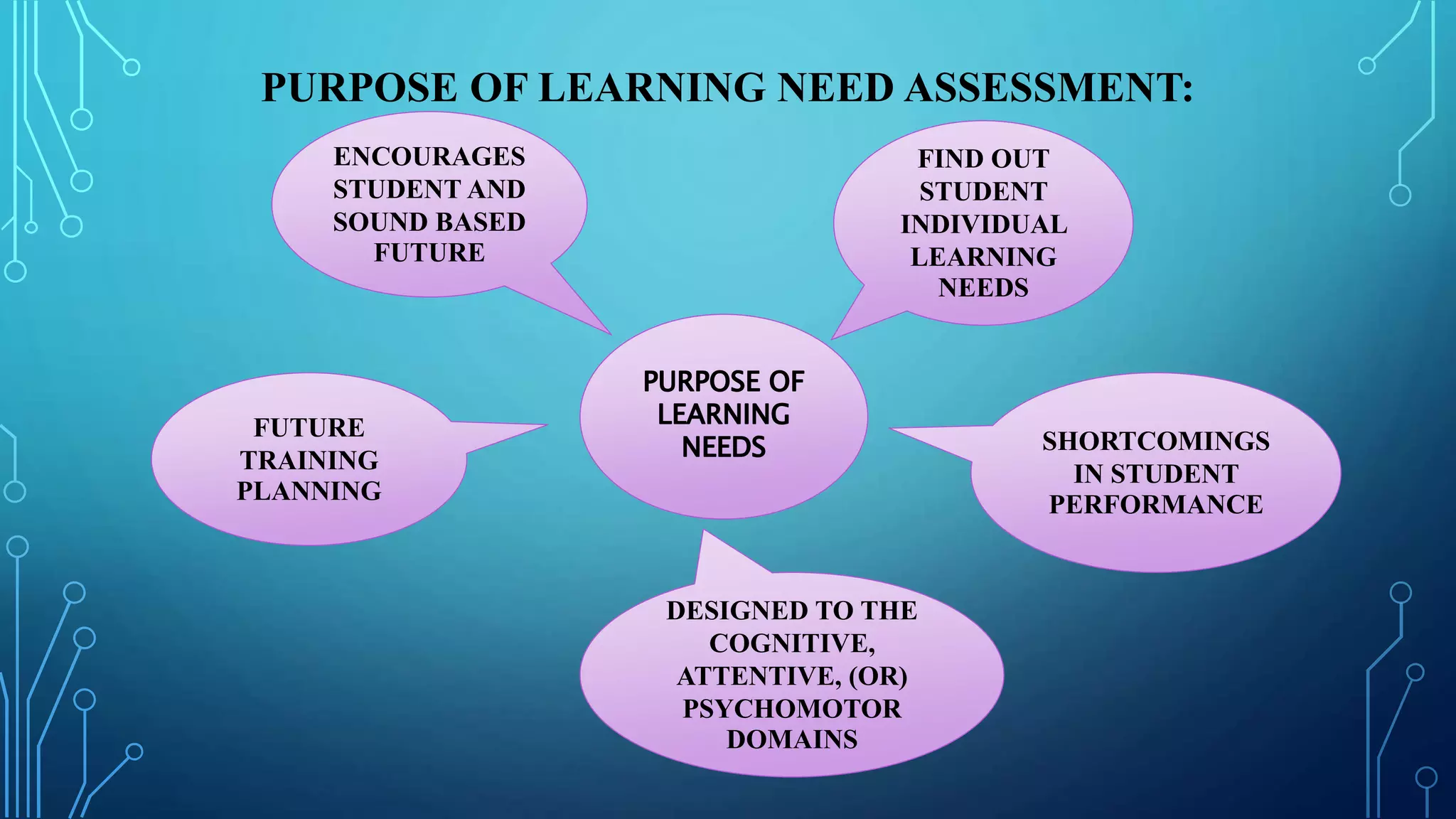
PURPOSE OF LEARNING NEED ASSESSMENT:
FUTURE
TRAINING
PLANNING
DESIGNED TO THE
COGNITIVE,
ATTENTIVE, (OR)
PSYCHOMOTOR
DOMAINS
ENCOURAGES
STUDENT AND
SOUND BASED
FUTURE
SHORTCOMINGS
IN STUDENT
PERFORMANCE
FIND OUT
STUDENT
INDIVIDUAL
LEARNING
NEEDS
IDENTIFY THE LEARNERS:
The development of the formal and informal education programs for patients and their
families, nursing staffs, (or) students must be based on the accurate identification of the
learner.
Gap or discrepancy analysis,
Observation,
Reflection action,
Comparing peers,
Self- Assessment, and
By means of critical incident review.
CHOOSE THE RIGHT SETTINGS
Establishing a trusting environment will help learners feel a sense of security in confiding
information, believe their concerns are taken seriously and considered important, and feel
respected.
Assuring privacy and confidentiality is essential to establishing trusting relationship.
COLLECT DATA ON THE LEARNER
Once the learners is identified, the educator can determine characteristics of need of the
population by exploring typical health problems (or) issues of interest to the population.
INCLUDE THE LEARNERS AS A SOURCE OF INFORMATION:
Learner themselves are usually, the most important sources of needs assessment data.
Actively engaging the learners in defining their own problems and the need allow them to
learn because, they have an investment in planning for a program specifically tailored to their
unique circumstances.
INVOLVE MEMBERS OF THE HEALTHCARE TEAM:
Other health care professionals may have insight into patients (or) family needs (or) the
educational needs of the nursing staffs (or) students as a result of their frequent contacts with
consumers as well as caregivers.
Nurses are not the sole teachers, and they must remember to collaborate with other members
of the Healthcare team for a richer assessment of learning needs.
PRIORITIZE NEEDS:
A list of need can become endless and seemingly impossible to accomplish. Maslow’s (1970)
hierarchy of human needs may help the educator prioritize identified learning needs.
The educator can then assist the learner the to meet the most basic need first. Let’s see the
Maslow’s hierarchy theory:
MASLOW’S HIERARCHY THEORY OF NEEDS:IN EDUCATION
DOMAINS: MASLOW’S HIERARCHY NEEDS: ON BASIS OF EDUCATION:
PHYSIOLOGICAL
NEEDS
Basic survival needs: Breathing, food,
water, sleep, homeostasis, excretion
An education: Every individual getting
the primary and secondary education.
SAFETY NEEDS Freedom from harm: Life, injury,
threats. Security of body, employment,
family, etc,
Safety in education: Every individual
getting safety in school, teacher, and
resources.
LOVE AND
BELONGING
Relationships: Friendship, family, and
belongings
Relationships: Communications skills,
enrichment with peers, among other
students.
ESTEEM Image status: Building confidence,
achievement, respect of others, respect
by others.
Wider schooling: After completing, high
school, perceiving higher education
schooling.
SELF-
ACTUALIZATION
To become capable: External
recognition, morality, spontaneity, and
problem- solving skills.
To become capable: To perceiving a
degree and qualified as capable individual
and building a career.
DETERMINED AVAILABILITY OF EDUCATIONAL RESOURCES:
A need may be identified, but it may be useless to proceed with intervention, if the proper
educational resources are not available, are unrealistic to obtain, (or) do not match the
learner’s needs.
ASSESS THE DEMANDS OF THE ORGANIZATION:
The educator should be familiar with standards of performance required in various employee
categories, along with job descriptions and hospital, professionals, and agency regulations.
TAKE TIME- MANAGEMENT ISSUES INTO ACCOUNT:
The educator should emphasize some important points with respect to time management
issues:
CONTINUATION:
1. Close observation and active listening take time, it is much effective to initial assessment.
2. Discover obstacles to learning that prevent the process of learning.
3. Learners should given time to offer their own perceptions of their learning needs. If the
educator expects them to take charge and become Actively involved in the learning process.
THANK
YOU

Nursing assessment of learning needs.pptx

  • 1.
    NURSING ASSESSMENT OF LEARNINGNEEDS: BY, N. SWEETHA. M. SC NURSING - I YEAR, SMVNC.
  • 2.
    MEANING: Is a setof tools and processes used to collect information about the target audience’s learning needs 1.Learning need, [what the leader needs to learn], 2.Readiness to learn [when the learner is receptive to learning], and 3.Learning styles [how the learner to became the best learners]. A learning need is the gap exist between what someone needs to attitude (or) skill.
  • 3.
    PURPOSE OF LEARNINGNEED ASSESSMENT: FUTURE TRAINING PLANNING DESIGNED TO THE COGNITIVE, ATTENTIVE, (OR) PSYCHOMOTOR DOMAINS ENCOURAGES STUDENT AND SOUND BASED FUTURE SHORTCOMINGS IN STUDENT PERFORMANCE FIND OUT STUDENT INDIVIDUAL LEARNING NEEDS
  • 4.
    IDENTIFY THE LEARNERS: Thedevelopment of the formal and informal education programs for patients and their families, nursing staffs, (or) students must be based on the accurate identification of the learner. Gap or discrepancy analysis, Observation, Reflection action, Comparing peers, Self- Assessment, and By means of critical incident review.
  • 5.
    CHOOSE THE RIGHTSETTINGS Establishing a trusting environment will help learners feel a sense of security in confiding information, believe their concerns are taken seriously and considered important, and feel respected. Assuring privacy and confidentiality is essential to establishing trusting relationship.
  • 6.
    COLLECT DATA ONTHE LEARNER Once the learners is identified, the educator can determine characteristics of need of the population by exploring typical health problems (or) issues of interest to the population. INCLUDE THE LEARNERS AS A SOURCE OF INFORMATION: Learner themselves are usually, the most important sources of needs assessment data. Actively engaging the learners in defining their own problems and the need allow them to learn because, they have an investment in planning for a program specifically tailored to their unique circumstances.
  • 7.
    INVOLVE MEMBERS OFTHE HEALTHCARE TEAM: Other health care professionals may have insight into patients (or) family needs (or) the educational needs of the nursing staffs (or) students as a result of their frequent contacts with consumers as well as caregivers. Nurses are not the sole teachers, and they must remember to collaborate with other members of the Healthcare team for a richer assessment of learning needs.
  • 8.
    PRIORITIZE NEEDS: A listof need can become endless and seemingly impossible to accomplish. Maslow’s (1970) hierarchy of human needs may help the educator prioritize identified learning needs. The educator can then assist the learner the to meet the most basic need first. Let’s see the Maslow’s hierarchy theory:
  • 9.
    MASLOW’S HIERARCHY THEORYOF NEEDS:IN EDUCATION
  • 10.
    DOMAINS: MASLOW’S HIERARCHYNEEDS: ON BASIS OF EDUCATION: PHYSIOLOGICAL NEEDS Basic survival needs: Breathing, food, water, sleep, homeostasis, excretion An education: Every individual getting the primary and secondary education. SAFETY NEEDS Freedom from harm: Life, injury, threats. Security of body, employment, family, etc, Safety in education: Every individual getting safety in school, teacher, and resources. LOVE AND BELONGING Relationships: Friendship, family, and belongings Relationships: Communications skills, enrichment with peers, among other students. ESTEEM Image status: Building confidence, achievement, respect of others, respect by others. Wider schooling: After completing, high school, perceiving higher education schooling. SELF- ACTUALIZATION To become capable: External recognition, morality, spontaneity, and problem- solving skills. To become capable: To perceiving a degree and qualified as capable individual and building a career.
  • 11.
    DETERMINED AVAILABILITY OFEDUCATIONAL RESOURCES: A need may be identified, but it may be useless to proceed with intervention, if the proper educational resources are not available, are unrealistic to obtain, (or) do not match the learner’s needs. ASSESS THE DEMANDS OF THE ORGANIZATION: The educator should be familiar with standards of performance required in various employee categories, along with job descriptions and hospital, professionals, and agency regulations. TAKE TIME- MANAGEMENT ISSUES INTO ACCOUNT: The educator should emphasize some important points with respect to time management issues:
  • 12.
    CONTINUATION: 1. Close observationand active listening take time, it is much effective to initial assessment. 2. Discover obstacles to learning that prevent the process of learning. 3. Learners should given time to offer their own perceptions of their learning needs. If the educator expects them to take charge and become Actively involved in the learning process.
  • 13.