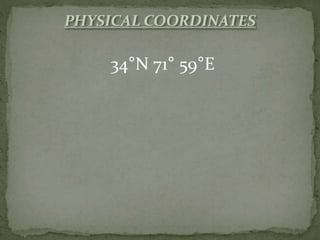

34°N 71° 59°E
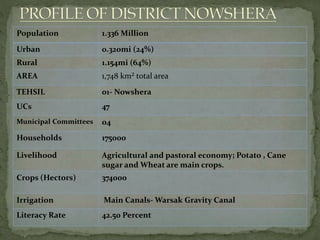
Population 1.336 Million
Urban 0.320mi (24%)
Rural 1.154mi (64%)
AREA 1,748 km² total area
TEHSIL 01- Nowshera
UCs 47
Municipal Committees o4
Households 175000
Livelihood Agricultural and pastoral economy; Potato , Cane
sugar and Wheat are main crops.
Crops (Hectors) 374000
Irrigation Main Canals- Warsak Gravity Canal
Literacy Rate 42.50 Percent
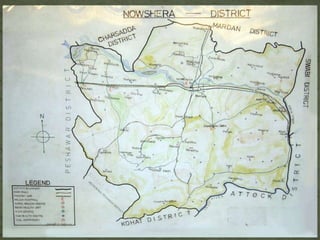
It is situated on the Eastern side of Peshawar.
This district is surrounded by 04 other districts &
and 02 FR Area, Namely
 F.R.Peshawar South West
 Charsadda North West
 Mardan North
 Swabi East
 Attock South East
 FR Kohat South East
 The Terrain of Nowshera is plan in its Northern half
while its southern part is hilly
 River Kabul is the main River running through
Nowshera
Kabul River
River Kabul flows through out District
Nowshera west to east from village Garhi Momin
to village Khairabad where it enters river Indus
at Attock bridge. It has 07 streams entering into
it from various parts and making it a potential
source of flood. In 2010 flood 45 % of the whole
district has been unprecedented submerged and
caused massive damages.
Khattak Mountain Range:
It is a very small range of mountains spreading
from south west to south east separating areas of
FR- Peshawar & FR-Kohat from District
Nowshera. In south west it has areas of Cherat
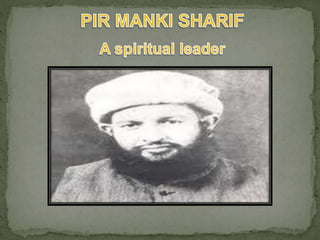
from there its runs down to Manki Sharif till
Nizampur in South East.
G.T Road & Motorway:
 Nowshera is known as a G.T Road District. It was
the only route available to travel from Rawalpindi to
Peshawar till 2007 when M-1 Motorway
inaugurated. Nowshera is connected with Motorway
at Rashakai interchange 15 KM from Nowshera
Cantt on Mardan Road. Nowshera is geographically
located at a very strategic location where it can be
accessed from all directions.
 NA-5: Dr. Imran Khattak (PTI)
 NA-6: Mr. Siraj Muhammad Khan (PTI)
 PK-12: Mr. Khaliq Ur Rehman (PTI)
 PK-13: Mr. Pervaiz Khattak (PTI) Chief Minister.
 PK-14: Mr. Mian Jamshed Uddin (PTI)
 PK-15: Mr. Idrees Khan Khattak (PTI)
 PK-16: Mr. Qurban Ali Khan (PTI).
 Nowshera become tehsil of District Peshawar in 1930. In
1988 it became District; one of the 03 districts of Peshawar
division apart from district Peshawar and district
Charsadda.
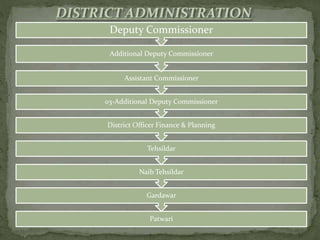
 Deputy Commissioner is the head of administrative
structure. He is also entrusted with powers of Land
Collector after LGO 2012 is implemented.
One Tehsil:
 Assistant Commissioner is the Incharge of tehsil for
administrative purpose, apart from Nowshera, a Tehsildar
sits in Pabbi as well.
One District Council and 4 Municipal Committees.
 There are 04 Municipal Committees that are headed by
respective Chief Municipal Officers (CMOs) who are
responsible for cleanliness and sanitation in urban areas.
In rural areas District Council performs duties. It is headed
by Chief Coordination Officer (CCO) and Deputy
Commissioner is acting as Administrator District Council.
One District Court:
 District & Session Judge heads the District Court in
District Nowshera.
47 Union Councils:
 Assistant Director local Government
3 Cantonments:
 Nowshera is the only district in Pakistan that has 03
cantonments; Nowshera Cantt, Risalpur Cantt, Cherat
Cantt. In Nowshera Cantt there are School of Artillery,
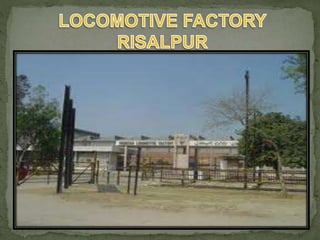
School of ASC and Armour School. Risalpur Cantt hosts
Pakistan Air Force (PAF) Academy. It is also called as Home
of Eagles.
 Special Service Group (SSG) had quarter is in Cherat
Cantt. During British era in 1866, Cherat has served as
a Hill Cantonment.
08-Police Stations:
 There is a District Police Officer In charge of Police in
district. SP Investigation and 05-DSPs are the part of
Police force in district Nowshera.
62-Patwar Circles
Patwari
Gardawar
Naib Tehsildar
Tehsildar
District Officer Finance & Planning
03-Additional Deputy Commissioner
Assistant Commissioner
Additional Deputy Commissioner
Deputy Commissioner
FOOD DEPARTMENT:
 Food department originally came into being in Indo-Pak
subcontinent during world war-II. At that time this department
was named as “Civil Supplies.” Its main functions were to
procure wheat, sugar, rice, cloth and other essential
commodities whichever was found short and then distribute it
through rationing to the general consumers.
 Food Department is administrative department of Government
of Khyber Pakhtunkhwa headed by Secretary Food whereas
Food Directorate Khyber Pakhtunkhwa is an attached
Department. There are 1007 personnel working in Food
Department which includes 167 Executive and remaining
ministerial and other staff members. The Department is
organized down at District Level. District Food Controller
holds the charge of Field Office at District Level.
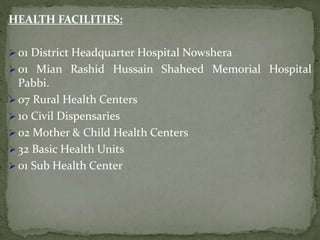
HEALTH FACILITIES:
 01 District Headquarter Hospital Nowshera
 01 Mian Rashid Hussain Shaheed Memorial Hospital
Pabbi.
 07 Rural Health Centers
 10 Civil Dispensaries
 02 Mother & Child Health Centers
 32 Basic Health Units
 01 Sub Health Center
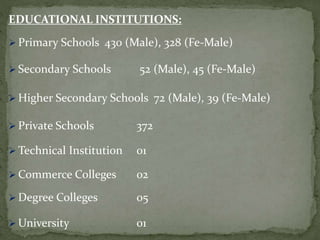
EDUCATIONAL INSTITUTIONS:
 Primary Schools 430 (Male), 328 (Fe-Male)
 Secondary Schools 52 (Male), 45 (Fe-Male)
 Higher Secondary Schools 72 (Male), 39 (Fe-Male)
 Private Schools 372
 Technical Institution 01
 Commerce Colleges 02
 Degree Colleges 05
 University 01
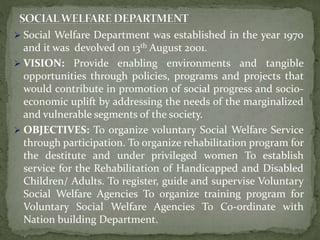
 Social Welfare Department was established in the year 1970
and it was devolved on 13th August 2001.
 VISION: Provide enabling environments and tangible
opportunities through policies, programs and projects that
would contribute in promotion of social progress and socio-
economic uplift by addressing the needs of the marginalized
and vulnerable segments of the society.
 OBJECTIVES: To organize voluntary Social Welfare Service
through participation. To organize rehabilitation program for
the destitute and under privileged women To establish
service for the Rehabilitation of Handicapped and Disabled
Children/ Adults. To register, guide and supervise Voluntary
Social Welfare Agencies To organize training program for
Voluntary Social Welfare Agencies To Co-ordinate with
Nation building Department.
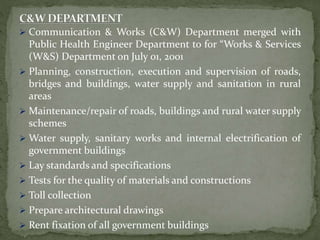
 Communication & Works (C&W) Department merged with
Public Health Engineer Department to for “Works & Services
(W&S) Department on July 01, 2001
 Planning, construction, execution and supervision of roads,
bridges and buildings, water supply and sanitation in rural
areas
 Maintenance/repair of roads, buildings and rural water supply
schemes
 Water supply, sanitary works and internal electrification of
government buildings
 Lay standards and specifications
 Tests for the quality of materials and constructions
 Toll collection
 Prepare architectural drawings
 Rent fixation of all government buildings
 Livestock plays an important role in the economy of our
country. It provides job opportunities to majority of the
rural population from which they earn their livelihood and
contributes 9% share to the GDP and 37% to the
Agriculture Sector.
 Another important benefit of livestock is the best
utilization of the passive woman labor force which makes
more than 50% of national population. Our rural women
are mainly involved in Animal Poultry Husbandry
practices such as feeding /grazing housing and milking of
animals. This activity is the major source of cash income
for rural woman to meet their daily needs.
 Forestry involves the management of a broad range of
natural resources within a forested area. In addition to
timber, forests provide such resources as grazing land for
animals, wildlife habitat, water resources and recreation
areas.
 Integrated resource management whereby the different
land use types (forests, watershed areas, range lands, bio-
diversity areas; etc.) and vegetation and other resource type
(trees, shrubs, grasses, wild animals and fisheries) will be
managed in an integrated way as part of the overall
ecological system.
 Participation of the local communities and other
stakeholders in the plam1ing, implementation, monitoring,
and evolution of natural resource management activities.
Thank You

Nowshera District Profile

  • 3.
  • 4.
    Population 1.336 Million Urban0.320mi (24%) Rural 1.154mi (64%) AREA 1,748 km² total area TEHSIL 01- Nowshera UCs 47 Municipal Committees o4 Households 175000 Livelihood Agricultural and pastoral economy; Potato , Cane sugar and Wheat are main crops. Crops (Hectors) 374000 Irrigation Main Canals- Warsak Gravity Canal Literacy Rate 42.50 Percent
  • 5.
    It is situatedon the Eastern side of Peshawar. This district is surrounded by 04 other districts & and 02 FR Area, Namely  F.R.Peshawar South West  Charsadda North West  Mardan North  Swabi East  Attock South East  FR Kohat South East
  • 6.
     The Terrainof Nowshera is plan in its Northern half while its southern part is hilly  River Kabul is the main River running through Nowshera
  • 7.
    Kabul River River Kabulflows through out District Nowshera west to east from village Garhi Momin to village Khairabad where it enters river Indus at Attock bridge. It has 07 streams entering into it from various parts and making it a potential source of flood. In 2010 flood 45 % of the whole district has been unprecedented submerged and caused massive damages.
  • 8.
    Khattak Mountain Range: Itis a very small range of mountains spreading from south west to south east separating areas of FR- Peshawar & FR-Kohat from District Nowshera. In south west it has areas of Cherat from there its runs down to Manki Sharif till Nizampur in South East.
  • 9.
    G.T Road &Motorway:  Nowshera is known as a G.T Road District. It was the only route available to travel from Rawalpindi to Peshawar till 2007 when M-1 Motorway inaugurated. Nowshera is connected with Motorway at Rashakai interchange 15 KM from Nowshera Cantt on Mardan Road. Nowshera is geographically located at a very strategic location where it can be accessed from all directions.
  • 10.
     NA-5: Dr.Imran Khattak (PTI)  NA-6: Mr. Siraj Muhammad Khan (PTI)  PK-12: Mr. Khaliq Ur Rehman (PTI)  PK-13: Mr. Pervaiz Khattak (PTI) Chief Minister.  PK-14: Mr. Mian Jamshed Uddin (PTI)  PK-15: Mr. Idrees Khan Khattak (PTI)  PK-16: Mr. Qurban Ali Khan (PTI).
  • 11.
     Nowshera becometehsil of District Peshawar in 1930. In 1988 it became District; one of the 03 districts of Peshawar division apart from district Peshawar and district Charsadda.  Deputy Commissioner is the head of administrative structure. He is also entrusted with powers of Land Collector after LGO 2012 is implemented.
  • 12.
    One Tehsil:  AssistantCommissioner is the Incharge of tehsil for administrative purpose, apart from Nowshera, a Tehsildar sits in Pabbi as well. One District Council and 4 Municipal Committees.  There are 04 Municipal Committees that are headed by respective Chief Municipal Officers (CMOs) who are responsible for cleanliness and sanitation in urban areas. In rural areas District Council performs duties. It is headed by Chief Coordination Officer (CCO) and Deputy Commissioner is acting as Administrator District Council.
  • 13.
    One District Court: District & Session Judge heads the District Court in District Nowshera. 47 Union Councils:  Assistant Director local Government 3 Cantonments:  Nowshera is the only district in Pakistan that has 03 cantonments; Nowshera Cantt, Risalpur Cantt, Cherat Cantt. In Nowshera Cantt there are School of Artillery, School of ASC and Armour School. Risalpur Cantt hosts Pakistan Air Force (PAF) Academy. It is also called as Home of Eagles.
  • 14.
     Special ServiceGroup (SSG) had quarter is in Cherat Cantt. During British era in 1866, Cherat has served as a Hill Cantonment. 08-Police Stations:  There is a District Police Officer In charge of Police in district. SP Investigation and 05-DSPs are the part of Police force in district Nowshera. 62-Patwar Circles
  • 15.
    Patwari Gardawar Naib Tehsildar Tehsildar District OfficerFinance & Planning 03-Additional Deputy Commissioner Assistant Commissioner Additional Deputy Commissioner Deputy Commissioner
  • 16.
    FOOD DEPARTMENT:  Fooddepartment originally came into being in Indo-Pak subcontinent during world war-II. At that time this department was named as “Civil Supplies.” Its main functions were to procure wheat, sugar, rice, cloth and other essential commodities whichever was found short and then distribute it through rationing to the general consumers.  Food Department is administrative department of Government of Khyber Pakhtunkhwa headed by Secretary Food whereas Food Directorate Khyber Pakhtunkhwa is an attached Department. There are 1007 personnel working in Food Department which includes 167 Executive and remaining ministerial and other staff members. The Department is organized down at District Level. District Food Controller holds the charge of Field Office at District Level.
  • 17.
    HEALTH FACILITIES:  01District Headquarter Hospital Nowshera  01 Mian Rashid Hussain Shaheed Memorial Hospital Pabbi.  07 Rural Health Centers  10 Civil Dispensaries  02 Mother & Child Health Centers  32 Basic Health Units  01 Sub Health Center
  • 18.
    EDUCATIONAL INSTITUTIONS:  PrimarySchools 430 (Male), 328 (Fe-Male)  Secondary Schools 52 (Male), 45 (Fe-Male)  Higher Secondary Schools 72 (Male), 39 (Fe-Male)  Private Schools 372  Technical Institution 01  Commerce Colleges 02  Degree Colleges 05  University 01
  • 19.
     Social WelfareDepartment was established in the year 1970 and it was devolved on 13th August 2001.  VISION: Provide enabling environments and tangible opportunities through policies, programs and projects that would contribute in promotion of social progress and socio- economic uplift by addressing the needs of the marginalized and vulnerable segments of the society.  OBJECTIVES: To organize voluntary Social Welfare Service through participation. To organize rehabilitation program for the destitute and under privileged women To establish service for the Rehabilitation of Handicapped and Disabled Children/ Adults. To register, guide and supervise Voluntary Social Welfare Agencies To organize training program for Voluntary Social Welfare Agencies To Co-ordinate with Nation building Department.
  • 20.
     Communication &Works (C&W) Department merged with Public Health Engineer Department to for “Works & Services (W&S) Department on July 01, 2001  Planning, construction, execution and supervision of roads, bridges and buildings, water supply and sanitation in rural areas  Maintenance/repair of roads, buildings and rural water supply schemes  Water supply, sanitary works and internal electrification of government buildings  Lay standards and specifications  Tests for the quality of materials and constructions  Toll collection  Prepare architectural drawings  Rent fixation of all government buildings
  • 21.
     Livestock playsan important role in the economy of our country. It provides job opportunities to majority of the rural population from which they earn their livelihood and contributes 9% share to the GDP and 37% to the Agriculture Sector.  Another important benefit of livestock is the best utilization of the passive woman labor force which makes more than 50% of national population. Our rural women are mainly involved in Animal Poultry Husbandry practices such as feeding /grazing housing and milking of animals. This activity is the major source of cash income for rural woman to meet their daily needs.
  • 22.
     Forestry involvesthe management of a broad range of natural resources within a forested area. In addition to timber, forests provide such resources as grazing land for animals, wildlife habitat, water resources and recreation areas.  Integrated resource management whereby the different land use types (forests, watershed areas, range lands, bio- diversity areas; etc.) and vegetation and other resource type (trees, shrubs, grasses, wild animals and fisheries) will be managed in an integrated way as part of the overall ecological system.  Participation of the local communities and other stakeholders in the plam1ing, implementation, monitoring, and evolution of natural resource management activities.
  • 46.