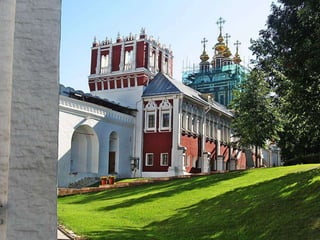
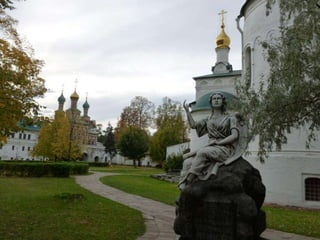
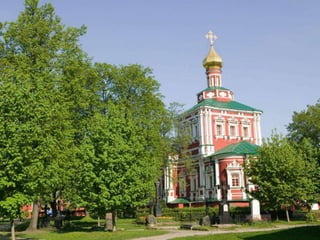
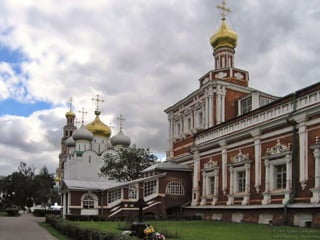
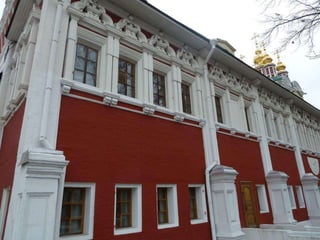
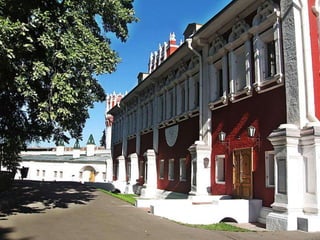
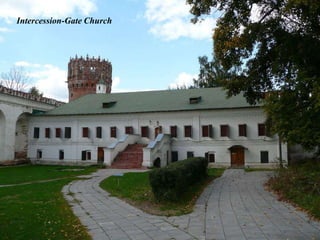
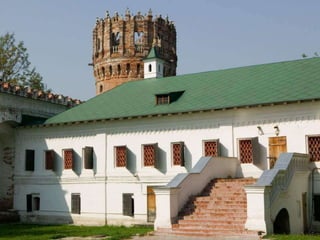
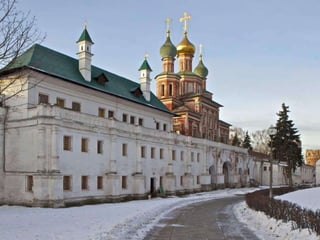
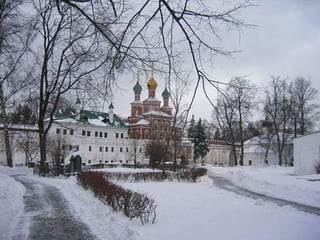
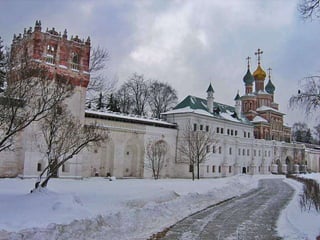
Intercession-Gate Church
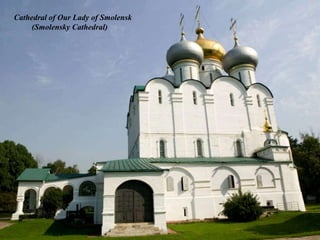
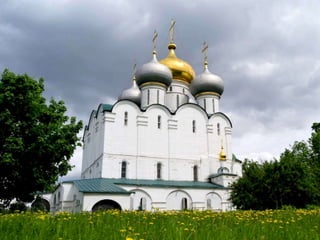
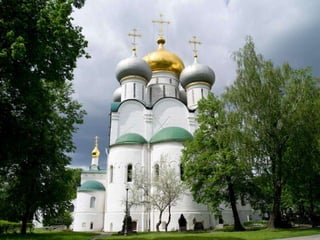
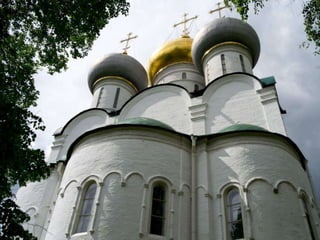
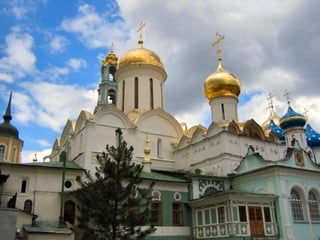
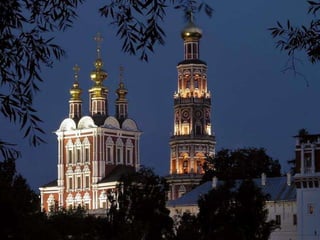
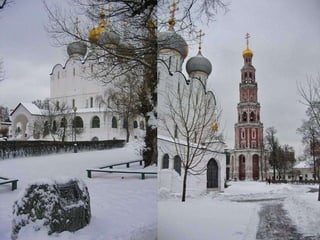
Cathedral of Our Lady of Smolensk
     (Smolensky Cathedral)
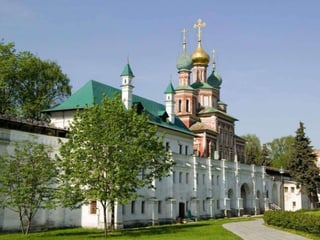
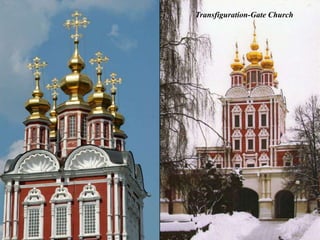
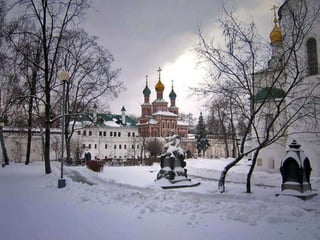
Transfiguration-Gate Church
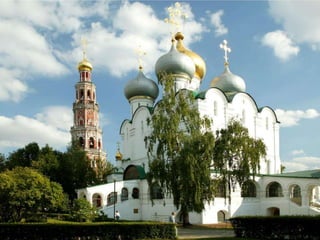
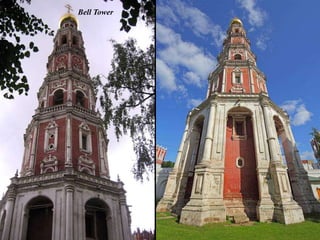
Bell Tower
Bell Tower
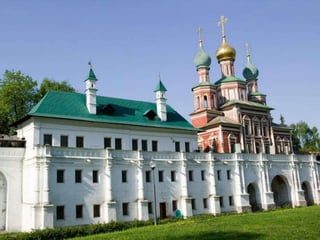
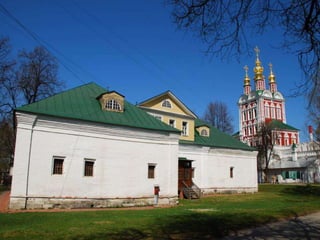
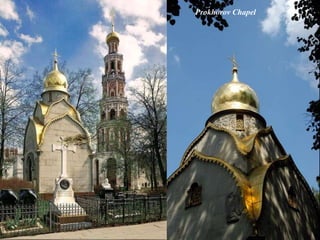
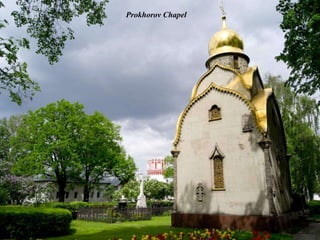
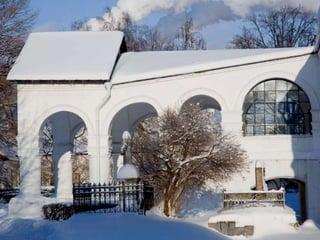
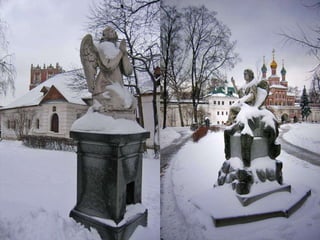
             Prokhorov Chapel
Prokhorov Chapel
Images and text: Internet
Ivan Rebroff :“Ave Maria”
                            Adriana
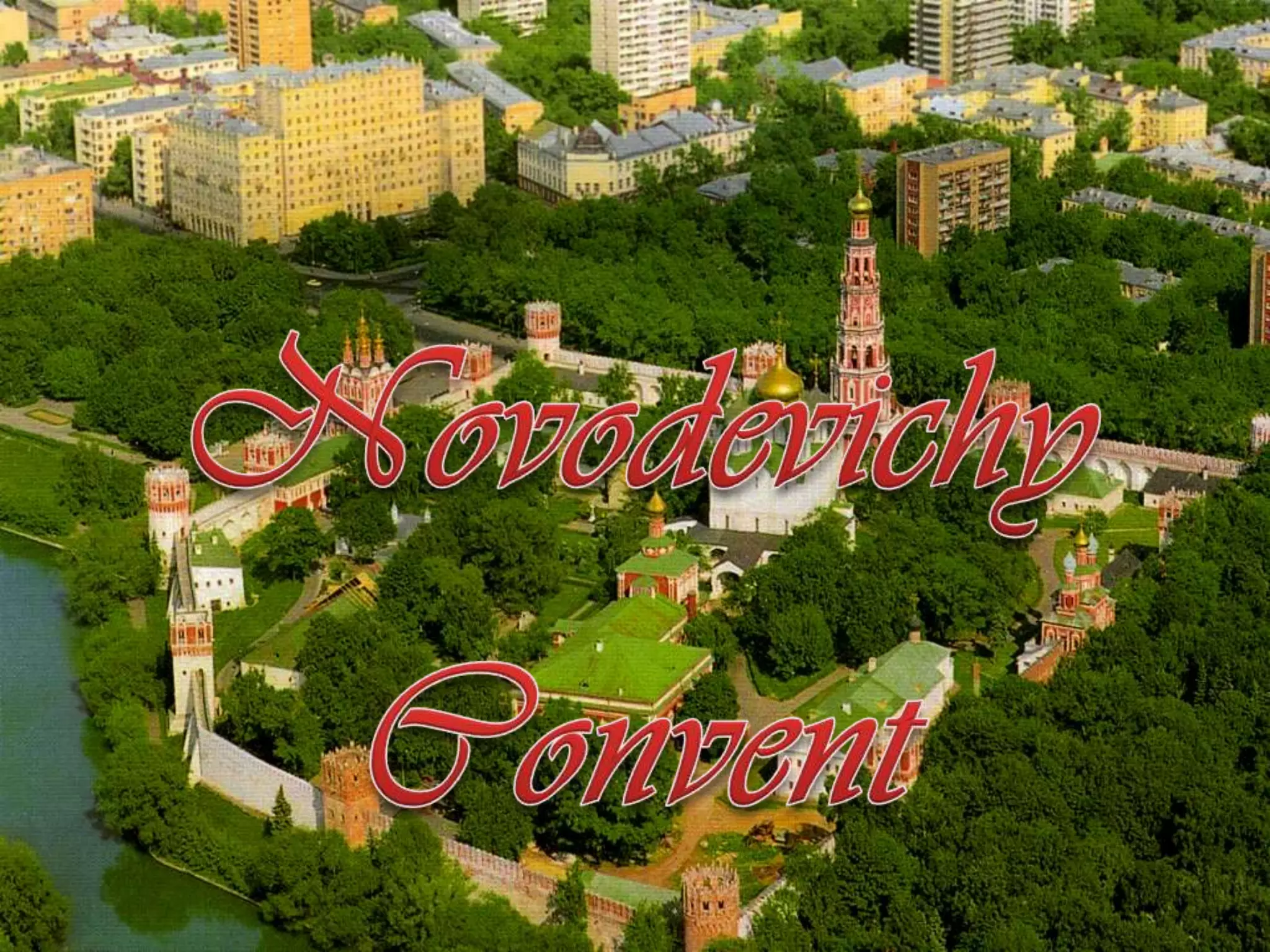
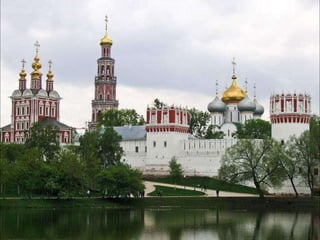
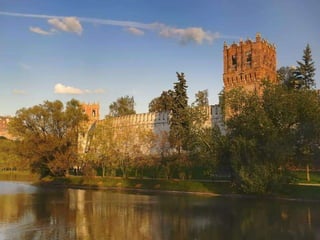
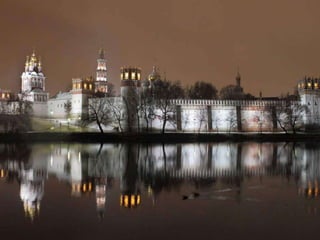
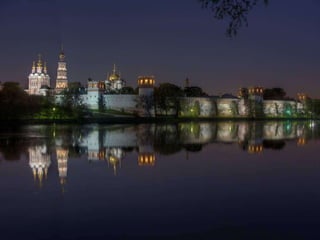
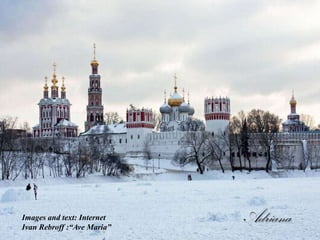
The Novodevichy (New Maiden) Convent, also known as Bogoroditse-Smolensky
Monastery, is situated in the south-western part of the historic town of Moscow, close
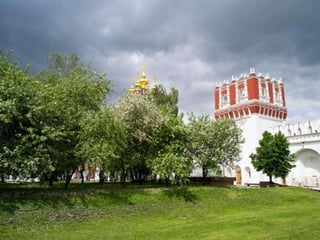
to the Moscow River. The Convent territory is enclosed within walls and surrounded by
a park, which forms the buffer zone. The park is limited by the urban fabric of the city
on the north and east sides. On the west side, it is limited by the Moscow River, and on
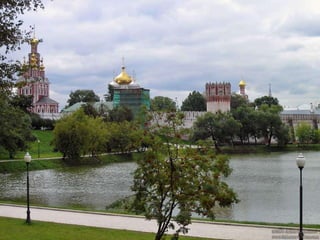
the south side there is an urban freeway. The north-west shore of the lake offers
picturesque panoramas that are important for the perception of the ensemble.

The convent dates back from the 16th century (1524) when it was founded by Tsar
Vasily III as a means to commemorate the Muscovite-Lithuanian War through which
the Russians managed to capture the city of Smolensk from Lithuania. The construction
was meant to serve both as a religious site and as a fortification. The original structure
did not survive the passage of time, so the building that stands before the beholder
dates from a later period, more exactly from the 1680s. This marks the year when the
monastery was subjected to massive restoration work.
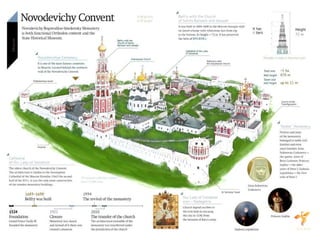
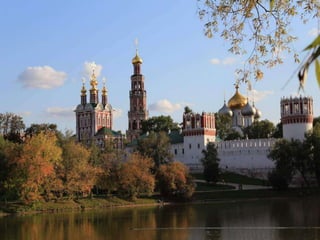
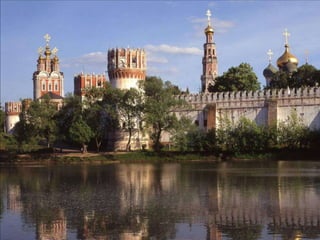
The monastic complex comprises several churches. The most relevant one is the Cathedral
of the Virgin of Smolensk. This follows the architectural style of the Cathedral of
Assumption, located in Kremlin, and consists of five colossal domes, an outstanding
iconostasis which comprises 84 wooden piers, to which are added 16th and 17th century
icons. The Church of Assumption is located to the right of the aforementioned cathedral
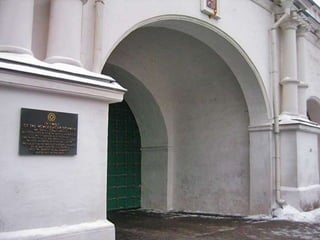
and the Church of St. Ambrose is located at the back. The Gate-Church of Trasfiguration
is situated at the entrance of the convent and it is representative for the Moscow Baroque
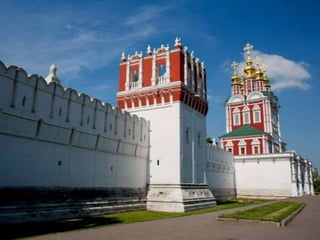
architectural design. The southern gate is ‘guarded’ by the Gate-Church of the
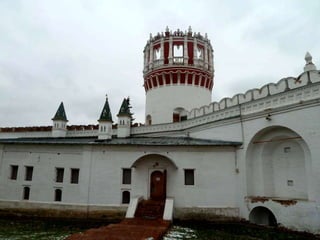
Intercession, an edifice consisting of three cupolas and a red and white façade. The Bell
Tower (1683-90) is 72 m high in five tiers. It is built from red brick in Moscow Baroque
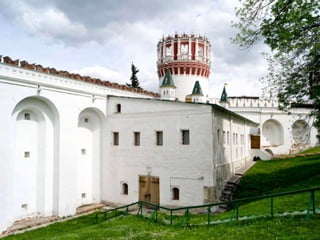
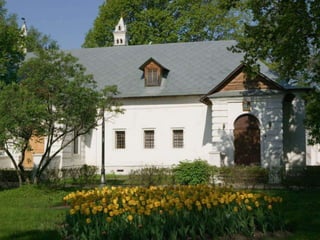
style, using white-stone decorative elements. The convent has a number of residential and
service buildings, many along the walls.
The Necropolis of the Convent was initiated in the 16th century. The cathedral served as
burial place for women of the tsarist and ruling families. The cemetery around the cathedral
was used for nobility and honourable citizens. In 1898-1904, a new cemetery was
established outside the south wall, a burial place of the most eminent Russian
intellectuals, and political and military figures.
After the October Revolution, in 1922, the Convent was closed, and it became the ‘Museum
of emancipation of woman'. It was later reorganised as the historical and art museum of ‘The
Novodevichy Convent'. At present this is affiliated to the State Historical Museum of
Kremlin. Since 1980 Novodevich Convent is a residence of a Metropolitan, and in 1994 a
nunnery has again been introduced there.
In 2004, it was proclaimed a UNESCO World Heritage Site.

Novodevichy Convent (Moscow)

  • 17.
  • 20.
    Cathedral of OurLady of Smolensk (Smolensky Cathedral)
  • 27.
  • 28.
  • 29.
    Bell Tower Prokhorov Chapel
  • 30.
  • 46.
    Images and text:Internet Ivan Rebroff :“Ave Maria” Adriana
  • 47.
    The Novodevichy (NewMaiden) Convent, also known as Bogoroditse-Smolensky Monastery, is situated in the south-western part of the historic town of Moscow, close to the Moscow River. The Convent territory is enclosed within walls and surrounded by a park, which forms the buffer zone. The park is limited by the urban fabric of the city on the north and east sides. On the west side, it is limited by the Moscow River, and on the south side there is an urban freeway. The north-west shore of the lake offers picturesque panoramas that are important for the perception of the ensemble. The convent dates back from the 16th century (1524) when it was founded by Tsar Vasily III as a means to commemorate the Muscovite-Lithuanian War through which the Russians managed to capture the city of Smolensk from Lithuania. The construction was meant to serve both as a religious site and as a fortification. The original structure did not survive the passage of time, so the building that stands before the beholder dates from a later period, more exactly from the 1680s. This marks the year when the monastery was subjected to massive restoration work.
  • 48.
    The monastic complexcomprises several churches. The most relevant one is the Cathedral of the Virgin of Smolensk. This follows the architectural style of the Cathedral of Assumption, located in Kremlin, and consists of five colossal domes, an outstanding iconostasis which comprises 84 wooden piers, to which are added 16th and 17th century icons. The Church of Assumption is located to the right of the aforementioned cathedral and the Church of St. Ambrose is located at the back. The Gate-Church of Trasfiguration is situated at the entrance of the convent and it is representative for the Moscow Baroque architectural design. The southern gate is ‘guarded’ by the Gate-Church of the Intercession, an edifice consisting of three cupolas and a red and white façade. The Bell Tower (1683-90) is 72 m high in five tiers. It is built from red brick in Moscow Baroque style, using white-stone decorative elements. The convent has a number of residential and service buildings, many along the walls. The Necropolis of the Convent was initiated in the 16th century. The cathedral served as burial place for women of the tsarist and ruling families. The cemetery around the cathedral was used for nobility and honourable citizens. In 1898-1904, a new cemetery was established outside the south wall, a burial place of the most eminent Russian intellectuals, and political and military figures. After the October Revolution, in 1922, the Convent was closed, and it became the ‘Museum of emancipation of woman'. It was later reorganised as the historical and art museum of ‘The Novodevichy Convent'. At present this is affiliated to the State Historical Museum of Kremlin. Since 1980 Novodevich Convent is a residence of a Metropolitan, and in 1994 a nunnery has again been introduced there. In 2004, it was proclaimed a UNESCO World Heritage Site.