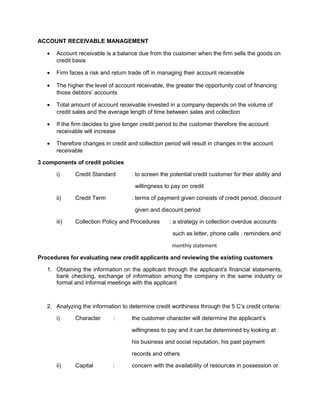
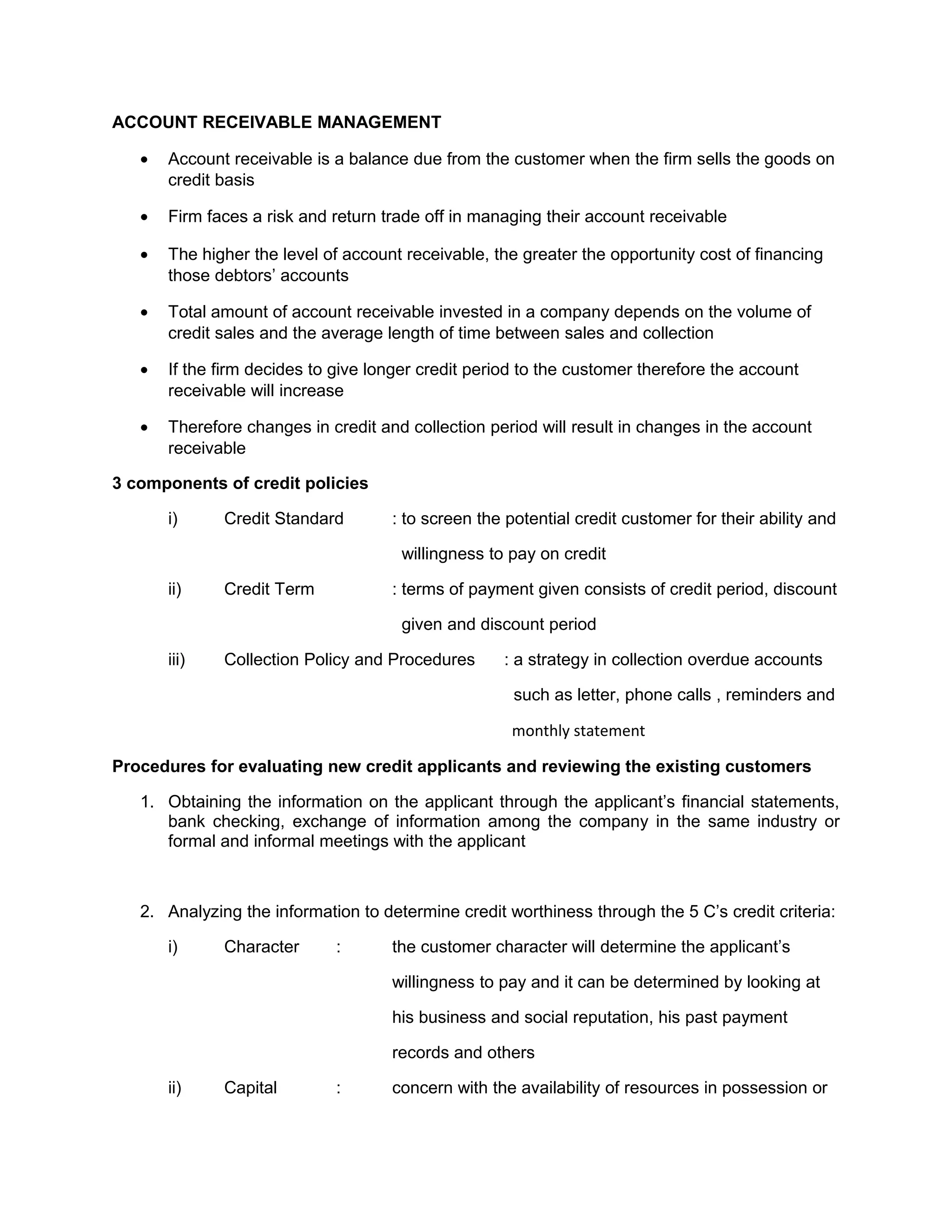
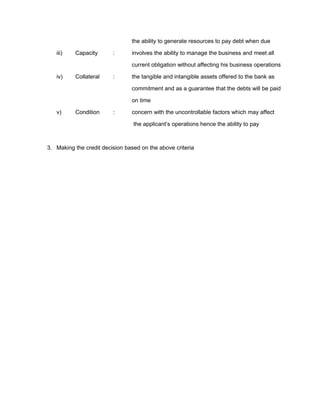
Account receivable management involves balancing risk and return when deciding credit terms and collection policies. Higher account receivables mean more financing is required for customer debt. The amount depends on credit sales volume and time between sale and collection. Longer credit periods increase receivables. Credit policies set standards for screening creditworthy customers, payment terms, and collection procedures. Evaluating new applicants involves analyzing financial statements and business reputation using the "5 C's" criteria of character, capital, capacity, collateral, and condition to determine creditworthiness.


![Unit ii marketing-investment_(marketing_finance)[1]](https://cdn.slidesharecdn.com/ss_thumbnails/unitii-marketinginvestmentmarketingfinance1-131127220034-phpapp02-thumbnail.jpg?width=640&height=640&fit=bounds)


