By: Ross Homer-Bouthiette


       al s of
    erb ion
  nv ss
No pre
 Ex


POWER


             Dominance
#1
 What are nonverbal expressions
 of power and dominance?
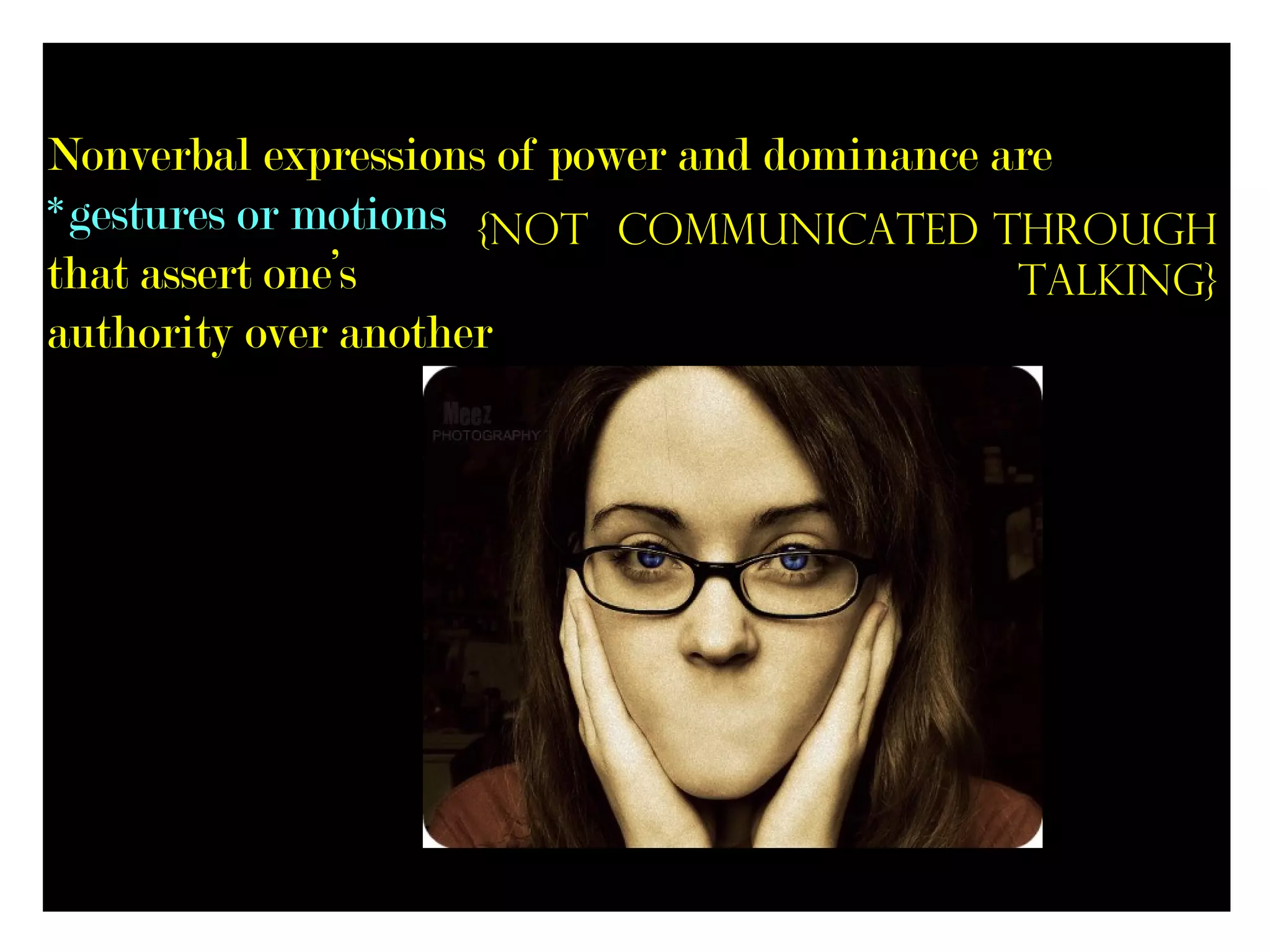
Nonverbal expressions of power and dominance are
*gestures or motions {not communicated through
that assert one’s                             talking}
authority over another
Which
     Include
               ...
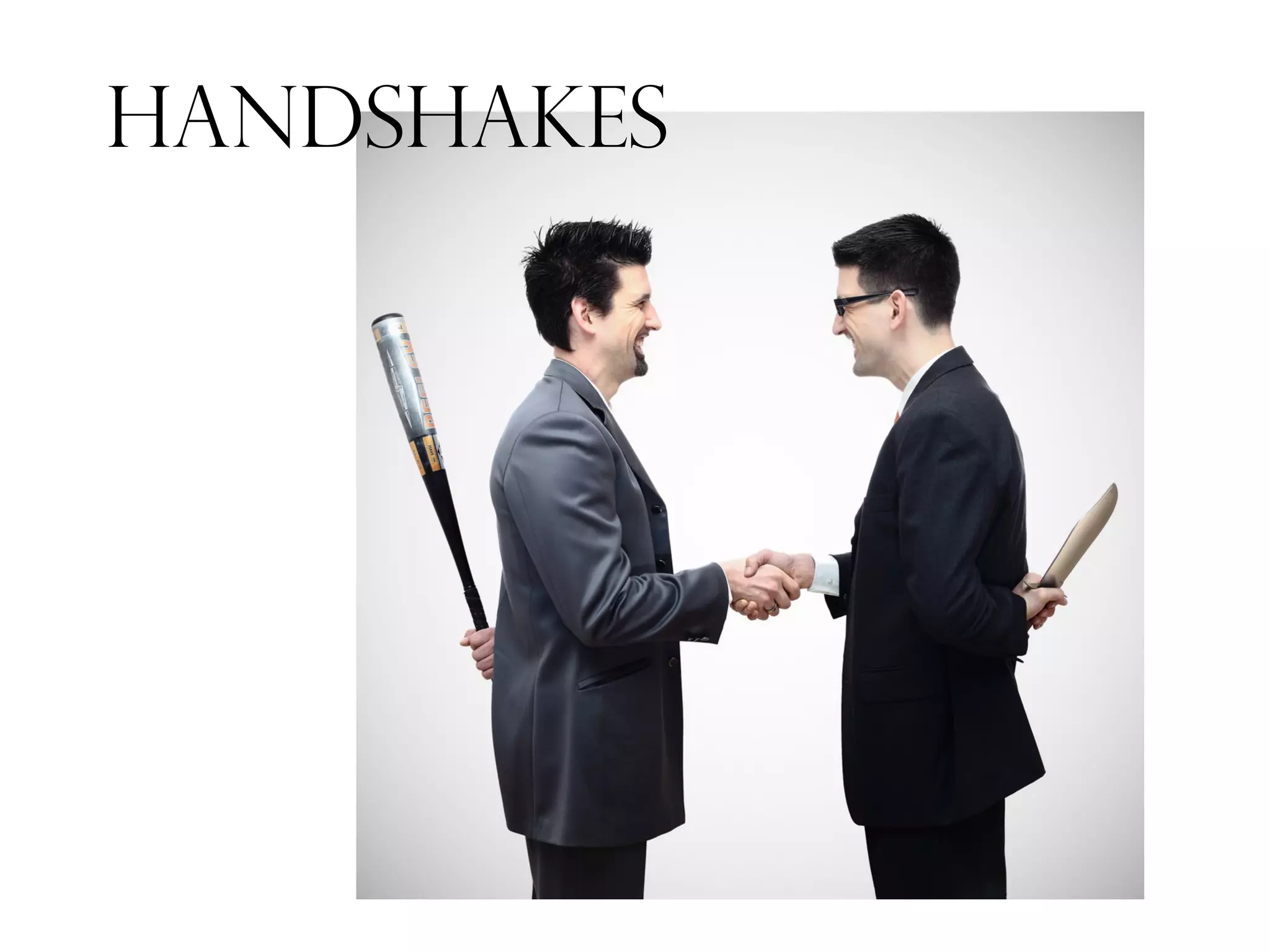
Handshakes
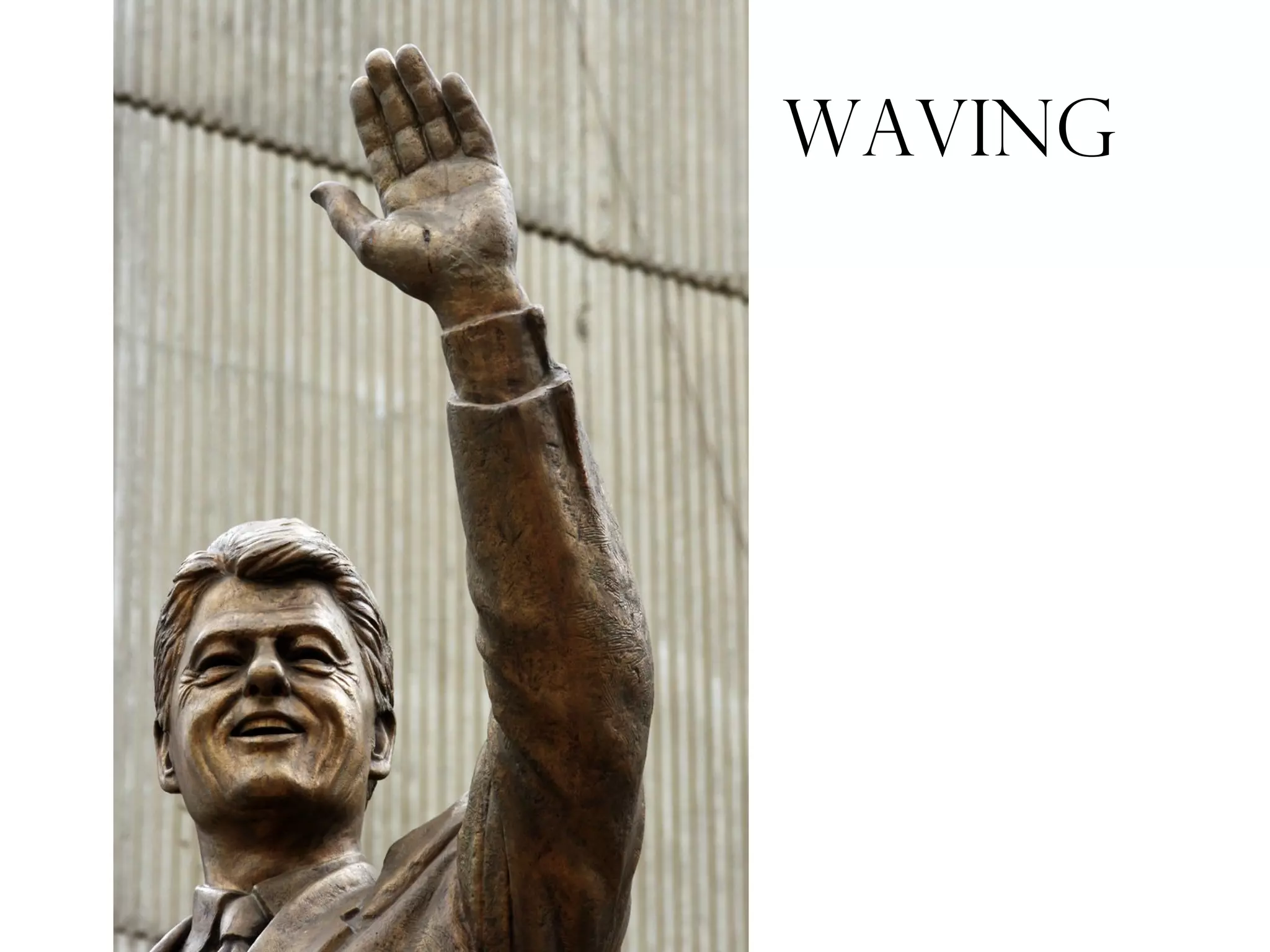
Waving

Smiling
Nodding   &   Shaking The
              Head
Plus
   Even the colors
    you wear affect
      Others’ Perceptions
       of your authority
In Ancient Rome . . .


                        Leaders and higher status
                        members of society adorned
                        their clothing with


    PURPLE
                        to distinguish themselves as
                        noble or wealthy.
Presently. . .


People tend to think more highly
and attribute greater authority to
others wearing


                 RED
Wi


                             #2
  谁                  hi?
                        e?

Wh                 C


だれ
  o?
Qui?
         Wer
               ?
  か


          ποιοι
                         誰
     ?
   em


       Qui
           én?      KTO?
Qu
Absolutely
Everyone
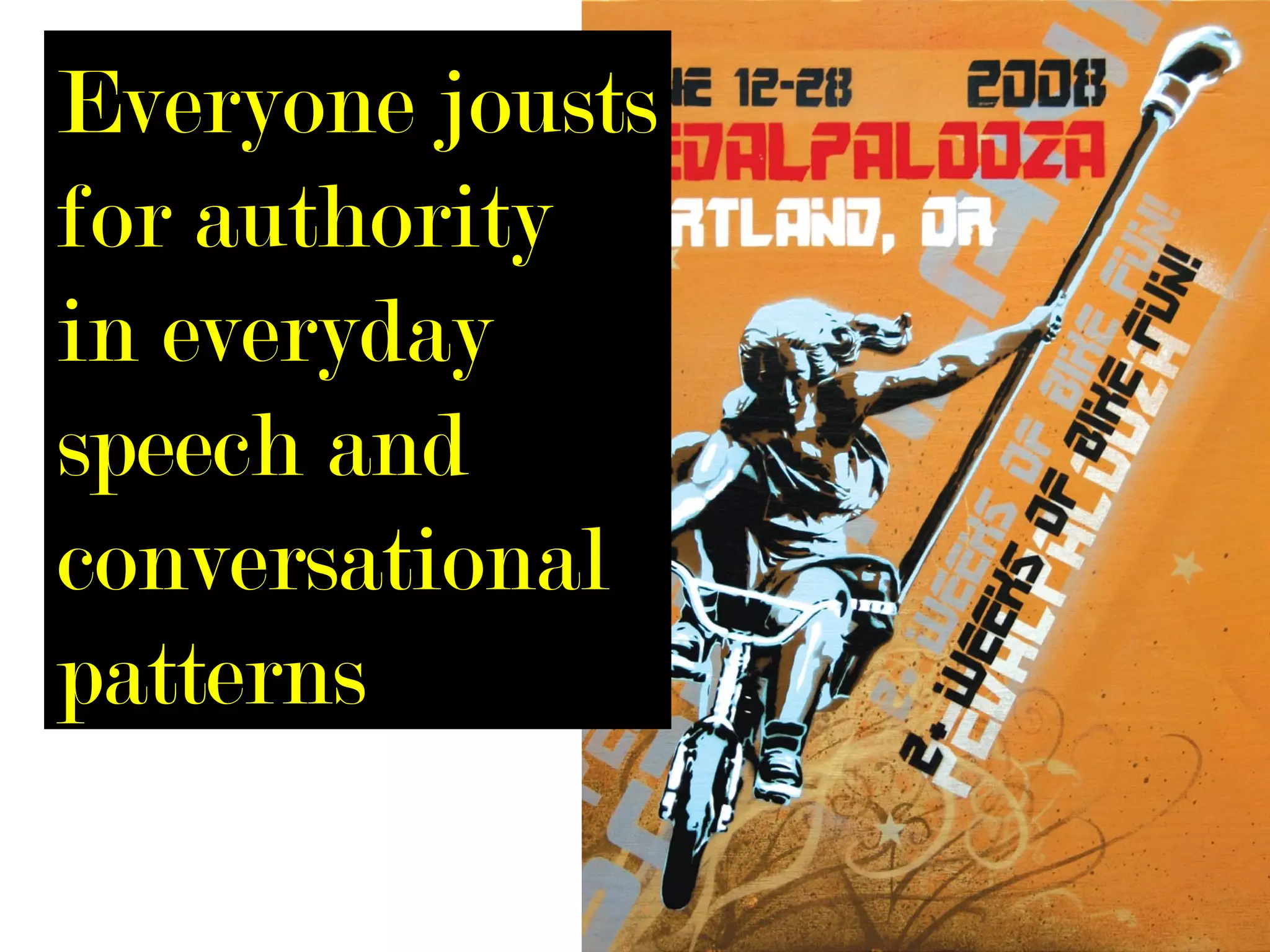
Everyone jousts
for authority
in everyday
speech and
conversational
patterns
Some people openly and
 aggressively attempt to
  assert their dominance
    in social contexts
Others subconsciously
     employ strategies for
   social advancement
without realizing
stly
La


     Some are given authority
     through no fault of their,
     but through the perceptions
     of others.
#3
So what’s the point?
Why manipulate
               social power?
Throughout the entire existence of humans,
power struggles have been an ever eminent theme
It is the human condition
to strive for power and
dominance in social settings
Being able to effectively use
nonverbal expressions will allow for
greater social power and dominance


         Simple gestures can provide a basis
         for establishing authority
A firmer handshake          ,


better posture
             , and


causing slight
interruptions in conversation

             can raise authority in group situations
Criticism
            #4
With nonverbal expressions of power
and dominance being an unspoken means
of communication,

           many peers view them as
           a means of manipulation
           for self gain.
Placing these gestures and motions
 in a cynical category based only on
 the possibility that when used with
 certain intent the outcome can be


DISASTROU
The gender difference of
   nonverbal expressions
       of power and


#5
           dominance
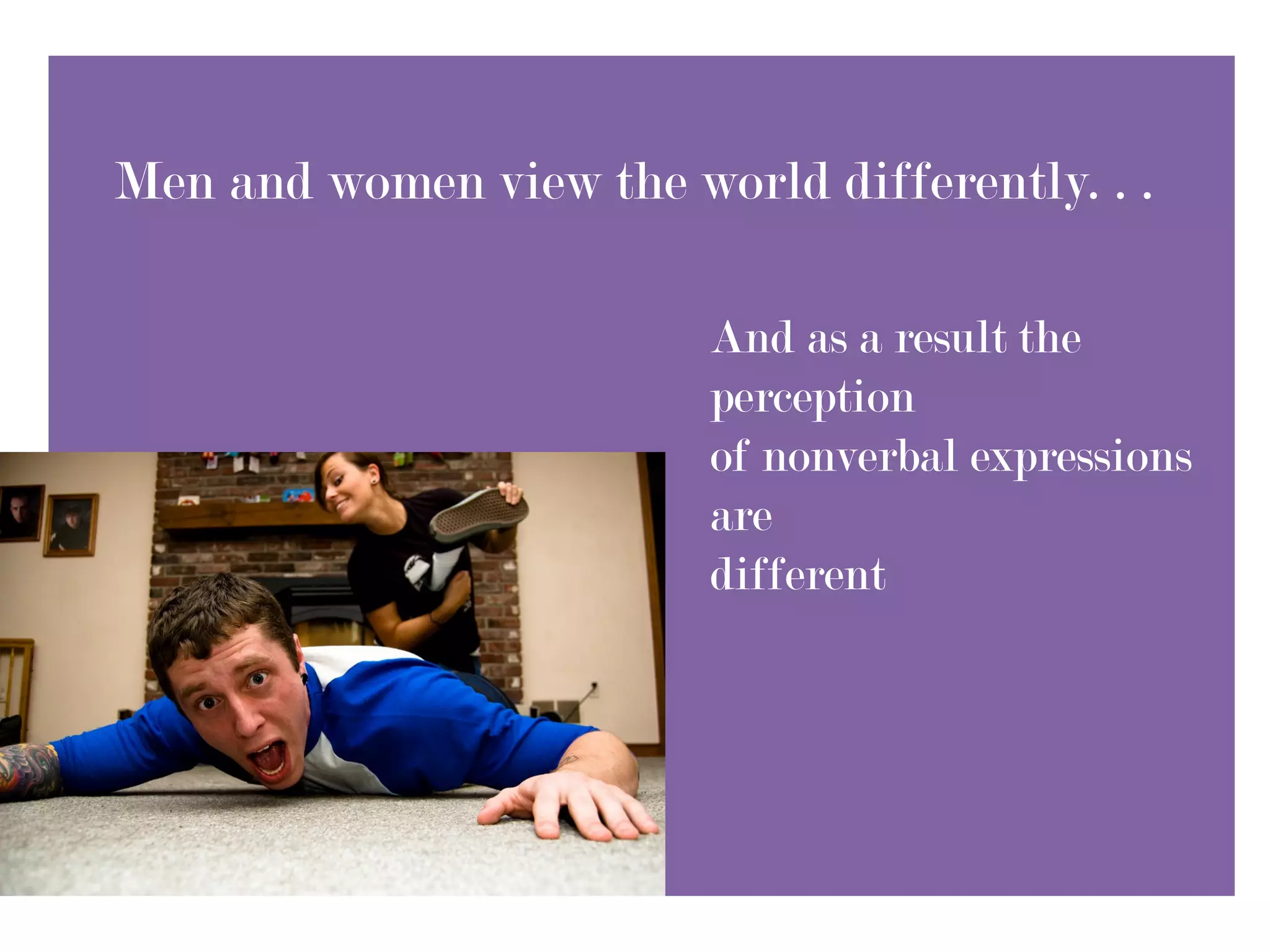
Men and women view the world differently. . .

                         And as a result the
                         perception
                         of nonverbal expressions
                         are
                         different
For
  Example
While interacting with a member of
the opposite gender, the smallest of
gestures is interpreted with alternate
meaning
Nodding

          is one of the most misinterpreted
          nonverbal expressions during cross-
          gender communication.
Most women interpret a nod, as
a signal that what has been said
was thoroughly listened to and
understood.

         The opposite is generally true as
         well, a nod from a woman during
         conversation is meant to indicate
         understanding of the conversation on
         behalf of the woman.
WHILE
Men nod and interpret a nod during
conversation as a confirmation of
agreeing with the concept being discussed
It is small
  miscommunications
            & misinterpretations
such as nodding that can lead to
     Disagreement
            & Confrontation.
Image Credit in order of Appearance


Meez Photography. (2009). Speechless. [Web Photo]. Retrieved from
    http://www.flickr.com/photos/meez_photography/3931012358/sizes/m/in/photostream/

(2010). Passive aggressive. [Web Photo] Retrieved from
     http://www.flickr.com/photos/prozac74/4355840483/sizes/l/in/photostream/

Dombrowski, Q. (2010). Hi from Bill Clinton. [Web Photo]. Retrieved from
    http://www.flickr.com/photos/quinnanya/5038168800/sizes/l/in/photostream/

Amadeus, G. (2008). Pedalpalooza 2008. [Web Graphic]. Retrieved from
    http://www.flickr.com/photos/gabrielamadeus/2461223819/sizes/o/in/photostream/

Harris-Roxas, B. (2006). Beer o’clock. [Web Photo]. Retrieved from
      http://www.flickr.com/photos/photosydney/103834807/sizes/l/in/photostream/

Loux, N. (2010). Day 38 of 365 days of love! (Explored!). [Web Photo]. Retrieved from
     http://www.flickr.com/photos/nikki_loux/5253517352/sizes/l/in/photostream/

Nonverbal Expressions of Power and Dominance

  • 1.
    By: Ross Homer-Bouthiette al s of erb ion nv ss No pre Ex POWER Dominance
  • 2.
    #1 What arenonverbal expressions of power and dominance?
  • 3.
    Nonverbal expressions ofpower and dominance are *gestures or motions {not communicated through that assert one’s talking} authority over another
  • 4.
    Which Include ...
  • 5.
  • 6.
  • 7.
  • 8.
    Nodding & Shaking The Head Plus Even the colors you wear affect Others’ Perceptions of your authority
  • 9.
    In Ancient Rome. . . Leaders and higher status members of society adorned their clothing with PURPLE to distinguish themselves as noble or wealthy.
  • 10.
    Presently. . . Peopletend to think more highly and attribute greater authority to others wearing RED
  • 11.
    Wi #2 谁 hi? e? Wh C だれ o? Qui? Wer ? か ποιοι 誰 ? em Qui én? KTO? Qu
  • 12.
  • 13.
    Everyone jousts for authority ineveryday speech and conversational patterns
  • 14.
    Some people openlyand aggressively attempt to assert their dominance in social contexts
  • 15.
    Others subconsciously employ strategies for social advancement without realizing
  • 16.
    stly La Some are given authority through no fault of their, but through the perceptions of others.
  • 17.
  • 18.
    Why manipulate social power? Throughout the entire existence of humans, power struggles have been an ever eminent theme
  • 19.
    It is thehuman condition to strive for power and dominance in social settings
  • 20.
    Being able toeffectively use nonverbal expressions will allow for greater social power and dominance Simple gestures can provide a basis for establishing authority
  • 21.
    A firmer handshake , better posture , and causing slight interruptions in conversation can raise authority in group situations
  • 22.
  • 23.
    With nonverbal expressionsof power and dominance being an unspoken means of communication, many peers view them as a means of manipulation for self gain.
  • 24.
    Placing these gesturesand motions in a cynical category based only on the possibility that when used with certain intent the outcome can be DISASTROU
  • 25.
    The gender differenceof nonverbal expressions of power and #5 dominance
  • 26.
    Men and womenview the world differently. . . And as a result the perception of nonverbal expressions are different
  • 27.
  • 28.
    While interacting witha member of the opposite gender, the smallest of gestures is interpreted with alternate meaning
  • 29.
    Nodding is one of the most misinterpreted nonverbal expressions during cross- gender communication.
  • 30.
    Most women interpreta nod, as a signal that what has been said was thoroughly listened to and understood. The opposite is generally true as well, a nod from a woman during conversation is meant to indicate understanding of the conversation on behalf of the woman.
  • 31.
  • 32.
    Men nod andinterpret a nod during conversation as a confirmation of agreeing with the concept being discussed
  • 33.
    It is small miscommunications & misinterpretations such as nodding that can lead to Disagreement & Confrontation.
  • 34.
    Image Credit inorder of Appearance Meez Photography. (2009). Speechless. [Web Photo]. Retrieved from http://www.flickr.com/photos/meez_photography/3931012358/sizes/m/in/photostream/ (2010). Passive aggressive. [Web Photo] Retrieved from http://www.flickr.com/photos/prozac74/4355840483/sizes/l/in/photostream/ Dombrowski, Q. (2010). Hi from Bill Clinton. [Web Photo]. Retrieved from http://www.flickr.com/photos/quinnanya/5038168800/sizes/l/in/photostream/ Amadeus, G. (2008). Pedalpalooza 2008. [Web Graphic]. Retrieved from http://www.flickr.com/photos/gabrielamadeus/2461223819/sizes/o/in/photostream/ Harris-Roxas, B. (2006). Beer o’clock. [Web Photo]. Retrieved from http://www.flickr.com/photos/photosydney/103834807/sizes/l/in/photostream/ Loux, N. (2010). Day 38 of 365 days of love! (Explored!). [Web Photo]. Retrieved from http://www.flickr.com/photos/nikki_loux/5253517352/sizes/l/in/photostream/