Non Science and Mental Health
Dr. P.V.Bhandary
Consultant psychiatrist & Director
Dr.A.V. Baliga Meorial Hospital
Udupi
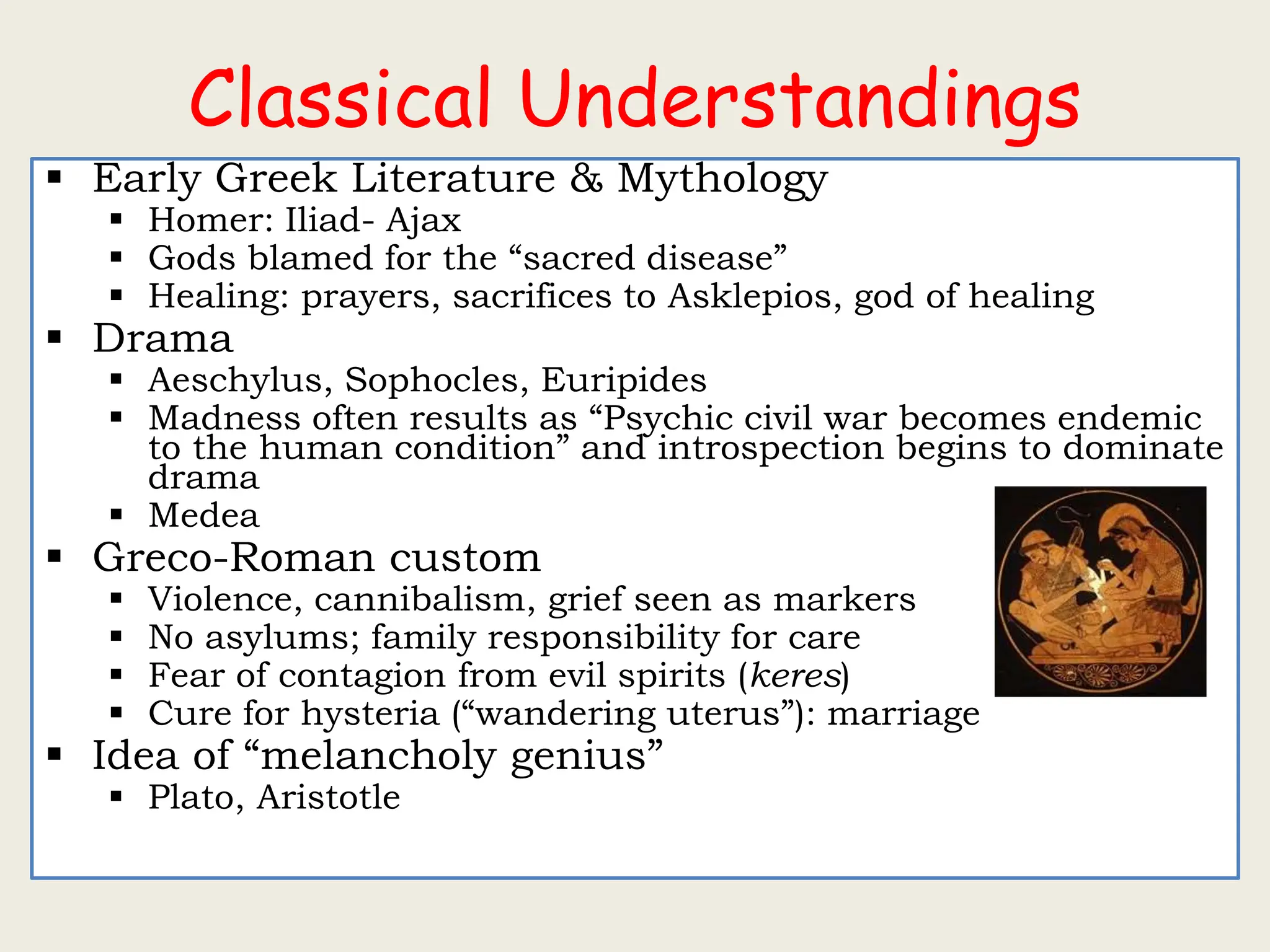
Classical Understandings
 Early Greek Literature & Mythology
 Homer: Iliad- Ajax
 Gods blamed for the “sacred disease”
 Healing: prayers, sacrifices to Asklepios, god of healing
 Drama
 Aeschylus, Sophocles, Euripides
 Madness often results as “Psychic civil war becomes endemic
to the human condition” and introspection begins to dominate
drama
 Medea
 Greco-Roman custom
 Violence, cannibalism, grief seen as markers
 No asylums; family responsibility for care
 Fear of contagion from evil spirits (keres)
 Cure for hysteria (“wandering uterus”): marriage
 Idea of “melancholy genius”
 Plato, Aristotle
Early Medicalization
 Hippocrates (ca. 460-357 BC): natural explanation for
epilepsy
 “naturalization of madness”
 “…the sacred disease appears to me to be no more divine nor
more sacred than other diseases, but has a natural cause from
which it originates like other afflictions. Men regard its nature
and cause as divine from ignorance and wonder, because it is
not like other diseases.”
 Mania and melancholia: excitement/depression
 Humoral theory (usually choler, black bile)
 Melancholy madness sometimes seen as genius (i.e. modern
ideas of bipolar creativity)
 Plato
 Timaeus, 375 B.C.E: Physiological cause of madness, therefore
possibility of treatment by medical means
 Also, concept of “madness as a transcendental divine fire with
the power to inspire”
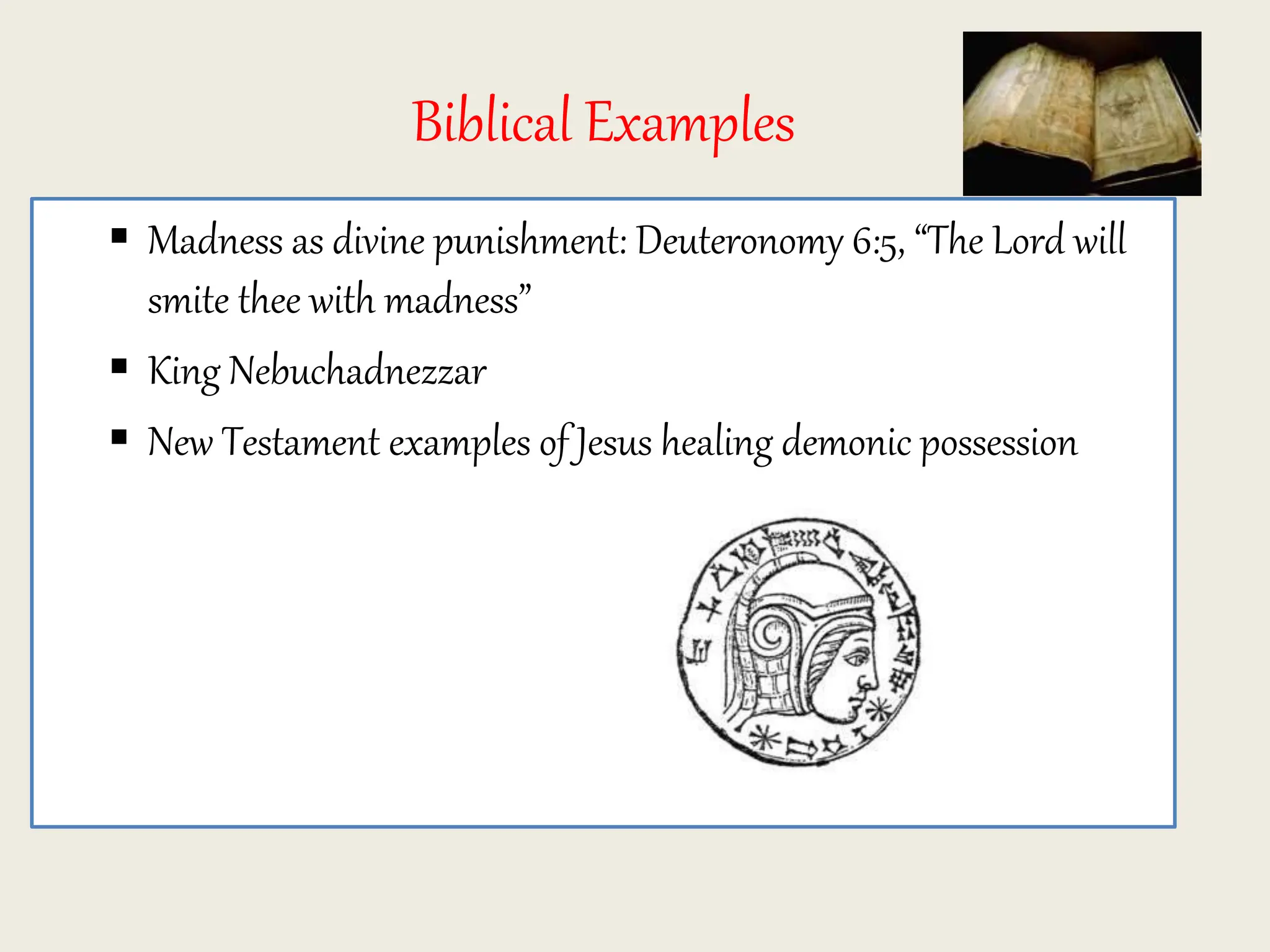
Biblical Examples
 Madness as divine punishment: Deuteronomy 6:5, “The Lord will
smite thee with madness”
 King Nebuchadnezzar
 New Testament examples of Jesus healing demonic possession
Non-Western Antiquity
 Hinduism
 Goddess Grahi (“she who seizes”)
 India
 Dog-demon
 Mesopotamia and Babylon
 Spirit invasion, the evil eye, demonic power,
breaking of taboos led to mental disorder
 “If at the time of his possession his mind is
awake, the demon can be driven out; if at the
time of his possession is not so aware, the
demon cannot be driven out.” ~Assyrian text,
350 B.C.E.
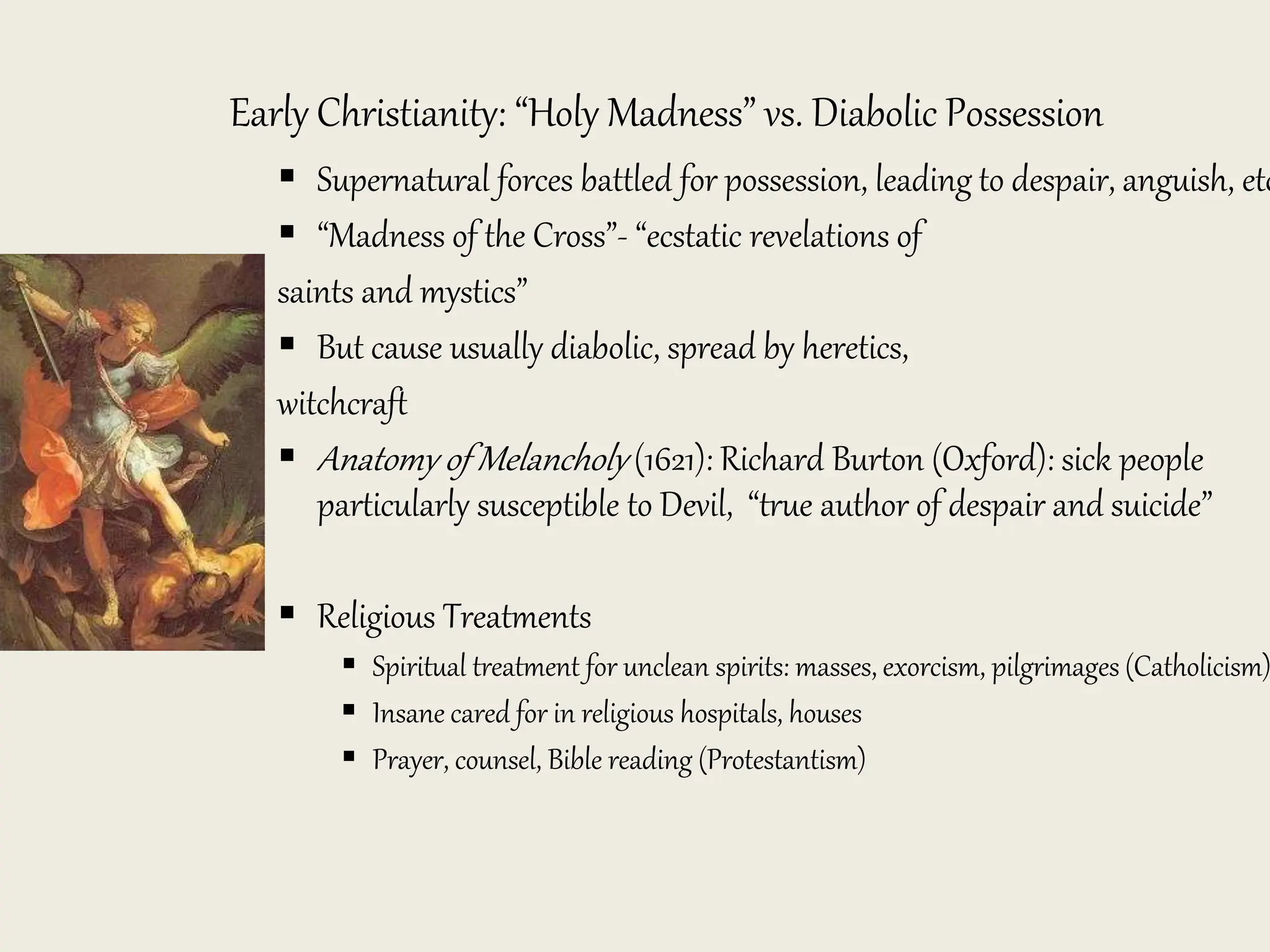
Early Christianity: “Holy Madness” vs. Diabolic Possession
 Supernatural forces battled for possession, leading to despair, anguish, etc
 “Madness of the Cross”- “ecstatic revelations of
saints and mystics”
 But cause usually diabolic, spread by heretics,
witchcraft
 Anatomy of Melancholy (1621): Richard Burton (Oxford): sick people
particularly susceptible to Devil, “true author of despair and suicide”
 Religious Treatments
 Spiritual treatment for unclean spirits: masses, exorcism, pilgrimages (Catholicism)
 Insane cared for in religious hospitals, houses
 Prayer, counsel, Bible reading (Protestantism)
Madness as Heresy
 Reformation and Counter-Reformation
 Political purposes of diagnosis
 “False doctrine and delusion formed two sides of the same coin: the
mad were judged to be possessed, and religious adversaries were
deemed out of their mind.”
 Madness as Blaspheming against God
 Mental anguish bringing sinners to acute spiritual crisis, leading
(hopefully) to recovery
 Conversion narrative of George Trosse (b.1631)
 Witch Hunts
 Late 15th cent, peak around 1650
 Unusual speech and behavior sign of consorting with the Devil;
satanic maleficium (malice)
 Over 200,000 people (primarily women) executed
 Led to popular and official skepticism of the doctrine of demonic
possession
Modern moudya Causes ( ಅಧುನಿಕತೆಯ
ಮೌಢ್ಯ ದ PÁgÀtUÀ¼ÀÄ)
• ಜಾತಕ ದೋಷ
• ನಾಗ ದೋಷ
• ವೋಯಯ ನಷಟ
• ಪೂರ್ಯ ಜನಮ ದ ಪಾಪದ ಫಲ
• ದೇರ್ರ ಶಾಪ
• ಬ್
ರ ಹ್ಮ ರಾಕ್ಷಸ
• ಭೂತ ಪ್
ರ ೋತ ದ್ವೆ ದ ಉಪದ
ರ
Signs & symptoms ಲಕ್ಷಣಗಳು
Mania (ಉನಾಮ ದ)
Delusion of Grandiosity (ಮಹ್ತೆ ಪೂಣಯದ
ಭ್
ರ ಮೆ)
I am shiva
I am having special power
I heard this from god
I communicate with god
I can heal you
Delusion of being poissioned ವಷ ಪ
ರ ಶಾನ ವಾಗುತ
ತ ದ್ವ
ಎಂಬ್ ಭ್
ರ ಮೆ )
• ಮದ್ದು
ಹಾಕಿದ್ದು ರೆ
• ಮಾಟ ಮಂತ
ರ
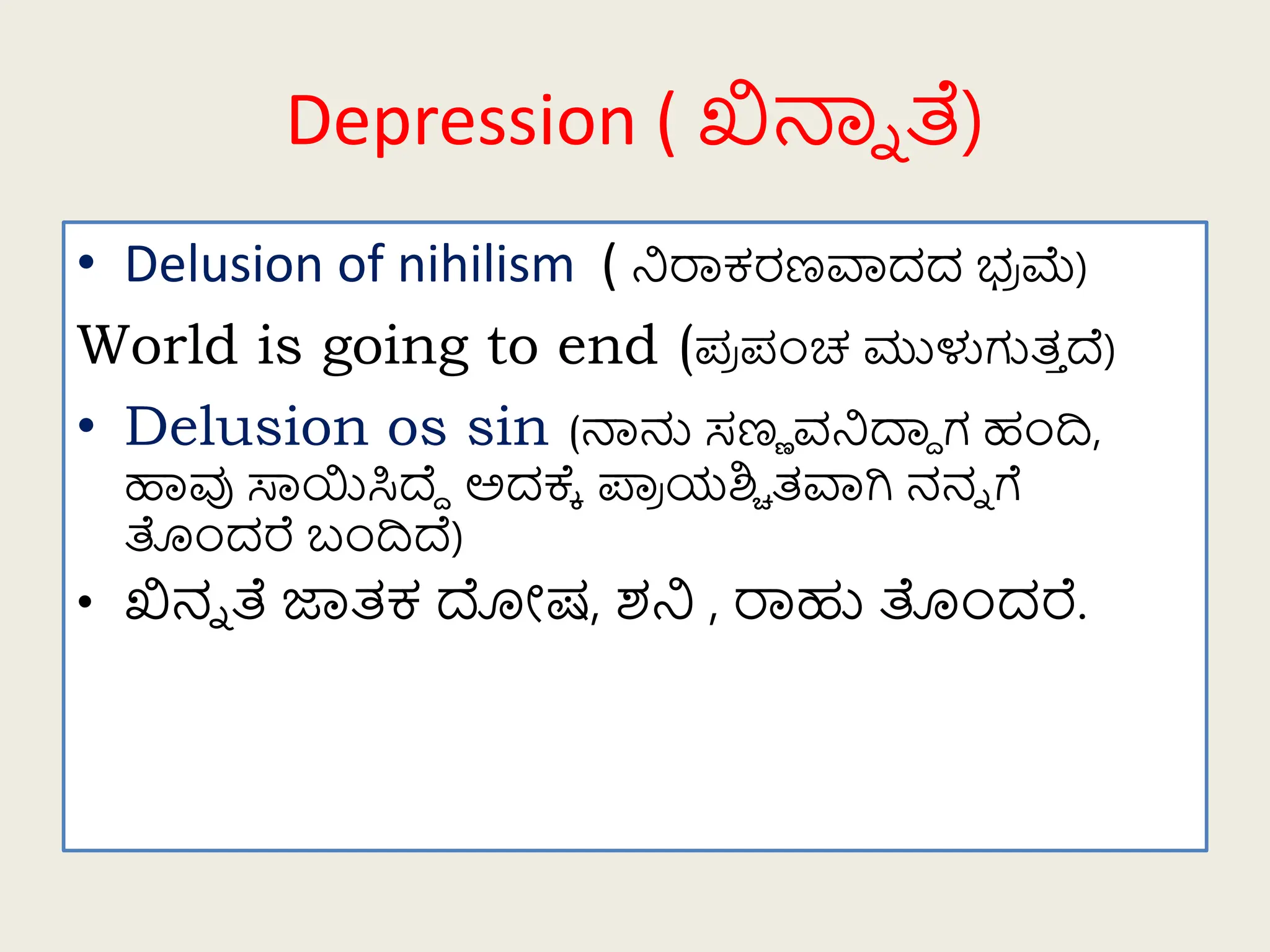
Depression ( ಖಿನಾಾ ತೆ)
• Delusion of nihilism ( ನಿರಾಕರಣವಾದದ ಭ್
ರ ಮೆ)
World is going to end (ಪ
ರ ಪಂಚ ಮುಳುಗುತ
ತ ದ್ವ)
• Delusion os sin (ನಾನು ಸಣಣ ರ್ನಿದ್ದು ಗ ಹಂದಿ,
ಹಾವು ಸಾಯಿಸಿದ್ವು ಅದಕ್ಕೆ ಪಾ
ರ ಯಶ್ಚಿ ತವಾಗಿ ನನಾ ಗೆ
ತಂದರೆ ಬಂದಿದ್ವ)
• ಖಿನಾ ತೆ ಜಾತಕ ದೋಷ, ಶನಿ , ರಾಹು ತಂದರೆ.
Psychosis ಚಿತ
ತ ವಕಲತೆ
• tantriks/ojha.
• Mind is controlled by God
• Mind is depend on moon
• recipients of divine
punishment,
Alcoholism (ಮದಯ ರ್ಯ ಸನ)
• ಯಾರೋ ಮದ್ದು ಹಾಕಿದ್ದು ರೇ
• ತಂದೇಯ ಆತಮ ಮೈ ಮೇಲೆ ಬಂದ್ದ ಆತ
ಕುಡಿಯುತ್ತ
ತ ನೆ.
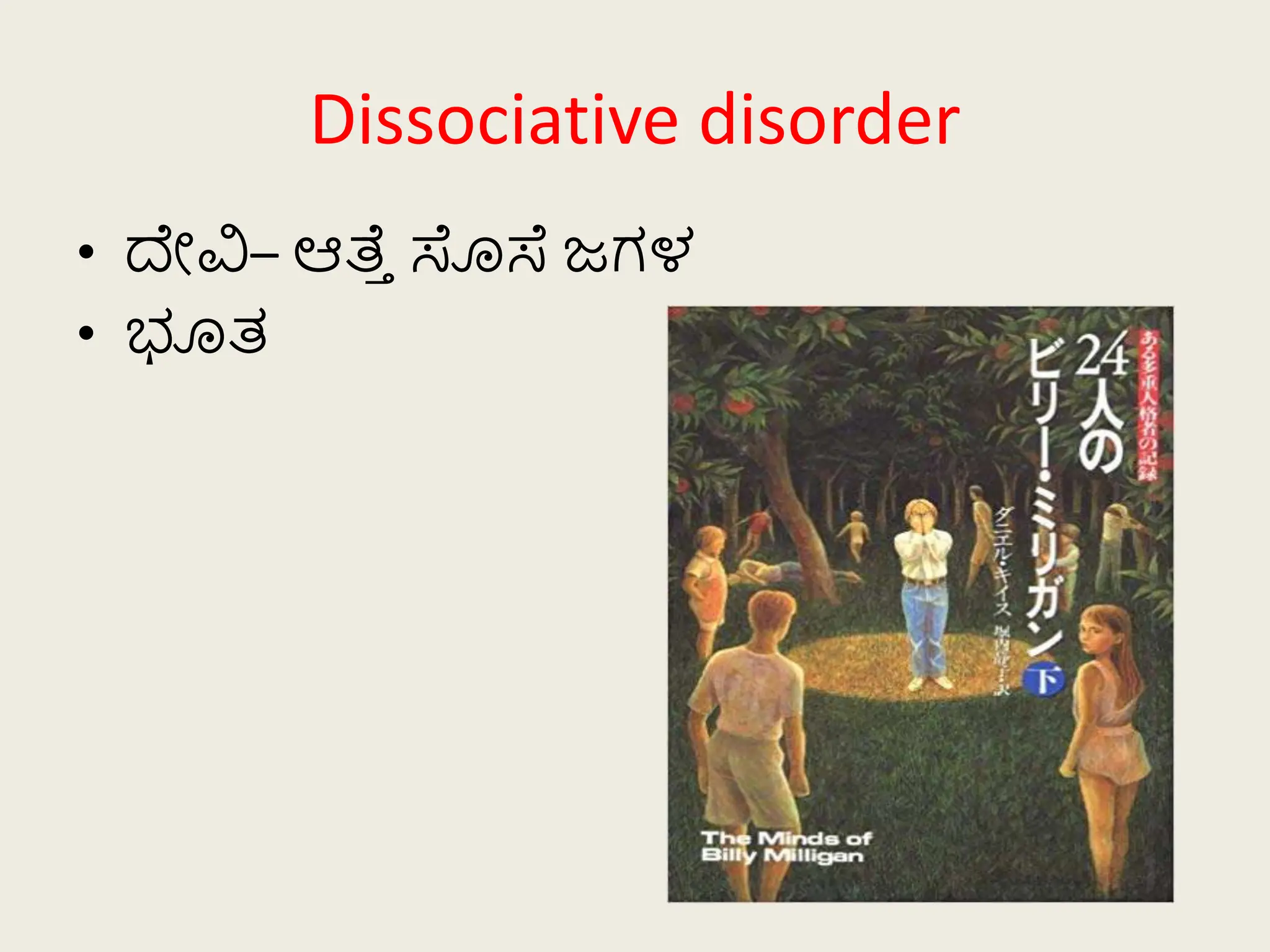
Dissociative disorder
• ದೇವ– ಆತೆ
ತ ಸೊಸೆ ಜಗಳ
• ಭೂತ
Treatment ( ಪರಿಹಾರ ವಧಾನಗಳು)
ನಾಗದೋಷ ಪರಿಹಾರ
ಜಾತಕ ಪರಿಹಾರ
ದ್ವರ್ೆ ಪ್
ರ ೋತ ಬಿಡಿಸುವುದ್ದ
Past life regression treatment
Parents cautioned against ‘efforts’ to activate mid-brain in
children
Stones ( ಅದೃಷಟ ದ ಹ್ರಳುಗಳು)
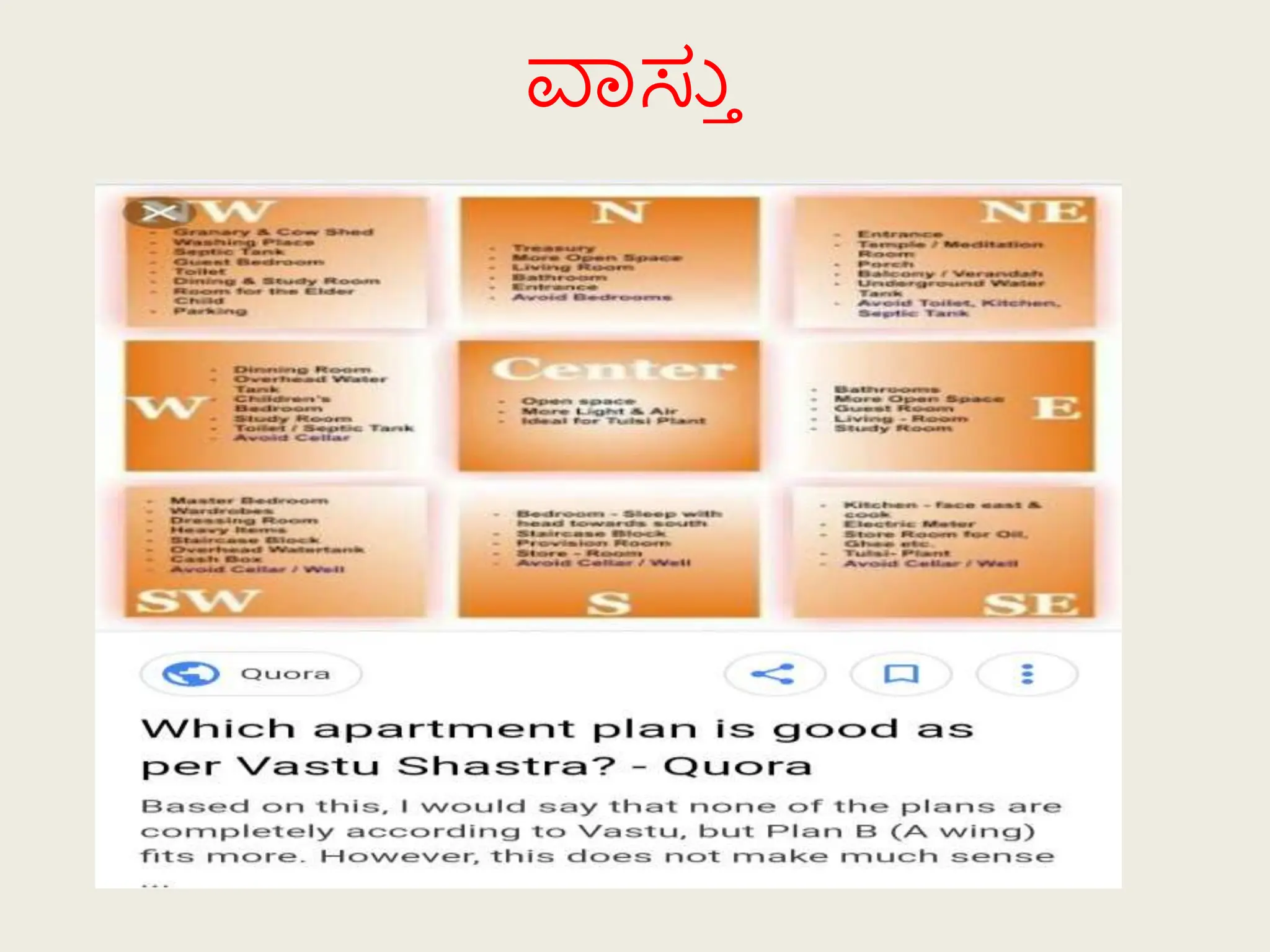
ವಾಸು
ತ
Tarot cards
ಮದ್ದು ತೆಗೆಸುವುದ್ದ
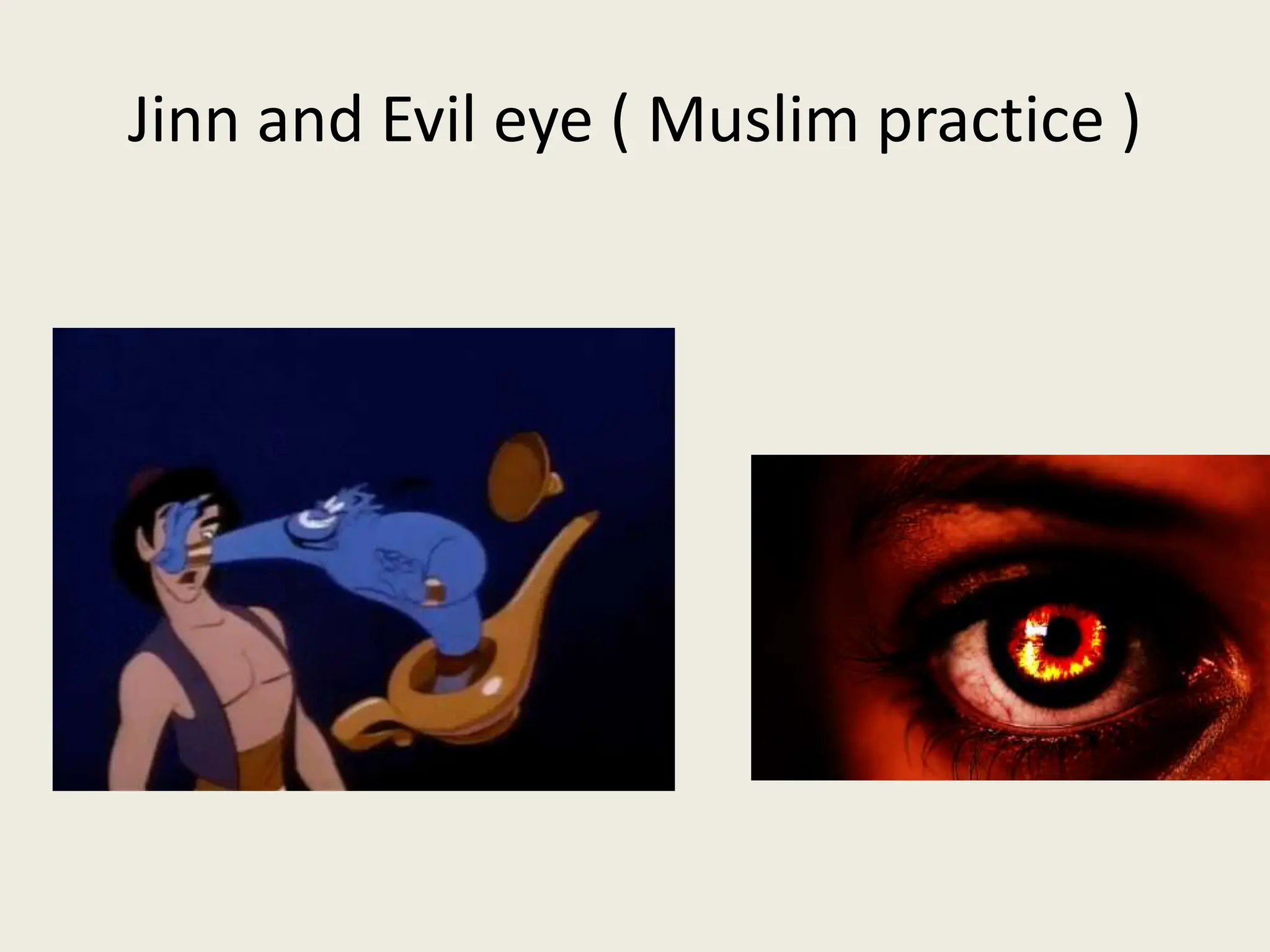
Jinn and Evil eye ( Muslim practice )
• Concept –ಜಾತ್ತಯ ತೋತ
• ಭ್ಟಟ ರು
• ಜಿನ್- ತಂಗರ್
• Pastors
Healing
Erwadi tragedy is lesson
Understanding Mental Health &
Mental Illness
Understanding Mental Health &
Mental Illness
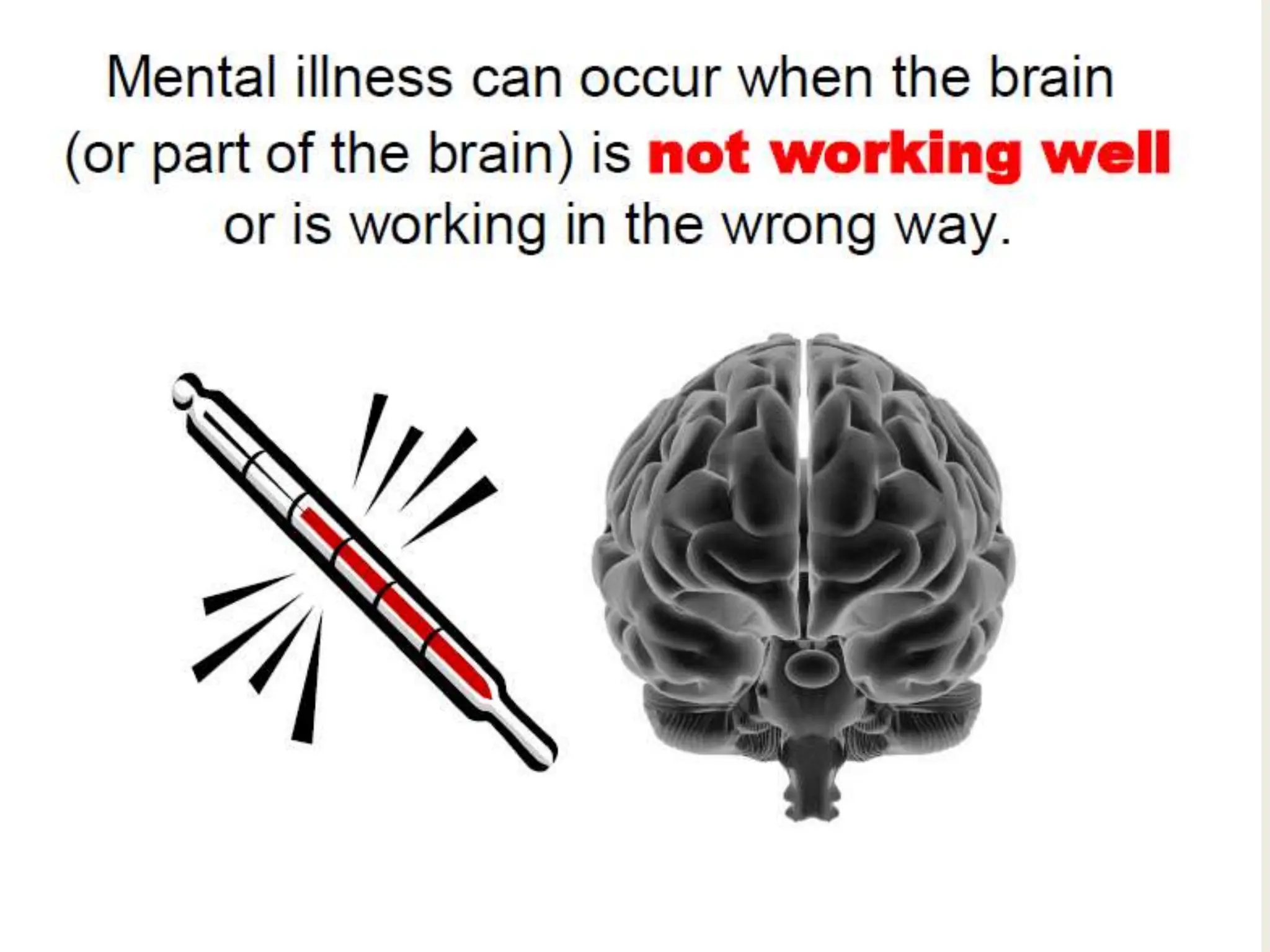
•Mental health refers to the maintenance
of successful mental activity.
•This includes maintaining productive daily
activities and maintaining fulfilling
relationships with others. It also includes
maintaining the abilities to adapt to
change and to cope with stresses.
Treatment
• All Major Psychiatric disorders require
medicines
• When disorders are severe or patient is
suicidal or aggressive admission is necessary
Medications used are :-
• Antidepressants,
• Anxiolytics
• Antipsychotics
Earlier the treatment better the out come
• All psychiatric medications are not addictive
• All psychiatric medications do not sedate
M.E.C.T
• E.C.T. is not a barbaric treatment
• It is a panacea in case of
• Severe depression
• Suicide
• It does not damage the brain permanently
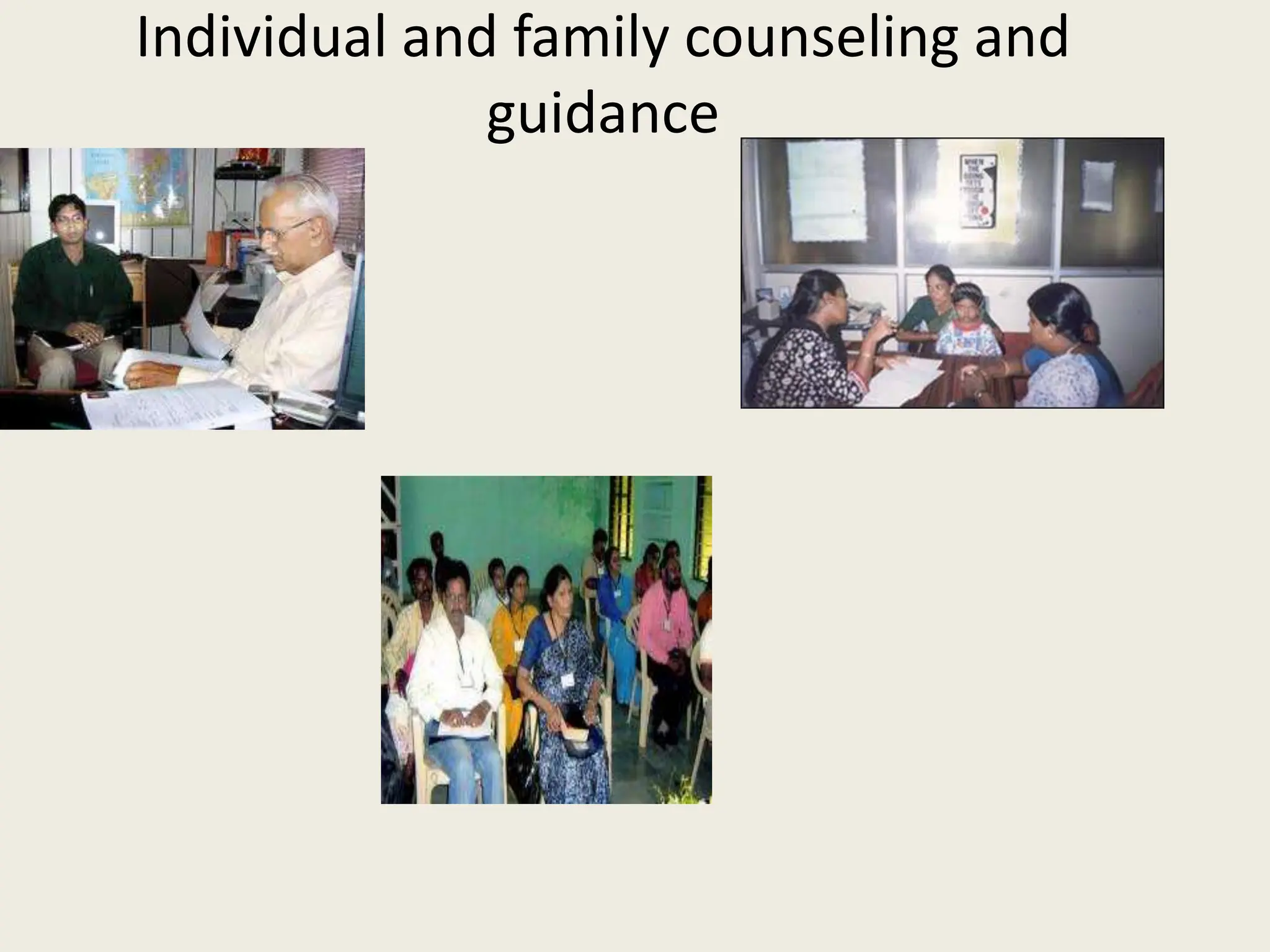
Individual and family counseling and
guidance
non science and mental illness about scientific temper .ppsx

non science and mental illness about scientific temper .ppsx

  • 1.
    Non Science andMental Health Dr. P.V.Bhandary Consultant psychiatrist & Director Dr.A.V. Baliga Meorial Hospital Udupi
  • 2.
    Classical Understandings  EarlyGreek Literature & Mythology  Homer: Iliad- Ajax  Gods blamed for the “sacred disease”  Healing: prayers, sacrifices to Asklepios, god of healing  Drama  Aeschylus, Sophocles, Euripides  Madness often results as “Psychic civil war becomes endemic to the human condition” and introspection begins to dominate drama  Medea  Greco-Roman custom  Violence, cannibalism, grief seen as markers  No asylums; family responsibility for care  Fear of contagion from evil spirits (keres)  Cure for hysteria (“wandering uterus”): marriage  Idea of “melancholy genius”  Plato, Aristotle
  • 3.
    Early Medicalization  Hippocrates(ca. 460-357 BC): natural explanation for epilepsy  “naturalization of madness”  “…the sacred disease appears to me to be no more divine nor more sacred than other diseases, but has a natural cause from which it originates like other afflictions. Men regard its nature and cause as divine from ignorance and wonder, because it is not like other diseases.”  Mania and melancholia: excitement/depression  Humoral theory (usually choler, black bile)  Melancholy madness sometimes seen as genius (i.e. modern ideas of bipolar creativity)  Plato  Timaeus, 375 B.C.E: Physiological cause of madness, therefore possibility of treatment by medical means  Also, concept of “madness as a transcendental divine fire with the power to inspire”
  • 4.
    Biblical Examples  Madnessas divine punishment: Deuteronomy 6:5, “The Lord will smite thee with madness”  King Nebuchadnezzar  New Testament examples of Jesus healing demonic possession
  • 5.
    Non-Western Antiquity  Hinduism Goddess Grahi (“she who seizes”)  India  Dog-demon  Mesopotamia and Babylon  Spirit invasion, the evil eye, demonic power, breaking of taboos led to mental disorder  “If at the time of his possession his mind is awake, the demon can be driven out; if at the time of his possession is not so aware, the demon cannot be driven out.” ~Assyrian text, 350 B.C.E.
  • 6.
    Early Christianity: “HolyMadness” vs. Diabolic Possession  Supernatural forces battled for possession, leading to despair, anguish, etc  “Madness of the Cross”- “ecstatic revelations of saints and mystics”  But cause usually diabolic, spread by heretics, witchcraft  Anatomy of Melancholy (1621): Richard Burton (Oxford): sick people particularly susceptible to Devil, “true author of despair and suicide”  Religious Treatments  Spiritual treatment for unclean spirits: masses, exorcism, pilgrimages (Catholicism)  Insane cared for in religious hospitals, houses  Prayer, counsel, Bible reading (Protestantism)
  • 7.
    Madness as Heresy Reformation and Counter-Reformation  Political purposes of diagnosis  “False doctrine and delusion formed two sides of the same coin: the mad were judged to be possessed, and religious adversaries were deemed out of their mind.”  Madness as Blaspheming against God  Mental anguish bringing sinners to acute spiritual crisis, leading (hopefully) to recovery  Conversion narrative of George Trosse (b.1631)  Witch Hunts  Late 15th cent, peak around 1650  Unusual speech and behavior sign of consorting with the Devil; satanic maleficium (malice)  Over 200,000 people (primarily women) executed  Led to popular and official skepticism of the doctrine of demonic possession
  • 8.
    Modern moudya Causes( ಅಧುನಿಕತೆಯ ಮೌಢ್ಯ ದ PÁgÀtUÀ¼ÀÄ) • ಜಾತಕ ದೋಷ • ನಾಗ ದೋಷ • ವೋಯಯ ನಷಟ • ಪೂರ್ಯ ಜನಮ ದ ಪಾಪದ ಫಲ • ದೇರ್ರ ಶಾಪ • ಬ್ ರ ಹ್ಮ ರಾಕ್ಷಸ • ಭೂತ ಪ್ ರ ೋತ ದ್ವೆ ದ ಉಪದ ರ
  • 9.
    Signs & symptomsಲಕ್ಷಣಗಳು Mania (ಉನಾಮ ದ)
  • 10.
    Delusion of Grandiosity(ಮಹ್ತೆ ಪೂಣಯದ ಭ್ ರ ಮೆ) I am shiva I am having special power I heard this from god I communicate with god I can heal you
  • 11.
    Delusion of beingpoissioned ವಷ ಪ ರ ಶಾನ ವಾಗುತ ತ ದ್ವ ಎಂಬ್ ಭ್ ರ ಮೆ ) • ಮದ್ದು ಹಾಕಿದ್ದು ರೆ • ಮಾಟ ಮಂತ ರ
  • 12.
    Depression ( ಖಿನಾಾತೆ) • Delusion of nihilism ( ನಿರಾಕರಣವಾದದ ಭ್ ರ ಮೆ) World is going to end (ಪ ರ ಪಂಚ ಮುಳುಗುತ ತ ದ್ವ) • Delusion os sin (ನಾನು ಸಣಣ ರ್ನಿದ್ದು ಗ ಹಂದಿ, ಹಾವು ಸಾಯಿಸಿದ್ವು ಅದಕ್ಕೆ ಪಾ ರ ಯಶ್ಚಿ ತವಾಗಿ ನನಾ ಗೆ ತಂದರೆ ಬಂದಿದ್ವ) • ಖಿನಾ ತೆ ಜಾತಕ ದೋಷ, ಶನಿ , ರಾಹು ತಂದರೆ.
  • 13.
    Psychosis ಚಿತ ತ ವಕಲತೆ •tantriks/ojha. • Mind is controlled by God • Mind is depend on moon • recipients of divine punishment,
  • 14.
    Alcoholism (ಮದಯ ರ್ಯಸನ) • ಯಾರೋ ಮದ್ದು ಹಾಕಿದ್ದು ರೇ • ತಂದೇಯ ಆತಮ ಮೈ ಮೇಲೆ ಬಂದ್ದ ಆತ ಕುಡಿಯುತ್ತ ತ ನೆ.
  • 15.
    Dissociative disorder • ದೇವ–ಆತೆ ತ ಸೊಸೆ ಜಗಳ • ಭೂತ
  • 16.
    Treatment ( ಪರಿಹಾರವಧಾನಗಳು)
  • 17.
  • 18.
  • 19.
    ದ್ವರ್ೆ ಪ್ ರ ೋತಬಿಡಿಸುವುದ್ದ
  • 20.
    Past life regressiontreatment Parents cautioned against ‘efforts’ to activate mid-brain in children
  • 21.
    Stones ( ಅದೃಷಟದ ಹ್ರಳುಗಳು)
  • 22.
  • 23.
  • 24.
  • 25.
    Jinn and Evileye ( Muslim practice )
  • 26.
    • Concept –ಜಾತ್ತಯತೋತ • ಭ್ಟಟ ರು • ಜಿನ್- ತಂಗರ್ • Pastors
  • 27.
  • 28.
  • 29.
  • 30.
    Understanding Mental Health& Mental Illness •Mental health refers to the maintenance of successful mental activity. •This includes maintaining productive daily activities and maintaining fulfilling relationships with others. It also includes maintaining the abilities to adapt to change and to cope with stresses.
  • 45.
    Treatment • All MajorPsychiatric disorders require medicines • When disorders are severe or patient is suicidal or aggressive admission is necessary Medications used are :- • Antidepressants, • Anxiolytics • Antipsychotics Earlier the treatment better the out come • All psychiatric medications are not addictive • All psychiatric medications do not sedate
  • 46.
    M.E.C.T • E.C.T. isnot a barbaric treatment • It is a panacea in case of • Severe depression • Suicide • It does not damage the brain permanently
  • 47.
    Individual and familycounseling and guidance