NOISE POLLUTION
• NOISE POLLUTION: PRODUCTION
OF UNWANTED SOUNDS THAT ARE
ANNOYING, DISTRACTING OR DAMAGING
TO ONE’S HEARING.
WHAT IS NOISE POLLUTION?
 • Sound that is unwanted or disrupts one’s quality of
life is called as noise. When there is lot of noise in the
environment, it is termed as noise pollution.
 • Sound becomes undesirable when it disturbs the
normal activities such as working, sleeping, and
during conversations.
 • It is an underrated environmental problem because
of the fact that we can’t see, smell, or taste it.
 • World Health Organization stated that “Noise must
be recognized as a major threat to human well-being”
 Classification of Noise Pollution
 There are 2 kinds of noise pollution.
A.Community Noise/ Environmental Noise (non
industrial noise pollution).
• Air craft noise
• Roadway noise pollution
• Under water noise pollution
B. Occupational Noise( industrial noise pollution)
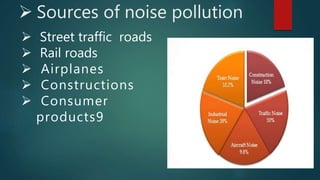
 Sources of noise pollution
 Street traffic roads
 Rail roads
 Airplanes
 Constructions
 Consumer
products9
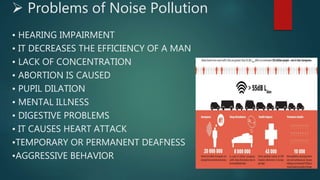
 Problems of Noise Pollution
• HEARING IMPAIRMENT
• IT DECREASES THE EFFICIENCY OF A MAN
• LACK OF CONCENTRATION
• ABORTION IS CAUSED
• PUPIL DILATION
• MENTAL ILLNESS
• DIGESTIVE PROBLEMS
• IT CAUSES HEART ATTACK
•TEMPORARY OR PERMANENT DEAFNESS
•AGGRESSIVE BEHAVIOR
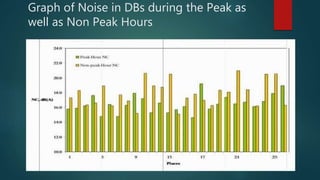
Graph of Noise in DBs during the Peak as
well as Non Peak Hours
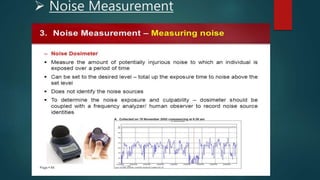
 Noise Measurement
 Noise Control Strategy
 Planting bushes and trees in and around sound
generating sources is an effective solution for
noise pollution.
 Regular servicing and tuning of automobiles can
effectively reduce the noise pollution
 Buildings can be designed with suitable noise
absorbing material for the walls, windows, and
ceilings.
 Workers should be provided with equipment's
such as ear plugs and earmuffs for hearing
protection .
CONCLUSION
 Traffic noise at the sampling stations was observed above the
national day time noise standard prescribed by Central
Pollution Control Board of India (2000) in both peak and non-
peak traffic hours. Slightly improved noise quality was
observed in afternoon. Annoyance due to road traffic noise
was found higher in non-peak traffic hour in comparison with
the peak traffic hour. Leq(1hr) values were largely influenced by
L10 than L90 in both the traffic hour. Lower Leq(1hr) value
could be obtained by reducing unnecessary honking of horn.
Improved traffic management practices, such as one way
traffic movement, proper management of buses in the traffic
stream may reduce traffic noise level to some extent. Proper
noise barrier should be constructed under flyovers to mitigate
the traffic noise level.
THANK YOU

Noise pollution BY SIMRANJOT SINGH

  • 1.
    NOISE POLLUTION • NOISEPOLLUTION: PRODUCTION OF UNWANTED SOUNDS THAT ARE ANNOYING, DISTRACTING OR DAMAGING TO ONE’S HEARING.
  • 2.
    WHAT IS NOISEPOLLUTION?  • Sound that is unwanted or disrupts one’s quality of life is called as noise. When there is lot of noise in the environment, it is termed as noise pollution.  • Sound becomes undesirable when it disturbs the normal activities such as working, sleeping, and during conversations.  • It is an underrated environmental problem because of the fact that we can’t see, smell, or taste it.  • World Health Organization stated that “Noise must be recognized as a major threat to human well-being”
  • 3.
     Classification ofNoise Pollution  There are 2 kinds of noise pollution. A.Community Noise/ Environmental Noise (non industrial noise pollution). • Air craft noise • Roadway noise pollution • Under water noise pollution B. Occupational Noise( industrial noise pollution)
  • 4.
     Sources ofnoise pollution  Street traffic roads  Rail roads  Airplanes  Constructions  Consumer products9
  • 5.
     Problems ofNoise Pollution • HEARING IMPAIRMENT • IT DECREASES THE EFFICIENCY OF A MAN • LACK OF CONCENTRATION • ABORTION IS CAUSED • PUPIL DILATION • MENTAL ILLNESS • DIGESTIVE PROBLEMS • IT CAUSES HEART ATTACK •TEMPORARY OR PERMANENT DEAFNESS •AGGRESSIVE BEHAVIOR
  • 6.
    Graph of Noisein DBs during the Peak as well as Non Peak Hours
  • 7.
  • 8.
     Noise ControlStrategy  Planting bushes and trees in and around sound generating sources is an effective solution for noise pollution.  Regular servicing and tuning of automobiles can effectively reduce the noise pollution  Buildings can be designed with suitable noise absorbing material for the walls, windows, and ceilings.  Workers should be provided with equipment's such as ear plugs and earmuffs for hearing protection .
  • 9.
    CONCLUSION  Traffic noiseat the sampling stations was observed above the national day time noise standard prescribed by Central Pollution Control Board of India (2000) in both peak and non- peak traffic hours. Slightly improved noise quality was observed in afternoon. Annoyance due to road traffic noise was found higher in non-peak traffic hour in comparison with the peak traffic hour. Leq(1hr) values were largely influenced by L10 than L90 in both the traffic hour. Lower Leq(1hr) value could be obtained by reducing unnecessary honking of horn. Improved traffic management practices, such as one way traffic movement, proper management of buses in the traffic stream may reduce traffic noise level to some extent. Proper noise barrier should be constructed under flyovers to mitigate the traffic noise level.
  • 10.