NME MUSIC MAGAZINE
ANALYSIS 2
By Rita Protasiewicz 12
GTA
FRONT COVER
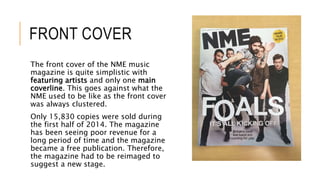
The front cover of the NME music
magazine is quite simplistic with
featuring artists and only one main
coverline. This goes against what the
NME used to be like as the front cover
was always clustered.
Only 15,830 copies were sold during
the first half of 2014. The magazine
has been seeing poor revenue for a
long period of time and the magazine
became a free publication. Therefore,
the magazine had to be reimaged to
suggest a new stage.
MASTHEAD
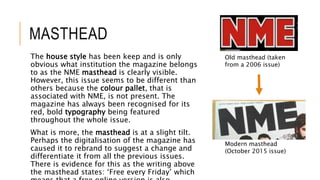
The house style has been keep and is only
obvious what institution the magazine belongs
to as the NME masthead is clearly visible.
However, this issue seems to be different than
others because the colour pallet, that is
associated with NME, is not present. The
magazine has always been recognised for its
red, bold typography being featured
throughout the whole issue.
What is more, the masthead is at a slight tilt.
Perhaps the digitalisation of the magazine has
caused it to rebrand to suggest a change and
differentiate it from all the previous issues.
There is evidence for this as the writing above
the masthead states: ‘Free every Friday’ which
Old masthead (taken
from a 2006 issue)
Modern masthead
(October 2015 issue)
COVERLINE AND MAIN SUBJECTS
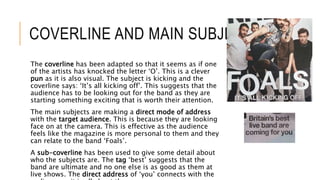
The coverline has been adapted so that it seems as if one
of the artists has knocked the letter ‘O’. This is a clever
pun as it is also visual. The subject is kicking and the
coverline says: ‘It’s all kicking off’. This suggests that the
audience has to be looking out for the band as they are
starting something exciting that is worth their attention.
The main subjects are making a direct mode of address
with the target audience. This is because they are looking
face on at the camera. This is effective as the audience
feels like the magazine is more personal to them and they
can relate to the band ‘Foals’.
A sub-coverline has been used to give some detail about
who the subjects are. The tag ‘best’ suggests that the
band are ultimate and no one else is as good as them at
live shows. The direct address of ‘you’ connects with the
PUG
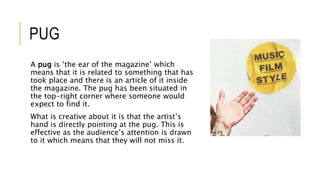
A pug is ‘the ear of the magazine’ which
means that it is related to something that has
took place and there is an article of it inside
the magazine. The pug has been situated in
the top-right corner where someone would
expect to find it.
What is creative about it is that the artist’s
hand is directly pointing at the pug. This is
effective as the audience’s attention is drawn
to it which means that they will not miss it.
CONTENTS PAGE
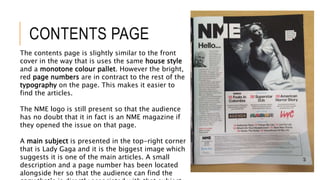
The contents page is slightly similar to the front
cover in the way that is uses the same house style
and a monotone colour pallet. However the bright,
red page numbers are in contract to the rest of the
typography on the page. This makes it easier to
find the articles.
The NME logo is still present so that the audience
has no doubt that it in fact is an NME magazine if
they opened the issue on that page.
A main subject is presented in the top-right corner
that is Lady Gaga and it is the biggest image which
suggests it is one of the main articles. A small
description and a page number has been located
alongside her so that the audience can find the
FURTHER DETAILS
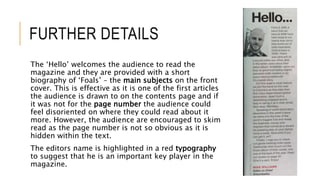
The ‘Hello’ welcomes the audience to read the
magazine and they are provided with a short
biography of ‘Foals’ – the main subjects on the front
cover. This is effective as it is one of the first articles
the audience is drawn to on the contents page and if
it was not for the page number the audience could
feel disoriented on where they could read about it
more. However, the audience are encouraged to skim
read as the page number is not so obvious as it is
hidden within the text.
The editors name is highlighted in a red typography
to suggest that he is an important key player in the
magazine.
CONTENTS
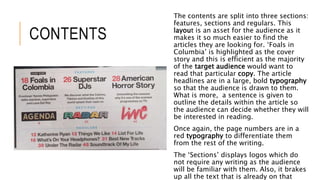
The contents are split into three sections:
features, sections and regulars. This
layout is an asset for the audience as it
makes it so much easier to find the
articles they are looking for. ‘Foals in
Columbia’ is highlighted as the cover
story and this is efficient as the majority
of the target audience would want to
read that particular copy. The article
headlines are in a large, bold typography
so that the audience is drawn to them.
What is more, a sentence is given to
outline the details within the article so
the audience can decide whether they will
be interested in reading.
Once again, the page numbers are in a
red typography to differentiate them
from the rest of the writing.
The ‘Sections’ displays logos which do
not require any writing as the audience
will be familiar with them. Also, it brakes
up all the text that is already on that
DOUBLE PAGE SPREAD
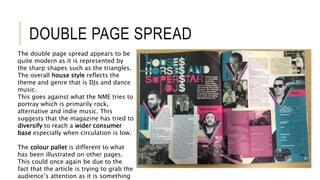
The double page spread appears to be
quite modern as it is represented by
the sharp shapes such as the triangles.
The overall house style reflects the
theme and genre that is DJs and dance
music.
This goes against what the NME tries to
portray which is primarily rock,
alternative and indie music. This
suggests that the magazine has tried to
diversify to reach a wider consumer
base especially when circulation is low.
The colour pallet is different to what
has been illustrated on other pages.
This could once again be due to the
fact that the article is trying to grab the
audience’s attention as it is something
HEADLINE AND SUBHEADING
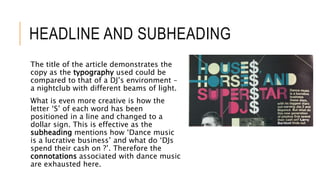
The title of the article demonstrates the
copy as the typography used could be
compared to that of a DJ’s environment –
a nightclub with different beams of light.
What is even more creative is how the
letter ‘S’ of each word has been
positioned in a line and changed to a
dollar sign. This is effective as the
subheading mentions how ‘Dance music
is a lucrative business’ and what do ‘DJs
spend their cash on ?’. Therefore the
connotations associated with dance music
are exhausted here.
INDIVIDUAL ARTISTS
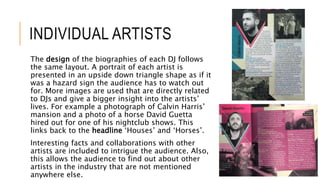
The design of the biographies of each DJ follows
the same layout. A portrait of each artist is
presented in an upside down triangle shape as if it
was a hazard sign the audience has to watch out
for. More images are used that are directly related
to DJs and give a bigger insight into the artists’
lives. For example a photograph of Calvin Harris’
mansion and a photo of a horse David Guetta
hired out for one of his nightclub shows. This
links back to the headline ‘Houses’ and ‘Horses’.
Interesting facts and collaborations with other
artists are included to intrigue the audience. Also,
this allows the audience to find out about other
artists in the industry that are not mentioned
anywhere else.

Nme Music Magazine Analysis 2

  • 1.
    NME MUSIC MAGAZINE ANALYSIS2 By Rita Protasiewicz 12 GTA
  • 2.
    FRONT COVER The frontcover of the NME music magazine is quite simplistic with featuring artists and only one main coverline. This goes against what the NME used to be like as the front cover was always clustered. Only 15,830 copies were sold during the first half of 2014. The magazine has been seeing poor revenue for a long period of time and the magazine became a free publication. Therefore, the magazine had to be reimaged to suggest a new stage.
  • 3.
    MASTHEAD The house stylehas been keep and is only obvious what institution the magazine belongs to as the NME masthead is clearly visible. However, this issue seems to be different than others because the colour pallet, that is associated with NME, is not present. The magazine has always been recognised for its red, bold typography being featured throughout the whole issue. What is more, the masthead is at a slight tilt. Perhaps the digitalisation of the magazine has caused it to rebrand to suggest a change and differentiate it from all the previous issues. There is evidence for this as the writing above the masthead states: ‘Free every Friday’ which Old masthead (taken from a 2006 issue) Modern masthead (October 2015 issue)
  • 4.
    COVERLINE AND MAINSUBJECTS The coverline has been adapted so that it seems as if one of the artists has knocked the letter ‘O’. This is a clever pun as it is also visual. The subject is kicking and the coverline says: ‘It’s all kicking off’. This suggests that the audience has to be looking out for the band as they are starting something exciting that is worth their attention. The main subjects are making a direct mode of address with the target audience. This is because they are looking face on at the camera. This is effective as the audience feels like the magazine is more personal to them and they can relate to the band ‘Foals’. A sub-coverline has been used to give some detail about who the subjects are. The tag ‘best’ suggests that the band are ultimate and no one else is as good as them at live shows. The direct address of ‘you’ connects with the
  • 5.
    PUG A pug is‘the ear of the magazine’ which means that it is related to something that has took place and there is an article of it inside the magazine. The pug has been situated in the top-right corner where someone would expect to find it. What is creative about it is that the artist’s hand is directly pointing at the pug. This is effective as the audience’s attention is drawn to it which means that they will not miss it.
  • 6.
    CONTENTS PAGE The contentspage is slightly similar to the front cover in the way that is uses the same house style and a monotone colour pallet. However the bright, red page numbers are in contract to the rest of the typography on the page. This makes it easier to find the articles. The NME logo is still present so that the audience has no doubt that it in fact is an NME magazine if they opened the issue on that page. A main subject is presented in the top-right corner that is Lady Gaga and it is the biggest image which suggests it is one of the main articles. A small description and a page number has been located alongside her so that the audience can find the
  • 7.
    FURTHER DETAILS The ‘Hello’welcomes the audience to read the magazine and they are provided with a short biography of ‘Foals’ – the main subjects on the front cover. This is effective as it is one of the first articles the audience is drawn to on the contents page and if it was not for the page number the audience could feel disoriented on where they could read about it more. However, the audience are encouraged to skim read as the page number is not so obvious as it is hidden within the text. The editors name is highlighted in a red typography to suggest that he is an important key player in the magazine.
  • 8.
    CONTENTS The contents aresplit into three sections: features, sections and regulars. This layout is an asset for the audience as it makes it so much easier to find the articles they are looking for. ‘Foals in Columbia’ is highlighted as the cover story and this is efficient as the majority of the target audience would want to read that particular copy. The article headlines are in a large, bold typography so that the audience is drawn to them. What is more, a sentence is given to outline the details within the article so the audience can decide whether they will be interested in reading. Once again, the page numbers are in a red typography to differentiate them from the rest of the writing. The ‘Sections’ displays logos which do not require any writing as the audience will be familiar with them. Also, it brakes up all the text that is already on that
  • 9.
    DOUBLE PAGE SPREAD Thedouble page spread appears to be quite modern as it is represented by the sharp shapes such as the triangles. The overall house style reflects the theme and genre that is DJs and dance music. This goes against what the NME tries to portray which is primarily rock, alternative and indie music. This suggests that the magazine has tried to diversify to reach a wider consumer base especially when circulation is low. The colour pallet is different to what has been illustrated on other pages. This could once again be due to the fact that the article is trying to grab the audience’s attention as it is something
  • 10.
    HEADLINE AND SUBHEADING Thetitle of the article demonstrates the copy as the typography used could be compared to that of a DJ’s environment – a nightclub with different beams of light. What is even more creative is how the letter ‘S’ of each word has been positioned in a line and changed to a dollar sign. This is effective as the subheading mentions how ‘Dance music is a lucrative business’ and what do ‘DJs spend their cash on ?’. Therefore the connotations associated with dance music are exhausted here.
  • 11.
    INDIVIDUAL ARTISTS The designof the biographies of each DJ follows the same layout. A portrait of each artist is presented in an upside down triangle shape as if it was a hazard sign the audience has to watch out for. More images are used that are directly related to DJs and give a bigger insight into the artists’ lives. For example a photograph of Calvin Harris’ mansion and a photo of a horse David Guetta hired out for one of his nightclub shows. This links back to the headline ‘Houses’ and ‘Horses’. Interesting facts and collaborations with other artists are included to intrigue the audience. Also, this allows the audience to find out about other artists in the industry that are not mentioned anywhere else.