ĐẠI HỌC QUỐCGIA THÀNH PHỐ HỒ CHÍ MINH
TRƯỜNG ĐẠI HỌC BÁCH KHOA
Ta Gia Khang
khang.ta1902@hcmut.edu.vn
Sentiment Analysis
An experiment on CNN and LSTM models
2.
Agenda
• Motivation andProblem Description
• Background: LSTMs and CNNs
• Methodologies: Data preprocessing and
experiments
• Experiment Result and Observation
• Conclusion
2
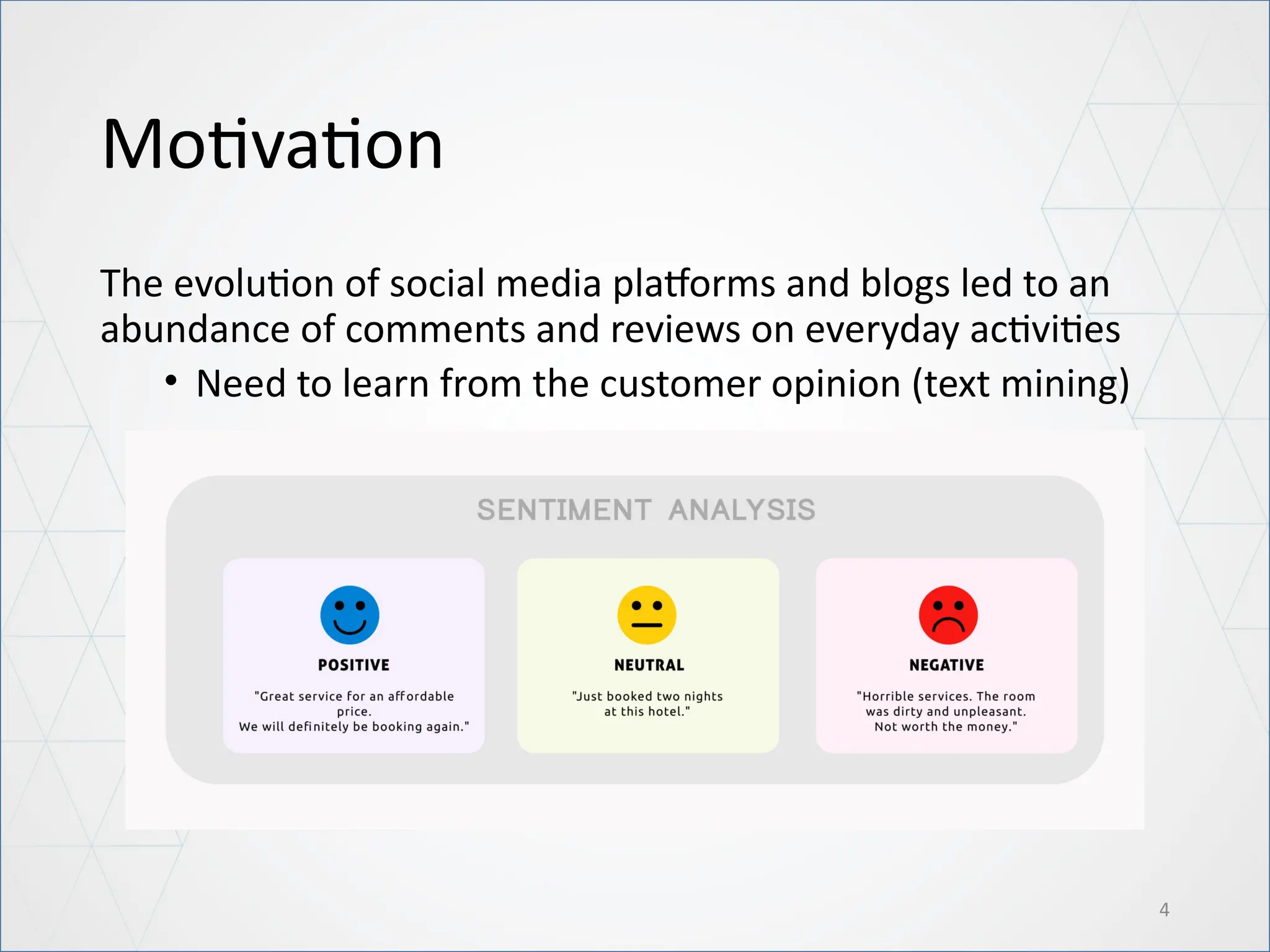
Motivation
The evolution ofsocial media platforms and blogs led to an
abundance of comments and reviews on everyday activities
• Need to learn from the customer opinion (text mining)
4
5.
Problem Description
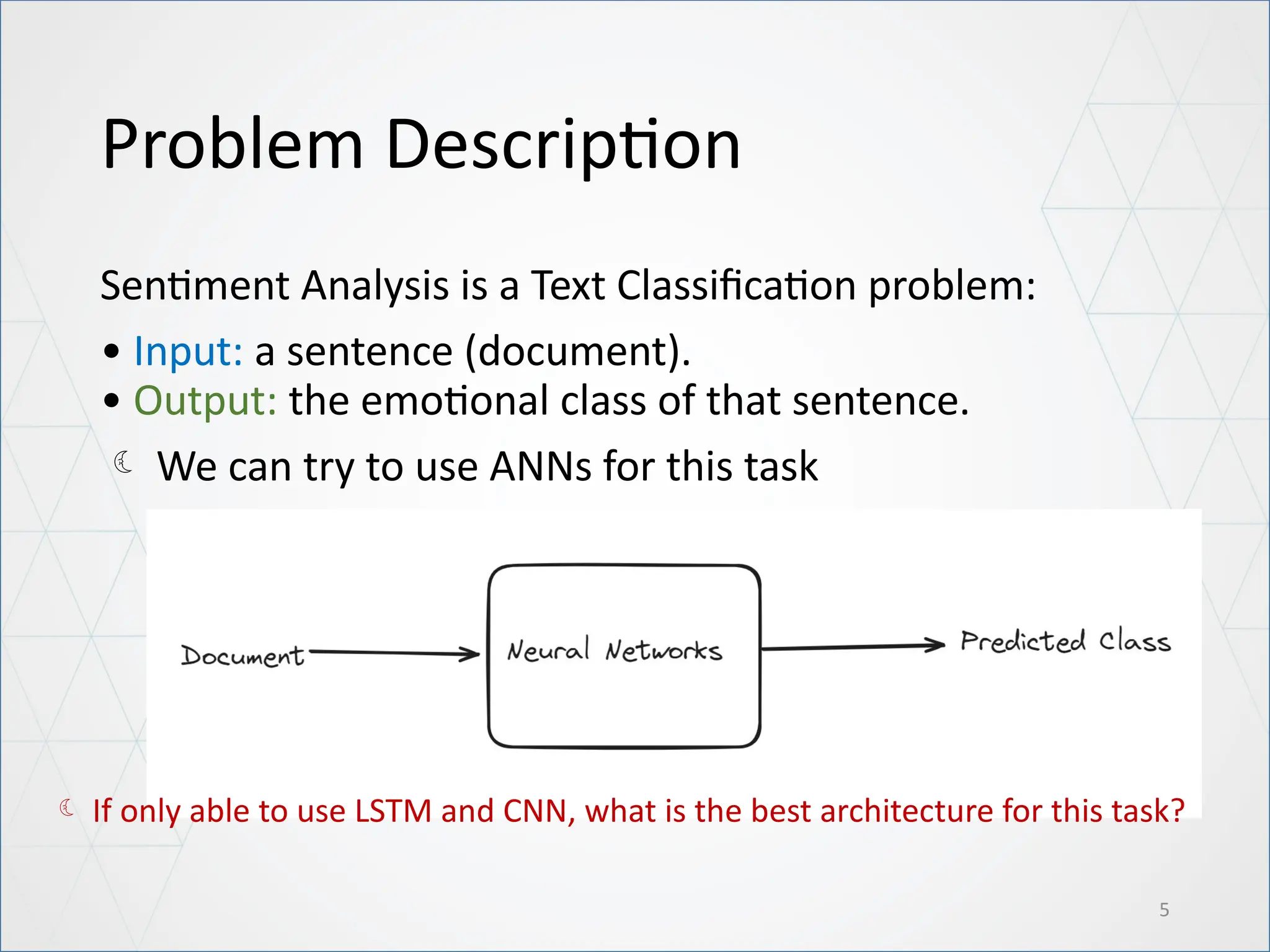
Sentiment Analysisis a Text Classification problem:
• Input: a sentence (document).
• Output: the emotional class of that sentence.
We can try to use ANNs for this task
5
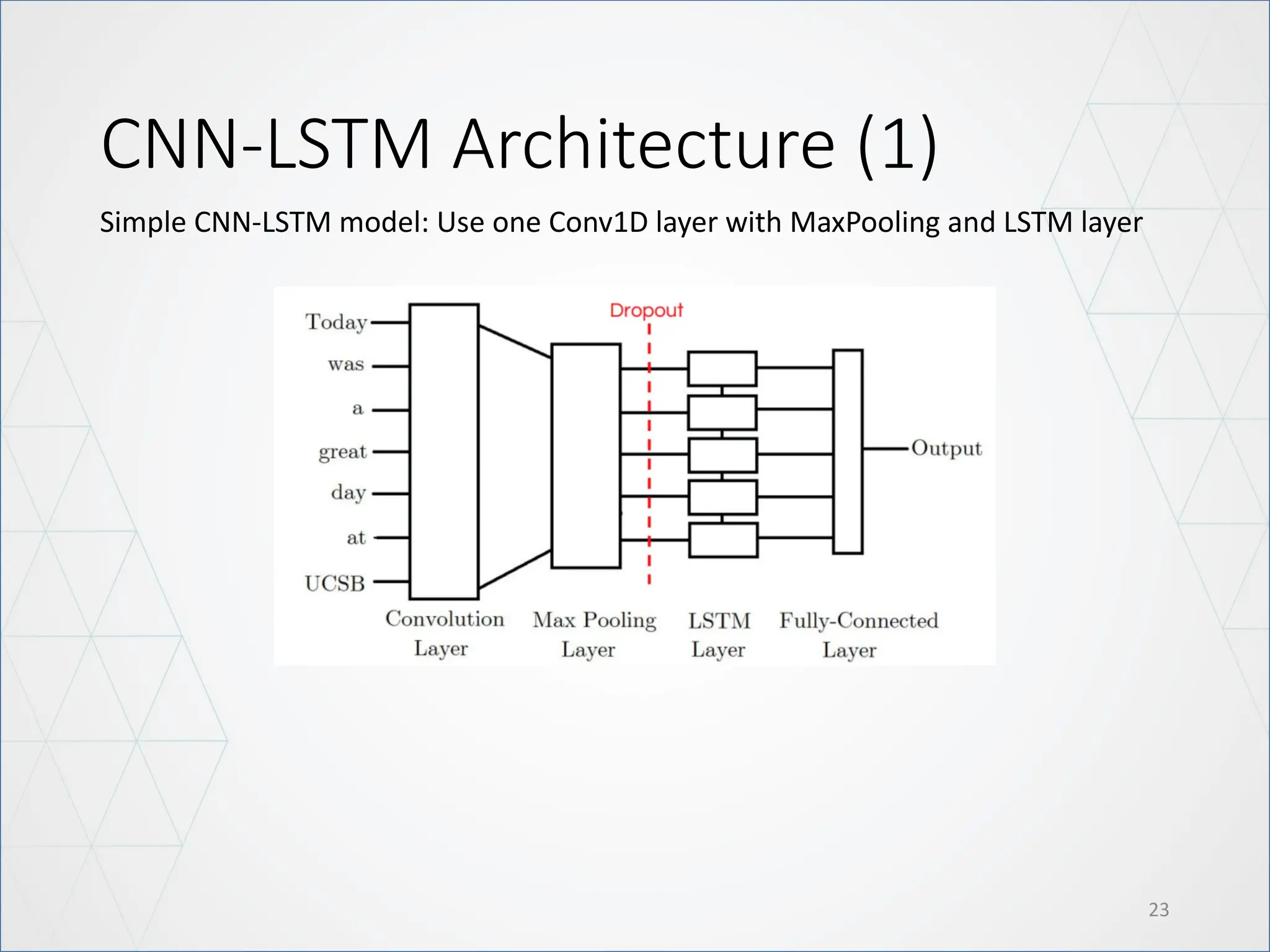
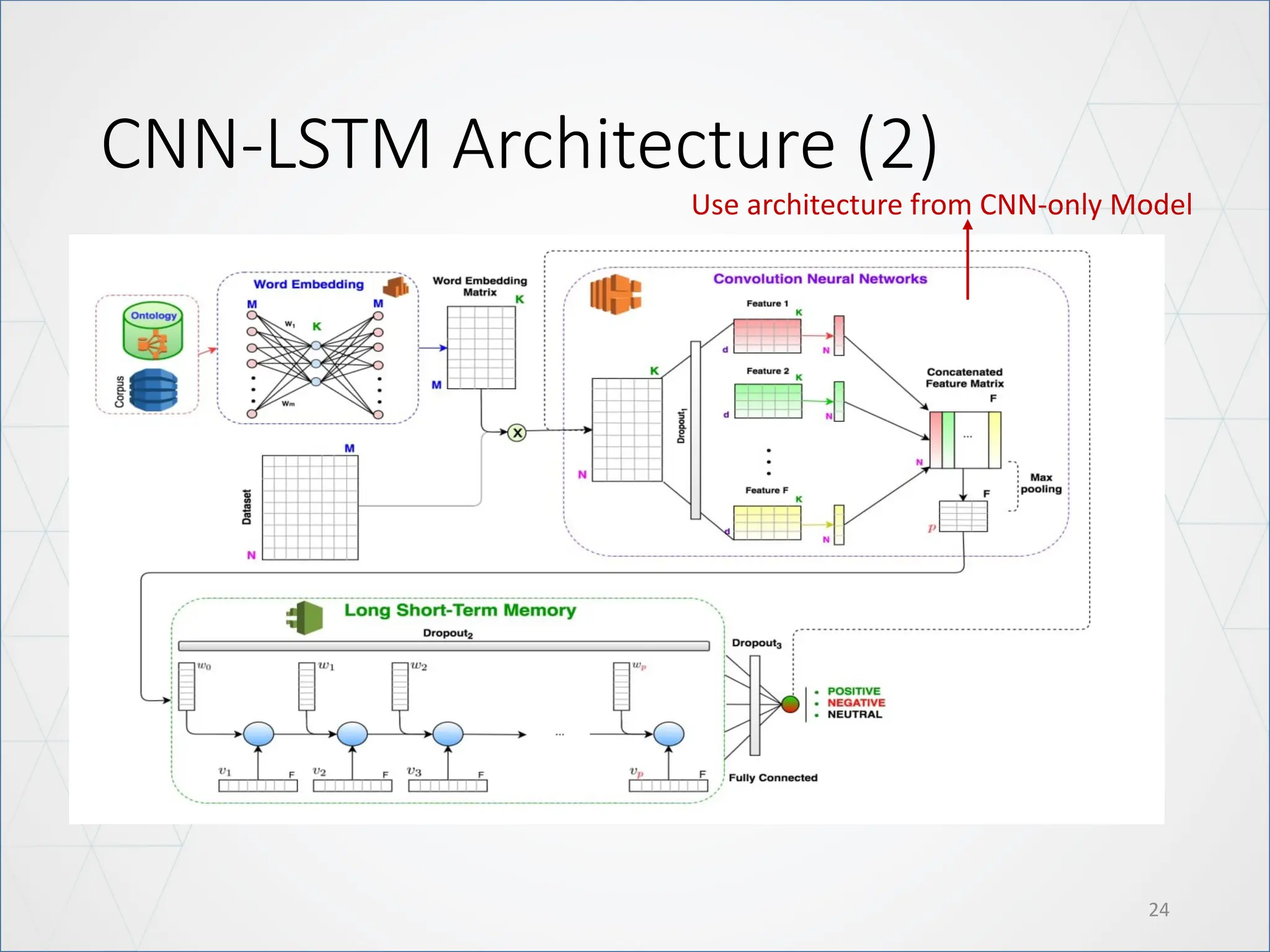
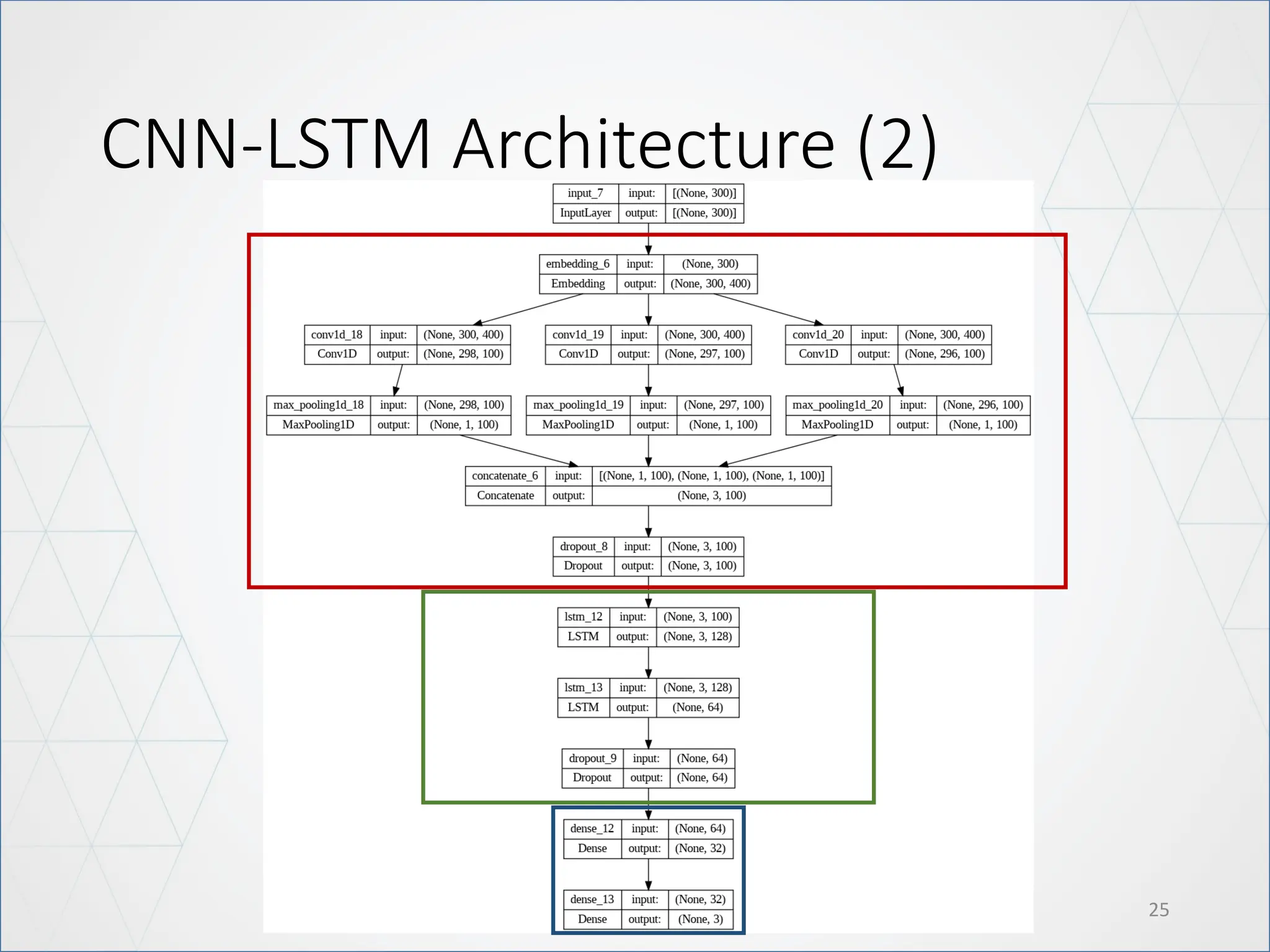
If only able to use LSTM and CNN, what is the best architecture for this task?
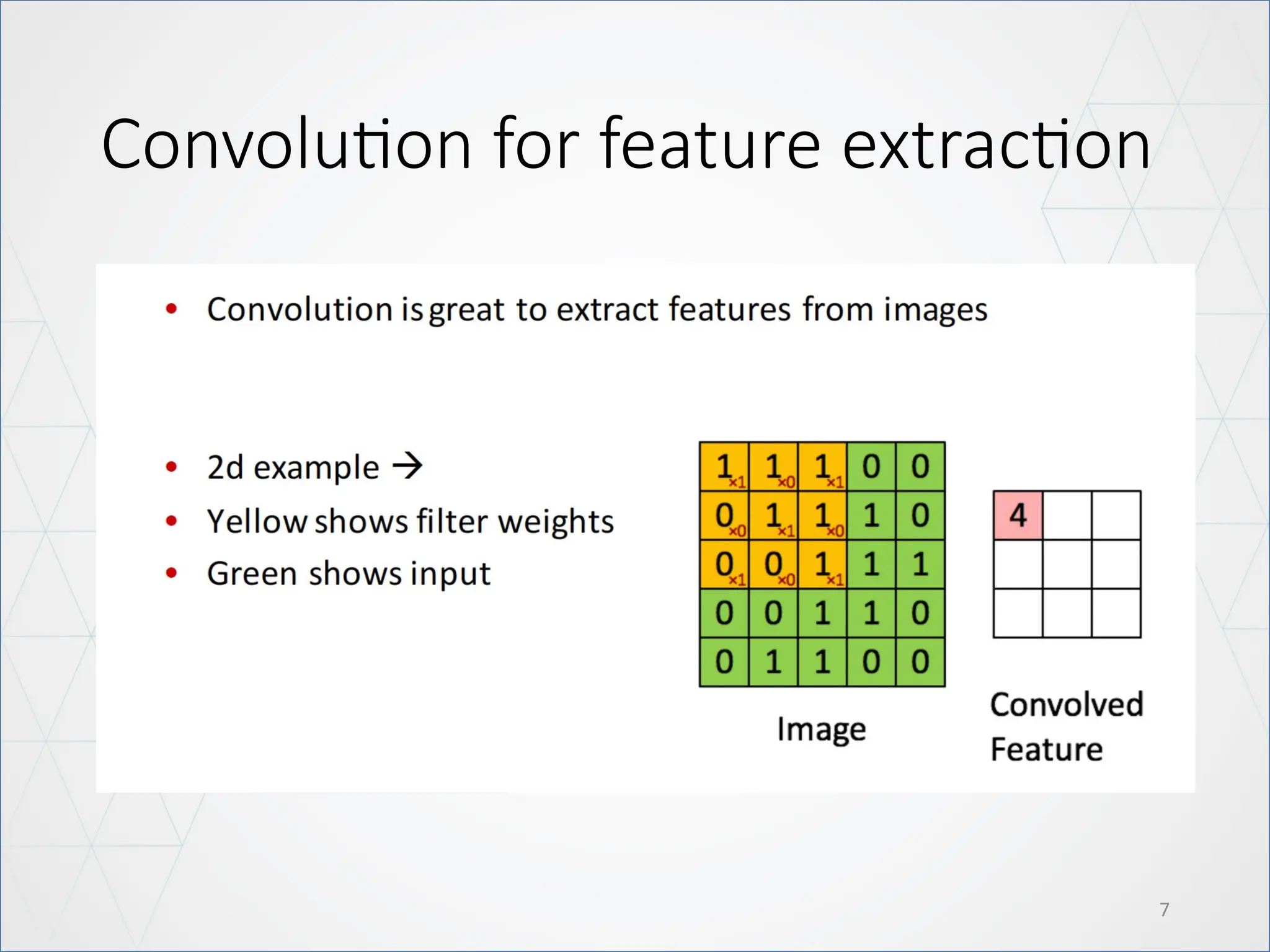
Convolution for featureextraction
8
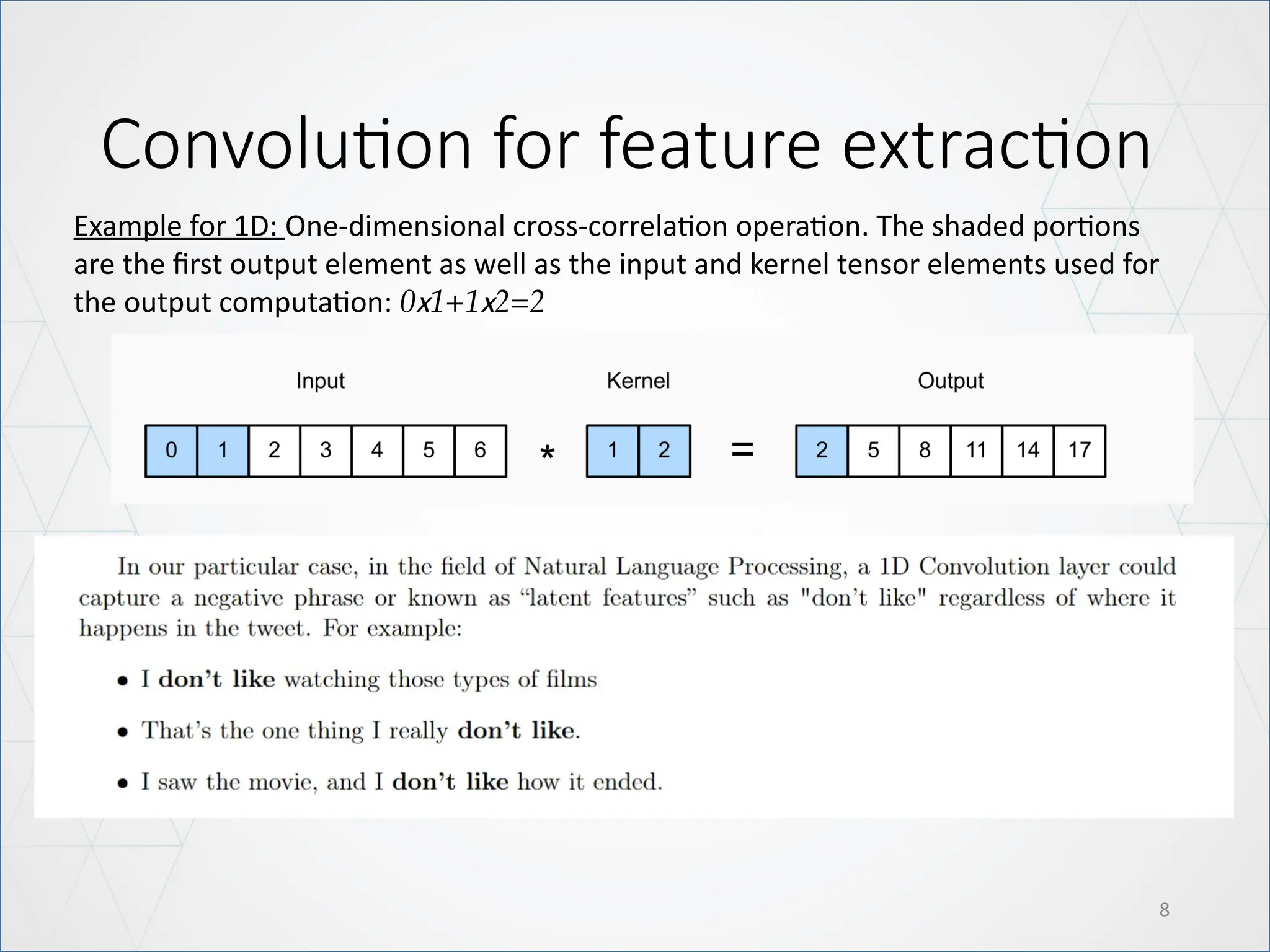
Example for 1D: One-dimensional cross-correlation operation. The shaded portions
are the first output element as well as the input and kernel tensor elements used for
the output computation: 0x1+1x2=2
9.
Convolution for featureextraction
9
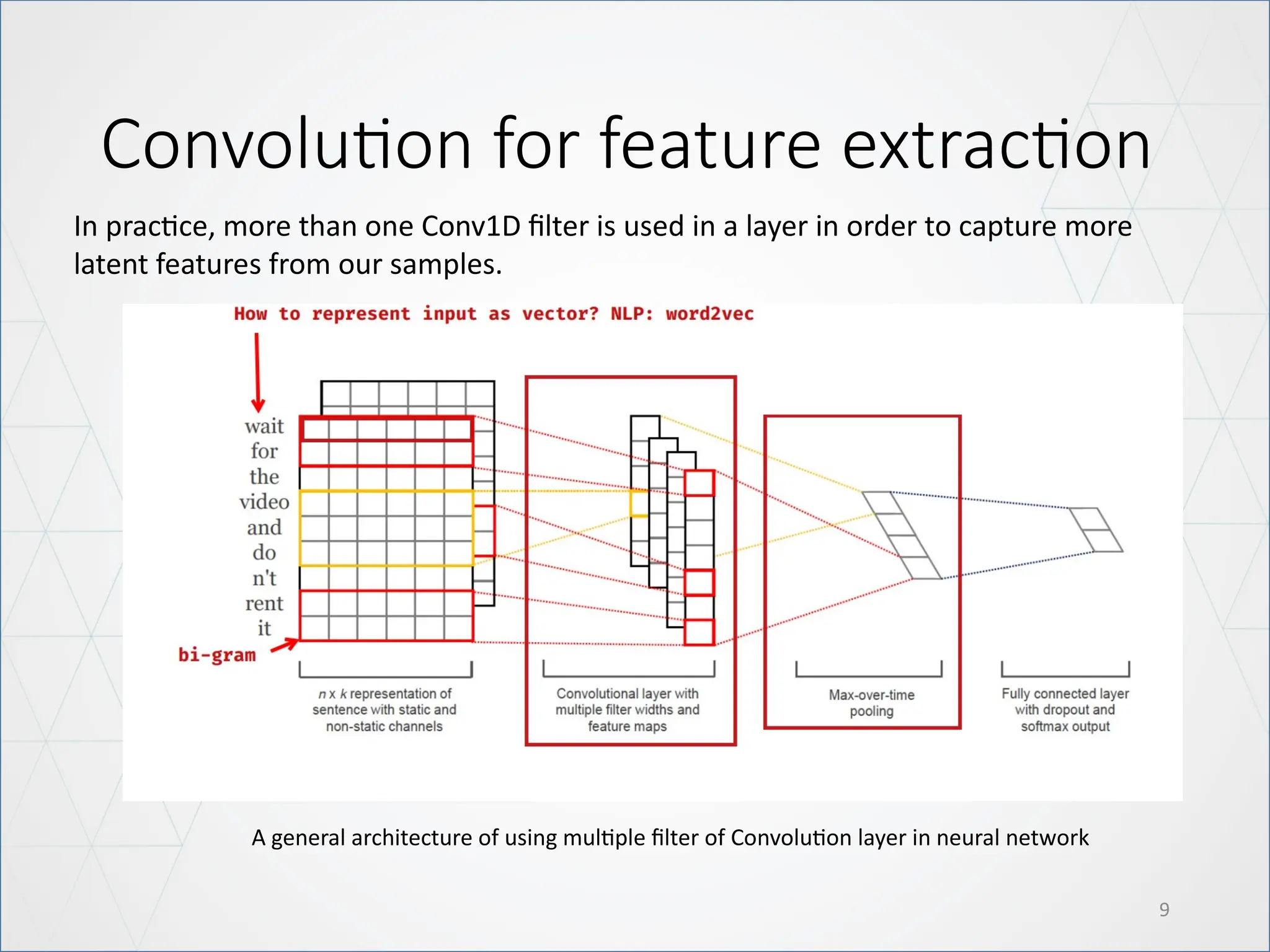
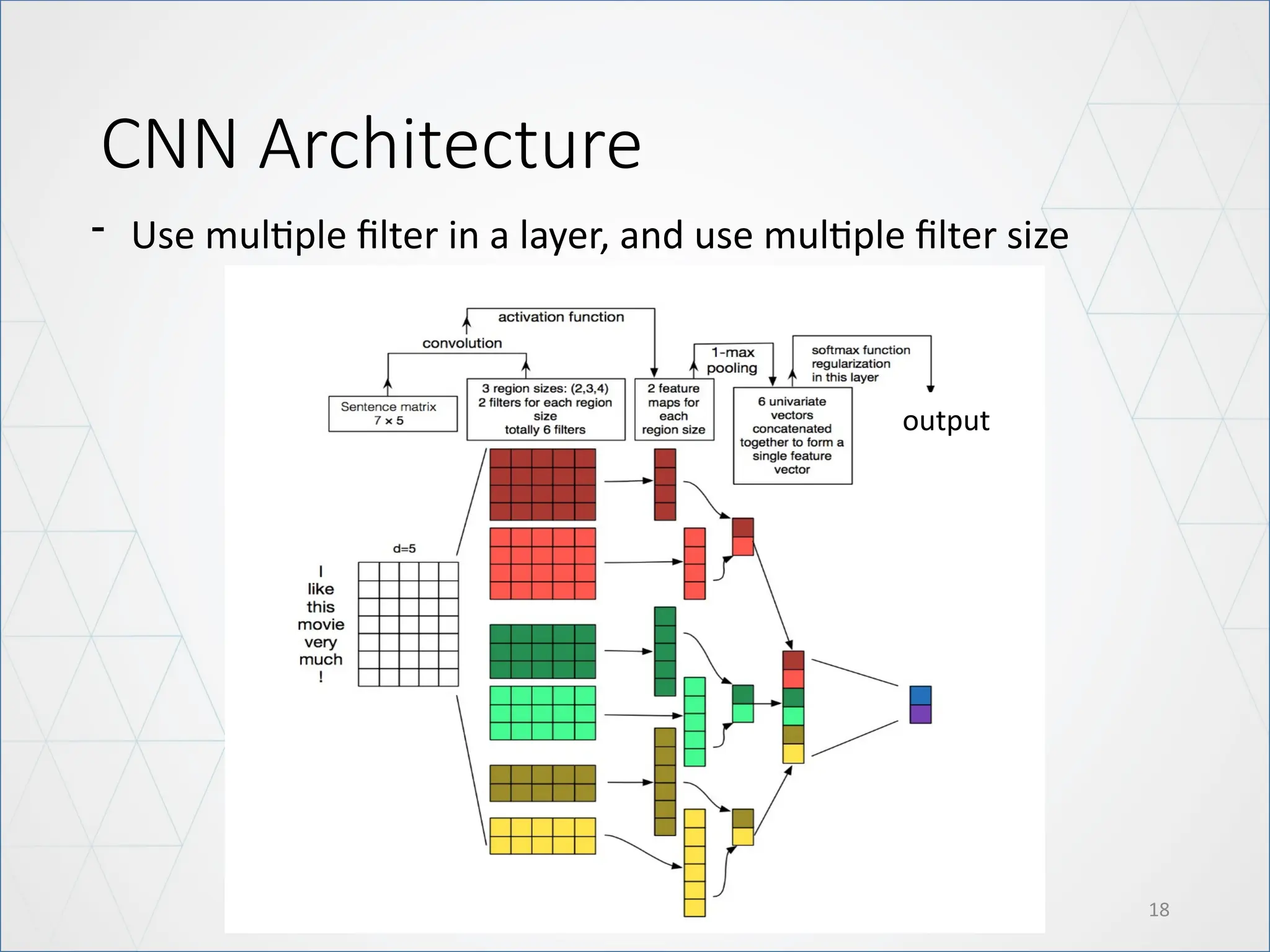
In practice, more than one Conv1D filter is used in a layer in order to capture more
latent features from our samples.
A general architecture of using multiple filter of Convolution layer in neural network
10.
LSTMs for sequentialdata
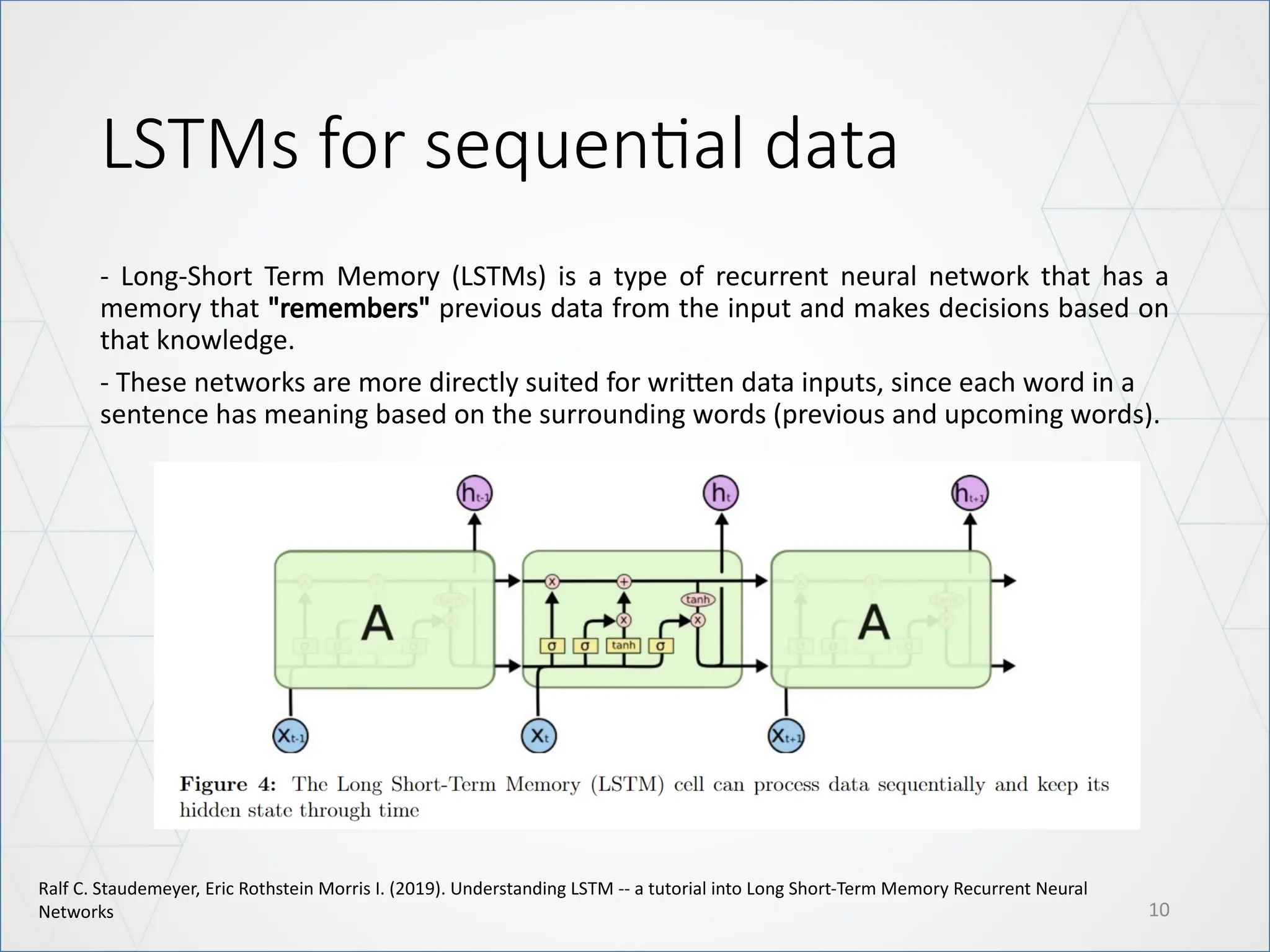
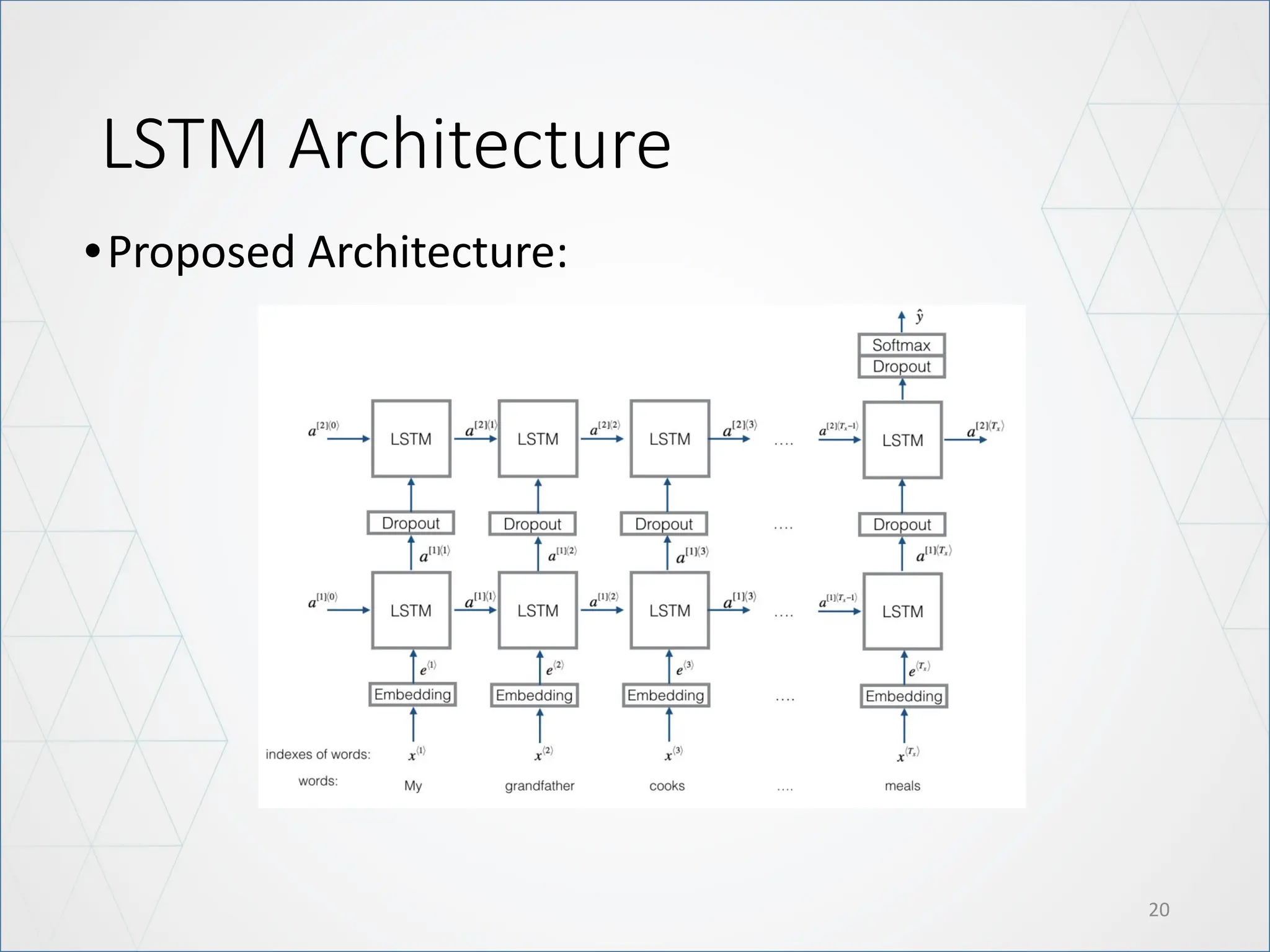
- Long-Short Term Memory (LSTMs) is a type of recurrent neural network that has a
memory that "remembers" previous data from the input and makes decisions based on
that knowledge.
- These networks are more directly suited for written data inputs, since each word in a
sentence has meaning based on the surrounding words (previous and upcoming words).
10
Ralf C. Staudemeyer, Eric Rothstein Morris I. (2019). Understanding LSTM -- a tutorial into Long Short-Term Memory Recurrent Neural
Networks
11.
LSTMs for sequentialdata
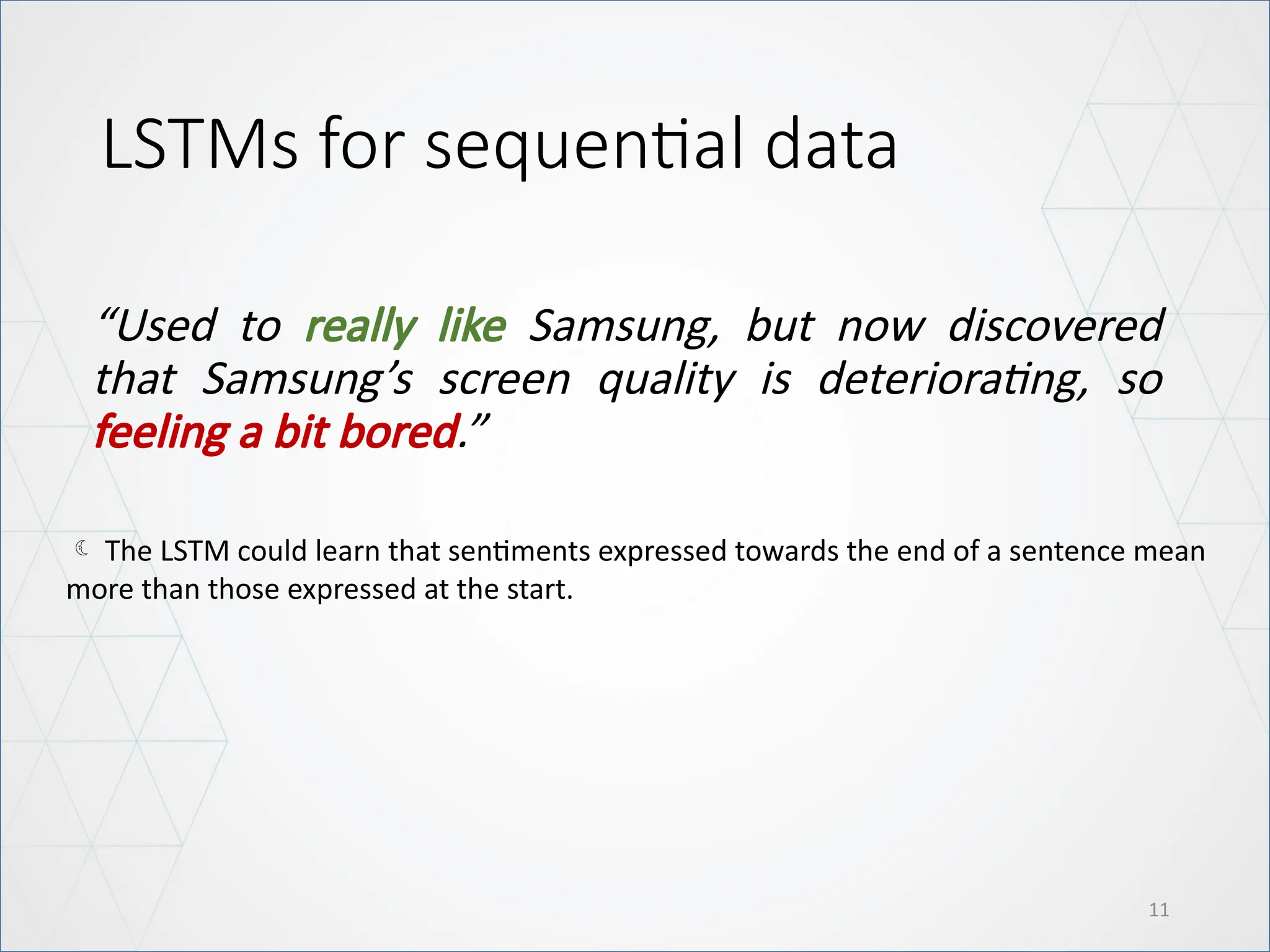
“Used to really like Samsung, but now discovered
that Samsung’s screen quality is deteriorating, so
feeling a bit bored.”
11
The LSTM could learn that sentiments expressed towards the end of a sentence mean
more than those expressed at the start.
Dataset
13
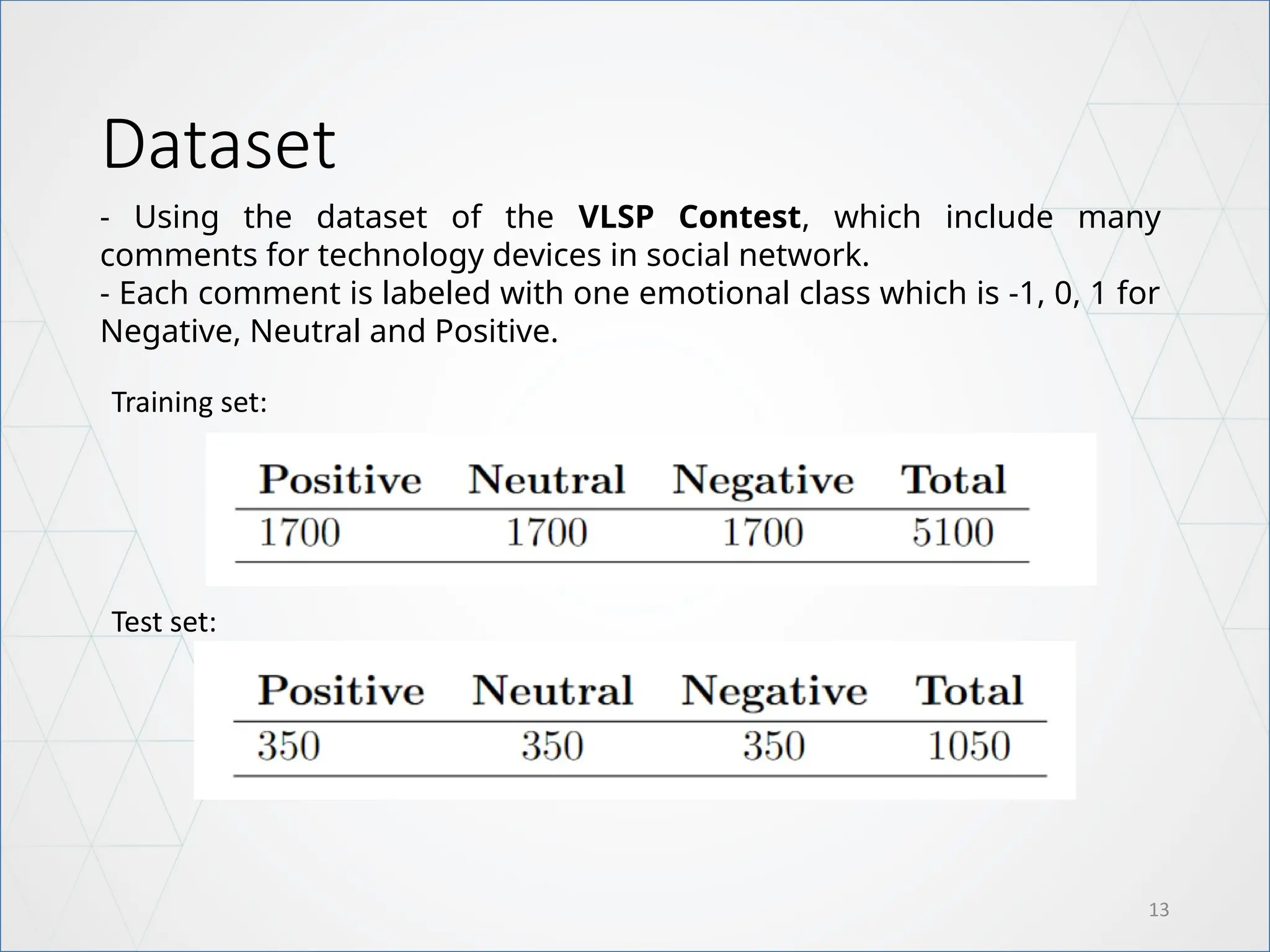
- Using thedataset of the VLSP Contest, which include many
comments for technology devices in social network.
- Each comment is labeled with one emotional class which is -1, 0, 1 for
Negative, Neutral and Positive.
Training set:
Test set:
14.
Data Preprocessing
14
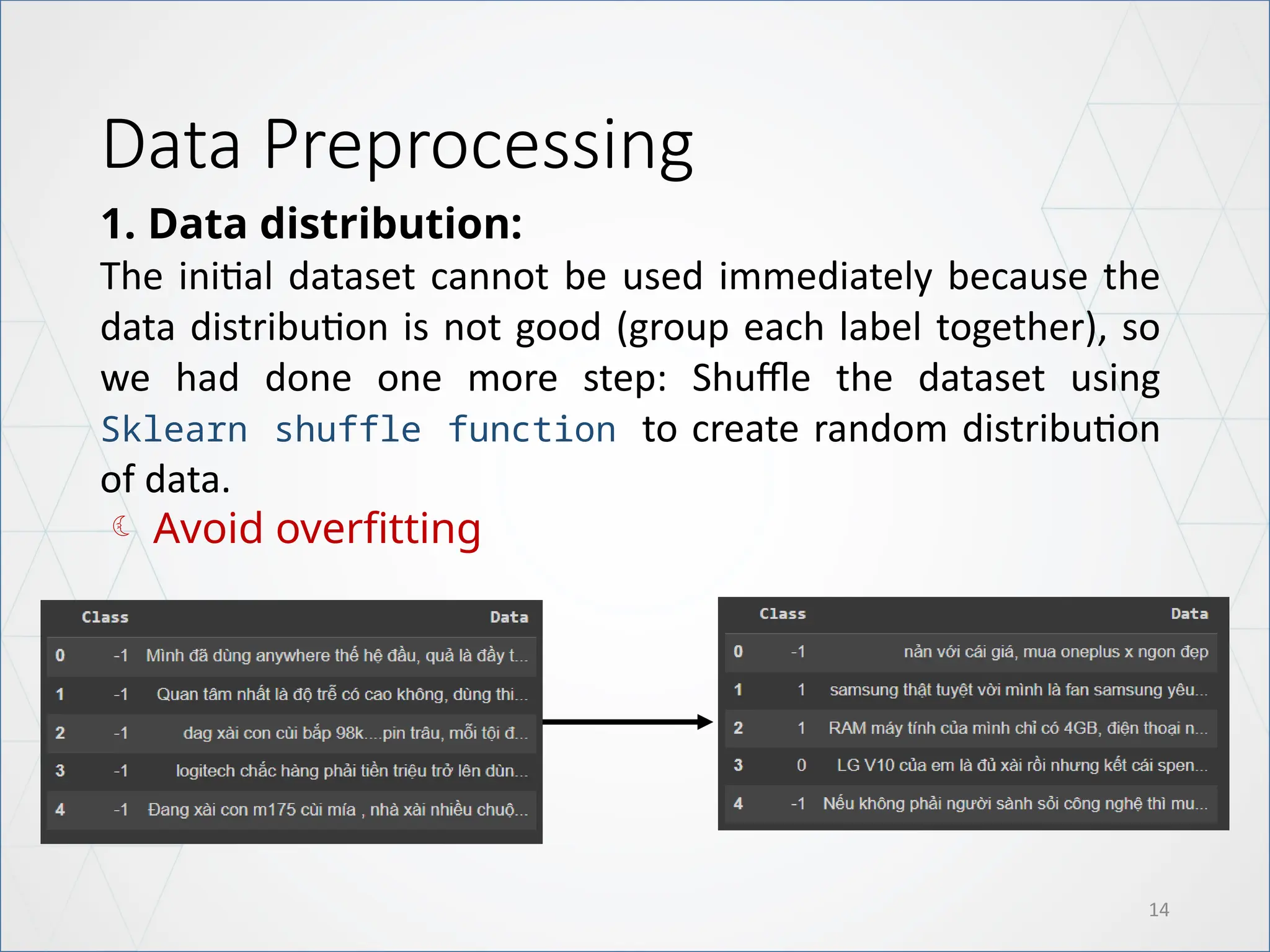
1. Datadistribution:
The initial dataset cannot be used immediately because the
data distribution is not good (group each label together), so
we had done one more step: Shuffle the dataset using
Sklearn shuffle function to create random distribution
of data.
Avoid overfitting
15.
Data Preprocessing
15
2. Vectorizethe label
Change label into one-hot vector: Initially our class is in the set of -1, 0, 1,
for computation purpose, we change each value into one-hot vector,
which is easier to compute loss later.
-1 [1, 0, 0]
0 [0, 1, 0]
1 [0, 0, 1]
16.
Data Preprocessing
16
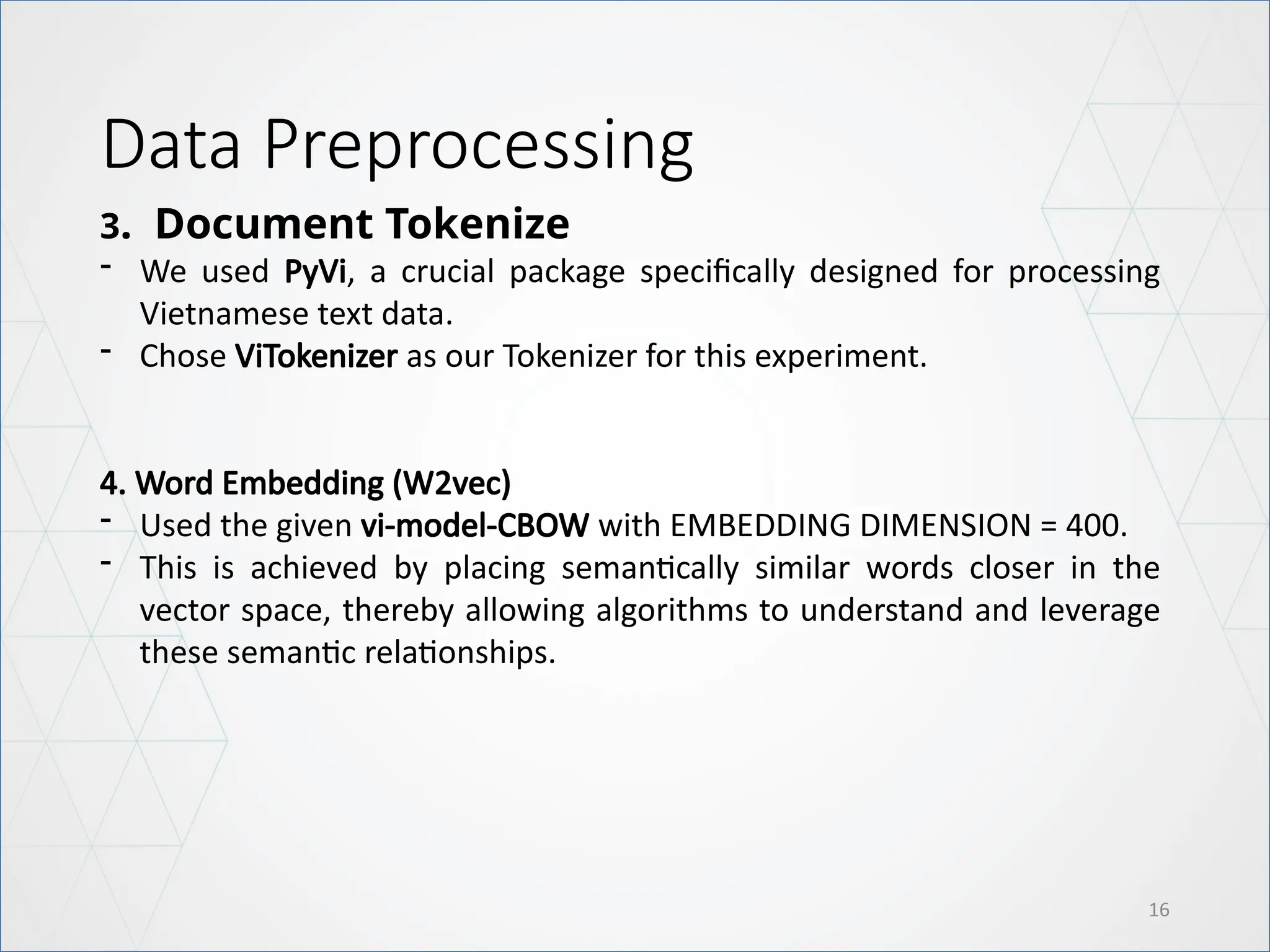
3. DocumentTokenize
- We used PyVi, a crucial package specifically designed for processing
Vietnamese text data.
- Chose ViTokenizer as our Tokenizer for this experiment.
4. Word Embedding (W2vec)
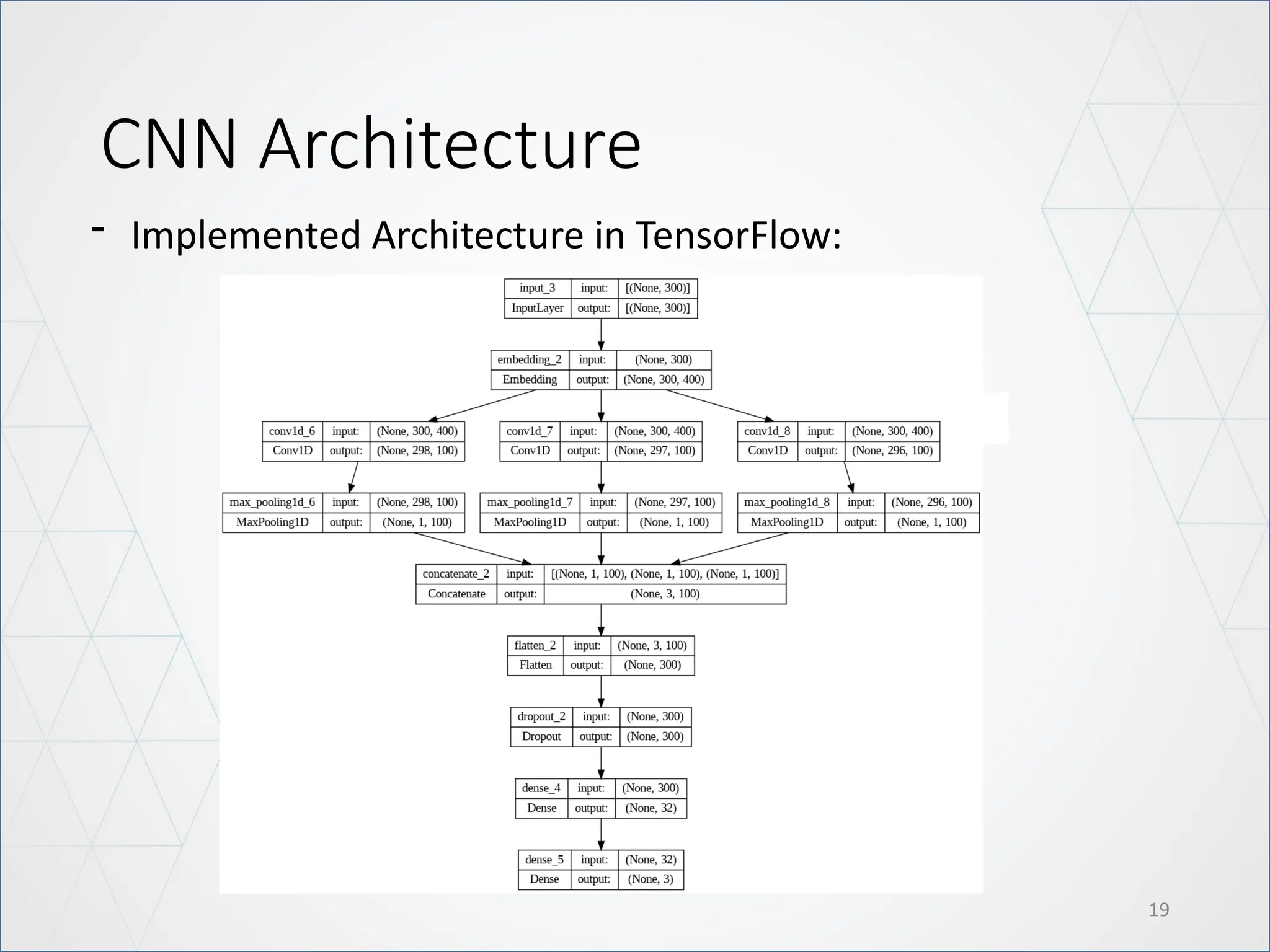
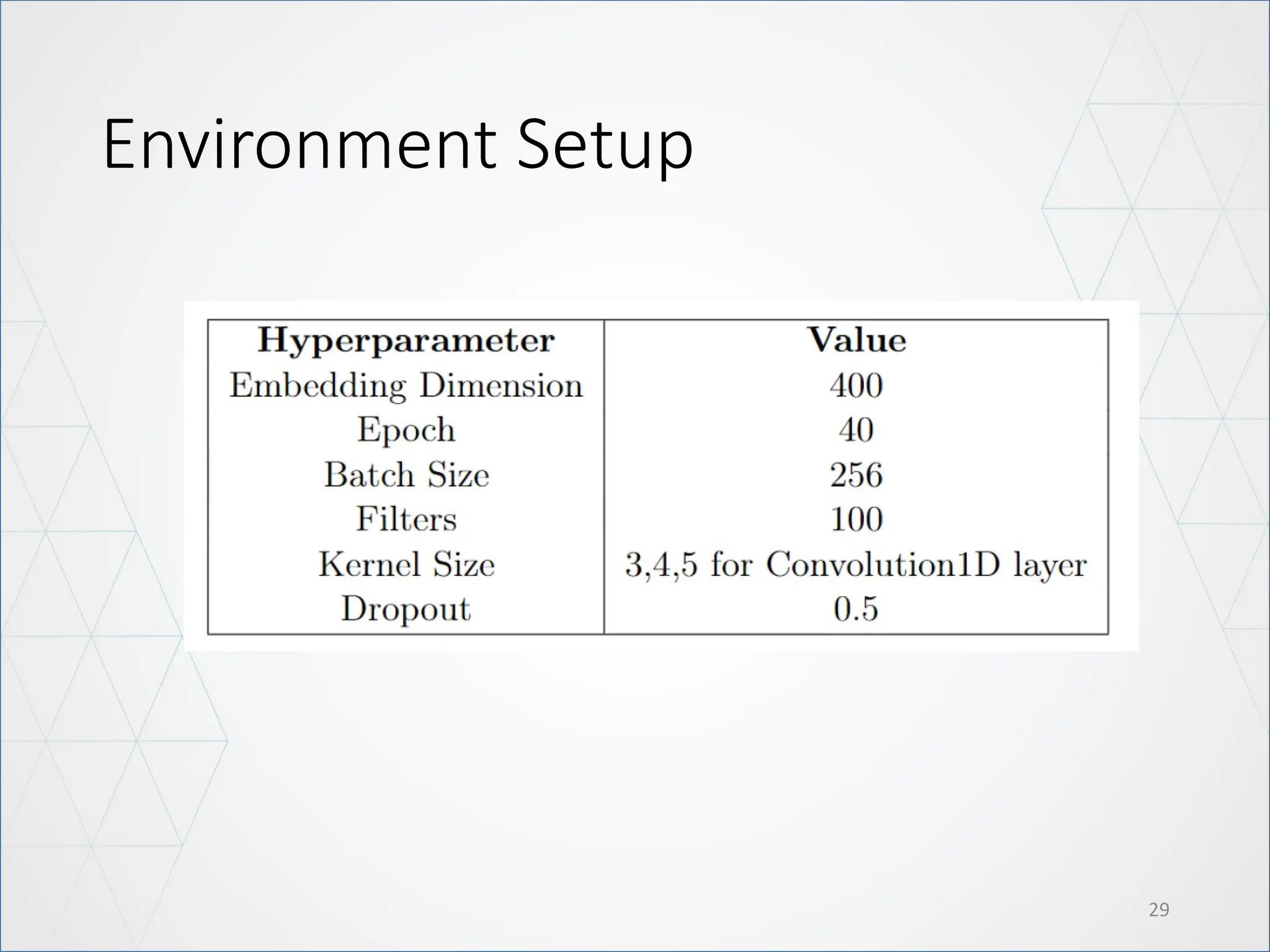
- Used the given vi-model-CBOW with EMBEDDING DIMENSION = 400.
- This is achieved by placing semantically similar words closer in the
vector space, thereby allowing algorithms to understand and leverage
these semantic relationships.
17.
Classification Head
17
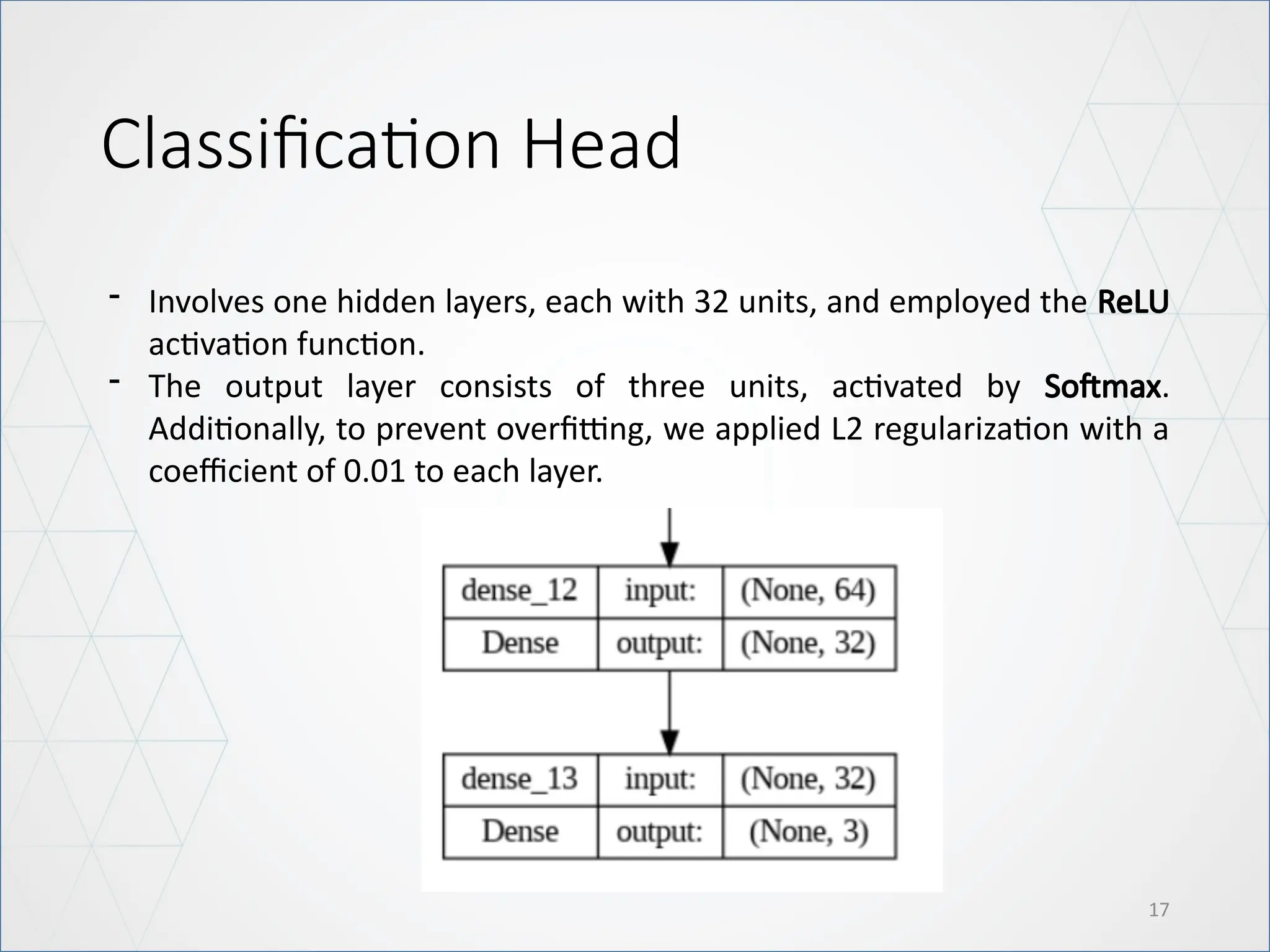
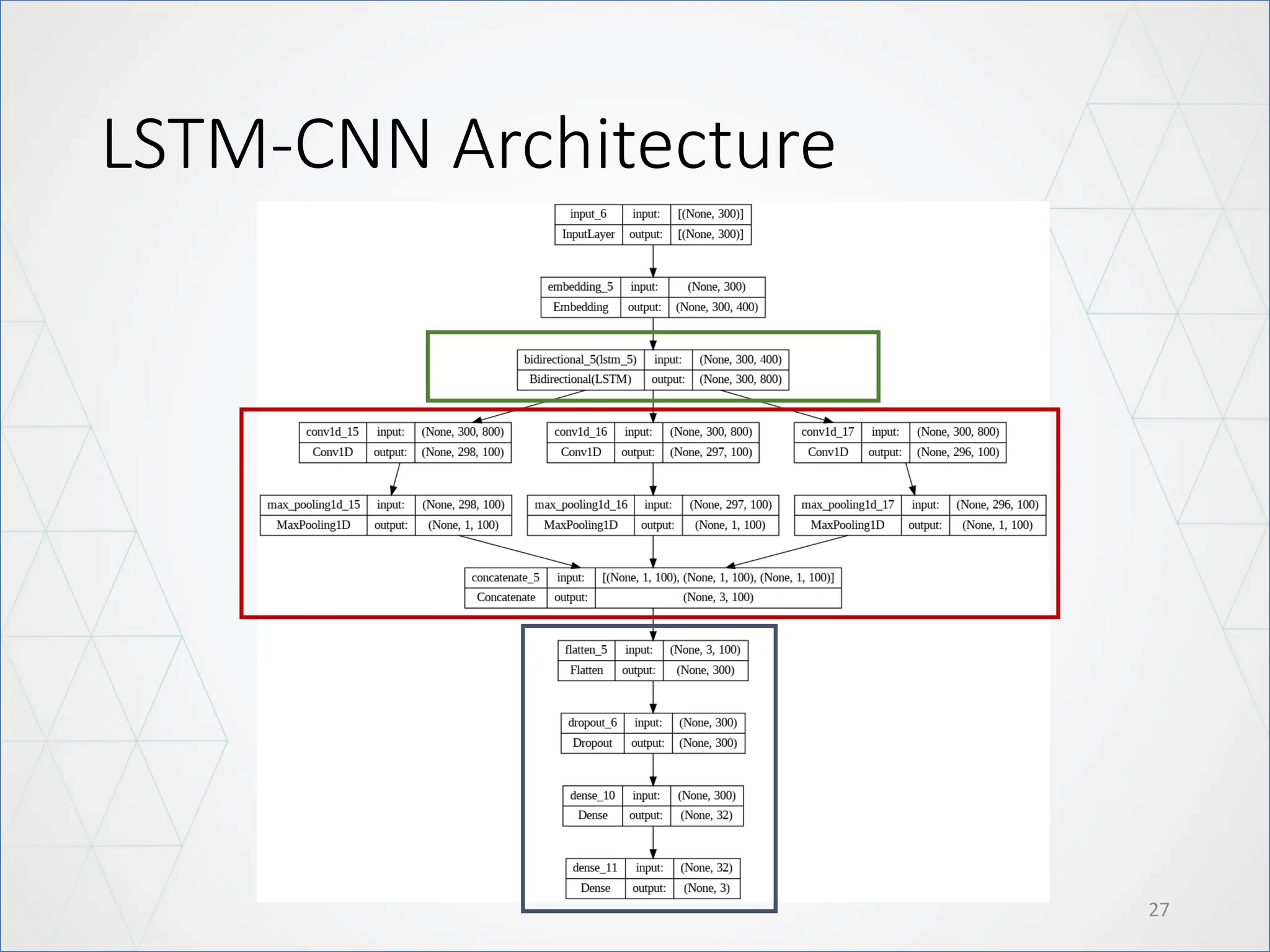
- Involvesone hidden layers, each with 32 units, and employed the ReLU
activation function.
- The output layer consists of three units, activated by Softmax.
Additionally, to prevent overfitting, we applied L2 regularization with a
coefficient of 0.01 to each layer.
LSTM Architecture
21
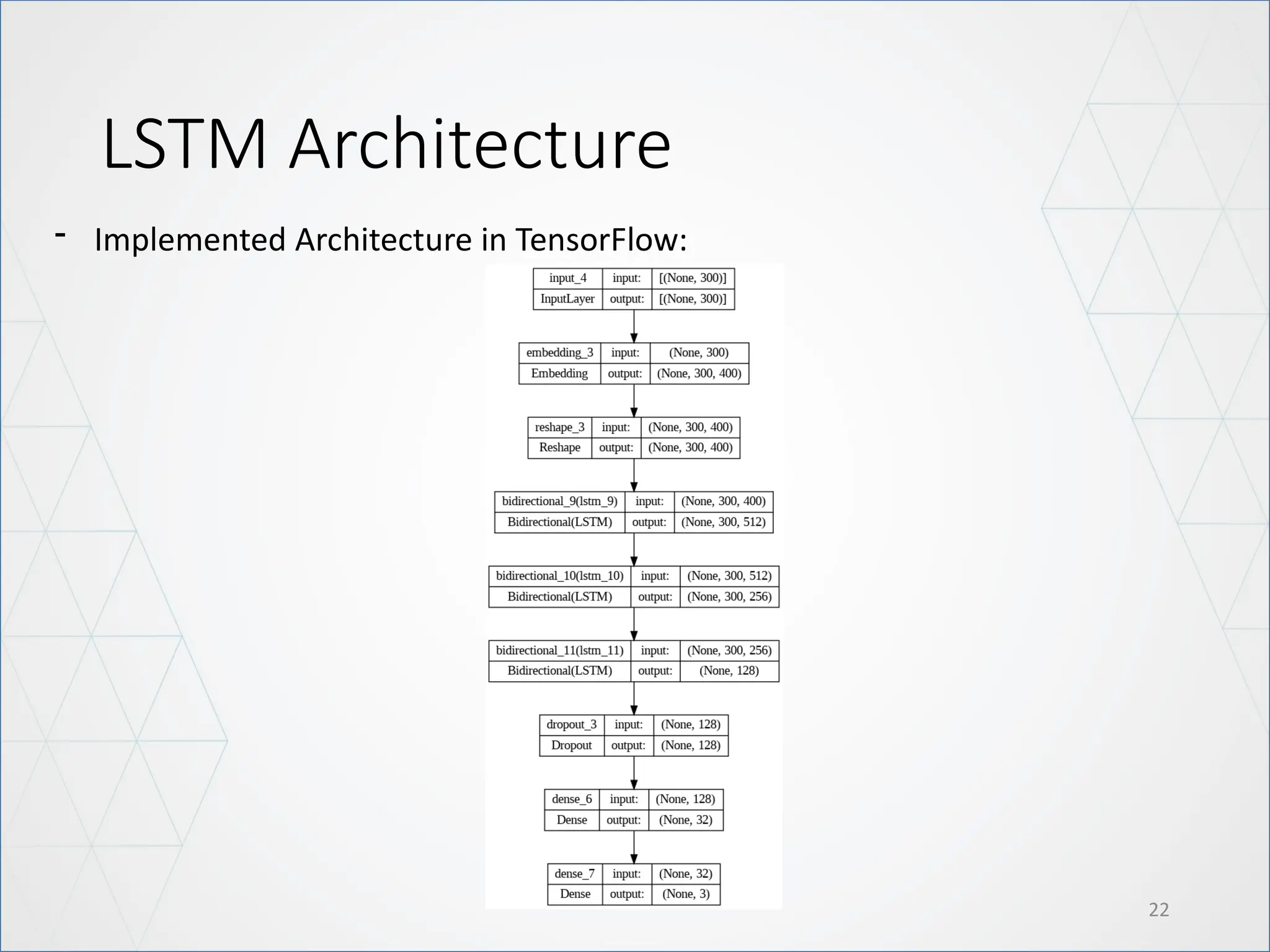
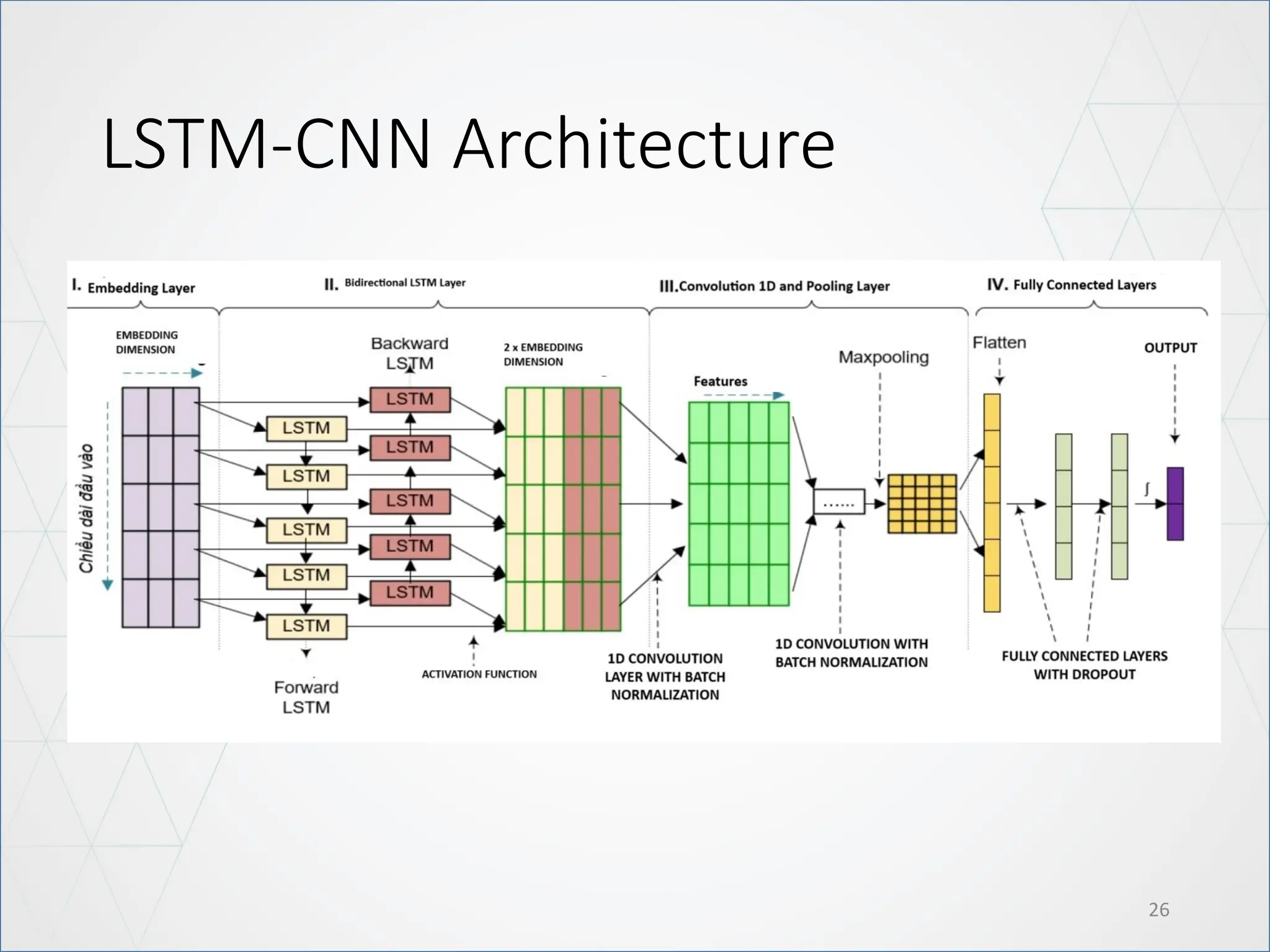
Modify: UseBidirectional LSTM
• The main advantage of a bidirectional LSTM is that it can learn positional
features from both side.
• The disadvantage of a bidirectional LSTM is that it needs more parameter
and compute take more time.
![Data Preprocessing
15
2. Vectorize the label
Change label into one-hot vector: Initially our class is in the set of -1, 0, 1,
for computation purpose, we change each value into one-hot vector,
which is easier to compute loss later.
-1 [1, 0, 0]
0 [0, 1, 0]
1 [0, 0, 1]](https://image.slidesharecdn.com/slide-251212164216-15c92efd/75/NLP-bai-t-p-l-n-sentiment-analysis-slide-15-2048.jpg)






![_Deep learning in python Trustworthy [RNN].pptx](https://cdn.slidesharecdn.com/ss_thumbnails/deeplearninginpythonrnn-251207084551-1fa069f9-thumbnail.jpg?width=640&height=640&fit=bounds)


