Project Risk Management and Sesitivity Analysis
Learners
1 Mr. Mazzin adil Baora XXXXX
2 Mr. Mohamud Abukar xxxxx
3 Mr. Narinder Kumar 187-805
Mentor: Dr. XXXXXXX
 Risk is an uncertain event or condition that, if it occurs, has a positive or negative effect on one or
more objectives. Positive risks are opportunities, while negative risks are threats.
 The practice of risk management includes planning the approach, identifying and analyzing risks,
response planning and implementation, and ongoing monitoring of risks.
 Risk management is an essential aspect of all organizational activities. The degree to which risk
management is pursued can be the difference between success and failure.Risk management allows
an organization to:
o Anticipate and manage change, Improve decision making
o Proactively implement typically lower-cost preventive actions instead of higher-cost reaction to
issues,
o Increase the chances to realize opportunities for the benefit of the business and Generate broad
awareness of uncertainty of outcomes
Introduction
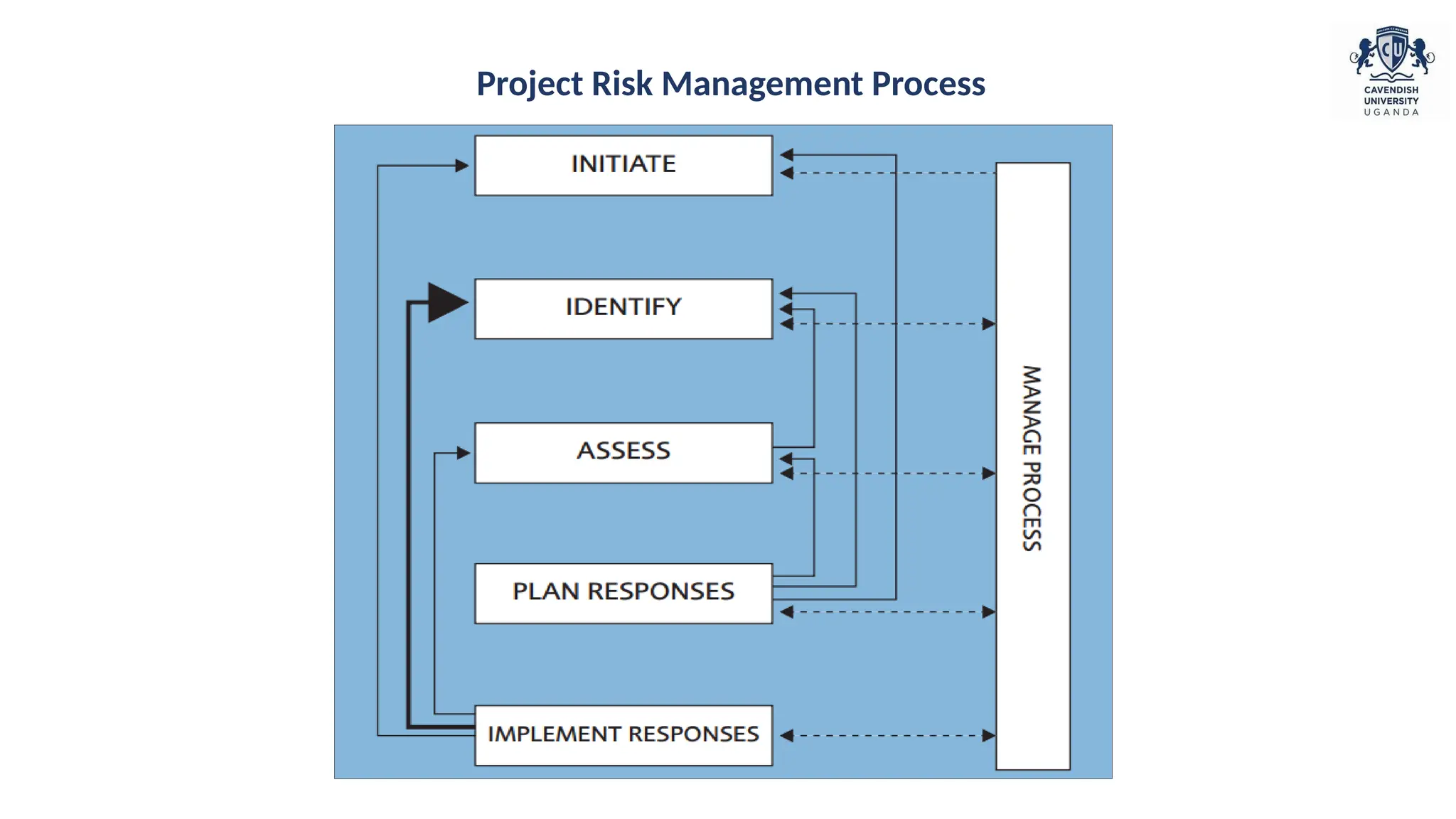
Project Risk Management Process
• This stage of the process involves the formulation of management responses to the main risks.
• Risk management may start during the qualitative analysis phase as the need to respond to risks may
be urgent and the solution fairly obvious.
• Risk management can involve:
o Implementing measures to avoid a risk, to reduce its effect or to reduce its probability of
occurrence;
o Establishing contingency plans to deal with risks if they should occur;
o Initiating further investigations to reduce uncertainty through better information;
o Considering risk transfer to insurers;
o Considering risk allocation in contracts;
o Setting contingencies in cost estimates, float in programmes and tolerances or ‘space’ in
performance specifications.
Risk management
• The benefits gained from using risk management techniques and methods serve not only the project,
but also other parties, such as the organisation and its stakeholders.
• Project risks can be actively managed to enhance the performance of the project against its key
objectives;
• An independent view of the project risks, which can help to justify decisions and enable more
efficient and effective management of the risks;
• An increased understanding of the project, which in turn leads to the formulation of more realistic
plans, in terms of both cost estimates and timescales;
• An increased understanding of the risks in a project and their possible impact that can lead to the
minimisation of risks for a party and/or the allocation of risks to the party best able to handle them;
Benefits of Risk Management-1
• An understanding of how risks in a project can lead to the use of a more suitable type of contract;
• Knowledge of the risks in a project, which allows assessment of contingencies that actually reflect the
risks and which also tends to discourage the acceptance of financially unsound projects;
• A contribution to the build-up of statistical information of historical risks that will assist in better
modelling of future projects;
• Facilitation of greater, but more rational, risk taking, thus increasing the benefits that can be gained
from risk taking; n assistance with the distinction between good luck and good management, and
bad luck and bad management
Benefits of Risk Management-contd..
• An organisation and its senior management, for whom a knowledge of the risks attached to proposed
projects is important when considering the sanction of capital expenditure and capital budgets;
• Clients, both internal and external, as they are more likely to get what they want, when they want it
and for a cost they can afford;
• Project managers who want to improve the quality of their work, ie they want to bring their projects
into cost, on time and to the required performance
Who Benefits From Risk Management Use
The costs of using PRAM techniques vary according to the scope of the work and the commitment to the
process. Below are some example costs, time-scales and resource requirements for carrying out the
process:
Cost-The cost of using the process can be as little as the cost of one or two days of a person’s time up to
a maximum of 5–10 per cent of the management costs of the project, even if this higher cost, as a
percentage of the total project cost, is relatively small. It can be argued that the cost incurred is an
investment if risks are identified during the process that may otherwise have remained unidentified until
it was too late to react.
Time -The time taken to carry out a risk analysis is partially dependent upon the availability of
information. A detailed cost and time risk analysis usually requires anywhere from one to three months
depending on the scale and complexity of the project, and the extent of planning and cost preparation
already carried out. However, a useful analysis can take as little as one or two days.
Resources -The minimum resource requirement is obviously just one person within an organisation with
experience of using Project Risk Management techniques. However, if expertise does not exist within the
organisation, it can be readily acquired from outside consultants. It is likely that once Project Risk
Management has been introduced to an organisation, in-house expertise will develop rapidly.
Cost of Using Project Risk Management
• Project Risk Management is an inherently scalable process and as such can be applied to nearly all
projects to the point where it brings benefits to that project without overburdening it.
• This is a continuous process that can be started at almost any stage in the life cycle of a project;
however, it is most beneficial to use it in the earlier stages of a project.
• There are five points in a project where particular benefits can be achieved by using it:
1) Feasibility study- At this stage, the project is most flexible, enabling changes to be made that
can reduce the risks at a relatively low cost. It can also help in deciding between various
implementation options for the project.
2) Sanction. The client can make use of it to view the risk exposure associated with the project
and can check that all possible steps to reduce or manage the risks have been taken. If a
quantitative analysis has been carried out, then the client will be able to understand the
‘chance’ that he has of achieving the project objectives (cost, time and performance).
When Should Project Risk Management Be Used And Who Should Do It
3) Tendering. The contractor can make use of it to ensure that all risks have been identified and to help
him set his risk contingency or check his risk exposure.
4) Post tender. The client can make use of it to ensure that the contractor has identified all risks and to
assess the likelihood of tendered programmes being achieved.
5) At intervals during implementation. It can help to improve the likelihood of completing the project to
cost and timescale if all risks are identified and are correctly managed as they occur.
When Should Project Risk Management Be Used And Who Should Do it-
contd…
It can be used on any type of project, but it is more beneficial for some projects than others. Some
examples of projects that would benefit from PRM are:
• Innovative, new technology projects;
• Projects requiring large capital outlay or investment; n fast-track or high-tempo projects;
• Projects that interrupt crucial revenue streams;
• Unusual agreements (legal, insurance or contractual);
• Projects with sensitive issues (environment/relocation); z
• Projects with stringent requirements (regulatory/safety);
• Projects with important political/economic/financial parameters
Type of project for Risk Management Impmentatioin
• There are a few circumstances when it is particularly advisable to use PRM techniques. These are:
• When there are specific targets that must be met;
• When there is an unexpected new development in a project;
• At points of change in the life cycle of a project
When should Project Risk Management To Be Done
• Many people advocate the use of an independent expert or external consultant to ensure they receive an
unbiased view, whereas others suggest that PRAM support should be an internal function.
• Opinions differ widely at this stage, but, essentially, anyone can do it provided consideration is given to the
‘perspective’ from which they are viewing the project.
• In any event, the project management team should be closely involved in the analytical process to ensure
validity of the analysis and also to allow them to believe in the results
Who should do Project Risk Assessment and Management
When and Who To Do Project Risk Management
Risk analysis This stage of the process is generally split into two ‘sub-stages’:
1) A qualitative analysis ‘substage’ that focuses on identification and subjective assessment of risks,
2) An quantitative analysis ‘sub-stage’ that focuses on an objective assessment of the risks.
Project Risk Analysis-Techniques and Methods
• A qualitative analysis allows the main risk sources or factors to be identified. This can be done, for
example, with the aid of checklists, interviews or brainstorming sessions.
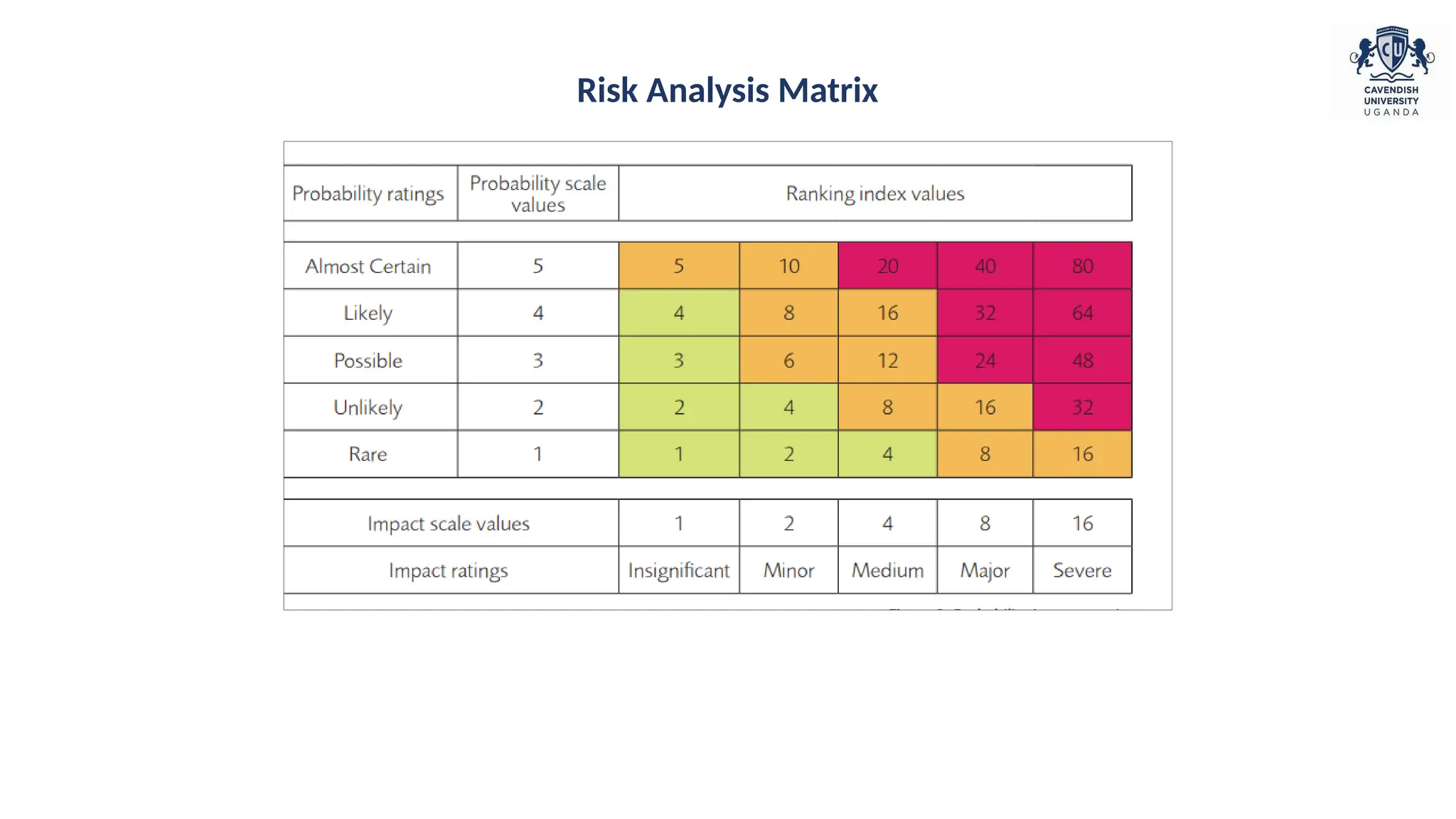
• This is usually associated with some form of assessment that could be the description of each risk and
its impacts or a subjective labelling of each risk (for example, high/low) in terms of both its impact
and its probability of occurrence.
• A sound aim is to identify the key risks, perhaps between five and 10, for each project (or part-project
on large projects), which are then analysed and managed in more detail
Qualitative analysis
Risk Analysis Matrix
• A quantitative analysis often involves more sophisticated techniques, usually requiring computer
software.
• To some people, this is the most formal aspect of the whole process requiring:
o measurement of uncertainty in cost and time estimates;
o probabilistic combination of individual uncertainties.
• An initial qualitative analysis is essential. It brings considerable benefit in terms of understanding the
project and its problems irrespective of whether or not a quantitative analysis is carried out.
• It may also serve to highlight possibilities for risk ‘closure’, ie. the development of a specific plan to
deal with a specific risk issue.
Quantitative analysis
• Probabilistic analysis specifies a probability distribution for each risk and then considers the effect of
risks in combination.
• The most common form of probabilistic analysis uses ‘sampling techniques’, usually referred to as
‘Monte Carlo simulation’. This method relies on the random calculation of values that fall within a
specified probability distribution often described by using three estimates: minimum or optimistic,
mean or most likely, and maximum or pessimistic.
• The overall outcome for the project is derived by the combination of values selected for each one of
the risks. The calculation is repeated a number of times, typically 1,500 depending on the capabilities
of the sampling software and organisational preferences, to obtain the probability distribution of the
project outcome.
Probabilistic Analysis
• It is usual to carry out a probabilistic time analysis with the aid of a critical path method (CPM)
network to model the project schedule.
• The results of the simulation can be used to compare the effects of risks in a schedule with the
qualitative assessment of the risks.
• For example, a risk with a high impact on a task that is not on the critical path may be treated ahead
of a risk with a relatively low impact that is impacting on a critical path item.
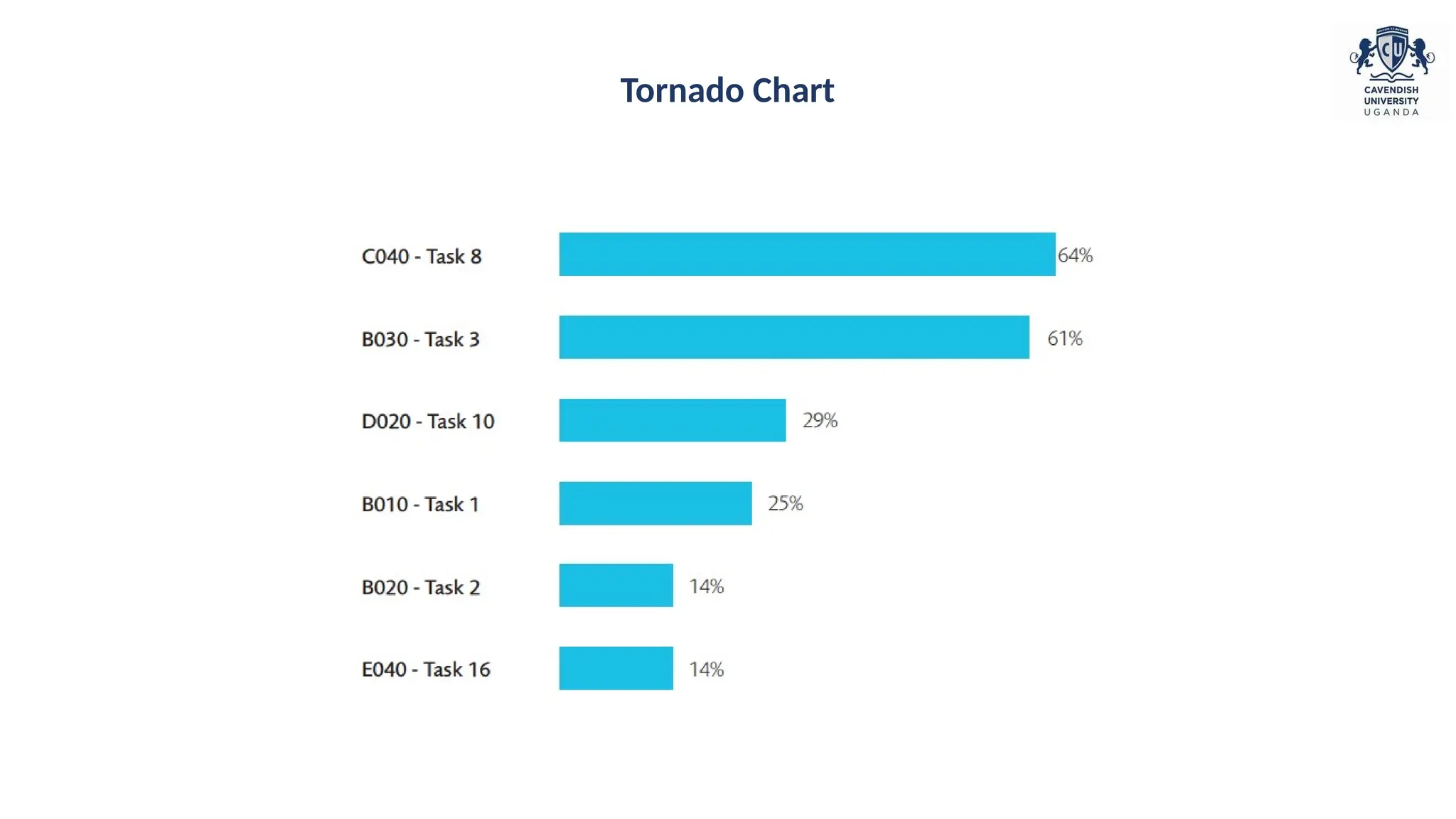
• The effect of each task on the overall end date of the project can be examined using a tornado chart.
An example Tornado Chart is shown in next slide. The length of the bars is a measure of the duration
cruciality of a task. (Cruciality = Criticality multiplied by duration sensitivity.) The longer the bar, the
more effect that task is having on the overall duration of the project
Probabilistic Analysis-contd…
Tornado Chart
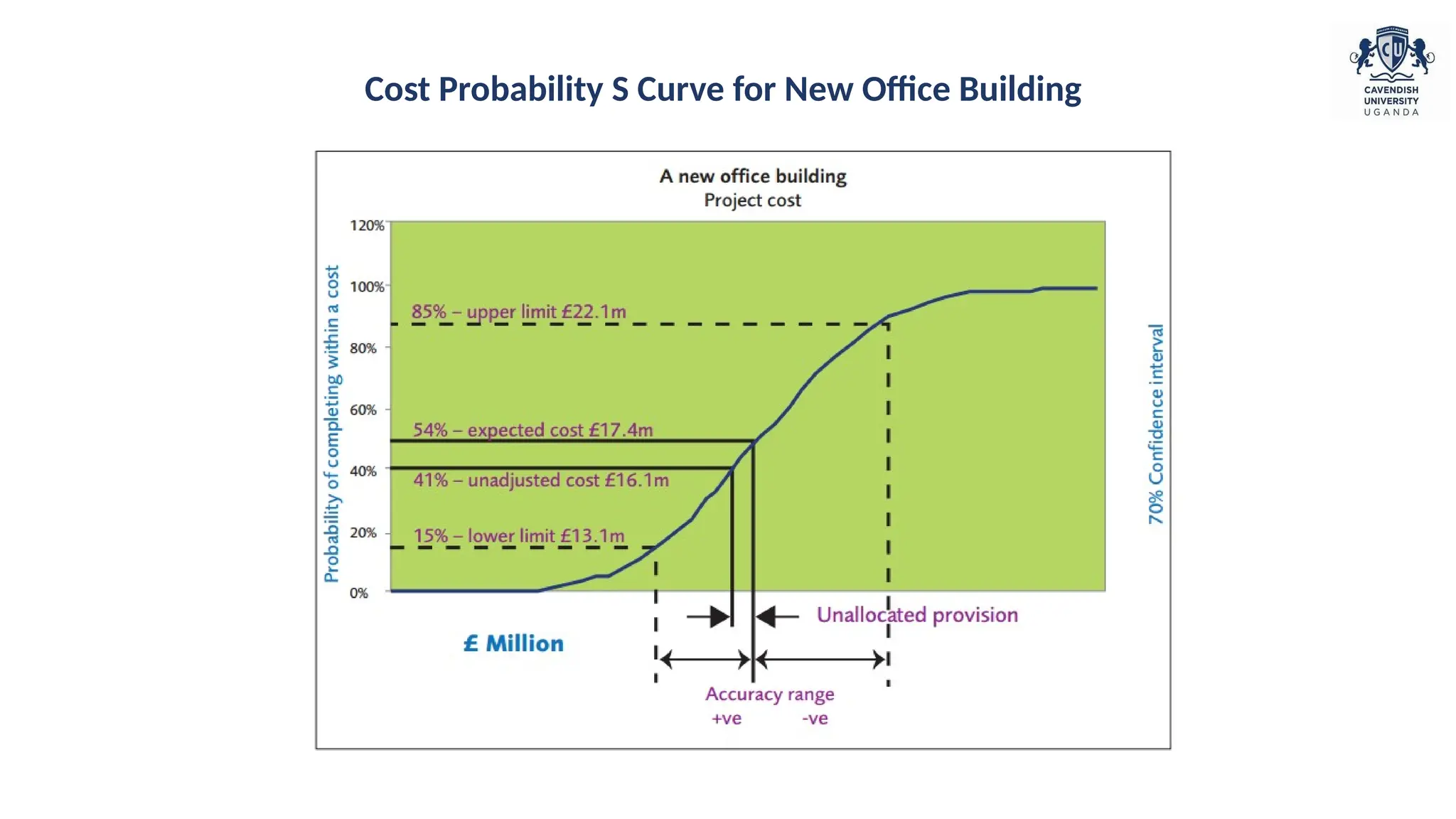
Cost Probability S Curve for New Office Building
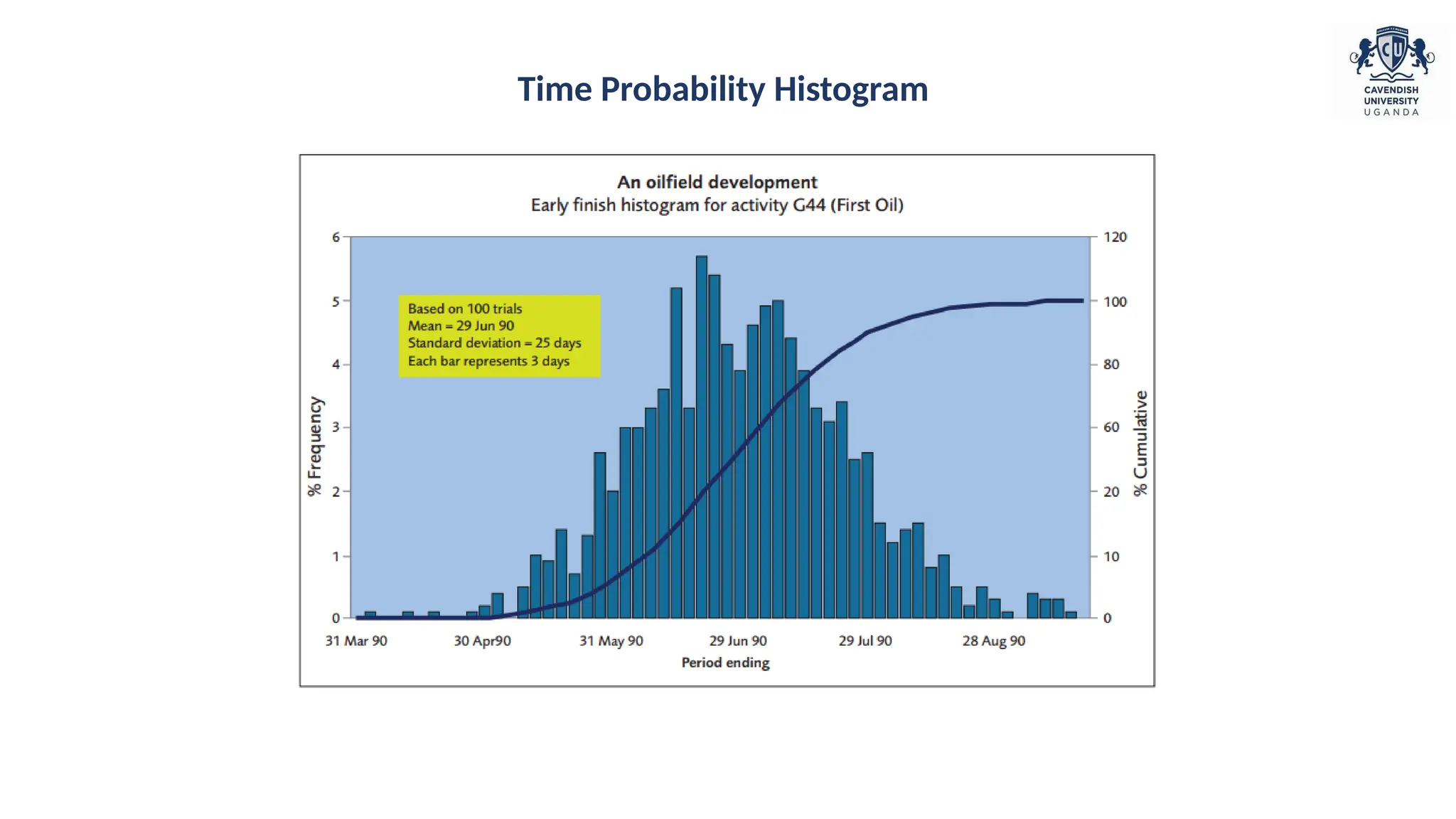
Time Probability Histogram
• Often considered to be the simplest form of risk analysis.
• Essentially, it simply determines the effect on the whole project of changing one of its risk variables,
such as delays in design or the cost of materials.
• Its importance is that it often highlights how the effect of a single change in one risk variable can
produce a marked difference in the project outcome. In practice, a sensitivity analysis will be
performed for more than one risk, perhaps all identified risks, in order to establish those that have a
potentially high impact on the cost or timescale of the project.
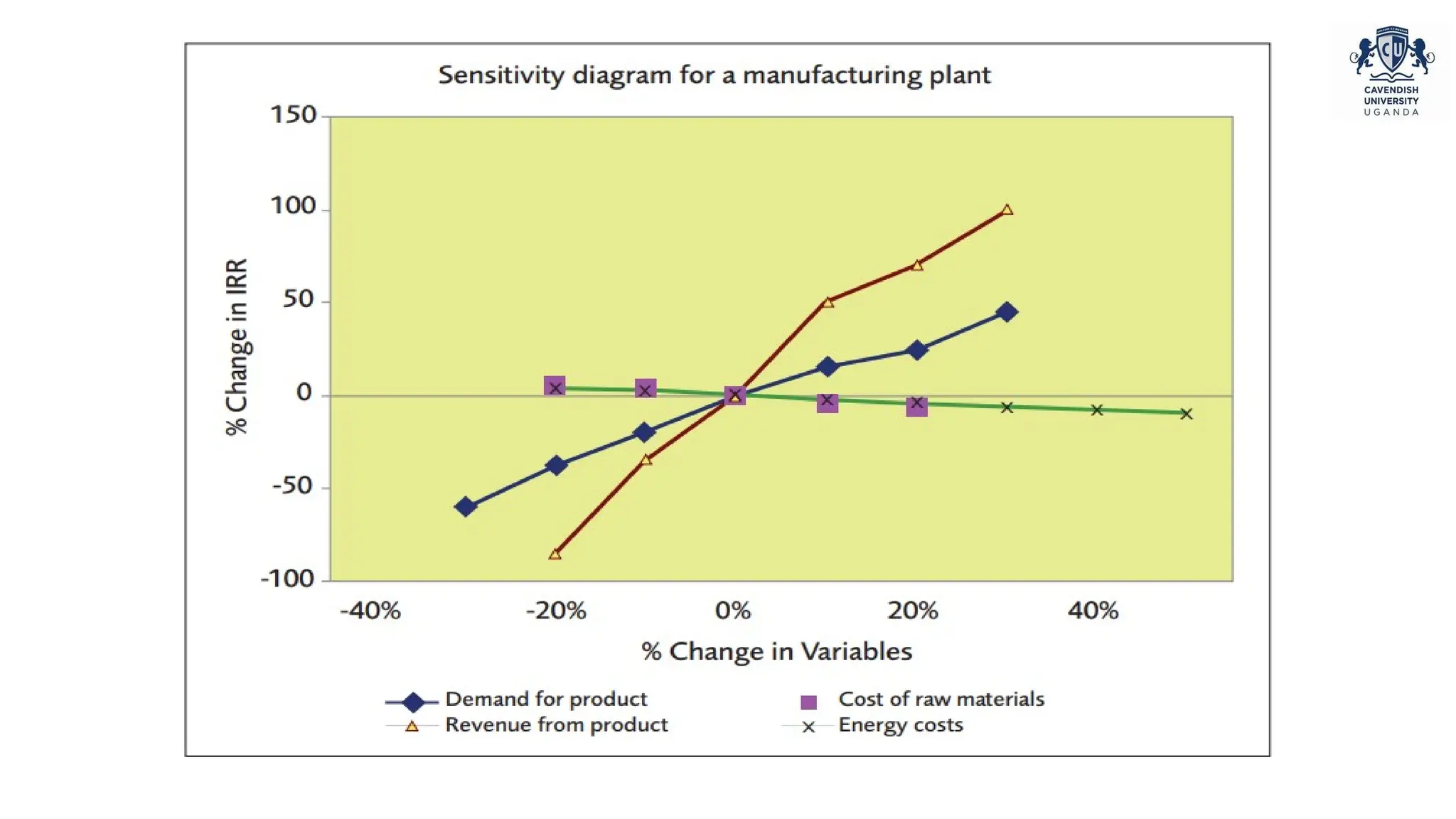
• The technique can also be used to address the impact of risk on the economic return of a project.
Sensitivity Analysis
Thank You

NK-Project Ris Scope: Clearly define what is not included in the project to avoid scope creep. (e.g., "Development of a we k and Sensitivity Analysis-22032024.pptx

  • 1.
    Project Risk Managementand Sesitivity Analysis Learners 1 Mr. Mazzin adil Baora XXXXX 2 Mr. Mohamud Abukar xxxxx 3 Mr. Narinder Kumar 187-805 Mentor: Dr. XXXXXXX
  • 2.
     Risk isan uncertain event or condition that, if it occurs, has a positive or negative effect on one or more objectives. Positive risks are opportunities, while negative risks are threats.  The practice of risk management includes planning the approach, identifying and analyzing risks, response planning and implementation, and ongoing monitoring of risks.  Risk management is an essential aspect of all organizational activities. The degree to which risk management is pursued can be the difference between success and failure.Risk management allows an organization to: o Anticipate and manage change, Improve decision making o Proactively implement typically lower-cost preventive actions instead of higher-cost reaction to issues, o Increase the chances to realize opportunities for the benefit of the business and Generate broad awareness of uncertainty of outcomes Introduction
  • 3.
  • 4.
    • This stageof the process involves the formulation of management responses to the main risks. • Risk management may start during the qualitative analysis phase as the need to respond to risks may be urgent and the solution fairly obvious. • Risk management can involve: o Implementing measures to avoid a risk, to reduce its effect or to reduce its probability of occurrence; o Establishing contingency plans to deal with risks if they should occur; o Initiating further investigations to reduce uncertainty through better information; o Considering risk transfer to insurers; o Considering risk allocation in contracts; o Setting contingencies in cost estimates, float in programmes and tolerances or ‘space’ in performance specifications. Risk management
  • 5.
    • The benefitsgained from using risk management techniques and methods serve not only the project, but also other parties, such as the organisation and its stakeholders. • Project risks can be actively managed to enhance the performance of the project against its key objectives; • An independent view of the project risks, which can help to justify decisions and enable more efficient and effective management of the risks; • An increased understanding of the project, which in turn leads to the formulation of more realistic plans, in terms of both cost estimates and timescales; • An increased understanding of the risks in a project and their possible impact that can lead to the minimisation of risks for a party and/or the allocation of risks to the party best able to handle them; Benefits of Risk Management-1
  • 6.
    • An understandingof how risks in a project can lead to the use of a more suitable type of contract; • Knowledge of the risks in a project, which allows assessment of contingencies that actually reflect the risks and which also tends to discourage the acceptance of financially unsound projects; • A contribution to the build-up of statistical information of historical risks that will assist in better modelling of future projects; • Facilitation of greater, but more rational, risk taking, thus increasing the benefits that can be gained from risk taking; n assistance with the distinction between good luck and good management, and bad luck and bad management Benefits of Risk Management-contd..
  • 7.
    • An organisationand its senior management, for whom a knowledge of the risks attached to proposed projects is important when considering the sanction of capital expenditure and capital budgets; • Clients, both internal and external, as they are more likely to get what they want, when they want it and for a cost they can afford; • Project managers who want to improve the quality of their work, ie they want to bring their projects into cost, on time and to the required performance Who Benefits From Risk Management Use
  • 8.
    The costs ofusing PRAM techniques vary according to the scope of the work and the commitment to the process. Below are some example costs, time-scales and resource requirements for carrying out the process: Cost-The cost of using the process can be as little as the cost of one or two days of a person’s time up to a maximum of 5–10 per cent of the management costs of the project, even if this higher cost, as a percentage of the total project cost, is relatively small. It can be argued that the cost incurred is an investment if risks are identified during the process that may otherwise have remained unidentified until it was too late to react. Time -The time taken to carry out a risk analysis is partially dependent upon the availability of information. A detailed cost and time risk analysis usually requires anywhere from one to three months depending on the scale and complexity of the project, and the extent of planning and cost preparation already carried out. However, a useful analysis can take as little as one or two days. Resources -The minimum resource requirement is obviously just one person within an organisation with experience of using Project Risk Management techniques. However, if expertise does not exist within the organisation, it can be readily acquired from outside consultants. It is likely that once Project Risk Management has been introduced to an organisation, in-house expertise will develop rapidly. Cost of Using Project Risk Management
  • 9.
    • Project RiskManagement is an inherently scalable process and as such can be applied to nearly all projects to the point where it brings benefits to that project without overburdening it. • This is a continuous process that can be started at almost any stage in the life cycle of a project; however, it is most beneficial to use it in the earlier stages of a project. • There are five points in a project where particular benefits can be achieved by using it: 1) Feasibility study- At this stage, the project is most flexible, enabling changes to be made that can reduce the risks at a relatively low cost. It can also help in deciding between various implementation options for the project. 2) Sanction. The client can make use of it to view the risk exposure associated with the project and can check that all possible steps to reduce or manage the risks have been taken. If a quantitative analysis has been carried out, then the client will be able to understand the ‘chance’ that he has of achieving the project objectives (cost, time and performance). When Should Project Risk Management Be Used And Who Should Do It
  • 10.
    3) Tendering. Thecontractor can make use of it to ensure that all risks have been identified and to help him set his risk contingency or check his risk exposure. 4) Post tender. The client can make use of it to ensure that the contractor has identified all risks and to assess the likelihood of tendered programmes being achieved. 5) At intervals during implementation. It can help to improve the likelihood of completing the project to cost and timescale if all risks are identified and are correctly managed as they occur. When Should Project Risk Management Be Used And Who Should Do it- contd…
  • 11.
    It can beused on any type of project, but it is more beneficial for some projects than others. Some examples of projects that would benefit from PRM are: • Innovative, new technology projects; • Projects requiring large capital outlay or investment; n fast-track or high-tempo projects; • Projects that interrupt crucial revenue streams; • Unusual agreements (legal, insurance or contractual); • Projects with sensitive issues (environment/relocation); z • Projects with stringent requirements (regulatory/safety); • Projects with important political/economic/financial parameters Type of project for Risk Management Impmentatioin
  • 12.
    • There area few circumstances when it is particularly advisable to use PRM techniques. These are: • When there are specific targets that must be met; • When there is an unexpected new development in a project; • At points of change in the life cycle of a project When should Project Risk Management To Be Done • Many people advocate the use of an independent expert or external consultant to ensure they receive an unbiased view, whereas others suggest that PRAM support should be an internal function. • Opinions differ widely at this stage, but, essentially, anyone can do it provided consideration is given to the ‘perspective’ from which they are viewing the project. • In any event, the project management team should be closely involved in the analytical process to ensure validity of the analysis and also to allow them to believe in the results Who should do Project Risk Assessment and Management When and Who To Do Project Risk Management
  • 13.
    Risk analysis Thisstage of the process is generally split into two ‘sub-stages’: 1) A qualitative analysis ‘substage’ that focuses on identification and subjective assessment of risks, 2) An quantitative analysis ‘sub-stage’ that focuses on an objective assessment of the risks. Project Risk Analysis-Techniques and Methods
  • 14.
    • A qualitativeanalysis allows the main risk sources or factors to be identified. This can be done, for example, with the aid of checklists, interviews or brainstorming sessions. • This is usually associated with some form of assessment that could be the description of each risk and its impacts or a subjective labelling of each risk (for example, high/low) in terms of both its impact and its probability of occurrence. • A sound aim is to identify the key risks, perhaps between five and 10, for each project (or part-project on large projects), which are then analysed and managed in more detail Qualitative analysis
  • 15.
  • 16.
    • A quantitativeanalysis often involves more sophisticated techniques, usually requiring computer software. • To some people, this is the most formal aspect of the whole process requiring: o measurement of uncertainty in cost and time estimates; o probabilistic combination of individual uncertainties. • An initial qualitative analysis is essential. It brings considerable benefit in terms of understanding the project and its problems irrespective of whether or not a quantitative analysis is carried out. • It may also serve to highlight possibilities for risk ‘closure’, ie. the development of a specific plan to deal with a specific risk issue. Quantitative analysis
  • 17.
    • Probabilistic analysisspecifies a probability distribution for each risk and then considers the effect of risks in combination. • The most common form of probabilistic analysis uses ‘sampling techniques’, usually referred to as ‘Monte Carlo simulation’. This method relies on the random calculation of values that fall within a specified probability distribution often described by using three estimates: minimum or optimistic, mean or most likely, and maximum or pessimistic. • The overall outcome for the project is derived by the combination of values selected for each one of the risks. The calculation is repeated a number of times, typically 1,500 depending on the capabilities of the sampling software and organisational preferences, to obtain the probability distribution of the project outcome. Probabilistic Analysis
  • 18.
    • It isusual to carry out a probabilistic time analysis with the aid of a critical path method (CPM) network to model the project schedule. • The results of the simulation can be used to compare the effects of risks in a schedule with the qualitative assessment of the risks. • For example, a risk with a high impact on a task that is not on the critical path may be treated ahead of a risk with a relatively low impact that is impacting on a critical path item. • The effect of each task on the overall end date of the project can be examined using a tornado chart. An example Tornado Chart is shown in next slide. The length of the bars is a measure of the duration cruciality of a task. (Cruciality = Criticality multiplied by duration sensitivity.) The longer the bar, the more effect that task is having on the overall duration of the project Probabilistic Analysis-contd…
  • 19.
  • 20.
    Cost Probability SCurve for New Office Building
  • 21.
  • 22.
    • Often consideredto be the simplest form of risk analysis. • Essentially, it simply determines the effect on the whole project of changing one of its risk variables, such as delays in design or the cost of materials. • Its importance is that it often highlights how the effect of a single change in one risk variable can produce a marked difference in the project outcome. In practice, a sensitivity analysis will be performed for more than one risk, perhaps all identified risks, in order to establish those that have a potentially high impact on the cost or timescale of the project. • The technique can also be used to address the impact of risk on the economic return of a project. Sensitivity Analysis
  • 24.